strip

Pussycat Dolls shrug off Lil Kim’s ‘tour axe’ as they strip off to racy outfits for final London gig

THE Pussycat Dolls shrugged off the Lil Kim ‘tour axe’ while stripping to some striking outfits at their packed London gig on Tuesday night. 

Lady Marmalade star Lil Kim, 52, didn’t appear for the final night of the Pussycat Dolls’ run at London’s O2 Arena, with the headline act fed-up of her unpredictable behaviour.

The Pussycat Dolls shrugged off the Lil Kim ‘tour axe’ while stripping to some striking outfits Credit: Getty
Kim shot to fame in 1994 after being discovered by late rap legend The Notorious B.I.G. Credit: Shutterstock Editorial

A source said: “Kim didn’t show up to their gig in Manchester on Saturday night, and it was all very last minute. It threw everything into chaos and a sign just went up at the last minute to say she wouldn’t be performing. 

“As a result, she hasn’t been asked back for the closing night in London tonight, which was seen as the grand finale.” 

But shrugging it off entirely, Nicole Scherzinger and her glam bandmates  Ashley Roberts and Kimberly Wyatt looked sensational in racy outfits at the gig. 

Read More on Pussycat Dolls

pushing buttons

Pussycat Dolls ‘drop’ hip hop legend Lil Kim from UK tour after missed gig


DON’T CHA KNOW?

What happened to the four ‘forgotten’ Pussycat Dolls who vanished from fame

The girls opted for silver leotards, with Ashley wowing in a two piece and showing off her toned physique. 

Kimberly had her long pins on display with cut out tights on and white boots. 

The girls looked sensational in silver bodysuits Credit: Getty
They performed the final London night at the O2 Arena on Tuesday Credit: Getty

And Nicole looked as glamorous as ever in her dazzling bodysuit, embellished with sequins. 

The Pussycat Dolls all rocked beautiful makeup looks and styled their hair down, while having the time of their lives on stage.

The girls wowed their fans and put Lil Kim’s tour axe. 

No official reason for support act Kim’s absence in Manchester was given, though some fans claimed she was ill.

However, others noticed she had shared social media videos of herself on her tour bus in the build-up to the gig where it looked she was playing video games.

One fan wrote on TikTok: “She was on the tour bus prepping for GTA 6.”

Another posted: “Omg we were there last night how bad is that, not even a comment on sorry she’s no show or anything, playing GTA in the trailer apparently, previous videos of her trying glad she didn’t show.”

Kim also came under fire from baffled fans at a previous gig in Paris when a music video playing on the big screens behind her during her set appeared to be synced from her phone and private messages kept popping up before the feed was quickly pulled.

Kim, whose real name is Kimberly Denise Jones, shot to fame in 1994 after being discovered by late rap legend The Notorious B.I.G.

The larger than life star then invited Kim to join the Brooklyn-based rap group Junior M.A.F.I.A, before she launched her solo career with her double-platinum album Hard Core, which debuted at number 11 on the Billboard 200.

Grammy-winner Kim’s biggest hits in the UK are all collabs, including the 2001 number one ‘Lady Marmalade’, a cover commissioned for the Moulin Rouge soundtrack, and 2003 track ‘Can’t Hold Us Down’ with Christina Aguilera, which reached number six.

The Sun contacted representatives for the Pussycat Dolls and Lil’ Kim.

Source link

Trump’s Medicaid cuts strip refugees and other legal immigrants of their health coverage

New restrictions have stripped Medicaid coverage from certain legal immigrants, including refugees and victims of human trafficking, as part of broader federal changes to the health insurance program that are expected to force millions off their coverage.

The change effective Oct. 1 cut from Medicaid what is estimated to be hundreds of thousands of people who legally immigrated to the United States, many of whom work and pay taxes, in the latest Trump administration policy to target foreigners.

The move is part of sweeping changes to Medicaid under President Donald Trump’s 2025 tax cut and policy law, with many set to take effect early next year. The Medicaid changes are projected to result in 7.5 million fewer people with health insurance, according to the Congressional Budget Office’s 2025 estimate.

Advocates say that without Medicaid, people will not be able to afford private insurance and will either delay care or end up in emergency rooms, adding pressure to a strained health system. For immigrants, the cuts could be felt more acutely, compounding the effects of other administration efforts to restrict their access to public assistance as part of a broader immigration crackdown.

“This is about telling every immigrant in the United States that they are not welcome here and that they should leave,” said Ben D’Avanzo, a senior strategist at the National Immigration Law Center, which has pursued litigation against the Republican administration over its immigration agenda.

Refugees, asylum seekers, victims of human trafficking and domestic violence are among those who have lost coverage. Green-card holders were not impacted.

Lauren Bis, a White House spokesperson, said in a statement that “immigrants must be able to support themselves without taking from overburdened benefits programs paid for by hard-working American taxpayers.”

D’Avanzo said many people who have lost coverage will likely only realize when they need medical care. But for some, the change has been felt immediately.

Dwindling supplies of lifesaving medication

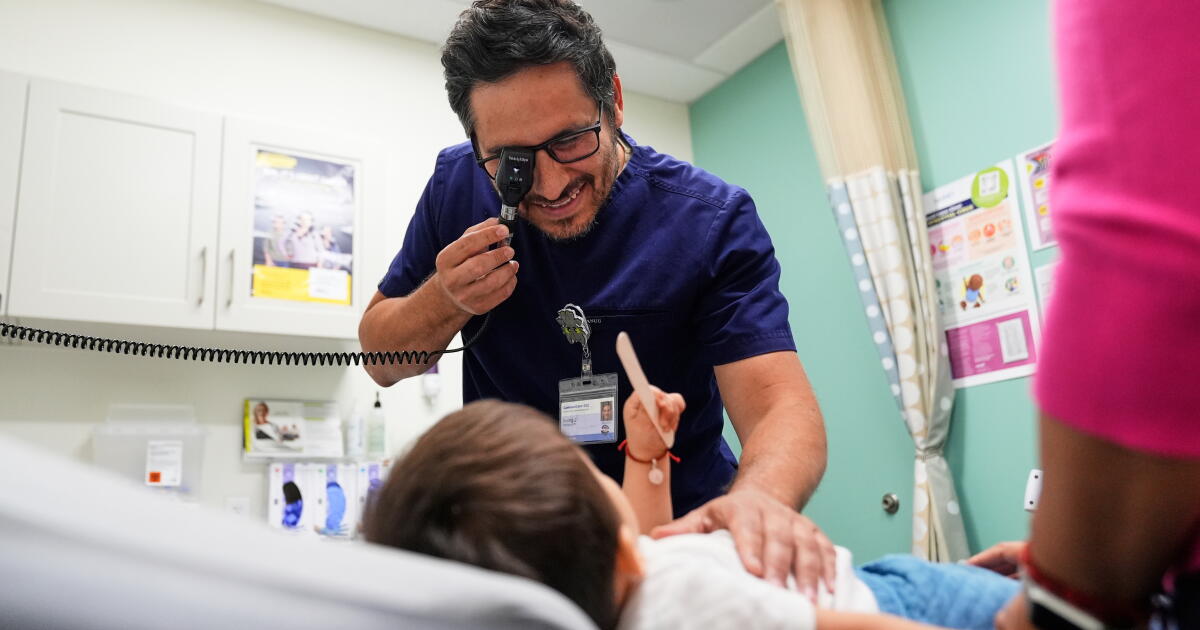
In Tucson, Arizona, María Chacon has been caring for her son Jesus for almost five years since a car accident at 17 left him unable to breathe on his own. He requires a ventilator, a feeding tube and daily medication, and must be turned once every two hours to stop sores from forming. Chacon said he sometimes opens his eyes.

The family is originally from Mexico and entered the U.S. on a T visa, offered to victims of human trafficking, in 2018.

Chacon said Medicaid has helped cover almost $25,000 per month of care for her son, which includes a small stipend for her and her husband as compensation for being long-term caregivers. She said doctors have explained that even if they both worked 24 hours a day, they would not be able to cover the cost of his care.

“Since that day I haven’t been able to sleep. We haven’t been able to eat or anything. We’re wondering what we’re going to do?” Chacon said.

Jesus takes medication that Chacon estimates costs $7,000 a month. The supply runs out in mid-October. Without coverage, she does not know how her son is going to survive.

Chacon found out just days before the cuts that she was losing care. She called the state’s Medicaid offices to appeal. Although she is in the process of obtaining a green card, Medicaid coverage would only kick in five years after she is approved.

Steven Camarota, research director for the Center for Immigration Studies, a right-leaning think tank that seeks less immigration, said the administration “is trying to nibble around the edges” with the Oct. 1 cuts, finding piecemeal ways to curb immigration into the U.S.

Camarota believes the government should screen legal immigrants for income potential and education, reducing the number who might rely on public benefits once they cross the border.

“You need immigrants who are unlikely to need welfare,” he said, or those with high educational attainment.

The administration recently revived a federal rule that could deny green cards to immigrants who use public benefits that could include food stamps, Medicaid, housing vouchers and others.

Chacon believes the cuts to Medicaid coverage are part of the administration’s clampdown on immigrants. She said her son is in no condition to travel.

“I know that’s what he’s doing, but, as my son is, I couldn’t go to Mexico,” Chacon said.

Millions more will be dropped from Medicaid

Medicaid, jointly funded by states and the federal government, has become a political focal point during Trump’s second term. The president has pushed to root out what he describes as fraud in the program. In July, the administration deferred over $1 billion in Medicaid payments to California and Minnesota, claiming there was suspected fraud; critics argued the move targeted Democratic-led states.

As more people are cut from Medicaid, the federal government is predicted to reduce program spending by $911 billion, according to healthcare research nonprofit KFF.

In Arizona, officials said 29,000 legal immigrants were cut from Medicaid rolls on Oct. 1. In Florida, estimates are closer to 177,000. Overall, more than 281,000 immigrants from nine states and the District of Columbia are estimated to lose Medicaid coverage, according to KFF.

As more states implement various restrictions to coverage, 7.5 million people are expected to lose coverage by 2034, according to analysis by the Congressional Budget Office.

Without coverage, people will turn to emergency rooms for care. When people delay seeing a doctor, conditions can worsen and become even more expensive to treat.

“At the end of the day, it does raise the cost for the states because once you get these people in for something that could have been prevented, they could not go to the doctor because they were uninsured; they most likely will end up at a hospital in an emergency room,” said Carmen Feliciano, the vice president of policy and advocacy at UnidosUS, a Latino civil rights organization.

UnidosUS partners with community organizations to help provide medical care, but Feliciano said they already are overwhelmed and would not be able to support the number of people who are going to lose medical coverage in the coming months.

“We are not going to have the capacity to serve all the people who need it,” Feliciano said.

Schuettler and Hussein write for the Associated Press.

Source link

Trump officials pursue record number of cases to strip US citizenship | Donald Trump News

The United States Department of Justice has filed 40 new cases seeking to strip naturalised Americans of their citizenship over alleged crimes they have committed.

In a statement on Monday, federal prosecutors said they were targeting individuals accused of “serious offenses”, including money laundering, child sexual abuse, visa fraud and tax evasion.

Recommended Stories

list of 3 itemsend of list

The statement touted the 40 cases as the largest volume of denaturalisation petitions submitted in such a short period under President Donald Trump. The petitions were filed from late August through early October.

“Today’s announcement marks the largest denaturalization effort in modern history,” said Attorney General Todd Blanche.

“Under President Trump’s leadership, the Department of Justice will continue to employ the denaturalization process to maintain our national security and protect the American people.”

The 40 citizens targeted in Monday’s announcement include people from a range of countries, including Mexico, Pakistan, China and Sierra Leone.

They are accused of concealing criminal acts and other facts about themselves as they sought to obtain citizenship. Their criminal convictions largely came after they took their oaths of citizenship.

Two people on the list are also accused of engaging in espionage on behalf of China. Committing these crimes before they became citizens, the Department of Justice alleges, meant these individuals lacked “good moral character” and should have been denied citizenship.

Expanded use of denaturalisation law

The laws to denaturalise US citizens have been used for decades, but historically, they have been reserved for serious crimes.

After World War II, for instance, the US government moved to denaturalise dozens of citizens accused of concealing involvement in the Holocaust or engaging in war crimes.

Notable cases include that of Emma Goldman, a Lithuanian-born anarchist and women’s rights activist who was jailed in 1917 for her antiwar activities, before being denaturalised and deported to the Soviet Union.

But the practice has become much less frequent since the end of the Cold War.

Top officials in the Trump administration, however, have sought to expand denaturalisation as part of a push to conduct the largest deportation operation in US history.

Under US law, prosecutors can ask courts to strip citizenship from those born outside the country if they wilfully concealed a “material fact” during their citizenship application that would have otherwise disqualified them.

But Trump’s efforts to widen denaturalisation proceedings have received pushback from human rights groups, which argue they could leave people stateless.

Critics have also warned that Trump has sought to leverage denaturalisation against specific groups he perceives to be political rivals or enemies.

Last year, for instance, the Trump administration indicated it would seek to denaturalise large numbers of Somali Americans after allegations emerged in Minnesota of daycare fraud involving the Somali diaspora.

“Send them back from where they came, Somalia, perhaps the worst, and most corrupt, country on earth,” Trump wrote at the time.

Members of Trump’s Republican Party, notably Representative Andy Ogles, have also floated the possibility of yanking citizenship from New York City Mayor Zohran Mamdani, who was born in Uganda. Trump himself has falsely suggested Mamdani may be in the country illegally.

At one point, Trump even floated the idea of withdrawing citizenship from tech entrepreneur Elon Musk, a close ally and adviser to his second administration, after the two men had a falling-out in 2025.

Trump has also pushed to do away with birthright citizenship, which is granted to virtually all children born in the US. The few exceptions include the babies of diplomats and foreign military forces.

Birthright citizenship is protected under the US Constitution and cannot be taken away the way naturalised citizenship can.

In June, the US Supreme Court struck down Trump’s efforts to dismantle birthright citizenship, but legal battles continue after the president issued a second executive order also seeking to restrict how birthright citizenship is applied.

Source link

New Trump policy may strip unaccompanied migrant children of protected status

Under a policy set to take effect Sunday, the U.S. government could strip young immigrants of their status as unaccompanied minors, causing them to lose special protections when they apply for asylum and making them more likely to be deported.

The plan is laid out in an internal memorandum sent May 31 by John Lafferty, chief of the asylum division at U.S. Citizenship and Immigration Services, and detailed in subsequent guidance, both obtained by The Times. The shift in policy involves when federal officials determine whether a young migrant is an unaccompanied minor.

According to the memos, an asylum officer with USCIS will have to assess whether the individual at the time of filing for asylum lacked lawful immigration status, was younger than 18 and had no parent or legal guardian in the United States available to provide care and physical custody.

Unaccompanied minors who are in federal custody are often released to sponsors in the United States such as a parent or close relative and could be living with them at the time they file their application — meaning that many may not be considered to be unaccompanied minors under this new policy. From October 2018 to May 2019, more than 46,000 minors were released to sponsors, according to the Department of Health and Human Services.

If the children are found no longer to be unaccompanied minors, they will not be entitled to certain special protections, including an asylum interview with a USCIS officer instead of having to make their case in an immigration court setting.

“USCIS continues to take actions to ensure that we carry out our duties in a manner that is fully in line with the letter of the law,” agency spokeswoman Jessica Collins said in a statement. “Ultimately, Congress must reform the law to address the underlying issues fueling the border crisis and encouraging unaccompanied minors to make the dangerous journey to the United States.”

In recent years, USCIS officers have considered an asylum applicant to be an unaccompanied minor if that was what Immigration and Customs Enforcement or Customs and Border Protection agents had determined when they first had contact with the migrant.

Under this new policy, which rescinds an Obama-era memorandum, USCIS officers will independently determine whether an individual was an unaccompanied minor when they filed their application.

USCIS is “basically relitigating whether or not a child at the time of filing was an unaccompanied minor or not,” said John Amaya, who served as the counselor to the director of USCIS from 2014 to 2015.

Judge Ashley Tabaddor, the president of the National Assn. of Immigration Judges, said that the new policy could potentially have “a profound effect on the children’s ability to seek asylum.”

“The asylum officer interview is a much less adversarial process that is thought to give the child a better and more comfortable setting,” she said.

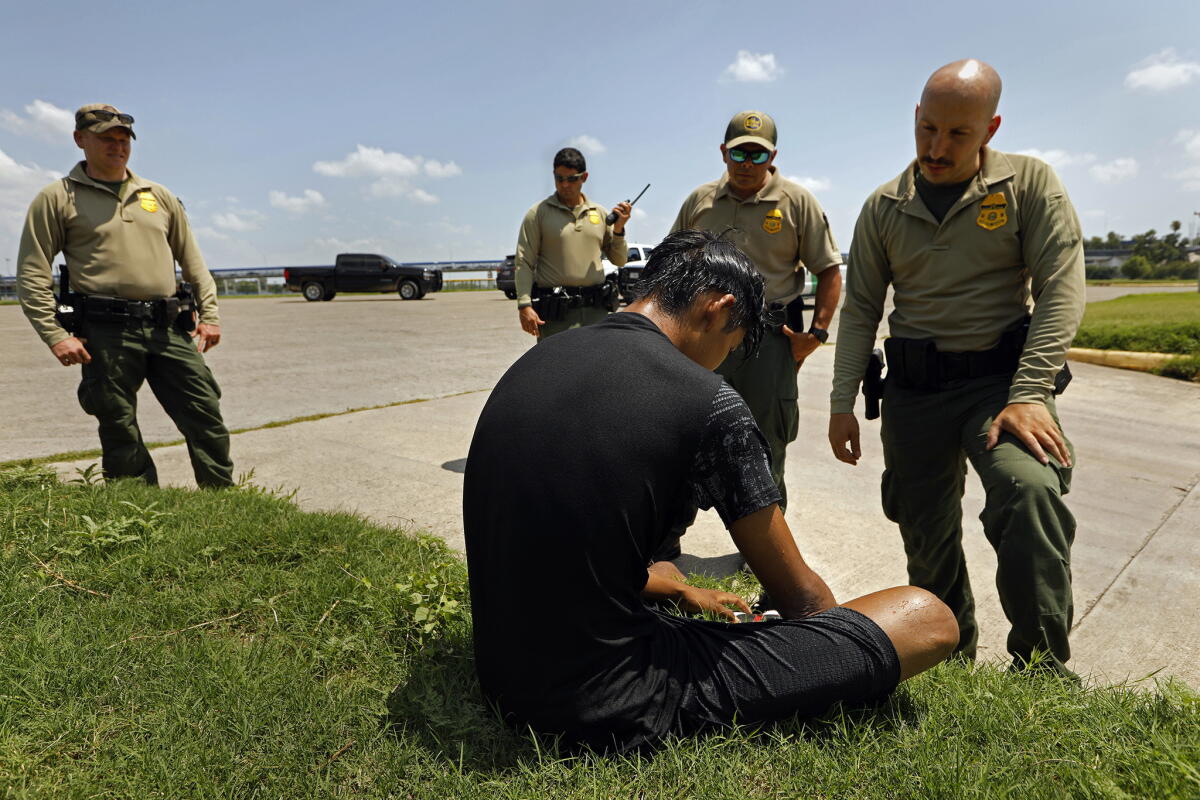
U.S. border patrol agents attend to a minor who had just swam across the Rio Grande River from Mexico to Del Rio, Texas.

(Carolyn Cole / Los Angeles Times)

Federal asylum officers have been rushing to process as many unaccompanied minor applications as possible before the change takes effect Sunday, USCIS personnel told The Times, speaking on condition of anonymity to protect against professional retaliation.

The change is the latest in the Trump administration’s efforts to make it more difficult for immigrants, including children, to seek asylum.

It comes during a week in which the acting head of CBP announced his resignation amid reports that his agency held some 300 children in unsanitary conditions in a remote Border Patrol station in Clint, Texas. A photograph showing the bodies of a father and his nearly 2-year-old daughter lying face down in the Rio Grande along the border also has gone viral in recent days.

Migrant deaths have continued along the border this year with the number crossing illegally surging to nearly 600,000, more than half of them families.

Federal asylum officers themselves have criticized Trump, saying his policies are putting people, including children, at risk.

On Wednesday, a union representing officers filed a brief in support of a lawsuit against a Trump policy forcing asylum seekers back to Mexico to await their court proceedings in the United States. The policy “abandons our tradition of providing a safe haven to the persecuted and violates our international and domestic legal obligations,” the brief states.

USCIS acting Director Ken Cuccinelli, an anti-immigration hard-liner who often casts doubt on asylum seekers as engaging in fraud, slammed his own employees, saying the brief was “an attempt by the union to score short-term political points.”

Michael Knowles, president of the union, told The Times his members were “taking the risk” because “we’re being asked to do things that are wrong, as a matter of conscience, and our training as federal employees.”

The policy taking effect Sunday reverts to procedures implemented under the 2008 Trafficking Victims Protection Reauthorization Act. At that time, asylum officers made “independent factual inquiries” to determine whether individuals filing applications met the criteria to be designated as unaccompanied minors and were thus under the jurisdiction of USCIS.

Ur Jaddou, a chief counsel to USCIS under President Obama, said that new procedures in 2013 allowing USCIS to adopt prior determinations made by ICE and CBP were implemented because “it was a waste of time and confusing” for USCIS to make a decision on unaccompanied minor status after one was made by other DHS branches.

“This new memo goes backward,” Jaddou said.

Lafferty, who wrote the memo, presented the change as one in keeping with a October 2018 decision by the Justice Department’s Board of Immigration Appeals. The decision dealt with whether USCIS or an immigration judge has initial jurisdiction over the asylum application of an individual who was previously determined to be an unaccompanied minor but had turned 18 before filing their application. The board held that the immigration judge has jurisdiction to determine that the individual no longer qualified as a minor at the time of filing.

The new procedures may put legal clinics that work with these minors in a tough position. Patricia Ortiz, program director for the Esperanza Immigrant Rights Project, said some of their clients are released from federal custody very close to their 18th birthday, and attorneys may not have enough time to file their application before they become adults.

Unaccompanied minors are currently exempt from the standing one-year deadline to file asylum applications. Ortiz worries that if her clients are no longer considered to be unaccompanied minors, the fact they have not applied within one year would jeopardize their applications. She said some don’t apply within a year because they don’t have the support necessary to complete an application or may only be comfortable disclosing asylum facts after months of therapy.

Once they are no longer able to have their cases heard by asylum officers, she said, children could be kept in legal limbo with the rest of those whose cases are backlogged in immigration court. This wait could make it more difficult for them to give testimony that helps their cases.

“Children forget,” she said. “They forget details; they forget what happened.”

Miller reported from Los Angeles and O’Toole from Washington.


Source link