Ukrainian President Zelenskyy says Moscow launched nearly 4,000 drones, aerial bombs and missiles against his country in past week.
Published On 28 Sep 202628 Sep 2026
A Russian military strike on northeastern Kharkiv, Ukraine’s second-largest city, has injured at least 22 people, including children, less than a day after eight people were killed in attacks nationwide.
Kharkiv Mayor Ihor Terekov said on his Telegram account that a guided Russian aerial bomb hit an apartment block early on Monday, destroying two floors of the multistorey building.
Recommended Stories
list of 3 itemsend of list
He said six children were among the injured.
Russian attacks were also reported across Ukraine on Sunday.
Ukrainian Minister of Internal Affairs Ivan Vyhivskyi said three people, including a 16-year-old girl, were killed in air strikes that damaged a children’s centre in the northern city of Sumy.
Authorities in the Odesa region, meanwhile, said a “massive strike” on the south of the Black Sea region killed one person and damaged residential buildings, a shop, a hotel, a medical building, and a grain warehouse.
And in the capital, Kyiv, Mayor Vitali Klitschko said a woman and two 16-year-olds were injured and hospitalised.
“The enemy continues to relentlessly attack the Kyiv region with strike drones,” the city’s administration said.
“Sixteen sites have been damaged”, including 12 houses, a warehouse and a production facility, it added.
Ukrainian President Volodymyr Zelenskyy said on Sunday that three people were killed in strikes in the southern Zaporizhia region and that a Russian drone strike had killed one man in Kyiv.
Zelenskyy said in a post on his X account that Russia had launched more than 2,200 attack drones, 1,630 aerial bombs and 38 missiles of various types against Ukraine in the past week.
“If Russia were truly preparing for any real steps towards de-escalation, as it claims, particularly to American negotiators, this wave of Shahed terror would not be happening,” Zelenskyy said in later comments, referring to the Iran-developed drones Moscow has used against Ukraine.
In Moscow, Russia’s Ministry of Defence said it had bombed a Kyivstar data centre in Kyiv and another belonging to the Omega Telecom company. It said that the firms were providing services to the Ukrainian army.
Russian Minister of Foreign Affairs Sergey Lavrov told the United Nations General Assembly in New York on Saturday that Moscow intended to continue its military campaign “to the end”.
Ukrainian drones struck an oil depot in Russia’s Krasnodar region on Monday, according to local reports.
Ukrainian Telegram channel Exilenova+ published footage of a large fire and identified the facility as the Pavlovskaya oil depot.
No injuries have been reported so far.
Ukraine has intensified its targeting of Russian oil infrastructure in recent weeks.
United States-led talks to end the war, which began with Russia’s full-scale invasion of Ukraine in February 2022, have failed to produce a breakthrough, and the UN has highlighted the growing civilian toll.
Strikes carried out in southeastern province of Khost cause no casualties, governor’s office says.
Published On 24 Sep 202624 Sep 2026
Pakistan says it has carried out air strikes on 10 locations in Afghanistan used to store and launch drones, some of which were used in cross-border attacks.
The air strikes on Thursday were carried out as tensions grow between the former allies over attacks by armed groups in Pakistan, which triggered their worst fighting in years in February.
Recommended Stories
list of 3 itemsend of list
Islamabad accuses Kabul of harbouring fighters who stage cross-border attacks, but Afghanistan’s Taliban government denies harbouring anti-Pakistani armed groups and says the attacks are Pakistan’s internal problem.
The air strikes were “deliberate, precise, calibrated, and proportionate, and strictly limited to identified military objectives directly linked to the attempted attacks against Pakistan”, Pakistani Information Minister Attaullah Tarar wrote on X.
He condemned a “deliberate and unlawful incursion into Pakistan by drones” on Wednesday.
“This constitutes a blatant violation of Pakistan’s sovereignty and territorial integrity and is a grave and unacceptable act of aggression,” he said.
The Pakistani air strikes were conducted in several areas of Khost province in southeastern Afghanistan, Mustaghfir Gurbaz, spokesperson for the Khost governor, said.
There were no casualties, he said.
An attack on a police facility in northwestern Pakistan last week that killed at least 21 people has reignited fighting between the countries after nearly three months of relative calm. A Pakistan Taliban faction claimed responsibility for the blast and subsequent gun battle.
On Monday, air strikes targeting three locations in northeastern Afghanistan killed three civilians in the Nurgal district of Kunar province, Afghan officials said. Islamabad said it killed 28 “terrorists”.
The escalation threatens mediation efforts by China, Turkiye, Qatar and Saudi Arabia to broker a lasting peace between the two neighbours.
Relations between the former allies have been strained since the fighting in February, the worst for years.
Overnight missile and drone attacks hit several Ukrainian regions as world leaders gather in New York for the UN General Assembly.
Published On 22 Sep 202622 Sep 2026
Russian forces have launched widespread attacks targeting industrial sites and critical energy infrastructure across several regions of Ukraine, killing at least three people and knocking out power to nearly 100,000 residents, Ukrainian officials said.
The strikes overnight hit industrial facilities simultaneously in the Dnipropetrovsk region, including Dnipro, Pavlohrad and Kryvyi Rih, the hometown of President Volodymyr Zelenskyy, regional Governor Oleksandr Hanzha said on Telegram on Tuesday.
Recommended Stories
list of 3 itemsend of list
Three people were killed and six others were wounded in Dnipro, where missiles, drones and artillery heavily damaged business and warehouse premises, Hanzha said.
Ukraine’s air force said Moscow’s overnight barrage involved 212 drones, four cruise missiles, and an unspecified number of Oniks antiship and ballistic missiles.
The strikes also damaged energy infrastructure. An attack on a power facility left nearly 100,000 consumers without electricity in the northern region of Chernihiv, while in the Poltava region, Governor Vitalii Diakivnych said a “massive” Russian attack hit an industrial enterprise and a critical infrastructure facility.
The Russian Ministry of Defence confirmed its forces carried out major strikes, stating it hit industrial and military facilities, the fuel and energy sector, port infrastructure and sea vessels operating for the Ukrainian military.
Meanwhile, Ukrainian drones targeted Russia’s Samara region along the Volga River, killing one person and injuring four, according to the local governor. The region hosts critically important facilities, including oil refineries.
The Russian Defence Ministry said its air defence units intercepted and destroyed 297 Ukrainian drones across various regions overnight.
Diplomatic push in New York
The attacks come as Zelenskyy arrived in New York for the United Nations General Assembly (UNGA), where talks on ending the war are set to be high on the agenda as nearly 130 heads of state gather.
The Ukrainian president wrote on X that a “drone deal” was ready to be signed to bolster air defence and secure funding for the war effort.
“Of course, Ukraine’s number one priority is bringing peace closer and protecting the lives of our people,” Zelenskyy posted. “There are concrete security proposals and de-escalation measures that could bring the end of the war closer. We are working to strengthen air defence and ensure sufficient financing for Ukraine.”
He said, “Around 20 meetings are planned, including with the US president, European leaders, US senators and members of the House of Representatives, heads of international organisations, leading American companies and think tanks.”
Zelenskyy met French President Emmanuel Macron on Monday and is likely to meet US President Donald Trump on Tuesday.
Earlier, Macron also met Trump, after which he said the two countries agreed to work together to secure a moratorium on strikes targeting energy networks and civilian infrastructure in Ukraine. Both Zelenskyy and Russian Foreign Minister Sergey Lavrov are set to address the UNGA later this week.
French President Emmanuel Macron, left, with his Ukrainian counterpart, Volodymyr Zelenskyy, on the sidelines of the UNGA in New York, US, September 21, 2026 [Ludovic Marin/AFP]
EASYJET is set to be disrupted by staff walkouts next month – with flights to and from the UK expected to be cancelled.
The airline’s cabin crew in Portugal have voted to strike on two separate occasions across October and December.
easyJet cabin crew in Portugal are set to strike next month – and again in DecemberCredit: Alamy Stock Photo
Members of the SNPVAC union have announced walkouts from October 2–6 and again in December on 19–23.
The strike will affect flights from busy airports including Lisbon, Porto and Faro.
Sign up for the Travel newsletter
Thank you!
From the UK, easyJet operates flights to Portugal from the likes of Birmingham, Bristol, Edinburgh, Glasgow, Liverpool, Gatwick, Luton, Southend, Manchester and Newcastle.
The union has estimated that the strike in October alone could ground around 500 scheduled flights overall.
This is likely to include 35 return flights to and from the UK.
A spokesperson from the airline added: “We are extremely disappointed that SNPVAC is planning strike actions despite our willingness to continue a constructive dialogue.
“We had just started a conciliation process through the mediation of DGERT with the aim to reach an agreement to meet our employees’ requests and protect the sustainability of easyJet business in Portugal.
“The current union demands are unworkable especially given that our crew are already paid significantly above the Portuguese national average.
Flight compensation rules
A look at your rights if a flight is delayed or cancelled, when your entitled to compensation and if your travel insurance can cover the costs.
What are my rights if my flight is cancelled or delayed?
Under UK law, airlines have to provide compensation if your flight arrives at its destination more than three hours late.
If you’re flying to or from the UK, your airline must let you choose a refund or an alternative flight.
You will be able to get your money back for the part of your ticket that you haven’t used yet.
So if you booked a return flight and the outbound leg is cancelled, you can get the full cost of the return ticket refunded.
But if travelling is essential, then your airline has to find you an alternative flight. This could even be with another airline.
When am I not entitled to compensation?
The airline doesn’t have to give you a refund if the flight was cancelled due to reasons beyond their control, such as extreme weather.
Disruptions caused by things like extreme weather, airport or air traffic control employee strikes or other ‘extraordinary circumstances’ are not eligible for compensation.
Some airlines may stretch the definition of “extraordinary circumstances” but you can challenge them through the aviation regulator the Civil Aviation Authority (CAA).
Will my insurance cover me if my flight is cancelled?
If you can’t claim compensation directly through the airline, your travel insurance may refund you.
Policies vary so you should check the small print, but a delay of eight to 12 hours will normally mean you qualify for some money from your insurer.
Remember to get written confirmation of your delay from the airport as your insurer will need proof.
If your flight is cancelled entirely, you’re unlikely to be covered by your insurance.
“We are doing everything we can to minimize the impact of the strike on our customers including actioning some cancellations in advance to allow our customers to rearrange their travel plans.”
Ministers demand an end to maritime shipping attacks and urge Iran to stop arming the Yemeni group.
Published On 22 Sep 202622 Sep 2026
The foreign ministers of the Group of Seven (G7) nations have condemned what they called “unacceptable continued strikes” by Yemen’s Houthis against Saudi Arabia.
The ministers issued the statement on Monday following an informal meeting on the sidelines of the United Nations General Assembly in New York.
Recommended Stories
list of 3 itemsend of list
“We condemn in the strongest terms the unacceptable continued strikes carried out by the Houthis in Yemen and against the Kingdom of Saudi Arabia,” the ministers of the UK, Canada, France, Germany, Italy, Japan and the United States said in the statement.
The ministers urged the Houthis “to immediately cease all military actions, all threats and attacks against civilian shipping, and to return to the political process in good faith”.
They also called on Iran to stop arming and supporting the group, saying Tehran is in violation of past UN Security Council resolutions. They added that Iran’s backing of the Houthis constituted a dangerous pattern of escalation that risked undermining international trade and creating global instability.
The latest escalation in the Arab region’s most impoverished nation follows a period of relative calm that had largely held since the UN-brokered ceasefire in 2022 between the Iran-aligned group and the Saudi-backed Yemeni government.
Tehran threatens retaliation as Trump weighs military action while Qatar pushes to revive talks.
Published On 21 Sep 202621 Sep 2026
Iran’s central military command says it has received information that the United States is preparing to resume strikes on the country.
The warning, issued on Sunday by the Khatam al-Anbiya Central Headquarters, which oversees Iran’s armed forces, raises the prospect of a new round of fighting after months of reduced direct attacks.
Recommended Stories
list of 2 itemsend of list
Tehran said any renewed US assault would bring retaliation against American bases and interests in the Middle East and warned regional countries against helping Washington.
The military command said states that allowed their territory or facilities to support US attacks would be “considered complicit” and could face an Iranian response.
US President Donald Trump told Fox News on Sunday that he was in a “deciding mode” over Iran and said his options included further military action, economic pressure or a deal.
He also said he would be open to meeting Iranian President Masoud Pezeshkian on the sidelines of the United Nations General Assembly in New York this week.
Iran’s Foreign Minister Abbas Araghchi left Tehran on Sunday evening for the UN General Assembly in New York, state media announced, adding that he is making a brief stopover in Qatar.
Parliament Speaker Mohammad Bagher Ghalibaf told lawmakers on Sunday that Tehran should use military force to push back its opponents before turning to diplomacy to secure any gains.
Tehran has told Qatari and Pakistani mediators that conditions for renewed talks include an end to the war and US attacks, the release of frozen Iranian funds and the lifting of the US naval blockade on Iranian ports.
Ghalibaf said the Strait of Hormuz would remain closed until Washington met what Iran says are its commitments under an earlier agreement.
Al Jazeera correspondent Tohid Asadi, reporting from Tehran, said Iranian officials were sending a deliberate two-track message, signalling that they remained open to diplomacy while preparing for renewed fighting.
Qatar, a Gulf state mediating between the two sides, says its officials are travelling between capitals and exchanging proposals aimed at restarting negotiations.
Qatari Foreign Ministry spokesperson Majed al-Ansari said Doha had heard assurances from US officials that Washington wanted an agreement.
The confrontation is already disrupting the Strait of Hormuz, a narrow waterway linking the Gulf to the Arabian Sea and a key route for global energy shipments.
Shipping data showed 12 commodity vessels crossed the strait over the weekend, down from 35 the previous weekend. The war began in late February after joint US-Israeli strikes on Iran.
A 60-day memorandum reached in June reduced full-scale fighting but expired last month, with attacks around Hormuz increasing since then.
Mark Pfeifle, a Republican strategist and former White House national security official, told Al Jazeera that both countries were “locked in this frozen conflict” and trying to increase pressure before possible diplomacy around the UN gathering.
Moscow mayor reports intercepting 1,600 drones during ‘unprecedented’ attack, accusing Ukraine of election interference.
Published On 20 Sep 202620 Sep 2026
At least two people have been killed and a major refinery has been damaged as hundreds of drones targeted the Russian capital, Moscow, and its surrounding region on the final day of the country’s parliamentary elections.
Moscow’s Mayor Sergei Sobyanin said on Sunday that more than 1,600 drones had been intercepted and shot down, 450 of which were heading for Moscow.
Recommended Stories
list of 3 itemsend of list
He also accused Ukraine of attempting to interfere with a tightly controlled three-day election that is set to tighten President Vladimir Putin’s 26-year grip on power.
“The unprecedented attack was clearly planned with the aim of disrupting the elections. The enemy did not succeed,” he said on Telegram.
Moscow regional Governor Andrey Vorobyov said on social media that a 44-year-old woman and an elderly man were killed in two separate locations.
A fire triggered by a drone crashing into a 21-storey building forced the evacuation of 400 people, Vorobyov said.
The strikes come as Kyiv has intensified its long-range drone campaign against Russia, particularly targeting energy infrastructure to cut off a vital source of Kremlin revenue used to fund its war effort, now in its fifth year.
“A facility on the territory of the Moscow Oil Refinery has been damaged,” Sobyanin added, saying that no casualties were reported so far and emergency services were on the scene.
The major refinery has already been hit by Ukrainian strikes in recent months.
The latest strike follows claims by US President Donald Trump on Monday that Ukraine and Russia had agreed not to target each other’s energy facilities.
It also comes as Russians vote in the country’s first parliamentary elections since Moscow sent troops into Ukraine in February 2022, igniting a war that has killed hundreds of thousands of people. Moscow has also organised voting in parts of Ukraine that it has seized in the four-and-a-half-year war.
Meanwhile, Ukraine’s Air Force Command reported that Russia launched 138 drones of various types across the country overnight, according to the Interfax-Ukraine news agency.
It added that air defences managed to shoot down or neutralise 101 of them.
The war in Yemen intensifies with mounting clashes and reciprocal attacks between Saudi forces and the Houthis.
Published On 18 Sep 202618 Sep 2026
Yemen’s Houthi rebels have said Saudi Arabia carried out 26 strikes against areas under the group’s control in the past 24 hours, as the two sides continue trading attacks amid an escalating war in Yemen, according to the AFP news agency.
On Friday, the group claimed Saudi strikes on Houthi-held territory had reached 300 over the past week alone, hitting positions across the areas it controls, AFP reported.
Recommended Stories
list of 3 itemsend of list
Yemen’s government, backed by Saudi Arabia, said on Friday its forces had killed 30 Houthi rebels and wounded more than 60 in clashes in the al-Wazi’iyah district of Taiz province, one of several fronts where combat has picked up this week.
The exchange has come on the heels of a widening escalation of fighting in Yemen between the government’s military and the Houthi fighters.
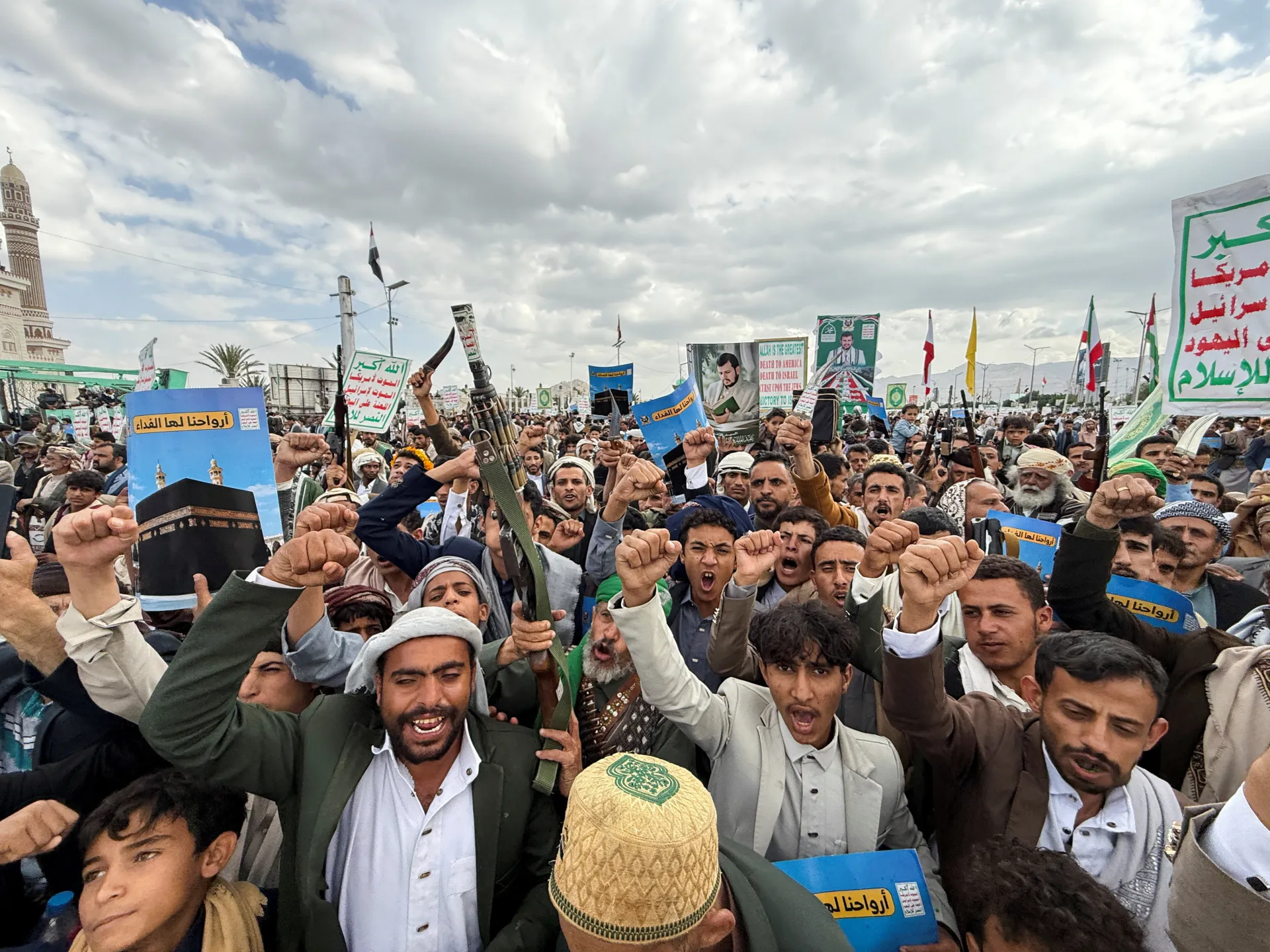
Tens of thousands marched through Sanaa on Friday in a show of support for the Iran-backed Houthis and against Saudi Arabia, as the rebels press gains that have brought large stretches of Yemen’s Red Sea coast, including the strategic Bab al-Mandeb Strait, under their control.
Earlier this week, the intensifying attacks between the Yemeni government and the Houthi rebels killed at least five people, including three children, according to reports from both sides.
Saudi Arabia said one person was killed in the Taif governorate after a Houthi drone was intercepted, while Houthi-linked media reported deaths from Saudi strikes in Taiz and the town of Abs.
The escalation has drawn in Washington, though reluctantly.
US officials met Houthi representatives at the US embassy in the Omani capital, Muscat, over the weekend after the group’s rapid territorial gains raised concern over shipping through Bab al-Mandeb, a vital corridor for global trade.
The Houthis reportedly assured Washington that vessels not linked to Saudi Arabia would not be targeted.
Despite appeals from Riyadh for US President Donald Trump to strike the Houthis directly, Washington has so far held back, wary of opening a new front while still fighting a costly war with Iran.
Meanwhile, European Union foreign policy chief Kaja Kallas said on Friday the bloc’s Red Sea naval mission, Operation Aspides, had raised its alert level as the situation in the region worsened, the Reuters news agency reported.
“Houthi attacks on Saudi Arabia are unacceptable and sabotage the global economy,” Kallas said in a post on X.
She added that she had spoken with Saudi Foreign Minister Prince Faisal bin Farhan Al Saud about diplomatic efforts to end the fighting in Yemen and restore freedom of navigation in the Strait of Hormuz.
Warsaw also says it has scrambled military planes in response to a Russian attack in western Ukraine, close to its border.
Published On 17 Sep 202617 Sep 2026
Polish Prime Minister Donald Tusk says that intelligence information suggests Russia plans to launch drone and missile attacks against countries supporting Ukraine.
Warsaw’s leader outlined the assessment during an address to parliament on Thursday, saying that the attacks will be meant to weaken NATO’s ability to act collectively in response.
Recommended Stories
list of 4 itemsend of list
“According to intelligence assessments, Russia’s plan … includes hybrid drone and missile strikes against countries supporting Ukraine, including Poland,” Tusk said.
European countries suspect Moscow of being behind a series of acts of sabotage in recent months to put pressure on the allies, especially Germany, helping Kyiv in its bid to resist Russia’s full-scale invasion – something the Kremlin has vigorously denied.
“These potential strikes would be quote-unquote ‘accidental’ in nature, intended to paralyse or at least weaken the resolve of NATO states to invoke the relevant NATO provisions in the event of aggression against a member country,” Tusk added.
He did not elaborate on which intelligence agencies had provided the warning.
He also said such attacks by Russia could coincide with “political changes in certain European countries granting power – or at least a powerful voice – to those who, increasingly invoking noble slogans of peace, pacifism and needless casualties, will call for peace – or rather, the total capitulation of Ukraine”.
Tusk appeared to be referring to the advance of more Russia-friendly parties such as Alternative for Germany (AfD) and National Rally in France.
Air raid near border with Poland
Earlier on Thursday, Poland said it had scrambled military planes in response to a Russian attack in western Ukraine, close to the Polish border.
Airports in Rzeszow and Lublin were temporarily closed, and residents of two eastern regions of Poland received air raid warnings. Local media reported that sirens had sounded and that pupils in some schools had sought shelter.
“Very close to the Polish border, not far from Dorohusk, a petrol station was most likely attacked again,” Tusk said.
On Sunday, a Russian drone hit a passenger train in Ukraine, just two kilometres (1.6 miles) from the Polish border.
Defence Minister Wladyslaw Kosiniak-Kamysz said Poland was strengthening airspace protection.
“We have increased F-16 and helicopter activity, and are reinforcing our air defence and rapid response systems,” he wrote on X.
Tusk said he would visit Ukrainian President Volodymyr Zelenskyy on Friday to discuss cooperation within the Integrated Anti-Ballistic Missile Coalition, a group of European countries developing an air defence system with Ukraine as a cheaper alternative to the US-built Patriot.
CAIRO/NEW YORK: The UN secretary-general’s personal envoy for Sudan, Pekka Haavisto, held talks in Cairo on Sunday and Monday with the Arab League’s secretary-general, Nabil Fahmy, and the Egyptian foreign minister, Badr Abdelatty, as preparations continued for UN meetings in New York this month.
The diplomatic efforts came as drone strikes and other hostilities continued to endanger civilians and drive displacement across Sudan’s Darfur and Kordofan regions, and Blue Nile State.
During his meeting with Haavisto on Sunday, Fahmy stressed the importance of launching a comprehensive, Sudanese-led political process that involves all sections of Sudanese society.
He also reaffirmed the Arab League’s support for Sudan’s sovereignty and territorial integrity, and called for the prevention of external interference in the country’s affairs.
In a separate meeting on Monday, Abdelatty stressed the need to support stability, end the conflict and reach a comprehensive political settlement that preserves Sudan’s sovereignty and meets the aspirations of its people. His talks with Haavisto encompassed the latest developments in the conflict, as well as regional and international efforts to halt the escalation and advance de-escalation measures.
Abdelatty reiterated Egypt’s support for Sudan’s unity, sovereignty, territorial integrity and national institutions. He also emphasized the need to respect Sudanese ownership of any political solution.
Both sides stressed, in an official statement, the important need to respect Sudan’s sovereignty, support de-escalation efforts, facilitate the delivery of humanitarian aid and alleviate the suffering of the Sudanese people.
Meanwhile, UN spokesperson Farhan Haq said drone strikes and other hostilities in Sudan continued to threaten civilians and force people from their homes.
In Blue Nile State, several drone strikes hit fuel stations and other critical infrastructure in the state capital on Sunday, with civilian casualties reported. The UN estimates that nearly 100,000 people were displaced by insecurity across the state between January and August, about 66 percent more than the figure since the start of the year that was reported in late May.
In North Darfur, drone strikes hit several locations in Tina, near the border with Chad.
The UN said nearly 1,200 people were displaced from two villages in El-Fasher between Sept. 10 and 13. More than 1,200 others fled villages in Um Baru over the past week, with most of them crossing into Chad.
Drone attacks were also reported at several locations in West Darfur on Saturday, including a fuel market west of the state capital. Casualties were reported.
Insecurity in Kordofan continues to drive displacement and disrupt humanitarian operations. More than 7,000 people have reportedly arrived in Abassiya, South Kordofan, in recent weeks. In North Kordofan, Al-Mina Al-Bari camp in the state capital, El-Obeid, is hosting about 9,000 families, placing further strain on overcrowded sites and basic services.
Haq reiterated the UN’s call for all parties involved in the conflict to protect civilians and civilian infrastructure, and ensure rapid, safe, unhindered and sustained humanitarian access to those in need.
Sudan descended into civil war in April 2023 after tensions between the Sudanese Armed Forces and the rival paramilitary Rapid Support Forces erupted into fighting. The conflict has killed tens of thousands of people and driven a severe hunger crisis.
A report published in May said nearly 19.5 million people, about 41 percent of Sudan’s population, faced high levels of acute food insecurity.
The UN Food and Agriculture Organization, the World Food Programme and UNICEF called for an immediate cessation of hostilities. They also urged the international community to increase funding for food assistance, emergency food production, efforts to rebuild livelihoods, and nutrition, health, water and sanitation services.
Amani El-Taweel, a researcher at Al-Ahram Center, told Arab News that the meetings in Cairo reflected continuing diplomatic efforts to find a solution to the Sudanese crisis.
She said the situation remained extremely complex, particularly amid the wider escalation in the Middle East, and that the emergence of new fronts had further complicated conditions in eastern Sudan.
Ezzat Saad, director of the Egyptian Council for Foreign Affairs, told Arab News the only path out of the crisis was to unify Sudanese institutions and secure a ceasefire.
He said any solution must come from within Sudan, without interference from external parties. Haavisto’s meetings in Cairo were part of the preparations for upcoming UN General Assembly sessions in New York at which heads of state would have an opportunity to discuss regional crises, Saad added. Sudanese institutions themselves must also demonstrate a commitment to preserving the country’s unity, he said.
On Saturday, the Egyptian president, Abdel Fattah El-Sisi, met the UN secretary-general, Antonio Guterres, on the sidelines of the BRICS summit in India. El-Sisi said any threat to Sudan’s security, unity or sovereignty constituted a “red line,” according to a statement from the Egyptian presidency.
In January, Egypt hosted the fifth meeting of the Consultative Mechanism to Enhance Coordination of Peace Efforts in Sudan, which was chaired by Abdelatty.
The foreign minister said Egypt remained committed to achieving peace and stability in Sudan. He highlighted the launch of the Sudan Neighboring Countries Initiative in July 2023, which emphasized the need for a ceasefire, inclusive political consultations and the guaranteed delivery of humanitarian aid.
KYIV: Poland and Ukraine on Sunday denounced Russian strikes close to the Polish border, including on a Warsaw-bound train and near a frontier checkpoint — as an “escalation” in the war.
Ukraine’s rail operator said former British prime minister Boris Johnson and ex-US CIA director David Petraeus were at a border train station nearby around the time the train was hit.
But the strikes came as US President Donald Trump called on Ukraine’s President Volodymyr Zelensky to halt attacks on Russian refineries, saying it was causing a shortage of diesel fuel and “there are plenty of other targets”.
Ukraine has increasingly targeted Russian oil refineries in a bid to hurt Russia’s war effort.
Russia attacked western Ukraine with drones Sunday, just days after US envoys visited Kyiv and Moscow in a bid to revive talks to end Europe’s worst conflict since World War II. European nations are meanwhile worried by what they say is increased Russian-orchestrated sabotage acts on their soil.
Poland and Ukraine said a Kyiv-Warsaw passenger train was struck just two kilometers (1.2 miles) from the Polish border, but reported no casualties.
“Shortly before the locomotive was hit at the Ukrainian-Polish border, a diplomatic train was at Yagodyn station. There were, among others, security advisers from several EU member states and former European leaders on board, including former UK Prime Minister Boris Johnson,” said the Ukrzaliznytsia rail operator.
“In another train that was at Yagodyn station at the very moment of the attack was former CIA Director David Petraeus,” it added. The operator did not say how far the officials were from the train attacked.
Zelensky said Moscow had “deliberately” struck the locomotive.
“It is precisely to prevent these strikes from spreading further into Europe that Ukrainian men and women fight every day, give their lives, and do not allow the aggression to expand,” Zelensky said.
– Poland warns of possible more attacks –
Poland has been one of Ukraine’s main allies and, with Ukrainian airspace closed, trains to Poland have been one of the main routes out of the war-torn country, used by refugees.
Poland’s Prime Minister Donald Tusk chaired an emergency meeting in Warsaw following the strikes, warning he expected Russia to escalate the war “in the coming weeks”. He added: “We cannot exclude that the escalation will also affect our territory… I hope not.”
Russia said it had hit “railway infrastructure used to transport military cargo” from European countries.
– Russia ‘knocking at Europe’s door’ –
Speaking in Kyiv, Poland’s foreign minister Radoslaw Sikorski said the “escalation” should lead to allies to “double” their support for Ukraine.
“This was just a few hundred meters from the Polish border; this affects the safety of my countrymen,” Sikorski said.
“I understand that nobody died this morning in that particular attack, but it could easily have happened.”
Ukraine’s Foreign Minister Andriy Sybiga said President Vladimir Putin considered Russia was “de facto” at war with Europe.
“Europe may consider, or reassure itself, that it is not at war with Russia, but Russia does not see it that way. De facto, it is already at war with the Euro-Atlantic space, carrying out various hostile actions,” Sybiga said.
“Putin’s terror is literally knocking at the door of the European Union and NATO.”
Russian attacks killed at least two people on Sunday in the frontline city of Kramatorsk.
Twenty people, including two children, were also wounded in a second day of attacks on the southern port city of Odesa, Ukrainian officials said.
– Three-way talks –
The Kremlin, meanwhile, said negotiations with Ukraine and the United States on the war could take place in October.
“We do not rule out such a possibility; we are talking about the foreseeable future,” Kremlin spokesman Dmitry Peskov told journalists, cited by Russia’s Ria and Tass news agencies.
Several rounds of negotiations have failed, while US-led efforts stalled during the Middle East war.
In an interview released on Saturday, Zelensky said he would be willing to meet Putin at the G20 summit in Miami in December.
But Peskov said that was “impossible”, speaking to AFP in New Delhi on Saturday, repeating Moscow’s demand that a meeting could only take place in the Russian capital.
KYIV: US President Donald Trump’s administration should impose new sanctions on Russia “now” over recent deadly strikes on Ukraine, Ukrainian President Volodymyr Zelensky said Friday.
Sanctions need to be imposed now. Sanctions must be strong. This is a tool the United States has to deprive Russia of its ability to finance the war against Ukraine every day. And honestly, sometimes I don’t understand why decisions can’t be made quickly. Because during a war, it… pic.twitter.com/xx5b9RFz0X
— Volodymyr Zelenskyy / Володимир Зеленський (@ZelenskyyUa) September 11, 2026
“Sanctions need to be imposed now,” Zelensky told the Yalta European Strategy forum. “Honestly, I sometimes do not understand why decisions cannot be made quickly,” he added.
Second day of strikes on fuel stations suggest a new campaign focused on civilian areas in the Ukrainian capital.
Published On 11 Sep 202611 Sep 2026
Russian drone attacks on two fuel stations in Kyiv have killed two people and injured others, as Moscow continues to target civilian areas.
They were struck early on Friday within ten minutes of each other in the capital’s Obolonskyi and Dniprovskyi districts, shortly after emergency sirens rang out, Mayor Vitali Klitschko said in a statement.
Recommended Stories
list of 3 itemsend of list
Russia also targeted fuel stations in Kyiv on Thursday, suggesting a new campaign focused on civilian areas in the capital. Ukrainian authorities have warned people to avoid filling up when air raid sirens sound.
One person died at the scene of one of the attacks, Klitschko said, while the other died in hospital. Six people required hospital treatment.
While fuel stations near the eastern and southern battle lines have been hit regularly for months, authorities have long warned that the attacks could extend to the capital as an intimidation strategy.
Russia and Ukraine both deny targeting civilians as the conflict – started with Moscow’s invasion in February 2022 – has developed into a series of daily attacks with missiles and drones.
Other Russian drone strikes overnight hit near a shopping mall in Pavlohrad, leaving five dead and 67 injured, while a mother and son were injured in Zaporizhzhia when a drone hit an apartment building and a mall.
Ukraine’s Minister of Foreign Affairs, Andrii Sybiha, declared Friday a day of mourning.
On Thursday, he condemned Russia for attacking civilian areas in a bid to sow fear.
“Russia is systematically attacking places where it knows people will be spending their time going about their daily lives, seeking to maximise casualties, spread fear and put pressure on Ukrainian society,” he stated.
Ukraine unleashed its own large-scale drone attack through the night, with Russia’s Ministry of Defence reporting that its forces shot down 777 drones in 16 regions.
Two people were killed and three injured in Tula, to the south of Moscow, local authorities reported.
Work at a specialized underground weapons test site in New Mexico, contracted earlier this year, was linked to planning for a potential new operation targeting Iranian nuclear facilities, according to a report from CNN. The U.S. military has notably left Iran’s hardest-to-reach site under Pickaxe Mountain untouched so far, but President Donald Trump and other U.S. officials have been openly talking about striking it.
On February 27, the day before U.S. and Israeli forces launched their initial wave of strikes on Iran, the Pentagon’s Defense Threat Reduction Agency (DTRA) quietly announced it had awarded a sole-source deal to Pate Construction Co., Inc., for new construction at the so-called Alternate Seismic Hardrock in Situ Test (ALT-SHIST) site. The work was needed to support an upcoming classified live-fire test. ALT-SHIST is situated within the White Sands Missile Range (WSMR), a sprawling U.S. Army-managed complex in New Mexico’s Jornada del Muerto desert basin. DTRA is a relatively small and obscure organization that plays a leading role in U.S. military efforts to develop new and improved ways to respond to Weapons of Mass Destruction (WMD) threats.
WSMR and DTRA have come up in discussions about strikes on Iran in the past. The U.S. military’s heaviest conventional air-dropped weapon, the 30,000-pound-class GBU-57/B Massive Ordnance Penetrator (MOP) bunker buster bomb, has been extensively tested at multiple sites there in the past. DTRA was also directly involved in its initial development. MOPs made their combat debut during U.S. strikes last year on underground Iranian nuclear facilities at Fordow and Natanz as part of Operation Midnight Hammer. The possibility has been raised that a different site within WSMR may have been used to test the plan of attack against Fordow, which involved two ventilation shafts being hit with six GBU-57/Bs each. The bombs were dropped in rapid succession, with each one burrowing deeper and deeper into the facility below. WSMR also happens to contain the site of the first atomic bomb test in 1945.
A map showing the general location of White Sands Missile Range, with an inset giving a better sense of how expansive it is. Holloman Air Force Base, which juts into the southern end of the range complex, is also highlighted. Google Maps
“The plans for the test [at ALT-SHIST] were connected to the Iran war,” CNN said in its story, published yesterday, citing unnamed sources “familiar with the matter.” Beyond that, the planned testing was tied to a “need to develop a way to target Iran’s deepest-buried underground facilities and, likely, simulate U.S. strikes against specific nuclear facilities.”
CNN said it was unable to independently verify whether or not the test in question had occurred.
A formal justification for the sole-source contract to Pate Construction that DTRA released in February did not mention Iran or elaborate on the need for the new testing at ALT-SHIST, but stressed there was an urgent requirement critical to U.S. national security.
“The services required are the immediate and mission-critical enabling services for a ‘real-world’ national security ordinance [sic; ordnance] test. This is not routine construction; it is the highly specialized remediation and operational preparation of a unique, subterranean test facility at White Sands Missile Range (WSMR),” according to the justification document, which DTRA officials had approved on February 24. “The work is a critical path dependency for a live-fire test designed to validate classified capabilities against rapidly emerging threats.”
“As the incumbent contractor for over a decade, Pate Construction Co., Inc. possesses unparalleled and non-transferable tacit knowledge of this specific subterranean test facility. This is a unique Government structure with complex geological and security considerations, and Pate Construction Co., Inc.’s direct, hands-on experience is a tangible asset that no other source possesses,” the document adds. “Pate Construction Co., Inc. is the only contractor that currently maintains a fully mobilized presence at WSMR with the specific heavy equipment and security-cleared operators required.”
CNN‘s piece says apparent work at ALT-SHIST was visible in satellite imagery of the site between mid-February and mid-March, but the outlet said it was unable to confirm whether or not this was related to the contract with Pate Construction.
We reviewed satellite imagery showing work at a remote DTRA/STRATCOM test site that coincided with this contracting action, but we couldn’t confirm its purpose.
The Pentagon didn’t respond to our questions regarding the test, and we couldn’t independently confirm it occurred. pic.twitter.com/k8zyvqWy56
ALT-SHIST is an active test site, and any work observed there earlier this year could well have been linked to other projects. For instance, additional publicly available DTRA contracting documents offer details about planned work on a specific part of the ALT-SHIST site, called Tunnel 7, tracing back to last year, as part of a project nicknamed Millstone Willemite 6 (MW-6).
“This task requires the construction contractor to repair and address the damage to Tunnel 7 caused by prior incidents, in accordance with government-provided designs, specifications, and other contract documents,” according to one contracting document dated September 15, 2025. “The contractor will also be responsible for providing support during testing activities, as well as safing after each test and general support between tests. All tunnel construction must be completed by 15 June 2027.”
“The contractor shall repair a D-shape tunnel and overburden using the D-shape of 20 feet depth and width, inside the tunnel. The contractor shall remove and repair any damage to the ribs, crown, and invert to Tunnel 7,” that same document continues. “After the repair of Tunnel 7, the contractor shall provide general construction support to instrument the tunnel in preparation for testing and then safe the tunnel for re-entry post-testing.”
The schedule for the MW-6-related work indicates that it is separate from what Pate Construction was hired to do at the site back in February.
A view out into a mountainous part of the White Sands Missile Range complex. USACE
ALT-SHIST, which was first established in 1995, is also not the only site DTRA makes use of within WSMR. As its name indicates, it is an alternate to the original SHIST site, use of which began in 1993.
“There was a small addition made to the SHIST site, but that area has been heavily used since 2007,” according to an environmental impact study the U.S. Army Corps of Engineers (USACE) completed in 2015. “The granite bedrock at these sites has been fractured and damaged by extensive testing. There are no existing granite areas adjacent to those sites where similar testing can be performed.”
A map showing the relative locations of SHIST and ALT-SHIST, as well as other test sites, at the northern end of the WSMR complex. USACE
USACE conducted that study in support of the establishment of a new test site at WSMR, simply called the Granite Test Site, to succeed the original SHIST. The Granite Test Site is now in use. There are many more sites within the range complex designed to simulate underground and otherwise hardened targets. This is also just one aspect of the wide array of testing that occurs on a daily basis at WSMR.
However, the presence of large areas of undisturbed granite is a key factor here, as that is particularly relevant for testing weapons designed to penetrate into extremely deeply buried facilities. CNN‘s piece yesterday noted that Iran’s Pickaxe Mountain site is built underneath a granite mountain.
“The mountain in White Sands, they specifically picked mountainous areas that were solid rock, and they used state-of-the-art tunneling technology to make the kind of cavities in the mountain that you would put this kind of [Iranian nuclear] facility in,” Gary Stradling, a retired scientist who previously worked for the Department of Energy’s Los Alamos National Laboratory (LANL), told TWZ in an interview last year. “I think that there is a lot of work that DOD has done in these kinds of facilities that is highly classified, and I couldn’t talk to you about it. This is very sophisticated work. It is not casual, and it’s not speculative. These are real experts who are doing the work. Careful, technical, quantitative work to be able to deliver this kind of war-fighting capability to the services.”
TWZ spoke to Stradling, who did work tied to earth-penetrating munitions at various points during his lengthy career, in the wake of Operation Midnight Hammer.
Me, standing at the edge of a MOP crater on a mountain top at White Sands Test Range, where detailed studies of massive earth penetrators were studied for effectiveness against deeply buried targets by the Defense Threat Reduction Agency (DTRA) —formerly Defense Nuclear Agency.… pic.twitter.com/JYq1V2xO6q
The U.S. military notably did not strike Pickaxe Mountain, which is situated immediately to the southwest of Iran’s nuclear facility at Natanz, during Operation Midnight Hammer. The site also went untouched by Israel during last year’s 12 Day War. American and Israeli forces did not target it during major combat operations earlier this year, either. All of this underscores the targeting challenge the site presents, even for strikes using MOPs, which TWZ explored in detail earlier this year and that has continued to make it a point of particular discussion.
CNN‘s report yesterday was primarily focused on a new assessment of ongoing construction at Pickaxe Mountain from the Center for Strategic and International Studies (CSIS) think tank in Washington, D.C.
Satellite “images reveal more road activity at Pickaxe Mountain in 2026 than at any point in the site’s history,” according to a report CSIS published yesterday. “There is a clear surge in construction activity in 2026 that corresponds to the raising and hardening of the portal accesses, paving of the internal road network, reinforcement around access areas, and the flattening and removal of excavation spoil.”
“This assessment can neither refute nor substantiate the Israeli intelligence claim that Iran moved centrifuges into Pickaxe Mountain,” CSIS’s report also noted. “The continuous construction, the absence of an increased internal security posture, and the lack of observed nonconstruction vehicles and equipment suggest the underground facility is not yet capable of enrichment work, if that is the intended purpose. Further analysis of daily activity would be needed to establish the site’s pattern of life beyond its current construction footprint.”
This is in line with TWZ‘s own previous reporting on Pickaxe Mountain back in July, when there were already signs of growing activity following the establishment of a shaky ceasefire between the United States and Iran the preceding month. As we wrote at that time:
“As with the strikes on Fordow, multiple bombs could be dropped on the same impact point to try to penetrate further down into Pickaxe Mountain. Whether there might be similar ventilation shafts or other weak points that could be exploited at Pickaxe Mountain is unknown. …”
A graphic with details about the employment of MOPs on strikes at Fordow during Operation Midnight Hammer. DOD
“A strike ‘right in the front door’ on the tunnel entrances at Pickaxe Mountain would be another option to at least hamper access to the facility inside for a time. This could be combined with strikes aimed at sections of the tunnel networks that run deeper inside the facility, but that are still close enough to the surface to be reachable by available conventional munitions. For instance, MOPs may not be able to hit the main cavern areas, but they could possibly hit certain tunnels that might lead to them.”
“Even a combined strike on entrances and shallow tunnels at Pickaxe Mountain could still present certain challenges. Firm intelligence on exactly where the tunnels snake under the mountain could be limited, making it difficult to select the best impact points. This is exactly why the U.S. military has been investing heavily in advanced, void-sensing fuzes for MOP and other bunker buster bombs for decades now. These fuzes detect when a munition has penetrated into a sufficiently large space, such as a room or tunnel in an underground facility, to help maximize damage. Fuzes that can effectively ‘count’ floors also help to ensure the munition has burrowed sufficiently deep before detonating.”
…
“…the U.S. military could conduct follow-on strikes on the entry points at Pickaxe Mountain to disrupt any attempt to regain access, as well.”
“Destroying Pickaxe Mountain will be a scientific and targeting challenge,” CSIS also noted in its report yesterday. “It is an underground fortress buttressed by granite. It is one of the only facilities in Iran’s nuclear program that the United States has not yet struck. Structurally degrading Pickaxe Mountain requires more than just kinetic force – it takes actionable high-confidence intelligence and sophisticated mathematical modeling.”
With all this in mind, it is not at all hard to imagine how new testing at ALT-SHIST, as well as other sites, would be essential for exploring additional options for striking Pickaxe Mountain and/or other deeply-buried targets in Iran using MOPs and/or other munitions.
A US Air Force B-2 bomber drops a GBU-57/B MOP during a test. USAF
It’s also worth noting here that GBU-57/Bs are understood to be in relatively short supply, though it is unknown how many of them are currently in inventory. Furthermore, the U.S. Air Force’s B-2 Spirit bombers are currently the only aircraft certified to employ the huge MOPs operationally. There was a report in 2024 that prime contractor Boeing was working to expand its capacity to produce these bombs. A MOP successor, the GBU-76/B Next Generation Penetrator (NGP), is in development now, but prototyping work is expected to run through the end of Fiscal Year 2028.
President Donald Trump certainly has raised the prospect of a strike on Pickaxe Mountain publicly on several occasions since July. He has also repeatedly said that the site is being persistently surveilled, particularly from space.
“There’s another place called Pickaxe Mountain, another nice place. We may have to give them a shot there, too, because someone said there was a little movement at the site,” Trump said yesterday during a speech at a convention the Republican Party is hosting in Dallas, Texas, ahead of this year’s midterm elections. “We don’t need much. We see everything, you know, because of Space Force.”
“We may hit Pickaxe [Mountain] very soon,” the President also said while speaking to reporters at the White House last Friday.
Trump on Pickaxe Mountain: We may have to give them a shot there too. We see everything. We can the see tag on their coat. “Muhammad Al-Fayed” It’s never Muhammad Jones. pic.twitter.com/UQm939OruL
Whether growing activity at Pickaxe Mountain finally prompts a U.S. strike at the site, either alone or as part of a larger operation, remains to be seen. If and when such a mission is launched, past and future testing at sites like ALT-SHIST in New Mexico will all but certainly have played an important part.
London Gatwick Airport is set to be hit with further travel disruption this month as two sets of strikes are planned for a total of nine days that ‘will inevitably disrupt services’
More travel chaos is set to unfold at London Gatwick Airport this month(Image: Getty Images)
Travellers passing through Gatwick Airport could face further travel chaos as more than 200 workers are set to strike this month, threatening flight delays.
The UK’s second-largest airport, which handles more than 40 million passengers every year, was hit with air traffic control mayhem this week, with hundreds of flights cancelled and grounded. Yet there could be significantly more disruption at London Gatwick Airport later this month, as 220 workers are set to walk out in a dispute over pay.
The strikes are set to take place by Unite union members, who provide assisted travel at Gatwick, and are employed by the specialist firm Wilson James. There have been pay negotiations between the airport workers and Wilson James since May, but with rejected deals, the “industrial action will inevitably disrupt services throughout Gatwick”, Unite regional officer Ben Davis said.
Unite members involved in the dispute are set to walk out between Thursday, 17 September and Monday, 21 September, and from Wednesday, 23 September to Saturday, 26 September. As they provide special assistance for disabled and elderly passengers, delays are expected in boarding and disembarking for passengers who depend on their services, which could result in delays across short and long-haul flights to and from Gatwick, the union warned.
Unite previously rejected a 3.4 per cent two-year pay rise, in addition to a 0.6 per cent bonus and 0.5 per cent uplift in pensions. The union said it was “not enough to address years of low pay at the firm”, where some of the lowest-paid members earn £14.71 per hour, while struggling with the high cost of living within reach of Gatwick.
The union also noted that workloads have increased at Gatwick, with this year’s busiest summer since 2019. Unite regional officer Ben Davis said: “Unite has been trying to negotiate a better pay deal for our members for months, however Wilson James has failed to put forward an offer that is acceptable to workers.
“Industrial action will inevitably disrupt services throughout Gatwick but this is a direct result of Wilson James refusal to make a fair offer to our members. Strikes can be avoided but that requires the company making a significantly improved offer.”
Unite general secretary Sharon Graham further commented: “Wilson James is a highly profitable company which can more than afford to put forward a pay deal that reflects the hard work our members do.
“These workers are vital in the smooth running of the airport, doing a key role in assisting passengers on and off flights. Their jobs have become even more difficult as Gatwick has become busier.”
A London Gatwick spokesperson said: “We are working with our assisted travel provider, Wilson James, to avoid any impacts and we expect to operate a normal flight schedule for our airlines and passengers on these dates. Of course, we hope Wilson James and their union can reach a resolution before then.”
The impending strikes come as Gatwick Airport faced severe disruption following air traffic control issues on Tuesday, 8 September, with hundreds of flights delayed or cancelled. The control provider, NATS, said there had been a technical glitch, and bosses admitted it had taken “longer than hoped” to resolve.
As a result of the air traffic control chaos, more than 1,700 flights were impacted on Tuesday, with 30.10 per cent of those cancelled or unable to fly, according to Cirium, the aviation analytics company. Meanwhile, 417 flights were cancelled or did not fly on Wednesday, 9 September, with cancellations continuing today (Thursday, 10 September).
Do you have a travel story to share? Email webtravel@reachplc.com
Sept 9 (Reuters) – Multiple American military aircraft suffered damage in strikes overnight on the Muwaffaq Salti Air Base in Jordan, CBS reporter Jennifer Jacobs said on Wednesday on X.
One A-10 Thunderbolt, known as the Warthog, was struck and left with a missing wing, while roughly eight F-15s sustained light damage and were placed back into service, she added.
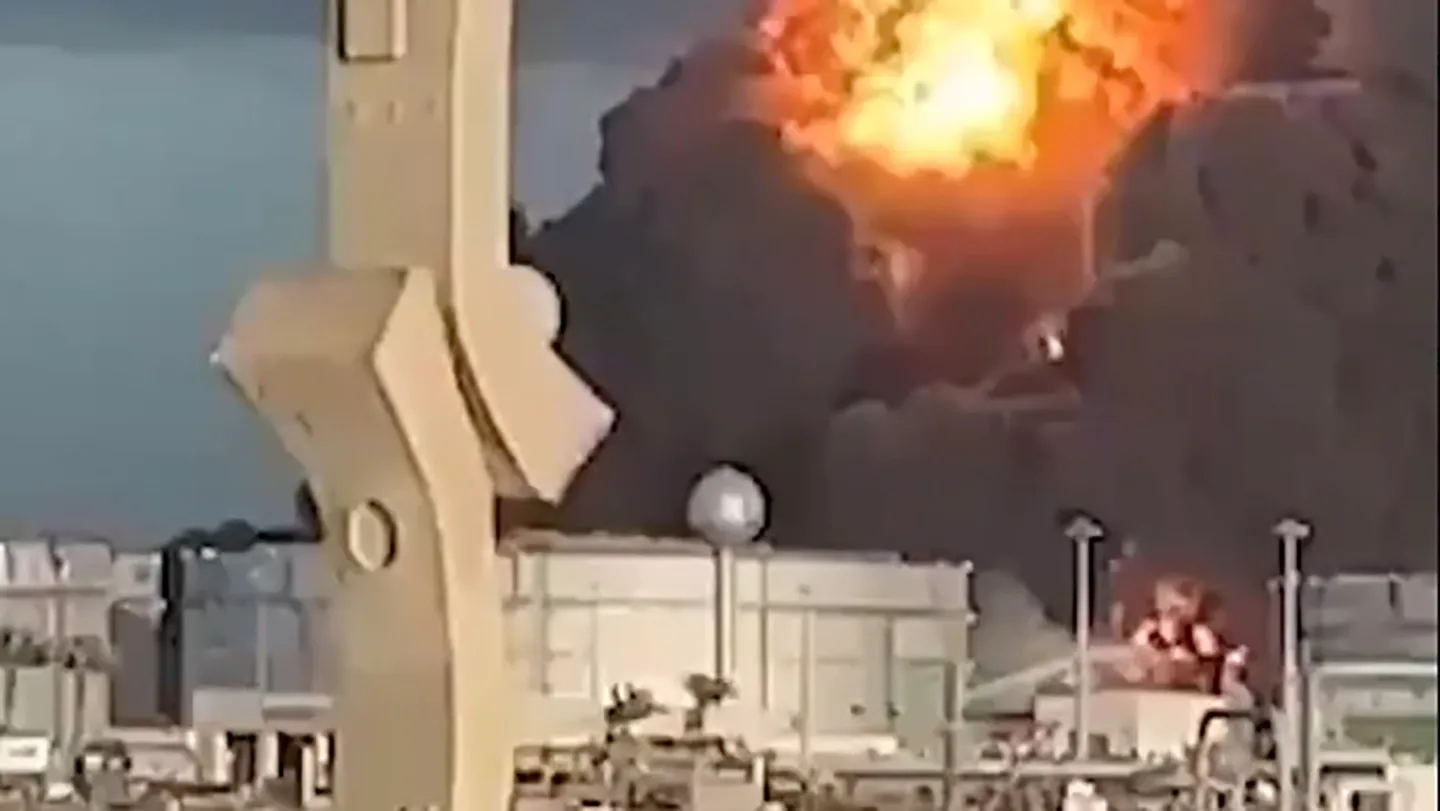
Just hours ago, the Saudi Aramco refinery at Jazan on the Red Sea was engulfed in flames after a Houthi missile and drone attack. Strikes at the heart of the Saudi’s energy infrastructure on the Red Sea, which acts as the remaining primary lifeline of energy exports out of the region, threaten to drastically impact global oil prices further, a concern we have been raising for some time. In the wake of the attack and additional fighting in the Persian Gulf, oil prices surged toward the $100 per-barrel mark.
“The Yemeni Armed Forces carried out a qualitative, large-scale military operation, targeting the Aramco company in Abha, Najran and the Economic City, Aramco in Jizan, and Khamis Mushait Air Base with dozens of ballistic missiles and drones,” Houthi spokesman Brig. Gen. Yahya Saree stated on Telegram. “The strikes were precise, by God’s grace, and direct, causing major damage to those facilities.”
Saree claimed that the strikes were “in response to the Saudi aggression that targeted our people and our country with 121 air strikes over the past three days.”
Saudi officials confirmed Houthi attacks and said they would retaliate.
“The terrorist Houthi Militia’s senseless attacks, the latest of which targeted civilian and economic sites in the cities of (Abha, Khamis Mashait, Jazan and Najran) resulting in injuries to (73) civilians, including women and children, constitute a blatant violation of the Kingdom’s sovereignty and a direct threat to the security and safety of its citizens and residents,” anti-Houthi coalition spokesman Maj. Gen. Turki Al-Maliki stated on X.
“The Joint Forces Command of the Coalition will take all necessary operational measures to deter this Terrorist Militia and resolutely confront its hostile approach, in defense of the Kingdom’s sovereignty, the preservation of its national assets and the safety of its citizens and residents,” Al-Maliki added. “The Command will also take all necessary measures and actions to respond to the sources of the threat and neutralize its danger.”
“…several energy sector facilities and installations in the southern region of the Kingdom were targeted this morning,” the Saudi Ministry of Energy stated on X. The attacks “caused fires at several locations, leading to a temporary halt in some operations,” the ministry added. “Specialized field teams have begun containing the fires, securing the sites and assessing the damage.”
Videos on social media this morning showed the Saudi Aramco facility still burning after the attacks.
Data from NASA’s Fire Information for Resource Management System (FIRMS) indicates a large amount of ongoing thermal anomalies in and near the massive Jazan refinery.
🇸🇦🇾🇪 Houthis appear to have launched a major drone attack on Jazan, SW Saudi Arabia, in recent hours.
The Houthi attacks inside Saudi Arabia came amid increased fighting in Yemen between the rebels and anti-Houthi forces backed by Riyadh.
The conflict between Saudi Arabia and the Houthis grew out of a civil war in Yemen that erupted in 2014. It expanded a year later when a Saudi-led coalition joined forces with the government ousted by the Houthis and raged on until the parties reached a tenuous ceasefire in 2022. The Saudis held off on getting involved in the recent Red Sea conflict which saw the U.S. and coalition warships duking it out with the Houthis, and eventually led to a U.S.-led air campaign over Yemen. Tensions, however, reignited after that conflict ended when the Houthis joined the U.S.-Iran conflict on the side of their major supporter. The Houthis recently imposed a blockade on the Bab al-Mandeb Strait, and began striking Saudi ships in the Red Sea as well as refineries.
As we have frequently detailed, Houthi attacks on Saudi Arabia’s energy infrastructure put further pressure on oil exports from the Middle East, already drastically affected by the Iranian closure of the Strait of Hormuz and the resumption of the U.S. blockade on Iranian ports. Saudi Arabia has diverted millions of barrels of oil per day through pipelines to its Yanbu port on the Red Sea in an effort to minimize the energy shortages due to the hostilities near the Persian Gulf. This also raised the specter of the U.S. having to get as involved as it did during the previous Houthi campaign against shipping that ended last September, which could pull resources away from Iranian-focused operations, if supporting such an operation is even possible at all at this point. The bottom line here is that if the Houthis stop Saudi oil from transiting through the Bab el Mandeb Strait and the Suez Canal, this last lifeline of energy to Europe and Asia and beyond would be severed. This would drastically exacerbate an already ballooning oil crisis.
The Houthi strikes on Tuesday followed a spike in attacks on shipping in the Strait of Hormuz. Last week, U.S. Central Command (CENTCOM) said it destroyed three Islamic Revolutionary Guard Corps (IRGC) oil tankers after the Iranians fired ballistic missiles at U.S. warships.
On Tuesday, “American forces have struck multiple Iranian tankers tied to the IRGC in response to more attempted missile attacks on a U.S. Navy warship,” a U.S. official told TWZ.
The CENTCOM strikes are part of the Trump administration’s new tanker-for-a-tanker policy of hitting Iranian vessels in response to Tehran’s attacks on shipping in the Strait of Hormuz. This marks a change from previous incidents where ships were only attacked for running the ongoing U.S. naval blockade on Iranian ports. The sinking of one of the Iranian tankers in the most recent strikes is another escalation. Previous incidents following major combat operations during Epic Fury involved U.S. forces disabling Iranian transport vessels, not sinking them.
“Following Iran’s failed attacks, CENTCOM permanently disabled the IRGC crude oil carriers M/T Downy off the coast of Kharg Island and M/T Stark 1 near Jask,” the command stated on X on Saturday. “American forces also completely destroyed the unladen crude oil carrier M/T Kylo (also known as the “Noxen”) in the Gulf of Oman, striking the vessel in multiple critical locations to render it inoperable after the crew was directed to abandon ship.”
The three Iranian crude oil tankers “are part of a multibillion-dollar shadow network that funds the IRGC and its regional proxies,” the command added. “Iran has no means by which to defend them.”
“Let the message to the IRGC be clear: If you shoot at two of our ships, we will impose an even higher economic cost —taking out three of yours,” said Adm. Brad Cooper, CENTCOM commander. “We will not hesitate to defend American forces, and if necessary, destroy Iran’s limited and exposed oil fleet.”
“Let the message to the IRGC be clear: If you shoot at two of our ships, we will impose an even higher economic cost —taking out three of yours. We will not hesitate to defend American forces, and if necessary, destroy Iran’s limited and exposed oil fleet.” — Adm. Brad Cooper,… pic.twitter.com/UGGcSGsUtd
In addition to the tanker attacks, CENTCOM is maintaining its naval blockade of Iranian ports. “As of Sept. 6, U.S. forces have redirected 92 commercial vessels, disabled 3 and boarded 2 to ensure strict compliance,” the command stated on X.
A U.S. Air Force F-35A stealth fighter jet patrols over regional waters as CENTCOM forces continue to enforce the maritime blockade against Iran. As of Sept. 6, U.S. forces have redirected 92 commercial vessels, disabled 3 and boarded 2 to ensure strict compliance. pic.twitter.com/oXNN5zKx1t
As these events unfold, the price of oil is rising further, as we noted earlier in this piece. As of noon on Tuesday, the per barrel price of Brent crude was trading at nearly $98, a $10 per barrel gain from Aug. 26, according to OilPrice.com.
Analysts said the price reflected “the market’s recognition that there is no end in sight for the conflict in the Middle East, which has disrupted oil flows through two vital arteries: the Strait of Hormuz and the Red Sea,” The New York Times reported on Tuesday.
“Oil market participants are now pricing in a more prolonged disruption to shipping flows,” Hamad Hussain, a senior economist with Capital Economics, a research firm, told the publication. “They and other analysts have raised oil price estimates, based on an expectation of increased disruptions.”
Amid the strikes on oil-related targets, Iran claimed it captured an Anduril Dive-LD UUV and is in the process of reverse-engineering it. The IRGC released video and images of the device.
The IRGC Navy has released footage showing the captured U.S. Navy Dive-LD autonomous underwater vehicle (AUV) seized in the Strait of Hormuz. pic.twitter.com/XN379Kcpkh
Additional images showing the U.S. Dive-LD AUV that was captured by the Iranians, following what a U.S. official described as a malfunction a number of days ago. pic.twitter.com/fyuDFJxsuv
The IRGC “captured one of the most modern intelligent and unmanned submarines of the terrorist U.S. military at the entrance to the Strait of Hormuz at dawn today, in a complex operation involving intelligence and operational surveillance,” the organization claimed.
The vessel “possesses the latest technology in the field of underwater systems in the world and was delivered to the fleet of the terrorist U.S. military in 2025,” the IRGC added.
Asked if Iran captured a UUV, a U.S. official denied that the Iranians obtained anything sensitive.
“An underwater drone operated by U.S. forces malfunctioned more than a day ago,” a U.S. official told us. “It was surveying regional waters in support of ongoing operations. The defective drone was an older model that neither collected sensitive data nor carried any classified sonar or radar equipment. U.S. operations in area waters continue.”
The Dive-LD can be configured for demining operations. Cooper, the CENTCOM commander, recently stated that: “We have successfully cleared sea mines in the strait’s international shipping lanes that were laid months ago by Iran’s Islamic Revolutionary Guard Corps. Internationally recognized transit routes in the strait are free of Iranian sea mines, thanks to the incredible work of the U.S. military.”
It is unclear whether the Dive-LD system was used in those operations; however Financial Times last week reported that the U.S. sent “Navy Seal divers, robot boats and specialized underwater craft into the perilous strait for a four-month mine-clearance mission.”
“The fraught process of explosive device disposal was carried out underwater and in darkness in an attempt to eliminate a crucial factor deterring ships from carrying vital cargoes through the strait since the US and Israel attacked Iran in February,” the publication added.
US Navy SEAL divers spent four months clearing Iranian mines from the Strait of Hormuz, according to the Financial Times.
SEAL divers worked at night from inflatable-hulled boats with help from underwater crafts to remove the mines.
As the Houthi-Saudi exchanges continue and the Strait of Hormuz is still heavily contested, there appears to be no real movement toward a diplomatic solution.
U.S. President Donald Trump proclaimed that the U.S. will defeat Iran.
“Oil prices will drop precipitously, like everything else is dropping (but more!), when we WIN the war with Iran,” the president stated on his Truth Social site. “Three Dollars a gallon, but ultimately, below Two Dollars a gallon. It will all happen quickly, and Iran will never have a Nuclear Weapon. MAGA!”
Iran, for its part, said it will continue fighting.
“The Islamic Republic of Iran has always opposed war and has considered the preservation of the people’s interests and regional security to lie in refraining from igniting conflict,” Iranian President Masoud Pezeshkian said on X. “However, just as it has boldly risen to defend against aggression up to this day, it will continue this resistance with full strength until the aggressors are brought to complete regret and will remain the guardian of the rights of the great Iranian nation.”
جمهوری اسلامی ایران همواره با جنگ مخالف بوده و حفظ منافع مردم و امنیت منطقه را در پرهیز از آتش افروزی دانسته است. اما چنانکه تا امروز در برابر تجاوز، دلیرانه به دفاع برخاسته است این مقاومت را تا پشیمانی کامل متجاوزان با قوت ادامه خواهد داد و پاسدار حقوق ملت بزرگ ایران خواهد بود.
Should there be a resolution to this conflict, U.S. military and intelligence officials have had “recent quiet discussions about cutting the number of people and facilities typically stationed in Middle East,” CNN reported.
In offices across the US military & intel community, there have been recent quiet discussions about cutting the number of people & facilities typically stationed in Middle East if Trump admin succeeds in ending the Iran conflict, 6 sources tell @KatieBoLillis & me.…
That’s it for now. We’ll update this story when new details emerge.
UPDATE: 6:25 PM Eastern:
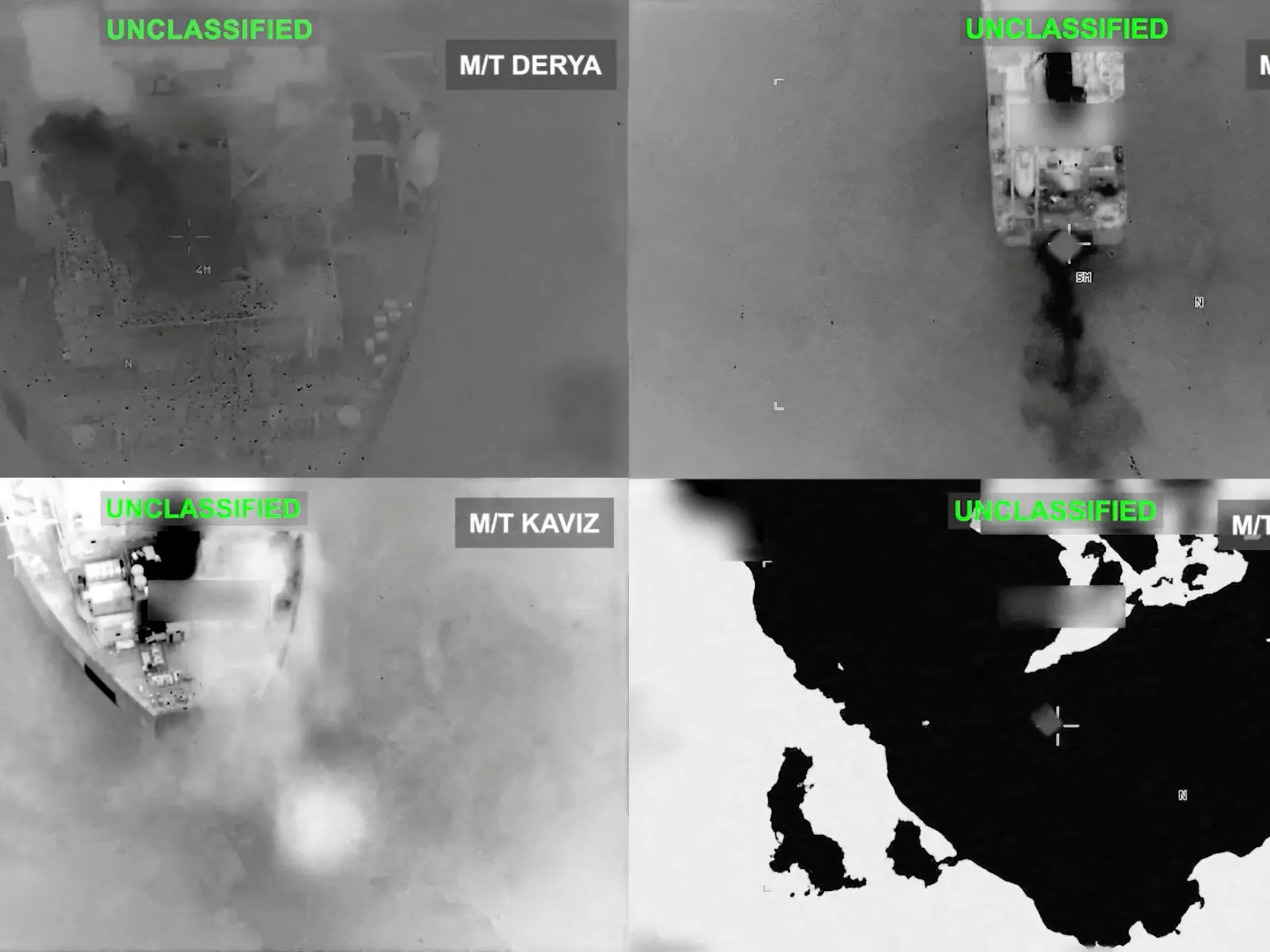
CENTCOM said it “destroyed five Iranian crude oil carriers, Sept. 8, after the Islamic Revolutionary Guard Corps (IRGC) targeted a U.S. Navy warship with ballistic missiles twice over the past two days.”
“The U.S. warship successfully evaded the attempted Iranian attacks and continued to patrol regional waters. No American personnel were harmed,” the command added on X. “In response to Iran’s most recent failed attacks, CENTCOM destroyed the IRGC crude oil carriers M/T Kaviz, M/T Charminar, M/T Horizon 1, and M/T Riesco in the Gulf of Oman as well as M/T Derya near Kharg Island. American forces directed the crews to abandon ship before the vessels were struck and rendered inoperable. Iran has used the tankers as part of a multibillion-dollar shadow network that funds the IRGC and its regional proxies. Iran has no means by which to defend these vessels.”
CENTCOM forces destroyed five Iranian crude oil carriers, Sept. 8, after the Islamic Revolutionary Guard Corps (IRGC) targeted a U.S. Navy warship with ballistic missiles twice over the past two days. The U.S. warship successfully evaded the attempted Iranian attacks and… pic.twitter.com/Gi8a2tloN1
In the wake of the CENTCOM strikes, Iran launched a new wave of ballistic missile attacks, a Jordanian source confirmed to us. The official Iranian Fars media outlet said Muwaffaq Salti Air and Prince Hassan air bases were targeted.
حمله به پایگاههای موفقالسلطی و شاهزاده حسن در اردن
گفته میشود پایگاههای هوایی موفق السلطی و شاهزاده حسن اهداف حملات موشکی ایران است.
براساس گزارشها اردن به دلیل ناتوانی سامانههای پدافندی آمریکایی، جنگندههای نیروی هوایی را برای رهگیری موشکهای ایرانی به پرواز درآورده.
Video has emerged on social media of interceptors in Jordan defending against the attack.
An insane amount of Jordanian interceptors being seen used here. Dozens being used, as Iranian fires inundate the local area. So far no visible impacts have been viewed. pic.twitter.com/cyZtoojZ9G
BOSTON — Reid Detmers struck out nine and gave up one hit over six shutout innings, Zach Neto was four for five with a two-run homer, and the Angels beat the Red Sox 6-1 on Tuesday night to end Boston’s five-game winning streak.
Vaughn Grissom and Jose Siri hit RBI singles and the Angels scored twice on double-play grounders, providing ample offense for Detmers (5-8), who got his first win since a 1-0 decision over Kansas City on Aug. 15.
Detmers struck out at least one in all six innings he pitched and allowed only three runners. He retired the last 10 batters he faced after hitting Jahmai Jones with a pitch in the third, then was pulled before the seventh after throwing a career-high 112 pitches.
The Angels outhit Boston 15-4 and won for the just the third time in their last 15 games. They also avoided a potential season sweep, improving to 1-4 against the Red Sox.
Boston went without a hit from Wilyer Abreu’s single in the first until Trevor Story led off the seventh with a double off of José Fermin, who gave up Boston’s run when Nick Sogard drove in Story with a single.
Neto gave the Angels a cushion in the eighth with his 24th homer to left-center off Raymond Burgos.
Patrick Sandoval (1-5) struck out seven in six innings for Boston, but also gave up four runs, 10 hits and two walks. His two-out walk of Mike Trout in the third helped lead to two runs when Siri and Grissom followed with consecutive singles to put the Angels up 3-1.
US military says it struck the five Iranian tankers after IRGC targeted a US warship twice in two days.
The United States has claimed attacks on five Iranian oil tankers in the Gulf of Oman and near Kharg Island after accusing Iran of launching ballistic missiles at a US warship twice in two days.
Iran responded to the attacks on Tuesday by firing missiles at US forces stationed at the Al Azraq base in Jordan. Amman said its air defences intercepted and destroyed 18 of 20 Iranian missiles, while the rest fell in open areas.
Recommended Stories
list of 3 itemsend of list
The exchange of fire comes amid escalating tensions in the Gulf, six months into the US and Israel’s war on Iran, with Tehran maintaining the closure of the Strait of Hormuz and Washington imposing a naval blockade on Iranian ports.
The hostilities briefly drove oil prices to $99.46 earlier on Tuesday.
In a statement, the US Central Command said Iran’s Islamic Revolutionary Guard Corps (IRGC) had targeted a US warship twice over the past two days. The warship “successfully evaded the attempted Iranian attacks” and “no American personnel were harmed”, it said.
The Central Command said it retaliated by destroying the Iranian oil carriers, M/T Kaviz, M/T Charminar, M/T Horizon 1, and M/T Riesco in the Gulf of Oman as well as M/T Derya near Kharg Island.
“American forces directed the crews to abandon ship before the vessels were struck and rendered inoperable,” the Central Command added.
Iran’s IRIB state broadcaster confirmed the attack near Kharg Island in the Gulf, which handled some 90 percent of Iran’s oil exports before the war. It reported that the crew was evacuated and said a second tanker was hit near the southern port of Jask on the Gulf of Oman.
The IRGC also said “several” Iranian commercial ships were hit, and said it retaliated by subjecting Al Azraq base in Jordan to “fierce missile strikes”. It claimed hangars used by US fighter jets were destroyed in the ballistic missile attacks.
It went on to claim ballistic missile attacks on the US Navy DDG-119 and DDG-53 destroyers, saying “significant damage was caused to these vessels”.
The IRGC also threatened to target oil tankers in Kuwaiti and Bahraini ports, warning crews there to evacuate immediately.
“We warn all the crews of oil tankers in the Kuwaiti and Bahraini ports… to immediately abandon their vessels, whether at anchor or at the ports, because they will be targeted,” it said.
Jordan’s Armed Forces, meanwhile, said its air defences engaged 20 ballistic missiles, “successfully intercepting and destroying 18 of them”. Two missiles “fell in unpopulated areas,” it said in a statement.
The attacks did not cause any casualties and specialised teams “have begun securing the locations where debris and shrapnel fell,” it added.
Earlier, the chief of staff of Iran’s Armed Forces, Ali Abdollahi, had warned that Tehran would strike US military installations across the region if Iranian tankers were targeted.
“The US aggressor army has given Iranian oil tankers an evacuation warning to hit them, so I announce that any attack on Iranian oil tankers will result in the targeting of US bases in the region by the armed forces of the Islamic Republic of Iran,” Abdollahi said on state TV.
US Secretary of State Marco Rubio, however, said Washington would continue to strike Iranian ships.
“Iran continues to try to hit US naval ships, and for every time they do that or try to do that, they’re going to lose tankers,” Rubio told reporters on a visit to Colombia.
AROUND 25 EUROSTAR journeys to and from two popular cities have been cancelled tomorrow due to a nationwide strike.
Industrial action across the Netherlands means there will be no public transport in destinations like Amsterdam and Rotterdam.
Eurostar has been forced to stop routes to Amsterdam and Rotterdam tomorrowCredit: GettyA nationwide strike is taking place with no public transport servicesCredit: Getty
Tomorrow there will be no services on trains, buses, trams or metros across theNetherlands – including Eurostar services.
The strike is being held by the country’s largest trade union for staff who operate public transport with the walkouts scheduled for 2am on Wednesday and 2am on Thursday.
Sign up for the Travel newsletter
Thank you!
According to next Wednesday’s Eurostar schedule there are usually five direct services to Amsterdam from St Pancras each day and nine indirect routes with Eurostar.
As for return trains there are usually five direct routes and six indirect back to London.
When it comes to Rotterdam there are usually five direct services and eight indirect routes scheduled mid-week.
Returning to London are five direct routes and six indirect.
But none of these will be running tomorrow due to the strike action.
Due to the early hours of the strike ending, services on Thursday morning could be affected too with several Eurostar journeys in showing as ‘Not available’.
On its website, Eurostar said: “No national or international trains will be able to run on the Dutch network on that day.
“There will also be some disruption on the evening of Tuesday September 8 and the morning of Thursday September 10.”
Amsterdam has 14 routes from St Pancras with EurostarCredit: Getty
It continued: “If you’re due to travel with Eurostar, you can check whether your journey is affected by the strike on our live train info page.”
“We’ve also contacted all affected passengers whose contact details we have.
“If you have a connecting journey, please get in touch with the relevant train company for more information.
“We know how important your travel plans are and we’re sorry for the disruption this strike will cause.”
The operator added that if your Eurostar train is no longer running, you can either change your booking for free, cancel your booking and get an e-voucher or cancel your booking and get a full refund.
In Amsterdam, metros, trams, buses and ferry services will all be suspended.
In Rotterdam, the metros, trams, buses will be suspended as well, and in The Hague, trams and buses will not be running.
A Eurostar spokesperson told Sun Travel: “Following the national public transport strike on Wednesday 9 September 2026 from 2AM until the 10th of September at 2AM in the Netherlands, no Eurostar trains will be able to run on the Dutch network on Wednesday.
“Affected passengers have been notified and can obtain a reimbursement or change their tickets free of charge. We apologise for the inconvenience.
“Trains on the other Eurostar routes are running normally.”
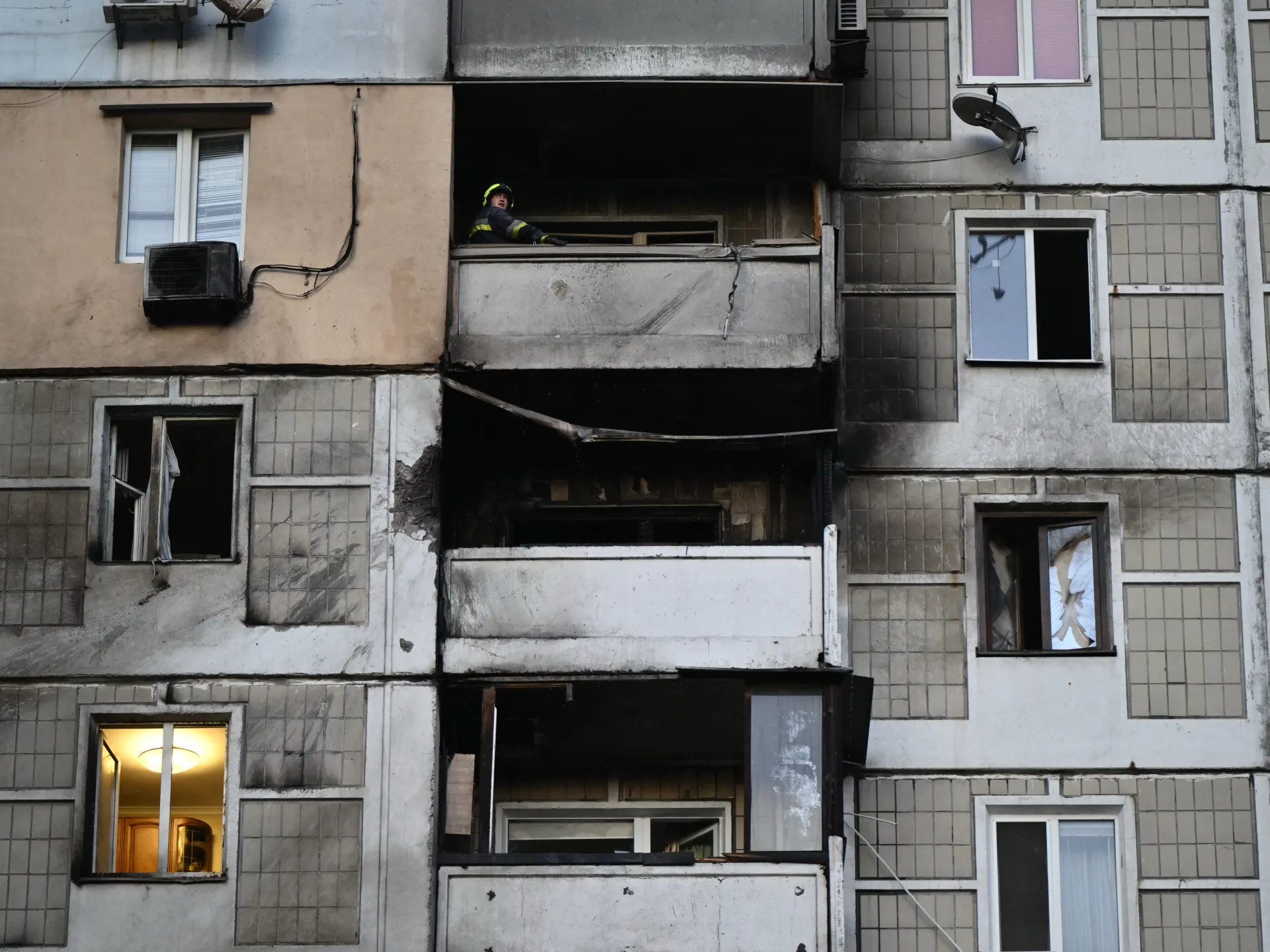
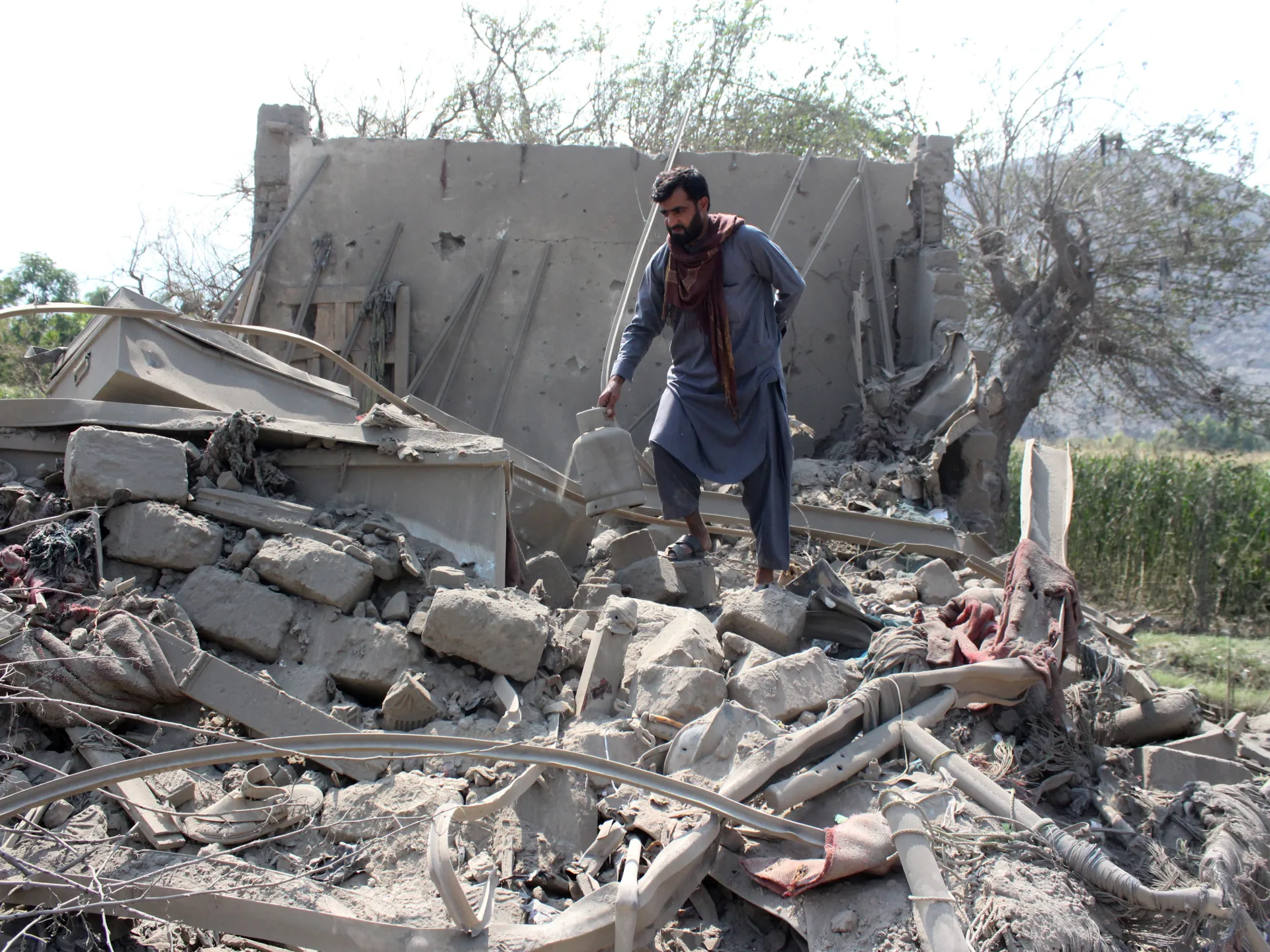

![France's President Emmanuel Macron meets with Ukraine's President Volodymyr Zelenskyy on the sidelines of the United Nations General Assembly in New York City on September 21, 2026 [Ludovic Marin/AFP]](https://i0.wp.com/www.aljazeera.com/wp-content/uploads/2026/09/AFP__20260922__C8XY4MU__v1__HighRes__UsFranceUkrainePoliticsDiplomacy-1790058813.jpg?w=640&ssl=1)