Strikes

Panic on beach in northern Israel during Hezbollah strikes | Israel attacks Lebanon

NewsFeed

Videos on social media show people on a beach in northern Israel running for shelter as Hezbollah rockets are launched towards the region, according to Israeli media. It was the first barrage fired from Lebanon towards Nahariya in three weeks.

Source link

Israeli strikes kill 14, wound several in southern Lebanon in latest ceasefire violation – Middle East Monitor

At least 14 people were killed and several others wounded in Israeli airstrikes in southern Lebanon on Sunday amid continued violations of an ongoing ceasefire, Anadolu reports.

The Lebanese Health Ministry said 11 people were killed and nine others injured in an Israeli strike on the town of Seir al-Gharbiyeh in Nabatieh province in southern Lebanon.

A fighter jet struck the town of Bazouriyeh in the Tyre district, killing one person and injuring two others, the state news agency NNA reported.

An Israeli drone strike also killed a young man in the town of Arabsalim in Nabatieh district, the outlet said.

A house was also hit in an Israeli strike in the town of Toura in Tyre, killing a woman and injuring two people.​​​​​​​

The Israeli attacks came despite a US-mediated ceasefire that is supposed to remain in effect until early July.

More than 3,100 people have been killed, over 9,500 injured, and 1.6 million displaced by Israeli bombardment in Lebanon since March 2 amid cross-border attacks with Hezbollah, according to Lebanese officials.

READ: Israel pounds Gaza, Lebanon in daily breaches of ceasefires

Source link

Trump pledges to withdraw from Kennedy Center after court strikes his name | Donald Trump News

US President Donald Trump has announced he plans to withdraw his leadership from the John F Kennedy Center for the Performing Arts, after a federal judge ruled he could no longer have his name on the building.

On Friday, in a 580-word post, Trump blasted Judge Christopher Cooper as reckless. He also painted the performing arts centre as a dilapidated structure only he could restore.

Recommended Stories

list of 3 itemsend of list

“Unfortunately, Judge Cooper and the Radical Left would rather see it DIE than have President Trump transform it into something that everyone could be proud of,” Trump wrote, referring to himself in third person.

But Trump’s interventions at the Kennedy Center, a national performing arts centre in Washington, DC, have been controversial from the start.

Construction on the building began in 1964, shortly after President John F Kennedy was assassinated.

That year, his successor, Lyndon B Johnson, signed into law an act of Congress that established the site as a “living memorial” to the slain leader.

But since starting his second term, Trump has sought to reshape Washington, DC, in his own image, undertaking construction projects and erecting banners with his photograph.

Within weeks of his inauguration, in February 2025, he fired Democratic members of the Kennedy Center’s bipartisan board and replaced them with his picks.

He also terminated the leadership of the centre’s longtime president, Deborah Rutter. The board quickly elected Trump as chair instead.

But some of the biggest backlash came in December, when the board went a step further and voted to rename the building “The Donald J Trump and the John F Kennedy Memorial Center for the Performing Arts”.

Within a day, construction crews were seen outside the arts centre, adding Trump’s name to the outside of the edifice.

Critics immediately denounced the effort as a violation of the 1964 law, not to mention a sign of disrespect towards the late Kennedy.

Amid public pressure and a string of cancellations from performers, Trump announced in February he would shutter the arts centre for two years, starting in July. He cited renovations as his rationale for the sudden closure.

US Representative Joyce Beatty, a Kennedy Center trustee, sued to stop the closure from happening. She also sought the removal of Trump’s name.

(FILES) A general view shows the Kennedy Center in Washington, DC on January 10, 2026.
Friday’s court ruling requires Trump to remove his name from all Kennedy Center signage and materials within 14 days [File: AFP]

Inside the court’s ruling

In Friday’s ruling, Judge Cooper — an appointee of former President Barack Obama — sided with Beatty’s requests.

He ordered that Trump’s name must be removed from the theatre’s facade, as well as any other signage or official materials, within 14 days, citing the 1964 law.

“The Kennedy Center’s organic statute makes crystal clear that the Center is to be named for President Kennedy, and it cannot bear any other formal name or public memorial based on the Board’s unilateral say-so,” Cooper wrote.

“Congress gave the Kennedy Center its name, and only Congress can change it.”

Cooper also overturned the Trump-led board’s decision to strip trustees like Beatty of the right to vote on Kennedy Center matters. Beatty is one of several bipartisan trustees who have a seat on the board by virtue of an act of Congress.

“If trustees presumptively possess the right to vote, what, if anything, authorizes the Board to unilaterally strip certain trustees of voting rights?” Cooper asked in his decision, striking down the Trump-era policy.

“Absent Congressional authorization, the Board may not deprive a duly-appointed Kennedy Center trustee of her right to vote on Board matters on which all other trustees are entitled to vote.”

In the last part of his 94-page decision, Cooper turned his attention to the Kennedy Center’s imminent closure.

He pointed to statements and plans from Trump administration officials touting the use of the performing arts facility before the July closure date, saying they undermined the assertion that the building was somehow hazardous.

“Former Kennedy Center President [Richard] Grenell emphasized that the Center would be one of the ‘premiere spots’ for America’s 250th celebration — quite a concerning idea if the Center is as dangerous as the Defendants now represent,” Cooper wrote, alluding to events scheduled for the coming weeks.

He later added, “Up until February 1, the Center was planning to proceed apace with some form of phased construction and cited no safety concerns about that plan.”

While closing the Kennedy Center is within the board’s powers, Cooper concluded that the board had likely violated its duty to administer the centre “as a prudent person would” under the law.

He therefore issued a temporary injunction against the centre’s closure. “The trustees might have assessed the propriety of closure in a number of prudent ways. This was not one,” he wrote.

Joyce Beatty
Representative Joyce Beatty sued the Trump administration over its planned closure of the arts facility [File: Paul Sancya/AP Photo]

Reactions to the ruling

The ruling prompted an incensed rebuttal from Trump on his Truth Social platform. The president pledged to transfer oversight of the facility to Congress, under whose mandate the centre already operates.

“We are going to be working with Congress to transfer this failing Institution back to them so they can make a determination as to what to do with it,” Trump wrote.

He also blasted Cooper as a partisan actor who had treated him “unfairly”, echoing similar criticisms he had levied against other judges.

“Judge Cooper should be ashamed of himself! I cannot be involved with a situation where danger to the Public is allowed to flourish in plain and open sight,” Trump said.

“Unless I am free to do what I do better than anyone else, bring this Institution back, physically, financially, and artistically, I have no interest in continuing what could only be a hopeless journey into ‘NEVER NEVER LAND.’”

Beatty, meanwhile, applauded the ruling as a victory against unchecked power, unfettered by the law.

“The Kennedy Center is an institution that belongs to the American people, not to Donald Trump,” she wrote.

“He has desecrated this sacred memorial for his own vanity. I am proud to have fought for the rule of law and to protect this sacred institution.”

Source link

Russian drone strikes residential building in NATO ally Romania

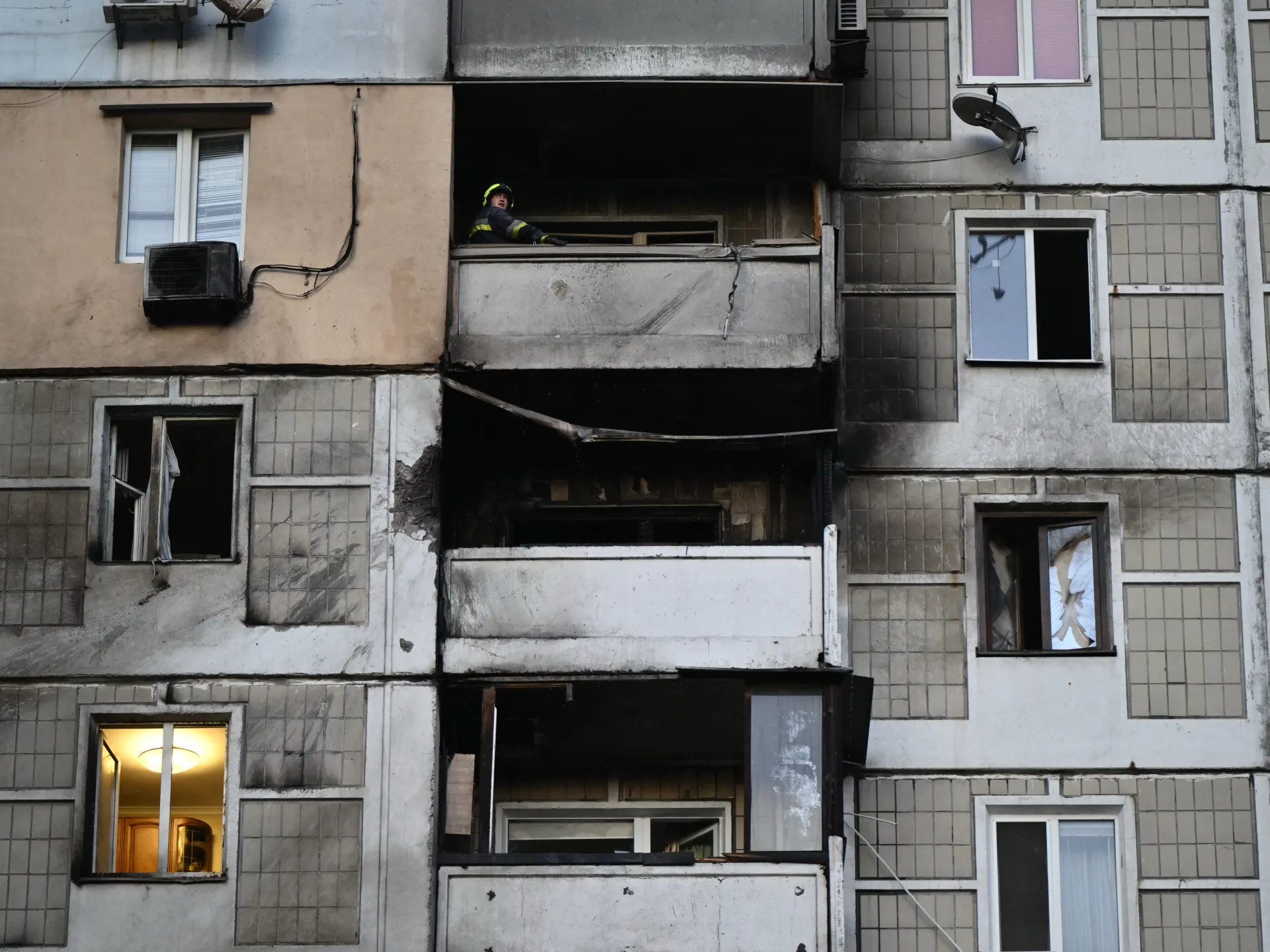
May 29 (UPI) — A Russian drone carrying explosives struck the roof of an apartment building in NATO ally Romania overnight, risking a dangerous escalation in Moscow’s four-year-old war in Ukraine.

The drone had entered Romanian airspace during a Russian attack on neighboring Ukraine and struck the building in the eastern city of Galati, located near the Romania-Ukraine border, Romania’s Defense Ministry said in a statement Friday.

Two people were “slightly injured,” according to Romania’s Ministry of Foreign Affairs. The two victims were transported to the Galati County Emergency Clinical Hospital, officials said.

The drone sparked a fire on the 10th floor of the building, according to the Department for Emergency Situations, which said online that 70 people were evacuated from the building.

Video of the scene shared by Galati County emergency services officials shows firefighters responding and debris littering the residential street.

“This represents a serious and irresponsible escalation by the Russian Federation,” Romanian Foreign Minister Oana Toiu said online.

According to the Defense Ministry, radars had detected drones flying near Romanian airspace, prompting two F-16 fighter jets and an IAR-330 SOCAT helicopter to deploy at 1:19 a.m., with authorization to engage targets.

The aircraft followed the drone in Romanian airspace, but the decision was made to not engage over heightened risk to the safety of the civilian population, Romanian President Nicusor Dan said in a statement.

Dan said he convened a meeting of the Supreme Council of National Defense for 11 a.m. Friday to discuss what he called “the most serious incident to have affected national territory” since Russia invaded Ukraine on Feb. 24, 2022, igniting the war.

“The unprecedented nature of the event requires a firm, coordinated and commensurate response — at the national, allied and international levels,” he said.

He said he holds the Kremlin wholly responsible.

“What happened today in Galati is the direct consequence of Russia’s war of aggression unleashed against Ukraine, of the irresponsible and indiscriminate manner in which Moscow operates these weapons systems in the immediate vicinity of NATO borders, as well as of its systematic disregard for international law,” he said.

“There is no ambiguity regarding the perpetrator and the cause of this aggression.”

All NATO and European Union allies have been informed of the incident, and the U.N. Security Council has been informed, he said, adding that Romania has formally requested that allies deploy additional anti-drone capabilities to NATO’s eastern flank.

Romania also summoned the Russian ambassador to officially communicate “the effects that this lack of responsibility on the part of the Russian Federation will have on the diplomatic relations between our countries and the next steps at the European level regarding packages of sanctions,” Toiu said.

Numerous heads of state and ministers of foreign affairs condemned the attack, including European Commission President Ursula von der Leyen and NATO Secretary General Mark Rutte, who said he spoke with Dan and assured him that the alliance “stands ready to defend every inch of allied territory.”

“Russia’s reckless behavior is a danger to us all,” he said in a statement. “They continue to target civilians and civilian infrastructure across Ukraine. And last night showed yet again that the implications of their illegal war of aggression don’t stop at the border.”

Russian drones have repeatedly entered NATO airspace amid Russia’s war in Ukraine, but Friday’s incident appeared to be the most severe involving Romania.

Source link

‘Flights will be cancelled’ warning as dates set for 2 strikes in UK holiday hotspot locations

In a new update two massive walkouts are planned – with passengers to two European countries hit

Holidaymakers have been warned holiday flights are set to be hit after a massive strike was joined. Portugese media have today reported that cancellations will result after cabin crew and ground staff decided to walk out.

EasyJet has warned of flight disruptions, whilst TAP and SATA are allowing free rebooking. The general strike on June 3 against the labour reform is expected to have a major impact on airport services in Portugal. Reports suggest up to 500 flights could be scrapped, while trains, ferries, city metros and buses are all expected to face disruption.

It comes as holidaymakers heading to Italy were warned to brace for major disruption as a nationwide transport strike threatens chaos across the country. The 24-hour walkout is expected to hit rail services, airports, metro systems, buses and regional transport networks from 9pm on Thursday, May 28, until 9pm on Friday, May 29.

Several unions have confirmed industrial action involving major rail operators including Trenitalia, Trenord and Italo, sparking fears of cancellations and delays on some of Italy’s busiest routes. Long-distance rail services connecting major cities including Rome, Milan, Venice, Florence, Bologna and Naples are expected to be among the worst affected outside protected operating periods.

Italy’s Ministry of Transport has published lists of “guaranteed” services that must continue operating during protected commuter windows between 6am and 9am, and again between 6pm and 9pm. Italy’s Civil Aviation Authority, ENAC, confirmed flights are legally protected during guaranteed operating periods between 7am and 10am and 6pm and 9pm.

In Portugal TAP and the SATA group are even allowing their passengers to rebook flights scheduled for that date at no extra cost. The airlines have already posted notices on social media and are contacting passengers.

Unions in the sector were this week negotiating with the Directorate-General for Employment and Labour Relations regarding minimum services, and only then will it be known exactly how many flights will be cancelled. It is already certain, however, that there will be flight cancellations, not least because air traffic controllers will also be joining the strike.

READ MORE: EasyJet warning ahead of major national transport strike starting tomorrowREAD MORE: Portugal travel warning as up to 500 flights could be cancelled in June

“Like all airlines operating to and from the country, easyJet may experience some disruption to its flights. The airline is currently assessing the potential impact of this situation, and customers will be contacted directly if their flights are affected. easyJet assures us that it is doing everything in its power to minimise the impact of this strike,” an official source told Expresso.

The Civil Aviation Pilots’ Union (SPAC), unlike during the last general strike on December 11, will not be taking part this time. “We have decided to stand aside from this process for now,” said Hélder Santinhos, speaking to Lusa.

“The first general strike was timely. We took a stand, both pilots and workers across the country, against the labour package,” the SPAC president began by saying. Now, he said that next week’s strike “does not seem to be at the most appropriate time”, although he reserves the right to take further industrial action. This is because, he argued, “unfortunately, the changes made to the labour package do not seem sufficient for us to agree to them”.

This stance differs from that of the members of the National Union of Civil Aviation Flight Crew (SNPVAC), who approved participation in the general strike on May 19. Sitava, the largest union for ground staff and handling personnel, has also joined the strike.

The CGTP has served notice of a general strike for June 3 against the changes to the labour law, after negotiations with the Government ended without agreement.

The hospitality sector is deeply concerned about this strike. The Portuguese Hotel and Restaurant Association (AHRESP) stated on Tuesday that the general strike will exacerbate the sector’s losses, which are already being affected by the situation at border controls.

The association argues, as reported by Lusa, that “national airports are showing signs of operational collapse” and that the general strike on June 3 “could further exacerbate the losses”. It also calls for the European Union’s Entry/Exit System at border controls to be suspended with urgency until the end of September.

AHRESP said in a statement: “Portugal invests in international promotion as a destination of excellence, yet allows the visitor’s first experience to be hours spent queuing, a missed connection, a negative reaction on social media or a booking that is not repeated.”

On Tuesday, AHRESP called for the suspension of the EES (European Union Entry/Exit System) as a matter of urgency and until the end of September, which “would speed up passenger checks and reduce waiting times at airports”.

The association also calls for “negotiation and a sense of responsibility among all parties involved, in order to avoid a strike in aviation and airport services, which, were it to take place, would result in further damage to sectors that continue to face severe economic pressures”.

The Federation of Transport and Communications Unions has announced its support for the general strike. The strike notices cover workers at Lisbon Metro, Carris, Transtejo/Soflusa, Fertagus, Mondego Metro, Porto Metro, STCP and CP.

Unions representing teachers, architects, doctors, nurses and journalists have also announced their support for the protest, which promises to bring the country to a standstill.

Source link

Iran war day 89: Lebanon strikes kill 31 as ceasefire tensions rise | US-Israel war on Iran News

Israeli strikes kill 31 in Lebanon as attacks intensify and displacement orders spread.

Israeli attacks across southern Lebanon killed at least 31 people and wounded 40 others on Tuesday, as Israeli forces intensified strikes and issued dozens of displacement orders for towns and villages in the country’s south and east.

Panic spread across southern Lebanon as residents fled the escalating assault, with Israeli ground forces reportedly pushing deeper into Lebanese territory amid fears of a wider offensive.

Meanwhile, Iranian officials condemned what they called “blatant violations” of the ceasefire by the United States after attacks on southern Iran on Monday, saying the strikes had further damaged already fragile diplomatic efforts.

Here is what we know:

In Iran

  • Iran accuses US of violating ceasefire: Iran said the US violated the ceasefire by carrying out strikes near the Strait of Hormuz, complicating efforts to end the war. Iranian officials described the attacks in Hormozgan province as a “gross violation”, while the US claimed the strikes were defensive and targeted missile sites and vessels attempting to lay mines.
  • Khamenei warns Gulf states over US bases: In an Eid al-Adha message, Iran’s Supreme Leader Mojtaba Khamenei said the US was losing influence in the Middle East and warned regional countries against hosting military bases that could be used to launch attacks on Iran.
  • Iran seeks frozen assets release: Iran’s Tasnim news agency said Tehran is pushing for the release of $24bn in frozen assets as part of ongoing negotiations, with half expected to be unlocked after an initial agreement is signed.
  • Internet partially restored: Meanwhile, internet access has begun gradually returning after what NetBlocks described as Iran’s longest nationwide crackdown on online access.

War diplomacy

  • US says Iran deal still possible despite strikes: Despite new US attacks, Secretary of State Marco Rubio said a peace agreement with Iran remained within reach. The strikes threatened the fragile ceasefire between Washington and Tehran, as China called on all sides to honour the truce and resolve disputes through diplomacy.

In Israel

  • Netanyahu warns of ‘more to come’ in Lebanon: Israeli Prime Minister Benjamin Netanyahu said Israeli forces were “deepening” operations inside Lebanon, with troops “seizing and controlling” territory and expanding what he described as a “security zone”. Speaking after Israeli attacks, Netanyahu also said Israel was intensifying efforts against Hezbollah drones and pledged fighting would continue “until ensuring the full security of Israel’s citizens”.
  • US warplanes remain stationed in Israel: Israel’s Kan broadcaster reported an “unprecedented” deployment of US fighter jets and refuelling aircraft at Israeli airports, saying the military presence at Ben Gurion and Ramon airports is affecting civilian aviation capacity. The aircraft have remained in Israel despite the ceasefire with Iran.

In the US

  • US senator criticises Trump’s Iran strategy: Democratic Senator Cory Booker said President Donald Trump’s approach to Iran had backfired, arguing the conflict had strengthened Tehran’s position and given it greater leverage over the Strait of Hormuz. Booker said the US was now in a “worse” situation than before the war and accused Trump of leading the country into a costly deadlock.

In Lebanon

  • Israeli attacks kill 31 in Lebanon: Recent Israeli ground and air operations killed at least 31 people, as Israeli forces intensified strikes and pushed deeper into Lebanese territory. Israel also issued dozens of forced displacement orders across southern Lebanon and the eastern Bekaa Valley.
  • Hezbollah ‘not losing the war’: Security affairs analyst Ali Rizk told Al Jazeera that Israel’s intensifying military campaign suggests mounting concern over Hezbollah’s resilience on the battlefield, while also reflecting growing political pressure on Israeli Prime Minister Benjamin Netanyahu at home.
  • ‘Illusion of a ceasefire is entirely gone’: Reporting from Tyre in southern Lebanon, Al Jazeera’s Obaida Hitto said the sharp escalation in Israeli attacks shows that diplomatic efforts to contain the conflict have in effect collapsed. Massive strikes hit eastern Lebanon, including areas near the strategic Qaraoun Dam, while displacement orders spread across dozens of towns and villages. Hitto said civilians were once again facing the “devastatingly familiar reality” of widespread destruction, displacement and fear.

Source link

Renewed U.S. strikes put Iran talks on verge of collapse

Precarious talks to end the war with Iran appeared close to collapse on Tuesday as renewed fighting across the region threatened to derail fragile progress toward a comprehensive settlement.

U.S. strikes against targets in southern Iran — the first since a ceasefire was declared in the war seven weeks ago — coupled with escalating attacks by Israel in Lebanon have undermined optimism that an agreement was within reach.

The attacks occurred just hours after U.S. and Iranian diplomats arrived in Qatar for peace talks. Iran’s top negotiators left Doha on Tuesday without comment. News of the strikes, and threats of retaliation by Tehran, sent global oil prices soaring back to more than $100 a barrel.

U.S. Central Command described Monday’s actions as “self-defense strikes” that were restrained and modest in scope, targeting missile launch sites and Iranian boats “attempting to emplace mines” in the Strait of Hormuz.

But the attack came as President Trump and Secretary of State Marco Rubio had been projecting confidence that a framework agreement to end the war could be reached within days. Under the proposed deal, Iran would restore the strait to its prewar status as a free and open international waterway, while both sides entered 60 days of negotiations over the removal of Iran’s nuclear stockpile.

Laying mines in the strait in the 11th hour of the negotiations could signal to the Trump administration that Iran is not serious about reopening traffic there. But the Iranians said Tuesday that renewed U.S. strikes suggest it is Washington that is unprepared to commit to peace.

Iran’s Foreign Mministry condemned what it called “aggressive actions” by the United States, describing them in a statement as a violation of the ceasefire agreement.

“The commission of these aggressive acts — occurring concurrently with the ongoing diplomatic track mediated by Pakistan — has once again exposed the hostile nature and perfidy of the ruling establishment in the United States,” the statement said.

Iran “will not leave any hostile act unanswered,” the ministry added.

Mojtaba Khamenei, Iran’s elusive supreme leader, declared in a scheduled speech that U.S. allies throughout the Middle East “will no longer serve as a shield” for the American military, suggesting retaliatory strikes against U.S. assets in the region could be imminent.

Prospects for a diplomatic breakthrough were already dim. Over the last week, U.S. and Iranian officials projected optimism while outlining seemingly incompatible visions of a deal.

Trump has repeatedly said Iran would not receive any sanctions relief until its stockpile of fissile material is removed and destroyed. But Iranian officials reiterated Tuesday that unfreezing the country’s overseas assets remains a precondition for continued negotiations.

And it is unclear whether Iran would agree to a peace deal with the United States that does not also restrict the actions of Israel, whose leader, Prime Minister Benjamin Netanyahu, has expressed deep skepticism about the diplomatic process.

Netanyahu said in recent days that Israel would not be bound by any nuclear pact, and that his government would continue military action against targets throughout the region — including in Lebanon — as it views necessary.

Israel’s continued assault on Lebanon nearly jeopardized the ceasefire between Iran and the United States before Trump brokered a separate, temporary halt to the fighting there. Since then, however, Israeli strikes have resumed, and Netanyahu vowed to intensify his campaign against Hezbollah, the Lebanese Shiite militant group.

“We are not removing our foot from the pedal,” Netanyahu said in a video address Monday. “On the contrary, I said to step on the pedal even more.”

Israel’s military ramped up its operations Tuesday, attacking what it said were more than 100 Hezbollah sites across southern and eastern Lebanon, while extending ground incursions deeper into Lebanese territory.

The overnight strikes struck weapons storage facilities, command centers, observation posts and infrastructure sites, according to an Israeli military statement.

Israeli media also reported that Israeli troops were operating beyond a 6.2-mile zone they occupy in southern Lebanon, in what many fear may be a prelude to a wider invasion.

Those fears were further stoked Tuesday by fresh Israeli evacuation orders for the entirety of Nabatiyeh, southern Lebanon’s second-largest city.

Hezbollah upped its campaign as well, peppering Israeli troops in southern Lebanon and areas of northern Israel with drones and rocket attacks, according to statements from the group. Hezbollah-affiliated media reported the group’s fighters clashing with Israeli troops to prevent their advance.

In recent weeks, Hezbollah has increasingly relied on fiber-optic drones — which are both low-cost and impervious to jamming — to harass Israeli positions.

On Sunday, an Israeli soldier was killed and another wounded when a Hezbollah kamikaze drone hit their armored personnel carrier, according to the Israeli military; 23 Israeli soldiers and a civilian defense contractor have been killed in the current conflagration between Israel and Hezbollah, Israel’s military says.

The latest bout of hostilities between Hezbollah and Israel began March 2, when the Iran-backed group launched attacks on Israel to avenge the killing of Iran’s ayatollah, Ali Khamenei.

So far, Israeli strikes have killed 3,213 people, wounded more than triple that number, and left more than a million displaced, according to Lebanese health authorities.

A ceasefire signed April 17 sidelined the capital, Beirut, from strikes but has done little to stop the fighting otherwise, with Hezbollah and Israel continuing attacks despite unprecedented direct negotiations taking place between the Israeli and Lebanese governments.

It was unclear whether Netanyahu’s warning meant Beirut would be targeted once more. Israeli drones buzzed throughout the day over the capital and the Hezbollah-dominated southern suburbs Tuesday.

Hezbollah opposes direct negotiations and insists it will keep fighting until Israel withdraws from Lebanon and stops attacks. Israel has demanded the Lebanese government do more to disarm Hezbollah and to move toward a peace deal.

Bulos reported from Beirut.

Source link

Aftermath of deadly Israeli strikes in southern Lebanon | Israel attacks Lebanon

NewsFeed

New videos show widespread destruction in Maarakeh following deadly Israeli strikes across southern Lebanon. On Tuesday, the Israeli military issued forced displacement orders for more than a dozen towns and villages, expanding its ground operation beyond its new, so-called ‘yellow line’.

Source link

European Shares Slip as US Strikes on Iran Dampen Peace Deal Hopes and Push Oil Higher

European shares edged lower on Tuesday as hopes for an imminent de-escalation in the Middle East conflict faded following fresh U.S. strikes on Iran, triggering renewed geopolitical uncertainty across global financial markets.

The pan-European STOXX Europe 600 Index slipped 0.2% to 630.33 points by 0833 GMT, retreating from gains that had recently pushed it close to record levels.

On Monday, the index had closed at its highest level since late February, briefly coming within 1% of an all-time high on optimism that diplomatic progress could soon ease tensions in the region.

That momentum quickly reversed after renewed military action and comments from U.S. Secretary of State Marco Rubio, who said negotiations with Iran could take “a few days,” tempering expectations of a near-term resolution.

Oil Prices Jump as Hormuz Risks Return to Focus

Global energy markets reacted sharply to the escalation, with Brent crude rising more than 3%, reigniting inflation concerns across energy-importing economies, particularly in the euro zone.

The market remains highly sensitive to risks surrounding the Strait of Hormuz, a critical global shipping route through which a significant share of the world’s oil flows.

Analysts warned that any sustained disruption in the region could deepen inflationary pressures just as central banks weigh their next policy moves.

Airlines and Autos Under Pressure

Travel and transport-related stocks were among the biggest losers in Tuesday’s session.

Airlines including Lufthansa and Ryanair fell 1.4% and 0.7% respectively, reflecting investor concerns that higher fuel costs could squeeze margins.

Luxury and automotive stocks also came under pressure after Ferrari dropped sharply following the unveiling of its first fully electric vehicle.

The decline was compounded by a broader sell-off in the European autos sector, which fell 1.6% as investors reassessed competition risks from Chinese EV manufacturers and weakening global demand trends.

Market Sentiment Balances War Risk and Policy Signals

Despite renewed volatility, some investors noted that markets remain partially supported by expectations that diplomacy could still stabilize the situation.

One portfolio manager at Franklin Templeton said markets were reacting cautiously because investors believe a potential agreement could still restore stability in the Strait of Hormuz and normalize energy flows.

However, uncertainty around timing and scope continues to limit upside momentum in equities.

Inflation and Central Bank Policy Back in Focus

Attention is now shifting toward upcoming inflation data across major euro zone economies and the United States, which will help shape expectations for future monetary policy.

European Central Bank policymaker Yiannis Stournaras signaled that any persistent inflation overshoot would require a cautious shift toward tighter policy.

Market pricing currently suggests at least two further 25-basis-point interest rate moves before year-end, according to LSEG data.

Corporate Movers: Winners and Losers

While broader markets weakened, some stocks moved against the trend.

Kingfisher rose 2% after maintaining its full-year profit guidance, easing concerns about demand softness in the home improvement sector.

However, the overall tone remained risk-off as investors continued to weigh geopolitical escalation against macroeconomic uncertainty.

Analysis

The latest pullback in European equities reflects a familiar pattern: markets oscillating between hopes of geopolitical de-escalation and fears of renewed conflict risk in the Middle East.

The key transmission channel remains energy. With Europe heavily dependent on imported oil and gas, any disruption involving Iran or the Strait of Hormuz immediately feeds into inflation expectations, bond yields, and corporate earnings outlooks.

At the same time, equity markets had recently been pricing in a relatively optimistic scenario in which diplomatic talks would gradually stabilize the region. That positioning left stocks vulnerable to abrupt reversals when military developments resurfaced.

Sectoral divergence also highlights how uneven the impact of geopolitical shocks can be. Energy-sensitive sectors such as airlines and autos are under pressure, while defensive or domestically oriented companies remain relatively insulated.

The broader question for markets is whether this marks a temporary setback in diplomatic momentum or a deeper breakdown in expectations for a negotiated settlement. If tensions persist, volatility in oil markets is likely to remain the dominant driver of global equity sentiment in the near term.

With information from Reuters.

Source link

U.S. military says ‘defensive strikes’ carried out in southern Iran

The U.S. Central Command said U.S. forces carried out “defensive strikes” in southern Iran on Monday, targeting missile launch sites and Iranian boats attempting to emplace mines. U.S. Navy photo by Mass Communication Specialist Seaman Zoe Simpson

May 25 (UPI) — The United States launched strikes in southern Iran on Monday even as negotiators for Tehran and Washington were preparing for further talks to end their war, a U.S. military spokesman said.

Capt. Tim Hawkins of the U.S. Central Command said in a statement issued to media outlets that the strikes were “self-defensive” in nature and were carried out “to protect our troops from threats posed by Iranian forces.”

“Targets included missile launch sites and Iranian boats attempting to emplace mines,” Hawkins said. “U.S. Central Command continues to defend our forces while using restraint during the ongoing cease-fire.”

The semi-official Mehr News Agency in Iran reported that “several explosions” were heard in the area of Bandar Abbas along the Strait of Hormuz and that civil defense sirens had been sounding there.

The agency said the situation in the city “is completely under control and there is no reason for any concern for the honorable people of Bandar Abbas.”

The announcement of new strikes came only hours after U.S. President Donald Trump wrote on his Truth Social platform that negotiations with Iran were “proceeding nicely,” but also issued a warning that the war could reignite if an agreement isn’t reached.

Iran, meanwhile, confirmed some progress had been made but cautioned that no agreement was on the verge of being signed.

Tehran’s lead negotiator, Parliament Speaker Mohammad Ghalibaf, and Foreign Minister Seyed Abbas Araghchi arrived in Doha for the talks, the semi-official Fars News Agency reported.

The renewed attacks came on the heels of Secretary of State Marco Rubio signaling to reporters while in India that an agreement appeared on the horizon before walking it back hours later.

Rubio had said that the president may have an update on negotiations but later walked that back, saying the agreement was “still a work in progress.”

The United States is seeking to have Iran reopen the important Strait of Hormuz energy route. After that is achieved, negotiations will entered the next phase focused on ending the war.

Iranians rally after a ceasefire announcement at Enqhelab Square, in Tehran on April 8, 2026. Photo by Behnam Tofighi/UPI | License Photo

Source link

Russia warns Rubio strikes on Kyiv to continue, urges U.S. evacuation

Smoke rises following overnight Russian strikes on Kyiv on Sunday amid the Russian invasion. More than 600 drones and 90 missiles struck several sites across Kyiv overnight on Sunday, resulting in multiple fatalities and more than 80 injuries, according to Ukrainian President Volodymyr Zelensky. Photo by Sergey Dolzhenko/EPA

May 25 (UPI) — Russia on Monday warned the United States it will continue targeting “decision-making centers” in Kyiv and advised Washington to evacuate its personnel from Ukrainian capital as it ratcheted up pressure in the conflict.

Russian Foreign Minister Sergey Lavrov told U.S. Secretary of State Marco Rubio in a phone conversation the Russian Armed Forces are now launching “systematic and consistent strikes against facilities in Kyiv used by the Ukrainian Armed Forces and against the relevant decision-making centers,” according to a readout supplied by the Kremlin.

The Russian assault is in response to “the Kyiv regime’s ongoing terrorist attacks against civilians and civilian objects on Russian territory,” the statement said.

Lavrov also warned Rubio that the United States, “along with other states with missions in Kyiv, ensure the evacuation of their diplomatic personnel and other citizens from the Ukrainian capital.”

Earlier Monday, Moscow decried what it called “a bloody drone attack” on a college dormitory on Friday in Luhansk, a part of Ukraine occupied by Russian forces and claimed as a “people’s republic.”

Twenty-one people, including children, were killed and 42 others injured in strike, Russian President Vladimir Putin claimed while calling it a deliberate “terrorist strike.”

Ukraine, however, described it as an attack on the headquarters of Russia’s Rubicon drone military unit in Starobilsk, Luhansk.

That incident was followed by Russia’s largest-ever drone and missile attack on Kyiv overnight from Saturday into Sunday, in which two were killed more than 80 injured.

Strikes were recorded in almost every district of the city, hitting cultural targets such as The National Art Museum, the Chornobyl Museum, the National Philharmonic, the Ukrainian National Academy of Music and the Kyiv Opera Theater, the Kyiv Independent reported.

Julie Davis, the chargé d’affaires at the U.S. embassy in Kyiv, condemned the overnight strikes on Monday, calling them “deliberate strikes on civilian populations and civilian infrastructure” which she deemed “unacceptable.

“As President Trump has stated before, this war must end. We extend our deepest condolences to all those affected by this horrific tragedy.”

Such strikes in the capital are set to continue, Russia warned Monday, although insisting they are aimed at military rather than civilian targets.

“All this has exhausted our patience In this situation,” the Foreign Ministry said. “The Armed Forces of the Russian Federation are beginning to launch consistent and systemic strikes at enterprises of the Ukrainian defense industry in Kiev, including specific facilities for designing, manufacturing and programming drones and preparing them for operation.”

The strikes “will target decision-making centers and command posts,” Moscow claimed.

Firefighters conduct work while smoke rises from a building after it was attacked by Russian drones in Kyiv, Ukraine, on October 17, 2022. Photo by Vladyslav Musiienko/UPI | License Photo

Source link

Reid Detmers strikes out 14, Angels score walk-off to sweep Rangers

Reid Detmers had a career-high 14 strikeouts and pinch runner Donovan Walton touched home on an errant throw in the ninth to give the Angels a walk-off 2-1 win at Angel Stadium and their first three-game sweep of the season.

With one out and runners on first and second in the ninth, third baseman Oswald Peraza grounded into a fielder’s choice at second. Rangers second baseman Justin Foscue bobbled the ball and first baseman Jake Burger couldn’t cleanly field his throw, allowing Walton to advance from second to score the game-winning run.

The Angels’ dugout erupted as Walton scored.

“That was amazing,” Peraza said. “I went up there and just put the ball in play, and not trying too much. I’m happy for the sweep. And yeah, amazing.”

The win sealed the Angels’ fourth series victory and second three-game winning streak of the year.

Detmers (1-5) entered on a three-game skid and finished dominantly after yielding a second-inning home run to Burger.

The left-handed pitcher ultimately gave up one hit and one run through eight innings — his first time pitching through eight innings in 2026 and first time since his no-hitter as a rookie in 2022 — while setting a new personal best with 14 strikeouts to zero walks.

“I mean, you realize it, but you don’t really think much of it,” Detmers said when asked if he was aware of his strikeout count. “It’s more just, ‘How can I get this next guy out?’ Like I said a little bit ago, just stick with the process, don’t overthink stuff. There’s not a whole lot that goes into it, to be honest with you …”

In front of an announced crowd of 36,903 on “Little League Day” in Anaheim, the 26-year-old used 96 pitches to lower his ERA from 5.07 to 4.57 in the win.

Rangers left-handed starter MacKenzie Gore (3-4) dueled, too, giving up one hit, two walks and one run through six innings.

“Gore was really good today,” Detmers said. “His stuff was really good today. He kept us off balance and got out of a couple of big situations.”

But the Angels’ offense, finishing with four hits, found a way to make do without solely relying on the long ball.

Mike Trout started the Angels’ scoring in the third with a two-out single to score Sebastián Rivero from second and tie the score at one.

The Angels’ run support behind Detmers was far from ideal. But Angels manager Kurt Suzuki is proud of his team’s effort in what was a pitcher’s duel.

“Like we talked about, you put the ball in play, things happen,” Suzuki said. “You never know what can happen when you put the ball in play. And you know, [Peraza] showed right there with the speed and putting it in play … forcing the issue a little bit.”

After Detmers and Gore sat down, Gavin Collyer (0-1) earned the loss, and Angels right-handed reliever Sam Bachman earned his first win of the year after striking out Rangers right fielder Brandon Nimmo to get out of a two-out, bases-loaded jam in the ninth.

Glad his team won, Detmers considers Sunday’s game his second-best career performance after his no-hitter. Suzuki, who was Angels teammates with Detmers during his no-hitter from four seasons ago, also chimed in.

“Yeah, I mean, never discredit a no-hitter, right?” Suzuki said. “A no-hitter is special. But for him, I think what made [Sunday] … he was better was the strikeouts, right? It was not many balls put in play, that’s for sure … He struck out 14 guys, [and] to do it under 100 pitches, that’s even more impressive. That means you’re getting in, getting out of there really quick. So, I think … just probably the best start he’s had.”

Despite the recent uproar among fans frustrated with the Angels, whose 20-34 record is tied for worst in MLB with the Rockies, the Angels aim to stay hot.

“Well, as you know, we need more wins,” Peraza said. “[We’re] working very hard every day for that result.”

Source link

Israeli strikes kill six in southern Lebanon amid fresh evacuation orders | Israel attacks Lebanon News

Israel’s attacks on southern Lebanon seem to be expanding with these fresh strikes.

Israeli strikes have killed at least six people in southern Lebanon as the Israeli army issues fresh evacuation orders.

Israeli air raids in al-Namiriya killed two young men who were riding on a motorcycle, and another young man in al-Duweir was also killed while he was on a motorcycle, according to Lebanon’s National News Agency (NNA).

Recommended Stories

list of 4 itemsend of list

In the town of Abba, a Syrian man driving a motorcycle was killed by an Israeli strike, and in Jebchit, one man was killed in another attack. A paramedic was killed by a drone strike while he was inspecting the site of a recent air strike in Arab Salim, and an air raid in Bazouriyeh in Tyre left one person dead, NNA reported.

Israel’s army spokesperson issued 16 evacuation orders in southern Lebanon, and local sources said Israel was striking before and after the order was given.

“These attacks are very violent, and they are targeting places that are filled with many people, homes and communities,” said Al Jazeera’s correspondent in Tyre, Obaida Hitto. He explained that many of these places are not near the front line.

‘Expansion of Israeli attacks’

“We are seeing significant expansion of Israeli attacks,” Hitto said.

Rescue teams managed to recover three bodies from the rubble of a house that was targeted by Israeli warplanes in the town of Srifa, in southern Lebanon’s Tyre district, according to the NNA.

Hezbollah said it carried out a series of attacks on Israeli military infrastructure and military positions throughout the day. Hezbollah forces targeted Israeli soldiers stationed in a house in the Biyyada area of the South Governorate with a drone.

Hezbollah also launched a rocket barrage at soldiers in the town of Rashaf in Nabatieh Governorate.

Israel’s continued bombardment of southern Lebanon comes amid tense peace talks between the United States and Iran. Despite an ongoing ceasefire, Israel and Hezbollah have continued to trade fire.

Since Israel’s conflict with Hezbollah began in early March, Israeli air strikes in Lebanon have killed 3,151 people and wounded 9,571, the Health Ministry has said in a statement carried by the NNA.

Hitto said civilians are stuck between a rock and a hard place, having to decide whether they should stay in the south, closer to their homes and communities, or continue a long-term displacement outside the south.

Naim Qassem, the secretary-general of Hezbollah, called upon the Lebanese government to “reverse the decisions it has taken to criminalise the resistance”.

In remarks reported by NNA, Qassem vowed that recent US sanctions against nine people linked to Hezbollah “will only strengthen our resolve”, and criticised Beirut for not taking a stronger stance against Israel.

Source link

Russia Strikes Kyiv With Oreshnik Missile in Major Attack

Russia launched a major attack on Kyiv and surrounding areas on Sunday, using hundreds of drones and missiles, including the Oreshnik hypersonic missile, which is capable of carrying nuclear warheads. This assault resulted in four deaths and injured over 80 people, with significant damage to residential buildings and schools. Kyiv’s mayor described the night as terrible, with emergency services working to put out fires and assist the injured.

This was only the third time Russia used the Oreshnik missile in the conflict that began with its invasion of Ukraine in February 2022. The missile also struck Bila Tserkva, located about 40 miles from Kyiv. Overall, Russia launched 90 missiles and 600 drones during this attack. Ukrainian President Zelenskiy called for international consequences for Russia’s actions and mentioned that water-supply facilities were also targeted, possibly to disrupt supplies ahead of increased summer demand.

Russia claimed the strikes were a response to Ukrainian attacks on Russian civilian targets, asserting that its missiles aimed at military facilities. The Russian Defense Ministry denied targeting civilians, despite the large number of casualties caused by previous bombardments.

Explosions shook Kyiv just after 1 a.m., prompting residents to seek shelter. Damage reports included shattered windows in the Foreign Ministry and structural damage in several areas of the city. Two casualties and numerous injuries were reported in Kyiv, while additional strikes in the Kyiv region and Cherkasy resulted in further casualties.

As dawn arrived, smoke from ongoing fires hung over Kyiv, with firefighters and rescue workers continuing to work on the aftermath of the strikes. Zelenskiy had warned of an impending attack using the Oreshnik missile, based on intelligence reports. Russian President Putin has claimed this missile is nearly impossible to intercept due to its extreme speed.

With information from Reuters

Source link

Funerals for medics killed in Israeli air strikes in southern Lebanon | Israel attacks Lebanon

NewsFeed

Funerals were held for paramedics killed by two Israeli air strikes in southern Lebanon on Friday. The Israeli military has repeatedly attacked health facilities and medical teams in Lebanon, accusing Hezbollah of using them to conceal weapons and fighters.

Source link

Overnight Israeli strikes on Gaza leave behind heavy destruction | Israel-Palestine conflict

NewsFeed

Overnight Israeli strikes devastated the Nuseirat and Bureij refugee camps in central Gaza despite an ongoing ceasefire, injuring dozens. The strikes targeted residential areas, leaving behind piles of rubble. Israel has now destroyed or damaged around 90% of Gaza’s civilian infrastructure.

Source link

Israel launches strikes on southern Lebanon despite extending ‘ceasefire’ | Israel attacks Lebanon

NewsFeed

Al Jazeera’s Obaida Hitto reports from Tyre in southern Lebanon on the latest Israeli strikes in the region. At least five people were killed, and another 15 injured in Sunday’s strikes despite Israel agreeing to a ceasefire extension with Lebanon.

Source link

How will Izz al-Din al-Haddad assassination impact Hamas’s Gaza operations? | Drone Strikes News

The killing of Izz al-Din al-Haddad, the recently appointed head of Qassam Brigades, the armed wing of Hamas, has dealt a symbolic blow to the Palestinian group in Gaza, but the impact on its military operations is far from certain.

Al-Haddad was killed on Friday in a sophisticated dual-strike on a residential apartment in Gaza City’s Remal neighbourhood and a vehicle attempting to flee the scene. The delivery of heavy munitions into a densely populated area, packed with displaced civilians, killed seven other Palestinians, including women and children, and wounded 50 people.

Yet, despite Israeli claims that the killing will cripple the group’s operational capacity, analysts argue that its decentralised nature is built to absorb such shocks. As the region watches to see how the resistance faction will respond, al-Haddad’s death raises critical questions about the future of the fragile “ceasefire” and who remains to lead the Qassam Brigades.

Operational impact: Will the Qassam Brigades collapse?

The killings of Qassam Brigades commanders, including Mohammed Deif, Marwan Issa, and Yahya Sinwar’s brother Mohammed, left al-Haddad as the key military figure managing the fight against Israel.

Saeed Ziad, a Palestinian political analyst, told Al Jazeera that while the loss is a “massive symbolic and moral blow” to Palestinians, the immediate operational impact on Hamas’s armed wing will be limited.

“The Qassam Brigades are not built on a hierarchical, sequential structure, but a parallel one,” Ziad explained. “Over the past two decades, Hamas has transitioned into a decentralised guerrilla force. Units operate as isolated, self-sufficient groups with their own logistical supply lines and combat doctrines.”

“If a brigade or battalion loses its commander, the group already knows its mission and has the resources to execute it independently,” he said. Reorganising the Qassam Brigades’ central command to cope with the loss will likely take mere days, not months.

Furthermore, al-Haddad had successfully utilised the October ceasefire with Israel to rebuild the group’s infrastructure. “Over the past 200 days, he reconstructed the resistance’s capabilities – its tunnels, weaponry and combat formations – making it capable of defending itself once again,” Ziad noted.

Who is left in the Hamas military leadership?

Israeli officials have boasted that they are close to dismantling Hamas’s central command, claiming that only two members of the military council before the pre-October 2023 attacks on Israel – Mohammed Awad and Imad Aqel – are alive.

However, analysts point out that Hamas’s military wing, which boasted roughly 50,000 fighters before the war, possesses a deep bench of cadres and a strict protocol for leadership succession that enables it to quickly recover when commanders are killed.

“The resistance typically appoints a first, second, and third deputy for every active commander, from the general commander down to the platoon leaders,” Ziad said. “Filling these voids happens rapidly.”

Hamas immediately confirmed Haddad’s death, with spokesperson Hazem Qassem officially mourning him as the “General Commander” of the Qassam Brigades. He stressed that despite his death being a “massive loss”, the group’s “long journey of resistance continues”.

The ‘Ghost’ of the Qassam Brigades

Born in the early 1970s, al-Haddad joined Hamas upon its inception in 1987. He rose through the ranks from an infantry soldier to commander of the group’s Gaza City Brigade, overseeing six battalions – each consisting of 1,000 fighters plus 4,000 support personnel.

He played a foundational role in establishing al-Majd – Hamas’s internal security apparatus designed to track down Israeli intelligence collaborators. But it was his ability to survive multiple assassination attempts – including bombings of his home in 2009, 2012, 2021, and three separate times during the current genocidal war on Gaza – that earned him the moniker “Ghost”.

Al-Haddad left an indelible strategic mark on the movement as a primary architect of the October 7, 2023 attacks. He personally oversaw the breach of the eastern fence, directed elite units that stormed the Re’im military base and the Fajja outpost. According to intelligence reports, it was al-Haddad who handed localised commanders a paper hours before the attack detailing the operation and ordering the capture of Israeli soldiers.

In January 2025, an Israeli air raid killed his son, Suhaib, but al-Haddad survived and continued to command operations and oversee the detention of Israeli captives until a deal was reached.

A fragile ‘ceasefire’ on the brink

Shortly after Friday’s strike, Israeli Prime Minister Benjamin Netanyahu and Defence Minister Israel Katz issued a rare joint statement, boasting that the killing was carried out under their direct orders.

Mohannad Mustafa, an analyst of Israeli affairs, said al-Haddad’s killing shows that Israel is attempting to “normalise” blatant violations of the “ceasefire” agreement, while the Netanyahu-Katz statement was an appeal to Washington to allow it to continue the killing campaign. At least 871 Palestinians have been killed since the “ceasefire” was announced on October 10, 2025, most of them civilians.

“Netanyahu is pitching this to the US administration as a necessary step to ‘disarm Hamas’ under the Trump plan,” Mustafa told Al Jazeera. “But the reality is that Israel never wanted this ceasefire. It was imposed on them.”

By systematically killing civilians, police, and military figures without offering immediate justifications for “ceasefire” breaches, Israel aims to provoke a response. “The ultimate goal is to force Hamas to retaliate, leading to the collapse of the agreement and giving Israel the green light to launch ‘Gideon 2’ – a military operation to occupy the entirety of the Gaza Strip,” Mustafa added.

With Netanyahu lacking a definitive strategic victory, such as the total surrender of Hamas, Ziad said the Israeli leadership is now leaning heavily on a “philosophy of assassinations” to project a “picture of victory” to its domestic base.

But history has shown that killings of leading military figures, such as al-Haddad, rarely have a significant long-term impact on armed Palestinian movements like Hamas.

“For the fighters and the society in Gaza, these killings create a blood covenant,” Ziad said. “It hardens their resolve. Retreating after the loss of leaders like Deif, Sinwar, or Haddad is viewed as a betrayal of that blood.”

Source link