spain

Spain vs Cape Verde: World Cup – Lamine Yamal, predictions and how to watch | World Cup 2026 News

Pre-tournament favourites Spain open their Group H campaign with a match against World Cup debutants Cape Verde.

The 2026 World Cup will have 13 different kickoff times. You can use the Al Jazeera Sport widget to find out exactly when your team is playing in your local time.

Who: Spain vs Cape Verde
WhatFIFA World Cup 2026 Group H match
Where: Mercedes-Benz Stadium, Atlanta, United States
When: Monday, 12pm local time (16:00 GMT)
How to follow: Catch all live updates on Al Jazeera Sport

Recommended Stories

list of 4 itemsend of list

Spain, the reigning European champions and strong favourites for the 2026 World Cup, begin their title bid on Monday by facing minnows Cape Verde in Atlanta.

Since winning their maiden world title in 2010, Spain have endured a dismal run in the following three campaigns, bowing out in the group stage in 2014 and exiting in the round of 16 in 2018 and 2022.

But their Euro 2024 success and a new golden generation of Lamine Yamal, Pedri, Gavi, Ferran Torres and others have prompted bookmakers to keep Spain at the top of the potential winners‘ list.

La Roja – known for playing entertaining, attacking football – have become unshakeable over the last four years, going 30 matches unbeaten since a 1-0 friendly loss to Colombia at Wembley in March 2024.

Spain will arguably be the team to beat in North America, with Opta’s supercomputer handing them a 15.94 percent probability to lift the title, and France a close second at 13.62 percent odds.

Soccer Football - FIFA World Cup 2026 - Spain Training - Baylor School, Chattanooga, Tennessee, U.S. - June 11, 2026 Spain's Lamine Yamal, Ferran Torres and Gavi during training IMAGN IMAGES via Reuters/Brett Davis
Spain’s Lamine Yamal, Ferran Torres and Gavi during training [Brett Davis/Imagn Images via Reuters]

Will Yamal play in Spain vs Cape Verde?

Yamal single-handedly stole the show in Germany two years ago en route to their Euro title, and will hope to repeat that form at the June 11 – July 19 tournament.

But the teen sensation may have to wait a little longer to make his World Cup debut.

Spain could take a cautious approach for the Cape Verde opener with winger Yamal and young forward Nico Williams in the final stages of recovery from hamstring injuries sustained ‌in April.

Both returned to training with their teammates on Thursday, but De la Fuente could opt to name them on the bench or keep them out of the matchday squad until they reach full fitness.

Lamine Yamal of Spain looks on.
Lamine Yamal will make his World Cup debut at the 2026 tournament [Florencia Tan Jun/Getty Images]

Cape Verde to break new ground in North America

Known for its crystal-clear waters and sandy white beaches, Cape Verde will make noise for different reasons this North American summer.

The archipelago of 10 islands in the Atlantic Ocean will make its World Cup debut on Monday, arriving at the global showpiece as one of 10 African representatives.

After their fairytale qualification, which coincided with its 50th anniversary of independence from Portugal, Cape Verde – with fewer than 600,000 inhabitants – became the third smallest country by population to ⁠reach the tournament after Iceland in 2018 and Curacao, also in 2026.

The team has slowly built credibility in recent years. Their international breakthrough came in 2013 when they ⁠qualified for their first Africa Cup of Nations (AFCON) and reached the quarterfinal stage.

Cape Verde has spread the national team net wide with starters based in several countries, including Portugal, the Netherlands, and the United States.

Cape Verde beat record African World Cup qualifiers Cameroon to seal their spot in the finals [File: Cristiano Barbosa/AP]

Spain vs Cape Verde prediction

Spain are strong favourites to win this match, having an 87.2 percent probability of walking away with three points. Cape Verde have a slim 4.8 percent chance of victory, while a draw has an 8.15 percent chance.

Overall, Spain have a 76.53 percent probability to win Group H, which also includes Saudi Arabia and Uruguay.

How to watch Spain vs Cape Verde?

The following is the list of broadcasters and platforms to watch the game in these countries:

  • Spain: LA 1, DAZN Mundial, RTVE Play
  • Cape Verde: New World TV, SuperSport
  • United Kingdom: ITVX, ITV1, STV Player, STV
  • USA: FOX, FOX One, Telemundo App, Telemundo Network, Peacock

Source link

A night out with Cuban jazz maestro, Arturo Sandoval

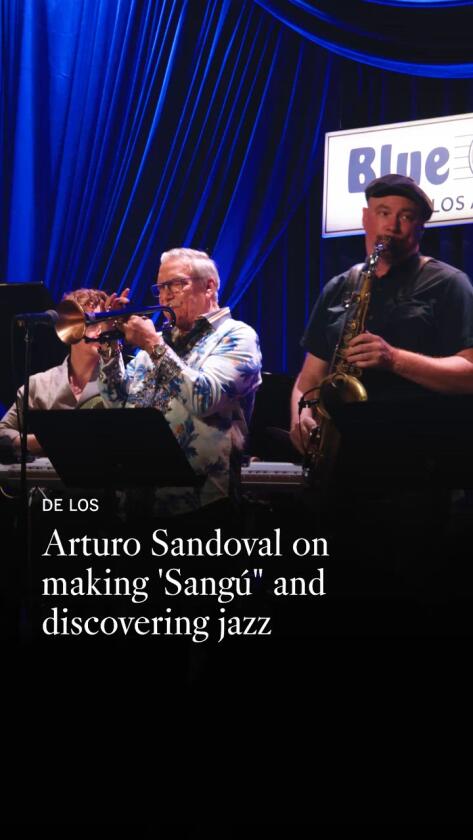
On a Thursday in early June, under the hot bright lights of the famous Blue Note jazz club in Hollywood, the legendary trumpeter and composer Arturo Sandoval took center stage with a microphone in hand — and a hip wiggle for good measure. Rocking a silk shirt adorned with rhinestones, and backed by his incredibly nimble band, the Cuban-born virtuoso kicked off his four-night residency at the club with sizzling banter and panache.

“I had to watch what I said in Cuba,” he told the audience. “Now I live in the United States of America, man — I say whatever the hell I want. Do you like it? Well, if you don’t, I don’t care!”

Now 77, Sandoval feels he was liberated by the power of jazz. Released in May, his dynamic new album, “Sangú” — Spanglish for “sounds good!” — is bursting with the free-spirited energy he’s cultivated in the decades since he came to the United States from Cuba. Sandoval maintains a fiery pace throughout the album, commanding not only the trumpet, but the timbales and piano. (He even recorded his own scat singing for the appropriately-titled track, “Scat.”)

Once derided by the revolutionary government as “Yankee imperialism,” jazz music became a staple of Sandoval’s daily diet. As a young trumpet player in Cuba’s national band, he sought refuge in the sounds of Charlie Parker and Dizzy Gillespie by tuning into Voice of America: a radio program covertly broadcast from the States. Sandoval eventually served three-and-a-half months in jail in the 1970s when he was caught listening to the program — but with famed pianist and director Chucho Valdés, Sandoval would pioneer a distinctly Afro-Cuban jazz fusion with the Orquesta Cubana de Música Moderna, which was renamed Irakere and won a Grammy for best Latin recording in 1980.

It was in 1990, while touring Europe with his hero Gillespie, that Sandoval finally defected from Cuba with his wife and son — and found the refuge he’d been seeking in the U.S.

“Jazz is synonymous with freedom,” he said. “And I’ve always said the most important word in any dictionary around the world is the word ‘freedom.’”

Inside his Tuscan-style home in the Valley, Sandoval’s shelves are lined with the myriad of awards he’s collected in the time since he arrived in the States: an Emmy award for scoring the 2000 movie based on his own life, “For Love or Country,” which starred Cuban American actor Andy García; 10 Grammy statuettes and the Presidential Medal of Freedom, which was presented to him by President Obama in 2013.

Just last month, Sandoval was also awarded knighthood by the King of Spain. “Does that make me Don Arturo Sandoval?” he audibly asked the ChatGPT application on his phone; indeed, it does. (“My wife gets a little jealous of ChatGPT,” he added with a laugh.)

Come July 4, Sandoval will perform at the America250 concert in Washington D.C., which is a bipartisan celebration of the United States’ 250th birthday. Co-chairs of the event include former President George W. Bush, former First Lady Laura Bush, former President Obama and former First Lady Michelle Obama. Seated next to his Bösendorfer grand piano, Sandoval spoke with The Times while on break from his world tour to discuss the new album, his collaborations with Karol G and Ariana Grande, as well as his weakness for a good cigar.

This interview was edited and condensed for clarity.

  • Share via

What keeps you playing the trumpet after all these years?
I have no choice. The piano is not that complicated, but the trumpet is a pain in the butt. The trumpet is merciless. You have to practice every single day, otherwise it sends you a bill.

How do you smoke cigars and stay healthy enough to play the trumpet?
I’ve been a big time cigar smoker since I was 14 years old. I never miss a day. I had a good one already. Every year they put me in the MRI to check my lungs. And the doctor always says, “Man, you have lungs like a person who never smoked.” A cigar is completely different from cigarettes. [With] a cigar you don’t inhale to the bottom of the lung, you know, it’s from here [taps his throat]. That’s the art.

You’ve been knighted by the king of Spain! How does that feel?
Great! We’re having 30 people over tonight. My wife is cooking for everyone. The consul [from Spain] called me three or four days ago [and] said, “Arturo, I got a surprise for you. I just got a package from the king at my house, ready to give it to you.” And I said, “What kind of joke is that?” My four grandparents came from Spain to Cuba — from my mother’s side, they were from Tenerife, Isla Canaria. From my dad’s side, they were Gallegos from Galicia. Even if I weren’t related to my family in Spain, whatever — I love Spain!

Given how restricted music and expression were in Cuba, how did you get into the international jazz community?
We put together a big band called Orquesta Cubana de Música Moderna [later called Irakere]. I met a journalist who played the saxophone — he said, “Man, you ever hear any jazz music?” He played for me a compilation or recordings of Dizzy Gillespie and Charlie Parker. That was in ’67 or ’68. Ten years later, I got a phone call from the guy — there was a jazz cruise going around the Caribbean and they [were in Havana] for 48 hours. I told him, “Pretend we never had this conversation!” But I went to the harbor. When the boat arrived, I saw Maestro Gillespie coming down the stairs. I didn’t know how to say one word in English. But God has always been good to me.

A guy behind him started talking to me in perfect Spanish. He was a percussionist playing with the great Stan Getz … a bunch of good musicians there. Dizzy started asking me questions through him. They said, “You have a car?” I had a Primo 1951, but it was falling apart. He said, “Ok, show me Havana.” He stayed for a jam session that night with Irakere. Gillespie went back to New York and told everybody about those musicians he heard in Cuba. Then one day a guy came to Irakere’s rehearsal and introduced himself with a translator — he was the president of CBS Records. A few months later, he put us on the plane [to New York] and drove us in a little bus straight to [perform at] Carnegie Hall. CBS made a recording of that, [which gave us] our first Grammy.

Many years later, in 2013, you were awarded the Presidential Medal of Freedom. What’s something special you remember about that night?
My granddaughter Lola was there, she was 6. It’s customary to take a photo with the president and the first lady. And we did, the whole family. When we got together for the photo, Lola started pulling at Obama’s jacket. He looked her and said, “May I help you?” She said, “Mr. President, I missed school today. I need a note from you.”

I said, “Oh Lord.” But Obama smiled and said, “Of course.” Then he got a paper with the White House [logo] on top and wrote, “Please excuse Lola from the school today … [Signed,] Barack Obama.”

Legendary jazz trumpeter Arturo Sandoval, shown performing at Dorothy Chandler Pavillion in Los Angeles in 2016.

Legendary jazz trumpeter Arturo Sandoval, shown performing at Dorothy Chandler Pavillion in Los Angeles in 2016.

(Courtesy of Timothy Norris)

Your new album is so cinematic. What’s the story behind it?
One day my son and his wife, who’s my manager, came over and said, “Papa, you’re getting old. You have to change your repertoire.” I said to my son, “I’ve been feeding you for 50 years and then you come and tell me what to do? Gimme a break!” But to be honest, when the pandemic happened, I was locked [inside] here. I used to travel a lot, and I was so frustrated and sad. So for two-and-a-half years, I started writing two or three new tunes a day and recorded a few hundred on my own. They picked 100 out of those; I said, “[Now] pick 12.”

When I got with the band, when somebody told me what to play — a little faster, a little slower — I said, “What the heck, man?” But I did it. And they were right. I’m so happy, blessed and grateful because they are amazing musicians. Nobody’s weird. No drugs, no alcohol, strictly into the music.

You joined Karol G’s band at Coachella this year — how did that happen?
As an old man, it’s not every day you have the opportunity to play Coachella. She called me last year to play on a tune in her latest album, “Ivonny Bonita.” So when they invited her to Coachella, she said, “Arturo, we’d like to play with you there.” She’s got great charisma and knows how to put a show together. To play for [more than] 150,000 people each night? That’s not my daily gig. I was nervous, but grateful for the opportunity. And when I checked my followers on Instagram, I got like 5,000 people in a few days — that never happens to me!

Let’s talk about Instagram!
Oh that’s a funny story. [In 2018] I did an album of duets with Stevie Wonder, Pharrell Williams, Ariana Grande … big time people. When Pharrell wrote a song for our duet, we were in the studio, cutting the track. He said, “Arturo, I’m producing for Ariana Grande in a studio across the hall. You would like me to call her?” I said, “Of course, man.” They sang together, Pharrell and Ariana. And by the end, I got my phone and said, “Ariana, can we take a photo with Pharrell?” She took my phone out of my hand to take [a selfie] and said to me, “Put it on Instagram.” I didn’t know what that was. She said, “You don’t know what Instagram is?” Sorry, I’m old! But I put it on Instagram, thanks to Ariana Grande. She’s so talented, man.

How do you stay dedicated to music after all this time?
People talk a lot about the word “talent.” What’s that? A lot of people supposedly have big talent, but they don’t have the passion, the discipline, the commitment. See those roses in my yard? If somebody gave you a seed, you put it in a vase with fresh dirt. Add some vitamins and water, and if you’re lucky, you’re gonna have a rose. But if they gave somebody the exact same seed and they left it on a table somewhere, that rose is gonna die! I’m 77 years old and I still practice every day. Nothing goes to my head. All those awards would mean nothing if I didn’t take care of what I had.

Source link

Emily Atack looks incredible as she strips off to white bikini during her hen do ahead of wedding to Alistair Garner

EMILY Atack wowed as she stripped to a white bikini and emerged from a pool during her Hen Do.

The Rivals actress is celebrating with her mates in Spain ahead of her wedding to Alistair Garner – and pulled out all the stops with her bridal-inspired swimwear.

Emily Atack was in full bridal era in a white bikini on her Hen Do in Spain Credit: Instagram
She opted for a striking halterneck with a scallop-trim edge for her time in the pool Credit: Instagram

Emily, 36, opted for a halterneck with a scallop-trim edge and matching knickers.

The two-piece flashed her toned figure as she fooled around with her pals in the pool, with Instagram images showing her perching on a pals shoulder before she toppled into the pool.

Another video saw her emerging from the waters while the mum of one showed her cheeky side as she flashed her bum in a snap taken from behind.

She later captured an image of drinks perched poolside as she shared snippets of her special getaway.

NO KIDS ALLOWED

Mum-of-one Emily Atack reveals she’s banned children from her wedding


UPFRONT FANS

Emily Atack reveals the VERY raunchy way fans greet after The Inbetweeners

She was seen fooling around with her mates as she perched on one pal’s shoulders Credit: Instagram
The screen star, 36, then fell backwards into the pool Credit: Instagram

The Inbetweeners star then switched to a LBD with a plunging neckline as the party headed out for the night.

Emily recently revealed that the paid had set a wedding date for September and said she’s very much enjoyed the preparations.

Speaking to Luxury London Magazine, she said: “I think I’ve nailed it. We’re getting married in September. I’ve very much enjoyed the planning process.”

She added: “Choosing napkins and stuff. I’m like, ”My God, my life is here!”

Emily flashed her bum in another cheeky snap Credit: instagram/@emilyatack
Drinks were seen perched pool side Credit: instagram/@emilyatack

She has also told how it will be a child-free ceremony.

It was thought that the Rivals star was considering getting married in Spain, after looking at wedding venues over there.

Last July, we reported how Alistair popped the question to the screen star.

Emily delighted fans after posting a loved-up selfie with her man to Instagram, which saw her flash the gorgeous sparkler.

The happy couple will wed in September Credit: instagram/@emilyatack
They share son Barney, aged two Credit: instagram/@emilyatack

In her caption, she wrote: “It’s Friday, I’m in love,” followed by three ring emojis.

She surpised fans by confirming they were expecting their first child together with a baby bump picture.

Source link

Pope warns people smugglers they face God’s wrath | Religion News

Migration has been a central theme throughout Pope Leo’s weeklong tour of Spain.

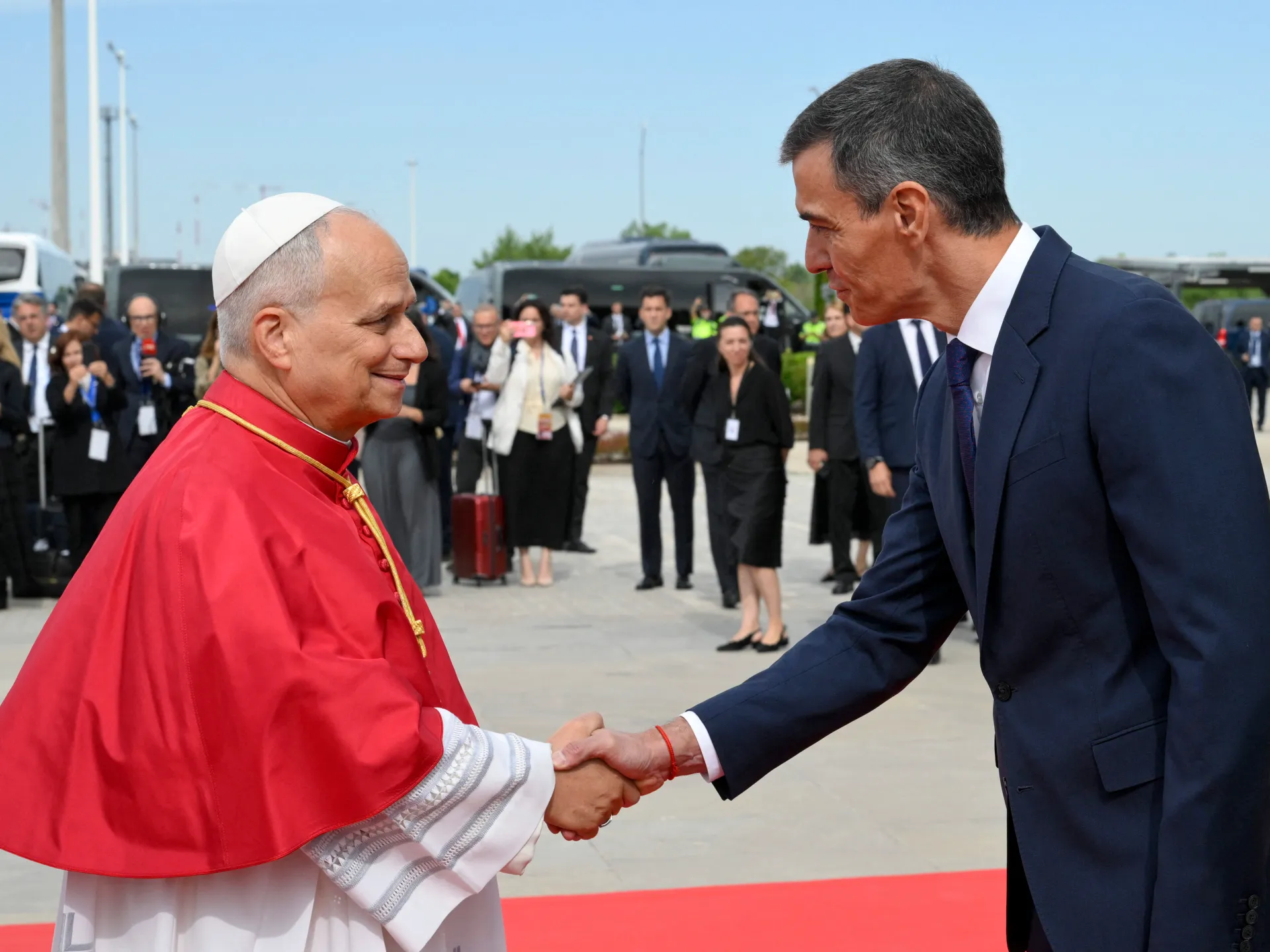
Pope Leo has warned human traffickers that they will face God’s wrath if they continue to exploit desperate African people trying to reach Europe via Spain’s Canary Islands.

On Friday, his second day in the Canary Islands, the pontiff said that he wanted to directly address those who “take advantage of people’s desperation [or] organise death routes”.

Recommended Stories

list of 3 itemsend of list

Throughout his weeklong tour of Spain, the American pope has insisted on the inherent dignity and rights of migrants, urging global leaders to welcome and integrate them into society.

“Stop. Repent,” said Pope Leo. “For every life lost, every family deceived … you will have to appear before divine justice.”

“Repent while there is still time,” he said, invoking the Catholic belief that someone who committed evil acts in life can confess their sins and make amends or be sent to hell upon their death.

Leo was visiting the Canary Islands, a Spanish archipelago off the western coast of Africa, as the culmination of a three-stop tour of Spain.

The islands are one of the main gateways into Europe for migrants, who risk a deadly journey across the waters of the Atlantic Ocean, often in improvised and overcrowded small craft.

Earlier, the first man from the United States to lead the Roman Catholic Church, warned world leaders that history would condemn those who allowed people fleeing war or poverty to suffer.

Located more than 1,000km (620 miles) from mainland Spain, the Canaries saw migration peak in 2024, when the islands received 46,843 migrants, compared with fewer than 1,000 in 2015, according to official data.

More than 3,000 people died last year trying to reach the islands, according to the NGO Caminando Fronteras.

The pope also visited an interim housing centre in Tenerife, the largest of the Canary Islands, to hear testimonies from migrants. The facility has received some 70,000 people since it opened in 2021.

One woman, Bousso Diouf, told Pope Leo that migrants did not want special privileges but “respect, humanity and the opportunity to live with dignity.”

Source link

Gorgeous Spanish ‘hidden gem’ near Malaga with stunning views and fewer crowds

Spain is one of the most popular holiday destinations for Brits, but if you want to avoid the crowds, one holidaymaker has shared a ‘hidden gem’ with stunning views and rich history

When it comes to summer getaways, Spain consistently ranks as one of the most beloved destinations for British holidaymakers, and it’s not hard to see why. Nestled in Southern Europe, it enjoys pleasant weather all year round, with summer temperatures frequently soaring to 30 degrees on a daily basis.

Even during quieter months, visitors can expect comfortable temperatures of around 20 to 25 degrees. With the mainland just a short two-hour flight from the UK – although the Canary Islands can take up to four hours to reach – many Brits consider it the ideal distance for a break.

That said, Spanish authorities have previously voiced frustration with the sheer volume of tourists flocking to the country, leaving hotspots such as Mallorca and Palma absolutely packed to the rafters during the summer months.

Now, however, one traveller named Andrew McDonnell claims to have uncovered one of Spain’s best-kept secrets – a destination that delivers scorching summers and stunning scenery, without the overwhelming crowds. He took to TikTok, where he has amassed more than 12,100 followers, to share highlights from his trip to the historic southern Spanish city.

“One of Spain’s hidden gems left me truly speechless,” read the caption accompanying his post.

Content cannot be displayed without consent

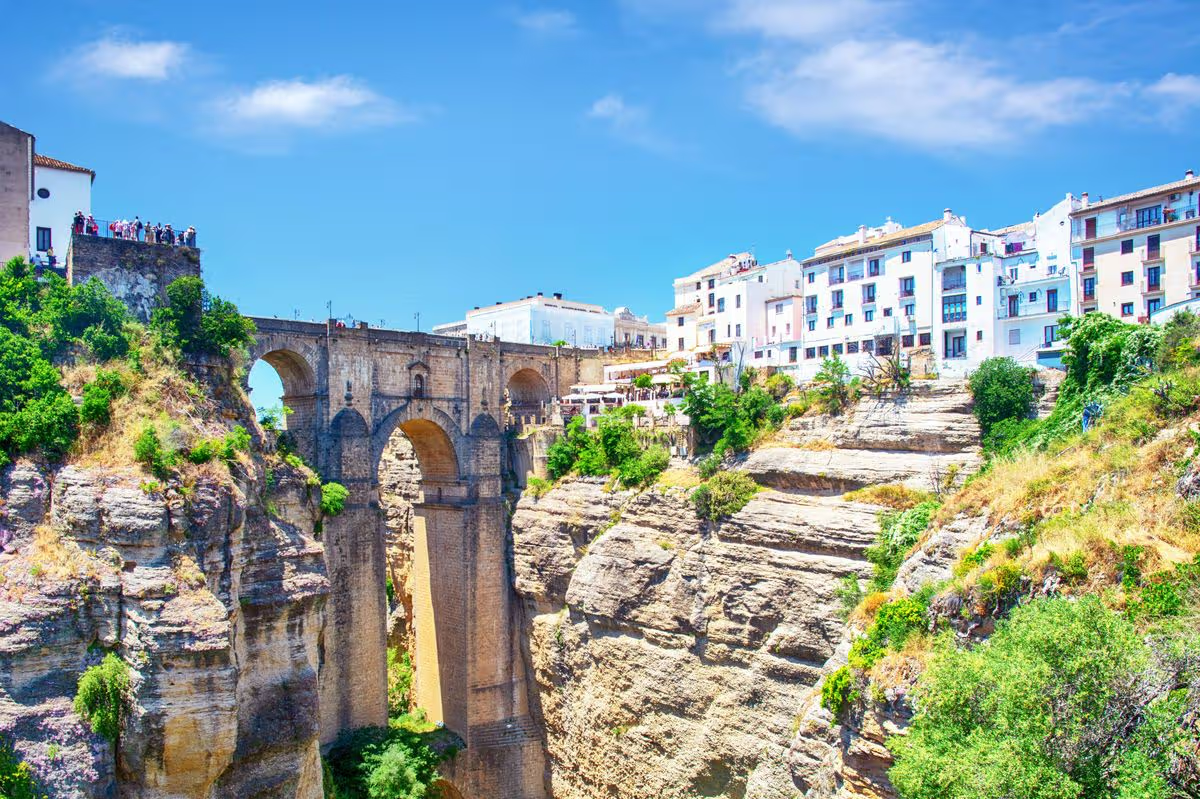
Ronda is a stunning mountaintop city situated in the Málaga province of Andalusia in Southern Spain. It is renowned for its dramatic position perched atop the sweeping El Tajo gorge, which divides the city’s 15th-century new town from its ancient old town, which dates back to the era of Moorish rule.

The iconic Puente Nuevo, a striking stone bridge that spans the dramatic gorge, features a viewpoint offering breathtaking views. The new town’s Plaza de Toros, a legendary 18th-century bullring, remains one of the city’s most instantly recognisable landmarks.

Ronda is also widely regarded as the birthplace of modern bullfighting, with a bullring dating back to 1784. Although the bullring remains open to visitors, actual bullfights are an increasingly rare sight, with just one symbolic event staged there annually during the Corrida Goyesca, as part of the Feria de Pedro Romero, which traditionally takes place in the last week of August.

Beyond its rich and fascinating history, the city also possesses a romantic charm that has captivated poets and writers for centuries, bolstered further by its spectacular mountaintop setting, widely considered one of the most stunning locations in the entire country.

Being a compact town, everything is easily reachable on foot. And while it stands as one of the most celebrated of Andalusia’s ‘pueblos blancos’ (white villages), it has managed to avoid the mass tourism that has overwhelmed its coastal neighbours, such as Malaga.

Andrew went on to say: “Ronda is one of those places that simply doesn’t need any words to be described, because being there and seeing it for yourself is enough. The content really doesn’t do this place any justice for how spectacular it is.”

And situated in Southern Spain, you can anticipate the typical Mediterranean climate, featuring hot, dry summers and cool, wet winters.

Thanks to its elevated position (roughly 739 metres), it does see chillier winters and occasionally hotter summers than neighbouring coastal resorts.

As it’s just 100km from Malaga, roughly an hour and a half’s drive away, Ronda serves as an ideal day trip during your holiday, or a peaceful and relaxing base for your next Spanish getaway.

Source link

France-Germany jet plans crash: Can Europe end reliance on US for security? | Military

France and Germany have announced this week that they are ditching a landmark project to jointly develop a sixth-generation fighter jet.

French President Emmanuel Macron confirmed on Monday that the project is being terminated, in what is being seen as a major blow to efforts to boost defence cooperation between European Union states, a key issue amid uncertainty cast by United States President Donald Trump over the readiness of the US to help defend its NATO allies.

Recommended Stories

list of 4 itemsend of list

Trump’s disdain for Europe’s reliance on the US has been building for years.

Since 2019, the US president has been flirting with the idea of obtaining Greenland.

His remarks about his desire for the island, a self-governing territory which is part of the Kingdom of Denmark, built to a crescendo at the start of this year, with European leaders signalling their displeasure with the idea and Trump even threatening additional trade tariffs on those countries standing in his way.

Both Denmark and Greenland have repeatedly stated that the island is not for sale.

At one point, before Trump backed down after agreeing to a “framework of a future deal” on Greenland during a January meeting with NATO’s Mark Rutte in Davos, it seemed as if the US might even try to take the island by force – a notion that would have been inconceivable before the era of Donald Trump.

The threat of military action set off alarm bells in European capitals.

In addition to all this, Trump has withdrawn much of the US’s support for Ukraine and has consistently berated his European NATO partners for not spending enough on their own defence for years, outright urging them to reduce their reliance on the US for military protection.

More recently, Europe’s refusal to join the US-Israeli war on Iran, which began with strikes on Tehran on February 28, has further irked the US president and deepened concerns that a widening transatlantic rift could weaken the continent’s security and embolden Russia.

Until this week, a counterweight to these burgeoning concerns was in hand – the Future Combat Air System (FCAS) project, a landmark pact to jointly develop a next-generation fighter jet involving France, Germany and Spain.

But disagreements over whether France’s Dassault Aviation, or Airbus, which also represents Germany and Spain, should take the lead on the project have ultimately led to its collapse.

Analysts, however, say all hope is not lost: despite the dissolution of the bellwether venture, Europeans can indeed become strategically autonomous, they say – but the road there runs through shared military integration, rather than shared political aspiration.

The FCAS hoopla does “highlight the limitation of Europe’s defence industrial landscape, where national needs sometimes clash with the broader goal of defence integration”, Giuseppe Spatafora, a policy analyst at the European Union Institute for Security Studies, told Al Jazeera.

“But we also shouldn’t overestimate its impact.”

Setback, not collapse

According to Jamie Shea, a retired NATO official and associate fellow with the International Security Programme at Chatham House, FCAS’s dissolution is certainly a setback – but does not spell the collapse of European defence integration in its entirety.

“It was the type of high-tech, innovative and future-oriented programme that Europeans need to be able to achieve successfully if they are to become strategically autonomous and break their dependence on the US for major weapons systems,” Shea told Al Jazeera.

It had been hoped that FCAS would move the needle forward, particularly in the areas of artificial intelligence (AI), space, data fusion, and the manned and autonomous systems interface space, he said.

Others would have additionally joined the project as it gained momentum, as Spain did, he added, potentially creating a domino effect in next-generation defence technologies across the continent.

But, crucially, Spatafora said, the project dates back to 2017 – a different era, before Russia’s full-scale war on Ukraine and before Trump’s return to the White House.

“Nowadays, the project might be designed differently to reflect the scenario,” he said.

“But it doesn’t affect the broader trend in Europe towards reducing dependencies on US military systems and strengthening its own defence capabilities.”

France and Germany will continue with some components of FCAS, such as its “combat cloud” feature, which will increase Europe’s cyber command-and-control capabilities, said Spatafora.

Airbus and a number of other German companies are also seeking to continue the programme in other areas, particularly software architecture and drone technology, Shea said.

“So there may be benefits for European defence and its defence technology base even if a manned fighter aircraft is not built,” said Shea.

Furthermore, there are “scores” of other joint defence projects being launched in Europe at the moment, even if they are not quite as ambitious as FCAS, he added.

Guntram Wolff, a senior fellow at the European think tank Bruegel, similarly urged against alarmism.

“I would not interpret this decision overly negatively,” Wolff told Al Jazeera.

“FCAS was a very complicated project and its military relevance may well be overstated at a moment of increasing importance of cheap autonomous systems. In part, the decision also reflects a reassessment of whether the high cost was really warranted.”

Europe, meanwhile, has other strengths it can build on, the analysts said.

The continent is strong in shipbuilding, submarines, short-range missiles and air defence – with systems like the German IRIS-T and the French-Italian SAMP/T – and has demonstrated it can build capable fighter jets, such as the Eurofighter Typhoon, Tornado and Gripen programmes have shown, Shea said.

Lessons and challenges

Europe’s main problem is underinvestment and the difficulty it has in scaling up to the level of mass production that modern warfare demands, said Shea.

This issue was brought into sharp focus this week when the UK’s secretary of state for defence dramatically resigned from government over defence funding.

He simply cannot keep the country safe on what he has been given to spend, he said. In his resignation letter to the prime minister, he wrote: “You have been unable and the Treasury has been unwilling to commit the resources that the nation needs to defend the country at this time of rising threats,” he wrote.

Ultimately, European nations are going to have to come together if they have any hope of matching US military might in the future, analysts say.

“It is the challenge of integrating all systems and all domains into a single battlefield management space where the US is in advance of the Europeans,” Shea said.

“Drones, which Russia and Ukraine are producing in the millions, are a case in point. Even the US suffers from weapons shortages as we have seen in the Iran war,” the former NATO official added.

Spatafora echoed the idea that the Russia-Ukraine war has lessons to offer the rest of Europe.

“The lesson of the war in Ukraine is that, in order to deter and defend itself properly, Europe needs cheap, mass-produced capabilities,” he said.

FCAS was about a very expensive capability, “so it was not really the key need for Europe’s deterrence today”, the analyst said.

The more pressing question that FCAS raises is how European nations will coordinate large projects which single countries cannot produce on their own and which could clash with the interests of numerous national industries. This is the conundrum which will likely shape the design of future EU instruments to support cooperative defence projects, said Spatafora.

Another challenge facing the continent is that major platforms like aircraft, ships or land warfare vehicles can take decades to develop, and contracts signed today will yield equipment that will not be on the battlefield before 2040, Shea said.

Europe will need to upgrade its current capabilities – recent upgrades to the Eurofighter jet and the Leopard tank are examples he cited – and look for gap-fillers elsewhere.

Spatafora argues that the FCAS collapse should not push European countries back towards reliance on American systems – or at least not more than they already have.

“The Trump administration’s approach and the depletion of stock after the Iran war have significantly reduced the reliability of US supplies,” he said.

The reliability of US guarantees, he added, depends on other assets – long-range missiles, forward-deployed troops, command-and-control infrastructure – “rather than on a next-generation fighter jet”, the analyst added.

‘Military requirements’ over ‘political ambition’

The FCAS failure is certainly good news for Russia, Shea said, “and also for the US, which will hope to sell Europe even more F-35s and maintain Europe’s traditional dependency on US military equipment”.

A rebound from the collapsed project, therefore, he argued, is necessary. But that is already in the works, analysts say, as Europe is already turning away from US dependability.

They point to the high likelihood of renewed interest in the UK-Italy-Japan Global Combat Air Programme (GCAP) for a sixth-generation stealth fighter jet, in European Space Agency military space capabilities, and in EU defence financing mechanisms like the Security Action for Europe (SAFE).

Joint ventures with Ukraine, which, under fire from Russia for four years, has mastered mass production of drone technology and AI, should also help keep Europe up to speed in key areas, Shea added.

“The US has proven to be unreliable, or simply unable to remain committed to Europe, and the defence budgets are growing,” Spatfora said.

Washington will continue to remain relevant for certain capabilities – nuclear deterrence above all – but over time, European countries will seek to develop more and more on their own.

The ultimate lesson of FCAS, however, Shea argued, is that defence integration “has to be driven by military requirements rather than political ambition”.

Cooperation between France and Germany has always been difficult, he said – they have large defence companies “that do not want to play second fiddle to the other”, he said.

A more promising model, he said, is the joint UK-Norway agreement to produce a new destroyer-class warship, with BAE Systems as the main contractor and smaller Norwegian companies participating.

“Both countries operate in the North Atlantic and the Baltic Sea and share exactly the same concept of what the ship should be,” explained Shea.

“So it is this model of bottom-up, natural cooperation rather than top-down political cooperation that Europe needs to pursue.”

Source link

All Brits visiting Spain face new rules that could stop you from entering the country

BRITS heading to Spain need to be aware of a new rule update that could get them banned from entering the country.

Currently, Brits visiting Spain need to show they have a certain amount of money in their bank at the border.

Brits could be refused entry to Spain under updated rules Credit: Alamy

However, an upgrade to this rule means all travellers from non-EU countries must be able to prove they now have at least €1,098.90 (£948.12).

For longer trips, the figure will rise in line with how many days you are in the country for, working out to around an extra €121.10 (£104.48) per day.
For example, if you intend to stay in Spain for 10 days, you will need to prove you have €1,220 (£1,052.79) in funds.

Brits can prove they have the money in several ways including having the cash, presenting debit or credit cards accompanied by bank statements, showing cheques or providing a letter of credit.

Read more on travel inspo

TRAVEL TIP

The £2.99 SIM hack that can save Brits HUNDREDS abroad


STAYCAY

Our travel experts’ best-kept-secret UK holiday spots for summer – from £37 a night

However, it is worth noting that screenshots of online bank statements are not accepted.

The money must be shown in euros or the equivalent amount in your own currency, so for Brits, this would be in pounds.

Brits heading to Spain must prove they have sufficient funds for their trip Credit: Alamy

Despite the requirement not being new, the amount tourists need to prove has been updated to be in line with 10 per cent of Spain’s minimum wage, which recently increased.

The rule was first introduced in 2021, at the end of the Brexit transition period.

Brexit meant that Brits became “third-country nationals” and therefore have to follow the rules for entering the EU when travelling to European countries.

Similar proof-of-funds requirements are in place across all Schengen countries.

The amounts do vary though – for example, in France, travellers must be able to prove they have €65 (£56.08) per day, yet in Latvia, the figure drops to €14 (£12.08) per day.

Even though proof-of-funds can be enforced by border officers in Spain, checks are not usually carried out on every traveller entering the country.

If they don’t, border force officers can refuse them entry Credit: PA

But if a border force officer asks you to prove your funds and you do not have the amount needed, then they can refuse you entry into Spain.

Advice from the UK Foreign Office states: “Make sure that you have access to enough money to cover all of your costs when travelling abroad, including unforeseen costs, e.g. medical care.

“To avoid getting into financial difficulties abroad, you should take prepaid travel cards, traveller’s cheques, local currency, credit and bank cards with you.

“Check what you can use in the country you are visiting and ensure you have enough money.

“Make a note of how to stop any credit cards or traveller’s cheques being used if lost or stolen, and of traveller’s cheque numbers.

“[And] get comprehensive travel insurance, ensure it provides you with adequate financial cover for your personal needs, and check for any exclusions.

“If you don’t have adequate travel insurance, you will need to pay any costs you are charged.”


Source link

Exact date of Spanish islands protests revealed as ‘kill a tourist’ graffiti spotted

Brits heading to popular Spanish islands this summer may find themselves at the heart of anti-tourism protests, with a pressure group insisting that there will be a “historic turnout”

Spain’s anti-tourism protests could escalate this summer, as pressure group Menys Turisme Més Vida (Less Tourism More Life) announced plans for a major demonstration that it expects to have a “historic turnout”.

The news comes as sites in the Canary Islands have been daubed with anti-tourist graffiti, including reports from local news outlet Canarian Weekly of a ‘kill a tourist’ slogan being spotted in Tenerife. The graffiti was spotted by two expats hiking in Punta del Hidalgo, who then claimed they saw further disturbing graffiti during a walk to Bollullo Beach on the island’s north coast.

In a separate incident last week, five estate agents in Majorca with international names were daubed with graffiti including ‘guilty’ and ‘Guiris out!’ in an overnight attack. Guiri is a derogatory Spanish term used for tourists from Northern Europe.

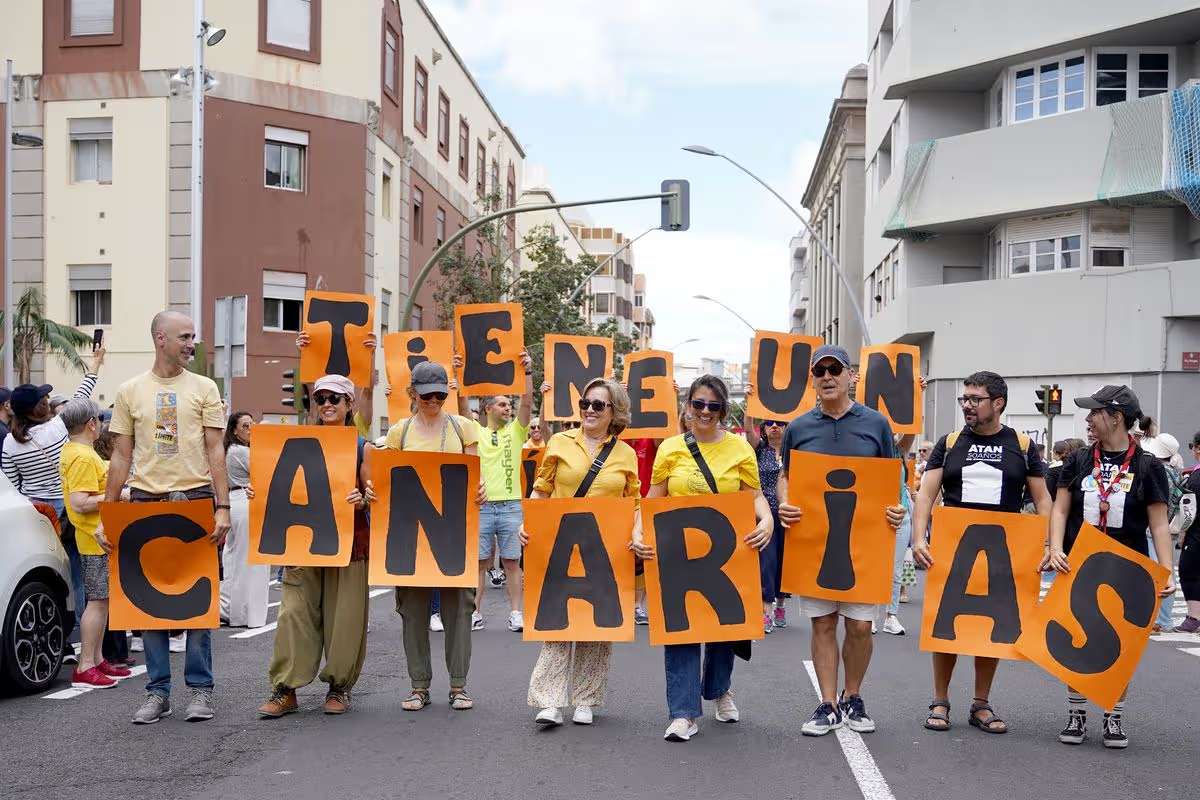
Menys Turisme Més Vida announced a protest in Palma, a popular destination for Brits on the island of Majorca on July 26, which coincides with the start of the busiest school holiday season. Meanwhile there are protests planned in Menorca on June 13 with a similar anti-tourism sentiment.

In a statement on its website, the group said: “️We consider that the demands expressed during previous mobilisations have been ignored while problems such as the housing access crisis, tourist saturation, the destruction of the territory, the precariousness of living conditions and the pressure on public resources and services continue to worsen.

“Under the slogan ‘Majorca at the limit’, the call aims to once again demonstrate the strength of existing social unrest in the face of an economic model that continues to break tourism records while the living conditions of a growing part of the resident population worsen.”, it added.

The group claims that the protest has the support of 53 social , environmental, trade union, neighbourhood and cultural groups on the island, which sees nearly 13 million tourists annually, with Brits the second-largest percentage after Germany.

Majorca saw protests last June that organisers claim were attended by 30,000 people, although varying reports claim numbers from 5,000 to 8,000. This included reports of some people sitting on terraces being harassed by protestors. Another notable protest took place in Barcelona on June 15, 2025, in which smoke devices were used and tourists soaked with water pistols.

While there have been reports of a tourist slowdown in the Balearics and Canaries, anti-tourism protests do not seem to have a massive impact on visitor numbers. In April, the Canaries saw a drop in visitors of 8.3% compared to the year before, but this meant 1.2 million foreign tourists still visited the islands. It was also the first drop seen on the volcanic archipelago since the pandemic.

Over Easter, the Balearics reported a fall of nearly 20% in in-person tourist spending by card, despite an overall increase in spending across Spain as a whole, suggesting visitors were choosing to spend their money elsewhere.

Have a story you want to share? Email us at webtravel@reachplc.com

Source link

Ten holiday destinations with the cheapest five-star hotels

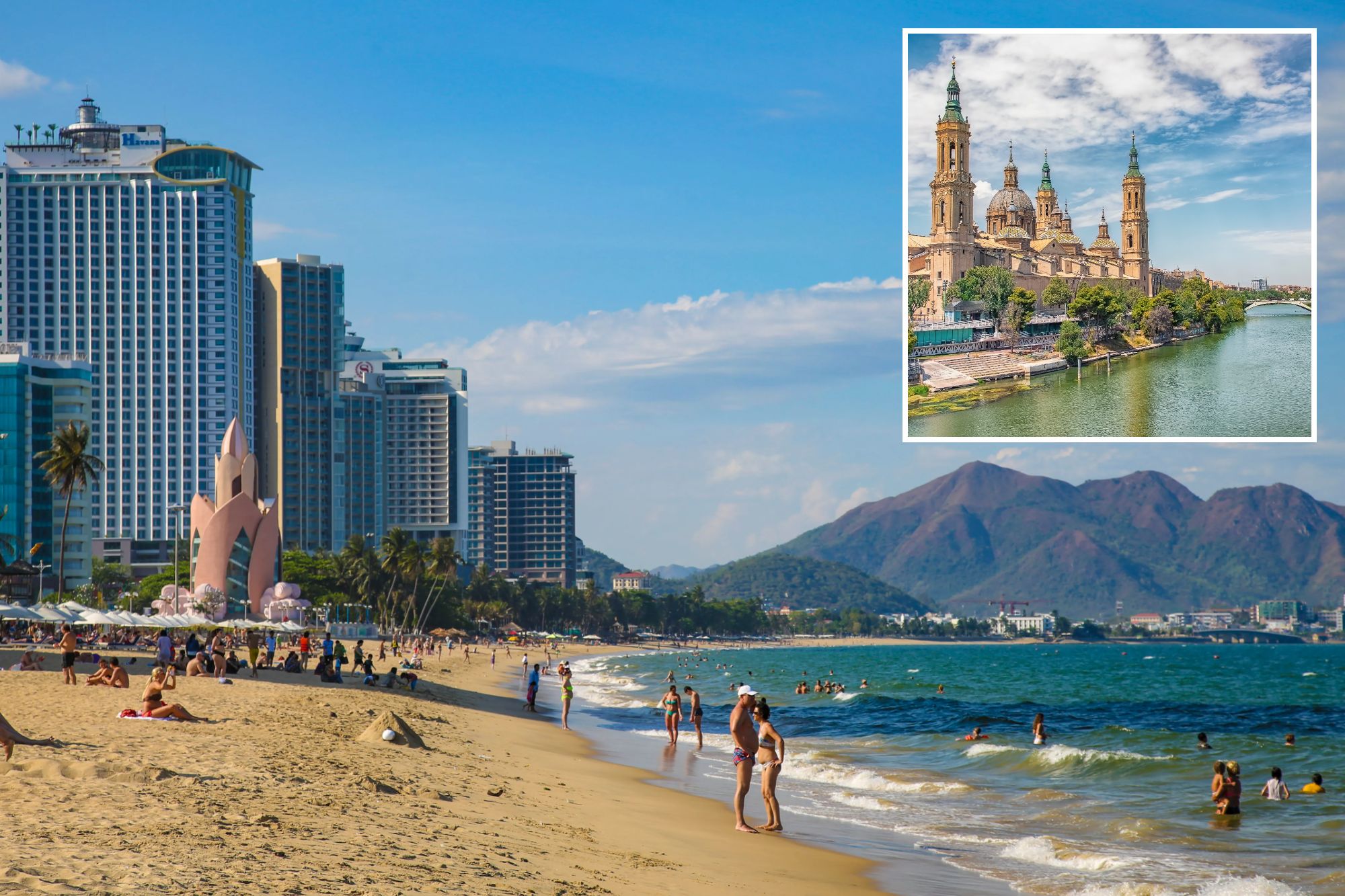
An image collage containing 2 images, Image 1 shows Beach in Nha Trang city, Vietnam, with high-rise hotels, palm trees, and mountains in the background, Image 2 shows The historic Basilica of Our Lady of the Pillar in Zaragoza, Spain, with its many towers and domes, next to a river with a bridge in the distance

THE top 10 destinations offering five-star stays on a budget have been revealed – starting from just £70 a night.

They’ve been identified by Hotels.com, which used search data to determine the most appealing locations for Brits.

Beach in Nha Trang city, Vietnam, with high-rise hotels, palm trees, and mountains in the background.
Nha Trang was named the best place for cheap five star hotels Credit: Getty
The historic Basilica of Our Lady of the Pillar in Zaragoza, Spain, with its many towers and domes, next to a river with a bridge in the distance.
Zaragoza came in a close second Credit: Getty

Despite volatile travel prices, it’s possible to go on a 5-star holiday on a budget – with high-end range accommodation available for as low as £70 in Nha Trang, Vietnam.

You can also enjoy luxury stays in Zagreb, Croatia, for £130 and Tallinn, Estonia, for £140, with the likes of Zaragoza, Spain (£120) and Sofia, Bulgaria (£135) also cheap.

The data was revealed as part of the global marketplace’s 2026 Hotel Price Index.

The report also includes findings from a global study of 11,000 adults who’ve ever stayed in a hotel – covering the UK, USA, Canada, Mexico, Brazil, France, Sweden, Denmark, Norway and South Korea.

It revealed how they define luxury accommodation, with offering great food (31 per cent), a room with a view (30 per cent) and premium in-room amenities (28 per cent) coming top.

Travel expert and spokesperson Melanie Fish said: “Travellers may be feeling the squeeze, but they’re also getting smarter.

“With increasing volatility in travel prices this summer, fuel costs may be dominating the conversation, but hotel prices are where travellers are making real trade-offs.”

The Hotel Price Index also revealed other cheap but luxurious options include nights in Wrocław, Poland (£120), Tirana, Albania (£130) and Riga, Latvia (£130).

Heraklion, Crete (£135) and Santo Domingo, Dominican Republic (£140) are also offering high-end accommodation at a lower cost.

TEN OF THE CHEAPEST FIVE-STAR STAYS ABROAD:

  1. Nha Trang, Vietnam (£70)
  2. Zaragoza, Spain (£120)
  3. Wrocław, Poland (£120)
  4. Tirana, Albania (£130)
  5. Riga, Latvia (£130)
  6. Zagreb, Croatia (£130)
  7. Sofia, Bulgaria (£135)
  8. Heraklion (Crete), Greece (£135)
  9. Tallinn, Estonia (£140)
  10. Santo Domingo, Dominican Republic (£140)

There are five-star offerings available in the UK too – including the likes of Brighton (£115), Cornwall (£135) and Liverpool (£170).

In addition to finding 10 of the cheapest, 10 notable locations which have seen major price drops during the past year were revealed – including Loire, France (down by 32 per cent) and Edmonton, Canada (down 31 per cent).

Further places include St. Thomas, US Virgin Islands (down 30 per cent), Dortmund, Germany (down 21 per cent) and Turin, Italy (also down 21 per cent).

The report also found it pays to book holidays at the last minute, with hotel rates up to 26 per cent lower if booking close to departure.

TEN OF THE CHEAPEST FIVE-STAR STAYS IN THE UK:

  1. Brighton (£115)
  2. Bristol (£115)
  3. Chichester (£120)
  4. Llandudno (£125)
  5. Worcester (£125)
  6. Bournemouth (£130)
  7. Cornwall (£135)
  8. Leeds (£145)
  9. Cardiff (£155)
  10. Liverpool (£170)

If you’re looking to keep costs down further still, the data also found prices are 14 per cent lower for Sunday stays – with Saturdays the most expensive.

Getting away in January offers the lowest prices, while the second week of July is the priciest – at least domestically.

Hotels.com’s global study, carried out through OnePoll, also revealed what’s top of everyone’s luxury dream wish list – a hot tub with a view (44 per cent) followed by a penthouse suite (41 per cent).

When asked what they consider a truly luxury hotel to offer, great food at the hotel (31 per cent), a room with a view (30 per cent) and premium in-room amenities (28 per cent) came top.

TEN OF THE BIGGEST INTERNATIONAL PRICE DROPS YEAR-ON-YEAR:

  1. Loire, France (-32 per cent)
  2. Edmonton, Canada (-31 per cent)
  3. St. Thomas, U.S. Virgin Islands (-30 per cent)
  4. Dortmund, Germany (-21 per cent)
  5. Turin, Italy (-21 per cent)
  6. Kassandra (Khalkidhiki) Greece (-21 per cent)
  7. Agrigento (Sicily), Italy (-21 per cent)
  8. Montego Bay, Jamaica (-18 per cent)
  9. Cancun, Mexico (-16 per cent)
  10. Dominica (-13 per cent)

Source link

Tuesday 9 June La Rioja Day in La Rioja Spain

This holiday marks the anniversary of the autonomous community of La Rioja’s statute being approved on June 9th 1982.

The Spanish autonomous community of La Rioja in northeast Spain is the least populated region of Spain. Historically it formed part of different provinces in the area. It became its own province in 1833, named the Province of Logroño, after the capital town. The province was renamed as La Rioja in 1980.

The region is well known for its red wine, and the region can boast over 500 wineries.

Various events are organised to mark the Day of La Rioja. These include exhibitions of the work of local artists, concerts of modern and traditional music, tastings of traditional dishes and wines (of course), and sports events.

Many people display the flag of their autonomous community during events and on public buildings and private homes. Some people also wear clothes or paint their faces based on the flag’s colours

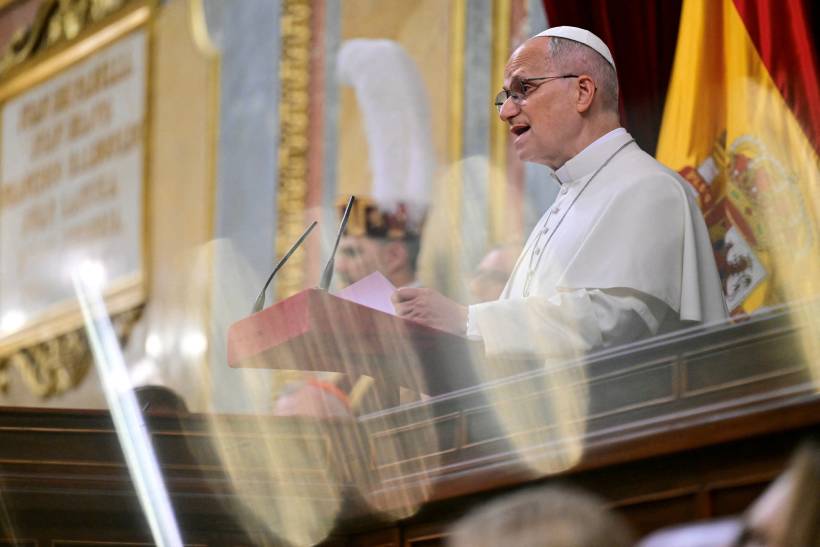
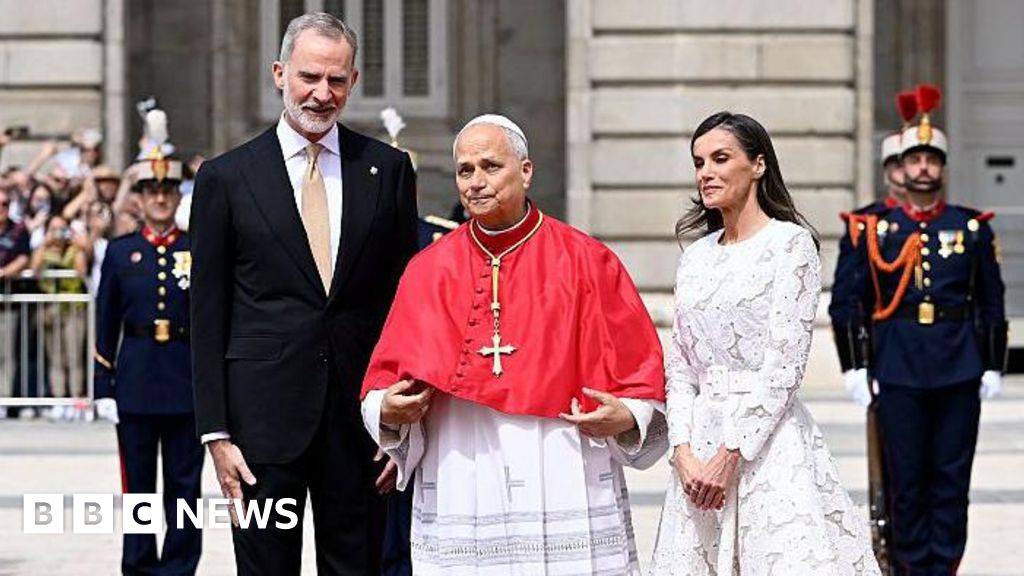
Pope Leo Warns of Global Crisis, Urges Peace and Migrant Protection in Spain Address

Pope Leo delivered a landmark address to Spain’s parliament, warning that the world is facing a profound spiritual, cultural, and political crisis marked by escalating conflicts, deepening polarization, and growing disregard for human rights.

The speech, the first by a pope before the Spanish legislature, formed a central part of his week long visit to Spain. Coming amid renewed hostilities between Israel and Iran and ongoing debates over migration and European security, the address reflected the Vatican’s increasing engagement with major geopolitical and humanitarian issues.

Leo used the occasion to reiterate long standing Catholic concerns regarding war, social fragmentation, migration, and the ethical implications of technological development. He also addressed the relationship between religion and public life, defending religious freedom and the confidentiality of confession.

Key Themes

Peace Over Militarisation

A central theme of the pope’s address was opposition to the growing militarisation of international politics. He argued that military force may suppress conflict temporarily but cannot create lasting peace.

His remarks came as European governments continue increasing defence expenditures in response to heightened security concerns following Russia’s invasion of Ukraine and broader geopolitical instability. The pope warned that excessive reliance on military solutions risks deepening rather than resolving global tensions.

Migration and Human Dignity

Leo devoted significant attention to migration, describing inadequate responses to displaced populations as a challenge to the ethical foundations of the international order.

He urged governments to move beyond border management policies and address the underlying drivers of migration, including conflict, poverty, and climate change. His comments coincided with plans to meet migrants in Spain’s Canary Islands, a major entry point for migrants attempting to reach Europe from Africa.

The pontiff framed migration as both a humanitarian and moral issue, arguing that the treatment of vulnerable populations serves as a measure of a nation’s moral character.

Artificial Intelligence and Ethics

The pope also expanded on concerns he has raised previously regarding artificial intelligence. He called for stronger ethical oversight of emerging technologies, particularly their application in military contexts.

As governments and defence industries increasingly integrate AI into weapons systems and military planning, Leo argued that technological progress must remain subject to moral and humanitarian considerations.

Religion in Public Life

Another notable aspect of the speech was the pope’s defence of religious participation in public affairs. He argued that faith should not be excluded from public discourse and stressed the importance of protecting religious freedoms.

Leo also defended the confidentiality of confession, a topic that has generated debate in several countries considering legal requirements for clergy to report abuse disclosed during confessions.

Why It Matters

The speech signals a more assertive Vatican engagement with global political debates at a time of mounting international instability.

Unlike purely theological addresses, Leo’s remarks directly addressed issues shaping contemporary international relations, including war, migration, technological governance, and democratic cohesion. His intervention places the Catholic Church within broader discussions regarding the future direction of global governance and international cooperation.

The address also highlights the Vatican’s growing concern that rising geopolitical competition, nationalism, and social polarization are weakening international institutions and undermining collective approaches to global challenges.

Stakeholders

The Vatican

  • Seeking to shape global debates on peace, migration, ethics, and human rights.

European Governments

  • Balancing security concerns with humanitarian responsibilities and social cohesion.

Migrants and Refugees

  • Directly affected by immigration policies and international responses to displacement.

Technology Sector

  • Facing increasing scrutiny over the ethical implications of artificial intelligence.

Religious Communities

  • Monitoring debates surrounding religious freedom and the role of faith in public life.

Human Rights Organisations

  • Engaged in discussions regarding migration, conflict resolution, and protections for vulnerable populations.

Strategic Implications

The address reflects the Vatican’s effort to position itself as a moral counterweight to rising geopolitical competition and militarisation. By linking war, migration, technology, and social division within a single framework, the pope presented these issues as interconnected symptoms of a broader crisis affecting the international order.

His criticism of increased military spending places the Vatican at odds with many Western governments currently prioritising defence expansion. At the same time, his focus on migration challenges increasingly restrictive immigration policies adopted across Europe.

The pope’s intervention on artificial intelligence also signals that ethical governance of emerging technologies may become a more prominent area of Vatican diplomacy in the coming years.

Analysis

Pope Leo’s address represents one of the clearest articulations yet of his vision for the Church’s role in contemporary global affairs. Rather than limiting his remarks to spiritual concerns, he framed international conflict, migration pressures, technological change, and democratic fragmentation as interconnected challenges requiring moral as well as political responses.

The speech suggests a papacy willing to engage directly with policy debates at a time when many governments are prioritising security, strategic competition, and economic interests. While the Vatican lacks conventional political power, its ability to shape public discourse and influence ethical debates remains significant.

By positioning peace, human dignity, and ethical governance at the centre of his message, Leo is seeking to reassert the relevance of moral leadership in an increasingly fragmented international environment. Whether governments embrace those arguments remains uncertain, but the address signals that the Vatican intends to remain an active participant in debates over the future of the global order.

With information from Reuters.

Source link

Giant crowds greet Pope Leo at public mass in Madrid, Spain | Religion News

The pontiff praises Madrid as a beacon of inclusion as about 1.2 million people gather for Sunday mass.

An oceanic crowd has filled the streets of the Spanish capital Madrid with chants, cheers and applause to greet Pope Leo XIV on the second day of a weeklong apostolic journey to mainland Spain and the Canary Islands.

The Vatican and local organisers said about 1.2 million people braved the heat to be present in the landmark Cibeles Square on Sunday in what is expected to be the largest event during his visit to the country.

Recommended Stories

list of 3 itemsend of list

Throngs of people pressed along barriers near the square – best known as the rallying point for Real Madrid football fans celebrating the club’s titles – waving flags and shouting “Long live the pope”, as Leo arrived in his white popemobile for the event. Some tossed flower petals marking his arrival.

“May Madrid continue to be a welcoming and inclusive city, where social life is inspired by true human values,” the pontiff wrote in the guestbook as he was handed the key to the city by its mayor.

Faithful attend a Holy Mass held by Pope Leo XIV at Plaza de Cibeles, during his apostolic journey in Madrid, Spain, June 7, 2026. REUTERS/Mohammed Salem
Faithful attend a mass held by Pope Leo XIV at Plaza de Cibeles, during his apostolic journey in Madrid, Spain [Mohammed Salem/Reuters]

Leo began his trip on Saturday, ⁠meeting migrants and the homeless and attending a vigil with about 600,000 young people in Madrid. His June 6-12 visit also includes stops in Barcelona and the Canary Islands, where he will meet migrants and refugees who ⁠risked their lives crossing there from West Africa.

He said he hoped the visit, his first to a European Union country outside Italy, ⁠⁠would set an example to the world about respecting “every ⁠⁠human being” and urged leaders to stop dividing electorates.

“I am delighted that he is praying for us migrants and for our safety,” said Andrea Margarita, a 72-year-old Peruvian who arrived in Spain six months ago, as she ‌‌waited in the crowd in a wheelchair with her daughter.

After mass, Leo was scheduled to hold a private meeting with fellow members of his Augustinian religious order in ‌‌the afternoon ‌‌before meeting figures from the world of entertainment, sport and culture at a concert venue in central Madrid.

Pope Leo XIV leads the Holy mass in the Plaza de Cibeles in Madrid
Pope Leo XIV leads the mass in the Plaza de Cibeles in Madrid [AFP]

Source link

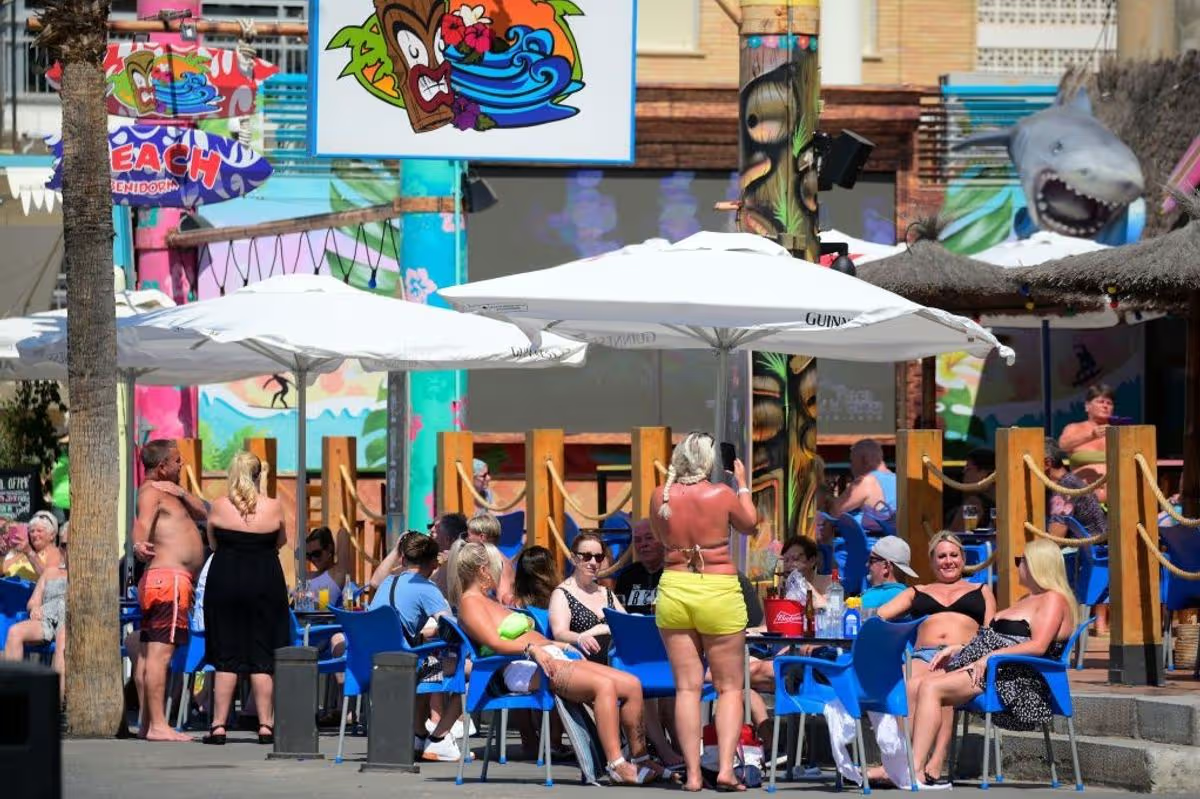
‘I live in Benidorm and there’s 3 places you should avoid at night’

A British man living in Benidorm has issued a stark message to those jetting out to the popular Spanish resort this summer – saying there’s certain places you want to avoid at night

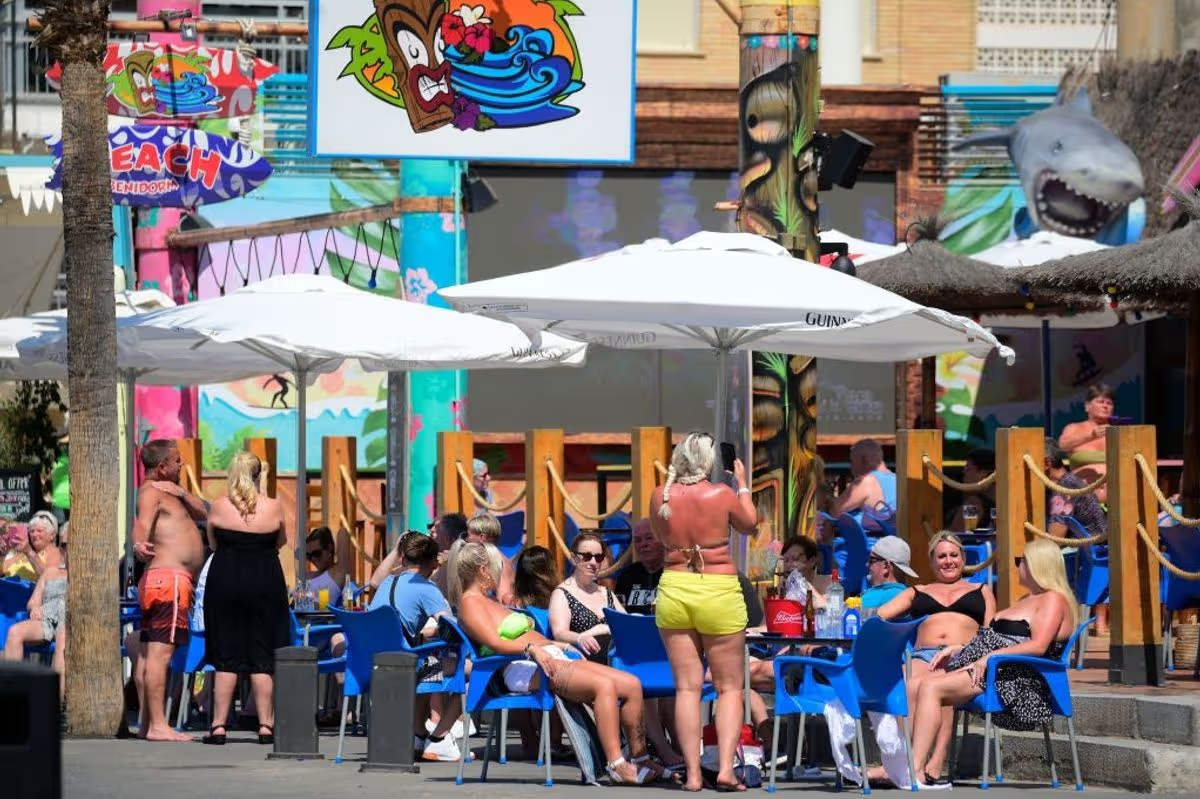
A British expat living in Benidorm has issued a warning to holidaymakers heading to the popular Spanish resort this summer – revealing the three places he would avoid after dark. Benidorm remains one of the UK’s favourite holiday destinations, attracting millions of tourists every year with its beaches, bars and nightlife.

But according to one resident, there are a handful of spots visitors should think twice about walking through late at night. Sharing his advice on social media, the expat said: “This is a warning for anyone coming out to Benidorm. “This is the top three areas I would definitely avoid if coming to Benidorm in 2025 and the reasons why.”

Coming in at number three was a public pathway known locally as the “Yellow Brick Road”, which runs behind several hotels and leads towards the Rio Park area.

He explained: “Now it has been known for a few things, mainly small thefts like pickpocketing, that sort of thing.

“Now generally during the day it’s absolutely fine. I’d recommend avoiding it at night.”

Next on his list was Pueblo Alley, which he claimed can attract unwanted attention after dark.

He said: “And in at number two has got to be Pueblo Alley.

“And this is one I definitely recommend avoiding, especially late at night, as you do get the pickpockets hanging around this area and you also get the odd lady of the night.

Content cannot be displayed without consent

“So I definitely consider avoiding it. There’s plenty of other ways around.”

Topping his list was a location known as “Mugger’s Alley”, which has long gained a reputation among some tourists and locals.

He said: “Straight in at number one, it’s Mugger’s Alley.

“It is the most notorious. It is the one we all know, known for pickpocketing, ladies of the night.

“It’s just an area that I would avoid.”

The expat also warned visitors to be cautious of scams, claiming he had recently seen reports of people being targeted.

He added: “Cross the road, it’s not necessary. I mean, they’re even doing these new taxi scams. I’ve seen videos online about it.

“It’s crazy. So save yourself the hassle and cross the road.”

Commenting on his post, one travel fan said: “Don’t agree with you, stayed in Rio Pak about 20 times and never had a problem.”

Another user added: “Anywhere people are shouting.”

It comes after the UK Government issues a warning about a police officer scam in Spain, saying: “Thieves posing as police officers may ask to see your wallet, claiming they need to see it for identification.

“Genuine police officers will ask to see ID but will not ask for wallets or purses. All police officers, including those in plain clothes, carry official ID.”

The Visit Benidorm Tourist Board has been contacted for comment.

Source link

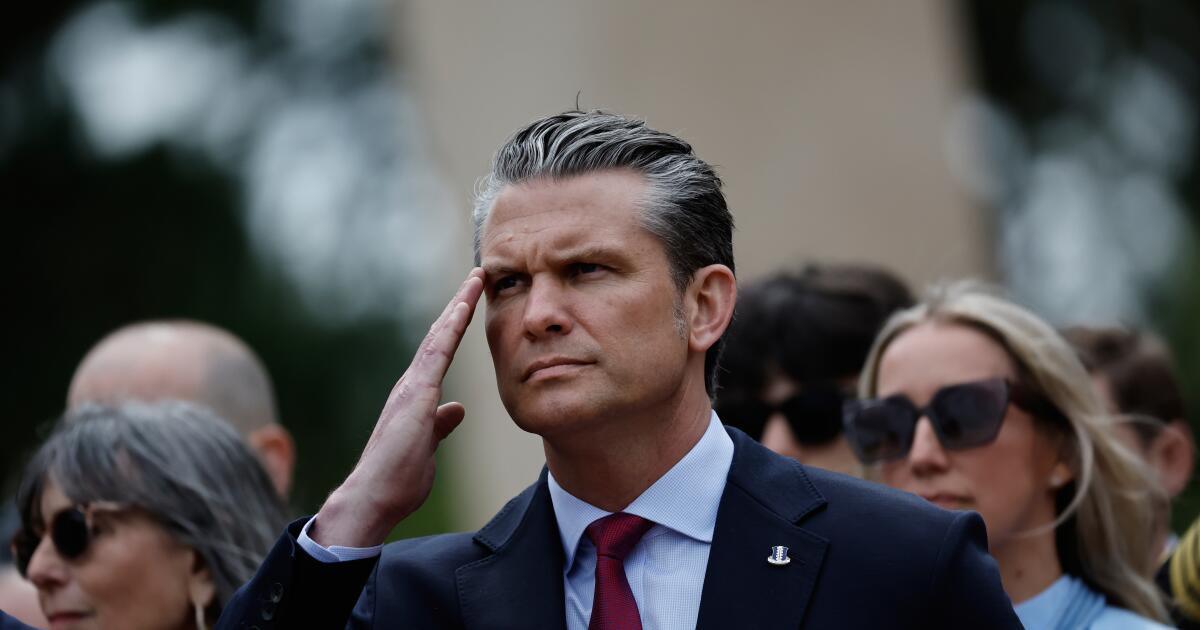
Hegseth invokes immigration and ‘invasion’ in D-day speech in France

U.S. Defense Secretary Pete Hegseth gave a D-day anniversary speech Saturday that appeared to link immigration by sea to the wartime liberation of Europe, warning that the freedom won by Allied troops could prove temporary if leaders failed to defend it against today’s “invasion.”

Hegseth, speaking at the Normandy American Cemetery in Colleville-sur-Mer overlooking Omaha Beach in northwestern France during commemorations for the 82nd anniversary of the June 6, 1944, landings, said that today, “different European beaches are stormed by different dangerous ideologies.”

“Beaches in Spain and Italy and Greece and Bulgaria. Boats and men arrive,” he said.

“When will European capitals do something about that invasion? Or is it too late?” he added. “I pray not, and I believe not.”

Hegseth did not use the word “immigration,” but his remarks echoed broader Trump administration criticism of Europe over migration, borders and what U.S. officials have described as censorship of nationalist and far-right voices.

On Saturday, British Prime Minister Keir Starmer’s office condemned Vice President JD Vance’s remarks blaming immigration for the killing of Henry Nowak, an 18-year-old British student stabbed to death in Southampton, even though both Nowak and his killer were British.

In December, the Trump administration’s national security strategy warned that Europe faced the “prospect of civilizational erasure” and could become “unrecognizable” within 20 years.

Source link

Foreign Office Spain vaccine advice for all UK tourists

Spain is the most popular destination for UK holidaymakers

Anyone planning a trip to Spain should act eight weeks before travelling, according to the latest Foreign Office advice.

The Foreign, Commonwealth and Development Office (FCDO) provides advice for travel to more than 220 countries and territories across the globe, covering everything from entry requirements and safety risks to health precautions and regulations. The FCDO recommends that those heading to Spain check the most up-to-date vaccination advice at least eight weeks before they set off, and find out where to get their vaccines and whether any fees apply.

Holidaymakers are directed to the Spain page on the TravelHealthPro website, which states: “Travellers [to Spain] should be up to date with routine vaccination courses and boosters as recommended in the UK. These vaccinations include for example measles-mumps-rubella (MMR) vaccine and diphtheria-tetanus-polio vaccine.”

It’s worth noting, however, that there are no certificate requirements for entry into Spain. Those visiting Spain are also urged to ensure their tetanus jabs are up-to-date.

TravelHealthPro guidance adds: “Travellers should thoroughly clean all wounds and seek medical attention for injuries such as animal bites/scratches, burns or wounds contaminated with soil.” TravelHealthPro also recommends that all holidaymakers make sure they have sufficient travel insurance.

It adds: “If visiting European Union (EU) countries, carry an European Health Insurance Card (EHIC) or a Global Health Insurance Card (GHIC) as this will allow access to state-provided healthcare in some countries at a reduced cost, or sometimes for free.

“The EHIC or GHIC, however, is not an alternative to travel insurance.”

Source link

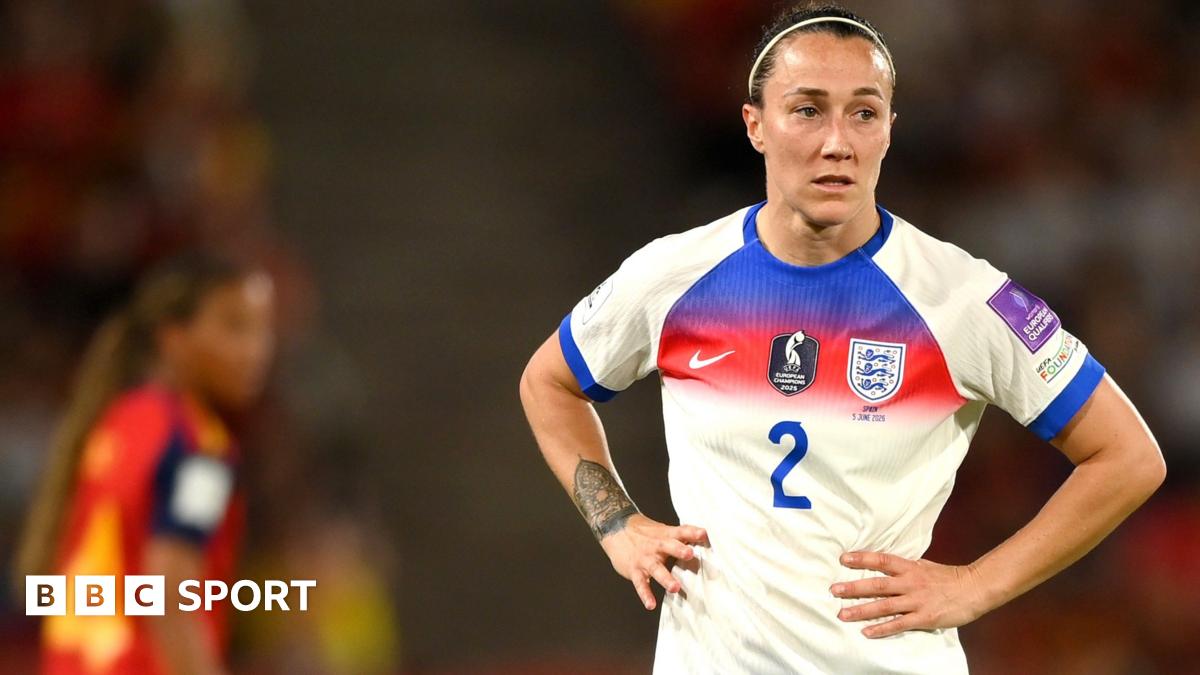
Spain 4-0 England: World champions expose Lionesses’ flaws

With a year to go until the World Cup starts in Brazil, this was a concerning scoreline that gives Wiegman plenty to ponder.

Facing world champions Spain away is arguably the toughest test in football, but to lose so comfortably was not an easy watch.

Former England midfielder Fran Kirby said Wiegman’s players looked “deflated” at full-time and she “hurt just watching it”.

“They will learn from it, and they have to rise up to put in a good performance against Ukraine,” Kirby told BBC Radio 5 Live.

Just the top team from their group automatically qualifies for the World Cup and even if England beat Ukraine on Tuesday they will likely miss out, with this defeat by Spain the only blotch on their otherwise solid campaign.

So what damage did the 4-0 defeat have on England?

“Of course, it’s not a great scoreline. It’s hard, it’s disappointing, and I think there was a difference – a big difference – between ourselves and Spain,” added Wiegman.

“We review this, recover, stick together, play a good game and then move forward.

“We know if we qualify [automatically] that there’s a different preparation than if we don’t qualify. Let’s first see what happens on Tuesday.”

England midfielder Keira Walsh, who captained the side in the absence of injured centre-back Leah Williamson, conceded they “just weren’t good enough”.

“Spain played incredibly well but I think there are a lot of things we could have done better. It felt like they had bodies everywhere,” said Walsh.

“It was very difficult to get out of our own box. I don’t have solutions right now. Obviously we’ll look back but right now the emotions are very high.

“It was a disappointing game. We’ve still got a small chance to qualify automatically. It’s out of our hands. We can hope Iceland do us a favour.”

Source link

The Spanish attraction that ‘feels like being on Mars’ and you can explore it by vintage train

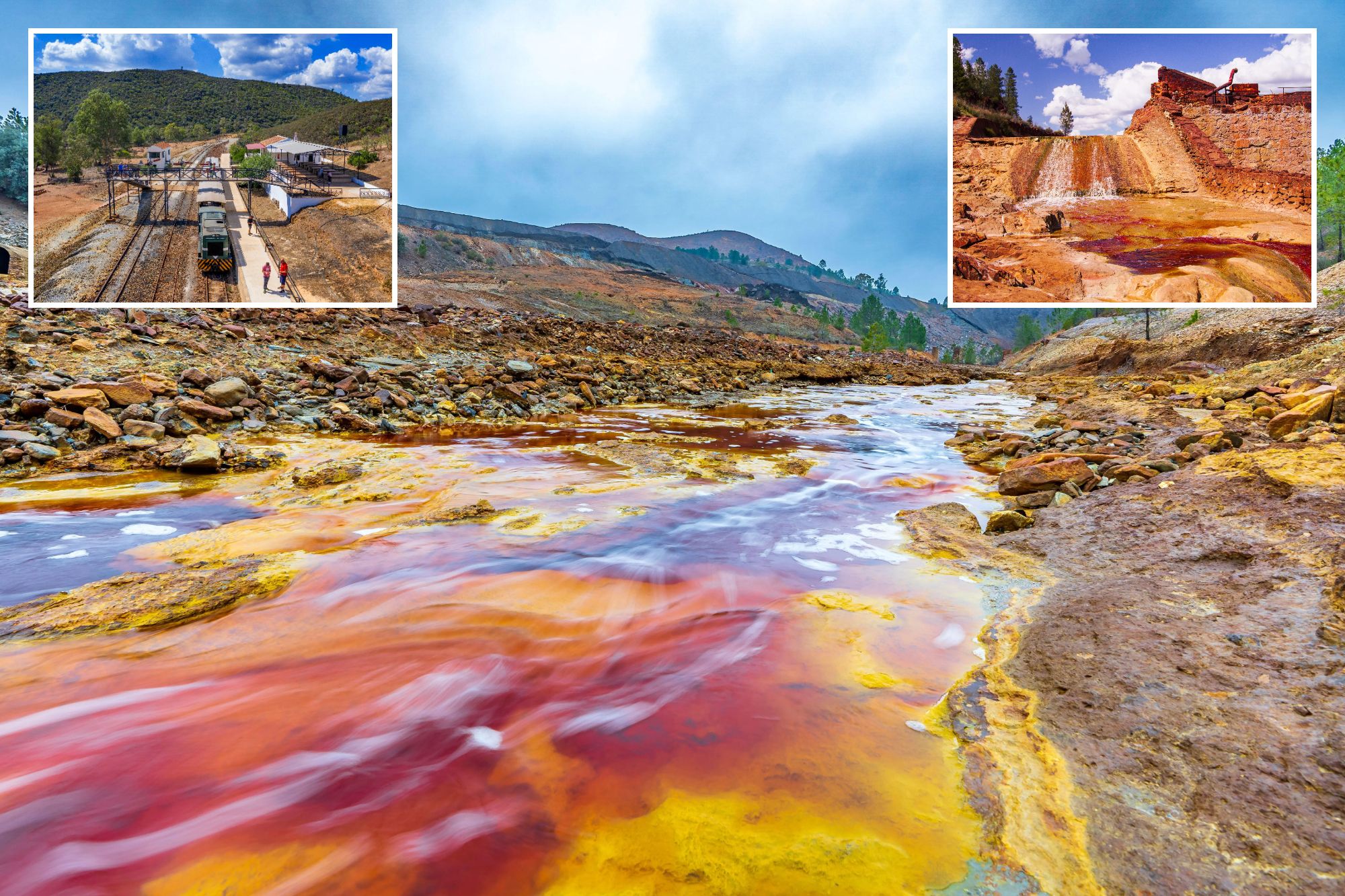
An image collage containing 3 images, Image 1 shows A long exposure shot of the red Rio Tinto river flowing through a mining park in Spain, Image 2 shows Touristic train at Rio Tinto mining area in Huelva, Spain, Image 3 shows A waterfall in the Rio Tinto Mining Park, Spain, flows over orange and red rocks, with a stone structure and forest on the left and a stone wall on the right under a bright blue sky with white clouds

WITH its flowing red rivers and rocky landscape, this attraction has been described as looking ”more like Mars than Earth’.

The open-air mining park is in the Huelva region of southern Spain and visitors can take a tour onboard a vintage train.

Rio Tinto Mining Park has been compared to Mars thanks to its red river and rocks Credit: Alamy
Visitors can explore the mine site on a restored tourist train Credit: Alamy

The Rio Tinto Mining Park has over 5,000 years of history and is renowned for having a unique red landscape.

Formerly used for mining, the site is now considered an open-air museum and first opened to the public in 1992.

Through the site runs the Rio Tinto river which is toxic – it’s highly acidic which is why the water has red and orange hues.

Thanks to this, the attraction has earned itself a comparison to the planet Mars.

IT’S A WASHOUT

UK indoor waterparks with VIP spas, mega slides and 30C tropical climates


CHEAP THRILL

UK’s best-value theme parks MAPPED, plus hotels nearby for £29 & cheap parking

It’s appeared in movies like The Heart of Earth, which tells the story of miners working at Rio Tinto in 1888.

The area has also been used by the likes of NASA for space testing as it has an ‘extreme environment’ just like that found on Mars.

One visitor wrote on Tripadvisor that is look “more like Mars than Earth” with another calling it “truly breathtaking.”

Dotted around the site are viewpoints, underground walks to view excavated spaces and there’s a chance to explore its museum too.

Another way to tour the mines is onboard a refurbished mine train.

The Rio Tinto railway itself was built in the late 1800s and once had 186 miles of track.

The red river is toxic and runs through the middle of the site Credit: Alamy

Now, the tourist railway ride covers just over seven miles of that on its restored railway line inside vintage diesel trains.

From the windows, visitors can look out over the bright red river and rocks.

The train journey is up to two hours long and there’s a chance of a pit stop in the middle before it loops back around.

The park is open daily with day tours that can be up to six hours long.

On Saturdays, there’s a chance to do the ‘Mars on Earth‘ circuit which starts at the Mining Railway Station and heads through the Red Planet-like scenery.

If you want to visit Rio Tinto Mining Park the closest airport is in Seville which is around an hour a half away by car.


Source link

Holiday warning for Britons heading to Spain, Portugal or Greece

British tourists should expect long airport queues due to new biometric border checks

European airports have recently launched the EU Entry/Exit System (EES), which replaces the traditional manual passport stamping process with biometric registration (facial image and fingerprint scanning) to record the entry of non-EU citizens, including British holidaymakers. The new EES system is now fully up and running across all Schengen Area countries, including much-loved destinations such as Spain, Portugal and Greece.

While the new system is designed to streamline travel into and out of the Schengen Area and simplify border procedures, some travellers have reported finding themselves stuck in three-hour queues.

In certain countries, passengers have missed their return flights after failing to clear the digital system in time. The new border checks are anticipated to cause significant disruption for British travellers heading in and out of the EU during the busy summer peak periods.

While some countries such as Greece attempted to briefly suspend biometric checks for UK tourists, the Greek Foreign Ministry confirmed they are fully rolling out the EES system this summer.

The Foreign, Commonwealth & Development Office (FCDO) issued the latest travel guidance on the new border checks, stating: “The European Union’s (EU) new Entry/Exit System (EES) is now being implemented across the Schengen area.

“This means that when you travel into the Schengen area for short stays, you may need to register your biometric details, such as fingerprints and a photo. There is no cost for EES registration.

“On your first visit into a Schengen country, you may be asked to register your details at a special booth before proceeding to the immigration desk. Follow directions from your travel operator or the staff at your port of entry.

You may also need to provide either your fingerprint or photo when you leave the Schengen area.

Children aged 11 or younger will not have their fingerprints scanned but can be required to have their photo taken.”

“You do not need to take any action before you arrive at the border on entry to the Schengen area, but EES may take each passenger extra time to complete so be prepared to wait longer than usual at the border and to allow more time for immigration controls when you depart the Schengen area.

“EES is replacing the previous system of manually stamping passports when visitors arrive in the Schengen area for short stays. You may be asked to input biometric details every time you enter or exit.”

The EES has faced backlash from the travel sector, with the British Travel Association ABTA urging destinations and border officials to put in place stronger contingency plans for busy travel periods, reports the Express.

Mark Tanzer, chief executive of ABTA, said: “The ambition of a project like EES means it was never going to go completely smoothly, and we were prepared for that. However, what is frustrating is that border authorities have it within their power to ease queues and deal with issues as they arise – but that doesn’t seem to be happening across the board.

“As we head towards peak travel periods, we’re urging border authorities to plan for busy periods and use the contingency measure available. It’s critical the Commission keeps a close eye on this.”

Source link

Brit stunned by Spain supermarket prices and says ‘it’s a different level’

A British tourist was left stunned by the cheaper grocery prices in a Spanish supermarket compared to the UK, and he’s not the only one

Brit holidaymaker left stunned by how cheap food is in Spanish supermarket

There’s no question that food prices in British supermarkets have skyrocketed, yet we’ve largely resigned ourselves to paying whatever it costs for our weekly shop. But when Brits venture abroad to certain destinations, the stark contrast in prices becomes glaringly obvious, leaving many utterly speechless.

That was certainly the case for Cavan O’Grady, who headed off on holiday with his mum to celebrate her 63rd birthday, and was left gobsmacked after popping into a Spanish supermarket. The pair stayed with his aunt in the town of La Línea de la Concepción, near the border with Gibraltar, but it was a trip to the local supermarket that truly made an impression on him.

Alongside soaking up the glorious 30-degree sunshine, Cavan – better known as Cav – revealed that a food shopping trip to Carrefour made him acutely aware of just how different things are compared to back home in the UK.

The 27-year-old captioned his clip: “Spanish supermarkets are a different level”.

Strolling through the aisles, the Birmingham lad remarked: “TikTok, I’m going to tell you something, Spain knows how to do it in these supermarkets.

“First of all, the place is absolutely massive. It’s unreal how fresh all this stuff looks, you’re just not getting this back home.

“This would make you want to eat like a king out here. And do you know what, price-wise, it’s so much cheaper here than it is back home.”

Cav described it as yet another “win” for Spain, highlighting exactly why he loves visiting. One local said: “Thank you very much for saying what no one ever says, there is good agriculture, livestock, fishing, we have everything in our country.”

Another added: “Mercadona is one of the crown jewels.

“I live in Spain, it’s a lot cheaper to live there than in the UK, the bills are cheaper too,” one woman shared about the country she lives in.

Some people remarked that “Spain was a paradise not long ago,” but now it’s “too expensive” for what they’re paid.

Cav said: “It showed me how we’re getting absolutely had on products in the UK. I was genuinely overwhelmed by the quality and prices on offer in that Spanish supermarket.”

But the supermarkets weren’t the only thing that left him thoroughly impressed, as he gave the local gym a glowing “10/10” rating.

“I wanted to find a proper bodybuilding gym, which I found, and the gym is sick, the equipment’s sick, and the locals are really nice and friendly,” he shared, revealing he’d certainly return to that gym during his stay with his mum.

In another clip, Cav said: “TikTok, I might actually move to Spain […] This is the life for me… Might have to be a quick move here, lads”.

Source link

Super El Niño may see Brits banned from sitting outside in the sun next month

If you’re dreaming of sitting on a Spanish terrace with a beer in your hand, then you might want to check the weather, as new laws could see outdoor terraces closed to holidaymakers

For many British holidaymakers jetting off to sunnier destinations like Spain, few pleasures compare to dining outdoors for lunch or dinner, basking in the sunshine while enjoying a chilled beer and tapas.

But for Brits heading off to Spain in the next couple of months, new restrictions could put a dampener on plans for al fresco dining, and mean you have to enjoy your paella indoors.

A weather phenomenon known as El Niño, which delivers prolonged warm temperatures across the Pacific Ocean every two to seven years, is predicted to drive up temperatures and could lead to red weather warnings throughout Spain. Currently, forecasts are still being reviewed, but the World Meteorological Organization (WMO) has indicated it could be a ‘strong event’ this year, meaning particularly scorching temperatures in the next couple of months.

This weather news comes shortly after an amendment was made to the National Labour Agreement for the Hospitality Sector (ALEH), which safeguards workers including waiting staff, meaning that during periods of extreme weather bars and restaurants will be required to shut their terrace areas on health and safety grounds.

According to Majorca Daily News, when Spain issues orange or red weather warnings due to soaring temperatures, establishments with outdoor terraces will be compelled to either scale back or stop outdoor service altogether. They can, however, continue serving customers indoors. Businesses must also ensure adequate cooling systems are installed inside, or adjust staff shifts to lessen the impact of the heat.

Businesses that fail to comply with the new regulations – for instance by compelling waiting staff to work outdoors during a red alert – could face fines exceeding €50,000 (around £43,000) imposed by the country’s Labour and Social Security Inspectorate.

Parts of Northern Spain are currently under an orange weather alert after a 40C heatwave was followed by rain and thunderstorms. Earlier this week, a yellow warning was issued in parts of Andalucía as afternoon temperatures hit the 40s, and the weather is likely to become more intense as the busy summer season reaches its peak, which could force diners indoors.

A reduction in al fresco dining isn’t the only change Brits will encounter this summer. Holidaymakers touching down at Spanish and other EU airports will now be required to use the EU Entry/Exit System (EES), which has reportedly triggered lengthy queues at some of the busiest airports.

More Spanish cities, including the port of Vigo, are also introducing tourist taxes in an effort to manage the effects of overtourism, while Barcelona is redirecting cruise ships to a port further from the city centre to tackle overcrowding.

Spain also has a number of existing rules that Brits must abide by, including a crackdown on vaping and smoking in public spaces, restrictions on the type of footwear permitted while driving, and even a ban on going shirtless in certain well-known beach resorts.

Have a story you want to share? Email us at webtravel@reachplc.com

Source link

Liverpool appoint Spaniard Iraola as new manager in place of Slot | Football News

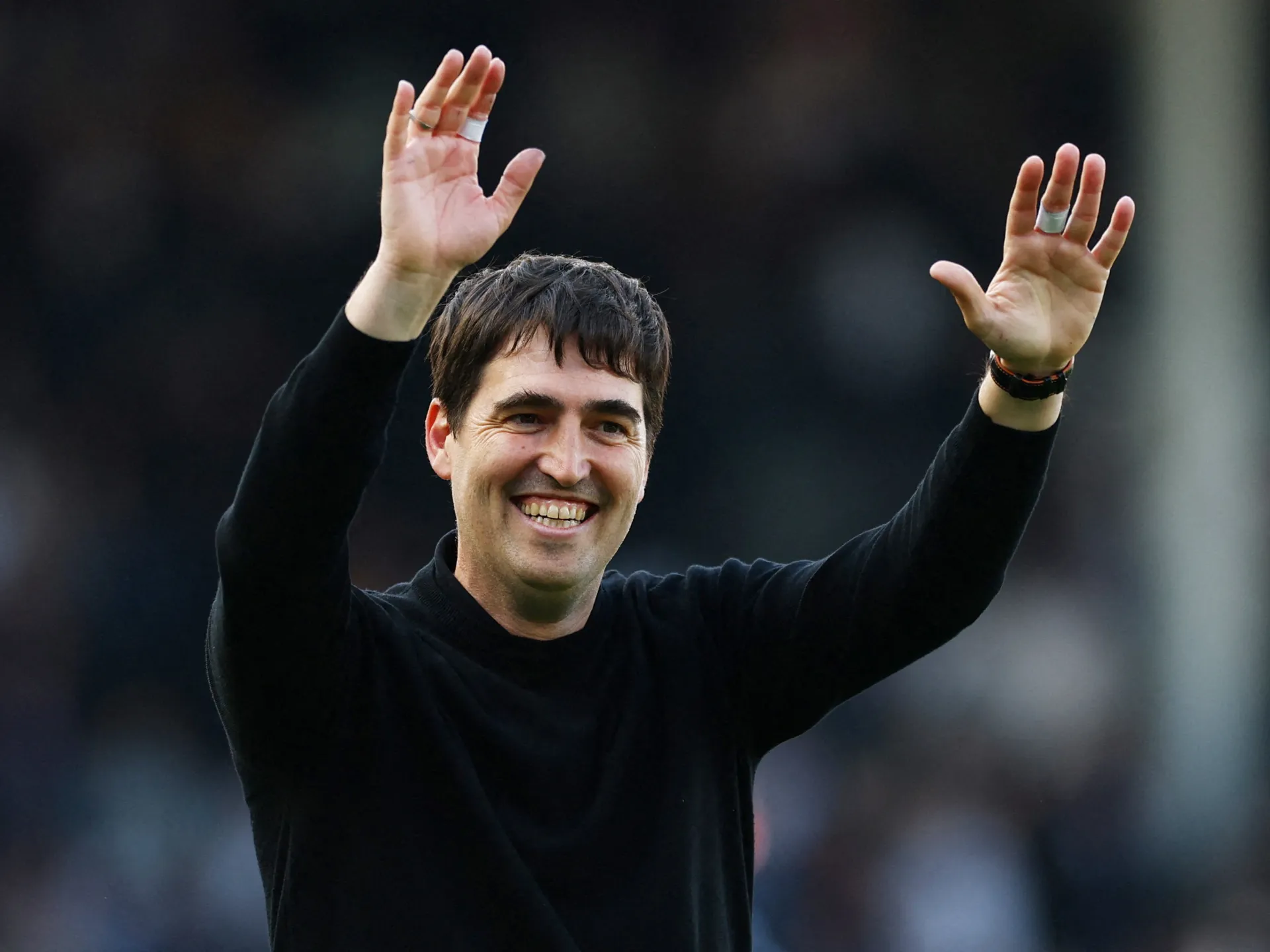
Andoni Iraola left his role at Bournemouth at the end of the season and takes over at Liverpool in place of Arne Slot.

Liverpool has named Andoni Iraola as their new manager after sacking Arne Slot following a calamitous Premier League title defence.

Iraola quickly emerged as Liverpool’s top target to replace Slot, whose two-year reign came to a shock end when he was dismissed last Saturday.

Recommended Stories

list of 4 itemsend of list

Liverpool gave no indication as to the length of the 43-year-old Spaniard’s contract, but British media have reported that he has signed a two-year deal.

“Really excited, really excited, because obviously you know about Liverpool, you know that it’s a big club, a massive club, one of the biggest in the world,” Iraola, who called time on his impressive spell with Bournemouth at the end of this season, said on Liverpool’s official website on Thursday.

“But feeling inside and understanding a little bit more of this club, I always thought it’s a special club.

“You don’t need a lot of things to get attracted by Liverpool. Liverpool is Liverpool.”

After criticism of Liverpool’s lacklustre performances in Slot’s second season at Anfield, Iraola is expected to deliver a more urgent, aggressive style of football, which characterised the team under beloved former manager Jurgen Klopp.

Iraola earned rave reviews for Bournemouth’s sixth-place finish in England’s Premier League this season, which secured the club’s first qualification for Europe, in the Europa League.

He arrived at the south coast club from Raya Vallecano in 2023, having previously managed Mirandes and AEK Larnaca in Cyprus.

Bournemouth improved each year under Iraola, finishing 12th, ninth and sixth.

The former defender was praised for his astute tactics and development of youngsters including Eli Junior Kroupi and Alex Scott.

Prior to leaving Liverpool at the end of the season, Egypt star Mohamed Salah recently called for a return to the “heavy metal football” that led to so much success under Klopp, heaping pressure on the beleaguered Slot.

Iraola has previously talked about his desire for his teams to play with an attacking, high-pressing style, in contrast to Slot’s more controlled approach.

Born in Spain’s Basque Country, Iraola played more than 500 games for Athletic Bilbao before a stint in Major League Soccer with New York City, where he teamed up with Frank Lampard and Andrea Pirlo.

He will arrive on Merseyside with Liverpool at a crossroads after Slot’s failure to maintain the club’s position at the summit of English football.

Slot had the tough task of replacing Klopp, who left in 2024 after winning the Premier League and Champions League during a golden nine-year spell at Anfield.

The former Feyenoord boss made a strong start, leading Liverpool to a record-equalling 20th English league title in his debut season, spearheaded by Salah’s 29 goals.

But Slot was unable to halt Liverpool’s slide in the 2025-26 season as the Reds collapsed from late September onward, finishing a turbulent season without a trophy.

The death of Liverpool forward Diogo Jota in a car crash last July had an immeasurable impact on the squad, while the club’s  450-million-pound ($605m) splurge on new signings failed to pay off.

Slot’s relationship with Salah also deteriorated, while Liverpool fans turned on the manager due to his team’s lifeless displays and poor results.

The club limped to a fifth-place finish, 25 points behind champions Arsenal, which at least guaranteed qualification for next season’s Champions League.

Source link