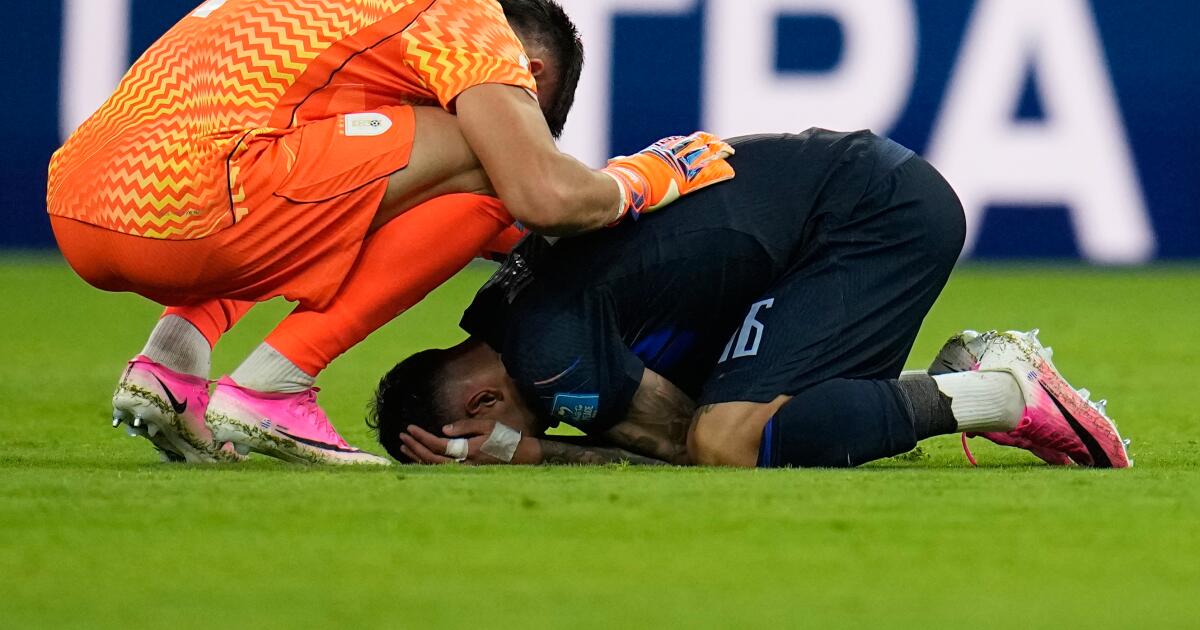
Spain midfielder Mikel Merino coolly scores in added time to break Portuguese hearts, sending his side through to the quarter-finals of the 2026 World Cup.
Four wins to go. How can your team reach the final and win the World Cup 2026? Click here to find out.
Who: Portugal vs Spain What: FIFA World Cup 2026 – Round of 16 Where: Dallas Stadium, Arlington, Texas, the United States When: Monday, July 6, at 2pm (19:00 GMT) How to follow: We will have all the build-up on Al Jazeera Sport from 16:00 GMT before our live text commentary stream.
Recommended Stories
list of 4 itemsend of list
A clash of generations awaits on Monday as ageing football star Cristiano Ronaldo goes up against teen prodigy Lamine Yamal in the World Cup round of 16 match between Portugal and Spain.
The “Iberian derby” marks a rematch of last year’s UEFA Nations League final, which Portugal won by beating European champions Spain on penalties.
Yet, it is not Portugal who are the favourites for this meeting in Dallas. After squeezing their way into the last-16 and a tumultuous run in the group stage, Ronaldo and his side face an uphill task to outshine Spain’s new golden generation.
Since a shock goalless draw in the opening game, Spain have grown into the tournament, and their slick playmaking coupled with solid defence makes them frontrunners to reach the quarterfinals for the first time in 16 years.
Al Jazeera tells you everything about Portugal vs Spain, a battle of the two pre-tournament favourites:
How did Portugal and Spain reach the round of 16?
Portugal came second in Group J with five points, thrashing Uzbekistan and being held to draws by the Democratic Republic of Congo and Colombia. In the round of 32, they controversially scraped past Croatia, bouncing back from a goal down to win 2-1.
Spain topped Group H with seven points, beating Saudi Arabia and Uruguay, and being held to a goalless draw by Cape Verde. In the round of 32, they stormed past Austria 3-0. La Roja are unbeaten in their last 34 matches (W25 D9), one shy of equalling their longest-ever unbeaten run of 35 set between February 2007 and June 2009.
Ronaldo’s last dance?
At age 41, fading forward Ronaldo is still Portugal’s most influential player, not because of his prowess on the pitch but his larger-than-life status off of it. Though he still demands attention in a supremely talented team while contributing less on the pitch, it is safe to say Ronaldo’s once explosive powers are in decline.
Heading into the tournament, there was always speculation about his future, with the 2026 World Cup possibly his last. While Ronaldo – the second-oldest player at the tournament – has fended off questions about what’s next, his sister said he would retire from national duty at the end of the World Cup.
That makes each one of Portugal’s knockout games more intense – if they lose, it could bring down the curtain on Ronaldo’s international career.
From club to country, Ronaldo has won several trophies in a decorated career over the years, but if Portugal fall to Spain, his glittering collection will remain incomplete without the shiny, golden World Cup trophy.
Portugal’s forward Cristiano Ronaldo has scored three goals at the 2026 World Cup, and in comparison, his longtime rival and current tournament leader Lionel Messi has seven goals [Cole Burston/AFP]
‘World Cup starts now’: Yamal
After a hamstring injury threatened to derail Yamal’s debut World Cup campaign, the 18-year-old winger has stepped up and is slowly stealing the spotlight in North America.
A man-of-the-match performance in Spain’s first tournament knockout win over Austria highlighted the talented youngster’s impact, two years on from his dazzling display that helped Spain win Euro 2024.
“I want to advance through the rounds and win with Spain,” said Yamal. “We aren’t afraid of any team. We are Spain.”
“The World Cup starts now.”
Yamal has bagged one goal so far, while Mikel Oyarzabal leads the team’s scoring chart with four. Spain are unbeaten in 34 matches and chasing their second World Cup title, 16 years after their first in South Africa in 2010.
Portugal vs Spain prediction
The Opta supercomputer gives Spain a 49.2 percent likelihood of winning in regulation time, while Portugal’s chances of winning are 25.6 percent.
The model estimates a 25.2 percent probability of the game going to extra time.
Portugal vs Spain: Kickoff time, TV channels
Portugal: RTP1, SPORT.TV5, LiveModeTV, RTP Play (8pm, Western European Summer Time)
Spain: (9pm, Central European Summer Time)
United Kingdom: BBC One, BBC iPlayer (8pm, British Summer Time)
United States: FOX, FOX One, Telemundo App, Telemundo Network, Peacock (3pm, Eastern Daylight Time)
To check the TV listings for your country, head to FIFA’s TV listing schedule here.
A Portugal supporter cheers before the 2026 World Cup group match between Portugal and Uzbekistan at the Houston Stadium in Texas in the US [Ronaldo Schemidt/AFP]
Who will the winner face in the quarterfinals?
The winner of the Portugal vs Spain match will face either the USA or Belgium in the quarterfinals in Los Angeles in the US on Friday, July 10.
Portugal vs Spain: Head-to-head
There has been little to separate Portugal and Spain across their five previous meetings at major tournaments, with each side winning once and the remaining three matches ending in draws.
That includes their most recent World Cup meeting, a 3-3 draw in 2018, in which Ronaldo scored a hat-trick.
In the all-time head-to-head, the teams have played 41 times, with Spain winning 18 times, Portugal seven times, and the sides playing out 16 draws.
Portugal will take confidence from having defeated Spain, albeit in a shootout, in their most recent meeting in the UEFA Nations League final in June 2025.
Portugal vs Spain: Team news
Spain’s Nico Williams is out with a hamstring injury. No issues are reported in the Portugal camp.
Portugal’s predicted lineup
(4-2-3-1): Costa (goalkeeper); Cancelo, Dias, Veiga, Mendes; Neves, Vitinha; Neto, Fernandes, Leao; Ronaldo
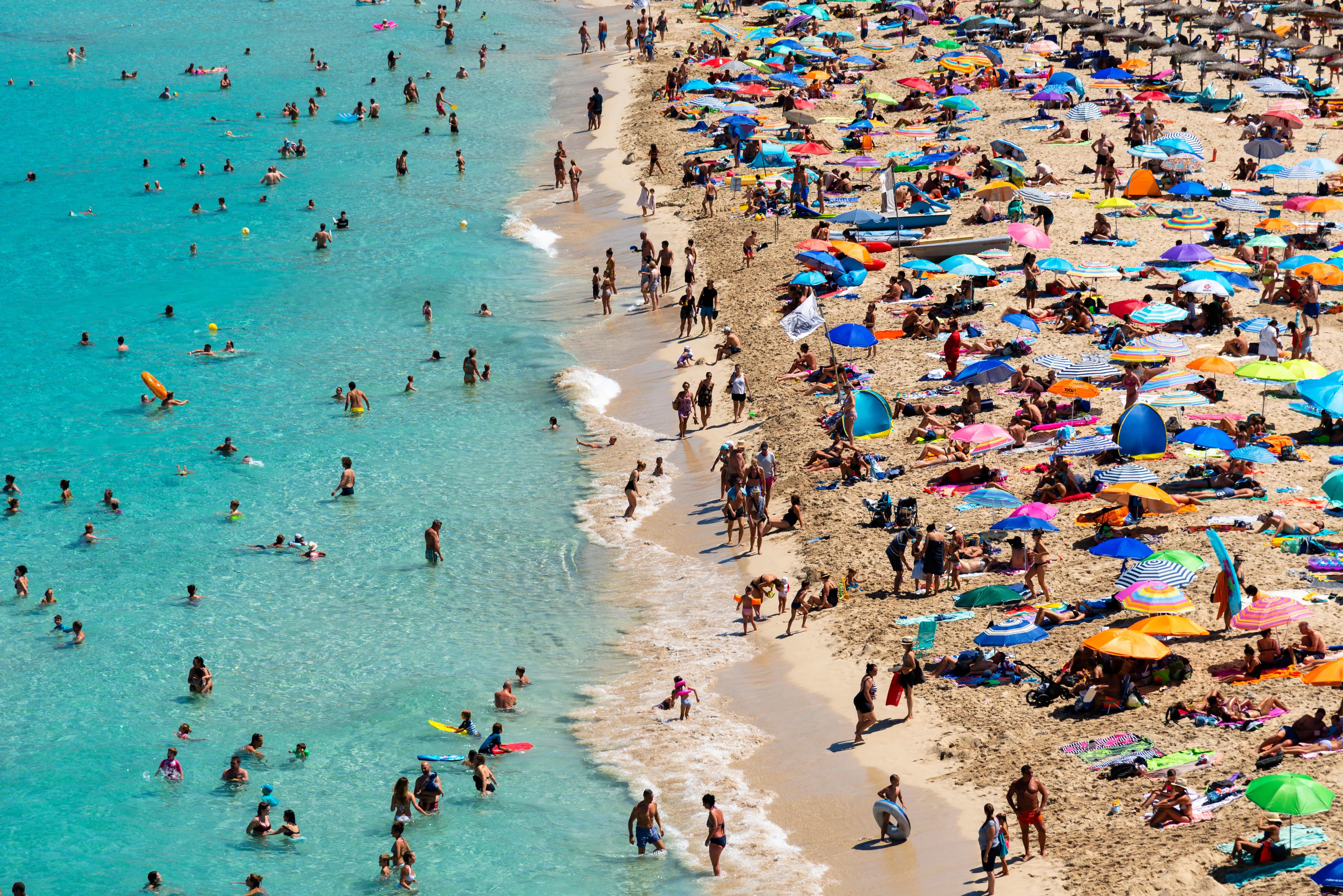
HOLIDAYMAKERS heading to Spain this summer have been warned to avoid 14 popular beaches.
Environmental organisation Ecologistas en Acción has published its annual report highlighting the areas of Spain‘s coast with the biggest issues.
Sign up for the Travel newsletter
Thank you!
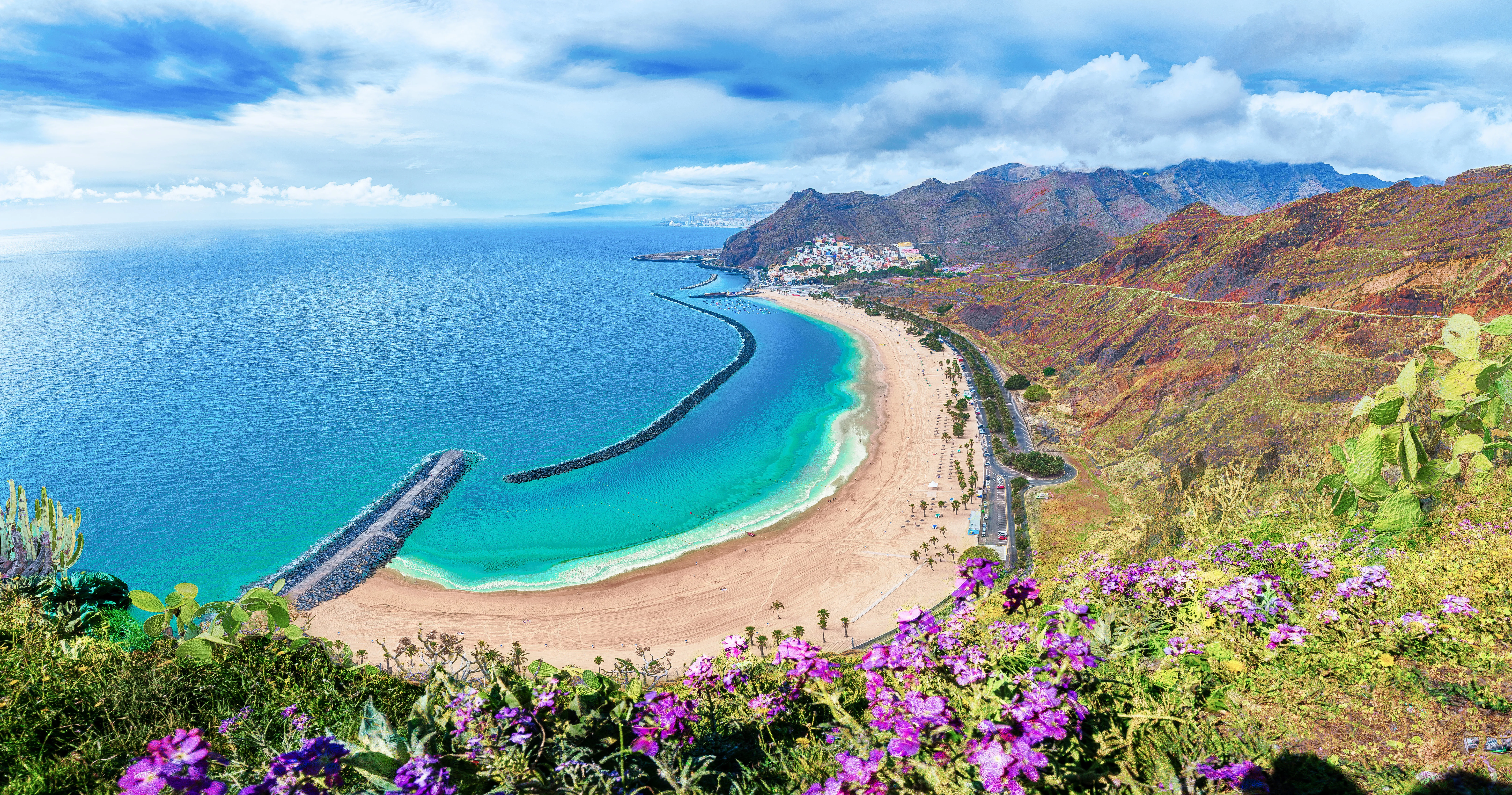
There are 14 ‘Black Flag’beaches in Spain including Las Tereitas Beach in the Canary IslandsCredit: Alamy
The report awards ‘Black Flags’ for either pollution or for poor management.
Of the 48 flags awarded, 14 were awarded to beaches – mostly due to pollution problems.
One beach that was awarded a Black Flag is Playa de Maro for pollution, in Malaga.
The popular 500-metre-long beach is known for its dramatic cliffs and underwater caves and was previously said to be of the best beaches on the Costa del Sol.
In Granada, Playa de la Charca, Salobreña was awarded a Black Flag for pollution and Playa de Los Berengueles, Almuñécar was awarded a Black Flag for poor management.
Over in Alicante, the coastal neighbourhoods of Albufereta and Cap de l’Horta both gained Black Flags for pollution and La Almadrava beach gained one for poor management.
Valencia also has a number of coastal spots that were called out including its coastline for pollution and the surroundings of the Port of València and Sagunto for poor management.
In the popular city of Barcelona, the Beach of the Sant Adrià del Besòs was awarded a Black Flag for pollution.
One beach that was awarded a Black Flag is Playa de Maro for pollution, in MalagaCredit: Getty
The stretch of coastline features golden sand and is often less crowded than the main beaches by Barcelona city.
Over in the Canary Islands, the town of El Puertito de Adeje was awarded a Black Flag for poor management, as was Las Teresitas Beach.
On Gran Canaria, the coastline of Telde was also given a Black Flag, as was the coast of Lanzarote due to cruise tourism.
If you are heading to the Balearics, then avoid the town of Port of Pollenca in Majorca and in Menorca, avoid Torrente de Cala Galdana – which is a ravine with a beach.
Other beach destinations that gained a Black Flag include:
THIS summer, it looks like it’s time to call a truce on the great Spain vs. Turkey debate.
Because by looking at the latest booking data, I’ve noticed a massive change in 2026.
Holiday Expert Rob Brooks has selected 7 of the cheapest Greek holidays for the summerCredit: Rob BrooksYou could stay at the Belair Beach Hotel in Ixia this August for £375ppCredit: Management
More and more Brits are swapping Europe’s traditional heavyweight resorts for a handful of Greek destinations.
These spots serve up the exact same sunshine, brilliant beaches, and all-inclusive value – often for a chunk less money.
And because I work in travel, my screen is basically permanently locked onto live price trends and capacity numbers.
The pattern right now is clear: holidaymakers are moving away from the usual high-premium hubs in Spain, the Canaries or the Turkish rivieras because Greece has suddenly become the ultimate value loophole.
A massive influx of flight capacity from the UK means you can bag that peak-summer Mediterranean experience without paying the usual school holiday markup.
If you want to know where the smart money is heading this summer, these are the seven Greek spots I’d be circling.
7. Ixia, Rhodes
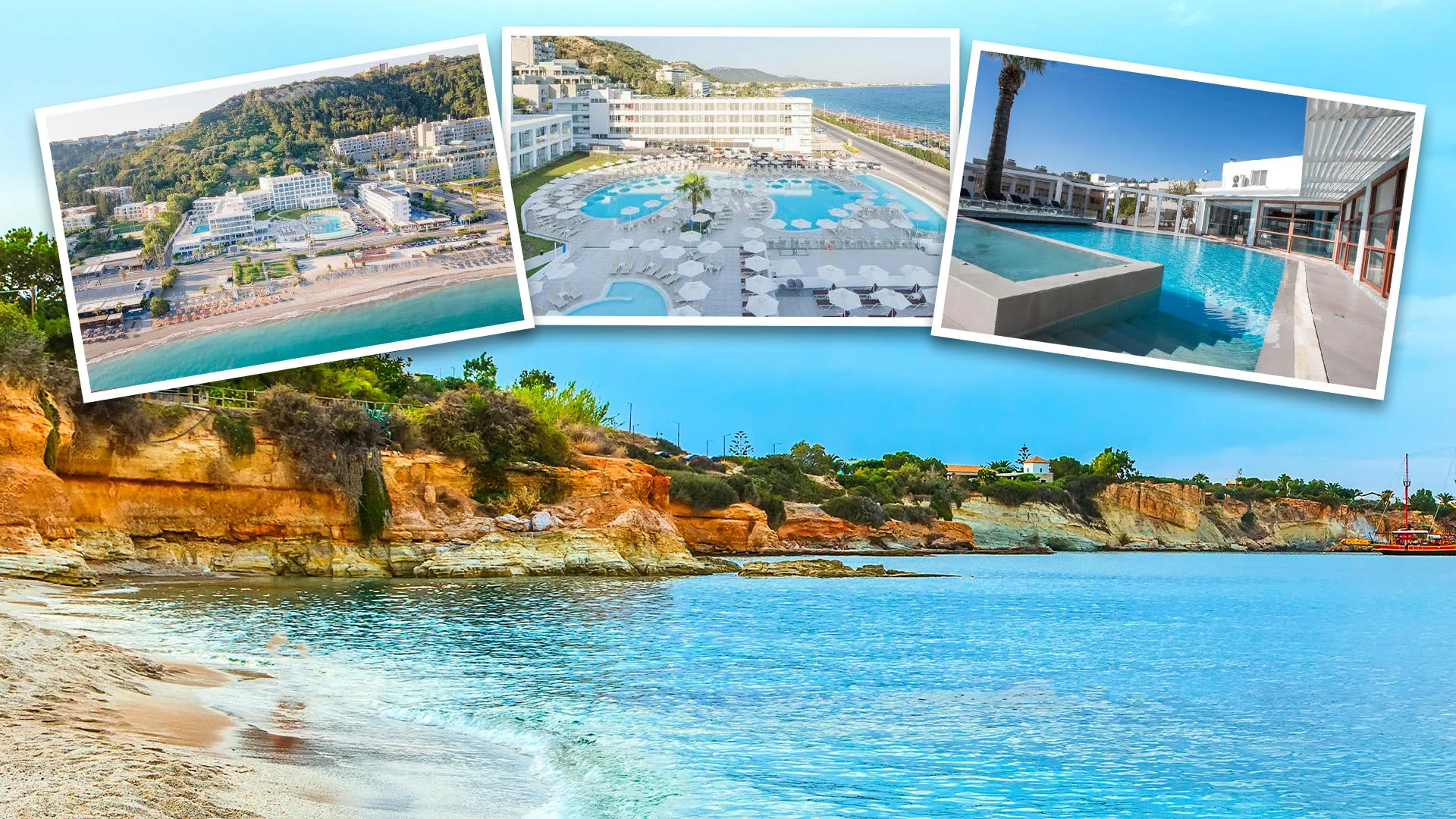
The Belair Beach Hotel in Ixia comes with sea views and is just 10 minutes from Rhodes Old TownCredit: Management
If there’s one Greek resort that’s aggressively stealing traffic from the traditional Spanish and Turkish mainstays this summer, it’s Ixia.
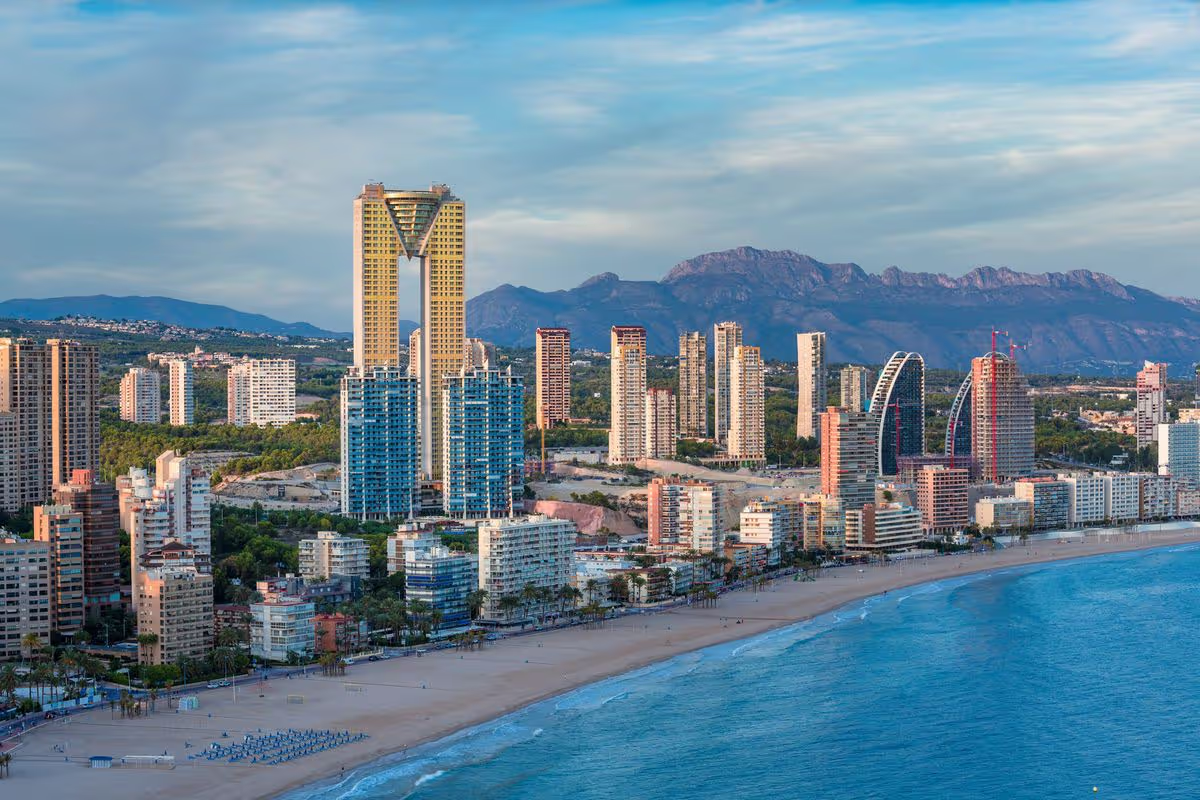
Our data shows a massive wave of holidaymakers ditching the likes of Benidorm, Alanya, Costa Adeje, Costa Teguise, Marmaris, and Torremolinos specifically to head here.
It gives you that classic beach holiday setup people love, but with a slightly more premium edge, proper decent hotels, and historic Rhodes Old Town sitting just a ten-minute taxi ride down the road.
Plus, you get a constant coastal breeze, which makes the peak August heat infinitely more comfortable than the suffocating temperatures you get elsewhere.
I spotted five nights at the Belair Beach from Edinburgh on 21 August, with half board and flights included, from £375pp.
The hotel sits right across the road from the front, but the real insider perk here is their specialised windsurfing and water sports station directly on the sand.
Because Ixia is a world-class windsurfing hub, the hotel has gear hire sorted right on your doorstep, meaning you can try your hand at proper coastal sports for a fraction of what a commercial water sports center down the coast would fleece you for.
6. Ialyssos, Rhodes
The Trianta Hotel Apartments in Ialyssos is a budget-friendly option in RhodesCredit: Management
Just around the bay from Ixia is Ialyssos, another Rhodes resort that’s turning into one of the island’s biggest success stories.
The booking data tells us that the crowds usually bound for Benidorm, Costa Adeje, Alanya, and Marmaris are pivoting here instead.
It offers the exact same guaranteed August sunshine you’re chasing in the western Med, but swaps the crowded strips for a much more relaxed, authentic village vibe and some brilliant, family-run apartment setups.
I found five nights at the Trianta Hotel Apartments from 19 August, with flights included, from £255pp.
Landing peak summer flights and accommodation for barely over two hundred and fifty quid is a massive result.
This property is notoriously highly rated by return guests, and the standout feature here is its poolside taverna nights.
Instead of serving up generic, mass-produced package food, the family that runs the place cooks up proper, home-style Greek mezze using vegetables grown in their own garden lot behind the apartments. It’s elite local dining on a shoestring budget.
5. Messonghi, Corfu
You could bag an all-inclusive break at the Canvas by Mitsis Messonghi hotel for £478pp this AugustCredit: Management
If you’re after somewhere that feels slower, greener, and a bit more rustic than the sprawling concrete mega-resorts, Messonghi is a top-tier shout.
And this year, it’s proving particularly popular with Brits swapping away from Benidorm, Costa Adeje, and Alanya.
Corfu‘s scenery is stunning, the beaches are incredibly calm, and a massive boost in regional UK flight routes this year has driven package prices right down into bargain territory.
One standout deal I spotted was five nights all inclusive at Canvas by Mitsis Messonghi from 20 August, with flights included, from £478pp.
And getting a fully loaded, peak-season Mitsis property under the £500 mark is an absolute steal.
The beachfront setting and massive pool complexes at this hotel are brilliant for keeping kids occupied, but what elevates this place above so many Spanish hotels for me is the complimentary, on-site aqua park.
They’ve integrated a proper mini waterpark into the resort grounds with zero entry fees, saving you from shelling out €40 a head for a public waterpark day trip into town.
4. Faliraki, Rhodes
Holiday Expert Rob Brooks found a stay at Hillside Studios Faliraki for £340pp this AugustCredit: Management
Faliraki has completely reinvented its identity over the last decade.
While people of my generation might still associate it with rowdy 18-30 nightlife, today it’s quietly morphed into one of Rhodes‘ best all-round family beach resorts.
I’m seeing a huge influx of families swapping over from Benidorm, Marmaris, the Costa Blanca, and Alanya to secure one of the island’s widest sandy coastlines and a massive number of modern hotels.
I found five nights at the Hillside Studios from 25 August, with flights included, from £340pp.
It serves as a brilliant, no-nonsense base with an immaculate pool area, but the secret benefit of this specific hotel is its location near the Erimokastro hills.
Because it sits just outside the central valley, the hotel offers an incredibly peaceful night’s sleep away from the main resort hum, and it puts you right on the doorstep of the hidden, cliff-sheltered Astron Beach cove – a spot most tourists completely miss!
3. Kiotari, Rhodes
The Kiotari Miraluna Beach Resort has its own cinema lounge as well as open-air film nightsCredit: Management
If your main holiday priority is peace, quiet, and premium lounging, Kiotari is easily one of my favourite recommendations on the map.
More people are moving here from heavy-hitting hubs like Alanya in Turkey because the hotels feel noticeably more luxurious and modern than the older resort blocks elsewhere in the Med, serving up wide beaches, reliable sunshine, and massive all-inclusive footprints without the premium price tag.
One deal that stood out to me was five nights all inclusiveat the Kiotari Miraluna Beach Resort from 19 August, with flights included, from £535pp.
My pick of the features at this resort is easily the cinema lounge.
They run open-air family movie nights right on the edge of the sand under the stars in the evening, which is a fantastic, high-end touch that lets you unwind with a drink by the waves while the kids are completely glued to a big screen.
2. Hersonissos, Crete
You can visit Hersonissos in Crete for under £300pp this August, with a stay at the Palatia Village ApartmentsCredit: Getty
Crete never goes out of fashion, and Hersonissos remains the undisputed king of its value market.
Holidaymakers are increasingly swapping over from traditional mainstays like Benidorm and Marmaris, tempted by Crete’s reliable weather, lively waterfront, and massive choice of hotels.
It delivers that buzzing, lively atmosphere that Brits love, but pairs it with incredible independent tavernas, fascinating ancient history, and excellent flight availability from pretty much every major UK runway.
I spotted five nights at the Palatia Village Apartments from 20 August, with self-catering and flights included, from £283pp.
The hotel serves up fantastic, panoramic views across the bay, but the real selling point here is the traditional Cretan architecture of the rooms.
The apartments are styled like a mini, stone-walled Greek village rather than a sterile hotel corridor, meaning you get that high-end, boutique aesthetic for under three hundred quid.
1. Kavos, Corfu
The cheapest Greek holiday deal expert Rob Brooks found was for a trip to Kavos, at £235ppCredit: Getty
Kavos might raise a few eyebrows on a value list, but the resort landscape here is changing rapidly.
Beyond the main neon strip, there is an influx of quieter, family-run properties that are drawing in couples and budget-conscious travellers who simply want cheap sun without the chaos.
And these great summer prices are driving a massive spike in people swapping here instead of choosing Spain’s traditional budget resorts.
A deal that really caught my eye was five nights at the Oula Maisonettes from 25 August, with self-catering and flights included, from just £235pp.
This is a small, family-run complex that heavily over-delivers for the money.
The absolute best feature here is the independent duplex layout of the maisonettes themselves.
Having your living area completely separate from the upstairs sleeping quarters gives you a proper apartment feel, allowing you to relax on your private terrace with a cold drink after the kids have gone to bed without waking them up.
Spain achieved its primary goal at SoFi Stadium on Thursday, defeating Austria 3-0 and advancing to the World Cup round of 16 in front of a pro-Spain announced crowd of 70,492.
The Spaniards extended their unbeaten match streak to 34 games and their win streak over European teams to 35 dating back to 2023. They have yet to concede a goal this tournament, tying the record for most consecutive men’s World Cup clean sheets with five.
By every metric, Spain controlled the match and won decisively in its best performance of the tournament.
But Spain coach Luis de la Fuente said his team still has room to improve and has yet to play its best soccer.
The team favored to win the World Cup before matches kicked off last month is still ramping up and working to championship standards.
While France’s fearsome foursome led by the electric Kylian Mbappé has bulldozed opponents, Norway’s Erling Haaland is scoring at a rapid pace and Lionel Messi is dancing his way to immortality, Spain superstar Lamine Yamal is still waiting to deliver a multi-goal dominant World Cup performance.
Yamal, an 18-year-old prodigy, showed flashes of his talent and set up his teammates well en route to winning man of the match honors that more than a few Spanish media members questioned. But his efficient teammates carried the scoring load Thursday, with Mikel Oyarzabal scoring two goals and Pedro Porro adding another for La Roja.
Spain has been managing Yamal’s minutes while he recovers from injury, but Thursday was supposed to be an opportunity to unleash his dominance.
“I think we need to keep improving our game, our intensity — everything — but obviously we know the quality we have, and we know we’re not afraid of any team,” Yamal said after the match. “We’re Spain, and we have to prove it on the field, but we believe in ourselves.”
Spain still advanced with ease and will face the winner of the Portugal-Croatia match to be played later Thursday. Their round of 16 match will be played Monday in Arlington, Texas. On July 10, the winner of that contest will face the winner of Monday’s U.S.-Belgium match at SoFi Stadium.
Austria coach Ralf Rangnick is convinced Spain, the European champions, easily could become World Cup champions.
“If you watched the game today, you would recognize it is really difficult to play against this opponent,” Rangnick said of Spain. “… I cannot remember any unforced error they made.”
Spain’s de la Fuente shook his head when he heard Rangnick’s praise, saying he was happy for his players and loves his team but saw many areas that could be improved.
“There’s much to do,” de la Fuente said, noting the competition will only grow tougher. “The defense can still be improved. There have been some situations when we lacked high pressure. … Prior to the first hydration break, the team was still trying to evolve.
”… You need to keep improving all the time.”
Spain forward Lamine Yamal falls after Austria midfielder Florian Grillitsch kicks the ball away from him during the second half Thursday.
(Kelvin Kuo / Los Angeles Times)
During its round of 32 match on Thursday, Spain handled Austria’s high press and attacked spaces behind the defense.
The Spanish team capitalized on its opponent’s defensive misalignments, found depth down the wings and consistently exposed the Austrians’ defensive weaknesses.
Austria came out quickly looking to pull off an upset, but it ran into a Spain team that was well-organized defensively. The counterattack ended with Yamal firing a shot straight at Austria goalkeeper Alex Schlager one minute into the game.
The Austrians tried to get behind the Spanish defense, but their attacking creativity was limited and they never managed to turn their promising opportunities into goals. One of Austria’s clearest chances came on a play by Marcel Sabitzer, who sent a cross from the left flank to forward Michael Gregoritsch, who wasn’t fast enough to put a head or foot on the well-placed ball before it sailed out of bounds.
The pace of the game favored Spain, as Austria took risks on the attack and left spaces open.
In the 29th minute, Yamal’s corner kick pinballed in the penalty area before falling to Marc Cucurella, who appeared to score. The goal was erased, however, because Spain tackled Austria’s goalkeeper before Cucurella took his shot.
Yamal was dynamic early and a run into the box nearly resulted in another clear scoring opportunity. Schlager barely had time to react and prevented another Spanish celebration in the 32nd minute.
Four minutes later, Cucurella sent a pass to Oyarzabal, who was left unmarked because David Alaba had left a large gap between himself and the forward. Oyarzabal connected with the cross and easily scored to give Spain a 1-0 lead.
Spain had two great chances to extend its lead during first-half stoppage time. The first was a long-range shot by Álex Baena that hit the crossbar; on the rebound, Yamal fired the ball straight into the Austria goalkeeper’s body.
In the second half, Yamal continued to pressure the Spanish defenders and set up Oyarzabal for a shot caught by the Austrian goalkeeper.
Rodri’s dribbling opened more space for Spain, allowing him to create a shooting opportunity that grazed the post in the 54th minute.
Austria was looking to attack more and brought on Sasa Kalajdzic, who responded quickly with a header that sailed over the crossbar.
Spain responded by scoring a few minutes later.
In the 66th minute, Baena won the ball back on the left and sent in a cross for Porro, who headed in his team’s second goal. It was Porro’s first goal for Spain during international competition.
In his final play before being replaced in the 85th minute, Yamal received a pass inside the penalty area and although he struck the ball well to beat the Austrian goalkeeper, another Austrian defender managed to block his shot.
When it seemed both teams were content with the result, Cucurella once again linked up with Oyarzabal off a deep pass into the center of the penalty area. Oyarzabal got behind two defenders and scored, sealing Spain’s 3-0 win.
“The game kind of tells you what you need — whether the team needs more on offense or more on defense,” Porro said. “It’s about staying more focused on that, and surely when you’re more confident in what you have to do, you perform better.”
Mikel Oyarzabal’s brace allows the European champions to dominate Austria and move on to the round of 16.
Published On 2 Jul 20262 Jul 2026
Spain coasted past Austria and into the FIFA World Cup last 16 on Thursday, thoroughly outclassing their opponents in a 3-0 knockout win, with a brace from Mikel Oyarzabal and a Pedro Porro header.
The European champions controlled possession and sliced through the Austrian defence in a typically dominant performance in Los Angeles, as Hollywood stars Penelope Cruz and Javier Bardem and singer Rosalia cheered on.
Recommended Stories
list of 4 itemsend of list
The win, which could have been by a greater margin – with a disallowed goal and a free kick off the woodwork – sets up a tantalising round-of-16 clash with either Portugal or Croatia.
“I’m happy to help the team and get through to the next round. Now we need to rest,” said Oyarzabal directly after full-time.
“They were a physical side and difficult to play against, but we played a good match. We’re happy to qualify,” he added.
As to whether he would prefer Portugal or Croatia in Monday’s last-16 match-up, Oyarzabal remarked: “It doesn’t matter who we face in the next round; I have friends in both teams.”
Oyarzabal sets the tone
Los Angeles Stadium was a sea of red and excitement over the first visit by a bona fide World Cup favourite to the US’s second city.
Spain ratcheted up the pressure gradually through the first half, creating a string of chances after the first hydration break.
Marc Cucurella thought he had scored from a Lamine Yamal corner, but Pau Cubarsi was judged to have encroached on Austria’s goalkeeper.
Alexander Schlager then made a superb diving save, pushing Oyarzabal’s low shot around the post.
Austria’s defence finally buckled in the 36th minute. Pedri pinged a ball wide, left to Cucurella, whose cross to Oyarzabal was calmly side-footed past the goalkeeper.
Spain’s dominance grew further, with Yamal tormenting the Austrians, mainly from the right flank.
An Alex Baena free kick hit the crossbar, and Yamal’s close-range follow-up shot was well saved.
Austria spurned a rare chance at the other end. Romano Schmid played in a late-arriving and unmarked Stefan Posch, but a terrible first touch meant he lost the ball before even attempting a shot.
Oyarzabal scores his second goal against Austria in the 89th minute [Kiyoshi Mio/Imagn Images via Reuters]
‘Ole’
After the break, Spain continued knocking on the door without quite putting the game to rest.
Austria sent on two giant strikers, Sasa Kalajdzic and Marko Arnautovic, and immediately went long, with Kalajdzic putting a header over the bar.
But in the 66th minute, Spain struck again. Baena lifted a cross onto the head of Pedro Porro, who nodded in his first goal for Spain.
Some dogged defending kept the scoreline respectable, including a goal-line clearance by David Alaba from Yamal, who was substituted off to rest moments later.
Spain sprayed passes around the pitch as the final minutes ticked down, eliciting “Oles” from the crowd, as attention turned to a sterner test on Monday in Dallas.
In the 89th minute, a pinpoint Cucurella cross found a completely unmarked Oyarzabal in the penalty area, who slotted the ball home to seal the victory in style.
Spain’s immigration scheme sees more than a million applications, with Latin Americans leading the numbers at 67 percent.
Published On 2 Jul 20262 Jul 2026
Almost 1.2 million undocumented migrants have sought legal status in Spain under a scheme that has defied a growing European crackdown on irregular immigration.
The government of Socialist Prime Minister Pedro Sanchez, a standard-bearer of more open immigration policies, launched the vast plan in April while European neighbours toughen measures in response to pressure from ascendant far-right parties.
Recommended Stories
list of 3 itemsend of list
A total of 1,174,978 applications were submitted between mid-April and June 30 when the window closed, with more than 600,000 already being processed, Secretary of State for Migration Pilar Cancela told a news conference in Madrid on Thursday.
Latin America accounted for 67 percent of the submissions, with Colombia alone representing 25.9 percent of the total. African nationalities followed with 22.9 percent.
After Colombia, the most represented countries were Morocco at 13.3 percent, Venezuela with 11.8 percent and Peru at 8.8 percent.
An overwhelming majority of applicants were young, with eight out of 10 younger than 45 years old, while 57 percent of the total were males against 43 percent for females.
The application total does not necessarily indicate how many people will normalise their situation. According to government projections in April, there are about 500,000 potential beneficiaries.
Applicants must prove they have a clean criminal record and spent at least five consecutive months in Spain before January 1.
The authorities have three months to process their paperwork and decide whether to issue a work and residence permit valid only in Spain.
Sanchez has touted the benefits of immigration and the vast regularisation scheme for sectors such as construction that need to boost their workforce.
“Without immigration, Spain would lose 19 percent of its GDP by 2050,” Sanchez said on Tuesday during a presentation on migration. “And what does that mean in business terms? It means, for example, that 90,000 bars would have to close, that 50,000 primary and secondary classrooms would find themselves without students, and that around 220,000 farms would disappear.”
Without immigration, he added, Spain would be “poorer, emptier, weaker and without the resources to fund its welfare state”.
“Spain has never moved forward by building walls,” the prime minister said. “The only decent thing to do is extend a hand, not turn our backs on immigration.”
Spanish business leaders have welcomed the move, but the conservative and far-right opposition are furious about a policy they say will encourage more irregular immigration. Santiago Abascal, the leader of the far-right Vox party, slammed the scheme, calling it an “invasion”.
“More than a million strangers now competing with Spaniards for jobs, housing, daycare places, hospital beds, and social assistance. It’s an invasion. And it’s a betrayal,” Abascal said on X.
THE best islands in the world have been revealed and there is one in the UK that snuck into the top 50.
The 50 Best Islands in the World was revealed by Big 7, having run for seven years.
Sign up for the Travel newsletter
Thank you!
These are the world’s best islands, and they include one in the UKCredit: Alamy
The study looks at everything from popularity on social media and travel trends to insights from the editorial team.
And coming in no.1 was Sri Lanka which was praised for “having it all”.
It said: “Whiling away blissful days beach-hopping along the 833-mile coastline is part of the charm, but Sri Lanka offers much more beyond the shore.
“Itineraries fill up quickly here, between the timeworn temples, colonial towns, misty mountains, and wildlife safaris in Yala National Park, home to tigers and elephants.”
The Sun’s Assistant Travel Editor Sophie Swietochowskirecently visited and said: “It was the off-grid excursions that gave me a real sense of what this region was truly about – a half-day cooking experience was just my cup of tea.
“And one night, an elephant stepped out from some undergrowth and plods slowly into the oncoming traffic, where drivers pulled to a casual halt until the lumbering giant disappeared.”
The beautiful Isle of Mull was the only UK island to make the listCredit: AlamySri Lanka has been named the best island in the worldCredit: Alamy
However, the only UK island to make the list was the Isle of Mull in Scotland, coming in 23rd place.
Making the list for its “rugged coastline and unexpectedly white sand,” it added: ” It’s an island of contrasts – where highland cows bathe in the calm, crystal-clear sea, and foamy waters crash into basalt columns.”
The island has everything from the coloured houses of Tobermory, as well as dolphin and seal watching – and even fluffy highlands cows on the beach.
While Mull was the only UK island to make the list, the nearby Achill Island in Ireland came in 8th.
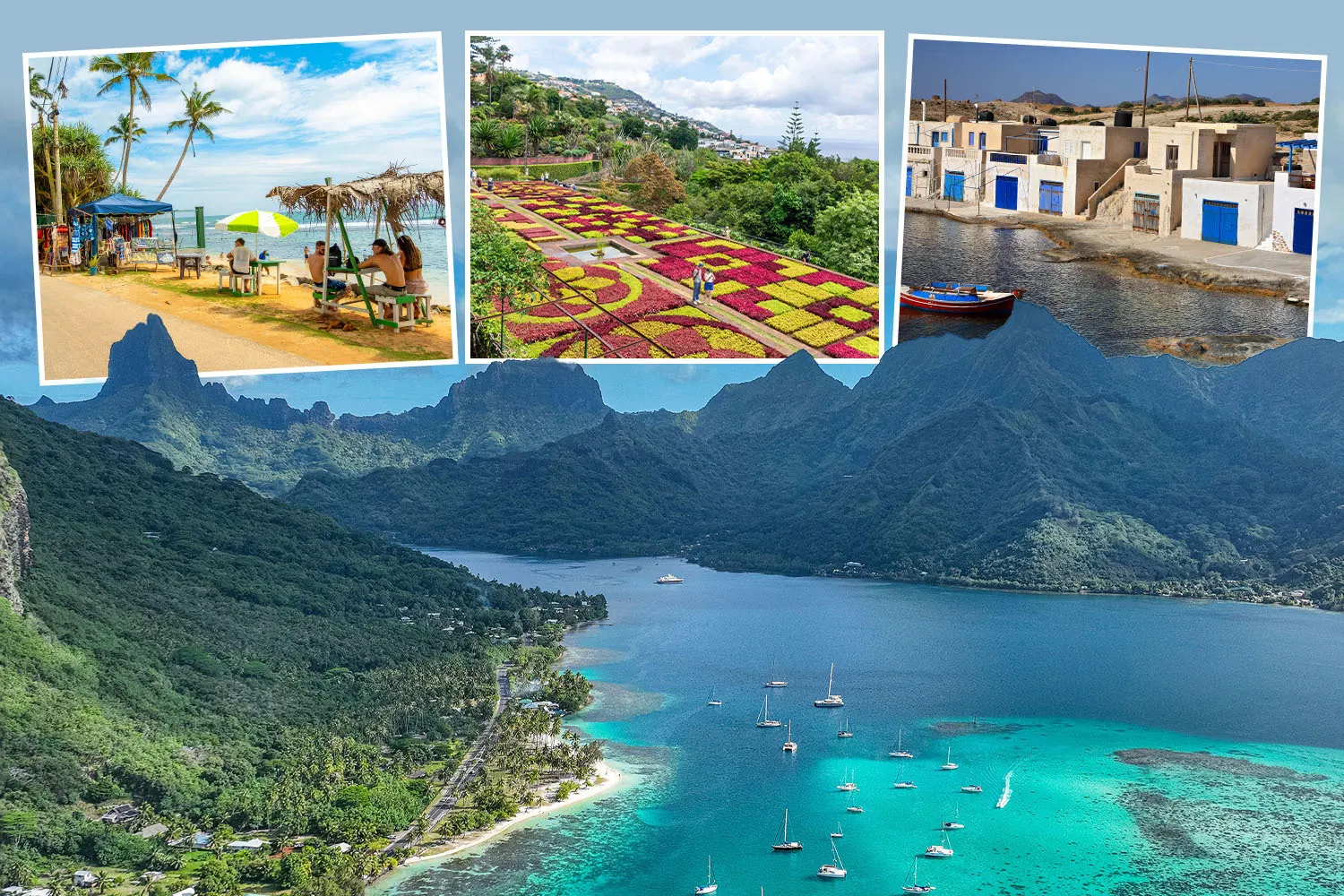
European islands like Madeira made the top 50Credit: AlamyMilos (pictured) as well as Hydra won it for GreeceCredit: Alamy
It made the top 10 for its “soft pink sunrises and turquoise seas to moss-green hills and fiery sunsets.”
Europe fared well too, with many in the top 20 including Madeira (4th), Milos (10th), Ischia (15th), Ibiza (17th) and Corsica (18th).
Popular islands Brits will know such as Jamaica was in 19th, while Bali was in 20th and Mauritius was 24th.
Sardinia, Hvar and Key West all just made it into the top 50.
A TikTok video has showcased the stunning lake, with the bubblegum pink hue leaving viewers desperate to visit the spot
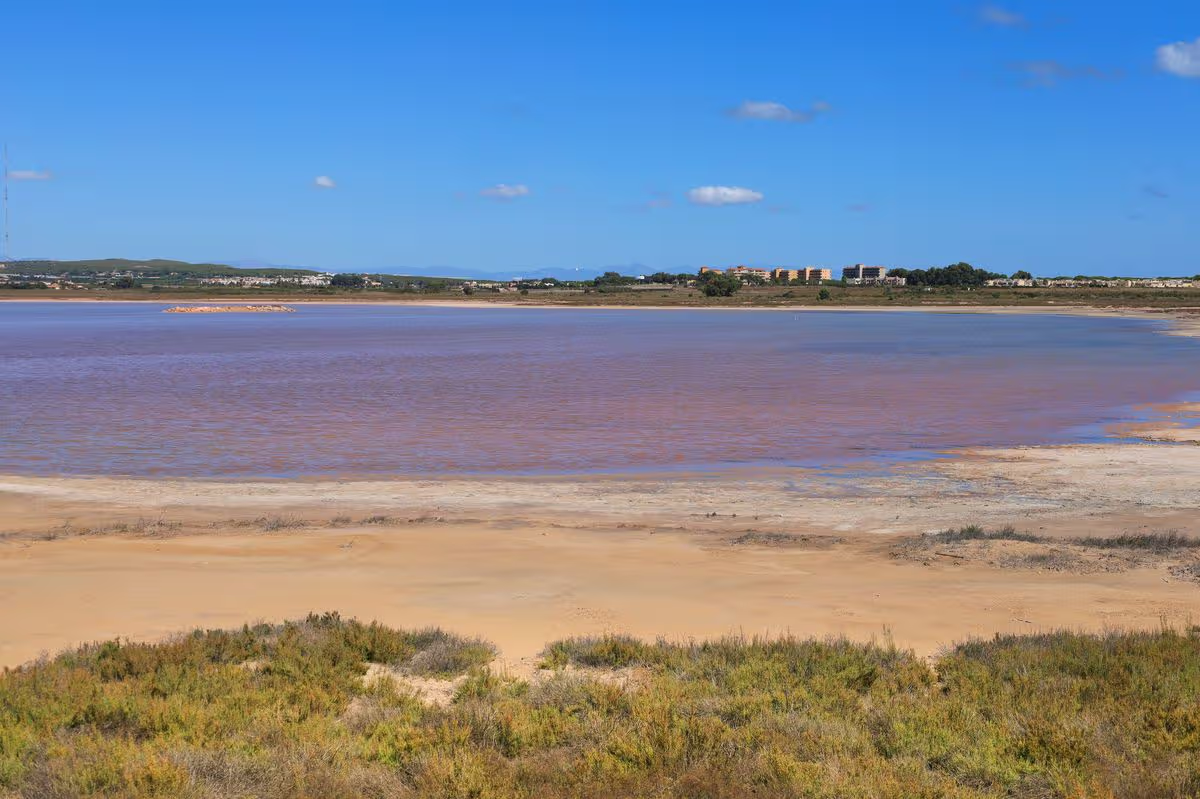
Laguna Salada de Torrevieja is located just an hour from Benidorm (Image: soniabonet via Getty Images)
When you picture Spain, you imagine stunning beaches, delicious cuisine and breathtaking scenery. And this specific corner of Spain has now got tourists buzzing about its natural beauty.
The must-visit bubblegum pink lake sits just an hour’s drive from popular British hotspot Benidorm. Holiday provider Travel Republic has shared everything you need to know about the must-see travel spot, including its health benefits and the reason behind its striking pink hue.
One TikTokker, who goes by the username @carielizabethh, has posted a video of “one of the coolest” experiences you can have just outside of Alicante, Spain.
The video has amassed over 6.5 million views and it’s easy to see why. She goes on to explain that while visiting her boyfriend’s parents, who live nearby, they took the couple to experience the spectacular Laguna Salada de Torrevieja.
The captivating lake is described as “one of the most unique experiences” thanks to its salt content which allows you to float with zero effort.
What’s more, legend has it that covering yourself from head to toe in mud before swimming offers numerous therapeutic benefits.
Users of the platform are intrigued and keen to visit, taking to the comments to say: “It’s giving rose quartz lake vibes”, “omg so cool” and “We have to go “.
The video does caution, however, that visitors should be “super respectful” and not “swim outside of the designated area which is protected by wooden planks”.
So what exactly gives it that striking colour?
The lake’s distinctive strawberry hue is down to the activity of various microorganisms living within the water.
The two key ingredients are salt bacteria and micro-algae. Both flourish in highly saline conditions and produce natural pigments responsible for the water’s stunning pink appearance.
What are the ‘therapeutic’ benefits of the Laguna Salada de Torrevieja?
This remarkable salt lake and its mud are said to offer a wealth of health benefits. Immersing yourself in this natural spa has been credited with helping to prevent skin and lung conditions, while also deeply exfoliating and nourishing the skin.
It’s reportedly beneficial for those suffering from eczema and may also assist with reducing inflammation and easing pain. Those with sensitive skin are advised to take care, however, as the high salt content can cause irritation or a mild stinging sensation.
The water’s elevated salt levels also provide the ideal habitat for brine shrimp, making it a prime feeding ground for flamingos. It is, in fact, these very shrimp that are responsible for giving flamingos their iconic pink plumage.
A Welsh couple decided to check in at the cheapest all-inclusive hotel they could find in Benidorm to see if they could find the reason why it’s the cheapest of them all
A couple decided to stay at the cheapest all-inclusive hotel in Benidorm (stock image)(Image: Getty Images)
It’s located by the coast, got several amazing beaches, and is just a short flight away from the UK. But it’s also become famous from the popular TV show of the same name. But with it being so popular, the large variety of hotels you can stay at can vary massively in terms of quality and price.
So, during their holiday to Benidorm, ne Welsh couple named Ash and Kelsey, who often share their travels with their 74,000 YouTube subscribers, decided to stay in the cheapest all-inclusive hotel they could find to see if it was worth the price, or if it’s better to pick something a bit more pricey.
“We’re spending the next three nights in Benidorm’s cheapest all-inclusive hotel, the Sandos Benidorm Suites,” Ash revealed at the start of the video, explaining they were planning on testing out the various facilities, trying the food, and inspecting their room to find out if the hotel is worth the money.
The price and room reveal
Ash went on to say they’d booked their hotel stay last minute and had opted for the cheapest all-inclusive hotel they could find. But as they’d decided to go during half-term, there hadn’t been that much to pick from.
In total, they’d ended up paying £333 for three nights between the two of them for a room in the three-star hotel, which Kelsey said she still thought was a good deal, taking into consideration they were in a popular travel destination during half-term.
As they stood on the road outside of the hotel, they noticed it looked ‘a lot better than surrounding buildings’. But the question was, would it looked as nice on the inside?
“It’s very clean, very white,” Ash said as they walked into the building to the reception area. After checking in, they took the lift up to their room on the 20th floor, but predicted that they’d have to ‘wait ages’ for the lift as there was only one working.
“Wow, this is really nice! I didn’t realise we’d have a living room,” Kelsey exclaimed as they walked through the doors, with Ash saying it was better than he’d expected.
Despite being a ‘standard’ hotel room, it included a bathroom that was fully equipped with everything you might need, a desk, a sofa with a TV, and a large bed. They had also been given a free bottle of sparkling cider, waiting for them in the fridge. However, they quickly noticed that the accompanying glasses weren’t as clean as they’d want.
“I think the best part of this room has to be the balcony,” Kelsey said as she walked out to the balcony in question, which had four chairs and overlooked the city of Benidorm with the sea in the distance. Looking down, they could also see the hotel’s private pool. However, they also noticed a lot of rubbish laying in the green area next to the hotel.
All-inclusive perks
With their pink all-inclusive wristbands, they went on to get their first free drinks, with Ash explaining that most drinks were included with their all-inclusive deals. As for alcohol, the local brands were inclusive, while you’d have to pay extra for branded drinks. As for cocktails, there were 11 different drinks included in the all-inclusive package, which Ash was happy with.
“All in all, this is a pretty decent all-inclusive menu,” he said. “There’s enough options for everyone, good variety.
The all-inclusive package also includes of breakfast, lunch, and dinner in an international buffet, snacks between meals, on top of the unlimited domestic drinks that Ash and Kelsey had already explored.
For the food, the couple showed off the variety of food available at the different meals, which had everything you’d may want and more.
“No we know hotel food’s never the best food you’re gonna get, but as far as all-inclusive breakfasts go, I’d say that was pretty good,” Ash said after they’d enjoyed their first breakfast.
They also went on to see what facilities the hotel had to offer, which included entertainment areas, a large pool with sun loungers and seating areas, a play park for kids, a kids pool, as well as various bars and restaurant areas. The hotel is also located a 12 minute walk from the popular Levante beach, as determined by Kelsey and Ash, making it easy to walk to the beach if you so wish.
Was it worth it?
As they went to share their thoughts of the hotel, they noted that while their room was ‘pretty basic’, it was modern and clean, but with the large balcony being their favourite part.
“It is a three-star hotel, but it does have some pretty decent facilities,” Ash said, saying the pool and outdoor area both seemed ‘big enough’ for when it’s more crowded during peak season. He also mentioned there was entertainment shows on every night.
They were also happy with the food and drinks, especially praising the large variety of both meals and drinks.
“The only issue we’ve found with this hotel is waiting on the lift,” Ash said in the video, as there was still only one working lift that went to their floor.
But this doesn’t seem to have bothered them too much, as they both said they’d happily stay there again and were leaving the hotel happy and impressed.
Chris, 34, was holidaying in Salou when he filmed the video. He said that some people had been in the queue for an hour
Manic tourists race for sunbeds at Spanish hotel
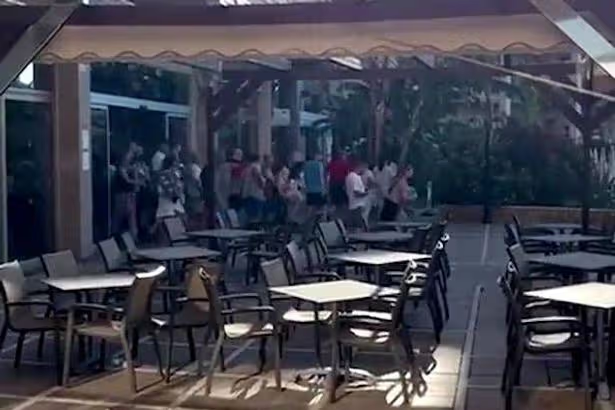
Holidaymakers were filmed in a “manic race” for the prime sunbeds surrounding the pool at a Spanish hotel — after queuing for an hour. Chris, 34, was on holiday in Salou, Spain, last week when he witnessed the spectacle unfold on June 24, as over 40 tourists rushed out.
The holidaymakers had been standing by the doors for an hour before the pool opened at 9am. Chris, from Glasgow, Scotland, said he observed the sun-seekers lining up at the doors on each day of his week-long break.
He said tourists would dash out, reserve a sunbed with their towel and belongings before heading back inside for breakfast. Chris found the spectacle amusing but thought it was somewhat unfair that nobody else would manage to get a sunbed for the entire day.
Chris, from Glasgow, Scotland, said: “It was a manic race and scramble for the sunbeds surrounding the pool at the hotel. I don’t judge but found it funny so had to film it.
“Some people just rolled out their bed, queued up, mad-dashed to secure the bed then they were seen going back to their hotel rooms or off for breakfast.”
“It doesn’t leave room for those who don’t queue for an hour.”
And new advice from the UK Foreign Office has warned Brits, especially those with kids, to be aware when swimming to cool off.
The updated advice states: “Every year, people drown in the sea and in swimming pools in Spain.
“Always supervise children. Keep small children within arms-reach in and around swimming pools, even if they can swim or there is a lifeguard present.”
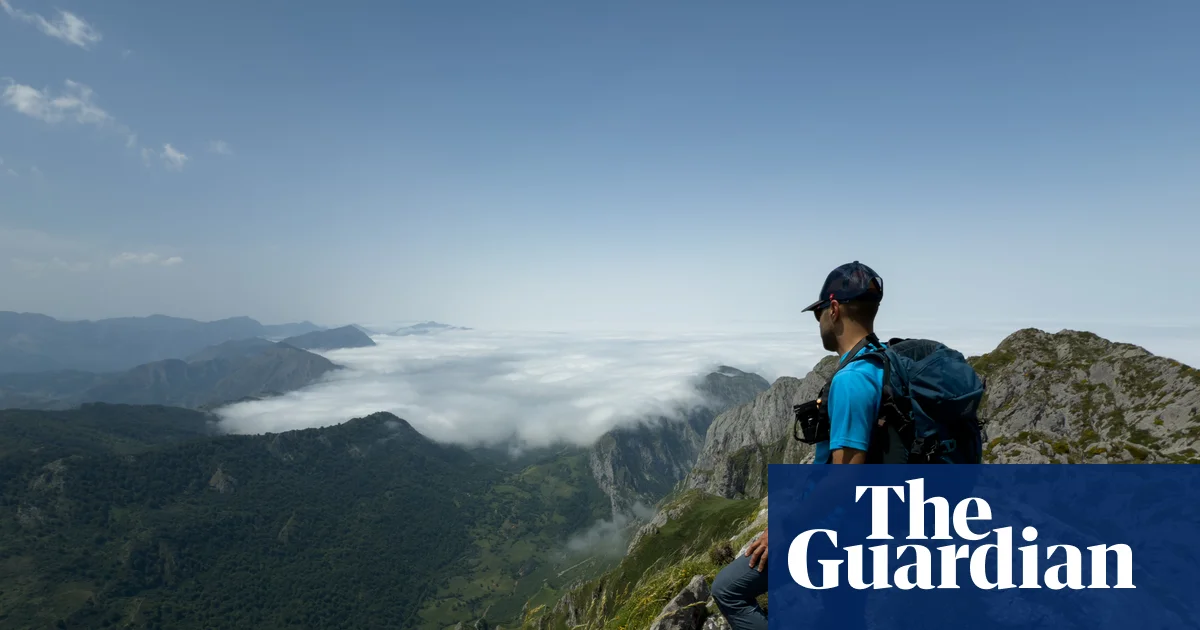
Halfway across the first glacial depression, I leave the footpath to stand on a snow patch, disturbing a spider that runs off across the frozen crystals. A few yards farther along, the mountainside is awash with colour: tiny Alpine flowers alive with bees and crickets in a world surrounded by jagged peaks. A pair of chamois watch from a crag, then clatter off up an almost vertical face. Having stopped walking, I’m cooling down fast and put on a jacket. I am in Spain, I tell myself, during a European heatwave.
When I tear myself away from the wildlife, my hiking group are distant dots on a path that is snaking up a wall of rock. This is the Picos de Europa mountain range in northern Spain, a cluster of peaks rising to more than 2,500m and famed for the steepness of its slopes. I set off in pursuit, catching up with the group as they scramble over a ridge to find an unexpected view: a gun turret from a second world war aircraft carrier that is now a mountain refuge hut. (Cabin Verónica was cut from the USS Pulau in 1961 at a Bilbao breakers’ yard and dragged up here by mule.)
Illustration: Guardian Graphics
The custodian, Jorge, took it on as a project eight years ago and has since made it his summer home, adding solar power and water tanks to the gleaming aluminium dome. “I love it,” he says, grinning while he makes coffee in the tiny kitchen. “Why would I need cities and crowds when I have this?” The panoramas are spectacular. Far below, down the valley, a bearded vulture is soaring, one of a small number successfully reintroduced in 2005. The hut sleeps a maximum of six, too small for our group, but it’s popular with climbers and solo walkers.
This trip seems determined to throw up contradictions and improbabilities. For a start, on the Portsmouth to Bilbao ferry, I was alone on deck at 5am, surrounded by a cold fog so dense that I couldn’t see the waves below the rail. We were motionless, it seemed, in the outer reaches of the cosmos. As I stared down, the intergalactic mist lifted a fraction and three dolphins burst from the swell, reminding me that I was on planet Earth and not a spaceship. This ferry route, and its sister route to Santander, crosses an oceanic canyon 4,000m deep and cetacean sightings are common. The on-board expert, André, tells me he has seen orcas and several whale species, including the rare Cuvier’s beaked whale.
Cabin Verónica is made from the gun turret of a second world war aircraft carrier
The Picos mountains that stand to the west of Bilbao have always had a reputation for the unexpected. In Spanish history, they were a centre for resistance to Roman rule and later the Moors. They have flowers and butterflies not found elsewhere; the chamois is a unique subspecies, and there are bears and wolves too. Beneath the soaring peaks lies another surprise: an underworld network of rivers and giant caverns almost a mile deep.
Our hike across the range started to the north, walking first up to the mountain hut Vegarredonda at 1,410m. There’s a sprinkling of these huts across the Picos, most off-grid and supplied by mule. Expect good conversation, generous food portions and a plastic-covered mattress in what some might call “a snoremitory”. I am saved by the generosity of Arten, one of our group, who hands me silica gel earplugs. They work well, and in the morning I wake to find everybody already gone to breakfast.
Food is a major element of the Picos experience. That morning we hike to a few stone cabins by a lake, Ercina, and come across a handwritten sign advertising homemade cheese. Bruno and Cristina, our guides, get very excited. In a little stone-walled workshop, an old lady is sitting on a rustic milking stool, dressed in a nylon housecoat, waiting for customers.
“My grandfather built this cabin in 1944 when I was three years old,” says Maria. “Everyone would come up here for summer, bringing their animals with them. Now there’s only me.”
The pastures of the Picos mountains
Hung on the walls are her ancestors’ drinking horns and wooden platters; on the shelves are wheels of cheese. The Picos technique is to blend milk from sheep, cows and goats. The results are delicious. “I feared this tradition might die,” Maria says. “But my son is interested, so there is hope it will continue.”
Leaving Maria, and still eating the cheese, we turn up a side valley and ascend steadily, passing boulders that harbour tiny gardens of saxifrage and stonecrop in their hollows. A wallcreeper flits away, one of the rarer birds that live here. Chamois pose on distant ridges, never far from the snow patches. Their world is shrinking, however, as Spain’s heatwaves encroach higher and higher. (I was glad to have travelled by ferry; as a foot passenger I produced less than 10% as much CO2 as flying, according to the Direct Ferries carbon calculator.)
The night is spent in the Refugio Vega de Ario, a hut with the best cooking, and also hosting the Oxford University caving team. After more than 60 years of exploration and several generations of speleologists mapping some of the most extensive cave systems in the world, they tell me they are on the brink of connecting two huge cave networks. I promise to come back and see it – when the stairs are installed.
The next day, we cross one of the few places where you will see a car in the Picos, the village of Poncebos, which is on a fine gorge walk alongside the Rio Cares. From there, we ascend again through flower-strewn meadows and abandoned farmhouses into the clouds. Then, with perfect dramatic timing, the mists part to reveal the climactic wonder of these mountains: the Picu Urriellu, a soaring 2,529m pinnacle of rock under which is one of Europe’s most spectacular mountain huts, the Vega de Urriellu.
This is one of the most popular huts and sleeps 96, with many more camped nearby, but the place remains friendly and sociable. We stand outside with Bruno and Cristina as they point out their favourite climbing routes. Around us are small huddles of climbing groups discussing their plans. The south face is popular with guided groups; the west is a 750m monster.
The Picos are awash with colourful flowers
The glacial depressions, with their spiders and flowers, lie ahead, but this is where I would choose to linger. You would not catch me down a cave, but I’m tempted by what Bruno describes as excellent climbing routes. As the sun goes down, the rock turns orange, giving Urriellu its Spanish name, Naranjo de Bulnes – the Bulnes orange.
Dusk falls, and I stroll up a mountain track for more panoramas, but find the world below the hut all smothered in cloud. I perch on a boulder and, after some time, become aware that I am being watched. A chamois is standing poised on a ledge above, its delicate curving horns silhouetted against the twilight like twin question marks. I watch the last orange glow fade on Urriellu’s summit, then glance back to that ledge, but the chamois has gone.
The trip was provided by KE Adventure Travel; the eight-daytraverse of the Picos starts at £1,295, including all meals, accommodation and guides. Brittany Ferries sails up to twice weekly from Portsmouth to Bilbao and Santander, and from Plymouth to Santander, from £128 for foot passengers in August
When FIFA expanded the World Cup field from 32 to 48 teams for this summer’s tournament, the gnashing of teeth and clutching of pearls was as predictable as it was loud. The field would be watered down, the traditionalists protested. The group stage would be a series of blowouts, the sharks would devour the minnows.
In fact, none of that happened.
What we got instead was plucky Cape Verde playing No. 3 Spain to a draw and becoming the smallest nation to reach the elimination rounds. We got Austria advancing on a goal six minutes into stoppage time — eliminating unbeaten Iran, which deserved better — and Canada, Egypt and the Democratic Republic of Congo all winning World Cup games for the first time.
We got Lionel Messi scoring six goals and Mexico and Spain giving up none. We got South Africa, Canada, Egypt and Cape Verde advancing to the knockout rounds for the first time while South Korea and Uruguay went home.
It was one of the most surprising, exciting and compelling group stages in recent World Cup history. And on Sunday it gave way to the first game of the knockout rounds, with Canada beating South Africa 1-0 on a goal by LAFC midfielder Stephen Eustáquio in the second minute of stoppage time.
Canada’s Stephen Eustáquio reacts after a 1-0 win over South Africa at the World Cup on Sunday at SoFi Stadium.
(Robert Gauthier / Los Angeles Times)
Unlike much of the group stage, Sunday’s game was a sloppy, sleepy affair, with South Africa relying on some heroic play from its back line to keep the game even. But it ended with a bang with Eustáquio latching on to a loose ball at top of the box and blasting a right-footed volley just inside the left post.
Canada will play the winner of Monday’s Netherlands-Morocco match in the round of 16 next week. For South Africa, the World Cup is over.
For both countries, this World Cup was the most successful ever. Canada, which is sharing host duties with Mexico and the U.S., has won twice. South Africa had won games before, but it had never gotten beyond the group stage.
For South Africa, that success is part of a continental soccer resurgence. Four years ago in Qatar, Morocco became the first African nation to reach the World Cup semifinals. This summer, thanks to the expanded field, 10 African nations qualified for the tournament and nine advanced to the round of 32.
And the rise of African soccer hasn’t just boosted the fortunes of African teams. Top-ranked France, a World Cup favorite, has 21 players of African descent on its roster; at least a dozen other non-African teams, including Canada, have at least two players of African heritage.
Canada is one of the world’s most diverse countries with nearly a quarter of its population having been born somewhere else. Former coach John Herdman leaned into that diversity when he took over the men’s team in 2018; four years later, Canada made its second trip to the World Cup with a lineup that included four dual nationals.
Jesse Marsch, the U.S.-born coach who succeeded Herdman, doubled down on that. As a result, the 26 players on Canada’s roster, or their parents, come from more than 17 countries — from Iran, Croatia, Jamaica and Barbados to Haiti, Lebanon, Nigeria and the Philippines. Captain Alphonso Davies, Canada’s best player, was born to Liberian parents in a refugee camp in Ghana before being resettled in Edmonton, becoming a citizen in 2017.
Canada goalkeeper Maxime Crepeau makes a save against South Africa on Sunday.
(Ronaldo Bolanos / Los Angeles Times)
Davies, who hasn’t played since sustained an acute hamstring injury in early May, came on in the 76th minute Sunday and had an immediate influence, threading a perfect pass to the feet of Promise David, whose right-footed shot from the top of the box drifted inches wide of the left post.
Three minutes later, Davies drew two defenders to him on the left flank, opening space for Jonathan David to slip into the box and get off a tight-angled shot near the end line that stood up South African keeper Ronwen Williams. But the winner came from Eustáquio, the son of Portuguese parents who Herdman wooed away from the Portuguese U-21 team in 2019.
He has made 60 appearances with Canada’s senior national team, none bigger than Sunday’s.
Canada’s Tani Oluwaseyi, center, gets caught between South Africa’s Khuliso Mudau (20) and Sphephelo Sithole during the first half Sunday.
However on Sunday, in a post on X, formerly Twitter, Spain’s Ministerio del Interior has issued a warning to visitors. The Ministry of the Interior of Spain (Ministerio del Interior) is the executive government department responsible for public safety, law enforcement, national security, civil protection, and the country’s prison system and overseas domestic policy.
It is keen to raise awareness that crime is an issue when on holiday just as it is back in the UK. In its post it said: “You’re away for a few days, but your safety doesn’t go on vacation. Before leaving the car parked:
Remove valuables
Don’t leave documents visible
Choose well-lit and busy areas
Save the vehicle’s location
It added: “Prevention is the best protection.” The warning came as Spain, along with much of the rest of Europe, basks in a heatwave.
Content cannot be displayed without consent
The Ministry, in a separate post, had other advice for people to help them stay safe. It said: “In the forest, every gesture counts.
“Don’t throw away cigarette butts or matches. Don’t make fire outside of authorised areas. Don’t abandon flammable waste.” It added: “With heat and wind, the risk increases. A small oversight can turn into a big fire.”
The Foreign Office in the UK (FO) also has advice for holidaymakers and other visitors to the country. It warned of a number of different types of crime in the country including street and vehicle crime to drink spiking and sexual assaults.
Street crime
The Foreign Office warned: “Be alert to the risk of street crime. Thieves use distraction techniques and often work in teams. Take care of your passports, money and personal belongings, particularly when collecting or checking in luggage at the airport, and while arranging car hire.
“Do not carry all your valuables in one place. Keep a copy of the photo page of your passport somewhere safe.
“Make sure your accommodation has adequate security. Keep all doors and windows locked. If you’re concerned about the security of your accommodation, speak to your travel operator or the property owner.
“The Spanish Police and Civil Guard have a mobile app which offers a number of services, including simple and discreet communication with police forces if you experience or witness a crime – more information can be found on the ALERT COPS webpage.”
Vehicle crime
‘Highway pirates’ target foreign-registered and hire cars, especially those towing caravans, warns the FO. “They may flag you down, claiming there is something wrong with your car or that you have damaged theirs. If you decide to stop to check the condition of a vehicle, stop in a public area with lights, such as a service station. Be wary of anyone offering help.
“When driving, be wary of approaches from people posing as plainclothes police in unmarked cars. In all traffic-related matters, police officers will usually be in uniform. Unmarked police vehicles have a flashing electronic sign on the rear window saying ‘Policía’ or ‘Guardia Civil’. Genuine police will only ask you to show vehicle documents – not to hand over your bag or wallet.”
Attacks and sexual assault
Attacks, including sexual assaults, are rare but do occur, avised the FO. “In an emergency call 112. Avoid splitting up from your friends, do not leave drinks unattended and do not go off with people you do not know. Save the location of your accommodation on your maps app, so it’s easy to find.”
Drink spiking and alcohol
The FO said: “Be alert to the possible use of ‘date rape’ and other drugs including GHB and liquid ecstasy. Buy your own drinks and always keep them in sight to avoid them being spiked.
“Alcohol and drugs can reduce your vigilance, making you less in control. If you drink, know your limit. Drinks served in bars in Spain are often stronger than those in the UK.”
Scams
“Thieves posing as police officers may ask to see your wallet, claiming they need to see it for identification.” it warned. “Genuine police officers will ask to see ID but will not ask for wallets or purses. All police officers, including those in plain clothes, carry official ID.”
Timeshares and holiday clubs
The FO said: “Be cautious if you are planning to buy or sell a timeshare. There are companies who offer false incentives.”
The warning comes as the country has faced hazardous conditions this week
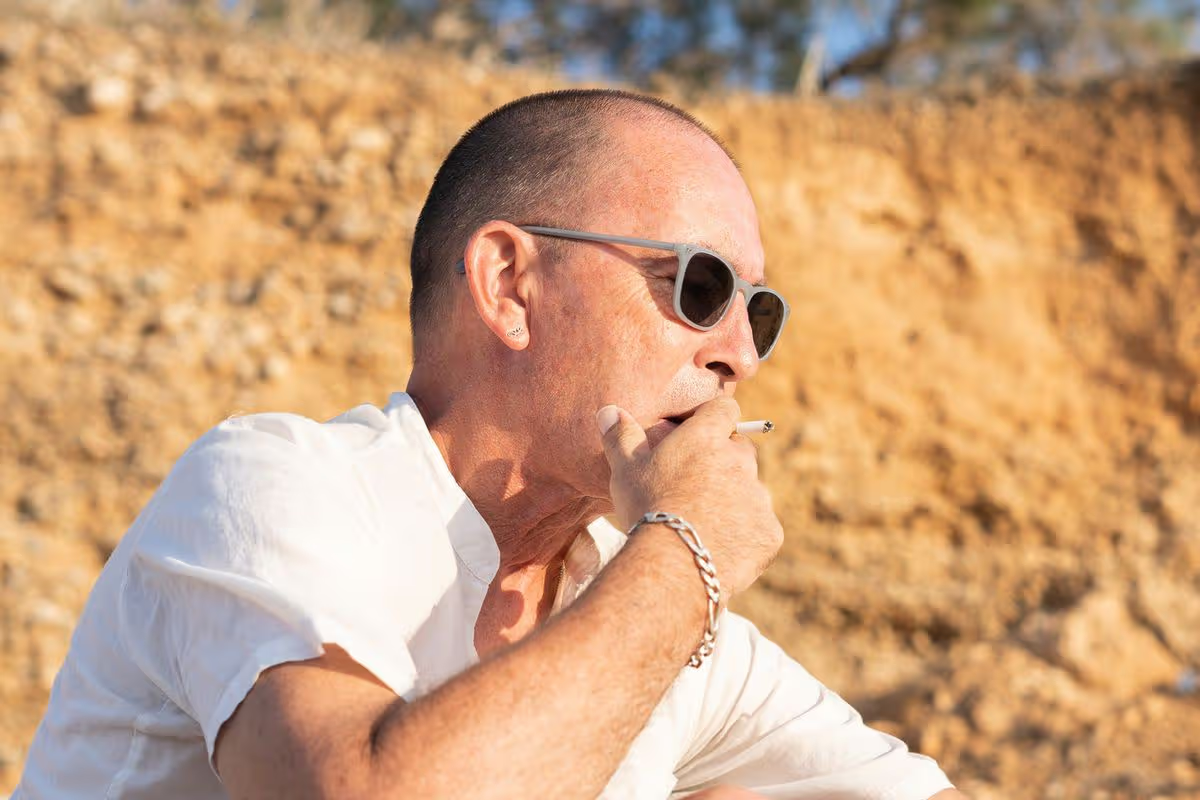
The alert includes a warning for cigarette smokers (stock image)(Image: Getty)
Spain’s Ministerio del Interior has issued a warning to anyone in the country, including visiting tourists, as hot weather bakes the country. This week, the European nation faced unprecedented, record-setting heat.
The country was caught in a severe and hazardous heatwave caused by hot air travelling north from the Sahara Desert. These extreme temperatures broke long-standing weather records and led to widespread red alerts, especially in the northern and central parts of the country. Temperatures soared past 45C in some areas of northern Spain at the beginning of the week.
The northern region of Cantabria broke its previous heat record, hitting an incredible 43.7C in Tama. Bilbao Airport recorded temperatures over 40C on three different days (Sunday, Tuesday, and Wednesday). This is a historic first for the region: reaching this level three times in one year.
On Thursday, June 25, temperatures began to drop, and there was some rain and thunderstorms in parts of the northern and central plains, including Madrid. However, high temperatures are still sticking around.
Places like Andalusia and cities such as Seville and Córdoba are experiencing usual summer highs. Temperatures are rising back up to 37C to 38C as the weekend comes to a close.
Content cannot be displayed without consent
The Ministerio del Interior translates as the Ministry of the Interior (also known as the Home Office or the Ministry of Internal Affairs). This government cabinet department handles domestic policy, public safety, law enforcement, immigration, and civil protection.
Taking to X on Sunday, June 28, the ministry urged people to avoid doing three things for safety reasons. It said: “In the forest, every gesture counts.
“Don’t throw away cigarette butts or matches. Don’t make fire outside of authorised areas. Don’t abandon flammable waste.” It added: “With heat and wind, the risk increases. A small oversight can turn into a big fire.”
Has Spain experienced wildfires this week?
This week, Spain has been hit hard by a serious wave of wildfires after experiencing its first big summer heatwave. The temperatures soared above 45C in the south and reached up to 43C in the north.
These extreme heat levels, along with dry weather and lightning strikes, have led to several devastating fires. One major wildfire erupted between Tamarite de Litera and Alcampell, consuming more than 4,000 hectares of land. It is thought that a harvesting machine started the fire, which resulted in the evacuation of around 240 people from three nearby villages.
Is Spain prone to wildfires?
Spain faces a significant risk of severe wildfires during hot weather, ranking it among the most fire-prone countries in Europe. The mix of intense summer heatwaves, extended periods of drought, and powerful winds results in “tinderbox” conditions that enable fires to start and spread rapidly.
Data from the Ministry for Ecological Transition in Spain reveals that human activity is responsible for the majority of wildfires. More than half of the annual fires in Spain are deliberately set, and a significant portion is due to accidents or negligence, such as mismanaged agricultural burning, cigarette butts that are carelessly thrown away, or barbecues.
GUADALAJARA, Mexico — Spain, ranked second in the FIFA rankings and the favorite to win the World Cup, did not play its best game, but did enough late Friday to defeat Uruguay 1-0 and eliminate the South American team in one of the most anticipated matches of the first round.
Spain finished first in Group H, while first-time participant Cape Verde advanced in second place with just three points, the result of three draws. Uruguay was eliminated from the tournament with only two points, following two draws and one loss.
For much of the match on Friday, Spain lacked better offensive coordination ahead of facing more dangerous opponents in the upcoming do-or-die rounds.
Alex Baena scored a goal in the 42nd minute by connecting with the ball after a cross from the right. The ball slipped past goalkeeper Fernando Muslera, who at first seemed to have no trouble blocking the shot, but the ball found the back of the net, making all the difference on Friday night in Guadalajara in front of 45,065 fans — most of whom were rooting for Spain. Muslera did not return for the second half and was replaced by Sergio Rochet.
“We have to celebrate because, honestly, it’s hard to finish first in a group like this,” said Baena, a midfielder for Atlético Madrid.
“It was a physically demanding match — extremely intense — and we rose to the occasion,” said Spain coach Luis de la Fuente, who emphasized that winning the World Cup requires winning tough matches against tough teams like Uruguay.
“I’m proud of this team because they want to keep growing. I have complete faith in this team. We’re where we are, and that’s exactly where we wanted to be,” added De la Fuente, who noted that the team needed to improve its fluidity of play.
Uruguay failed to beat Saudi Arabia or Cape Verde — two teams that, on paper, seemed inferior at the start of the tournament. Coach Marcelo Bielsa’s team couldn’t find its rhythm or play at its best.
“I wasn’t able to bring out the full potential of Uruguay’s players,” Bielsa said, visibly shaken by his failure with the Uruguayan national team. “What I’m leaving behind for Uruguayan soccer is nothing, because any contribution a coach might make to the soccer of a country where he worked for three years never takes root if results aren’t achieved.”
At the end of the match, Uruguay’s Agustín Canobbio was sent off after committing a hard foul on Spanish defender Pau Cubarsí in the 95th minute, prompting several Uruguayan players to protest the decision by U.S. referee Ismail Elfath.
For Bielsa and Uruguay, this marks the end of an era in which many believe the Argentine coach lost control of the locker room and his relationship with the media became strained because of his eccentric and explosive personality, but, above all, a lack of wins.
Cape Verde will face Argentina in the round of 32 on Friday in Miami. Spain will face the second-place finisher in Group J, which will be determined late Saturday by the match between Algeria and Austria. The game will be played at SoFi Stadium.
The match was the fourth and final World Cup game played in Guadalajara. Before the game began, a minute of silence was observed in memory of the victims of the earthquakes in Venezuela. So far, Venezuelan authorities have reported that more than 900 people have died and that thousands are missing.
Here’s who doesn’t need to scan their fingerprints to enter the Schengen area
Millions of Brits are expected to head to Spain this summer(Image: fhm via Getty Images)
Under new regulations, those travelling on a UK passport are permitted to visit the Schengen area for no more than 90 days within any 180-day period.
On top of this, upon entering the zone, which includes Spain, most British travellers will be required to scan their passport, have their photo taken, and provide four fingerprint scans under the new Entry/Exit System (EES). Once registered for travel via the EES, your digital record remains valid for three years or until your passport expires, whichever occurs first within that three-year window.
The Schengen area comprises the following countries: Austria, Belgium, Bulgaria, Croatia, Czech Republic, Denmark, Estonia, Finland, France, Germany, Greece, Hungary, Iceland, Italy, Latvia, Liechtenstein, Lithuania, Luxembourg, Malta, Netherlands, Norway, Poland, Portugal, Romania, Slovakia, Slovenia, Spain, Sweden, and Switzerland.
That said, not every traveller departing from the UK will be required to scan their fingerprints upon arrival in the Schengen zone.
The Government has confirmed that all children under 12 will not be fingerprinted. However, under the new EU regulations, all travellers, including babies, will be photographed and have digital records created.
British holidaymakers may be exempt from the EES if they are travelling on a non-UK passport. For instance, those holding an Irish passport will not be required to use the EES scheme.
According to recent estimates, more than a third of a million UK residents hold both UK and Irish passports – a figure that has risen sharply in the wake of Brexit.
A short trip from Benidorm will take you to a picturesque Costa Blanca town that is often compared to the Greek island of Mykonos – and it’s a must-see hidden gem for anyone visiting the area
08:57, 27 Jun 2026Updated 08:58, 27 Jun 2026
The Spanish town near Benidorm is often compared to Mykonos (stock image)(Image: MiniMoon Photo via Getty Images)
Benidorm, a firm favourite among British holidaymakers, is renowned for its sun-drenched beaches, budget-friendly breaks, and the vibrant Calle Gerona, lovingly known as ‘the strip’. However, beneath the surface of stag and hen parties, Benidorm conceals beautiful spots that countless visitors have yet to discover.
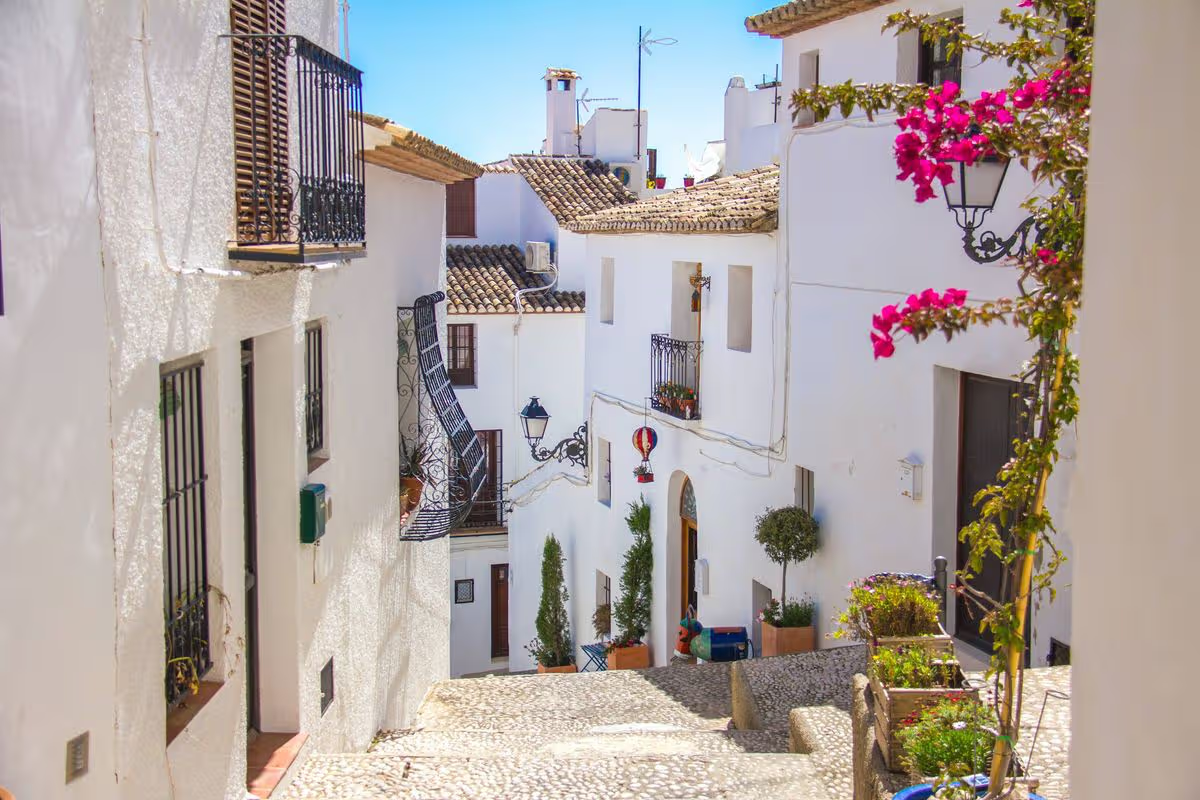
For those seeking an escape from the party scene, a brief trip unveils a peaceful town. Located just moments from Benidorm, it provides a calm alternative to the raucous nightlife, with comparisons drawn to the allure of Mykonos. A quick 18-minute drive or a short 12-minute bus journey from Benidorm Intermodal brings you to the picturesque Altea, Alicante.
Hailed as one of Spain’s “most iconic” towns, Altea whisks visitors back in time with its captivating old quarter, complete with winding cobbled streets and sparkling white houses. Wandering through Altea’s alleyways, the tempting aromas of freshly made coffee and mouth-watering food drift from intimate cafés and delightful restaurants.
The town’s jewel in the crown is the parish church, Nuestra Señora del Consuelo or Iglesia de Arriba, which mesmerises tourists with its splendour. From this elevated spot, the sweeping views stretch across the brilliant blue sea to the vast beach beneath.
Alice, an influencer who highlights Benidorm’s best features and reveals her favourite recommendations online, recently visited Altea and proclaimed it a must-see destination for any travel bucket list.
Content cannot be displayed without consent
Boasting more than 37,000 TikTok followers, Alice gushed: “Hidden gem only 15 mins from Benidorm! Maybe Altea isn’t a hidden gem for those in the know, but the way you could lowkey be just 15 mins away from this gorgeous slice of history and culture while on your holibobs in Benidorm!”
She went on to say: “It’s an absolute MUST see if you’re looking to escape for an afternoon to see some of the best views on the entire Costa Blanca. It’s giving cheeky Altea day trip, don’t you think?”.
The response was overwhelmingly positive — the short clip has racked up more than 17,900 likes alongside a flood of glowing comments.
One visitor shared: “I went there in December. Very nice.”
Another remarked: “There are stunning restaurants and bars. It’s not Benidorm. They may be close but they are worlds apart. Altea is beautiful.”
A third chimed in: “It’s simply a stunning old and new town.”
One commenter went as far as calling it their “favourite place of all time”, while another declared it had firmly earned a spot on their bucket list, writing: “Definitely heading here.. never knew it was so close.”
Flights from the UK to Alicante can be snapped up from as little as £40.
From there, you can hop on a bus, grab a cab or take the tram to Benidorm, which should take roughly 40 minutes by road.
Millions of Brits are planning to go to Spain this summer
(Image: Eivaisla via Getty Images)
As the summer peak draws near, Brits travelling to Spain are facing a frustrating double blow.
Not only are there long border queues caused by the EU’s new Entry/Exit System (EES), but data has uncovered a huge a dramatic surge in flight delays. New research from AirAdvisor shows that Spanish routes are currently the worst affected for UK travellers, with two popular holiday destinations experiencing a sharp decline in reliability compared to last year. Overall delay rates have more than doubled at Palma in Mallorca, leaping from 3.66% to 7.60%.
Meanwhile, at Alicante Elche airport, delays have nearly tripled, rocketing from 4.39% to 11.73%. This means approximately one in nine departures is running at least an hour late, according to the Majorca Daily Bulletin.
For passengers stuck in the Alicante backlog, the average wait for an already-delayed flight stands at a punishing 124 minutes. This frequently pushes arrival times beyond the crucial three-hour threshold, automatically entitling passengers to claim UK261 compensation.
The travel disruption comes amid a sharp rise in short-haul cancellations across 18 European airports, predominantly affecting budget routes under pressure from climbing oil prices. However, airlines attempting to use market volatility as an excuse to avoid compensation payouts have just been firmly shut down.
The European Commission has made clear that fluctuations in fuel prices are a standard commercial risk, rather than an “extraordinary circumstance.” Should an airline cancel or delay a flight purely because operating costs have become too high, they remain fully liable for passenger compensation.