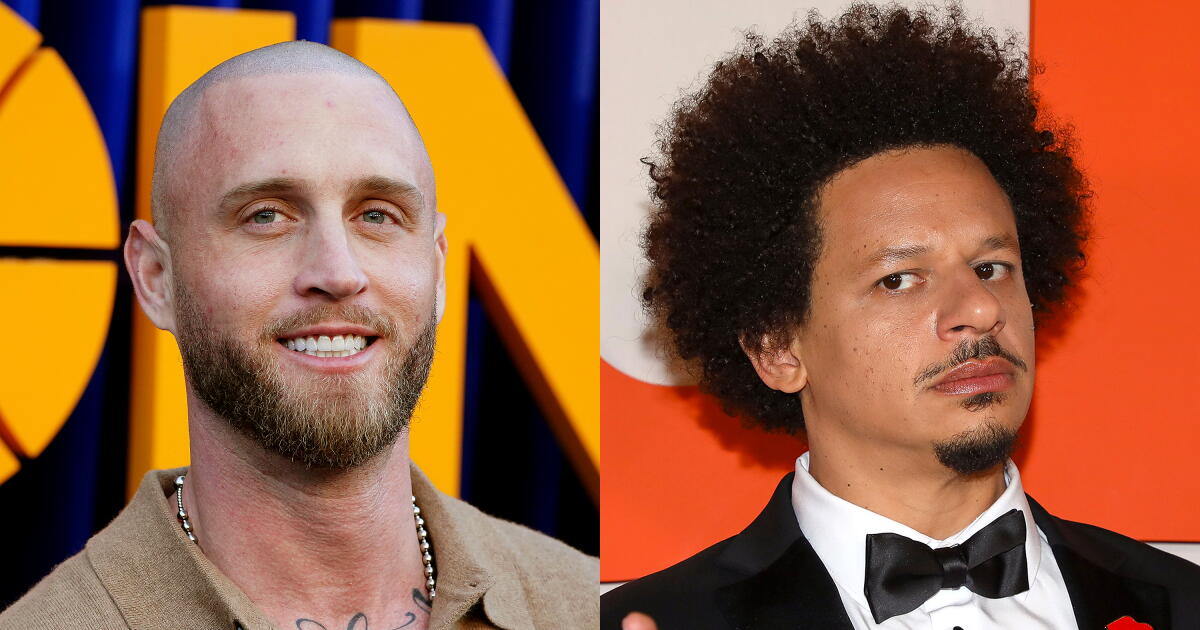
It seems Chet Hanks, son of Tom Hanks and Rita Wilson, is still in his feels over Eric André’s recollection of his zany and “dangerous” appearance on “The Eric Andre Show.”
Hanks, who became an internet personality in recent years for boasting his Jamaican accent at the 2020 Golden Globes red carpet and unironically coining the phrase “White Boy Summer,” seemingly reignited his feud with André when he confronted the Emmy winner during ComplexCon in Los Angeles over the weekend. On Tuesday, Hanks posted video of himself approaching André and his security team at the event and exchanging some words with the comedian.
It’s unclear what the two men say to each other but Hanks appears to bring up an issue to André who seemingly shrugs it off at first. The conversation seems to turn tense when Hanks speaks face-to-face with André and security personnel block the view. The video concludes with André and his securtiy walking away from Hanks and his posse. In the caption to his video, Hanks said André “had NO MEMORY WHATSOEVER of trashing me to the media after I outshined him on his own show!!”
Representatives for André did not immediately respond on Wednesday to a request for comment.
“He stole a motorcycle and rode it around. He almost knocked a bunch of grips and gaffers off their ladders,” André recalled in 2023. “It was very dangerous. He tried to prank us back, but we edited out all his b—! He’s not well. How did Colin Hanks come out so good and Chet Hanks come out so bad?”
In 2023, Hanks called André a “straight b—.” The comedian swiftly fired back, calling Hanks a “f— liar” and dared Hanks to take a “DNA test and prove that Tom Hanks is his f— father.”
After the weekend confrontation, Hanks said that André ultimately “admitted” the feud began “because he had a problem with me ‘mocking Caribbean culture’ when I did my Jamaican accent all those years ago.” Hanks, who is white and was born in Los Angeles, resurfaced to public consciousness in 2020 when he — unprompted — introduced himself at the Golden Globes red carpet with his impression of Jamaican Patois. His father, the prolific actor beloved for roles in “Saving Private Ryan,” “Forrest Gump” and “Toy Story,” received the Globes’ Cecil B. Demille award later that evening.
“WHO KNEW that in addition to the brain rot and poop joke humor he is known for, Eric is also such a passionate cultural activist!!! Great running into you Eric!!!!,” Hanks, who has repeatedly used and defended the N-word on social media, sarcastically ended his caption.
André, who is Black, has long been a vocal social and cultural activist. The “Street Fighter” actor over the years has spoken out against Israel’s war in Gaza and has used his platform to address racism and police brutality.
This summer André, alongside fellow comedian Clayton English, settled a racial profiling suit against Clayton County police in Georgia. The comics were both allegedly racially profiled and subject to “unconstitutional” stops by Clayton County police at Hartsfield-Jackson International Airport in 2021. The stops were part of a police program intended to combat drug trafficking. The Associated Press reported that the settlement “does not include an admission of fault or liability on the county’s part but says the county has ended the program at issue and has no intention of reactivating it.”
N-DUBZ rapper Dappy filmed himself driving in his car with his daughter, despite pals claiming he does not have a licence.
The star, 39 — real name Costadinos Contostavlos — has filmed himself behind the wheel of a Mercedes and posted a number of clips online.
Dappy filmed himself driving in his car with his daughter, despite pals claiming he does not have a licenceThe N-Dubz rapper filmed himself behind the wheel of a Mercedes and posted a number of clips online
In one video seen by The Sun, Dappy is driving and swearing at the camera with his 11-year-old with him in the passenger seat.
Insiders said the footage, posted on his Instagram account, had been passed to Herts Police.
Sign up for the Showbiz newsletter
Thank you!
Drivers face six points and a £200 fine if they hold or use a phone while driving.
A source said: “Dappy won’t be getting points on his licence as he doesn’t have one. He never passed his test.
In one video, Dappy is driving and swearing at the camera with his 11-year-old with him in the passenger seatDappy became a household name after he and his cousins Tulisa and Faser formed hip-hop group N Dubz in 2000Credit: Rex
“He thinks he’s above the law and can do what he likes but driving without a license and filming himself is putting innocent members of the public at risk.
“He needs to be stopped if not for himself but for others.”
The Sun have contacted Dappy’s representatives for comment.
Dappy became a household name after he and his cousins Tulisa and Faser formed hip-hop group N Dubz in 2000.
‘Dappy won’t be getting points on his licence as he doesn’t have one. He never passed his test’, revealed an insider‘He needs to be stopped if not for himself but for others’, warned a source
They got their big break in 2008 with debut album Uncle B.
Since then they have landed four UK Top Ten singles and four UK Top Ten albums.
Helen Flanagan looked stunning in a thigh-skimming shirt and corsetCredit: Instagram/@hjgflanaganShe rocked her racy look at The Soho House party.Credit: Instagram/@hjgflanagan
In one snap, Helen fixed her gaze on the camera as she showed off her striking corset look.
Wearing glam makeup, she later posed in a cap on the dance floor, while another shot captured her sitting in a bathroom washed in red light.
Sign up for the Showbiz newsletter
Thank you!
Another showed her perched on a car, giggling and laughing, while a further shot captured her tucking into a meal during her night out.
Helen was captured sitting in a bathroom washed in red lightCredit: Instagram/@hjgflanaganHelen draped a jacket over her racy outfit as she went outsideCredit: Instagram/@hjgflanaganHelen tucked into a meal during her night outCredit: Instagram/@hjgflanaganWearing glam makeup, she later posed in a cap on the dance floorCredit: Instagram/@hjgflanagan
In an Instagram post, Helen shared a cheeky video where she quipped that she was going to flog her underwear for cash.
The short clip showed Helen, who is known for her sexy lingerie pictures, shimmying out of her knickers from underneath a long dress, before swinging them in the air.
In the next shot, the actress headed into the Post Office where she purchased an envelope.
The saucy star was then seen leaving the shop empty handed, implying she had posted her knickers to a fan.
Strcitly Come Dancing’s second couple have been eliminated following week three’s close leaderboard, as two of the BBC dance competition’s celebrities battled it out in a dance off
19:56, 11 Oct 2026Updated 20:01, 11 Oct 2026
Shaun and Melanie were in the bottom two(Image: CREDIT LINE:BBC/Guy Levy)
Gavin & Stacey star Melanie Walters was the second celebrity eliminated from Strictly Come Dancing, after losing a dance-off against footballer Shaun Wright-Phillips.
64-year-old Melanie, who played Gwen West on the hit sitcom, was second from bottom on the leaderboard after she and pro dancer Aljaz Skorjanec received only 17 points for her Charleston to Gina G’s Ooh Ah… Just a Little Bit. She was only one slot above Shaun and Alexis Warr, who got 15 points for his Quickstep to I’m A Believer by the Monkees.
Both danced the same routines for the dance off, leaving the judges split on who to send home. Craig Revel Horwood and Shirley Ballas both thought Shaun had performed better, but Motsi Mabuse voted to keep Melanie. Anton du Beke had been given the deciding vote and chose to keep Shaun.
To see more of the stories you love from The Mirror and to find them easily in Google then make us your preferred source. Free and easy-to-do, just click on the link here to find more from The Mirror at the top of your feed.
Craig said: “Due to enthusiasm and technical ability, I would like to save Shaun and Alexis.” Motsi went on to say that she was saving Melanie, while Anton added: “I thought this was a super dance-off, and both couples should be really pleased with themselves, because they both performed very, very well. I was looking for somebody to have an uplift in their performance from Saturday night, and one couple did that for me. A couple I thought, uh, that did do that, and I’d like to save would be Shaun and Alexis.”
After being voted off, Melanie said: “To tell you the truth, no word of a lie, I thought I was going to be out last week, so I’ve had an extra week with this beautiful soul.”
Fans had expected Melanie and Shaun to be in the dance off after both were at the bottom of the leaderboard, especially given that the top dancer of the night, Delta Goodrem, had scored 33, earning more than double what Shaun did. But despite the difference in points, the leaderboard was condensed because many couples shared the same score. As such, Shaun was only ninth from the top, rather than 14th.
Still, many viewers were heartbroken to see Melanie go. One said: “Firstly, I feel terrible for Melanie because she’s such a lovely lady and I love her partnership with Aljaz. She warms my heart every time I watch her dance, and she’s exactly what the show is all about. Unfortunately, this wasn’t a good Charleston from Melanie and Aljaz, which is a shame as I’ve been rooting for her since the start of the competition.”
Another said: “I understand the result, but I wish that couple had one more week.” And a third added that they thought Shaun wouldn’t be far behind: “Shaun and Melanie were of a similar level dance wise imo so not a controversial dumping, I find Shaun more entertaining so happy enough for him to have another week but I suspect he’ll be gone next week unless the judges massively overscore him ala his salsa last week”.
Last week saw the first elimination, with Chris Appleton and Amy Dowden going home. Celebrity stylist Chris got emotional after the decision was made, as did Amy.
He said, post-emlimination: “I think it’s been such a whirlwind of emotion. I’m 43 and I got good at doing what I did – which is hair. To come and do something like this, I felt so out of my comfort zone and saw myself in a way I never saw myself, and it challenged me in ways I never knew I could be challenged.
“I am very grateful for everyone who has been involved. It’s been so amazing to be part of something that I grew up watching and got to be a part of it.
“The most important thing I think I will take from this show is having a friend in Amy because I genuinely love her and I am so grateful I met someone who has so much heart and passion. I only wish I could have done better for her because she deserves to go further in the competition, but we did put everything into it.”
FORGET simply being a pop star, Westlife’s Kian Egan can now add stylist to his CV after he helped save the day on the first night of their tour.
As Bizarre’s Jack joined the lads backstage for the first of three sell-out shows at the O2 in London, the Irish singer revealed a wardrobe error meant they were an outfit down in Dublin last month.
Westlife’s Kian Egan can now add stylist to his CV after he helped save the day on the first night of their tourCredit: SplashKian, Shane Filan and Nicky Byrne with The Sun’s Jack HardwickCredit: Supplied
Kian flew into action before the first show in the Irish capital and found himself, Shane Filan and Nicky Byrne leather jackets to wear on stage.
Shane said with a laugh: “We weren’t going to wear these. We only got them sorted the night before. Luckily Kian came to our rescue.”
Sign up for the Showbiz newsletter
Thank you!
The Westlife 25th anniversary tour will see them play 87 dates around the globe during this year and next.
Over the decades, Westlife have clocked up 14 No1 singles and eight No1 albums — an achievement Kian admits they never dreamed of when they formed in 1998.
Reflecting on their first chart-topper Swear It Again, he said: “We had no expectations at all.
“When our first single went No1 in 1999, I kid you not, we cried. The last few years have been really good to us — we even got our own T-shirts in Primark.
“When I was 16, I was begging for a job there, but they wouldn’t give me one. Now they are selling our T-shirts.”
In a sweet moment, he was presented with a cake by his three children, Rocco, Jay, and Gia who came on to huge cheers from the audience.
An overwhelmed Nicky told the crowd: “It’s 25-plus years we have together now.
“It has been absolutely beyond incredible, to be honest with you.” This tour has been planned for some time.
“You might have seen some of our ideas on the screen, our childhood homes coming to life. It’s a real celebration of Westlife.
“The tour has been pretty incredible, we have all grown up with this, from friendships, to heartbreaks, to weddings, babies, some funerals, and we’re all in this together.
“We are having the time of our lives up here.”
He added: “Nobody wanted to predict it when we were 17 and 18 years of age.
“Just some lads going on stage, eventually winning MTV Europe awards, Brit Awards, World Music awards.
“It’s been absolutely insane. And to stand here on my birthday, still doing this at this level . . .
“If this was it for us, this would be enough.”
LOVED-UP BENSON ON SONG
Benson Boone’s new music is pouring out of him after finding loveCredit: Alamy
BENSON BOONE’s new music is pouring out of him after finding love.
The singer split from his influencer girlfriend Maggie Thurmon a year ago.
But he’s set tongues wagging that there is another special someone in his life.
Asked what’s inspiring him, he said: “Love. I feel like that’s the greatest inspiration of all time. But yeah, new love, I think, is a very beautiful feeling.
“When you first open yourself up to someone, it’s like one of the greatest things ever, to feel as a human being and to have that be accepted.
“Those feelings just very easily turn into melodies and words so easily. It comes very quickly”
Benson released his second album American Heart in June 2025, and will finally get a chance to complete a third album when he finishes his world tour next month.
He told Australia’s Kiis radio: “Before this tour, I wrote quite a lot. Then afterwards, I’m planning on continuing that. So we’ll have, next year, a substantial amount of songs.”
LANCE BASS has revealed NSYNC were pretty much “working for free” in their Nineties heyday.
He said in a new interview they got $35 a day, adding: “Our first cheque was $10,000 after years of No1 albums, sell-out tours.
“You’re like, ‘Oh, thanks’. We should be grateful for that – been working for free for two, three years now.”
THE CHASE FOR NO1 STATUS
Little Simz features on Chase & Status’ new album, GenericCredit: Getty
CHASE & STATUS are on course to land their 14th Top 40 song this Friday.
They have the highest new entry thanks to Carnage, featuring Little Simz.
The track comes from the drum and bass duo’s new album, Generic Everything, which they released on Friday.
Taylor Swift is holding tight at the top, with Patient Zero looking likely to have a third consecutive week at No1, holding off Jamie Miller’s Babydoll and Ashe’s Stop The Wedding.
Jeremy Clarkson’s Hawkstone Farmers Choir swapped planting for partying in the video for their new single, AbsolutionCredit: Supplied
The track is the latest single from the Britain’s Got Talent winners’ upcoming album This Is Home, which comes out on November 20.
A source said: “The choir loved letting loose for the video.
“It’s a celebration of downing tools and coming together.”
STEVEN KNIGHT is keen on a follow-up to his film Oasis: Don’t Look Back In Anger.
The documentary, now available to stream on Disney+ followed the band’s reunion tour last year.
In an exclusive chat at a VIP screening, Steven told me: “I believe there is another.
“There’s loads of stuff there that people would love to see. Why not?”
Hear. hear.
TAKE OFF FOR MEL’S PHOENIX
Mel B’s daughter Phoenix is the latest of the Spice Girls offspring to go into music – revealing she is planning to officially release her first tunesCredit: Getty
MEL B’s daughter Phoenix is the latest of the Spice Girls offspring to go into music – revealing she is planning to officially release her first tunes.
The self-taught DJ has been playing gigs for a while and has now announced she’s been working on original tracks.
Phoenix, whose dad is Dutch dancer Jimmy Gulzar, said on TikTok: “Been in the studio all summer working on music and I’m finally ready to start sharing it with you guys.
“So nervous but so excited for you to hear what I’ve been working on.”
Phoenix is expected to drop the first of the dance music tracks in the coming weeks, after fans praised her over a snippet she shared online.
While it will be her first proper single, she did get a taste for fame 25 years ago, appearing in the video to her mum’s solo single Lullaby, which was written about her birth.
Victoria Beckham’s son Cruz has so far been the most successful of the Spice babies, touring across the globe and releasing his Wear & Tear EP in August.
In an exclusive chat, the Blue singer, who came out in 2012, talked about his personal disappointment over the axe, saying: “The BBC has always been about showing inclusivity and showing things for all ages and all genders and all humans.
“I feel we are almost being hidden away again. It’s a huge shame because it was great for the BBC to have something so inclusive.”
Looking to the future, Duncan is preparing to spread some light and laughter as he heads out on the road as part of a new supergroup.
Appearing in All Stars – The Music Of Abba, Duncan will join his bandmate Antony Costa, as well as Samantha Mumba and Una Healy for a UK tour celebrating the Swedish group’s hits.
The tour will kick off at Fairfield Halls in Croydon on February 26 before wrapping up at Southampton’s Mayflower on April 11. Tickets are on sale now.
Duncan said: “I get to dress up in all the sparkles and all the glitz and glamour and just have a fabulous time. The last year with Blue, has been so full on with the 25th anniversary, and we’ve worked so hard.
“It’s been wonderful. But at the same time, it’s always really nice to just have a little break mentally from Blue and go into something else.”
Suki a groover and shaker
Suki Waterhouse continued her love affair with Oasis at the Austin City Limits music festivalCredit: APShe channelled her inner Liam Gallagher after putting on an Adidas vest and waving a tambourine during her set, just like the rockerCredit: Getty
SUKI WATERHOUSE continued her love affair with Oasis at the Austin City Limits music festival.
She channelled her inner Liam Gallagher after putting on an Adidas vest and waving a tambourine during her set, just like the rocker.
Suki is a massive fan of Noel and Liam, and has previously covered Don’t Look Back In Anger during her live music sets.
I’ve no doubt Suki and her fiancé Robert Pattinson will also be on the brothers’ live tour next year, after they were spotted down the front at Wembley Stadium during their reunion shows last summer.
THE WEEK IN BIZNESS
TODAY: Britain’s Got Talent’s Simon Cowell, Amanda Holden, Alesha Dixon and KSI will be back behind the judging desk at Winter Gardens Blackpool as they record the auditions for the 2027 series.
TUESDAY: Barack Obama will be on stage for a trio of An Evening With… events, beginning at The O2 Belfast before Glasgow’s OVO Hydro on Wednesday and Manchester’s Co-op Live on Thursday.
THURSDAY: Tyla brings her A*Pop tour to the UK, kicking off with two nights at London’s O2 Academy Brixton followed by shows in Glasgow and Manchester.
SUNDAY: The Victoria’s Secret Fashion Show returns in Los Angeles with models including Gigi Hadid and performances from Tate McRae, Megan Thee Stallion and Katseye.
Movie stars are an endangered species. They still exist, sure. Their beautiful faces still fill 50-foot screens, beaming down on us. Yet, there is a shortage of, say, Michael Douglas. A man who, over the span of decades, played an American president, a troubled detective, and a Wall Street tycoon so convincingly that the FBI recruited the actor to do a PSA for investment bankers about the perils of financial fraud.
On the Shelf
One Helluva Ride
By Michael Douglas Grand Central Publishing: 496 pages, $35
If you buy books linked on our site, The Times may earn a commission from Bookshop.org, whose fees support independent bookstores.
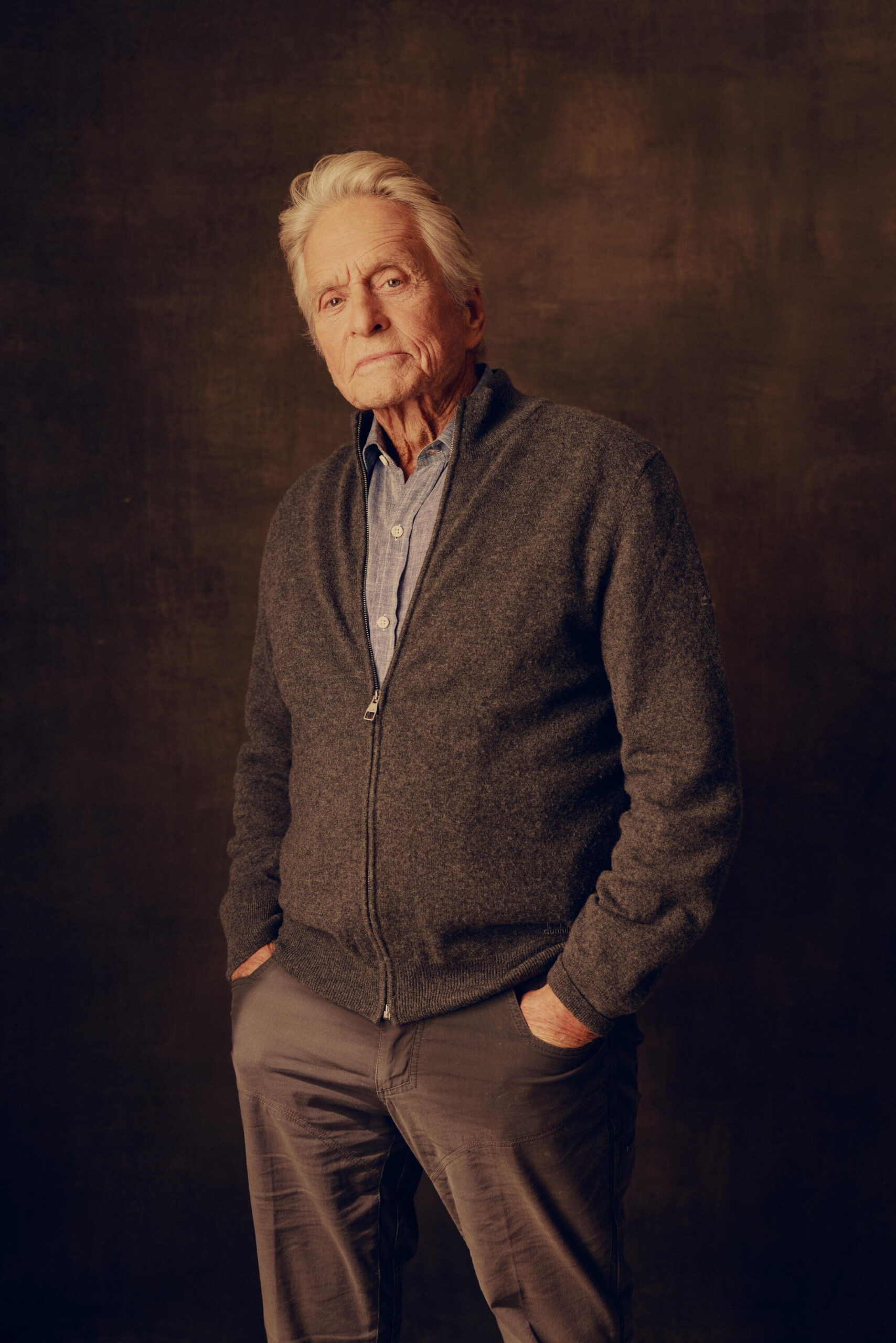
The night before I meet Michael Douglas on Zoom, I have a hard time sleeping. I want to be well-rested before I meet the leading man — perhaps one of the last leading men from an era in Hollywood that felt limitless. What do I mean by that? He’ll tell you. His new memoir details his movie-making career as a prolific producer and actor, along with his affair with his “Romancing the Stone” co-star Kathleen Turner, mudslides in Mexico, snorting cocaine with O.J. Simpson, encounters with Princess Diana and screaming matches with Paul Verhoeven that end in blood. In short: the life of a movie star.
“People say to me: Michael Douglas. When I see your name, I don’t know what I’m going to get, but I know it’s going to be good,” Michael Douglas says.
(David Urbanke / For The Times)
Halfway through our conversation, something unanticipated happens: Douglas reveals that he doesn’t quite see himself as a movie star. After gentle pushback, he elaborates. Instead, Douglas sees himself as a chameleon.
“People say to me: Michael Douglas. When I see your name, I don’t know what I’m going to get, but I know it’s going to be good,” he says.
He’s speaking from his home in New York. Behind him is a moody 18th-century Orientalist painting, its scene too indistinct for me to make out. His smiling face — which, like most American moviegoers, I had watched 50 feet tall in the dark — glows with warmth even on my laptop screen. It seems abnormal even to witness him in miniature.
To be clear: Michael Douglas is a movie star, whether or not he wants to cop to it over Zoom. It’s in his blood. His father, Kirk Douglas — born Issur Danielovitch to Russian Jewish immigrant parents — was a legendary actor whose shadow Douglas struggled to escape, as he details in the early chapters of his memoir. He spent his childhood on movie sets, watching his father spar with iconic directors like Stanley Kubrick. Michael Douglas was subject to violent and angry outbursts as well. “Dad’s volatility kept us on edge,” he writes. He felt suffocated by his father’s legacy, often hoping to shake the title of “Kirk Douglas’ son.”
Early in his career, Douglas left his starring role on TV’s “The Streets of San Francisco” after producing his first film, “One Flew Over the Cuckoo’s Nest,” which became a breakout success. On that film, he had to deliver the shattering news to his father that he was too old to play the lead — essentially, firing his father from his dream role. It was a betrayal. Instead, the role went to Jack Nicholson, who would later win an Academy Award for his humanizing portrayal of Randle McMurphy. The film won multiple Academy Awards, launching Douglas’ career as a heavyweight producer and later an actor. Escaping the shadow of being Kirk Douglas’ son has been a lifelong battle for the actor.
(Grand Central Publishing)
Occasionally, inheritance can be a burden. In his own life, Douglas details how he was a distracted father and husband who lost sight of his son, Cameron Douglas. During Cameron’s childhood, Douglas was elsewhere — on location in the Mexican jungle in “Romancing the Stone,” then a disastrous film production in Morocco for “Jewel of the Nile” that included a fatal plane crash that resulted in three crew members’ deaths. To cope with the breakneck pace of show business, Douglas sought refuge in women, cocaine and work.
Cameron’s troubled youth reached a crescendo when he was sentenced to five years in federal prison for drug smuggling, with an additional sentence for drug possession in prison — serving seven years in the end. It was enormously painful for Douglas, who also struggled with addiction, and had sought out treatment to provide an example to his son.
In a late chapter, he recalls confiding in Rob Reiner, who also had a son who struggled with addiction issues. In the memoir, Douglas addresses the killing of Rob and Michelle Reiner in December 2025; their son Nick has been charged with murder. “We both had sons with serious drug issues and we both, at times, had been at the end of our rope,” Douglas writes. “It was a heartbreaking confessional for us, but I know we gave each other some measure of comfort during the hard times.”
Why trudge through movie history, turning over every stone and every wound, in a nearly 500-page memoir? Because, according to Douglas, it’s time.
“Your 80s may be a good time to share,” the actor says, who recently turned 82. “People interested in movies, we give them a certain insight into the process, and maybe they could learn something. For others, it’s just gossip.” His battle with Stage 4 oral cancer brought the contours of his life into stark relief, sharpened by seven weeks of radiation and chemotherapy. His official diagnosis was tongue cancer, but he told the public he had throat cancer, hoping to stall speculation in the press about the possibility of disfigurement — and, more specifically, the prospect of losing his tongue. It was isolating, and Shane Salerno — the memoir’s co-author — stayed by Douglas’ side.
Michael Douglas.
(David Urbanke / For The Times)
As much as Douglas’ memoir, “One Helluva Ride,” is a revealing and delightful account of a life in show business, it is also a love letter to California — a place where Douglas spent much of his adult life, beginning at UC Santa Barbara. The college travel brochure read: campus by the sea. “I remember the cover of it was a guy walking down the beach with a surfboard, two girls in two-piece bathing suits. In 1963, I never saw a two-piece bathing suit back east.” He was sold.
The California years made an impression. Douglas is still, at heart, a hippie. Raised in stiff East Coast prep culture, he was reborn in the California sunshine. “I transferred into becoming a hippie, influenced by the Maharishi Mahesh Yogi, hallucinatory drugs, and the world that existed in the early ‘60s in San Francisco.”
Strangely, Douglas argued that some of the utopic sentiments of the 1960s are returning. “People are beginning to look back at that time, and realize how important family is — cooperation, sharing,” he says. “Socialism is not a four-letter word or something that’s terrible. There are other things to pursue in life other than just making money.”
“Your 80s may be a good time to share,” Michael Douglas says.
(David Urbanke / For The Times)
Like the characters he portrayed, Douglas is far from perfect. He admits that he struggled — in his first marriage, and later as a father. After marrying Diandra Luker, Douglas was unfaithful, having relationships with co-stars, most notably Turner on the set of “Romancing the Stone” in the Mexican jungle. The two denied the relationship for years. Now, with Turner’s blessing, Douglas writes about their involvement in his memoir.
Before Turner, there was Diane Thomas, the film’s waitress-turned-screenwriter, with whom Douglas had an affair. Thomas’ life was tragically cut short in a car accident involving a Porsche that Douglas had gifted her.
Then there were the rumors. On the set of “Basic Instinct,” some speculated that Douglas and Sharon Stone were having an affair. They weren’t, he explains. Douglas was instead locked in a power struggle with director Verhoeven, who, during one particularly heated argument with the actor, suffered a burst artery in his nose, turning the confrontation into a bloody scene. Douglas, meanwhile, was involved with another co-star, Jeanne Tripplehorn. “They were so focused on a possible relationship between Sharon and me, they missed the real relationship happening between me and Jeanne,” he writes.
When he and his current wife, actor Catherine Zeta-Jones, made it official, Douglas went to the other room to make breakup calls to five other women. (By this point in the memoir, Douglas has enough goodwill to pass this off as charming.) “From the moment I met Catherine, and we formed our family, I was a new man,” he writes.
The memoir enshrines Douglas’ petty show-business grievances too: a repaired grudge against David Letterman, a TV co-star who stole his longtime girlfriend, and a bouquet sent to Julia Roberts to apologize for his drunken buffoonery. In Douglas’ words: “There’s two or three people that I share my hostilities with.” He clashed with Brian De Palma, who was originally attached to direct “Fatal Attraction” and tried to have Douglas fired. De Palma underestimated Douglas and was replaced by Adrian Lyne. Years later, De Palma apologized, but Douglas rejected it.
It is impossible to tell the story of Douglas’ career without the women he encountered. The films he championed helped establish a new type of female lead — in all their powerful, morally ambiguous and deranged glory. “An actress was not allowed to play a villain,” he says. In “One Flew Over the Cuckoo’s Nest,” the actor struggled to cast Nurse Ratched. “A whole number of leading actresses turned that part down until we found Louise Fletcher, who went on to win an Oscar.”
For Glenn Close, Sharon Stone and Kathleen Turner, acting opposite Michael Douglas was transformative. After her role as a murderous, sex-crazed bisexual in “Basic Instinct,” Stone became one of the biggest stars of the 1990s and earned an Oscar nomination for Martin Scorsese’s “Casino.” Close‘s portrayal of the mistress-turned-lovesick psychopath in “Fatal Attraction” earned the actor her first lead Oscar nomination after three supporting nods. Turner went from being primarily known as the sexy femme fatale of “Body Heat” to a Golden Globe-winning star with box-office clout after her collaboration with Douglas. Sure, she sued him, too, but their friendship survived.
However, it wasn’t until his role as Gordon Gekko, the fast-talking, impulsive tycoon in 1987’s “Wall Street,” that Douglas was in full force, winning an Academy Award for lead actor. Directed by Vietnam veteran Oliver Stone, Douglas delivered an unforgettable performance about the dangers of unchecked capitalism and greed. At an early New York screening, Douglas recalls Wall Street traders being stunned by the film’s stinging accuracy. “A lot of the Wall Street characters were there, very cocky at the time; they all were shocked because we caught them.”
To his surprise, Wall Street financiers approached him on the street to praise Gekko — anointing him as their hero. “I said, ‘I was the villain.’ ‘No, no, no,’” he said. “So it showed me a lot.”
It speaks to Douglas’ gifts as an actor that he could transcend the caricature of white male entitlement he portrayed with such precision. In “Falling Down,” filmed during the 1992 uprising triggered by the Rodney King verdict, Douglas plays an unemployed defense worker, a man so consumed by disillusionment and blinded by his own sense of victimhood that he cannot recognize the harm he inflicts on others. The character would prove eerily prescient, anticipating an archetype that would take shape in the decades to come. An entire generation mistaking the actor’s brilliance as an invitation.
Perhaps that is the strange thing about being a movie star: Audiences decide who you are, and what you mean to them. For a chameleon, an actor who spent a lifetime resisting other people’s definitions of him, that might be the ultimate paradox.
As our conversation winds down, I remind him of his immense contributions to filmmaking, through producing and acting. It seems redundant, but I say it anyway. His response is polite.
“Quirky,” he said. “‘Falling Down,’ ‘The War of the Roses’ — I love those quirky films.”
“I’m proud of my movies,” he says. “I’m very proud of my movies.”
Connors is a culture journalist in L.A. She covers books, food, entertainment and offbeat Los Angeles. She’s currently at work on a book of essays about tourism in all its forms.
Jimmy McGovern’s BAFTA-winning BBC drama is returning to screens with David Tennant and Siobhan Finneran leading the cast
15:49, 11 Oct 2026Updated 15:49, 11 Oct 2026
The third series of Time is set to air on BBC One this October(Image: BBC)
Time returns tonight for its third but there’s some bad news for fans.
The wait is almost over for a brand new instalment of the gripping BBC drama which first began in 2021 and has featured the likes of Stephen Graham, Jodie Whittaker and Bella Ramsey.
That was until he found a real-life story in his research about a mother going to see her son in a young offender institution, whom she hadn’t seen for years. Although she didn’t speak English and he didn’t speak her language, which Jimmy shares is Swahili, in their BBC story.
However, the creator has shared that the upcoming series, which will being on Sunday night (October 11) will be its last. Speaking to RadioTimes, he said: “There’s very little altruism involved with these stories. I do them because I love doing them, although I think this will be the last time. I have said that many a time before, though, because these are also stories I feel bound to tell.”
A synopsis for the third series of Time details that viewers will see two young offenders struggle through the terrifying first weeks and months of their incarceration. However, an unlikely friendship between them looks to shift the trajectory of their futures.
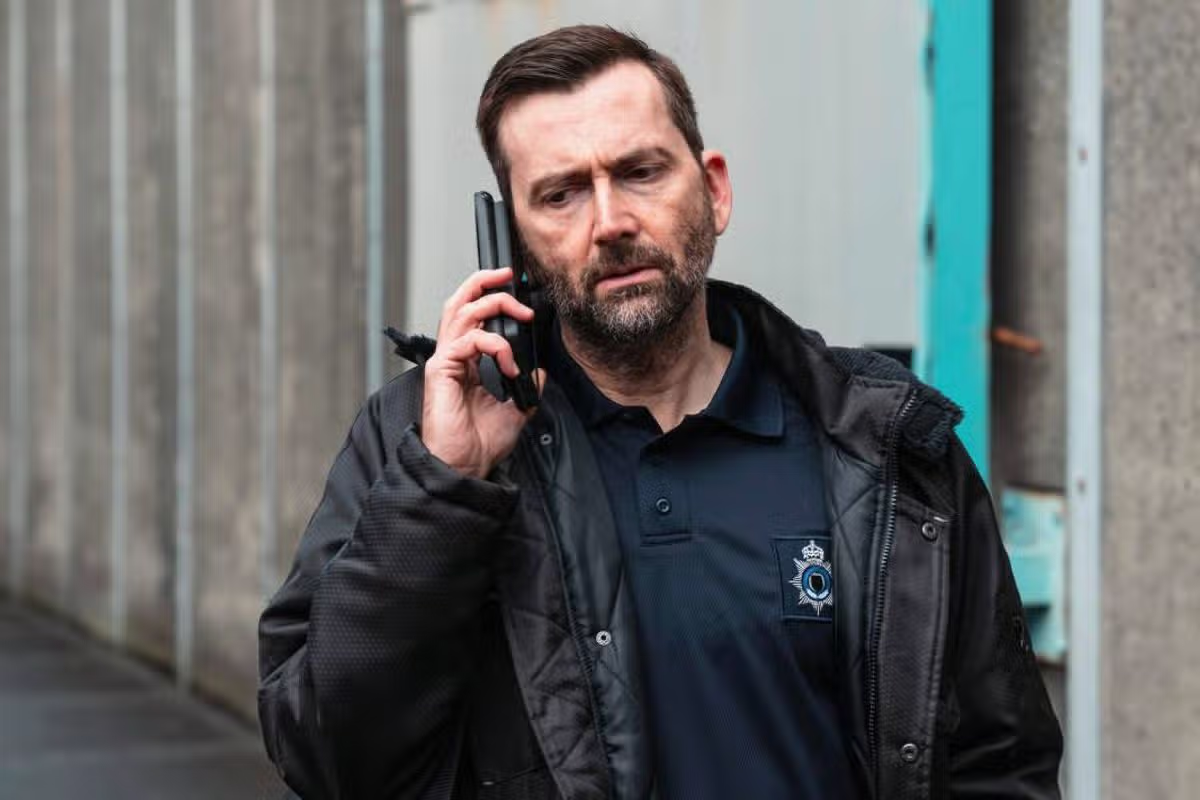
The description further reads: “Meanwhile, Prison Chaplain Marie-Louise (Siobhan Finneran) comes to the young offender institution having lost her faith.
When tragedy strikes in the prison, Marie-Louise clashes with veteran officer Bailey (David Tennant), a man in the midst of his own crisis. Bailey knows more about the circumstances that led to this major incident – but will he come clean before the guilt gets too much?”
Since the series first began five years ago, it’s been highly praised by viewers, with some hailing it as a masterpiece. On Rotten Tomatoes, one person has said: “Absolutely riveting drama, a must-watch from start to finish. Brilliantly acted and excellent plot.”
Meanwhile, on IMDb, another added: “I expected a mediocre show, but got a well-crafted masterpiece. In its two seasons, each with three episodes, ‘Time’ tells the stories of two people who are imprisoned for the first time and, in my opinion, it does this excellently” While a third wrote: “Serious, realistic and brutal. If you want to see something serious and realistic, this is for you.”
Also joining David Tennant and Siobhan Finneran in the third series will be Vinette Robinson, Jo Joyner, Daniel Ryan, Warren Brown, Louis McCartney, Ollie McNulty and Chukwubuikem Molokwu will star in the third series.
The new housemate has quickly become a frontrunner to win the ITV2 show
16:52, 09 Oct 2026Updated 15:52, 11 Oct 2026
Twinks entered the Big Brother house just over a week ago as a late arrival(Image: ITV)
A Big Brother housemate looks almost unrecognisable in a snap taken before she found fame.
The ITV2 reality show originally welcomed 16 contestants into the famous house last month, but two new faces have just joined the chaos. East Londoner Twinks entered the house last Friday (October 2), alongside teaching assistant Catrin.
Fashion stylist Twinks has quickly become a fan favourite, although she struggled to bond with some of her co-stars straight away. She has quickly built a reputation for her eye-catching style and it seems to have started long before viewers met the reality star.
In a throwback snap shared by her close friend Louise O’Mahony, the Big Brother housemate is seen with pink hair, a far cry from her current blonde look.
The picture was posted by her fashion designer ‘best friend,’ whose designs have actually made it into the Big Brother house. Louise has revealed online that Twinks has been wearing outfits from her clothing brand on the show.
Louise also shared a sweet tribute about their friendship, writing on Instagram: “If you told me 13 years ago that Twinks would go into the BB house I honestly …wouldn’t be surprised.
“She has entered the Big Brother house as a new housemate of 2026!! Thank god frankly, because that house needs some sparkle and whimsy injected into it ASAP! Who better to bring the vibes back up than the Queen of charisma, curator of colour, the Party Princess!”
Content cannot be displayed without consent
The heartfelt statement continued: “One of the last things she said to me was “I’ll do anything to make my friends laugh” well, here we are…Who knows what chaos might come in the next few weeks! For any friends and fans seeing this, she’s going to need us to get behind her, sing her praises in the comments and make sure she doesn’t get voted off in any public votes.”
Twinks was immune from nominations during her first week in the house, but housemates will be free to put her up for the public vote during the next nomination vote. She has so far been a popular with the likes of Rob, Harry, Pauline and Sam.
But she initially failed to win over Rochelle,57, and Philip,53, who were sceptical about the Londoner from the moment she walked into the house. And it seems Twinks already anticipated some tension with the “mature members of the house”.
Just before joining the show, she told ITV: “I’m apprehensive about meeting the more mature members of the house from what I’ve seen. We’ve got a lot of youngers in there and I tend to go into big sis, mummy mode with youngers. I’m surprised at the more mature members of the House.”
On the flip side, the 36-year-old knew who she would instantly click with. “I’m excited to meet Rob and Sam – I think that’s where you’ll find me. I’m a silly goose in high glam,” she said. “I really have no interest in talking shit behind people’s backs or being shouted at. I do not want to be shouted at. I just want to sing some show tunes!”
Big Brother continues tonight at 9pm on ITV2 and ITVX
Lacey danced a samba and the judges thought it was a strong dance but she needed to be a bit more out there. She scored 26.
Will danced a waltz. the judges thought he’d improved. As such, he cracked the mid-20s and went away with 25 from the panel.
Shaun went next, with a brief cameo from dad Ian Wright in the training video. Shaun did a quickstep that Craig said was “everything a quickstep shouldn’t be”. He scored the lowest of the night with 15.
Cach briefly held the top of the leaderboard after his Couple’s Choice. The judges, who gave him 31, said it was a joy to watch.
Jaime was next with a Viennese waltz. The judges felt she could have been better, but was still dancing nicely. They gave her 28. No one was prouder than her dad Ray Winstone, who left a video message.
Melanie’s charleston featured a cameo from Neil Jones. The judges were impressed with her personality, but less so with the dancing. She got 17.
Sarah used the school run to feul her paso doble anger and the judges were split on whether they enjoyed it or not. They gave her 20.
Delta soared to the top of the leaderboard with a salsa that scored 33, as she earned the first 9 of the series.
Lawrence failed to impress with his rumba, which only got 20, but did get a 5 from Craig, which Jowita was happy with.
Dani’s tango showed improvement and the judges rewarded her with 27.
Graeme’s jive brought a tear to Craig’s eye, as he reminde the judge of the late Len Goodman. he earned a 25.
John’s first latin number was a cha cha cha and failed to reach the heights of his week one foxtrot. He walked away with 20.
Bethany was next up with an American Smooth that Shirley thought was “extremely impressive”. She got 27.
And Tabby was last with an Argentine tango that fans thought should have topped the leaderboard. But she came in joint second with 31.
Textile artist Jane Jauregui is expanding the boundaries of what plush figures can be, thinking beyond that pile of mass-produced, branded stuffies huddled atop a twin bed, crammed inside a toy chest, or dangling from a backpack strap.
True, in the nearly two decades that she’s been creating plush figures, she’s produced charmingly minimalistic foxes, cats and buffalo fit for a nursery. However, her latest work has been anything but child’s play.
A plush fried chicken bucket is one of Jane Jauregui’s textile takes on beloved dishes.
She launched her “soft sculpture” company, STFD, in 2024 with the intention of transforming her inner thoughts into plush form — no matter how outside the box those ideas may be. After all, why bring yet another teddy bear into the world when you can dream up a stuffed paintbrush trailing a splash of brightly colored felt “paint,” or a striped bucket filled with faux fried chicken?
In this series, we highlight independent makers and artists, from glassblowers to fiber artists, who are creating original products in and around Los Angeles.
“It stands for Stuff That Feeds Delight,” Jauregui said of the brand’s acronymic name. “The newer things I’m working on are more like display items, but you can absolutely touch them,” she explained. “I just started playing more with the idea of decor, aging it up a little bit more, and playing with the idea of how we can really elevate it.”
Take, for example, a plate of longsilog, the traditional breakfast meal her Filipina grandmother used to make for her. Inside the converted garage of the same Van Nuys house where she was raised, Jauregui whipped up a playful sausage-riceball-fried egg combo using a sewing needle, felt, embroidery floss and sherpa fleece, rather than pots and pans.
Moved by memories of her grandfathers, she created a collection of stuffed felt cigarette butts, complete with simulated ash made by zigzagging stitches.
“My Thai and Filipino grandpas were chain-smokers,” she said. “They passed away, and I just started thinking a lot about what would represent them. Cigarettes immediately came to mind.”
Jane Jauregui’s home studio inside the converted garage of her childhood home.
Though she takes inspiration from her personal experiences, many of her plush figures strike a universal note. Most anyone born in the 20th century would take one look at her plush retro alarm clock radio and instinctively feel the urge to whack its elongated vinyl “snooze” button. The trompe l’oeil wood paneling (which she made by printing a wood-grain design directly onto dark brown fabric) and the red-tinted digital readout screen (the numbers are iron-on transfers) make it a dead ringer for those once-commonplace nightstand devices that predated smartphone alarms.
She first tried her hand at the craft about 18 years ago, after she and her husband, Sergio, couldn’t find the right gift for his newborn niece at famed New York City toy emporium FAO Schwarz.
“Everything was licensed, and I didn’t want any kind of IP [intellectual property],” she recalled. “I went home and said, ‘Well, I’m just going to sew something for her.’ Sergio was like, ‘But you don’t know how to sew, so that’s a little crazy.’ I said, ‘That’s OK, I’ll figure it out!’”
1
2
1.A plush hot dog.2.An ashtray full of plush cigarettes, inspired by Jane Jauregui’s grandparents.
Fortunately, she had a leg up when it came to picking up the new skill. Her father, a retired clothing designer and patternmaker, had introduced her to the inner workings of the garment industry from a young age.
“My dad would have full-time work five days a week, so there wasn’t a lot of time for him to teach me,” she said. “But when he would take freelance work home, I would sit in this garage with him. He had a big table, and I would sit there and watch him sew. It was just really how we spent time together.
“When I decided to start making plush, I remembered little things he would do, like how to walk a pattern — which is making sure the pattern pieces are matching — or how he would move the ruler. I would remember all of those things and put my own spin on it.”
Artist Jane Jauregui eschews watercolors and acrylics, preferring to “paint with plush.”
She started by making simple shapes like a stuffed orange, pear and an eggplant, working her way up to the finalized baby gift: a stuffed whale. By 2009, she’d completed enough plush produce to start selling at local pop-up markets under the business name Janie XY. Sergio, an artist in his own right, even constructed her first booth to resemble a fruit stand. Her first hit item was a baby rattle shaped like a chicken drumstick that was sold wrapped in cellophane, much like a meat-counter purchase. This time, her muse was her own infant niece.
For the record:
11:27 a.m. Oct. 7, 2026An earlier version of this article said Jane Jauregui’s daughter is 4 years old. She is 5.
All the while, she was holding down a full-time job creating window displays for Forever 21. She continued to build her squeezable empire in her off-hours, even as she transferred to corporate jobs at Mattel and Disney (for which she’s now a consumer products design manager), and became a mother. Taking a page from her father, she’s made her at-home workspace accessible to her 5-year-old daughter.
“She’s in here all the time,” she said. “I let her touch everything. What’s fun about the medium is you can’t break it. You can get it dirty, but she knows what to do. She’s really mature about it. She loves to clean the sewing machine — she’ll go in with a pin and pick out all the lint, and she’ll think that was a good day’s work. We want her to feel like part of the work because she is a part of it.”
Jane Jauregui’s sewing machine, which her daughter likes to clean, in her home studio.
That said, Jauregui’s STFD creations aren’t necessarily made with the wee ones in mind. Consider her new pieces celebrating liquor stores, for which she converted items like lottery tickets and frothing beer cans into plush form.
“It’s something that we all take for granted,” she said of the ubiquitous neighborhood corner store. “You tend to turn your nose up at it, but it’s there for you all the time.”
She and her husband also pay homage to these unsung cultural hubs in the latest edition of their fledgling zine, which they’ve dubbed “a gallery you can hold.” Inside, photographs of the stuffed figures fill the pages, accompanied by written musings. (The one-of-a-kind featured items will also be available for purchase.) The series is the couple’s prescribed antidote to the social media doomscrolling they call “internet indigestion.”
Jane Jauregui’s goal for the plush items she makes in her studio? Delight.
She’s also planning to explore plush Thai food in honor of Grandma’s Thai Kitchen, the Van Nuys restaurant her mother owned and operated for years. After treks to downtown L.A.’s Fashion District to find just the right materials, she’ll mock up clever riffs on julienned ginger and cilantro leaves. For her, there’s ample delight in those little details.
“STFD is really about giving myself permission to just do things that make me happy,” she said.
Marvel Unlimited, the company’s digital comics subscription service, is shutting down after 19 years.
Marvel announced Monday that it is launching Marvel Comics, a new digital comics app that will house more than 35,000 current and classic titles featuring Spider-Man, the X-Men, Captain Marvel and more from its extensive library. The new platform is built and operated by Webtoon and will launch Nov. 16.
The Marvel Comics app library will feature comics spanning Marvel, Star Wars and 20th Century Studios titles at launch, with stories from Disney’s other brands — like Pixar and Disney Animation — expected to follow. The new app will support both the traditional page-based comics format that mirrors physical books and the more mobile-device-friendly vertical-scroll format. (Marvel Unlimited also featured vertical-scroll comics under its Infinity Comics banner.)
A preview of the Marvel Comics app.
(Marvel Comics)
Those attending New York Comic Con this Thursday through Sunday can get an early look at the new app at the Marvel Comics booth (#2435).
With the arrival of the new Marvel Comics app, Marvel Unlimited will “sunset” on Dec. 7. Marvel Unlimited has been the company’s in-house digital hub for its comics since its launch as Marvel Digital Comics in 2007. Subscriptions and payment information from Marvel Unlimited will not automatically carry over into the Webtoon-operated Marvel Comics, and Marvel says those whose paid subscriptions will be cut short because of the shutdown can expect a prorated refund on or around Nov. 16.
Marvel Unlimited members who sign up for Marvel Comics will be able to import their current library and reading history into the new app once it’s launched. The steps required for that process have not yet been detailed, but the company says these members will have until Dec. 21 to access their Marvel Unlimited library to ensure the transfer was successful.
Marvel Comics will offer two subscription tiers: The base-tier membership will run $9.99 per month or $69.99 annually for access to the app’s full catalog, with new issues of ongoing titles added as early as three months after print release. For those who would rather not wait that long to read newer comics, Ultimate-tier members will be able to access new issues as early as a month after its print release. Subscriptions for that tier will run $12.49 a month or $99.99 a year. Marvel is currently offering a special $59.99 “founder member” price for the first year of an annual Ultimate-tier memberships for those that preorder the service.
Scarlett Moffatt has shared some adorable photos of her two sons meeting for the first timeCredit: Instagram/@scarlettmoffattThe star beamed in her hospital bed with her partner ScottCredit: Instagram/@scarlettmoffatt
In the new photos, Scarlett is sitting up in her hospital bed surrounded by her expanded little family.
Clark is laying on one of Scarlett’s legs wearing a small cream coloured baby suit, while Jude is sitting between Scarlett’s legs.
Sign up for the Showbiz newsletter
Thank you!
Jude smiles widely at his little brother, who is partly resting on his lap.
Proud dad Scott is beaming by the bedside while the sweet moment unfolds, taking it all in.
Jude appeared happy to be a big brotherCredit: Instagram/@scarlettmoffattScarlett welcomed her little one earlier this weekCredit: Instagram/Scarlett Moffatt
Scarlett gushed in the post’s caption on Instagram: “The moment Jude met Clark.
“Watching the boy who first made me a mammy become a big brother is a moment I’ll treasure forever.
“And judging by the last slide, Clark did very well with his choice of Transformer toy for his big brother.”
Announcing news of the birth on October 9, Scarlett shared online: “Our beautiful boy is here! Clark Xander Dobinson.
“Arriving a little earlier than expected and not quite as straightforward as planned, our little family of four was made complete on Monday.
“Our hearts have never been so full, and I’d do it all again for you, Clark.”
The slogan of the 1933 Chicago World’s Fair, which plays a prominent role in the new LACMA exhibition “Home of the Future, 1925–1985: Designing Domestic Utopias,” was blunt: “Science Finds, Industry Applies, Man Conforms.”
Those words capture a central tension in the sprawling show, which occupies interconnected galleries at the far end of the museum’s Resnick Pavilion. Many of the beautiful, sometimes ingenious products and technologies developed with the rise of the modern era gripped the popular imagination and made life easier, healthier and more connected. But they didn’t free people from domestic labor or deliver the prosperity and security heralded by their promoters. They instead often raised expectations, forced dependency and gave rise to a vision of progress that reinforced social exclusion, bred anxieties about status, and concealed the environmental costs of a culture built on consumption.
Sound familiar?
The desire for these transformative products was never innate, and LACMA’s exhibition zeroes in on that idea from the start. “Good design is seldom accepted. It has to be sold,” Midcentury photographer Julius Shulman is quoted as saying in the catalog.
The show traces the hard sell of a domestic utopia via world’s fair posters, model home catalogs, magazine advertisements, television specials and science-fiction imagery — along with close to 200 physical objects of every sort, including kitchen appliances, electronics and furniture. In each of its four documented eras — pre- and post-Depression, post-World War II, the height of the Cold War, and the counterculture ’60s and ’70s — promoters dressed the same promise in new terms, whether through cleanliness, leisure, security or freedom.
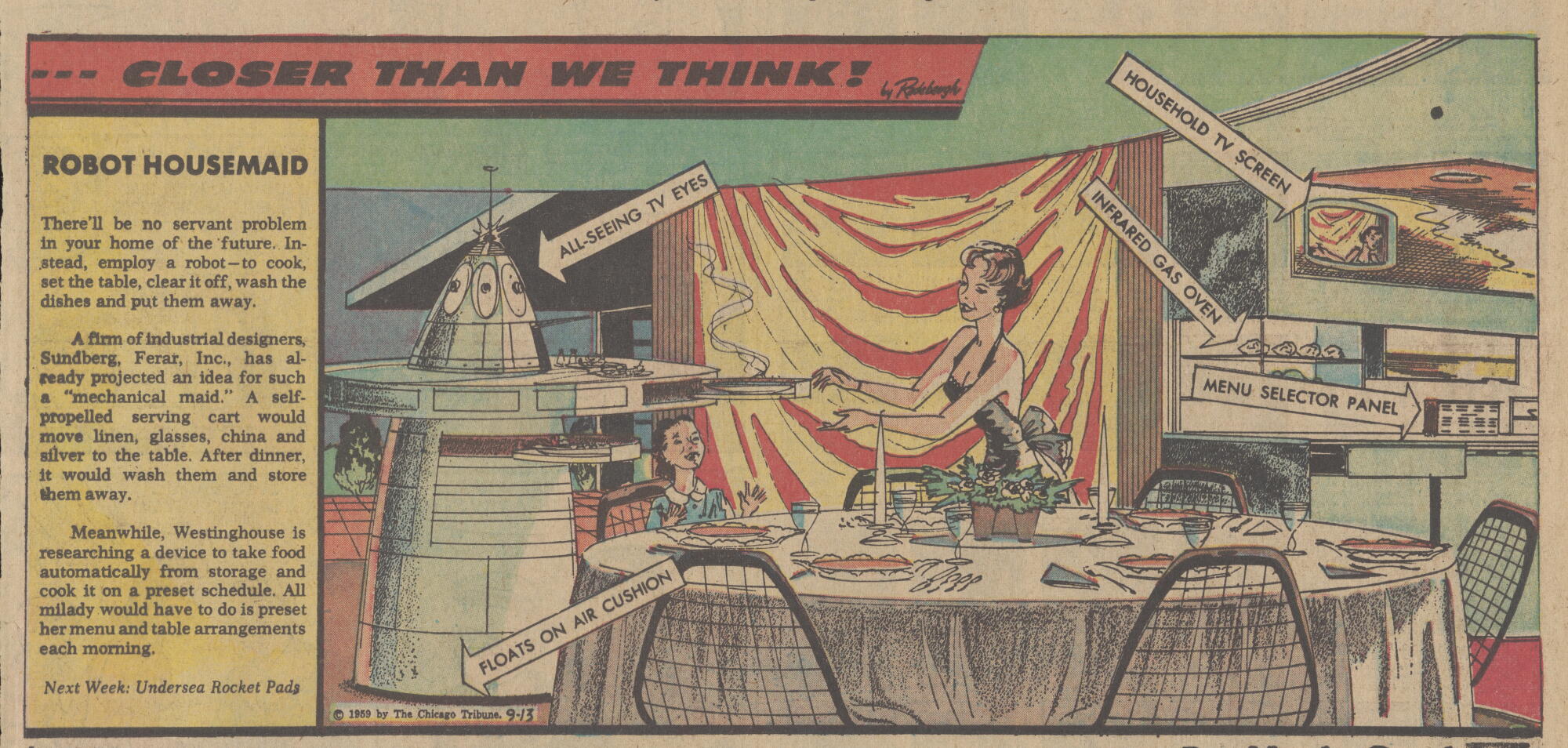
Arthur Radebaugh, “Closer Than We Think! Robot Housemaid,” 1959.
(Chicago Tribune / TCA, photo courtesy San Francisco Academy of Comic Art Collection, Billy Ireland Cartoon Library and Museum, Ohio State University)
At every turn a vision of a better life was made to seem desirable and, just as important, inevitable. Like any good advertising, it worked best when soothing our anxieties and tapping into our fantasies.
In the 1920s and ’30s, new discoveries about hygiene inspired products by soaring talents in the nascent field of industrial design who set out to create clean, easily maintained homes — laboratories for healthy living in an age still ravaged by diseases like polio and tuberculosis. Mathias J. Weber and Russell E. Vanderhoff’s seductively streamlined Health-o-Meter scale gave the illusion that homeowners could be scientists, for the first time monitoring their own weight and growth. Kohler’s Integra, introduced as “the toilet of the future” at the Chicago fair, had a dramatic black finish made to equate sanitation with modern design. And Bruce Goff’s gleaming Vitrolite kitchen for Libbey-Owens-Ford glass company, shown in Charles Turzak’s rendering, integrated pigmented structural glass counters and cabinets into a polished, easily cleaned whole.
American Stove Co., Magic Chef stove, series 1400, introduced 1935.
(Lynton Gardiner / The Wolfsonian–Florida International University )
Vast expansions in electricity, telecommunications and production promised to connect the country and ease the tedious work of cooking, washing and cleaning. The American Stove Co.’s Magic Chef stove, one of the first ovens to be equipped with a clock, recast kitchen work as something that could be measured and controlled. Frank G. Brotz’s Kohler Electric Sink, which incorporated a motorized dishwasher into the familiar basin, promised release from the “thrice-daily drudgery” of washing dishes. Western Electric’s clear-cased Model 302 telephone enticed gawkers with an impressively complex system of wires and mechanisms.
George R. Lum for Western Electric Co., Telephone, model 302, desk set 1938.
(AT&T Archives and History Center)
Many of the names who dreamed up these wonders are now etched in design history. Isamu Noguchi created a baby monitor before baby monitors were a thing: the Radio Nurse, a dark Bakelite receiver resembling an abstract face. Walter Dorwin Teague gave corporate products a precise, machine-age polish, while Raymond Loewy brought the same sleek optimism to objects like the globe-shaped New World radio for Colonial Radio Corp., molded in glossy, heat-resistant Catalin and embodying quite literally the new reach of communications.
Selling this promise of a technological future to those clinging to the dream of American prosperity was an especially potent exercise during the Depression. In his illustrated 1932 manifesto “Horizons,” Norman Bel Geddes cast “new design” as a path toward “economy, efficiency, comfort and happiness.” As the economy faltered, an orderly, healthy home could be sold as a form of salvation, with prosperity seemingly within reach. At the Chicago fair, corporations sponsored full-scale model homes and filled them with products already available or soon to be. For rural households still without electricity, Lester Beall’s 1937 Rural Electrification Administration poster “Wash Day” turns federal infrastructure into a household fantasy. Inside the black silhouette of a farmhouse, a pristine white washing machine appears at an almost monumental scale, set against flat fields of saturated color.
Irving Harper of George Nelson and Co. for Herman Miller Inc., Marshmallow Love Seat, model 5670, designed 1956, this example made c. 1960s.
(Jonathan Urban / Museum Associates / LACMA)
By the ‘40s and ‘50s, the postwar home and its many accouterments — powered by wartime advancements, growing abundance and an ethos of “buy now, pay later” — amplified the promise. Plastic, prefabrication and push-button convenience suggested that mass production could bring elegant, futuristic living — and freedom from drudgery — within reach of the masses. George Nelson treated furniture as a flexible system, producing (with designer Irving Harper) the candy-colored Marshmallow Love Seat; replacing conventional upholstery with 18 brightly colored circular cushions mounted on a spare steel frame. Eero Saarinen produced the molded-fiberglass Pedestal chair, sweeping the seat and stem into a single sculptural form intended to eliminate what he called the “slum of legs” beneath tables and chairs.
Eero Aarnio for Asko Oy, Ball Chair, designed 1963.
(Jonathan Urban / Museum Associates / LACMA)
Architects attempted to make the home itself into a sexy product. At Disneyland, Monsanto’s House of the Future, designed by architects Richard Hamilton and Marvin Goody, was a gleaming, cross-shaped structure of molded plastic, raised above the ground on cantilevered supports and partnered (in renderings) with a plastic heliport. Its kitchen featured molded surfaces and electric appliances. Promotional images and films conjured a playful, adaptable and benevolent house — plastic as the building block of family happiness.
Buckminster Fuller’s Dymaxion house was an aluminum, factory-made “dwelling machine” that could be delivered by air and assembled almost anywhere. Its unified form, modular furnishings, water-recycling system and labor-saving technology promised a more efficient life, less tied to conventional building and household routines.
Hamilton & Goody Architects, Monsanto House of the Future, 1956.
(MIT Museum)
Institutions like the Museum of Modern Art and magazines like Arts & Architecture promoted prototype homes from now legendary industrial designers and modernist architects like Saarinen, Charles and Ray Eames, Marcel Breuer, Albert Frey, Gregory Ain and even Frank Lloyd Wright.
Effective pitches could turn a product, whatever size, into a fantasy of freedom. In the General Motors film “Design for Dreaming” (1956), directed by William Beaudine, a woman enters a fabulous kitchen as if in a magical dream. The promise, said curator Wendy Kaplan, was that the fictional woman would have more time for “tennis and hanging with … friends.” The dream even hinted at a life beyond domesticity — perhaps even freedom to “actually have a profession,” Kaplan added.
But the housewife in these displays was still expected to remain responsible for the home. Liberation came through a more efficient kitchen, not a change in who cooked. And appliances that reduced some labor often raised the bar: more frequent washing, more cleaning, more elaborate meals, as University of Chicago home economics professor Hazel Kyrk described in “Economic Problems of the Family.”
Frank G. Brotz for Kohler Co., Electric Sink, introduced 1926, this example 1928, Kohler Co.
(Kohler Archives)
That universal “everyone” did not, however, include everyone. Government-backed home ownership and the suburban boom excluded many Black, Latino and Asian Americans through redlining, restrictive covenants and discriminatory lending — a fact reflected in the almost complete absence of minorities in these vast selling campaigns.
A few welcome exceptions on the creators’ side are architect Paul R. Williams’ “Small Home of Tomorrow,” which proposed a simple, well-designed home fitted with gee-whiz appliances; Arthur Elrod and William C. Raiser’s swirling, vivid orange Ebony test kitchen, which treated cooking as creative craft; and the proposed multiracial community of Soul City, founded by Floyd McKissick, which imagined homeownership as a claim to economic autonomy that segregation denied.
The vision of a utopian domestic future took a strange turn during the Cold War, marrying the breathless excitement of the space age with the existential dread of nuclear annihilation. The same scientific power that had transformed lives now produced weapons capable of destroying humanity. The home was imagined as both shelter and command center.
Office of Donald Deskey Associates. Drawing, design for Undersea Lounge: Scheme 3 Interior Perspective, ca. 1960s. Designed by Russell Heston (b. 1929).
(The Estate of Donald Deskey, courtesy Cooper Hewitt, Smithsonian Design Museum / Art Resource, NY)
As the age’s potent mix of terror and delirium spun on, designers and illustrators proposed ways to live comfortably in space, underwater or in underground bunkers. Paul László’s “Atomville, U.S.A.,” a vision of suburbia half a century in the future, buried the family home beneath an earthen shell that doubled as a helicopter landing pad. Its sunken gardens and swimming pool promised comfort, while a blast door, escape hatches and air filtration protected against nuclear fallout. Donald Deskey Associates imagined a hypnotic “Undersea Lounge,” a self-contained interior for living beneath the water, while NASA illustrator Rick Guidice vividly depicted physicist Gerard K. O’Neill’s proposed Stanford Torus — an enormous, wheel-shaped suburb in space.
Bob Lerner for LOOK Magazine, Anne Anderson in RCA Whirlpool Miracle Kitchen, 1959, kitchen designed 1956.
(Library of Congress, Prints and Photographs Division, LOOK Magazine, Photograph Collection / Robert S. Lerner Photography, LLC)
An endless array of products leaned into the public’s awe at the age’s sci-fi possibilities. This included prescient pieces ahead of their time, like the video-enabled AT&T Picturephone, and those that would never come to pass, such as the RCA Whirlpool Miracle Kitchen. The latter’s spread in Look Magazine (displayed for crowds at the 1959 American National Exhibition in Moscow) showcases a Roomba-like vacuum and other astonishing appliances that seem to work by themselves. But men hidden behind two-way mirrors actually operated them. Others, like the two-wheeled Ford Gyron Remote Control Car of the Future, only managed to come to life as children’s toys; and some were just plain ridiculous, like Honeywell’s H316 Kitchen Computer, which required a two-week training course just to retrieve a recipe.
By the late 1960s, confidence in technological progress was fraying. Environmental damage, plastic waste and the conformity of suburbia prompted designers and countercultural communities to imagine other ways of living — up to a point. The residents of Drop City, a Colorado artists’ community, built domes from the curved steel tops of salvaged cars. Architects Barry Simpson and Charles Hosford made a folding stool that could serve as a seat, stepstool or side table. Small, portable, multipurpose designs, from inflatables to cardboard furniture offered a life with fewer possessions. The Whole Earth Catalog, founded by writer and editor Stewart Brand, promoted ecological knowledge and self-sufficiency, but was still a compendium of things to buy.
Companies, too, found ways to sell all natural products, flexibility and individual expression. Zanotta advertised the first beanbag chair, the polystyrene-filled “Sacco,” as “A Big Bag, a Soft Seat.” Its formless body accommodated slouching, lounging or lying down, selling freedom from both conventional posture and the bourgeois living room. Even resistance to consumerism could be packaged as a new consumer ideal.
The pairing of objects with their promotional campaigns is the show’s most illuminating contribution, shedding light on the massive, often strange apparatus needed to drive these incredible designs — some icons, some welcome surprises — forward in each age. It reveals how the country’s 20th century manufacturing prowess expanded into the production of dreams. Corporations, government and the media taught consumers what progress should look like, which anxieties a product might soothe, and what kind of future to desire.
Isamu Noguchi; Zenith Radio Corporation, Radio Nurse receiver and Guardian Ear transmitter with original box, 1937.
( Museum Associates / LACMA)
But the sheer abundance of objects — I haven’t even mentioned the fascinating companion show-within-the-show, “The Kitchen and Its Discontents” — leaves less room for examining those campaigns and the work they performed. The excellent catalog follows those connections further, tracing how often hypnotic visions of the future home both reflected and shaped ideas about lifestyle, progress, gender, race, labor and consumption; in the galleries, those ideas remain largely suggestive.
Still, the exhibition offers a revelatory history — and a telling roadmap to our present. While the future imagined here made life easier, cleaner, more beautiful and more exciting, it did not arrive as advertised. The plastic home didn’t remake housing; the automated kitchen didn’t free women from domestic work; the self-sufficient home gave way to new forms of reliance. Yet a similar techno-utopian pitch survives in today’s smart homes and domestic technologies, from assistants like Alexa to artificial intelligence marketed as a way to make life easier. These tools may offer real benefits even as they addict and distract us. And while the systems sustaining our comfortable, consumption-driven lives launch us toward climate disaster.
These rooms powerfully evoke what Kaplan in the catalog calls America’s “restless forward motion, powered by the conviction that tomorrow’s design would solve today’s problems.” That ingenuity is worth celebrating. But its promises deserve open-eyed scrutiny.
KELLY Osbourne, Ashley James and Nadiya Bychkova looked incredible in their glamorous gowns at star-studded London gala.
Kelly looked stunning in a sleek off‑the‑shoulder black dress, finished with layered necklaces and a striking cross pendant.
Kelly Osbourne looked sensational as she attended the 2026 Mode EPS Gala in aid of Anna Freud at Spencer HouseCredit: GettyAshley James looked gorgeous in blue satinCredit: Getty
Broacaster and DJ Ashley looked gorgeous in a glossy turquoise satin gown, paired with a matching scarf draped softly around her shoulders.
Meanwhile, Strictly professional dancer, Nadiya stunned in a sleek satin slip dress with thin spaghetti straps, pairing the look with black heels and a small matching handbag.
Sign up for the Showbiz newsletter
Thank you!
Nadiya also performed in a dramatic pink gown, complete with a high slit that showed off her toned legs.
The stars turned out to support the MODE EPS gala in aid of Anna Freud, which was held inside the opulent Spencer House in Mayfair.
Anna Freud is a mental healthcharity transforming care for children and young people through science, collaboration and clinical innovation.
Attendee Kelly opened up about her own struggles in The Sun this weekend, telling us it has been the worst year of her life following dad Ozzy’s death and her split from DJ Sid Wilson.
She said: “It’s been the worst year of my life. In so many ways, I can’t even explain to you. But it’s also been really beautiful because I’ve learned that my grief is an honour, as I truly love someone that much.”
“It’s been the worst year of my life,” she says. “In so many ways, I can’t even explain to you. But it’s also been really beautiful because I’ve learned that my grief is an honour, as I truly love someone that much.
London-born Kelly has since moved permanently back to England from LA, not only to be closer to her dad’s grave, but also to give her son a stable childhood.
And she has gained 2st in weight since an appearance at the Brit Awards earlier this year sparked concern about her well-being.
“I didn’t know that I looked like that until I saw the pictures,” she said. “When I saw them, I couldn’t f**king believe it. I was as shocked as everyone else.”
Kelly, who battled her weight in her teens before having gastric sleeve surgery in 2018, admits that it’s hard to have your body up for discussion.
Nadiya Bychkova looked stunning in a black satin slip dressCredit: GettyNadiya Bychkova looked pretty in pinkCredit: GettyNadiya performed with her dance partner at the galaCredit: GettyKelly Osbourne looked gorgeous and relaxed as she posed for photgraphs at the eventCredit: Getty
EXCLUSIVE Coronation Street’s Lisa Connor-Swain actress Vicky Myers speaks to me about Swarla, Lisa’s backstory and how Betsy’s storyline saw her reflect on her childhood
07:34, 11 Oct 2026Updated 07:34, 11 Oct 2026
It’s been five years since Vicky Myers took on the guest role of Coronation Street detective Lisa Connor-Swain(Image: ITV)
It’s been five years since Vicky Myers took on the guest role of Coronation Street detective Lisa Connor-Swain.
But a planned four-episode stint turned into the job of a lifetime for the actress, who has no plans to leave the famous Cobbles anytime soon. As long as she challenges me, then I’ll stay forever,” Vicky, 50, tells us.
“It’s unfamiliar territory for me because of the previous roles that I’ve played. She wasn’t a character that needed to be written for, and so as time has progressed, so has she.” Very little was planned for the character before she moved to Weatherfield full-time in 2024.
Since then, fans have seen Lisa at the centre of huge storylines, including her ex-wife Becky Swain faking her death, and Lisa’s teenaged daughter Betsy suffering a stroke, as a result of non-fatal strangulation.
Happier times have seen Lisa’s wedding to factory boss Carla Connor [Alison King], with Swarla, as they are known by adoring soap fans, being the first lesbian couple to marry on the soap. Vicky is thrilled to represent so many people with her character.
“There are so many women who can relate to what Lisa’s been through,” she says. “Also women that are in what used to be a male-dominated profession. For fans to be so loyal and to support Lisa and Carla, I think that’s a testament to how much these two have been needed by viewers. As is with all representation and visibility, it’s very much needed.”
Vicky hopes her latest storyline, which sees Lisa caring for her daughter Betsy [Sydney Martin] who is recovering from a stroke, will shine a light on accessibility issues. As Betsy faces challenges in her rehabilitation, Vicky says she’s reminded of her own experiences, growing up with her brother, Fran, who has cerebral palsy.
“I can relate to my mum,” she tells us. “She was a working mum, but in particular, when my brother was young and with his disability, she had to fight for everything. I watched her, and only as an adult now, and as a mother myself, I realise just how hard she had to fight.
“I’m in awe of her. She still continues, and she’s in her early 70s, but she has this drive and determination that seems endless. And even through exhaustion, she still pushes on, because she has to.”
Reflecting on the challenges faced by her brother Fran, who was born at 28 weeks, Vicky adds: “Looking back, I was a young child, but I remember seeing how she was relentless in her pursuit for accessibility, for understanding, for support, and also so determined that he was going to live as mainstream a life as she could possibly provide for him, her and my dad.
“It was a different generation, my dad worked all hours, we grew up in a pub, and they grafted really hard. I watched my mum, fight to get my brother into a mainstream primary school, they didn’t have accessibility like they have now, it was extremely poor.
“She’s a wonderful woman who I respect massively, and I admire. Lisa moving Betsy’s wheelchair around on set and things, I really wanted to make a point of how cumbersome it can be, but these are necessities, these are how people can navigate life.”
Vicky is grateful for the huge support she and her character have had during her time on the cobbles. Something else she’s grateful for is turning 50 earlier this year, with her sure it will be her “best decade yet”.
“I think as I’ve got older, a lot of my views have changed and I’m a lot calmer. 50 is the best! A lot of things happened in my 40s which were brilliant, but I have this thought process of don’t trip over something that you left behind.
“Take each day as it comes and embrace it, because you never know what’s around the corner. Treat every day as if it’s your last, and just go for it! I’m glad I’m not living my 20s and 30s now. I really wouldn’t like it.
“When I was growing up, we had the 80s, the music, the era, the times, there was freedom. There wasn’t always the thought process of getting my phone out. We were living in the moment, and there’s a real beauty in that.”
As for Lisa’s past, Vicky hopes it’s something the soap will explore. She shares: “I think it will be interesting to explore her family backstory, and why she’s not in touch with any of them. What happened to her as a child, what’s her story, and what was her journey with her sexuality?
“When did she realise that she was queer? All of these things intrigue me with her. I’ve got my ideas. I’ve sort of built things up, but they all need to align together with the storylines. Lisa’s a bit of an enigma. We don’t know everything about her.
“There are things that I know. She’s had a past, we’ve all had a past. Not everybody gets her, not everybody likes her. I’m not sure if I’d want to play somebody that everybody likes, and Lisa’s a challenge for me to play.”
Cheryl has made a surprise early return to The Voice UK and is set to appear in Saturday night’s episode for the Battle Rounds, joining long-time friend Will.i.am as his assistant coach
Cheryl’s appointment is part of a wider shake-up for The Voice UK(Image: ITV/Rachel Joseph/Shutterstock)
The Girls Aloud star, 43, appeared in the latest episode as the ITV singing competition continues its Battle Rounds, joining her longtime friend Will.i.am to help him decide which contestants deserve a place in the semi-finals.
Cheryl was confirmed as a coach for the next series last month, replacing Sir Tom Jones on the panel. Her appearance this weekend will give viewers an early taste of what to expect when she officially takes up the role. The singer arrived alongside Black Eyed Peas star Will.i.am, 51, looking stylish in a red tasselled leather jacket and light blue flared jeans.
To see more of the stories you love from The Mirror and to find them easily in Google, make us your preferred source. Free and easy to do, just click on the link here to find more from The Mirror at the top of your feed.
The pair embraced as they reunited for filming, having worked together on music projects over the years. Will revealed that he had been trying to have Cheryl join him for the last 13 years. Cheryl knows exactly what it takes to make it in the music industry, having found fame after being selected for Girls Aloud on Popstars: The Rivals in 2002.
Speaking to Team Will, the Call My Name songstress said: “I’m so excited for you. You couldn’t be in better hands than you are with my man Will. Will and I have collaborated a lot over the years, so we know what it’s like for two very different artists to come together. I wish you all the very best for what you’ve got today, and I’m excited to see you all!”
Reflecting on her own experience, having found fame on Popstars, Cheryl said during a solo interview: “I have stood in the shoes that the contestants are standing in, and I know what it feels like to perform in this environment. You’ve just got to know that you’re good, or you wouldn’t be here.”
And fans were overjoyed to see Cheryl back on screens. One said on X, formerly known as Twitter: “Cheryl looks amazing, oh my gosh.” “CHERYL ON #TheVoice Saturday night TV is SO back,” said a second. “Ah I’m buzzing,” commented a third. A fourth exclaimed: “So excited.” “I’m excited to see Cheryl and Will back together,” commented another.
Her appearance marks a return to television after a lengthy break from the spotlight following the death of her former partner, Liam Payne, in October 2024.
The singer had largely stepped back from public life in the wake of the tragedy, making her new coaching role a significant career move. While Cheryl once dominated the music industry and became the first female artist to have five records debut at Number One, her last single, Let You, was released in 2019 and peaked at Number 57 on the Official Charts Company.
Prior to this, her last album, Only Human, which peaked at Number 7, boasted the singles Crazy Stupid Love and Only Human, and was released in November 2014.
Cheryl’s appointment is part of a wider shake-up for The Voice UK, with Stacey Solomon and Alesha Dixon confirmed as the show’s new presenters. The pair will take over from Emma Willis, who is moving on after landing a presenting role on Strictly Come Dancing.
The Voice Australia coach and current Strictly Come Dancing contestant, Delta Goodrem, is helping Kelly after spending eight seasons on the Aussie edition of the programme.
Also, Danny and Tom were joined by their McFly band members Dougie Poynter and Harry Judd as they tried to win The Voice UK two consecutive years in a row following their success with AVA in 2024.
Last Saturday (October 3), the final round of the blind auditions aired, and the coaches finalised their teams, which consist of eight acts each.
Team will.i.am is made up of Diogo Ferreira, Sonna Rele, BMG, Triple Threat, Teodora Sava, Naná Aldrin-Quaye, Ardú, and Bella Popera. Team Kelly has Monique Nicholson-Porter, Ray Gelato, Lascel Wood, Aaren James, Cris Quammie, Samantha Udeke, Turah Sadiq, and Jessica Beth.
Cate McHugh, Vadé Amãlia Estradas, Harry Linacre, Eric & Jensen, Dakari Love, Molly J, Robbie McMinn represent Team Sir Tom and Ellie Harney, Ross McGuire, Ciiara Nyx, Finlay McKillop, Jack Algar, Frank Raven, Regan Preece, Adam Tucker have joined Team Tom and Danny.
The coaches and their advisors will now work with the acts to try to help them secure their place in the competition but not every act can progress.
The Voice UK returns to ITV1 and ITVX on Saturday, October 17 at 8.35pm
Brandon Flowers stands onstage at the Ford Theatre wearing a sharp black suit and a bejeweled bolo tie and tells the audience about his cousin Bobby’s job parking cars in the 110-degree heat of the Las Vegas Strip.
“That was gonna be me in another life, only my big plan was to work at the Bellagio,” he adds. “Nicer place, more tips.”
As the frontman of the Killers, Flowers, 45, has spent more than two decades singing about the struggles and the temptations at the heart of the American dream. But on his new solo album, “Thrasher,” he trades the Killers’ gleaming, synth-laced rock for the crackling sound of hand-played country music.
He cut the LP at Nashville’s historic RCA Studio A, where country giants like Dolly Parton and Waylon Jennings once worked; not only that, but to accompany him he recruited veteran session players including David Rawlings, Bruce Bouton and 85-year-old Charlie McCoy, who played harmonica on George Jones’ immortal “He Stopped Loving Her Today.”
Yet for all its old-school country cred, “Thrasher” also emphasizes Flowers’ roots as a Vegas showman — his tremulous croon, his go-for-broke emotion, his almost preacherly understanding of how to take a crowd up (and up) and how to take it back down. Think Glen Campbell or Donny Osmond.
“Or Wayne Newton,” says Rawlings with admiration. The guitarist, known for his long collaboration with Gillian Welch, performed with Flowers at July’s Newport Folk Festival. “It’s really thrilling to see the way he inhabits this stuff onstage,” he adds. “I have such incredible respect for anybody who knows how to entertain at that level because it’s an absolute gift — and it’s really hard work.”
Flowers, who grew up in Las Vegas and Utah and who shares three sons with his wife, spoke about the album in his dressing room last month a few hours before the Ford show. A sequel to “Thrasher,” recorded during the same sessions, is due out next year.
The Nashville OGs who played on these records — do you think they were impressed by you? I think they were refreshed. I think they didn’t quite know what they were getting into and were pleasantly surprised.
For you, it was a different way of working, right? These players are artists. But it’s also just another day on the job. You feel that: “Charlie’s got to leave at 4 to go to the Opry.” He still gets his licks in.
I wonder what it would’ve sounded like to cut 10 Killers classics with this band. Probably like the Traveling Wilburys or something. The second album has some of that DNA. This one was more of a narrative album — a lot of stories. The other one, it’s more in the romantic realm. I’m excited to get it out. I have another one cooking.
A third album? Well, because they’re so efficient. It’s opened up a door for me that I feel like I’ll always be able to explore. If I have 10 songs, I can go to Nashville for five days and cut the whole thing. We do two songs a day, no problem.
You’ve said there’s this idea in rock music that making an album needs to feel like climbing a mountain. I blame it on U2. You don’t feel like you’re doing it right if you’re not doing that. We really went into that on “Sam’s Town” — we climbed Everest, man. When we finished “Sam’s Town,” I remember the last day — it was like 6 in the morning, the sun was up and we were finally done. What a relief it was.
Now the veil has been lifted. It doesn’t have to be like that.
Did you get a feel for Nashville as a town while you were there? I got a breakfast spot: Cafe Roze. I don’t want to blow it up too much because I want to be able to get in. But you know Cafe Stella in Silver Lake? They used to have my favorite breakfast in the world: sourdough, soft scramble, prosciutto and Parmesan. And they have that exact thing at Cafe Roze — it’s like I’m transported back. I could eat it every day with a side of avocado.
“Thrasher” follows a number of country excursions by rappers and pop stars. Do you have any anxiety about being seen as a carpetbagger? No, because I’m not trying to bulldoze my way into the world and open a bar in Nashville. This is an authentic part of myself — I have an education in this music. People have a lot of preconceptions about country music, especially lately. Everyone says the same thing: cold beer, dirt road, Friday night. But there’s such an art to the tradition — it’s a soulful artistic endeavor. I’m trying to come at it from that angle.
What’s your relationship with modern country music — Morgan Wallen and Miranda Lambert and the like? I don’t have one. It’s more people that are on the fringes, I guess — Jason Isbell or Sturgill Simpson. I got Sturgill’s guitar player because I was a fan of that stuff.
Before I heard “Thrasher,” I expected kind of a stripped-down Isbell vibe. I could see him doing “In a Heartbeat” or “Miss America.” But once we got to Nashville and got the guys in the room, it just got a little more pep in its step.
Does being embraced by the Nashville industry feel like a reasonable goal? That’s a whole other nut to crack. You hear stories about Dwight Yoakam having a tough time — and he brought some heat. Or John Prine just because he was from Illinois and not from further south. I’m not gonna go on a campaign to prove how worthy I am.
You’ve been dinged by people who think you’re putting on an accent on this record. I feel like this is more how I speak than maybe they’re accustomed to. I don’t know, I might’ve leaned in a couple times. There is a Utah accent — it was something I was embarrassed by when I was younger. But now I’ve lived there 16 years of my life total, so it just starts feeding its way back in.
Is your vocal approach different for country than for rock? There’s more quiet in these songs — more room for the story to be told. In the rock band, I’m competing — everybody wants to be heard — whereas this one, there’s this beautiful thing where the guys don’t mind being in the background. They want to frame the picture, and I’m the picture.
Did you find yourself making more of an effort to enunciate? I’ve always been cognizant of that. Just today, there was a band — I won’t say who it was — but I was interested in hearing their new thing, and I didn’t understand a word until the chorus. I was rooting for the guy the whole time, but it’s like: How can I fall in love with this if I don’t know what’s happening?
Brandon Flowers performs last month at the Ford Theatre.
(Rob Loud)
Got some questions about specific songs. “One of Us” is about your brother-in-law, which made me realize how few people write songs about their in-laws. He passed away unexpectedly a few years ago. You know, I’m the youngest of six, and he married my oldest sister. She’s 17 years my senior, so when they got married, I was a kid — he became my big brother and was a masculine figure in my life and all that. There’s your family and then there’s your found family, and he’s part of my found family. I wanted to honor him, and this is my way of doing it.
I assume your sister’s heard the song. Oh yeah. A lot of those moments happen on this record where I had to play the song for the person, and you just can’t help but be brought closer together. You’re taking part in their grief but we’re also celebrating him. It was beautiful.
“Miss America” is about another one of your sisters. The one next in line.
She’s addressing an abusive ex, and you sing it from her point of view — from a woman’s perspective. It just started like that. I don’t remember a moment of thinking: Am I gonna do this from the outside or am I gonna step into her shoes? Maybe it’s something to do with that Tom Waits song [“Christmas Card from a Hooker in Minneapolis”] — something about that maybe gave me permission.
Did you play “Miss America” for that sister? It felt like the gentlemanly thing to do. If she’d said no, I would’ve been heartbroken because I think “Miss America” is gorgeous — I’m really proud to be part of it. But I would’ve honored her wishes.
In “An American Dream,” the point of view seems to keep shifting. At one point I think the narrator becomes Elvis Presley? Chorus 1, I’m singing with this man that used to give me cigars and tobacco when I was a kid — we’re singing it together. Giving a 13-year-old Red Man tobacco — there was nothing shady about it, or nothing too shady — but it was still a wild move. Then Chorus 2, Elvis and I are both singing — I see it that way.
Which era of Elvis are you envisioning? Whenever I think of him, I think of him in ’68. Nobody’s ever looked that good — it’s not fair.
You’re known for your flights of lyrical fancy: “Burning down the highway skyline in the back of a hurricane,” for instance, from the Killers’ “When You Were Young.” Did country music allow for those flourishes? Verse 2 of “Does It Ever Cross Your Mind?” is a great example: “I could’ve been born in Bangladesh but I wasn’t / I was born here with just enough jelly beans in my basket to ask you to go wishing on a star.” That’s fun.
In “An American Dream” you say, “We blew through starlight on bricklayers’ knees.” We’re performers, and we’re here to entertain you. But we’re working-class men, me and Elvis.
Some of these lines get at this crucial point that I think your music makes, which is that pageantry and sincerity can coexist. I think people get confused a lot — they might look at a line like the one you just talked about and think it’s total bulls—. It’s annoying to me to read a review and see where they just don’t get it — and they think they’re the smart one. I saw someone talking about my tropes, and they brought up the Bangladesh line. I thought: What are you talking about? That’s the most left-field line.
You’re challenging the listener to accept that over the top doesn’t necessarily mean phony. It’s so American to be over the top and to still have substance. That’s the chorus of “An American Dream”: “Gold and silver / God and glitter.” I guess I’m trying to spoon-feed it there a little bit.
Plenty of Killers songs involve people making bad decisions. How do you think about the degenerate’s place in country music? It’s funny how people aren’t quite familiar with how wild it was. The same person in me that was excited about old Depeche Mode stories still gets excited about old George Jones stories. And a part of me yearns for that. But I keep it under wraps.
Your oldest son is 19, which means you became a dad at a fairly young age. It was just par for the course. I grew up in an LDS family — my sisters were having kids when they were 17 and 18. So having Ammon at 26 — that was the oldest anyone had had their first child in my family. They were like, “Brandon might be gay.”
How did you reconcile the rock star and new dad halves of your life? It sort of gave me a direction early on because I was a little bit teetering in those days. Who’s ready to have this wild fame brought on them at such a young age? We weren’t the Beatles, but “Hot Fuss” and “Sam’s Town” were really successful records — we went straight to arenas. It was tough to navigate, and family gave me an anchor.
Do you hear before parenthood and after parenthood in your music? There’s a song called “Be Still” on the fourth record — a song to the kids. But I don’t know if the writing changed that much. Everybody was getting older in the band, so whatever happened, you can’t place the blame just on me.
Nicolas Cage is making it clear — he’s not an “AI-friendly actor.”
The 62-year-old actor spoke out against a tech giant during an appearance at New York Comic Con on Saturday. He alleged that he was asked to sign an artificial intelligence waiver for the television series “Spider Noir.”
“Amazon is a very AI-friendly company, to the tune of $50 billion invested in OpenAI,” Cage said on stage.
“I am not an AI-friendly actor, so it’s like, connect those dots! I’m not a member of their club. I didn’t sign the waiver to let him use AI on ‘Spider-Noir.’ I’m probably not going to be working with that studio again, but that’s OK.”
Amazon did not immediately respond to a request for comment.
“Spider-Noir,” which premiered in May, is a “Spider-Man” project that put a 1930s crime-thriller spin on the web-slinging superhero. The show was produced by both Sony Pictures Television and Amazon MGM Studios.
Cage’s part as “The Spider” marked his first leading role in a series. The Oscar-winning actor, whose home in Malibu was recently affected by a sinkhole, is known best for his roles in movies like “National Treasure,” “Moonstruck” and “The Rock.”
Upon its release, “Spider-Noir” received much praise from fans and critics alike. In its first six weeks of streaming, the series earned 2.6 billion minutes watched, according to Nielsen. It was also Amazon’s most-nominated show at this year’s Emmys, with 11 nominations and five wins.
Last month, Amazon announced that the show was canceled after only one season, leaving much of the industry in shock.
During his Comic Con panel, Cage also said he plans to keep working in TV. He announced that he will be joining the HBO series “True Detective.”
“My agent’s out there somewhere listening,” Cage said. “That’s OK that I’m the first to announce that, right?”
MICK Jagger’s granddaughter Amba Jackson, 30, has revealed she was “taking a lot of drugs and being a borderline alcoholic” while she was at university.
Amba revealed that she was taking a lot of drugs at UniCredit: GettyAmba is the grandaughter of Mick JaggerCredit: Getty
In her debut Substack post, artist Amba wrote: “I went to University to study Fashion Design in New York because, at 19, I wanted to be Edie Sedgwick in Factory girl.
“I was taking a lot of drugs, and the school was easy to get into.“
Sign up for the Showbiz newsletter
Thank you!
Amba, who was struggling to cope with life at the prestigious Pratt Institut, continued: “‘For a highly sensitive, neurodivergent, mentally unstable, borderline alcoholic adolescent.
“Who wanted to spend a significant amount of time getting drunk and chatting sh** with her equally unstable friends, keeping up with schoolwork was challenging.
Amba explained that she was struggling at university to keep up with the workCredit: GettyAmba Jackson is the daughter of Jade Jagger, 54, and her former partner, artist Piers JacksonCredit: UniversalAmba hopes to open her own community art centre in DevonCredit: GettyMick Jagger is famous for being the lead singer of The Rolling StonesCredit: Getty
“I felt completely broken by the expectations and couldn’t understand why I seemed to struggle so much more with tailoring than my peers.”
However, in a 2015 Harper’s Bazaar interview with her family, Amba was described as academically successful.
But, Amba has now said she had been struggling with feelings of shame and inadequacy at the time.
She explained: “Looking back, I realise I convinced myself that I was superior to all my classmates to avoid the experience of belonging to the group, and to cope with copious amounts of shame.
“I adopted the identity of cool and aloof, mature and slightly messed up English girl, who lived off campus and did her own thing.”
Amba eventually found an outlet for her passion while spending two years working with experimental artist and fashion designer Susan Cianciolo in Brooklyn, where she helped make clothes, quilts, collages and dolls.
At first she struggled to understand Susan’s unconventional approach but she eventually came to see the studio as a place where the sensitivity she had tried to conceal could be expressed without judgment.
And now Amba is now hoping to create a similar environment in South Devon.
She says she is seeking planning permission to convert stables on her land into a community art centre, following six years studying art therapy.
EastEnders actress Maddy Hill has broken her silence about her real-life pregnancy away from the BBC soap
22:34, 10 Oct 2026Updated 22:35, 10 Oct 2026
Nancy Carter reunited with her mum, Linda, in EastEnders (Image: BBC)
An EastEnders actress has opened up about her being pregnant the same time as her on-screen character in the the BBC soap.
In recent episodes, Nancy Carter, played by Maddy Hill, made a welcome return to Albert Square to seek advice from her younger brother, Johnny Carter (Charlie Suff) insisting that their “interfering” mother, Linda Carter (Kellie Bright), remained unaware of her visit.
However, Nancy was rumbled when she attended the hospital for abdominal pain, and was met by a shocked Linda, and her grandmother, Elaine Peacock (Harriet Thorpe). In a twist, Nandy was revealed to be pregnant but remained tight-lipped about the father’s identity.
That same day, Nancy turned up at Peacock Palace, accompanied by her baby’s mysterious father, who happened to be her sheepish elder brother Lee (Danny Hatchard).
It soon transpired that Nancy is acting as a surrogate for Lee and his partner Jess, but the couple is now separated and not on good terms. Nancy is now pursuing legal guidance from Johnny regarding custody of the baby, as Lee wants to be a single parent with no involvement from his ex-girlfriend.
As actress Maddy Hill embarks on a dramatic baby storyline in EastEnders, she has opened up about her real-life pregnancy. In a behind-the-scenes video showcasing her return to the soap after a four-year absence, the soap star spoke about what it is like expecting a child.
Content cannot be displayed without consent
In the “day in the life” video on the EastEnders Instagram page, Maddy spoke about how she’s glad she doesn’t have to spend long in makeup, due to needing to go for a wee about “every 10 minutes” while pregnant.
Shortly after, Maddy went to chat with actress Kellie Bright, who plays her on-screen mum, and appeared to confirm she is expecting a baby girl.
Looking at Maddy’s bump, Kellie asked: “How is she today?”, prompting Maddy to reply, “She’s lively today”. Kellie added, “Oh, she’s a lively one,” as Maddy added that the baby liked the lunch of quiche, potato, and aubergine salad. “There’s something joyful about playing a pregnancy, even when it’s a complicated pregnancy,” she said.
Maddy’s behind-the-scenes video prompted a response from fans who “didn’t realise” that she is pregnant. Taking to the comments, one person asked: “Is she pregnant in real life? Looks very real x.” A second added: “Omg is she actually pregnant irl? Looks so real”, while a third chimed in: “Wahhhhhh such big congrats.”
“Congratulations Maddy! Good to have Nancy back!”, shared one viewer as another echoed the sentiment: “Was saying to my friend bump looks real, didn’t realise it’s her real life pregnancy, congrats Maddy!” Meanwhile, Kellie Bright wrote on the post: “I love you @maddyhill90, and I can’t wait to get my hands on that baby!!!!!”
EastEnders airs Monday to Thursday on BBC One and iPlayer