Claimed attacks come days after Houthis announced naval embargo on Saudi vessels.
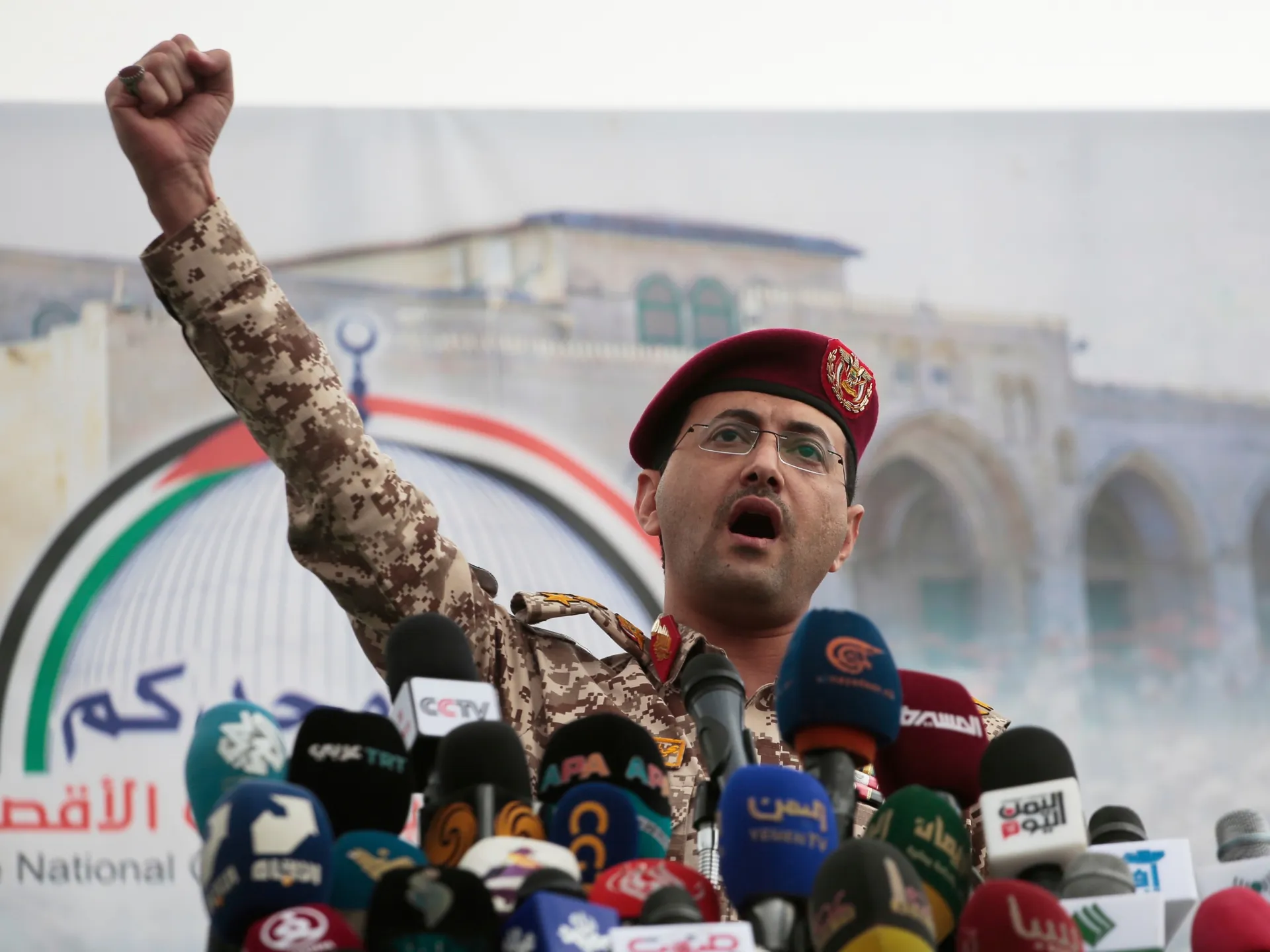
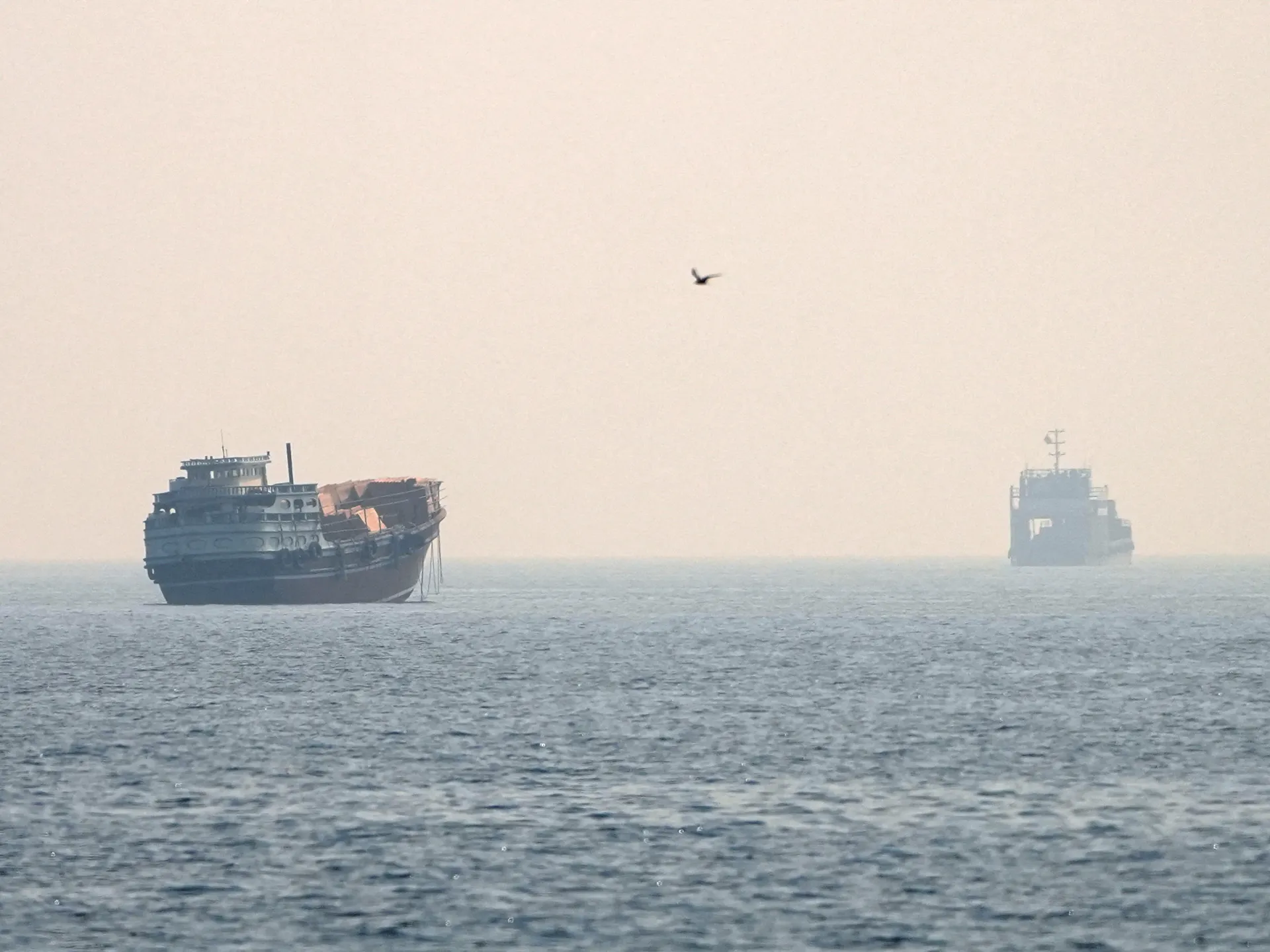
Yemen’s Iran-aligned Houthis have claimed an attack on two Saudi oil tankers transiting through the Red Sea.
“We targeted two Saudi oil tankers, named ENCELA and LAYLIA, for their violation of the blockade decision issued by the armed forces,” Houthi military spokesperson Yahya Saree said on Wednesday.
Recommended Stories
list of 3 itemsend of list
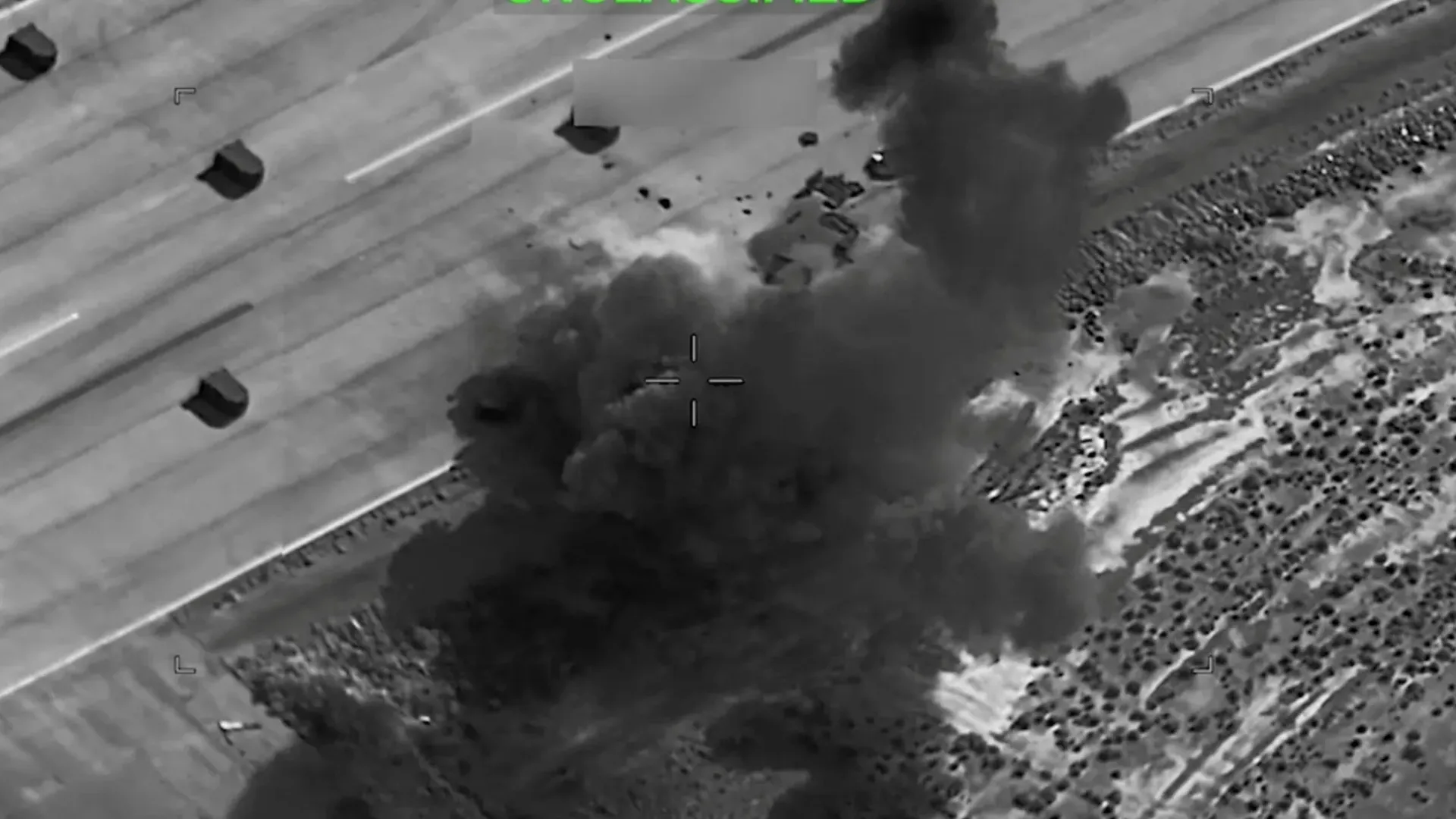
Saree added that the attacks were carried out, “using a number of ballistic and cruise missiles, as well as drones”, and led to fires on the ships.
The Houthis, officially known as Ansar Allah, had also forced “nearly ten ships… to abandon their routes, and turn back”, Saree said.
Saudi Arabia has not commented on the claims, but the United Kingdom Maritime Trade Operations (UKMTO) centre said it had received reports that a tanker has been struck.
“The master of a tanker reports being struck by an unknown projectile which has caused a fire onboard that the crew are currently fighting,” UKMTO, which monitors shipping in the region, said.
Yemen’s Houthi group, which has fought the Yemeni government and a Saudi-led coalition that backs it for more than a decade, imposed a maritime blockade on Saudi Arabia on July 20. That followed some of the worst violence Yemen has seen for four years, after the Yemeni government bombed the Houthi-controlled Sanaa airport to stop an Iranian plane from landing.
The Houthis said the declaration of the maritime embargo on Saudi Arabia was “based on the equation of ‘an eye for an eye’ and affirmed “the right of our great people to respond to the blockade with a blockade”.
The group, which seized Sanaa in 2014, accused Saudi leaders of imposing “an unjust and oppressive siege” for nearly 12 years, “plundering our resources and imposing a comprehensive blockade on our ports and airports by land, sea, and air”.
“The Saudis feel that they can instigate a popular uprising against the Houthis using these economic strangulation methods,” Hussain al-Bukhaiti, a journalist based in Sanaa told Al Jazeera.
Riyadh has rejected claims that it was imposing a siege on the Yemeni people, and the group’s critics point out that they have rejected a proposal from Jordan to resume flights between Amman and Sanaa.
“The ultimate goal for Ansar Allah’s naval blockade against the Saudis, is to force Riyadh to lift its embargo on the ports and airports controlled by the Houthis,” al-Bukhaiti said.
Amid the disruption in shipping through the Strait of Hormuz due to the US-Israel war on Iran, Saudi Arabia has been attempting to facilitate oil flow through alternative routes through the Red Sea and the Bab al-Mandeb Strait. But that route is now under threat from the Houthis.
The Houthis disrupted global commerce when they began attacking ships around the Bab al-Mandeb after the launch of Israel’s genocidal war on Gaza in October 2023. The attacks ended with the announcement of a “ceasefire” in Gaza in October 2025.
“The people who are questioning if the Houthis can successfully do a blockade against the Saudis should remember, how successfully the Houthis closed access to the Red Sea for the Israeli ports, which in fact resulted in the closure of Eilat port in southern Israel,” said al-Bukhaiti. “Eventually the Americans had to do a deal with the Houthis, with mediation from Oman,” he added, referring to a May 2025 agreement.
The Bab al-Mandeb chokepoint connecting the Red Sea to the Gulf of Aden is one of the world’s most important shipping routes, including for oil exports.
Between Yemen to the northeast and Djibouti and Eritrea in the Horn of Africa to the southwest, the strait is just 29km (18 miles) wide at its narrowest point, limiting traffic to two channels for inbound and outbound vessels using the Suez Canal.
In 2024, about 4.1 billion barrels of crude oil and refined petroleum products passed through the strait – about 5 percent of the global total.
With the Strait of Hormuz effectively closed since Israel and the US launched their war on Iran in late February, shutting down Bab al-Mandeb as well could block 25 percent of the world’s oil and gas supply.
US Secretary of State says Iranian control over Strait of Hormuz sets ‘dangerous precedent’, as attacks continue.
Published On 22 Jul 202622 Jul 2026
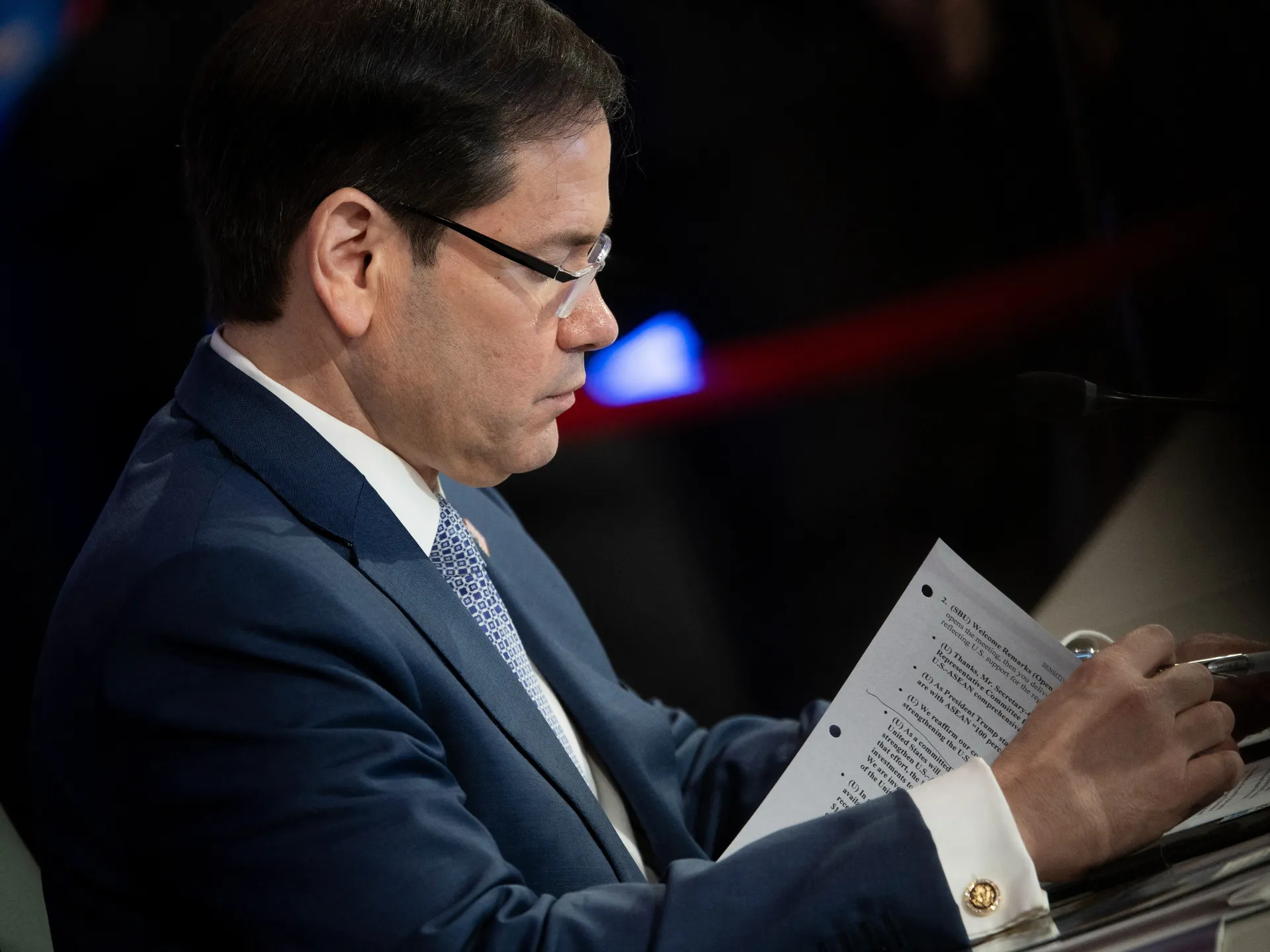
United States Secretary of State Marco Rubio says his country is willing to negotiate an end to the war on Iran but accuses Tehran of not being “serious” about talks.
“The United States remains open and willing to engage in positive and constructive negotiations and discussions, provided that the commitments made are honoured,” Rubio said about Iran at an Association of Southeast Asian Nations (ASEAN) meeting in Manila on Wednesday.
Recommended Stories
list of 3 itemsend of list
“The problem we’re having right now is that they’re not serious about talks. If they’re serious, we’re serious. If they’re not, then we will do what’s necessary to protect our interests and also the interests of our allies,” he added in the Philippine capital.
This comes as the US launched attacks against Iran for an eleventh consecutive night, with explosions heard in several parts of the country.
As the war continues to disrupt two of the world’s most important routes for the transport of energy, Rubio stressed that he was against Iranian control over the Strait of Hormuz.
“If we create a precedent in the Middle East where a nation state can decide that they are going to control an international waterway, charge a toll, and if you don’t pay them blow up your ships, we have created a very dangerous precedent, which will repeat itself in other parts of the world, including in this region,” he said.
“At its core, it’s very simple. Iran demands the right, which they do not have under any existing legal mechanism, to control the transit of traffic through the Strait of Hormuz,” he said.
“There is a fundamental principle about freedom of navigation that is threatened,” he added. “That cannot be allowed to happen.”
Rubio also discussed the US’s relationship with ASEAN member states, saying it is a matter of national interest for Washington and that the security and prosperity of the US and Southeast Asia are closely interconnected.
“I believe very much that the future and the story of the 21st century will be written in this region and by how events unfold here,” he said.
On Tuesday, US President Donald Trump renewed his threats to, again, attack Iran’s nuclear facilities at Natanz “pretty soon”. Iran promised it would retaliate.
Iran’s Khatam Al-Anbiya military command said in a statement on Tuesday that it would “consider it as an expansion of war in the region” if such an attack were carried out. The statement said it could lead to strikes on “all the interests of America, its allies and supporters”.
Fifty people have been killed and 500 wounded in the recent US attacks on Iran, a health ministry official said.
Authorities detain ferry crew members after drug tests reveal violations in Guyana’s worst marine disaster in decades.
Published On 21 Jul 202621 Jul 2026
Authorities in Guyana say they have recovered 27 bodies from a ferry that capsized off the country’s coast with 179 people on board.
The MV Barima issued a distress call on Saturday night, having overturned while ferrying passengers from the capital, Georgetown, to Port Kaituma in Guyana’s northwest.
Recommended Stories
list of 3 itemsend of list
Officials said on Monday that 69 people had been rescued, while 83 remained missing. Minister of Public Works Juan Edghill described the sinking as the country’s worst marine disaster in decades.
Prime Minister Mark Phillips launched an investigation into potential negligence by the ferry’s crew in the lead-up to the accident.
Officials say that while the MV Barima was initially thought to have been carrying 116 passengers and 17 crew members, 32 people rescued from the disaster were not recorded in the ferry’s manifest, putting the number of potential victims much higher.
Police have also announced that the ferry’s captain and at least one other crew member were taken into custody after testing positive for marijuana.
“We have a zero tolerance for members of the crew drinking or smoking while at work. And for us to have positive tests from the captain, this is serious,” Edghill said.
Passengers had complained for years that officials at state-run ferry terminals were selling seats for cash without recording the true number of passengers in their manifest, which Edghill called “a criminal action”.
President Irfaan Ali visited survivors and their families in hospital.
“It was a deeply emotional experience. I listened to their stories, shared in their pain and anxiety, and assured them that every practical measure would be taken to provide the support and assistance they need,” he said.
Washington vows revenge for US military casualties, while Iran claims attacks on US sites across the region.
Published On 21 Jul 202621 Jul 2026
The United States is carrying out its 10th consecutive night of attacks against Iran, with Iranian media reporting explosions in Sirik, Bandar Abbas, Qeshm Island, and Isfahan.
US Central Command (CENTCOM) announced the operation on Monday evening, claiming that the strikes are “designed to further degrade Iranian military capabilities used to attack commercial shipping in the Strait of Hormuz”.
The Islamic Revolutionary Guard Corps (IRGC) issued a statement claiming to have retaliated by launching ground-to-ground missiles at “US HIMARS missile systems” stationed at Camp Arifjan in Kuwait.
Recommended Stories
list of 3 itemsend of list
Two Greek-owned oil tankers in the Strait of Hormuz were struck earlier on Monday, while the United Kingdom Maritime Trade Operations, which monitors attacks on ships, reports that another tanker has been hit off the coast of Oman’s port city of Limah.
Shortly before the night’s bombing began, US President Donald Trump took to social media to warn that Iranian attacks on US military personnel would be paid back “many times over”. On Friday, two US soldiers were killed, and a third was reported missing when an Iranian missile struck a military site in Jordan, while another US service member was killed in northern Iraq.
Trump also reiterated earlier warnings that continued Iranian attacks on commercial vessels in the Strait of Hormuz would be met with a stronger response.
Meanwhile, Yemen’s pro-Iranian Houthis have declared a blockade on Saudi Arabia, escalating tensions and sparking fears that the Yemeni conflict, which had been relatively quiet for four years, may be about to reignite and threaten shipping in the Red Sea.
The United States carried out attacks against Iran for a third consecutive night late on Monday.
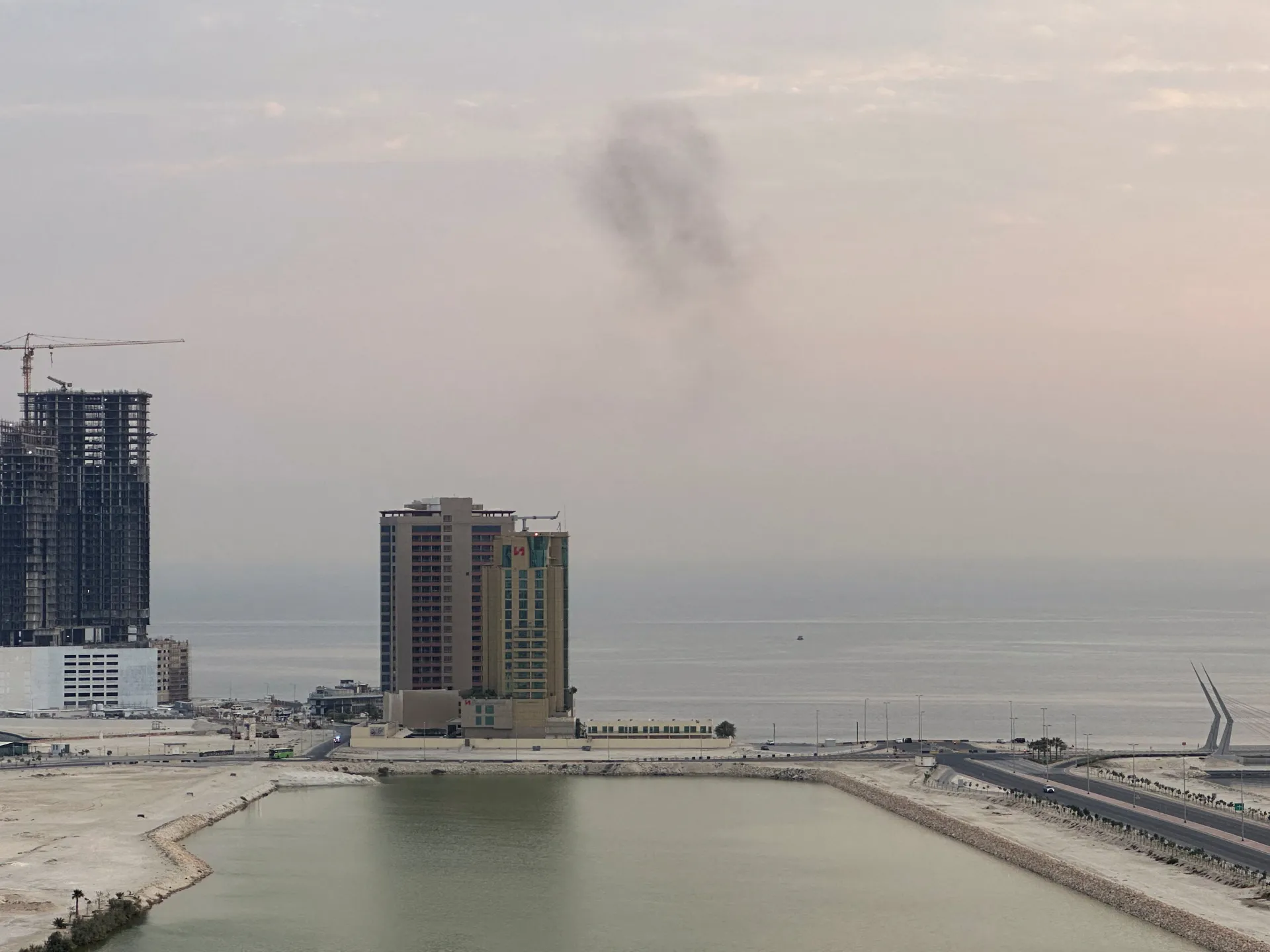
Iran has continued to hit targets in the Gulf in several waves of retaliatory strikes on Tuesday, including UAE‑flagged oil tankers in the Strait of Hormuz and US military facilities in Bahrain and Kuwait.
Here is a recap of what has happened on Monday night and Tuesday, and what each side has said.
Where did the US attack Iran?
US Central Command, the military’s regional command known as CENTCOM, said its latest strikes began at 4:45pm ET (20:45 GMT) on Monday and were aimed at degrading Iran’s capacity to attack “innocent civilians and commercial shipping” in the strait.
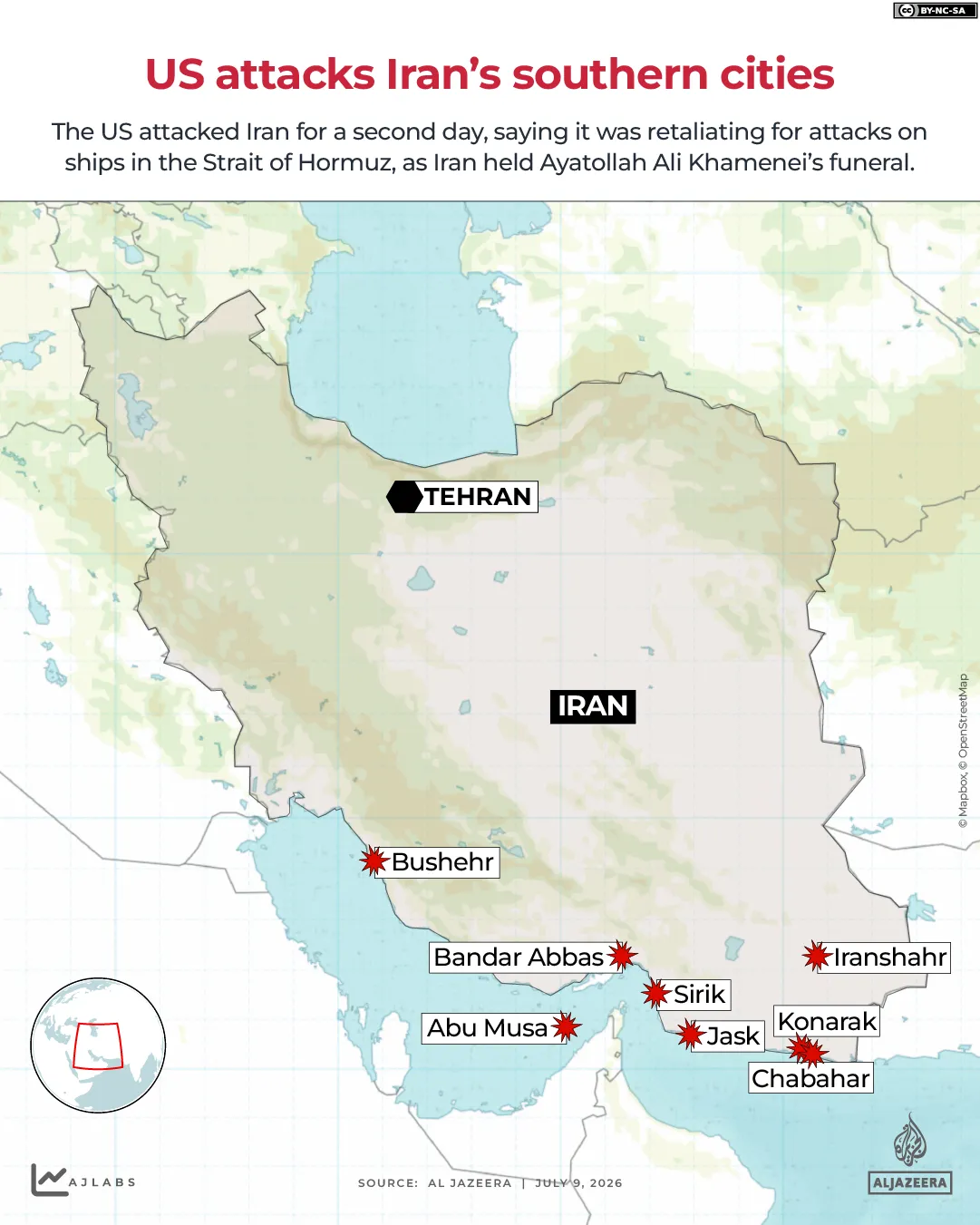
CENTCOM later announced the conclusion of its strikes and said the latest round of attacks on Iran lasted five hours. It added that US forces “successfully struck military targets across Iran including Bushehr, Chah Bahar, Jask, Konarak, Abu Musa, and Bandar Abbas”.
Iranian state television and semi-official news agencies reported explosions throughout the night across the country’s southern coast, including the port city of Bandar Abbas, and on Kish and Qeshm islands, as well as the town of Jam in Bushehr province.
A projectile that struck western Bandar Abbas caused no casualties, the Fars news agency reported, citing the regional governor’s office.
What areas did Iran target?
For its part, Iran’s Islamic Revolutionary Guard Corps (IRGC) said it had launched a wider retaliatory campaign against US allies and interests across the Gulf.
Iran’s Tasnim news agency reported that Iranian forces had struck several “violating” vessels in the strait, and that a US-made drone had been shot down near Bandar Abbas.
The UAE: The UAE said two of its oil tankers had been hit by Iranian cruise missiles in Omani waters in the Strait of Hormuz. The UAE added that one Indian national crew member had been killed on one of the tankers, and eight other people were wounded.
Iran’s Tasnim news agency said the IRGC hit two “offending” oil supertankers, citing an IRGC statement – apparently referring to the two UAE tankers.
Kuwait: The Iranian army said on Monday that it had carried out a drone attack on US military targets in Kuwait. In a statement posted by state broadcaster IRIB, the army said it launched drones at a US Patriot missile system, fuel tanks, a watchtower, an ammunition depot and communication systems.
Bahrain: The IRGC said it targeted “several weapons storage depots, a satellite communications centre, and a building housing US forces” at al-Juffair Base in Bahrain. It also said it had hit the US Fifth Fleet in Bahrain with missiles and drones.
Air sirens have been heard four times in Bahrain on Tuesday so far.
Jordan: Jordan’s army said it shot down four missiles in Jordanian airspace that were fired from Iran, according to the official Petra news agency. After this, the IRGC said it launched ballistic missiles at US forces and key facilities at an airbase in Jordan.
In a message addressed directly to Jordanians, the IRGC insisted that the operation was aimed at the US military presence in the country rather than at Jordan or its citizens. “You know that we hold no animosity toward your country. On the contrary, we deeply love you, the noble people. You understand the pain and suffering of the Palestinian people better than any other nation, and you are aware of the crimes of the Zionist regime in the massacre of 70,000 Palestinians, including 20,000 children in Gaza, carried out with the direct involvement of the United States,” it said.
What have the US and Iran said?
US President Donald Trump formally notified Congress on July 10 that fighting with Iran had resumed on July 7, invoking his authority to keep US forces in combat for another 60 days without lawmakers’ approval.
At a news conference on Monday, Trump said Iran’s offensive capabilities were being dismantled, but he still thinks a “deal is possible” despite the return to open fighting.
Trump also repeated an earlier demand that Gulf nations help cover the cost of protecting shipping, saying Washington was “protecting a very rich portion of the world” and expected to be paid for it.
On Monday, Trump also threatened to “take out” Kuh-e Kolang Gaz La, also known as Pickaxe Mountain, a suspected nuclear site near the Natanz uranium enrichment facility in central Iran.
Meanwhile, the US blockade on Iran, confirmed by the US Navy-led Joint Maritime Information Centre (JMIC), is due to begin at 20:00 GMT on Tuesday.
The US’s blockade covers Iran’s ports and terminals along the entire southern coastline, according to JMIC.
Ebrahim Azizi, the head of the Iranian Parliament’s National Security Committee, has warned that Iran remains steadfast in defending its red lines, following the formal introduction of a bill to manage the Strait of Hormuz.
In an X post on Tuesday, Azizi wrote: “Last night, coinciding with the downing of US drones, the ‘Strategic Action for the Security and Sustainable Progress of the Strait of Hormuz and the Persian Gulf’ bill was formally introduced in Iran’s Parliament. We remain steadfast in defending our red lines, particularly regarding the management of the Strait of Hormuz.”
What is happening to shipping in Hormuz?
Oil prices rose more than 9 percent on Monday, with Brent crude climbing to about $81 a barrel, its highest level since mid-June.
Kpler, the ship-tracking firm, said crossings through the strait fell by about 52 percent between July 10 and July 12, compared with the previous week.
Islamabad, Pakistan – A wooden panelled bookshelf behind him, Pakistani Prime Minister Shehbaz Sharif signed the memorandum of understanding (MoU) between the United States and Iran, aimed at extending their ceasefire by creating a pathway towards long-term peace.
Sharif then held up the document for the cameras. That was June 17, the high point of a frenzied diplomatic effort led by Pakistan spanning weeks, which had culminated in the MoU that Sharif signed as a mediator.
Recommended Stories
list of 4 itemsend of list
Yet less than four weeks later, Pakistan’s Ministry of Foreign Affairs has, in just the past few days, issued two statements expressing “deep concern” over renewed US-Iran hostilities, with the MoU Islamabad had helped pull together seemingly in shreds.
On Monday morning, the US launched the latest in a series of attacks on Iran, which responded by firing missiles and drones at multiple Gulf and Arab nations that it blamed for hosting US military bases.
Hours later, Iranian Foreign Ministry spokesman Esmaeil Baghaei told reporters that mediators, including Pakistan, Qatar and Oman, remained engaged and were continuing their efforts, even as he warned that Iran would continue responding to what it viewed as US non-compliance with the MoU.
So far, those efforts have failed to slow down the fighting, even as Pakistan has pressed on with diplomatic outreach.
On Sunday, Deputy Prime Minister and Foreign Minister Ishaq Dar spoke by phone with Iranian Foreign Minister Abbas Araghchi, telling him that dialogue and diplomacy remained “the only viable path” to resolving the crisis.
Prime Minister Shehbaz Sharif also spoke to Iranian President Masoud Pezeshkian on Friday, warning that “hard-earned” peace gains were at risk, while Dar held a separate call on Saturday with Saudi Foreign Minister Prince Faisal bin Farhan Al Saud.
To many analysts, one question, above all, now stares at Pakistan and other mediators like Qatar: With the deep distrust between the US and Iran only further expanding following the new bout of fighting, can Islamabad or any other capital once again bring Washington and Tehran back to the negotiating table?
Repeated breakdowns
The renewed fighting marks at least the third occasion since the US-Iran ceasefire signed on April 8 appeared to have collapsed.
Days after that truce was agreed on, the breakdown of the first round of Islamabad talks led to the US imposing a naval blockade on Iranian ships in the Strait of Hormuz. The US and Iran both attacked ships in the days that followed.
Then, after the MoU was signed on June 17, Iran attacked several ships that it claimed were passing through the Strait of Hormuz without its permission, prompting another escalation with Washington.
But the Iranian tanker strikes last week appear to have raised tensions to new heights.
US attacks on Iran since then have hit at least 10 provinces, killing a soldier, several fishermen in the southern province of Hormozgan, and a firefighter in Sistan and Baluchestan, according to Iranian authorities.
A railway bridge on a trade corridor linking Iran with Central Asia and China was also struck, along with a bridge near Mashhad used by mourners travelling to former Supreme Leader Ayatollah Ali Khamenei’s funeral.
The renewed hostilities have also pulled Qatar, a fellow mediator alongside Pakistan, more directly into the conflict. On Sunday, Iranian missiles and drones hit the Gulf state, with debris from interceptions injuring three people, including a child, according to Qatar’s Ministry of Interior.
Iran’s Ministry of Foreign Affairs has accused Washington of violating “nearly all parts” of the June agreement within 25 days of its signing, citing attacks on transport infrastructure and fishing vessels.
Baghaei said on Monday that Iran had “acted in good faith” throughout, but that “each time the other party has failed to meet its obligations, we did not uphold ours, and we will continue to act in this manner.”
Since the war began on February 28, Islamabad has played the role of mediator.
It hosted talks in April, the first time in four decades that US and Iranian officials sat in a room together.
Its army chief and interior minister have travelled to Tehran several times. In late March, Pakistan also helped secure a Chinese-backed peace framework alongside its own diplomatic efforts.
In June, it helped produce the MoU signed by Pezeshkian and US President Donald Trump, along with Pakistani Prime Minister Shehbaz Sharif, which was then discussed at the Burgenstock summit in Switzerland.
Yet analysts say Pakistan lacks the means to enforce the agreements it helps broker.
Javad Heiran-Nia, director of the Persian Gulf Studies Group at the Center for Scientific Research and Middle East Strategic Studies in Tehran, said the MoU was never intended to resolve the underlying dispute.
“The MoU deferred key and substantive issues to future negotiations and functioned primarily as a tactical instrument to halt hostilities and reopen the Strait of Hormuz to international shipping,” he told Al Jazeera.
Iran, he said, sees control of the waterway as “a strategic asset; not merely a coercive lever, but a deterrent tool”, and appears “prepared to accept the risk of war to preserve this strategic advantage”.
Mediators, he added, lack the instruments to resolve the dispute “unless a shift in the balance of power between Iran and the United States emerges as a result of limited military engagements”, pointing to a potential US naval blockade as one of the few developments that could alter the strategic calculus.
Dania Thafer, executive director of the Gulf International Forum in Doha, said Pakistan’s room for manoeuvre had narrowed as both sides hardened their positions over the strait.
“Pakistan is in a situation where it is highly dependent on both parties, as it always has been, but right now, Iran is bent on establishing its control over the Strait of Hormuz,” she told Al Jazeera.
According to Thafer, there is little Pakistan can do to de-escalate while both Washington and Tehran remain in “an escalatory phase”.
“Once they feel they have reached a point where the balance tips in favour of one side or the other, then perhaps they will return to the negotiating table,” she added.
But Qamar Cheema, head of the Islamabad-based Sanober Institute, pushed back on the idea that Pakistan is operating without real tools.
He pointed to US Vice President JD Vance’s recent remarks, where he credited Pakistani Field Marshal Asim Munir’s role in the process, as evidence that Islamabad’s military-diplomatic channel carries real weight in Washington.
Access itself, he argued, is the instrument.
“Pakistan enjoys trust, and that’s why both sides pick up the phone and call Pakistani leadership any time to remove a stumbling block,” Cheema told Al Jazeera.
Crowded diplomacy, narrowing options
But Pakistan has not been the only diplomatic channel, and according to Heiran-Nia, the dispute over the strait was never really Islamabad’s to mediate.
“Iran had previously removed the Strait of Hormuz issue from Pakistan’s mediation agenda, as the matter was essentially bilateral between Tehran and Muscat,” he said.
Tehran, he explained, did not want the issue to be “defined within a broader negotiation package under Pakistani auspices, which would have afforded Washington room for political manoeuvre”.
Direct Iran-Oman talks followed, but “US military pressure and economic sanctions threats against Oman have placed Muscat under considerable strain, preventing meaningful progress,” according to the Tehran-based analyst.
Meanwhile, he cautioned that Sunday’s attacks on Qatar “could have adverse effects on Qatar’s mediatory role”, although Doha “does not currently appear inclined to withdraw”, adding that “Iran should not assume that Doha’s patience is limitless.”
Mustafa Hyder Sayed, executive director of the Pakistan-China Institute in Islamabad, described the GCC states as caught in an uncomfortable position.
“The GCC countries are caught between the devil and the deep blue sea. They want a functional relationship with Iran while not openly declining the use of their bases and territory by the United States, because they understand they cannot choose their neighbours,” he told Al Jazeera.
Meanwhile, Israel, which is not a party to the MoU, has continued military operations in Lebanon, which Tehran cites as an ongoing violation of the agreement.
Israeli Defence Minister Israel Katz said on Saturday that southern Lebanon “would become Gaza”, raising the prospect of further regional escalation.
Who blinks first?
Despite a week of escalating attacks, the core dispute remains unchanged.
Pakistani army chief Field Marshal Asim Munir meets the president of Iran, Masoud Pezeshkian, in Rawalpindi, Pakistan, June 23, 2026 [Handout/Inter-Services Public Relations via Reuters]
Washington and Tehran remain divided over the same issue that stalled negotiations even before the latest round of fighting: Who controls passage through the Strait of Hormuz, and under what conditions?
Iran insists the MoU gave it authority over transit through the waterway. The US disputes that.
On Monday, Trump announced that the US was reinstating a naval blockade of Iranian ships and would charge a 20 percent tariff on all other ships trying to pass through the strait.
Yet, earlier, a possible compromise had briefly emerged.
Heiran-Nia said the parties explored a formula under which commercial vessels would coordinate passage with both Iran and a designated Arab Gulf state, allowing “both parties [to] claim a degree of victory”.
The talks stalled before reaching a conclusion, however, interrupted by the funeral of Iran’s former Supreme Leader Ayatollah Khamenei, who was killed on the first day of the war in joint US-Israeli air strikes.
The conflict has since moved in the opposite direction, with military action aimed at shifting the balance of power rather than reviving negotiations.
“The prevailing trajectory now is the continuation of military strikes in an effort to shift the balance of power. Yet, there remains a risk that strategic calculations on either side could spiral beyond control,” Heiran-Nia said.
Thafer believes that, despite the violence, neither side has formally abandoned the MoU.
“Iran is framing this current round of escalation as a violation of the MoU rather than a reason to exit it, which means there could still be light at the end of the tunnel,” she said.
In her assessment, both sides bear responsibility for violating the agreement, from Iran’s attacks on shipping to Washington’s revocation of Iran’s oil sale licence and the military attacks. Yet the agreement remains, at least formally, in place.
Its future, she said, depends on which side ultimately gives ground over the strait. Iran retains what Thafer described as a “snapback capability” to disrupt shipping whenever it chooses.
“It is, militarily, very difficult to fully neutralise that Iranian capability. We will have to wait and see where the leverage finally sits,” she said.
Cheema, for his part, argued that Iran’s own conduct, more than any mediator’s diplomacy, is what will decide how this settles.
“Iranian authorities seem ambitious and aggressive, and are looking to take risks to project power, which makes it less likely that any agreement will reach a final conclusion. That means interventions from mediators will keep coming.”
The United States and Iran have traded attacks for a second day, straining their fragile ceasefire further after US President Donald Trump said the truce was “over”.
The US military said late on Wednesday that the attacks were aimed at Iran’s “ability to threaten the freedom of navigation in the Strait of Hormuz”.
Recommended Stories
list of 3 itemsend of list
The US struck approximately 90 military targets, including missile and drone storage as well as logistics sites along Iran’s coastline, said the Central Command (CENTCOM), which oversees US military operations in the Middle East.
In a post on his Truth Social platform, Trump called the US attacks “retribution for yesterday’s bombing of ships by Iran. If it happens again, it will get much worse!”
The latest attacks come a day after the US said it hit more than 80 targets in Iran in response to Iranian attacks on commercial vessels in the Strait of Hormuz.
Iran’s Islamic Revolutionary Guard Corps (IRGC) said on Thursday it carried out attacks on “key infrastructure and facilities” at bases used by the US military in Arifjan and Ali Al Salem in Kuwait, and Juffair and Sheikh Isa in Bahrain in response to the latest US bombardment.
The Iranian army later said its forces targeted a Patriot missile system in Kuwait, a satellite antenna in Qatar and US military fuel depots in Bahrain.
Kuwait’s Ministry of Defence said it was intercepting missiles and drones, while Qatar issued an “elevated security threat” alert.
The renewed fighting threatens to undermine a memorandum of understanding (MoU) the two sides agreed last month to extend an April ceasefire and gradually reopen the Strait of Hormuz to shipping.
The attacks come a day after Trump said the ceasefire with Iran was “over” and criticised the Iranian leadership. However, he left the door open to more talks and suggested that any strikes would end quickly.
Speaking to reporters on board Air Force One as he travelled back to the US after attending the NATO summit in Turkiye, Trump said the Iranian side had “called a little while ago” and that they wanted “to make a deal so badly”.
US attacks across Iran
US strikes hit a railway bridge in Iran’s northeast, according to several official media, and the news agency IRNA reported strikes on a military base in coastal Bushehr, which hosts the nation’s only civilian nuclear power plant.
The Iranian railway (IRIR) said the train service on the Tehran-Mashhad line had been temporarily suspended as a result.
It said technical teams were on site to repair the damaged section so that the rail service could resume as soon as possible, adding that buses had been arranged to transport affected passengers.
Warplanes hovered over Iran’s Kish Island, and explosions rocked the port cities of Bandar Abbas, Konarak and Chabahar, part of which lost electricity, IRNA reported.
At least three people were killed in an attack on the outskirts of Ahvaz, capital of the southwestern province of Khuzestan, IRNA reported, citing the deputy governor of the region.
At least one firefighter was killed in an attack on an airport facility in Iranshahr, IRNA reported.
Iran’s Health Ministry said at least 14 people were killed and 78 others injured over the past two days.
Calls for diplomacy
In mid-June, the US and Iran signed an MoU to extend their ceasefire. It also led to the lifting of the US naval blockade of Iran and the gradual reopening of the Strait of Hormuz.
The MoU came following mediation by Pakistan and Qatar, which served as a launch point for 60 days of talks on more intractable issues, including the future of Iran’s nuclear programme, the administration of the Strait of Hormuz and access to billions of dollars in frozen Iranian funds.
Since US-Israeli strikes triggered war in February, Tehran has effectively blocked the strait, threatening to hit vessels that deviate from its authorised route.
Reporting from Tehran, Al Jazeera’s Resul Serdar Atas said the US and Iran are “stuck in an equation – almost a deadlock” over the Strait of Hormuz.
“For the Americans, they say that Iran will not have control over the Strait of Hormuz. For the Iranians, control of the strait is indispensable.”
He said Iran sees control over the strait as the “ultimate deterrent, and if it gives that up, then it loses its negotiating position” with the US.
The US hopes that by targeting infrastructure that affects Iran’s ability to control the strait, including maritime traffic control centres, it will be forced to “return to the MoU”, Scott Uehlinger, a former senior CIA officer, told Al Jazeera.
United Nations chief Antonio Guterres called “on all parties to exercise maximum restraint”, as did Pakistan.
Qatari Prime Minister Sheikh Mohammed bin Abdulrahman bin Jassim Al Thani told Iranian Foreign Minister Abbas Araghchi in a phone call on Thursday that Iran and the US should commit to diplomacy.
Sheikh Mohammed, who is also the foreign minister, said Washington and Tehran should implement the MoU to end the war.
Iran said the two officials had spoken over the phone and “underscored the importance of using diplomatic means to resolve regional issues”.
Weekly insights and analysis on the latest developments in military technology, strategy, and foreign policy.
U.S. Central Command (CENTCOM) announced that its forces have launched “a series of powerful strikes against Iran to impose heavy costs for targeting and attacking commercial shipping crewed by innocent civilians in an international waterway.” The U.S. strikes “are in response to Iranian attacks on three commercial vessels that were transiting the Strait of Hormuz,” CENTCOM stated on X. “Iran’s demonstrated aggression was unwarranted, dangerous, and a clear violation of the ceasefire.”
The official Iranian state media outlet IRIB reported 13 explosions in southern Iran.
The CENTCOM attacks follow the U.S. Treasury Department revoking a general license authorizing the sale of Iranian oil. That abrogates a key part of the Memorandum of Understanding (MoU) signed by Washington and Tehran on June 18.
Here’s the new Treasury license on Iran: “Revocation and Wind Down of June 21, 2026 Authorization for the Production, Delivery and Sale of Crude Oil, Petrochemical Products, and Petroleum Products of Iranian Origin” pic.twitter.com/2jgRRTQudu
While the future of Iran’s nuclear ambitions and its stockpile of enriched uranium are among other key issues addressed in the document, the Strait of Hormuz continues to be a flashpoint.
The latest attacks on shipping all involved tankers.
“A LNG tanker reported being hit by an unknown projectile on the port side engine room causing a fire, whilst travelling southbound through the SOH,” UKMTO reported. That incident took place about eight nautical miles east of Limah, Oman.
Before that, a “VLCC reported being hit by an unknown projectile on the port side upon exiting the SOH” about 16 nautical miles east of Khor Fakkan, UAE, UKMTO added. “Vessel was able to proceed to NPOC [nearest point of call] and no crew injuries were reported.”
The first of the three vessels struck today was a tanker that reported being attacked six nautical miles east of Musandam Peninsula, Oman “by an unknown projectile and has sustained minor structural damage,” UKMTO stated. “No casualties or environmental impact reported and vessel is proceeding to NPOC.”
These attacks all took place along the southern-most route in the Strait, which is controlled by the U.S. and Oman. Iran controls the northern route and the mid-section of the body of water is considered too dangerous to transit due to the threat of mines.
Last Thursday, Iran’s military warned that all oil tankers moving through the Strait must use its approved routes. It also said that interference by U.S. forces in the strait “will be met with a rapid and decisive reaction.”
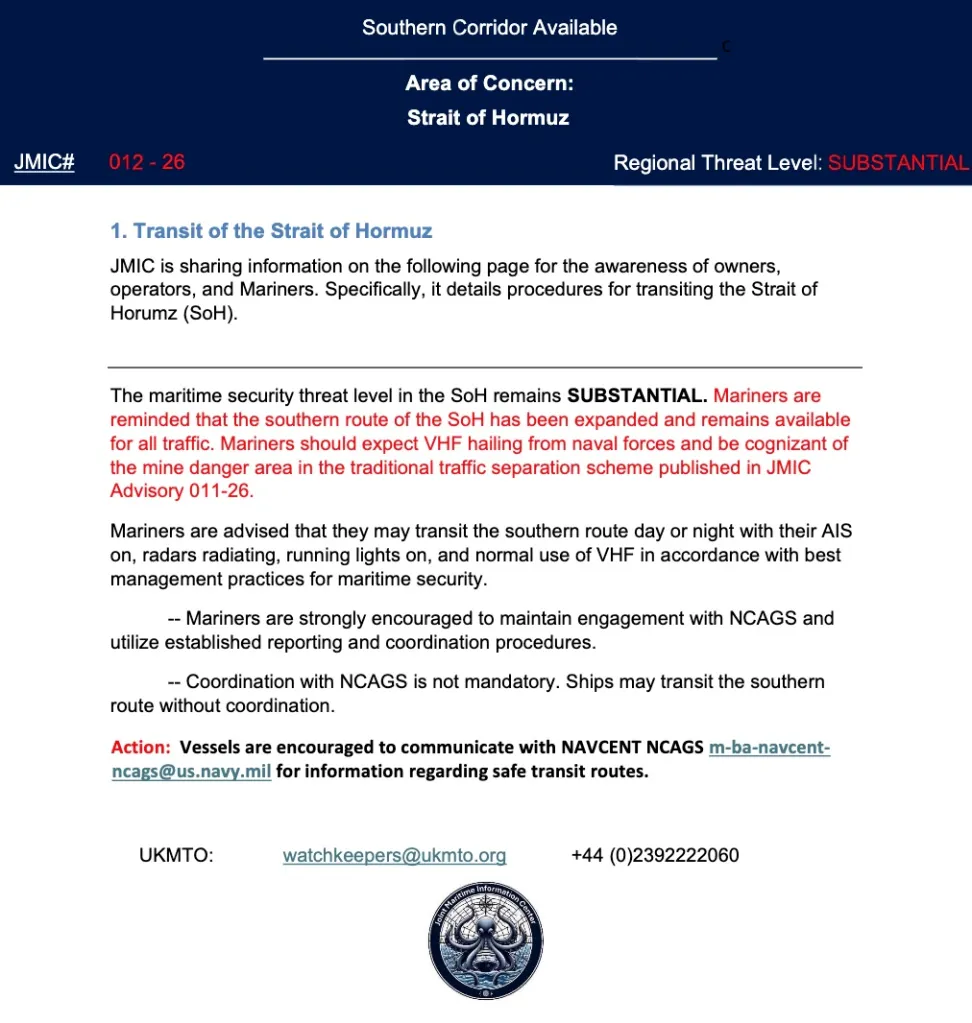
But the Joint Maritime Information Center (JMIC), a multinational body overseen by the U.S. Navy, told shippers Monday that the route around Oman “has been expanded and remains available for all traffic.”
The most recent attacks on shipping came after that JMIC notification and about a week after Iran and the U.S. promised to stop striking each other.
JMIC
What happens next is unknown. The peace talks were paused while Iran holds a weeklong funeral for former Supreme Leader Ayatollah Ali Khamenei, who was killed on the first day of the war in an airstrike.
In an interview with Iranian media posted on X, Iranian Maj. Gen. Mohsen Rezaei, advisor to Iran’s supreme leader Mojtaba Khamenei, seemed to appeal to Iranian hardliners who want to resume fighting.
“Friends who oppose negotiations, be patient; the Americans themselves will derail these talks,” he posited.
This is a developing story.
UPDATE: 6:22 PM EDT –
Video and still images purporting to show the U.S. attacks on Iran are emerging on social media. Bandar Abbas, site of Iran’s key naval base on the Strait of Hormuz, appears to be one of the targets. Bandar Abbas has come under attack several times during this conflict.
Fires seen burning at the Port of Shahid Haqqani in Bandar Abbas, Southern Iran, following tonight’s wave of retaliatory strikes against Iranian military and infrastructure sites by the U.S. Air Force and Navy. pic.twitter.com/ccZPuZvDPG
Bandar Abbas Airport was a major target tonight, where a senior figure in the Islamic regime was present and from where the regime has launched missiles and drones toward neighboring countries. This regime only understands Hebrew and Arabic; it does not understand American… pic.twitter.com/RdDPTgR87T
In a post on X, Axios reporter Barak Ravid said the U.S. strikes on Iran today were “four or five times bigger in scope and power than the previous strikes 10 days ago.”
The U.S. strikes in Iran on Tuesday were four or five times bigger in scope and power than the previous strikes 10 days ago, the U.S. official told me https://t.co/TiDTGTxMTV
Authorities “have launched a search effort for K2 Airways Cargo 737 AP-BOI after the flight did not land as scheduled in Karachi,” FlightRadar24 reported. “KTA1732 was en route from Sharjah to Karachi when contact was lost with the aircraft. Preliminary ADS-B data indicate a loss of altitude, followed by a climb, and then a second, sudden and dramatic loss of altitude. The final received data point from the aircraft was at 16:21 UTC, placing the aircraft at 1,100 ft AMSL with a reported vertical rate of -22,400 feet per minute.”
According to FlightRadar24’s data, the cargo jet flew east over the Strait of Hormuz and the Gulf of Oman when it disappeared from radar screens at about 12:20 PM EDT.
The Pakistan Airports Authority reported on X that the aircraft was suffering a “navigational system issue” before contact was lost. There were five people onboard at the time.
However; at time 2121PST aircraft was observed on RADAR rapidly descending and with rapid heading change, subsequently RADAR contact and communication was lost approximately 155 NM west of Karachi.
— Pakistan Airports Authority (@Pk_PAA_Official) July 7, 2026
The exact cause of this incident is unknown at this time. While there are no indications that the aircraft was lost due to hostile activity, the area is extremely tense.
UPDATE: 947 PM EDT –
CENTCOM says it has “completed its strikes against Iran, July 7, hitting over 80 targets with precision munitions as an immediate response to Iran’s latest attacks on commercial vessels transiting the Strait of Hormuz.”
“U.S. forces struck Iranian air defense systems, command and control networks, coastal radar sites, anti-ship missile capabilities, and more than 60 Islamic Revolutionary Guard Corps small boats in and near the strait to degrade Iran’s ability to continue attacking international commerce flowing through the international trade corridor,” the command said in a statement.
“Iran recently attacked three commercial vessels transiting the strait including Marshall Islands-flagged M/T Al Rekayyat, Saudi Arabia-flagged M/T Wedyan, and Liberian-flagged M/T Cyprus Prosperity,” CENTCOM added. “The unwarranted aggression by Iranian forces is a clear and dangerous violation of the ceasefire and undermines freedom of navigation. CENTCOM forces remain postured and prepared to hold Iran accountable when the agreement is not adhered to or obeyed.”
The United States-Israel war on Iran has inflicted the greatest disruption to merchant shipping since the back-to-back shocks of the COVID-19 pandemic and Russia’s invasion of Ukraine.
Since the start of the war in late February, shipping lines have faced attacks on their vessels, lengthy delays and steep rises in operating costs.
Recommended Stories
list of 4 itemsend of list
Yet even after more than four months of turmoil for the industry, the most enduring legacy of the war for shipping may end up being just how little it ultimately changes.
While shipping firms are expected to more explicitly factor risk into their expenses and diversify supply chains where possible in the future, the indispensable nature of seaborne trade means the industry is likely to continue much as before over the long term, analysts say.
That is likely to be especially the case for the container shipping industry, which, unlike the operators of the oil and gas tankers whose dislocation has roiled energy markets, is not heavily reliant on the Strait of Hormuz to transport its cargoes, which range from agricultural produce to apparel and consumer electronics.
While there is no alternative to the strait to access oil-producing Gulf nations by sea, container shipping firms have had the option of redirecting their vessels along longer alternative routes to avoid conflict in the region, including attacks by the Iran-aligned Houthis in the Red Sea.
The global shipping industry has long stood apart for its resilience in the face of crises, bouncing back from major upheaval at remarkable speed.
In 2020, the first year of the COVID pandemic, global container shipping volumes fell by just 1.2 percent compared with the previous year, according to the Baltic and International Maritime Council (BIMCO), one of the world’s largest associations for shipowners.
By January 2021, the volume of cargo handled at ports worldwide had already surpassed pre-pandemic levels, rising 6.4 percent year-on-year, according to data from the Institute of Shipping Economics and Logistics.
By contrast, it took more than four years for global air travel to fully recover from the shock of COVID-19.
While the Iran war and Houthi attacks in the Red Sea since 2023 scrambled regional supply chains, shipping companies have been rapidly adding capacity since Washington and Tehran signed their memorandum of understanding on ending the conflict on June 17.
After plummeting from 3.2 million TEU (Twenty-foot Equivalent Unit of cargo) to 74,000 TEU as of mid-June, container capacity in the region has already rebounded to pre-war levels on some routes, according to Xeneta, an ocean and air freight rate market analytics platform.
Capacity between Asia and the United States’ West Coast last week surpassed its pre-conflict record, hitting 350,000 TEU, according to Xeneta.
On Monday, Maersk and Hapag-Lloyd, the second- and fifth-largest container shipping firms, respectively, announced that they would begin sailing through the Suez Canal again for the first time since February, following an assessment of the security situation in the Red Sea.
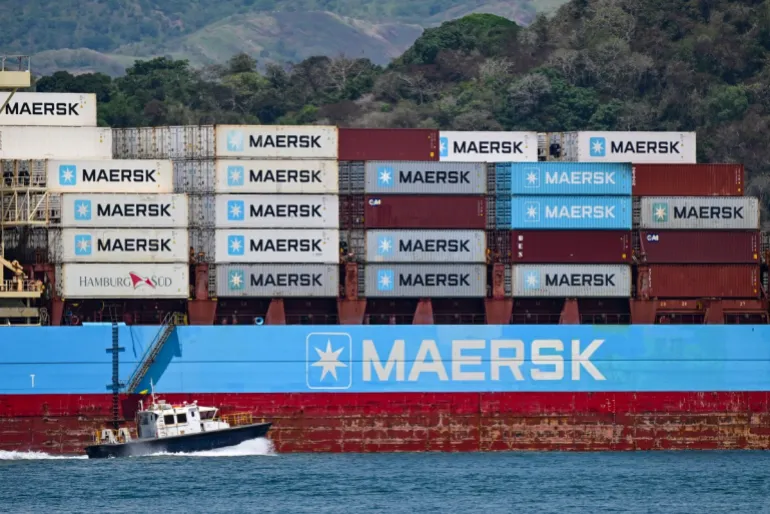
A cargo ship carrying containers from the Danish company Maersk sails into the Pacific entrance of the Panama Canal in Panama City on April 21, 2026 [Martin Bernetti/AFP]
Shipping is indispensable to global trade, in large part because no other mode of transport comes close in terms of capacity and cost-effectiveness.
The world’s largest container ships have capacities exceeding 24,000 TEU – the equivalent of roughly 12,000 trucks, 2,240 cargo planes, or 360 freight trains.
Lacking genuine competition in the transport of goods in huge volumes, shipping facilitates about 90 percent of global trade.
Shipping will look “remarkably familiar” in five years from now because it is an industry driven by demand, said Punit Oza, the head of the consultancy Maritime NXT and the former executive director of the Singapore Chamber of Maritime Arbitration.
Even the most severe conflict cannot change the “physics or the economics” of seaborne trade, he said.
“Ships do not sail because shipowners want them to; they sail because consumers somewhere want grain, iron ore, gas, or televisions,” Oza told Al Jazeera.
“It is the consumers of shipping – the cargo interests, the economies, the households – who ultimately shape the industry, and their demand will endure long after the headlines fade.”
Judah Levine, head of research at freight booking company Freightos, said container shipping in the future is likely to look “quite similar” to how it did before the war, with Dubai’s Port of Jebel Ali continuing to serve as the region’s main hub for both Gulf-bound goods and cargoes destined for Asia, Europe, Africa, and the Americas.
But Levine said diversion of cargoes to smaller hubs – such as the UAE’s Port of Fujairah and Khor Fakkan Port, and Port Sultan Qaboos in Oman – during the war offers a preview of the contingencies shipping firms are likely to deploy in future crises.
“All of a sudden, they were handling much larger volumes, and then creating these land bridges, usually to go on to Jebel Ali,” Levine told Al Jazeera.
“Containers find a way,” Levine said.
“It’s kind of like water. They’ll trickle, you know, to where they need to go by other paths.”
International Maritime Organization Secretary-General Arsenio Dominguez holds a news conference after an Extraordinary Session meeting, in London, UK, on March 19, 2026 [Alberto Pezzali/AP]
Another lasting impact of the war could be greater international cooperation on maritime security and safety.
The International Maritime Organization, the UN body responsible for shipping and seafarers, has listed the protection of shipping lanes as one of its top agenda items for discussion at its biannual meeting taking place from Monday to Friday.
“Seafarers have tragically lost their lives in connection with this conflict, and the impact has been felt well beyond the region, with real consequences for global trade, energy and food security,” IMO Secretary-General Arsenio Dominguez said in opening remarks to the session on Monday.
Ruth Banomyong, a professor of logistics and supply chain management at Thammasat Business School in Bangkok, Thailand, said he expects to see international coordination to strengthen trade routes that integrate both land and sea even as shipping networks remain “largely the same”.
“This means ensuring that maritime transport, ports, inland logistics, customs procedures and alternative land transport options work together as an integrated system when disruptions occur,” Banomyong told Al Jazeera.
“Maritime freedom is no longer just about freedom of navigation. It is about ensuring the continuity of global trade.
“The long-term lesson is not to replace the Strait of Hormuz, but to reduce overdependence on any single transport corridor,” Banomyong added.
Oza, the head of Maritime NXT, said the ad hoc naval coalitions deployed to ensure freedom of navigation during times of conflict could ultimately be succeeded by a multilateral security framework with “regional ownership rather than purely external enforcement”.
“Freedom of navigation is too important to be left to improvisation,” Oza said.
“If there is one consistent lesson from shipping’s long history, it is that human ingenuity always finds a way – pipelines get built, reserves get repositioned, technologies emerge, and trade, like water, finds its path. It will do so again,” Oza added.
“The innovations that follow this war will be a tribute to human resilience; the tragedy is that it took a war to summon them.”
Volodimyr Trofimov/iStock Editorial via Getty Images
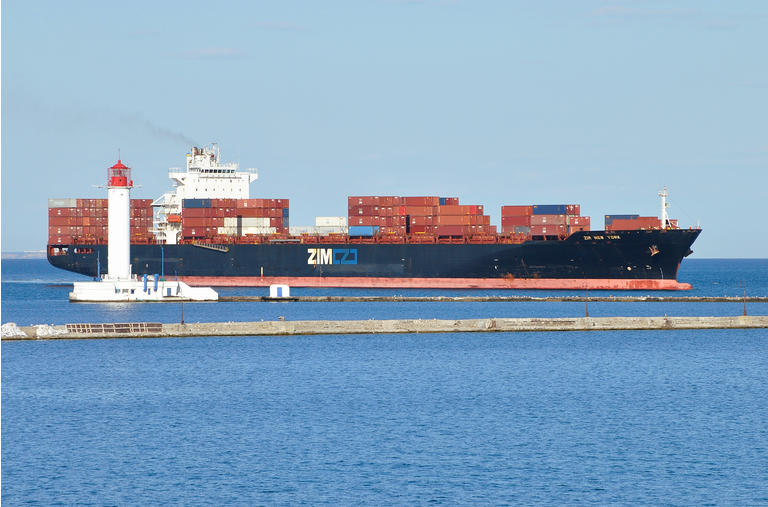
ZIM Integrated Shipping (ZIM) down 6.8% pre-market Monday following reports that Prime Minister Netanyahu and the Israeli Defense Ministry oppose the proposed sale of the Israeli shipping company to Hapag-Lloyd (HPGLY) (HLAGF).
Netanyahu reportedly said at a government meeting that
Military command issues threat a day after Qatari mediators hailed ‘positive progress’ in indirect US-Iranian talks.
Published On 3 Jul 20263 Jul 2026
Iran’s military command has threatened ships that attempt to cross the Strait of Hormuz using unapproved routes with a “forceful response,” casting new doubt over trade flows in the critical conduit for global energy supplies.
Iran’s Khatam al-Anbiya Central Headquarters issued the threat on Thursday, a day after Qatari mediators hailed indirect negotiations between US and Iranian officials as making “positive progress” towards a peace deal.
Recommended Stories
list of 4 itemsend of list
“Any failure to comply with and depart from the designated route or disregard for the navigation protocols of the Islamic Republic of Iran in the Strait of Hormuz will be met with an immediate and forceful response from the armed forces, and will endanger the security of the offending vessels,” the military command said in a statement carried by the country’s semi-official Tasnim news agency.
While Tehran did not specify what prompted the warning, it came after US Central Command (CENTCOM) on Wednesday said it had presided over a security dialogue in Bahrain during which regional leaders expressed their commitment to the “free flow of commerce” in the strait.
Iranian Deputy Minister of Foreign Affairs Kazem Gharibabadi hit out at CENTCOM’s statement on Thursday, saying the forum “cannot establish legal order and security for the Persian Gulf”.
“The region’s security will be ensured through the end of interventions and the US withdrawal from the area, respect for countries’ sovereignty, and acceptance of new geopolitical realities – not under the military umbrella of America,” Gharibabadi said in a post on X.
The Strait of Hormuz, which facilitated about one-fifth of the global trade in oil and liquefied natural gas before the US-Israel war on Iran began in late February, has become a major sticking point in Washington and Tehran’s talks aimed at turning their fragile ceasefire into a lasting peace.
While Iran agreed to make its “best efforts” to arrange the safe passage of ships in the strait in the memorandum of understanding it signed with the US on June 17, Tehran has repeatedly threatened to attack ships that do not use its preferred route close to the Iranian shoreline.
At least 49 attacks on commercial vessels have been recorded in the strait since the start of the war on February 28, according to MarineTraffic.
Most of those incidents, including drone attacks on a Singapore-flagged cargo ship and Panama-flagged merchant vessel on Thursday and Saturday, respectively, have been blamed on Tehran.
While transits through the waterway have risen since US President Donald Trump and Iranian President Masoud Pezeshkian signed their MoU on June 17, they remain far below the roughly 130 daily crossings that took place before the conflict.
At least 45 vessels crossed the strait on Wednesday, up from 34 on Tuesday, according to MarineTraffic data.
After dropping to pre-war levels on Thursday on reports of productive talks in Doha, oil prices largely held steady as markets opened in Asia on Friday.
Brent futures for August delivery stood at $72.07 per barrel as of 02:30 GMT, after dropping below $71 for the first time since the war the previous day.
Maritime monitoring service TankerTrackers.com said on Thursday that a ship which Iranian media reported had run aground in the Strait of Hormuz has in fact been stuck in the same spot since March and is part of an operation managed by the notorious Iranian oil magnate Mohammad Hossein Shamkhani.
Here is what we know about Shamkhani, whom the US and EU allege is a central figure in Iranian and Russian shadow fleet operations, generating billions of dollars of oil revenues for both, and what happened to his ship in the Hormuz strait.
What do we know about the stranded ship?
On Thursday, TankerTrackers.com reported that the ship that Iranian media said had run aground in the Strait of Hormuz after using a “US-suggested route” has actually been stuck in the same spot since March.
It identified the vessel as the Arista, and reported that while it is Comoros-flagged, it is in fact part of an operation managed by the sanctioned Iranian oil magnate Shamkhani.
Who is Mohammad Hossein Shamkhani and what are the allegations against him?
Shamkhani is an Iranian oil shipping magnate who has multiple Western sanctions imposed on him. He is the son of the late Ali Shamkhani, a senior political adviser to Iran’s former Supreme Leader Ayatollah Ali Khamenei.
Ali Shamkhani led the Supreme National Security Council (SNSC) for a decade until 2023, making him the second-longest-serving security chief since 1979 after former President Hassan Rouhani, who was SNSC secretary for nearly 16 years.
He was reportedly killed in the first Israeli-US strikes on Tehran on February 28 , which triggered the war with Iran and also killed Khamenei, whose funeral begins tomorrow.
In March, the Sarajevo-based Organised Crime and Corruption Reporting Project (OCCRP) reported that following an investigation, Mohammad Hossein Shamkhani and his brother had used aliases and Caribbean “golden passports” to amass a $29m million property portfolio in Dubai.
The US Treasury, which has sanctioned the Shamkhani shipping empire, says it is part of a massive Iranian and Russian oil smuggling ring and that the Comoros‑flagged Arista aground in Hormuz is part of that network.
How does Shamkhani’s oil shipping operation work?
According to the US Treasury, the Shamkhani network makes use of “front” companies to buy Iranian and Russian oil for which it falsifies shipping documents. It switches the oil between vessels frequently via its shipping operations and sells the oil on to buyers who pay for it via their own front companies to obscure the flow of money.
Additional profits are funnelled through hedge funds and other money-laundering operations, the US Treasury alleges.
It said Shamkhani relies on a mix of crude oil, oil product and liquefied petroleum gas (LPG) tankers to generate billions of dollars for the Iranian and Russian regimes.
According to the European Commission, Shamkhani “uses the company Milavous Group Ltd to blend crude oil with various petroleum products from Russia and to rebrand for exporting purposes, thereby concealing their origin”.
Shamkhani is not known to have responded publicly to these allegations.
What sanctions have been imposed on Shamkhani?
Shamkhani was first sanctioned by the US last July, amid a large number of Iran-related sanctions. In April, the US Treasury Department announced additional sanctions on Shamkhani’s network.
“Treasury is moving aggressively with Economic Fury by targeting regime elites like the Shamkhani family that attempt to profit at the expense of the Iranian people,” Treasury Secretary Scott Bessent said.
A statement from the US Treasury added that Shamkhani “heads a multi-billion dollar Iranian and Russian petroleum sales empire that enriches a family connected to the highest echelons of the Iranian regime at the expense of the Iranian people”.
The European Union sanctions tracker website says Shamkhani is also subject to EU sanctions, describing him as “a businessperson active in the Russian oil trade and a central player in Russia’s so-called ‘shadow fleet’.”
Russia’s shadow fleet is a network of hundreds of ageing, poorly regulated oil tankers that Russia uses to export crude and fuel while evading Western sanctions imposed after its invasion of Ukraine in 2022.
An August last year, the UK government also announced sanctions against Shamkhani including an asset freeze, director disqualification and travel ban. Minister for the Middle East Hamish Falconer said: “The UK is announcing sanctions against those who operate on behalf of Iran, fuelling its attempts to undermine stability in the Middle East and global security.
“Iran’s reliance on revenues from trading networks and connected organisations enables it to carry out its destabilising activities, including supporting proxies and partners across the region and facilitating state threats on UK soil.”
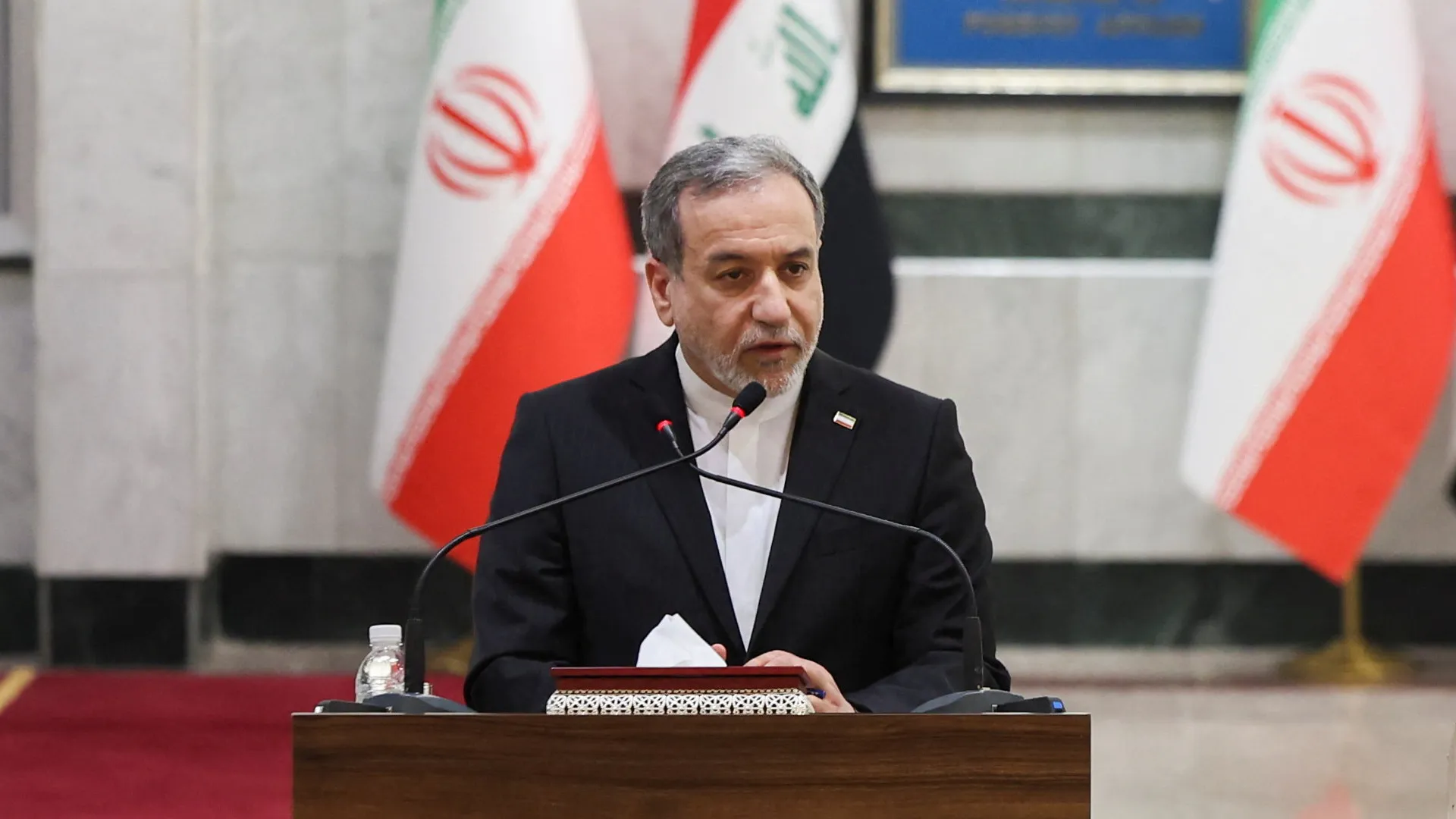
Iran’s foreign minister has urged ‘all parties not to interfere’ in the management of the Strait of Hormuz, after the US bombed Iran for a second day following a drone attack on a vessel. Abbas Araghchi says the MoU gives Tehran control of the waterway, during a press conference with his Iraqi counterpart in Baghdad.
Bahrain and Kuwait have condemned Iran’s retaliatory attacks after a second day of US strikes on Iran. Tehran University academic Hassan Ahmadian argues the US is trying to find its way out of the Memorandum of Understanding that Trump signed 10 days ago, ending the war.
The United Nations’ International Maritime Organization (IMO) has suspended plans to evacuate more than 11,000 sailors stranded in the Strait of Hormuz after a cargo ship transiting the waterway was struck by a projectile.
IMO Secretary-General Arsenio Dominguez said several crews had already been evacuated, but the agency had decided to pause the operation until there were “necessary safety guarantees” for those involved.
Recommended Stories
list of 4 itemsend of list
The United Kingdom Maritime Trade Operations (UKMTO), a Royal Navy maritime security agency, said on Thursday that a cargo vessel had been struck by “an unknown projectile” about 7.5 nautical miles (14km) southeast of Dahit, Oman. No casualties were reported.
The incident comes despite a memorandum of understanding (MoU) signed by the United States and Iran last week that ended hostilities and included provisions aimed at reopening the strategic waterway. Iran had restricted passage through the strait in early March after the US and Israel attacked it on February 28. In April, the US imposed a naval blockade on Iran-linked vessels trying to pass through the waterway.
Since the MoU was signed, commercial traffic has restarted through the strait, but key disagreements remain over which shipping routes vessels should use — and whether Iran gets to charge a toll or fee.
Oman and the IMO have proposed a new shipping corridor that would partially bypass waters under Iran’s direct control. Tehran has rejected the plan, saying it was announced without consultation and raises safety concerns while demining operations are still under way. While Iran has not claimed responsibility for Thursday’s attack on the ship off Oman, it has not denied any role, either.
The latest attack has heightened concerns that tensions over navigation through the strait remain unresolved. Here’s what we know.
Why is the UN evacuating sailors?
Following the outbreak of the US-Israel war on Iran on February 28, Tehran and Washington imposed counter restrictions on the passage of ships through the Strait of Hormuz, leaving thousands of seafarers unable to leave vessels trapped in the waterway.
More than a dozen sailors have also been killed in attacks on ships — some from American missiles, others from Iranian projectiles. Most of those killed were from India.
Even with last week’s agreement between Washington and Tehran to end the conflict, more than 11,000 sailors remain stranded in the strait.
Announcing the evacuation plan on Tuesday, the IMO’s Dominguez said the operation would be conducted in “close cooperation with Iran, Oman, all other coastal states in the region, the United States and the maritime industry”.
Oman’s Ministry of Defence said the operation, which had been under discussion for months, would be carried out in phases.
Denmark also announced on Tuesday that it would join a multinational maritime mission led by France and Britain to help restore safe navigation through the strait.
Why was the ship attacked?
The Singapore-flagged cargo vessel Ever Lovely was struck by what authorities described as an “unknown projectile” while transiting the Strait of Hormuz on Thursday.
Ship-tracking data from MarineTraffic showed the vessel had been following the southern shipping route proposed by the IMO earlier that day, a corridor that passes closer to Oman’s coastline and has been rejected by Iran.
Singapore’s Maritime and Port Authority (MPA) said the vessel had since completed its transit through the strait and was continuing its voyage, adding that all 21 crew members were safe.
The authority said it was “deeply concerned” by an attack it described as “unprovoked, unjustifiable, and a breach of international law”.
“All actions affecting international shipping must fully comply with international law, in particular the United Nations Convention on the Law of the Sea, and not endanger the safety of seafarers and ships at sea,” the MPA said.
The incident prompted the IMO to suspend its planned evacuation of stranded sailors. Dominguez said the Ever Lovely “did not transit under IMO’s evacuation framework”.
“I have always reiterated that the safety of the seafarers remains paramount. Therefore, to ensure a coordinated approach and navigational safety, the evacuation plan will be paused until further clarity is obtained,” he said.
What has Iran said?
While it remains unclear if the attack was carried out by Iran, the country’s Islamic Revolutionary Guard Corps had criticised the new shipping corridor announced by Oman and the IMO, while also warning that passage through the strait, “is only possible via routes announced by Iran,” the state broadcaster IRIB reported.
Kazem Gharibabadi, Iran’s deputy foreign minister, has said safe passage through the Strait of Hormuz cannot be guaranteed for vessels transiting “with ambiguous arrangements, parallel routes, or decision-making outside of Iran’s considerations as the coastal state”.
“Any credible framework must be based on coordination with Iran and the provisions of paragraph five of the Islamabad Memorandum of Understanding,” he said in a statement on X. “Otherwise, the outcome will be the suspension of the designated parallel route.”
Iran first published its own map of approved navigation routes in April, directing ships to sail much closer to the Iranian coastline than before the conflict.
The IRGC’s latest warning came after a Liberian-flagged oil tanker transited the strait on Thursday using a route closer to Oman’s coast.
On Friday, a further three foreign oil tankers that attempted to cross the Strait of Hormuz “without authorisation” were turned back after a warning from the IRGC, Iranian state TV reported.
Analysts say control over the Strait of Hormuz has long been one of Tehran’s most important sources of strategic leverage, allowing it to exert pressure on the US, whose economy is inextricably tied to global markets.
Why was the evacuation suspended?
Reporting from Tehran, Al Jazeera’s Resul Serdar Atas said the attack appeared to show Iran was prepared to enforce its warnings over navigation through the Strait of Hormuz, after Tehran insisted vessels using either the Iranian or Omani route must coordinate with its authorities.
“Yesterday, Oman announced new routes for the passage of the ships. But then the IRGC released a statement, saying that whether the ships go through the Iranian or Omani territorial waters, they need to be in full coordination with Iranian authorities,” Atas said.
“And if they violate that, then Iran is going to act accordingly. So the question was whether Iran is going to really act or not?
“The answer is yes. Now, we have seen that a tanker has been attacked by some projectiles in the Strait of Hormuz. The Revolutionary Guards did not claim responsibility but did not deny it either.”
Atas added that Gharibabadi, Iran’s deputy foreign minister, had also warned that any shipping arrangements made without taking Iran’s position as a coastal state into account would be unacceptable.
“Perhaps, in the coming days and weeks, we are going to see that the Strait of Hormuz will be one of the main sticking points.”
What other disputes remain?
Under last week’s memorandum of understanding, Iran agreed it would “make arrangements using its best efforts for the safe passage of commercial vessels with no charge, for 60 days only, from the Persian Gulf to the Sea of Oman and vice versa”.
Although the agreement says commercial traffic should resume immediately, it also acknowledges that mines laid during the conflict must first be cleared, stating that “demining by the Islamic Republic of Iran will be instated within 30 days”.
It also provides for discussions between Iran, Oman and other Gulf states over future arrangements for managing navigation through the waterway.
However, the agreement does not specify what will happen after the initial 60-day period.
Last week, Tehran announced it would waive any transit fees during those 60 days while negotiations with the United States continue in Switzerland, raising the possibility that charges could be introduced if no broader agreement is reached.
Iran’s chief negotiator, Mohammad Bagher Ghalibaf, has also suggested Tehran does not intend to return to the pre-war status quo.
“Hormuz will never return” to how it operated before the conflict, he said. The proposal has also faced resistance from the United States and several Gulf states.
Are ships still moving through the strait?
Commercial shipping has gradually resumed, although traffic remains well below normal levels. Before the conflict, between 120 and 140 vessels typically passed through the Strait of Hormuz each day.
According to maritime analytics firm Kpler, 54 verified commercial and energy-related vessels transited the strait on Thursday, down from 70 verified crossings the previous day.
“West-to-East movements dominated, while the Omani Route accounted for the largest share of identified passages. Yet route transparency remains incomplete, with several Dark or Unknown crossings recorded.
“A reported projectile strike on a cargo vessel southeast of Dahit, Oman, adds fresh operational risk, underscoring the gap between improving physical flows and still-fragile maritime security conditions,” Kpler added.
US Secretary of State Marco Rubio said all Gulf countries oppose a toll in the Strait of Hormuz during a tour of the region following US-Iran talks. Rubio added, “There isn’t a nation on Earth that supports having to pay money to go through the straits”.
Iran’s Islamic Revolutionary Guard Corps (IRGC) has warned commercial vessels to only use routes through the Strait of Hormuz approved by Tehran, reopening a point of friction in fragile negotiations between the United States and Iran over the future of the strategic waterway.
The warning came after Oman announced a new shipping transit route through the strait on Wednesday, saying it had coordinated the route with the International Maritime Organization (IMO) as maritime traffic slowly resumes following weeks of disruption.
Recommended Stories
list of 4 itemsend of list
The dispute remains one of the unresolved issues after a memorandum of understanding (MoU) was signed by the United States and Iran last week, which largely halted hostilities in the four-month US-Israel war on Iran and which launched a 60-day negotiation process aimed at reaching a broader peace agreement.
The MoU, which includes the reopening of the strait, followed months of severe disruption to shipping after Iran effectively closed it, and the US imposed a corresponding naval blockade on Iranian ports.
Both Washington and Tehran have declared the strait open to commercial shipping, but questions remain over whether Iran will seek greater control over vessel movements, whether it will impose transit or service fees on ships using the strait following the 60-day negotiating period, and whether disagreements over the waterway could derail efforts to reach a permanent agreement altogether.
Why is the Strait of Hormuz so important?
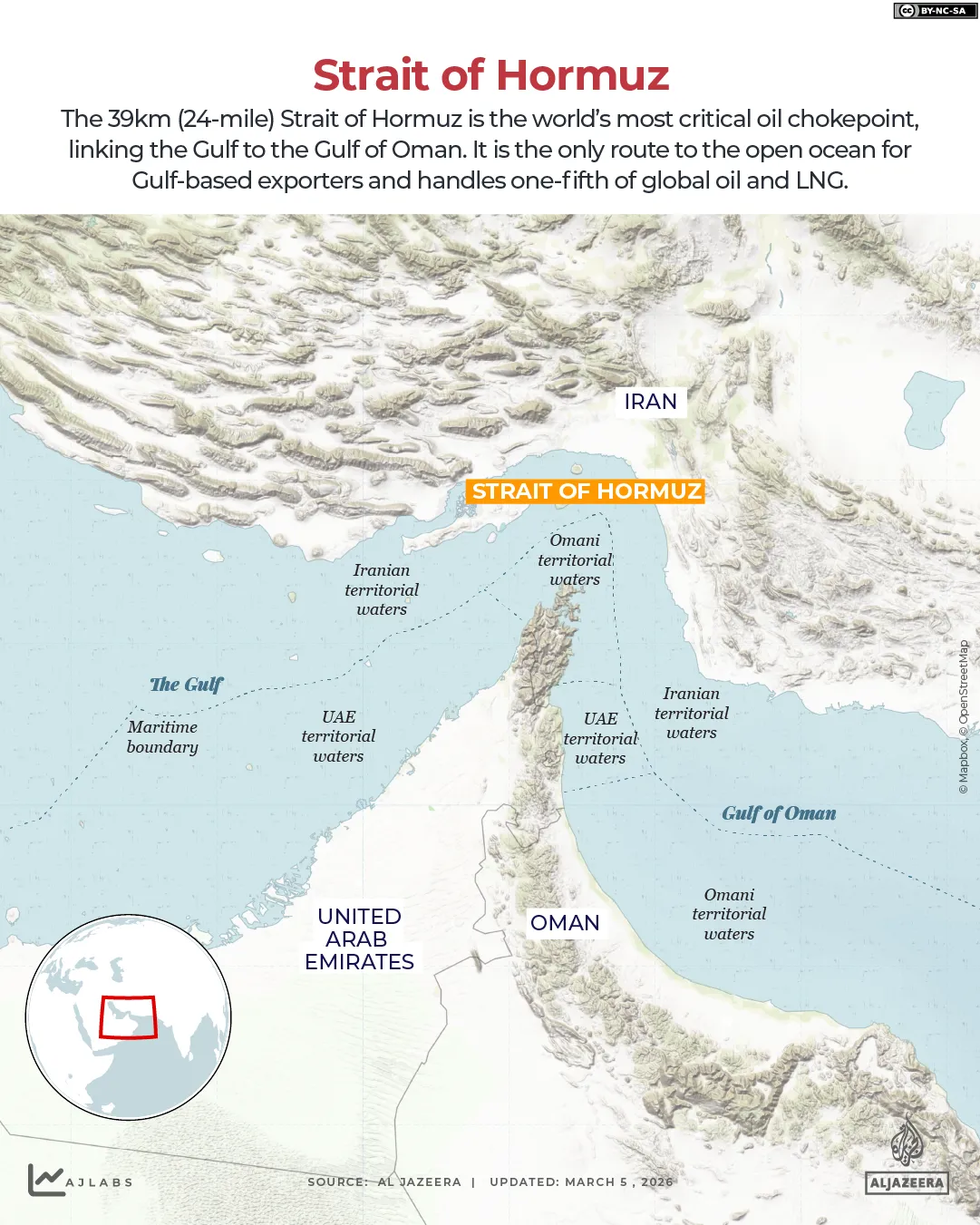
The Strait of Hormuz is one of the world’s most strategically significant waterways, with around one-fifth of global oil and liquefied natural gas (LNG) supplies normally being shipped through the narrow passage linking the Gulf to the Arabian Sea.
Bordered by Iran to the north and Oman and the United Arab Emirates (UAE) to the south, the strait is only about 50km (31 miles) wide at its entrance and exit, narrowing to about 33km (21 miles) at its tightest point. Despite its width, it is deep enough to accommodate the world’s largest oil tankers.
According to the US Energy Information Administration, about 20 million barrels of oil and petroleum products transited the strait each day in 2025, representing hundreds of billions of dollars in annual energy trade.
The route is used not only by Iran but also by Iraq, Kuwait, Qatar, Saudi Arabia and the UAE. It is also vital for global fertiliser exports, with roughly one-third of international fertiliser trade normally passing through the strait.
Because disruptions to shipping there rapidly push up global energy prices and destabilise US markets, control of the waterway has become one of Iran’s strongest sources of strategic leverage in its conflict with the US.
(Al Jazeera)
Why is Iran objecting to Oman’s new route?
The IRGC says Oman and the IMO announced the new shipping corridor without consulting Tehran. “Certain authorities have announced a new shipping route through the Strait of Hormuz without prior notification to or coordination with the Islamic Republic of Iran. The proposed route is unacceptable and poses serious safety risks,” the force said.
“The only authorised transit routes through the Strait of Hormuz are those designated by the Islamic Republic of Iran,” it said, adding that ships must maintain contact with the IRGC Navy while transiting the waterway.
Iran first issued its own map of acceptable routes through the strait in April, showing that ships should pass much closer to the Iranian coast than they had previously.
(Al Jazeera)
The IRGC’s warning came after a Liberian oil tanker passed through the strait on Thursday using a route much closer to Oman’s coastline.
Al Jazeera’s Resul Serdar, reporting from Tehran, said the IRGC appeared frustrated because the Omani route partially bypasses Iran’s direct control over shipping.
“The control of the Strait of Hormuz has been a huge leverage for Iran to put pressure on its adversaries and the global economy since the beginning of the war,” Serdar said.
Oman defended the corridor route it had announced, saying it was intended to restore safe navigation while complying with international law. Foreign Minister Badr Albusaidi said Oman remained committed to ensuring freedom of navigation through the waterway and stressed that “future arrangements related to the strait do not involve imposing any transit fees”.
What does the US-Iran agreement say about the strait?
In the MoU signed last week, Iran agreed that it would “make arrangements using its best efforts for the safe passage of commercial vessels with no charge, for 60 days only, from the Persian Gulf to the Sea of Oman and vice versa”.
While the agreement states that “the traffic of commercial vessels will immediately start”, it also acknowledges that demining operations will be required before normal shipping routes can fully resume, stating that “demining by the Islamic Republic of Iran will be instated within 30 days”. It also provides for discussions between Iran, Oman and other Gulf states on future arrangements for managing the waterway.
However, the memorandum does not specify what will happen after the initial 60-day period. Ali Vaez, Iran project director at the International Crisis Group, said the temporary rerouting of vessels had always been expected because of the mine-clearing operations outlined in the agreement.
“We always knew that if there was a deal, there would be several weeks of mine-clearing operations in the international shipping lane running through the middle of the Strait of Hormuz,” he said.
“During that period, vessels would have to transit through Iranian and Omani territorial waters instead.”
However, Vaez said the latest announcement by Iran was unexpected. “The important thing now is that the Iranians do not start taking fees or other tolls,” he said, “because that is not provided for in the memorandum of understanding.”
Asked whether the IRGC’s position differed from that of Iran’s government, Vaez said: “There is no distinction between the IRGC and the state. They are effectively one and the same. The IRGC is calling the shots.”
Can Iran charge ships fees?
International law generally protects the right of transit through international straits, including Hormuz, making it difficult for coastal states to impose unilateral transit fees on vessels simply passing through international shipping lanes, even where they are within territorial waters.
Last week, Iran announced it would waive planned fees through the strait for 60 days while talks with the US continue in Switzerland, suggesting charges may be introduced once the negotiating period expires.
Iran’s chief negotiator, Mohammad Bagher Ghalibaf, has signalled that Tehran views the post-war arrangement as fundamentally different from the status quo that existed before the conflict.
“Hormuz will never return” to its prewar status, Ghalibaf said.
The suggestion that Iran could charge fees was dismissed by US Secretary of State Marco Rubio this week. Speaking at the start of a regional tour in the United Arab Emirates, he said: “It’s an international waterway. No country is allowed to charge tolls or fees on an international waterway.”
Rubio added that he believed “all the countries in this region would agree”.
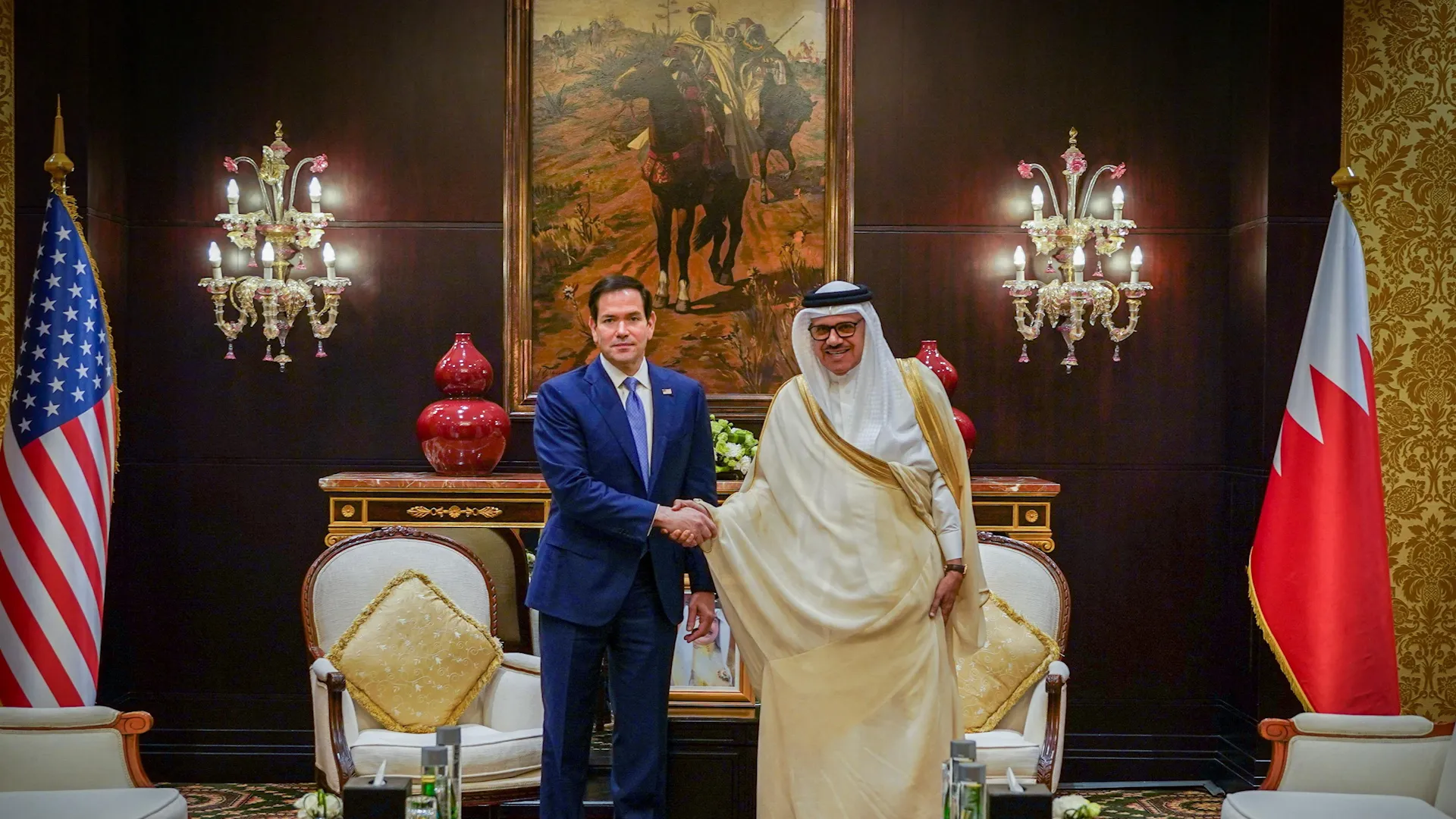
Speaking in Manama, Bahrain, after meeting with the Gulf Cooperation Council (GCC) – a bloc comprising Bahrain, Kuwait, Oman, Qatar, Saudi Arabia and the UAE – on Thursday, Rubio also told reporters: “Iranians are saying one thing, but then something else is actually happening.
“It’s now obvious to us that … the Iranian system is going to produce all sorts of maximalist rhetoric. What we’re interested in is not their press conferences. What we’re interested in is whether or not ships are moving. If ships are moving as they should be moving, then that’s what we’re going to judge.
“If, on the other hand, this rhetoric is backed up by actual ships being threatened and ships are not moving, then that’s a violation of the agreement, and we’re going to have a problem with it.”
Rubio claimed there is no regional support for Iranian transit fees, saying, “There is zero support among Gulf countries for any sort of toll or fees charged for the use of international waters … that isn’t going to happen.”
His comments came after UAE presidential adviser Anwar Gargash said that new “geopolitical facts” could not be imposed on the Arab Gulf states as a result of what he described as the “treacherous aggression against them”.
Are ships returning – and which route are they taking?
Some commercial shipping through the strait has resumed, although traffic remains well below normal levels. Before the conflict, between 120 and 140 vessels typically transited the strait each day.
According to shipping analytics company Kpler, confirmed crossings rose to 70 vessels on Wednesday as demining progressed and more operators began using the Omani route.
“The US-Iran MoU framework and apparent lifting of the US blockade appear to have supported a short-term confidence boost, although IRGC warnings against use of the Omani route could create a new source of contention,” Kpler reported.
The company added that incomplete demining, continued “dark” routing by some vessels – when ships limit or switch off their tracking transponders – and unresolved questions over inspections, sanctions and future governance meant shipping had not yet returned to prewar conditions.
This comes as oil prices drop to the lowest level since before the Iran war, with Brent crude, the global benchmark, falling to a low of $72.24 a barrel on Thursday. This remains above the prewar price of $66, however.
The chart below shows how shipping through the strait before the war compares to its status in recent weeks:
Is a peace deal achievable?
The future administration of the Strait of Hormuz is only one of several issues still to be resolved before negotiators hope to reach a comprehensive agreement within 60 days, with another major sticking point being Iran’s nuclear programme.
International Atomic Energy Agency (IAEA) Director-General Rafael Grossi has said the agreement explicitly provides for international monitoring of Iran’s nuclear activities.
However, Kazem Gharibabadi, Iran’s deputy foreign minister for legal and international affairs, has said inspectors’ access to nuclear sites damaged during the conflict will only be considered as part of a final agreement.
Questions also remain over the fate of Iran’s enriched uranium stockpile, the sequencing of sanctions relief and the release of frozen Iranian assets, while regional tensions continue to pose additional risks.
Israeli forces remain deployed in parts of southern Lebanon occupied during the conflict, according to a Lebanese military source, while Israeli strikes have continued, despite the MoU explicitly calling for “a permanent end to the war on all fronts, including Lebanon”.
Vaez said visible progress would be essential if negotiations are to survive, noting, “Both sides have to see progress, whether that’s greater access for UN nuclear inspectors, sanctions relief, or resolving the issue of Iran’s uranium stockpile.”
He cautioned against viewing the interim agreement as a series of smaller deals. “Nothing is agreed until everything is agreed,” Vaez said.
“They [the Iranians] are determined to reach a comprehensive agreement within 60 days. That’s a very ambitious timetable, but there has to be visible momentum or the process risks falling apart.”
However, Vaez said both Washington and Tehran have strong economic incentives to bring about a lasting peace. “The situation in the Strait had become one of mutually assured economic destruction,” he said.
“The United States was facing rising energy and oil prices ahead of the midterm elections … At the same time, Iran was already in a deep economic hole before this conflict began. The war only made that worse.
“It became a lose-lose dynamic, and both sides needed a way out.”
US Secretary of State Marco Rubio has said Iran will not be permitted to charge tolls or fees for vessels transiting the Strait of Hormuz under any final agreement with Washington, exposing one of the biggest points of friction in negotiations aimed at ending months of conflict across the Middle East.
The dispute comes after Iran announced it would waive planned transit fees through the strait that crosses through its territorial waters for 60 days while talks with the United States continue in Switzerland, suggesting charges could be introduced once the negotiating period expires.
Recommended Stories
list of 4 itemsend of list
Washington and Tehran signed a preliminary agreement in Switzerland this week to halt hostilities and launched a 60-day diplomatic process focused on sanctions relief, Iran’s nuclear programme and the future administration of the Strait of Hormuz.
Pakistan, which helped mediate the talks alongside Qatar, has said negotiations to end the four-month US-Israel war on Iran are expected to resume early next week, likely on Tuesday.
The future of Hormuz has already emerged as a key sticking point after Iran effectively closed the waterway during the war, severely disrupting maritime traffic through one of the world’s most important energy chokepoints and causing the price of oil to soar.
In peacetime, one-fifth of the world’s oil and natural gas supplies are shipped for export by Gulf producers through the waterway.
In April, the US imposed a corresponding naval blockade on Iranian naval ports in a bid to stem Iranian oil exports.
While a number of ships have crossed through the strait since the US-Iran agreement was signed last week, uncertainty remains over whether Tehran intends to impose permanent fees or service charges on shipping operators using the route. Here’s what we know – and what else is happening in the Strait of Hormuz this week.
(Al Jazeera)
What are the US and Iran saying?
On Friday, Iran’s Persian Gulf Strait Authority (PGSA) said planned fees for ships using the waterway would be suspended during the 60-day negotiation period established under the memorandum of understanding (MoU) signed with the US.
Earlier this week, Iran and Oman said in a joint statement that they would study the future administration of the trade route as well as possible charges for services provided there, while maintaining their sovereignty claims over territorial waters bordering the strait.
Speaking at the start of a regional tour in the United Arab Emirates, Rubio rejected the idea of transit fees. “It’s an international waterway. No country is allowed to charge tolls or fees on an international waterway,” he said, adding that he believed “all the countries in this region would agree”.
Iran’s chief negotiator, Mohammad Bagher Ghalibaf, has signalled that Tehran views the post-war arrangement as fundamentally different from the status quo that existed before the conflict, however. Experts also say that Iran will not give up control of the strait, which has proved to be its greatest point of leverage in the conflict with the US.
“Hormuz will never return” to its prewar status, Ghalibaf said, despite both sides agreeing on Monday to establish “communication mechanisms” aimed at keeping the waterway open.
What does international law say?
International law protects the right of transit through strategic waterways such as the Strait of Hormuz, preventing coastal states from imposing explicit tolls simply for passage through international shipping lanes, even when they are passing solely through territorial waters.
However, countries can charge for specific services, including inspections, navigation assistance, security measures and certain insurance-related requirements, insurance experts say.
Examples include fees associated with transit through the Suez Canal and Panama Canal, as well as some services provided in Turkiye’s Bosporus and Dardanelles straits.
Mohammad Reza Farzanegan, an economist at Germany’s Philipps-Universitat Marburg, told Al Jazeera last month that Iran, like Turkiye, could justify a negotiated mechanism for transit fees or service-based contributions through natural straits as payment for maintaining a safe passageway, reducing environmental risks and providing predictability in a waterway that supports global energy, food and technology supply chains.
A key difference, however, is that while those waterways pass through the territory of a single state in each case, the Strait of Hormuz passes through the territorial waters of both Iran and Oman, while also connecting to waters used by the United Arab Emirates and other Gulf states.
“This sort of arrangement is unprecedented, and there would not be such an outcome, unless there is a complete coordination between the GCC [Gulf Cooperation Council] countries and Iran, with the approval of major international powers, such as China and the United States,” Nader Habibi, an Iranian American economist, told Al Jazeera.
How many ships are getting through the strait now?
Ship movements through the Strait of Hormuz remain well below prewar levels, when between 120 and 140 ships transited the passage each day, including tankers carrying about 20 million barrels of oil from the Gulf.
As the strait begins to open up, Oman says it is working with the United Nations’ International Maritime Organization (IMO) on temporary arrangements to facilitate safe transit through the strait, launching an operation to evacuate more than 11,000 sailors stranded in the area after the conflict left hundreds of vessels trapped for months.
Traffic through the strait has also been held back by ongoing concerns about the possible presence of sea mines in the central shipping channels used by international vessels before the war.
The Joint Maritime Information Center (JMIC), which includes representatives from the US and other maritime partners, has warned ships to avoid the area “due to the existence of mines”.
Other countries, including Japan, are currently weighing up whether to send ships to help with efforts to remove mines from the strait.
While Iran has never confirmed the presence of mines in the strait, when it first issued a map of the waterway for vessels it had approved for transit while the conflict was ongoing, it ordered ships to pass close to its coast to avoid possible mines. Ships had previously passed much closer to the coast of Oman.
The graphic below illustrates how much shipping through the strait dropped off as a result of the US-Israel war on Iran.
Could the dispute over strait fees derail a peace deal?
Mostafa Khoshcheshm, a professor at the University of Applied Sciences in Tehran, told Al Jazeera that Iran is unlikely to abandon plans to introduce long-term service fees in the strait.
“According to the MoU, Iran is not going to charge service fees for 60 days, but afterwards, Iran is definitely going to do that,” Khoshcheshm told Al Jazeera.
He said many Iranians were already unhappy that Tehran had agreed to suspend fees for the duration of the negotiating period.
“The money is not the real core of the issue,” he said. “The point here is how to impose your new protocols in the region. This is highly important for the Iranians.”
Cyrus Schayegh, professor of international history and politics at the Geneva Graduate Institute, told Al Jazeera the success of any new administrative arrangement would depend heavily on regional support.
“I think this is a very big question, and the biggest question is whether they will be able to sell it to the Emirates,” Schayegh told Al Jazeera.
“I think the Emirates will need to be involved in a really substantive way for any sort of new authority to actually work.”
More broadly, he said, the future of Hormuz forms part of a wider debate over Gulf security architecture following the war.
“It is only one piece of a much larger puzzle,” Schayegh said, adding that several regional states now accept that Iran has strengthened its deterrence capabilities following the conflict.
What other issues remain unresolved?
Hormuz is far from the only serious obstacle to a peace deal.
Questions also remain over the future of Iran’s nuclear programme, with Kazem Gharibabadi, Iran’s deputy foreign minister for legal and international affairs, saying that access for international inspectors to nuclear facilities damaged during the war would only be addressed as part of a final agreement with Washington.
His comments came after US President Donald Trump claimed Iran had agreed to “the highest level” of nuclear inspections.
Iranian officials insist no commitments were made in Switzerland regarding Tehran’s nuclear programme and say they did not meet representatives of the International Atomic Energy Agency (IAEA), including Director-General Rafael Grossi.
Regional security remains another major source of disagreement, with Israeli Defence Minister Israel Katz insisting Israeli forces will not withdraw from southern Lebanon “even if there is an American demand” to do so.
Meanwhile, Ghalibaf has identified the withdrawal of foreign military forces from the Middle East as one of Tehran’s strategic objectives in the negotiations.
The future of Iran’s frozen assets also remains a sticking point, with Trump indicating Washington is reluctant to release large sums of Iranian funds directly, arguing that money could ultimately benefit the Islamic Revolutionary Guard Corps (IRGC).
Instead, he has suggested a mechanism under which some funds would be used to purchase US goods.
“Food is desperately needed in Iran, and we will be purchasing it for them exclusively from the United States,” Trump said. Iran has not confirmed plans to do this.
Ship tracking data shows sharp fall in transits as US and Iranian officials hold talks to save fragile peace framework.
Published On 22 Jun 202622 Jun 2026
Shipping in the Strait of Hormuz has plunged following Iran’s announcement that it has closed the waterway once again over Israel’s strikes on Lebanon, according to ship tracking data.
A total of 12 vessels crossed the strait on Sunday, down from 35 transits the previous day, an analysis by maritime intelligence company Windward showed on Sunday.
Recommended Stories
list of 4 itemsend of list
Five of eight vessels entering the strait had their Automatic Identification Systems turned off, according to Windward.
“The current traffic profile: dark, sanctioned, Iranian-linked, resembling the late-blockade baseline more than a functioning open strait,” Windward said in a post on X.
Maritime traffic in the strait had been showing signs of recovery since US President Donald Trump and Iranian President Masoud Pezeshkian on Wednesday signed a memorandum of understanding on ending the US-Israel war on Iran.
Twenty-five vessels transited the strait on Thursday, the highest number since mid-April, according to data from maritime intelligence provider Kpler.
Iran’s Islamic Revolutionary Guard Corps on Saturday declared the waterway shut, citing Israeli “crimes” in Lebanon and the failure of the US to maintain a ceasefire in the country.
US Central Command (CENTCOM) on Saturday denied that Iran had closed the strait, which normally carries about one-fifth of global oil and liquified natural gas supplies, saying that safe passage through the waterway remained “intact”, with 55 merchant ships transiting that day.
The cause of the discrepancy between the transit figures provided by CENTCOM and commercial ship tracking providers is unclear.
US and Iranian negotiators on Sunday held make-or-break talks in Switzerland as the conflict in Lebanon threatened to derail efforts to turn their 60-day ceasefire extension into a permanent peace deal.
In a briefing to Iranian media after the talks, Iranian Ministry of Foreign Affairs spokesman Esmaeil Baghaei said the sides had discussed the safe passage of ships through the strait, and “a mechanism was set up, which is important”.
Despite renewed tensions between Washington and Tehran and signs of slowing traffic in the strait, oil prices moved lower on Monday morning in Asia.
Brent crude, the primary international benchmark, was down about 0.9 percent as of 01:30 GMT, at just below $80 a barrel.
Asia’s major stock markets opened higher, with key indices in Japan, South Korea and Taiwan making substantial gains.
Tokyo’s Nikkei 225 and Seoul’s Kospi were up 1.8 percent and 1.5 percent, respectively, while the Taiex in Taipei surged 2.6 percent.
Hong Kong’s Hang Seng Index bucked the rally, dipping 0.7 percent.
Brent crude drops to lowest price since early March before signing of framework deal to end US-Israel war on Iran.
Published On 17 Jun 202617 Jun 2026
Oil prices are continuing to drop, as hopes rise for a return to stability in global energy markets before the signing of a framework agreement on ending the United States-Israel war on Iran.
Futures for Brent crude due for delivery in August dipped nearly 1 percent on Wednesday, extending declines of about 5 percent on each of the previous two days.
Recommended Stories
list of 4 itemsend of list
The international benchmark stood at $78.24 a barrel as of 08:00 GMT, the lowest price since March 3, three days after the start of the war.
After rising more than 50 percent during the conflict, the price of crude on Wednesday afternoon in Asia was only about 7 percent higher than before the US and Israel launched attacks on Iran on February 28.
“The immediate prognosis, it seems, is optimistic and assumes no significant setbacks,” Tamas Varga, an analyst at PVM Oil Associates in London, said in a commentary.
“Over the last four trading sessions, Brent, for example, has fallen by $17 [per barrel], a discernible vote of confidence that the worst, at least as far as supply disruptions are concerned, is behind us,” Varga said.
Vandana Hari, the founder of the Singapore-based oil market analysis provider Vanda Insights, said that while the announcement of the US and Iran’s memorandum of understanding (MoU) has brought relief to markets, the “hardest part, on delivering the pledges and promises, is yet to come”.
“Crude’s slide is entirely sentiment-driven,” Hari told Al Jazeera.
“The market is front-running the prospective reopening of the Strait of Hormuz and likely pricing in the best-case scenario for the normalisation of flows, which means the potential hiccups from logistics to renewed geopolitical tensions are not being adequately factored in,” Hari said.
While many details of the MoU due to be signed on Friday remain unclear, Iran is expected to end its near-total closure of the Strait of Hormuz in exchange for the US lifting its blockade of Iranian ports, among other concessions.
The full reopening of the strait would be a crucial step towards restoring confidence in energy supply chains, after nearly four months of turmoil arising from the war.
Maritime traffic in the strait, which flows between Iran and Oman, has been reduced to a trickle due to the threat of Iranian missiles, drones and mines, reducing the global oil supply by an estimated 14 million barrels each day.
Even if the war does end, global energy flows are expected to take months to fully recover.
More than 500 vessels are estimated to be waiting to exit the Gulf through the strait, while the process of ensuring the channel is free of naval mines is likely to take weeks at a minimum.
Stephen Cotton, the general-secretary of the International Transport Workers’ Federation, said the signing ceremony scheduled to take place in Geneva, Switzerland, would be “at best the beginning” of a process of normalisation.
“The backlog of stranded vessels and the need for crew changes and rest mean a realistic return to normal shipping patterns is weeks, if not months, away,” Cotton said in a statement on Monday.
The preliminary deal to end US-Israel war on Iran has sent oil prices tumbling to a three-month low amid hopes that the Strait of Hormuz will reopen.
But it could be months before American consumers see major relief at the petrol pump.
Recommended Stories
list of 3 itemsend of list
The closure of the strategic chokepoint disrupted global energy markets for more than three months, cutting off a major shipping route through which roughly one-fifth of the world’s oil and liquefied natural gas normally passes.
On Sunday, US President Donald Trump said prices would “drop like a rock” once the strait reopens, a claim he has made multiple times in the past few weeks.
However, experts caution that a major decline in prices is unlikely to happen as quickly as Trump suggests.
While Asian markets rely more heavily on oil shipped through the Strait of Hormuz than North American markets, tighter supply and steady demand have pushed prices higher worldwide.
On Monday, petrol prices in the US remained above $4 per gallon (3.78 litres), averaging $4.06 nationwide, according to the American Automobile Association (AAA). This was a dip from a high in early May of $4.48 per gallon.
By comparison, prices stood at $2.98 per gallon on February 28, when the US and Israel first struck Iran, triggering a ripple effect across global energy markets.
Energy prices have risen sharply in the US in recent months, increasing 7.7 percent over the last two months alone, and are up 40 percent from a year ago, according to last week’s inflation report from the Labor Department’s Bureau of Labor Statistics,
However, prices are beginning to fall, a dip that began as Washington and Tehran entered negotiations.
“The potential deal that the US and Iran agreed to over the weekend certainly could pave the way for even lower prices… in the next two to three days by what we saw over the weekend,” Patrick De Haan, head of petroleum analysis at GasBuddy, which tracks petrol prices, told Al Jazeera.
But De Haan expects a plateau and says that consumers may not see gas prices at pre-war levels until 2027, even if the ceasefire holds.
“It may take many months, if not beyond a year, for global oil inventories to recover to pre-war levels,” De Haan said.
Amid strains on the supply chain, producers will also need time to ramp up output, while port bottlenecks and heightened demand during the busy summer travel season could delay any substantial relief for everyday consumers.
“There are some mitigating factors that are going to slow the decline in prices. There are a lot of organisations and companies that have to re-up their stockpiles [like the US’s strategic petroleum reserve] and fulfil contracts that have been on hold for the last few months,” John Deal, managing director of capital markets at the Post Oak Group investment bank, said.
Supply chain strains
Fixing kinks in the supply chain takes time.
Oil production slumped amid the war. More than 14 million barrels per day, or 14 percent of the world’s demand, has been shut, according to the International Energy Agency.
Deal said it would take time to get oil production back online.
“My sense is that there’s going to be sustained high demand through the summertime, and we probably won’t get back to pre-war levels [on petrol prices] until after the summer, maybe September or October,” Deal said.
Mark Jones, a professor of political science at Rice University, said that producers might be reluctant to bring full operations back online until they can see the ceasefire hold.
The agreement opening the blockade is for a 60-day negotiation period between the two countries.
“Many [producers] may be reluctant to restart production until they are convinced that the peace will hold, because the last thing they want to do is carry out the costly effort to restart production only to see the conflict revived and then have to shut it down once again,” Jones told Al Jazeera.
Getting production back online is also dependent on the impact individual producers have faced throughout the war.
Refineries that were shut as a precaution could reach as much as 95 percent capacity within 40-60 days, Vitol Bahrain’s head of research, Bader Nooruddin, told the Reuters news agency. Those damaged in the fighting could take much longer.
But bottlenecks at ports could be the biggest hurdle, according to Deal.
“There’s a lag time with shipping capacity. Shipping capacity is perhaps the most significant constraint,” Deal said.
This is because there are more than 500 ships still awaiting passage, according to shipping data from Kpler.
With the ships headed all over the world, it will take them weeks to reach their destinations, dock, and unload at the ports.
That also means a wave of empty ships is waiting in limbo for spots at ports to load cargo and ramp back up to normal operations.
Major shipping giants are in a holding pattern.
Norway’s Wallenius Wilhelmsen and Denmark’s Maersk both told Reuters that they have not changed their Middle East operations in the wake of the announcement.
During the war, there was limited passage through the Strait of Hormuz, with an average of 10 ships a day passing through, compared with 135 that normally transit the waterway, according to an analysis by Bloomberg.
“Tankers take months to reach their final destination and then come back again. So the ability to replenish the stocks is going to take until, I think, the early fall, just from a shipping perspective, to get back to the status quo that was in place before the conflict started,” Jones said, referring to the preferred term for the months of September through November in North America.
At the same time, US strategic reserves are running low, at their lowest levels since 1983. Reserves have tumbled by 18 percent since the war began.
“Demand might keep prices high through the summer as strategic reserves get refilled,” Deal added.
Jet fuel demand will also put pressure on consumers amid the normally busy JuneAugust travel season in the US.
“The war has really affected airlines and their ability to schedule and anticipate how the summer months are going to go,” Deal added.
In April, United Airlines CEO Scott Kirby said that airfares for the carrier may have to jump as much as 20 percent on higher fuel prices.
Grocery woes
The increase in prices is also hitting food budgets.
The most recent consumer price index report showed US inflation ticked up by 4.2 percent compared with this time last year. While inflationary pressures were mostly driven by fuel prices, the impact has still been felt at the grocery store.
Almost half of the world’s urea, which is used in fertiliser, is produced in the Gulf region and passes through the Strait of Hormuz. For American farmers, that means access to fertilisers for the next crop season is more expensive.
Tomato prices, already driven up by Trump’s tariffs on Mexico, have surged 40 percent in the last year amid rising transportation costs.
Lettuce prices rose by more than 16 percent in May, and the price of ground beef increased by about 12 percent compared with this time last year.
Jones warned that food prices may not go down.
“Many retailers, wholesalers, and producers will keep them where they are or only reduce them if forced to from a sales perspective. Unlike petrol, which tends to ebb and flow with the price of oil, prices for many other goods that have been adversely affected by all of this are much less likely to return to where they were prior to the start of the conflict,” Jones said.
“For groceries, for manufacturing goods, for anything that has gone up during the conflict, the price that is there now often becomes the new baseline from which prices move in the future.”
This can be compared with the COVID-19 pandemic period. When the pandemic stalled supply chains, producers increased prices. A 2024 investigation by the Federal Trade Commission found that retail grocers kept prices elevated after supply chain constraints brought on by the pandemic had eased.
“Some in the grocery retail industry seem to have used rising costs as an opportunity to further raise prices to increase their profits,” the report said.