
United CEO Kirby defends higher airfares, seat fees as costs rise
United CEO Kirby defends higher airfares, seat fees as costs rise
Source link
United CEO Kirby defends higher airfares, seat fees as costs rise
Source link

The Atlanta Dream will host Games 3 and 4 of the WNBA Finals against the Golden State Valkyries in the building they will call home starting next season, not the one where they played most of their home games this year.
That’s good because State Farm Arena — home of the NBA’s Hawks and soon-to-be the fulltime home of the Dream — can seat around 17,000 people, while Gateway Center Arena — the WNBA franchise’s home facility since 2021 — can only hold 3,500 fans.
“This is what the players and the fans deserve,” Dream majority owner Larry Gottesdiener said in a statement. “We are grateful to all of the stakeholders who worked together to resolve the conflicts and make this happen.”
Things were looking pretty iffy for a while.
Game 3 will be played Oct. 21 at 5 p.m. PDT. The game was originally supposed to be played the following day, but a Sombr concert is taking place at the arena on that date.
Game 4 will take place Oct. 24 at 10 a.m. PDT. While that date wasn’t changed, the game was originally slated to start 2 1/2 hours later. The Hawks also pushed back the time of their home opener that evening by a half-hour to 5:30 p.m. PDT to help accommodate the WNBA game.
“The change of venue dramatically expands the seating capacity and ensures that the Dream will be able to provide an extraordinary atmosphere for the first WNBA Finals game to be played in the Atlanta market since 2013,” league commissioner Cathy Engelbert said in a statement. “We are pleased that thousands more fans across the Southeast region will have the opportunity to experience the ultimate WNBA action — the WNBA Finals — in person.”
The Dream played six regular-season games and all three home playoff games this season at State Farm Arena. Efforts to hold the Dream’s home Finals games at such area venues as Gas South Arena (around 13,000 seats) and Georgia Tech’s McCamish Pavilion (8,600 seats), didn’t work out, according to USA Today.
There has been no word on the venue for a possible Game 6 of the best-of-seven series, which the Dream are currently scheduled to host on Oct. 29, the same date as another Hawks home game.

The Atlanta Dream made it to the WNBA Finals, which is obviously a good thing.
In fact, it’s so good that many fans will surely want to come out and support the team when it hosts Games 3 and 4, plus Game 6 if needed, against the Golden State Valkyries.
And that could be a problem. Gateway Center Arena in College Park, Ga., where the team has played most of its home games since 2021, seats only 3,500 people for basketball games.
The Dream played six regular-season games and all three home playoff games this season at the Atlanta Hawks’ State Farm Arena, which holds around 17,000 and will be the Dream’s official home venue starting next season. But that facility is booked for all three dates the team would need it, with a Sombr concert slated for Oct. 22 and Hawks regular-season games on Oct. 24 and 29.
So, what’s a franchise playing in its first WNBA Finals since 2013 to do?
It’s not a rhetorical question. The team hasn’t announced where their home games in the series will be played, and tickets for the
games in Atlanta have yet to go on sale.
Last week, Dream president Morgan Shaw Parker said they were “finalizing details” on where the team’s home games will be played during the Finals. Efforts to move the games to larger area venues, such as Gas South Arena (around 13,000 seats) and Georgia Tech’s McCamish Pavilion (8,600 seats), have hit snags, according to USA Today.
The Dream did not immediately respond Monday to questions from The Times. The WNBA referred questions back to the Dream.
The Valkyries play their home games at Chase Center in San Francisco, which seats around 18,000 people. A Doja Cat concert originally scheduled for Oct. 19 was rescheduled to Oct. 25 to avoid conflict with Game 2 of the WNBA Finals.
If the Dream can’t relocate the games, this wouldn’t be the first time WNBA Finals were held in a small venue: In 2019, the Washington Mystics hosted three games at their home venue (known now as CareFirst Arena), which seats about 4,200 people.
Led by Rhyne Howard, Allisha Gray, former UCLA star Jordin Canada and 2026 defensive player of the year Angel Reese, fourth-seeded Atlanta swept through the first two rounds of the playoffs, dismissing No. 5 Washington and No. 8 New York.
The Associated Press contributed to this report.

London, United Kingdom– At a meeting organised by a Muslim group in London ahead of a closely watched by-election, candidates from the Green and Liberal Democrat parties made their cases to residents beside empty seats. Their Labour and Conservative peers did not turn up.
Labour candidate Sagal Abdi Wali, a Somali-Muslim woman, told The Guardian she did not attend because she had a prior obligation and the invite had come too late. But the organiser, the Camden Muslim Network, pushed back, saying that she was invited earlier.
list of 3 itemsend of list
Fifteen candidates are in the race for former Prime Minister Keir Starmer’s old seat, including Green Party leader, Zack Polanski, who hopes to become a member of parliament.
Since the seat was created in Holborn and St Pancras in 1983, the Labour Party has held it. Starmer was first elected in 2015 and held it until his resignation, which triggered the by-election.
At the meeting, the conversation ranged from local issues such as housing to Israel and Palestine.
Lib Dem candidate Patrick Stillman said his party had long called for Palestinian statehood but would not support a full boycott.
But Polanski had a different opinion.
“I think the Labour government’s position is deeply cynical to apologise over Gaza, to recognise that mistakes have been made but to continue to sell arms to Israel, a country that’s committing a genocide,” he said to applause, adding that his party, which recently voted to describe Zionism as racism, supports a full boycott.
In leaflets sent to constituency residents, the Green Party focused on Abdi-Wali’s time as a Labour councillor and, more recently, as leader of Camden council – a role she secured in May.
One reads: “Bring change, Replace Labour, Vote Green”. On its reverse: “Every single Camden Labour councillor refused to sign the Palestine solidarity pledge or support pension fund divestment. Only Greens continue to stand firm on Palestine.”
Last month, Abdi-Wali spoke to the Camden New Journal, a local newspaper, about Gaza and the Green Party’s leaflets.
It was “obviously inaccurate” to say the Labour council did not feel strongly about the issue, she told the paper. “I want to focus on making sure that we’re able to put the message of what [Foreign Secretary] Ed Miliband is now doing with the government and on Palestine and Israel and Gaza and the West Bank.”
In January, Camden Friends of Palestine (CFOP), a local group that formed in response to Israel’s genocidal war on Gaza, presented a petition to the local council with 4,000 signatures calling for the council to divest its pension fund from companies involved in Israel’s actions in the occupied Palestinian territories.
Abdi-Wali, then a Labour councillor, did not support the motion. Rather than committing to divestment, most councillors voted to refer the question to the pension board for review.
“My impression of her and her politics is that she’s just really incredibly silent on everything, if there isn’t a career motive for her, and that’s kind of disappointing,” said 38-year-old Shadin, a resident and CFOP organiser, who plans to vote for Polanski.
“Watching a livestreamed genocide has made a lot of people that I know … disengage from mainstream politics or parliamentary politics”.
Like many London constituencies, a key issue is housing.
According to a “2026 state of the borough” report by Camden council, 8,380 households were on the waiting list for social housing at the end of March 2025, “an increase of 9.5 percent on the year before.”
On Friday, in the constituency’s more affluent area of Primrose Hill, one resident said they would vote for Labour in the upcoming election, while another believed that regardless of who wins, life will not change.
In Camden, another resident told Al Jazeera that while they live in the area, they were not aware of the election, as Labour canvassers buzzed to gain entry into a nearby estate in the background.
As both parties make their final efforts to secure victory, recent polls predict a close race.
In the 2024 general election, Starmer won the seat with 49 percent. Andrew Feinstein, a pro-Palestine independent candidate came second, with 19 percent. The British gambling firm Ladbrokes and Stats for Lefties, which examines polling, both predict Labour will win.

There are few people, if any, who’ve tracked U.S. elections for longer or in greater depth than Charlie Cook.
Ever since 1984, when he started his eponymous political newsletter, Cook and his stellar crew of nonpartisan analysts have plumbed many thousands of races — for president, Congress, governor — following the money, sussing out the candidates, watching their ads and assaying the campaign landscape at a granular level.
Cook calls this midterm election the strangest he’s ever seen.
What appeared to be a fairly normal election for a president halfway through his term — a probable setback, as unhappy voters register their discontent — has the potential, Cook said, to turn into a disaster for Republicans. Big losses aren’t rare for the party in the White House. Democrats picked up 41 House seats in President Trump’s last midterm election, in 2018.
What’s unusual, Cook suggested, is the prospect of big Democratic gains when Republicans started out this election season with so many advantages. (And that was before the GOP set off on a gerrymandering jag at Trump’s behest.)
Roughly two-thirds of the Senate seats up in November are in states Trump carried in 2024. Five of the seven toss-up races are in states Trump won, several by double digits.
On the House side, Republicans maintain control by an exceedingly narrow margin, meaning there aren’t a lot of low-hanging districts for Democrats to aim for. As Cook rightly noted, “A party cannot lose a seat they don’t have.”
But Trump’s deteriorating approval rating, an unpopular war, persistent inflation and the president’s egotistical indulgences have jeopardized a number of GOP-held seats that normally would be automatic wins, including contests in such Republican strongholds as Alaska, Florida, Iowa, Ohio and even Texas.
“I’m not a meteorologist, but it’s kind of like three competing weather fronts collided,” Cook said. “One was Iran and gasoline, diesel prices going sky high … Then there’s trade, tariffs, overall non-energy cost of living, tariff impact on farmers. And then the third is kind of the catch-all and it’s everything from ballrooms, reflecting pools, arches, vaccines, Medicaid cuts.”
We’ll get to predictions in a moment. (Patience, dear reader.)
First, let’s hear from Nathan Gonzales, another longtime election handicapper. He’s been tracking political contests nationwide for more than 25 years and edits and publishes Inside Elections — formerly the Rothenberg Political Report — another nonpartisan field guide to campaigns. Like Cook, he traffics in clear-eyed, dispassionate analysis, not partisan wish-casting or political spin.
Gonzales, too, sees a bad moon rising for Republicans.

A detail of the exhibit in the Epstein Files Bookmobile during a campaign stop for Democratic House candidate Bob Brooks at the United Steelworkers of America office in Bethlehem, Pa. Brooks is challenging Republican incumbent Ryan Mackenzie (R-Pa.) in Pennsylvania’s highly competitive 7th Congressional District in the upcoming midterm election.
(Alex Wong / Getty Images)
Trump’s performance — his approval rating is flirting with record lows — “has inspired Democrats, turned off independents and created a group of apathetic Republicans,” Gonzales said, “and those are the ingredients for a good or great Democratic year.”
He noted Democrats don’t need a big wave to seize control of the House. A pickup of just three seats would flip the House, marking the seventh straight midterm election in which one chamber or the other changed partisan hands.
(For the record, there is no authoritative definition of a wave election, though it’s generally agreed the term applies to an election in which one party or the other gains a large and lopsided number of House and Senate seats.)
It’s beginning to feel a lot like 2006, Gonzales said.
“We had an unpopular Republican president, a war in the Middle East that drove up gas prices. Some members on Capitol Hill that were behaving badly,” Gonzales recalled. “I remember talking to Republicans after the fact and they admitted that, while they thought they had great research on Democratic candidates and they had a fundraising advantage, voters just didn’t care. Voters weren’t in the mood to listen to what they were saying about Democrats because they were so frustrated with what was going on with the status quo and the direction of the country.”
In that election, at the midpoint of President George W. Bush’s second term, Democrats gained six seats to take control of the Senate and netted 31 in the House, allowing the installation of Nancy Pelosi as the first female speaker in history. “A thumpin’,” Bush called it.
So, 2026.
Gonzales and his team of experts believe the House is most likely gone for Republicans, forecasting a Democratic gain of seven to 15 seats, unless the bottom falls out for the GOP and their losses climb much higher.
In the Senate, where Democrats need to pick up four seats to take control, Gonzales sees the chamber teetering on a knife’s edge, forecasting a Democratic gain of three to five seats.
“It’s too late to fundamentally change the trajectory of this election,” Gonzales said. “But if Republicans can boost Republican turnout, it might be enough to save the Senate.”
For his part, Cook agrees that Mike Johnson may be nearing the end of his speakership. The best-case scenario for the GOP would be keeping its losses to 25 House seats or less, Cook said, which is right around the average for midterm elections going back well over half a century.
“It starts getting into eyebrow-raising territory if it gets north of 35,” Cook said, “because that shouldn’t be possible with the few competitive districts we have now.”
As for the Senate, he suggested the best Republicans can hope for is a net loss of two seats, keeping the GOP barely in control. (A loss of three would mean a 50-50 split, leaving Vice President JD Vance poised to be the tiebreaker on close votes — and wouldn’t he love having to drop off the 2028 campaign trail to be on hand, just in case.)
Of course, there’s still an election to be held, votes to be cast and ballots to be counted.
Blue wave, tsunami or a pale sapphire puddle?
We’ll know in a little more than four weeks.
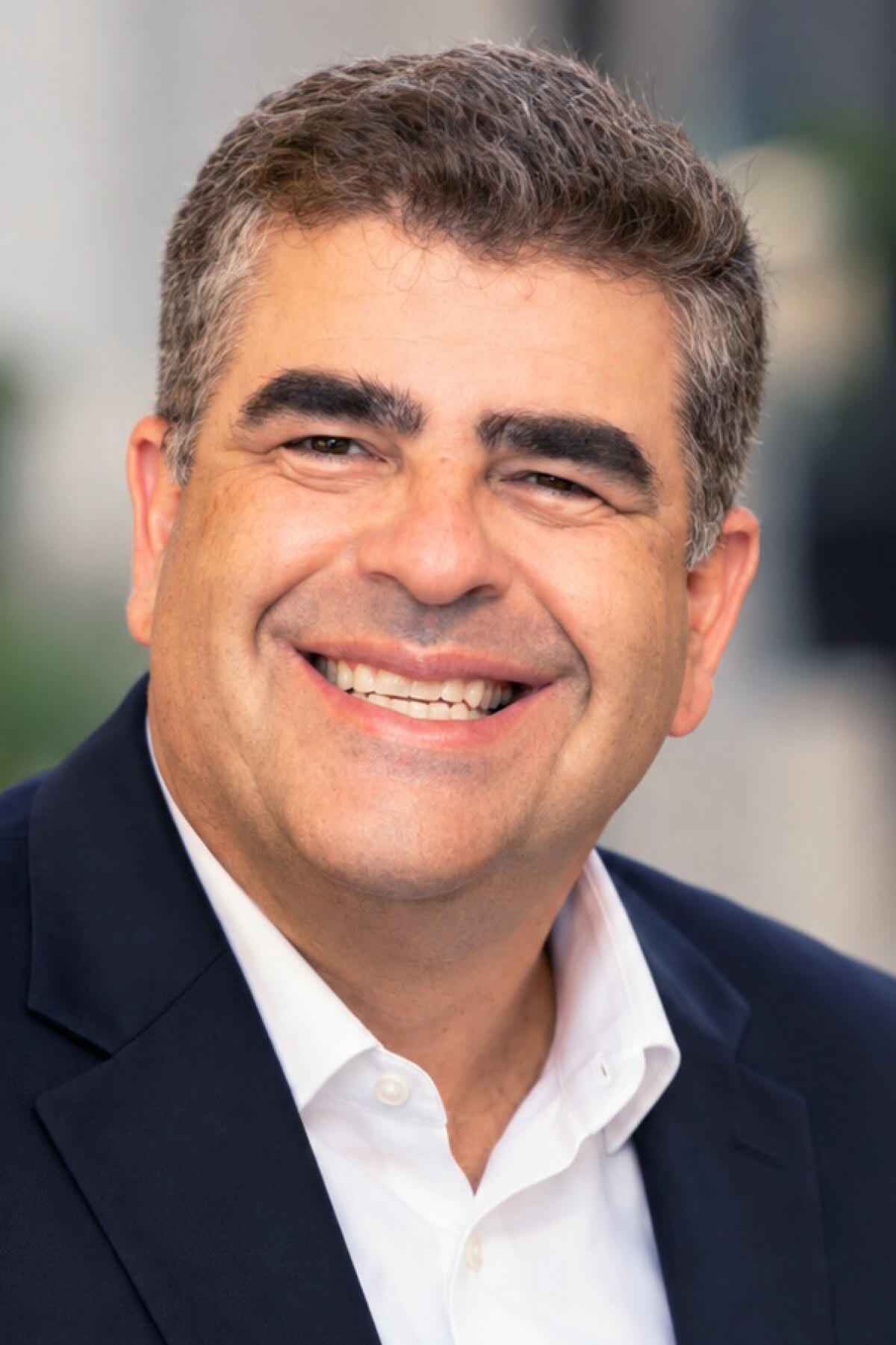

Gabriel Buelna is running for Los Angeles Community College Board of Trustees Seat 6.
(Gabriel Buelna)
Name: Gabriel Buelna
Age: 54
Occupation that appears on the ballot: member of the board of trustees, Los Angeles Community College District, Seat 6
Website: https://www.buelna4laccd.com/
Experience: Buelna serves on the board. He also is an attorney and teaches history and political science at Cal State Northridge. He previously led Plaza Community Services, a nonprofit that provides education, health and other services to children and families.
“I bring an unusual combination of personal, professional and governing experience,” he said. “I understand higher education from several perspectives — as an educator, a policymaker and someone who has spent much of his career working with families facing economic and social barriers.”
District challenges: “Our biggest challenge is not simply getting students through the door. It is making sure they can afford to remain enrolled, complete their education and translate that education into economic opportunity.” Among the barriers Buelna cited were the high cost of housing, food insecurity and child care.
Buelna said the board also must conduct strong fiscal oversight of the billions in voter-approved bond funds. “The board has a responsibility to ensure those resources are spent transparently, responsibly and in ways that produce measurable benefits for students,” he said.
Priorities: Buelna said his priorities include addressing student affordability, better connecting education to economic opportunity and “removing barriers to access and completion.”
He said the district needs to “move aggressively to implement” its commitment of up to $500 million for affordable student and staff housing and “strengthening food assistance, mental-health services and other basic-needs programs.” Buelna said the district also needs to expand career technical education and paid internships, while “strengthening transfer pathways for students seeking four-year degrees.”
In addition, he wants to expand multilingual education and support for working adults and students with families while “protecting immigrant and undocumented students.”
Budget: Buelna would continue to advocate for state and federal funds as well as community partnerships that bring additional resources to the colleges. He said the district also must scrutinize its own spending, including ensuring “major construction and capital projects are completed responsibly.”
“LACCD must be both an advocate for greater investment in community colleges and a responsible steward of the resources taxpayers have already provided,” he said.
Student enrollment and success: “We need to design our colleges around the students we actually serve rather than expecting students to adapt to unnecessary institutional barriers,” he said.
“LACCD students include recent high school graduates, working adults, immigrants, parents, first-generation college students and people returning to school for new skills. Their barriers are different, so our solutions must be flexible.”

Tonia Arey is running for the Los Angeles Community College Board of Trustees Seat 6.
(Tonia Arey)
Name: Tonia Arey
Age: 56
Occupation that appears on the ballot: realtor
Website: https://toniaarey.com/
Experience: In June, Arey ran unsuccessfully to represent District 3 on the Los Angeles County Board of Supervisors, a campaign that allowed her to travel throughout the district to hear the concerns of constituents. “My experience in real estate, public advocacy and community engagement has taught me how to listen, solve problems, manage complex transactions, and hold people accountable,” she said. As a realtor, she said she handles contracts, budgets, negotiations, legal requirements and competing interests — helpful skills in a trustee role.
District challenges: “The biggest challenges facing the Los Angeles Community College District are campus safety, student success and career readiness, and accountability to students, employees, and taxpayers,” she said.
Arey would work to implement campus safety plans, support additional academic advising and career education and more “closely examine spending, contracts, program outcomes and administrative costs to ensure resources reach classrooms and directly support students.”
“Although LACCD is a four-year term, there are no term limits and current trustees can no longer be trusted,” she said.
Priorities: She cited campus safety, student success and career readiness, accountability and respect for employees.
Budget: Arey would review the district’s budget to “identify waste, duplication and spending that does not directly improve student outcomes” and said “cost reductions should begin with unnecessary administrative expenses, not classroom instruction, campus safety, counseling or essential student services.”
She‘d work to strengthen the competitive bidding process for contracts and work to ensure the district’s construction bond program is effectively managed. On the revenue side, she’d work to pursue government grants, raise money from donors and “explore responsible uses of underutilized district property.” She‘d also look at ways to boost enrollment, since state funding is tied to the number of students served.
Student enrollment and success: Arey would work to make “enrollment simpler, faster, and easier to navigate” and do more to help students who enter the classroom.
That includes flexible class offerings, basic needs assistance, robust counseling and the use of data to understand where students are falling through the cracks.

Randall Winston is running for Los Angeles Community College Board of Trustees Seat 6.
(Randall Winston)
Name: Randall Winston
Age: 44
Occupation that appears on the ballot: architect
Website: https://www.randalljwinston.com/
Experience: Winston, a licensed architect and attorney, serves as Los Angeles’ deputy mayor of infrastructure and climate resilience under Mayor Karen Bass. This fall he is teaching a class in public sector leadership skills at West Los Angeles College and said he’s also lectured at UCLA and mentored graduate students.
Under former Gov. Jerry Brown, Winston ran the California Strategic Growth Council, which helps fund sustainable development.
District challenges: Winston listed enrollment and the inability of students to afford basic needs as major challenges. Citing the district’s $5.3-billion bond-funded construction program he said: “Every dollar lost to delays, litigation or fraud is a dollar not reaching students and the faculty and staff who serve them.”
Priorities: Winston’s priorities for the district include ensuring colleges are a pathway to opportunity and good jobs, students can afford basic needs and people historically shut out of higher education are let in.
All colleges should partner with labor and employers to offer apprenticeships and “family-sustaining union careers,” he said, and the district should expand dual enrollment to allow more high school students to earn college credit. He also cited a need to provide more support to groups like veterans and first-generation students.
Budget: Winston said boosting enrollment to increase state funding is the “most direct” way to increase revenue. He‘d also pursue other government funding as well as employer and philanthropic partnerships. There also needs to be “rigorous” oversight of the district’s construction program, he said.
“What I won’t do is balance budgets on instruction or on the people who deliver it,” he said. “Classrooms, faculty and staff come first.”
Student enrollment and success: Winston said most barriers to enrollment and student success are “logistical, not academic.” He‘d push to “invest in simplified onboarding, proactive advising and better counselor ratios.”
“Students who connect with a counselor early are far more likely to finish, and our counselors are stretched too thin to reach everyone who needs them,” he said.
Name: Roberto David LaCarra
Occupation that appears on the ballot: community college professor
Did not reply.


Nancy Pearlman is running for the Los Angeles Community College Board of Trustees Seat 4.
(Nancy Pearlman)
Name: Nancy Pearlman
Age: 78
Website: https://www.nancypearlman.net/
Occupation that appears on the ballot: environmentalist/anthropologist/educator
Experience: Pearlman says she served on the board of trustees from 2001 to 2017 and taught part-time at all nine colleges before and after her time on the board.
“I know the needs of part-time faculty, I know what staff wants, and I know what students want and need because I have been involved with the LACCD since I attended City College in 1968,” she said.
District challenges: Pearlman said low enrollment is the biggest challenge, followed by ensuring students are given the necessary support and resources to succeed. She also cited the need make sure faculty receive equal pay and that the district’s construction program remains environmentally sustainable and within budget.
Priorities: Her priorities would be addressing the challenges the district faces and “keeping the chancellor and presidents accountable and working for the community college district mission,” which she described as the main responsibility of the board.
Budget: “Excess spending must be stopped with analysis of how much administration makes versus faculty and staff,” she said. Pearlman supports campus efforts to create foundations for scholarships and lobbying Sacramento and Washington to keep funding, including student aid, at necessary levels.
Student success: Faculty members need to communicate with their students to determine what the student needs to pass their classes, whether it is additional tutoring, “advising them how to be a better student” or giving them textbooks, “which I did from my own pocket when they couldn’t afford them,” she said.

Darryn Harris is running for the Los Angeles Community College Board of Trustees Seat 4.
(Gloria Mesa)
Name: Darryn Harris
Age: 42
Website: https://darrynharris.com/
Occupation that appears on the ballot: community college educator.
Experience: Harris works as a government and community affairs officer for St. John’s Community Health and recently started teaching a class on student skills at Santa Monica College, which is not an LACCD campus. He also worked at UCLA and in the halls of Congress as an aide to U.S. Rep. Sydney Kamlager-Dove (D-Los Angeles) and Los Angeles Mayor Karen Bass, when she served in the House of Representatives.
“I’ve spent most of my career in public service,” Harris said. “I know how government works, how budgets and policy decisions get made, and how to bring people together when they don’t always agree.”
He wants to hear from students, faculty and staff before big decisions get made — not after. “One of the biggest things I’ve learned is to listen to the people closest to the work,” he said.
District challenges: The high cost of living in L.A. County makes it hard for students to stay in school and more needs to be done to “help more students finish and make sure their education leads somewhere,” he said.
Priorities: Harris wants to tackle the affordability crisis blocking student achievement by building more low-cost housing on district land and making it “easier for students to get help with food, transportation, child care, and other basic needs.” Harris also wants to boost student success through better counseling, transfer support and career training, including partnerships with employers and labor.
Budget: The district needs to “be aggressive” in securing additional partnerships and government funds that “can bring more resources into our colleges,” he said. Prior to cutting classes and student services, he would want to look for savings in “administrative costs, consultants, outside contracts, open positions, and construction spending.”
“We have to look at both sides,” he said. “I want to know what we are spending, why we are spending it, and whether students are actually benefiting from it.”
Student success: Harris would push to make the enrollment process easier and do more to help students finish, including through better counseling and basic needs support. “Then we need to pay attention when someone starts struggling … Reach out early with counseling, tutoring, mentoring, or whatever support they need,” he said.

Adam Bruno is running for the Los Angeles Community College Board of Trustees Seat 4.
(Adam Bruno)
Name: Adam Bruno
Age: 42
Occupation that appears on the ballot: No listing
Experience: Bruno said he attended community college and as a therapist has counseled children, adults and families. This experience gives him “valuable insight” to understand student needs.
“I know what it’s like to feel neglected by an overburdened system, and I know how difficult transitioning to adult life and seeking higher education can be,” he said. Often high school graduates with learning needs can “feel too intimidated and overwhelmed to apply for college” and others, including adults, “may be unaware that community college is even an option.”
District challenges: The primary challenge is overcoming low enrollment, which Bruno said stems from financial challenges facing students. “It is very hard to focus on school when you’re just trying to survive from one day to the next,” he said.
Priorities: “My top three priorities: increase enrollment, increase accessibility to education for students and help educators feel appropriately supported and compensated.” Bruno said he’d explore student stipends as a way to enable more people to attend community college successfully.
Budget: Bruno would look for additional funding sources through donations and other measures and attempt to use the extra revenue to address financial needs of students.
Student enrollment and success: Both can be improved through additional outreach, counseling and efforts to make college more affordable, he said, so that students can “focus on education rather than being overwhelmed with day-to-day survival.”

Elaine Alaniz is running for the Los Angeles Community College Board of Trustees Seat 4.
(Elaine Alaniz)
Name: Elaine Alaniz
Age: 45
Website: elainereadytoserve.com
Occupation that appears on the ballot: healthcare workforce specialist
Experience: Alaniz has worked in a number of fields, including healthcare, workforce development, disaster recovery, public administration and film production. She said she received associates’ degrees in film production and fire technology from Los Angeles City College and Los Angeles Valley College and currently serves as a public affairs specialist with the U.S. Small Business Administration’s Office of Disaster Recovery and Resilience.
“Rather than following one narrow professional track, transferable skills have allowed me to adapt across industries and remain employable as circumstances and opportunities changed,” Alaniz said. “That is what I want our students to have.” She recalled that her college professors “who taught me technical and academic skills helped make my own career possible.”
District challenges: Alaniz cited the need to ensure classroom instruction “keeps pace with a rapidly changing workforce” in the age of artificial intelligence and other technologies. She said the district needs to teach those technologies and also give students “the technical, occupational, communication and human skills employers will continue to need.”
“I would expand programs that combine academics with industry-recognized credentials, apprenticeships and hands-on training in healthcare, skilled trades, technology, public safety, logistics, advanced manufacturing, media and other growing sectors … LACCD has an opportunity to become an even stronger bridge between education and employment.”
Priorities: Alaniz wants the district to do more to ensure students are ready for the workforce. Other priorities would be more flexible class schedules and online courses for working adults and parents, and “expanding digital access to required course materials and coursework at little or no additional cost to students wherever feasible.”
“Students who prefer physical textbooks should absolutely retain the option to purchase them, but students who cannot afford a printed book should have another way to access the materials they need to succeed,” she said.
Budget: Alaniz would examine district spending, including on administration and programs with weak enrollment, to identify what works and what does not. “Before asking students or taxpayers for more money, the district should demonstrate that existing resources are producing measurable results,” she said. At the same time, Alaniz said, “LACCD should aggressively pursue appropriate state and federal grants.”
Student enrollment and success: To help students, Alaniz said it’s important to recognize that LACCD serves a diversity of students, including recent high school grads, parents and people changing careers. “I do not believe students should always have to reorganize their entire lives around the institution,” she said. “Sometimes the institution needs to become more responsive to the student.”
The enrollment process needs to be examined, she said, to ensure students are not “being lost between application, financial aid, counseling, registration and their first day of class.”
Name: Isidro J. Armenta
Occupation that appears on the ballot: Fire Department employee
Did not reply. .

Priscilla Umana is running for the Los Angeles Community College Board of Trustees Seat 4.
(Priscilla Umana)
Name: Priscilla Umana
Age: 43
Occupation that appears on the ballot: American Sign Language educational interpreter
Experience: Umana said her work as an “ASL interpreter in diverse educational environments has given me a firsthand understanding of how different circumstances affect students, faculty, and staff. Through this work, I have developed a deep passion for quality education and for the future of our students.”
District challenges: “One of the biggest challenges facing our community college district is the high percentage of students experiencing housing insecurity, homelessness, and food insecurity. These challenges not only affect students’ quality of life, but also their ability to succeed academically and complete their programs.”
Priorities: Umana said her top three priorities would be affordability, accessibility and community. She would work with the district to expand affordable housing, work-study opportunities and food aid and seek to remove language and disability barriers to make college more accessible. “Education cannot be separated from the basic needs that allow students to participate in it,” she said. “To help students enroll, persist, and graduate, we must provide the stability and support they need.”
She also wants to “build stronger connections between students, faculty and staff” and learn from them how to better foster community. “My goal is to help create community colleges where every student feels supported, included, and empowered to succeed,” she said.
Budget: Umana would review the district’s budget to identify “opportunities to reduce waste while improving services.” This would include examining courses with low enrollment and deciding whether participation can be increased or if money should be redirected to where it’s more needed. She’d also work to raise additional revenue by “partnering with local businesses, nonprofits and entertainment organizations to host campus events, build community partnerships and share proceeds.”
Student enrollment and success: She would work to prioritize “basic needs, accessibility, and clear educational pathways.” She’d do so in part by advocating for expanded financial aid and proactive check-ins with students. “Our goal should be simple: make success easier to navigate and support every step of the way,” she said.

Darryn Harris is running for the Los Angeles Community College Board of Trustees Seat 4.
(Calabasas Cyber Mine LLC)
Name: Jason R. Aula
Age: 41
Website: www.jasonaula.com
Occupation that appears on the ballot: Business owner/journalist
Experience: Aula said he has worked as a political campaign consultant and has “nearly 10 years experience as a businessman in technology and small share ownerships” in tech firms that use mobile apps for deliveries and transportation, experience that “has given me an understanding of the world today that few have.” Aula also said he has worked with LACCD labor unions “through business” but did not elaborate.
District challenges: Aula alleged one of the biggest issues facing the district is “financial fraud,” and in his answers referenced cases in which fraudsters posed as community college students to steal financial aid. He proposed a moratorium on noncitizens attending LACCD.
Priorities: Aula wanted to address the basic needs of students “in the interests of U.S.A citizens.” He would “increase the diversity of curriculum” to “authentically represent the United States of America citizens and interests.” He would include “protecting athletics funding, football in particular, making new partnerships with Navy to serve the district’s needs, and growing the partnership with law enforcement.”
He also said he wants to “confront pandemic learning loss.”
Budget: Aula said he would make financial deals only “that are in the interests or benefits of U.S.A. citizens.”
Editor’s note: The Times declined to publish much of Aula’s written questionnaire responses, which contained comments, proposals and unsubstantiated accusations dealing with suspected terrorists, the Chinese Communist Party, the Palestinian militant group Hamas and cannibalism.


Steven Veres, 46, is vying to maintain his seat on the Los Angeles Community College District Board of Trustees.
(Courtesy of Steven Veres)
Name: Steven F. Veres
Age: 50
Website: www.steveveres.com
Occupation that appears on the ballot: Los Angeles Community College District, member of the board of trustees
Experience: Veres cited his role as trustee and previous work as a teacher as key experience for another four-year term. Veres also has worked as a state politics adviser, including for Sen. María Elena Durazo. As trustee, he said his work has included strengthening job training programs, improving graduation rates and addressing basic student needs.
“Successful colleges depend on students, faculty, and staff having a meaningful voice in decisions” while the board should “listen, set clear priorities, protect public resources, and give our colleges the support necessary to help students succeed,” he said.
District challenges: The district’s greatest challenge is helping students finish their education, given how many are forced to juggle school with “jobs, housing costs, food insecurity, transportation, and family responsibilities … We need to remove those barriers while making the academic experience easier to navigate,” he said.
Priorities: “First, make college truly affordable. Tuition is only part of the cost. Housing, food, transportation, textbooks and childcare can determine whether a student stays enrolled.
“Second, improve completion and transfer rates. Students deserve clear academic pathways, accessible counseling and course schedules that allow them to earn a degree, certificate or transfer without unnecessary delays. Third, connect education to careers. I want to dramatically expand paid internships, apprenticeships and partnerships with employers and organized labor.
“These priorities reinforce each other: Students are more likely to finish when college is affordable, the path to completion is clear, and they can see the economic value of their education.”
Budget: “Our first responsibility is to use taxpayer dollars efficiently while protecting instruction and student services,” he said. In addition, Veres said that because state funding is based on enrollment, boosting it can be a path to financial stability, along with eliminating unnecessary, duplicative spending across the nine colleges and investing in energy efficiency to cut costs.
“Fiscal responsibility is not simply cutting spending,” he said. “It means directing limited resources toward what produces the greatest value for students and taxpayers.”
Student success: Veres would address barriers to student success and enrollment by pushing to make the application process easier and providing more flexible class schedules — including more evening, weekend, online and hybrid options — for working adults, parents and others. “Our job should not end when a student enrolls. It ends when that student reaches their educational goal,” he said.

Robert Payne is running for Los Angeles Community College Board of Trustees Seat 2.
(Robert Payne)
Name: Robert Payne
Age: 77
Website: http://payneforlaccd.info/
Occupation that appears on the ballot: researcher/writer/environmentalist
Experience: Payne said he has taught at L.A. Mission College. His education at L.A. Valley College and Cal State Northridge helped prepare him for a career as a writer. He said he has worked on movie crews and ran an import business, among other jobs. Growing up in Pacoima helped him understand the needs of immigrants and “those of diverse backgrounds with limited resources.”
“I went through the [community college] system,” he said. “I know the difficulties. All my ideas come from my direct experience.”
District challenges: Payne cited low enrollment growth as the main challenge. Students also need to see a quicker return on their investment. “Life costs money,” he said. “If students could see immediate advantages to college, the colleges would attract more enrollments.”
He reflected on his own experience when discussing the importance of a quick payback. “I graduated from Cal State Northridge. Nothing I learned at L.A. Valley or Cal State paid off immediately,” he said. “I worked as a janitor, security guard, construction site cleaner. I lucked into a union tech job and I earned my way through graduate school. Years later, the master’s degree finally helped me get work as a ‘professor.’ ”
Priorities: Payne wants to make community colleges “cheaper, faster, better” in part by offering students more training for specific jobs and less expensive online textbooks. He also would support ending student debt.
Budget: He does not support cutting “student opportunities” and said if “the colleges can demonstrate success for the students, enrollment will justify the expense of maintaining the expense of the faculty, the staff, the facilities.”
Student success: Payne wants college to do more to offer “immediate perceived value,” including teaching résumé building, interview skills and how to apply to jobs. He said hiring adjuncts with industry experience could enhance student success.

Kristina Irwin is running for Los Angeles Community College Board of Trustees Seat 6.
(Yolando Mitchell Brown)
Name: Kristina Irwin
Age: 50
Website: https://kristinairwin.com/
Occupation that appears on the ballot: parent/business owner.
Experience: As a former community college student, Irwin has firsthand knowledge of the L.A. community college student experience.
She serves on the general advisory board at Santa Monica College and said she also served on the board of trustees at her children’s school, Palisades Charter High School, during the Palisades fire. She said she holds a Public Engagement & Civic Leadership Certificate from the Davenport Institute at Pepperdine School of Public Policy.
District challenges: Irwin said the main challenge is preparing young people to advance in college when their earlier schooling failed to give them the tools to succeed.
Priorities: Irwin wants to establish “preentry” programs in every local high school that would prepare students for community college and do more to give educators the resources they need to craft classes that “fit the needs and life limitations of the students.”
Budget: Irwin said alternative streams could be identified to fund “classroom student resources.” She said that as “responsible stewards” of district resources, trustee actions “are often under scrutiny either formally or informally.”
Student success: Irwin wants to address barriers to student success and enrollment by doing more to demonstrate how a community college education can give them the tools necessary to succeed in their chosen career.
Name: Roy Payan
Payan told the Times he suspended his campaign.

Adriana Cabrera is running for Los Angeles Community College Board of Trustees Seat 2.
(John McCoy/For Los Angeles Times en Espanol)
Name: Adriana Cabrera
Age: 34
Website: https://adrianaforlaccd.com/
Occupation that appears on the ballot: educator
Experience: Cabrera said she attended community college and went on to earn bachelor’s degrees in Chicana/o studies and political science and a master’s in education from Cal State Northridge. She said she also served as president of the Central Alameda Neighborhood Council and co-founded Empowering Youth in South Central, a “grassroots collective of students and educators” that “has supported thousands of first-generation students with college, career, financial-aid, and leadership support.”
“I am not coming into this role to learn higher education after I am elected,” she said. “I have studied it, worked in it, navigated it as a student, built programs within it, worked inside public institutions, and organized communities around it.”
District challenges: Cabrera said student services are too difficult to navigate, too many students struggle to afford basic needs such as housing, and clearer pathways are needed to economic mobility, She said budget decisions also can feel “disconnected” from the staff and students those decisions effect.
Priorities: “My first priority is invest in students first,” she said. Cabrera would do that by making student services easier to navigate and strengthening financial aid and other support, including for food, housing, child care and mental health.
Secondly, Cabrera wants to better connect education to economic mobility through good paying jobs. Lastly, Cabrera would give students, faculty, staff, labor organizations and community members “a meaningful voice before major budget priorities are finalized.”
Budget: Cabrera would review the district’s spending “to make sure existing dollars are being used efficiently” and “identify responsible ways to generate additional revenue without shifting costs onto students.” For instance, renting out underutilized facilities.
Student success: Cabrera would take steps to ensure student services are more readily available and the public has better visibility and say in trustee decisions. “The overall standard I would bring to the board is simple,” she said. “Can students enter LACCD, understand their options, find the support they need, complete their goal, and leave with more opportunity than when they arrived?”

Las Vegas Aces star A’ja Wilson said she apologized to her teammates for getting a technical foul late in an eventual 98-89 playoff loss to the Indiana Fever on Tuesday night in Indianapolis.
But the four-time league MVP is not apologizing for her actions that led to the foul being called.
With about 4 minutes left in the fourth quarter and the Aces down by 11, Wilson drew a foul against Indiana’s Sophie Cunningham. As Cunningham protested the call, Wilson walked over to a Fever fan who had been standing in front of his seat in the second row behind the basket and pointing in Wilson’s direction.
Visibly upset, Wilson stood directly in front of the fan, who had been pulled back into his seat by a woman sitting next to him, while yelling at him. She was quickly pulled away by teammate Cheyenne Parker-Tyus, but was still upset as she walked away.
Speaking to reporters after the game, Wilson said that there are “just certain things that I’m not going to allow anymore because it’s just unacceptable.”
“I don’t know if you guys know me, but I don’t really get into the bulls—. I don’t,” Wilson said. “I try to play my game, keep it pushing. But if I’m just walking, because I just got the foul, I’m chilling — and if I see a man come at me, taking steps towards me and pointing at me, I don’t give a damn what you said. I don’t give a damn how you said it, the tone. That is unacceptable.”
Online video footage shot from the stands shows that the man was standing in front of his seat as the play unfolded. He appears to take a step or two while pointing and yelling after the foul was called.
“I didn’t exactly see what happened. I kind of saw the aftermath,” Aces coach Becky Hammon told reporters after the game. “I’ve never seen A’ja Wilson go like that. So whatever was done, I can tell you she felt very disrespected in that moment. I’ve never seen her really react like that ever. So whatever it was, it doesn’t have any place, I don’t think, in an arena.”
The fan eventually was escorted out of the seating area but was allowed to return to his seat. The Fever said in a statement that arena security spoke with the man and witnesses and “determined there was no violation of the Fan Code of Conduct.”
Wilson was assessed a technical foul for unsportsmanlike conduct.
“Yeah, I’m apologizing to my team for that,” she told reporters. But, Wilson added, “you don’t have to like me. You don’t have to love me. You can hate me with all your heart. … But I guarantee you will respect me.”
The decisive Game 3 of the series is Thursday in Las Vegas.

With gas prices topping $6 a gallon and an unpopular war continuing in Iran, President Trump’s approval has slipped with California Republicans — a falloff that could diminish the party’s chances in the state’s few competitive congressional races.
A new poll by the UC Berkeley Institute of Governmental Studies, co-sponsored by The Times, found that 76% of Republican voters in the state approve of the president’s performance, down from 83% last year.
The president’s approval has softened even among those who still support his performance. Only 44% of Republicans in California said they strongly support Trump’s performance, down from 57% who said the same in August 2025.
That could translate into lower Republican turnout in the state’s few competitive races, said the poll’s director, Mark DiCamillo.
“Republicans are losing some of their enthusiasm in terms of being motivated to vote,” he said.
In addition, the more Trump tries to make the midterm elections about himself — such as the pro-Trump ads recently sponsored and paid for by the government — the more Democrats might be inclined to show up, said G. Cristina Mora, the UC Berkeley institute’s co-director.
“That might actually have a galvanizing effect on voters,” she said.
Trump’s sinking support in California mirrors a national decline in the president’s approval, even among Republicans.
The congressional map in the state was already challenging for Republicans after voters last year approved a referendum championed by Gov. Gavin Newsom to redraw districts to be more favorable for Democrats — a response to similar efforts by Republicans in Texas and other states.
In the new map, only four of the state’s 52 districts are currently considered safe Republican districts, while three additional districts are seen as competitive, according to the Cook Political Report, a nonpartisan political handicapper.
The remaining 45 districts are seen as either likely or solidly Democratic in a state where Democrats hold a roughly 20% advantage in party registration.
Only one race is considered by Cook to be a true toss-up — California’s 22nd Congressional District in the Central Valley, which is held by Republican Rep. David Valadao.
“We’re looking at the best case scenario for Democrats at this point,” said Erin Covey, Cook’s U.S. House editor.
Valadao, one of only 10 Republicans to vote for Trump’s impeachment in the wake of the Jan. 6, 2021, insurrection, faces progressive Democrat Randy Villegas, a political science professor who has the backing of Bernie Sanders. The Vermont senator is joining Villegas this weekend for a rally in Bakersfield.
Valadao first won a seat in Congress in 2012, but was ousted from office during the Democrats’ “blue wave” election in 2018, in which the party gained 40 seats in the House in the first election after Trump took office in 2016. Valadao was able to win back his seat in 2020 and has held it since.
There has been scant public polling in the race, but a poll conducted in June by a political committee backing Villegas showed the Democrat holding a 4-point lead over Valadao.
Two other congressional districts in the state are listed by Cook as leaning Democratic:
Trump’s approval also dipped among Black and Latino voters in the poll. Both groups were part of Trump’s winning coalition in the 2024 presidential election.
The poll also found broad disapproval of two signature Trump administration policies.
It found that 70% of California voters disapprove of Trump’s decision to go to war in Iran, including 1 in 5 Republicans.
Also, 70% of California voters believe that the president’s immigration policies are hurting California’s economy and local businesses, including 1 in 5 Republicans.
The poll was conducted online in English and Spanish between Sept. 15 and Sept. 20 and included the opinions of 6,989 registered California voters. The margin of error is plus or minus 1.5 percentage points.

After 72 particularly miserable hours for his football program, Lincoln Riley took his place behind a lectern Tuesday and tried to assure that things at USC weren’t as bad as they looked.
“There’s a lot of things to be proud of in this football program right now,” Riley assured. “Those that really look into it and look at what’s happening here will see that and understand that. There’s people on the outside that just don’t.”
But the optics at USC, since Saturday’s 41-27 home loss to Oregon, certainly couldn’t have been much worse for Riley. Because it wasn’t just that his Trojans lost a critical game to a bitter rival, one framed for weeks — months, even — as a must-win. Or that in its wake, Ducks coach Dan Lanning had savaged him or his program multiple times.
It was what happened in the midst of that loss, as well as the reactions after, that only made matters much worse for USC.
The days since have prompted questions across the country about Riley’s future at USC, where he’s midway through his fifth season as coach. One person familiar with the situation but not authorized to speak publicly on the matter told The Times that “all options are on the table” with Riley after the loss and the events of last weekend.
The chain of regrettable decisions began the moment Trojan linebacker Desman Stephens lowered his shoulder into the helmet of sliding Oregon quarterback Dante Moore in the second quarter Saturday evening. Moore’s head slammed hard into the ground, and he laid motionless for several minutes surrounded by medical personnel, until he was lifted onto a backboard and loaded into an ambulance that had driven onto the field.
The whole unsettling scene was made far worse by Stephens’ reaction in the immediate aftermath of the hit. After jawing with Oregon players, the junior linebacker was seen taunting the Oregon sideline and celebrating on his way back to USC’s side of the field. He continued high-fiving teammates while the Ducks surrounded their quarterback, who was diagnosed with a concussion but no other serious injuries.
The next morning, both Stephens and his coach said in a statement that his actions were “unacceptable,” “inexcusable” and “completely inappropriate.” But after the game, Riley first said he didn’t see Stephens celebrate the hit. And when Riley was asked why Stephens was allowed to stay on the sideline for the second half, the coach responded, incredulously, “‘cause he’s on our football team.” He wished Moore well, but said nothing further about Stephens or his vicious hit.
“It’s an easy answer,” said Petros Papadakis, a local radio host and former USC captain. “I understand you can’t have eyes everywhere as a head coach. But even if you didn’t see it, by the end of the game you know most of college football has turned against you in the last hour.
“The story didn’t go away because Lincoln didn’t get in front of it.”
It was clear that night, among USC’s leadership, that the immediate response wasn’t adequate enough. So the next morning, athletic director Jen Cohen met with Riley to discuss a suspension for Stephens. They settled on one game.
On Tuesday, Riley took a different tone. He said he was “disappointed with how [Stephens] handled it” and that he “needs to have more awareness.”
Riley also asked for understanding from those who have been critical of Stephens, whom he described as “a young person who made a mistake.”
“Consider if that was your son,” he said, “how would you want it handled?”
But three days later, the college football world was still litigating Stephens’ hit. The story was still alive, in part, due to a short documentary from the game, published by Oregon on Tuesday morning. In it was a clip that would unexpectedly make things even worse at USC.
The clip is of USC’s radio booth, where Pete Arbogast has been the Trojans’ play-by-play guy for the past quarter century. From his perch in the Coliseum press box, Arbogast is painting the scene of the play when Moore was injured. Except, in this case, listeners heard a different account of his slide and Stephens’ hit than what happened on the field.
“He did not try to slide feet first!” Arbogast said in the moment.
Arbogast went on to say that Moore “ducked into that hit. I did not see him put his feet out first. I saw him dive forward.”
When confronted with the replay moments later, Arbogast stood by what he said, claiming that Moore’s slide was “more of a knee-first slide.” Even Arbogast’s radio partner — former Trojan defensive tackle Shaun Cody — raised his eyebrows at the suggestion.
Both Arbogast and the university declined to comment on the situation when reached by The Times.
Papadakis, who previously worked on the broadcast with Arbogast, called it “a bad look,” but explained that Arbogast was “usually defending USC or trying to spin something positive.”
That job was left to Riley and his players on Tuesday. Though, some were more convincing than others.
“This is a time of adversity, the best time to come together as one,” left tackle Elijah Paige said.
“Times like these you tend to see teams fall apart,” quarterback Jayden Maiava added, “but this team is such a tight team and we’re all bought into each other.”
Riley, meanwhile, pointed for the second day in a row to a stretch early in Saturday’s fourth quarter against Oregon, when the Coliseum had reached a fevered pitch and momentum seemed to be swinging in the Trojans’ favor.
Except, it never did. USC allowed two fourth-quarter touchdowns after that. Riley still tried to find the silver lining.
“We didn’t get run out of the stadium,” Riley said. “There’s a lot of good on that tape. You don’t have a chance to win a game like that if you don’t do some things pretty well.”
WASHINGTON — As Republicans contend with President Trump’s deep unpopularity, Democrats are attempting to seize the opening to take the U.S. Senate in the Nov. 3 midterm elections. Polls have shown Trump with an approval rating consistently below 40%, with no end in sight to the Iran war and voters expressing deep economic anxiety.
Republicans currently hold a 53-47 edge in the Senate, and 35 seats are on the November ballot.
Months of polling indicate that eight Senate seats — six of which are currently held by Republicans — are now up for grabs. Democrats will need to win at least four of them, while holding on to two contested seats currently held by their party, in order to flip the chamber.
Five key races are unexpectedly close, with some polls giving Democrats a better edge than expected, but the outcomes are still in doubt, as swaths of voters remain undecided. The Cook Political Report, a leading forecaster, rates each one a toss-up. Here’s how they are shaping up:
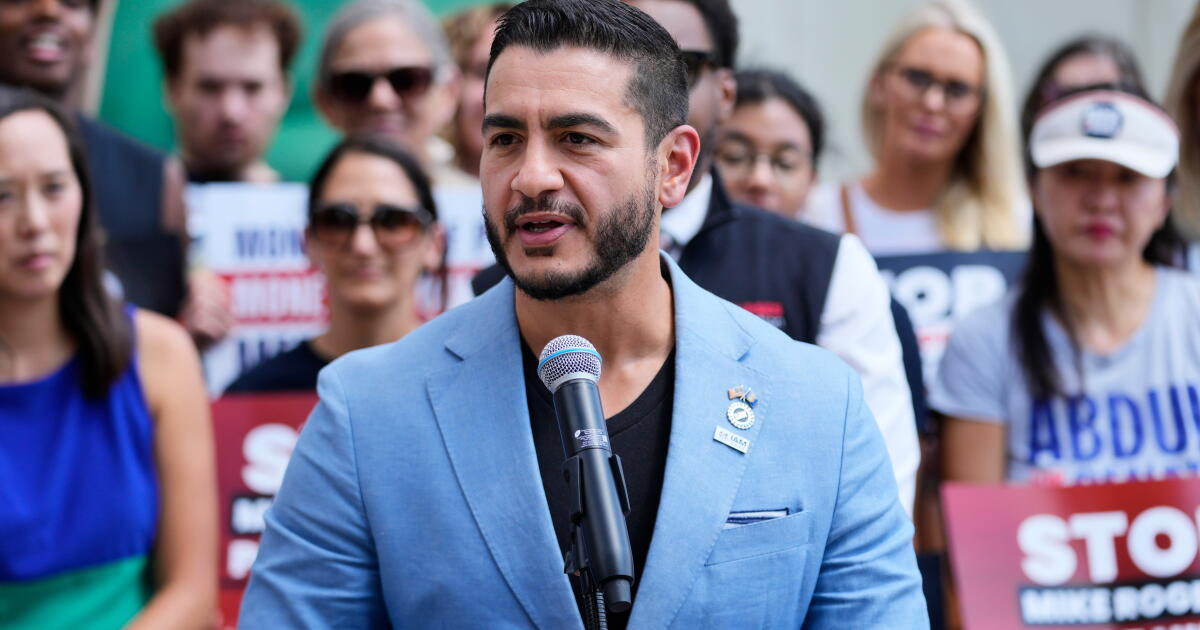
In perhaps the highest-profile contest, former public health official Abdul El-Sayed is facing Republican Mike Rogers for the seat being vacated by retiring Democratic Sen. Gary Peters.
El-Sayed, aligned with the party’s progressive wing, narrowly defeated moderate Rep. Haley Stevens in a heated Democratic primary. He is looking to rally her supporters as well as disaffected Republican voters.
Rogers is courting independents and a cohort of Jewish Democrats who view El-Sayed’s desire to reduce funding to Israel’s military as a dangerous proposition.
According to a CNN/SSRS poll of likely voters released Sept. 9, El-Sayed led Rogers 47% to 44%, a result within the margin of error. Notably, 26% of respondents said they could still be persuaded to vote for either candidate, leaving the race wide open.
The barbs in this race have become deeply personal, with anti-Muslim rhetoric taking center stage.
In a series of ads and artificial-intelligence-generated images, Republican groups — including the National Republican Senatorial Committee and Front Line Action — have cast El-Sayed as a supporter of terrorism. During speeches and interviews, members of the Trump administration, including the president, have repeatedly referred to the candidate by his full name, Abdulrahman Mohamad El-Sayed.
Rogers has continually drawn attention to a campaign event hosted by El-Sayed that included Hasan Piker — a Los Angeles-based online political commentator who recently drew widespread attention for a 2019 comment that “America deserved 9/11” while discussing blowback against U.S. foreign policy in the Middle East.
El-Sayed has railed against Rogers for refusing to debate and for his endorsement by Trump.
This week, El-Sayed stood alone on the Fox 2 Detroit debate stage after Rogers declined an invitation, dubbing his opponent “Mike Dodgers” on several occasions.
Rogers later accused the moderator of bias toward the Democratic candidate. The candidates have agreed to debate on Oct. 8 and 21.
State Rep. James Talarico is seeking to become the first Texas Democrat elected to the Senate since 1993.
His Republican opponent, state Atty. Gen. Ken Paxton, received Trump’s endorsement and defeated four-term incumbent Sen. John Cornyn in the primary.
While gaining a seat in Texas has long been a far-off dream for Democrats, Paxton’s controversies have dogged him during the race. A Mason-Dixon Research poll showed the Democrat leading Paxton 46 to 43, in a state that Trump won by nearly 14 points in 2024. Other polls, including one from Insider Advantage, had the margin at a single point.
Paxton is seen as a prominent fixture in the MAGA movement, using his position as attorney general to contest Obama-era clean energy and healthcare acts and launching lawsuits against the Biden administration for its immigration policy.
Talarico has made Paxton’s association with the president a key piece of his campaign, slamming Paxton as “the most corrupt politician in Texas” and spotlighting his impeachment by the Texas House of Representatives in 2023 over allegations of bribery, breach of public trust and misuse of his office to aid a donor. (Paxton survived the impeachment vote and denied wrongdoing.)
Several attack ads on Talarico, launched by Republican political action committees, have focused on his past support for transgender youth and accused him of exaggerating his faith to garner the Christian vote.
Six-term incumbent Republican Sen. Susan Collins is hoping to retain her seat as Democratic challenger Troy Jackson attempts to replicate the grassroots success of former nominee Graham Platner’s campaign.
Jackson, a former state lawmaker, was chosen by Maine Democratic Party delegates to run in place of Platner, who dropped out in July after sexual misconduct allegations against him. A former lumberjack, Jackson shares Platner’s working-class background and is running on Medicare for All and increased taxes for billionaires.
Collins has repeatedly demonstrated her staying power and won reelection in 2020 even as the state went blue in the presidential race. Her willingness to stand up to Trump could become a deciding factor this time around; Collins is working to highlight her votes to block Trump’s $1.8-billion Department of Justice anti-weaponization fund and against the Iran war.
She has mostly stuck to promoting her decades-long record on the campaign trail, which has recently focused on increased healthcare access for seniors, workforce development and Social Security benefit increases.
She has faced criticism from Jackson and others over her vote to confirm Supreme Court Justice Brett M. Kavanaugh, who faced sexual assault allegations, which he denied, and later voted to strike down Roe vs. Wade, which had granted a constitutional right to choose an abortion.
Jackson has had difficulty generating the same enthusiasm among voters as his predecessor, Platner, who consistently held town halls across the state and had a viral social media presence. Over Labor Day weekend, Jackson hosted at least a dozen events up and down Maine to make his first public introductions to voters deep into the cycle.
A recent poll from YouGov shows Jackson narrowly leading the incumbent, 46% to 44%, with a crucial 9% undecided.
Former Democratic Rep. Mary Peltola and incumbent Republican Sen. Dan Sullivan are leading a field of candidates — including another Dan Sullivan — ahead of a ranked-choice general vote.
Alaska hasn’t elected a Democratic senator since 1995, giving Peltola an uphill battle in a state that Trump won by 13 percentage points in 2024.
A late July poll by Change Research showed Peltola in the lead by six percentage points. A more recent poll from Alaska Survey Research had the race within 1 point in favor of Peltola.
Much of the media attention surrounding this race, however, has focused on the third-place candidate, who only received 2.5% of the primary vote — and also happens to be named Dan Sullivan.
Dan J. Sullivan, a retired teacher who made the top four in ranked-choice voting, has been accused by Republicans of being a Democratic plant that could potentially confuse voters. Sullivan has denied these accusations and the Alaska Supreme Court decided to keep him on the ballot.
If none of the candidates receive over 50% of first-place ranked-choice votes — which is likely in this race — the last-place candidate will be eliminated, with their vote distributed to their next choice until one candidate receives a majority of the total.
In a race that has seen the candidates trade political jabs in separate speeches on the same state fairgrounds, Republican Rep. Ashley Hinson and Democratic state Rep. Josh Turek are nearly neck and neck.
According to a Suffolk University poll, Hinson is leading Turek 45% to 40%, in a state where Trump won by 13 points in 2024. A poll conducted by YouGov, however, has Turek in front by a single point.
GOP incumbent Sen. Joni Ernst elected not to run this year, leaving the seat open for a potential flip.
Turek, a two-time Paralympics gold medalist, has attacked Hinson for past campaign ads in which she said: “I don’t trade stocks, and no one else in Congress should either.” Tucker pointed to the fact that Hinson purchased and sold stocks in Amazon, Tesla and insurance firms after she was elected, according to financial disclosure forms.
In return, Hinson criticized Turek for missing over half of his state Legislature floor votes, and labeled him an “anti-ag” activist.