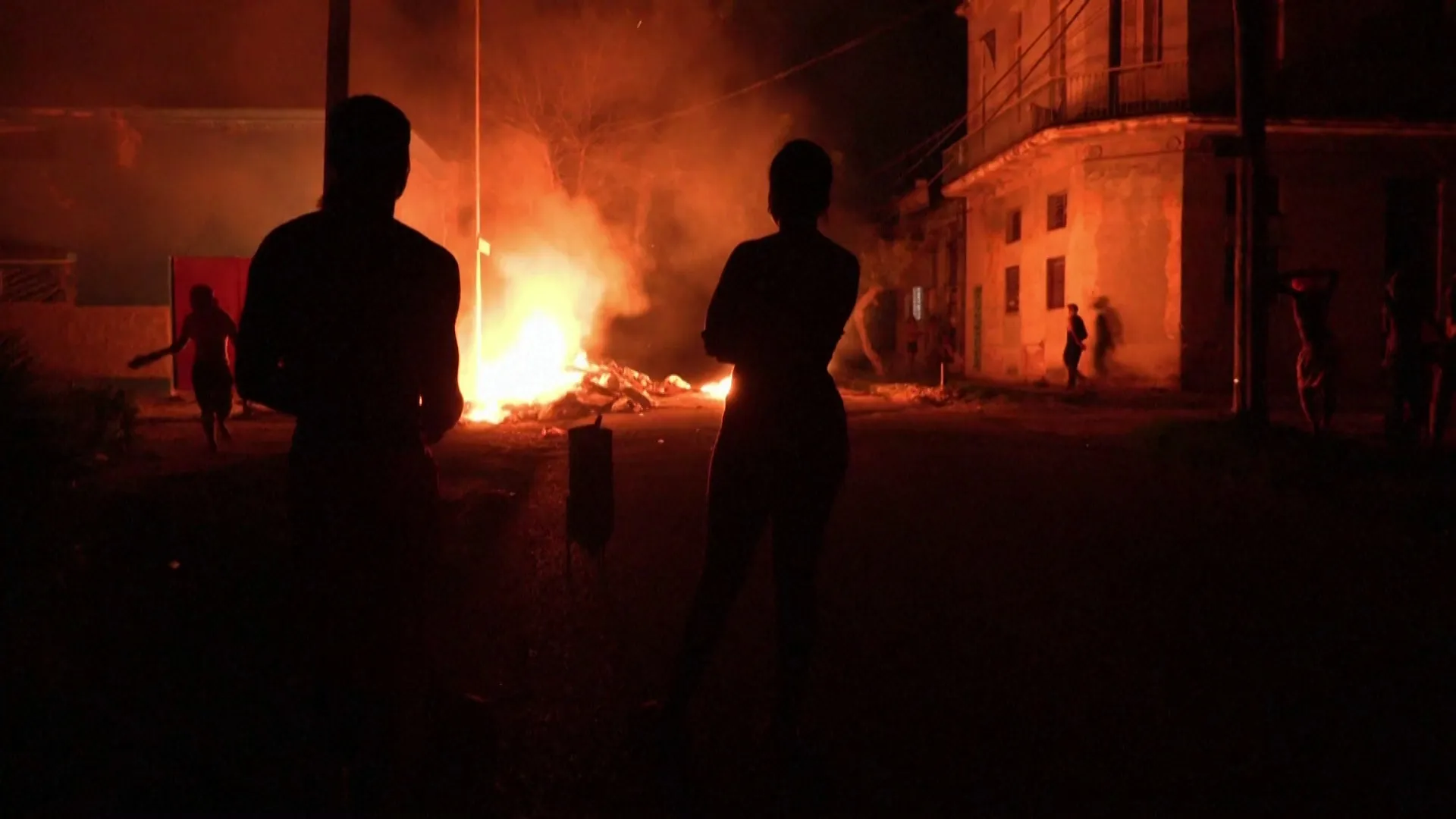
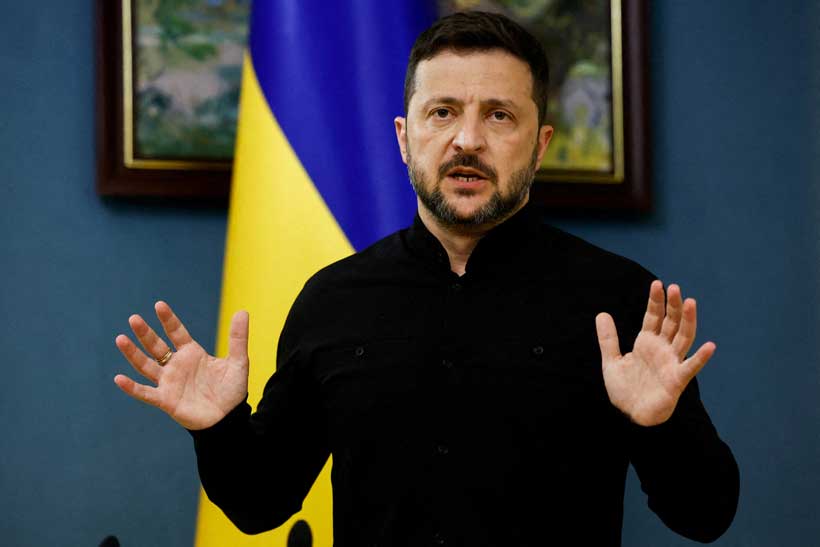
Moscow condemned the action of the Czech police, calling the detainment a ‘provocation’.
Published On 25 May 202625 May 2026
Czech police have detained a Russian cleric after four containers of a suspicious white substance were discovered in his car.
Orthodox Bishop Hilarion was detained in the town of Karlovy Vary, according to a statement released on his Telegram channel by his defence team on Monday.
Recommended Stories
list of 3 itemsend of list
The arrest sparked claims of provocation from Moscow against Czechia’s government, despite Prague having reduced its support for Ukraine since it took office six months ago.
Bishop Hilarion, 60, whose secular name is Grigory Alfeyev, heads the Russian Orthodox Church’s congregation in the western town, which hosts a sizeable Russian diaspora.
The cleric denied any involvement in drug possession. “I have no connection and have never had any connection to the illegal trafficking of narcotic substances,” he said in the statement.
Czech police said only that a man was detained on Sunday evening on a highway between Karlovy Vary and Prague, adding that interrogations were under way and no one had been charged, without disclosing the detainee’s identity.
The Czech Drug Enforcement Centre said it had also acted on an anonymous tip-off reporting the transport of narcotic and psychotropic substances.
Hilarion’s defence said police offered no clear reason for stopping the vehicle and that two patrol cars appeared to be waiting for it on the road.
Hilarion was not permitted to observe the search, his lawyer said, adding that the defence was demanding independent forensic analysis of the substance along with fingerprint and DNA checks.
‘Provocation’
Russian Foreign Ministry spokeswoman Maria Zakharova called the incident an “orchestrated provocation” aimed at discrediting Hilarion, and demanded his immediate release.
“The head of the Czech diplomatic mission in Moscow will shortly be summoned to the Russian Foreign Ministry, where a strong protest will be lodged regarding the unacceptable high-handedness of the Czech authorities,” she said.
Russian media reported that the detention followed months of anonymous threats against Hilarion, including threats of physical violence demanding he leave his post in Karlovy Vary.
Hilarion was once considered the right-hand man of Patriarch Kirill – the head of the Russian Orthodox Church and a pillar of support for President Vladimir Putin and his war on Ukraine.
However, the priest reportedly fell out of favour with Moscow’s spiritual authorities and was sent abroad in 2022, shortly after Russia’s invasion.
Pro-Ukrainian activists trample a photo of Russian President Vladimir Putin and Patriarch of Moscow and All Russia (File: AFP)
His assignment to the Czech Republic came after a former aide brought sexual misconduct charges against him, allegations Hilarion denied, claiming the aide had attempted to extort €384,000 from him.
Unlike many senior Russian clergymen who have publicly backed the war in Ukraine, Hilarion has never publicly commented on the conflict.
Separately on Monday, the Czech government, a coalition of populist and far-right parties that took office in December, announced that it had approved a legal amendment that would tighten rules for Ukrainian refugees’ stays and financial support. It said it was responding to the abuse of aid, and the perception that refugees had some advantages over locals.
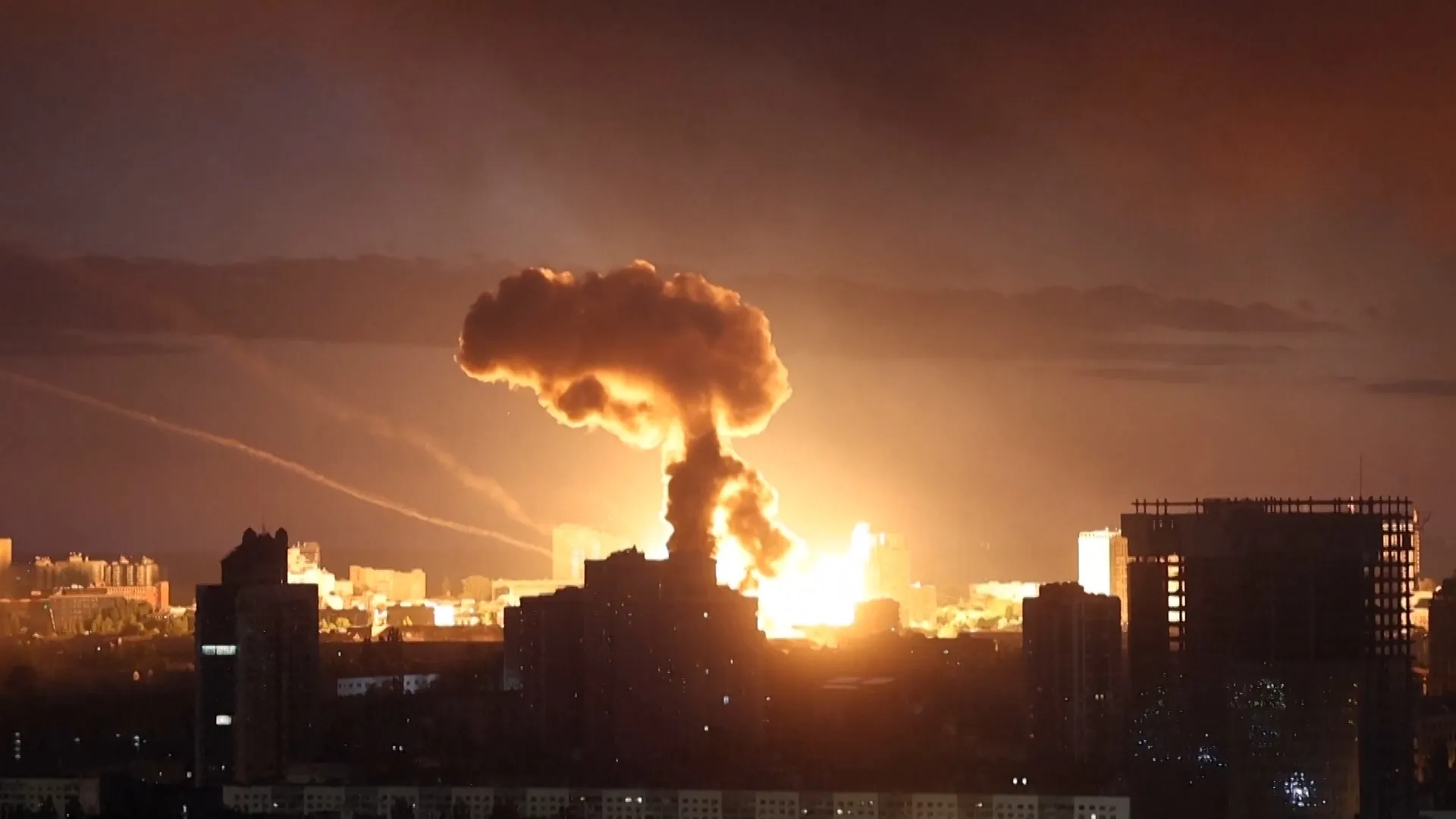
Smoke rises following overnight Russian strikes on Kyiv on Sunday amid the Russian invasion. More than 600 drones and 90 missiles struck several sites across Kyiv overnight on Sunday, resulting in multiple fatalities and more than 80 injuries, according to Ukrainian President Volodymyr Zelensky. Photo by Sergey Dolzhenko/EPA
May 25 (UPI) — Russia on Monday warned the United States it will continue targeting “decision-making centers” in Kyiv and advised Washington to evacuate its personnel from Ukrainian capital as it ratcheted up pressure in the conflict.
Russian Foreign Minister Sergey Lavrov told U.S. Secretary of State Marco Rubio in a phone conversation the Russian Armed Forces are now launching “systematic and consistent strikes against facilities in Kyiv used by the Ukrainian Armed Forces and against the relevant decision-making centers,” according to a readout supplied by the Kremlin.
The Russian assault is in response to “the Kyiv regime’s ongoing terrorist attacks against civilians and civilian objects on Russian territory,” the statement said.
Lavrov also warned Rubio that the United States, “along with other states with missions in Kyiv, ensure the evacuation of their diplomatic personnel and other citizens from the Ukrainian capital.”
Earlier Monday, Moscow decried what it called “a bloody drone attack” on a college dormitory on Friday in Luhansk, a part of Ukraine occupied by Russian forces and claimed as a “people’s republic.”
Twenty-one people, including children, were killed and 42 others injured in strike, Russian President Vladimir Putin claimed while calling it a deliberate “terrorist strike.”
Ukraine, however, described it as an attack on the headquarters of Russia’s Rubicon drone military unit in Starobilsk, Luhansk.
That incident was followed by Russia’s largest-ever drone and missile attack on Kyiv overnight from Saturday into Sunday, in which two were killed more than 80 injured.
Strikes were recorded in almost every district of the city, hitting cultural targets such as The National Art Museum, the Chornobyl Museum, the National Philharmonic, the Ukrainian National Academy of Music and the Kyiv Opera Theater, the Kyiv Independent reported.
Julie Davis, the chargé d’affaires at the U.S. embassy in Kyiv, condemned the overnight strikes on Monday, calling them “deliberate strikes on civilian populations and civilian infrastructure” which she deemed “unacceptable.
“As President Trump has stated before, this war must end. We extend our deepest condolences to all those affected by this horrific tragedy.”
Such strikes in the capital are set to continue, Russia warned Monday, although insisting they are aimed at military rather than civilian targets.
“All this has exhausted our patience In this situation,” the Foreign Ministry said. “The Armed Forces of the Russian Federation are beginning to launch consistent and systemic strikes at enterprises of the Ukrainian defense industry in Kiev, including specific facilities for designing, manufacturing and programming drones and preparing them for operation.”
The strikes “will target decision-making centers and command posts,” Moscow claimed.
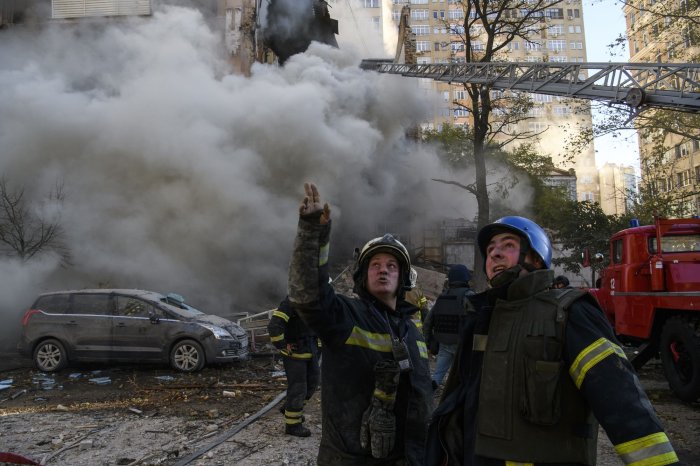
Firefighters conduct work while smoke rises from a building after it was attacked by Russian drones in Kyiv, Ukraine, on October 17, 2022. Photo by Vladyslav Musiienko/UPI | License Photo
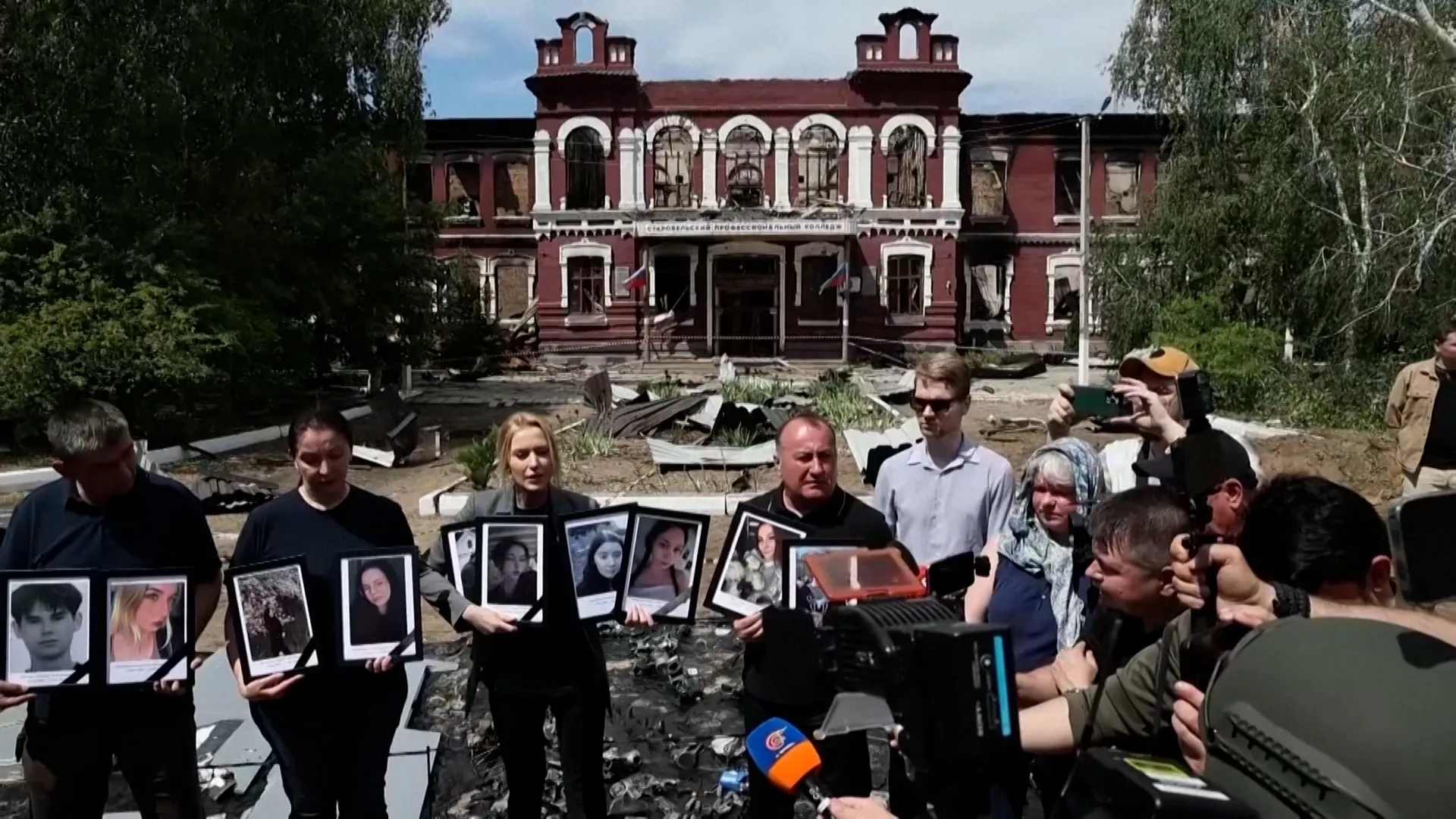
Russia provided a rare look at damage caused by a Ukrainian strike on a college in occupied Luhansk. Moscow claimed that 21 people were killed in the targeted attack, Ukraine denied the claims saying it struck an elite Russian drone command unit operating in the area.
Russia has launched one of its largest attacks on Kyiv since the war began, firing hundreds of drones and missiles across Ukraine overnight.
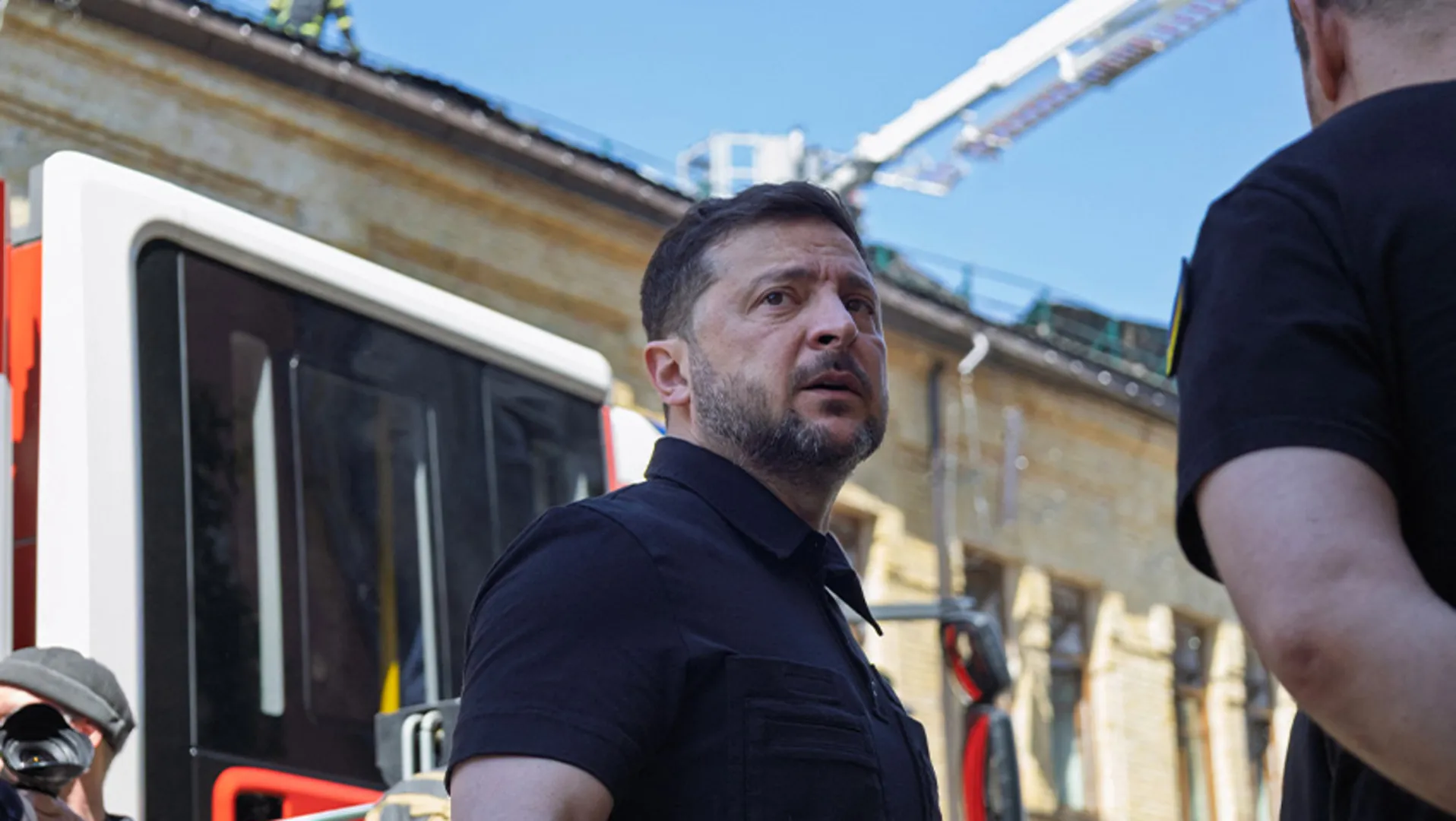
Speaking to Al Jazeera after visiting damaged sites, President Volodymyr Zelenskyy condemned the strikes and the targeting of civilian infrastructure, as Ukraine vowed retaliation.
Russia launched a major attack on Kyiv and surrounding areas on Sunday, using hundreds of drones and missiles, including the Oreshnik hypersonic missile, which is capable of carrying nuclear warheads. This assault resulted in four deaths and injured over 80 people, with significant damage to residential buildings and schools. Kyiv’s mayor described the night as terrible, with emergency services working to put out fires and assist the injured.
This was only the third time Russia used the Oreshnik missile in the conflict that began with its invasion of Ukraine in February 2022. The missile also struck Bila Tserkva, located about 40 miles from Kyiv. Overall, Russia launched 90 missiles and 600 drones during this attack. Ukrainian President Zelenskiy called for international consequences for Russia’s actions and mentioned that water-supply facilities were also targeted, possibly to disrupt supplies ahead of increased summer demand.
Russia claimed the strikes were a response to Ukrainian attacks on Russian civilian targets, asserting that its missiles aimed at military facilities. The Russian Defense Ministry denied targeting civilians, despite the large number of casualties caused by previous bombardments.
Explosions shook Kyiv just after 1 a.m., prompting residents to seek shelter. Damage reports included shattered windows in the Foreign Ministry and structural damage in several areas of the city. Two casualties and numerous injuries were reported in Kyiv, while additional strikes in the Kyiv region and Cherkasy resulted in further casualties.
As dawn arrived, smoke from ongoing fires hung over Kyiv, with firefighters and rescue workers continuing to work on the aftermath of the strikes. Zelenskiy had warned of an impending attack using the Oreshnik missile, based on intelligence reports. Russian President Putin has claimed this missile is nearly impossible to intercept due to its extreme speed.
Russia pounded Ukraine’s capital overnight on Saturday with drones and ballistic missiles, including a powerful hypersonic Oreshnik missile, killing at least four people and damaging residential buildings. Footage shows people sheltering underground, while firefighters work above.
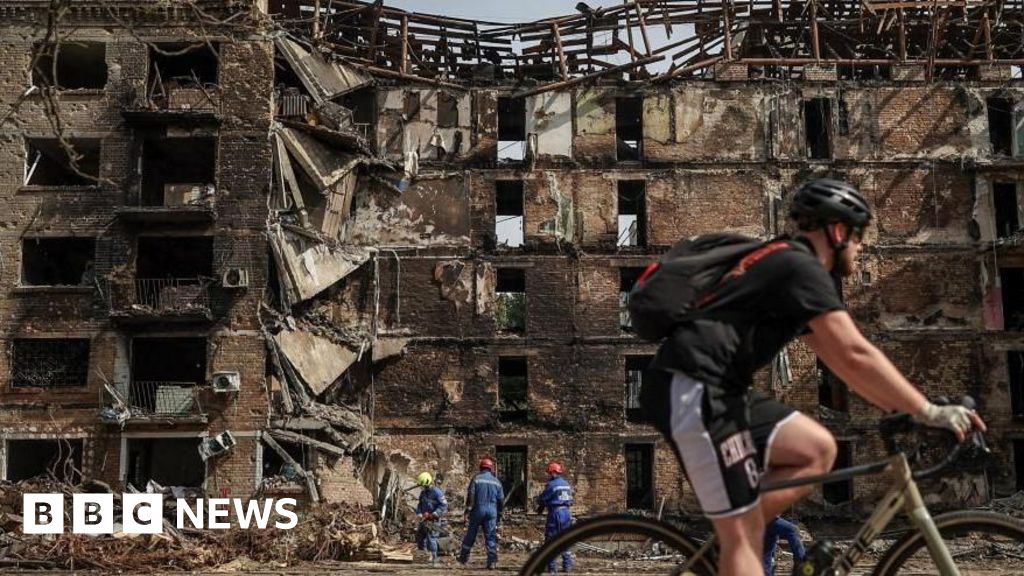
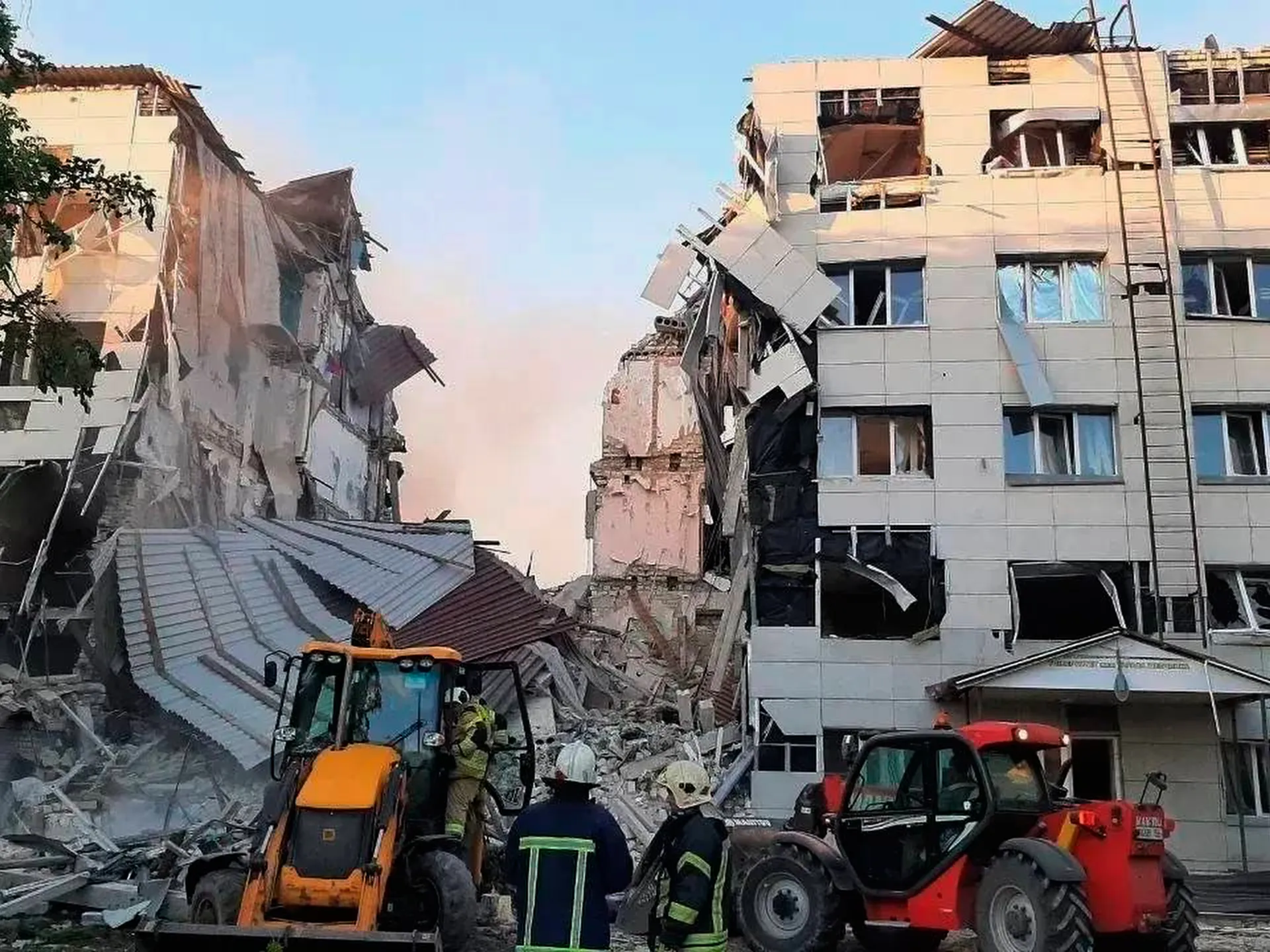
A Ukrainian strike collapsed a five-storey college dormitory in the Russian-occupied city of Starobilsk, killing four people and injuring at least 39 others. Rescue operations continue as more people are believed to be trapped under the rubble.
The incident came last month when unarmed Rivet Joint plane was securing NATO’s eastern flank in international airspace, according to the British Defence Ministry.
Published On 20 May 202620 May 2026
Two Russian jets have “repeatedly and dangerously” intercepted a British Royal Air Force surveillance aircraft in April over the Black Sea, according to the United Kingdom’s Ministry of Defence.
The Rivet Joint aircraft was unarmed and carrying out routine surveillance in international airspace over the Black Sea, securing NATO’s eastern flank, the ministry said in a statement on Wednesday. There was no immediate reaction from Russia.
Recommended Stories
list of 3 itemsend of list
“This incident is another example of dangerous and unacceptable behaviour by Russian pilots, towards an unarmed aircraft operating in international airspace,” Defence Minister John Healey said in the statement. “These actions create a serious risk of accidents and potential escalation,” he added.
It was repeatedly intercepted by a Russian Su-35 aircraft, which flew close enough to trigger emergency systems on the British plane, it said. A Russian Su-27 conducted six passes, flying six metres (less than 20 feet) from the Rivet Joint’s nose.
Defence and foreign ministry officials this week formally complained to the Russian embassy about the air incident, Wednesday’s statement added.
It said the incident was the most dangerous Russian action against a UK surveillance plane since 2022, when a nearby Russian plane released a missile over the Black Sea, in what Moscow later called a technical malfunction.
The intercepts came days after Healey announced that the Royal Navy had tracked and “seen off” three Russian submarines on an alleged monthlong “covert operation” in Atlantic waters “north of the UK” near vital undersea cables and pipelines.
Healey made details of the monitoring operation public on April 9.
“Let me be very clear: This incident will not deter the UK’s commitment to defend NATO, our allies and our interests from Russian aggression,” he warned on Wednesday.
The UK monitoring mission involved about 500 personnel and saw UK aircraft fly more than 450 hours while a navy frigate covered several thousand nautical miles.
A defence review last year concluded that Russia poses an “immediate and pressing” threat to the nation.
Xi and Putin hold talks just days after US President Donald Trump made an official visit to China.
A meeting between Chinese leader Xi Jinping and visiting Russian President Vladimir Putin has started in Beijing, Chinese state media report.
Xi welcomed Putin to the Chinese capital on Wednesday, shaking hands with the Russian leader outside the Great Hall of the People before their talks, video by Russian media showed.
Recommended Stories
list of 4 itemsend of list
Before entering the Great Hall, Putin and Xi walked down a red carpet, rolled out to greet the Russian leader, and stood as a military band played their two national anthems.
Putin began the talks by hailing the “strong, positive” momentum in cooperation between Russia and China, according to Russian media.
“Even amid unfavourable external factors, our cooperation and economic cooperation is showing strong, positive momentum,” Putin told Xi.
Addressing Putin, Xi lauded the “unyielding relationship” between China and Russia.
“We have been able to continuously deepen our political mutual trust and strategic coordination with a resilience that remains unyielding despite trials and tribulations,” Xi told Putin, according to China’s Xinhua news agency.
The Chinese leader also addressed war in the Middle East, telling his Russian counterpart that further conflict was “inadvisable” and a ceasefire was necessary.
“A comprehensive ceasefire is of utmost urgency, resuming hostilities is even more inadvisable and maintaining negotiations is particularly important,” Xi said, according to Xinhua.
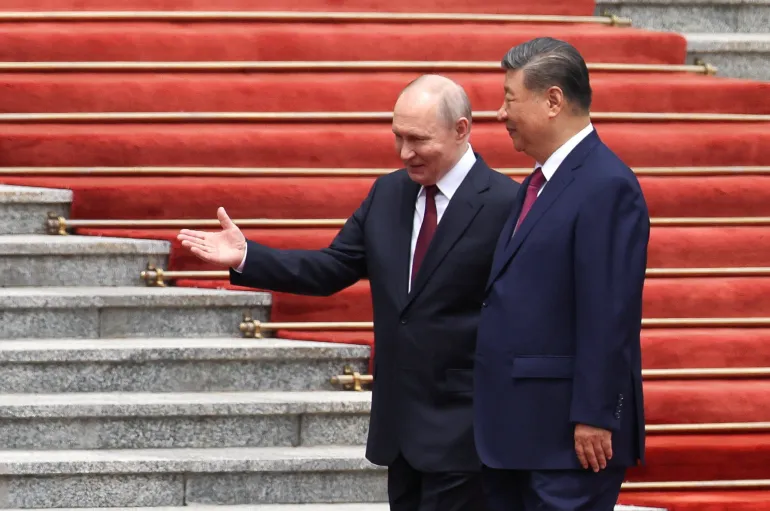
Russian President Vladimir Putin walks with Chinese President Xi Jinping during a welcoming ceremony at the Great Hall of the People in Beijing, on Wednesday [Maxim Shemetov/Pool/Reuters]
Al Jazeera’s Katrina Yu, reporting from Beijing, noted that Putin’s visit and that of the recently concluded trip by US President Donald Trump to China were very different.
Putin, she said, is marking 25 years of the Sino-Russian friendship, has visited China dozens of times, and met with Xi on more than 40 other occasions.
“So this visit will really be about deepening existing coordination and cooperation,” Yu said.
“We are expecting that the two sides will update each other on the situation in the Middle East, as well as Ukraine. No doubt, Xi Jinping will also talk to Putin about what was discussed with Donald Trump last week,” Yu said.
Putin is being accompanied by a large delegation of Russian businesspeople and government leaders, and the Kremlin has announced that the two leaders will sign some 40 different agreements, Yu said, covering everything from the economy and tourism to education.
“But I think for Putin, the main topic of discussion with Xi Jinping is going to be on energy security,” Yu said.
“Since the war in Ukraine, any gas sales that were previously heading to Europe – that is all dried up – and Russia is in desperate need of revenue to replace that, especially since we are in the fifth year of the Ukraine war,” she added.
In a video address released before meeting Xi, Putin said Beijing and Moscow are prepared to cooperate with each other on “core interests of the two countries, including the protection of sovereignty and national unity”, the Reuters news agency reports.
Both countries are actively expanding ties in economy, politics and defence, Putin said, adding that “a close” and “strategic” connection between Moscow and Beijing was playing “a stabilising role” in global relations.
“We are not aligning against anyone, but working for the cause of peace and universal prosperity,” Putin said.
Russian President Vladimir Putin arrived in China on Tuesday evening for a two-day visit centred on talks with Chinese President Xi Jinping, as Moscow and Beijing draw closer amid war, sanctions and an increasingly fractured global order.
Putin’s visit is the second face-to-face meeting he has held with Xi in less than a year and coincides with the 25th anniversary of the 2001 Treaty of Good-Neighborliness and Friendly Cooperation, the agreement that formalised ties between Russia and China following decades of ideological rivalry and mutual suspicion.
Recommended Stories
list of 4 itemsend of list
The visit comes just days after United States President Donald Trump left Beijing following his own two-day visit to the Chinese capital for meetings with Xi.
Both Moscow and Beijing are navigating tricky relations with Washington, with analysts saying the unpredictability of Trump’s foreign policy has had the effect of pushing Russia and China even closer together.
Their deepening partnership also comes against the backdrop of the war in Ukraine, mounting tensions around Iran, and disruption to shipping through the Strait of Hormuz – a crisis that has rattled global energy markets and renewed Beijing’s concerns over the security of its oil and gas supplies.
With one of the world’s most strategically vital waterways under threat, China has increasingly turned towards Russia as a reliable overland energy supplier.
Analysts say Xi’s decision to host Trump and Putin within the space of a week is no coincidence, reflecting Beijing’s attempt to cast itself as a trusted actor in an increasingly fragmented and volatile world order.
How have China-Russia relations changed over the decades?
China and Russia have long occupied a complicated place in each other’s histories. Once bound together through communist ideology and shared opposition to Western capitalism, the Soviet Union and Maoist China later became bitter rivals, with tensions along their 4,300km (2,670-mile) border bringing the two countries close to conflict during the Cold War.
However, that border has since transformed from a frontier of insecurity into one of strategic cooperation and trade.
Neither Xi nor Putin is a frequent international traveller. Putin is the subject of an International Criminal Court (ICC) arrest warrant over the war in Ukraine, while Xi rarely leaves China other than for carefully choreographed state visits. But both leaders have invested heavily in maintaining personal ties with each other.
The two have repeatedly called each other “friends”, and their relationship has deepened, particularly since Russia’s invasion of Ukraine in 2022, which pushed Moscow further into international isolation and forced the Kremlin to look southeastwards for trade amid Western sanctions.
“Russia and China look confidently towards the future,” Putin said in remarks carried by Russian state media ahead of the visit.
He said the two countries were “actively developing cooperation in politics, economics, defence, expanding cultural exchanges, and fostering interpersonal interaction”.
“In essence, jointly doing everything to deepen bilateral cooperation and advance global development for the wellbeing of both nations,” Putin added.
Why Russia needs China
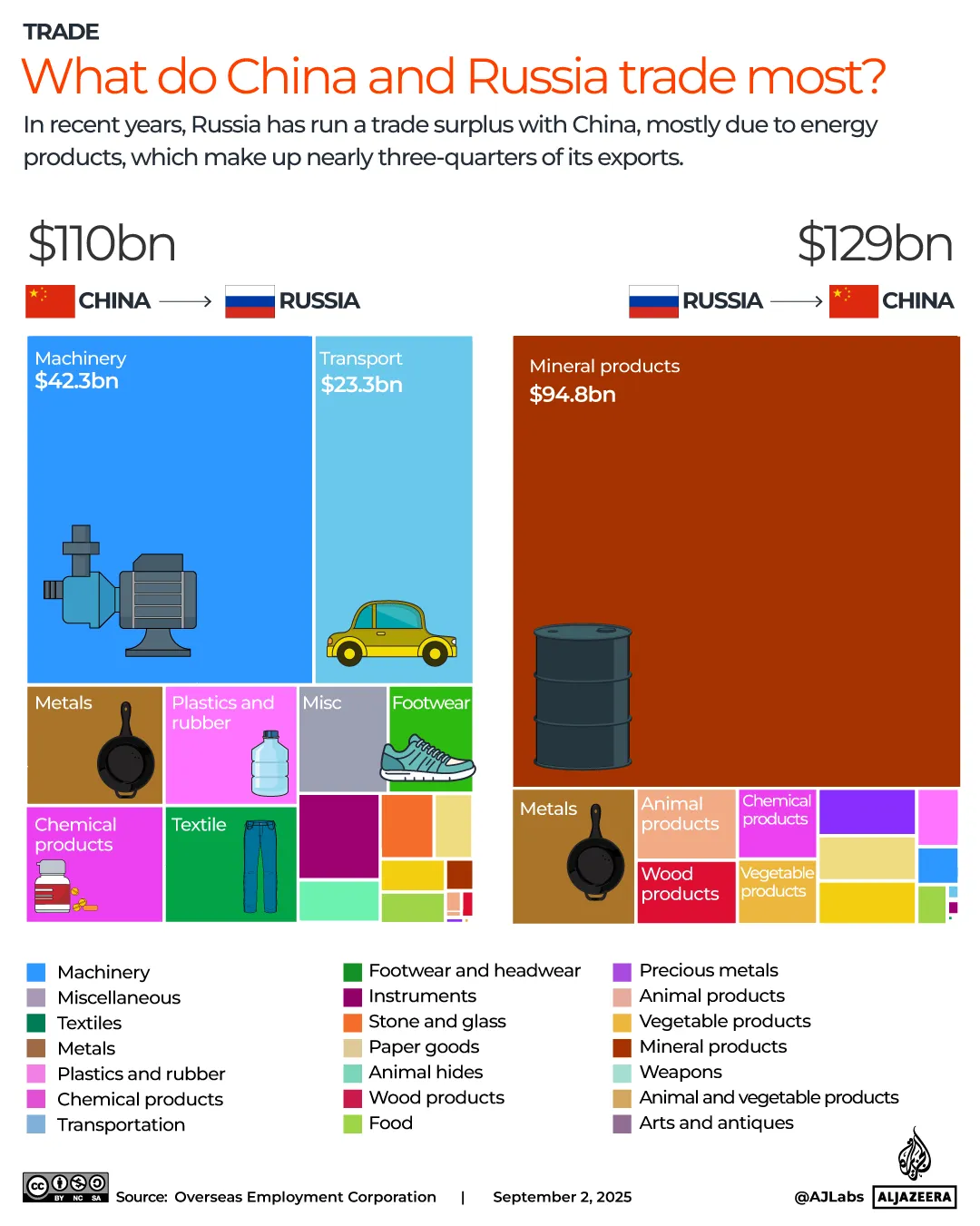
China has become an economic lifeline for Russia as the country’s economy has shifted to a wartime footing, with two-way trade between the countries more than doubling between 2020 and 2024, when it reached $237bn for the year.
But the relationship is also uneven. While China is Russia’s largest trading partner, Russia accounts for only about four percent of China’s total international trade. China’s economy is also vastly larger, and Beijing holds considerably more leverage in negotiations between the two sides.
Since the invasion of Ukraine, Moscow has become increasingly reliant on Chinese technology and manufacturing. A recent Bloomberg report found Russia was sourcing more than 90 percent of its sanctioned technology imports from China, including components with military and dual-use applications vital to drone production and other defence industries.
China has also emerged as a crucial buyer of Russian oil and other energy products at a time when European markets have largely closed to Moscow in response to the Russia-Ukraine war. With Western sanctions restricting Russia’s options, the Kremlin has few viable alternatives to China’s scale of demand.
Analysts say the imbalance means Beijing is often able to negotiate from a position of strength, securing access to Russian oil and gas at discounted prices while expanding its influence over Moscow’s economic future.
(Al Jazeera)
Why China still needs Russia
While the relationship is uneven, it is not one-sided. Russia provides something increasingly valuable in a turbulent world: secure access to vast energy resources beyond vulnerable maritime trade routes.
The war surrounding Iran and disruptions in the Strait of Hormuz have heightened Beijing’s concerns over energy security, given China’s heavy dependence on imported oil and gas passing through contested shipping lanes.
That has renewed attention on the proposed Power of Siberia 2 pipeline, a long-delayed project expected to feature prominently in this week’s discussions.
If completed, the pipeline would transport 50 billion cubic metres of Russian gas annually to China via Mongolia, significantly expanding energy flows between the two countries.
But it is more than just an economic relationship. China also values Russia as a geopolitical partner. Both countries are permanent members of the United Nations Security Council and frequently align diplomatically in opposition to US-led policies.
While analysts say China has been careful not to become formally tied to Moscow through a rigid military alliance, the two countries have still gradually reinforced their partnership through increasingly regular joint military exercises, including the “Joint Sea” naval drills that began in 2012.
Last year, China and Russia launched fresh naval drills in the Sea of Japan near the Russian port of Vladivostok, with exercises focused on submarine rescue, anti-submarine warfare, air defence, missile defence and maritime combat operations. Analysts say the drills help signal strategic alignment between Beijing and Moscow without the mutual defence commitments of a formal alliance.
Experts say the strength of the partnership lies in its flexibility. While Western governments have often portrayed the relationship as fragile and driven largely by a shared opposition to the West, analysts say, it may prove more durable because it is rooted in shared economic and strategic interests rather than ideology alone.
China’s Xi Jinping is hosting Russian President Vladimir Putin, just days after welcoming Donald Trump to Beijing. The Chinese leader is set to discuss energy security and trade, while balancing access to European markets, as Al Jazeera’s Katrina Yu explains.
May 19 (UPI) — The Trump administration has issued temporary Russia sanctions relief for a third straight month, extending a waiver allowing the delivery and sale of Russian oil already loaded onto tankers at sea amid the ongoing energy crisis cause by the U.S. war with Iran.
Treasury Secretary Scott Bessent announced the 30-day reprieve on social media, saying it will “provide the most vulnerable nations with the ability to temporarily access Russian oil currently stranded at sea.”
“This extension will provide additional flexibility, and we will work with these nations to provide specific licenses as needed. This general license will help stabilize the physical crude market and ensure oil reaches the most energy-vulnerable countries,” he said in a statement.
The United States has imposed thousands of sanctions on Russia since it invaded Ukraine in February 2022, in an effort to cut it off from a lucrative revenue source to fund its war.
The sanctions relief — first issued on March 5 to permit the sale of Russian crude to India before being broadened March 12 — may have helped Russia generate ab additional $150 million per day in oil revenue, or $3.3 billion to $5 billion in the month of March alone, according to the Council on Foreign Relations.
Ukrainian President Volodymyr Zelenskysaid in mid-April that about $10 billion worth of Russian oil was at sea, condemning the sanctions relief by stating “every dollar paid for Russian oil is money for the war.”
Democrats and Ukrainians have been sharply critical about the sanctions relief, describing it as undercutting their years of work to try to hobble Russian President Vladimir Putin’s ability to make war.
Following the announcement of the extension on Monday, Democratic Sens. Jeanne Shaheen of New Hampshire and Elizabeth Warren of Massachusetts described the waiver as “delivering another dangerous and indefensible gift” to Putin.
“Every additional dollar the Kremlin earns from this license helps Putin finance his illegal war against Ukraine and kill innocent Ukrainians,” the Democratic pair said in a joint statement.
The Trump administration initially issued the waiver as oil prices surged in response to the war in the Middle East, which began Feb. 28 when the United States and Israel launched joint attacks on Iran.
Shaheen, ranking member of the Senate Foreign Relations Committee, and Warren, ranking member of the Senate Banking, Housing and Urban Affairs Committee, criticized the Trump administration over its reasoning that the waiver is to support vulnerable countries, stating that justification “would be more credible had it not launched this war, or if it had used policy tools to limit the prices Russia could push on those countries.”
“Instead, the Trump administration has helped Russia charge more for its oil cargoes by removing the risk of sanctions,” they said.
“Continuing to show weakness like this will only invite more aggression and put a just end to the war in Ukraine further away.”
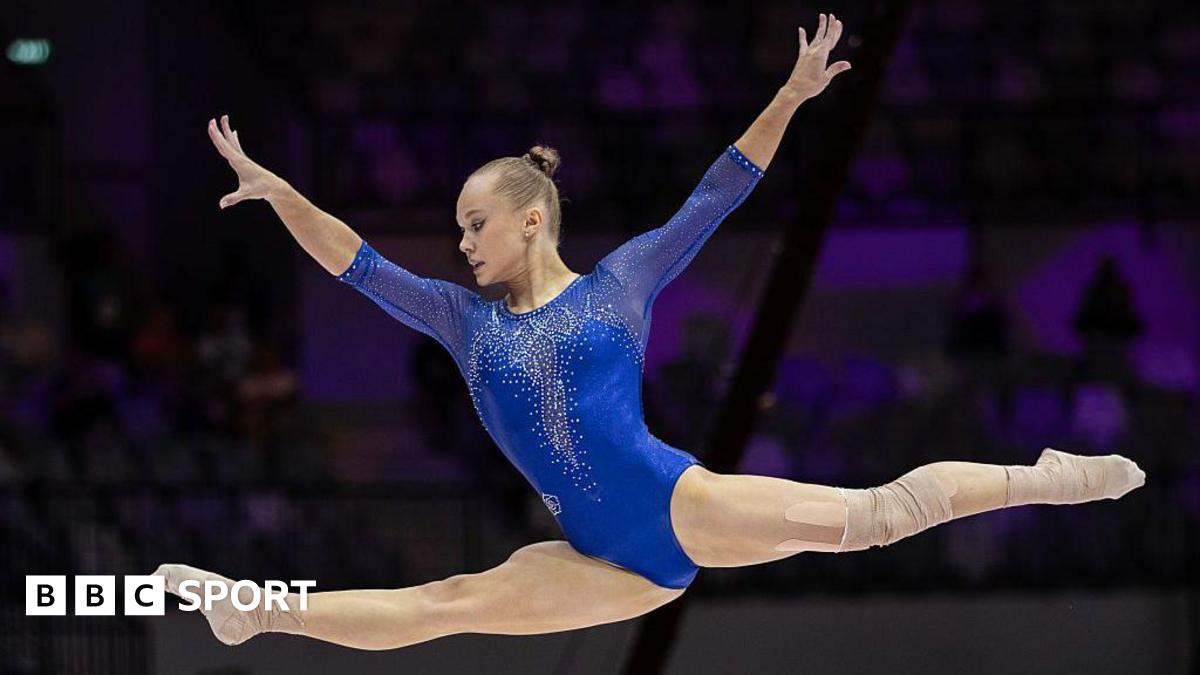
World Gymnastics has lifted all restrictions on Russian and Belarusian athletes with immediate effect.
Athletes from both countries were banned from international competition in March 2022 following Russia’s invasion of Ukraine.
They were subsequently permitted to compete as neutrals towards the end of 2024 but will now be allowed to return to international competitions under their national flags.
World Gymnastics confirmed the decision in a statement, external following a meeting of its executive committee in Egypt last weekend.
The reversal applies across all five disciplines governed by World Gymnastics, including artistic, rhythmic, acrobatic and aerobic gymnastics as well as trampolining.
Russia has historically been one of the strongest countries in gymnastics.
They won two golds and 10 medals overall at the Tokyo Olympics in 2020, competing under the Russian Olympic Committee banner, before being banned from Paris 2024.
The move to allow athletes from Russia and Belarus to take part under their flags follows a similar decision by World Aquatics in April while the International Judo Federation lifted its ban last November.
The International Paralympic Committee removed its suspension on athletes from the two countries competing last year and they took part in the 2026 Winter Paralympics in Milan-Cortina.
Weekly insights and analysis on the latest developments in military technology, strategy, and foreign policy.
Russia has announced a successful test of its long-delayed Sarmat intercontinental ballistic missile (ICBM), which President Vladimir Putin now says will be operationally deployed later this year. The weapon, developed to deliver multiple nuclear warheads over great distances, has had a very mixed track record of testing so far, and was once planned to be fielded in 2020. All this makes today’s announcements more significant, although they have yet to be independently verified.
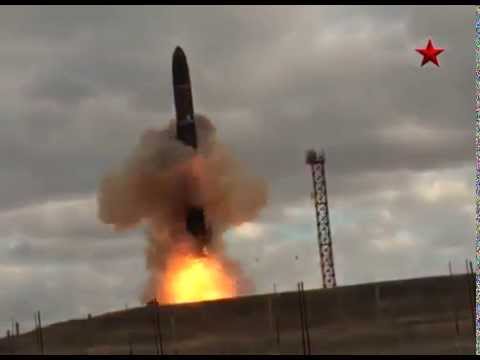
The test-launch from the Plesetsk Cosmodrome in the Arkhangelsk region took place at 11:15 a.m. Moscow time today, according to the Kremlin. Around half an hour later, Russian officials said that the missile hit its target at the Kura test range on the Kamchatka Peninsula in Russia’s Far East.
🚀🇷🇺 Russia announced it has conducted a successful test launch of its RS-28 Sarmat intercontinental ballistic missile (ICBM) on Tuesday.
Russian President Putin said that the Sarmat is set to enter service within the Strategic Missile Forces by the end of 2026 (in 2021-2022,… pic.twitter.com/uX8cNeUZTt
— Status-6 (War & Military News) (@Archer83Able) May 12, 2026
The commander of the Strategic Rocket Forces, Sergei Karakayev, informed Putin of the successful test. The Russian leader monitored the launch via video link from his office bunker.
Putin called the test a “major event and unconditional success.”
“The positive results of the Sarmat missile system launch will allow us to deploy the first missile regiment armed with this missile system to combat duty in the Uzhur formation of Krasnoyarsk Krai by the end of this year,” he added, referring to the 62nd Red Banner Rocket Division at Uzhur in Siberia.
Putin says the missile’s range could exceed 35,000 kilometers (21,748 miles).
Apparently, Russia managed a successful test-launch of its much-delayed new ICBM, Sarmat (RS-28, SS-29). A Russian MOD video allegedly shows the launch: https://t.co/V5fyAoYdnG (h/t to @krakek1 for first post).
— Hans Kristensen (also on Bluesky) (@nukestrat) May 12, 2026
The RS-28 Sarmat, known to NATO by the codename SS-29 Satan II, is Russia’s new-generation heavy ICBM, intended to replace the Soviet-era R-36M2 system (SS-18 Satan).
A video shows the launch of the R-36M2 ICBM (SS-18 Satan):
Russian Intercontinental ballistic missile SS-18 Satan R36M2 Voevoda
While these features are all relatively novel, the fact that the Sarmat is liquid-fueled might seem like something of a throwback to the Cold War. However, as we have discussed in the past, it does bring certain benefits:
A liquid-fueled ICBM might seem somewhat dated, but it does offer the advantage of a more capable and dynamic propulsion arrangement. But unlike a solid fuel design, it has historically been difficult to keep these types of missiles in a fueled state indefinitely, often meaning that launch crews had to go through a lengthy process of fueling the weapon shortly before launch. However, a hydrazine-based liquid rocket fuel with nitrogen tetroxide (NTO) as the oxidizer provides a more stable, less corrosive option that allows for long-term storage of missiles in a fueled, ready state when combined with the right component materials and environmental controls.
An official video of the Sarmat released by the Russian Ministry of Defense in 2018:
Ракетный комплекс «Сармат»
The first successful test launch of the Sarmat took place in 2022, also from Plesetsk. However, it was followed by a failed test launch in February 2023. A further test in September 2024 was also unsuccessful, leading to the destruction of the Yubileynaya test silo at Plesetsk.
The original plan was for the Sarmat to become operational in 2020, something that obviously did not come to pass.
Exactly what has caused the problems is unclear. The delays could be due to technical issues with the missile, Russia’s sluggish economy, or, very likely, a combination of factors.
Indeed, there were delays in the development of the Sarmat even before Russia launched its all-out invasion of Ukraine in February 2022, which has led to international sanctions and other strains on the country’s defense industrial base.
A pool photograph distributed by the Russian state agency Sputnik, showing President Putin holding a videolinked meeting with the missile forces commander, Sergei Karakayev, on the successful test launch of the Sarmat ICBM, in Moscow on May 12, 2026. Photo by Mikhail METZEL / POOL / AFP
On the other hand, the slow progress made by the Sarmat so far means that it will now enter service after the demise of the New START Treaty, which expired in 2021.
New START had placed hard limits on the number of deployed and non-deployed land-based ICBMs, total available launch tubes for submarine-launched ballistic missiles (SLBMs), and nuclear-capable heavy bombers that Russia and the United States could have in total. The agreement also set a firm limit on total deployed and non-deployed systems.
With those limits now gone, Russia will be able to replace the R-36M with Sarmat on a one-for-one basis, while still maintaining its other ICBMs if it desires, and moving ahead with other strategic weapons modernization programs, including the Avangard nuclear-armed hypersonic boost-glide vehicle.
A video released in conjunction with the fielding of the Avangard missile complex at the Dombarovsky Strategic Rocket Forces base:
Ракетный комплекс «Авангард»
Even under New START regulations, Russia had fewer than 520 deployed “launchers” as of September 2018, with the treaty allowing for a maximum of 700 such systems. These “launchers” in this context comprise land-based ICBMs, SLBM launch tubes, and heavy bombers.
Meanwhile, the lifting of New START limits on America’s nuclear arsenal means that, at this point, it is unclear whether or not the new LGM-35A Sentinel ICBMs will carry multiple warheads. Like the Sarmat, the Sentinel has faced issues, chief among them major delays and spiraling costs, driven heavily by complexities associated with building new infrastructure. Regardless, the ongoing development of the Sentinel in the United States is also spurring work on the Sarmat program.
At this stage, it remains to be seen whether the apparent success of the test today allows the Sarmat to enter service before the end of the year. So far, its test history has been distinctly patchy. If the missile can be perfected, however, it could pave the way for Russia to deploy even more strategic missiles in the future, with the potential for triggering a new arms race.
Spain, Netherlands, Ireland, Iceland and Slovenia all withdrew in protest against Israel’s participation in the midst of its war on Gaza.
Published On 16 May 202616 May 2026
As the Eurovision Song Contest took to the stage for the Saturday night final in Vienna, thousands protested outside against Israel’s inclusion, and five countries boycotted the event over the genocidal war on Gaza.
Protesters marched through the Austrian capital to highlight what critics described as a double standard. The European Broadcasting Union (EBU) organisers refused to exclude Israel, despite banning Russia following its invasion of Ukraine four years ago.
Recommended Stories
list of 3 itemsend of list
Eurovision, which attracted 166 million viewers last year, is seeing the largest boycott in its 70-year history.
Spain, the Netherlands, Ireland, Iceland and Slovenia all withdrew because of Israel’s inclusion, with some of their national broadcasters refusing to air the show.
Spain’s Prime Minister Pedro Sanchez, who has emerged as one of Israel’s strongest critics in Europe, said on Friday that the decision puts Spain on “the right side of history”.
Last month, more than 1,000 artists called on fans to boycott Eurovision in an open letter against Israel’s participation. Among the artists were outspoken critics of Israel, Macklemore and Paloma Faith. Macklemore has released songs protesting against Israel’s war in Gaza.
Double standards
On Monday, Amnesty International Secretary-General Agnes Callamard denounced the EBU for allowing Israel to participate.
“The failure of the European Broadcasting Union to suspend Israel from Eurovision, as it did with Russia, is an act of cowardice and an illustration of blatant double standards when it comes to Israel,” she said.
Reporting from Vienna, Al Jazeera’s Charlie Angela said 2,000 demonstrators gathered in the city earlier on Saturday to protest against Israel’s participation.
Angela reported that protesters accused the competition of normalising Israel’s actions in Gaza, adding that Eurovision was “bending over backwards” to justify including Israel while excluding Russia.
Russia has faced a widespread cultural boycott following the Ukraine invasion. It is banned from international football tournaments, and FIFA and UEFA have excluded Russian domestic teams from all competitions, including the Champions League.
The winner of Eurovision will be selected by both a professional jury and TV viewers voting for their favourite act.
Austria won the competition last year, with Israel second.
The Israeli government was later accused of unfairly influencing voting. New rules have since been introduced.
The Foreign, Commonwealth and Development Office (FCDO) has issued a warning to UK tourists
The FCDO issued an update about its travel advice for a certain country(Image: Getty)
The Foreign Office has warned Brits against “all travel” to a particular country due to “risks and threats”. Travellers are advised to avoid Russia entirely owing to the ongoing invasion of Ukraine.
In an update published on its website on May 5 and reconfirmed on May 14, the Foreign, Commonwealth and Development Office (FCDO) stated it “advises against all travel to Russia”.
It said: “FCDO advises against all travel to Russia due to the risks and threats from its continuing invasion of Ukraine.” These include:
Security incidents, such as drone attacks, and Russian air defence activity
Lack of flights to return to the UK
Limited ability for the UK government to provide support
The FCDO added: “There is an increased risk of British nationals being detained in Russia, including if the Russian authorities suspect you of engaging in or supporting activities against Russian law, even if activities took place outside Russia.
“Russia has a track record of targeting foreign nationals and holding them in detention as leverage over other countries. FCDO’s ability to assist you in these circumstances is extremely limited.
“There is also a high likelihood terrorists will try to carry out attacks, including in major cities.”
On its safety and security page, the FCDO noted that terrorist attacks have occurred across Moscow, St Petersburg and other Russian cities in recent years. This includes an attack at Crocus City Concert Hall in Krasnogorsk near Moscow in 2024 in which 145 people were killed.
Limited UK government support
While the British Embassy in Moscow and British Consulate in Ekaterinburg remain operational, the FCDO cautioned that the situation “could change at short notice”.
“In-person UK government support in Russia is limited,” it stated. “It is very limited in parts of Russia because of the security situation and the size of the country, particularly in the North Caucasus.”
Should you find yourself in Russia requiring assistance, you can ring the FCDO’s 24-hour helpline on +7 495 956 7200 and select the option for consular services for British nationals. Alternatively, you can contact the Russian emergency services on 112.
It’s also crucial to be aware that your travel insurance may be rendered void if you travel against FCDO guidance. For further details, visit the FCDO website here.
Frenchman Olivier Assayas’ canvas is either highly personal (“Suspended Time”) or deliriously global (“Carlos”). He can be hard to pin down as a filmmaker, except when the material does the restraining for him, as the intermittently arresting but overplayed piece of political theater “The Wizard of the Kremlin” proves.
Operating off the same-named novel by Giuliano da Empoli, about a behind-the-scenes manipulator named Vadim Baranov helping to orchestrate Russian leader Vladimir Putin’s rise to power, Assayas and co-screenwriter-journalist Emmanuel Carrère have fashioned a whirlwind shadow biopic of 21st century tsardom that blends the real story (Jude Law is Putin) and an invented one (Paul Dano is Baranov) with all the wisdom-in-hindsight energy of an old-school epic dramatizing How Things Came to Be.
The problem, though, from its clichéd interview framing (Jeffrey Wright plays an American journalist visiting the retired Baranov at his estate) to the tediously narrated flashback structure, is that the movie never lives and breathes inside its stitched-together moments, preferring to be a relentless, country-hopping talkfest in which characters opine as if fully aware of the consequential era they’re in, fully ready to explain it.
That doesn’t apply to a scarily good Law, who makes the most of a curiously underwritten featured-player part. When given center stage, his Putin is commanding, reminding us of the real sinister power in the room. But everyone else in “The Wizard of the Kremlin” is mouthpiece first, character second. Post-Cold War Russia’s swerve away from clunky democracy is as fascinating a turn of events as geopolitics gets, but it’s been reduced to an extended lecture on power, divvied up into timeline hits (from Yeltsin’s nascent kleptocracy to Putin’s violent fearmongering) and speaking parts made of aphorisms and commentary. (“If you don’t grab power, power grabs you” or “Russia has always needed a strongman,” etc.)
The Zelig-like Baranov character — understood to be a liberalized avatar for inner circle strategist Vladislav Surkov — is an interesting mix of cynicism and opportunity. He goes from being an idealist directing avant-garde theater to honing his manipulation chops making reality TV and eventually helping a savvy business magnate (Will Keen as Boris Berezovsky) fashion Putin into a palatable, malleable politician for an electorate hungry for stability. But when the ex-spymaster’s cold lust to return Russia to imperial glory becomes vengeful and warlike, Baranov’s principles give way to a ruthless impulse.
If only the sorely miscast Dano had the weight to sell this guided tour of corruption — a role that could have been in the vein of one of Scorsese’s charismatic motormouth narrators. Affectedly hushed and conspiratorial in nearly every scene, his accent an afterthought, the normally evocative actor comes off more like a one-note Bond villain in training than someone whose smarts and complexities are meant to intrigue. There’s also little chemistry in his scenes with Alicia Vikander, herself struggling to find dimension in a trophy girlfriend, whose greatest skill in an ever-changing Russia seems to be as an oligarch whisperer.
As “Wizard” barrels along, content to be aimlessly scornful and sloppy, it’s hard not to be reminded of Assayas’ much more successfully finessed “Carlos” and how this effort feels like a truncated miniseries, trimmed of nuance and emotion. It’s sketched out for cynical skimming rather than deeper psychological consideration.
‘The Wizard of the Kremlin’
Rated: R, for language, some sexual material, graphic nudity, violence and a grisly image
Russia launched more than 1,400 drones and 56 missiles into Ukraine on Wednesday and Thursday.
Much of the onslaught was aimed at the capital Kyiv, days after Russia threatened to do so only if Ukraine attacked its Victory Day parade in Moscow’s Red Square on May 9. It is a major Russian holiday commemorating the end of the Second World War.
Recommended Stories
list of 4 itemsend of list
Ukraine President Volodymyr Zelenskyy had proposed a ceasefire, beginning as early as May 5.
Moscow did not respond until May 7, and presented its peace proposal as a unilateral initiative, accompanied by threats to punish Kyiv if it did not respect its terms.
Moscow said Russian front line units would “launch a massive missile strike” on central Kyiv if attacked.
(Al Jazeera)
Forty-three Russian drones and a number of ballistic missiles were launched into Ukraine on May 9, and another 27 drones on May 10. It was not until May 11 that Ukraine had a day of peace.
Moscow justified these attacks as reciprocity for Ukrainian assaults. Kyiv accused Moscow of breaking its own ceasefire.
Once the ceasefire was over, on the night of May 11, Russia launched 216 drones and followed up with a massive strike involving 892 drones overnight on May 12 and during the day on May 13.
The night of May 13-14 was worse with 675 drones accompanied by 56 missiles.
(Al Jazeera)
Official Ukrainian reports recorded strikes in at least 20 locations in the capital, including a nine-storey apartment building where 12 people were killed in the collapse.
“These are ordinary residential buildings, a school, a veterinary clinic, and other purely civilian infrastructure,” wrote Zelenskyy on his Telegram messaging channel. “These are definitely not the actions of those who believe that the war is coming to an end.”
Throughout the week, Ukraine said it shot down 92 percent of the 1,930 drones launched, close to Zelenskyy’s 95 percent kill target, with 41 out of 57 missiles downed.
Russia’s army slows down
Russia’s onslaught of came as its armies in eastern Ukraine slowed down.
The Institute for the Study of War, a Washington-based think tank, estimated they had advanced by an average of 2.9 sq km (1.1 sq miles) in the first four months of 2026, compared with 9.76 sq km (3.76 sq miles) a day in the first third of 2025 and 14.9 sq km (5.8 sq miles) a day between October 2024 and March 2025.
Two weeks into May, that daily average had already dropped to 2.63 sq km (1 sq mile), suggesting Russia’s advance is slowing almost daily.
(Al Jazeera)
The ISW recently estimated that Ukraine made net territorial gains of 116 sq km (45 sq miles) in April – its first such advance since a September 2023 counteroffensive.
Some of that success is attributed to Ukraine’s successful use of drones behind the front lines.
On May 8, the Azov Corps of Ukraine’s National Guard announced it had “returned to Mariupol”, four years almost to the day since it surrendered control of the city to Russian forces.
The Corps filmed drone strikes on Russian diesel tankers, army trucks and other logistics 160 km (99 miles) behind the front line along the T-0509 highway, which feeds the Russian war effort in the Donetsk region.
“The strike depth will increase,” said the Azov Corps.
Their strikes are part of a broader Ukrainian campaign to hit Russian logistics at middle ranges of about 120-150 km (75-90 miles) from the front line as announced by Zelenskyy at the end of April.
“This primarily involves military logistics, enemy warehouses and headquarters, air defence systems and other components,” he said, adding that Ukraine had increased its strikes at this depth five-fold during the past year.
“We’re already carrying out about five thousand successful strikes at a depth of 20 plus km (12 miles) every month,” said Ukrainian Defence Minister Mykhailo Fedorov this week.
Also this week, a Russian military reporter said Ukrainian Hornet drones were targeting Russian logistics on roads closer to the frontlines.
“Although the front line is more than 35 km away from the M-30, it is currently paralysed due to enemy [First Person View drone] surveillance,” wrote the Russian reporter.
“In 2014-2015 the front line was closer, but the M-30 was safer,” he added. “This is because many people think that if the front line moves away from large cities and logistics routes they become safer, but for some reason no one takes into account that the range of enemy drones, even FPV surveillance, increases more rapidly relative to the movement of the front line.”
Russia’s declining performance is not due to lack of effort.
“The enemy has intensified offensive actions along almost the entire front and is regrouping its troops,” said Ukrainian commander-in-chief Oleksandr Syrskii on May 8. “The most tense area is currently the Pokrovsk direction, where the Russian aggressor has concentrated about 106,000 personnel,” he said.
Since March, Ukraine has increased strikes against Russian oil infrastructure as many as 1,700 km (1,056 miles) inside Russia, in an effort to starve its war machine of diesel and export revenue.
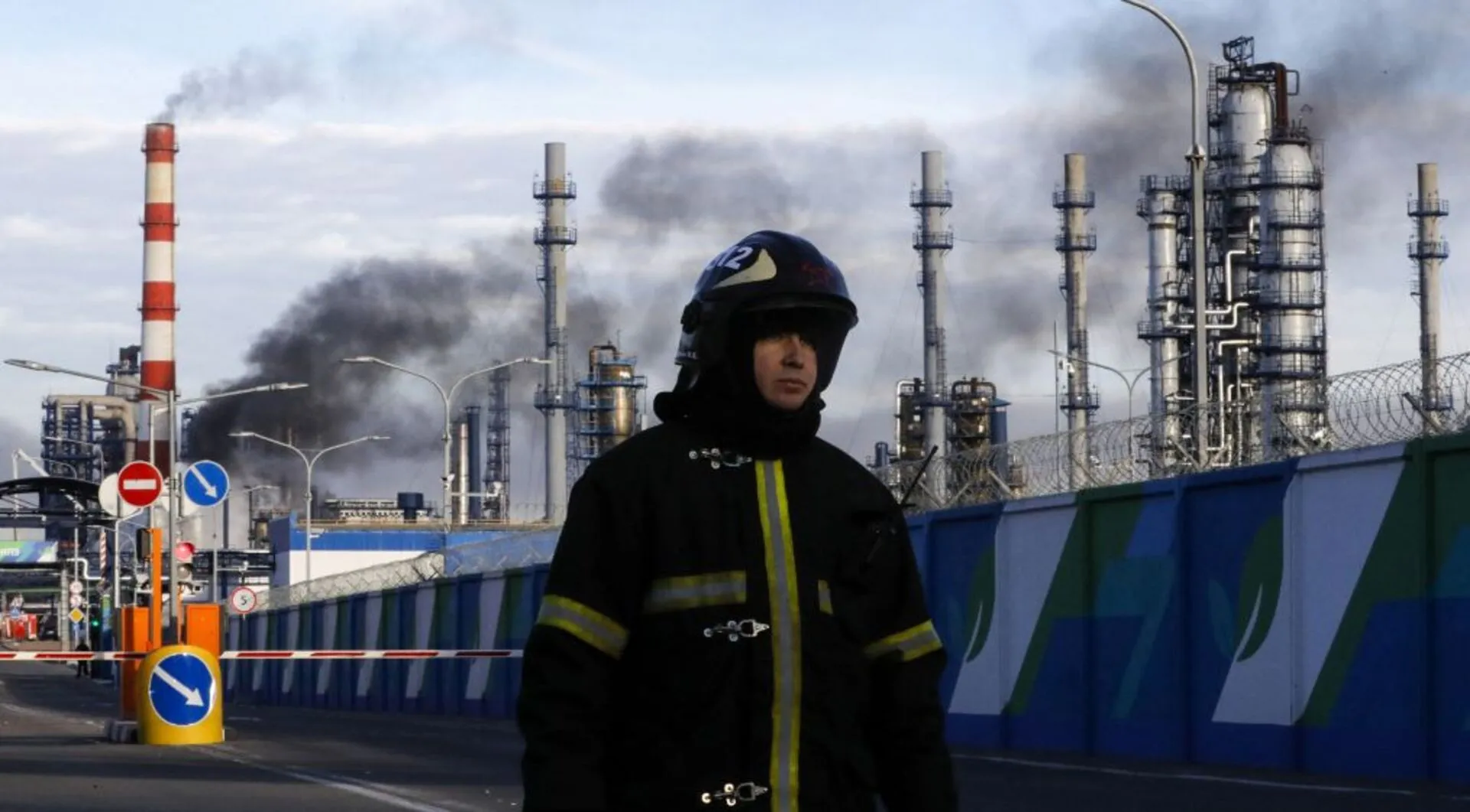
Andriy Kovalenko, the head of Ukraine’s Center for Countering Disinformation, said the Ukraine Security Service (SBU) hit the Yaroslavl oil refinery and Perm oil pumping station on May 8 – Perm sends oil in four directions across Russia to refineries and export terminals.
Russian media reports said the fire from a previous strike on the pumping station was not put out until May 11.
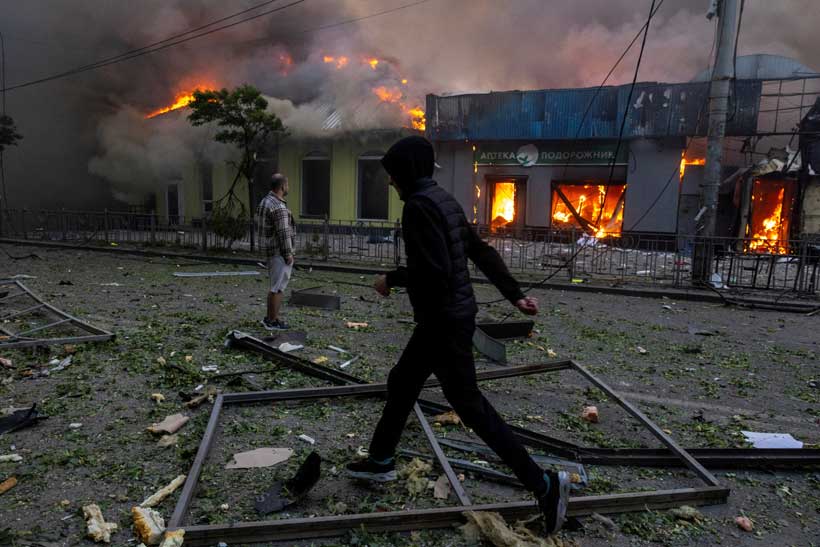
Rescue workers carry an injured woman after a Russian attack on a residential neighbourhood in Kyiv, May 14, 2026 [Evgeniy Maloletka/AP]
The SBU also said it hit the Perm refinery that day.
During the week, Ukrainian forces struck drone bases and a radar research centre in Rostov-on-Don, the Bryansk chemical plant, an explosives warehouse in Nizhny Novgorod and other targets.
Fedorov on Monday thanked Germany for investing $1bn in Ukraine’s deep strike capabilities, when his German counterpart, Boris Pistorius, visited Kyiv.
“Overall, Ukraine’s positions right now – on the front line, in our long-range sanctions, and in our joint results with partners – are the strongest they have been in years,” said Zelenskyy.
Ukrainian President Volodymyr Zelenskiy strongly condemned Russia after a missile strike on a residential apartment building in Kyiv killed at least 24 people, including three children.
The attack occurred during one of the heaviest aerial bombardments on the Ukrainian capital this year and further intensified international concern over the continuing war between Russia and Ukraine. Rescue operations continued for more than a full day before emergency workers completed searches through the destroyed structure in Kyiv’s Darnytskyi district.
The strike formed part of a broader wave of Russian drone and missile attacks across Ukraine that officials say targeted multiple regions over consecutive days.
Zelenskiy Visits the Site of the Attack
Zelenskiy visited the destroyed apartment building on Friday, laying red roses at the site and meeting rescue workers who had spent more than twenty eight hours searching for survivors beneath the rubble.
In remarks shared through social media, the Ukrainian president praised emergency responders for their continuous efforts and accused Russia of deliberately destroying civilian lives.
According to Zelenskiy, the missile strike effectively destroyed an entire section of the residential building. Ukrainian officials stated that initial analysis suggested the attack involved a recently manufactured Russian Kh 101 cruise missile.
The Ukrainian leader once again appealed to international allies for stronger air defence support and increased pressure on Moscow.
Heavy Civilian Casualties
Kyiv authorities declared Friday a day of mourning in memory of the victims. Flags across the capital were lowered to half mast, and public entertainment events were cancelled or postponed.
The Interior Ministry reported that rescue teams removed approximately 3,000 cubic meters of rubble during the operation. Hundreds of emergency personnel participated in the search efforts.
Officials confirmed that 24 bodies were recovered from the site, while approximately 30 people were rescued alive. Nearly 50 individuals were injured, and hundreds required psychological support following the attack.
The deaths of children among the victims further intensified public grief and anger across Ukraine.
Russia Intensifies Air Campaign
Ukrainian authorities stated that Russia launched more than 1,500 drones along with dozens of missiles during attacks carried out over two consecutive days this week.
The strikes extended beyond Kyiv and affected western regions of Ukraine located far from active frontline combat zones. Officials reported that six people were killed during attacks in western Ukraine on Wednesday.
The scale of the aerial assault highlights Russia’s continuing ability to conduct large coordinated attacks despite prolonged international sanctions and battlefield losses.
Moscow did not immediately comment specifically on the apartment building strike. Russia consistently denies deliberately targeting civilians, although residential buildings, hospitals, schools, and energy infrastructure have repeatedly been damaged throughout the conflict.
Ukraine Also Conducts Cross Border Attacks
The conflict has increasingly involved reciprocal long range attacks by both sides.
Russian regional officials stated that Ukrainian drone strikes killed four people, including a child, in the Russian city of Ryazan. Authorities reported damage to apartment buildings and an industrial facility during the incident.
Ukraine has expanded drone operations against targets inside Russia over the course of the war, aiming to disrupt military infrastructure, industrial production, and logistical operations linked to Moscow’s military campaign.
These developments reflect the increasingly transnational nature of the conflict, with civilian populations on both sides facing growing security risks.
The Continuing Humanitarian Crisis
The attack on Kyiv underscores the severe humanitarian consequences of the war, which began with Russia’s full scale invasion of Ukraine in February 2022.
Millions of Ukrainians have been displaced since the start of the conflict, while repeated strikes on civilian infrastructure have damaged homes, hospitals, schools, transportation systems, and energy networks across the country.
International organizations and human rights groups have repeatedly raised concerns about civilian casualties and the destruction of non military targets during the war.
At the same time, the prolonged conflict has placed enormous economic and psychological pressure on Ukrainian society as cities continue to face the threat of missile and drone attacks.
Analysis
The deadly strike on Kyiv demonstrates how the war between Russia and Ukraine continues to evolve into a prolonged campaign involving large scale aerial warfare and attacks far beyond frontline battle zones.
For Ukraine, the attack reinforces the urgent need for stronger air defence systems capable of intercepting missiles and drones before they reach urban areas. Zelenskiy’s renewed appeals to allies reflect growing concerns that Ukraine’s defensive capabilities remain under intense strain as Russia increases the scale and frequency of aerial assaults.
For Russia, sustained missile and drone attacks appear aimed at weakening Ukrainian morale, exhausting defence systems, and increasing pressure on the government through continued civilian disruption.
However, such attacks also carry significant international consequences. Civilian casualties, especially involving children and residential buildings, strengthen global criticism of Moscow and may encourage additional military and financial support for Ukraine from Western allies.
The conflict additionally illustrates the changing character of modern warfare, where advanced missiles, drones, and long range strikes allow both sides to target infrastructure and urban centers far from traditional battlefields.
Despite ongoing diplomatic discussions in various international forums, there remains little indication of a near term political settlement. Instead, the war increasingly appears locked in a prolonged phase of escalation, attrition, and humanitarian suffering.
The strike on Kyiv therefore stands not only as a tragic individual event but also as a broader symbol of the continuing devastation caused by one of the most consequential conflicts in modern Europe.