
karelnoppe/iStock via Getty Images
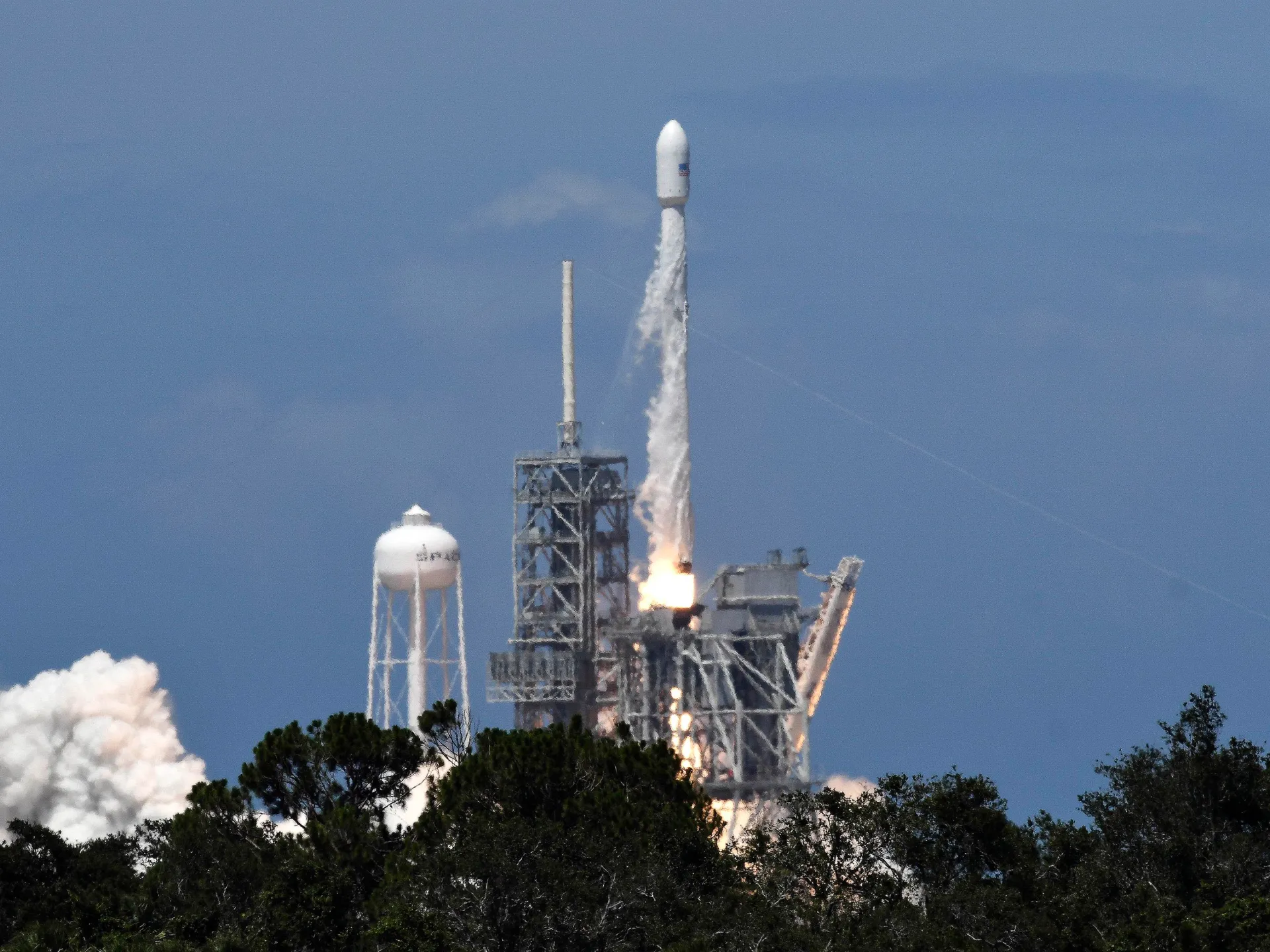
A piece of a SpaceX rocket which has been floating in space since last year was believed to have crashed into the moon at high speed on Wednesday.
The event, not visible to the naked eye, is expected to be confirmed by experts monitoring it with a telescope.
This event posed no danger to Earth but was also expected to create a new lunar crater, experts said.
Here’s what we know so far.
It is believed to have hit the moon already, but this has not yet been confirmed as it takes time for signals to return from the moon to the Earth. The rocket segment was expected to hit the moon around 2:35am ET (06:35 GMT) on Wednesday, crashing into the surface at 5,400mph (8,690km/h).
The rocket piece is believed to have hit Einstein Crater on the moon’s western limb, which is often difficult to see from Earth.
Weighing 4 metric tonnes (4,000kg), it was expected to kick up a plume of lunar dust that would likely be illuminated by sunlight but would be difficult to spot with the naked eye from Earth.
The crash landing is unintentional, SpaceX has said.
It comes from a SpaceX Falcon 9, which is a reusable model and has been used for several space missions.
It is made of two parts: upper and lower. The lower part can detach from the upper part and return to Earth. It is the upper part of the rocket which likely crashed into the moon.
“There is no danger to Earth,” NASA spokesperson Jimi Russell said in a statement on Tuesday.
“NASA will continue to track the booster for training purposes, as well as later observe the impact site for scientific purposes.”
The Falcon 9 rocket took off last January from Florida, United States, carrying two lunar landers. The booster returned to Earth, but the upper segment remained in space to push the landers onwards.
After pushing the lunar landers onwards, the upper segment of the rocket typically falls back into Earth’s atmosphere and burns up or plunges into the ocean.
But, because the January lunar lander mission required more thrust than missions closer to Earth, the rocket’s second stage remained in space, floating aimlessly among thousands of other pieces of space junk that active satellites have to steer clear of as a matter of course.
According to the United Kingdom’s Natural History Museum, humans have launched thousands of objects into space since the 1950s. “When these spacecraft, rockets, and satellites stop working or break apart, they stay in orbit instead of falling back down right away,” it says.
It was not until earlier this year that astronomers determined that the rocket section, which had dumped its remaining fuel and could no longer be controlled, was on an orbital trajectory which would end at the moon.
Generally, for such “high-energy missions”, SpaceX performs a manoeuvre to make sure the second stage “is safe per the appropriate rules and regulations”, said Julianna Scheiman, director of NASA science missions at SpaceX, at a Monday news conference.
“We did that,” she continued, but “what has happened is essentially a mixture of solar activity and gravity forces have put it on a path towards the moon”.
This collision raises concerns about human-made debris in space generally. The rocket section was just one of many pieces of “space junk” already orbiting Earth.
There are more than 46,000 pieces of space debris weighing a total of 17,000 tonnes currently in orbit, the European Space Agency reported in late July.
“The environmental impacts that we’re most concerned about include climate and the ozone hole,” Eloise Marais, atmospheric chemist in the geography department at University College London, told Al Jazeera last year.
“Depletion of the protective ozone layer results from chemicals released by rockets during launch that can undergo reactions that deplete ozone,” Marais added, explaining that air pollutants such as particles of soot, which can absorb sunlight and warm the atmosphere, are released during rocket launches.
NASA and SpaceX are discussing ways to prevent future lunar impacts, NASA’s Scheiman said. The US space agency plans to build a lunar base and send routine astronaut missions to the lunar surface beginning later this decade under its multibillion-dollar Artemis programme. It would not want errant pieces of space junk impacting those assets.
Not very. The moon routinely weathers impacts from space debris, including meteoroids. Collisions with artificial objects are less common.
A Chinese rocket segment crashed into the moon in March 2022 after completing a lunar test mission.
In 2009, NASA intentionally crashed a rocket segment into the moon to study the plume of lunar material kicked up by the impact.
In the 1970s, NASA also intentionally crashed stages from its Saturn V moon rocket into the moon to study the impact’s seismic effects.
Several spacecraft intending to land softly on the moon in recent years have crashed instead.
Like many scientists, Scheiman said, “I also am very excited to see the observation.”
“This may be of some – probably minor – scientific interest, and we may learn some things from it,” said Bill Gray, creator of widely used astronomy software who published a report on the stage’s impact in April.
“It doesn’t present any danger to anyone, though it does highlight a certain carelessness about how leftover space hardware [junk] is disposed of.”
NASA hopes to soon establish a sustained human presence on the Moon, making it critical to better understand space debris in lunar orbit.
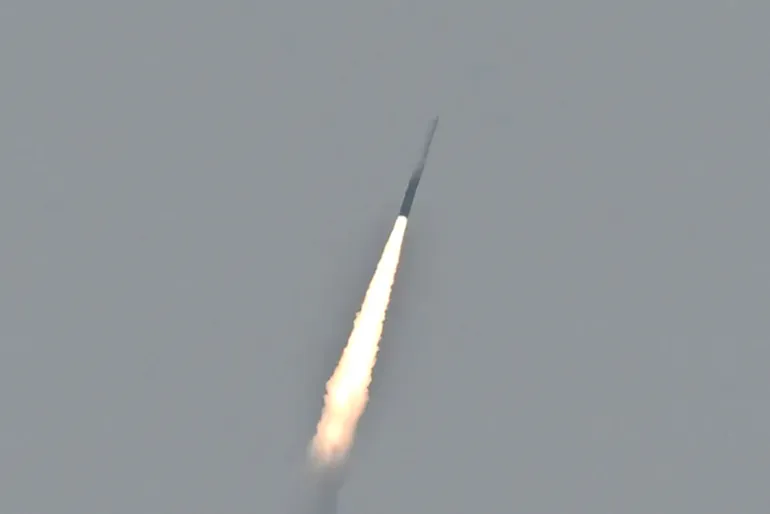
PM Narendra Modi says successful launch will ‘encourage countless youngsters to dream bigger and innovate fearlessly’.
Published On 18 Jul 202618 Jul 2026
India has successfully tested its first private-sector orbital rocket, marking a milestone in New Delhi’s ambition to become a major player in the global space economy.
The three-stage 22-metre Vikram-1 was launched from the Satish Dhawan Space Centre in Sriharikota and deployed customer payloads into a 450km (280-mile) low-Earth orbit, making India the third country to achieve orbital launch capability through private enterprise.
list of 3 itemsend of list
Vikram-1 can carry a payload of up to 350kg (772lb) and is equipped with robotic arms that can clear space debris.
It also carried experimental equipment, a lab-grown diamond and a miniature 18-carat gold sculpture commemorating India’s national space programme.

India Prime Minister Narendra Modi hailed the achievement, saying that it will “encourage countless youngsters to dream bigger and innovate fearlessly”.
The test validated the rocket’s propulsion, avionics, telemetry, guidance, navigation and control systems during flight, according to manufacturer Skyroot Aerospace.
Founded in 2018, Skyroot is among a new generation of Indian space startups that have attracted backing from global investors following the sector’s liberalisation.
It became the first space-sector company in the country to hit a $1bn valuation earlier this year.
Skyroot celebrated the successful mission with a post on X stating: “Hello space, we have arrived!”
Vikram-1 improves upon Skyroot’s Vikram-S mission in 2022. That suborbital flight reached space but did not place payloads into orbit.
The company plans further test flights before starting routine commercial missions. It is another milestone for India’s burgeoning private and public space programmes.
India’s national space programme previously launched 104 satellites into orbit on one rocket in 2017, setting a record at the time.
Six years later, India became the fourth country in the world to complete a lunar landing when Chandrayaan-3 landed near the moon’s south pole.
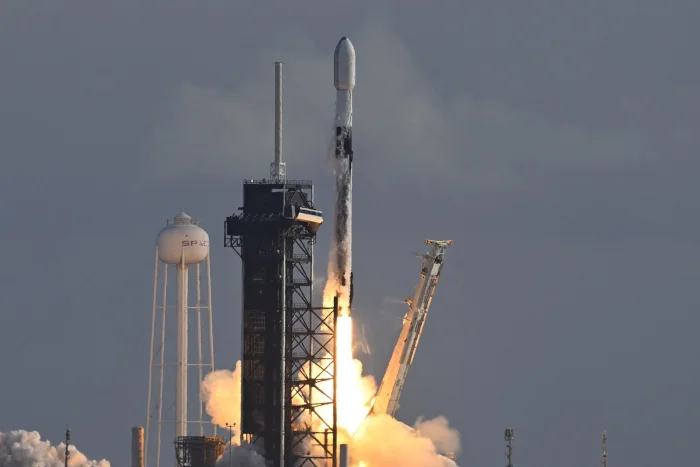
July 16 (UPI) — SpaceX on Thursday scrubbed the planned 13th test light of its massive Starship megarocket just seconds before it was set to lift off from the company’s Texas Starbase.
The launch was abruptly canceled just before the “Super Heavy” booster was about to ignite its multiple engines.
“Standing down from today’s flight test attempt,” launch commanders posted on X, without immediately offering a further explanation.
It remained unclear when another launch would be scheduled.
In the build-up to the planned launch, the company says it is aiming to fine-tune the performance of third version of the most powerful rocket ever built with Thursday’s mission — specifically the Super Heavy booster.
During the 12th test flight May 22 it encountered several hiccups, including slight differences in engine startup at separation stage causing the directional flip of the booster to be off by approximately 90 degrees.
The booster was supposed to perform a sustained burn to a controlled landing in the gulf, but the engine failure meant it fell back to Earth instead in a “hard splashdown,” SpaceX said in its launch report.
The Federal Aviation Administration said there were no reports of public injury or damage to public property from the mishap.
In response, SpaceX said in a blog post that “the startup sequence has been modified to be more robust to timing variability and more reliably flip in the desired direction, which is done to increase overall performance.”
Also during Flight 12, the Super Heavy booster encountered problems when attempting its boostback burn in which five of its 33 engines malfunctioned when attempting to re-light. This caused the boostback burn to end early.
“The Super Heavy on this upcoming flight has hardware modifications to improve re-light reliability along with updates to engine alarms and aborts to match the conditions seen in the multi-engine flight environment,” Space X said.
The Starship system has two parts: the Super Heavy booster and the spacecraft itself, also called Starship, or sometimes just “Ship.”
Flight 12 was the first launch of the third version of the system, which is the first capable of deep-space flight. Plans call for Starship to carry Artemis 4 astronauts to the surface of the moon in a mission set for late 2028.
In another notable element of Thursday’s Flight 13, Starship for the first time will carry V3 Starlink satellites to space as the company aims to “greatly expand” its communications network’s capacity and user speeds.
As part of this initial test, Starship is set to deploy 20 satellites which will extend solar arrays and antennas in a bid to connect with the larger Starlink constellation via high-capacity lasers as they will be on the same suborbital trajectory as Starship.
Those satellites are designed to burn up on reentry into the Earth’s atmosphere approximately 20 minutes after deployment.

karelnoppe/iStock via Getty Images
Rocket Lab (RKLB) is testing its 200-day moving average following a sharp July pullback, with the setup matching a historically bullish signal, according to Schaeffer’s Investment Research.
In a post on X, Schaeffer’s said the stock has produced positive one-month returns
The TWZ Newsletter
Weekly insights and analysis on the latest developments in military technology, strategy, and foreign policy.
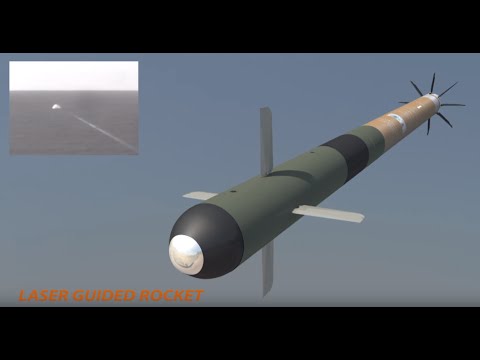
France has conducted live-fire tests of laser-guided rockets from its Rafale fighter, adding a low-cost anti-drone capability to the jet. Following the United States and the United Kingdom, this reflects a broader trend in modern air warfare, as air forces increasingly recognize that they need layered, cost-effective intercept options rather than relying exclusively on expensive missiles.
Today, the Directorate General of Armaments (DGA), the French government defense procurement and technology agency, announced the successful integration of the 68mm laser-guided rockets on the Rafale. The tests began in February. The DGA added that the integration work was conducted together with the French Air and Space Force’s Centre d’expertise aérienne militaire (CEAM, the French aerospace research and test center), supported by Dassault Aviation and Thales. The program is known as Lutte antidrone sur avion de combat (LADAC, or anti-drone capability for combat aircraft).
The Defence Procurement Agency has successfully completed integration testing of 68 mm laser-guided rockets on the Rafale fighter jet. The time between the contract being awarded for this new capability and initial operational capability being achieved was less than 8 months. pic.twitter.com/rR2Nij9EzY
— French Aid to Europe 🇨🇵 🇪🇺 (@aidefranceukr) July 13, 2026
While LADAC is initially intended for French Rafales, flown by the air force and navy, it could also be provided to export Rafale customers, and potentially other combat jets.
Last October, the Chief of Staff of the French Air and Space Force, Gen. Jérôme Bellanger, told a parliamentary hearing that there was a need to provide laser-guided rockets for the Rafale and/or the Mirage 2000D RMV, to counter long-range one-way attack drones, such as the Iranian Shahed-136 and the Russian Geran series.
DGA official to me at Paris 2025 – “We absolutely have to start using rockets for the counter-UAS mission, because we cannot keep using our high-value missiles in this role. We don’t want to use our high-value missiles, such as the MICA.” https://t.co/oEWRyOyF3W
— Gareth Jennings (@GarethJennings3) March 20, 2026
“Regarding airborne anti-drone operations, it is not sustainable to use MICA air-to-air missiles costing over a million euros to shoot down a drone worth a few thousand dollars,” Bellanger said. “We must develop our own low-cost firing capabilities or adapt our gun fire-control systems,” he added.
The Chief of Staff of the Air Force suggested that off-the-shelf solutions would most likely be used.
In the event, a primarily French solution has been adopted.
This involves 68mm rockets with laser guidance, loaded in 12-round Thales Telson JF12 rocket pods. These are used in conjunction with the Rafale’s RBE2 radar, which has undergone modifications for the role, as well as the Talios pod, used for target tracking and laser designation.

TELSON : INDUCTION ROCKET SYSTEM
The rocket itself is understood to be the Aculeus-LG, which has a stated range of 3.7 miles.
Head of the DGA, Patrick Pailloux, told the National Assembly yesterday that integrating rockets onto the Rafale for the C-UAS role is now ongoing and will be ready for operational fielding “this summer”. @JanesINTEL story from myself and @JakOSpades to come… https://t.co/V4DTHM2jkd
— Gareth Jennings (@GarethJennings3) April 16, 2026
Development of the LADAC capability was begun last December 31 as a matter of urgency.
By the end of February, French Rafales were protecting the airspace of the United Arab Emirates against Iranian drone attacks during Operation Epic Fury. In the process, they fired several dozen MICA IR/EM missiles in only a few weeks.
French Dassault Rafale fighter jet intercepting an Iranian Shahed/Geran-type long-range strike drone with an air-to-air missile (presumably MICA-EM/IR) over Erbil Governorate in northern Iraq this afternoon. pic.twitter.com/lbM2xJ2TBb
— Status-6 (War & Military News) (@Archer83Able) April 14, 2026
📍 Proche et Moyen-Orient | Retour sur les engagements des moyens 🇫🇷 face aux menaces aériennes
💥 Protection des intérêts français dans la zone et application des accords de défense
🎯 Les armées 🇫🇷 maintiennent une posture défensive active, en coordination étroite avec… pic.twitter.com/jk8OZbLEPm— Armée française – Opérations militaires (@EtatMajorFR) April 10, 2026
In April, the French parliament was informed that a study was underway to equip the Rafale with rocket pods. The same month, unofficial imagery appeared showing a dedicated test Rafale carrying a pair of JF12 pods while flying from Istres-Le Tubé Air Base, home of the DGA.
As of April, it was suggested that the capability could be ready to be fielded this summer. This target will be achieved, with the LADAC capability rolled out to French Air and Space Force Rafales by the end of the month.
At this point, it’s unclear if the Rafales will also have their onboard 30mm cannons specifically modified for anti-drone work, as Bellanger had previously suggested. This would involve adaptation of the gun fire-control system to mitigate the risk posed by debris from the destroyed drones. As we have discussed many times in the past, firing a fighter’s gun against a small, low, and slow-moving target is inherently dangerous, due to a combination of speed and engagement dynamics, the risk of collision, shrapnel and other debris, plus the increased chances of collateral damage on the ground.

Le canon du #Rafale : le #30M791
The U.S. military took the lead in integrating laser-guided rockets on combat aircraft for anti-drone purposes.
The laser-guided 70mm Advanced Precision Kill Weapon System (APKWS) rocket with air-to-air capability has now been cleared for use by U.S. Air Force F-15E Strike Eagle, F-16C, and A-10 combat jets, and other types, like the U.S. Navy’s F/A-18E/F Super Hornet, are expected to receive it too.
In 2019, TWZ was first to report that the U.S. Air Force had begun to look at using APKWS as an air-to-air weapon against drones and cruise missiles, when it conducted a test of the weapon in that role from an F-16C. The first reports of the capability being used in combat came in 2024, when U.S. Air Force F-16s began using the rockets to shoot down drones launched by Iranian-backed Houthi militants in Iran, as TWZ was again first to report.

F-16C Viper Shoots Down Target Drone With Laser-Guided Rocket
Since then, U.S. Air Force F-15Es and F-16s have repeatedly called upon the rockets to deal with Iranian drone and missile attacks in the Middle East. In particular, the rocket-armed fighters were very actively involved in defending Israel from Iranian drones and missiles. The same encounters saw F-15E crews running out of missiles when faced by large barrages of drones and missiles, a problem that laser-guided rockets can help address.
The Eurofighter Typhoon became the next aircraft to add the air-to-air optimized variant of the laser-guided APKWS rocket to its armament options.
At the Paris Air Show in June 2025, Eurofighter CEO Jorge Tamarit Degenhardt confirmed that the counter-drone mission was of growing importance for Typhoon customers and that he “needs to now have that conversation” with Germany, Italy, Spain, and the United Kingdom — the four Eurofighter partner nations that are responsible for developing, building, and sustaining the aircraft.
The U.K. Royal Air Force announced in May of this year that its Typhoons were now equipped with APKWS, “significantly enhancing their ability to counter emerging threats during operations in the Middle East.”

Laser-guided rockets of all kinds offer some significant benefits for the counter-drone role, compared with traditional air-to-air missiles. Their performance parameters make them especially suitable for bringing down relatively steady flying, non-reactionary, low-performance targets, including drones and subsonic cruise missiles.
They also bring a major increase in ‘magazine depth,’ with each pod carrying several rounds, taking up a weapons pylon that would otherwise normally be loaded with just one air-to-air missile.
Above all, however, the requirement for these weapons has been driven by the huge mismatch in cost between the target and air-to-air missiles that would otherwise be used for the role. In a French context, a single MICA round reportedly costs around $2 million, significantly more than the latest variants of the AIM-120 Advanced Medium-Range Air-to-Air Missile (AMRAAM), which cost around $1 million each.
Meanwhile, a Shahed drone might come with a unit cost of around $50,000, as we have discussed in the past.

The cost of the Aculeus-LG is unclear, but is likely in the same region as the equivalent APKWS. Here, the laser guidance section costs between $15,000 and $20,000, with only a few thousand dollars more needed to provide the rocket motor and warhead.
It seems all but certain that the French Rafales will not be the only ones to get the new weapon.
There is a large Rafale operating community in the Middle East, with Qatar already flying them and the United Arab Emirates due to receive them soon. Both of these and others could benefit from these capabilities. Since these rockets were also eyed for the Mirage 2000 in the past, Ukrainian Mirages could also be a candidate for integration; the Ukrainian Air Force already uses APKWS on its F-16s.
With future conflicts likely to feature large salvos of one-way attack drones and cruise missiles, this type of capability is likely to become a more regular feature on modern combat aircraft.
Contact the author: thomas@thewarzone.com
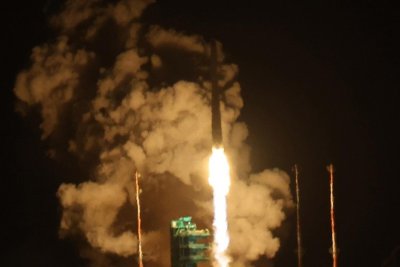

The Nuri space rocket, carrying 13 satellites, takes off from Naro Space Center in Goheung, South Korea. Photo by YONHAP/ EPA
June 25 (Asia Today) — South Korea is preparing to conduct the fifth launch of its homegrown Nuri rocket in September as the government moves to expand launch infrastructure and accommodate growing commercial demand.
Taeseog Oh, administrator of the Korea AeroSpace Administration, said Wednesday that the agency plans to convene a launch management committee in early August to set the final launch date.
“At this point, we expect the launch to take place in September,” Oh said during a news conference at the agency’s headquarters in Sacheon, about 190 miles southeast of Seoul.
Assembly of the rocket’s individual stages is expected to be completed this week. Full assembly of the three-stage launch vehicle is scheduled to begin next week.
After the fifth launch, the agency plans to begin upgrading the Naro Space Center in Goheung, South Jeolla Province, which has handled South Korea’s major space launches.
“The supplementary work required under the Naro Space Center modernization project is moving forward,” Oh said. “The project is currently undergoing a preliminary feasibility review, and work is expected to begin next year.”
The agency is also planning a second national space center to meet an expected increase in government and commercial launches and support future launch vehicles.
Oh said South Korea plans to begin the second space center project in 2028 and establish infrastructure capable of supporting reusable launch vehicles by the mid-2030s.
“A reusable launch vehicle requires not only a launch site but also a landing site,” Oh said. “By the mid-2030s, we intend to secure future-oriented launch infrastructure capable of operating reusable vehicles.”
The agency began accepting applications Monday from local governments seeking to host the center. A final candidate site is expected to be selected in October.
Oh said some South Korean companies have reported difficulty securing launch slots from U.S. companies such as SpaceX because of rising global demand.
“We will work to establish conditions in which satellites developed domestically can be launched aboard our own launch vehicles,” he said.
The agency also plans to upgrade the existing Naro Space Center while developing the second facility.
The expansion is intended to support more frequent satellite launches, newly developed launch vehicles and the reusable rocket South Korea aims to develop by 2035.
Oh also emphasized the need to increase government investment as the country seeks to shift toward NewSpace, an industry model driven more heavily by private companies.
The government is reviewing the agency’s budget proposal for next year.
“The government recognizes the importance of the aerospace budget, and we will work to expand it,” Oh said.
“In South Korea, even the government-led Old Space model was not sufficiently developed,” he said. “Government investment and private-sector participation must occur simultaneously for an aerospace industry ecosystem to take shape.”
— Reported by Asia Today; translated by UPI
© Asia Today. Unauthorized reproduction or redistribution prohibited.
Original Korean report: https://www.asiatoday.co.kr/kn/view.php?key=20260625010008848


Environmental activists in Rome built a mock rocket with caricatures of Giorgia Meloni and Donald Trump, calling for ‘fascists’ to be launched to another planet. The protest condemned government inaction on climate change and the global rise of authoritarian politics.
Published On 31 May 202631 May 2026
Share
The incident is the latest setback for Jeff Bezos’s space venture as it seeks to narrow the gap with Elon Musk’s SpaceX.
By AFP, Reuters and The Associated Press
Published On 29 May 202629 May 2026
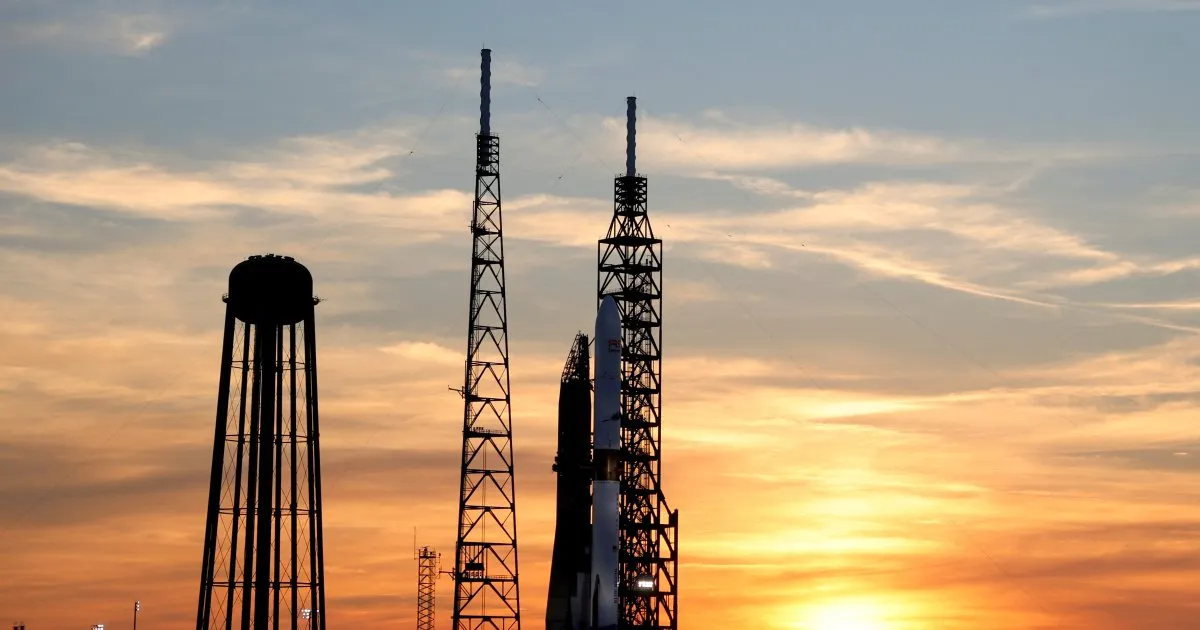
Blue Origin’s New Glenn rocket has exploded on the launchpad during a test in the US state of Florida.
The incident on Thursday evening is the latest setback for Jeff Bezos’s space venture as it seeks to narrow the gap with Elon Musk’s SpaceX.
list of 4 itemsend of list
Footage of the incident shows smoke emerging from underneath the rocket before it erupts into a massive fireball that billows skyward, sending a towering plume of flames and smoke into the air.
Emergency crews remained at the scene more than an hour later, but officials said there was no threat from fumes or other potential hazards.
No injuries have been reported.
“We experienced an anomaly during today’s hotfire test,” Blue Origin said in a brief statement posted on X, adding that “all personnel have been accounted for”.
A hot-fire test is where a rocket engine is fired up while anchored to the ground.
In a separate X post, Bezos said it was “too early to know the root cause” of the incident.
“Very rough day, but we’ll rebuild whatever needs rebuilding and get back to flying. It’s worth it,” Bezos added.
US House Representative Mike Haridopolos, whose Florida district includes the launch site at Cape Canaveral, said in a statement on X that he has been in contact with NASA Administrator Jared Isaacman regarding the explosion.
“I am grateful there were no reported injuries and thankful for the first responders, engineers, and launch crews who acted quickly,” Haridopolos said.
Blue Origin is preparing the New Glenn rocket to launch 48 Amazon Leo satellites into low-Earth orbit, part of efforts to build a broadband constellation to rival Musk’s Starlink network.
Musk responded on X to a video of the New Glenn explosion, saying: “Most unfortunate. Rockets are hard.”
Last month, the New Glenn rocket failed a mission to deliver a communications satellite into the correct orbit, prompting an investigation.