Why Rubio is visiting Reliance’s oil refinery in India, the world’s largest | Global Energy Crisis News
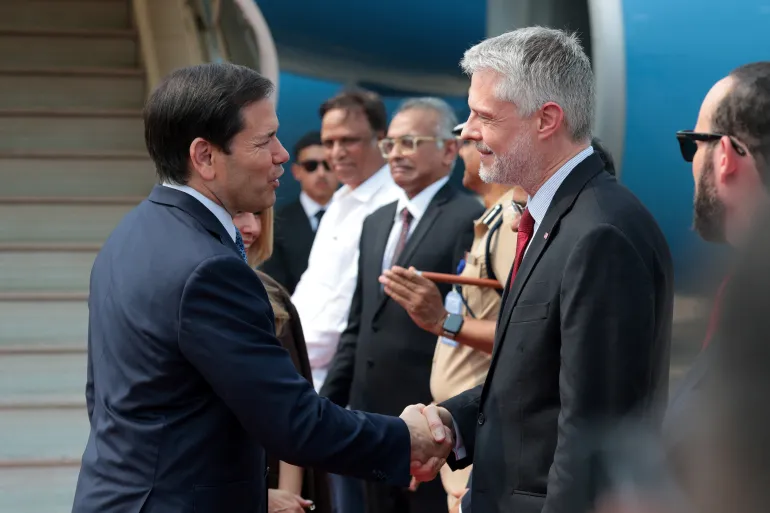
New Delhi, India — United States Secretary of State Marco Rubio has arrived in India for a two-day visit, during which he is set to tour the Jamnagar refinery complex in Gujarat, owned by billionaire Mukesh Ambani’s Reliance Industries, a major player in global oil markets.
Reliance’s crude refinery in Prime Minister Narendra Modi’s home state is the world’s largest single-site refinery. In many ways, Reliance Industries’ businesses sit at the crossroads of the ongoing global energy crisis.
The conglomerate is central to Washington’s efforts to punish Russian energy buyers, while also trying to contain oil prices amid the war on Iran, on top of rising diesel costs in the US, where a crucial midterm election looms. Reliance has also only recently committed to a major investment in the US, which President Donald Trump’s administration has cited as an example of its successes in luring global capital.
Rubio is skipping the capital, New Delhi, at a time when the US-India bilateral relationship has been rocky, strained by a string of friction points — and an elusive trade deal.
So why is the top US diplomat visiting the world’s largest single-site oil refinery?

Where is Rubio visiting?
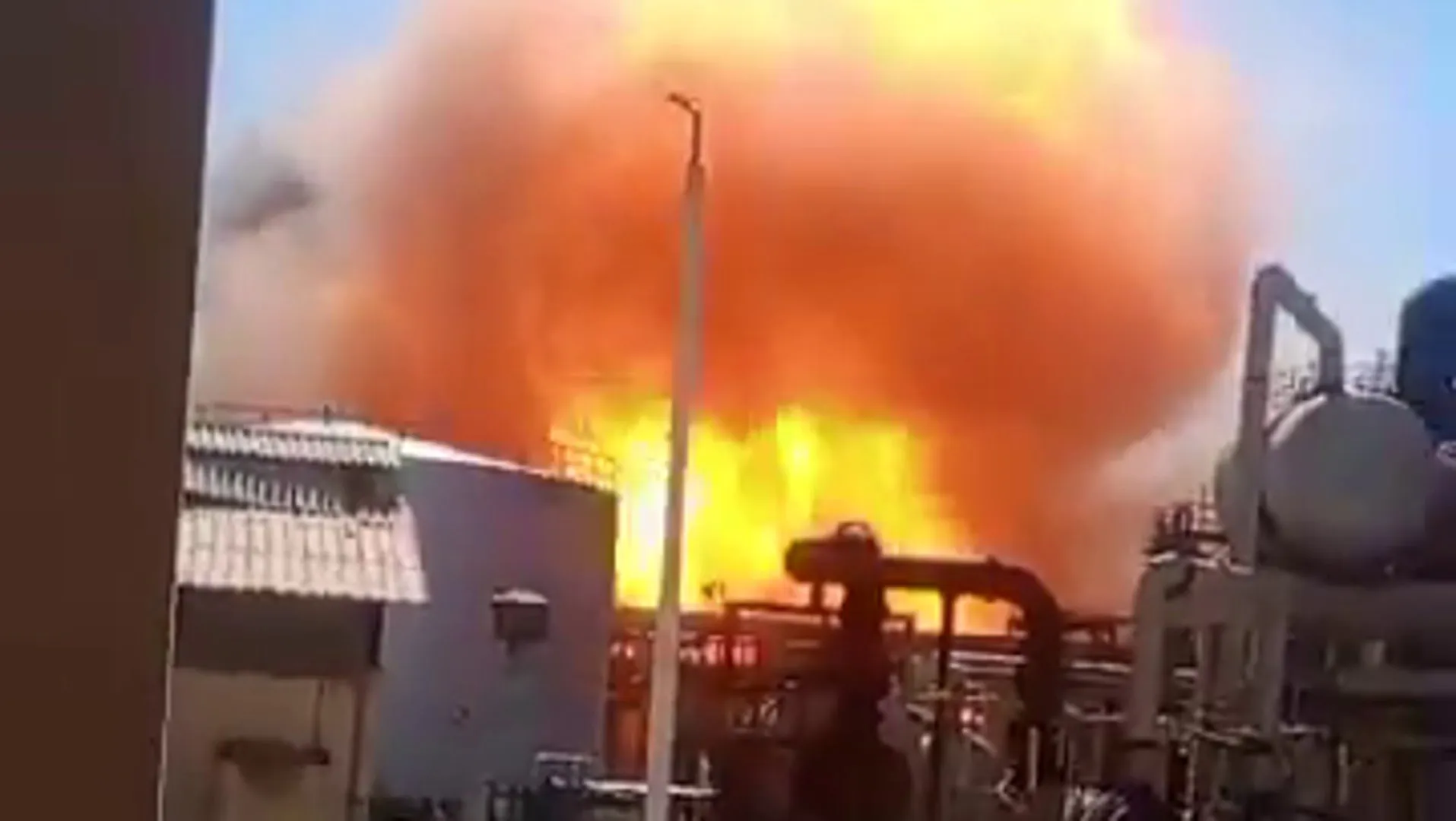
After meetings in Mumbai, India’s financial hub in the western state of Maharashtra, Rubio will fly to Jamnagar in neighbouring Gujarat, near the Gulf of Kutch. Jamnagar opens into the Arabian Sea and is home to Reliance Industries’ refining complex, a major hub for crude processing and fuel exports, which processes 1.4 million barrels per day (bpd).
Rubio had visited India earlier this year too, but this trip “is a little more business-focused”, the US ambassador to India, Sergio Gor, told reporters last week. A readout from Rubio’s office noted that he would “meet with business leaders to promote opportunities for commercial investment and economic cooperation”.
“[At Jamnagar] he will meet some of the folks at Reliance,” Gor said.

What’s in Jamnagar?
The world’s largest single-site oil-refining complex has a combined crude-processing capacity of 1.4 million bpd. That is nearly 1.5 percent of global refining capacity, according to the company.
The complex comprises two refineries: the original facility, commissioned in 1999 with a capacity of 660,000bpd, and a second, export-oriented refinery commissioned in 2008, adding 580,000bpd, which operates in a special economic zone.
Jamnagar imports crude from international suppliers and exports refined products to global markets. The refinery can process heavy, sulphur-rich crude that many facilities cannot handle efficiently, converting oil into higher-value products.
Reliance said last month that the complex has processed more than 216 crude grades, claiming to be “perhaps the only refinery to achieve this feat”.
The Jamnagar refinery’s capacity is also driving a sharp revival in imports of Venezuelan crude — taken over by the US earlier this year after abducting then-President Nicolas Maduro — as Washington seeks to reshape global oil trade.
Reliance is expected to account for roughly 350,000bpd to 370,000bpd of the October intake, according to estimates from analytics firm Kpler. “We will talk with Reliance about refining more Venezuelan crude,” Rubio told reporters in brief remarks on Tuesday.

Why is the refinery significant for global energy supplies?
Reliance is a central player in keeping global oil markets stable, as one of the world’s biggest suppliers of refined petroleum products. In September, for instance, six of the seven large cargo ships that docked at European Union ports carrying oil products were bearing Reliance goods.
Reliance’s biggest export is diesel, which Trump has been particularly worried about, with prices reaching historic highs in the US ahead of midterm elections early next month.
Though the data on exports by category is not public, an analysis by the Reuters news agency from trade sources noted that Reliance Industries exported 21.66 million tonnes of refined petroleum products in the first half of 2025 from Jamnagar. Diesel accounted for the largest share at 9.81 million tonnes, followed by petrol at 6.14 million tonnes and jet fuel at 2.06 million tonnes.
Europe accounted for the biggest share of the company’s exports, making up 28 percent of Reliance’s refined products during the period. Buyers include BP, ExxonMobil, Glencore, Vitol and Trafigura.
The Jamnagar refinery also shipped about $143m worth of oil products to the US last month, according to data cited by the Centre for Research on Energy and Clean Air (CREA), a think tank in Finland.
CREA noted in its report that the EU’s ban on importing petroleum products made from Russian crude from January 2026 does not adequately prevent products from refineries in third countries from entering Europe when those refineries also process Russian crude. The Jamnagar refinery is a prime example of that loophole.
Rubio’s visit to the refinery also comes as Trump faces his worst approval ratings amid inflation and rising fuel prices ahead of the midterm election in November. Just about 31 percent of Americans are happy with Trump’s performance – the lowest-ever number in his two terms, according to a Reuters/Ipsos survey.
The Trump administration has also reportedly been pushing Ukraine’s President Volodymyr Zelenskyy to stop strikes on Russian energy facilities, which have rattled the global fuel markets.
Why the refinery is important for the Russia-Ukraine war
Reliance is also a critical actor in US efforts to influence how much oil Russia sells.
Since the start of Russia’s full-fledged war on Ukraine in February 2022, India has emerged as the second-largest buyer of Russian oil after China. And Reliance is driving that surge in imports. While only 3 percent of its oil was sourced from Russia before 2022, that share rose to 50 percent by 2025.
So when Trump imposed an additional 25 percent tariff on Indian goods in August 2025 to punish New Delhi for the purchase of Russian oil, Reliance was directly affected. It cut back on Russian crude imports significantly in subsequent months, but it still made up a third of the oil processed by Jamnagar’s refinery during the July-September 2026 quarter.
That was under threat when the Trump administration appeared poised to impose a 100 percent tariff on Indian goods because of continued Russian oil imports, under a new law passed last month.
But Trump has since suspended those proposed tariffs, easing concerns for India and Reliance.
Rubio has said India has been diversifying its import mix away from Russian crude, even as it still buys millions of barrels of Russian oil every day. “You’ve got countries like India, for example, that have voluntarily diversified their energy portfolio, but are still getting a substantial amount of energy from Russia because it’s hard to pivot from one day to the next,” Rubio said on Sunday.
“But they’re also an important ally and partner of the United States.”
Is Reliance also investing in the US?
Yes, India’s richest man, Mukesh Ambani, the chairman and managing director of Reliance Industries, is investing in the US, primarily through energy-related projects.
It is backing America First Refining’s planned oil refinery at the Port of Brownsville in Texas, also the first major US refinery in about 50 years, announced by Trump in March.
The refinery is expected to cost $3bn to $4bn and process about 60 million barrels of US crude annually. Reliance has signed a 20-year agreement to buy a large share of the facility’s output, with operations expected to start around 2029.
In November 2024, Reliance’s US subsidiary also acquired a 21 percent stake in helium explorer Wavetech Helium for $12m as part of its low-carbon energy strategy.
Last month, Trump announced that India’s Essar Group — an oil major with knee-deep ties to Russia — is planning an $18bn integrated steel investment in the US through its subsidiary, Mesabi Metallics.
Didn’t Trump’s ally just lock horns with Ambani?
Despite Reliance’s investments in the US and Rubio’s upcoming visit to the Jamnagar facility, Elon Musk, the world’s richest man who is also a key Trump ally, recently hit out at Ambani.
His Starlink space telecommunications firm has struggled for years to secure a licence to operate in India.
In a series of X posts recently, Musk accused Prime Minister Narendra Modi’s government of stalling Starlink’s entry to favour market leader Ambani’s telecom firm, Jio. Musk taunted Ambani directly, addressing him as “Prime Minister Ambani” and asking whether he would “consider allowing Starlink to compete”. Starlink, Musk wrote, was being blocked by “oligarchs” protecting their “monopolistic chokehold” on Indians.
In a statement issued on X, Reliance said it has “never feared competition” and has “grown in an India that welcomes investment and innovation, homegrown or international”.