As CNN prepares for change under a new owner, the network’s chief legal affairs correspondent, Paula Reid, is heading for the exit and expected to jump to MS NOW.
The Washington-based Reid’s contract with CNN is up in several months and she has told the network she does not plan to renew. She is expected to sign on with CNN competitor MS NOW, according to people familiar with her plans who were not authorized to comment publicly.
A representative for MS NOW said the network does not comment on personnel matters but added, “as everyone in Washington knows, Paula Reid is an exceptional reporter, and any news organization would be fortunate to showcase her journalism.”
Reid‘s planned departure comes ahead of the impending merger of CNN parent Warner Bros. Discovery and Paramount. The combination has led to speculation over who will run CNN, and the uncertainty is said to have played a factor in Reid’s decision.
Reid joined CNN from CBS News in 2021.
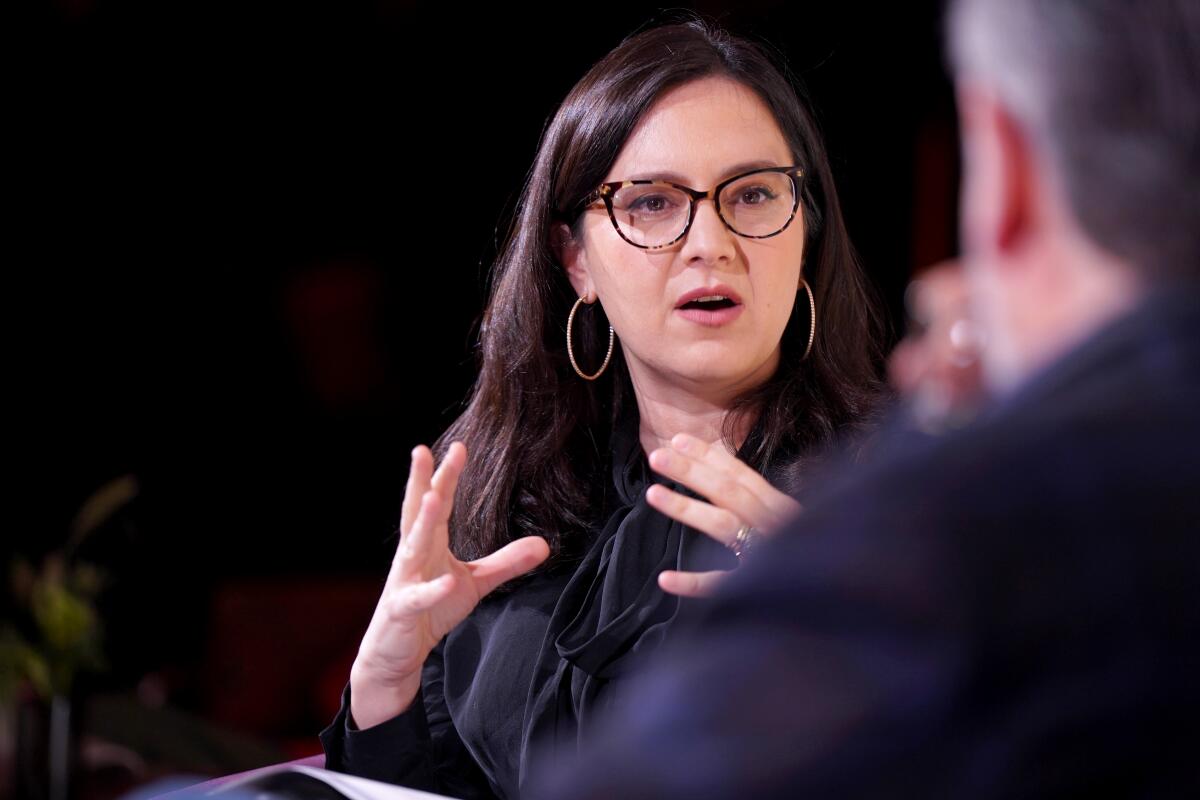
CNN and Paramount’s CBS News will be combined after the merger, but the management structure is still under discussion. Paramount put Bari Weiss, founder of the heterodox digital news site the Free Press, in charge of CBS News in October, with a mandate to move the network’s coverage more to the political center. Based on the chaos that has ensued at CBS News under her watch, many CNN insiders are concerned over her possible stewardship of an even larger and more complex organization.
CBS News executives and on-air talent have pushed back at Weiss’ efforts to make changes at the division, which many insiders have viewed as an attempt to placate the Trump White House while Paramount seeks regulatory approvals needed ahead of closing the $111-billion Warner Bros. Discovery deal.
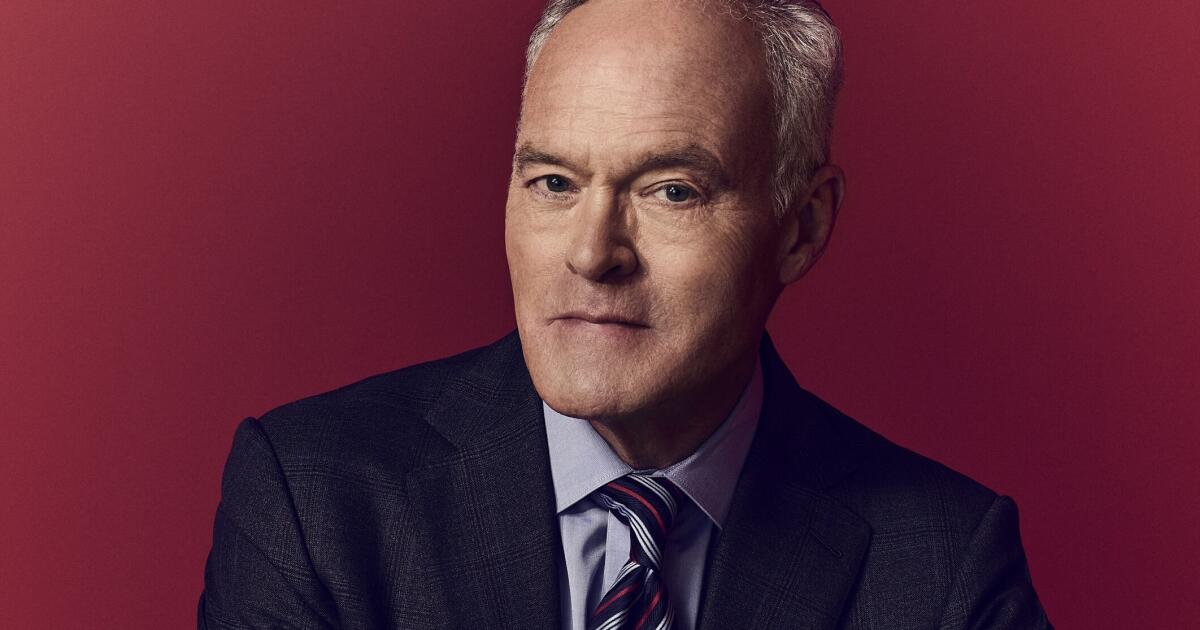
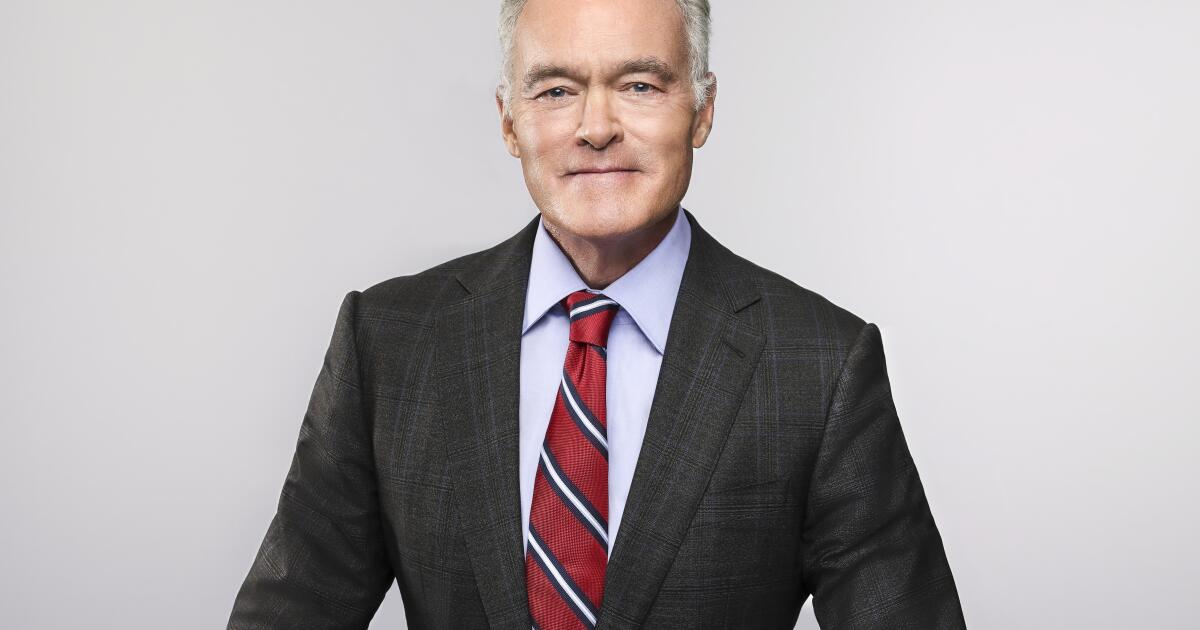
Internal resistance to Weiss has been strongest at the venerable news magazine “60 Minutes.” The program’s star correspondent Scott Pelley was fired last month after he confronted management over the dismissals of executive producer Tanya Simon and his on-air colleagues Sharyn Alfonsi and Cecilia Vega.
CNN anchor Anderson Cooper has reportedly told colleagues he does not want to work for Weiss if the cable network is put under her purview. He already rejected an offer from Weiss to anchor the “CBS Evening News” and declined to renew his deal as a “60 Minutes” contributor after nearly two decades with the program.
The chaos at CBS has given pause to people at CNN. Larry Ellison, the tech billionaire and father of Paramount Chief Executive David Ellison, has reportedly promised Trump there will be sweeping changes to CNN after the merger.
Reid, 43, is among the many TV news correspondents and anchors that Trump has disparaged over the years, claiming they are unfair in their coverage. As White House correspondent for CBS News, Reid was known for asking tough questions of Trump during his White House briefings on the coronavirus.
Reid was a lawyer before becoming a journalist at CBS News in 2010. In addition to serving as White House correspondent for the network, she covered the Justice Department and the Supreme Court.
Reid would be another significant hire for MS NOW, the progressive-leaning channel that is rebuilding its roster after separating from NBC News and its parent, Comcast. The network formerly known as MSNBC is now part of Versant, a company with a stable of cable networks spun off by Comcast.
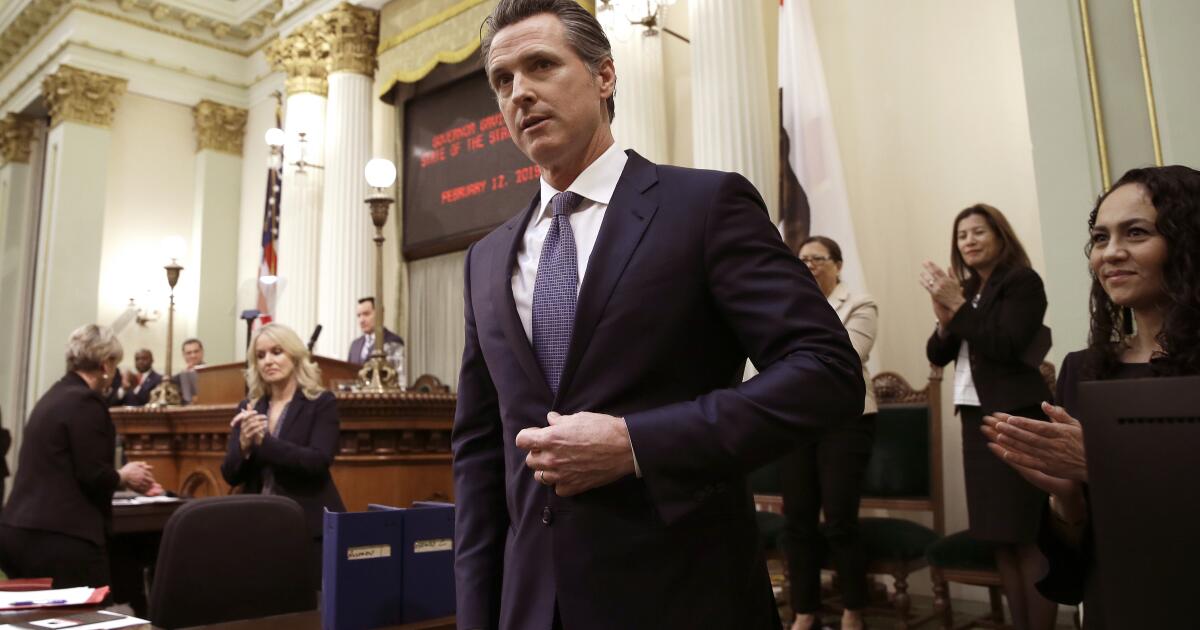
SACRAMENTO — Gov. Gavin Newsom on Monday signed his final state budget as governor, a $351.7-billion spending plan that seeks to uplift the poorest Californians through a tax system reliant on the stock market gains of the wealthy.
In a video message, Newsom extolled free school meals, universal transitional kindergarten, 130,000 subsidized childcare slots and other accomplishments in his tenure at the state Capitol, a period in state history marked by a dramatic expansion of state government and over $100 billion in increased spending.
“Over the past eight years, we built great things for the people of California — some of the boldest actions any government in this country has taken in a generation,” Newsom said. “And we did this without breaking the bank. We did this by design.”
The agreement ends weeks of lobbying by outside interests and negotiations among lawmakers and the governor at the state Capitol about how to handle a surge of income tax collected on stock market gains related to artificial intelligence.
Economists have warned that the revenue bump is potentially temporary and analysts say the growth in state spending could leave California in a challenging position if the economy declines.
Assemblymember David Tangipa (R-Fresno) agreed with Democrats that the budget is “compassionate.”
“My fear is that it’s not too much of a competent budget, and the budget continues a pattern that Californians know all too well: Spend now, justify it later, and hope somebody else pays the bill,” he said during a floor debate Monday.
Here’s what you need to know about the spending plan, which takes effect July 1.
Who decides the state budget?
The simplest answer is: Democrats. California voters have elected Democrats to represent 30 of the 40 seats in the Senate and 60 seats of the 80 seats in the Assembly. The budget was passed through a majority vote in each house of the Legislature and signed by Gov. Gavin Newsom, also a Democrat.
A more complex answer is that the budget is a product of dozens of legislative hearings, millions of dollars spent on lobbying by outside interests, talks among lawmakers and the governor and ultimately subject to the same political dynamics that rule the Democratic party.
Senate President Pro Tem Monique Limón (D-Goleta) and Assembly Speaker Robert Rivas (D-Hollister), in consultation with the chairs of the budget committees, represent their Democratic caucuses and reach a final agreement on the details of the spending plan with Newsom. In reality, staff members for the three parties handle most, if not all, of the back of forth negotiations to get there.
Union leaders seeking better pay, working conditions, benefits for workers and opportunities to expand their ranks are often brought in to consult or hammer out thorny deals as business groups try to fight off more regulations, taxes and costs, and support policies that increase their financial performance.
Democrats are spending more than ever before. How is that possible?
The Legislative Analyst’s Office, the nonpartisan fiscal advisor for lawmakers, recently examined the increase in state spending since 2019-20, Newsom’s first full year in office.
Between the budget approved that year and the spending proposal Newsom unveiled in January, spending from the state’s main operating fund had grown by over $100 billion, or 70%. That was largely by a 60% increase in revenue during that time. California typically operates with a spending deficit because Democrats spend more money than the state brings in.
The LAO found that the increase in spending stemmed from the growing cost of sustaining programs and services that were already in place when Newsom took office. About 30% of the remaining spending growth was categorized as new, either by newly created programs or the expansion of existing services.
Among the report’s conclusions: California could not afford the programs that predated Newsom and the ones he and the Legislature adopted.
To balance the budget over the last few years, Newsom and lawmakers have dipped into the state’s reserves at a time when California is experiencing strong revenue growth, which the LAO has cautioned against. Democrats have also increased taxes on businesses, paid for programs out of other funds and suspended reserve deposits among other solutions.
This year, the state budget places $6.4 billion in higher than expected revenue into a temporary holding account to knock down a deficit and balance the budget through 2027-28.
Democrats are pursuing a change to the state constitution on the November ballot that would allow them to set aside more money in years of good revenue growth to prevent cuts in future downturns.
Where is the money going?
Education and Medi-Cal are the two largest costs for the state.
Medi-Cal is the state’s version of subsidized health insurance for low-income Californians and provides medical, dental and vision care for an estimated 14.5 million people, or about one-third of the state population.
The federal government pays for more than half of the cost of the program. California is expected to spend about $50 billion from the general fund next year out of a total estimated at more than $220 billion in costs shared between the state and federal government, according to the LAO. State taxes and fees on providers also help fund Medi-Cal.
Overall, Medi-Cal costs more than any other state program and takes up about 40% of total spending, including federal funds the state receives, according to the LAO.
Spending on Medi-Cal has more than doubled over the last 10 years, which the LAO attributes to an increase in costs per enrollee, more enrollees and a greater share of seniors seeking care, among other factors.
Under Newsom, California has expanded Medi-Cal, including offering coverage to include all immigrants regardless of their immigration status, which the governor said has dropped the state’s uninsured rate down to 5.9%
The cost of Medi-Cal has grown beyond what Democrats expected and resulted in Newsom suggesting spending cuts.
The final budget agreement rejects a call by Newsom to lower the asset limit to $2,000 now and instead lowers it to $21,000 in 2027-28 to be eligible for Medi-Cal. The Legislature also delayed the governor’s proposal to reduce dental coverage and shift asylum seekers and other immigrants to restricted scope Medi-Cal, according to Jason Sisney, the lead budget advisor for the Assembly who posts about the budget on Substack.
The budget includes Newsom’s proposal to shift enrollees with unsatisfactory immigration status, a term that includes undocumented immigrants and others, from managed care to fee-for-service to save costs.
Under Proposition 98, approved by voters in 1988, California has a minimum funding guarantee for schools and community colleges and dedicates roughly 40% of general fund revenue to education.
Sisney said the budget increases the Local Control Funding Formula by $2.2 billion and provides historic general fund per pupil spending of $21,148. Support for special education also grew by $1.8 billion.
The California Community Schools Partnership Program received a $1-billion boost and Democrats directed $2.8 million in additional funding to the program that provides free meals for school children.
The budget also establishes 22,770 new slots for free or reduced childcare, which Newsom had proposed decreasing.
Eli Lilly (LLY) and Regeneron Pharmaceuticals (REGN) are among seven drug companies selected by the US FDA to become a part of the FDA PreCheck Pilot Program, which is designed to improve US drug manufacturing capabilities.
Weekly insights and analysis on the latest developments in military technology, strategy, and foreign policy.
In the latest twist in Canada’s long-running saga to field a new fighter, the country’s defense minister has said that Ottawa is “interested in learning more about” the Global Combat Air Program (GCAP) next-generation fighter. GCAP is currently a trinational effort, led by the United Kingdom and involving Italy and Japan. Its centerpiece is the Tempest crewed fighter. A demonstrator for this jet is currently taking shape with BAE Systems in the United Kingdom.
David McGuinty, the Minister of National Defense of Canada, made the remarks after a meeting in Tokyo with his Japanese counterpart, Shinjiro Koizumi. Breaking Defensereports that McGuinty confirmed he had spoken with Koizumi about the GCAP, which the Canadian official described as a “promising initiative.”
Japanese Defense Minister Shinjiro Koizumi and Canadian Defense Minister David McGuinty before an earlier meeting in Tokyo, Japan, on February 6, 2026. Photo by David Mareuil/Anadolu via Getty Images Anadolu
“We are interested in learning more about it. I’ll take it back to my team and see what it looks like,” McGuinty told Reuters.
Until now, no senior Canadian official appears to have spoken publicly about interest in GCAP. However, the development comes as Ottawa weighs up the option of a split fighter buy, which would involve acquiring the U.S.-made F-35 and one other type. This thinking has been driven by a growing rift between Ottawa and Washington.
However, the possibility of Canada coming on board GCAP as an ‘observer’ had been raised in March of this year. According to The Asahi Shimbun, a Japanese daily newspaper, unnamed Japanese officials disclosed that, during a previous meeting, McGuinty and Koizumi discussed such an arrangement.
An official artist’s concept of a potential Tempest configuration, with Mount Fuji in the background. MHI
Canada’s joining GCAP with observer status would provide it access to information on the program and could be a stepping-stone to deeper involvement.
Earlier this week, Italian Defense Minister Guido Crosetto raised the possibility of other nations joining GCAP, noting that, were that to happen, “we would be completely willing, because the more there are, the greater the chances of creating something and bringing down costs.”
Crosetto then identified Canada as “the country most interested [in GCAP] at the moment.” He said he would be “fully open” to Canada joining as an observer.
For Canada, however, GCAP would require a rethink of Canada’s potential pursuit of a split-buy approach to its new fighter.
Until now, the Saab Gripen E had been identified as the most likely candidate to be bought alongside the F-35.
A pair of Gripen Es. Saab Linus Svensson @Saab
Sweden has made a strong push to sell Gripen to Ottawa, and Saab offered to build the jet in Canada, in an effort to secure support for its previous bid, which it lost to Lockheed Martin. Since then, Saab has also emerged as the preferred candidate to supply Canada with its future airborne early warning and control (AEW&C) via its GlobalEye.
In April of this year, McGuinty confirmed that Ottawa was still reviewing its earlier plan to buy 88 F-35s.
“The review of the purchase of the F-35s is continuing… We are taking the necessary time to study very, very closely the question of the fighter fleet,” McGuinty told the Senate’s defense committee.
The split-buy option emerged since Canada has already made a firm commitment to buy 16 F-35As to start replacing its aging CF-18 Hornets. Canada’s industry also has a significant degree of involvement in the Joint Strike Fighter program.
An infographic showing Canadian industrial participation in the F-35 program. Lockheed Martin
Canada currently has around 75 CF-18A/B+ jets and has also added 18 upgraded former Royal Australian Air Force (RAAF) F/A-18A/Bs, plus seven more as spares, to help bolster its fleet.
Of Canada’s first 16 F-35s, four have already been paid for in full, while parts for eight others have also been purchased. The first Canadian F-35s were expected to be delivered for training at Luke Air Force Base, Arizona, in 2026.
Back in 2023, Canada’s Liberal government announced plans to buy 88 F-35s, a decision that appeared to bring closure to what had already been a very protracted process. You can read about this here.
Infographic outlining the key features of Canada’s future F-35As. RCAF
However, amid growing trade tensions and a war of words with the United States, Liberal Prime Minister Mark Carney launched a review of the F-35 program shortly after taking office in the spring of 2025.
There are other arguments for a split buy, too. Back in 2019, the cost of buying the planned 88 F-35s was put at $19 billion. Now it has rocketed to $27.7 billion, not including weapons and infrastructure.
Bill Blair, who was Canada’s defense minister when the review of the F-35 buy was launched last year, pointed to the advantages of a mixed fleet, saying it would give the RCAF more options to handle different types of threats.
“What happens if you have to persist in that space for months and months and years? The tool that you use, is it the right tool to do that job?” Blair said. “We need to have a whole wide range of capability sets to deal with all the eventualities that we could face.”
Were Canada to procure the Tempest, it would surely have to wait longer than 2035 — the prospect of GCAP’s fighter entering service at this date, as planned, is highly unlikely. Canada would be fourth in line behind the three core partners. Ottawa would need to buy more F-35s, perhaps around two thirds of its original intended number, or around 60 aircraft, and also keep the best of its CF-18s in service for longer, if that’s even possible. The Hornets are getting very old and disappearing from service abroad. Supporting them will become increasingly problematic. When the Tempest finally arrived, it would provide a flipped high-low fighter mix. This is essentially the same approach that the United Kingdom, Italy, and Japan — all current F-35 operators — are taking.
However, the Tempest does appear to be especially well-suited to Canada’s fighter requirement.
The design of the jet will stress extreme range and a large payload — roughly twice that of the F-35A. Senior GCAP officials have said the jet could potentially carry enough internal fuel to fly across the Atlantic without refueling.
A rendering of a pair of Tempests of the latest configuration overflying the U.K. coastline. BAE Systems
While these attributes are optimized for a future conflict in the Indo-Pacific region, they are equally applicable to dealing with the ‘tyranny of distance’ and the increasing Russian threat posed around Canada’s enormous land mass, which extends far into the highly strategic Arctic region.
“Both China and Russia have fifth-generation fighter aircraft and fifth-generation missiles that are able to go at much greater speeds and with much more that are holding Western allies at risk at this moment in time,” the commander of the Royal Canadian Air Force (RCAF), Lt. Gen. Jamie Speiser-Blanchet, said in the past.
Plans to arm the Tempest with larger air-to-air missiles offering a longer range than those currently used by any of the three GCAP partner countries have also been revealed, as you can read about here.
If Canada decides it wants a sixth-generation combat aircraft to tackle current and emerging threats from China and Russia, the GCAP might be the only realistic choice. The rival pan-European Future Combat Air System (FCAS) has collapsed, and there is little chance of Canada getting its hand on the Boeing F-47.
But any kind of split buy “would duplicate a certain amount of infrastructure and training,” Speiser-Blanchet admitted.
In some cases, however, there could be cost-benefit arguments in having a mixed fighter fleet, as well as the important factor of not relying entirely upon one source of this type of combat equipment.
There is also the question of how feasible it would be for Canada to join GCAP at this point, at least in terms of industrial participation and steering requirements. The latter point seems next to impossible, with national requirements already set, and most of the workshare agreement has also been divided up between the three partners.
There has been talk of Saudi Arabia possibly joining GCAP in some capacity, and, more recently, Poland has been reported as being interested in buying the aircraft, too.
With that in mind, Canada’s best shot might be to buy the jet ‘off the shelf,’ rather than hope for industrial windfalls.
At the same time, Canada and the United Kingdom are partners on some other key military programs, including the Royal Canadian Navy’s future River class Canadian Surface Combatants, derived from BAE Systems’ Type 26 design for the U.K. Royal Navy.
Meet The River-Class Destroyer – State-of-the-art WARSHIP!
Returning to the Tempest, the broader GCAP program still has to survive considerable challenges, both technical and political, that lie ahead.
As we have explained many times in the past, the process of creating an all-new fighter, especially one incorporating stealth technologies, brings very lengthy development times and high costs.
At this point, BAE Systems is in the process of building a demonstrator as part of the GCAP program, with a first flight planned by the end of 2027.
The latest rendering of that demonstrator appears at the top of the story. Notably, it retains the Typhoon’s EJ200 turbofan engines, with non-stealthy nozzles. The Tempest will have an all-new powerplant.
As we have argued in the past, the more time that passes, and the more deeply intertwined with the F-35 Canada becomes, the arguments in favor of a split fighter buy become harder to justify. Buying the Tempest would certainly not be the cheapest option, and would force a rethink of timelines, but it does underscore the fact that Canadian officials are casting their net wider, looking at very high-end capabilities, and seeking to build deeper strategic relationships outside of the United States.
For the second straight year, the City Section is allowing a pilot program of high schools forming a boys flag football league as its popularity grows.
This year’s group of high school participants is expected to double in size between eight and 16 teams, City Section commissioner Vicky Lagos said. All will be small charter schools. Last year, several teams that temporarily dropped 11-man football, Sotomayor and Torres, had flag teams in a league that was played in the fall. Sotomayor and Torres will have 11-man teams this season.
When Lagos mentioned the pilot boys flag football league at an 11-man coaches meeting this month, there was clear skepticism voiced by coaches. If boys flag football ever gets approved, Lagos said schools would have to choose between having an 11-man team or a flag team. When Lagos mentioned having the flag season in the spring, there was concern it would take away participants from track and field teams.
This issue figures to come up around the state as schools in the California Interscholastic Federation have similar discussions. Flag football is likely to gain a boost in exposure when it is played at the 2028 Olympic Games in Los Angeles.
Lagos points out that boys flag football participants would be different than 11-man. Middle school students engage in flag football and attract students whose parents don’t want them to play 11-man tackle football for fear of head injuries.
Girls flag football is in its fourth year and rising fast. Adding boys flag football is a debate and issue that will need to be addressed in the future.
Ron Nocetti, executive director of the CIF, said a section must first bring up adding boys flag football as a sport before real discussions can begin.
Veteran MS NOW anchor Alex Witt is leaving the news network, which is moving away from live programming on the weekends.
The new weekend programming strategy announced Friday is a cost-saving measure that will give parent company Versant more resources for a new direct-to-consumer streaming offering that makes MS NOW available to consumers without a pay-TV subscription. The company is also looking to expand its live event business.
According to a memo from MS NOW President Rebecca Kutler, “The Weekend: Primetime,” a live discussion program launched last year, will have its final airing Saturday.
One of the program’s co-hosts, Antonia Hylton, will take over Witt’s midday shifts later this year. Hylton’s co-hosts Ayman Mohyeldin, Catherine Rampell, and Elise Jordan, will remain with MS NOW and continue to appear on other programs.
Kutler said job losses from the moves are minimal and encouraged staffers who lose their current roles to apply for 40 current job openings at the company with more on the way. MS NOW has been staffing up its news operation since separating from NBC News last year.
Weekends have long been a ratings weak spot for MS NOW, which while a distant second to Fox News, has seen audience growth in 2026 and remains ahead of CNN. The network has started to rely on podcasts such as “Pod Save America, from Crooked Media to fill some hours. The episodes have performed strongly enough for MS NOW to try similar deals with outside podcast producers.
“Throughout the summer, we will expand our taped strategy and announce new content partnerships,” Kutler said in her memo.
With the changes, MS NOW will still have 20 hours of live programming each weekend and will be staffed to handle breaking news.
Witt joined the network formerly known as MSNBC in 1999, long before it began its strong tilt toward progressive political commentary. Over the years, Witt’s weekend newscast became one of the few programs on the network that delivered straight news without opinion.
Kutler called Witt “a beloved longtime member of our MS NOW family” and “a continued, trusted, and steady presence for our audiences.”
Wise Group (WSE) stock surged 5.4% in Thursday after-hours trading after the fintech said it plans a new share repurchase program that it expects to exceed $500M.
About 40% of the buyback program is expected to be allocated to its recurring
The June 16 appearance by Vance gave the program its most-watched episode since November 2024.
The first appearance by Vice President JD Vance on ABC’s “The View” delivered the most-watched edition of the talk show since November 2024.
The June 16 program averaged 3.3 million viewers, according to Nielsen data. The figure was well above the average of 2.6 million viewers for “The View” in the 2025-26 season.
Vance appeared on the liberal-leaning program to promote his new book on his decision to become a Catholic. While the co-hosts mostly questioned him on the Trump administration’s policies on immigration and race, the discussion was cordial.
The panel of co-hosts — Whoopi Goldberg, Joy Behar, Ana Navarro, Sunny Hostin and Alyssa Farah Griffin — did not ask Vance to address the program’s ongoing tension with the Federal Communications Commission.
ABC has asked the FCC to rule on the status of “The View,” which received an exemption from the rarely enforced equal time provision in 2002. ABC has maintained that “The View” books politicians based on newsworthiness and not partisanship.
“‘The View’ has welcomed your favorite guests and covered the issues you care about for nearly 30 years,” the spot says. “Now the FCC wants to control who is allowed to appear on the show.”
The National Republican Senatorial Committee and the National Republican Congressional Committee submitted comments Monday, asserting that “The View” takes advantage of its exemption and favors Democratic candidates and permits “only rare appearances by Republican-aligned figures.”
ABC has told the FCC that “The View” has invited politicians from both sides of the aisle to appear on “The View,” including Health Secretary Robert F. Kennedy, Jr., Secretary of State Marco Rubio and entrepreneur Elon Musk. They have declined the invitation as did Vance before his appearance last week.
The letter from the GOP committees also cited the ideological leanings of the co-hosts, saying they are “not selected for their journalistic talent or excellence in commentary, but for their partisan tilt.”
Over the last two decades, “The View” has used five liberal hosts and filled one seat designated for a conservative voice. The right-leaning co-host role has had the most turnover.
“The View” has been the most-watched daytime program for the last nine years. As a live, topical program, it has remained an important media platform while the rest of the talk show genre has largely faded due to diminishing audiences.
Carr’s targeting of “The View” is part of his ongoing criticism of broadcast platforms that annoy President Trump, who has urged that TV station licenses be pulled when he’s been unhappy with coverage.
In Lincoln Park, past Plaza de la Raza cultural center and under swaying pine trees, stands a row of 10-foot wooden panels etched with names. Robert Zaldivar stood quietly in front of the names, surrounded by community members holding lit candles as memories of old friends resurfaced.
The panels bear nearly 2,000 names, and more are added every year. Each one represents an Angeleno, mostly Latinos, who died of AIDS. Zaldivar led the movement to erect this monument, named the Wall Las Memorias, which was finalized in 2004.
Inspired by his late best friend, who was HIV-positive, the Wall represents to Zaldivar the power of remembering those in his community affected by HIV and AIDS. It was designed in the shape of Quetzalcoatl, or the “Feathered Serpent,” an Aztec deity and symbol of rebirth.
Robert Zaldivar leads a sunset vigil at the Wall Las Memorias AIDS Monument in Lincoln Park on the anniversary of the first HIV diagnosis in L.A. on June 4, 2026.
(The Wall Las Memorias)
That day in early June, he hosted a sunset vigil, joined by AIDS Memorial Quilt founder and Harvey Milk mentee Cleve Jones, to recognize the lives lost since AIDS was first diagnosed 45 years prior, when the Centers for Disease Control and Prevention published a report detailing immunodeficiency in five young gay men in Los Angeles.
At Zaldivar’s feet was a poem, one he wrote in 1995 with his friend Anna Contreras.
It reads:
It is here, we free ourselves from the teaching of guilt. We unite as one people in our vision, our teaching, and our truth. Through truth we live, through knowledge we survive.
Contending with stigma and misinformation has been a constant struggle for people who are HIV-positive, he said, a struggle that Zaldivar hopes to make more visible now than it has been in previous decades.
“Sometimes it feels like there’s no other way to draw attention to this problem than to have a physical reminder,” Zaldivar said of the monument. “This reminds us of real people, as more than statistics.”
The statistics Zaldivar refers to include the continuing rise in HIV diagnoses in Latinos across the United States. The most recent CDC data show 39,000 people across the U.S. received an HIV diagnosis. And a Kaiser Family Foundation analysis revealed that between 2010 and 2022, there was a 24% increase in new cases among Latinos. In 2022 alone, Latinos made up 31% of new diagnoses, despite only representing 19% of the American population, the KFF study found.
“Just last week, we had two new diagnoses of HIV in our clinic,” said Bernardo Gomez, assistant manager of HIV resources at the Wall Las Memorias Project. “For context, we had 15 in the past six months, including straight women … I think what we’re seeing is a dangerous loss of support for outreach and education.”
Last year, President Trump released his presidential fiscal year budget for 2026, much of which went into effect last October. In it, he revealed significant cuts to HIV health programs — amounting to $1.5 billion.
The budget recommendation signaled the administration’s yearly priorities, and Trump’s fiscal plan and staffing cuts to HIV teams under the so-called Department of Government Efficiency (DOGE) showed a shift away from HIV prevention and healthcare, which advocates say has led to providers losing jobs and places for testing and resources to shrink. In L.A., the Latino community is feeling the brunt of the loss, Zaldivar said.
The biggest cut to HIV care in the 2026 budget affected the CDC, which lost around $3.6 million. Another devastating loss was $1.7 million cut from the Ryan White HIV/AIDS Program, which many L.A. resource centers report relying on to fund part of their programming and staffing.
Robert Gamboa, associate director of public policy at the L.A. LGBT Center, said that in Trump’s first term, his “Ending the Epidemic” program created hope for soon seeing the end of HIV in the U.S. — a hopefulness that he said was quickly dashed in his second term.
“Now there’s this 180-degree shift in policy, we see these enormous proposals pulling away from funding, and his lack of acknowledgment of World AIDS Day, and Pride in general,” Gamboa said. “The message of that is loud and clear: [The Trump administration] is telling our LGBT community, ‘We don’t care about you.’”
Since Trump’s inaugural address last year, Gamboa said executive orders have only solidified Trump’s shift away from LGBT organizations, “challenging the structural integrity of almost everything we’ve done.”
Gamboa said that last spring, the Department of Public Health, Division of HIV and STD Programs), which supplemented L.A. organizations with substantial HIV funding, sent out a notice that all of their contracts were terminated.
“Well, this caused a massive alarm all across L.A. County. Everyone started freaking out. We had to say, ‘We need an emergency allocation [from state funds] so that we can continue providing HIV services across California,’” Gamboa said. “We’re used to getting upwards of around $20 million in funding at the county level, and it wasn’t happening.”
Robert Zaldivar leads a sunset vigil at the Wall Las Memorias AIDS Monument in Lincoln Park on the anniversary of the first HIV diagnosis in L.A on June 4, 2026.
(The Wall Las Memorias)
Since then, nonprofit representatives have confirmed that the contracts were restored at reduced rates. However, the impact of the uncertainty shook the health services community and only caused further distrust among Latino patients.
“We’re already seeing [the impact in L.A.]. In the Latino community, there’s so much fear from the ICE raids. People are afraid to even leave their homes,” Gamboa said. “We’ve worked so hard in building trust and relationships with our communities of color. Now, they’re afraid to even come in. Many of the places they’ve gone to in L.A. County have already closed their doors and ceased services.”
Most recently, the Trump administration announced plans to cut millions in public health funding. This includes $1.1 million that would be slashed from the National HIV Behavioral Surveillance Project, an early-warning system for HIV outbreaks, established by the L.A. County Department of Public Health.
On the White House website, a page called “Cuts to Woke Programs” reads: “President Trump is committed to eliminating radical gender and racial ideologies that poison the minds of Americans.”
Gamboa said that organizations have been discouraged of using “LGBT” in their programming to avoid being defunded as part of the targeted “woke” programs.
“It really affects me,” said Gomez, who has been living with HIV since 1996. “How long will I have medicine?”
Gomez, who is the breadwinner of his family, says his monthly supply of medication costs $1,500 a bottle. “It’s so expensive, and I have insurance. For people without insurance, [the Ryan White program] is the only way they can afford treatment,” Gomez said. “I’m afraid of what will happen to them.”
Gomez takes antiretroviral therapy, a lifesaving medication that reduces the number of infected cells, making the disease less transmissible and prevents HIV from developing into AIDS. According to 2024 HRSA data, the Ryan White program provided antiretroviral therapy to 602,000 people, preventing the spread of HIV.
As the program loses funding, jobs providing HIV care have become more sparse — and programs like the Wall and the L.A. LGBT Center have become more essential to support the thousands left without life-saving care.
HIV program funds are trickling back into L.A. County for nonprofits this year; although some, like the Wall, maintain that it’s “not enough to address the need.” Up until last May, the organization shared that the county funded $1 million of its annual HIV reduction efforts. This year, that number was drastically reduced to $100,000 per six-month contract.
“Many of my social worker friends are off the streets [where they helped at-risk communities] due to just not having enough funding to do their jobs,” said Miguel Rodriguez, program coordinator of HIV testing and prevention at the Wall. “People think only gay men are affected, but basic sexual health for everyone is at risk here. Less [testing] means more infections and transmissions across the board.”
As Robert Zaldivar stresses, the only way to protect L.A.’s Latino HIV-positive community is to support remaining HIV services to get tested or donate to local service organizations.
“What we saw in the ’90s, I’m scared that it will repeat. I want people to remember how serious [HIV] is, and to educate,” Zaldivar said. “Keep getting tested. We don’t report your immigration status or sexuality. Just come in.”
WASHINGTON — A federal judge on Monday ruled that a recently revamped version of a federal tool central to the Trump administration’s election integrity strategy is unlawful and can no longer be used.
U.S. District Court Judge Sparkle L. Sooknanan sided with advocacy groups that argued the recent upgrades to the program, called Systematic Alien Verification for Entitlements, or SAVE, aggregated Americans’ sensitive personal data in a way that could result in voters being wrongly purged from voter rolls.
“All in all, the federal government has knowingly trampled on the privacy rights of American citizens in a manner that threatens the sacred right to vote,” Sooknanan said in an order explaining the decision. “This Court cannot stand idly by while that happens.”
She said Congress had expressly prohibited the government from centralizing Americans’ personal identifying information and that the federal agencies that created the SAVE program “knew that the database violates those statutory protections.”
The decision is a major legal setback for President Trump in his efforts to use federal agencies to encourage a nationwide crackdown on noncitizens illegally on state voter rolls. The modified SAVE system, which critics had referred to as an unlawful centralized federal database of voter information, had been a key pillar of the second election executive order the Republican president signed earlier this year. The ruling leaves its future uncertain.
“It’s amazing how hard the Left will fight to stop us from solving problems they insist do not exist,” James Percival, general counsel at the Department of Homeland Security, said of the ruling in a social media post.
The department referred to his post as its comment on the ruling. The Department of Justice did not immediately return a request for comment.
The SAVE program was created under an immigration law mandating that Homeland Security help federal, state and local agencies prevent government benefits from going to noncitizens. At least 25 states used it to check their voter rolls since April 2025, after the Trump administration significantly expanded its search abilities. Since then, at least 67 million registrations have been scanned through the program, but critics worry it could end up purging valid voters from the rolls.
The plaintiffs, including the League of Women Voters, the Electronic Privacy Information Center and five unnamed U.S. citizens, had alleged the revamped SAVE program violated Americans’ privacy and voting rights. The groups also alleged the Trump administration violated federal privacy laws by ignoring transparency requirements about the changes to the system.
“The agencies were scrambling to comply with an Executive Order aimed at reshaping federal elections, which directed them to create a system for mass voter verification,” the judge wrote. “So they haphazardly combined and repurposed the private information of millions of Americans, including citizenship data that they knew to be unreliable.”
Plaintiffs attorney Nikhel Sus told the court during the October hearing that naturalized citizens face a greater risk of unlawfully being purged from voter rolls.
“They are uniquely vulnerable to errors in the database,” said Sus, an attorney for Citizens for Responsibility and Ethics in Washington.
Sus said Monday he sees Sooknanan’s ruling as an “across the board victory” and noted the plaintiffs were pleased the judge’s ruling reinforced their argument that the federal government doesn’t have implied authority to freely share sensitive data across agencies.
Swenson and Hussein write for the Associated Press. Swenson reported from New York.
The Walt Disney Co. is rallying public support for ABC as it faces an early Federal Communications Commission review of its TV station licenses and the guest booking policy of its daytime talk show “The View.”
ABC began running spots Monday asking viewers to comment on the FCC’s recent actions that Disney sees as an effort to stifle speech seen as critical of President Trump. The president has repeatedly threatened to pull broadcast licenses of TV outlets that feature journalists and hosts he dislikes.
The licenses for the TV stations, including KABC in Los Angeles, were originally scheduled for renewal between 2028 and 2031. Calling for an early review is highly unusual, but the agency said its related to an inquiry into Disney’s diversity, equity and inclusion policies and whether they violated federal anti-discrimination rules.
The FCC has not declined to renew a TV license since the early 1980s. With court challenges, such a process can take years to enact.
FCC Chairman Brendan Carr has also taken aim at ABC’s daytime talk show, “The View.” He publicly questioned whether the program should have the status of news programs, which are exempt from having to give equal time to the opponents of political candidates who appear as guests.
“The View” was granted an exemption from the rarely enforced rule in 2002. ABC’s Houston station KTRK filed a petition with the FCC in May asking for a declaration that the program can maintain that status.
“The Commission’s actions threaten to upend decades of settled law and practice and chill critical protected speech, both with respect to The View and more broadly,” KTRK-TV said in the filing.
ABC has maintained that “The View” books politicians based on newsworthiness and not partisanship. The program featured Vice President JD Vance last week, where he received a cordial welcome.
ABC’s message asking consumers to support “The View” amid an FCC investigation.
(ABC)
ABC is airing spots which warn viewers that the FCC wants to control what viewers see on “The View.” The message opens with the voice of legendary broadcaster Barbara Walters giving her introduction to the program she founded — “I had this idea for a show — different women, with different points of view.”
Walters is followed by an announcer who says, “‘The View’ has welcomed your favorite guests and cover the issues you care about for nearly 30 years. Now the FCC wants to control who is allowed to appear on the show.”
The spot says “the FCC is questioning our support to the community.” A QR code shows up on the screen that takes viewers directly to the FCC’s electronic comment filing system where they can submit their comments, which is regularly part of the agency’s review process.
Disney is also airing spots calling for support of its local TV stations, including L.A.’s KABC. The spots are customized for each ABC station market, emphasizing their commitment to local news coverage.
Disney did not comment on the campaign. But an executive not authorized to speak publicly about it said “ABC believes it is important for the public to know what is happening, what’s at stake, and how to engage directly in the process if they want to make their voices heard.”
Disney’s aggressive defense of its stations and “The View” are a stark contrast to its decision to settle a lawsuit filed by Trump over inaccurate statements ABC News anchor George Stephanopoulos made about a sexual assault civil suit the president lost in court.
ABC agreed to pay Trump $15 million in Dec. 2024 to end the legal fight — sparking an outcry among free speech advocates, who believed the network would have won the case.
ABC also caved In September, when Kimmel’s program was briefly pulled from the air after two major TV station groups refused to air it following the host’s comments about the murder of right-wing activist Charlie Kirk.
Disney received major blowback from the Hollywood community, where Kimmel is extremely popular. Data also showed the company experienced cancellations of its Hulu and Disney+ streaming services in protest of the move.
While the smoke has begun to clear at “60 Minutes” after three correspondents were fired, CBS News leadership now faces the challenge of finding journalists who can fill their shoes just three months before a new season starts.
The venerable news magazine was plunged into crisis last week as longtime correspondent Scott Pelley confronted management about the May 28 firings of his colleagues Sharyn Alfonsi and Cecilia Vega along with the program’s executive producer Tanya Simon and her second-in-command Draggan Mihailovich.
Pelley, who also accused CBS News Editor-in-Chief Bari Weiss of “murdering” the program, was terminated June 2 after a 37-year career at the network. He later gave an interview to The New York Times, accusing Weiss of “putting her thumb on the scale” for the Trump administration when guiding the editorial direction of stories.
(CBS News denied Pelley’s accusations. But Paramount Chief Executive David Ellison, who has given Weiss a free hand in disrupting the CBS News hierarchy, found the turbulent situation concerning enough to personally reach out to veteran “60 Minutes” correspondent Lesley Stahl, according to The New York Times. He assured Stahl the program would not be subject to political interference, a message she passed along to the staff.)
Lesley Stahl in the 2022 film “Marcel the Shell With Shoes On.”
(A24)
The recent personnel bloodbath followed the already announced departure of Anderson Cooper, and leaves CBS News with four correspondent roles to fill and a far less experienced executive producer — former tech journalist Nick Bilton in place to keep the program on track.
Remaining staffers were encouraged that Maria Gavrilovic, a 19-year veteran of CBS News who worked closely with Pelley, was promoted to senior producer under Bilton. They are also relieved that correspondents Stahl, Jon Wertheim and Bill Whitaker chose to remain with the program rather than leave in solidarity with Pelley.
Norah O’Donnell’s interview with Crown Prince Mohammad bin Salman in 2021.
But “60 Minutes” is under pressure to get a new team in place as newcomers will have little time to learn the program’s formula that gives it the comforting consistency its viewers seek. The 13-minute pieces on “60 Minutes” are filmed, written and voice-tracked in a distinctive narrative style that takes time to master, according to people who have gone through the process.
Weiss has told people internally that “60 Minutes” is the most important platform within the news division and if a major story comes from outside its corps of correspondents, it will find a place on the program.
Here are the leading contenders for full-time roles based on interviews with several sources at CBS News who were not authorized to discuss the matter publicly. A CBS News representative declined comment.
Holly Williams: Williams has been a foreign correspondent working out of Istanbul since 2012. The Australian journalist has reported extensively from war zones in Iraq, Afghanistan, Libya, Gaza and Ukraine. When covering Syria’s civil war from inside the country, she and her team gained access to a prison where alleged ISIS terrorists were being held.
Williams has contributed reports to “60 Minutes” over the years. Before joining CBS, she was a Beijing-based correspondent for Sky News.
CBS News foreign correspondent Holly Williams,
(Michele Crowe / CBS News)
Tony Dokoupil: The anchor of “CBS Evening News” is expected to be added as a contributor to “60 Minutes,” a role also given to his predecessors at the newscast including Dan Rather, Katie Couric, Scott Pelley and Norah O’Donnell.
Dokoupil has done longer interviews and segments for “CBS Sunday Morning” over his 11 years at the network. The additional exposure to a Sunday night audience of more than 9 million who tune into “60 Minutes” could also help boost his nightly newscast. The program has struggled in the ratings since he took over in January when, during his inaugural week, he awkwardly saluted Secretary of State Marco Rubio at the close of one episode.
“CBS Evening News” anchor Tony Dokoupil and the network’s chief national correspondent Matt Gutman.
(CBS News)
Matt Gutman: The network’s national correspondent was Weiss’ first significant on-air talent hire when he joined from ABC News in December. Gutman has been a frequent presence on big stories and breaking coverage for “CBS Evening News” since he arrived.
Mariana van Zeller at the Ultimate Disney Fan Event at the Anaheim Convention Center in September 2022.
(Image Group LA / Walt Disney Co.)
Mariana van Zeller: The multilingual journalist is best known for her documentary series “Trafficked,” which airs on the National Geographic Channel. Van Zeller, 50, has won dozens of awards for the program that has taken her around the world to report on black market activities and human trafficking.
Norah O’Donnell: Currently a contributor to “60 Minutes” who already appears on the program’s trademark open, O’Donnell’s role is expected to expand. After CBS settled a $16-million lawsuit filed by President Trump against the program for what he claimed was deceptive editing of an interview, O’Donnell helped the program by stepping up to interview the president twice, subjecting him to tough questions. Her recent joint interview with three U.S. cardinals about Pope Leo XIV and his church’s opposition to the Iran war and Trump’s aggressive immigration crackdown became a major story in April.
Major Garrett: The network’s chief Washington correspondent recently appeared on “60 Minutes” to interview Israeli Prime Minister Benjamin Netanyahu. The assignment caused internal tension as Stahl was pursuing a sit-down with the leader. But Weiss handled the booking and gave Netanyahu the option to select Garrett.
While the decision faced some criticism, the program regularly agreed to former President Obama’s preference for now-retired “60 Minutes” correspondent Steve Kroft to interview him even though other journalists on the team wanted a chance.
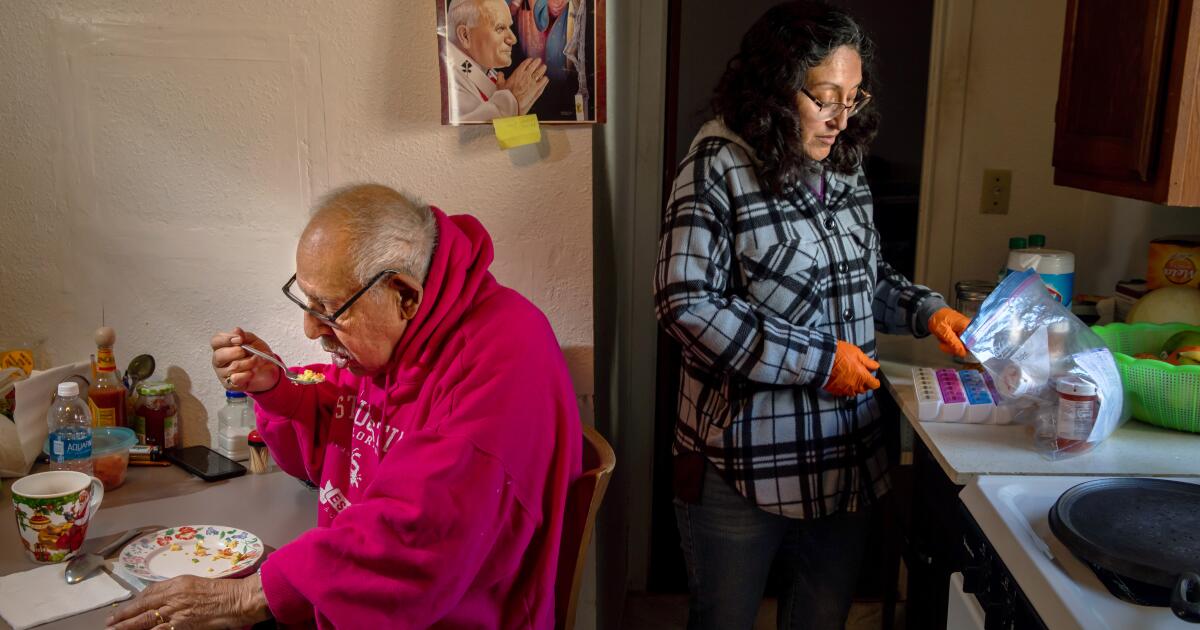
SACRAMENTO — Disability rights advocates on Monday gathered outside the state Capitol to push back on Gov. Gavin Newsom’s proposed cuts to in-home supportive services.
“These aren’t just numbers in a budget; these are real people,” said Assemblymember Jeff Gonzalez (R-Indio). “These are children, seniors, veterans and individuals with disabilities whose independence and quality of life depend on these services every single day.”
The In-Home Supportive Services program helps disabled and elderly people remain in their houses by providing in-home care. It pays assistants to help with tasks such as showering, cooking or attending doctor appointments. Newsom’s revised budget proposal, which was unveiled last month, would cut $367.7 million from the program and shift some of that financial burden onto counties.
Gonzalez explained that the issue hits close to home for his family. He said his son has cerebral palsy and a seizure disorder, and relies on assistance to live with dignity.
“Families should not have to wonder every budget season whether the support they rely on will be taken away,” Gonzalez said. “These services should not be treated as bargaining chips in budget negotiations.”
Assemblymember Laurie Davies (R-Laguna Niguel) questioned why a successful state like California would need to enact such cuts.
“It’s hard to go a day without hearing the governor or the administration brag about how we are the fourth-largest economy in the world and yet we can’t fully fund [this program for] the most vulnerable?” Davies said.
The governor has previously explained that difficult decisions must be made as the state could soon face an economic downturn. The budget proposal relies on a tax windfall, largely attributed to the stock market success of artificial intelligence companies, to erase California’s deficit — but some analysts have warned that the AI bubble could burst.
H.D. Palmer, deputy director for external affairs for the California Department of Finance, on Monday said some of the proposed cuts are a byproduct of the federal government’s changes in funding and eligibility for health and human services programs.
The so-called “Big, Beautiful Bill” signed by President Trump last year shifted federal funding away from safety-net programs, he said.
Palmer stressed that state budget negotiations are ongoing.
“Until we land on an agreement, speculation regarding the resolution of any specific differences between the Governor’s budget plan or the Legislature’s respective budget proposals would be premature,” he stated by email.
Monday’s event drew some bipartisan support. Brody Fernandez, communications director for Assemblymember Esmeralda Z. Soria (D-Fresno), said the legislator had been fighting for In-Home Supportive Services funding since she was elected.
Fernandez said his daughter has special needs and her mother had to give up her career to become a full-time caregiver. “This is personal for us and for many of the incredible individuals standing behind me,” he said.
Graham Knaus, chief executive of the California State Assn. of Counties, told The Times that he appreciated efforts to raise awareness about the burden these changes would place on counties.
“We applaud the Senate and Assembly for recognizing counties’ concerns and rejecting this proposal,” he said. “We ask them to hold the line in final negotiations.”
Elizabette Guecamburu, a bookkeeper who has a rare neuromuscular disorder, spoke at Monday’s rally and implored the governor to remember the teachings of their shared alma mater Santa Clara University, a Jesuit-led private school.
“I want him to remember where he came from,” she said, adding that students were taught to value compassion and community. “Don’t forget your Jesuit roots.”
WASHINGTON — Republicans are warning the White House that a critical surveillance authority is likely to lapse this week amid bipartisan backlash over President Trump’s pick to lead the nation’s intelligence community.
Sen. Tom Cotton, the chairman of the Senate Intelligence Committee, and Sen. Chuck Grassley, chairman of the Senate Judiciary Committee, sounded the alarm over the weekend after a failed procedural vote to extend the program.
The senators in a letter urged Secretary of State Marco Rubio to prepare “for a potential significant gap in foreign intelligence collection” if the authority expires. Section 702 of the Foreign Intelligence Surveillance Act, set to lapse June 12, allows agencies including the CIA, National Security Agency and FBI to collect communications from foreign targets overseas without a warrant.
Efforts to secure a long-term extension of the program already faced hurdles because of bipartisan concerns that the program can incidentally collect Americans’ communications. Privacy advocates and some lawmakers have been pushing to create a new warrant requirement before those communications can be searched.
Senate leaders from both parties appeared to be nearing agreement on a long-term extension. But the effort collapsed after Trump selected federal housing finance regulator Bill Pulte to serve as acting director of national intelligence.
“I know how important this tool is. Why the president would throw this live hand grenade of Bill Pulte in 10 days before this is due to expire, I’m not sure,” Sen. Mark Warner, the top Democrat on the Senate Intelligence Committee, said on ABC’s “This Week.”
Pulte pick upends bipartisan deal
Early Friday morning, after senators spent the night debating separate immigration legislation, seven Republicans joined nearly all Democrats in blocking a long-term extension of the surveillance authority.
Democrats and several Republicans registered their opposition to Trump’s selection of Pulte, arguing the federal housing finance regulator lacks the experience needed to oversee the nation’s 18 intelligence agencies.
“The naming of Pulte to that position, although the timing arguably wasn’t the best, I still don’t think it ought to derail something that’s this important,” Senate Majority Leader John Thune said.
Thune has expressed concern over Pulte’s pick, saying the nation’s top intelligence post should not be “weaponized” and that the job should be filled by “professionals.” Cotton, who rarely strays from supporting Trump and a leading advocate for the surveillance authority, declined to endorse Pulte, saying only that he had “no observations on the matter.”
“He’s not qualified for the long-term position,” Republican Sen. James Lankford, another member of the Intelligence Committee, told “Fox News Sunday.” “That’s been clear on this. He has no national security background.
Both Republican and Democratic senators skeptical of Pulte pointed to his record at the Federal Housing Finance Agency. In the role, he’s been linked with criminal referrals over allegations of mortgage fraud by public officials Trump sought to punish, including New York Attorney General Letitia James, a Democrat; Sen. Adam Schiff, D-Calif.; and Lisa Cook, a board member of the Federal Reserve.
Republicans will need to garner some Democratic support to pass any extension of the surveillance authority in the Senate. But a breakthrough appears difficult so long as Pulte remains in the position, which Trump said last week would only be temporary.
“I don’t see any path to convincing enough Democrats,” Warner said on CNN’s “State of the Union” when asked if renewal was possible with Pulte in the position.
The current reauthorization debate is hardly the first time that lawmakers have grappled with the fate of the surveillance program, particularly after a flurry of revelations about government misuse of the vast trove of intelligence it collects.
The topic in recent years has scrambled predictable partisan alliances, with Democratic critics of the Trump administration uniting with skeptics of government power on the right in voicing concerns about Section 702’s renewal.
In 2024, for instance, those divisions nearly caused the program to lapse. The Senate barely missed its midnight deadline that year before approving by a 60-34 margin legislation to reauthorize Section 702 that was subsequently signed by then-President Joe Biden.
A spokesperson at the Justice Department did not immediately return messages seeking comment Monday about the national security concerns that would be created if the program lapses. The Office of the Director of National Intelligence referred inquiries to the White House, which did not immediately respond to a request for comment.
“America faces real threats from foreign adversaries, terrorists, cyber actors, and hostile intelligence services,” Defense Secretary Pete Hegseth said on social media Sunday. “Section 702 remains one of our nation’s most effective tools for identifying and disrupting those threats before they reach our shores.”
Cotton and Grassley said they believed Democratic leaders would not support another short-term extension of the surveillance authority and urged Rubio to prepare contingency plans. They said Trump should consider an executive order to prevent a disruption in intelligence collection.
Cotton and Warner had said they were close on a bipartisan deal on a long-term extension and could still move quickly should a change occur before Friday. Still, the bill would likely need to go through the House — and the two chambers so far have disagreed on a separate issue regarding central banking digital currency.
“If we go dark next week, right before the World Cup FIFA games, and the 250th anniversary, that would be the most grossly irresponsible thing I’ve seen Congress do in my 22 years in office,” Texas Republican Rep. Michael McCaul said on ABC’s “This Week.”
Cappelletti, Jalonick and Tucker write for the Associated Press.
Under the news network’s editor-in-chief Bari Weiss, on-air correspondents Scott Pelley, Cecilia Vega, Sharyn Alfonsi and the program’s executive producer, Tanya Simon, have all been ousted from the legacy newsmagazine. The two unions, which represent journalists, said the recent actions appear to compromise editorial independence.
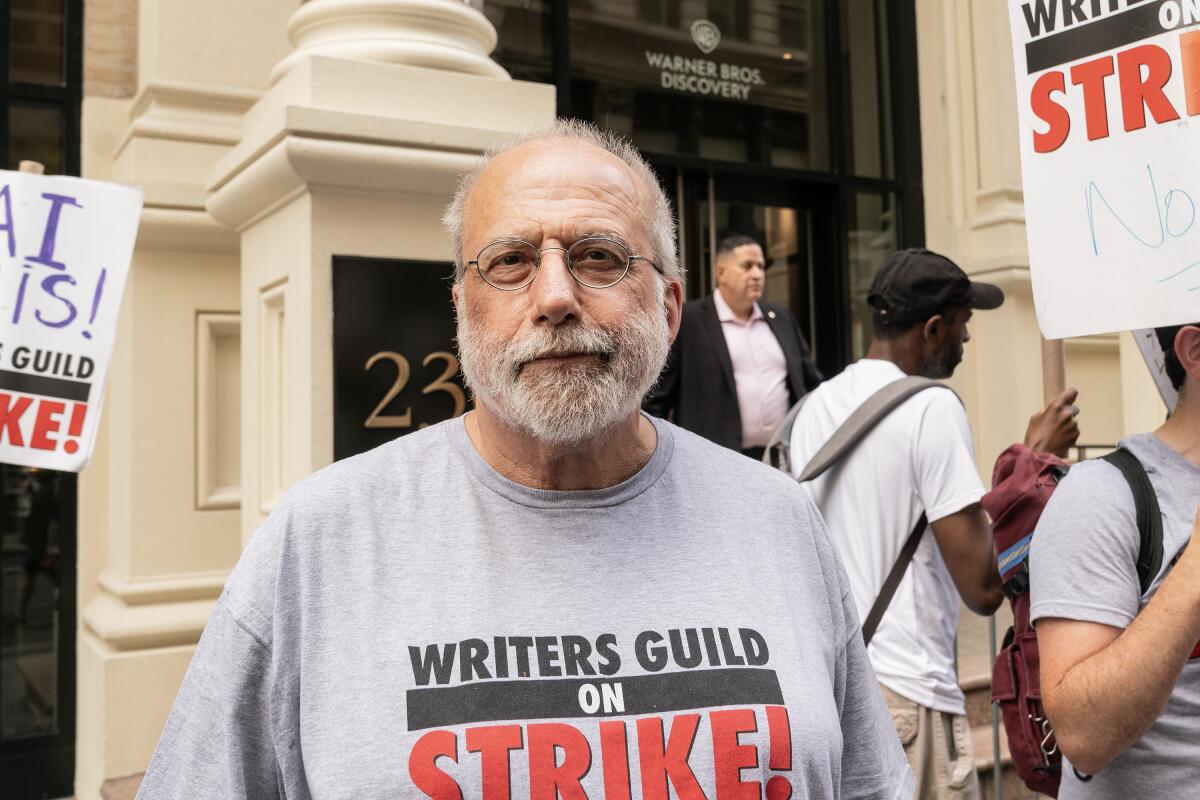
WGA East president Tom Fontana wrote in a letter to members on Thursday that the changes at CBS News “are more than mere ideological interference with the news. They display a profound contempt for the journalism profession.”
He added, “it is clear that CBS brass is engaged in a near-constant level of editorial interference that would have previously been unthinkable.”
Tom Fontana joined WGA and SAG-AFTRA members on the picket line in the strike over contract negotiation at Netflix and Warner Bros. Discovery offices on Aug. 15, 2023, in in New York City.
(Lev Radin / VIEWpress via Getty Images)
SAG-AFTRA similarly said in a statement Thursday that these “decisions can only be seen as part of a broader strategy to gut the crucial independent journalism that is so important to our democratic system.”
A spokesperson for CBS News said in a statement, “There is no political interference at CBS News, not from ownership, not from Bari Weiss. The only ‘interference’ is the normal back and forth between editor and correspondent that happens in every newsroom.”
Pelley, one of the program’s most high-profile correspondents, was fired on Tuesday after speaking out during a team meeting. He reportedly said Weiss “is murdering ‘60 Minutes.’ … She does not love this place. She was brought in to kill it, and she’s been doing exactly that.” He also questioned the newly hired executive producer, Nick Bilton, and his ability to run the show, citing his lack of TV news experience.
Pelley accused CBS News management of favoring the Trump administration by instructing him to put “falsehoods and bias into a politically sensitive story.”
“I’ve been told to include assertions that are unverified,” he said in a statement. “To date, in every case, I have ignored these instructions or refuse them.”
“60 Minutes” is now down four correspondents, following Anderson Cooper’s departure and the firings of Vega and Alfonsi. These are only the most recent controversial moves from Weiss, who’s set on remaking the institution long defined by tradition. She arrived at CBS News in October with no television experience, installed by Paramount Chief Executive David Ellison after he acquired her digital news outlet, the Free Press, with a mandate to change the network.
“I’m only interested in working in a newsroom that is built on trust and mutual respect,” Weiss said of Pelley’s firing during a meeting on Wednesday morning. “That foundation was broken on Monday, and despite our attempts to engage with Scott Pelley and to find a way back, unfortunately we weren’t able to do so, and so we had to part ways.”
The lack of reporters means “60 Minutes” will have to line up new talent quickly to fill the correspondent roles, as production of the 2026-27 season is already underway.
WGA’s Fontana added, “To our friends and colleagues at CBS News: We see you, and you are not alone. Thousands of your union brothers, sisters, and siblings have your backs.”
SAG-AFTRA also said the union is prepared to take “legal actions related to the company’s conduct over the last several weeks.”
Times staff writer Stephen Battaglio contributed to this report.
After a tumultuous week, CBS News took a major step in stopping the bleeding at “60 Minutes.”
In a memo sent Friday morning, the three remaining “60 Minutes” correspondents Bill Whitaker, Lesley Stahl and Jon Wertheim said they will continue with the program. The trio strongly considered leaving in solidarity with their ousted colleagues Scott Pelley,Sharyn Alfonsi , Cecilia Vega and executive producer Tanya Simon and her second-in-command Draggan Mihailovich.
Pelley — angry over the dismissal of his other co-workers — was fired Tuesday, a day after confronting the program’s new executive producer Nick Bilton at his first staff meeting. Pelley questioned the credentials of Bilton, a former New York Times journalist with no experience in television news. He also accused CBS News Bari Weiss — who oversaw the changes — of “murdering” the program.
The memo said the decision to stay should not be seen “as an endorsement of the existing power structure.”
“Here’s why we’re staying: We don’t want ’60 Minutes’ to die,” they wrote.
The dismissal of Pelley, considered the most respected journalist inside CBS News, sent shockwaves through the organization and led to speculation of an exodus by the remaining three correspondents.
In their memo, Whitaker, Stahl and Wertheim said they felt the same bewilderment and frustration that Pelley did over the firing of their colleagues.
“We want to express how sorry we are that these principled, fair and honest journalists were treated so shabbily, with such indecency,” they wrote. “Tanya deserves to be celebrated, not truly cast off. Draggan too. It was heartbreaking.”
With the program in full-blown crisis, Bilton spent the rest of the week attempting to calm the waters and retain the disgruntled correspondents. He issued a memo Thursday praising Whitaker, Stahl and Wertheim — calling them “the core of the show’s success” — and promising to uphold the editorial independence of the program.
“We will always pursue stories without fear or favor,” Bilton said.
In recent months, the iconic ticking stopwatch of the CBS News magazine “60 Minutes” began to sound like a time bomb.
The explosive detonated Tuesday as the prestigious program’s most high-profile correspondent, Scott Pelley, was fired after openly challenging the moves and motives of the news division’s leadership and questioning the credentials of new “60 Minutes” executive producer Nick Bilton.
Pelley accused CBS News Editor in Chief Bari Weiss of “murdering” the program and berated Bilton, a former New York Times journalist, for lacking TV news experience. His forced exit along with the departure of several other veterans is raising fears about the future of the most-watched TV news program that has managed to retain its vitality and importance in the face of major changes across the media landscape.
Weiss praised Pelley’s contribution to the network when she discussed his termination at the network’s morning editorial meeting Wednesday, but cited a loss of “trust and mutual respect” as the reason for moving on.
“We cannot do our work without it,” Weiss said. “That foundation was broken on Monday, and despite our attempts to engage with Scott Pelley and to find a way back, unfortunately we weren’t able to do so, and so we had to part ways.”
But industry veterans familiar with “60 Minutes” said the firings represented a notable shift in how the venerable program has been run by its predecessors.
Rome Hartman, a former longtime “60 Minutes” producer, said Wednesday in an interview that the termination of Pelley for forcefully expressing his views at a staff meeting is a fundamental misunderstanding of how the program has operated and thrived over 58 years. Spirited, and occasionally acrimonious, internal debate has always been a part of working at “60 Minutes.”
“Sharp words in defense of important ideas, whether they be in stories, or whether they be about the future of the broadcast, shouldn’t just be tolerated, they should be encouraged and inculcated, and they always have,” Hartman said.
The insularity of the “60 Minutes” operation — which has its own suite of offices across the street from the main headquarters of CBS News — has rankled the network’s executives in the past. But those dynamics were considered part of the price of having the most prestigious news program on television.
“Every single CBS News president in the history of CBS News has resented the independence of ’60 Minutes,’” Hartman said.”But the smart ones have come to understand that that independence is part of the secret sauce. I don’t know Bari Weiss, but she seems incredibly thin-skinned.”
The turmoil inside “60 Minutes” comes at an inopportune time for CBS. Weiss is now under the gun to replenish the program’s staff with three months to go before original episodes return to the prime-time schedule.
Pelley is the fourth correspondent to depart “60 Minutes” since Weiss took over as editor in chief. Last week, Weiss fired correspondents Sharyn Alfonsi — who accused Weiss of playing politics by holding a story on the government’s use of El Salvador prisons for undocumented migrants — and Cecilia Vega, who was also outspoken in her criticism of the changes at “60 Minutes,” saying she faced censorship. Anderson Cooper, the CNN anchor who spent nearly 20 years as a contributor to the program, chose not to sign a new contract.
Weiss also fired executive producer Tanya Simon, who has been with the program for 25 years, and her second in command. (Pelley said he was unable to get answers on the firings during his final meeting Tuesday with Weiss and CBS News President Tom Cibrowski.)
Bari Weiss hosts Senator Ted Cruz on her “Honesty” podcast on January 18, 2025, in Washington, D.C.
(Leigh Vogel / Getty Images for Uber, X and The Free Press)
And there could be more departures on the way, adding to the upheaval. Bill Whitaker, who joined the program in 2014 and was a Pelley ally, is said to be weighing whether to walk away from the two years left on his current contract. The program’s respected veteran , Lesley Stahl, is pondering her future as well amid the massive changes, according to people familiar with her thinking who were not authorized to speak publicly.
The call is out for new talent, according to one agent who said CBS News is talking to “dozens of people” for the openings.
But the company will also look within its ranks. Matt Guttman, hired away from ABC News by Weiss to become senior national correspondent, is one name being mentioned, along with Major Garrett, the network’s chief Washington correspondent. Both have emerged as favorites of Weiss.
Norah O’Donnell, already a contributor to the program, is also likely to have a larger presence.
While the “60 Minutes” patina has been tarnished by the recent events, there is no shortage of journalists who would be willing to step up and join the program. But whoever does sign on will be intensely scrutinized while the Nielsen numbers are closely watched.
Newcomers on the program are rare and would have an easier time gaining audience acceptance if they were joining a stable operation.
Although every long-running TV program can use an occasional refresh, a massive overhaul is destabilizing for “60 Minutes,” one of the last non-sports appointment programs for the traditional television audience that still provides broadcast networks with the bulk of their advertising revenue.
Notably, the program averaged 9.1 million viewers during the 2025-26 TV season according to Nielsen, up 9% over the previous year.
“Viewers liked the ’60 Minutes’ that they had,” said a former CBS News executive who worked on the program who was not authorized to speak publicly. “And if they don’t like it, they have many other places to go.”
One of Weiss’ mantras — echoed by Bilton — has been the need to pull “60 Minutes” into the digital future as traditional TV viewing declines. Insiders say she has yet to make clear how that will be achieved.
Under Weiss’ watch, clips and full segments of the program gained significant traction on platforms such as YouTube. The success on digital is an encouraging sign for the program’s ability to attract younger viewers who don’t watch traditional talent.
But veteran TV executives say that loyal “60 Minutes” viewers still expect to see seasoned correspondents delivering in-depth investigations and analysis. A diversion from that formula poses substantial risks.
“Its audience has certain expectations,” said Jim Murphy, a former executive producer for CNN and CBS News. “These guys built a literally nearly perfect program for the medium and for the audience. You’re not going to make it better just because somebody cooler does a story that’s, like, a little funkier. It just not going to work.”
Steve Capus, a veteran network producer who worked with Pelley at the “CBS Evening News,” said his former colleague was built for the meticulous work that goes into every “60 Minutes” segment.
“It’s hard to do week in and week out,” Capus said. “You have to be first-rate in your storytelling.”
What’s more, Weiss and Bilton will also have to fight the perception that their moves on the program have been guided by the desire of David Ellison, chief executive of CBS News parent Paramount, to please the Trump administration as he seeks regulatory approval of his deal to acquire Warner Bros. Discovery.
Trump sued “60 Minutes” over the editing of an interview with his 2024 presidential opponent, former Vice President Kamala Harris. The suit was settled just ahead of the Federal Communications Commission clearing the way for the takeover of Paramount by David Ellison’s Skydance Media.
Ellison acquired Weiss’ digital startup, the Free Press, which established itself as a voice critical of so-called woke politics.
Pelley said in a statement Tuesday that there has been pressure to shape CBS News coverage to please the Trump White House, a claim that both Vega and Alfonsi have made.
“I’ve been told to include assertions that are unverified,” he said. “To date, in every case, I have ignored these instructions or refuse them.”
In a statement, a representative of “60 Minutes” said that the exchanges with Pelley regarding editorial content were not out of the ordinary.
“There is no political interference at CBS News, not from ownership, not from Bari Weiss,” the representative said. “The only ‘interference’ is the normal back and forth between editor and correspondent that happens in every newsroom.”
Scott Pelley, a signature on-air talent for “60 Minutes,” was ousted from CBS News a day after he blasted the division’s top management over the firing of the program’s executive producer and two correspondents.
“We have parted ways with Scott Pelley,” the newly installed executive producer Nick Bilton said in a message sent to staff Tuesday.
The network announced Pelley’s departure after a meeting with top CBS News management late Tuesday, where the veteran correspondent continued to ask for answers on why “60 Minutes” executive producer Tanya Simon and correspondents Sharyn Alfonsi and Cecila Vega were let go last week, according to people familiar with the discussions who were not authorized to speak publicly. Editor in Chief Bari Weiss would not address the matter at the meeting.
Pelley’s departure follows a contentious “60 Minutes” staff meeting on Monday where he accused Weiss of “murdering” the country’s most-watched news program.
Pelley also raised doubts over the credentials of Bilton, the former New York Times journalist and documentary filmmaker named last week to run the venerable newsmagazine, citing his lack of experience in TV news.
Bilton attempted to defend Weiss, who was not at the meeting, and asserted that CBS News management was committed to guiding “60 Minutes” into the digital future.
“She is murdering ‘60 Minutes,’” Pelley said of Weiss at the meeting held at the program’s Manhattan headquarters. “She does not love this place. She was brought in to kill it, and she’s been doing exactly that.”
Pelley’s stunning remarks at the meeting were applauded by his colleagues. But veterans in the division — who were shocked by the confrontation— took it as a sign that he was ready to leave the program.
Pelley is the fourth correspondent to depart “60 Minutes” since Weiss joined CBS News. Anderson Cooper, who also anchors at CNN, chose not to sign a new deal, citing family reasons, although many insiders said he was not comfortable with the direction of CBS News. Alfonsi and Vega were severed last week.
Those vacancies mean “60 Minutes” will have to line up new talent quickly to fill the correspondent roles. Production on segments for the 2026-27 season is already underway.
Pelley, 68, started his career at CBS News in 1989. He covered the Gulf War for the network, traveling in Iraq and Kuwait. He later became chief White House correspondent during Bill Clinton’s turbulent second term.
Pelley became a correspondent for “60 Minutes II,” a midweek edition of the program that ran from 1999 to 2005. After the program was canceled, Pelley moved to the Sunday flagship edition.
The fate of “60 Minutes” — which saw a 9% audience increase and massive spikes in viewing across social media platforms this past season — has been an ongoing saga since President Trump sued the program over the editing of an interview with his 2024 opponent former Vice President Kamala Harris.
The suit was settled just ahead of the Federal Communications Commission clearing the way for the takeover of Paramount by David Ellison’s Skydance Media.
Ellison acquired Weiss’ digital start-up the Free Press, which established itself as a voice critical of so-called woke politics. She was given a mandate to move CBS News to the political center, which created a perception that her role is to placate the Trump White House as Paramount seeks regulatory approval to acquire Warner Bros. Discovery.
June 2 (UPI) — Secretary of State Marco Rubio told the Senate on Tuesday morning that Iran must reopen the Strait of Hormuz and commit to future talks on its nuclear program before the United States will make concessions.
He testified before the Senate Foreign Relations Committee before a scheduled afternoon meeting with a House panel on State Department spending. Both sessions were planned so that Rubio could defend the department’s nearly $36 million budget request for the 2027 fiscal year.
Rubio is also President Donald Trump‘s national security adviser.
The Washington Post reported that Rubio’s testimony with lawmakers has been mostly friendly. He served in the Senate for 14 years and in the House for 8, representing Florida.
Lawmakers from both sides of the aisle have expressed frustration with the cost and potential political fallout from the war with Iran.
“This war and the administration’s decision to blockade has now held the entire world economy, and the U.S. economy, hostage to the ability to negotiate an agreement with Iran,” said Sen. Chris Murphy, D-Conn, The Post reported.
The Strait of Hormuz, which has been closed by Iran since late February, must reopen, Rubio stressed. The strait is a critical waterway for shipping of much of the world’s oil, gas and fertilizer. The closure has caused gas prices to rise, causing anxiety as Republicans fear losing House and Senate seats in November.
Rubio said Trump demands that Iran enter into negotiating “severe and long-term limitations” on its nuclear program, including disposing of enriched uranium, and those talks could take months.
But he said he’s optimistic that Iran is more willing to negotiate on nukes.
“They have agreed to negotiate aspects of their nuclear program that just a month ago, just a year ago, they were refusing to even mention,” The Guardian reported Rubio said. He warned that it’s “not a guarantee that ultimately it will lead to a deal that’s acceptable,” and Iran’s leadership instability has made the negotiations more difficult.
Rubio said Iran had intended to use its conventional weapons capabilities as a “shield” to protect its nuclear program, The Guardian reported.
“What they tried to do is, they were going to try to build a conventional shield and hide behind that conventional shield,” he said, explaining why Trump wanted to start the war.
He also admitted, after questioning by Sen. Ted Cruz, R-Texas, that another sticking point for Trump was that Iran stop supporting terrorist proxy groups. He said Trump is not willing to ease sanctions just for opening the strait.
Rubio said that Iranian Ayatollah Mojtaba Khamenei is believed to be alive.
“I would imagine, given what’s happened to multiple leaders in that system, being very public is probably not something that’s recommended for them internally,” he said. “But that said, I think there are indications out there that he is increasingly engaging at some level, although all of his communications have been in writing and through intermediaries.”
Along with Iran, lawmakers were expected to ask Rubio about the president’s comments about Cuba and Taiwan.
Secretary of State Marco Rubio and President Donald Trump participate in a Cabinet meeting in the Cabinet Room of the White House on Wednesday. Photo by Samuel Corum/UPI | License Photo
Nick Bilton, the new executive producer of “60 Minutes,” received a hostile welcome Monday from the CBS News program’s most respected correspondent Scott Pelley as the staff is still reeling over last week’s firings.
In the first staff meeting since Bilton was named last week, Pelley accused CBS News Editor-in-chief Bari Weiss of “murdering” the country’s most-watched news program, which recently finished the TV season with a 9 percent ratings increase. Recordings of the meeting were circulated to journalists.
“She is murdering ‘60 Minutes,’” Pelley said. “She does not love this place. She was brought in to kill it, and she’s been doing exactly that.” Pelley also attacked the credentials of Bilton, a former New York Times tech reporter and documentary filmmaker who like Weiss has no previous experience running a TV news operation.
David Ellison, chief executive of CBS News parent Paramount, brought in Weiss — a skeptic of legacy media — with a mandate to move the division more to the political center. But many critics have seen the move as an attempt to placate the Trump administration while Ellison seeks regulatory approval for his deal to acquire Warner Bros. Discovery,
“60 Minutes,” has long been in Trump’s cross hairs. The president sued the program last year over the editing of an interview with his 2024 opponent former Vice President Kamala Harris. The suit was settled just ahead of the Federal Communications Commission clearing the way for Ellison’s Skydance Media takeover of Paramount.
One person close to “60 Minutes” said attendees at the meeting in the Manhattan West Side offices described it as something they had never witnessed in their careers. The confrontation — and the applause Pelley received from his colleagues during the meeting — also demonstrates how CBS News management may have underestimated the staff’s devotion to the program, now closing in on its sixth decade, that has long been considered the most powerful and respected platform in TV journalism.
A representative for CBS News declined comment on the meeting.
Pelley is held in especially high stature at the network due to his work over the years in dangerous war zones. When he was anchor at the “CBS Evening News,” he displayed photos of CBS News journalists who have died in the line of duty for the network going back to George Polk, who was killed during Greece’s civil war in 1948.
People close to CBS News management said both Bilton and Weiss reached out to Pelley last week to discuss the changes and their plans for the program’s future but he did not respond.
One CBS News veteran said the tense meeting “reads like Scott wants to be fired.”
Weiss has maintained she is committed to expanding the “60 Minutes” brand so it generates viewing and revenue outside of its Sunday night broadcast. But she has also clashed with producers and correspondents over the handling of stories such as Alfonsi’s report on the Trump administration’s use of harsh El Salvador prisons to hold undocumented Venezuelan migrants.
Alfonsi’s message to colleagues saying the segment was held for political reasons led to her dismissal from the program.
Vega posted a message last week claiming she had been facing pressure to insert political bias into her stories. “I very much fear what comes next for … the future of the legendary broadcast,” Vega said in a social media post on Thursday, referring to “60 Minutes.”
A CBS News representative said last week that Vega’s claims “are not based in reality.”
Bilton has tried to reassure veterans at the program that he remains committed to the program’s mandate to provide tough, investigative journalism. The words he’s used in several meetings are that next season will not be much different than the successful year the program just completed.
“He’s very much committed to continuing and extending the kind of journalism that ’60 Minutes’ has been known for.” said one person close to Bilton.
MIAMI — The Trump administration has extended protections shielding about 11,000 Lebanese from deportation, allowing them to stay and work in the United States for another six months.
The decision, announced Thursday by the Department of Homeland Security, marked a rare reprieve for people protected by temporary measures that have been harshly criticized by Republicans. The extension comes amid ongoing fighting in southern Lebanon between Israeli troops and Hezbollah fighters.
The decision was automatic, meaning that the administration missed the deadline by which it was supposed to decide on whether to extend the measure called Temporary Protected Status for Lebanese people living in the U.S. who are covered by the program. By statute, the status automatically extends for six months if the department misses the deadline.
It was an unusual outcome for an administration that has canceled the protections that had covered people from 13 countries, including Venezuela, Haiti, Nicaragua and Syria from deportation.
TPS was created by Congress in 1990 to prevent deportations to countries suffering from natural disasters or civil strife, giving people authorization to work in increments of up to 18 months. More than 1 million immigrants from 17 countries were protected by TPS at the beginning of the Trump administration, after the Biden administration greatly expanded its use.
The program has been at the center of a controversy.
Republicans and critics of TPS argue that the program and its protections deviate from their original temporary intent, taking on a quasi-permanent character when extended. Its defenders assert that it is a fundamental humanitarian program that prevents vulnerable individuals from being forced to return to dangerous conditions.
The DHS notice said that former DHS Secretary Kristi Noem and current Secretary Markwayne Mullin, who has led the department for the last two months, “were unable to make an informed determination on Lebanon’s TPS designation.”
The extension allows existing beneficiaries to keep their protections through Nov. 27, “if they still meet the eligibility requirements for TPS,” according to the notice. The work permits that were already issued for Lebanese TPS holders will be valid until the same day.
This is the second time the Trump administration has automatically extended a TPS designation. The first happened nearly a year ago with South Sudan, but the protections were terminated in November 2025, after the six-month extension period.
There are dozens of lawsuits challenging the termination of TPS at federal courts in different states. The Supreme Court is set to make a decision on TPS that protected Haitians and Syrians during the summer, and the result is expected to have an impact on all the other cases.
Advocates welcomed the extension.
“Extending Temporary Protected Status means Lebanese nationals in the United States will not be forced back into dangerous conditions but allowed to stay and continue supporting their families and contributing to their local communities,” said Kelly Razzouk, vice president of policy and advocacy at the International Rescue Committee.
José Palma, national coordinator of the National TPS Alliance — an advocacy group that has fought in federal courts against the cancellation of TPS for several countries—welcomed the extension of protections for the Lebanese.
“But we need to find a permanent solution for all TPS beneficiaries,” he warned.
Salomon writes for the Associated Press. AP writer Rebecca Santana contributed to this report.