The venerable news magazine “60 Minutes” is undergoing a major overhaul under CBS News Editor-in-Chief Bari Weiss.
Weiss announced Thursday the appointment of new executive producer to replace Tanya Simon, a 26-year veteran of the program who took over the top job last July. She will be replaced by Nick Bilton, a former New York Times technology columnist and documentary filmmaker.
Bilton will be the first executive producer in the 58-year history of “60 Minutes” to come from outside of the tightly knit organization. The program has only had four leaders in its history — Don Hewitt, Jeff Fager, Bill Owens and Simon — all of whom came up through the ranks of CBS News.
Weiss is said to have developed a solid relationship with Simon, whose late father Bob Simon was a highly respected correspondent for the program. But the connection apparently deteriorated after Weiss did not receive an advance notice on Anderson Cooper’s sign off from the program ending his nearly 20-year run as a correspondent.
Cooper, who is also a full-time anchor at CNN, turned down a new “60 Minutes” deal from Weiss. During his final appearance, he expressed fears about the editorial independence of the program.
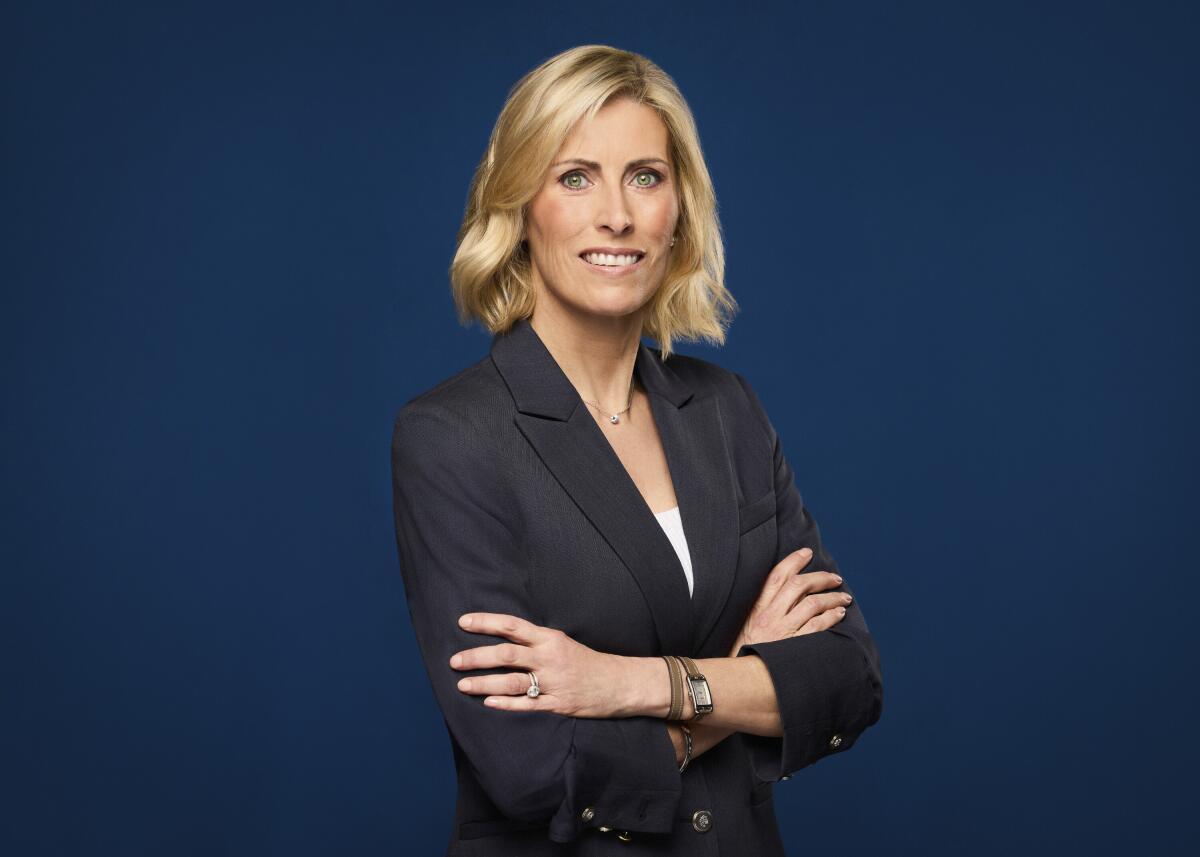
Tanya Simon is the new executive producer of “60 Minutes.”
(Michele Crowe CBS News)
“Things can always evolve and change, and I think that’s awesome, and things should evolve and change, but I hope the core of what ’60 Minutes’ is always remains,” Anderson told viewers. “I think the independence of ’60 Minutes’ has been critical.”
Speculation over changes at “60 Minutes,” the most-watched news program on television for 52 consecutive years, have been swirling for months since Paramount Chief Executive David Ellison installed Weiss to oversee editorial content at CBS News.
The program has been in turmoil since Oct. 2024 when President Trump filed a $20 billion lawsuit against CBS over an interview conducted with then Vice President Kamala Harris that was settled to clear the regulatory path for Skydance Media’s acquisition of Paramount.
From a business standpoint, “60 Minutes” is a curious target. The program is one of the most profitable hours on the CBS prime time schedule while retaining its status as television’s most prestigious journalism operation. While the ratings for “60 Minutes” get a boost from a lead-in from high-rated NFL late afternoon games, it remains one of the few network shows that viewers make an appointment to watch.
Sharyn Alfonsi, the longtime “60 Minutes” correspondent who clashed with CBS News Editor-in-Chief Bari Weiss over a story on Trump White House immigration policies, said Wednesday her contract is not being renewed.
“Over the weekend, my contract with CBS News expired, drawing to a close nearly twenty years with the network, including more than a decade at ’60 Minutes,’” Alfonsi, 54, said in a statement to The Times.
“Following an intense editorial dispute over our CECOT story, repeated attempts by my representation to establish a path forward were met with absolute silence from network executives,” she added. “The message could not be clearer: my time at 60 Minutes is apparently over.”
CBS News declined to comment on Alfonsi’s remarks. Her contract expired this past weekend but she remains employed at the division on an “at will” basis, which means she can be terminated at any time, according to people familiar with the discussions. Producers who worked with Alfonsi have been assigned to other correspondents.
Alfonsi made her comments as the “60 Minutes” staff anticipates significant changes in the coming days, which could include shifting the lineup of correspondents. Anderson Cooper has already announced his departure from the program after 20 seasons.
A scene from the “60 Minutes” report “Inside CECOT.”
(CBS News)
The segment at the center of Alfonsi’s likely exit, “Inside CECOT,” detailed the Trump administration’s treatment of hundreds of Venezuelan migrants who were deported to an El Salvador prison known for its harsh conditions.
“Inside CECOT” was scheduled to run Dec. 22 but was pulled the day before air by Weiss, who believed it needed more reporting, including a direct on-camera response from the administration, which did not participate.
Alfonsi protested the decision to hold the story, calling it politically motivated in an email she sent to colleagues that was shared publicly.
Alfonsi said at the time the story was ready for air after being vetted by the network’s attorneys and the standards and practices department.
“It is factually correct,” Alfonsi wrote. “In my view, pulling it now — after every rigorous internal check has been met is not an editorial decision, it is a political one.”
“Inside CECOT” eventually ran on Jan. 18 without any substantial changes to its tone or reporting. Weiss acknowledged internally that pulling the segment after it had already been promoted was a mistake.
The move created the first public relations fiasco under Weiss’ watch and tarnished the strong journalistic reputation of “60 Minutes.” The matter also added to the narrative that Weiss was installed at CBS News to placate the Trump administration as parent company Skydance Media sought government regulatory approval to buy Paramount and its current deal to merge with Warner Bros. Discovery.
The program has been in turmoil since October 2024 when President Trump filed a $20-billion lawsuit against CBS over an interview conducted with then-Vice President Kamala Harris that was settled to help clear the regulatory path for Skydance Media’s acquisition of Paramount last year.
Weiss joined CBS News in October with a mandate from Paramount Chief Executive David Ellison to pull the division to the political center. The founder of the conservative-friendly digital news site the Free Press, Weiss has wanted to make changes to “60 Minutes” but put them off until after the 2025-26 TV season ended this past weekend.
In her statement, Alfonsi predicted CBS News would try to make her exit an administrative decision not related to her work.
“In the coming days, network leadership may attempt to hide behind corporate euphemisms like ‘modernization’ and ‘restructuring’ to explain away my departure,” Alfonsi said. “Don’t be misled. This was not a routine corporate transition; it was a deliberate choice to penalize a journalist for refusing to sanitize factually accurate reporting, and it sends a chilling message to the entire newsroom.”
Insiders at CBS News are uncertain about the extent of the planned overhaul. Weiss has been advised to limit any disruption to “60 Minutes,” which is coming off a strong season of ratings performance.
Nielsen data showed the program averaged 9.1 million viewers in its Sunday time period, up 9% from the previous year. The program’s views across digital and social media platforms were also up substantially.
Sailors board the ROKS Dosan Ahn Chang-ho, a 3,000-ton South Korean naval submarine, at a naval port in Changwon, South Gyeongsang Province, South Korea, 25 March 2026. The submarine is departing across the Pacific for the first time to take part in joint drills with Canada in June aimed at bolstering maritime security and defense industry cooperation. Photo by YONHAP / EPA
May 24 (Asia Today) — South Korea is preparing to publicly unveil a development roadmap for a nuclear-powered attack submarine program after the successful Pacific deployment of the domestically built Dosan Ahn Chang-ho submarine, according to military and defense officials.
The move signals Seoul’s effort to strengthen what officials describe as the strongest conventional strategic deterrence available to a non-nuclear weapons state in response to North Korea’s advancing nuclear and missile capabilities and growing maritime competition in the region.
Senior military officials said the Ministry of National Defense and the Defense Acquisition Program Administration have completed technical reviews for a South Korean nuclear-powered submarine program and are now coordinating with related ministries, including the Foreign Ministry, on a diplomatic and regulatory strategy.
The report follows the recent Pacific deployment of the 3,000-ton Dosan Ahn Chang-ho submarine, which sailed about 14,000 kilometers, or 8,700 miles, from Jinhae through Guam and Hawaii using only domestically developed lead-acid batteries, diesel engines and an air-independent propulsion system.
South Korean officials said the deployment significantly reduced the need for snorkeling operations, in which submarines surface or raise air intake masts to recharge batteries, and demonstrated the vessel’s long-duration underwater operational capability and hull durability.
Officials also said the submarine successfully demonstrated stable operation of its submarine-launched ballistic missile vertical launch system in rough Pacific conditions. The Dosan Ahn Chang-ho class is the world’s first diesel-electric submarine class equipped with vertical launch tubes for submarine-launched ballistic missiles.
Defense experts said the mission simultaneously highlighted the operational limitations of conventional diesel submarines and the strategic advantages of nuclear propulsion.
While diesel-electric submarines must operate at relatively slow underwater speeds to maintain endurance, nuclear-powered submarines can remain submerged for much longer periods and travel underwater at speeds exceeding 40 kilometers per hour, allowing broader operational flexibility, officials said.
The foreign affairs and security publication The Diplomat reported Thursday that South Korea’s pursuit of a nuclear-powered submarine would become “a major test case of non-nuclear deterrence” for a country that does not possess nuclear weapons.
Chung Sung-chang, head of the Korea Nuclear Strategy Forum and a senior researcher at the Sejong Institute, said the submarine under discussion would be a non-nuclear attack submarine that would not carry nuclear weapons.
Chung said South Korea plans to retain the hull design and submarine-launched ballistic missile strike capability proven through the Dosan Ahn Chang-ho program while replacing the diesel propulsion system with a small nuclear reactor.
He said South Korea should first publicly present its nuclear submarine development roadmap before negotiating a bilateral nuclear submarine cooperation agreement with the United States and securing approval from the U.S. Congress.
Chung also said Seoul would need a separate agreement with Washington to secure low-enriched uranium fuel for naval reactors derived from downgraded highly enriched uranium.
Officials are reportedly studying the AUKUS security partnership among the United States, Britain and Australia, under which Australia received access to nuclear-powered submarine technology while remaining within the international nonproliferation framework.
South Korean officials said the success of the Dosan Ahn Chang-ho deployment demonstrated that the country’s technical preparations for a future nuclear-powered submarine program had reached a mature stage, shifting the focus toward diplomatic negotiations and international coordination.
Health workers wearing full personal protective equipment on Saturday prepare to transport the body of person who died of Ebola for a safe burial at Sofepadi Hospital in Bunia, Ituri province, in the Democratic Republic of the Congo. Photo by EPA
May 23 (UPI) — The Centers for Disease Control and Prevention on Saturday added two more airports that travelers to the United States can be routed through for Ebola screening when entering the country.
The enhanced travel screening announced earlier this week by the CDC and the Department of Homeland Security is meant to screen people for the virus on entry to the country if they have been in the Democratic Republic of Congo, South Sudan or Uganda.
The outbreak, which started in the DRC and has spread to neighboring South Sudan and Uganda, is estimated to have 750 suspected cases and 177 suspected deaths, the World Health Organization on Friday said, adding that the “real scale of the outbreak is likely far larger.”
The CDC first issued restrictions on Thursday for Americans returning to the United States to be screened at Washington Dulles International Airport in Washington, D.C., before continuing on to their final destinations.
The two additional airports will be Hartsfield-Jackson Atlanta International Airport, which started to accept travelers at 11:59 p.m. EDT on Friday, and George W. Bush Intercontinental Airport in Houston, which will start to accept travelers on Tuesday, May 26, at 11:59 p.m. EDT, the CDC said on Saturday.
“These travelers will have their air travel re-routed to arrive at select airports,” CDC officials said in the update.
The enhanced health screening includes being escorted to a designated screening area; completing a questionnaire about their travel history and symptoms; having their temperatures checked using non-contact thermometers; and observation by CDC staff for signs of illness.
“Travelers with fever or other symptoms that could be Ebola will receive additional evaluation by a CDC public health officer,” the agency said.
“If the assessment shows that a traveler may be sick with Ebola, the traveler will be transferred to a hospital for further medical evaluation,” it said.
The WHO on Friday raised the national risk assessment during the outbreak in the DRC to “very high,” but officials said that global risk for infection with the Bundibugyo strain of the Ebola virus, for which there is no approved vaccine.
WHO Director-General Tedros Adhanom Ghebreysus during a meeting on Friday thanked the efforts of neighboring nations in Africa who have assisted during the outbreak, as well as the various regional and global health agencies that also have done so.
Although the United States last year pulled out of the WHO, the U.S. State Department said on Saturday that it has activated a dedicated Ebola Response Task Force that is led by “senior experts with direct experience managing prior Ebola outbreaks” in 2014 and 2018.
The department also has deployed a Disaster Assistance Response Team and provided $32 million in assistance to U.S. partners in the region, it said in a press release.
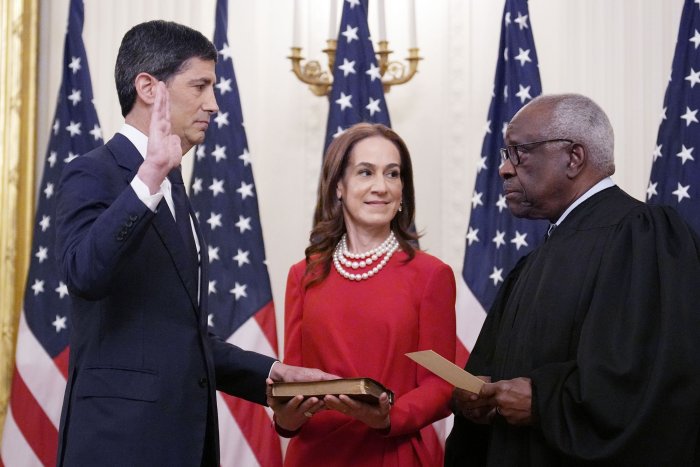
Kevin Warsh takes the oath of office as he is sworn-in as the new chairman of the Federal Reserve by Supreme Court Associate Justice Clarence Thomas in the East Room of the White House on Friday. Photo by Yuri Gripas/UPI | License Photo
Netflix subscribers will wake up to a video livestream of “The Breakfast Club” starting next month, marking the platform’s first daily live podcast.
The deal is part of the streaming platform’s ongoing focus on live programming, and the latest video podcast offering through its partnership with iHeartRadio, the company said on Thursday. The nearly three-hour show will include a live video feed exclusive to Netflix and will air every weekday morning.
“Taking this show live every day to a global audience on Netflix is a powerful example of how we’re expanding the reach of our biggest brands while giving audiences entirely new ways to experience them,” Bob Pittman, iHeartMedia’s chairman and chief executive, said in a statement. “Whether it’s morning in NYC or the afternoon in London, the conversation is live and reaching the world in real time.”
“The Breakfast Club” will air simultaneously on Netflix, the iHeartRadio app and it will continue to be syndicated by Premiere Networks on more than 100 broadcast radio stations nationwide. Netflix’s video feed is meant to provide more behind-the-scenes content, as radio formats will still need to include commercial breaks. Instead of pausing the program, Netflix watchers will get an uninterrupted stream, where those traditional breaks will be filled with exclusive segments and extended discussions.
“The media landscape will always evolve, but one thing consistently cuts through: live programming,” Charlamagne tha God said in a statement. “That’s a big reason ‘The Breakfast Club’ has sustained its reign for so long. We’re building something powerful — real‑time conversation, real community, on a global scale. The future belongs to those who can see what’s possible — and trust me, the vision for ‘The Breakfast Club’ and Netflix is crystal clear.”
The radio program first got its start in 2010 on WWPR-FM in New York. Over the years, it has become one of the most popular morning shows, rooted in Hip-Hop and R&B culture and known for its lively interviews and entertaining commentary from hosts Charlamagne Tha God, DJ Envy and Jess Hilarious. The show has welcomed guests like former President Barack Obama, and artists like Kendrick Lamar and Cardi B. In 2020, the talk show was inducted into the Radio Hall of Fame.
At Jimmy Kimmel’s annual monologue to advertisers at Disney’s recent upfront presentation, the ABC late-night host offered sympathy to his ousted CBS cohort Stephen Colbert.
“First, it’s bad enough to lose your job,” Kimmel said. “Imagine getting replaced by the owner of the Weather Channel.”
Byron Allen, the media mogul whose holdings do include the Weather Channel, laughed when the gag was repeated to him during a recent phone conversation. “I like Jimmy Kimmel a lot,” he said.
While it’s a triumph for Allen, 65, it’s also a sign of how the traditional late-night talk show — one of television’s most culturally influential formats — may no longer be sustainable in the era of streaming TV.
CBS said last year it canceled Colbert because it lost $40 million a year as the late-night viewing habit among audiences has eroded in the streaming era. Many in the TV industry are skeptical of the claim, believing Skydance Media wanted to silence the relentless Trump-bashing host in order to clear the government regulatory path for its acquisition of network parent Paramount. (The FCC’s approval of the deal came days after the cancellation was announced.)
Cedric the Entertainer, left, with Byron Allen on the set of “Comics Unleashed.”
(Allen Media Group)
But no one who has worked in late-night television in recent years can dispute how financial challenges are clouding the format’s future. Polished after-hours programs with a live audience, large teams of writers and producers and high-priced hosts are fighting off obsolescence as traditional TV audiences get smaller and ad revenues shrink. While CBS is the first to act, other networks have thought about getting out of the business altogether.
Since 2022, “The Late Show” lost 20% of its audience in the advertiser-coveted 18-to-49 age group, according to Nielsen data. Ad spending on all late-night television shows hit $209 million in 2025, down from $519.7 million in 2017, according to data from Guideline.
“Nothing is forever, especially in television,” said former network executive Ted Harbert, who oversaw the launches of “The Tonight Show Starring Jimmy Fallon,” and “Late Night with Seth Meyers” at NBC. “Digital tech is killing late night.”
The hosts of the programs and their funniest bits are arguably seen by more people than ever before thanks to clips replayed on social media platforms. But the revenue generated by digital viewing doesn’t approach what the networks get for audiences watching live on TV.
Over the last 10 years, late-night shows flocked to YouTube as a way to be a part of the national conversation and bring attention to the shows. Harbert believes the notion that the clips alone — which may feature a funny bit or a snapshot of a conversation with a guest — would help lure viewers to traditional TV was folly.
“The shows cannibalized themselves by making their show available in snack-size clips after the network airing,” he said. “And viewers obviously would rather watch a couple of five-minute clips than a whole show.”
Late-night shows were once among the most profitable programs on TV because of their ability to reach viewers in the 18-to-34 age group that attract premium prices for commercial time. But the same demographic was the first to gravitate to streaming platforms and abandon traditional TV which thrives on appointment viewing.
Daniel Kellison, a former producer for “Jimmy Kimmel Live” and “The Late Show with David Letterman,” noted that Kimmel — who has also been targeted by the Trump administration for his harsh barbs — has seen his TV ratings increase this year.
But the overall trend for the time period is still down. While Kellison believes Colbert’s cancellation is an effort by CBS to appease Trump, he agrees that the genre needs to evolve and adapt to the changing media landscape.
“There’s always going to be an audience for conversation around politics and life and these sort of shows will exist in different formats and I think it’s incumbent upon people to figure out how to present them,” he said.
CBS executives have said they want to develop a new network show in the late-night time period. But for the next year it will lease the slot to Allen. His company Allen Media Group pays CBS for the time, covers the cost of production and sells the advertising. He is also the host. The deal will erase whatever losses the network experienced in that TV block.
“Comics Unleashed” has been running in the 12:35 a.m. hour since CBS canceled “After Midnight” last year. When that show moves to the earlier time slot, it will be replaced by another Allen program, “Funny You Should Ask,” a comic quiz show hosted by John Kelley.
Allen said he has great respect for the late-night TV tradition. His mother was a tour guide at NBC in Burbank and he was able to hang out on the studio lot to watch Johnny Carson tape “Tonight.” Allen would get advice from Carson, whom he calls his hero and mentor, and eventually got a shot at doing stand-up on “Tonight” when he was 18 years old.
Allen even asked CBS to move the start date of “Comics Unleashed” to May 22 because it is the anniversary of Carson’s final show in 1992. But his sentimentality ends when it comes to the economics of programming in that time slot.
“We will be in profit,” Allen said of “Comics Unleashed,” which according to Nielsen has seen its audience grow in the 12:35 a.m. time slot by 26% since October.
Kimmel has accused CBS of dumping Colbert for “Comics Unleashed” because Allen’s show doesn’t partake in political humor that could alienate the White House as Skydance moves to close its next acquisition: Warner Bros. Discovery.
“I feel like CBS is turning 11:35 p.m. into a ‘least’ time slot,” Kimmel said at the Disney presentation. “Least as in least likely to offend the president with the rerun of ‘Comics Unleashed’ from 2007 featuring Paula Poundstone and Andy Dick.”
Poundstone and Dick are not among the 1,000 comedians who have appeared on “Comics Unleashed” over the years, many of whom went on to become stars. But not having the program dabble in political humor is a business decision.
The guests stick to storytelling and slice-of-life material that doesn’t date, which is why the episodes can attract an audience years after being taped. They don’t plug books, movies, concerts or any other elements that would be dated by future airings.
“Twenty years ago when we shot our first episode I said ‘we’re making it ‘I Love Lucy,’” Allen said. “I want these shows to be funny today and 20 years from today.”
Allen said his company will produce 130 new episodes of “Comics Unleashed” for the 2026-27 TV season.
But the reason the current set of late-night hosts leaned into politics so heavily in recent years is because it works.
When Colbert took over “The Late Show” from Letterman in 2015, the program’s ratings sputtered as the audience did not really know Colbert outside of the satirical figure he played on Comedy Central with his show “The Colbert Report.”
The night Trump scored his surprising win in the 2016 presidential race against Hillary Clinton, Kelly Kahl, then an executive vice president of CBS Entertainment, sent a text to Chris Licht, then executive producer of “The Late Show,” telling him it was “the best thing to happen to the show.”
Colbert found his voice on the program, which rose to No. 1 in the ratings and has been there ever since.