Brent crude tops $104 a barrel as hopes fade for deescalation in US-Israel war on Iran.
Published On 26 Mar 202626 Mar 2026
Oil prices have climbed higher amid fading hopes of deescalation in the Iran war following Tehran’s denial that talks with the United States are under way.
Futures for Brent crude, the international benchmark, rose nearly 2 percent on Thursday to top $104 per barrel after Tehran dismissed reports of direct negotiations with US President Donald Trump’s administration.
Recommended Stories
list of 4 itemsend of list
The rise comes after oil prices eased on Wednesday following reports that Trump had shared a 15-point plan for ending the war with Iran.
Asian stock markets opened lower on Thursday, with Japan’s Nikkei 225, South Korea’s KOSPI and Hong Kong’s Hang Seng Index all seeing losses.
Iranian Foreign Minister Abbas Araghchi said in an interview with state media aired on Wednesday that Tehran was not engaged in direct talks with Washington and has “no intention of negotiating for now”.
White House Press Secretary Karoline Leavitt warned on Wednesday that Iran would be “hit harder” than ever before if Tehran did not accept military defeat.
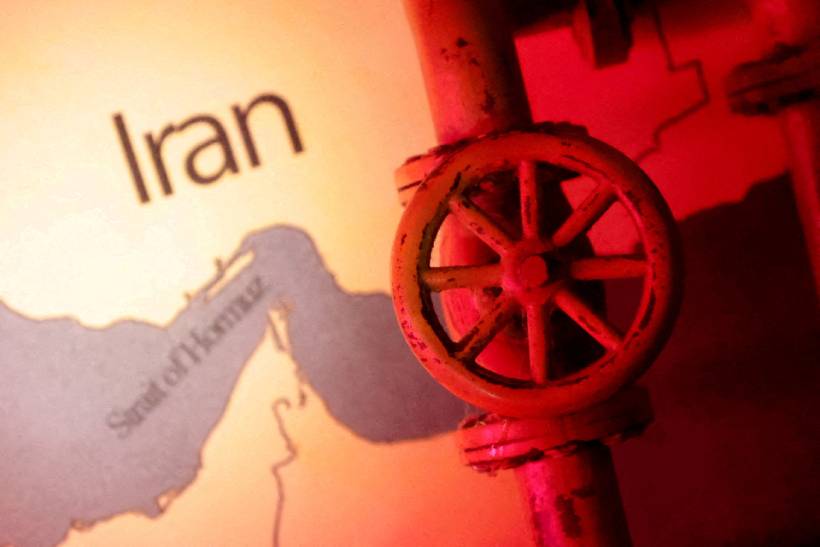
Iran’s effective closure of the Strait of Hormuz, a conduit for one-fifth of global oil supplies, and its attacks on energy facilities across the Middle East have prompted a surge in energy prices worldwide.
Oil prices are up more than 40 percent compared with before the US and Israel launched strikes on Iran on February 28, prompting numerous countries to implement fuel rationing and other energy conservation measures.
Market-watchers say prices are likely to rise further until shipping is free to traverse the strait, despite efforts by countries to bolster supply by tapping emergency stockpiles in coordination with the International Energy Agency.
While Tehran has repeatedly claimed that the strait is open to ships that are not aligned with its enemies, daily transits have all but collapsed since the start of the conflict.
Four vessels were tracked transiting the waterway via their automatic identification systems on Tuesday, down from an average of 120 daily transits before the conflict, according to maritime intelligence firm Windward.
The cost of a family summer staycation can vary significantly
Center Parcs Whinfell Forest(Image: Daily Record)
With the UK experiencing some milder weather this week, and with April just around the corner, many parents are likely thinking ahead to the summer holidays. As children are off school for, usually, around six weeks, the summer is an ideal time to take a family trip.
However, as anyone who has looked at going abroad over the summer will know, prices jump up significantly while the schools are closed. Going on a break in the UK, then, can be a more affordable option. But how much it will cost you depends on where you go – and prices can differ hugely.
We have compared the price of a week-long break at some of the UK’s best loved holiday parks. Prices are based on the cheapest accommodation available for seven nights, from August 7, for a family of four.
Starting with Center Parcs, a week’s stay in a Woodland Lodge at the Whinfell Forest resort will set you back from £2138. The lodge has two bedrooms, a kitchen, a bathroom and an extra toilet, and comes with a dishwasher, brick-built barbecue stand, furnished private patio, safe, a cot and a highchair, a fully-equipped kitchen, a 40″ flat screen TV, and more.
Over at Butlin’s in Skegness, a family of four can book a Comfort Room for the same dates from £962. There are two bedrooms – one with a double bed, the other with two single beds – as well as a bathroom. However there is no kitchen, and no other facilities are mentioned on the booking site – and towels and housekeeping are not included.
And at Haven’s Marton Mere site, a family of four can book a break from £639 – although this jumps to £809 if you want access to swimming pools, activities, and entertainment venues. The cheapest accommodation is the Saver Caravan which is described online as having two bedrooms, a bathroom, and a kitchen.
Other facilities mentioned on the Haven website include a heater or gas fire in the lounge, a 32″ TV, an under-counter fridge, and beds being made up ahead of your arrival.
All of the above prices were correct at the time of publication. Across all three holiday parks there are a range of accommodation available, with these varying in price. The types of accommodation mentioned in this article were the cheapest available at the time of publication.
FORMER glamour model Katie Price has sparked mystery as her new travel business venture has been shut down just two weeks after its launch amid backlash.
The 47-year-old had created a “Katie Price Travels” Instagram page, trying to recruit agents for InteleTravel under the brand Travel Smarter Group.
Sign up for the Showbiz newsletter
Thank you!
Katie Price appears to have shut down her new travel venture just two weeks after it was launchedCredit: GettyKatie was spotted advertising for new travel agents as she appeared to set up her business venture alongside Danielle LloydCredit: The Travel Smarter Group
Travel Smarter Group “co-founded” by Danielle, promises travel perks, training and financial protection but does not include clear details of its host agency.
The podcast host received a slew of backlash from the travel industry, who branded the venture a “gimmick” and a “slap in the face.”
Katie was most notably called out by Inspire Europe chief executive Lisa Henning.
She criticised the star’s move and accused her of bringing down the industry name amid the ongoing war in the Middle East.
Lisa wrote, as reported by Travel Weekly: “I very rarely comment publicly on things like this. But seeing this today is a step too far.
“For the past 12 days I have worked non-stop, 24/7, supporting our clients and our agents through the disruption affecting Dubai and other destinations.
“I’ve seen agents in tears because they care so much about their clients and are genuinely worried about what’s happening.
Katie was slammed by Inspire Europe chief executive Lisa who dubbed her business a ‘gimmick’ and ‘slap in the face’ amid the ongoing war in the Middle EastCredit: Splash
“To see promotions suggesting that you can simply ‘earn money from travel’ with a glossy campaign featuring Katie Price and Danielle Lloyd — positioning the role of a travel agent as something you do casually around other commitments — honestly feels like a huge mockery of our industry.
“This isn’t a side hustle. This isn’t a gimmick. And it certainly isn’t ‘easy money while you travel’.”
Lisa continued: ” Seeing this kind of messaging feels like a real slap in the face to the thousands of dedicated agents who work tirelessly behind the scenes every single day.
“Well done and thank you to all of those who continue to give our industry a good name by doing this job ‘properly’. Always book with a ‘real travel agent’.”
Following the negative response, the model appears to have now deleted her travel page on Instagram.
Katie’s PA has responded to the remarks, according to Travel Gossip.
“Katie has never stated that she personally books travel. She is simply sharing this platform with others to help people become independent travel agents and create an additional income – whether that be part-time or full-time.
“All agents within the community receive full training and are committed to supporting their clients.”
She added: “Katie was simply advertising an opportunity call.”
Katie’s PA responded to the comments claiming the star was simply advertising an ‘opportunity call,’ according to Travel GossipCredit: Getty
As the United States-Israeli war with Iran sends tremors through the global economy, the poorest members of the Global South are the most exposed to the fallout.
In Asia, Africa and the Middle East, developing economies are bearing the brunt of surging energy costs prompted by the closure of the Strait of Hormuz and attacks on oil and gas facilities across the Gulf.
Recommended Stories
list of 4 itemsend of list
From Pakistan to Bangladesh and Sri Lanka, through to Jordan, Egypt and Ethiopia, policymakers are facing the double whammy of being both heavily dependent on imported energy and having limited financial firepower to absorb the shock of spiking prices.
In Pakistan, which imports about 80 percent of its energy from the Gulf and has lurched between economic crises for years, authorities have scrambled to roll out measures to conserve fuel.
Facing the depletion of the country’s petrol and diesel reserves within weeks, officials have closed schools, introduced a four-day working week for government offices, ordered half of the country’s public sector employees to work from home, and slashed fuel allowances for official business.
Pakistani Prime Minister Shehbaz Sharif said last week that he had decided against a proposed hike in petrol and diesel prices before the Eid Al-Fitr celebration, saying the government would “bear the burden” of rising costs.
Sharif’s announcement came after the government had earlier this month approved a 55 rupee ($0.20) rise in the price of a litre (0.26 gallons) of petrol or diesel.
While government subsidies have helped cushion the blow for the public, there are fears that petroleum prices will surge and bring economic activity to a halt if the war drags on, said S Akbar Zaidi, the executive director of the Institute of Business Administration in Karachi.
“The overall shock is quite severe, although it has not been fully passed on to consumers and to industry,” Zaidi said.
“I expect the next few weeks to make things far worse once the disruption and price factors pass through.”
A man gets his motorcycle refuelled at a petrol station in Dhaka, Bangladesh, on March 9, 2026 [Munir Uz Zaman/AFP]
In Bangladesh, which imports about 95 percent of its oil and is expected to run through its fuel reserves within days, petrol pumps in some districts have run dry despite the introduction of fuel rationing.
Sri Lanka, which imports about 60 percent of its energy needs and is still reeling from an economic meltdown that began in 2019, has declared every Wednesday a public holiday and introduced a mandatory fuel pass for vehicle owners to conserve petrol and diesel, stockpiles of which are projected to run dry within weeks.
In Egypt, one of the biggest energy importers and among the most indebted economies in the Middle East, the government has ordered malls, shops and cafes to close by 9pm on weekdays and 10pm during weekends, and cut back on public lighting.
Facing growing pressure on public finances due to the government’s heavy subsidisation of fuel prices, Egyptian officials on March 10 announced price hikes of between 15 and 22 percent for petrol, diesel and cooking gas.
While acknowledging the burden on the public, Egyptian President Abdel Fattah el-Sisi said the move was necessary to avoid “harsher and more dangerous outcomes”.
“For a majority of developing economies, especially those already grappling with debt and high import dependence, they are facing a potent mix of inflation, currency pressures and fiscal strains,” said Yeah Kim Leng, a professor of economics at the Jeffrey Cheah Institute on Southeast Asia at Sunway University in Kuala Lumpur, Malaysia.
“The hardest hit are net energy and food importers, especially those with fragile macroeconomic foundations and pre-existing vulnerabilities that typified countries with low per capita income and high poverty rates,” Yeah added.
Pakistan, Bangladesh, Sri Lanka, Jordan, Senegal, Egypt, Angola, Ethiopia and Zambia are among the most at risk, according to a recent analysis by the Washington-based Centre for Global Development, which looked at factors including dependence on fuel imports, public debt levels and foreign exchange reserve/import ratios.
Currency depreciation
The weakening of many developing countries’ currencies against the US dollar – the result of investors buying the greenback amid heightened geopolitical uncertainty – has compounded the situation by further driving up costs.
“Countries such as Indonesia and the Philippines have already seen their currencies at near record lows even before the start of the conflict, making imports, including oil, much more expensive,” said Azizul Amiludin, a non-resident senior fellow at the Malaysia Institute of Economic Research in Kuala Lumpur.
Much as the fallout of the war poses particular challenges for governments in developing countries, the effect on citizens is disproportionate, too.
In less advanced economies, citizens spend much more of their pay cheques on fuel and food, leaving them more exposed to rising living costs.
At the same time, governments in developing countries have less capacity to provide a safety net for those at risk of falling through the cracks.
“In vulnerable economies, governments often attempt to shield their populations from price hikes by subsidising fuel and food,” said Yeah, the Jeffrey Cheah Institute professor.
“However, with depleted fiscal buffers and shrinking revenues, this becomes unsustainable. The ensuing austerity, combined with hyperinflation, can trigger widespread social unrest and a full-blown fiscal crisis.”
Motorcyclists crowd a filling station and wait their turn to get fuel, in Lahore, Pakistan, on March 6, 2026 [K M Chaudary/AP]
With the US and Israel barely a month into their war and no clear timetable for its end in sight, many analysts expect things to get worse before they get better.
Khalid Waleed, a research fellow at the Sustainable Development Policy Institute in Islamabad, said rising transport costs would soon be felt at supermarket checkouts.
“Diesel is the backbone of Pakistan’s freight and agricultural economy,” Waleed said.
“Trucking costs have started climbing, and that will feed into everything from flour to fertiliser in the weeks ahead.”
Once Pakistan’s wheat harvest gets under way in April, food prices could spike well beyond their current levels, Waleed said.
“Combine harvesters, threshers, tractors for haulage from field to market, and the trucks that move grain from fields to flour mills and storage facilities all run on high-speed diesel,” he said.
“For a country where wheat flour is the single largest item in the food basket of the bottom two income quintiles, this is not a marginal concern,” Waleed added.
“If diesel prices stay elevated through April and May, Pakistan will harvest its wheat at the most expensive input cost in years, and that cost will transmit directly into food inflation at a time when households have almost no capacity left to absorb further price shocks.”
Locals in northern India have a growing concern over essential resources like water, fuel and food, that have become costly due to the US-Israeli war on Iran. The conflict has brought implications on oil and gas prices, which has also affected bottled water and food costs.
Asian stock markets saw major declines on Monday as gold futures dropped 8% and crude oil prices continued to climb amid heightened uncertainty in the Middle East.
ADVERTISEMENT
ADVERTISEMENT
As the effective closure of the Strait of Hormuz continues to choke global supply, benchmark US crude rose above $100 a barrel on Monday morning in Europe.
Brent crude, the international standard, went up to more than $113 a barrel. The price of Brent crude has zigzagged lately from about $70 per barrel before the war began to as high as $119.50.
European stock indexes opened with losses, with the FTSE in London losing 1.5%, the CAC-40 in Paris being down by 1.6%, and the DAX in Frankfurt dropping by 2% at the opening.
Earlier on Monday, the International Energy Agency warned that the global economy faces a “major, major threat” because of the Iran war and that at least 40 energy assets across nine countries were damaged.
Meanwhile, the de-escalation of the conflict is nowhere near in sight.
Trump warned over the weekend that the US would “obliterate” Iran’s power plants if it does not fully open the Strait of Hormuz within 48 hours, prompting Tehran to say it would respond to any such strike with attacks on US and Israeli energy and infrastructure assets in the region.
“Trump’s ultimatum and Iran’s retaliatory warnings point to a widening conflict that keeps energy disruption and market volatility elevated, with no clear off-ramp in sight,” said Ng Jing Wen, analyst at Mizuho Bank in Singapore.
In Europe, the benchmark natural gas futures were trading above €60 per MWh at the market open.
This follows last week’s gains as escalating threats to Middle Eastern energy facilities heightened fears of deeper supply disruptions.
In Asia, stock markets were also significantly impacted by the uncertainty around the Middle East crisis, with Japan’s benchmark Nikkei 225 dropping 3.5%. In Taiwan, the Taiex shed 2.5%, South Korea’s Kospi dropped 6.5%, Hong Kong’s Hang Seng slipped 3.8% and the Shanghai Composite declined 3.6%.
Higher oil prices, which also shook stock markets on Friday, dashed hopes for a possible upcoming cut in interest rates by the Federal Reserve, analysts said. Before the war, traders were betting that the Fed would cut rates at least twice this year. Central banks in Europe, Japan and the United Kingdom also recently held their interest rates steady.
The S&P 500 fell 1.5% Friday to close its fourth straight losing week, its longest such streak in a year.
The Dow Jones Industrial Average dropped 443 points, or 1%, and the Nasdaq Composite tumbled 2%.
On Wall Street, roughly three out of every four stocks in the S&P 500 fell on Friday.
Stocks of smaller companies, which can feel the pinch of higher interest rates more than their bigger rivals, led the way lower. The Russell 2000 index of smaller stocks fell a market-leading 2.3%.
In the bond market, the yield on the 10-year Treasury finished last week with a jump to 4.38% Friday from 4.25% late Thursday and from just 3.97% before the war started.
The two-year Treasury yield, which more closely tracks expectations for what the Fed might do, rose to 3.88% from 3.79%.
In currency trading, the US dollar rose to 159.53 Japanese yen from 159.22 yen. The euro cost $1.1526, down from $1.1571.
Gaza City – In front of a toy stall in Gaza City’s central al-Rimal market, Rania al-Saudi stands with her two young daughters, looking bewildered at the unusually high prices of toys.
Al-Saudi had promised her daughters she would buy them two dolls to celebrate Eid, but the exorbitant toy prices mean she simply can’t afford them.
Recommended Stories
list of 3 itemsend of list
Her elder daughter, six-year-old Razan, didn’t understand her mother’s worried expressions as Rania asked the vendor for the price of each toy. With every price, Rania gasped and said, “Oh my God, it’s so expensive… this used to be much cheaper.”
Faced with her daughter’s insistence, Rania pleaded with the vendor to lower the prices, but he apologised, saying he could not because getting hold of toys to sell was incredibly difficult, considering Israeli restrictions on importing items into Gaza.
Rania was not alone. Other parents and children repeatedly came to the vendor’s stall to ask about toys, but not one of them made a purchase. In Gaza’s current war-driven economic crisis, the prices are simply unaffordable.
Rania, 43, is originally from Shujayea in eastern Gaza, but has been displaced by the war to the west of the city. She told Al Jazeera that she came looking for toys in an attempt to put smiles on her daughters’ faces before the holiday, but her wish was not fulfilled.
“The prices are extremely high, and the vendors tell us that toys have not entered Gaza since the start of the war. But what did our children do to deserve this?”
Rania recalled the many toys her daughters had in their home before it was destroyed, and how she used to make sure they had toys for every occasion and every holiday.
“Eid holidays are for children’s joy, and children are happy with toys and entertainment. But our children are deprived of everything.”
While speaking to Al Jazeera, Rania tried to calm her daughter Lulwa, who had begun to cry after realising from her mother’s words that she would not get the doll she wanted.
“This doll used to cost no more than 15 shekels ($5) before the war; now it costs 60 shekels ($20),” she said to Al Jazeera, frustrated. “This is something I cannot afford. Everything is expensive and overpriced.”
Rania’s voice grew heavier as she explained that she was unable to even buy new Eid clothes for her daughters – a tradition across the Muslim world – due to the high prices.
“My daughters will not be happy this Eid. I wanted to compensate by getting them dolls, but even that is impossible.”
Toys have been in short supply during the war, which began in October 2023, with bombing and displacement meaning that most children either had their toys destroyed, lost, or left behind. Rania says that her children have been bored, and have had to develop their own ways of playing.
“All the children in the camp face the same situation, so they spend their time playing simple street games like hopscotch, hide-and-seek, or drawing in the sand,” she said.
“But my daughters always wished for a doll. I once tried to make one for them, but they didn’t like it.”
Israel restricts the entry of many non-essential goods into Gaza, including toys [Abdelhakim Abu Riash/Al Jazeera]
Rising prices and market impact
Toy sellers say they are not to blame for the high prices.
Anwar al-Huwaity has been in the business for 20 years. He told Al Jazeera that his stall is still operating despite Israel’s devastation of Gaza, but that business has become extremely difficult.
“Before the war, toys were widely available,” Anwar said. “Today, we go from one trader to another, searching. Sometimes we find toys with someone who had them stored, but they sell it at a very high price, up to three times its normal price.”
He added that most toys that now reach Gaza do not enter through official crossings, but in limited quantities via unofficial routes, making them very difficult to obtain.
The cost of bringing toys into Gaza has become extremely high. Anwar said some middlemen demand up to 12,000 shekels ($3,870) for a small shipment, and if it is confiscated or destroyed, the loss falls entirely on the trader.
“We buy merchandise at high prices, so we have to sell it at high prices as well,” Anwar said apologetically.
Anwar said that toys were now up to 300 percent more expensive compared to pre-war prices. The holiday season, the main income generator for toy sellers, used to bring in between $6,500 and $10,000, he explained. Now, he’d be lucky to sell $1,000 of stock – and most of that is bulk sales to other traders, rather than regular customers.
Anwar may be a businessman, but he shared that the hardest part of his job was seeing children ask for toys that their parents cannot afford.
“Many parents can’t buy toys due to the economic situation. People are barely able to secure food,” he said.
Anwar’s job has gone from providing children joy, to seeing them disappointed.
“I have started hating my workday because I know the prices are exorbitant, and when the children and families see the toys, they get upset, especially during the holidays.”
“People come to buy toys and beg me to lower the price,” he said. “They say, ‘This child is an orphan, that child is an orphan … his parents were killed in the war’. It feels like all children in Gaza have become orphans.”
Toy sellers say they are forced to pass on high prices to customers [Abdelhakim Abu Riash/Al Jazeera]
Restrictions on recreational goods during the Gaza war
Since the outbreak of the war on Gaza in October 2023, trade has been heavily restricted due to the closure of commercial crossings by Israel, especially Karem Abu Salem (Kerem Shalom), the main entry point for goods into Gaza from Israel.
Israel imposed a total blockade on Gaza in 2023, and again for several months in 2025, leading to the declaration of a famine in northern Gaza.
Conditions have improved since a “ceasefire” was declared in October, but Israel is continuing regular strikes – and continuing to heavily restrict the entry of non-essential commercial goods, including toys and recreational materials.
Although no official law or declaration explicitly bans toys from entering Gaza, administrative and security restrictions, combined with the prioritisation of humanitarian goods, have effectively made entry of these items almost impossible.
The United Nations has noted that restrictions on commercial goods, including toys, have affected the availability of both essential and non-essential goods in Gaza.
Near Anwar’s toy stall is another run by Ahmed Ziara. The 24-year-old has been selling toys for several years, but the war has forced him to periodically stop trading.
“Before the war, I worked in major toy exhibitions,” Ahmed explained. “Now toys rarely enter, and we often have to smuggle them, sometimes hidden inside clothes or other goods.”
Ahmed confirmed that most of the toys he acquires are old stock already in Gaza, sold at high prices due to scarcity.
He mentioned that popular Eid holiday toys, which were once inexpensive, now cost triple or even quadruple their previous prices: a small toy car that sold for 40 shekels ($13) last year now costs 150 shekels ($48), a small ball that once cost 3 shekels ($1) is now 30 shekels ($10), building blocks are nearly unavailable, and dolls cost more than 70 shekels ($22.50).
“Buying from traders is hard, and selling is hard due to the economic situation,” Ahmed told Al Jazeera.
“Sometimes I have to sell below the expected price just to clear stock, but most of the time we must raise prices due to high costs and difficulty obtaining toys.”
“If conditions improve and toys are allowed in normally, prices will return to normal, and children and families will be able to enjoy the holiday as before,” he said.
“This work is not easy,” he added, contemplating. “Sometimes I sit alone and tell myself what I am doing is unfair because prices are extremely high. But despite everything, we love to bring joy to children, even for a short time.”
EGYPT has seen a fall in tourism due to the ongoing Iran conflict – despite it not being affected.
In response, tour operators are dropping prices of all-inclusive holidays – with some savings racking up to over £2,000.
Sign up for the Travel newsletter
Thank you!
The price of holidays to Egypt has dropped as Brits avoid goingCredit: AlamyTUI’s Coral Sea Water World has its own waterpark and savings of over £2,000Credit: TUI
Due to the ongoing conflict in the Middle East, Brits have been avoiding travelling to the surrounding countries, including Egypt.
Last week, On The Beach confirmed that they had experienced a drop in demand for popular holiday destinations including Egypt as well as Greece, Turkey and Cyprus.
Despite this, its airspace remains open and the travel advice to popular tourist spots along the Red Sea coastline hasn’t differed from the being safe for travel.
What has changed, is that the price of all-inclusive holidays has plunged.
An all-inclusive break at the Xperience St. George Homestay, in the coastal neighbourhood of Hadaba in Sharm El Sheikh, starts from £424 per person.
This includes flights from LiverpoolJohn Lennon Airport on May 11 and the return journey on May 28, 2026.
A TUI holiday has dropped by nearly 70 per cent, with a three-night all-inclusive stay next month at Sindbad Club just £347pp – down from £1017pp.
Or a family of four can have an all-inclusive stay across seven-nights at the Coral Sea Water World in Sharm El Sheikh for just £1,576 – or £525.46 per person (and down 60 per cent).
The trip with TUI from April 22 to April 29, 2026 is all-inclusive and includes return flights from Manchester Airport.
Brits unsure about booking holidays should remember that the package holidays are ATOL-protected – so if they get cancelled, you get all your money back.
What is the current travel advice to Egypt?
Keep up to date with the FCDO travel advice to Egypt on Gov.UK – here’s the latest…
FCDO advises against travel to these parts of Egypt;
Egypt-Libya border
North Sinai
Northern part of South Sinai
Eastern part of Ismailiyah Governorate
Hala’ib Triangle and Bir Tawil Trapezoid
Western Desert
FCDO advises against all but essential travel to the area west of the Nile Valley and Nile Delta regions, except for:
Luxor, Qina, Aswan, Abu Simbel and the Valley of the Kings
the Faiyum Governorate
the coastal areas between the Nile Delta and Marsa Matruh
the Marsa Matruh-Siwa road
the oasis town of Siwa
the Giza Governorate north-east of the Bahariya Oasis
the White Desert and Black Desert
the oasis towns of Bahariya, Farafra, Dakhla (Mut) and Kharga
the following roads and the desert area between them and the Nile valley:
the road between Giza and Farafra and within 50km either side of this road (but FCDO advises against all but essential travel on the road between Bahariya and Siwa)
the road between Farafra, Dakhla (Mut) and Kharga
the road between Kharga and Baris
the road between Baris and Luxor
It also warns of potential regional risks that “could lead to travel disruption and other unanticipated impacts”.
The FCDO advises British nationals to “take sensible precautions, considering their own individual circumstances”.
The Xperience St. George Homestay has deals from £424ppCredit: easyjet Holidays The price of all-inclusive holidays to spots in Egypt have plummetedCredit: Alamy
Our favourite Egypt holiday deals
If you click on a link in this box, we will earn affiliate revenue.
New Badawia Resort, Sharm el Sheikh
This hotel in popular resort Sharm el Sheikh has a large outdoor pool, waterpark and its own private beach area to cool off from the Egyptian sun. There’s traditional evening entertainment to bring the kids along to, and plenty to do in the local area like snorkelling and dipping into local bars and restaurants
With five swimming pools, six bars and six restaurants, you won’t get bored of this sprawling resort. The resort sits in the town centre of Makadi Bay, with plenty of dining and shopping options on your doorstep. The best part? Makadi Water World is just minutes from the hotel, famed for its 50 water slides and wave pool – and guests staying here get free entry.
The 4-star Jaz Grand Marsa has its own private beach with a coral reef, as well as five pools, three of which have sea views. The spacious grounds feature gardens and water fountains, plus tennis courts.
This all-inclusive resort is built for families, with a huge entertainment programme and an on-site waterpark with 18 slides. You can expect a buffet that’s anything but repetitive, as the theme and food line-up change daily. If you can bring yourself to leave the all-inclusive waterpark-come-resort, there’s the King Tut Museum, plus the Red Sea is world-famous for snorkelling.
Just like regular consumers at the gas station, airlines refueling in Los Angeles are being forced to adjust to higher prices at the pump.
Jet fuel prices have shot up, and experts say airfares are following suit.
With a busy summer travel season approaching, airlines are starting to pass the costs on to passengers through higher fares and fees.
“Whenever there’s a surge in oil prices, the airlines end up passing that to the consumers immediately,” said Diego Bufquin, director of hospitality management and entrepreneurship at Tulane University. “It doesn’t take a long time.”
Airlines have been struggling around the world since the U.S. and Israel began bombing Iran late last month. Flights have to take longer paths around war zones, and higher fuel costs eat into their already razor-thin profit margins.
Jet fuel prices account for about a third of airlines’ operating costs, so they “cannot afford to wait to upcharge their customers,” Bufquin said.
United Airlines Chief Executive Scott Kirby told CNBC that the spike in fuel prices will have a “meaningful” impact on the airline’s financial results.
Some airlines outside the U.S. have already added fuel surcharges to their ticket fees. Air India announced a phased increase in fuel surcharges on domestic and international routes last week. Hong Kong’s flag carrier Cathay Pacific announced it would charge extra on all fares to cover fuel costs starting Wednesday.
Airlines topping up at LAX and other regional airports are already being hit. Jet fuel prices in Los Angeles have jumped more than 40% since the conflict in the Middle East started.
Just like the price of gas for cars, jet fuel often costs considerably more in California than in other states.
California is largely detached from the rest of the fuel distribution system. With limited pipeline connectivity, it relies more on sea delivery from other states and countries. California also has higher taxes on jet fuel than many other states.
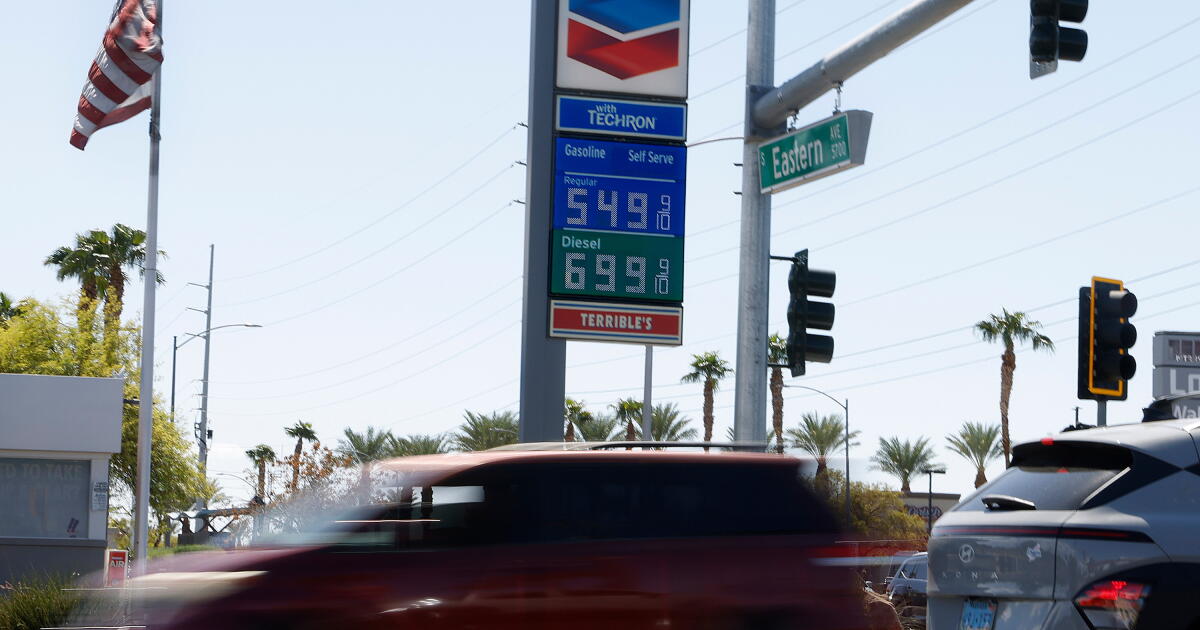
National average gas prices reached $3.71 per gallon on Tuesday, according to AAA. In California, the average Tuesday was $5.52 per gallon.
Still, spring and summer demand is likely to remain strong even if prices rise, said Alan Fyall, an associate dean of the University of Central Florida Rosen College of Hospitality Management.
“Fares are going up, but the demand is still there domestically,” Fyall said. “The only thing that really dampens demand is economic recession.”
Indeed, consumers have been booking earlier than usual to lock in lower prices for their summer travel, airlines said. Delta and American Airlines had some of their strongest-ever single-day sales in March.
“When prices did spike, we saw a spike in demand,” Alaska Airlines Inc. Chief Executive Ben Minicucci said this week, according to Bloomberg. “I think people got this initial, ‘Wow, if this thing is going to go crazy, I better book my fare now before fares go up.’”
Airlines and other industries will face tougher conditions if fuel prices remain high for a prolonged period, he added.
Airfares were already on the rise, according to the Consumer Price Index, which found that the airline fares index rose 1.4% in February compared to last year.
The impact will vary by airline, said Fyall. Many airlines hedge their fuel to negotiate a fixed price, and stock up on fuel while it’s less expensive.
“The airlines that manage their fuel-buying process very well, that hedge very well, tend to be able to offset the price charges quite well,” Fyall said.
Jet fuel prices are even more sensitive to economic forces than auto fuel prices, experts said.
It’s not yet clear if Californians will have to pay significantly higher airfares than their neighbors, but some in-state flight routes could become temporarily unavailable, according to Bufquin. As airlines look to save money, they could cut certain shorter, less profitable routes.
“Budget airlines like Spirit and flights from smaller California hubs like Burbank, San José and Fresno are at risk of being canceled,” Bufquin said.
March 17 (UPI) — U.S. gasoline prices have surged by 27% and diesel by 34% since the start of U.S. attacks on Iran last month, fuel costs reported Tuesday indicate.
AAA reported that the national average cost for a gallon of gas in the United States was $3.79 Tuesday morning. Diesel was $5.044 per gallon, topping the $5 threshold for the first time in three years, CNBC reported.
A year ago, those prices were $3.078 and $3.592, respectively. A month ago, they were $2.917 and $3.651.
Fuel prices have been on the rise globally since the United States and Israel launched attacks on Iran on Feb. 28 amid negotiations over Iran’s nuclear program. The attacks, which killed Iran’s supreme leader, Ayatollah Ali Khamenei, prompted Tehran to effectively close down the Strait of Hormuz by banning ships linked to the United States or Israel. About 20% of the world’s oil runs through the waterway that separates Iran and Oman.
Brent Crude, the benchmark price for oil worldwide, rose about 2% to $102 a barrel Tuesday, The New York Times reported. The West Texas Intermediate, the U.S. benchmark, rose to $95 a barrel.
Diesel prices are particularly tied to the U.S. economy, which depends on it for the transportation of goods via trucks, trains and barges. Recent surges in prices could have a cascading effect.
Andy Lipow, president of Lipow Oil Associates, said Tuesday that trucking and rail companies have begun increasing their fuel surcharges in response to the fuel hikes.
“One should really be worried about higher diesel prices,” he said in a note published by CNBC.
President Donald Trump this week put pressure on other nations that rely on oil shipped through the Strait of Hormuz to join a coalition to police the transit route and reopen traffic.
Speaking aboard Air Force One on Sunday, Trump said the United States doesn’t need to be involved in reopening the Strait of Hormuz because little of its oil passes through the waterway. About 7% of the United States’ crude oil and condensate imports passed through the strait in the first half of last year, the U.S. Energy Information Administration said.
He said the United States was protecting it “almost like we do it for habit” and to help “some very good allies that we have in the Middle East.”
Patrick De Haan, head of petroleum analysis at GasBuddy, said Monday, “until we see a meaningful resumption of oil flows through the Strait of Hormuz, upward pressure on fuel prices is likely to persist.”
Iranians attend a funeral for a person killed in recent U.S.-Israel airstrikes at Behesht-e Zahra cemetery on the southern outskirts of Tehran in Iran on March 9, 2026. Photo by Hossein Esmaeili/UPI | License Photo
Katie Price’s husband Lee Andrews has revealed the gifts from his wife for his birthdayCredit: Instagram/@wesleeeandrewsThe star showed off presents that appeared to be from KatieCredit: Instagram/@wesleeeandrewsThe star is currently on her way back to Dubai to see him – despite the ongoing Middle East conflictCredit: BackGrid
However, Lee has taken to social media to reveal that Katie did indeed send him some birthday gifts ahead of her arrival.
On social media, he showed off a custom-made card from Katie that featured pictures of them both.
The card also contained the message: “Husband, you complete me.”
Katie also appeared to have got him a matching mug.
A Louis Vuitton gift bag could also be seen in the background as Lee added the caption: “Wife is just the best.”
It appears to be the first time that Katie has splashed out on her husband with the star previously telling The Sun that she has never paid for anything during their marriage.
She insisted Lee had always paid for everything they did, including her flights out to see him.
Lee then shared a snap of another sentimental gift from his wife.
It was a small pin which featured the design of a man and woman embracing with the names Katie and Lee emblazoned on it.
Lee said of the gift: “The smallest thoughts mean the most.”
He went on to share a look at the words Katie had written for him in his card, which said: “To my forever husband!
“Happy Birthday! I will share your whole life celebrating with you!
“I love you to infinity love from your wife Katie x.”
Katie has been spotted at the airport heading to see Lee after a few weeks back in the UK.
He shared a peek inside the card that she had sent to himCredit: Instagram/@wesleeeandrewsThe star is due to reunite with him later todayCredit: BackGrid
The airline took this decision due to the “uncertainty of the situation in the Middle East”.
Other companies are running limited flights whilst the fighting continues.
Katie is heading to Dubai one day after his birthdayCredit: BackGridThe couple are continuing to prove that their marriage is the real dealCredit: mistraesthetics/Instagram
KATIE Price’s new husband Lee Andrews has “ran up a HUGE bill” at the luxury hotel where they got married.
The self-confessed ‘millionaire’, 41, and the former glamour model, 47, tied the knot just two weeks after meeting each other, leaving her family in shock.
Sign up for the Showbiz newsletter
Thank you!
Katie Price’s husband Lee Andrew has ‘ran up a huge bill’ at the luxury hotel where they marriedCredit: Instagram/@wesleeeandrewsSelf-proclaimed millionaire Lee has STILL not paid the outstanding costs six weeks onCredit: wesleeandrews/Instagram
The Sun revealed that the pair had married in a very intimate ceremony at The One&Only Royal Mirage, a 5-star luxury beachfront resort.
Our exclusive photos showed Katie in a white cut-out gown saying ‘I do’ in a private gardens as they exchanged their vows while holding hands.
But now it has been claimed that Lee has not coughed up a penny, which is believed to run into the thousands of pounds.
Despite promising to return and pay the outstanding cost, he still hasn’t paid and it has reportedly left staff “frustrated”.
“Lee Andrews has not yet paid the One&Only Royal Mirage hotel where he and Katie Price got married. He promised to settle the outstanding bills but still hasn’t, and it’s been over six weeks,” an insider told the Mail.
When the publication approached Lee for comment and he insisted it was “fully paid”, adding: “It was an SMS on my HSBC locally. I will ping it to you so you can see it.”
But they have still not been provided any proof of payment.
The Sun has reached out to Lee for comment.
It comes just The Sun revealed that Lee had been begging women for money just a week before be proposed to Katie.
Self-proclaimed millionaire Lee whinged about surviving on 20p ready meals weeks before he married Katie.
He even begged a former friend for $4,000 just mere days before proposing to the former glamour model.
A signboard at a gas station in Seoul shows gasoline and diesel prices in Seoul, South Korea, File. Photo by YONHAP / EPA
March 12 (Asia Today) — South Korea will impose a temporary price cap on petroleum products starting Friday, setting the first ceiling for gasoline at 1,724 won ($1.29) per liter as the government moves to curb surging fuel prices.
The Ministry of Trade, Industry and Energy said Thursday the “petroleum product maximum price system” will take effect at midnight and apply to fuel prices supplied by refiners to gas stations and distributors.
The first price caps are set at 1,724 won ($1.29) per liter for gasoline, 1,713 won ($1.28) for automotive diesel and 1,320 won ($0.99) for kerosene.
The measure will remain in place for two weeks through March 26 and will be reviewed every two weeks based on fluctuations in global petroleum product prices.
The government said the caps are significantly lower than the average supply prices submitted by refiners on Tuesday. At that time gasoline averaged 1,833 won ($1.37) per liter, diesel 1,931 won ($1.45) and kerosene 1,728 won ($1.30).
Compared with those levels the new caps are lower by 109 won for gasoline, 218 won for diesel and 408 won for kerosene.
Officials said the policy aims to quickly slow the recent surge in oil prices and ease instability in the fuel market.
The price cap will apply only to wholesale supply prices set by refiners rather than the retail prices at individual gas stations. Officials expect pump prices to gradually decline as stations adjust prices once lower-cost fuel enters inventories.
Price changes typically appear two to three days after new supply prices take effect, depending on station inventories, the ministry said.
If refiners incur losses because of the price caps the government plans to compensate them through a post-settlement system. Refiners will submit loss estimates which will be verified through accounting reviews before quarterly compensation payments are made.
Minister of Trade, Industry and Energy Kim Jeong-gwan said the policy would allow limited price adjustments in line with international fuel price trends while preventing excessive increases that diverge from global markets.
A SURGE in fuel prices due to the Middle East conflict has resulted in a major airline axing five per cent of its flights.
Air New Zealand announced that it will be cutting back on flights over the next two months.
Sign up for the Travel newsletter
Thank you!
Air New Zealand will be cutting back on its number of flights until MayCredit: AlamyThe crisis in the Middle East has resulted in the rising price of fuelCredit: Alamy
Chief Executive of Air New ZealandNikhil Ravishankar said the airline would see roughlya five per cent reduction in its services.
And that this would continue until the beginning of May 2026.
This reduction equates to around 1,100 flights which in turn will affect 44,000 passengers out of its 1.9million.
Talking to 1News Nikhil Ravishankar explained: “We’re focused on consolidating flights that are off-peak flying hours, for example, or where there is an alternative that we can re-accommodate customers.”
He later added that the, “interventions we’re putting in place are not only reasonable, but are what all airlines around the world are doing”.
Air New Zealand said that most of the passengers affected would be moved onto other flights.
The airline has not provided a list of affected flights, but some officials in New Zealand have revealed domestic routes have been altered.
Mayor Nadine Taylor said that Air New Zealand intends to reduce its routes from Marlborough to Wellington, with Auckland and Christchurch flights also affected
The airline detailed that fewer long-haul flights would be cut.
MR Ravishankar said: “People want to get to Europe still, and over the US airspace we can get them into Europe, and that’s what we’re focused on doing.”
The announcement comes shortly after Air New Zealand increased its prices in response to the rising cost of fuel.
Domestic flights were going up by $10 (£4.37) one way, short haul by $20 (£8.74), and long haul $90 (£39.35).
As a result, it’s not just Air New Zealand that has increased its ticket prices – other airlines like Qantas and Scandinavia’s SAS have done the same.
However, some airlines like Ryanair, easyJet, British Airways and Virgin Atlantic, are less affected because they have secured some of their fuel at fixed prices for a set amount of time.
Ryanair boss Michael O’Leary said the rise in jet fuel “won’t affect our costs and it won’t affect our low fares”.
KATIE Price’s furious sister Sophie has revealed her true thoughts on the glamour model’s whirlwind marriage to Lee Andrews – admitting she was left shocked over the nuptials.
Katie Price’s sister has revealed the star ‘ruined my year’ with her shock wedding to Lee Andrews – which left her family blindsidedCredit: @KatiePriceYoutube/BackgridKatie married Lee in January just ten days after meeting him in a Dubai ceremony, shocking family and fans back homeCredit: wesleeeandrews/instagramWe revealed earlier this year how Sophie and Katie’s mum Amy were concerned for the star over Lee’s intentionsCredit: Instagram
As they spoke about their mum Amy, Sophie added that Katie had “traumatised” the whole family with her shock romance.
The pair then moved on to other news throughout the episode as Sophie said she “didn’t want to hear it” when it came to conversation surrounding Lee.
Katie and her sister took almost two months away from recording their podcast following the wedding, with the former admitting she didn’t blame her family for being ‘angry’Credit: InstagramAnd in the new episode, Sophie described her sister as a ‘pain in the a**’The former glamour model returned home earlier this month after spending several weeks in DubaiCredit: wesleeandrews/Instagram
The global energy landscape is facing its most volatile period in decades following the US-Israeli strikes against Iran on 28 February that triggered a wider and potentially prolonged conflict in the Middle East.
ADVERTISEMENT
ADVERTISEMENT
What began as a targeted military operation has rapidly escalated into a direct confrontation with global economic implications.
Based on claims by Iranian state media and regional reports, the Islamic Revolutionary Guard Corps (IRGC) has ostensibly adopted a strategy of “energy blackmail” to leverage the international community into pressuring the US and Israel to cease its attacks.
The $200 per oil barrel threat was first articulated shortly after the conflict began.
On Sunday 1 March, a senior IRGC spokesperson warned that if “cowardly anti-human actions” continued, the world should prepare for a massive price surge, even as high as $200 per oil barrel.
This rhetoric has since become a central pillar of Tehran’s messaging.
As recently as this Wednesday, Ebrahim Zolfaqari, the spokesperson for Iran’s Khatam al-Anbiya military command headquarters, told state media: “Get ready for the oil barrel to be at $200, because the oil price depends on the regional security which you have destabilised.”
Iran’s tactical disruption
The IRGC’s current strategy relies on “internationalising” the cost of the conflict.
By disrupting the flow of nearly 20% of the world’s oil and liquefied natural gas (LNG) through the Strait of Hormuz, Iran aims to drag the global economy into the fray.
This is why the IRGC has targeted vessels from neutral nations, including ships sailing under Thai, Japanese and Marshall Islands flags, among others.
According to energy analysts, this disruption is designed to create domestic political pressure within Western nations, to in turn force the US and Israel to pull back on military action in exchange for energy stability.
By striking countries that have not attacked them directly, Tehran is signaling that no maritime trade is safe as long as the strikes on its soil continue.
The main vector of this strategy is precisely the disruption of energy markets, an element Iran can influence directly through its geographical advantage.
A history of oil price shocks
While $200 per barrel sounds astronomical, oil has approached similar levels in the past when adjusted for inflation.
The highest nominal price ever recorded was around $147 in 2008, driven by peak oil fears and rampant speculation just before the global financial crisis. When adjusted for 2026 inflation, that 2008 peak represents roughly $211 per barrel.
Previous major shocks, such as the 1973-74 Arab Oil Embargo and the 1979 Iranian Revolution, saw prices quadruple and double respectively from pre-crisis levels.
In 1980, prices hit a nominal peak of about $39.50, which would be approximately $160 in today’s terms.
However, the current crisis involves a total physical blockade of one of the world’s most critical maritime chokepoint, increasing the risk of a price “moonshot”.
Market response and reserves
At the time of writing, Brent crude is trading just above $100 per barrel, a sharp increase from the $60 range seen in mid-February before the Iran war began.
The International Energy Agency has attempted to stabilise the market by orchestrating the largest-ever coordinated release of strategic reserves, but the continuation of Iranian strikes agaisnt oil infrastructure and tankers has largely neutralised the effort.
With insurance providers cancelling war-risk coverage and shipping companies redirecting fleets, the market remains in a state of high anxiety.
If the blockade on the Strait of Hormuz persists, the $200 figure may shift from a political threat to an increasingly likely scenario.
In a recent report, Oxford Economics identified $140 per barrel as the threshold at which the global economy tips into mild recession, reducing world GDP by 0.7% by year-end and pushing the UK, the Eurozone and Japan into contraction.
TV property expert Phil Spencer has named the "cheapest rural place to live in the UK" in 2026, which is composed of three towns and four villages with "breathtaking views".
Motorists around the globe are already feeling the impact of the United States and Israel’s war on Iran, with fuel prices sharply rising since the war began.
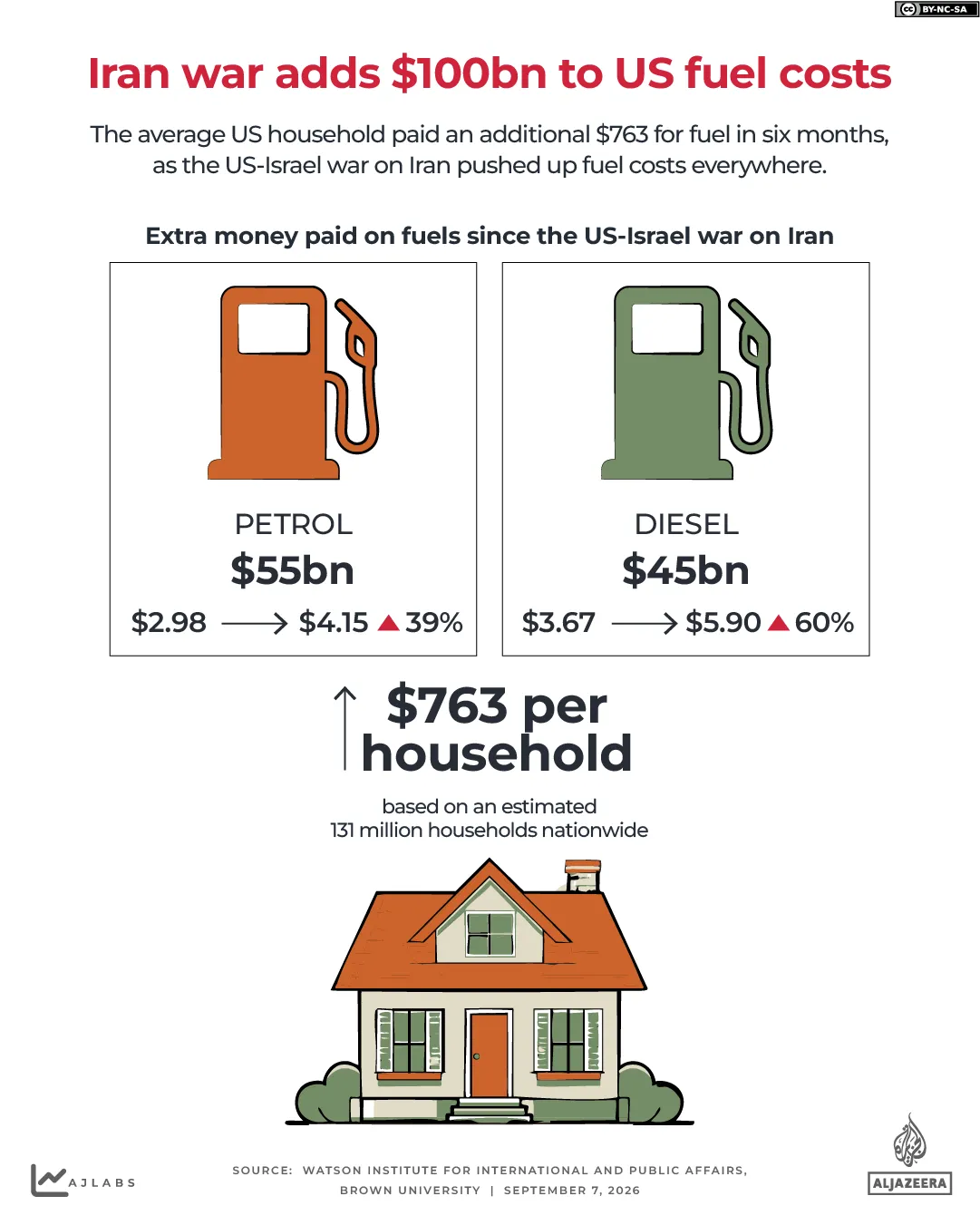
In the US, a gallon of regular petrol that averaged $2.94 in February now costs $3.58, marking a 20 percent increase, according to data from AAA Fuel Prices, a retail fuel price tracker from the American Automobile Association (AAA).
While each US state sets its own petrol prices, several states have surpassed $4 per gallon, with California exceeding $5 per gallon, the highest level it has been in more than two years.
Which countries have the sharpest petrol price increases?
According to data analysed from Global Petrol Prices, a data platform that tracks and publishes retail energy prices across approximately 150 countries, at least 85 countries have reported increases in petrol prices following the initial attacks on Iran by the US and Israel on February 28. Some nations announce price changes only at the end of each month, so higher prices are expected for many others in April.
Vietnam recorded the highest petrol price increase of nearly 50 percent, rising from $0.75 per litre of 95-octane on February 23 to $1.13 on March 9. Laos follows with a 33 percent increase, then Cambodia at 19 percent, Australia at 18 percent, and the US at 17 percent.
The table below shows the countries that have increased petrol prices at the pumps.
Asian countries pay the biggest price
Asia is disproportionately dependent on the Strait of Hormuz for the delivery of its oil and gas, which has been effectively closed since the start of the war. The strait joins the Gulf – also referred to as the Persian Gulf and the Arabian Gulf – to the Gulf of Oman and is the only passage for the region’s oil producers to the open ocean.
Japan and South Korea are among the most vulnerable, importing 95 percent and 70 percent of their oil from the Gulf, respectively.
Both East Asian nations have enacted emergency measures to stabilise their energy markets. On March 8, Japan instructed its oil reserve sites to prepare for a potential release of strategic reserves. The next day, South Korea introduced a maximum price cap on petrol and diesel for the first time in 30 years.
In South Asia, the impact of the war is more severe than in East Asia because countries like Pakistan and Bangladesh have much thinner financial buffers and smaller strategic reserves.
In an attempt to conserve energy, Bangladesh‘s government has ordered all public and private universities to close immediately. In Pakistan, government offices will now operate a four-day workweek, while schools have closed, and a 50 percent work-from-home policy has been enacted to save fuel.
In Europe, the Group of Seven finance ministers convened an emergency meeting to discuss rising prices, with French President Emmanuel Macron raising the possibility of releasing 20-30 percent of emergency strategic reserves to ease the pressure on consumers.
How high oil costs drive up the price of food
Oil prices and food prices move in lockstep, with energy prices affecting every stage of the food supply chain, from the fertilisers used in the fields to the trucks that carry food from field to supermarket shelf.
Rising oil prices also directly affect shipping and the cost of transport.
“The lifeblood of the global economy is transport,” economist David McWilliams told Al Jazeera. “It’s getting stuff from A to B – it’s a logistics problem, a supply chain problem, and ultimately transportation is the energy of the global economy.”
Fears of stagflation – increasing inflation and rising unemployment, which major oil shocks have historically summoned – are rising. Economists point to the crises of 1973, 1978 and 2008 as evidence that every significant spike in oil prices has been followed, in some form, by global recession.
In lower-income countries, where populations spend a far greater share of their income on food and import large quantities of grain and fertiliser, rising oil prices could rapidly translate into food shortages.
What products are made from oil and gas?
Oil and gas are used for far more than just fuel. They are raw materials for thousands of everyday products.
Plastics, including water bottles, food packaging, phone casings and medical syringes, are all derived from crude oil.
Crude oil is also the hidden ingredient in synthetic fabrics such as polyester, nylon and acrylic, which are used to make everything from sportswear to carpets. It also underpins the cosmetics industry, as it is used to make products such as petroleum jelly (Vaseline), lipsticks and concealers.
Household items also rely on oil-based ingredients, with laundry detergents, dishwashing liquids, and paints all derived from petroleum products.
The global food supply is essentially built on natural gas in the form of fertilisers, used to enhance crop yields and ensure that food production can meet demand.
G7 energy ministers will hold a call on Tuesday to discuss sharply rising energy prices triggered by the ongoing war in Iran, officials said. A separate call later in the day will see European Union leaders addressing similar concerns, reflecting heightened global anxiety over fuel supply and costs.
Oil prices surged to their highest levels since mid-2022 on Monday, driven by fears of reduced Gulf output and disruptions to tanker traffic through key shipping routes. Even before the Iran conflict, European energy prices were generally higher than those in the United States and China.
G7 Prepares Response, But Stops Short of Releases
G7 finance ministers signalled readiness to take “necessary measures” in response to the price surge but did not commit to coordinated emergency releases of strategic oil reserves.
The G7, which includes United States, Canada, Japan, Italy, Britain, Germany, and France, will hold the call at 1245 GMT. French Finance Minister Roland Lescure, whose country holds the G7 presidency this year, said that Europe and the U.S. currently do not face immediate supply shortages.
EU Leaders Target Competitiveness and Energy Costs
Later on Tuesday, EU leaders will discuss energy prices and competitiveness, joining German Chancellor Friedrich Merz, Italian Prime Minister Giorgia Meloni, Belgian Prime Minister De Wever, and others.
The EU is highly exposed to global energy volatility, importing more than 90% of its oil and roughly 80% of its gas. EU Commission President Ursula von der Leyen has pledged proposals at next week’s EU summit to address rising prices.
Officials have already discussed measures including adjustments to energy taxes and potential amendments to the EU carbon price, which contributes around 11% to industrial power costs.
Coordinated Action Sought but Uncertain
The calls by the G7 and EU reflect a growing urgency to manage energy price shocks caused by the Iran war. While governments have the tools to intervene, officials are balancing the need to stabilize prices with broader fiscal and strategic considerations.
With oil and gas markets highly sensitive to geopolitical developments, both G7 and EU leaders face pressure to act quickly to prevent price spikes from translating into economic slowdowns or political unrest across their regions.
March 10 (UPI) — The average price of a gallon of unleaded gas in the United States hit $3.54 on Tuesday as the Trump administration continues military action against Iran.
AAA reports the current average price for fuel is higher across all grades than it was a year ago. Diesel fuel is up more than 10 cents over Monday’s average, reaching $4.78 per gallon.
Prices are highest on the West Coast, as they typically are, with the highest average cost of a gallon of unleaded gas at $5.29 in California.
Tuesday’s average price marks the highest gas prices have been since July 2024.
Gas prices spiked following bombings in Iran by Israel and the United States on Feb. 28. On Feb. 26, the average price per gallon was $2.98 after months of mild fluctuation.
The price of a barrel of crude oil jumped from $91 to $116 on Sunday.
President Donald Trump urged that the increase in oil prices is temporary and a “small price to pay,” in a post on social media.
Iran has closed the Strait of Hormuz, a crucial route in the oil trade, due to the ongoing conflict with the United States and Israel. About 20% of the world’s oil is shipped through the strait.
Trump told CBS News that he “has thought about taking [the Strait of Hormuz] over.”
Rising gas prices have caused concern for Republicans on Capitol Hill. Senate Majority Leader John Thune, R-S.D., said he hopes to see “things can resume some sense of normalcy in that region in terms of shipping lanes.”
Sen. Lisa Murkowski, R-Alaska, has been more skeptical about the president’s strategy with Iran and its impact on oil prices.
“For heaven’s sakes, are you telling me you didn’t game this one out?” Murkowski told Punchbowl News. “I’m starting to think they didn’t game this one out.”
Oil prices fell sharply after US President Donald Trump said on Monday that the war against Iran could be short-lived and that Washington was considering waiving oil-related sanctions on certain countries to ease pressure on crude markets.
ADVERTISEMENT
ADVERTISEMENT
“So in some countries, we’re going to take those sanctions off until this straightens out,” Trump told reporters, without naming which countries were under consideration.
The United States currently maintains sanctions affecting oil trade against a small group of countries: Iran, Venezuela, Russia, Syria and North Korea.
Trump also said he spoke with Russian President Vladimir Putin on Monday to discuss the war and other issues.
Oil prices retreated from recent highs, with both WTI crude and Brent futures falling more than 9%. Brent was trading just below $90 during the European morning, while WTI stood at $85.40 a barrel.
Prices had briefly surged to their highest level since 2022, nearing $120 a barrel, a day after Iran’s Assembly of Experts appointed Mojtaba Khamenei as supreme leader in succession to his late father.
Investors read the appointment as a signal that Tehran was digging in, ten days into the war launched by the United States and Israel.
But prices later fell, and US stocks rose on hopes that the war with Iran may not last much longer.
“We took a little excursion” to the Middle East, “to get rid of some evil. And, I think you’ll see it’s going to be a short-term excursion,” Trump told Republican lawmakers at his golf club near Miami.
However, he left open the possibility of an escalation of fighting if global oil supplies are disrupted by the Islamic Republic, which chose a new hardline supreme leader.
Hours later, Trump posted on social media.
“If Iran does anything that stops the flow of oil through the Strait of Hormuz, they will be hit by the United States of America twenty times harder than they have been hit thus far.”
In an apparent response to Trump’s remarks, Iranian state media reported that Ali Mohammad Naini, a spokesperson for the paramilitary Revolutionary Guard, said that “Iran will determine when the war ends”.
Stock markets cheer the news
All major European stock markets opened sharply higher.
The FTSE 100 in London gained more than 1.1%, the CAC 40 in Paris jumped 1.9%, the DAX in Frankfurt rose 2%, benchmark indices in Madrid and Milan were up 2.5%, and the Stoxx 600 gained 1.7%.
Asian shares also rebounded on Tuesday after sharp declines the previous day, as investors wagered the conflict might be short-lived.
Tokyo’s Nikkei 225 added 2.9%, also buoyed by revised government data showing Japan’s economy grew at an annual pace of 1.3% in the final quarter of last year — well above the initial estimate of 0.2%, driven by solid business investment.
South Korea’s Kospi jumped 5.4% and Australia’s S&P/ASX 200 gained 1.1%.
“Today is the rebound — obviously [after] positive comments from President Trump overnight. We’re starting to see the light at the end of the tunnel for the war,” said Neil Newman, head of strategy at Astris Advisory Japan.
“Volatility is going to remain with us, but things are certainly looking a lot brighter today.”
Hong Kong’s Hang Seng added 2.1% and the Shanghai Composite rose 0.6%.
Share prices have been swinging largely in tandem with oil, which has gyrated as the conflict has deepened.
The central uncertainty for markets is how high crude prices will go and how long they will stay there, given ongoing disruptions to Middle Eastern energy infrastructure.
If oil remains very high for an extended period, households already stretched by inflation could come under severe pressure, while companies would face sharply higher bills for fuel and logistics.
The risk is a worst-case scenario for the global economy: stagflation, where growth stagnates and inflation stays elevated.
Attention has focused in particular on the Strait of Hormuz, the narrow waterway off Iran’s coast through which a fifth of the world’s oil passes on a typical day.
Iran has threatened to attack ships sailing through the strait.
If it remains closed for even a few weeks, oil could push to $150 a barrel or higher, according to strategists at Macquarie Research. Trump said separately that he was “thinking about taking it over,” according to CBS.
In bond markets, the yield on the 10-year US Treasury fell to 4.10% from 4.15% late Friday after briefly rising above 4.20% on Monday morning as oil price fears pushed yields higher.
Yields retreated when crude eased later in the day.
In currency markets, the dollar edged up to 157.48 yen from 157.67, while the euro was unchanged at $1.1638.
Gold rose 1.7% to $5,191.8 an ounce. Cryptocurrency markets also gained, with most leading tokens up between 1% and 2%.
Bitcoin outperformed, rising 2.6% to $70,863 according to the CoinDesk Bitcoin Price Index.