Portugal

Inside ‘Hawaii of Europe’ with volcanic feature and gorgeous beaches with bright blue water

A British couple have shared a video showcasing lesser-known paradise islands dubbed the ‘Hawaii of Europe’ – and it’s just a four-hour direct flight from the UK

With summer firmly on the horizon, it’s natural to start hunting for attractive holiday bargains to capitalise on the scorching temperatures and glorious sunshine the season brings. But while Britons typically gravitate towards France, Spain or Turkey for their holidays, there are numerous other destinations many may not even know are merely a just a short flight from the UK.

While Hawaii frequently tops the list of dream getaways, there are several comparable alternatives within Europe — and it’s not Lanzarote or Madeira that are typically likened to the American state. Instead, there’s an archipelago situated in the middle of the Atlantic Ocean that features similar natural beauty and stunning coastlines.

Taking to Instagram, British duo Ellen and Tom have revealed their insider recommendation for travellers seeking an exotic escape without opting for the usual Spanish or Turkish resorts.

“Nobody told us Europe had it’s own Hawaii,” the text overlay announced at the beginning of the clip, which proceeded to showcase footage of the breathtaking island destination in question.

Content cannot be displayed without consent

“And no, it’s not Madeira. This is São Miguel in the Azores and we genuinely think it’s Europe’s most underrated island,” they explained in the post’s caption. “Volcanic, lush, and warm year-round. We were there in July and barely saw another tourist.”

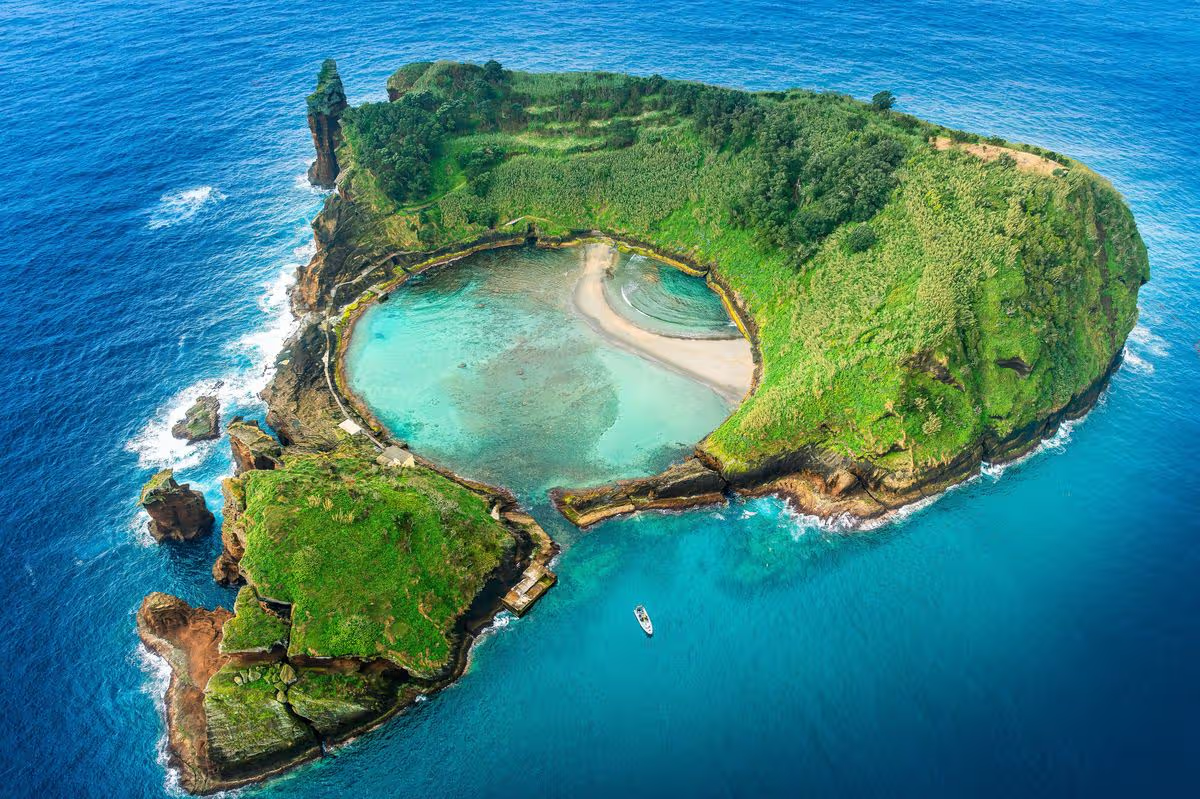
The Azores is a Portuguese archipelago comprising nine volcanic islands in the North Atlantic Ocean, situated roughly 1,500km west of Lisbon, or around four hours by air from the UK. While each island boasts its own distinct personality, the largest and most frequented is São Miguel, commonly known as “The Green Island”.

Both British Airways and Ryanair run direct services from the UK to Ponta Delgada, São Miguel’s capital. With a journey time of just four hours, it’s a remarkably accessible option for a quick weekend getaway or an extended break.

The islands also offer an abundance of activities, catering to all tastes regardless of what you’re seeking from your getaway.

Ellen and Tom documented a range of experiences from their July trip, which featured visits to the volcanic landscapes at the vivid green crater lakes, discovering the black sand shores, and relaxing in hot springs. Visitors can also embark on treks through the verdant mountains, or venture out to spot whales and dolphins at sea.

Regarding the climate, there’s genuinely no poor season to travel, as the summer months deliver mild, agreeable, and predominantly settled conditions, with daytime temperatures typically ranging between 21C and 25C. It’s the driest and most tranquil period of the year, making it ideal for rambling, bathing, and whale observation.

That said, a summer visit isn’t essential to enjoy warm, tropical-like conditions. The region is known for a weather phenomenon called St Martin’s Summer, which typically falls between 11 and 20 November, bringing prolonged sunshine and daytime highs of between 20C and 22C, according to Living Azores. Temperatures seldom become uncomfortably warm, thanks to the moderating influence of the Atlantic Ocean on the local climate.

The video quickly drew a flood of comments from viewers left astounded by the Portuguese island region, with one person writing: “Omg, I think we need to go here!!

“I was there in 2024 and it was unbelievable beautiful!” another enthused, while a third added: “This is absolutely stunning.”

Source link

World’s longest train journey takes 21 days on epic 11,600-mile route

A new train service has created the world’s longest train journey, allowing passengers to travel across 13 countries

The launch of a brand-new rail service has created the world’s longest train journey, spanning 21 days and passing through 13 countries.

A new rail link between Laos and China now allows travel from Portugal to Singapore entirely by rail.

The epic route covers a staggering 11,600 miles and is operated by multiple railway companies throughout.

Travellers can cross numerous borders while making several spectacular stops along the way.

The mammoth trip offers passengers stunning countryside scenery between the major destinations along the route.

Departing from Lagos in Portugal, the journey concludes in Singapore, reports the Express.

It’s a truly one-of-a-kind adventure, crossing from the western to the eastern hemisphere entirely by train.

From Lagos, the service heads to the Portuguese capital, Lisbon, before stopping at the next stop in the Basque region of Spain.

The train then winds its way through France, Russia, China, Vietnam, and Thailand before finally rolling into Singapore.

Along the way, the service stops at some of the world’s most iconic cities, including Paris, Moscow, Beijing, and Bangkok.

The lengthiest leg of the trip is a gruelling 40-hour stretch from Paris to Moscow.

Despite this marathon section, the journey features 11 stops, giving passengers plenty of opportunities to stretch their legs.

Travellers can also enjoy overnight stays at destinations en route, stepping off the train to explore.

To complete the full journey, passengers must obtain seven separate visas. The overall fare is approximately £1,006, comparable to the cost of a flight from Portugal to Singapore.

Nevertheless, the trip requires considerably more planning than a flight and involves numerous additional stops.

In some areas, passengers must make bus connections to continue their train journey.

These included the stretch from Vietnam to Cambodia, and from Malaysia to Singapore.

The longest journey has only been made possible by the introduction of the Laos-China railway.

It is expected to boost Laos’ economy by allowing it to transport people from China.

The previous longest train journey ran from London to Singapore.

Source link

Brits heading to Portugal issued vital advice over ‘troubling reality’

Brits planning trips to Portugal this summer have been urged to stay vigilant, as there is a ‘troubling’ scam on the rise that targets tourists

If you’re jetting off to Portugal this summer, there’s one “troubling” threat facing tourists that you need to know about. Portugal ranks among the most sought-after holiday spots for Brits, with roughly 3 million of us flocking to sun-drenched destinations such as Porto, The Algarve, and Madeira each year.

However, for those planning to chase the sunshine in the months ahead, there’s an important warning to heed. According to travel experts on social media, Portugal is grappling with a crisis that sees criminals deliberately targeting tourists to turn a quick profit – all while the nation’s cultural heritage pays the price.

Eric and Josien, a couple based in Portugal who frequently post travel content on Instagram, revealed that thieves across the country are pinching the iconic ceramic tiles adorning buildings and flogging them on the street, mainly to unsuspecting tourists who have no clue about the tiles’ origins.

The tiles, known as azulejos, are hand-painted ceramic pieces used to decorate churches, palaces, train stations, and even some residential properties. They represent a cherished element of Portugal’s culture and heritage, yet according to locals, there’s an “illegal black market” centred around stealing these tiles and hawking them on the street.

They explained: “Azulejos – those beautiful, hand-painted ceramic tiles – are one of Portugal’s most iconic and treasured art forms. Dating back over 500 years, these tiles cover churches, palaces, train stations, and even ordinary homes, turning buildings into vibrant storytellers of Portuguese history, culture, and craftsmanship.

Content cannot be displayed without consent

“But behind this beauty lies a troubling reality: an illegal black market that thrives on stealing these tiles.

“Thieves often target abandoned or under-renovation buildings, or even occupied homes late at night, using special tools to remove the tiles without damaging them. Once taken, these tiles are sold as ‘vintage’ or ‘reclaimed’ pieces through online shops, antique markets, and tourist areas – sometimes even shipped abroad.

“Because buyers rarely ask where these tiles come from, and regulations around these sales are limited, thieves profit while Portugal’s heritage suffers.”

Visitors to Portugal can purchase genuine azulejos from local craftspeople throughout the country, and the Instagram duo encouraged travellers to seek out artisan boutiques rather than purchasing from street sellers.

They added: “Never buy tiles without knowing their origin. If it looks like an authentic azulejo, ask questions and proof of its source. And support local artisans and shops that create or sell new, authentic tiles.”

What are azulejos?

Azulejos are intricately decorated ceramic tiles that typically measure around 5 to 6 inches (13 to 15cm) square. They’re most commonly found in Portugal and Spain, where they’ve been crafted since the 14th century. In Portugal, the tiles have predominantly featured in religious architecture, including adorning the Coimbra Cathedral.

While Spain largely stopped making the tiles by the 18th century, Portugal pressed on, eventually shipping them to the Azores, Madeira, and Brazil. They’re now frequently manufactured in Puebla, Mexico, where they’re regarded as the finest in the Western Hemisphere.

Due to their historical and cultural importance, they’ve become a sought-after keepsake for holidaymakers visiting Portugal. That said, you should always ensure what you’re purchasing has been ethically sourced, and its origins can be verified. If you suspect the tiles being offered could be stolen, steer clear of buying them.

The Portuguese National Tourist Board has been contacted for comment.

Source link

Little-known beach rule could land you £433 fines in Spain and Portugal

Brits should take note of strict dress code rules in a number of holiday hotspots across Spain, Portugal, Italy and Croatia with hefty fines for rule-breakers

Brits planning to hit the beach or pool in the likes of Spain, Portugal, Italy and Croatia this summer may want to take note of some strict rules, or risk potentially hefty fines.

In recent years, a number of holiday hotspots have clamped down on dress codes for both locals and tourists, particularly when it comes to the likes of bikinis, pool cover-ups and swim shorts.

The issue isn’t that people are wearing these on the beaches, but rather when they wander into local towns. In fact, since 2022 Italian hotspot Sorrento has banned wearing swimwear away from beaches and pools. Anyone caught flouting the restrictions could face fines of up to €500 (approximately £433).

You’re not going to get a fine if you’re walking around your hotel or a beach club in your swimwear, or if you’re at a pool or beach. However, if you stay in your swimwear to walk into the town and try to enter shops or restaurants, that’s where you could potentially face some trouble.

We take a look at some of the holiday hotspots with these strict rules below…

Spain dress code rules

A number of Spanish hotspots have been introducing beachwear dresscodes in recent years. In Barcelona you could face fines of up to £260 for wandering around the town, while in Majorca you could face fines of up to £500 if you’re wearing beachwear away from the main beaches and pools. The rule also applies to anyone wandering around shirtless. Plenty of restaurants also have firm signs and rules banning visitors from wearing beachwear in their establishments.

Meanwhile in Malaga, wandering into the city centre in your beachwear could land you a fine of up to €300 (approximately £259).

Italy dress code rules

In Sorrento, locals have argued that they’re trying to protect the area’s decency with the rules, and swerve people rocking up to lunch spots in just swim shorts or bikinis. The ban doesn’t just apply to swimwear; it also applies to visitors who walk around the town topless.

Portofino, Positano and Capri all enforce similar rules with with fines of up to €500 (approximately £433) if you’re spotted walking around the main town in beachwear.

Other Italian hotspots with similar restrictions include Venice where walking around the historic city centre in swimwear or bare-chested is strictly prohibited, and could land you an on-the-spot fine of up to €250 (approximately £216).

Portugal dress code rules

In Albufeira, new dress codes were brought into force last year. That includes fines from €300 to €1,500 (approximately £259-£1298) for those who are found wearing swimwear outside of beach or pool zones, for example when wandering down the town streets. The dress codes came as part of a wider crackdown on unruly tourist behaviour.

Croatia dress code rules

In Dubrovnik, tourists are banned from entering the UNESCO World Heritage Old Town in swimwear or shirtless, with fines of up to €700 for rule-breakers (approximately £606). It’s not the only Croatian city to enforce rules of this nature; in Split, you could face fees from €150 (approximately £129).

Meanwhile over on the party island of Hvar, new rules include fines for wandering around in swimwear or being shirtless out and about in town.

Have you been caught out by a holiday hotspot’s dress code? Email us at webtravel@reachplc.com.

Source link

Simon Calder names 3 ‘very cheap’ summer holiday destinations in Europe for 2026

Travel expert Simon Calder recommended some stunning but underrated European destinations

Montenegro

Travel expert Simon Calder has championed Montenegro as an absolutely breathtaking yet underrated European gem, boasting a spectacular coastline, sweeping national parks and enchanting medieval towns. The country also happens to rank among Europe’s most affordable destinations, according to a recent study by Jersey Island Holidays.

The most popular holiday spot is Kotor Bay, hailed as “a jewel of the Mediterranean,” brimming with picturesque fishing villages and jaw-dropping vistas.

On Tripadvisor, one traveller gushed that Kotor is one of the “nicest places” they’ve ever visited. Another remarked: “The bay is gorgeous with hills and mountains surrounding it. There are plenty of viewpoints to see it. The towns also look pretty with the red tiled roofs.”

A further visitor enthused: “What a spectacular scene. Kotor Bay is winding and resembles a fjord. It is located in the Adriatic Sea and is a UNESCO World Heritage Site. The natural beauty is stunning, with Mediterranean landscapes, mountains, and cliffs in contrast with the historic buildings.”

Portugal

Though better known as a summer hotspot, Portugal is a stunning nation of vibrant towns and a glorious shoreline. Simon Calder singles out Lisbon, along with the charming towns of Cascais, Estoril and Sintra as must-visit destinations.

He said: “I love Lisbon, one of Europe’s most beautiful capital cities, and the locations on its western flanks – in particular Cascais, Estoril and Sintra. But until now I haven’t strayed south to the Setubal Peninsula: much less well known, but full of surprises.

“Do try O Barbas – an amazing seafood restaurant overlooking the Atlantic in Costa da Caparica; the wild, windy and atmospheric cape of Espichel; and Setubal itself, a sleepy, friendly city.”

Bulgaria

Bulgaria is another under-the-radar treasure and a place where “your money goes further,” according to Simon.

He said: “We’ve been telling everyone for years that Bulgaria is a great holiday destination, about how wonderful the weather is, how soft the sandy beaches are, the excellent hotels and of course the low cost of living there.”

Source link

I lived in Portugal for nearly a decade

WITH 300 days of sunshine, golden beaches and beautiful hotels – the Algarve ticks all the boxes when it comes to summer holidays.

TUI travel agent Donna Connett is a huge fan and has been visiting the region for over 20 years after living there for a decade – so she knows all the best spots from its coastline to top restaurants.

The Algavre has over 300 days of sunshine every year Credit: Alamy
TUI travel agent Donna Corbett has been visiting the region since 2005 – and used to live there Credit: TUI

Follow The Sun’s award-winning travel team on Instagram and Tiktok for top holiday tips and inspiration @thesuntravel. 

After living in the Portuguese region, Donna has been back almost 30 times and always heads to one place – Albufeira.

She describes it as “one of those places that just feels easy the second you arrive”.

The Algarve is a popular spot for Brits being just a few hours away from he UK – and of course, for its coastline.

LUXE FOR LESS

Our experts’ favourite holidays that feel 5 star – but for half the price


TRAVEL TIP

The £2.99 SIM hack that can save Brits HUNDREDS abroad

It has more than 150 beaches spread across 125 miles of coast.

One of Donna’s all-time favourite seaside spots, called Praia da Coelha, is just outside of Albufeira.

Donna told us: “It’s a bit tucked away, so you don’t get as many crowds, which is half the appeal. The huge cliffs and clear water make it feels a bit more special than the bigger, busier beaches. 

“It’s the sort of place I used to relax on during a day off when I was a rep, and it’s stayed a constant ever since.”

Something else that’s very important whilst on holiday, is finding good places to eat – and Donna has one specific go-to restaurant.

“I’ll always point you towards the Steak House O’Farnel. It’s a small, family-run place – nothing fancy, but just great food and a relaxed atmosphere.”

The Algarve has hundreds of beaches on its 125mile coastline Credit: Alamy

Donna continued: “It’s the kind of restaurant where you don’t feel rushed, you’re looked after, and you end up staying longer than you meant to. I’ve been going there for years and it’s still one of my first stops every time I’m back.” 

There are many beautiful places to see, so Donna has some off the beaten track suggestions too.

Guia is definitely worth a visit, it’s known as the home of Chicken Piri Piri, and for good reason. 

“There’s plenty of authentic, local restaurants – they’re often busy and a bit no-frills in places, but the food feels properly local. Pair your “Frango à Guia” (Piri Piri Chicken) with fries and the traditional tomato and onion salad.”

Guia is the home of Chicken Piri Piri Credit: Alamy

It’s not all lazing about on beaches and getting a tan though, as holidaymakers can get active too.

The nearby Monchique Mountains is popular for mountain biking, jeep safaris, and small-group day tours.

Donna says it’s a great place to visit if you have the time: “It’s a completely different feel to the coast; cooler, quieter, a bit more traditional. You get a glimpse of what the Algarve’s like away from the beaches and resorts, such as a the historic spa village of Caldas de Monchique.”

If the Algarve has your attention Donna knows some incredible hotels to stay in too – and her favourite is the Tivoli Marina in Vilamoura.

Tivoli Marina Vilamoura can be booked through TUI Credit: TUI

The five-star resort is right on the beach near to shops, restaurants and bars with multiple swimming pools and a spa.

Donna said: “The Tivoli Marina in Vilamoura is probably the best I’ve stayed in. It’s got that ideal location between the marina and the beach, and it feels a bit more polished without being stuffy.

“I spent a lot of time in Vilamoura during my rep days, so I love going back now and having dinner and drinks around the marina – it’s definitely more relaxing now than when I was looking after guests!”

You can actually book a stay at the hotel with TUI, a seven-night holiday on a B&B basis from £1,361 per person including flights from Manchester Airport June 10.

Another deal is for Hotel Alisios – a seven-night holiday here on a B&B basis from £846 per person including flights from London Gatwick departing June 16.


Source link

Portugal holiday warning as ‘500 flights’ may be affected

Travel plans could be set for major disruption

Around 500 flights could be thrown into disarray due to a general strike set to take place in Portugal.

Portuguese news sources are reporting that the industrial action is expected to trigger major disruption across the transport network. The CGTP (General Confederation of Portuguese Workers) has called the strike, with Sic Noticias suggesting that growing numbers of workers’ representatives are backing the campaign.

The National Union of Civil Aviation Flight Personnel (SNPVAC) has predicted that “around 500 flights” could be affected by the walkout on June 3, with the potential for travel chaos to also extend to the days surrounding that date. According to an internal document seen by Notícias ao Minuto and shared with union members, the SNPVAC has also warned that the general strike may impact “the days before and after”.

ECO has stated that the cabin crew strike will chiefly hit operations for TAP, Portugália and SATA. Idealista, along with several other Portuguese media outlets, indicates there may also be knock-on disruption to flights run by other airlines with Portuguese bases.

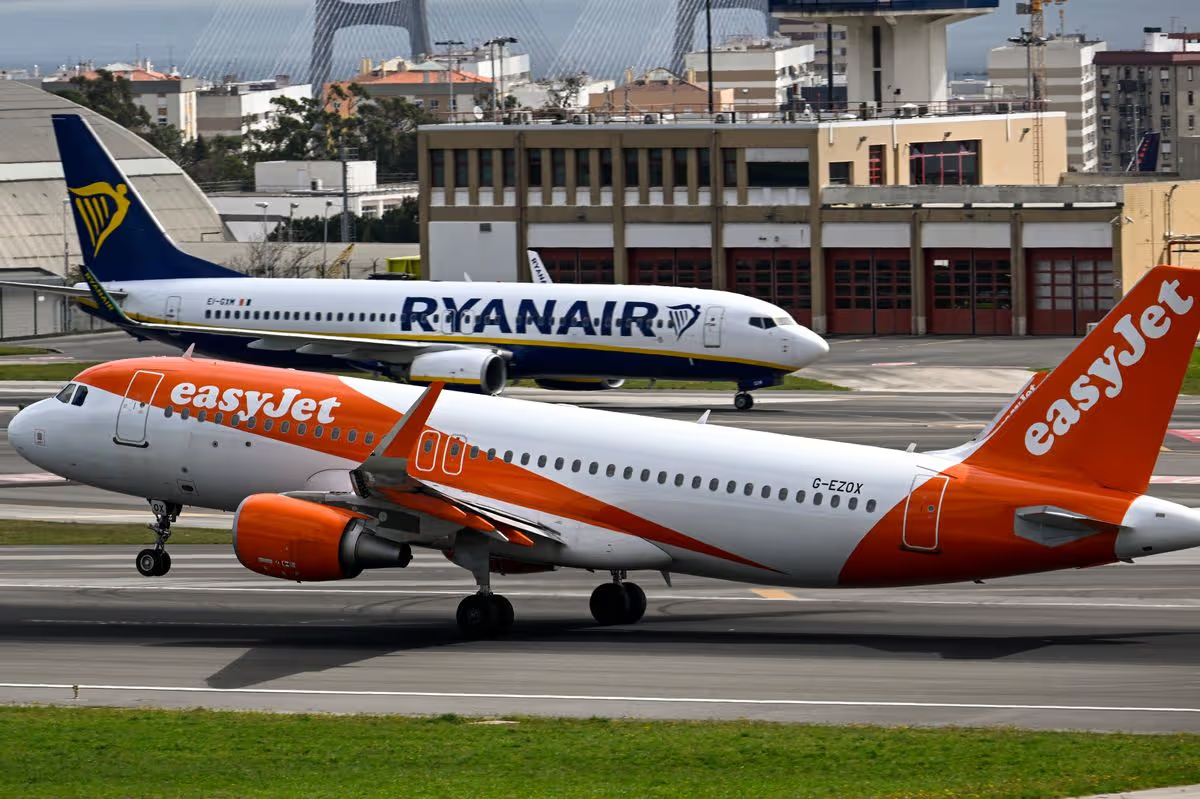
The outlet highlights this could potentially encompass easyJet and Ryanair, as the industrial action involves cabin crew operating from Portuguese bases.

This comes after comparable action last December which caused widespread chaos across the nation. Rail services ground to a halt across Portugal on December 11 last year. Hundreds of flights were cancelled simultaneously in protest against the very same proposed labour reforms that remain at the heart of this ongoing dispute.

Members of the National Union of Airline Workers voted in favour of the latest industrial action on Tuesday, in opposition to the planned labour reforms.

The CGTP filed a formal pre-strike notice for June 3 in protest against amendments to employment legislation, following fruitless talks with the Government.

The proposed changes to labour law were rubber-stamped by the Government in the Council of Ministers last week and are now due to go before Parliament for debate.

Minister of Labour, Solidarity and Social Security, Rosário Palma Ramalho, confirmed the development at a press conference, a week after Government negotiations on employment law changes ended without agreement in the Social Dialogue.

What could be affected by the strike in Portugal?

Portuguese media reports indicate that urban passenger transport across the country, as well as airports, are likely to face significant disruption. The CGTP has called on all workers to join the industrial action.

The Federation of Transport and Communications Unions has thrown its weight behind the strike. Transport operators expected to be caught up in the action include Lisbon Metro, Carris, Transtejo/Soflusa, Fertagus, Porto Metro, STCP and CP – Comboios de Portugal. The National Union of Civil Aviation Flight Personnel has also confirmed its involvement in the strike, alongside the Union of Aviation and Airport Workers, with the decisions expected to cause widespread disruption across several airlines.

The retail workers’ trade union and the two organisations representing doctors and teachers had previously confirmed they would be taking part in the industrial action, with the Nurses’ Union also verifying its participation.

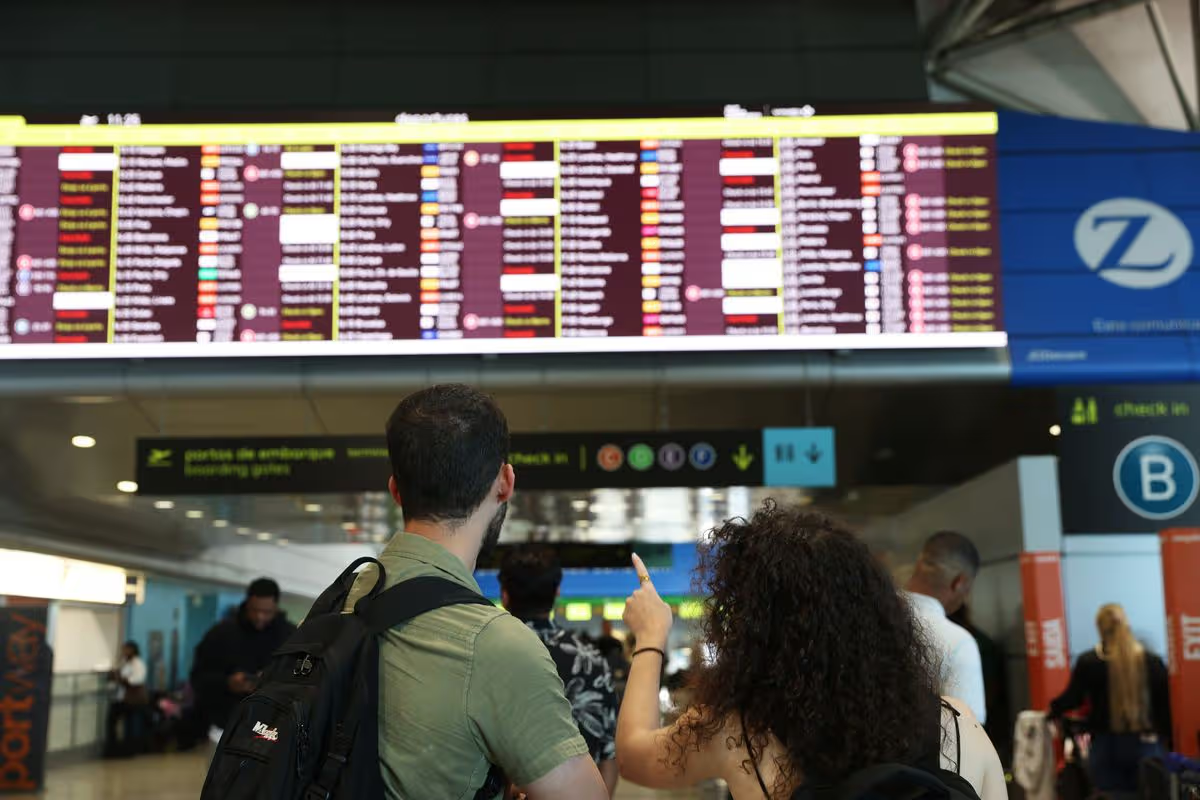
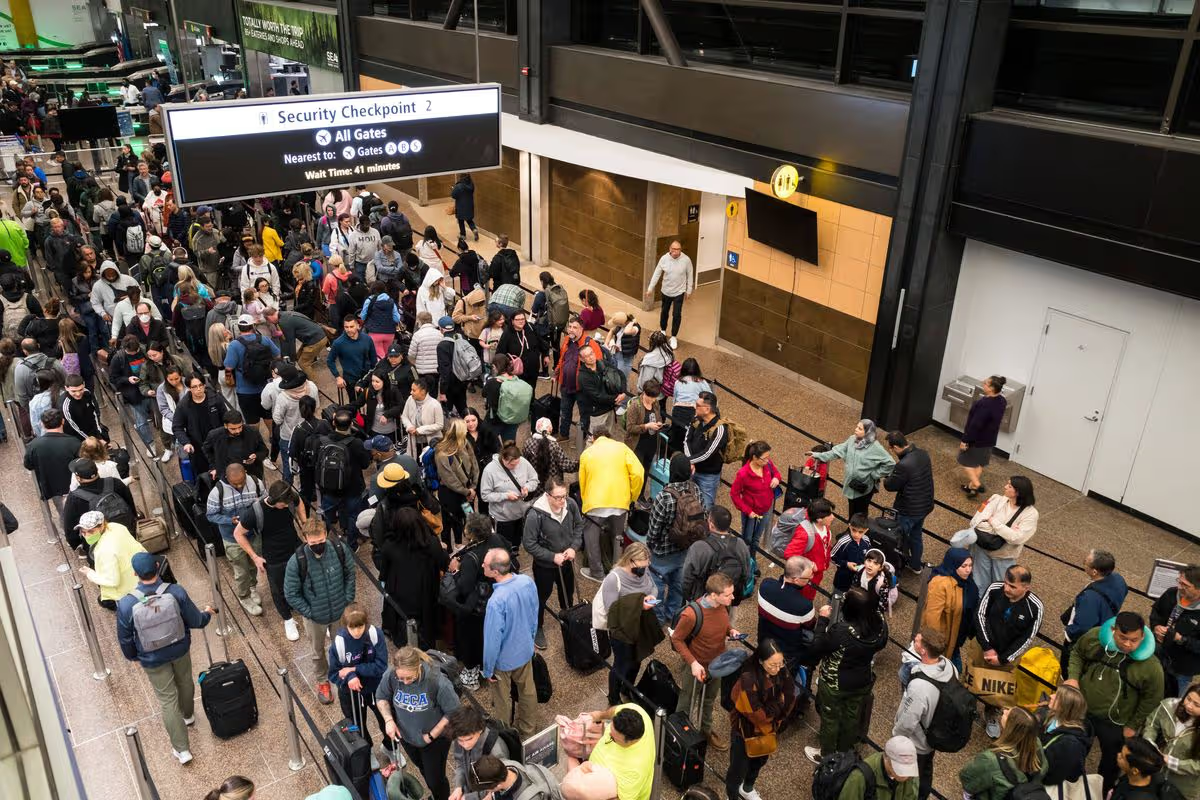
Meanwhile, Portuguese media is reporting that extra police will be deployed to the country’s airports to manage lengthy queues caused by the new EES border policy. The system affects non-EU nationals travelling for short stays whenever they cross the external borders of most European countries, including Portugal, Spain, Italy and France.

According to Sic Noticias, significant queues have been building in recent days at Portugal’s Schengen Area entry and exit checkpoints. The system is intended to replace manual passport stamping for non-EU nationals, including British citizens, entering the Schengen Area for short-term visits. It captures biometric data – fingerprints and photographs – at border control points, and applies to 90-day, visa-free, or short-stay visa travel.

There have been reports of queues stretching to three and four hours for some British travellers abroad, with a number of passengers even missing their flights altogether due to the lengthy delays. Portugal’s Public Security Police (PSP) is set to strengthen the country’s airports with an additional 360 officers in July, in a bid to cut waiting times for passengers arriving from outside the Schengen Area, according to an official PSP source.

PSP spokesman Sérgio Soares confirmed that the 360 officers are among 560 new recruits who will finish their training on May 28 before immediately embarking on a four-week border guard course. The 360 newly qualified officers are due to begin their airport duties in early July, forming a central part of the PSP’s summer contingency plan.

Police sources have revealed to Lusa that of the 360 new personnel, 150 will be posted to Lisbon airport, 90 to Porto, 70 to Faro, 30 to the Azores, and 20 to Madeira.

Source link

Ronaldo scores twice to seal Saudi Pro League at last with Al-Nassr | Football News

Portugal forward Cristiano Ronaldo leads Al-Nassr to Saudi Pro League title in last game before World Cup 2026.

Cristiano Ronaldo scored twice as Al-Nassr clinched the Saudi Pro League title with a 4-1 win over Damac, ending his long wait for domestic silverware.

A trademark free-kick and a close-range finish, both in the final half-hour of Thursday’s game, sealed the win Al-Nassr needed on the last night of the season, with Al Hilal finishing just two points behind.

Recommended Stories

list of 4 itemsend of list

Ronaldo, 41, who was without a major club trophy since winning Serie A with Juventus in 2020, arrived in the oil-rich desert kingdom to great acclaim in 2023, wept as he watched the final minutes from the bench.

He adds the Saudi championship to his English, Spanish and Italian titles and five Champions League medals.

Al-Nassr took a 2-0 lead but were back to 2-1 before Ronaldo’s free-kick on 63 minutes evaded the goalkeeper and a forest of legs to find the far corner.

He struck again nine minutes from time, receiving a cut-back on the edge of the six-yard box and smashing high into the net.

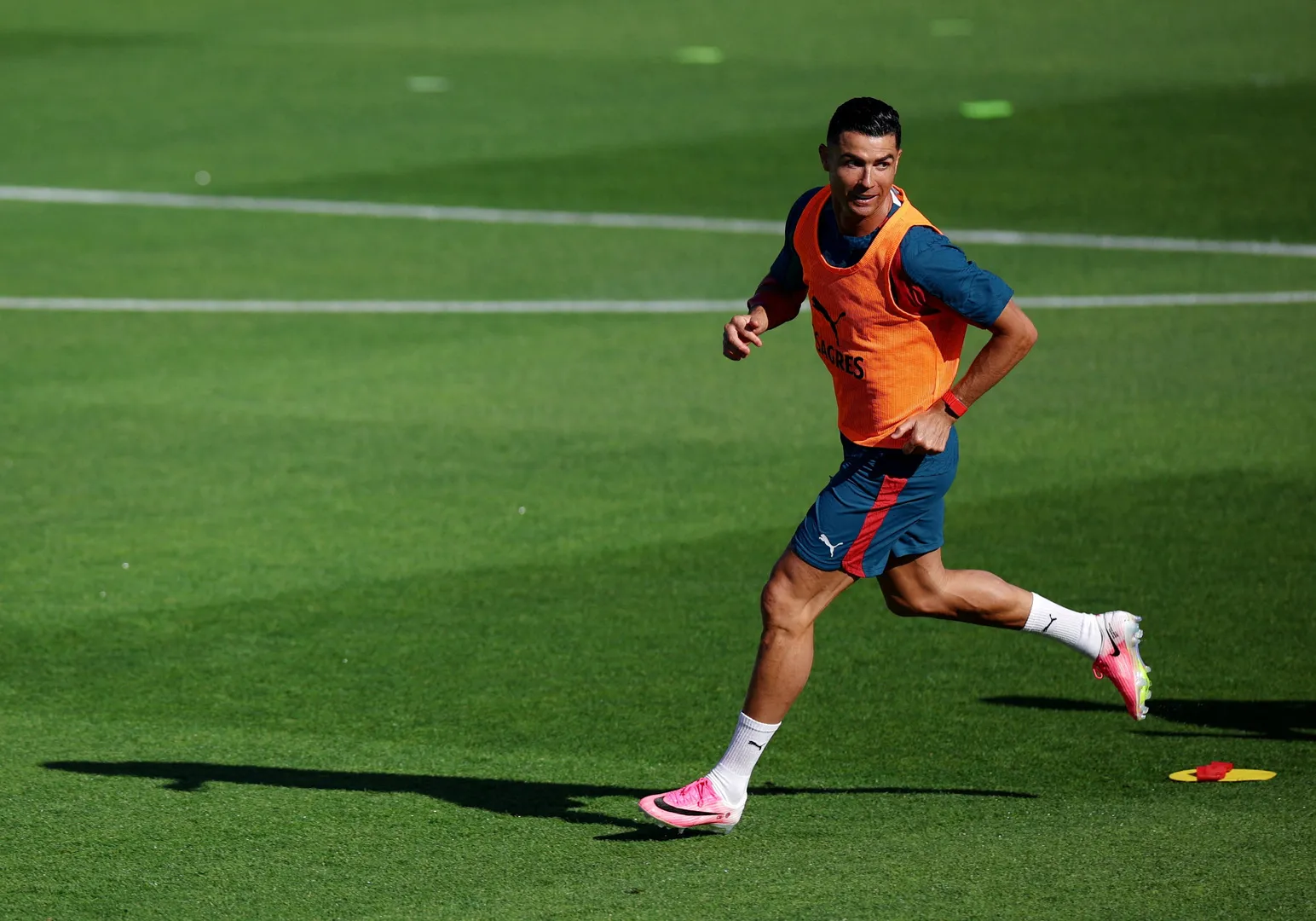
Next up for the all-time leading men’s international goalscorer, with 143 goals, is a sixth crack at the World Cup after he was named in Portugal’s squad this week.

Ronaldo opened the door to a series of big-money Saudi signings when he joined Al-Nassr in January 2023, following an unhappy second spell at Manchester United.

Neymar and Karim Benzema were among those to follow after Ronaldo signed a two-and-a-half-year deal estimated at $232m, extended for two years in June 2025.

The stated aim was to turn the Pro League into one of the world’s top five football competitions measured by the quality of players, stadium attendances and commercial success. International interest has been muted, however.

In December 2024, Saudi Arabia was confirmed as host of the 2034 World Cup, a coup as it pushes to decouple its economy from oil and attract business and tourists, partly via the buzz of sport.

Cristiano Ronaldo of Al Nassr celebrates scoring his team's fourth goal during the Saudi Pro League match between Al Nassr and Damac
Cristiano Ronaldo of Al-Nassr celebrates scoring his team’s fourth goal during the Saudi Pro League match against Damac [Yasser Bakhsh/Getty Images]

With a record 664 million Instagram followers, Ronaldo has been a highly visible ambassador as Saudi Arabia tries to turn the page on the ultra-conservative image that has defined it for decades.

The world’s biggest oil exporter and home of Islam has been accused of “sportswashing” – using sport to deflect human rights criticism – as it has invested in Formula 1, golf, boxing and tennis alongside football.

Some of the more outlandish spending on economic diversification, including sprawling tourist developments and NEOM, a futuristic city in the desert, is being reined in.

This month, Saudi Arabia’s Public Investment Fund said it was exiting the breakaway LIV Golf tour, after reportedly ploughing more than $5bn into a venture that split the sport.

Expensive football signings have also waned with the stream of big-money transfers slowing to a trickle.

Ronaldo was the Pro League’s top scorer in his first two seasons, with his career tally now at 973 – tantalisingly close to the 1,000-goals milestone.

His Saudi stint has not always been smooth. In 2024, he was left in floods of tears when Al-Nassr lost the King’s Cup final to Al Hilal on penalties, denying him his first Saudi title.

This season, he disappeared from Al-Nassr’s lineup for three games in an apparent protest at Benzema’s transfer to rival team Al Hilal.

Al Hilal and Al-Nassr were among the stable of Saudi teams owned by the Public Investment Fund, the country’s $900bn sovereign wealth fund.

Before Thursday, Ronaldo’s only silverware with Al-Nassr was the 2023 Arab Club Champions Cup. He was also disappointed on Saturday, when Al-Nassr lost to Gamba Osaka in the AFC Champions League Two final.

Source link

Ronaldo to lead Portugal at sixth World Cup as Martinez names squad | World Cup 2026 News

Cristiano Ronaldo will embark on a sixth World Cup at the age of 41 after Portugal coach Roberto Martinez named him in a 27-man squad for the tournament, with a symbolic “plus one” in memory of the late Diogo Jota.

Speaking at Cidade do Futebol before a packed auditorium on Tuesday, Martinez confirmed that fourth-choice goalkeeper Ricardo Velho, of Genclerbirligi Ankara, will travel with the squad, but can only be added to the official 26-man list in the event of an injury to one of the three registered keepers.

Portugal, the reigning Nations League champions, open their Group K campaign at the tournament in the United States, Mexico and Canada against the Democratic Republic of the Congo on 17 in Houston.

They then face Uzbekistan at the same venue on June 23 and conclude the group stage against Colombia in Miami on June 27. The tournament runs from June 11 to July 19.

Martinez said his selection comprised “27 players plus one”, a reference to Liverpool forward Jota, who died in a car accident in July last year, aged 28.

“He is our strength, our joy,” Martinez said. “Losing Diogo was an unforgettable and very difficult moment, but the very next day, it was up to all of us to fight for Diogo’s dream and for the example he always set in our national team. Diogo Jota’s spirit, strength and example are the +1 and will always be the +1.”

Portugal's head coach Roberto Martinez announces the squad for the 2026 World Cup, in Oeiras, outside Lisbon, Tuesday, May 19, 2026. (AP Photo/Armando Franca)
Portugal’s head coach Roberto Martinez announces the squad [Armando Franca/AP]

The coach defended his decision to name four goalkeepers and five fullbacks, while leaving out players including Mateus Fernandes, Ricardo Horta and Pedro Goncalves.

“The complexity of the tournament is very important – the demands of the weather, the time zone, everything we already experienced in March,” Martinez said. “There are positions where we need to have more than two players per position. And we need five fullbacks.”

He highlighted the versatility of Diogo Dalot, Joao Cancelo and Matheus Nunes, and pointed to attacking options such as Joao Felix, Bruno Fernandes, Bernardo Silva and Francisco Trincao operating between the lines, with Rafael Leao, Pedro Neto and Francisco Conceicao providing width.

Martinez added that Velho understood his role as a training goalkeeper, noting that FIFA rules only permit replacement in the event of injury during the tournament.

Portugal warm up against Chile in Oeiras on June 6 and Nigeria in Leiria on June 10. FIFA has stipulated that the squad must be in their Palm Beach, Florida training camp at least five days before their opening match.

Portugal World Cup squad

Goalkeepers: Diogo Costa (FC Porto), Jose Sa (Wolverhampton Wanderers), Rui Silva (Sporting CP); Ricardo Velho (Genclerbirligi Ankara);

Defenders: Diogo Dalot (Manchester United); Matheus Nunes (Manchester City), Nelson Semedo (Fenerbahce SK), Joao Cancelo (FC Barcelona), Nuno Mendes (PSG), Goncalo Inacio (Sporting CP), Renato Veiga (Villarreal); Ruben Dias (Manchester City); Tomas Araujo (SL Benfica)

Midfielders: Ruben Neves (Al Hilal), Samuel Costa (Mallorca), Joao Neves (PSG), Vitinha (PSG), Bruno Fernandes (Manchester United), Bernardo Silva (Manchester City)

Forwards: Joao Felix (Al Nassr), Francisco Trincao (Sporting CP), Francisco Conceicao (Juventus), Pedro Neto (Chelsea), Rafael Leao (AC Milan), Goncalo Guedes (Real Sociedad), Goncalo Ramos (PSG); Cristiano Ronaldo (Al Nassr)

Source link

Portugal 2.5-hour ‘wait times’ warning issued by Ryanair

British travellers heading to Portugal have been warned that they could face major delays

Ryanair is cautioning Brits heading to Portugal that they could face waits of up to 2.5 hours at the airport. The budget airline has been an outspoken opponent of the new Entry/Exit System (EES).

EES is a digital biometric scheme that is taking over from traditional passport stamps. It requires travellers to have their fingerprints recorded and photographs captured when entering the Schengen Area, which comprises 29 European countries, predominantly within the European Union. For British travellers, this typically takes place at foreign airports.

Ryanair has been a fierce critic of the scheme after reports emerged of lengthy delays lasting several hours at destinations including Milan, Porto, and Lisbon. Greece has announced that it will postpone the full rollout of EES for British tourists until after the busy summer period has passed.

Content cannot be displayed without consent

In a social media post titled Lisbon Airport Trivia Quiz, the airline offered a string of responses to tongue-in-cheek questions. These included asking what was slower between a tortoise, a snail, or Lisbon border control queues. Ryanair also issued a warning that travellers could be held up for as long as 2.5 hours.

It stated: “If you haven’t noticed the trend, Lisbon border control wait times are up to 2,5 hours. It’s time for the Portuguese Government to suspend the new Entry/Exit System (EES) until after the peak summer season and ensure adequate staffing at Lisbon border control and all Portuguese airports.”

READ MORE: EasyJet flight makes emergency landing after being struck by lightningREAD MORE: Travel expert issues EES update for Greece, Portugal, and Germany

EES was initially launched in October last year, with its implementation stepped up on April 10. Under current EU regulations, the checks can be temporarily suspended to prevent queues during busy periods, reports Glasgow Live.

Industry body Airports Council International recently revealed that EES was leading to hold-ups of up to three hours, with airports across Spain, Portugal, France and Italy among those hit hardest. More than 100 easyJet passengers missed a flight from Milan Linate to Manchester last month due to hold-ups at passport control caused by the intensified rollout of EES.

Source link