politics

Xi Jinping seeks to strengthen ties with Putin during China visit | Politics

NewsFeed

China’s Xi Jinping is hosting Russian President Vladimir Putin, just days after welcoming Donald Trump to Beijing. The Chinese leader is set to discuss energy security and trade, while balancing access to European markets, as Al Jazeera’s Katrina Yu explains.

Source link

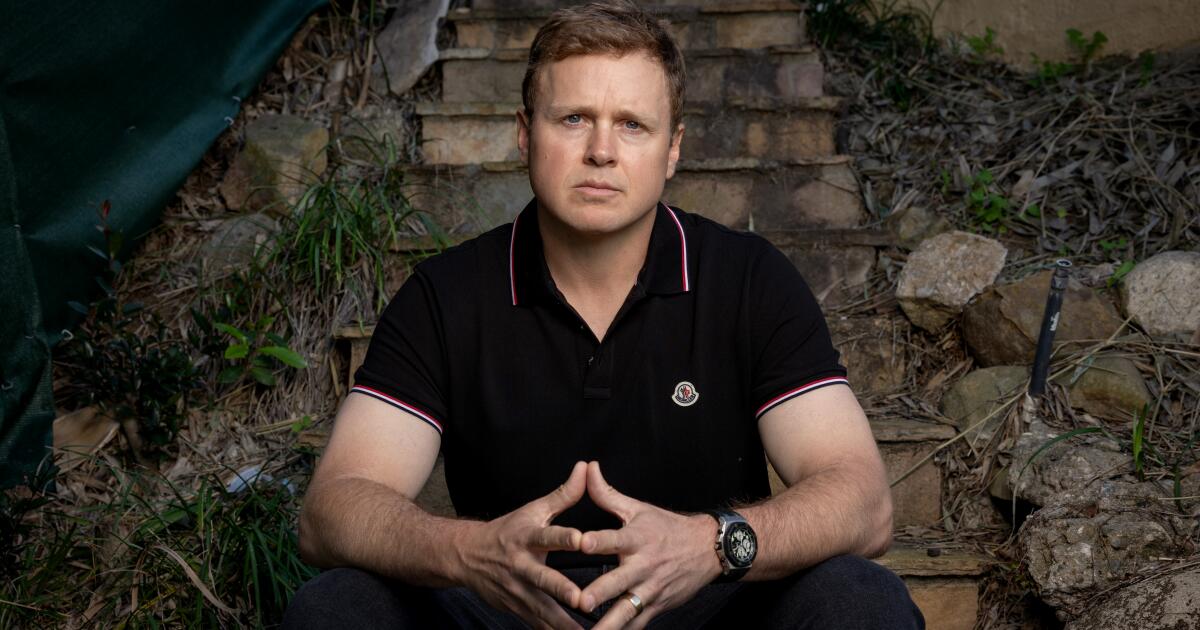
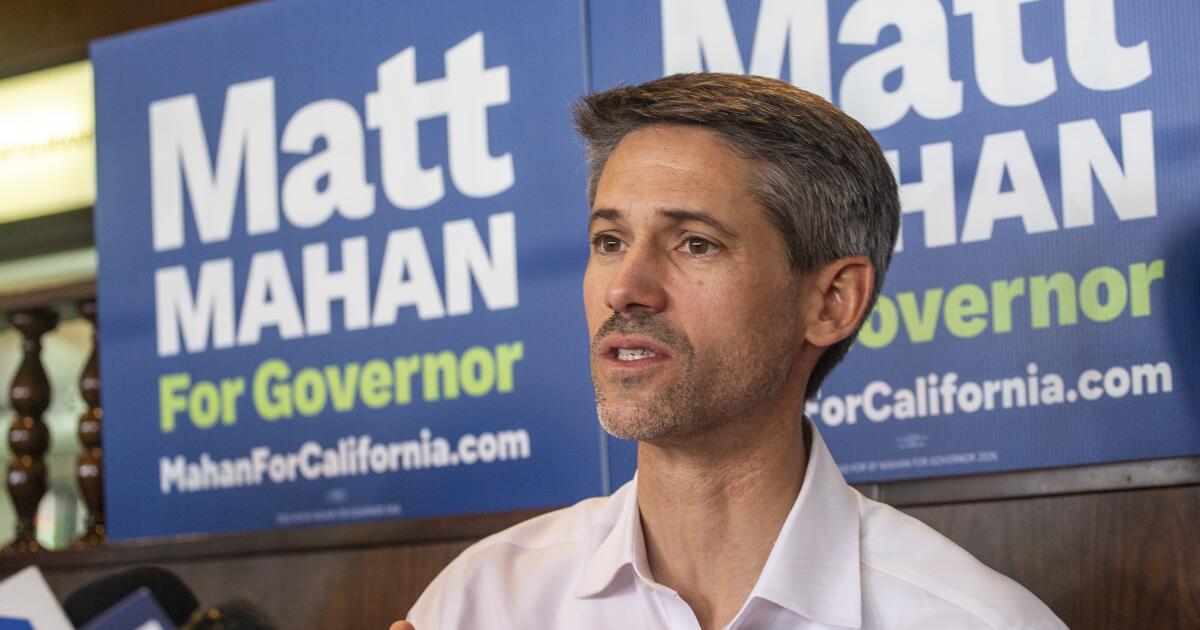
Tom Steyer shatters self-funding record in California governor’s race

Billionaire Tom Steyer, a leading Democratic candidate for California governor, as of Monday has donated a record-shattering $192.4 million of his personal wealth to his campaign in the lead-up to the June 2 primary.

The cash infusion dwarfs the money raised by all his Democratic and Republican challengers combined, and has fueled a torrent of political ads and a campaign infrastructure that’s kept him near the top of the opinion polls.

But Californians have dismissed rich candidates in the past, especially those who use their own fortunes to appeal to a largely middle- and working-class electorate struggling with day-to-day expenses in the notoriously costly state.

Steyer hopes to avoid the fate of former EBay CEO Meg Whitman, former Hewlett-Packard chief Carly Fiorina, banking and oil heir Michael Huffington and former Northwest Airlines co-chairman Al Checchi, none of whom were able to turn their riches into successful gubernatorial or senate campaigns in California over the last three decades.

Darry Sragow, a veteran Democratic strategist who managed Checchi’s unsuccessful 1998 bid for governor that set a self-funding record, said voters have long been skeptical of the motivation of rich people who run for office.

“Their basic reaction is, this person is incredibly successful, has made obscene amounts of money, could do anything they want to do in the world. Why would they want to run for office? Why would they want to represent me? What’s in it for them?” Sragow said. “And voters just go, ‘You’re just doing this for sport.’ … because they’re bored and they have big egos and they want something to do. That is the fundamental challenge for a self-funding candidate.”

Sragow said Steyer could benefit from his sustained involvement and financial support of climate change policy and other Democratic priorities, in addition to his immense spending in a race that lacks a clear front-runner less than three weeks before the primary.

Steyer said his and his wife’s decades-long work and funding of progressive causes sets him apart from previous wealthy self-funding candidates.

“I’m completely different from those people,” Steyer said in an interview on Friday. “I’ve been working full time on behalf of Californians for 14 years, and I was involved before that. You know, those people … never did anything but the private sector.”

He pointed to his and wife Kat Taylor’s work on ballot measures that took on the tobacco and oil industries, protected environmental laws and taxed out-of-state corporations to fund schools. They also backed successful efforts providing free breakfast and lunch for every California schoolchild, registering 1.2 million voters in the state, and supporting the state’s largest provider of services for immigrants, Steyer said.

We didn’t just fall off the turnip truck. We didn’t just decide in our boardroom [that] we’re smarter than everybody else, they should listen to us.,” Steyer said. “We have been working within this system as private citizens for really a long time, and that’s the truth.”

Steyer said his background is completely different from the people who thought they would bring a business accounting method to state government, a belief he called “super juvenile.”

The hedge-fund founder turned environmental warrior has spent nearly $1 billion on his political pursuits. In addition to the $192.4 million Steyer has spent to date on his gubernatorial bid, he spent nearly $342 million on his unsuccessful 2020 presidential bid, $325 million on national Democratic candidates and causes, $67.4 million on state efforts and nearly $13.5 million backing a successful California gerrymandering ballot measure last year that was widely viewed as a precursor to his gubernatorial bid, according to state and federal fundraising disclosures and Open Secrets, a nonpartisan group that tracks electoral finances.

Californians watching television cannot escape his ads during local newscasts, sitcoms and niche programming such as the Puppy Bowl (the Animal Planet show that airs on Super Bowl Sunday).

Voters are being inundated with glossy multi-page mailers touting Steyer’s environmental record, his work taking on corporations and President Trump, and his campaign promises to build 1 million new affordable homes in four years, cut electric bills by 25% and enact single-payer healthcare.

Recently placing second in Real Clear Politics’ average of recent polls, Steyer is now third behind Republican Steve Hilton, a former conservative commentator and political strategist, and Democrat Xavier Becerra, a longtime elected official who most recently served as President Biden’s Health and Human Services secretary.

Steyer’s Democratic rivals argue that he is trying to buy the election with money his hedge fund made investing in fossil fuels, private prisons currently housing ICE detainees and other industries that are anathema to liberal voters. Only after making money from those ventures did he come out and oppose them, his challengers say.

Steyer “is a billionaire who got rich off polluters and ICE prisons and is now using that money to fund this election,” former Orange County Rep. Katie Porter said during an April debate.

Steyer responded that corporations such as Chevron and PG&E are spending heavily to defeat him because he is the sole candidate who would not be beholden to them.

“‘I’m the only person in this race that the corporate special interests are spending money against, and they’re spending tens of millions of dollars. And the reason that’s true is because I said I will only put the interest of working Californians first,” he told reporters last month in Sacramento. “They’re worried that I mean it, and I do.”

Steyer said the idea that the money funding his campaign is from controversial investments is “absurd.”

“That is such a bunch of bull, that that’s where my money comes from,” he said in the interview. “My money came from long-term investing over 27 years. It did not come from a couple of investments out of thousands that were there for a very short time and were, in terms of the actual money, irrelevant.”

Additionally, endorsements by influential left-leaning organizations — including actor/climate change activist Jane Fonda’s political action committee, the California Nurses Assn. and the Natural Resources Defense Council’s Action Fund — could assure voters who may be skeptical of his past.

He has donated millions to environmental groups and individuals who have endorsed him. Their goals align with Steyer’s long-term commitment to environmental causes. But he was accused of trying to use his money to win endorsements in Iowa and South Carolina during his 2020 presidential bid. He has also recently come under fire that social media influencers who were touting his gubernatorial candidacy did not disclose that Steyer was paying them.

In the 2010 governor’s race, Whitman spent $144 million of her wealth on an unsuccessful campaign, which set a record for statewide campaign spending in the nation until Democrat J.B. Pritzker broke it in 2018 by donating roughly $171.5 million of his fortune to his successful bid to be elected governor of Illinois.

Adjusted for inflation, Whitman’s spending would be nearly $220 million today. But she spent the money in a lengthy primary and general election, while Steyer is still weeks away from the primary and will almost certainly contribute more money before the June 2 primary and if he advances to the November election. Steyer declined to say how much he plans to spend on his bid.

Steyer’s outsized spending in a state that is home to many of the nation’s most expensive media markets could break the unsuccessful streak of wealthy Californians trying to win the state’s top offices, according to political experts.

“Steyer is outspending his opponents by far more than any other self-funded candidate in California,” said Dan Schnur, a longtime politics professor at USC, UC Berkeley and Pepperdine University. “It’s not a question of his message but rather the magnitude of his spending.”

However, Schnur added that the unsettled nature of the race reflects Democratic voters’ “built-in” resistance to supporting a billionaire who became wealthy because of investments that contradict their morals.

Veteran GOP strategist Rob Stutzman, a top adviser to Whitman during her 2010 campaign, said he didn’t think voters’ primary concern would be Steyer’s self-funding, but the money could make a difference.

“It’s not just that Steyer has self-funded to this amazing number,” Stutzman said. “There’s really nobody [else] that’s even spending enough money, arguably, to be successful.”

Steyer’s net worth is estimated at $2.4 billion by Forbes.

In 1986, Steyer founded Farallon Capital, once one of the largest hedge funds in the world. He sold his stake in it in 2012, saying he didn’t want to be associated with investments that did not align with his values.

“There’s a reason I walked away from that business and walked away from a ton of money, because I felt like that is not the life I want,” Steyer told San Francisco voters in March.

Though Steyer has repeatedly expressed regret about Farallon’s investments, his Democratic rivals argue that this is a convenient stance while Steyer benefits from the largess that Farallon created for him. He is using his money to not only tout his record and build a robust campaign operation, but to slash at competitors who present a threat to his candidacy.

Steyer has unleashed a blistering attack ad campaign against Becerra, who was once mired in the single digits and surged in the polls after former Rep. Eric Swalwell (D-Dublin) dropped out of the race in April after being accused of sexual misconduct and assault.

Ads on television and social media accuse Becerra of being inconsistent about his position on single-payer healthcare and about what he knew about a federal corruption scandal that ensnared a former top campaign strategist for stealing funds from a dormant Becerra campaign account.

Steyer recently sent voters a mailer that castigates Becerra for taking campaign contributions from oil, tobacco and utility companies, and his handling of unaccompanied migrant children when he was HHS secretary.

“Xavier Becerra was supposed to keep immigrant kids safe, but thousands were lost, trafficked, or exploited,” the mailer says. “Becerra failed to protect children and they paid the price. What price will California pay when he fails us?”

On April 27 on the social media platform X, Steyer also called on Becerra to return a $39,200 contribution from Chevron.

Becerra responded with an ad that highlighted California’s natural beauty, from the coastline to the desert to the redwoods, as a respite from the deluge of Steyer ads.

“Take a break from all those Tom Steyer ads. Enjoy,” reads the introduction to the ad.

When Swalwell was still in the race, and topping the field of Democratic candidates, Steyer questioned the then-congressman’s eligibility to run for governor because of residency concerns, as well as his attendance record in Congress. Steyer ran ads saying that Swalwell skipped more than two-thirds of congressional votes while in office.

Rich politicians have won prominent elected offices, including financial executive Jon Corzine, who spent more than $100 million of his money on campaigns for New Jersey senator and governor. In California, self-funders have won lower offices, including Lt. Gov. Eleni Kounalakis, who dropped out of the 2026 gubernatorial race and is now running for state treasurer; Richard Riordan in his 1993 Los Angeles mayoral bid; and Rep. Gil Cisneros, Rep. Sara Jacobs and former Rep. Jane Harman in their congressional races.

Steyer has never been elected to public office. The two times he has jumped into a race, there was a familiar pattern.

In last year’s state campaign about redrawing California’s congressional districts to counter Trump’s efforts to do so in GOP-led states, Steyer spent significantly in support of the effort led by Gov. Gavin Newsom. However, he did not donate to the official campaign backing Proposition 50. Instead, he spent his money featuring himself in ads that were widely viewed as a way to raise his visibility among voters before a gubernatorial bid.

In 2019, Steyer spent $8.5 million airing nearly 19,000 ads calling for Trump’s impeachment, according to the Wesleyan Media Project. That was on top of several million dollars he spent on ads that featured himself, leading Trump to call him “unhinged” and a “wacko” in 2017.

That year, when asked by The Times whether his financial support for Trump’s impeachment was laying the groundwork for a future political bid, Steyer demurred.

“One of the things that is now true in American politics — it is reflected in that question — is there is no sense that people might try and do something for its own purpose,” he said. “Throughout American history, people have chosen to do the right thing ’cause they felt like it was important.”

A year and a half later, Steyer launched his presidential campaign. Facing similar questions about the source of his wealth and poor showings in early Democratic primaries, he dropped out in February of 2020.

Times staff writer Nicole Nixon in Sacramento contributed to this report.

Source link

Spencer Pratt’s Make L.A. Great Again acolytes and their dark vision of the city

If anyone needs the axiom “Tell me who you’re with, and I’ll tell you who you are” whispered to them every morning as a reminder to do better, it’s Spencer Pratt.

Can someone do that ASAP, por favor?

Instead of holding events around Los Angeles to convince skeptics that his mayoral campaign is for everyone, the former reality television bad boy has bunkered himself inside an echo chamber of sycophants, friendly podcasters and milquetoast media outlets.

Instead of offering an on-ramp to join his pissed-off posse, he calls Mayor Karen Bass “Basura” — trash — and her supporters “Bassholes,” insults that his followers share and like on social media by the thousands.

Instead of enlisting surrogates to push an uplifting vision for L.A.’s future, Pratt elevates those who speak of the city as a West Coast Chernobyl.

He’s running on a message of righteous fury as a survivor of the Palisades fire, in an era when many Angelenos feel pessimistic about what’s next. In recent months, he’s raised funds at a faster pace than Bass and City Councilmember Nithya Raman and delivered a decent debate performance, while holding strong in the polls with two weeks left before the June 2 primary.

Now that Pratt has shown his electoral quest isn’t a farce, it’s time he shows all Angelenos that they can rely on a Republican entertainer with no political experience to head a largely progressive, multicultural metropolis.

Instead, he continues to double down on his doomsday message, exciting the type of people who have been whining that L.A. is a “Lost Cause” since the days of the Watts riots.

They’re the ones depicting Pratt in AI-generated videos as a superhero — Batman, Luke Skywalker and a gladiator, among others — battling Bass, cast as a clown, Darth Vader, the Joker or as herself handing out needles to half-crazed homeless people.

They hound anyone who points out that L.A. is nowhere near as apocalyptic as they make it out to be, when homicides are at their lowest since the 1960s, burglaries are down 30% from last year and unsheltered homelessness has dropped two years in a row. They follow Pratt’s example and call unhoused people with drug problems “zombies” and “bums” while depicting the L.A. of the past as a problem-free playground out of “The Wonderful World of Disney” that derailed once Democrats took over.

Not all of Pratt’s supporters are this obnoxious. But he repeatedly platforms the worst of them and shows no signs of stopping. That nihilism might sell books and gain followers — but it’s no way to prove to Angelenos he’s serious about fixing anything other than his reputation.

Mayoral candidate Spencer Pratt, left, poses with a supporter

Mayoral candidate Spencer Pratt, left, poses with a supporter during a campaign event in Sherman Oaks.

(Etienne Laurent / For The Times)

Anyone who truly loves the city complains about it even on its best days. They realize L.A. can never be perfect, and that’s what makes it so wonderful. When people try to better their part of paradise, everyone benefits.

But Pratt needs to realize that Angelenos don’t want the city to be torn down, as dissatisfied as they may be. Criticizing the status quo is necessary — but waging a campaign of humiliation, a la Donald Trump, isn’t how to heal L.A. It won’t get large swaths of the city on your side, and it can’t spark the true change City Hall so desperately needs.

Instead, we get people like former Times contributor Meghan Daum — who now calls herself the “official Liberal Elite for Pratt” — gushing in the Atlantic about how her man is the “factory-reset option” to Make L.A. Great Again.

Resetting to when, Meghan? The 2000s of the Great Recession? The 1990s of anti-immigrant policies, the Northridge earthquake and the riots? The 1980s and its out-of-control gangs? The white flight of the 1960s? The 1950s of legal segregation and hideous smog?

Or just to the days when the problems that have long racked L.A. didn’t lap up to the denizens of Prattland — until they did?

These are the people who stayed largely silent as Trump unleashed ICE goons across Los Angeles last summer. They said nothing about housing affordability and violent crime in the years when those issues primarily afflicted South L.A. and the Eastside. They didn’t have a fit about homelessness until encampments spread beyond Skid Row.

Pratt’s loudest fans fundamentally loathe modern-day L.A., and that should chill all other Angelenos. These haters would be his primary constituents and populate his brain trust if he does beat Bass — and if he lets them take over, heaven help the City of Angels.

I’m not discounting Pratt’s chances of winning — he’s too savvy a media pro to fully flop. I knew Bass and Raman would misjudge the anger of Angelenos, fail to capitalize on that rage and find themselves on the defensive against Pratt’s populist push. I also figured he would eschew politeness for the demonizing that has tainted past L.A. elections, from Yorty’s mayoral campaigns of the 1960s to the San Fernando Valley secession movement a generation ago to the continued charges of communism thrown at the democratic socialist wing of the City Council.

I don’t blame Pratt for jumping into the race after his life was upended. And I sure don’t underestimate L.A.’s middle-class malaise, long a reactionary force in city politics with a winning track record that spans decades. But I can’t trust the guy and his crew for just now beginning to say they care about reforming L.A., when all he has fought for is his dark idea of the city.

And if you think L.A. needs a complete makeover, then you probably never really loved it in the first place.

On a recent podcast with Adam Carolla — who has long railed against L.A.’s liberal, multicultural ways and is planning to move to Nevada after his children graduate high school — Pratt huffed that he will “be done with trying to live” in the city if he doesn’t become mayor.

“I’ll go find somewhere that my kids will not have to see naked zombies,” he said, in a comment that was cheered on and seconded by his online army.

Do Angelenos really want to entrust their city to someone who might pick up his ball and quit on a place he professes to love, if he doesn’t get his way?

Source link

How Philadelphia’s Democratic primary tests the bounds of US progressivism | US Midterm Elections 2026 News

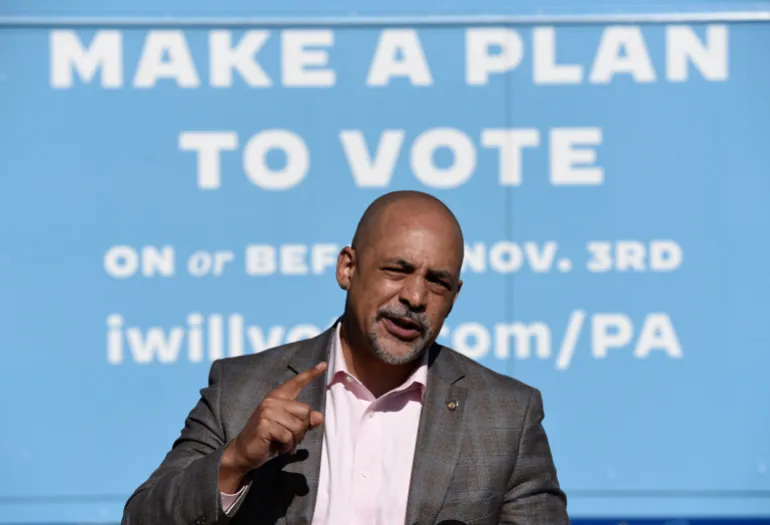
On Tuesday, voters in Pennsylvania’s third congressional district — which encompasses much of Philadelphia’s urban core — will decide what kind of progressive champion they want representing them in the United States House of Representatives.

Four candidates are vying for the Democratic nomination in Tuesday’s primary. They include state Representative Chris Rabb, state Senator Sharif Street, pediatric surgeon Ala Stanford and lawyer Shaun Griffith.

Recommended Stories

list of 3 itemsend of list

On the whole, all four campaigns are markedly progressive, focusing on issues such as expanding healthcare, affordability and housing.

But supporters say the race exposes the fault lines within the Democratic Party as it seeks to rally opposition to Republican President Donald Trump in the 2026 midterm cycle.

Marc Stier, who served as the director of the Pennsylvania Policy Center, a progressive think tank, until earlier this year, noted that there are few differences in the candidates’ platforms.

“They’re all opposed to Donald Trump. They’re all talking about civil rights, healthcare and voting rights,” said Stier, who backs Rabb. “So the differences aren’t that great.”

But the race has drawn nationwide attention, including endorsements from top Democrats.

For Stier and other local experts and leaders, the divisions come down to a duel between ideals and pragmatism — and how the candidates wish to be perceived along that spectrum.

A Democratic stronghold

The primary is highly symbolic for the Democratic Party. Pennsylvania’s third congressional district is considered one of the most left-leaning areas in the US.

According to The Cook Political Report, the district was 40 percentage points more Democratic than the national average in the most recent presidential election.

That makes it a key party stronghold in a pivotal swing state: Pennsylvania has alternated between voting Democratic and Republican in the last four presidential races, most recently siding with Trump.

Since 2016, Democrat Dwight Evans has represented the area. But in June, he announced he would not seek reelection after holding congressional office for a decade.

That opened a gateway to a heated primary, with no incumbent to lead the pack.

Street, Rabb and Stanford are considered the frontrunners. No independent polling has been conducted in the race, but surveys gathered by the candidates or their supporters show a volatile three-way contest.

An April poll sponsored by 314 Action, a group supporting Stanford, found the surgeon leading with 28 percent of voter support, followed by Rabb at 23 percent and Street at 16 percent.

Meanwhile, a November survey sponsored by Street found the state senator ahead with 22 percent support, ahead of Rabb at 17 percent and Stanford at 11.

Chris Rabb at a news conference
State Representative Chris Rabb has embraced the progressive label and received endorsements from politicians like Alexandria Ocasio-Cortez [Michael Perez/AP Photo]

A three-way race

Each of the three candidates has positioned themselves as the Democrat who will shake up the status quo and deliver results.

“The same old politics and the same old politicians are not going to cut it,” Stanford declared at a forum hosted by WHYY public radio in February.

“We need people who step up in a storm, who lead when others wilt away, and that’s what I’ve done and will do for this city.”

There are differences, however, in how the candidates are presenting themselves.

Stanford is campaigning as the political outsider whose public health advocacy offered critical leadership during the COVID-19 pandemic. This is her first political run.

Street, on the other hand, is seen as the political veteran backed by party leadership. He first entered the state Senate in 2017, becoming the first Muslim elected to the chamber, and his father was a former Philadelphia mayor.

Then there’s Rabb, a democratic socialist who has positioned himself as the firebrand progressive in the mould of New York Congresswoman Alexandria Ocasio-Cortez.

He, too, has served in government since 2017, representing northwest Philadelphia in the state House of Representatives.

All three have embraced progressive rallying cries, such as increasing affordable housing, widening access to healthcare, and abolishing Immigration and Customs Enforcement (ICE), an agency accused of racial profiling and violent tactics.

But Street has set himself apart by wedding his reputation to the Democratic establishment. From 2022 to 2025, he served as chair of the Pennsylvania Democratic Party.

“Street has very strong relationships with the political machine here: the party establishment, the ward leaders and committee people, and other legislators,” Stier said.

State Senator Sharif Street
State Senator Sharif Street was formerly the chair of the Pennsylvania Democratic Party [Aimee Dilger/AP Photo]

Supporters weigh in

But amid the frustration with the Democratic Party, particularly after its defeat in the 2024 presidential race, Street’s opponents have sought to distance themselves from the left-wing establishment.

“Rabb clearly says his goal is to push the envelope on issues and build public support for bolder ideas than Street is likely to push forward,” said Stier.

But Stier acknowledges that some voters see progressives like Rabb as all talk and no action.

“As my ward leader says, Rabb is one of those people that makes a lot of speeches but doesn’t get much done,” Stier said.

He dismisses such remarks as hackneyed. “It’s the kind of standard attack that is made by the establishment against people who are very outspoken and don’t always get along with the party establishment in Harrisburg.”

But it is the kind of argument Lou Agre, a ward leader and retired lawyer, sympathises with.

Formerly the president of the Philadelphia Metal Trades Council, Agre is backing Street in the upcoming election. He is not convinced that Rabb’s progressive positions can lead to tangible results.

“Street has always stood behind organised labour,” Agre said.

To Agre, Street represents experience, while Rabb is heavy on rhetoric. “This is a race between a guy with a record and another guy who has a platform that he’s using to get a point across,” he explained.

Dr. Ala Stanford administers a COVID-19 swab test on Wade Jeffries in the parking lot of Pinn Memorial Baptist Church in Philadelphia, Wednesday, April 22, 2020. Stanford and other doctors formed the Black Doctors COVID-19 Consortium to offer testing and help address heath disparities in the African American community. (AP Photo/Matt Rourke)
Surgeon Ala Stanford administers a COVID-19 swab test on resident Wade Jeffries on April 22, 2020, as part of an effort to care for Black communities [Matt Rourke/AP Photo]

Duelling endorsements

In many ways, local leaders say that the difference between Tuesday’s primary candidates comes back to familiar arguments that often divide centrist and progressive Democrats.

Those labels have, in part, translated into endorsements — and behind-the-scenes party battles.

The news outlet Axios reported this month that Pennsylvania Governor Josh Shapiro privately warned local building trade unions that attacking Stanford could inadvertently help Rabb, who has been critical of the governor.

Rabb, meanwhile, has earned the endorsements of some of the country’s most prominent progressives, including Ocasio-Cortez, Representative Ilhan Omar and Senator Chris Van Hollen.

Street, by contrast, has become the candidate of choice for some of Philadelphia’s biggest power brokers, including local labour unions, city council members and Mayor Cherelle Parker.

For her part, Stanford has scored the endorsement of the outgoing congressman, Evans, whom all three hope to succeed.

Tuesday’s primary will be key. The winner will almost certainly prevail in the general election in November. No Republicans have come forward with a bid.

But with the race split narrowly between the three candidates, the outcome may ultimately boil down to turnout, and which candidate can rally the most supporters.

“If people come out to vote, if turnout is high in North and West Philadelphia, parts of the southwest and those neighbourhoods, then Sharif will win,” Agre said of his preferred candidate. “If not, who knows what will happen?”

He described Stanford, whom some have depicted as a middle ground between Street and Rabb, as a complicating factor in the race.

“Ala Stanford’s the wild card. Is she fading, or does she still have her slice of the electorate? I don’t know,” Agre said.

Stier, meanwhile, acknowledged that each of the three candidates has a path to victory.

“There are pockets of support for all these candidates,” Stier noted. But he thinks the more moderate approach of Street and Stanford may open a path for victory for Rabb.

“The winner of this race is not going to have a majority. Someone’s going to win this race with 35 to 40 percent of the vote,” he explained.

“And I think Rabb’s campaign is expecting that Stanford and Street will split the more centrist vote, and he will get all the progressive votes, and he’ll run to victory that way.”

Source link

A packed race for governor: What to know about Oregon’s primary elections | Elections News

In the northwest corner of the United States, Oregon has fostered a reputation as a left-wing stronghold. Since the 1980s, the Beaver State has consistently elected Democrats in most of its statewide races.

But even in a comfortably blue state like Oregon, the fight to hold onto political power can be competitive.

Recommended Stories

list of 3 itemsend of list

On Tuesday, the state will hold its latest primary races, with each of the major parties picking its nominees for November’s midterm elections.

But a packed field of roughly 25 contenders, both Democrats and Republicans, is jockeying to replace Tina Kotek as she seeks a second term as governor.

Tuesday’s vote could also serve as an economic bellwether. Voters will weigh in on a referendum that could repeal a state fuel tax, as the US-Israel war on Iran heaps strain on consumers at the gas pump.

Who is running? And which races have attracted the most attention? We tackle those questions and more in this brief explainer.

What time do polls open?

Polls will open on Tuesday at 7am Pacific US time (15:00 GMT) and close at 8pm (4:00 GMT).

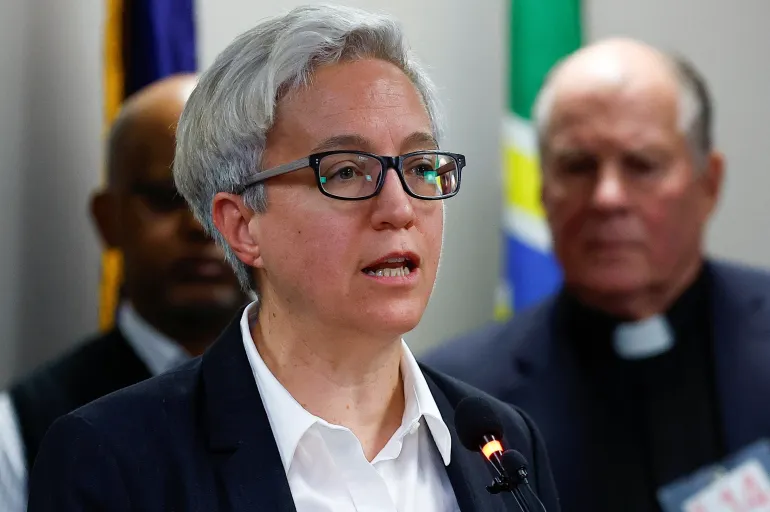
Governor of Oregon Tina Kotek speaks during a press conference after U.S. federal agents shot two people in Portland, Oregon, U.S., January 8, 2026. REUTERS/John Rudoff
Oregon Governor Tina Kotek is seeking re-election in 2026 [File: John Rudoff/Reuters]

Who is running for governor?

Incumbent Governor Kotek is making a bid for a second four-year term. But she is fielding competition from dozens of other candidates, including nine Democrats.

Going into the Democratic primary, Kotek is the frontrunner. Her challengers include a children’s book author, the leader of an Indigenous nonprofit and an inventor who hopes to address water shortages.

Even more contenders are angling for the Republican gubernatorial nomination.

Among them is State Senator Christine Drazan, who ran against Kotek in 2022. Drazan has been critical of President Donald Trump’s tariff policies but supportive of his tough stance on immigration.

Also on the Republican ballot is former NBA player Chris Dudley, who was the Republican gubernatorial candidate in 2010. He had the smallest losing margin of any Republican candidate in decades.

State Representative Ed Diehl, meanwhile, is hoping to capitalise on the momentum he gained after leading the charge to block Kotek’s gas tax and fee increase package.

What are the opinion polls saying about the governor’s race?

Polls show Drazan leading the race to receive the Republican nomination, with 35 percent support.

Kotek is likely to grab an easy victory in the Democratic primary, with none of her opponents polling close behind.

What about the Senate race?

Another Democratic incumbent attempting to hold onto his seat is US Senator Jeff Merkley.

The 69-year-old, who began his career working on affordable housing, is running for a fourth consecutive six-year term. He first took office in 2009.

But while the senator faces eight rivals on the campaign trail – one Democrat and seven Republicans – his seat is considered relatively safe.

He is expected to win the Democratic primary on Tuesday and become the frontrunner for November’s general election.

Senator Jeff Merkley (D-OR) speaks as Senate Democrat leaders hold a press conference following their weekly policy lunch on Capitol Hill in Washington, D.C., U.S., April 21, 2026. REUTERS/Annabelle Gordon
Jeff Merkley is defending what is considered a safe seat for Democrats in the US Senate [File: Annabelle Gordon/Reuters]

What other positions are up for grabs?

All six of Oregon’s members of the US House of Representatives are running for re-election and will face the primary process on Tuesday.

Five are Democrats. One, Cliff Bentz, is a Republican, and he represents Oregon’s second congressional district, a sprawling area encompassing the entire eastern half of the state.

Also on Tuesday, voters will choose their party representatives in races for the state Senate and House.

The election will also determine a nonpartisan commissioner to lead the state Bureau of Labor and Industries.

Why does this race matter?

Oregon is a closed primary state, meaning that voters choose nominees only for the party they are registered under.

Given the state’s left-wing bent, the winners of the statewide Democratic primaries will likely emerge as frontrunners in November’s midterm races.

Still, there is room for surprise. According to state voter rolls, less than 25 percent of Oregonians are registered Republicans. But only 32 percent are registered Democrats, with the largest proportion of voters identifying as “non-affiliated” with any party.

Primary races in right-leaning areas like Oregon’s second congressional district could signify how closely the state’s Republican politicians want to align with President Trump.

Voters will also have a chance to vote on the referendum that could repeal the gas tax increase on Tuesday’s ballot.

Democrats in the state legislature raised Oregon’s gas tax to pay for roads and supplement the state’s transportation budget.

But as the US-Israel war on Iran causes gas prices to skyrocket, Republicans have used the referendum to appeal to voters on the cost of living. Gas is now averaging about 80 cents more in Oregon.

In addition, there are nearly 100 local measures sprinkled on ballots across the state, tailored to different counties. Many will focus on funding local fire departments, schools and libraries.

When are results expected?

Preliminary results are expected on Tuesday evening, shortly after polls close at 8pm local time.

But ballots will continue to arrive after election day, as mail-in votes and provisional ballots are counted, and some races may not be officially called until days later.

Source link

US suspends joint defence effort with Canada dating back to World War II | Donald Trump News

The Trump administration has frequently accused US allies of failing to live up to mutual defence obligations.

The United States has said it will not take part in a joint board for continental defence with Canada, depicting the country as failing to live up to its defence obligations.

On Monday, US Undersecretary of Defense Elbridge Colby wrote on social media that his department would halt its involvement in the Permanent Joint Board on Defense to “reassess” the forum’s benefits.

Recommended Stories

list of 3 itemsend of list

The board dates back to World War II and has served as a forum for regional security. But relations with Canada have grown strained since US President Donald Trump returned to office for a second term in 2025.

“A strong Canada that prioritizes hard power over rhetoric benefits us all. Unfortunately, Canada has failed to make credible progress on its defense commitments,” Colby wrote on X.

“We can no longer avoid the gaps between rhetoric and reality. Real powers must sustain our rhetoric with shared defense and security responsibilities.”

The announcement is the latest instance of the Trump administration chiding Western allies for what the president believes is an overreliance on US military power.

Allied countries have largely refuted his claims, arguing that they are ramping up military spending and taking steps to take greater control over regional security.

Just last year, at a NATO summit in The Hague, nearly every member state agreed to increase defence spending to 5 percent of their gross domestic product (GDP). Spain petitioned to be excluded from the agreement, though.

Canada, under Prime Minister Mark Carney, was among the countries committing to the increased spending.

Of the 5 percent earmarked for defence, 3.5 percent would go to bolstering Canada’s “core military capabilities”, Carney’s government said. The rest would go to security-related expenses, including port improvements, emergency preparedness and other resources.

Since taking office as prime minister in March 2025, Carney has been an outspoken supporter of lessening Canada’s dependence on the US’s military and economy.

In a speech this year, he outlined a vision in which “middle powers” like Canada banded together to sidestep the current “era of great power rivalry”, a veiled reference to countries like the US, Russia and China.

While the US and Canada are neighbours, Trump’s second presidency has resulted in fraying bonds between the two countries, even beyond matters of security.

Trump has accused Canada of pursuing unfair trade policies and failing to crack down on the illicit traffic of people and drugs across the border, though critics have questioned the legitimacy of these claims.

To force Canada to comply with his policies, the US president has pursued an aggressive tariff regimen to tax cross-border imports.

Trump has suggested in the past that Canada could avoid such penalties by ceding its sovereignty and becoming the US’s 51st state.

“Cooler and wiser brains are needed to preserve a close alliance w/ our neighbor,” US Republican Representative Don Bacon said in a social media post on Monday, criticising the decision to pull out of the defence forum with Canada.

“This all started w/ taunts of ‘Canada will be the 51st state’ and ‘their Prime Minister will be the 51st governor’. The insults gained us nothing but animosity that cost us economically and now militarily.”

The US, Canada and Mexico are set to negotiate an updated version of a regional free trade agreement, known as the USMCA, later this year.

Source link

Who’s Next in Delcy’s Blacklist?

The plot has thickened. After having him removed from the Industry and National Production Ministry, sacking his trophy wife from government and keeping him in unpublicized captivity for three months, the Rodriguez administration completed a spectacular U-turn on Alex Saab. Madurismo’s shady financier and fixer is once again in US custody, two years after Maduro and the Rodríguez siblings celebrated his return through a prisoner swap brokered with the Biden administration.

Alex Saab became the centerpiece of a years-long propaganda campaign: billboards across the country hailed Venezuela’s heroic diplomat, leftwing influencers denounced the arrest of the man supposedly helping the nation overcome the siege of US sanctions, and embassies circulated the #FreeAlexSaab dossier among allied activists and journalists. 

The long-awaited extradition of Saab is evidently not the result of the Rodríguez siblings suddenly discovering he is a Colombian criminal, as the official Saime statement describes him, but rather part of Delcy’s cooperation with Washington DC whose agents were reportedly involved in his arrest in Caracas. New York prosecutors have recovered a key witness in the US vs Maduro et al case, whose next hearing is in six weeks, and will now use a close associate of both the DEA and the presidential couple against Nicolás and Cilia.

We’ll see what happens with Alex Saab’s new stint in the US. Developments might come sooner from the other Saab: Tarek William.

A new scapegoat?

Carmen Navas passed away on Sunday, a day after the conversation about Alex Saab and Delcy’s quagmire resurfaced. We’ve covered Navas and Victor Hugo Quero Navas, her 15-month search for information about an arrested son who dissolved into the cauldron of violence and injustice that emerged from the horrid events of 2024. Navas perished ten days after the State finally admitted her son had been dead for long. The pro-democracy movement is in shock. International media and foreign politicians are also reacting to the tragedy as well. There’s ample willingness to keep highlighting the responsibility of Venezuelan officials, so don’t expect pressure over the Quero case and other desaparecidos to wane anytime soon.

Enter Delcy Rodríguez, whose role in the Quero story is far less inconspicuous than official statements suggest. The Prisons Ministry admitted Quero was dead only because Delcy gave the green light. The Ombudsman’s Office agreed to take Carmen Navas’ testimony because Delcy deemed it acceptable. Now that the 82-year-old mother has finally succumbed to this blatant episode of administrative evil, the ball is in Delcy’s court. Not just to manage another wave of widespread indignation, but to go further in the narrative that the Rodríguez siblings can make chavismo move on from the so-called excesos e ineficiencias of their predecessors.

Jorge Rodriguez has introduced the regime’s idea of a clean break with the past, the mantra of the most ambitious transitional justice projects of the late 20th century. With that damning “get over it, forgive us, and come home” line, Jorge hoped the public could forget the last 26 years without nothing in return, not human rights trials, not a power-alternation agreement with political rivals.

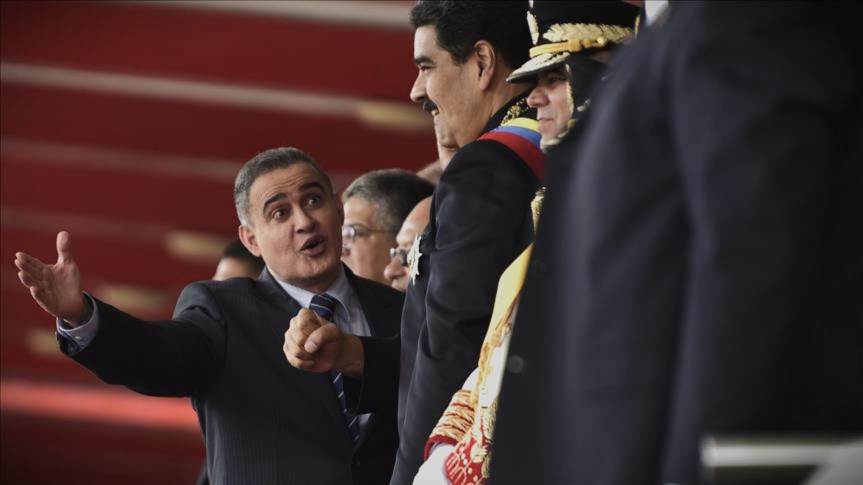
Prosecutor Tarek reportedly vowed to make prisoner Tareck suffer during the scandal investigations: “You’re dead. The country hates you today, but I will make sure the whole universe hates you too.”

Unable or unwilling to go anywhere near that, the regime’s best bet would be to go against the most disposable elements of the coalition: those who combine public contempt with overt involvement in repression, and who now appear to be losing influence while their human rights dossiers grow thicker by the day.

Under the current circumstances, former Prosecutor General Tarek William Saab looks like an ideal scapegoat. Parallel developments are not helping him. 

El Aissami’s strange return

April marked the beginning of the trial of 63 individuals targeted in the 2023–2024 crackdown against Tareck El Aissami’s political clan. 

Without the January 3 events, the PDVSA-crypto case would be business as usual, perhaps a hefty sentence after a few remote hearings, perhaps no trial at all. But in 2026 Venezuela, hearings involving El Aissami, his US-sanctioned frontman Samark López, and PSUV figures like Hugbel Roa have become opportunities to expose the torture they endured and explain why they believe chavismo turned against them three years ago. 

Last week, TalCual obtained a court statement from former lawmaker Hugbel Roa. He claimed Tarek William Saab had him arrested in retaliation for a parliamentary inquiry into the dealings of Saab’s brother in Anzoátegui, reportedly a major PDVSA contractor in the region. Roa also accused Saab of judicial meddling to shield his brother, and said police assaulted both him and his wife at the behest of Tarek William Saab and prosecutor Farik Mora, who allegedly tried to force him into recording a confession about a fabricated coup conspiracy involving Leopoldo López. 

In a separate hearing on May 8, former vice president and oil czar Tarek El Aissami tried to implicate an entire chain of command responsible for the torture and cruel treatment he suffered, including spending eight months in a windowless room with a powerful floodlight turned on 24/7. El Aissami accused former DGCIM chiefs Iván Hernández Dala and Alejandro Marcano Tabata, along with prosecutors including Tarek William Saab and Farik Mora. He also claimed Saab buried corruption cases involving members of his inner circle, and personally threatened to link El Aissami to the killing of Venezuelan rapper Canserbero—a cold case Saab miraculously solved when Maduro needed an electoral boost ahead of the 2024 election.

Saab saw this coming and will use every card he holds. It’s hard to think of anyone with more sensitive information on the regime and their leaders than Tarek William Saab.

Prosecutor Tarek reportedly vowed to make prisoner Tareck suffer during the scandal investigations: “You’re dead. The country hates you today, but I will make sure the whole universe hates you too.” 

Saab’s behavior has also been a recurrent theme in the anti-chavista camp recently. Joel Garcia, a prominent lawyer for political prisoners, claimed he had direct knowledge of Saab filming dissidents being tortured and sending the footage to Nicolás Maduro. Former presidential candidate Freddy Superlano claimed the only reading material available in the infamous El Rodeo I prison consisted of Saab’s poetry books. La Gran Aldea also recounted a night in which Superlano and fellow political prisoners Biagio Pillieri and Perkins Rocha—the latter still under house arrest—were simultaneously taken to the Chief Prosecutor’s Office, where a deranged Saab personally pressured them to reveal the whereabouts of María Corina Machado and the vote tallies from the July 2024 election. 

Our last Political Risk Report was clear on this matter. If Delcy Rodríguez moves to charge Tarek William Saab, “it will signal something far deeper than a single prosecution: a purge serious enough to make everyone wonder whether this is a first step toward removing a far more dangerous piece from the Jenga tower. But it will not be easy.”

Saab saw this coming and will use every card he holds. It’s hard to think of anyone with more sensitive information on the regime and their leaders than Tarek William Saab. 

Roa’s court statement said Saab retains influence through his old influence among clerks and prosecutors. He even expressed having faith in Larry Devoe, Saab’s successor and an old ally of Delcy Rodriguez. Maybe the first move will come from him, as a first big demonstration that the Ministerio Público is his to govern, and to imprint Delcy’s own brand of justice.Saab’s case is shaping up to be a defining test of Delcy’s willingness—and ability—to push forward the transformation of the regime, confront the old guard, make a few sexy headlines abroad, and neutralize the potential spoilers of her rule. If she decides to go ahead, few cases better illustrate the Prosecutor’s Office’s connivance and negligence under Saab’s eight-year tenure than the Quero case. The legal record, and the trail left by Carmen Navas’ search, could hardly be more convenient.

Source link

Mexican, Uruguayan aid shipment arrives in Cuba

A port worker moors the Asian Katra cargo ship after it arrives in Havana Bay, Cuba, on Monday. The merchant vessel docked carrying humanitarian aid from Mexico and Uruguay for Cubans facing power outages and a severe economic crisis worsened by US restrictions on fuel supplies. Photo by Ernesto Mastrascusa/EPA

May 18 (UPI) — A shipment of humanitarian aid sent by Mexico and Uruguay arrived in Cuba on Monday as the island faces a severe energy and economic crisis amid the tightening of the U.S. economic, trade and financial embargo.

The merchant vessel Asian Katra docked at the Port of Havana carrying powdered milk, rice, beans and other basic necessities.

The Panama-flagged ship delivered more than 1,600 tons of humanitarian assistance. Mexico’s contribution included food and hygiene products, while Uruguay’s shipment consisted exclusively of staple food items, according to Uruguayan digital outlet La Prensa.

Speaking to reporters, Cuban Deputy Prime Minister and Foreign Trade Minister Óscar Pérez-Oliva Fraga said the aid would be distributed directly to those most in need, particularly children, older adults and vulnerable populations, according to Cuba’s state-run newspaper Granma.

Mexico’s ambassador to Cuba, Miguel Díaz Reynoso, said the shipment marked the eighth humanitarian vessel sent by the Mexican government in support of the Cuban people. He added that Mexican donations have now surpassed 6,000 tons of aid.

Díaz Reynoso also highlighted the participation of Mexican civil society groups, which have organized donation drives through various organizations and community initiatives.

On May 11, Mexican President Claudia Sheinbaum announced another humanitarian aid shipment would be sent to help “ease the suffering” of the Cuban people.

“We will continue sending humanitarian aid to people that need it,” Sheinbaum said.

Asked whether Mexico could send oil to the island, Sheinbaum said Cuba was already receiving petroleum supplies from Russia and that her government was instead focused on “other humanitarian support.”

However, the last successful Russian oil delivery to Cuba occurred March 31, when the Russian-flagged tanker Anatoly Kolodkin arrived at the port of Matanzas.

The vessel carried what Cuban authorities described as a humanitarian shipment of 100,000 tons of crude oil, ending a three-month interruption in energy imports following tighter U.S. naval enforcement measures earlier this year.

Although the shipment temporarily eased pressure on Cuba’s electrical grid, the reserves were depleted within about two weeks.

A second Russian tanker carrying diesel fuel, the Universal, has reportedly remained adrift in the Atlantic Ocean for nearly a month because of difficulties bypassing financial sanctions imposed by the Trump administration..

Source link

Minnesota county charges ICE officer in nonfatal shooting during Trump’s immigration crackdown

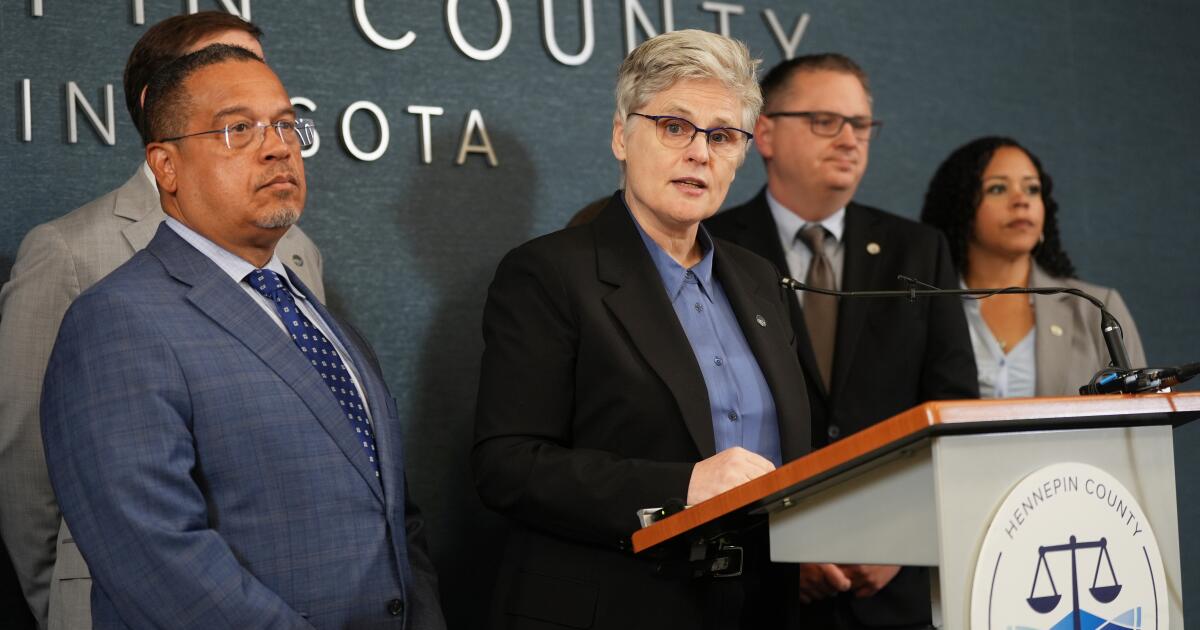
A Minnesota prosecutor on Monday announced charges against an Immigration and Customs Enforcement officer in the nonfatal shooting of a Venezuelan man during the Trump administration’s crackdown in the state.

The officer, Christian Castro, is charged with four counts of second-degree assault and one count of falsely reporting a crime in the Jan. 14 shooting of Julio Cesar Sosa-Celis, Hennepin County Atty. Mary Moriarty said at a news conference. A warrant was issued for his arrest.

“Mr. Castro is an ICE agent, but his federal badge does not make him immune from state charges for his criminal conduct in Minnesota,” Moriarty said, adding that Sosa-Celis never posed a threat. “There is no such thing as absolute immunity for federal officers who commit crimes in this state or any other.”

A federal officer shot Sosa-Celis in the thigh after he and another officer chased a different man to the apartment duplex where the man and Sosa-Celis lived. Moriarty said both Sosa-Celis and the other man were legally in the U.S.

Federal authorities initially accused Sosa-Celis and Alfredo Alejandro Aljorna of beating an officer with a broom handle and a snow shovel during the incident. But a federal judge later dismissed the charges, and federal officials opened an investigation into whether two immigration officers lied under oath about what happened.

Minneapolis last month released video of the incident captured from a distance by a city-owned security camera.

Department of Homeland Security and Justice Department officials didn’t immediately respond to emails seeking comment. Homeland Security previously said that lying under oath is a “serious federal offense” and that making false statements could result in an officer being fired or prosecuted.

The administration sent thousands of officers to the Minneapolis and St. Paul area as part of President Trump’s national deportation campaign. Homeland Security, which oversees ICE, called Operation Metro Surge its largest immigration enforcement operation ever and deemed it a success.

But tensions mounted during the weekslong campaign, and the shooting deaths of U.S. citizens Renee Good and Alex Pretti by federal officers provoked mass unrest and questions about officers’ conduct.

Hennepin County, which includes Minneapolis, has been conducting investigations into multiple incidents and filed charges last month against an ICE agent for alleged actions while on duty.

Minnesota leaders and the Trump administration have since clashed over which has the authority to investigate and prosecute officers for conduct while on duty. The Trump administration has suggested that Minnesota officials don’t have jurisdiction.

State officials have said they don’t trust the federal government to investigate itself or hold officers accountable.

“There’s no modern precedent for what happened to the people here in Minnesota,” Moriarty said Monday. “So it requires a lot of us to dig in and look at ways to hold people accountable that we probably never thought we would be looking at in our careers.”

Hennepin County continues to investigate Good’s and Pretti’s killings and sued the administration in March over access to evidence in the two cases, as well as in the case involving Sosa-Celis. Although Moriarty hasn’t charged anyone in either killing, she has said she’s confident her office’s investigations will bring transparency, even if not criminal prosecution.

Fingerhut and Sullivan write for the Associated Press. Fingerhut reported from Des Moines, Iowa.

Source link

Trump drops IRS lawsuit, sets up $1.7bn US anti-weaponisation fund | Courts News

United States President Donald Trump has withdrawn his $10bn lawsuit against the Internal Revenue Service (IRS) stemming from a leak of his tax returns and said his administration will create a $1.77bn anti-weaponisation fund that would compensate some of Trump’s political allies.

The court filing, released on Monday in Florida, did not disclose the terms of the deal, including whether either party settled.

Recommended Stories

list of 4 itemsend of list

However, the Department of Justice (DOJ) on Monday announced the establishment of a $1.77bn fund called the Anti-Weaponisation Fund that would “provide a systematic process to hear and redress claims of others who suffered weaponisation and lawfare”.

The DOJ said in its press release that it was part of the settlement agreement.

ABC News first reported last week that the president was prepared to drop the lawsuit as part of a deal that would create the fund to pay Trump allies who were perceived as wrongly investigated and prosecuted.

Trump, his adult sons Donald Trump Jr and Eric Trump, and the Trump Organization sued the IRS in January, arguing the agency should have done more to prevent a former contractor from disclosing their tax returns to media outlets during the president’s first term.

The case arose from former IRS contractor Charles Littlejohn’s leak of Trump’s tax returns to media outlets, including the New York Times and ProPublica, in 2019 and 2020.

Those returns showed that Trump paid little or no income taxes in many years, the Times reported in 2020.

Prosecutors charged Littlejohn in 2023 with leaking tax records of Trump and thousands of other wealthy Americans to the media, saying he was motivated by a political agenda. Littlejohn later pleaded guilty to improper disclosures, and a judge sentenced him to five years in prison.

Trump filed the lawsuit personally, not in his official capacity as president.

Political pushback

While the court filing did not mention the terms of any potential deal, news that the president would create a fund to protect his political allies sparked backlash.

Representative Jamie Raskin, a Democrat from Maryland, called the idea “unconstitutional”.

“This, of course, is a political grievance fund that Donald Trump can use to pay off his friends,” Raskin, the top Democrat on the House Judiciary Committee, said in an interview on Sunday with the ABC News programme This Week.

“If these people have a valid cause of action, they should bring it to the court like every other American does, and use the system of due process, and prove things by clear and convincing evidence, or a preponderance of evidence. Go and prove it. But the idea that Donald Trump can just pass it out like a pardon is absurd,” he said.

California Governor Gavin Newsom also criticised the president amid reports of the deal.

“Donald Trump wants to settle his joke lawsuit against his own IRS department to hand out $1.7 BILLION of OUR TAX DOLLARS to Jan. 6th insurrectionists and his cronies,” Newsom said in a post on X.

“It is an outrage that the American taxpayers are having to pay for this and that we have a president who is exercising such open corruption in front of everyone and expecting us to go along with it,” Representative Pramila Jayapal, a Democrat from Washington state, told the progressive MeidasTouch network.

Despite the criticisms, it is not clear who would specifically benefit from the funds.

Trump has long claimed that the DOJ under his predecessor, President Joe Biden, a Democrat, was weaponised against him, pointing to the criminal charges where he faced allegations that he conspired to overturn the results of the 2020 presidential election, which Trump lost by more than seven million votes, and that he retained classified documents at his Mar-a-Lago estate.

Merrick Garland, the attorney general during the Biden administration, denied allegations of politicisation. The Justice Department also investigated prominent Democrats, including Biden’s son Hunter Biden and former US Senator Bob Menendez, a Democrat from New Jersey.

“The machinery of government should never be weaponised against any American, and it is this Department’s intention to make right the wrongs that were previously done while ensuring this never happens again,” said Acting Attorney General Todd Blanche said in a release.

However, the Trump administration has actively pursued cases against perceived political enemies, including former FBI director James Comey and former Federal Reserve Chairman Jerome Powell, Fed Governor Lisa Cook, New York Attorney General Letitia James, Arizona Senator Mark Kelly, and California Senator Adam Schiff. 

The DOJ said that there is legal precedent for the fund, pointing to a programme called “Keepseagle” under the administration of former US President Barack Obama, a Democrat. That created a fund to address allegations of racism against the federal government.

The White House referred Al Jazeera to the DOJ for a request for comment. The DOJ did not respond.

The government watchdog group Citizens for Responsibility and Ethics (CREW) announced on X that it would be investigating how the funds would be used.

“While Americans are struggling with an affordability crisis, President Trump plans to use nearly $1.8bn in taxpayer money to pay off his friends and allies—including potentially the violent insurrectionists who attacked the Capitol on January 6th,” CREW’s president, Donald K Sherman, said in a statement provided to Al Jazeera.

“By settling his absurd $10bn lawsuit against his own administration, Trump and the Justice Department just engaged in the most brazen act of self-dealing in the history of the presidency, and did so quickly in order to avoid the scrutiny of the judicial process, while quite likely violating the Constitution’s Domestic Emoluments Clause in the process. This is one of the single most corrupt acts in American history.”

A long time coming

Lawyers for the president asked a federal judge in April to pause the case for 90 days while the two sides worked to reach a settlement or resolution.

“This limited pause will neither prejudice the parties nor delay ultimate resolution,” the filing in April said. “Rather, the extension will promote judicial economy and allow the Parties to explore avenues that could narrow or resolve the issues efficiently.”

When asked in February how he would handle any potential damages from the case, Trump said, “I think what we’ll do is do something for charity.”

“We could make it a substantial amount,” he said at the time. “Nobody would care because it’s going to go to numerous very good charities.”

The litigation against the IRS raised novel legal questions, including conflicts of interest, about whether a president can sue his own government. It is not clear if the judge will accept Trump’s withdrawal of the case.

Under the US Constitution, federal courts may only hear genuine disputes between litigants with opposing stakes in the outcome.

US District Court Judge Kathleen Williams in Miami, who oversees Trump’s lawsuit, wrote last month that it was unclear whether the parties to the lawsuit were “truly antagonistic to each other”.

Williams had set a court hearing for May 27 to hear arguments on whether she should dismiss the case on those grounds.

Source link

Greenland’s prime minister tells Trump’s envoy self-determination cannot be negotiated

Greenland’s Prime Minister Jens-Frederik Nielsen said Monday that he had a respectful and positive meeting with President Trump’s special envoy to the Arctic territory, but that he made it clear that the Greenlandic people continue to insist on self-determination.

Greenland is a semiautonomous territory of NATO ally Denmark, and Trump in the past has frequently insisted that the U.S. should take control of the island for security reasons, which has raised sovereignty concerns and pushback from Greenlandic and Danish leaders.

“The Greenlandic people are not for sale. Greenlandic self-determination is not something that can be negotiated,” Nielsen was quoted by Danish TV 2 as saying after meeting on the island with the envoy, Louisiana Gov. Jeff Landry.

Nielsen also reiterated that the Greenlandic people “seek good cooperation” with the U.S., and said his “courtesy meeting” with Landry took place with “mutual respect and in a positive atmosphere.”

Landry reportedly said upon his arrival in Greenland on Sunday that Trump had told him to “go over there and make as many friends as we can get,” public Danish broadcaster DR reported.

Greenland’s Foreign Minister Múte B. Egede told reporters Monday that a working group involving the U.S., Greenland, and Denmark continues to try to find a solution to the repeated U.S. demands for control over Greenland. Trump has suggested that Russia or China may be on the verge of seizing Greenland, a notion that regional experts have dismissed.

“We haven’t been the ones creating obstacles to cooperation between the United States and Greenland,” said the Greenlandic foreign minister, who also participated in the meeting with Landry and his delegation in the Greenlandic capital of Nuuk.

“So if we are to continue down this positive and constructive path, we must await the working group’s report,” he said, according to TV 2, adding that the work in the group appears “more promising” than before.

U.S. Ambassador to Denmark Ken Howery, who is also part of the American delegation in Greenland, is expected to inaugurate the U.S. Consulate’s new offices in Nuuk, and both he and Landry are to attend a business fair on Tuesday and Wednesday, local media reported.

Source link

Trump moves to dismiss $10B suit over leak of tax returns after reports of a resolution

President Trump on Monday moved to withdraw his $10 billion lawsuit against the Internal Revenue Service over the leak of his tax returns after reports that his administration was poised to create a fund to compensate some of his allies.

The disclosure was made in a filing in federal court in Florida, where the lawsuit was filed last year.

ABC News first reported last week that Trump was prepared to drop his lawsuit as part of a deal that would create a $1.7 billion fund to pay allies of the president who believe they were wrongly investigated and prosecuted.

The court filing did not mention terms of any potential deal.

News that the Trump administration was contemplating a fund to pay Trump allies drew an immediate backlash from Democrats, including Rep. Jamie Raskin, who called the idea “unconstitutional.”

“This, of course, is a political grievance fund that Donald Trump can use to pay off his friends,” Raskin, the top Democrat on the House Judiciary Committee, said in an interview Sunday on ABC’s “This Week.”

“If these people have a valid cause of action, they should bring it to the court like every other American does, and use the system of due process, and proving things by clear and convincing evidence, or a preponderance of evidence, go and prove it. But the idea that Donald Trump can just pass it out like a pardon is absurd,” he added.

It was not immediately clear who precisely will stand to benefit from the fund but its creation reflects Trump’s long-running claims that the Biden administration Justice Department was weaponized against him.

He has cited as proof the since-dismissed criminal charges he faced between his first and second terms of conspiring to overturn the results of the 2020 presidential election he lost and of retaining classified documents at his Mar-a-Lago estate in Florida. Several aides of his were also prosecuted, as were hundreds of Trump supporters who stormed the U.S. Capitol on Jan. 6, 2021.

Merrick Garland, who served as attorney general during the Biden administration, has repeatedly denied allegations of politicization and has said his decisions followed facts, the evidence and the law. His Justice Department also investigated Biden for his handling of classified information and brought separate tax and gun prosecutions against Biden’s son Hunter.

Nonetheless, Trump’s current Justice Department has actively pursued the president’s retribution campaign and grievances, bringing criminal charges against some of his perceived adversaries and initiating a wide-ranging investigation that aims to establish a years-long conspiracy between law enforcement and intelligence officials to destroy Trump’s political prospects and keep him power.

No charges have been brought in that investigation and it is not clear that any ever will be.

Trump filed a lawsuit earlier this year in a Florida federal court, alleging that a previous leak of his and the Trump Organization’s confidential tax records caused “reputational and financial harm, public embarrassment, unfairly tarnished their business reputations, portrayed them in a false light, and negatively affected President Trump, and the other Plaintiffs’ public standing.”

The president’s sons, Donald Trump Jr. and Eric Trump, are also named plaintiffs in the suit.

Hussein, Tucker and Richer write for the Associated Press.

Source link

Column: Jack up taxes on California’s rich? Popular liberal mantra, but bad idea

The Democrats’ mantra this election year — especially among wannabe governors — is that the richest Californians should “pay their fair share.” But by any objective measurement, they already do.

I’m referring to state taxes, not federal. It’s a valid argument that the most prosperous Americans should kick in more to the federal government, particularly after President Trump and the Republican Congress lowered taxes for the wealthy, who already had a pretty good deal.

But it’s a different story in California, where state government lives off the well-heeled. Yet, never-satisfied liberal Democrats and public employee unions constantly cry for more.

In fact, an unexpected surge of $16.8 billion in state tax revenue, mostly due to the stock market boom and capital gains earnings, is bailing out Gov. Gavin Newsom and allowing him to claim a balanced budget as he prepares to depart Sacramento and run for president in 2028.

You’re reading the L.A. Times Politics newsletter

George Skelton and Michael Wilner cover the insights, legislation, players and politics you need to know. In your inbox Monday and Thursday mornings.

The state Franchise Tax Board recently reported which income groups pony up the most taxes. The more money you earn, the steeper your income tax burden. Of course, that’s the way it should be. But California pushes its progressive tax system to the extreme.

We’ve got by far the highest state income tax rate in the nation at 13.3%.

In 2024, the latest year for which there’s complete data, the top 1% of California taxpayers accounted for 40% of the total state income tax revenue, the FTB reported. But they earned just 24% of the taxable income. To be in the top 1%, your annual earnings had to be at least $973,000.

The top 0.1% kicked in 21% of the tax, while earning 12% of the income. To be in that megarich class, you needed annual earnings of at least $4.7 million.

By contrast, middle-class families with incomes between $73,000 and $139,000 paid 9% of the state’s income tax take.

This doesn’t mean we should weep for the rich and demand more from the struggling lower middle class.

But the problem with Sacramento living off the wealthiest taxpayers is that they’re unreliable. Their fortunes flourish in boom times and fall when the economy busts. When the stock market sneezes, California state government catches pneumonia.

If the state treasury is overflowing, Democratic lawmakers tend to spend freely, expanding programs and creating new ones. Then when the cache inevitably shrinks in bad times, the policymakers’ usual response is to essentially turn their eyes.

Rather than sharply whack spending and raise taxes, they gimmick up the budget with borrowing, deferred spending and crossed fingers. And they dig the hole deeper.

For decades, under Democratic and Republican governors, we’ve sorely needed to update our archaic tax system to make it less volatile and more dependable.

A reform that makes lots of sense is to extend the sales tax to services primarily used by businesses. They could deduct the cost on their federal tax returns. And California state and local governments would steadily collect several billion dollars annually. Some income and sales tax rates could even be lowered.

California also has the nation’s highest state sales tax rate at 7.25%. Combining state and local sales tax rates, we have the seventh-highest at 8.99%.

Taxing deductible business services makes sense to many politicians — but only privately. They’re too weak-kneed to seriously consider it in public. There’d be winners and losers and high political risks.

When Xavier Becerra, the current Democratic front-runner in the June 2 gubernatorial primary, entered the race a year ago, I asked him about extending the sales tax to services, as all other states do. He wanted nothing to do with it.

“We need to stabilize our tax system in California with a more steady source of revenue,” he told me. “But I’m not a fan of the sales tax to begin with. It lands on working families.”

He was not interested in exploring a possible tax on services that didn’t hit working families.

Becerra, a former California attorney general and U.S. health secretary, added: “Before we start exploring new taxes, we should explore existing budget spending. We have to scrub the budget.”

In revising his new budget proposal last week, Newsom proposed $5.1 billion in modest tax hikes on businesses — even as unanticipated revenue was surging. He asked the Legislature for a limit on corporate tax credits and a tax on digital software.

He also proposed to trim $3.7 billion from Medi-Cal healthcare for the poor.

Newsom proposed spending $349.9 billion in the next fiscal year and asserted that budgets would be balanced for 18 months. But after that, he and practically everyone else in Sacramento foresee deficit spending without extensive fiscal restructuring.

But you don’t hear a peep about that from leading Democratic candidates running to replace Newsom. Most are talking about imposing significantly higher business taxes to pay for new or expanded programs.

Billionaire hedge fund founder Tom Steyer wants to close “the corporate tax loophole.” What he’s talking about is gutting Proposition 13’s property tax breaks for commercial holdings. He’d make it easier to reassess when partners sell their portions of a property — a commonly called “split roll” that would treat commercial property differently than residential.

That was tried in 2020 and rejected by voters.

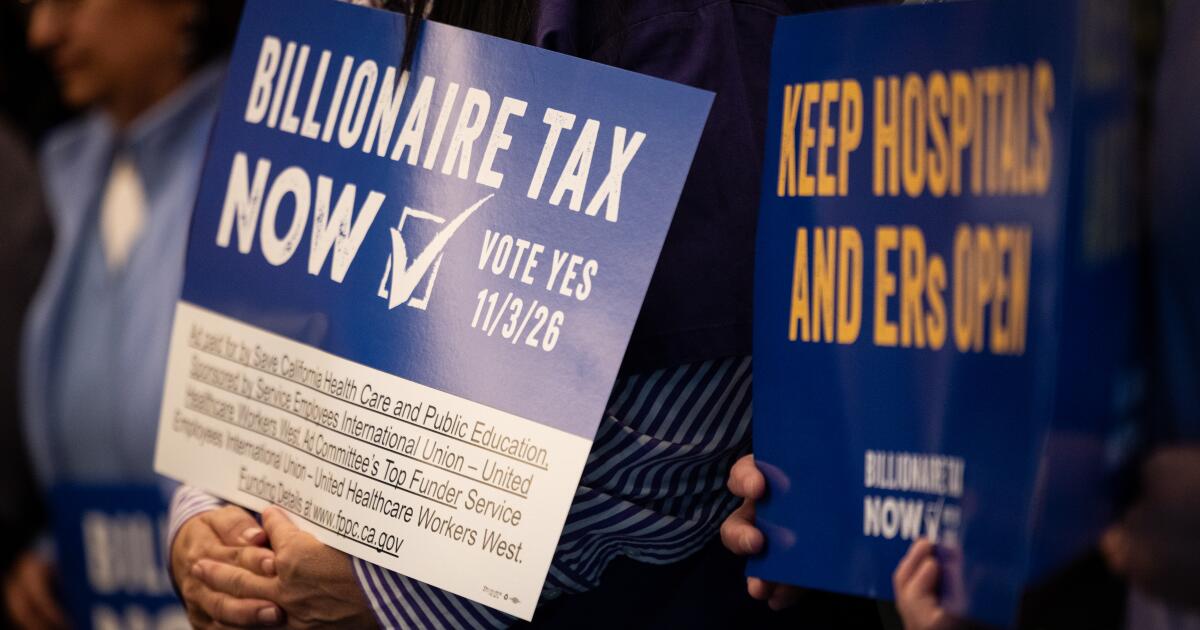
Steyer also supports the billionaire tax that’s expected to be on the November ballot. It would impose a one-time 5% tax on the net worth of California’s 200-plus billionaires.

To their credit, no other gubernatorial candidate supports this misguided proposal. Practically all the $100-billion windfall would flow solely into healthcare while causing fed-up super wealthy to flee the state.

Former Orange County Rep. Katie Porter would raise taxes on the most profitable corporations to pay for free child care and college tuition. They’re both good causes but of questionable fiscal feasibility right now.

Rather than pushing rich investors and job creators out of state, we should be encouraging them to stick it out in California and continue to pay their fair share.

What else you should be reading

The must-read: Who won and who lost in Thursday night’s California gubernatorial debate? Our columnists weigh in
TikTok dough: The Steyer campaign pays influencers. Their posts don’t always make that clear
The L.A. Times Special: Steyer campaign staffer linked to video of rival Katie Porter berating staff

Until next week,
George Skelton


Was this newsletter forwarded to you? Sign up here to get it in your inbox.

Source link

UK airport set to reopen after it closed in 2022

The airport is expected to welcome passenger flights again in 2028

A UK airport that shut down three-and-a-half years ago is set to reopen following the resolution of a funding dispute this week. Doncaster Sheffield Airport (DSA) near Finningley in Doncaster was once a key regional flight hub known as Robin Hood Airport, operating from 2005 with flights to holiday destinations including Alicante, Majorca, Paris, and various other locations.

However, the airport was compelled to close in 2022 after its owners, Peel Group, declared it financially “unviable”. The closure left South Yorkshire without an international airport.

Yet, in September 2025, the South Yorkshire Mayoral Combined Authority (SYMCA) officially approved a £160million funding package based on previous commitments to reopen the airport as DSA in a significant boost for the region. Its resurrection followed campaigning by residents and local politicians, and received backing from the British Government.

Nevertheless, the scheme had been thrown into doubt in recent weeks during a deadlock over a £57million loan from Doncaster City Council to support the reopening plans, after Reform UK councillors expressed concerns about whether taxpayers would receive a return on investment.

The airport scheme was championed by the local authority’s Labour mayor, Ros Jones, who is believed to have been re-elected by a narrow margin largely owing to her commitment to delivering the potentially transformational scheme, despite a surge in support for Reform.

The structure of local Government in Doncaster means she retains executive authority as Mayor despite Reform securing a majority on the council at the last election, and now controlling the budget.

Nigel Farage’s party originally backed the airport scheme, but in April indicated they would contemplate voting to withdraw approval, as they requested additional details about how the funds would be allocated and benefit local people, reports the Express.

At the end of last month, Mr Farage attacked the terms of the lease agreement being negotiated with the current site owners, The Peel Group, arguing the council needed to secure the freehold to prevent it becoming a “massive drain” on taxpayers.

Ms Jones told the BBC News at the time: “Last week Reform said DSA should be privately funded and today they’re saying it should be acquired by the council or government, even if that means through a compulsory purchase order (CPO).

“It is important to remember we offered to buy the freehold back in 2022 and Peel refused, the offer of a lease effectively killed off any chance of a successful CPO.”

She added that a CPO application could take between five to seven years with minimal chance of succeeding. The standoff sparked concerns that the scheme would have to be scrapped, despite significant progress in attempts to prepare it for commercial air traffic once more.

However, at an extraordinary meeting of the council last week, Reform dropped its opposition to the loan on the condition that they are able to review copies of the new lease before it is approved, according to ITV News.

Ms Jones said she was “delighted to see Reform’s done the U-turn”, dismissing the threat from the hard-right party as a “political stunt”.

Freight services at the flight hub could get under way as early as next year, with passenger flights expected to launch in 2028, according to reports.

FlyDoncaster, a council-owned company established to reopen and run the airport, has teamed up with German operator Munich Airport International (MAI) on the venture.

In an update last month regarding preparatory work at the site, Christian Foster, Director of council-owned operator FlyDoncaster, said: “Over recent months we’ve been building the right team to take on this task. That has included individuals with experience at major airports such as Manchester, Gatwick and East Midlands, taking up roles like Head of Security, Head of Airfield Operations and Head of Health & Fire Safety.

“We’re also going through a critical Airspace Change Process, a regulatory hurdle that means we’ll have our own area of airspace around the airport to manage. This is critical to our plans.

“We’re due to hear the result of stages one and two imminently, and we’ll be asking the public for their views in the summer, with a view to being re-certified in spring 2027.”

He says preparations for reopening and welcoming passengers back have been well underway, which has involved acquiring “vital equipment such as a new radar and fire appliances, completely refurbishing the fire station and control tower, and making plans for renovating the terminal building”.

The terminal building is set for a “full makeover, giving passengers somewhere that feels really special at the start of their holidays”, alongside improvements to the site’s infrastructure “to make this one of the most accessible airports in the UK for those with a disability”.

On top of this, talks are ongoing with airlines and partner organisations.

Mr Foster says the airport is already equipped to handle hundreds of thousands of tonnes of freight, and is also in dialogue with firms at the forefront of aviation innovation – including sky taxis, vertiports, and alternative fuel technologies – about how these could be incorporated into the site.

Source link

Taiwan President William Lai says island’s sovereignty ‘non-negotiable’

Taiwanese President William Lai Ching-te said Sunday that Taiwan would not do anything to trigger conflict with China but vowed the island would never allow itself to be traded away, or give up sovereignty. File Photo by Ritchie B. Tongo/EPA-EPA

May 18 (UPI) — Taiwanese President William Lai Ching-te said Taiwan would not do anything to trigger confrontation with China but vowed the island would never allow itself to be traded away or give up sovereignty.

In an online post Sunday, Lai said that “as a responsible party in the region and across the Taiwan Strait, Taiwan will not provoke or escalate conflict,” but neither would it yield to pressure to relinquish its “national sovereignty and dignity, or its democratic and free way of life.”

Lai’s statement came after Beijing warned U.S. President Donald Trump to be “extra cautious” over Taiwan, which Beijing regards as a breakaway province, saying it could result in clashes and potential conflict that could place the entire Sino-U.S. relationship “in great jeopardy.”

Speaking aboard Air Force One on his way back to Washington from his summit with Chinese President Xi Jinping, Trump said he had “made no commitment” either way on the Taiwan question or an $11 billion deal to sell arms to the island that was sent to Congress for approval in December.

Trump said he and Xi had discussed the arms deal in depth and that he would make a determination on whether it would go through “over the next fairly short period of time.”

“I’m going to say I have to speak to the person that right now is, you know, you know who he is, that’s running Taiwan,” Lai’s name apparently having slipped his mind.

Trump also strictly adhered to Washington’s long-held position of strategic ambiguity by refusing to answer questions over whether the United States would come to Taiwan’s aid militarily, were it attacked.

Beijing wants reunification and has not ruled out retaking Taiwan by force, particularly if it declared independence.

Back in the United States, Trump appeared to urge caution over Taiwan independence, telling Fox News on Friday that while nothing in the United States’ policy on Taiwan had changed, he wasn’t “looking to have somebody go independent.”

“I’m not looking to have somebody go independent. And, you know, we’re supposed to travel 9,500 miles to fight a war. I’m not looking for that. I want them to cool down. I want China to cool down,” he said.

Although the United States switched diplomatic recognition from Taipei in favor of Beijing in 1979 and acknowledged there is only one China of which Taiwan is a part– the so-called “One China” policy it follows to this day — the Taiwan Relations Act requires it to treat any effort to alter Taiwan’s future by force as a threat to peace in the region and U.S. interests.

The legislation requires the United States to provide the island with arms to defend itself and for the United States to maintain its own capacity “to resist any resort to force or other forms of coercion that would jeopardize the security, or social or economic system, of the people of Taiwan.”

However, there is no guarantee of committing U.S. troops to help defend the island.

In his post, Lai expressed gratitude for the United States’ “continued support” for peace in the Taiwan Strait, as well as ongoing military assistance.

“Given China’s unwavering commitment to the use of force to annex Taiwan and its continued military expansion in an attempt to alter the regional and cross-strait status quo, the United States’ continued arms sales to Taiwan and its deepening of U.S.-Taiwan security cooperation, even to the point of necessity, are crucial elements in maintaining regional peace and stability,” wrote Lai.

Wreathes are seen amongst the statues at the Korean War Veterans Memorial during Memorial Day weekend in Washington on May 27, 2023. Memorial Day, which honors U.S. military personnel who died while in service, is held on the last Monday of May. Photo by Bonnie Cash/UPI | License Photo

Source link

AI has invaded the L.A. mayor’s race. Some fear it’s just the beginning

The Hollywood sign is ablaze as Spencer Pratt, the reality TV star now running for mayor of Los Angeles, suits up as Batman, enters City Hall and leads the people to overthrow a cabal of corrupt, out-of-touch progressives intent on destroying the city.

Then he is Luke Skywalker. Dressed in a Jedi robe, he swoops through the city on an Imperial speeder bike, as California Gov. Gavin Newsom (Emperor Palpatine) rebukes incumbent Mayor Karen Bass (Darth Vader) for not burning the city down to the ground in her first term.

“Make sure you finish the job in your second,” Newsom tells Bass with a tilt of the head and a smirk.

“The only thing that can stop us is someone telling the truth,” Bass replies. “As long as they don’t have any hope, the city’s ours.”

Pratt’s fan-generated AI election campaign videos have been praised and mocked, but heavily shared. And some see them as a harbinger of how artificial intelligence could reshape political messaging across the country.

His supporters are far from the first to create AI-generated ads. But political experts say it’s remarkable the degree to which they have used new technology to churn out a stream of outlandish, hyper-cinematic memes, creating buzz around his campaign and his message.

Some warn, however, that as the technology becomes more sophisticated, it will become harder for many people to distinguish between AI and real videos.

“When you’re creating content that is not based in reality, and then platforms are amplifying it in order to attract more eyeballs, you are putting a burden on the public for figuring out what is real and what is factual, and what is fake and misleading,” said Mark Jablonowski, the chief executive of DSPolitical, a progressive advertising firm.

Pratt’s campaign did not create the viral AI videos depicting him as a superhero taking on a cast of California Democratic villains. But he has shared the ads crafted by AI filmmaker Charlie Curran, founder of L.A.’s Menace Studio.

Supercharged and Hollywood inspired, the videos represent a brazen new era of fan-generated AI in political campaign advertising. Deploying generative AI tools to clone human voices and images, they bolster a hyperbolic and ultra-conspiratorial political narrative that depicts L.A. under Democratic rule as a hellscape in which Newsom and Bass deliberately conspire to harm the people.

Bass has condemned the ads, describing them as “very scary” and “absolutely 150% fiction.”

“His social media is now taking on a violent turn,” Bass told CNN, citing the Batman ad that depicts Angelenos pelting her with tomatoes.

Some political experts dismiss such fears of AI campaign ads as overblown. Most AI videos shared by political campaigns and their fans, they note, are more comedic than deliberately misleading.

“Spencer Pratt is using AI the way it should be used, which is to sharpen reality,” said Matt Klink, an L.A.-based Republican political consultant. “His whole shtick is that Los Angeles is broken, the insiders have failed, and the political class wants to explain away what voters are seeing with their own eyes.”

“Obviously, you don’t run an AI ad where you have someone saying something that they didn’t say, and you should disclose that they’re generated by AI,” Klink noted. But when it comes to ads that depict Pratt as Batman or Luke Skywalker, he said, “if you don’t know that they’re AI generated, you’re pretty clueless to begin with.”

For as long as political candidates and their supporters have experimented with new technology — from the pamphlets of the 1600s to the memes of the 21st century — they have faced complaints that they mislead the public.

As large language models ushered in a new era of AI, Sen. Richard Blumenthal (D-Conn.) warned in 2024 that “a deluge of deception, disinformation and deepfakes are about to descend on the American public.”

The term “deepfake” was first coined in 2017 by a Reddit user who used open-source face-swapping technology to splice celebrity faces onto porn performers’ bodies. Within months, it entered the mainstream lexicon as a way to describe any AI-generated synthetic media that realistically clones a person’s image or voice.

Blumenthal cited a “chilling example.” In January 2024, Republicans placed robo calls using an AI “deepfake” voice mimicking President Biden to New Hampshire residents to discourage Democrats from voting in the presidential primaries.

New Hampshire authorities said the message violated the state’s voter suppression laws. A month later, the Federal Communications Commission outlawed robocalls that use voices generated by AI. The company that sent the messages agreed to pay a $1-million fine.

But others kept pushing the boundaries of AI — mostly as overt parody or satire, an arena that offers greater 1st Amendment protection.

In July 2024, an AI content creator created a mock campaign ad of Democratic presidential candidate Kamala Harris with a computer-generated voiceover to make it seem she was describing herself as the ultimate “diversity hire” and “deep state puppet.” The post was titled ‘Kamala Harris Campaign Ad PARODY.’

Newsom slammed the post, saying on X, “Manipulating a voice in an ‘ad’ like this one should be illegal.” Two months later, he signed into law a series of bills that clamped down on AI in politics.

But a federal judge blocked one of the new laws that regulated election-related content that is “materially deceptive,” saying it probably violated the 1st Amendment.

No comprehensive federal rules govern the use of AI content in political ads or messaging. According to the National Conference of State Legislatures, 29 states have passed laws restricting the use of deepfakes in political campaigns: Some states, such as Texas and Minnesota, prohibit the use of deepfakes  a certain number of days before an election; the other 27 states require a media disclosure if content contains a deepfake.

Some political advertising experts call for more federal regulation. The state-by-state patchwork of regulations, they argue, makes it very difficult for social media platforms to be compliant.

“At the end of the day, we really need to see platforms being more responsible with the content that they’re sharing,” Jablonowski said. “We need to have clear guidelines and a level playing field across the country, so we’re not in a position where what’s OK in one state is not OK in another.”

Pratt’s embrace of AI is part of a larger 2026 political trend.

In January, Texas Atty. Gen. Ken Paxton released an ad depicting two of his opponents for a Senate seat — Republican Sen. John Cornyn and Democratic Rep. Jasmine Crockett — waltzing and swinging. A few months later, the National Republican Senatorial Committee shared a video that used a manipulated image of James Talarico, the Democratic nominee for the Texas Senate seat, mouthing his own tweets.

But Pratt has been particularly successful in using fan-based AI to help garner attention, pulling in a number of content creators to craft AI videos for his campaign.

One posted a video parody of the 2004 Downfall film, portraying Bass as Hitler. Another created an animated video, geared to a Latino audience, showing Angelenos lining the streets to cheer as Pratt wheels a garbage can piled with trash and the incumbent mayor. The slogan “SPENCER, SACA LA BASSURA” [Spencer, take out the trash] flashes atop the screen.

A recent survey from the American Assn. of Political Consultants shows that AI adoption is growing rapidly among political consultants — and Republicans are more likely to use it than Democrats.

But political observers in L.A. note that leading Democrats in the mayoral race are unlikely to follow Pratt in using AI. Bass, they note, is a more cautious political figure than Pratt, a brash online influencer who relished playing the role of villain on MTV’s “The Hills.”

While Pratt’s user-generated AI ads have inspired giddy delight from out-of-state Republicans — conservative radio host Buck Sexton praised the Batman video for ushering in “a new era of online persuasion” — it’s still not clear if they will convince Angelenos to vote for him.

Certainly, the ads have helped Pratt gain recognition. They have also given voice to a groundswell of frustration with L.A.’s Democratic establishment and created space for more pressing debate on the future direction of the city.

But there is little evidence that the AI ads, in themselves, are persuading new voters.

So far, none of the AI ads that Pratt has shared have received as many views on his X account as a non-AI ad his campaign produced that has racked up more than 14 million views.

In it, Pratt stands outside Bass’ city-owned Hancock Park mansion and Nithya Raman’s home in leafy Silver Lake, then pans to an Airstream on the charred ruins of his own home, which burnt down during the Palisades fire.

“They don’t have to live in the mess they’ve created,” Pratt says as he walks down an L.A. street littered with homeless tents.

Meghan Daum, a former Los Angeles Times columnist who has endorsed Pratt and dubs herself a self-appointed “liberal elite whisperer for Pratt,” said she thought Pratt’s Airstream ad was more effective than the AI superhero ads. She voiced concern his sharing of AI videos could actively undermine his campaign.

“They will be repellent to the undecided voters Pratt needs to catch, most of whom will think they’re coming directly from the campaign,” she said on X. “Get smarter, guys.”

Using AI, she told The Times, could turn off voters in a town where so many film workers have lost jobs to AI. She also worried about the legality of ads — such as one video purporting to be a Bass campaign ad — that put words in the mouth of computer-generated politicians.

But Daum noted that others told her this was the aesthetic of the new world and a way of getting people who have not voted in the past excited about something.

“That may be true,” she said.

So far, there is little evidence that AI in U.S. political campaigns has affected elections.

“There’s a lot more fear about the effects of AI in politics than evidence of the effects of AI in politics,” said Brendan Nyhan, a political scientist at Dartmouth College who co-authored a recent report on AI and persuasion.

During the 2024 election, Nyhan noted, AI was frequently used to create “obviously false” images of attention-grabbing, funny or raging content. “It seems to be more of a mechanism for reaching your base,” he said, “rather than persuading voters who haven’t made up their mind or might stay home.”

Ultimately, Pratt’s personal story of loss — and more specific complaints about L.A.’s systemic failures in preparedness and emergency response during the 2025 firestorms and spending on unsuccessful programs to house the homeless — may resonate more than simplistic AI stories of evil Democrats hellbent on razing their city.

Some L.A. political observers admit they were surprised by Pratt’s performance in a May 6 televised debate with Bass and Raman.

”Spencer Pratt was kind of a laughingstock when he first announced that he was going to run, and he has dramatically exceeded expectations,” said Klink, the GOP strategist. “I think that he surprised people in his ability to come up with solutions. … That’s what’s going to convince people to vote, not the Batman or Star Wars ad.”

As millions of people click on Pratt videos — in some cases more than the 3.8 million people living in L.A. — Klick said there was one question Pratt needs to be asking: “Do views of his ads translate into votes?”

Source link

Tech leaders funding Matt Mahan’s campaign for California governor say it’s not about tech

San José Mayor Matt Mahan’s run for California governor has been defined from the start by his donor list.

Mahan entered the race late and with little statewide name recognition, but catapulted into contention thanks to massive funding from billionaire tech titans, venture capitalists, cryptocurrency investors and other Silicon Valley elites. In a state with more than 23 million voters and hugely expensive media markets, the money signaled Mahan would be a contender.

It also spurred accusations from his more liberal Democratic competitors and powerful labor leaders that Mahan is beholden to Big Tech, including forces aligned with President Trump.

California Labor Federation President Lorena Gonzalez Fletcher recently described Mahan as “funded by Trump’s big tech billionaires,” while fellow Democratic candidate Tom Steyer — a billionaire running against corporate interests — called him “MAGA Matt Mahan.”

That framing has persisted, despite Mahan being a centrist Democrat who has publicly criticized Trump.

On Thursday, Mahan released a four-page “Plan to Hold Big Tech Accountable and Ensure AI Works for All Californians.” The proposal called for AI and data centers to pay for their power and water needs, fund workforce stability initiatives and ensure human oversight of AI tools in critical sectors such as healthcare. It also called for the state to use AI to become more efficient, to bar cellphones in schools and to require parental consent for kids 15 and under joining social media.

In an interview with The Times, Mahan, 43, said AI is “one of the most significant trends in society” and needs to be addressed.

He also rejected the notion that he would do Big Tech’s bidding, and the idea that his support from tech leaders is entirely or even largely premised on his plans for their industry.

“I’ve spoken very little about tech with any of my donors,” he said.

Mahan said his fundraising has instead been “centered on how we get California on a better path in terms of building housing, improving the quality of our public schools, solving our biggest problems,” which “just resonates with people in the tech industry.”

A ‘digital native’

Mahan, the son of a teacher and a mailman, grew up in the farming community of Watsonville but commuted to San José to attend high school at Bellarmine College Prep on scholarship as a low-income student. He went on to Harvard University, where he was student body president and classmates with Facebook founder Mark Zuckerberg, spent a year in Bolivia building irrigation systems, and then taught for two years in Alum Rock as part of the Teach for America program.

He then joined Causes, an early Facebook application that allowed nonprofits to build grassroots support online, and rose to become chief executive. In 2014, he co-founded Brigade, a nonpartisan platform where voters could advocate for issues, which was acquired in 2019. He won a San José City Council seat in 2020, and was elected mayor in 2022.

An early mayoral profile described Mahan as painting a whiteboard behind his desk to “write on the wall as I did in my tech days.” Another noted he used ChatGPT to write speeches. A third recounted how he’d used AI to make city buses run faster.

Mahan said he learned as a startup leader and a classroom teacher that metrics matter — that “when we take our precious tax dollars and invest them in public services, we should measure our performance.”

He said he has always believed government should take the best tech has to offer while being vigilant about the risks it poses, which maybe comes naturally to him as a millennial who remembers “the world before the internet” but is also something of a “digital native.”

Donors explain

Between Jan. 1 and April 18, Mahan’s campaign raised nearly $13.5 million, according to state campaign finance filings. During the same period, an independent expenditure backing Mahan called Back to Basics raised about $22.7 million, while another launched by the group Deliver for California raised nearly $3.3 million.

The donors are a who’s who of tech leaders, venture capitalists and other leaders in the gig, gaming, digital media and AI defense fields.

Sergey Brin, the co-founder of Google, gave the maximum individual contribution of $39,200 to Mahan directly, and $1 million to the Deliver for California committee. Reed Hastings, the co-founder and chairman of Netflix, gave the maximum contribution to Mahan, plus $1 million to the Back to Basics committee.

Some donors, such as LinkedIn co-founder Reid Hoffman, who gave the maximum to Mahan, are well-known supporters of progressive causes. Others, such as Palantir co-founder Joe Lonsdale and crypto founder David Marcus, who maxed out to Mahan, are also Trump backers.

Brin, a friend of Gov. Gavin Newsom since the Democrat was mayor of San Francisco, has been moving rightward recently. He has donated to the Republican National Committee and in March was appointed to the White House tech advisory council. He’s also a major donor to the nonprofit opposing the ballot measure for a new tax on California billionaires — which Mahan also is against.

Brin, Lonsdale and Marcus did not respond to a request for comment. Hastings and Hoffman declined to comment.

Several other tech donors did speak with The Times — and universally described their support for Mahan as less to do with his tech policies, and more to do with issues important to all Californians.

Jamie Siminoff, who sold his home security startup Ring to Amazon for $1 billion and gave the maximum donation to Mahan, said he thinks L.A., where he lives, is the “greatest city in the world” and California is the “best state in the world.” But he sees Mahan as someone who could make improvements by bringing the state toward the political middle on public safety, housing and homelessness.

“He’s just like a nice, pragmatic, sort of centrist person, from what I can see, [who] wants to make California better, and I’m 100% behind that.”

Siminoff said it doesn’t hurt that Mahan speaks the same language as many tech leaders, who are mostly just “pragmatic inventors and entrepreneurs” who want California’s leader to be “principled in thinking about fixing things.”

Ruchi Sanghvi, the first female engineer at Facebook and a former Dropbox executive who state records show donated $25,000 to Mahan, said she has known Mahan since he was leading Causes but fell out of touch. When he entered the governor’s race, and she “got all these emails from people that I respect” saying they were supporting him, she asked for a meeting.

At that meeting, she said, Mahan “really dug in on some of the core issues that I care about,” including housing, homelessness and education.

The San Francisco resident, political independent and mother of three said the idea that tech leaders are backing Mahan because they believe he will scratch their back in business is wrong. Referring to his tech plan’s restrictions on social media for youth, she said, “I don’t think of that as scratching my back.”

Instead, “what really resonates with me and my peers is that, yes, he is pragmatic,” Sanghvi said. “He cares about measurable outcomes, which I think is very critical.”

Marc Merrill, co-founder, co-chairman and chief product officer of L.A.-based video game developer and e-sports company Riot Games, gave the maximum to Mahan, as did his wife, Ashley, founder of the sleepwear brand Lunya. In a statement to The Times, Merrill said he and his wife are lifelong Californians who love the state and support Mahan because of his record “addressing California’s most pressing challenges with practical, results-oriented solutions” in San José.

Merrill said Mahan brought down violent crime, reduced homelessness with “data-driven programs that address root causes rather than just managing the problem,” and “fostered an environment where businesses are choosing to invest and grow in the city.”

Tech vs. labor?

Gonzalez Fletcher said tech leaders have long “been very clear about their desire to support candidates who won’t regulate AI, to support candidates who will go after organized labor” — and their support for Mahan is no different.

She pointed as an example to a March event attended by Mahan and hosted by one of his most vocal backers: Garry Tan, a venture capitalist and chief executive of Y Combinator, a startup incubator in San Francisco.

At the event — which was part of Tan’s launch of a new statewide group called Garry’s List, which he has described as a “Rotary Club for radical centrism” — Chris Larsen, the co-founder of the cryptocurrency network Ripple, railed against the influence of unions in California politics and the “weak” response from business leaders, according to video.

“We’ve got to fight on par with the unions when they’re proposing stupid, job-killing ideas like the San Francisco CEO tax,” Larsen said. He noted that several other candidates for governor, including former Orange County Rep. Katie Porter, whom he’d donated to, had backed the measure to tax companies that pay their chief executive 100 times more than their average employee.

Neither Tan nor Larsen responded to a request for comment.

Gonzalez Fletcher, a former state legislator, said the argument that California Democrats have caused the state’s biggest problems by bowing to unions is false, and that what is more true is that “ruling class” Democrats such as Newsom “acquiesce to business interests” driving the state’s affordability and homelessness crises.

She said employers get away with underpaying workers and big landlords are allowed to take advantage of renters. She said Airbnb, as a tech example, has gone unchecked despite causing “a lot of the removal of housing stock.”

She said one reason she opposes Mahan is that he “suffers from the same love affair with Big Tech” as Newsom.

Steyer — who has funded his own campaign to the tune of nearly $200 million — has repeatedly struck a similar note.

Earlier this month, his campaign wrote that “Mahan continues to fail working Californians by catering to tech billionaires and wealthy special interest groups.” In February, it wrote that although Mahan had the support of “powerful special interests hellbent on keeping California a playground for the rich,” Steyer had the backing of “bus drivers, cafeteria workers, and custodians.”

Airbnb declined to comment but in the past has denied claims its platform substantially contributes to housing affordability issues, and has donated to housing initiatives. Airbnb co-founder Nathan Blecharczyk, a Mahan donor, did not respond to a request for comment.

Mahan said he values unions, in part because he grew up in a union household and benefited from the high-quality healthcare that provided, included when he was hospitalized for a collapsed lung as a teenager.

He said he has also worked with tech employers who “are inventing the future, quite literally,” and “creating a lot of jobs and opportunity.”

Mahan said the idea the two are inherently at odds is false, because “business needs labor, and labor needs business,” and the real question is “how to balance everyone’s needs.”

“If we don’t have a strong enough regulatory environment, and business has too much power, workers can be exploited, the environment can be exploited and we can see really negative social outcomes,” he said. “But the flip side is also true. If labor in our politics has too much power, you can also see distortions, you can see investment flow elsewhere, you can see less housing get built.”

Mahan said that “neither side has a monopoly on the truth,” and that government has to “bring people together and strike the right balance.”

He also defended Airbnb, which in San José pays taxes just like hotels, he said.

“We don’t see Airbnb as an antagonistic thing. We don’t let them take over the market, we regulate them, we charge them, and we use their tax revenue to provide services to people.”

He said the state’s housing crisis is due to over-regulation slowing new building to the point where it cannot keep up with job growth — which he called “fundamentally unsustainable and unfair” to low-income folks pushed out of job centers as a result.

The answer is building more homes, more quickly, he said, including by reducing building fees and streamlining permitting processes — which he said he has done in San José and would replicate statewide as governor.

“I am, first and foremost, focused on making government deliver results that make a real difference in people’s lives,” he said. “That’s my North Star.”

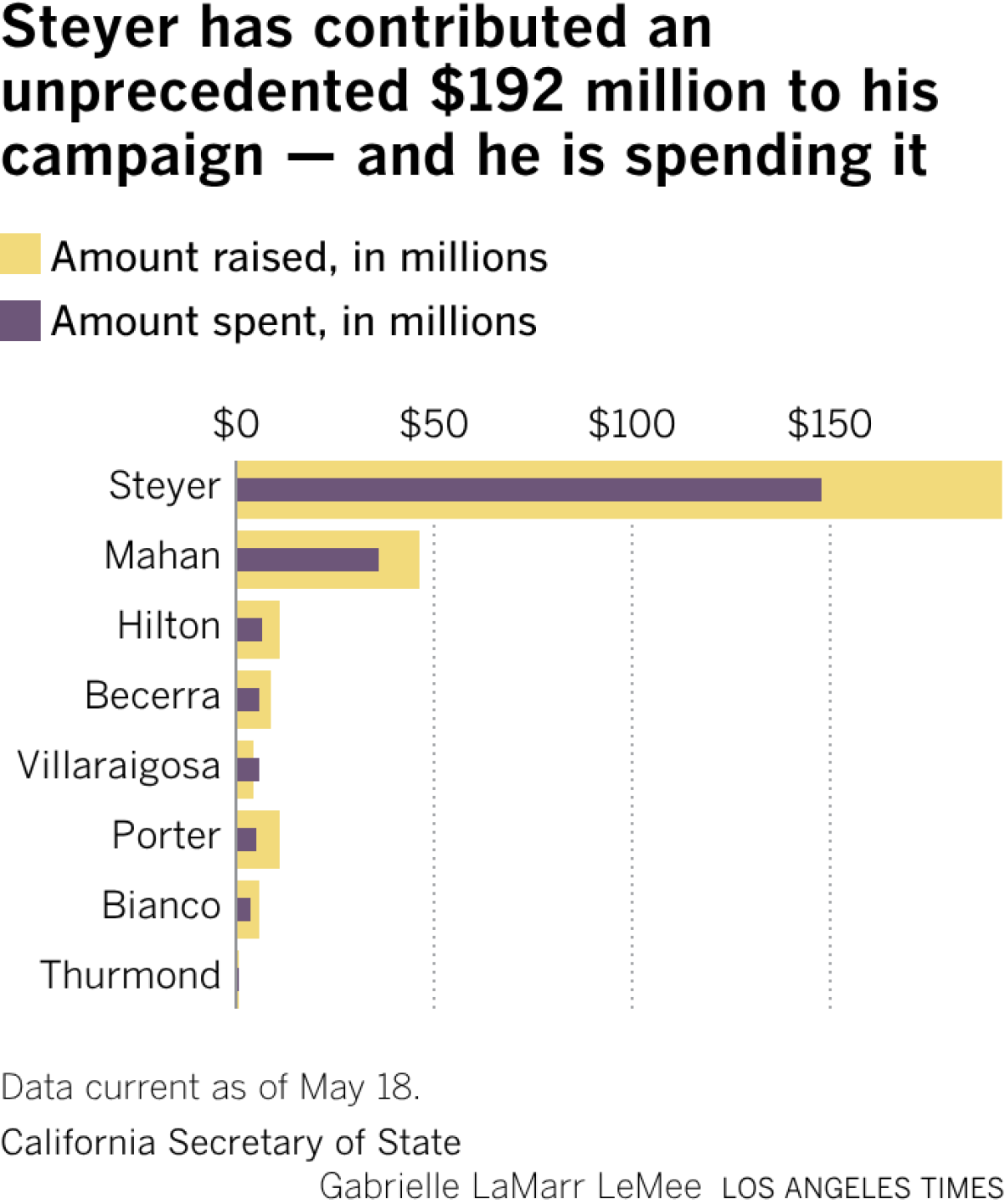
Source link

Iran war day 80: Trump issues warning; Tehran ready to confront aggression | US-Israel war on Iran News

The fear of renewed US strikes in Iran looms while Israeli attacks continue in Lebanon despite extended ‘ceasefire’.

United States President Donald Trump has warned Iran that the “clock is ticking” to clinch a deal to end the war as reports have emerged that Washington and Israel might be planning to carry out air strikes on Iranian energy infrastructure.

“For Iran, the Clock is Ticking, and they better get moving, FAST, or there won’t be anything left of them,” Trump wrote on his Truth Social platform. “TIME IS OF THE ESSENCE!”

Iranian Ministry of Defence spokesperson Reza Talaei-Nik said on Sunday that the military is “fully prepared” to confront any new aggression from the US and Israel.

Saudi Arabia on Monday said it intercepted three drones, a day after a drone strike hit the Barakah Nuclear Energy Plant in the United Arab Emirates.

Meanwhile, Israel has continued its bombardment of Lebanon despite another “ceasefire” extension.

As the US-Israeli war on Iran continues for its 80th day, here is what we know:INTERACTIVE_LIVETRACKER_IRAN_US_ISRAEL_MIDDLEEAST_ATTACKS_MAY5_2026_GMT1435-1777992258

In Iran

  • Mohsen Rezaei, a member of Tehran’s Expediency Council and former Islamic Revolutionary Guard Corps commander, issued a warning to the US to lift its blockade of Iranian ports, saying the Iranian military is ready for further confrontation. Rezaei made this warning while speaking to state television.
  • Talaei-Nik said the Iranian armed forces are “fully prepared to confront any new potential attack by the US and the Israeli regime against the country”.

War diplomacy

  • Mikhail Ulyanov, Russia’s envoy to international organisations in Vienna, suggested in an X post that Iran appoint a special envoy to Moscow, similar to Tehran’s arrangement with China.
  • In an X post, Jean-Luc Melenchon, the leading figure of France’s left-wing La France Insoumise party, condemned “European complicity” in the US-Israeli strikes on Iran, which have triggered a wider regional war.

In the Gulf

  • The New York Times reported that the Israeli military has operated two “covert” outposts in Iraq’s western desert and killed a shepherd and a soldier in a bid to hide one of the sites near the town of al-Nukhaib.
  • After the drone attack on the nuclear facility caused a fire, the UAE Ministry of Defence said two other drones had been “successfully” dealt with after they were launched from the “western border”. It did not elaborate.
  • The drone that got through the UAE’s defences hit an electrical generator outside the inner perimeter of the Barakah Nuclear Energy Plant, the Abu Dhabi Media Office said. Radiological safety levels were unaffected, and there were no injuries, it said. The UAE’s Federal Authority for Nuclear Regulation later confirmed that the plant remained safe with no radioactive material released from the strike.
  • Saudi Arabia said the three drones it intercepted entered from Iraqi airspace and warned that it would take the necessary operational measures to respond to any attempt to violate its sovereignty and security.

In the US

  • Marjorie Taylor Greene, a former US congresswoman and a once-close ally of Trump, has warned in a post on X that any attempt to send US troops into Iran would trigger what she described as a “political revolution”.
  • Republican Senator Lindsey Graham, speaking to the NBC broadcaster, urged Trump to “hurt” Iran, including launching attacks on its energy sites, until it agrees to US terms on its nuclear programme. The US and Israel have hit civilian targets multiple times during the war on Iran. Attacks on civilian facilities are considered war crimes under international law.

In Israel

  • Israel’s Channel 13 reported that dozens of US cargo planes carrying ammunition from bases in Germany have landed in Tel Aviv.
  • Israeli media reported that the military is preparing for renewed hostilities with Iran. The public broadcaster Kan quoted an unnamed security official as saying that Israel would join any new US strikes and target Iranian energy infrastructure.

In Lebanon

  • Israeli strikes have continued in southern Lebanon, where Israel issued evacuation orders for four towns and villages and then struck two of those locations.
  • Strikes were also reported in Az-Zrariyah on a moving vehicle while another raid in Tayr Debba resulted in some significant casualty numbers, Al Jazeera’s Obaida Hitto reported from Tyre, Lebanon.

Global markets

  • Stalled peace efforts between Iran and the US caused oil prices to rise again on Monday. This pushed the price of the global benchmark Brent crude up to about $111 per barrel, close to its highest level in weeks.

Source link

Former UK Health Secretary Wes Streeting announces bid to replace Starmer | Politics News

NewsFeed

Former UK Health Secretary Wes Streeting has announced he will run against Prime Minister Keir Starmer as Labour leader if an election is to take place. Streeting voiced strong support for rebuilding ties with Europe, saying the UK should pursue “a new special relationship” with the EU and potentially rejoin the bloc in the future.

Source link

ORANGE COUNTY VOICES : Wilson Had Better Not Forget the Right : Politics: The senator has some reassuring to do with conservatives. To become governor, he has to count on every conservative vote in Orange County–and he isn’t guaranteed them.

Notwithstanding the California Republican party’s well-intentioned anointment of Sen. Pete Wilson as its gubernatorial nominee, it is no secret that he continues to have an uncomfortable relationship with the conservative wing that dominates it.

As we move closer toward the general election, conservatives across the state, and particularly in vote-rich Orange County, are now asking the question, “What would a Gov. Wilson offer to conservatives?” Some have already answered that question, and for them, the answer is: not much.

This could spell disaster in November, especially if the slickly packaged former mayor of San Francisco, Dianne Feinstein, wins the Democratic Party nomination over liberal Establishment candidate Atty. Gen. John K. Van de Kamp.

Last March, the California Republican Assembly, the largest volunteer, grass-roots Republican organization in the state, adopted a vote of no-confidence in the senator. Pro-life and pro-family organizations–an integral part of winning Republican coalitions–are openly hostile to his candidacy. The conservative Young Americans for Freedom has already gone on record against him. In a futile but symbolic gesture, YAF even put up one of its own, Jeff Greene, to challenge the senator in the June primary.

So far, these are but chinks in the formidable Wilson campaign armor. Though most state conservative leaders are publicly backing Wilson, many are clearly wondering what happened to the Reagan Revolution in California. How is it that the one-time, anti-Reagan moderate mayor from San Diego might now become head of the party in the very state that produced “The Gipper”? (This frustration explains, in part, the enthusiasm among conservatives for the “renegade” primary campaign of “charter” Reaganite Bay Buchanan for state treasurer against the incumbent, Tom Hayes, who was appointed by Gov. George Deukmejian.)

Conservative Republicans have always been suspicious of the “progressive” mayor of San Diego. To begin with, they have never quite forgiven then-Mayor Wilson for campaigning for President Ford against favorite son Ronald Reagan in the 1976 New Hampshire presidential primary. These suspicions contributed to Wilson coming in a poor fourth in the Republican primary for governor two years later. By 1982 he learned a lesson. He then campaigned in the U.S. Senate Republican primary against several Ronald Reagan conservatives, including Rep. Barry Goldwater Jr. and Robert K. Dornan. While Goldwater was preoccupied with trading off his father’s name and latecomer Dornan was in search of campaign funds, Wilson preemptively blitzed the airwaves with commercials tightly wrapping himself around support for President Reagan. Fellow candidate and “first daughter” Maureen Reagan was particularly galled. So were others. But it worked, and Wilson won what was clearly the make-or-break election of his statewide political future.

Once in the Senate, Pete Wilson went on to very smartly, and sincerely, carry the banner of many issues important to conservatives. From his berth on the Senate Armed Services Committee he defended the Reagan military buildup, railed against the Soviet threat and became an ardent spokesman for the Strategic Defense Initiative. He helped protect California’s defense industry, the Long Beach Naval Shipyard and even got Mayor Feinstein to support home-porting the nuclear-powered battleship Missouri in liberal San Francisco. Wilson strongly backed the freedom fighters in Nicaragua and Afghanistan and was up front in his defense of Oliver L. North.

Occasionally, but never reliably, Wilson has voted with conservatives on key social and family-oriented issues. For these things and more, Wilson avoided a primary challenge from the right and deservedly received virtually unqualified conservative support for his 1988 reelection.

The problem now facing gubernatorial candidate Pete Wilson is that those defense and foreign policy issues so essential to his overall appeal to conservatives are no longer available to balance out his generally moderate-to-liberal campaign positions on many social, domestic and environmental issues. Unfortunately, the messages from his campaign and the press seem only to highlight the pro-abortion, pro-homosexual, anti-prayer in school, anti-growth, higher transportation taxes, costly mass transit, and other big-government elements of his platform (including the creation of another costly government Cabinet department to deal with the environment).

As a result, his yeoman efforts on behalf of the speedy-trial initiative seem pale. To many conservatives, the Pete Wilson of 1990 sounds a lot like the Pete Wilson of 1978.

Unlike Sen. Wilson’s 1982 race against Jerry Brown or his 1988 reelection against Leo T. McCarthy, this year every conservative vote will matter–a lot. So, too, will the crossover votes of conservative Democrats who today keep many Republicans in office. We cannot afford to have any one of them sit at home or cast a protest vote for a third-party candidate.

What is of added danger to Wilson is that conservative Democrats are being told that Feinstein is a candidate they can finally support. Who’s kidding whom? A conservative Democrat mayor from San Francisco is about as believable as Dana Rohrabacher being appointed head of the National Endowment for the Arts. Yet the liberal Southern California media persist in mislabeling the Lady from Babylon by the Bay largely because of her “traitorous” support for the death penalty. Look for a finely tuned “come home” message from the Feinstein campaign to conservative Democrats in November.

When the media are not calling her a conservative, they frequently remark that on substantive issues there is little difference between Feinstein and Wilson. Strike another blow to a proven Republican campaign axiom: Fail to differentiate yourself from your Democrat opponent and you lose.

Wilson’s recent campaign commercials do not help. He emphasizes his environmental record, support for mass transit and the need to control those nasty developers. At best it seems an ill-timed ad for the primary season. At worst it emphasizes management, not leadership, and is not conservative on either count. Better he should first shore up his traditional Republican credentials.

The senator should probably not count on the evils of a Democratic-controlled reapportionment process to give him an added loyalty boost, either. Voters have shown either an inability to understand the issue or often view it in partisan terms. But if a state commission on reapportionment is created by the voters on June 5, the argument that a Republican governor is needed to keep the Democrat Legislature honest will be moot.

Finally, the precedent exists for an electorally significant percentage of the conservative vote to be cast in protest for a third-party candidate. That occurred in the Zschau-Cranston race. Despite a strong Republican Party sales effort aimed at ensuring conservative backing for the former moderate Rep. Ed Zschau, including four trips to California by President Reagan (two in Orange County alone), the word went out to the fall-on-your-sword conservatives to cast a protest vote for the pro-life American Independent Party candidate Ed Vallen. Vallen received nearly double the normal statewide and Orange County AIP vote that year (1.5%). Zschau lost to Alan Cranston by only 1.4%. While there are important differences between the seasoned Wilson with proven statewide electability and newcomer Zschau, the point is that a small electoral shift could prove fatal to him in a close race.

Despite what some political pollsters and self-appointed media opinion makers would have us believe, the successful Reagan electoral coalition has not dispersed. Nor have their beliefs in traditional family values, small government, low taxes, free enterprise and equal opportunity for that chance at the American dream taken a back seat to child care, global warming and acid rain.

Pete Wilson, known for waging smart, well-financed campaigns, has some reassuring to do on the right. To win in November, he has to count on every conservative vote in Orange County–and it is not clear yet that he is going to get them.

Source link

Senate parliamentarian deals blow to $1-billion security proposal for White House

A proposal to fund $1 billion in security additions for the White House campus and President Trump’s new ballroom fails to meet procedural rules, according to the Senate parliamentarian, dealing a blow to Republican plans to include it as part of a bill to fund immigration enforcement agencies for the next three years.

The parliamentarian’s ruling, described late Saturday by Senate Democrats, said that funding for a project as large and complex as Trump’s massive East Wing renovation is too broad to be included in the narrow GOP budget bill, which cannot be filibustered and needs only a simple majority to pass.

It’s unclear whether Republicans will be able to immediately salvage any part of the billion-dollar Secret Service proposal, which would fund security for Trump’s ballroom along with other parts of the White House, including a new visitor screening center, additional training for agents and extra reinforcements for large events. Republicans said Saturday night that they are revising the legislation based on the parliamentarian’s advice.

Ryan Wrasse, a spokesman for Senate Majority Leader John Thune (R-S.D.), wrote in a post on X that “none of this is abnormal” during the complicated budget process that Republicans are using to try to pass the immigration enforcement and White House security money on a partisan basis.

“Redraft. Refine. Resubmit,” Wrasse said in the post.

Democrats say they’re ‘ready to stop them again’

Democrats have seized on the security request, accusing Republicans of dedicating federal resources to the ballroom project instead of focusing on helping Americans with rising costs. Republicans have insisted that private donations will be used to build the ballroom and that the federal dollars are focused just on much-needed security enhancements.

Senate Minority Leader Chuck Schumer (D-N.Y.) took credit for the ruling after Democrats argued to the parliamentarian that the security money doesn’t belong in the bill.

“Republicans tried to make taxpayers foot the bill for Trump’s billion-dollar ballroom,” Schumer said Saturday evening. “Senate Democrats fought back — and blew up their first attempt.”

Schumer added that Democrats “will be ready to stop them again” as Republicans say they will revise the bill.

The ruling from the Senate parliamentarian is advisory, but such rulings are rarely if ever ignored when lawmakers put together legislation that can pass with a simple majority. Most bills are subject to a filibuster and thus need 60 votes for passage — meaning Republicans must find some Democratic support in the 53-47 Senate.

Part of immigration bill

Republicans are looking to approve a roughly $72-billion package to fund Immigration and Customs Enforcement and Customs and Border Protection until the end of Trump’s term after Democrats have blocked the money for months.

As part of that package, Republicans included $1 billion for White House security enhancements, part of it connected to Trump’s ballroom. The Secret Service had requested the money after a man was charged with trying to assassinate Trump at the White House Correspondents’ Assn. dinner last month.

The overall budget package is providing another boost of funding for Trump’s immigration and deportation agenda, fueling operations through September 2029. It comes on top of Immigration and Customs Enforcement and Border Patrol funds Congress provided last year in the One Big Beautiful Bill Act that Trump signed into law.

The parliamentarian kept most of the immigration portion of the legislation intact, though some minor provisions were blocked, including Customs and Border Patrol funds to hire, train and pay Border Patrol agents. Republicans said those were only technical fixes.

Oregon Sen. Jeff Merkley, the top Democrat on the Senate Budget Committee, said Saturday evening that “Democrats are prepared to challenge any change to this bill.”

Americans shouldn’t spend “a single dime” on Trump’s “Louis XIV-style ballroom and throw tens of billions more at two lawless agencies,” Merkley said.

Jalonick and Freking write for the Associated Press. AP writer Lisa Mascaro contributed to this report.

Source link