politics

Indonesia Targets Strong Economic Growth as Prabowo Pushes Fiscal Reform Agenda

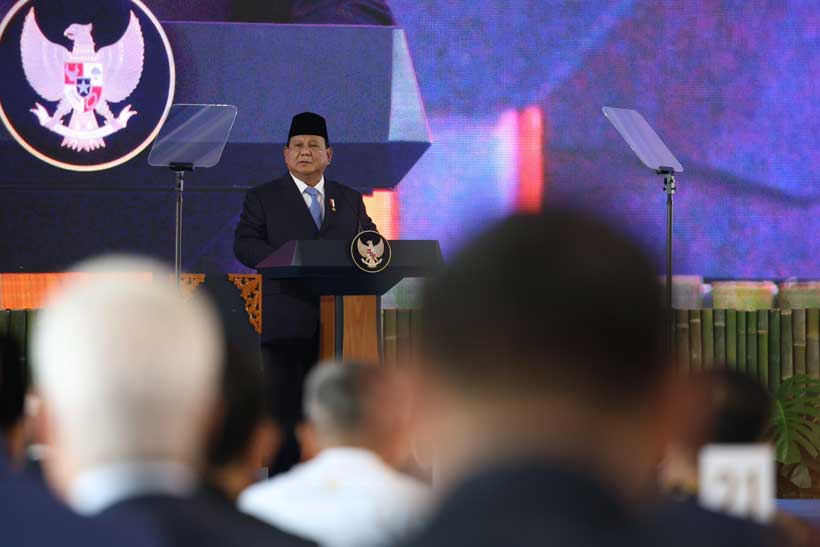
Indonesian President Prabowo Subianto unveiled ambitious economic growth and fiscal deficit targets for 2027 while promising reforms aimed at restoring investor confidence and strengthening state institutions. The announcement comes after months of market concerns over government spending plans, policy uncertainty, and weakening confidence in Southeast Asia’s largest economy.

Government Sets Ambitious Economic Targets

Prabowo outlined a growth target of 5.8 percent to 6.5 percent for next year while aiming to lower the fiscal deficit to between 1.8 percent and 2.4 percent of gross domestic product. The government also expects inflation to remain under control and pledged to improve food security and attract greater investment.

Investor Confidence Faces Pressure

Indonesia has faced growing scrutiny from investors and rating agencies this year. Credit rating outlooks were downgraded due to concerns about policymaking credibility, fiscal discipline, and transparency. Market fears intensified after discussions around possible changes to the country’s long standing fiscal deficit ceiling and rising state spending commitments.

Commodity Control Plan Sparks Market Concerns

Prabowo confirmed plans to establish a new state agency to oversee exports of major commodities including coal, palm oil, and nickel. The government says the move is intended to reduce revenue losses and strengthen national control over natural resources, but investors worry it could disrupt pricing systems and reduce private sector profitability.

Private Sector Role Remains Important

Despite increasing state involvement in strategic sectors, Prabowo stressed that Indonesia still welcomes private companies and small businesses as partners in economic development. He called for cooperation between the government and the private sector to achieve long term prosperity.

Analysis

Indonesia’s latest economic strategy reflects a balancing act between ambitious state led development goals and the need to maintain investor confidence. While the government aims to accelerate growth and strengthen control over key resources, markets remain cautious about rising fiscal risks and unpredictable policy changes.

The proposed commodity export agency could significantly reshape Indonesia’s role in global resource markets because the country is one of the world’s largest exporters of coal and palm oil. However, stronger government intervention may create uncertainty for foreign investors and commodity traders.

At the same time, maintaining fiscal discipline will be critical as Prabowo moves forward with large welfare programmes and economic reforms. The success of his agenda will likely depend on whether the government can reassure markets while delivering growth, stability, and stronger institutional credibility.

With information from Reuters.

Source link

Taiwan’s president says future will not be decided by ‘external forces’ | Politics News

President Lai says Taiwan’s future is up to its people as the island faces Chinese and US headwinds.

Taiwanese President William Lai Ching-te said the future of Taiwan should not be decided by “foreign forces” but is instead in the hands of its 23 million citizens.

Speaking on the second anniversary of his inauguration on Wednesday, Lai said his goal as president continued to be maintaining peace and stability across the Taiwan Strait – the 180km (112-mile) waterway dividing Taiwan from China – and to prevent “external forces” from altering the island’s political status quo.

Recommended Stories

list of 4 itemsend of list

The president said he was still willing to engage with Beijing, which cut off communication with Taipei in 2016, but only through “orderly exchanges” based on the principles of “equality and dignity”.

Taiwan is a responsible member of the international community, not a “party that undermines stability”, he also said, in an apparent swipe at Beijing.

China’s Taiwan Affairs Office on Wednesday accused Lai of inciting “cross-strait confrontation” by supporting “Taiwan independence” in remarks coinciding with his anniversary.

The office’s spokesperson, Zhu Fenglian, said Lai “peddles separatist fallacies” while using a narrative of “democracy versus authoritarianism” to describe the Taiwan-China relationship.

Zhu also accused Lai of ignoring the wellbeing of the Taiwanese public to pander to “external forces attempting to ‘seek independence through foreign aid’ and ‘seek independence through force’.”

Lai has faced a tumultuous 24 months as president, with pressures from both inside and outside Taiwan, including from traditional ally the United States.

The opposition-controlled legislature cut down a signature special defence budget from $40bn to $25bn, and this week tried and failed to impeach him over a tax revenue dispute.

He has a 38 percent approval rating, according to a poll conducted earlier this month by news network TVBS, which, while low, is still better than his 32 percent approval rating during his first year in office.

His disapproval rating has also fallen from 55 percent to 44 percent.

Lai said on Wednesday that his government would take other measures to make up the shortfall in Taiwan’s defence spending.

As president, Lai has also had to contend with uncertainty from the US, Taiwan’s longstanding unofficial ally, amid growing pressure from China, which has staged five rounds of military exercises around Taiwan since his May 2024 inauguration.

US President Donald Trump said last week that US arms sales to Taiwan could be used as a “very good negotiating chip” with Beijing.

Trump’s remarks followed a meeting with Chinese President Xi Jinping in Beijing, where the Chinese leader called on Trump to take a stronger stance on Taiwan’s political status.

The US has for decades maintained a deliberately ambiguous stance on the issue.

Lai was also forced to delay a state visit to Eswatini, formerly known as Swaziland, Taiwan’s only diplomatic ally in Africa, in April when several countries denied him access to their airspace due to alleged Chinese pressure. He later made the trip through a circuitous route on board Eswatini King Mswati III’s private jet.

Source link

Republican Thomas Massie who stood up to Trump defeated in Kentucky primary | US Midterm Elections 2026 News

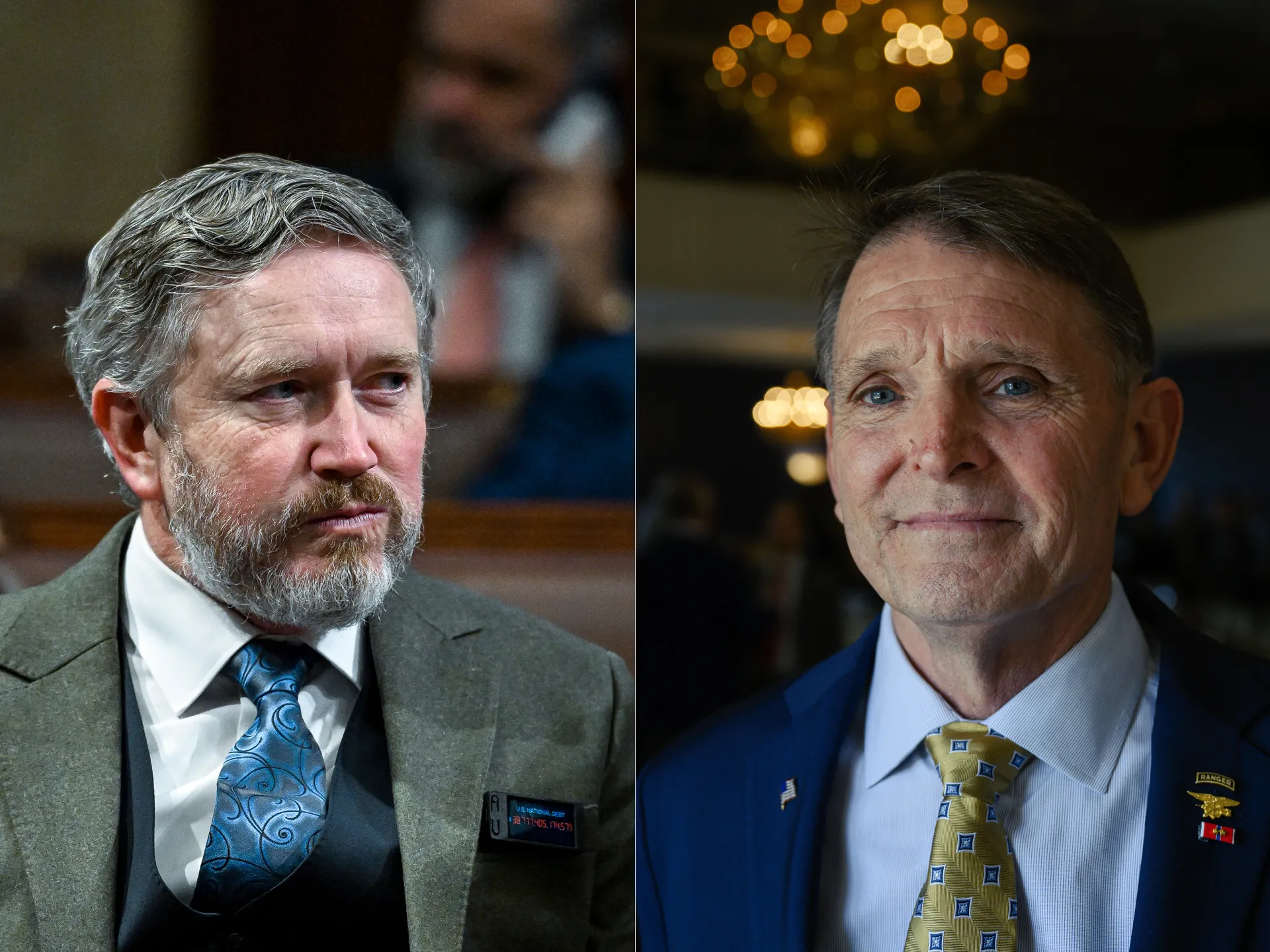
With an estimated 72 percent of the vote counted, Ed Gallrein led with 54.4 percent to Massie’s 45.6 percent.

US President Donald Trump has tightened his grip on the Republican Party as Kentucky voters ousted one of the few conservative lawmakers willing to openly challenge his authority.

Congressman Thomas Massie‘s defeat, which was predicted by US news networks, including NBC and CNN, about two hours after polls closed on Tuesday, marks another victory in Trump’s campaign to punish dissent within Republican ranks.

Recommended Stories

list of 4 itemsend of list

With an estimated 72 percent of the vote counted, former Navy SEAL Ed Gallrein led with 54.4 percent of the vote to Massie’s 45.6 percent.

The Associated Press news agency called the race for Gallrein, whose campaign was backed by Trump’s endorsement as well as millions of dollars from pro-Trump and pro-Israel political lobby groups.

The contest, widely described as the most expensive House of Representatives primary in US history, saw more than $32m spent on advertising and offered the latest evidence of Trump’s hold over Republicans. It followed the primary defeat on Saturday of another Trump critic, Senator Bill Cassidy of Louisiana, as well as losses for dissenting Republican state lawmakers in Indiana earlier this month.

“Massie got Trumped. Donald Trump is the sun and the moon and the stars in the Republican Party in Kentucky,” Kentucky-based Republican strategist TJ Litafik said.

A test of Trump’s influence

The Kentucky vote was closely watched as a test of whether Trump’s hold on Republican voters remained firm despite concerns over his war on Iran, growing inflation and declining personal approval ratings, and whether there was still space in the party for lawmakers willing to break with him.

Massie had angered Trump by opposing US military action in Iran and Venezuela, criticising aid to Israel, resisting parts of the president’s agenda, and backing efforts to release files related to the late sex offender Jeffrey Epstein.

The president spent months attacking Massie, a libertarian-leaning seven-term congressman, calling him a “moron”, a “nut job” and a “major sleazebag”.

“Dealing with him is just horrible. I don’t think he’s a Republican… He’s not a libertarian,” Trump told reporters after polls opened on Tuesday.

“Sometimes they say he’s really a Dumb-ocrat. He votes against us all the time,” Trump said, using a nickname he frequently deploys against Democrats.

‘I’m not running against President Trump’

In the northern Kentucky city of Covington, Rob Barkley, a former Trump supporter who backed Massie, said the president’s attacks had pushed him further towards the congressman.

“He’s on the Republican side, so he has a conservative mindset,” Barkley told US media after casting his ballot.

“But he’s not as far-right leaning as Trump’s politics,” he said.

Massie, who voted with Trump roughly 90 percent of the time during the president’s second term, framed the contest as a broader test of independence within the Republican Party.

“I’m not running against President Trump. Most of the people voting for me support President Trump like I do,” Massie said.

Secretary of Defense Pete Hegseth also made a rare appearance in Massie’s district on Monday to campaign for Gallrein.

Federal law restricts government employees from engaging in partisan political activity while on duty, but Hegseth’s office said he attended in a personal capacity and that no taxpayer money was used.

Trump later revealed that Hegseth’s campaign appearance came just hours before the US had expected to launch a new military assault on Iran, although the operation was later postponed.

Several US states, including Georgia and Pennsylvania, held primaries on Tuesday in advance of November’s midterm elections, but the Kentucky race emerged as one of the night’s most closely-watched contests.

Massie, first elected in 2012, had long been one of Trump’s most persistent Republican critics.

Source link

China’s Xi Jinping and Russian President Vladimir Putin meet in Beijing | Politics News

DEVELOPING STORY,

Xi and Putin hold talks just days after US President Donald Trump made an official visit to China.

A meeting between Chinese leader Xi Jinping and visiting Russian President Vladimir Putin has started in Beijing, Chinese state media report.

Xi welcomed Putin to the Chinese capital on Wednesday, shaking hands with the Russian leader outside the Great Hall of the People before their talks, video by Russian media showed.

Recommended Stories

list of 4 itemsend of list

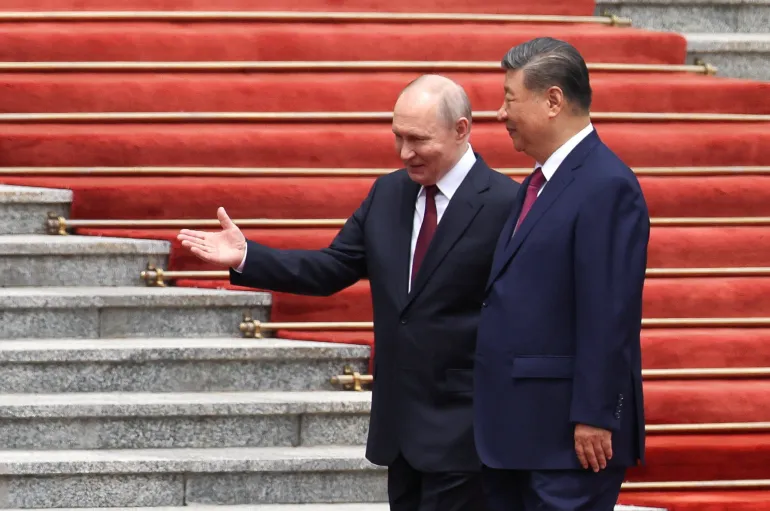
Before entering the Great Hall, Putin and Xi walked down a red carpet, rolled out to greet the Russian leader, and stood as a military band played their two national anthems.

Putin began the talks by hailing the “strong, positive” momentum in cooperation between Russia and China, according to Russian media.

“Even amid unfavourable external factors, our cooperation and economic cooperation is showing strong, positive momentum,” Putin told Xi.

Addressing Putin, Xi lauded the “unyielding relationship” between China and Russia.

“We have been able to continuously deepen our political mutual trust and strategic coordination with a resilience that remains unyielding despite trials and tribulations,” Xi told Putin, according to China’s Xinhua news agency.

The Chinese leader also addressed war in the Middle East, telling his Russian counterpart that further conflict was “inadvisable” and a ceasefire was necessary.

“A comprehensive ceasefire is of utmost urgency, resuming hostilities is even more inadvisable and maintaining negotiations is particularly important,” Xi said, according to Xinhua.

Russian President Vladimir Putin walks with Chinese President Xi Jinping during a welcoming ceremony at the Great Hall of the People in Beijing, China May 20, 2026. REUTERS/Maxim Shemetov/Pool TPX IMAGES OF THE DAY
Russian President Vladimir Putin walks with Chinese President Xi Jinping during a welcoming ceremony at the Great Hall of the People in Beijing, on Wednesday [Maxim Shemetov/Pool/Reuters]

Al Jazeera’s Katrina Yu, reporting from Beijing, noted that Putin’s visit and that of the recently concluded trip by US President Donald Trump to China were very different.

Putin, she said, is marking 25 years of the Sino-Russian friendship, has visited China dozens of times, and met with Xi on more than 40 other occasions.

“So this visit will really be about deepening existing coordination and cooperation,” Yu said.

“We are expecting that the two sides will update each other on the situation in the Middle East, as well as Ukraine. No doubt, Xi Jinping will also talk to Putin about what was discussed with Donald Trump last week,” Yu said.

Putin is being accompanied by a large delegation of Russian businesspeople and government leaders, and the Kremlin has announced that the two leaders will sign some 40 different agreements, Yu said, covering everything from the economy and tourism to education.

“But I think for Putin, the main topic of discussion with Xi Jinping is going to be on energy security,” Yu said.

“Since the war in Ukraine, any gas sales that were previously heading to Europe – that is all dried up – and Russia is in desperate need of revenue to replace that, especially since we are in the fifth year of the Ukraine war,” she added.

In a video address released before meeting Xi, Putin said Beijing and Moscow are prepared to cooperate with each other on “core interests ‌of ⁠the two countries, including the protection of sovereignty and national unity”, the Reuters news agency reports.

Both countries are actively expanding ⁠ties in economy, politics and defence, Putin said, adding that “a close” and “strategic” connection between Moscow and Beijing ⁠was playing “a stabilising role” in global relations.

“We are not aligning against anyone, but working ⁠for the cause of peace and universal prosperity,” Putin said.

Source link

Behind the numbers of Prop. 8

Immediately after Proposition 8 passed, many who supported same-sex marriage tried to make sense of the results. A set of assumptions gained wide acceptance. Some are correct. Most, however, are just plain wrong. And it’s crucial that we know what happened in the last election before launching another attempt to legalize marriage for all.

I recently headed a team that analyzed data from polls conducted by the No on 8 campaign during the run-up to the election. Our analysis sheds new light on what fueled the Proposition 8 victory.

One big question after the election: Who moved? Six weeks before the vote, Proposition 8 was too close to call. But in the final weeks, supporters pulled ahead, and by election day, the outcome was all but certain.

After the election, a misleading finding from exit polls led many to blame African Americans for the loss. But in our new analysis, it appears that African Americans’ views were relatively stable. True, a majority of African Americans opposed same-sex marriage, but that was true at the beginning and at the end of the campaign; few changed their minds in the closing weeks.

The shift, it turns out, was greatest among parents with children under 18 living at home — many of them white Democrats.

The numbers are staggering. In the last six weeks, when both sides saturated the airwaves with television ads, more than 687,000 voters changed their minds and decided to oppose same-sex marriage. More than 500,000 of those, the data suggest, were parents with children under 18 living at home. Because the proposition passed by 600,000 votes, this shift alone more than handed victory to proponents.

Perhaps it shouldn’t be a surprise. The Yes on 8 campaign targeted parents in its TV ads. “Mom! Guess what I learned in school today!” were the cheery-frightening first words of the supporters’ most-broadcast ad. They emerged from the mouth of a young girl who had supposedly just learned that she could marry a female when she grew up.

Among the array of untrue ideas that parents could easily take away: that impressionable kids would be indoctrinated; that they would learn about gay sex; that they would be more likely to become gay; and that they might choose to be gay. California voters, depending on where they lived in the state, were exposed to the Yes on 8 ads 20 to 40 times.

The lesson: It’s not enough to make the case for same-sex marriage. It’s also important to arm voters — particularly parents — against an inevitable propaganda attack. And it’s crucial to rebut lies so parents don’t panic.

Another misconception was that those who voted for Proposition 8 were motivated by hate. This does not describe most of the 687,000 who changed their minds in the closing weeks. After all, they supported same-sex marriage before the opposition peeled them away. Yes, they turned out to be susceptible to an appeal based on anti-gay prejudice. But they were frightened by misinformation. No on 8’s one TV ad that directly responded to the fear-mongering helped assuage some of the fear, but it was too little, too late.

One final false assumption by same-sex marriage supporters was that the election was so close that it will be easy to pass same-sex marriage the next time out.

It’s true that the official election results — 52% to 48% — appeared quite close. But the truth is more complicated. The data we analyzed show that the No on 8 campaign benefitted from voter confusion.

Polling suggests that half a million people who opposed same-sex marriage mistakenly voted against the proposition. They were confused by the idea that a “no” vote was actually a vote for gay marriage. This “wrong-way voting” affected both sides, but overwhelmingly it helped the “no” side. Our analysis suggests that the division among California voters on same-sex marriage at the time of Proposition 8 was actually 54% to 46% — not so close. We are actually 1 million votes away from being able to reverse Proposition 8.

This analysis makes absolutely clear that supporters of same-sex marriage have a lot of work to do before we return to the ballot. But that work is already underway, and now real knowledge can underpin our efforts.

David Fleischer heads the LGBT mentoring project, which is now part of the Los Angeles Gay and Lesbian Center’s new leadership program Learn Act Build. The project’s full report and data can be viewed at prop8report.org.

Source link

Trump shows reporters ballroom site amid $1-billion security request

Shouting over the banging and clanging sounds from heavy construction equipment, President Trump on Tuesday gave a group of reporters a closer look at the construction for the White House ballroom he’s building on the site of the former East Wing to mount a defense for the project that has hit a speed bump in Congress.

The administration has asked for $1 billion from taxpayers for security additions on the White House campus, including for the ballroom. But the Senate parliamentarian ruled the proposal could not be included in a bill to fund immigrant enforcement agencies for three years, and several Republican lawmakers have balked at the price tag in an election year where voters are grappling with gasoline, grocery and other prices spurred to new heights by the Iran war and the disruption in oil supplies.

So Trump, ever the pitchman, surprised White House reporters by bringing them to a platform overlooking the construction site on a hot and breezy morning as workers in hard hats and fluorescent yellow vests milled about below.

Easels were set up to display renderings of the ballroom building and at least one of them blew off in the wind. “Give that to me, I’ll hold it,” Trump told an assistant.

“There will never be another building like this built, that I can tell you,” Trump told reporters.

He highlighted the security aspects of the building, notably its “dead flat” roof made of “very strong steel” and said it is “drone-proof” because “if a drone hits it, it bounces off, it won’t have any impact — but it’s also meant as a drone port, so it protects all of Washington, the roof of the building.”

He said the military will “stay on it” to keep watch over the city.

There’s no air conditioning or other equipment on the roof for safety reasons, Trump said, explaining that all duct work and equipment like it was hidden within the walls of the complex, which will serve as a “shield” for a military hospital, research facilities, offices for the first lady and her staff, and a full-service kitchen — in addition to a ballroom big enough for 1,000 people.

He said the ballroom building goes down six stories underground and is really “complex” because “everything is intertwined.”

“The roof goes with the ground floor, the ground floor goes with the roof. The roof also goes down into the basement,” the president said. “This is one well-knit building. One thing doesn’t work without the other.”

Trump says the ballroom is a ‘gift’ to the country

He reiterated that the $400-million ballroom cost will be covered by donors, including him, and that the work is being done “in strict coordination” with the military and U.S. Secret Service.

“This is not going to be paid for by the taxpayer,” Trump said. “This is a gift to the United States of America.”

But it’s somewhat of an unwanted present as polling shows most Americans oppose the ballroom, which is embroiled in litigation in federal court. A Washington Post/ABC News/Ipsos poll conducted in April found that a majority, 56%, of U.S. adults oppose Trump’s decision to tear down the East Wing to make way for the ballroom, while only 28% are in support.

The National Trust for Historic Preservation sued to halt construction until Congress approves plans for the building.

Trump insisted he will have “very little” time to use the ballroom. He recently announced that it will be ready in September 2028, less than six months before his term ends.

“This is really for other presidents,” he said.

Trump sidestepped a question about whether he’ll kick in any more of his own money if Congress rejects the $1-billion funding request.

White House spokesperson Davis Ingle said Trump’s tour was not in response to the difficulties brewing in Congress. “President Trump is the most transparent president of all time and was excited to showcase to the press and American people the amazing gift he is giving to the White House and generations of future presidents to come,” Ingle said.

Trump also touched on some of the other beautification projects he’s undertaking across the city, such as restarting dormant park fountains. He claimed to be spending much less to clean up the Lincoln Memorial Reflecting Pool than did his immediate predecessors — both Democrats.

“I’m doing a job on the Reflecting Lake for a fraction of what they paid,” Trump said. He’s having the surface coated in a shade of blue and wants to reopen it by July 4. A separate nonprofit group, the Cultural Landscape Foundation, has sued to halt this project.

Superville writes for the Associated Press.

Source link

California, other states sue over new Trump limits on loans for nurses, PAs, therapists

California and a coalition of other Democratic-led states are suing the Trump administration over new limits on federal borrowing by aspiring nurses, physician’s assistants, therapists, social workers, mental health practitioners and other healthcare workers, arguing the changes will further reduce a struggling but vital workforce.

“This case is about protecting access to education, protecting our healthcare workforce, and protecting patients who rely on these providers every single day,” California Atty. Gen. Rob Bonta said during a virtual news conference Tuesday. “The Trump administration is going out of its way to make it harder and more expensive for students to pursue the advanced degrees necessary to serve their communities and pursue meaningful careers that allow them to support themselves and their families.”

Bonta said the new limits on loans sought by nursing and other healthcare students — which the U.S. Department of Education initiated in response to Republicans passing broader student loan caps as part of last year’s One Big Beautiful Bill Act — was an illegal overreach by the agency that was “deeply shortsighted” and went beyond the scope of the legislation.

“Congress can act,” he said. “But what the Department of Education can’t do is — contrary to law and in an arbitrary and capricious way and in violation of the Administrative Procedure Act — redefine what a professional student is.”

In response to the litigation, Trump administration officials defended the new rules, saying they will help student borrowers in the long run by driving down schooling costs at universities nationwide and preventing them from taking on too much debt.

“After decades of unchecked student loan borrowing that gave schools no reason to control costs, these commonsense loan caps — created by Congress — are already incentivizing colleges and universities to lower tuition,” Under Secretary of Education Nicholas Kent said in a statement to The Times.

Kent said Bonta and his fellow Democratic litigants “are more concerned about institutions’ bottom-line [than] American students and families’ ability to access affordable postsecondary education.” As one example of institutions responding to loan caps by lowering costs, Kent pointed to UC Irvine reducing the costs of its master’s in business programs by up to 38% to keep them below a federal loan cap for such programs.

The One Big Beautiful Bill, passed by Congress in July 2025, placed new limits on student loans, which could previously be sought for the full cost of such degrees. Starting this July, applicants categorized as “graduate students” will be capped at borrowing $20,500 per year and $100,000 in total, while applicants categorized as “professional students” will be allowed to borrow up to $50,000 annually and $200,000 in total.

On May 1, the U.S. Department of Education issued a new rule defining the “professional student” category as including those pursuing degrees to become doctors, pharmacists, dentists, veterinarians, lawyers, various medical specialists, pastors and other religious academics, and excluding those pursuing nursing and other advanced healthcare degrees.

In announcing the change, Kent said it would “simplify our complex student loan repayment system and better align higher education with workforce needs,” “drive a sea change in higher education by holding universities accountable for outcomes and putting significant downward pressure on the cost of tuition,” and “benefit borrowers who will no longer be pushed into insurmountable debt to finance degrees that do not pay off.”

Others fiercely disagreed, including healthcare industry leaders who also had objected to the rule change during a public comment period. Some said the changes would simply increase student reliance on less favorable, private-sector loans.

The American Assn. of Colleges of Nursing, in a statement, said it and its members were “angered by the Department of Education’s failure to support the nursing profession as the demand for patient care services rises.”

Nearly 150 members of Congress — including more than a dozen Republicans — wrote a letter the day after the rule was promulgated expressing “disappointment” over the exclusion of post-baccalaureate nursing degrees.

“At a time when our nation is facing a health care shortage, especially in primary care, now is not the time to cut off the student pipeline to these programs,” the lawmakers argued.

Rachel Zaentz, a spokesperson for the University of California, which is not party to the lawsuit but operates a vast network of public health programs, said in a statement Tuesday that UC “strongly opposed” the administration’s new caps on federal loans for nurses and other health professionals, which she said “will be felt most strongly by lower-income graduate students.”

“UC will continue to do all we can to ensure that cost is not a barrier for anyone who wants to pursue higher education, and we will continue to advocate with our federal partners for the programs and policies that make this possible,” Zaentz said.

Bonta rejected the administration’s argument that the new caps would help students pursuing a dream of a medical career avoid taking on too much debt — calling it “tone deaf.” He said those students are already “struggling with all costs right now” thanks to the Trump administration’s tariffs, war in Iran and lax approach to regulating monopolies and other big business.

He also rejected the idea that the new loan caps would force institutions to reduce costs for students, calling that “wishful thinking.”

The lawsuit is the 68th filed by Bonta’s office against the second Trump administration. Joining Bonta in the lawsuit — which was filed in the U.S. District Court in Maryland — were the attorneys general of Arizona, Colorado, Connecticut, Delaware, the District of Columbia, Hawaii, Illinois, Maine, Maryland, Massachusetts, Michigan, Minnesota, Nevada, New Jersey, New Mexico, New York, North Carolina, Oregon, Rhode Island, Vermont, Virginia, Washington and Wisconsin, as well as the governors of Kentucky and Pennsylvania.

Times staff writer Jaweed Kaleem contributed to this report.

Source link

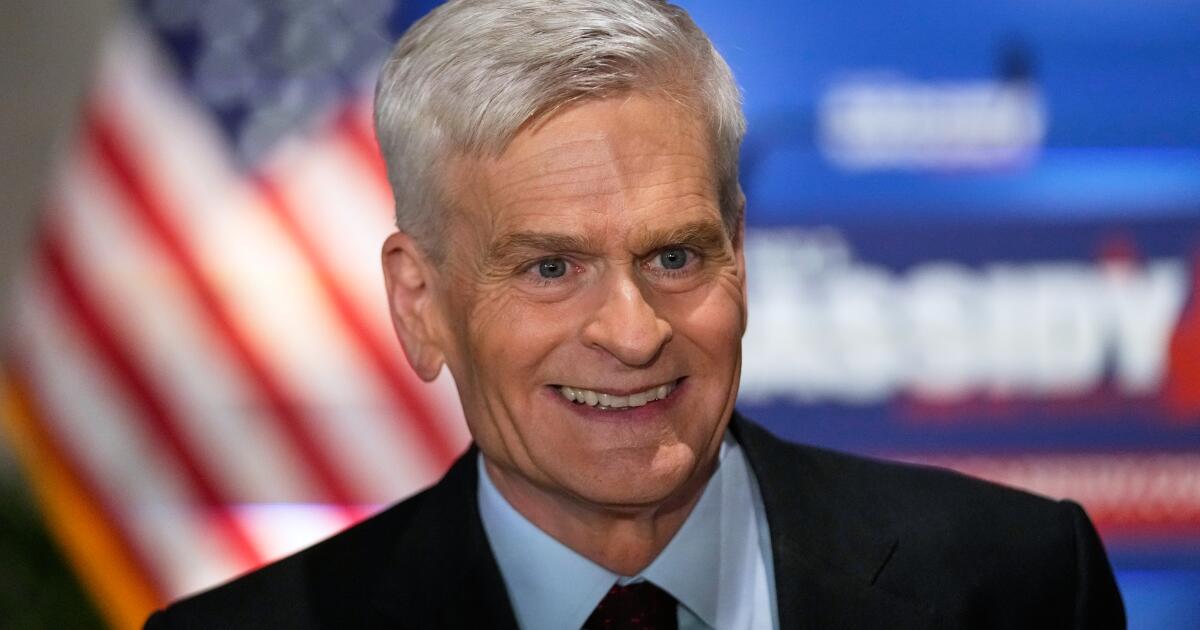
Senate advances bill aimed at ending Iran war as Cassidy, after primary loss, flips to support it

The Senate advanced legislation Tuesday that seeks to force President Donald Trump to withdraw from the Iran war, as a growing number of Republicans defied the president’s wishes.

Since Trump ordered the attack on Iran at the end of February, Democrats have forced repeated votes on war powers resolutions that would require him to either gain congressional approval for the war or withdraw troops. Republicans had been able to muster the votes to reject those proposals, but Louisiana Sen. Bill Cassidy — fresh off a primary election loss in which Trump endorsed his opponent — switched sides to deliver a crucial vote to pass the legislation.

The 50-47 vote tally demonstrated the small but crucial number of Republicans voting to halt the war with Iran. The legislation will get a vote on final passage, but the timing was not immediately clear.

Republican Sens. Rand Paul of Kentucky, Susan Collins of Maine and Lisa Murkowski of Alaska had all previously voted for similar war powers resolutions and did so again Tuesday. Cassidy voted for the legislation for the first time.

After his primary election loss last week, Cassidy returned to Washington saying that he was proud of his work to uphold the Constitution and would carefully consider how he would vote on several priorities of the Trump administration.

Groves writes for the Associated Press.

Source link

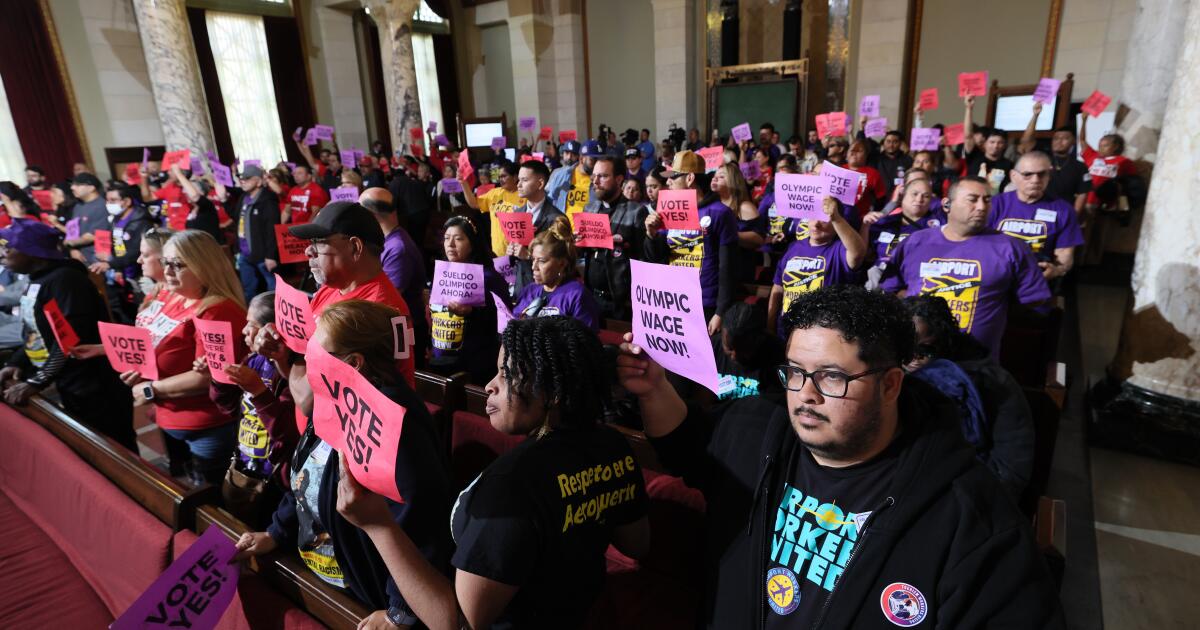
In deal with business leaders, $30 minimum wage for L.A. hotel and airport workers will be delayed

A $30 minimum wage for hotel and airport workers will be delayed after Los Angeles elected officials persuaded a group of business leaders to drop a ballot measure that would have devastated the city budget.

On Tuesday, the City Council approved the 18-month delay, which will postpone the wage increase until after the 2028 Olympics and fend off the business-backed initiative to eliminate the gross receipts tax, which is the city’s second-largest revenue stream.

The minimum wage will still increase to $25 in July and continue in increments until reaching $30 in January 2030.

Because the 11 to 4 vote was not unanimous, the new pay schedule will head to a second vote next week. Councilmembers Eunisses Hernandez, Ysabel Jurado, Nithya Raman and Hugo Soto-Martínez cast the “no” votes.

In May 2025, the council approved a proposal that would have increased the minimum wage to $30 in July 2028 and also raised an hourly payment for healthcare coverage.

In response, a coalition of airline and hotel businesses gathered enough signatures to place a measure on the Nov. 3 ballot that took aim at the city’s gross receipts tax, which is imposed on a vast array of businesses, including entertainment companies, child-care providers, law firms, accountants, healthcare businesses, nightclubs and many others.

If approved by voters, the measure would have stripped $740 million from the city’s general fund over the first year, according to city officials, and over five years would have amounted to a $860 million loss annually on average.

City officials, hotel and airport businesses and labor unions had been in continuous negotiations since last Wednesday, when the council narrowly approved an initial postponement of the wage increase to allow time to reach an agreement. The business coalition agreed to withdraw the measure if the council permanently approved the delay.

In addition to delaying the $30 minimum wage, the council on Tuesday pushed back the hourly healthcare payment to start at $8.15 an hour for airport workers in July 2027 and $4.25 for hotel workers July 1 of this year.

The council also voted to set up a committee to study possible changes to the business tax structure.

“Imposing wages and benefits without bringing business to the table is not reasonable,” said Nella McOsker, president and CEO of the downtown business group Central City Assn., at the council meeting. “It is reasonable to ask us to partner together to be on the other side of the table and negotiate, but it is not OK to do so without that process.”

Kurt Petersen, president of Unite Here Local 11, which represents the hotel workers, accused city officials of giving “into blackmail.”

“They now have a playbook. The next time workers win something, they’ll threaten to blow up the city,” Petersen said of the business coalition. “It’s a bad day for workers.”

Council President Marqueece Harris-Dawson described the process as painful but nearing a conclusion.

“I think we walked away from the negotiating table, like many negotiating tables, where no one was happy about the outcome, but everybody came away better than when we started off,” he said.

Shortly before the council vote, Mayor Karen Bass issued a statement that said she was called in by both business and labor leaders to close the deal.

She called the proposed repeal of the gross receipts tax “an existential threat to the city budget and the services it supports,” including street repairs, public safety and efforts to clean the city.

“This agreement ensures workers are paid fairly and that businesses that create jobs can continue serving LA and hiring Angelenos,” Bass said.

On Tuesday, the council chamber was filled with union workers in red, purple and yellow shirts.

Laura Esquivel, a janitor at Los Angeles International Airport, expressed frustration that council members were not standing by their earlier commitment.

“We’re sick and tired of being exploited. Some members of the council that are here, now we know, do not stand with workers,” Esquivel said. “We are not giving up, we will continue to fight and we’ll be back here in 2028.”

Before voting against the delay, Soto-Martínez, a former Unite Here organizer, called it sad and enraging.

“I cannot support anything that is going to take away money from workers,” he said.

Councilmember Imelda Padilla, who spoke in Spanish, was critical of the way the negotiations unfolded.

“If this thing about the gross tax receipts passes, we don’t have a city,” Padilla said. “The business community has us by our necks.”

She said workers deserve the wage increase, though she voted for the delay.

“Next time, let’s negotiate, and let’s negotiate well,” she said.

Times staff writer Suhauna Hussain contributed to this report.

Source link

Putin meets Xi: Why Russia and China need each other | International Trade News

Russian President Vladimir Putin arrived in China on Tuesday evening for a two-day visit centred on talks with Chinese President Xi Jinping, as Moscow and Beijing draw closer amid war, sanctions and an increasingly fractured global order.

Putin’s visit is the second face-to-face meeting he has held with Xi in less than a year and coincides with the 25th anniversary of the 2001 Treaty of Good-Neighborliness and Friendly Cooperation, the agreement that formalised ties between Russia and China following decades of ideological rivalry and mutual suspicion.

Recommended Stories

list of 4 itemsend of list

The visit comes just days after United States President Donald Trump left Beijing following his own two-day visit to the Chinese capital for meetings with Xi.

Both Moscow and Beijing are navigating tricky relations with Washington, with analysts saying the unpredictability of Trump’s foreign policy has had the effect of pushing Russia and China even closer together.

Their deepening partnership also comes against the backdrop of the war in Ukraine, mounting tensions around Iran, and disruption to shipping through the Strait of Hormuz – a crisis that has rattled global energy markets and renewed Beijing’s concerns over the security of its oil and gas supplies.

With one of the world’s most strategically vital waterways under threat, China has increasingly turned towards Russia as a reliable overland energy supplier.

Analysts say Xi’s decision to host Trump and Putin within the space of a week is no coincidence, reflecting Beijing’s attempt to cast itself as a trusted actor in an increasingly fragmented and volatile world order.

How have China-Russia relations changed over the decades?

China and Russia have long occupied a complicated place in each other’s histories. Once bound together through communist ideology and shared opposition to Western capitalism, the Soviet Union and Maoist China later became bitter rivals, with tensions along their 4,300km (2,670-mile) border bringing the two countries close to conflict during the Cold War.

However, that border has since transformed from a frontier of insecurity into one of strategic cooperation and trade.

Neither Xi nor Putin is a frequent international traveller. Putin is the subject of an International Criminal Court (ICC) arrest warrant over the war in Ukraine, while Xi rarely leaves China other than for carefully choreographed state visits. But both leaders have invested heavily in maintaining personal ties with each other.

The two have repeatedly called each other “friends”, and their relationship has deepened, particularly since Russia’s invasion of Ukraine in 2022, which pushed Moscow further into international isolation and forced the Kremlin to look southeastwards for trade amid Western sanctions.

“Russia and China look confidently towards the future,” Putin said in remarks carried by Russian state media ahead of the visit.

He said the two countries were “actively developing cooperation in politics, economics, defence, expanding cultural exchanges, and fostering interpersonal interaction”.

“In essence, jointly doing everything to deepen bilateral cooperation and advance global development for the wellbeing of both nations,” Putin added.

Why Russia needs China

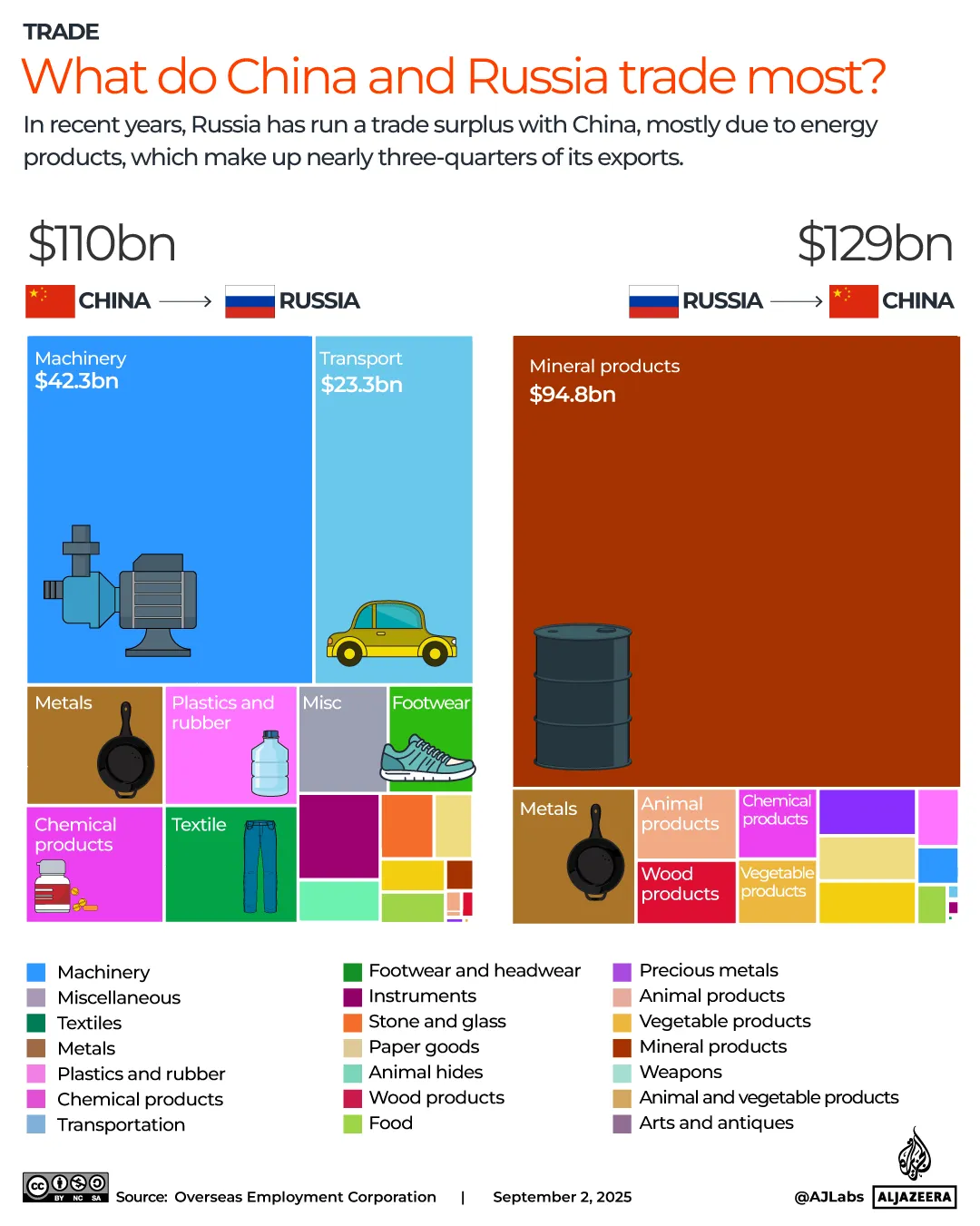
China has become an economic lifeline for Russia as the country’s economy has shifted to a wartime footing, with two-way trade between the countries more than doubling between 2020 and 2024, when it reached $237bn for the year.

But the relationship is also uneven. While China is Russia’s largest trading partner, Russia accounts for only about four percent of China’s total international trade. China’s economy is also vastly larger, and Beijing holds considerably more leverage in negotiations between the two sides.

Since the invasion of Ukraine, Moscow has become increasingly reliant on Chinese technology and manufacturing. A recent Bloomberg report found Russia was sourcing more than 90 percent of its sanctioned technology imports from China, including components with military and dual-use applications vital to drone production and other defence industries.

China has also emerged as a crucial buyer of Russian oil and other energy products at a time when European markets have largely closed to Moscow in response to the Russia-Ukraine war. With Western sanctions restricting Russia’s options, the Kremlin has few viable alternatives to China’s scale of demand.

Analysts say the imbalance means Beijing is often able to negotiate from a position of strength, securing access to Russian oil and gas at discounted prices while expanding its influence over Moscow’s economic future.

INTERACTIVE-What do China and Russia trade most?-sep3-2025 copy 4-1756879426
(Al Jazeera)

Why China still needs Russia

While the relationship is uneven, it is not one-sided. Russia provides something increasingly valuable in a turbulent world: secure access to vast energy resources beyond vulnerable maritime trade routes.

The war surrounding Iran and disruptions in the Strait of Hormuz have heightened Beijing’s concerns over energy security, given China’s heavy dependence on imported oil and gas passing through contested shipping lanes.

That has renewed attention on the proposed Power of Siberia 2 pipeline, a long-delayed project expected to feature prominently in this week’s discussions.

If completed, the pipeline would transport 50 billion cubic metres of Russian gas annually to China via Mongolia, significantly expanding energy flows between the two countries.

But it is more than just an economic relationship. China also values Russia as a geopolitical partner. Both countries are permanent members of the United Nations Security Council and frequently align diplomatically in opposition to US-led policies.

While analysts say China has been careful not to become formally tied to Moscow through a rigid military alliance, the two countries have still gradually reinforced their partnership through increasingly regular joint military exercises, including the “Joint Sea” naval drills that began in 2012.

Last year, China and Russia launched fresh naval drills in the Sea of Japan near the Russian port of Vladivostok, with exercises focused on submarine rescue, anti-submarine warfare, air defence, missile defence and maritime combat operations. Analysts say the drills help signal strategic alignment between Beijing and Moscow without the mutual defence commitments of a formal alliance.

Experts say the strength of the partnership lies in its flexibility. While Western governments have often portrayed the relationship as fragile and driven largely by a shared opposition to the West, analysts say, it may prove more durable because it is rooted in shared economic and strategic interests rather than ideology alone.

Source link

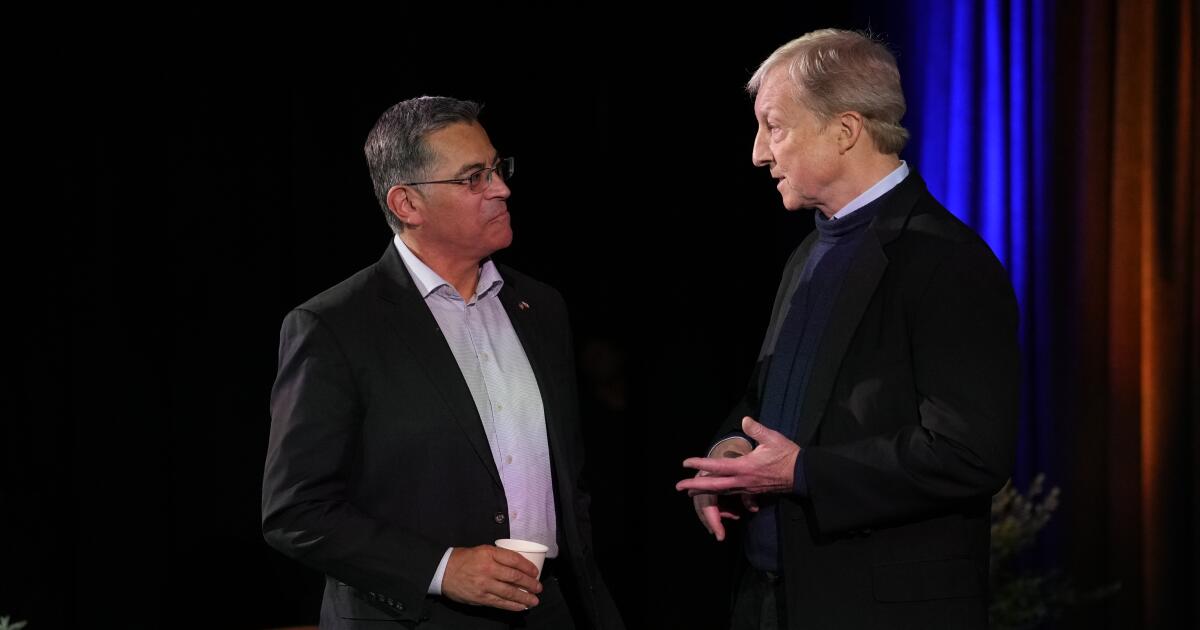
In growing fight, Steyer’s campaign says pro-Becerra influencers didn’t disclose pay

In the latest escalation of a fight over the use of paid social media creators, Tom Steyer’s campaign for governor filed a complaint Tuesday accusing influencers who posted content supportive of Xavier Becerra’s campaign of failing to disclose that they had been paid, which is required by California law.

The complaint, filed with California’s Fair Political Practices Commission, accuses Jay Gonzalez of producing at least 14 pro-Becerra posts on Instagram and Facebook in late April and early May, after he was hired by the campaign, and only belatedly editing the posts to acknowledge they had been sponsored by the campaign.

The complaint also said that a social media creator named Maggie Reed, who posts under the username mermaidmamamaggie, created four pro-Becerra posts on Instagram and had previously offered to create paid posts for another gubernatorial campaign, though the complaint doesn’t specify how the campaign knows Reed was paid.

Reed and a talent agency that represents her did not immediately respond to requests for comment.

The Becerra campaign maintained that it has not paid influencers who have created posts in support of the campaign.

“All of the content you see online is entirely and purely organic,” said Becerra spokesman Jonathan Underland.

Becerra and Steyer have been the top two Democratic candidates in recent polling for the governor’s race, with Becerra consistently maintaining a slight edge in those polls.

The complaint by Steyer’s campaign comes after two influencers who support Becerra filed a complaint last week accusing social media creators hired by the Steyer campaign of failing to disclose that they had been paid to produce their posts.

The campaign of the billionaire candidate for governor had previously disclosed payments to some influencers with large audiences, including one creator with the user name zayydante, who has 1.8 million followers on TikTok, and another with the user name littleyeg, who has nearly 350,000 followers on TikTok. The complaint filed last week said that both of these influencers failed to disclose that they had been paid by the campaign to produce content.

The complaint also highlighted several accounts created by user who don’t appear to live in California who created posts promoting Steyer and, in at least one case, posted elsewhere that they had been paid by the campaign.

The influencers who filed the original complaint said they saw the newly filed complaint as an attempt by Steyer’s campaign to deflect criticism.

“All he’s done is attack his opponent instead of taking accountability for violating the law,” said Kaitlyn Hennessy, one of the two influencers who filed the complaint against Steyer’s campaign. Hennessy and the other influencer who filed the complaint both said they have not been paid by the Becerra campaign.

In a post on Substack, Steyer defended his campaign’s use of paid social media influencers and said that it had been transparent about their use.

“Every creator we compensate has been and will be publicly disclosed as required by law,” he wrote.

Under a California law passed in 2023, social media creators who create paid content on behalf of a political campaign are required to disclose in their post that the material was sponsored and who paid for it.

The onus is on creators to provide the disclosure, but campaigns are required to notify influencers they hire of the requirement.

Violation of the rules doesn’t trigger criminal, civil or administrative penalties but the FPPC can take alleged offenders to court and ask a judge to force compliance with the law.

Source link

NAACP calls for boycott of Southern college sports programs over voting rights

The NAACP is calling on Black athletes and fans to boycott the athletic programs of public universities in states that are taking steps that the nation’s oldest civil rights group says are restricting Black voting rights.

Launched on Tuesday, the “Out of Bounds” campaign urges prospective Black athletes, their families, alumni and fans to “withhold athletic and financial support” from major public universities in states that “have moved to limit, weaken or erase Black voting representation.”

If Black athletes participate in the boycott, it could deplete rosters for powerhouse football and basketball programs across the Southeastern Conference and Atlantic Coast Conference.

The NAACP is among groups responding to a wave of gerrymandering in the aftermath of a Supreme Court ruling that winnowed a key provision of the Voting Rights Act of 1965.

The boycott comes as civil rights activists have mobilized across the South to protest redistricting plans by Republican state legislatures that eliminate majority-Black congressional districts after the high court’s ruling. Activists have looked for pressure points to dissuade GOP-led states from redistricting maps, including calls for mass protests and economic boycotts.

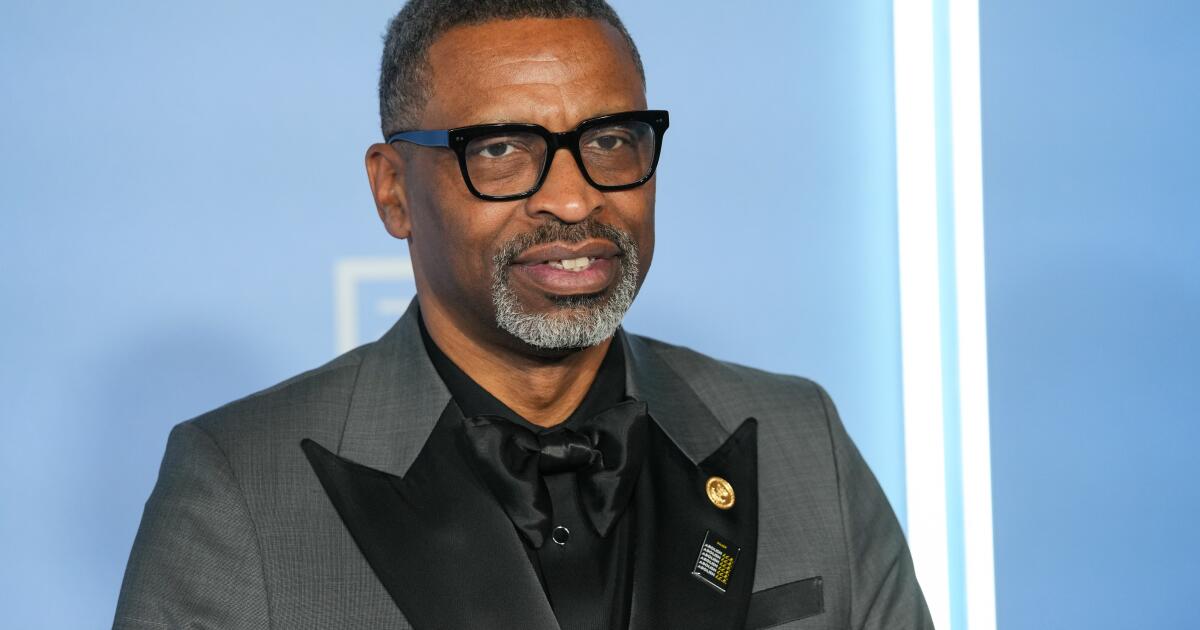
“Across the South, Black athletes have helped build some of the most profitable college athletic programs in America,” said NAACP President Derrick Johnson. Johnson noted that the programs “generate hundreds of millions of dollars in annual revenue, national television value, alumni donations, merchandising sales, ticket sales, and brand equity — much of it powered by Black football and basketball talent.”

The NAACP’s campaign calls out Alabama, Florida, Georgia, Louisiana, Mississippi, Texas and South Carolina as states to boycott, arguing that the athletic programs of those states’ flagship universities are especially reliant on Black athletic talent and should protect Black political interests.

“Black athletes should not be asked to generate wealth, prestige, and power for state institutions while those same states strip political power from Black communities,” said Johnson.

Black lawmakers themselves are also putting pressure on athletic leagues to take action against Republican-led states that may redistrict longtime Black members of Congress.

The Congressional Black Caucus on Monday sent a letter to the commissioners of the SEC and ACC athletic conferences, as well as NCAA President Charlie Baker, that its members will oppose the SCORE Act, a bill to standardize athletes’ contracting rights across the country, unless conference leaders oppose GOP-led redistricting efforts in states that include major conference members.

“The Congressional Black Caucus believes institutions that profit from Black talent and Black communities have a responsibility to stand with those communities when their fundamental rights are under attack,” the CBC said in a Monday statement. “Silence in the face of injustice is not neutrality — it is complicity.”

Brown writes for the Associated Press.

Source link

Scientific report on ‘Golden Dome’ program counters Trump’s claims

WASHINGTON, May 19 (UPI) — President Donald Trump‘s move to build a national missile defense system would leave millions of Americans vulnerable to nuclear attack despite the program’s exorbitant cost, the author of a new scientific report said at a press conference Tuesday outside the U.S. Capitol.

The report simulated a “best case scenario” in which the Golden Dome system shot down 80% of incoming missiles, said Ira Helfand, the report’s main author and a co-founder of Physicians for Social Responsibility, an anti-nuclear weapons organization.

Under those circumstances, more than 300 warheads still would reach the United States, the report found, and that Russia would have a 95% chance of being able to destroy any one of 132 major population centers in which a combined 75 million Americans live.

“Let’s be clear what Golden Dome is: a vanity project of one person, Donald Trump,” said Rep. Jim McGovern, D-Mass., using Trump’s chosen moniker for the missile defense system. McGovern was one of two Massachusetts lawmakers who led the press event.

“We must suffer the Trump arch, the Trump ballroom, the Trump battleship and now Trump’s Golden Dome. Each are the egotistical fantasies of an aging man who needs psychiatric care,” McGovern said.

Soon after taking office in 2025, Trump directed the Defense Department to develop a homeland air and missile defense system. The order called for protecting the U.S. “against ballistic, hypersonic, advanced cruise missiles and other next-generation aerial attacks from peer, near-peer and rogue adversaries.”

This initiative, later named Golden Dome for America, echoes earlier missile defense efforts, such as President Ronald Reagan‘s Strategic Defense Initiative, commonly known as Star Wars. It was never fully build or deployed.

“Building an effective and reliable shield against any realistic attack by nuclear-armed ICBMs is technologically infeasible for the foreseeable future,” said Laura Grego, a physicist who specializes in nuclear security at the Union of Concerned Scientists.

“But also attempting to build one would be hugely expensive — wasting time and resources — and accelerate the nuclear arms race.”

The report was released by the Nobel Peace Prize-winning International Physicians for the Prevention of Nuclear War, Physicians for Social Responsibility and Back from the Brink, all advocates for abolishing nuclear weapons.

The press conference came after a Congressional Budget Office report released last week found that a missile defense system designed to counter a small-scale nuclear attack would cost $1.2 trillion.

A more robust system in line with Trump’s aspirations of “ending the missile threat to the American homeland,” would come with a $3.6 trillion price tag, according to a 2025 estimate by the American Enterprise Institute, a right-of-center think tank. Trump initially offered a price tag of $175 billion for the project.

“The Golden Dome is fool’s gold,” said Sen. Ed Markey, D-Mass. “It’s a gold-plated boondoggle that will enrich defense contractors and ignite a new nuclear arms race.”

Rep. Austin Scott, R-Ga., who sits on the House Armed Services Committee, told Medill News Service that he did not agree with the report’s conclusion that the Golden Dome would be too ineffective and costly to justify. On the contrary, Scott said, nuclear modernization efforts underway by U.S. rivals required a response.

“The weapons coming from China and Russia are faster and stronger,” Scott said. “And we have to be able to pick them up faster.”

Between 2014 and 2024, the estimated number of Chinese nuclear warheads doubled, from 250 to roughly 500, according to the China Power Project at the Center for Strategic and International Studies.

China, however, has maintained a no-first-use policy since it first detonated a nuclear weapon in 1964, which commits Beijing to only employ its nuclear weapons in response to a nuclear attack by another country.

When asked about claims made by Helfand and others at the press conference that the Golden Dome would spur a new global nuclear arms race, Scott disagreed again.

“It’s a defensive system,” he said, “not an offensive system.”

The planned outlays for the Golden Dome come in tandem with other Trump administration priorities that have raised eyebrows on Capitol Hill, including a $1.5 trillion defense spending package for 2027, $400 million for a new White House ballroom that will sit atop a bunker and $29 billion so far for the war in Iran.

At the same time, in its proposed budget, the White House moved to cut non-defense discretionary spending by 10%. The spending category comprises public health, scientific research and scores of other domestic programs.

At Tuesday’s press conference, Markey said the United States doesn’t have trillions of dollars to waste on a system that “is not going to protect the American people,” and he decried funding cuts to social programs that “actually do provide security for families in their own homes.”

Source link

U.S. government agrees to drop tax claims against Trump in broadening of IRS lawsuit settlement

The U.S. government will permanently drop tax claims against President Trump, according to a settlement document that is part of a deal to resolve Trump’s $10 billion lawsuit against the Internal Revenue Service over the leak of his tax returns.

As part of the settlement agreement, the U.S. is “forever barred and precluded” from examining or prosecuting Trump, his sons and the Trump organization’s current tax issues, according to a one-page document posted to the Justice Department’s website on Tuesday.

The settlement, which marks an extraordinary use of executive power, goes beyond resolving litigation and effectively helps shield the president from further examination of his finances and legal conduct.

The move comes after the Trump administration announced Monday the creation of a nearly $1.8 billion fund to compensate allies of the Republican president who believe they have been unjustly investigated and prosecuted, an arrangement that Democrats and government watchdogs derided as “corrupt” and unconstitutional.

The “Anti-Weaponization Fund” of $1.776 billion will allow people who believe they were targeted for prosecution for political purposes, including by the Biden administration Justice Department, to apply for payouts, creating what acting Atty. Gen. Todd Blanche called “a lawful process for victims of lawfare and weaponization to be heard and seek redress.”

Blanche, who was grilled by lawmakers on Capitol Hill on Tuesday, would not rule out the possibility that people who carried out violence during the Jan. 6, 2021, riot at the U.S. Capitol will be considered for payouts from the new fund.

Democratic lawmakers and ethics watchdogs slammed the creation of the fund, saying it was corrupt, opaque and had the potential to become a “slush fund” for the president and his allies.

Sen. Ron Wyden, D-Ore., said Democrats intend to “fight every element of this self-dealing settlement.”

“Not only is this another heinously corrupt act by the most corrupt administration in history, it’s clearly a violation of the law that prohibits interference by executive branch officials in IRS audits.”

The fund was announced after Trump, his sons Eric Trump and Donald Trump Jr., and the Trump Organization agreed to drop their lawsuit against the IRS and the Treasury Department. The lawsuit alleged that a leak of confidential tax records caused them reputational and financial harm and negatively affected their public standing, among other allegations.

According to a separate settlement agreement posted to the Justice Department website Monday, Trump will receive a formal apology from the U.S. government but “will not receive any monetary payment or damages of any kind,” from the settlement.

Trump told reporters at the White House on Monday that the fund is dedicated to “reimbursing people who were horribly treated.”

Hussein writes for the Associated Press.

Source link

Hilton, Becerra in tightening race in final weeks of California governor’s campaign

Former Biden Cabinet member Xavier Becerra remains the top Democrat in the California governor’s race despite being targeted by a barrage of negative political ads and enduring sharp attacks from his rival candidates during recent debates, according to a new poll released Tuesday by the state Democratic Party.

Billionaire Tom Steyer, a Democrat who is shattering self-funding records for statewide office, has been flooding the television airwaves, internet and social media with ads ripping Becerra’s long record in public office, as well as for accepting campaign donations from oil giant Chevron. But, thus far, that has not been enough for Steyer to overtake Becerra.

The survey found that 21% of likely voters backed Becerra, who also served in Congress and as California’s attorney general, while 15% backed Steyer. Among the other top Democrats: Former Orange County congresswoman Katie Porter received 7%; San José Mayor Matt Mahan came in at 4%; and state Supt. of Public Instruction Tony Thurmond and former Los Angeles Mayor Antonio Villaraigosa registered at 1%.

Becerra on Tuesday said he believes he has climbed in the polls because voters are now paying attention to the race.

“They’re really looking closely at who’s out there, and I think I’ve been one of the beneficiaries of folks looking for a place that they can feel comfortable, where they can trust,” Becerra told reporters after a campaign event in South Los Angeles. “I think more and more as people look at the candidates, they’re going to start to crystallize behind somebody who won’t need training wheels, as I say, when they get into the governor’s office and can hit the ground running, day one.”

He said he thinks Steyer’s attacks aren’t working because Californians are skeptical of the billionaire.

“He’s spending like no one before, and he’s hitting like no one before, and so far, it hasn’t made a difference,” Becerra said. “We continue to surge, even after weeks of his barrage of lies and attacks…. California voters are not anxious to have someone who wants to buy the office.”

Leading all candidates in the race was Republican Steve Hilton, a former Fox News host, who was supported by 22% of likely voters. His top GOP challenger, Riverside County Sheriff Chad Bianco, was backed by 10%, the poll showed.

While Hilton and Becerra right now appear to be the likeliest candidates to finish in the top two in California’s June 2 primary, which is required to advance to the November general election, there still remains plenty of time for political fortunes and voter support to rise or fall. Ballots were mailed to the state’s 23.1 million registered voters and early voting sites opened earlier this month, but most Californians have not sent them in thus far.

For Becerra, the strong poll results indicate an astounding turnaround for a campaign that appeared all but dead just weeks ago. In early April, the California Democratic Party tracking poll showed Becerra with support from just 4% of likely voters. That changed after then-Northern California Rep. Eric Swalwell, who had been the front-running Democrat in the race, withdrew from the campaign and resigned from Congress after he was accused of sexual assault and misconduct.

The California Democratic Party launched a series of tracking polls in March after leaders and allies grew increasingly concerned that Republicans would win the top two spots in the primary, shutting the party out of the November general election. This prospect, while statistically possible given the crowded field of candidates running for governor, has grown increasingly less likely as California voters finally focused on the contest to lead the nation’s most populous state and the world’s fourth-largest economy.

Under California’s top-two primary system, only the candidates who finish in first and second place in the primary advance to the general election, regardless of their political party or affiliation.

The poll of 1,200 likely voters took place between May 14 and 16 and has a margin of error of 2.83% in either direction.

Source link

Trump endorses Paxton in Texas Republican primary, boosting his challenge to incumbent Sen. Cornyn

President Trump on Tuesday endorsed Texas Attorney General Ken Paxton, supercharging his effort to oust incumbent Sen. John Cornyn in a Republican primary runoff.

“Ken is a true MAGA Warrior who has ALWAYS delivered for Texas, and will continue to do so in the United States Senate,” Trump wrote on social media.

When news of the endorsement broke, Paxton supporters began cheering and dancing to “YMCA,” a Trump campaign anthem, at an event in Allen, Texas, where the attorney general was scheduled to speak.

Paxton and Cornyn qualified for the May 26 runoff after a March 3 primary, while Rep. Wesley Hunt finished third and did not advance.

Although the four-term Cornyn has backed Trump’s agenda in Washington, Paxton pitched himself as a political warrior for the Make America Great Again movement. Trump’s endorsement puts him at odds with his party’s establishment, which is convinced that Cornyn is the better candidate for November’s general election. The Democrats nominated Texas State Rep. James Talarico as their candidate for Senate.

In response to Trump’s endorsement, Talarico said in a statement that “it doesn’t matter who wins this runoff. We already know who we’re running against: the billionaire mega-donors and their corrupt political system.”

Cornyn’s campaign did not immediately respond to a request for comment. On Monday, the senator said he believed that Trump had decided not to weigh in with an endorsement.

“I think the president doesn’t want to disappoint some of his own political base, and some of the Paxton people have been talking to him and encouraged him to support him, I think that was a bridge too far for the president so he’s just opted to say out of the race,” he said.

Cornyn also argued that Paxton is a liability in a general election, where Democrats hope to flip the seat blue, and “Ken Paxton would hand it to them on a silver platter.”

Trump, in his social media post, said Cornyn was “a good man” but “he was not supportive of me when times were tough.” He complained that “John was very late in backing me in what turned out to be a Historic Run for the Republican Nomination.”

The runoff between Cornyn and Paxton had been shaping up as a bitter and expensive battle for the future of the Republican Party, and one that was diverting resources from other competitive races elsewhere in the country.

Trump frustrated some Republicans by declining to endorse earlier in the race. On the Friday before the March 3 primary, he said that he had “pretty much” decided whom to support — but declined to say who — when asked by reporters on a visit to Corpus Christi.

On the day after the primary, Trump promised to make an endorsement and said he would expect the candidate without his support to drop out. Paxton had said that he would not leave the race.

Trump has had an at-times cool relationship with Cornyn, notably after the senator suggested in 2023 that Trump could not win the presidency again in 2024 and that his “time has passed him by.”

Cornyn also was an early critic of Trump’s plan for a border wall between the U.S. and Mexico — a project he now supports.

A former state attorney general and state Supreme Court judge, Cornyn was first elected to statewide office 36 years ago. His understated style and judge’s temperament contrast with the fiery rhetoric of Trump and his Make America Great Again movement.

Cornyn has had support from Senate Republican leadership, including South Carolina Sen. Tim Scott, chairman of the National Republican Senatorial Committee, who warned that “it is a strong possibility we cannot hold Texas if John Cornyn is not our nominee.”

Some Republican leaders have worried the party will need to spend much more money to defend the seat if Paxton is the nominee — money they could be spending on Senate races in more competitive states. Paxton was acquitted in a 2023 impeachment trial on corruption charges. He also reached a deal in 2024 to end a long-running securities fraud case.

Trump stoked the competition on Feb. 27 in Corpus Christi, noting there’s “a little bit of a race,” while acknowledging their attendance.

“We have a great attorney general, Ken Paxton. Where’s Ken? Hi, Ken,” Trump said. He continued, “And we have a great senator, John Cornyn. Hi, John.”

“It’s going to be an interesting one, right? They’re both great people,” he added.

Trump mentioned the third candidate, Hunt, after running through the long list of Texas lawmakers present.

“Another friend of mine who is doing very well, Wesley Hunt,” he said. “Wesley Hunt, what a good job.”

Beaumont, Bedayn and LaFleur write for the Associated Press. Beaumont reported from Des Moines, Iowa, and Bedayn reported from Austin, Texas.

Source link

DOJ wants to drop fraud charges against billionaire Gautam Adani

The U.S. Department of Justice filed a motion to drop fraud charges against Gautam Adani, chair and founder of Adani Group. File Photo by Divyakant Solanki/EPA

May 19 (UPI) — The U.S. Department of Justice announced it will drop criminal fraud charges against billionaire Indian businessman Gautam Adani.

The Justice Department submitted a motion Monday asking a federal judge to drop the indictment from 2024 brought by the U.S. Attorney’s Office in Brooklyn, N.Y. The request said the department “reviewed this case and has decided, in its prosecutorial discretion, not to devote further resources to these criminal charges against individual defendants,” NBC News reported the court filing said.

Principal Associate Deputy Attorney General Trent McCotter and Brooklyn U.S. Attorney Joseph Nocella signed the filing. Prosecutors assigned to the case were not included.

Separately, the President Donald Trump administration announced it had reached a $275 million settlement with a company founded by Adani over “egregious” apparent violations of U.S. sanctions against Iran, Politico reported.

According to the U.S. Office of Foreign Assets Control, Adani Enterprises Limited bought $191 million worth of shipments of liquefied petroleum gas from a Dubai-based trader. OFAC alleged the company overlooked indications that the gas originated from Iran, Politico said.

Adani is the founder and chair of the Adani Group, a conglomerate based in Ahmedabad, India. Brooklyn prosecutors charged him and others in a fraud and bribery scheme in November 2024, while President Joe Biden was in office.

Adani’s lawyers from Sullivan & Cromwell included two of Trump’s personal attorneys: Robert Giuffra Jr. and James McDonald, Politico reported.

Adani’s worth is estimated at more than $100 billion. He is one of the richest people in Asia, and is an ally of Indian Prime Minister Narendra Modi.

Prosecutors alleged that Adani and his co-defendants paid $250 million in bribes to Indian government officials. The bribes were to help Adani Green Energy, a subsidiary, win approval to create India’s largest solar power plant. It was projected to bring $2 billion in profits over 20 years.

They also alleged the defendants defrauded American and international investors by gaining funds “on the basis of false and misleading statements.”

Adani Group denied the allegations and called them “baseless.”

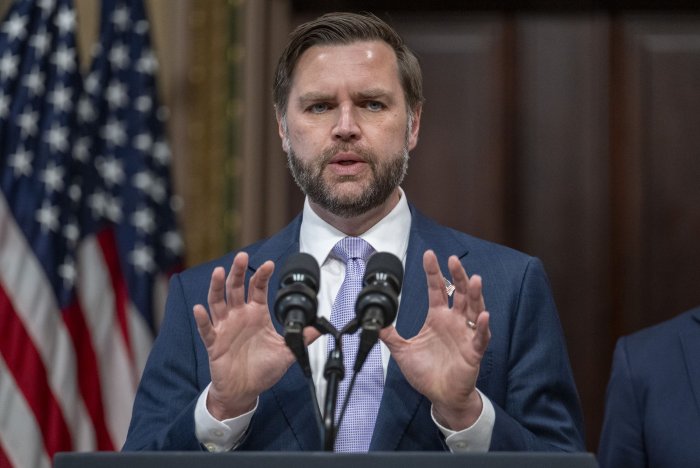
Vice President JD Vance speaks during a news conference on anti-fraud initiatives in the Indian Treaty Room of the Eisenhower Executive Office Building at the White House on Wednesday. Photo by Daniel Heuer/UPI | License Photo

Source link

Blanche doesn’t rule out payments to violent Jan. 6 rioters as he defends $1.8B fund

Acting Atty. Gen. Todd Blanche on Tuesday wouldn’t rule out the possibility that people who carried out violence during the Jan. 6, 2021 riot at the U.S. Capitol will be considered for payouts from a new $1.776 billion fund to pay individuals who believe they were targeted politically.

Pressed during a Congressional hearing over whether those who assaulted police officers would be eligible for compensation from the “Anti-Weaponization Fund,” Blanche responded that all people can apply if “they believe they were a victim of weaponization.” The acting attorney general also refused to say whether he would direct those responsible for deciding who receives payments — a commission whose members he is tasked with appointing — to restrict funds to those convicted of violence.

“What I will commit to is making sure that the commissioners are effectively doing their jobs, and that includes setting guidelines as you’re describing,” Blanche told Sen. Jeff Merkley, an Oregon Democrat. The decisions on payouts will be made a five-member commission appointed by the attorney general.

Appearing before Congress for the first time since taking the reins of the Justice Department last month, Blanche was peppered with questions about the fund announced on Monday to compensate those who believe they were mistreated by prior administrations’ Justice Department. Blanche said the fund was “unusual” but not unprecedented, adding that those who benefit will not be limited to Republicans or to people who were investigated or prosecuted by the Biden administration. At one point, Blanche said President Joe Biden’s son, Hunter — who faced gun and tax prosecutions under his father’s administration — could also apply.

Blanche defends $1.8 billion fund

Tuesday’s hearing was meant to address the Trump administration’s budget request for the Justice Department but quickly delved into other controversies that have escalated concerns about the erosion of the law enforcement agency’s tradition of independence from the White House. Blanche defended the creation of the fund without any acknowledgment that the Trump administration has pursued investigations of Trump’s political opponents, sparking criticism that the department is being weaponized in precisely the same way they allege it was under Biden’s administration to prosecute Trump.

In the weeks since assuming control of the Justice Department after Pam Bondi’s firing, Blanche has moved aggressively to advance the president’s priorities — pushing forward cases against Trump’s political foes, cracking down on leaks to media outlets and establishing the new fund to resolve Trump’s $10 billion lawsuit against the Internal Revenue Service over the leak of his tax returns.

Democrats described it as an illegal abuse of power designed to line the pockets of Trump supporters with taxpayer dollars. Sen. Chris Van Hollen, the top Democrat on the Senate appropriations subcommittee holding the hearing, blasted the move as a “pure theft of public funds.”

“Rewarding individuals who committed crimes is obscene,” the Maryland Democrat said. “Every American can see through this illegal, corrupt, self-dealing scheme.”

The fund is in keeping with Trump’s long-running claims that the Justice Department during the Biden administration was weaponized against him, even though then-President Biden himself was investigated during that time and his son was prosecuted. Merrick Garland, who served as attorney general during the Biden administration, has repeatedly denied allegations of politicization and has said his decisions followed facts, the evidence and the law.

Trump administration has been rewriting the history of Jan. 6

The mere possibility that violent rioters at the Capitol could be considered for payouts is consistent with a Trump administration pattern of rewriting the dark history of Jan. 6, a trend that began when the president pardoned and commuted the prison sentences of the participants in the melee and that continued with the Justice Department firing some prosecutors who put them behind bars.

Under questioning from Merkley, Blanche said that he “will definitely encourage the commission” responsible for deciding on the payouts to “take everything into account.” But when asked whether he believes those convicted of violence should be entitled to compensation, Blanche said: “My feelings don’t matter.”

When Merkley suggested that Trump was using the Justice Department to target his political enemies, Blanche replied that this was precisely the sort of “disgusting” behavior of the Biden administration that the fund was meant to address.

“That is completely inappropriate and wrong,’ Merkley said. “There is no comparison to the absolute fair minded pursuit of justice under the previous administration, and this administration’s pursuit of an enemies list.”

Questions over the meaning of ‘weaponization’

In announcing the fund Monday, the Trump administration did not name specific individuals who might stand to benefit from it. The money itself would come from the federal judgment fund, which pays out court judgments and compromise settlements of lawsuits against the government.

Blanche told lawmakers that the Justice Department is committed to “full transparency” in providing public information about beneficiaries of the new fund.

“It’s not limited to Republicans. It’s not limited to Democrats. It’s not limited to January 6th defendants. It’s limited only by the term weaponization,” Blanche said, though the administration has not said how it will define “weaponization.”

Meanwhile, there were signs of discomfort about the fund even among some Republican members of Congress. Senate Majority Leader John Thune told reporters that he’s “not a big fan,” adding that he isn’t sure how the administration intends to use it, but doesn’t “see a purpose for that.”

Thune’s comments come after Louisiana Sen. Bill Cassidy, who lost reelection in a GOP primary on Saturday, called it a “slush fund.”

“We are a nation of laws,” Cassidy said. “You can’t just make up things.”

Richer and Tucker write for the Associated Press. AP reporter Mary Clare Jalonick in Washington contributed to this report.

Source link

Flight to Argentina: How significant is it for Israel’s LatAm outreach? | Politics News

Israel and Argentina have launched a direct flight starting in November as the two countries boost their ties under Argentina’s far-right President Javier Milei and Israeli Prime Minister Benjamin Netanyahu.

The twice-a-week flight comes as Israel is aggressively pushing to cement its geopolitical footprint in Latin America amid its growing international isolation and its entrenched image as an occupying power.

Recommended Stories

list of 3 itemsend of list

On May 7, Israel’s national carrier, El Al, opened bookings for a direct flight between Tel Aviv and Buenos Aires covering a distance of 12,000 kilometres (7,460 miles) – the longest route in the airline’s history.

However, the 16.5-hour journey is driven by political ambitions rather than mere commercial viability.

During a celebratory event in occupied East Jerusalem last month, Israeli Prime Minister Netanyahu welcomed Argentina’s Milei to hail the “first direct flight” between the two nations.

The event showcased a striking political alignment, further highlighted by the presence of US Ambassador Mike Huckabee, who jokingly promised to buy the first ticket and described the two leaders as US “President Donald Trump’s biggest friends”.

The route aims to translate the “Isaac Accords” – a Latin American framework inspired by the “Abraham Accords” – into tangible reality. Morocco and Sudan established diplomatic ties with Israel as part of the Abraham Accords signed under President Trump’s first term.

Championed behind the scenes by Rabbi Axel Wahnish, Argentina’s ambassador to Israel, the framework aims to establish strategic cooperation in security, counterterrorism, and artificial intelligence with Latin American nations, including Ecuador, Costa Rica and Paraguay.

Trading tech for legitimacy

Israel is acutely aware that its status as an occupying power, exacerbated by the genocidal war on Gaza, has severely damaged its international standing. To secure recognition and bypass boycotts, particularly from an increasingly critical Europe, Israel is leveraging its advanced military and surveillance technologies.

Ihab Jabarin, an analyst specialising in Israeli affairs, told Al Jazeera that Israel’s strategy has shifted.

“Israel’s moral image has completely eroded,” Jabarin said. “The logic now is: ‘you may not like us, but you need us.’ Israel is offering its expertise in cybersecurity, AI systems like Lavender, border management, and drones – technologies tested on Palestinian bodies and land – to countries grappling with internal conflicts and organised crime,” he told Al Jazeera.

Jabarin noted that Israel uses infrastructure – whether ports, underwater cables, or civilian aviation – as tools for national security and influence. “This flight is not just about transporting passengers; it is a permanent corridor for security and tech businessmen,” he explained.

This strategy of using technology and security to buy diplomatic loyalty mirrors Israel’s approach in Africa. It has forged close ties with Ethiopia, Kenya and Chad. Last December, Israel became the first country in the world to recognise Somaliland, a breakaway region of Somalia.

It has used smaller island states like Micronesia in the Asia Pacific to secure favourable votes at the United Nations and break its international isolation.

“Israel is trying to create a global network of interests that forces countries to weigh their relationship with Israel against their stance on the Palestinian cause,” Jabarin added. “It wants to make the world unable to live without it.”

The Milei-Netanyahu chemistry

The driving force behind this Latin American link is the ideological bond between Netanyahu and Milei. While left-wing leaders in the region, such as Brazil’s Luiz Inacio Lula da Silva, have severed ties or strongly condemned Israel’s actions in Gaza, Milei has embraced the Israeli narrative unconditionally.

For Milei, who declared himself the most Zionist president in the world in March, the alliance offers rapid positioning in the Middle East, closer ties to Washington lobbies, and a stance against Latin America’s traditional left. For Netanyahu, Milei offers unconditional emotional and symbolic support that Israel has largely lost in Europe.

“Netanyahu understands the value of a symbolic ally,” Jabarin said. “He needs leaders who can be marketed as proof that Israel can still forge ideological alliances, not just pragmatic ones. Argentina, under Milei, has become Israel’s most important ‘island of influence’.”

A ‘safe haven’ from war crime probes

The direct flight also serves a highly practical security purpose for Israel. With mounting legal challenges and arrest warrants targeting Israeli soldiers and officials in Europe over alleged war crimes in Gaza, the Tel Aviv-Buenos Aires route offers a crucial bypass.

On Tuesday, Israel’s far-right Finance Minister ⁠Bezalel Smotrich said he was informed that the ⁠International Criminal ⁠Court (ICC) ⁠had ⁠requested a warrant for his arrest. Prime Minister Netanyahu is also sought by the ICC for war crimes committed in Gaza.

Currently, travellers between the two countries rely on 21 to 33-hour transit flights through European hubs like Madrid or Paris.

Diego Ruzzarin, a Brazilian writer and analyst, argued that the project aims to secure hassle-free travel for Israelis, particularly military personnel, sparing them from international security interrogations or the risk of arrest in Europe.

Jabarin echoed this assessment, noting that the fear of legal pursuit in Europe is a significant concern within the Israeli establishment.

“The direct flight bypasses any potential legal harassment in Europe,” he said. “Latin America is now appearing in Israeli calculations as a more politically flexible space compared to rights-focused Europe.”

Economic risks and domestic pushback

Despite its strategic value, the flight faces significant logistical and economic hurdles. Because Israeli planes are banned from the airspace of several African nations, including Libya, the flights must take a costly detour over the Mediterranean and the Atlantic.

To mitigate the economic risks of the long-haul route, the Israeli government has taken the unusual step of granting El Al a 20-million-shekel ($5.4m) subsidy, spread over three years.

The success of the route will heavily depend on Argentina’s Jewish community – the largest in Latin America, estimated at up to 300,000. According to Sabre data, roughly 55,300 people travelled between the two countries in 2025, a 37 percent increase from 2024, but still below the 71,200 recorded in 2019.

The project has sparked domestic criticism in both countries. In Israel, the transport ministry reportedly warned that pulling Boeing 787 Dreamliners from highly profitable US routes to service Buenos Aires could drive up ticket prices for Israelis travelling to North America.

In Argentina, left-wing congresswoman Myriam Bregman accused Milei’s government of dragging the country into an “imperialist war” without congressional approval, warning of a constitutional overreach.

Furthermore, the influx of Israeli tourists, many of whom are recently discharged soldiers, has caused friction in southern Argentina. Local residents and activists have blamed Israeli tourists for devastating fires in the Patagonia nature reserves due to negligence, the most recent being a massive blaze in January 2026 that destroyed 77,000 hectares (190,000 acres) and led to the arrest of an Israeli tourist.

For Israelis, however, an El Al flight to Buenos Aires carries profound historical symbolism. In May 1960, the Mossad used an official El Al flight to smuggle captured former Nazi official Adolf Eichmann out of Argentina to face trial and execution in Israel.

Source link

Californians vote to legalize recreational use of marijuana in the state

Voters on Tuesday approved Proposition 64, making California the most populous state in the nation to legalize the recreational use of marijuana.

The approval of the ballot measure creates the largest market for marijuana products in the U.S. It comes six years after California voters narrowly rejected a similar measure. Activists said passage would be an important moment in a fight for marijuana legalization across the U.S.

“We are very excited that citizens of California voted to end the failed policy of marijuana prohibition,” said Nate Bradley, executive director of the California Cannabis Industry Assn. “Proposition 64 will allow California to take its rightful place as the center of cannabis innovation, research and development.”

Discouraged law enforcement officials said they will closely monitor implementation of the ballot measure.

“We are, of course, disappointed that the self-serving moneyed interests behind this marijuana business plan prevailed at the cost of public health, safety, and the wellbeing of our communities,” said Chief Ken Corney, president of the California Police Chiefs Assn.

Live updates from the day after the 2016 election »

“We will take a thorough look at the flaws in Proposition 64 that will negatively impact public health and safety, such as the initiative’s substandard advertising restrictions and lack of prosecutorial tools for driving under the influence of marijuana, and begin to develop legislative solutions,” Corney added.

Proposition 64 would allow Californians who are 21 and older to possess, transport, buy and use up to an ounce of cannabis for recreational purposes and allow individuals to grow as many as six plants. The measure would also allow retail sales of marijuana and impose a 15% tax.

Although the measure’s passage would immediately allow adults to possess and grow marijuana, there may not be places to legally purchase it for some time.

The measure only allows non-medical marijuana to be sold by state licensed businesses, and it gives the state until Jan. 1, 2018, to begin issuing sales licenses for recreational retailers.

With financial support from former Facebook President Sean Parker and New York hedge fund billionaire George Soros, the campaign was able to raise close to $16 million, about 10 times the money brought in by the opposition.

“It’s disappointing that big marijuana and their millions of out-of-state dollars were able to influence the outcome of these elections,” said former Rep. Patrick Kennedy, an advisor to the opposition group SAM Action. “We will continue to hold this industry accountable, and raise the serious public health and safety issues that will certainly come in the wake of legalization.”

However, Lynne Lyman, of the pro-legalization Drug Policy Alliance, said the ballot measure in California is the “gold standard” for other states should legalize pot.

California voters reject measure to repeal death penalty, approve plan to expedite it »

“The new law focuses on undoing the most egregious harms of marijuana prohibition, which have disproportionately impacted communities of color,” she said, adding it will be “protecting youth by preventing access to marijuana

Lt. Gov. Gavin Newsom was a leading voice for the campaign, arguing that the national “war on drugs” has failed while disproportionately hurting minority residents and wasting law enforcement resources.

California had led the way 20 years ago by legalizing medical marijuana use in the state.

“I think it’s the beginning of the end of the war on marijuana United States,” Newsom said in an interview Tuesday night. “I think it will have repercussions internationally, particularly in Mexico and Latin America. And there are a million people who tomorrow can begin the process of clearing their records.”

Proposition 64 was opposed by most major law enforcement groups, including the California Assn. of Highway Patrolmen, the Peace Officers Research Assn. of California and the California Police Chiefs Assn.

Opponents cited problems including teen drug abuse and impaired driving experienced where recreational use was previously legalized: Colorado, Alaska, Oregon and Washington.

ALSO

Florida to become first Southern state with a full-scale medical marijuana program

Legalized pot scores big as voters decide on state ballot measures, including the death penalty and minimum wage

Before Proposition 64, simple possession of marijuana was already decriminalized

Source link

How does a 28-year-old raise more than $1 million for a congressional bid?

In his first run for Congress two years ago, Justin Fareed, a relative newcomer to politics, relied mostly on his own money. He didn’t make it past the primary.

This year, the 28-year-old Republican, a former UCLA Bruins running back, has significantly more money to work with — $1 million.

Most of it — 80% — came from people living outside his Santa Barbara district. And nearly $200,000 has come from donors with ties to two of the state’s largest nursing home operators.

The businessmen, Lawrence Feigen and Shlomo Rechnitz, of L.A.’s Westside, have given the maximum allowed contributions, as have members of their families and their friends and employees.

Operators of skilled nursing facilities have a big stake in congressional decisions on healthcare funding and policy. Those businesses depend on funding from Medicaid and Medicare — and, in California, Medi-Cal – and they are under constant scrutiny by government regulators and inspectors.

Fareed himself is in the medical business; he is vice president of his family’s company, ProBand Sports Industries, which makes devices to treat tennis elbow and other repetitive stress injuries. In his candidate statement on the ballot, he also describes himself as a “third-generation cattle rancher” who understands “the burdensome taxes and regulations coming out of Washington, and the implications it has on small businesses and the agricultural community along the Central Coast.”

The congressional race in Santa Barbara, where Democratic Rep. Lois Capps is retiring, pits Fareed against Democratic Santa Barbara County Supervisor Salud Carbajal, who has raised $1.8 million. The field of five others includes Santa Barbara Mayor Helene Schneider, also a Democrat, and Republican Assemblyman K.H. “Katcho” Achadjian. The top two finishers in June will face off in November.

Feigen’s company SnF Management owns more than 35 long-term nursing facilities in California and Arizona under the name Windsor Healthcare.

Rechnitz owns more than 70 facilities and has been described as the state’s largest nursing home operator. In recent years, state and federal authorities have investigated his companies on charges including elder abuse and involuntary manslaughter.

Feigen and at least 30 of his employees, business associates, friends and family members have together contributed at least $108,000 to Fareed’s congressional campaign. Rechnitz, employees of his businesses and their family members have given at least $74,000.

Federal law caps direct donations to candidates at $2,700 for the primary and $2,700 for the general election.

Feigen donated the maximum amount to Fareed’s campaign. Rechnitz contributed $2,700. Three Feigen family members listed as students in finance disclosures each donated $2,700.

In addition, Feigen, his family’s trust and his company donated $25,000 to New Generation, a pro-Fareed political action committee that has since disbanded. Ramat Medical, where Rechnitz is chief financial officer, donated $10,000. Feigen and his wife also donated $10,000 to another PAC set up to support Fareed.

When asked about his donations, Feigen said he and his family “like people who are honest” and not part of the political establishment. He said he knew Fareed through business connections in the medical sector. Rechnitz, through a representative, declined to speak about his contributions to Fareed’s campaign beyond an emailed statement.

“Mr. Rechnitz is a major, non-denominational, non-partisan donor who last year alone contributed to more than 1,100 institutions,” Rechnitz’s spokesperson Stefan Friedman said in the statement.

At the recent opening of his campaign’s Santa Barbara headquarters, Fareed described Feigen as “a supporter like all of our other supporters for the campaign.”

Fundraising success

Fareed, a onetime Capitol Hill aide to a Kentucky congressman, ran for the Santa Barbara congressional seat in 2014, coming up a few hundred votes short of making it past the top-two primary to challenge Capps, the incumbent. That year, he raised about $190,000 and loaned his campaign $197,000.

Voter registration in the district, which stretches across San Luis Obispo, Santa Barbara and Ventura counties, is almost evenly split between Democrats and Republicans. President Obama won the district by 11 points in 2012, and tea party favorite Chris Mitchum, son of the late actor Robert Mitchum, came close to ousting Capps in 2014.

Around 56% of Fareed contributors this year live outside the district, and they contributed $875,000 of his $1.08 million in donations.

About 77% of the $1.5 million that Fareed’s opponent Carbajal has raised from individual donors comes from inside the Central Coast district.

At least 90 of Fareed’s 490 donors live in West Los Angeles, in the Hancock Park, Fairfax and Mid-Wilshire neighborhoods. Supporters in the 90036 ZIP Code contributed a combined $235,000 to the candidate — nearly 25% of the money Fareed brought in since the campaign began.

Many of those Westside donors have ties to the medical industry, according to donation records filed with the FEC.

Feigen is the co-founder of privately owned SnF Management, which manages a chain of nursing facilities. He is also the chief executive of a medical device company that sells orthotic insoles, according to his company website and LinkedIn page.

Rechnitz’s facilities brought in $62 million in profits in 2013, according to a Sacramento Bee report, citing state figures.

In August, California Atty. Gen. Kamala Harris filed involuntary manslaughter charges against one of Rechnitz’s nursing homes, and two of its employees were also charged with dependent adult abuse. Charges against one defendant were dismissed at a hearing last month after she agreed to testify in this case. The charges against the head of nursing and the nursing home remain, and the case is pending. At another Rechnitz-owned facility in Orange County, two former employees were charged with three counts each of elder abuse and failure to report abuse. Their trial is scheduled for July.


For the Record

5:50 p.m., June 2: An earlier version of this article said charges of dependent adult abuse against one defendant were dismissed at a hearing this month. The hearing was in May.


In addition, three Rechnitz-owned facilities repeatedly failed inspections and were eventually decertified by the U.S. Centers for Medicare and Medicaid Services, an agency spokesman said. Regulatory violations at facilities owned by Rechnitz have led to hundreds of thousands of dollars in fines. Rechnitz’s spokesman declined to comment on those cases but said the executive brought “59 nursing homes out of insolvency and currently provides life-saving care to thousands of Californians.”

‘A good guy’

West Hollywood resident Viktor Kogan and his wife each gave $2,700 to Fareed’s campaign in late October.

Asked recently about the contributions, Kogan said he could not recall donating to Fareed, adding that he had never heard of the candidate.

When shown a copy of a federal record noting his contribution, Kogan, 75, said his daughter, Ksenya Kogan, arranged the donation. She also contributed, and listed one of Feigen’s companies, SnF Management, as her employer.

Ksenya Kogan, an attorney, declined to comment about the donations except to say she had met Fareed through friends.

In nearby Hancock Park, Freda Stock gave a total of $5,400 to Fareed, but said she didn’t know anything about the candidate or his campaign. Stock said Feigen has done business with her husband and has been a family friend for “many, many years.”

Fareed’s campaign also has received donations from outside the state, including a $2,700 contribution from Chaim Feigen, a recent graduate of New York University who works for SnF Management and is registered to vote at Lawrence Feigen’s Los Angeles home. Asked about his contribution, he declined to comment.

Other donors interviewed by The Times said they had given money to Fareed’s campaign based on the advice of friends or business associates.

One of those is Denise Wilson, an executive at Ramat Medical, the West Los Angeles medical supply company where Rechnitz is chief executive. Wilson, who gave $2,700, said a group of people that she works with introduced her to Fareed’s campaign.

“They said that he was a good guy,” she said. “I couldn’t give you a definitive answer of his issues or what he stands for. They just said that he was a good, up-and-coming person to support our industry.”

SIGN UP for our free Essential Politics newsletter >>

Lawrence Feigen’s brother, Alan, who also works at Ramat Medical and gave $2,700, said he did not know Fareed personally. He said that a client, whom he declined to identify, had asked Ramat Medical employees to support the candidate.

Among other donors, Ken Zelden, a vice president at Harris Office Products in Van Nuys, said he gave Fareed’s campaign $2,700 because he’d “been told he is a good guy.” “I’m looking forward to meeting him,” he said.

At a recent campaign event in Santa Barbara, Fareed said donors from the healthcare industry comprise “a very prominent base of support that we are developing all over the place.”

He added that his campaign has been holding meet-and-greets and fundraisers around Southern California.

“When you are working to develop an organization, an infrastructure for a campaign and one as significant as this one, it takes a huge geographical area that’s incredibly diverse,” he said.

Times staff writers Victoria Kim, Sarah D. Wire and Maloy Moore contributed to this report.

javier.panzar@latimes.com

@jpanzar

ALSO:

Why activists in these California swing districts are feuding with the national Democratic Party

Celebrity donors pour money into this open California congressional seat

A farmer and a former UCLA football player are running for Congress. Here’s why you should pay attention

Updates on California politics


UPDATES:

June 3, 8:40 p.m.: This article was updated to reflect two additional donations.

4:28.p.m.: This article was updated to include San Luis Obispo County in the description of the 24th Congressional District’s boundaries.

This article was originally published June 2 at 12:56 p.m.



Source link