A report stating that the Trump administration directed funds towards right-wing groups comes ahead of Brazil’s presidential election.
Published On 1 Oct 20261 Oct 2026
Brazil’s attorney general has called on law enforcement to investigate alleged efforts by the United States to interfere in the country’s domestic politics through the diversion of funds to far-right causes.
Attorney General Jorge Messias called for the probe on Thursday, one day after the British newspaper The Guardian published a story suggesting that the administration of United States President Donald Trump planned to award $1m to right-wing civil groups opposing the Brazilian Supreme Court.
Recommended Stories
list of 3 itemsend of list
Messias stated in a social media post that foreign meddling “cannot be tolerated” and that the report represented “an important alert for Brazilian sovereignty”.
“The information is especially serious in light of Brazil’s electoral process and the recent episodes of external pressure on our institutions,” the attorney general added.
The report comes amid a tense presidential election in which leftist President Luiz Inacio Lula da Silva is seeking re-election.
Lula has sought to focus attention on efforts Trump has undertaken to boost the prospects of far-right allies across Latin America, warning of threats to regional sovereignty.
Trump has endorsed multiple right-wing candidates ahead of elections across the region, sometimes hinging the possibility of economic support on the voting results.
He has also cultivated close relations with the family of former Brazilian President Jair Bolsonaro, who lost to Lula in the last presidential election.
Bolsonaro’s eldest son, Senator Flavio Bolsonaro, is a frontrunner in the race to challenge Lula this year. Recent polls have shown Lula and Bolsonaro virtually tied ahead of the first round of voting on October 4.
Flavio Bolsonaro met with Trump at the White House in May. He has promised closer ties with the US, while Lula has positioned himself as a critic of Trump’s interventionist approach to Latin American politics and security.
The Guardian report published on Wednesday states that the Trump administration sought to redirect $175m from the State Department’s human rights fund to various far-right causes around the world.
The recipients allegedly included groups advocating for white Afrikaners in South Africa that the Trump administration has falsely portrayed as victims of a “genocide” and efforts in Brazil to counter what the US called “lawfare and censorship”.
Brazil’s Supreme Court has been a subject of frequent criticism from the political right, both in Brazil and the US.
Much of that criticism stems from the 2025 conviction of Jair Bolsonaro for involvement in an alleged coup plot, designed to subvert his loss to Lula in the 2022 election.
Bolsonaro and his allies, including Trump, have depicted the case as an instance of political persecution.
Citing the trial, Trump last year placed 50-percent tariffs on certain Brazilian goods that he has since removed.
At the time, he announced the tariffs in a letter that denounced Bolsonaro’s prosecution. “The way that Brazil has treated former President Bolsonaro, a Highly Respected Leader throughout the World during his term, including by the United States, is an international disgrace,” Trump wrote.
The Trump administration also revoked the visas of Brazilian judicial officials involved in Bolsonaro’s case in an effort to have it tossed out. It also levied short-lived sanctions against Brazilian Supreme Court Justice Alexandre de Moraes, accusing him of “an unlawful witch hunt” against right-wing voices.
Bolsonaro was ultimately convicted and sentenced to a 27-year prison sentence in September 2025.
In June, one of his sons, Eduardo Bolsonaro, was sentenced to more than four years in prison after a court ruled he had lobbied for US interference in his father’s case.
Arguably the biggest change is to Area Planning Commissions, a group of seven volunteer-led boards that hear cases from homeowners, developers and businesses and make rulings on liquor licenses, hillside developments and more.
The amendment would consolidate those seven commissions into a single unified Neighborhood Appeals Commission.
The goal is efficiency. State laws passed in recent years have changed the appeals process, leading to lower caseloads for the seven boards. It’s also a financial drain on the city to train and take on so many volunteer commissioners while also paying overtime for staffers to host evening meetings for seven bodies — think audio-visual specialists, tech support, etc.
Under the amendment, the total number of commissioners would shrink from 35 to as few as seven, and the staff required to host meetings also would shrink significantly.
A unified board would eliminate the risk of commissions issuing different rulings. Picture a developer trying to build a hillside home; a commission that’s wary of such projects could reject it, while another commission that leans more pro-housing could approve it. Having a single board means that all appeals and applications would be governed by the same logic.
Pave the way for super-skyscrapers
Could an L.A. skyscraper rise higher than those in New York City or Chicago? Could downtown L.A. claim not just the tallest building west of the Mississippi River but also in the entire country?
If so, it would start here.
This amendment allows the City Council to change the existing floor area ratio (FAR) restrictions, which cap the height of certain buildings. FAR ratios vary by neighborhood and height districts, but the highest ratio is currently 13x, meaning a building’s total square footage never can be more than 13 times the size of the parcel of land that it sits on. For reference, L.A.’s tallest building, the Wilshire Grand Center, has a ratio of roughly 10.5, depending on how you calculate the square footage and acreage.
These limits were set in the 1950s, when L.A.’s population was roughly half of what it is now. This amendment would give City Council the flexibility to set higher limits to add density in order to adapt to a growing population.
Individual projects still would require zoning reviews, so no need to worry about skyscrapers coming to Silver Lake.
Set deadlines
You just opened a taco shop and you want to serve margaritas. The City Council said it’s fine, but you’re waiting to hear back from the City Planning Commission. They’re taking too long, and your patrons are drinking water while you wait for a liquor license.
Under current rules, decisions from either the City Council or Planning Department can get kicked back and forth indefinitely. This amendment sets deadlines for both sides to speed up rulings: Planning boards have 30 days to concur or dissent with City Council decisions, and City Council gets 21 days to hold a final vote on Planning decisions — or else the Planning decision becomes final.
Ensure passed amendments actually pass
Here’s how it would work. Say there’s an amendment to the city’s General Plan, which guides land use decisions, or a tweak to one of the neighborhood community plans that oversee development in areas like Hollywood or Boyle Heights. The mayor has signed off on it. The City Planning Commission approves too. But the City Council just hasn’t quite gotten to it yet.
Under current rules, if the City Council doesn’t vote on an amendment within 75 days of the mayor and Planning Commission approvals, it’s automatically denied. This amendment reverses that; if the City Council doesn’t get to an amendment within 75 days, it’s automatically approved.
Holidaymakers will also be given greater flexibility to correct simple name errors including spelling mistakes on bookings for free – rather than facing charges
Airline charges including hidden fees for parents to sit next to children under 14 will be banned(Image: Getty Images)
Rip-off airline charges including hidden fees for parents to sit next to children under 14 will be banned under government plans.
Holidaymakers will also be given greater flexibility to correct simple name errors including spelling mistakes on bookings for free – rather than facing charges.
Under the proposals unveiled today, airlines will be required to seat children under the age of 14 with a parent or adult accompanying them free of charge.
Andy Burnham said: “Charging parents just to sit with their children is a rip-off, plain and simple. And being hit with a hefty fee for a simple spelling mistake on a booking form isn’t right either.
“People are fed up with these little charges that add up, so I’m putting a stop to them. This is what our everyday fixes are all about. Giving people room to breathe by tackling the small irritations that catch people out, waste their time and cost them money.”
Earlier this year the Competition Markets Authority (CMA) investigated budget airline Ryanair over such charges costing around £8 each way.
Under the airline’s old policy parents had to book a “mandatory family seat” to sit with their children aged 2-11 in order to secure a seat when they flew.
But Ryanair – which the CMA said was the only major operator to charge such a fee – changed its policy in June with kids up to the age of 11 seated next to their parents free of charge.
It’s website now states: “For safety reasons, children aged between 2 and 11 years must sit next to an accompanying adult, and infants (8 days to 23 months inclusive) must sit on an accompanying adult’s lap. Families may choose either to reserve seats or select free random allocation.
“If random allocation is selected, children will be seated next to an accompanying adult on the same reservation free of charge. Other adults and teens on the booking may be allocated seats separately.”
The government said that while some airlines already offer protections on fees, the reforms will guarantee the same rights for passengers – despite who they fly with.
British Airways policy already makes clear children up to the age of 12 will be seated for free. It states: “To ensure your family has the best seats when you fly, we recommend choosing yours in advance when you book. There may be an additional fee for this.
“If you don’t choose your seats in advance, we always do our best to seat your family together based on flight seat availability. This may mean that you’ll be seated in adjacent rows or across the aisle. All children under 12 will be seated with an accompanying adult.”
EasyJet’s policy adds:”If you leave it to the last minute it’s possible that there may not be enough seats left for us to seat your family next to each other.
“We’ll still make sure each child under 12 is seated close to an adult on your booking. However we may only be able to arrange this at the airport or on board, which can cause delays for you and other passengers, and not everyone may be seated together.”
The government said the move was the latest in the PM’s attempts to give people breathing space, including action already unveiled on costly subscription traps and school uniform rip-offs.
Heidi Alexander, Transport Secretary, said: “Parents should not have to feel the pinch just to sit next to their child on a flight, or for amending a simple booking error. That’s why we’re scrapping these unnecessary charges for all airlines – another everyday fix to help put money back in people’s pockets and give households more breathing room.
“And everyone deserves to travel knowing their flight isn’t going to be disrupted by bad behaviour from a small minority. These common-sense reforms will make flying safer for staff and passengers and protect people from unnecessary charges, whoever they fly with.”
Rory Boland, Editor of Which? Travel, added: “It’s clearly unfair to force parents and children as young as three to pay an extra fee just to sit together. Airlines that have separated families are putting profit ahead of passenger peace of mind.
“Which? has successfully pressured many airlines into dropping these fees over the past ten years. So it’s welcome to see the government taking firm action on this by outlawing these charges completely and finally putting an end to this rip off.
“It is also positive to see greater flexibility to amend simple mistakes, protecting consumers from unnecessary charges.”
WASHINGTON — The U.S. military is dispatching roughly 9,000 troops aboard a group of ships to the Middle East, a U.S. official said Thursday. The bolstering of the American military presence comes as President Trump warned anew that new strikes against Iran could be on the horizon.
He also said early indications suggest that Iran is linked to the co-pilot who stabbed his captain and tried to crash an Israel-bound flight on Wednesday.
In an exchange with reporters at the White House, Trump raised the connection when asked by a reporter if there were any links between the pilot behind the attack and Tehran.
“I would say the answer, based on what I’m hearing, is ‘yes,’ but we’re working on it right now,” Trump said, without offering details.
Trump also warned that if the link is established to Iran, the United States would retaliate.
“Oh they’ll be hit, very hard, don’t worry,” Trump said. “You just ask them. They know what happened. They’ll be hit very hard.”
Meanwhile, the group of ships now en route to the Middle East together carry over 7,000 sailors and 2,000 Marines.
It includes the USS Theodore Roosevelt carrier strike group, which recently deployed with the cruiser USS Chosin, and the USS Makin Island amphibious readiness group, which includes the USS John P. Murtha and USS Anchorage amphibious landing ships.
It could mean that three carriers are in the region as early as the end of October, according to the U.S. official who spoke to the Associated Press on condition of anonymity to discuss sensitive military operations.
Given the personnel already in place in the Middle East, the move would bring the U.S. naval presence to an unusually high number of more than 20,000 sailors and Marines and hundreds of aircraft. The Navy previously had three carrier strike groups in the Middle East in April for the first time since 2003.
The carriers USS George H.W. Bush and the USS George Washington are in the region now, along with the USS Boxer amphibious readiness group. The Washington is typically deployed to Pacific Ocean but it was moved to the Middle East to relieve the USS Abraham Lincoln, whose arduous deployment resulted in the crew being at sea for more than 260 days straight.
Trump, in a Time magazine interview published Thursday, also raised the prospects of new strikes, saying it is “possible” that he will ramp up bombing in Iran after the Nov. 3 elections in the United States.
When pressed, Trump said he could not go further in detailing his strategy.
“I can’t tell you that because look, you know, you’re asking, where are you going to bomb?” Trump said.
He said in the interview, conducted Monday, that he rejected the latest ceasefire proposal from Iran because “things that I wouldn’t have approved a year ago I wouldn’t have today.”
Trump cited as an example an offer from Iran to “open up” the Strait of Hormuz, the key energy shipping corridor, but said the overall proposal was “not good enough.”
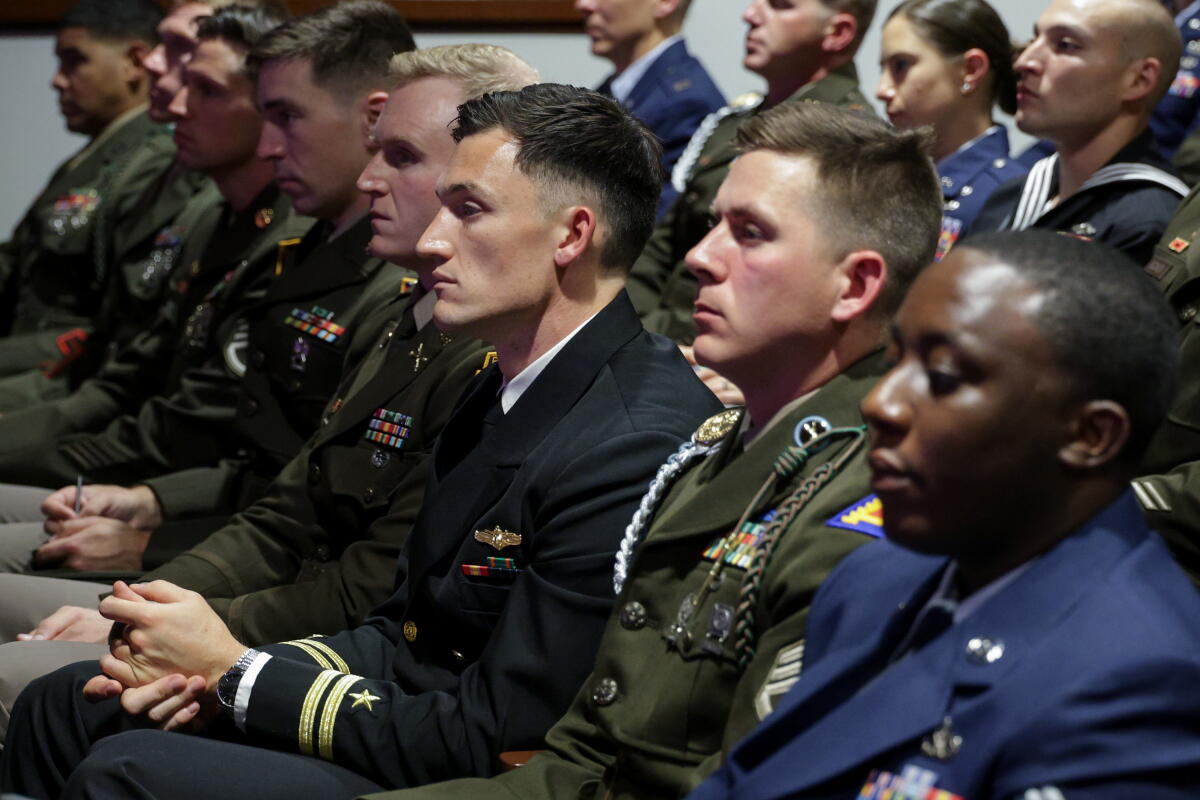
Members of the military listen as Defense Secretary Pete Hegseth gives a State of the Force address at Marine Corps Base Quantico.
(Alex Wong / Getty Images)
Asked if the increasingly unpopular war would threaten Republican Party chances in November, Trump at first responded, “It’s possible.” But then he added, “It should help, because Iran will not have a nuclear weapon.”
The president said “100% of the people” oppose Iran having nuclear attack capabilities “including worldwide.”
“So, when you say it that way, It would help,” Trump added. “If you don’t say that, it could hurt.”
Toropin and Price write for the Associated Press. AP writers Seung Min Kim, Will Weissert and Aamer Madhani contributed to this report.
WASHINGTON — The Supreme Court on Thursday agreed to review a Trump administration policy denying bond hearings for immigrants as the government carries out a sweeping crackdown.
The justices will consider whether immigrants who have been living in the U.S. have a right to a hearing to determine if they should remain detained while challenging their possible deportation.
The case will test a key pillar of the Trump administration’s hard-line immigration agenda.
Most appeals courts to have considered the issue have found that it violates federal law to detain immigrants, including those living in the U.S. illegally, without a bond hearing. Those decisions conflict with rulings by the 5th and 8th circuits, which held that immigrants accused of illegally entering and remaining in the U.S. must be detained while their deportation cases are pending.
The high court agreed to hear the case of Ricardo Aparecido Barbosa da Cunha, a citizen of Brazil. Authorities say he entered the United States illegally two decades ago and applied for asylum in 2016. He sought a bond hearing after an immigration judge determined that his detention was mandatory following his September 2025 arrest.
He has never been charged or convicted of a crime, his attorneys said. The court is expected to hear the case in the coming months.
President Trump’s administration had urged the high court to take up a different but related case that involves the broader constitutional implications of the new policy.
Attorneys from the Republican administration argue the circuits’ split is “disrupting the orderly administration of immigration law.” They say the nation’s courts have been inundated with thousands of petitions filed by immigrants challenging the government’s legal interpretation.
“The result is an unworkable patchwork of inconsistent immigration enforcement, where aliens present without admission are subject to mandatory detention in some circuits but are entitled to bond hearings and often released in others,” lawyers for the administration wrote.
The plaintiffs are immigrants represented by the American Civil Liberties Union, which says hundreds of district court judges have joined most circuits in rejecting the Trump administration’s new reading of the statutes. Plaintiffs’ lawyers say the administration is trying to deny bond hearings for immigrants apprehended anywhere in the U.S. — no matter how long they’ve lived in the country — rather than limiting the restriction to noncitizens stopped at the border.
“Millions of noncitizens could be affected by the government’s new interpretation,” ACLU attorneys wrote.
The Trump administration says its new mandatory detention policy is legal under a 1996 immigration law. The policy change departs from the practices of prior administrations, which typically allowed most noncitizens without criminal records to request a bond hearing if they were arrested away from the border.
Police have detained hundreds as students protest overcrowded classrooms, teacher shortages and crumbling facilities.
Published On 1 Oct 20261 Oct 2026
French students have set fire to bins and erected blockades outside schools in several cities, protesting overcrowded classrooms, teacher shortages and crumbling facilities.
Several school principals were injured, harassed or assaulted during blockades at high schools on Thursday, according to reports from regional education authorities, prefectures and union representatives.
Recommended Stories
list of 2 itemsend of list
Police have already detained hundreds of protesters at the lycees, which students aged 15 to 18 attend for their final three years of secondary education in France.
At Marseille’s Victor Hugo high school, the teachers were inadvertently splashed as a student attempted to throw petrol into a rubbish bin, local authorities said. Earlier, the prosecutor’s office had said the teachers had been assaulted and “doused in petrol”.
At another school in the city, Saint-Exupery high school, hundreds of young people surrounded a firetruck that had arrived to put out a blaze in the morning, police said. The attackers forced the firefighters to flee the vehicle, then set it alight.
In Nantes, firefighters extinguished a fire at a high school entrance following what regional education officials called a gathering “marked by violence towards staff”. In Strasbourg, trams were halted to “restrict the movements of rioters and demonstrators”, and students burned barriers on tram tracks, authorities said.
“There are 35 of us per classroom. With 35 degrees Celsius [95 degrees Fahrenheit] in summer, it’s unbearable. There aren’t enough toilets, and there are water leaks in some rooms,” Raphael, a 17-year-old who withheld his surname for fear of reprisals, told the AFP news agency outside a protest in Strasbourg.
“The building is falling apart, the cafeteria is too small. There’s zero budget, zero resources, not enough supervisors.”
His frustration echoes a wave of student anger that has spread across France since last week, as high school pupils protest and grievances snowball into nationwide unrest.
Some 340 demonstrations were under way outside high schools by mid-morning on Thursday, with more than 160 schools shut down as a result, police said.
University students joined in, blocking access to about 30 campuses, including in Paris and Marseille, according to a student union.
Authorities have reported many dozens of injuries – some from thrown objects, others reportedly from police riot-control projectiles.
Interior Minister Laurent Nunez said police have opened internal investigations into brutality allegations involving three students.
Prime Minister Sebastien Lecornu convened a crisis meeting and asked ministers to cancel upcoming official travel so authorities could focus on the demonstrations, his office said.
French Education Minister Edouard Geffray said that he would successively meet representative staff unions and parent and student associations on Friday.
The unrest has become entangled in the race to succeed President Emmanuel Macron next May. The government has accused the far-left France Unbowed party of encouraging the protests. Presidential candidate Jean-Luc Melenchon said Wednesday that his party “called for nonviolent methods of struggle” and criticised the government’s response as repressive.
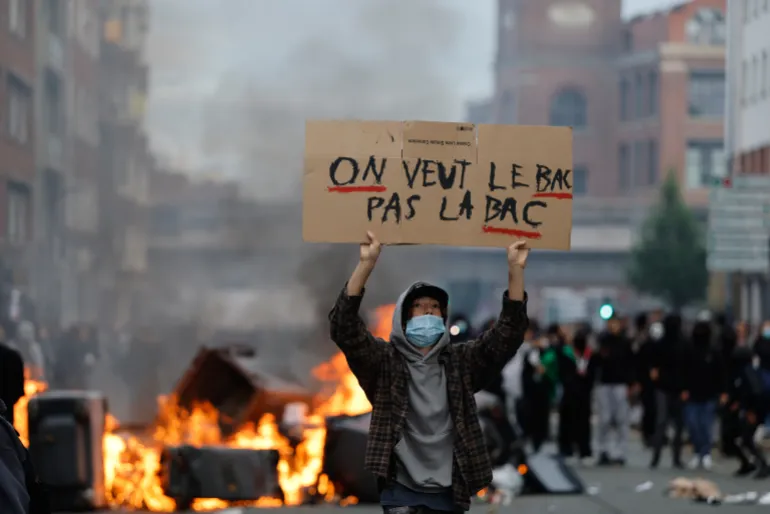
A student holds a board reading, ‘We want the BAK [high school diploma], not the BAC [anti-criminality units]’ during a protest to demand more resources at school, in Lille, France [Jean-Francois Badias/AP]
CNN Chairman and Chief Executive Mark Thompson could remain in his role at the news network after Paramount completes its deal to acquire the news network’s parent company, Warner Bros. Discovery.
Thompson, 69, is said to be in early stages of a discussions with Paramount Skydance Chief Executive David Ellison about continuing in the job he has held since April 2023, according to two people familiar with the matter who were not authorized to discuss it publicly.
The Wall Street Journal was first to report Thursday that Thompson has been approached by Ellison about staying with the network. A representative for Paramount declined to comment.
Retaining Thompson in his role would provide short-term relief to CNN staffers who are concerned about the change in ownership. As Paramount pursued its $111-million deal to acquire Warner Bros. Discovery — which is moving forward following a judge’s decision to settle an antitrust suit filed by state attorneys general who wanted to block the deal — the Ellison family have reportedly had discussions with President Trump about altering the network’s coverage, which he has often deemed as unfair.
As part of the settlement, Paramount agreed to the formation of an editorial oversight board that will monitor adherence to editorial independence from its owners and shareholders. The editorial board is part of an agreement to end the states’ antitrust fight that threatened to delay the completion of the deal for months.
Keeping Thompson at CNN raises questions of how CBS News Editor-in-chief Bari Weiss will be integrated into the new company.
Weiss, who joined the storied news division after Paramount acquired her contrarian digital news site the Free Press last year, has made major changes at “CBS Evening News” and the top rated newsmagazine “60 Minutes,” with no audience gains to show for it.
CNN insiders have been skeptical over how Weiss could take over the vastly larger and more profitable news organization based on her CBS track record so far.
CNN and CBS News are expected to consolidate some of their operations, such as its overseas bureaus. But there are obstacles to a rapid consolidation, as many CBS News employees work under union contracts. Most of CNN is not unionized.
But if Thompson remains, its likely he we will have the task of reducing costs, as the traditional TV audience that provides the bulk of revenues for both CNN and CBS News continues to shrink.
Thompson has been behind a major effort to generate more revenue from CNN’s digital operations, which now include a subscription streaming service that makes the channel available without a cable or satellite TV package. He oversaw the New York Times’ successful transformation into a dominant digital news product during his run as president and chief executive from 2012 to 2020.
The Paramount-Warner deal will close soon after a judge signed a settlement that ended the antitrust lawsuit brought by Calif. Atty. General Rob Bonta and 11 other attorneys general. The detente , however, has not cooled tensions between CNN and the White House.
CNN was scheduled to provide press pool coverage of Trump’s trip to Texas and Oklahoma on Thursday. But the White House removed the network from the pool, despite a judge’s order last week to block the administration’s attempt to ban access for some media outlets.
Last week, CNN, MS NOW and Politico were banned from White House grounds. Trump cited the outlets’ ongoing negative coverage of him as the reason for the ban. The administration later tried to argue in court that their coverage was a threat to national security.
Carney declared the pipeline a project of national interest, smoothening its way to a single federal regulatory review process.
Published On 1 Oct 20261 Oct 2026
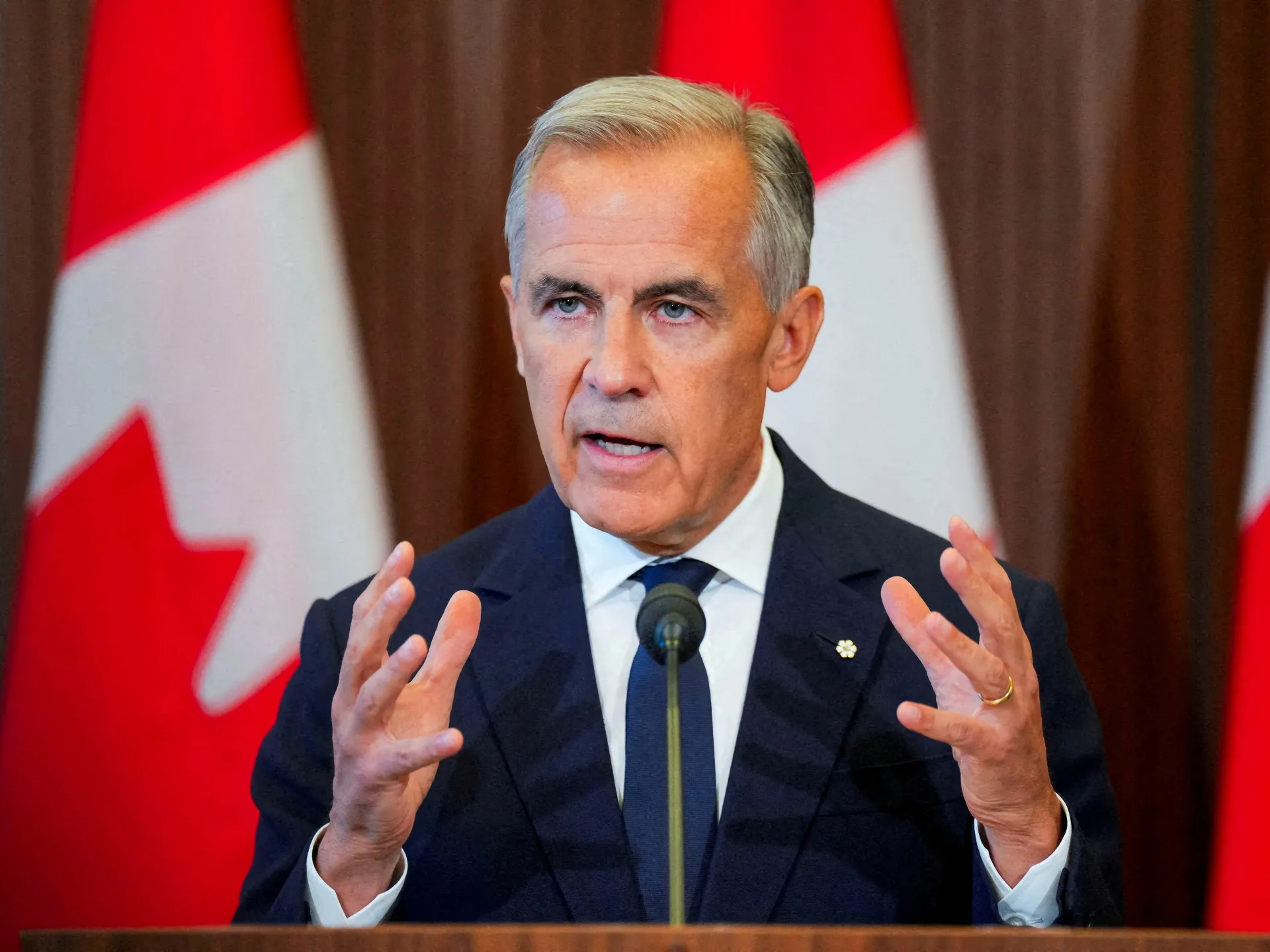
Canada will fast track the approval process for a new proposed crude oil export pipeline to its west coast that could generate billions in revenue and boost economic growth, Prime Minister Mark Carney has said.
Carney made the announcement on Thursday to fast-track the pipeline, which is a crucial part of his bid to diversify the economy away from the United States and help lessen the effect of US President Donald Trump’s tariffs.
Recommended Stories
list of 4 itemsend of list
Carney said Ottawa is officially listing the Pacific Link pipeline, which had been announced in July, as a project of national interest. That will ensure it proceeds through a single federal regulatory review process. He said Ottawa aimed to complete the process by September 1, 2027.
“A pipeline to the west coast is part of our mission to transform our economy, to double our non-US exports over the next decade … [and] to unlock our full potential as a global energy superpower,” he told reporters in Fort McMurray, hub of Alberta’s tar sands industry.
Ottawa says the 1 million barrel a day project would create 140,000 jobs and generate more than 20 billion Canadian dollars ($14bn) in gross domestic product (GDP) per year and 100 billion Canadian dollars ($70bn) in government revenue by 2060.
Canada currently has just one east-west oil export pipeline in Canada, the 890,000-barrel-per-day Trans Mountain pipeline. An expansion of that pipeline was completed in 2024, but it is already running at capacity.
For years, Canada has sent more than 90 percent of its crude oil exports to the US via pipeline. A new oil export pipeline could make Canada a major global energy supplier, as Asia’s top importers seek oil from outside the Middle East in the wake of the Iran conflict.
Filling the pipeline, however, would require new tar sands expansions of the type no company has undertaken in more than a decade.
The pipeline will be built by government-owned Trans Mountain Corp in coordination with Pembina Pipeline Corp. Alberta estimates it could cost between 35.2 billion Canadian dollars and 43.7 billion Canadian dollars ($24.7bn – $30.7bn).
The majority owners will be the federal government and the government of Alberta. Indigenous communities will be offered a minimum of 10 percent ownership interest.
Previous oil pipeline projects in Canada have faced strong opposition from environmentalists and Indigenous groups, resulting in the cancellation of some projects and leading to cost overruns and construction delays with others.
Alberta separatism
Carney made the announcement alongside Alberta Premier Danielle Smith in Fort McMurray in the heart of Canada’s tar sands, a move meant to mend relations with oil-rich Alberta as separatists push for a referendum on leaving Canada.
Alberta is holding a public vote on October 19 on whether to hold a referendum on leaving Canada. Smith has long complained that Carney’s predecessor, Justin Trudeau, hindered Alberta’s energy industry and fuelled separatist sentiment.
Smith said she would vote to keep Alberta in Canada and called the roughly 22 percent support for separation in a recent poll “still too high for my liking”.
“I don’t like the fact that many of our fellow citizens have given up on Canada,” Smith said, adding that the pipeline was an example of how “cooperative federalism can work in action”.
Asked what message Albertans considering separation should take from the announcement, Carney said it demonstrated that “Canada is working” and showed what the country could achieve by acting together.
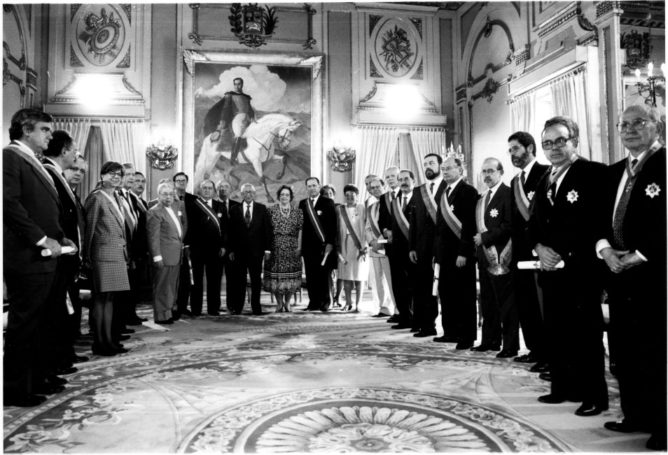
Photo: Acting President Ramón J. Velásquez (1993–1994) and his cabinet on the last day of his term. Dr. Velásquez, both during his brief tenure and previously at the helm of a special commission, was a leading proponent of decentralization in the late 20th-century. | Source: Archivo Fotografía Urbana.
The next democratically elected president of Venezuela will inherit an office that is simultaneously too powerful and not powerful enough.
Too powerful because decades of centralization have placed extraordinary political, fiscal and administrative authority in Miraflores. Not powerful enough because whoever inherits it will also confront a damaged bureaucracy, weak public services, deteriorated infrastructure and institutions that may still be controlled by political adversaries.
That combination will make concentration tempting.
A new government will have an enormous reconstruction mandate and voters impatient for results. Every institutional restraint will risk looking like another obstacle left behind by chavismo. Decentralization can wait until the State is stabilized. Congressional procedures can wait because the crisis is urgent. Extraordinary executive authorities can be justified because ordinary government is too slow.
Many of those arguments will contain some truth.
That is what makes them dangerous.
Chávez inherited Venezuela’s presidentialist political culture and radicalized it.
If Venezuela wants this transition to be the last one it needs, the country cannot simply transfer the powers accumulated in the presidency to someone more democratic. But neither can it respond to authoritarianism by constructing an executive incapable of governing.
The question is not whether Venezuela needs a strong president or a weak one. It needs to decide what the president should actually be strong enough to do.
Miraflores was powerful before Chávez
Chavismo radically expanded executive power, but it did not invent Venezuelan presidentialism.
Long before Hugo Chávez, the presidency occupied an unusually commanding position over the political system. Oil reinforced that arrangement. Whoever controlled the national government controlled the principal source of public revenue, and the ability to distribute that revenue made Caracas not merely the political center of Venezuela but the financial center on which much of the rest of the government depended.
The result was a particular understanding of political effectiveness. Presidents were expected to not merely administer the executive branch but to solve national problems, distribute resources, arbitrate conflicts and impose direction on the State.
Chávez inherited that culture and radicalized it.
Carlos Rangel would have recognized something familiar in the phenomenon. His critique of Latin American political culture repeatedly returned to the attraction of the providential leader: the politician whose extraordinary personal mandate supposedly allows him to rise above institutions that appear slow, compromised or incapable of producing the transformation the country requires.
A new democracy has to be built for the political society Venezuela actually has.
Chavismo gave that tradition a twenty-first-century vocabulary. The leader possessed a direct relationship with the people. Institutions that resisted him therefore did not represent legitimate constraints on democratic power; they interfered with the popular mandate.
That logic did not begin with Chávez, and removing chavismo will not automatically remove it.
This is one reason institutional design matters more than hoping Venezuela will simply develop a different political culture. A new democracy has to be built for the political society Venezuela actually has, including its recurring attraction to presidents who promise to cut through institutions rather than patiently govern through them.
Decentralization was one answer
Venezuela has attempted to solve part of this problem before.
The decentralization reforms beginning in 1989 transformed Venezuelan politics by allowing voters to directly elect governors and mayors. They created alternative centers of democratic legitimacy, allowed regional leaders to build careers outside national party hierarchies and weakened the assumption that every important political decision had to originate in Caracas.
Those reforms were real democratic progress.
They also occurred during the accelerating crisis of the political system that had governed Venezuela since 1958. Carlos Andrés Pérez was attempting a profound economic transformation while confronting social unrest, two coup attempts, resistance within his own party and an increasingly fragmented political environment.
Enough independently powerful actors with absolute vetoes can also make coherent government extraordinarily difficult.
It would be wrong to claim that decentralization caused Pérez’s downfall. The crisis of his second government had far deeper causes. But the period should caution against the assumption that dispersing power automatically produces better government. A political system needs restraints. It also needs the capacity to reach decisions.
Juan Linz famously warned that presidential systems contain an inherent problem of competing legitimacy: both the president and the legislature can claim a direct mandate from voters. Venezuela could face that problem almost immediately in a transition. A newly elected president may claim a national mandate for reconstruction while legislators, governors, courts and other institutions exercise equally legitimate powers to resist particular policies.
Those conflicts are not defects but rather an essential part of democracy.
But enough independently powerful actors with absolute vetoes can also make coherent government extraordinarily difficult. The goal cannot therefore be to create as many obstacles to presidential action as possible.
Decentralization has to mean power, not administration
Chavismo subsequently demonstrated another weakness in Venezuela’s earlier decentralization: elected local government does not necessarily amount to decentralized power.
A governor who depends overwhelmingly on transfers determined in Caracas may be politically elected but remains fiscally vulnerable to the center. A municipality with responsibilities but inadequate revenue possesses decentralization on paper. A regional government whose police, infrastructure projects or public services can be bypassed by parallel national authorities is autonomous only until Miraflores decides otherwise.
Chávez and his successors became adept at exploiting these weaknesses. Political authority could be recentralized, resources redirected, parallel institutions created and opposition-controlled governments bypassed without formally abolishing governors or mayors.
A president who negotiates every administrative action with multiple institutions would not protect democracy for very long. It could instead discredit it.
A serious decentralization therefore has to involve more than another constitutional declaration that Venezuela is a federal State.
It must ask where revenue is collected, who controls it, which responsibilities genuinely belong to states and municipalities and which functions require national coordination. Regional governments need enough authority and predictable resources to govern without requesting political permission from the president. But the national government must retain enough capacity to maintain common standards, respond to national emergencies, redistribute among regions and preserve the Venezuelan State as a functioning whole.
That balance is much harder than simply transferring competencies from one level of government to another.
The State must still be able to act
An executive constrained by law is not the same thing as an impotent executive. The Venezuelan president should be capable of executing a legally approved budget, directing the national administration, coordinating responses to disasters, conducting foreign policy and implementing the program on which voters elected the government. Rebuilding infrastructure, stabilizing public finances and restoring basic services will require a national government capable of making decisions and making those decisions stick.
A presidency that must negotiate every administrative action with multiple institutions would not protect democracy for very long. It could instead discredit it. Citizens judge democratic government partly by whether it governs. If elections repeatedly produce leaders incapable of responding to crime, blackouts, inflation or deteriorating public services because every decision disappears into institutional paralysis, frustration with democratic restraint will eventually become politically valuable. The politician promising to eliminate the obstacles will always be waiting.
Institutional design has to emerge from Venezuela’s own history and needs.
Machiavelli understood the underlying problem centuries before modern constitutionalism gave it different terminology: a political order that cannot preserve itself will not remain a political order for long. Democracies require enough power to respond to genuine threats.
The danger lies in what happens next.
Emergency authorities created to save the State can outlive the emergency. Executive discretion justified by reconstruction can become normal government. A president given extraordinary authority because democratic institutions are initially weak acquires the ability to ensure that those institutions remain weak.
Venezuela has already lived that cycle.
Miraflores should matter less
The difficult conclusion is that democratic reconstruction will require whoever next controls the presidency to surrender powers at precisely the moment when there will be compelling reasons to retain them. That is a much harder political proposition than replacing chavista officials.
Someone who has spent years fighting to reach Miraflores may arrive there facing a devastated country and discover an arsenal of executive authority that could make reconstruction easier. It will be extraordinarily tempting to argue that institutional reform should come later, after the emergency has passed and the country has stabilized.
But democratic restraints are easiest to support when they constrain somebody else. Their real test comes when they constrain us.
The president should not determine whether an opposition governor receives the resources necessary to govern. The executive should not be able to transform regulatory authority into political discipline. Emergency powers should expire without depending on presidential generosity. Institutions capable of investigating the government should not owe their survival to that government’s continued support.
None of this necessarily requires turning Venezuela into a parliamentary republic, copying the United States or mechanically importing someone else’s federal model. Institutional design has to emerge from Venezuela’s own history and needs.
But one principle should survive whatever arrangement eventually emerges: winning the presidency should not mean winning the State.That principle protects more than the opposition, it also protects the president.
Winning should give politicians the authority to govern without giving them the tools to decide whether anybody else will ever govern again.
A system in which the loss of Miraflores does not mean losing access to every meaningful source of political authority makes electoral defeat less existential. Governors can govern. Legislators retain influence. Parties can preserve territorial organizations. Former incumbents can imagine returning through elections rather than manipulating the State to avoid leaving. Distributing power can therefore make alternation easier to accept.
The point is not to make political victory meaningless. Elections must have consequences. Governments need enough authority to implement different programs or democracy becomes little more than a ritual for changing administrators.
The objective is narrower: winning should give politicians the authority to govern without giving them the tools to decide whether anybody else will ever govern again.
That is the distinction Venezuela failed to maintain.
And it brings three problems of institutional reconstruction together. Venezuela needs institutions that remain democratic regardless of who occupies them. It needs a State capable of implementing rules while remaining bound by them. And it needs political power distributed widely enough that no single electoral victory becomes an ownership of the Republic.
For 25 years, Venezuela’s political system increasingly revolved around a simple question: who controls Miraflores?
A durable democracy will require making the answer matter considerably less. The next president of Venezuela should inherit enough power to govern the country, but considerably less power to define it.
WASHINGTON — A pro-Israel Democratic advocacy group on Thursday released a framework intended to help the party better articulate its vision for the U.S. relationship with Israel, an issue that has deeply fractured Democrats this year and could lead to further divisions heading into the next presidential campaign.
Democratic Majority for Israel is calling on the party to continue providing security and military assistance to the country while supporting a negotiated path to statehood for both Israelis and Palestinians and a future for Gaza that doesn’t include Hamas.
It notably does not insist on unyielding support for Israel, acknowledging that “Israel’s security does not require support for every decision made by an Israeli government.” The document also calls on Israel to “act decisively against settler threats, intimidation, and violence.”
The framework is being released at a sensitive moment for Democrats following a primary season in which voters from New York to Michigan embraced candidates who backed positions including ending military aid to Israel. If Democrats retake control of the U.S. House or Senate in next month’s elections, these candidates could play a significant role in shaping the debate over America’s posture toward Israel.
The issue could also play prominently in the early stages of the next presidential campaign, which could begin shortly after the midterms.
Democratic Majority for Israel’s chief executive, Brian Romick, said his goal is to provide a “helpful guide for our mainstream Democratic candidates on how to engage with a complicated issue.”
“It’s important to remind Democrats and Americans that there’s value in the U.S.-Israel relationship,” he said. “We thought it was important to kind of lay out a forward-looking vision.”
The question is whether such a framework will go very far in shaping the views of Democrats, who are increasingly skeptical of Israel.
About 58% of Democrats said the U.S. is “too supportive” of the Israelis, according to a June survey by The Associated Press-NORC Center for Public Affairs Research, up from 45% in January 2024. Roughly half of Democrats believe that Israel has committed genocide against Palestinians during the war with Hamas, an accusation Israel rejects.
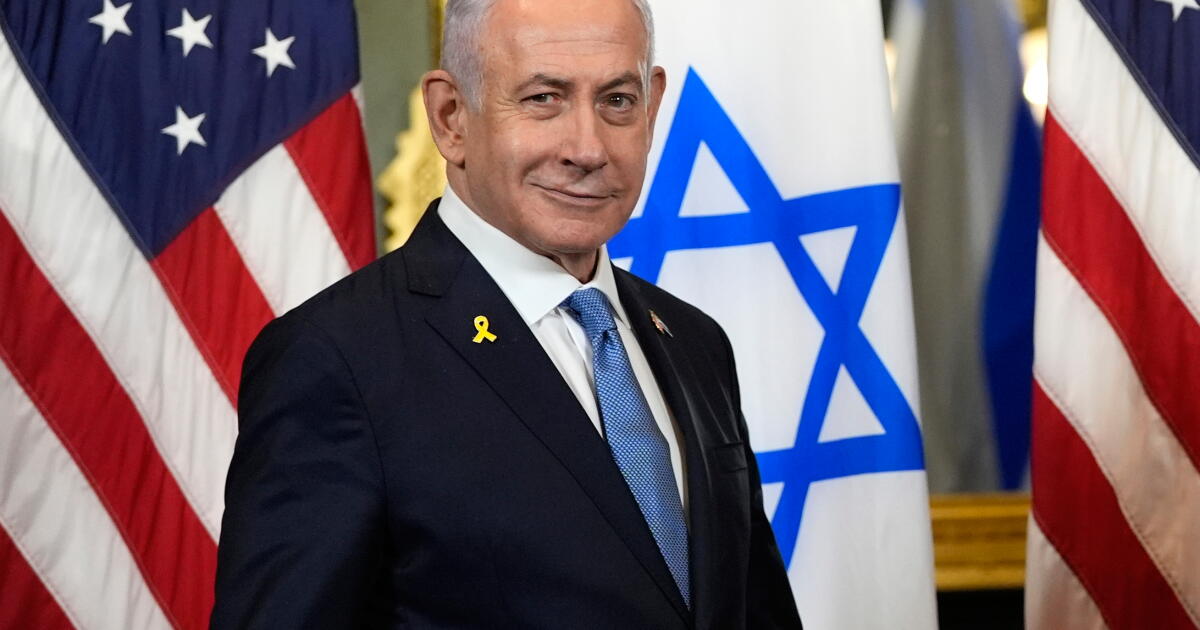
Former Obama administration chief of staff Rahm Emanuel, who has argued Democrats need to return to the political center ahead of launching a potential presidential bid, went to Israel in July and delivered a blistering speech warning the country was at risk of becoming a “territorial pariah.” He specifically called out Prime Minister Benjamin Netanyahu, who has closely aligned himself with President Trump, a Republican.
Emanuel, who’s also a former congressman, Chicago mayor and U.S. ambassador, blamed Netanyahu for driving Israel to a “dead end,” emboldened by poor decisions from American leaders.
The framework from Democratic Majority for Israel takes a less strident view on Netanyahu, who faces another election this month. “Support for Israel,” the group argued, “transcends any one Israeli government.”
The group took a similarly long view on military and security assistance for Israel, arguing it shouldn’t be stopped now even as it acknowledged the possibility of change in the future.
“Over time, and by mutual agreement, today’s partnership should be capable of evolving beyond the traditional assistance framework toward an increasingly reciprocal relationship centered on joint investment, innovation, and technological advantage,” the framework reads. “The objective should be to build the partnership both countries will need to confront the threats and seize the opportunities of the coming decades.”
Daniel Shapiro, the former U.S. ambassador to Israel under President Barack Obama, acknowledged “strong, passionate views” on the issue.
“Clearly, not everyone will agree with every aspect” of the framework, he said. “But I think there’s a lot there that many Democrats would find speaks to them.”
WASHINGTON — A judge in the nation’s capital agreed on Thursday to permanently dismiss a criminal case charging a former Olympian with vandalizing the Lincoln Memorial Reflecting Pool, a move that could prevent federal prosecutors from reviving the case under political pressure from President Trump.
D.C. Superior Court Judge Todd Edelman ordered the dismissal of David Hearn’s case with “prejudice,” which would block U.S. Atty. Jeanine Pirro’s office from refiling the felony charge against him. The judge ruled nearly a month after hearing attorneys’ arguments.
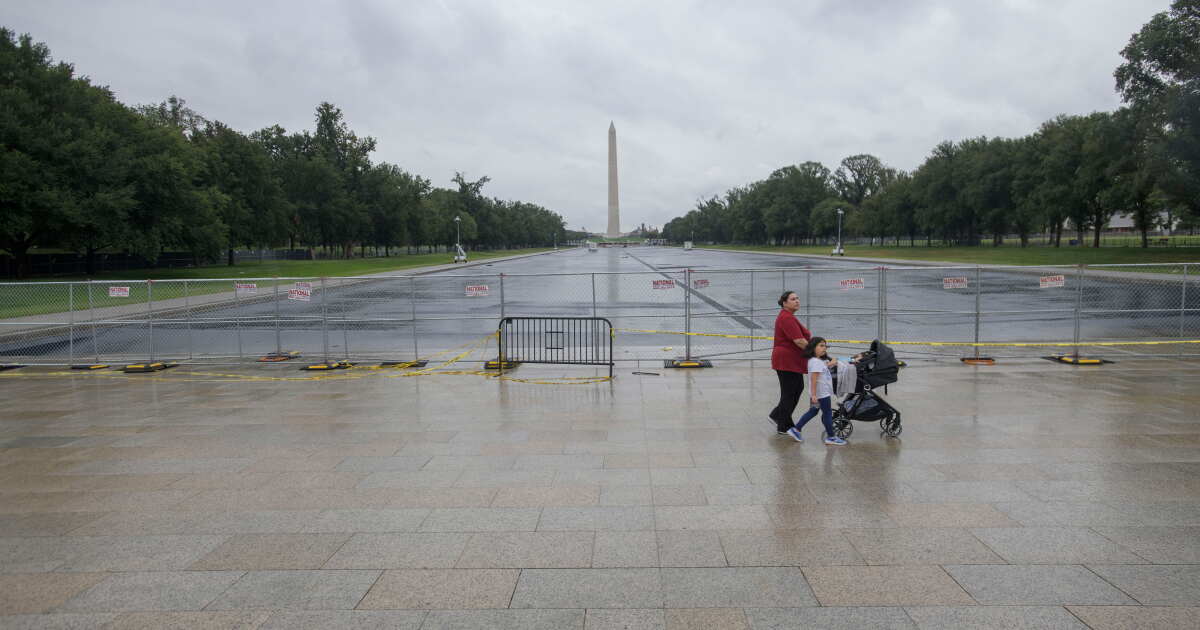
Hearn’s lawyers say Trump administration officials have continued to falsely accuse the Maryland resident of vandalizing the reflecting pool despite Pirro’s decision to drop the case on July 31. Trump responded by saying Pirro “choked” and “folded like an umbrella.”
In a court filing in July, Pirro said new evidence produced by the Interior Department showed Hearn wasn’t responsible for damage to the pool’s lining. Pirro’s office attributed the damage instead to a botched installation by a contractor as well as a rush to complete the project in time for this summer’s America 250 celebration in Washington.
Pirro’s admission was an embarrassing setback for the White House. Interior Secretary Doug Burgum has backed Trump’s claims that vandals damaged the pool.
Hearn has said he was on a bike ride on June 19 when he reached in to examine the pool’s newly peeled coating and briefly touched a chunk attached to the side of the pool. But he said he obeyed a park worker’s command to let go of it.
Hearn was charged with one count of property destruction, which carries a maximum prison sentence of 10 years. His lawyers questioned whether prosecutors properly presented the grand jury with adequate evidence to support the charge and the amount of damage alleged by the government.
Hearn, 67, of Bethesda, Maryland, competed in three Summer Olympics, earning his best finish, ninth, at the 1996 Atlanta Olympic Games, the U.S. Olympic and Paralympic Committee says on its website.
Trump, a Republican, appointed Pirro, a former Fox News host, to serve as the top federal prosecutor for the District of Columbia. Edelman was nominated to the bench by Democratic President Barack Obama.
Hearn’s attorneys said the ruling is “a victory for the rule of law and for an innocent American seeking justice” and allows Hearn to “move forward with his life as he deserves.”
“This administration chose to pursue an unjust prosecution against Mr. Hearn. It should not get repeated chances to wield the power of criminal prosecution against someone who should never have been prosecuted,” the lawyers said in a statement.
McKinney has been endorsed by Hochman, the union that represents rank-and-file L.A. police officers and City Councilmembers Traci Park, John Lee, Tim McOsker and Monica Rodriguez. While McKinney has raised half a million dollars, independent expenditures have spent more than $3 million to support the veteran prosecutor.
More than $2 million of those funds have come from a political action committee run by Airbnb. The rental giant was sued by Feldstein Soto for price gouging after the destructive Palisades fire, but McKinney has dismissed criticism that he’s receiving massive financial support from a corporation that if elected, he’d be involved in litigation against.
“Airbnb is going to benefit from a safer L.A., because it’s going to boost tourism to the extent that they have properties and interests here,” he told The Times in May. “When they look at the current city attorney and they look at Marissa Roy, maybe they decided this guy is going to do a better job.”
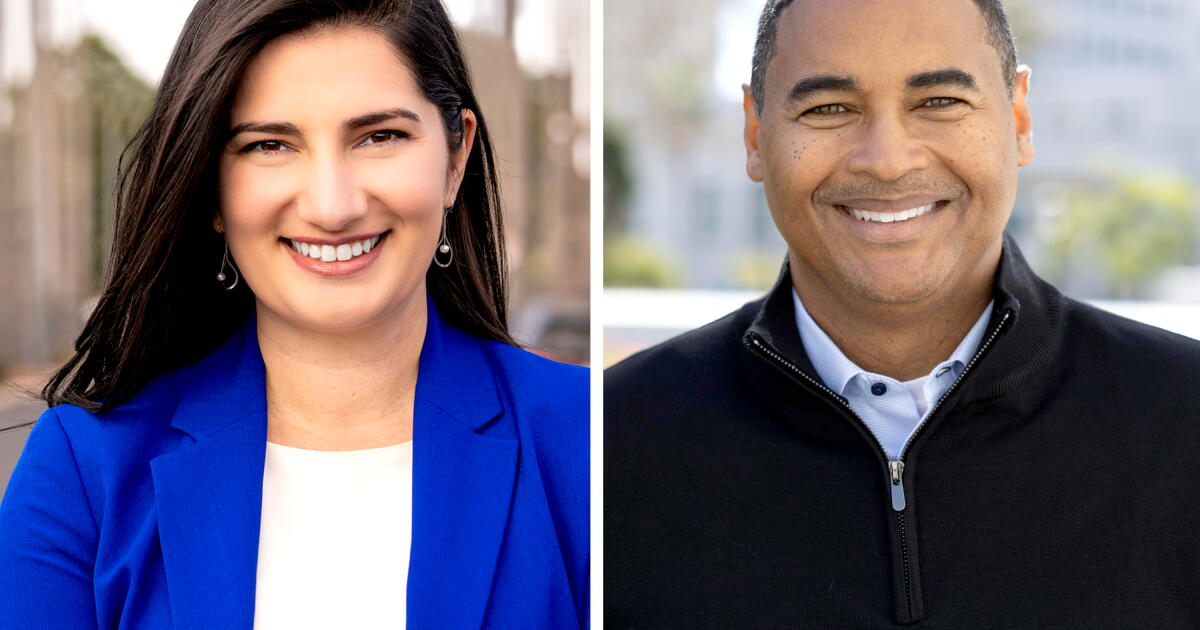
Roy has the support of the L.A. County Democratic Party, the Democratic Socialists of America’s Los Angeles chapter, California Atty. Gen. Rob Bonta, U.S. Sen. Bernie Sanders (I-Vt.), City Councilmembers Ysabel Jurado and Eunisses Hernandez, L.A. City Controller Kenneth Mejia, L.A. County Supervisors Hilda Solis and Lindsay Horvath, the city attorneys of San Francisco and San Diego, the L.A. County Federation of Labor and a host of other labor unions and Democratic groups.
Mayor Karen Bass endorsed Feldstein Soto in the primary. She has yet to weigh in on the runoff.
Former Long Beach Police chief Robert Luna came out of retirement to run for sheriff in 2022, promising to turn around a department that had veered off course.
As someone who didn’t have the wide name recognition or countywide political experience of some of his challengers, Luna’s second-place finish to Villanueva in the primary was far from guaranteed, but he ultimately cleared the rest of the field by a wide margin.
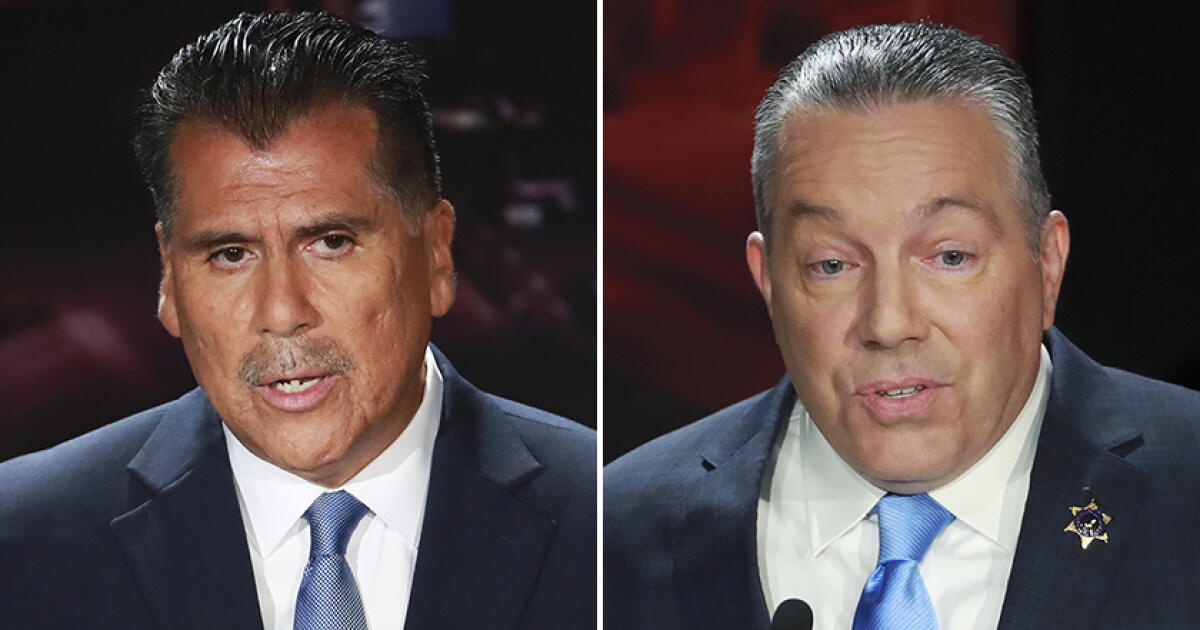
Fast-forward four years to June, and Luna received 44.2% of the vote in this primary — less than six points short of winning the race outright — versus Villanueva’s 21.7%. And Luna’s been a more effective fundraiser, bringing in $366,000 since Jan. 1, more than three times the nearly $109,000 Villanueva had raised by June 30, according to their most recent campaign filings. Luna had $352,000 in the war chest as of June 30, and Villanueva had about $56,000.
But Villanueva has wide name recognition in L.A. County. And he pulled off a historic political upset of his own in 2018 when he beat Sheriff Jim McDonnell, who is now the Los Angeles police chief. It was the first time an incumbent L.A. County sheriff lost a reelection campaign in more than a century. It was also the first time in 100 years that a Democrat had been elected to the nonpartisan sheriff’s job.
After running on a progressive platform and pitching himself as a criminal justice reformer, Villanueva tacked hard to the right. Within two years he was a favorite of conservative media, including Fox News, where he appeared repeatedly to vilify “woke” culture and criticize Democrats. He ultimately switched his party registration to Republican in a move that solidified a new base of law-and-order supporters while alienating many who supported him in 2018.
Villanueva’s tenure was marked by controversy and scandal. He launched, then walked back a criminal leak investigation of a Los Angeles Times reporter and was ordered to testify after sheriff’s deputies took and shared pictures at the site of Kobe Bryant’s helicopter crash. Villanueva defied subpoenas over so-called deputy gangs.
Now, Luna is the one defending his record as sheriff over the last four years. He’s presided over declines in homicides and violent crime and established a period of relative calm after the stormy Villanueva years. But Luna’s department has come under scrutiny in the wake of a July 2025 incident in which a grenade exploded accidentally in a department parking lot, killing three deputies. The state has fined the department more than $350,000 after identifying a series of safety violations leading up to the blast.
And the Civilian Oversight Commission filed suit against the department in June for declining to provide certain records related to three cases of use of force the commission issued subpoenas for in February 2025. Luna has said the county’s attorneys maintain that the unredacted records can’t be released until it completes a “meet and confer” process with the Sheriff’s Department union, a claim that watchdogs have disputed.
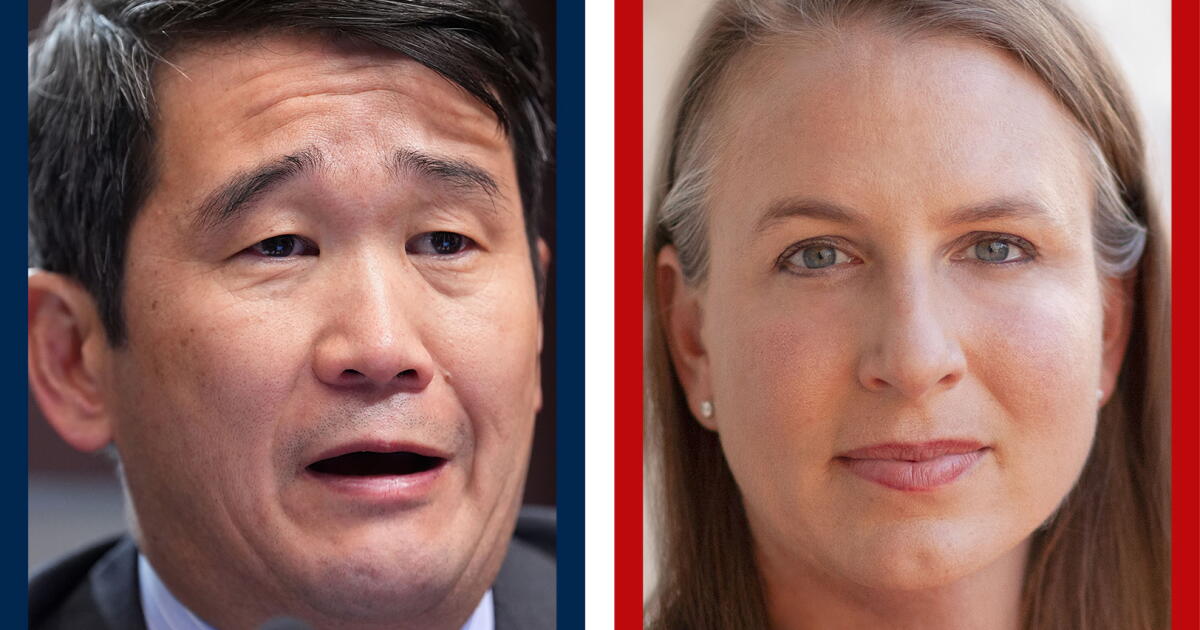
Min said Trump’s attacks on voting by mail and his attempts to get the U.S. Postal Service to refuse to deliver mail-in ballots, combined with his attempts in 2020 to overturn the election, “should worry every American who cares about our country, our Constitution, and the values of our nation.”
In 2024, Min authored a bill which passed that prohibits local governments from forcing voters to present identification before they cast a ballot at a polling place.
“I will continue to do all I can to stand up against these anti-democratic and un-American attacks on the sanctity of our elections,” Min said.
Le Roux told The Times she supports the Safeguard American Voter Eligibility or SAVE America Act, which would require voters to provide documents proving their citizenship at the time of registration and a photo ID at the time they vote.
In California, people are required to provide a driver’s license number or a portion of their social security number when they register to vote.
“Millions of ballots are mailed out in California with very few safeguards and at significant cost, leading to weeks of uncertainty as the rest of the country laughs and mocks us for our incompetence,” she said.
Le Roux also supports Proposition 39, which will appear on the November ballot in California, and would require voters to show government issued identification at the polls. Voters who submit mail-in ballots would need to provide the last four digits of a government ID to vote.
Proponents of the measure say Los Angeles is falling short in providing basic services, including street and sidewalk maintenance, upkeep of streetlights and trees and other services administered by the Department of Public Works.
The measure is intended to streamline public works decision-making to improve city services and add new sources of revenue by leveraging existing resources such as underutilized city land.
Measure LA’s perhaps most controversial element is the proposal to increase the power of the director of public works while reducing the sway of the Board of Public Works or potentially eliminating it.
The director would be able to manage public works projects, including construction, buying or leasing property, exercising eminent domain with City Council approval, granting street permits, regulating parking and recommending budgets for the department.
An opponent of the measure, Rodriguez said the Board of Public Works was established to provide independent review of city contracting, with commissioners’ decisions made in public meetings.
“Removing this important check and balance would reduce public scrutiny and weaken accountability over billions of taxpayer dollars for public projects,” Rodriguez said in her ballot argument against the measure.
Commissioners are appointed by the mayor. They work full-time on the board for five-year terms administering the Public Works Department while assisted by several bureau heads and the director of public works.
Proponents of the measure say the current system of overseeing public works is ineffective because responsibility is spread among multiple officials, commissions, agencies and bureaus.
“Angelenos see the results in crumbling streets, buckled sidewalks and streetlights that stay dark,” proponents said in their ballot argument.
Another key element of the measure is establishing a two-year budget cycle for the city, which currently adopts its budget annually. Under Measure LA, the mayor would be required to submit a proposed two-year budget to the City Council by April 1. A two-year budget would enhance planning for infrastructure improvements under another new requirement that the city adopt a Capital Infrastructure Plan.
Most major U.S. cities rely on multiyear capital improvement plans to schedule spending on roads, bridges, parks and buildings.
A long-term infrastructure plan administered with two-year budgeting “sets clear priorities, identifies the projects that need to get done, and plans how to fund them over time,” proponents said.
Currently, the charter prohibits the city from mortgaging city-owned property and prevents it from operating purely commercial or industrial businesses. The measure would remove these restrictions to raise new revenue.
Easing restrictions on operating a business also would allow the city to use its intellectual property to sell merchandise with city logos, as is done in other cities including New York, Yaroslavsky said.
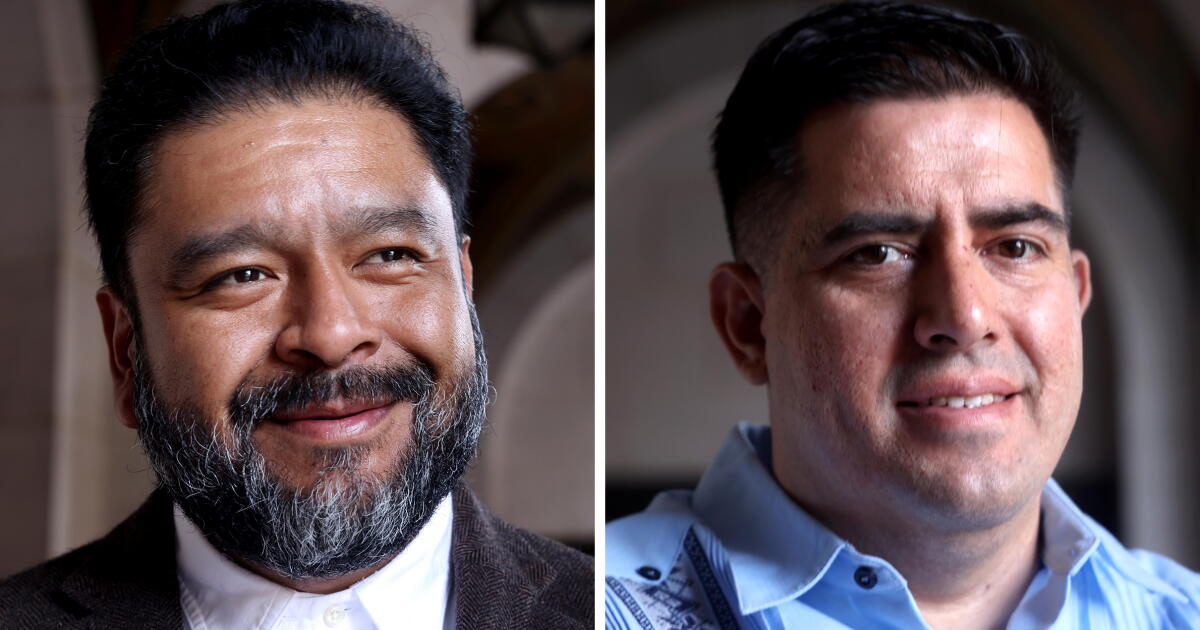
Ugarte, who once collected signatures for Measure ULA, also known as the “mansion tax,” says it’s not working as intended and is keeping developers away from the city. The measure levies a tax on property sales above $5.3 million and funnels the money to affordable housing programs and homeless prevention.
“If developers are running away from the city of L.A., we gotta know why. We gotta go back to the drawing board. We gotta accept when we make mistakes, including myself,” Ugarte said.
He supports amending the measure to exempt affordable housing developers. He also wants to raise the threshold for properties subject to the tax to $10 million, to account for the increasing costs of construction.
Ugarte supports State Bill 79, a law mandating that cities increase housing density around public transportation hubs. But more transportation, Ugarte said, needs to come before more housing.
Making L.A. more transit-friendly will lower costs for housing, insurance and parking, Ugarte said, giving residents relief from the city’s high cost of living.
Mazariegos said homeless prevention starts with enforcing a “huge list” of the city’s tenant rights laws, including rent control and prohibitions against landlords harassing tenants.
Building affordable housing, along with enforcing those laws, will keep more people housed, he said.
Mazariegos wants to use public land to build social housing, which is publicly subsidized housing separate from the rental market.
He also would push to extend the travel industry’s upcoming $30 minimum wage to all workers and to tie the minimum wage to the consumer price index.
“A combination of those things will reduce and stop the bleeding of folks going into the street, going homeless, and will start giving us a chance as a city to work our way out of this crisis,” Mazariegos said.
New Delhi, India — Speaking at an event in New York this week, India’s Foreign Affairs Minister S Jaishankar offered a blunt assessment of Washington: It has been an insensitive partner to India’s concerns over “terrorism”; has warmed to its arch-rival Pakistan; and has pursued “self-centered” trade policies that have disproportionately hurt the Global South.
That tone marks a new edge in how New Delhi is dealing with US President Donald Trump’s administration in Washington, analysts say, on the back of rising bilateral tensions between the capitals.
For decades, India has dealt with divisive issues with otherwise friendly nations quietly behind the scenes, away from spectacle. That has especially been New Delhi’s approach with Washington, where the relationship has broadly enjoyed wide bipartisan support.
However, after months of tensions, New Delhi is adopting a more openly critical tone towards Washington to address the volatility and uncertainty that Trump brings to the White House.
The changing tune in New Delhi also comes at a critical time for Prime Minister Narendra Modi, who faces mounting domestic pressure and criticism from the opposition for allegedly bowing down to US pressure, time and again. On Wednesday, Modi held a telephone call with Trump, which the Indian PM called “productive” — a cold and formal depiction far removed from his description of the US president as a “good friend” in previous years.
Chietigj Bajpaee, a senior research fellow for South Asia at the Chatham House think tank, said that Jaishankar’s remarks “offer a frank assessment” on the current state of the India-US relationship. “Clearly, the shine has come off the bilateral relationship after India was initially among the most optimistic about a second Trump term,” he said.
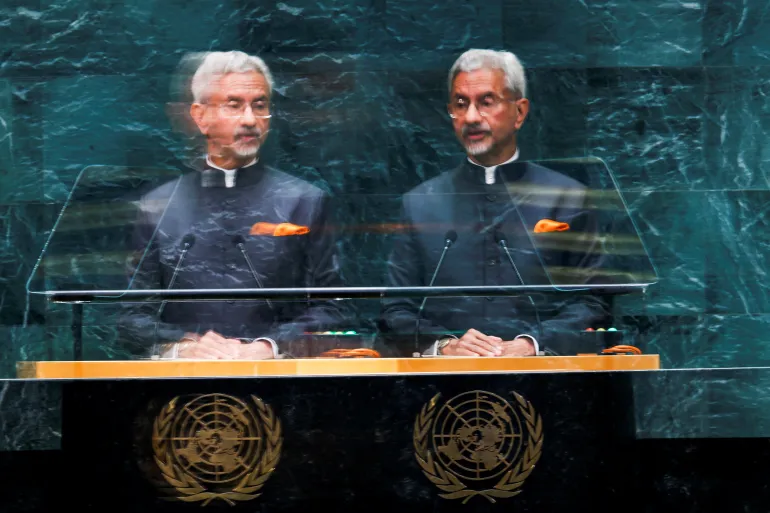
Indian Minister of External Affairs Subrahmanyam Jaishankar addresses the 81st United Nations General Assembly at UN headquarters in New York City, US, September 26, 2026 [Eduardo Munoz/Reuters]
India’s pain points
Jaishankar addressed frictions between India and the US while speaking at an Asia Society event after the UN General Assembly in New York ended on Monday.
“If I stand back and look at the [India-US] relationship, I note that much of the world has had a more difficult relationship with the US,” he said. “I mean that may not be a consolation, but that’s a reality.”
Trade
Trade has been one of the flashpoints. Washington is India’s largest trading partner, with bilateral goods trade reaching $149.1 billion in 2025; but the relationship remains tilted towards India with a $58.4 billion goods surplus.
Jaishankar started by noting: “Countries should not be so self-centred that you’re in your own world and take your decision and say, ‘Well, it was not my intention to make your life difficult’.”
The minister was partly referring to the economic spillover of the wars in Iran and Ukraine, urging that “sound common sense” should ensure that the basic needs of countries were not neglected.
But then, he referred to the trade negotiations between India and the US, that have so far yielded a roadmap to a deal — but not a deal itself. “Apart from the per capita gap between India and the United States, the nature of production and the nature of society is very different,” he noted.
The agricultural sector has been among the most contested points between the two, where India has kept its market largely closed for decades to safeguard its farmers. “The expectation that it could rapidly move forward was tested against the ground reality, which was much more complex,” he said, adding that “there is more or less an understanding on the trade agreement.”
At one point, India was among the countries facing the worst tariff rates imposed by Trump. After the US Supreme Court struck down Trump’s sweeping tariffs in February, his administration swiftly turned to other tools, including a new 10 percent global tariff. Earlier this month, Trump signed a law under which the US can impose up to 100 percent tariffs on countries like India that purchase Russian oil.
Jaishankar pointed to these changes, noting that the negotiations created “bumps last year for the relationship,” and added that once the deal is closed, it “would contribute to a better relationship.”
Ajay Bisaria, a retired diplomat who served as high commissioner to Canada and Pakistan, and as ambassador to Poland, told Al Jazeera that with Washington, in particular, “India has decided to be more public because there has been a lot of public criticism and a sentiment that the US is bullying India and India has been silent.”
The new 100 percent tariff on India, due to come into effect in less than a month, “is sort of a deal breaker in the relationship right now,” said Bisaria. “If that becomes reality, then all Indian efforts [to reach out to the US] would come under scrutiny.”
‘Terrorism’
But trade isn’t the only challenge in the relationship. A major rupture emerged in May last year, when New Delhi engaged in a four-day war with its bitter neighbour, Pakistan, after an attack by armed fighters in Indian-administered Kashmir killed 26 civilians.
New Delhi was upstaged as President Trump announced a ceasefire, claiming that he threatened both countries with economic damage if they didn’t stop fighting. For India, any question on Kashmir is strictly bilateral with Pakistan, with no room for so-called third-party intervention.
Nevertheless, Trump has gone on to claim dozens of times that he brokered the crucial ceasefire — as recently as at the UNGA in New York — that halted the war between two nuclear-armed neighbours. India took offence to these claims.
On the other hand, Pakistan’s leaders cozied up to Trump, showered high praise, and nominated him for a Nobel Peace Prize. Since then, the relationship between Islamabad and Washington has bloomed, to New Delhi’s obvious irk.
For India, Jaishankar said, “particularly important is the issue of terrorism.”
“As a country, perhaps there are very few countries which have been subjected to the kind of terrorism that we have from a neighbour as part of a deliberate, conscious policy over many, many decades,” Jaishankar said, referring to Pakistan.
“Now, if something which matters so deeply to us, there isn’t enough understanding or appreciation or empathy of that, I think that creates a problem too,” he said, adding that India’s primary concerns are “not fully appreciated” by its partner, the US.
New Delhi’s changing tone while addressing Washington “is a lesson learnt from its experiences,” said Bisaria, the former diplomat. “After the ceasefire issue, the moods changed — and it all became worse.”
Harsh Pant, vice president of the Observer Research Foundation, a New Delhi-based think tank, said that “the obsession with Pakistan in the Trump administration without taking India’s sensitivities into account contributed to the sense that, look, we need to start articulating it.”
“When at the top level, you don’t see reciprocity, then calculations change and decisions are taken to bring differences out in the open,” Pant told Al Jazeera, referring to Jaishankar’s comments.
India’s Prime Minister Narendra Modi offers a hand to US President Donald Trump during a family photo before a cultural performance and concert during the G7 summit, in Evian-les-Bains, France, June 16, 2026 [Evelyn Hockstein/Reuters]
Domestic Pressure
Indians have been the biggest beneficiaries of the US’s H1B programme which allows hiring of foreign workers with training in specialty fields. But that has come under fire from Trump, under whose watch Washington has raised barriers and fees for applicants, amid growing criticism of the scheme from supporters of his MAGA movement.
“For many years, mobility was seen as an economic gain. Today the economics of mobility and the politics of mobility are at odds with each other, at least in some quarters,” Jaishankar said, referring to Trump’s anti-immigration politics.
“That certainly in public perception is an issue,” the minister said.
Domestic pressure appears to be finally catching up in New Delhi. “Modi is feeling domestic pressure, with key state elections coming up next year, especially amid some anti-incumbency,” said Bisaria. “It dictates that the government’s posture should not be one of taking bullying from the US.”
Pant said issues like migration impact the general public in India, with the world’s largest population. For years, such connections made the US “an attractive partner for a large mass of Indians.” But today, he said, ”the same issues are becoming a negative drag on the relationship.”
“The public mood in India is also changing perceptibly towards the US. And I think the government is articulating that negative sentiment now publicly,” Pant said.
President Donald Trump and India’s Prime Minister Narendra Modi shake hands during a news conference in the East Room of the White House, Thursday, February 13, 2025, in Washington. (Alex Brandon/AP Photo)
‘Waiting out Trump’
When Trump returned to the White House for his second presidential run, many in New Delhi’s strategic community were optimistic about bilateral relations, because of the US president’s warm personal relations with PM Modi during his first term.
But things unravelled in the coming months.
Still, Chatham House’s Bajpaee said that despite widening divisions between the US and India, “both have not given up on reviving their relationship”.
He pointed to Jaishankar’s remarks that India isn’t singled out in having a difficult relationship with the US. “Rather, the downturn in India-US relations is a reflection of the Trump administration’s transactional and often unpredictable or erratic foreign policy,” he told Al Jazeera.
“This offers a potential off-ramp for an eventual reset in relations. The conclusion of a bilateral trade agreement is a key watchpoint for this,” Bajpaee added.
For New Delhi, Pant said, “it is now just the question of waiting Mr. Trump out.” Though he added, with a laugh, that India is not alone in that queue.
“Everyone is waiting him out. President Trump has little respect for conventions and norms of inter-state behaviour. How do you just deal with that individual?” Pant said.
A Black police officer asked whether a monkey was named “Tyrone,” to the laughter of a roomful of Latino and Asian colleagues.
A Latina cop described how to inflict maximum pain: “You hit Black people in the liver — I heard they got weak livers,” she said, according to an LAPD internal affairs report.
The report said their boss, an Asian sergeant, stood by as his employees used terms like “midnight” and “chocolate, chocolate” to describe people’s skin tones.
Those were among the comments that came to light last year after an LAPD whistleblower secretly recorded his colleagues in a unit that screens police recruits.
The scandal, which has seen new developments in recent weeks, is forcing department officials to reckon with a harsh reality: Years of efforts to make the LAPD more diverse have seemingly done little to stamp out prejudice in the ranks.
For much of its history, the LAPD was a white man’s department. Aggressive tactics in communities of color fueled racial uprisings in the 1960s and early 1990s, when the beating of motorist Rodney King led to the discovery of messages similar to those in the recruitment unit tapes, with officers referring to Black men as “Buckwheat” and bragging about “busting heads.”
Under pressure from lawsuits and consent decrees, police leaders pushed to recruit more Black, Latino and Asian officers, seeking to build up trust in minority communities.
1
2
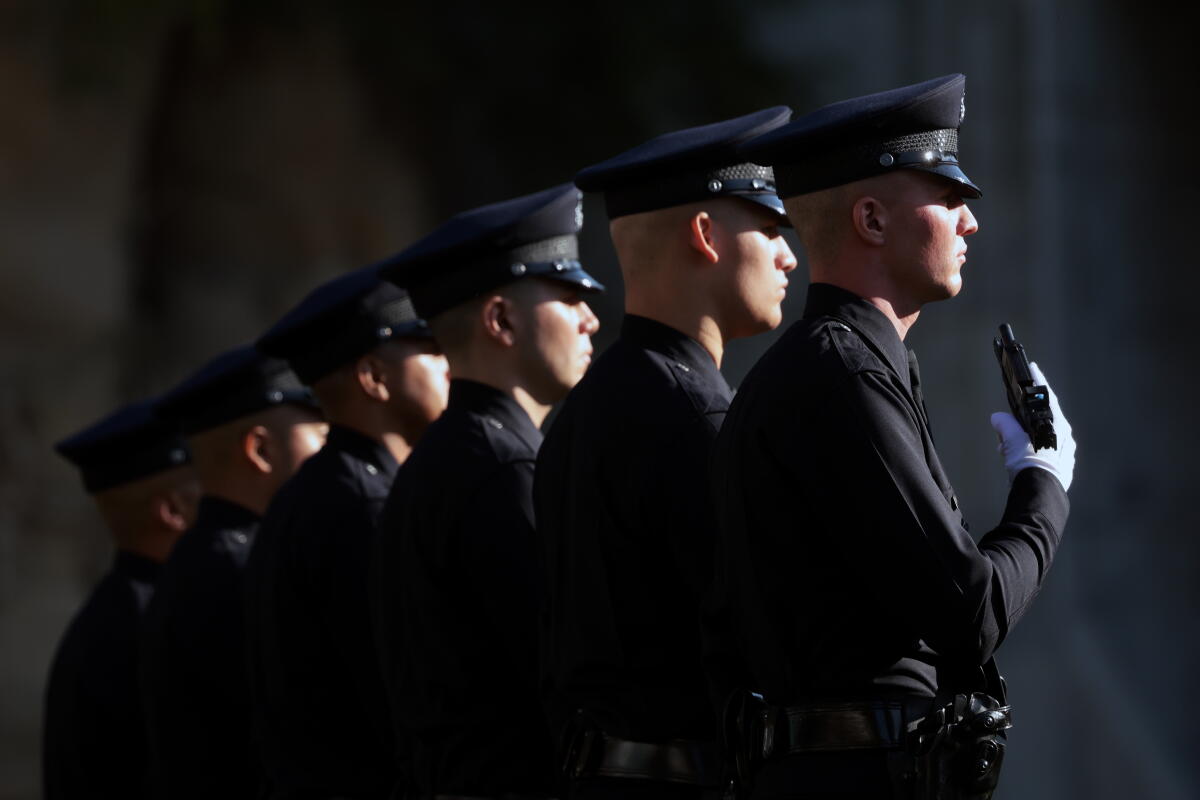
1.Los Angeles Police Department graduates a total of 22 recruits at the Los Angeles Police Academy in Elysian Park on Friday, September 18, 2026.2.(Christina House/Los Angeles Times)
Latinos now make up more than half of the 8,500-officer department. Black officers constitute less than 9% of the force, coinciding with a decline in the city’s Black population.
The officer who made the recruitment unit recordings, Daniel Flores, is Latino.
He recorded dozens of conversations over a six-month span in 2024, eventually handing them over to the department’s inspector general for investigation.
Last week, Flores filed a new lawsuit against the city, adding to a previous claim that alleged he faced retaliation from his bosses for documenting the offensive comments he heard while on the job.
According to his latest claim, department officials recommended that he be suspended for 22 days without pay. After initially seeking to keep his job with the LAPD, the 13-year department veteran said in the lawsuit that he recently decided to retire rather than endure an increasingly hostile work environment.
Flores also alleged LAPD officials were responsible for pushing a criminal case against him for violating a state eavesdropping law that prohibits recording conversations without consent. Initially alleging 16 felonies, Dist. Atty. Nathan Hochman has since reduced the charges to misdemeanors, likely allowing Flores to avoid jail time.
An LAPD spokesperson declined to answer questions about Flores’ case.
“The Department takes these allegations seriously,” Lt. Elpidio Orozco said in a statement. “Because the case and related personnel proceedings remain ongoing, we cannot discuss individual disciplinary actions or make comparisons to unrelated past incidents.”
The department’s defenders maintain that progress has been made toward rooting out bigotry.
Officers are required to undergo psychological screening and training aimed at teasing out unconscious biases. New recruits and seasoned officers alike take field trips to the Museum of Tolerance, where trainers extol the virtues of multiculturalism. The department has sent recruiters to historically Black colleges in the South and the East Coast.
But others, including civil rights attorney Connie Rice, say the latest scandal proves that the LAPD’s problems run deeper than the hateful actions of a few individuals.
The beating of Rodney King in 1991 forced a reckoning for the LAPD.
(George Holliday / Associated Press)
“Racism is like the herpes virus in the body of the LAPD: You can suppress it with a good chief, but as soon as they leave, it breaks out again,” Rice said.
A 2024 study by British researchers examined racial attitudes among members of the department’s vaunted Metropolitan Division.
The researchers found that LAPD officers were “shockingly defensive” when asked about systemic racism, taking a negative view of diversity hiring programs and insisting that left-leaning activists, elected officials and media outlets were stoking public outrage over racial profiling.
“The dismissive reactions … to a question on such an important issue highlight an unhealthy antagonism which prevents any organization from learning or developing its practice,” the researchers concluded. “It is a fundamental barrier that must be overcome.”
While hiring more officers from historically marginalized groups has long been pushed as a way to improve police practices and build trust in minority neighborhoods, studies have not necessarily borne that out, said Daniel Gascon, a sociology and criminology professor at the University of Massachusetts Boston.
“Just because there’s more numbers of a given sort in a department doesn’t mean it’s going to change automatically,” said Gascon, who has studied the LAPD’s relationship with Latino communities.
Since the start of the year, a review of recruit graduation announcements shows the department has hired just seven new Black officers. By contrast, roughly 80% of the 241 officers to graduate from the police academy over the last nine months have been Latino.
The growing Latino presence in the LAPD has been reflected in police use-of-force numbers.
A Times analysis of police shootings since 2016 found that of the roughly 150 people who have been shot dead by the LAPD across the city, at least 94 were Latino men. In 3 out of every 4 of those shootings, at least one of the officers who fired was also Latino, the analysis showed.
LAPD Officer Daniel Flores, left, listens as his attorney Alan Jackson speaks to reporters at the Superior Court building.
(Libor Jany / Los Angeles Times)
Despite the increased diversity, interviews with current and former LAPD members indicate deep divisions are reflected in the way that Black and Latino officers see the department’s racial issues. Most agreed to speak on the condition of anonymity due to fear of retaliation.
Several Black officers told The Times they still experience workplace hostility and racial dog whistles, such as fretting about the lowering of police recruit standards. The comments, they said, came from Black and Latino colleagues alike.
Too often, the Black officers said, Latinos who wear the uniform see themselves only as victims of discrimination, and not perpetrators.
Some Black officers said they avoid conversations about race entirely for fear of upsetting conservative colleagues — who feel emboldened by the divisive rhetoric coming from the White House.
The Latino officers who spoke to The Times said the department has for too long prioritized the promotion of Black members of the force to leadership roles while the representation of Latinos in the highest ranks has slipped.
Others argue that because society tends to lump Latinos of different backgrounds together, workplace discrimination against and within the community is often missed.
Officers from both groups said their race has been used against them when it comes to promotions. But both sides also say racism is a problem in society writ large, and not limited to the LAPD.
In a recent interview with The Times, Mayor Karen Bass said that although she is pleased that the department has increased the number of Latino officers to reflect the city’s demographics, its percentage of Black officers continues to dwindle as older African Americans are on the brink of retirement with very few young Black officers coming onto the job.
Bass, who was a young community organizer in South L.A. when the King beating happened, said it was foolhardy to believe that merely because the LAPD is more diverse, old problems cannot be repeated.
“Just because this happened 30 years ago and there are new policies that were put in place, that’s not enough,” she said in an interview with The Times. “You’ve gotta make sure that those policies are constantly updated.”
Times staff writers Andrea Flores and Richard Winton contributed to this report.
The California I grew up in had its pluses and minuses, just like the state I’m living in now.
But consider this:
In 1974, I wrote a check for a semester of college.
The fee was $98.
That was the cost of registration, by the way. Tuition for in-state residents was free at San José State University and other public universities in California. The state’s leaders believed subsidized higher education would serve the greater good and seed economic growth.
Two years after graduating, I was working as a sportswriter for a small Bay Area newspaper. My spouse was a drug store clerk. Together we made less than $20,000 a year.
And we bought a brand-new house, 45 minutes east of Oakland, for just under $50,000.
In a thousand ways, we’re living in a different California today. Tuition and fees for a semester on a Cal State campus now run about $4,500, and the average mid-tier home costs about $775,000 in some places and far more in others, which is out of reach for nearly 80% of working people.
So as I watched the gubernatorial debate Wednesday night between the two men who want to lead us into the future, I was wondering which California is better in terms of hope, opportunity and livability?
The one I was born in during the postwar boom, or the one we’re living in now?
There’s no easy answer. The California of my youth was more affordable, but it was no utopian dreamscape. Housing discrimination and segregation were deep-seated, and the Los Angeles sky was the color of swamp water.
In the last half of the 20th century, California went on to become a global leader in technology, aerospace, the arts and healthcare, and its investment in public education helped build an economic superpower. Even the air got cleaned up, to a degree.
But for all of California’s riches and unrivaled natural beauty, it’s fair to say things are out of whack at the moment. How is it that the world’s fourth-largest economy also has the nation’s highest poverty rate?
There’s a flotilla of yachts, but millions of have-nots, and enough homeless people to fill stadiums. If we’re so progressive, and swimming in more venture capital than the rest of the nation combined, why are the masses crippled by a housing shortage and the high cost of living, and why did we build a soaring higher education model while letting our once exalted K-12 system sink in national rankings?
If California weren’t so lopsidedly blue, Republican candidate Steve Hilton might get a little more traction with a campaign built around the idea that there’s an easy explanation for the state’s misery of problems: Democrats have been in charge for years, they’ve mucked things up, and Xavier Becerra is yet another textbook California liberal who will stay the course.
“It’s impossible for regular working people to live in this state anymore,” Hilton charged during the debate, calling out over-regulation, the high cost of living, the housing shortage and a homelessness problem that “shames” our state. “And all you’re offering,” Hilton continued, “is more of the same, backed by the same corrupt machine in Sacramento.”
Becerra, meanwhile, kept handcuffing Hilton to President Trump, a good move, given that the president has helped launch an idiotic war, gummed up the economy, and seen his favorability plummet.
Hilton is not entirely off base, although there’s no evidence he has plausible solutions.
What he doesn’t tell you is that other states have their own problems, many of which have more to do with global economic forces — and President Trump’s war-mongering and tariff tirades — than with public policy decisions at the state level.
When I was a lad, my father drove a milk truck, and then a bread truck, and then he sold candy and tobacco for a wholesale distributor based in Oakland, near the Coliseum, where he’d take me to A’s games but save a few bucks by parking next to the railroad tracks a half-mile away from the parking lot.
His jobs were mostly unionized. Unions were plentiful in the private sector back then. My family saved up for a house while we lived in an apartment, and then I paid next to nothing for a college degree.
The boldness of that idea — a free education at an elite university, with a lofty if unfulfilled goal of equal access for all — is still a testament to California’s long-ago grand ambition, even if Gov. Ronald Reagan eventually ended free tuition.
In her new book, “California Dreams: The Making and Remaking of the University of California,” Miriam Pawel references a quote from UC Berkeley alum Joan Didion, who called the system “the most coherent expression of the California possibility.”
The staircase I climbed was the essence of what USC professor Natalia Molina called “the infrastructure” of upward mobility. In her immigrant family, her grandmother established an Echo Park restaurant that Molina wrote a book about — “A Place at the Nayarit” — and her mother ran the bar there after attending bartending school.
Molina went to UCLA, and is now both a MacArthur Foundation fellow (the “genius” grant) and a Guggenheim fellow.
“There’s not that same path for upward mobility,” Molina said. “But there sure seems to be a path for downward mobility.”
That brings me back to the economy, and lessons I learned in 2018, when I spent several weeks in and around Telfair Elementary School in Pacoima, looking into why nearly a quarter of the students were homeless.
The answer? Several once-bustling manufacturing and aerospace companies in the area had shut down. The new economy was fast food and big box stores. Pay dropped; housing prices spiked. It was a snapshot of a changing world — one we haven’t yet adapted to.
Modern politics is not built to foster long-term thinking about such challenges, said longtime political strategist Darry Sragow.
“What are the dreams, what are the aspirations, where do you want to go?” said Sragow, who doesn’t know the answers but would like to at least hear the questions. “I keep looking for somebody who will do that.”
Agoura Hills resident and attorney Dan Douglass, 80, who detests President Trump and isn’t a fan of Hilton, told me that as a moderate Republican, he feels like “a man without a party.” But he is not without an answer to California’s housing problem.
“They’ve made it too complicated to build anything,” Douglass said. “Too many permits. Too much time to build.”
“California must reduce regulatory costs that fall disproportionately on low- and middle-income residents,” Trachtman wrote in a recent four-part analysis.
“The state has “long led the nation in regulations promoting safety, sustainability, and quality,” he went on. “These policies can produce strong benefits. But they can also drive up the cost of essentials — costs that hit the poor hardest. This amounts to regressively funded progressivism.”
California was, and is, a work in progress, richly endowed and deeply flawed. Fixing complicated problems isn’t easy, but what I’d like to see from the next governor is more of the striving, imagination and sense of collective purpose that made California great.
There’s no way and no reason to go back to the state of my youth, but Trachtman had a thought about where to go next.
“In some ways we can use the past as a model,” he told me. “But in other ways we need to be more innovative and think about charting a path forward.”
Toward the most coherent expression of the California possibility.
The two candidates to become California’s next governor painted vastly different portraits of the state they want to lead during a televised CNN debate Wednesday night — though they both agreed the state faces tremendous challenges.
Democrat Xavier Becerra, leading in polls, cast the state as an economic engine and a critical bulwark against the disastrous economic policies and creeping authoritarianism of the Trump administration, but also a victim of Trump policies, including tariffs and the war in Iran, that have made life less affordable and the nation less safe.
Becerra said he would work hard to help struggling Californians — including by cutting red tape on housing and regulating AI to ensure it doesn’t destroy jobs — while his challenger, Republican Steve Hilton, would harm them further by backing President Trump’s agenda at every turn.
Hilton, endorsed by Trump, blamed the state’s most entrenched ills on years of Democratic governance, awash in unnecessary state bureaucracy and regulation that have made it wildly unaffordable, and wrongly obsessed with fighting the president instead of bringing down costs and fixing related local issues like homelessness.
Hilton said he would help struggling Californians by cutting taxes, cutting the cost of building new housing, eliminating fraud and bringing common sense back to state policy-making.
Both candidates came out of the gate on offense, and at times it got intensely personal, particularly on immigration — with Becerra accusing Hilton of welcoming white immigrants into the country while rejecting Latino immigrants, and Hilton accusing Becerra of handing migrant children over to sex and labor traffickers during his time as U.S. Health and Human Services secretary.
With ballots soon arriving in voters’ mailboxes and the Nov. 3 midterm election rapidly approaching, the hour-long debate — moderated by CNN anchors Jake Tapper and Dana Bash in Burbank and aired live by the national news network — provided the public with its latest look at two candidates vastly different both in politics and campaign style.
Becerra, a former Congress member from Los Angeles, California attorney general and Health secretary under President Biden, surged past a slate of other Democrats to win the June primary after onetime front runner Rep. Eric Swalwell dropped out of the race amid sexual assault allegations. Hilton placed second after Republican voters and others coalesced behind his message to shake up Sacramento — earning him the right to face off against Becerra in November.
Hilton, a former British political aide, former Fox News host and Silicon Valley entrepreneur, has been crisscrossing the state looking for votes anywhere he can find them — an uphill battle given registered Democrats outnumber Republicans by a nearly 2-to-1 margin, and opposition to Trump is widespread in the state and growing even among Republican voters.
A poll this month by the UC Berkeley Institute of Governmental Studies and co-sponsored by the Los Angeles Times found 58% of likely voters surveyed said they support Becerra, compared with 33% who back Hilton — a slight increase to Becerra’s lead compared with an August IGS poll. California voters identified the high cost of living as their top concern, but that was followed closely by opposition to the Trump administration.
Becerra has taken a less visible approach to campaigning, with critics accusing him of intentionally keeping a low profile in an effort to cruise to victory in a state that hasn’t elected a Republican to statewide office in two decades.
“I just want to say thank you to CNN for bringing Xavier out of hiding,” Hilton said at the beginning of Wednesday’s face-off. “He’s barely been seen in public since the primary four months ago; it’s very important we have this debate.”
During the debate, both candidates seemed prepared to focus on the lack of affordability — namely by blaming the other’s political party for it. But they also discussed artificial intelligence and data centers, immigration policy and, of course, Trump.
Tackling gas prices, high cost of living
California has some of the highest housing and energy costs in the nation, and affordability tops the list of concerns for likely voters. It also was the first issue the candidates debated.
Hilton has made the cost of living a central theme of his campaign, with a plan he calls “Califordable” to cut gas prices and end income taxes on earnings up to $150,000. He blamed California’s high costs on Democrats, who have controlled the Legislature and statewide offices for more than 15 years. Hilton says he can lower costs by slashing onerous state regulations on businesses.
Hilton said the “quickest way to get more money in people’s pockets is for the government to take less out” and to reduce regulations to allow more housing to be built — including in “10 new cities” he said he would help build in the state.
Becerra has blamed higher prices on Trump’s tariffs and the war against Iran. In response to attacks from the U.S. and Israel, Iran has for months choked off a major oil trade route, sending global gas prices soaring — to a national average of $4.48 per gallon this month.
Becerra said Hilton’s plan to end income taxes would amount to a massive tax cut for “billionaires and millionaires” that would take money from schools, healthcare and other critical services. “The math doesn’t add up to what he’s talking about. He’s going to have to take it out of somewhere. It will come out of our schools,” Becerra said.
Becerra said he would bring down costs for people by cutting red tape, including on housing, and fighting the Trump administration — which he said is the real driver of cost increases. He also said he has helped create millions of jobs during his career.
Agree but disagree on AI and data centers
Hilton and Becerra both support regulations for data centers and artificial intelligence companies, a sign of growing bipartisan pushback seen across the country.
Hilton said he wants California to take a leading role in regulating AI, given much of the industry is located in the state, and expressed concern about losing AI jobs to other states such as Texas and Arizona. Hilton questioned whether Becerra would have the political courage to rein in the industry, saying his campaign has received funding from it.
When Bash asked Hilton if those companies should be able to “self-police,” as Trump has suggested, Hilton said, “We’ll have to see.” He also said he appreciates the effort by Trump to get assurances from AI companies on safety during a recent summit, and he would work to make sure that those promises are upheld.
Becerra derided Trump’s deal as a meaningless “pinky promise” that does not guarantee a safe path forward. He said he would lead efforts to reach real and meaningful regulations but also work directly with local communities on what they want.
“If someone wants to come in and build a data center that creates more jobs in the community, adds more energy to our grid, and it actually protects and adds more water capacity, then let’s talk,” he said. “But it has to be good for the community.”
Sharp attacks on immigration
Becerra has faced bipartisan criticism of how Health and Human Services cared for the influx of unaccompanied immigrant children during the pandemic.
Hilton has hammered Becerra on it, and at the debate accused him of sending “thousands of young children directly into the clutches of child sex and labor traffickers.”
Becerra was attacked by Democratic rivals in the gubernatorial primary in the aftermath of a Pulitzer Prize-winning series in the New York Times, including an article that said thousands of migrant children who entered the United States between 2021 and 2023 worked in slaughterhouses, factories and other dangerous jobs that violated child labor laws. The investigation also alleged that tens of thousands of the children Becerra’s agency released couldn’t be found because he relaxed screening of relatives and sponsors.
Becerra repeatedly has said that despite a lack of congressional funding for licensed-care facilities dismantled by the Trump administration, his staff worked hard to vet the people who the children would be placed with.
At the debate, he called Hilton’s claims “Trump talking points.” He also said more needs to be done to ensure children aren’t separated from their immigrant parents.
Becerra also has slammed the Trump administration for its mass deportation program and immigration crackdown, which has sent immigration enforcement agents into cities across the country, including Los Angeles.
Hilton said he would work to “lower the temperature” in the immigration debate and “prioritize the removal of dangerous criminals,” which he said is not occurring in California because Democrats are playing “politics” with the Trump administration.
Becerra, the son of immigrants, said California welcomed Hilton as an immigrant, and Hilton “welcomed ICE mercenaries” into California in return. He also accused Hilton of welcoming immigrants that look like Hilton, who is white, while working to remove immigrants who look like Becerra, who is Latino.
“I have fought all my life to make life better for immigrants, to represent them well, to defend them, to let them grow and build like my parents. But here’s the problem I have with your policies: You seem to welcome immigrants who look like you, but deport immigrants who look like me,” Becerra said.
Hilton called that “disgraceful.”
Trump, Trump and more Trump
Hilton repeatedly has praised Trump and his policies and consolidated support among California Republicans after Trump endorsed him before the June primary. But Trump’s endorsement could be an albatross in the Nov. 3 election, given his low approval ratings — particularly in California.
Becerra repeatedly hammered Hilton as a Trump acolyte, so much so that Hilton said that it was Becerra’s only attack line, and that Becerra “takes no responsibility” for Democratic policies that have harmed California for years.
“All you ever say is Trump, Trump, Trump, and that’s nothing but an insult to every Californian who is desperate for something to change in this state, and all you’re offering is more of the same,” Hilton said.
Becerra countered that Hilton embraced Trump during the primary.
“Your words, Trump, Trump, Trump. Because he is your supporter,” Becerra said. “You chased his endorsement.”
Where they stand on billionaire’s tax, schools and other quick hits
Proposition 40, the billionaires tax: Both Becerra and Hilton oppose the controversial wealth tax proposal on the ballot that would enact a one-time 5% levy on billionaires’ assets to largely replace $100 billion in federal healthcare funding cuts to California.
Proposition 39, voter ID: Hilton expressed support for the ballot measure, which would require voters to present ID at the polls or write a special pin on their mail-in ballot. Becerra, who opposes the measure, claimed the initiative is part of an effort by Trump and his supporters to interfere in elections.
Improving schools: Fewer than half of third-grade students read at grade level. Hilton said it’s a “catastrophe” that exemplifies Democratic failure in the state. Becerra conceded that the school system is not “well coordinated” but supports transitional kindergarten, a new pre-K grade created by Gov. Gavin Newsom.
Democrat Xavier Becerra and Republican Steve Hilton debated for 60 minutes Wednesday night on a soundstage in Burbank. Times columnists Gustavo Arellano, Anita Chabria and Mark Z. Barabak watched the gubernatorial match-up and weigh in.
Arellano: Steve Hilton came in with next to no chance of becoming the next California governor, but maybe if he focused on touting the feel-good messages he’s been spouting since launching his campaign in front of the Huntington Beach Pier earlier this year — Make California Gold Again! Califordable! I’m a Legal Immigrant with a British Accent! — he might’ve convinced at least a few voters to go with him.
Instead, Hilton debated like someone already preparing to launch a podcast or beg for his old Fox News job back after he gets walloped. When your solution for solving California’s housing crisis is building 10 new cities, you’re not running for California governor — you’re angling for an influencer job with the Irvine Co.
He whined and grumbled and grinned and quoted someone calling Becerra a “bitch ass,” which would’ve been a funny dig if he wasn’t running to run the greatest state on Earth. Hilton is charming in person, in the way all British people inevitably, initially come off as to Americans, and he has traveled to every California county — and especially to Latino-majority cities. He should’ve shared some of the many stories of hardship that I’m assuming he’s heard over the last year.
Nope! Instead, Hilton attacked Becerra again and again — why? California is a super-blue state, Latino Trump supporters notwithstanding, so Hilton should’ve tried to at least offer a reason for voters to choose him instead of saying — not completely inaccurately — that the problems Californians deal with are the fault of Democrats.
But blaming the other side only gets you so far — just ask Democrats how it worked out with them in 2024.
“We’ve got to try something different,” Hilton said in his concluding remarks. Californians agree — and his name is Xavier Becerra, who last I heard isn’t Gavin Newsom, no matter how much the California GOP is trying to convince people otherwise.
Becerra, meanwhile, didn’t offer much in terms of vision, mostly because he played defense most of the evening. But he didn’t have a major flub, except maybe raising a CNN coffee cup a few too many times. Why, Becerra sometimes even smiled — proof that he’s not some Chicano automaton. He hasn’t agreed to any more debates with Hilton — but after this blowout, Becerra should take the both of them on the road to make Hilton the next John Cox.
Chabria: Becerra came out as more of a fighter than we’ve seen before, even in the earlier Democratic debates. He held his own against Hilton, who is a skilled orator and attacker with a pointed wit and slick accent. But please, for the love of God, Hilton, button that shirt. This is not a casino.
Becerra was the clear winner, and to be honest, Hilton — usually a nimble pugilist — came across flat too much of the time. Maybe he’s already signed his Fox contract, as Gustavo suggests.
But Becerra also failed to lay out any kind of vision for the future of California. He did a good job of fending off Hilton’s attacks, but never told us what a vote for him will bring to the average Californian. There was some talk about housing, about protecting health insurance, but no big picture of what the California Dream of the future is and how we deliver it for the next generation.
I walked away from this debate certain that Hilton hadn’t gained a single voter, and equally certain Becerra hadn’t lost one. But also certain that Californians are rightfully disenchanted with this political moment because it offers little for the people who are voting. Becerra is going to ghost-coast into leading the most powerful state in the nation, and none of us will know what that will mean or why we should care one way or another.
Yes, there is a strong Legislature that will certainly keep the next governor focused on Democratic priorities. But what Becerra stands for remains a mystery that only the next four years will reveal. Let’s hope it has to do with our collective well-being.
Becerra exited the stage a little over an hour later, still the overwhelming favorite to become California’s next governor.
As the Democratic nominee in a state where Democrats enjoy big numerical, structural and political advantages — and have for decades — Becerra needed only to show up at CNN’s Burbank studio, field some questions alongside Hilton and avoid a Bidenesque disaster. (Even that might not have mattered.)
It was an exceedingly low bar, and one Becerra easily surmounted.
He was authoritative, crisp and kept on the offense most of the night, which raises the question of why his campaign handlers have been sheltering him up to now. Yes, it did get a bit repetitive when the Democrat’s response to so many questions amounted to: Trump, Trump, Trump! But that’s hardly surprising in a state where the president is about as popular as $6-a-gallon gas and $10-a-pound hamburger.
What was surprising was Hilton’s failure to do more to unshackle himself from the ball-and-chain sitting in the White House.
He allowed a smidgen of daylight here and there, but not enough to doff the MAGA mantle Becerra has draped around him. If anything, Hilton yoked himself even closer to Trump, sounding at times like his wacky Health secretary, Robert F. Kennedy Jr,. as he talked about vaccines — Hilton said he was for them, but also favored more parental discretion — and re-litigated masking and other pandemic policies from the Biden administration.
Hilton’s most effective moments came when he asked why unhappy California voters should expect anything different if they keep electing Democrats. Not an unreasonable question. Trump Lite, however, doesn’t seem like the remedy most are looking for.
Little to nothing seems likely to change as a result of Wednesday night’s encounter. Still, it was important to give California voters an opportunity to take the measure of the two gubernatorial hopefuls side by side and hear — in something more than a 30-second commercial — how they would lead the state.
It’s far more probable than not Becerra will be the candidate voters choose on Nov. 3. But for those who don’t like Becerra’s vision, his record, Democratic affiliation or, heck, his glasses or salt-and-pepper hair, Hilton offered an alternative — albeit more of a grouchy one than the happy warrior who’s appeared on the campaign trail.
Hilton gave it his best shot. Becerra ably deflected him.
California voters will decide whether to establish a $7.5-billion state scientific research arm — similar to the National Institutes of Health — after Gov. Gavin Newsom signed a bill that will put the proposal on the March 2028 ballot.
The new state fund would aim to blunt federal research cuts by the Trump administration and ensure state and private institutions — including the University of California and California State University — can continue to produce scientific breakthroughs.
If voters approve the measure, $7.5 billion in bonds would fund California scientific and medical research into diseases such as cancer, Parkinson’s and ALS. Other research areas include reducing wildfire risk and fighting pandemics and climate change.
“This is a research and science bond that does the opposite of what Donald Trump is doing that will allow us to double down on what makes this state great — what makes America great,” Newsom said Wednesday during a bill signing atop the Golden Gate Bridge. “We are the tentpole of the U.S. economy because we invest in the future so that we can all do well there.”
The legislation to establish the bond measure, state Senate Bill 895, was authored by Sen. Scott Wiener (D-San Francisco), who in a statement called it a “bold step to protect science, improve lives, and continue California’s global leadership on innovation for many years to come.”
The bill was sponsored by the Union of American Physicians and the University of California, as well as the United Auto Workers Local 4811, which represents some 60,000 UC academic workers.
The bond measure represents a pullback from what Wiener and supporters first proposed.
Originally conceived as a $23-billion bond measure that the Legislature would approve to go before voters in November, it was whittled down to $12 billion. But lawmakers then did not approve it in time for the November ballot.
Wiener said legislative leaders and the governor’s office then worked out a compromise, deciding on a $7.5-billion bond measure for 2028.
The measure also calls for the new state fund to establish regulations that would allow it to recoup part of its investments while not damaging innovation.
“This is a major achievement, made possible by an extraordinary coalition of people who understand the importance of investing in scientific research,” UC President James B. Milliken said in a statement.