Paula Corbin Jones’ lawyers asked a judge in Little Rock, Ark., to order President Clinton to pay nearly $500,000 in legal reimbursements after he was found in contempt of court in her sexual harassment case. Their proposal came a month after U.S. District Judge Susan Webber Wright found Clinton in contempt for giving intentionally false testimony about his relationship with Monica S. Lewinsky. Wright ordered Clinton to pay Jones’ lawyers any expenses they incurred as a result of his false testimony. In a letter to Wright, Clinton lawyer Robert S. Bennett said Clinton will “object to the amount of the claim by Ms. Jones’ attorneys.”
WASHINGTON — Law enforcement officials disrupted “planned attacks” meant to target the UFC cage-fighting show staged at the White House this past weekend for President Trump’s birthday, and multiple people were in custody, FBI Director Kash Patel said on Tuesday.
The nature of the potential threat was not immediately disclosed, with additional details expected to be released once charges are unsealed later Tuesday.
Five people were arrested from states including Ohio, Missouri and California, said a law enforcement official familiar with the matter. The official spoke to The Associated Press on the condition of anonymity to discuss information that was not yet public.
The FBI learned about the possible threat on June 10, four days before the mixed martial arts extravaganza on the White House’s South Lawn, “and thanks to the rapid action of the FBI, our partners, and the Department of Justice in a multi-state operation, multiple individuals are now in custody and allegedly planned attacks were stopped cold,” Patel said in a post on X on Tuesday morning.
The Secret Service “worked around the clock to identify those responsible and hold them accountable,” Director Sean Curran said in a separate statement.
Trump, who celebrated his 80th birthday at the UFC event on Sunday, sought to tie the fights to larger celebrations of the 250th anniversary of the signing of the Declaration of Independence. Speaking to reporters Tuesday in Évian-les-Bains, France, where he was attending the Group of Seven summit, Trump said he had not been briefed on the thwarted plot.
Tucker writes for the Associated Press. AP writer Darlene Superville in Évian-les-Bains, France, contributed to this report.
June 16 (UPI) — Voters are heading back to the polls in Georgia on Tuesday for primary election runoffs featuring one contest that pits President Donald Trump‘s endorsement against Gov. Brian Kemp‘s.
Among the key races that will be decided Tuesday is the race to see who will challenge Democratic Sen. Jon Ossoff in November’s midterm election. Trump has endorsed Rep. Mike Collins and Kemp endorsed Derek Dooley.
Kemp gave Dooley, a former college football coach, his endorsement in August. He reiterated his support in a social media post on Monday, asking voters to choose the “conservative fighter who will put Georgians first.”
Trump endorsed Collins on Friday after early voting ended. The president posted his endorsement on social media, calling Collins a “warrior and winner.”
Elsewhere on the ballot, Republican voters will choose their candidate for the state’s gubernatorial race. Kemp is a two-term governor and is in his last year serving in the office. He faced Democrat Stacey Abrams in the last two gubernatorial elections.
Lt. Gov. Burt Jones captured 38% of the vote in the primary election last month, falling short of the 50% threshold required to win. On the other side, billionaire Rick Jackson received 32% of the vote.
The winner of the Republican primary for the gubernatorial candidate will face Atlanta Mayor Keisha Lance Bottoms in November.
President Donald Trump speaks to reporters about restoring commercial fishing access to areas of the Pacific during a signing ceremony in the Oval Office of the White House on Thursday. Photo by Jim Lo Scalzo/UPI | License Photo
This composite photo, taken Tuesday, shows Rep. Cheon Jun-ho (L), deputy floor leader of the ruling Democratic Party, and Rep. Kim Seung-soo, deputy floor leader of the main opposition People Power Party, prior to their talks at the National Assembly in Seoul. Photo by Yonhap
The rival parties agreed Tuesday to conduct a 45-day parliamentary investigation into the National Election Commission (NEC) over ballot shortages reported during the recent local elections, party officials said.
In a meeting of their deputy floor leaders at the National Assembly, the ruling Democratic Party (DP) and the main opposition People Power Party (PPP) agreed to put the plan to a vote at a parliamentary plenary session on Thursday.
“We agreed to launch the parliamentary probe to swiftly uncover the truth behind the alleged infringement of voting rights of the citizens caused by the ballot shortages and to lay the groundwork for sweeping reforms of the NEC,” Rep. Cheon Jun-ho of the DP told reporters after the meeting.
According to officials from both parties, the special parliamentary committee will be chaired by the PPP and comprise 18 members — nine from the ruling party, seven from the PPP and two from non-negotiating parties.
Rep. Kim Seung-soo of the main opposition PPP said the rival parties agreed to set the investigation period at 45 days in an effort to conduct the probe as swiftly as possible, while leaving open the possibility of an extension if further investigation becomes necessary.
Ballot shortages were reported at more than a dozen polling stations in Seoul during the June 3 local elections, temporarily disrupting voting and prompting protests.
Last week, the DP and the PPP separately submitted requests for a parliamentary probe, though they differed over the scope of the investigation and the number of seats to be allotted to each party on the committee.
Copyright (c) Yonhap News Agency prohibits its content from being redistributed or reprinted without consent, and forbids the content from being learned and used by artificial intelligence systems.
Los Angeles – “I’m sure when we score a goal today, everyone will be cheering.”
That was the prediction of Iranian fan Parsa Tafreshi, who had travelled from New York to Los Angeles to see Iran take on New Zealand on Monday.
Recommended Stories
list of 3 itemsend of list
His words would prove largely true.
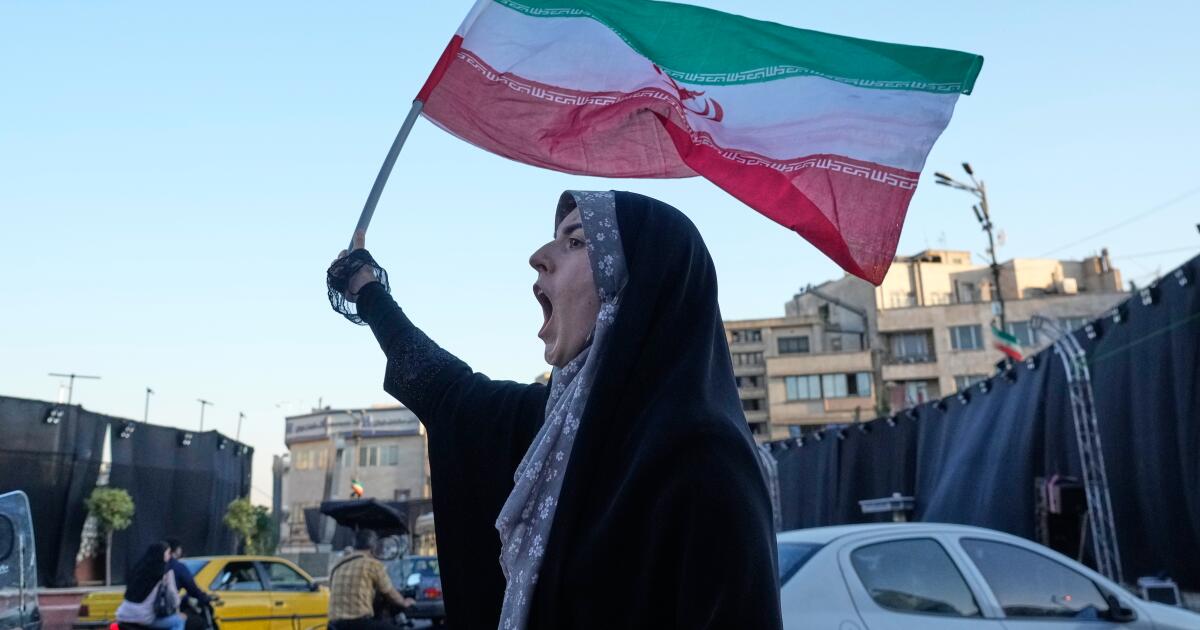
The game ended in a thrilling 2-2 draw, and each time Iran – known as Team Melli – scored, the stadium erupted in deafening celebrations.
There were two opposing sets of Iranian flags in Los Angeles, home to a large Iranian American community that is largely staunchly opposed to the governing system in Tehran.
Some fans waved the Islamic Republic flag, adorned with the name of God. Others opted for the pre-1979-revolution flag featuring the lion and sun, used by the Iranian opposition.
But when Team Melli were building up an attack, their supporters sang in unison.
Chants of “Iran, Iran” rang throughout the stadium, and the fans held their breath collectively each time Iran’s attackers came near New Zealand’s goal.
Concerns of unrest around the game did not materialise. Iranian fans vastly outnumbered their New Zealand counterparts at the stadium, and the game ended without any major incident.
Anti-team protest
A small group of demonstrators had gathered outside the venue, waving Israeli flags and chanting in support of opposition figure Reza Pahlavi.
They also called on United States President Donald Trump to resume the war with Iran, although Washington and Tehran have already reached a ceasefire deal.
“President Trump, finish the job,” they chanted on a loud megaphone.
Protesters also shouted slogans against the Palestinian group Hamas and Lebanon’s Hezbollah.
One of the demonstrators held a banner featuring the faces of Team Melli players with red crosses on them.
“IRGC Team,” it said, referring to Iran’s Islamic Revolutionary Guard Corps, with red ink meant to resemble blood dripping from the letters.
Protester Kourosh Kiumarsi told Al Jazeera that the Iranian squad is the “regime team”.
Asked about the Israeli flags at the demonstration, he said: “Israel and the USA attacked the regime and helped the people of Iran. They are not at war with Iran. They are at war with the Islamic Republic regime.”
Despite the intensity of the slogans at the protest, it was small and contained.
Protesters outside Los Angeles Stadium, June 15, 2026 [Ali Harb/Al Jazeera]
“I love that all the hype was just outside of the stadium,” said Sudi Farokhnia, who wore a green, white and red wig and a shirt featuring the lion and sun flag.
“Once you walked into the stadium, all you could hear was Iran, Iran, Iran. The energy was amazing. The people were amazing,” she told Al Jazeera after the match.
But that does not mean the entire affair was apolitical.
It would be difficult to argue that the pre-revolution flag is not a political statement.
FIFA bans political symbols at international matches, but thousands of Iranian fans on Monday were able to come in with lion-and-sun flags, shirts and hats.
Many also wore political slogans like “Make Iran Great Again” and “free Iran”.
FIFA did not respond to Al Jazeera’s request for comment on the issue.
Minab message
There were also other political expressions at the match.
Arash, an Iranian fan who asked to be identified by his first name only, wore a shirt that said “Mibab 168” on the back.
The US-Israel war on Iran killed hundreds of civilians, including 168 children at a girl’s school in the southern city of Minab, during the first day of the conflict.
“This is not a political shirt. This is not just to send a political message,” Arash told Al Jazeera.
“It’s a simple, simple statement: Schools are sanctuaries, whether it’s school shootings, bombings. School is a place of virtue. It’s a place of learning. It’s a place that – no matter who you are, what you believe in, what country – school should be off limits.”
An Iranian fan in Los Angeles wears a shirt that says, ‘Minab 168’ [Ali Harb/Al Jazeera]
Inside the stadium, a group of Iranian fans also revealed a “MINAB 168” message during the game.
There were also Palestinian and Israeli flags visible in the stands.
The match kicked off with a political message: Many fans jeered the Iranian national anthem, which opposition activists see as representative of the government.
Iran’s participation in the tournament was in peril earlier this year because of the war. Team Melli were forced to stay in Mexico as their base camp, while all their group-stage matches were in the US, because the Trump administration refused to host them.
Once the ball was kicked, however, that all faded into the background.
It was 11 versus 11. And the football delivered excitement, joy and disappointment.
Iran dropped two valuable points against a lower-ranked team, but came twice from behind and hit the woodwork once.
And each of the two times the net bulged, the goals brought happiness to a nation with two flags at home and abroad that has gone through war and immense hardship.
There was a number of protesters outside.
But when Iran scored, almost all Iranians cheered.
Ukraine has officially opened the first phase of membership talks with the European Union on Monday. President Volodymyr Zelenskyy welcomed the opportunity and said it sent a clear message that “Europe’s progress cannot be stopped.”
NEW YORK — A nationwide network of charitable foundations is encouraging its members to emphasize their positive contributions to American life, a 250th anniversary campaign aimed at quelling what it calls the “greater intensity” of scrutiny felt from the federal government and populist movements.
Popular notions of philanthropy as merely a game for the ultrawealthy to fund partisan projects and commit fraud have left the sector vulnerable to political attacks, as the Council on Foundations sees it, influencing policies that hamper essential community services. The advocacy group, which represents about 1,000 nonprofits, hopes to overcome what CEO Kathleen Enright calls the sector’s “perception gap” with its “Generosity Builds” campaign, launched Monday.
Enright believes most Americans don’t recognize their reliance on the charitable sector. Just about 1 in 20 adults said they or anyone in their immediate family received nonprofit services in the past year, according to a 2023 Indiana University Lilly Family School of Philanthropy report.
“This week, I got an MRI at Georgetown University Hospital, I participated in my church at St. Columba’s, my daughter was inducted into National Junior Honor Society. Four or five nonprofits have been instrumental in my life this week,” she said. “Folks just aren’t putting that tag on it.”
And that tag is growing increasingly important, Enright said. Last year, negotiations over President Trump’s tax and spending bill included proposals to levy new taxes on private foundations that Enright said would have taken resources from communities if they made it into the final law.
The battle over defining what nonprofits actually do has recently been amplified from the highest rungs of the Trump administration, which has upended decades of partnerships built with nonprofits. Trump froze, cut or threatened a sweeping range of social service grants characterized by the White House as “government largesse that’s often riddled with corruption, waste, fraud, and abuse.” More recently, the Department of Justice charged the Southern Poverty Law Center — a civil rights nonprofit accused by Republicans of targeting conservatives in its work tracking extremists — with defrauding donors through payments to informants.
Vice President JD Vance described the Ford Foundation, the Gates Foundation and the Harvard University endowment as “cancers on American society” back as a 2021 U.S. Senate candidate, telling Tucker Carlson that “we are actively subsidizing the people who are destroying this country and they call it a charity.”
“All across our country, we have nonprofits — big foundations — that are effectively social-justice hedge funds,” he said in a talk that year on “woke capital.”
Narratives about nonprofits being “overly politicized” or wasteful are “extreme minority stories” that don’t reflect how philanthropy operates, according to Enright.
Across many surveys, trust in the nonprofit sector has remained higher than most others. But its impact is sometimes difficult to measure and explain. The sector hasn’t faced an environment this challenging in almost six decades, according to Kathryn Thomas, the vice president of communications for the Charles Stewart Mott Foundation in Flint, Michigan.
She cited the congressional effort to increases taxes on foundations’ investment incomes and acknowledged the Trump administration’s federal funding cuts.
“In an era when everything is under partisan attack and there’s so much polarization, we really have to do a better job of emphasizing why we exist,” Thomas said.
Enright said the story of philanthropy is not one where a rich person “saves the day.” She sees growing concerns about billionaires’ influence fueling suspicion about philanthropists’ motivations. Some argue the charitable sector allows moneyed interests to decide how tax dollars are spent rather than elected officials.
The campaign will emphasize that most donors “have just a little bit more than they need and therefore want to give back,” she said, especially at the local level.
“Money does not solve problems. It’s a tool that creative people and institutions inside communities use to solve problems,” she said. “The real heroes of most of these stories are nonprofit leaders, religious leaders, civic leaders who just roll up their sleeves and get something done — but do it with some financial underpinning by charitable foundations.”
That’s the story told by the Gulf Coast Community Foundation in Sarasota, Florida. A 10-apartment affordable housing complex for military veterans opened last year with the foundation’s support.
The area has an “embarrassingly high” number of veterans without housing, according to Jon Thaxton, the foundation’s director of policy and advocacy. Many are priced out in Sarasota, increasingly a luxury destination with high real estate prices.
Local donors had been trying to build a similar project when they approached the foundation in 2020 for help. Thaxton secured land already vested for affordable housing, corralled $2.2 million in donations, got $800,000 from the city and won the backing of their U.S. representatives.
The foundation’s leaders believe their track record made that possible. Phillip Lanham, the president and CEO, noted the project was completed across multiple election cycles and a pandemic, suggesting that community foundations are well situated to “play the long game.”
“Most people think that foundations like us deal with money and donors. We really don’t. We deal with relationships and trust,” Thaxton said. “That’s our commodity. That’s what we earn. That’s what we save. And that’s what we contribute back to the community.”
The Council on Foundations will also elevate examples of early, ordinary philanthropists as part of its case for philanthropy as an integral “part of the American story.” Enright credited a formerly enslaved man with donating land in North Carolina that became an African Methodist Episcopal church that endures as a pillar of the local community.
Lillian Kuri, the president and CEO of the Cleveland Foundation, welcomed the focus on everyday philanthropists. The Cleveland Foundation is considered the first community foundation, established in 1914 by lawyer Frederick Harris Goff as a way to fund durable change in the city.
The foundation aims to find new ways to expand today’s tent of philanthropists dedicated to improving their surrounding areas. It announced new investments this week in a fund dedicated to turn vacant industrial land into job-ready work sites. They’ve also launched a fund that allows donors to invest in major Northeast Ohio companies, supporting local business growth while that money increases into a sizable amount that can be donated to nonprofits.
“Generosity cuts across everybody,” she said, adding that community foundations offer “a way for everyday people — not just the largest, wealthiest people — to participate in the change they want to see in their communities.”
WASHINGTON — The terms of a deal to end President Trump’s war with Iran remained a secret on Monday as both sides claimed victory and the months-long conflict reached a nebulous end.
The memorandum of understanding, providing a rough framework to conclude the war, was signed digitally Sunday, with a ceremony scheduled to take place on Friday in Switzerland, U.S. officials said.
Trump hailed the document as a breakthrough after months of negotiations. Yet its broad contours remained unclear more than a day after the deal was announced, as each side offered conflicting public messaging about what had been agreed.
Iran said it would continue regulating traffic through the Strait of Hormuz, a strategic paradigm shift from the prewar status quo that was denied by the White House. The two sides expressed disagreement over whether the status of Iran’s ballistic missile program would be addressed in future negotiations, or whether Israel’s withdrawal from Lebanon was a part of the deal.
And Trump administration officials rejected Iranian claims that the United States would provide immediate sanctions relief as misleading “spin.”
Hours later, another U.S. official suggested that Iran, in fact, might receive some relief at the front end.
“We are prepared to release frozen funds, and we are prepared to release sanctions,” a senior U.S. official told reporters on a call. “And we’ll do some small gestures of that in the beginning, if they make some small gestures to us that show they’re willing to meet their commitments as well.
“We’ll know over the next two to three weeks whether those understandings will turn into actual agreement,” the official added.
Trump started the war in February citing Iran’s nuclear program, which had expanded after he withdrew from a prior nuclear agreement negotiated by President Obama. That deal capped more than two years of intensive diplomacy but ultimately failed under the weight of political criticism from Republicans — led by Trump — over its inclusion of sanctions relief for Tehran.
Trump administration officials said the new agreement would include a commitment from Iran not to develop or purchase nuclear weapons — a vow the Islamic Republic has repeatedly made through the Nuclear Non-Proliferation Treaty, the Obama-era deal and a religious edict from the late supreme leader. Yet the enforcement mechanisms for policing Iran’s nuclear work were left to negotiate another day.
Iran could get sanctions relief
In an interview with CBS News, Vice President JD Vance acknowledged that Iran could get significant sanctions relief — and up to $300 billion in reconstruction funds — if they abide by U.S. terms, such as the full reopening of the Strait of Hormuz, one of the world’s most important commercial waterways.
“Our expectation is that the strait is going to be opened in a toll-free way for the long term, and that’s the sort of thing that we’re going to figure out in these technical negotiations,” Vance said.
In a separate interview, he described the president’s policy as “extending an open hand” to Tehran.
“The hard-liners of the Iranian system will overemphasize the benefits that Iran gets,” he added, “while underemphasizing all the things that they have to concede, and all the things that they have to provide, in order to get these benefits.”
Uncertainty across the region
The news of peace came with a sense of bewilderment and uncertainty in a region that suffered as collateral damage through months of war.
Sunni Arab states that once hoped Iran would emerge weakened from the war issued tepid support for an agreement that could ultimately leave the fate of their oil exports at the whims of an emboldened adversary. And Israeli leaders, across the political aisle, expressed deep concerns over the deal in private, warning they would not be bound by an agreement to which they were not a party.
Israel’s decisions moving forward — particularly in Lebanon— may ultimately decide whether the agreement survives over the next 60 days, when Washington and Tehran plan on ironing out its more technical details.
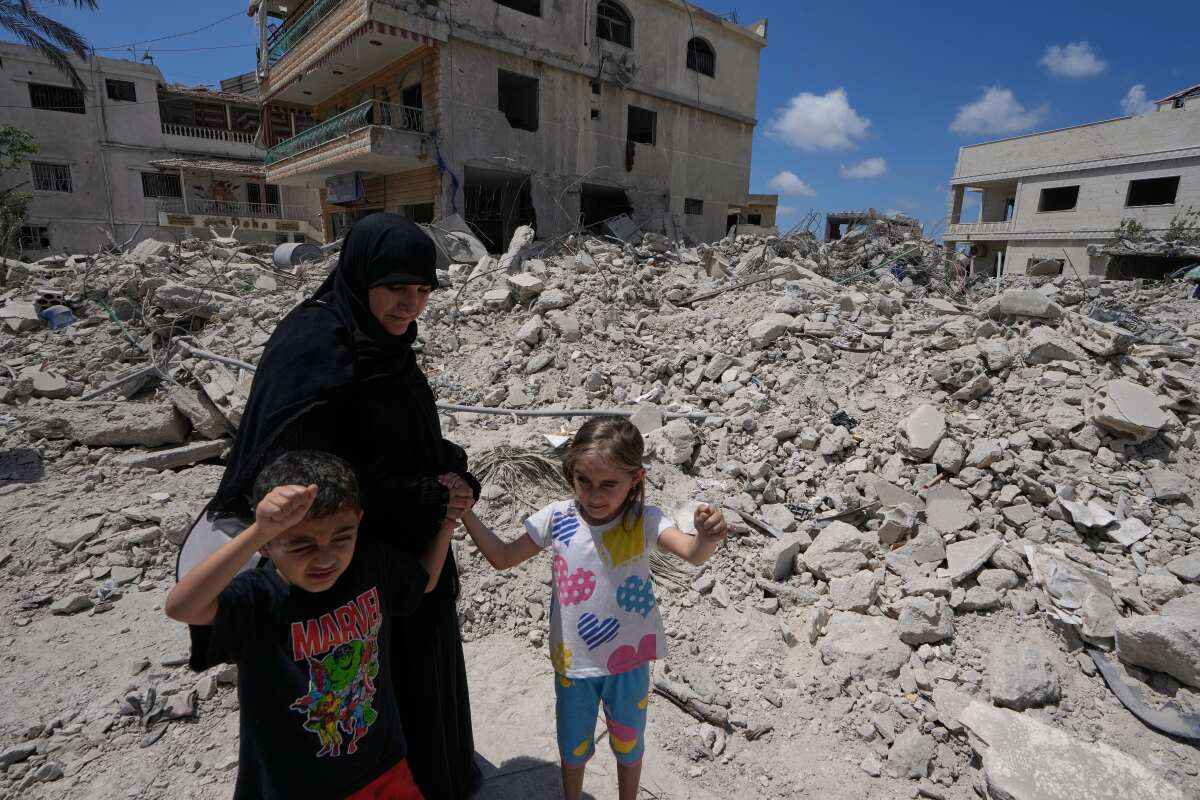
Hours after word of the signing came out, a stream of cars crowded the highway leading to southern Lebanon, full of displaced families desperate to check on homes and villages they hadn’t seen for more than 100 days.
They did so in defiance of Lebanese officials, who called on people to remain where they were until an official end to war in Lebanon — a secondary front in the larger U.S.-Israel war on Iran that has nevertheless seen staggering levels of destruction.
A woman and her children return to their Lebanese village Monday following the ceasefire announcement.
(Mohammed Zaatari / Ap Photo/mohammed Zaatari)
In the more than three months since the Lebanese Shiite group Hezbollah attacked Israel, nearly 3,800 people have been killed, and almost a quarter of the country’s 6 million people are displaced. Israeli troops occupy more than 10% of Lebanese territory, leaving a trail of destruction that has seen swaths of the country’s south all but razed.
‘Everything is gone’
None of that discouraged Hassan Shareef from leaving where he was staying in Beirut at 7 a.m. to head to Nabatieh, one of south Lebanon’s largest cities and a frequent target of Israeli strikes in recent weeks, to check on his tailoring business.
“I wasn’t afraid. I had to come. But what I saw would make you cry,” he said. “Everything is gone. My house, I can’t live in it. And the business is destroyed.”
Aqeel Khalaf, an herbalist, hit the road in the early morning with his brother, son and daughter-in-law. They reached Nabatieh in two hours.
Yet it was less of a homecoming than Khalaf hoped: Israeli troops were still stationed near his village, a few miles down the road from where he stood in Nabatieh’s central market. Their house was tantalizingly close, but for the moment it might as well have been on the moon.
“It’s hard for me, but the Lebanese army told us we can’t go yet. We have no choice,” Khalaf said. “Maybe in 24 hours, when things crystallize with the deal.”
He could at least check on his shop here in the central market, though he already knew there would be damage: The family regularly checked satellite images of the area and saw the building was hit about a week ago.
Standing before it, Khalaf saw how the wall of the adjacent building had toppled onto the ground floor, flooding the shop with rubble and coating everything with a film of fine gray dust. A nearby blast had collapsed the roof.
“Nabatieh was hit very hard this time,” he said. Still, he could salvage something, he said, pointing to his son as he fished out boxes of herbal treatments from under the rubble.
Two ceasefires in the last two months, forged during U.S.-led talks between the Lebanese and Israeli governments but without Hezbollah or Iran’s involved, were broken as soon as they were announced. A previous ceasefire from November 2024 saw Hezbollah stop all attacks while Israel continued military operations in south Lebanon.
This iteration of the truce appeared to have more success: On Monday, Hezbollah launched no missiles but announced an attack on an Israeli force to stop its advance; and the Israeli military mostly stayed its fire as well, barring a number of shelling incidents and a drone strike on a car in the village of Kfar Tebnit that injured a journalist and killed one person, according to Lebanese media.
Obstacles to a durable peace
Lebanese army units, meanwhile, deployed in parts of the south, barring motorists from reaching areas near Israeli troops. Lebanon’s army remained on the sidelines during the war, but 30 soldiers, including a general, having been killed in Israeli attacks since March 2. Hezbollah attacks killed at least 30 Israeli soldiers and one civilian contractor.
Obstacles to a more durable peace remain. Israeli officials insist on freedom of action against Hezbollah, and they will create a so-called security zone in Lebanon indefinitely so to protect Israel’s northern border. For its part, Hezbollah says it will respond to any attack and will continue fighting until Israel withdraws.
Though the truce appeared to be holding for now, Khalaf, who had raced to reopen his Nabatieh shop after the 2024 ceasefire, was waiting this time. For now, he would take what stock he could and open a shop in Sidon or Beirut.
“We have to work and feed our families. But the damage is too much this time. I’ll come back when things are better,” he said. “And my home too. When I get to see it, even if it’s a mound of rubble, I’ll pitch a tent on it and rebuild.”
Wilner reported from Washington and Bulos from Nabatieh.
The Trump Department of Justice going after people who make the president mad or even sad is nothing new, in this dangerous age when the presidency is increasingly about placating the desires of the old man in the Oval Office.
Leticia James, James Comey, Adam Schiff. Most recently, E. Jean Carroll, who sued President Trump personally and won a huge settlement on her claim that he sexually assaulted her. Now, the Department of Justice is investigating her for potential perjury.
It would be easy to think of Gov. Gavin Newsom’s announcement Monday that the U.S. Department of Justice is now targeting his wife, Jennifer Siebel Newsom, as just another addition to that list.
But this attack on Siebel Newsom (alleged attack, anyway — the Department of Justice has not confirmed she is a target) is something much darker in our slide into authoritarianism. While the details of what is being investigated are murky and the president hasn’t chimed in yet, it has all the appearances of the Trump administration seeking to stop a political rival who has a real shot at knocking MAGA out of the top office.
“It’s not just random or accidental that the wife of a major presidential candidate is being investigated,” Steven Levitsky, a professor of politics at Harvard University, told me Monday. “That’s the nature of selective prosecution and that is a pillar of authoritarian rule.”
Levitsky is an expert on authoritarian regimes, and how they take and keep power. His point that Newsom is a viable challenger may seem obvious — Newsom himself is already fundraising off of it. But this particular alleged investigation bears a moment of pause because it is not the regular decline of justice we have been witnessing to this moment.
“This is different,” he said. “This is forward-looking persecution.”
Until now, Levistky points out, Trump has screamed and hollered for the prosecution of those who have wronged him in the past, sometimes even the distant past. Yes, he’s disgraced the Department of Justice with the demand it function as his own personal hammer of retribution, even putting his own personal attorney, Todd Blanche, in charge when Pam Bondi wasn’t accommodating or successful enough at stomping perceived enemies and quashing the Epstein files.
But those prosecutions have largely been grievance-based, not aimed at keeping power.
Going after Siebel Newsom seems more like a forward-looking, preemptive strike targeting Newsom ahead of the 2028 election through every decent man’s Achilles’ heel, his family.
In fact, the right-wing media — which is closely tied to the whims of the White House — has been targeting Siebel Newsom for months.
In particular, Siebel Newsom has been attacked for her work as a documentary filmmaker who focuses on female empowerment and parsing how and why we have the gender norms that we do when it comes to masculinity and femininity. I’ll let you figure out how popular that is in MAGA world, where real women make sandwiches.
And other media have focused on the fact that some of the films she has been involved with have been approved for use in California schools, leading to conspiracies that Newsom used his influence to force his wife’s “woke” agenda on kids, by which we are apparently talking about the liberal plagues of decency and inclusion.
Newsom’s office said that in recent weeks, relatives, friends and business associates of the family have been contacted by investigators from the FBI and IRS. Siebel Newsom also does work around online safety for children, but it seems likely that any attention would focus on these films, and related nonprofits, and the perennially popular MAGA boogeyman of schools forcing ideologies on kids. Throw in Siebel Newsom’s company making even a dollar, and the way the IRS can find problems with any tax return, and you’ve got about 10,000 hours of right-wing propaganda.
So whether the pressure to target Siebel Newsom came from the White House or not, Newsom’s announcement raises the troubling specter that this administration is getting more serious about remaining in control by kneecapping potential replacements before they grow too strong.
In his Monday video, Newsom urged Trump with mano a mano bravado to come after him as much as he wanted, but to leave his wife and family out of it. But I would not underestimate Siebel Newsom, who showed her strength when she testified against disgraced Hollywood mogul Harvey Weinstein, laying out publicly a private, painful tale.
Siebel Newsom’s office told me she’s fine being part of any fight against Trump.
“There are clearly no boundaries to what Donald Trump will do to get his way or to challenge those who get in his way,” Siebel Newsom said in a statement.
The “governor and I will continue to speak truth to power because the American people deserve so much more.”
By coming out in advance of any official announcement of an investigation by the Department of Justice, Siebel Newsom and her husband may be able to take control of the narrative, something Trump detests.
That pushback, Levitsky said, is critical, not just for them, but more importantly for all of us. After last year, when so many institutions and individuals crumbled in the face of Trump’s power, the strength of our democracy increasingly depends on those with political capital standing up to him.
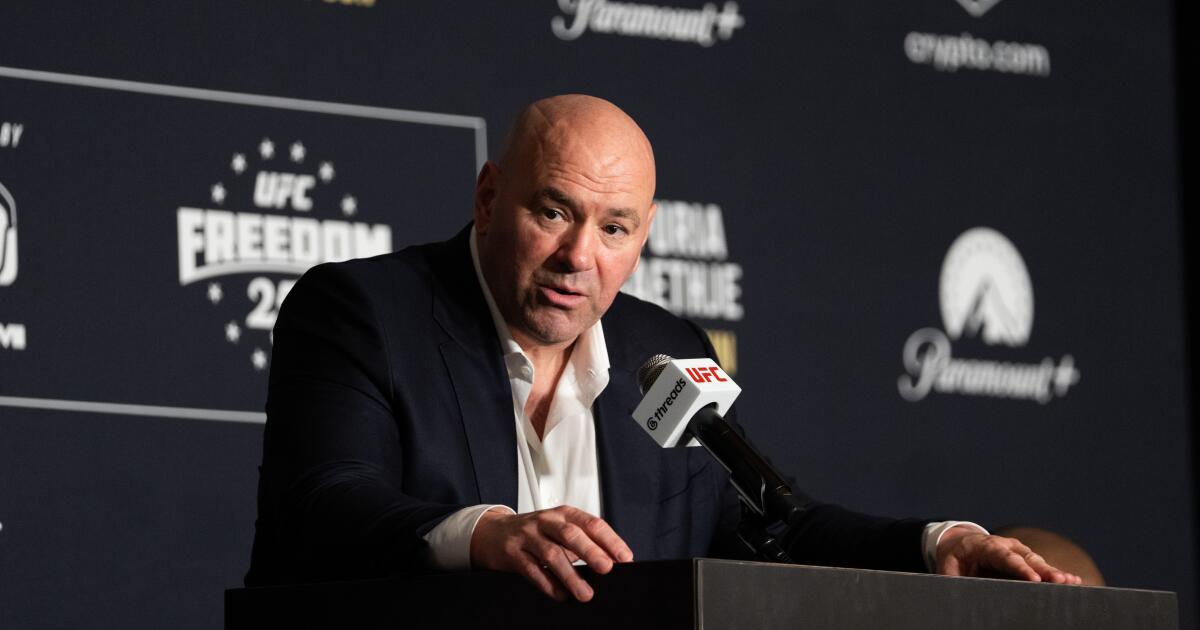
For UFC boss Dana White, heavyweight Josh Hokit’s post-fight behavior at UFC Freedom 250 on Sunday crossed a line.
On Monday, the mixed martial arts promotion’s president and chief executive told Time reporter Sean Gregory via text he is “completely against saying nasty and false things about people’s families” in reference to Hokit’s tasteless comment about Michelle Obama. During the White House spectacle in front of President Trump and others, Hokit was interviewed after his technical-knockout victory over Derrick Lewis and propped up a false conspiracy about the former first lady, declaring “Michelle Obama is a man.”
Hokit, who has a history of making tasteless comments after his fights, including the same Obama jab, drew mixed reaction from the UFC Freedom 250 crowd — and also from social media users, with some repeating the false claim in the comments on Hokit’s Instagram page and others chiding it. White, who has panned Hokit’s remarks in the past, did so again.
“Everyone knows my position on free speech but I hate that kind of nonsense,” White’s text added.
Hokit insulted Obama months after Trump faced backlash in February for a racist social media video that depicted President Obama and the former first lady as apes. Amid mounting public criticism, the White House took down the video and blamed an unnamed aide.
Michelle Obama, clearly on Hokit’s mind on Sunday, was busy with other matters over the weekend: preparing with her husband to open their Obama Presidential Center in Chicago. The museum and library hosts its grand opening Thursday and will be open to the public Friday.
Times staff writer Ana Ceballos contributed to this report.
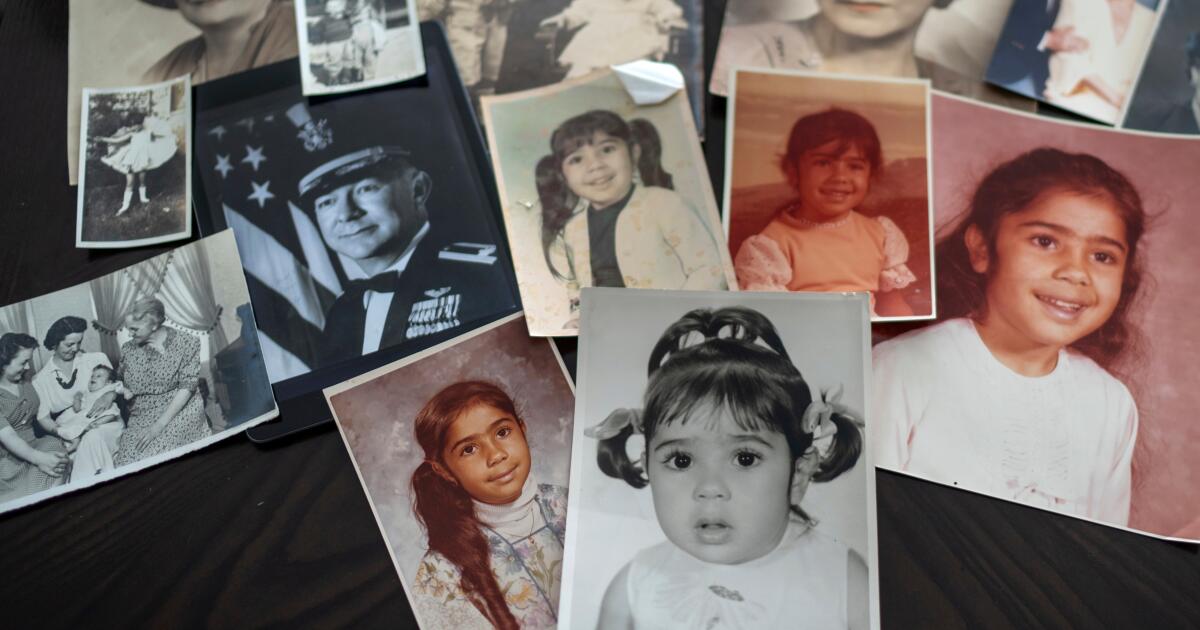
A federal immigration judge has granted asylum to a woman orphaned in Iran in the 1970s and adopted by an American war veteran, whom immigration officials threatened this year with deportation to the country with which the U.S. is now at war.
Judge Andrew Fishkin’s ruling probably ends a months-long ordeal for the California woman, one of thousands adopted from abroad who were never granted citizenship because of bureaucratic loopholes between adoption and immigration law.
The woman has lived in the United States since she was adopted by American parents as a toddler and has no criminal record. The Associated Press is not naming her because she worries her legal situation remains tenuous as the administration has time to appeal. A federal judge has allowed her to use a pseudonym, “Ms. S,” in her challenge to the government’s determination of her immigration status.
The woman received a letter from the Department of Homeland Security in February that ordered her to appear for removal proceedings, saying she is subject to deportation because she overstayed her visa in March 1974 at 4 years old.
The woman, 56, described what came next as a terrifying and humiliating few months.
She grew up in a Christian, military family on a farm in Wisconsin and was taught to be patriotic. But the documents she received from the government described her as an “alien;” some said she did not understand English, which is the only language she speaks.
Immigration officials told her she was being arrested, but was released and tracked with an ankle monitor. She bought new pants to try to hide it and taught herself not to cross her legs in work meetings, terrified it would threaten the corporate job in healthcare she’s held for almost two decades.
They fingerprinted her and took her DNA. She said she was obviously weeping in the mug shot they snapped of her.
She prepared herself to be detained: She put her bills on autopay and gave her friends a key to her home.
Her lawyer, Emily Howe, said the government had the power to agree she is an American citizen.
“Instead they treated her like a terrorist, like she was the worst of the worst criminals,” Howe said. “It felt very Big Brother, very Orwellian.”
The Department of Homeland Security declined to comment on the record on an individual case.
The Associated Press profiled the woman in 2024 as part of a story about how many international adoptees were left without citizenship because their American adoptive parents failed to naturalize them.
The woman’s parents were living in Iran, where her father was working for a U.S. government contractor, in the 1970s. He was retired from the Air Force as a lieutenant colonel. He’d been held for years a prisoner of war in Germany during World War II.
The couple found the toddler at an orphanage and returned to the U.S. with her in 1973 and soon completed the adoption. At that time, parents had to separately naturalize adopted children. The woman’s parents have since died.
She didn’t learn she hadn’t been naturalized until she applied for a passport at 38 years old. She still doesn’t know how the oversight happened. She searched her father’s papers and found a letter from a lawyer, dated 1975, that said he was working with immigration officials, “it appears this matter is concluded,” and billed her father for his services.
She filed a federal lawsuit this month trying to prohibit the government from removing her and forcing it to grant her citizenship.
She has long believed she should be considered a U.S. citizen: She has a Social Security card, and a driver’s license and has been legally allowed to work and pay taxes for decades. It’s only the immigration agency that denies she is a citizen. She suspects her paperwork was lost, probably when militants seized the U.S. Embassy in Tehran in 1979.
Fishkin seemed to agree: He wrote in his ruling that documents from that embassy are not available to her or to the U.S. government. He declared her a refugee, entitled to work in the U.S. His ruling puts the woman on a pathway to being recognized as a citizen.
She’d felt hopeful, she said, when she learned her court date before Fishkin was scheduled for her late father’s birthday. She always felt like she needed to protect not only herself but also her father’s legacy. He was a conscientious military official, she said, who would not have knowingly allowed such a glaring oversight that left his daughter in legal limbo.
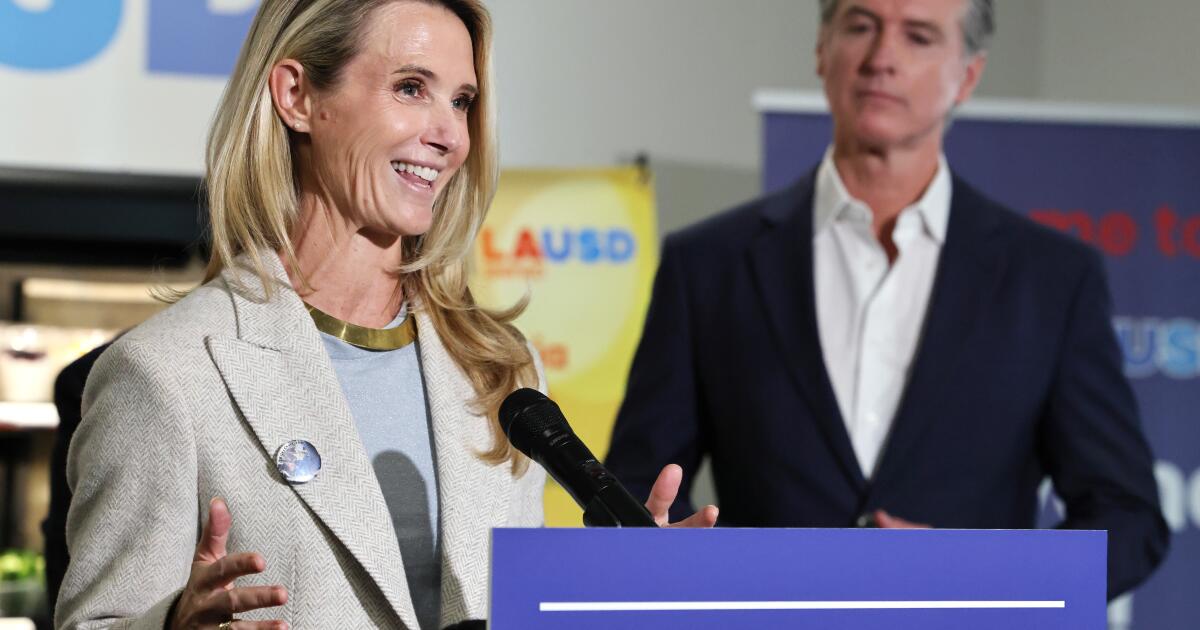
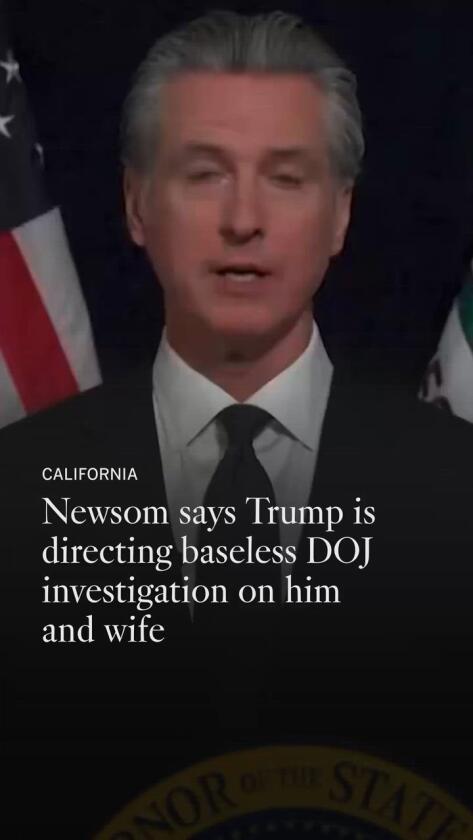
Gov. Gavin Newsom on Monday accused the Justice Department of launching — at President Trump’s request — a baseless and politically-motivated investigation into him and his wife, First Partner Jennifer Siebel Newsom.
“After calling for my arrest last year, Donald Trump directed his Department of Justice to investigate me,” Newsom said. “And just in the last week, I’ve learned his campaign has reached my own home: to get me, he’s coming after my wife, Jen.”
Newsom adamantly denied any wrongdoing by him or his wife. The White House referred questions to the Justice Department, which declined to comment.
A source familiar with the matter who requested anonymity because they were not authorized to discuss it publicly told The Times that there are two probes underway, one related to Newsom’s former chief of staff, Dana Williamson, and one related to Siebel Newsom’s taxes.
Share via
The source said both investigations have been ongoing for about a year; were launched by prosecutors in Sacramento based on information provided by whistleblowers and other local sources in California; and were not the result of directives out of Washington or the White House.
Newsom said that in recent days, “federal agents have knocked on the doors of family friends and former employees,” and have been “demanding records,” “digging through years and years of random documents” and “abusing the grand jury process” in a quest to find any kind of wrongdoing by him or his wife.
“Not because they found a crime. Because they are simply trying to find one,” he said.
Newsom did not describe the specific nature of the alleged probe, the line of questioning faced by friends and employees or the types of records taken or reviewed by federal investigators. But he alleged that Trump instigated the probe because Newsom is considering running for president in 2028, and because Trump “hates that I’ve consistently called him out — over and over again — for his lies and deceit.”
“He has turned the levers of government into his own personal power ministries to reward cronies and to try to jail his opponents,” Newsom said.
Newsom cited Justice Department investigations of several other of the president’s political opponents, including Sen. Adam Schiff (D-Calif.), New York Atty. Gen. Letitia James, former FBI director James Comey, former Federal Reserve Chair Jerome Powell and former vice presidential candidate Minnesota Gov. Tim Walz.
“One by one, anyone who has challenged Donald Trump has ended up on his hit list,” he said. “And today, I proudly join that list.”
The president held a cage fight on the White House South Lawn, complete with flyovers, fireworks, mini-skirted “octagon girls” and the surrealistic sight of mixed martial arts fighters striding through historic White House rooms flanked by National Medal of Honor winners.
Despite wide public disapproval for Sunday’s event and much scathing commentary about the political and psychological messaging of Donald Trump’s choice of a Vegas-like spectacle to celebrate his 80th birthday, and the country’s 250th, the sky did not fall, the original Constitution in the nearby National Archives did not tear in two and none of the fighters passed out from the heat or bug bites.
Things didn’t even get bloody until the final match in the fifth hour, when Justin Gaethje kicked and punched the crap out of widely favored Ilia Topuria.
Even so, it was impossible to emerge from watching UFC Freedom 250 without feeling punch-drunk.
Not because of the fighting; because of almost everything that was not the fighting.
Beginning with Paramount+, owned by the Trump-friendly Ellison family’s Paramount Skydance, which recently received Justice Department clearance for its highly controversial acquisition of Warner Bros. Discovery.
The jarring sight of past UFC matches being seemingly projected onto the Jefferson Memorial and the Capitol gave way to a series of poorly produced “historical” moments in which UFC fighters were cast as inheriting the same “fighting spirit” that motivated this nation’s Founding Fathers, past presidents and war veterans. Down to the inevitable strains of the Village People’s “Y.M.C.A.” (the baffling anthem of MAGA), the event projected a macho-man view of patriotism that was just as ghastly as many feared it would be.
UFC fighters are indeed dedicated and talented athletes who have overcome all manner of personal obstacles. But to compare them with Thomas Jefferson or American soldiers storming the beaches of Normandy is absurd and more than a little insulting.
The tens of thousands of UFC and Trump fans who gathered on the South Lawn and the Ellipse, however, were clearly having a very good time. Proceedings were delayed an hour by the threat of storms, but the weather cooperated in the end. “The President’s Own” United States Marine Band, and in particular, soloist Staff Sgt. Hannah Davis, gave masterful performances throughout. And while the Claw, the 600-ton steel structure arching above the Octagon, certainly looked like the first stage of an alien attack during the day, it put on a pretty terrific (if more than a little Vegasy) light show at night.
For those watching from home, however, these bright spots were glimpsed and heard infrequently, drowned out by the endless hyperbolic intonations of commentators (including Joe Rogan, who initially criticized the event), the long and invariably self-aggrandizing introductions of the various participants and the onslaught of frequently militaristic commercials, more than a few of which, included ads for Ram, featured UFC President and Chief Executive Dana White.
Which isn’t surprising when you think about it. White’s longtime support for the president culminated in his organization covering the event’s $60 million in production costs, and from the moment a smiling White joined Trump as he made his way through the White House to the front row, the event served as an almost-six-hour ad for the UFC.
Though I am not a UFC fan, I realize that showmanship is key to the sport’s wild and increasingly broad popularity. Championship matches, which rarely last longer than 30 minutes and sometimes much less, are inevitably preceded by hours of participants making all manner of florid claims and trash-talking their opponents. (Which may explain Trump’s fondness for the UFC.)
But when all of this strutting, preening and wild-eyed reaction revolves around what was, for better and worse, a series of rules-free brawls being force-fed into a narrative about this country’s enduring strength, what emerges is not so much a sporting event as it is a piece of naked and nationalistic propaganda.
Which came to a head in the final fight. After the six previous matches concluded rather quickly with bloodless knockouts (a UFC record), the fight between American Gaethje and the German-born, Georgia and Spain-representing Topuria lasted much longer. Gaethje, introduced as “the most violent man in the most violent sport,” left the lightweight champion’s face such a mess that even Rogan was shocked.
By all metrics, including Topuria’s refusal to go down, it was the best fight of the night. But hearing the crowd chant “USA, USA” as the bloody blows fell … well, let’s just say it was not everyone’s notion of a presidential birthday celebration.
Some have suggested that Trump staged the event in the hope of regaining the support of young men who helped him win the last election. Even if that was not the case, it was difficult to view UFC Freedom 250 in any way nonpartisan (especially after British former heavyweight champion Tyson Fury strode out of the White House wearing a “Trump for Prime Minister” hat).
Yes, several of the six non-American participants entered to Spanish or Portuguese songs (why so much fuss then about Bad Bunny at the Super Bowl?) but some of the winners are longtime MAGA supporters and made that very clear — Bo Nickal thanked Trump for being the only one “to have the balls” to stage such an event while Josh Hokit followed up his thanks to “my lord and savior Jesus Christ” with “Michelle Obama is a man. Am I right, America?”
Photo: Las Brisas del Cuyuní gold mining area, as posted by reporter Fritz Sánchez on June 10
Donald J. Trump turned back to breaking out big news on Truth Social about Venezuela on a Friday evening, like it’s a movie premiere. On June 12, he claimed US forces had killed Héctor Guerrero Flores, AKA El Niño Guerrero, who was the number 1 of the Venezuelan mega-gang Tren de Aragua, TDA. That same week, Secretary of Defense Pete Hegseth had promised that a great announcement about drug trafficking was on the way. Naturally, it was the boss who had to reveal the news on prime time. But people in Venezuela were already on alert after news broke, mid-week, that the Venezuelan armed forces, FANB, were attacking the mines near the village of Las Claritas.
Amid a rain of AI-generated fakes and videos coming from other contexts that flooded social media, we were able to see real videos from people on site, showing two Superpuma choppers shooting at targets on land, bringing support to special forces on the ground. The main hypothesis at that point was that they were raiding the compound of AKA Johan Petrica, a TDA co-founder. With Trump’s announcement on Friday, we learned that the trophy was Guerrero, whose whereabouts were unknown since Maduro agents raided the Tocorón prison where the TDA capo had his headquarters.
This is not about drugs, but gold
You may associate TDA with drugs and terrorism, but in this case drugs are secondary. Years ago, TDA turned into a big criminal organization in Venezuela by displacing other gangs or turning them into subsidiaries, by dealing in a wide array of crimes that went from drug trafficking to kidnapping, classic mafia extortion and non-violent scams. When they were able to expand from that Tocorón prison in Aragua state that Guerrero, then an inmate, turned into a fortress, they not only started to venture in the rest of the continent but fought to control the lucrative mining pole of Las Claritas, in the massive state of Bolívar, where international mining companies were expelled by Chavez’s expropriation.
Killing Guerrero is more relevant for the White House as a propaganda piece than as a real hit against drug trafficking in the Americas. It serves to justify the incursion in Venezuela and to give US voters another win amid the Iran fiasco and the lack of results in Cuba.
The military-managed Mining Arc was theoretically the legal frame. We are talking about one of the biggest reserves of gold on the planet. Just look at the numbers mentioned by Lorena Meléndez in this piece. By establishing a presence there, TDA got a cut from human trafficking, the black market of mining supplies and gas, and of course the production and export of minerals. As happened throughout the gang’s history, its involvement in the drug industry prospered because they had corrupt officials in their payroll. Until the regime’s priorities changed, Maduro ordered to raid Tocorón and impose a new Bukele-style prison regime where gangs don’t control jails. Guerrero went elsewhere, likely after reaching an agreement with chavismo that saw him leave his old turf unharmed. TDA continued taking part in the mines business in Bolivar, but sharing the place with other gangs.
This is not law enforcement but business
The kinetic attack on Guerrero, that seems to have taken place at the start of last week, and the FANB raids that came after must be read as part of the Rodríguez interim government to comply with everything Team Trump is demanding from them. Yes, TDA is a criminal organization and Guerrero was guilty of many crimes, but what we must see here, rather than a legitimate Venezuelan government fighting crime, is an illegitimate regime clearing a terrain with the help of a foreign army to allow the return of foreign companies. We mustn’t compare this event with the killing of Pablo Escobar in Medellín in 1993. It’s not that the Venezuelan authorities made the commitment of restoring the rule of law. Actually, we haven’t seen any legal procedure here. There’s no transparency or accountability, we don’t know what happened to the civilian population or whether any rights were respected there. It’s the same level of State violence and lack of due process that the police and military have deployed in poor communities for years.
This is happening because, after US special forces removed Maduro and his wife on January 3, the remaining chavista officers met in Caracas with CIA Director John Ratcliffe (on January 16), US Interior Secretary Doug Burgum (March 4), US Southern Command commander Francis Donovan (in February and May), and more recently the highest military officer from that country, the chairman of the Joint Chiefs of Staff, Dan Caine (June 3). All of them had issued instructions to their Venezuelan counterparts and the top echelons of the chavista regime, including Delcy Rodríguez, related to the improvement of local conditions to allow US companies to invest in Venezuela. This is why the regime has been dismantling Chávez-era laws that discourage foreign investment in oil and mining, why Interior Secretary Burgum has praised Venezuela’s potential for the mining business, and why the armed forces seem to be clearing Las Claritas to take the area back to what is was when companies like Gold Reserve and Crystallex were operating there, instead of a gang ruling over thousands of semi-slaved informal miners.
Of course, taking over the mines from the gangs sounds like rule of law is being restored, but the fact is that it was done with the same opacity that has been the norm regarding this whole Washington-Caracas relationship that appeared when the smoke of January 3 dispersed in the air.
This is not only business but also propaganda
This followed the same script of the kinetic attacks on boats that preceded the incursion of January 3: the social media post with the video, Trump taking the lion’s part of the story, followed by a more formal confirmation by the Rodríguez administration and the SouthCom. After months of repeating that everything’s fantastic in Venezuela and people like Burgum telling Trump that Venezuelans were about to raise statues of him in the cities, Trump needed to underline with a new spectacular event his old narrative of TDA as the spearhead of Maduro’s war against the US. In fact, most of Trump’s post of last Friday goes on trashing Joe Biden, as if Trump was still in the presidential campaign using the TDA trope to win the 2024 election.
The Trump government, which is testing the limits of US institutions, has attacked Venezuela to complete a story (the one about Maduro, TDA and Cartel de los Soles) and to open an investment horizon where business allies of the presidential family would have a head start.
Killing Guerrero is more relevant for the White House as a propaganda piece than as a real hit against drug trafficking in the Americas. It serves to justify the incursion in Venezuela and to give US voters another win amid the Iran fiasco and the lack of results in Cuba. For chavismo, instead, the killing of Guerrero has another meaning. The Maduro regime routinely denied that TDA existed; the Rodríguez regime, coherently, refused to mention TDA or even Guerrero in its Friday night statement. But for Delcy Rodríguez and her minister of Defense Gustavo González López, the operation is a message for three audiences that need some convincing about the case for leaving them in power: the Republican Party, the CEOs of foreign mining and oil companies, and the Venezuelan business community. For Delcy Rodriguez, those three audiences must see that the peace and order they need will come from her, not María Corina Machado.
This isn’t a game of countries but of tight elites
The operation in Las Claritas is a clear example of the true nature of what’s happening between Venezuela and the US.
Everybody is saying that Venezuela is being controlled by the US. It’s more precise to say that the Rodríguez regime is being controlled by the Trump administration. What tends to be described as a relationship between two countries is in practice a relationship between two very specific models of power and networks of political and economic relationships. On one side, a dictatorship where an unelected president simply took the place of a dictator removed by force, but that continues to control the Venezuelan population under the same legal framework that suspended the people’s rights, and that shows flexibility in some matters (releasing some political prisoners, admitting back some exiled politicians) to generate favorable headlines in the global media. On the other side, a North American government that is testing the limits of US institutions and that attacked Venezuela to complete a story (the one about Maduro, TDA and Cartel de los Soles) and to open an investment horizon where business allies of the presidential family would have a head start. So far, Rodríguez and Trump need each other, and are making decisions on Venezuela that have improved the expectations on the economy, but so far have failed to improve the living conditions for most of the population.
The Venezuelan armed forces seem compliant
In a continent so reluctant to allow US military presence, this operation shows the extent to which the Venezuelan armed forces—which according to the Trump administration has given sanctuary to terrorists and are led by a drug-trafficking military mafia designated as terrorist—are cooperating with the Southern Command (that narrative may be simplistic, we must say, but is not completely false). The same FANB that talked about the US as a mortal enemy during a quarter century failed to down a single drone in January 3, when their commander in chief was being captured in the main fort of the country, and now meets with the highest echelons of the US armed forces and cooperates with them in killing Venezuelans citizens on Venezuelan soil. We are not only seeing high-level officials like Defense Minister González López and Interior Minister Diosdado Cabello meeting American generals and doing, apparently, what the Americans want, even if González and Cabello are still under US sanctions, accused of several serious crimes that do not expire. Our Political Risk Report sources say that middle-rank officers are happy to cooperate with the US military.
Why? We can speculate that men under threat like Cabello are complying to avoid the fate of Maduro, hoping that they just need to wait until Trump is out of the picture and the US looks elsewhere. But, what about the many officers and soldiers who benefit from the corrupt State that Chávez and Maduro built for them, to buy their allegiance? If foreign companies are coming to Venezuela to exploit gold under contracts with the State, what will happen with the bribes those officers were collecting by allowing the gangs to operate the mines?
How deep, sincere and stable is the US-FANB military and intelligence cooperation that made it possible to locate and kill the leader of the Tren de Aragua?
The next target will be harder to hit
Another question is who’s next. Now that a powerful message was sent with the obliteration of Guerrero’s last hideout, we must assume that the next targets will be the other Venezuelan gangs, the colectivos that ceased to be of use for chavismo, and Colombian guerrillas (ELN and FARC dissidents, all of them designated terrorists), which also have interests in the mines in other parts of the country. If Abelardo De la Espriella wins the Colombian election, military pressure from that country should increase as well on those armed actors.
The Venezuelans gangs are vulnerable. Colombian guerrillas, on the contrary, have survived for decades and know how to mix with civilians. Not even the Plan Colombia during the Uribe administrations was enough to eradicate them. However, the Trump and Rodríguez governments don’t need to push all armed actors to extinction or to make Venezuela a country free of paramilitary and gangs. For the moment, they just need to clear exploitation sites, logistical routes, ports and main cities. All the places foreign executives and their families would need for a safe relocation in Venezuela.
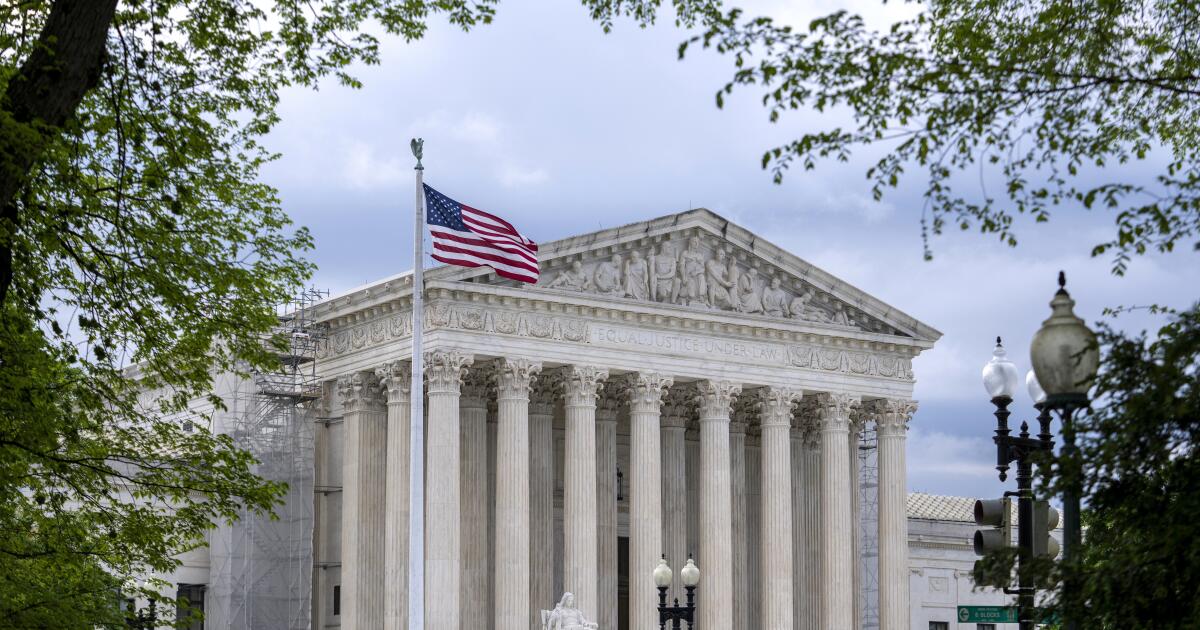
WASHINGTON — The Supreme Court agreed Monday to hear a Trump administration appeal and decide if “criminal aliens” may be held indefinitely while they fight deportation.
The case to be heard in the fall could give the administration more power to arrest and hold immigrants, including green card holders, who have criminal records.
The government’s lawyers say immigration laws call for deporting non-citizens with “aggravated felonies” on their records. And in such cases, they say these people may be held for months or even years while their claims are before the immigration courts.
Judges have been split on whether non-citizens fighting deportation have a right to a bond hearing and a chance to go free if they pose no risk to public safety.
The 2nd Circuit Court of Appeals in New York ruled for a pair of green card holders who faced deportation to the Dominican Republic and Jamaica. Both had been convicted of assaults that were characterized as aggravated felonies under the immigration laws.
However, the appeals court said their “prolonged detention” was unconstitutional if they were given no bond hearing and no chance to go free.
They were represented by the American Civil Liberties Union, whose lawyers urged the court to turn down the appeal.
“For the first time in this litigation, the government argues that civil detention ‘does not implicate any fundamental rights’ and so the Due Process Clause affords the detained men no protections—substantive or procedural,” they wrote.
In the past, they said the Supreme Court had accepted the “bedrock principle” that detained persons may have a right to seek their release on bond.
One of the two men had left this country and returned to Jamaica, the ACLU lawyers said. But Solicitor Gen. D. John Sauer urged the court to rule on the issue.
The detained men “have no procedural due-process right to a bond hearing on whether they are a flight risk or danger to the community,” he told the court. “Individualized findings about flight risk and danger are irrelevant” under the immigration laws which called for “mandatory detention based on their aggravated-felony convictions alone.”
The United Kingdom’s Court of Appeal has ruled that the British government was right to proscribe the Palestine Action activist group as a “terrorist” organisation last year.
Palestine Action is a British protest group which was founded six years ago and describes itself as a movement “committed to ending global participation in Israel’s genocidal and apartheid regime”.
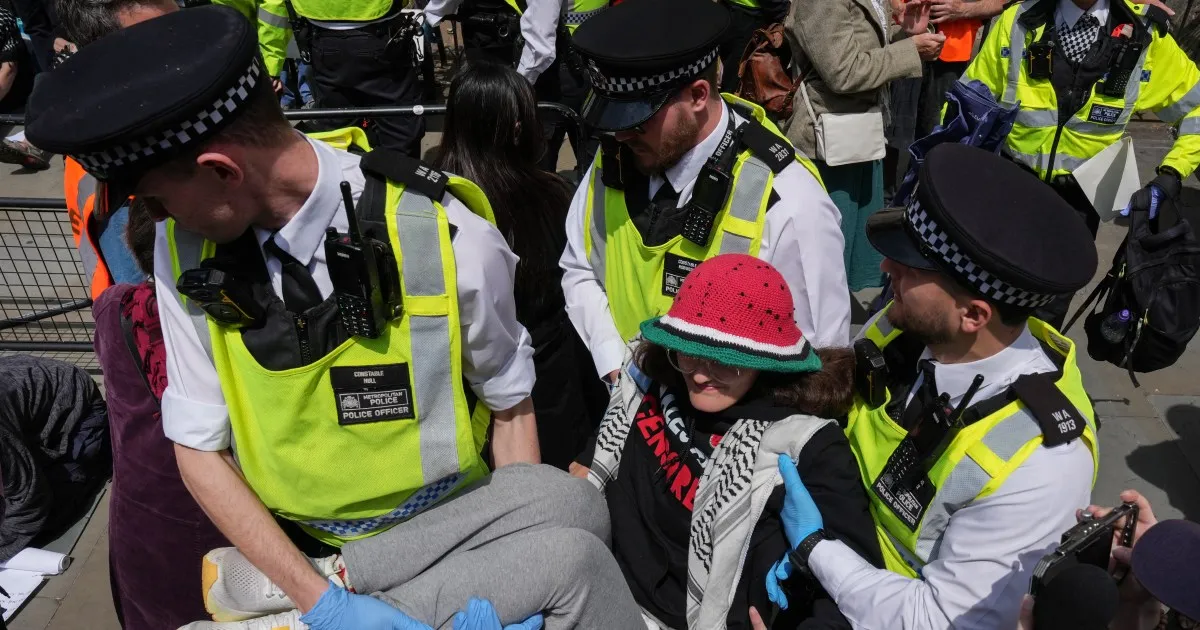
On Monday, police made more arrests of protesters demonstrating in support of Palestine Action outside the Court of Appeal in London.
Since the group’s proscription, which also bans support for proscribed groups, about 3,000 people have been arrested.
The Metropolitan Police welcomed the ruling and said it would continue to arrest those who protest in support of the group.
Here is what we know about the ruling:
What has the Court of Appeal ruled?
The judgement released on Monday states: “The proscription of an organisation like Palestine Action is highly controversial. But it is a fundamental mistake to overlook the fact that Palestine Action overtly promotes unlawful violence amounting to terrorism”.
The ruling was made by a five-strong panel, including the two most senior judges in England and Wales.
Palestine Action, which was formally proscribed by the UK last July, is a British protest group founded six years ago. It says it uses “disruptive tactics” to target “corporate enablers” and companies involved in the manufacture of weapons for Israel, such as Israeli group Elbit Systems, Italian aerospace company Leonardo, French multinational Thales and Teledyne from the United States. The group has targeted British facilities linked to those companies.
In all, British police say action by the group has resulted in millions of pounds of criminal damage.
A court in London ruled on June 12 that four Palestine Action members convicted of criminal damage at a British facility owned by Israeli weapons group Elbit Systems near Bristol, west England, would be sentenced on the basis that their actions had a “terrorist connection”.
Why was this case brought?
Following the proscription of Palestine Action last year, the group’s co-founder, Huda Ammori, challenged the decision in the High Court. In February, the High Court ruled that the government’s “terror group” ban was unlawful and disproportionate.
The government immediately said it would appeal. “I am disappointed by the court’s decision and disagree with the notion that banning this terrorist organisation is disproportionate,” Home Secretary Shabana Mahmood said.
The judgement on Monday agreed with her. Its ruling states: “The Home Secretary had the institutional competence and the democratic accountability to make the decision. The Proscription Decision was consistent with the Home Secretary’s Proscription Policy and was proportionate. It was not unlawful.”
Days after the Brize Norton attack, members of parliament voted in favour of proscribing the group. That classified Palestine Action as a “terrorist” organisation, bringing it into the same category as armed groups such as al-Qaeda and ISIL (ISIS).
Critics decried the vote, arguing that while members of the group have caused damage to property, they have not committed violent acts that amount to terrorism. More than 130 high-profile public figures have spoken out against the proscription.
Other previous actions the group has taken include:
In 2021, members protested for six days on the roof of Elbit Systems’ subsidiary, UAV Tactical Systems in Leicester, until some were arrested by police.
In 2022, the group broke into a Thales equipment factory in Glasgow, causing damage to weapons worth more than a million pounds ($1.3m).
In 2024, 10 months into Israel’s genocidal war on Gaza, Palestine Action activists broke into an Elbit Systems UK facility near Bristol in southwest England, causing another million pounds of damage.
How has Palestine Action responded to the ruling?
In a statement read by a representative following the ruling, Palestine Action’s Ammori said the group will challenge the judgement in the UK’s Supreme Court.
“We will fight this all the way. We will seek permission to appeal to the Supreme Court and, if need be, take this to the European Court of Human Rights,” Ammori said.
The European Court of Human Rights (ECHR), established by the Council of Europe, allows individuals to hold member states accountable for rights violations through a dedicated court. When the ECHR finds a violation, its judgements are legally binding on the state concerned under the European Convention on Human Rights.
“We will not stop fighting to overturn one of the most extreme attacks on free speech and the right to protest in modern British history,” Ammori added.
“This unprecedented abuse of power has devastated the lives of thousands of people while silencing dissent over Israel’s slaughter of the Palestinian people during the genocide, when that dissent could not be more urgent.”
How have others reacted to the ruling?
Anas Mustapha, Head of Public Advocacy at CAGE International, said: “This ruling tells us exactly what these powers are for. They are not safeguards against violence, they are authoritarian tools for crushing dissent.”
Mustapha added: “No ruling from any court is going to convince people that their conscience is wrong, and no amount of legislation will make support for Palestine disappear. The only sustainable outcome is the abolition of these laws in their entirety.”
Thomas Bell, acting UK Director of Human Rights Watch, said: “This disastrous decision further cements the UK’s place among countries that are backsliding on human rights by classifying acts of protest as terrorism.”
“When Palestine Action members have committed criminal damage, that should be dealt with under normal criminal laws, not by misusing overbroad and poorly defined terrorism powers. Defining a protest group as terrorists has created an absurd situation where thousands of people peacefully holding up signs have been arrested,” Bell added.
SACRAMENTO — If Gov. Gavin Newsom and the Legislature truly believe that slow vote counting is a horrible problem — which it’s not — right now is the time to fix it.
They’re crafting a new state budget. And they could choose to spend the money needed to help counties hire more temporary election workers, buy more sophisticated vote-counting machines and add space for all of it.
That’s the only way to significantly speed up vote counting and mute the MAGA drivel about California being a national “laughingstock.”
How much money?
“We’ve suggested $55.5 million,” says Kim Alexander, president of the nonpartisan California Voter Foundation, which pushes to improve the election process.
“That’s not a lot in the big scheme of the state budget.”
She’s right. It’s essentially pocket change in a proposed budget still being negotiated that tentatively totals $356 billion.
But don’t bet on much of it being allotted for swifter vote counting.
Regardless of all the potshots at California from cable news panelists about our “embarrassing” elections, faster vote tallying doesn’t seem to be a high priority for the Legislature.
Democrats are justifiably much more concerned about protecting poor people’s healthcare, in-home services for seniors and the unraveling safety net as the Trump administration and GOP Congress slash federal funding.
Federal cutbacks aside, the state for years has been spending more money than it takes in despite tax revenue exceeding expectations. Sacramento has a severe deficit spending problem that is projected to last for a while.
So, allocating more money to speed up vote counting by a few days isn’t very high on the governor’s and legislative leaders’ to-do lists.
“The reality is elections currently are underfunded,” says Assembly Elections Committee Chairwoman Gail Pellerin, a Democrat who was Santa Cruz County’s chief elections official for 27 years.
She also says, referring to demands for faster counting: “The media outlets want to call the races and be the first. And that’s what this is all about.”
I don’t disagree. By our nature, we journalists are anxious to report fresh news, including the outcomes of elections. And we become impatient when vote counts roll in seemingly at a snail’s pace.
But come on, it’s not a horrendous burden on the public to wait a few days for an accurate vote count.
It does, however, provide an excuse for President Trump and MAGA Republicans to regurgitate unfounded accusations that elections won by Democrats are “stolen” from the GOP.
“Look what’s happening in California … it’s a rigged election,” Trump bellowed in a June 7 interview on NBC’s “Meet the Press” with Kristen Welker. “They’re cheating on the election.”
When Welker challenged him for evidence, Trump heatedly replied: “They’re crooked just like you’re crooked. Your press is crooked. And ‘Meet the Press’ is crooked. … You’re either crooked, or you’re stupid.”
To put this in context, the Trump diatribe came immediately after he called police officers attacked by Jan. 6 Capitol invaders “a bunch of dirty cops” and “crooked cops.” The Trump-inspired rioters were trying to prevent Congress from certifying President Biden’s “rigged” election.
It’s constantly puzzling why millions of Americans take this unhinged man’s blatherings so seriously. But they do.
And when the president lies about ballot fraud, it erodes public confidence in the integrity of our election system and undermines democracy. Americans become even more cynical and polarized.
So, the governor, Legislature and counties would do everyone a favor by investing in a faster vote count.
“It’s a problem,” Alexander asserts. “The slow vote count has become the norm in California, but it’s not normal for a democracy. It opens the door for false fraud claims.”
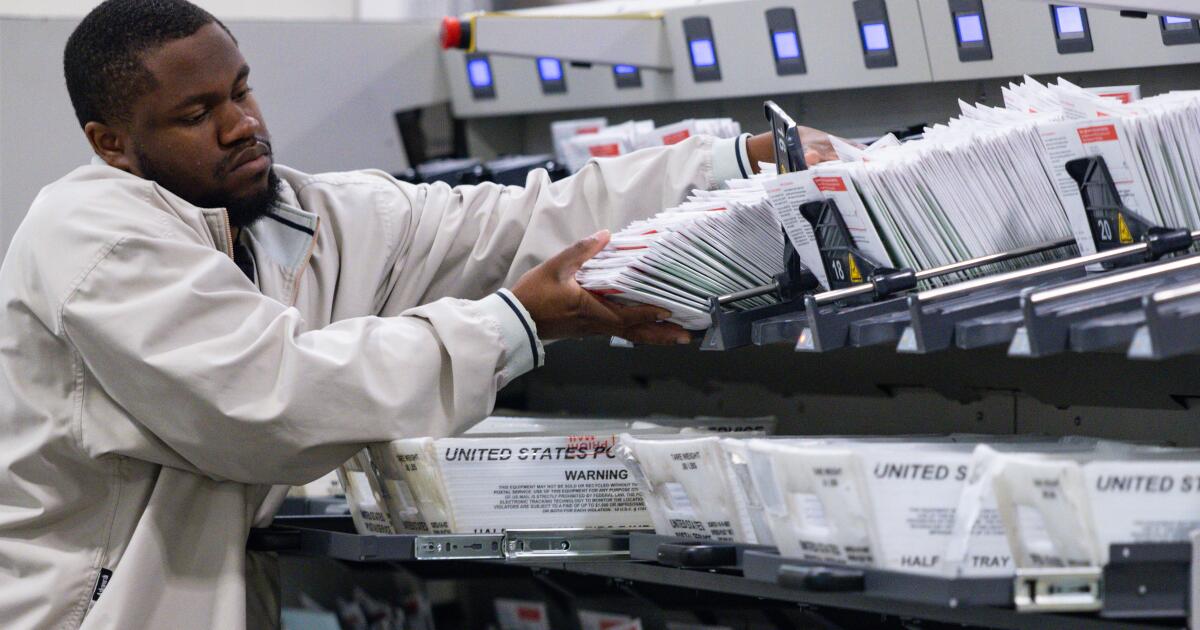
Much of the slow count results from tallying mail ballots, which amount to at least 80% of votes cast. They take longer to process, largely because each voter’s signature on the ballot’s envelope needs to be checked against one on file.
So, California could speed up counting by mailing out fewer ballots. Now, every registered voter gets one. We could go back to requiring voters to request an “absentee” ballot.
But forget that. We’re right to make it easy for people to participate in democracy — as long as safeguards are maintained to prevent fraud.
Some counties have taken advantage of a new law that allows a voter to drop off a filled-in mail ballot inside a voting center. There, it’s handled like an old-fashioned ballot that’s filled out at a booth. This significantly reduces processing time. But many counties say they need more state money to implement the program. I have no idea why.
Counting also is slow, of course, because lots of voters wait until election day — or near it — to cast their mail ballot. That clogs the system.
If the ballot is postmarked by election day, it’s allowed seven days to reach vote processors. Trump and fraud conspirators want to trash all ballots arriving after election day. That would speed up counting. But it’s un-American.
California election officials also try to pressure voters into mailing their ballots early. Rubbish.
Election day should mean something. It’s a day citizens are allowed to vote — whether they hand their ballot to a clerk at a voting center or drop it in the mail. They’ve got a right to take their sweet time in concluding what the wisest voting decisions are.
After all, the government allows us to drop our tax return in the mail on April 15 each year — and is very happy to receive our check a few days later. They process that check plenty fast.
“There’s nothing wrong with a slow count,” says Rick Hasen, a UCLA law professor who specializes in election law. “But it‘s a major problem because, unfortunately, it’s a manufactured crisis that can undermine public confidence. And it has gotten worse.”
So, Sacramento needs to undermine the demagogic manufacturers by stepping up vote counting while keeping elections virtually fraud-free.
You’re reading the L.A. Times Politics newsletter
George Skelton and Michael Wilner cover the insights, legislation, players and politics you need to know. In your inbox Monday and Thursday mornings.
By continuing, you agree to our Terms of Service, which include arbitration and a class action waiver. You agree that we and our third-party vendors may collect and use your information, including through cookies, pixels and similar technologies, for the purposes set forth in our Privacy Policy such as personalizing your experience and ads.
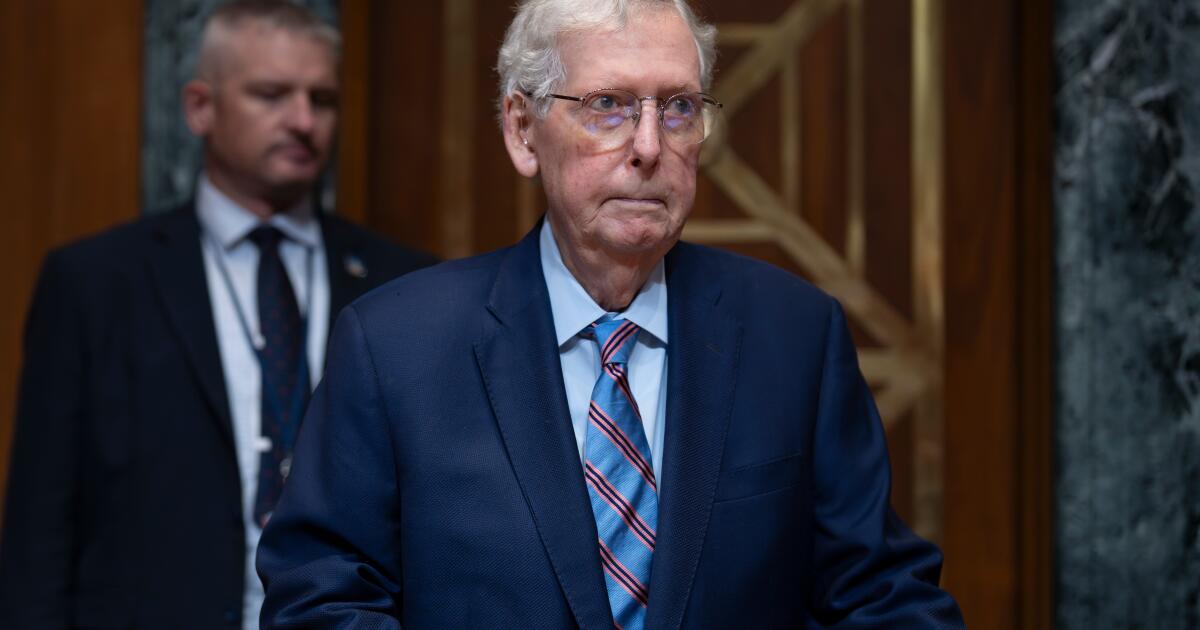
WASHINGTON — Republican Sen. Mitch McConnell of Kentucky was admitted to a hospital Sunday, his spokesperson said, but there was no immediate information about why he was there or his prognosis.
McConnell, 84, was the longest-serving Senate leader in history before stepping aside from that role while finishing his final term, which ends in January.
“Senator McConnell was admitted to the hospital this morning. He is receiving excellent care,” spokesperson David Popp said in a statement without elaboration. It was not immediately clear whether McConnell was in Washington, Kentucky or elsewhere.
McConnell’s health has been a subject of scrutiny for years.
He fell and sprained his wrist while walking out of a GOP luncheon in December 2024. He was hospitalized with a concussion in March 2023 and missed several weeks of work after falling in a Washington hotel. After he returned, he twice froze up during news conferences that summer, staring vacantly ahead before colleagues and staff came to his assistance.
McConnell had polio in his early childhood, and he has long acknowledged some difficulty as an adult in walking and climbing stairs. In addition to his 2023 fall, he tripped and fell in 2019 at his home in Kentucky. He had surgery for a fractured shoulder.
McConnell was first elected to the Senate in 1984 and was the Republican leader from 2007 until 2025, serving as both majority and minority leader during that period.
He remains active in the Senate, showing up for work when the chamber is in session, and recently chairing public hearings and grilling officials from his perch as chair of the Senate appropriations subcommittee on defense. He has intermittently used a wheelchair to navigate the Capitol and is routinely accompanied by his security detail, as a former congressional leader.
WASHINGTON — President Trump said Sunday that the United States and Iran have reached a framework agreement to end the war in the Middle East, a breakthrough in months of negotiations aimed at ending the conflict.
The deal, described by diplomats as a memorandum of understanding, commits Tehran to forgo the development or acquisition of nuclear weapons in exchange for helping reopen the Strait of Hormuz, and the paced release of its assets frozen overseas, upon the signing of the deal Friday in Switzerland.
Trump said he has also authorized “the immediate removal of the United States Naval blockade” on Iranian imports.
“Ships of the World, start your engines. Let the oil flow!” Trump wrote in a social media post Sunday evening. It was the president’s 80th birthday.
The full details of the agreement have not been released. Many details — including how Tehran would give up, destroy or dilute its fissile material, or whether Iran would continue treating the international strait as its sovereign waters — will continue to be negotiated in the coming days.
Pakistani Prime Minister Shehbaz Sharif said Sunday that mediators are planning to hold a series of meetings this week to “lay the foundation for the technical talks and the official signing ceremony.”
“We would like to thank the United States of America and the Islamic Republic of Iran for their commitment to finding a diplomatic solution to the conflict,” Sharif wrote in a post on X.
The Associated Press reported that negotiations on outstanding issues like Iran’s nuclear program would continue over the next 60 days, according to two senior Pakistani officials who spoke on condition of anonymity.
Vice President JD Vance told Fox News that the White House is “still figuring out the logistics” on whether he or Trump will attend the signing ceremony.
“What we know is that we have a lot of work to do, but a very big win for the American people tonight,” Vance said.”We are just going to keep on working at it, keep on driving energy prices down, keep on ensuring that region of the world is less than a basket case and finally, and most importantly, celebrate, that we can say with confidence Iran will never have a nuclear weapon.”
Iran’s deputy foreign minister, Kazem Gharibabadi, confirmed the agreement on state television but said Iran would not start implementing it until it was signed on Friday. He said the deal followed over 14 hours of talks in Tehran with a representative from Qatar, another mediator.
Iranian state TV showed a banner asserting: “US was forced to sign an agreement to end the war.”
Iran’s commitment to refrain from pursuing nuclear weapons would simply repeat a vow Iran has made several times before, including in its signing of the Nuclear Non-Proliferation Treaty and its nuclear deal brokered with international powers under the Obama administration over 10 years ago.
Iran has 972 pounds of uranium that is enriched up to 60% purity, a short, technical step from weapons-grade levels of 90%, according to the International Atomic Energy Agency. Under the 2015 international agreement with Iran abandoned by the first Trump administration, Iran’s uranium enrichment wascapped at less than 4%, monitored by IAEA inspectors.
The vagueness of the new agreement, the demand for further negotiations to flesh out its details, and the pacing of sanctions relief for Iran are all likely to draw criticism of the president, who launched his political career in 2015 by attacking President Obama’s newly signed nuclear deal as a historically bad agreement.
That deal, known as the Joint Comprehensive Plan of Action, followed two years of painstaking negotiations that were predicated on a similar, yet more detailed framework, called the JCPOA.
Defense Secretary Pete Hegseth said in a Sunday morning interview on CBS’ “Face the Nation” that the the difference between the JCPOA and how the Trump administration is handling negotiations is the “threat of military force.”
“The huge difference is we did this from a position of strength,” Hegseth said. “That military might will stay as long as necessary.”
And, as in 2015, Israeli leadership across the political aisle remains deeply skeptical of the agreement, pronouncing they will not be bound by a deal to which they are not a party.
“To be honest with you, he should be very thankful to us for doing this. Because if Iran had a nuclear weapon, Israel wouldn’t be around for two hours,” Trump said.
Since the U.S.-Israeli attacks on Iran that started the war Feb. 28, there have been 3,468 confirmed deaths in Iran,according to independent monitors. In addition, 13 U.S. service members have been killed, and the Israeli war with Hezbollah has killed 2,679 in Lebanon as well as 23 Israelis, including eight civilians.
Sherry Bebitch Jeffe, a contributing editor to Opinion, is a senior associate of the Center for Politics and Policy at the Claremont Graduate School
When Vice President Dan Quayle tarred Murphy Brown as a symbol of the “poverty of values” that he claims helped fuel the Los Angeles riots, it was more than another bizarre turn in an already screwball political ride. His attack on “lawless social anarchy” resonates with the rhetoric of the Religious Right. That is no accident. This group assumes great importance as the Bush-Quayle campaign faces the tricky dynamics of a three-way race in the fall.
Quayle’s scolding also exposed a common theme in GOP legislative primaries throughout California, particularly in Orange and San Diego counties. How Republican voters respond could define the soul of the state GOP, the political future of Gov. Pete Wilson and the direction of public policy and spending.
Four years ago, the Religious Right mobilized around the politics of evangelists like Pat Robertson. Now the Robertson crowd has joined with other pro-life groups in stealth campaigns to capture low-visibility local offices.
This strategy has quietly surfaced in California. In GOP primaries in 13 legislative districts, a statewide coalition of Christian fundamentalists is fielding and financing right-wing candidates against moderates backed by Wilson loyalists. Among the more prominent contests:
— Conservative fundamentalist Barbara Alby, of Sacramento’s Capitol Christian Center, is challenging incumbent B.T. Collins (R-Carmichael), the governor’s hand-picked candidate, for the 5th Assembly District nomination.
— In Pasadena, Bill Hoge, running for the GOP nomination in the 44th A.D., enjoys the backing of several fundamentalist Christian groups. Former La Canada-Flintridge Mayor Barbara Pieper, a pro-abortion rights Republican with long-time ties to Wilson, is the moderate candidate.
— Redondo Beach Mayor Brad Parton is the Right’s man in the South Bay’s 53rd Assembly District. Campaign literature from opponent Dan Walker, a Torrance City Council member, blasts Parton for his “attempts to impose his fundamentalist religious views on others.”
On economic issues, there’s little difference among GOP contenders. Most are fiscal conservatives who oppose new taxes and support pro-business agendas. The split comes over social issues. Couched in terms of “traditional family values,” the Right’s agenda is relentlessly anti-gay, anti-choice and anti-Wilson.
Since Wilson took office last year, he’s made it clear he wants to remake the California Legislature into an instrument of his moderate political will. To do that, he has to break the grip of conservatives in the GOP Assembly caucus. That’s what the 1992 primaries were supposed to accomplish. But caucus hard-liners, whose goal is to dump Wilson allies from leadership posts, have joined with the Religious Right to take on Wilsonistas.
The most intense battles are being fought in the governor’s back yard–San Diego. A string of right-wing victories there could be fatal to Wilson’s policy agenda and to his political viability.
For a while, the governor’s people worked to keep this unhappy political prospect suppressed. But when Wilson learned how well organized the conservatives were, he dropped his neutrality and endorsed four GOP moderates running for the Assembly in the San Diego area. Since all four districts lean Republican, the GOP nominee should have the advantage in the general election.
In the 75th, right-wing candidate Connie Youngkin, head of San Diego’s Operation Rescue, trumpets herself as a “Pro-Family Tax Fighter.” She has downplayed her anti-abortion rights activism in the face of attacks from Wilson’s candidate, Poway Mayor Jan Goldsmith.
The nomination battle in the 77th pits political consultant Steve Baldwin, and his army of Christian activists, against former Chula Vista Mayor Greg Cox. Baldwin, who helped engineer Religious Right victories in 1990 races for local offices, opposes abortion and gun control. Wilson-endorsed Cox does not.
In the 78th, former Assemblyman Jeff Marston, a pro-choice moderate, faces Dan Van Tieghem, executive director of the Christian Coalition of California. And in the 76th, Wilson likes former Del Mar Mayor Ronnie Delaney against anti-abortion conservative Dick Daleke.
Conservatives Youngkin, Baldwin and Van Tieghem have all been targeted by the California Abortion Rights Action League as “Enemies of Choice.” Their nominations could assume added importance if the U.S. Supreme Court, as expected, tosses the abortion-rights issue to the state legislatures. These religious conservatives would also likely wield long budget knives, first and most deeply, at health and social welfare programs.
What’s all this got to do with California’s primary?
Religious fundamentalists have boosted their voting numbers by “in-pew” registration drives. Add to this the fact that conservatives tend to be better organized, more motivated and more ideologically committed than middle-of-the-road voters. They turn out.
And with so many competitive races, turnout will likely determine many a political race.
If turnout is low, the extremes of both parties–liberal Democrats and conservative Republicans–will benefit, which means that the Legislature will likely remain factionalized and frozen.
The U.S. Senate races might be affected as well, particularly the tight contests for the six-year seat. On the GOP ballot, a low turnout could help conservative commentator Bruce Herschensohn. But if moderate Republican women come out to support pro-choice candidates running for the Legislature and Congress, pro-choice Rep. Tom Campbell might benefit.
In any case, despite the whining of press and pundits, the California primary is not irrelevant. The stakes are high this year. They include the definition of this state’s goals and priorities. And the selection of leaders capable–or incapable–of moving toward them.
California voters won’t be conned to the polls just to protest or confirm presidential nominees. But they can’t stay home, if they care at all about the future of their communities and state.
Romanian President Nicusor Dan announced Sunday that he is nominating Adrian Vestea as Prime Minister after the resignation of Eugen Tomac. File Photo by Bogdan Cristel/EPA-EFE
June 14 (UPI) — Romanian President Nicusor Dan nominated a new candidate, Adrian Vestea, for prime minister Sunday after the resignation of Eugen Tomac.
Vestea, a former mayor, is a member of the National Liberal Party. A former development minister, he highlighted development as a central focus.
“We are the sixth-largest country in Europe and we need to put a major emphasis on development, which I will do from day one,” Vestea said.
Vestea added that he plans to form a “political government that will undertake real reforms and keep Romania on a pro-Western path.
“Eugen Tomac resigned this morning, and under these circumstances, I am appointing Adrian Vestea as Prime Minister,” Dan posted on social media. “Neither Mr. Tomac nor I have been playing at governing. We moved in this direction following consultations with the political parties. At this point, however, it is clear that a political solution is the right one.”
Romania is facing the highest rate of inflation in the European Union and is operating at a fiscal deficit. Meanwhile it has upped its defense spending in recent years.
The Romanian government collapsed last month after a vote of no-confidence against then-Prime Minister Ilie Bolojan. The Social Democratic Party withdrew from the government coalition in April, joining the call for a motion on a vote of no confidence.
Swiss voters reject a proposed population cap that would cap the country’s population at 10 million. The plan, championed by the right-wing Swiss People’s Party, was supported by 45% of voters.

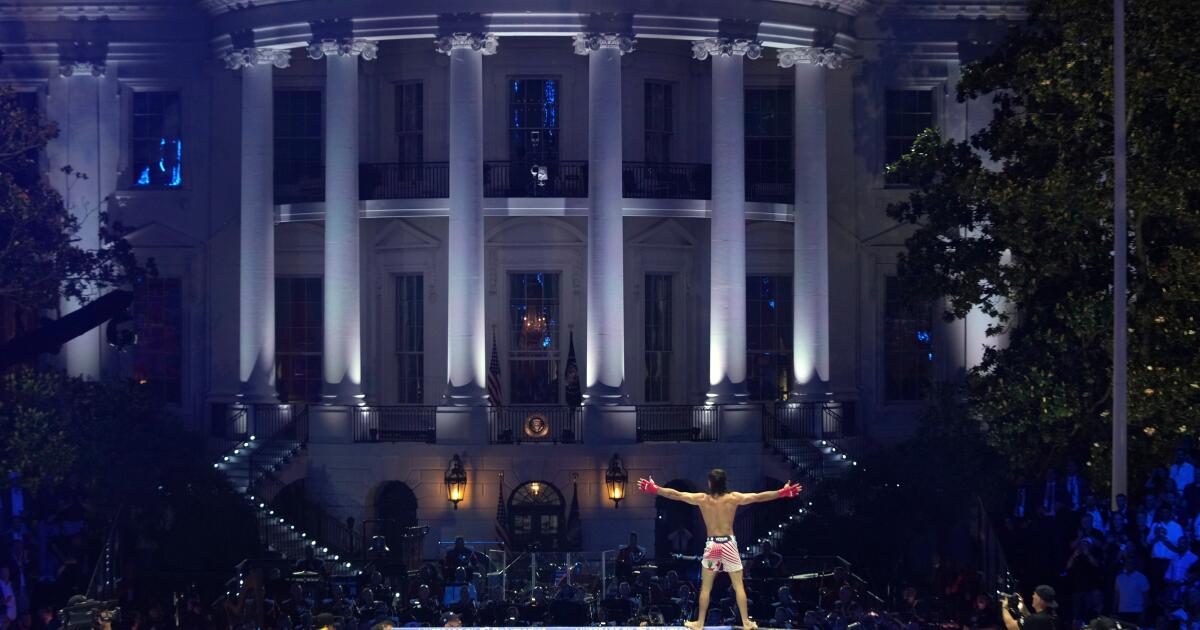
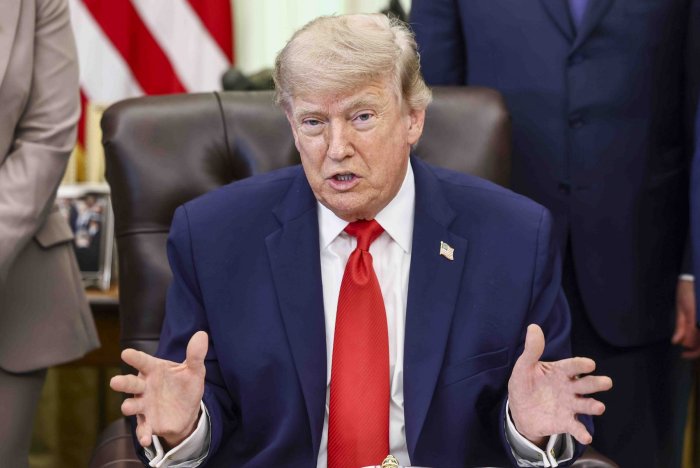

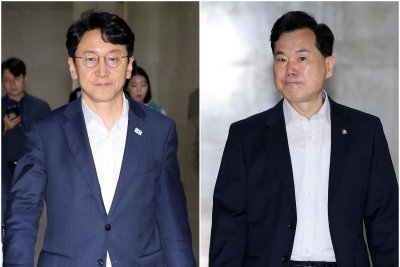


![Protesters outside the Los Angeles Stadium [Ali Harb/Al Jazeera]](https://i0.wp.com/occasionaldigest.com/wp-content/uploads/2026/06/1000180724-1781564207.jpg?w=640&ssl=1)