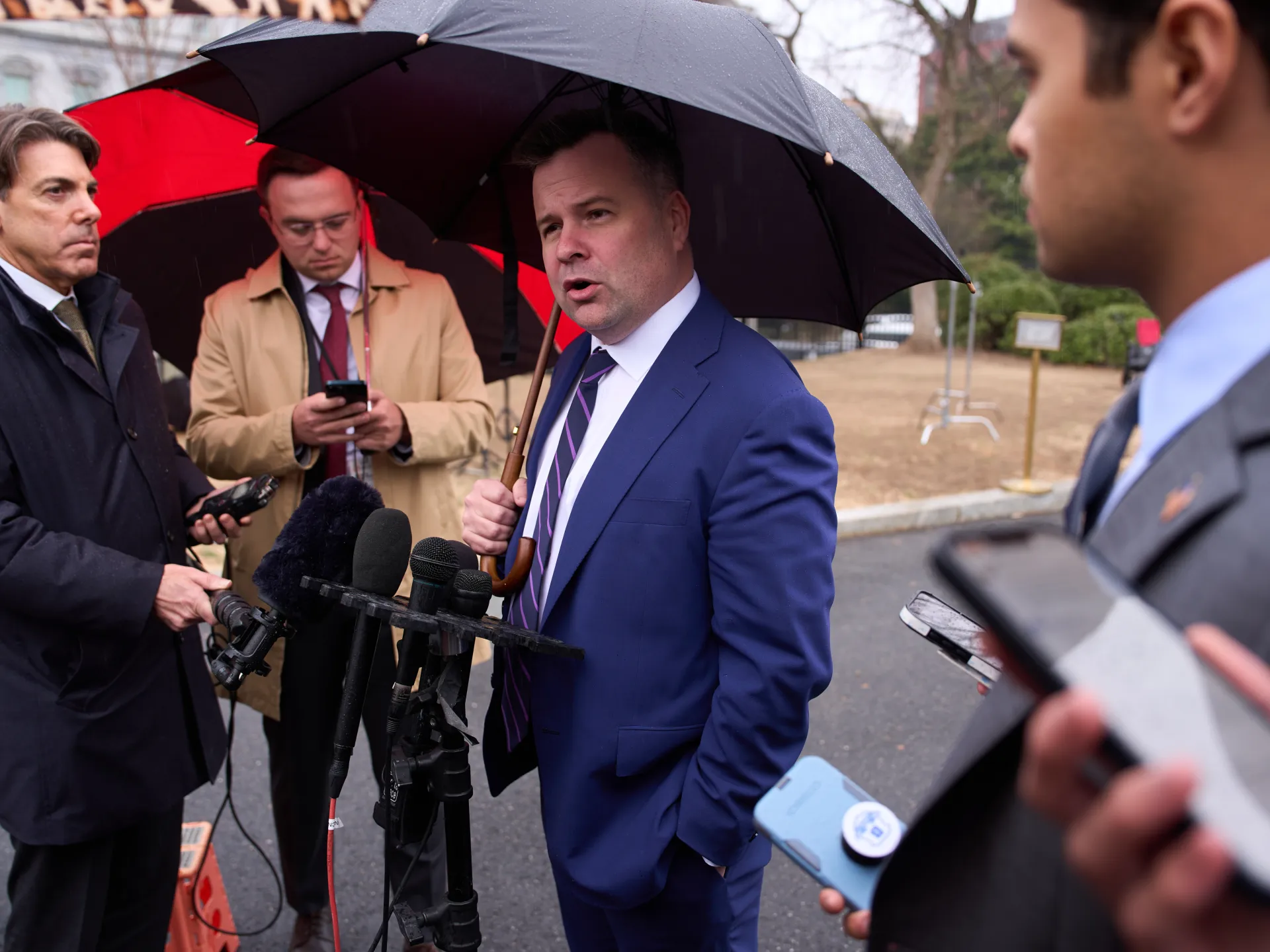
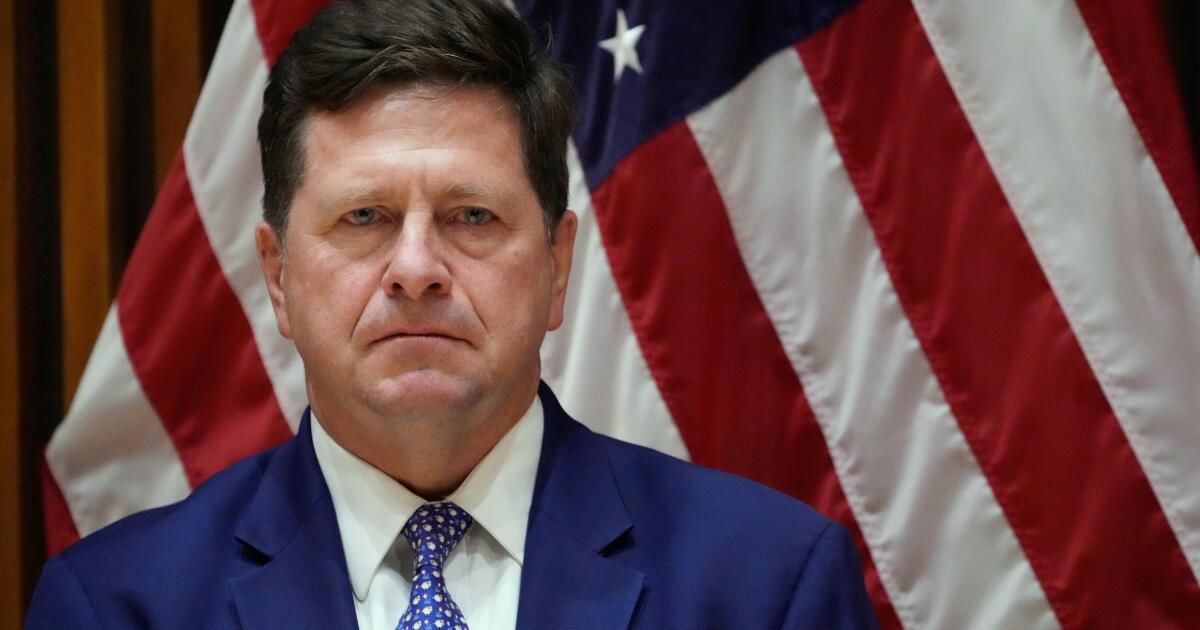
Trump says plan to keep controversial acting DNI head, Bill Pulte, in role as he pushes for surveillance, voter ID law.
United States President Donald Trump has delayed the confirmation of his nominee for director of national intelligence (DNI), while calling for lawmakers to pass legislation on surveillance and voter identification requirements.
Trump made the announcement in a Truth Social post on Wednesday, saying he planned to keep acting DNI Bill Pulte in the role and postpone the confirmation of his nominee, Jay Clayton.
Recommended Stories
list of 3 itemsend of list
Clayton had been scheduled to appear for a Senate confirmation hearing on Wednesday afternoon before Trump forced the delay by directing him to not appear.
The president cited his desire to pressure Democrats to pass a controversial surveillance law and a measure requiring voter identification, as well as his wish not to remove Clayton from his post as federal prosecutor until his replacement was confirmed.
“In the meantime, Bill Pulte will remain as the Acting Director of National Intelligence,” Trump said.
The US president’s nomination last week of Clayton had been a welcome relief to many lawmakers, including prominent Republicans, who raised concerns about Pulte and his lack of experience.
A Trump loyalist and housing official, Pulte had never held intelligence or military positions. The DNI oversees Washington’s 18-agency intelligence community.
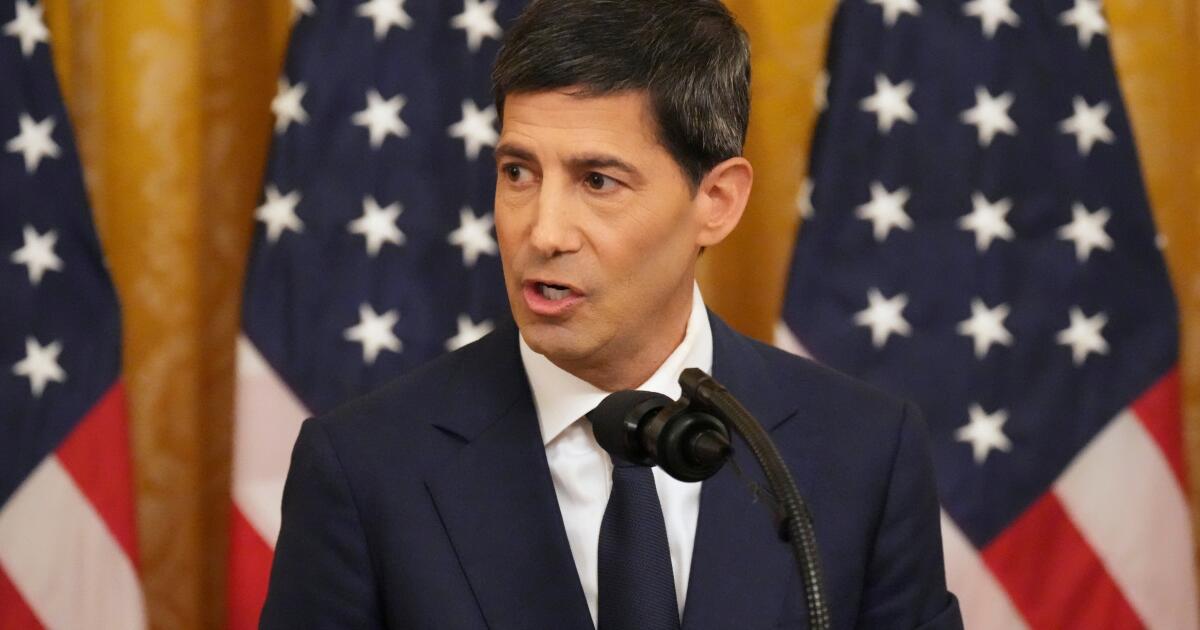
Clayton, in contrast, currently serves in what is considered one of the Department of Justice’s most prestigious posts: He works as the US attorney for the southern district of New York in Manhattan.
The DNI vacancy emerged after Tulsi Gabbard announced her resignation in May, citing her husband’s cancer treatment.
FISA and voter identification
Clayton’s confirmation was meant to be fast-tracked to win Democrats’ support for a controversial provision of the Foreign Intelligence Surveillance Act, which is currently up for renewal.
Section 702 of the law allows spy agencies to collect the communications of targeted foreigners located outside the US without first acquiring a warrant. Civil rights advocates have condemned the tool, saying it exposes US citizens to the government indirectly collecting their data.
Democrats had pledged not to renew the provision if Pulte remained in his role.
In his post, Trump maintained that Clayton could be confirmed before the vote on FISA, giving Democrats the opportunity to change their position.
Trump also added another condition, saying he would not approve FISA without lawmakers also passing a law requiring voter IDs in US elections. The legislation has been a key priority for Trump in advance of the midterm elections in November, but he has not been able to overcome a 60-vote threshold in the Senate.
“Therefore, to add a slight bit of intrigue but, for the Good of the Nation, and the People of our Country, I will not approve FISA without THE SAVE AMERICA ACT going along with it,” Trump said in his Truth Social post.
Despite the statements, Republican Senator Tom Cotton, the chairman of the Senate Intelligence Committee, initially said he would proceed with Clayton’s confirmation hearing on Wednesday unless Trump withdrew his nomination or ordered him not to appear.
Trump ultimately did direct Clayton to skip the hearing. That, in turn, forced Cotton to postpone the hearing. Afterwards, the senator issued a statement expressing regret at the circumstances.
“It’s regrettable that the president has directed Jay Clayton not to appear at his confirmation hearing today,” Cotton said in a statement.
“Mr. Clayton is a patriot and a highly qualified nominee, as the president has said repeatedly. While today’s hearing is now unfortunately postponed, I look forward to proceeding with his confirmation in the near future.”
Democrats, meanwhile, described the situation as chaotic.
“At every turn, the president has injected more uncertainty into a process that should be focused on one thing: keeping the American people safe,” Senator Mark Warner said in a statement.
“The president’s latest intervention only underscores a simple reality: the biggest obstacle to resolving these issues has not been Senate Democrats or Senate Republicans. It has been the chaos and confusion coming from the White House itself.”
EVIAN-LES-BAINS, France — President Trump said Wednesday that he was delaying federal prosecutor Jay Clayton’s nomination to lead the U.S. intelligence community in a bid to force Congress to act on a voter ID bill that currently lacks enough support for passage.
The Republican president said in a social media post just hours before Clayton’s scheduled confirmation hearing that he will keep Bill Pulte, a top U.S. housing official, as acting director of national intelligence. Democratic and Republican lawmakers had opposed Trump’s selection of Pulte, citing his lack of known experience in intelligence and his use of his current administration perch to target perceived adversaries of the president — resistance that last week forced Trump to turn to Clayton.
The abrupt announcement creates instant uncertainty over the long-term leadership of the 18-agency intelligence community and dashes hopes for a swift renewal of a crucial surveillance program that expired in Congress last week due to bipartisan anger over Trump’s pick of Pulte.
That tool, Section 702 of the Foreign Intelligence Surveillance Act, permits spy agencies to collect without a warrant the communications of targeted foreigners located outside the United States. National security officials across both major political parties have for years described Section 702 as vital for gathering intelligence that can disrupt terror attacks and espionage operations, though some lawmakers and civil liberties advocates have raised concerns over the government’s use of information about Americans that is incidentally collected through the program.
Clayton had been set to appear on Wednesday for a Senate confirmation hearing that was fast-tracked because of the program’s lapse. Democrats had said they would not renew the expired surveillance programs until Trump withdrew the selection of Pulte.
Trump’s post suggests that debate to revive Section 702 could be indefinitely postponed. Lawmakers have sounded the alarm about the government operating without congressional authorization of the powerful spy tool.
A court order from last March certified that the program could continue for another 12 months, though it’s possible that communications companies could challenge the government’s authority to force them to cooperate and share data.
In his social media post, Trump accused Democrats of breaking a deal to renew the program after he nominated Clayton. Trump also said he does not want to remove Clayton from his current position as U.S. attorney for the Southern District of New York before his replacement, James McDonald, is approved. McDonald was named to the Justice Department post on Saturday.
And Trump added another condition: linking his approval of the surveillance program to the passage of a bill requiring people to show ID to vote.
“Therefore, to add a slight bit of intrigue but, for the Good of the Nation, and the People of our Country, I will not approve FISA without THE SAVE AMERICA ACT going along with it,” Trump said, using the acronym for the surveillance program and his name for the voter ID bill.
The Republican-controlled Congress has not acted on the voting bill because it does not have enough support in either chamber, particularly from Democrats.
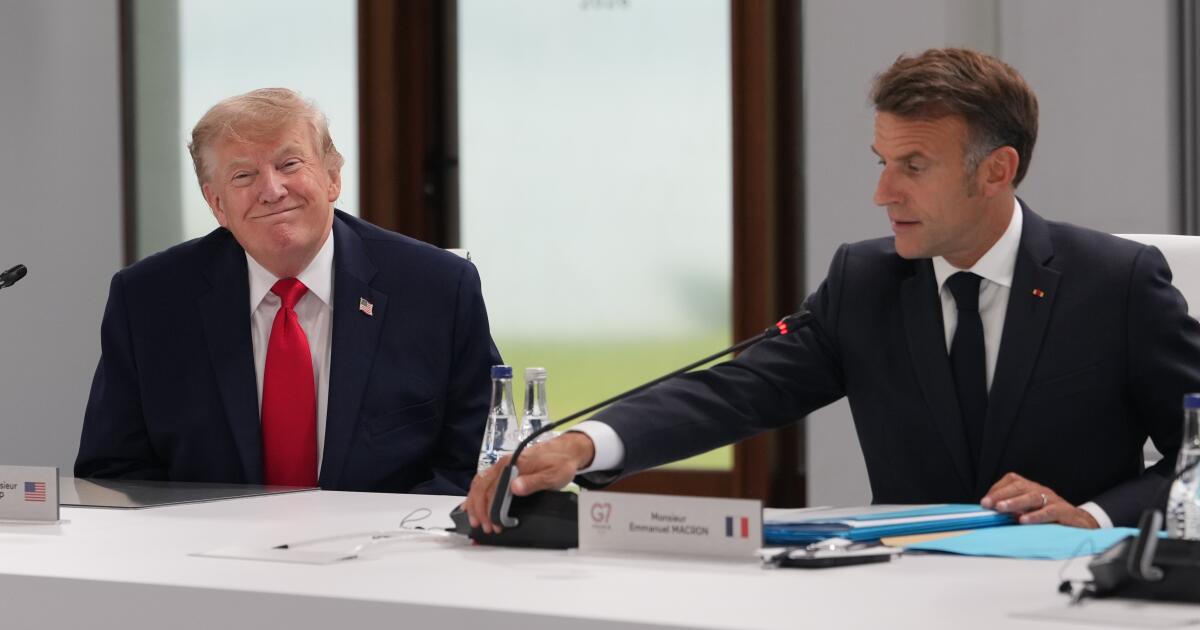
Trump made the announcement in Evian-les-Bains, France, where he was participating in the final day of the Group of Seven summit of leading industrial economies.
The intelligence director position became available after Tulsi Gabbard, who had held the job, announced last month that she was resigning to spend time with her husband as he fights cancer.
Clayton, a chairman of the Securities and Exchange Commission during Trump’s first term, has spent the last 14 months as the top federal prosecutor in Manhattan, one of the Justice Department’s premier posts.
His office during that time facilitated the unsealing of thousands of pages of court records from the prosecutions of Jeffrey Epstein and Ghislaine Maxwell, documents that were made public as part of the Justice Department’s release of records related to the late sex offender and his longtime confidant.
Clayton has also overseen the prosecution of former Venezuelan President Nicolás Maduro and Maduro’s wife, Cilia Flores, on drug trafficking charges.
Epstein died by suicide in a New York jail cell in 2019 while awaiting trial on sex trafficking charges. Maxwell was convicted of luring teenage girls to be sexually abused by Epstein but insists she’s innocent. Maduro and his wife have protested their capture and said they’re not guilty.
Madhani, Superville, Tucker and Jalonick write for the Associated Press. Superville reported from Geneva. Tucker and Jalonick reported from Washington.
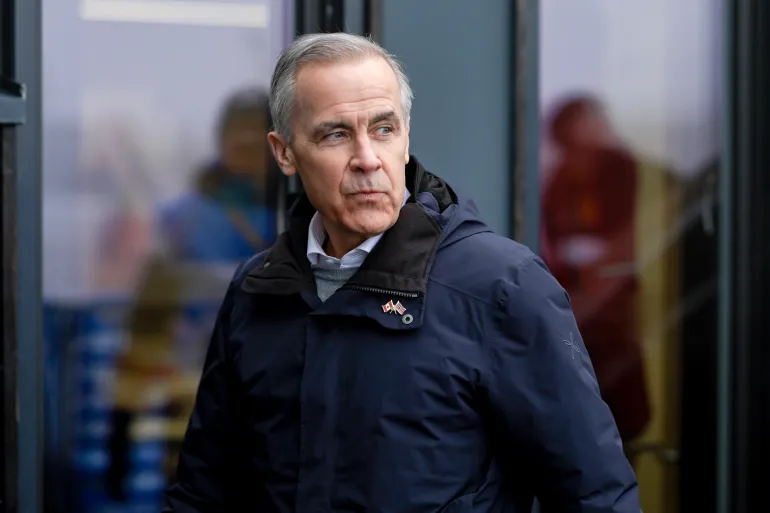
Toronto, Canada – When Diana Gallego listened to Canadian Prime Minister Mark Carney’s widely touted speech at the World Economic Forum at the start of this year, she couldn’t help but feel a disconnect.
Carney had made an impassioned plea to the world’s “middle powers” to break with a United States-led international order that he said was no longer working, and his words found receptive audiences around the world.
Recommended Stories
list of 3 itemsend of list
But for Gallego, co-executive director of FCJ Refugee Centre, an organisation that supports refugees and asylum seekers in Canada’s largest city, the prime minister’s statements rang hollow amid his government’s hardening approach to immigration.
“We saw the [prime] minister going to Davos [with] this beautiful discourse, saying we should not copy our neighbours … But internally, the policies are telling us another story,” Gallego told Al Jazeera. “Canada is closing the doors now.”
Gallego is among more than a dozen experts – from lawyers to professors, rights advocates and former government officials – who told Al Jazeera that Canada is at a “troubling” crossroads in its policies towards migrants and refugees.
As Canadians have grappled with rising economic and social pressures in recent years, a decades-old consensus on the benefits of immigration has frayed.
Hostile rhetoric blaming newcomers for Canada’s ills has intensified, and Carney’s government has slashed temporary visas and restricted access to asylum. Experts say a “generational shift” is under way.
“The general rhetoric is, ‘We don’t want you here’,” said Gallego.
Canadian Prime Minister Mark Carney’s Liberal Party won the 2025 elections [File: Christoffer Andersen/EPA]
Influx in temporary migration
A settler-colonial state, Canada has encouraged successive waves of immigration throughout its history, from largely European settlement in the early to mid-1900s to specialised programmes that brought refugees and high- and low-skilled workers to Canadian shores.
For decades, that influx of newcomers was widely viewed as a positive thing: immigration was fuelling the country’s economy, staffing key job sectors and counteracting a rapidly ageing population.
But over the past few years, Canada has seen one of the most dramatic shifts in how the public views immigration – and the government has tapped into increasingly negative sentiment to cut programmes and pass new, restrictive laws.
The policy changes began under former Prime Minister Justin Trudeau, whose Liberal Party government had dramatically increased temporary immigration during the COVID-19 pandemic to fill labour market gaps.
The figures shot up rapidly and, by October 2024, there were nearly 3.15 million non-permanent residents in Canada, accounting for roughly 8 percent of the population, according to official figures.
At the same time, systemic issues – from a shortage of affordable housing to high grocery costs and long hospital wait times – were putting the squeeze on many Canadian households.
Public attitudes quickly hardened, and a 2024 poll (PDF) found a majority of Canadians saying for the first time in decades that there was “too much immigration”.
Since then, several incidents of xenophobic violence have been reported, including in some of Canada’s largest cities, where the influx of migrants has been among the most visible.
Under pressure as angry discourse soared, the Trudeau government promised in 2024 to get immigration back to “sustainable” levels, and the cuts began, including most notably to international student visas.
“The reality is that not everyone who wants to come to Canada will be able to – just like not everyone who wants to stay in Canada will be able to,” Marc Miller, Canada’s former immigration minister, said in September that year.
A major intersection in Toronto, Canada’s largest city [Jillian Kestler-D’Amours/Al Jazeera]
‘Erroneous beliefs’
The numbers of arrivals dropped quickly as student and work visas were cancelled, forcing thousands of people to leave Canada or remain without legal status. By the start of this year, non-permanent residents totalled about 2.67 million, according to government figures, a 15 percent drop from the peak in October 2024.
“I don’t think you can blame the housing crisis in Canada on immigration, but there’s no doubt that the radically increased numbers under Justin Trudeau’s regime had a political effect,” Allan Rock, a former Canadian justice minister and Liberal lawmaker, told Al Jazeera.
The government, Rock explained, has been “reading the room and sensing that Canadians were connecting local economic and financial difficulties with migration”.
At the same time, right-wing politicians have seized on those public attitudes, with the opposition Conservative Party earlier this year pushing the governing Liberals to cut healthcare for people it described as “fake refugees”.
The Conservatives, also, have echoed US President Donald Trump in advocating for changes to “birthright citizenship”, claiming that the “outdated rule” that grants citizenship to anyone born in Canada “presents yet another strain on our immigration system that Canada can’t handle”.
“With over 7 per cent of Canada’s population here on temporary status – and arrivals massively outpacing the capacity of our housing, healthcare and jobs markets – something needs to change,” the party said.
Rights advocates have denounced that rhetoric while accusing policymakers of falsely linking migrants and refugees to social problems to absolve themselves of responsibility for a years-long failure to properly fund healthcare, education and other services.
On the housing issue, for instance, experts have found (PDF) that, while immigration increases demand for housing stock, its effect on prices is far less important than public discourse would have people believe.
“Leadership means not simply caving into public opinion when it’s based on erroneous beliefs,” Rock told Al Jazeera. “We’re buying into, and we’re supporting, a growing international trend to tighten borders and build walls and validate erroneous beliefs about refugees and migrants.”
“It’s a betrayal of values that this country has always stood for, and I find it troubling.”
Carney doubles down
Yet, since taking office in April 2025, Carney – the prime minister – has continued where his predecessor Trudeau left off on immigration.
In late March, Carney’s Liberal government passed a sweeping new law that grants Ottawa the power to cancel visas en masse, including for permanent residents, if it deems it in the “public interest” to do so.
The law, known as Bill C-12, also restricts access to Canada’s refugee status determination system in ways that lawyers told Al Jazeera are “arbitrary” and likely run counter to the country’s constitution, the Canadian Charter of Rights and Freedoms.
The government has justified the measure – which is expected to face a constitutional challenge in court – as part of an effort to streamline a backlogged asylum system and prevent “fraud”.
At the end of last year, nearly 300,000 cases were pending at the independent tribunal that adjudicates refugee claims in the country, known as the Immigration and Refugee Board of Canada (IRB).
A spokesperson for Immigration, Refugees and Citizenship Canada (IRCC), the federal immigration department, told Al Jazeera that it had introduced Bill C-12 “as global migration pressures intensify”.
The law introduces “measures to address challenges such as sudden increases in asylum claims and situations where existing processes may be used to circumvent regular immigration pathways”, the spokesperson said in an emailed statement.
“This means we can provide faster protection for those in need,” they said, adding that Bill C-12 also respects Canada’s obligations under the United Nations Refugee Convention as well as the Canadian Charter of Rights and Freedoms.
But experts say the law will do little to address the backlog at the IRB. They have also accused lawmakers of failing to dispel – and even of playing into – xenophobic rhetoric rather than addressing the real concerns of Canadians or structural problems in the asylum system.
The government is “creating this sense in the public that people are scamming us, they’re taking advantage of the system [and] there’s something broken that needs to be fixed”, said Julia Sande, a lawyer at Amnesty International Canada.
“People’s struggles are real. People are facing a housing crisis, inflation and unemployment, wage stagnation and widening inequality,” she told Al Jazeera.
“Then, instead of taking responsibility or making the changes needed to address these things, governments look for a group to blame – and who’s better to blame than people who don’t have the right to vote and can’t vote you out?”
Healthcare workers protest against cuts to a refugee health programme in Toronto, Canada, in April 2026 [Jillian Kestler-D’Amours/Al Jazeera]
Carney’s ‘honeymoon’ phase
Despite such concerns raised by rights advocates, Canada’s changing immigration policies do not appear to have drawn much attention – or pushback – from the wider public.
A wide-reaching effort by civil society groups earlier this year to get the government to make amendments to Bill C-12 failed to secure any meaningful changes.
In addition to that law, the Carney government also has rolled back a healthcare programme for refugees, extended a freeze on refugee resettlement applications, and announced significant funding cuts to several ministries, including the immigration department.
Planned cuts at the IRB – the board that adjudicates refugee claims – have also been reported, fuelling concerns that delays may get worse.
“The fact that there is no real plan in place to deal with this backlog [at the IRB] then contributes to negative opinion by the public about refugees,” said Maureen Silcoff, a refugee lawyer who previously served as a member of the tribunal.
“I think the government has a responsibility to proactively undo some of the myths that are circulating,” Silcoff told Al Jazeera. “This is especially important in times where we see in other countries that there’s a surge of anti-immigrant and anti-refugee rhetoric.”
Nevertheless, Carney continues to enjoy high approval ratings as he has justified government policies during his first year in office as part of an “elbows up” response to pressure from the Trump administration.
“The Carney government still seems to be [enjoying] a honeymoon of sorts,” said John Carlaw, an assistant professor at Toronto Metropolitan University who specialises in Canadian politics and immigration.
“We’re seeing a major withdrawal of social spending and then an investment in militarism and border enforcement,” Carlaw told Al Jazeera, describing it as a “troubling period” in Canada.
“I think C-12 really showed the government is not interested in hearing from communities that work with migrants and immigrants to make policies that are consistent with a human rights framework. They just don’t want to listen to dissent.”
Luisa Ortiz-Garza, a migrant rights organiser at Parkdale Community Legal Services, speaks during an event in support of migrants and refugees in Toronto in late April [Jillian Kestler-D’Amours/Al Jazeera]
‘Not immune’ to backsliding on human rights
Despite that, rights advocates say they will continue to push back against the direction Canada is heading on immigration.
“We can’t stop fighting,” Luisa Ortiz-Garza, a migrant rights organiser at Parkdale Community Legal Services, told a packed gymnasium at Trinity-St Paul’s United Church in downtown Toronto in late April.
Several dozen people joined the event, dubbed “No More Divide and Rule”, to denounce xenophobia and urge the government to grant legal immigration status for all migrants and refugees in Canada.
“What [the government is] doing is actually just putting people against each other,” Ortiz-Garza told Al Jazeera in an interview at her organisation’s office a few days before the gathering.
“It’s citizens against migrants [and] migrants against migrants because there is this idea that some migrants did things right and other migrants just jumped the queue or abused the system,” she said.
“We’re trying to have these conversations and bring people together: allies, citizens, migrants … so that we can actually talk about this and remind people about unity.”
That was echoed by Sande at Amnesty International, who warned that Canada is “not immune” to a backsliding on human rights. “Things will just continue to get worse until governments feel they’re held to account,” she said. “Yes, scapegoating may start with migrants, but it never ends there.”
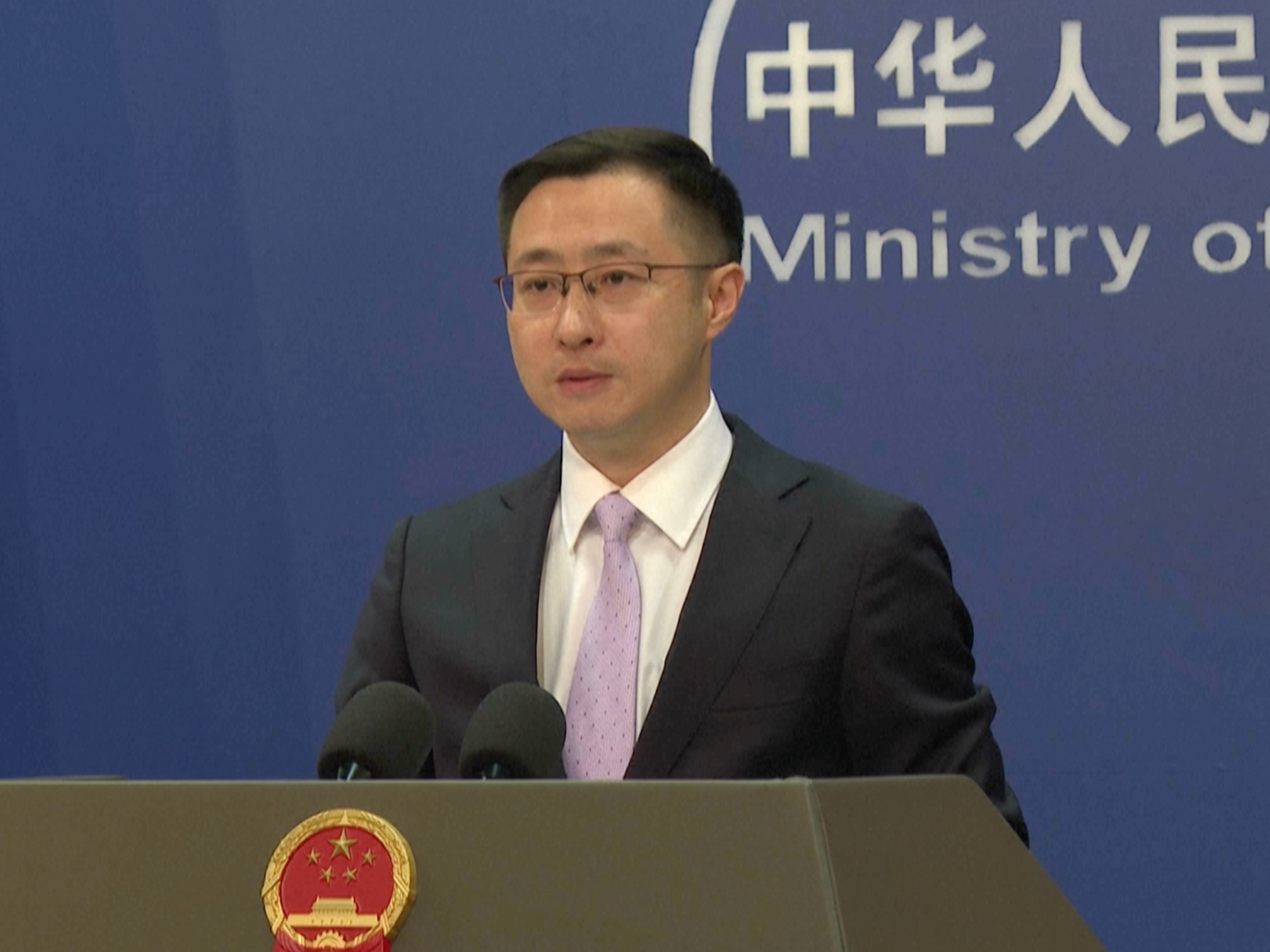
China has announced it will send a round of humanitarian aid to Lebanon and Iran and play an active role in fostering regional peace. The foreign ministry spokesman described Beijing as ‘deeply saddened’ by the humanitarian disaster.
It started in Texas, where Trump strong-armed Republican lawmakers into redrawing their congressional map in hopes of boosting the GOP’s chances of keeping control of the House. That led California voters to pass an eye-for-an-eye measure aimed at boosting Democratic prospects.
For a short time, it looked as though Trump’s move had backfired and Democrats might actually come out ahead, at least on paper, by a seat or two.
And then?
And then the courts stepped in.
In a 4-3 decision in May, the Virginia Supreme Court struck down the state’s new congressional map, ruling that the Democratic-run legislature had violated procedural requirements when it placed the constitutional measure on the ballot.
But the more significant legal decision came a week prior, when the U.S. Supreme Court nullified a major part of the federal Voting Rights Act, freeing several Southern states to hastily redraw a number of congressional districts to Republicans’ advantage.
What’s the bottom line?
It looks as though the GOP has come out ahead, but not by more than a handful of seats, give or take. It’s important to note that all that cartographic competition offers no guarantee of success.
“Cartographic competition?”
Those gerrymandered maps were drawn for the express purpose of helping out one party or the other, but the partisan manipulation doesn’t make all those redrawn districts a lock come November.
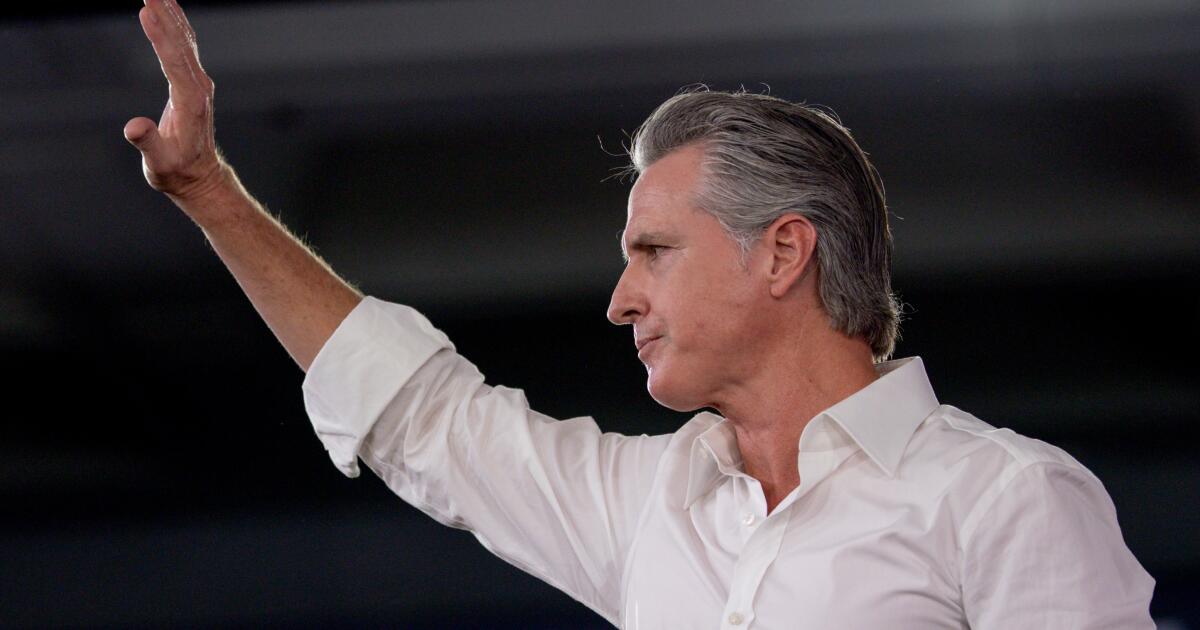
California Gov. Gavin Newsom signs legislation calling for a special election to redraw the state’s congressional map
(Godofredo A. Vasquez / Associated Press)
In California, for instance, the Central Valley seat held by Republican David Valadao — a perennial Democratic target — remains highly competitive. In Texas, GOP lawmakers redrew their map assuming the substantial Latino support that Trump enjoyed in 2024 would carry over to Republican candidates in this year’s midterm election. That seems increasingly less likely, given shifting Latino attitudes, which means at least two of those redrawn Texas seats are more competitive than Republicans would like.
Bottom line, where does that leave things in the fight for control of the House?
There are no certainties …
… Beyond death and taxes. Understood.
It still seems more likely than not that Democrats will win the House in November.
They just need to gain three seats. Going back more than half a century, the out party (which is to say the one not in the White House) has gained an average of more than two dozen House seats in the midterm election. So Democrats have that going for them.
President Trump kicked off a redistricting battle by strong-arming Texas into redrawing its congressional map.
(Alex Brandon / Associated Press)
Also, more significantly, Trump’s approval ratings — in a word — stink. There’s a very strong correlation between a president’s standing in polls and his party’s performance, given midterm elections are almost always a referendum on the party in the White House. Since disgruntled voters are more likely to turn out, that means the out party typically gains seats.
“It would be one thing if Republicans were trying to buck a historical trend and they were doing so strengthened by a popular Republican president,” said Jacob Rubashkin, an analyst with the authoritative nonpartisan political guide Inside Elections. “But that’s simply not the case. … [Trump] is less popular than any president heading into a midterm election in a very long time.”
What about control of the Senate?
Advantage Republicans.
How so?
Part of it is straight-up math. Democrats need to flip four seats. There are 35 Senate races being decided this fall, but only 10 or so are even remotely competitive. Nearly all are in states that Trump carried.
There’s much less correlation between presidential approval and the outcome of Senate races. Still, Trump is putting up some pretty strong headwinds that Republicans will have to overcome this fall, including in battleground states such as Georgia, Michigan and North Carolina. (His gaseous effusions — “I love the inflation,” “Affordability is a con job” — are not helpful, to put it mildly, when gasoline and hamburger are costing hard-pressed voters an arm and a leg, respectively.)
And Democrats have done about as well as they could have hoped in landing their preferred candidates in the Republican-leaning states of Alaska, Ohio and Iowa, making those contests far more competitive than they would have been.
That started out as Democrats’ top target this election cycle. Five-term incumbent Susan Collins has the distinction of being the only Republican senator running in a state that Kamala Harris won. The race is still considered a toss-up.
But the nomination of Graham Platner, an oyster farmer and Marine Corps veteran with a history that is, um, problematic — a tattoo resembling a Nazi SS symbol he did or did not apprehend; extramarital sexting; coarse online commentary — could turn the race into more of a referendum on the Democrat than either Trump or Collins.
Democrats are giddy again, this time over 37-year-old state Sen. James Talarico, who’s built a national following with his telegenic, Christian-infused progressive platform. More pertinent, he’s running against a singularly flawed Republican nominee, state Atty. Gen. Ken Paxton, whose dubious resume is muddied with a felony indictment, impeachment by the GOP-run Texas House and allegations of repeated adultery.
The small constituency of Makerfield in northwest England has found itself in the eye of the storm of British politics with a by-election on Thursday that will not only produce a new member of parliament but could also pave the way for a new prime minister.
The by-election was triggered last month when the previous MP, Josh Simons, stood down to allow Manchester Mayor Andy Burnham to contest the seat. If Burnham wins, he intends to challenge UK Prime Minister Keir Starmer for the leadership of the ruling Labour Party.
Recommended Stories
list of 4 itemsend of list
Starmer is facing mounting pressure to step aside following dismal council election results last month and this week’s resignation of Secretary of State for Defence John Healey and Armed Forces Minister Al Carns over the United Kingdom’s defence budget.
Seeking to derail Burham’s hopes for the Labour leadership, however, is far-right Reform UK candidate Robert Kenyon, whose campaign has been dogged by controversy over alleged sexist and misogynistic social media posts but who remains within striking distance in the polls. Reform came second at the last election in Makerfield, however, and are seen as presenting a real challenge to Labour, which has held the seat since its creation in 1983.
Here’s a closer look at the race, why it matters and how its consequences could extend far beyond Makerfield.
Why is a by-election happening in Makerfield?
Despite winning the 2024 general election in a landslide, Labour’s popularity has tanked over the past two years as support for the far-right, anti-immigration Reform UK has soared. In council elections last month, Reform swept up hundreds of council seats at Labour’s expense. Overall, Labour lost nearly 1,500 local council seats while Reform surged from 100 to about 1,450 seats.
On the right, Labour’s rhetoric on immigration has failed to stem support for Reform UK, which continues to attract both former Conservative voters and sections of Labour’s traditional working-class base – particularly in the north of England. On the left of the party, many voters who feel aggrieved by Starmer’s stance on Israel and cuts to welfare have shifted towards the Green Party.
Now, according to polling group Ipsos, Starmer is the most unpopular prime minister since it began voter surveys in the late 1970s.
As Labour’s internal tensions have grown as a result, Burnham has consistently emerged as one of the party membership’s preferred alternatives to Starmer. Recent polling suggests Starmer would defeat most potential challengers in a leadership contest, with one notable exception: Burnham.
As Mayor of Manchester, Burnham is not an MP and cannot currently stand for leadership of the Labour Party. Earlier this year, he was blocked from standing for Parliament via another by-election in Gorton and Denton, a seat Labour ultimately lost to the Green Party.
As pressure on the prime minister has mounted, however, Labour’s National Executive Committee has been increasingly unwilling to block Burnham from standing as an MP again.
Announcing his resignation as Makerfield MP following the council elections, Simons said Labour was heading towards a divisive leadership contest with “no hope, no energy that anything would change”. He described Makerfield as “where Andy Burnham has lived for 25 years” and said the mayor was “coming home”.
“Labour needs to change and the whole government needs to change,” Simons added.
Who is standing and what are they campaigning on?
Labour: Andy Burnham
Burnham currently serves as the highly popular Mayor of Greater Manchester, having left Westminster after previously serving in several cabinet positions under former Labour prime ministers Tony Blair and Gordon Brown.
As mayor, Burnham has built a reputation as one of Labour’s most recognisable politicians, benefitting from his distance from Westminster while arguing that it could learn from what he calls “Manchesterism” – a blend of pro-business policies designed to attract investment while bringing essential services back under public control.
Known by some supporters as the “King of the North”, Burnham gained national prominence for challenging the Conservative government during the COVID-19 pandemic and for his long-running campaign for justice for the victims of the Hillsborough disaster.
His appeal to Labour’s working-class base in the north of England has led some party members to view him as Labour’s strongest candidate for winning back the so-called “Red Wall” – former industrial constituencies that have increasingly shifted towards Reform UK in the north of England.
Political commentator and journalist Aaron Bastani told Al Jazeera that Burnham’s personal reputation “makes a difference” and that he represents Labour’s best chance against Reform UK.
“A lot of Reform voters actually like him. Many people have a good word to say about him, and he’s been a politician in the area for 25 years.”
But he added that, among some voters, he is still tarred by his “association with Labour as the party of government”.
“Many Reform voters see Labour as the party that backed the Iraq war, and there’s a deep sense of disillusionment with the political establishment … What’s interesting is that some Reform voters were making left-wing criticisms of Burnham, such as the cuts to winter fuel payments and broader dissatisfaction with the government’s direction.”
Reform UK: Robert Kenyon
Hoping to spoil Burnham’s chances is Reform’s Kenyon, affectionately referred to by some members of the UK media as “the plucky plumber” in reference to his profession. He represents a party whose rapid rise and anti-immigrant message has transformed Britain’s political landscape.
Reform UK’s rise has largely been driven by Nigel Farage, the architect of Brexit, whose party has capitalised on the collapse of support for the former ruling Conservative Party. Many big names from the Conservatives have defected to Reform in recent months. That has enabled Reform to attract both traditional right-wing voters and some former Labour supporters, largely on a platform that directs local grievances towards migration.
“For many voters, the proliferation of vape shops and takeaways on high streets has become a shorthand for a sense of decline,” Bastani told Al Jazeera.
“It’s often one of the first things people talk about when discussing immigration and changes to their local area. The concern isn’t really about vape shops themselves – they’re seen as visible symbols of a declining economic model, the loss of local identity and a feeling that places are deteriorating.”
Bastani, however, described Kenyon as “unimpressive”. His campaign has been overshadowed by allegations relating to historic social media activity.
Anti-extremism group HOPE not hate published posts attributed to Kenyon that included COVID-19 conspiracy theories, endorsements of sexualised comments about television presenter Carol Vorderman and remarks about female rugby players.
The group also highlighted comments on an online forum in which Kenyon allegedly described himself as sexist and suggested women make false rape allegations to obtain abortions.
Restore Britain: Rebecca Shepherd
Another factor is Restore Britain, a breakaway far-right party founded by former Reform UK MP Rupert Lowe, who argues that Reform UK has become too mainstream and is no longer hard enough on combating undocumented immigration.
Lowe, a former Reform member, was suspended by Reform UK in March 2025 after publicly criticising party leader Nigel Farage and was later expelled following a series of workplace bullying allegations and complaints from female staff members, which he denies.
Since launching the new party less than four months ago, Restore Britain claims to have attracted more than 96,000 members and 13 councillors, many of them former Reform figures. Should a significant share of those voters ultimately switch from Reform UK, it could dent Reform’s share of the vote just enough to benefit Labour.
Conservative: Michael Winstanley
Winstanley is the former mayor of Wigan, standing as candidate for the former ruling Conservative Party. He was elected as a councillor for the local ward of Orrell and 2000, and served for 16 years.
Conservative leader Kemi Badenoch called Winstanley “an excellent champion of the area having lived in, worked in and represented the local community for years”.
Observers do not expect any great show of Conservative voters at this election, however. In May’s local elections in Wigan, Labour won 42 seats, Reform 25, and the Conservatives got none. And, in the last general election in Makerfield, the Tories came in third – behind Labour and Reform – with just over 10 percent of the vote.
What do the polls say about the candidates?
Polling suggests the contest is effectively a two-horse race between Labour and Reform UK. The largest survey of the campaign, conducted by Opinium for Forward Democracy, indicates Burnham holds a narrow lead.
Based on a mixed-method survey of 543 local residents, Burnham leads Kenyon by five percentage points among voters most likely to cast a ballot. Among those rating themselves at least seven out of 10 likely to vote, Burnham stands on 46 percent compared with Kenyon’s 41 percent.
However, Kenyon’s share may have been damaged by the 7 percent that Shepherd is expected to win in Restore Britain’s first parliamentary outing. The Conservatives are polling at just 2 percent.
Furthermore, while Labour currently leads in the by-election campaign, the constituency’s longer-term political trajectory may ultimately favour Reform UK. When respondents were asked how they would vote in a future general election, Reform UK led with 42 percent compared with Labour’s 34 percent, suggesting that Burnham’s personal appeal may be helping Labour outperform its own national reputation.
In May, Labour lost all eight of its local council seats in Makerfield to Reform.
Tom de Grunwald, founder of Forward Democracy and StopReformUK.Vote, said tactical voting could prove decisive. “If you live in Makerfield and you would normally vote Green, Liberal Democrat, or anyone else, and you don’t want Reform UK to win this seat, the maths is clear: Andy Burnham is the only candidate who can stop them,” he said.
However, Bastani said he is sceptical that many Restore Britain supporters will ultimately return to Reform UK. “A lot of those voters now see Farage as part of the establishment,” he said, adding that Restore Britain could outperform expectations on polling day – which could split the far-right vote and benefit Burnham. While he expects Burnham to win, Bastani said the result should not obscure the rise of Reform.
“I’d be surprised if Burnham didn’t win. But if Reform were running a stronger candidate, this could look very different. If Farage somehow managed to win a seat like this against someone with Burnham’s profile, it would rank among the most significant political achievements of his career.”
June 17 (UPI) — Oklahoma voters have rejected raising the state’s nation-lowest minimum wage as several states held primaries on Tuesday.
The Sooner State sets its minimum at $7.25, the federal minimum wage floor, tying it with 19 other mostly Republican-led or -leaning states for the nation’s lowest. Oklahoma raised its minimum wage to $7.25 in 2009 to comply with federal law.
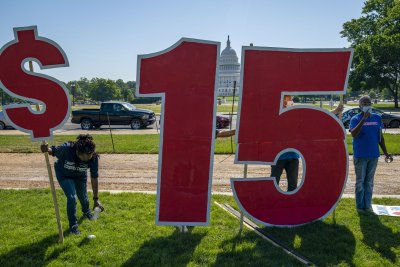
Voters were asked in State Question 832 whether Oklahoma employers must pay employees at least $15 per hour by 2029, putting the state above the median of $11.63 an hour but still below the highest-wage states.
However, voters rejected the move. Unofficial state results show that with 1,984 precincts reporting, 55.3% of voters said “no” to State Question 832, compared to 44.6% in favor of raising the minimum wage.
“Oklahomans sent a clear message: We can grow our economy, create opportunities and keep life affordable without one-size-fits-all mandates that make it harder for businesses to hire and grow,” Chad Warmington, State Chamber of Oklahoma president and CEO, said in a press release.
The initiative was championed by Raise the Wage Oklahoma, which had argued that raising the state’s minimum wage would ensure tens of thousands of workers are better paid while helping wages keep up with rising costs.
“But the fight doesn’t end here. Because a better Oklahoma is worth fighting for.”
Oklahoma voters also heavily backed Rep. Kevin Hern for the Republican nomination for the Senate seat held by Markwayne Mullin until March, when he was sworn in as secretary of Homeland Security, replacing Kristi Noem.
“Oklahomans deserve strong conservative leadership and a senator who will fight for your values,” he said on social media Tuesday night.
“I look forward to earning your support again in November and serving as your next United States senator!”
Unofficial state results show he secured 69.7% of the vote, with only one other candidate — Gary England — netting a double-digit vote share with 13.5%.
Hern will face the winner of the Aug. 25 Democratic runoff between N’Kiyla “Jasmine” Thomas and Jim Priest.
Meanwhile, the GOP gubernatorial primary appears to be heading to a runoff.
Nine Republican candidates vied for the governorship, but none surpassed the 50% threshold. Gentner Drummond had secured the highest number of votes with 26.26% of the vote share, followed by Mike Mazzei with nearly 26%. No other candidate broke 20%.
June 17 (UPI) — Rep. Mike Collins was projected Tuesday night to win Georgia’s Republican Senate primary runoff, defeating former football coach Derek Dooley as voters cast ballots in contests across the country.
The Collins-Dooley race was the highest-profile race on a primary night.
President Donald Trump has loomed large over November’s midterm elections, encouraging GOP-led states to redraw congressional maps, warning of impeachment and investigations if Democrats win control of the House and endorsing candidates who align with his agenda.
The Georgia Senate runoff drew national attention as a race that could help decide control of the Senate and test Trump’s influence in a battleground state.
Collins of Georgia’s 10th Congressional District ran with Trump’s endorsement, while Dooley had the support of Georgia Gov. Brian Kemp.
With all 159 localities reporting, Collins had secured 55.5% of the vote to Dooley’s 44.4%, according to unofficial results from the office of Georgia Secretary of State Brad Raffensperger.
Collins, speaking to supporters Tuesday night, projected an image of GOP unity, stating he had spoken with both Dooley, thanking him for running a “spirited campaign,” and Kemp “for his leadership and his friendship over the years.”
“We’re going to have some robust primaries out there. Sometimes, we got some strong disagreements, but I can tell you we stand united around one mission,” he said to applause.
“That’s right. And y’all know what the mission is: Is to put a Republican in that seat and get rid of that Jon Ossoff in November.”
Ossoff, a Democrat, won the Senate seat in 2021, flipping control of the chamber from the Republicans.
In his victory speech, Collins attacked Ossoff for voting in favor of President Joe Biden‘s landmark Inflation Reduction Act and the American Rescue Plan as well as voting against banning transgender athletes from competing in female-segregated sports.
Following Collins’ victory, Ossoff attacked him on social media, calling him a “notorious bigot, antisemite and extremist” who is being investigated by the House Committee on Ethics for illegal misuse of tax dollars.
“Collins, who is only a congressman because his daddy was a congressman, voted to double health insurance premiums for more than a million Georgians, for the Iran War and for the Trump tariffs,” he said in a statement.
Dooley conceded defeat.
“While tonight didn’t go our way, I want you to know that I’ll continue to be in this fight,” he said on social media.
“No matter who you voted for or what you believe, one thing we all can agree on is Jon Ossoff does not represent our Georgia values. In November, we’re sending him to the bench!”
Trump endorsed Collins on Friday after early voting ended, while Kemp endorsed Dooley in August.
But Tuesday night was not a clean sweep for Trump-backed candidates in Georgia. Rick Jackson, the billionaire founder of Jackson Healthcare, was poised to defeat Trump-endorsed Georgia Lt. Gov. Burt Jones in the GOP governor runoff race.
According to unofficial results, Jackson had secured 52.65% of the vote share to Jones’ 47%.
The Georgia governor’s mansion is up for grabs as Kemp, a Republican, has been term limited. He faced Democrat Stacy Abrams in the last two gubernatorial elections.
Jones had won 38% of the vote in the primary election last month. Jackson received 32% of the vote. The runoff was scheduled as neither candidate surpassed the 50% threshold needed to win the GOP nomination outright.
A suspected Russian drone attack on a residential building in Ukraine has injured at least seven people. Emergency services responded as fire ripped through the building in Zaporizhzhia.
Federal prosecutors announced charges Tuesday against 15 people who are accused of impeding federal agents during the Trump administration’s massive immigration surge in Minnesota earlier this year.
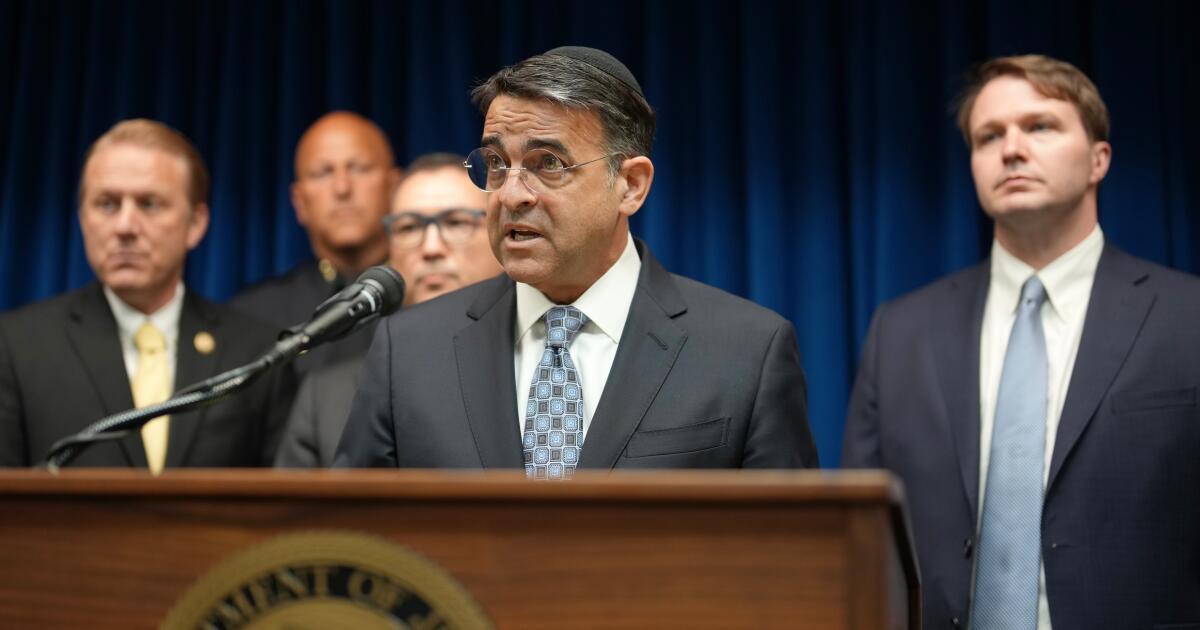
The investigation targeted two “Minneapolis-based antifa groups” whose members were trained in “surveillance, operational planning and rapid mobilization against law enforcement,” Minnesota U.S. Atty. Daniel N. Rosen said at a press conference.
The charges come as the Trump administration has escalated its attacks on “antifa,” an umbrella term for a diffuse movement of militant left-wing activists, which President Trump has described as a domestic terror group.
Rosen said some of those arrested identified as “antifa” while deploying a range of tactics to disrupt the immigration crackdown, such as “stalking” federal agents and using blocks of ice to slow their convoys. He declined to say whether any federal agents were injured as a result of their actions.
“Whether or not they actually, at the end of the day, cause bodily harm is not the measure of whether or not they committed a serious federal crime,” Rosen told reporters.
Twelve people were arrested Tuesday, two remain at large and one is already in custody, Rosen added. The names and specific charges of those arrested were not immediately available.
The charges come months after the administration’s “Operation Metro Surge” brought thousands of federal agents to the Twin Cities, setting off mass protests and leading to the fatal shooting of two U.S. citizens.
During the surge, convoys of agents in unmarked SUVs traveled through neighborhoods, at times banging down doors, waiting outside schools and demanding residents produce proof of citizenship.
Primarily organized through anonymous neighborhood messaging threads, a sprawling network of outraged Minnesotans quickly formed, with ordinary citizens and activists using whistles and car horns to call attention to the masked, heavily armed agents.
At the time, border czar Tom Homan indicated that federal authorities were probing “the organization and funding of the attacks on ICE.”
“They’ll be held accountable,” Homan said. “Justice is coming.”
Last September, Trump signed an order classifying antifa as a domestic terror organization and directing federal agencies to “investigate, disrupt, and dismantle” its affiliates and funders.
Democrats and several First Amendment groups have raised issue with the designation. While the federal government may designate foreign terror groups, there is no formal mechanism to apply the same label to domestic groups.
Trump has long invoked the term against a range of political opponents, including peaceful protesters without anarchist leanings.
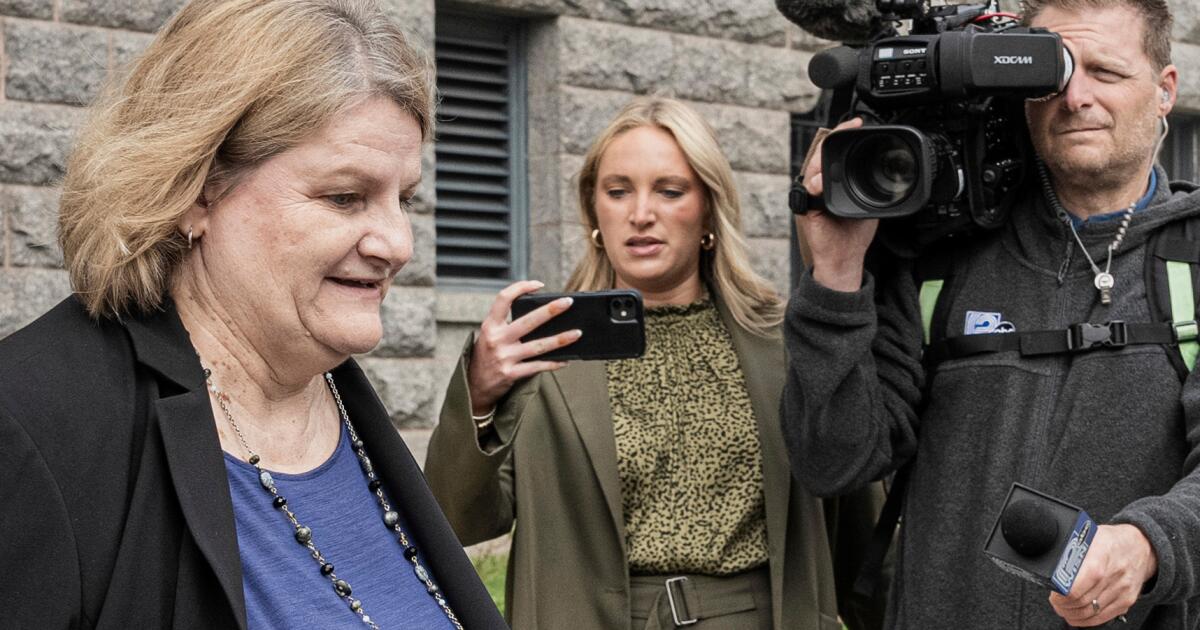
ATLANTA — A federal judge who was disciplined after an investigation found she had sex with a police officer in her chambers and attended a partisan event, then lied when confronted with the allegations, has recused herself in a fight over Georgia election records after the U.S. Department of Justice raised questions about her ability to be impartial.
The Justice Department sought to remove U.S. District Judge Eleanor Ross from the case, citing her reported attendance at an event for Fulton County Dist. Atty. Fani Willis, who prosecuted President Trump. Ross filed an order Tuesday recusing herself, writing that she was doing so “out of an abundance of caution for the potential perception of bias.”
The Justice Department had sued Georgia Secretary of State Brad Raffensperger for seeking an unredacted statewide voter list, and Ross was presiding over that case.
“Both the Trump administration’s present and Willis’s past efforts have become heavily polarized,” Ross wrote, explaining that she “cannot discount” that an objective observer might interpret her attendance at an event sponsored by Willis’ campaign as support for the district attorney’s position, even if she only went to see former colleagues.
Ross received a “private reprimand” after a court investigation found that she had sex in the courthouse with a high-ranking uniformed police officer within earshot of staff, attended a partisan event and then initially lied to deny the allegations.
The investigation report says Ross went to an event hosted by a district attorney’s campaign. The judge said the district attorney had been a friend since 1999 and acknowledged having gone to the a private mixer held on the sidelines of the event to visit with former colleagues in the district attorney’s office.
Ross previously worked in the Fulton County District Attorney’s Office and overlapped there with Willis there before Willis was district attorney.
Willis in August 2023 obtained an indictment against Trump and 18 others, accusing them of participating in a wide-ranging scheme to overturn Georgia’s 2020 election results. That case was ultimately dismissed in November.
MADISON, Wis. — President Trump’s attorney for the 2020 campaign in Wisconsin and two former aides all pleaded not guilty Tuesday to felony forgery charges for their roles in a fake elector scheme designed to overturn Trump’s loss in the swing state.
Jim Troupis, a former judge who was Trump’s Wisconsin campaign attorney; Mike Roman, Trump’s director of election day operations in 2020; and Ken Chesebro, a former Trump legal advisor, all entered the pleas in Dane County Circuit Court.
Troupis, who lives in the Madison area, appeared in person. Roman and Chesebro appeared via Zoom.
The Wisconsin fake electors case is moving forward even as others in the battleground states of Michigan and Georgia have faltered. A special prosecutor last year dropped a federal case alleging Trump conspired to overturn the 2020 election. Another case in Nevada is still alive.
The fake elector scheme, under which Republican electors in battleground states submitted documentation to Congress attesting that Trump had won their states even though he lost to President Biden, originated in Wisconsin.
Troupis, Chesebro and Roman argue that they committed no crime and were just trying to keep their options alive in case a court ruled that Trump had actually won the state.
But prosecutors allege that the three defendants defrauded the 10 Wisconsin Republican electors who cast their ballots for Trump in 2020.
Prosecutors contend that Troupis, Chesebro and Roman lied to the electors about how the certificate they signed would be used as part of a plan to submit paperwork to then-Vice President Mike Pence, falsely claiming that Trump had won the battleground state that year.
A majority of the electors told investigators that they did not believe their signatures on the elector certificate would be submitted to Congress without a court ruling, the complaint said. Also, a majority said they did not consent to having their signatures presented as if Trump had won without such a court ruling, the complaint said.
The arraignment on Tuesday came two years and two weeks after the first charges were brought against the three by Wisconsin Democratic Atty. Gen. Josh Kaul. Troupis, Chesebro and Roman face 11 felony forgery charges that are each punishable by up to six years in prison and a $10,000 fine.
Troupis and Roman both filed motions seeking to relocate the trial from Dane County, which includes Madison, to neighboring Jefferson County, saying negative publicity had tainted the potential jury pool.
Trump carried Jefferson County by 15 percentage points in 2020. He lost Dane County by nearly 53 points.
“This case is headed to trial,” wrote Troupis’ attorney, Joe Bugni, in Troupis’ motion. “No question. Neither side is going to blink. And when we get to trial, Troupis has the right to a fair and impartial jury.”
Troupis and Roman also argued that one of the 11 felony counts against them should be dropped because Trump issued a pardon for any federal crimes related to their work on the fake elector scheme. They argued that the state can’t prosecute them over the casting of electoral votes, which is a federal process, and therefore Trump’s pardon applies.
Trump also pardoned Chesebro.
The judge said Tuesday he would set a schedule to hear arguments on those motions.
The state charges against the Trump attorneys and aide are the only ones in Wisconsin. None of the electors have been charged. The 10 Wisconsin electors, Chesebro and Troupis all settled a lawsuit that was brought against them by Democrats seeking damages.
SACRAMENTO — Gov. Gavin Newsom did something this week that most politicians would only in a nightmare: He announced that the federal government is investigating him and his wife.
The revelation, delivered in a direct-to-camera 4½-minute video set against a backdrop of U.S. and California flags, became a top headline across the country.
In the upside-down politics of the Trump era, that was exactly as intended.
“He seems to be wearing this as a badge of honor because his brand is being the strongest opponent of Donald Trump,” said Thad Kousser, a professor of political science at UC San Diego. “The ability to show that you’re going on offense and that you know how to effectively fight back against this president is part of making your case for office.”
As he eyes a run for president in 2028, an antagonistic relationship with President Trump is Newsom’s political currency.
So when friends and former employees said the FBI and Internal Revenue Service had knocked on their doors and asked about him and his wife, Jennifer Siebel Newsom, last Wednesday, the governor took advantage of the situation to boost his political profile.
“Mr. President, come after me,” Newsom said in the video he posted online. “I’m not going anywhere, and the country is watching.”
Newsom, who is in his final year as California’s governor, has not declared his intent to run for president, though his claim that Trump is targeting him because he’s considering a bid for the White House was an open acknowledgment of his thoughts about the future. Announcing the probe himself — before federal authorities had a chance to describe it on their terms — allowed him to get ahead of and try to discredit any findings as a “personal vendetta” long before potential charges are brought.
Celinda Lake, a Democratic strategist and national pollster, said Newsom publicly defending his wife could also play well with voters.
“He’s positioned himself as the front-runner because he’s the one who’s under attack,” Lake said. “Primary voters love it when he engages Trump, and I think the combination of engaging Trump and then also the sexism of going after your wife is just a real home run for a primary electorate that’s 59% female.”
The video released Monday seemed similar to a speech Newsom delivered after Trump sent federal troops to Los Angeles last summer.
That address, in which he countered Trump’s version of events and challenged the president to come after him instead of women and child immigrants, made Newsom the captain of the Democratic response to the unprecedented deployment and ended his attempt to play the part of respectful statesman and ease political tensions following the 2024 election.
Liberals have since seemed to relish Newsom’s near-constant derision of the president on social media.
But David McCuan, a professor of political science at Sonoma State University, said casting the case as another instance of Trump’s political weaponization ignores questions about the murky timeline and origin of the investigation.
Newsom’s aides point to Trump saying that the governor should be arrested during last summer’s anti-ICE protests as evidence that he personally called for the inquiry. The claim has gained oxygen — and been echoed by other Democratic leaders in the state — while going largely unchallenged by federal officials. The Justice Department has declined to comment, as has the White House.
A source familiar with the matter, who requested anonymity because they were not authorized to discuss it publicly, said two federal probes have been going on for about a year, and that they originated not from Washington, D.C. but from conversations between whistleblowers and federal prosecutors based in Sacramento. The probes are linked to Newsom’s former chief-of-staff, Dana Williamson, and Siebel Newsom’s taxes, the source said.
Newsom’s critics have also noted that federal prosecutors under the Biden administration had pursued questions about his involvement in a state lawsuit against Activision Blizzard Inc., a major video game distributor, before Trump retook office.
“This is something that could lead to other elements that blow up, so there’s a risk,” McCuan said.
Newsom’s aides described the investigation as a fishing expedition, with federal authorities searching for anything they can use against the governor.
They said federal authorities appeared to initially investigate allegations that turned up nothing about the Activision case before refocusing their questions on nonprofits and other entities tied to the couple. Investigators also asked about personal information related to the family’s household, Newsom’s office said.
McCuan said three nonprofits that surround the couple have received millions of dollars from donors and political interests and are not subject to campaign finance limits.
The California Partners Project is a nonprofit that promotes gender equity. The Representation Project is an avenue for Siebel Newsom’s documentary films. The California State Protocol Foundation uses private donations to pay for gubernatorial expenses and was founded under former Republican Gov. Arnold Schwarzenegger.
“It’s a long-running game,” McCuan said. “It’s just the Newsom first couple has perfected it and moved it forward.”
Newsom getting out ahead of prosecutors and framing their probes as nothing but a “witch hunt” — borrowing a phrase often used by Trump during his own previous prosecutions — carries risk.
If prosecutors do turn up evidence of wrongdoing, Newsom’s decision to parade his indignation could backfire.
Publicly challenging Trump also runs the risk that the president could instruct the Justice Department to dig in deeper on an investigation that might have otherwise petered out.
But Lake and others said there’s no placating Trump, who has targeted Newsom and other Democrats.
While traditional politics suggest facing federal charges could sink Newsom’s political ambitions, the rules have been thrown out under Trump.
“You know the last person who got tied up in courts on the campaign trail?” Kousser asked. “That was Donald Trump, and nothing elevated Donald Trump more than doing courthouse press appearances and being seen as the target of an unfair political prosecution.”
A panel on the Brazilian Supreme Court has voted to convict Eduardo Bolsonaro of lobbying the United States to interfere in the trial of his father, former right-wing President Jair Bolsonaro.
On Tuesday, three of the four justices on the panel voted in favour of conviction, with one remaining justice yet to vote.
Recommended Stories
list of 3 itemsend of list
They determined that Eduardo Bolsonaro’s actions amounted to coercion against Brazil’s justice system and sentenced him to four years and two months in prison.
“It wasn’t merely an expression of opinion or a political stance, but rather conduct that clearly threatened Brazilian authorities and Brazilian citizens themselves,” Justice Cristiano Zanin said, calling Eduardo Bolsonaro’s actions “illegitimate and criminal”.
The conviction is the latest legal setback for the Bolsonaro family, which remains a dominant force on Brazil’s political right.
Jair Bolsonaro is serving a 27-year prison sentence for his efforts to remain in power after losing the country’s 2022 election.
Prosecutors described his actions as an attempted coup. Bolsonaro and his family have portrayed the trial as a political witch-hunt.
The ex-president’s third son and a member of Brazil’s Chamber of Deputies, Eduardo Bolsonaro has been active in his father’s defence.
In March 2025, he pledged that he would move to the US full time to “focus 100 percent” of his energy on “a single cause”: freeing his father.
Prosecutors accused him of mounting an illegal campaign to court US President Donald Trump and use foreign influence to pressure Brazilian officials to drop the case against Jair Bolsonaro.
Trump, an ally of Bolsonaro, had likewise tried to remain in office despite his loss in the 2020 election and has accused Brazilian officials of persecuting right-wing voices like Bolsonaro.
In July 2025, Trump issued a letter announcing 50 percent tariffs on certain Brazilian products, citing Jair Bolsonaro’s trial, specifically, as a reason.
“This Trial should not be taking place,” Trump wrote at the time. “It is a Witch Hunt that should end IMMEDIATELY.”
Trump also issued an executive order sanctioning one of the Brazilian Supreme Court justices involved in the Bolsonaro case, Alexandre de Moraes, on the basis that he worked to “target political opponents” and “suppress dissent”.
He called de Moraes a “threat” to the US, and his administration later expanded the sanctions to include the justice’s family members, as well as other Brazilian judicial officials.
Brazil’s current president, Luiz Inacio Lula da Silva, has denounced those actions as an attempt to interfere in Brazil’s domestic affairs.
As relations with Lula grew more cordial, the Trump administration relaxed its tariffs against Brazil. In December, it also repealed the sanctions against de Moraes and his family.
Lula, meanwhile, visited the White House in May and praised what he described as a productive meeting with his US counterpart.
But it remains unclear what role Trump may seek to play in Brazil’s upcoming presidential elections.
The left-wing Lula is campaigning for a fourth term, and he is likely to face his stiffest competition from Jair Bolsonaro’s eldest son, Senator Flavio Bolsonaro.
A CNT/MDA poll released on Tuesday projected that Lula would receive 49.3 percent of the vote in a run-off election against the senator’s 40.2 percent.
Flavio Bolsonaro has faced his own legal trouble in recent months, with police opening a probe in April into whether he defamed Lula. His connections to a disgraced banker have also raised media scrutiny.
Jair Bolsonaro, meanwhile, faced questions this week about the presence of a firearm in his home in Brasilia, where he is serving three months of his sentence on medical grounds.
Justice de Moraes likewise asked the elder Bolsonaro’s legal team to explain the presence of the weapon, which police discovered during a routine inspection on Monday.
A security guard for Bolsonaro initially said the 9mm Glock pistol was his own, but it was later revealed to be the ex-president’s.
De Moraes gave Bolsonaro’s legal team 24 hours to explain why “the convicted man kept a firearm at home”.
EVIAN-LES-BAINS, France — The United States could soon reimpose sanctions on Russian oil shipments after President Trump and fellow leaders at the Group of Seven summit of major industrialized democracies moved Tuesday to put the war in Ukraine back on top of their agenda, more than four years after Russia launched its full-scale invasion.
The Iran war has recently overshadowed Ukraine, but Trump said he wants to shift the focus following the announcement of an agreement to end the 3½-month-old conflict in the Gulf.
Trump said Iran will soon be “back in the rearview mirror.”
Trump said the sanctions on Russia that were eased during the Iran war to help lower oil prices can go back in place as more oil moves through the Strait of Hormuz.
“Soon we’ll be able to do that because the oil is now flowing,” Trump told reporters in Evian, the French spa town close to the Swiss border that is hosting the summit. “We’re in a position to do that soon.”
The U.S. in March temporarily eased some sanctions on some Russian oil shipments as crude prices sharply increased. The waiver has been extended.
Zelensky joins G7 leaders for talks
Ukrainian President Volodymyr Zelensky joined the G7 leaders for talks on the war in his country. They wrapped quickly, after just 75 minutes.
Zelensky said Ukraine is serious about peace while Russia toys with world leaders. “The entire ‘Seven’ supports Ukraine unanimously today,” he said.
Zelensky added that G7 leaders supported Ukraine’s need for more Patriot missiles and discussed how to increase production by licensing production. Patriot missiles are able to counter Russian ballistic missile attacks on Ukraine’s power grid and cities.
As the U.S. under Trump has cut back aid to Ukraine, France and its European allies are now the biggest providers of military and financial support to Kyiv.
Trump downplayed the impact of the Russia-Ukraine war on the U.S. but lamented the death toll.
“The whole thing is ridiculous,” Trump said. “So, yeah, I’m going to do whatever I can.”
Meanwhile, the U.K. announced new sanctions targeting the “shadow fleet ” Russia uses to ship oil and gas, and the finance networks used by Moscow to evade Western sanctions. The ships targeted include several recently purchased by Russia to transport liquefied natural gas from its sanctioned Arctic LNG 2 project.
Russia fires again at Ukraine’s biggest cities
Hours before the summit began Monday, Russia fired hundreds of drones and dozens of missiles at Ukraine’s biggest cities in a barrage that killed 11 people and set fire to a religious landmark.
The attacks came after Zelensky and Putin spoke separately by phone with Trump on Sunday, the U.S. leader’s 80th birthday.
While campaigning in 2024 for a return to the White House, Trump claimed he could end the Russia-Ukraine war within 24 hours of taking office. However, negotiations have faltered and Trump has acknowledged it has proved much harder than he thought.
Ukraine on Monday officially started European Union membership negotiations, launching a process that will require its government to commit to years of political reforms even as it fights the Russian invasion.
Ukraine sees EU membership as a security guarantee for a stable future once the war ends. Its best guarantee would be membership in the NATO military alliance, but the Trump administration insists that cannot happen, and others are wary of Ukraine joining while the war continues.
Trump says he may send Iran deal to Congress
The U.S.-Iran ceasefire deal got plenty of attention at Tuesday’s sessions, with Trump voicing his openness to sending the deal to Congress for review. The text has not been made public.
“I like the idea, send it to Congress please,” Trump said at the start of a meeting with United Arab Emirates President Sheikh Mohamed bin Zayed Al Nahyan on the summit’s sidelines. He added, “I mean who wouldn’t approve it?”
Republicans on Capitol Hill say they want Trump to provide more information about the agreement, with some expressing skepticism that the deal can deter Iran from pursuing a nuclear weapon.
Trump also met with the Emir of Qatar, Sheikh Tamim bin Hamad al-Thani. The Gulf nations are not part of the G7, but French President Emmanuel Macron extended invitations to their leaders at a fraught moment for their region.
Trump also expressed frustration over Israel’s continued hostilities with the Iranian-backed militia Hezbollah in Lebanon, telling reporters he’s “not happy with the way Israel has handled themselves with Lebanon and with Hezbollah.”
Trump said Israeli operations to target Hezbollah “should have been able to deal with them faster,” adding: “It just goes on forever. And when that happens, it throws a negative light on the big deal. And that’s the deal with Iran.”
Macron said France and other Western partners are “ready to take action very quickly” to help reopen the Strait of Hormuz peacefully to ease the economic impact of rising oil prices. France and the U.K. have championed a mission to restore maritime security there as soon as conditions allow.
The G7 comprises France, the United States, Canada, Germany, Italy, Japan and the United Kingdom. Other guest nations, including Brazil, India, Kenya and South Korea, were invited to participate in some discussions.
Superville, Corbet and Madhani write for the Associated Press. Madhani reported from Geneva. AP writers Jill Lawless and Samuel Petrequin in London, Collin Binkley in Washington and Illia Novikov in Kyiv contributed to this report.
WASHINGTON — Ever since Kevin Warsh was nominated by President Trump in late January to lead the Federal Reserve, a question has lingered: Will he seek to raise interest rates to tame inflation or cut them as Trump has long demanded?
On Wednesday, Warsh may provide the first hints of an answer when he oversees his first Fed policy meeting as chair and holds a news conference afterward. Bond markets, which can swing sharply on a chair’s pronouncements, will be watching particularly closely for any signs of which way he leans.
“We expect the press conference to be pivotal,” Jonathan Pingle, an economist at investment bank UBS, wrote in a note. “This will be Kevin Warsh’s first public appearance as Chair. … We do not really know what his policy views are.”
Economists say Warsh will likely aim for a neutral approach, largely because he is taking over the Fed at a challenging time. Rising inflation has made it all but impossible for the Fed to cut interest rates anytime soon, which could stimulate growth and further raise prices. Hiring has improved noticeably since the beginning of the year, removing another key rationale for rate cuts. And the other 11 policymakers on the Fed’s rate-setting committee — including Warsh’s predecessor, former chair Jerome Powell — are split on whether an increase in the Fed’s key rate will be needed or if it can stay unchanged.
High inflation puts Fed in tough spot
Oil prices have fallen sharply on news that the U.S. and Iran have reached an initial deal to end their war, which could eventually cool inflation. Yet it’s unclear whether a permanent agreement can be reached.
“The right thing to do now is wait and see,” said William English, an economist at the Yale School of Management and a former top Fed economist.
Inflation has jumped to a three-year high of 4.2%, the government said last week, mostly because of higher gas prices. Even Trump has backed off a bit from his relentless demands for lower rates, and instead has argued that rate hikes — which the Fed undertakes to cool the economy and slow inflation — aren’t necessary.
In an interview earlier this month on NBC’s “Meet the Press,” Trump said, “Kevin is fantastic and I want him to do whatever he wants,” but added, “there’s no reason to raise rates.”
On Wednesday, the Fed is widely expected to keep its key rate at about 3.6%, where it has remained since last December. When the Fed reduces its rate, over time it can lower other borrowing costs for things like mortgages, auto loans, and business loans.
Changes likely to dash hopes for those seeking lower rates
Still, some changes are expected, which will disappoint those hoping for lower borrowing costs: The Fed is likely to drop language that suggests its next move will be a rate cut, and instead adopt wording that is more neutral. Several Fed policymakers in recent weeks have said that the Fed’s most likely next move is a hike, rather than a cut.
The central bank is also scheduled to release its quarterly economic projections, which include forecasts for how the Fed’s key rate will change over the next three years, on Wednesday. In March, those projections suggested the Fed would cut its rate once this year. Yet on Wednesday they will likely show no change in 2026, with maybe one or two cuts next year, economists say.
Warsh has criticized the projections for providing too much “forward guidance” to financial markets and leading Fed officials to stand by their forecasts for too long, even as the economy changes. Fed watchers will look closely to see if Warsh participates in the quarterly projections. If he doesn’t submit his own forecasts, it could be a sign he will seek to get rid of them entirely in the coming months.
Warsh to bring a new approach to Fed leadership
Outside of policy, Warsh is expected to bring a different style to the Fed than Powell, according to people who’ve worked with him. He wants Fed policymakers to give fewer speeches, have more debates behind closed doors and will likely avoid commenting on the daily ups and downs of the economy. Powell was relatively plainspoken and straightforward, while Warsh has suggested he sees the famously oracular Alan Greenspan, the Fed’s chair from 1987 to 2005, as a model.
“He’s just going to say less, because he doesn’t find that stuff very helpful,” said Robert Tetlow, a former senior policy adviser at the Fed.
Randall Kroszner, an economist at the University of Chicago who served on the Fed’s governing board from 2006 to 2009, when Warsh was also a governor, said the new chair would likely focus on bigger-picture questions, such as how AI will impact the economy. He will avoid thornier issues, such as whether tariffs raise inflation, which Powell was willing to address.
By avoiding such hot-button issues, the Fed could attract less negative attention from the White House, Kroszner said.
“He’s going to stay away from those,” Kroszner added. “If the Fed is to maintain its independence, it needs to maintain its focus.”
While seeking Trump’s nomination, Warsh called for “regime change” at the Fed and criticized the central bank for not preventing the 2021-22 inflation surge, when prices jumped 9.1% in a year, the biggest spike in four decades.
Yet Kroszner said Warsh will likely to seek to build consensus around changing things like the Fed’s communications policies, rather than imposing them. So far, former Fed officials say he hasn’t sought to fire top staff.
“He’s not there to break things,” Kroszner said.
During his Senate confirmation hearing in April, Warsh said he would focus on quelling inflation.
“Inflation is a choice, and the Fed must take responsibility for it,” he said then.
If he acts on that sentiment by keeping rates unchanged — or even raising them — Trump could end up disappointed in another Fed chair. He often threatened to fire Powell, whom he also appointed, for not cutting rates deeply enough.
“There’s at least a risk here that six months down the road, Trump is fulminating about how he didn’t get what he wanted from Warsh, and he’d like to fire Warsh,” English said.
Walking through Budapest, it is impossible not to notice the contradictions. Hungary is a member of NATO, a member of the European Union, and a beneficiary of decades of Western integration. At the same time, Chinese companies are building multibillion-dollar factories, Russian energy remains essential, and Viktor Orbán spent years cultivating close ties with both Moscow and Beijing.
From Caracas, many would interpret this reality as an anomaly. Perhaps for a country so accustomed to contradictions, it is a window into the world that is coming. Or into the world that already arrived.
For decades, international politics was dominated by a relatively straightforward question: whose side are you on? The Cold War forced countries to choose between Washington and Moscow, although Venezuela took a novel approach in the second half of its democratic period. Even after the collapse of the Soviet Union, the American unipolar moment sustained the assumption that development, prosperity, and international integration were ultimately synonymous with Westernization.
The twenty-first century has proven more complicated. Turkey purchases Russian weapons while hosting American bases as a NATO member. India participates in strategic partnerships with the United States while maintaining longstanding military and energy ties with Moscow. The United Arab Emirates hosts capital, companies, and citizens from virtually every geopolitical camp. Hungary, home to CPAC Europe and a destination for both Chinese investment and Western conservative movements, has perhaps turned this logic into a national strategy more successfully than any other European country.
These countries are not neutral. Nor are they non-aligned in the classical Cold War sense. They are states that have learned to maximize their options in a multipolar world.
Time to embrace multipolarity?
For years, discussions about Venezuela’s future have been framed as a choice between opposing models. Would the country resemble Cuba or Colombia? Nicaragua or Costa Rica? Would a transition imply a return to the Western consensus that shaped much of Latin America after the Cold War?
Five months after January 3 and the beginning of a period of unprecedented American tutelage, those questions appear increasingly outdated.
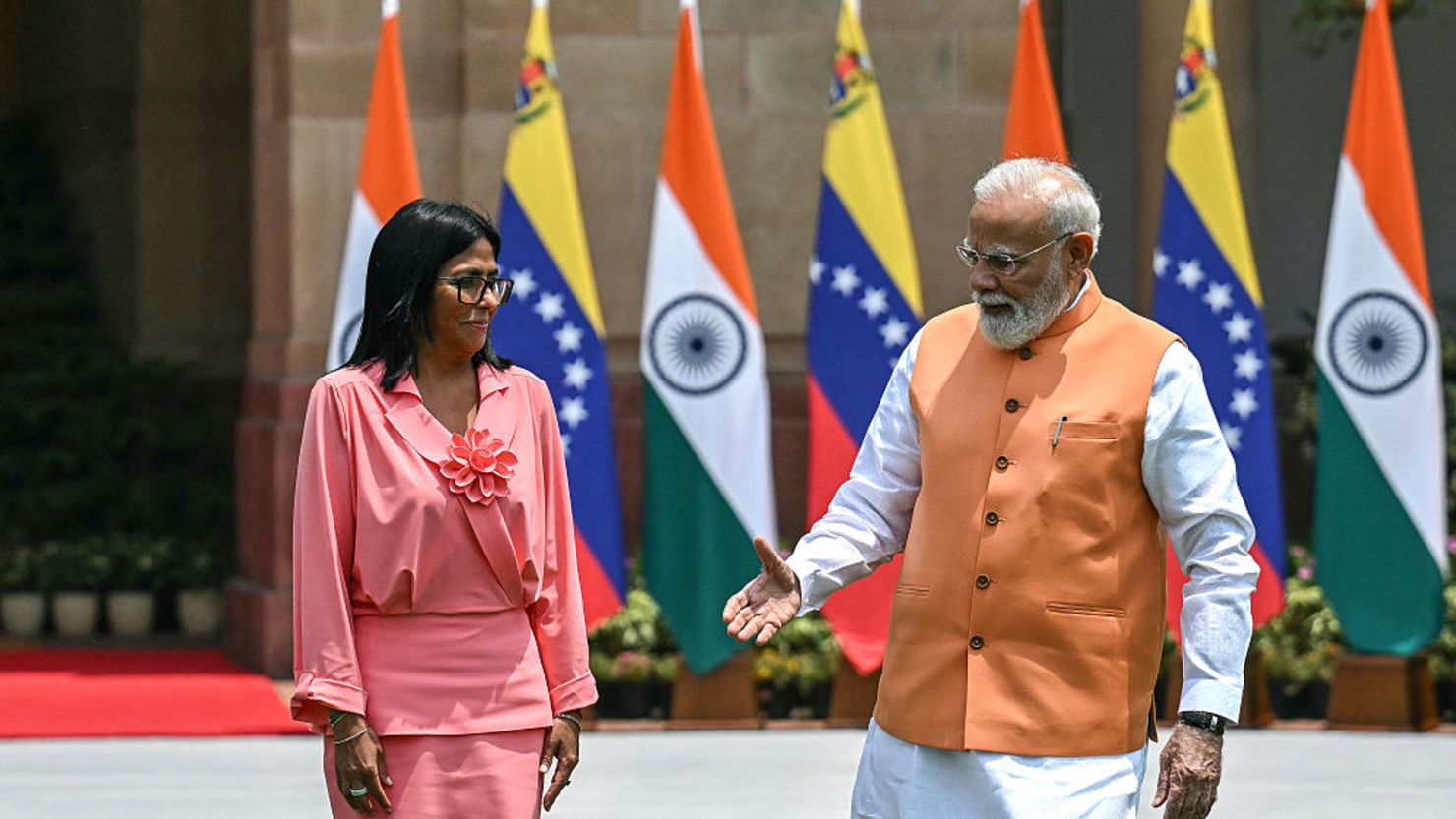
The symbolism of recent weeks is difficult to ignore. While Delcy Rodríguez was in India seeking to deepen energy ties with one of the world’s fastest-growing economies, General Dan Caine was simultaneously in Caracas discussing security cooperation with Venezuelan authorities. In the traditional chavista worldview, these developments would have belonged to rival geopolitical universes. In today’s Venezuela, they increasingly appear as part of the same strategy.
Venezuela arrives at this reality from a different place. Questions of external influence, compromised sovereignty, competing centers of power, and tutelage have played a far larger role here than among our neighbors.
The concept of regime learning refers to the ways political systems adapt in order to survive. In Venezuela, that process has already transformed the country’s economic model. Price controls have largely been abandoned. The private sector is in a slow process of rehabilitation. In short, revolutionary orthodoxy has repeatedly yielded to political necessity.
Regime learning does not only change how states govern. It changes how they understand the world.
What is becoming apparent in 2026 is that the same process may be transforming Venezuela’s geopolitical posture.
The Bolivarian Revolution was founded on a particular assumption. Venezuela would help construct an alternative pole of power, aligned with actors such as Cuba, Russia, Iran, and eventually China. The goal was not merely to diversify partnerships. It was to build a geopolitical project capable of challenging American influence in the hemisphere.
Twenty-five years later, the lesson learned appears remarkably different.
Arriving late to the game
Russia became absorbed by its invasion of Ukraine. China proved willing to defend its own interests, but not necessarily those of its partners. Iran remained geographically distant and economically constrained. Cuba, despite years of leeching off the Venezuelan state, proved largely incapable of defending the revolution against genuine external pressures. The experience of governing under sanctions, isolation, economic collapse, and great-power competition appears to have produced a different conclusion: dependence on any single external patron creates vulnerabilities.
The logical response is not non-alignment, but rather hedging.
Instead of anchoring Venezuela to a single geopolitical camp, the emerging strategy appears designed to maintain productive relations with several simultaneously. Security cooperation with Washington. Oil exports to India. Commercial ties with China. Investment from the Gulf. Access to Western financial markets. None of these relationships are mutually exclusive. In fact, they reinforce one another.
To some extent, there is nothing uniquely Venezuelan about this. Much of Latin America already operates in a multipolar environment. Governments across the ideological spectrum maintain economic ties with China while preserving political, commercial, and security relationships with the United States. Yet Venezuela arrives at this reality from a very different place. Questions of external influence, compromised sovereignty, competing centers of power, and political tutelage have played a far larger role in Venezuelan politics than in most neighboring countries.
The lesson Venezuela appears to be learning is neither socialist nor liberal, neither anti-Western nor fully Western.
In some respects, the country’s experience over the last quarter century has more in common with the dilemmas faced by some post-communist European states (like Ukraine) than with those of Colombia, Peru, or Ecuador. Venezuela is never going to become Switzerland, nor is it going to become India. It lacks the geography, the institutions, and the scale required for either role. Yet it may be discovering a different path, one better suited to its circumstances: not a great power, not a neutral sanctuary, but a medium-sized energy producer whose strategic value derives from its ability to remain relevant to multiple centers of power simultaneously.
This is what makes Hungary such a useful comparison. Not because Hungary represents a political model for Venezuela, nor because Viktor Orbán and Nicolás Maduro are comparable figures. If anything, a Venezuelan transition led by María Corina Machado would likely have more in common ideologically with a post-Orbán government than with Orbán himself. Yet that is precisely the point. Even a post-Orbán Hungary would remain a member of NATO and the European Union, continue attracting Chinese investment, and remain constrained by the economic and energy relationships accumulated over decades. Hungary is useful because it illustrates a broader phenomenon: the emergence of states whose prosperity depends less on belonging to a bloc than on remaining useful to several at once.
Viewed from this perspective, Venezuela’s current trajectory increasingly resembles neither Cuba nor the Colombia of the early 2000s. It is not moving toward the permanent isolation of the former, nor toward the straightforward Western alignment of the latter under Álvaro Uribe. Instead, it is beginning to occupy an intermediate position, one that may become increasingly common in a multipolar world.
The Bolivarian Revolution aspired to create a twenty-first-century Cuba. Five months after January 3, its most enduring geopolitical legacy may be the emergence of an oil-rich Hungary in the Caribbean.
Regime learning does not only change how states govern. It changes how they understand the world. After 25 years of revolution, sanctions, collapse, and adaptation, the lesson Venezuela appears to be learning is neither socialist nor liberal, neither anti-Western nor fully Western. It is something more pragmatic: in a multipolar world, survival belongs to those who can make themselves useful to everyone.
MADISON, Wis. — A federal judge on Tuesday declined to overturn a Wisconsin judge’s obstruction of justice conviction for helping a man evade immigration officers who showed up at a courtroom looking to detain him.
The case against Hannah Dugan, who resigned from the Milwaukee County Circuit Court following her conviction, was an early test of how the courts would respond to President Trump’s sweeping immigration crackdown.
Trump allies branded Dugan as an activist judge, while her supporters said she was unfairly targeted.
U.S. District Judge Lynn Adelman postponed Dugan’s sentencing June 3 to consider arguments about whether he should overturn her conviction. But in his ruling Tuesday, Adelman said Dugan’s conviction would stand. He did not immediately set a sentencing date.
“The court’s decision is wrong,” Dugan’s legal defense team said in a statement.
Questions about a similar case in Virginia
Dugan’s attorney had argued that her conviction in helping Eduardo Flores-Ruiz leave the courthouse was invalid and should be overturned. He said that was necessary because a federal appeals court in April overturned a key Virginia immigration case that the judge and prosecutors had cited in Dugan’s case.
In the Virginia case, an immigrant who was in the country illegally was detained by U.S. Immigration and Customs Enforcement agents and later escaped. He was recaptured and indicted on a charge of obstructing a pending immigration proceeding.
The federal appeals court found that the ICE action did not constitute a “pending proceeding,” as is required under the federal obstruction law.
Dugan’s attorneys argue that she should not have been charged because there was no “pending proceeding” against the immigrant in her courtroom being sought by ICE agents, only a warrant filed for his arrest. The filing of a warrant does not constitute a “proceeding” under the law, Dugan’s attorneys argued.
Prosecutors countered that the facts in the Virginia case are different and don’t apply to Dugan’s. They also argued that other cases support Dugan’s conviction.
Adelman said the attempted arrest of Flores-Ruiz did count as a “pending proceeding,” in part because it was a planned and targeted operation rather than an arrest resulting from a random encounter.
“Defendant argues that ICE was acting as a law enforcement agency here,” Adelman wrote. “But this ignores the fact that, unlike, say, the FBI, ICE can issue its own warrants and adjudicate and effectuate a removal, as it did with Flores-Ruiz, without the involvement of a court. This makes a difference.”
Dugan faces 5 years in prison, but will likely get probation
Dugan, 67, faces up to five years in prison after a jury convicted her Dec. 19, 2025, but she is unlikely to be sentenced to time behind bars. Federal sentencing guidelines generally call for probation for defendants like her, who have no criminal history and are convicted of a nonviolent crime.
Dugan resigned from her position as a Milwaukee County circuit judge two weeks after her conviction amid threats of impeachment from Republican state lawmakers. She had been a judge for nine years.
The Trump administration brought the case against Dugan as the president pressed ahead with his sweeping immigration crackdown. Trump’s administration and his allies branded Dugan as an activist judge, while Dugan’s attorneys said she was being unfairly targeted and argued, unsuccessfully, that she was immune from being charged because she was a judge.
Dugan’s case marked the first time that a state judge in Wisconsin went to trial on charges of obstructing immigration agents. She was acquitted of concealing an individual to prevent arrest, which is considered a misdemeanor.
Dugan helped an immigrant wanted by ICE agents
On April 18, 2025, immigration officers went to the Milwaukee County courthouse after learning Flores-Ruiz had reentered the country illegally and was scheduled to appear before Dugan for a hearing in a state battery case.
Dugan confronted agents outside her courtroom and directed them to the chief judge’s office because she told them their administrative warrant wasn’t sufficient grounds to arrest Flores-Ruiz.
After the agents left, she led Flores-Ruiz and his attorney out a private jury door. Agents spotted Flores-Ruiz in the corridor, followed him outside and arrested him after a foot chase. A week later, FBI agents arrested Dugan in the courthouse, leading her outside in handcuffs.
WASHINGTON — As Spencer Pratt fell behind in the Los Angeles mayoral primary, an unexpected group began claiming election fraud: people tracking the Republican’s success on prediction markets, the increasingly popular online exchanges on which people can make bets on almost anything.
“Crazy how much voter fraud can be done with mail in ballots,” one user following bets on the mayoral race wrote last week on Kalshi, one of the top trading platforms.
“Same old California fraud,” said another who had bet that Pratt would win.
Election fraud claims extended to social media, where a handful of influencers who post content for prediction market platforms questioned the ballot count. “It’s a dead heat on Kalshi,” one user wrote on social media. “Is CA cheating to get Spencer Pratt out?”
Kalshi told the influencers to delete the posts, which violated company guidelines. Polymarket, the other leading platform, directed them to remove the paid partnership label from those posts.
The amplification of election misinformation by users who had money staked on the mayoral race adds a new twist to evolving scrutiny of prediction markets, and scholars say the ability to bet on elections broadly raises questions about whether the exchanges could alter how Americans engage in democracy.
“Elections are not a game,” said Davina Hurt, director of government ethics at the Markkula Center for Applied Ethics at Santa Clara University. “[If market] probabilities begin influencing donor decisions, media attention, the energy around [campaign] volunteers — at that point, markets aren’t just observing the election. They’re a part of it.”
Fans of the exchanges say they are powerful tools that can help decision makers, and company leaders have touted them as highly accurate predictors that can act as an antidote to misinformation and provide election insights.
“By shifting focus from ‘what people say’ to ‘where they put their money,’ and filtering out social media noise and pundit bias, we are providing a level of clarity and predictive power that cannot be matched,” said Kalshi spokesperson Dani Lever .
But these markets’ rapid rise has also raised a host of questions among members of Congress, state lawmakers and others — about betting on elections, wars and other political events, about potential insider trading, and about whether the platforms should be left to self-regulate. Some states are also in legal battles with the federal government over whether the activity amounts to gambling, which they seek to regulate.
“It’s like we’re in the 1930s with financial markets — we have some things that we want to regulate and restrict [as a country], and we’re sort of in the early stages of trying to lay out what the rules are,” said Koleman Strumpf, an economist at Wake Forest University.
Concerns about insider trading
The discourse around the Los Angeles mayoral race was the latest to raise questions at the intersection of prediction markets and politics. Earlier this year, an Army soldier was indicted after allegedly using his knowledge of the planned U.S. operation to capture former Venezuelan leader Nicolas Maduro to make bets on it, winning more than $400,000. He has pleaded not guilty.
Around the same time, several anonymous users reportedly earned $2.4 million combined by making remarkably prescient bets on the Iran war, prompting concern in Congress about insider trading. And during the primary elections, Kalshi fined a few politicians for betting on themselves, while the Justice Department began investigating a former congressman on similar charges.
Kalshi co-founder Luana Lopes Lara speaks at a conference in Santa Monica, Calif., in April.
(Anna Webber / Inc.)
The episodes set off a debate in Washington. The Republican-led House Oversight Committee opened an investigation into potential insider trading, and a bipartisan group in Congress has introduced a flurry of bills seeking to put up guardrails. It remains unclear whether any will pass this session.
The chatter in Congress appeared to lead the Commodities Futures Trading Commission, which regulates prediction markets, to propose a new framework last week to govern issues raised by lawmakers, such as potential betting on wars. Commission Chair Mike Selig said the proposal would allow for scrutiny of suspicious activity “while letting legitimate markets move forward pursuant to the public interest.”
The markets commission under former President Biden was viewed as somewhat skeptical of prediction markets; the agency under President Trump — whose eldest son holds advisory positions at both Polymarket and Kalshi — has been seen as more favorable to the industry. The federal government has sued several states over their attempts to regulate the markets under state laws banning sports gambling and other measures.
Sen. Adam Schiff (D-Calif.), who has introduced legislation on the topic, said the agency’s framework would benefit the industry at the expense of the public interest.
The agency lacks “the leadership, will and investigative staff needed to confront the dangers of election misinformation, insider trading, and more,” Schiff said, “and seems content to allow the industry to police itself.”
Making bets
As California’s primary neared, people staked their dollars on the state’s races in droves. On Kalshi, trading volume on one contract about who will win the L.A. mayoral race in November had reached more than $117 million as of Tuesday.
Prediction market users trade on the outcome of future events, making money if they’re correct and losing money if they’re wrong. Someone can purchase a contract on the prediction that L.A. Mayor Karen Bass will win in November, a yes contract, or on the prediction that she will lose, a no contract.
On Tuesday, Bass contracts on Kalshi were selling at 63 cents each for yes and 38 cents for no, meaning the market was forecasting a 63% chance of her winning. Users receive $1 per contract if their prediction is correct, creating a profit on their initial investment.
Prediction markets generally create more accurate forecasts than political polls, according to Strumpf, whose research has examined 30 years of prediction markets in various forms.
Many of the issues critics raise are theoretical and have not been seen in practice, Strumpf said. By his analysis, there is no evidence that the markets have ever influenced an election outcome. He said serious traders tend to do extensive research in order to make money, meaning their bets are educated.
Rep. Mike Levin (D-San Juan Capistrano), who has introduced legislation to prohibit event contracts involving terrorism, war, assassination and deaths, said the platforms may be useful in some cases but shouldn’t be left to police themselves. He said he’s concerned that the markets create “all the wrong incentives” for people, including political candidates and officials, to abuse inside knowledge.
“I don’t trust them to self-regulate at all,” Levin said of the companies. “The federal role should be guardrails that are reasonable and pragmatic.”
‘The sanctity of our elections’
Skeptics’ concerns regarding elections largely center around the markets’ introduction of a new way for money to potentially influence politics.
They say the desire to elevate a candidate’s market odds could create an incentive for market manipulation, and they worry that the votes of Americans using the market could be influenced by their desire to profit.
“This has real impacts for the sanctity of our elections,” said Assemblymember Maggy Krell (D-Sacramento), who raised concerns about how prediction markets could impact the democratic process in a March letter to the state’s Fair Political Practices Commission. (California lawmakers are looking at the issue, a spokesperson for Assembly Speaker Robert Rivas (D-Hollister) said, though none of the bills introduced this year have yet moved forward.)
The platforms create a potential new channel “for dark money to flow into our elections,” Krell said. “Specifically, someone who’s opposing or supporting a candidate could potentially use sites like Kalshi to elevate that candidate and impact the entire pool.”
The industry has endeavored to “get out in front” of concerns by creating their own policies aimed at preventing insider trading, market manipulation and other issues, said attorney Ronak D. Desai, partner and head of the congressional practice at the Washington law firm Paul Hastings.
Kalshi has a ban on those practices and has banned markets tied directly to death and war, Lever said. It also screens all new users and, in the first quarter of this year, blocked more than 100 potential insider trades and referred more than 20 cases to law enforcement.
In the case of the military member who bet on the United States’ operation in Venezuela, for instance, Polymarket caught the activity and referred the case to the Justice Department, a spokesperson said. The company has referred nearly 100 cases of suspicious activity to law enforcement, he said.
Election markets are not offered on Polymarket’s U.S. exchange — though users in the U.S. and other countries that ban the company’s international exchange are widely reported to access it using online tools.
“Polymarket prohibits trading based on stolen information, illegal tips, or information obtained in breach of a duty of trust, confidentiality, or other legal obligation,” the Polymarket spokesperson said in a statement.
Aaron Klein, senior fellow in the Center on Regulation and Markets at the Brookings Institution, predicted that pressure for further regulation would continue to mount.
“The top goal of a society is to have free and fair elections,” Klein said. “At a time in our nation’s history where people are doubting the integrity of elections and foreign governments are stoking those flames, we ought to be pretty careful.”
As Arnold Schwarzenegger makes final preparations to take office as governor on Monday, the California political establishment is scrambling to adjust to the abrupt shift of power from Democrats to Republicans.
The inauguration of the Republican governor before thousands of spectators outside the domed Capitol in Sacramento will end five years of near-total Democratic Party control of state government.
Even if Schwarzenegger is not the ideological match of the Capitol’s conservative Republicans, his takeover of the governor’s U-shaped office suite ensures a radical change in the political dynamics of Sacramento.
Elected in a historic voter revolt against his Democratic predecessor, Schwarzenegger will take power with “a mandate directly from the people to come and change the way business is being done here — and what is being done,” said Schwarzenegger communications director Rob Stutzman. “It’s a mandate to step forward and lead.”
In large part, the fate of Schwarzenegger’s agenda depends on Democrats who still dominate both houses of the Legislature and hold every other statewide elected office. By and large, they are unsure of what to expect as he arrives in the capital he portrayed during the recall race as a sinister pit of unscrupulous politicians. At this point, Schwarzenegger elicits a mix of hope, wariness and fear.
“I don’t think anyone now is saying, ‘Let’s go to battle with him,’ ” said Steve Barkan, a campaign strategist for Democrats. “Folks are trying to figure out how to work with him.”
To set a congenial tone, Schwarzenegger has paid visits to the capital’s leading Democratic officeholders, including Senate leader John Burton of San Francisco and Assembly Speaker Herb Wesson of Culver City. He has also made discreet stops at the offices of two labor leaders: Bob Balgenorth of the State Building and Construction Trades Council and Dean Tipps of the Service Employees International Union. Given the millions of dollars that labor spent to keep its ally Gov. Gray Davis in office, union leaders had expected hostility from Schwarzenegger.
“My fears were diminished somewhat by the meeting,” Balgenorth said. “It was quite a show of humility, quite an olive branch.”
But labor leaders, like Democratic lawmakers, wonder whether Schwarzenegger’s symbolic gestures portend any genuine change in the combative partisanship of Sacramento.
“The question is: Does anything ever flow out of it?” said John Hein, government relations chief at the California Teachers Assn. “Is he going to keep those conversations going and keep those people involved?”
Within the Legislature, the most immediate consequence of Schwarzenegger’s arrival is the sudden empowerment of the Republican minority. Democrats outnumber Republicans, 48 to 32 in the Senate and 25 to 15 in the Assembly.
Under Davis, Republicans were unable to stop Democrats from passing hundreds of laws they opposed, most notably those resisted by business leaders. Among them were measures imposing health-coverage mandates on employers and strict new pollution controls on auto makers. The Republicans’ only significant role was to block Democrats from raising taxes by keeping them from mustering the required two-thirds vote.
But now, one of Schwarzenegger’s main tools for setting the state’s agenda will be the power to veto legislation passed by Democrats, and he is counting on fellow Republicans to protect him against veto overrides, which also need a two-thirds vote.
Republican legislators, in turn, are apt to influence his administration in a way that was impossible under a Democratic governor. Their conservative voter base is nearly the same as Schwarzenegger’s. So is their pool of campaign donors. Like Schwarzenegger, Republican legislators are strong advocates of business and have chilly relations with labor.
“They are no longer shut out of the game,” said Darry Sragow, a key campaign strategist for Assembly Democrats.
For Schwarzenegger, the first big challenge is to find a way out of the same severe fiscal troubles that hastened the downfall of Davis. His pledge not to raise taxes vastly complicates the task.
On Monday, Schwarzenegger will make it even more difficult: He plans to sign an executive order to rescind the tripling of the so-called car tax. The rollback will please millions of motorists and fulfill a key campaign promise. But if he also makes good on a pledge to make whole the local governments that receive the car tax revenue, it will widen the projected $10-billion budget hole next year to $14 billion.
To close the gap, Schwarzenegger faces tough choices. If he relies on spending cuts alone, the severity of the hits to higher education, health care and other programs would spark an uproar among Democrats and, most likely, a public outcry.
If he backs a mix of program cuts and tax hikes — as Davis did — he not only would face resistance from GOP lawmakers but also would risk erosion of his own political base. Schwarzenegger’s call for fiscal restraint was his main appeal to conservative voters put off by his liberal views on social issues.
To break from the political bind, Schwarzenegger aides have floated a plan to borrow as much as $20 billion to balance the books. The proposed debt, along with a state spending cap long sought by Republicans, would be put before voters in March. Schwarzenegger could frame the ensuing campaign as a choice between borrowing or tax hikes, then claim a voter mandate for either one, depending on the results.
The proposal would be a gamble for Schwarzenegger. On its face, it appears to contradict his pledge during the recall campaign to “teach politicians in Sacramento that they can’t spend money we don’t have.” Repayment of the debt, with interest, could drain nearly $40 billion from the state treasury — and away from public services — over perhaps three decades.
Still, over the last three years, Davis and the Legislature relied heavily on borrowing to break budget deadlocks. The bond plan would again spare the Legislature — and Schwarzenegger — from the political pain of tax hikes and draconian spending cuts. Republicans have already welcomed the plan.
“All we’re doing is cleaning up the final mess of Davis,” said Kevin McCarthy of Bakersfield, the newly named Assembly GOP leader.
The proposal would offer an early test of Schwarzenegger’s clout because it requires a quick deal with the Legislature. Lawmakers would have to approve it by Dec. 5 to qualify it for the March ballot, exposing Schwarzenegger to a major vote of confidence by Democrats less than three weeks after he takes office.
But many Democrats oppose a spending cap, and their initial reaction to the debt plan has been lukewarm.
“I’m just not confident at this point that that’s the right way to go,” Wesson said. “That’s a lot of dough to be responsible for.”
State Treasurer Phil Angelides, a Democrat preparing to run for governor in 2006, has been most outspoken against the plan.
He said Friday it would be “a huge mistake” for Schwarzenegger to “follow a reckless path of massive deficit borrowing, and to masquerade such borrowing as ‘the answer’ to California’s budget crisis.”
So far, though, few Democrats have challenged the new governor, who draws immense media attention to Sacramento at a time when legislators suffer from dismal poll ratings. The recall election exposed a deep vein of voter anger that jolted incumbents of both parties, and in that context, few appear eager to take on Schwarzenegger.
“For anybody to be obstructionist would be going against what Californians want to have happen,” Wesson said.
Some Democrats worry that voters could next lash out against them. Despite a political map that keeps a solid majority of legislative seats safe for Democrats, a top party operative in the capital said some “very nervous members are fearful that a well-known popular movie star is going to go out and do active campaigning and fund-raising against them, and that’s got them all freaked out.”
It remains to be seen whether Schwarzenegger will use his fame to campaign against those who cross him. But his power to raise money was on display Saturday at an Indian Wells desert resort, where he was the star attraction at a sold-out fund-raiser for Republican legislative campaigns.
*(BEGIN TEXT OF INFOBOX)
Inauguration broadcasts
Several Southern California television stations will air special programs and provide live coverage of the inauguration of Arnold Schwarzenegger as governor on Monday. The swearing-in ceremony is scheduled to take place on the Capitol steps in Sacramento at 11 a.m.
KCBS-TV Channel 2: Live coverage, 11 a.m.
KNBC-TV Channel 4: Special news coverage, 10 a.m.; Live coverage, 11 a.m.
KABC-TV Channel 7: Special news coverage, 10 a.m.; Live coverage, 11 a.m.
Paula Corbin Jones’ lawyers asked a judge in Little Rock, Ark., to order President Clinton to pay nearly $500,000 in legal reimbursements after he was found in contempt of court in her sexual harassment case. Their proposal came a month after U.S. District Judge Susan Webber Wright found Clinton in contempt for giving intentionally false testimony about his relationship with Monica S. Lewinsky. Wright ordered Clinton to pay Jones’ lawyers any expenses they incurred as a result of his false testimony. In a letter to Wright, Clinton lawyer Robert S. Bennett said Clinton will “object to the amount of the claim by Ms. Jones’ attorneys.”