politics

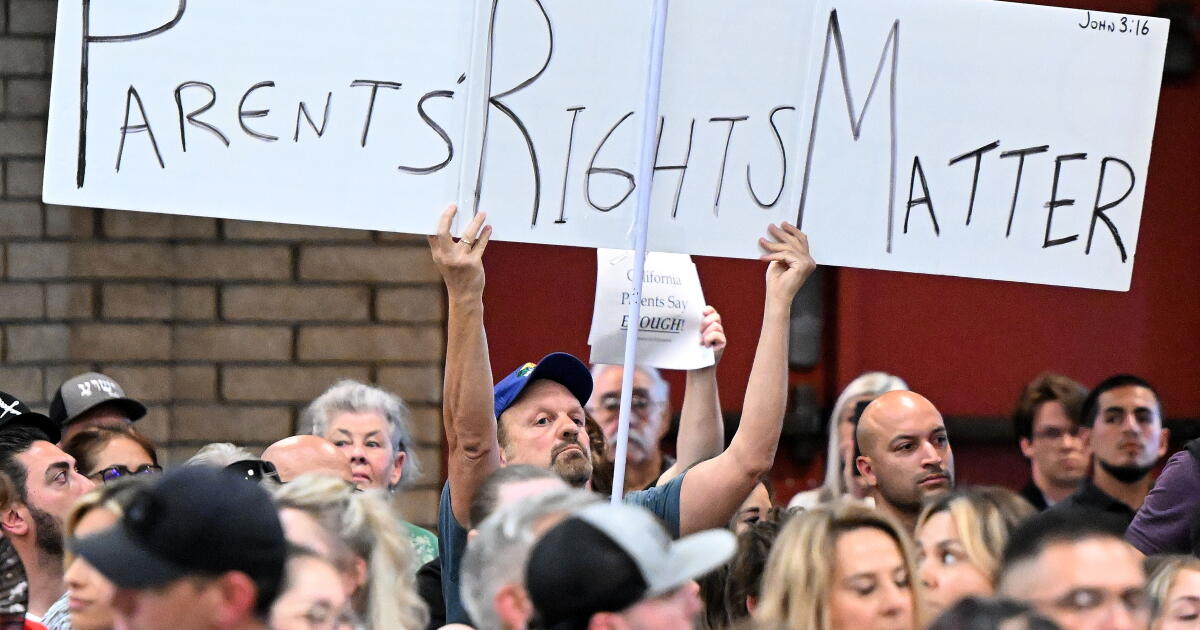
New West Virginia law requiring photo IDs at polling places greets voters in primary election

Presenting a utility bill as a valid form of identification at a voting precinct in West Virginia has gone the way of the tavern polling place and the punch-card ballot.

State lawmakers tightened an existing voter identification law by requiring photo ID at the polls, with some exceptions. The law was used for the first time in Tuesday’s primary election, and officials said they’ve seen very few glitches.

“The whole point of the law is just making sure you are who you say you are,” Secretary of State Kris Warner said Monday.

Voters will nominate candidates for U.S. Senate, U.S. House and state legislature. They also will elect two new state Supreme Court justices.

During the in-person early voting period that ended Saturday, Warner said his office hadn’t heard of anyone who demanded to vote without a photo ID. He said the state had asked residents to use photo IDs for the past few elections, so “it was not a big shock that it was now law.”

During his statewide travels over the past two weeks, Warner said he was told of some instances where people returned to their vehicle to retrieve a photo ID after entering a polling place. Another voter used an exception to the law by filling out a form that was verified by a poll worker who has known them for at least six months. There also were exceptions for first-time voters.

Most states either require or request some form of ID for in-person voting at the polls.

Proponents say the West Virginia law will cut down on voter fraud and that a photo ID is already required for everyday tasks such as getting on an airplane or buying alcohol.

The bill sailed through the Republican-supermajority legislature last year. All votes against it were cast by Democrats, some who argued it would suppress access to the polls. State Democratic Party Chair Mike Pushkin said no credible evidence was shown during legislative debate that West Virginia had a widespread problem with ineligible voting. Pushkin said the legislation was “designed more for political messaging than solving actual problems.”

But Warner said it allows senior citizens to use expired driver’s licenses, as long as it was valid on their 65th birthday

“I wanted to make sure it didn’t prevent anyone from voting,” Warner said.

Forms of identification that are no longer accepted at polling places include utility bills, bank statements, hunting and fishing licenses, bank or debit cards, and concealed carry gun permits. Acceptable forms of photo IDs include a driver’s license, U.S. passport, military ID, employee ID issued by a government agency and a student ID from a high school or college.

Monongalia County Clerk Carye Blaney said for several years her county has used an electronic system to scan bar codes on the back of driver’s licenses to check in voters at polling places.

“I think that it makes voters feel more secure, or it confirms for the voters the security of our elections when we are verifying a photo to a person,” Blaney said.

Raby writes for the Associated Press.

Source link

Cuba denies $100 million U.S. humanitarian aid offer exists

“Someone should ask the U.S. Secretary of State about the fable of the alleged offer of $100 million in humanitarian aid to Cuba, which nobody here knows anything about,” Cuban Foreign Minister Bruno Rodriguez Parrilla wrote on social media. File Photo by Hector Retamal/EPA/Pool

May 12 (UPI) — Cuba’s foreign minister has denied his government received a $100 million offer in humanitarian aid from the United States, after Secretary of State Marco Rubio publicly claimed Washington tried to send assistance and Cuban authorities refused to distribute it.

In a message posted on X, Bruno Rodríguez Parrilla described Rubio’s version as a “fable” and a “$100 million lie,” and questioned who would finance the aid, how it would be distributed and whether it would consist of cash, fuel, food or medicine.

“Someone should ask the U.S. secretary of state about the fable of the alleged offer of $100 million in humanitarian aid to Cuba, which nobody here knows anything about,” Rodríguez wrote.

Rodríguez also questioned whether the alleged assistance would be “a donation, a deception or a dirty business to undermine our independence,” and argued that “lifting the fuel blockade would be easier.”

The statements responded to comments made Friday by Rubio during a press conference in Italy, where he said the United States offered humanitarian aid to Cuba and that the island’s government did not allow its distribution.

“We have offered the regime there $100 million in humanitarian aid, which unfortunately so far they have not agreed to distribute to help the people of Cuba,” Rubio said.

The secretary of state added that Washington had previously delivered about $6 million in humanitarian aid channeled through Catholic charity Caritas and said the United States seeks to expand assistance because of the island’s economic and social deterioration.

“We want to help the people of Cuba, who are being hurt by this regime, which has destroyed the country and the economy,” Rubio said.

Meanwhile, President Donald Trump announced Tuesday that he will hold talks with Cuba, although he did not provide specific details about the scope of those contacts.

In a post on Truth Social, Trump described Cuba as “a failed country” and wrote, “Cuba is asking for help, and we’re going to talk!”

According to El Nuevo Herald, Rubio also said he discussed the Cuban situation with Pope Leo XIV during a meeting held at the Vatican. Rubio blamed the Cuban government for preventing greater humanitarian assistance.

The exchange came amid a renewed rise in tensions between the governments of Trump and Miguel Díaz-Canel after sanctions imposed by the Trump administration against the Cuban military conglomerate GAESA, its director and mining company Moa Nickel.

Rubio announced the measures last week as part of an economic offensive aimed at restricting the Cuban regime’s sources of income and pressuring the island for political and economic reforms.

“The sanctions imposed … demonstrate that the Trump administration will not stand idly by while the Cuban communist regime threatens our national security in our hemisphere,” Rubio wrote on social media.


Source link

Hegseth faces bipartisan grilling about weapons drawdown during the Iran war

Defense Secretary Pete Hegseth faced tough questions Tuesday from Republican and Democratic lawmakers about the Trump administration’s end game for the Iran war, the cost of the conflict and its impact on diminishing U.S. weapons stockpiles.

For his part, the Pentagon chief softened his tone from hearings before Congress nearly two weeks ago, notably avoiding the same pointed criticism of lawmakers in his opening remarks as he outlined the Trump administration’s efforts to ramp up production of weapons and other military capabilities.

Even so, Hegseth insisted that the military has plenty of missile defense systems and other munitions for the Iran war or future conflicts as both Republicans and Democrats hammered him with those concerns.

“I take issue with the characterization that munitions are depleted in a public forum,” Hegseth said. “That’s not true.”

The cost of the Iran war has risen to about $29 billion, the vast bulk of which — $24 billion — is related to replacing and repairing munitions but also includes operational costs to keep forces deployed, Pentagon comptroller Jay Hurst said. That’s up from $25 billion that he told lawmakers nearly two weeks ago.

The powerful House and Senate Appropriations subcommittees that oversee defense spending are holding back-to-back hearings to review the Trump administration’s 2027 military budget proposal, which calls for a historic allocation of $1.5 trillion. The discussions in the House quickly veered into the handling of a war that appears locked in a stalemate as higher fuel prices pose political problems for Republicans in the midterm congressional elections.

Hegseth and Caine face bipartisan pushback on munitions stockpiles

Rep. Rosa DeLauro, the ranking Democrat on the House Appropriations Committee, told Hegseth that the “question must be answered at the end of this crisis: What have we accomplished and at what cost?”

“This administration has not presented Congress with any kind of clear or coherent strategy week to week, day to day, hour to hour,” DeLauro said. “The rationale shifts, the objectives change. The end game is ill-defined when it is defined at all.”

California Republican Rep. Ken Calvert, the House subcommittee’s chair, also asked about the impact of the Iran war on military funding as well as the U.S. military’s weapons stockpiles.

“Questions persist about whether we are building the depth and reliance required for a high-end conflict,” Calvert said.

Minnesota Rep. Betty McCollum, the defense subcommittee’s ranking Democrat, pressed Hegseth on whether the military has a plan to draw down troops in the Middle East if Congress passes so-far-unsuccessful efforts to end the Iran war.

“We have a plan to escalate if necessary,” Hegseth said. “We have a plan to retrograde if necessary. We have a plan to shift assets.”

He said he would not reveal any next steps publicly. Noting repeated questions from lawmakers over the military’s weapons stockpiles, drawn down from the Iran war, Hegseth said the concerns have been “unhelpfully overstated” and that “we have plenty of what we need.”

He said the defense industry has been told to “build more and build faster,” blaming the military industrial base’s inadequate capacity on previous administrations and U.S. aid to Ukraine in its war with Russia.

Trump administration faces pressure from impact of the Iran war

President Trump is facing increasing pressure from the economic shocks of Iran effectively closing the Strait of Hormuz, a vital shipping corridor where 20% of the world’s oil normally flows. The U.S. military in turn has blockaded Iranian ports and the two sides have traded fire, with American forces thwarting attacks on their warships and disabling Tehran-linked oil tankers.

Trump said Monday that the ceasefire is on “massive life support” and criticized Iran for its latest proposal, pointing to his demands that Iran significantly limit its nuclear program.

“I would call it the weakest right now after reading that piece of garbage they sent us,” Trump said.

The Republican president also said he wanted to suspend the federal gas tax to help Americans shoulder surging fuel prices. He has previously said higher costs are worth it to prevent Iran from getting a nuclear weapon.

Tuesday’s hearings are giving a mostly new group of lawmakers the chance to grill or applaud Hegseth and Gen. Dan Caine, chair of the Joint Chiefs of Staff, on the planning and execution of the war.

The Senate hearing later Tuesday will include Sen. Susan Collins of Maine, a Republican whose reelection this year is far from guaranteed. She voted with Democrats on an effort to halt the conflict late last month, saying she wants to see a defined strategy for bringing the war to a close.

Alaska Sen. Lisa Murkowski, another Republican on the Senate Appropriations defense subcommittee, has voted against the string of unsuccessful war powers resolutions but spoken of the need for congressional authorization so Americans will know the war’s limits and objectives.

He also will face plenty of friendly Republicans, including the Senate subcommittee’s chair, Sen. Mitch McConnell of Kentucky, and perhaps the Iran war’s biggest booster in Congress, Sen. Lindsey Graham of South Carolina.

Finley, Toropin and Barrow write for the Associated Press. Barrow reported from Atlanta.

Source link

Consumer prices rose 0.6% in April; gasoline up 28% annually

May 12 (UPI) — Prices for consumer goods rose faster than expected in April, with food and energy prices driving the spike, the Bureau of Labor Statistics said Tuesday.

The Consumer Price Index for All Urban Consumers increased 0.6% on a seasonally adjusted basis in April, after rising 0.9% in March, the BLS said. Over the past 12 months, the all-items index increased 3.8% before seasonal adjustment.

The energy index rose 3.8% in April, which was more than 40% of the increase. That put the 12-month rise at 17.9%. The gasoline index rose 28.4% annually.

Airline fares rose 2.8%, making the 12-month rise at 20.7%, CNBC reported.

Food prices rose 0.5% for the month. The price of food at home rose 0.7%, which is the biggest monthly rise since August 2022, CNBC reported. The price for food away from home increased 0.2%, the BLS said.

When excluding energy and food, prices rose 0.4% in April. Those prices are calculated from household furnishings and operations, airline fares, personal care, apparel and education. That number puts inflation higher than the 2% goal set by the Federal Reserve, with the monthly rate at its highest since January 2025.

But the index for new vehicles, communication and medical care decreased in April. New vehicles and communication declined 0.2%, while medical care declined 0.1%. Used vehicle prices stayed flat.

Workers are feeling the pinch, too, as real average hourly wages dropped 0.5% for the month and 0.3% annually.

“Inflation is the key drag on the U.S. economy now,” said Heather Long, chief economist at Navy Federal Credit Union, CNBC reported. “This is hurting Americans. There is a real financial squeeze underway. For the first time in three years, inflation is eating up all wage gains. This is a setback for middle-class and lower-income households and they know it.”

Whether the Fed will lower interest rates in the wake of rising inflation is a concern for economists.

“Given that inflation is heading in the wrong direction and the labor market is holding up, it’s very unlikely that the Fed will be able to lower interest rates any time soon, and it’s possible that we may start pricing in rate hikes for next year,” said Chris Zaccarelli, chief investment officer at Northlight Asset Management, CNBC reported.

President Donald Trump gives remarks during a law enforcement leaders dinner, celebrating the start of National Police Week, in the Rose Garden at the White House on Monday. Photo by Aaron Schwartz/UPI | License Photo

Source link

Another sales tax hike? Costs a factor in L.A. in healthcare measure

It’s been years since Los Angeles County voters met a sales tax they didn’t like.

They agreed to pay half a cent more at the cash register to fund buses, trains and pothole fillings in 2016. The next year, they gave a quarter-cent more to fund homeless services. In 2024, voters bumped it up to a halfcent.

But with the electorate in a dour mood and reeling from rocketing gas prices, some speculate voters’ willingness to tax themselves may be dwindling as ballots arrive for the June 2 primary election.

“This is going to be a tougher year for taxes than prior years,” said former supervisor Zev Yaroslavsky, who pushed through a property tax ballot measure in 2002 to fund the county’s trauma care network. “There’s a limit to the tolerance people have for increasing their own taxes.”

Los Angeles County voters will soon decide whether they want to pay a temporary half-cent sales tax to shore up the region’s public healthcare system, which is facing dramatic federal funding cuts. Officials estimate the county will lose more than $2 billion in healthcare funding over the next three years.

The county currently has a base sales tax rate of 9.75%, and cities impose additional local taxes on top of that. If approved, the tax would take effect Oct. 1 and last for five years. The exact tax rate would vary depending on the city.

Voters haven’t said no to a sales tax hike since 2012, when a transportation measure fell just short with 66.1% support. It needed 66.7% to pass.

The healthcare sales tax has a lower bar to clear. The supervisors voted to put the measure on the ballot as a general tax, which gives them more leeway with how the money is spent and only requires a simple majority to pass.

But even that threshold may prove difficult. Polling from March suggested the measure was losing among L.A. city voters, who are often more generous than county voters at large. Angelenos will also find their ballot crowded with other tax hike proposals, which may leave some voters feeling picky.

“People have a very discerning instinct,” said Yaroslavsky. “They will pick and choose what they think is important.”

Despite no organized opposition, a flurry of cities, as well as the editorial board of the Los Angeles Daily News, have loudly spurned the idea, arguing it will make the region even less affordable.

“It’s just terrible timing,” said Paul Little, the head of the Pasadena Chamber of Commerce. “Costs are going through the roof for everything.”

With weeks to go until election day, healthcare workers and advocates supporting the measure have gone full steam ahead with mailers, marches and a social media campaign depicting a wallowing penny finding its lost sense of purpose with the measure. The campaign’s top funders are St. John’s Community Health and SEIU, who frame the measure as life or death for thousands of uninsured residents.

“Think about that person you know in your family who is asthmatic and relies on that inhaler, who has rheumatoid arthritis, who is diabetic,” said Supervisor Holly Mitchell at a recent town hall held in support of the measure. “And think about whether or not you’re willing to spend a half a penny — 50 cents on every hundred dollars — to make sure that that family, friend or neighbor gets what they need to be healthy.”

The supervisors voted 4-1 to put the sales tax on the ballot. Supervisor Kathryn Barger was the lone no vote.

Supporters say the One Big Beautiful Bill Act, signed by President Trump last July, is an existential threat to the public health system, leaving the county without reimbursement for the medical care of many Californians who are losing Medi-Cal coverage. The looming multibillion-dollar hole in the budget raises the prospect of hospital cutbacks, staff layoffs and possible emergency room closures, they say.

Source link

Tom Steyer courted Latino voters in Santa Ana. Did he succeed?

When a friend asked if Tom Steyer could stop by my wife Delilah’s downtown Santa Ana restaurant, I had to explain to her who he was.

It’s not political apathy in my honey’s case. She’s just exhausted from running her small business, Alta Baja Market, in these inflationary times. She’s one of the 16% of undecided voters in a recent California Democratic Party poll — a group that may determine which two candidates for governor face each other in the general election.

Delilah agreed that Steyer could visit on Saturday after I told her that many of our friends support the billionaire’s progressive platform.

“Politics is your job, not mine,” she joked as we drove to Alta Baja and I named the other major candidates. The only ones she had heard of were Antonio Villaraigosa (“I liked him as mayor, but he needed to keep his pants on,” referring to his extramarital affairs) and Katie Porter (“Some of my workers like her, but I don’t know what she’s done”). She might be the last person left in the Golden State who hasn’t seen any of Steyer’s television and YouTube ads.

His campaign seems to have stalled in the polls even as he has spent more than $150 million of his own money amid doubts from some voters about whether they want a billionaire to lead the state.

So a visit to Santa Ana, the heart of Latino Orange County, was a good move. At Alta Baja, he could talk to my Mexican American wife and other blue-collar Latinos.

When rival Xavier Becerra came to O.C. a few weeks ago, on the other hand, he appeared at a private fundraiser attended mostly by professional Latinos.

“I just want someone who tells us where our taxes are going and treats this country like a business, and we’re not wasting money,” Delilah said. She’s a socially liberal and fiscally conservative Democrat who has been especially angered by President Trump’s deportation deluge, which left the streets of downtown Santa Ana empty for months last summer. “Because right now, our government is a hot-ass mess.”

I asked what questions she had for Steyer.

“So insurance had to cover all the disasters that happened with the fires,” Delilah replied. “So why is everybody else having to pay for it? And what are you really gonna do to help the state?”

She paused. “Tom is a Democrat, right?”

Delilah prepared for Steyer’s noontime stop as if it were any other day. She has fed the likes of U.S. Sen. Alex Padilla, Orange County Dist. Atty. Todd Spitzer and former Speaker of the Assembly Anthony Rendon. Republican gubernatorial candidate Steve Hilton is a fan of Alta Baja’s blue cornbread; Oakland Mayor Barbara Lee held a meet-and-greet there when she ran for president two years ago.

“You know who should ask questions?” Delilah said after she set the till for the day. “Angela.”

That would be 19-year-old Alta Baja employee Angela Nino, who will be voting in her first election.

“She’ll always be telling me, ‘Did you see the debate? Did you see the debate?’ And I always say, ‘No, I’m too tired to watch.’”

Nino soon clocked in.

“Guess who’s coming, Angela?” Delilah said before looking at me. “Is his name Tim or Tom?”

“It’s like I agree with some of his things, but he’s a billionaire,” said the Orange Coast College student and Santa Ana resident when I asked about Steyer. “His answers at debates have been pretty broad so far.”

Delilah smiled.

“You’re the future, girl, so ask him anything.”

Almost everyone who came in as we waited for Steyer was a campaign worker or volunteer. Former state Controller Betty Yee, who ended her campaign for governor last month and endorsed Steyer, sat at a table with her husband. Orange County Supervisor Vicente Sarmiento, who initiated Steyer’s Santa Ana visit, thanked Delilah for the opportunity. He has known her since the start of his political career on the Santa Ana City Council nearly 20 years ago,

“This is a city where our residents were criminalized because of ICE, our downtown suffered because of construction, and all this on the heels of a pandemic,” he told me. “These are the folks Tom needs to listen to.”

Sarmiento’s staffer got his attention. Steyer was here.

The candidate strolled in with a videographer and photographer. He wore his usual casual billionaire outfit — white-and-cardinal Nikes, jeans, checkered shirt with rolled-up sleeves and a colorful Southwestern-style fabric belt.

Steyer went straight to the counter.

“Are you running for governor?” he cracked while shaking Delilah’s hand.

“I don’t want to,” she replied.

“I knew you were a smart woman!”

He listened with wide eyes and a stern face as Delilah complained about a years-long light-rail project in front of Alta Baja “that has been worse for businesses here than COVID.” Insurance rates have gone up 30% in the last year alone, she said.

“Well, look, that’s my whole thing,” Steyer responded in his low, gravelly voice. “I’m willing to take on the big corporations who are ripping off California. And they’re all spending a lot of money against me.”

It was the Steyer I’ve heard on too many commercials: pugnacious, compassionate but spouting a whole bunch of boilerplate. Delilah smiled weakly.

“I appreciate that,” she said. “And we need more of that.”

Then she waved Nino over. Usually shy, the architecture major now channeled her inner Lesley Stahl.

“Why do you have to be governor in order to do something while you have billions of dollars?” she said.

Steyer didn’t flinch as he explained how he has funded ballot propositions and nonprofit initiatives to fight for a more equitable California.

“So I’ve been able to do something, but what I see in California — and what Delilah and I were just talking about — is big corporations actually run the state,” he said.

“That’s true,” Nino conceded.

“You have to take on the big corporations that are screwing everybody. And you can really only do that as governor,” Steyer continued.

“You want to tax the billionaires, is that correct?” Nino asked next, as Steyer nodded. “How come on some [campaign disclosure] forms, it shows that your billions are in different [countries] besides in the U.S.?”

The candidate vigorously shook his head.

“I might have investments outside the United States, but there’s nothing I’m doing to not pay — I pay full California and American taxes on everything, promise. There’s a lot of ways I could avoid taxes, but I don’t. And so, anything that I’m doing overseas is not to avoid taxes. … I give you my word.”

One more from Nino!

“And how can the people trust billionaires when currently they have been very disappointing towards us?”

“I understand why people are skeptical,” Steyer replied. “They couldn’t be more skeptical than I am.”

He argued that other moguls “are supporting every other candidate. Those people hate me — like, they think I stand for something really bad, which is making them pay their fair share,” referring to a proposed November ballot initiative that would impose a one-time 5% tax on billionaires like Steyer (he supports the measure).

“And they’re right,” Steyer concluded. “And so it’s like, they hate me, and that’s fine.”

Nino stayed silent. Delilah thanked Steyer, who was off to visit other local businesses owned by friends of ours. He bought a bottle of rosé, posed for photos with Delilah and Sarmiento and went off — but not before a staffer adjusted the back of his collar.

Delilah and Nino went back to prepping lunch orders. What did they think about Steyer?

“To be honest, I’m so skeptical,” Nino said. “I don’t think he has enough experience as some of the other candidates, and I feel like he could have been more into detail about his policies.”

What about you, honey?

“Gracious, very kind and not pompous, which is what I would expect from most politicians,” Delilah said. “I like that he heard out Angela — that’s important [that] politicians listen to the next generation, and I think everybody should be doing that. But I wasn’t satisfied with my insurance question.”

“And we don’t know if this is a performance,” Nino added, drawing a playful gasp from Delilah. “We’ve seen, like, throughout the years, many political people go into, like, regular [businesses] to seem like, ‘Oh, we’re relatable to the people. We know your struggles.’”

“Do they really?” Delilah interjected.

Nino frowned.

They could just be putting on a show for the cameras, she said.

Source link

Hiltzik: Why the Trump accounts aren’t good for everyone

Proponents say the Trump accounts will be better than Social Security. Don’t believe them.

Here’s a riddle for you: A conservative Republican senator, a top economic advisor to the Trump White House and a venture capitalist walk into a conference room at a financial conference and claim a new government program will be a boon for all American families.

Question: Do you think these people are looking out for your interests?

If you trust Sen. Ted Cruz, economic advisor Kevin Hassett and millionaire Brad Gerstner to do so, feel free to stop reading here.

Here’s the dirty little secret: Trump accounts are Social Security personal accounts.

— Sen. Ted Cruz (R-Tex.) reveals that Trump accounts are designed to threaten Social Security

If you’re skeptical, read on.

But keep in mind that Cruz (R-Tex.) was last seen in these pages promoting yet another big tax break for the 1%, Hassett appeared the other day on Fox Business arguing that while Americans are spending a lot more on gasoline, “they’re spending more on everything else too” on their credit cards, as if forcing households to max out their credit is a good thing; and Gerstner is, well, a millionaire tech investor.

Get the latest from Michael Hiltzik

Commentary on economics and more from a Pulitzer Prize winner.

At their panel discussion on May 4 at the annual Milken conference, Cruz, Hassett, Gerstner and their interlocutor, Michael Milken, talked as though the Trump accounts would be so fabulous for average American families that they would obviate the need for Social Security.

“Here’s the dirty little secret,” Cruz said. “Trump accounts are Social Security personal accounts.”

Milken echoed that thought: “Do you have the right to decide where your money goes, or should you be giving it to the government and [letting] them decide where it goes?”

That gave the game away — this is yet another effort by Republicans and conservatives to end a program they’ve been trying to kill, and to give Wall Street firms a bigger bite of your retirement resources.

Let’s start with a primer about the Trump accounts, which were part of last year’s GOP budget bill and will be open to investment starting on July 4.

The headline pitch for these accounts is that they’ll be seeded with a one-time $1,000 government contribution for children born from 2025 through 2028, unless Congress extends the government donation. Accounts can be opened for children born before or after those dates, but they won’t get the government donation.

Families can add up to another $5,000 in contributions every year until the child reaches 18, but those donations won’t be tax-deductible.

The money must be invested in low-cost stock index funds or exchange-traded stock index funds, and can’t be withdrawn for any reason without penalty until age 18. After that, the funds can be withdrawn without penalty for certain purposes such as educational expenses or the purchase of a first home. The accounts eventually become converted to conventional individual retirement accounts, or IRAs, and distributions will be taxed as ordinary income, though family contributions will be returned tax-free.

That $1,000 donation is the best feature of the accounts. But that may be their only good feature. For almost all the financial goals confronting average American families, such as saving for college or retirement, they’re inferior to tax-advantaged savings plans already on the books.

Like those programs, they’re much more advantageous for wealthier than to low-income families: Wealthier families typically have the wherewithal to make their annual contributions, and get a larger break from the tax deferrals of investment growth within the accounts because their tax rates are higher.

Though their promoters claim that the accounts will level the economic playing field for all families — “helping the bottom 10%,” Hassett said on the panel — that’s not the case. “Clearly, the program is structured to subsidize savings for those who already have the capacity to save, rather than meaningfully closing the wealth gap,” observes Sheryl Rowling of Morningstar.

Another drawback cited by economists and financial planners is that the accounts are locked into corporate equity investments. Before the beneficiary reaches age 18, the investment mix can’t be adjusted. That’s dangerous because portfolio concentrations in corporate shares are inherently risky.

“A high school senior who plans to enroll in college next year cannot change the investment to a lower-risk portfolio,” say, to a mix of equities and bonds, notes Greg Leiserson of the Tax Law Center at NYU. “If the market crashes the summer before she plans to enroll, the Trump Account is of greatly reduced use.”

Trump account promoters have massively overstated the potential wealth gains for ordinary Americans. At the Milken conference, Cruz said that a child with a Trump account will have about $170,000 in it when he or she reaches 18 and $700,000 at age 35. “And very quickly after that, you get into the millions,” he said.

Cruz did acknowledge that those figures apply to households that “contribute regularly.” In fact, they apply largely to households that contribute the maximum $5,000 every year.

The White House estimates of potential returns are based on questionable assumptions about stock market gains over the 18-year periods in which the accounts will grow on a tax-deferred basis.

According to the government’s own estimates, the account of a family taking the $1,000 seed money but making no contributions beyond that would have as little as $2,577 in their account after 18 years if stock market returns come to 5.4% over that period.

The government estimates, however, that the account would hold $730,395 if the family contributes the maximum every year and the stock market returns more than 18%. Another 10 years of growth at that level, and the account would grow to $1.9 million when the child reaches age 28.

The problem with long-term market estimates, such as the ones offered by the White House, is that they’re highly variable. No 18-year periods are the same. One thousand dollars deposited in a hypothetical account invested in a Standard & Poor’s 500 index fund would grow to about $6,600 if its 18-year lifetime culminated in 2025; if the 18 years ended in 2008, however, that deposit would have grown only to $3,960. In the 18-year period that ended in 1960, the account would have grown only to $2,940. What will the next 18 years bring? Who knows?

Variability like this, along with the sheer uncertainty of stock market projections for the future, helped sink George W. Bush’s 2005 attempt to convert Social Security into private accounts, which was also pitched as a key to minting millionaires by the millions through the magic of the market.

I asked the White House to respond to these criticisms. Spokesman Kush Desai called my questions “both a stupid and out-of-touch take,” asserting that the accounts are “already shaping up to make a generational difference for working-class children.”

The truth is that if Trump were really intent on taking steps to “strengthen the financial security of American workers” and creating a “path to prosperity for a generation of American kids,” as he claims to be, he and his GOP followers in Congress wouldn’t have scissored away the American safety net, which is what they’ve done.

They wouldn’t have imposed new work requirements and narrowed eligibility standards for food stamps, resulting in the exclusion of more than 3 million people from the program, a decline of 8%. They wouldn’t have cut nearly $1 trillion in funding for Medicaid over 10 years, jeopardizing coverage for 3.6 million young adults. They wouldn’t have allowed Affordable Care Act premium subsidies to expire, resulting in a drop in Obamacare enrollments of about 1.2 million Americans this year compared with last year.

If they really cared about educational opportunities for “a generation of American kids,” they wouldn’t have narrowed eligibility for higher education Pell grants, and wouldn’t slash research grants for universities coast to coast.

So how can families better prepare for college and retirement expenses? For education, 529 plans are probably preferable to Trump accounts. The investment choices are more flexible, withdrawals are tax-free at the federal level and sometimes at state levels if used for most education expenses, and there are no federal limits on contributions (contributions aren’t tax-deductible).

For retirement, advisers have been favoring Roth IRAs. Contributions are not tax-deductible, and this year can be made by couples filing jointly with taxable income up to $242,000 ($153,000 for singles) and are limited to $7,500 a year ($8,600 for those 50 and older). But withdrawals aren’t taxed if you’ve held the account for at least five years and you take the money out after you turn 59 1⁄2.

The bottom line, then, is this. Take the $1,000 if your child is eligible. As Rowling wisely advises, “Any time the government offers free money, you should take it.”

As for the rest, treat any claims offered by Trump account promoters as inherently suspect.

Source link

California’s Democratic incumbents face primary challenges from political newcomers

In Napa and surrounding counties, Rep. Mike Thompson’s once-easy reelection contest is turning into something of a race. In the Sacramento area, Rep. Doris Matsui is facing one of her most serious challengers in two decades. In Los Angeles, a former White House climate official wants to unseat Rep. Brad Sherman.

In these districts and others, newcomers are challenging some of the most recognizable Democratic names in California politics in the June 2 primary election.

The challenges are part of a national wave reshaping the debate over generational power and the direction of the Democratic Party ahead of the 2026 midterms, when party leaders hope to retake control of the House. They reflect — and capitalize on — restlessness among progressive voters frustrated with the status quo, worried about affordability and looking for fresh leadership.

The question of when elder lawmakers should step aside has dogged both parties for years, from the late-career health scares of senators including Republican Mitch McConnell and Democrat Dianne Feinstein to the generational debates sparked by progressive figures such as Rep. Alexandria Ocasio-Cortez and New York City Mayor Zohran Mamdani.

The debate reached a critical moment for Democrats in 2024, when President Biden withdrew from his reelection campaign under pressure over his age and mental acuity. In California, Rep. Nancy Pelosi, 86, has chosen to retire at the end of her current term.

A man in a suit at a lectern.

Rep. Mike Thompson, a Democrat from California, during a news conference at the U.S. Capitol in March 2025 about a Signal messaging incident involving Trump administration officials.

(Daniel Heuer / Bloomberg via Getty Images)

Now, a handful of California’s primary contests have revived a predictable debate: Some in the party see the argument that lawmakers in their 70s and 80s should step aside as ageist and naive; others argue Democrats need to allow for generational turnover, particularly after the party’s 2024 failure to beat President Trump.

“The Democratic Party has not been delivering, and the power structure there is crumbling,” said Eric Jones, 35, an entrepreneur who is challenging Thompson in the newly redrawn 4th District. “Where’s the hope? Where’s the dreaming? Where’s the future? I don’t see any of that coming out of this current political class.”

Incumbents argue that trading experience for a fresh face is a false promise. In statements to The Times, several pointed to their legislative accomplishments. “Now is not the time for on-the-job training,” said Thomas Dowling, a spokesperson for Thompson.

The redistricting created by Proposition 50 has helped open the door to newcomer candidates in the 4th and 7th districts, where Thompson and Matsui are facing challengers, making those races more competitive. Both districts were redrawn so that the incumbents must earn the trust of new voters who have never before seen them on their ballots.

“They’re still Democratic, but some of the voters are different,” said Christian Grose, a professor of political science and public policy at USC. “I think that has created an opportunity for a couple of those younger people up north, where districts have changed.”

The two races differ — Thompson, for instance, has received endorsements from young-voter groups, such as the Sacramento County Young Democrats, and at 75, is younger than Matsui, 81.

Matsui, meanwhile, is favored in fundraising, with roughly $1 million in cash to the $315,000 brought in by challenger Mai Vang, a Sacramento City Council member backed by progressive groups who has cast her campaign as one fueled by working families and criticized Matsui for relying on corporate donors. Jones’ challenge has forced Thompson to match his fundraising and door-knocking efforts — both candidates have raised roughly $3 million, their campaigns said.

“Others think being a leader is screaming and shouting,” Matsui told The Times. “I think it is about being effective.”

A woman speaks during a hearing

Rep. Doris Matsui (D-Calif.), pictured in April, is facing one of her most serious challengers in two decades.

(Bill Clark / CQ-Roll Call Inc via Getty Images)

A broader pattern emerges

California is home to three of the 13 members of Congress age 80 or older who are seeking reelection in 2026 — Matsui; Rep. Maxine Waters, 87; and Rep. John Garamendi, 81. All three are facing their first serious primary challenges in years.

“It’s going to take new types of energy, new thoughts, and leadership, to fight what is happening in our country right now,” said Myla Rahman, 53, a Los Angeles Democrat in the 43rd District challenging Waters, who has held the seat for 35 years.

The primary election will also feature a handful of open contests in solidly blue districts where long-standing incumbents are stepping aside — including Pelosi’s San Francisco seat and retiring Rep. Julia Brownley’s Ventura County district — offering newcomers their first real opening in years.

In Alameda County, a primary election is set for June 16 for the seat vacated by former Rep. Eric Swalwell, who resigned last month amid sexual assault accusations.

National Democrats, meanwhile, are focused on defending incumbents in two swing districts in California that the party considers crucial to winning the House majority: Rep. Derek Tran of Orange County, who won his seat by just over 600 votes in 2024, and Rep. Adam Gray of the Central Valley, who faces a competitive field.

In both competitive partisan races and in Democrat-on-Democrat contests, analysts say frustration about the economy is bubbling up from voters.

A statewide survey released in February by the Public Policy Institute of California found that 56% of likely voters believe a candidate’s position on affordability was very important in determining their vote in a House race — yet only 20% said they approve of the job Congress is doing.

Among voters under 35, the numbers were starker: 76% named cost of living a top concern, and just 13% approved of Congress.

Those numbers help explain why young voters may be looking for new options from primary challengers, said Mark Baldassare, president and chief executive of the Public Policy Institute of California. Much of the disillusionment stems from economic pressures, he said.

“If you’re getting a 13% approval rating in Congress among 18- to 34-year-olds, that tells you a lot about how people are feeling about the status quo,” Baldassare said.

The trend reflects a mix of younger candidates who have grown tired of waiting their turn, others who are driven by ideology, and others who simply see a rare opening against a vulnerable incumbent, Grose said.

“If you’re a savvy young candidate, it may be easier to beat an incumbent who is over 80 than to then primary 20 people when the person retires later on,” he said.

The challenge for challengers

Still, newcomers face a steep climb against opponents whose names are well known in communities where they have been deeply embedded over the years.

Rahman, a nonprofit director, acknowledged it’s challenging to run against someone like Waters, who is nationally known and has voter loyalty. But she said the cost of groceries, gas and housing have people questioning whether their representatives in Congress are doing enough.

In Solano County, Garamendi, who has served in Congress since 2009 and held senior posts in state government since the 1970s, faces three challengers — two Democrats and one Republican — in the redrawn 8th District.

“Experience matters, both when you’re fighting Trump and when you’re working to improve our community,” he said when he launched his reelection bid.

In Los Angeles’ 32nd District, Sherman, 71, is attempting to fend off Jake Levine, 41, a former Obama and Biden White House climate aide who decided to run after losing his childhood home in the Palisades fire.

“For 30 years, we’ve been told that seniority equals effectiveness, and that time in office equals progress,” Levine said. “But people across our district — who are contending with $7 gas and housing prices driving people out of L.A. — can feel that’s not true.”

Sherman, who has been in Congress since 1997, dismissed the generational-change argument bluntly.

“If you have never shown that you can stand up to the other side in a tough legislative debate, then you might as well just go out there and say, ‘I’ve never done anything, I’ve never proven I can do anything, but I am new,’” Sherman said.

Source link

Arizona picks Biden for Democrats’ first win in 24 years

Joe Biden was declared the victor in Arizona on Tuesday, making him just the second Democratic presidential candidate in the last 72 years to win in a state that long embodied the bedrock conservatism of Republicans such as Barry Goldwater.

The former vice president’s triumph over President Trump, called by the Associated Press, reflected a political shift similar to that in other states in the Southwest, as growing numbers of Latinos and college-educated suburban voters are making Democrats ascendant.

The last Democrat to win Arizona was Bill Clinton, in his 1996 reelection race. He was the first since Harry S. Truman in 1948.

In 2016, Trump notched a narrow 91,000-vote advantage in Arizona over Hillary Clinton. But demographics and his broad unpopularity caught up with the party that sent Goldwater and then John McCain to the Senate and helped make both men Republican presidential nominees, in 1964 and 2008, respectively.

“We forever were this bastion of Goldwater conservatism, and that still lives on in the vast rural stretches of the state,” said Michael O’Neil, a veteran Arizona pollster. “But 83% of the people here now live in urban and suburban areas. And they are trending Democratic. Arizona looks like the next Virginia: once a consistently red state that goes purple for a very short time and then ends up solidly blue.”

Like voters elsewhere, Arizonans turned out in big numbers, logging almost as many votes as the 2.5 million cast in 2016 even before polling places opened Tuesday.

Analysts said Biden’s centrist approach — promising a return to normalcy after four years of disruption under Trump, and a national effort to control the COVID-19 pandemic — appealed in particular to suburban women. That moderate stance also described Democrats’ Senate candidate, Mark Kelly, the former astronaut and husband of former Rep. Gabby Giffords. Kelly beat Republican Sen. Martha McSally, a Trump loyalist appointed to the seat in 2019.

Democrats maintained a solid lead in the mail-in ballots returned ahead of election day. Republicans normally would have been able to make up that deficit with election day voting in Maricopa County, which includes Phoenix and accounts for more than 60% of the state vote. But the county has steadily gained more Democratic-leaning voters.

Statewide, “Republicans were turning out significantly below Democrats with new voters, and it really made a significant difference this time,” said Chuck Coughlin, who helps run a Republican-leaning political consulting firm. Many Arizonans seemed to be looking for non-ideological, pragmatic candidates, he said, “and people want to believe that about Biden, along with Kelly.”

Kelly’s victory gives Democrats both of Arizona’s Senate seats for the first time since 1953.


Source link

Oregon Democrats found a way to improve roads. Now their gas tax goes before voters as prices soar

Appealing to voters’ anxieties about the soaring cost of living is central to Democrats’ messaging in their hopes of big wins in this year’s midterm elections. In Oregon, a question on the primary ballot is complicating that strategy.

The Democratic-controlled Legislature raised the state gas tax and a range of fees last fall as a way to pay for road improvements and plug a hole in the state’s transportation budget. Republicans responded with a petition to repeal the increases, leading to a referendum that will land before voters just as the Iran war is causing the price of gas to skyrocket around the United States.

“It is a hell of a time to be raising gas taxes on people,” said Jeanine Holly, filling up her tank on a recent morning in Portland.

The gas tax repeal on the state’s May 19 primary ballot comes amid widespread disruptions in the oil industry from the war with Iran started by Israel and President Trump. Discontent is high among U.S. consumers across the political spectrum, with the price of gas topping $4.50 a gallon nationally on Friday and averaging about 80 cents more per gallon in Oregon.

The referendum will give voters a chance to weigh in on a hot-button issue hitting them directly in the pocketbook at a time when prices remain elevated for everything from housing to groceries. Nationally, Democrats have focused on the affordability concerns similar to those that helped propel Trump to victory in 2024. Some of their candidates have even proposed ways to cut taxes as a way to promote their agenda and counter a traditional GOP strategy.

“It’s difficult to imagine a worse situation for … a gas tax increase than right now in American politics,” said Chris Koski, professor of political science and environmental studies at Portland’s Reed College.

Republicans sense an opportunity

Republicans wasted no time in appealing to voters after the Legislature and Democratic governor signed off on the tax increase, which also included a higher payroll tax for transit projects and a boost in vehicle registration and title fees.

They needed 78,000 voter signatures to qualify the referendum for the ballot. They quickly got 250,000.

“That is a remarkable number,” Republican strategist Rebecca Tweed said.

Republicans in Oregon have countered Democrats’ affordability messaging by portraying the tax and fee increases as further fueling the high cost of living.

“Do Oregonians want to pay more? The answer is no,” said GOP state Sen. Bruce Starr, who helped lead the referendum campaign. “Everything they’re looking at is expensive.”

Under the legislation, Oregon’s gas tax would rise from 40 cents to 46 cents a gallon. That would make it tied with Maryland for the eighth-highest gas tax of any state when factoring in other state taxes and fees, according to figures from the U.S. Energy Information Administration.

At the Portland gas station, Michael Burch said he used to spend $70 to fill three-quarters of his pickup truck’s tank, but now pays $80 for just over half a tank.

“I’m sick and tired of taxes,” the 76-year-old retiree said. “Gas is certainly dampening the spirits and the coffers of folks that aren’t as well off.”

Hannah Coe, a 30-year-old student, said she was not sure how she would vote on the primary ballot referendum.

“I think I would be in favor of it if it was going to go to the things that it was saying it was going to go to, such as fixing our roads,” she said. “I also kind of feel like that’s just a grab at trying to get more money from the people who live here.”

Democrats blame the Iran war

Oregon Democrats spent much of last year fighting to pass a transportation funding bill to help raise money for services such as road paving and snow plowing. The debate came amid projections of declining gas tax revenue as more people adopt electric, hybrid and fuel-efficient cars.

They finally passed a narrower version of their plan during a special session called by Gov. Tina Kotek.

She recently acknowledged the challenging timing of the referendum.

“Certainly, the conversation at the ballot this year … is a tough sell right now, because I think everyone is feeling a pinch on their household budgets,” she told reporters.

But she and other Democrats said the root cause of the jump in gas prices is Trump’s decision to go to war with Iran. She suggested the federal government consider reducing the federal 18-cent-a-gallon gas tax if it wants to provide relief at the pump for Americans.

Some Oregonians are receptive to the Democrats’ reason for passing the legislation last year. Kurt Borneman, 68, said he would support the gas tax increase, even though he’s now paying at least $10 more to fill up his tank.

“I realize that money’s tight and roads need to be improved,” he said at the Portland gas station. “I want less government, but I also want nice roads.”

Democratic state Rep. Paul Evans said his party lost the battle over how to frame the gas tax increase to the public. So far, there has been no organized effort from Democrats and their allies to oppose the ballot referendum.

“When anything is reduced to, ‘Do you want a tax or not?’ Most people are going to say no,” he said. “The messaging got away from us, and it became focused upon the price instead of the value.”

Rush writes for the Associated Press.

Source link

Arcadia mayor, accused of being Chinese foreign agent, strikes plea deal

Eileen Wang, an Arcadia city leader facing charges of acting as an illegal foreign agent of China, resigned Monday after reaching an agreement to resolve the federal case.

Wang, who served as mayor of the San Gabriel Valley suburb, entered into a plea agreement with prosecutors over charges that she acted under the control of the People’s Republic of China to promote propaganda in the U.S. between 2020 and 2022, according to court filings.

Wang, who was previously elected to the City Council in November 2022, stepped down as mayor on Monday hours after the plea agreement was unsealed. Arcadia officials and Wang’s attorneys said the conduct described by federal authorities occurred before Wang was elected.

Wang appeared in federal court in downtown Los Angeles during a brief hearing Monday, where a judge instructed her lawyers to set a date when she would formally enter a guilty plea.

The maximum sentence for the charge is 10 years in prison.

Dressed in a blue suit jacket and skirt and accompanied by four lawyers, Wang listened to the proceeding through a Mandarin interpreter. She sniffled throughout the hearing, wiping at her eyes and her nose with her hand and a tissue.

The magistrate judge ordered a $25,000 bond and for her to surrender all of her passports and travel documents. Assistant U.S. Attorney Amanda B. Elbogen asked that the judge order Wang to refrain from any communication with the Chinese government, including consular officials in the U.S.

“Individuals in our country who covertly do the bidding of foreign governments undermine our democracy,” said First Assistant U.S. Attorney Bill Essayli in a statement Monday. “This plea agreement is the latest success in our determination to defend the homeland against China’s efforts to corrupt our institutions.”

In a statement, Wang’s attorneys, Brian A. Sun and Jason Liang, said “she apologizes and is sorry for the mistakes she has made in her personal life.”

“Her love and devotion for the Arcadia community have not changed and did not waver. She asks for the community’s understanding and continued support,” her attorneys said.

The city of Arcadia’s website said Wang was “vacating her position” and the process of selecting someone to step in as mayor would begin at the next City Council meeting.

“We understand this news raises serious concerns, and we want to be direct with our community about what we know and where we stand,” City Manager Dominic Lazzaretto said in a statement. “The allegations at the center of this case, that a foreign government sought to exert influence over a local elected official, are deeply troubling. We take them seriously.”

From late 2020 through at least 2022, Wang worked with Yaoning “Mike” Sun, her former fiance, to run a website called U.S. News Center that branded itself as a news source for Chinese Americans, according to the plea agreement unsealed Monday. Both Wang and Sun “executed directives” from Chinese government officials, posting requested articles and reporting back with screenshots showing how many people viewed the stories, the agreement says.

On June 10, 2021, the agreement says, Wang received a message from a government official about “China’s Stance on the Xinjiang Issue,” which included a link to a letter to the editor in the Los Angeles Times from the consul general of the People’s Republic of China in Los Angeles. The consul general had been responding to a Times editorial supporting a boycott of products made with cotton produced in the Xinjiang region of China.

At the time, news reports were highlighting the Chinese government‘s campaign of incarceration, persecution and “reeducation” of Uyghurs in the Xinjiang province.

“There is no genocide in Xinjiang; there is no such thing as ‘forced labor’ in any production activity, including cotton production. Spreading such rumor is to defame China, destroy Xinjiang’s safety and stability,” read the message from the Chinese government official, according to the plea agreement.

Minutes after receiving the link, Wang posted the article on her website and responded to the Chinese government official with a link to the article on her website, according to the court filing.

“So fast, thank you everyone,” the government official responded, the court records show.

Prosecutors also say Wang edited articles at the request of officials and shared information showing the reach of the posts.

“Thank you leader,” she wrote on Aug. 20, 2021, after being complimented for a post that was viewed more than 15,000 times, according to the plea agreement.

Wang never disclosed that the Chinese government had directed her to post the content, according to court documents.

Wang’s attorneys stressed in their statement “that the conduct underlying the information and the agreement with the government relates solely to Ms. Wang’s personal life — i.e., a media platform that she once operated with someone whom she believed to be her fiancé — and not to her conduct as an elected public official.”

Prosecutors charged Sun, a resident of Chino Hills, in December 2024 with conspiracy and acting as an illegal agent of a foreign government. Wang said her relationship with Sun ended in the spring of 2024.

Sun had also served as campaign manager for her City Council campaign to lead Arcadia, a landing spot for many Chinese and Taiwanese immigrants. Prosecutors accused Sun and his Chinese government contacts of cultivating Wang in hopes that she would rise in politics and help them strengthen China’s influence in California.

“We broke up the fiance relationship,” Wang told the City Council after he was charged. “We keep the friendship.”

Sun was sentenced in February to four years in federal prison after pleading guilty in October 2025 to one count of acting as an illegal agent of a foreign government.

Sun worked as an illegal agent for the People’s Republic of China, submitting reports to high-level government officials about work he was doing on the government’s behalf, according to a federal sentencing memorandum. This activity included combating Falun Gong, a spiritual practice banned in China, and supporters of Taiwanese independence. Sun also was accused of monitoring the then-president of Taiwan during her April 2023 trip to the U.S.

Facing calls for her resignation on the heels of her former fiance’s indictment, Wang vowed at the time not to step away from the council, emphasizing that she was “not responsible for the action of others.”

Wang said in a 2024 interview that she moved to Southern California from China 30 years ago. Her mother was a Chinese medicine and acupuncture doctor and her father was a physician in Sichuan province before working at USC, she said.

Wang appeared as usual at last week’s city council meeting, shepherding along discussions on street paving, the upcoming budget and a potential e-bike ordinance. Lazzaretto, the city manager, said in his statement that the city has conducted an internal review related to the charges and found no wrongdoing.

“We can confirm that no City finances, staff, or decision-making processes were involved,” Lazzaretto said in a statement. “We have found no actions that require reconsideration or that are invalidated as a result of these developments.”

Clara Harter contributed to this report.

Source link

Supreme Court temporarily extends access to a widely used abortion pill

The Supreme Court is leaving access to a widely used abortion pill untouched until at least Thursday, while the justices consider whether to allow restrictions on the drug, mifepristone, to take effect.

Justice Samuel A. Alito Jr.’s order Monday allows women seeking abortions to continue obtaining the pill at pharmacies or through the mail, without an in-person visit to a doctor. It prevents restrictions on mifepristone imposed by a federal appeals court from taking effect for the time being.

The court is dealing with its latest abortion controversy four years after its conservative majority overturned Roe vs. Wade and allowed more than a dozen states to effectively ban abortion outright.

The case before the court stems from a lawsuit Louisiana filed to roll back the Food and Drug Administration’s rules on how mifepristone can be prescribed. The state claims the policy undermines the ban there, and it questions the safety of the drug, which was first approved in 2000 and has repeatedly been deemed safe and effective by FDA scientists.

Lower courts concluded that Louisiana is likely to prevail, and a three-judge panel of the U.S. 5th Circuit Court of Appeals ruled that mail access and telehealth visits should be suspended while the case plays out.

The drug is most often used for abortion in combination with another drug, misoprostol. Medication abortions accounted for nearly two-thirds of all abortions in the U.S. in 2023, the last year for which statistics are available.

The current dispute is similar to one that reached the court three years ago.

Lower courts then also sought to restrict access to mifepristone, in a case brought by physicians who oppose abortion. They filed suit in the months after the court overturned Roe.

The Supreme Court blocked the 5th Circuit ruling from taking effect over the dissenting votes of Alito and Justice Clarence Thomas. Then, in 2024, the high court unanimously dismissed the doctors’ suit, reasoning they did not have the legal right, or standing, to sue.

In the current dispute, mainstream medical groups, the pharmaceutical industry and Democratic members of Congress have weighed in cautioning the court against limiting access to the drug. Pharmaceutical companies said a ruling for abortion opponents would upend the drug approval process.

The FDA has eased a number of restrictions initially placed on the drug, including who can prescribe it, how it is dispensed and what kinds of safety complications must be reported.

Despite those determinations, abortion opponents have been challenging the safety of mifepristone for more than 25 years. They have filed a series of petitions and lawsuits against the agency, generally alleging that it violated federal law by overlooking safety issues with the pill.

President Trump’s administration has been unusually quiet at the Supreme Court. It declined to file a written brief recommending what the court should do, even though federal regulations are at issue.

The case puts Trump’s Republican administration in a difficult place. Trump has relied on the political support of antiabortion groups but has also seen ballot question and poll results that show Americans generally support abortion rights.

Both sides took the silence as an implicit endorsement of the appellate ruling. Alito is both the justice in charge of handling emergency appeals from Louisiana and the author of the 2022 decision that declared abortion is not a constitutional right and returned the issue to the states.

Sherman, Mulvihill and Perrone write for the Associated Press. Mulvihill reported from Haddonfield, N.J.

Source link

Trump nominates Cameron Hamilton to lead FEMA, a year after he was fired from the role

President Trump nominated Cameron Hamilton on Monday to lead the Federal Emergency Management Agency, a surprising comeback for the former Navy SEAL who was fired from his role as FEMA’s temporary leader last year after he defended its existence.

His nomination comes as the Trump administration has increasingly signaled it is backing away from promises to dismantle FEMA, an agency that has faced withering criticism by the president. The nomination of Hamilton, who argued abolishing FEMA was not in the country’s best interests, is the latest indication of that change.

If confirmed, Hamilton would be the principal advisor to Trump and Homeland Security Secretary Markwayne Mullin on emergency management and FEMA’s first permanent administrator in Trump’s second term. The agency has gone through three temporary leaders, including Hamilton’s brief tenure from January to May 2025.

He would take over an embattled agency still reeling from Kristi Noem’s turbulent leadership of the Department of Homeland Security, of which FEMA is part. FEMA’s workforce has been worn down by mass staff departures, policies that hamstrung operations and a 75-day-long Homeland Security shutdown that ended April 30.

Hamilton will need to ensure the agency is prepared for summer disaster season, just weeks away, while answering to Trump, who is likely to expect major reforms after a council he appointed recommended sweeping changes on Friday.

“Now is the opportunity to stabilize FEMA,” said Michael Coen, the agency’s chief of staff in the Obama and Biden administrations.

Fired after defending FEMA

Hamilton, who had never been a state or local emergency management director and who had publicly criticized FEMA in the past, was a controversial choice when Trump named him temporary leader in January 2025, just days before the president floated the idea of “getting rid” of FEMA.

His rupture with Homeland Security officials began as he defended a federal role in supporting disaster-affected states, tribes and territories.

“Once the conversation shifted to, ‘Now we’re going to abolish,’ I immediately expressed concern,” he said in September on the “Disaster Tough” podcast with John Scardena, a former FEMA incident management team leader.

Homeland Security officials even subjected him to a polygraph test, accusing him and other officials of leaking details of a private meeting. He passed but said he knew his dismissal was inevitable.

At a May 7, 2025, appearance before a House Appropriations subcommittee, Rep. Rosa DeLauro, a Connecticut Democrat, asked Hamilton if he believed FEMA should be abolished.

“I do not believe it is in the best interest of the American people to eliminate the Federal Emergency Management Agency,” he replied. The next day, he was fired.

Hamilton will have to rebuild trust

Defending FEMA despite knowing it would probably cost him his job generated respect and trust among people whose job it is to lead communities through crisis, said Scardena, now president of the consultancy Doberman Emergency Management Group, which trains emergency managers.

“He won myself over and I think a lot of people by what he did,” Scardena said.

But multiple current FEMA employees who requested anonymity for fear of retribution for speaking publicly told the Associated Press they had concerns over some of the actions taken under Hamilton.

In 2024, Hamilton shared posts on X promoting misinformation about FEMA spending during Hurricane Helene.

During his temporary leadership, FEMA ceased door-to-door canvassing to reach survivors after disasters, and canceled a multibillion-dollar resilience grant program, since restored by a federal judge. The Department of Government Efficiency gained access to internal FEMA networks containing survivors’ private information. FEMA staff were fired for fulfilling a reimbursement payment to New York City for housing undocumented immigrants as part of FEMA’s Shelter and Services program.

Hamilton has said he believes FEMA needs major reform. He has said that he wants FEMA to move faster, that the agency is saddled with responsibilities he sees as outside its remit, and that some states have become too dependent on the agency. A Trump-appointed council last week urged sweeping changes to FEMA, which would require congressional action.

“I think he’s going to need to rebuild trust across the agency,” said Deanne Criswell, FEMA administrator under former President Biden, adding that she believes Hamilton cares about FEMA and she appreciated his outreach to emergency management directors and former officials during and after his tenure.

Senate confirmation process could raise questions of experience

Hamilton could face pushback in the Senate confirmation process over never having led an emergency management agency, a common stepping stone to becoming administrator of an agency with over 21,000 employees.

Federal law requires the FEMA administrator to have “a demonstrated ability in and knowledge of emergency management and homeland security” and at least five years of “executive leadership and management experience.”

Hamilton trained as a Navy hospital corpsman before spending a decade as a Navy SEAL on SEAL Team Eight. He then became a U.S. State Department emergency management specialist handling overseas crisis response, then directed emergency medical services at the Department of Homeland Security.

Angueira writes for the Associated Press.

Source link

Oversight chair seeks information from OpenAI’s Sam Altman about potential financial conflicts

The chair of the House Oversight Committee has sent a letter to OpenAI Chief Executive Sam Altman requesting information about potential conflicts of interest between Altman’s personal investments and his operation of the company.

The letter, sent Friday, comes amid a high-stakes legal battle currently playing out in an Oakland federal courtroom between one-time partners Altman and Elon Musk, the world’s richest man, who in 2015 co-founded the AI company best known for creating ChatGPT.

The company was first established solely as a non-profit corporation and the letter sent to Altman by Rep. James Comer (R-Ky.), the Republican chair of the Oversight committee, indicates that the committee is “investigating potential conflicts of interest involving capital from nonprofit corporations invested in startups and other for-profit companies.”

Comer has requested by May 22 a briefing from the company official responsible for oversight of potential conflicts involving company officers and directors, including Altman, as well as all documents related to conflict of interest policies and guidance for those executives.

While OpenAI was created as a non-profit designed to responsibly harness the power of the emerging artificial intelligence technology, the company created a for-profit subsidiary in 2019 and three years later released ChatGPT, which jumpstarted widespread adoption of the technology.

Musk, the chief executive of Tesla, left Open AI’s board in 2018, one year before the creation of the for-profit arm. He is arguing that Altman and another co-founder, Greg Brockman, betrayed the original mission of the non-profit organization, driven by their desire to “cash in” on the technology.

Musk added Microsoft, a significant investor in OpenAI, to the lawsuit in 2024. OpenAI is rumored to be gearing up to go public later this year or early next, and was recently valued at $852 billion.

Musk has said that he invested $38 million in the OpenAI non-profit, but he does not stand to benefit from a potential OpenAI public offering.

He created a rival company xAI in 2023 that was later folded into his company SpaceX

In the lawsuit, Musk is seeking $150 billion in damages, for Altman to be removed from the company and for the company to be fully returned to its non-profit status.

Musk’s complaint also alleges that Altman engaged in self-dealing by directing OpenAI to pursue deals with companies in which he also held a personal stake, including nuclear fusion power company Helion.

Comer’s letter cites reporting that Altman’s pursuit of a Helion deal, which is still ongoing, would come at a lofty valuation of the power-company, boosting the company’s worth, and the value of Altman’s investment.

Altman was briefly forced to step down from leadership of OpenAI in 2023 in part due to concerns about potential conflicts between his personal investments and his operation of the company, but was soon reinstated.

While the company’s board created an audit committee to investigate the potential conflicts of Altman and other officers, the findings were never disclosed.

Comer has requested that Altman turn over all documents and communication related to that audit committee.

Representatives for OpenAI did not immediately respond to requests for comment.

Source link

Democrats ask the Supreme Court to halt a Virginia ruling blocking new congressional districts

Democrats on Monday filed an emergency appeal with the U.S. Supreme Court seeking to halt a Virginia ruling invalidating a ballot measure that would have given their party an additional four winnable U.S. House seats.

The move came after the Virginia Supreme Court on Friday struck down a constitutional amendment that voters narrowly passed just last month. The 4-3 state court decision found that the Democratic-controlled legislature improperly began the process of placing the amendment on the ballot after early voting had begun in Virginia’s general election last fall.

Democrats argued unsuccessfully that the U.S. Supreme Court has held that, even if early voting is underway, an election does not happen until election day itself.

The appeal is the latest twist in the nation’s mid-decade redistricting competition. It was kicked off last year by President Trump urging Republican-controlled states to redraw their lines and was supercharged by a recent Supreme Court ruling severely weakening the Voting Rights Act.

“The Court overrode the will of the people who ratified the amendment by ordering the Commonwealth to conduct its election with the congressional districts that the people rejected,” wrote lawyers for Virginia Democrats and Democratic state Atty. Gen. Jay Jones. “The irreparable harm resulting from the Supreme Court of Virginia’s decision is profound and immediate.”

The filing is a sign of Democratic desperation after the Virginia decision. Democrats are still favorites to recapture the U.S. House of Representatives, but their GOP rivals have claimed to have gained more than a dozen seats through redistricting. The voter-approved Virginia map would have partly offset that.

Democrats are taking a legal long shot in asking the justices to reverse the Virginia court’s ruling. The Supreme Court tries to avoid second-guessing state courts’ interpretations of their own constitutions. In 2023, it turned down a request by North Carolina Republicans to overrule a state Supreme Court decision that blocked the GOP’s congressional map.

Politically, the appeal could help a party struggling to compete with Republicans in the unusual mid-decade redrawing of congressional boundaries by providing fodder for election-year messaging about a partisan Supreme Court. The court recently allowed Louisiana Republicans to proceed with redistricting after the justices struck down a majority Black district as an unconstitutional racial gerrymander.

Democrats have been set on their heels because, days after the Virginia ballot measure passed, the Supreme Court’s conservatives reversed decades of rulings and in effect neutered the Voting Rights Act, paving the way for Southern states to eliminate some majority Black districts and further pad Republican margins in Congress.

The Virginia amendment had been launched long before that ruling. It was intended as a response to Republican gains in Texas, Missouri, North Carolina and Ohio, and to blunt a new map in Florida that just became law. Once the Virginia amendment passed, it briefly turned the nationwide redistricting scramble into a draw between the two parties.

That was unraveled by the Virginia Supreme Court’s decision. The justices are appointed by the legislature, which has flipped between the two parties in recent decades, and the body is generally not seen as having a clear ideological bent.

Whitehurst writes for the Associated Press.

Source link

U.S. business leaders to travel with Trump for China trip

Elon Musk, and more than a dozen other U.S. business executives, will accompany President Donald Trump on his trip to Beijing this week as part of a wide-ranging summit with Chinese President Xi Jinping. File photo by Francis Chung/UPI | License Photo

May 11 (UPI) — President Donald Trump will be accompanied by 16 senior executives of U.S. companies for his trip to Beijing to meet with Chinese President Xi Jinping.

The White House on Monday shared a list of the executives, which include Tesla’s Elon Musk, Apple’s Tim Cook, BlackRock’s Larry Fink and Boeing’s Kelly Ortberg, among others.

Cisco CEO Chuck Robbins was unable to join the trip, however executives from Blackstone, Cargill, Citigroup, Coherent, GE Aerospace, Goldman Sachs, Illumina, Matstercard, Meta, Micron Technology, Qualcomm and Visa will also travel to China with Trump.

Trump is expected to discuss trade, artificial intelligence, Taiwan and the Iran War, with the creation of a board of investment and a board of trade with China high on his list of goals for his meetings with Xi.

“We’re doing a lot of business [with China], but it’s smart business,” Trump told reporters during a press briefing in the Oval Office on Monday.

“We used to be taken advantage of for years with our previous presidents,” he said. “And now we’re doing great with China. We make a lot of Monday with China.”

The U.S. caravan will depart for Beijing on Tuesday, with meetings scheduled for the rest of the week between the two delegations.

Each of the executives traveling for the meetings has significant business interests in China, which is why they were asked to join Trump for the trip, White House officials have said.

President Donald Trump delivers remarks at an event he is hosting for a group that includes Gold Star Mothers and Angel Mothers in honor of Mother’s Day in the Rose Garden of the White House on Friday. Photo by Aaron Schwartz/UPI | License Photo

Source link

Víctor Quero: Killed by the Perpetrator State Chavismo Built

Photograph by Maxwell Briceño for Reuters, 2024.

Human beings invented States to protect themselves from catastrophe. You understand this in Lewis Mumford’s books on the first cities or in Jared Diamond’s on civilizational collapse: we went from nomadic tribal groups to organized societies of thousands of people because we learned to organize governments that, besides making some richer and more powerful than others, reduced the chances of dying from hunger, cold, disease, or enemy attack.

Until the mid-20th century, Venezuela did not have a State that significantly reduced the primitive precarity of its population, that defended it from catastrophe. As in so many other places on Earth, it was then that Venezuelans began to benefit from technology and institutions that saved them from dying of starvation or influenza. There had been previous efforts, from Páez’s first economic reconstruction programs and Guzmán Blanco’s compulsory education to Gómez’s road construction.

But it was with the López Contreras administration in 1936 that we began to see institutions functioning on a truly national scale, vaccination and literacy campaigns, a systematic effort to transform a dispersed, sparsely populated society with a very low life expectancy, where the vast majority of people were sick and malnourished, into a functional and productive one. During those decades, the governments of López Contreras, Medina Angarita, the 1945-1948 junta, Gallegos, and Pérez Jiménez took advantage of oil revenues to implement measures that benefited the people. With democracy, in 1958, came more public works and institutional innovations, such as the expansion of political rights.

With Chávez, the decadent welfare state we had not only ceased to protect society from catastrophe, but became the cause of the catastrophe. It was like teaching a loyal guard dog to kill the children in the house.

Until that promise of development for all was broken, inequality began to grow, vulnerability began to regain ground, and a frustrated and confused society chose Hugo Chávez as its answer, precisely in the year, 1998, that marked five centuries since the first contact with Spain. It had taken us half a millennium to have a State that provided health, education, justice, and order. That year, that history of progress halted, and the long road traveled began to unravel.

Reversal and investment

As Paula Vásquez Lezama described it, since the Vargas tragedy in 1999, when chavismo appropriated the bodies of the survivors, everything the State gave demanded in return helping that State grow and maintain itself. As Mirtha Rivero recounts in La oscuridad no llegó sola, chavismo used every crisis to seize control of the entire State. Once it had it in its hands, it turned it upside down. The State that should have served society now only had to serve power, against society. 

With Chávez, the decadent welfare state we had not only ceased to protect society from catastrophe, but became the cause of the catastrophe. It was like teaching a loyal guard dog to kill the children in the house.

Chavismo deepened all the vices of those previous governments to reverse the complicated history of our development and invert the role of the State. The long-standing culture of police and military violence expanded to turn the entire country into a checkpoint, where the armed forces behave like an army of occupation that treats all natives as enemies, on a scale that covers the entire territory, not just the slums riddled with bullets during the Caracazo. The perennial culture of corruption among civil servants was perfected to privatize the public administration, which does nothing unless its staff is paid personally, and to transform the bureaucracy into an industry for extracting wealth from citizens and the land, far more voracious than under any dictatorial or democratic government prior to 1999.

As long as this perpetrator State exists, we will not have any transition to democracy in Venezuela.

The elephantine State erected by Chávez had lost much of its muscle mass by 2020, but it remained, and remains, capable of subjugating a nation diminished by the miniaturization of its economy and mass migration. Maduro redesigned repression to maximize the yield of his limited resources. And so he reached the point where he discovered, especially after the 2024 electoral fraud, the efficiency of kidnapping a minor, because that means imprisoning an entire family and the community network to which the family turns to.

The method of subjugating society by harming entire families is evident in the Víctor Quero case. It wasn’t administrative chaos that prevented his family from knowing whether he was alive or dead, nor was it that the clerks couldn’t find the file with his name on it. It was terror, a set of practices that a regime, illegitimate and rejected by the majority of the population, implemented to minimize the chances of losing power. That State, which for decades attempted to be a welfare state, providing public goods to millions of citizens, now focuses on managing harm to those millions in order to provide private goods to the few thousand who control it.

Beyond the anger we feel over the story of Carmen Navas asking about her son from the cruel giant who killed him, the Víctor Quero case is causing such a stir because of how it exposes the way the Venezuelan State has become the very opposite of what it should be. Instead of saving people from misfortune, it inflicts misfortune to govern through fear. Instead of being accountable, it lies and sows confusion for months as a form of torture. Instead of being the state of law and justice promised by the Constitution that frames it, it is a criminal State where justice does not exist.

The great work of chavismo

This is the State that killed Víctor Quero and that forced an elderly woman, for more than nine months, to undertake the economic and logistical challenge of visiting courts and prisons, even outside Caracas, driven by the hope of seeing her son again before he died.

And this State is the main achievement of chavismo.

Previous governments, whose main task was to govern for better or for worse, left behind a legacy of buildings and institutions, from banks and State-owned enterprises to schools, museums, and universities, which were a mix of successes and failures. Chavismo will leave some buildings and infrastructure projects, far too few considering the revenue it received during almost three decades in power. But the main creation of chavismo is this gigantic state that serves only to subjugate society.

And as long as this perpetrator State exists, we will not have any transition to democracy in Venezuela. We will not be able to return to the path of democracy and development from which chavismo diverted us.

Source link

Trump says he will suspend petrol tax amid soaring US fuel prices | Energy News

Senator Hawley plans legislative action supporting President Trump’s bid to waive the petrol tax amid rising consumer costs.

United States President Donald Trump said he will cut the 18-cent federal tax on petrol to offset surging prices that have continued to soar after his comments that the US ceasefire with Iran is on “life support”.

On Monday, Trump said he would suspend the petrol tax, but did not specify an end date.

Recommended Stories

list of 4 itemsend of list

“Yup, we’re going to take off the gas tax for a period of time, and when gas goes down, we’ll let it phase back in,” Trump told CBS News.

Trump later told reporters that he would waive the tax, which generates $2.5bn in funds used for US roadway infrastructure, “till it’s appropriate”.

The US administration hinted at the idea on Sunday, when US Energy Secretary Chris Wright told the NBC News programme Meet the Press that the White House was considering suspending the tax.

While the Republican president claimed he would waive the tax, that is not within the White House’s authority. Suspending a federal tax requires an act of the US Congress.

However, key Trump ally Senator Josh Hawley, a Republican from Missouri, said on the social media platform X that he would introduce legislation on Monday to do that.

In March, Senator Mark Kelly, a Democrat from Arizona, proposed suspending the tax until October.

“I anticipate it would pass, but there could be a procedural delay. It also suggests that President Trump doesn’t see a quick end to the reduced volumes and is trying to cushion the American consumer,” Rachel Ziemba, adjunct senior fellow at the Center for a New American Security, told Al Jazeera.

“The impact could be greater in states that have also reduced their own petrol taxes and could reinforce differentiation between petrol prices by region.”

US states also tax petrol, with Indiana, Kentucky and Georgia moving to make cuts to give consumers some relief at the pump.

Petrol prices have continued to climb since the initial strikes of the US-Israel war on Iran on February 28. The average price for a gallon (3.78 litres) of regular petrol is $4.52, according to the American Automobile Association, which tracks daily petrol prices, compared with $2.98 when the strikes first began.

However, news of the stumbling ceasefire has sent oil prices surging. Brent crude futures were up $3.17, or 3.13 percent, at $104.46 a barrel, while US West Texas Intermediate crude was at $98.32 a barrel, up $2.90, or 3.04 percent. Brent reached a session high of $105.99 and WTI hit a peak of $100.37.

On Wall Street, stocks for oil and gas giants are trending upward. Shell was up 1.6 percent in midday trading, Exxon rose 3.1 percent, BP gained 2 percent, and Chevron climbed 1.7 percent.

Airline bailout?

Trump was also asked by CBS on Monday whether a bailout was planned for the airline industry, which has taken a hit since the war on Iran began.

The president told the outlet that a bailout had not “really been presented” and that “the airlines are doing not badly”.

However, earlier this month, budget carrier Spirit Airlines ceased operations after 34 years. Court documents said the airline shut down because of “recent geopolitical events resulting in a massive and sustained increase in fuel prices”.

That comes as other major US carriers raise prices. In April, United Airlines said it would raise fares by 20 percent amid a surge in jet fuel costs.

Source link

Venezuela’s acting president defends country’s territory and rejects Trump’s 51st state remarks

Venezuela ’s acting President Delcy Rodríguez told journalists Monday that her country had no plans to become the 51st U.S. state after President Trump said he was “seriously considering” the move.

Rodríguez was speaking at the International Court of Justice in The Hague on the final day of hearings in a dispute between her country and neighboring Guyana over the massive mineral- and oil-rich Essequibo region.

“We will continue to defend our integrity, our sovereignty, our independence, our history,” said Rodríguez, who assumed power in January following a U.S. military operation that ousted then-President Nicolás Maduro. Venezuela is “not a colony, but a free country,” she added.

Speaking to Fox News earlier on Monday, Trump said he was “seriously considering making Venezuela the 51st U.S. state,” according to a post by Fox News’ co-anchor John Roberts on social media. The White House did not immediately respond to a request for comment on the matter.

Trump has made similar comments about Canada.

Rodríguez went on to say that Venezuelan and U.S. officials have been in touch and are working on “cooperation and understanding.”

Before addressing Trump’s comments, Rodríguez defended her country’s claim to Essequibo at the United Nations’ highest court, telling judges that political negotiations — not a judicial ruling — will resolve the century-old territorial dispute.

The 62,000-square-mile territory, which makes up two-thirds of Guyana, is rich in gold, diamonds, timber and other natural resources. It also sits near massive offshore oil deposits currently producing an average 900,000 barrels a day.

That output is close to Venezuela’s daily production of about 1 million barrels a day and has transformed one of the smallest countries in South America into a significant energy producer.

Venezuela has considered Essequibo its own since the Spanish colonial period, when the jungle region fell within its boundaries. But an 1899 decision by arbitrators from Britain, Russia and the United States drew the border along the Essequibo River largely in favor of Guyana.

Venezuela has argued that a 1966 agreement sealed in Geneva to resolve the dispute effectively nullified the 19th-century arbitration. In 2018, however, three years after ExxonMobil announced a significant oil discovery off the Essequibo coast, Guyana’s government went to the International Court of Justice and asked judges to uphold the 1899 ruling.

Tensions between the countries further flared in 2023, when Rodríguez’s predecessor, Maduro, threatened to annex the region by force after holding a referendum asking voters if Essequibo should be turned into a Venezuelan state. Maduro was captured Jan. 3 during a U.S. military operation in Venezuela’s capital, Caracas, and taken to New York to face drug trafficking charges. He has pleaded not guilty.

Rodríguez did not address the referendum in her remarks, but she told the court that the 1966 agreement is designed to allow negotiations between Venezuela and Guyana to resolve the territorial dispute. And she accused Guyana’s government of undermining the agreement with the “opportunistic” decision to ask the court to address the dispute.

“At a time when the mechanisms established in the Geneva agreement were still fully in force, Guyana unilaterally chose to shift the dispute from the negotiating arena to a judicial resolution,” she said. “This change was not accidental; it coincided with the discovery in 2015 of the oil field that would become world-renowned.”

When hearings opened last week, Guyana’s foreign minister, Hugh Hilton Todd, told the panel of international judges that the dispute “has been a blight on our existence as a sovereign state from the very beginning.” He said that 70% of Guyana’s territory is at stake.

The court is likely to take months to issue a final and legally binding ruling in the case.

Venezuela has warned that its participation in the hearings does not mean either consent to, or recognition of, the court’s jurisdiction.

Quell and Cano write for the Associated Press. Garcia Cano reported from Mexico City.

Source link

Voter confusion and headaches for election officials follow hasty GOP push to redraw U.S. House seats

Thousands of Louisiana voters have already cast early ballots for congressional candidates in what soon could be the wrong districts. Alabama’s primaries are a week away, but the state could force a do-over for voting on U.S. House races. A new congressional map in Tennessee upended races that had been underway for months.

Republicans’ rush to gerrymander congressional districts across several Southern states after a U.S. Supreme Court ruling hollowed out the Voting Rights Act is confusing voters and creating logistical headaches for local election officials. The changes are hitting while primary season is in progress.

The chaotic upheaval to an election season that could determine which party controls the U.S. House is the latest fallout from an intensely partisan gerrymandering battle initiated by President Trump last year to protect Republicans’ slim majority.

The Supreme Court’s decision last month severely weakening the Voting Rights Act required Louisiana to reconsider a map drawn in 2024 with two majority minority congressional districts that elected Black representatives. The GOP-controlled Legislature could eliminate one or both in a state where roughly 30% of the population is Black.

The ruling also encouraged Republicans in Alabama, Mississippi, South Carolina and Tennessee to consider eliminating four Democratic districts among them, three represented by Black lawmakers. Florida has a new map meant to cost Democrats four of their eight seats, out of 28.

In Louisiana, 66-year-old New Orleans resident Sallie Davis voted early last week. Her ballot allowed her to vote for Democratic U.S. Rep. Troy Carter, but a sign at her polling booth showed his race crossed off with a ballpoint pen. She was confused and frustrated — especially when a poll worker told her to go with what the sign seemed to convey. She’s now worried that her entire ballot will not be counted.

“I was supposed to believe a piece of paper with an X on it marking out the person I wanted to vote for,” she said, her voice breaking as she recounted her experience later. “I think I have been disenfranchised. I think my vote, that I just voted on, it’s not going to count or something. I think it’s illegal.”

Primaries postponed, deadlines compressed

Louisiana’s primary is on Saturday, and a week of early voting there began May 2, two days after the Republican governor declared an emergency and suspended congressional primaries to give lawmakers a chance to draw a new map.

Republican Secretary of State Nancy Landry’s office said nearly 179,000 primary ballots had been cast as of Friday, including about 53,000 absentee ballots returned by mail. She said the ballots included U.S. House races, but votes in those contests won’t be counted.

In Alabama, South Carolina and Tennessee, Republicans justified pursuing new maps by saying that electing more Republicans would better reflect their states’ conservative values. Alabama lawmakers passed legislation Friday allowing a do-over of congressional primaries.

Alabama’s primary is May 19, and voting in congressional races will occur then as planned, but with the old districts. Those votes would end up not counting if a court allows the switch to different districts.

Mississippi held its primaries in March, but a federal court has ordered it to redraw its state Supreme Court districts, and Trump is pushing Republicans to redraw the state’s four congressional districts.

A special session of its Legislature is set for May 20. Renovations of the House chamber will force members to meet at the Old State Capitol, where, decades ago, Mississippi lawmakers passed Jim Crow laws suppressing Black voting.

“Modern-day voter suppression relies on election administration errors and chaos, and that’s what we’re going to see play out in all of these states,” said Amir Badat, a Jackson, Mississippi, voting rights attorney and activist.

Tennessee continues yearlong fight

Tennessee was the first state to enact a new map since the U.S. Supreme Court decision, but Trump’s push for redistricting started in Texas last year. Democrats countered in California and tried but ran afoul of the courts in Virginia.

Before Tennessee’s GOP-controlled Legislature passed a new map last week, the state’s elections coordinator told county officials in a memo what that would mean: reprogramming election systems, retraining poll workers and possibly adjusting precinct boundaries, meaning some voters’ polling places could change.

Tennessee’s congressional primaries still will be held Aug. 6 as planned, and candidates have until Friday to qualify for the ballot. Those who qualified previously will get a pass if they can run in a new district with the same number.

In South Carolina, lawmakers could move all the state’s June 9 primaries to August, or just the congressional races. While mail balloting is limited because the state requires an excuse to do it, more than 6,800 mail ballots already had been sent to voters — with 260 returned — as of Friday, according to the state Elections Commission.

Holding a separate election for congressional primaries would cost $3 million and the time for preparations would be compressed, Conway Belangia, the commission’s executive director, told lawmakers Friday.

“It will be difficult, but it will be possible,” he said.

Activists see problems ahead for voters

Michael McClanahan, president of the NAACP’s Louisiana State Conference, is hearing “total confusion” as voters call him and ask, “Is there an election?”

“People say, ’I ain’t going to vote because the governor’s suspended the election,’” he said. “But he didn’t, he only suspended one aspect of it.”

In Alabama, Senate Democratic leader Bobby Singleton said he has been fielding calls from public officials who also are confused.

“These are the people who are the head of elections,” he said. “They don’t know what to do.“

Voting rights activists see problems that arose in Nashville, Tennessee, in 2022, when Republican legislators divided the state’s capital city into three congressional districts to take a seat from Democrats, as a harbinger of what Memphis voters could face this year. A state report said more than 3,000 Nashville-area voters were assigned to incorrect districts and more than 430 cast ballots in the wrong races in the November 2022 election.

“It’s going to be really hard for the election commissions to be able to keep up with this short timeline,” Matia Powell, executive director of the voting rights nonprofit Civic TN, said during a conference call Friday with other voting rights activists in the South.

Some fear confusion will lead to distrust and apathy

Anneshia Hardy, executive director of Alabama Values, which provides support to voting and civil rights groups, said people will lose trust in elections if they believe the rules can change every two years.

“Once people stop believing that the process is stable and fair, disengagement is going to increase, and that’s one of the biggest dangers here,” she said. “Democracy doesn’t just depend on voting systems existing but really on people believing that their participation matters.”

At least a few Democratic voters who went to the Louisiana Capitol on Friday to protest the gerrymandering expressed doubt about whether they still have a political voice.

Davis came to the State Capitol in Baton Rouge and had a bullhorn with her for a protest in which she yelled, “Whose vote? Our vote!”

David Victorian, a 79-year-old Vietnam veteran from Baton Rouge, said: “I’m concerned for the survival of the democracy that we’re supposed to be living in.”

Hanna and Brook write for the Associated Press. Hanna reported from Topeka, Kan. AP writers Jeffrey Collins in Columbia, S.C., and Kim Chandler, in Montgomery, Ala., contributed to this report.

Source link

Man charged in White House correspondents’ dinner attack pleads not guilty

A man accused of storming the White House Correspondents’ Association dinner while armed with guns and knives pleaded not guilty on Monday to charges that he attempted to kill President Trump and fired a shotgun at a Secret Service officer who tried to stop the attack.

Cole Tomas Allen was handcuffed and shackled and wearing an orange jail uniform when he appeared in federal court for his arraignment. Allen didn’t speak during the brief hearing. One of his attorneys entered the plea on his behalf.

Allen’s lawyers are asking U.S. District Judge Trevor McFadden to disqualify at least two top Justice Department officials from direct involvement in prosecuting him because they could be considered victims or witnesses in the case, creating a potential conflict of interest.

Acting Atty. Gen. Todd Blanche and U.S. Atty. Jeanine Pirro were attending the event when Allen ran through a security checkpoint and fired a shotgun at a Secret Service officer, authorities said. In a court filing last week, Allen’s attorneys argued that it creates at least the appearance of a conflict of interest for Blanche and Pirro to be making any prosecutorial decisions in the case.

McFadden, a Trump nominee, didn’t rule from the bench on that question but asked Allen’s attorneys to elaborate on the possible scope of their recusal request. Defense attorney Eugene Ohm said the defense likely would seek to disqualify Pirro’s entire office from involvement in the case. Ohm acknowledged that a bid to disqualify the entire Justice Department would be unlikely.

“That would be quite a request,” the judge said.

McFadden gave prosecutors until May 22 to respond in writing to the defense’s request. The judge asked the government to specify whether it believes Pirro and Blanche could be considered victims in the case.

“That might add some clarity here,” McFadden said.

In their filing, Allen’s attorneys suggested that the appointment of a special prosecutor might be warranted.

Allen is scheduled to return to court on June 29.

A Secret Service officer was shot once in a bullet-resistant vest during the April 25 attack at the Washington Hilton hotel, which disrupted and ultimately prompted an early end to one of the highest-profile annual events in the nation’s capital. The officer fired five shots but didn’t hit anybody, authorities said.

Allen, 31, of Torrance, was injured but was not shot.

Besides the attempted-assassination count, Allen also is charged with assaulting a federal officer with a deadly weapon and two additional firearms counts. He faces a maximum sentence of life in prison if convicted of the attempted assassination charge alone.

Allen was placed on suicide watch after his arrest, but jail officials removed him from that status after several days. Allen’s attorneys complained that he had been unnecessarily confined in a padded room with constant lighting, repeatedly strip searched and placed in restraints outside his cell.

Allen told FBI agents that he didn’t expect to survive the attack, which could help explain why he was deemed to be a possible suicide risk, a Justice Department prosecutor has said.

Allen was outfitted with an ammunition bag, a shoulder gun holster and a sheathed knife when he took a photo of himself in his room at the hotel just minutes before the attack, according to prosecutors. In a message that authorities say sheds light on his motive, Allen referred to himself as a “Friendly Federal Assassin” and alluded obliquely to grievances over a range of actions by Trump’s Republican administration.

Authorities have alleged that Allen on April 6 reserved a room for himself at the Hilton where the event would be held weeks later under its typical tight security. He traveled by train cross-country from California, checking himself into the hotel a day before the dinner with a room reserved for the weekend.

Trump was rushed off the stage by his security team at the Saturday night event and appeared at the White House two hours later, still in his tuxedo, to talk about the attack and the suspect.

“When you’re impactful, they go after you. When you’re not impactful, they leave you alone,” the president said. “They seem to think he was a lone wolf.”

Kunzelman writes for the Associated Press.

Source link

Column: Lots of ‘pie in the sky’ promises by governor wannabes with no way to pay for them

Here’s what the Democratic candidates for governor aren’t telling us: While promising the moon, they’ve avoided saying how they would keep paying for all of Sacramento’s current costly programs.

Termed-out Gov. Gavin Newsom and the Democratic-controlled Legislature have dug the state into a deep financial hole, and it faces severe deficit spending through the next governor’s first term.

The only honest solution is an unpopular mix of program cuts and tax increases, plus a focused, earnest and unlikely effort at making government more cost-effective and efficient.

The worst option would be the easy one that got Sacramento into its current mess: gimmicky budgeting that includes excessive borrowing, program delays rather than outright eliminations and fudged numbers.

Nonpartisan Legislative Analyst Gabriel Petek recently estimated “the state faces structural deficits running from $20 billion to $35 billion annually.”

He warned the state’s financial commitments funded by its revenue “[are] not sustainable” and added that mopping up the red ink “will likely require at least some — if not significant — spending reductions.”

The analyst pointed out that since 2019, under Newsom, state general fund spending has risen by $100 billion to $248 billion in the governor’s latest budget proposal in January. About 70% of the growth went to maintaining existing services and 30% was for expanding or creating new programs.

“In retrospect,” Petek continued, “the state could not afford to sustain its existing services while funding … expansions and new programs.”

Last week, the analyst reported some good news coupled with bad. He estimated a $25-billion boost in unanticipated revenue, driven by artificial intelligence enthusiasm and “the related stock market boom.” But, he added, “these surging revenues likely are not sustainable.”

You’re reading the L.A. Times Politics newsletter

George Skelton and Michael Wilner cover the insights, legislation, players and politics you need to know. In your inbox Monday and Thursday mornings.

The analyst said the stock market appears to be “in a speculative bubble, rivaled only by the dot-com boom” (that led to the Great Recession) “and the Roaring ‘20s” (that ushered in the Great Depression).

“The state should be prepared for revenues to be tens of billions lower within one or two years.”

Newsom will get another crack at legitimately balancing a budget on Thursday when he revises his spending proposal for the next fiscal year.

You can’t really blame the governor’s wannabe Democratic successors for dodging this fiscal thicket. Program cuts and higher taxes don’t attract voters. Moreover, the subject is weedy and boring. For that reason, I suspect, moderators didn’t even delve into it during three recent televised gubernatorial debates.

Regardless, budget-crafting is a governor’s most sacred duty and the source of much of their power. It would help voters to know where the candidates stand. Right now, they’re in hiding.

Former state Senate leader Don Perata, a Democrat, posted this last week about the chronic deficits:

“Apparently, candidates find this untroubling or maybe someone else’s worry. None … even mentioned it during those juvenile television ‘debates’ and the hundreds of millions spent on campaign commercials.”

Instead, various contenders have been promising voters a Santa’s sleigh of goodies: state-run single-payer healthcare, free childcare, partial no-tuition college, suspension of the gas tax, no state income tax for people earning under $100,000 and generous subsidies for Hollywood filmmaking.

Billionaire hedge fund founder Tom Steyer and former Orange County congresswoman Katie Porter have been touting single-payer healthcare, an idea pushed by politically potent nurses unions and Democratic progressives. Private insurance would be eliminated and, under most proposals, so would the popular Medicare. The state would manage all medical insurance — more efficiently and at less consumer expense, advocates insist.

But this concept seems far beyond the state’s financial reach and operational capability. Its cost could exceed twice the current state budget. And I shudder to think of our state bureaucracy trying to handle healthcare for 39 million people. First, get the DMV working right and the botched bullet train rolling.

For many years, underdog gubernatorial candidate Antonio Villaraigosa — a former Los Angeles mayor — has called the single-payer notion “snake oil.” In a CNN debate last week, he termed it “pie in the sky.”

Centrist San José Mayor Matt Mahan chimed in, asserting: “The candidates who are fighting for single-payer don’t know how to pay for it, and they’re not being honest about it.”

Practically everyone jumped on new Democratic frontrunner Xavier Becerra — former state attorney general and U.S. health secretary — for seemingly being unable to specify whether he’s for or against single-payer.

“I’ve been consistent for over 30 years,” he said, trying to explain that he favors Medicare-for-all as “the most efficient way that we can do healthcare.”

It was a silly waste of debate time. They were arguing over oranges and lemons — both citrus, but different. Becerra should have just made clear that he’s opposed to single-payer and supports a separate version of universal healthcare: Medicare-type coverage with a supplemental private insurance option for all Californians. If that’s indeed what he favors.

Mahan bragged that he’s “the only candidate in this race who is calling for a suspension of the gas tax.” It’s a highlighted Republican talking point. But no other Democratic candidate advocates suspending the tax because it’s a screwy idea.

The roughly 60-cent-per-gallon state gas tax pays for filling potholes and more serious road repairs and improvements. Moreover, the next governor won’t take office until January. Suspending the tax then — even if the Legislature approved — wouldn’t reduce today’s soaring pump prices.

My take on the debates:

Becerra survived. He’s refreshingly calm but needs to be more crisp.

Steyer was articulate and may have attracted Bernie Sanders fans.

Porter is a talented debater, but seemed overly defensive about her past hot temper.

Mahan was fine, but he just got off the bench and it’s late in the game.

Villaraigosa was straightforward as usual, and finally had a broad audience.

All should bone up on budget-balancing and tell us their thinking.

What else you should be reading

The must-read: How MAGA Sheriff Chad Bianco is shaking up the 2026 California gubernatorial primary
The other must-read: Tom Steyer tries to sell voters on his own personal change
The L.A. Times Special: Abortion access just took another blow. California wasn’t spared

Until next week,
George Skelton


Was this newsletter forwarded to you? Sign up here to get it in your inbox.

Source link