politics

Argentine lawmakers warn of possible U.S.-backed action on Cuba

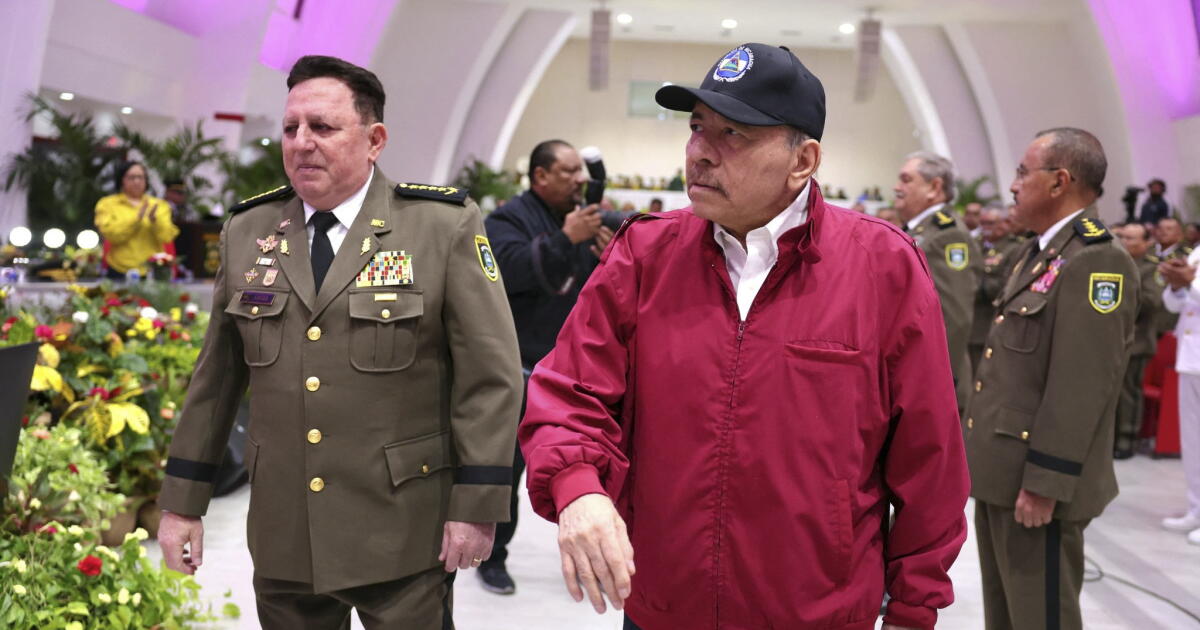
Opposition lawmakers in Argentina contend a risk exists of President Javier Milei’s government providing “material collaboration” in a potential military aggression against Cuba in coordination with Washington. Photo by Matias Martin Campaya/EPA

May 13 (UPI) — A group of opposition lawmakers in Argentina filed an expansion of an impeachment request against President Javier Milei, warning of a “concrete and verifiable risk” that the country could become militarily involved in a potential U.S.-driven action against Cuba.

Under Argentina’s legislative system, an expansion of an impeachment request involves adding new facts, arguments or evidence to existing complaints against a public official, in this case the president, for evaluation by Congress’ Impeachment Committee.

The filing was submitted Monday by lawmakers from Unión por la Patria led by Congressman Juan Marino, although the news and details of its contents were publicly disclosed by the lawmakers Tuesday.

They expand on complaints already included in the impeachment proceedings facing the president in Argentina’s lower house of Congress.

According to local media outlets Clarín and Noticias Argentinas, the lawmakers contend a risk exists of Argentina providing “material collaboration” in a potential military aggression against Cuba in coordination with Washington.

“The matter of war and peace does not belong to the personal discretion of the president,” the opposition filing states, arguing that any troop deployment or military participation abroad requires congressional authorization under Argentina’s Constitution.

The lawmakers linked their concerns to recent remarks by Milei during an appearance at the Milken Institute, where he said Latin America must eliminate the “remnants of communism.”

“Today, the American dream extends from Alaska to Tierra del Fuego, and we hope it will soon also include our beloved Cuba and Venezuela,” Milei said during the event, according to videos circulated on social media.

The complaint also references the military operation known as “Lanza del Sur” — joint exercises between Argentine and U.S. forces — and Milei’s recent visit to the aircraft carrier USS Abraham Lincoln during its passage through waters near Argentina.

The lawmakers also questioned Executive Decree 264/2026, sayingit could facilitate military cooperation and troop movements without sufficient parliamentary oversight.

In a video posted on X, Marino said a risk exists that Argentina could become one of Washington’s first allies to support a potential intervention in Cuba due to the political closeness between Milei and President Donald Trump.

“There is a risk that Milei could participate militarily in an invasion of Cuba,” Marino said. “He is publicly endorsing Trump’s wars, involving Argentina and carrying out military exercises with the United States without going through Congress.”

Milei already faces several impeachment requests in Congress over alleged misconduct in office. Among the most recent is a complaint filed over his public promotion of the $LIBRA cryptocurrency token, which collapsed after its launch and caused multimillion-dollar losses for investors.

The request filed this week was signed by Juan Marino, Pablo Todero, Lorena Pokoik, Sabrina Selva, Hilda Aguirre, Gabriela Pedrali and Jorge Araujo Hernández.

So far, the Argentine government has not publicly responded to the accusations.


Source link

Board of Peace envoy says ceasefire hinges on Hamas’ disarmament

Nickolay Mladenov, the top diplomat overseeing the U.S.-brokered ceasefire in Gaza, said Wednesday the truce hinged on Hamas’ disarmament, a sticking point that has stalled progress on other fronts, including rebuilding the mostly destroyed enclave.

The high representative for President Trump’s International Board of Peace in Gaza, Mladenov, said months without progress implementing the deal benefited neither Israel nor Palestinians. He said the phased deal was paralyzed over Hamas not yet disarming, calling it “not negotiable.”

International mediators have long said disarmament is core to the ceasefire, to which Hamas has agreed, but no significant progress has been made toward it. The Palestinian militant group has sought to link any demilitarization to Israeli troop pullbacks. Israel’s military remains in control of more than half of Gaza.

“The only way that we believe that we can ensure that Israeli withdrawal takes place to the perimeter is if we have the full element of the plan unfolding in Gaza,” Mladenov said at a rare press conference in Jerusalem.

Mladenov stated plainly that the plan envisioned in the ceasefire was off to a rocky start. He also said conditions remain dire and miserable for the more than 2 million people in Gaza. He accused both sides of violating the ceasefire but said it had mostly held and staved off the return of full-scale war.

Disarmament is among the most challenging elements of the ceasefire. Hamas, whose founding charter calls for armed resistance against Israel, has been reluctant to give up its arsenal, including rockets, anti-tank missiles, and explosives.

Mladenov did not answer questions about what could lie ahead for Gaza in the absence of disarmament. He criticized Hamas for consolidating power in parts of Gaza under its control, saying it hoped “to squeeze better terms of a negotiation.”

He also said that he could envision a role for Hamas in postwar Gaza if it disarms.

“We are not asking Hamas to disappear as a political movement,” Mladenov told reporters.

Israeli leaders have said they want to destroy the militant group that has governed Gaza for two decades and orchestrated the attack on Israel on Oct. 7, 2023, killing some 1,200 people and taking 251 as hostages.

Israel’s ensuing offensive has killed over 72,724 Palestinians, including at least 846 since a ceasefire took hold last October.

Mladenov’s remarks came as the Board of Peace faces scrutiny, with efforts to advance the phased ceasefire stalled.

The truce envisioned Hamas handing over its weapons, Israeli forces withdrawing and rebuilding destroyed swaths of the coastal enclave after more than two years of war.

Instead, the seven months since the ceasefire have seen Israel and Hamas trade accusations of violations. Aid groups say Israel has not allowed the promised amount of aid in. Hamas has not disarmed and remains in control of roughly half the strip.

Trump’s 20-point plan says that all of Hamas’ “military, terror and offensive infrastructure, including tunnels and weapon production facilities” in Gaza must be destroyed. It also says that weapons must be placed “permanently beyond use.”

Israel and the U.S. say this language is clear and that Hamas must surrender all of its weapons.

Hamas has sought to differentiate between “heavy” weapons, such as rockets, and “light” weapons like rifles and pistols, Hamas officials and mediators say, speaking on condition of anonymity to discuss the negotiations.

Israel has stepped up its attacks in Gaza in recent days, since the U.S.-Iran ceasefire, and many Palestinians fear a return of more airstrikes and full-scale war may be imminent.

Frankel and Metz write for the Associated Press.

Source link

Trump arrives in Beijing for talks with China’s Xi on Iran war, trade and U.S. arms sales to Taiwan

President Trump arrived in Beijing on Wednesday for his hotly anticipated talks with Chinese President Xi Jinping on the Iran war, trade and U.S. arms sales to Taiwan.

The meat of the summit doesn’t start until Thursday, when the leaders hold bilateral talks, visit the Temple of Heaven, where Chinese emperors once prayed for bumper crops, and take part in a formal banquet. But the Chinese offered Trump a pomp-filled welcome, literally rolling out the red carpet for him after Air Force One landed in the Chinese capital.

The president was greeted by Chinese Vice President Han Zheng; Xie Feng, China’s ambassador to Washington; Ma Zhaoxu, executive vice minister of foreign affairs; and the U.S. envoy to Beijing, David Perdue.

The welcoming ceremony included a military honor guard, a military band and some 300 Chinese youths waving Chinese and American flags and chanting, “Welcome, welcome! Warm welcome!” as Trump made his way to his waiting limousine. The youth greeters were decked out in white and robin’s egg blue outfits that matched the paint job of the iconic presidential plane.

President Trump walks with China's Vice President Han Zheng during an arrival ceremony

President Trump walks with China’s Vice President Han Zheng during an arrival ceremony Wednesday at Beijing Capital International Airport, as Eric and Lara Trump, Elon Musk, Secretary of State Marco Rubio, Defense Secretary Pete Hegseth and U.S. Trade Representative Jamieson Greer follow.

(Mark Schiefelbein / Associated Press)

“We’re the two superpowers,” Trump told reporters as he departed the White House on Tuesday for the long flight to Beijing. “We’re the strongest nation on Earth in terms of military. China’s considered second.”

While Trump likes to project a sense of strength, the visit occurs at a delicate moment for his presidency as his popularity at home has been weighed down by the U.S. and Israel’s war with Iran and rising inflation as a consequence of that conflict. The Republican president is seeking a win by signing deals with China to buy more American soybeans, beef and aircraft, saying he’ll be talking with Xi about trade “more than anything else.”

The Trump administration hopes to begin establishing a Board of Trade with China to address differences between the countries. The board could help prevent the trade war ignited last year after Trump’s tariff hikes, an action China countered through its control of rare earth minerals. That led to a one-year truce last October.

But Trump is visiting Beijing when Iran continues to dominate his domestic agenda. The war has led to the effective closure of the Strait of Hormuz, stranding oil and natural gas tankers and causing energy prices to spike to levels that could sabotage global economic growth. The U.S. president declared that Xi didn’t need to assist in resolving the conflict, even though Iran’s Foreign Minister Abbas Araghchi was in Beijing last week.

Fellow rescuers carry the coffins of two members of the civil defense who were reportedly killed in Israeli airstrikes

Fellow rescuers carry the coffins of two members of the civil defense who were reportedly killed in Israeli airstrikes in Nabatieh the previous day, during their funeral in the southern city of Sidon on May 13, 2026. Israel hammered south Lebanon with strikes on May 12 ahead of talks between the two countries in Washington, as Beirut reported 380 people killed in Israeli attacks since an April 17 ceasefire took effect.

(Mahmoud Zayyat/AFP via Getty Images)

“We have a lot of things to discuss. I wouldn’t say Iran is one of them, to be honest with you, because we have Iran very much under control,” Trump told reporters Tuesday.

Taiwan high on the agenda

The status of Taiwan also will be a major topic as China is displeased with U.S. plans to sell weapons to the self-governing island, which the Chinese government claims as part of its own territory.

Trump told reporters on Monday that he would be discussing with Xi an $11 billion weapons package for Taiwan that the U.S. administration authorized in December but has not yet begun fulfilling. The arms package is the largest ever approved for Taiwan.

But Trump has demonstrated greater ambivalence toward Taiwan, an approach that’s raising questions about whether the U.S. leader could be open to dialing back support for the island democracy.

The Taiwanese flag at Democracy Boulevard is lowered at the Chiang Kai-shek Memorial Hall

The Taiwanese flag at Democracy Boulevard is lowered at the end of the day as the Chiang Kai-shek Memorial Hall is seen in the background in Taipei on May 13, 2026.

(I-Hwa Cheng/AFP via Getty Images)

At the same time, Taiwan — as the world’s leading chipmaker — has become essential for the development of artificial intelligence, with the U.S. importing more goods so far this year from Taiwan than China. Trump has sought to use Biden-era programs and his own deals to bring more chipmaking to America.

The Chinese Communist Party’s news outlet, People’s Daily, published a strongly worded editorial ahead of Trump’s arrival underscoring that Taiwan is “the first red line that cannot be crossed in China-U.S. relations” and is “the biggest point of risk” between the two nations.

Trump was already portraying the trip as a success before he even left White House grounds. He openly mused about Xi’s planned reciprocal visit to the U.S. later this year, lamenting that the White House ballroom under construction would not be completed in time to properly fete the Chinese leader.

“We’re going to have a great relationship for many, many decades to come,” Trump said of the U.S. and China.

Counter snipers and other security forces watch over Air Force One while refueling at Joint Base Elmendorf

Counter snipers and other security forces watch over Air Force One while refueling at Joint Base Elmendorf during a trip with US President Donald J. Trump in Anchorage, Alaska, on May 12, 2026. Donald Trump was due in Beijing on May 13, 2026 on the first visit to China by a US president in nearly a decade, as he seeks to ramp up trade despite potential friction over Taiwan and Iran.

(Brendan Smialowski/AFP via Getty Images)

Trump embarked on Air Force One for the big meeting with a coterie of aides, family members and business world titans, including Nvidia’s Jensen Huang and Tesla and SpaceX’s Elon Musk. While en route to Beijing, he posted on social media that his “first request” to Xi during the visit will be to ask the Chinese leader to bolster the presence of U.S. firms in China.

“I will be asking President Xi, a Leader of extraordinary distinction, to ‘open up’ China so that these brilliant people can work their magic, and help bring the People’s Republic to an even higher level!” Trump wrote.

Tajikistan's President Emomali Rahmon and China's President Xi Jinping attend a welcoming ceremony

Tajikistan’s President Emomali Rahmon and China’s President Xi Jinping attend a welcoming ceremony at the Great Hall of the People on Tuesday, in Beijing.

(Maxim Shemetov—Pool / Getty Images)

Despite Trump’s outward confidence, China appears to be entering the meeting from “a much stronger place,” said Scott Kennedy, a senior adviser on Chinese business and economics at the Center for Strategic and International Studies, a Washington think tank.

China would like to reduce tech restrictions on accessing computer chips and find ways to reduce tariffs, among other goals.

“But even if they don’t get much on any of those things, as long as there’s not a blow-up in the meeting and President Trump doesn’t go away and look to re-escalate, China basically comes out stronger,” Kennedy said.

U.S. Treasury Secretary Scott Bessent and Chinese Vice Premier He Lifeng met on Wednesday to discuss economic and trade issues at Incheon International Airport, just west of the South Korean capital of Seoul, according to the Chinese state run Xinhua News Agency.

Bystanders are kept back by police tape as they film the motorcade of President Donald Trump as he arrives

Bystanders are kept back by police tape as they film the motorcade of President Donald Trump as he arrives at the Four Seasons Hotel on Wednesday in Beijing.

(Kevin Frayer / Getty Images)

Trump wants 3-way nuclear arms deal

Trump also intends to raise the idea of the U.S., China and Russia signing a pact that would set limits on the nuclear weapons each nation keeps in its arsenal, according to a senior Trump administration official who briefed reporters ahead of the trip. The official spoke on the condition of anonymity under ground rules set by the White House.

China has previously been cool to entering such a pact. Beijing’s arsenal, according to Pentagon estimates, exceeds more than 600 operational nuclear warheads and is far from parity with the U.S. and Russia, which each are estimated to have more than 5,000 nuclear warheads.

The last nuclear arms pact, known as the New START treaty, between Russia and the United States expired in February, removing any caps on the two largest atomic arsenals for the first time in more than a half-century. As the treaty was set to expire, Trump rejected a call by Russia to extend the two-country deal for another year and called for “a new, improved, and modernized” deal that includes China.

The Pentagon estimates China will have more than 1,000 operational nuclear warheads by 2030.

Madhani, Weissert and Boak write for the Associated Press. Boak reported from Washington. AP writers Darlene Superville in Washington, Huizhong Wu in Bangkok, Hyung-jin Kim in Seoul, South Korea, and Kanis Leung in Hong Kong contributed to this report.

Source link

Louisiana advances plan to eliminate majority-Black U.S. House district after court ruling

Republican senators in Louisiana advanced a plan Wednesday to eliminate one of two majority-Black, Democratic-held congressional seats following a U.S. Supreme Court ruling that struck down the state’s U.S. House map as an illegal racial gerrymander.

The early morning Senate committee vote came after hours of impassioned testimony from Black residents and Democrats opposed to the move. Republicans opted not to pursue a more aggressive approach, which could have targeted both Democratic seats for elimination.

The Supreme Court’s recent ruling weakening federal Voting Rights Act protections for minorities has prompted Republicans in several Southern states to try to eliminate House districts with large minority populations that have elected Democrats. Tennessee and Alabama already have acted to implement different House maps that could help Republicans win an additional seat. But a similar effort fizzled Tuesday in the South Carolina Senate.

The redistricting efforts to undo minority districts are the latest variation in a 10-month-long national redistricting battle that already has involved about one-third of the states. It gained steam when President Trump urged Texas Republicans last year to redraw House districts in an attempt to win more seats in the midterm elections. Democrats in California responded with their own new districts. Numerous Republican states have redistricted since then.

Republicans think they could gain as many as 15 seats so far from new House maps in Texas, Missouri, North Carolina, Ohio, Florida, Tennessee and Alabama. Democrats, meanwhile, think they could gain six seats from new maps in California and Utah. The Virginia Supreme Court last week struck down a redistricting effort that could have yielded four more winnable seats for Democrats.

Brook and Lieb write for the Associated Press. Lieb reported from Jefferson City, Mo.

Source link

Could South Africa’s Ramaphosa be impeached over ‘cash-in-sofa’ scandal? | Corruption

South Africa’s President Cyril Ramaphosa has refused to resign over a “cash-in-sofa scandal” that continues to haunt his presidency.

Ramaphosa, who addressed the nation on Monday to declare his intention to remain in his post, is set to face a multi-party impeachment committee, which will investigate allegations that he covered up a 2020 break-in at his private ranch and the theft of more than $500,000, concealing the incident from police and tax authorities.

The committee’s findings could spell his impeachment; however, parliament has not provided a timeframe for the investigation, which has yet to commence.

Analysts say the scandal, which has been dubbed “Farmgate”, has been particularly damaging for a president who rode to power in 2018 on an anticorruption mandate, after the much-criticised presidency of Jacob Zuma. Now, eight years later, the case of the cash found stuffed in a sofa at his game ranch could be what takes Ramaphosa down.

Can the South African president survive? Here is what we know.

ramaphosa
Supporters of the Economic Freedom Fighters (EFF) carry placards outside South Africa’s Constitutional Court, after the court ruled on whether the parliament failed to hold President Cyril Ramaphosa to account over the ‘Farmgate’ scandal, involving allegations that foreign currency was hidden at his Phala Phala game farm, in Johannesburg, South Africa, on May 8, 2026 [Siphiwe Sibeko/Reuters]

What’s the scandal all about?

In February 2020, burglars allegedly broke into Ramaphosa’s luxury private ranch, Phala Phala, in Limpopo province, South Africa, and stole $580,000. The cash was said to have been hidden inside furniture at the farm – hence the “Farmgate” label.

Ramaphosa has been accused of covering up the theft and keeping private efforts to trace the burglars a secret to avoid an investigation into where the money had come from – and why it was hidden in a sofa.

Corruption allegations surfaced when a former head of South Africa’s state security agency walked into a police station in 2022 and accused the president of money laundering in relation to the stolen cash.

Later that year, an independent parliamentary committee found that Ramaphosa “may have committed” serious violations and misconduct. In particular, the panel found he had failed to properly report a theft to police as required under anticorruption laws and “acted in a manner inconsistent with his office”.

At the time, the African National Congress (ANC) had a strong majority in parliament – with 230 seats out of 400. It was therefore able to reject the report and refused to open impeachment proceedings.

But the left-wing Economic Freedom Fighters (EFF) challenged this at the Constitutional Court in Cape Town, which, last week, overturned the government’s rejection of the 2022 parliamentary report and referred it to a multi-party impeachment committee for a full investigation.

ramaphosa
South Africa’s President Cyril Ramaphosa addresses the nation, after a court last week revived proceedings against him over a scandal in which thieves stole bundles of foreign cash from a sofa on his ranch, in Johannesburg, South Africa, May 11, 2026 [Siphiwe Sibeko/Reuters]

What has Ramaphosa said?

Ramaphosa has always denied allegations of corruption and maintains that the stolen cash came from selling buffalo.

Since the constitutional court’s ruling last week, Ramaphosa has been facing renewed calls for his resignation, mostly from opposition leaders. In a televised address on Monday, the president refused to step down.

“While there have been calls in some circles that I should resign, nothing in the Constitutional Court judgement compels me to resign my office,” he said.

“Since a criminal complaint was laid against me in June 2022, I have consistently maintained that I have not stolen public money, committed any crime, nor violated my oath of office,” Ramaphosa said in his address, adding that he has cooperated in all investigations.

The president rejected the 2022 report from the independent panel again, saying: “The complaints against me are based on hearsay allegations. No evidence, let alone sufficient evidence, has been presented to prove that I committed any violation, let alone a serious violation of the Constitution or law, or serious misconduct as set out in the Constitution.”

If the committee does find enough evidence against him, it could direct him to be impeached.

It is unclear how long this will take, however. Ramaphosa has pledged to seek a judicial review of the report’s contents, which, in turn, could delay the investigation of the impeachment committee.

ramaphosa
Judges take their seats at South Africa’s Constitutional Court before the ruling on whether the parliament failed to hold President Cyril Ramaphosa to account over the ‘Farmgate’ scandal, involving allegations that foreign currency was hidden at his Phala Phala game farm, in Johannesburg, South Africa, May 8, 2026 [Siphiwe Sibeko/Reuters]

What is the process for impeachment?

If a president is found to have violated the constitution or the law, or is unable to perform the duties of office, South Africa’s National Assembly has the constitutional authority to remove him or her.

Beyond the parliamentary investigation that will now begin into the Farmgate scandal, and which can trigger a vote on impeachment, as well, any member of parliament may introduce a motion seeking the president’s removal. The speaker of the National Assembly would then refer the motion to an independent panel of legal experts to determine whether sufficient evidence exists to proceed.

If this panel decides there is a case against the president, lawmakers must vote on whether to begin impeachment proceedings. After this, a specially constituted impeachment committee is established to carry out a detailed investigation into the allegations. This is separate from the investigation beginning now and could take several months.

Once that committee recommends the removal of the president, parliament holds a final vote to impeach the president. Under Section 89 of the constitution, a two-thirds majority is required – meaning at least 267 lawmakers must vote in favour of removal in the 400-seat National Assembly.

ramaphosa
Supporters of the Economic Freedom Fighters (EFF) carry placards outside South Africa’s Constitutional Court, on the day the court ruled that parliament failed to hold President Cyril Ramaphosa to account over the ‘Farmgate’ scandal, in Johannesburg, South Africa, May 8, 2026 [Siphiwe Sibeko/Reuters]

Are there other ways to remove Ramaphosa?

Yes, the South African president can be removed from his job via a no-confidence vote in parliament.

Any member of the assembly can propose the no-confidence motion, and it only requires a simple majority of more than 50 percent.

Ramaphosa would need support from coalition partners to survive a no-confidence vote, however. This has already been proposed by at least two opposition parties in parliament.

Another way could be if his ANC party turns against him, as it did with the last president, Zuma, who came in for years of corruption allegations and was finally forced to resign in 2018.

FILE - South African President Cyril Ramaphosa raises his hand as he is sworn is as a member of Parliament ahead of an expected vote by lawmakers to decide if he is reelected as leader of the country in Cape Town, South Africa, June 14, 2024. (AP Photo/Jerome Delay, file)
South African President Cyril Ramaphosa raises his hand as he is sworn in as a member of parliament before an expected vote by lawmakers to decide if he is re-elected as leader of the country, in Cape Town, South Africa, June 14, 2024 [Jerome Delay/AP]

How strong is Ramaphosa’s position?

Ramaphosa is not only the president of South Africa, but also the leader of its most popular party, the ANC. Nelson Mandela was the ANC’s first Black president after apartheid ended in 1994.

In 2024, the ANC stunningly lost its majority in parliament for the first time following more than three decades in power. Today, the ANC holds 159 of 400 seats in the national assembly, or about 40 percent of seats – and Ramaphosa is governing in a coalition with the Democratic Alliance, which has 87 seats, along with other smaller parties.

But Chris Ogunmodede, an independent analyst of African politics, security, and international affairs, based in Lagos, Nigeria, said Ramaphosa would likely survive any impeachment attempts, “simply because of the arithmetic”.

“His numbers in the parliament virtually guarantee that impeachment will not happen,” Ogunmodede told Al Jazeera.

“It hasn’t been easy, but there is a government that seems to be functional and is showing some signs of reinvigoration,” Ogunmodede added. “There’s a lot of uncertainty on the part of the other coalition parties that suggests that they would much rather be on the side of caution and go with the devil they know, and preserve the government by keeping Ramaphosa in power.”

Despite this, the cash-in-sofa scandal has been damaging, he said.

And, under Ramaphosa, the ANC’s popularity has continued to slide. The party’s national vote share fell from 57.5 percent in the 2019 election to 40.2 percent in the 2024 election, marking its worst performance since the end of apartheid.

The South African economy has shown some signs of improvement, however, and given the Ramaphosa government “something to show for the time that it’s been in power”, said Ogunmodede.

Yet the South African government still faces long-term structural concerns about the economy, the country’s institutions, corruption, crime and other issues, the analyst added.

On the back of underlying anti-incumbency, Ogunmodede said the top court’s ruling on the cash-in-sofa scandal “has resurrected many concerns that South Africans have had about the president and his party, and the political institutions of the country more broadly”.

Source link

Becerra’s advisor pleaded guilty. Gubernatorial rivals are piling on

As Xavier Becerra rose to the top echelons of power in Washington and Sacramento over the last two decades, his trusted advisor Sean McCluskie joined him at every step.

The son of a Scottish immigrant, McCluskie had a reputation as a political street fighter and his gruff style complemented Becerra’s more measured, cerebral approach.

Now Becerra is under attack in California’s wide-open governor’s race after McCluskie, 57, pleaded guilty in December to stealing more than $200,000 from Becerra’s campaign account.

The charges were part of a broader scandal that implicated or brushed up against some of Sacramento’s most influential Democratic political advisors, a scheme prosecutors allege included payments, bank fraud and an FBI sting operation that swept McCluskie’s incriminating private conversations and texts into evidence.

Rivals in the California governor’s race have seized on the case to question whether Becerra, one of the front-runners in the contest to succeed outgoing Gov. Gavin Newsom, is fit for office and could be swept up in the case.

“We can’t have someone who is running as a Democrat who could run into legal difficulties,” said candidate Tom Steyer, who is close to Becerra in the polls.

Becerra has not been accused of wrongdoing, and prosecutors’ court filings describe him as a victim. He told The Times that he cooperated with investigators, including appearing before the grand jury.

“Sean was as close as any staffer that I’ve ever had,” Becerra said in an interview last week, describing how McCluskie moved across the country twice to work for him.

He added that he’s “racked” his brain to understand the case involving McCluskie and his longtime political consultant, Dana Williamson, both of whom he described as “very highly accomplished people.”

Williamson, who also served as Gov. Gavin Newsom’s chief of staff, was indicted in November. She had refused to cooperate with federal investigators and pleaded not guilty, but recently discussed a plea deal with prosecutors. A court hearing is set for Thursday, according to court filings.

An agreement could unearth more details about the case in the coming weeks, a possibility not lost on the Democrats and Republicans running for governor.

Former Orange County Rep. Katie Porter, one of the Democrats who has watched Becerra’s rapid ascent in the race, said in a CNN interview Monday that California can’t risk having Becerra in the race with the specter of the ongoing criminal case.

She acknowledged that “I do not have the facts” about the case, but said if Becerra were to finish in the top two in the June 2 primary and then be indicted by the Trump administration’s Department of Justice, a Republican ultimately could win the governor’s race in November.

“Secretary Becerra cannot and has not guaranteed or promised the people of California that he will not be named as a co-conspirator and indicted,” she said.

Other candidates, and reporters, have questioned whether Becerra had a blind spot in trusting McCluskie.

Appearing on Fox40 News last year, Becerra likened the criminal case to being “married for 20 years” and “all of a sudden you find out that your spouse has been cheating.”

According to prosecutors, McCluskie, Williamson, and another consultant skimmed $225,000 from one of Becerra’s dormant campaign accounts and funneled it to McCluskie through various entities.

McCluskie, who declined to speak to The Times, sought the money because he’d taken a pay cut after joining Becerra in Washington when Becerra became Health and Human Services secretary in 2021, according to prosecutors.

And unlike Becerra, he didn’t move full-time to D.C., and was splitting his time between the nation’s capital and California, where his family lived.

On a phone call recorded by the FBI in 2024, McCluskie talked about the scheme and told a consultant, “This money you guys are giving me is helping me fly back and forth to D.C. and live there half part time.”

Becerra, in an interview, said McCluskie never mentioned his money problems. The pair worked together when Becerra served in Congress and as California attorney general.

After President Biden appointed Becerra to lead Health and Human Services, the pair discussed the move back to D.C.

“Even before we went to HHS, we had talked about whether we wanted to do this,” Becerra said. “We both agreed, ‘Yeah, you know, it’s going to be a sacrifice. We’re going to have to make changes.’”

Former Becerra staffers told The Times that Becerra and McCluskie were such a close team that they have a hard time imagining Becerra working in government without McCluskie.

Another former staffer, Amanda Renteria, said the two men bonded over their humble immigrant backgrounds. McCluskie’s family came from Scotland and Italy; Becerra’s relatives came from Mexico.

McCluskie relished going to battle for those less fortunate, she said.

“When Becerra became A.G., [people questioned] whether or not he had the style that could really take on Trump. If you were to meet Sean, you’d be like, Oh yeah, Sean is totally ready for a fight, he’s ready to take him on.

“That was sort of a difference with Becerra. Becerra had that fight in him. Sean wore it a little bit more,” said Renteria, a political strategist.

Becerra has faced repeated questions about his financial judgment after the criminal case revealed that he agreed to pay up to $10,000 a month to Williamson and another consultant to oversee one of his dormant campaign accounts.

The consultants charged him the fee as part of the scheme to divert money to McCluskie, prosecutors allege.

At the time, Becerra, a Biden Cabinet member, was barred from involving himself in campaign matters.

Becerra defended the payments during an interview with Fox40 last year, stating, “I was told that’s the rate I would have to pay to get someone who could manage that and make sure that I don’t have to worry about [violating any federal rules].”

Campaign finance records show Becerra had never paid such a high fee for his other accounts.

Becerra told The Times that his longtime attorney Stephen Kaufman, whom he was also paying to oversee the account, didn’t flag the payments. “I would have expected him to raise issues if he thought there was something wrong,” Becerra said.

Kaufman didn’t respond to questions about the account.

Los Angeles-based political consultant Eric Hacopian told The Times that the fees are “certainly high.”

“It’s obviously something he should’ve noticed. Either he was not paying attention, or was too trusting of these people,” said Hacopian, who isn’t involved in the governor’s race. “At the end of the day, he’s the primary victim.”

At a debate last week, rival candidate Antonio Villaraigosa pounced on the payments made by Becerra, saying that the politician “has to be under suspicion because it doesn’t pass the smell.”

Danni Wang, a spokesperson for Steyer, said in a statement, “So, which is it — did Becerra know about the illegal payments and participate in the campaign’s corruption, or was he a totally incompetent manager oblivious to what was going on underneath his nose?”

Renteria, the former Becerra staffer, said the allegations against McCluskie and others are particularly surprising given Becerra’s reputation as a “straight A student.”

“Part of it broke my heart,” she said.

Jonathan Underland, a Becerra spokesperson, said Becerra “has always been consistent and clear: Every action he took was in accordance with the law.”

“What he didn’t know — and what the FBI’s own investigation goes out of its way to clarify — is that his staff cooked up a scheme designed to deceive him.”

Becerra, in an interview, repeatedly said that he relied on McCluskie. It was McCluskie, he said, who advised him to make the payments. “I trusted him to handle the accounts,” he said.

He also said he was unaware of some of the details laid out by prosecutors.

Prosecutors said Williamson and others created a “no show” job for McCluskie’s wife, Kerry MacKay, to do work for the consultants.

MacKay never was paid, however, and the money went to an account controlled by McCluskie. MacKay, who didn’t respond to requests for comment, was not charged.

McCluskie’s plea agreement states that he told Becerra about his wife’s job with the consultants, though he didn’t tell the politician that his wife wouldn’t actually be doing any work.

Becerra, in an interview, said he didn’t recall McCluskie informing him about his wife’s work.

McCluskie’s sentencing is scheduled for June 4, two days after the primary.

Source link

Key Zelenskyy aides under corruption cloud: What are they accused of? | Corruption News

Andriy Yermak, Ukrainian President Volodymyr Zelenskyy’s former chief of staff and close aide, is now at the centre of the country’s biggest corruption investigation since Russia’s full-scale invasion in 2022.

Anticorruption authorities named him an official suspect on Monday in an alleged multimillion-dollar money laundering scheme linked to a luxury housing project outside the capital, Kyiv.

Recommended Stories

list of 3 itemsend of list

Yermak appeared at a Kyiv court on Tuesday for a hearing related to the charges, which are part of a widening probe drawing in other senior figures associated with the president, including his national security chief.

While Zelenskyy is not accused of any wrongdoing, the scandal could potentially threaten Ukraine’s aspirations for European Union membership as it seeks to convince the bloc that its anticorruption drive is on track.

So, what are the charges against Yermak? Are other allies of Zelenskyy also under a cloud of suspicion? And what does this mean for Ukraine’s standing with its Western allies?

What are the charges against Yermak?

Ukraine’s National Anti-Corruption Bureau (NABU) and the Specialized Anti-Corruption Prosecutor’s Office (SAPO) say Yermak is suspected of involvement in an organised criminal group that allegedly laundered about 460 million hryvnias ($10.5m) through a luxury real estate project near Kyiv.

Prosecutors are seeking to impose bail of about $5.4m on the 54-year-old while they continue their investigation.

Yermak, who resigned in November, has firmly rejected the claims. In a post on Telegram after a court hearing on Tuesday, he described the accusations as “unfounded”.

“As a lawyer with more than 30 years’ experience, I have always been guided by the law. And now, in the same way, I will defend my rights, my name and my reputation,” he said.

Ukraine's former Presidential Office Chief of staff Andriy Yermak (R), stands in court before a hearing in a money laundering case, to determine a preventive measure, in Kyiv on May 12, 2026, amid the Russian invasion of Ukraine.
Ukraine’s former Presidential Office Chief of Staff Andriy Yermak stands in court before a hearing in a money laundering case in Kyiv on May 12, 2026 [AFP]

At one point during the hearing, Yermak told reporters that he “owns only one apartment and one car”.

His lawyer, Ihor Fomin, labelled the allegations against his client “groundless” and denied any role by Yermak in laundering funds through the high-end development. Fomin told Ukraine’s public broadcaster Suspilne that “this entire situation has been provoked by public pressure.”

NABU director Semen Kryvonos defended the proceedings, stating that authorities move to issue formal notices only when they believe they possess enough evidence to sustain charges in court. He clarified that Zelenskyy was not subject to any investigation.

But the case has dragged the shadow of corruption closer to the Ukrainian president than ever before. That’s because it isn’t just Yermak who has been caught up in the accusations of fraud.

Have other Zelenskyy allies been implicated, too?

Timur Mindich, a wealthy businessman who was Zelenskyy’s former partner from the entertainment world – the Ukrainian president is a former comedian – has emerged as another leading figure in the scandal. He left for Israel after corruption allegations surfaced last year.

The probe has also brought Rustem Umerov, the head of Ukraine’s National Security and Defence Council, into the crosshairs of the authorities. Umerov, who until last year was Ukraine’s defence minister, is Zelenskyy’s main representative in United States-backed diplomatic efforts to end Russia’s war on Ukraine.

Prosecutors say Umerov has been interviewed as a witness in the luxury real estate development case.

The case is part of a broader anticorruption operation, dubbed “Midas” and led by NABU and SAPO. The operation was first made public in November, when prosecutors accused Mindich of engineering a $100m kickback scheme at Energoatom, charges the businessman has refuted.

Zelenskyy has yet to publicly respond to the allegations involving Yermak. On Monday, a communications aide said it was premature to comment on the case.

Ukraine’s government in July passed a law in an effort to strip the independence of NABU and SAPO, which were established in 2014 after a pro-democracy uprising against the then-government of President Viktor Yanukovych.

Within days, protests broke out against the move, forcing Zelenskyy to reverse course and sign a new law to restore the anticorruption institutions’ independence.

Why does this matter?

The scandal has emerged at a particularly sensitive moment for Ukraine, as Kyiv continues to make the case for military and financial support from its allies in Western Europe and North America.

Last July, US senators Jeanne Shaheen and Lindsey Graham released a strongly worded statement denouncing the attempt by the government to, at the time, curb the anticorruption work of NABU and SAPO.

“One of the most widely used talking points for ending support for Ukraine is that it was awash with corruption,” they said. “We acknowledge that Ukraine continues to make progress on this front and we urge the government to refrain from any actions that undermine that progress.”

Moreover, Ukraine’s bid to join the EU has increased pressure on Zelenskyy’s administration to demonstrate institutional independence and accountability.

German Chancellor Friedrich Merz last month cautioned against a quick accession of Ukraine to the EU, saying Ukraine cannot join the bloc due to several key concerns, including ending the war and fighting corruption.

Ukrainian opposition politician Oleksiy Goncharenko said the allegations had now reached a point that Zelenskyy “personally cannot ignore”.

However, Olena Halushka, a board member at the Anti-Corruption Action Centre in Kyiv, said the case against Yermak and others was a “clear example that the checks and balances system really works”.

Speaking to Al Jazeera, Halushka said it proved that in Ukraine there are “law enforcement institutions functioning independently and professionally, exercising their powers in defence of democracy”.

“These institutions were protected by the Ukrainian society and European partners from the political attack last summer, and now we see the tangible results of their activities,” she added.

In a survey conducted on May 6 by the Kyiv International Institute of Sociology, 54 percent of Ukrainians said corruption was a bigger threat to the country than the war with Russia.

Source link

How a Del Taco in Barstow exposed Steve Hilton for who he really is

Out in the high desert city of Barstow stand three Del Tacos that bill themselves as better than their corporate cousins.

They’re the last ones owned and operated by Ed Hackbarth, the founder of the Mexican fast food chain. Two of them feature the word “Original” under their marquees, even though that’s historically inaccurate — Hackbarth opened the first Del Taco in the nearby town of Yermo in 1964.

That hasn’t stopped thousands of devotees — myself included — from trekking to these Cal-Mex shrines to buy memorabilia, gawk at historical photos and gorge on hard shell tacos, burritos and bun tacos that they insist are tastier than the ones at regular Del Tacos.

Among those visitors was Republican gubernatorial candidate Steve Hilton.

He stopped by the Original Del Taco off 1st Avenue on Saturday after a town hall with lieutenant governor candidate and Barstow native Gloria Romero. His campaign posted a short video on social media of him standing outside the spot — the oldest operating Del Taco — while holding something that looked like a melted Frisbee.

It was what the place calls a Barstow Taco: ground beef, a few strips of lettuce, a blizzard of bright yellow cheese and a thick red tomato slice on top, all inside a hard taco shell.

Hilton gleefully wielded the crunchy mass with one hand as he pointed to the Original Del Taco sign with the other.

“My Barstow street taco, I’m going to enjoy,” he concluded in an accent from his native England, while giving a thumbs-up. “See you soon.”

He didn’t take a bite.

The social media blowback exploded like a digital Montezuma’s revenge. Haters ridiculed Hilton for visiting a Mexican restaurant in what seemed like an attempt to attract Latino voters — if he was going to do that, why on Earth pick a multimillion-dollar empire founded by a gringo? Others noted that “street tacos” are made with corn tortillas and bought from a food truck or street stall. As the author of a book about the history of Mexican food in the United States, I pointed out that this Del Taco isn’t actually the original, despite what the marquee says.

A humble man would have immediately owned up to his mistakes. Hilton is not a humble man.

To someone who pointed out that “Barstow street taco” is a misnomer, Hilton shot back, “It’s what they call it!” To someone who accused him of supporting bland corporations instead of mom-and-pop shops, Hilton responded that he went there because Romero once worked there.

“Not everything in life has to be turned into a political argument!!” he whined.

Hilton and his followers are treating Del Taco-gate as much ado about nada — and yet it tells voters everything they need to know about the man.

Three hard shell tacos on a plate.

Three hard shell beef tacos from Mitla Cafe, the San Bernardino restaurant that indirectly served as the inspiration for Taco Bell and Del Taco.

(Jenn Harris / Los Angeles Times)

Endorsed by President Trump, he has consistently topped the polls this year, mainly because the many Democratic candidates have split the vote. Hilton has outperformed his main Republican rival, Riverside County Sheriff Chad Bianco, by promoting a message of positivity with weak-salsa slogans like “Make California Golden Again” and “Califordable.”

During debates, the former Fox News host has relied on his dry wit and posh tone to make his answers sound stronger than they are. He has especially focused on selling himself to Latinos. Months before announcing his run, we sat down at my wife’s restaurant in Santa Ana as he tried to pick my brain about this crucial swing vote, asking questions I kept telling him I had already answered in my columna.

Hilton is no pendejo. But I have to wonder about his judgment after that Del Taco video.

I have no problem with Hilton campaigning at a Mexican restaurant — it’s a political trope practiced by candidates of all persuasions. It’s unfair to expect a British immigrant who’s been in California only since 2012 to be fully versed in taco culture, as essential to the state as it is. And people shouldn’t bash him for highlighting a California culinary institution that’s one of the better legacy fast food chains out there, even though the Barstow Taco is, well, whatever. (Del Taco’s half-pound bean and cheese burrito, on the other hand, is as silky as a Luther Vandross slow jam.)

A proper hard shell taco is a beautiful thing. Just head out to San Bernardino’s Mitla Cafe, where Hackbarth’s former boss, Glen Bell, learned to make the tacos that turned the two of them into millionaires. But bragging about enjoying a hard shell taco nowadays is like showing up to a street takeover in a horse buggy.

As relevant to modern-day California as tamale pie, hard shell tacos are a reflection of Hilton’s pitch to voters: Instead of offering a bold vision for the future, he offers a return to a past that will never happen again and that wasn’t as great as people make it out to be.

I’ve tried to be as open as possible to Hilton’s campaign. California could benefit from a governor who didn’t emerge from the Sacramento swamp. It might even benefit from a Republican, as in the 2000s when Arnold Schwarzenegger forced Democrats to fight instead of fester.

But Hilton disappoints again and again. He launched his campaign in Huntington Beach, enamored of politicians there who seek to silo their city from the rest of California and humiliate liberals at every opportunity. His embrace of Trump‘s endorsement and refusal to admit that Joe Biden legitimately won the 2020 presidential election expose him as a toady. Hilton’s ongoing boast that he is the candidate for legal immigrants disqualifies my father, who originally came to this country without papers yet has contributed more to the California experiment (and is now a U.S. citizen) than Hilton ever has.

I’ll even be gracious and excuse Hilton for wrongly calling the Del Taco he visited the original one — the background is admittedly confusing. But his Barstow street taco flub is a stand-in for his campaign, which will flop come November if he doesn’t get his Mexican meals straight.

Hilton told me over the phone that it was his first time eating at a Del Taco (he enjoyed the Barstow Taco off-camera but felt their fish taco was better). He didn’t stop by “for the food, frankly,” but rather for its meaning to Romero and to California entrepreneurship.

“The idea of going to the first location of a business that ends up going big is actually pretty cool,” the former restaurateur said, noting that he had shot a video at the San Bernardino location of the first McDonald’s, which is now a museum.

He didn’t get defensive when I told him the Del Taco wasn’t the first one and that what he ordered wasn’t actually a street taco — “I would say I’m learning, and I love learning and I love food, and exploring places and community through food, and I really would love to learn more, for sure.”

Hilton said he does enjoy “real” tacos but couldn’t name any places he favored. He asked for recommendations. I suggested we go get some tacos with my dad, and he immediately agreed.

“So you can explain to him how you’re the candidate of legal immigrants,” I added. “My dad came to this country in the trunk of a Chevy.”

Hilton stayed silent for a second. “OK, let’s have that conversation,” he said.

Dear reader: Where should we eat?

Source link

Disabled veterans may be getting a big property tax break in California

Severely disabled veterans in California could be getting an expanded tax break.

State lawmakers are considering legislation that would exempt from taxation 50% of the residential property owned by a fully disabled veteran, or 100% if their household income does not exceed $40,000.

“I’ve seen firsthand the financial challenges many disabled veterans face just trying to stay in their homes,” Assemblyman Jeff Gonzalez (R-Indio) said Thursday. “We always say we support our veterans, but support has to mean taking meaningful action to make life more affordable for them.”

Gonzalez, who introduced Assembly Bill 2022, is a Marine Corps veteran and vice chair of the Assembly Committee on Military and Veterans Affairs.

The legislation would apply only to veterans who became disabled as a result of their military service. It defines a fully disabled veteran as one who is blind in both eyes, has lost the use of at least two limbs, or is otherwise incapacitated due to an injury or disease. Surviving spouses would be eligible for the same exemptions, provided they do not remarry.

The exemptions would sunset in 2032 so legislators could review the bill’s effect before deciding whether to enact the policy permanently.

California is home to more than 1.8 million former service members, which is the largest veteran population of any state in the nation, according to the most recent census. The California Department of Veterans Affairs estimates there are 184, 283 veterans this year residing in Los Angeles County.

During a legislative hearing earlier this year, Gonzalez told lawmakers that about 380,000 veterans in the state live with service-related disabilities. He explained the rising cost of living in California is especially challenging for those on fixed incomes, and said reducing property tax burdens could help prevent the most vulnerable veterans from ending up on the streets.

“For a veteran who has already sacrificed so much, losing their home is not just a financial hardship, it is a failure of our commitment to them,” Gonzalez said.

The bill has passed two committees with unanimous support and was most recently referred to the Assembly Committee on Appropriations.

There are currently two property tax exemptions offered for fully disabled veterans in California, according to the State Board of Equalization.

The basic property tax exemption, or the $100,000 exemption, is available to all fully disabled veterans. The low-income exemption, or the $150,000 exemption, is available to fully disabled veterans whose annual household income does not exceed a specified amount — currently $81,131 — that is adjusted periodically for inflation. The exemption amount reduces the assessed value of the property, resulting in less property taxes due.

Patrick Murphy, an urban affairs professor at the University of San Francisco who focuses on tax policy, doubts the legislation would have a significant effect on homelessness.

“Homelessness among veterans is a big problem; that is pretty well-documented,” he said. “But I think if we were to list the reasons why veterans end up homeless, the burden of their property taxes would be pretty far down.”

Murphy also cautioned that Assembly Bill 2022 could face potential legal challenges if signed into law.

“Since Prop. 13 is written into the California Constitution, I would almost think there would need to actually be a proposed ballot initiative to change this,” Murphy said.

Proposition 13 mandates that property should be assessed and taxed uniformly based on purchase price. It caps property tax rates at 1% of a property’s value at the time of purchase, and limits annual assessment increases to a maximum of 2%.

Scott Kaufman, legislative director for the Howard Jarvis Taxpayers Assn., believes the legislation is on solid footing.

“I don’t see a problem,” he said. “The disabled veterans exemption already exists in the constitution, so I don’t think Prop. 13 trumps it because they both exist together.”

The California Teacher’s Assn. has raised other concerns with the legislation.

“We oppose tax exemptions that cut into the state’s ability to fully fund public schools by putting Prop. 98 funding at risk,” spokesperson Maggie Sisco wrote in an email.

Proposition 98 guarantees a minimum annual funding amount for K-12 schools and community colleges. The money comes from state funding and local property taxes.

According to the State Board of Equalization, the state does not reimburse local governments for the property tax revenue losses from the Disabled Veterans’ Exemption.

The bill is backed by several veterans organizations, including the American Legion, California State Commanders Veterans Council and Vietnam Veterans of America California State Council.

It also has support from the California Assn. of Realtors. Sanjay Wagle, the association’s senior vice president of government affairs, said property taxes are a concern for many disabled veterans looking to purchase a home.

“A lot of our members have seen them struggling, frankly, to make ends meet,” Wagle said. “This kind of property tax relief could be vital.”

A similar bill, SB 296, is being sponsored in the state Senate by Sens. Bob Archuleta (D-Pico Rivera) and Suzette Martinez Valladares (R-Acton).

Another measure, Senate Bill 888, is also seeking to reduce property tax burdens for disabled veterans.
The legislation, whose author is Sen. Kelly Seyarto (R-Murrieta), would exclude service-related disability payments from being included in the household income used to determine eligibility for exemptions.

Counting unhoused populations is difficult due to the transient nature of homelessness, but the most recent analyzed data from the U.S. Department of Housing and Urban Development indicate veteran homelessness is on the decline nationwide. In 2024, the department’s annual count found 32,882 homeless veterans, the lowest figure since the count began in 2009.

Source link

Trump and Xi to meet in Beijing: The key issues shaping the China summit | Donald Trump News

United States President Donald Trump has departed for Beijing ahead of a high-stakes summit with Chinese President Xi Jinping, after weeks of unsuccessful US efforts to persuade China to help bring Iran back to negotiations and ease tensions around the Strait of Hormuz.

The leaders of the world’s two largest economies are due to meet on Thursday and Friday during Trump’s first visit to China since 2017, with talks expected to focus on trade, Taiwan, artificial intelligence and the war involving Iran.

Recommended Stories

list of 3 itemsend of list

Here is what we know about the upcoming summit and the key issues expected to dominate the agenda.

Why does the Trump-Xi summit matter?

The Trump-Xi summit is a high-level meeting between Trump and Xi Jinping taking place in Beijing as the world’s two largest economies face growing tensions over trade, technology, Taiwan and the Iran war.

The summit is particularly significant because Trump will be the first US leader to visit China in nearly a decade, while the talks also come at a time of heightened geopolitical and economic uncertainty. Originally expected earlier this year, the meeting was delayed by the war on Iran.

Before departing for Beijing, Trump said he and Xi would have a “long talk” about Iran, although he stressed that trade would remain the central focus of the visit.

“Trade remains politically powerful, especially for Trump, because it gives rivalry a language that voters can easily understand,” said Salvador Santino Regilme, associate professor and programme chair of international relations at Leiden University. “Yet the deeper conflict concerns hierarchy, legitimacy and the future architecture of global order.”

Regilme added that both countries remain locked in a relationship shaped by strategic rivalry and deep economic dependence.

“The United States still relies heavily on China’s manufacturing capacity and low-cost production, while China depends on access to US consumers, technology, capital markets and the wider stability of the dollar-centred global economy.”

“This is the paradox of US-China rivalry: each side wants greater autonomy, yet both remain tied to a structure of mutual dependence that neither can easily dismantle without hurting itself,” Regilme added.

What are the biggest issues at the Trump-Xi summit?

Analysts say the US and China are entering the summit with different priorities.

Trump is expected to focus heavily on trade with the aim of securing what he can present as economic wins ahead of November’s midterm elections. Washington has pushed for China to increase purchases of American goods, including Boeing aircraft, beef and soya beans, while also seeking closer investment and trade cooperation.

Beijing, meanwhile, is expected to press the US to ease restrictions on advanced semiconductor exports and roll back measures limiting China’s access to critical chip-making technology. Taiwan is also likely to remain one of the most sensitive and contested issues in the summit.

Trump has also said he plans to raise the case of Jimmy Lai, the jailed Hong Kong media tycoon and pro-democracy figure sentenced earlier this year under Beijing’s national security law.

Beyond bilateral disputes, the two leaders are also expected to discuss the war on Iran, tensions around the Strait of Hormuz and the growing risks linked to artificial intelligence.

The biggest flashpoints include:

Tech vs rare earths

Technology and supply chains are expected to be among the key issues at the summit, as Washington and Beijing remain locked in a widening battle over semiconductors and critical minerals.

The US has tightened restrictions on advanced chips and chip-making equipment going to China, saying the measures are needed to slow Beijing’s military and AI development.

China, meanwhile, controls roughly 90 percent of global rare earth refining, materials essential for semiconductors, electric vehicles, military equipment and electronics, and has responded with tighter export controls on several critical minerals.

Beijing is expected to push for fewer US technology restrictions, while Washington wants China to resume shipments of rare earths and critical minerals after export controls disrupted parts of the American automotive and aerospace sectors.

 Iran war and the Strait of Hormuz

The Iran war is expected to be one of the most closely watched issues at the summit.

Analysts expect Washington to press Beijing to use its influence over Tehran, particularly because China remains the largest buyer of Iranian oil — by far — purchasing more than 80 percent of Iran’s shipped crude exports. US officials have also urged China to support efforts to reopen and secure the Strait of Hormuz, a vital route for global energy supplies.

The conflict has also increased pressure on China’s economy and energy security. About half of China’s crude oil imports come from the Middle East, while disruptions in the Gulf have left commercial shipping vulnerable to attacks and delays.

“I have no doubt that Trump is going to at least try to enlist Xi Jinping to assert some pressure for the Iranians to come back to the table and agree to a settlement,” said Dan Grazier, a senior fellow and director of the National Security Reform programme at the Stimson Center.

Experts say Iran may be one of the few areas where US and Chinese interests overlap, as both countries benefit from stable energy flows through the Gulf.

“Both sides would like to see the strait opened,” said Gregory Poling, director and senior fellow at the Center for Strategic and International Studies (CSIS), but he noted Beijing is unlikely to align itself too closely with Washington’s approach towards Tehran.

While China wants shipping through the Strait of Hormuz restored, Poling argued the diplomatic and strategic pressure created by the disruption is falling far more heavily on Washington.

“It is not China being humiliated in the strait … It’s the US.”

INTERACTIVE - IRGC releases map of control over Strait of Hormuz - May 5, 2026-1777975253

Taiwan: An existential problem

Taiwan is expected to be one of the most sensitive issues, with Beijing repeatedly warning that it remains the biggest source of tension in US-China relations.

China claims the self-ruled island as part of its territory and has increased military pressure on Taiwan in recent years through regular air and naval operations around the island.

Tensions have risen further under Taiwanese President William Lai Ching-te, whom Beijing has sharply criticised because his party views Taiwan as already sovereign.

The US officially recognises the communist mainland as China but is legally committed under the Taiwan Relations Act to support Taiwan’s self-defence, a policy that has long angered China. Washington has approved tens of billions of dollars in military sales to Taiwan over the years, including an $11bn package announced last year, and Trump recently said he discussed the issue with Xi ahead of the summit.

Analysts say Taiwan will be paying close attention to what Trump and Xi say publicly after the summit, especially on defence and arms sales.

“What matters is the precise wording,” Regilme said. “Whether Trump reaffirms support for Taiwan’s defence, whether he sounds ambiguous on arms sales, and whether he gives Xi any rhetorical opening to claim that Washington is restraining Taipei.”

Regilme said Beijing is likely to push for limits on US arms sales and stronger political restrictions on Taiwan, while also discouraging any movement towards formal independence. At the same time, Taipei fears it could become part of a broader geopolitical bargain between Washington and Beijing.

“In great-power politics, small words often carry large consequences, especially for those whose survival depends on the credibility of others,” Regilme added.

Tariffs

Trade is also expected to be a sticking point after years of friction between the US and China over tariffs and economic competition.

The latest trade dispute intensified last year when Trump imposed new tariffs on Chinese goods. China responded with its own tariffs.

At the height of the dispute, tariffs on some goods climbed above 100 percent, prompting concerns about the impact on global trade and supply chains.

The two countries later agreed to temporarily lower tensions through a trade truce reached during talks in South Korea. As part of the deal, China agreed to buy more US agricultural products, including soya beans, while Washington rolled back some tariffs.

What would count as a successful outcome for Trump and Xi?

Analysts say a successful outcome for Trump would likely need to be visible and easy to sell politically at home. That could include Chinese purchases of US goods, movement on tariffs, cooperation on Iran, or progress on rare earth exports.

“Trump’s foreign policy style places enormous value on the public performance of dealmaking, so the optics of success may matter almost as much as the substance,” Regilme said.

For Xi, success would mean preserving stability without appearing to bow to Washington, while securing greater economic predictability and recognition of China as a global power.

“A comprehensive trade deal seems unlikely because the structural sources of rivalry remain unresolved,” Regilme added.

Instead, he said a limited agreement is more likely, potentially involving tariff pauses, purchase commitments, rare earth arrangements or a framework for future negotiations.

“Such an agreement would manage the rivalry temporarily, while leaving untouched the deeper problem: the two economies remain mutually dependent, but their governments increasingly treat that dependency as a strategic danger.”

Source link

Missouri Supreme Court upholds state’s GOP-backed congressional map

May 12 (UPI) — Missouri’s Supreme Court has approved the state’s new congressional maps, handing a win to the Trump administration as it seeks to create additional Republican-favored seats ahead of November’s midterm elections.

The high court ruled unanimously Tuesday in three cases that challenged the map, stating in a joint opinion affecting two cases that the redraw does not violate the state’s Constitution, and rejected a referendum-related challenge against the bill that permitted the unorthodox mid-decade redraw.

“Today’s Missouri Supreme Court rulings are a HUGE victory for voters,” Missouri Gov. Mike Kehoe, a Republican, said in a social media statement Tuesday.

“Missourians are more alike than we are different, and our Missouri Values — rooted in common sense, hard work and personal responsibility — are stronger and far more aligned across both sides of the aisle than the extreme left-wing agendas pushed in states like New York, California and Illinois.

“The Missouri First Map ensures those values are represented fairly and accurately at every level of government.”

Missouri began the effort to redraw its congressional map last summer amid President Donald Trump‘s push for Republican-led states to create more GOP-favored seats for November’s midterm elections. The map, which Kehoe signed in September, redraws Democrat Rep. Emanuel Cleaver’s Kansas City-area district to include more rural, Republican-leaning areas, potentially whittling Missouri’s Democratic delegation in the U.S. House of Representatives from two seats to one.

Trump has repeatedly voiced concern about potential impeachment proceedings if Republicans lose the House. Creating additional Republican-leaning seats increases the GOP’s chances of maintaining control of the chamber, making impeachment less likely while limiting Democrats’ ability to conduct investigations into the Trump administration or stymie his agenda.

Texas was the first state to move on mid-decade redistricting, kicking off a gerrymandering arms race in which Democratic-led states sought to counter with their own maps and Republican-led states responded with additional redraws.

Fifteen states have moved to redistrict, with eight — seven Republican-led and one Democratic-led — having implemented new congressional maps, according to the National Conference of State Legislatures. Democratic-led Virginia also approved a new map, but the state Supreme Court overturned it last week.

The Missouri Supreme Court decisions on Tuesday resolve months of litigation in a trio of separate cases filed by Missouri voters against the redistricting.

In consolidating two cases that similarly challenged the constitutionality of the map’s redraw, the justices unanimously ruled that the appellants failed to show that it unlawfully slip the Kansas City-area district.

The other unanimous ruling sided against Missouri voters seeking to have the issue put to a ballot referendum.

Opponents to the maps criticized the court following its ruling, highlighting the fact that it was issued the same day arguments in the case were presented.

“While one might be inclined to hope that these justices managed to grapple with a highly complex, nuanced and consequential issue in just six hours, it seems clear the justices were not interested in the day’s proceedings and simply had their opinion already finalized, even before this morning’s argument,” Marina Jenkins, executive director of the National Redistricting Foundation, said in a statement.

“With this decision, the Missouri Supreme Court has shown Missourians the lack of seriousness with which it takes cases that pertain to protecting their right to vote — a complete and dangerous abdication of the judiciary’s role.”

The Campaign Legal Center, the American Civil Liberties Union Voting Rights Project and the ACLU of Missouri similarly criticized the ruling.

“Mere hours after argument was held, the court released its decisions siding against voters in every respect,” the groups said in a joint statement.

“We are extremely disappointed in these rulings, and in their failure to protect Missourians’ right to fair maps. This state — and our democracy — are worse off for this outcome.”

President Donald Trump gives remarks during a law enforcement leaders dinner, celebrating the start of National Police Week, in the Rose Garden at the White House on Monday. Photo by Aaron Schwartz/UPI | License Photo

Source link

easyJet warning as ‘lunatic’ plan would see flight prices jump up

easyJet boss has hit out at a new rule expected to come into force

Passengers flying within Europe could soon see a significant shift in baggage rules, and travellers are being put on notice.

At present, those travelling on basic fares with easyJet, as well as with Ryanair, are restricted to one small personal item, with any extra luggage attracting additional fees. Following changes to EU regulations, Ryanair was required to enlarge the maximum dimensions of its personal bags last year. The revised rules permit passengers to carry hand luggage measuring up to 40 x 30 x 20cm, a 20% boost from the former 40 x 20 x 25cm restriction.

easyJet’s personal bag specifications already complied with these requirements, meaning no adjustment was necessary. And now further EU regulatory shifts could enable travellers to bring both a cabin bag measuring up to 100cm and a personal bag without incurring additional charges.

In February, the European Parliament voted overwhelmingly to grant all passengers the entitlement to carry a small case in addition to the complimentary under-seat bags currently allowed. The Parliament’s proposal would give passengers the right to bring on board, at no extra charge, one personal item (such as a handbag, rucksack or laptop) and one small piece of hand luggage with maximum combined dimensions of 100cm (length, width and height) and weighing up to seven kilos.

The proposed reforms, which must receive approval from the European Council before becoming law, would apply to all travellers flying to or from an EU airport on an EU-based airline. This directly affects the overwhelming majority of short-haul flights departing from the UK.

While this may seem like a positive development for passengers, easyJet has slammed the proposals to enforce free additional baggage as a “lunatic idea”. Chief executive Kenton Jarvis insisted that granting all passengers the right to extra free carry-on luggage would be “crazy” and “terrible for the consumer”.

The easyJet boss described it as “politicians completely not understanding their subject and getting involved with things they shouldn’t”, adding: “There just isn’t the space in the cabin, so that’s another lunatic idea. We would go back to the days of having to offload cabin bags and put them in the hold – it was one of the number one causes of delayed boarding in the old days.”

Baggage fees accounted for a significant portion of easyJet’s more than £2.5bn in annual income from extras, or ancillary revenue, “and that would have to be passed on” through increased fares for all passengers, he warned.

Source link

In war with Iran, China sees a familiar pattern of U.S. mistakes

The Trump administration has repeatedly framed the war in Iran as a quick, winnable fight, vowing to defeat the Islamic Republic “totally and decisively” — incomparable to the “dumb” wars in Iraq and Afghanistan.

But from China’s perspective, the parallels are clear.

“You can blow everything up — destroy it all,” one Chinese official told The Times, describing the Americans, “but you don’t have a strategy.”

President Trump arrives in Beijing this week for talks with a Chinese government that is confident as ever in its ascendance on the world stage, taking stock of its leverage and still baffled the U.S. administration chose yet another costly war in the Middle East.

China has watched as the United States, over seven weeks of fighting an outmatched enemy, has depleted nearly half of its stockpiles of high-end munitions — including its THAAD and Patriot batteries — and fired its Army chief of staff, among other Pentagon leaders, who had warned of critical shortages.

Marco Rubio, Trump’s national security advisor and secretary of State, has said the military operation that started the war known as Operation Epic Fury “is over.”

But the Strait of Hormuz, one of the world’s most vital commercial waterways, remains effectively shuttered. Iranian attacks in the region continue. And talks between Washington and Tehran have failed to reach a diplomatic agreement to bring a definitive end to the conflict.

“The Chinese have high regard for the operational proficiency of U.S. forces, but they recognize that, thus far at least, the Trump administration has not achieved its core objectives in going to war with Iran,” said David Ochmanek, a former deputy assistant secretary of Defense now with the Rand Corp.

The war has given Beijing an opportunity, Ochmanek said, “to double down on the claim they have made for the past year and a half that the [People’s Republic of China], not the U.S., is a force for global stability.”

The war has allowed China to demonstrate some diplomatic prowess. An initial ceasefire reached between the United States and Iran last month was only clinched after Beijing pressured Tehran to agree. And China’s advocacy for an open strait — rejecting Iranian attempts to impose a toll system — while opposing the U.S. war itself has allowed Beijing to maintain leverage with both sides.

It has also inflicted costs. Allies of Beijing noticed when the government did not leap to the defense of Tehran at the start of the war. And China has its own vested interest in a free and open waterway, where nearly 50% of the country’s crude oil imports pass through each day.

Building up to the start of the war and throughout its initial weeks, Washington diverted significant military assets from Asia — where Trump’s own national security strategy says they are needed most — to the Middle East.

The USS Abraham Lincoln was redirected from the South China Sea, along with scores of advanced missile interceptors from South Korea and Japan and nearly the entire U.S. inventory of long-range air-to-surface missiles in the Pacific.

Policy experts at the Pentagon were brought in to discuss a potential invasion of Kharg Island, the jewel of Iran’s oil industry, to draw lessons from planning a defense of Taiwan, according to a Defense official, who was granted anonymity to speak candidly. A Marine expeditionary unit was sent from Okinawa to the region for the potential operation.

Chinese officials and analysts have been candid in their assessments of U.S. hard power, impressed by a military they acknowledge remains the best in the world.

But Beijing sees a persistent flaw in U.S. strategy: the belief that military strength alone can reshape political realities, a view further weakened by the pressures on a democratic government whose public grows impatient with wars that drag on beyond days or weeks.

China’s autocracy is free from accountability to the public — and anyway has confidence that Chinese public opinion would be on its side if it were to launch a major military operation against its main target, Taiwan.

But there are lessons of caution to be learned from the Americans, as well.

Over the last year, the Taiwanese Navy has been practicing the rapid deployment of cheap and domestically produced smart mines for the sea — a potential bulwark against enemy blockades of ports and hostile invasion forces.

It is the type of asymmetric warfare that has so far frustrated the U.S. military in the Strait of Hormuz, protracting a war that Trump vowed would last a month or less.

Taiwan, too, would confront Beijing with political realities that military force cannot erase. Nearly 90% of the Taiwanese people oppose a Chinese takeover, and about 60% say they would resist it at all costs.

“Chinese analysts see two things at once,” said Craig Singleton, senior director of the China program at the Foundation for Defense of Democracies. “They are impressed by U.S. military reach, precision and operational capability, but they also see a familiar pattern of American power struggling to translate battlefield success into a durable political outcome.”

That matters for Taiwan, Singleton said, “because China’s own military modernization has borrowed heavily from the American model, relying heavily on joint operations, high-tech precision strikes, decapitation concepts and information dominance.

“If the world’s most experienced military can still struggle to convert military pressure into political success,” he added, “Beijing has to ask whether the [People’s Liberation Army] could do better in a far more complex Taiwan scenario.”

Source link

Court delays Trump’s $83-million defamation award to E. Jean Carroll

President Trump won’t have to pay an $83-million defamation award to a longtime advice columnist until the U.S. Supreme Court gets a chance to review the case or reject an appeal, according to a court entry Tuesday.

The 2nd U.S. Circuit Court of Appeals agreed to a request by one of Trump’s lawyers to let the president delay the payment to E. Jean Carroll, though it required that Trump post a $7.4-million bond to cover any additional interest costs, a request Carroll’s attorney had made.

The appeals court late last month refused Trump’s request for a rare meeting of the full 2nd Circuit to hear an appeal of a three-judge panel’s affirmation of the January 2024 verdict.

Afterward, Trump attorney Justin D. Smith asked the 2nd Circuit to stay the effect of its decision upholding the award so that the president would not be forced to pay the judgment before the high court has a chance to consider an appeal.

Smith said last week there was a “fair prospect” that the Supreme Court will find in favor of Trump, who has called Carroll’s claims — first made publicly in 2019 — that she was sexually attacked by Trump in a Manhattan luxury department store dressing room in the spring of 1996, a “made-up scam.”

The $83-million award to Carroll, 82, came from a jury that briefly heard Trump testify and observed his animated behavior for several days.

In upholding the verdict, a 2nd Circuit panel wrote in September 2025 that Trump continued his attacks against Carroll for at least five years, making them “more extreme and frequent as the trial approached.”

“He also continued these same attacks during the trial itself,” the appeals court said. “In one such statement, issued two days into the trial, Trump proclaimed that he would continue to defame Carroll ‘a thousand times.’ ”

The jury had been instructed to accept the findings of a jury that in May 2023 awarded Carroll $5 million after concluding Trump sexually abused her in the department store and then defamed her after she published her account of it in a 2019 memoir.

Trump is challenging the $83-million award on several grounds, asserting “absolute immunity” for comments he made while president as he disavowed knowing Carroll and attacked her motivations, saying they were politically driven or arose from a desire to promote her memoir.

Sisak and Neumeister write for the Associated Press.

Source link

Missouri’s U.S. House map goes to court; 2 other states weigh new maps

President Trump’s push to redraw the nation’s U.S. House districts received mixed results Tuesday as South Carolina senators defied his desires, but Missouri’s top court upheld a new map that could help Republicans win an additional seat in the November midterm elections.

Rather than waning, a national redistricting battle that began 10 months ago has intensified — inflamed by a recent U.S. Supreme Court ruling that weakened the federal Voting Rights Act and provided grounds for states to try to eliminate voting districts with large minority populations.

Republican lawmakers in Louisiana are wrestling with how politically aggressive to be when redrawing House districts after the U.S. Supreme Court invalidated a majority-Black district as an illegal racial gerrymander.

The ripples of the Louisiana ruling already have led to new U.S. House districts in Tennessee and have extended to Alabama, where Republican Gov. Kay Ivey announced an Aug. 11 special primary for four of the state’s seven congressional districts. That came after the U.S. Supreme Court on Monday overturned an order mandating use of a map with two largely Black districts. The state plans to switch to a map passed in 2023 that has only one majority-Black district.

Republicans think they could gain as many as 14 seats from new House maps enacted so far in Texas, Missouri, North Carolina, Ohio, Florida and Tennessee. Democrats, meanwhile, think they could gain six seats from new maps in California and Utah. The Virginia Supreme Court last week struck down a redistricting effort that could have yielded four more winnable seats for Democrats.

Missouri map splits Kansas City district

Missouri was the second Republican state, after Texas, to redraw its congressional districts at Trump’s urging last year. Since then, numerous other states have joined the redistricting battle.

During arguments earlier Tuesday, attorneys for voters challenging Missouri’s new map focused on changes to a Kansas City-based district long represented by Democratic U.S. Rep. Emanuel Cleaver, who previously was the city’s mayor, the first Black person to hold the post.

The new map takes a compact urban district that covered 20 miles and two counties and stretches it 200 miles over 15 counties, distorting it “into a sprawling behemoth that cuts clear across the state to unite territories that share nothing in common,” said Abha Khanna, an attorney who has represented Democrats in voting and redistricting cases across the country.

A lower court ruled in March that the map as a whole satisfied the compactness requirement, even though the Kansas City district is less compact. No Missouri court has ever struck down a congressional map for not being compact, said attorney John Gore, who defended the districts on behalf of the Republican Party.

A second case heard by the high court centered on whether the new map took effect in December, as asserted by Republican Atty. Gen. Catherine Hanaway and Republican Secretary of State Denny Hoskins, or whether it should have been suspended when referendum signatures were submitted.

To suspend the map before validating the signatures would let activists temporarily undercut laws by submitting boxes of fraudulent signatures, Missouri Solicitor Gen. Lou Capozzi argued.

But to not immediately suspend the map “would dilute the referendum right, if not destroy it altogether,” said attorney Jonathan Hawley, arguing for voters who sued.

Republican officials contend the new districts can be suspended only after Hoskins determines the petition meets constitutional requirements and has enough valid signatures. Hoskins has until Aug. 4, the day of Missouri’s primary elections, to make that determination. The Supreme Court upheld the decision of a state judge in March who agreed with Republicans’ position.

Louisiana hearing leads to death threats

Louisiana state Sen. Jay Morris, a Republican who drafted redistricting bills that would eliminate one or both of the state’s majority-Black districts, told lawmakers Monday that he received death threats after Friday’s contentious hearing in which he told members of the public to “shut up.”

Morris acknowledged the outburst but denied the Louisiana Democratic Party’s assertion — blasted across social media and in a news release — that he also used the derogatory term “boy” toward its executive director, Dadrius Lanus, who is Black.

State Sen. Gary Carter, one of three Black Democrats serving alongside six white Republicans on the Senate committee overseeing redistricting, told the Associated Press on Tuesday that he had withdrawn from the committee “to help restore the decorum and focus that this moment demands” after shouting at Republicans during Friday’s hearing. Carter publicly apologized Monday to Morris and his Senate colleagues for having “lost my temper” and for any remarks that were taken as “personal attacks.”

Carter is the nephew of U.S. Rep. Troy Carter, a Democrat who represents New Orleans and is at risk of losing his seat in the redistricting process. Gary Carter is being replaced on the committee with state Sen. Royce Duplessis, a Democrat representing New Orleans.

South Carolina weighs political risks of redistricting

The Republican push for South Carolina to join the national redistricting battle by redrawing its U.S. House map fizzled Tuesday as an initial vote in the state Senate fell short.

Trump had urged South Carolina to redraw its congressional districts ahead of the November elections in an attempt to help Republicans win another seat in the closely divided chamber. The state House had voted in favor of letting lawmakers return after the regular session ends this week to consider redistricting, and had proposed a new map that could eliminate the state’s only Democratic-held seat.

But the Senate had to give permission to take up redistricting, too.

The 29-17 vote failed, with just two votes short of the two-thirds needed. Five Republicans joined all the Democrats in the chamber to reject the proposal.

Trump said Monday on social media that he was closely watching the redistricting vote, urging South Carolina senators to “be bold and courageous” and to delay the House primaries so new districts can be drawn.

Although Republicans have a supermajority in the chamber, some GOP senators weren’t sure the proposed map would guarantee the party could unseat longtime Democratic U.S. Rep. James E. Clyburn. They also said it could push enough Democrats into other districts to backfire, resulting in a 5-2 or even a 4-3 Republican split.

Republican Senate Majority Leader Shane Massey acknowledged the pressure from Trump, but said he doesn’t like being asked to bend to someone’s will instead of doing what’s best for his state.

“I got too much Southern in my blood,” Massey said. “I’ve got too much resistance in my heritage.”

Lieb, Collins, Brook and Chandler write for the Associated Press. Brook reported from Baton Rouge, La.; Chandler from Montgomery, Ala.; Collins from Columbia; and Lieb from Jefferson City, Mo.

Source link

Trump FDA chief is leaving after angering pharma CEOs, vaping lobbyists and anti-abortion groups

The head of the Food and Drug Administration, Dr. Marty Makary, is resigning after a rocky tenure that drew months of complaints from health industry executives, anti-abortion activists, vaping lobbyists and other allies of President Trump.

He steps down after just over a year leading the powerful health regulatory agency, according to a White House official who was not authorized to speak before an announcement expected Tuesday and requested anonymity.

Kyle Diamantas, the agency’s chief for foods, will take over as acting commissioner, the official said. Diamantas is an attorney with personal ties to Donald Trump Jr.

A surgeon and health researcher, Makary came to prominence among Republicans as an outspoken critic of COVID-19 health measures during the pandemic when he frequently appeared on Fox News.

But he struggled to manage the FDA’s bureaucracy and failed to win the confidence of its staff after mass layoffs, leadership changes and a series of controversies in which the agency’s scientific principles appeared to be overridden by political interests, including those of Health Secretary Robert F. Kennedy Jr.

The FDA commissioner, as the leader of an agency that regulates billions of dollars in consumer goods and medicines, is often required to juggle competing priorities that straddle science and politics.

Makary faced a unique challenge in balancing calls by Trump and other Republicans to cut red tape at the FDA, while also tending to Kennedy’s interest in scrutinizing the safety of vaccines, drugs and food additives.

Virtually all of the FDA’s senior career officials resigned, retired or were forced out in the first year of the second-term Trump administration, leading to a steady stream of leaks and negative stories in the media cataloging low morale, dysfunction and frustration among staff.

Makary’s handpicked deputy, Dr. Vinay Prasad, was pushed out of the agency twice in less than a year for running afoul of specialty drugmakers and groups for patients with rare diseases. Makary appeared poised to weather the controversy, despite an ongoing pressure campaign calling on Trump to fire him.

Recent months brought fresh criticisms from other interest groups that the White House considers key to Republican chances in November elections.

Anti-abortion groups have criticized Makary for allegedly slow-walking an internal review of the abortion pill mifepristone, which has been on the market for 25 years but remains a target for conservative activists.

Vaping executives told Trump that Makary was blocking approval of their products, including new flavored e-cigarettes seen as crucial to the industry’s survival.

Last week, the agency abruptly changed course on vaping: authorizing the first fruit-flavored products and issuing guidelines that loosened marketing for major manufacturers. But it wasn’t enough to keep Makary in the job.

A permanent replacement for FDA commissioner will need to be nominated by Trump and confirmed by a majority vote in the Senate.

Faster drug reviews are overshadowed

As a former regular on Fox News, Makary was aggressive about promoting his accomplishments on cable television and podcasts and in online opinion pieces.

More than a half-dozen initiatives from Makary aimed to speed up or streamline FDA drug reviews, including dropping certain study requirements, incorporating artificial intelligence into drug evaluations and offering expedited reviews to medicines that support “national interests.”

But pharmaceutical executives rely on the predictability and consistency of FDA decisions, even more than speedy reviews. Makary’s efforts on drug reviews were overshadowed by internal conflicts and upheavals that created headaches for drugmakers, investors and patients.

A number of specialty drugmakers studying therapies for rare or hard-to-treat diseases said they received rejection letters or requests to run additional studies for drugs that previously had been given the go-ahead by FDA staff. Those drugs were primarily overseen by Prasad, who stepped down for a second time from his role as FDA’s vaccine and biotech chief in April.

Vaccine moves denounced

Prasad repeatedly overruled vaccine staffers to restrict eligibility for new COVID shots. In February, Prasad initially refused to even consider Moderna’s mRNA shot for flu. The FDA was forced to reverse itself after Moderna pledged to formally challenge the decision and called for intervention by the White House.

Some of Makary and Prasad’s most controversial vaccine proposals never came to fruition, despite stoking confusion and anxiety within the FDA and beyond.

In an internal memo in November, Prasad claimed — without publishing evidence — that the FDA had linked COVID shots to the deaths of 10 children. Prasad used that to justify a planned wholesale overhaul of the agency’s approach to approving and updating vaccines.

A dozen former FDA commissioners issued a scathing denunciation of the plan, warning that it would “undermine the public interest” and decimate vaccine development. The FDA has not released its analysis of the deaths or its plan for the vaccine overhaul.

FDA’s drug center had a revolving door

In the FDA’s drug center, which is the agency’s largest division, Makary oversaw a revolving door of leadership changes. Six people served as director over the course of one year.

Makary’s initial pick for the job, Dr. George Tidmarsh, was forced to resign after allegations that he used his FDA position to pursue a personal vendetta against a former business partner.

His replacement, longtime FDA cancer specialist Dr. Rick Pazdur, announced he would retire after just three weeks on the job, after clashing with Makary on multiple issues involving drug reviews.

With Makary’s departure, the fate of many fledgling initiatives is uncertain.

Most of the programs Makary introduced have not gone through federal rulemaking required to enshrine them in U.S. regulations and could easily be overturned by his successors.

Democrats in Congress have questioned the legality of some of those efforts, including a program that offers drugmakers expedited reviews for innovative medicines.

Perrone and Kim write for the Associated Press.

Source link

FBI Director Kash Patel denies drinking allegations in heated Senate exchange

FBI Director Kash Patel angrily lashed out at a Democratic lawmaker at a budget hearing Tuesday, calling allegations that he drinks excessively on the job and has been unreachable at times to his staff “unequivocally, categorically false.”

“I will not be tarnished by baseless allegations,” Patel told Sen. Chris Van Hollen when the Maryland Democrat confronted him about a recent article in the Atlantic magazine that painted an unflattering portrait of his leadership of the nation’s premier federal law enforcement agency. Patel has sued over the story. The Atlantic has said it stands by its reporting and will vigorously defend against the “meritless lawsuit.”

Patel shouted over Van Hollen and sought to turn the tables by accusing him of “slinging margaritas” in El Salvador, a reference to a visit the Democrat paid last year to Kilmar Abrego Garcia while he was jailed there following his arrest in Maryland.

The testy exchange occurred at an annual Senate committee budget hearing featuring Patel and other senior law enforcement leaders.

Tucker writes for the Associated Press.

Source link

Trump-Xi talks in Beijing: What’s at stake

President Trump’s first visit to China in nine years is a high-stakes trip reflecting the rivalry and mutual dependence of two superpowers hoping to avoid a collision course — even if Trump cast it more as a meeting between close friends and business partners.

Speaking to reporters before departing Washington on Tuesday, Trump downplayed tensions between the two countries, including on trade, calling Chinese President Xi Jinping a “wonderful guy” and a friend and saying the working relationship between the two countries is “very good.”

Trump acknowledged China’s might — saying that the Asian nation and the United States are clearly the world’s two superpowers — and that the focus of the meeting “more than anything else will be trade.”

“We’re gonna have a great relationship for many, many decades to come,” Trump said. “My relationship with President Xi is a fantastic one. We’ve always gotten along, and we’re doing very well with China, and working with China’s been very good — so we look forward to it.”

Trump also downplayed the importance of the meeting for the war in Iran. He said Xi might be able to help the United States reach a deal to end the war, but that he doesn’t need it, “because we have Iran very much under control.”

The state visit marks the first by an American president to China since Trump’s trip here in 2017, only months into his first term. President Biden never came, becoming the first to not do so since diplomatic ties were normalized, an absence that underscored simmering distrust and animosity between Washington and Beijing that has only worsened since.

  • Share via

In the capital, security forces sealed off an area around the Temple of Heaven roughly the size of 400 football fields ahead of the U.S. president’s visit, anticipating a stop at the monument to imperial China and Confucian thought.

On his previous trip, Trump received the rare honor of a state banquet inside the Forbidden City. This time he is expected to dine at the Great Hall of the People, an imposing structure off Tiananmen Square that hosts high-level gatherings of the Chinese Communist Party.

Trump’s positive spin on Tuesday aside, his agenda for meetings beginning Thursday with Xi highlights the vast array of American interests that depend on — and often clash with — Beijing’s policies.

After launching a trade war against China at the beginning of his second term, Trump now comes hat in hand requesting an extension of a tariff truce, fearful Xi might follow through on his threats to halt the export of rare earth minerals to the United States that are vital to the manufacturing of American goods, including everyday consumer equipment and advanced defense technologies.

His visit comes as a ceasefire in the war with Iran, brokered with help from Beijing, is on “massive life support,” according to the president. Trump is expected to appeal to Xi for assistance in getting Tehran to restore free and open passage through the Strait of Hormuz.

And in a dramatic reversal, the Trump administration has begun discussions with the Chinese about establishing a channel of communication on artificial intelligence, alarmed that recent technological leaps could pose global risks.

All of these requests are expected to come at a cost.

A man in a dark suit and wind-blown gold-colored tie

President Trump departs the White House on May 12, 2026, for his second state visit to China.

(Kevin Dietsch / Getty Images)

In earlier remarks before the trip, Trump said he expected U.S. arms sale to Taiwan — including one already approved by Congress — to become a chip in the negotiations.

“I’m going to have that discussion with President Xi,” Trump said. “President Xi would like us not to, and I’ll have that discussion. That’s one of the many things I’ll be talking about.”

The notion that U.S. support for Taiwan is a negotiable matter is sure to rattle America’s allies throughout the region, from Japan to the Philippines, which are reliant on U.S. security guarantees amid China’s Indo-Pacific military aggression.

Despite geopolitical tensions, both sides are expected to announce business and investment agreements, underscoring how deeply intertwined the world’s two largest economies remain.

China plans on making a significant purchase of Boeing aircraft, and the president has brought 17 American corporate leaders with him on the trip to discuss additional opportunities, including Apple’s Tim Cook, BlackRock’s Larry Fink, Meta’s Dina Powell McCormick and Tesla’s Elon Musk.

The two leaders are expected to have other opportunities to talk in person throughout the coming year, including potential meetings at the Group of 20 summit in Florida, the APEC summit in Shenzhen, China, and a state visit in Washington that Trump said he will host for Xi at some point in the coming months.

Trump on Tuesday said Xi’s visit will be “toward the end of the year” and “exciting.” He also lamented that the ballroom he is building on the White House grounds — on the site of the historic East Wing he demolished — won’t be ready in time.

Jennifer Hong, senior director at the Institute for Indo-Pacific Security, said her concern is that the state visit becomes part of a “tyranny of calendaring,” where the Chinese agree to schedule more high-level meetings sought by Trump that put off vital U.S. decision-making.

“I do think this trip is necessary for the U.S. government — I think that there are things that are on hold because he doesn’t want to rock the boat,” Hong said, noting the Trump administration’s delay in arms sales to Taiwan, despite the packages already having received congressional approval.

“I’m just worried this will be a stringing along of promises, or maybe some reprieve for a year or so,” she added, “as we continue to handicap ourselves on national security matters for the sake of more meetings.”

Trump on Tuesday repeatedly dismissed China’s potential help in resolving the war in Iran, which has driven up prices domestically and around the world as oil shipments through the strategic Strait of Hormuz have been badly disrupted and U.S. efforts to fully reopen the channel have so far been unsuccessful.

“I don’t think we need any help with Iran, to be honest with you,” Trump said. “They’re defeated militarily.”

Trump also said the financial pain many Americans are feeling from the war, including at the gas pump, simply isn’t a factor — “not even a little bit,” he said — in his ongoing negotiations with Iran.

“The only thing that matters when I’m talking about Iran [is that] they can’t have a nuclear weapon,” he said. “I don’t think about Americans’ financial situation. I don’t think about anybody.”

Source link

Hungary’s New PM Magyar Picks Karman to Lead Fiscal Recovery

Hungary’s state-heavy ‘Orbánomics” is officially over. Enter Péter Magyar, who wishes to ‘mend relations’ with the EU.

Now that Péter Magyar has taken office as Hungary’s new prime minister, he will look to András Karman, his nominee for finance minister, to execute a rapid fiscal pivot, dismantling 16 years of state-heavy “Orbánomics” and restoring investor confidence in the Central European hub.

Real GDP is expected to grow by 1.7% to 2.3 % this year, with average consumer prices rising 3.8% and the unemployment rate at 4.2%, according to the International Monetary Fund’s April World Economic Outlook.

The outgoing government of Viktor Orbán did not give Karman much to work with, as the first-quarter cash-flow deficit reached 3.4 trillion forints ($11.3 billion). At 80% of the full-year target, leaving the incoming administration with negligible fiscal headroom.

“[Former Prime Minister Viktor] Orbán has always regarded fiscal order as equal with neoliberal ideology or austerity attitude, or ‘something the Left does in office,’” says Péter Ákos Bod, professor emeritus in the Department of Economic Policy at Corvinus University of Budapest and former governor of the Central Bank of Hungary.

Path to Stabilization

Growth is picking up after a three-year post-pandemic stall. Fitch Ratings now projects GDP to rise by 2.3% this year and 2.6% in 2027, driven by a rebound in domestic demand and heavy investment in the auto and battery sectors.

However, fiscal risks persist. While inflation is cooling toward 3.5%, the deficit widened to 5% last year and is expected to hit 5.6% in 2026. This “fiscal slippage” led Fitch to issue a negative Sovereign Outlook in December, signaling the narrow window Karman has to stabilize the books.

A life-long banker, Karman’s immediate task will be to free approximately €17 billion in EU Cohesion Funds and a Recovery and Resilience Facility, which have been frozen since late 2022.

“While the funds ostensibly hinge on meeting 27 ‘super milestones’ around judicial independence, anti-corruption, and procurement transparency,” said Sili Tian, a Central and Eastern Europe analyst at the Economist Intelligence Unit. “We expect a relatively quick disbursement as Mr. Magyar seeks to quickly mend relations with the EU.”

That may be difficult to achieve, he said, as many Orbán loyalists are entrenched across the bureaucracy, the tax authority, the judiciary, and Hungary’s largest enterprises, some with tenure into the 2030s.

Longer-term goals, such as exiting the EU’s Excessive Deficit Procedure, will require Hungary to reduce its budget deficit and its debt-to-GDP ratio. The process will likely take longer than the incoming government’s four-year term.

Justin Keay contributed to this article.

Source link

ICE puts new restrictions on members of Congress inspecting detention centers

A new Immigration and Customs Enforcement policy requires members of Congress to seek advanced approval in order to speak with detainees during oversight inspections at detention facilities.

It’s the latest twist in a months-long effort by ICE to restrict such visits by lawmakers, which have skyrocketed amid the Trump administration’s mass deportation campaign.

California Reps. Mike Levin (D-San Juan Capistrano) and Sara Jacobs (D-San Diego) learned about the new policy when they made a surprise visit on Monday to the Otay Mesa Detention Center in San Diego.

ICE allowed them to enter, Levin said, but when the members asked to speak with detainees, local personnel handed them a memo outlining the new policy — dated the same day and signed by acting ICE Director Todd Lyons.

In it, Lyons calls the visits disruptive and resource-intensive because they pull staff away from law enforcement duties. Lawmakers sometimes request to speak with a particular kind of detainee — for example, people held longer than 90 days — and Lyons said meeting such requests takes up too much time.

“This is an unsustainable burden for ICE employees and a hindrance to ICE operations given the exceptional growth in congressional visits,” he wrote.

Moving forward, members must identify detainees by name at least two business days in advance of a visit and provide a signed consent form from each detainee.

The Department of Homeland Security and ICE did not immediately respond to a request for comment.

Levin said the new policy effectively defeats the purpose of unannounced oversight visits.

“I think it’s a deliberate effort to make sure we don’t hear from people in ICE custody,” he said.

Democratic House members sued the Trump administration last July after they were repeatedly denied access to immigrant detention facilities in California and across the country.

Under federal law, funds appropriated by Congress cannot be used to prevent a member of Congress from entering or inspecting a detention facility operated by or for Homeland Security.

Monday’s unannounced visit was Levin’s first to the Otay Mesa facility since a federal judge in February blocked a previous Trump administration policy requiring members of Congress to give seven days notice before visiting ICE detention centers.

The administration appealed, and on Friday an appellate court in Washington denied the administration’s request to restore the seven-day policy while the case proceeds, saying the government hadn’t provided enough evidence that the visits are harmful.

That win for the lawmakers could be short-lived — the panel of judges who denied the administration’s request also wrote in their order that the members of Congress “have no standing to maintain this lawsuit, so the government is very likely to succeed on the merits of its appeal.”

In the memo on ICE’s new policy, Lyons noted that in the 10 fiscal years before 2025, ICE facilitated roughly 45 congressional visits to detention centers each year.

After Trump took office, the agency facilitated more than 150 visits in fiscal year 2025. As of May 11, ICE had facilitated about 200 congressional visits since the start of this fiscal year.

Levin said the increased visits by himself and other members have become necessary because Homeland Security has slashed the vast majority of staff at the Office for Civil Rights and Civil Liberties, as well as the Office of the Immigrant Detention Ombudsman.

“The volume Lyons is citing is a direct consequence of his own department dismantling all the alternatives,” Levin said. “They gutted the internal oversight and then complained that the external oversight is too active, then issued a memo to restrict it. All of that only makes sense if the goal is no oversight.”

During previous visits, Levin said he would ask for detainees who met specific criteria, such as those held in a unit of the detention center that was the source of complaints to his office. Those detainees would write their names on a sheet of paper if they were interested in speaking with him.

Barred from speaking with detainees, Levin inspected what he could at Otay Mesa on Monday. Levin said he drank the facility’s water (it tasted like regular tap water) and tried the food — chili, salad, corn, chips and cake that won’t “win any culinary awards, but it was fine.”

At one point, Levin said he saw a detainee using a tablet and asked how it works. An employee interjected and reminded him of the new policy, he said.

Observation is a necessary part of any inspection, Levin said, but you don’t really know what’s going on without talking to people in a way that’s unplanned.

The facility held 1,008 ICE detainees — 864 men and 144 women, as well as others in U.S. Marshals Service custody, Levin said. Nearly a third of the detainees were from Mexico, with smaller numbers from Guatemala, China and other countries. On average, they had been detained 130 days.

Levin said he sent the ICE memo to Rep. Joe Neguse (D-Colo.), who is the main plaintiff in the lawsuit over the oversight visits, and lawyers in the case are now reviewing its legality.

Eighteen people have died so far this year in immigrant detention facilities, leaving 2026 on track to be the agency’s deadliest year in more than two decades. Last year, 32 people died in detention facilities.

Since Trump returned to the White House, reports from detention centers have highlighted issues of overcrowding, insufficient medical care and widespread use of force.

Source link

Trump backs Pakistan as Iran mediator after criticism from Lindsey Graham | US-Israel war on Iran News

US president lauds Islamabad, but his Republican ally says he does not trust Pakistan to facilitate Iran diplomacy.

Donald Trump has reasserted his support for Pakistan to serve as a mediator between Iran and the United States after Senator Lindsey Graham, a close ally of the US president, disparaged Islamabad’s diplomacy.

In remarks on Tuesday, the US president lauded Pakistan’s Prime Minister Shehbaz Sharif and its army chief Asim Munir, who helped negotiate a fragile ceasefire in Iran that came into effect last month.

Recommended Stories

list of 3 itemsend of list

Trump added he is not reconsidering Pakistan as a mediator.

“They’re great. I think the Pakistanis have been great. The field marshal and the prime minister of Pakistan have been absolutely great,” Trump told reporters.

Hours earlier, Graham had pressed Pentagon chief Pete Hegseth and top US general Dan Caine about a CBS News report claiming that Pakistan is allowing Iran to park military assets on its airfields, in order to shield them from potential US and Israeli attacks.

Both officials declined to comment on the veracity of the report, citing the sensitive nature of the talks between the US and Iran.

Asked by Graham whether it would be “consistent” for Pakistan to act as a fair mediator if the CBS report is confirmed, Hegseth said, “I wouldn’t want to get into the middle of these negotiations.”

The Republican senator quickly interrupted the defence secretary.

“I do. I want to get in the middle of those negotiations,” Graham said.

“I don’t trust Pakistan as far as I can throw them. If they actually have Iranian aircraft parked in Pakistan bases to protect Iranian military assets, that tells me maybe we should be looking for somebody else to mediate. No wonder this damn thing is going nowhere.”

The senator — an outspoken foreign policy hawk who has been calling for regime change in Iran — is seen as one of the most influential figures in Trump’s circle.

Graham has also been one of the most vocal supporters of the war with Iran, repeatedly cautioning Trump against agreeing to a deal that would include concessions to Tehran.

Weeks before the war broke out on February 28, Graham met the US president in Florida, where he handed Trump a hat that says, “Make Iran Great Again.”

Pakistan has been pushing to revive the stalled diplomacy between Iran and the US, following the April 8 ceasefire agreement.

On Sunday, Trump said Tehran’s latest proposal to end the war was “unacceptable”.

In late April, the US president announced he was sending his envoys to Pakistan to meet Iranian officials, but he called off the trip after Iran pushed the US to lift the naval blockade against its ports as a condition for resuming the talks.

Source link

Trump’s proposed ‘Golden Dome’ estimated to cost $1.2 trillion, far more than he initially said

President Trump’s plan to put weapons in space — pitched as a “Golden Dome for America” missile defense program — is estimated to cost $1.2 trillion over a 20 year period, according to a new analysis from the Congressional Budget Office, a far heftier sum than the initial $175 billion price tag he gave last year.

The nonpartisan CBO report, published Tuesday, is described as an analysis that reflects “one illustrative approach rather than an estimate of a specific Administration proposal.”

The futuristic system was ordered by Trump in an executive order during his first week in office. He said then that he expected the system to be “fully operational before the end of my term,” which wraps up in January 2029.

“Over the past 40 years, rather than lessening, the threat from next-generation strategic weapons has become more intense and complex with the development by peer and near-peer adversaries of next-generation delivery systems,” Trump said in his executive order, justifying the need for the missile defense system.

The CBO’s estimates are in part based on a lack of details from the Defense Department about what and how many systems will be deployed, “making it impossible to estimate the long term cost” of the Golden Dome system, the report says.

The concept for the missile system is at least partly inspired by Israel’s multitiered defenses, often collectively referred to as the “Iron Dome,” which played a key role in defending it from rocket and missile fire from Iran and allied militant groups as it prosecutes the war on Iran alongside the U.S.

The U.S. Golden Dome is envisioned to include ground and space-based capabilities able to detect, intercept and stop missiles at all major stages of a potential attack.

Congress has already approved roughly $24 billion for the missile defense initiative through Republicans’ massive tax and spending measure signed into law last summer.

Sen. Jeff Merkley, D-OR, who requested the estimate from the CBO, said in response to the report that the missile defense project is “nothing more than a massive giveaway to defense contractors paid for entirely by working Americans.”

Last May, the president said the Golden Dome would cost $175 billion. The CBO last year estimated that just the space-based components of the Golden Dome could cost as much as $542 billion over the next 20 years.

Hussein writes for the Associated Press.

Source link