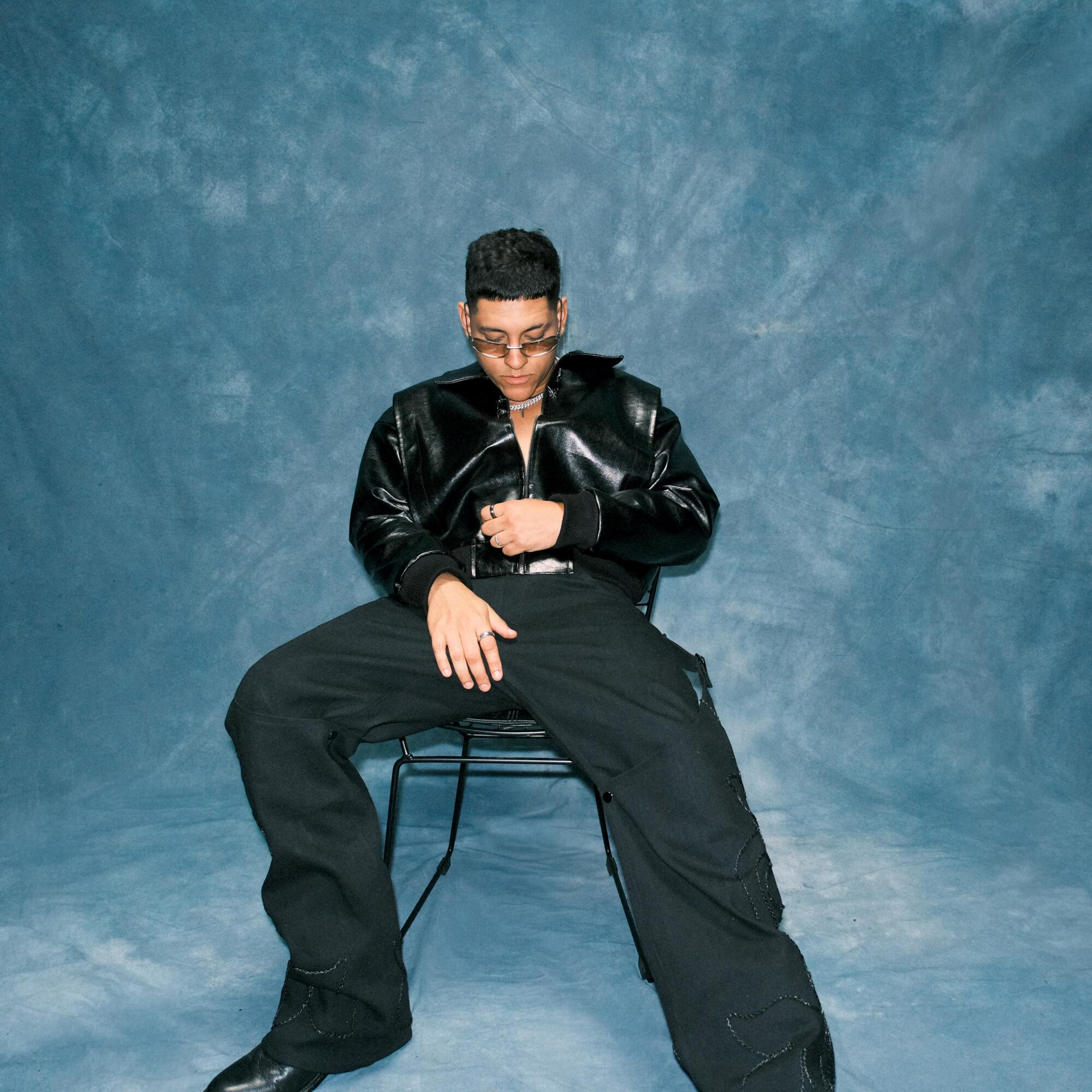
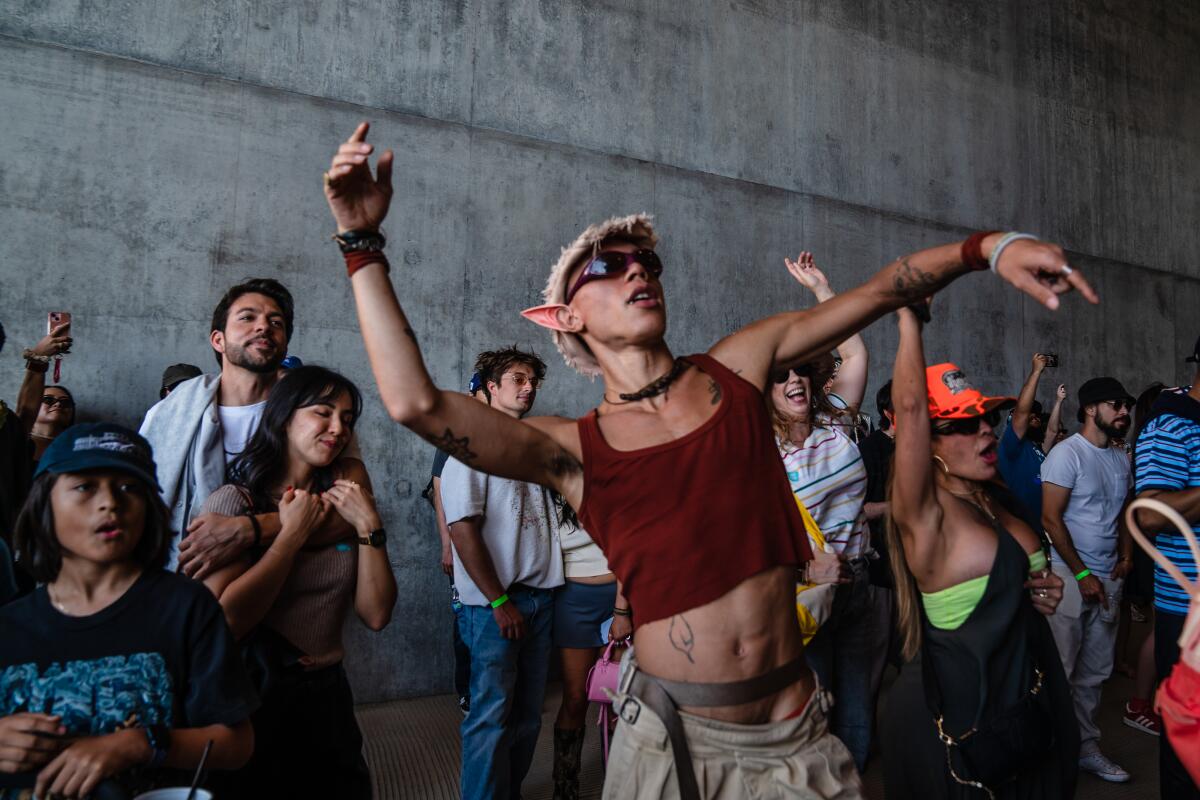
As La Cruz continues to break down barriers for the LGBTQ+ community in reggaeton, the rising Venezuelan star enjoys living out his gay fantasies in his music videos. Take the sultry video for his 2023 breakthrough single, “Quítate La Ropa,” which sees shirtless men perreando (twerking) before him in a locker room.
But at the same time, La Cruz has come to understand that his platform as a gay reggaeton artist coincides at a time when conservatism is sweeping the globe — and queer rights are receding.
“It fills me with happiness to represent a community that has been denigrated, treated badly and pushed into a corner for many years,” a bedheaded La Cruz says over Zoom from his New York City hotel room. (He had just performed at a Pride event the night before.)
“It’s a fact that [LGBTQ] rights are becoming progressive, but they’re rolled back even faster than they advance,” he adds. “This is very painful and concerning. This is happening in every country in different ways. During these difficult times, I’m going to keep putting my heart into my music more than ever.”
La Cruz is the stage name of Alfonso La Cruz. The native of La Guaira, a coastal city in Venezuela, pursued a music career after relocating to Spain in 2015. Following a brief stint on the singing competition “Operación Triunfo” three years later, La Cruz was closeted and found his momentum stifled. In 2022, he took the brave step of singing about his affection and lust for other men in his debut album, “Hawaira.”
Venezuelan reggaeton singer La Cruz released his new EP, “El Nene, Vol. 2,” on June 11.
(Maria Camila Pinzon)
Backed by the beats of reggaeton, a genre that had historically excluded the LGBTQ+ community, La Cruz found both his groove and his tribe with hits like “Te Conocí Bailando” and “Quítate La Ropa.” Early supporters included Colombian superstar Karol G, as well as Mexican American R&B singer Omar Apollo.
Alongside Puerto Rican provocateurs like Young Miko and Villano Antillano, La Cruz has continued to queer the heteronormative urbano space. He has also pushed his sound to broader horizons in his new EP, “El Nene, Vol. 2,” which includes “Sírveme,” a Brazilian funk banger with drag pop star Gloria Groove — and “Te Perdí,” a touching tribute to the victims and survivors of the 2016 Pulse nightclub shooting in Orlando, Fla.
La Cruz’s EP dropped on June 11, the day before the 10th anniversary of that tragedy, which largely impacted the queer Latino community. In an interview with The Times, he opened up about being a gay reggaetonero and “Te Perdi,” his tribute to the 49 people lost at Pulse.
It’s been three years since you first went viral with “Quítate La Ropa.” What have you learned about yourself during that time? There are songs that have brought me a lot of love and I’m thankful to my fans that consider that song to be a classic. It’s brought me a lot of blessings. At this moment, I feel like I have the best opportunities in my life. However, I feel like the industry is a bit uncomfortable with an artist that’s openly gay and wants to be a part of this. That hasn’t stopped me at all. It’s the gasoline in my motor. It’s what pushes me to keep working hard. My fans are what’s building my career and I won’t let them down. I’m sticking with this until the end.
You connected with Karol G early in your career. Did she give you any advice when you met her? I want to say publicly that I would love to open for her concerts on her Viajando Por El Mundo Tropitour. I’m very close to her. I love her so much. She has always treated me with so much love. I hope that something between me and her can happen sometime. I know everything happens in due time. I told her that I love the way she is and how she connects with her fans. When I see her singing and performing, I feel like she’s a sister to me. A big piece of advice that she gave me and that I’ll always carry with me is to never lose the humility and closeness that I have with my fans. The key to success is humility. I never want to be out of reach. I want people to see me and say, “I want to achieve my dreams like he has.”
How did your collaboration “Sírveme” with Gloria Groove come together? I love her so much! I’ve always been a big fan of hers. I’ve gotten close to a lot of artists in Brazil and Gloria has been one of them. We didn’t think twice about making this song. Gloria was coincidentally traveling to the amusement parks in Orlando. I told her: “Baby, let’s go! I’m ready for you in Miami.” She told me: “Baby, I’m going to Miami!” We met one afternoon to create this song. She paused her vacation to go to the studio with me. It was very beautiful. I love my Brazilian fans.
With “El Nene, Vol. 2,” why was it important for you to also shed a light on the 10th anniversary of the Pulse nightclub shooting? In 2016, when I recently arrived in Spain and my brother recently arrived in the U.S., we had a call with our family. My brother said, “There was a shooting close to where I live and it was in a gay club.” My family has supported me since I first told them about my sexuality. I thought that that could’ve happened to me.
I’m following up on this tragedy because it shaped my life. As the years go on, information about this attack has faded away. Each day people are talking less about it. It’s a tragedy that’s super important to remember, like 9/11 and the [2017] Las Vegas shooting, because it’s one of the worst attacks in U.S. history. Why are we not talking about it anymore? We have to keep talking about things so that they don’t happen again.
What inspiration did you pull from the Pulse tragedy for your song “Te Perdí”? On this path, I’ve gotten to know the stories of people that survived that shooting. For example, there was a boy with his mother that lost her life and he survived. There’s a lot of stories of love from that club that have [since] come out. When I went to the studio, I was inspired by loss, or a love that’s gone away, with respect and love for the community that supports me. It is my gift, to be a voice for this situation that should never be repeated. There are people that don’t know about this tragedy and I want to let the world know that this happened. I hope that the victims’ families and the people that survived are living lives of peace and calm.
For as long as I’ve been a journalist, which is a really long time, public entities have hated public records requests, even while claiming they don’t.
Ask your typical elected or hired official, from the governor to the animal control folks, and they’ll tell you transparency is vital and sunshine in government a key value.
Then turn in the most benign of public records requests — access to a calendar, for example — and prepare for weeks of delays and excuses. Want emails or financial records or, heaven forbid, anything from the police? Months or even years may pass before a single page is delivered, no joke.
That’s why I am deeply concerned about a bill winding its way through the California Legislature that would definitely slow down public records requests and likely make them more difficult and expensive. At its worst, it could push people into costly court battles just for having the audacity to ask for information.
Pacheco’s office told me Wednesday that the troubles with the bill are far from what Pacheco set out to do.
“It was never the author’s intention to take away people’s rights to a [Public Records Act] request,” said her chief of staff, Nikki Johnson.
Johnson said the bill was meant to curtail malicious records requests, which do happen, where a citizen goes after copious amounts of records just to be a jerk and cost the government time and money.
It was also meant to address the growing problem of artificial intelligence and other for-profit businesses requesting thousands of records with the intent of using the information to create money-making products — think of sites that already sell publicly available personal information as “background checks.”
I believe Johnson on the good intentions of the bill in addressing those real if nebulous difficulties, but you know what they say about the best-laid plans.
The bill passed through the Assembly recently with ease, largely because most of its problematic portions (I’ll get to those in a minute) were removed — though not all. Even in a watered-down form, which basically gave government more time to answer requests, I found myself in the unlikely position of agreeing with conservative Republican Assemblymember and Trump supporter Carl DeMaio of San Diego, who offered some of the only opposition from elected leaders during the Assembly vote.
“We cannot police the public’s right to know, and we want to err on the side of transparency in how government agencies operate,” DeMaio said.
Amen, brother.
But the Democratic-controlled Assembly erred on the side of secrecy and slowdown instead, and the measure sailed to the Senate, where seemingly out of the blue, a bunch of new provisions were added that fill it with loopholes, vague language and tons of room for abuse.
David Snyder, executive director of the First Amendment Coalition, said the bill as written now was “comprehensively bad for transparency and therefore for government accountability.”
Sean McMorris, transparency, ethics and accountability program manager for the advocacy organization California Common Cause, put it even more forcefully. He pointed out that “public records are the public’s records.”
“They’re not owned by the government,” he said. But this bill would shift that paradigm and make the public “prove why you need them.”
“It’s going to chill people who want to make requests, and it’s going to complicate the process, and it’s just wrong,” McMorris said.
In its new form, the bill basically allows government entities to decide if they feel a public records request is malicious or for commercial gain. If they do, they can petition a court to intervene — potentially sparking both legal costs and new fees associated with fulfilling the request.
It would also, Snyder said, force a requester to explain why they wanted the records — something California law has repeatedly avoided because it gives power to government to treat those it perceives as enemies differently.
In this age of fairness and reason, it’s hard to imagine a government official misusing power to keep secrets, but I’m told it happens. That makes it all the more crucial that people not be forced to explain why they want information, or if they will use it to, say, expose corruption — be it wrongdoing by a single individual or the entire system.
Faced with unintended consequences, Assemblymember Blanca Pacheco (D-Downey), shown in 2023, will seek to scale back the bill to its original form, according to her chief of staff.
(Rich Polk / Getty Images for Equality California)
“I have little doubt that some agencies will use that provision to overburden requesters that they view as political opponents, requesters that they view as just a hassle, requesters that ask for things the government doesn’t want to disclose,” Snyder said. “They can bring the requester into court, and at a minimum, slow down the process, and probably more likely get the requester to simply withdraw.”
As written, the bill also gives a shoddy carve-out meant to protect journalists, but which in reality could be used to curtail requests from freelancers, student journalists and more.
McMorris said access to public records is a “moral issue,” and fixing any problems with the current law requires “a scalpel, not a meat ax.”
This bill, he warned, is a meat ax.
“I don’t discount that there are abusive requests, and that there are requests that really are a burden on government agencies, but the law right now has ways for government agencies to address that,” he pointed out. “Once these laws go into place, they’re going to be hard to roll back.”
It could “fundamentally change” our access to public records, he said.
Johnson, Pacheco’s chief of staff, told me that faced with all these unintended consequences, the Assembly member is going to ask for the amendments to be removed, and for the bill to progress as it was written when it passed the Assembly. That could happen as early as next week, when the bill with the new provisions is scheduled to come up again in a Senate committee for debate.
Reverting to the bill the Assembly voted on would be better, but slowing down public records is in government’s best interests, not the people’s. The bill does nothing to address the problems it seeks to fix, but stretches out the time officials have to simply tell a requester if any records do exist — never mind delivering them.
So even back to its watered-down form, the bill remains a meat ax for a scalpel problem, chopping up transparency with good intentions.
Demonstrators mark the second anniversary of a 2024 protest where 60 people were killed by security forces.
Published On 25 Jun 202625 Jun 2026
Kenyan police have dispersed protesters in the capital and detained others who took to the streets in memory of the demonstrators who were killed in anti-government rallies against tax rises two years ago.
Interior Minister Kipchumba Murkomen said on Thursday that a total of 355 people were arrested in various parts of the country. He called those detained “criminals” and apologised for the use of barricades and other security measures aimed at containing the protests.
Recommended Stories
list of 3 itemsend of list
“We regret the inconveniences occasioned by these measures, and at the same time appreciate their effectiveness in securing the city and other parts of the country,” Murkomen told reporters.
A correspondent for the Reuters news agency also saw police fire tear gas to disperse people who were gathering peacefully outside of Nairobi’s police station after forces detained six people outside parliament, where they had laid flowers.
According to the Kenya National Commission on Human Rights, organisers had planned to mark the second anniversary of the demonstrations that had left at least 60 people dead after protesters had breached parliament grounds in 2024.
But in Nairobi, shops and restaurants in the central business district remained closed as police set up roadblocks with water-cannon trucks.
Reporting from Nairobi, Al Jazeera’s Malcom Webb explained that the heavy police response to the protest was due to the government’s desire to avoid a repeat of the events two years ago.
“This comes following a series of different protests in recent weeks, some led by [President William] Ruto’s political opponents, others by transport unions over increases in fuel prices and a state of simmering discontent that hasn’t really recovered since that day two years ago when dozens of people were killed,” he said.
Opposition leaders joined the victims of alleged police brutality and families of protesters who were killed in the crackdown before they headed to parliament.
“As parents, we sought permission just to come here … to mourn and lay flowers for our children. But when we arrived, we were shocked because the police blocked us,” said Edith Wanjiku, whose 19-year-old son Ibrahim Kamau was killed in 2024.
“That is very shameful,” she continued.
“And one thing I would ask of President Ruto: those police officers who killed the children – because they are known – I am only asking for justice for those children and also compensation,” she added.
Protest organisers have said that they want a credible investigation into past police conduct and guarantees against the use of excessive force.
While Ruto has acknowledged what he called “instances of excessive and extrajudicial actions by members of the security services” and said last week that two billion Kenyan shillings ($15.5 million) had been set aside for victims of protest-related abuses, some activists have said it was not enough.
Passing “Go” has become especially lucrative for mobile game publisher Scopely.
The Culver City-based Scopely launched “Monopoly Go!” in 2023, betting fans of the classic board game would flock to a mobile version aimed at casual gamers.
By 2025, “Monopoly Go!” had accrued $6 billion in lifetime in-app purchase revenue, becoming the fastest free mobile game to do so, according to app analytics firm Sensor Tower.
This summer, the app is expected to reach $8 billion in lifetime revenue, the company says, solidifying “Monopoly Go!” as Scopely’s biggest game and far surpassing the company’s popular “Pokémon Go.” The company declined to disclose its total profits.
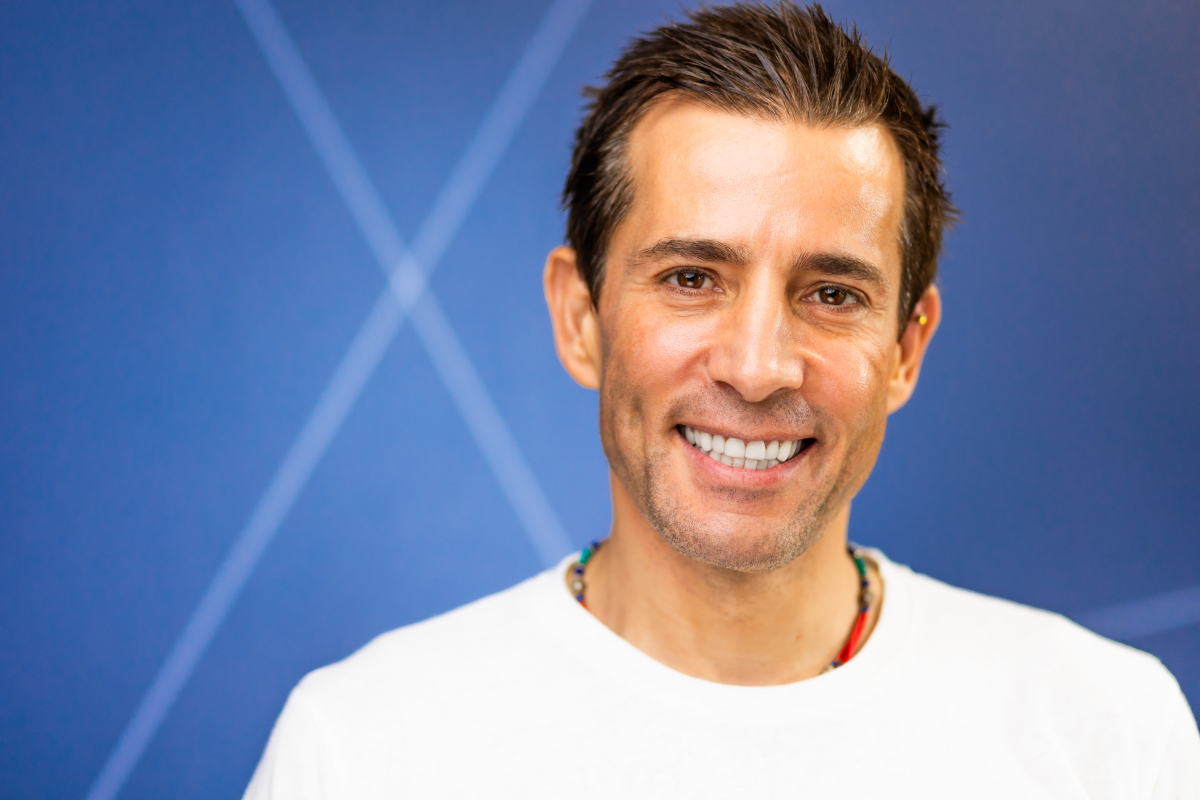
Scopely Co-Chief Executive Javier Ferreira.
As overall downloads in the mobile game market have stagnated and in-app purchases and retention become the main drivers of growth, Scopely has hit on an age-old Hollywood strategy — using known franchises and intellectual property to bring out fans.
“These are incredibly durable and long-lasting games that have really passionate communities and fandom around them,” said Javier Ferreira, co-chief executive of Scopely. “We’re in the business of building people’s favorite thing, and that’s a difficult thing to do. The power of [intellectual property] is that, in some cases, that is already their favorite thing.”
The company’s journey toward “Monopoly Go!” began in 2014, when Scopely formed a partnership with Rhode Island-based toymaker Hasbro. Its first collaboration was a Yahtzee mobile dice game that ultimately drew millions of players worldwide (though it was especially popular in the U.S.) and generated more than $1 billion in lifetime revenue.
After that, Scopely approached Hasbro about taking on the “crown jewel” of its board game empire — Monopoly.
Monopoly’s massive global popularity was an obvious draw. But adapting an hours-long real estate transaction game for a casual, mobile audience proved challenging.
Development of what would become “Monopoly Go!” ultimately took seven years, two of which were spent trying to make movement around the board more fun. In that time, the company scrapped two versions of the game; one deemed too competitive, and one that was too complex, Ferreira said.
Developers wanted to capture the “roller coaster feel” of the board game’s highs and lows, while also having simple rules and ensuring a strong social element, he said.
“We couldn’t just copy,” Ferreira said. “We had to reinvent it and re-imagine it, and that’s a complicated, creative endeavor.”
Today, “Monopoly Go!” brings in more than $2 billion in annual revenue and has been downloaded across the globe more than 300 million times.
Now with “Pokémon Go,” which the company owns after acquiring maker Niantic’s game business last year, “Scopely has gone from a successful publisher to one of the defining companies in mobile gaming,” Randy Nelson, head of insights at Appfigures, a mobile app analytics firm.
“The company cracked the code on licensed games years ago,” he wrote in an email. “Its biggest hits work because they’re great games first and recognizable brands second.”
Though the company’s overall game downloads have slowed, its gross revenue has largely increased every year since 2020, according to Appfigures data.
Shortly after Scopely released “Monopoly Go!,” the company was acquired by Savvy Games Group, which is owned by the Saudi Public Investment Fund, for $4.9 billion.
In a statement about the deal, Savvy Games Group Chief Executive Brian Ward touted the success of “Monopoly Go!” as “indicative of Scopely’s ongoing position at the forefront of the global games sector.”
Representatives of the Saudi investment fund are part of Savvy Game Group’s board and do sometimes give some feedback on company initiatives, though Ferreira said the company has remained “very independent.”
The proposed acquisition of gaming giant Electronic Arts by the Saudi Public Investment Fund is not expected to affect Scopely since EA largely focuses on high-budget console and computer games, he said.
As Scopely, now 3,000 employees strong, looks to the future, it has embarked on a number of entertainment partnerships with studios to add franchises such as “The Simpsons,” “Hello Kitty” and Marvel to its mobile game ecosystem.
“They give us access to these universes that millions of people love and are really invested in,” Ferreira said. “We see this as a very strategic part of our business.”
A bowl of lemons sits on a table in the conference room Mauricio Pochettino has turned into an office at the U.S. men’s soccer team’s beachfront resort in south Orange County. The citrus fruit, the coach believes, has the spiritual ability to absorb negative energy. On the corner of another table, the flame from a candle flickers.
“I like candles,” says Pochettino, who believes they release therapeutic fragrances and create a calming environment.
But it is the massive, blood-red mural covering the entire south side of the room that truly reveals what Pochettino believes. In the center of the wall, just behind the coach’s desk, white block letters spell out “Why Not” above a script “U.S.,” which, despite the periods, is meant to be read as “us.”
Pochettino has turned the question in a mantra for a World Cup team that has answered it with two wins in as many games and has a chance to win a third match in the tournament for the first time when it meets Turkey at SoFi Stadium on Thursday.
The idea came to him during a team meeting last November when he sensed his players had doubts about their upcoming World Cup run. So Pochettino turned those doubts into a question. If South Korea could come from nowhere and make the semifinals of the 2002 World Cup, and if Morocco could do the same four years ago in Qatar, why not the U.S.?
Why not us?
“Hey, come on, guys, are you listening to me?” Pochettino said he asked the group. “We need to believe.”
Before he could convince his players, however, he had to convince himself. And that might have been the hardest part.
The 54-year-old Pochettino is a benevolent Svengali with a whistle; Ted Lasso with an Argentine accent. Belief isn’t so much a concept for him as it is a way of life. But when he and his coaching staff took over the U.S. team in the fall of 2024, following its disastrous performance in the Copa América, he said he inherited a demoralized, dispirited group.
“We received a big bang,” Pochettino said, mimicking a punch to the face. “We were knock[ed] out for a while.”
“We were so naive,” he continued. “The situation was way worse than we really believed.”
Pochettino refused to change the system that has brought him success at European clubs Tottenham, Paris Saint-Germain and Chelsea. So he set out to change the players instead. That would take time, something he had very little of since he took over with the World Cup just 20 months away.
“It’s difficult to analyze the process, you know,” Pochettino said during an informal, 40-minute discussion at his team’s Dana Point hotel, the sun setting over the ocean through the open patio doors of his office.
“When you put the seed on the soil, [the] first seed, you don’t see nothing. Then you start to grow the tree. It was difficult to explain the plant because it’s not easy.”
The seed Pochettino planted with the national team took time to sprout. He lost five of his first 10 games, including a disastrous four-game stretch that included Nations League losses to Panama and Canada in the spring of 2025. The team’s supporters revolted, but Pochettino rejoiced.
“What happened, that was [a] good crash,” he said. “When we detect all the problems, we go for the solution. And we knew that the solution will arrive. The object is to challenge people.”
U.S. men’s soccer coach Mauricio Pochettino during the second half of his team’s World Cup match vs. Paraguay at SoFi Stadium.
(Robert Gauthier / Los Angeles Times)
So he stayed the course.
“That was the process. Now is not a coincidence,” he said of the team’s success.
Pochettino has long believed that building a roster isn’t about picking the best players, but picking the right players. Players who fit his tactical approach, players who get along with one another, players who contribute to the team chemistry.
For him, the human connection, human respect is as important — if not more important — than the ability to dribble through tight spaces. And those traits are particularly important in a World Cup since the team will spend every day together for six weeks or more.
Although Pochettino’s team includes 13 holdovers from the 2022 World Cup roster, it also includes five players who made their national team debuts in the last 18 months.
Sometimes, he concluded, it is easier to simply change the player than it is to change what the player thinks or believes. And the newbies have totally bought in.
“We’re all in total belief. We’re all totally supportive and have faith in the process that he’s been outlining,” said goalkeeper Matt Freese, who made his first appearance for the national team more than 12 months ago and now is starting in a World Cup. “Our task was to keep believing, keep working hard and keep trusting. And we did that. We fully bought into the process.”
That process has made Pochettino the first U.S. coach to win a group stage in 16 years while his two victories in as many games match Bruce Arena, the most successful World Cup coach in U.S. history, who managed eight games over two tournaments.
The lemons and candles Pochettino keeps in his office are manifestations of energia universal or universal energy, a foundational concept common to many Eastern philosophies that believe a fundamental life force connects all things. Pochettino said he has long felt this connection and it has been a foundational part of his coaching.
But it doesn’t stop with the candles and citrus fruit. Pochettino also has filled the mural behind his desk with inspirational sayings.
“The talent has brought us here, but it is heart, effort and unity that will make us unforgettable,” one reads.
“If I dream of touching the moon, maybe I can get close to it. If I only dream of getting close, I’ll stay on Earth,” another says.
Each ends with the coach’s initials, similar to the way a painter signs his portraits.
Pochettino’s faith in the power of fruit and candles and his penchant for penning aphorisms hasn’t taken away from the ferociousness of his approach to soccer. Many players say the training sessions under Pochettino — which are intricate, focused and highly physical — are frequently more intense than the games. But most also are punctuated with laughter.
“Training is still very competitive, it’s very intense,” said midfielder Max Arfsten, who made his national team debut under Pochettino last year. “That’s the culture that the coaches created. Everyone’s still trying to prove something.”
Although Pochettino has spent his life in Argentina and Europe and still splits his time between houses in Barcelona and London, flying to the U.S. for matches and training camps, he’s been a quick study in this country’s culture and quirks.
“One of the things that we really like, and we learn from you, is in the way that you approach life. It’s more casual than formal,” said the coach, whose English is still a work in progress. “People are very approachable and make you feel comfortable. That, for me, was a massive surprise. You always want to welcome people.
“Even the music, even the food. People say ‘no, Americans have crazy food.’ Yes, you have crazy food. But also you have Whole Foods. In Europe, you don’t have a Whole Foods.”
And Pochettino has adopted it all. He’s become a big fan of country artist Lainey Wilson, went to hear Teddy Swims, a uniquely American genre-blending singer, last winter in New York, and is learning the words to John Denver’s “Take Me Home, Country Roads,” the unofficial victory anthem of the World Cup team.
Perhaps more important, at times he’s taken his lemons and his candles and pushed them aside, replacing them with another distinctly American trait: the in-your-face confidence to will yourself to victory from the most hopeless situations.
It’s how Americans won at Valley Forge even before they were Americans and how they won on the beaches of Normandy when the concept of America was threatened. It’s how Americans went to the moon and invented the internet.
“We’re American. We don’t take s—,” midfielder Sebastian Berhalter said Pochettino told the team during one meeting. “Even though he’s Argentinian, he has that mindset of, ‘Look, this is what we do. This is who we are. This is what America’s about.’ Even from an outside perspective, he showed us Americans what we’re about.
“He really drills that into us.”
For decades Americans have measured World Cup success in advancing beyond the group stage. Pochettino entered this summer’s tournament predicting a run to the semifinals, runs like South Korea and Morocco made.
“When people believe in each other, impossible dreams become possible,” reads another message the coach has scratched onto the wall of his office.
Richard Montoya of Culture Clash doesn’t mince words when it comes to politics, current events or the state of mainstream Hollywood. But he does sugarcoat his technological limitations as a 67-year-old comic in the dreaded age of video calls with a punchy Chicano twist.
“I’m a low-tech Aztec,” he writes via email when requesting a Zoom link to our Monday interview.
Culture Clash — which includes members Montoya, Ric Salinas and Herbert Sigüenza — arrived on the scene as a guerrilla sketch theater group from the San Francisco Mission District in 1984. By that time, the Chicano movement had reached its peak, thanks to the United Farm Workers labor movement, as well as student activist organizations like Movimiento Estudiantil Chicano de Aztlán (MEChA), which advocated for Chicano unity, political empowerment and educational access.
Luis Valdez, founder of El Teatro Campesino — who began putting on social justice-oriented plays for the striking Delano farmworkers in 1965 — backed the slapstick satire troupe, considering the trio “the cutting edge of fresh, new Latino comic genius.”
Culture Clash stood out in a time when Chicanos became more vocal and visible — and its members challenged an entertainment industry that has historically lacked Latino representation. Between 1993 and 1996, Culture Clash hosted its own self-titled TV show on the syndicated Fox network. The show, which was filmed at the Mayan Theater in downtown Los Angeles, is widely considered the first Latino sketch comedy to air on American television.
Throughout the last four decades, Culture Clash has parodied nearly every prominent Latino figure in history, including Che Guevara, Frida Kahlo, Ritchie Valens, Rita Moreno, Edward James Olmos and others. Its members have mocked hard-shell cholos and gangsters, often by placing them in funny scenarios. For instance, take this clip, in which the trio take on cholo characters and reimagine what it would be like to surf on the Southern California shore.
But they’ve also taken on more serious topics in their classic “Chavez Ravine” play, which looks into one of the darkest chapters in L.A. history: the forceful removal and displacement of families, mostly Mexican, in the 1950s under eminent domain. Recently Montoya attended a live reading adapted by Somos El Teatro, led by Xolo Maridueña, Mariana da Silva and Angel Villalobos at Elysian Park.
“It gives us so much life that people are finding the issues of swindlers, whether it’s gentrification, the taking over of settlements,” says Montoya. “The generational trauma of losing your home in L.A. has never gone away.”
But not every Culture Clash joke or skit has been safe from criticism. Montoya still remembers how a conservative pundit chastised the group for using light humor to discuss the 1992 riots, when LAPD officers were acquitted for using excessive force in the arrest and beating of Rodney King.
“By looking at it and treating it as dynamite, exploding it and then by bringing some levity and a whole lot of seriousness to the Rodney King matter allows us a moment, a fraction of time to look at the issues a little bit differently,” says Montoya. “That laugh allows us a moment to examine it differently.”
On June 27, Culture Clash will return to Grand Performances, a free summer concert series at California Plaza in downtown L.A., with comedic sketches colored by political and social satire. The show, titled “American Payasos! Culture Clash’s End Times Cabaret” will be co-presented with De Los.
While their 40-year-plus legacy might merit a show reminiscent of old goofball skits — like their early 1989 show “The Mission” that poked fun at the problematic Spanish Franciscan missionary Junipero Serra — this will not be an “oldies but goodies show,” as Montoya put it. “We are highly pissed off about a lot of stuff right now.”
“ We’re thinking a lot about the Mexican American patriarchy, Cesar Chavez, Dolores Huerta and it’s time to address some of these things,” says Montoya. “ We want to look at the service workers of Los Angeles, the people that sell cotton candy in MacArthur Park, the people that sell ice cream in Echo Park and the people working the World Cup.”
For the veteran comic, son of the late Chicano poet Jose Montoya, it is also impossible to ignore the immigration enforcement raids that have rattled Los Angeles communities in recent years.
“This is a very strange moment for satirists,” says Montoya. “We have a responsibility to use those tools to say what’s going on in our city and country and provide these moments where we can do a little bit closer examination because the people in power aren’t telling us what’s going on.”
In the last five years, Montoya has fiddled around with digital media, creating sporadic videos featuring old clips of the troupe, as well as videos of Latino media, to connect with technologically diverse audiences of all ages. (One example is a video calling on people to get out the vote, that features clips of Speedy Gonzales and honors political figures like Huerta.)
Although Montoya believes Culture Clash is nearing the end of its career, there’s a question lingering inside his mind: What does a graceful exit look like for a group like Culture Clash, which has never been fully integrated into mainstream Hollywood and still left such a profound legacy in the world of Latino entertainment?
The answer to that might still be unknown, but like any Culture Clash project, it will likely be wickedly satirical and punchy. Says Montoya: “We’re ready to go out with a huge, loud bang that can say something against the power structure.”
Culture Clash will take center stage on June 27 at Grand Performances, in partnership with De Los. Also performing is the retro cumbia-quebradita musician É Arenas (bassist of Chicano Batman), the cumbia-fusion, luchador-masked cumbia group La Nueva Ola de Cumbia, as well as DJ Dali.
BOSTON — A federal judge on Wednesday permanently barred President Trump’s administration from implementing most of his first executive order on elections, part of which sought to require people to show documentary proof of citizenship when they register to vote.
The ruling by U.S. District Judge Denise Casper in Boston in effect converts a preliminary injunction she issued a year ago, in which she temporarily blocked many of Trump’s efforts to overhaul elections, into a permanent ban.
Casper rejected the administration’s argument that the lawsuit to block the changes brought by Democratic state attorneys general was premature because the rules had yet to be implemented. Instead, she agreed that the Constitution gives states and Congress the authority to regulate elections, and that Trump’s requirements violated the separation of powers.
The Constitution “does not grant the President any specific powers over elections,” she wrote.
Among other proposed changes, Trump’s order would have required people to provide documentary proof of citizenship when registering to vote, prevented mail ballots from being counted if they arrive after election day, even if they were postmarked by then, and punished states that failed to comply by withholding certain federal money.
In a statement, New York Atty. Gen. Letitia James said she was grateful the court had blocked Trump’s “unconstitutional attempt to seize control of our elections” and would continue to defend voting rights in this year’s midterm elections.
“Generations of Americans fought tirelessly for the right to vote, and we honor their legacy by protecting that right against anyone who tries to undermine it,” she said.
Requests for comment sent to the White House and Department of Justice were not immediately returned.
It was the latest in a string of rulings against the elections executive order Trump signed just months after taking office for his second term. He has since signed another executive order on elections, seeking to create a national voter list and limit mail balloting. That directive also faces multiple legal challenges.
In the fall, a federal judge in Washington overseeing a separate challenge to the first election executive order by civil rights and Democratic Party-aligned groups blocked the government from taking steps to include the proof-of-citizenship requirement on the federal voter registration form. That judge later barred the secretary of Defense from requiring documentary proof of citizenship when military personnel register to vote or request ballots.
In an apparent nod to the difficulty of implementing a proof-of-citizen requirement by executive order, Trump is pushing legislation in the Republican-controlled Congress to create such a mandate. The SAVE America Act has passed the House but has stalled in the Senate, leading Trump to advocate for eliminating the filibuster that is blocking the legislation.
On Wednesday, he abruptly canceled the expected signing of a bipartisan housing bill, saying he won’t do so until Congress passes his proof of citizenship requirement for voting.
The president and many of his Republican allies have been promoting the narrative that voting by noncitizens is a major problem, when in fact it’s quite rare. The federal voter registration form already requires people to attest that they are U.S. citizens, and violating that is punishable as a felony that can lead to prison or deportation.
In another major voting case, the U.S. Supreme Court is due to issue an opinion soon on whether mail ballots must arrive by election day. That could immediately change the rules in 14 states that allow grace periods ranging from days to weeks if the ballots are postmarked by election day.
“When Calls the Heart” co-stars Erin Krakow and Ben Rosenbaum celebrated one year of marriage by publicly introducing the latest member of their growing family.
Krakow, 41, and Rosenbaum, 39, revealed via People on Tuesday that they welcomed a baby girl — their first child together — in April. In a joint Instagram post with the outlet, the Hallmark co-stars shared tender photos from an intimate shoot of themselves cuddling their baby girl and posing with their dog, Willoughby. The couple did not dish additional details about their child’s birth.
“Our daughter has been the greatest gift, and we are loving getting to know her better with each passing day,” Krakow and Rosenbaum told People via email.
Krakow and Rosenbaum have starred in the hit Hallmark period drama since its premiere in 2014. “When Calls the Heart” is set in the early 20th century and follows Krakow’s schoolteacher Elizabeth Thatcher as she makes a life for herself in Hope Valley, a small town in western Canada. Rosenbaum stars as Hope Valley resident Mike Hickam.
The new parents first generated dating rumors in 2023 when Krakow revealed she and Rosenbaum had become dog parents. Months later, Rosenbaum confirmed their romance in a Valentine’s Day post. The pair tied the knot last June and revealed in November that they were expecting.
Bob Blumenfield would like to see Angelenos’ old banana peels and moldy bread stay local.
On Tuesday morning, the City Council member told a small crowd of waste advocates in front of city hall that he was introducing a motion to reduce the city’s greenhouse gas emissions by strengthening local composting infrastructure and decreasing reliance on distant facilities.
Currently, when city residents separate their food waste and yard clippings, chances are it’s being trucked to faraway processing facilities in Bakersfield or Lancaster.
The motion would help the city meet targets set by California’s Short-Lived Climate Pollutant Reduction Strategy, or Senate Bill 1383, which phases out sending green waste to the landfill, because it is a major source of the powerful climate pollutant methane.
It also would help meet Mayor Bass’ Climate Action Plan, which aims to use at least 50% of locally produced compost and mulch within Los Angeles by 2030. Currently, only 25% to 30% of the city’s material is applied to land locally.
The city produces approximately 350,000 tons of organic material a year, Blumenfield told the crowd, which he said equates to roughly 1.2 to 1.5 million metric tons of carbon dioxide.
“That’s a big number, and when you do the math,” he said, that’s roughly the same amount of carbon dioxide released by the entire country of Belize, the entirety of Humboldt County or the equivalent of burning 1.6 billion pounds of coal per year.
As the announcement was underway, in the background a fire burned for a sixth day in a Boyle Heights warehouse, where 85 million pounds of frozen food was thawing and beginning to rot.
Signed into law in 2016, the state’s composting bill mandated a gradual increase in the amount of organic waste that must be diverted away from landfills. It required 50% of all green and food waste be diverted by 2020; by 2025, that number was supposed to hit 75%.
But it hasn’t. Although Los Angeles has pushed to get a residential curbside bin program in place — recall the “Great Green Bin Apocalypse of 2025” — it has struggled to get people to comply.
According to reports for the recycLA program, a commercial and multifamily waste collection franchise program, only about half of households and business are separating their compostable waste.
Alex Helou, assistant general manager of L.A. Sanitation & Environment, provided a much brighter picture of the city’s food waste situation. L.A. is the first major city to provide green bins to 750,000 residential customers, he said. The city has “exceeded expectations” in food recovery, he said, saving 80 million meals that would have been thrown out and redirecting them to people in need.
Helou said Blumenfield’s motion completes the loop by keeping food waste close to home, creating more local composting and reducing greenhouse gas emissions from transporting waste outside of the city. It doesn’t directly affect the city’s compliance with SB 1383, but that isn’t necessary, he said. “We’re meeting that and exceeding that at multiple fronts.”
Blumenfield’s initiative directs the Bureau of Sanitation to develop a plan for expanding local composting across the city. It would also increase the use of locally produced compost and mulch.
For instance, the motion would encourage using the compost on urban farms and at community gardens and city parks. It also would be used to replace artificial grass and turf.
It will support a “citywide transition away from artificial turf and towards nature-based solutions, such as California native plants and natural grass plant fields, and ensure everyone has access to safer, cooler, and sustainable parks, schools, and communities,” said Terry Saucier, a Tarzana resident and member of the Neighborhood Council Sustainability Alliance and the Tarzana Neighborhood Council.
The state’s composting law has proved challenging on several fronts.
The Antelope Valley has become a dumping site for many of the city’s haulers looking to cut transport and facility costs — causing concern among environmentalists and others who say the material is destroying fragile ecosystems.
Complying has been particularly difficult for Los Angeles and much of coastal Southern California, where there are few large composters and low demand for compost. Unlike areas to the north, there is little agricultural demand for compost and mulch.
Experts say dumping in the desert has always been a problem, but the law made it worse by making it more expensive and difficult to deal with.
In addition, composters are struggling with the amount of plastic and other debris that people and businesses put in the food waste bins.
According to a report by Closed Loop Partners, which partners with companies such as Pepsico and McDonald’s, nearly 4% of food waste is contaminated with other materials — most of it plastic. State law requires that finished compost contains no more than 0.5% by dry weight of physical contaminants.
If you buy books linked on our site, The Times may earn a commission from Bookshop.org, whose fees support independent bookstores.
Before her death in 1993, Mabel McKay — one of the last living dreamers of the Pomo Indian people — shared a prophecy while driving through the Sonoma hills. One day, this paradise would burn.
“Everything is going to go dry. Everything will burn. That’s my latest vision,” she said, gesturing to the idyllic landscape.
Startled, writer Greg Sarris asked what could be done to stop it.
“You live the best way you know how,” McKay replied.
Since her passing, Sonoma County experienced the most destructive wildfires in California history in 2017, only for another, more destructive fire to surpass it a year later. “She always used to say, ‘Whether you believe it or not, it’s true,’” Sarris recalls.
McKay and her visions are the inspiration behind Sarris’ latest work. His first novel in 28 years, “The Last Human Bear,” is loosely based on the spiritual leader McKay, whose wisdom and companionship served as a refuge to Sarris during a tumultuous childhood in Sonoma County.
A reluctant casino mogul
On a Monday morning in California, Sarris sits in his sleek office at the Federated Indians of Graton Rancheria in Rohnert Park. Sarris, 74, has served as chairman of the Federated Indians of Graton Rancheria for more than 30 years. In his office, diplomas and academic certificates crowd the walls. A framed poster for the 2023 film “Joan Baez: I Am a Noise” hangs nearby — she’s a close friend. Behind him, an American flag ripples in the distance outside the window, blurred by the summer heat.
Just up the road sits a multibillion-dollar tribe-owned casino, Graton Resort & Casino — a project the writer oversees. “I had never been in a casino. I have a PhD in modern thought and literature from Stanford,” says Sarris.
How does an accomplished author find himself at the helm of a multibillion-dollar casino enterprise? It’s a question that still puzzles Sarris. “I told them if we can raise our people and become a platform for social justice and environmental stewardship to benefit Indian and non-Indian alike, I’ll do it.”
Before his stint as a reluctant casino mogul, Sarris was a prolific author and university professor at UCLA and Sonoma State. In 2023, he was appointed a regent of the University of California by Gavin Newsom. Over the course of his career, he published six books, and his novel “Grand Avenue” became an HBO original film in 1996.
California’s Native history: revisited
From early in his career, Sarris wanted to depict Indians as he knew them, rather than as Hollywood depicted them. “We’ve been erased by Hollywood, because the idea of Indians has always been Plains Indians or Southwest,” Sarris explains. “It’s easier for Americans to access Buffalo Bill.”
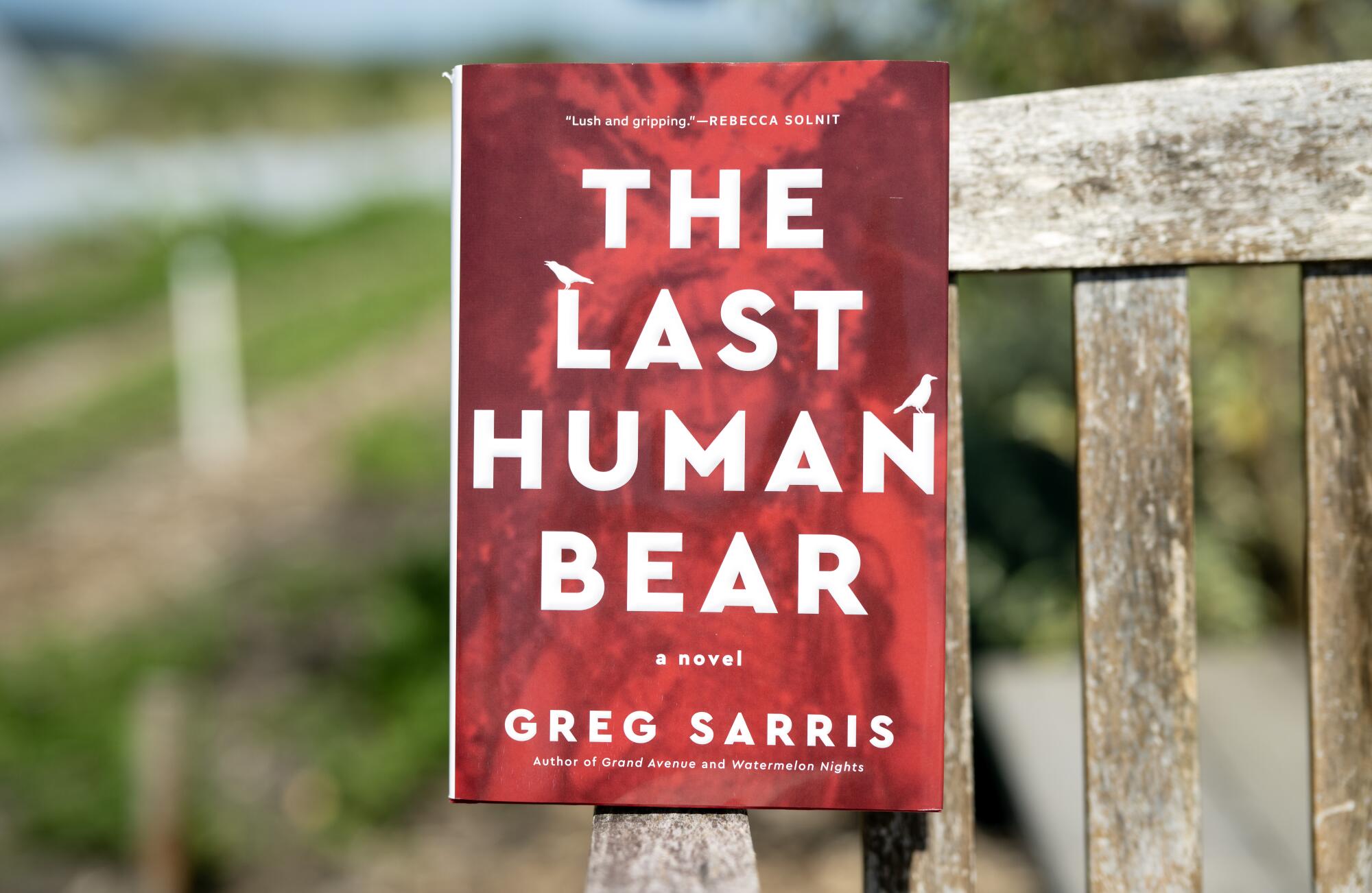
Greg Sarris’ new novel “The Last Human Bear.”
(Josh Edelson / For The Times)
“California Indians have always been left out of the picture,” says Sarris.
“The Last Human Bear” is Sarris’ latest attempt to revive the legacy of California’s Native history. The novel follows Mary Hatcher, a Pomo Indian in Sonoma County, from Prohibition through the 21st century. It’s told in the first person through Hatcher’s compelling voice as she narrates the horror and heartbreak of her lifetime over the course of a century, echoing William Faulkner’s literary style, which influenced Sarris.
‘California Indians have always been left out of the picture,’ says Sarris.
“I’m curious why you want to know about me,” reads the first line. The novel unfolds like an oral storytelling tradition, driven by a voice that Sarris painstakingly crafted, evoking his conversation with McKay. “The voice comes. I have to call it, almost like a spirit,” says Sarris. “I wanted it to feel like an oral story.”
Hatcher — a Pomo shape-shifter who dodges prejudice by passing as Mexican in the novel — is a thorny protagonist, often cunning, scheming and unforgiving. “An American Indian woman is as richly complicated as anybody else. I wanted to show this rich and complicated character who’s negotiated a history that she’s showing you,” says Sarris.
Acclaimed Northern California writer and activist Rebecca Solnit, who has authored 17 books and is a friend of Sarris’, says that she was fascinated by his ability to evoke so many aspects of female life in “The Last Human Bear.” Solnit was especially moved by Sarris’ rendering of California’s tragic history. “It’s shocking, given how rich California’s Indigenous cultures were — 99 different language groups, mythologies, belief systems and linguistic traditions. Every North American Indigenous language family is represented in California. It’s weird how this history has been erased, and how horrific what happened was.”
Climate change and ongoing ecological disasters have made Indigenous perspectives more vital than ever, the author argues. “I think Indigenous people have been hugely influential in giving us a point of view in which we were never separate from nature,” she says. According to Solnit, Sarris’ novels are part of a broader resurgence of interest in Native culture.
In the early chapters of the “The Last Human Bear,” the protagonist gets a job on a ranch by posing as Mexican, since Indians were forbidden from working as housekeepers. What follows is a tale of tension, deception and a forbidden love that sours, reminiscent of Brontë novels.
Sarris hopes that the novel illuminates an uncomfortable history of Sonoma County that remains largely invisible, looming beneath the soil of wine country. The novel offers “a history of this county that a lot of people haven’t seen,” says Sarris.
“There were more Indian people right where we’re sitting per capita than anywhere else in the entire New World outside Mexico City, which was the Aztec capital,” says Sarris. “The genocide was so horrendous.”
Identity, revenge and a search for home are themes that arise throughout the novel — subjects Sarris knows well in his own life.
Greg Sarris feeds chickens at an organic farm across the street from Graton Resort & Casino, which he heads, in Rhonert Park.
(Josh Edelson / For The Times)
Uncovering a hidden Native heritage
In 1952, Sarris’ teenage mother gave him up for adoption, her family hoping to evade the embarrassment of their Jewish daughter becoming pregnant by a Native American Filipino man. Sarris grew up in a white family in Santa Rosa alongside three siblings. His adopted father, George Sarris, became abusive, causing Greg to flee the house with his adopted mother’s blessing. “God bless her. She let me go out and live on ranches and run with other people to get away from him.”
It was in these formative years that Greg became acquainted with Native American people in Santa Rosa, always feeling a mysterious pull toward them. It was these years that also shaped his sensibility as a writer. “I was a lost kid on the streets, so I was always paying attention to everyone, listening, and people would tell me stories.”
Native Americans lived on the fringe of town, often practicing healing ceremonies that were frowned upon by white Catholic families in the suburbs Sarris explains. “When I was 15, I met Mabel McKay, who I wrote the book about. I knew she did some of those strange things that I heard about, but I liked her,” he says. “I had no idea that I was related to these people. I thought I was a mixed-blood Mexican or Spanish.”
At age 30, Sarris uncovered the identities of his birth parents and learned of his Native heritage. He learned his birth mother was buried in a pauper’s grave at the Calvary Catholic Cemetery in Santa Rosa, with “nothing to mark her grave but an upside-down horseshoe that has her name in it.” In the opening pages of the novel, a dedication to her: Bunny Hartman.
Excitedly, Sarris presented proof of his Indian heritage to McKay, his trusted confidant. “I thought it was a big deal that I had Indian blood,” says Sarris. He showed McKay a photo of his father, which she met with indifference. Naturally, Sarris was disappointed. “She told me something later: ‘You’re never any more Indian than your experience.’”
A lifelong outsider
Questions surrounding the legitimacy of Sarris’ heritage haunted him for decades and ultimately informed the novel. Being adopted by a white family, only to be shunned by the Native community, perpetuated his lifelong feeling of being an outsider. “I keep thinking maybe I just got in with this group of people and my Indian relatives so that I would feel rejected again,” he says. “We gravitate towards what we know as home emotionally.”
“I didn’t grow up on a reservation. I’m fair-skinned,” he says. “Being adopted, it feeds into that feeling of not being good enough,” he says, adding: “Illegitimacy is a medicine in the end.”
In the Native American literary community, Sarris has often felt excluded from discourse. When in doubt, he reminds himself of his involvement with the tribe. “Who among them have done this much for their people?” he asks. “Who among them has given this much time and sacrificed a writing career for their people?”
Jane Fonda, the two-time Academy Award-winning actress and activist, struck up a friendship with Sarris through a shared cause. “We met during the campaign to secure health and safety setbacks that would finally prevent oil wells from being drilled within 3,200 feet of a community. Greg and the federated tribes helped us win that fight against Big Oil,” Fonda explained in an email.
“I can tell from his books and my time with him that he embodies indigenous wisdom and beliefs,” Fonda says. “I see Greg Sarris as a man who embodies the best of two worlds — the mercantile culture of Western civilization and the indigenous world that knows we are part of nature and interdependent with it. It’s a rare and valuable combination.”
Greg Sarris, who holds a PhD in literature from Stanford, inside the casino he works for to help fund his tribe’s future.
(Josh Edelson / For The Times)
Inside the polarizing casino kingdom
The Graton Resort & Casino, launched by Sarris over 12 years ago, now plays a vital role in supporting the Pomo Indian community. “I promised early on: roof over everyone’s head, an insurance policy in every pocket and a college degree paid for,” he says. “We give $2.5 million a year in perpetuity to the University of California, so that all California Indians can go to the University of California tuition-free.” The casino has funded theater programs, youth writing intensives and revenue sharing with neighboring tribes.
On the car ride to the casino, Sarris is riffing on his friendship with Grateful Dead member Mickey Hart, who bought Sarris a quarter horse as a gift. In the casino, Sarris eagerly greets his employees with a friendliness that betrays his repeated insistence that he’s a reclusive writer. He points out blown-glass flower sculptures, an embellishment he once saw at the Four Seasons in Paris. He walks past the baccarat room, where he hosts high rollers from Beijing, whom he boasts, “play $100,000 in a hand.”
Early on, news of the casino’s construction caused waves of controversy across Sonoma County — some of which resulted in death threats against Sarris’ life. Concerns that a casino would invite debauchery into the county circulated, which Sarris points out is ironic for a community predicated on wine: “Beyond whether gambling is right or wrong, what is implicit is their privilege and elitism,” says Sarris. “People were getting scared because these brown people, who were the poorest in Sonoma County, are suddenly going to have power.”
Admittedly, Sarris says their newfound wealth has not been without repercussions in the tribe. “People who have been traumatized with generational poverty are the most vulnerable to the lure of materialism,” he says.
When time catches up
In the final chapters of “The Human Bear,” the protagonist, at the end of her life, recalls: “Human Bears often like to even the score before they die.” Revenge is futile, she concludes. “If I was going to avenge our people, I would have to poison nearabout all of history.”
Sarris recalls a similar epiphany he had speaking with McKay. He explains Pomo Indians believed that each action had a consequence. “Ethnographers always said we’re a culture predicated on black magic and fear. No, we were cultures predicated on profound respect for the complexity of all life,” says Sarris.
Then, white men came and seemingly bent the laws of natural order. “The Kashaya Pomo word for white people was ‘miracles’, because they came in and killed everything and did all these things. Nothing could come back to them,” says Sarris.
He explained to McKay that he thought of the white man’s fate differently. “Look, there’s no water. There’s no air. Everything’s poison,” he says, gesturing around him to this vast, broken world. “It’s all come back. It just took time.”
Connors is a culture journalist from Sonoma County. She covers books, food, entertainment and offbeat Los Angeles. She’s currently at work on a book of essays about tourism in all its forms.
PEOPLE are only just realising that there is a secret cabinet in plane toilets.
The cupboards hold essential products to help passengers in need.
Sign up for the Travel newsletter
Thank you!
Period products are kept in a secret cabinet in plane toiletsCredit: GettyTatti Sorokina shared her experience with the secret plane cupboard on InstagramCredit: instagram @tatti.sorokina
Sanitary products are hidden behind airplane mirrors for flyers that have been caught short by an unexpected period.
Mum-of-two Tatti Sorokina took to Instagram to share her positive experience of the plane cupboard.
She filmed herself opening the mirror in the airplane toilet to reveal a cabinet of sanitary towels.
Some commenters were quick to qualify the video, with one writing: “Usually, passengers should not open this in the bathroom,
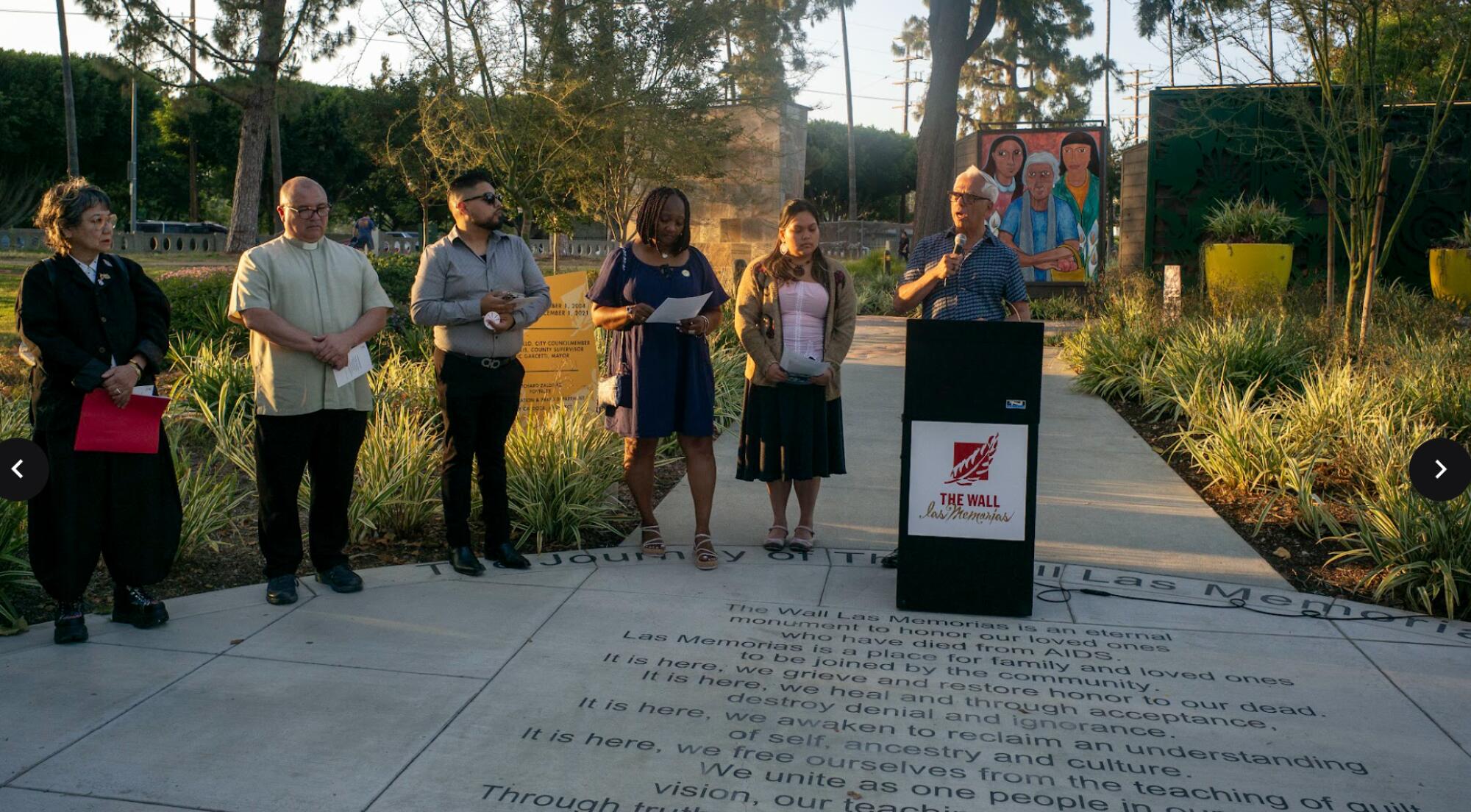
In Lincoln Park, past Plaza de la Raza cultural center and under swaying pine trees, stands a row of 10-foot wooden panels etched with names. Robert Zaldivar stood quietly in front of the names, surrounded by community members holding lit candles as memories of old friends resurfaced.
The panels bear nearly 2,000 names, and more are added every year. Each one represents an Angeleno, mostly Latinos, who died of AIDS. Zaldivar led the movement to erect this monument, named the Wall Las Memorias, which was finalized in 2004.
Inspired by his late best friend, who was HIV-positive, the Wall represents to Zaldivar the power of remembering those in his community affected by HIV and AIDS. It was designed in the shape of Quetzalcoatl, or the “Feathered Serpent,” an Aztec deity and symbol of rebirth.
Robert Zaldivar leads a sunset vigil at the Wall Las Memorias AIDS Monument in Lincoln Park on the anniversary of the first HIV diagnosis in L.A. on June 4, 2026.
(The Wall Las Memorias)
That day in early June, he hosted a sunset vigil, joined by AIDS Memorial Quilt founder and Harvey Milk mentee Cleve Jones, to recognize the lives lost since AIDS was first diagnosed 45 years prior, when the Centers for Disease Control and Prevention published a report detailing immunodeficiency in five young gay men in Los Angeles.
At Zaldivar’s feet was a poem, one he wrote in 1995 with his friend Anna Contreras.
It reads:
It is here, we free ourselves from the teaching of guilt. We unite as one people in our vision, our teaching, and our truth. Through truth we live, through knowledge we survive.
Contending with stigma and misinformation has been a constant struggle for people who are HIV-positive, he said, a struggle that Zaldivar hopes to make more visible now than it has been in previous decades.
“Sometimes it feels like there’s no other way to draw attention to this problem than to have a physical reminder,” Zaldivar said of the monument. “This reminds us of real people, as more than statistics.”
The statistics Zaldivar refers to include the continuing rise in HIV diagnoses in Latinos across the United States. The most recent CDC data show 39,000 people across the U.S. received an HIV diagnosis. And a Kaiser Family Foundation analysis revealed that between 2010 and 2022, there was a 24% increase in new cases among Latinos. In 2022 alone, Latinos made up 31% of new diagnoses, despite only representing 19% of the American population, the KFF study found.
“Just last week, we had two new diagnoses of HIV in our clinic,” said Bernardo Gomez, assistant manager of HIV resources at the Wall Las Memorias Project. “For context, we had 15 in the past six months, including straight women … I think what we’re seeing is a dangerous loss of support for outreach and education.”
Last year, President Trump released his presidential fiscal year budget for 2026, much of which went into effect last October. In it, he revealed significant cuts to HIV health programs — amounting to $1.5 billion.
The budget recommendation signaled the administration’s yearly priorities, and Trump’s fiscal plan and staffing cuts to HIV teams under the so-called Department of Government Efficiency (DOGE) showed a shift away from HIV prevention and healthcare, which advocates say has led to providers losing jobs and places for testing and resources to shrink. In L.A., the Latino community is feeling the brunt of the loss, Zaldivar said.
The biggest cut to HIV care in the 2026 budget affected the CDC, which lost around $3.6 million. Another devastating loss was $1.7 million cut from the Ryan White HIV/AIDS Program, which many L.A. resource centers report relying on to fund part of their programming and staffing.
Robert Gamboa, associate director of public policy at the L.A. LGBT Center, said that in Trump’s first term, his “Ending the Epidemic” program created hope for soon seeing the end of HIV in the U.S. — a hopefulness that he said was quickly dashed in his second term.
“Now there’s this 180-degree shift in policy, we see these enormous proposals pulling away from funding, and his lack of acknowledgment of World AIDS Day, and Pride in general,” Gamboa said. “The message of that is loud and clear: [The Trump administration] is telling our LGBT community, ‘We don’t care about you.’”
Since Trump’s inaugural address last year, Gamboa said executive orders have only solidified Trump’s shift away from LGBT organizations, “challenging the structural integrity of almost everything we’ve done.”
Gamboa said that last spring, the Department of Public Health, Division of HIV and STD Programs), which supplemented L.A. organizations with substantial HIV funding, sent out a notice that all of their contracts were terminated.
“Well, this caused a massive alarm all across L.A. County. Everyone started freaking out. We had to say, ‘We need an emergency allocation [from state funds] so that we can continue providing HIV services across California,’” Gamboa said. “We’re used to getting upwards of around $20 million in funding at the county level, and it wasn’t happening.”
Robert Zaldivar leads a sunset vigil at the Wall Las Memorias AIDS Monument in Lincoln Park on the anniversary of the first HIV diagnosis in L.A on June 4, 2026.
(The Wall Las Memorias)
Since then, nonprofit representatives have confirmed that the contracts were restored at reduced rates. However, the impact of the uncertainty shook the health services community and only caused further distrust among Latino patients.
“We’re already seeing [the impact in L.A.]. In the Latino community, there’s so much fear from the ICE raids. People are afraid to even leave their homes,” Gamboa said. “We’ve worked so hard in building trust and relationships with our communities of color. Now, they’re afraid to even come in. Many of the places they’ve gone to in L.A. County have already closed their doors and ceased services.”
Most recently, the Trump administration announced plans to cut millions in public health funding. This includes $1.1 million that would be slashed from the National HIV Behavioral Surveillance Project, an early-warning system for HIV outbreaks, established by the L.A. County Department of Public Health.
On the White House website, a page called “Cuts to Woke Programs” reads: “President Trump is committed to eliminating radical gender and racial ideologies that poison the minds of Americans.”
Gamboa said that organizations have been discouraged of using “LGBT” in their programming to avoid being defunded as part of the targeted “woke” programs.
“It really affects me,” said Gomez, who has been living with HIV since 1996. “How long will I have medicine?”
Gomez, who is the breadwinner of his family, says his monthly supply of medication costs $1,500 a bottle. “It’s so expensive, and I have insurance. For people without insurance, [the Ryan White program] is the only way they can afford treatment,” Gomez said. “I’m afraid of what will happen to them.”
Gomez takes antiretroviral therapy, a lifesaving medication that reduces the number of infected cells, making the disease less transmissible and prevents HIV from developing into AIDS. According to 2024 HRSA data, the Ryan White program provided antiretroviral therapy to 602,000 people, preventing the spread of HIV.
As the program loses funding, jobs providing HIV care have become more sparse — and programs like the Wall and the L.A. LGBT Center have become more essential to support the thousands left without life-saving care.
HIV program funds are trickling back into L.A. County for nonprofits this year; although some, like the Wall, maintain that it’s “not enough to address the need.” Up until last May, the organization shared that the county funded $1 million of its annual HIV reduction efforts. This year, that number was drastically reduced to $100,000 per six-month contract.
“Many of my social worker friends are off the streets [where they helped at-risk communities] due to just not having enough funding to do their jobs,” said Miguel Rodriguez, program coordinator of HIV testing and prevention at the Wall. “People think only gay men are affected, but basic sexual health for everyone is at risk here. Less [testing] means more infections and transmissions across the board.”
As Robert Zaldivar stresses, the only way to protect L.A.’s Latino HIV-positive community is to support remaining HIV services to get tested or donate to local service organizations.
“What we saw in the ’90s, I’m scared that it will repeat. I want people to remember how serious [HIV] is, and to educate,” Zaldivar said. “Keep getting tested. We don’t report your immigration status or sexuality. Just come in.”
A federal appeals court on Tuesday allowed the Trump administration to resume carrying out speedy deportations of undocumented migrants throughout the United States, not just near the border.
A divided three-judge panel of the U.S. Court of Appeals for the District of Columbia Circuit threw out a lower court ruling that temporarily blocked President Trump’s expanded use of expedited removal. The ruling was a big victory for the Republican administration, which views the expansion of so-called expedited removal as a key tool for carrying out its mass deportation policy.
An attorney for the plaintiffs said the ruling “undermines the fundamental principle that people receive due process when the government seeks to deport them.”
“The Trump administration’s push for fast-track deportations will subject people to an unfair and error-prone system,” Anand Balakrishnan, senior staff attorney with the ACLU’s Immigrants’ Rights Project, said in a statement.
Trump appointed the two judges in the majority in Tuesday’s decision. The third was appointed by President Obama, a Democrat.
The plaintiffs had not “shown that the expedited-removal process denies its members notice and an opportunity to be heard,” Judge Justin R. Walker, one of the Trump appointees, wrote.
Expedited removal — quick deportation without a chance to appear before a judge — has previously been applied to migrants arriving by sea or caught at or near the border shortly after crossing.
In January, Trump expanded its use to undocumented migrants all over the U.S. Immigration agents began whisking migrants away from courthouses where they had gone for immigration proceedings and then removing them from the country within days.
U.S. District Judge Jia Cobb ruled in August that plaintiffs challenging the expansion had made a “strong showing” that it was trampling on people’s due-process rights, and she issued a stay order putting the policy on hold. Cobb was appointed to the federal bench by President Biden, a Democrat.
Many migrants living deep in the U.S. have been in the country for more than two years, making them ineligible for expedited removal under federal law. Cobb said the administration had not developed procedures to ensure they and other groups of migrants were not wrongly deported under the expedited process.
The plaintiffs had put forward “substantial evidence” that the expedited removal process, on the contrary, carried a high risk of error when applied more broadly, Cobb said. The ruling cited examples of people who had lived in the U.S. for far longer than two years but were still ordered to be removed in expedited proceedings.
The Trump administration appealed, arguing in a court filing that its expansion was legal, and protections were in place to prevent arbitrary removal.
Cobb’s ruling was an “egregious error” that was depriving the administration of an “essential tool to combat the unprecedented surge of illegal immigration over the past few years” and efficiently deport potentially millions of people, Justice Department attorneys argued in the October filing.
Those trapped in the compounds include Chinese, Philippine, Taiwanese, Malaysian and Brazilian nationals.
Published On 23 Jun 202623 Jun 2026
More than 5,300 people remain trapped in online scam centres in Myanmar near the Thai border, despite a multinational crackdown in the region last year, a human rights group says.
The Thai-based Civil Society Network for Human Trafficking Victim Assistance (CSNHTV) sent a letter to Thai police urging them to take action. It said many of those trapped were foreign nationals held at four locations inside areas controlled by the Myanmar Democratic Karen Buddhist Army militia.
Recommended Stories
list of 3 itemsend of list
According to the CSNHTV, an estimated 1,600 people trapped are Chinese nationals, and about 200 are people of Myanmar, along with people from the Philippines, Taiwan, Malaysia, Brazil, Russia, Kenya, Uganda, Rwanda, and Zimbabwe.
“Many of these compounds have yet to be dismantled or subjected to rescue operations to free all remaining victims,” it said.
“As a result, these syndicates continue to engage in online fraud and human trafficking, causing harm to victims around the world, particularly in the United States and Europe.”
Scam centres in Southeast Asia, including those in Myanmar and Cambodia, run illegal online schemes that are designed to defraud people worldwide.
“Litany of abuse”
The centres grew significantly during the COVID-19 pandemic in the region, and were initially tied to poorly run casinos and online gambling. They have now become a multibillion-dollar industry, according to the United Nations.
A UN report in February said the facilities are mostly staffed by foreign nationals who have been trafficked by criminal gangs and subjected to abuse.
It found instances of “torture and other ill-treatment, sexual abuse and exploitation, forced abortions, food deprivation, solitary confinement, among other grave human rights abuses”.
“The litany of abuse is staggering and at the same time heart-breaking,” UN Human Rights chief Volker Turk said.
“Yet, rather than receiving protection, care and rehabilitation as well as the pathways to justice and redress to which they are entitled, victims too often face disbelief, stigmatisation and even further punishment.”
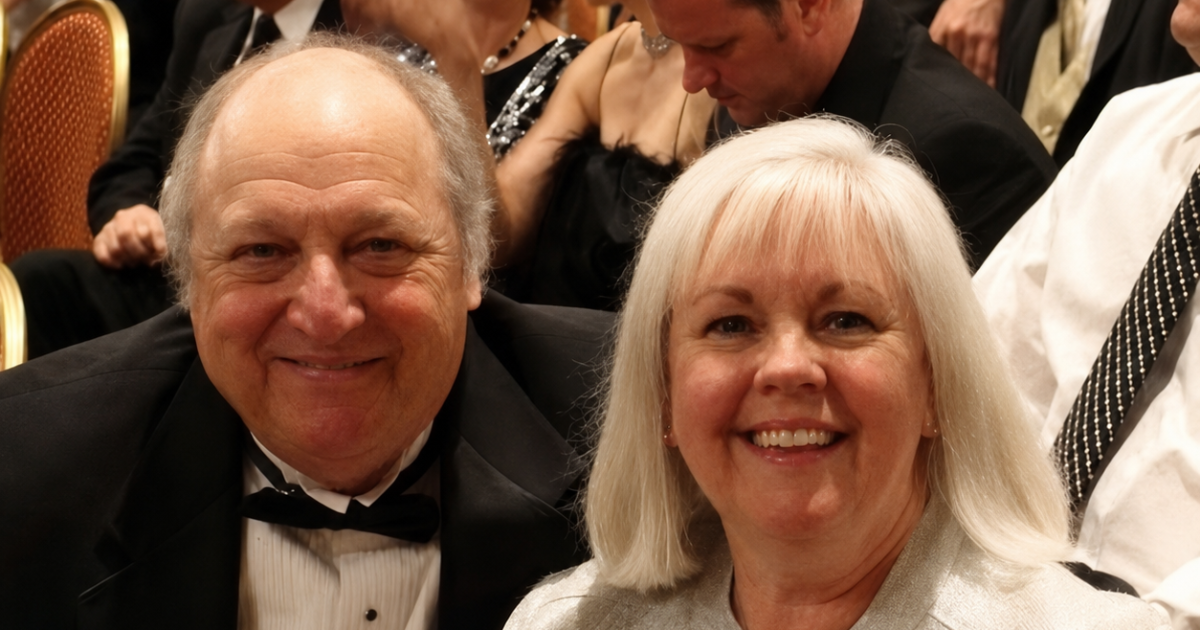
Paul Avery, a journeyman actor best known for his role on “All My Children,” and his wife, Sheila, have died following a house fire. He was 81 and she was 77.
The couple’s death was confirmed by their daughters Parker Sanchez and Kyle Avery, who said the fire broke out in their home in Blairstown, N.J., early last Tuesday morning. While firefighters were able to reach Paul and Sheila inside the Mohican Road home, the couple succumbed to smoke inhalation.
The cause of the fire is under investigation.
Paul had a recurring role playing Hughie the bartender at Foxy’s on the ABC daytime soap “All My Children” for 12 years. He also acted in the 1978 film “Superman,” “Three’s Company,” “Soap,” and appeared in more than 300 commercials. He also acted in theater productions and produced plays in both New York and Los Angeles.
According to his daughters, the actor joked that his “elastic face” landed him multiple national commercials that ran concurrently. Casting directors looking for a “Paul Avery type” would turn the actor away because he was in too many commercials.
“He had a teeny tiny part — one line in Superman — but boy did he make a meal out of that,” Sanchez joked.
Kyle Avery added that at the Oscars, they played a clip from “Superman” that featured Paul reciting his line.
“His good friend ran into the kitchen and made him an Oscar out of tinfoil and handed it to him,” she said. “But I think the thing that he was proudest of was that he could make a living as an actor.”
Paul Avery was born Oct. 8, 1941; and Sheila Avery was born May 22, 1949. Paul was raised in Indianapolis, served in the Vietnam War in his 20s and moved to Los Angeles and then New York by his late 20s to try to make it as an actor. Sheila was raised in Kansas City, Mo., and moved to New York where she worked as a registered nurse but also had a background in theater.
She studied the craft in college, performed on a USO tour in Vietnam and worked as a costume mistress.
According to the couple’s daughters, the two brought their Midwest charm and sensibilities to the East Coast.
The couple met while living in an apartment building filled with other journeymen actors in the late 1970s.
“They were all part of this theater community, people who would go from regional theater to regional theater with the season,” Kyle Avery said. “They were a whole troupe of people who’d be in New York for part of the year, but then they’d go and be in Lakewood, Ohio, or Kansas City or Chicago, just following the theater.”
Sheila was previously married to John Quincy Bruce Jr., also an actor in the New York theater community and the father of Sanchez. Sheila and Paul got together in 1982 and married in 1984. They celebrated their 42nd wedding anniversary in April.
Paul was a jack-of-all-trades and master of many. He was a small plane pilot who often flew into a tiny airport in Blairstown, N.J., which is how the couple discovered the town they’d call home. There, they opened a bookstore, Cabbages and Kings. Paul also launched a magazine: the Warren County Companion. According to the couple’s daughters, Paul was the first internet service provider in town. He also penned film reviews for the New Jersey Herald and some for the New York Times as well.
Sheila found what her daughters called the “perfect job,” which brought together her work as a registered nurse and background in theater: speaking in schools about domestic violence and sexual assault. She also became a counselor who worked with survivors, and a trainer who worked with volunteers, teaching them how to interact with victims.
“People who took her training 20 years ago have been contacting us and saying, ‘Your mother changed the way I thought about the world, she is the basis for my feminism,’” Sanchez said. “It’s been so fascinating to hear the ripple effects of young women who took that training from her, and who are now middle-aged women who are still thinking about her.”
The daughters said that their parents were community icons who were dedicated to service. “They had a sense of duty to the people around them,” Kyle Avery said.
“They loved to throw parties,” Sanchez said. “They hosted an annual event called Faux Giving and they would have these insane traditions, like we would have a head-measuring contest and measure the circumference of people’s heads, and then a winner gets to eat their pie first, and a badge.
“Whoever had the smallest head, everyone there would shout, ‘Pin head! Pin head!’ at this person, and it was the silliest thing in the world, but everyone who attended that event, even if they came one time, would talk about it forever.”
Kyle Avery added, “They were incredibly memorable.”
“They were community builders, they were people who wanted to nourish you in every way, and they were so good at it.”
They are survived by their children: Kyle Avery; Parker Sanchez and her husband, Pablo; Paul Avery’s son from a previous relationship, Stuart Sutherland; and their grandchildren, Avery, Duncan and Liana.
Liam Payne’s 9-year-old son has inherited the late singer’s fortune.
Bear Grey Payne, the only child of Payne and British singer and former “X-Factor” judge Cheryl Cole, has been named the sole beneficiary of the former One Direction star’s estate, according to court documents reviewed by People.
Bear now has more than $29 million to his name. According to the filing, a portion of the inheritance can be accessed now, but the majority will be held in a trust for another nine years, until Bear turns 18.
During a 2019 appearance on “The Jonathan Ross Show,” Payne opened up about fatherhood and spending time with Bear after the singer and Cole had called it quits.
“He comes over to my house every so often, and we just hang out and do whatever,” Payne said of his then-2-year-old son. “I think you put pressure on yourself as a dad sometimes. It’s hard to connect with it with a 2-year-old … but they literally will laugh at anything. We put this Batman costume on him in the house, and it was a little bit slidey on the floor, and he kept falling off the sofa. And if I said ‘Whoopsie-daisy!’ and it was like the best thing ever.”
Payne, who was one-fifth of the global boy-band sensation One Direction, died Oct. 16, 2024, after falling from a balcony at the CasaSur Palermo Hotel. Officials determined the 31-year-old singer died from multiple traumas caused by the fall. He had traces of alcohol, several narcotics and a prescription antidepressant in his system when died, according to officials.
The boy-band star turned solo artist had been open about his battle with addiction and mental health and shared updates on his sobriety journey on social media.
After Payne’s death, the National Criminal and Correctional Prosecutor’s Office of Argentina charged five people for alleged involvement in the pop singer’s death, including a representative for Payne and the manager and the head of reception of the Buenos Aires hotel where the British singer fell to his death.
Another hotel employee and a waiter whom Payne met in a restaurant were charged with supplying the singer with narcotics.
Times staff writers Alexandra Del Rosario and Karen Garcia contributed to this report.
The Westside subway extension has long been L.A’s most stubborn urban fantasy: an infrastructural mirage chugging toward the sea, and then, with less sex appeal, Westwood. Stalled since the ‘80s, the first western leap of the elusive project is now real. And in the month or so since the Metro D Line pushed beyond Wilshire/Western to three new stations — Wilshire/La Brea, Wilshire/Fairfax, and Wilshire/La Cienega — multiple rides have made the benefits, and shortcomings, clear.
Suddenly the city feels different. Not transformed, exactly. But more connected. The fracturing grip of the city’s incomprehensible expanses, clogged arteries, and stagnant governance — all intimidating barriers to healthy civic life — feels a little looser. The dense belt tying the city together more complete, a critical mass of movement, still expanding, where there used to be a vestigial nub.
The stations, too, feel more connected, with art, architecture and infrastructure blending seamlessly into a cohesive experience, a tribute to Metro’s sharpened design approach and its ever-evolving commitment to public art. But above ground, it’s a tale of two (transit) cities. Outdoor plazas lack the kind of textured civic presence that’s been created below. Metro, which has become the most dominant regional force for urban transformation, is still less ambitious once it leaves the station box.
Passengers wait to board the first train to arrive at the Metro D Line at the Wilshire/Fairfax station in Los Angeles in early May.
(Genaro Molina / Los Angeles Times)
Before descending into the new stations, you might want to take a moment to appreciate that they exist at all, surviving, among other trials, a massive methane explosion, federal and local bans, major delays, and a battalion of lawsuits. Then notice how their myriad components work together. Art, for instance, is not simply attached to walls, but forms them, its patterns tracing your descent through space. Lighting doesn’t just illuminate surfaces, but becomes an artful complement to what’s around it. Escalators are not just conveyances, but reflective surfaces forming a utilitarian palette for art and light. The line between each piece becomes blurred, creating a sense that all is working together — a layered place that is intuitively easy to use.
This fluent incorporation of art builds on the long-running L.A. Metro Art program (formerly Metro Art in Transit), which since the early ‘80s has commissioned and installed over 200 artworks across the sprawling system, from mosaics and photography to multi-story murals. In fact, it’s quietly hummed along as one of the most successful public art programs in the country.
Artist Fran Siegel’s artwork at the Wilshire/La Brea Metro station is part of one of the most successful public art programs in the country.
(Carlin Stiehl / For The Times)
In many of its earlier iterations, art and architecture were conceived together to create strange, jaw-dropping, one-of-a kind spaces, like Peter Millar and Ellerbe Becket’s Santa Monica/Vermont station. Opened in 1999, this Red line stop featured among other things, a goliath stainless steel wing canopy topping a 42-foot-tall, raw concrete-clad escalator cavern, lit by massive skylights, etched with row after row of enigmatic questions.
Another personal favorite is Stephen Antonakos’ “Neons for Pershing Square,” a postmodern wonderland of suspended neon sculptures in the depths of downtown’s Pershing Square station that creates a kind of 3-D sculpture playing off the ‘80s gridded ceilings and Miami Vice white columns.
Wild creativity aside, these 20th century stations are marked by inconsistency in quality, comfort, and maintenance — and the lack of predictability can be confusing. (Wait, where do I go now?) This includes Metro’s inaugural A line, in which art-driven architecture, though fun, often feels like a quixotic gesture, unable to compete with loud, uncomfortable, concrete-dominated settings.
A man waits for a train on a platform at the Wilshire/Vermont station, which is along Metro’s B Line, formerly the Red Line.
(Brian van der Brug / Los Angeles Times)
Lines opened in the 2010s had their own issues. The Expo line (now the E line), barely 14 years old, features rather tentative wavy canopies and surface wraps and comparatively small spaces for artworks. With the new extension, Metro has found a balance between completely foregrounding art and relegating it to background. The new designs are guided by a “kit of parts,” a shared language of materials, lighting, signage, and wall systems that was developed first by local architects Johnson Fain and later by the global architectural firm Gensler, which served as the D Line’s systemwide station designer.
Yes, I miss the epic scale and immersive feeling of those older stations. But the tradeoff is a cleaner, brighter, more legible and human-scaled version, lending long-needed coherence to both the stations themselves and the system at large. And by the way, the art is still fantastic.
At the descending entryway of Wilshire/La Brea, for instance, the cosmic, angled lines of Eamon Ore-Giron’s “Infinite Landscape: Los Angeles Para Siempre,” which are embedded into porcelain enamel, channel not only the geometric forms of Wilshire’s Art Deco Buildings, but the visceral one-point perspective of a train speeding into a tunnel, and even the angled geometries of adjacent escalators.
Artist Eamon Ore-Giron’s “Infinite Landscape: Los Angeles Para Siempre,” at the Wilshire/La Brea Metro station.
(Carlin Stiehl / For The Times)
Heading down allows you to ponder its shifting mysteries. Circular abstractions might suggest headlights zooming along Wilshire, or perhaps a train’s fast-approaching lights? Its artfulness expands outward. Frosted glass panels wrapping the entry portal are clad with a similarly mystical language, accentuated by neon strips of light, with the lightweight canopy above reflecting the colorful lines. Art and architecture are working together, each feeding off the other.
A particularly fertile locale for drama at each station are the wide bands of art topping the tunnels themselves: beacon-like destinations for your eyes, not to mention invitations to occupy more of the platform. In the same station, Mark Dean Veca’s “Miracle of La Brea” takes its cues from the curvy ornament and stepped motifs of the nearby Wilshire Tower’s Art Deco façade. Look closer, and those crisp patterns dissolve into swirling, viscous forms that evoke the La Brea Tar Pits, flowing oil, and even barley-shaped references to the area’s agricultural past. The mural’s repeating forms also mirror the station’s rigorous order, its clean, syncopated forms and linear perspectives.
Another hallmark of the new stations is how they subtly make infrastructure itself into art. Celebrating — whether intentionally or not — the improbable engineering feat of carving a subway under one of the most dense, congested, and geologically and politically complicated parts of Los Angeles. Jogging white lines along concourse floors, meant as tactical guides for the vision impaired, rhythmically and playfully lead you forward. Glinting stainless steel railings, gridded perforated metal ceilings, and thin bands of suspended light bouncing off polished terrazzo floors, pull you forward on stairs and platforms, tracing the speed and linear movement of trains. Corduroy concrete walls, etched with endless vertical grooves, give tunnels a tightly rhythmic texture while still exposing their hefty bones.
The Wilshire/La Brea Metro station is part of the D Line extension and features evenly lit spaces, with porous surfaces and long sight lines to improve navigation and safety. Glass fare gate doors organize entry without turning the stations into fortresses.
(Carlin Stiehl / For The Times)
The quality of surfaces and experiences has been upgraded too. Unlike most older Metro stations, where low light and heavy surfaces can feel tired and oppressive, spaces are more evenly lit, with porous surfaces and long sight lines to improve navigation and safety. Glass fare gate doors organize entry without turning the stations into fortresses. Glass elevators and large cuts between levels create a sense of connected, kinetic openness.
Sometimes this palette feels too uniform and predictable. The heroic scale and quirkiness of older stations can be more exciting; more unique to their place. A surprise or two never hurt anyone. But overall it’s a good balance of unity, utility and identity, allowing the art to sing, but as part of a chorus, not a soloist.
The tune, however, shifts dramatically above ground. Station plazas wrap handsome modern architecture—clean, controlled, well-detailed portals of beveled stainless steel, frosted glass, and art peeking above entryways and on peripheral panels. But the hard plazas themselves are barren; lacking enough shade, art, greenery and invitation. Benches, where they exist, are tiny and defensive.
Pedestrians walk past the Metro D Line at Wilshire and LaBrea, which features a barren plaza lacking the beauty and design of the art-filled stations below.
(Kayla Bartkowski / Los Angeles Times)
These places seem scared to let people linger — clearly trying to avoid some of the city’s intransigent challenges, like homeless encampments, disorder, maintenance burdens, and controversy. This is understandable, but in avoiding those risks, the areas also avoid the purpose of public space: to create a place for everyone, not just a zone for people passing through.
Yet life appears anyway. At Wilshire/Fairfax, a dance class from a nearby studio recently gathered in a thin sliver of shade around the station. It was beautiful, and improvised, but also indicative of the underlying problem. Civic life was there, but the space had failed to make enough room for it. Imagine if that plaza had real shade, generous seating, creative sculpture, plantings, water, and edges that encouraged people to stay.
Another unresolved question is service. On multiple visits trains were not crowded. They also didn’t come often enough. Ten or 12 minutes of stagnant wait time does not feel like freedom if you are trying to lure Angelenos out of cars.
The last-mile problem doesn’t help. There is no easy parking near stations for those who don’t live close, no seamless transfer or final step. The bikes that Metro provides still have share docks, meaning you’ll need to find another dock on the far end (good luck). This remains, as it should, a system for people who already need transit. But for an institution struggling to add ridership, you wonder if it can become a system for people who have choices.
The Wilshire/La Cienega Metro station is part of L.A.’s new D Line extension. The outdoor plazas are not conducive to community or gatherings.
(Carlin Stiehl / For The Times)
Still, we should not understate what has happened. Los Angeles finally has subway stops that serve some of its densest, most public destinations, and Metro is still growing. The D Line makes the Miracle Mile feel less like a traffic corridor and more like a metropolitan spine. It suggests a Los Angeles in which neighborhoods, jobs, cultural destinations, and sidewalks begin to connect physically and with surprising immediacy. (Twenty minutes from LACMA to downtown feels like light speed!) It makes the city feel more like a city.
It also reveals the imbalance of power and imagination in Los Angeles. Metro, for all its flaws, has the ability to marshal money, planning, engineering and art at a scale the city itself generally cannot. All the more reason to branch more boldly beyond its tracks and stations.
The question remains: Can the agency coordinate with government, developers, cultural institutions, and neighborhoods to make these stations into places rather than portals?
The new stops prove that Los Angeles can design infrastructure artfully below ground. Above ground, however, it too often retreats into caution. The subway has arrived. The city around it still has to catch up.
Instead of the usual phalanx of cars and buses, Saturday evening traffic on Wilshire Boulevard was replaced by massive balloons, mobile sculptures, gaggles of gallerists and an endless array of elaborate costumes.
The first-ever Los Angeles Art Parade, a collaboration between the Los Angeles County Museum of Art (LACMA) and famed gallerist Jeffrey Deitch, transformed the stretch of Wilshire known as Museum Row into a human-powered exhibition of the city’s dynamic art scene.
About 146 groups, made up of more than 1,400 participants, marched in the parade, with projects ranging from larger-than-life marionette dolls to squads of children in do-it-yourself costumes to mobile re-creations of LACMA’s most iconic art pieces.
The parade followed an all-day block party thrown by LACMA as part of its Grand Opening Weekend, celebrating the new David Geffen Galleries and the completion of the 20-year-long, $724-million campus construction project. Together, the block party and art parade attracted an estimated 60,000 attendees, who swarmed the galleries, danced to explosive DJ sets, and lined the streets to watch the eclectic procession of artists.
People dance during Flying Lotus’ DJ set at the Los Angeles County Museum of Art (LACMA) in Los Angeles.
(Ariana Drehsler/For The Times)
According to LACMA Director and Chief Executive Michael Govan, the event was a long time coming and “just the beginning” of how his team plans to use the campus space, which he previously called the city’s “living room.”
“We’re not gonna close Wilshire every weekend, but it’s an example of what we can do,” Govan said. “It’s really exciting to see the building work.”
Following a crowd-drawing DJ set from electronic low-fi hip-hop artist Flying Lotus, Govan introduced L.A. County District 2 Supervisor Holly J. Mitchell. She said the event made her “proud to represent LACMA” and to be a Metro board member, referencing the recently-opened Metro D-line extension, which dropped attendees off a quick stroll from LACMA’s entrance.
“Just seeing you all at this amazing public facility does my heart good,” she said. “This is your local government at work.”
1
2
3
1.Silhouettes of people watching the parade.2.A man and woman wearing tulle over them walk in the parade. 3.The crowd at the Los Angeles County Museum of History, Science, and Art (LACMA) Block Party.(Ariana Drehsler/For The Times)
As the party raged on LACMA’s campus, hundreds of parade participants hurriedly prepared for their debuts in the corners of nearby streets and parking lots. One group inflated a giant disco ball, while another smeared themselves with body paint next to a line of rehearsing dancers. Elsewhere, a megaphone-wielding leader herded dozens of black cats in the style of artist Gary Baseman into some semblance of order.
Deitch originally staged the first Art Parades in New York City’s SoHo neighborhood between 2005 and 2008. While those took a more art-world-exclusive approach, Deitch said the Los Angeles version was designed with inclusion in mind. The call for parade proposals was open to “emerging and established artists and creatives of all ages and backgrounds,” according to guidelines, as long as the work was appropriate for all ages and didn’t require a motorized element.
“The New York one was much more oriented toward people in the art community. We didn’t put out this kind of open call,” Deitch explained. “This is very different in its openness and its diversity. There are some famous artists and famous choreographers, L.A. legends. But there are also mothers from the San Fernando Valley with their children. I really love that.”
Artist Jordan Rountree’s rolling woodcut-sculpture called the Devil Jack in a Box with Crocodile appeared in Saturday’s Block Party and Art Parade hosted by the Los Angeles County Museum of Art’s (LACMA).
(Ariana Drehsler/For The Times)
“It’s just a very open platform, so you don’t have to have an M.F.A. to express yourself as an artist,” he added.
The procession was dizzying in its variety and scale. While many projects leaned into beauty and whimsy, others took a more overtly political approach, displaying anti-ICE messages on T-shirts and signs, sporting trans pride flags, or, in the case of performance artist Amy Kaps, wearing an unraveling U.S. constitution.
Some even referenced local causes, such as the “Boo Boo Bandage Brigade for Safe Streets,” which advocated for fixing sidewalks and increasing accessibility downtown. One particularly moving display by the Pali-Altadena Collective featured participants carrying miniature models of buildings and landmarks lost in the 2025 fires.
Chicana artist Nao Bustamante and Track 16 Gallery brought “Brown Disco” to the streets, which featured a giant gold disco ball and figures from decades of L.A. queer nightlife.
The crowd at the Los Angeles County Museum of Art (LACMA) Art Parade.
(Ariana Drehsler/For The Times)
“As a brown, queer person, I think that this really brought a light into our community, and now its presence [creates] an intergenerational conversation,” said Track 16 Assistant Director Steve Galindo. “The nightlife scene is how we come out as queer people, so it’s really special to be in the parade.”
“Puppetry has been part of the arts for so many years,” added Daisy Hernandez, the theater’s production manager. “It’s a way that people express themselves, just like every other art form. So that’s what we’re here to do: express ourselves through puppetry.”
CHICAGO — A spate of shootings in Chicago has led to seven deaths and at least 38 injuries since Friday evening, police say, prompting President Trump to renew his call for a military intervention in the nation’s third-largest city.
It is the latest in a series of threats made and interventions ordered by the Republican president against a Democratic-led city, including Los Angeles.
“Why isn’t Governor Pritzker calling me for help. I could make Chicago a safe City in ONE MONTH, in ONE YEAR, it would be one of the safest!!!” Trump said in a Sunday morning post on social media.
The office of Illinois Gov. JB Pritzker, a potential 2028 Democratic presidential contender who has repeatedly rebuffed Trump’s calls for a military intervention, did not immediately respond to a request for comment.
Under Trump, National Guard troops have been deployed on crime-fighting missions in Democratic-led cities including New Orleans, Washington and Memphis, Tenn.; and Marines and Guardsmen were sent to L.A. last year amid protests over federal immigration raids.
Although Chicago Police Department data show a slight increase in shooting incidents compared with the first half of last year, violent crime rates have generally dropped in the city over the last few years, in parallel with national trends.
Preliminary information shared by Chicago police indicate there have been at least two dozen shooting incidents since 5 p.m. Friday. Those killed by gunfire include a 21-year-old shot in the chest Sunday, an 18-year-old shot in the armpit Saturday evening and a 50-year-old shot in the chest Friday.
At least 12 people in a crowd on a Chicago street suffered gunshot wounds Friday evening after an SUV pulled up and two people inside started shooting, police said.
The eight men and four women in the group ranged in age from 17 to 47. They were being treated at four hospitals. Police said another man suffered unknown injuries and refused medical treatment.
That shooting happened on Juneteenth, a holiday that celebrates the end of slavery in the U.S. Earlier Friday, former President Obama and former First Lady Michelle Obama welcomed the first visitors to his presidential center on the South Side.
“What should have been a night of celebration and community reflection for Juneteenth was shattered by a horrific act of violence,” Mayor Brandon Johnson said in an X post Saturday. “My thoughts and prayers are with the victims and their loved ones.”
“Violence has no place in our city, and those responsible will be held accountable,” he said.
Sitting in the control room of their home studio known as the Centre of Mental Arts (COMA for short), Long Beach husband-and-wife duo Scott Montoya and Julia Kugel smile as they discuss new music they recorded for their band Soft Palms. Their new album, titled “In Echo,” has been in the works for over five years. The 10-song album, out Friday on Everloving Records, was inspired by their frustration about how they feel the world has devolved since 2020.
“The first record I was like, ‘I want to give the world a hug,’” Kugel says. “And then this one I was like, f— this world.”
For Kugel and Montoya, the album serves as the latest chapter of their creative and personal journey. The pair met in 2012 at a music festival in Dallas (“The most romantic city,” Kugel quips), while playing in the Atlanta-based band the Coathangers and Orange County’s the Growlers, respectively. They bonded over a shared disgust at gladiator shoes, and soon thereafter, were in a relationship.
By 2017, they were married and settled in Long Beach. Despite Kugel’s role in the Coathangers at the time (Montoya left the Growlers in 2016), the couple wanted to form a band. Previously, they recorded a pair of songs that constituted Kugel’s second solo seven-inch single. That experience made them comfortable knowing they could balance their professional and personal lives.
“He’s super easy to work with,” Kugel says of Montoya, who sits beside her, trying to hide a smile. She looks at him and continues, “he’s very talented and very patient.”
“When we were in our other bands, we used to meet up on tour,” Montoya, who also produces and engineers for other artists, says. ”You see the absolute worst of people on tour … so this is nothing.”
To kickstart Soft Palms, Kugel drew from a batch of songs she had previously written that had no home. Being able to record in their own studio allowed the pair to craft songs without feeling any pressure to meet a deadline.
By late 2019, the pair put the finishing touches on their self-titled debut. When the record was released in July 2020, the pandemic was still in full force. The pair were disappointed and upset by the state of the world, and after a few years of stewing, Kugel and Montoya got started on a second album.
Don’t be fooled by its breezy ’60s-analog vintage pop sound. Soft Palms are angry, and that informs the spirit of “In Echo.”
The pair points to “Radio” as the album’s bellwether. First released in 2025, the song rails against how, over the past handful of years, people have fought for the sake of fighting, with no end in sight.
More strikingly, on the biting “Nervous as Hell,” Montoya points to Fox News as “infecting everyone’s parents.”
“I did some digging because I couldn’t believe something that hateful existed,” he says of the network, specifically its landmark $787-million settlement with Dominion Voting Systems. “It turned it from this horrible thing into this s— business that has taken advantage of the elderly and destroyed families.”
That anger continues on the angsty rocker “The Wedding Song.” Kugel points to attending a wedding where a family member married a “total raging maniac,” and how they dealt with the buildup of delicately balancing being cordial yet firm.
“He [the family member] goes, ‘I just want you to show up and shut up!” she says. “I was like, ‘Well, firstly, f— you. Then secondly, this is a song — you just handed me gold.”
Since settling in Long Beach, for the last 10 years Kugel and Montoya took it upon themselves to help foster a positive, artistic community. It’s that mindset that pushed them to found and operate their 501(c)(3) nonprofit called Studios for Schools with the goal of providing recording equipment to underprivileged schools.
Their DIY work ethic in entertainment was also the driving force behind Happy Sundays, a free Long Beach-based music festival. Running for 10 years, the fest created a block party in the city’s Zaferia neighborhood that eventually expanded into a full weekend of shows across stages set up at local businesses to host a diverse lineup of veteran and up-and-coming area bands. Though the event was paused this year so they can focus on the new album and book, the couple plan to bring it back in 2027.
“It was like a statement in that way of like f— these giant prices, VIP experiences and all of that stuff,” Kugel says. “It’s the anti-music festival and a celebration of community.”
Keeping with that spirit, and drawing from the experiences of their two-decade careers, last month the pair released a book titled “How to Be Self-Reliant in the Music Business.” The genesis of this self-published guidebook occurred when the pair realized they were not receiving a portion of a royalty stream they were owed. They knew that if they were in the dark on the issues they thought they knew, others likely were as well.
“We decided to turn it into a book because we realized there’s so much stuff that few artists know about on their own,” Montoya says. “I want people to understand the scope of what they’re actually getting into, and the reality of their situations.”
“It’s a very thorough overview,” Kugel adds.
The book includes information beyond what one would find in Donald S. Passman’s longstanding industry bible “All You Need to Know About the Music Business.” With assistance from a lawyer friend and a CPA family member, the pair addresses topics ranging from backstage etiquette to managing social media to dealing with record labels and publishing companies. They hope that it will provide a blueprint for bands old and new to better navigate music’s notoriously choppy waters. Their accessible, snack-size chapters move fluidly as they explain the realities artists face in 2026.
Battling through the disappointment of the first part of the decade allowed Kugel and Montoya to find their creative way. Armed with this infusion of activity across various disciplines, the couple is inspired to continue to shake their way out of the past. Though focused on their impending U.S. and European tour, the duo promise that the next Soft Palms album won’t take as long and are mulling over their next music-industry book project. For now.
“It’s a lot to keep up with all of these projects,” Montoya says. “We work all day, every day. And it’s been cool to see signs that it’s paying off.”
After Gov. Gavin Newsom announced this week that the U.S. Department of Justice may be investigating his wife, Jennifer Siebel Newsom, media and pundits pounced on millions in charity payments he has solicited for nonprofits, including ones she is involved in.
Those donations, known as “behested payments,” aren’t illegal in California, but, long before Newsom started asking for them, many have found them unsavory — with good cause. A behest, after all, is by definition a command or at least a strong suggestion.
Anytime a politician is commanding money, regardless of the purpose, there is at least the appearance that the giver — Meta, Google, Blue Shield for example — may expect something in return.
It may seem absurd that the Trump administration could be investigating Newsom for questionable ethics, when Trump has hawked everything from crypto-coins to sneakers from the Oval Office. But the problem Newsom now faces is that behested payments are actually skeevy, and legal or not, they make an excellent target for pummeling the presidential contender. Especially because some of the charities are tied to his wife.
“The Newsom case has blown it wide open, but this has been an issue for years,” Sean McMorris told me. He’s the transparency, ethics and accountability program manager at Common Cause, a nonpartisan organization that has been raising alarms over behested payments for more than a decade.
McMorris said that while these payments don’t violate any laws, they are “ripe for abuse” because companies and people likely aren’t ponying up cash just to be good citizens. If you or I called up PG&E and asked them to give a few million to our favorite cause, I doubt we’d have much luck, even if it involved kittens, puppies or small children in need.
The entire system, McMorris points out, “doesn’t really work unless you’re shaking down people who you know need things from you as a politician.”
Jerry Brown used behested payments to get millions for charter schools he supported. Lesser luminaries such as mayors (including Antonio Villaraigosa, Eric Garcetti and Karen Bass, just to name the last three in L.A.) have used them for all kinds of stuff from jobs programs to fixing up official residences.
And it’s far from a Democratic thing. Arnold Schwarzenegger, a Republican, used them to pay for travel and after-school programs. Republican James Gallagher, who recently won a congressional seat, used them to fund computers for schools while he was in the state Legislature. Senate Minority Leader Brian Jones has raised millions, including helping to get $800,000 in donations to fund a replica of a historic ship for the maritime museum in his San Diego district.
Trump himself could be considered king of behested payments, with his corporate-paid ballroom and birthday bash.
Literally, folks, find me a politician with an itty-bitty bit of clout, and I’ll show you a trail of behested payments stretching through their pet projects. For that reason alone, it’s unlikely that California legislators will take any action to curb them, especially now when doing so would appear as a criticism to Newsom and Democrats in general.
And, to be fair, behested payments can do a lot of good. Newsom supercharged behested payments during the pandemic, raising hundreds of millions for programs to get Californians through that social disaster.
For that reason and others, not all experts find them terribly troubling. Jessica Levinson, a Loyola Law School professor with an expertise in election and governance issues, points out that money in politics is nothing new and at least behested payments are (mostly) required to be acknowledged. Anything over $5,000 and the politician has to report it to the California Fair Political Practices Commission, which keeps a public database.
That makes behested payments far more transparent than, say, dark money donations to a mysterious political action committee. And at least the money is going to a good cause, be it historical ships or computers for kids.
“I actually don’t think that they’re the evil mechanism that other people do,” Levinson said. “I mean, my feeling is like, let’s live in reality, right? People are going to want to give as much money to or close to powerful people as possible, and I think that we have a choice between money going to independent expenditure groups or political committees or going to nonprofits.”
So behested payments in and of themselves might not be much of a headache for Newsom. But some of the payments Newsom solicited went to nonprofits Siebel Newsom is involved with, and which have paid her a salary. That proximity is uncomfortable for many of us. There is no distinction for a behest given to a charity with direct ties to the politician, but maybe there should be.
None of that is to say the Newsoms are off the hook in a federal investigation. Newsom’s office said that along with the FBI, agents from the IRS have been knocking on doors and asking questions. All of us — probably the Newsoms included — will just have to wait to see if the fine-tooth combs of the feds pick up any dirt.
If there is any lesson to be learned at this point, it’s about ambition and hubris. Behested payments are easy money for California politicians and business as usual — everyone does it. But maybe they shouldn’t. It’s not black or white.
Newsom is learning quickly what it means to have a powerful enemy like Trump, one who has shown he will use the full power of the American government for his own purposes. One who can tip the scales and slide white to gray and gray to felony.
Federal investigators do not like to come up empty-handed, and the wink-wink nature of behested payments creates just that kind of ambiguity that provides reasonable cause for investigation — a self-inflicted vulnerability that surely has every California politician nervous.