It has been five years since Michael Che’s last stand-up special. Of course, he has a good excuse, being busy much of the year co-writing and performing “Weekend Update” on “Saturday Night Live,” and he also wrote and starred in two series of his acclaimed sketch comedy show, “That Damn Michael Che.”
But he feels more like himself on the stage, he said in a recent interview. “I really miss stand-up when I’m not doing it because I can really let loose on stage and say all the words I want,” he says.
In his new Netflix hour, with the pointed title, “Michael Che: Shot in Minnesota,” he wastes no time in getting into it, opening with a series of jokes saying a lot of words about Charlie Kirk’s murder: He believes that it happened because “straight white conservative Christian men are being silenced.”
He clearly loves poking at people’s sensitive spots. His favorite joke, he says onstage, is, “Men want anal sex the way women want a sensitive man. It just sounds nice… until you see them crying.”
He talks about race (“I don’t care what color you are — if you’re rich, you’re white”) and goes after President Trump and people who try to police language, but he also talks up how much fun he had at a Pride parade and about growing up poor, with his mother cleaning houses to help make ends meet. In our interview done via Zoom (without a camera on) while he was stuck in traffic on the way to 30 Rockefeller Center and then in an elevator and then in the SNL offices, he discussed it all.
This interview has been edited for length and clarity.
Did anyone in your family shape your humor and your storytelling?
My family has a different kind of humor. It’s a little meaner, if I’m being honest with you.
I’d like to see Thanksgiving at your house.
A lot of people would. It’s kind of crazy.
But the one person was my grandfather who was a pastor. He knew how to hold court and tell a story and he was a funny guy. He could be silly or absurd or dry. So maybe there’s a lot of him in what I do. But he did it week after week with different material.
Speaking of week after week, which is closer to your real self, the “Weekend Update” persona or your stand-up persona?
The stand-up is the most me; “Update” is a job and it’s a character. On stage you get to hear more nuances — on “Weekend Update” it’s a short segment, and I’m splitting time with Colin and guests. There are more needs being met than just mine. I say that respectfully, but there are things we have to touch on that I wouldn’t in my personal work and there are things other people write so it’s never all me.
I can listen, I can build, I can take you on a journey, I can make you think this is a bad joke, but it’s actually a good joke. I can make you think it’s a dirty joke, but it’s a clean joke.
I miss doing stand-up full time, but maybe that’s only because I don’t do it full time. But maybe if I did it full time, I’d miss doing it part time. Getting this hour together for the special, Lorne [Michaels, SNL’s iconic boss] was nice enough to let me go on the road even during show weeks, and he didn’t ask as much of me this past season. He was really kind, and I really appreciate it.
Colin Jost, left, and Michael Che on “Weekend Update” on “Saturday Night Live” on Saturday, March 11, 2023. Che has been doing “Weekend Update” for 12 years, as has Jost.
(Will Heath / NBC)
Your stand-up persona is definitely more thoughtful and open-minded than your “Weekend Update” one. Are you conscious of revealing yourself onstage or just thinking about what’s funny?
They tell you in the criminal world that the longer you talk to the police the more chances there are you’re going to reveal something. And I feel like it’s true for comedy, too. A lot of the stuff that I do is just thoughts that we haven’t said out loud and explored yet. I start with the thought, and if I can get a joke, a one liner out of the thought, that’s then I start to explore it onstage. I only write one line because I can’t write in a vacuum. I need to be able to listen to see what an audience gives me; otherwise, I only know how it makes me feel.
You open this special with that riff on Charlie Kirk’s murder. Your audience is not filled with Turning Point members, but people still may be hesitant to laugh. Are you starting there to challenge yourself or challenge your audience, or is it just because you think it’s funny?
I think all three of those things can be true. Those jokes are funny, but it is hard to laugh at. That’s the sort of feat I seek to pull off, to make people laugh about things that they’re not necessarily expecting to hear without being gross and gratuitous. I did those jokes on Shane Gillis’ show and his audience reacted favorably.
None of this is to make any kind of larger point other than I want you to laugh at the things that horrify you. It’s just horrifying on the surface so people think you can’t make a joke about it. People are afraid of the attempt. And I say, “Well, what about this one?” I do like that.
Then you move on to the R-word and the N-word. Are you simply pushing buttons for laughs or pushing people to think about their own biases and preconceptions about language and their political sensibilities?
I don’t want to let words dictate my next emotions. I want you to put the responsibility of self-control on yourself. People are going to say nasty things literally just to get a rise out of you, and it’s up to you to decide how you’re going to handle that. Also, I’m trying to be consistent. If I start with jokes about Charlie Kirk, but then somebody wants to call me the N-word, I can’t say, “Well, that’s crossing the line.” Right now there ain’t no more lines. We’re in a culture war and bombs are going to fly. So let’s see who’s got the stomach for it.
When you refer to a guy buying you drinks in a bar as “visibly gay,” the audience gets uncomfortably quiet in a way. How do you feel when they hush over a line like that?
With a lot of these jokes it’s like dribbling a football, you just don’t know where it’s going to land. But I like putting people on their heels and being a Black comic of my generation, they expect the joke to go one way because they’ve heard the jokes that come from others so they’re apprehensive. I expect them to be apprehensive and then talk them through it. When the joke lands differently with a punchline they’re not expecting, they’re pleasantly surprised.
The Atlanta Dream made it to the WNBA Finals, which is obviously a good thing.
In fact, it’s so good that many fans will surely want to come out and support the team when it hosts Games 3 and 4, plus Game 6 if needed, against the Golden State Valkyries.
And that could be a problem. Gateway Center Arena in College Park, Ga., where the team has played most of its home games since 2021, seats only 3,500 people for basketball games.
The Dream played six regular-season games and all three home playoff games this season at the Atlanta Hawks’ State Farm Arena, which holds around 17,000 and will be the Dream’s official home venue starting next season. But that facility is booked for all three dates the team would need it, with a Sombr concert slated for Oct. 22 and Hawks regular-season games on Oct. 24 and 29.
So, what’s a franchise playing in its first WNBA Finals since 2013 to do?
It’s not a rhetorical question. The team hasn’t announced where their home games in the series will be played, and tickets for the games in Atlanta have yet to go on sale.
Last week, Dream president Morgan Shaw Parker said they were “finalizing details” on where the team’s home games will be played during the Finals. Efforts to move the games to larger area venues, such as Gas South Arena (around 13,000 seats) and Georgia Tech’s McCamish Pavilion (8,600 seats), have hit snags, according to USA Today.
The Dream did not immediately respond Monday to questions from The Times. The WNBA referred questions back to the Dream.
The Valkyries play their home games at Chase Center in San Francisco, which seats around 18,000 people. A Doja Cat concert originally scheduled for Oct. 19 was rescheduled to Oct. 25 to avoid conflict with Game 2 of the WNBA Finals.
If the Dream can’t relocate the games, this wouldn’t be the first time WNBA Finals were held in a small venue: In 2019, the Washington Mystics hosted three games at their home venue (known now as CareFirst Arena), which seats about 4,200 people.
Led by Rhyne Howard, Allisha Gray, former UCLA star Jordin Canada and 2026 defensive player of the year Angel Reese, fourth-seeded Atlanta swept through the first two rounds of the playoffs, dismissing No. 5 Washington and No. 8 New York.
JUNEAU, Alaska — In the thick of Alaska’s primary election season this summer, independent Bill Hill took a break from his U.S. House campaign to return home to Bristol Bay.
The world’s biggest sockeye salmon run was beginning, and that meant he needed to get back to work.
“I told my team that I have got to fish,” he said, adding: “Commercial fishing is the way that we pay the bills.”
Hill, 57, grew up in a tiny southwest Alaska village where he said his family had no phone and had to haul water from a nearby lake for cooking and bathing. Today, while he no longer has to fetch water, his lifestyle is not much different. He lives in a remote fishing community of about 430 people that he has called home for nearly half his life.
A retired teacher and school administrator, Hill has positioned himself as a working-class candidate who can relate to Alaskans’ frustrations with high fuel and other costs. He has made affordability and pushing back against billionaires a central theme in his campaign against Republican Nick Begich, who’s seeking a second term in Congress.
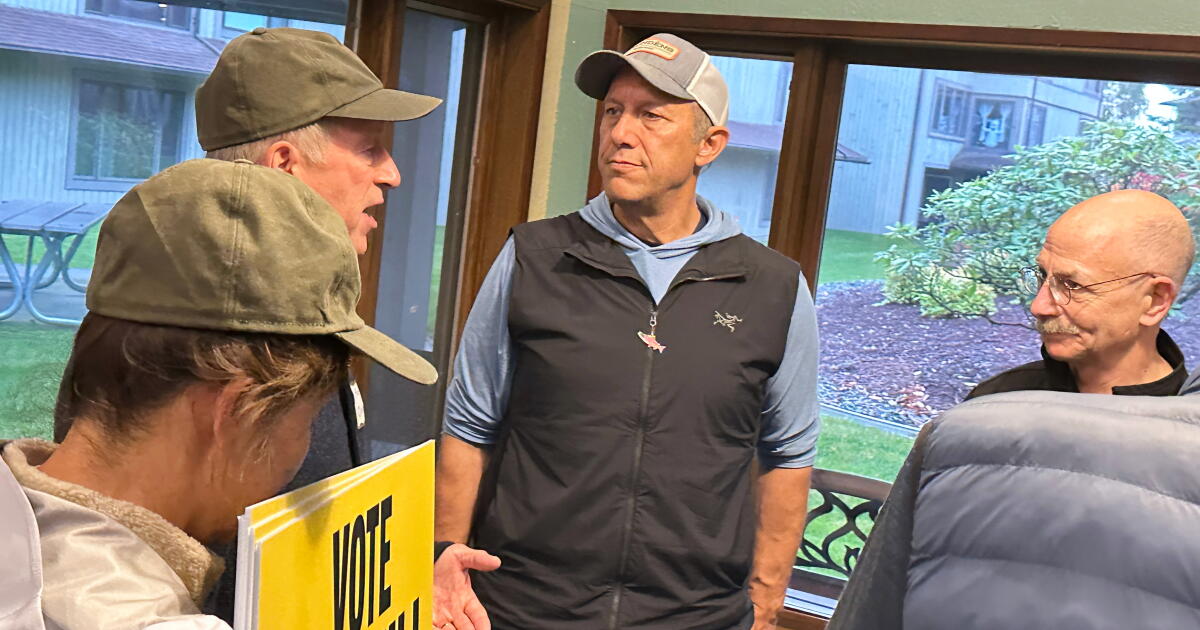
“We are pedal to the metal, making sure that every Alaskan knows about this campaign, every Alaskan knows what we stand for and every Alaskan knows that it’s really one of them going to Congress,” Hill told people at a campaign event this week in Juneau, wearing his standard campaign uniform of jeans, a zip-up vest and cap with a fishing company logo. “I need your help getting there.”
The race has become a concern for Republicans as they are trying to hold onto their majority in the U.S. House. Vice President JD Vance held a rally this week for Begich and Dan Sullivan, the U.S. senator who also is in a tight reelection race. President Trump is scheduled to do another in the coming week.
Begich and Republican political action committees have ratcheted up ad spending in the House race since the primary.
Planes, ferries and four-wheelers on the campaign trail
Hill, a first-time candidate who is Alaska Native, faces an incumbent from a prominent family long associated with the state’s politics. Begich’s late grandfather once held the state’s only U.S. House seat. Begich’s uncle Mark was a U.S. senator. Both were Democrats. Nick Begich is a lifelong Republican and has aligned himself with Trump, who has carried Alaska in his White House runs.
Hill’s campaign said he has traveled more than 20,000 miles in the state, including by plane, ferry and all-terrain vehicle, to introduce himself to voters and promote his message.
Begich’s name recognition presents a hurdle for Hill’s campaign, but some Democrats tried to clear a better path for Hill. One suspended his campaign before the August open primary and endorsed Hill. Two other Democrats with virtually no name recognition withdrew after the primary despite being in line to advance.
One candidate registered as a Democrat remains in the top four, Eric Hafner. He has no apparent ties to the state and is incarcerated in New York.
Hafner received 3.8% of the vote, enough to qualify for the ranked vote general election on Nov. 3. His submitted candidate biography appearing in state election materials makes no reference to his stint in federal prison, where he is serving time for making threats against police officers, judges and others.
Hill’s campaign has shared stickers showing Hafner in an orange jumpsuit and calling him a “fake ‘Democrat.’”
“We want to make sure that the Alaskan people are well-informed,” Hill said.
Begich gets support from Trump and the U.S. House speaker
The contest has received national attention, with spending by groups that include the National Republican Congressional Committee and House Majority PAC, which seeks to flip the U.S. House to Democrats.
In early August, U.S. House Speaker Mike Johnson, R-La., held a rally for Begich that was closed to reporters. Vance called Begich a “machine” and effective legislator during his rally in Fairbanks, where Vance also gave support to Sullivan, who faces a challenge from Democrat Mary Peltola, a former congresswoman.
Trump has cited Begich’s support of his signature package of tax breaks, social service cuts and immigration enforcement that was passed last year. The president plans to headline a rally Tuesday in Wasilla, hometown of Sarah Palin, the party’s 2008 vice presidential nominee.
Hill said the visits show Republicans are nervous.
“I was not going to get into this race to waste people’s time, to waste people’s money,” he said. “I did my due diligence before jumping in to ensure that there was a path to victory.”
Begich’s campaign did not respond to messages from the Associated Press. On social media, the campaign has highlighted events such as Begich’s visit to the Alaska State Fair and recently has taken swipes at Hill.
Zach Bannon, an NRCC spokesperson, said Begich has delivered “commonsense wins for Alaska,” including support of expanded oil and gas development. He called Hill a “far-left Democrat.”
Hill was endorsed by Democrats but asserts his independence
Hill, who was endorsed by the Alaska Democratic Party, said he is a lifelong independent. He said he will not be beholden to a “party boss” or party line, and he rankled some voters earlier in the campaign by not explicitly saying which party he would caucus with in the House if he were elected.
He has said he is willing to work with anyone on what is best for Alaska. He also has called for bans on congressional stock trading and for limiting the influence of money in elections.
Hill said he wants to help build coalitions, saying he “can be a big part of a small group that makes big changes.”
Democrat Bill Brown came to the Juneau event planning to vote for Hill but wanting to talk with him directly. He said they aligned on numerous issues, including support for the environment, schools and ending “forever” wars.
The retired economics professor said policy is important, but in this political moment he finds himself “most interested in the integrity of the candidate. Bill Hill convinced me on that issue.”
Hill, who is Dena’ina Athabascan, said the top concerns he hears about from Alaskans are the price of fuel and overall cost of living. He said he had to fly home earlier this year and pump fuel oil from the textile manufacturing business he runs with his wife and bring it back to his house in a barrel because the community had run out.
He said fuel prices jumped from about $6.70 per gallon to about $9 per gallon after a barge shipment to his town earlier this year. Prices also have been higher elsewhere, particularly in communities accessible only by air or water. On social media, Hill’s campaign calls out Begich for his support of the Iran war as it posts photos of fuel prices around the state.
Steve Davis, a voter at Hill’s Juneau event this week, called him authentic and a “really good dude.” He said he was drawn to Hill in part because he wants to see Congress reclaim its oversight role. Hill drew applause during the gathering when he said Congress must reassert itself as a separate but equal branch of government.
“We don’t need a unified executive, we don’t need kings,” Davis said. “We need a Congress that actually functions.”
New restrictions have stripped Medicaid coverage from certain legal immigrants, including refugees and victims of human trafficking, as part of broader federal changes to the health insurance program that are expected to force millions off their coverage.
The change effective Oct. 1 cut from Medicaid what is estimated to be hundreds of thousands of people who legally immigrated to the United States, many of whom work and pay taxes, in the latest Trump administration policy to target foreigners.
The move is part of sweeping changes to Medicaid under President Donald Trump’s 2025 tax cut and policy law, with many set to take effect early next year. The Medicaid changes are projected to result in 7.5 million fewer people with health insurance, according to the Congressional Budget Office’s 2025 estimate.
Advocates say that without Medicaid, people will not be able to afford private insurance and will either delay care or end up in emergency rooms, adding pressure to a strained health system. For immigrants, the cuts could be felt more acutely, compounding the effects of other administration efforts to restrict their access to public assistance as part of a broader immigration crackdown.
“This is about telling every immigrant in the United States that they are not welcome here and that they should leave,” said Ben D’Avanzo, a senior strategist at the National Immigration Law Center, which has pursued litigation against the Republican administration over its immigration agenda.
Refugees, asylum seekers, victims of human trafficking and domestic violence are among those who have lost coverage. Green-card holders were not impacted.
Lauren Bis, a White House spokesperson, said in a statement that “immigrants must be able to support themselves without taking from overburdened benefits programs paid for by hard-working American taxpayers.”
D’Avanzo said many people who have lost coverage will likely only realize when they need medical care. But for some, the change has been felt immediately.
Dwindling supplies of lifesaving medication
In Tucson, Arizona, María Chacon has been caring for her son Jesus for almost five years since a car accident at 17 left him unable to breathe on his own. He requires a ventilator, a feeding tube and daily medication, and must be turned once every two hours to stop sores from forming. Chacon said he sometimes opens his eyes.
The family is originally from Mexico and entered the U.S. on a T visa, offered to victims of human trafficking, in 2018.
Chacon said Medicaid has helped cover almost $25,000 per month of care for her son, which includes a small stipend for her and her husband as compensation for being long-term caregivers. She said doctors have explained that even if they both worked 24 hours a day, they would not be able to cover the cost of his care.
“Since that day I haven’t been able to sleep. We haven’t been able to eat or anything. We’re wondering what we’re going to do?” Chacon said.
Jesus takes medication that Chacon estimates costs $7,000 a month. The supply runs out in mid-October. Without coverage, she does not know how her son is going to survive.
Chacon found out just days before the cuts that she was losing care. She called the state’s Medicaid offices to appeal. Although she is in the process of obtaining a green card, Medicaid coverage would only kick in five years after she is approved.
Steven Camarota, research director for the Center for Immigration Studies, a right-leaning think tank that seeks less immigration, said the administration “is trying to nibble around the edges” with the Oct. 1 cuts, finding piecemeal ways to curb immigration into the U.S.
Camarota believes the government should screen legal immigrants for income potential and education, reducing the number who might rely on public benefits once they cross the border.
“You need immigrants who are unlikely to need welfare,” he said, or those with high educational attainment.
The administration recently revived a federal rule that could deny green cards to immigrants who use public benefits that could include food stamps, Medicaid, housing vouchers and others.
Chacon believes the cuts to Medicaid coverage are part of the administration’s clampdown on immigrants. She said her son is in no condition to travel.
“I know that’s what he’s doing, but, as my son is, I couldn’t go to Mexico,” Chacon said.
Millions more will be dropped from Medicaid
Medicaid, jointly funded by states and the federal government, has become a political focal point during Trump’s second term. The president has pushed to root out what he describes as fraud in the program. In July, the administration deferred over $1 billion in Medicaid payments to California and Minnesota, claiming there was suspected fraud; critics argued the move targeted Democratic-led states.
As more people are cut from Medicaid, the federal government is predicted to reduce program spending by $911 billion, according to healthcare research nonprofit KFF.
In Arizona, officials said 29,000 legal immigrants were cut from Medicaid rolls on Oct. 1. In Florida, estimates are closer to 177,000. Overall, more than 281,000 immigrants from nine states and the District of Columbia are estimated to lose Medicaid coverage, according to KFF.
As more states implement various restrictions to coverage, 7.5 million people are expected to lose coverage by 2034, according to analysis by the Congressional Budget Office.
Without coverage, people will turn to emergency rooms for care. When people delay seeing a doctor, conditions can worsen and become even more expensive to treat.
“At the end of the day, it does raise the cost for the states because once you get these people in for something that could have been prevented, they could not go to the doctor because they were uninsured; they most likely will end up at a hospital in an emergency room,” said Carmen Feliciano, the vice president of policy and advocacy at UnidosUS, a Latino civil rights organization.
UnidosUS partners with community organizations to help provide medical care, but Feliciano said they already are overwhelmed and would not be able to support the number of people who are going to lose medical coverage in the coming months.
“We are not going to have the capacity to serve all the people who need it,” Feliciano said.
Schuettler and Hussein write for the Associated Press.
In rural Modoc County, in California’s remote northeast corner, Republican gubernatorial candidate Steve Hilton donned a beige cowboy hat and climbed atop a horse.
Riding through a grassy field, with his dress shoes in the stirrups, Hilton lamented to a camera that California was “completely being ruined by killjoy bureaucrats” who put too many rules on fun stuff like beach fire pits and bars that stay open extra late.
In coastal San Luis Obispo County, Hilton boarded a bright yellow dune buggy at the Oceano Dunes State Vehicular Recreation Area and called the California Coastal Commission “idiots” for trying to end off-road beach driving.
And in the Central Valley, he waved the ceremonial green flag at a stock car race at the Madera Speedway, where he was named grand marshal of the annual Harvest Classic. (The designation caused a minor uproar, prompting the operator of the racetrack to make a fake online concession menu that offered a hot dog and soda for $6 for Republicans and $17.50 for Democrats.)
If it seems like Hilton — the British immigrant and former Fox News talk show host — is just about everywhere, taking just about every media interview that comes his way, well, that’s the point, he says.
He has logged thousands of miles on the proverbial campaign trail, visiting all 58 counties in his quest to lead the nation’s most populous state, where no Republican has been elected to statewide office in 20 years.
Meanwhile, his heavily favored — and far more staid — opponent, Democrat Xavier Becerra, has kept a comparatively low profile, agreeing to just one debate with Hilton and holding few public events, mostly in urban areas.
In a phone interview while driving through Los Angeles, Hilton said: “Whether I’m in Humboldt or Del Norte or Siskiyou County, my joke is, when people say, ‘Where do you live?’ I say I live in the Hampton Inn somewhere in California because we’re basically in a different place every night.”
The odds are against him.
Sure, California produced GOP presidents Richard Nixon and Ronald Reagan. But today, Democrats outnumber Republicans nearly 2 to 1 in the state, and the current White House occupant shares a mutual disdain with the vast majority of Golden State voters.
Hilton was endorsed during the primary by President Trump, who suggested at a campaign rally this month that Iran could “take out” Los Angeles and San Diego, drawing swift outrage from both Democrats and Republicans.
Hilton has tried to walk a fine line, appealing to the 6 million Californians who voted for the president in 2024 while simultaneously downplaying Trump’s support.
This summer, Hilton took out full-page ads in The Times and the San Francisco Chronicle asking: “Can you be anti-Trump and still vote for me?”
“Yes, I’m the Republican,” it said. “The ‘Fox News guy.’ Endorsed by Trump. But this election is not about who you hate in Washington. It’s about what you love here.”
Corrin Rankin, chairwoman of the California Republican Party, said that 16 years after the state’s last Republican governor, Arnold Schwarzenegger, left office, “it’s safe to say Democrats own all the problems in California.”
“You can’t blame Trump for what’s going on here in California,” she said. “We feel really good about Steve Hilton’s campaign. He is working so hard, up and down the state.”
Hilton has blasted California Democrats as entitled, saying they assume Becerra will cruise to victory in the race to replace termed-out Gov. Gavin Newsom simply because he has a “D” beside his name on the Nov. 3 ballot.
Hilton frequently quotes a September podcast interview by Los Angeles’ Democratic mayor, Karen Bass, who mocked his British accent and said: “The governor’s race right now is over. Our governor’s name is Xavier Becerra. You don’t need an election on Nov. 3. A Republican cannot win in this state.”
Hilton told The Times that Democrats “feel they don’t have to earn your vote. … They can deliver results that are bad as ever, and they don’t need to work hard to deliver results for people or earn their support. And I think it’s that attitude that is going to be their downfall.”
Steve Hilton has the support of 33% of likely California voters, according to a recent poll, while rival Xavier Becerra has 58%.
(Jason Armond / Los Angeles Times)
Becerra is a former member of Congress who represented Los Angeles, and he was the California attorney general and U.S. Health and Human Services secretary under President Biden. He has the backing of 58% of likely California voters, compared with 33% who support Hilton, according to a poll released late last month by the UC Berkeley Institute of Governmental Studies and co-sponsored by The Times.
The poll showed that voters’ top concern was reducing the state’s high cost of living — followed by fighting Trump administration policies.
“Hilton is trying to win an election, so he tries to frame himself as someone who can appeal to the broader electorate,” Underland said. “But at the end of the day, he has the albatross around his neck, which is Trump, who is openly hostile to California.”
Hilton cuts a colorful and pugnacious figure on the campaign trail. He eschews ties and jackets, favoring T-shirts with punchy phrases like, “$ave With Steve” and “WAKE UP” superimposed on a California license plate — a reference to his proposal to eliminate the state’s Department of Motor Vehicles and slash vehicle registration fees, which would cut billions in state revenue.
He wears one bracelet with the name of slain right-wing activist Charlie Kirk, whom he called an “incredibly close friend.” Another reads, “Save Girls’ Sports,” calling back to this spring, when he traveled to the state high school track and field championship in Clovis to protest the participation of a transgender athlete.
Republican nominee Steve Hilton protests transgender athletes’ participation in girls’ sports during a May 29 news conference in Clovis, Calif.
(Tomas Ovalle / For The Times)
Hilton, 57, was born in London to parents who fled conflict in their native Hungary during the 1956 uprising against the Soviet-controlled communist government and later anglicized their surname, Hircsák, to Hilton.
He was a senior advisor to British Prime Minister David Cameron, a member of the Conservative Party, though the men’s once-close friendship never recovered from Brexit, Britain’s withdrawal from the European Union. Hilton supported it; Cameron did not.
Hilton earned a reputation as eccentric but savvy, pushing the Conservative Party to embrace same-sex marriage and more climate-friendly policies. Dubbed “the barefoot revolutionary” for his refusal to wear shoes, Hilton was satirized on the BBC political sitcom “The Thick of It” as Stewart Pearson, the Tories’ “eco-friendly, media-savvy, blue-sky-thinking” communications director.
He and his family moved to California in 2012 after his wife, Rachel Whetstone, was promoted to lead global communications at Google. For six years, he hosted “The Next Revolution,” a weekly Fox News show from which Trump regularly tweeted clips.
In 2015, the couple purchased their home in the Silicon Valley city of Atherton, one of the wealthiest ZIP Codes in the U.S., for $12.5 million, property records show.
Whetstone now leads communications for Sierra, an AI startup founded by OpenAI board Chairman Bret Taylor and Clay Bavor, who met while working at Google. Hilton and Whetstone’s 2024 tax returns show they had a combined household income of $7.5 million, which included his reported earnings of $250,000 from Fox News and her $6.7 million from her then-employer, Netflix.
Hilton became a U.S. citizen in 2021 and last year renounced his British citizenship.
He finished second in the June 2 primary behind Becerra. Under California’s top-two primary system, the first- and second-place finishers, regardless of party, advance to the general election.
The pack of Democratic candidates was so large that party leaders initially urged struggling candidates — including Becerra — to drop out to avoid splitting the vote. Becerra shot to the top of the polls when then-Rep. Eric Swalwell, a front-runner at the time, dropped out of the race after he was accused of sexual assault and misconduct.
Republicans coalesced around Hilton after the president endorsed him over his GOP rival, Riverside County Sheriff Chad Bianco, a staunch Trump supporter who later said the endorsement made Hilton unelectable.
Kim Nalder, director of the Project for an Informed Electorate at Sacramento State, said it is exceedingly difficult for Hilton to distance himself from Trump and the Fox News brand.
“If you had a different brand of Republican they might have a shot,” given the discontent in the state over myriad issues, she said. “But Trump is so politically radioactive in California right now that it is an effective technique to tie this particular candidate to him.”
California’s population growth is stagnant after years of pandemic-era losses, with immigration lagging amid the Trump administration’s crackdown and many residents leaving the state for more affordable parts of the country.
Greg Perrone, past president of the conservative Greater Bakersfield Republican Assembly, said he was impressed with Hilton’s policy knowledge and the amount of detail in his economic plans.
Steve Hilton, right, chats with Sir Richard Branson before a White House dinner with then-British Prime Minister Cameron and President Obama in 2012. Hilton was an advisor to Cameron.
(Susan Walsh / Associated Press)
“There’s a real concern that the current state of the economy is worse than people expected,” Perrone said. “A lot of people hung their hat on Donald Trump saying he was going to bring down prices, and that just has not happened. There’s a lot of angst.”
Perrone said he remains a Trump supporter, though he has been frustrated by the frenetic roll-out of tariffs that, he said, hurt many businesses. While he has been annoyed that Becerra, in his view, has focused more on the president than laying out his own detailed economic plans, he acknowledged that the strategy plays well in blue California.
Christopher Cole, former chairman of the Lassen County Republican Party, said that in his rural corner of the state, he has seen Trump banners that have hung since 2016 start to come down because people are angry about the Iran war, the high cost of fuel and the economy.
“When Trump stupidly endorsed Hilton, it was the kiss of death for any down-ticket Republican,” said Cole, whose county voted for Trump on 76% of the ballots in 2024, the highest percentage in the state, and was the only one to support Bianco in this year’s primary.
“Hilton is a carnival barker and a very wealthy man,” said Cole, who supported Bianco. “You can’t run a multimillionaire when people are struggling to put food on the table.”
Hilton has made a slew of campaign promises to lower the cost of living, including having no taxes on income below $150,000, lowering energy bills by slashing climate-friendly regulations imposed by Democrats, and having $3 gasoline (though governors cannot directly set the price at the pump, which is driven largely by global crude oil supply and demand).
He has tried to channel the state’s discontent into persuading voters to “try something different” by voting Republican.
During the gubernatorial race debate on CNN last month, Hilton quoted a former Biden domestic policy advisor who reportedly called Becerra a “bitch-ass,” and his campaign promptly launched a website, bitchassbecerra.com, outlining alleged failures of the politician known for his calm demeanor and decades of government experience.
“I think Hilton got dealt a bad card with Becerra making the runoff,” said Rob Stutzman, a Republican strategist who was Schwarzenegger’s spokesman. “It’s difficult to get anyone outraged about Becerra because he is perfectly boring. He worked for Joe Biden — maybe that upsets some people? — but you can’t associate him with any bizarre, woke policies like you could Kamala Harris or Gavin Newsom.”
Hilton’s campaign this month released a provocative, sexually suggestive ad titled “Just Try It!” in which two young women sit on a bed in a candlelit room. An LGBTQ+ pride flag hangs on the wall, and they’re seemingly talking through one’s first romantic encounter with another female.
In a recent poll, voters rated California’s high cost of living as their top concern, followed by fighting Trump administration policies. Above, people gather in North Hollywood to watch the Sept. 30 gubernatorial debate.
(Jason Armond / Los Angeles Times)
Wearing a T-shirt that says, “RESIST,” the anti-MAGA mantra, the first-timer nervously says: “I’ve just never done anything like this before. Like, what if my dad finds out?”
The other woman holds her hand as she fills out a ballot for Hilton then says, “Now lick it,” referring to the mail ballot envelope.
Some conservatives condemned the ad, saying it promoted lesbianism. Liberals criticized it, too, saying it was insensitive to the LGBTQ+ community.
The day the ad launched, he told The Times: “I think there’s a very strong sense that things aren’t working in California, and my argument is: ‘OK, let’s try something different.’”
Later, he said he never meant to offend anyone with the risqué ad, which did, after all, do its job in racking up millions of views online — coveted and invaluable publicity for a long-shot California Republican.
Authorities urge villagers to move to safer places after a river bursts its banks in the central part of the country.
Published On 11 Oct 202611 Oct 2026
Flash floods have hit central Nepal, sweeping away houses and leaving at least five people missing, according to officials, weeks after devastating flooding in the country that killed hundreds.
A landslide in Chumnubri village in Gorkha district, about 100km (62 miles) west of Kathmandu, blocked the Budhi Gandaki River on Saturday, leading to downstream flooding, authorities said.
Recommended Stories
list of 4 itemsend of list
Two women and three men were unaccounted for, and there are no reports of casualties, said the National Disaster Risk Reduction and Management Authority (NDRRMA).
According to the agency, at least 82 people, including nine foreigners, have been rescued from the affected areas.
The flood swept away about a dozen houses and two suspension bridges and damaged a hydroelectric project camp, carrying some of the construction equipment away, authorities said.
A muddy torrent washed away a highway bridge connecting Gorkha with the neighbouring Dhading district, said NDRRMA Chief Executive Dharam Raj Uprety.
Evacuation order
The Budhi Gandaki is a tributary of the Trishuli River, downstream from another tributary where a glacier collapse caused a catastrophic flood in August that killed 1,457 people, with thousands still missing.
“We have asked villagers living along the riverbanks downstream to evacuate and remain safe,” said Dharmendra Kumar Mishra, Gorkha district’s most senior bureaucrat.
National disaster authorities alerted people living along the river in the Gorkha, Tanahun, Chitwan, East Nawalparasi and West Nawalparasi districts about the flood.
“Please help ensure that people in at-risk areas are moved to safe locations in time and assist search and rescue operations as needed,” the NDRRMA said in a social media post.
Officials said army and police rescue personnel had reached the area and were also monitoring the situation from a helicopter.
“The flood looked similar… It was very scary, and it still feels like a nightmare for us,” said local official Laxmi Gurung of Chumnubri rural municipality.
“Our house is gone, we have no electricity… but there have been no casualties.”
Heavy rainfall in late September also triggered floods and landslides, killing at least 21 people, according to the disaster agency.
Under an existing state appropriations restraint, also known as the Gann Limit, lawmakers cannot spend more in the state budget than an amount determined by a formula that takes annual tax proceeds, changes to the population and cost of living into consideration.
Tax revenue above the limit must be divided between schools and refunds to taxpayers. More recent carve-outs in the law also allow leaders to direct excess funds to infrastructure and local government.
The limit applies to most other appropriations of tax revenue, including money that lawmakers tuck away into the “rainy day” fund and other reserves.
California voters also have capped the amount of money lawmakers can set aside in the rainy day fund at 10% of general fund proceeds in a given year.
The proposed changes would exempt deposits into the rainy day fund and a short-term reserve, called the Projected Surplus Temporary Holding Account, from the state appropriations limit. The cap on the rainy day fund would grow from 10% of general fund tax revenue to 20%.
In effect, the measure would allow the governor and the Legislature to put more money into budget reserves, creating another option to avoid triggering rebates.
For example, if the spending limit is $400 billion for the year, and revenue hits $410 billion, the measure would give lawmakers the option to deposit the $10 billion above the spending limit into the rainy day fund, direct the money to infrastructure or give it to local governments, instead of returning the funding to taxpayers and increasing funding for schools.
Brandon Flowers stands onstage at the Ford Theatre wearing a sharp black suit and a bejeweled bolo tie and tells the audience about his cousin Bobby’s job parking cars in the 110-degree heat of the Las Vegas Strip.
“That was gonna be me in another life, only my big plan was to work at the Bellagio,” he adds. “Nicer place, more tips.”
As the frontman of the Killers, Flowers, 45, has spent more than two decades singing about the struggles and the temptations at the heart of the American dream. But on his new solo album, “Thrasher,” he trades the Killers’ gleaming, synth-laced rock for the crackling sound of hand-played country music.
He cut the LP at Nashville’s historic RCA Studio A, where country giants like Dolly Parton and Waylon Jennings once worked; not only that, but to accompany him he recruited veteran session players including David Rawlings, Bruce Bouton and 85-year-old Charlie McCoy, who played harmonica on George Jones’ immortal “He Stopped Loving Her Today.”
Yet for all its old-school country cred, “Thrasher” also emphasizes Flowers’ roots as a Vegas showman — his tremulous croon, his go-for-broke emotion, his almost preacherly understanding of how to take a crowd up (and up) and how to take it back down. Think Glen Campbell or Donny Osmond.
“Or Wayne Newton,” says Rawlings with admiration. The guitarist, known for his long collaboration with Gillian Welch, performed with Flowers at July’s Newport Folk Festival. “It’s really thrilling to see the way he inhabits this stuff onstage,” he adds. “I have such incredible respect for anybody who knows how to entertain at that level because it’s an absolute gift — and it’s really hard work.”
Flowers, who grew up in Las Vegas and Utah and who shares three sons with his wife, spoke about the album in his dressing room last month a few hours before the Ford show. A sequel to “Thrasher,” recorded during the same sessions, is due out next year.
The Nashville OGs who played on these records — do you think they were impressed by you? I think they were refreshed. I think they didn’t quite know what they were getting into and were pleasantly surprised.
For you, it was a different way of working, right? These players are artists. But it’s also just another day on the job. You feel that: “Charlie’s got to leave at 4 to go to the Opry.” He still gets his licks in.
I wonder what it would’ve sounded like to cut 10 Killers classics with this band. Probably like the Traveling Wilburys or something. The second album has some of that DNA. This one was more of a narrative album — a lot of stories. The other one, it’s more in the romantic realm. I’m excited to get it out. I have another one cooking.
A third album? Well, because they’re so efficient. It’s opened up a door for me that I feel like I’ll always be able to explore. If I have 10 songs, I can go to Nashville for five days and cut the whole thing. We do two songs a day, no problem.
You’ve said there’s this idea in rock music that making an album needs to feel like climbing a mountain. I blame it on U2. You don’t feel like you’re doing it right if you’re not doing that. We really went into that on “Sam’s Town” — we climbed Everest, man. When we finished “Sam’s Town,” I remember the last day — it was like 6 in the morning, the sun was up and we were finally done. What a relief it was.
Now the veil has been lifted. It doesn’t have to be like that.
Did you get a feel for Nashville as a town while you were there? I got a breakfast spot: Cafe Roze. I don’t want to blow it up too much because I want to be able to get in. But you know Cafe Stella in Silver Lake? They used to have my favorite breakfast in the world: sourdough, soft scramble, prosciutto and Parmesan. And they have that exact thing at Cafe Roze — it’s like I’m transported back. I could eat it every day with a side of avocado.
“Thrasher” follows a number of country excursions by rappers and pop stars. Do you have any anxiety about being seen as a carpetbagger? No, because I’m not trying to bulldoze my way into the world and open a bar in Nashville. This is an authentic part of myself — I have an education in this music. People have a lot of preconceptions about country music, especially lately. Everyone says the same thing: cold beer, dirt road, Friday night. But there’s such an art to the tradition — it’s a soulful artistic endeavor. I’m trying to come at it from that angle.
What’s your relationship with modern country music — Morgan Wallen and Miranda Lambert and the like? I don’t have one. It’s more people that are on the fringes, I guess — Jason Isbell or Sturgill Simpson. I got Sturgill’s guitar player because I was a fan of that stuff.
Before I heard “Thrasher,” I expected kind of a stripped-down Isbell vibe. I could see him doing “In a Heartbeat” or “Miss America.” But once we got to Nashville and got the guys in the room, it just got a little more pep in its step.
Does being embraced by the Nashville industry feel like a reasonable goal? That’s a whole other nut to crack. You hear stories about Dwight Yoakam having a tough time — and he brought some heat. Or John Prine just because he was from Illinois and not from further south. I’m not gonna go on a campaign to prove how worthy I am.
You’ve been dinged by people who think you’re putting on an accent on this record. I feel like this is more how I speak than maybe they’re accustomed to. I don’t know, I might’ve leaned in a couple times. There is a Utah accent — it was something I was embarrassed by when I was younger. But now I’ve lived there 16 years of my life total, so it just starts feeding its way back in.
Is your vocal approach different for country than for rock? There’s more quiet in these songs — more room for the story to be told. In the rock band, I’m competing — everybody wants to be heard — whereas this one, there’s this beautiful thing where the guys don’t mind being in the background. They want to frame the picture, and I’m the picture.
Did you find yourself making more of an effort to enunciate? I’ve always been cognizant of that. Just today, there was a band — I won’t say who it was — but I was interested in hearing their new thing, and I didn’t understand a word until the chorus. I was rooting for the guy the whole time, but it’s like: How can I fall in love with this if I don’t know what’s happening?
Brandon Flowers performs last month at the Ford Theatre.
(Rob Loud)
Got some questions about specific songs. “One of Us” is about your brother-in-law, which made me realize how few people write songs about their in-laws. He passed away unexpectedly a few years ago. You know, I’m the youngest of six, and he married my oldest sister. She’s 17 years my senior, so when they got married, I was a kid — he became my big brother and was a masculine figure in my life and all that. There’s your family and then there’s your found family, and he’s part of my found family. I wanted to honor him, and this is my way of doing it.
I assume your sister’s heard the song. Oh yeah. A lot of those moments happen on this record where I had to play the song for the person, and you just can’t help but be brought closer together. You’re taking part in their grief but we’re also celebrating him. It was beautiful.
“Miss America” is about another one of your sisters. The one next in line.
She’s addressing an abusive ex, and you sing it from her point of view — from a woman’s perspective. It just started like that. I don’t remember a moment of thinking: Am I gonna do this from the outside or am I gonna step into her shoes? Maybe it’s something to do with that Tom Waits song [“Christmas Card from a Hooker in Minneapolis”] — something about that maybe gave me permission.
Did you play “Miss America” for that sister? It felt like the gentlemanly thing to do. If she’d said no, I would’ve been heartbroken because I think “Miss America” is gorgeous — I’m really proud to be part of it. But I would’ve honored her wishes.
In “An American Dream,” the point of view seems to keep shifting. At one point I think the narrator becomes Elvis Presley? Chorus 1, I’m singing with this man that used to give me cigars and tobacco when I was a kid — we’re singing it together. Giving a 13-year-old Red Man tobacco — there was nothing shady about it, or nothing too shady — but it was still a wild move. Then Chorus 2, Elvis and I are both singing — I see it that way.
Which era of Elvis are you envisioning? Whenever I think of him, I think of him in ’68. Nobody’s ever looked that good — it’s not fair.
You’re known for your flights of lyrical fancy: “Burning down the highway skyline in the back of a hurricane,” for instance, from the Killers’ “When You Were Young.” Did country music allow for those flourishes? Verse 2 of “Does It Ever Cross Your Mind?” is a great example: “I could’ve been born in Bangladesh but I wasn’t / I was born here with just enough jelly beans in my basket to ask you to go wishing on a star.” That’s fun.
In “An American Dream” you say, “We blew through starlight on bricklayers’ knees.” We’re performers, and we’re here to entertain you. But we’re working-class men, me and Elvis.
Some of these lines get at this crucial point that I think your music makes, which is that pageantry and sincerity can coexist. I think people get confused a lot — they might look at a line like the one you just talked about and think it’s total bulls—. It’s annoying to me to read a review and see where they just don’t get it — and they think they’re the smart one. I saw someone talking about my tropes, and they brought up the Bangladesh line. I thought: What are you talking about? That’s the most left-field line.
You’re challenging the listener to accept that over the top doesn’t necessarily mean phony. It’s so American to be over the top and to still have substance. That’s the chorus of “An American Dream”: “Gold and silver / God and glitter.” I guess I’m trying to spoon-feed it there a little bit.
Plenty of Killers songs involve people making bad decisions. How do you think about the degenerate’s place in country music? It’s funny how people aren’t quite familiar with how wild it was. The same person in me that was excited about old Depeche Mode stories still gets excited about old George Jones stories. And a part of me yearns for that. But I keep it under wraps.
Your oldest son is 19, which means you became a dad at a fairly young age. It was just par for the course. I grew up in an LDS family — my sisters were having kids when they were 17 and 18. So having Ammon at 26 — that was the oldest anyone had had their first child in my family. They were like, “Brandon might be gay.”
How did you reconcile the rock star and new dad halves of your life? It sort of gave me a direction early on because I was a little bit teetering in those days. Who’s ready to have this wild fame brought on them at such a young age? We weren’t the Beatles, but “Hot Fuss” and “Sam’s Town” were really successful records — we went straight to arenas. It was tough to navigate, and family gave me an anchor.
Do you hear before parenthood and after parenthood in your music? There’s a song called “Be Still” on the fourth record — a song to the kids. But I don’t know if the writing changed that much. Everybody was getting older in the band, so whatever happened, you can’t place the blame just on me.
Iran. Afghanistan. North Korea. Somalia. And now, the United States.
If Secretary of Defense Pete Hegseth is to be believed, America will soon gain the dubious distinction of joining the only four countries on the globe that carry out executions in public.
Hegseth said Thursday that he wanted the execution of convicted F.t Hood shooter, Army Maj. Nidal Malik Hasan, to be available for public viewing.
“It was a radical Islamist attack … so he’s going to get a firing squad of soldiers, as it should be,” Hegseth said in an interview with far-right political activist Jack Posobiec. “We’ll make sure that people are able to watch it. That it’s public. Because people need to understand that there’s serious consequences for these types of things.”
The execution is scheduled to be live streamed Dec. 3 from the same military base where Hasan opened fire in 2009, killing 13 and wounding 32.
The planned public display is, in a word, barbaric. It’s the archaic act of tyrannical monarchies, staged in the shadow of a looming tower or in the town square. The Taliban and ISIS were big on public executions. So was Nazi Germany. They were either fighting a war on their own soil or had just come out of one. It’s a poor excuse, but the U.S. military can’t even point to that as justification for the animalistic intention of broadcasting a state-sanctioned murder.
Should plans for the livestream of Hasan’s killing become a reality, our peers will be countries that the U.S. has long held up as the worst of the worst. Oppressive “shithole” countries, to use a Trump term, that wield intimidation and the threat of death to keep their people in line.
Iran carries out its hangings in public squares, typically using truck-mounted cranes as makeshift gallows. The Taliban exacts its death penalty in sports arenas. Amnesty International reports that North Korea forced local residents, students and workers to watch the 2008 execution of 13 women and two men as a deterrent. Their crime? Attempting to flee to China.
Hasan, an Army psychiatrist and a Muslim, opened fire on dozens of his fellow soldiers as they were preparing to deploy to Afghanistan. He was reportedly angry about the U.S. involvement in the region and in Iraq. In court, prosecutors argued that he was radicalized online and motivated by an ideology that called for “jihad duty.”
His crimes were horrific, and he should be punished. Whether you believe in the death penalty or not (I do not), turning his execution into a morbid form of entertainment — or a warning to never do what he did — would mark a new low for this country.
And we are pretty low as it is. On Thursday, ICE agents in civilian clothing fired at least seven rounds, at 4 p.m. on a busy Manhattan street, into a car with a 5-year-old boy inside. They hit the driver, who survived, and by some act of god missed the child.
Federal immigration agents have shot at least 21 people, killing seven, since President Trump returned to office less than two years ago with the promise of cracking down on crime and making the country safer via mass deportations. The public execution of Hasan, who is a U.S. citizen, is being sold as part of that tough-on-crime initiative. Hegseth himself said the public killing is meant as a deterrent.
The idea that keeping a population safe requires removing the guardrails of civilized society is absurd, though despots throughout history would have us believe otherwise.
If Hasan’s death is televised, it will be the nation’s first government-sanctioned execution carried out in public since 1939. It will be the first U.S. military execution since 1961 and the first military death by firing squad, or “musketry,” since 1945, according to the Death Penalty Information Center.
The Army had planned a very different type of execution for Hasan. ABC News reported that officials were preparing to use lethal injection if Trump authorized the execution of one of the four prisoners on the service’s death row.
Trump’s approval of Hasan’s execution last Friday came days after a botched lethal-injection execution in Tennessee. Christa Pike, who was sentenced to death for a 1995 murder she committed as a teenager, survived despite being injected with two supposedly lethal doses. She is now said to be lucid and even walking.
Hasan, who is partially paralyzed and uses a wheelchair after being shot by officers who were responding to the Ft. Hood attack, will be put to death in a more dramatic fashion — and for everyone to see.
“The public execution even of one who has done grave harm will only further undermine the moral fabric of our nation and be a blight on the conscience of its people,” Oklahoma City Archbishop Paul Coakley said in a statement Friday. “The word of God exhorts us: ‘do not repay anyone evil for evil’ (Romans 12:17).”
A few congressional Republicans even broke ranks with their party and criticized Hegseth’s plans for the livestream. Sen. John Curtis of Utah posted on X that “a civilization erodes when it cultivates an appetite for executions as a form of entertainment. Secretary Hegseth’s plan to livestream the Fort Hood execution risks feeding that appetite.”
There is no reason the U.S. should stoop to the barbarism of public executions. It’s ghoulish, inhumane and a marker of tyrannical rule. Do we really want to join Iran, Afghanistan, North Korea and Somalia in the global hall of shame?
Céline Dion will go on — even after taking a little tumble onstage.
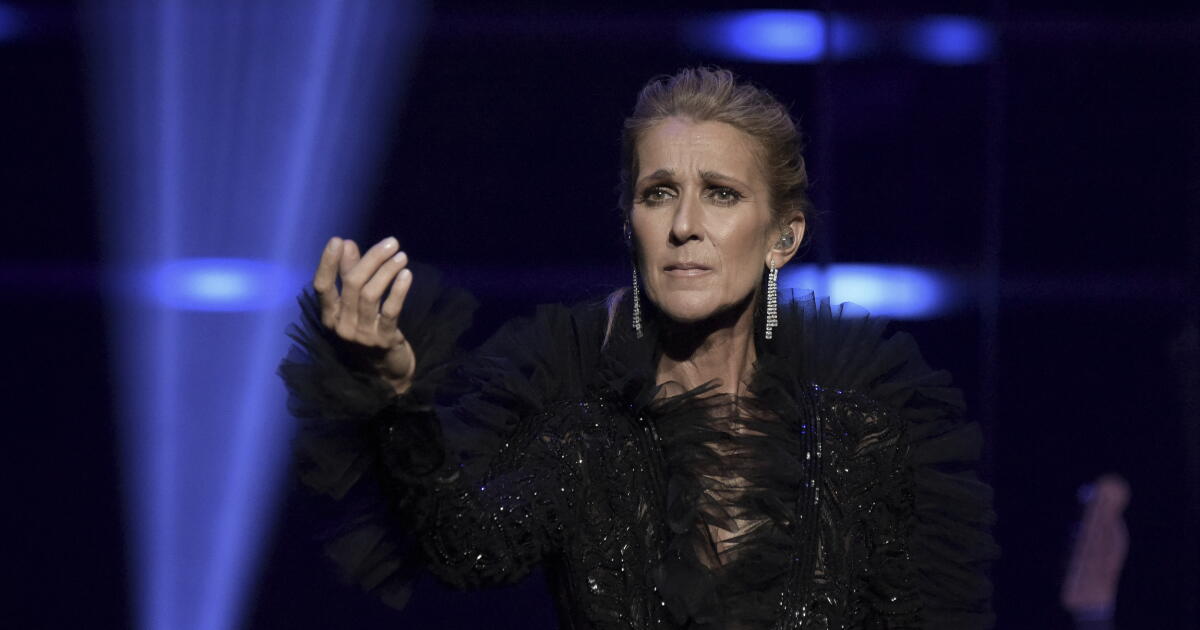
The 58-year-old singer slipped in front of a live audience while performing “Dans un Autre monde” during her Paris residency on Oct. 7. But the French Canadian singer quickly got back up and signaled to fans that she was A-OK by flashing a thumbs-up, in footage obtained by People.
Despite the slight stumble, it has been a triumphant comeback to the live stage after a six-year hiatus for the “All By Myself” singer, who has shows scheduled for this fall and next spring at the Paris Plenitude Arena (formerly Paris La Défense Arena).
In 2022, Dion was diagnosed with stiff-person syndrome (SPS), an autoimmune neurological disorder that affects about one in a million people and has no cure. The illness is characterized by muscle rigidity in the torso, arms and legs. Sensitivity to noise, touch and emotional distress can set off muscle spasms, according to the National Institute of Neurological Disorders and Stroke.
Following the diagnosis, Dion canceled her North American Courage World Tour in May 2023 (which originally began in 2019 but was interrupted by COVID-19 pandemic) as she continued to deal with severe muscle spasms and was having difficulty controlling her voice.
“I’m so sorry to disappoint all of you once again. I’m working really hard to build back my strength, but touring can be very difficult even when you’re 100%,” she said in a public statement on her website in May 2023. “It’s not fair to you to keep postponing the shows, and even though it breaks my heart, it’s best that we cancel everything now until I’m really ready to be back on stage again.”
Her early symptoms began in 2008 during her Taking Chances World Tour, when she experienced difficulty controlling her voice despite doctors saying her vocal cords appeared normal, she shared with Vogue in 2024.
Additional details about her struggles with SPS came to light in a 2024 Prime Video documentary titled “I Am: Celine Dion,” directed by Academy Award nominee Irene Taylor, which follows the singer as she navigates the drastic changes to her health.
The “It’s All Coming Back to Me Now” singer has experienced broken ribs because of the spasms, she told Hoda Kotb on “Today” in 2024 while promoting the documentary. Her journey back to the spotlight has entailed intense physical therapy, vocal rehabilitation and medication, she said.
“I’m going to go back onstage, even if I have to crawl, even if I have to talk with my hands, I will,” Dion shared. “Not just because I have to, or because I need to, but because I want to. And I miss it.”
Netflix plans a substantial round of layoffs as the streaming giant faces rising competition and pressure to retain its subscribers, according to people familiar with the job cuts.
The cuts are expected to affect 5% of the company‘s workforce, which could be 800 employees, according to one of the sources who was not authorized to comment. The job losses will affect the creative team including those working on features, the source said.
Netflix declined to comment. The planned cuts are believed to be the biggest at the Los Gatos company since 2022. The news was first reported by news outlet Puck.
Netflix has been under scrutiny from investors over how much time its subscribers spend on the streaming service. View hours rose only about 2% in the first half of 2026 compared with a year earlier, even as content spending climbed.
“Overall we’re not growing as fast as I want us to, and we’re working on making that move faster,” said Netflix co-Chief Executive Ted Sarandos at the Bloomberg Screentime event last week.
Netflix has noted how engagement can be measured in different ways. For example, its investment in live programming helps spur significant subscription sign-ups, even though it represents a small percentage of watch time on the streaming service, the company has said.
But some investors remain skeptical about the company’s future growth. Rival YouTube remains the leader in streaming viewing hours in the U.S. on TVs, representing 14.2% versus Netflix’s 7.8% in July, according to Nielsen. Netflix stock has also declined 43% compared to a year ago. On Friday, the stock closed at $70.30, down about 2%.
Netflix last conducted major layoffs in 2022 after the streamer reported subscriber losses for the first time in more than a decade. In May that year, the company laid off 150 workers and dozens of contractors and part-time workers in areas including its social media teams. The following month, it laid off 300 people or roughly 3% of its staff.
Recently, Netflix made changes to its games division. In August, the company closed its Hollywood-based gaming studio Night School and said it was in the process of closing its Helsinki-based gaming studio Moonloot.
Government security forces regain control of Rumbek town after outsiders attempted to take control of the area.
Published On 10 Oct 202610 Oct 2026
Intercommunal clashes have killed 71 people in South Sudan’s town of Rumbek, in Lakes State, the caretaker government said in a statement.
“According to initial security reports, approximately 71 people were reportedly killed,” including four soldiers, the South Sudanese interim Ministry of Information said in a statement on Friday. The exact number of fatalities has yet to be verified.
Recommended Stories
list of 3 itemsend of list
According to AFP, witnesses said a group of people from outside Rumbek tried to take control of the town and briefly succeeded. The attackers withdrew when police and military reinforcements arrived. Two witnesses said the fighting moved outside the city limits.
The government statement said, “Rumbek town is currently under the control of Government security forces, and efforts are ongoing to restore normalcy”.
The caretaker government strongly condemned the violence and urged all communities to “exercise maximum restraint and refrain from acts of retaliation that could further escalate tensions”.
Interim government
On September 22, South Sudan’s President Salva Kiir dissolved the transitional government, three months before the country’s first election since its independence in 2011. Kiir appointed a caretaker administration as the country prepares for its first-ever national elections.
His decree ended a power-sharing arrangement set up under a 2018 peace deal that halted a five-year civil war in which about 400,000 people were killed.
Intercommunal conflict has continued across South Sudan, resulting in multiple deadly clashes.
On September 17, 26 people were killed, and 82 were injured during days of fighting in a disputed region on the border between South Sudan and Sudan.
In early March, intercommunal violence left at least 169 people dead after dozens of armed men attacked a town.
In confirming his plans to live-stream Fort Hood mass shooter Nidal Malik Hasan’s military execution by firing squad on Dec. 3, Defense Secretary Pete Hegseth called it a “no brainer” punishment for a “radical Islamist terror attack” on U.S. service members.
“We’ll make sure that people are able to watch it, that it’s public, because people need to understand [that] there are serious consequences for these types of things,” Hegseth said in an interview with the Real America’s Voice network.
Others across the country and around the world — Democrats and Republicans, human rights experts, legal scholars and military and religious leaders — condemned it as a barbaric throwback to an era when executions were cast as entertainment, and as the world’s leading democracy adopting a form of punishment carried out in modern times only by authoritarian regimes and terrorist organizations.
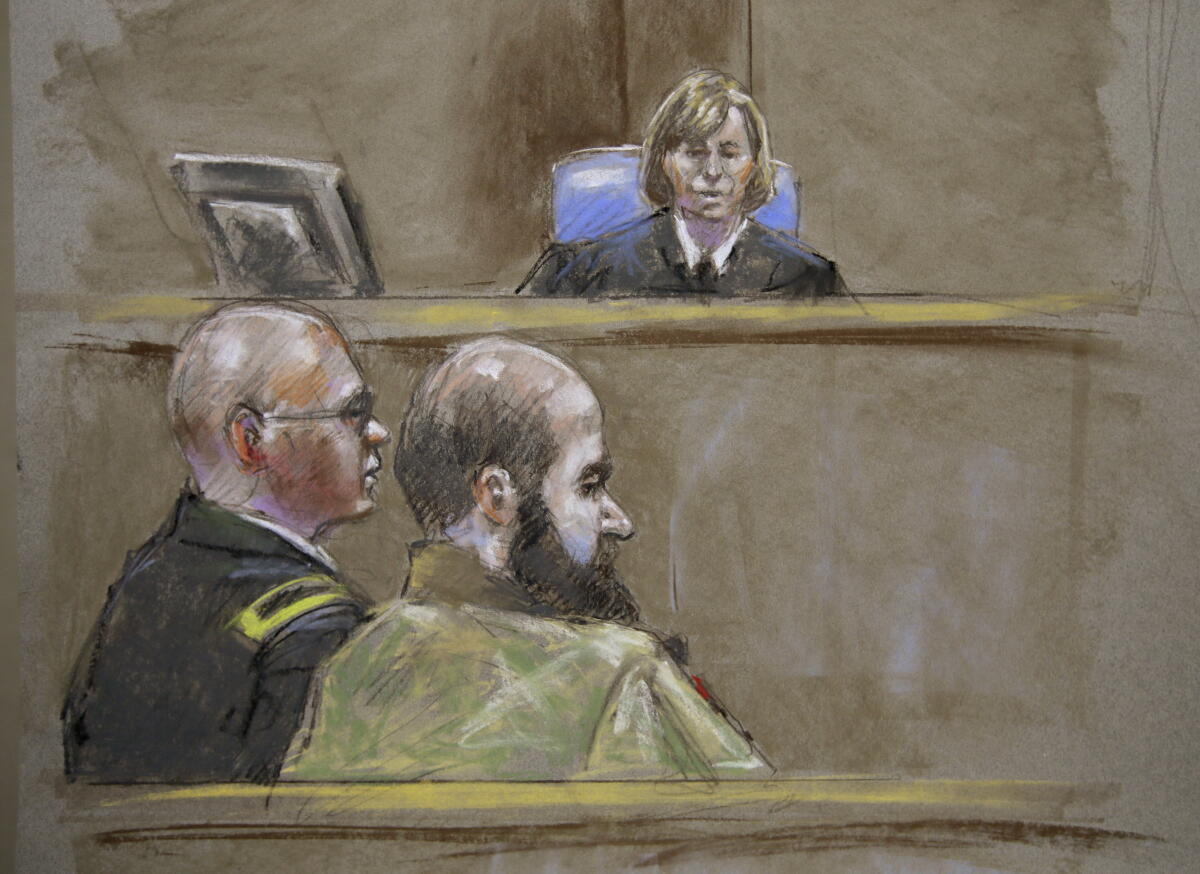
Nidal Malik Hasan is shown in a courtroom sketch in 2013.
(Brigitte Woosley / Associated Press)
“Hasan should face the death penalty, but making his execution public and streaming it? Beyond disgusting,” Sen. Thom Tillis (R-N.C.) wrote on X. “Public executions are what oppressive dictatorships like Iran and Afghanistan do. It should not be happening in America.”
“I absolutely support the sentence of death, but live-streaming executions is what jihadists do. America is better than that,” Rep. Austin Scott (R-Ga.) wrote.
The United Nations’ High Commissioner for Human Rights said that “the livestreaming of an execution is tantamount to a public execution and would breach the absolute prohibition of torture.” The head of the U.S. Conference of Catholic Bishops said it would “further undermine the moral fabric of our nation and be a blight on the conscience of its people.”
Matthew Robinson, a criminal justice professor at Appalachian State University and author of a book on U.S. capital punishment titled “Death Nation,” said he was “appalled” by the plans. “It strikes me as meant to be entertaining.” He said the last military execution was in 1961, and the last by firing squad was in 1945.
Soldiers hold a candlelight vigil at Fort Hood, Texas, in 2009, one day after Nidal Malik Hasan shot and killed 13 people.
(LM Otero / Associated Press)
Hasan was an Army psychiatrist and major who in 2009 entered a medical building on the Texas military base with a laser-sighted handgun, shouted “Allahu akbar” — Arabic for “God is great!” — and opened fire, killing 13 people and injuring 32 others. He has since spoken of being a “martyr” if executed.
President Trump, an outspoken proponent of the death penalty for years but also a past critic of public executions in places like Iran, has signed off on Hasan’s execution but not addressed Hegseth’s plans. The White House did not respond to a request for comment.
Vice President JD Vance, who is Catholic, said Friday that people should remember that Hasan “brutally murdered a lot of innocent people.” But he also said he would not watch a live-stream of the execution, and expressed doubt that is “actually going to happen.”
On his first day in office this term, Trump issued an executive order requiring federal agencies to restore the death penalty to prominence. In April, the U.S. Department of Justice announced it had taken steps to do so, including by “expanding the protocol” to include firing squads.
Five states currently allow firing squads to carry out executions: Idaho, Mississippi, Oklahoma, South Carolina and Utah. The U.S. Supreme Court has repeatedly turned down appeals contending such executions amount to “cruel and unusual punishment,” which is barred under U.S. law. South Carolina executed three men by firing squad last year.
When the Supreme Court last year rejected an Alabama inmate’s request to be killed by firing squad rather than with nitrogen hypoxia, liberal Justice Sonia Sotomayor — joined by fellow liberal Justices Elena Kagan and Ketanji Brown Jackson — dissented, writing, “Boyd asks for the barest form of mercy: to die by firing squad, which would kill him in seconds, rather than by a torturous suffocation lasting up to four minutes. The Constitution would grant him that grace.”
Kathleen Walter prays outside the Nashville, Tenn., prison where Christa Pike was set to be executed.
(George Walker IV / Associated Press)
Last week, a Tennessee inmate named Christa Pike survived what was meant to be a lethal injection of the barbiturate pentobarbital. Other states have also struggled with executions by lethal injection in recent years.
Much of the criticism of Hegseth’s plan for Hasan has centered not on the method of killing, but on the live-streaming of it.
Robin M. Maher, executive director of the Death Penalty Information Center, said the center has “no record of any execution being live streamed,” and is “not aware of any regulation or precedent for a military execution to be live streamed on the internet or otherwise made widely available to the public.”
Fox News commentator Howard Kurtz wrote: “I’m sensing revulsion on the left and right, not so much for killing a death row prisoner — although firing squad seems extreme in the modern age — but for the Pentagon to live-stream it, turning this into a horrifying TV show to entertain the masses. Is this America?”
Daniel LaChance, an associate history professor at Emory University and author of the book “Executing Freedom: The Cultural Life of Capital Punishment in the United States,” said the last public execution in the U.S. occurred in 1936, when a Black man convicted of rape was hanged in Kentucky — which still allowed public executions after most states had abandoned the practice.
That execution was “by all accounts a grotesque carnival” and “sort of like a gladiatorial contest brought to life in the 20th Century, where the crowd was surly, shouting,” LaChance said. “It was a debacle.”
That the Trump administration is seeking to turn capital punishment into a public spectacle once more, LaChance said, is out of line with decades of thinking on the issue, but in line with Trump’s own ethos about crime and punishment.
“His whole brand is this kind of populist, anti-elitism. And when executions moved into the bowels of prisons in the early 20th century, they were really becoming bureaucratic affairs, run by experts, carried out in front of a small group of professionals and clergy,” LaChance said. “It was a denial of the public’s right to see a punishment that was carried out in their name, in part because there were elites who thought that the public couldn’t handle this kind of spectacle, that they were misbehaving, that it would generate more disorder when an execution is designed to do the exact opposite: to generate order.”
President Trump points to fans to as he walks to the stage at a political rally Wednesday in San Antonio.
(San Antonio Express-News via Getty Images)
Trump clearly thinks he is pushing back against elitism and expertise and giving people what they want, LaChance said, though the question many scholars have is whether doing so will “increase people’s bloodthirst” or force them to recoil — and ultimate decrease support for such punishments.
Eugene Fidell, who teaches military justice at Yale Law School, said Trump has publicly mused about killing people by firing squad for years, so Hegseth’s plans to use a firing squad should not be surprising. However, the decision to live-stream the killing is clearly a source of “dismay” for many. “Even people who are resigned to the death penalty, who don’t have religious or other scruples about the death penalty, have real heartburn over this,” he said.
Fidell said “brutality” has become an “operating principle” for the Trump administration broadly, from its decision to host an Ultimate Fighting tournament at the White House to its immigration tactics across the country to, now, it’s plans to live-stream an execution — which Fidell said has “nothing to do” with deterring future crime.
“There’s a pathology going on here that is so out of keeping with the dignity that ought to characterize the taking of a life as a result of a legal process,” he said.
Robinson, of Appalachian State, said a student of his Friday morning asked what would happen when children tune in to watch the execution, which Robinson said he believes they will do, as if it’s a video game. He said the idea was appalling — and not just to him.
“I imagine the rest of the world, the civilized world, will see this and have the same response that I did,” he said. “They’ll respond with shock.”
Times staff writer David G. Savage contributed to this report.
Minka Kelly and Dan Reynolds have ended their four-year relationship.
A source close to the couple confirmed the breakup, People first reported on Wednesday.
The “Friday Night Lights” actor and Imagine Dragons frontman first met in 2022 through a mutual friend — although their first month interacting was over phone calls as Kelly, 46, was in the U.K. for work and finishing her memoir, “Tell Me Everything,” which delved into her complex relationship with her mother.
Reynolds, 39, asked to read the book.
“You’ll either be terrified and run for the hills or you’ll see the beauty in all of it,” Kelly shared on “The Drew Barrymore Show” in November 2025. “He fortunately was the latter.”
The pair was first publicly spotted in November 2022 leaving Cafe Stella in Silver Lake; a month earlier, Reynolds announced his split from his wife, indie singer Aja Volkman, whom he married in 2011. His divorce from the Nico Vega vocalist was finalized in March 2024.
In July, Kelly shared an Instagram post of Reynolds featuring his four children (whom he shares with Volkman) at Disneyland, with the caption, “No place I’d rather be.”
In a 2024 interview with People, Reynolds shared that his kids had grown fond of Kelly.
“We view it as kind of bonuses to the family: more people to love, more people to help. We’ve just been really careful with that and slow with navigating how to bring Minka into that conversation,” he said. “She’s done a really incredible job of being sensitive and careful on her end as well.”
In 2025, Reynolds made a guest appearance on the first season of Netflix’s “Ransom Canyon,” which starred Kelly as Quinn O’Grady, a former concert pianist, opposite Josh Duhamel, who played rancher Staten Kirkland.
The show was canceled after two seasons this September.
WASHINGTON — The Pentagon says the firing squad execution of Fort Hood shooter Nidal Malik Hasan will be livestreamed after Defense Secretary Pete Hegseth said the execution would be “public.”
Hegseth, speaking to the conservative TV outlet Real America’s Voice News on Wednesday, said the execution of Hasan will take place at Fort Hood on Dec. 3. Hasan was convicted of killing 13 people and injuring 32 others in a shooting at the military base in 2009.
“We’ll make sure that people are able to watch it, that it’s public,” Hegseth said.
Hegseth spoke to the outlet aboard the USS Abraham Lincoln aircraft carrier while visiting the long-deployed crew, who supported the Iran war, before their arrival at their home port in San Diego.
When asked if Hasan had made any final requests or reached out to the Trump administration, Hegseth simply replied: “Don’t care. We’ll see him on December 3rd.”
Officials in the Pentagon clarified Thursday that the execution will be livestreamed and that more details would follow.
Pentagon spokesperson Sean Parnell had said Monday that President Trump had approved the execution of Hasan.
Trump has previously been critical of public executions in Iran, at times using the possibility of protesters being killed by the Iranian government as a possible rationale for military action. Those warnings preceded his ultimate choice to attack Iran at the end of February over its ballistic missiles and the risk of it developing nuclear weapons.
“We’ve been told that the killing in Iran is stopping,” Trump told reporters on Jan. 14 of this year. “It’s stopping and there’s no plan for executions.”
He repeated that claim on Jan. 20 at a White House press briefing, saying: “We let them know that if that happens, that will be a very bad day for them. And they decided not to do it. They didn’t hang the people.”
Slightly more than a month later in his State of the Union address, Trump said, “We stopped them from hanging a lot of them with the threat of serious violence.”
The White House on Thursday immediately referred questions about the plans for the livestreamed execution to the Pentagon.
However, experts on military law said Hasan could choose to resist execution and file a habeas petition in civilian court, which could significantly delay the execution.
“It frankly might outlast the current administration, and who knows if the next one will have the same penchant for executions,” said Eugene R. Fidell, a visiting lecturer at Yale Law School specializing in military law.
Hasan, an Army psychiatrist who held the rank of major, walked into a medical building where soldiers were waiting in long lines to receive immunizations and medical clearance for deployment. He shouted “Allahu akbar” — Arabic for “God is great!” — and opened fire with a laser-sighted handgun.
During the trial it was revealed that Hasan spent weeks planning the deadly attack, and his preparation included videotaping a sales clerk showing him how to change the magazine on the pistol that he purchased. He would later go to a gun range outside Austin and ask for advice on how to reload with speed and precision from an instructor.
Soldiers later testified that Hasan’s rapid reloading made it all but impossible to stop the shooting. Investigators recovered 146 shell casings inside the building and dozens more outside, where Hasan shot at the backs of soldiers fleeing toward the parking lot.
Hasan said it was an effort to stop them from going to Afghanistan and killing his fellow Muslims. A military judge barred him from presenting that as a defense during his trial. Hasan made almost no effort to defend himself in court, telling jurors when he acted as his own counsel that evidence would show he was the shooter and describing himself as a soldier who had “switched sides.”
Hegseth said the military hasn’t executed a servicemember by firing squad since World War II. The last military execution took place on April 13, 1961, when Army Pvt. John Bennett was executed by hanging.
Nimesh Patel’s stock in comedy has been on an upswing lately. From sold-out shows to a skyrocketing social media following and the release of his first Netflix special, “Buy the Dip,” last month, it’s been amazing the difference a year makes. The new hour filmed in Washington, D.C., delivers surgically precise, dryly delivered jokes and personal stories about America falling apart from the heart of our nation’s capital.
Despite the dire circumstances, it’s in our country’s DNA to believe in the power of the rebound. So does Patel, who’s seen one play out with his own career after taking an unexpected hit. Last fall, the comedian faced public backlash for his decision to accept — and then reject — a spot on the controversial Riyadh Comedy Festival, for which he’d been offered $125,000 to perform along with major names like Dave Chappelle, Bill Burr, Sebastian Maniscalco, Whitney Cummings and many more. The rollout of a comedy festival in Saudi Arabia, a nation whose government has been accused of human rights abuses and, according to U.S. intelligence, the brutal murder of journalist Jamal Khashoggi at its consulate in Turkey, lead to a war of words on the internet aimed at the comedians on the lineup. Hearing the scrutiny loud and clear and ultimately deciding the money wasn’t worth it, Patel decided to pull out and tell the world via Instagram that he wasn’t going, opting instead (and somewhat grudgingly) to make up for the lost bag with 40 extra shows added to his nationwide theater tour. The response to his video announcement drew even more ire from comedy fans. Looking back on it now, he admits his delivery at the time, looking tired and somewhat annoyed by his own decision, wasn’t the greatest.
“People read that as sarcasm and like woe is me,” Patel said in a recent conversation with The Times over Zoom. “I can see why they thought that I was a poor actor in the video that I posted. But everyone acts better than the person they see on the screen until it becomes their life and then they’re like, ‘Oh s—, yeah, I probably would have done the same thing.’ So, f— them!”
Despite the roasting he received, Patel stuck to his word and did the shows. Stepping on stage night after night to earn the money he had planned on making last year from one canceled gig in Saudi Arabia gave him the reps he says he needed to perfect the new hour of material. The title “Buy the Dip” is a nod to the remnants of his former career in finance — it’s stock market terminology about buying a failing asset with the hope that it will go up in value again. But it also describes the optimism from which he now makes his decisions as a parent and as someone who still believes that things can get better, even at their lowest.
“I have to be an optimist, I have to believe the world is getting better, because otherwise, what the f— did I do by having a kid?” he said.
In his Netflix debut special, “Buy the Dip,” comedian Nimesh Patel turns personal setbacks and a troubled America into sharply observed jokes grounded in unexpected optimism.
(Courtesy of Netflix)
His belief in positivity followed him to D.C. to record the special, the town where he says he got his first big breaks as a comedian opening for major acts like Maz Jobrani at the Warner Theatre, headlining the Bier Baron and the DC Improv and even the Kennedy Center — “or the now-defunct Trump whatever you’re supposed to call it,” he joked. When it comes to his comedy trajectory, taking the long view is essential to realizing that Patel’s path to this special started over a decade ago when Chris Rock discovered him while on stage in Brooklyn and helped him get writing gigs on “Saturday Night Live” and the 2016 Oscars ceremony, two opportunities that solidified his resolve to go into comedy full-time after he lost his job in finance.
As an Indian American comedian, he knows there is a spotlight of cultural representation on him, which he notes in the special and even makes fun of. That kind of attention isn’t on just him but also on Indian Americans in even higher-profile jobs, such as, say, the first Indian American director of the FBI, the chronically embattled Kash Patel.
“Let me be clear, it’s really difficult to both be proud of Kash and despise him at the same time,” Patel says. On the one hand, there’s the astonishing feat of going from being one of the few Indian kids in Virginia amid post-9/11 racism to becoming head of the nation’s domestic intelligence agency. On the other there’s a career riddled with gaffes and allegedly immoral conduct that makes him an easy punching bag for the writers at “SNL” with the help of his late-night TV doppelganger Aziz Ansari.
“For him to go from that to then be serving the country at this level, that is an incredible achievement, and it’s just so sad that that is who our representative is at the moment,” Patel said. “Just like when an Uber driver says to me, ‘Your last name is Patel? Like Kash?’ I’m like, ‘Yeah, just like that, but not like that at all, you know?’”
Patel revisits the backlash he faced after accepting, then withdrawing from, Saudi Arabia’s Riyadh Comedy Festival, and how dozens of extra tour dates helped shape his new material.
(Courtesy of Netflix)
While trying to distance himself from one person who shares his family name, when it comes to his actual family, Patel has plenty of jokes of being too close to them. Like many millennials, he’s squeezed tight between caring for aging parents and raising a child. At 40, he says in the special that people in his age bracket have become the “Sandwich Generation.” Though, to be fair to his toddler, keeping track of his parents is a much harder task at times.
“They won’t take help. They’re very independent, and I imagine I was the same way when I was growing up,” Patel said. “So it’s that in itself is just like the Progressive commercial that we’re all becoming our parents, but in real life and not driven by a corporate marketing team. It’s just funny to see that play out.”
Whether the obstacles he faces in life are laugh-out-loud funny or career hurdles that threaten to topple him into the abyss, the idea that he can always bounce back is the key to staying unfazed during the highs and the lows of life. And to the extent that anyone can take a lesson from Patel in the art of staying even-keeled, he hopes the special will make people feel a little less bad about the country being on the brink of destruction.
“Everyone knows that we’re not in a good spot right now,” he said. “The dip is here now. I fully believe that we can recover, I hope that we can. It’s going to be a lot of pain. I don’t know if we’re at the bottom just yet, but I’m optimistic, and I have to be. Otherwise, I don’t know what I’m doing.”
DAKAR, Senegal — In Miami, Daniela Fuentes styled hair for clients and performed in drag at a nightclub called Azúcar. She wore her blond wig in public and dressed as the woman she had known herself to be since adolescence in Cuba.
Now, more than 6,000 miles away in the Central African Republic, she wears men’s clothes, lowers her voice and tries not to draw attention to the breasts she developed after beginning hormone treatment as a teenager. As part of U.S. efforts to deport people to countries other than their own, authorities sent her Aug. 29 to a place where she has no ties and where advocacy groups have reported arbitrary detention, torture, and other rights violations of sexual and gender minorities.
“Everything is difficult here because I have to hide who I am,” said Fuentes, a 32-year-old transgender woman living on a compound she rarely leaves, sharing a room with four Cuban men also deported from the U.S. “I don’t know this place, the people or the language, and I have no idea what will happen to me.”
The Central African Republic — one of the world’s poorest countries, a place with a history of conflict that the U.S. State Department advises American travelers to avoid — is one of at least 12 African nations that signed agreements to accept “third-country” deportations, a policy the U.S. Supreme Court last month allowed to continue, at least temporarily.
In the Central African Republic — where transgender people have little to no legal protections and are marginalized in much of society — Fuentes dons her wig only in the privacy of her bathroom. She described disguising herself as protection, first in U.S. detention and now in a country she first heard of when she was already headed there on a deportation flight.
“My whole life, my whole identity, was taken away from me,” Fuentes said.
Public records say a judge ordered Fuentes to leave the U.S. but offer no other information. Immigration and Customs Enforcement officials did not reply to emailed questions.
Tens of thousands of people have been deported to “third countries”
Fuentes’ compound in the capital, Bangui, is an apartment complex where the government houses male deportees.
Fuentes said she can leave but that officials have advised her and others to avoid it — they have no identification, which could lead to issues with the police. It also means they can’t work, she said, and she’s waiting on travel documents that would allow her to leave the country. The International Organization for Migration, an agency associated with the United Nations, has provided food, and the migrants say they’ve crowdsourced for donations to buy groceries.
The U.S. — via agreements often not made public — has deported about 25,000 people to more than two dozen countries that aren’t their own, the vast majority to Mexico, according to a tally by Third Country Deportation Watch, a partnership of Refugees International and Human Rights First. The U.S. has not released numbers or details.
From January 2025 to August 2026, more than 500 were sent to countries in Africa, according to a Human Rights Watch report published Thursday — including at least 12 people who identify as lesbian, gay, bisexual or transgender and were deported to places that criminalize same-sex relations or public same-sex romantic conduct. Some advocates say the number is likely higher.
“These are not bureaucratic errors or isolated incidents,” said Bridget Crawford, of the group Immigration Equality. “They are the predictable result of policies that purposefully abandon our legal and moral obligation to protect LGBTQ+ immigrants fleeing persecution.”
The U.S. government says the policy is lawful and that receiving governments provide assurances deportees won’t be persecuted or tortured.
Daniela Fuentes says ICE detained her with men before deportation
Fuentes grew up in La Lisa, on Havana’s outskirts, and said she understood from childhood that she was different. She began living as a woman in adolescence and started taking hormones at 18.
She ran a salon from her home, coloring and cutting hair. She said she was harassed because of her gender identity and attacked at least twice, leaving scars on her arm and head. Police also questioned her about operating a private business, she said — though housefront businesses are common in the area.
In 2023, Fuentes sold her home and left amid a deepening economic crisis and a crackdown on dissent — even as Cuba, one of Latin America’s most progressive countries for LGBTQ+ rights, adopted new inclusion laws. Making her way to the U.S., she said, she presented as a man traveling through Central America; she believed it was safer.
After seven months in Mexico, she said, she entered the U.S. through Texas via CBP One, a President Joe Biden-era online appointment system that allowed migrants to live in the country for two years on humanitarian grounds. Then she went to Miami.
There, she began living openly as a woman again. She found work styling hair and performed at Azúcar. Though she lacked permanent legal status, Fuentes said Miami offered something she’d rarely experienced: the freedom to move through daily life as herself.
That ended when officers encountered her outside a motel. Fuentes said they learned she had missed an immigration court hearing in Texas. She said she asked that the case be moved to Florida but received no response.
Fuentes said she was taken into custody and later placed in immigration detention with men. Officials confiscated her wig and gave her a male detainee’s uniform, she said.
Such treatment is in line with a January 2025 executive order directing officials to exclude transgender women from women’s prisons and detention centers.
“When I learned that they were going to put me with men, I almost fainted,” Fuentes said.
Deportees said they boarded a flight without knowing the destination
Fuentes was held at two detention facilities in Florida, then transferred to Texas. When armed officers arrived there, she said, she suspected she was facing deportation, but they didn’t reveal she was being sent to Africa until about five hours into the flight.
Other deportees on the flight told AP they also weren’t told the destination until they were on the plane. Dozens have been sent to the Central African Republic, including an Iranian woman facing persecution in her home country and an Afghan whose brothers worked with the U.S. military.
Fuentes said she does not understand why she was sent to Africa rather than Cuba. She told AP she has no lawyer.
The U.S. does repatriate Cuban citizens, as part of agreements to resume deportation flights in 2023, despite tensions in relations between the countries. Charter flights have arrived in Havana regularly.
Yasmany Moreno, another Cuban deportee in Bangui, said that upon arriving, the group had no visas or documents establishing their legal status in the country. Officials spoke of providing assistance for 90 days, he said, but the deportees didn’t know what would happen afterward or where they would live.
Several told AP their longer-term status remained unclear and that U.S. authorities had taken their identity documents.
A policy officer at the Central African Republic’s Foreign Ministry said the deportees are in “good hands” and are being monitored by the International Organization for Migration. He spoke on condition of anonymity because he was not authorized to discuss the matter publicly.
The U.S. this year committed to $85 million in funding to IOM for Central African Republic operations including “assistance to migrants” and “community stabilization.”
IOM says migrants can seek asylum in the country, request assistance to return home or get help traveling to another place they’re authorized to enter. It referred questions about the deportees’ status and individual cases such as Fuentes’ to Central African Republic officials. A government spokesperson didn’t reply to phone calls and text messages seeking comment.
Human Rights Watch’s report says some people deported to third countries face detention, abuse and the prospect of persecution. Eswatini has held deportees in a maximum-security prison without charges. Equatorial Guinea has held them against their will at a hotel owned by the president’s family.
“Several of these African governments are not only complicit in U.S. abuses but have violated the human rights of these deported people themselves,” Michael Garcia Bochenek, of Human Rights Watch, said in a statement.
Fuentes and other deportees say they can’t work, with most days spent at the compound
Fuentes said the Cuban men in her room know she is a woman and look out for her. She rarely feels safe enough to leave. Once, at a supermarket, workers pointed at her breasts and initially refused to sell her fruit, she said. Other people in Bangui have mocked her and pointed at her.
“My personal appearance is awful,” she said. “I look like a different human being.”
Moreno described restrictions on the group’s movements, saying officers accompanied them to the market and on occasional outings but restricted them from going out at night.
Fuentes and Moreno said they have no passports or other identification and cannot work. Most days, Fuentes remains at the compound, looking at her phone and waiting for travel documents.
She said Cuba has agreed to accept her return — a Cuban embassy document shows she is authorized.
But Fuentes said she hopes to seek asylum elsewhere, possibly Canada.
“The harassment and economic hardship that caused me to flee still remain,” she said.
Banchereau writes for the Associated Press.Jean Fernand Koena in Bangui, Central African Republic; Tim Sullivan in Minneapolis; and Cristiana Mesquita in Havana contributed to this report.
It never has been about the glory for Semaj Morgan.
Not the touchdowns. Not the name, image and license deals. And not even the 2024 national championship he won with Michigan.
For the UCLA wide receiver, all of that plays second fiddle to giving back to his community in Detroit and touching the lives of the people around him through the Semaj J. Morgan Foundation — an initiative he started when he was 17 years old.
“My foundation is definitely the best thing that I do. It’s great being a football player, but being able to give back and show people that I really care for others and not just about football and money, I want to be able to pour back into the people that support me and show me love,” Morgan said. “A lot of people don’t get to wake up every day and know that there’s going to be food around. A lot of people in the city of Detroit don’t even know if they’re going to eat at all.”
UCLA receiver Semaj Morgan is surrounded by children he has helped through his foundation.
(Courtesy of the Morgan family)
Morgan decided he wanted to start the foundation when he handed out toys with the Dream Team Male Mentoring group, telling his dad, Semaj T. Morgan, that community service was his calling. But at 17, he was too young to have his name on the paperwork, so his parents opened the foundation for him.
Since the foundation’s launch in February 2023, Morgan has hosted turkey drives, during which he gives away 2,000 turkeys, 2,000 food bags and 1,000 hot meals along with hats, coats, scarves and gloves, in an effort to tackle the health and food gaps in his community.
Morgan also has spearheaded back-to-school giveaways, handing out backpacks and supplies to children.
“We don’t do it just to do it. We do it because we’re trying to close the educational gap that our kids in Detroit suffer from,” Morgan’s father said.
“When you have a kid that’s going to school with the same notebooks and pens and highlighters and erasers that their counterparts have, now they have more confidence when they go to school.”
Morgan received a grant from the Ballmer Group, founded by Clippers owner Steve Ballmer and his wife, for the foundation’s DiscoverWorks Summer program. The initiative serves 250 families, giving students the opportunity to get their test scores up in the morning and go on field trips in the afternoon, alongside other enrichment activities such as robotics and mentoring.
UCLA quarterback Nico Iamaleava celebrates with Semaj Morgan after scoring a touchdown against Purdue at the Rose Bowl on Sept. 19.
(Ronaldo Bolanos/Los Angeles Times)
But the endeavor closest to Morgan’s heart is the foundation’s Mother’s Day and Father’s Day events.
“These are mothers and fathers who lost their sons to gun violence. Semaj is their son, and he takes his NIL money, and he takes them to dinner, buys them gifts as if their son was here,” Morgan’s father said. “These are parents that a lot of these children’s murders have not been solved, so this is a way for us to bless these parents, let them know that they’re not forgotten. There’s never a dry eye in the room.”
The events — which started out with 10 moms and five dads and are up to 35 moms and 20 dads — are particularly special to Morgan, who was friends with some of the sons of the parents involved. Morgan said that seeing the parents and hearing their testimonies puts everything in his life into perspective.
While Morgan is humble about the effect his foundation has had on the people around him, others are taking notice.
UCLA receiver Semaj Morgan holds up a Michigan state Senate certificate recognizing his foundation’s work to support people in Detroit.
(Courtesy of Morgan familiy)
Morgan was recognized on the Michigan House floor by state Sens. John DaMoose and Rosemary Bayer for the community service that he’s led in Detroit.
And during the 2024-25 academic year, Morgan was nominated for the inaugural Big Ten Jackie Robinson Community & Impact Award by his previous school, Michigan, for his philanthropic work.
“He understands his mission and call in life, and that’s to bless other people. He’s not about him; he’s about other people, and it’s very rare that you see individuals at such a young age understand their mission and cause in life,” Morgan’s father said.
“Football is one thing, but when he’s giving out turkeys, food bags, hats and coats, he has a bigger smile than getting in the end zone because he understands these people need help.”
Morgan’s desire to help others was inspired by Curtis Blackwell — Morgan’s travel football coach and president of Sound Mind Sound Body Sports Academy. Morgan’s father said Blackwell always urged players to give back to others.
Blackwell, who coached Arizona Cardinals cornerback Will Johnson, Buffalo Bills cornerback Maxwell Hairston and former Michigan safety Makari Paige alongside Morgan, stresses education before football and places an equal emphasis on academics, athletics and life skills.
And because Michigan does not get the same high school football exposure as Texas, Florida or California, Blackwell was keen on getting his players on college visits, leading to Morgan receiving more than 25 offers — a direct result of the travel the team made to raise players’ exposure.
“Growing up in a single-parent home, I was fortunate to get a scholarship to college, and it was because of my coaches. And had it not been for my coaches, I don’t know where I would be,” Blackwell said. “If we as coaches are the best people to really influence young people, they will listen to their coach more than their mom, their teacher. And so if we can get the coaches to be the teachers off the field, we could really change their attitude.”
Blackwell was astounded that Morgan was the pupil who took the program’s mission the furthest, surpassing the efforts of NFL players and affecting people well before he’s turned 21.
“You don’t have to wait till you get to the NFL to make an impact. You don’t have to wait till you retire to give back. You can do something every step along the way, and that’s what we teach to our kids — lift as you climb,” Blackwell said. “Semaj took that and ran with it. He has a really big heart and he’s a person that is a giver, not a taker. He’s going to give you the shirt off his back.”
UCLA receiver Semaj Morgan catches a touchdown pass against Purdue at the Rose Bowl Stadium on Sept. 19.
(Kevin Terrell / Getty Images)
Morgan earned his bachelor’s degree at Michigan and is working on his master’s degree at UCLA while playing football and running his foundation from the West Coast. But he may miss his first foundation event when UCLA travels to Ann Arbor to play his former school in November, although coach Bob Chesney already gave him permission to stay in Michigan after the team leaves.
Morgan’s greatest achievement that weekend may not involve the scoreboard at the Big House.
“I might not have done the best on the field last year, but being able to come home knowing that I’m touching people’s lives, that’s the biggest thing for me,” Morgan said. “To do this at such a young age, and grow so rapidly and touch so many lives, it’s great for me. After football, I want to continue to give back to people. I eventually want to be able to start football programs.”
Josh Hartnett and Charlie Heaton know how to brood.
The actors both found fame in their early 20s playing characters prone to pining and sulking: Hartnett became a heartthrob in the late ’90s and early 2000s with mellow roles in films including “The Virgin Suicides,” “Pearl Harbor” and “Black Hawk Down.” Heaton, meanwhile, spent most of the last decade embodying the introverted Jonathan Byers on “Stranger Things.”
But now, the duo are wearing their hearts on their sleeves in “Below,” a six-episode Netflix miniseries now streaming, in which they play a father and son living in a misty Newfoundland fishing village that is increasingly terrorized by something mysterious in the iceberg-filled waters.
As Calvin and Wade Penney in “Below,” the actors are passionate and emotional. They get into animated family arguments and gleefully celebrate when things (occasionally) go their way.
“It’s all on the page,” Hartnett said. “All I had to do was show up and feel those things toward Charlie.”
Filmed on location in Newfoundland, Canada, “Below” is the latest unexpected project for Hartnett, 48, who has been cultivating a career renaissance in recent years with roles in “Black Mirror,” “Oppenheimer,” “Trap” and this month’s “Verity.”
Charlie Heaton as Wade, left, and Josh Hartnett as Calvin in Netflix’s “Below.”
(Netflix)
Heaton, 32, has likewise been diversifying his post- “Stranger Things” portfolio. He played an ill-fated financial journalist in the fourth season of “Industry” and will next star in a “Peaky Blinders” sequel series.
“I like trying to surprise people, and maybe surprise myself too,” Heaton said.
When they convened for a joint video interview in late September, Heaton had recently returned to his London home from a music video shoot. Hartnett had just finished putting his four children (with wife, the actor Tamsin Egerton) to bed at their countryside home in Hampshire, England. These are edited excerpts from the conversation.
What attracted you both to this project?
Hartnett: I was in “Black Mirror” a couple of years ago, and Jessica Rhoades, who produced “Black Mirror,” sent me the [“Below”] script probably about two months before production was supposed to start. I loved the script but I had some questions, so I had to speak to [creator] Jesse [McKeown] and a couple of the other EPs, just to get the lay of the land. After that conversation, I was like, this sounds really fresh and nuanced and organic.
Heaton: It seemed to have so much warmth and mystery. I do remember having a conversation with my agent because, obviously, I’d come off “Stranger Things,” and there was a little concern of, “Is it too similar?” But Wade is such a fun character. I’m from a working-class fishing town [Bridlington, England]. He’s also working class. Everyone knows somebody like Wade.
Hartnett: Willow Kean, who plays my sister, his aunt, saw Charlie on set when he first arrived. He was in his outfit and smoking a cigarette, and she was like, “I think somebody’s on set who shouldn’t be” — because he looked like a local. He fully embodied the mood of this character immediately.
How did the two of you meet? Had you crossed paths in the industry before?
Hartnett: We hadn’t. We met on Zoom. We did a bunch of stuff with the full cast, and it was more to learn the accent than anything else. Once we started to get into the accent work together, just shooting the s— online, it was great.
Heaton: We wanted the family to all sound like they were from the same place. But the accent is so hard to hear in the beginning. So, we were all getting it wrong together.
Heaton and Hartnett hadn’t crossed paths before being cast in “Below,” but they created a rapport by trying to learn the show’s Newfoundland accent together.
(Jason Armond / Los Angeles Times)
What was the biggest obstacle with the Newfoundland accent?
Heaton: I’ve done a fair amount of accents, but it’s hard to understand the rules of this one. It’s like, well, that word’s Irish, that word’s kind of American. It took me a while to be able to hear it. We had Ali [Alison Kelly], who was our voice coach, and a lot of the extras that we had on set also were local artists, so you could really lean on them.
Hartnett: Everybody was so welcoming. The most difficult part for me was hearing the rhythm of it. So, I listened to this thing called “The Broadcast,” which used to be called “The Fisheries Broadcast.” It’s a radio show that’s been on since 1951. Every day they’re talking to someone about something that’s happening on the island, so you’re getting all these different versions of the accent, but you’re also getting an overall perspective of how people speak in Newfoundland. It was really revealing.
How familiar were you with Newfoundland before doing “Below”?
Hartnett: I knew very little. I knew the “Come From Away” story about all the people stranded in Gander after 9/11. I knew that it was where Leif Erikson landed a long time ago. I knew that it was the closest place in North America to Europe, so when people would do transatlantic flights up until relatively recently, they would stop in Newfoundland. I knew there were puffins.
Heaton: I’m going to be very honest. I hadn’t even ever heard of it. But I learned a lot. We were there for a long time, and Newfoundlanders are extremely proud of their history and their culture, and they love talking.
What was it like shooting on location and out in nature?
Heaton: It was powerful and beautiful. Where we shot, Snook’s Arm, was this bay called Brigus South. You’d come down in the morning, and just that sheer amount of nature every day I found really moving.
Hartnett: One of the first days we were there, they took me out on a whale-watching tour. I was like, “Oh, cool. That sounds touristy but fun.” It was a spiritual experience. I’ve never been anywhere where I felt so small and insignificant next to another animal. These humpback whales, they’re right underneath these tiny little boats, and if they wanted to, they could just flick their tail, and you’d be off in the sea. I had never experienced nature in the sea the way that I experienced it there.
You play father and son, but you’re not that far apart in age.
Hartnett: Fifteen-and-a-half years! I did the math.
Heaton and Hartnett play father and son in “Below,” but in reality they’re just shy of 16 years apart.(Netflix)
How did you develop your onscreen dynamic?
Hartnett: Charlie was so in character as Wade, it was very easy to feel a real sense of protectiveness and an incredible amount of love.
Heaton: What I really admired about working with Josh [is] he is such a leader. You really care, and you’re so generous with everyone, and I got to see your family, and I got to see how you are as a dad. So, those projections weren’t that difficult to come up with in my head, honestly. It’s cool that I get to be your son.
Hartnett: So sweet, man. Thank you.
Charlie, do you remember any of Josh’s past work that stood out to you?
Hartnett: [Pretends to cover his camera] I’m just going to turn this off.
Heaton: One of my favorite films for a while was “Lucky Number Slevin.” When I was younger, I used to watch that quite a lot. I might rewatch that, Josh. It’s been a while.
Hartnett: Well, tell me if it holds up.
Josh, were you familiar with Charlie’s work?
Hartnett: I was a big fan of “Stranger Things,” and I saw “Industry.” Then, when he came on the first Zoom as Wade and was so already intact as a character, I was like, “He’s a star, man. This guy’s a star.”
Charlie Heaton as Jonathan Byers in “Stranger Things.” Hartnett says he was a fan of his work.
(Netflix)
You both found fame in your early 20s, but at very different points in the industry. What are your memories of first realizing, “Oh, people know who I am offscreen and something has shifted?”
Heaton: I remember the exact moment. I was shooting a movie in a small town in Asturias in the north of Spain. “Stranger Things” had been out for only a couple of days. I was in this little town, and a family came up to me that could barely speak English, but they recognized me. Then, I walked down the street a little further and another kid came running up to me.
The show blew up overnight, and before you knew it, you’re going to the Emmys and the BAFTAs with all these people who you have admired. I think we all felt impostor syndrome. Like, what am I doing on a carpet where Bryan Cranston and Helen Mirren are? If I think back to it now, it’s very overwhelming. I don’t really know if I processed how that changed so fast and how you are expected to know how to deal with it.
Hartnett: It was a long time ago for me. There was no social media, obviously, but we did have a pretty intense paparazzi problem. So, the initial success of films like “The Faculty,” “Halloween: H20” and “The Virgin Suicides” was a nice level of, like, people knew who I was and I was able to get more work, but there wasn’t a crush of paparazzi waiting outside the hotel.
When “Pearl Harbor” came out, that changed. I was in Morocco shooting “Black Hawk Down,” and I had to come back to do press for “Pearl Harbor.” Suddenly, that’s when I couldn’t go anywhere. That was an odd thing to encounter because I was 22, and I was not ready for it. Right after I finished “Black Hawk Down,” I decided to get back to Minnesota, where I grew up … There’s no paparazzi in Minnesota. That’s where I stayed for about two years.
Heaton: Those seismic changes are such a strange thing to go through. I always felt like, I haven’t changed but everyone else around me has changed — and that’s a weird thing to get used to. But there are great opportunities and great things that come out of it.
Hartnett: One hundred percent. My life is so much better now than it probably would have been had all that not happened.
Josh, you’ve said that you felt celebrity culture was “vacuous” and that you didn’t want to do things like “Cribs” or “Punk’d.” Did you feel like you were being pushed to fit a certain mold as a teen heartthrob?
Hartnett: That stuff wasn’t for me. Being a young celebrity, you’re always going to be pushed toward the cusp of insanity, the stuff that people are going to look back on and cringe not too far into the future. I was lucky enough to avoid that side of it.
In our business, it’s about surviving your 20s to get to the place where you have the respect of the people on set that you’re working with, and they allow you the leeway to create characters the way that you want to create them.
Charlie, how are you approaching your post-“Stranger Things” career?
Heaton: After wrapping the final season, I wanted to do “Industry,” which felt extremely different to me. I got to use my own accent. It’s a much more adult show than I’ve ever been in. And playing a man was important. I’d been playing a perpetually 21-year-old for like 10 years. I keep getting older. [Jonathan] stays the same. He gets further away from me. But I just want to do things that hopefully allow me to show range.
WASHINGTON — President Trump says his administration will make one-time payments of $90 per person to help more than 20 million Medicare enrollees pay for their Part B premiums. It will cost about $2 billion.
Less than one-third of all Medicare recipients are eligible for the payments, which are expected to be sent out this week. Not eligible are roughly 35 million Medicare Advantage enrollees, millions of people with disabilities who get premium assistance and low-income Medicare recipients.
The election-year promise that the Republican president made over the weekend comes as the Nov. 3 midterms are fast approaching, with the cost of living and healthcare expenses among the top issues for voters.
Some questions and answers about the payouts:
Who will benefit?
Some 20.8 million people in the original Medicare Part B who are living in the United States, not receiving premium assistance from Medicaid or not paying an income-related monthly adjusted amount.
Medicare Advantage enrollees, who make up more than half of the eligible 64.2 million Medicare beneficiaries, will not receive a payment, according to KFF, a healthcare research nonprofit. Nor will 12 million low-income older adults and people with disabilities who get premium assistance.
The Part B program covers expenses such as doctor’s visits, ambulance services and lab tests. Total monthly costs generally start at about $200 and vary with income.
Allison Schuster, a White House spokeswoman, said in a statement that the administration “is enabling Americans to take control of their health by putting money directly back in the hands of Medicare patients.”
When will the payments go out and how will they be disbursed?
According to the Centers for Medicare & Medicaid Services website, eligible beneficiaries will receive one $90 rebate this month, with most getting a direct deposit on or around Friday. Others will receive a paper check from the Treasury Department later in October.
Juliette Cubanski, director of KFF’s program on Medicare policy, said the payment will be automatic.
“As far as a benefit goes, people don’t have to call or sign up — it’s just money they receive directly, but not everybody on Medicare will receive this money.”
A White House fact sheet says people can call (800) MEDICARE ([800] 633-4227) to check their eligibility for the premium rebate. To check on payment status, people should call the Social Security Administration at (800) 772-1213.
What is the source of the money?
Payments will come out of the Medicare Improvement Fund created by Congress in 2008 and intended to make improvements to the Medicare fee-for-service program.
The fund was created to improve program management and conduct oversight of contracts and contractors, according to the Congressional Budget Office, but its purpose has expanded after various legislative changes.
This is not the first time the fund has been used.
President Obama’s administration, along with Congress, redirected $20 billion to expand healthcare coverage through the Affordable Care Act.
But under Trump, it is the first time that the fund has been used to directly pay recipients.
What are critics of the plan saying?
Critics of Trump’s promise characterize the $90 payments as a preelection stunt designed to sway voters rather than address structural problems in healthcare costs and administration.
The top Democrat on the Senate Finance Committee, Oregon Sen. Ron Wyden, said in a statement that “this is another desperate attempt by a failed president to escape Americans’ revulsion with his failed agenda, amounting to one tank of Trump-inflated gas.”
Trump recently promised $500 rebate checks to an estimated 1 million Obamacare enrollees across 30 states whom the White House alleged were overcharged by the Biden administration for some fees.
Cubanski said the Medicare rebate payments were being doled out when Americans were feeling the bite of higher food, energy and gas prices. Surging healthcare costs are only compounding those pressure, she said.
“This might be helpful for people but it might not go very far.”
Business groups such as the California Chamber of Commerce, the California Teachers Assn. and Planned Parenthood Affiliates of California oppose the proposal.
Gov. Gavin Newsom and Democrat Xavier Becerra and Republican Steve Hilton, who are running to replace Newsom, also have spoken out against it.
Opponents describe the wealth tax as a “flawed experiment” that will harm California’s economy because companies and rich people will flee the state.
“If they leave, it will create a huge hole in our budget, threatening core services like education, healthcare and public safety,” arguments against the proposition say.
Opponents of the measure say the proposal is an ineffective attempt to address the long-term effects of the healthcare cuts and would harm California’s economy and budget.
The state budget in California already is largely dependent on income taxes paid by its highest earners. Because of that, revenues are prone to volatility, hinging on capital gains from investments, bonuses to executives and windfalls from new stock offerings, and are notoriously difficult for the state to predict.
Billionaires such as Palmer Luckey, the co-founder of defense tech startup Anduril Industries, and entrepreneur Mark Cuban have pushed back against the proposal on social media. Some tech executives have been relocating or moving their assets to try to avoid the potential tax. Google co-founder Sergey Brin has been cutting ties to California, relocating to Nevada while funding groups such as Building a Better California that are backing ballot measures that could nullify the billionaire tax.
More than $187 million has been spent opposing the proposition, with the bulk coming from Building a Better California, cryptocurrency company Ripple Labs and its co-founder Chris Larsen, data from the secretary of state show.
Proposition 39 is opposed by leading state Democrats, major civil rights organizations including the American Civil Liberties Union and major labor unions in the state, who say the measure would disenfranchise eligible voters and expose voters to identity theft by forcing them to write personal ID numbers on mail ballot envelopes.
According to campaign finance reports, the ACLU of Northern California has contributed hundreds of thousands of dollars to defeating the measure. Quinn Delaney, a major Democratic donor and fundraiser for former President Obama, and Patty Quillin, a major philanthropist and wife of Netflix co-founder Reed Hastings, both have given $1.5 million.
The Service Employees International Union Local 2015, which represents long-term caregivers, provided $1 million, the SEIU California State Council for Working People gave $500,000, and the California Teachers Assn., through its independent expenditure committee, gave another $500,000.
Arnulfo De La Cruz, president of SEIU California and SEIU Local 2015, said in a statement that the group’s members “know our nation is stronger when working people make their voices heard and have their ballots counted,” and that strict voter ID laws “are part of Trump and MAGA extremists’ agenda to rig the election system so they can cling onto their own power and get richer from corporate corruption.”
Sen. Alex Padilla (D-Calif.) recently convened a news conference where a slate of Democratic leaders — including state Senate President Pro Tempore Monique Limón (D-Goleta) and Assembly Speaker Robert Rivas (D-Hollister) — called on Californians to vote no on Proposition 39.
The Democrats called the measure a “dirty trick” from “Trump acolytes” akin to historic poll taxes designed to disenfranchise Black voters, and a power grab that would seriously harm millions of eligible voters, especially in Black and Latino communities.
“Proposition 39 is a direct assault on everything California stands for. Our people, our values and our fundamental belief that every eligible voter here in California deserves to have their voice heard and deserves to have their vote counted,” Rivas said.