When Andrea Werhun started writing her memoir, “Modern Whore,” nearly a decade ago, she was afraid to be honest about working as an escort and stripper. But she embraced going public to “use storytelling to advocate for the plight of sex workers.”
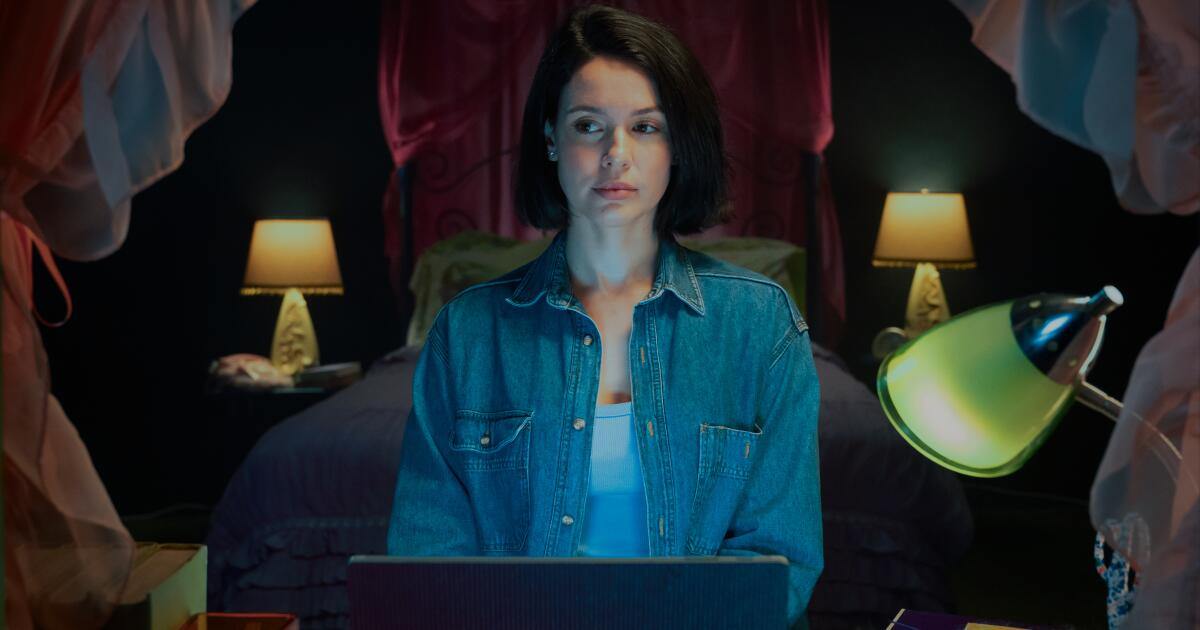
In the documentary version of “Modern Whore,” directed by Nicole Bazuin, Werhun has gone not one, but several steps further. Werhun, 36, is not only the main interview subject, she’s also the frequently topless star of all the vividly depicted reenactments of her experiences. The documentary also features bright colors, funky music and an often jaunty tone.
Well Documented
With networks and streamers seeking to create compelling content, many have found the answer in true stories. But with the surge in documentaries, it can be hard to sift through what’s worth your time. Each month, we provide an inside look at a documentary and others you should add to your queue.
Werhun, who started escorting in college and still does sex work even while pursuing writing and acting, was a consultant on Sean Baker’s “Anora,” and he served as a producer here, offering feedback on their script and numerous cuts of the film. It premiered at the Toronto International Film Festival in 2025 and is now available on video on demand.
Werhun and Bazuin recently discussed the film’s style and goals in a joint video interview edited for length and clarity.
How much were you consciously trying to make this different from other documentaries about sex workers?
Bazuin: I wanted this to feel like a storybook come to life — we literally jump inside Andrea’s book with Andrea as our storyteller and reenactor of her own experiences. People might expect a film about sex work to be be drab or dour, and we wanted to confront that right away with vivid colors and a stylized expressionistic mode that can support all the moods of her experiences. Stylized films sometimes can contain more truth than realistic forms.
Werhun: Cinema verité, which is typically how sex workers are portrayed in documentaries, inevitably comes off as voyeuristic.
Most documentaries about sex work don’t include R-rated reenactments starring the film’s subject. Why include that?
Bazuin: We wanted to disrupt expectations audiences might have and to make it a more human portrait.
Werhun: I love performing and I’d love to have an acting career and this was an excellent showcase of my abilities.
But also it would feel censored if there weren’t any tits, if there were no sex scenes in a film about sex. I’m not ashamed of the fact that I’ve used this body to make a living. Nicole and I crafted the scenes meticulously to convey a point that is artistic, funny and educational.
Bazuin: The movie runs the gamut tonally. It’s a “Trojan whore” for a feminist and sex worker manifesto for political and social change, so we also show the challenges and the assaults that Andrea experienced because we want laws that would make this work safer, including the decriminalization of sex work.
Andrea, why interview your boyfriend and mom on camera?
Werhun: The sex worker stereotype is that we’re isolated and vulnerable, with no support systems; that stereotype makes predators think we’re easy victims. I wanted to dispel the idea that we are incapable of having loving, meaningful relationships.
This is presented as a film memoir yet you then include other sex workers’ perspectives.
Werhun: Unfortunately, when it comes to sex work storytelling, there is a proliferation of cis white, educated women and those tend to be the stories that get platforms. But that experience is minute compared to the wide range of sex workers, so it was vital to expand the narrative to include other perspectives, whether it’s race, gender orientation or class. What we have in common is that we all deserve to be treated with respect and dignity.
You say you’re rewriting the usual story of sex workers as victims or villains but you were a victim, both of exploitative working conditions and sexual assault. Will sex workers always be victimized without legal protection?
Werhun: Most of our clients are not bad people, they’re paying for a service we’re willing to provide. But under any criminalized model, there is inherently exploitation and people don’t feel safe accessing justice. If we don’t have labor rights, we’re going to be victimized. Even strippers are not comfortable going to the police.
We’re fighting a society that wants to keep our work in the dark, to pretend that this isn’t happening, that it can be abolished by throwing people into prison. Criminalization is harmful and guarantees there are more victims.
Where does OnlyFans fit into the sex work equation?
Werhun: The beauty of escorting and stripping is that you can dip in and out. With OnlyFans you’re working 24/7, creating content, interacting with your fans and doing constant self-promotion. With sex work in person, no one has to know about it but OnlyFans will follow you for the rest of your life. I did it for a year and a half and it paid my rent but it’s not my preferred type of sex work. It’s great for people who live online.
How did audiences respond to the film at festivals?
Werhun: Obviously, creating this film was a trust fall. The film is a song and dance on behalf of all whores, trusting humanity to hold me and not hurt me. I was pleasantly surprised by how audiences warmly embraced it. Some people were working through their prejudices in real time and it’s amazing to watch them transform. We hope the film can inspire social change. If it pulls your heartstrings, then when issues of criminalization and legal change arise, people might say, “I remember that movie and I think whores deserve to have equal rights with everybody else.”
Over the last five years, there has been a significant shift in how fashion and sports intersect, both on and off the court, with athletes’ influence extending beyond the court and into culture at large. Why now? And how has athlete style evolved?
These were some of the questions that three prominent athlete stylists — Brittany Hampton, Courtney Mays and Dex Robinson — unpacked last week at the panel “Game Changers: Where Sport Meets Style.” Moderated by Image contributor Darian Symoné Harvin and co-organized with the Only Agency, the event took place at the private members club Gravitas, a hub for folks at the intersection of sports, business and luxury in Beverly Hills. Gathered in the swanky yet intimateupstairs bar and events room, guests sat in plush chairs and sipped pink vodka cocktails and flipped through Image’s May sports and arts issue ahead of it hitting the newsstands. An also-plush takeaway?Stress balls in the shape of footballs, courtesy of the Only Agency.
The evening could’ve kept going — Hampton, Mays and Robinson had so much to say about an industry that is still widely misunderstood and filled with gatekeeping. The below edited version of the conversation gives you a glimpse into the demanding yet deeply fulfillingworld of styling athletes.
Darian Symoné Harvin: Athletes often are not sample size. How do you source clothes and work with brands? Are they supportive? Anything you would tell brands if you could?
Courtney Mays: Size inclusivity is a huge thing. Because, especially when you’re talking about the W[NBA], you’re talking about women who are sometimes a men’s size 13 shoe, who are sometimes a 36-inch inseam. And although we’re using this platform to talk about larger issues, sometimes the larger issue is: I’m here and I’m a plus-size woman. Sometimes you have to use your presence to talk about those things, if you’re not verbally saying that, [and] you have to get the brands to stand behind you.
“We’re making sure that that Old Navy looks like Bottega,” said Courtney Mays, “so that at the end of the day you feel like the superstar that you are. We’re really curating the moment.”
Brittany Hampton: It’s also important for everyone that’s in the room to know that stylists can’t always get the ask that you guys may be asking for. If I have a seven-foot athlete, which I do have on my roster, and he’s, you know, he’s massive — he wears a 16-and-a-half shoe. There may only be a few brands [with his size]. There are going to be certain things that I may even have to pull out of his own closet. And then it still means, “Well, why do we have to give you that budget for that?” And it’s like, well, because I had to have an assistant go get that piece from his closet, have it dry-cleaned, have it picked up, then have it delivered to set. It’s still a process, there’s value in the work that we put in. We’re trying our hardest.
DSH: From a tunnel walk to a press run to a campaign, how do you break down your budget and your fee?
Dex Robinson: Each stylist approaches fees and pricing a different way, right? Also depends on how you were groomed or how you came into the situation. I was an assistant for years before I ever said I was a stylist, and even then I kind of treaded lightly before I was like, “I am a lead stylist.” I was someone’s assistant, and that’s when I asked all the questions that I needed to ask about what my fees would be. I knew the structures, I knew the things, so I wasn’t asking my peers, “Oh, how do I charge for this?”
BH: I do want to jump in and state for the people in the room that may or may not know we’re speaking in terms of expenses. The current budgets that they are talking about are particular to clothing expenses. That does not allot to our fees. We have labor that is very imperative, labor that goes into us doing market research, that goes into us having assistance across cities most of the time. I live in Los Angeles. None of my clients live in Los Angeles. So let’s say my client is currently in the playoffs and lives in Cleveland, but I’m pulling from both New York and Los Angeles, then we’re meeting in Cleveland to have a fitting with him, and that all takes a tailor of this, of that, etc. Now, having tunnel looks is one thing, but then also having a campaign is something completely different. We also then have to be very strategic about brands that we’re pulling from. And we are using our own cards!
CM: A lot of times, we are giving our own money down to say, “I’m taking this half a million dollars’ worth of wardrobe out of your store, and I’m promising you that I’m going to bring it back in a certain amount of time.”
DR: It’s a more lengthy exercise to get people to let you borrow clothes versus [when] the [clients] just pay for this stuff and I don’t have to worry about it after. I would much rather let them have it in their wardrobe and I figure out what to do with it after. And I’m not like, “Oh, you wore this one time,” and just throw this out. No, we gonna cut the arms off of this. We gonna turn this into some shorts.
When asked for one piece of advice for aspiring stylists, Dax Robinson encouraged people to first do their research. “Being fashionable does not make you a stylist … it takes years of perfecting a craft to become a stylist.”
But then to pull from a [showroom], that’s a whole ‘nother situation. That’s not really a money exchange, that’s more of a publicity exchange. And again, it’s still based off your name or your client.
CM: That’s when it’s important to get the shot. We live in a social media world. When we work with brands and we work with designers, we work with PR firms — what they’re looking for is that image. Not only the tunnel walk, but maybe it’s the walk out of the hotel or that paparazzi shot.
So we’re also partnering with photographers, saying, “Hey, our clients are going to the opening of LACMA. We need to capture the moments before.” Just like all the celebrities, they go to the SAG Awards, whatever, and they have these beautiful editorial shots before they even hit the red carpet. Why? Because they invested in a photographer to come to their home, to their hotel room, and say, “Let’s use 15 minutes before you walk out the door, get this BTS, get this shot, and we’re going to make it look beautiful.” Because we want to build the relationships with the brands of the clothing that we’re wearing.
DSH: What I love about what you’re saying is that it’s not only the tunnel, it’s not only the press run, it’s not only the campaign. It’s like, how are you creating this world around who the athlete is? To me, that’s exciting. It’s when you get into the creativity.
Let’s say that you receive a cold email from someone who wants to work with you. What kinds of questions do they ask that lets you know that they’re informed or they mean business? What lets you know, “Oh, they’ve done their homework a little bit, and they’re not just going to toss me around as a possibility”?
BH: We are brand architects, and because you guys are reaching out to us about a particular client, our job is not to just create a character, right? We don’t just create characters. We work with athletes. We understand that we have to know that athlete before they even walk in the room, and we have to understand their identity, understand their brand, and then build that with you [the brands] before we can even do the job right. There’s nothing more that I love than being on a call with a full production team for a full hour for a commercial. Because we actually want to know: One, what’s going into that player. Two, what they look like. Three, what they’re going to be doing, if there’s a double or if they’re going to be active — our talent is very performative, they’re performance-based first, and so we have to remember that when we’re dressing them.
Brittany Hampton on the role stylists play beyond the tunnel walk: “We’re not just bringing them a rack of clothes. We’re truly there to help build their identity and then who they’re about to become.”
CM: I feel like those conversations need to happen at the onset of working with a new client, with the agent, with the manager, with the assistant so that you can understand what the broader goal is for that client. A lot of times when people hire stylists, whether it’s per project or for a longer stint, a season, I think it’s like, “Oh, they just need clothes.” Like, I just had a job. [Her team] was like, “It’s the opening of the WNBA season. She needs clothes tomorrow.” Like an idiot, I took it: I really want to work with this girl. I’m gonna just send her a box. And I knew that was the dumbest thing I could have ever done, because I’ve never met her in person. I didn’t have the right sizes, and I think it ruined the relationship, because I didn’t have any context. So the fact that I couldn’t execute in 24 hours is sticking with me. I should have said no, because that is not my job — to go shop for you at the mall. My job is to really have a conversation about what your goals are, what your fit is, what brands do you love, what do you want to do when this basketball thing is over? I think that part and those conversations are important.
BH: It’s also important to have emotional intelligence. As we are the people that work with athletes on a consistent basis, we have to understand their bodies, but we also have to understand that they win games, they lose games. And half the time we are picking up their energy. We’re not just bringing them a rack of clothes. We’re truly there to help build their identity and then who they’re about to become. Sometimes you don’t get that lucky and get to have someone for that long, but the relationship building and creating that trust is something that’s so important, which is why those factors matter, like hiring someone maybe a month in advance and setting up those calls between the client and the stylist. Even if we just get on the call and we just want to shoot the shit and we’re like, “What colors do you like? What size do you like? What are brands that you love? Who do you look up to in terms of fashion?” Because some of these kids like it, and some of them absolutely don’t know.
DR: Well, that [direct relationship] might not be the reality depending on how big your client is sometimes, too. I’ve worked with people where they had to have that middleman for a little bit until they felt comfortable. So it wasn’t a situation where you could do that direct situation until they were ready. It’s also a different situation for me as a male, because guys don’t like being around other guys, so that’s why [women] dominated [the styling landscape] for years. Think about it. Like, as a guy, your mom is your first stylist. And then when you get a shorty you may say, “Yo, babe, I look nice. I’m good.” Guys really feel confident with a woman saying, “You look nice.” Not, “Yo, bro.” And then, even for me, a lot of the bigger guys I worked with, it was really their wives that was like, “You know what? My man can’t dress. I need you to come in.”
CM: That’s still the case. It’s somebody’s girlfriend or wife or agent. Like, “Please help.”
DSH: I want to talk about the people who you all work with when you are on set. I’m thinking particularly about glam. I’m curious about the makeup, hairstyle and grooming conversation that you are having, and why it matters.
“What you’re saying is that there’s a level of love that you have to put into it, and it’s not just about the clothes, but about the person,” reflected moderator Darian Symoné Harvin. “What do you like off the court? Where do you want to be? Where do you want to show up, right?”
CM: I feel like the stylist always becomes the creative director. We’re the hype man. We’re the one that’s talking to the hairstylist to say, “OK, she’s wearing this dress, we got to do XYZ, LMNOP.” We’re talking to the hairstylist. We’re talking to the photographer. We’re saying, “OK, we need a green backdrop instead of a yellow.” And I feel like that’s why we’re asking for certain rates; it’s not just me going to Old Navy to get y’all some jeans. And even if I am, because sometimes [Old Navy is] cute, we’re tailoring it. We’re making sure that that Old Navy looks like Bottega, so that at the end of the day you feel like the superstar that you are. We’re really curating the moment.
DSH: What advice would you give if you were sitting across a coffee table with a stylist who says, “I want to get into styling athletes”? What’s the one honest piece of advice you would give them?
BH: We can’t do everything. There are hundreds and hundreds of athletes across the board, and although we all came from a world of gatekeeping, it’s just not that anymore. Like we all have to share relationships. We have to continue to boost one another up. There’s been jobs where I’m like, “I can’t take that. Can you take that? Would you want that? This could be a good girl for you.”
DR: I think that a lot of people think because they’re fashionable, that means they should be a stylist. And I think being fashionable is just that. Being fashionable does not make you a stylist. I think it takes a sharpened eye. I think it takes understanding skill and proportion. I think it takes years of perfecting a craft to become a stylist. I think that people should just do research. I think that people should assist people. I think that when you come into a space and you don’t assist people, [maybe] you can easily attain a client, but retaining them is going to be hard, and I think that’s a difference, right? I wish a lot of the younger people that came into the space were more open to being a student first and not trying to become a professor.
CM: I also think that what we do is such an intimate thing. We’re getting people dressed. We’re in their homes, we’re in their hotel rooms. We’re with their families. Come as your authentic self and know that you have to do your best professionally — but also there’s a level of love that you have to put into it, and it’s not just about the clothes, but about the person, and about their goals and their aspirations. Make sure that you become a part of those conversations in a real, authentic way.
BH: It’s not just transactional. This is truly our passion. And we want to continue to work and just push for every person that comes after us.
From California Rock, 1,100 feet above Yosemite Valley, the crown jewel of America’s beloved national parks spreads out beneath you.
The jaw-dropping north face of 8,800-foot Half Dome towers to the east. The silky green ribbon of the Merced River meanders through the valley floor below, astonishingly lush during the spring snow melt. Even cars in the parking lots look fabulous, their roofs and windshields sparkling in the golden sunshine like so many tiny gems.
And then you realize those gems are everywhere — as far as the eye can see — because every single parking space in the valley is full.
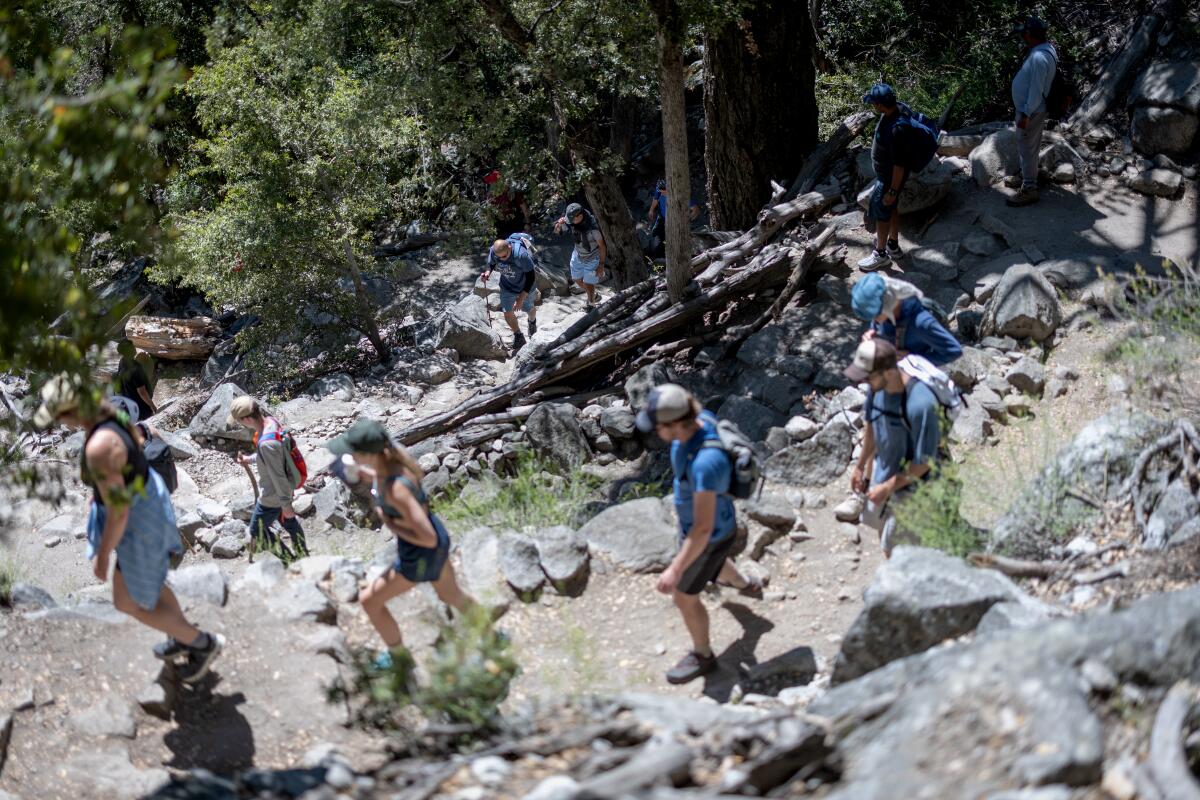
On the way down from that vantage point, Upper Yosemite Falls Trail, which was practically empty at 9 a.m., had turned into a human conveyor belt by 11 a.m. Hundreds of people trudged up the steep switchbacks in single file.
People hike the Upper Yosemite Falls trail in Yosemite National Park on Saturday.
(Eric Thayer/Los Angeles Times)
That’s what’s giving parks enthusiasts heartburn this spring.
Even before the summer rush, which begins in earnest in a few days with Memorial Day weekend, California’s most visited national park is seeing enormous crowds. There have been more than 836,000 visits so far in 2026, according to National Park System data — about 100,000 more than this time last year.
The reason, according to parks advocates, is the Trump administration’s decision to abandon a reservation system implemented in 2020 to limit crowds during the COVID-19 pandemic. The system has been used on and off since then to help control the number of visitors and preserve a sense of natural tranquility.
On Saturday, there seemed to be an uneasy balance: The crowds were large but well-managed, with some visitors worried about the months ahead.
On the valley floor, as hundreds of people pressed together to gaze in awe at Lower Yosemite Falls, Jeff Wilson of Folsom said he was having flashbacks to 2023, the last time the park allowed entry without permits.
“It was just absolute bumper-to-bumper traffic all the way around the loop. Zero places to park, cars just circling all day, and people pulling off into just random spots,” Wilson said. “It was an absolute mess.”
People walk to the bottom of Yosemite Falls in Yosemite National Park on Saturday.
(Eric Thayer/Los Angeles Times)
There were echoes of that everywhere on Saturday. Parking lots filled up fast — the lot at Curry Village was full by 8 a.m. — and cars were stashed in every unmarked flat spot their owners thought they could get away with.
Once people found somewhere to leave their cars, they didn’t dare move them. Most relied on the free shuttle that circles the valley floor. The big white buses were jammed to capacity by midday, as were the bus stops, where people often had to wait for several shuttles to pass before one arrived with room.
Still, the lines were reasonable to enter the park and pay the fee — $35 per car for U.S. residents and President Trump’s new $100 per person extra charge for foreigners. That means a family of four from abroad would have to pay $435.
People who arrived very early breezed through the toll booths, and even those who showed up after 9 a.m. said they waited only about 15 to 30 minutes. That was a dramatic improvement over recent weekends, when social media lit up with complaints of hour-and-a-half ordeals.
Traffic flowed slowly but smoothly on the main paved roads around the valley floor. There was the occasional outburst as angry drivers leaned heavily on their horns, filling the peaceful meadow with a sudden blast of urban agita, but in general, things remained calm.
“We thought it would be more crowded,” said Laura Yuen, from the Bay Area. “But it’s actually manageable. We’re on bikes, and people are making room and are courteous.”
Arriving early and stashing the car was key for Yuen and her companion.
“A couple of sights have been crowded — those were the really touristy spots. But other than that, it has been beautiful,” she said. “This is a great time of year to come.”
Whether the good times will last once the high season begins is the question.
People board a shuttle in Yosemite National Park on Saturday.
(Eric Thayer/Los Angeles Times)
Since Trump returned to office in 2025 and unleashed Elon Musk’s Department of Government Efficiency on the federal work force, the National Park System has lost nearly a quarter of its employees to layoffs and buyouts, according to the nonprofit National Parks Conservation Assn.
And the Trump administration has proposed about 3,000 more job cuts — roughly another 25% — in the coming year. Trump has also proposed slashing nearly $800 million from the park system’s roughly $3-billion operating budget.
All of which risks tipping the delicate balance into chaos and gridlock, critics warn.
By 2 p.m., a flashing sign at the entrance to Curry Village advised that the parking lot was full and directed people to try their luck elsewhere.
Still, dozens of drivers crept around the lot, hoping to pounce if someone pulled out. It looked like an especially depressing way to spend an afternoon surrounded by some of the most celebrated natural wonders on Earth.
Kunal Khandwala of San José was among those searching for a spot until he gave up and pulled over, blocking a few cars but ready to move if their owners returned and needed to leave.
His friends had hopped out and joined the line at the Curry Village Pizza Deck, waiting to grab some food and go find a quiet spot for a picnic — far from the village.
The situation was “testing,” Khandwala said, but not intolerable if you relaxed and remained patient.
And anything was better than subjecting yourself to the shuttle, he joked.
People raft down the Merced River with Yosemite Falls in the background in Yosemite National Park on Saturday.
(Eric Thayer/Los Angeles Times)
“The waits are insane,” he said, pitying people who had only a day in the park and were hoping to hit all of the highlights by bus. “There’s no way. You’re not going to see everything you want if you rely on the shuttle.”
Parks officials were unable to provide the number of visitors who arrived on Saturday, or compare that to the crowds on recent weekends.
But with Memorial Day looming, this weekend felt like the calm before the storm.
Which is why Wilson, the frequent visitor from Folsom, said he is “very, very much pro-reservation. It is a hassle — you have to plan ahead — but it just makes it a better experience for everybody.”
He had also brought his bike, which seemed to be the best way to elude the masses.
“This is my favorite place in the world, no matter what the crowds are like,” he said before pedaling off. “As long as you can get in, come, have a good time, you’ll love it.”
VIENNA — Vienna’s famed coffeehouses have embraced the Eurovision Song Contest. They have also been touched by tensions over Israel’s inclusion in the sequin-drenched pop music competition.
When officials announced a list of “Eurofan Cafes” — Vienna coffee shops offering food and music from competing countries — Israel was initially left out.
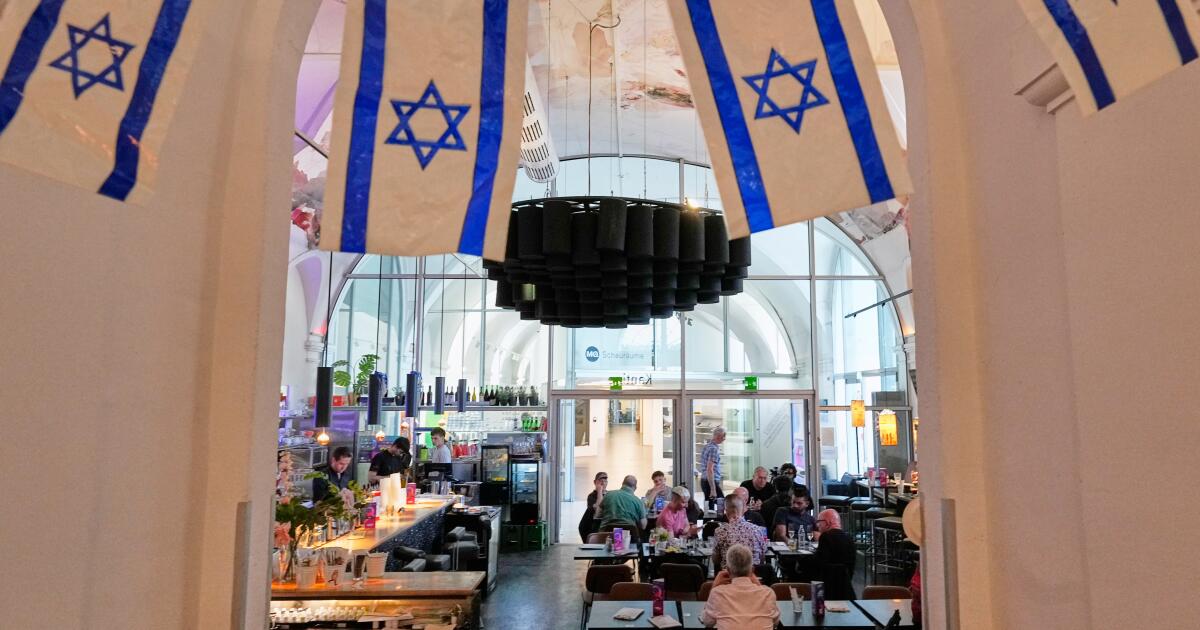
MQ Kantine, a modern café in the city’s arty museums quarter, offered to step in. Now it has falafel, bagels with lox and kosher wine on the menu, a string of small Israeli flags hanging from the ceiling — and a police officer outside the door.
Security is tight across Vienna during the international music contest, whose “United by Music” slogan rings sightly hollow this year. Five countries are boycotting because Israel is taking part. Pro-Palestinian activists are planning a protest concert — one of several Eurovision alternatives across Europe — and an anti-Israel march before Saturday’s grand final.
At MQ Kantine, volunteers take turns to monitor for potential trouble. But so far the mood has been supportive, said Daniel Kapp, a PR consultant and pro-Israel campaigner.
“It’s beautiful,” he said, as people drank coffee and beer on the café terrace in the spring sunshine, though he noted that the police officer on duty showed that all is “not entirely normal.”
“My feeling is that Austria to a certain degree has learned from its history,” Kapp said, referring to the deadly antisemitism under the Nazis before and during World War II. “Which is why the support for Israel is a lot more normal than it is in other countries.”
Israel has competed in Eurovision for more than 50 years, and won four times. But its participation has been contested since it launched a war in Gaza after 1,200 people were killed in a Hamas-led cross-border attack on Oct. 7, 2023. More than 73,000 Palestinians have been killed since the war began, according to the territory’s Health Ministry, which operates under the Hamas-run government and whose detailed records are viewed as generally reliable by the international community.
Israel’s government has repeatedly defended its campaign as a response to the Oct. 7 attack. But a number of experts, including those commissioned by a United Nations body, have said that Israel’s offensive in Gaza amounts to genocide. Israel, home to many Holocaust survivors and their relatives, has vigorously denied the claim.
The latest Israel-Hezbollah war in Lebanon and the U.S.-Israeli war on Iran have driven tensions still higher.
The 2024 Eurovision contest in Malmo, Sweden, and last year’s event in Basel, Switzerland, saw pro-Palestinian protests that called for Israel to be expelled. Five countries — Iceland, Ireland, the Netherlands, Slovenia and Spain — pulled out of the 2026 contest after organizers allowed Israel to compete.
Partying amid tight security
The tensions have produced a Eurovision of two halves. An upbeat party atmosphere prevails inside the Wiener Stadthalle arena and in the separate Eurovision Village fan zone. But getting in means passing through a ring of steel, with searches, scanners and a ban on all bags inside the arena. Armed police are a very visible presence on the streets.
Awareness of risk from terror plots is high in the city after a 21-year-old Austrian man accused of pledging allegiance to the Islamic State group pleaded guilty to plotting to attack a Taylor Swift concert in Vienna in 2024.
Israeli singer Noam Bettan told Israeli media that, like last year’s Israeli competitor Yuval Raphael, he practiced performing while being booed. There were scattered shouts amid the cheers when he performed in the first Eurovision semifinal on Tuesday. He secured a spot in Saturday’s final by being one of the top 10 finishers in voting by viewers and national juries.
Organizers said four people were removed from the 10,000-strong audience for disruptive behavior.
Austrian Eurovision fan Ivo Herzl, who attended the semifinal, said “the vibe was incredibly positive.” He is showing support for Israel by making and selling Mazel Lov T-shirts — a play on “mazel tov,” a Hebrew and Yiddish phrase of congratulations.
“Vienna has always been a city of tolerance,” Herzl said. “It’s the city of music and we’ll always do everything possible for everyone to enjoy a musical event.”
Some Israeli fans said they were reassured by the tight security. Oz Yona, attending his first Eurovision, said he had experienced “no hate” and felt Austria took antisemitism seriously.
He came with friends to cheer for Israel, though he was not optimistic about Bettan’s chances — for musical rather than political reasons.
“I don’t think he will win,” Yona said. “Finland is better this year. Greece is better this year. We have a good song, but not a winning song.”
Birgitta Peterson and Kristina Nilsson, who wear matching pink bomber jackets and call themselves the Swedish Ladies, love to explore new cities and meet up each year with their “Eurovision family” of fellow fans. They plan to wave Israeli flags at Saturday’s final, after Swedish contestant Felicia said earlier this year that she didn’t think Israel should be in the contest.
They say tensions over Israel have divided a fan community long known for its friendliness and embrace of diversity.
“The wounds are very deep at the moment,” Nilsson said.
“This event should really be about ‘united by music’ and happiness,” she added. “That’s what Eurovision is all about.”
CANNES, France — The movies of Na Hong-jin aren’t hard to love — they’re as obsession-worthy as the stylish rigor with which they are made. His 2008 debut, “The Chaser,” found new febrility in the post-Fincher serial killer thriller. “The Wailing” somehow added ghosts, demon-possessed children and inky black crows to the mix with a near-crazed sense of showmanship.
That was 10 years ago. Na, 51, now sits on the other side of a project that has consumed him for years, a sci-fi action film called “Hope” that arrives with expensive CGI, a pair of A-list stars (Michael Fassbender and Oscar-winner Alicia Vikander) and James Cameron-sized franchise ambitions. It will undoubtedly make Na’s gallows-humor-inflected brand more global, even if it lifts him out of the cult niche that’s nourished him to date.
Cannes is an unlikely place to launch “Hope.” That could be seen as a sign that the festival’s increasing accommodation of blockbuster bigness doesn’t need Hollywood. Na sits in the corner of a Côte d’Azur waterfront lounge on a glorious midday, the sky an almost abstract blue. He tugs at his goatee distractedly. His world premiere is tonight.
Neon, the distributor currently enjoying a six-year Palme d’Or winning streak, will release “Hope” in America sometime after its summer bow in Na’s native South Korea. The following conversation has been edited for length and clarity. It also contains significant spoilers.
A scene from the movie “Hope,” directed by Na Hong-jin.
(Neon)
When did you realize that you had a big sci-fi alien monster movie in you?
The idea came to me in 2017 in Seoul. The premise started off with somebody watching news in a diner or a small restaurant. It was that image that I had in my head. So I started developing that initial image in more detail. By 2018, I was able to write my first draft.
“Hope” brings to mind several genre classics, from “Jaws” and John Carpenter movies like “The Thing,” to something more homegrown such as Bong Joon Ho’s “The Host.” Were those inspiring to you?
I must have looked all the genre films that I could find, including the ones you mention, before I went into filming. And, as I hope you noticed, I was looking more at films from before 2000 and I tried to reflect that look.
It seems like you’re using Cannes as a moment to pivot or reinvent yourself. Is that intentional?
I didn’t intend for this to be a turning point in terms of style or direction going forward. I never thought of it that way. What I really dwelled on was thinking about how to tell this story in a way that was approachable and entertaining for people.
Why did you set the story in the demilitarized zone?
If you look at it from a universal perspective, what happens in this very shabby, humble, small, insignificant space potentially creates an impact that can go on infinitely. I think none of the characters in the film do anything with any malice. I guess the underlying story I want to tell is that there is no reason for evil intention behind anything, but innocent acts can build up to something tragic.
Michael Fassbender and Alicia Vikander are wonderful surprises in the movie as some rather dignified aliens. What led you to them?
When I was casting the alien roles, I had a bigger story in mind. I don’t know whether there’ll be a sequel after this one, but if so, that sequel is going to be centered around them. So picking the right actors was very important for me. We asked them to learn this invented alien language, which they prepared and came onto set knowing.
How important to you is comedy and releasing tension with laughs?
Very. I try to really think it through and if it comes out the way I intended, that gives me such a thrill. I tried to incorporate it in many places.
A lot of the movie feels like a virtuoso chase sequence, people barreling down the road, guns blazing. But it took me a minute to realize that the more interesting question is: Who’s doing the chasing? Is “Hope” meant to make us examine our own violence?
Yes, very much so. And two of the major chase scenes were designed so that what starts off as righteous somehow tilts toward being unjust. I wanted the action to bring up that transition in perspective.
You’ve premiered at Cannes before but, in a way, it feels like the wrong festival for a movie like this. You’re laughing because I think you agree with me.
It goes without saying. I’m incredibly nervous. And I feel so grateful that you’re treating me so nicely and gently.
A scene from the movie “Hope,” directed by Na Hong-jin.
(Neon)
Why did it take you 10 years to make this film?
There was a pandemic in the middle of that. But except for the pandemic where everything stopped, I was working my ass off before and after. It still took this long. I’m a little concerned myself, like: How did this happen?
With “Hope,” are you saying goodbye to the filmmaker you once were?
Not at all. Throughout the entire process of making this film, I was bloodthirsty. I was thirsting for blood. I have another script written already.
And maybe now it’ll go faster because there won’t be a pandemic. Are you hoping that this movie is going to have an impact on the Korean film industry?
It’s not my place to say that. I’m not sure. I want things to be freer.
Would it be a mistake to read this film as an allegory for what’s happening now in the world? Is it a plea for understanding?
I don’t regard it as a plea for understanding. Rather, let’s hope people will be able to relate to it and be empathetic about the story and realize for themselves, understand for themselves. Maybe there’s something more to it, but you take away what you will from that.
Your dark humor flares on occasion. Did you make it a point to try to preserve that?
Well, you can’t just do something like this without having that. It’s not fun.
This doesn’t feel like an “Avatar”-style film. There’s an openness to it, a sense of exploration. Do you believe in heroes?
I do believe in heroes, but, as I tell in the story, anyone can be a hero.
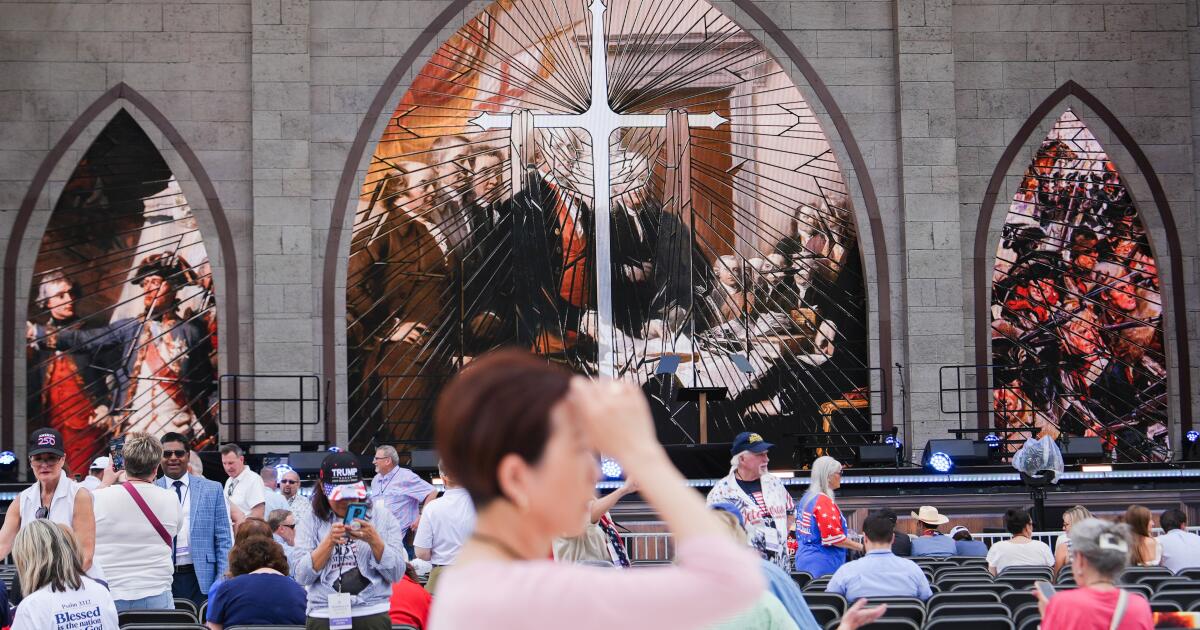
WASHINGTON — Thousands of people streamed onto the National Mall for a daylong prayer rally Sunday headlined by President Trump and billed as a “rededication of our country as One Nation under God.”
Against the backdrop of the Washington Monument, worship music blared from a stage that made clear the event’s Christian focus. Arched stained-glass windows, set underneath grand columns resembling a federal building, depicted the nation’s founders alongside a white cross.
The nation’s tradition of separating church and state, however, was not on display. Most speakers celebrated Christianity’s ties to American history, a blending of ideas that critics decried before the gathering as Christian nationalism.
Trump read a passage of Scripture in a video shown at the rally. Filmed in the Oval Office, it was the same footage used during a marathon Bible-reading event last month. The verses from 2 Chronicles are often cited by those who claim America was founded as a Christian nation.
“If my people, which are called by my name, shall humble themselves, and pray, and seek my face, and turn from their wicked ways,” Trump read, “then will I hear from heaven, and will forgive their sin, and will heal their land.”
Other leading Republicans, including Defense Secretary Pete Hegseth, Secretary of State Marco Rubio and House Speaker Mike Johnson (R-La.), were also on the schedule for the event, part of the celebrations marking the nation’s 250th anniversary.
Only one name on the Rededicate 250 program was not Christian. Most were among Trump’s longtime evangelical supporters, including Paula White-Cain of the White House Faith Office and evangelist Franklin Graham of Samaritan’s Purse.
“We are deeply concerned that what is really being rededicated is a nation to a very narrow and ideological part of the Christian faith that betrays our nation’s fundamental commitment to religious freedom,” said the Rev. Adam Russell Taylor, a Baptist minister who leads the progressive Christian organization Sojourners.
The conservative Christian lineup featured guests who often assert that the United States was founded as a Christian nation, a narrative disputed by many historians and other religious traditions and inconsistent with American legal precedent.
Rabbi Jonah Dov Pesner, director of the Religious Action Center of Reform Judaism, noted the religious diversity of early America, including Jews, Muslims and Indigenous people. “I want to shine a light on America’s history as a nation that welcomes, celebrates and protects people of all faiths and those of no faith,” Pesner said.
‘It’s all about Jesus’
Many in the crowd wore Trump hats and patriotic colors, joining the festivities under a sweltering sun.
“It’s all about Jesus,” said Denny Smith, 72, of Rhode Island, who rented a motorized scooter to traverse the National Mall.
Retha Bond, a 58-year-old from southern Illinois, said she was here to hear Trump speak nearby on Jan. 6, 2021. She said she did not join the protesters who rioted later that day at the Capitol, attacking police officers while attempting to overturn the presidential election result, but she has remained a steadfast Trump supporter.
“I’m not saying Trump is the savior,” Bond said. But she said that “this is one of the most important things that could be going on in the world, for us to rededicate our nation back to God.”
At least one event speaker mentioned the slain conservative activist Charlie Kirk. Kirk’s activism has been a powerful example for Alessandra Seawright, 15, of Santa Fe, N.M., who came to Rededicate 250 with her mother.
“I think we just need more of this in our country, and we just need to share the word of the Lord,” she said. “We love going to events like this.”
They also attended Kirk’s memorial service in Arizona, which mixed Christian worship and political messages. Events like these, Seawright said, help her feel less alone in her conservative Christian beliefs.
Prayer event spurs protest
Hegseth, who has infused Christian language and worship with his role leading the Pentagon — drawing criticism — asked the gathering in a video to pray to “our Lord and Savior Jesus Christ.” Referencing George Washington’s faith, he said, “Let us pray without ceasing. Let us pray for our nation on bended knee.”
Orthodox Jewish Rabbi Meir Soloveichik was the only non-Christian religious leader listed on the program. To applause, he told the crowd, “Antisemitism is utterly un-American” — a seeming reference to debates dividing the right.
Soloveichik serves on the Trump administration’s Religious Liberty Commission along with White-Cain, Graham and Cardinal Timothy Dolan and Bishop Robert Barron, Catholic clerics also featured on the program.
The event was organized by Freedom 250, a public-private partnership backed by the White House. Congressional Democrats have questioned the nonprofit’s structure and finances, which they see as a Trump-controlled end run around a separate commission charted by Congress a decade ago to prepare semiquincentennial events.
Progressive groups staged counter-programming. Among them were the Freedom From Religion Foundation, which advocates a strict separation of church and state, and the Christian organization Faithful America. The two groups displayed a large balloon near the mall of a Trump-like golden calf, a biblical reference to idolatry.
On Thursday evening, the Interfaith Alliance projected protest slogans onto an exterior wall of the National Gallery of Art. “Democracy not theocracy,” said one. Another said: “The separation of church and state is good for both.”
Stanley writes for the Associated Press. AP writer Peter Smith in Pittsburgh contributed to this report.
TECATE, Mexico — White sage burning, Norma Meza Calles gathers guests at a Mexican wellness resort into a semicircle facing Kuuchamaa Mountain and asks everyone to close their eyes and feel its presence.
“This is sacred to us like a church for you all. The mountain is our healer, our psychologist,” said Meza Calles, a Kumeyaay Nation tribal leader who explains that in its creation story a shaman transformed into the mountain. “Here is where we gather strength to live in this difficult world.”
Then she calls for a moment of reflection. But the silence is pierced by the crushing of rock. U.S. federal contractors have been blasting and bulldozing Kuuchamaa, which straddles the U.S.-Mexico frontier, to make way for new sections of border wall.
Indigenous leaders say that in the Trump administration’s rush to build border wall segments, contractors are desecrating Native American sacred places and cultural sites at an unprecedented pace, more than 170 years after the international boundary split the territories of dozens of tribes.
Blasts on sacred mountain
Wall construction has ramped up along the 1,954-mile border even as illegal crossings have plummeted to historic lows. Much of it began this year after the U.S. Department of Homeland Security waived cultural and environmental laws.
In California, explosions on Kuuchamaa, also known as Tecate Peak, send rocks hurtling down its Mexico side.
“We feel that in our DNA,” said Emily Burgueno, a California member of the Kumeyaay Nation, noting that “body” and “land” are the same word in the Kumeyaay language. Some tribal leaders met with Homeland Security officials to urge them to protect Kuuchamaa and are looking into legal action.
“No one ever consented or supported the use of dynamite on the mountain,” Burgueno said.
In Arizona, Homeland Security contractors last month carved through a massive, 1,000-year-old fish-shaped geoglyph called Las Playas Intaglio. The rare drawing, etched into the desert floor much like Peru’s Nazca Lines, was created on a lava field in what is now the Cabeza Prieta National Wildlife Refuge.
Construction crews work April 24 on a new border wall segment near the end of a previously built section on Kuuchamaa Mountain, seen from Tecate, Mexico.
(Gregory Bull / Associated Press)
The Tohono O’odham Nation said it had pointed out the site on its ancestral land for contractors to avoid.
“This was a devastating and entirely avoidable loss,” Tohono O’odham Chairman Verlon Jose said in an April 30 statement. “There is nothing more important than our history, which is what makes us who we are as O’odham. The site was also an irreplaceable piece of the United States’ history, one none of us can ever get back.”
U.S. Customs and Border Protection said in a statement that a contractor “inadvertently disturbed” the site west of Ajo, Ariz., on April 23, but it vowed to protect the remaining portion. CBP Commissioner Rodney Scott is talking to tribal leaders to determine next steps.
Members of the Inter-Tribal Assn. of Arizona, which represents 21 tribes, traveled to Washington last month to lobby against a 20-foot secondary wall being built along that section of the border, as well as a primary 30-foot bollard wall planned on Tohono O’odham tribal lands.
They met with Homeland Security Secretary Markwayne Mullin, a Cherokee Nation member, who listened but made clear his intent is to build more border wall as fast as possible, the Tohono O’odham Nation said in a statement.
Hundreds of miles under contract
The Trump administration says the barriers are necessary to keep people and drugs from entering the U.S. illegally. It wants walls to cover at least 1,400 miles of the border.
Trump’s One Big Beautiful Bill Act last year devoted more than $46 billion to the effort.
CBP has awarded contracts or begun construction on over 600 miles of new border wall, with companion surveillance technology. A double wall is planned or under construction along an additional 370 miles.
In Arizona, where the Patagonia Mountains descend to the border, heavy machinery crawls along freshly graded roads to extend a double wall that could block a wildlife corridor for endangered ocelots and jaguars. Jaguars have long coexisted with the Tohono O’odham, who consider the species “spiritual guardians,” Austin Nunez, a tribal leader, said in a 2025 lawsuit that unsuccessfully challenged the Homeland Security waivers.
In Sunland Park, on New Mexico’s border with Mexico, crews this year set off blasts on Mt. Cristo Rey, a pilgrimage site topped with a limestone crucifix.
CBP is seeking to seize a strip of the mountain owned by the Roman Catholic Church for wall construction. The Diocese of Las Cruces asked a judge this month to deny the land transfer as an affront to religious liberties and the “faithful who seek to commune with God on Mount Cristo Rey.”
In western Texas, the federal government in February notified ranchers on the Rio Grande east of Big Bend National Park of its interest in their land that contains canyonland pictographs and petroglyphs, said Raymond Skiles, a retired Big Bend National Park ranger.
“There are pictographs, paintings of shaman figures and various things that we don’t know how to interpret,” said Skiles, describing the drawings on his family’s ranchlands.
After community backlash, CBP’s online planning map showed the 30-foot-wall plans were scrapped for surveillance technology, patrols and some vehicle barriers. A segment in the national park and neighboring Big Bend Ranch State Park would rely on technology alone.
CBP says it recognizes the importance of natural and cultural resources and is working to minimize the construction’s impact, including leaving drainage gates open in wildlife corridors for animal passage. Illegal border crossings have littered, polluted and trampled sensitive habitat, the agency says.
CBP also says 535 miles of remote, rugged border terrain will solely rely on detection technology.
Many tribes would prefer that to walls.
Norma Meza Calles, a Kumeyaay Nation leader, leads a guided tour of traditional Kumeyaay uses for local plants at a wellness center in Tecate, Mexico.
(Gregory Bull / Associated Press)
Desecrating Native American sites is a felony
Tribes along the border “are all experiencing the same tragic desecration of our cultural and sacred sites,” said Burgueno, chair of the Kumeyaay Diegueño Land Conservancy, a nonprofit organization in California that works to protect Kumeyaay lands. “This is a great example of the federal government not following federal laws.”
Desecrating a sacred Native American site on U.S. federal or tribal land is a felony, punishable by imprisonment and fines. In 1992, the National Park Service listed Kuuchamaa Mountain in the National Register of Historic Places, giving it limited protection. It noted that “discarding or disturbing the mountain’s natural state would be sacrilegious.”
Rising 3,885 feet above sea level, Kuuchamaa has also captivated non-Native people.
Sarah Livia Brightwood Szekely said her father, Edmond Szekely, felt the mountain’s healing energy when he arrived in Tecate, Mexico, as a Hungarian Jewish refugee during World War II, and started the renowned wellness resort, Rancho La Puerta, which she now runs.
“There are all of these people that have a deep relationship with the mountain,” she said.
Meza Calles leads walks at Rancho La Puerta to teach guests about Kuuchamaa.
Traditionally, young men would spend 40 days at its base in a coming-of-age ceremony before becoming warriors or shamans, she said. Today’s rituals are shorter. People suffering from a death, debt, divorce or other difficulty seek Kuuchamaa’s healing, she said.
“It’s sad they are ruining the mountain,” she said. “We’ll see how far they go. Destiny is destiny. But the fight is not over.”
Watson and Lee write for the Associated Press and reported from Tecate and Santa Fe, N.M., respectively.
President Trump succeeded in his effort to defeat Sen. Bill Cassidy in Louisiana’s Republican primary, a signal of the enduring strength of the president’s hold on his party despite an unpopular war and soaring gas prices.
Cassidy was one of seven Republican senators in 2021 who voted to convict Trump on the impeachment charge of inciting an insurrection on Jan. 6 that year. He placed last in a three-way race Saturday against U.S. Rep. Julia Letlow, who was endorsed by Trump, and state Treasurer John Fleming.
“His disloyalty to the man who got him elected is now a part of legend, and it’s nice to see that his political career is OVER!” Trump said of Cassidy on social media late Saturday.
With 92.3% of ballots tallied, Letlow had 44.8% of the vote and Fleming had 28.3%. Cassidy trailed with 24.7%.
Letlow and Fleming will advance to a runoff next month. Whoever wins that contest is virtually assured victory in November in deep-red Louisiana. In his last reelection in 2020, just months before his vote to convict Trump, Cassidy won 59% of the vote.
In a primary season where Trump is crusading to vanquish members of his party with whom he’s been at odds, the Louisiana race comes just days before the president tries to oust another Republican foe, Rep. Thomas Massie of Kentucky. But Trump has opted so far to stay out of a hard-fought Texas GOP runoff later this month between incumbent Sen. John Cornyn, a traditional conservative, and state Atty. Gen. Ken Paxton, who is more politically aligned with the president’s MAGA movement.
Massie, who faces a primary that has become the most expensive of its kind, said Sunday on ABC’s “This Week” that’s he’s confident he will prevail Tuesday despite a string of social media insults from the president and fundraising by Trump allies such as billionaires Miriam Adelson and Paul Singer.
“I think it’s going to help my fundraising,” Massie said. “People don’t like this.”
With state polls showing Massie with a slight lead, the congressman said, “that’s why the president is losing sleep and tweeting about me.”
Trump’s success in defeating Cassidy left the Louisiana senator defiant: “Let me just set the record straight. Our country is not about one individual, it is about the welfare of all Americans and it is about our Constitution.”
“If someone doesn’t understand that and attempts to control others through using the levers of power, they’re about serving themselves, they’re not about serving us,” he added.
Trump has attacked Cassidy for his 2021 vote and his opposition to some aspects of his agenda, particularly vaccine and other health policies pushed by Health Secretary Robert F. Kennedy Jr. During Kennedy’s Senate confirmation hearings last year, Cassidy, who is a doctor, expressed deep skepticism about the nominee’s anti-vaccine views, but ultimately voted to confirm him.
Trump recently blamed Cassidy for thwarting the nomination of wellness influencer Casey Means as surgeon general. Means is a longtime ally of Kennedy’s, and Cassidy had also questioned her stance on vaccinations.
On Saturday morning, Trump continued his attacks, calling Cassidy a “a disloyal disaster” on social media. He later congratulated Letlow on her first-place finish.
In his concession speech, Cassidy said: “I find that people of character and integrity don’t spend their time attacking people on the internet.”
Despite the president’s opposition to his candidacy, Cassidy had run ads featuring images of Trump, praising top White House issues that the senator had supported including the president’s massive tax package enacted last year, while casting Letlow as insufficiently conservative.
The outcome also notches a high-profile win for Kennedy’s political operation, which supported Letlow and opposed Cassidy in the race. The two men have repeatedly clashed over nominations and the department’s changes to vaccine policy. With certainty of his departure when his term ends in January, Cassidy could make the health secretary’s job even more difficult as he finishes out his term with an eye to his legacy and priorities.
Cassidy’s departure will also leave a leadership vacuum for the GOP atop the Senate Health Committee next year. The panel oversees health agencies and confirmations for key leadership positions at the agencies, and Cassidy brought his medical expertise to the role. He has built a reputation as a healthcare policy wonk willing to work across the aisle.
Only two other Republican senators who broke with Trump in his 2021 impeachment trial, Susan Collins of Maine and Lisa Murkowski of Alaska, remain in the Senate. Collins, who represents a state Trump lost in 2024, has largely avoided the president’s wrath while she fights for her political life in one of the most competitive races of the midterms. Murkowski won reelection in 2022.
“You can disagree with President Trump, but if you try to destroy him you’re going to lose because this is the party of Donald Trump,” South Carolina Sen. Lindsey Graham said Sunday on NBC’s “Meet the Press.”
“There’s no room in this party to destroy his agenda or to destroy him or his family as a Republican,” Graham said. “It’s just a reality.”
Cohrs Zhang writes for Bloomberg. Bloomberg writers Tony Czuczka and Se Young Lee contributed to this report.
Situated in the south west of Germany, on the border of the iconic Black Forest mountain range, the city has jointly been designated a UNESCO World Heritage Site
13:19, 17 May 2026Updated 13:19, 17 May 2026
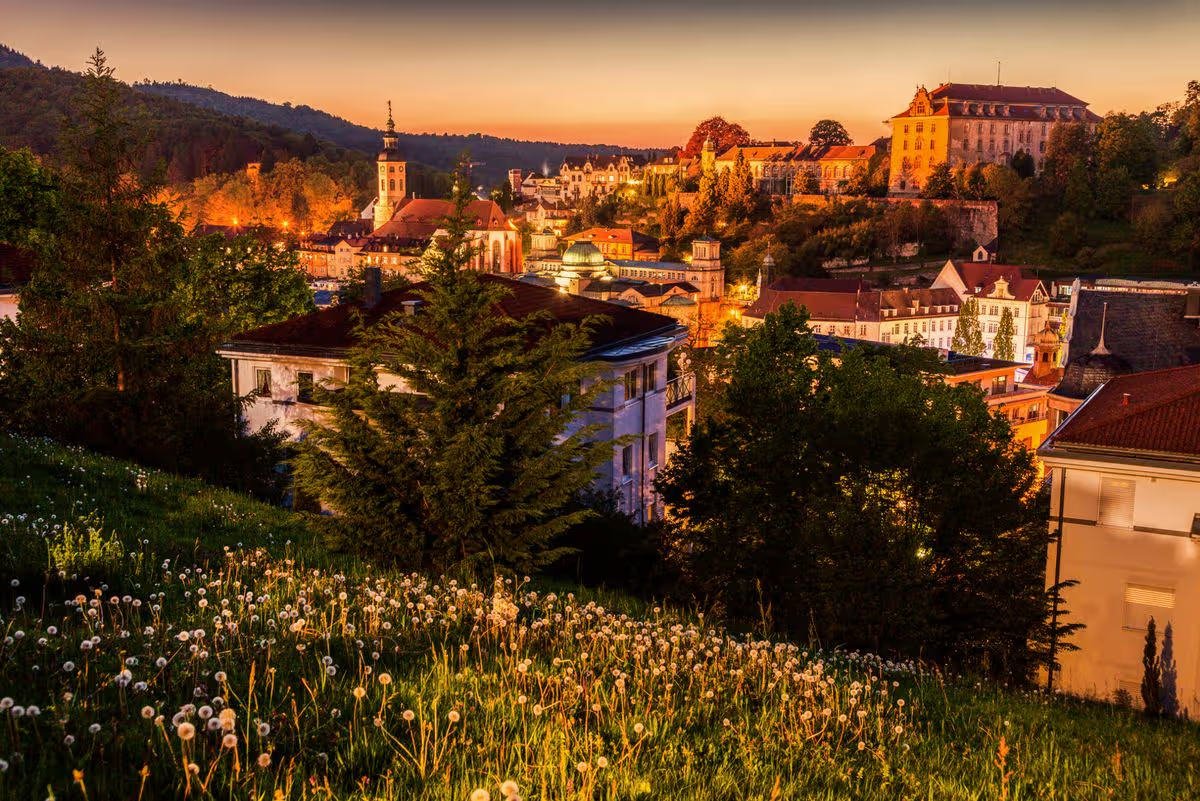
Baden-Baden has been described as “one of Europe’s most elegant hidden gems” (stock image)(Image: Getty Images/iStockphoto)
If you’re thinking about a trip to Europe, but want something a bit off the beaten track, one “hidden gem” with historic spas, Roman ruins, and incredible museums could be just the ticket. Situated in the south west of Germany, on the border of the iconic Black Forest mountain range, the city has, along with Bath in Somerset and nine other locations, jointly been designated a UNESCO World Heritage Site as one of ‘The Great Spa Towns of Europe’.
Travel influencer Katherine McQueen, who has 685,000 followers on Instagram, where she is known as vineyardsandvoyages, posted a look into everything the city has to offer. She said: “This is one of Europe’s most elegant hidden gems… and most people skip it.”
Describing the city as “polished, romantic, and completely different from the bigger stops most travellers add to their itineraries”, she hailed its “pastel streets, grand architecture, thermal baths, elegant cafés, beautiful gardens, and old-world glamour around every corner”. But it was the history which she hailed as its most important element.
“People have been coming here for the thermal waters since Roman times, and wellness is still one of the biggest reasons to visit today,” she said. “You can soak in mineral-rich baths, wander through historic spa buildings, and experience a side of Germany that feels slow, refined, and deeply relaxing.”
Katherine also praised the city’s glittering casino, food – including, of course, the iconic Black Forest gateau – and location, calling it “one of the most unexpectedly charming places I’ve visited in Germany”.
The city in question is Baden-Baden, located around 15 miles east of the French border, and 42 miles west of Stuttgart.
In the post Katherine explained more about what the city has to offer. “Some of the bathhouses here feel more like palaces than spas, with mineral pools, grand domes, and centuries of wellness history,” she said. “But it’s not just a spa town. It’s also filled with elegant architecture, gardens, colonnades, and beautiful places to wander.”
She added: “The whole city has this refined, romantic atmosphere. Long covered walkways, grand buildings, art, gardens, and peaceful corners everywhere.”
Concluding, she said: “It has that rare mix of history, wellness, food, architecture, and nature, all in one very walkable little city. Everywhere you look, there are details that make it feel grand without feeling overwhelming. This town rewards slow wandering. Hidden side streets, stairways, dreamy corners, and beautiful views around every turn.”
The city’s official tourism website says: “Baden-Baden was founded 2,000 years ago to do people good. Thermal water at temperatures of up to 68 degrees gushes out of the earth from 12 thermal springs in Baden-Baden. Even today, our spa town at the foot of the Black Forest is the perfect place to enjoy spa tradition – whether in the Caracalla Spa or in the historic Friedrichsbad Spa.”
Content cannot be displayed without consent
How can I get to Baden-Baden?
By air: Direct flights to Baden-Baden are available from London Stansted Airport. Indirect flights are also available from most other UK airports.
By train: You can take the Eurostar to Paris or Brussels, with various connecting routes available.
By car: You can drive by taking the Eurostar and then heading south east through France, or east into Belgium before crossing, into Germany. Once arriving in France, the route is between 400 and 450 miles, taking between six and seven hours.
CONCORD, N.H. — A growing effort to raise suspicion about the security of voting systems has kindled a back-to-the-future moment among conservatives in some parts of the U.S.
Republican lawmakers in at least six states have introduced legislation that would require all election ballots to be counted by hand instead of electronic tabulators. Similar proposals have been floated within some local governments, including about a dozen New Hampshire towns and Washoe County in the presidential battleground state of Nevada.
Despite no evidence of widespread fraud or major irregularities, conspiracy theories have proliferated among his allies that voting systems were somehow manipulated to favor Democrat Joe Biden. That has prompted calls to ban electronic tabulators used to scan ballots, record votes and compile race tallies.
“It’s our responsibility, and it should be our desire, to count every vote and to imbue confidence in our citizenry that our elections are fair and free, and that their vote is being counted,” said New Hampshire state Rep. Mark Alliegro, sponsor of a hand-counting bill that is similar to ones proposed in Arizona, Colorado, Missouri, Washington and West Virginia.
Alliegro said he was motivated by his analysis of recounts in nearly 50 New Hampshire state legislative races, not by the 2020 presidential election.
But some of the bill’s supporters reference the 2020 election to explain why they argue his hand-count legislation is needed. They cite a belief — despite evidence disproving it — that Trump actually won a landslide victory and that cheating is the only way to explain how New Hampshire voters elected a Republican governor and GOP majorities in the Legislature, but then backed Democrats for federal office.
Critics of the proposals to ditch electronic ballot tabulators and return to hand-counting are blunt about what they see as the motivation.
“It’s coming from conspiracy theories and lies,” said Sylvia Albert, director of voting and elections for Common Cause, a nonpartisan group that advocates for expanded voter access. “It’s attempting to lower people’s confidence in elections.”
Albert and others said it’s unrealistic to think election officials can count millions of ballots by hand and report results quickly, given that ballots often include dozens of races. The partisan review last summer of the 2 million ballots cast in Maricopa County, Ariz., which included a hand count, took several months and hundreds of people to complete.
“If you have a jurisdiction with 500 voters, you might be OK. But if you have a jurisdiction with thousands of voters, tens of thousands of voters, hundreds of thousands of voters, it’s just not going to work,” said Jennifer Morrell, a former elections clerk in Colorado and Utah who now advises state and local election officials.
Even in New Hampshire’s small towns, hand-counting is a complicated, lengthy process when a typical ballot might include 50 questions, said Milford Town Clerk Joan Dargie, who spoke against the proposed legislation on behalf of the New Hampshire City and Town Clerks Assn. She estimates her town would have to boost election workers from 200 to 350, and said many of her fellow clerks have said they will quit if they have to tabulate every ballot by hand. “People who are asking to get rid of machines obviously haven’t worked in an election,” she said.
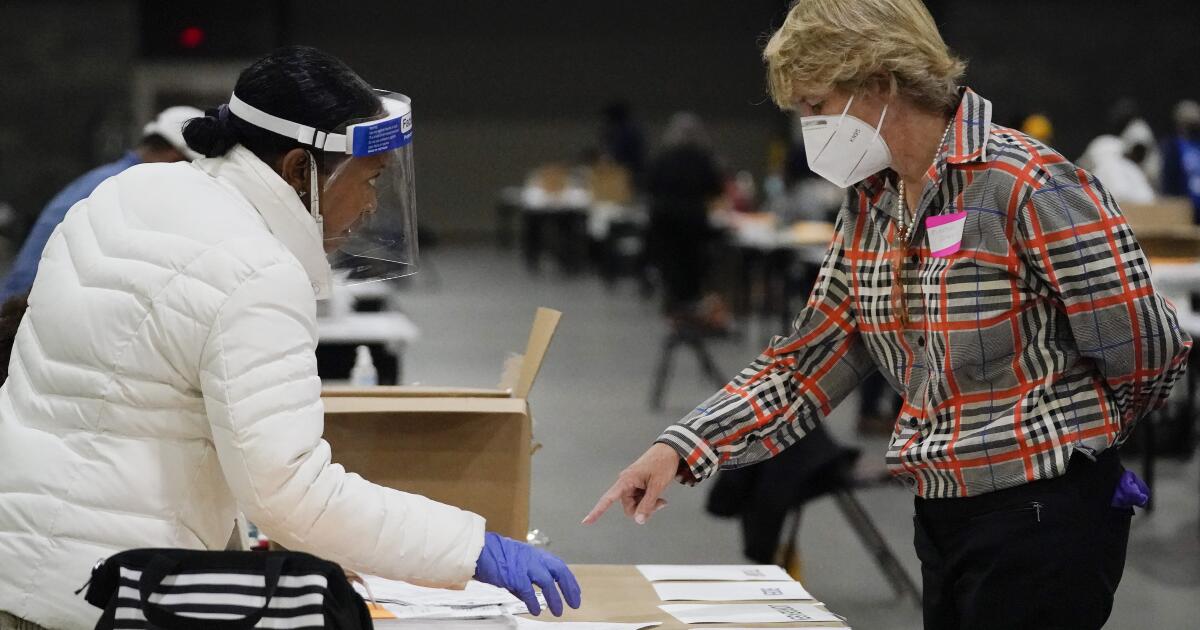
As one example, Cobb County, Ga., performed a hand tally ordered by the state after the 2020 election. It took hundreds of people five days to count just the votes for president on roughly 397,000 ballots, said Janine Eveler, elections director for the county in metro Atlanta. She estimates it would have taken 100 days to count every race on each ballot using the same procedures.
Counting by machine isn’t just faster. Multiple studies have shown it’s also more accurate, said Charles Stewart, professor of political science at the Massachusetts Institute of Technology.
The first research on the topic was done almost two decades ago, comparing recounts of New Hampshire races that were originally tabulated by hand with those tabulated by machines. In that study and subsequent research, the machines won, he said.
“Counting votes is very tedious. Human beings are bad doing tedious things, and computers are very good at doing tedious things,” Stewart said.
Most states also conduct postelection audits that are designed to identify any irregularities with ballot scanning and counting. But with many Republicans believing Biden was not legitimately elected, election machines have become a popular target.
In Nevada, a Republican county commissioner is pushing a proposal that would require hand-counting of all ballots, along with a return to primarily in-person voting and beefing up uniformed security at polling places.
“I’m 82 years old, and I’ve been through a lot of elections,” said Washoe County Commissioner Jeanne Herman. “I know that something is not right.”
The proposal has drawn opposition from other commissioners, the biggest labor union in the state and a rare front-page editorial in the largest newspaper in northern Nevada, which said the measure could cost taxpayers “millions of dollars to chase down Facebook rumors of illusory election fraud.”
In West Virginia, a bill to repeal the state law governing tabulation machines died in committee earlier this month. In Missouri, lawmakers have not yet acted on a proposal that would ban electronic voting machines and tabulation equipment and require hand-counting to be livestreamed and recorded.
The bill’s sponsor, Republican state Rep. Mitch Boggs Jr., said he has no proof elections have been manipulated but is responding to constituent concerns.
“You file what the constituents are asking for,” Boggs said. “But at the end of the day, what they’re really wanting is just the transparency. They want to know that our elections are secure.”
Republican state Rep. Petty McGaugh said the legislation would delay election results and likely undermine their accuracy. When she became clerk of rural Carroll County in 1995, election staff were still hand-counting ballots by marking tallies in blocks of five on paper. She noticed multiple errors and eventually switched the county to an electronic tabulation system.
“I don’t really think that in this day and age we need to go back to hand-counting where it’s so susceptible to human error,” she said. “We’ve got to start trusting electronics and computers.”
In New Hampshire, that message seems to have gotten through. Last week, a state House committee unanimously recommended killing the hand-counting legislation and voters in nine towns where the question was on the ballot in local elections rejected it.