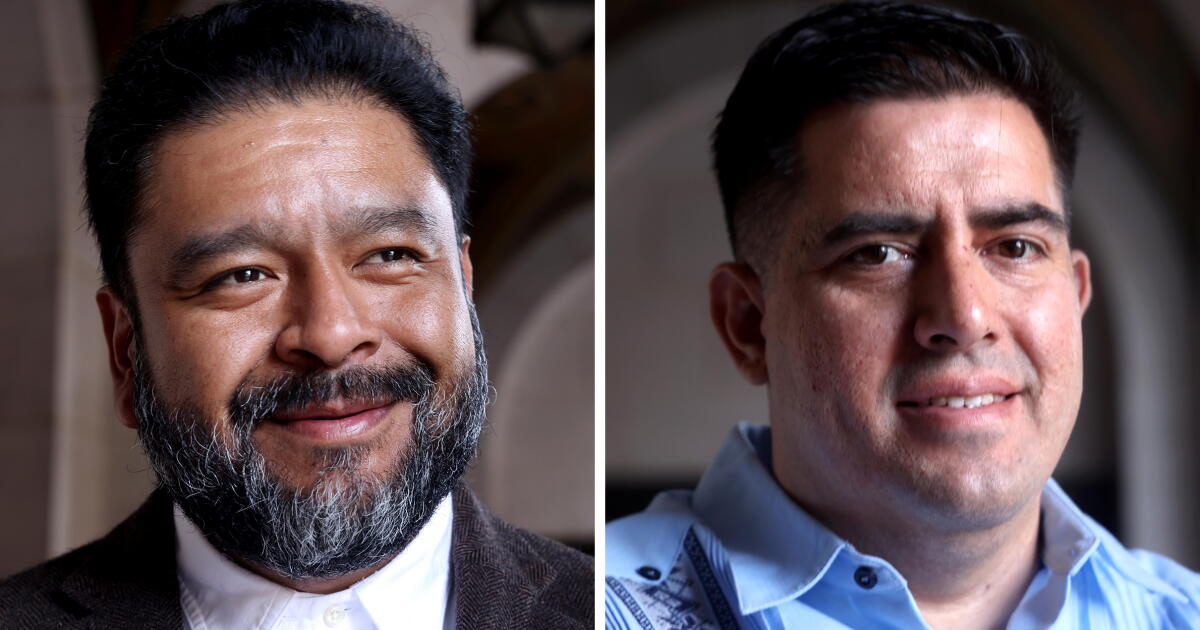
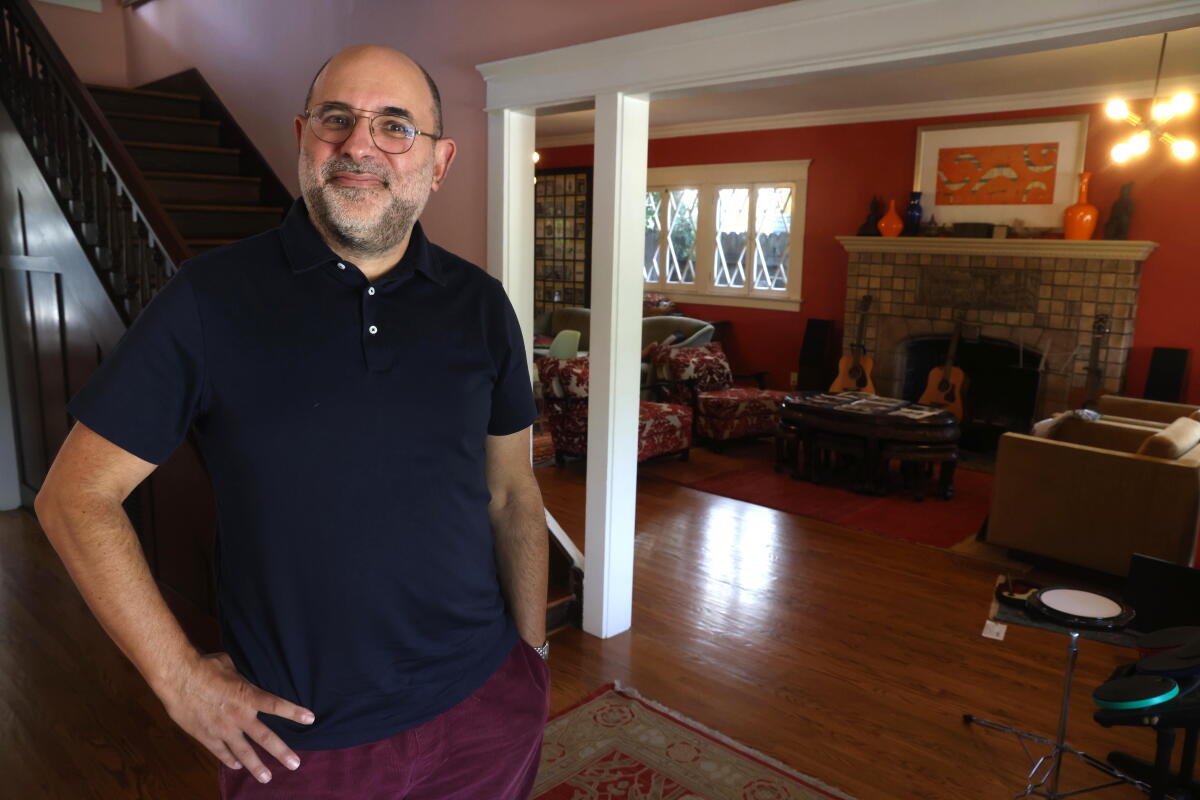
Ugarte, who once collected signatures for Measure ULA, also known as the “mansion tax,” says it’s not working as intended and is keeping developers away from the city. The measure levies a tax on property sales above $5.3 million and funnels the money to affordable housing programs and homeless prevention.
“If developers are running away from the city of L.A., we gotta know why. We gotta go back to the drawing board. We gotta accept when we make mistakes, including myself,” Ugarte said.
He supports amending the measure to exempt affordable housing developers. He also wants to raise the threshold for properties subject to the tax to $10 million, to account for the increasing costs of construction.
Ugarte supports State Bill 79, a law mandating that cities increase housing density around public transportation hubs. But more transportation, Ugarte said, needs to come before more housing.
Making L.A. more transit-friendly will lower costs for housing, insurance and parking, Ugarte said, giving residents relief from the city’s high cost of living.
Mazariegos said homeless prevention starts with enforcing a “huge list” of the city’s tenant rights laws, including rent control and prohibitions against landlords harassing tenants.
Building affordable housing, along with enforcing those laws, will keep more people housed, he said.
Mazariegos wants to use public land to build social housing, which is publicly subsidized housing separate from the rental market.
He also would push to extend the travel industry’s upcoming $30 minimum wage to all workers and to tie the minimum wage to the consumer price index.
“A combination of those things will reduce and stop the bleeding of folks going into the street, going homeless, and will start giving us a chance as a city to work our way out of this crisis,” Mazariegos said.
Coffins containing the remains of those killed will be carried in a funeral procession involving family members.
Published On 1 Oct 20261 Oct 2026
Palestinians are preparing to bury the remains of 105 people killed in a devastating Israeli attack on Gaza City in October 2023.
The victims were killed in a series of Israeli air strikes involving at least 20 bombs that levelled the seven-storey Al Taj 3 building and destroyed several other residential buildings in the Yarmouk Square neighbourhood on the afternoon of October 25, 2023.
Recommended Stories
list of 3 itemsend of list
Coffins containing the remains of those killed will be carried in a funeral procession involving family members on Thursday, the General Directorate of Civil Defence said.
The remains will be buried in the Sheikh Radwan cemetery, northwest of Gaza City.
Gaza’s civil defence said the recovery operation was carried out in coordination with an Egyptian committee.
Al Jazeera correspondent Ibrahim Khalili, reporting from Gaza City, said the recovery operation was the fifth largest of its kind since Israel launched its genocidal war against Palestinians in Gaza in October 2023, in terms of the number of bodies recovered.
Civil defence operations director Abdul al-Majdalawi said it had been “impossible” to reach the bodies at the time of the attack.
“Bulldozers, excavators and other heavy machinery used by civil defence teams in Gaza were directly and deliberately targeted,” he said.
Osama Sharaf said 37 members of his family were killed in the attack.
“We recovered some of them at the beginning of the war, and today [Wednesday] 16 more were recovered, including my father, my mother, and all of my siblings. My sister’s son was also there with them,” he said.
QUANTICO, Va. — Defense Secretary Pete Hegseth confirmed Wednesday that the U.S. military will cut 20% of its generals and admirals as he delivered what he is calling his “State of the Force” address.
Hegseth was speaking to junior officers and enlisted leaders at the Marine Corps Base Quantico in Virginia, the second year in a row that he has given such an address. This time, the U.S. military is seven months into a war with Iran with no clear end in sight, has captured Venezuelan leader Nicolás Maduro and killed more than 200 people in strikes on alleged drug trafficking boats in Latin America, among other actions worldwide.
The speech is not a usual fixture among Pentagon leaders. While Hegseth’s predecessors regularly addressed troops and top officers, they traditionally have done so in small or private settings.
The Pentagon chief, however, again focused on how he has drastically retooled the U.S. military by targeting what he calls “woke” culture — through a rollback of diversity programs, a review of ground combat units with female troops and a new screening program for “testosterone deficiency” among male personnel.
Pentagon officials had previewed that Hegseth would announce more cuts to the number of generals and admirals. He directed all military services to double the 10% reduction he ordered last spring for roughly 800 flag and general officer positions, making it a total 20% decrease to be completed by Jan. 1.
“I call it accountability and long overdue,” he said.
Several senators viewed Hegseth’s move as nothing short of a “purge” of the military’s top ranks that will take years to rebuild.
“He’s got some kind of like deep-seated grievance about leadership in the military,” said Sen. Mark Kelly, D-Ariz., the former Navy combat pilot and NASA astronaut, who has been critical of Hegseth. “He’s purging a generation of great leaders of the military, and it’s going to take a generation to recover from it.”
Republican Sen. Mike Rounds of South Dakota, a member of the Senate Armed Services Committee, said he wanted to understand Hegseth’s reasoning behind the decision.
“If it’s simply a matter of eliminating a very heavy top, there may be some validity to it, but I want to see it first,” Rounds said.
Hegseth and President Trump already have fired or pushed to retire more than two dozen military leaders since taking office, including the Army’s top uniformed officer, Gen. Randy George, a move that angered both Republicans and Democrats in Congress. The purge also has included a number of senior officers who are women or people of color.
Previous leaders who were ousted include Joint Chiefs Chairman Gen. CQ Brown; Chief of Naval Operations Lisa Franchetti; and Vice Adm. Shoshana Chatfield, the U.S. military representative to the NATO Military Committee.
Although Hegseth never gave specific reasons for those firings, most were tied to the belief that they endorsed or spoke openly in support of diversity, equity and inclusion programs, which have been targets of Hegseth and Trump.
As part of last year’s cuts, Hegseth also ordered the active duty military to shed 20% of its four-star general officers — the highest-level leaders — and the National Guard to shed 20% of its top positions, but it is unclear if all those cuts have been made. The new cuts could include any one-star general or above, or an officer of equivalent Navy rank.
When Hegseth first announced the effort to trim the highest levels of the military ranks, he argued it was intended to remove “redundant force structure to optimize and streamline leadership.” In a memo released in May 2025, he said the aim was to free the military from “unnecessary bureaucratic layers.”
The number of general officer positions in the military is set by law, but it is possible to let positions remain unfilled by not submitting replacements to Congress.
Hegseth’s efforts have extended well beyond personnel changes among the top ranks. He oversaw Trump’s ban on transgender troops while announcing new directives for “gender-neutral” or “male-level” standards for physical fitness.
Toropin and Finley write for the Associated Press. AP writers Lisa Mascaro and Meg Kinnard contributed to this report.
The 39th annual Hispanic Heritage Awards — which will honor the contributions and accomplishments of Latinos in the U.S. and Latin America — will air nationwide Friday on PBS.
In a historic decision by the Hispanic Heritage Foundation, which presents the annual awards, the event departed from its home base of Washington. Instead, Latino luminaries gathered at the Orchestra Hall in Minneapolis, where the celebratory occasion was taped for broadcast Sept. 10.
The move to the Midwest was a timely decision for members of the Hispanic Heritage Foundation, a nonprofit organization established by the White House in 1988. They took into consideration Minnesota’s response to a large-scale immigration enforcement campaign that began in December, known as “Operation Metro Surge.”
“We went to Minneapolis because we wanted to recognize what’s great about our community, [our] courage, resilience, strength, unity and looking out for each other,” said Antonio Tijerino, president and CEO of the Hispanic Heritage Foundation, in a phone call with De Los.
The Department of Homeland Security called the undertaking the “largest DHS operation ever” earlier this year on X, with an estimated 2,000 agents deployed to the Minneapolis–St. Paul metropolitan area. Thousands of Minnesota residents rallied against the tactical and militant methods used by Immigration and Customs Enforcement agents.
Civil unrest hit a boiling point following the killings of Renée Good and Alex Pretti on Jan. 7 and 24, respectively, by federal agents.
“ We actually went with a delegation of national Latino leaders to offer our support of the community during this crisis and we were overwhelmed by the heroism,” said Tijerino, who recalled a group visit to Minneapolis in February. There, he and his colleagues learned more about the rapid response efforts underway in the city.
“It was an American story that we wanted to tell,” he added.
At the 39th ceremony, Los Tigres del Norte presented a bit of that story to the people of Minnesota — who were collectively honored with the Humanitarian Award.
“Peaceful, hard-working communities of immigrants and refugees found themselves in fearful chaos as more than 4,000 parents, grandparents, neighbors, friends and families were taken by force, U.S. citizens among them,” Los Tigres del Norte announced in English while presenting the award. The players closed the show with a rendition of their 1984 song “Jaula de Oro,” which speaks to the plight of the undocumented community.
“I think Minnesota [is] a reflection of all of our Latino communities across the nation,” said Henry Jiménez, president and CEO of Propel Nonprofits, who was one of the individuals on stage representing the people of Minnesota.
“It uplifted the people. I think people felt validated for all of their hard work and effort that they’ve had to endure, not just the last couple months, but really a lifetime of work,” said Jiménez, whose organization helps consult and raise funds for budding nonprofits.
The relocation of the Hispanic Heritage Awards also comes as D.C. deals with the temporary closure of the John F. Kennedy Center for the Performing Arts — which hosted the Hispanic Heritage Awards in years prior.
The Kennedy Center closed its doors indefinitely on Sept. 15 after an inspection found acute public safety concerns, among them roofing issues. In a letter to Congress, various former employees allege that leadership was aware of the issues but halted plans for repair in April.
The closing also comes after a federal judge blocked the board’s decision to include President Trump’s name on the building in September. Trump’s takeover of the Kennedy Center began in February 2025, when he dismissed half its board members and installed himself as chairman.
“We were [at the Kennedy Center] for a very long time. It brought a lot of prestige and to fill a historic venue like that with Latinos was wonderful,” said Tijerino. “After many years of being at the Kennedy Center, we decided we wanted to go to another venue.”
In April 2025, the Hispanic Heritage Foundation announced that it would host its 38th annual awards at the Warner Theater instead; previous versions of the ceremony have also taken place at the historic Warner Theater venue, including in 2015 for the 28th Annual Awards and 2017 for the 30th celebration.
Hosted by comedian Anjelah Johnson-Reyes, the other honorees of the 39th Hispanic Heritage Awards included Venezuelan artist Oscar D’León, the salsa singer behind notable hits such as “Llorarás” and “Me Voy Pa’ Cali,” who received the Legend Award for his lifelong contributions to the genre.
Chilean singer-songwriter Mon Laferte, the vocal powerhouse behind power ballads like “Tu Falta de Querer” and “Amárrame (feat. Juanes),” also received the Social Justice Award. The Latin Grammy-winning artist has long championed feminist causes and challenged sexual harassment in the entertainment industry — a topic central to her 2024 Netflix documentary, “Mon Laferte, Te Amo.”
Puerto Rican rapper Eladio Carrión, whose trap flow famously featured in songs like “Coco Chanel” with Bad Bunny and “Sigue Bailandome,” was also honored with the Inspira Award.
Mexican singer-actor Ximena Sariñana, whose early composition appeared on the soundtrack of the 2002 teen film “Amar Te Duele,” received the Music Award as well.
Following the success of their Minneapolis awards show, the Hispanic Heritage Foundation is now toying with the idea that the ceremony can take place anywhere where there is a strong Latino presence.
“Who knows if L.A. is the [next] spot!” said Tijerino, who hails from Long Beach,
Though Jiménez assures that he is not swayed by any particular city at the moment, he offers one idea: “I hope that the community that’s chosen [to host] doesn’t have to go through a difficult time to be chosen.”
I asked myself this question and then one second later I asked Google, because my phone was in my hand as it is 50% of the time, and 75% of the time when I’m not being social. I spend a lot of time alone, writing books that I hope will end up in libraries.
I knew there were many public libraries in L.A., and that walking to all of them would probably result in a trail that looked like a snarled nest. This turned out to be correct. The city of Los Angeles has 73 libraries. The county has 86. And Santa Monica has five.
So, I decided to simplify. I would walk about 15 miles from the Central Library in downtown L.A. to the Ocean Park Library in Santa Monica, and, since every trail needs a name, I would call it … the phrase “booking it” arrived in my mind. I crossed that out, and then I crossed out some other bad options, and then I decided to let it go and name the trail after I was done, which is often what I do when writing a novel, because you don’t really know what a thing is until it exists. With books, and with trails, and with life, the only thing we can ever be sure of is that our plans will always turn out to be wrong.
An illustrated map of the 15-mile trek from the Central Library in downtown L.A. to Ocean Park Library in Santa Monica.
Case in point: The day before the trail, I planned to draw some lettuce on my sun hat with fabric pens. I envisioned that on one side, the lettuce would be beautiful and perfect, and on the other side, it would be goopy and rotting. What ended up happening was that I drew two lovely romaine leaves, and I liked them so much that I stopped there.
As I said, I spend a lot of time by myself, and I imagined that walking this trail would be a solitary adventure. I’m currently in the process of writing a new novel, and since walking is so conducive to writing, I thought the trail would give me a nice big swath of time to ponder the fictional world I’ve created.
I was told that a photographer named Scott Strazzante would meet me at the Central Library at 7 a.m. I assumed he’d take some shots and maybe walk with me for a little while, and then we’d part ways. What actually happened was that Scott stayed with me the entire time. This caused me to see the two romaine lettuce leaves on my hat as a foreshadowing. I was one leaf, and Scott was the other.
1
2
1. L.A. Central Library. 2.The Lodrick M. Cook Rotunda inside the library. (Scott Strazzante / For The Times)
But back to the Central Library. It’s a masterpiece. Maybe you already know that. In case you don’t, I recommend a visit. Scott and I ended up in the rotunda, surrounded by murals, and it felt like taking a quick trip to Italy. Although really, it was a trip through California’s history. That’s what the murals depict.
An important part of the library’s history is that people (or one person?) tried to burn it down. Twice. In 1986, there were two arson attacks, spaced a few months apart. Who would want to burn down a library? It’s still unclear, although the main suspect for the first attempt was an out-of-work actor named Harry Peak.
The route from the Central Library to the Ocean Park Library is so easy that you could do it without your phone. You walk down four blocks to Olympic Boulevard, then head west. At some point, switch over to Pico Boulevard and keep heading west. Eventually, you’ll veer off at Gateway Boulevard, which turns into Ocean Park Boulevard, and boom! You’re there!
If you do this trail, I suggest you bring sunscreen, a hat and an external battery to charge your phone. I would also bring water and snacks, although, of course, there are many places to get those things along the way.
As Scott and I walked down Olympic, I said hi to a few people we passed, and Scott did too. After one of these interactions, Scott said, “People must think we’re missionaries or something, saying hi like that.”
A woman holds a religious sign at Olympic Boulevard and Alvarado Street.
I didn’t respond. But as we kept walking, I wondered about the implication of Scott’s statement, which is that if you’re going to be nice to a stranger, then it must be because you want something from them.
Scott and I stopped for beverages at Rok Coffee & Tea at Olympic and Ardmore Avenue, which I highly recommend. They have a free photo booth! Without the booth! It’s a modern, open-air version. Scott and I took a selfie. The people behind the counter were exceptionally friendly. When we walked out, Scott made a comment about it. “They were so nice,” he said, kind of in awe.
The arc of this story, I would say, is that Scott’s heart melted more and more as we walked, and so did mine.
At the start of the trail, Scott kept stopping to take photos. Which, you know, was his job. But I was annoyed about it. I was thinking, Damn, I was planning to dream about my novel and maybe call my sister and now I have to wait for this dawdling photographer?
Internally, I had a quick chat with myself. I could either choose to be irritated, or I could choose to love Scott. By the time we took the selfie at Rok, I loved Scott. Then he told me about his life and I loved him more. Scott’s new to L.A. He moved down here from Marin County, but he’s originally from Chicago. He hates shopping. When I complimented his shirt ( which said “Lucky Brand” on it) he said, “I didn’t even see that.” I noticed he was especially interested in signs about lost animals, which I thought was sweet. “Somebody lost a cockatiel!” he said, jogging to catch up, because I hadn’t waited for him.
Scott ended up jogging a fair amount. “We’re making this light!” I shouted a few times, and he sprang into action. He was a good sport about it. Running uses different leg muscles than walking, he pointed out, and his walking muscles were tired.
1
2
3
1.A Chevrolet van parked on Sherbourne Drive.2.Writer Swan Huntley walks along Olympic Boulevard.3.A jogger passes Love Psychic on Olympic Boulevard and Citrus Avenue.(Scott Strazzante / For The Times)
In other moments, Scott took the lead. He wanted to cross the street to take a picture of the Koreatown sign, so we did that. He stopped to ask people if he could photograph them, which meant that we had more conversations with strangers than I would have had alone. Scott made my solo journey into a social one, and by the time we cut down to Pico, I couldn’t believe there had ever been a moment when I didn’t want this awesome man to walk with me.
Here’s another equation:
Being alone + reading news headlines = I think the world is bad.
When I’m by myself for too long, scrolling through articles about the worst things that have happened recently, I inevitably start to think that strangers suck and that kindness is an outlier. When Scott said that us chirpily saying hi to strangers must have made them think we were missionaries, I thought that was sad. As the day went on, I realized I spend more of my life than I want in that sad place.
Near the intersection of Pico and Robertson, Scott and I met a guy whose job it is to change out the batteries on Coco delivery bots. He told us that Cocos are not autonomous. They’re operated by people overseas, who might never come to Los Angeles. After our conversation with this guy, I said to Scott, “He was so nice!” Scott said, “I know!”
So, you can see how our hearts were totally melted. Strangers, as it turns out, often don’t suck.
By the time we got to the Ocean Park Library, my legs were noodles and Scott’s T-shirt was soaked in sweat. There were five people inside. One was on a computer, one was sitting at a table, one was napping in a small chair and two were in larger chairs, charging their phones, with a bunch of bags laid out by their feet.
Inside the community-centered Ocean Park Branch of Santa Monica Public Library.
Thomas Alexander, one of the librarians, told me that people come to the library for all sorts of reasons. Sometimes it’s for books. Sometimes it’s for events, like the zine workshop they put on recently in the basement, which was very well-attended. And sometimes it’s to charge a phone or use a computer or just be quiet for a little while.
I asked Thomas why he became a librarian. He said, “I like working with the community.”
On some other day, this statement might not have made that much of an impact on me. But on that day, it did. Scott and I had spent the last six hours communing with each other and with all the people we met along the trail. I thought about Harry, the out-of-work actor who had possibly lighted the Central Library on fire in 1986. I don’t know anything about him, but my guess is that he was someone who had forgotten that he was part of a community. I wish that Harry could have met Thomas, who has a calm, sincere demeanor and big, brown inviting eyes that seem to say, Hi, I just want to hang out.
Or I’m projecting. By the end of this walk, that’s what I was thinking. I’d gone from being a one-woman show to: Hi, I just want to hang out.
Swan Huntley arrives at Ocean Park Branch of Santa Monica Public Library.
So, my plans were wrong, as they always are, and I’m glad. The original goal of inventing (discovering?) the Scott Romaine Library Trail was to inspire you to care about books. I ended up inspiring myself to care about what libraries are actually about: community.
“Cartoon Network was better than Disney Channel and Nickelodeon.”
“Men should be required to get a vasectomy after a certain amount of baby mamas.”
These are just some of the bold, controversial statements that have come up at “Unpopular Opinion,” a live, interactive event where people share and defend their hot takes in front of a spirited audience. To support their claims, they present slide decks filled with graphics and memes on a giant screen. Those in the crowd gasp, cheer and laugh.
The crowd from a past “Unpopular Opinion” event. The viral series is coming to the Regent Theater in L.A.
(Quest Hollis / SideQuest Visuals)
The event was created by Chance Albury and Sarah Prince, founders of the Washington, D.C.-based experiential production company Something Different. People were already having these types of impassioned conversations online, Albury says, and they simply wanted to provide that space in real life.
They debuted the series in February, and after recaps of events went viral, they decided to take it on tour. “Unpopular Opinion” makes a stop in Los Angeles on Thursday at the Regent Theater.
“Who knew rage-baiting could be such a unifier?” Albury says.
“Everyone loves to argue,” Prince adds.
Albury says that the success of the show relies on having different perspectives and opinions in the room. The slide decks are also a major draw. Unpopular Opinion is one of several events that takes PowerPoint-style presentations out of their traditional setting — the office or the classroom — and puts them front and center in a social scene. Over the last few years, slide decks have shown up at house parties, matchmaking events and even in bars at gatherings like Lectures on Tap.
Anyone who wants to present can submit their hot take through an application form. Albury and Prince receive roughly 50 submissions for each event, but only about seven to nine are selected.
Presenters defend their hottest takes on stage using slides and passion.
(Quest Hollis / SideQuest Visuals)
“There’s just so many topics that you can talk about so it can’t get old,” says Prince, adding that a lot of the speakers are funny and present like stand-up comedians.
Typically hosted at a live music venue, the vibe of “Unpopular Opinion” feels like a boisterous late-night game show. Drinks are available for purchase at the bar. A live DJ plays a mix of hip-hop, pop and other high-energy genres as a host hypes up the crowd. As an icebreaker, audience members are asked to submit their own unpopular opinions to be displayed on the screen for everyone to see.
Then the main event begins. Presenters are given 10 minutes to make their case. Unlike a traditional debate tournament, audience members are encouraged to get involved and make their thoughts known.
“There’s just so many topics that you can talk about so it can’t get old,” says co-founder Sarah Prince.
(Quest Hollis / SideQuest Visuals)
After each pitch, the host asks audience members to hold up their paddle, which has a green thumbs up and a red thumbs down to indicate whether they agree or disagree. Then a mic is passed around so attendees can share their thoughts or rebuttals.
Though the event is called “Unpopular Opinion,” there are times when the majority of the crowd agrees with the presenter. There are also times when the audience strongly disagrees. In either case, Albury and Prince ask that attendees are respectful to one another.
The presentation topics range drastically, from lighthearted social media discourse (“Women standing behind the DJ booth is more embarrassing than men”) to hot-button dating debates (“Splitting the bill on the first date is fine”) to deeper societal issues (“People hate everything about slavery but Christianity”).
Albury and Prince say they are exploring ways to bring “Unpopular Opinion” “beyond the show doors” for those who can’t make it to a live event. They already post man-on-the-street-style interviews on social media, in which they ask people to weigh in on hot button questions.
Albury says the beauty of “Unpopular Opinion” is that it shows people it’s OK to disagree. “Just because we have different opinions doesn’t mean we can’t talk about it,” she says. “We may not even come to terms on agreeing or disagreeing, but we’ve got that space.”
‘Unpopular Opinion,’ hosted by Something Different
When: Oct. 1. Doors open at 7 p.m. and showtime is at 8 p.m. Where: Regent Theater, 448 S. Main St., Los Angeles Info: Tickets start at $48.60 (including fees). Must be 21+ to enter.
WASHINGTON — About half of rural voters identify with Make America Healthy Again, a sprawling political movement championed by the Trump administration, but most said President Trump’s healthcare policies have not benefited their communities, according to a new poll from The Associated Press in partnership with KFF.
About 8 in 10 rural voters — an important voting bloc for Trump and fellow Republicans — said the Trump administration’s policies have had a negative effect or no impact on the health of people where they live. Most MAHA supporters, 68%, also feel this way, according to the national survey of more than 2,000 rural registered voters.
The findings signal an apparent disconnect between the Trump administration’s MAHA-branded policy priorities and rural America’s perception of their reach and effectiveness.
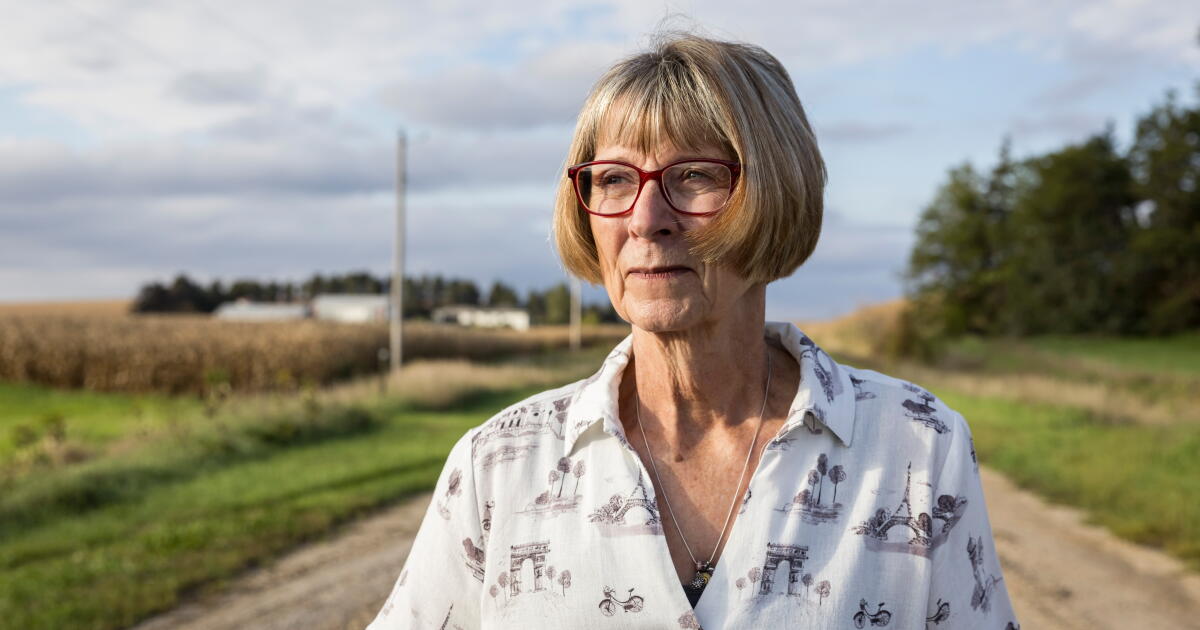
Iowa pastor Mike Jager, 58, is a registered Republican and considers himself part of the MAHA movement. The Trump administration’s health policies have had “minimal” impact on the health of his community, Jager said, but he added that Trump’s health secretary, Robert F. Kennedy Jr., is moving the needle “in the right direction.”
“It’s a beginning,” Jager said. “It’s a big ship to try and turn around and course-correct.”
Kennedy has used the MAHA label to support various agendas, including abandoning long-standing vaccine guidance, researching ultraprocessed foods and investing in regenerative agriculture.
Jager lives in Sumner, Iowa, “less than a quarter mile from where the corn ends and the city begins.” He’s seen family members and neighbors develop diseases that he believes resulted in part from exposure to agricultural chemicals and consumption of unhealthy, processed foods.
In the June Republican primary for governor, Jager voted for Zach Lahn, a businessman and farmer who ran on a MAHA platform and beat out Trump-backed U.S. Rep. Randy Feenstra. He plans to vote for him again in November.
Many rural voters are prioritizing health issues
About two-thirds of rural voters who support MAHA said it’s “extremely” or “very” important to them to vote for a candidate who does, too, while only 4 in 10 rural voters overall said the same.
Trump sought to seize on MAHA support during his campaign for another term two years ago. Now, amid tight midterm races, Kennedy has campaigned to galvanize the movement’s support. In May, he attended a MAHA bill signing with Iowa Republican Gov. Kim Reynolds, and in August, he went fishing with Lahn, posting about it on social media.
Yet the survey indicates voters are noticing “this weird split in the Trump administration” between what Kennedy messages and what Trump says and does, said David Peterson, a political science professor at Iowa State University.
In Iowa, concerns about what’s causing rising cancer rates are “a big deal,” he said. For many people who identify with MAHA, being healthy includes taking on corporate agriculture and pharmaceutical companies that they think cause cancer, he added.
In the poll, views on healthcare access and costs largely diverged along party lines. Most Democratic and independent voters said the Trump administration’s healthcare policies have had a negative impact on their healthcare costs and the health and well-being of people in their communities. Republicans were likelier to say there hasn’t been an impact.
Talking on the phone from her 200-acre farm in Carroll County, Iowa, 71-year-old Donna Klocke said that her husband had died from cancer and that she has neighbors who also have cancer.
“It’s just very prevalent,” Klocke said. “We’re in a farming community. We use chemicals and pesticides and all kinds of things that aren’t necessarily good for us.”
Klocke, a Democrat, said the MAHA movement is a good idea because she cares about being healthy, but she does not consider herself part of it and will not be voting for a candidate who represents the movement.
“Measles are coming back and polio,” Klocke said. “It’s the measles that really gets me. It’s like, do you not understand how dangerous it is?”
Survey reflects angst over healthcare
Nearly half of rural voters said their communities don’t have enough doctors or other healthcare providers, and even more said there aren’t enough mental health workers specifically. The share of rural voters who said their community does not have enough hospitals increased to 35% from 21% in a similar question asked in a KFF-Washington Post survey in 2017.
And as with the general population, healthcare, gas and grocery costs are top pain points. At least 6 in 10 rural voters said they were worried about healthcare costs.
The level of worry varied based on coverage, with rural voters enrolled in employer plans or Medicare less likely to be worried. The survey found that 80% of working-age rural voters on Medicaid were very or somewhat worried about healthcare costs. Last year, Republicans passed a tax and spending bill that cut over $900 billion in projected Medicaid spending over a decade and mandated new eligibility requirements.
In the tiny community of Lipan, Texas, west of Dallas, Kim Solis and her husband have a handyman-and-home-remodel business and get their insurance on the marketplace. Since Trump returned to office, their premium payment jumped from zero to $166 a month. Their copays went up, and their deductibles each increased by $2,000.
Solis, 62, said she worries what will happen if they get a big medical bill.
“Certainly, we’d be in a world of hurt trying to take money out of savings or getting it out of our 401(k) just to be able to do something about it,” she said.
Most MAHA voters are also MAGA — but not all
Like the general population, rural voters said they trust their own doctors and healthcare providers for health information over government agencies or officials, according to the poll.
Trust in Kennedy and Trump fell largely along partisan lines. About 10% of rural Democratic voters reported having a “great deal” or “fair amount” of trust in Kennedy, compared with 74% of rural Republican voters. About 5% of rural Democrats and 69% of rural Republicans said they trust Trump a “great deal” or “fair amount” for reliable health information.
While Make America Great Again and MAHA identities are “linked in a lot of ways,” the rising costs of healthcare and groceries pose a challenge for those committed to the MAHA principles that Kennedy promotes, said Peterson, the Iowa State professor.
Buying healthy food “becomes, ‘I can’t afford to do that because of Trump’s policies,’” he said.
In Stamping Ground, Kentucky, Alma Johnson, 65, works night security at a horse farm.
Johnson voted for Trump in 2016, 2020 and 2024 and said she “pretty much” likes how Trump is running the country. But she said she is not a MAGA devotee, preferring to “think for myself.”
MAHA, however, is an easy sell for Johnson because, she said, she doesn’t think people should be able to buy junk food in the Supplemental Nutrition Assistance Program, or SNAP.
Still, she said she hasn’t seen much impact from the Trump administration’s healthcare policies, including the new food pyramid.
“It takes a long time to change people, their habits, their thoughts or the things they do,” Johnson said.
Swenson, Tribble and Sanders write for the Associated Press.
The poll of 2,241 U.S. adults registered to vote in rural areas of the country was conducted Aug. 12-24, 2026, using a sample drawn from the probability-based SSRS Opinion Panel. The margin of sampling error for the full sample is plus or minus 3 percentage points. In collaboration with AP, KFF researchers worked to design the survey sample and questionnaire, analyze and report findings. This report is a collaboration between the Associated Press and KFF Health News. KFF Health News is a national newsroom that produces in-depth journalism about health issues and is one of the core operating programs at KFF — the independent source for health policy research, polling and journalism.
Summer mornings in the Hill Tracts region of Bangladesh are a respite from the dissonance of honking cars and construction of the capital city of Dhaka. It was a welcome change to hear chickens and the sound of … wait, was that Julie Andrews’ voice echoing over the hills?
I was visiting my home country when I heard a group of schoolchildren playing ektaras, a traditional string instrument, and singing the “Do-Re-Mi” song for their morning assembly.
I used my phone to show them a picture of Andrews. “Do you know her?” They immediately leaped in excitement. They didn’t know the composer Richard Rodgers or lyricist Oscar Hammerstein II. But they knew Andrews — even though 60 years have passed since “The Sound of Music” and these children live in a remote Bangladeshi village. The recognition is evidence of something extraordinary.
Andrews is turning 91 on Thursday, and there are calls online to bubble wrap her, just in case. She is indeed a global treasure, and she has been earning plaudits and admirers for eight decades.
Andrews trained in the Italian bel canto tradition and from a young age sang challenging coloratura arias with precision, clarity and range. The bright, happy tone, perhaps a subconscious decision rather than anatomical alone, provided her respite from the doodlebug bombs that fell during her childhood in England in World War II. British critics had dubbed her as the “youngest prima donna,” a title usually reserved for opera greats, and it wasn’t undeserved. At just 12, she routinely floated high Fs above the treble staff during live performances.
Yet before opera could claim her, Broadway stepped in. From “The Boy Friend” to “My Fair Lady” and then “Camelot,” she won the hearts of theater goers and creators alike. Lyricist Alan Lerner described her as “an amazingly quick study in music … who meets any challenge with an unabated eyelid that makes you wonder how Britain ever lost the empire.”
Her voice then was so precise that the late maestro André Previn, who led the London Symphony Orchestra, proclaimed: “No one’s diction in any field of singing can come close. … You understand every syllable from the second balcony — I don’t understand how you do that.”
It’s inaccurate to romanticize her legacy in 2026 as simply nostalgic. That would overlook the depth and progressive nature of her characters. She was essentially the first female superhero on the big screen, as Mary Poppins — who could fly and create alternate realities with the snap of her heels, but whose more stunning superpower at the height of the Cold War was to charmingly portray capitalism as dangerous.
In “Victor/Victoria,” she navigated a gender-bending performance that challenged societal norms, playing a woman who impersonates a man impersonating a woman when it was taboo to speak about any layer of that. Her most overlooked and perhaps her best dramatic role was in “Duet for One,” a 1986 film about a musician who suffers from multiple sclerosis. Tragically this became a moment of life imitating art, foreshadowing her own destiny to lose her instrument after throat surgery in 1997.
Rather than retreat, Andrews adjusted and leaned into voice acting with characters like the dominant Queen Lillian in “Shrek” films, Gru’s hilariously villainous mother in “Despicable Me” and the mysterious Lady Whistledown in “Bridgerton,” for which she won an Emmy, twice.
In real life, the flying super governess fought to adopt two babies from Vietnam just after the fall of Saigon, helping to raise awareness of the need for adoptive parents. She then co-founded the Operation USA disaster relief charity and opened the Japanese wing for the United Nations Development Fund for Women.
Whether it was to support UNICEF after the devastating Bhola cyclone hit present-day Bangladesh in 1970 or jetting to Jordan and Senegal to support women’s and children’s activities, she was a quiet champion for the underserved. In her most famous role, in “The Sound of Music,” she was a savior for children being displaced by war.
Andrews is mostly out of the public eye, but her singing is eternal and accessible. YouTube is home to a trove of Andrews performances, including “This Is My Beloved” from “Kismet,” full-voiced “When You Wish Upon a Star,” from pianissimos to fortes, high B-flats and all — her classical skill shines through. These recordings remind us that beyond just the formulaic legato phrasing that singers from the Italian tradition follow, and the clear resonance, her work it set a gold standard for musical storytelling that few have surpassed since.
Julie Andrews is no longer trilling on the Alps, nor is she reprising her role as queen of Genovia in a “Princess Diaries” film, but her voice, and what it represented for more than 80 years, endures. It lives on not just in films and recordings but also ringing in the minds of children and adults alike, from her hometown of Walton-on-Thames to the Hill Tracts of Bangladesh. In an age of doom scrolling (and alarmingly low singing standards), her vast career offers a rare resonance and a continuing masterclass.
Shams-il Arefin Islam, a Yale-Berkeley College associate fellow who works on climate mitigation and adaptation, is a classically trained tenor.
Political strategist Celinda Lake says that young voters don’t usually cast their ballots in midterm elections, but they’re ‘very unhappy about the war’ and the rising cost of living in the US. Democrats see the youth vote as a key trigger to flip power in Congress.
WASHINGTON — President Trump’s administration was set to issue a last-minute reprieve Tuesday over the planned closure of a camp in Qatar that houses more than 1,000 Afghans who assisted America’s war effort or are the relatives of U.S. service members.
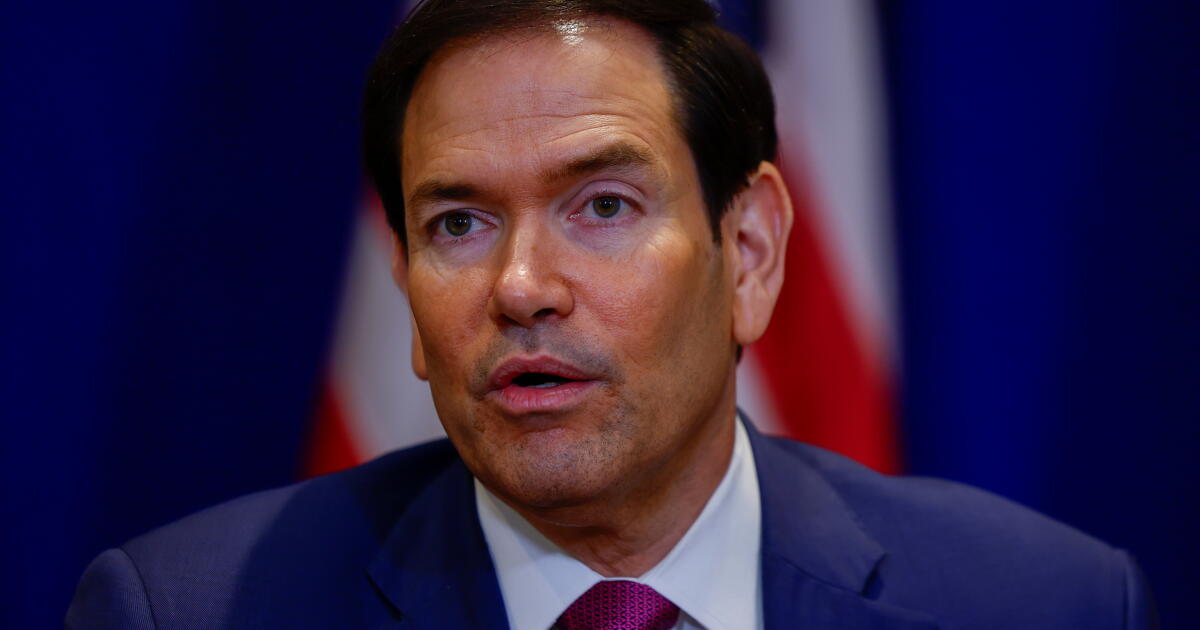
Secretary of State Marco Rubio is expected to sign off on a diplomatic note to Qatar extending for nine months the life of Camp As Sayliyah, which had been due to close Wednesday at the end of the U.S. budget year, according to two U.S. officials familiar with the matter. The officials spoke to the Associated Press on the condition of anonymity to offer details before the public announcement.
The decision comes months after Rubio told Congress that the U.S. was still in discussions with several third-party countries to take the 1,039 Afghans who worked as interpreters or in other roles helping the American war effort as well as relatives of U.S. service members who have been stranded in Qatar for more than a year.
Rubio’s testimony in June came after the AP and other outlets reported that war-torn Congo was among the countries where the Trump administration was considering resettlement.
The State Department would not immediately comment on Rubio’s extension for the camp but said it “continues to work toward a positive resolution that provides safety for these remaining people to start a new life outside of Afghanistan while upholding the safety and security of the American people.”
The department also repeated its claim that the camp is a legacy of an attempt by President Biden’s administration “to move as many Afghans to America as possible without properly vetting them” — an assertion that has been denied by former officials and refugee advocates.
The group of Afghans in Camp As Sayliyah includes those who fought or worked alongside the U.S. military between 2001 and 2021, with more than 70% of the camp’s residents being women and children, according to statistics from #AfghanEvac. The group has spent the last five years advocating for Washington to make good on its promise to resettle those whose service has put them at risk since the chaotic U.S. withdrawal from Afghanistan and the Taliban’s reassertion of control.
“This is a victory for those people, and they’re going to have some semblance of knowing that they’re safe there because they’ve been worried that at any moment somebody’s going to come and rip them out of there,” Shawn VanDiver, a Navy veteran who heads #AfghanEvac, told the AP.
But he added that there needs to be a permanent solution to this years-long crisis.
Despite the camp’s reprieve, which protects those housed there from possible forcible removal to Afghanistan, residents have little hope of being allowed to enter the United States.
Upon entering his second term, Trump, a Republican, paused his Democratic predecessor’s Afghan resettlement program as part of a series of executive orders cracking down on immigration, including dramatically altering refugee admissions to focus on white South Africans. Only five Afghans have been admitted to the U.S. since October 2025, #AfghanEvac says.
The refugee changes left thousands of people who fled war and persecution — and had gone through a sometimes years-long vetting process to start new lives in America — stranded at places worldwide, including the base in Qatar.
Advocates have warned that if there is no alternative, the only other option for the group of residents would be to go back to Afghanistan, where they face likely reprisal from the Taliban.
In the coming nine months, the State Department said it would “continue to work to identify options for voluntary resettlement of all Camp As-Sayliyah residents.” It gave no additional details.
Lee and Amiri write for the Associated Press. Amiri reported from New York.
WASHINGTON — The Supreme Court on Tuesday let President Trump’s administration continue swiftly deporting people to countries other than their own for now, while the justices consider whether the policy is legal.
The apparent 6-3 order halts a lower-court decision. It requires the government to give migrants a chance to object before they are sent to countries to which they have no ties.
The Supreme Court will hear arguments in December.
The Trump administration said the lower-court order forced the cancellation of a deportation flight carrying about 70 people bound for three countries last week.
The justices have sided with the administration once before on the core Trump administration policy, allowing deportation flights to temporarily continue last year.
The court said it will consider several questions: whether the policy is lawful, whether lower courts had the authority to issue a sweeping block and other questions the government deems appropriate.
Under a series of often-secret agreements, the Trump administration has deported some 25,000 people to more than two dozen countries, including Liberia and Guyana. The vast majority have been sent to Mexico.
Trump’s Republican administration has said that it sends people with final deportation orders to third countries when they can’t be returned to their homelands or their native countries won’t accept them, including those who have criminal convictions. Those governments provide assurances that people won’t be persecuted or tortured, federal attorneys said.
But some migrants have nevertheless found themselves imprisoned in countries they’d never heard of before their arrivals. Others also face serious safety risks and are left with little choice except to return to the home countries they were fleeing. Many have no criminal convictions and have been found to be at risk of torture or persecution, attorneys for the immigrants said.
The case comes amid a sweeping immigration crackdown by the Trump administration, which has pledged to deport millions of people who are living in the United States illegally.
British holidaymakers heading to one of Europe’s most popular destinations have been issued a warning
It concerns a volcanic eruption(Image: Getty Images)
Anyone travelling to Italy or the Vatican City this week have been told to check the latest official advice, after an update highlighted a developing issue that could affect some journeys. The Foreign, Commonwealth and Development Office (FCDO) updated its Italy travel advice on Monday, September 28.
The update relates to Mount Etna, the active volcano on Sicily’s eastern coast which is one of the world’s most active volcanoes. According to UNESCO, Etna’s eruptive history stretches back around 500,000 years, with at least 2,700 years of its activity documented by humans.
It is also one of Sicily’s best-known natural landmarks and was added to the UNESCO World Heritage List in 2013 because of its geological importance. UNESCO describes Etna as the highest mountain on a Mediterranean island and says its continuing activity has made it an important site for scientific research.
The latest FCDO advice says Italian authorities have increased the alert level because of volcanic activity at Mount Etna. Travellers are advised to follow instructions from local authorities if an eruption occurs.
It could have consequences for people travelling by air, with the FCDO stating that arrivals and departures at Catania Airport may be cancelled, delayed or rerouted to Palermo or Comiso if volcanic activity affects the airport. Holidaymakers heading to or from Catania have been advised to check with their airline or travel provider and the airport itself.
The FCDO does not advise against travel to Italy as a whole, but its general guidance states that “no travel can be guaranteed safe” and tells travellers to read the full advice before travelling. It also recommends appropriate travel insurance covering an itinerary, planned activities and emergency expenses.
There are also wider safety points for visitors to Italy, with the FCDO warning that demonstrations can occur with little or no warning in cities and advising people to avoid protests, political gatherings and marches. The government also says petty crime, including bag-snatching and pickpocketing, is more common in city centres and at major tourist attractions.
Wildfires remain another risk during Italy’s extended summer months, with the FCDO describing them as dangerous and unpredictable and advising visitors to check local alerts and weather forecasts. The same guidance says people should follow local authorities’ instructions and take care when travelling through woodland areas.
Anyone travelling should therefore check the FCDO advice shortly before departure because circumstances can change. The government’s travel guidance also recommends having appropriate insurance and following instructions from local authorities while abroad.
For Dylan Feierabend, there are few things more life-affirming than fishing for redtail surfperch and smelt at Centerville Beach in rural Humboldt County.
His favorite spot, where the Eel River meets the Pacific Ocean, is a few miles from the main road — too far to walk with fishing poles and an ice chest in tow. He instead gets there by driving a side-by-side, a small off-road vehicle, right onto the sand.
He might not be able to do so much longer.
If the California Coastal Commission has its way, vehicular access will soon be nixed at Centerville Beach County Park outside Ferndale — one of just a handful of beaches along the state’s 840-mile coastline where driving is allowed.
This month, the Coastal Commission approved a request from Humboldt County for a coastal development permit to rebuild a 0.17-mile segment of a storm-battered road adjacent to the fast-eroding beach — but only if the county stops people from driving on the sand.
Coastal Commission staff, in a 78-page report, said motorized vehicles threaten both sensitive vegetation and critical habitat for the federally threatened western snowy plover, a small, white-bellied shorebird.
“California’s dune habitats are particularly rare and important, so where driving could damage these sensitive areas, the Coastal Act requires that we protect them,” commission spokesman Joshua Smith said in a statement to The Times.
However, he said, the agency does not “have a one-size-fits-all policy on driving on the beach.”
But Humboldt County residents and officials decry the move as just the latest example of overregulation and government overreach in liberal California — and of the disconnect between its rural and urban places.
“What you see in Southern California isn’t what we see up here,” resident Joey Sancho told the Coastal Commission during its meeting in Eureka this month. “The beaches aren’t overly populated. They’re not being torn up by ATVs and so forth. But yet, [it’s] just one more thing just to take away from us up here in the North Coast.”
Humboldt County wants to make improvements to Centerville Road.
(Google street view)
Feierabend, a 36-year-old loan officer, told The Times: “It’s about slowly choking out the individuals that utilize the beach and gaining control under the ruse, or the guise, of conservation.”
Amid this wider debate, beach driving has emerged as an unexpected flashpoint.
Last month, Republican gubernatorial candidate Steve Hilton called coastal commissioners “idiots” for their years-long effort to end off-road driving at Oceano Dunes State Vehicular Recreation Area, the only state park that allows recreational driving on the beach.
Cars, bikes and pedestrians share the sand at Oceano Dunes State Vehicular Recreation Area near Pismo Beach in February 2021.
(Myung J. Chun / Los Angeles Times)
Oceano Dunes, near Pismo Beach in San Luis Obispo County, temporarily closed to off-roaders this spring amid long-running legal battles between recreation advocates and environmentalists who say all-terrain vehicles are tearing through western snowy plover habitat and sending clouds of unhealthy dust into nearby neighborhoods.
“Surprise, the Coastal Commission are trying to shut it down because they’re joyless bureaucrats who don’t want anyone to have fun,” Hilton said in a social media video as he leaned on a bright yellow dune buggy on the sand. “And it’s not just about fun. This is a real economic engine for this community.”
If elected, he said, he would create a state “Office of Fun and Freedom.” Its first task? Protecting off-roading at Oceano Dunes.
The campaign for Xavier Becerra, the Democratic gubernatorial candidate, did not return requests for comment.
In Humboldt County, residents have stressed that rural Centerville Beach is nothing like Oceano Dunes, where thousands of pickup trucks, ATVs and dirt bikes may carve through the sand on a given day.
Centerville Beach’s nearest town, Ferndale, the childhood home of celebrity chef Guy Fieri, has a population of just 1,500. Residents say the beach typically sees a handful of four-wheelers and side-by-sides — with most heading out to fish, not joy-riding.
“Centerville is not a beach anyone can just drive on — you’ve got to know what you’re doing,” said Shawn Griggs, a painter who surfs there most mornings. “It’s a very volatile beach with coarse sand. It’s steep right off the shore; the sand bars are transient.”
A view of Centerville Beach, near where Humboldt County is looking to repair a stretch of Centerville Road.
(Beau Sanders / For The Times)
Griggs, 57, described himself as “an environmentalist at heart” who appreciates efforts to protect threatened species. But he doubts vehicles are doing much harm at Centerville.
“With the amount of sand that is pushed off that beach every year and moved around, it’s hard for me to imagine that beach would be a super stable beach for the snowy plover,” he said.
The Coastal Commission staff report says the area is “moderately suitable for plovers,” but that “heavy human use” has degraded the habitat.
In Humboldt County, driving is allowed on a handful of county-maintained beaches, as well as portions of the Samoa Dunes Recreation Area, which is managed by the federal Bureau of Land Management.
Feierabend, who grew up next to Centerville Beach, said vehicles are not destroying the beach — the ocean is.
“No one’s going too fast,” he told the Coastal Commission. “No one’s driving through dunes. In fact, there are no dunes.”
Centerville Beach, home to some of the state’s fastest-eroding cliffs, has been shrinking for decades. The rising and warming sea has accelerated that process in recent years, and powerful El Niño-charged storms this fall and winter could wreak further havoc on the coastline.
A beach parking lot that once accommodated up to 100 vehicles has already washed away. And Centerville Road — a narrow county thoroughfare that provides access to the beach, a few rural homes and the federally managed Lost Coast Headlands — is so regularly slammed by powerful storm waves that it is often covered with sand and made impassable.
The road is what initially brought Centerville Beach to the Coastal Commission’s attention.
The Humboldt County Department of Public Works applied for a required coastal development permit to repair a short stretch of storm-damaged roadway, a project for which it had already secured federal and state funding.
The county has proposed elevating the road 10 feet and adding a new parking area. It also is looking to build a revetment — a sloping layer of rocks on the sand meant to protect the road from waves, at least for a few decades.
Humboldt County initially pushed to move the roadway farther inland, but faced resistance from private landowners.
According to the Coastal Commission staff report, beach erosion puts Centerville Road at “severe risk of being destroyed” within the next five years.
Given the urgency of the needed repairs, the decision to tie the development permit to beach driving felt like “a backroom deal stuck into the project,” Humboldt County Planning Commissioner Iver Skavdal said at the Coastal Commission meeting.
The commission is “holding the project, the residents and the county hostage,” said Skavdal, noting that seven generations of his family had enjoyed the beach.
Though the commission approved the permit on the condition beach driving will be stopped, it added an amendment after locals pushed back — giving Humboldt County an opportunity to write a plan to allow restricted driving, provided it would not harm sensitive habitats. That plan would have to come back to the commission for approval.
The Humboldt County Board of Supervisors still must decide whether to accept the stipulations of the coastal development permit before any construction begins.
The potential loss of driving on Centerville Beach — a unique attraction in California’s sparsely populated, economically depressed northwest corner — struck a chord with residents, about two dozen of whom sat through several hours of a Coastal Commission meeting on a Wednesday morning to speak about it.
“Families here don’t have a lot to do,” Sue Long, former mayor of the nearby city of Fortuna, told the commission. “There’s not a lot of the kind of entertainment you guys have, with waterslides and Disneyland and all of those things. … We count on nature.”
Mike Astry, who runs a small off-road recovery business pulling out vehicles stuck in sand or mud throughout the region, told the commission most people towed off Centerville Beach are out-of-town tourists who traveled just to drive on the beach.
Stopping vehicular access is “a big deal to a lot of people,” Astry, 49, said in an interview. “People driving from out of town that want to come drive on that beach are not going to come to our town and spend money on hotels and food.”
Astry, who also is an automotive maintenance supervisor for Humboldt County, started the towing business with his souped-up Jeep during the COVID-19 pandemic, when people flocked to outdoor spaces during lockdowns. Now, he typically gets one or two calls a week.
At Centerville Beach, he said, “I’ve had some pretty gnarly tows,” including some “little old ladies who thought, ‘Oh, I thought my Prius could go here,’ and it can’t.”
A few years ago, he yanked a Tesla out of the ocean. Powerful waves ripped off its bumper. The driver was from the Bay Area.
“People are just sick of California, their mandates, and this is just one more thing to add to it,” he said of the coastal commission decision. “It’s just a power trip. We pay our frickin taxes.”
Jennifer Savage — California policy associate director for the Surfrider Foundation, a coastal protection nonprofit — was one of the few speakers at the Coastal Commission meeting who focused on a different aspect of the county’s Centerville Beach proposal: the rock revetment next to the old, crumbling road.
Revetments and sea walls, which generally are not allowed for developments built after the Coastal Act took effect in 1977, “make a beach erode significantly faster,” she told The Times.
Erosion has been a known problem for a long time, she said, and “the failure to prepare doesn’t justify sacrificing the public beach.”
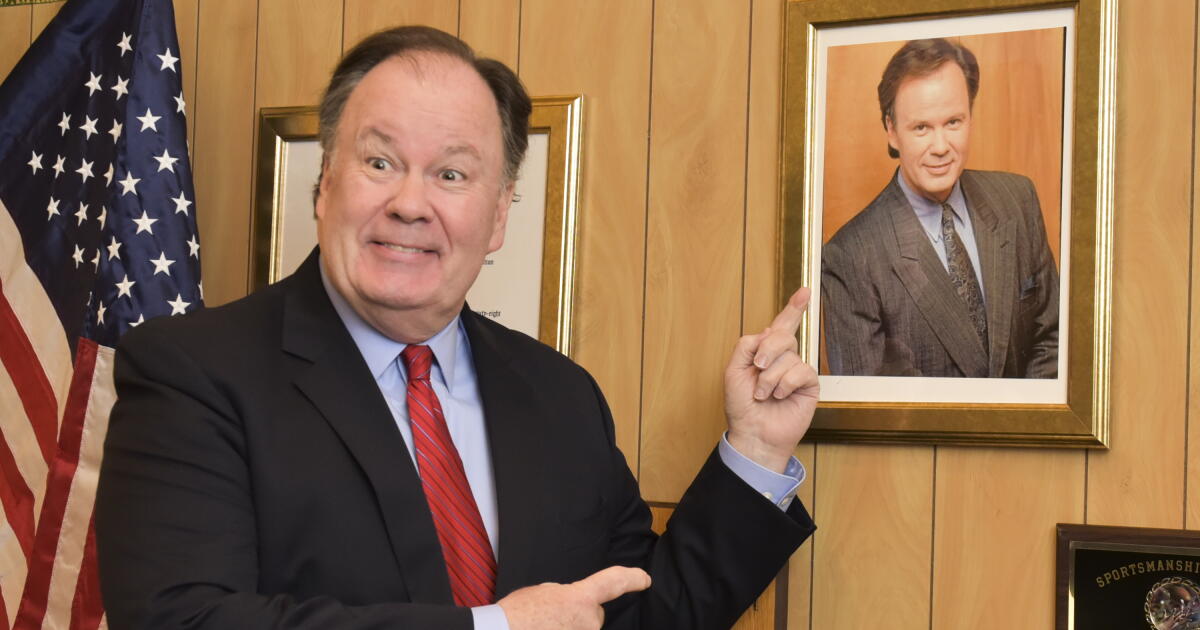
Dennis Haskins, an actor known best for playing Principal Richard Belding on the 1990s high school sitcom “Saved by the Bell,” died on Sunday night. He was 75.
Haskins’ friend and longtime caretaker, Kimberly Snow, confirmed the actor’s death. A cause of death is unknown, but Haskins had quietly battled Parkinson’s and was candid about other health issues. According to Snow, the actor died around 11 p.m. in a Burbank assisted living facility.
Snow, a former manager of Burbank’s since-shuttered Dimples Karaoke, shared the news of the actor’s death on Instagram, writing that Haskins was a staple at the joint, so much so that many of the patrons thought he owned it.
“A lot of people thought he owned it, but he didn’t,” the tribute read. “He just loved the place and its people. He enjoyed singing for people, meeting them, and taking selfies with his fans. Dimples closed down about 11 years ago, and people still associate him with his beloved ‘second home.’ He was known to most as Mr. Belding from Saved by the Bell, but to us, he was much more than that.
“About eight years ago, he became ill,” the post continued. “He had been silent about his fight with Parkinson’s, among other health concerns, because he did not want the attention. He did not want to have to tell people. He would say, ‘What do I even say?’ So I respected his wishes and stayed quiet, and I helped him through his journey into the next chapter of his life.
“Late last night, that journey ended for him. He is now at peace and is probably entertaining the people in the sky. Just know that if you tried to reach out to him in the last few years, I did read your messages to him, and you were heard.”
Haskins played the earnest and beloved Mr. Belding across the “Saved by the Bell” franchise for 12 years, from 1988 to 2000. As recently as 2015, he reprised the role for a sketch on “The Tonight Show Starring Jimmy Fallon,” alongside Bayside High School alums Mark-Paul Gosselaar, Elizabeth Berkley, Mario Lopez and Tiffani Thiessen.
Haskins was born in Chattanooga, Tenn., on Nov. 18, 1950, to parents Dennis Button Haskins IV and Veneta Marilyn Yarbrough. One of three boys, he attended Notre Dame High School in Chattanooga and, later, the University of Tennessee at Chattanooga.
He ultimately made his way to Los Angeles where he broke into acting, with his first on-screen gig playing a workman in “Archie Bunker’s Place” in 1981. He acted regularly through the ’80s, landing parts in television shows “Magnum P.I.” and “The Dukes of Hazzard” before finding his way to the part that would make him America’s favorite principal.
He played Mr. Belding across seven different series, including, “Good Morning, Miss Bliss,” “Saved by the Bell,” “Saved by the Bell: The College Years,” “Saved by the Bell: The New Class,” “The Rerun Show,” “Robot Chicken,” and “Victorious.”
“It’s a tragic loss,” Jay Schachter, head of film and television for Stewart Talent in New York City, said in a statement to NBC.
“Everyone loved Mr. Belding and those of us who got to know Dennis, loved him even more,” Schachter said. “He was a great person, and he loved, I mean absolutely LOVED his fans.”
A proposal to tax California’s billionaires has fractured Democratic politics, repelled some of the state’s richest residents and exploded into a costly battle that’s overshadowing even the gubernatorial election.
Known as Proposition 40, the ballot measure is also dividing the very industry it’s supposed to help. The healthcare workers union behind the initiative, which would authorize a wealth tax on billionaires, says the levy would raise sorely needed funds to shore up health coverage.
By contrast, leading California hospital and doctor groups are opposing the measure ahead of the November vote. They say the one-time 5% levy on the state’s wealthiest is a risky gambit with an uncertain path to victory — as well as a distraction from other proposals to shore up healthcare.
“This is an experiment on a taxation scheme that’s not been done before, and it puts healthcare in a more vulnerable position as a result,” California Medical Assn. Chief Executive Dustin Corcoran said at a recent briefing in Sacramento. “It’s not a healthcare ballot measure.”
Less than six weeks before election day, polls show a divided electorate. But whatever the outcome, the fight is exposing a broader problem confronting California: how to preserve one of the nation’s largest expansions of publicly funded healthcare as a big chunk of the money that helped pay for it disappears.
Over the last decade, California increased access to publicly funded healthcare by broadening eligibility for Medi-Cal, the state’s Medicaid program, and other types of insurance, allowing millions more residents to gain coverage. The number of people without insurance fell to 2.4 million in 2024 from about 6.5 million in 2011.
Now, that trend is expected to reverse. According to the Congressional Budget Office, President Trump’s budget bill last year will lead to $1 trillion in healthcare-related cuts over a decade. Earlier this week, the Trump administration said it recently removed 760,000 people from Obamacare plans across the nation, alleging that some were enrolled improperly and others don’t exist.
Combined with strict work requirements, more frequent eligibility checks and a pullback in state spending pushed by Democratic Gov. Gavin Newsom, the changes are projected to push California’s uninsured population under the age of 65 to 4.6 million by 2030, according to the UC Berkeley Labor Center.
“Without trying to be melodramatic, when millions of people lose coverage, it is entirely predictable that thousands will die unnecessarily because of foregone treatment,” said Dave Regan, president of SEIU-UHW, the healthcare-workers union pushing the billionaire tax.
“There is an absolute consensus on what the problem is, and there’s a consensus that there’s no other solution on the table,” he said in an interview at Bloomberg’s San Francisco offices.
Even before the budget cuts start to bite, financial strains are mounting at institutions such as Martin Luther King Jr. Community Hospital in South Los Angeles.
MLKCH’s waiting room is now mostly used for treating patients, with 16 wooden cubicles functioning as care rooms. Sick or injured people are also cared for in the hospital’s front hallways and in what used to be the meditation chapel and the gift shop.
The hospital opened in 2015 with an emergency department built for 25,000 visits annually. In 2024, it handled 130,000. Dr. Elaine Batchlor, its CEO, said further funding reductions “would threaten the sustainability of the hospital.”
Batchlor isn’t taking a position on Proposition 40 and has been looking for other sources of revenue. SEIU-UHW’s Regan argues there’s no other way to raise the money needed to fill the massive gap.
The California Budget & Policy Center estimates the state stands to lose roughly $30 billion in federal Medi-Cal funding each year. Asking California lawmakers for that amount is a “fool’s errand,” Regan said. “And on top of that, the only people the legislature will tax are ordinary people.”
The union estimates the levy would raise $100 billion over five years, with 90% earmarked to shore up health coverage amid impending budget cuts.
Critics dispute the projection. The state’s nonpartisan Legislative Analyst’s Office says the tax would probably raise tens of billions of dollars, but potentially reduce income-tax revenue in the long run, as some ultrawealthy residents depart the state.
Recent polls show an increasingly contested path for Proposition 40. A recent UC Berkeley-Politico poll found 45% of likely voters in favor, but opposition has increased since early this year and now stands at 43%. A separate Public Policy Institute of California survey put support at 52% and opposition at 46%.
Led by Sergey Brin, wealthy opponents have poured almost $230 million into funding Building a Better California, according to a filing late Thursday. That’s helping them flood the airwaves with anti tax advertising. There are also two competing ballot measures designed to torpedo Proposition 40 if they pass.
Billionaires aren’t the only detractors. Critics have also assailed Proposition 40 for carving out an exception to California’s constitutional funding rules to steer most proceeds to healthcare. While the state generally earmarks at least 40% of General Fund revenue to public schools and community colleges, the billionaire-tax proposal excludes the new levy from that calculation.
Corcoran, the medical association chief, argues that even if Proposition 40 passes in November, legal challenges would potentially delay its implementation for years.
“There’s a lot that we can do looking ahead to 2028 when these cuts start taking greater effect that frankly would provide more immediate relief than Proposition 40 would,” he said. His group and others are pushing instead for large corporations to help cover the cost of public insurance for their workers.
Regan called that proposal “the worst public policy on planet Earth,” saying costs will be passed on to consumers and that it essentially acts as a payroll tax on low-wage workers.
He also disputed the notion the billionaire tax would lead the ultrawealthy to leave the state, pointing to Nvidia Corp. CEO Jensen Huang, who earlier this year said he would be “perfectly fine” with the levy. As for legal challenges to the billionaire tax, Regan said he believes they can be resolved in 12 months.
The uncertain funding picture has many hospitals bracing for cuts.
James Suver, CEO of Ridgecrest Regional Hospital, about 150 miles north of Los Angeles, said he’s not betting on proceeds from the billionaire tax. He’s weighing options that include pausing maternity care again, cutting physician recruitment and reducing emergency-room service.
“Our future under the most likely scenario is not looking very good,” Suver said. “We’re beyond doing minor nips and tucks to be able to offset some of the changes that I suspect may be happening in the future.”
Clanton writes for Bloomberg. Kara Wetzel of Bloomberg contributed.
DOTHAN, Ala. — People crowded shoulder to shoulder upstairs in a south Alabama coffee shop, in a region sometimes called the reddest in the heavily conservative state.
They were there to hear Doug Jones, the Democratic nominee for governor and the last Democrat to hold statewide office in Alabama.
“Alabama has been under Republican control for almost two decades. We’re not getting any better,” said Jeff Scroggins, 61, a government contractor from Slocomb who was part of the crowd that came to Mural City Coffee Company and said he is voting for the Democrat.
Scroggins, who usually votes Democratic, called himself the “black sheep of the family” in supporting Jones this fall against Republican U.S. Sen. Tommy Tuberville, but said there are more Democrats and “stubborn independents” in the state than people realize.
Jones and other Democrats running in Alabama and neighboring states are banking on it.
“People want change,” Jones said after an hour of talking with people who came to see him. “That is the real key. People are not satisfied with their government of Alabama.”
Democrats sense a shift among voters
Deep South Democrats, largely absent from statewide offices, are aiming for a comeback this year. They are seeking to mobilize Black voters who are angered about the Republican moves to dismantle minority congressional districts, as well as voters who are frustrated with high gas prices, the Iran war, data centers and other issues.
Jones is trying to win a rematch with Tuberville after the Republican ousted him in a 2020 Senate race. Jones would be the first Democrat since 1998 to win an Alabama governor’s race.
In Mississippi, prosecutor Scott Colom is trying to unseat Republican Cindy Hyde-Smith and become the state’s first newly elected U.S. senator since 1946. In Georgia, former Atlanta Mayor Keisha Lance Bottoms is trying to reverse a losing streak in races for governor that began for Democrats in 2002. Elsewhere, Democrats are trying to pull off U.S. Senate upsets in Louisiana and South Carolina.
In Alabama, Jones’ town halls have attracted hopeful Democrats, some independents and even a few Republicans. Their concerns mirror those of voters nationwide: the rising cost of living, worries over data centers and the affordability of healthcare, issues they say have gone unaddressed by the Republicans who control the state.
Some said state policies, including an abortion ban that makes no exemption for rape, have been too extreme. Others said some comments by Tuberville, such as calling Islam “a cult,” are embarrassing to the state.
Still, the math across the Deep South has been difficult for Democrats. Other than Jones’ victory in the special U.S. Senate election, the last Democrat holding statewide office in Alabama was defeated in 2012. Statewide Democratic candidates have hit a ceiling of around 40% of the vote in recent elections.
The results are similar in most other Deep South states. In Georgia, U.S. Sens. Raphael Warnock and Jon Ossoff, who is seeking reelection this year, offer a bright spot for Democrats.
Jones noted that Alabama saw a surge in the number of people voting in the Democratic primary. While about 58% of primary voters were Republican, the Democratic primary vote doubled since 2022. Some counties, including a tech hub in north Alabama, saw more Democratic votes than Republican.
Optimistic about their chances, Democrats are running candidates in all major state races for the first time in years.
“The numbers are there,” Jones said. “It’s a question of getting those voters out.”
Republican gerrymandering creates a backlash
In nearby Troy, a crowd gathered on the campus of Troy University to hear Jones speak alongside Shomari Figures, one of Alabama’s two Black U.S. House members. The district was substantially redrawn by Republicans after the U.S. Supreme Court earlier this year gutted the Voting Rights Act.
Figures said there is an excitement he has not felt since Jones’ 2017 Senate victory. Figures won election two years ago after a federal court ruled that Alabama had been illegally diluting the voting power of Black Alabamians and ordered new district lines. The Supreme Court’s reversal this year allowed state Republicans to reshape the district and substantially reduce the percentage of Black voters who align with Democrats.
Figures said the goal of the redraw was obvious: to reduce Black representation.
“But we are going to win it in November,” he said.
Figures has often emphasized the economic needs of the district at a time when affordability is one of the main topics of the midterms. He noted that the individual median income in Alabama is $34,000.
“Let that sink in — $34,000 before taxes, before rent, before water, before lights, before gas, before cellphone, before health insurance, before car insurance, before childcare, before food,” he said.
Alabama is one of 10 states that did not expand Medicaid under the Affordable Care Act, a decision that Jones and Figures said leaves thousands of working people without access to healthcare coverage.
Figures faces Trump-endorsed Republican Rhett Marques, a state lawmaker. Marques framed the race as “common sense” versus “craziness.” Both have raised about $1.3 million so far.
In Mississippi, Colom looks to make history
Colom echoes many of Jones’ and Figures’ arguments in his bid against Hyde-Smith.
“We’ve been gifted an opportunity,” he said, pointing to Mississippi’s large base of Black Democratic voters, Hyde-Smith’s relatively low profile in her first full Senate term and voters’ frustrations over the economy.
With the largest share of Black voters of any state, Mississippi’s general elections have been closer for years than its immediate Southern neighbors. Trump won by double digits in each of his three presidential contests, but in 2023 Republican Gov. Tate Reeves managed to win reelection by a margin of just 3 percentage points.
Colom insists he can close the gap by increasing Black turnout and peeling off enough disenchanted white voters from Republicans. It is the same kind of electoral math that propelled Ossoff and Warnock in Georgia.
“For me, it can’t be just about getting a Senate majority,” Colom said. “It’s got to be about having a party that represents rural America again, suburban America, urban America — a party that makes sure we actually deliver for voters in ways that make their lives better, and we don’t come up with excuses as to why we can’t do it.”
Republicans say they aren’t worried
Alabama’s Republican Party chairman, Scott Stadthagen, said Democratic priorities, in his opinion, “are far outside the views of conservative Alabamians.” He said there has been previous chatter of a Democratic resurgence, and “each election cycle, we remain the brightest red state in the decidedly conservative southeastern United States.”
Tuberville has declined Jones’ challenge to debate. Expressing confidence about November, Tuberville said he is running “against an ideology that’s not very compatible with the people of Alabama.” He will appear with Trump at a rally in Mobile next week.
“I’ve been representing Alabama for six years, and we’ll turn it over to the voters here in about six, seven weeks and see what they say,” Tuberville told reporters.
As the November election draws closer, Democratic candidates are attracting impressive crowds.
To Sam Phillips, who attended the rallies in Dothan and Troy, the crowds and energy felt different from previous election years.
“It doesn’t get any redder than here, and there was a whole lot of excitement in both places,” the 67-year-old said. “So I feel optimistic.”
Gwendolyn Davis, a 67-year-old retired special education teacher, left the town hall in Troy with an armful of yard signs for Figures and Jones. She said she is determined to reach people who have been sitting out elections.
“If we don’t get people out to vote, it will be kind of heartbreaking,” she said.
Chandler and Barrow write for the Associated Press. Barrow reported from Atlanta.
If the above sounds familiar, then you might already be a Wholigan — someone who routinely listens to the long-running celebrity podcast “Who? Weekly.” Part of the fun of listening to the thrice-weekly show (one being for Patreon members), aside from its hosts contextualizing a dizzying array of tabloid headlines, is learning its lexicon. For example, “Crunch, Crunch” spoofs a bit of sponsored content the pop singer Bebe Rexha did for Lay’s Potato Chips in 2019. Other popular phrases unique to the Who-verse: “Good form, Bella Thorne.” “Scar-Jo Yummy Pop.”
Launched in 2016 by pop culture journalists Bobby Finger and Lindsey Weber, “Who? Weekly” eagerly mines the growing world of lower-tier celebrity, with the two hosts categorizing trending names under two main umbrellas: the fame-hungry “Whos” (influencers, reality stars, a pre-royal Meghan Markle) and the instantly recognizable, likely critically acclaimed “Thems” (Tom Cruise, Taylor Swift, Beyoncé). Rounding out the paradigm are the “Nahs,” or folks who aren’t well known enough to claim “Who” status.
On the Shelf
“I Want to Be Famous: When Everybody and Nobody Is a Celebrity”
By Bobby Finger and Lindsey Weber Crown, $33
If you buy books linked on our site, The Times may earn a commission from Bookshop.org, whose fees support independent bookstores.
“We came of age reading all the [gossip] bloggers, from Perez Hilton to Liz Smith,” Weber tells The Times of why she and Finger originally started “Who? Weekly,” which technically began as a newsletter before it morphed into a podcast.
Lindsey Weber and Bobby Finger have co-written the newly released book, “I Want to Be Famous: When Everybody and Nobody Is a Celebrity.”
(Justin Jun Lee / For The Times)
Finger also cites influence from “Oh No They Didn’t,” a 2000s-era LiveJournal page that aggregated celebrity headlines and invited users to comment (kind of like a proto-Subreddit). “You read the story just as you read the comments, which were integral to the story,” Finger says. “All of the inside jokes, the additional commentary. That’s what ‘Who? Weekly’ has become, especially in our Patreon Discord. [Listeners] are always chiming in and creating their own language and extensions of the ‘Who? Weekly’ universe.”
That universe is about to expand again: In conjunction with the pod turning 10 this year, Weber and Finger are releasing a new book, “I Want to Be Famous: When Everybody and Nobody Is a Celebrity,” which looks at fame and celebrity through a historical lens while also exploring how the line between Whos and Thems got that much blurrier in the social media age. “I feel like we were always barreling towards a book,” Weber says. “Both of us are trained journalists. We were always kind of like, ‘When are we going to put our money where our mouth is?’”
To demonstrate how the binary is evolving into a spectrum, Weber and Finger revisit juicy pop cultural anecdotes (remember when Courtney Love threw her compact at Madonna at the VMAs? Or when Ariana Grande dated Pete Davidson? Or when Katy Perry flew into space on the Blue Origin?) while blanketing every chapter with an elucidation of why, no matter what decade we’re in, society just can never get enough gossip.
Meanwhile, unlike the podcast, “I Want to Be Famous” gives the hosts ample room to go deeper into the cultural framework of modern celebrity than they normally have time for. Each week, Weber and Finger dedicate one episode to unpacking a prepared list of Who-y headlines, and a follow-up episode, titled “Who’s There?,” is dedicated to listener calls. Which is to say, Weber and Finger usually spend more time explaining and trading jokes about what each micro-celeb is known for rather than how celebrity itself has evolved.
Lindsey Weber and Bobby Finger are celebrating the 10th year of their podcast “Who? Weekly.”
(Justin Jun Lee / For The Times)
“The pod is on the surface funny, [but] if you are a real fan, you’re like, ‘Oh, there’s actually some interesting stuff beneath the funny,’” Finger says. “We wanted this book to be the opposite, where it’s actually outwardly interesting and smart, and then inwardly funny when it can be.”
The writers’ tone might lean more academic within “I Want To Be Famous,” but longtime fans of the pod will recognize dozens of niche names, stories and extremely online subjects that were at one point or another discussed on the show. The authors present their grand theory of Whos and Thems by opening with the story of how former Who Meghan Markle shot to Them-dom after marrying Prince Harry. Other chapters observe what happens when Thems date or marry Whos. There’s a history of how celebrities say sorry (where there were once press releases there are now Notes app apologies) and a conversation about how nepo babies fit into the framework. As the book moves across history and demonstrates how the internet has completely upended the binary, they also show what hasn’t changed about the way fans relate to their favorites. “What we want most in a celebrity is authenticity,” Weber theorizes.
For Weber and Finger, the chance to tie the disparate threads they discuss on “Who? Weekly” was a major incentive to work on their book. “I kept being like, ‘Is this the first time anyone’s ever written about this in a book?’” Weber says with a laugh. “Because some of it was so stupid — these references to fandoms and Club Chalamet and niche things that are newer … I’m like, ‘Oh my God, are we doing this thing where now people have to read about Club Chalamet in 100 years?’ Obviously that would be incredible.”
“There’s a temporality to our show that is not the case with this book, which is very exciting,” Finger adds. “Because our show kind of exists to go in one ear and out the other. And I say that because it goes in one of our ears and out the other too, as the creators.”
Woven into the conversations around Whos, Thems, Thems behaving like Whos (see: brand deals), and Whos aspiring to be Thems is the authors’ palpable anxiety about the decaying role of entertainment journalism in an age in which celebrities can simply promote themselves via social media — or host their own podcasts. The authors are also painfully aware that most audiences have less of an appetite for reading, period. A chapter titled “The 2010s Killed the Cover Star” looks back what is thought to be the greatest piece of celebrity journalism ever written (Gay Talese’s 1966 Esquire classic, “Frank Sinatra Has a Cold”) and contrasts it with today’s style of uncritical, PR-friendly celebrity Q&As that boast nothingburger headlines that don’t tell us much of anything.
Conversations about media and journalism itself run through the podcast too, and that’s by design. “Sometimes we go so niche that it’s like, ‘Are we just making a podcast for our friends that work in media?’ And sometimes the answer is yes,” Weber says. “We can only speak from our experience. … But the most shocking thing about ‘Who? Weekly’ is that [media discourse] is actually quite interesting for lots of people.”
Finger adds, “Our past in media and our abundance of friendships with people who are still in media is like a crucial part of our show. It’s an industry we respect so much, you know, and we’re obsessed with the way it evolves. If we didn’t have that background, I don’t think the show would exist the way it does at this current moment.”
Even with a massive archive of episodes and no plans to stop, Weber and Finger are thrilled to have cemented their legacy with a book that could (and really should) be taught in media and communications classes. “Bobby and I both obviously love celebrities,” Weber says. “But we love media more.”
Brodsky is an L.A. culture and music writer. Her biography of Stevie Nicks, “Lessons & Lace,” published by Penguin Random House, is out now.
WASHINGTON — California is sometimes described as the ATM of Democratic politics.
That’s certainly been the case in the most divisive Democratic races this year.
Donors from California have given more to far-left candidates and their moderate opponents in congressional races and U.S. Senate contests than donors from any other state — more than $17 million combined, according to a Times analysis of the most recently available campaign finance filings.
More of that money — nearly $11 million — went to more progressive candidates. That giving came from more than 95,000 individual donors, which was more than double the number of California donors who gave to their more moderate opponents. That includes 18,000 donors who gave to both progressive and moderate candidates.
There was a geographic divide in giving by Californians. The largest share of cash to progressive candidates came from donors in the Bay Area, while the largest share of financial backing to moderate candidates came from donors in the Los Angeles area.
The Times looked at competitive races outside California in which one of the candidates had been endorsed by either the Justice Democrats or the Democratic Socialists of America, or DSA, as well as key Senate races in Michigan, Minnesota, Florida and Maine that featured a stark ideological divide between top Democratic contenders.
Although these races represent a small fraction of the electoral contests across the country, they were the races in which the future ideological direction of the Democratic Party was most fiercely contested.
Progressive candidates fared better in the majority of these contests.
California donors helped fund the Senate primary victories of progressives Abdul El-Sayed in Michigan and Peggy Flanagan in Minnesota — second only to in-state donors in providing cash to each of those candidates.
Progressive House candidates such as Melat Kiros in Colorado and Darializa Avila Chevalier in New York were able to defeat more moderate incumbents with heavy support from California donors.
Their efforts weren’t always successful, however.
Former Rep. Cori Bush raked in more cash from California donors than in-state supporters in her bid to unseat incumbent Rep. Wesley Bell in Missouri’s 1st Congressional District, the seat she had held previously. But Bell easily cruised to victory in this year’s primary.
And then there was Graham Platner.
California donors gave nearly $2.5 million to his Senate campaign in Maine before he withdrew after he was accused of sexual assault by a former girlfriend. He has denied the accusation.
The Times analysis looked at direct contributions to campaigns, which are capped at $7,000 per election cycle. It did not include contributions to party committees or independent committees that could also be spending in these races. The analysis included both bigger contributions required to be disclosed by campaigns as well as small-dollar contributions through the Democratic fundraising platform ActBlue.
Flipping the script
Progressive donors said they were motivated to give to candidates who would shake up the Democratic Party’s status quo.
“The Democratic Party has to understand that they can’t keep doing the same thing,” said Rehan Alvi, a real estate investor in El Dorado Hills.
He gave the maximum allowable to support the campaigns of El-Sayed and Bush, and also supported Junaid Ahmed’s failed primary bid in the Illinois 8th Congressional District, as well as Platner’s campaign.
Harry Saddler, a retired designer who lives in San Francisco, said that the state of the party is “enraging.”
“That leads me to think about people who can actually flip the script,” he said.
Joshua Saltman, shown in his Los Angeles home, is one of many Democratic donors from California who have given in divisive Democratic races across the country.
(Genaro Molina / Los Angeles Times)
Saddler has written checks to a number of more progressive candidates, including Flanagan, Chevalier, Ahmed and Nida Allam, who lost her primary bid to unseat incumbent Rep. Valerie Foushee in North Carolina’s 4th Congressional District, though he has also supported some moderate candidates in other races he sees as crucial to Democrats chances at retaking control of one or both chambers of Congress.
That pragmatic approach is part of the reason Joshua Saltman said he has supported a number of moderate candidates.
“The reality of the map is that if Democrats are going to retake the House, it’s not just winning super blue districts,” said Saltman, a former entertainment industry lawyer who now runs a Broadway music festival.
Saltman said that he considers himself to be a more moderate Democrat and is also inclined to give to moderate candidates who he believes “get a little less love” from other donors, particularly in California.
He has written checks to Rep. Haley Stevens, who lost to El-Sayed in Michigan; Rep. Angie Craig, who lost to Flanagan in Minnesota; Bell in Missouri and Gov. Janet Mills in Maine, who was Platner’s main competition in the Democratic primary before dropping out of the race.
Alan Burye, a retired accountant who lives just outside San Diego, said he prefers more moderate candidates because he thinks they are more productive politicians.
“The ones who are out on the edges, like Bernie Sanders, really don’t get much done,” Burye said.
He cut checks to Craig in Minnesota and Stevens in Michigan.
Israel’s impact
American support for Israel — in the wake of wars in Gaza and Iran — has been a major point of division among more progressive and moderate candidates and is a key fault line among many donors.
Progressive candidates have been increasingly critical of the actions and influence of the Israeli government as the public, broadly, has adopted a more negative view of the Israeli government.
Politicians who have drawn support in the past from the American Israel Public Affairs Committee, or AIPAC, have been a particular target of progressive challengers.
“The problem with the Democratic Party is that they’re all just beholden to AIPAC and to corporate interests,” said Alvi, the real estate investor in El Dorado Hills. “I want a candidate who has the courage to speak.”
In Michigan, El-Sayed described AIPAC’s support of Stevens, his moderate opponent, as “legalized bribery.”
El-Sayed has made no secret of his criticism of American foreign aid for Israel and said that he “doesn’t believe in ethno-states” in response to a question in the summer about whether he supports the right of Israel to exist.
El-Sayed’s comments and similar sentiments expressed by other more progressive candidates are part of the reason some donors have given to moderate candidates.
“I feel that people who fundamentally aren’t big fans of Israel aren’t necessarily people I want to give money to,” said Saltman, who gave to Stevens.
Saltman, who was born in Michigan, said that he would still vote for El-Sayed if he lived in the state.
Other donors said they were inspired to give to moderate candidates because of concern that anti-Israel rhetoric could veer into attacks on Jews more broadly.
Los Angeles investor Steve Emerson said his motivation in writing checks to moderate Democrats such as Stevens is “to fight antisemitism.”
El-Sayed, for his part, said in the summer that his criticism of Israel is about foreign policy, not Jewish people.
“Judaism and the Jewish people are a light onto the world,” he said.
Named among the world’s five coolest neighbourhoods, it packs cafés, international food and welcoming pubs into a small pocket of a major city.
The neighbourhood is jam-packed full of coffee shops, pubs and restaurants(Image: Nicola Roy)
A £4.60 oat milk mocha might not be everyone’s idea of a bargain. But at Zennor in Govanhill, I’d argue it’s worth every penny – and the surrounding streets offer plenty of reasons to stay after the last sip.
The neighbourhood on Glasgow’s south side earned a place among the world’s five coolest neighbourhoods in Time Out’s annual list. Its appeal goes well beyond fashionable coffee shops, with a diverse mix of people, cultures and businesses shaping the area.
From Turkish börek to Pakistani street food, independent cafés to a pub named after a footballing legend, there’s plenty to explore. Some may say it’s all new coffee shops and no substance, but they couldn’t be more wrong.
A neighbourhood best explored on foot
Victoria Road is a natural starting point. Busy with dog walkers, friends catching up and people carrying takeaway coffees, it leads towards the green space of Queen’s Park.
Govanhill is one of Scotland’s most diverse neighbourhoods, reflected in its cafés, bakeries, takeaways and gift shops. You could easily spend hours browsing and stopping for something to eat.
Options include a flat white from a Transylvanian coffee shop or traditional Turkish börek from Pistachio. For me though, Zennor was the destination of choice.
On the corner of Langside Road and Dixon Avenue, Zennor’s second Glasgow location combines Scandi-inspired light wood and stainless steel décor with paper lanterns and the smell of freshly ground coffee.
Zennor’s seasonal specials are really where they excel, but I didn’t spot anything on there that caught my eye on this occasion, so I opted for a mocha. And you can’t pop in here without grabbing a sweet treat, such as their dark chocolate and sea salt cookie – utter bliss.
With oat milk, my coffee order totalled £4.60. It pains me to admit, but I don’t think that’s too steep these days, particularly when it’s this good. And it’s worth every penny in my opinion.
Where to head for a pint or a plate of pasta
Directly opposite Zennor is the Rose Reilly, my favourite pub in Govanhill. Named after the legendary footballer, it offers a welcoming atmosphere, a good choice of drinks and plenty of outdoor seating for sunny days.
For something more substantial, I recommend Pakistani Street Food for a samosa, Bar Vini for a generous serving of pasta and Errol’s Hot Pizza for the best pizza you’ll ever eat.
Together, these venues offer plenty of scope to turn a quick coffee visit into a longer afternoon or weekend exploring the neighbourhood.
More than a ‘coolest neighbourhood’ label
Govanhill’s fashionable reputation is only part of its story. The area faces challenges, and residents hold differing views about how it has changed, with gentrification a particularly contentious issue.
My view, however, is that its mix of people and cultures is what makes it such a lively and fascinating place to discover. The coffee may provide a reason to stop, but it is far from the only attraction.
There’s also libraries, craft spaces, workshops, community projects and events, and with great public transports links too, you’re never too far from other parts of the city. Other nearby neighbourhoods in Glasgow’s south side, like Pollokshields, Strathbungo and Mount Florida, are also full of fun things to do.
John Green’s nine-year hiatus from fiction has ended, and his adult debut, “Hollywood, Ending,” comes right on time to explore the dark side of fame.
The novel centers on former child actor Juniper Castillo and Hollywood newbie Kai Laramie, who are cast in the artsy biopic “Andy Warhol Never Gets Old,” with hotshot movie star Matthew Malone in the title role. It’s Juniper’s chance to establish herself as an adult actor and Kai’s first foray into the spotlight, a position he quickly realizes doesn’t come without a personal cost.
“There’s no way I could have written this book without spending a lot of time on film sets,” Green told The Times in a recent call.
On the Shelf
Hollywood Ending
By John Green Dutton: 304 pages, $32
If you buy books linked on our site, The Times may earn a commission from Bookshop.org, whose fees support independent bookstores.
Over the last two decades, several of the author’s bestselling young-adult novels have been adapted for the screen. His debut, “Looking for Alaska” (2005), was adapted as a Hulu limited series in 2019, the same year Netflix released the feature film adaptation of his co-authored holiday anthology, “Let It Snow” (2008). On the big screen, “Paper Towns” (2008) made its film debut in 2015, while his bestseller “The Fault in Our Stars” (2012) became a box-office hit in 2014. Most recently, his 2017 novel, “Turtles All the Way Down,” received a feature film adaptation in 2024.
“I hope the book is a love letter to movies. But I also wanted to be honest about how difficult it is to make a work of art that, in order to be commercially successful, has to be loved by millions of people,” Green said. That’s where the Hollywood machine comes in. “It’s really hard to figure out how to get millions of people to pay to watch something, and that challenge leads to all kinds of compromises and sacrifices.”
While Green’s young-adult novels have often explored the teenage experience, he never felt confined by the YA genre. “I think teenagers have infinite intellectual capacity,” he said, adding that he doesn’t really think about which shelf will hold his novels inside a bookstore. In “Hollywood, Ending,” his main characters are navigating their early 20s, a period which Green finds especially interesting.
“The questions in this novel explore how it feels in those early years of adulthood when there are still so many possibilities, so many directions you might go,” he said.
The following conversation has been edited for length and clarity.
How did you land on Andy Warhol as a celebrity figure and metaphor to use in telling this story about Kai and Juniper?
I think Andy Warhol saw so much of our world coming. He saw that three-dimensional experience was going to be rendered in two dimensions. He’s most famous for taking cylindrical soup cans and making them flat, but he also saw celebrity culture coming.
There’s the famous quote about everybody being world-famous for 15 minutes. I think he understood that normal people were going to experience celebrity, and he also saw the way that the repetition of images, as I write about in the novel, would lead to a certain desensitization. So I think everything from screen-based experience to the ways that technology was going to reshape our lives, he was the patron saint of all of that.
One of the images that really struck me is when you talk about him dying wigless and being too uncomfortable with that to have friends come and visit him in the hospital.
I think Juniper says at one point that fame is a kind of armor. I don’t know how Warhol thought of his wigs, but I wanted it to be a sort of emblem of protection for him.
Your wife, Sarah, is an Andy Warhol scholar. Was that a major strength while you were writing this?
There’s a huge advantage to being able to fact-check something by shouting down the hall. I also wanted to include Warhol partly as a love note to Sarah … She co-wrote a book about Andy Warhol’s relationship with money and business called “Andy Warhol Enterprises.” After 25 years, our way of looking at art and the art that we’ve shared together is so deeply intertwined that anything I write is unimaginable without her. She’s my first reader and most important reader … It’s only thanks to her that Warhol’s in the book.
You really humanize the young actors in “Hollywood, Ending,” which, unfortunately, is a unique thing. This is an intimate, vulnerable portrayal of behind-the-scenes Hollywood — why was that important for you to examine?
I wanted to write about the machine that takes private experience and commodifies it, and I think that machine is especially challenging to navigate when you’re young, when you’re in early adulthood, because you don’t yet have those relationships that are going to carry you through. You don’t have the love that you need to survive all that you’ve got to survive. When my work became very successful, I was in my 30s. I was married. I had two kids. I lived in Indianapolis. I had best friends. I was pretty grounded, and it was still very disorienting.
How so?
It’s a completely different life to have everybody have opinions about your work than it is to take your kids to school every day. So I was thinking partly about that, but I was also thinking about the influencers I’ve known, and the actors I’ve known who’ve had to go through that [while] much younger, and what that’s been like for them as well.
You do a really good job of examining the dark side of the attention economy. Why was this especially of interest?
Well, it used to be that the attention economy was mostly a problem for actors and other celebrities, but now the attention economy is something we all participate in. We’re all taking our private experiences and packaging them up for public consumption on Facebook and Instagram and Twitter and Reddit, and I think we gain something from that, or we wouldn’t do it. But we also lose a lot.
I wanted to try to be honest about what we gain, and also be honest about what we lose. My last novel, nine long years ago, was about a young woman with OCD. I also have OCD, and I had to make a decision when I was promoting that book, about whether I would talk about having OCD, and I decided that I would, and that became a huge part of talking about the novel — talking about my own experiences with mental illness, and it was a gift in many ways because so many people have said to me that it helped them to see that it’s possible to have a good and fulfilling life while living with a serious mental illness, and it was helpful for me because it helped me feel less alone in it.
But it was also complicated because there are real costs when you share something. It’s not yours anymore in ways that are a relief, but also in ways that are difficult.
You’re offering it up for scrutiny in a way that can be really scary.
It is really scary to have your private life scrutinized in that way, right? And there’s an element of judgment that comes with creative expression that’s a natural and healthy part of conversations about what art is and what art should be, but being in the middle of those conversations isn’t always fun.
I think you capture that in Kai’s experience.He is really pressured to come out and talk about his traumatic experience, and he doesn’t want to. The “machine” wants to sell tickets and exploit his trauma in the process.
It’s one thing to try to make good art. It’s another thing to try to make good art that lots of people interact with, and a portion of that second issue is inevitably finding ways to interest an audience, and nothing interests an audience quite like a personal story, especially a personal story of overcoming difficulty.
Was the movie star Matthew Malone based on anyone specifically?
I have aphantasia, this brain condition that causes me not to be able to imagine anything visually. I have no visual imagination, and so I can’t see actors when I’m writing. I can’t see characters when I’m writing. I can’t see anything. Everything’s made out of language, and so there’s no way I could have cast the movie in my mind or had somebody in mind for the character. It’s been great to hear all the folks who people were thinking of. I’m curious who you were thinking of.
I thought of Tom Cruise a couple of times. Have other people said that?
A couple people have said that as well. Yeah.
That’s so interesting about your work with language solely. Do you think that’s been a strength with you as a writer? Because you create such vibrant visuals for your readers.
It’s the only way I’ve ever been. I never knew that other people had this vibrant visual imagination until I was in my 40s, and my wife said I think maybe the reason you don’t have a sense of direction and you have to open up all the cabinets when you put away the dishes and you don’t know whether there’s a rug in the living room is because you don’t have a visual imagination, and I was like, of course I don’t. Nobody does, and she was like, you can’t picture an apple in your head? And I was like, no, nobody can picture an apple in their head. They say they can, but they mean it metaphorically … And Sarah explained to me that, in fact, the vast majority of people can see an apple, which still seems fictional to me, like science fiction stuff.
Some people don’t have that inner voice in their head (anendophasia).
I do have an inner voice. I think. But this all gets to something really interesting about being a person, though, which is that you’re stuck the whole time you’re here inside of one consciousness and looking at the world through one set of eyes. And I have no idea what it’s like to be you. The great thing about writing fiction for me is that act of imagination, that attempt to empathize, that attempt to escape the self and imagine what it would be like to be somebody else with some clarity, but of course, there’s always a limit to my ability to do that, and that problem has fascinated me my whole career.
Your books have meant so much to so many people, and in recent years, I’ve reported quite a bit on your book, “Looking for Alaska,” being one of the most commonly banned books. How do you feel about that?
I’m really concerned about attempts to limit intellectual freedom in the U.S., especially when it comes to libraries and schools. We have professionals we’ve trained to make collection decisions and to make curricular decisions in schools, and those professionals are teachers and librarians, and I’m very disturbed when other people come into that conversation and try to usurp the work that teachers and librarians are doing. I think a lot of times authors get most of the credit for the fight against book bans, and the truth is, all the credit should go to the teachers and librarians who are often putting their jobs on the line, making really difficult decisions to try to do the best by the kids that they’re representing and working with.
John Green will be in conversation with Julia Whelan to discuss “Hollywood, Ending” at 7 p.m. Tuesday, Oct. 13, at a ticketed ALOUD event hosted at Saban Theatre. 8440 Wilshire Blvd., Beverly Hills.
Gov. Gavin Newsom signed a package of bills Saturday that increases protections for LGBTQ people in California, saying the legislation was needed because of recent moves by the Trump administration that threaten that support.
One of the six bills would provide housing, employment and other help to service members discharged from the U.S. military as a result of President Donald Trump’s efforts to ban transgender people from serving.
“I’m grateful to Governor Newsom for signing this legislation and proud that California is standing with the veterans who were unjustly forced out of uniform,” said Assemblymember Chris Ward (D-San Diego), the author of Assembly Bill 1775.
Other bills Newsom signed create stronger privacy protections by limiting the sharing of sexual orientation and gender identity, while also requiring healthcare providers to notify the California Attorney General when they receive a subpoena regarding healthcare activities the state protects.
Another new law will enhance access to drugs known as PrEP and PEP, which are aimed at preventing HIV.
“The Trump administration has launched an all-out assault on the LGBTQ community, using medical records to target U.S. servicemembers and civilians alike, hurting countless people and betraying hard-won trust,” Newsom’s office said in a press release. “California will not stand for it.”
The bills Newsom signed Saturday were priority bills of the California Legislative LGBTQ Caucus.
Since taking office in 2019, Newsom has signed dozens of bills adding protections for LGBTQ people.
The governor’s office noted that this year’s state budget included $66 million to help people get access to gender-affirming care and abortion.
“I’m proud of the work our Caucus has done to advance legislation that meets the real needs of our community, and I thank Governor Newsom for signing these important bills,” said state Senator Sabrina Cervantes (D-Riverside), who is chair-elect of the LGBTQ Caucus.
“This progress reflects what we can accomplish when we work together to build a California where LGBTQ+ people and their families can live with greater safety, opportunity, and dignity,” Cervantes said.
Authorities report increasing death toll over three days as rivers rise above danger levels across parts of neighbouring countries.
Published On 27 Sep 202627 Sep 2026
Heavy rainfall has triggered floods and landslides that have killed at least 56 people in the northern Indian state of Uttar Pradesh in recent days while 12 people have been reported dead in neighbouring Nepal.
Hrishikesh Bhaskar Yashod, Uttar Pradesh’s relief commissioner, said on Sunday that India’s most populous state had registered 66.5mm (2.6 inches) of rain from Friday to Sunday morning, compared with a normal 7.6mm (a quarter of an inch) for the period.
Recommended Stories
list of 3 itemsend of list
The deaths, in addition to 46 injuries, were reported during a spell of “exceptionally heavy rain that has affected much of Uttar Pradesh”, according to the commissioner’s office.
More than 1,000 houses were damaged after “a depression over the Bay of Bengal moved inland and intensified rainfall across the region,” it added.
Home to more than 240 million people, Uttar Pradesh is frequently hit by rain and thunderstorms during the annual monsoon season from June to September.
In India’s eastern state of Odisha, more than 70,000 people living in low-lying areas were evacuated after rivers rose due to heavy downpours, the NDTV news network reported. The rains have damaged bridges and culverts, forcing officials to shut down Devkund, a popular tourist spot in the state.
Separately, India’s Central Water Commission said 30 river-monitoring stations across seven states were in a “severe situation”. Major rivers that flow through India, including the Ganga, Gandak, Kosi, Bagmati and Narmada, had risen above danger levels.
People salvage items from sludge on September 26, 2026, next to deluged houses in Nepal’s Nuwakot district in the aftermath of last month’s flash flooding [Prakash Mathema/AFP]
In Nepal, where a devastating flood in late August killed more than 1,400 people and left thousands missing, a new wave of flooding and landslides has killed at least 12 people since Thursday, according to officials, with several others missing.
Authorities warned of possible flash floods in 49 of the country’s 77 districts, with more than half facing high flooding or flash-flooding risks as water levels in major rivers and tributaries continued to rise.
Power supplies have been disrupted in the Manang, Mustang, Myagdi and Baglung districts, with authorities working to restore electricity, officials at the Ministry of Energy, Water Resources and Irrigation said.
Flooding of the Rahuganga River damaged the structure and transmission-line towers of a 40-megawatt hydropower project, Water Resources and Energy Minister Biraj Bhakta Shrestha said.
Shanti Mahat, a spokesperson for the National Disaster Risk Reduction and Management Authority, said Rasuwa and Nuwakot, areas hit by last month’s deadly floods, should remain “alert” but were not currently considered high-risk areas.