Nonfiction films and series are among some of the most-watched (and most-discussed) programming on TV. As Emmy season heats up, the directors of six notable contenders share thoughts about their projects.
‘The Yogurt Shop Murders’ (HBO)
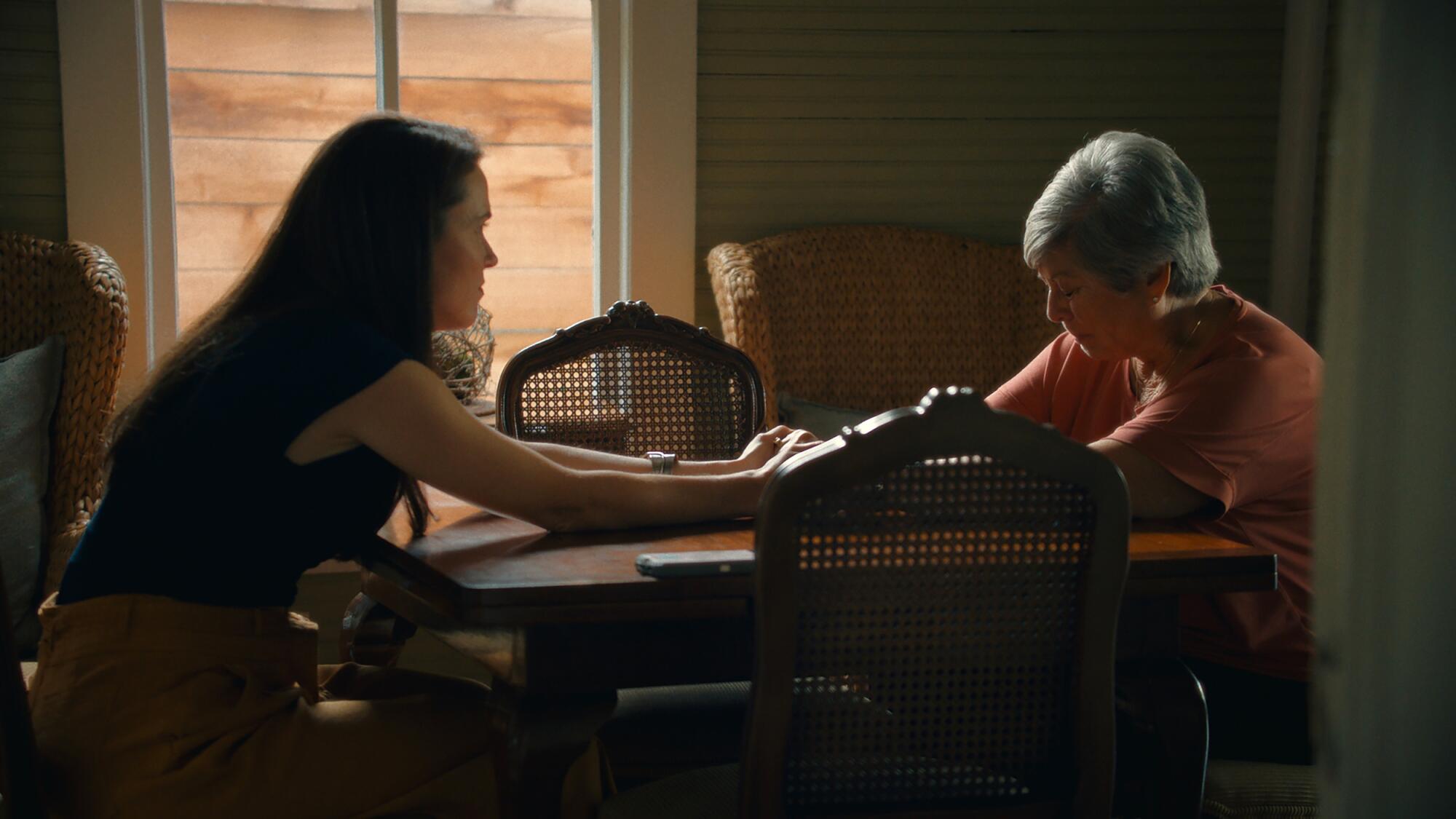
“It’s just a famous, famous story in Texas, but particularly Austin,” director Margaret Brown says of the bewilderingly complex case of four teenage girls slain at a yogurt shop in the state’s capital in 1991. “You heard about it all the time at parties. My best friend was like, ‘That story is rabbit hole upon rabbit hole upon rabbit hole — no one knows what really happened. It’s impossible to figure out.’ I liked the idea of something that was impossible to figure out. But when I started doing the interviews, I was like, ‘This is dark, this is deep trauma.’ I’d never watched or done true crime before. I didn’t realize what it would be like to sit with people who hadn’t known what happened to their siblings and children for over 30 years. I remember [thinking], ‘I’ve got to get this right. I can’t mess this up. There’s just too much pain here.’”
‘The American Revolution’ (PBS)
“Leading up to it, I said I just don’t want us drowning in fife-and-drum treacle,” director Ken Burns says of his expansive treatment of America’s origin story, which draws out the experiences of Native Americans and enslaved people as well as the era’s atmosphere of civic discord. “Clearly it’s not, because we’re so existentially challenged by the moment. But the revolution gives us a sense of perspective. Times were more challenging then. More division. More division in the Civil War. More division in Reconstruction. Yes, the threats are unprecedented, but they’re not totally unfamiliar. Mark Twain is supposed to have said history doesn’t repeat itself, but he’s [also] supposed to have said it rhymes. I love that. So like Odysseus, I tie myself to the mast and resist the temptation to put a little neon sign in the film saying, ‘Isn’t this so much like today?’”
‘Sean Combs: The Reckoning’ (Netflix)
“There was so much noise,” says director Alexandria Stapleton, who tracks hip-hop mogul Sean “Diddy” Combs’ rise and shocking fall in this series, executive produced by 50 Cent. “I’m scared for my safety, I’m scared for my career. Then there was every journalist, every giant corporation, trying to chase the same story. Because there was a feeding frenzy, there were a lot of people that were not truthful. It was making sure that we were going after the right people to speak with, and then … making sure that they felt safe emotionally. No one knew who I was interviewing while I was making it. In making a project about a man who’s very connected in media and very good at whatever he wants his narrative to be, there was a very deliberate decision to not drop this project until we literally were a week out.”
‘Ocean With David Attenborough’ (National Geographic)
(Keith Scholey / Silverback Films and Open Planet / National Geographic)
“It’s been weird, because I’ve got older, and he sort of stayed the same, like the Dorian Gray picture,” says Keith Scholey, one of the film’s directors, of the 100-year-old broadcasting legend and naturalist. “He’s still got that huge power and presence and commitment. It comes from the heart. He’s got a huge depth to him, in terms of knowledge, experience, personality … but he’s also very self-effacing. The most boring thing in the world for David Attenborough is David Attenborough. He’s interested in every aspect of the truth, and he loves uncovering that and passing that on to the world. He knows how to present in a way that it’s a performance, but it’s not a performance.”
‘Neighbors’ (HBO)
“Neighbor disputes are a great leveler,” says Harrison Fishman, who co-directs this gonzo excursion into neighborhood feuds with Dylan Redford. “If you think about class and race and politics, all that stuff gets thrown out the window when people are dealing with such small, concrete problems. You quickly start learning why people care so much about the things that they’re fighting for. It becomes a bit like a Trojan horse into learning about aspects of America and things about people that have nothing to do with the dispute. Those tangents are so valuable to us, because it gives context to the dispute. But it also helps people understand who everybody is in our country.”
‘Mr. Scorsese’ (Apple TV)
“We would get together and have these very long conversations,” says director Rebecca Miller, who interviewed American cinema’s great poet of tortured masculinity over five years. “But then in terms of the other voices, I thought, ‘Who knows him best?’ There was this wonderful movie called ‘Crumb,’ by Terry Zwigoff. He interviewed [cartoonist R. Crumb’s] ex-girlfriend at a certain point, and I felt like I got a view into the person, not in a gossipy way, but … trying to get a rounded view. If you only get the front-facing part, you’re not going to get a full sense of who they are. It was very important to me that we hear from the daughters or his wife, that there’s a sense of a person in there.”
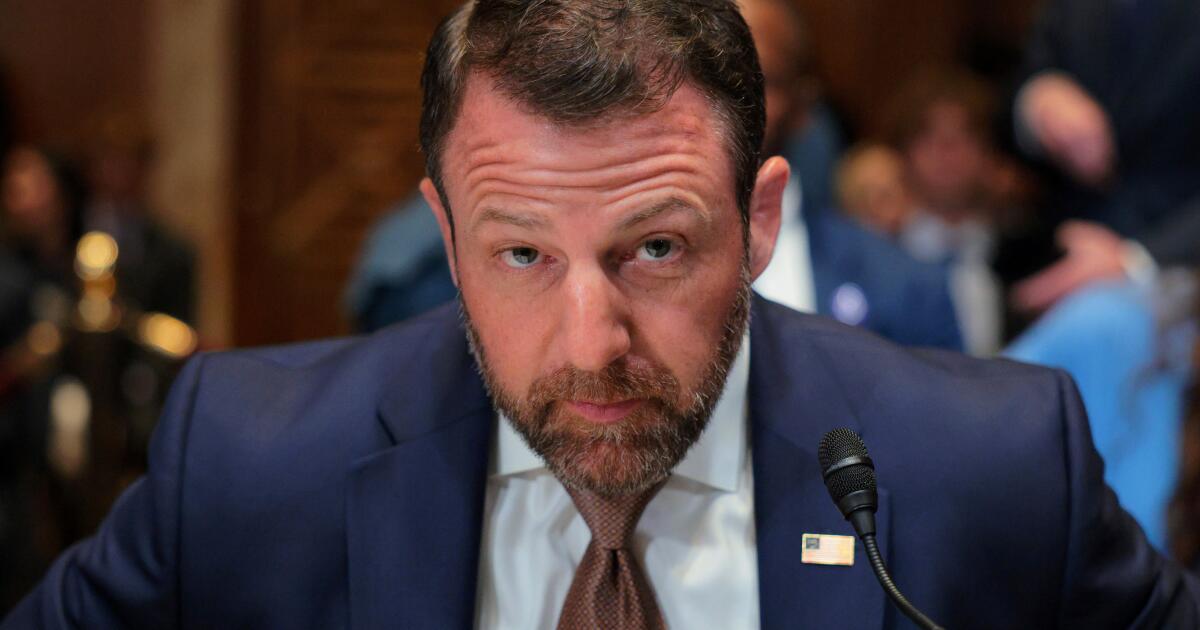
WASHINGTON — Homeland Security Secretary Markwayne Mullin, under intense grilling at a Senate hearing Tuesday, refused to commit to abiding by federal court orders.
Mullin also conceded that his predecessor as secretary, Kristi Noem, had inaccurately described two shootings involving immigration officers in Minneapolis.
His refusal to commit to complying with court orders came during a testy exchange with Sen. Chris Murphy (D-Conn.). Murphy quoted Chief U.S. District Judge Patrick Schiltz in Minnesota — a Republican appointee — who said Immigration and Customs Enforcement had violated nearly 100 court orders and had “likely violated more court orders in January 2026 than some federal agencies have violated in their entire existence.”
When Murphy asked Mullin to commit to complying with court orders in the future, Mullin replied that his agency would not break the law.
So you’ll pick and choose which court orders you’ll obey?
— Sen. Chris Murphy
“But that doesn’t sound like the same thing as committing that you will obey a court order,” Murphy said.
“If we didn’t think the courts were politicized, then I would probably be able to answer that. But we see courts over and over again that use their bench for political opinion and not just the rule of law,” Mullin said.
“So you’ll pick and choose which court orders you’ll obey?” Murphy asked,
Mullin told Murphy not to put words in his mouth.
Addressing his fellow senators, Murphy said, “If you’re a Democrat or a Republican on this committee, you should be really, really freaked out.”
Murphy later returned to the court orders question, saying that ignoring judges erodes democracy.
“I agree that there is politics involved in judicial decisions,” he said. “I do not think that gives an excuse to either Democratic or Republican administrations to ignore those court orders. I think that’s actually the end of our republic, if the administration willfully ignores a court order because they disagree with it or its motivation.”
Mullin faced the Senate Appropriations Committee amid scrutiny over the agency’s budget and immigration enforcement ahead of the World Cup. President Trump tapped Mullin to take over leadership of the embattled Department of Homeland Security after Noem was fired in March.
Mullin’s appearance came as the Senate is considering legislation that would fund immigration enforcement agencies through the end of Trump’s term. Republicans intend to use a legislative maneuver that would bypass the need for support from Democrats, who have pushed for reforms since two U.S. citizens were killed by immigration agents in Minneapolis.
During his previous appearance before senators, Mullin projected himself as diplomatic, saying he would work to bring confidence to the agency and keep it out of the news. But recently, he has set the travel industry on edge by threatening to remove Customs and Border Protection officers from airports in so-called sanctuary cities, which limit collaboration with immigration enforcement agents.
Millions of people are preparing to visit the United States for the World Cup, which starts June 11 and includes host cities such as Los Angeles, San Francisco and Seattle. Mullin said he will attend his first soccer game June 12 in Los Angeles.
Murphy, the committee’s top Democrat, made note of Mullin’s promise to keep Homeland Security out of the news. He said the agency has repeatedly broken the law, wasted billions in taxpayer dollars and lined the pockets of private prison corporations.
“Nothing has really gotten better,” he said. “In fact, you spent the first two months of your tenure threatening to suspend international arrivals in states represented by Democrats. Not only would that throw our entire air travel system into chaos, it’s completely illegal.”
Mullin took issue with Murphy’s characterization of the agency’s behavior, calling it political theater. Murphy sat with his head propped up on his hand, looking directly back at his former Senate colleague.
Mullin said threats against immigration agents are up significantly and that Murphy’s “reckless tone is getting people hurt.”
Protests erupted last month outside an immigrant detention facility in New Jersey after detainees launched a hunger and labor strike over what they called inhumane conditions such as rotten food and medical neglect. Tensions have escalated over several days as protesters clashed with law enforcement and counterprotesters.
On Monday in Dallas, Mullin said he would pull Customs officers from airports around the country to help with the security in Newark, if it became necessary.
Addressing the issue of officer training, Mullin said Tuesday that the agency will return next month to 72 days of training for new recruits, including training on crowd control. Last year, then-acting ICE Director Todd Lyons told Congress the agency had reduced the number of training days to 42.
He also said the agency is not “actively patrolling” sensitive locations, such as schools, and said that the agency has stopped relying on administrative warrants to enter a residence by force and is now seeking judicial warrants before doing so in most cases.
Asked by Sen. Patty Murray (D-Wash.) about body-worn cameras, Mullin said the agency doesn’t have the money to supply enough body cameras for every immigration officer. Homeland Security received an unprecedented windfall last year of $170 billion under Trump’s sweeping tax bill, the One Big Beautiful Bill Act.
Mullin said the agency suffered a blow to morale because of the historic 76-day shutdown of ICE and CBP after a congressional stalemate over funding.
“Some people couldn’t sustain it,” he said. “We lost a tremendous amount of workforce, about 8%.”
During an exchange with Sen. Chris Van Hollen (D-Md.), Mullin acknowledged that Noem had unfairly and inaccurately described two shootings involving immigration officers in Minneapolis.
Caitlin Clark says everybody making a big deal about a heated moment on the bench between her and Indiana Fever head coach Stephanie White has gotten it “blatantly wrong.”
“I know there’s a camera on me … but there’s a lot of people out there in the media or on TV that think they know a lot of things, and they’re just blatantly wrong,” the star point guard said on Monday. “It’s just another example of what everybody … want[s] to blow up and make something that is just … not in reality.”
Clark was addressing a moment that occurred during the Fever’s 100-84 loss to the Portland Fire on Saturday. The viral footage appears to show Clark and White having a heated exchange while the team is huddled on the bench. White then subs Clark out for Raven Johnson, having her take Clark’s seat, as they presumably continue to discuss their next play. Kelsey Mitchell and Makayla Timpson appear to try to calm Clark, who can be seen shaking her head while standing behind her coach.
As with many moments involving the 2024 WNBA Rookie of the Year, video capturing the exchange was widely circulated and discussed among fans and pundits online and on TV.
Clark dismissed the moment as just “two people being competitive, two people that really want to win” and pushed back against it being described as “a blow up.”
“I ride for Steph, I ride for these girls. Steph has my back more than anybody,” the two-time All Star said. “Nobody in … our locker room, or Steph, or our coaching staff, thought twice about it.”
Clark’s teammate Lexie Hull was also asked about the moment on Monday during an appearance on Yahoo Sports Daily, and the Fever guard indicated it wasn’t even a blip on the team’s radar.
“That’s part of the game,” Hull said after mentioning the team had been in some foul trouble. “There’s frustrations that rise, and decisions have to be made, and ultimately, this wasn’t something that carried on. This is, in the moment, something that happened, and not something that is talked about now in our locker room or talked about even later on in the game.”
White echoed her players’ sentiments Monday, saying the footage just captured her coaching.
“I was challenging a player,” White said. “It’s coaching. … My relationship with Caitlin is great. … She wants to be coached. I want her to help me be a better coach. We’re both competitive, we’re both stubborn, we’re more alike than different. Hopefully we continue to bring the best out of each other.”
White attributed the attention to Clark’s popularity and how “everything that she does gets clicks.” She also pushed back against attempts to frame these moments as “tense.”
“It’s not a new thing,” White said. “It happens in every sport … and it’s not a story.”
Clark, the 2024 No. 1 draft pick, first gained buzz for her three-point shooting during her college years at Iowa. While her popularity has carried over into her WNBA career, she has more recently been increasinglyscrutinized for her demeanor and perceived disrespect toward coaches and officials rather than for her play. Her injury-plagued 2025 campaign and the Fever’s less-than-stellar start to the 2026 season haven’t helped. The Fever are currently 4-4 and ninth in the WNBA standings. The team went 20-20 in the regular season during Clark’s rookie campaign and 24-20 in 2025 (Clark played just 13 games).
“There’s immense amount of pressure, and sometimes that pressure can get you and frustrate you in different ways,” said Clark. “I want to win. This team wants to win, and I’m the point guard, so it’s on me to help this team and this franchise win.”
Sit at a table with a bunch of actors and it inevitably becomes an impromptu acting class, one in which even theMichelle Pfeiffer is leaning over to observe. At least that’s what happened on a recent afternoon when The Envelope gathered six actors from some of this season’s most talked about television series for its 2026 Emmy Drama Roundtable.
It all began when Pfeiffer (“The Madison”) shared that, while studying acting, she couldn’t grasp the technique created by Sanford Meisner, which trains actors to stop overthinking and encourages them to listen and respond actively to their scene partners. The revelation immediately activated Katherine LaNasa (“The Pitt”), who beckoned Tom Pelphrey (“Task”) to join her in a spontaneous application. (Both had studied the method.)
“I like your jacket,” LaNasa said, locking eyes with Pelphrey.
“You like my jacket?” he replied playfully.
“I do like your jacket … You’re smiling at me.”
The exchange, which had a flirtatious energy, continued for a minute, before Pelphrey and LaNasa emphasized that it’s essentially looking at and listening to what the other person is doing.
“Somehow I was doing it wrong and I didn’t understand why I was doing it wrong,” Pfeiffer said.
This openness and encouragement carried the entire conversation, which brought together Pfeiffer, who plays Stacy Clyburn, a wealthy New York City matriarch whose life is upended by the tragic death of her husband, which compels her to move to Montana; LaNasa, who brings depth to the burnout plaguing steadfast, straight-talking charge nurse Dana Evans; Pelphrey, in his turn as Robbie Prendergast, a sanitation worker who robs drug houses at night to provide for his family; Zahn McClarnon, who stars as Det. Joe Leaphorn, a stoic man battling his past and the loss of his son in “Dark Winds”; Billy Magnussen, who portrays Duncan Park, the eccentric and profit-hungry CEO of a tech company in “The Audacity”; and Karolina Wydra, who plays Zosia, the eternally cheerful liaison to a utopian, hive-minded collective in “Pluribus.” Read on for excerpts from our discussion.
I know all your characters are going through some personal things, but if you were to transform into them for 24 hours, what would you do with that day?
Magnussen: I live with Duncan daily because I think your job as an actor is to check the morality of the character you’re playing. And at the same time, you have to question your own morality, see where you stand, to then deal with that character. Duncan’s a really messed-up guy, and doing it for five months … I was on set 16 hours a day every day. I was with him nonstop. And his temperament and pace was just out of this world. It’s exhausting. So what would I do? I would try to go to a spa, personally, because it’s exhausting.
Wydra: Do you find that it gets blurry after a little while?
Magnussen: I still know who Billy is.
McClarnon: But there’s times where you can’t see that line between [fiction and] reality, just moments. I’ve found myself in those moments where I know the difference, obviously, but I’m so emotionally attached to Deanna Allison, who plays my wife on the show, where I can’t separate them anymore. It’s not like 24 hours, but just moments where I’m like, “Wait a second, where am I? Am I in the show? Is this Joe Leaphorn or is this Zahn?” Usually in the middle of the season, it starts to get a little blurry for me.
Magnussen: Do you think it’s the job, though, to keep it separated? Or do you guys believe in Method acting?
Wydra: Rhea Seehorn, who is on “Pluribus,” who’s incredible, who’s my partner in crime, she gave me a book about Method [acting] — the Method and what really Method was. And it’s not what we think it is. We all do Method acting, but it’s not staying in the character and living in the character forever. … And that’s what people think Method is, is that you never break the character, you take the character home, but it’s not. It’s building a world. Building it, personalizing it.
Pfeiffer: Isn’t that what we all do? Some actors will go live on the ranch. They won’t take a bath for six months. They really take it to another level, which I’m not willing to do … From the minute I commit to something, it’s right there [in my head], I’m thinking about it. It can be a year away, and it’s right here torturing me, which is I think why I’m a bit of a commitment-phobe. My agents always call me “Dr. No” because I know no matter what, even if I’m not consciously aware of it, it’s there just badgering me.
LaNasa: I have found that people want Dana, want my character, in real life. And it’s cool because she’s very comforting to people. But I had an experience recently in New York where this table of girls, they were having some party, and someone said, “Oh, you mean a lot to us.” And I said, “Oh, are they nurses?” Well, some of them are. And then they asked at the end of their dinner would I take a picture. And then one girl told the other people to leave and then she told me her illness journey. And I had breast cancer. She was going through breast cancer. And it was really interesting. And it was the most meaningful that I’d ever felt about taking a character home where it’s like … I think I spoke about my wellness journey because I was playing the role. It ended up coming up through the press. … And for some reason, because I was Dana in someone’s mind, it meant something. And I thought, “Well, this was actually useful. This breaking of that wall between character and person was actually useful.”
Tom, you get the call that you’re cast as Robbie in “Task.” What’s the first thing you do to figure him out?
Pelphrey: When I read the first two episodes, I felt like I understood Robbie’s soul perfectly, but I knew that I would have to break my ass to get that accent right. So that was where I focused most of my conscious energy and discipline and time, was just [on the] technical, just on the accent. The fun part was, because he would be my age, thinking about growing up in Philly at that time and who his heroes would be, having ideas for tattoos, stuff like that. We had more time than you get sometimes before we had to start filming because we knew and then the writers’ strike happened. I had a lot of months to sit with him and emotionally and spiritually. And I’d just become a father. Obviously [with] Robbie, everything he does is for his kids.
Pfeiffer: It changes everything. It opens your heart.
Pelphrey: I was a new person. And I understood him in that regard perfectly and I couldn’t have before. I could have imagined it and now I knew for sure.
For “The Audacity,” Billy, you spoke with some tech folks. What did you come to understand about what they’re after as innovators versus what you’re after as a creative?
Magnussen: Listen, no one’s a villain in their own story. I believe that from Day 1, these people probably came to the Valley with genuine ideas. The genesis of their idea was to connect and really bring something powerful and important to society and people. And, “Oh wait, we’re making a lot of f— money.” And through that lens, you start being blinded by this humanity that’s around you or caring for people around you rather than a bottom line. When you’re in an incestuous pool or in a small bubble, culture is created. And like Facebook, their slogan was “Move fast and break things.” Being a bull in a china shop is not a good idea anywhere, but for some reason that was the culture. People just started doing that more and more and breaking things and breaking things and breaking things. I don’t think they started off that way, but the culture just bred them to become this way. I personally relate that to, I don’t want to say Hollywood or the entertainment world, but we’ve seen the toxicity. And we’ve been slowly trying to filter that out, I think, of Hollywood. But when you have a microclimate kind of culture feeding in toxic behavior and rewarding toxic behavior over and over again, it breeds it. So you start to have to scrape away that cancer. But again, the genesis of all these ideas were pure. We were 6 years old just dreaming to be something or being like, “I could do this.”
Pfeiffer: Pretending to be something else, other than what we were.
Magnussen: I empathize with that. I don’t think people are bad. I just think they’re lost sometimes.
Karolina, your character in “Pluribus,” Zosia, is carrying the weight of almost every person in the world. What do you remember about those discussions with [creator] Vince Gilligan and how he helped you unpack this character and the relationship with Carol, Rhea [Seehorn]’s character?
Wydra: I took a break for five years from acting before Zosia came into my life. I walked away at 39 to have kids and my agent and my manager dropped me and it was really terrifying to also be a woman and turning 40, to have children at that time. When Lou [her second son] was maybe a year-and-a-half [old], I got the itch of like, “God, I miss acting so much. How am I ever going to come back? How am I going to get an opportunity?” And I was 43 at the time and out of nowhere I got an email being like, “Hey, there’s this thing …” from a commercial agent that I was on their roster, but I did not work with them. And they said, “There’s this audition.” And I go, “OK.” I read it and I said, “Who wrote it?” And she said, “Vince Gilligan for Apple TV.” I went, “What? OK.” And I didn’t know anything about the project and it was always my dream to work with Vince from when I saw “Breaking Bad.”
Long story short, I’m here and the whole journey has been so wild, so insane. When I first would talk to him about Zosia, I was like, “God, how am I going to tackle the world and someone that has the highest emotional intelligence, someone that does all these different things? And how do you see the Others? How do you want them to move about the world and the complexities of who they are?” Vince is such a beautiful human being. He’s like, “They’re just happy and content.” You go, “OK, yeah, but … what else?” For me, Zosia is extremely spiritual. Meditation was my key, my go-to to get into that zone of connection to humanity, not in the physical but very spiritual way where, [if] you meditate enough, the ego gets lifted and you truly feel connected, and you feel one with everyone. And the wild thing, I think the greatest gift, was becoming a mother; I understood what it means, unconditional love. Because my heart lives outside my body all the time. And so becoming a mother was a gift to play Zosia, because I unconditionally love Carol. And now, no matter what she throws at me, I just love her, and take care of her, and I want to nurture her.
Michelle, you get the call from Taylor Sheridan, who also created “Landman” and “Yellowstone.” He says he wants to meet with you and he wants to do it on his turf in Texas, not yours. There’s no script. What does someone like Taylor Sheridan say to someone like Michelle Pfeiffer that will get her to agree to the show?
Pfeiffer: Well, he gave me a lot of tequila.
LaNasa: Writing this down: Tequila, check.
Pfeiffer: I got a call that he wanted to meet with me, that he had an idea for something, “But you have to come to Texas.” And I said, “Is there anything? Is there an outline? Is there a paragraph?” “No, no. He wants to explain it to you in person.” I had to stay the night in Fort Worth and then met with him and he gave me tequila, and then after a while I had to stop drinking. He gave me a very rough outline of the show, of the character … She’s been with the love of her life for 50 years. It’s the marriage that we all dream of having. And he dies suddenly, tragically, and … all of a sudden the rug is really just emotionally and psychologically pulled out from underneath them. And it’s how do you rebuild a life and it’s the study of grief. He said that I had committed that night, which I did not. I’d had a few cocktails. We went back and forth a little bit about [the fact] that I really would like to read something. And he said, “Well, I would really like to cast this before I write anything.” Then I realized I wasn’t going to win this battle and I reached out to Helen Mirren [who starred in Sheridan’s “1923”], who I don’t know, but I figured she doesn’t suffer fools and she would give me the truth about what it’s like to do this. She couldn’t have spoken [more] highly of everything. She said the scripts are wonderful. The production is wonderful. And loves Montana. And so I took a leap of faith. I never do that.
What stands out to you about his process versus then working with your husband, David E. Kelley, also a prolific writer, who adapted “Margo’s Got Money Troubles”?
Pfeiffer: I couldn’t be luckier working for two of the most talented and prolific writers in the history of television. [They’re] not that much different. I purposefully didn’t want to bug David because it’s not like we had any hard-and-fast rules about not working together, but we weren’t really actively seeking it out because that can get a little dicey, just looking at it from afar. I really cherish my marriage, and our family, and I just didn’t want to mess it up. I really mostly went to the director and every now and then I might throw a little something his way. And [with] Taylor … I would go through Christina [Alexandra Voros], our director, because he’s just not honestly that accessible because he’s got a bit going on. I personally don’t like to spend my time trying to rewrite things. It’s more interesting to me to try to make something work and then I end up finding something I never would’ve decided. It just takes you to a new place and it’s so much more interesting than anything I would have conjured up.
Zahn, you’re not only the lead in “Dark Winds,” but also an executive producer and directing episodes. I know there was a moment where your character was supposed to shoot someone in the face early on. And you felt strongly, “My character’s not someone that would do this.” Talk to me about leaning into speaking your mind.
McClarnon: There’s not a lot of Native characters on television. The foundation of that character obviously comes from Tony Hillerman’s books. So the foundation was set for that character. And when I got to a point in the season where I’m supposed to kill a man, shoot him in the head in the middle of the desert — first off, I didn’t see that in the books. And I know it’s television and we want drama and all that stuff, but also, to be honest with you, I want Native kids — see, I’m going to cry now — to have something to look up to. We grew up with these stereotypes and we grew up with these tropes of Native Americans. The only one I can really remember that I really looked up to was Will Sampson in “One Flew Over the Cuckoo’s Nest” because he was playing a trope, but he becomes the hero at the end of the story. It’s one of my favorite films. So when it came to that point where the writer said, “He’s going to kill this rich white man in the desert and shoot him in the head,” morally, I think Joe Leaphorn is more than that.
And it was simple. I sat down with the showrunner [John Wirth] and we talked about it, and we went back and forth for about a week. And I’m so glad that I have access to somebody like that. I have access where they’re not telling me, “No, this is the way it’s written. This is what you’re going to do.” So yeah, we decided not to shoot the guy in the head, where I’d just leave him out in the desert to fend for himself.
Katherine, you’ve talked to nurses and medical professionals in the making of “The Pitt,” but you were also a patient during your breast cancer journey, interacting with them a lot from the other side. What is something that they’ve told you or even something you observed in that time that really spoke to you about what they’re going through on the day to day in these jobs?
LaNasa: It’s funny, I’d always wanted to work with John Wells. I go through this period of all this unemployment, and then I get this job for John Wells. I had had cancer a year before and then had complications up to like six months before. It wasn’t until I got to the emergency room set that I was like, “Oh, this whole period … ” — the spirituality of that. I really believe that we need to be grateful for our life while we’re living it, no matter what’s going on. Because I still have my children, and I have nature, and I have my husband, and cooking, and my dog, and so many wonderful things. And I was really trying to hold onto that. It’s always this idea that maybe something is for a reason or whatever — now I’m going to cry. The fact that that was so purposeful, that I understood so deeply what it was to be a patient, what it was to be terrified going into the emergency department. I also understood how much it mattered when a nurse took a little extra time and was a little bit kind.
Pfeiffer: You’re going to make me cry.
LaNasa: And there was one particular nurse — I had my cancer, went through my radiation and then [went] back and forth, back and forth [to the ER]. And there was a week, the second trip to the ER [they thought I might have multiple sclerosis]. “Now do I have MS on top of having had cancer?” And I had a breakdown in the ER. And she’s like, “Listen, first six months after cancer are really bumpy, and it’s not going to stay like this. Do you need an Ativan?”
Magnussen: Did not see that turn.
LaNasa: It was that human touch. Or when they would come and give you a warm blanket or something. There’s a nurse, Kathy Garvin at County, who told me she wouldn’t do the job that she does being the [emergency department] charge nurse if it wasn’t in a county hospital. She wants to do that hard work for people that really need her. For the most underprivileged, for the unhoused. And I try to honor that in the story and to just bring that to life — their generosity and their humility.
The Envelope’s 2026 Emmy Drama Roundtable: From left, Zahn McClarnon, Michelle Pfeiffer, Tom Pelphrey, Katherine LaNasa, Billy Magnussen and Karolina Wydra.
There’s a lot of discussion in the industry right now about runaway production and can L.A. rebuild and what’s lost. I’m curious how you feel about this topic.
Magnussen: I live in Georgia and … one of our biggest exports as Americans is our culture. And if we just keep it isolated to Hollywood, I think we lose out at expressing everything we are as Americans.
McClarnon: We shoot on the Tesuque Pueblo. There’s 19 pueblos in New Mexico. We have taken over their old casino and we’ve converted it into a soundstage. We use their back lot. We obviously help out the tribe with renting the place out. And so I like shooting in New Mexico and supporting the local community, especially local Natives.
Pfeiffer: I think there’s room for all of it. We shot [a movie] in London that took place in Los Angeles. And it’s ridiculous that our entire industry has left. Los Angeles is really hurting. And a lot of people are hurting. All those jobs, all of those restaurants where people used to eat, people used to shop. And I think to not give the same sort of tax incentives that other states are doing — look, if it takes place in Georgia, you should go to Georgia. But I think Los Angeles was really built on the movie [industry].
LaNasa: I have a 34-year-old and a 12-year-old. I remember with my 34-year-old, even just being a young, starting-out mother, I would be like, “Well, I’m not going out of town. I have a child.” I would never go do a TV show out of town. I had a kid and the kid was in school and I needed to provide consistency for that child. And then with my second one, that was impossible. We would just not have been able to work. But it’s really hard on families. We are actors and we’ve come here to pursue the industry. We’ve moved here and we’ve risked something … L.A., for all of its problems, is a city of dreamers. It’s a city of people that came to pursue their art. And I am one of those people. And so in a way, I wasn’t really a citizen like the other citizens of Atlanta. I was outside. I didn’t have my community.
Magnussen: I know, but that’s the thing I have an issue with is this idea that, “It’s only there.”
Pelphrey: I’ll say this. Love that we get to film all over our beautiful country. Would love to keep the jobs in this country. That would be the nice part. Because when everybody’s like, “Oh great, we can go to Belarus or London.” Guess what? All of us get to go. Our crew doesn’t get to go — the people that we know that we need, that we work with, that we make these things with. We get to go wherever the f— we want, actors, directors, but the crew doesn’t.
June 1 (UPI) — At least seven people, including the suspected shooter, are dead Monday following a series of shootings in an Iowa city that authorities said stemmed from a domestic dispute.
The suspect was identified as Ryan Willis McFarland, 52, of Muscatine, located along the eastern Iowa border with Illinois.
Authorities said he shot six people, all believed to be family members, before dying from a self-inflicted gunshot wound that was fired after being confronted by police on the Riverfront Trail near a pedestrian bridge.
“Today, I simply do not have the words [for] this act of evil and what it has done to our community,” Muscatine Police Chief Anthony Kies told reporters at a press briefing.
The identities of the victims were not made public, but Kies said they are all believed to be related to McFarland.
The investigation began at about 12:12 p.m. CDT when police received a report of a shooting at 210 Park Avenue. Officers arrived to find four people who had sustained gunshot wounds and were pronounced dead at the scene.
McFarland was identified as a suspect and was then confronted. EMS personnel rendered aid after McFarland shot himself, but he was soon after pronounced dead at the scene, Kies said.
As the investigation progressed, investigators developed information indicating there may be additional victims, leading to the discovery of two men dead from apparent gunshots — one inside a 1509 Mill Street residence and the other inside a 808 Grandview Avenue business.
“Preliminary findings indicate that the shootings stemmed from a domestic-related dispute,” Muscatine Police Department said in a release.
Kies told reporters that the suspect had a criminal record, but would not elaborate. The weapon used in the shooting was also not mentioned.
The investigation is ongoing, authorities said.
According to The Gun Violence Archive, the Muscatine incident is the second mass shooting involving four or more victims in the United States in the last 24 hours. There have also been more than 163 mass shootings in the country so far this year, the organization’s statistics show.
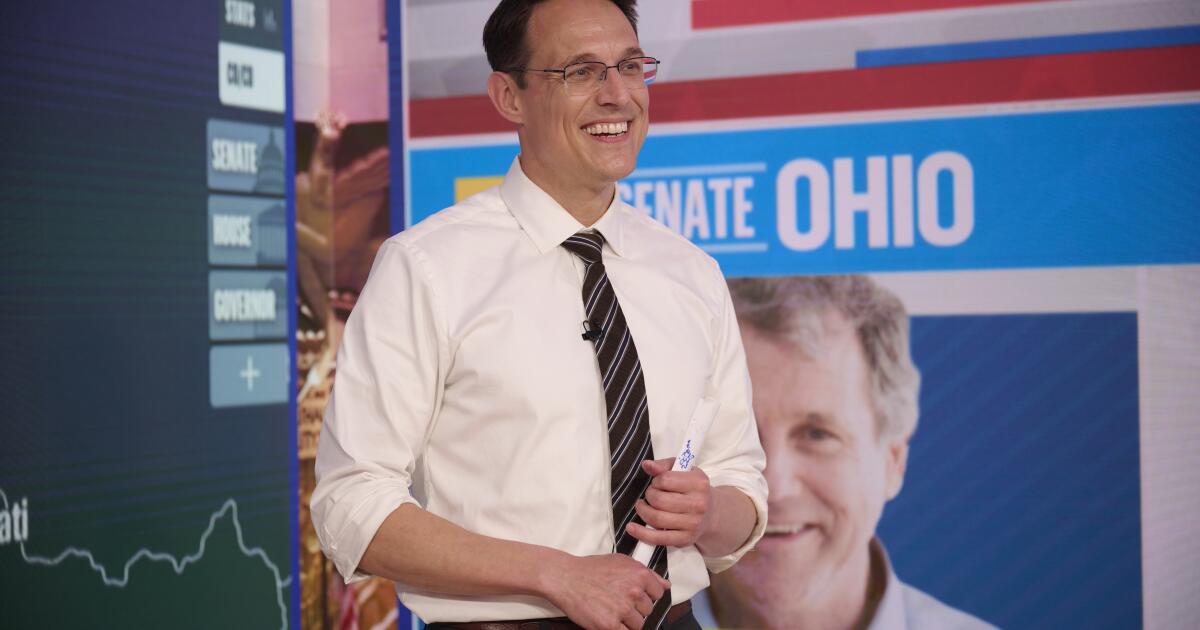
After the polls close in California on Tuesday, NBC News data analyst Steve Kornacki will just be getting started.
Since December, the khacki-clad vote-counting guru has been going live and uninterrupted on streaming platforms to provide results and analysis of every special election and even some state Senate contests.
The stream — called the Kornacki Cam — provides unadulterated number-crunching without any pundits weighing in. Rather than getting updates that last a few minutes, Kornacki provides continuous real time results until the last available total is counted.
“This all happens in full view,” Kornacki said Monday in a phone interview. “The audience gets to see the whole thing. They get to see the buildup, the anticipation, the payoff.”
In the 10 Kornacki Cam sessions streamed by NBC News so far, 20 million viewers have sampled on YouTube alone. The coverage — consisting of Kornacki, his Big Board, his producer and a Stedicam operator — is also available on NBCNews.com, the NBC News app and the division’s social media accounts on Instagram, Facebook and TikTok.
The Kornacki Cam will focus on the primaries for Los Angeles mayor, California and several Congressional districts, shortly after the state’s polls close at 8 p.m. Pacific.
In a Monday chat with The Times, here are the trends Kornacki says he’ll be looking for on the night.
Polling in mayoral races is typically pretty unreliable. What do you make of the contest based on what you’ve seen?
You don’t always have super-competitive mayoral elections and they’re not all created equal. It’s not quite like a presidential election so you just don’t have a wealth of data to draw on for expectations either.
I’ve seen the polling you’ve seen. It suggests that of the three candidates, (Mayor Karen Bass, reality TV star Spencer Pratt and City Council member Nithya Raman) Bass is in the best position to get into the runoff. It also suggests that Spencer Pratt has had the most positive movement in the last month or so of the campaign. But we go in knowing there will be volatility and I’m open to any and all possibilities.
Spencer Pratt is an unusual candidate who has been able to take up a lot of oxygen in the race. Is there a hidden vote for him that people might not be eager to admit to pollsters?
You can look at the city and know where to look for whether Pratt is having a big night. The San Fernando Valley is gonna be more than a third of the vote, probably close to 40%. If he gets in the general election, he wants to be winning there by a big margin. If it’s not happening there for Pratt, I don’t think it’s happening anywhere else. Karen Bass is going to rely on central and south L.A., with probably a third of the vote coming out of those two places. Those should be her bulwarks. The Westside, I think could be more of a toss-up. There’s a fair chunk of the vote there.
We don’t do a ton of mayoral races around the country. So we’re still trying to figure out exactly how detailed we’re going to be able to zoom in, at the neighborhood level and the precinct level.
Turnouts usually are low for Los Angeles mayoral races. Will this year be different?
This mayoral race has received a lot more national attention than 2022. So my thought is that the turnout would be higher, just based on that. But this is something that is resonating nationally because Pratt has that celebrity factor. The number was 646,000 (total votes) for 2022. So that’s something we’ll be following — are we trending over or under that?
And what will be the best indicators for the gubernatorial race?
The place that I kind of got circled here is Orange County. In the last two sort of major statewide elections, it was the first to report out vote. At 8:06 p.m local time in California, in 2024, Orange County reported out half of its vote, right? So you’re getting, you know, you’re getting hundreds of thousands of votes, potentially, from this enormous county within, potentially within 10 minutes of polls closing. There were a couple others — the Central Valley, and we got a we got a good chunk of Merced and Fresno quickly.
So how long are we going to have to wait for a result on Tuesday night?
One of the other things that just surrounds everything in California, whether it’s the mayor’s race, or governor’s race, or anything else, is nothing is definitive in the first hour or so after the polls close. We’re probably realistically looking at a days or even weeks-long process of getting all the vote counted.
I know it drives many people nuts. Without editorializing on that, it’s just a fact that they can get out of about two-thirds of their vote on election night, and if the races aren’t clear and definitive, then you’re generally in for a pretty long haul.
We do know in California that they’re not going (to count) nonstop until they get a result. They’re going to then start doing updates as they process and count the remaining vote by mail, which is usually a considerable pile in a lot of these places. The vote by mail in California can continue coming in for seven days after the election.
So do you think your coverage reflects a shift in what the consumer wants? We already know how fragmented the audience is. Are there now enough political junkies who want the pure uncut stuff?
I’ve been doing this about 20 years, and when I would tell people that I reported on politics for a living, they either moved away from me or changed the subject. And now, you know, I found the last, you know, 10 years or something, has just totally changed. People come up to me, even if they don’t know I work in politics, and they want to talk politics. Everybody seems into it whatever side they’re on.
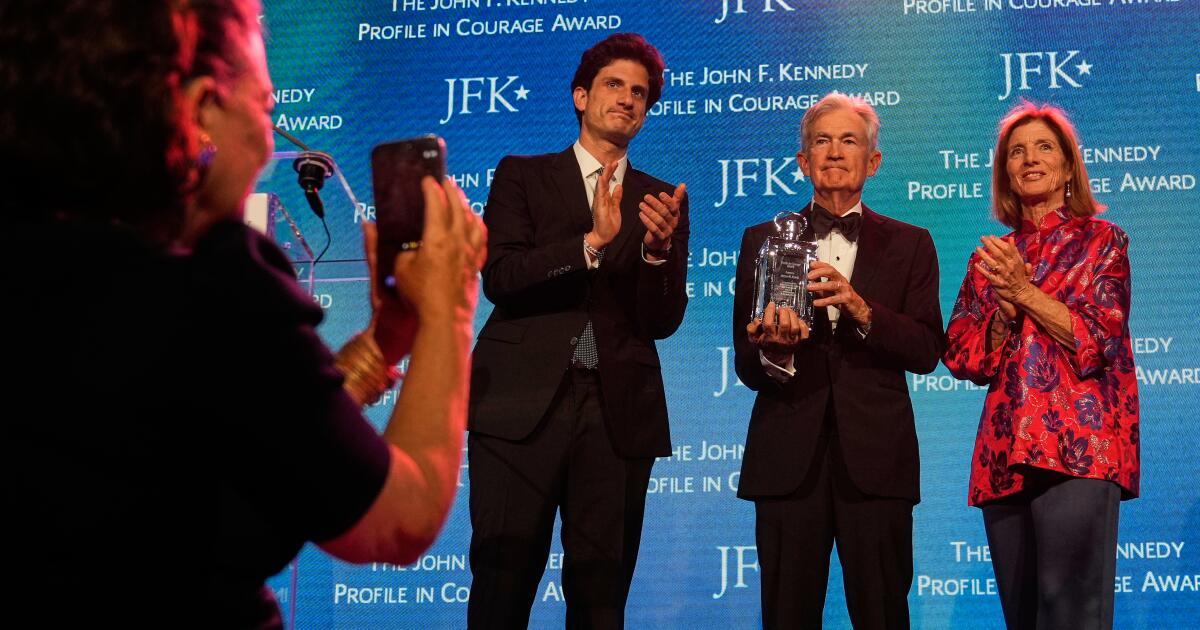
BOSTON — Former Federal Reserve Chair Jerome Powell used one of his first major public appearances since leaving office to defend independent institutions while accepting an award Sunday honoring his efforts to preserve the central bank’s independence.
Speaking at the John F. Kennedy Presidential Library overlooking Boston Harbor, Powell called universities, courts, Congress and the central bank “the foundation and the embodiment of our democracy” and argued that the Fed’s independence was a “priceless asset” that must be protected.
It was one of his most direct defenses of Fed independence, warning that a single administration’s decision to remove bank officials over policy differences would open the way for future elected officials to follow suit, ultimately undermining the credibility that the Fed has spent decades building.
Powell, who frequently clashed with President Trump during his eight years as chair, stepped down as his term expired in May. He was succeeded by Kevin Warsh, whom Trump selected to lead the central bank.
After stepping down as chair, Powell took the unusual step of keeping his seat on the Fed’s governing board, which he has until January 2028. By doing so, he has deprived the Trump administration of an opportunity to appoint another member of the board.
The Trump administration has also sought to fire Fed governor Lisa Cook, which would open an additional seat on the rate-setting committee the president could fill. Yet Cook sued and the courts have so far let her keep her seat.
While Powell never mentioned Trump by name Sunday, he repeatedly returned to the importance of protecting institutions from political pressure and preserving public trust in their independence.
“Like many other institutions, the Fed has been undergoing a stress test,” he said. “Congress wisely chose to insulate monetary policy decisions from political pressure. All other advanced economy nations have done the same.”
Since 1989, the John F. Kennedy Profile in Courage Award has recognized public servants who make what the foundation describes as courageous decisions of conscience despite personal or professional consequences.
Previous recipients include former Presidents Barack Obama and George H. W. Bush, Ukrainian President Volodymyr Zelensky and former Vice President Mike Pence.
In March, the foundation said it was awarding Powell for protecting the independence of the Federal Reserve “despite years of personal attacks and threats from the highest levels of government.”
Trump harshly criticized Powell throughout his tenure as chair, frequently attacking the Fed’s interest-rate decisions and urging the central bank to cut borrowing costs more aggressively.
Beyond the Federal Reserve, Powell defended U.S. universities and research institutions, the Constitution, Congress and the court system.
“The United States has long been the leader of the world’s freedom-seeking people — the indispensable nation. Other countries know us as a nation built on integrity, and that integrity must be maintained,” he said.
In his remarks, Powell indirectly acknowledged mistakes as chair. The Fed is legally required to seek stable prices, but inflation surged amid the pandemic’s supply chain crunch. Many economists believe the central bank should have raised interest rates more quickly in response.
“At the Fed, we are, of course, human and thus imperfect,” Powell said. “When we make mistakes, we acknowledge them and change course.”
Powell was honored alongside residents of Minnesota’s Twin Cities, who received the award for what the Kennedy Foundation described as acts of courage during a federal immigration crackdown that led to thousands of arrests and the deaths of Minneapolis mother Renée Good and nurse Alex Pretti, both of whom were killed while observing or documenting enforcement activity.
“It’s wonderful just to be invited, honoring Renée,” Good’s father, Tim Granger, said as he entered the library with family members.
Kennedy’s only surviving child, Caroline Kennedy, and her son, Jack Schlossberg, said in a statement that without people like Powell and those in Minnesota “willing to put their lives on the line to hold America to its promises, our democracy can’t survive.”
Attendee U.S. Sen. Amy Klobuchar, who is running for governor of Minnesota next year, reflected that the award was unusual because it recognized ordinary residents rather than elected officials.
“This didn’t go to an elected leader for a reason,” Klobuchar said. “It’s because the people stood up. They stood up by marching 50,000 strong. They stood by bringing kids they didn’t even know — strangers’ kids — to school, by bringing them groceries and they didn’t blink. And that’s what this award is about. It’s about courage.”
Willingham writes for the Associated Press. AP journalist Christopher Rugaber contributed to this report from Washington.
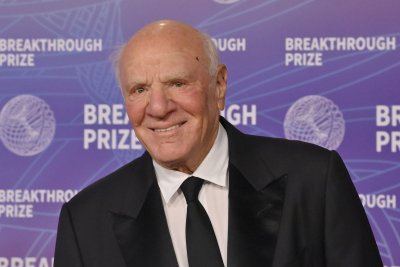
Barry Diller attends the 12th Breakthrough Prize ceremony at the Barker Hangar in Santa Monica, Calif., on April 18. On June 1, he announced that People Inc. made a takeover bid for MGM Resorts. File Photo by Jim Ruymen/UPI | License Photo
June 1 (UPI) — People Inc. issued an $18 billion takeover bid for MGM Resorts, CEO Barry Miller announced Monday.
People Inc., which already owns 26.1% of the outstanding common stock of MGM, offered to acquire all remaining outstanding shares for $48.30 per share. The offer represents a 10.6% premium over MGM Resorts’ closing price Friday and 30% premium to the stock’s volume-weighted average price for 90 days.
“We began investing in MGM nearly six years ago because we believed it represented a rare kind of business: one with real-world assets that [artificial intelligence] cannot easily replicate or disintermediate and exceptional digital growth opportunities,” said Miller, who is also chairman of the board at People Inc.
“We continue to believe the market materially undervalues the power and durability of MGM’s assets. We believe MGM’s management team is superb and that there is a compelling opportunity to support MGM’s next phase of growth and help unlock its full value.”
Diller also sits on the board of directors at MGM.
People Inc., previously known as Dotdash Meredith until a 2025 rebranding, is a digital media company that operates dozens of brands, including People magazine, Investopedia, Serious Eats, Entertainment Weekly and Martha Stewart Living.
Hollywood has been waiting for Kane Parsons since the year he was born. The 20-year-old director is the same age as YouTube’s first videos and grew up with no barriers between his creativity and an audience. “Backrooms,” his debut feature, marks the start of a new new wave of filmmakers raised by internet feedback who are ready to reinvigorate the industry.
Young Steven Spielberg screened his 8mm reels for his neighborhood. Parsons uploaded his early shorts online where he could analyze the mass response. When one, an unsettling nine-minute experiment about a warren of dingy carpets, taffy-yellow walls and gridded drop ceilings clicked with 78 million viewers, he made sequels. A24 offered Parsons a deal before he finished high school. He’s graduating into multiplexes having spent his adolescence writing, directing, editing, composing and market-testing what people want to watch. I’d toast to that, but Parsons isn’t old enough for Champagne.
Given that backdrop, “Backrooms” would be one of the year’s most significant releases even if the movie itself was merely fine. But it’s better than fine — it’s a work of honest-to-goodness art. Working with screenwriter Will Soodik, Parsons has gone back into that banal maze to find an uncannily mature story about loss and stagnation, about how our self-serving narratives barricade us from emotional growth.
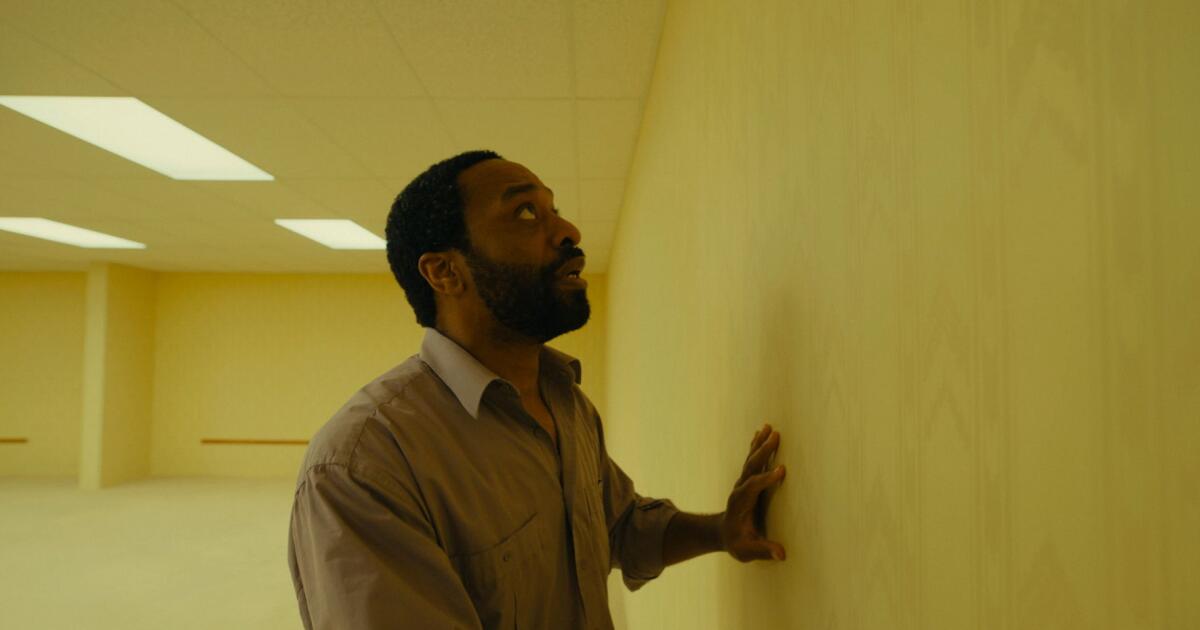
Set in 1990, “Backrooms” has the fritz of an old VHS tape. (Like so many other Gen Z kids, Parsons is nostalgic for a pre-smartphone era he never knew.) A failed architect-turned-furniture salesman named Clark (Chiwetel Ejiofor, superbly expressive) tumbles through a portal in his store’s basement to the backrooms of the title — less Alice in Wonderland, more Alice in Wonderbland.
“It’s like it was made by a bunch of construction workers on acid,” he muses. The hallways lead to more hallways, the overhead fluorescents whine like hornets. Someone — or something — has piled lamps and stools into the center of one room, scattered chairs in another and embedded shoes into the floor as though the ground were made of sand. The disorder looks like the wreckage of an unknown chaos. Aboveground, Clark is trapped in his own resentments, throwing temper tantrums like a toddler. Down here, frustration feels natural.
Should he be afraid? And if so, then what of?
Distant thuds warn that Clark isn’t alone. Soon after, three other characters follow Clark into this liminal space: his loud employees Bobby and Kat (Finn Bennett and Lukita Maxwell) and his exasperated therapist, Dr. Mary Kline (Renate Reinsve), who is haunted by flashbacks of her agoraphobic mother. There’s also a mysterious man in a lab coat (Mark Duplass) who works for a company that factors into the backrooms’ preexisting internet lore, but doesn’t have much purpose in this script. It’s fine just to see Duplass as a gesture toward corporate apathy. More beings will appear too and cinematographer Jeremy Cox’s deliberately low-fi look forces you to do triple and quadruple takes to comprehend what you’re even seeing.
How does a 20-year-old fathom adult-sized discontent? Lord knows, but Parsons does. One theory is that today’s 20-year-olds were just launching into teenhood when the pandemic teleported them from their classrooms to isolated computer screens. Meanwhile, they overheard their parents fret that society might be forever hollowed out. When a young person looks toward the future, what do they see? Probably not an office building bustling with entry-level jobs.
Think about how the act of buying a couch no longer involves interacting with a salesman like Clark, but peering at a pixelated living room that doesn’t actually exist with a couch that changes colors at a tap. Think about how lately the internet at large feels human-less. Then layer that emptiness over the images here.
Sparse yet gripping, “Backrooms” and its minimalist story accommodate the audience’s own free-ranging imagination. The infinite size of these drab catacombs triggers sense-memories of feeling small and confused in an ordinary place that feels all wrong. It’s a time travel trip back to childhood — mass entertainment made intimate — with Parsons tossing us scraps of Clark and Mary’s personal histories like a breadcrumb trail. I remembered what it felt like to get lost in a motel on a road trip with my grandparents. More recently, I tidied the home of a friend who was in the hospital, the pill bottles and crumpled blankets left in situ as evidence of someone else’s pain. “Backrooms” felt like that, too.
There’s an incredible special effects shot where the camera sinks through the floor of Mary’s living room to find a mutation of the same room — and then another and another — each replica deteriorating further from reality until it becomes a new room altogether that would fit right into the backrooms. This, we wordlessly understand, represents how memories of the past can be at once factually inaccurate and emotionally true. We’ve all been bewildered kids, Parsons more recently than most. Some of the most powerful people on Earth still behave like they’re stuck in that headspace.
Describing “Backrooms” as a horror film doesn’t feel exactly right. It’s a surrealist painting in motion, the equivalent of staring at Salvador Dali’s wasteland of melting clocks until it makes gut-sense. Dali made that famous masterpiece, “The Persistence of Memory,” in 1931, a breath-holding moment between wars when daily life looked normal enough but vibrated with the dread that no, things were definitely not OK. Kids don’t know that, but they vibe with Dali anyway because he keys into their suspicion that the world doesn’t really obey the rules.
That anxiety hums through “Backrooms.” It’s why millions of people watched and shared the original short. Yet as fraught as it sounds — and as abruptly as it ends — I left elated. A major new moviemaking talent has arrived and he’s the beginning of a movement. Other internet-honed young filmmakers will follow with their own fresh insights into genres like action, comedy and romance. Kane Parsons is just the first one through Hollywood’s labyrinth.
‘Backrooms’
Rated: R, for language and some violent content/bloody images
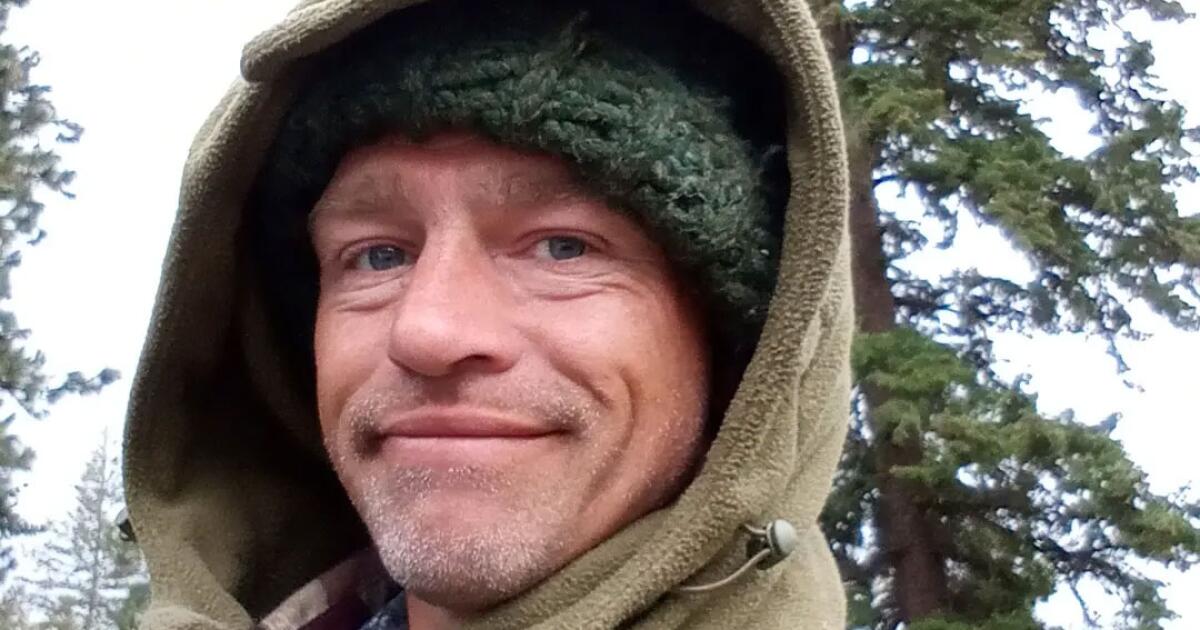
Matt Brown, who starred with his family in the Discovery reality television show “Alaskan Bush People,” was found dead in the Okanogan River in Washington state, law enforcement officials said Sunday.
Brown’s body was discovered Saturday by a group of private citizens who were conducting a search, the Okanogan County Sheriff’s Office said in a statement.
Brown’s brother, Bear Brown, said in a video posted Saturday on social media that fellow brother Noah had been with the search team, helped pull the body out of the river and identified him.
The official cause and manner of death is still to be determined by the coroner, the sheriff’s office said. But the Brown family believes Matt Brown died by suicide, Bear Brown said in the video.
Witnesses said they saw Matt Brown in or near the river and that he “took his own life,” Bear Brown said on social media.
“I would have never suspected he would hurt himself, honestly,” Bear Brown said in the emotional video. “He struggled for a long time.”
Bear Brown said his brother had battled with alcohol and drugs and that Matt Brown told him in their last conversation that he had “fallen off the wagon.”
The Brown family and their life in the Alaskan wilderness were the subject of the reality TV show “Alaskan Bush People,” which ran on the Discovery Channel from 2014 to 2022.
Suicide prevention and crisis counseling resources
If you or someone you know is struggling with suicidal thoughts, seek help from a professional or call 988. The nationwide three-digit mental health crisis hotline will connect callers with trained mental health counselors. Or text “HOME” to 741741 in the U.S. and Canada to reach the Crisis Text Line.
WASHINGTON — The congressman returned home last Fourth of July to startling stories in Southern California as immigration patrols swept through communities, and one constituent told him about starting to carry a passport as proof of the right to be in the country.
Rep. Mark Takano, whose American-born parents were both incarcerated as young children with their families during the forced relocation of Japanese Americans during World War II, could not help but see the parallels between that chapter of American history and this one.
“I do feel like there’s a similarity of circumstance of my own 2-year-old father and my 1-year-old mother being labeled as enemy aliens and they’re considered a danger to national security,” the Riverside Democrat told the Associated Press in a recent interview.
“They’re put into these incarceration camps,” he said. “Similar arguments have been made by this administration — that immigrants pose a grave danger to our country and it’s for the security of our country that we’re doing this.”
Echoes of history
President Trump’s campaign to achieve the largest mass deportation operation in U.S. history is at an inflection point. Americans are seeing what it looks like to round up, detain and deport thousands of people, particularly in the aftermath of the deaths this year of Renee Good and Alex Pretti, U.S. citizens protesting the federal crackdown in Minneapolis.
The White House changed the leadership at the Department of Homeland Security as it reframes its approach. New Secretary Markwayne Mullin promised to keep the department off the front pages.
But Trump is also under mounting pressure from conservative groups not to let up on the goal of deporting 1 million people a year. The president’s Republican allies in Congress are fueling the immigration and deportation actions with billions of dollars in special funds.
Takano, the ranking Democrat on the House Veterans’ Affairs Committee, has drawn from his own family history — and the country’s eventual redress to Japanese Americans who were detained — to challenge Trump’s approach.
“We look back on that era of history as a shameful one, as a time when our political leaders failed the Constitution, failed the American people,” he said.
One family’s story among many
A high school history teacher before being elected to Congress in 2012, Takano grew up in Southern California and came to understand the family stories.
His grandfather Isao Takano arrived in the U.S. from Hiroshima and married Kazue Takahashi, a U.S.-born citizen. Together they settled in Bellevue, Wash., and started a business growing tomatoes, strawberries and chrysanthemums for the marketplace in Seattle.
When the U.S. entered the war after the Japanese attack on Pearl Harbor, they were among some 120,000 people of Japanese ancestry, immigrants and those born in the U.S., forcibly relocated.
His father, William, was 2 years old when his family was sent in 1942 to the incarceration camp at Tule Lake in Central California. His mother, Nancy Tsugiye Sakamoto, born in California to American-born parents, was a year old when she was relocated to the detention facility in Heart Mountain, Wyo.
Then, as now, he said, people are being swept up in the anti-immigrant detentions.
“Will Americans generations from now visit ‘Alligator Alcatraz’ and think to themselves, how could our government do this?” Takano said during a House floor speech, referring to the Trump administration’s immigration detention facility in Florida.
“These future generations of Americans will look to us, the Congress, to see what we did to try to stop it.”
A Reagan-era law seen as model
Takano remembers his father taking him to see the land the family once owned. He learned about his great-uncles who served in the Army’s 442nd Regimental Combat Team of Japanese American soldiers; one was killed in action in Italy. He recalls his own father later collected donations for the national redress campaign.
In 1988 Congress passed the Civil Liberties Act, which sought to apologize for the “grave injustice” that had been done and provide $20,000 to each person detained. President Reagan signed it into law.
Takano’s parents were among those who received a letter of apology from the federal government, he said, and a payment.
Talks are underway among some in Congress, he said, for a similar redress to the people who have had their car windows smashed in, their homes raided and livelihoods upended as part of Trump’s immigration enforcement operations.
“Remarkably the country did come to realize the mistake,” he said. “I believe we’re living through one of those eras of mistakes, and I believe we can come out of this moment stronger.”
Rescuers face heavy rains, equipment failures in search for two people trapped in central Laos cave by flash floods.
Published On 31 May 202631 May 2026
Heavy rains have threatened to delay the search for two people who remain missing in a flooded cave in Laos, after five others were rescued after being trapped underground for more than a week.
Finnish diver Mikko Paasi, one of the first international rescuers to arrive at the site, told The Associated Press news agency that rains on Sunday had filled the cave up to the second chamber, preventing divers from entering until pumps can lower the water level.
Recommended Stories
list of 3 itemsend of list
A drainage pump also broke, making the situation even more difficult, said fellow diver Yoshitaka Isaji of Japan.
Rescue teams from Laos and neighbouring Thailand have been working together over the past week to rescue the trapped villagers, alongside divers from countries including Finland, Malaysia, Japan, Indonesia, France and Australia.
Seven people entered the cave in a remote mountainous area of central Xaysomboun province last week to look for valuable minerals such as gold, before being trapped by a flash flood that blocked their way out, according to local media reports.
One other person escaped and alerted the authorities.
A Laotian rescue group said on Sunday it had received “substantial” information on the cave system from the five men who were rescued earlier this week. “The hope is that today’s mission will locate both remaining victims,” the group wrote on social media.
The rescued men were being treated at a local hospital and were doing well, Malaysian diver Lee Kian Lie, who is taking part in the operation, told AP.
“We interviewed them about how the deeper part of the cave looks like. We will continue to search based on the information we have, and perhaps we will be able to get to the other two,” he said.
Rescuers said they navigated more than 200m (650 feet) into the cave and discovered five chambers in the system. The five people rescued so far were found in the fifth chamber.
Paasi, the Finnish diver, told AP that the survivors reported a narrow crack in the fifth chamber that could be a passage leading to a deeper part of the cave system.
“This was the only place that we haven’t checked in the mine, where the two lost miners could still be,” he said in a video interview.
The five men who were rescued – identified by their first names as Khamla, Mued, Ee, Ing and Laen – were first found last Wednesday.
The first man was safely extracted on Friday, guided through a narrow flooded passage by an expert diver. The remaining four left the cave on Saturday, after the water receded enough for them to walk out on their own, rescuers said.
Videos posted online on Saturday showed emotional moments as the men emerged one by one from the cave. Some collapsed on the ground at the cave’s entrance, and were hugged by a group of workers who cried with joy.
Later moments showed them lying on stretchers, wrapped in foil blankets and fitted with oxygen masks before being transported out.
When Craig Ferguson left CBS’ “The Late Late Show” in December 2014, fulfilling a pledge made public the previous April, it was assumed by some that it had something to do with not being offered the chair being vacated by his illustrious lead-in, David Letterman. (Stephen Colbert, you may be aware, was named the new “Late Show” host.) Others simply couldn’t believe anyone would just walk away from such a job, which Ferguson had held for two weeks shy of 10 years, because, even in the less prestigious 12:30 time slot it seemed like a prize — but mostly because he was so good at it.
“That’s one of the odd things about that particular genre of television,” he told me in 2016. “The minute I started at 12:30, the question became when and do you want and how are you going to get 11:30? But I never wanted 12:30, never mind 11:30. Why is that a thing?”
Ferguson went on to other things. He’s hosted game shows (currently the CW’s “Scrabble,” with puckish energy); toured as a stand-up (he’s on the road into June); hosted a history-themed panel show, “Craig Ferguson: Join or Die”; launched “Joy, a Podcast,” which is as close as he’s come to the confessional freestyling of “The Late Late Show”; and published “Riding the Elephant: A Memoir of Altercations, Humiliations, Hallucinations & Observations.”
His latest show, premiering Saturday on CNN, is “American on Purpose,” which shares a title with his first memoir, a reference to the Scottish-born Ferguson becoming an American citizen. Timed generally to the 250th anniversary of the United States, it finds Ferguson in a five-episode crazy quilt of observations, interviews, inquiries, stunts, games and documentary vignettes forming a comical, but not unserious, somewhat wayward look at American ideas and ideals — freedom of speech, capitalism, patriotism, individualism and immigration. It’s a vision wide enough to include monster trucks, lowriders, underground comedy, Miami street art, Texas barbecue and haggis tacos, dreamed up by Ferguson and executed by celebrity chef Marcus Samuelsson.
Ferguson, a Scotsman, having haggis tacos on “American on Purpose.”
(CNN)
“You know me,” Ferguson said when we spoke over video call recently. “Less format is better for me always.”
His caveat to the producers was that he wouldn’t “make an anti-American show. I wouldn’t make a show pointing out everything that’s wrong. I feel that’s a market that’s heavily catered to. I’m not a f—ing idiot, I’m not making propaganda, I won’t make a jingoistic show. But I want to make a show which is celebratory,” Ferguson says. “And I want to be clear that the show I make for CNN will be the same as if I was making it for Fox News. It has to be my point of view, which is upbeat without being dumb — I hope. I feel like we got pretty close.” This conversation has been condensed and edited for clarity.
A good friend of mine, an Englishman, recently became an American citizen and had only wonderful things to say about the naturalization ceremony, the diversity of his fellow new Americans, and the graciousness of the people conducting it. What was your experience?
My ceremony was in Pomona fairgrounds in 2008. And I think it was 2,000 of us; I think it was 1,999 new Mexican Americans and one new Scottish American. And it was f—ing wonderful. And it is moving. I kind of wish it for my friends who are born here, American citizens, because you have to remove your everyday, “Oh my God, did you see the news today” cynicism, and remember what this place is about — freedom, second chances, third chances, escape, representation, individualism, different ideas coexisting in one country, wildly different points of view somehow managing to get along. That is f—ing beautiful. What I still feel as an immigrant American is a certain gratitude that doesn’t leave you. I’m not blind to the faults of the United States. Show me a country that doesn’t have faults. We talk about the bloody past. Show me a country that doesn’t have a bloody past. Humans have a bloody past. I’m not saying there’s nothing wrong, but I’m not looking at that in this show. I’m looking at what makes me feel great about this place, and it is a great place, an aspirational place. To my mind, we are still the big foam finger number one. I don’t think there’s anyone can touch us for … unusualness. We’re really unusual.
It’s a very optimistic show. Is that how you feel personally about the future of the country, and humanity?
Like most people, I have my moods. I got a real boost of optimism [hanging out] with very clever academics who kind of guard the Declaration of Independence in Philadelphia. And you say to them, “People say the country’s never been this divided.” They always laugh. They laugh at the idea it’s never been as bad as this, the rhetoric has never been this hateful. They’re like, “It’s always been like this. It’s always been an argument. The whole point of this place is that it is an argument.” The guys who started this country, some of them hated each other with just as much venom and outrage and indignance as political players hate each other today. I find that quite encouraging. Like I said, I’m not blind to the fact that there are issues and faults and deep things to worry about. But that’s not what this show’s about. It’s as if I was a musician, and I decided to write a happy song. People say, “Why aren’t you sad?” I’m like, “Well, I get that sometimes, but this song is a happy song, this is a rock song. I’ll do a power ballad later on.” It’s not terrible to to do something upbeat every now and again.
What did you discover in the course of making the show?
There were many things, actually. In L.A., I did a kind of run around with the guys who make the lowrider cars, and the community and the story of how that came about are really fascinating, a kind of parallel run of the rise of the automobile in America, but how it was taken on by the Mexican culture. Another that really stuck with me was in the Everglades, when I was with the Gladesman there, finding out that a large percentage of them [were descended from] displaced Scottish peasants, cleared out of the Highlands to make room for sheep for the landowners; they went to Canada, and they drifted all the way down to the southern tip of the United States. These guys there could trace their ancestry back to 100 miles from where I grew up. Americans would be kicked out of most of the countries of the world. So it makes us awesome. I mean, 40% of this country can trace themselves through Ellis Island, through that administration building in New York. That’s insane.
Ferguson at Venice Beach in a segment on the show.
(CNN)
When did you get interested in history?
In Scotland, we’re surrounded by it all the time. There’s a lot of stuff still lying around from a long time ago. American history became interesting to me because it was so attached to Scotland. The Scottish Enlightenment is really kind of the origin story of the Declaration of Independence. Knowing that the philosophy that was coming out of Edinburgh in the 1700s was directly feeding into what these guys were doing, it felt like the continuation of a certain strain of Scottish history. It didn’t end with “Highlander” or “Shrek.”
There’s a road movie element to the series. Do you take trips around the country on your own time?
All the time. I don’t think you can know the United States unless you’ve driven across it at least a couple of times. If you can take a car from New Orleans to Northeastern Maine, Florida to Washington state, it’s worth doing. One of the things that was in the engine for me when I started this [series] was, I’ve seen over the years a lot of — probably more in Britain than in America — lazy kind of pseudo-intellectual documentaries where somebody will say, “Well, you know, the thing about America is…” Well, which America are you talking about? And they will go and get some guy that lives on his boat in Fort Lauderdale with a hat that’s got “Who Farted?” written on it and tell you that’s America. That guy’s there and he’s awesome, but it’s not the whole story. You know what I mean? It’s like saying “Well, you know, Hitler was a vegetarian.” That’s true, he was. But it’s not really the whole f—ing story, is it?
The title of Violet Grohl’s debut album, “Be Sweet to Me,” started as an inside joke.
“‘Be Sweet to Me’ is a phrase that my best friend and I say to each other when we’re play-fighting,” says the rising singer. “It’s what we do to put an end to it. Like, ‘Oh, be sweet to me!’”
The phrase might also carry a double meaning, one Grohl is still parsing. At some point in the naming process, someone in her circle asked Grohl if she was making a plea. Remembering that moment, Grohl pauses to consider.
“I guess it can be seen as a pretext for the album. Just … be sweet,” she says. “But at the same time, it’s literally just what my best friend and I say to each other when we’re calling each other idiots.”
Intentional or not, no one could blame the 20-year-old for inserting an earnest request for audiences to proceed with kindness as she readies her debut album, which finally landed Friday.
The reasons are pretty self-explanatory: Grohl is the eldest child of modern rock icon Dave Grohl, the highly decorated founder and centerpiece of Foo Fighters and onetime drummer of Nirvana, and his wife, former model and TV producer Jordyn Blum. In an age of “nepo” accusations and internet dogpiles, it would be completely understandable for Grohl to feel anxious about her album’s reception.
But if she is, it doesn’t show. On a warm day in mid-May, Grohl appears relaxed and self-assured — but not arrogant — as she idles on a sofa in a cozy Studio City ADU owned by her publicist. Encased in a long, black sleeveless dress, she’s giving a mixture of off-duty rock star and summer goth. Her arms host an array of intricate tattoos; I spot a raven, a skull and a vintage lace fan. Next to her is a bulging Balenciaga mini bag, and a pair of oversized sunglasses on her head are perched atop a mop of jet black curls. The high contrast of her pale, makeup-less skin and swept back hair makes her round, gray-blue eyes appear even more pronounced.
“Everyone wants you to be an idealized version of … not even yourself, but of what they want you to be,” she says. “Sorry, that’s just not gonna happen with me.”
(Bella Newman)
Any time spent with her reveals that Grohl is the sort of person who is ultra-sensitive to the energy of places, people and even the long-deceased. In her free time, Grohl is an avid lover of anything paranormal. “The same time I got into horror movies, I started watching ‘Ghost Adventures’ on Travel Channel,” she says. “It totally sent me down this rabbit hole of the supernatural.”
When I ask if she’d ever made contact with any ghosts, Grohl nods emphatically before describing a trip to a hunting estate near the Scottish Highlands. “It is the most haunted place I’ve ever been in my whole life,” she says. “I walked into the house, and it was like a blast of cold air, chills everywhere. It’s this instinctual feeling of, I’m not alone here … I heard footsteps and disembodied voices, I saw shadows, I had crazy f–ing dreams. It’s so eye-opening, but it’s not evil or negative.”
Chilling films and Lynchian surrealism pervade the tracklist of “Be Sweet to Me,” which relies on symbolic lyricism to illustrate coming-of-age stories. From a sonic perspective, listeners will be thrilled to know that her debut does not just make for an entertaining listen — it’s a dedicated towpath to the very squealing heart of alternative rock, built by an artist who understands her music history on a granular level. Across a tight 11 tracks, “Be Sweet to Me” careens across late-’80s and ‘90s experimental genres, from ripping alt-rock on “Bug in the Cake” to hazy dream pop on “Mobile Star” to aggro Clinton-era alt metal on “Often Others,” and even a bit of chugging hardcore on “Cool Buzz.”
As many references as she brought to the recording process, led by producer Justin Raisen (a known collaborator of Charli XCX and Kim Gordon, who made the introduction), Grohl is not attempting to cosplay the grunge era. Instead of simply mirroring influences, she deftly puts her own spin on each arrangement with inventive, grabby arrangements, razor-sharp production and her versatile vocals, which can bellow like Courtney Love, murmur like PJ Harvey or turn ethereal like Elizabeth Fraser.
“Justin has a crew of musicians that he works with, and they’re all close friends of his,” Grohl explains of the album’s backing band, which Raisen assembled to mimic the Wrecking Crew, a loose collective of session players who appeared on some of the most beloved albums of the 1960s and ‘70s. “They’re the coolest, most talented, genuine music lovers, and seriously talented musicians … I’d never been in that kind of recording environment before. Everyone would throw out ideas or I would share a reference, and whatever it was about the song, [we’d ask] how we can build and make it a completely new, different thing.”
Growing up in Tarzana/Woodland Hills, Grohl says she’s been singing ever since she could speak. In a baby book, her mother wrote how Grohl, at 8 or 9 months, was “babbling and singing.” She took piano lessons with a teacher who taught her any Beatles song she wanted to learn. She later picked up the ukulele, and then a guitar. Now, it’s any piece of gear, from bass to drums to a lap dulcimer. “I just love messing around with different instruments and seeing all the different sounds I can make,” she says.
Grohl also had an ideal music-taste mentor in her father, who told his eldest all about Björk and acquiesced to playing Amy Winehouse’s “Rehab” on repeat. “I think I was 4 or 5, and I remember sitting in front of his computer, and he was talking about how she was from Iceland,” Grohl says of those days. “And I was like, ‘Oh, she’s the princess of Iceland. That was my idea of Björk from a young age. Björk’s ‘Hunter’ music video was a turning point for me.”
By adolescence, while on the road with the Foo Fighters, Grohl would make herself useful by assisting the band’s tour manager. She remembers: “I had a walkie-talkie, I would hand per diems out to people, I would run the envelopes around, and bring my dad a towel after the show, stuff like that.” The live-music atmosphere may have also sparked Grohl’s curiosity in songwriting, which she says began as a way of journaling. “I have cassette demos that I made with a tiny one-track recorder,” she remembers. “Then I started learning how to use Logic right before I turned 13, and that opened up this whole new world.”
One night in May 2018, on a break from the East Coast leg of the Foos’ Concrete and Gold tour, the elder Grohl headlined a benefit concert for the UCSF Benioff Children’s Hospital, where he encouraged his daughter, then only 12, to join him onstage to sing Adele’s “When We Were Young.” A few weeks later, back on tour, Grohl jumped onstage to help sing backup on a few tracks. “It wasn’t my first time singing on a stage, but it was my first time singing on a stage with that many people in [the audience],” she says of the second experience. “I was really scared, but once it was happening, and once it was over, I was like, ‘Oh, this is what I want to do. This is my purpose.’”
Chilling films and Lynchian surrealism pervade the tracklist of “Be Sweet to Me,” which relies on symbolic lyricism to illustrate coming-of-age stories.
(Bella Newman)
From there, Grohl became something of a live fixture — a beloved Foos adjunct performer. But clearly one with her own trajectory. In pre-pandemic 2020, Grohl joined the surviving members of Nirvana at the Art of Elysium Gala, where she sang “Heart-Shaped Box.” The next year, father and daughter recorded a duet of “Nausea” by L.A. classic punk favorites X. In 2022, Grohl opened the second tribute to late Foos drummer, Taylor Hawkins, with an aching rendition of Leonard Cohen’s “Hallelujah.”
It should definitely be said that Grohl is hardly pulling a Jakob Dylan as it relates to her parentage — a detail that actually makes her appear that much more self-actualized and approachable, simply because she isn’t trying to circumvent reality or engage in a furious round of name-dropping. She freely discusses the long evening car rides around Los Angeles she’d take with her dad and two younger sisters during the pandemic, the car becoming a music-recommendation feedback loop, with older and younger generations trading off DJ duties. “My sister and I introduced him to Jockstrap,” Grohl chuckles when I ask what bands she introduced her dad to during those rides. “I’d play him old jazz standards, hip-hop. It was a constant thing.”
During those evening rides, Grohl also drank up the city’s otherworldly, vaguely haunted visage. “There’s something special about L.A. that I can’t fully describe,” she says. “There’s inspiration everywhere, so many beautiful people and historic buildings. I love art about L.A. — when people reference L.A. in their music, movies, or books. I grew up here, and I’ve lived here my whole life. I just feel that deep connection to it all.”
Like any great artist, Grohl is a product of her surroundings, and that can’t help but include a very specific, unlikely upbringing. In her own matter-of-fact way, Grohl shrugs as she acknowledges the inescapable pressure of her last name. “Everyone wants you to be an idealized version of … not even yourself, but of what they want you to be,” she says. “Sorry, that’s just not gonna happen with me. You’re not gonna convince me to change. I’m doing this because I love music, and that’s all I’ve ever known. Everyone’s gonna want me to be something, and I’m not the person that will give in to that.”
This article contains spoilers for the series finale of “Hacks.”
After five seasons and (thus far) 12 Emmys, “Hacks” has come to an end. The story of how Deborah Vance (Jean Smart), a 70-something comedian of the Joan Rivers type, and Ava Daniels (Hannah Einbinder), a prickly 20-something comedy writer, came together to resurrect both their careers was a roller coaster ride of intergenerational judgment, wins, setbacks, ruthless behavior, personal growth, power reclamation and much general hilarity.
Deborah sees Ava as entitled and self-righteous, Ava sees Deborah as washed-up and boring. Eventually, of course, they realize they are kindred spirits who do their best work together.
In Season 5, Deborah attempts yet another comeback. Having walked off her late-night show rather than fire Ava in Season 4, she is determined to rewrite her premature obituary by playing Madison Square Garden. When that too is snatched away, she pivots (with much difficulty and hilarity, including a show-stopping monologue by Laurie Metcalf’s tour manager Weed) to Central Park, where she is finally allowed a moment of glory, basking in the adulation of applauding thousands.
But that is not the end of “Hacks.” In the final episode, Deborah reveals she has cancer and rather than undergo treatment, she is choosing to “go out on top” with the aid of a Zurich clinic. She asks Ava to accompany her, after they take a girls trip to Paris. After an emotional meltdown, Ava agrees, hoping to persuade Deborah to change her mind. She does, but only after Deborah realizes that she cannot bear to walk away from the jokes she could write about dying. And so the show ends, with the two women walking arm in arm, first in Paris and then in Las Vegas, working on Deborah Vance’s final show.
Here, Times TV and culture critics Robert Lloyd and Mary McNamara discuss the ending, and legacy, of “Hacks.”
Deborah, left, decides she doesn’t want to get treatment for cancer despite Ava’s protests. Deborah changes her mind when she realizes she could write jokes about dying.
(HBO Max)
Mary McNamara: Hey there, Robert; are you as devastated as I am that we have no more “Hacks” to look forward to? The only solace I can find is the news that creators Lucia Aniello, Paul W. Downs and Jen Statsky are planning to release a DVD box set of the series. And the possibility that there could be a movie sequel — I for one want to see Deborah Vance’s death tour, especially since you know she’ll beat the odds and survive.
Seriously, though, sad as I am to contemplate life without “Hacks,” I am equally thrilled that the show so thoroughly stuck its landing. Finales are always a crap shoot and I appreciated how this season managed to show growth and cosmic justice while never tipping into treacle. I love that everyone ended on a win — including Marty! (Christopher McDonald) — and I didn’t even mind that suddenly Deborah had cancer (what?), was choosing assisted suicide (double what?) or that we were whisked to Paris (sure, I guess, why not?) because it made just enough narrative sense to set up Deborah’s decision to live because she just couldn’t leave good material on the table. “I may not have 30 years, but I do have one more hour,” may be the best line from a TV finale ever.
It is too easy to think of people like Deborah as clawing back their careers for fame, validation or money rather than a deep and essential love of their art. Having Deborah decide to prolong her life with chemo because she could not resist mining this final seam of comedic gold was a coup de grace.
What did you think?
Robert Lloyd: Hail, Mary. Reviewing the first-season finale, I wrote that the series was at heart a romantic comedy. And though many timely points were made along the way about artificial intelligence, the fate of late-night television and the awfulness of rich jerks who control media companies — Deborah’s Madison Square Garden show was undermined by the network head she named on national television in her resignation speech — the show asserted itself as a love story once again in the end. Where earlier seasons had depended on creating friction between Deborah and Ava, this one was mostly of concord, their only real clash being Deborah’s decision, introduced late in the season, to end her life (in a clean, posh way); her climactic change of heart spared us a medical tearjerker, but, believe me, I shed plenty of tears along the way. Unlike most seasons of “Hacks,” the fifth and final was orchestrated very much as a feel-good experience — “Ted Lasso” has nothing on it. A fairy tale, almost, as you point out, full of fairy-tale endings and plot points that were as good as magic. It could be contrived and improbable and old-fashioned in its triumphs snatched from the jaws of defeat, and I completely loved it.
Deborah Vance (Jean Smart) didn’t get the Madison Square Garden show she imagined, but she did get one at Central Park.
(HBO Max)
McNamara: The series had a lot to say about a lot of things (including vengeful power brokers/network executives) that feel particularly pointed now. But I deeply appreciated that while underlining the real obstacles Deborah and Ava faced, the writers showcased and explored how the bad choices each women had made, and defended, also contributed to their situations. Obviously having the great Jean Smart in the driver’s seat helped a lot — she revealed the woman beneath the diva even in Deborah’s most outrageous actions. The writers did not shy away from calling attention to the blatant sexism female comedians faced (and continue to face) or how the “woke” women of Ava’s generation are often able to see that kind of injustice more clearly.
It was, as you say, more rom-com than morality play, and rom-coms are often based on discovering that the differences that initially divide are too often based on, well, to put it in its original form, pride and prejudice. So while there was some hilarious and spot-on commentary about intergenerational miscommunication, there was also a clear message of how important it is for people with vastly different experiences to listen to, and learn from each other, which also feels incredibly important at this moment in time, especially given the show’s essential, and deeply human, respect for creative work. What motivated Deborah and Ava, and virtually every character in “Hacks” — agent Jimmy (Downs), his assistant Kayla (Megan Stalter) and later Randi (Robby Hoffman); Deborah’s staff, including Marcus (Carl Clemons Hopkins), Damien (Mark Indelicato) and Josefina (Rose Abdoo) — was a belief in the importance, and difficulty, of the creative process. It’s something that is rarely, if ever, the work of a single individual — as Deborah finally acknowledges at the opening of the Diva casino. Or as Laurie Metcalf’s Weed makes clear in her hilarious monologue before the Central Park gig.
1
2
1.Creativity isn’t the work of a single individual: Damien (Mark Indelicato), Marcus (Carl Clemons-Hopkins) and Deborah (Jean Smart) at work on the casino.(HBO Max)2.Deborah’s crew at her Central Park show.(HBO Max)
Lloyd: In a way Deborah’s speech summed up what we’d already been seeing through an especially generous season that served as “Hacks’” tribute to itself and its people. It was a party to which most every significant and many minor characters were invited, including Metcalf and McDonald; Luenell as comedian Miss Loretta; Poppy Liu as Deborah’s personal blackjack dealer, Kiki; Jane Adams as Ava’s mother, Nina; J. Smith-Cameron as Deborah’s estranged sister, Kathy; and Kaitlin Olson as Deborah’s daughter, DJ, who finally got her mom to partner with her on “The Amazing Race” and was allowed to sell her detachable earrings on QVC.
Gifts were distributed widely, including a previously unseen interview with Deborah’s late husband and co-star, Frank (Peter Strauss), giving her credit for their success — credit he had previously accepted for himself — and thus removing a giant thorn that drove the early plot. These kind-hearted acts of closure were performed both for the benefit of these very real, made-up people, and for We the Viewers, who have made them our family. Declarations, or at least demonstrations of love, were abundant, not merely between Deborah and Ava, with the characters acting as our proxies, feeling what we want them to feel, and what we feel for them ourselves. (There are moments this year when Einbinder — whose brilliance Smart could seem to outshine, but who was never less than an equal partner — absolutely killed me, just in the tender way she gazed upon Deborah.) That’s why it’s so hard to let go of a show like this, even when we know it’s time to say goodbye. You can only stretch an arc so far before it breaks.
McNamara: You’re right, of course. But I still want to see the “Hacks” movie.
NEWARK, N.J. — New Jersey state police set up designated protest zones and vehicle checkpoints outside an immigration detention center in Newark on Friday, replacing federal immigration enforcement agents who have been clashing with protesters for days.
Gov. Mikie Sherrill said she sent in state police to bring order outside Delaney Hall as the demonstrations have intensified, with violence and arrests increasing as night falls.
“It has grown unsafe, and that’s completely unacceptable,” the Democratic governor said at a news conference announcing the new measures. “We need to take this opportunity to lower the temperature.”
As police erected protest barriers, U.S. Immigration and Customs Enforcement agents who had formed a line in front of protesters moved inside the building’s perimeter fence.
New Jersey State Police Lt. Col. David Sierotowicz said ICE officers agreed to stand down with state police assuming responsibility.
Demonstrators had mixed reactions. Some staged a sit-in and refused to move into one of the new protest areas police set up using metal barriers and concrete blocks.
Rachel Cohen worried that demonstrators exercising their 1st Amendment rights were being silenced.
“It is not helpful to quell protest for the sake of a false peace,” she said. “There is no peace while we are torturing our neighbors on [the] government dime inside this facility.”
U.S. Homeland Security Secretary Markwayne Mullin, on social media, called the measures a “win for law and order” and noted that Sherrill had resisted sending state police for days.
The protests began a week earlier after immigrant advocates said detainees inside launched a hunger strike over poor living conditions at the 1,000-bed facility, which opened last May.
Demonstrators have been attempting to block people and vehicles from entering and exiting, linking their arms in a human chain and using trash cans, umbrellas and other items as makeshift shields and barricades.
ICE officers wearing helmets and tactical vests have used pepper spray and batons to try to disperse the protesters and clear the roadway for vehicles.
At least six demonstrators were arrested and accused of assaulting law enforcement officers Wednesday night, and more have been arrested on other nights, according to the Department of Homeland Security.
Acting U.S. Atty. Gen. Todd Blanche shared images online Friday of bloody wounds and bruises sustained by ICE officers.
“These riots are clearly not ‘peaceful protests’ as you can see from the photos of these horrific wounds,” he said. “Assault a federal officer, you’ll be held accountable.”
Another demonstrator, Lisa O’Dwyer, said she was fine with the designated protest areas.
“I like to get my point across and stay safe at the same time,” the Westfield resident said.
Eyesha Marable, pastor at Mt. Zion AME Church in Millburn, agreed, even while acknowledging that there were “different schools of thought” among protesters.
“There are people here who are angry. Their family members are inside. Their friends are inside. People have been taken off the streets, out of their communities,” she said.
“We have to keep the peace,” Marable said. “The goal is to get our people free, to get them liberated, and we cannot do that if we’re fighting out here.”
State Atty. Gen. Jennifer Davenport said it was important to “de-escalate” the situation as “violence, either against protesters or by protesters, is unacceptable.”
Sherrill said she did not want to give ICE a pretext to expand operations in the state, noting that federal immigration officers around the country have killed and injured protesters in recent months.
“We all need to do everything we can to cool things down now,” she said.
The governor and other Democratic officials tried to visit detainees Monday but were denied entry.
Democratic members of Congress from New York City, however, were able to tour Delaney Hall the day after that. They reported dire conditions, with detainees being fed small portions of often spoiled food and their varied medical needs going ignored.
Families and supporters of detainees also say their loved ones have also been subjected to pepper spray and physical force in retaliation for their hunger strike and the protests outside.
Marcelo and Shaffrey write for the Associated Press and reported from New York and Newark, respectively.
A Palestinian doctor has been killed and three people injured in an Israeli attack in central Gaza, as Israeli settlers attacked Palestinian homes and property in northern and southern parts of the occupied West Bank.
The attacks across Palestine on Saturday, the fourth day of the Muslim holiday of Eid al-Adha, came amid continued Israeli violations of a United States-backed “ceasefire” implemented in October aimed at halting Israel’s genocidal war on Gaza.
Recommended Stories
list of 3 itemsend of list
Dr Jamal Abu Aboun, the head of anaesthesia at Al-Yafa Medical Hospital in central Gaza’s Deir al-Balah, was killed in an Israeli strike near the Al-Aqsa Martyrs Hospital, also in Deir al-Balah on Saturday.
“The body of Jamal Abu Aoun and three injured people, including a child, had arrived at the hospital following an Israeli drone strike that targeted a group of civilians near the hospital,” a medical source at Al-Aqsa hospital told the Anadolu news agency.
Earlier, Israeli artillery shelling targeted areas east and south of Khan Younis city in southern Gaza. Another artillery strike targeted al-Bureij refugee camp in central Gaza.
At least 922 Palestinians have been killed and 2,786 others injured in Israeli attacks since the October “ceasefire”, according to the Gaza Media Office.
Israel launched its genocidal war on Gaza in October 2023, killing at least 72,000 Palestinians and injuring over 172,000 others, according to Palestinian figures.
In testimonies to The Associated Press news agency, Israeli soldiers described a climate of dehumanisation, permissive rules of engagement and the routine killing of Palestinians during the “ceasefire”.
Reservists who served in Gaza between last October and January said Israeli troops frequently opened fire on Palestinians approaching or crossing the so-called “Yellow Line”, an often poorly marked boundary separating Israeli-occupied areas from the rest of the enclave.
One soldier said that fellow troops celebrated after a strike on a vehicle carrying Palestinians killed everyone inside. “It was a jungle,” the soldier told AP. “After the ceasefire, the order was: If someone crosses the line, you shoot them.”
Another reservist said commanders repeatedly emphasised holding territory at all costs. “There was a general feeling that human lives are not valuable,” he said.
Settler attacks in occupied West Bank
Elsewhere in occupied Palestine, Israeli settlers attacked several homes early on Saturday in the town of Beita, south of the city of Nablus in the northern West Bank, according to Palestinian news agency, Wafa.
They threw stones at houses and smashed several vehicles, Wafa reported.
State-run Voice of Palestine radio reported Israeli forces firing light bombs into the sky over the town.
In the southern West Bank, settlers attacked Palestinian farmland and damaged several trees in Khirbet el-Muraq in Masafer Yatta, activist Osama Makhamra, who follows Israeli violations south of Hebron, told reporters.
Israeli settlers carried out at least 540 attacks in April against Palestinians and their property in the occupied West Bank, including Jerusalem, according to a monthly report by the Palestinian state-run Wall and Settlement Resistance Commission.
The attacks ranged from “direct physical violence, uprooting trees, burning fields, preventing farmers from accessing their land, seizing property, as well as demolishing homes and agricultural structures”.
Israeli army raids, arrests and settler attacks have intensified across the West Bank since the start of the genocidal war in Gaza.
According to Palestinian figures, Israeli forces and settlers have killed 1,168 Palestinians, injured 12,666, displaced about 33,000, and detained nearly 23,000 in the West Bank since October 2023.
WE ALL know holidays are expensive, and costs can rack up faster than a flight from Southend to Newquay.
So, as a seasoned travel journalist, it really pains me to see holidaymakers shelling out over the odds, and unnecessarily so, on their once-a-year summer break.
The Sun’s Assistant Travel Editor Sophie Swietochowski reveals how to make major savings at the airportCredit: SuppliedAirport meals won’t cost you as much as the food on board the planeCredit: Getty
But why are you still wasting your hard-earned cash on an aeroplane lunch?
I just can’t fathom it. And it’s not because I’m a food snob.
The other week on an easyJet flight back from Greece, the young lad next to me was practically jumping out of his seat in anticipation of the trolley to edge our way.
I thought he was gagging for a drink, but it turns out he was after the cheeseburger (who knew easyJet even sold cheeseburgers?).
But sadly, this lad never got his gnashers on that beef patty as they’d sold out already.
“Ugh, I’d been looking forward to that all day,” he muttered to his partner.
I raised an eyebrow. What had the breakfast buffet been like at his hotel if he’d been craving this floppy-looking easyJet cheeseburger “ALL day”?
He wasn’t the only one in an ordering frenzy during this flight, either.
Looking around me, I’d say at least half – if not more – of the passengers had ordered their lunch on board, along with drinks and snacks.
This wasn’t entirely a shock to me. On another short-haul flight I took earlier this year, the plane food had proved equally popular.
And although there aren’t any hard stats to back this up, colleagues have said they’ve experienced the same; it seems Brits really love their on-board grub.
Selfishly, I was a little relieved that my neighbour didn’t get his burger, as I’m not sure I fancied inhaling the stench of microwaved meat for the final few moments of my journey.
I mean no disrespect to easyJet, either.
Other airlines I’ve travelled on can’t rustle up a better lunch, even the pricier and fancier carriers.
That’s simply because they don’t have the equipment on board, nor the space to carry fresh ingredients.
There isn’t a chef up in the galley scorching tender steak on an open flame, because, well… health and safety.
It’s not necessarily the poor quality that I can’t stomach, though. It’s the extortionate price tag.
EasyJet now offers cheeseburgers on board flightsCredit: AlamyYou can pick up some decent bites at the airport these days, Sophie saysCredit: Getty
It would have cost the fella next to me £7.50 for the burger alone. No chips. No side salad. No drink.
And judging by the menu picture, it looked smaller than a bacon bap from Greggs.
I’m not saying you have to pre-make the entire family a set of sad sandwiches at home, but you can pick up some pretty decent bites at the airport these days.
Plus, these airport meals won’t cost you as much as the food on board the plane.
While matey next to me disappointedly tucked into his ham and cheddar toastie (a more reasonable £5.75) and his partner, the lasagne (£7.95), I was ripping open the paper to my huge spinach and feta-stuffed filo pastry.
I’d picked up this local bite from a cafe in the airport, just after security, for under £4.50.
Said cafe had sandwiches, too, as well as crisps and snacks – all of which were cheaper and more generously sized than the on-board grub.
And that was just at a teeny airport in Greece – at larger airports, you’re spoiled for choice.
If you’ve left a sensible amount of time to bag drop and get through security, then you’ll also have time to kill on the other side. Grabbing a meal is the perfect way to do that.
To those who insist on eating while sitting on the plane, I say: just get a takeaway.
Sack off your aeroplane sarnie and pick up a Boots meal deal, which includes a sandwich or main meal, snack and a drink for less than the price of one sandwich on board.
At Heathrow airport, a Boots meal deal comes in at an inflated (but still more affordable than food on board) price of £5.50 – and the quality of what you’re getting really doesn’t differ that much.
There are plenty of other ways to save on your airport meals, too – here’s some of my top money-saving hacks:
Browse deals at the airport before you go.Many airports have restaurant offers that run at various points throughout the year. For example, kids can eat for free at selected food joints at Heathrow during the school holidays, as long as there is one adult paying for an item from the main menu.
One of the easiest ways to save money is by bringing your own water bottle. Most airports in the UK have designated water refilling stations (usually near the loos), but if you can’t find one, just ask staff at a cafe to fill it up for you.
It can be a little confusing getting to grips with what you can and can’t bring through security, but snacks like crisps, an apple and a chocolate bar are always safe bets.
Planning on hammering those pints and gorging on grub? Consider booking a lounge. Many think that lounges are either too fancy or cost far too much, but this couldn’t be further from the truth. Passes at major UK airports cost from £30 per adult and include unlimited food and drink (even booze!) – holidayextras.com has some affordable deals.
Bring your own tea bags or coffee sachets in a thermos. The hot water on board an airplane is usually free, so if you pack tea bags or coffee sachets from home, you won’t need to shell out a penny for a hot drink mid-flight (unless you are flying on a CERTAIN budget airline…)
Or if you really fancy a slap-up meal, a lot of airport Wetherspoons offer takeaway versions of their dishes, meaning you can order a sit-down meal just before boarding your flight.
You don’t need to leave things to chance, either.
Generally speaking, you can look up what restaurants and takeaway options there are in the airport before you arrive.
It’s also well worth taking advantage of the Too Good To Go app that lets you collect a “surprise bag” of goodies from an airport cafe or restaurant.
You’ll have to log in and buy the bag in advance, but it can save you a fair whack of cash.
For example, if I were flying from Heathrow this evening, I could pick up a mixed bag of pastries for just £2.69, a fraction of what they would normally cost.
Or if I were travelling from Gatwick tomorrow morning, I could pick up a brekkie bag from Pure cafe for a fiver, containing two to three items such as toasties, porridge and egg muffins.
I was willing to give the young novice a primer on what a mayor can and can’t do, and let him know City Hall is a reality show like no other he’s been on. But Spencer Pratt didn’t call me in response to my column last week.
I did, however, hear from a slew of his most ardent supporters.
Steven C. had this to say: “You’re a left-wing idiot, and … it’s time for you to retire. You’re a joke!!! You always have been!!! God bless Spencer Pratt and the 45th and 47th President of the United States Donald Trump!!!!!”
You may be onto something, Steven!!! I’ve been thinking about retiring!!!! But then a former reality TV star like Pratt comes along and tells Vanity Fair he had a chat with God, who told him He wants Pratt to be mayor of L.A!!!!! With people like this running for office, how can I retire?!!!!!
R.W. wrote to say: “You say Spencer has never done anything in his life…What credentials do you have? From what I’ve read about you, you are a lousy commie journalist who has never accomplished anything in your life!!”
Just recently, R.W., I replaced a broken toilet tank flush valve and I learned two Willie Nelson songs on the guitar. That’s not nothing.
Peter did not mince words: “Your piece on Pratt is a hit piece filled with bull— . You should go f— yourself before someone takes you out, which is the appropriate response to a s—bag like yourself. So please f— off and drop dead, which is exactly what you deserve.”
Peter, I did drop dead once. Cardiac arrest. While on the other side, I saw God, who told me to snap out of it because He was going to tell Spencer Pratt to run for mayor. Who knew God had a defibrillator?
All of these, by the way, were actual emails, and there were many more just like them. But it’s only fair to note that despite the fulminating knucklehead wing of Pratt’s posse, he’s tapped into a justifiable sense of frustration with City Hall, given homelessness, the Palisades inferno and budget issues that squeeze all manner of basic city services.
That’s why Mayor Karen Bass is paddling furiously, trying to keep her political career afloat. In the latest UC Berkeley-L.A. Times poll, Bass is at 26%, Nithya Raman at 25% and Pratt at 22%. That’s so tight, it appears that no one will get the 50% needed to win outright, and if we get a top-two runoff, it’s not clear who will go to the dance.
So as we close out the primary, with the election on Tuesday, five talking points come to mind.
Which candidate knows the city best?
Los Angeles has 114 distinct neighborhoods spread across 470 square miles (that’s 10 times the size of San Francisco), with an estimated 220 languages spoken. Diversity is a defining characteristic, and roughly half the population is Latino, which makes it a shame there’s no Latino candidate for mayor, especially given the raids and roundups by President Trump.
A mayor doesn’t have to speak six languages and know every corner of the city, but residents want to be seen and heard, and feel like they’re understood and represented.
Raman is well-versed on homelessness policy, and she’s spot-on about the need for greater urgency in problem-solving, but as my colleague Noah Goldberg reported, constituents in her district complain that they haven’t seen enough of her.
As I said, Pratt has wisely targeted municipal failure. But in the realm of outsider candidates with Republican credentials, Rick Caruso, who ran against Bass last time, was comfortable whether he was in the Valley, South L.A. or anywhere in between. And he easily connected with people. Would Pratt be a tourist in his own city?
By virtue of her job the last four years, Bass — who raised a blended Black and Latino family — knows the city best, although her unfavorability rating is a big problem.
What about the other candidates?
In the aforementioned poll, minister and housing activist Rae Huang had 9% and former educational technology businessman Adam Miller had 5%. Virtual unknowns, neither had a legit chance of winning, but they could be spoilers for one of the top three candidates.
If only I had a nickel for every time a reader suggested that.
By 101 measures, Los Angeles is one of the great cities of the world and California has built the world’s fourth-largest economy while leading on climate change, so apocalyptic diagnoses are a bit off the mark.
Also, local elections are nonpartisan. You don’t run for mayor as a D or an R.
And yet it’s true that Democrats and their policies and sensibilities rule the day, and they have a lot to answer for in Los Angeles and in California.
But would the same critics suggest that in conservative cities like Fresno and Bakersfield, which have their own homelessness and other problems, Republicans are to blame?
When it comes to housing, poverty, healthcare and streets occupied by people who are addicted or mentally ill, the failures go back decades, touch all levels of government, and cross party lines.
Have I given up on Los Angeles?
When I pointed out that Pratt seemed unaware of these complexities, and of the structural limits of mayoral power, readers suggested he was rising to the challenge while I was giving up on L.A.
Not at all. I care about L.A. enough to hold its leaders to a higher accountability, and to scrutinize posers and pretenders who think they can do a better job.
My advice for the next mayor.
Fix what’s broken, celebrate what works and take responsibility for what doesn’t.
Now let me try one more time:
Spencer, give me a call.
You can’t tell us you had a conversation with God about running for mayor and not share more details.
Did God scold you for referring to the mayor as Karen “Basura,” which means trash in Spanish?
Did He say we should pull out of the ‘28 Olympics, or have any advice on how to fill potholes and fix sidewalks?
If you’re having regular conversations about City Hall with the Father, the Son and the Holy Spirit, we’re dying to know:
Spencer Pratt is a showboat, a loudmouth, a troll and a self-proclaimed villain who seems willing to say anything in his quest to be the next mayor of Los Angeles.
Little wonder that his critics rolled their eyes when the former reality television star told CNN host Elex Michaelson a few weeks ago that his campaign role model is Jesus Christ, because “he was a politician.” How on earth did Pratt — a man who tosses insults with the ease of someone spitting loogies — come off boasting that his political hero was the Prince of Peace?
But anyone who ridicules the exchange as a blasphemous moment by a deluded wannabe isn’t paying attention — which is exactly the error that has allowed Pratt to storm L.A. politics. He isn’t running on an explicitly Christian message — that would be risky in a city with large Jewish, Catholic and secular constituencies. But the proud born-again evangelical is channeling the zeal of an old-fashioned tent revival, even if some of his rhetoric falls far outside the bounds of the Good Book.
In his recent memoir, Pratt recounted his conversion — actor Stephen Baldwin baptized him in a river during the 2009 season of the reality show “I’m a Celebrity, Get Me Out of Here.” Before that, his Christianity had consisted of wearing a black diamond cross necklace he described as “thirty grand of Jesus bling” bought from a Beverly Hills boutique. Pratt credits his faith with providing direction at a low moment in his life, as he embraced Jesus with such fervor that a pastor told him to stop joining altar calls so much during church services — once was enough.
“I needed the receipt stamped weekly,” Pratt wrote, “like a parking validation, just to make sure it stuck.”
Seventeen years later, he’s still seeking that affirmation.
The memoir comes off as a millennial version of “The Confessions of St. Augustine” — perhaps the most famous literary example of someone who saw their wreck of a life not as a series of mistakes to apologize for but as necessary failures on the road to grace. That’s why Pratt and his followers don’t see his sketchy past as a disqualifier, but rather his biggest strength. Only someone who says he was reborn in the inferno of the Palisades fire could possess the clarity and willpower needed to bring salvation to an accursed land, they argue.
In another era, Pratt would have been a welcome edition to the roster of bombastic Southern California preachers a la Aimee Semple McPherson, Chuck Smith and Gene Scott, as well as radio titans such as George Putnam and John Kobylt. His claims that only he can deliver us from damnation and that we need to repent of City Hall’s status quo at the ballot box are nothing less than a modern-day gospel to his followers. Pratt feels the pulse of L.A.’s civic malaise far better than Mayor Karen Bass or another of his opponents, City Councilmember Nithya Raman. Like any good pastor, he knows how to distill that discontent into soundbites and stories.
That’s why the self-designated “Pratt Daddy” has cast this moment in L.A. history as a modern-day Armageddon, urging voters to wage war against apostates and usher in a Second Coming, lest the city continue its supposed descent into hell. He admits in his memoir to holding “epiphanies and apocalyptic visions” in equal measure — no wonder he told a Canadian podcaster in March that life for him is a “spiritual battlefield” where “however I can be to stop evil at this point feels like a purpose.”
Spencer Pratt is shown on a television while journalists work during the 2026 Los Angeles mayoral debate at Skirball Cultural Center on May 6.
(Jason Armond / Los Angeles Times)
Far from me to criticize someone’s faith. But I urge Pratt to reacquaint himself with the words of the messiah in whose path he professes to follow. Humility, frugality, turning the other cheek — it’s what Jesus taught and what Pratt has long rejected.
Instead of offering compassion or viable initiatives, Pratt consistently calls the unhoused “zombies,” “vagrants,” “drug addicts” and “bums,” with a particular fixation on the naked ones. He vowed to ABC 7 recently that he would push people off L.A.’s streets and onto federal land — like herding stray wildlife. The mayoral hopeful added that “scam homeless nonprofits” exacerbate homelessness, which must have been news to Scripture-based organizations such as the Los Angeles Catholic Worker, Union Rescue Mission and the Salvation Army, which have been trying to help homeless people since before Pratt was born.
“These people, when I unplug them … they’re all going to Seattle, where the mayor will welcome them,” Pratt proclaimed.
Jesus would not only roll out the welcome mat for homeless people — he would embrace them.
Spencer, what New Testament book says that your crude campaign against the most destitute among us is holy?
Christ never looked down on itinerants, famously saying, “The Son of man hath not where to lay his head.” In the Book of Mark, when Jesus sent his disciples out into the world, he told them to bring no food or money, because good people would take care of them.
“And if any place will not welcome you or listen to you, leave that place and shake the dust off your feet as a testimony against them,” Jesus said.
Christ did do some name calling, but his ire was directed at the powerful, the braggarts, the hypocrites — the Pratts of his time. The Nazarene saved his kindest words for the meek, the poor, the peacemakers — who are sorely lacking in Pratt’s caravan of disaffected liberals, Trumpers and the wealthy. Christ didn’t offer counsel to the comfortable but to outcasts — lepers, prostitutes, people possessed by demons or afflicted with disease — whose modern-day contemporaries live on our streets and whom Pratt World blames for all of L.A.’s ills.
Jesus especially embraced outsiders — the Canaanite woman he initially compared to a dog because she sought help for her daughter, the Samaritan lady at the well, the Roman centurion in the Book of Matthew of whom Jesus proclaimed, “I have not found so great faith” anywhere in Israel. Pratt would have rounded up all of them in donkey carts and dumped them in Babylon, if he had been around back then.
I understand how frustrating it is to see homeless encampments in neighborhoods and to deal with unhoused people who disrupt one’s day, as my wife does at her restaurant in Santa Ana. But whenever annoyance gets the better of me, I remember what Jesus told his followers: “Inasmuch as ye have done it unto one of the least of these my brethren, ye have done it unto me,” warning that he would keep this in mind on Judgment Day.
Those who didn’t take his advice? “Depart from me, ye cursed,” Christ thundered, “into everlasting fire, prepared for the devil and his angels.”
Christianity — and good society — calls for us to look to our better angels, not to demonize others, as Pratt regularly does. He knows this too.
“When the whole world hates you,” Pratt wrote, “it’s comforting to think at least the big guy upstairs has your back, so long as you repent.”
But repentance means admitting you’ve done wrong. Instead, Pratt is doubling down on his anti-homelessness nastiness as more and more people join his crusade.
Let’s see how many Angelenos embrace this false prophet on election day.
The top candidates for California governor crisscrossed the state Friday, all venturing to friendly political territory to woo voters and undermine their rivals as the June 2 primary election fast approaches.
The top Republican in the race, former Fox News host Steve Hilton, spent the day railing against transgender athletes before a high school track event in the Central Valley, an event sure to appeal to his base of President Trump supporters.
The front-running Democrats, former Biden administration Cabinet member Xavier Becerra and billionaire environmentalist Tom Steyer, rallied one of their party’s most influential constituencies: union members.
While both stuck with mostly an upbeat message and reiterated promises to lift up Californians struggling to make ends meet, Steyer afterward accused Becerra of being “a corporate Democrat who’s taking money from all these big corporations” who “doesn’t want to change things.”
Steyer’s had good reason to go after Becerra.
A new poll from the UC Berkeley Institute of Governmental Studies and co-sponsored by the Los Angeles Times showed Becerra leading the race with 25% support from likely voters, followed by Hilton at 21% and Steyer within striking distance at 19%. The two candidates who finish in first and second place in the primary will advance to the November general election, leaving the third-place finisher on the sideline.
Though he told reporters Friday morning that “I don’t pay attention to polls,” Steyer was energetic at a Northern California campaign event, where he held a private meeting with leaders of a union representing long-term caregivers. In brief remarks at the offices of SEIU Local 2015, Steyer described the race as a choice between a billionaire champion of working people and the corporate-backed Becerra.
“Does California work for Californians or does California work for corporations? The corporations think it works for them. They want it to continue to work for them and they’re putting up tens of millions of dollars to make sure they continue to make record profits,” he told dozens of home-care workers, teachers, construction workers and nurses at the West Sacramento gathering.
Groups including PG&E, the California Assn. of Realtors and the California Chamber of Commerce have spent more than $34 million opposing Steyer’s candidacy. The former hedge fund manager has pledged to lower energy bills by breaking up large electric utility monopolies.
As a billionaire who has so far poured $216 million of his own money into his gubernatorial campaign, Steyer has faced skepticism from some left-wing and working-class voters. But he is endorsed by progressives, including Rep. Ro Khanna (D-San Jose), and unions including the California Nurses Assn. and both major teachers unions.
“I voted for Tom. I was looking for a change,” said Alvenia Scott, a union board member who works as an in-home caregiver to her disabled sister.
“He really has some good ideas,” she said, adding that she had more qualms about Steyer’s lack of government experience than his wealth. “He made his way in life, more power to him.”
Hundreds of miles south in the Inland Empire, Becerra pledged to be on the side of unions if he is elected governor and urged voters to turn in their ballots in what has so far been a remarkably low-turnout election.
“I am with you. When I become governor and I sit behind that desk, you’ll have a union man sitting at that desk,” Becerra told about 500 people at the United Food and Commercial Workers hall in Bloomington.
He asked the crowd if they had cast their ballots and noted that not everyone raised their hand.
“Less than one in five Californians have actually cast their vote so far. We got to get that number way, way up,” he said, arguing that the election is about “sending a message all across the country that California will be counted, that California cannot be neglected, and that California will not take a knee to anyone in Washington, D.C.”
Only 12% of the state’s registered voters have cast ballots as of Thursday evening, according to the election tracking firm Political Data Inc.
Community college counselor Diego Rodriguez, 32, said he decided to vote for Becerra in recent weeks after seeing the former U.S. Health and Human Services secretary’s momentum in the race and researching his record.
“Also just his story. As someone who works in higher education, and seeing how Xavier, being first-generation, has benefited from higher education, and how he advocates for higher education,” the Rialto resident said. “Additionally, today, him being here at a labor union and advocating for the working class and labor, I think, is very important.”
“I think that people became aware of him more because of that,” Rodriguez said. “There was a lot of conversation online regarding that, but I think it allowed the spotlight to be brought onto him and it made people aware of his record.”
At a campaign stop in Clovis in the central part of the state, Hilton marveled that his campaign had spent only about $2 million in campaign advertising but was still polling above Steyer, according to the latest Berkeley IGS survey.
“We’re feeling confident,” said Hilton, standing in a suburban stretch of the city. Still, he warned that voters need to get out to support him and avoid a “complete disaster for California” of two Democrats advancing to the November election.
Hilton, who was endorsed by Trump in April, joined other politicians and leaders in Clovis in opposing trans athletes from competing at the 2026 CIF State Track & Field Championships.
The group met near where the championship events were scheduled to take place this weekend.
Asked why he was focusing on sports and gender in the final days of the race, Hilton said it’s “one of the main issues” that come up at town halls. If elected, he said he would seek to overturn the state’s 13-year-old law that allows students to participate in school activities and use facilities such as bathrooms based on their gender identity.
Hilton argues the law violates the state Constitution and will “suspend” it while he initiates legal proceedings to overturn it.
He also praised Spencer Pratt, a Republican and former reality TV star who is running for Los Angeles mayor, saying his candidacy has brought “excitement and energy” to the state’s primary election.
“For a long time in California, there’s been this sense that it’s all inevitable — there’s nothing you can do, Democrats run this place, just the way it is,” Hilton said. “I think that that’s changing. I think there’s this sense that something’s happening.”