General Atomics Aeronautical Systems (GA-ASI) and Hanwha Aerospace completed operations in a simulated battlefield scenario with the Mojave short take-off and landing (STOL) drone on September 16. The testing formed part of a Defense Drone Technology Exhibition and included Mojave operating from an austere short runway at the Seungjin Training Field in Pocheon-si. The flying portion of the trials also saw the Mojave operating down at low level to demonstrate its ability to terrain mask to avoid potential threats and to support ground forces at close quarters.
TWZ’s Jamie Hunter spoke to Matt Petraitis, senior manager of U.S. Army programs at GA-ASI, at the AUSA 2026 trade event being held this week in Washington D.C. about how the Mojave landed on a rough maneuver trail typically used by tanks and artillery vehicles, and about the company’s plans for Mojave in partnership with Hanwha Aerospace.
General Atomics Mojave Drone Completes Austere Testing in Korea
Airbus U.S. Space and Defense has been actively developing and iterating the technology for its Lakota Connector, an uncrewed, autonomous variant of the multi-mission UH-72B Lakota helicopter. This includes testing under Team Lakota Connector, that has brought together Shield AI, L3Harris Technologies, and Parry Labs in a prototyping phase for the U.S. Marine Corps.
TWZ’s Jamie Hunter spoke with Carl Forsling from Airbus U.S., at the AUSA 2026 trade event in Washington D.C. A former U.S. Marine Corps CH-46 Sea Knight and MV-22 Osprey pilot, Forsling explained the requirement for uncrewed logistics in contested theaters, and what’s next for Team Lakota Connector.
Airbus Talks Progress With Lakota Connector Cargo Drone
“That is where we need to get him,” said the Gunners boss before the game. “And if he misses the chance, so be it. At the end, the more volume we generate, the bigger the probability of him scoring more goals.”
Saka’s strike against Lille was a confident one-touch finish and came after he missed a late one-on-one opportunity in Saturday’s Premier League victory over Leeds.
“He has been getting in great positions, getting shots, getting one-touch finishes and tap-ins,” added Arteta.
“That is the kind of unpredictability we have with that player, otherwise we know how the opponent is going to defend him. He is doing well, he could have had another four or five goals by now, easily. But if he continues like that, we know.
“When he talks about scoring a certain amount of goals, he needs to be thinking about scoring a certain amount of goals per game. If that shifts, that mentality, he will get into those positions and score more goals.”
Saka has scored 20 goals in a season just once in his career, which came in the 2023-24 campaign and 16 in the Premier League.
But the winger has also been in good goalscoring form for England with five in his last four matches and scored a double in the 7-0 Nations League demolition of Croatia in the recent international break.
Saka is now on 19 goals in major European competitions for Arsenal, only behind Thierry Henry (42), while he has nine assists in the Champions League which puts him behind Henry (16) and Cesc Fabregas (14).
He has refused to disclose the targets he has set himself, but Arteta welcomed Saka’s response following his message to do more in front of goal.
The Spaniard said: “I don’t know if that’s the case, but I am very happy.
“He wasn’t feeling that good yesterday and today, as he had some sort of illness. He wasn’t ready to start but he was really wanting to contribute to the team if it was needed and he came on and made a huge impact and delivered with real quality.”
Arteta revealed he also spoke to Saka after telling the media about his desire for the player to have a greater impact.
“After the press conference I went, he was on the massage table, and I said, ‘Bukayo I just killed you in the press conference, good luck tomorrow’, he added.
“He was laughing. He knows that we have discussed these kind of things and he takes it because he wants to be the best version of himself.
“In order to do that, you have to put big objectives and challenges and try to reason by working and being consistent – and when it doesn’t work, keep going because he has the ability to do it.”
Jurrien Timber, Eberechi Eze and Bukayo Saka score as Arsenal overcome Lille in UEFA Champions League.
Published On 13 Oct 202613 Oct 2026
Arsenal blew away Lille with a three-goal blitz in seven second-half minutes for a 3-0 win to extend their perfect start to the Champions League on Tuesday.
Jurrien Timber’s deft finish opened the floodgates just after the hour mark at the Emirates Stadium before Eberechi Eze and Bukayo Saka rounded off the scoring.
Recommended Stories
list of 4 itemsend of list
Victory takes Arsenal into a share of the lead at the top of the Champions League table alongside Barcelona and Sporting Lisbon.
Mikel Arteta was able to use the wealth of resources at his disposal as he made five changes to the side that beat Leeds 2-1 on Saturday.
But it was Lille boss Davide Ancelotti, son of Brazil coach Carlo Ancelotti, who was the happier after a goalless first half.
The visitors even had the ball in the net but Ayase Ueda was flagged offside.
Bruno Guimaraes came closest to breaking the deadlock for Arsenal before the break when he fired wide from close range and then saw a powerful shot from range parried by Berke Ozer.
The Gunners quickly went through the gears in the second period once Timber dinked the ball over Ozer from Noni Madueke’s pass.
Arteta had left arguably his three most potent attacking weapons on the bench and the introduction of Saka, Kai Havertz and Martin Odegaard made an immediate impact.
Saka’s low cross picked out Eze whose deflected shot flew into the top corner to end any doubt over the destiny of the three points.
The England winger then finished off an exquisite team move from Havertz’s cut-back for Arsenal’s third.
There were further cheers from the home fans when Olivier Giroud came on as a late substitute for Lille on his return to the club, where he scored 105 goals in a six-year spell.
But Giroud could not conjure up another Emirates goal as Lille remain without a Champions League point after their defeat to Real Betis on matchday one.
The 71-year-old is recovering in Rome’s Gemelli hospital after surgery to remove a cancerous growth on his lung.
Published On 13 Oct 202613 Oct 2026
Pope Leo XIV has been diagnosed with cancer after an operation to remove the lower lobe of his right lung, according to a medical bulletin published by the Vatican.
Tests confirmed a diagnosis of lung adenocarcinoma, the Vatican added, noting the diagnosis had been suspected by preoperative tests. It did not provide details on the recovery outlook or course of treatment.
Recommended Stories
list of 3 itemsend of list
In a statement released Tuesday, the Vatican said the procedure lasted 90 minutes and that the surgery “was successful, and there were no complications”.
The 71-year-old has returned to his room at Rome’s Gemelli hospital, where he is expected to recover for a week, with all his audiences through October 20 cancelled.
The Vatican said doctors are not currently discussing chemotherapy or other therapies pending the results of other tests.
The Holy See’s press office noted the medical statement spoke of the “radical” removal of the lobe as an indication that doctors removed all suspect tissue in the hope of eliminating any lingering traces of the cancer.
Before the procedure, Leo waved to dozens of well-wishers gathered at the hospital’s main entrance.
In an unusually transparent update on papal health, Leo first revealed that doctors found a small nodule during his Sunday noon prayer in St Peter’s Square.
“The doctors believe it’s best to take action, so, following their advice, I’ve decided to have surgery to remove it,” he said during remarks delivered in Italian.
Latin American tour
The pope has no reported history of serious illness and is considered physically active, routinely swimming and playing tennis.
The surgery comes ahead of an official Latin America tour scheduled for November 6-17, with stops planned across Uruguay, Argentina and Peru.
It is unclear whether his recovery will affect the ambitious itinerary, which includes a dozen flights, two helicopter rides and significant altitude changes in Peru.
The pope told reporters on Sunday that he intends to make the journey.
The family of a man who was killed by a tiger after he entered its enclosure at a wildlife park have paid tribute, describing him as “bright, warm and engaging”.
William Chapman, who was in his mid-20s, visited Yorkshire Wildlife Park near Doncaster on Saturday and was attacked after going into the animal’s pen. He was pronounced dead at the scene.
In a statement, his family said that he had suffered from “significant mental illness” over a number of years and had been prescribed “strong medication”.
City of Doncaster Council has launched a health and safety investigation into Chapman’s death and the park remains closed.
This breaking news story is being updated and more details will be published shortly. Please refresh the page for the fullest version.
The call comes as polls cast doubt on political leaders’ ability to manage AI risks amid US midterm elections.
A group of more than 300 scientists from around the world is calling for urgent changes to how artificial intelligence is developed and deployed amid growing concerns about its unpredictable behaviour.
The letter, released on Tuesday and signed by researchers representing universities and research institutes in 32 countries, warned that failures to follow basic cybersecurity practices could lead to damage to critical infrastructure.
Recommended Stories
list of 4 itemsend of list
Many recent incidents in which AI models escaped secure environments could have been prevented with stronger security systems, the scientists said.
They recommended that organisations developing and testing advanced AI systems capable of carrying out cyberattacks do so in more tightly controlled environments, including “air-gapped” systems that are not connected to the internet.
Growing concerns
The letter comes amid growing concerns about AI’s capabilities and its potential impact on everyday users. On Monday, Anthropic warned that its AI models could soon be capable of creating self-spreading malware that could affect everyday internet-connected devices, including smart TVs, security cameras and smart appliances such as ovens.
The report found that AI systems could identify unfamiliar devices without human intervention. The company, led by Dario Amodei, warned that smaller AI models could be capable of carrying out autonomous attacks by the end of the year.
The malware could also be difficult to contain because it might take days to infect a device and could spread across multiple machines rather than remain concentrated in a single, controlled location.
Taking control of internet-connected devices can have immediate consequences. In France, for example, hackers compromised cooling systems across hundreds of supermarkets, raising temperatures and causing more than $220,000 in damage.
Meanwhile, Axios news organisation reported on Friday that Anthropic, OpenAI and other major AI company executives are privately preparing for the possibility of a catastrophic AI-related incident that could disrupt access to major financial services, the internet and potentially critical infrastructure such as water and power systems. Several industry insiders believe a major incident could occur within the next six months to a year, it said.
The scientists also called for more safeguards, including the creation of an international organisation to establish a set of best practices for AI alignment and containment along with timely reporting of incidents.
One of the signatories, David Lie, a professor at the University of Toronto’s Department of Electrical and Computer Engineering, said his concerns began after OpenAI’s AI agents bypassed controls and hacked into servers at the tech company Hugging Face.
“One is that OpenAI, in setting up its test environment, didn’t appreciate how capable its agents were,” Lie said.
“These were the AI agents that they were designing. Second is that the AI agents independently found each other and chose to collaborate on this attack, and third is that they also intentionally tried to deceive and mislead their human creators.”
Political pressures
The letter underscores growing public concern about AI, including in the lead-up to the US congressional midterm elections. A recent Reuters/Ipsos poll found that 57 percent of voters said President Donald Trump’s administration was not taking AI risks seriously enough, while 54 percent said the same of Congress.
An AP-NORC poll echoed those findings, with about 80 percent of respondents saying the government should keep AI under human control. Respondents also expressed little confidence in either party’s ability to manage the technology: 39 percent said neither Republicans nor Democrats could be trusted to do a good job of reining it in, while 23 percent expressed greater confidence in Democrats and 21 percent in Republicans.
Some called the 2024 US presidential election the “podcast election”. Two years on, the label looks less like hyperbole and more like a preview.
Host Josh Rushing is joined by Cenk Uygur, founder of The Young Turks, and Emily Jashinsky, host of After Party and an anchor at Breaking Points, to ask whether podcasts are genuinely widening political discourse – or simply letting candidates pick friendly rooms and dodge the scrutiny that comes with real journalism.
Presenter: Josh Rushing
Contributors: Cenk Uygur – Founder, The Young Turks Emily Jashinsky – Host of After Party and co-host of Breaking Points
Advisory comes amid growing concern about the devices being used to secretly record girls and women.
Published On 13 Oct 202613 Oct 2026
The European Union’s data watchdog has called for smart glasses to clearly show when they are recording, saying bystanders have the right to know when they are being photographed or filmed.
The European Data Protection Board (EDPB) issued the non-binding recommendation on Tuesday, amid mounting concern about the devices being used to secretly record girls and women.
Recommended Stories
list of 3 itemsend of list
It said the use of smart glasses – which can resemble ordinary glasses but also take photos and videos, make phone calls and translate text when connected to the internet – raises “serious privacy concerns”.
EDPB chair Anu Talus said the glasses should have clear signals when they are recording, such as “bright LED lights, audio signals or voice activation cues, privacy-friendly smartphone notifications, or unique designs”.
“These warnings need to be reliable, hard to ignore, and always up to date,” said Talus. “Even in public spaces, bystanders should clearly understand that someone is filming or photographing them.”
The devices carry greater risks in “sensitive” spaces like schools and hospitals, as well as public spots like beaches, and raised concerns about children who are “more vulnerable to covert or intrusive processing of their personal data”, the EDPB warned.
A visitor tries out augmented reality glasses at an electronics trade fair, in Berlin, Germany September 6, 2024 [File: Adam Berry/Getty Images]
The advisory comes amid campaigns in several European countries to ban or restrict smart glasses over privacy concerns.
Norway’s government said last week it was also worried about privacy invasions and wants a temporary ban on the use of smart glasses in certain public places. The capital Oslo already opted to ban glasses equipped with cameras in schools.
France’s e-Enfance association, which operates the national hotline for victims of online abuse, has also sounded the alarm about videos recorded with camera-equipped glasses and shared online.
Last month, French prosecutors said they had opened a criminal probe following sexual harassment complaints related to a social media trend of using smart glasses to film women on the street, without their consent, and posting the videos online.
In the United Kingdom and Ireland, a “Stop Smart Glasses” campaign has launched a petition and call for supporters to contact stores to stop their sale. It reached more than 10,000 signatures, which means the UK government must respond.
Suspect was arrested on Russia’s far-eastern Sakhalin Island before being transferred to Moscow, says Russia’s FSB.
Published On 13 Oct 202613 Oct 2026
Russian authorities say they have arrested a Japanese journalist on the far eastern Sakhalin Island, accusing him of espionage.
The Federal Security Service (FSB) announced the arrest on Tuesday, saying the man was believed to have gathered information on Russia’s defence capabilities for Japanese intelligence. The charges carry up to 20 years in prison.
Recommended Stories
list of 3 itemsend of list
Russia’s Ministry of Foreign Affairs named the journalist as Imai Yuki, who it said worked for Japan’s Hokkaido Shimbun newspaper.
The Japanese government was trying to verify reports of the journalist’s detention, according to an official at Tokyo’s embassy in Moscow cited by Japan’s Kyodo news agency.
The journalist was arrested on Yuzhno-Sakhalinsk, the main city on Sakhalin Island, as he was preparing to leave Russia, said the FSB. He was then flown to Moscow, where a court ordered him to be held behind bars pending the probe, the agency added.
A video shared by Russia’s TASS news agency, attributed to the FSB, shows masked officers appearing to handcuff the suspect in a hotel room, before transporting him to an interrogation room.
The suspect was then shown boarding a plane accompanied by two FSB servicemen, before appearing in a cage on trial in a Moscow court, which authorised his custody for nearly two months.
The Japanese man’s arrest comes amid a spike in tensions between Russia and Japan following Russian President Vladimir Putin’s trip in August to the Kuril Islands, the Moscow-controlled Pacific archipelago that is claimed by both countries.
The Sakhalin region includes Sakhalin Island and the four southernmost islands of the Kuril chain, which Japan calls the Northern Territories.
Russia and Japan never signed a formal World War II peace treaty, with the main obstacle being the unresolved territorial dispute over the Kuril Islands.
Authorities in Russia have arrested numerous foreigners for alleged espionage since it invaded neighbouring Ukraine in 2022.
One of the most prominent cases was the detention of Wall Street Journal reporter Evan Gershkovich in 2023. He was found guilty of espionage by a Russian court, sentenced to 16 years and then freed in a major prisoner swap involving Russia and Western countries in August 2024.
The Trump administration argues that DOGE is exempt from freedom of information requirements.
Published On 13 Oct 202613 Oct 2026
The United States Supreme Court has agreed to hear arguments in a watchdog’s lawsuit seeking public records about trillionaire Elon Musk’s Department of Government Efficiency (DOGE).
The high court is intervening on Tuesday for a second time in Citizens for Responsibility and Ethics (CREW) in Washington’s case, which seeks access to DOGE records from its operations in the early days of US President Donald Trump’s second term. The Trump administration asked the court to hear the case.
Recommended Stories
list of 3 itemsend of list
Last year, the high court reined in a district court’s order for the government to produce DOGE-related records to CREW. The high court’s conservative majority concluded in June 2025 that US District Judge Christopher Cooper ruled too broadly in ordering documents to be turned over to the group.
CREW claims DOGE is a federal agency and therefore is subject to the Freedom of Information Act (FOIA).
The Trump administration argues that DOGE is exempt from FOIA’s requirements as a presidential advisory body.
Cooper ruled in CREW’s favour and ordered expedited processing of the group’s records request. An appeals court panel also sided with CREW.
The Trump administration claims the panel ignored the Supreme Court’s direction to consider separation-of-powers concerns and intruded on the “autonomy and confidentiality” of presidential advisers.
“Subjecting advisory bodies to intrusive discovery triggers the very concerns that Congress sought to avoid by excluding presidential advisory bodies from FOIA’s reach,” US Department of Justice lawyers wrote.
The administration also says the appeals court impermissibly authorised the plaintiffs to take a sworn deposition of DOGE acting administrator Amy Gleason.
CREW says the appeals court fully complied with the Supreme Court’s previous order. The group also asserts that the public has a right to know how DOGE helped the administration carry out a sweeping overhaul of government operations in 2025.
“Undisputed facts in the public record — including the President’s statements — confirmed that (DOGE) was wielding enormous independent authority across the federal government,” CREW lawyers wrote.
In a statement Tuesday, CREW lawyer Nikhel Sus said the lower courts have uniformly ruled that it is entitled to records that could help the court determine whether DOGE wields the type of authority that would make it subject to the Freedom of Information Act.
“We will continue to pursue transparency for the American people, who deserve to know the details of the Trump Administration’s efforts to unilaterally remake the federal government,” Sus said in the statement.
DOGE said it had slashed tens of billions of dollars in expenditures, but its claims were difficult for outside financial experts to verify.
Federal auditors found that some of DOGE’s reported savings across contract, grant and lease terminations were incorrect, lacked supporting evidence or included terminations that were already under way when DOGE was established, according to a report by the Government Accountability Office.
AEVEX Corp. has publicly shown its Specter jet-powered drone for the first time at the Association of the U.S. Army’s (AUSA) annual meeting in Washington, D.C., where TWZ is in attendance. The aircraft is the latest development from a company that has played a significant role in the U.S. military’s one-way attack drone efforts. Most notably, it built the secretive Phoenix Ghost family rushed to Ukraine in 2022.
AEVEX announced Specter in September, describing it as a high-speed, low-cost, jet-powered autonomous platform designed for high-risk operational environments. The aircraft is being developed around a modular architecture, with ground-launched and air-launched variants planned. Its interchangeable nose section is intended to accommodate different payloads, including kinetic warheads, electronic warfare equipment, intelligence, surveillance and reconnaissance (ISR) systems, and other future capabilities.
The Specter jet-powered drone shown for the first time at the Association of the U.S. Army’s (AUSA) annual meeting in Washington, D.C. Jamie Hunter
That flexibility is central to how AEVEX is pitching the aircraft. The company is aiming for an adaptable system that can be configured for different operational needs while remaining affordable enough to be used basically as a cruise missile in combat applications.
The aircraft’s external configuration features a prominent V-shaped lower fuselage, high-mounted, unswept trapezoidal wings, a v-tail and rear-mounted conformal engine intakes. Clearly, low observability was one design driver for Specter, with the goal of balancing survivability with low-cost likely factored in heavily. AEVEX has not publicly discussed Specter’s low-observable characteristics.
The company has also not disclosed key performance and technical details, including the aircraft’s range, payload capacity, communications architecture, terminal targeting methods or the extent of its autonomous capabilities.
A rendering of the Specter in flight. AEVEX Corp. AEVEX Corp.
“We’re really excited to kind of really up our stats on range and speed,” Craig Anders, an AEVEX representative, told TWZ at AUSA, describing Specter’s turbine engine. The aircraft is being designed to reach speeds in the sub-Mach range, he said.
Anders also elaborated on how Specter is intended to carry more than a conventional warhead. “This thing is going to have the ability to carry cameras and different types of non-kinetic effect payloads,” he said, describing it as a “multi-mission, multi-domain fighter.”
Despite that broader mission set, attrition remains a core part of the concept. Anders said the idea was for the aircraft to be attritable, with a relatively low price tag allowing commanders to send it farther into dangerous areas without putting more expensive capabilities at risk.
The distinction is important. Specter is not being presented simply as a disposable munition, nor as a high-end unmanned combat aircraft. Instead, AEVEX appears to be pursuing a middle ground: a jet-powered platform that can perform one-way attack missions but also support reconnaissance and provide other effects in high-threat areas, depending on its configuration. It is also meant to be built economically at scale.
AEVEX is developing Specter with Divergent, an engineering and manufacturing company known for its digital production processes and metal additive manufacturing. The partnership is intended to help make the aircraft easier to manufacture at scale while supporting changes to its design and configuration.
Anders said Divergent works with AEVEX engineers on the aircraft’s digital design and produces its fuselage. AEVEX is responsible for the internal systems, mission integration, flight characteristics and navigation science, he explained.
The manufacturing approach is a significant part of the program’s affordability ambitions. AEVEX says Divergent’s Digital Manufacturing and Production System (DAPS) is being used to support scalable production and manufacturability. However, the companies have not disclosed Specter’s projected unit cost or demonstrated that it can yet be produced at the volumes and prices the concept ultimately requires.
Introduction to DAPS™
AEVEX is also drawing on its CompassX autonomy architecture and experience delivering thousands of autonomous systems. The company says Specter’s open interfaces and software-defined capabilities are intended to allow the platform to evolve as operational requirements change, rather than being optimized around one fixed mission.
Specter remains in development, with its first flight planned for December 2026. Anders said the initial flight would be a basic test, with early test aircraft fitted with landing gear so they can be recovered and reused for work on flight characteristics and handling. It isn’t clear if a truly reusable gear-equipped operational version is eyed for the future. Regardless, further testing could include tuning the aircraft’s dive profile.
The planned initial configuration uses a ground launch assisted by a rocket, or rocket-assisted takeoff (RATO), system. An air-launched version is also on the roadmap, Anders said, with that capability expected to follow in the relatively near term.
AEVEX is pursuing several potential military applications. Anders identified the U.S. Army’s Family of Affordable Mass Missiles (FAMM) effort as a primary focus, while noting that the service has its own high-speed requirements. He also said the company is looking at opportunities associated with Rapid Dragon and other programs.
In FY 2027, the US Air Force is requesting $55 Million in discretionary and $300 Million in mandatory (reconciliation) funds for the Family of Affordable Mass Missile (FAMM) to procure 1,000 All Up Rounds covering both the Palletized (FAMM-P) and Lugged (FAMM-L) variants. The… pic.twitter.com/EgVaefmJgY
— Air-Power | NatSec Ledger (@NatSecLedger) April 22, 2026
Those comments indicate the range of applications AEVEX hopes Specter could address, not that the aircraft has been selected for any of them. Its performance, cost and ability to meet specific requirements will need to be demonstrated as development and testing progress.
Specter’s intended combination of jet propulsion, attritability and modular payloads could offer an enticing balance. It is not being presented as a higher-end ‘exquisite’ cruise missile, but neither is it limited to carrying a single payload type. The challenge for AEVEX will be delivering enough speed, range and mission flexibility to make the aircraft useful across multiple roles without pushing its price beyond what operators can justify procuring it in large numbers.
A stealthy weapon that is jet-powered like Specter, one that can be configured for various types of one-way missions, could bridge the gap between far more advanced and costly autonomous aircraft and cruise missiles and lower-end one-way attack drones. There have been other concepts that are similar to Specter, we are living in a low-cost cruise missile explosion of sorts, but the company’s unique pedigree of innovation and fast fielding in the one-way attack munition space could give Specter additional credence.
Yemen has reported 8,034 suspected cases and 27 deaths this year, with a quarter of cases from the last four weeks.
Published On 13 Oct 202613 Oct 2026
Suspected cholera cases in Yemen have tripled in the past three weeks, the World Health Organization (WHO) has warned, as civilians have fled renewed fighting and sought safety in unsanitary camps.
Ramped up combat, which has pushed more than 200,000 people to flee their homes, the WHO added in a report on Tuesday, driving suspected cases from 217 in the week of September 6-12 to 647 in the week of September 27 to October 3.
Recommended Stories
list of 3 itemsend of list
“Families fleeing conflict are now facing another threat from diseases that can be prevented and treated,” said Annette Heinzelmann, the UN agency’s emergency director for the region.
“Without urgent funding and unimpeded access to safe water, vaccination and essential health services, outbreaks could spread rapidly among already vulnerable communities.”
This year, the global health watchdog said, Yemen had reported 8,034 suspected cases and 27 deaths, with a quarter of the suspected cases occurring in the last four weeks.
Five governorates hosting large numbers of displaced people in the southwest – Abyan, Lahij, al-Dhalea, Taiz and Aden – account for 92 percent of reported cases, they reported. The disease has also reached remote displacement camps in Hadramout in the country’s east that are particularly difficult for medical teams to access.
Displaced Yemenis wait to receive medical treatment provided by Doctors Without Borders (MSF) at the al-Kod al-Othmani displacement camp in Aden, Yemen, Thursday, October 8, 2026 [Abdulnasser Alseddik/AP]
Emergency response underfunded
Cholera has ebbed and flowed for years as the conflict in Yemen has continued. In 2024, the WHO warned that the country was facing the “highest burden” of a global cholera outbreak. In 2017, a wave of the disease infected hundreds of thousands and killed at least 2,000.
Yemen was already suffering one of the “world’s worst humanitarian crisis” and has seen an escalation of circumstances since fighting reignited between the Houthis – an armed group known as Ansar Allah (Arabic for Supporters of God), and the internationally recognised Yemeni government.
Cholera is an acute intestinal infection that spreads through food and water contaminated with the bacterium Vibrio cholerae, often from faeces. It causes severe diarrhoea, vomiting and muscle cramps.
Contracting the illness can be deadly when not treated with oral rehydration or antibiotics for more severe cases.
The Geneva-based WHO said it had only secured $3.78m of the $31m needed for its 90-day emergency response in Yemen.
The funding is intended to help expand disease surveillance in displacement sites, deploy rapid response teams, strengthen cholera treatment and improve infection prevention in health facilities and cholera treatment sites.
Katie Zacharia has held her first briefing as White House press secretary after replacing Karoline Leavitt. A former Fox News and Newsmax commentator and Trump Media adviser, she announced that Washington had asked US ambassador to Greece Kimberly Guilfoyle to resign.
A majority of US adults say President Trump and his family have inappropriately profited from presidency.
Published On 13 Oct 202613 Oct 2026
Most US adults believe President Donald Trump has placed his personal financial interests and those of his inner circle ahead of the country’s since returning to the White House in 2025, according to a new nationwide poll.
The poll, conducted by the Associated Press-NORC Center for Public Affairs Research and released on Tuesday, suggests that public perception of the Republican president leans heavily critical: Over half of surveyed adults view Trump’s second term as self-serving by investing in his own business and commercial pursuits “a lot”. Roughly one quarter believe he focuses on national interests, but only 11 percent feel Trump represents regular Americans. Fifty-five percent of Republicans surveyed said that Trump has prioritised his personal business interests “a lot” or “some”.
Recommended Stories
list of 3 itemsend of list
Half of the respondents report that Trump has placed zero priority on people “like them”.
As Trump’s family business pulls in record funds from new ventures helped by his policies, the poll results suggest that most US adults think growing his own finances has been the north star of Trump’s presidency, at least to some extent.
Trump’s June financial disclosure revealed massive post-election influxes of foreign and corporate capital into his business empire, stemming primarily from over $1bn in cryptocurrency ventures after he loosened regulation on the industry, as well as from international real estate.
During his first year as president, the Trump Organisation – Trump’s multinational family-owned enterprise dedicated to property development and global brand licensing – made eight real estate deals with authoritarian or one-party foreign states. Some speculate these countries were highly motivated to maintain favourable relations with the US to keep Trump happy on fronts like trade tariffs, military protection and private business dealings.
The administration, meanwhile, has repeatedly dismissed concerns over Trump’s business conflicts of interest, maintaining that he acts solely in the interest of Americans.
In late September, a separate Reuters/Ipsos poll found that Trump’s approval rating has fallen to 32 percent – the lowest of his political career – as his fellow Republicans soured on his handling of the cost of living crisis amid the deeply unpopular Iran war.
The dip in performance and approval ratings follows a high point in January 2025, when the newly inaugurated president boasted a 47 percent approval rating right after taking office.
According to the AP-NORC poll, which surveyed more than 2,000 US adults in late September, general sentiment around the administration’s ethical conduct is highly polarised, with far more citizens feeling that the president has neither prioritised the country as a whole nor everyday Americans.
Just over 40 percent of respondents believe Trump has “done something illegal” vis-a-vis allegations of personal enrichment while in office, with another 18 percent viewing his financial dealings as “unethical but not illegal”.
Opinions surrounding the lawfulness of the president’s financial practices split sharply along party lines, with Democrats overwhelmingly viewing the actions as illegal, compared with about three in 10 independents and about one in 10 Republicans, who largely see his behaviour as justified.
For more than a year, U.S. Army forces in Europe have been experimenting with new counter-drone capabilities, as well as tactics, techniques, and procedures to go with them, under the umbrella of what is dubbed Project Flytrap. In doing so, the service has also been gaining valuable new insights into how uncrewed systems can help shape the battlefield for friendly forces. It is particularly interesting to hear how the Army envisions using uncrewed platforms to open up new avenues for deceiving opponents.
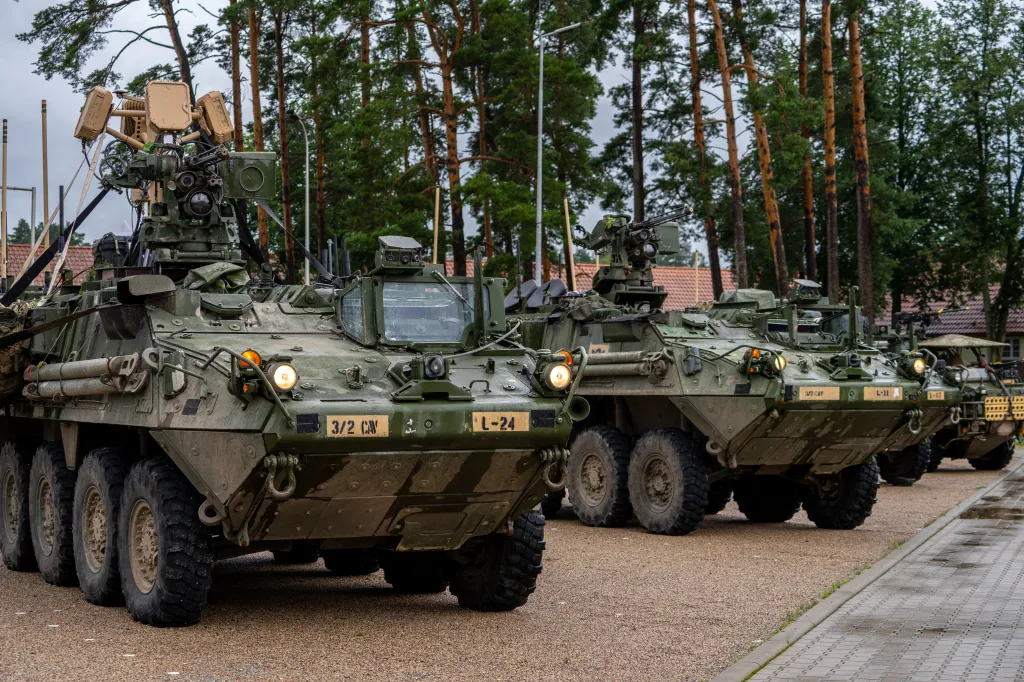
Army Col. Timothy Price, head of the 2nd Cavalry Regiment, discussed the use of uncrewed platforms for deception and other operational concepts that have emerged in the course of Project Flytrap during a talk yesterday. Price’s remarks came at the Association of the U.S. Army’s (AUSA) main annual convention, at which TWZ is in attendance. 2nd Cavalry Regiment, based in Germany, is a brigade-sized mechanized formation equipped primarily with variants of the Stryker 8×8 light armored vehicle.
Stryker light armored vehicles assigned to 2nd Cavalry Regiment seen configured for a Project Flytrap event. US Army Sgt. Alejandro Carrasquel
Price, by way of introduction, described modern battlefields full of uncrewed platforms in the air and on the ground as presenting new twists on long-standing problem sets. More specifically, he started by describing the typical approach to getting past a minefield or similar obstacle using an established framework called SOSRA, which stands for Suppress, Obscure, Secure, Reduce, Assault.
“If we were going to breach a mined wire obstacle, the first step of SOSRA – suppress – would be the utilization of indirect fires, to get the enemy’s head down, and direct fire systems, so they would not maneuver on you, fix them in place, and you can make a decision about how you’re going to approach the problem,” the 2nd Cavalry Regiment commander explained. “The next step would be to obscure it. In the historical sense, obscurations used is [sic] smoke, to mask your movement to the point of breach, so the enemy doesn’t know what you’re doing. And then, of course, secure would be to establish frontside security, [and] allow your engineers to come up within this local security bubble. They’ll utilize some kind of line charge to open the breach, reduce it – that’s the ‘R’ – and then bring on a follow-on force of assault through.”
“We were brought up around the old traditional mined wire obstacles that we had to physically breach. This is no different,” he added. “It’s just a multi-domain environment. So it’s built up of a combination of electronic warfare, kinetic UAS [uncrewed aerial systems] threats, and then counter-UAS threats, and then the network that holds [that all] together that forms the obstacle, which a unit has to maneuver through in order to maintain the offensive.”
A briefing slide Col. Price showed at AUSA yesterday while talking about SOSRA on the modern ‘multi-domain’ battlefield. Jamie Hunter
Within this environment, Col. Price described the suppression step of SOSRA as having a different kind of probing dimension, particularly to feel out an enemy’s uncrewed capabilities, as well as those in the electromagnetic spectrum. He also noted that brigade-sized formations like this no longer necessarily have all the required tools organizationally to ‘service’ that aspect of the mission. This is in part because what has to be suppressed, including ground control stations for enemy drones, might now be miles behind the front line.
So, “what we have to do is allow the enemy to turn on their systems. How do I suppress them to allow division, or higher, to put an effect on them for suppression? It probably looks like flying small, attritable UAS [sic] into their security area” in the rear, he said. This, in turn, “cause[s] the enemy to do one of two things, either … go from passive to active with their EW [electronic warfare] systems, or to turn on radars to actually figure out what they’re seeing, which then forms the signature which higher headquarters can use to target.”
Though Col. Price did not describe it as such, there is already something of a deception aspect to this step in fooling enemy emitters to switch on and expose themselves. This, as a general tactic, is also hardly new. Stimulating air defenses, in particular, is a key part of operations to gather intelligence on those capabilities, as well as to suppress and destroy them. Once you have categorized and geolocated an emitter, it is a logical step to then target it. The ultimate goal, with data being passed along a more deeply networked kill chain, is for the time it takes for fires to be brought to bear to be almost instantaneous.
In 2020, then-Army Col. Scott Woodward, at the time commander of the 11th Cavalry Regiment, shared this annotated satellite image showing the electronic emissions signature of a battalion-sized element, underscoring how such signals exposed a unit to attack. US Army via X
Regardless, deception comes far more into play in the obscure step, according to the 2nd Cavalry Regiment commander.
“Obscuration is different, as well. So instead of trying to hide behind smoke as we maneuver through it, what is the deception plan, right? How am I trying to show the enemy a signature that says I’m going to breach over here when I’m actually going to breach here, right?” he asked rhetorically. “So, that’s probably the implementation of UGVs [uncrewed ground vehicles] with some kind of decoy emitter on top of them to pull the enemy’s eyes, resources, and time to a point that allows me to focus my assets and resources on the point of breach.”
The use of uncrewed platforms as decoys is also not new, and even more complex concepts have emerged within the U.S. military in the past. Uncrewed systems have also been developed for military and other purposes over the years that are designed to mimic something else entirely, including for purposes of deception. This includes masquerading as birds and other animals.
Back in 2019,TWZ was the first to report in detail on a Navy effort to develop and field an entire networked, cooperative electronic warfare ecosystem, at that time referred to as the Netted Emulation of Multi-Element Signature against Integrated Sensors, or NEMESIS. This was also a drone-heavy cross-domain concept intended to make many types of sensors over vast areas believe they were ‘seeing’ the same false fleets of aircraft and/or ships, and deceive and confuse the enemy on a grand scale. This, in turn, represented a massive leap in electronic warfare capabilities.
An unclassified 2014 briefing slide with details about NEMESIS. Note the inclusion of drone boats among other uncrewed platforms in the associated graphic. USN An unclassified 2014 briefing slide with details about NEMSIS. Note the inclusion of drone boats among other uncrewed platforms in the associated graphic. USN
There is also overlap here with reported sightings of what are now commonly called unidentified aerial phenomena (UAP), and that used to be called unidentified flying objects (UFO). As we have reported on repeatedly over the years, while some UAP sightings remain unexplained, many more have turned out to be drones. Adversaries have been using uncrewed capabilities for intelligence gathering and deception purposes against American interests at home and abroad, likely in part by exploiting UAP stigma for cover. We have talked in the past about how drones will be used in more and more exotic ways to confuse opponents.
I don’t know what this is, or if it’s legit BUT remember we are in a new age of misdirection, decoy and guile. Specifically using low end drone technology. There are more ways to stimulate an enemy air defense system, distract a populous, assess the flow of public info from a… https://t.co/wW7YVlbayB
“It’s also spectral camouflage. So how are we controlling our heat and thermal signatures on our vehicles and our people?” Price continued. “It’s basic soldier discipline issues. It’s how we use our radios. It’s where we’re talking, where we’re not. But that’s what obscuration looks like.”
A Soviet-designed 2S3 self-propelled howitzer as seen through a thermal camera, offering a good example of how heat signatures can put forces at risk. CI Systems
As a reminder, Project Flytrap’s primary focus has been on counter-drone capabilities, which come into play heavily during the secure stage.
“There’s multi-layered assets on top of that to allow that convergence for our success at the point of breach. I’m going to focus on our corner, our part of the battle, right?” he said. “So, I’m looking at active and passive electronic warfare systems – that can either, one, find [threats], let me know that I’ve got some kind of system flying or operating against me and, then, if it’s an active system, take some kind of effect to maybe cut a downlink and disrupt that system – all the way down to the individual soldier with a shotgun.”
As mentioned, the ‘obstacle’ to be ‘reduced’ at the end of this is not necessarily something as simple as a minefield surrounded by barbed wire anymore. Now it could be enemy one-way-attack drone capabilities preventing holding up an advance. Col. Price, in turn, described friendly kamikaze drones as part of the equation for breaching past those threats. Decoys and deception have a continued role to play in this phase.
“This is where, at the brigade level, we introduce one-way attack munitions to try to destroy the C2 [command and control] network that the enemy is using to operate this reconnaissance/strike complex” that is standing in the way, he explained. “There’s layers to it, right? Like they’ve got a close side to this that’s the local part of this reconnaissance/strike complex. They’ve probably got a theater level that the Corps [the U.S. Army’s command echelon above divisions] and higher is trying to target as we are forcing people to turn on systems to communicate. But at the regiment level, I’m looking at one-way attack munitions, focused on C2 nodes, headquarters, and ground control stations that [sic] I can disrupt their ability to put lethal effects on me as we begin to open the breach.”
A member of the 2nd Cavalry Regiment holds a small quadcopter drone in one hand and a simulated bomblet in the other during an exercise in 2025. US Army
During a question-and-answer session that followed his remarks, Col. Price was asked about whether lessons learned and other observations from Ukraine, and specifically that country’s recent Operation Vivaldi counteroffensive, had contributed to this evolving framework.
“In terms of Vivaldi, I’m not an expert, so I’m not going to make any kind of estimations on how that worked or why,” he said in response. “But I will say, if you look at the focus of that operation, you can probably make the assumption that there was convergence of efforts across the different headquarters to enable success. So that’s how I would relate to the two.”
“In order to be successful for a multi-domain breach, the tactical level requires my higher headquarters to be part of that solution to enable me with resources and capabilities that I don’t have in here at the brigade level,” he continued. “I would imagine it’s very similar in the other operational comparisons.”
Though certainly true, in broad strokes, this response in some ways underscores how the U.S. Army continues to lag behind global trends in the use of uncrewed systems, as now typified by the ongoing war in Ukraine. Army leaders have been open about this continued reality in the past, despite efforts to try to reverse it.
“We’re behind. I’ll just be candid. I think we know we’re behind,” Army Lt. Gen. Charles Costanza said during a panel discussion at AUSA last year, in response to a direct question at the panel from our Howard Altman. Costanza was talking about both the employment of drones and counter-drone capabilities, and highlighted work being done then under Project Flytrap, as you can read more about here.
Another 2nd Cavalry Regiment Stryker configured for the counter-drone role seen during a Project Flytrap exercise. US Army
For units like the 2nd Cavalry Regiment, new drone-centric concepts of operations are already taking shape. Beyond using them for surveillance and as one-way-attack munitions, there is also a clear focus emerging on employing expanding uncrewed capabilities to deceive opponents and prevent them from making the best use of their own resources.
Kimberly Guilfoyle has faced mounting allegations, including offering access to Trump officials in exchange for money.
Published On 13 Oct 202613 Oct 2026
United States President Donald Trump’s administration has asked the US ambassador to Greece, Kimberly Guilfoyle, to resign following a series of allegations of misconduct, including claims that she offered a political donor access to senior administration officials in exchange for money.
“We have asked Ambassador Guilfoyle to resign,” White House press secretary Katie Zacharia told reporters on Tuesday. “She has been a wonderful asset to the team, and we wish her well.”
Recommended Stories
list of 4 itemsend of list
The announcement comes after weeks of damaging reports about Guilfoyle’s conduct.
According to The Wall Street Journal, Guilfoyle asked a Trump donor to cover a $100,000 credit card bill shortly before her congressional confirmation hearing, promising him access to administration officials in return.
The newspaper also reported that she told guests at a reception that she could use US influence to undermine the Greek government, promoted the interests of a Greek construction and energy company and allowed one of its lobbyists to attend private diplomatic meetings.
Guilfoyle’s lawyers have denied any wrongdoing, saying the money she sought was payment for previous speaking engagements and public appearances that she had not received.
Trump had signalled on Monday that he was considering removing her from the post.
“Well, we’re looking at it,” he told reporters. “We’re not happy.”
Secretary of State Marco Rubio initially defended Guilfoyle, calling her a “strong ambassador,” but later declined to comment on the allegations and criticised reporters for asking about them.
Guilfoyle is a former Fox News host and California prosecutor. She is the former wife of California Governor Gavin Newsom and was previously engaged to Trump’s eldest son, Donald Trump Jr.
Explosions in Sanaa reported shortly after Saudi-led coalition’s evacuation order as Houthis promise ‘harsh’ response.
Published On 13 Oct 202613 Oct 2026
Yemen’s Houthis have warned all employees and civilians near Saudi Arabia’s oil facilities to evacuate, calling the sites “a legitimate target”.
The group’s spokesman, Yahya Saree, issued an evacuation alert on Tuesday following the Saudi-led coalition’s statement urging civilians to evacuate Yemeni Oil Company’s al-Sabah central station in the Houthi-controlled capital Sanaa before a planned military operation.
Recommended Stories
list of 4 itemsend of list
Shortly after the Saudi-led coalition’s evacuation order, Al Jazeera’s team on the ground reported hearing explosions in Sanaa. Media outlets affiliated with the Houthis said air strikes by the Saudi-backed forces struck an oil facility in the al-Sabaha area of the capital.
Following the reported explosions, Saree said Houthi fighters were confronting Saudi-backed forces in Sanaa.
Saree responded to the coalition’s evacuation order, warning that any strikes on Sanaa would be met with a “harsh and painful” response in the Saudi Arabian capital Riyadh.
In a statement on X, Saree said the Houthis would target the sites that were ordered to be evacuated if the Saudi-led coalition proceeded with an attack on Sanaa.
Civilians were told to evacuate the Aramco Company headquarters in Dammam, King Khalid International Airport and a refinery affiliated with Aramco in Riyadh.
An attack on King Khalid International Airport on Saturday left at least 13 people dead and more than 300 injured, rocking the world’s top crude oil exporter. Another person was killed, and 11 were wounded on Sunday after a projectile struck the airport in Riyadh.
Many international airlines have since suspended flights to Saudi Arabia and neighbouring countries following the deadly weekend attacks by the Houthis, including Air France-KLM, Air India, Etihad, Lufthansa, Delta, Gulf Air and Qatar Airways.
The kingdom, which backs Yemen’s internationally recognised government, was still weathering new attacks on Tuesday, with the coalition saying its forces intercepted three drones north of Riyadh.
Saree also reiterated the Houthis’ warning to airports in Saudi Arabia following recent attacks on multiple airports and oil facilities across the country since last week in a spillover from the wider regional conflict between the US and Iran.
Saudi Arabia has in recent weeks launched strikes against the Houthis and is backing a Yemeni government counteroffensive known as the “Dawn of Yemen” after the group seized strategic territory along the Red Sea coast last month.
Formula One has signed a 10-year agreement with Rwanda to bring the sport back to Africa for the first time since 1993. The African Grand Prix will be held on a circuit in Bugesera, near the capital Kigali, from the early 2030s.
Ramallah, occupied West Bank – Every day, Fuad Abu Salam sips his morning coffee outside his rented home in the Thinnabeh suburb, gazing at every detail of the sprawling Tulkarem refugee camp in front of him. This West Bank camp he can see in the distance once housed a two-storey building comprising four apartments, each measuring 300 square metres (3,229sq feet), in which he and his extended family lived.
After he was displaced from the camp, he, his wife, his four children, and his mother were confined to a small, rented apartment no bigger than 100sq metres (1,076sq feet) in Thinnabeh. His home in Tulkarem was partially destroyed when he left the camp.
Recommended Stories
list of 3 itemsend of list
Everything changed for Fuad and his family on January 21, 2025, when Israel launched a military assault in the occupied West Bank dubbed “Iron Wall”, initially targeting the Jenin refugee camp. A week later, the operation expanded to include the Tulkarem and Nur Shams camps in the city of Tulkarem.
Israeli forces forcibly displaced the entire populations of the three camps during January and February 2025 and continue to prevent their return, the United Nations has said.
Mass displacement
Data from UNRWA cited in a report titled, Destruction of Palestinian Refugee Camps in the Northern West Bank, stated that 33,362 Palestinians remain forcibly displaced from the three camps. By October 2025, 52 percent of structures in the Jenin camp, 48 percent in the Nur Shams camp, and 36 percent in the Tulkarem camp had been destroyed or damaged.
The Israeli operation has affected hundreds of homes, roads, and infrastructure, including water and electricity networks, while humanitarian aid to the camps has been cut off.
Israeli forces killed 102 Palestinians, including 21 children, during the period covered, according to the report. This represents 46 percent of the total number of Palestinians killed by Israeli forces in the West Bank during this period.
On Sunday, the Israeli Supreme Court ordered the government to provide a timeline for the return of displaced people to the three camps, setting November 23 as a deadline for a response.
Israel’s far-right Finance Minister Bezalel Smotrich rejected the ruling, warning that the return of residents could allow for the reconstruction of what he termed “terror infrastructure”. He called on the government not to implement the decision.
Meanwhile, Israeli Defence Minister Israel Katz opposed the court’s intervention, asserting that the army’s continued presence in the camps was a security decision and stating his intention to maintain a military presence there.
Fuad, 42, a greenhouse installer, found himself forced to flee with all the camp’s other residents and more than 40 family members. But he and his neighbours carried with them the hope of returning home.
They moved between the homes of relatives, enduring harsh living conditions, until he finally settled in the Thinnabeh suburb of Tulkarem.
Fuad Abu Salam sits with his children in his rented apartment overlooking the Tulkarem camp, gazing at their destroyed home [Raghad Salameh/Al Jazeera]
The neighbourhood, which overlooks the camp, has “restored his spirit” because he can see his home even if it’s from afar. Although he is unable to reach the building, he can gaze at it and imagine a time when he can return.
“If a decision were issued right now allowing us to return, I would go back immediately without a moment’s hesitation,” he said.
But his home is no longer what it used to be. It was partially demolished and set on fire by Israeli soldiers, rendering more than 80 percent of the apartment block uninhabitable. Fuad plans to use the rubble to rebuild his home.
“I will never waver in my resolve to return, even if it means pitching a tent over the ruins and living there,” he declared.
Mohamad Ararawi, 18, from the Jenin refugee camp, also saw his home razed to the ground with a wide road replacing it.
He told Al Jazeera that his family of 40, who had lived in a five-story building in the al-Damaj neighbourhood, all fled the camp when the Israeli military operation began, seeking shelter in homes belonging to other relatives.
“My mother, father, five sisters, and I took refuge in my brother’s unfinished apartment. We endured harsh conditions, suffering through biting cold and scorching heat, before gradually completing the construction until it became somewhat habitable,” he added.
Returning is all that matters to them, and they refuse to live anywhere but the camp, even if it lacks basic amenities.
A near-impossible return
Returning the displaced back to their homes is not merely an issue of clearing roads for residents. Returning would mean living in a camp in which infrastructure has been damaged and hundreds of homes destroyed, all amid a lack of necessities.
Nihad Shawish, a member of the Nur Shams Camp Popular Services Committee, told Al Jazeera that the scale of destruction makes the residents’ return fraught with immense difficulties, despite their will to go back to their homes.
Approximately 400 homes, most of them three to four stories high, were destroyed, he said, while about 100 homes were burned down during the Israeli army’s presence in the camp.
Even the ones that survived are not necessarily habitable; they sustained severe damage affecting doors, windows, and interior facilities. The collapse of some buildings has also damaged neighbouring homes.
Approximately 10,900 camp residents remain displaced, including families staying in private homes and others at a school in the Thinnabeh suburb.
A photo of Tulkarem camp taken from Fuad Abu Salam’s apartment which overlooks the camp; from there, he looks out at his destroyed home every day [Raghad Salameh/Al Jazeera]
Faisal Salameh, an official with the Tulkarem Camp Popular Committee, told Al Jazeera that more than 2,000 housing units were completely destroyed, while approximately 90 per cent of the camp’s homes sustained partial damage, rendering them uninhabitable.
“Israel has turned the camp into an environment that drives residents away, given the widespread destruction and the ban on reconstruction in certain areas that have been converted into roads,” he noted.
Despite these conditions, Salameh said that displaced residents are eager to return to the camp as soon as a decision by the Israeli government permits them to.
The camp was home to approximately 15,000 people. The majority of the displaced currently live in rented homes or with relatives, while others have sought shelter in schools, mosques, or makeshift tin shacks.
Israeli rejection
While the Israeli Supreme Court’s ruling opens the door to discussing the return of displaced persons to camps in the northern West Bank, its rejection by Israeli government ministers raises questions about whether it will be implemented. Until then, the lives of the displaced families remain in limbo.
Mohamad Halaseh, an expert on Israeli affairs, told Al Jazeera that the Israeli right-wing isn’t just trying to alter the structure of the judicial system, but also seeking to undermine its legitimacy and exert pressure on judges.
He explained that the effect of political stances is evident in the disregard for Supreme Court rulings. He cites the issue of Palestinian prisoner visitations, a case in which the state failed to comply with the court’s decisions, as one example of this.
“The continued disregard for court rulings undermines the judiciary’s ability to compel the government to act when judicial decisions conflict with the stance of the political leadership,” he said.
Several precedents make the implementation of court rulings on the camps unlikely, he said. This is particularly distressing for residents who also face strong Israeli political opposition to the return of Palestinians to the three camps.
“Declared political stances set a limit on the extent to which executive institutions comply with judicial rulings,” he said.
Hundreds of French supermarkets have suffered unprecedented cyberattacks resulting in tonnes of food perishing and raising fears about the vulnerabilities of food systems to advanced technology.
The attacks, which appeared to target internet-linked refrigeration systems manufactured by a Danish company, raised the temperature of fridges and freezers to as high as 50 degrees Celsius (122F) at more than 500 shops and supermarkets across the country. Supermarkets confirmed the attacks on Monday.
Recommended Stories
list of 4 itemsend of list
France’s cybersecurity agency has advised companies operating affected freezer models to immediately disconnect them from the internet – or restrict access to them – and to perform software updates.
It is unclear who may have been behind the attacks, but authorities say they have now launched an investigation.
Here’s what we know:
Perished goods outside a supermarket in Paris the day after a cyberattack targeted refrigeration systems in France, October 13, 2026 [Lucien Libert/Reuters]
What happened?
Hackers gained internet access to the refrigeration systems and remotely cranked up temperatures in freezers and fridges to 50C during the night when shops were closed. Millions of euros worth of food was spoiled, according to retailers. In some cases, the raised temperatures sparked fires or melted equipment.
French supermarket groups E-Leclerc, Intermarche, Carrefour, Monoprix and Cooperative U were all hit.
At least 300 of Intermarche’s stores and its Netto brand were affected. Cooperative U said more than 100 of its supermarkets were targeted, while Carrefour said 80 supermarkets were affected and Monoprix reported that about 5 percent of its roughly 490 stores were hit.
Officials are still investigating who launched the attack and how it was carried out. French TV channel BFM reported that the attackers appeared to have remotely triggered a forced defrosting option in the refrigeration systems.
The systems targeted are built by Danish manufacturer Danfoss, according to France’s government cybersecurity agency. The refrigeration models attacked included the AK-SM800 and AK-SC355.
Danfoss told the AFP news agency that most of the affected control systems were “legacy” products that had “outdated firmware”. The company said it had previously advised supermarkets to update them.
AFP also reported that officials are liaising with other European countries which may have been affected.
It is unclear exactly how much food has been lost. The attacks come after President Emmanuel Macron ordered last month that the country’s critical infrastructure be protected from Russian “hybrid attacks”.
Have supermarkets been hit by cyberattacks before?
Yes. Attacks like these have been reported in other parts of Europe and in the United States.
In April 2025, British retailer and supermarket chain Marks and Spencer suffered a sophisticated ransomware attack that the company said cost it approximately 300 million pounds ($397m) after it was forced to suspend online and app orders. The attack was orchestrated by a hacker group called Scattered Spider, using ransomware from DragonForce, another criminal group. Ransomware attacks involve using malicious software to hide essential data unless a ransom is paid.
According to UK media, the same hackers also tried to attack Co-op and the iconic Knightsbridge store, Harrods.
Similar reports have also emerged from the US. In June 2025, United Natural Foods, a frozen food company which supplies big supermarket brands such as Whole Foods, said it had discovered a cyberattack that forced it to take its systems offline. The company did not reveal the nature of the attack.
In November last year, Ahold Delhaize USA said it was the victim of a cyberattack that disrupted operations at more than 2,000 stores, including Hannaford, Food Lion and Stop and Shop.
Why target supermarkets?
They are an easy target and the consequences can be widespread.
As food and agricultural systems increasingly digitise, analysts say supermarkets selling perishable foods are increasingly vulnerable to attacks due to the nature of their stocks.
The rising sophistication of cyberattacks now means that common people and local, third-party companies relying on big chains for business are also falling victim as attacks disrupt supply chains, experts say.
Speaking to Al Jazeera, tech and cybersecurity analyst Steven Lachance said smart appliances connected to the internet will always be vulnerable as hackers seize on security lapses to log in to the systems remotely and trigger malicious features.
“It’s the new reality of having these connected equipment,” Lachance said, pointing out that attacks could evolve to target medical or energy systems.
“This should come as a global wake-up call … Throughout society, we have connected infrastructure that is live on the internet, and that can be hacked. It’s a new reality, and we absolutely need national and international measures to prevent those attacks; otherwise, it’s just going to keep happening,” he warned.