news

Outrage after photo shows Israeli soldier smashing Jesus statue in Lebanon | Israel attacks Lebanon News

Social media users condemn Western silence on attacks on religious symbols and sites by Israeli soldiers and settlers.

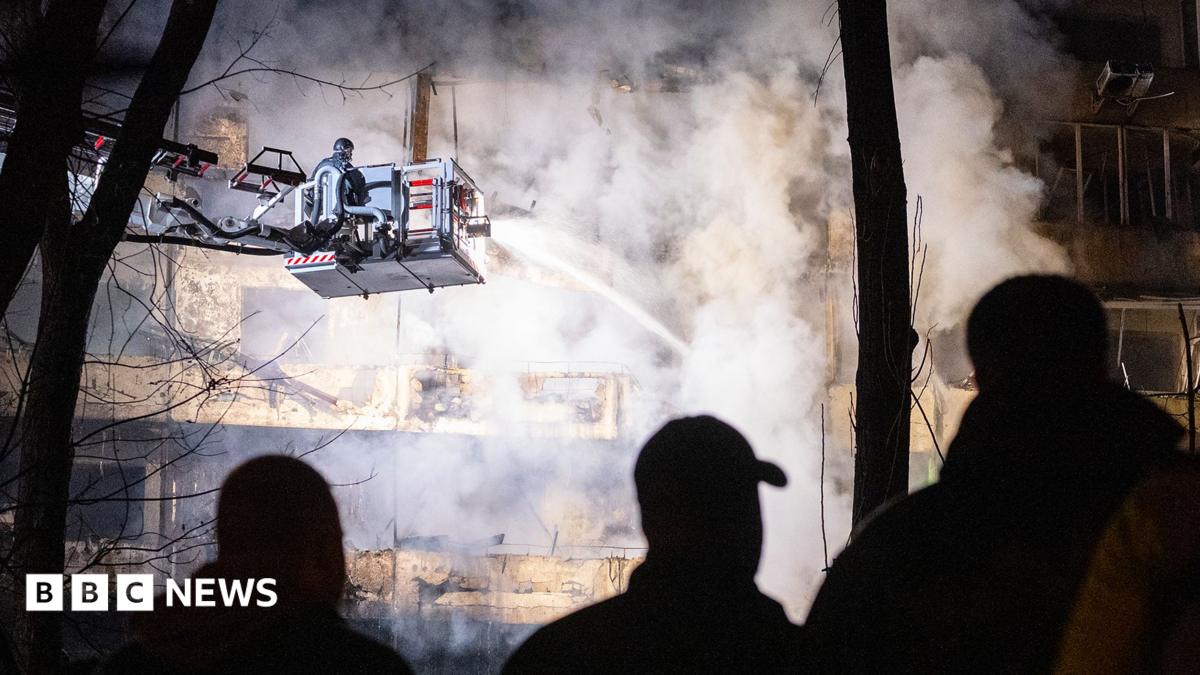
A viral photograph showing an Israeli soldier hitting a statue of Jesus Christ in southern Lebanon with a sledgehammer has sparked outrage.

In a statement on Monday, the Israeli military confirmed the authenticity of the image that was widely shared online, garnering more than 5 million views on X.

It said that following an initial review, it was determined that the photograph showed an Israeli soldier “operating in southern Lebanon”, where Israel last month launched a ground invasion in conjunction with aerial bombardment amid its joint war with the United States on Iran.

The military added that an investigation had been opened and that “appropriate measures will be taken against those involved in accordance with the findings”.

Commenting on social media, Ayman Odeh, a Palestinian member of the Israeli parliament, wrote pointedly: “We’ll wait to hear the police spokesperson claim that ‘the soldier felt threatened by Jesus’.”

Ahmad Tibi, another Palestinian member of the Knesset, wrote on Facebook that those who blow up mosques and churches in Gaza and spit on Christian clergy in Jerusalem without punishment are not afraid to destroy a statue of Jesus Christ and publish it.

“Perhaps these racists have also learned from Donald Trump to insult Jesus Christ and insult Pope Leo?” he asked, referring to the US president’s recent controversies, including his now-deleted AI-generated image that portrayed him as a Jesus-like figure and his feud with the head of the Roman Catholic Church, who has criticised the war on Iran.

Several activists, academics and writers also criticised the desecration of the statue, which was located on the outskirts of the village of Debl in southern Lebanon, near the border with Israel.

Social media users also condemned the international silence following attacks by Israeli soldiers and settlers against religious sites and symbols.

“When the Western world remains silent, racists go further,” said Tibi.

Israeli forces repeatedly attacked religious sites, including mosques and churches, during Israel’s genocidal war on Gaza. In the occupied West Bank, meanwhile, settlers vandalised or attacked 45 mosques last year, according to the Palestinian Authority’s Ministry of Religious Affairs.

Separately, the Religious Freedom Data Center (RFDC) documented at least 201 incidents of violence against Christians, primarily committed by Orthodox Jews targeting international clergy or individuals displaying Christian symbols, between January 2024 and September 2025.

The majority of these incidents, which included multiple forms of harassment, including spitting, verbal abuse, vandalism and assaults, took place in Jerusalem’s Old City, located in occupied East Jerusalem.

Source link

What is really happening in northern Nigeria | Armed Groups

In recent months, the frequency and intensity of attacks in northern Nigeria have shattered the comforting illusion that the region’s long insurgency has receded into the background of national life. As violent incidents have proliferated, many Nigerians have refused to confront this uncomfortable reality and have opted instead to embrace conspiracy theories suggesting that the resurgence is somehow tied to renewed American involvement in Nigeria’s  counterterrorism efforts.

It is not difficult to see why the theory of foreign collusion with terrorist groups resonates in Nigeria. In February 2025, United States Congressman Scott Perry claimed that the US Agency for International Development (USAID) had funded Boko Haram, but offered no evidence for the allegation. Richard Mills, then the US ambassador to Nigeria, rejected Perry’s statement, but by then the claim had already acquired a life of its own in the public space and on social media.

Then, American officials like Congressmen Ted Cruz and Chris Smith made statements that fuelled the “Christian genocide” narrative, which falsely claims that the killings in Nigeria exclusively target Christians.

Attacks on Christians have happened, including most recently on a church in Kaduna state on Easter Sunday, but Muslim communities have also been regularly targeted. The truth is that terrorist groups have long operated indiscriminately.

What this moment demands, therefore, is to go beyond the seduction of easy explanation, and embark on serious analysis of what is really happening in northern Nigeria.

That diagnosis must begin with clarity about what the attacks reveal. First, they reveal that the insurgency has adapted in both form and method. Second, northern Nigeria’s insecurity can no longer be understood in isolation from the rest of the region; it is part of the wider regional disorder across the Lake Chad basin and the Sahel. And third, the violence continues to feed on deeper domestic vulnerabilities that extend far beyond the battlefield: chronic poverty, educational exclusion, weak local governance, and the long erosion of the social contract in parts of the North.

Let us begin with the first point. Recent attacks demonstrate that the insurgent ecosystem has learned, adapted, and expanded beyond the old image of a crudely armed rebellion fighting in predictable ways. The ISIL affiliate in West Africa Province (ISWAP), in particular, has become more adaptive in structure and tactics, while its conflict with Boko Haram has weakened the latter and left ISWAP as the more organised and deeply entrenched threat in the Lake Chad region. It has consolidated its presence in parts of the Lake Chad basin and expanded into Sambisa Forest, widening the space from which it can threaten civilians and military formations alike.

This matters because insurgencies are sustained not by ideology alone, but by terrain, supply routes, local economies, and the ability to move men and materiel through spaces where the state is weak or absent. In that sense, the insurgency is no longer merely surviving in familiar hideouts; it is entrenching itself in a broader and more fluid battlespace, with ISWAP’s control of trade in and around Lake Chad now a major pillar of its resilience.

ISWAP has also refined the way it fights, demonstrating a growing capacity for coordinated assaults, night raids, ambushes, and operations designed not merely to inflict casualties, but to isolate military positions and slow the movement of reinforcements. This challenge is magnified by the sheer scale of the theatre itself.

Borno, Yobe, and Adamawa states are each comparable in size to entire European countries: Borno is slightly larger than the Republic of Ireland; Yobe is roughly the size of Switzerland; and Adamawa is slightly larger than Belgium. Policing territories of that scale would test any state, all the more so when they border a fragile regional neighbourhood.

The terrain has also shaped the rhythm of the conflict, with the dry season, particularly the first quarter of the year, ushering in an intensification of attacks.

At the heart of this adaptation is the evolution of technology. What once seemed unthinkable in this theatre has now entered the insurgent repertoire. Drones, including commercially available models modified for combat, are now part of the operational environment. The significance of this shift is not merely technical; it is also psychological and strategic.

Beyond technology, the insurgency’s growing mobility has sharpened the threat further. Rapid assaults by motorcycle-mounted units demonstrate the extent to which insurgent violence now depends on speed, concentration, and dispersal. Fighters can assemble quickly, strike vulnerable locations, and disappear into difficult terrain before an effective response can take shape.

The advantage here lies not in holding territory in the conventional sense, but in imposing uncertainty, stretching the state’s defensive attentions, and proving that the insurgents can still choose where and when to shock the system.

Perhaps the most dangerous dimension of this adaptation is the infiltration of foreign fighters. Their significance lies not only in their numbers, but in what they bring with them: technical knowledge, battlefield experience, tactical imagination, and links to wider militant networks.

Their presence points to a deeper cross-fertilisation between local insurgency and global terrorist currents. More troubling still, they are now playing a more active role in the conflict, not only refining tactics and skills but also participating directly in combat.

That is why the regional dimension must be central to any serious analysis. The weakening of regional cooperation has come at the worst time, creating openings that insurgents are only too ready to exploit. A threat that has always been transnational becomes harder to confront when neighbouring states no longer act with sufficient cohesion.

Niger’s withdrawal from the Multinational Joint Task Force after the reaction of the Economic Community of West African States (ECOWAS) to the military coup there has sharpened that challenge and weakened the perimeter defences of the north-east theatre. The force, comprising troops from Nigeria, Niger, Cameroon, and Chad, with a smaller Beninese contingent at its headquarters in N’Djamena, was instrumental in earlier gains and remains vital for reinforcing positions, conducting operations in difficult terrain, denying insurgents safe havens, and intercepting the movement of foreign fighters.

Yet even regional analysis, necessary as it is, does not fully explain the problem. Insurgencies endure not only because they move across borders, but because they can recruit, regroup, and exploit social weakness at home.

Violence in northern Nigeria is sustained by a combination of doctrinal extremism, chronic poverty, educational exclusion, and a state whose presence is often too limited to command confidence in the communities where armed groups seek recruits. The argument, therefore, cannot remain confined to the military sphere.

Poverty and lack of education do not directly produce terrorism, but they increase vulnerability, especially where alienation, weak institutions, and manipulative ideological narratives are already present. This is why the educational crisis in northern Nigeria should be seen not only as a developmental challenge, but as part of the wider security landscape. Education does more than impart literacy and numeracy; it provides structure, routine, and pathways to self-actualisation and social belonging.

It is important to note that the government is not without a response. In 2024, President Bola Ahmed Tinubu signed the Student Loans (Access to Higher Education) Act into law, and the rollout of the Nigerian Education Loan Fund has since opened a wider path to post-secondary education and skills development. But the more decisive educational challenge lies earlier, at the basic level, where literacy begins, habits are formed, and attachment to institutions is either built or lost. By the time a young person reaches the threshold of higher education, the foundational work has already been done or neglected.

This is why local governance matters more to security than is often recognised. In Nigeria’s federal structure, primary education sits closest to the weakest and most politically distorted tier of government. If local government remains fiscally weak, administratively paralysed, or politically captured, one of the country’s most important long-term defences against radicalisation will remain fragile.

That is why local government autonomy, though often framed in dry constitutional terms, has direct implications for security. President Tinubu, an ardent champion of local autonomy, welcomed the Supreme Court’s July 2024 judgement affirming the constitutional and financial rights of local governments and has pressed governors to respect it. Resistance, however, is unsurprising: many governors have long treated local governments as subordinate extensions of their authority.

So what does the present moment demand from Nigeria? It demands, certainly, continued military pressure on insurgent sanctuaries. It demands stronger force protection, sharper intelligence, surveillance and reconnaissance, improved rural and urban security, and a more serious approach to trans-border diplomacy. It demands that regional diplomacy be treated not as a luxury of peacetime statecraft, but as part of the operational infrastructure of security.

But the crisis cannot be addressed by military action alone. It also calls for social, institutional, and educational measures across all tiers of government. The state must confront extremism not only through force, but through education and functioning local institutions. It must rebuild governance, restore trust, and close the social and institutional fractures through which violence renews itself.

The views expressed in this article are the author’s own and do not necessarily reflect Al Jazeera’s editorial stance.

Source link

Outrage after Israeli soldier desecrates statue of Jesus Christ in Lebanon | Israel attacks Lebanon

NewsFeed

A photo of an Israeli soldier smashing a statue of Jesus Christ with a sledgehammer in southern Lebanon has sparked widespread condemnation. Israeli officials confirmed the image is genuine and ‘promised to investigate’.

Source link

Oil prices surge amid mixed signals on US-Iran peace talks | US-Israel war on Iran News

Brent crude rises more than 7 percent as Washington and Tehran offer conflicting accounts on ceasefire negotiations.

Oil prices have risen sharply following attacks on commercial vessels in the Strait of Hormuz and conflicting messages about the prospect of renewed negotiations between the United States and Iran.

Brent crude futures, the primary benchmark for global prices, jumped more than 7 percent in Asia on Monday as the outlook for peace between Washington and Tehran darkened.

Recommended Stories

list of 4 itemsend of list

Prices eased somewhat later in the morning, with the benchmark at $94.69 a barrel as of 02:05 GMT, up from just under $90.40 on Friday.

The latest price surge came after US President Donald Trump said US forces seized an Iranian-flagged cargo vessel that had attempted to evade the US blockade of Iran’s ports.

Trump’s announcement followed reports by the United Kingdom Maritime Trade Operations (UKMTO) Centre over the weekend that two vessels came under attack while transiting the strait.

Iranian gunboats fired on a tanker, while an “unknown projectile” struck a container ship, according to the UKMTO.

After declaring the strait “completely open” on Friday, Tehran reversed course less than 24 hours later, citing the ongoing US blockade.


Earlier on Sunday, Trump said that a US delegation would travel to Pakistan on Monday to hold a second round of ceasefire talks with Iranian officials.

Iranian state news outlet IRNA later reported that Tehran would not participate in the talks, citing the US blockade and Washington’s “excessive demands” and “unrealistic expectations”.

A two-week ceasefire between Washington and Tehran is set to expire on Wednesday if the sides cannot agree on an extension.

An initial round of talks held in Islamabad earlier this month broke down without any agreement between the sides.

Iran’s effective closure of the strait, which usually carries about one-fifth of global oil and natural gas supplies, has driven a surge in fuel prices worldwide, forcing governments to tap emergency supplies and roll out energy-saving measures.

Nineteen vessels crossed the strait on Saturday, up from 10 the previous day, but far below the historical average of 138 daily transits, according to the UKMTO.

Asia’s main stock markets opened higher on Monday despite the dimming prospects of de-escalation.

Japan’s Nikkei 225 rose more than 1 percent in morning trading, while South Korea’s KOSPI gained about 1.3 percent.

Hong Kong’s Hang Seng Index rose about 0.5 percent, while the SSE Composite Index in Shanghai gained more than 0.4 percent.

Source link

What’s behind the US army’s decision to raise enlistment age to 42? | Military News

The United States army announced last month that it would raise the maximum age at which Americans can enlist from 35 to 42 years to expand its pool of eligible candidates amid recruiting challenges in recent years.

An updated version of US Army Regulation 601–210, dated March 20, outlined the changes, including the elimination of rules requiring anyone with a single conviction for marijuana possession or drug paraphernalia to obtain a waiver to enlist.

Recommended Stories

list of 3 itemsend of list

Government data shows that while the US army has met its recruitment goals over the last two years, it fell short in 2022 and 2023 and has consistently failed to meet targets for the Army Reserve, shortcomings that analysts have attributed to several possible factors.

The new age limit was announced during the US-Israel war on Iran, towards which young people have expressed widespread opposition.

Here’s what you need to know about the changes.

soldiers exrcise in black shirts reading 'ARMY'
New recruits participate in the Army’s future soldier prep course that gives lower-performing recruits up to 90 days of academic or fitness instruction to help them meet military standards, at Fort Jackson, a US Army Training Center, in Columbia, South Carolina, on September 25, 2024 [File: Chris Carlson/AP Photo]

When does the regulation go into effect?

The updated version of Army Regulation 601–210 officially takes effect on Monday, April 20.

What has the military said about the changes?

The US army announced updated enlistment regulations on March 20, with the changes scheduled to take effect one month later on April 20 and applying to the Regular Army, Army Reserve, and Army National Guard.

The maximum enlistment age is raised from 35 to 42, and previous restrictions requiring anyone with a single conviction for possession of marijuana or drug paraphernalia to obtain a waiver to enlist are done away with.

Do these changes apply to the whole US military?

The changes announced in March are specific to the US army.

The military news outlet Stars and Stripes reported that those changes bring the army into greater alignment with the maximum enlistment age of other branches of the military, such as the Air Force, Navy, Coast Guard, and Space Force, which accept enlistees in their early 40s.

The maximum enlistment age for the US Marines is 28.

What factors explain the change?

While the US army did not comment on the reasons for the increase, data from the US Army Recruiting Command show that the army has struggled with recruitment challenges.

While the army met 100 percent of its recruitment goals in 2025 and 2024, it missed its target by about 23 percent in 2023 and 25 percent in 2022.

That data also shows that the army has fallen short of recruitment targets for the Army Reserve for the last six years in a row.

The average age of army recruits has risen in recent years to 22.7, up from 21.7 in the 2000s and 21.1 in the 2010s, according to the military news outlet Army Times, citing data from a US army spokesperson.

The US Army Recruiting Command has attributed such challenges to issues such as changes in the labour market, limited awareness about military service, and a lack of qualified young people due to issues such as obesity, drug use, and mental health issues.

A 2018 poll listed concerns over possible injury and death, post-traumatic stress disorder (PTSD), separation from family and friends, and other career interests as top reasons offered by young people for not joining the military.

Does the change have to do with the war in Iran?

Analysts have been discussing the possibility of raising the enlistment age for years as a means of addressing recruiting challenges, with a 2023 research report from the RAND Corporation, a US think tank, calling “older youth” a “crucial, largely untapped, yet high-quality pool of potential recruits”.

While the military has not suggested that the change is linked to the US-Israel war on Iran, where US President Donald Trump has previously said he could deploy ground troops, some social media users were quick to note the timing of the announcement.

Some in the online community joked that older supporters of the war would now be available to enlist.

“They raised the enlistment age to 42,” one X user said in response to a video of the conservative commentator Ben Shapiro praising Trump’s decision to attack Iran. “Why are you still here?”

Surveys have found that younger people are more likely to oppose the US war on Iran than those aged 65 and up, and polls in recent years have found that young people are more generally sceptical of US intervention abroad than older generations.

A 2024 Pew Research Center poll found that people between the ages of 18 and 29 were the only age bracket in the US who viewed the military more negatively than positively, with 53 percent saying the military had a negative effect versus 43 percent who said it had a positive effect.

How many people are currently in the US military?

According to the Pew Research Center, the US military has about 1.32 million active members. The US army accounts for the largest share, with nearly 450,000, while the US Navy is second with more than 334,000.

The Air Force has more than 317,000, the Marines more than 168,000, the Coast Guard nearly 42,000, and the Space Force nearly 9,700.

Data from the US Army Recruiting Command shows that about 80 percent of recruits in the Regular Army were men in 2025.

Black and Latino recruits also make up a larger share of army recruits than their percentage of the population, each making up about 27 percent of recruits while comprising 14 percent and 20 percent of the general population, according to data from the 2024 census.

White people made up about 40 percent of US army recruits, while about 57 percent of the general population.

Source link

Angry Kitten Jamming Pod Testing On HC-130J Focuses On Receiving Threat Updates Via Satellite

The U.S. Air Force is continuing to expand on the capabilities of the Angry Kitten electronic warfare pod, which just recently made its combat debut on the F-16 fighter in the latest conflict with Iran.

New testing has focused on improving the ability of HC-130J Combat King II combat search and rescue aircraft carrying the pods to receive reprogramming updates in near-real-time via satellite. HC-130Js just recently flew extremely high-risk and high-profile sorties over Iran as part of the effort to rescue the crew of a downed F-15E Strike Eagle. Being able to rapidly refine and optimize Angry Kitten’s capabilities will help the system remain as effective as possible, even in a very quickly evolving threat environment, and could be a stepping stone to more advanced functionality.

The Air National Guard Air Force Reserve Command Test Center (AATC) recently shared details about new testing of Angry Kitten on the HC-130J during an iteration of the Bamboo Eagle exercise. Bamboo Eagle is a large-scale air combat exercise series focused on preparedness for a high-end fight in the Pacific. AATC has already been test flying Angry Kitten on the HC-130J for more than a year now.

An HC-130J Combat King II assigned to the 129th Rescue Wing seen carrying an Angry Kitten electronic warfare pod while flying in the Point Mugu, California area on September 11, 2025. Fred Taleghani / FreddyB Aviation Photography

The pods have also been test flown on Air Force A-10 Warthog ground attack jets and Navy F/A-18 Super Hornet fighters. As noted, it is now being employed operationally on Air Force F-16s, as well. Angry Kitten was originally developed to replicate hostile electronic warfare threats during testing and training, as part of a cooperative effort between the Air Force and the Navy, and worked so well that it was adapted to operational use. We will come back to this later on.

An F-16C fighter with an Angry Kitten pod on its centerline station, seen flying a sortie in support of Operation Epic Fury against Iran. CENTCOM
An Angry Kitten pod under the wing of a Navy F/A-18E Super Hornet. USN Naval Air Warfare Center Weapons

During Bamboo Eagle, “AATC’s primary evaluation centered on the Angry Kitten electronic warfare pod integrated aboard a HC-130J Combat King II. The force development evaluation built directly on an operational assessment completed the previous year, which found the system potentially effective and suitable on the platform,” according to a press release that the center put out last week. “Testers incorporated recommendations from that assessment while the 130th Rescue Squadron flew the pod against simulated ship-based and ground-based threats during exercise vulnerability periods, evaluating both survivability and the system’s broader electronic attack capability.”

The 130th Rescue Squadron is part of the California Air National Guard’s 129th Rescue Wing.

“Running alongside that effort, AATC continued maturing the Ka/Ku-band communications suite, which enables over-the-horizon communications and near-real-time electronic warfare reprogramming via satellite link,” the release adds. “The suite compresses what was previously a multi-day technique development and distribution process to near-real-time between sorties.”

AATC has previously disclosed that it has been working on this capability, which looks to be unique to the integration of Angry Kitten on the HC-130J, at least currently. The Combat King II has the benefit of a wide-band satellite communication system, which is also found on U.S. special operations C-130 variants and other aircraft. The HC-130J carries the pod using a Special Airborne Mission Installation and Response (SABIR) system installed in place of its left rear paratrooper door.

An HC-130J with an Angry Kitten pod on a SABIR system mounted in place of its left rear paratrooper door. USAF
A look inside the HC-130J during testing of the Angry Kitten pod. USAF

“The C-130 testing features innovative real-time updates to electronic warfare techniques,” AATC said in a previous press release in March 2025. “Unlike the F-16 tests, where pre-programmed mission data files were used, the C-130 testing includes development engineers aboard the aircraft who can modify jamming techniques mid-mission based on feedback from range control.”

As can be seen above, to date, AATC has largely framed the benefits of this reprogramming capability within the context of accelerating continuing test and evaluation of Angry Kitten. At that same time, this would also be extremely valuable in an operational context.

In general, electronic warfare systems use built-in threat libraries to accurately detect, categorize, and respond to waveforms. In turn, their effectiveness is inherently determined by the breadth of data in that library. Specialists, often working in purpose-built reprogramming laboratories far from the front lines, have to work tirelessly to keep these systems up to date. Historically, this has been a very lengthy process, and one that has increasingly had trouble keeping pace with the rate at which threats are evolving.

A member of the 16th Electronic Warfare Squadron, another unit with the 350th Spectrum Warfare Wing, analyzes radio frequency signals at the B-1 Lab at Eglin Air Force Base in Florida. (This photo has been altered for security purposes by blurring out portions of monitors). USAF

As noted, Angry Kitten was developed first as a training and testing tool. It is a direct outgrowth of the AN/ALQ-167 electronic warfare pod, variants of which have been used in those contexts for decades to mimic hostile electronic warfare threats. However, Angry Kitten was designed from the start to be more readily updatable and modifiable in order to make it easier to adapt it to new and evolving threats.

“At the core of that technology is Angry Kitten’s Technique Description Language architecture. Georgia Tech designed TDL as a hybrid that pairs dedicated hardware modules for speed and bandwidth with software for complex decision-making,” according to a press release Naval Air Systems Command (NAVAIR) put out last month. “The practical result: government programmers can reprogram the jammer to counter new threats without sending it back to the contractor for expensive, time-consuming code changes. When an adversary adapts its radar tactics, NAWCWD’s team can update the jammer’s response in days instead of waiting months for a contract modification.”

Angry Kitten is also known to make use of advanced Digital Radio Frequency Memory (DRFM) technology. Using DRFM, radio frequency (RF) signals can be detected and ‘captured.’ Those same signals can then be manipulated and retransmitted. As an example of what this means in practice, signals from enemy air defense radars or radar seekers on incoming missiles can be recorded and pumped back in a way that creates false or otherwise confusing tracks. That same data can also be used as part of the reprogramming process to improve the stability capabilities, as well as be further exploited for general intelligence-gathering purposes.

An Angry Kitten pod on a stand during test. USN

This all already contributed to the evolution of Angry Kitten into an operational system.

“We had a jammer called ‘Angry Kitten.’ It was built to be an adversary air jamming tool,” now-retired Air Force Gen. Mark Kelly, then commander of Air Combat Command (ACC), told TWZ and other outlets back in 2022. “And all of a sudden, the blue team said, ‘you know, hey, we kind of need that, can we have that for us?’ And so I see this iterating and testing our way into this.”

When it comes to near-real-time updates for Angry Kitten, even if the communications suite used on the HC-130J won’t fit on smaller tactical jets, it could potentially be ported over into a capability that is readily deployable to forward locations. Another possibility is that an aircraft with a wide-band satellite communications system could then pass updates for Angry Kitten to other aircraft within line of sight using other datalink capabilities.

Another view of the F-16 carrying the Angry Kitten pod during a mission in support of Operation Epic Fury. CENTCOM

The underlying developments have further implications when it comes to developing so-called cognitive electronic warfare capabilities. Cognitive electronic warfare is a broad area of development focused on new technologies to further automate or otherwise accelerate the reprogramming process. The absolute ‘holy grail’ of the overall concept is an electronic warfare system that can adapt autonomously in real time to new threat waveforms, or known ones being modulated in unexpected ways, even right in the middle of a mission. You can read more about all of this here.

Ongoing work to expand and improve Angry Kitten’s capabilities will also now benefit from lessons learned from the employment of the pods in combat sorties over and around Iran.

The multi-day effort to recover the crew of an F-15E Strike Eagle downed in that country earlier this month also highlighted the immense risks involved in combat search and rescue (CSAR) operations, and the importance of adding new self-protection capabilities to the HC-130J, specifically. Air Force Combat King IIs can expect to face far greater threats while conducting CSAR missions during a conflict with a near-peer adversary like China. This has prompted questions about the utility of HC-130Js and other traditional CSAR assets in the context of any future high-end fight.

In the meantime, Angry Kitten continues to evolve in significant ways, including its growing ability to receive key updated data remotely in near-real-time when paired with the HC-130J.

Contact the author: joe@twz.com
Joseph has been a member of The War Zone team since early 2017. Prior to that, he was an Associate Editor at War Is Boring, and his byline has appeared in other publications, including Small Arms Review, Small Arms Defense Journal, Reuters, We Are the Mighty, and Task & Purpose.


Source link

Air Guard Warns Of Dire Consequences If At Least 72 Fighters Aren’t Bought Annually

The Air National Guard is pushing Congress to boost fighter numbers as it seeks to modernize its aging inventory. With the Air Force at large feeling the effects of years of underinvestment in new fighters, and with China presenting a massive pacing challenge, the move is the latest effort to ensure that the service can keep up in terms of numbers and capability.

According to a report from Air & Space Forces Magazine, Air National Guard adjutants general from more than 20 states sent a letter to Congress last week that requests multiyear funding for the acquisition of between 72 and 100 new fighters each year.

An F-15EX Eagle II Fighter Jet assigned to the 85th Test and Evaluation Squadron, Eglin Air Force Base, Florida, takes off and an F-15C Eagle assigned to the 123rd Fighter Squadron, Portland Air National Guard Base, Oregon, taxis to the runway at Nellis Air Force Base, Nevada, Oct. 20, 2021. Aircraft from Nellis AFB, Eglin AFB Florida, and the Oregon Air National Guard are providing support for the Test and Evaluation of the F-15EX in operationally realistic scenarios to determine how effective and suitable the aircraft is at accomplishing its air-to-air mission for future Air Force use. (U.S. Air Force photo by William R. Lewis)
An F-15C assigned to the 123rd Fighter Squadron, Portland Air National Guard Base, Oregon, taxis to the runway at Nellis Air Force Base, Nevada, while an F-15EX assigned to the 85th Test and Evaluation Squadron, Eglin Air Force Base, Florida, prepares to take off. U.S. Air Force photo by William R. Lewis William Lewis

These numbers would be a significant hike compared with recent years: not since 1998 has the Air Force bought more than 72 new fighters in a single year.

“The United States Air Force is the oldest, the smallest, and the least ready in its 78-year history,” the letter states. “We must build a fighting force that will win.”

Specifically, the letter urges the minimum annual purchases of the 48 F-35As and 24 F-15EXs, with a preferred goal of 72 F-35As and 36 F-15EXs.

The 123rd Fighter Squadron was the first operational unit to receive the F-15EX. The first example for the unit is seen arriving at Portland Air National Guard Base on June 5, 2024. Oregon Air National Guard

While the letter was signed by Air National Guard leaders, these totals would be expected to furnish units of the Active, Guard, and Reserve components.

By comparison, the Air Force requested funding for 48 F-35As in Fiscal Year 2024, followed by 42 in 2025, 24 in 2026, and 38 in the proposed 2027 budget.

The Fiscal Year 2027 budget request also includes funding for the purchase of 10 F-35Bs and 37 F-35Cs for the Marine Corps and the Navy, which is already a notable uptick in planned acquisitions. At the same time, the F-35 program has faced worrisome delays in work on a new radar, as well as a host of other critical upgrades.

F-35 Lightning II aircraft assigned to the 115th Fighter Wing, Truax Field, Madison, Wisconsin receive fuel from a KC-135 Stratotanker assigned to the 128th Air Refueling Wing in Milwaukee during their initial flight to Truax Field April 25, 2023. This aerial refueling marks the first time the Wisconsin Air National Guard units have refueled together with the Wisconsin based fifth-generation fighter. (U.S. Air National Guard photo by Staff Sgt. Cameron Lewis)
F-35As assigned to the 115th Fighter Wing, Truax Field, Madison, Wisconsin, receive fuel from a KC-135 Stratotanker assigned to the 128th Air Refueling Wing in Milwaukee. U.S. Air National Guard photo by Staff Sgt. Cameron Lewis Staff Sgt. Cameron Lewis

For the F-15EX, budget documents show the service requested 24 aircraft in 2024, 18 in 2025, 21 in 2026, and 24 in 2027.

A sustained annual buy of even 24 F-15EXs would represent an acceleration over current production plans for the Eagle II, after the Fiscal Year 2026 budget request increased the program of record from 98 to 129 aircraft, including funding for 21 jets in a single year. In its latest budget request, the Air Force provides no details about whether there may be any new changes to the planned total fleet size for the F-15EX.

One of those who signed the letter is Brig. Gen. Shannon Smith, head of the Idaho Air National Guard, who told Air & Space Forces Magazine that, “We are burning these jets and the airmen over time to support the joint force to accomplish the president’s goals with Epic Fury in this conflict with Iran.”

U.S. Air Force Brig. Gen. Shannon D. Smith, outgoing commander, District of Columbia Air National Guard, gives remarks at the change of command ceremony at Joint Base Andrews, Maryland, May 18, 2024. Smith relinquished command to U.S. Air Force Col. Matthew R. McDonough. Prior to serving as commander of the DCANG, Smith served as Chief of Staff at Idaho Air National Guard, Joint Force Headquarters, Gowen Field, Idaho. (U.S. Air National Guard photo by Staff Sgt. Daira Jackson)
U.S. Air Force Brig. Gen. Shannon D. Smith, pictured in 2024 when he was commander, District of Columbia Air National Guard. U.S. Air National Guard photo by Staff Sgt. Daira Jackson 113th Wing D.C. Air National Gua

On top of the demands of combat operations, Brig. Gen. Smith warned that the Air National Guard fighter fleet is rapidly aging, meaning that “Most of the money will go to keep them flying. In a few years, they’ll be struggling to be flyable, let alone be relevant.”

While plans are in place to replace A-10s and F-15Cs, even older F-35As will need replacement before too long, Smith added. More urgent is the looming requirement to supersede the more numerous F-16s.

A row of A-10Cs assigned to the 127th Wing, Michigan Air National Guard, under their shelters at Selfridge Air National Guard Base, Michigan. Photo by Terry L. Atwell/U.S. Air Force

In total, the Air National Guard has 24 fighter squadrons, 11 of which have already received new fighters or are planned to. While some Guard F-16 units have transitioned to the F-35, there is no plan in place for the Guard’s remaining 13 Viper squadrons. Taken together, the Guard’s inventory constitutes close to half of all combat-coded F-16s.

In the past, thought has been given to a new light fighter, to balance the more costly and capable F-35 and, now, the F-47, although that would be extremely costly and take years. Another option would be to start buying new F-16 Block 70/72 jets, although the production line is already burdened by multiple export orders.

Even if Congress supports the Air National Guard chiefs’ recommendations and the budget is available, getting new jets on ramps will be far from easy.

As well as boosting capabilities and ‘combat mass,’ new fighters bring other advantages in terms of reduced maintenance demands, easier access to spare parts, longer airframe life, and overall higher availability.

An F-16C fighter assigned to the Arizona Air National Guard’s 162nd Wing. Air National Guard

The issue of spare parts is a critical one. Back in 2024, we looked at how, by the Air Force’s own estimates, hundreds of its aircraft are at risk of being left grounded due to a lack of spares, thanks to a $1.5-billion shortfall in its budget request.

However, meeting the aim of 72 to 100 new fighters each year would demand a significant uptake in production capacity, which is already stretched. With that in mind, the Air National Guard projects it could still take 10 to 15 years to re-equip units now flying older fighters.

One option to re-equip Guard and Reserve units would be to cascade fighters down from the Active component, but Air National Guard chiefs warn against this, too, since it only pushes recapitalization with new fighters further down the line.

What is unclear is how the Air Force’s plans for the F-47 sixth-generation fighter might play into this.

Shown is a graphical artist rendering of the Next Generation Air Dominance (NGAD) Platform. The rendering highlights the Air Force’s sixth generation fighter, the F-47. The NGAD Platform will bring lethal, next-generation technologies to ensure air superiority for the Joint Force in any conflict. (U.S. Air Force graphic)
A rendering of the F-47 developed under the Next Generation Air Dominance (NGAD) program. U.S. Air Force graphic Secretary of the Air Force Publi

In 2023, then-Secretary of the Air Force Frank Kendall said that the service was working around a future force planning construct that included 200 of the sixth-gen combat jets.

At this point, however, there are still questions about how exactly the F-47 will fit into the Air Force’s future force structure and how many of the jets the service might actually procure. The jet was originally planned as a replacement for the F-22, but that appears to have changed, or is at least in limbo. It is by no means clear how long the F-22 will be around after the F-47 is introduced, but if the F-47 is delayed, it could come at the end of the F-22’s service life. If the Air Force intends to operate the two at the same time, at least for the earlier part of the F-47’s career, but delays in fielding it occur, this could also open up another gap in the combat mass.

Another factor is the service’s emerging plans for fielding its future fleets of Collaborative Combat Aircraft (CCA) drones, which are being designed from the ground up to work in close concert with current and future crewed jets. In the past, the Air Force has signaled that it wants to buy over 1,000 CCAs. However, this number is understood to cover multiple CCA increments, with Increment 1 being procured in numbers between 100 and 150 units, at least to start with.

Three examples of the YFQ-42A Dark Merlin, developed to meet the Increment 1 CCA requirement. General Atomics

Ultimately, the CCA effort aims to drastically improve the tactical jet fleet combat mass, which could offset the dwindling fighter force, and active-duty F-35 and F-22 units will get them first. Thereafter, they could be quickly rolled out to fourth-generation jets, too. On the other hand, the CCA concept still has much to prove and is not without risk.

In the background to all this are the concerns within the U.S. military leadership at large about the significant advances being made by the Chinese military and, in this case, its air arms. The People’s Liberation Army Air Force is rapidly expanding and modernizing at a scale that threatens to surpass the United States in both numbers and capability. Warning signs of a massive fighter expansion include an apparent new J-35 factory and the many Chinese CCA programs.

An underside view of the new-generation Chinese J-36 combat jet. Chinese internet via X

As long as the U.S. government continues to procure aircraft at comparatively slower rates, China has the opportunity to race ahead and is already producing advanced fighters in large quantities, creating a growing imbalance in the Indo-Pacific region.

Clearly, there are very many factors at play, not least budgetary. However, in making their case to Congress, Air National Guard bosses are once again underscoring the continued demand for crewed combat jets within the service, and at the same time, highlighting some of the challenges in keeping the fighter force at the top of its game.

Contact the author: thomas@thewarzone.com

Thomas is a defense writer and editor with over 20 years of experience covering military aerospace topics and conflicts. He’s written a number of books, edited many more, and has contributed to many of the world’s leading aviation publications. Before joining The War Zone in 2020, he was the editor of AirForces Monthly.


Source link

Argentina’s Milei backs US-Israel war on Iran in Jerusalem visit | US-Israel war on Iran

NewsFeed

Argentina’s President Javier Milei has reaffirmed strong alignment with the US and Israel during a visit to Jerusalem, backing their war on Iran.

His visit with Prime Minister Benjamin Netanyahu included new agreements and closer ties.

Source link

B-21 Raider Seen From Above For The First Time

We have just gotten our first full overhead image ever of the B-21 Raider. The photo was taken during the Raider’s initial aerial refueling trials, which TWZ was first to report on. While a head-on slightly elevated image of the B-21 has been released, one showing the entire aircraft from a steep upper perspective has not. The same can be said for any image showing the next generation bomber’s exhaust, which is one of the most sensitive parts of a very low observable aircraft’s design.

The images of the first B-21 airframe, nicknamed Cerberus, undergoing testing in the pre-contact position behind the tanker were included with a release from its manufacturer, Northrop Grumman. It states, in part:

As the most fuel-efficient bomber ever built, the B-21 consumes a fraction of the fuel used by fourth- and fifth-generation aircraft. This reduces demand for theatre tanker logistics and provides operational commanders with greater flexibility in force packaging. 

With more than $5 billion invested in digital technologies and manufacturing infrastructure for the B-21 program, Northrop Grumman is accelerating its production, with the first aircraft planned to arrive at Ellsworth Air Force Base in 2027.  

The B-21’s extreme endurance is a key component of the Long-Range Strike Bomber (LRS-B) concept. The aircraft is smaller than a B-2, but will be able to fly farther, relying on a planform design that predated the B-2 Spirit and is optimized for high-altitude, highly-efficient flight. The B-21 likely relies on two engines, based on images showing the aircraft’s contrails and general design cues, not four, as found in its predecessor. The aircraft will also have a smaller weapons payload than the B-2, but will carry an extreme amount of fuel to help it reach farther from a tanker. You can learn more about the evolution of the B-21 and its B-2 roots in this past feature of ours.

The tanker that is seen in the images is Edwards AFB’s ‘Ghost’ tanker, tail number 61-0320. TWZ just spent time with this special aircraft and its crews at Edwards AFB. You can learn all about their unique mission in the feature video below that we posted to YouTube as part of our Special Access video series:

Inside The Air Force's Elite Ghost Tanker Unit thumbnail

Inside The Air Force’s Elite Ghost Tanker Unit


In this new overhead image, we get a good look at the Raider’s open refueling receptacle and the paint markings around it, which mirror those found on the USAF’s 5th generation stealth fighters, the F-22 and F-35. We also get a great look at the B-21’s deeply-blended air inlets, also one of the most sensitive parts of its stealth design. Above all else, we are shown Raider’s exhausts, which appear very impressive, if not a bit confounding.

We must state that the image very well could have been altered so as to not give certain features of the B-21’s exotic exhausts away. Once again, this is a very sensitive area of the bomber. Regardless, what we see is the deeply-sunk chevron-shaped (inverse direction compared to B-2) low-observable exhausts placed very far forward of the aircraft’s trailing edge to help mask its infrared signature. But what’s missing is any kind of special material that would attenuate the heat generated from the hot gasses and protect the airframe from it.

There also isn’t any planar area for active cooling, as is found on the B-2, or a trough-like section that connects the buried engine’s exhaust ducts with the upper area of the aircraft’s empennage. Exactly how all this is accomplished is unclear, but again, the image could be touched up to conceal parts of this area.

(Northrop Grumman)
A US. Air Force B-2 Spirt assigned to the 509th Bomb Wing, Whiteman Air Force Base receives fuel from a U.S. Air Force KC-135 assigned to the 185th Air Refueling Wing, Iowa Air National Guard in the sky over northwest Missouri on August 29, 2018. U.S. Air National Guard photo by Senior Master Sgt. Vincent De Groot
The B-2 from a similar angle. (USAF) Vincent De Groot

Another feature that we have pointed out since the B-21 was revealed that is really clear in this image is just how small the cockpit windows are. As we originally speculated, their unique design was likely driven by aerial refueling requirements balanced against minimizing the frontal radar cross-section of the aircraft. The B-21’s higher operating altitude should make the cockpit area less of an issue for most aerial and ground based radars, but still, it appears that minimal cockpit glazing was used to keep the Raider hard to detect as possible.

We also got a side view of the aerial refueling formation trial showing the B-21’s trailing its instrumented drogue as it cozies up behind 61-0320. This angle gives an idea of just how short the length of the B-21 is. Likely about the length of an F-15 front to back. Our estimation of its wingspan remains around 145 to 155 feet.

(Northrop Grumman)

Overall, from what we understand about the still very secretive program is that it’s on schedule and on budget — a remarkable achievement considering the history of its progenitor. You can read all about how the B-2’s unfortunate fiscal ‘death spiral’ likely heavily influenced the B-21’s design in our previous feature linked here.

Regardless, it’s great to see new perspectives of what is the most cutting-edge manned aircraft known to the public and it is a good sign that we will be seeing a lot more imagery of the B-21 as the test program accelerates towards initial operational capability.

UPDATE:

Here is an annotated view of the B-21’s upper fuselage showing some of its main features, minus the conformal antennas and other bits:

Contact the author: Tyler@twz.com

Tyler’s passion is the study of military technology, strategy, and foreign policy and he has fostered a dominant voice on those topics in the defense media space. He was the creator of the hugely popular defense site Foxtrot Alpha before developing The War Zone.


Source link

U.S. Army UH-60M Black Hawk Tour And Mission Brief With Its Pilots

TWZ got a personal tour of a U.S. Army UH-60M Black Hawk utility helicopter by its pilot during the Dubai Air Show in November 2025. Sikorsky has built more than 5,000 examples of the Hawk family of helicopters for 36 nations worldwide. Together they’ve racked up more than 15 million flight hours, including five million in combat.

The UH-60M Black Hawk has a maximum gross weight of 22,000 pounds (9,979 kg) and can transport 12 fully-equipped troops (seated). The variant has also been missionized for various roles, including for U.S. special forces as the MH-60M.

Whether used by the National Guard to respond to disasters, delivering humanitarian aid across Europe, supporting relief operations in the Philippines, battling wildfires in the Firehawk version, or hoisting stranded hikers, the Black Hawk is a truly versatile multi-mission helicopter.

Sikorsky’s Black Hawk modernization efforts will enable more power, greater payload and extended range while reducing fuel consumption. 

Furthermore, with a digital Modular Open-System Approach and autonomy for unmanned operations in its new U-Hawk variant, the Black Hawk will be able to support fast capability integration and enhanced survivability through uncrewed battlefield operations.

Check out the full walk-around video below:

U.S. Army UH-60M Black Hawk Tour And Mission Brief With Its Pilots thumbnail

U.S. Army UH-60M Black Hawk Tour And Mission Brief With Its Pilots


Contact the editor: Tyler@twz.com

Source link

Pro-Russian former president leads Bulgaria’s election polls

Bulgarians voted on Sunday in their eighth parliamentary election in five years. The frontrunner, pro-Russian former President Rumen Radev, aims to end corruption and establish stable governance. Radev, who stepped down from the presidency in January, opposes military support for Ukraine and gained support through a strong social media campaign and promises of stability. After casting his ballot in Sofia, he emphasized the need for a modern European Bulgaria and a respectful relationship with Russia.

Polls closed at 8 p.m. (1700 GMT), with exit polls anticipated shortly after. The results are expected either later that day or on Monday. Although Bulgaria has made progress since the fall of communism and joined the EU in 2007, it faces challenges such as widespread corruption and a struggling economy, especially regarding living costs after adopting the euro.

Frustration among voters stems from the previous government’s failure to address important issues like tax increases proposed in a new budget, which led to protests. Voter sentiment reflects a desire for politicians to cooperate instead of engaging in constant elections without resolution, as voiced by a voter in Sofia.

Radev’s candidacy has increased voter interest, with forecasts estimating a turnout of around 60%, up from 34% in June 2024. Radev’s party is projected to receive about 35% of the vote, which, if confirmed, would be one of the strongest showings in years but still short of a majority. The GERB party, led by former Prime Minister Boyko Borissov, is estimated to come in second with about 18%. Additional governing partnerships may face challenges due to differing pro-European and Russian policies. Borissov emphasized his party’s support for Ukraine and European integration after voting.

With information from Reuters

Source link

Spitfire Completes Unique Formation Flights With Royal Air Force

An example of the U.K. Royal Air Force’s most iconic fighter, the Spitfire, flew in a series of air-to-air formations around the United Kingdom over the last two weeks, part of the 90th anniversary celebrations for the aircraft, which became legendary on account of its service in World War II. The nine-leg flight around the United Kingdom was completed Friday.

The Spitfire in question, a two-seater, was painted blue to represent the first prototype, K5054. The original K5054 first flew on March 5, 1936, and was piloted by Capt. Joseph “Mutt” Summers. It took off from Eastleigh Aerodrome, now Southampton Airport.

On this day in 1936 was the prototype Spitfire’s maiden flight. Captain Joseph “Mutt” Summers, chief test pilot for Vickers, took off in K5054 from Eastleigh Aerodrome (later Southampton Airport). pic.twitter.com/7bbjlOBGxf

— RAF BBMF (@RAFBBMF) March 5, 2021

Popular history records that Summers uttered the words “I don’t want anything touched” when he climbed down from the cockpit. If he did say those words, it was almost certainly an instruction to the ground crew to leave the plane as it was before he took it up for his next test sortie. But the legend stuck.

Image of Spitfire “K5054”, seen during transit to RAF Coningsby in the UK. The first flight of the eagerly anticipated commemorative Spitfire90 tour has successfully landed at RAF Coningsby. The nine flights have been organised to celebrate 90 years since the Supermarine Spitfire’s maiden flight. Departing from Southampton International Airport earlier today, the very site where Captain Joseph ‘Mutt’ Summers piloted the original Spitfire prototype K5054 on 5th March 1936, the specially painted two-seat Spitfire, replicating the original K5054, was escorted by the Dakota and Spitfire AB910 belonging to the Royal Air Force’s Battle of Britain Memorial Flight (BBMF) as it made its way to RAF Coningsby, the home of the BBMF. During the flight, "K5054" was also joined in the vicinity of RAF Marham by two F35 Lightning II aircraft.
Spitfire “K5054” seen during transit to RAF Coningsby in the UK. Crown Copyright

Regardless, so promising was the new fighter that the Air Ministry placed a production order less than three months later, with trials still incomplete.

Eventually, more than 20,000 production examples would be built, and the Spitfire would be considered among the best all-round fighters of World War II, in which it played a key role from start to finish. The Royal Air Force didn’t fly its last operational Spitfire sortie until 1954, in Malaya.

The blue Spitfire seen in the accompanying images is actually a Mk IX, BS410, which crashed in May 1943, was recovered and rebuilt in the 2000s, and was converted into a two-seater, allowing for a passenger. It is currently privately owned.

Starting on April 7, the K5054-lookalike Spitfire joined up in the air with a host of modern types.

For the first flight, the Royal Air Force’s most advanced fighter, the F-35B Lightning, flew in formation with the Spitfire. This came just a matter of weeks after British F-35Bs shot down their first enemy aircraft — hostile drones over Jordan, during the conflict in the Middle East.

The formation flight involved two frontline F-35Bs from RAF Marham and two preserved Spitfires.

Image of Spitfire “K5054”, seen here alongside two F35 Lightning II Jets from RAF Marham as they transit to RAF Coningsby in the UK. The first flight of the eagerly anticipated commemorative Spitfire90 tour has successfully landed at RAF Coningsby. The nine flights have been organised to celebrate 90 years since the Supermarine Spitfire’s maiden flight. Departing from Southampton International Airport earlier today, the very site where Captain Joseph ‘Mutt’ Summers piloted the original Spitfire prototype K5054 on 5th March 1936, the specially painted two-seat Spitfire, replicating the original K5054, was escorted by the Dakota and Spitfire AB910 belonging to the Royal Air Force’s Battle of Britain Memorial Flight (BBMF) as it made its way to RAF Coningsby, the home of the BBMF. During the flight, "K5054" was also joined in the vicinity of RAF Marham by two F35 Lightning II aircraft.
Spitfire “K5054” seen here alongside two F-35Bs from RAF Marham. Crown Copyright

The other Spitfire, a Mk Vb, AB910, also saw combat in World War II, including covering the D-Day landings in Normandy. It is now part of the storied Battle of Britain Memorial Flight (BBMF).

Image of Spitfire “AB910”, seen during transit to RAF Coningsby in the UK. The first flight of the eagerly anticipated commemorative Spitfire90 tour has successfully landed at RAF Coningsby. The nine flights have been organised to celebrate 90 years since the Supermarine Spitfire’s maiden flight. Departing from Southampton International Airport earlier today, the very site where Captain Joseph ‘Mutt’ Summers piloted the original Spitfire prototype K5054 on 5th March 1936, the specially painted two-seat Spitfire, replicating the original K5054, was escorted by the Dakota and Spitfire AB910 belonging to the Royal Air Force’s Battle of Britain Memorial Flight (BBMF) as it made its way to RAF Coningsby, the home of the BBMF. During the flight, "K5054" was also joined in the vicinity of RAF Marham by two F35 Lightning II aircraft.
Spitfire AB910 seen during transit to RAF Coningsby in the UK. Crown Copyright
Image of Spitfire “AB910” and Spitfire “K5054”, seen during transit to RAF Coningsby in the UK. The first flight of the eagerly anticipated commemorative Spitfire90 tour has successfully landed at RAF Coningsby. The nine flights have been organised to celebrate 90 years since the Supermarine Spitfire’s maiden flight. Departing from Southampton International Airport earlier today, the very site where Captain Joseph ‘Mutt’ Summers piloted the original Spitfire prototype K5054 on 5th March 1936, the specially painted two-seat Spitfire, replicating the original K5054, was escorted by the Dakota and Spitfire AB910 belonging to the Royal Air Force’s Battle of Britain Memorial Flight (BBMF) as it made its way to RAF Coningsby, the home of the BBMF. During the flight, "K5054" was also joined in the vicinity of RAF Marham by two F35 Lightning II aircraft.
Spitfires AB910 and “K5054” seen during transit to RAF Coningsby in the UK. Crown Copyright

For the first leg of its flight, the K5054-lookalike Spitfire flew from its birthplace of Southampton Airport to RAF Coningsby in Lincolnshire, still a major fighter hub.

While the Spitfire and F-35 could hardly be more different in terms of performance and technologies, both have served the Royal Air Force as its premier frontline fighter. Like its forebear, the F-35B is also now proven in aerial combat, albeit against drones.

On March 6 this year, the Royal Air Force announced that an F-35B pilot had carried out the aircraft’s first combat shootdown in British hands, intercepting and destroying two hostile drones during an operation over Jordan the same week.

An F-35B from No. 617 Squadron at RAF Akrotiri. Crown Copyright

“The pilot, flying alongside two Typhoons from RAF Akrotiri, detected the drones on radar and engaged them with two ASRAAM missiles,” the Royal Air Force said in its statement. The pilot, although assigned to No. 617 Squadron of the Royal Air Force, was serving with the Royal Navy, reflecting the joint nature of the U.K. F-35B force.

The incident followed a separate attack in which a small, low‑speed drone struck RAF Akrotiri in Cyprus after evading base defenses, which were subsequently much enhanced.

Flight two, out of RAF Coningsby, on April 8, saw the Spitfire fly alongside Royal Air Force Red Arrows Hawks and a Phenom T1 trainer.

The Red Arrows flying alongside the Spitfire on Day 2 of the commemorative tour of GB. Two Hawks accompanied her for part of the flight from RAF Coningsby to Leuchars Station. (Photo: Darren Harbar) #Spitfire90 pic.twitter.com/Y4ioabXnoI

— Jane (@JaneFranklin99) April 8, 2026

The third flight, out of RAF Leuchars, on April 9, involved a Royal Air Force P-8 Poseidon maritime patrol aircraft.

Image of a Spitfire aircraft, seen here flying with a P-8A maritime patrol aircraft over RAF Lossiemouth as part of it's tour (Spitfire 90) around the United Kingdom. SPITFIRE 90 is a collaborative commemorative event between the Battle of Britain Memorial Flight (BBMF) and Spitfires.com. The Spitfire Academy. Marking 90 years since the first flight of the Spitfire prototype K5054 from Eastleigh Aerodrome on 5 March 1936, a specially painted twin-seat Spitfire TR9 will complete a nine-leg circumnavigation of Great Britain, with each leg representing a decade of the aircraft’s history. Operating from nine UK locations between 7 and 17 April 2026, the event coordinates with current RAF aircraft to demonstrate the evolution of air power, while raising funds for the RAF Benevolent Fund and the Mark Long Trust.
Spitfire and Poseidon over Scotland. Crown Copyright

Flight four, on April 10, brought the Spitfire to Scotland, where it flew out of RAF Lossiemouth with a pair of Royal Air Force Typhoon fighters.

Image of a Spitfire and Typhoon aircraft seen here at RAF Lossiemouth as part of it's tour (Spitfire 90) around the United Kingdom. SPITFIRE 90 is a collaborative commemorative event between the Battle of Britain Memorial Flight (BBMF) and Spitfires.com. The Spitfire Academy. Marking 90 years since the first flight of the Spitfire prototype K5054 from Eastleigh Aerodrome on 5 March 1936, a specially painted twin-seat Spitfire TR9 will complete a nine-leg circumnavigation of Great Britain, with each leg representing a decade of the aircraft’s history. Operating from nine UK locations between 7 and 17 April 2026, the event coordinates with current RAF aircraft to demonstrate the evolution of air power, while raising funds for the RAF Benevolent Fund and the Mark Long Trust.
A Spitfire and Typhoons seen at RAF Lossiemouth. Crown Copyright

Remaining in Scotland, the fifth flight, on April 13, out of Prestwick Airport, teamed the Spitfire with a Royal Air Force Hawk T2 trainer.

Flight six, on April 14, out of RAF Valley, Wales, involved the Spitfire and two current Royal Air Force training types: a Texan T1 turboprop and a Jupiter HT1 helicopter.

Pictured is the iconic Spitfire TR9 “K5054”, flying alongside a Texan from MOD St Athan in the UK. The sixth flight of the eagerly anticipated commemorative Spitfire90 tour has successfully left RAF Valley and landed at MOD St Athan. The commemorative SPITFIRE 90 event is celebrating 90 years of the infamous WWII aircrraft taken Wednesday 15th April 2026. SPITFIRE 90 is a collaborative commemorative event between the Royal Air Force and Spitfires.com. The nine-day event presents a unique and valuable opportunity to honour the legacy of the iconic Spitfire, celebrating its pivotal role in shaping the UK and RAF's history and inspiring future generations. It also serves to promote the modern-day RAF, showcasing its continued excellence, innovation and dedication to protecting the nation. Additionally, it has raised over £100K for RAF charities, supporting the welfare of our personnel, veterans and their families, while also providing aviation opportunities for disabled individuals. SPITFIRE 90 circumnavigates Great Britain and conducts over nine legs, each of which coordinates with modern RAF aircraft to demonstrate the progress of air power during the last nine decades. SPITFIRE 90 will operate from/ to nine UK locations: Southampton Airport, RAF Coningsby, RAF Leuchars, RAF Lossiemouth, RAF Valley, MoD St Athan, RAF St Mawgan/ Newquay Airport and Exeter Airport during the period 7–17 Apr 26.
The Spitfire alongside a Texan T1. Crown Copyright

Flight seven, on April 15, out of MOD St Athan, provided a formation with two QinetiQ Pilatus PC-21 trainers.

Flight eight, on April 16, out of MOD St Mawgan, involved a Royal Air Force A400M transport.

Image of Spitfire “K5054”, seen during transit to RAF Coningsby in the UK. The first flight of the eagerly anticipated commemorative Spitfire90 tour has successfully landed at RAF Coningsby. The nine flights have been organised to celebrate 90 years since the Supermarine Spitfire’s maiden flight. Departing from Southampton International Airport earlier today, the very site where Captain Joseph ‘Mutt’ Summers piloted the original Spitfire prototype K5054 on 5th March 1936, the specially painted two-seat Spitfire, replicating the original K5054, was escorted by the Dakota and Spitfire AB910 belonging to the Royal Air Force’s Battle of Britain Memorial Flight (BBMF) as it made its way to RAF Coningsby, the home of the BBMF. During the flight, "K5054" was also joined in the vicinity of RAF Marham by two F35 Lightning II aircraft.
Crown Copyright

For the ninth and final flight, on April 17, the Spitfire departed Exeter Airport and met up alongside the BBMF’s Dakota as it flew back to Southampton Airport.

For the final flight of Spitfire90, we were joined by Major Timothy Nigel Peake CMG, a retired British European Space Agency astronaut, Army Air Corps officer and author who flew on board the Dakota from Exeter to Southampton. SPITFIRE 90 is a collaborative commemorative event between the Royal Air Force and Spitfires.com. The nine-day event presents a unique and valuable opportunity to honour the legacy of the iconic Spitfire, celebrating its pivotal role in shaping the UK and RAF's history and inspiring future generations. It also serves to promote the modern-day RAF, showcasing its continued excellence, innovation and dedication to protecting the nation. Additionally, it has raised over £100K for RAF charities, supporting the welfare of our personnel, veterans and their families, while also providing aviation opportunities for disabled individuals. SPITFIRE 90 circumnavigates Great Britain and conducts over nine legs, each of which coordinates with modern RAF aircraft to demonstrate the progress of air power during the last nine decades. SPITFIRE 90 will operate from/ to nine UK locations: Southampton Airport, RAF Coningsby, RAF Leuchars, RAF Lossiemouth, RAF Valley, MoD St Athan, RAF St Mawgan/ Newquay Airport and Exeter Airport during the period 7–17 Apr 26.
For the final flight, the Spitfire was joined by a Dakota for a flight from Exeter to Southampton. Crown Copyright

While not unique, the Royal Air Force doesn’t regularly pair current and historic fighters for displays in the way the U.S. Air Force does with its Heritage Flight. This puts together formations of modern jets flying with fighters from the World War II, Korean War, and Vietnam War eras, such as the P-51 Mustang and F-86 Sabre.

The F-35 Lightning II flies in formation with the P-38 Lightning and two P-51 Mustangs during the Heritage Flight Conference at Davis Monthan Air Force Base in Tucson, Ariz., March 4-6, 2016. The F-35 heritage flight team from Luke Air Force Base, Ariz. is the first F-35 team to participate in the Heritage Flight Program. The program features modern USAF fighter aircraft flying alongside World War II, Korean and Vietnam era aircraft in a dynamic display of our nation's air power history. (U.S. Air Force photo by Staff Sgt. Staci Miller)
A U.S. Air Force F-35A flies with a pair of P-51 Mustangs and a P-38 Lightning as the Heritage Flight at Davis Monthan Air Force Base in Tucson, Arizona, in 2016. U.S. Air Force photo by Staff Sgt. Staci Miller

This makes the series of Spitfire flights all the more special. On each of these flights, one lucky (and deep-pocketed) passenger was in the backseat of the Spitfire, having bid for the chance to do so. The money earned will go to support service-related charities.

For the rest of us, we can enjoy some of the spectacular imagery captured as this special Spitfire completed its countrywide odyssey.

Contact the author: thomas@thewarzone.com

Thomas is a defense writer and editor with over 20 years of experience covering military aerospace topics and conflicts. He’s written a number of books, edited many more, and has contributed to many of the world’s leading aviation publications. Before joining The War Zone in 2020, he was the editor of AirForces Monthly.


Source link

Iran and Israel: From friends to enemies | US-Israel war on Iran

NewsFeed

Israel and the US have been at war with Iran since February 28th. The impact of the conflict has become global and all sides have suffered casualties, but it wasn’t always this way.
Al Jazeera’s Ruby Zaman explains how Iran and Israel once had a very different kind of relationship.

Source link

Met Police investigate potential Iran links to London arson attacks | News

The latest attack at a Jewish site in the UK capital occurs at Kenton United Synagogue and causes minor damage.

The United Kingdom’s Metropolitan Police are investigating whether a recent spate of arson attacks on Jewish sites in North London could be linked to Iranian proxies.

Counter Terrorism Policing is leading investigations into the incidents, the Met Police said on Sunday, after an arson attack at the Kenton United Synagogue in northwestern London occurred overnight.

Recommended Stories

list of 3 itemsend of list

There have been no injuries in the blazes, the latest of which caused minor damage.

Vicki Evans, deputy assistant commissioner of the Metropolitan Police, said most of the attacks have been claimed by the Harakat Ashab al-Yamin al-Islamia group (Islamic Movement of the Companions of the Right), often shortened to Ashab al-Yamin.

She said the group has also claimed several incidents at places of worship as well as business and financial institutions in Europe in recent months.

Evans said police were aware of “public reporting that this group may have links to Iran”.

She added that she has spoken before about Iran’s “routine uses of criminal proxies” and police were considering whether this tactic of “recruiting violence as a service” was being used in London.

Ashab al-Yamin emerged online in March and has claimed responsibility for several attacks on Jewish sites in Europe. It also claimed responsibility for an attack on the Persian-language Iran International news channel in London.

Recent arson incidents in London have included a bottle containing accelerant being thrown inside the Finchley Reform Synagogue in North London on Wednesday and Jewish-owned Hatzola ambulances being set alight in the car park of a synagogue in Golders Green on March 23. On Friday night, a man tried to light a bag containing three bottles of fluid outside the former premises of the Jewish Futures charity in Hendon.

The UK’s chief rabbi, Ephraim Mirvis, said the Kenton fire was the third “cowardly” attack on Jewish sites in the British capital in less than a week.

“A sustained campaign of violence and intimidation against the Jewish community of the UK is gathering momentum,” Mirvis said on X. “Thank God, no lives have been lost, but we cannot, and must not, wait for that to change before we understand just how dangerous this moment is for all of our society.”

Prime Minister Keir Starmer said he was “appalled” by the recent attacks at Jewish sites and those responsible would be brought to justice.

“This is abhorrent and it will not be tolerated. Attacks on our Jewish community are attacks on Britain,” he said in a post on X.

Source link

Eight children killed in Louisiana shooting, gunman fatally shot by police | Gun Violence News

DEVELOPING STORY,

Louisiana community in shock as domestic violence incident leaves eight children dead and two others injured.

Eight children have been killed in a shooting spree in the southern US state of Louisiana, in what police said appears to have been an incident of domestic violence.

The gunman, who was not immediately identified, was fatally shot by police after a car chase early Sunday, officials said.

The incident occurred in Shreveport, northwestern Louisiana.

“This is a rather extensive crime scene spanning between two residences,” Shreveport Police Corporal Chris Bordelon told a press conference, adding that a third residence was also part of the scene being combed by investigators.

The victims ranged in age from one to 14, Bordelon said.

“Some of the children inside were his descendants,” he added.

Two other people were struck by gunfire, but their conditions were not immediately known.

Officials said they were still gathering details about the crime scene, which extended across three locations. Police Chief Wayne Smith said the suspected shooter was fatally shot by police during a vehicle chase.

“This is an extensive scene, unlike anything most of us have ever seen,” Smith added.

Louisiana State Police say their detectives have been asked by Shreveport police to investigate. In a statement, state police say no officers were harmed in the shooting that involved an officer after a police pursuit into Bossier City on Sunday morning.

State police are asking anyone with pictures, video or information to share it with state police detectives.

Source link

Hunting Drones From Sloppy Airstrips Is General Atomics’ Future Vision For Mojave

General Atomics is calling attention to a new mission for its Mojave short takeoff and landing (STOL) drone: hunting uncrewed aerial threats with laser-guided Advanced Precision Kill Weapon System II (APKWS II) rockets. The company put a heavy focus on this planned capability in a larger vision for Mojave that rolled out today.

A Mojave drone depicted carrying a load of laser-guided rockets. General Atomics capture

Mojave is also envisioned as launching its own kamikaze drones, escorting friendly helicopters, spotting targets for artillery, and even transporting small cargoes. With its short and rough field capabilities, the drone could also push these capabilities far forward, including to island outposts during a future conflict in the Pacific. This was all showcased in a new computer-generated video, seen below. General Atomics’ Aeronautical Systems, Inc. division (GA-ASI) showed the video first today at the Army Aviation Association of America’s (AAAA) 2026 Warfighting Summit, at which TWZ is in attendance.

Mojave STOL: Real. Rugged. Ready Today. thumbnail

Mojave STOL: Real. Rugged. Ready Today.


General Atomics is also now officially referring to the drone at the center of the video as Mojave STOL. The company has previously used the name Gray Eagle STOL to differentiate planned production models from the already flying Mojave demonstrator, which first broke cover in 2021. Mojave is derived from the MQ-1C Gray Eagle, which itself leveraged the preceding MQ-1 Predator and MQ-9 Reaper designs.

The Mojave demonstrator seen during flight testing in 2023. General Atomics

“General Atomics is all-in on providing the best STOL solution for the Army and U.S. allies worldwide,” General Atomics spokesperson C. Mark Brinkley told TWZ. “Everything you see is a capability we can do right now, things already demonstrated on a real, flying aircraft.”

The new video, set “somewhere in the Western Pacific,” focuses first on the rocket-armed drone hunter mission. A Mojave STOL is depicted using an EagleEye multi-mode radar, as well as its infrared sensor in the turret under its nose, to spot and track a pair of kamikaze drones clearly modeled on the Iranian-designed Shahed-136 pattern. EagleEye is another General Atomics product, which was first unveiled in 2022 and has a demonstrated air-to-air target acquisition capability. It also has surface search, synthetic aperture radar (SAR) imaging, and ground moving target indicator (GMTI) modes.

The incoming Shahed-136-like kamikaze drones seen in the new Mojave video. General Atomics capture

The drone is then shown alerting a forward U.S. outpost to these approaching uncrewed aerial threats via satellite. Using a ruggedized laptop, an operator on the ground then orders the kamikaze drones to be destroyed. A Mojave carrying two 19-shot 70mm rocket pods, one under each wing, then swoops in and shoots them down. Afterward, it is also depicted being rearmed at a very rough-looking, unimproved jungle airstrip.

Screen captures from the new Mojave video showing different aspects of the counter-drone engagement. General Atomics captures

“We’ve shown APKWS [BAE Systems’ 70mm Advanced Precision Kill Weapon System II laser-guided rocket] mounted to Mojave in a static display at some of the recent U.S. Army shows where Mojave STOL was present,” General Atomics’ Brinkley told us. “Integrating new weapons is a multi-part process. Fit tests, weight considerations, captive carry for airworthiness, software, [and] actual live-fire.”

“For Mojave STOL and other GA-ASI aircraft, we’re inside that process now with APKWS,” he added. “It’s flying and firing soon, [in] weeks not months.”

“APKWS has already been demonstrated on other aircraft against airborne targets, so we know the weapon itself works for this mission,” he also noted. “GA-ASI has successfully destroyed other airborne targets using various weapons, including AIM-9X and Hellfire, so we know we can track, target, and hit flying objects of various sizes and speeds.”

APKWS II has had a meteoric rise in popularity in the air-to-air role since the U.S. Air Force F-16 fighters first began using the rockets this way in combat against Houthi drones in 2024, which TWZ was first to report. APKWS II was originally designed as an air-to-surface weapon and then also adapted to the surface-to-air role against drones. The total number of U.S. military and foreign aircraft cleared to use a variant of the rocket specifically optimized for air-to-air use continues to grow. Other companies that make similar laser-guided rockets are also now adapting them for employment in the anti-air role.

As an anti-air weapon against slower-flying and less dynamic targets, APKWS II offers immense benefits over traditional air-to-air missiles when it comes to cost-per-engagement and magazine depth, as you can read more about here. Just carrying two 19-shot pods, Mojave has an impressive 38 engagement opportunities. The drone has six underwing pylons and could carry additional pods, as well as other stores.

After the drone-hunting vignette, General Atomics’ new Mojave video moves on to show one of the drones leading a group of AH-64 Apache and UH-60 Black Hawk helicopters into apparent hostile territory. The drone fires an AeroVironment Switchblade 600 loitering munition to destroy an enemy mobile surface-to-air missile system to help clear the way. GA-ASI, in cooperation with AeroVironment, has previously demonstrated the ability of Switchblade 600 to be air-launched from the MQ-9 Reaper.

Mojave seen launching a Switchblade 600 in the new video. General Atomics capture

The video also shows Mojave being used to find and fix enemy forces, which are then engaged by friendly 155mm howitzers, as well as to carry cargo in underwing pods to forward locations. GA-ASI has previously showcased the potential value of Mojave in the latter role as part of a larger construct to provide logistics support during future expeditionary and distributed operations, even in actively contested environments.

A Mojave drone arrives at a jungle airstrip with cargo in pods under its wings. General Atomics capture

The new video caps off with a Mojave firing on unseen targets with a pair of underwing Minigun pods. This is another capability General Atomics has previously demonstrated in real life. The drone can also carry other stores, including AGM-114 Hellfires and AGM-179 Joint Air-to-Ground Missiles (JAGM), on the pylons under its wings.

The Mojave demonstrator seen previously with Minigun pods and other stores under its wings. General Atomics

General Atomics is pitching the overall vision presented here for Mojave heavily to the U.S. Army, though it has also been engaged with other potential customers. Testing in cooperation with authorities in the United Kingdom and South Korea has demonstrated how the drone’s short-field capabilities could also translate to naval operations from aircraft carriers and big deck amphibious assault ships. Last year, GA-ASI announced a partnership with Hanwha Aerospace in South Korea to produce what was still then being called Gray Eagle STOL in that country.

Mojave Aircraft Carrier Takeoff and Landing thumbnail

Mojave Aircraft Carrier Takeoff and Landing


“Mojave STOL provides the versatility that the U.S. Army and others need for the future, with the endurance and persistence they’ve come to rely on, underpinned by experience gleaned from almost 10 million total flight hours,” General Atomics’ Brinkley told us. “That’s why Hanwha jumped in as our partner on this, bringing international investment to further buy down risk.”

“The U.S. Army wants to be successful right out of the gate. No stumbling, no fumbling,” he added. “They’re already integrating tactical drones into the force and experimenting with how that will change the nature of American warfare. They’re bringing a new tiltrotor online. It’s a period of massive change for Army aviation.”

The tiltrotor in question is the MV-75A, now officially nicknamed the Cheyenne II, which Bell derived from its V-280 Valor design. You can read more about the Army’s current plans for this aircraft here.

The Army is now in the early stages of formulating plans to acquire uncrewed companions for the MV-75A and its existing fleets of crewed helicopters. However, the focus so far has been on vertical takeoff and landing (VTOL) capable designs rather than a fixed-wing type like Mojave, as TWZ has explored previously. In general, greater independence from traditional runways has been a major area of focus across the U.S. military in recent years when it comes to planning for future aviation operations, especially in the context of a high-end fight in the Pacific against China.

A Bell rendering depicting V-280 Valors operating together with uncrewed V-247 Vigilant tiltrotor drones. Bell

“Our engineers are obsessed with developing the next-generation of uncrewed aircraft. More than a decade ago, they dug deep into VTOL and runway independence,” General Atomics’ Brinkley explained. “What they discovered was payload and endurance tradeoffs with VTOL create a lot of challenges when applied to real combat operations. It’s a tough hand to play.”

“Mojave STOL is flying right now. We have five million square feet of existing manufacturing, ready to go,” he added. “We can help the Army integrate a real, rugged, ready today Mojave STOL into the force with far less risk to success.”

Questions have also been raised in the past about the survivability and general utility of drones like Mojave, as well as predecessors like the MQ-1C and MQ-9, in future high-end operations. The latest conflict with Iran has underscored the vulnerability of the Reaper, in particular. Air-launched drones and stand-off munitions, as well as new self-protection capabilities, can help keep these drones further away from enemy defenses. TWZ has also previously highlighted how a drone like Mojave could be used to provide more localized force protection, including against uncrewed aerial threats, at forward outposts and rear areas in the context of a larger conflict.

It’s also worth noting here that while Mojave would not be as quick to respond to incoming drone threats as a tactical jet, it would be able to loiter in a particular area for a longer period of time. It could also provide strike and intelligence, surveillance, and reconnaissance (ISR) support while on station. Being able to fly from unimproved forward airstrips would also allow it to operate organically with the forces it is assigned to support.

When it comes to the Army, it remains to be seen how that service’s visions for its future drone fleets and crewed-uncrewed teaming evolve. As mentioned, the Mojave STOL’s capabilities, including its ability to act as a rocket-armed drone hunter, could be attractive to other potential operators, who might fly the drones from bases on land or ships at sea.

In the meantime, General Atomics continues to expand on the Mojave concept, which now includes the planned integration of APKWS II laser-guided rockets.

Contact the author: joe@twz.com

Joseph has been a member of The War Zone team since early 2017. Prior to that, he was an Associate Editor at War Is Boring, and his byline has appeared in other publications, including Small Arms Review, Small Arms Defense Journal, Reuters, We Are the Mighty, and Task & Purpose.


Source link

DRC government, M23 rebels commit to protect civilians, aid deliveries | Conflict News

After talks in Switzerland, the two sides also made progress on a protocol for ceasefire oversight.

The government of the Democratic Republic of the Congo (DRC) and rival M23 rebels have agreed to ease aid deliveries and release prisoners, as mediators push to resolve a years-long conflict that has persisted despite multiple peace deals.

The two sides announced the measures in a joint statement shared by the US Department of State on Saturday, following five days of talks in Switzerland.

Recommended Stories

list of 3 itemsend of list

“The parties agreed to refrain from any action that would undermine the principled delivery of humanitarian assistance within the territories impacted by the conflict,” said the statement.

Both sides also pledged not to target civilians and to facilitate medical care for the wounded and sick as they noted progress on a protocol for humanitarian access and judicial protections.

They agreed to release prisoners within 10 days as part of efforts “to continue building confidence”.

In addition, the parties signed a memorandum of understanding for a ceasefire monitoring mechanism that will “begin conducting surveillance, monitoring, verification, and reporting on the implementation of the permanent ceasefire between the parties”.

Since 2021, the M23, backed by Rwanda, has seized territory in eastern DRC, a region ravaged by more than 30 years of conflict.

While the two sides signed a United States-brokered peace agreement in December, fighting has continued, most recently reaching the highland areas of South Kivu, according to media reports.

In a statement last week, Human Rights Watch accused the parties of blocking aid deliveries and stopping civilians from fleeing the South Kivu highlands.

“Civilians in South Kivu’s highlands are facing a dire humanitarian crisis and live in fear of abuses by all parties,” said Clementine de Montjoye, senior Great Lakes researcher at Human Rights Watch.

The latest round of talks, held in the Swiss Riviera town of Montreux, included representatives from Qatar, the US, Switzerland, the African Union (AU) Commission, and Togo serving as the AU mediator.

Source link

Trump says US negotiators to head to Pakistan for Iran talks | News

US president announces talks in Islamabad and accuses Iran of violating truce, warning Tehran of severe repercussions.

President Donald Trump has announced that US negotiators will travel to the Pakistani capital, Islamabad, on Monday for talks aimed at ending the US-Israel war on Iran.

In a post on social media on Sunday, Trump didn’t detail which officials the US would send to a second round of in-person talks with Iranian negotiators in Islamabad. Last weekend’s talks, at which Vice President JD Vance led the US delegation, ended without a deal.

In his post, Trump accused Iran of violating a two-week ceasefire that is due to expire on Wednesday by opening fire on Saturday in the Strait of Hormuz. The US president threatened to destroy civilian infrastructure in Iran if it doesn’t accept the terms of the deal being offered by the US.

“We’re offering a very fair and reasonable deal, and I hope they take it because, if they don’t, the United States is going to knock out every single power plant, and every single bridge, in Iran,” Trump wrote on his Truth Social platform.

There was no immediate comment from Iran regarding Trump’s claim of a new round of talks.

Shortly after Trump’s statement, Iran’s foreign ministry said that the US naval blockade on Iranian ports is a violation of the ceasefire as well as an “unlawful and criminal” act.

“The United States’ so-called ‘blockade’ of Iran’s ports or coastline is not only a violation of Pakistani-mediated ceasefire but also both unlawful and criminal,” foreign ministry spokesman Esmaeil Baqaei wrote in a post on X.

“Moreover, by deliberately inflicting collective punishment on the Iranian population, it amounts to war crime and crime against humanity,” Baqaei added.

Source link

Peru says presidential election results due by mid-May after delayed count | Elections News

The EU’s election observer said the vote met democratic standards despite fraud allegations.

Peru’s presidential election result will not be finalised until mid-May, with challenged ballots from last Sunday’s vote still being reviewed, says the electoral authority.

With 93 percent of ballots counted, right-wing candidate Keiko Fujimori leads with 17 percent, according to officials.

Recommended Stories

list of 4 itemsend of list

Under Peru’s electoral system, the top two candidates advance to a second-round runoff. A close contest has emerged for second spot between left-wing candidate, Roberto Sanchez on 12 percent, and ultra-conservative Rafael Lopez Aliaga close behind on 11.9 percent.

The margin between the two widened slightly on Saturday to about 13,600 votes.

Yessica Clavijo, secretary general of the National Jury of Elections (JNE), said the delay was due to the review of more than 15,000 challenged ballots. About 30 percent concern the presidential race, the rest relate to legislative elections.

Lopez Aliaga, a former mayor of the capital Lima, has been the most vocal critic of the delay. He has alleged fraud without presenting evidence and called for the election to be annulled. He urged supporters of his Popular Renewal Party to protest on Sunday.

Sanchez also criticised the election process, telling reporters: “These serious organisational issues must be investigated and there must be appropriate sanctions”.

A record 35 candidates ran for president in Peru, a country that has faced years of political instability. Four of its last eight presidents have been impeached by Congress.

Voting was disrupted by delays in the delivery of election materials, forcing authorities to extend polling into Monday in parts of Lima.

Despite the setbacks, the European Union’s election observer mission said the vote met democratic standards. On Friday, prosecutors raided a warehouse belonging to the National Office of Electoral Processes (ONPE), the body responsible for organising the election. Four officials have been reported to the JNE over alleged offences linked to voting rights.

Source link