news

Iran Peace Talks Hanging By A Thread After Tumultuous Weekend Near The Strait (Updated)

As the clock ticks down on a shaky ceasefire that could end Wednesday, Pakistan is attempting to host last-ditch negotiations to stave-off a new round of fighting between the U.S. and Iran. Meanwhile, the Strait of Hormuz remains closed after being shut down again by Iran this weekend as negotiations for a peace deal took a nose-dive. The closure occurred around the same time Iran reportedly fired on several ships in the Strait on Saturday. A U.S. attack on and seizure of a cargo ship that was supposedly running the blockade in the Gulf of Oman on Sunday has also resulted in Iran making new threats of retaliation. All this represents a dramatic deterioration in U.S.-Iran relations compared to just a few days ago.

Pakistan has cordoned off parts of Islamabad in anticipation of the pending talks. However, it remains unclear if Iran will send a delegation to meet the U.S. negotiating party of Vice President JD Vance, envoy Steve Witkoff and Jared Kushner, President Donald Trump’s son-in-law. The meeting is tentatively set for Tuesday.

Authorities in Pakistan’s capital are preparing for the arrival of delegations from the U.S. and Iran ahead of a second round of talks.

U.S. President Donald Trump says negotiators will head to Pakistan on Monday, raising hopes of extending a fragile ceasefire set to expire by… pic.twitter.com/vrdWyiWR8h

— Philip Crowther (@PhCrowther) April 20, 2026

U.S. President Donald Trump on Monday insisted the talks are still on despite Iranian suggestions otherwise.

“We’re supposed to have the talks,” Trump told The New York Post Monday morning in a brief interview, brushing aside doubts about whether negotiations would fall apart. “So I would assume at this point nobody’s playing games.”

Vice President JD Vance and the US delegation will land in Pakistan within hours, President Trump just told me — adding that he was willing to meet with senior Iranian leaders if a breakthrough is reached. https://t.co/AoYYJBBjJW

— Caitlin Doornbos (@CaitlinDoornbos) April 20, 2026

Trump’s comment to the New York Post came after Iranians claimed they would not take part in any new talks.

“So far, we have no plans to participate in the next round of negotiations,” Foreign Ministry spokesperson Esmaeil Baghaei told reporters on Monday. “The behavior of the United States does not indicate seriousness in pursuing a diplomatic process.”

Baghaei added that no decision has been made on how or when negotiations would resume. The Foreign Ministry spokesman also pushed back on Trump’s claims that Iran agreed to give up its highly enriched uranium (HEU).

“It is strictly off the agenda,” Baghaei proclaimed “Iran’s definitive stance is to keep all of its nuclear achievements on its own soil.”

A senior Iranian source told Reuters the continuation of the U.S. blockade on Iranian ports was undermining the prospect of peace talks, and that Tehran’s “defensive capabilities,” including ​its missile program, were not open to negotiation.

However, a Pakistani security source told the news outlet that Pakistan’s key mediator, Field Marshal Asim Munir, informed Trump that the ⁠blockade was an obstacle to talks, and that Trump had replied that he would consider the advice.

President Trump told Pakistan’s army chief Asim Munir that he would consider his advice on the US blockade of Iran ports as a hurdle to peace talks during a phone call, according to a Pakistani security source.

🔴 Follow https://t.co/hGzrK2N8WC for more pic.twitter.com/GHrewOb5qn

— Al Jazeera Breaking News (@AJENews) April 20, 2026

One big reason for confusion about Iran’s attendance at the Islamabad talks could be a growing schism between the Islamic Revolutionary Guard Corps and more moderate elements of Iran’s current leadership. 

“There’s a power struggle underway in Iran—and even within the delegation that went to Islamabad for the first round of talks, which offered a sense of the country’s internal tensions,” according to The Economist

“Their arguments were so ferocious that Pakistani mediators are reported to have spent as much time refereeing among the Iranians as engaging the Americans.”

There’s a power struggle underway in Iran—and even within the delegation that went to Islamabad for the first round of talks, which offered a sense of the country’s internal tensions.

“Their arguments were so ferocious that Pakistani mediators are reported to have spent as much…

— Gregg Carlstrom (@glcarlstrom) April 20, 2026

One visible sign of this power struggle may have come Saturday, when several ships were reportedly struck by the IRGC in the Strait of Hormuz. The IRGC could have been acting independently, however we don’t know for sure. Thawed relations with the U.S. run counter to the IRGC’s core mission and beliefs, but also could spell degradation in their power within Iran. The idea that the IRGC could end up taking control over Iran, at least to a degree, is a possible outcome TWZ highlighted before the war broke out.

A US defense official claims Iran’s Islamic Revolutionary Guard Corps has conducted at least three attacks on commercial ships in the Strait of Hormuz since Saturday morning, Axios reporter Barak Ravid says in a post on X https://t.co/YCt716QcGN

— Bloomberg (@business) April 18, 2026

Iran claims its reluctance to negotiate stems in large measure from U.S. Central Command’s interdiction of the Iranian-owned cargo ship M/V Touska on Sunday for what it says was a violation of the U.S. blockade on Iranian ports. CENTCOM said the Arleigh Burke class guided-missile destroyer USS Spruance intercepted the vessel on Sunday as it transited the north Arabian Sea at 17 knots enroute to Bandar Abbas, Iran.

“After Touska’s crew failed to comply with repeated warnings over a six-hour period, Spruance directed the vessel to evacuate its engine room,” CENTCOM stated. “Spruance disabled Touska’s propulsion by firing several rounds from the destroyer’s 5-inch MK 45 Gun into Touska’s engine room. U.S. Marines from the 31st Marine Expeditionary Unit later boarded the non-compliant vessel, which remains in U.S. custody.”

The ship had recently visited China, The Wall Street Journal reported.

The containership seized by U.S. forces in the Gulf of Oman belongs to a subsidiary of a sanctioned Iranian state-owned group and was sailing to Iran after visiting China late last month https://t.co/n2QNSe4h3B

— The Wall Street Journal (@WSJ) April 20, 2026

Early Monday morning, CENTCOM released a video of Marines fast-roping aboard the Touska. The video shows an MH-60R Seahawk helicopter taking off from the Spruance. It cuts to a scene of Marines repelling from a Seahawk onto the deck of the ship.

CENTCOM on Monday had no update on how long the ship would be held, what cargo was discovered on board or the fate of the crew.

U.S. Marines depart amphibious assault ship USS Tripoli (LHA 7) by helicopter and transit over the Arabian Sea to board and seize M/V Touska. The Marines rappelled onto the Iranian-flagged vessel, April 19, after guided-missile destroyer USS Spruance (DDG 111) disabled Touska’s… pic.twitter.com/mFxI5RzYCS

— U.S. Central Command (@CENTCOM) April 20, 2026

The command previously released video of the Spruance firing three rounds on the cargo ship from its Mk-45 gun. The projectiles have a range of up to 20 nautical miles and can be fired at a rate of between 16 and 20 rounds per minute.

While the Navy used the Mk-45 to take down Houthi drones in 2024, it’s unclear when a 5-inch gun was last used against another vessel. We have reached out to the Navy for more details.

Trump broke the news of the interdiction on his Truth Social site, saying the Spruance stopped the cargo ship, which was under Treasury Department sanctions, “by blowing a hole in the engineroom.”

Calling the incident “piracy,” Iran threatened to strike back.

“Iran’s Khatam al-Anbiya Central Headquarters warned that the country’s armed forces will soon give a retaliatory response to the terrorist US forces’ latest act of piracy in the Sea of Oman,” according to Iran’s official Press TV media outlet.

As of 2 p.m. EDT Monday, that response had yet to be delivered, though Iranian media on Sunday claimed it launched drone strikes at U.S. Navy warships.

Hours before the Touska incident, Trump renewed his threats against critical Iranian infrastructure.

“If the deal isn’t done, the deal that we made, then I’m going to take out their bridges and their power plants,” Trump told Fox News on Sunday morning.  “If they don’t sign this thing, the whole country is going to get blown up.”

“We’re preparing to hit them harder than any country has ever been hit before because you cannot let them have a nuclear weapon,” Trump added.

‘LAST CHANCE’: Iranians still haven’t agreed to attend peace talks with the U.S. on Tuesday.

President Trump tells @TreyYingst: “If the deal isn’t done, the deal that we made, then I’m going to take out their bridges and their power plants… If they don’t sign this thing, the… pic.twitter.com/Ech4JdFV2X

— FOX & Friends (@foxandfriends) April 20, 2026

UPDATES

UPDATE: 5:35 PM EDT –

In a post on X, Iran’s Parliament Speaker Mohammad Bagher Ghalibaf said “Trump, by imposing a siege and violating the ceasefire, seeks to turn this negotiating table— in his own imagination— into a table of surrender or to justify renewed warmongering.”

“We do not accept negotiations under the shadow of threats, and in the past two weeks, we have prepared to reveal new cards on the battlefield,” he added.

ترامپ با اعمال محاصره و نقض آتش‌بس می‌خواهد تا به خیال خود این میز مذاکره را به میز تسلیم تبدیل کند یا جنگ‌افروزی مجدد را موجّه سازد.
مذاکره زیر سایهٔ تهدید را نمی‌پذیریم و در دو هفتهٔ اخیر برای رو کردن کارت‌های جدید در میدان نبرد آماده شده‌ایم.

— محمدباقر قالیباف | MB Ghalibaf (@mb_ghalibaf) April 20, 2026

CENTCOM released news images of its forces patroling the Arabian Sea near the seized Iranian cargo ship Touska.

U.S. forces patrol the Arabian Sea near M/V Touska, April 20, as the Iranian-flagged vessel’s container cargo is searched after U.S. Marines boarded and seized the ship when it attempted to violate the U.S. naval blockade. pic.twitter.com/Czs127lK6p

— U.S. Central Command (@CENTCOM) April 20, 2026

UPDATE 5:15 PM EDT

A source close to the IRGC told Israel’s Channel 14 that“IRGC Commander Vahidi is taking a positive stance toward not continuing the negotiations. From his perspective, there is no need to rush into a deal. He believes Trump will eventually back down and does not believe his threats.”

BREAKING:
A source close to the IRGC told Channel 14: “IRGC Commander Vahidi is taking a positive stance toward not continuing the negotiations. From his perspective, there is no need to rush into a deal. He believes Trump will eventually back down and does not believe his… pic.twitter.com/0531GYMrQh

— דרור בלאזאדה | Dror Balazada (@DBalazada) April 20, 2026

Iran has reopened the Imam Khomeini and Mehrabad airports in the capital, Tehran, according to Al Jazeera. The airports were shut after weeks of war with the US and Israel had brought air traffic to a halt.

“According to the ISNA news agency, the Civil Aviation Organization will also give the greenlight to reopen the airports of Urmia, Kermanshah, Abadan, Shiraz, Kerman, Rasht, Yazd, Zahedan, Gorgan and Birjand from Saturday,” the outlet reported.

Iran targeted the UAE with more than 2,800 missiles and drones, 90% of which were aimed at civilian infrastructure, according to the UAE’s embassy in the U.S.

Iran targeted the UAE with 2,800+ missiles and drones, 90% of which were aimed at civilian infrastructure. UAE Minister HE Reem Al Hashimy joined @ThisWeekABC to discuss what that means for the region and the world. pic.twitter.com/azMHOd8mzU

— UAE Embassy US (@UAEEmbassyUS) April 20, 2026

UPDATE: 2:40 PM EDT –

In another Truth Social post, Trump proclaimed the situation in the Middle East is going well and that the blockade is costing Iran a half-billion dollars a day.

Iranian President Masoud Pezeshkian said his country won’t give in to U.S. demands.

“Adherence to commitments is the logic that justifies any kind of dialogue. In addition to the deep historical distrust in Iran toward the background of the U.S. government’s behavior and performance, the non-constructive and contradictory approach of U.S. officials in recent days carries a bitter message: they seek Iran’s surrender,” he stated on X. “The people of Iran will not bow to coercion.”

پایبندی به تعهدات منطق موجه هر نوع گفتگوست. علاوه بر بی‌اعتمادی تاریخی عمیقی که در ایران نسبت به پیشینه رفتار و عملکرد دولت آمریکا وجود دارد، رویکرد غیرسازنده و متناقض مسئولین آمریکا در روزهای اخیر حاوی یک پیام تلخ است: آن‌ها خواهان تسلیم ایرانند. مردم ایران زیر بار زور نمی‌روند. https://t.co/JCbZM63sdH

— Masoud Pezeshkian (@drpezeshkian) April 20, 2026

Meanwhile, “Hormuz transit drops to just three vessels, the lowest level since the blockade began,” according to the Windward maritime intelligence firm. “870 vessels remain in the Gulf, with continued caution and reduced movement. 7 VLCCs detected near Chabahar, indicating potential export shift east of Hormuz.”

“Iranian flows continue via deception, including dark activity and ship-to-ship transfers,” Windward added. Dark activity remains stable at 140 events despite reduced overall traffic.”

Vessel attacks from April 18 “continue to suppress transit confidence and movement,” the company posited.

Hormuz transit has collapsed to just 3 vessels today. U.S. enforcement has expanded beyond the Strait into the Gulf of Oman with the first confirmed interdiction of a sanctioned vessel. Meanwhile, 7 VLCCs near Chabahar signal a potential export shift.

Full report:… pic.twitter.com/fwN6RurdEB

— Windward (@WindwardAI) April 20, 2026

The State Department will host a new round of ambassador-level talks between Israel and Lebanon, Reuters reported.

U.S. will host second round of ambassador-level Israel-Lebanon talks Thursday at State Department in Washington, State Department spokesperson says – @Reuters

— Tala Ramadan (@TalaRamadan) April 20, 2026

Trump on Monday pushed back against assertions that he was goaded into war with Iran by Israel.

“Israel never talked me into the war with Iran, the results of Oct. 7th, added to my lifelong opinion that IRAN CAN NEVER HAVE A NUCLEAR WEAPON, did,” Trump stated on Truth Social. ”Just like the results in Venezuela, which the media doesn’t like talking about, the results in Iran will be amazing – And if Iran’s new leaders (Regime Change!) are smart, Iran can have a great and prosperous future!”

President Trump on Truth Social: Israel never talked me into the war with Iran, the results of Oct. 7th, added to my lifelong opinion that IRAN CAN NEVER HAVE A NUCLEAR WEAPON, did.

I watch and read the FAKE NEWS Pundits and Polls in total disbelief. 90% of what they say are… pic.twitter.com/sAE71rYS9i

— Donald J Trump Posts TruthSocial (@TruthTrumpPost) April 20, 2026

Since the U.S. imposed the blockade on April 13, it has turned away 27 ships trying to enter or exit Iranian ports, CENTCOM stated on X Monday morning.

Since the commencement of the blockade against ships entering or exiting Iranian ports and coastal areas, U.S. forces have directed 27 vessels to turn around or return to an Iranian port. pic.twitter.com/G8dl96wN4H

— U.S. Central Command (@CENTCOM) April 20, 2026

In the wake of the Touska incident, Hapag-Lloyd tells us they re-evaluating sailing through the area.

“We assess the new situation and the related risks very carefully,” a spokesperson told us. “We will only make the passage when we are convinced it’s safe enough to do so. Our top priority is the safety and security for our seafarers, the vessels and the cargo of our customers.”

The spokesperson added that “we have now 5 ships in the Persian Gulf, because the contract of one of our charter vessels expired.”

The company offered an optimistic view last week after Iran temporarily reopened the Strait, which it then closed again, blaming the blockade.

Chinese President Xi Jinping called for normal passage of ships through the Strait of Hormuz to be maintained, Reuters reported. His comments came during a phone ​call on Monday with Saudi Arabia’s Crown Prince Mohammed bin Salman held ‌as Beijing steps up efforts to help end the Iran war.

China is the main customer for Iranian crude oil and derives much of its energy imports from the Middle East. The Iranian closure of the Strait and subsequent U.S. blockade on Iranian ports is having a negative impact in China.

China’s President Xi Jinping called for the normal passage of vessels through the Strait of Hormuz to be maintained in a phone call with Saudi Arabia’s Crown Prince Mohammed bin Salman, according to state news agency Xinhua.

🔴 More on https://t.co/hGzrK2N8WC pic.twitter.com/sQHxmevVsl

— Al Jazeera Breaking News (@AJENews) April 20, 2026

UAE’s State Security Service exposed an Iranian-linked terror network and apprehended 27 suspects planning to “undermine national unity and destabilize the country by planning terrorist and sabotage attacks,” the Emirati State News Agency (WAM) reports.

The UAE’s State Security Service exposed an Iranian-linked terror network and apprehended 27 suspects planning to “undermine national unity and destabilize the country by planning terrorist and sabotage attacks,” the Emirati State News Agency (WAM) reports. pic.twitter.com/I9UKEDnnKe

— Ariel Oseran أريئل أوسيران (@ariel_oseran) April 20, 2026

When Trump learned that an F-15E was shot down over Iran, “he screamed at aides for hours,” according to The Wall Street Journal. “Trump demanded that the military go get them immediately. But the U.S. hadn’t been on the ground in Iran since the government overthrow that led to the hostage crisis, and they needed to figure out how to get into treacherous Iranian terrain and avoid Tehran’s own military.”

“Aides kept the president out of the room as they got minute-by-minute updates because they believed his impatience wouldn’t be helpful, instead updating him at meaningful moments,” the newspaper added, citing a senior administration official.

Report: Trump feared hostage crisis, lashed out after US jet downed in Iran

US officials kept Trump out of key rescue discussions, fearing his impatience could disrupt decisions, as one crew member remained trapped in Iran and a h…https://t.co/AXPeSAy9H0 pic.twitter.com/B8pWOlnjHf

— Ynet Global (@ynetnews) April 19, 2026

Lebanese Parliament Speaker Nabih Berri said the United States is making an effort to extend a 10-day ceasefire between Israel and Lebanon, Reuters reported on X, citing the pan-Arab Asharq al-Awsat media outlet.

Berri spoke to the newspaper after a meeting with the U.S. ambassador to Lebanon, Michel Issa.

(Reuters) – Lebanese Parliament Speaker Nabih Berri said the United States is making an effort to extend a 10-day ceasefire between Israel and Lebanon, the pan-Arab Asharq al-Awsat cited him as saying on Monday.

Berri spoke to the newspaper after a meeting with the U.S.…

— Phil Stewart (@phildstewart) April 20, 2026

Despite the ceasefire, Israel continues to strike Hezbollah targets in southern Lebanon.

“Overnight, the IDF struck a loaded and ready-to-fire launcher in the area of Qalaouiye in southern Lebanon, north of the Forward Defense Line, in order to prevent a direct threat to the communities of northern Israel,” the IDF stated on Telegram.

🎯STRUCK: A loaded and ready-to-fire launcher in the area of Qalaouiye in southern Lebanon, north of the Forward Defense Line, in order to prevent a direct threat to the communities of northern Israel.

— Israel Defense Forces (@IDF) April 20, 2026

Contact the author: howard@thewarzone.com

Howard is a Senior Staff Writer for The War Zone, and a former Senior Managing Editor for Military Times. Prior to this, he covered military affairs for the Tampa Bay Times as a Senior Writer. Howard’s work has appeared in various publications including Yahoo News, RealClearDefense, and Air Force Times.


Source link

F-35s Quarterbacking Drones Seen As Gateway To USMC’s 6th Gen Fighter

The U.S. Marine Corps says it is making good progress toward fielding Collaborative Combat Aircraft (CCA) type drones, starting with a landing gear-equipped version of Kratos’ XQ-58 Valkyrie. The service sees those aircraft, and potentially other CCAs, paired with its F-35s as a “bridge” to an entire family of next-generation air combat capabilities, which could include a sixth-generation crewed fighter.

Marine officials discussed the service’s CCA plans and broader future aviation vision during a panel discussion at the Navy League’s Sea Air Space 2026 exhibition, at which TWZ is in attendance. The Corps’ CCA efforts currently fall under a program called Marine Air-Ground Task Force (MAGTAF) Uncrewed Expeditionary Tactical Aircraft (MUX TACAIR). The MAGTAF is the primary organizing concept around which the service deploys air and ground forces.

“So, with the MUX TACAIR effort, I think we’re meeting our testing goals. I would say that it’s on track,” Marine Col. Dan Weber, the Unmanned Aerial Systems Branch Head in the office of the Deputy Commandant for Aviation, said. “From a funding and demand power perspective, I think we’ve got great support. We’ve got good partners. We’ve got good relationships right now to keep that program on track, and I expect that we’re going to meet all of our milestones and goals.”

A landing gear-equipped version of Kratos’ XQ-58 Valkyrie, like one seen rendered here, is set to be the Marine Corps first operational CCA-type drone. Kratos

“From the F-35 side, the vision ultimately is we want the F-35 to be a quarterback with CCAs as attritable mass, as enablers to ensure the MAGTAF can project power, the sensing, the lethality, [and] all of the intangibles that kind of go along with that,” Marine Col. Thomas Bolen, the Tactical Aviation (TACAIR) Branch Head, another one of the panelists, also said. “How we integrate with CCAs is going to be extremely important, and that will bridge us down the road to kind of the sixth-generation family of systems.”

One of the “main things in our portfolio that will be enduring and developing over the next couple years” is “man-unmanned teaming,” Marine Col. Richard Rusnok, head of the Cunningham Group, who was also on the panel, added. “We’re laying the foundation for that with our first foray into Collaborative Combat Aircraft, the MQ-58.”

The Cunningham Group, which also falls under the office of the Deputy Commandant for Aviation, is charged with plotting out the overarching future vision for Marine Corps aviation.

MQ-58 refers to Marine-specific variants of Kratos’ Valkyrie now in development. Last year, the Corps announced that it was transitioning what had originally been experimental work with a small fleet of XQ-58s into a full program of record to acquire an operational platform. Kratos has since partnered with Northrop Grumman to deliver these uncrewed aircraft.

A Marine XQ-58 flies together with a pair of US Air Force F-35As during a test. USAF

Marine Valkyries will have built-in landing gear, unlike the original version of the drone, but will still be capable of making rocket-assisted takeoffs from static launchers. This means the uncrewed aircraft will retain a valuable degree of runway independence, but that there will also be tradeoffs, as TWZ has previously explored here.

In January, Kratos told TWZ it was hoping to see the first flight of a landing gearing-equipped Valkyrie in early 2026, but there has been no official announcement yet of that milestone being reached. The Marine Corps’ unclassified 2026 Aviation Plan presents the MQ-58 as a capability arriving in the 2026 to 2030 timeframe.

The Marine Corps included this graphic in its 2026 Aviation Plan showing general timelines for various planned capabilities, including multiple tranches of MUX TACAIR drones. USMC

The Marines have also said previously that they expect the MQ-58 to be just the first in a planned series of CCA “increments,” which might entail the future acquisition of completely different types of drones. The service has said in the past that MUX TACAIR, broadly speaking, “will enhance Marine Corps Aviation’s lethality and ability to support the Stand-in Force (SiF) by delivering air-to-ground, reconnaissance, and Electronic Warfare (EW) capabilities.”

The Corps has also already chosen to use General Atomics’ YFQ-42A Dark Merlin at least as a surrogate to test new autonomy technologies and other mission systems under the umbrella of the MUX TACAIR program. The YFQ-42A is also one of two drones under development as part of Increment 1 of the U.S. Air Force’s CCA program. Dark Merlins have been flying since August 2025, but General Atomics announced an indefinite pause in flight activities earlier this month after one of the drones suffered an accident on takeoff.

A YFQ-42A seen during a flight test. General Atomics

Speaking on the panel today, Col. Thomas Bolen did not elaborate on what the Marine Corps’ “sixth-generation family of systems” might consist of. However, Marine Lt. Gen. William Swan, the Deputy Commandant for Aviation, said his service was beginning to explore what it might want in a future sixth-generation crewed combat jet during a press roundtable last week, as first reported by Breaking Defense.

“Last year’s Av[iation] Plan didn’t have six-gen on there, and I made the team put it on, because we need to think about that,” Swan said at that time. “We’re not there yet. We’re fast following with the Air Force, right? They got the F-47. The Navy’s looking at F/A-XX, and they’re just starting on that. So we are going to watch.”

A rendering of Boeing’s submission for F/A-XX. Boeing is also the prime contractor for the US Air Force’s F-47. Boeing

“We want to be an all Block 4 F-35 fleet, and that’s probably going to take another 10 years. So we’re probably five to 10 years away from ultimately making that decision. And we’ll see what they have, see what the threat looks like,” Swan continued. “I think right now, if you had to say, ‘hey, what is it going to look like?’, I think it’ll look a lot more like what the Navy’s doing, because we still fly off the carriers, we’re part of the Department of the Navy.”

“I don’t know that we’re going to get high-end, and that’s really not a Marine Corps mission; it’s the Air Force,” he added. “So I think if I had to – if you said, make a decision right now, it would be yes, some amount to augment the fifth-gen [F-35] force, and it would probably look something like the F/A-XX, or whatever the Navy ends up being [sic; acquiring].”

A rendering of Northrop Grumman’s F/A-XX proposal. Northrop Grumman

Lt. Gen. Swan, who served as the moderator for today’s panel at Sea Air Space, as well as Col. Bolen, again stressed the importance of the Block 4 upgrades for the F-35, including for future teaming with CCAs. The Block 4 effort has been mired in delays and cost growth, even after a revision in the fielding strategy last year to focus first on a truncated portion of the planned capability improvements. The full package for all three Joint Strike Fighter variants is eventually expected to include a new AN/APQ-85 radar and electronic warfare suite, replacements for the AN/AAQ-37 Distributed Aperture System (DAS) and Electro-Optical Targeting System (EOTS), and a host of other improvements. A particular point of concern now is that new production F-35s might soon start being delivered without any radars at all, as a result of issues tied to the development of the APG-85.

As the Marine’s top aviation officer noted last week, it could be 10 years before his service at least sees all of its F-35s fully upgraded to the Block 4 standard. That, in turn, could have serious impacts on the service’s broader plans to acquire and field new crewed and uncrewed aircraft.

A view of the F-35 production line. Lockheed Martin

Marine Corps interest in whatever the Navy chooses for F/A-XX could be an important factor for the future of that program, as well. In response to a question from TWZ at a roundtable on the sidelines of Sea Air Space this morning, Chief of Naval Operations Adm. Daryl Caudle said he is now hoping to see the selection of the winning design in the F/A-XX competition by August. The program has been in bureaucratic purgatory since the Pentagon moved to effectively shelve it indefinitely last year, with Congress subsequently intervening to keep it funded. How the Navy’s next-generation carrier-based fighter plans will proceed now still very much remains to be seen.

If nothing else, the vision the Marines have put forward today clearly frames Block 4 F-35s ‘quarterbacking’ fleets of CCAs as a key stepping stone to the service’s next-generation aviation capabilities.

Contact the author: joe@twz.com

Joseph has been a member of The War Zone team since early 2017. Prior to that, he was an Associate Editor at War Is Boring, and his byline has appeared in other publications, including Small Arms Review, Small Arms Defense Journal, Reuters, We Are the Mighty, and Task & Purpose.


Source link

Chávez the Radical XXXII: ‘The Bonus-over-Wage Policy Pulverized Incomes’

Once he got into power, Hugo Chávez spared no effort to reverse the neoliberal policies implemented in the 80s and 90s. This meant impressive advances for the Venezuelan working class.

In this 2006 speech, Chávez paid special attention to the Fourth Republic’s policies to increase the precariousness of the workers and favor business interests, particularly by replacing wages with bonuses.

With the economy under merciless US attacks in recent years, the Venezuelan government has favored non-wage bonuses, sparking widespread debate within Chavismo and criticism from trade unions.

Source: Tatuy Tv


Source link

European Markets Fall as US–Iran Tensions Reignite and Peace Hopes Fade

European stock markets slipped on Monday as investor sentiment weakened amid renewed tensions between the United States and Iran. The downturn followed the seizure of an Iranian cargo ship by US forces and Tehran’s vow of retaliation, raising fears that a fragile ceasefire nearing its expiry may collapse.

The situation has been further complicated by Iran’s rejection of fresh peace talks and ongoing uncertainty over maritime security in the Strait of Hormuz, a critical global energy route.

Market Reaction

The pan-European STOXX 600 index declined by 0.8%, reflecting broad-based caution across financial markets. Major indices also moved lower, with Germany’s DAX down 1% and France’s CAC 40 falling 0.9%.

Losses were concentrated in sectors sensitive to geopolitical risk. Travel and leisure stocks led declines, followed by banking and automobile shares, which also came under pressure. In contrast, energy stocks rose as oil prices surged, reflecting concerns about supply disruptions.

Oil and Energy Impact

Crude oil prices jumped sharply, with Brent crude rising more than 5% to around $95 a barrel. The increase reflects heightened fears of disruption in the Strait of Hormuz, through which a significant portion of global energy trade passes.

Energy-dependent European economies remain particularly sensitive to price volatility, adding to investor caution across broader markets.

Geopolitical Tensions

Market sentiment shifted sharply from the previous week’s optimism, when easing signals from the Strait of Hormuz had briefly boosted equities. That optimism faded quickly after renewed maritime incidents and political escalation.

The United States and Iran continue to exchange accusations over ceasefire violations, while diplomatic efforts appear increasingly uncertain. The rejection of fresh negotiations by Iran and continued US pressure have added to concerns that the conflict could intensify further.

Outlook

Financial markets remain closely tied to developments in the Middle East. With the ceasefire approaching its expiration and no clear diplomatic breakthrough in sight, volatility is expected to persist.

Investors are likely to remain cautious until there is greater clarity on both maritime security in the Strait of Hormuz and the future of US–Iran relations.

With information from Reuters.

Source link

Gonadorelin: Molecular Signaling, Temporal Dynamics, and Expanding Research Horizons

Gonadorelin, a decapeptide identical in sequence to gonadotropin-releasing hormone, is believed to occupy a foundational position in endocrine signaling research. Since its structural elucidation in the twentieth century, the peptide has served as a conceptual bridge between neurochemical signaling and systemic hormonal coordination within the research model.

Contemporary scientific discourse increasingly frames Gonadorelin not merely as a reproductive regulator, but as a finely tuned molecular signal whose rhythmic release, receptor interactions, and downstream cascades offer insight into broader principles of cellular communication, feedback regulation, and temporal encoding. This article explores Gonadorelin through a research-oriented lens, supporting  its molecular characteristics, signaling properties, hypothesized systemic roles, and emerging investigative domains. The discussion relies on established scientific knowledge while maintaining speculative language appropriate to ongoing inquiry.

Molecular Identity and Structural Considerations

Gonadorelin is a linear decapeptide composed of ten amino acids arranged in a highly conserved sequence across vertebrate species. This conservation has long intrigued researchers, as it suggests evolutionary pressure to preserve both structure and function. From a biochemical perspective, the peptide’s relatively small size belies its extensive signaling reach within the research model.

At the molecular level, Gonadorelin may be viewed as an archetypal neuropeptide, synthesized as part of a larger precursor molecule and subsequently processed into its active form. Its tertiary simplicity allows it to interact with a specific G protein-coupled receptor, commonly referred to as the gonadotropin-releasing hormone receptor. Research indicates that subtle alterations in amino acid composition or terminal modifications may significantly alter receptor affinity, signaling bias, and degradation kinetics. These observations have fueled interest in Gonadorelin analogs as experimental tools for probing receptor dynamics and intracellular signaling selectivity.

Receptor Interaction and Intracellular Signaling Cascades

The interaction between Gonadorelin and its receptor represents a classic model for ligand-receptor specificity in mammalian endocrine research. Upon binding, the receptor undergoes conformational changes that may activate multiple intracellular pathways, including phospholipase C signaling, calcium mobilization, and protein kinase activation. Rather than functioning as a simple on-off switch, Gonadorelin signaling appears to encode information through frequency and amplitude modulation.

Research suggests that pulsatile exposure to Gonadorelin might generate distinct intracellular responses compared to continuous exposure, even when total peptide availability remains constant. This phenomenon has positioned Gonadorelin as a central example in studies of temporal signaling, where timing itself becomes a biologically meaningful variable. Investigations purport that this temporal encoding may influence gene transcription patterns, receptor recycling, and cellular sensitivity over time.

Temporal Dynamics and Rhythmic Signaling

One of the most compelling research properties of Gonadorelin lies in its rhythmic release pattern. Unlike many signaling molecules that operate through steady concentrations, Gonadorelin appears to function optimally through discrete pulses. Scientific inquiry has long theorized that this pulsatility allows the mammalian model to maintain responsiveness while avoiding receptor desensitization.

From a systems biology perspective, Gonadorelin may serve as a model for understanding how oscillatory signals regulate complex physiological networks. Computational analyses and laboratory-based research models have explored how variations in pulse frequency, duration, and interval might translate into differential downstream signaling outcomes. These explorations extend beyond reproductive endocrinology, offering conceptual frameworks potentially relevant to circadian biology, metabolic regulation, and adaptive feedback systems as they prove relevant to mammalian models.

Genetic Regulation and Transcriptional Influence Research

Beyond immediate signaling cascades, Gonadorelin is thought to potentially exert a longer-term interaction with or modulation of gene expression. Research indicates that activation of its receptor may alter transcriptional programs associated with cellular differentiation, hormone synthesis, and receptor expression itself. This layered regulatory architecture suggests that Gonadorelin signaling may participate in both rapid and delayed regulatory loops within the research model.

Epigenetic considerations have also entered the conversation. Some investigations hypothesize that repeated Gonadorelin signaling might influence chromatin accessibility or transcription factor recruitment in target cells. While these concepts remain under active exploration, they underscore the peptide’s potential relevance to developmental biology and long-term cellular adaptation.

Possible Role in Neuroendocrine Integration Research

Gonadorelin seems to occupy a unique intersection between neural signaling and endocrine output. Synthesized within specialized neurons, the peptide appears to translate neural inputs into hormonal coordination. This positioning has encouraged researchers to use Gonadorelin as a proxy for studying neuroendocrine integration more broadly.

Research models have examined how external stimuli such as environmental cues, stress signals, and metabolic states might modulate Gonadorelin synthesis and release. These lines of inquiry suggest that the peptide may function as an integrative node, aligning internal physiological states with external conditions. Such hypotheses elevate Gonadorelin from a single-pathway regulator to a dynamic mediator of cell-wide coherence.

Investigative Implications in Endocrine Research Models

Within laboratory settings, Gonadorelin has been widely referenced as a molecule suited for evaluationg receptor responsiveness, signaling fidelity, and feedback regulation. Its well-characterized sequence and receptor interaction profile make it an ideal benchmark for experimental design. Researchers often employ Gonadorelin to calibrate assays measuring gonadotropin synthesis, second messenger generation, or transcriptional responses.

Beyond traditional endocrine studies, Gonadorelin has found relevance in comparative signaling research. By examining how different cell types respond to identical Gonadorelin stimuli, investigators gain insight into cell-specific signaling architectures and receptor coupling strategies. These approaches may inform broader theories of cellular specialization within multicellular models.

Emerging Hypotheses Beyond Reproductive Signaling

While historically associated with reproductive axis regulation, Gonadorelin has increasingly been discussed in the context of broader biological roles. Some research indicates that its receptor may be expressed in tissues not classically associated with gonadotropin regulation. This observation has led to hypotheses that Gonadorelin signaling might support processes such as cellular proliferation, differentiation, or metabolic coordination in context-dependent ways.

In systems-level analyses, Gonadorelin has been theorized to contribute to network stability by participating in feedback loops that extend beyond a single hormonal axis. These speculative models propose that the peptide’s rhythmic signaling might synchronize multiple physiological subsystems, thereby supporting cellular homeostasis under changing conditions.

Conclusion

Gonadorelin remains one of the most intellectually rich peptides in contemporary biological research. Far from being limited to a narrow endocrine function, the peptide embodies key principles of molecular signaling, temporal regulation, and systems integration within the mammalian model. Its conserved structure, rhythmic signaling properties, and multifaceted intracellular impacts continue to inspire investigation across disciplines ranging from neuroendocrinology to computational biology. Researchers interested in further studying this compound are encouraged to visit Core Peptides.

References

[i] Stamatiades, G. A., & Kaiser, U. B. (2017). Gonadotropin regulation by pulsatile GnRH: Signaling and transcriptional control.Endocrinology, 158(11), 3369–3380.
 https://doi.org/10.1210/en.2017-00425

[ii] Navarro, V. M., & Tena-Sempere, M. (2012). New insights into the control of pulsatile GnRH release.Frontiers in Endocrinology, 3, 48. https://doi.org/10.3389/fendo.2012.00048

[iii] Whitlock, K. E., & Schlarb, J. E. (2019). Is gonadotropin-releasing hormone neurons dispensable for reproductive neuroendocrine function?Journal of Neuroendocrinology, 31(1), e12696. https://doi.org/10.1111/jne.12696

[iv] Flanagan, C. A., & Manilall, J. D. (2017). Gonadotropin-releasing hormone receptors: Structure, ligand binding and intracellular signaling.Frontiers in Endocrinology, 8, 274. https://doi.org/10.3389/fendo.2017.00274

[v] Ohlsson, B. (2016). Gonadotropin-Releasing Hormone and its physiological and pathophysiological roles in relation to the structure and function of the gastrointestinal tract.European Surgical Research, 57(1-2), 22–33. https://doi.org/10.1159/000445717

Source link

Iran expands limited internet access but restrictions remain for most | US-Israel war on Iran News

Tehran, Iran – Iranian authorities have been slowly expanding a list of individuals and entities deemed eligible to have limited internet access. However, the action serves only to illustrate that most of the population of more than 90 million people remains disconnected during the war with the United States and Israel.

The government imposed a near-total internet shutdown across Iran within hours of the first bombs falling in downtown Tehran on February 28. The move has seen internet connectivity reduced to about 2 percent of pre-war levels at most, according to monitors.

Recommended Stories

list of 3 itemsend of list

A limited intranet functions to keep some local services and apps alive, but people are highly frustrated, and the economy has suffered billions of dollars in lost revenue as a result of more than 1,200 hours of the digital blackout. One business, however, is thriving: the black market for internet connections.

This week, tens of thousands of people and organisations selected by the state based on their positions and professions signed up or received text message invitations to connect through a service called Internet Pro.

That is the name selected for a limited and metered internet connection through which thousands of sites and most global messaging services are blocked but some applications, app stores and Google services function.

The service is being sold in the form of 50-gigabyte data packages by three top state-linked telecommunications companies. State authorities can also issue limited internet protocols (IPs) for global connectivity to designated office spaces of approved companies and businesses.

Applicants need to provide full identification and professional or referral documents. Business owners and traders introduced to the Ministry of Information and Communications Technology and other authorities through their guilds and chambers of commerce were among the first to be connected this month.

Doctors, university professors, researchers and academics in various fields were nominated by the Ministry of Science this week. Freelancers were told to sign up through a webpage set up by the state-linked Iranian ICT Guild.

This is a separate service from that enjoyed by holders of “white SIM cards”, which offer less restricted connections and are reserved for officials, state-linked entities and individuals, journalists and some civilian supporters of the establishment perceived to be helping “get the message out” on behalf of the government.

A tiered system in action

For years, Iranian authorities have stressed that they are against a tiered internet system, which in effect renders connectivity a privilege, not a fundamental right in an age of rapid digital advancement.

But with such a system now in action and expanding, some state media are now framing it as a necessity despite harsh criticism regarding such an idea from the population over the years.

The state-linked ISNA news agency this week branded Internet Pro an “expert option providing a stable connection for professional activities”. The outlet encouraged potential applicants to contact the three telecommunications companies to see if they are eligible.

No such tiered system was implemented at a significant scale around the short-lived internet blackout imposed during the 12-day war with Israel in June or the 20-day near-total shutdown in January during deadly nationwide protests.

But the extended and unprecedented internet shutdown now in place sees eligible people and businesses giving in and electing to sign up.

Not all are convinced, however. Many are reported to have taken to state-run online platforms and news sites with demands for the full restoration of the internet.

On the local technology-focused site Zoomit, which can be reached through the intranet, thousands of people have recounted experiences of lost jobs and disrupted lives as a result of the shutdown.

“I’m a cybersecurity and network expert. Our servers and systems have not received security updates for about two months, and we’ve lost all our integration with open-sourced communities,” one user wrote. “This has significantly increased risks and stopped development, it’s unclear if my team will have its contract renewed this year in these economic conditions.”

Iranians circumventing the filternet through virtual private networks (VPNs) and other methods have also rejected the tiered system.

Aliasghar Honarmand, the editor in chief of an online privacy news website and an online medical news and research service, wrote on X that he has ignored multiple offers for Internet Pro over recent days.

“Access to the free internet is a fundamental and basic right for all people,” he wrote, adding that giving it to elites based on state classifications leads to normalising severe internet disruptions, creating an illusion of free connectivity, undermining social cohesion, violating personal privacy and propagating a black market.

Getting around the gatekeepers

Since the start of the war, Iranians going online from inside and outside the country have observed a battle between developers working on behalf of the state to deepen internet restrictions and those trying to skirt them.

This week, a circumvention method known as SNI (server name indication) Spoofing became popular after an unidentified user reported that he managed to establish a secure connection and published a guide.

The method tricked internet censors into thinking the users were visiting a permitted site or service when they were accessing blocked content. However, the authorities quickly moved to block gateways allowing the method to work, resulting in its demise within days.

Two experts who spoke with Al Jazeera said authorities are now deploying a heavily restrictive and centralised internet architecture through something called a national NAT (network address translation): a single country-scale gateway that all internet traffic must pass through.

This allows the authorities to reroute and bundle connectivity across Iran through a central operator with the aim of achieving higher levels of control and monitoring and an improved capacity to combat circumvention efforts.

But the method is hardware-intensive and costly, can lead to degraded or lagging connections and could potentially act as a single point of failure for saboteurs to exploit, the experts said.

One young resident of Tehran who has used Internet Pro issued for her university professor mother told Al Jazeera that most platforms considered essential by many people, such as Telegram, WhatsApp and Instagram, remain blocked on the service. ChatGPT was also blocked, but China’s DeepSeek was available on the service, she added.

“This is ridiculous and stupid because all groups of society, for whatever reason, need and deserve the internet. This move excludes most people who have no links to get them connected, including the elderly, and serves to keep the internet out for longer,” she said.

Source link

‘Israel never talked me into the war with Iran,’ Trump says | US-Israel war on Iran News

Donald Trump has denied being dragged into war with Iran by Israel, as the United States president faces increasing criticism over the conflict, including from segments of his own base.

“Israel never talked me into the war with Iran, the results of Oct. 7th, added to my lifelong opinion that IRAN CAN NEVER HAVE A NUCLEAR WEAPON, did,” Trump wrote in a social media post on Monday.

Recommended Stories

list of 3 itemsend of list

There is no public evidence linking Iran directly to Hamas’s October 7, 2023 attack against Israel. Trump’s own intelligence chief Tulsi Gabbard also testified to Congress in March that Iran is not building a nuclear weapon.

For eight months prior to the war, Trump had been saying repeatedly that the June 2025 US strikes on Iranian facilities “obliterated” the country’s nuclear programme.

Many of Trump’s critics have argued that Iran did not pose an imminent threat to the US, and that the war only advances the interests of Israel at the expense of the safety and prosperity of Americans.

Iran responded to the joint US-Israeli strikes – which killed the country’s Supreme Leader Ali Khamenei, other top officials and hundreds of civilians on February 28 – by blocking the Strait of Hormuz, sending oil prices soaring.

In the US, energy costs have skyrocketed, fuelling inflation. The price of one gallon (3.8 liters) of petrol has remained over $4 – up from less than $3 before the war, more than a week after the truce between Washington and Tehran came into effect.

A recent poll by NBC News suggested that two-thirds of Americans disapprove of Trump’s handling of the war.

With dissatisfaction growing, many of the president’s critics have pointed to Israel as the real power behind the war – portraying Trump as a weak leader following Israeli Prime Minister Benjamin Netanyahu.

“He entered a war – got pulled into it by Bibi Netanyahu, let’s be clear about that – entered a war that the American people do not want,” Kamala Harris, Trump’s 2024 Democratic opponent, said last week.

Harris served as vice president in the Joe Biden administration, which provided diplomatic and military support for Israel’s genocidal war on Gaza for more than two years.

During the 2024 campaign, Trump presented himself as the “peace” candidate, promising to end wars that were started under the Biden administration.

Trump’s National Security Strategy, released last year, also said that Washington would pivot its foreign policy and military resources from the Middle East to the Western Hemisphere.

But Netanyahu, who has visited Trump in the US six times in one year, has continued to push for a hardline against Iran. The most vocal supporters of the war in Washington have also been Israel’s closest allies.

On Monday, Trump renewed his attacks on the mainstream media for its coverage of the war with Iran.

“I watch and read the FAKE NEWS Pundits and Polls in total disbelief. 90% of what they say are lies and made-up stories, and the polls are rigged, much as the 2020 Presidential Election was rigged,” the US president wrote.

He also touted his policies in Venezuela, where the country has remained stable and become more friendly to Washington after US forces abducted President Nicolas Maduro in January.

In Iran, however, the US-Israeli strikes led to the closure of Hormuz and sustained Iranian attacks across the region for nearly six weeks.

The conflict is now paused, and further talks between US and Iranian officials could take place in Pakistan this week. But both sides have threatened to renew the fighting if a deal is not reached.

“Just like the results in Venezuela, which the media doesn’t like talking about, the results in Iran will be amazing – And if Iran’s new leaders (Regime Change!) are smart, Iran can have a great and prosperous future!” Trump wrote.

Source link

Bulgaria’s former President Radev wins election: All you need to know | Elections News

Bulgaria’s eighth parliamentary election in five years has concluded with former president Rumen Radev’s Progressive Bulgaria party emerging as the clear winner. Radev will be the next prime minister.

While pollsters predicted a win for Radev ahead of the election, they did not necessarily expect it to be such a large one.

Recommended Stories

list of 3 itemsend of list

With 98.3 percent of ballots tallied on Monday, official figures show Radev’s party taking 44.7 percent of the vote, and likely to secure roughly 130 of the 240 seats in parliament. The centre-left party has come in far ahead of rivals, raising hopes among voters for a more stable government after years of fragile coalitions and repeated votes.

However, questions remain over what Radev’s foreign policy will entail and what his election means for Bulgaria’s position within the European Union and NATO.

Here is what you need to know:

Who is Rumen Radev?

The 62-year-old served as Bulgaria’s president for nearly a decade before stepping down in January this year to launch his bid to become prime minister.

The former air force commander has positioned himself as an outsider, saying he wants to rid the country of its “oligarchic governance model”, amid widespread frustration with corruption and political turmoil that has gripped the country of 6.6 million people.

In 2025, Radev supported anti-corruption protests that brought down the conservative-backed government of former Prime Minister Rosen Zhelyazkov. He urged voters to turn out in large numbers to counter vote-buying.

At a pre-election rally on Wednesday last week, he pledged to “remove the corrupt, oligarchic model of governance from political power”.

epa12899730 Rumen Radev, leader of the Progressive Bulgaria (PB) coalition, casts his ballot during the parliamentary elections in Sofia, Bulgaria, 19 April 2026. Approximately 6.6 million voters are heading to the polls to elect 240 members of the National Assembly in an attempt to establish a stable coalition government following a period of prolonged political deadlock in the Balkan nation. EPA/BORISLAV TROSHEV
Rumen Radev, leader of the Progressive Bulgaria (PB) coalition, casts his ballot during the parliamentary elections in Sofia, Bulgaria [Borislav Troshev/EPA]

Radev’s stance on foreign policy has drawn attention in Europe, however.

Although he publicly condemned Russia’s 2022 invasion of Ukraine, he has also opposed providing military support to Ukraine and called, instead, for renewed, “practical relations with Russia based on mutual respect and equal treatment”.

Radev objected to a 10-year defence pact concluded between Bulgaria and Ukraine in March.

He has also called for the resumption of Russian imports to Europe, despite EU sanctions on Russian oil and a decision at the end of last year to cease all energy imports from Russia by 2027.

All this has led to critics labelling him “pro-Russian”. Radev, however, says he is merely taking a pragmatic approach.

“We are the only member state of the European Union that is both Slavic and Eastern Orthodox,” he said in an interview with Bulgarian journalist Martin Karbovski.

“We can be ‌a very important ⁠link in this whole mechanism … to restore relations with Russia,” he added.

Following the election, Russia congratulated Radev, welcoming his victory.

“Of course, we are impressed by the statements made by Mr Radev, who won the election, and by some other European leaders regarding their willingness to resolve problems through pragmatic dialogue,” said Kremlin spokesman Dmitry Peskov on Monday.

On Europe, some label Radev a eurosceptic, as he has criticised aspects of EU policy, including reliance on renewable energy and Bulgaria’s adoption of the euro.

At his campaign rally on Wednesday last week, he said: “The coalition-makers introduced the euro in Bulgaria without asking you. And now, when you pay your bills, always remember which politicians promised you that you would be in the ‘club of the rich’.”

Following his victory, he told reporters: “A strong Bulgaria and a strong Europe need critical thinking and pragmatism. Europe has fallen victim to its own ambition to be a moral leader in a world with new rules.”

Nevertheless, Radev has signalled his willingness to cooperate with pro-European parties on issues like judicial reform and has stated that Bulgaria will “continue on its European path”.

Following his win, European Commission President Ursula von der Leyen said: “Bulgaria is a proud member of the European family and plays an important role in tackling our common challenges.”

How significant is this result?

Since 2021, Bulgaria has been through multiple governments, many brought down by protests or parliamentary disagreements.

The election result places Radev’s party, with 44 percent of the vote, well ahead of the centre-right GERB party of former Prime Minister Boyko Borissov, which secured 13.4 percent of the vote, and the reformist PP-DB coalition, with 12.7 percent.

The margin between the parties is wider than pollsters predicted. On Friday last week, according to Bulgaria’s Alpha Research, Radev’s Progressive Bulgaria was projected to win, but with only 34.2 percent of the vote, followed by Borissov’s GERB-UDF with 19.5 percent. This led observers to predict that a coalition government would be necessary.

Despite securing a clear majority, however, Radev has yet to rule out creating a coalition with a smaller party to form a government.

“We are ready to consider different options so that Bulgaria can have a regular and stable government,” he told reporters on Sunday.

This latest election was called after former PM Zhelyazkov announced in December that his cabinet would resign, amid a looming no-confidence vote.

The election campaign centred heavily on cost-of-living pressures, corruption, and other economic concerns, with many voters expressing frustration at the lack of credible political alternatives.

What will Radev’s role as prime minister be?

Although Radev is best known for holding the title of president, that is a largely ceremonial role in Bulgaria’s political system.

The president serves as head of state, representing national unity and playing a role in foreign policy; executive power lies primarily with the prime minister and his cabinet.

The prime minister appoints his cabinet ministers, sets the government agenda, and is the key representative of Bulgaria in international affairs, including within organisations like the European Union and NATO.

The prime minister remains in office unless he chooses to resign or is removed in a no-confidence motion.

Source link

Carrier Tracker As of April 20, 2026

Here’s TWZ’s weekly carrier tracker monitoring America’s flattop fleet, including deployed Carrier Strike Groups (CSG) and Amphibious Ready Groups (ARG), using publicly available open-source information.

The Gerald R. Ford CSG transited the Suez Canal southbound on April 16, the Associated Press reported on Friday, once again entering the Red Sea and U.S. Central Command (CENTCOM) area of responsibility (AOR). The second CSG in the region, led by USS Abraham Lincoln, is operating in the northern Arabian Sea, enforcing the naval blockade of Iranian ports and coastal areas. The George H.W. Bush CSG is reportedly transiting around the Horn of Africa en route to the Middle East, according to USNI News, but TWZ has been unable to independently confirm via open sources. Following the arrival of USS George H.W. Bush, the U.S. will have three carriers positioned in the Middle East should the ceasefire fail and combat operations resume.

The Tripoli ARG is also supporting blockade measures, with the embarked 31st Marine Expeditionary Unit (MEU) boarding and seizing Iranian-flagged M/V Touska on April 19 after USS Spruance fired multiple 5-inch rounds, targeting the engine room and disabling the vessel’s propulsion. “American forces issued multiple warnings and informed the Iranian-flagged vessel it was in violation of the U.S. blockade. After Touska’s crew failed to comply with repeated warnings over a six-hour period, Spruance directed the vessel to evacuate its engine room.” The second ARG-MEU tasked to CENTCOM, the Boxer ARG-11th MEU, is currently transiting through U.S. Indo-Pacific Command at an undisclosed location.

At a press conference on Thursday, Chairman of the Joint Chiefs General Dan Caine and CENTCOM Commander Admiral Brad Cooper provided a detailed briefing on the opening hours of the blockade, which TWZ covered here, and shared unclassified slides of ship positions before and after implementation. Below is an animation visualizing the first 48 hours of the U.S. blockade, and confirmed Navy ships operating in the Arabian Sea and Indian Ocean at the time.

“Since the blockade’s commencement, U.S. forces have directed 25 commercial vessels to turn around or return to an Iranian port,” CENTCOM said in the release. “In addition to this blockade, the joint force, through operations and activities in other areas of responsibility, like the Pacific Area of Responsibility, under the command of Admiral Paparo, will actively pursue any Iranian-flagged vessel or any vessel attempting to provide material support to Iran,” Gen. Caine added.

Back stateside, the Theodore Roosevelt CSG departed San Diego on April 15, according to local ship spotters. A U.S. 3rd Fleet spokesperson told TWZ the CSG is underway conducting routine operations and integrated training in the 3rd Fleet AOR and “remains ready to respond to crisis or contingency at any time.” Elements of the group were recently outfitted with a new Raytheon Coyote counter-UAS 8-cell launcher, which could be tested during upcoming training periods.

Note: Positions are general approximations. Non-deployed LHA/LHD amphibious warships are not shown.

Contact the author: ian.ellis-jones@teamrecurrent.io

Source link

Powerful states are trying to sabotage decarbonisation of shipping | Climate Crisis

The global fallout of the closure of the Strait of Hormuz may create the impression that the world cannot function without fossil fuels. Nothing could be further from the truth. Every single industry can and must decarbonise.

For global shipping, this process would be relatively easy because technological solutions exist and a single United Nations agency can set legally binding rules for all ships. The first steps have already been made.

In 2025, member states of the International Maritime Organization (IMO) agreed on a policy mechanism to cut shipping emissions: the Net-Zero Framework (NZF). But they opted to postpone a decision on formal adoption of this landmark agreement.

This delay is emblematic of obstructive tactics used by countries opposing climate action.

The IMO Framework – the world’s first global carbon price on any international polluter – took years of compromises and watering-down. As it stands, it is the lowest possible bar Pacific Island states like the one I represent can accept. We cannot give in another inch.

While I join the First Conference on Transitioning Away from Fossil Fuels in Santa Marta, Colombia, next week, delegates will gather again at the IMO in London to decide whether to uphold their unanimous commitment to phase out fossil fuels in a just and equitable way.

The delegates of Vanuatu who travel to London have a mandate to push for the adoption of the NZF this year.

Should anyone reopen the framework to water it down, our position is clear: We will revert to our original Pacific demand for a universal levy on emissions of $150 per tonne of carbon dioxide.

Last year my country abstained from the vote on the NZF agreement. We reached that decision because the mechanism is not nearly ambitious enough. Even so, it is a starting point we can work with.

But since then, the tide has shifted dramatically.

After the delay in adoption, a small group of countries is now suggesting further weakening the ambition in the framework to meet the demands of particularly influential states whose current policy positions are not aligned with climate ambition. This strategy is problematic as reducing our collective actions to align with those that want no climate action at all is incompatible with our people’s continued survival.

The world’s poorest countries, and the planet, simply cannot afford anything less than what is already on the table.

The framework, as it is, gives the world and the industry some chance of meeting the climate obligations that IMO countries committed to in 2023, namely reaching net-zero emissions by 2050 in a just and equitable way.

The NZF introduces penalty fees – eg emission pricing for noncompliance with the regulation. This provides the regulation with a “stick” to ensure ships comply or else they must pay.

The penalties also represent revenues, up to $10bn to $12bn a year, to both incentivise industry transition and enable a fair transition for all. This fund is a lifeline for developing – and especially least developed – states to be able to afford clean maritime energy upgrades and compensate for the rising trade costs because of this transition.

Some claim that revenues raised by the NZF will blow out transport costs. This is preposterous.

The penalties charged through this framework come down to less than $1.50 per year for every living human being – although the biggest polluters should pay this cost. If the richest 10 percent of the world’s population foots this bill, it adds up to less than $15 per person. That’s a few coffees a year, which the world’s richest can easily spare.

Losing both financial penalties for noncompliance and financial support for countries like mine in the name of a political compromise with rich oil-producing states is a bad deal. Not just for all climate-vulnerable states but also for the industry that demands and deserves clarity.

If anything, we need more action and more ambition in the framework.

For years, Pacific states have pushed for the IMO regulation to be in the form of a universal levy on emissions, by pricing all emissions. We managed to get the majority of IMO member states on board, including the European Union, South Korea and Japan, as well as important Global South states, such as Panama and Liberia. However, the US has been very effective in exerting its influence in this area, which is resulting in shifts to some positions to the detriment of us all.

Our position was always backed by the best available scientific evidence.

A levy on all shipping emissions is the best way to send an unambiguous signal to the industry: Invest in the future now! The revenues, up to 10 times more than those from the NZF, serve as both a bigger stick for polluters and a bigger carrot for first movers and cash-poor countries.

This is not a handout: Hitting net zero by 2050 is not possible if our countries cannot invest in clean ships.

The bridge we have built in the form of the NZF through years of compromise and evidence is still standing. Let us cross it together by adopting it as agreed without any further dilution.

Pacific states stand ready to fight for what science and justice demand, and we call on our partners to stand with us.

The views expressed in this article are the author’s own and do not necessarily reflect Al Jazeera’s editorial stance.

Source link

What we know about the US capture of Iranian vessel near Hormuz | US-Israel war on Iran

NewsFeed

US forces have released video appearing to show the capture of an Iranian-flagged ship near the Strait of Hormuz, which President Donald Trump says was attempting to breach its naval blockade. Iran has condemned the operation as ‘maritime piracy,’ warned of retaliation, and cast doubt on new talks with the US. Here’s what we know.

Source link

Kings lose Game 1 to Avalanche

Kings lose to the Avalanche

From Kevin Baxter: Different opponent. Same result.

In each of the last four seasons, the Kings have opened the Stanley Cup playoffs against the Edmonton Oilers. They lost each time.

So on Sunday the Kings tried a different route, opening against the Colorado Avalanche.

They lost, 2-1.

The goals came from Artturi Lehkonen late in the second period and Logan O’Connor early in the third. The Kings made a game of it late, pulling goaltender Anton Fosberg with 2:57 to play and getting a power-play goal from Artemi Panarin 35 seconds later.

But if the Kings lost the game they also gained a ton of confidence with the way they played against the winningest team in the NHL during the regular season.

“The guys did what they had to do and played the right way,” interim coach D.J. Smith said “It is what it is. We’re down in the series, but a lot of good things.”

Continue reading here

Kings summary

NHL playoffs bracket

Go beyond the scoreboard

Get the latest on L.A.’s teams in the daily Sports Report newsletter.

Kings playoffs schedule

All times Pacific

at Colorado 2, Kings 1 (summary)

Tuesday: Kings at Colorado, 7 p.m., ESPN

Thursday: Colorado at Kings, 7 p.m., TNT, truTV, HBO Max

Sunday: Colorado at Kings, 1:30 p.m., TNT, truTV, HBO Max

*Wed., April 29: Kings at Colorado, TBD

*Friday, May 1: Colorado at Kings, TBD

*Sunday, May 3: Kings at Colorado, TBD

*- If necessary

Ducks playoffs schedule

All times Pacific

Monday: Ducks at Edmonton, 7 p.m., ESPN2

Wednesday: Ducks at Edmonton, 7 p.m., TBS, HBO Max

Friday: Edmonton at Ducks, 7 p.m., TNT, truTV, HBO Max)

Sunday: Edmonton at Ducks, 6:30 p.m., ESPN

*Tuesday, April 28: Ducks at Edmonton, TBD

*Thursday, April 30: Edmonton at Ducks, TBD

*Saturday, May 2: Ducks at Edmonton, TBD

*-if necessary

Dodgers lose to Rockies

From Mirjam Swanson: What do you know? The once-stampeding Dodgers have been caged by the Colorado Rockies.

With a 9-6 loss Sunday at Coors Field, the two-time defending World Series champions lost back-to-back games for the first time this season. The Dodgers again couldn’t hold a lead, letting the Rockies tee off for 15 hits.

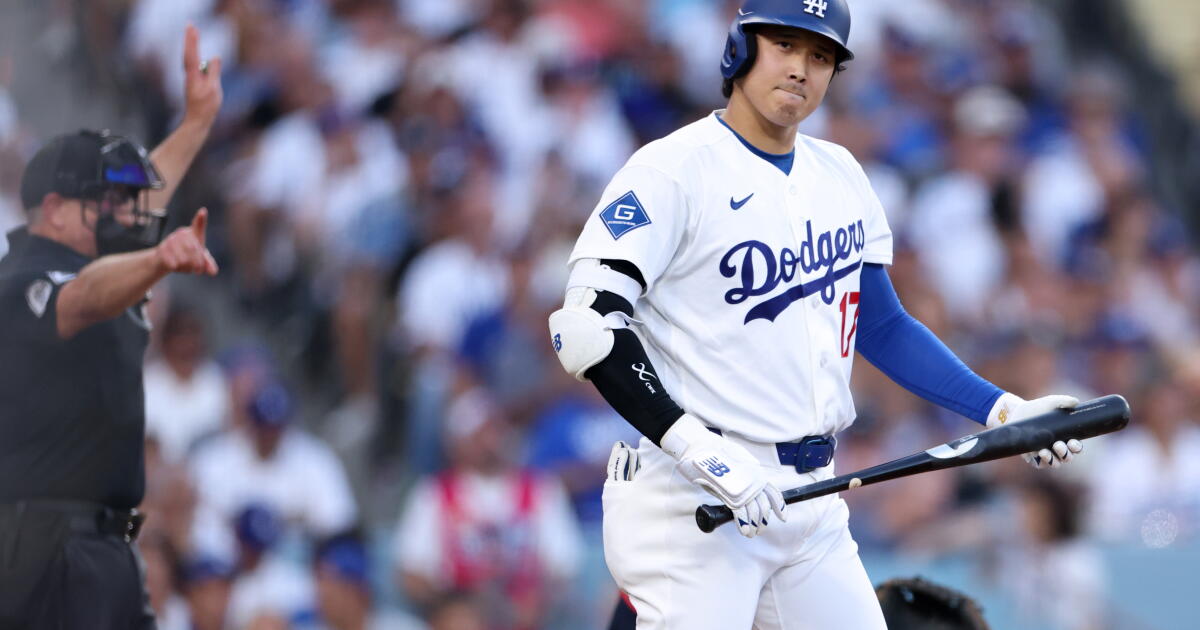
Nor could the Dodgers keep up offensively at the hitter-friendly park — though they put some pressure on in the ninth inning, when Shohei Ohtani led off with a ground-rule double and the Dodgers scored twice to cut the lead to three runs. Then the new guy, Ryan Ward, made the final out in his big league debut, robbed of a hit and a chance to keep chipping away by a diving Troy Johnston in right field.

Before that, the Rockies — who beat the Dodgers twice in 13 meetings all of last season — chased starter Roki Sasaki from the game in the fifth inning and then ruffled the Dodgers’ relievers. That included closer Edwin Díaz, who came on in the eighth and promptly gave up three singles, a walk and two runs before being pulled with the Dodgers trailing 8-4.

Continue reading here

Shaikin: Rick Monday saved an American flag in 1976. Why the moment resonates 50 years later

Dodgers box score

MLB standings

Angels lose to Padres

Xander Bogaerts and Bryce Johnson delivered two-out RBIs as the San Diego Padres defeated the Angels 2-1 on Sunday.

Bogaerts broke a scoreless tie with an RBI single in the fourth inning, and Johnson added a two-out RBI single in the seventh as San Diego took two of three games in the series. Johnson finished with two of San Diego’s five hits for his multihit game of the season.

Michael King (3-1) gave up one hit over five scoreless innings, striking out six and walking four while working through traffic. He combined with Ron Marinaccio, Kyle Hart, Bradgley Rodriguez and Mason Miller to hold the Angels to two hits.

Continue reading here

Appreciation: Angels great Garret Anderson was a Hall of Famer in area stats couldn’t measure

Angels box score

MLB standings

Lakers can steal the series

From Bill Plaschke: The Lakers limped painfully into the playoffs Saturday night only to delightfully discover a miracle salve.

An opponent as mangled as they were.

Yes, the Lakers are beginning this tournament seriously hampered by the indefinite absences of Luka Doncic and Austin Reaves.

But — surprise, surprise — the Houston Rockets showed up with a bad leg of their own, a recently suffered knee contusion that sidelined leading scorer Kevin Durant for at least the first game of this first-round series.

The result? Check out the wide-mouthed scream unleashed by the Lakers’ Luke Kennard midway through the fourth quarter.

The Lakers: Loud and surprising and inspiring.

Continue reading here

Luke Kennard provides a jolt of Luka magic, helping the Lakers beat the Rockets

Lakers playoff schedule

First round
All times Pacific

at Lakers 107, Houston 98 (box score)
Tuesday: Houston at Lakers, 7:30 p.m., NBC
Friday: Lakers at Houston, 5:30 p.m., Amazon Prime Video
Sunday: Lakers at Houston, 6:30 p.m., NBC
*Wed., April 29: Houston at Lakers, TBD
*Friday, May 1: Lakers at Houston, TBD
*Sunday, May 3: Houston at Lakers, TBD

*-if necessary

Alex Palou wins Long Beach Grand Prix

From Steve Galluzzo: For two thirds of Sunday’s Acura Long Beach Grand Prix, Alex Palou bided his time… waiting for the one break he needed.

It came in the form of a caution on the 58th lap, allowing him to overtake front-runner Felix Rosenqvist exiting pit lane and hold the lead the rest of the way, taking the checkered flag by 3.96 seconds for his third triumph in five IndyCar Series races this season and his first at Long Beach.

Right after being showered with applause and confetti at victory lane, the 29-year-old Spaniard thanked his crew, whose quick work on the last pit stop proved to be the difference.

Continue reading here

Race results

LAFC loses to Earthquakes

Ousseni Bouda scored two goals in the second half, ending LAFC goalie Hugo Lloris’ scoreless run to begin the season at 593 minutes, and the San José Earthquakes stunned LAFC 4-1 on Sunday night in an early Western Conference showdown.

San José (7-1-0) moves into a first-place tie with the Vancouver Whitecaps in the Western Conference and Supporters’ Shield races in the Earthquakes’ second season under head coach Bruce Arena.

Daniel De Sousa Britto missed a chance to tie Lloris with a sixth clean sheet on an own goal by Reid Roberts in the 74th minute. He had three saves.

Continue reading here

LAFC summary

MLS standings

This day in sports history

1944 — NFL legalizes coaching from bench.

1958 — The Montreal Canadiens win the NHL Stanley Cup for the third straight year with a 5-3 victory over the Boston Bruins in the sixth game.

1986 — Chicago’s Michael Jordan sets an NBA single-game playoff scoring record with 63 points in a 135-131 double overtime loss to the Boston Celtics, in Game 2 of the first round in the Eastern Conference.

1991 — Mark Lenzi becomes the first person to score 100 points on a single dive. On his last dive, Lenzi scores 101.85 points on a reverse 3½ somersault from the tuck position to win the 3-meter springboard title at the U.S. Indoor Diving Championships.

1996 — NFL Draft: Keyshawn Johnson from USC first pick by New York Jets.

1997 — Chicago’s Michael Jordan wins an unprecedented ninth scoring title with an average of 29.6 points, the first time in those nine seasons that he fails to average at least 30 points.

1997 — PGA Seniors’ Championship Men’s Golf, PGA National GC: Defending champion Hale Irwin wins his second of three straight Senior PGA Championships.

2002 — NFL Draft: Fresno State quarterback David Carr #1 pick by Houston Texans.

2007 — Roger Federer wins his 500th match, defeating David Ferrer 6-4, 6-0 in the quarterfinals of the Monte Carlo Masters.

2008 — Danica Patrick becomes the first female winner in IndyCar history, capturing the Indy Japan 300 in her 50th career start. Patrick takes the lead from pole-sitter Helio Castroneves on the 198th lap in the 200-lap race and finishes 5.8594 seconds ahead of Castroneves.

2008 — Lorena Ochoa becomes the first LPGA Tour player in 45 years to win four tournaments in consecutive weeks. Ochoa shoots a three-under 69 in the final round of the Ginn Open and beats rookie Yani Tseng by three strokes for her fifth victory in six starts. Mickey Wright did it in 1963.

2014 — Bernard Hopkins, 49, becomes the oldest to win a unification light-heavyweight bout as he captures a split 12-round decision over 30-year-old Beibut Shumenov of Kazakhstan. Hopkins, who improves to 55-6-2, retains his IBF title and wins the WBA and IBA belts.

2015 — Lelisa Desisa of Ethiopia wins the 119th Boston Marathon, his second victory here. Desisa, who finishes in 2:09:17, also won the 2013 race just hours before a pair of bombs exploded at the finish line. Caroline Rotich of Kenya wins the women’s race.

2017 — LeBron James finishes with 41 points, 13 rebounds and 12 assists, and the Cleveland Cavaliers set an NBA postseason record by erasing a 25-point halftime deficit to beat the Indiana Pacers 119-114 and take a 3-0 lead. Cleveland trailed by 26 in the first half and was still down 74-49 at halftime. The largest halftime deficit overcome to win a playoff game had been 21 points by Baltimore against Philadelphia in 1948.

2017 — Roman Josi scores twice, Pekka Rinne has 30 saves and the Nashville Predators beat the Chicago Blackhawks 4-1 to complete a surprising sweep of the Western Conference’s top seed. It’s the first time a No. 1 seed is swept in the first round since the NHL adopted its current playoff format in 1994.

2021 — All six EPL clubs withdraw from the controversial European Super League just 3 days after it was announced – Chelsea, Manchester City, Liverpool, Arsenal, Manchester United and Tottenham.

Compiled by the Associated Press

This day in baseball history

1910 — Addie Joss of Cleveland pitched the second no-hitter of his career, a 1-0 win over the White Sox in Chicago.

1912 — Fenway Park was opened in Boston and the Red Sox defeated the visiting New York Highlanders, later known as the Yankees, 7-6 in 11 innings. Tiger Stadium in Detroit also opened its doors as the Tigers defeated the Cleveland Indians 6-5.

1916 — The Chicago Cubs played their first game at Weeghman Park — renamed Wrigley Field in 1926 — defeating the Cincinnati Reds 7-6 in 11 innings.

1920 — Manager Gavy Cravath of the Philadelphia Phillies inserted himself as a pinch-hitter and beat the New York Giants with a three-run homer, 3-0. It was his last home run in the majors.

1937 — Gee Walker hit for the cycle on opening day to lead the Detroit Tigers to a 4-3 win over Cleveland. Walker hit the cycle in reverse order: home run, triple, double, single.

1938 — Cleveland’s Bob Feller pitched the first of 12 career one-hitters, beating the St. Louis Browns 9-0.

1939 — In his first major league game, Ted Williams hit a 400-foot double as the Boston Red Sox lost 2-0 to New York at Yankee Stadium.

1941 — The Brooklyn Dodgers become the first major league team to wear protective headgear.

1967 — Tom Seaver of the New York Mets recorded his first major league victory with a 6-1 triumph over the Chicago Cubs. Seaver went 7 2-3 innings and gave up eight hits and one run.

1982 — The Atlanta Braves recorded their 12th consecutive victory from the beginning of the season — a 4-2 decision over Cincinnati in Atlanta — and eclipsed the major league record set a year earlier by the Oakland A’s.

1988 — The Baltimore Orioles set a major league record with their 14th straight defeat at the start of the season, losing to the Milwaukee Brewers 8-6.

1990 — Seattle’s Brian Holman lost his bid for baseball’s 13th perfect game with two out in the ninth inning on Ken Phelps’ pinch-hit home run in the Mariners’ 6-1 victory over the Oakland Athletics.

1997 — The Chicago Cubs stopped their season-opening losing streak at 14 games, rallying in the sixth inning to beat the New York Mets 4-3 in the second game of a doubleheader. The Mets won the opener 8-2. Chicago’s 0-14 start set a National League record and was the second worst behind the 1988 Baltimore Orioles, who began 0-21.

1999 — Cincinnati Reds owner Marge Schott agrees to sell her controlling interest in the Reds to a group headed by Carl H. Lindner, ending her 14-year tenure.

2001 — Carlos Delgado of the Blue Jays hit three homers for the second time this season, as Toronto beat the Kansas City Royals 12-4.

2006 — Julio Franco became the oldest player in major league history to hit a home run when he hit a two-run, pinch-hit shot in the eighth inning to help the New York Mets rally for a 7-2 win over San Diego. Franco, 47, replaced Athletics pitcher Jack Quinn in the record book who was 46 years, 357 days old when he homered on June 27, 1930.

2007 — Alex Rodriguez went 3-for-5 with two home runs in a 7-6 loss to Boston and joined Mike Schmidt, who hit 12 homers in the first 15 games in 1976, as the fastest to reach a dozen in baseball history.

2008 — The Blue Jays release former superstar Frank Thomas, who has 516 major league home runs.

2010 — Pitcher Edinson Volquez of the Reds is suspended for 50 games for failing a PED test during spring training.

2011 — Commissioner Bud Selig steps in and takes control of the day-to-day operations of the Dodgers from owner Frank McCourt.

2012 — Drew Stubbs had three hits and drove in three runs to lead the Cincinnati Reds to a 9-4 win over the Chicago Cubs — the 10,000th victory in franchise history.

2021 — Corbin Burnes strikes out 10 batters and walks none in 6 innings in a 6-0 Brewers win over the Padres.

Compiled by the Associated Press

Until next time…

That concludes today’s newsletter. If you have any feedback, ideas for improvement or things you’d like to see, email me at houston.mitchell@latimes.com. To get this newsletter in your inbox, click here.

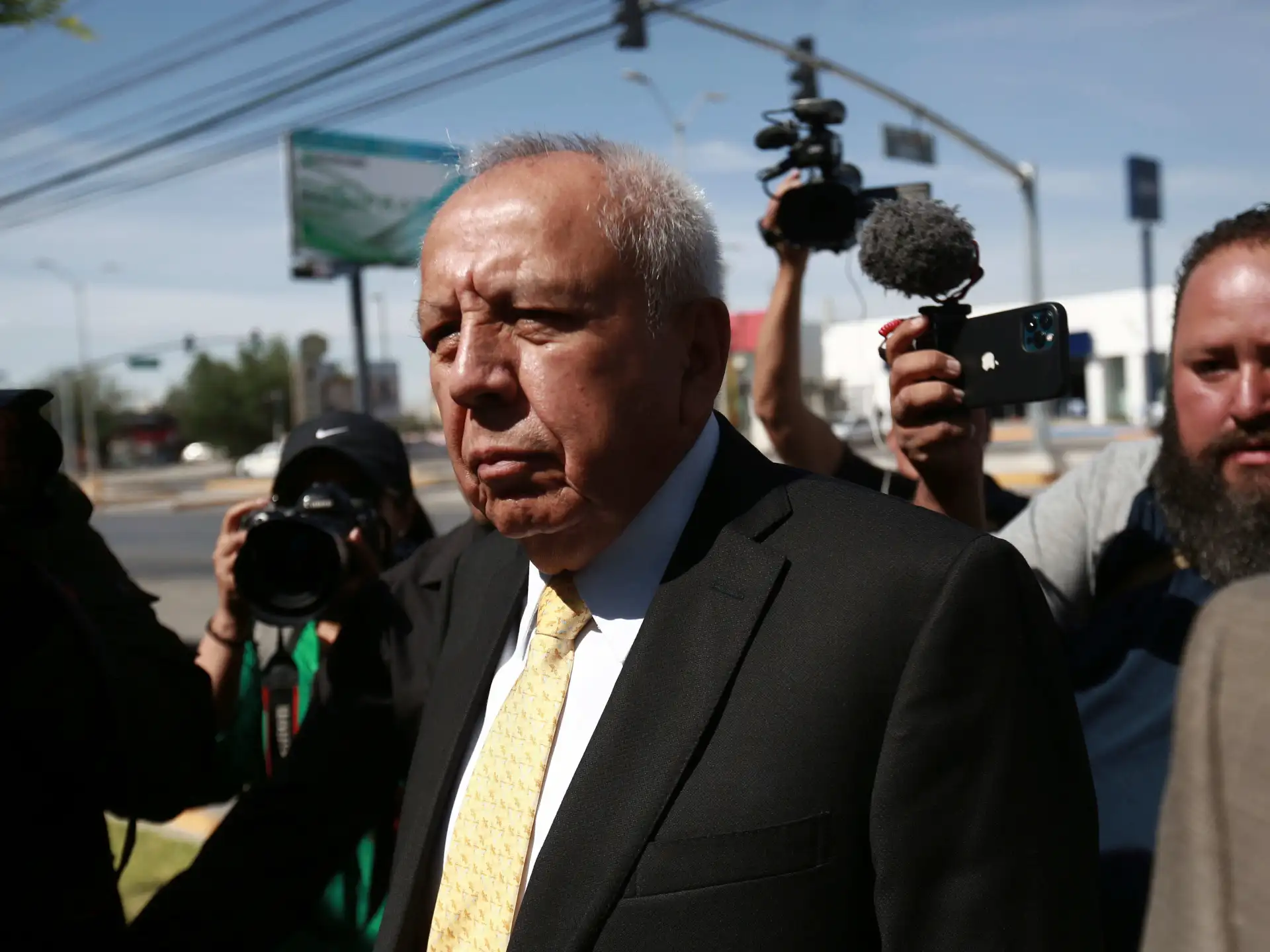
Source link

A match made in opposition: Venezuela’s Machado courts Spain’s right wing | News

Madrid, Spain – Venezuela’s opposition leader Maria Corina Machado is aligned with Spain’s main right-wing party on its economic visions, but they are divided by social issues such as abortion, analysts say.

On a visit to Spain this weekend, Machado chose to snub an invitation to meet Socialist Prime Minister Pedro Sanchez and the left-wing coalition government officials.

Recommended Stories

list of 2 itemsend of list

The Nobel Peace Prize winner said she had chosen not to meet Sanchez because he was hosting a summit of left-wing leaders from Latin America in Barcelona.

“What has transpired in the past few hours at the meeting held in Barcelona with various political leaders from different countries is proof that such a meeting was not advisable,” Machado told a meeting in Madrid on Saturday.

Instead, she held a series of meetings with leaders from the opposition conservative People’s Party (PP) and the far-right Vox party.

Machado received a rapturous welcome from Alberto Nunez Feijoo, the PP party leader and Venezuelan emigres in Madrid, on Friday.

On Saturday, the Venezuelan opposition leader met Isabel Diaz Ayuso, the populist conservative Madrid regional leader, one of Sanchez’s fiercest critics and a possible rival to Feijoo.

Ayuso presented Madrid’s gold medal to Machado, while Madrid’s Mayor Jose Luis Martinez-Almeida – also of the PP – handed her the keys to the city before a rally with Venezuelan supporters.

Machado also met Santiago Abascal, the leader of Vox, in the Spanish capital.

Feijoo praised how Machado had championed freedom even at the cost of going into hiding in Venezuela away from her family.

“Spain knows well the value of freedom; it cost us dearly to obtain it. The generations of our parents and grandparents know what it is to live without freedom. That is why we cannot look the other way,” Feijoo said.

What divides Venezuela and Spain’s opposition?

Despite the cordial welcome, there are significant differences between Machado and Feijoo, commentators said.

A liberal conservative, who has said she is an admirer of Margaret Thatcher, Machado has been dubbed Venezuela’s “Iron Lady”.

She moved from the right politically to the centre-ground during the 2024 presidential campaign to attract voters in the middle ground.

As a conservative, Machado heads a Venezuelan opposition that is split and which also contains more liberal factions.

In contrast, Feijoo heads a well-organised conservative political party, which has only recently suffered divisions after the formation of the hard-right Vox party in 2013, analysts said.

Carlos Malamud, an expert on Latin America at the Real Elcano Institute, a think tank in Madrid, said the structure of both opposition groups was different.

“Machado is the leader of a small, disorganised opposition, while Feijoo is the head of the PP, which is a well-organised national political party,” he told Al Jazeera.

Malamud said Machado did not demonstrate the traits of a would-be Venezuelan president by refusing to see Sanchez.

“If Machado wants to be the president of Venezuela next year, she needs to be prepared to meet the head of the Spanish government, whoever that may be,” he explained.

“Perhaps the Venezuelan opposition sees the Spanish Socialist Party as being allied to (former Spanish prime minister) Jose Rodriguez Zapatero.”

Zapatero has played a controversial role in acting as a mediator between Spain and the government of former Venezuelan President Nicolas Maduro, who was abducted by the United States in January.

Maduro faces charges of narcoterrorism, conspiracy to commit narcoterrorism, drug trafficking, money laundering and corruption, which he denies.

Machado ‘more conservative’ on social issues

Malamud said one factor which unites Machado and Feijoo is that they came from political systems which suffered from polarisation.

“Venezuelan politics is the same as Cuban politics, or like Spanish. They all suffer from the same degree of polarisation,” he added.

Ana Ayuso, an investigator in Latin American affairs at the Barcelona Centre for International Affairs, said Machado shared the liberal economic theories of Feijoo, but they differed on social issues.

“She is in favour of freedom of trade and a small state, so she is quite liberal on economic affairs like Feijoo,” Ayuso told Al Jazeera.

“She is also closer to Isabel Diaz Ayuso in terms of economics, in terms of free trade and the participation of the state.”

“However, she is more conservative when it comes to social issues. Machado is against abortion, and religious affairs are important to her. She is close to the [Roman] Catholic Church. Feijoo supports the right to abortion.”

In an interview in 2024 with Spanish newspaper El Pais, Machado said she was against abortion but in favour of changing the law in Venezuela to allow abortion in cases of rape.

At present, the law in Venezuela allows abortion only when there is a risk to the life of the mother or child. Otherwise, it is illegal and can carry a jail sentence of up to two years.

“Machado does not have any similarities with Vox. Venezuela does not have a problem with immigration. Emigration is the problem,” added Ayuso.

She said the Venezuelan opposition leader had initially been a staunch supporter of US President Donald Trump, but he had shunned her in support of Delcy Rodriguez, the acting Venezuelan president.

Machado was now closer to Marco Rubio, the US secretary of state, who supported her cause within the MAGA movement, she added.

Source link

Russia claims Ukraine-linked bomb plot foiled, German woman arrested | Russia-Ukraine war News

Russia’s FSB accused the woman, found with a bomb in her backpack, of taking part in a plot hatched by Ukraine.

Russian authorities say they have thwarted a Ukraine-linked bomb plot against security services and arrested a German woman found with a makeshift bomb in her backpack.

Russia’s FSB security agency said the unnamed woman was detained on Monday in the southern city of Pyatigorsk.

Recommended Stories

list of 3 itemsend of list

In a statement cited by Russia’s state-run TASS news agency, the FSB said it had “prevented a terrorist attack planned by the Kyiv regime against a law enforcement facility in the Stavropol region, involving a German citizen born in 1969”.

It said the woman had been recruited by a citizen from a Central Asian country, who was working on orders from Ukraine. That man was found and arrested near the targeted site.

According to the FSB, the device contained an explosive charge equivalent to 1.5kg (3 pounds) of TNT and was intended to be detonated remotely. The agency said the blast was ultimately prevented by electronic jamming.

Video of the purported arrest published by Russia’s state RIA Novosti news agency showed armed Russian security agents approach the woman as she was face down in a car park.

Another video showed masked plainclothes agents pulling a man into a station, followed by a controlled explosion of the backpack.

Russia’s previous allegations

Russia has arrested dozens of people throughout the four-year war, mostly its own citizens, on allegations of working for Ukraine to carry out sabotage attacks.

Russia has previously accused Ukraine of working with Islamic fundamentalists to carry out attacks inside Russia, without providing evidence.

Officials initially alleged that the perpetrators of a 2024 massacre at a concert hall on the outskirts of Moscow that killed 150 people were ISIL (ISIS) members in coordination with Ukraine.

ISIL claimed responsibility for that attack, making no reference of any Ukrainian involvement, for which no evidence was presented by Moscow and which Kyiv denies.

Source link

Ukraine claims attack on Russian warships in occupied Crimea | Russia-Ukraine war News

Ukraine’s military intelligence says it struck two large landing ships in Sevastopol Bay in Russian-occupied Crimea.

Ukraine and Russia have attacked each other overnight, with Ukrainian drones striking Russian assets in Black Sea ports and Russia hitting several regions across Ukraine, including the capital Kyiv.

Ukraine’s GUR military intelligence unit claimed attacks on two Russian landing ⁠ships and a radar station in Sevastopol Bay in Russian-occupied Crimea. It says the $150m vessels were successfully hit and radar equipment destroyed.

Recommended Stories

list of 3 itemsend of list

In Russia, Ukrainian drones targeted the port of Tuapse, killing at least one person, injuring another and damaging transport infrastructure, according to regional governor Veniamin Kondratiev.

The strike was the second on the port in three days, hours after a fire from a previous attack was extinguished.

Russia’s Defence Ministry said air defences destroyed 112 Ukrainian drones overnight.

INTERACTIVE-WHO CONTROLS WHAT IN UKRAINE-1776241851
(Al Jazeera)

Ukraine reported a series of Russian attacks on Ukrainian territory overnight, including in Kyiv, Kharkiv, Kherson, Sumy and Zaporizhia regions.

Drones hit a car in the city of Putyvl in Ukraine’s border region of Sumy, injuring three women, as well as two homes in Kyiv’s Brovary district, damaging them and injuring one person, according to Ukrainian officials.

“Tonight, the enemy is again attacking the Kyiv region with drones. Under the sights are peaceful people, homes,” said Kyiv regional military administration head Mykola Kalashnyk.

Russian attacks also damaged railway infrastructure in the northeastern city of Kharkiv, according to the Interfax-Ukraine news agency.

Over the past 24 hours, Russian attacks in the Kherson region killed one person and injured seven, while injuring four others in the Zaporizhia region, Ukrainian officials said.

Moscow’s forces have hit civilian areas almost daily since the all-out invasion of its neighbour more than four years ago, with the regular assaults occasionally punctuated by massive attacks.

More than 15,000 Ukrainian civilians have died in the strikes, according to the United Nations.

There have been several rounds of United States-brokered negotiations in recent months, but they have failed to reach an agreement to stop the fighting, with the process further stalled since the outbreak of the US-Israel war on Iran.

Even before the war on Iran, progress towards a peace deal in Ukraine had been slow, due to differences over territorial issues.

Ukraine has proposed freezing the conflict along current front lines. Russia rejects that, saying it wants the whole of the Donetsk region, despite it being partly controlled by Ukraine – a demand Kyiv says is unacceptable.

Source link

US military releases video of marines seizing Iranian ship | US-Israel war on Iran

NewsFeed

New video from the US military is said to show an operation by its forces to seize an Iranian-flagged ship which attempted to bypass the US blockade of Iranian ports. The US says the cargo ship Touska was linked to a sanctioned company, while Iran condemned the move as ‘piracy’ and a violation of the ceasefire.

Source link

Pakistan ready for multi-day US-Iran talks, but Tehran unsure about joining | US-Israel war on Iran News

Islamabad, Pakistan – Pakistan is gearing up to host the second round of talks between the United States and Iran aimed at ending their war, but rising tensions in recent hours have cast uncertainty over Tehran’s participation, as the deadline nears for the end of the two-week ceasefire.

Unlike the first round of talks held in Islamabad on April 11, the upcoming negotiations could last for multiple days until a temporary deal – mediators are calling it a memorandum of understanding – is signed, effectively extending the ceasefire, sources close to these efforts have told Al Jazeera. If the MoU is agreed, it would give negotiators a longer window – even up to 60 days – to secure a longer peace deal.

Recommended Stories

list of 4 itemsend of list

But all of that hinges on the participation of Iran, which – as of Monday morning – has not confirmed that it will be sending its negotiators to Islamabad. That follows a rapid escalation in tensions over the past 24 hours.

US President Donald Trump announced on Sunday that his representatives were heading to Pakistan for a second round of negotiations with Iran, as a fragile ceasefire, due to expire on Wednesday, edges towards its deadline.  But Trump accompanied his announcement with a revival of earlier pre-ceasefire threats to bomb Iran’s energy and power facilities.

“My Representatives are going to Islamabad, Pakistan. They will be there tomorrow evening, for Negotiations,” Trump wrote on Truth Social. He accused Iran of a “Total Violation of our Ceasefire Agreement” after Iranian gunboats fired on vessels in the Strait of Hormuz on Saturday, hitting ships including a French vessel and a British freighter.

“We’re offering a very fair and reasonable DEAL, and I hope they take it because, if they don’t, the United States is going to knock out every single Power Plant, and every single Bridge, in Iran,” Trump wrote. “NO MORE MR. NICE GUY!”

The tensions did not ease overnight. In the early hours of Monday, Trump announced on Truth Social that the US Navy guided missile destroyer USS Spruance had intercepted an Iranian-flagged cargo ship, the Touska, nearly 900 feet (274 metres) long, in the Gulf of Oman after its crew refused to heed warnings to stop.

“Our Navy ship stopped them right in their tracks by blowing a hole in the engine room,” Trump wrote. US Marines have now taken charge of the vessel, which Trump alleged was under US Treasury sanctions for prior illegal activity.

Iran has described the seizure of the ship as “piracy”.


epa12891925 The entrance of the Serena Hotel, which previously hosted Iran-US peace talks in Islamabad, Pakistan, 15 April 2026. Regional mediators continue efforts to extend the US-Iran ceasefire after talks in Islamabad ended without agreement on 11 April, while Pakistani Prime Minister Sharif begins visits to Saudi Arabia, Qatar, and Turkey as diplomatic discussions proceed. According to Iranian officials, members of the US and Iranian delegation could return to Pakistan to resume negotiations. EPA/SOHAIL SHAHZAD
The Serena Hotel is scheduled to host the anticipated next round of talks between the US and Iran. [Sohail Shahzad/EPA]

Pakistan’s preparations

Amid those military and social media exchanges between Iran and the United States, Pakistan has been busy getting ready to host talks that it – as the principal mediator between Washington and Tehran – hopes will yield a deal to end the war, now into its eighth week.

Islamabad’s Marriott Hotel asked guests to vacate by Sunday afternoon. The Serena Hotel, just a few kilometres away and the venue for the first round of talks a week earlier, soon issued the same order and stopped taking reservations.

Roads into the Red Zone, the capital’s most heavily fortified area, were sealed. The district houses key government buildings, including the National Assembly, foreign embassies and both five-star hotels. Thousands of additional police and paramilitary personnel arrived from across the country.

Barbed wire and barricades lined the streets, and most access routes were shut.

But even before Trump’s latest threat to blow up Iranian energy and power facilities, and the subsequent hijacking of the Iranian ship, Tehran was unclear about whether it would join the talks.

Minutes before Trump’s Truth Social message, Iran’s ambassador to Pakistan, Reza Amiri Moghadam wrote on his social media that violations of international law, the continuation of the US naval blockade of the Strait of Hormuz, threats of further strikes, and what he described as unreasonable demands could not be reconciled with a genuine pursuit of peace.

“As long as the naval blockade remains, faultlines remain,” he added.

The negotiators: The US and Iranian teams

Trump first said on Sunday that Vice President JD Vance, who had led the US team in the first round of Islamabad talks, would not visit the Pakistani capital this time around, because of security concerns.

But White House Press Secretary Karoline Leavitt later said that Vance would join the US delegation, alongside special envoy Steve Witkoff and Trump’s son-in-law, Jared Kushner, the same team that led the first round.

Flight tracking data showed at least four US government aircraft carrying communications equipment and motorcade support landed on Sunday at PAF Base Nur Khan in Rawalpindi, the primary VIP entry point for Islamabad.

However, by late night, sources close to mediators told Al Jazeera that it was once again unclear whether Vance would travel to Islamabad on Monday. They said that the US might now send Witkoff and Kushner to Islamabad first, and if the talks actually happen, Vance might join them.

Amid Iranian hesitation over whether to join the Islamabad talks, Pakistani Prime Minister Shehbaz Sharif spoke with Iranian President Masoud Pezeshkian. The call lasted about 45 minutes, the Pakistan PM’s office said.

Sharif briefed Pezeshkian on his recent visits to Saudi Arabia, Qatar and Turkiye, where he met with their leaders, describing those engagements as helpful in “building consensus in support of a sustained process of dialogue and diplomacy”.

But by early Monday morning, Trump’s revived threats and the capture of the Iranian cargo ship have left the prospects of talks in Islamabad even more on edge than before.

Iran pushes back

Tehran pushed back sharply against Trump’s flurry of social media posts on Sunday.

Iran’s state news agency IRNA said reports of a second round of talks in Islamabad were “not correct”, and blamed the lack of progress on what it described as American “greed”, unreasonable demands, shifting positions and “continuous contradictions”.

According to IRNA, the naval blockade – imposed by Trump last Monday, two days after the first round of Islamabad talks – violated the ceasefire understanding and had “so far prevented progress in negotiations”.

It added that “no clear prospect for productive negotiations is foreseen” under current conditions and dismissed US statements on talks as “a media game”, aimed at pressuring Iran through a “blame game”.

A satellite image shows the ship movement at the Strait of Hormuz on April 17, 2026, in Space. EUROPEAN UNION/COPERNICUS SENTINEL-2/Handout via REUTERS THIS IMAGE HAS BEEN SUPPLIED BY A THIRD PARTY MANDATORY CREDIT.
A satellite image shows shipping movement in the Strait of Hormuz on April 17, 2026, in Space. [Handout/ European Union/Copernicus Sentinel via Reuters]

In a post on X, foreign ministry spokesman Esmaeil Baghaei went further, describing the US naval blockade as “unlawful and criminal” and saying it amounted to “war crime and crime against humanity”.

Despite the public denials, Iranian sources earlier on Sunday indicated a delegation was expected in Pakistan on Tuesday. It could include Parliamentary Speaker Mohammad Bagher Ghalibaf, who led Tehran’s team in the first round, and Foreign Minister Abbas Araghchi, who had joined him then.

Pakistan’s foreign ministry said Araghchi and his Pakistani counterpart Ishaq Dar spoke by phone on Sunday and discussed “the need for continued dialogue and engagement as essential to resolving the current issues as soon as possible”.

Analysts say the gap between Iran’s public stance and private signalling reflects a deliberate strategy.

“This gap reflects a dual-track negotiation strategy,” Seyed Mojtaba Jalalzadeh, an international relations analyst based in Tehran, told Al Jazeera. “At the public level, Iran maintains a hardline position to preserve domestic legitimacy and increase its leverage; at the non-public level, by dispatching a team to Islamabad, it signals that it has not abandoned diplomacy but is instead testing its conditions.”

Fahd Humayun, an assistant professor of political science at Tufts University, agreed.

“When warring parties come to the table to negotiate, they come with the understanding that there is occasionally a gap between public posturing and private positions,” he told Al Jazeera. “My sense is that they will pick up from where they left off, rather than getting too caught up in the rhetoric that has emerged since”.

That divergence extends to the pace of negotiations.

Washington has pushed for a rapid resolution, with Trump repeatedly declaring the war “close to over” even as fighting continues. Tehran, by contrast, has shown little inclination to be rushed.

A diplomat in Islamabad, who has followed the talks closely, described the contrast.

“The previous round of talks is a great example. It appeared as if the Americans brought a stop-watch, whereas the Iranians came armed with a calendar,” the diplomat said on condition of anonymity.

What is achievable?

Officials do not expect a final deal this week.

The immediate goal is likely to be a ceasefire extension, with both sides in Islamabad working towards a limited understanding.

Pakistani officials expressed cautious optimism, saying the process was moving in a positive direction while stressing that a final agreement would require sustained engagement and compromise.

Unlike the first round, talks could run for several days, with the aim of agreeing on a framework for broader negotiations in the coming weeks and months.

Pakistan's Prime Minister Shehbaz Sharif meets with Iranian Parliament Speaker Mohammad Bagher Ghalibaf, as delegations from the United States and Iran are expected to hold peace talks, in Islamabad, Pakistan, April 11, 2026. Office of the Iranian Parliament Speaker/WANA (West Asia News Agency)/Handout via REUTERS ATTENTION EDITORS - THIS PICTURE WAS PROVIDED BY A THIRD PARTY. BEST QUALITY AVAILABLE.
Pakistan’s Prime Minister Shehbaz Sharif with Iranian Parliament Speaker Mohammad Bagher Ghalibaf before anticipated peace talks in Islamabad, April 11, 2026. [Handout/Office of the Iranian Parliament Speaker via Reuters]

Humayun cautioned against viewing the first round as a failure.

“I wouldn’t characterise the first round as having failed, that assumes expectations of resolving the most difficult issues early on, which is unlikely in talks of this nature where the issues are so complex,” he said.

For this round, a ceasefire extension would be “a meaningful outcome in itself”, while both sides would likely be “probing for any shifts or flexibility in positions since they last spoke”.

It is that movement, he added, that would allow both sides to “politically sanction an extension of the ceasefire”.

“A ceasefire extension could represent the most minimal form of agreement achievable in this round,” Jalalzadeh said, adding that the deal Washington seeks is “far broader in scope and is rooted in a history stretching back 47 years”.

Iran’s Deputy Foreign Minister Saeed Khatibzadeh, speaking on the sidelines of the Antalya Diplomacy Forum in Turkiye over the weekend, said “significant progress” had been made in the previous round but stressed that a framework must be agreed upon before talks could advance.

He described US demands on Iran’s nuclear programme as “maximalist”.

Ghalibaf was more direct. “There are many gaps and some fundamental points remain,” he said in televised remarks on Saturday night. “We are still far from the final discussion”.

The core sticking points, Iran’s nuclear programme and control of the Strait of Hormuz, remain unresolved since the first round, held on April 11, which lasted 21 hours and ended without agreement.

A separate Israel-Lebanon ceasefire is now in place, removing one of Tehran’s stated conditions for talks.

But Jalalzadeh said the ceasefire fell well short of satisfying Iran’s demands. “The current Israel-Lebanon ceasefire is temporary, fragile, and incomplete,” he told Al Jazeera, noting that Hezbollah – Tehran’s most powerful regional ally – was absent from the agreement, which the Lebanese government negotiated with Israel.

“This ceasefire is a tactical palliative, not a substitute for Iran’s strategic demand,” he said, adding that Tehran’s insistence on Lebanon being part of any broader deal, rather than handled through a separate arrangement, remained unchanged.

Humayun said Iran would want the Israel-Lebanon truce to hold and ideally include “some form of assurance against violations”.

U.S. Vice President JD Vance meets with Pakistan's Prime Minister Shehbaz Sharif for talks about Iran, in Islamabad, Pakistan, April 11, 2026. Jacquelyn Martin/Pool via REUTERS
US Vice President JD Vance with Pakistan’s Prime Minister Shehbaz Sharif for talks about Iran in Islamabad, April 11, 2026. [Jacquelyn Martin/Pool via Reuters]

The broader question, he said, is “whether Iran can secure at least some degree of US pressure on Israel to adhere to the ceasefire and to refrain from further escalation”.

The Sharif-Pezeshkian call capped an intensive week of Pakistani diplomacy.

Field Marshal Asim Munir travelled to Tehran last Wednesday, carrying what officials described as a new message from Washington.

Iranian Ambassador Reza Amiri Moghadam said last week in Islamabad that Tehran would “do talks in Pakistan and nowhere else, because we trust Pakistan”.

Analysts say Pakistan’s value as a mediator lies in the rare credibility it holds with both sides.

Humayun said that even if this round produces no breakthrough, it would not necessarily erode trust in Islamabad.

“All parties understand how difficult these issues are and that, without Pakistan’s facilitation, they may not have reached this point at all,” he said.

Jalalzadeh offered a more cautious assessment, saying Pakistan’s role ultimately depends on results.

“If this round also fails, its standing as an effective mediator will be weakened, even if it continues to function as a minimal communication channel,” he said.

Still, he noted, Islamabad has already distinguished itself among countries that have attempted mediation, filling a gap left by others and establishing itself as a credible host.

Trump, however, insisted a deal would come regardless.

“It will happen. One way or another. The nice way or the hard way,” he told ABC News. “You can quote me.”

Source link

Iran war: What is happening on day 52 of the US-Israeli conflict? | Explainer News

Islamabad talks in limbo as Tehran says it will retaliate after US marines capture an Iranian-flagged ship near the Strait of Hormuz.

Donald Trump announced on Sunday that a second round of US-Iran talks is to be held in Pakistan on Monday – but Tehran has not confirmed participation, two days before a ceasefire deal expires.

The capture by US Marines of an Iranian-flagged container ship near the Strait of Hormuz on Sunday has further clouded the Islamabad talks, as Tehran has pledged to retaliate.

Recommended Stories

list of 4 itemsend of list

The attack came hours after President Trump announced he is sending a team to Islamabad for talks, while once again threatening to knock out Iran’s power plants and bridges if there is no deal. The ceasefire, which ended more than a month of war, expires on Wednesday.

Pakistan’s Prime Minister, Shehbaz Sharif, spoke on Sunday with Iranian President, Masoud Pezeshkian, as he reaffirmed his government’s readiness to mediate the conflict.

Here is what we know:INTERACTIVE-IRAN-DEATH-TOLL-TRACKER-APRIL-15-2026-1776273758

In Iran

  • ⁠Iran’s top ⁠joint ⁠military command, Khatam al-Anbiya, accused the US of ⁠violating the ceasefire by shooting at ⁠an Iranian ship in the Gulf of Oman and vowed ‌to retaliate.
  • President Trump ⁠posted on Truth ⁠Social on Sunday that US Marines ‌captured a vessel that tried to get past ⁠the American blockade on ⁠Iranian ports, adding that ⁠US forces ⁠stopped the ⁠ship by blowing a hole in ‌its engine room.
  • Iran ⁠executed ⁠two men convicted of cooperating with Israel’s Mossad ⁠intelligence service and planning attacks inside the ⁠country, the judiciary’s news outlet Mizan reported on Sunday.
  • French ⁠shipping ⁠company, CMA CGM, confirmed on Sunday that “warning shots” were fired at one ⁠of its ships in the Strait of Hormuz on Saturday. 
  • ⁠Iran’s ⁠armed forces turned back two tankers attempting ⁠to transit the Strait ⁠of Hormuz on Sunday after issuing warnings. The semi-official Tasnim ‌news agency said that was a result of the continuing US maritime ⁠blockade on Iran.
  • International flights from Mashhad airport in northeast Iran will resume on Monday, the civil aviation authority said.

War diplomacy

  • Iranian state media reported that Tehran had rejected new peace talks, citing the ongoing blockade, threatening rhetoric, and Washington’s shifting positions and “excessive demands.”
  • Iranian state media reported on Sunday that Tehran was not planning to take part in talks with the United States, hours after Trump said he was dispatching negotiators to Islamabad.
  • The US president posted on Truth Social ⁠on Sunday that representatives are going to Islamabad “tomorrow night” for Iran negotiations. “We’re offering a very fair and reasonable deal, and ⁠I hope they ⁠take it because, if they don’t, ⁠the United States ⁠is going to ⁠knock out every single power plant, ‌and every single bridge, in Iran,” ‌Trump ‌wrote.
  • Pakistan’s Prime Minister ⁠Sharif ⁠said on Sunday that he spoke with ⁠Iran’s President Masoud Pezeshkian about the conflict ⁠in the Gulf.
    Sharif posted on X that he shared insights with Pezeshkian regarding his recent ‌conversations with the leaders of Saudi Arabia, Qatar and Turkiye.
  • “I appreciated ⁠Iran’s engagement, including ⁠its high-level delegation to Islamabad for the historic talks, and ⁠recent discussions with Field Marshal Syed ⁠Asim Munir in ⁠Tehran,” Sharif said.
  • Turkiye’s Foreign Minister, Hakan Fidan, said on Sunday he was “optimistic” that a two-week ceasefire between Iran and the United States, which expires on Wednesday, would be extended, allowing more time for talks between the sides.
    Vice President JD Vance, second left, shakes hands with Pakistani Deputy Prime Minister and Foreign Minister Mohammad Ishaq Dar, as Pakistan's Interior Minister Mohsin Naqvi, left, Pakistan's Chief of Defence Forces Chief of Army Staff Field Marshall Asim Munir, third left, and Charge d'Affaires of the U.S. Embassy in Islamabad Natalie A. Baker, right, look on, as he prepares to board Air Force Two
    Vice President JD Vance led the US delegation for the first round of talks in Islamabad. They ended without a deal [Jacquelyn Martin/Pool/AP Photo]

In the US

  • Trump said on Sunday that the guided-missile destroyer, USS Spruance, fired on and seized the Iranian-flagged cargo ship, Touska, in the Gulf of Oman, and US Marines were “seeing what’s on board!”
  • The US president said Iran has committed a “serious ⁠violation” of the ceasefire ⁠but still thinks he can get a peace deal, ABC ‌News reporter Jonathan Karl posted on X on Sunday. Trump added that a peace deal “will happen. ⁠One way or another”.

In Israel

  • Argentine President Javier Milei, has reaffirmed his country’s support for the campaign against Iran, citing his government’s earlier decision to designate the Iranian Revolutionary Guards as a “terrorist organisation”.
  • Milei, who is visiting Israel for the third time since taking office, declared on Sunday that the joint US-Israel war against Iran was the “right thing to do”, as he signed on to the so-called Isaac Accords aimed at deepening bilateral ties between Israel and Latin American countries.

In Lebanon

  • ⁠The Israeli ⁠military on Monday warned residents in southern ⁠Lebanon not to move ⁠south of a specified line of villages or approach areas ‌near the Litani River, saying its forces remain deployed in the area during a ceasefire ⁠due to what ⁠it described as continued Hezbollah activity.
  • The Israeli army also said it had determined that an image circulating on social media showing a soldier in south Lebanon hitting a statue of Jesus Christ is authentic and depicts one of its troops.
  • The viral photo of the Israeli soldier hitting the Jesus statue with a sledgehammer has sparked outrage.
  • French President Emmanuel Macron is due to meet Lebanese Prime Minister Nawaf Salam in Paris on Tuesday. The announcement follows the killing of a French peacekeeper in Lebanon during the fragile 10-day ceasefire between Israel and Iran-backed militant group Hezbollah.
  • Israel’s Defence Minister Israel Katz said the military will use “full force” in Lebanon – even during the ongoing ceasefire – should Israeli troops face any threat from Hezbollah.
  • Lebanon’s military said it has reopened a road and bridge between Nabatieh and Khardali, which were damaged by Israeli strikes in the south.

Oil prices rise

  • Oil prices surged on Monday following the re-escalation of hostilities in the Middle East war However, lingering hopes that a deal to end the seven-week crisis continued to support equities, despite Tehran saying it was not planning to attend peace talks.

Source link

Wembanyama makes history as Spurs defeat Blazers in Game 1 | Basketball News

Victor Wembanyama set a new San Antonio record for the most points in an NBA playoff debut as the Spurs outlast Portland.

Victor Wembanyama scored 35 points in his postseason debut as ‌the host San Antonio Spurs used a fourth quarter run to create separation in a 111-98 win over the Portland Trail Blazers on Sunday in Game ⁠1 of their Western Conference first-round ⁠playoff series.

The Spurs took a 1-0 lead in the best-of-seven series with Game 2 on Tuesday in the Alamo City before switching to Portland for Games 3 and 4.

Recommended Stories

list of 4 itemsend of list

Wembanyama broke Tim Duncan’s franchise record (32 in 1998) for most points in a playoff debut. He led ⁠all first-half scorers with 21 points – a league record for most in the first half of an NBA playoff debut going back to 1997, the start of the play-by-play era.

“It’s good to get this one out of the way,” Wembanyama said. “We just tried to do the things we’ve been doing all year and stay ⁠solid. There was pressure on us to win the first game, but it wasn’t that much pressure if we just stayed to the plan.”

San Antonio, the second seed in the West, led by 10 at halftime and by 15 after three quarters before all but cementing the win by scoring the first six points of the fourth quarter to go up 93-72.

The seventh-seeded Trail Blazers clawed their way back to within 11 via a 13-3 run capped by Deni Avdija’s dunk with 4:27 to play, ‌but San Antonio held strong down the stretch.

“Something that we learned is that every possession matters,” Scoot Henderson said. “Next game I think we are all gonna be more aggressive defensively. I feel like I could be more aggressive. Defensively I think there could be something more in the tank.”

Stephon Castle and De’Aaron Fox added 17 points apiece for the Spurs, with Devin Vassell scoring 15 and Luke Kornet hitting for 10.

Avdija racked up 30 points and 10 rebounds to lead the Trail Blazers. Henderson scored 18, Robert Williams III had 11, Shaedon Sharpe hit for 10 and Jrue Holiday distributed 11 assists along with nine points.

Victor Wembanyama in action.
Wembanyama #1 drives to the basket during the playoff game against Portland [Jesse D. Garrabrant/Getty Images via AFP]

The Spurs jumped to the front in the game’s early moments, building a nine- point lead on Fox’s stepback 3-pointer at the 2:35 mark ⁠of the first quarter and jumping out to a 30-21 advantage after 12 minutes of play.

San Antonio stoked the margin ⁠to 50-34 when Kornet threw down an alley-oop dunk from Castle with 5:24 to play in the second quarter. Avdija’s three-point play with 2:28 left culled the deficit to seven points before Wembanyama poured in a layup and then a 3-pointer on back-to-back possessions to push the lead back to a dozen points. The Spurs led 59-49 at the break.

“(Wembanyama) has lofty expectations and goals ⁠for himself, and being in the playoffs is squarely a part of a lot of that,” Spurs coach Mitch Johnson said. “So it’s good to get the first one and kind of get that experience under your belt.”

Avdija paced the Trail ⁠Blazers with 19 points over the opening two periods.

The Trail Blazers reeled off the first eight ⁠points of the third quarter and had four chances to tie the game or go in front but committed three turnovers and missed a shot over that stretch.

“It’s hard to say,” said Portland coach Tiago Splitter when asked if the team’s lack of playoff experience played a role in the loss. “It’s the first time we’ve played against Wemby this season so there’s a lot to learn. It wasn’t our ‌best night. It’s really hard to take him out of the paint. Those five threes really hurt us.”

San Antonio regained its stride and built the lead to a game-high 17 points on Julian Champagnie’s 3-pointer with 53 seconds to play in the period before settling for an 87-72 lead heading into the final ‌12 ‌minutes.

“Our first timeout, in the first quarter, I think it took everybody a minute to kind of settle in,” Vassell said. “Even in the second half, it took a minute when (Portland) went on a run. Basketball is a game of runs, so if we can withstand that, get some stops and start getting some good looks we knew we’d be all right.”

Source link

Outrage after photo shows Israeli soldier smashing Jesus statue in Lebanon | Israel attacks Lebanon News

Social media users condemn Western silence on attacks on religious symbols and sites by Israeli soldiers and settlers.

A viral photograph showing an Israeli soldier hitting a statue of Jesus Christ in southern Lebanon with a sledgehammer has sparked outrage.

In a statement on Monday, the Israeli military confirmed the authenticity of the image that was widely shared online, garnering more than 5 million views on X.

It said that following an initial review, it was determined that the photograph showed an Israeli soldier “operating in southern Lebanon”, where Israel last month launched a ground invasion in conjunction with aerial bombardment amid its joint war with the United States on Iran.

The military added that an investigation had been opened and that “appropriate measures will be taken against those involved in accordance with the findings”.

Commenting on social media, Ayman Odeh, a Palestinian member of the Israeli parliament, wrote pointedly: “We’ll wait to hear the police spokesperson claim that ‘the soldier felt threatened by Jesus’.”

Ahmad Tibi, another Palestinian member of the Knesset, wrote on Facebook that those who blow up mosques and churches in Gaza and spit on Christian clergy in Jerusalem without punishment are not afraid to destroy a statue of Jesus Christ and publish it.

“Perhaps these racists have also learned from Donald Trump to insult Jesus Christ and insult Pope Leo?” he asked, referring to the US president’s recent controversies, including his now-deleted AI-generated image that portrayed him as a Jesus-like figure and his feud with the head of the Roman Catholic Church, who has criticised the war on Iran.

Several activists, academics and writers also criticised the desecration of the statue, which was located on the outskirts of the village of Debl in southern Lebanon, near the border with Israel.

Social media users also condemned the international silence following attacks by Israeli soldiers and settlers against religious sites and symbols.

“When the Western world remains silent, racists go further,” said Tibi.

Israeli forces repeatedly attacked religious sites, including mosques and churches, during Israel’s genocidal war on Gaza. In the occupied West Bank, meanwhile, settlers vandalised or attacked 45 mosques last year, according to the Palestinian Authority’s Ministry of Religious Affairs.

Separately, the Religious Freedom Data Center (RFDC) documented at least 201 incidents of violence against Christians, primarily committed by Orthodox Jews targeting international clergy or individuals displaying Christian symbols, between January 2024 and September 2025.

The majority of these incidents, which included multiple forms of harassment, including spitting, verbal abuse, vandalism and assaults, took place in Jerusalem’s Old City, located in occupied East Jerusalem.

Source link