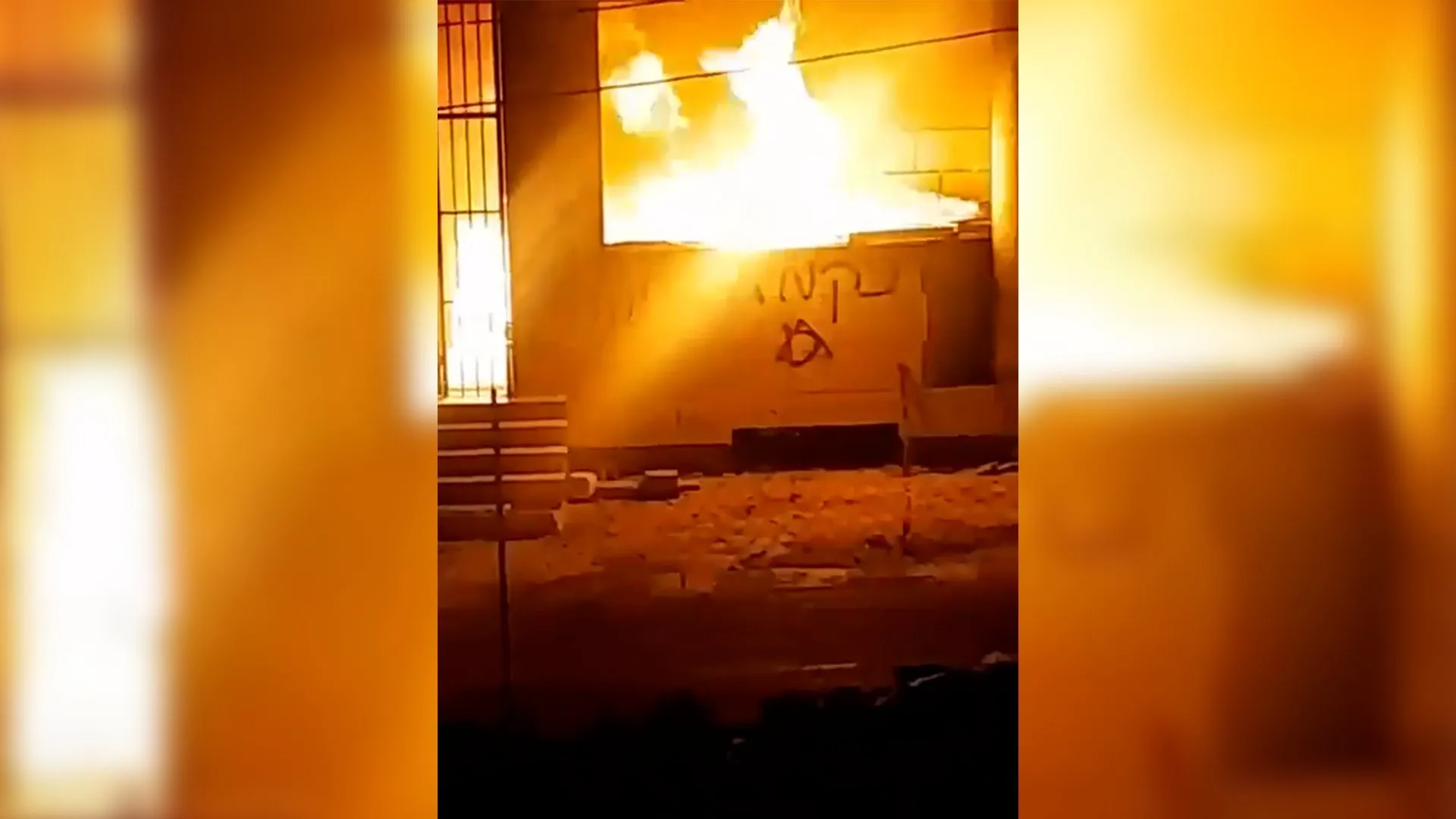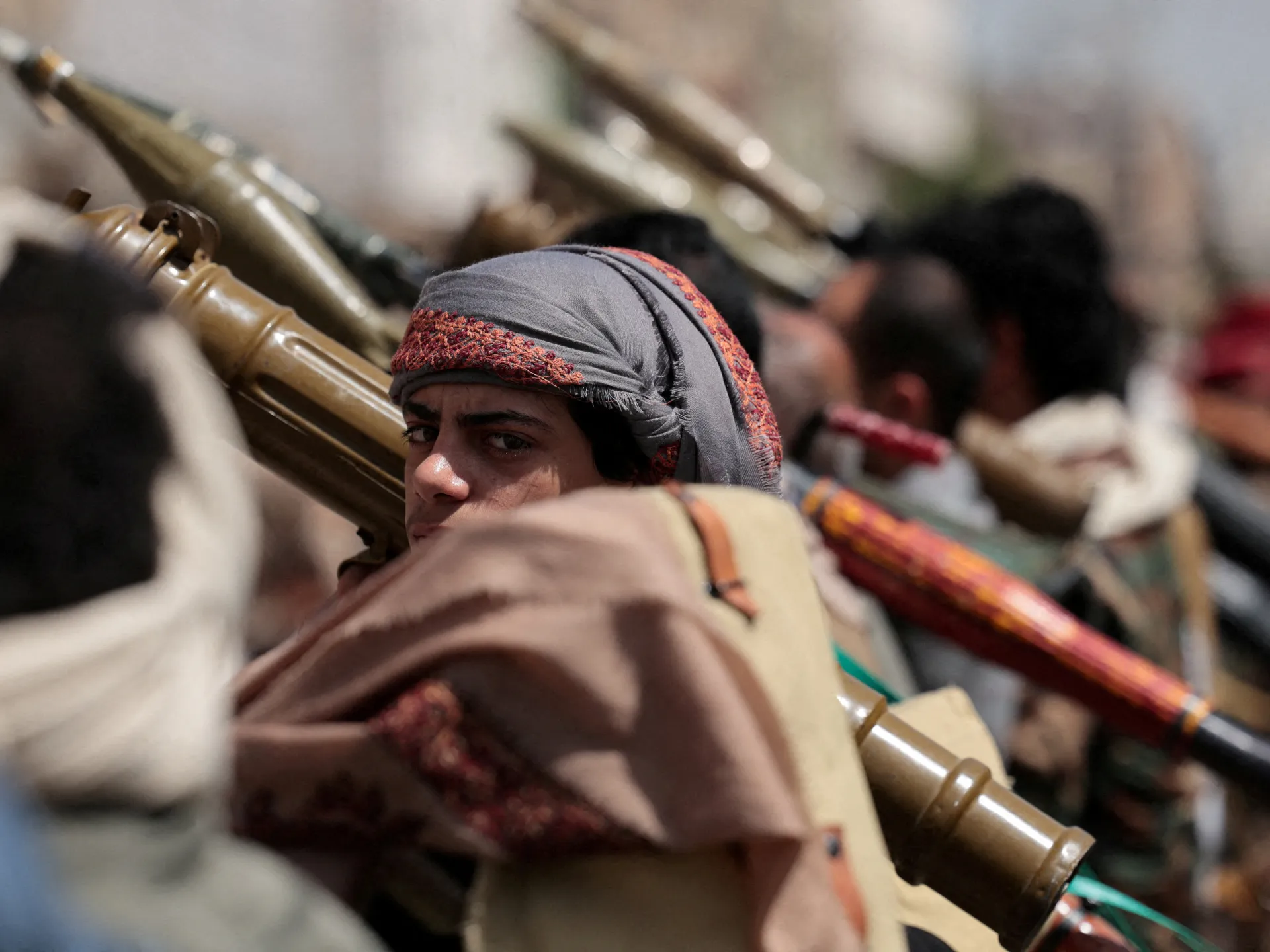
MCC Resources Sarl, a mining company in the Democratic Republic of Congo (DRC), has suspended its activities in the country, following an attack on its mining sites in the Mambasa territory of Ituri province. On the night of March 11 to 12, terrorists attacked the mining site, killing scores, looting, and destroying facilities.
The Allied Defence Forces (ADF), an affiliate of the Islamic State, recently claimed responsibility for the attack. Local sources told HumAngle that the ADF members came from Bapere, in Lubero territory of North Kivu. MCC Resources Sarl is a Congolese company with foreign investors, operating in compliance with the laws and economic standards of the DRC.
The Islamic State claimed responsibility for the attack on gold mining sites operated by the Chinese Kimia Mining Enterprise, publishing photographs that showed burning trucks, tractors, and camps.
The new attack is fueling debates on the realities faced by economic operators in the strategic gold mining zone, as well as on the impact of armed violence on the national mining investments in the DRC
“In an official correspondence addressed to the military governor of Ituri, the MCC Resources management indicates that due to the persistent degradation of the security situation in the Eastern part of the country, it had proceeded with the preventive evacuation of its personnel several weeks before the attack. According to the company, the incursion of armed groups not formally identified in the Muchacha site has led to acts of looting and sabotage aimed at its mining installations, without, however, causing the loss of human lives,” the company revealed in a statement released on March 15.
Faced with security risks deemed very high, MCC Resources announced the suspension of all mining activities at its Muchacha and Mavuvu sites until further notice, adding that its employees and partners remain its top priority. The company says it is following the evolution of the security situation to envisage, at the right moment, the progressive resumption of its operations.
The Congolese government has condemned the attack. In a communique also published on March 15, the government extended its condolences to the families of the victims and expressed its compassion to the populations of Mambasa territory affected.
MCC Resources Sarl, a mining company in the Democratic Republic of Congo (DRC), has halted operations following a deadly attack by the Allied Defence Forces on its mining sites in Ituri province.
The March 11-12 assault, claimed by the Islamic State, resulted in fatalities, looting, and infrastructure damage, and highlights ongoing security challenges impacting mining investments in the region.
The company had preemptively evacuated staff due to security concerns and has suspended activities at its Muchacha and Mavuvu sites, prioritizing the safety of employees and partners. The Congolese government condemned the attack, extending condolences to victims’ families. MCC Resources is monitoring security developments to eventually resume operations.
Rescuers have pulled civilians from the rubble after a new wave of US-Israeli strikes targeted Tehran. Residents said that a neighbourhood was attacked, leaving several people trapped under the destruction.
As the war US-Israeli war on Iran enters its third week, Iran’s Foreign Minister Abbas Araghchi has said that his country has shown it is ready to take the war “as far as necessary” and that the conflict must end in a way “that our enemies will never again consider repeating these attacks”.
Welcome to UCLA Unlocked, our weekly newsletter featuring all things Bruins athletics. To sign up to get this newsletter delivered every Monday to your inbox, click here.
UCLA coach Cori Close has said all the right things all season, hammering the importance of winning each day and making the most of every practice.
After watching her team struggle during the Final Four last season, she also urged the Bruins to remember the joy of their journey together was far more important than the final tournament results.
She continued to run the John Wooden playbook on Selection Sunday, brushing away the suggestion that UCLA was snubbed by the NCAA tournament selection committee.
Sign up for UCLA Unlocked
A weekly newsletter offering big game takeaways, recruiting buzz and everything you need to know about UCLA sports.
“Everybody else can talk about whatever they want,” Close said. “We’re going to talk about what that takes, and we are completely committed to just being really focused on us and our journey and keeping the main thing, the main thing.”
While she rightly is focusing on her team, there is no denying UCLA got a bad draw.
Not only were the Bruins denied the No. 1 overall seed despite playing a much tougher schedule than overall No. 1 seed UConn, the Bruins will have to fight through the toughest regional to reach the Final Four in Phoenix.
LSU was the highest rated No. 2 seed and Duke was the highest rated No. 3 seed. Both were assigned to the same regional as UCLA. No. 5 Ole Miss, led by Ohio State transfer and dynamic SEC newcomer of the year Cotie McMahon, is another potent team slotted in the Bruins’ side of the bracket.
“The Sacramento region with UCLA, they absolutely have the toughest region when you look at the LSU-Duke matchup — the No. 1 two seed, the No. 1 three seed,” former Notre Dame coach Muffet McGraw said on ESPN. “I don’t know how they ended up with the same bracket as UCLA as the No. 2 overall. … I’m perplexed.”
McGraw has been doing the work Close arguably couldn’t for weeks without coming across as whining. The retired coach questioned the NCAA tournament selection’s committee previous rankings that slotted UCLA behind UConn.
On March 2, McGraw posted on X, “Does anyone else think UCLA deserved the overall [No. 1] seed? Undefeated regular season Big Ten champs, beat 11 ranked teams, six of which are currently in the committee’s top 16. They have 14 Quad 1 wins, more than anyone in the country, and their only loss was to another [No. 1] seed. And what about SEC champ South Carolina as the [No. 2] overall?
“UConn is certainly good enough to win the national championship, but UCLA and South Carolina have had as much success against a much tougher schedule.”
UConn fans were quick to point out McGraw’s losing record against Huskies coach Geno Auriemma and their bad blood, but the former Notre Dame coach was armed with notable stats that are supposed to be the basis for the selection committee’s bracket.
It wasn’t enough to help the selection committee ignore the score that seemed to matter the most — a 85-51 UCLA loss to UConn in last season’s Final Four.
“We watched a lot of UConn, we watched a lot of UCLA,” NCAA tournament committee chair Amanda Braun said on ESPN. “The way we watched UConn win throughout the year from beginning to the end, UCLA did a lot of winning too, but ultimately we gave UConn the edge.”
The Bruins have said every team is tough in the NCAA tournament and they must simply focus on being their best each day. Surviving a challenging regional will only make their success sweeter.
And UCLA can take solace that at least one team had a worse draw than it did on Sunday. Crosstown rival USC was awarded a No. 9 seed and will play No. 8 seed Clemson in Columbia, S.C., a short commute for the Tigers’ fans. If the Trojans survive, they most likely will face No. 1 seed South Carolina on the Gamecocks’ notoriously hostile home court.
Survey says
We asked, “How far will the UCLA women advance in the NCAA tournament?”
After 460 votes, the results:
They win it all: 80.8% They lose in the title game: 14.6% Just like last year, they lose in the Final Four: 3.5% A surprising elimination in the Sweet 16: 0.9% A shocking upset in the first or second round: 0.2% They lose in the Elite Eight: No votes
Survey time
How far will the UCLA men advance in the tournament?
They lose in the first round They lose in the second round They lose in the Sweet 16 They lose in the Elite Eight They lose in the Final Four They lose in the title game They win it all
Do you have a comment or something you’d like to see in a future UCLA newsletter? Email newsletters editor Houston Mitchell at houston.mitchell@latimes.com. To get this newsletter in your inbox, click here.
Hi, and welcome to another edition of Prep Rally. I’m Eric Sondheimer. The champions have been crowned in high school basketball and soccer. What a weekend it was in Sacramento.
Get our high school sports newsletter
Prep Rally is devoted to the SoCal high school sports experience, bringing you scores, stories and a behind-the-scenes look at what makes prep sports so popular.
Damien players celebrate their state Division I boys’ basketball title victory over Folsom at the Golden 1 Center in Sacramento on March 13, 2026.
(Greg Stein)
In the highest divisions at the CIF state championships at Golden 1 Center in Sacramento, Southern California basketball teams continue to dominate.
Sierra Canyon and Ontario Christian were crowned Open Division boys and girls champions, respectively. Sierra Canyon overcame the loss of Maxi Adams to an ankle injury in the first quarter to defeat Richmond Salesian 78-70. Here’s the report.
Kaleena Smith of Ontario Christian gets emotional in the first half at Golden 1 Center against Archbishop Mitty.
(Greg Stein)
Ontario Christian received another standout performance from junior guard Kaleena Smith to defeat Archbishop Mitty 56-49. Here’s the report.
Damien won Division I for coach Mike LeDuc. Here’s the report. Corona Centennial’s one-two punch of Sydney Douglas and Cyndee Bryant led the Huskies to the Division I girls title. Here’s the report.
Sylmar and Birmingham came up short trying to become the first City Section teams from the San Fernando Valley to win state titles. Sylmar was beaten in Division V. Here’s the report. Birmingham settled for runner-up in Division III. Here’s the report.
El Dorado’s girls’ team broke through in Division III. Here’s the report.
Soccer
Garfield goalkeeper Javier Zarate gets his photo taken with CIF executive director Ron Nocetti at state soccer finals. Garfield lost 2-0 in Division V.
(CIF)
Garfield was beaten in the Division V state boys final 2-0 by Branson. But sophomore goalie Javier Zarate continues to impress. Here’s a look at his impact.
Mater Dei deserves the name soccer school of the West. The Monarchs won boys and girls state titles in Division I. The boys defeated Salinas Everett Alvarez 2-1. The girls defeated unbeaten Bishop O’Dowd 2-0. Los Alamitos won Division III boys over Watsonville 1-0. Irvine University won Division IV 3-2.
Baseball
Freshman Louis Lappe of Harvard-Westlake receives congratulations after his first high school hit.
(Craig Weston)
Freshman Louis Lappe of Harvard-Westlake, the former El Segundo Little League star who gained national fame for his walk-off home run at the Little League World Series in 2023, hit his first high school home run on Wednesday.
A moment in time. The first career home run for freshman Louis Lappe. Courtesy Harvard-Westlake. I think he’s going to hit plenty more. pic.twitter.com/jESpnQC6YN
Brody Schumaker of Santa Margarita had four hits, including a grand slam, and seven RBIs in a win over Los Osos. He has struck out once in 34 at-bats.
Landon Hovermale of Norco has allowed no runs in 18 2/3 innings this season.
(Nick Koza)
Norco has one of the hottest pitchers around in Landon Hovermale, who has given up no runs in 18 2/3 innings. Here was his latest performance.
It appears Southern Section is considering reducing teams to the Division 1 baseball playoffs with a smaller division and multiple games. Rest of teams would go in other divisions. Recommended by advisory committee. Only D1. Let’s see what turns out. Sounds like soccer playoffs.
Foothill pitchers have thrown three consecutive shutouts.
There’s every indication that the Southern Section is going to introduce a new playoff format for Division 1 baseball only. It’s expected to be a 16-team tournament broken into four pools with double elimination leading to the quarterfinals with the top two teams in each pool advancing, followed by single elimination. The baseball advisory committee has been pushing for such a tournament in Division 1 for years.
California state leader and meet record 10.27 wind legal for Servite’s Benjamin Harris at the Redondo Nike Track Festival! 📸: Bob Leetch pic.twitter.com/SXr4bESsVJ
Benjamin Harris of Servite turned on the speed at Redondo Union on Saturday, running a wind legal 10.27 seconds in the 100 meters.
Moorpark Track & Field throws down the hammer!! Varsity Boys & JV sweep, Varsity Girls takes down Camarillo for the 1st time in a decade! Jr. Davis Benson sets TWO school records 14.30 110H, 38.82 300H and our Girls 4×100 Record gets broken at 48.26!! WHAT A DAY! @davistbensonpic.twitter.com/GBN8FxWwDZ
One of the most versatile track and field athletes this season has to be junior Davis Benson of Moorpark. He’s putting up good marks in a variety of events. He’s already set school records in the 110 hurdles of 14.30 and the 300 hurdles in 38.82. And he’s gearing up for a high jump showdown later in the season with Sherman Oaks Notre Dame’s JJ Harel. Benson has gone 6-10.
Carson’s Jayden Rendon stamped himself as a state contender in the 110 hurdles with a time of 13.91 at Redondo Union.
Lawrence Kensinger of Venice, another pupil of Sherman Oaks Notre Dame throwing coach Nick Garcia, is closing in on 60 feet in the shotput. He recorded a career-best 59-8.
Jaslene Massey of Aliso Niguel, already No. 1 in the state in the discus, won the Nike Indoor Nationals in the shotput at 54-2.75, seventh-best mark in California history. She also got a mark of 188-7 in the discus, second-best all-time.
Loyola’s Ejam Yohannes ran 400 meters in a state-leading 46.24. It was a school record.
Bob Johnson dies
Former Mission Viejo coach Bob Johnson died last week. He was 80.
(Los Angeles Times)
High school football fans across Southern California were offering memories of Hall of Fame coach Bob Johnson after his passing Wednesay. He was 80.
Johnson won nine Southern Section titles coaching at Mission Viejo and El Toro.
One of the best sporting events of the year happens Friday night when volleyball powers Mira Costa and Loyola face off at Mira Costa. . . .
Alfred Rowe has resigned after one season as football coach at Long Beach Jordan. . . .
Earl Sanchez has resigned as basketball coach at Sierra Vista. . . .
Former Gardena Serra and UCLA tight end Caleb Wilson has been hired as an assistant coach at Colorado State under former UCLA coach Jim Mora Jr. . . .
Luis Cruz Jr. is the new football coach at Sunny Hills. . . .
The top football player in the state for next season, Honor Fa’alave-Johnson of Cathedral Catholic, announced he has committed to USC.
From the archives: Mason Edwards
In 2023, Left-hander Mason Edwards of Palisades was one top pitchers in the City Section. Now he’s the ace at USC.
(Steve Galluzzo)
Mason Edwards, a junior at USC from Palisades High, is off to one of the best starts by a pitcher in the nation. He entered last week having allowed no runs and only three hits in 24 innings while recording a 3-0 record. He gave up his first run of the season on Friday. He’s left-handed and has 42 strikeouts. He throws between 90 and 93 mph.
Edwards has continued to improve at USC since his arrive in the fall of 2023.
Recommendations
From the Players Tribune, former El Toro pitcher pitcher Paul Skenes offers advice to Little Leaguers.
From the Daily Bruin, a story on Brentwood basketball coach Ryan Bailey, a former UCLA basketball standout.
From the Los Angeles Times, a story on former Chatsworth guard Alijah Arenas keeping his NBA dreams alive.
Tweets you might have missed
Trent McDuffie (St. John Bosco), Colby Parkinson (Oaks Christian), Coleman Shelton (Loyola), Quentin Lake (Mater Dei) are going to be Southern California heroes as they try to help the Rams win a Super Bowl in 2027.
Have a question, comment or something you’d like to see in a future Prep Rally newsletter? Email me at eric.sondheimer@latimes.com, and follow me on Twitter at @latsondheimer.
Did you get this newsletter forwarded to you? To sign up and get it in your inbox, click here.
Joint attacks by the United States and Israel have severely reduced Iran’s capacity to fire missiles and drones, experts say, but Iran retains enough capabilities to inflict significant damage.
“Iran’s ballistic missile capacity is functionally destroyed. Their navy assessed combat ineffective. Complete and total aerial dominance over Iran,” the White House said on Saturday. “Operation Epic Fury is yielding massive results,” it said in reference to the war launched by Israel and the US on February 28.
Recommended Stories
list of 3 itemsend of list
On Sunday, President Donald Trump said US forces had decimated Iran’s drone manufacturing capacity.
Still, on Monday afternoon, Qatar announced it had intercepted the latest in a series of missiles fired from Iran towards the country. Saudi Arabia, the United Arab Emirates and Bahrain also issued alerts. A missile landed on a car in Abu Dhabi, killing a person.
So are Iran’s missile capabilities severely reduced? And how is it still firing projectiles at its neighbours and Israel?
Is Iran firing fewer missiles now?
Indeed, the number of retaliatory missiles and drones that Iran has fired towards Gulf countries, Israel and other nations in the region has seen a steep decline since the start of the war.
In the first 24 hours of the conflict, Iran had fired 167 missiles (ballistic and cruise) and 541 drones at the United Arab Emirates, for instance. By contrast, on day 15 of the conflict, it had shot four missiles and six drones, according to a tally compiled by Al Jazeera based on the emirate’s Defence Ministry statements.
The barrage against Israel has also decreased, from nearly 100 projectiles over the first two days to a single-digit number in the past few days, according to Israel’s Institute for National Security Studies.
Last week, the Pentagon said missile launches were down 90 percent from the first day of fighting and drone attacks were down by 86 percent.
How big is Iran’s missile arsenal – and how much has it been hit?
Iran has the largest inventory of ballistic missiles in the region, the US Office of the Director of National Intelligence assessed in 2022. While there are no official accounts on how many missiles it has, Israeli intelligence reports suggest it counted around 3,000 missiles, a figure that dropped to 2,500 following the 12-day war last June.
Key to the US-Israel strategy has been hunting down Iran’s launchers. Each missile launch generates a signature, such as a large explosion, that can be picked up by a satellite and radar systems.
According to a senior Israeli military official cited by the Institute for the Study of the War, Israel has put up to 290 launchers out of service, out of an estimated 410 to 440 launchers.
But Iran is a vast country, and without boots on the ground, it will be hard to completely eliminate Iran’s capacity to shoot despite the US and Israel having nearly full control of the country’s airspace, said David Des Roches, an associate professor at the National Defense University in Washington, DC.
“It is not obvious to identify launchers,” Des Roches told Al Jazeera. “What we see are missiles that were put in hidden places or places not associated with the military before the war, when there was less observation”.
According to Des Roches, the slowdown in launches is due to Iranian forces having lost the capacity to launch volleys. As a result, Iran has been firing one or two missiles at a time towards civilian and commercial infrastructure, especially in Gulf countries, instead of aiming volleys at military targets. Iran insists that it is targeting only US interests in the region.
“Militarily speaking [Iran’s action] is not significant – this is what is called harassment fire to exhaust alert systems in nearby countries and scare people off,” Des Roches said.
What’s Iran’s strategy?
According to Hamidreza Azizi, an expert on Iran and visiting fellow with the German Institute for International and Security Affairs (SWB), Tehran’s central calculation is that the Gulf and Israel may run out of their defensive capabilities before Iran runs out of missiles.
“There might be some interest in making this a war of attrition,” he said, pointing at the lower, yet constant, number of weapons launched from Iran each day.
“Although the US and Israel have been successful in taking out some of the launchers and major missile bases, the Iranians have decentralised the missile bases and missile command and they have been increasingly relying on mobile launchers which makes it more difficult for the other side to detect and target,” Azizi said. “This is a race about time.”
And in that race, Iran believes it has a chance, say experts.
“It does not matter how many you launch as long as you maintain a credible threat,” Muhanad Seloom, an assistant professor in critical security studies at the Doha Institute for Graduate Studies, told Al Jazeera. “It takes one successful drone to shatter a sense of security.”
Iran has long experience in producing cheap yet effective drones. The Shahed 136 can be made quickly and in large numbers in relatively simple factories, and several of them can be fired at once, overwhelming defences. It also doesn’t need complex launchers that can be targeted in air strikes. With a speed of just 185km/h (115mph), Shaheds can be shot down by helicopters. Still, many have managed to get through US and Gulf air defence systems.
Just on Monday, a fire broke out near the UAE’s Dubai International Airport in a drone-related incident that temporarily disrupted flights; another drone attack caused a fire at the Fujairah industrial area, also in the UAE; air sirens sounded in central Israel due to a missile fired from Iran; and in the Strait of Hormuz – a key waterway through which 20 percent of global energy supplies are shipped – hundreds of vessels remain paralysed over fear of being struck despite few attacks on ships. Since the start of the war, a maritime tracker has reported 20 incidents related to vessels.
This, say experts, is part of Iran’s defensive doctrine of asymmetric warfare against militarily superior powers, such as the US and Israel. The weaker party, Iran in this case, turns to unconventional methods of warfare, wearing down the enemy by targeting key infrastructure to inflict economic pain.
Tehran has already pushed oil prices to higher than $100 a barrel and sent global markets into panic mode. The second-biggest exporter of natural gas, Qatar, continues to keep shut its production; Bahrain’s state oil company has declared force majeure on its shipments, and oil production from Iraq’s main southern oilfields has plunged 70 percent.
If Iran can keep raising global oil prices, “it will inflict equal or more damage to the US than American bombs in Iran,” said Vali Nasr, a professor of international affairs and Middle East studies at Johns Hopkins University.
Qatar’s Foreign Ministry spokesperson Majed Al Ansari says Iranian attacks have targeted residential areas and Hamad International Airport, contradicting Tehran’s denial that is has been attacking civilian sites.
Neighbourhoods in Beirut’s southern suburbs have been left in ruins by Israeli bombing attacks. Israel says it is targeting Hezbollah infrastructure but hundreds of thousands of people have been forcibly displaced.
Families displaced by Israeli airstrikes in southern Lebanon have found shelter at the Saints Peter and Paul Monastery in the village of Qattine. Clergy there opened their doors to those fleeing the violence, offering food, shelter and a place to pray as thousands across the south remain unable to return home.
The Israeli army says its forces are striking key sites in southern Lebanon, as fierce clashes with Hezbollah continue near the town of Khiam.
Published On 16 Mar 202616 Mar 2026
Share
The Israeli military says its troops have begun ground operations in southern Lebanon as fighting against Hezbollah intensifies around the strategic southern town of Khiam.
At least three air strikes struck the city of Khiam, Al Jazeera Arabic reported on Monday.
Recommended Stories
list of 4 itemsend of list
Khiam, a stronghold of Hezbollah, is strategically located and is seen as a gateway to southern Lebanon. The latest war started after Hezbollah fired rockets in response to the killing of Iran’s Supreme Leader Ayatollah Ali Khamenei. Hezbollah had not attacked Israel since the 2024 ceasefire despite repeated Israeli violations of the United States-brokered deal.
On Monday morning, two Israeli air raids targeted the town of Yater, Al Jazeera Arabic reported. There were no immediate reports of casualties or damage.
Israel also launched raids on Burj Qalawiya, Sultaniya and Chaqra, also in southern Lebanon, according to Al Jazeera Arabic. Two raids were also conducted on the towns of Qantara and as-Sawana.
The Israeli army, in a post on X, said on Monday that its troops in recent days were “focused on ground operations on key targets in southern Lebanon to expand the forward defence area”.
“This operation is part of the effort to establish the forward defence, which includes destroying terrorist infrastructure and eliminating terrorists,” it added.
Importance of Khiam
Khiam sits on high ground just a few kilometres from the Israeli border and the Litani River, giving it a commanding view over northern Israel and nearby Lebanese plains.
Al Jazeera’s Zeina Khodr said a “major battle was under way” in and around Khiam. “The elevation of Khiam for both sides gives them a strategic advantage,” she said.
Moreover, Khodr noted the town lies on a “long and important junction … a road that leads to the eastern and western sectors of southern Lebanon”.
“One of the roads leads to the Bekaa Valley too in eastern Lebanon, another area where Hezbollah has influence,” she said.
“What Israel has been trying to do is really cut the supply lines and the difficult capabilities of Hezbollah, so it’s unable to bring in more weapons and fighters to areas south of the Litani River.”
More than 800,000 people, including women and children, have been forced to flee from their homes as the Israeli army issued evacuation orders for many neighbourhoods in southern Lebanon, as well as the capital, Beirut.
Israeli attacks in Lebanon have so far killed at least 850 people, among them 107 children and 66 women.
One Battle After Another was the big winner of the 98th Academy Awards, taking home six Oscars.
Paul Thomas Anderson’s black comedy about a has-been revolutionary won Best Picture, Best Director, Best Adapted Screenplay, Best Supporting Actor, Best Film Editing, and Best Casting.
Recommended Stories
list of 1 itemend of list
Sinners, which entered the ceremony with a record 16 nominations, was the second-biggest winner of the night, with four awards.
Michael B Jordan earned Best Actor for his leading role, while director Ryan Coogler picked up his first Oscar for Original Screenplay.
In the acting categories, Jessie Buckley won Best Actress for Hamnet, marking her first Academy Award, while Amy Madigan was recognised as Best Supporting Actress for Weapons.
Elsewhere, the South Korean musical fantasy KPop Demon Hunters won two Oscars, while Frankenstein also secured two awards.
Here is the full list of winners:
Best Picture One Battle After Another
Best Actress Jessie Buckley, Hamnet
Best Actor Michael B Jordan, Sinners
Best Supporting Actress Amy Madigan, Weapons
Best Supporting Actor Sean Penn, One Battle After Another
Best director Paul Thomas Anderson, One Battle After Another
Best Original Score Ludwig Göransson, Sinners
Best Animated Film KPop Demon Hunters
Best International Feature Sentimental Value
Best Documentary Feature Mr Nobody Against Putin
Best Casting Cassandra Kulukundis, One Battle After Another
Best Sound Gareth John, Al Nelson, Gwendolyn Yates Whittle, Gary A Rizzo and Juan Peralta, F1
Best Original Screenplay Ryan Coogler, Sinners
Best Adapted Screenplay Paul Thomas Anderson, One Battle After Another
Best Documentary Short All the Empty Rooms
Best Live Action Short Film The Singers and Two People Exchanging Saliva (tie)
Best animated short film The Girl Who Cried Pearls
Best Music (Original Song): EJAE, Mark Sonnenblick, Joong Gyu Kwak, Yu Han Lee, Hee Dong Nam, Jeong Hoon Seo and Teddy Park for Golden, KPop Demon Hunters
Best Film Editing: Andy Jurgensen, One Battle After Another
Best Cinematography: Autumn Durald Arkapaw, Sinners
Best Production Design: Tamara Deverell and Shane Vieau, Frankenstein
Best Costume Design Kate Hawley, Frankenstein
Best Makeup and Hairstyling Mike Hill, Jordan Samuel and Cliona Furey, Frankenstein
Best Visual Effects Joe Letteri, Richard Baneham, Eric Saindon and Daniel Barrett, Avatar: Fire and Ash
Visual effects supervisor Eric Saindon, visual effects artist Richard Baneham, Daniel Barrett and visual effects supervisor Joe Letteri accept the award for Best Visual Effects for Avatar: Fire and Ash [Patrick T. Fallon/AFP]
Gaza City, the Gaza Strip – On February 28, Lama Abu Reida was just a few hours away from what she hoped would change the fate of her sick infant daughter, Alma.
The family had finally been informed that the baby girl – fewer than five months old and unable to breathe without an oxygen machine – was eligible for medical evacuation.
Recommended Stories
list of 3 itemsend of list
The small travelling bag was packed, the medical documents in order, and Abu Rheida ready to go. All that remained was to exit the Rafah crossing between Gaza and Egypt and from there head to Jordan, where Alma could undergo a surgery that was not available in the Gaza Strip.
But just one day before the scheduled March 1 trip, Israel shut Gaza’s crossings “until further notice”, citing security reasons. The decision coincided with the launch of a joint military attack alongside the United States on Iran – and shattered Abu Rheida’s hopes.
“They told me the crossing had been closed without any warning because of the war with Iran,” the mother says in a choked voice.
Alma, who suffers from a lung cyst, has been at Nasser Hospital in Khan Younis, in southern Gaza, for more than three months now, with her mother staying by her side day and night.
“She cannot do without oxygen at all,” Abu Rheida says. “Without it, she becomes extremely exhausted.”
‘I don’t know what might happen’
The Rafah crossing, Gaza’s main gateway to the outside world, was closed for long periods during Israel’s genocidal war against Palestinians in the Strip that began in October 2023.
On February 1, Israel announced a limited reopening as part of a trial phase following a “ceasefire” with the Palestinian group Hamas. This allowed some movement under the agreement’s arrangements, particularly for medical cases.
But only a few patients were able to travel, and thousands remained on waiting lists until the February 28 closure, which stopped the transfer of wounded patients abroad, as well as medical evacuations of patients like Alma.
Doctors had told her family the only option for Alma, who was previously admitted to intensive care three times within a month, was to have surgery abroad to remove the cyst from the lung. While not particularly risky, such an operation cannot be done inside Gaza due to limited medical resources.
“My daughter’s life depends on a single surgery, and afterwards she could live a completely normal life,” Abu Rheida says.
“If her travel is delayed any longer … I don’t know what might happen. Her condition is not reassuring,” she adds in despair.
On Sunday, Israeli authorities said the Rafah crossing will open again on Wednesday for ”limited movement of people” in both directions.
Hadeel Zorob’s late son, Sohaib [Courtesy of Hadeel Zorob/Al Jazeera]
‘The closure killed my children’
The very thing Abu Rheida fears is something Hadeel Zorob has already endured.
Zorob’s six-year-old son, Sohaib, died on March 1, 2025, while her eight-year-old daughter, Lana, passed away on February 18 last month. The two children suffered from a rare genetic disease that causes gradual deterioration in the body’s functions.
They were both waiting for medical referrals to travel abroad for treatment – but that never happened.
“I watched my children die slowly in front of my eyes, one after the other, without being able to do anything,” says Zorob, 32, breaking down in tears.
Lana was only a few days away from travelling before she passed away.
“My daughter’s travel had been scheduled around the same period when the crossing was later closed, but she died before that,” Zorob says.
“When the news of the crossing closure came, my grief for my daughter returned all over again as I remembered the many children who will suffer the same fate.”
Zorob says her children were still able to move and play relatively normally in the early stages of their illness.
Before Israel’s war on Gaza, both children were receiving specialised hospital treatment, which helped stabilise their condition to some extent. But as the Israeli attacks intensified, their condition gradually worsened until it reached a life-threatening stage. The collapse of Gaza’s healthcare system left the family struggling to access the medications they relied on.
“We even tried to bring the medicine from the West Bank, and I asked the Red Cross and the World Health Organization, but nothing worked,” Zorob says.
During the war, she and her family had to leave their home and move into a tent in the al-Mawasi area. The new displacament conditions made caring for the children much harder.
“Both were bedridden … in diapers, and their blood sugar needed regular monitoring. We had to give fluids and watch their food … all this in a tent with no basic necessities.”
Zorob says she feels like “going crazy” when she thinks that her children might have survived and improved if they were able to get treatment abroad.
“The closure of the crossings killed my children!” she adds, her voice filled with anguish. “The world gives no value to our lives or to the lives of our children … this has become something normal.”
Zorob says she is trying to stay strong for her third child, four-year-old Layan, despite the persisting pain.
“All I want is that what happened to my children does not happen to any other mother … that the crossing be reopened and that children and patients be allowed to travel.”
‘Is that too much to ask?’
According to the Health Ministry in Gaza, more than 20,000 patients and wounded people are waiting to travel abroad for medical treatment.
Among them are about 4,000 cancer patients in need of specialised care unavailable in Gaza, and roughly 4,500 children.
The lists also include around 440 “life-saving” cases needing urgent intervention and nearly 6,000 wounded people who require continued hospital care outside of Gaza.
The Al-Dameer Association for Human Rights has called the Rafah crossing’s closure a form of collective punishment for civilians in Gaza, warning that it “sentences more patients to death” and deepens Gaza’s humanitarian crisis.
Amal al-Talouli, 43, has been suffering from breast cancer for five years [Maram Humaid/Al Jazeera]
For Amal al-Talouli, the closure of the Rafah crossing was another devastating blow in her battle with cancer.
The 43-year-old has been suffering from breast cancer for about five years. Although she underwent treatment before the war, the disease returned and spread to other parts of her body, including the spine.
“Praise be to God, we accept our fate,” the mother of two says. “Still, why should our suffering worsen because we are prevented from travelling and the crossings are closed?”
Al-Talouli is currently living with relatives after losing her home in the Beit Lahiya project area, in northern Gaza, during the war.
Displacement was not an easy choice due to her health condition, she says. The situation is compounded by a severe shortage of medications and specialised medical staff – a reality also experienced by other cancer patients in Gaza.
“There is a shortage of everything,” al-Talouli says. “I developed osteoporosis and eye fluid from chemotherapy. Chemo needs good nutrition, but malnutrition and famine made it much harder.”
Al-Talouli says the shutdown of the crossings made things worse.
“[It] affects us very, very much. No medicines are entering, and no essential treatments are coming in,” says al-Talouli, whose name was on a waiting list to travel outside of Gaza for treatment.
She stresses that cancer patients in Gaza urgently need support.
“Now I only want the crossing to reopen so I can have a chance to recover and continue my life with my children,” she says. “Is that too much to ask?”
As anticipated, it ended up being One Battle After Another’s night at the 98th annual Academy Awards, with the political thriller carting away six Oscars out of a total of 13 nominations.
But while Paul Thomas Anderson’s magnum opus continued its march towards award-season domination, there were moments of genuine surprise and subversion in Sunday’s ceremony.
Recommended Stories
list of 3 itemsend of list
Some of those moments had to do with the current political climate in the United States.
Host Conan O’Brien and his fellow presenters deftly avoided mentioning President Donald Trump by name, but their barbs took direct aim at his policies since returning to office.
Other surprises came from within the filmmaking community itself. For only the seventh time in Oscar history, a tie was announced: Two films had gotten an equal number of votes for Best Live Action Short.
As a result, both the surrealist thriller Two People Exchanging Saliva and the moody bar-room drama The Singers shared the Academy Award.
Here are six key takeaways from the night.
Actor Michael B Jordan holds the Oscar for Best Actor next to director Ryan Coogler, who earned an Oscar for Best Original Screenplay [Valerie Macon/AFP]
A two-horse race between Sinners and One Battle
The vampire film Sinners came into Sunday night’s ceremony with a record 16 Oscar nominations. But the big question of the night was: How many nods could it actually convert into wins?
Its biggest competition was, of course, Anderson’s One Battle After Another, which had the second highest tally of nominations.
Sinners director Ryan Coogler and Anderson were in direct competition in several top categories, including Best Picture and Best Director.
In both cases, Anderson came out ahead, though he acknowledged how fickle such awards can be.
“ I just want to say that, in 1975, the Oscar nominees for Best Picture were Dog Day Afternoon, One Flew Over the Cuckoo’s Nest, Jaws, Nashville and Barry Lyndon,” the four-time Best Director nominee said, listing films now considered to be Hollywood classics.
“There is no best among them. There is just what the mood might be that day.”
In the categories for Best Supporting Actor and Best Film Editing, One Battle After Another also triumphed, as well as for the inaugural award for Best Casting.
But in a sign of how well matched their two films were, both Coogler and Anderson emerged from the night with writing Oscars.
Anderson picked up Best Adapted Screenplay award for his use of the Thomas Pynchon novel Vineland, while Coogler made off with the Best Original Screenplay Oscar for Sinners, a work inspired by his uncle’s love of the blues.
US cinematographer Autumn Durald Arkapaw poses in the press room with her Oscar for Best Cinematography [Valerie Macon/AFP]
Jordan dunks on Chalamet in Best Actor race
Sinners, which won four Academy Awards overall, earned some of the most emotional, nail-biting victories of the night.
In the Best Cinematography category, for instance, Autumn Durald Arkapaw became the first woman to top the field.
It was her first nomination and first win, with Arkapaw besting veteran cinematographers like Marty Supreme’s Darius Khondji and Frankenstein’s Dan Laustsen, both multiple nominees.
Another big win for Sinners came in the form of Michael B Jordan, the actor whom Coogler has cast in every film since his directorial breakout in 2013’s Fruitvale Station.
Jordan, 39, was in a tight race for Best Actor with another young performer, 30-year-old Timothee Chalamet of the 1950s ping-pong drama Marty Supreme.
But Chalamet’s aggressive campaigning may have ultimately sabotaged his prospects. Multiple cracks were taken throughout the night at Chalamet’s recent comments disparaging opera and ballet.
“Nobody cares anymore” about either art form, Chalamet said in an interview last month.
“We can change society through art, through creativity, through theatre and ballet and also cinema,” director Alexandre Singh said pointedly during his acceptance speech for Best Live Action Short.
O’Brien, meanwhile, acknowledged the backlash with a joke about heightened security at the night’s Oscar ceremony.
“I’m told there are concerns about attacks from both the opera and ballet communities,” O’Brien said, before turning to Chalamet. “They’re just mad you left out jazz.”
Irish actress Jessie Buckley celebrates her win during the 98th Annual Academy Awards [AFP]
A conga line of snubs
Given the dominant performances from Sinners and One Battle After Another, plenty of critically acclaimed films left empty-handed, or nearly so.
Guillermo del Toro’s Frankenstein, as expected, earned three wins in technical categories, including Best Production Design, Best Costumes and Best Hairstyling and Makeup.
Netflix’s smash hit KPop Demon Hunters, meanwhile, also fulfilled expectations that it would dominate in its categories, Best Animated Feature and Best Original Song.
But then there were former frontrunners like Hamnet that failed to generate much traction, including for director Chloe Zhao, a past Oscar winner. Out of eight nominations total, it only came away with one win: a Best Actress trophy for Irish performer Jessie Buckley.
Marty Supreme and the Brazilian film The Secret Agent fared worse, however. Despite having nine nominations and being considered an early shoo-in for Best Actor, Marty Supreme scored no wins.
The Secret Agent, which swept the Best Actor and Best Director categories at the 2025 Cannes Film Festival, also earned nothing at this year’s Oscars.
Same was true for the quirky kidnapping drama Bugonia, from Oscar darling Yorgos Lanthimos.
South Korean-US singer Ejae poses with the Oscar for Best Original Song for the film KPop Demon Hunters[Angela Weiss/AFP]
Fears about artificial intelligence
The ceremony, however, did occasionally veer away from the competition between the films to discuss issues facing the film industry and the country as a whole.
Among those was the creeping growth of artificial intelligence (AI) in the creative sector.
In the weeks leading up to the 98th Oscars, an AI-generated video clip had gone viral, appearing to show Hollywood icons Brad Pitt and Tom Cruise in a rooftop brawl worthy of a James Bond movie.
The clip had been generated through AI software developed by the Chinese firm ByteDance, and Hollywood leaders quickly denounced it as a threat to their livelihood, not to mention a copyright infringement.
Those concerns reverberated on the Oscar stage on Sunday, with O’Brien and others addressing the growing use of AI.
“Tonight we are celebrating people, not AI, because animation – it’s more than a prompt,” actor Will Arnett said emphatically as he introduced the animation awards.
O’Brien, meanwhile, joked that, by next year, his hosting gig would be taken by “a Waymo in a tux”.
Host Conan O’Brien performs onstage during the 98th Annual Academy Awards [Patrick T Fallon/AFP]
Trump skewered for threatening free speech
Another concern looming over the night’s Oscar ceremony came in the form of President Donald Trump, who has courted controversy by launching deadly military attacks in Venezuela and Iran, as well as leading a violent immigration crackdown in the US.
At no point was Trump mentioned by name. But his leadership was alluded to throughout the night.
O’Brien, the host, set the tone early on with his oblique jabs at the Republican president in his opening monologue.
“When I hosted last year, Los Angeles was on fire,” the two-time Oscar emcee said in remarks dripping with sarcasm. “But this year, everything’s going great.”
Fellow comedian Jimmy Kimmel was even more direct. Last September, his show was briefly suspended after Trump criticised the comedian.
The head of the Federal Communications Commission, a Trump appointee, subsequently threatened the broadcasting license of the TV channel Kimmel performs on.
“There are some countries whose leaders don’t support free speech. I’m not at liberty to say which. Let’s just leave it at North Korea and CBS,” Kimmel quipped, referring to another channel that cancelled a fellow late-night comedy show.
Several filmmakers honoured at the Oscars likewise waded into the controversies surrounding Trump.
Best Documentary Feature winner David Borenstein, for instance, implied a parallel between his film — an exploration of authoritarianism in Russia — and what is currently happening in the US.
“Mr Nobody against Putin is about how you lose your country,” Borenstein explained.
“What we saw when working with this footage is that you lose it through countless small little acts of complicity: when we act complicit, when a government murders people on the streets of our major cities, when we don’t say anything, when oligarchs take over the media.”
Indian actress Priyanka Chopra and Spanish actor Javier Bardem present the award for Best International Feature Film [Patrick T Fallon/AFP]
Political speeches avoid mention of Iran war
The Oscars come roughly seven months ahead of the pivotal midterm elections in the US, which could see Trump’s Republican Party lose its majorities in Congress.
But while several filmmakers did hint at their anti-Trump stances, few explicitly denounced his policies.
For example, Norway’s Joaquim Trier, the winner of the Best International Feature category, veiled his criticism in a James Baldwin quote about the duty to protect children.
“Let’s not vote for politicians who don’t take this seriously into account,” Trier said.
No artist during the night referenced the US and Israeli war against Iran either, though its effects were felt among the participants of this year’s Oscar crop.
Writer-director Jafar Panahi, whose work was up for two Oscars on Sunday, has already said he plans to return to his native Iran after the awards season concludes.
Meanwhile, Iranian politician Sara Shahverdi — the subject of a nominee in the Best Documentary Short category — was prevented from attending the Oscars at all due to Trump’s ban on visas for 39 countries.
Palestinian actor Motaz Malhees, star of the Oscar nominee The Voice of Hind Rajab, likewise told media outlets he could not be present at the ceremony due to the travel ban.
The most pointed acknowledgements of the US-led and US-backed conflicts in the world were brief. When Spanish actor Javier Barden took the Oscar stage to present an award, he offered up six words, “No to war, and free Palestine!”
Russian filmmaker Pavel Talankin, meanwhile, made a similar appeal to the audience. “In the name of our future, in the name of all of our children, stop all of these wars now,” he said.
But by and large, the Oscar winners and presenters kept their remarks vague, emphasising global unity over political criticism.
“If I can be serious for just a moment, everyone watching right now around the world is all too aware that these are very chaotic, frightening times,” O’Brien told the audience at the outset of the night.
“It is at moments like these that I believe that the Oscars are particularly resonant. Check it out. Thirty-one countries across six continents are represented this evening, and every film we salute is the product of thousands of people speaking different languages.”
Cinema, he and others argued, transcended borders. The talent on stage was not the US’s alone.
The 2026 Oscars featured surprise wins, emotional speeches and some comical moments as stars gathered for Hollywood’s biggest night.
The ceremony saw action thriller One Battle After Another win the most Oscars of the night with six wins, including best picture. But there were a number of historic moments – including Jessie Buckley becoming the first Irish star to win best actress.
And in a shock win amid tough competition from Leonardo di Caprio and Timothée Chalamet, Michael B Jordan took home the best actor prize – the sixth black actor to win in the Academy’s nearly 100-year history.
Footage shows a fire burning near Dubai International Airport after a drone ignited a fuel tank, according to authorities in the UAE. Flights have been suspended. Civil defence crews say the blaze is under control.