“We are stunned and heartbroken by this senseless tragedy,” Bend-La Pine Schools Superintendent Steven Cook said in a statement.
“No words can adequately express the grief our community is experiencing.”
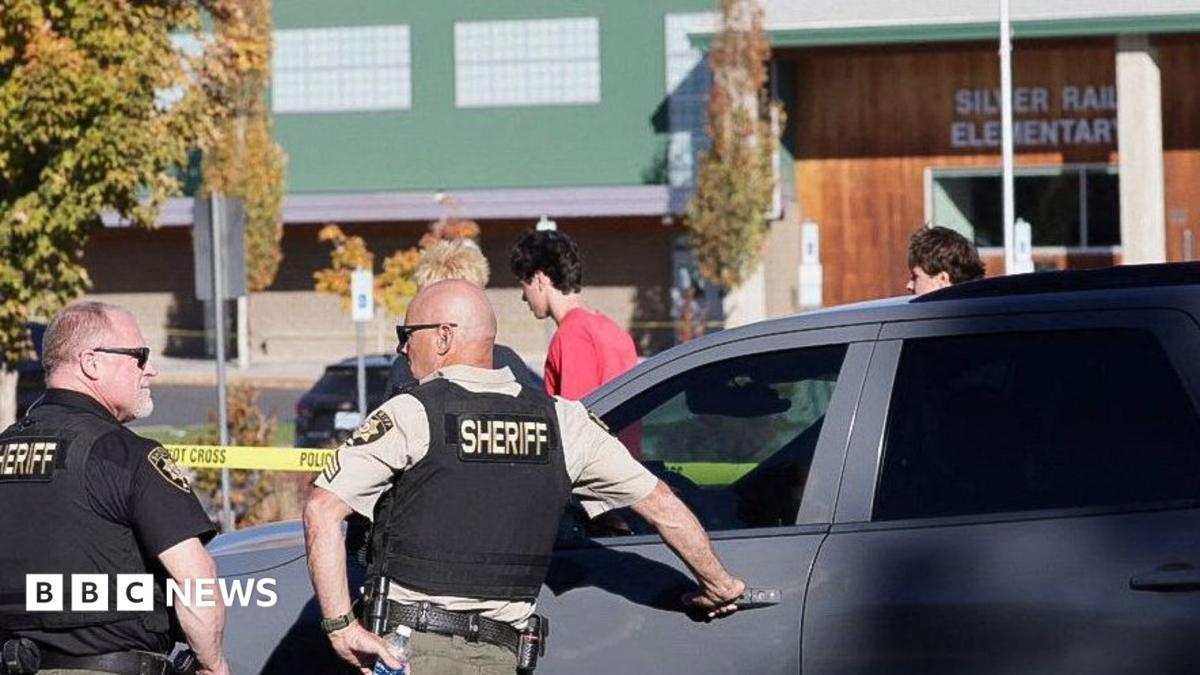
Local law enforcement responded to reports of an active shooter at Silver Rail Elementary in Bend, Oregon, at 12:59 local time, Bend Police Department spokeswoman Sheila Miller told reporters.
The first call indicated that an unknown suspect had shot into a car, she said. Photos released from the scene show a red truck with bullet holes.
Minutes later, the local county dispatch received a flood of 911 calls and law enforcement were sent to the scene.
The suspected shooter was shot dead at around 13:02pm, Miller said.
While police said the shooter was a local 16-year-old boy, they declined to add further details pending the ongoing investigation.
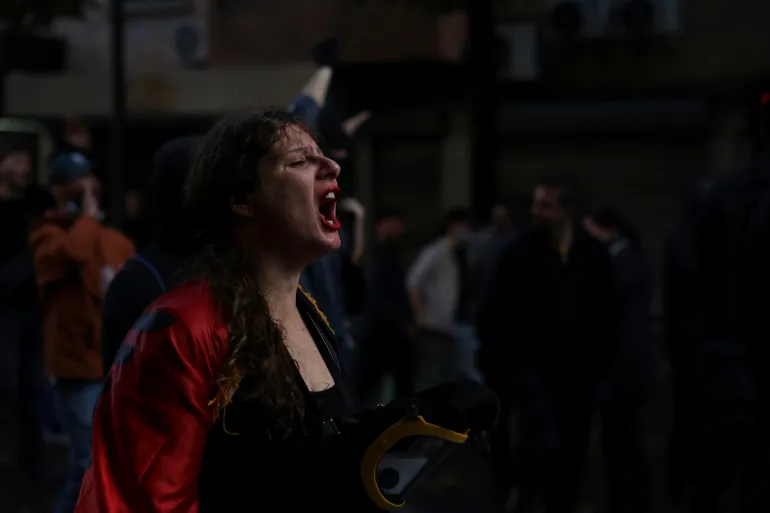
Protesters clashed with police in Buenos Aires as students and teachers vented fury at the government’s refusal to enact a law to boost education funding. President Javier Milei says implementing the law would threaten his budget-balancing plan.
When Irene Breen got a notification in January 2025 that Instagram was removing adverts for her company’s pregnancy pillows, she was confused. What was so offensive about a pillow?
She was later told on a call with Meta that the problem was the word “pregnancy”.
“We had to scrub the word from our entire website… from the product name,” Breen said. “We had to remove all our URLs which had pregnancy in them and rename them all.”
The restrictions were eventually lifted but, she said, it took 10 months of conversations with Instagram’s parent company Meta – by which time her business had suffered a significant financial hit.
Meta, which also owns Facebook, declined to comment on specific cases, but told the BBC that whilebusinesses can run adverts that promote wellness, sexual health and reproductive products and services, there are restrictions to avoid users across countries and cultures having a negative experience.
It’s not just businesses taking out paid adverts who claim their content has been unfairly restricted.
Women’s health creators and charities have told us their content has been removed, had sensitivity filters added, or had its reach suppressed – a practice known as “shadowbanning”.
The campaign group CensHERship monitors claims that women’s health content is being suppressed.
In a report last month, it surveyed nearly 200 creators, clinical providers, health brands, charities, and educators – 96% of whom said they had experienced restrictions in some form.
Fuel theft cited in Baniyas-Homs leak as gas export line in Hasakah catches fire.
Published On 15 Oct 202615 Oct 2026
Two pipelines carrying gas and oil products were damaged in separate incidents in Syria, state media reported, the latest disruptions to the country’s energy infrastructure following a series of suspected sabotage attacks.
The state-owned Syrian Petroleum Company announced the damage on Thursday, according to the Syrian Arab News Agency (SANA). The incidents add to a number of attacks on Syria’s oil and gas network in recent months, as the government tries to revive its energy sector.
Recommended Stories
list of 2 itemsend of list
An explosion struck the Jbessa gas pipeline in southern Hasakah province in the late afternoon, hours after damage to a pipeline transporting oil products from the coastal city of Baniyas to Homs caused a fuel leak.
The company said the gas pipeline had been targeted in a “sabotage attack”, according to SANA.
Neither SANA nor the company named a suspect or group responsible for the attacks.
Repairs under way
Oday al-Satouf, head of the company’s media office, told SANA that a hole was found in the Baniyas-Homs pipeline in the Hadida area, west of Homs. Crews isolated the affected stretch and secured the surrounding area, he said, closing valves on either side of the damaged section. Repairs have begun, while other teams monitor the area for safety. State media said the leak was believed to be linked to an attempted fuel theft.
Al-Satouf said gas would continue to reach power stations through alternative arrangements, and that domestic gas supplies were unaffected, according to SANA.
A man fills a container with petroleum for heating at home in Suwayda, Syria [File: Elke Scholiers/Getty Images]
A string of incidents
More than a week ago, the company said an oil pipeline near Tal Hamis in the northeastern province of Hasakah was damaged in a sabotage attack. It added that authorities had arrested those responsible.
In late September, a fire broke out on a gas pipeline between al-Shoula and Deir Az Zor in the east, halting gas flows from the Jbessa plant to power stations, SANA reported. Hisham al-Saleh, a gas sector official at the company, said gas pressure in the area fell as crews worked to extinguish the blaze.
Syria has been working to restore its energy infrastructure and increase domestic oil production. That includes resuming operations at oil fields in Hasakah to supply refineries in Homs and Baniyas. In January, the petroleum company announced plans to transport crude from recently recovered fields to the two refineries as part of efforts to revive the sector.
The administration of United States President Donald Trump has sued the state of California after the state missed a deadline to review a list of registered noncitizen voters sent to officials.
In the lawsuit, filed on Thursday in a US District Court in California, Department of Justice (DOJ) officials asked the court to prevent the state from counting mail-in ballots from voters on a list shared with the state that it said contained 20,000 noncitizens. The agency said it had attempted to “work collaboratively” with California to identify noncitizens registered to vote in the state, but “California made no serious effort to do so”.
Recommended Stories
list of 3 itemsend of list
The move follows a 48-hour deadline the DOJ gave California in letters sent to officials in several counties in the state on Tuesday, threatening further action if they did not review lists of allegedly ineligible voters the agency said it had shared.
California Secretary of State Shirley Weber, the top state official tasked with administering elections, responded to the letters, saying in a three-page letter that she wanted to “set the record straight” on events that transpired since July. The senior California official maintains that the administration is demanding “unprecedented measures that threaten thousands of Californians’ right to vote, based on unverifiable information or methodology that you still fail to explain or provide”.
Weber said she was informed that the lists provided to local officials include the names of roughly 20,000 individuals. Weber said no list was ever sent to her office. The department previously said it suspected “thousands” of registered voters of being noncitizens, and a lawsuit filed earlier Thursday by the Justice Department put the number at “tens of thousands”.
“Despite failing to send the list of alleged non-citizens to my office, you demand that we request transmittal of the list, review and confirm the citizenship status of each of the approximately 20,000 individuals on the list on the eve of an election and within a mere 48 hours,” she wrote. “This is an emergency of the DOJ’s creation.”
In a statement on Wednesday, election officials in Los Angeles County, one of the county offices that received the ultimatum from the DOJ, pointed out the threat was issued just 21 days before midterm elections. The county statement said it had received a thumb drive with the letter and a handwritten note with what appeared to be a password, but it would not attempt to access the drive because “we do not consider the device a secure medium”.
The county office said maintaining accurate voter lists was “a fundamental responsibility for our office” and that state laws clearly require that removing individuals be “based on verifiable information”.
Trump has repeatedly levelled the false claim that large numbers of noncitizens, who are legally not eligible to vote in federal elections, are casting ballots in Democratic-led states, including in California. State officials, including in California, have said the number of such voters is negligible and that the scale of the problem does not warrant intervention just weeks before elections, scheduled for November 3.
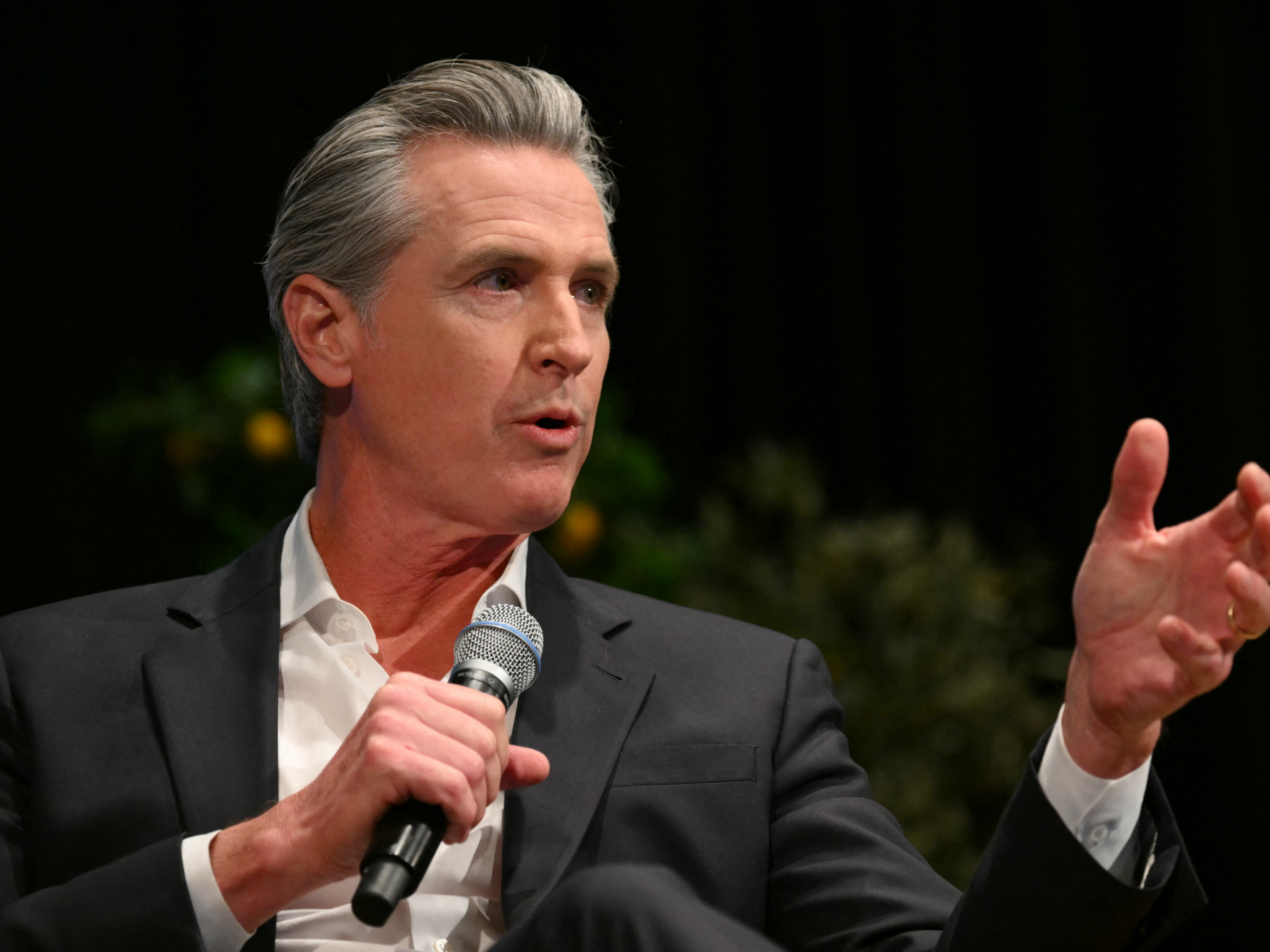
California Governor Gavin Newsom has sharply rebuked the DOJ lawsuit against his state, calling it a “sad, desperate attempt by” Trump to “suppress California voters just three weeks before Election Day”.
“Courts have made clear the federal government has no role in running state elections,” Newsom said in a statement. “We will defend free and fair elections in the Golden State and call out every authoritarian attempt to undermine our democracy.”
Trump has long falsely claimed that noncitizen voting cost him the 2020 election, blaming it on Democrats, despite the issue being a very rare occurrence.
Courts have pushed back on Trump
Earlier this month, a federal judge in Florida ruled that a federal law criminalising voting by noncitizens was unconstitutional, delivering a major setback for Trump administration efforts to pursue such cases against individuals.
The court ruled that, under the US Constitution, only individual states have the authority to set voter qualifications, and that each one had already criminalised such voting by anyone who was not a citizen. Thus, it was up to the state to prosecute such individuals. The DOJ has at least 45 such cases pending nationwide, where the accused could now raise the same objection brought up in the Florida ruling.
Another federal judge ruled this month that the DOJ unlawfully sought state voter rolls for cross-checking them against a controversial federal immigration database to identify ineligible voters. The Trump administration has often touted the Systematic Alien Verification for Entitlements (SAVE) database, but numerous reports have found it inaccurate and capable of flagging citizens as noncitizens. Forcing states to use such a database would be unconstitutional, the judge said.
In September, the US Supreme Court rejected a Trump administration effort to restrict mail-in ballots for the November 3 elections, which Trump argued were especially susceptible to misuse by noncitizens because states were failing to verify who was sending them.
Two dozen states, led by Democrats, filed lawsuits against the Trump administration over attempts to limit mail-in voting, including an executive order directing federal agencies such as the US Postal Service not to handle mail-in ballots without verifying the eligibility of those casting them.
According to the Election Assistance Commission, a bipartisan government agency, around 30 percent of all ballots cast in the 2024 elections were sent by mail. Mail-in ballots are even more widely used in many western states such as California.
Authorities have indicated that the shooter was killed by gunfire, though details remain scant about the attack.
Published On 15 Oct 202615 Oct 2026
At least four people have been killed, including three children, in a shooting at an elementary school in Oregon, part of the northwestern United States, according to statements from law enforcement to CBS and CNN.
The shooting on Thursday took place at Silver Rail Elementary school in the city of Bend, about 160km (100 miles) southeast of Portland.
Recommended Stories
list of 3 itemsend of list
Authorities have said the shooter is dead, though it is unclear whether he is among the four people included in the initial death toll.
“We’re in the process at this time of going room by room and evacuating each of the people who are in that school,” said Sheila Miller, the communications manager for the Bend Police Department on Thursday. “This is the kind of thing we never want to see happen in Bend. It’s devastating.”
Miller said authorities received a call about a shot fired into a car outside the school at 12:59pm local time (19:59 GMT) and arrived on scene within minutes.
The suspect was shot and killed shortly after, though Miller said she did not know whether police or a bystander had subdued the alleged assailant.
The number and condition of those injured were not immediately known.
Kash Patel, the director of the Federal Bureau of Investigation (FBI), said in a post on social media that the agency was on the scene assisting local law enforcement in the investigation.
“We will make every resource they need available,” he wrote.
Oregon Governor Tina Kotek also said she was closely monitoring the situation.
Jeff Merkley, who represents Oregon in the US Senate, was among the political leaders to offer condolences in the wake of the shooting.
“My heart is with the Bend community and all of the students and families affected. No one should have to fear violence at school,” he wrote in a post on the social media platform X.
The halt to commercial shipments, including fruit and winter clothing, cuts off a key source of critical supplies.
Published On 15 Oct 202615 Oct 2026
Israeli authorities say no commercial goods have entered Gaza for two days, citing what they claim is a tax dispute between local merchants and Hamas.
COGAT, or the Coordinator of Government Activities in the Territories, the Israeli military body that “oversees humanitarian affairs” in Gaza, announced the halt on Wednesday.
Recommended Stories
list of 3 itemsend of list
COGAT claimed that local merchants “made the decision in response to a 10,000 shekel ($3,220) fee imposed by Hamas on each truck entering Gaza” as well as a demand for 30 percent of all sales in Gaza to be carried out in cash.
This decision is expected to impact a crucial source of food and goods for the 2.1 million people in the Strip, who are completely reliant on Israel’s border crossings in a territory that is still suffering from famine.
Gaza’s government media office refuted the claims on Thursday and condemned the “blatant disinformation campaign and false statement”.
The media office instead said it was an attempt “to hold the government apparatus in Gaza responsible for the disruption of truck entry” and that the fee was a voluntary payment to a fund providing aid for those in need, such as widows and orphans.
It also said that cash payments were encouraged due to what it described as an acute cash shortage in the war-torn territory, but were never a mandatory requirement.
A Palestinian looks on at a house targeted by Israeli airstrikes in az-Zawayda, central Gaza Strip, October 11, 2026 [Mahmoud Issa/Reuters]
An already dire humanitarian crisis
The halt to commercial shipments, including fruit and winter clothing, cuts off a key source of food and other critical supplies as fears mount ahead of the encroaching winter.
Aid groups generally bring in staples such as flour, while merchants import more perishable foods like fruits and meat, according to data released earlier this year by COGAT.
The suspension is raising fears about affordability, with humanitarian workers saying a combination of aid and a robust commercial market is needed to keep prices under control.
“The humanitarian sector on its own cannot meet the needs of all the people,” said Shaina Low, a spokesperson for the Norwegian Refugee Council. “The markets need to be functioning.”
Two Palestinian women walk along a street lined with buildings destroyed during the Israel-Hamas war in Gaza City, October 14, 2026 [Jehad Alshrafi/AP Photo]
Local merchants step in
The head of Gaza’s private truckers union, Nahed Sheheiber, denied the Israeli narrative, saying: “The Israeli coordinator is claiming that Gaza’s merchants are responsible, but the truth is that the Israelis are the ones who imposed the restrictions.”
Following COGAT’s announcement, Sheheiber’s union met with Gaza’s Ministry of Economy to express concern and say Israel was citing fees levied by the ministry as a pretext to cut off commercial goods.
A global hunger monitor in July warned that more than two-thirds of people in Gaza could face acute hunger by the year-end.
Israel is obliged under a US-mediated agreement to allow a minimum of 600 trucks carrying humanitarian aid to enter Gaza each day.
Diplomats say that far fewer than 600 trucks normally enter Gaza each day. Sheheiber said the figure was closer to 300, with two-thirds carrying commercial goods.
At least three people have died and several are reported missing after torrential rain triggered severe flooding across Istanbul, inundating homes, businesses and streets. Residents and businesses are now grappling with power and water cuts, disrupted supplies and an extensive clean-up operation.
Poll shows right-wing candidate with two percent advantage over Lula going into second round of voting on October 25.
Published On 15 Oct 202615 Oct 2026
A new poll has found that right-wing Senator Flavio Bolsonaro maintains a slight lead over President Luiz Inacio Lula da Silva as the two candidates seek an edge ahead of Brazil’s tense October 25 run-off vote.
A Quaest poll released on Thursday found that Bolsonaro, son of former far-right President Jair Bolsonaro, would receive 46 percent of the vote compared to Lula’s 44 percent, a difference within the two-percent margin of error.
Recommended Stories
list of 3 itemsend of list
Bolsonaro outperformed expectations during the first round of voting on October 4, beating Lula by less than two points despite most polls suggesting that the leftist president was on track for a marginal first-round win. Neither candidate secured a majority that would have avoided a run-off.
The poll, the first released by Quaest since the initial round of voting, shows that Bolsonaro has held onto his lead and remains the favourite heading into the second round.
Lula has sought to rally his supporters after the October 4 loss, holding large rallies that have drawn millions of people onto the street.
While Bolsonaro has remained ahead in the polls, analysts have pointed out that he has not benefitted as much from the elimination of several conservative candidates, whose supporters would presumably prefer him to Lula, as might have been expected after the first round.
Bolsonaro has made progress securing endorsements from right and centre-right parties, however, seeking to consolidate support from conservatives and build a coalition friendly to business interests and a policy agenda sought by investors.
Brazil’s Senate approved a constitutional amendment on Wednesday reducing the country’s maximum workweek from 44 to 40 hours per week without a reduction in pay, delivering a key priority for Lula as the president presses his case to an electorate that is anxious about cost-of-living issues.
“Today is a day to celebrate a historic achievement for millions of workers,” Lula said in a statement. “This means having more time to live, rest, be with family, watch your children grow up, take care of yourself, and enjoy life. Those who work so hard to build Brazil also deserve to have time to live.”
The president also recently banned sports betting, which had caused an explosion of gambling addiction and contributed to surging household debt across the country.
Eritrea denies troop movement inside northern Ethiopia as US calls for de-escalation.
Published On 15 Oct 202615 Oct 2026
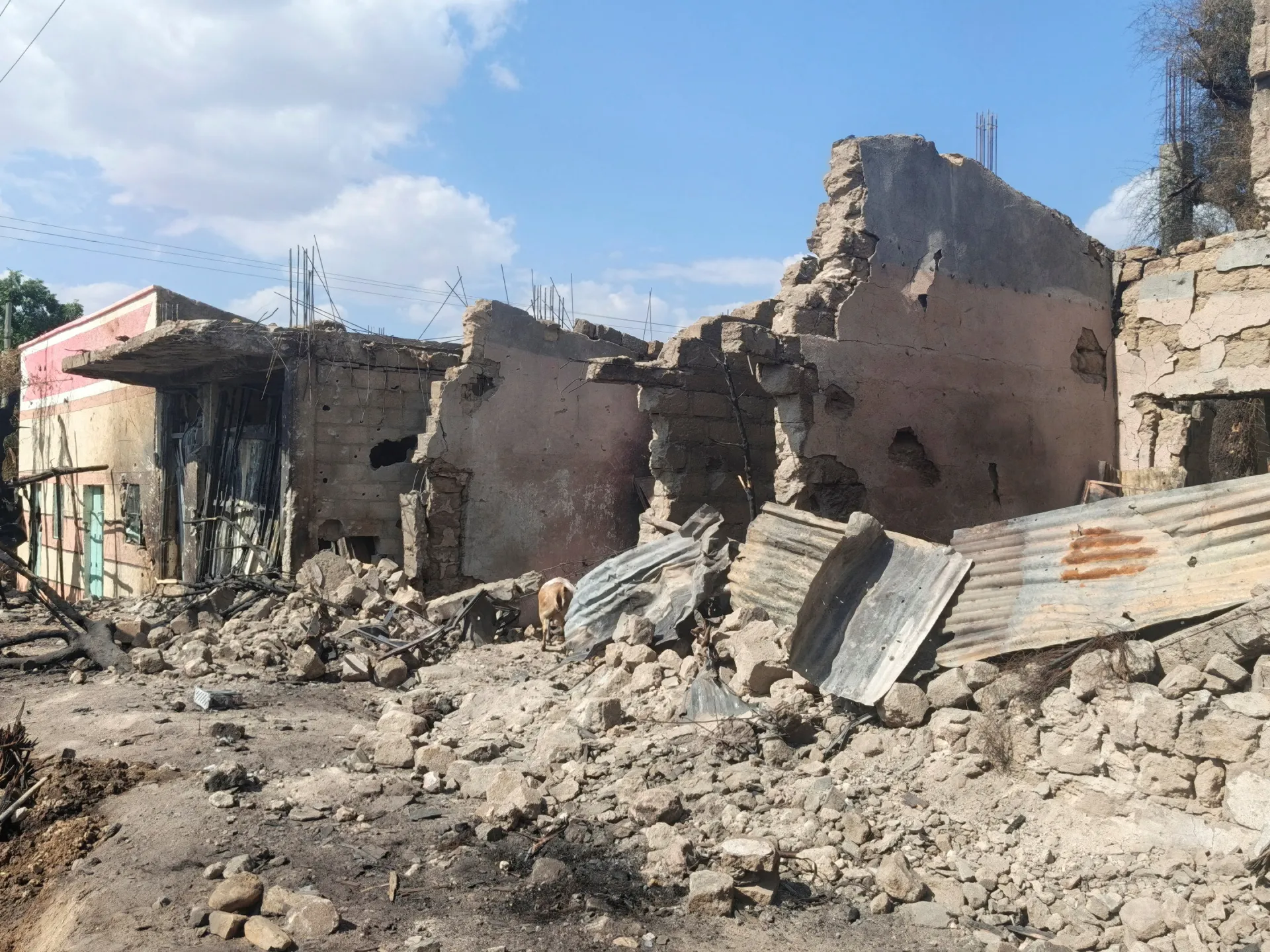
Ethiopian forces and allied fighters say they have expanded control across Tigray and entered the historic city of Aksum, as fighting in the northern region continues.
The pro-government militia, the Tigray Peace Force (TPF), also claimed on Thursday that troops from neighbouring Eritrea have retreated towards the border.
Solomon Hailemariam, spokesperson for the TPF, said Eritrean forces had sustained significant casualties during the fighting.
But Eritrea’s Information Minister Yemane Gebremeskel rejected the claims as false in comments to local media. The extent of the reported losses could not be independently verified.
The Armed Conflict Location & Event Data Project (ACLED), an independent conflict-monitoring organisation, documented Ethiopian government forces and TPF fighters entering Aksum, while rival Tigrayan fighters remained in surrounding mountainous areas.
ACLED also reported Eritrean troops withdrawing across the border through Zalambessa, following advances by Ethiopian forces and their allies into several strategic towns.
“Ethiopian troops are on one side, and Eritrean troops are on the other,” Selam, a resident of Zalambessa whose first name was changed for security reasons, told the AFP news agency on Thursday.
AFP reported that there is no fighting now, but the town has been without power or water for a week.
“We are caught in the middle and living in deep anxiety,” Salem told the news agency.
Trading accusations
ACLED also documented Ethiopian tanks and heavy weapons moving towards the Eritrean border on Tuesday, raising concerns about a possible confrontation between the neighbouring countries.
Addis Ababa has accused Eritrea, as well as Sudan and Egypt, of backing a rebel alliance of seven groups that is fighting the government of Abiy Ahmed.
Eritrea has denied accusations that its forces entered Tigray to support the armed opposition groups, accusing Ethiopia of threatening its sovereignty.
Eritrea, which fought alongside Ethiopia’s federal army in the 2020-2022 war, severed diplomatic ties with Ethiopia over the accusations earlier this month.
Khartoum and Cairo have also denied involvement in the conflict.
The TPF supports Ethiopia’s federal government in its campaign against the Tigrayan rebels linked to the Tigray People’s Liberation Front (TPLF).
Ethiopian forces captured Tigray’s regional capital Mekelle earlier this month, and the TPLF confirmed that it had withdrawn from the city and moved its regional administration “temporarily” to another location. Government forces also retook the towns of Adwa and Adigrat from the TPLF without a fight. Further, there are reports of Ethiopian advances in the town of Rama, close to the border with Eritrea.
On Wednesday, US Secretary of State Marco Rubio called for de-escalation in a phone call with Ethiopian Prime Minister Abiy, following reports of the alleged confrontation between Ethiopian and Eritrean forces.
Rubio said the region could not tolerate more conflict, according to a statement from the US Department of State.
A round-faced man with dark-rimmed glasses, a moustache and short-trimmed hair, Ismael came to the US when he was only five years old.
Southern California became his home, and as an adult, he qualified for the Deferred Action for Childhood Arrivals (DACA) programme, which offered temporary protection against deportation.
He lost his DACA status, however, in 2015 after a conviction for driving under the influence.
His family remembers him as a caring son and uncle, always willing to buy his niece and nephew new clothes or school supplies.
“Ismael was always looking after his siblings. He just had a big heart,” said his brother, Jose Miguel Ayala. “He was very protective of not just us, but my mum and dad too.”
He was 39 years old when he was brought to the Adelanto ICE Processing Center.
Two weeks after his arrival, Ismael told his family that he developed a high fever and a painful sore on his backside.
On September 18, 2025, workers at Adelanto initiated a Code Blue alert for Ismael, signalling a life-threatening medical emergency. Medical staff rushed him from his dorm to the infirmary in a wheelchair.
ICE documents show that Ismael was given pain medication, an ointment and a fibre supplement.
But according to Physicians for Human Rights’ Cuneo, who reviewed the case, Ismael should have received a physical examination and antibiotics.
“That is a major failure,” Cuneo said.
Demonstrators leave white flowers outside the Adelanto ICE Processing Center on September 29 in solidarity with those detained inside [Jill Connelly/AP Photo]
That weekend, hours after Lucia’s visit, Ismael’s condition worsened. Just after midnight on Sunday, ICE records say he was vomiting, shaking and sweating.
According to ICE documents, he was later sent to an intensive care unit, where he went into cardiac arrest within minutes of his arrival and subsequently died.
“I believe Ismael’s death could have fully been prevented by timely care,” Cuneo said. “It was a simple abscess that was not treated in a timely manner.”
Fault Lines obtained a coroner’s investigation that reveals Ismael was critically ill when he first arrived at the hospital, a fact that was left out of ICE’s public report on his death.
The coroner’s report also contradicts ICE’s timeline for Ismael’s death. It indicates Ismael went into cardiac arrest early on September 21, nearly a full day before he passed away. Medical staff, however, managed to restore his heartbeat after intubating him.
That conflicts with ICE’s report, which only notes his pulse stopping once: shortly before his death was announced on the morning of September 22. ICE described his condition on September 21 as “calm and cooperative”, but it signalled no heart problems.
“If they had given him the medical care and what he needed, maybe he would be here with us,” Lucia said.
In a statement about Ismael’s death, ICE said detainees receive “comprehensive medical care” throughout their time in custody.
But California’s Attorney General Rob Bonta told Fault Lines that his office found “the exact opposite” during its inspections of the state’s detention centres.
“We’ve gone to these facilities. We’ve gone into Adelanto. We have done our own physical inspections,” Bonta explained.
“If what the ICE spokesperson said was true, Mr Ayala-Uribe would be with us today.”
An internal mortality review committee also found that the care provided to Ismael at Adelanto “deviated beyond safe limits of practice”, according to a document obtained by US media earlier this year.
It also suggests that medical staff delayed responding to calls about Ismael’s declining health in the days leading up to his death.
Widespread voter disillusionment and pocketbook anxieties set a volatile stage for the GOP weeks before election night.
Published On 15 Oct 202615 Oct 2026
Voter sentiment across the United States is increasingly negative towards US President Donald Trump’s domestic and foreign policies, according to a new Associated Press-NORC Center for Public Affairs Research poll.
In the closing weeks before the November 3 US congressional midterm elections, 80 percent of Americans polled said the country needs substantial change or “complete and total upheaval” in how it is run, according to the survey of over 1,100 US adults released on Thursday.
Democrats and independents are much more likely than Republicans to want a total overhaul of the country’s direction, the survey found, but even Republican voters are still looking for some change. Slightly fewer than half, 45 percent, want substantial change, while 13 percent are seeking upheaval.
The results point to a pervasive appetite for legislative realignment that poses a risk to the Republican Party’s power as it looks to keep control of both houses of the US Congress.
Fuelled by soaring living costs, everyday economics is driving a majority of the electorate, with 85 percent of respondents saying the economy is one of the most significant issues in weighing their vote in the upcoming election. About eight in 10 registered voters disapprove of how Trump is handling the cost of living, and about three-quarters disapprove of his performance on the economy.
Only about one-third of registered voters overall have a “very” or “somewhat” favourable view of the Republican president, and a similar share approve of his performance as president.
More voters want Democrats to win control of Congress and have a more negative view of Republicans.
Immigration and crime rates are also top concerns for some voters, according to the survey results, with 45 percent of voters identifying them as top priorities, though the two issues are prioritised disproportionately by Republican voters who reference them more frequently than Democrats. Conversely, Democratic voters are more prone to name healthcare as their top priority.
Emerging cultural and technological concerns drew less immediate alarm across the board: 35 percent of voters ranked artificial intelligence as a substantial issue, while transgender issues sit significantly lower at 12 percent.
Healthcare is also considered a top issue for 69 percent of voters, while 64 percent cite the war on Iran as top-of-mind.
Despite their grievances, a majority of voters across both major American parties still value civic engagement.
About two-thirds of registered voters in the survey say it’s “extremely” important to vote in the upcoming election, while about two in 10 say it’s “very” important. Seventy-five percent of Democratic voters view it as “extremely” important, compared to roughly 60 percent of Republican respondents.
Khan Younis, Gaza Strip – For 11 days after giving birth last month, Rania Fadel could not hold her newborn son.
The 24-year-old gave birth to twin boys, Ilyas and Yahya, on September 25.
Recommended Stories
list of 3 itemsend of list
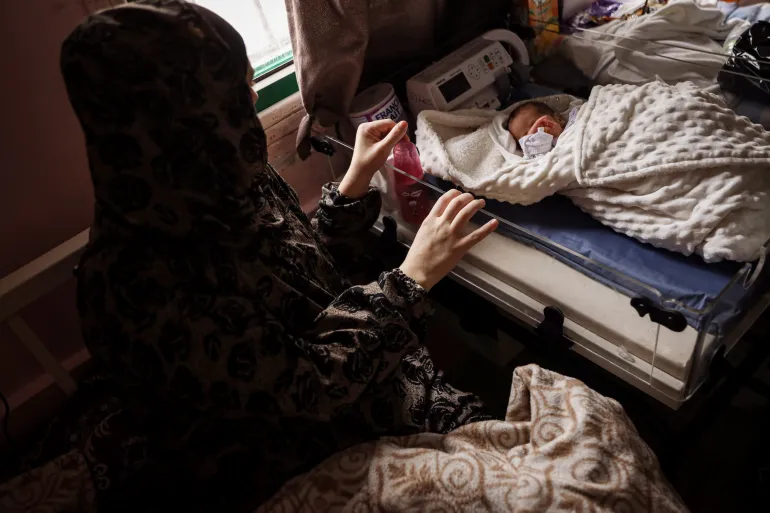
While Yahya was born healthy, Ilyas was admitted to the neonatal intensive care unit at Nasser Medical Complex in Khan Younis, in southern Gaza, where he remained for nearly two weeks.
Born prematurely, Ilyas weighed just 1.4 kilogrammes (3 pounds) at birth, according to his mother. He had medical issues affecting his blood and lungs, she said, and needed specialised care in an incubator.
Rania herself was recovering from a Caesarean section when her son was taken into intensive care. For days, she could not hold him.
“When they called me to hold him, I rushed over,” she recalled. “I was in a hurry to get to him. It was such a feeling.”
As Ilyas’s condition improved and he moved from intensive care to the hospital’s neonatal care unit, Rania was able to hold him against her bare chest, introducing her to a form of care for low-birthweight newborns known as kangaroo mother care, part of a newly-launched programme at the hospital.
It involves prolonged skin-to-skin contact between a caregiver – ideally the mother – and baby, with exclusive breast milk feeding, and has been shown to have important health benefits for premature and low-birthweight babies.
“I was so happy. It was such a beautiful feeling,” Rania said.
During the session, a nurse helped Rania position Ilyas against her chest, with his skin touching hers. Rania said he remained there for about 90 minutes.
“He started breastfeeding from me, and he stayed a little longer,” she said. “I felt he was improving.”
For Rania, the contact also brought a sense of closeness after days of separation.
“The baby feels that his mother is there,” she said. “He feels safe. Honestly, it makes me very happy.”
Rania Fadel stays with her premature son, Ilyas, in the neonatal unit at Nasser Medical Complex in Khan Younis [Abdelhakim Abu Riash/Al Jazeera]
Skin-to-skin
Kangaroo mother care involves placing a baby against a parent’s bare chest for skin-to-skin contact, alongside breastfeeding and appropriate medical care.
For premature and low-birthweight babies, it can help regulate body temperature, support breastfeeding and improve health outcomes.
World Health Organization (WHO) guidance says that kangaroo mother care has been shown to reduce neonatal mortality by 32 percent, and mortality by six months of age by 25 percent, compared with conventional care.
At Nasser Medical Complex, Khawla al-Madhoun, director of nursing at the hospital’s maternity and neonatal departments, described it as an integrated approach to newborn care that supports growth and strengthens the bond between mother and baby.
“When we place a baby on the mother’s chest, it helps the baby grow,” she said.
“We have seen babies who were unwell or underweight begin to grow faster with kangaroo care. This can help them leave the hospital sooner.”
The hospital has begun introducing kangaroo care through a pilot programme supported by WHO, the United Nations Children’s Fund (UNICEF), and the UN Population Fund (UNFPA). The agencies announced the initiative at Nasser Hospital in September, but the practice is being introduced gradually in its external neonatal care unit, where babies stay with their mothers, and in maternity wards after delivery.
Al-Madhoun said the team was also preparing a dedicated room and seeking equipment to make the sessions more comfortable.
The team aims for longer periods of skin-to-skin contact – WHO recommends at least eight hours per day – although its immediate target is at least two hours, depending on each family’s circumstances.
At Nasser, the team is currently prioritising babies who are medically stable and do not require oxygen support. Nurses monitor their vital signs and assess them throughout the process.
Al-Madhoun stressed that the technique cannot replace an incubator or other treatment when a baby needs intensive care.
“It can help babies grow, gain weight and leave the hospital earlier, but some babies need other interventions, such as respiratory support,” she said. “Those babies still need the incubator and the care it provides.”
A shortage of incubators at Nasser Medical Complex in Khan Younis in Gaza has forced medical staff to place two babies in one incubator amid overcrowding [Abdelhakim Abu Riash/Al Jazeera]
Before Israel’s genocidal war on Gaza began in October 2023, Gaza had eight neonatal intensive care units with a total of 178 incubators, according to UNICEF.
By November 2024, three of those units had been destroyed by Israel, and the number of available incubators had fallen to about 54, a reduction of 70 percent. The shortage of equipment, compounded by limited supplies of fuel and electricity as a result of Israeli restrictions, put premature newborns at serious risk.
Israeli strikes have continued since an October 2025 “ceasefire”. Despite this supposed truce, and despite the delivery of some new equipment, the shortage of incubators and other equipment has persisted.
In May, UNICEF said it and its partners had supplied incubators and ventilators to hospitals in Gaza, while warning that neonatal units were still managing large numbers of fragile infants with limited equipment, space and power.
The war in Gaza has worsened living conditions for pregnant women with economic hardship, food shortages, poor nutrition and the harsh realities of displacement, including cooking over open fires and carrying water.
“These conditions have contributed to the rise in premature births and babies born with low birth weight who need specialised neonatal care,” al-Madhoun said.
Meanwhile, repeated displacement and overcrowding have placed further pressure on hospitals, including Nasser Medical Complex, which is already struggling with limited space and shortages of incubators and other essential neonatal equipment.
Linda Abu Nasira holds her newborn daughter during a kangaroo care session [Abdelhakim Abu Riash/Al Jazeera]
Newborn in a tent
Linda Abu Nasira’s baby girl is only three days old.
The infant initially developed a fever, which has since subsided, according to 23-year-old Linda.
As her daughter was being treated and breastfed, Linda was learning how to hold her against her chest under the guidance of the medical team.
The sessions were brief. Linda said she held her daughter against her chest for about 30 minutes at a time, repeating the process roughly every two hours, according to the instructions she had received.
“She is a little better than yesterday,” Linda said. “Little by little.”
Away from the hospital, Linda lives in a tent in al-Mawasi, in Khan Younis, where she is raising her two older children – aged three and two – while caring for her newborn.
She described the conditions as difficult, particularly when it comes to securing food and drinking water.
“We try to manage,” she said. “But it is not like before, or like the conditions you would expect when giving birth.”
She does not know how long the baby will need to remain under observation in the hospital’s external neonatal care unit.
“As a mother, it means a lot to me to feel that I am helping my daughter recover,” Linda said. “I hope she will recover and be discharged as soon as possible.”
A nurse explains to Linda Abu Nasira how to practise kangaroo mother care and how it works during a session [Abdelhakim Abu Riash/Al Jazeera]
Senior banking executives have told the BBC they expect the sector to be “on the menu” when the chancellor announces his Budget in two weeks’ time.
John Healey has described the banks as part of “the crown jewels” of the UK economy, yet has refused to rule out a raid on the sector.
The biggest four banks collectively made around £15bn profit in the first six months of this year, leading to calls from trade unions and others for additional taxes.
However, the banking sector trade body, UK Finance, warned that “further increases in bank taxes would weaken competitiveness, discourage investment and job creation, and work against the government’s ambition to deliver growth in every postcode”.
The UK’s biggest banks and building societies currently pay a surcharge of 3% on top of the baseline 25% rate of corporation tax, plus a levy on the assets held on their balance sheets.
The sector contributed nearly £40bn to the Treasury last year, if income tax on employees is factored in.
The bank levy generated £1.4bn last year and the surcharge a further £1.2bn.
There are a number of ways the chancellor could extract more money from the sector.
The 3% surcharge was reduced from 8% under Rishi Sunak when he was chancellor, at the same time as he raised corporation tax from 19% to 25%. Returning the surcharge to its previous level could raise around £2bn a year.
The bank levy currently charges 0.1% on outstanding short-term loans and 0.05% on longer-dated loans, although mortgages are excluded from the calculation.
In the past banks have successfully argued that higher taxes would risk making the UK uncompetitive with other jurisdictions and would reduce their ability to lend, and therefore be anti-growth.
In truth, banks were pleasantly surprised they were not hit at the last Budget, given the large profits they have been making in recent years. Rising interest rates have expanded the margin between the rate at which they lend to customers and the rate they pay savers.
There is another option that has been discussed with Treasury officials. Currently banks can use losses from the past to offset against profits – thereby reducing their tax bill in any given year. Lloyds in particular has been a beneficiary of this policy, as large losses from the financial crisis have been used to lower tax bills ever since.
Some analysts and bank executives have pushed the idea of a moratorium on this practice for a few years, which would yield an estimated extra £1bn per year for the Treasury. That would provide a windfall while being “a lot more bearable”, in the words of one bank executive.
It would also spare foreign banks from an additional hit, including JP Morgan, whose chief executive Jamie Dimon has warned that the UK already has one of the highest tax burdens on banks in the world. He warned that adding further sector-specific taxes could discourage investment and damage competitiveness.
However, industry leaders say any form of tax rise that hits UK banks and exempts foreign banks’ operations in the UK would be hard to square with the government’s push to back British business.
Whatever form it takes, banks believe the chancellor now has much more of an appetite to take a larger slice of their pie.
Citizen Lab investigation says dozens of Al Jazeera devices were infected by malware planted through advertisements.
Published On 15 Oct 202615 Oct 2026
Israeli advertising technology company Discover-Tech helped place spyware on dozens of devices used by Al Jazeera and other companies, a Citizen Lab investigation prompted by Al Jazeera’s own initial internal probe has confirmed.
Al Jazeera Media Network on Thursday said it “condemns the targeting of devices belonging to several of its employees with spyware”.
“The network voluntarily collaborated with the researchers, and this cooperation, according to the report, contributed to verifying these attacks and publicly documenting them.”
Al Jazeera will continue to “protect its employees and systems”.
The network said targeting journalists is an “assault on press freedom and the public’s right to knowledge” and called for those responsible to be held accountable.
Spyware from Candiru, a firm blacklisted by the United States government in 2021 for its malicious cyber activities, was planted on these devices, using what Citizen Lab described as the first-known instance of “zero-click” targeted advertising.
The Citizen Lab, an interdisciplinary research unit at the University of Toronto, concluded in its report that Discover-Tech purchased the advertisements that had the spyware built in. It then directed devices to Candiru’s malware through these advertisements. The millions of devices that were pointed to the malware include several that belonged to Al Jazeera’s journalists – including several who reported on sensitive subjects.
Al Jazeera’s internal technology team first discovered unusual patterns on devices used by some journalists in 2024. The pattern continued into 2025. Al Jazeera reached out to Citizen Lab for a more detailed investigation into its suspicions that spyware was responsible.
“Analysis of network logs provided to the Citizen Lab by Al Jazeera collected during the attack period provides a clear temporal signature of how the attack was executed,” the University of Toronto-based team said ints report published Thursday.
The “zero-clock” nature of installing this spyware means that once an infected advertisement appears on a device, that device, too, is infected — spying on, and feeding, all the data and information available on that platform to those stealing it.
Meanwhile, New York-based security firm Confiant said in a separate report that some of Discover-Tech’s advertisements also appeared in critical networks used by the Pentagon, the International Atomic Energy Agency and the International Criminal Court.
Candiru’s spyware has previously been used to carry out surveillance on at least 100 journalists, dissidents and others in several countries.
The United States has developed plans to strike Iran with the largest non-nuclear bomb in its military arsenal on Iran’s energy infrastructure and nuclear sites if President Donald Trump orders renewed combat operations, according to US officials cited by CNN.
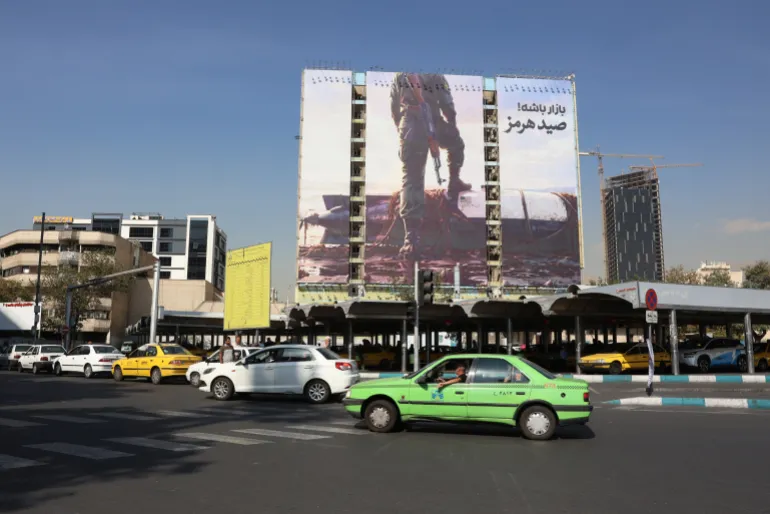
Deploying the GBU-43/B Massive Ordnance Air Blast Bomb (MOAB), nicknamed the “mother of all bombs”, could significantly escalate the ongoing conflict at a time when fighting has lulled, experts say.
Recommended Stories
list of 4 itemsend of list
Concerns are also being raised, including within the Trump administration itself, over what such a move would even achieve. Officials familiar with military planning discussions told US news outlet CNN and Al Jazeera that deploying the MOAB would be unlikely to help the US achieve its stated strategic goals, including to destroy Iran’s nuclear capabilities.
Brussels-based military expert Elijah Magnier told Al Jazeera that using the MOAB would not even guarantee the destruction of Iran’s deeply buried underground nuclear installations and that such a strike would likely amount to little more than “political theatre”.
Here’s what we know:
Iranians drive past an anti-US billboard depicting a member of Iran’s Revolutionary Guard (IRGC) with a US unmanned underwater vehicle that Iran claimed to have seized in the Strait of Hormuz and the slogan ‘Hormuz Catch’. In Vanak Square in Tehran, Iran, 14 October 2026, amid the ongoing conflict between Iran and the United States [Abedin Taherkenareh/EPA]
What is the MOAB?
The GBU-43/B Massive Ordnance Air Blast Bomb (MOAB) is a massive munition containing about 8,500kg (18,000 pounds or 8.5 tonnes) of high explosives. It weighs 9,800kg (21,605 pounds or nearly 10 tonnes) – about the same as four saloon cars – and is as long as a small yacht at just over 9 metres (about 30 feet).
The MOAB is typically deployed from the Lockheed C-130 Hercules cargo aircraft because it cannot fit in a stealth bomber.
The bomb, which was first manufactured between 2002 and 2003, has undergone 12 detonation tests.
Its name is a reference to former Iraqi President Saddam Hussein’s comments during the 1991 Gulf War when he invoked the “mother of all battles”.
The US has only deployed the MOAB once before – during its 2017 attacks on an Islamic State Khorasan Province (ISKP) cave and tunnel complex in Afghanistan. Afghan authorities claimed that while 94 Islamic State-Khorasan Province (ISKP) fighters were killed in the blast, no civilians were hurt. However, there were unconfirmed, local reports of civilian casualties and many homes were destroyed.
What is the ‘mother of all bombs’?
The GBU-43/B, the US’s most powerful non-nuclear bomb, was used once, against Islamic State-Khorasan…
GBU-43/B
Pallet is deployed from rear cargo door of MC-130H or C-17aircraft.
Released from the aircraft.
Cradle separates; GPS and fins guide it.
H6 explosives detonate.
A powerful shockwave spreads.
Hot gases, smoke and debris rise in a mushroom cloud.
1 of 4
What kind of damage can it cause?
Designed to explode a few feet above the ground, the MOAB sends out lethal waves of fire when it detonates, blasting away buildings, cave openings and other hard-surface structures.
“Its purpose is to generate an exceptionally powerful blast across a surface area,” Magnier said.
Military expert Colonel Nidal Abu Zeid told Al Jazeera the bomb does not require impact in order to detonate and that its massive blast will destroy everything above ground within a 1km (0.6-mile) radius.
It is likely that the US would aim to use the high-explosive MOAB to completely destroy Iran’s ground-force positions above ground, and to reach its underground facilities, including Pickaxe Mountain, which Trump has previously threatened to attack, Abu Zeid said.
However, Magnier said the bomb’s radius and level of destruction would depend greatly on the terrain it is used within and how populated the area is. He added that it may not be particularly effective against targets buried deep underground.
Some of Iran’s nuclear sites which the US may wish to target, such as the Fordow complex and an under-construction site at the Pickaxe Mountain, are heavily fortified and deeply buried.
“Its large explosive charge can produce devastating blast effects against exposed personnel, equipment and vulnerable structures,” Magnier said. “The Afghanistan operation demonstrates its intended application against a cave-and-tunnel position; it does not demonstrate an ability to destroy every kind of underground installation.”
While its blast can reach underground, the MOAB is not especially designed to punch through deep concrete or mountain rock in the way that a “bunker buster” bomb is. The US military’s most powerful bunker buster is the GBU-57 Massive Ordnance Penetrator. Weighing about 30,000 pounds (13,600kg), including a 2,700kg (6,000 pound) warhead, this precision-guided bomb is made of high-strength steel and built to penetrate up to 200 feet (61 metres) underground before exploding.
Would the US really use an MOAB?
It already has done – in Afghanistan in 2017.
However, besides not being guaranteed to hit underground targets effectively, Magnier told Al Jazeera it could be difficult to deploy the necessary aircraft in the regions of Iran where nuclear sites are located. Stealth bombers which are better suited to this terrain are not able to carry this size of bomb.
Using the bomb could also destroy infrastructure without inducing Iran to make any concessions, he added, noting that its deployment would risk turning “a spectacular event” into one that ultimately delivers few political results for Washington.
“The question I would put to any commander advocating its use is straightforward: What will this weapon accomplish that another available weapon cannot, and how will that result advance an achievable political settlement?,” Magnier said.
“If the answer centres on the spectacle of the explosion, the proposal is stronger as political theatre than as military strategy,” he added.
CNN reported that Trump, in private discussions, has been seeking a “definitive” end to the war that will prove Washington has been undefeated.
How might Iran respond?
A MOAB strike would likely prompt a major reaction from Iran, experts say, warning that Tehran could even invade its neighbours who host US military assets in response.
Iranian security officials have for months made comments regarding a possible invasion of countries like Kuwait to capture US troops and force Washington to surrender.
In May, during a pause in hostilities, Kuwait alleged that sailors from Iran’s Islamic Revolutionary Guard Corps (IRGC) infiltrated its Bubiyan Island, leading to an exchange of fire between Iranian and Kuwaiti forces. One Kuwaiti was injured and four Iranian soldiers were captured.
Iran denied that it had invaded the island and said the troops’ navigation system had malfunctioned.
On Tuesday, IRGC security adviser Mohammad Reza Naghdi warned that Iran could capture troops if Washington were to launch ground attacks, although military experts have long dismissed Trump’s earlier threats of an invasion due to Iran’s mountainous terrain.
“If the United States launches a ground attack, so many of its troops will be captured that it will be forced to raise the white flag,” he said.
Experts say Iran has been preparing for another round of war by stockpiling weapons, fortifying key nuclear and defence locations, and rallying its supporters.
In a television broadcast on Sunday, National Security Council chief Mohsen Rezaei threatened that Iran would attack regional digital infrastructure, including communication cables, data centres and artificial intelligence facilities in the United Arab Emirates and others, if American strikes resume.
French Football Federation’s ethics body calls on fans to keep politics out of stadiums amid student protests.
Published On 15 Oct 202615 Oct 2026
The ethics body of the French football federation is urging fans to stay neutral amid the nationwide student protests that are drawing international attention.
The police response to the largely peaceful demonstrations has prompted widespread accusations of brutality, and football fans in stadiums have expressed their support for students.
Recommended Stories
list of 4 itemsend of list
Officers have made extensive use of tear gas and batons to disperse crowds. More than 6,600 arrests were made nationwide as of last week, an unusually high number for a French protest movement.
A police tear gas grenade shattered a 14-year-old’s jaw and many of his teeth, while a 15-year-old lost a hand in an incident involving a stun grenade. Other teenagers have also suffered life-changing injuries blamed on police weaponry during protests.
During a Ligue 1 match between Lens and Lyon last week, the home fans unfurled a banner calling for an end to the “disproportionate and systematic police violence,” according to the National Council for Football Ethics (CNE).
The CNE also noted that at the half-hour mark of the match between PSG and Le Mans, supporters displayed a banner reading: “Your militias repress; our youth resists.”
The ethics body said in a statement that it was easy to understand why young supporters, who are often students, might take advantage of matches to publicly express their support for the demonstrators.
However, it added that the principle of political neutrality is “enshrined” in the laws of sport, both internationally through the Olympic Charter and FIFA statutes, and at a national level.
The CNE recalled that any speech or display of a political, ideological, religious or trade union nature are prohibited, as is the wearing of symbols or clothing that expresses political, philosophical, religious or trade union affiliation.
“Sport should unite, not divide,” it said. “The National Council for Football Ethics therefore calls on all supporters, who are an integral part of the football family, to uphold the principle of neutrality in all circumstances.
“The aim is to ensure that the stadium does not become a political or trade union battleground, but remains a place of celebration and shared enjoyment centred on sport.”
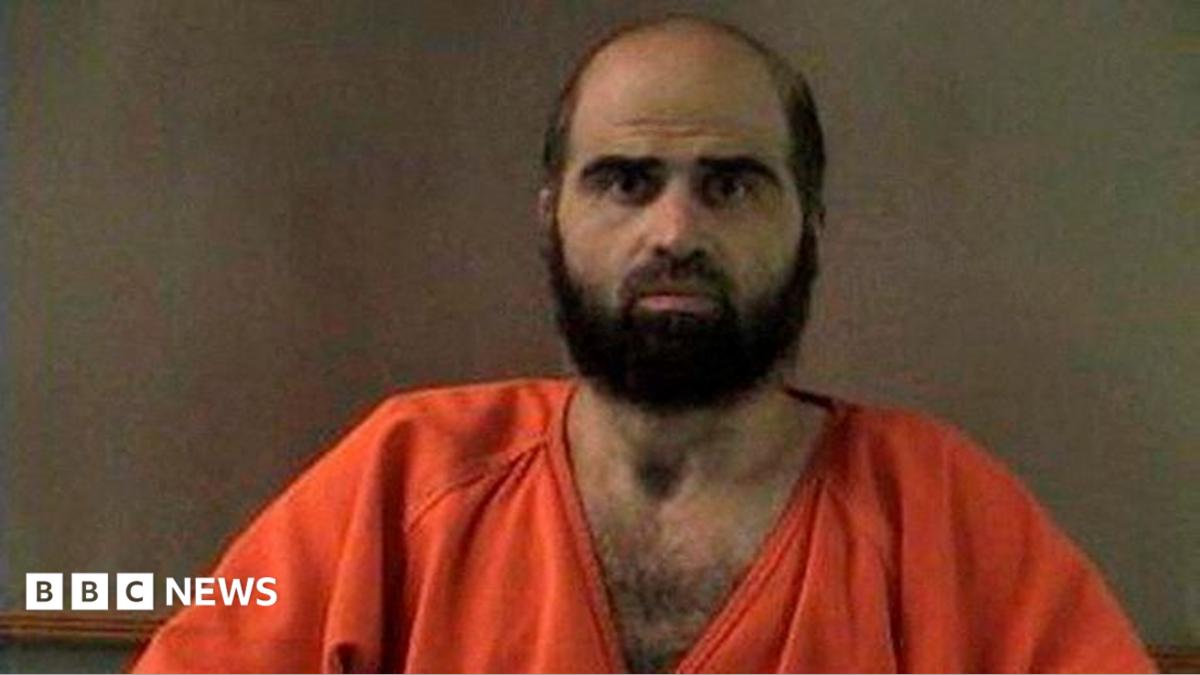
The Pentagon announced last week it would execute Hasan on 3 December 2026 by firing squad.
Hegseth then said the execution would be livestreamed for the public to watch, adding that “people need to understand that there’s serious consequences for these types of things”.
Trump last Friday called Hasan “totally nuts”, adding: “I really don’t care how he goes, as long as he goes, and I think that the death penalty is a very worthy way of going for him.”
He also said he “absolutely” approved the livestream plans but said the Pentagon was still “making a determination” on it.
Hasan opened fire in a crowded medical building where deploying soldiers were awaiting check-ups and vaccines.
He later admitted in court that he was the gunman and apologised for “any mistakes”. He said during his court-martial in 2013 that he believed he was protecting Muslims and the Taliban in Afghanistan from the US military.
The killings on 5 November 2009 were the deadliest ever non-combat attack on an American military base.
US military law requires that a military execution be approved by the US president. It also requires appellate review, when a higher court inspects the decision and gives a final judgement on its legality to move forward.
While there were more than 2,700 executions across 17 countries last year, only two nations carried them out publicly. According to Amnesty International, 11 public executions were known to have been carried out in Iran in 2025 and another six in Afghanistan.
Student protests against poor conditions in Albania’s education system have continued for a third day in the capital, Tirana, as Prime Minister Edi Rama insists he will not resign.
Demonstrators have called on Rama to quit in often violent protests since Tuesday. They have set fire to several buildings across the city, including the prime minister’s office, ministry buildings and branches of several banks.
Recommended Stories
list of 4 itemsend of list
Dozens of police officers and protesters have been injured amid attempts to disperse the crowds using water cannon and tear gas.
“What you are seeing is the boiling point of months of suppressed grievances,” Albanian journalist Arlis Alikaj told Al Jazeera.
A protester during clashes in Tirana on Tuesday demanding the resignation of Prime Minister Edi Rama [Hameraldi Agolli/AP]
Students have complained for months about the high cost of education and their limited employment prospects after graduation.
Afrim Krasniqi, a professor and researcher at the Institute for Political Studies in Tirana, told Al Jazeera that students and young people protested peacefully for nearly three months, “yet their demands were largely ignored, while the government often responded with discrediting campaigns rather than genuine dialogue”.
He added that the current escalation reflects “frustration not only with the government itself, but also with the lack of institutional accountability and responsiveness.”
The protests represent one of the most serious waves of public discontent directed at Rama, who won a fourth term last May but has since faced public anger over corruption allegations involving senior officials.
The unrest in Tirana coincides with a broader wave of student protests across Europe. In France, secondary school students have spent weeks protesting and blockading schools, demanding more teachers and better learning facilities. They have warned that deteriorating school buildings and overcrowded classrooms are undermining the quality of education.
Protests against Rama’s government began a few months ago, fuelled by plans to build a luxury resort along Albania’s largely unspoilt southern coast. Jared Kushner, US President Donald Trump’s son in law, is involved in the project.
Local media reported that the protests spread from Tirana to universities in Elbasan and Shkoder on Wednesday.
Albania is among the economies of the Western Balkans seeking to catch up with European living standards. However, the gap with the European Union average remains evident in purchasing power, wages, productivity and the quality of public services. Despite economic progress, the country continues to face challenges including emigration, regional inequalities and the need for stronger institutions and the rule of law.
After Montenegro, Albania stands out as one of the countries that has made the most progress towards full EU membership. However, behind the optimistic political rhetoric, frustration is growing among citizens over the slow pace of European integration and the lack of tangible improvements in their daily lives.
A protester throws a plastic bottle towards riot police during clashes in the Albanian capital on Thursday [Hameraldi Agolli/AP]
While opposition groups seek to support the demonstrators and capitalise on the moment to strengthen their own position, Alikaj said the protests are being driven by young people and students demanding systemic change.
On Thursday, Rama – who has been PM since 2013 – told Reuters, “As for calls for my resignation, governments change through democratic elections. Last year, we had elections, not a revolution.”
Sokol Lleshi, a lecturer at the University of New York Tirana specialising in political science and international relations, said social change is more likely to emerge from a broader coalition of different social groups, rather than mass mobilisation limited to university and secondary school students.
“Elite defection from the current ruling political elite could enable the institutional means to channel societal dissatisfaction or resentment into political and policy changes. Yet, the current student protest does not seem to replicate the December 2018 mass movement of university students and its effects”, Lleshi said.
The student protests that shook Albania in December 2018 began over rising education costs and forced Rama to dismiss eight ministers as part of a cabinet reshuffle and announce a package of measures known as the “Pact for the University”.
But some of the students’ demands remained unmet.
Lleshi drew some more positive conclusions from Albania’s past experience of social unrest.
Albanian society is polarised and unequal, “with hollowed intermediary political institutions”, he said, but the legacy of unrest and political confrontation will serve as a “warning to avoid destabilisation”, he said.
Would you break one of sport’s biggest boycotts for life-changing money? In the 1980s, some West Indies cricketers toured apartheid South Africa, sparking outrage. Al Jazeera’s Samantha Johnson explores the money, morals and consequences behind the controversial tours.
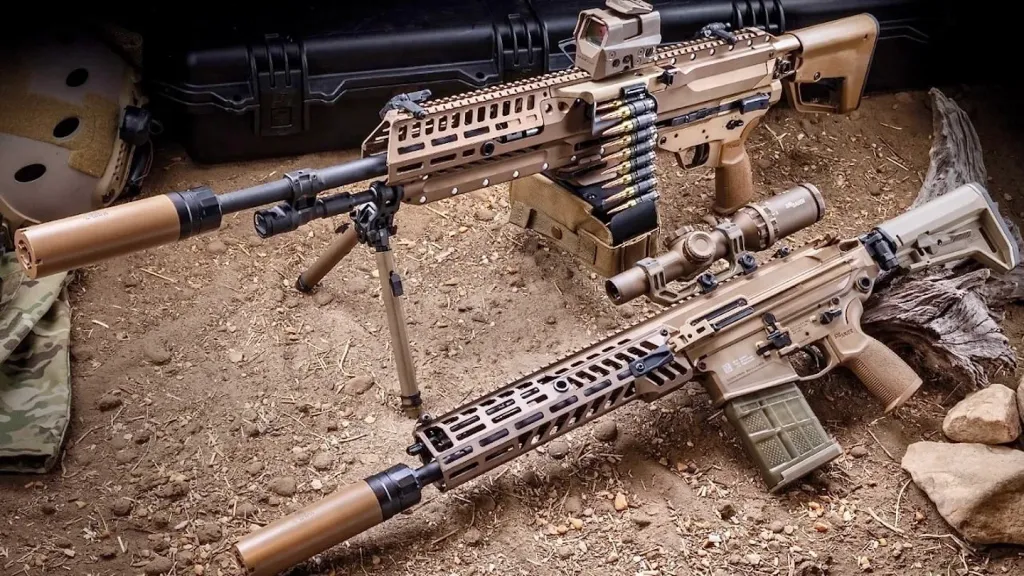
Jason St. John, senior director of strategic products for the Defense Strategies Group at Sig Sauer, talked about the new M250A1 with our Howard Altman at the Association of the U.S. Army’s (AUSA) main annual convention today. The U.S. Army has already been acquiring and fielding baseline M250s as part of its Next Generation Squad Weapons (NGSW) program. The NGSW family also includes the M7 rifle and now the M8 carbine from Sig, both also chambered to fire the 6.8x51mm round. The Army chose Sig as the winner of the NGSW competition in 2022. The service is still in the early stages of fielding the NGSW family as replacements for a substantial portion of its existing 5.56x45mm M4A1 carbines and M249 Squad Automatic Weapons (SAW).
A promotional image of Sig Sauer’s entrants into the NGSW competition at the time of the company’s win in 2022. Sig Sauer
“We continuously and constantly evaluate and evolve our designs, and we discover things,” St. John told us. “Parts that might be able to be manufactured a little bit easier with a little bit of a design change. They might be more reliable, more durable than you currently have. You might look at the system and say, hey, we have an ability to make these recommendations because we see this from other customers across the board. We hear it from our inputs of soldiers that are in our ranks, and you know maybe old relationships out in the field.”
“The [NGSW] program office represents the entire formation, so they get feedback in the totality of every single unit that has them [M250s and other guns in the NGSW family] in their hands,” he continued. If “a systemic issue or something that needs to be addressed, then they run the soldier touchpoint events, which we’re fortunate enough to be a part of. And then we get unfiltered feedback from soldiers that day in the field while they’re encountering something that they have a concern about.”
As noted at the start, the most immediate standout feature on the M250A1 being shown at AUSA this week is the new 13-inch barrel. M250s entering Army service now have roughly 16-inch-long barrels. The Army’s official fact sheet says the machine gun was originally expected to come with a 17.5-inch barrel.
“We shortened the barrel to 13 inches, but the Army’s also buying the 16-inch barrel,” St. John explained. “So in some ways, you could consider it mission-configurable, whether they want to utilize a 13-inch barrel or a 16-inch barrel, to what they’re doing.”
“You’re going to maintain the same basic ballistics that you had with the M7 [rifle’s] 13-inch barrel, and then you’re going to have more maneuverability because you’re going to have a shorter weapon system,” he added. “You add the 16-inch barrel, and you get that lethality requirement with the length of barrel that they originally required. So you have some flexibility there.”
“You shorten the barrel, you’re going to lose velocity,” St. John did acknowledge. “We did not change the ammo. The Army had determined with the barrel change that they were meeting their ballistic and lethality goals with that length of barrel.”
With the current 6.8x51mm ammunition, “we’re operating in the mid-70s [sic; 70,000 pounds per square inch] as far as pressure, and the case has 125K psi potential,” he also noted. “If you wanted to shorten the barrel and you did have some lethality concerns or wanted more performance, all you need to simply do is just increase the little bit more pressure in the cartridge case, and you overcome that shortness.”
A graphic showing the components of a typical 6.8x51mm round, which has a hybrid case design with a steel base and brass body. Sig Sauer
“We didn’t do that. The Army said it wasn’t necessary, but you know, as the battlefield evolves and defensive postures change, if that becomes necessary, one of the great things about the NGSW program is the ability for the weapon systems and the ammunition to grow in their performance capacity,” he continued.
In the case of the 13-inch barrel, “we tapered the barrel down a little bit to add a little bit of weight savings,” he noted.
TWZ has reached out to Sig about getting more complete specifications for the M250A1, including overall length and total weight with different barrel options. The baseline version weighs some 13 pounds, empty, and without optics and other accessories, according to the Army’s fact sheet. As already mentioned, the M7 rifle also got progressively shorter and lighter before giving way fully to the M8 carbine, in part through reprofiling of the barrel. The empty weight of the M8 with its 10-inch barrel is close to one pound less than that of the 13-inch barreled M7.
A US Army Ranger fires an M250 light machine gun. US Army
Different barrels can be readily swapped out on the M250A1, as well as the baseline M250. However, the new variant features significant changes to the quick-change barrel arrangement on the gun and associated elements of the design.
“It was interchangeable before, but it didn’t have a quick-change barrel handle. It wasn’t meant to be changed, and therefore it didn’t need the insulation of [sic; for] a hot barrel like you get with a barrel with a quick-change barrel handle,” according to St. John. “I think initially with the [M]250 program, it wasn’t necessary, and potentially might not have been desired initially. And why put that weight burden on there if we weren’t going to utilize it, right?”
St. John did not elaborate further on why these features were initially deemed unnecessary.
“When you look at the top cover of the forearm, that used to be loose, and now it’s captured, meaning that when you change the barrel, it actually came off completely in your hand,” he also noted. “We utilized a similar design to our .338 MMG [Medium Machine Gun], and then we make it captured now, so you’re not going to lose it.”
A picture of soldiers receiving instruction on the baseline M250. The top cover on the example seen in front is open, and it notably lacks a handle to help with barrel changes. US Army
“We added a funnel to guide your gas piston in, so that when you’re doing barrel change operations, you don’t have to be precisely lined up,” he added. Now, “you have something that’s going to guide it in a stressful environment, to get that into position to do your barrel change.”
The M250A1 features a host of other changes that are unrelated to the barrel.
Sig also “improved our gas system a little bit, just to make it more reliable and durable,” to include modifications to keep it better “insulated from carbon and things like that.”
“We opened up the trigger guard to incorporate the Arctic fight, the Arctic glove, more so than just the operational normal tactical gloves,” according to St. John. “We opened it up a little bit more to accomplish that.”
An M250 seen during cold-weather testing. US Army
The Arctic is an ever-more strategic region where the U.S. faces growing geopolitical competition, especially from Russia and now China. Army officials also regularly point out that the harsh environment presents challenges when using standard equipment designed around use in more temperate locales.
“We improved the buttstock, and we improved the interface … to the receiver,” St. John explained. “We’ve made the interface between that more robust because through IMTing, and over time, and the buttstock getting slammed on the ground, and just normal military training and operations, we noticed that we had a tendency for some of them to loosen up and have some play in them.”
“The entire buttstock is a different buttstock than they had,” he added. “They [Army soldiers] preferred that buttstock over the buttstock that we had on it. So we just put soldiers’ preference on there. … It’s just a commercially available [design from] Magpul that they thought was better than the other Magpul that day one we were using.”
Changes were made to points where the M250 is designed to be attached to tripods on the ground or pintle mounts on vehicles.
“We put cross-bolts through the receiver to provide more durability,” he explained. “Initially, it was like an M-LOK type of lockup, and you can just think of a steel nut on an aluminum receiver being vibrated over a life cycle of the weapon system, it has some unfortunate wear characteristics. So, putting these cross pins redirects that force, and the way we lock it down with a saddle screw prevents that from happening and provides long-term durability to the receiver in the pintle and T&E [traverse and elevation] tripod-mounted configuration.”
M-Lok
The continued evolution of the M250 is not new. Sig talked to TWZ at AUSA last year about changes, including to the bipod and top cover, that were already making their way into the design.
The Army has yet to formally adopt the M250A1 configuration, and further changes could be made before service moves to officially acquire an improved version of the gun.
“This is likely to be the accepted configuration. We anticipate that acceptance,” Sig’s St. John told us. “We just finalized the acceptance on the M8, and they’re moving into the acceptance of the [M]250s. We anticipate right now, with the feedback that we’re getting from the program office, that the majority, if not all, of these changes are likely to be accepted.”
Despite the steadily shortening barrels on guns in the NGSW family, the Army’s position remains that the weapons chambered for the new 6.8x51mm round offer essential additional accuracy, range, and terminal effectiveness over existing 5.56x45mm types. The genesis of the NGSW program had been heavily informed by the war in Afghanistan, where there were regular reports of U.S. ground units being outranged by their opponents. Adversary body developments were also a factor.
What Is the New Army XM-7 Rifle Like? | GOARMY
It is also important to point out that teething troubles are not at all uncommon in major weapon system programs, including when it comes to small arms. Sig has drawn attention to the less than positive reception that the AR-15/M16 family initially received in the mid-1960s, which led to a host of changes to that design. Rifles and carbines in that pattern are now in widespread service across the U.S. military and with dozens of armed forces and security services globally.
Regardless, even with the Army still very early on in the process of fielding the entire NGSW family of guns, the M250 light machine gun’s design is now evolving significantly.










![Rania Fadel stays with her premature son, Ilyas, in the external neonatal unit at Nasser Medical Complex in Khan Younis, practising kangaroo care to support his recovery. [Abdelhakim Abu Riash/ Al Jazeera]](https://i0.wp.com/www.aljazeera.com/wp-content/uploads/2026/10/873A1075-copy-1792081986.jpg?w=640&ssl=1)
![A shortage of incubators at Nasser Medical Complex in Khan Younis, southern Gaza, has forced medical staff to place two babies in one incubator amid overcrowding. [Abdelhakim Abu Riash/ Al Jazeera]](https://i0.wp.com/www.aljazeera.com/wp-content/uploads/2026/10/873A1154-copy-1792082062.jpg?w=640&ssl=1)
![Linda Abu Nasira holds her newborn daughter during a kangaroo care session. [Abdelhakim Abu Riash/ Al Jazeera]](https://i0.wp.com/www.aljazeera.com/wp-content/uploads/2026/10/873A1380-copy-1792082204.jpg?w=640&ssl=1)
![A nurse explains to Linda Abu Nasira how to practise kangaroo mother care and how it works during a session. [Abdelhakim Abu Riash/ Al Jazeera]](https://i0.wp.com/www.aljazeera.com/wp-content/uploads/2026/10/873A1313-copy-1792082250.jpg?w=640&ssl=1)