BBC Breakfast was presented by Sally Nugent and Ben Thompson on Wednesday morning
BBC Breakfast hosts share heartbreaking news after tragic death announcement(Image: BBC)
The hosts of BBC Breakfast announced several tragic deaths during the latest live show.
Wednesday’s (March 4) episode of the hit morning programme was hosted by Sally Nugent and Ben Thompson, who updated viewers on the latest news from across the UK and around the world.
They were joined in the studio by Carol Kirkwood, who presented weather forecasts throughout the show, while Ben Thompson handled the sports segment. Meanwhile, Peter Ruddick shared updates after the Chancellor Rachel Reeves delivered her spring statement on Tuesday.
At the start of the programme, Sally and Ben shared further updates from the Middle East, after the US and Israel launched attacks on Iran over the weekend. The UK government has since announced the first repatriation flights from Dubai.
In a pre-recorded segment, it was confirmed that the American military had named its first troops to be killed in the conflict. Six soldiers died when an “unmanned aircraft system” evaded air defences to hit a command centre in Port Shuaiba, Kuwait, on Sunday.
Four of the deceased, all US Army Reserve soldiers, were identified on Tuesday by the US military: Capt Cody Khork, 35, Sgt Noah Tietjens, 42, Sgt Nicole Amor, 39, and Sgt Declan Coady, 20.
This is a breaking showbiz story and is being constantly updated. Please refresh the page regularly to get the latest news, pictures and videos.
You can also get email updates on the day’s biggest stories straight to your inbox by signing up for our newsletters
Weekly insights and analysis on the latest developments in military technology, strategy, and foreign policy.
Iran appears to be increasingly focusing its retaliatory attacks against energy production infrastructure in Gulf Arab States. The U.S.-Israeli operation against Iran is also continuing at a significant tempo, including a major new wave of Israeli strikes going after leadership targets in Tehran.
Readers can catch up on previous developments in the ongoing conflict in our previous rolling coverage here.
Increased targeting of Gulf Arab States’ oil and natural gas production is part of a clear Iranian strategy to put pressure on those countries to, in turn, create complications for the United States. As the economic pressure builds, the idea is that these countries will seek to end the conflict, and/or that relations with the U.S. will sour. The prospect of major, long-term disruptions in energy exports from the region has global ramifications, as well, which could bring immense external pressure to end the conflict. There is also the aspect of drawing Arab countries into the conflict, which would complicate it politically and militarily. In addition, some energy targets are not as well defended as U.S. bases in the region, for instance, and scoring hits with the now finite weapons Iran has on hand becomes easier.
Iranian attack drones struck oil storage infrastructure in Fujairah, UAE, this morning, causing a large fire.
Notably, Fujairah is the only major oil export terminal in the UAE that avoids the now-closed Strait of Hormuz. pic.twitter.com/DdAbVOyRoc
So, it’s not surprising that Iran has morphed its tactics in this manner. How this will all play out is unknown. But if the war continues on for a prolonged period, and interceptors run low while Iran’s stocks of drones and missiles don’t dry up, this entire issue could become greatly magnified.
So far, Qatar and the United Arab Emirates, as well as the United States, have pushed back on reports that interceptor stocks are dwindling and the U.S. is resisting replenishing them due to its own stockpile concerns. It isn’t clear if this is a case of strategic counter-messaging or if indeed stockpiles remain in the green, although from everything we understand about the stockpile issue overall, the former seems far more likely.
Gulf states are in a race against time: will their air-defense interceptors, with their impressive success rates so far, have to be rationed before Iranian drones and missiles run out? The calculation also depends on how fast the U.S. and Israel keep destroying Iranian launchers.…
Impacted energy-related targets are relatively wide-ranging and the scope of attacks appears to be becoming larger with time.
A large fire broke out today in the Oil Industry Zone in Fujairah in the United Arab Emirates (UAE), reportedly caused by falling debris from the interception of an Iranian drone. The port of Fujairah sits on the Gulf of Oman, on the other side of the highly strategic Strait of Hormuz.
UAE intercepted a drone over Fujairah today, a hub just outside the Strait of Hormuz. The IRGC is trying to cause a real energy crisis by shutting all routes. Debris caused a fire in the Oil Industry Zone, which was ultimately put out.pic.twitter.com/5GlbGuyzOm
According to state-run Oman News Agency, two Iranian drones were shot down today above the Dhofar governorate in southern Oman, while a third came down close to the port of Salalah. No casualties or damage were reported.
The Port of Duqm in Oman was also targeted by several drones, according to the country’s state news agency. One of these is said to have struck a fuel tank.
Several ships attempting to cross the Strait of Hormuz have also come under attack, as you can read about here. Yesterday, U.S. Central Command denied Iranian claims that the Strait was closed. Online ship tracking data shows a major slowdown in traffic overall, but there is still some movement through this highly strategic waterway. Imagery is also emerging showing a backlog of ships waiting to pass through.
Minimal vessel traffic seen in Strait of Hormuz amid reported closure
The latest #MarineTraffic playback shows visibly reduced transit density, alongside holding patterns, slower speeds, and vessels remaining outside the strait as operators reassess risk. pic.twitter.com/pfqk5rcbg8
Oil production at Iraq’s largest oil field, in Shafaq, has reportedly been halted, as has the flow of oil through a pipeline that links its northern Kurdish autonomous region with Turkey. There are reports that Iraqi oil exports, overall, have slowed dramatically due to the ongoing conflict.
BREAKING: Production suspended at Iraq’s largest oil field – Shafaq
IMPORTANT: Basrah crude exports are running on thin ice.@Kpler data shows ~8.7Mb of effective headroom — just ~3 days of cover if tanker constraints persist. No inbound crude tankers into the Gulf on March 2 raises the risk of ballast shortages and potential Iraqi production…
This all follows Iranian attacks yesterday that caused a halt to some operations at the Ras Tanura refinery in Saudi Arabia and a shutdown in liquid natural gas production by state-owned QatarEnergy in that country.
QatarEnergy to stop downstream production
Further to the decision by QatarEnergy to stop production of liquefied natural gas (LNG) and associated products, QatarEnergy is stopping the production of some downstream products in the State of Qatar, including urea, polymers,…
Further rolling coverage can be found below, with the newest updates at the top.
We have concluded our rolling coverage in this piece. We will be back soon to continue our reporting.
UPDATE: 7:46 PM EST –
CENTCOM commander Adm. Brad Cooper provided a video update on Epic Fury. Here are some of the highlights:
50,000 troops, 200 fighters, two aircraft carriers and bombers from the United States are participating in this operation, and more capabilities on the way.
100 hours into this operation, and we’ve already struck nearly 2,000 targets with more than 2,000 munitions.
..we’ve destroyed 17 Iranian ships, including the most operational Iranian submarine that now has a hole in that side. Today, there’s not a single Iranian ship underway in the Arabian Gulf, strait of Hormuz or Gulf of Oman.
In retaliation, the Iranian regime has launched over 500 ballistic missiles and over 2,000 drones. To be clear, Iran is indiscriminately targeting civilians as they launch these missiles and drones. You’ve seen it on TV. The evidence is crystal clear and overwhelming.
Also for the first time, U.S. Central Command’s drone task force, called Task Force Scorpion Strike, launched countless one-way attack drones achieving massive effects. I’d like to point out these drones were originally an Iranian design. We took them back to America, made them better, and fired them right back at Iran.
UPDATE: 7:03 PM EST –
“The scene here in [Tehran] was dominated by the sound of airplanes and massive explosions across the city, and the smell of smoke drifting in the air,” Al Jazeera reported. “This is very massive, and this is heavier bombardment compared to the first days of the initiation of these strikes.”
You can get a sense of what these attacks have been like in the following video.
A screencap from a video released by CENTCOM shows the loadout on a U.S. Air Force F-15E Strike Eagle. TWZ Editor-in-Chief Tyler Rogoway breaks it down.
USAF F-15E in full counter drone loadout for Epic Fury. 4 X AIM-120, 4X AIM-9, 28 FALCO APKWS laser-guided rockets + the 20mm. Jet is clean aside from that, so likely has nearby tanker support and can get to where it needs to go fast.
As Epic Fury rages on, U.S. Sen. Chris Murphy is calling for Senate debate on an authorization for the use of military force against Iran.
“This is as serious as it gets,” he told reporters after a closed-door briefing. “This is war and peace. They told us in that room that there are gonna be more Americans that are gonna die, that they’re not gonna be able to stop these drones…We have to have a debate in the US Senate on an authorization of military force.”
Chris Murphy: “This is as serious as it gets. This is war and peace. They told us in that room that there are gonna be more Americans that are gonna die, that they’re not gonna be able to stop these drones. We have to have a debate in the US Senate on an authorization of military… pic.twitter.com/VvcQTsBMmV
The Pentagon announced the names of four of the six troops killed in an Iranian drone attack on a U.S. facility in Kuwait. The four were Army Reserve soldiers.
“Capt. Cody A. Khork, 35, of Winter Haven, Fla.; Sgt. 1st Class Noah L. Tietjens, 42, of Bellevue, Neb.; Sgt. 1st Class Nicole M. Amor, 39, of White Bear Lake, Minn.; and Sgt. DeclanJ. Coady, 20, of West Des Moines, Iowa, died on March 1, 2026, in Port Shuaiba, Kuwait, during an unmanned aircraft system attack. All Soldiers were assigned to the 103rd Sustainment Command, Des Moines, Iowa. The incident is under investigation.”
Video emerged of Israeli AH-64 Apache attack helicopters using their M230 chain guns to shoot down several Iranian Shahed-136 kamikaze drones.
Footage of Israeli AH-64 Apache attack helicopters shooting down Iranian Shahed attack drones using their M230 chain guns. pic.twitter.com/kjH7AZv9Q3
B-2 Spirit stealth bombers “have been targeting command and control nodes of the Islamic Revolutionary Guard Corps, as well as weapon depots and an assembly facility for Iran’s rocket program,” CBS News reported on X.
Two U.S. officials say B-2 stealth bombers have been targeting command and control nodes of the Islamic Revolutionary Guard Corps, as well as weapon depots and an assembly facility for Iran’s rocket program.
Secretary of State Marco Rubio told reporters that attacks against Iran will intensify.
“We’re going to unleash Chang on these people in the next few hours and days,” Rubio said. “You’re going to really begin to perceive a change in the scope and intensity of these attacks as, frankly, the two most powerful air forces in the world take apart this terroristic regime.”
The term “unleash Chang” reportedly dates back to “Unleash Chiang,” an inscription on a sword former Florida Gov. Jeb Bush gave Rubio two decades ago.
The term was “the rallying cry of John Birchers in the 1950s, who urged the United States to arm Chiang Kai-shek, the Chinese Nationalist leader of Taiwan, so he could retake Red China from Mao,” Politico reported in 2015.
.@SecRubio: “We’re going to unleash Chang on these people in the next few hours and days. You’re going to really begin to perceive a change in the scope and intensity of these attacks as, frankly, the two most powerful air forces in the world take apart this terroristic regime.” https://t.co/j7DxkxPiFqpic.twitter.com/2AhXGnj1UI
— Rapid Response 47 (@RapidResponse47) March 3, 2026
UPDATE: 6:04 PM EST –
After a closed-door briefing about Epic Fury, U.S. Sen. Richard Blumenthal told reporters that “I am more fearful than ever after this briefing, that we may be putting boots on the ground, and that troops from the United States might be necessary to accomplish objectives that the administration seems to have.
UPDATE: 5:53 PM EST –
After Spain refused to let the U.S. military use its bases for missions linked to attacks on Iran, Trump threatened to impose a full U.S. trade embargo.
“Spain has been terrible,” Trump told reporters during a meeting with German Chancellor Friedrich Merz. He also told Treasury Secretary Scott Bessent to “cut off all dealings” with Spain.
“That’s all right,” Trump exclaimed. “We can use their bases. If we want, we can just fly in and use it.”
As we have reported in the past, the U.S. has used the Rota and Moron bases as transit points for fighter aircraft, electronic attack jets and aerial refueling tankers.
.@POTUS: “Some of the European nations have been helpful, and some haven’t—and I’m very surprised. Germany’s been great… Spain has been terrible. In fact, I told Scott to cut off all dealings with Spain.”
— Rapid Response 47 (@RapidResponse47) March 3, 2026
UPDATE: 5:38 PM EST –
The IDF said Tuesday it struck a secret underground nuclear complex in Tehran, describing it as a key site where Iran was developing components for a nuclear weapon. Fighter aircraft targeted the covert “Minzadehei” compound, an underground facility where Iran’s nuclear weapons group operated under the country’s Defense Ministry.
UPDATE: 5:32 PM EST –
U.S. Sen. Lindsey Graham told reporters today that new attacks against Iran are imminent and that there is a growing coalition of allies willing to take part in the fight against Iran.
🚨 BREAKING: Lindsey Graham confirms MASSIVE new attacks on Iran are IMMINENT
“The amount of firepower coming in the next day or two from us is gonna be OVERWHELMING”
“I’ve never felt better about how this ends. It’s not IF they fall, it’s WHEN they fall.” pic.twitter.com/CAkJWTqv5o
The IDF released details of its Operation Roaring Lion attack on Iran. It claims that more than 200 fighters flew more than 700 sorties. There were 47 senior leaders killed, while 600 “terror sites” were “dismantled.” The War Zone cannot independently verify these claims.
UPDATE: 5:06 PM EST –
Hundreds of Iranian university professors and tech experts have reportedly signed a statement declaring the Constitution of the Islamic Republic illegitimate. The statement also calls for the immediate transfer of power to the people, while endorsing Prince Reza Pahlavi’s democratic transition plan.
In the past few hours, hundreds of Iranian university professors and tech experts have signed a statement declaring the Constitution of the Islamic Republic illegitimate and calling for the immediate transfer of power to the people, while endorsing Prince Reza Pahlavi’s… pic.twitter.com/oihXPHvBy5
French President Emmanuel Macron has ordered the aircraft carrier Charles de Gaulle to the eastern Mediterranean amid the ongoing war.
Macron is also working to build a coalition that would help secure maritime traffic imperiled by the escalating crisis in the Middle East.
In a televised address to the nation, Macron said that action needed to be taken with the Straits of Hormuz closed and the Suez Canal and Red Sea shipping routes threatened by the widening conflict.
French President Macron:
We have defense agreements with Qatar, Kuwait, and the United Arab Emirates. We must stand by their side. I have decided to send a warship to Cyprus for protection. I have given the order to send the aircraft carrier Charles de Gaulle and its… pic.twitter.com/Tox01M1TFi
A suspected Iranian drone attack hit the CIA’s station in Saudi Arabia “in what would amount to a significant symbolic victory for the Islamic Republic,” The Washington Post reported.
“An internal State Department alert obtained by The Washington Post said the attack ‘collapsed’ part of the embassy’s roof and ‘contaminated’ the inside with smoke,” the publication stated. “The notice said the embassy sustained ‘structural damage’ and personnel ‘continue to shelter in place.’”
The extent of the damage was not immediately clear, the Post added. There was no indication that any CIA personnel were wounded.
SCOOP: A suspected Iranian drone attack hit the CIA’s station in Saudi Arabia in what would amount to a significant symbolic victory for the Islamic Republic as it lashes out at U.S. targets and personnel across the Middle East, sources tell @nakashimae and me
Officials in Dubai say the fire near the US Consulate in Dubai has been fully extinguished with no injuries recorded. The area had been hit by an Iranian drone.
بالصور: إخماد الحريق بالكامل في محيط القنصلية الأمريكية بدبي دون تسجيل أي إصابات؛ والجهات المختصة في دبي تؤكد حرصها على ضمان أمن وسلامة الجميع. pic.twitter.com/3fqjHkEHMl
— Dubai Media Office (@DXBMediaOffice) March 3, 2026
UPDATE:2:46 PM EST-
The IDF says it has now destroyed 300 Iranian missile launchers since the start of the conflict. Israeli authorities also say the country’s fighters have flown more than 1,600 sorties and dropped more than 4,000 munitions.
The IDF says Israeli airstrikes have taken out 300 Iranian missile launchers since the start of the current conflict.
“As part of the offensive effort, the air force continues to launch continuous waves of strikes against the Iranian regime’s ballistic missile arrays and [air]… pic.twitter.com/62xy3luzuE
— Emanuel (Mannie) Fabian (@manniefabian) March 3, 2026
The Israeli Air Force has dropped over 4,000 bombs in strikes on Iran since the start of the campaign which began four days ago, IDF Spokesman Brig. Gen. Effie Defrin says in a press conference.
“Today we crossed the amount of munitions that the IDF dropped during the entire…
— Emanuel (Mannie) Fabian (@manniefabian) March 3, 2026
The IDF says it has targeted an Iranian facility on the outskirts of Tehran where scientists “worked secretly to develop capabilities required for nuclear weapons.”
The Israeli Air Force struck a secretive Iranian nuclear site on the outskirts of Tehran earlier today, the military says.
In a press conference, IDF Spokesman Brig. Gen. Effie Defrin says at the partially-underground facility, a group of nuclear scientists “worked secretly to… pic.twitter.com/ollEsROFT9
— Emanuel (Mannie) Fabian (@manniefabian) March 3, 2026
The IDF is also still assessing the results of its strike targeting Iran’s Assembly of Experts in Qom. There are reports that none of the 88 clerics who make up this group were in the building when it was hit. Iranian quasi-state media claims a vote for the next Supreme Leader of the country was held remotely for security reasons.
IDF Spokesman Brig. Gen. Effie Defrin in a press conference says the results of the Israeli strike on the Iranian Assembly of Experts building in Qom are still under review.
According to reports, none of the 88 clerics were at the building at the time of the strike, rather only… https://t.co/8qweTwYKCj
— Emanuel (Mannie) Fabian (@manniefabian) March 3, 2026
NEW: Iran’s Assembly of Experts is holding final voting to choose a new Supreme Leader.
Although the Assembly’s building in Qom was reportedly hit, no session was held there.
Voting is being conducted remotely for security reasons.
The satellite imagery below shows damage to Iranian leadership targets in Tehran from Israeli strikes earlier today.
Thread: New high-resolution satellite images released by @vantortech show the aftermath of US/Israeli strikes on several major political and military sites in Tehran.
Iran presidential complex, Assembly of Experts and the Expediency Council
U.S. Central Command has also released new footage showing strikes targeting Iranian kamikaze drone capabilities.
The Iranian regime’s killer drones have been a menace in the Middle East for years. These drones are no longer a tolerable risk. pic.twitter.com/76yhDKI6OW
Imagery has emerged that is said to show a fire at a U.S. diplomatic facility in Dubai following an Iranian drone attack.
There are reports that President Donald Trump’s administration is considering using military assets to escort oil and natural gas tankers through the Strait of Hormuz. Any warships supporting these operations would also have to operate in the Strait, with all the potential risks entailed. The report says that the U.S. government could also seek to back maritime insurance, where some rates have been hiked and some policies outright cancelled as a result of the current conflict.
(Reuters) – The Trump administration is considering providing military protection to oil and gas tankers traversing the Strait of Hormuz, Politico reported on Tuesday.
BIG: The Trump administration is considering using U.S. military forces to protect oil and gas tankers traveling through the Strait of Hormuz after Iran threatened ships in the area.
Officials are discussing naval escorts for tankers and possibly having the U.S. government back… pic.twitter.com/kthwYVQYiO
Iraqi authorities say that all refineries “are operating continuously and at their full design capacity to produce various petroleum derivatives,” according to the country’s Rudaw news outlet.
President Donald Trump has said that “it would seem to me that somebody from within [Iran] maybe would be more appropriate” when asked if Reza Pahlavi, the eldest son of Mohammad Reza Pahlavi, the last Shah of Iran, is someone the U.S. might look to as part of a new Iranian government.
Reporter: Reza Pahlavi, is he an option at all in your mind?
Trump: It would seem to me that somebody from within maybe would be more appropriate. I’ve said that he looks like a very nice person, but it would seem to me that somebody that’s there, that’s currently popular if… pic.twitter.com/vRYgQXuDU7
“Yes, the State Department is actively securing military aircraft and charter flights for American citizens who wish to leave the Middle East,” Assistant Secretary of State for Global Public Affairs Dylan Johnson has written in a post on X in response to questions about what steps are being taken to help American citizens depart the Middle East. However, at the time of writing, the phone number he has given out starts with a recorded message advising callers not to rely on the U.S. government.
UPDATE:1:29 PM EST-
The Israel Defense Forces have confirmed strikes in Isfahan and elsewhere in Iran. In Isfahan, the targets are said to have been related to the Iranian ballistic missile arsenal rather than the nuclear facility there.
⭕️ OPERATIONAL UPDATE: Targets belonging to the Iranian terror regime in Tehran and Isfahan were struck.
📍Throughout Iran, industrial sites used by the Iranian regime to produce weapons, particularly ballistic missiles, were targeted.
Israel has now also issued an explicit threat to strike Iranian officials in Lebanon if they do not leave within 24 hours. The IDF said earlier that it killed Daoud Alizadeh, the Islamic Revolutionary Guard Corps’ (IRGC) Quds Force’s acting commander in charge of operations in Lebanon, in strikes on targets in Tehran. The IDF has also continued to target Iranian-backed Hezbollah militants in Lebanon.
The Israeli military issues an unusual threat against Iranian regime officials in Lebanon, warning that they will be targeted if they do not leave the country within 24 hours.
“The IDF warns representatives of the Iranian terror regime who are still in Lebanon to leave…
— Emanuel (Mannie) Fabian (@manniefabian) March 3, 2026
Alizadeh had taken responsibility for the IRGC Quds Force’s Lebanon Corps from Mohammad Reza Zahedi, who was killed in an Israeli strike on Damascus in April 2024, making him “the highest-ranking Iranian commander responsible for Lebanon,” according to the military.
— Emanuel (Mannie) Fabian (@manniefabian) March 3, 2026
The IDF issues new evacuation warnings ahead of airstrikes on Hezbollah sites in coastal Lebanese city of Tyre. pic.twitter.com/xf03b1qUox
— Emanuel (Mannie) Fabian (@manniefabian) March 3, 2026
The IDF issues an evacuation warning for a building in Sidon, ahead of an airstrike against Hezbollah infrastructure. pic.twitter.com/sFgggvkYGv
— Emanuel (Mannie) Fabian (@manniefabian) March 3, 2026
A British F-35B Joint Strike Fighter has shot down an Iranian drone while flying over Jordan. This is the first time one of the United Kingdom’s F-35Bs has shot down an aerial target in combat, at least that we know of. The U.K. Ministry of Defense now also says it is sending Wildcat helicopters to Cyprus, primarily to support counter-drone operations. The Wildcat has a demonstrated ability to knock down drones using the Martlet missile.
The UK’s F-35 fleet has scored its first kill, shooting down an Iranian attack drone over Jordan.
British fighters are now conducting combat air patrols over Jordan, Qatar, and the Eastern Mediterranean. pic.twitter.com/EDxQbONjTZ
The UAE Ministry of Defense showcased debris and remnants of Iranian missiles and drones recently intercepted during attacks on the country.
The display included Shahed 136 and Shahed 107 drones, as well as Qaim short-range ballistic missiles (SRBMs) and Paveh long-range cruise… pic.twitter.com/5CzZ5Fq13P
The UAE says now that it has successfully intercepted 172 ballistic missiles, 8 cruise missiles and 812 kamikaze drones launched by Iran, in total. One ballistic missile and 57 drones have “impacted within state territory.” Another 13 ballistic missiles have come down in the sea around the country.
Axios has reported that the UAE is now considering taking “active defense measures against Iran” in the face of continued attacks.
“The UAE is considering taking active defensive measures against Iran,” a source familiar w/Emirati policy discussions said. “The UAE view is that no country in the world would fail to evaluate its defensive posture under such circumstances.” @BarakRavidhttps://t.co/x91PFdYBqX
“To the very large numbers of people who have been in touch from all 4 corners of the globe: Oman appreciates the support you have shown for our efforts to stop the war,” Oman’s Foreign Minister Badr Albusaidi, who had been helping mediate U.S.-Iran talks before the conflict erupted, has written in a post on X. “Strengthened by your solidarity, Oman reaffirms its call for an immediate ceasefire and a return to responsible regional diplomacy. There are off ramps available. Let’s use them.”
OMAN FOREIGN MINISTER: THERE ARE OFF RAMPS AVAILABLE, LET’S USE THEM
U.S. Air Force B-52 bombers have joined the air campaign against Iran, according to a new fact sheet from U.S. Central Command seen below. American forces have now struck more than 1,700 targets in total.
CENTCOM
U.S. President Donald Trump has said Iran “is running out of [missile] launchers” and “running out of areas to shoot them, because they’re being decimated,” according to Politico‘s Sophia Cai.
Trump also told Cai that it is “not too late” to work in some fashion with a new Iranian government. He pushed back again on concerns about low stocks of anti-air interceptors, as well.
🚨NEW: Trump tells me in an interview that Iran “is running out of launchers” and that U.S. defense companies are “under emergency orders” to build weapons.
Q: Is it too late for you to want to work with someone in the new government?
During a press conference alongside German Chancellor Friedrich Merz at the White House today, Trump pushed back on reports that the Israeli government had pressured him into attacking Iran. He also reiterated previous comments that “most of the people we had in mind” as potential partners in a new Iranian government “are dead.”
“We will see what happens, but first we have to finish off the military,” he added.
Reporter: Did Israel and Netanyahu force your hand to attack Iran?
Trump: No. I might’ve forced their hand. It was my opinion that these lunatics were going to attack first. pic.twitter.com/VMuyPEknlp
President Trump has also said that he has ordered an end to “all dealings” with Spain. Spanish authorities have blocked access to military bases in the country to U.S. forces supporting Operation Epic Fury.
President Donald Trump has also now said that the reason why various U.S. embassies in the region were not evacuated ahead of the start of U.S.-Israeli strikes this past weekend was that the situation moved too fast to allow for it. The U.S. State Department has now issued evacuation orders for embassies in several Middle Eastern countries.
Reporter: Thousands of Americans are stranded. Why wasn’t there an evacuation plan?
Trump: Well, because it happened all very quickly. We thought — and I thought maybe more so than most. I could ask Marco — but I thought we were going to have a situation where we were going to… pic.twitter.com/wlRmjBgWSc
Imagery has emerged showing what looks to show the aftermath of strikes on facilities belonging to the naval army of Iran’s Islamic Revolutionary Guard Corps in the port of Jask. U.S. authorities have said the destruction of Iran’s naval capabilities is a top objective of Operation Epic Fury.
“We don’t see a structured program to manufacture nuclear weapons,” International Atomic Energy Agency (IAEA) Director General Rafael Grossi has reiterated today. “Countries have either other information or political considerations, which are not for me to validate, as I said, or invalidate.”
IAEA Chief Grossi on Iran:
We don’t see a structured program to manufacture nuclear weapons.
Countries have either other information or political considerations, which are not for me to validate or invalidate. pic.twitter.com/zKaRe1zEp1
The IAEA has also now confirmed new damage to Iran’s Natanz Fuel Enrichment Plant (FEP) based on satellite imagery, which has also been circulating online. “No radiological consequence expected and no additional impact detected at FEP itself, which was severely damaged in the June conflict,” the IAEA added in a statement.
Based on the latest available satellite imagery, IAEA can now confirm some recent damage to entrance buildings of Iran’s underground Natanz Fuel Enrichment Plant (FEP). No radiological consequence expected and no additional impact detected at FEP itself, which was severely… pic.twitter.com/7CS7BRZo1s
— IAEA – International Atomic Energy Agency ⚛️ (@iaeaorg) March 3, 2026
We have prepared an overview slide summarizing the visible damage at the Natanz uranium enrichment site from the recent attack, pulling together multiple images showing before and after satellite images of the two personnel entrances and the sole vehicle entrance with comparable… pic.twitter.com/mMGvOyHgkQ
Alexey Likhachev, head of Russia’s state-run nuclear company Rosatom, has said he has lost all contact with his counterparts in Iran and that operations at the country’s Bushehr nuclear power plant had been halted. Russian personnel assist with operations at Bushehr.
⚡️Russia lost ‘all contact’ with the leadership of Iran’s nuclear industry, Rosatom chief Likhachev confirms
Operations at Iran’s Bushehr nuclear plant have been halted
639 Russian staff remain on site, with hourly check-ins as the only line still open pic.twitter.com/VKQPackUip
U.S. Central Command and the Israel Defense Forces have shared more video clips showing strikes on Iranian missile launchers.
The Iranian regime is using mobile launchers to indiscriminately fire missiles in an attempt to inflict maximum harm across the region. U.S. forces are hunting these threats down and without apology or hesitation, we are taking them out. pic.twitter.com/gv1SfKCrk4
✈️🎯60+ strike flights: The IAF completed additional waves of strikes in western Iran targeting the Iranian regime’s missile launchers, defense systems, and live-fire arrays. pic.twitter.com/I1rRLBJlUR
The Ministry of Defense in the United Arab Emirates has released footage, which looks to have been shot via targeting pods on aircraft, of intercepts of incoming Iranian missiles and drones.
The video below is said to show munitions impacting a target in the Iranian city of Urmia as part of ongoing U.S.-Israeli strikes.
Imagery is emerging showing new strikes on Mehrabad International Airport in Tehran.
Reported strikes within the last few minutes against military infrastructure located at Mehrabad International Airport in Tehran. pic.twitter.com/m7QjmIoyBA
— Status-6 (War & Military News) (@Archer83Able) March 3, 2026
The national flag of Iran flies in the wind as debris lies scattered in the aftermath of an Israeli and U.S. strike on a police station, amid the U.S.-Israeli conflict with Iran, in Tehran, Iran, March 3, 2026. Majid Asgaripour/WANA (West Asia News Agency) via REUTERS pic.twitter.com/sULKiGc6Vg
The video below shows a commercial airliner taking off from Beirut International Airport in Lebanon amid Israeli strikes.
A commercial plane takes off from the Beirut International Airport in Lebanon as smoke from Israeli airstrikes can be seen rising over the city on Tuesday. pic.twitter.com/tgaRHJzxMb
— Status-6 (War & Military News) (@Archer83Able) March 3, 2026
Qatari authorities are pushing back on reports that they have conducted strikes on targets in Iran.
Breaking news:
Western sources — Qatar carried out an attack in Iran in the past 24 hours.
An Iranian drone strike overnight on the U.S. Embassy in Riyadh, Saudi Arabia, reportedly caused part of the roof to collapse. Saudi authorities had initially said the resulting damage to the building was minimal. The Saudi government has also condemned that attack.
The damage inflicted in the attack is more significant than initial assessment conveyed by Saudi’s ministry of defense yesterday https://t.co/9blsrO8TF2
#Statement | The Kingdom of Saudi Arabia expresses its rejection and condemnation in the strongest terms of the flagrant Iranian attack that targeted the U.S. Embassy building in Riyadh. pic.twitter.com/pzSSEUEiyO
Despite pushback elsewhere, Polish Defence Minister Wladyslaw Kosiniak-Kamysz has warned that demand for air defense capabilities in the ongoing conflict in the Middle East could upend deliveries of U.S.-made systems globally, including to Ukraine. The Chosun Ilbo newspaper in South Korea has also published a story raising questions about whether U.S. air defense assets in that country could be redeployed to the Middle East, but it does not say such movements are imminent.
WARSAW, March 3 (Reuters) – A prolonged conflict in the Middle East could disrupt deliveries of U.S.-made air defence systems and other arms supplies to European countries including Ukraine, Polish Defence Minister Wladyslaw Kosiniak-Kamysz said on Monday.
Iranian authorities say the current death toll from U.S.-Israeli strikes is now 787, but how many of those individuals are members of the country’s military or security forces is unclear. Lebanese authorities also say that 40 people have been killed and 246 more wounded in Israeli strikes on that country over the past two days.
Iran death toll from US-Israel strikes rises to 787, state media reports.
DUBAI, March 3 (Reuters) – At least 40 people have been killed and 246 wounded in Israeli attacks on Lebanon on Monday and Tuesday, a spokesperson for Lebanon’s health ministry said.
U.S. and Israeli strikes on Iran continue. The Israel Defense Forces say a wave of 100 jets dropped 250 munitions on leadership targets in Tehran earlier this morning. A building in the city of Qom, where Iran’s Assembly of Experts was reportedly meeting as part of the process of choosing a new Supreme Leader, was also struck.
Overnight, the Israeli Air Force struck Iran’s “leadership complex” in Tehran, the military says.
The IDF says around 100 fighter jets dropped over 250 bombs on the complex.
The buildings targeted at the complex included Iran’s presidential bureau, the headquarters of Iran’s… pic.twitter.com/CQYMx0gww0
— Emanuel (Mannie) Fabian (@manniefabian) March 3, 2026
The Israeli Air Force has attacked the “Assembly of Experts” meeting in Qom, Iran as they were gathering to choose the new Supreme Leader. The council is comprised of 88 religious leaders from around Iran who choose the Ayatollah. pic.twitter.com/kZ68nJE9tb
The Israelis just struck the meeting of the Iranian Supreme Council where officials were gathering to choose a new Supreme Leader, a senior Israeli official told Fox News.
“Israel struck while they were counting the votes for the appointment of the supreme leader.”
Iranian President Masoud Pezeshkian has issued a statement regarding the delegation of authorities to regional officials to enable “quick decision making” amid ongoing strikes targeting the country’s leadership.
Message from the President of Iran delegating powers to the country’s Governors for “quick decision making.” https://t.co/gvyDIhvBdH
French fighters are now flying over the United Arab Emirates to help bolster that country’s defenses. France is also reportedly sending anti-air and anti-drone capabilities to help protect Cyprus in the Eastern Mediterranean.
France will send anti-missile and anti-drone systems to Cyprus, as the U.S.-Israel-Iran war heightens tensions in the Middle East, two senior Cypriot government officials have told POLITICO.https://t.co/OCVkZDVS02
U.K. Prime Minister Sir Keir Starmer has also announced the deployment of the Type 45 destroyer HMS Dragon to bolster the defense of Cyprus.
Iranian media reports say the country’s Islamic Revolutionary Guard Corps has targeted dissident groups in northern Iraq. Axios has also reported that President Donald Trump spoke with Iraqi Kurdish leaders this past week about “what might come next.” There have been reports raising the possibility of armed Iranian Kurdish groups in Iraq launching a ground incursion even before the current conflict began.
IRAN’S REVOLUTIONARY GUARDS SAYS IT TARGETED DISSIDENT GROUPS PLANNING TO ATTACK IRAN FROM IRAQI KURDISTAN REGION – IRANIAN MEDIA
Zoom in: Trump spoke to leaders from the two main Kurdish factions in Iraq – Masoud Barzani and Bafel Talabani – a day after the war started, two of the sources said. A source with knowledge of the calls said they were “sensitive” and declined to give details on their content https://t.co/1UN9dPkm5l
U.S. President Donald Trump has now said that it is “too late” to negotiate with Iran’s new leadership, according to Fox News. U.S. Special Envoy Steve Witkoff, who took part in negotiations in the lead-up to the current conflict, claims that Iranian officials say they “have enough enriched uranium for 11 nuclear bombs.”
Witkoff says the Iranian negotiators walked into the room and said, “We have enough enriched uranium for 11 nuclear bombs.”
Democratic senators voiced alarm after a classified briefing on the US‑Israeli war with Iran, warning the Trump administration lacks clear objectives as lawmakers say they fear it could lead to a prolonged conflict and US ground troops.
Lutnick’s relationship with the late financier and sex offender has come under scrutiny after files revealed closer ties than previously known.
Published On 4 Mar 20264 Mar 2026
Share
US Secretary of Commerce Howard Lutnick has agreed to give testimony to lawmakers about his ties to Jeffrey Epstein, the head of a committee investigating the late sex offender has said.
Lutnick, who lived next door to Epstein in New York for more than a decade, “proactively agreed” to provide a transcribed interview to the House Committee on Oversight and Government Reform, panel chair James Comer said on Tuesday.
Recommended Stories
list of 4 itemsend of list
“I commend his demonstrated commitment to transparency and appreciate his willingness to engage with the Committee. I look forward to his testimony,” Comer, a Kentucky Republican, said on X.
Axios, which first reported the commerce secretary’s intention to testify, quoted Lutnick as saying he had done nothing wrong and he wished to “set the record straight”.
Lutnick’s relationship with Epstein, who died in 2019 while awaiting sex trafficking charges, has come under mounting scrutiny after he appeared to misrepresent the extent of his associations with the notorious financier.
In a podcast interview last year, Lutnick said he decided to “never be in the room” with Epstein again following an uncomfortable encounter at the sex offender’s Manhattan penthouse in 2005.
But files released by the Justice Department earlier this year showed that Lutnick met and communicated with Epstein for years after the reported 2005 encounter, and the commerce secretary later acknowledged that he visited the financier’s private island of Little Saint James in 2012.
Comer said on Tuesday that he had also sent letters to seven individuals seeking written testimony about their knowledge of Epstein’s crimes, including Microsoft cofounder Bill Gates, private equity investor Leon Black, and top Goldman Sachs lawyer Kathryn Ruemmler.
Gates, Black and Ruemmler have repeatedly denied wrongdoing in connection with Epstein, or having knowledge of his abuse of women and girls.
The committee’s requests for testimony come after former US President Bill Clinton and his wife, ex-Secretary of State Hillary Clinton, appeared before lawmakers last week to answer questions about their ties to Epstein.
Bill Clinton told the committee he did nothing wrong and “saw nothing that ever gave me pause” while interacting with Epstein.
Hillary Clinton told lawmakers she had no recollection of encountering Epstein and that she never “flew on his plane or visited his island home or offices”.
China’s foreign minister tells Israel to end attacks; Russian FM Lavrov says no sign Tehran seeking nuclear bomb.
Russia and China have criticised the US and Israeli attacks on Iran, with Moscow saying it had seen no evidence that Tehran was developing nuclear weapons, and Beijing demanding an immediate halt to the joint attacks.
Chinese Minister of Foreign Affairs Wang Yi told his Israeli counterpart, Gideon Saar, on Tuesday that the attack on Iran came as negotiations between Washington and Tehran had “made significant progress, including addressing Israel’s security concerns”, China’s Foreign Ministry said in a statement.
Recommended Stories
list of 4 itemsend of list
“Regrettably, this process has been interrupted by military action. China opposes any military strikes launched by Israel and the US against Iran,” Wang told the Israeli foreign minister during a phone call, according to the ministry.
“China calls for an immediate cessation of military operations to prevent the further escalation and loss of control of the conflict,” Wang said.
“Force cannot truly solve problems; instead, it will bring new problems and serious long-term consequences,” he added.
According to the Chinese Foreign Ministry, Saar agreed to a request from Wang to take “concrete measures to ensure the safety of Chinese personnel and institutions” in Iran.
The call on Tuesday with Israel and Beijing’s apparent efforts to stabilise the spiralling regional situation followed calls Wang made on Monday to discuss the conflict with the foreign ministers of Iran, Oman and France.
‘US doesn’t attack those who have nuclear bombs’
Russian Foreign Minister Sergey Lavrov also criticised the US and Israel on Tuesday, saying their war on Iran could lead to the very outcome they claimed they wanted to prevent: nuclear proliferation.
Lavrov told a news conference that the logical consequence of the US and Israel’s actions could be that “forces will emerge in Iran… in favour of doing exactly what the Americans want to avoid – acquiring a nuclear bomb”.
“Because the US doesn’t attack those who have nuclear bombs,” Lavrov said.
Lavrov also said that Arab countries could now join the race to acquire nuclear weapons, given the experience of recent days and “the nuclear proliferation problem will begin to spiral out of control”.
Israel is widely seen as the Middle East region’s only nuclear-armed state, which it neither confirms nor denies.
“The seemingly paradoxical declared noble goal of starting a war to prevent the proliferation of nuclear weapons could stimulate completely opposite trends,” he said.
Lavrov, who said that Moscow had still seen no evidence that Iran was developing nuclear weapons, spoke with his Iranian counterpart, Abbas Araghchi, on Tuesday, and said that Russia stood ready to help find a diplomatic solution to the conflict, while rejecting the US and Israel’s use of “unprovoked military aggression” in the region.
As the US and Israel launched their first strikes on Iran on Saturday, Russia’s Foreign Ministry accused the close allies of carrying out a “premeditated and unprovoked act of armed aggression against a sovereign and independent UN member state”.
The two countries had hidden their true intention of regime change in Tehran “under the cover” of negotiations to normalise relations with Iran, the ministry said.
The US and Israel were “swiftly pushing the region toward a humanitarian, economic, and potentially even radiological disaster”, the ministry warned.
“Responsibility for the negative consequences of this manmade crisis, including an unpredictable chain reaction and spiralling violence, lies entirely with them,” the statement added.
Russia has faced its own accusations of aggression against a sovereign state after it launched a full-scale invasion of Ukraine, a war now in its fifth year.
Weekly insights and analysis on the latest developments in military technology, strategy, and foreign policy.
The three F-15Es shot down over Kuwait yesterday met their demise at the hand of a Kuwaiti Air Force F/A-18 Hornet, according to a report by TheWall Street Journal’s Lara Seligman. While it was rumored to have been a ground-based air defense system that took the aircraft out, it does make sense that the friendly fire incident was the result of a series of air-to-air engagements, based on the damage to one of the aircraft. That being said, we cannot independently confirm the report at this time.
SCOOP: A Kuwaiti F/A-18 fighter jet was the cause of the accidental shootdown of three American F-15s on Sunday, according to three people familiar with initial reports of the incident. https://t.co/5xKB9jxwQs
Seligman’s story is based on three sources “familiar with initial reports of the incident.” Just one Hornet was supposedly involved, launching three missiles and taking down the three Strike Eagles. Thankfully, the crews all survived. The report goes on to state that the ‘blue-on-blue’ incident occurred as multiple Iranian drones were penetrating Kuwaiti airspace. One of these impacted a base that resulted in the death of six Americans.
Footage of an F-15 falling out of the sky this morning over Kuwait, in an apparent “friendly fire” incident involving the U.S. Air Force. pic.twitter.com/GQvryfJ4C4
As we have recently explored in detail, mistaking friendly tactical aircraft for real threats in a very complex and quickly morphing battlespace isn’t unprecedented, as it has happened multiple times before, including in relation to Kuwait on two past occasions. The air-to-air aspect of the story is certainly intriguing and would help explain how the crews survived the shoot-downs. We saw one F-15E spin into the ground with its vertical tails missing and its engines on fire. While this is catastrophic damage, it is not typically what you would see in most engagements from heavier surface-to-air missiles, although every engagement is different, so we can’t rule it out. But three shoot-downs and everyone made it out alive sounds like tail-aspect shots made by smaller yield weapons.
Also, if the Super Hornet employed passive heat seeking missiles (AIM-9 Sidewinder), the F-15E pilots would not have known they were being engaged until the weapon detonated. There are caveats to this, including if the Hornet had used its radar to assist in the Sidewinder lock. But Kuwaiti Hornets were clearly in the airspace at the time defending against drones, so even being painted by their radar may not have indicated how serious the situation was about to become.
We will continue to report as the investigation into this bizarre friendly fire event unfolds.
Kathmandu, Nepal – On the eve of Valentine’s Day last month, a former king in Nepal was on a helicopter, making his way to the capital, Kathmandu, from Jhapa, a district to the southeast where he has business interests.
Gyanendra Bir Bikram Shah landed in Kathmandu to a red carpet welcome by thousands of supporters, with chants of “Raja aau, desh bachau!” (“Come back, king, save the country!”), a slogan popular among Nepal’s royalists, ringing out.
Four days later, on the eve of Nepal’s Democracy Day, the 78-year-old former monarch released a video message with English subtitles, speaking of his “unwavering sense of duty and responsibility” towards a nation he suggested was trapped in an “unusual whirlwind of distress”.
“The country is in one of the most painful situations in its history,” he said.
“In a democracy, it is appropriate for state systems and processes to operate in accordance with constitutional principles. While periodic elections are natural processes in a democratic system, prevailing sentiments suggest that elections should proceed only after national consensus to avoid post-election conflict or unrest.”
Shah’s explicit opposition to the parliamentary election – scheduled for Thursday – was aimed at Nepalis who have a lingering nostalgia for the monarchy, which was abolished in 2008 after seven years of Shah on the throne.
Former King Gyanendra Shah receives flowers from supporters upon his arrival at Tribhuvan International airport in Kathmandu, Nepal, on February 13, 2026 [Niranjan Shrestha/ AP Photo]
Why Shah is hopeful
Since the 239-year-old monarchy was abolished in 2008, Nepal, an impoverished nation of 30 million people, has been plagued with political instability.
It has seen 14 governments and nine prime ministers since, with power rotating between the former Maoist rebels’ party, the Communist Party of Nepal (Unified Marxist-Leninist), and the Nepali Congress.
However, a Gen Z-led uprising in September last year challenged the dominance of Nepal’s established political parties and forced the formation of an interim government, which is overseeing the March 5 election.
The youth-led challenge to an ageing political class has reignited debates in Nepal about a possible return of monarchy, and whether the prospect has significant public support.
There is marginal political support, too.
The Rastriya Prajatantra Party (RPP), which won 14 of the 275 seats in the 2022 parliamentary election, openly advocates for the restoration of a constitutional monarchy. Its leader, Rabindra Mishra, told Al Jazeera that Shah’s call for consensus on the issue echoed his own thoughts.
“I believe we need national consensus and a systemic overhaul of the system,” Mishra said, while campaigning in his constituency in Kathmandu. “I have been saying the election should be slightly postponed to forge consensus before announcing new dates. But we are not a formidable political force. The major parties are moving ahead with the election regardless.”
A year ago, Shah had put up a similar show of support in Kathmandu, fuelling speculation about whether he was trying to test the waters to push for the restoration of the constitutional Hindu monarchy. The demonstration turned violent after Durga Prasai, the royalist businessman who had mobilised crowds for the rally, broke the police barricade with his car and entered the restricted zone, which was not designated for demonstrations. Two people were killed, more than 100 were injured, and more than 100 were arrested for clashing with police.
A supporter blows a conch shell as people gather to welcome Shah upon his arrival at Tribhuvan International airport in Kathmandu, Nepal, Friday, on February 13, 2026 [Niranjan Shrestha/ AP Photo]
‘Trying to remain relevant’
Critics see calculated political signalling behind Shah’s public appearances.
Baburam Bhattarai, an ex-prime minister and former Maoist leader, said Shah’s statements were concerning.
“These kinds of public statements during crucial times are not good,” Bhattarai told Al Jazeera. “The Constituent Assembly lawfully abolished the monarchy and established a democratic republic. He should think about how to contribute responsibly as a citizen. Suggesting elections should not happen just before they take place sends the wrong message.”
Political analyst CK Lal offered a more tempered view.
“He [Shah] has seen power, and that nostalgia does not fade easily,” Lal told Al Jazeera. “Perhaps he hopes that if circumstances change, keeping the idea alive may prove useful. But at present, he appears to be trying to remain relevant. It is difficult for anyone who once held absolute authority to accept irrelevance.”
Supporters gather to welcome Shah upon his arrival at Tribhuvan International airport in Kathmandu, Nepal, on February 13, 2026 [Niranjan Shrestha/ AP Photo]
‘Unifying symbol’
The RPP’s election manifesto describes the monarchy as a “guardian institution”, necessary for a country in crisis.
“To move forward, both wheels must be strong,” said party leader Mishra, using the metaphor of a royal chariot. “We are not proposing the monarchy will run the government. Political parties will govern. The monarchy would serve as a unifying symbol above partisan politics.”
Mishra said Nepal faces internal security challenges and regional geopolitical pressures, and a ceremonial monarchy could provide stability.
But Bhattarai rejects this, saying the idea of a Hindu monarchy conflicts with Nepal’s religious, ethnic and cultural fabric, and its secular constitution.
“Monarchy is obsolete,” he said. “It will not solve our crises. These are inherent challenges that can only be addressed through democratic processes. Nepal is an inclusive, secular state. We cannot reverse that.”
Lal, however, argued that the monarchy retains a limited but symbolic resonance among some people.
“It would be presumptuous to say it is not a force,” he said. “But it is not a considerable force. It appeals mainly to religiously minded elders and cultural conservatives. The younger generation has no lived experience of monarchy. To them, it appears antiquated.”
Supporters perform Hindu rituals to commemorate the birthday of former King Shah, sitting on the right, at his residence in Kathmandu, Nepal, on July 7, 2025 [Niranjan Shrestha/ AP Photo]
Calls to restore Hindu state
Nepal’s monarchy under the Shah dynasty ended in 2006, when Maoist-led mass protests forced Shah, who had seized power and imposed emergency rule, to reinstate parliament. In 2008, a constituent assembly formally abolished the monarchy and declared Nepal a secular federal democratic republic.
Now, the RPP advocates for reinstating Nepal as a Hindu state. Nepal was the world’s only officially Hindu kingdom until 2008.
Mishra frames the proposal as cultural preservation rather than religious majoritarianism. “Nepal is a centre of both Hinduism and Buddhism,” he said. “We do not oppose any religion.”
However, he insisted: “To protect Nepal’s identity and maintain social cohesion, we need a Hindu king as the head of state.”
More than 80 percent of Nepal’s population is Hindu.
Bhattarai dismissed the idea as “romanticism”.
“Religion is a personal faith,” he said. “A nation state does not have a religion – people do. Enforcing one religious identity on a diverse society is anti-democratic.”
Lal pointed out that calls to restore the monarchy and a Hindu state are closely intertwined. “From a monarchist perspective, a Hindu state is a first step,” he said. “For Hindu nationalist forces, it may be an end goal. There appears to be a convergence of interests.”
Since 2008, Shah has not formally entered politics, though he maintains a visible public presence. He appears at restaurants, night clubs, and other public places on his birthday and during festivals, casually posing for photographs with people. His occasional private visits abroad, including to India, have drawn political scrutiny, though he holds no official diplomatic role.
India’s governing Bharatiya Janata Party of Prime Minister Narendra Modi also holds the ideology that India ought to be a Hindu state.
At a pro-monarchy rally in 2025, a prominent poster showed Yogi Adityanath, a Hindu nationalist politician who is the chief minister of the Indian state of Uttar Pradesh, which borders Nepal. Adityanath is also the chief priest at Gorakhnath Temple, which the Shah dynasty considers sacred, and has been publicly sympathetic to the idea of Nepal as a Hindu state.
But Lal downplayed speculation about Shah being backed by India, home to the world’s largest Hindu population.
“Foreign governments support winners, not losers. Their [India’s] interests lie with whoever holds power,” he said. “Despite a close relationship between the monarchy and the [Hindu nationalist] lobby in India, which is the ruling class now, they know that the monarchy has almost no relevance in Nepal.”
Monarchists mainly draw their support for the institution from an 18th-century treatise called Dibya Upadesh (Divine Counsel). Attributed to the “Prithvipath” philosophy of Nepal’s unifier, King Prithvi Narayan Shah. The idea describes Nepal as “a yam between two boulders”, referring to its precarious position between India and China, and urges its leaders to pursue cautious diplomacy, economic self-reliance and internal unity.
The RPP’s Mishra argues that these principles remain relevant.
“What Prithvi Narayan Shah formulated more than 240 years ago is still applicable today, in foreign policy, diplomacy, economic protection and national stability,” he told Al Jazeera. “We already had our organic values in Dibya Upadesh, but we went looking elsewhere for ideological models.”
But analyst Lal dismissed the idea that an 18th-century doctrine could guide a 21st-century republic.
“It is largely nostalgia. Invoking Prithvipath does not address contemporary geopolitical and economic realities. Nepal today operates in a completely different global context,” he said.
“I don’t see much chance for the monarchy to be restored.”
Washington, DC – On Monday, Secretary of State Marco Rubio provided a looping justification for the US launching a war against Iran: Israel was planning to strike Iran, which would have prompted Tehran to strike the US assets in the region, requiring Washington to launch preemptive strikes on Iran.
Even as the administration of US President Donald Trump has sought to roll back claims made by several officials in recent days, they have continued to spark dismay across the political spectrum.
Recommended Stories
list of 3 itemsend of list
Rubio’s statement was particularly notable, given the assessment by many Iran analysts that the US-Israel war, which has led to regional retaliation from Iran, serves the interests not of Washington, but of Israeli Prime Minister Benjamin Netanyahu.
Washington is seen as having outsized leverage over Israel, to which it has provided more than $300bn in military aid since 1948, including $21bn during Israel’s genocide in Gaza.
Trump, when asked about Rubio’s statement on Tuesday, appeared to offer a different characterisation, saying he launched the war because he “thought we were going to have a situation where we were going to be attacked”.
“They [Iran] were getting ready to attack Israel. They were gonna attack others,” he said.
The US president has spent the days since launching the initial strikes on Saturday arguing that the holistic threat posed by Iran justified the US-Israeli strikes, a position that experts say likely stands in contravention of both US and international law. The administration has provided scant evidence of a planned attack on US assets or that either Iran’s nuclear or ballistic programmes offered an immediate threat.
Rubio on Monday also sought to distance himself from his statements, claiming his words had been taken out of context.
Rubio had, in earlier comments, pointed to the broader threat posed by Iran, including its ballistic missile and drone capacity. But then he turned to what he called the question of “why now?”
“We knew that there was going to be an Israeli action,” he told reporters. “We knew that that would precipitate an attack against American forces, and we knew that if we didn’t preemptively go after them before they launched those attacks, we would suffer higher casualties.”
‘Stunning admission’
The shifting messaging on Tuesday was unlikely to allay the condemnation from Trump critics and supporters alike, including several influential figures within Trump’s Make America Great Again (MAGA) base.
Kelly Grieco, a senior fellow at the Stimson Center, told Al Jazeera that “what he’s basically publicly acknowledging would be that the United States was entrapped by the Israelis”.
“The notion that the Israelis were going to do it anyway, and so we had to do it as well – if that’s the case, then there’s a really serious conversation to be had here in the United States about US and Israeli interests, and where those are aligned and where they diverge,” Grieco said.
Kenneth Roth, a former executive director of Human Rights Watch, in a post on X, questioned: “Why is it in America’s interest to arm and fund Israel to draw America into an unnecessary war?”
In an earlier post, he said Rubio’s logic “isn’t even close to a legal rationale” for launching the war.
The Council on American-Islamic Relations (CAIR), meanwhile, called Rubio’s words on Monday a “stunning admission”.
In a statement, it said Rubio had revealed “what was clear from the start: the United States did not attack Iran because Iran posed an imminent threat to our nation. We attacked under pressure from Israel for Israel’s benefit”.
The organisation called on Congress to pass war powers resolutions to rein in Trump’s ability to wage war.
Looming war powers vote
Lawmakers have pledged to introduce the legislation in both the House of Representatives and Senate this week, although it is likely to face an uphill battle amid Republican opposition.
Trump’s party maintains razor-thin majorities in both chambers, and most Republican lawmakers have rallied behind the war and the reasons the administration has given for launching attacks.
War powers resolutions would require a two-thirds majority in both chambers to override a presidential veto, although advocates have long argued they offer an opportunity for lawmakers to put their stance on the record.
In a statement on Tuesday, progressive US Senator Bernie Sanders was among the lawmakers condemning the administration’s war.
“Netanyahu wanted war with Iran. Trump just gave it to him,” Sanders said.
The Israeli prime minister has, for more than two decades, called for the toppling of Iran’s government, and has been a leading opponent to diplomacy related to Iran’s nuclear programme.
During that time, Netanyahu has repeatedly pushed claims that Iran was on the immediate precipice of developing a nuclear weapon.
“American foreign and military policy must be determined by the American people,” Sanders wrote. “Not the right-wing extremist Netanyahu government.”
Thomas Massie, a Republican representative who has spearheaded the war powers push, connected Rubio’s statement to Trump’s “America First” pledges to prioritise domestic issues in the US.
“Before it’s over, the price of gas, groceries, and virtually everything else is going to go up,” Massie posted on X. “The only winners in [the US] are defence company shareholders.”
‘Worst possible thing he could have said’
Several influential figures in Trump’s MAGA base said Rubio’s statements were further inflaming the growing discontent over the war.
Daily Wire podcaster Matt Walsh said Rubio was “flat out telling us that we’re in a war with Iran because Israel forced our hand. This is basically the worst possible thing he could have said.”
Responding to Republican House Speaker Mike Johnson’s reiteration of Rubio’s claims, former congressman and Trump attorney general nominee Matt Gaetz said: “In making these statements, which are undeniably true, America looks like such a supplicant.”
Pro-Trump brothers Keith and Kevin Hodge, who run the influential pro-Trump X account HodgeTwins, with 3.5 million followers, also decried the administration’s actions.
“We did not vote for send[ing] Americans to die for Israel’s wars,” they posted on Tuesday. “We won’t stay silent about this.”
French President Emmanuel Macron has warned Israel against invading Lebanon, after the Israeli military said its troops had begun operating in the south of the country following Hezbollah attacks.
US President Donald Trump has said he “does not care” if Iran take part in this summer’s 2026 World Cup.
Trump’s comments come amid US and Israeli strikes on Iran, which has responded by launching attacks on US-allied states in the Gulf in an escalating conflict.
The US is co-hosting the World Cup which takes place between 11 June and 19 July, along with Canada and Mexico.
Diego Simeone’s side reach Copa del Rey final for the first time since 2013 with 4-3 aggregate semifinal victory.
Published On 3 Mar 20263 Mar 2026
Share
Atletico Madrid struggled through a 3-0 Copa del Rey semifinal second leg defeat at Barcelona, but scraped into the final 4-3 on aggregate.
The Spanish champions almost produced a comeback for the ages on Tuesday after their 4-0 first-leg defeat in early February, but fell just short at Camp Nou.
Recommended Stories
list of 4 itemsend of list
Eighteen-year-old Marc Bernal netted twice for the record 32-time winners, and Raphinha scored a penalty, as Barcelona tried in vain to claw back the lead for Diego Simeone’s side.
Atletico, who clung on desperately in the final stages, returned to the final for the first time since 2013.
They will face Real Sociedad or Athletic Bilbao, who meet on Wednesday in the second semifinal leg.
Barcelona came out flying, and Fermin Lopez’s long-range effort just over the bar set the tone, as Hansi Flick’s side threw everything they had at a potential comeback.
They were dealt an early setback when Jules Kounde went off injured in the opening stages. Antoine Griezmann came close against his former side, as Atletico threatened on the counterattack.
Ferran Torres fired wide and had a shot saved low at the near post by Atletico goalkeeper Juan Musso before Barcelona took the lead.
Teenage player Lamine Yamal drilled across the face of the goal for Bernal to finish from close range, with one 18-year-old setting up another.
Ademola Lookman headed narrowly off-target for Atletico and came to rue the miss as Barca doubled their advantage before the interval.
Spain midfielder Pedri was tripped in the box by Marc Pubill, and Raphinha sent Musso the wrong way from the spot.
Joao Cancelo almost grabbed the third, but his shot was beaten away by Musso at full stretch, with Diego Simeone’s team on the ropes.
Bernal set up a frantic finale when he volleyed home Cancelo’s swirling cross to take Barca within one goal of the crumbling Rojiblancos.
Flick put centre-back Ronald Araujo up front for the final stages, in search of a fourth goal to “make the impossible possible”, as he called on his team to do before the game.
Gerard Martin hammered narrowly over the bar as Barca turned the screw, with fans roaring the team on through six minutes of stoppage time.
The Rojiblancos fended off Barca and booked their place in the Seville final on April 18.
Musso said getting through to the final was the most important thing.
“Barcelona are one of the best teams in the world, but we got through,” he said after the game.
“We are going to the final; we will give our everything, and get the Copa del Rey.”
Meanwhile, Raphinha said he was proud of his teammates, even if they just fell short.
“The fans could see we gave everything we had. You have to understand, we were up against a side who were defending [well] and doing what they needed to do… We did everything possible, but lacked a little bit,” he said.
“What happened today is in the past. We wanted to get in the final, but it happens … For now, we will go for the La Liga and Champions League [titles].”
Oman had been mediating talks between Iran and the US before Washington attacked Tehran.
Published On 3 Mar 20263 Mar 2026
Share
Omani Minister of Foreign Affairs Badr al-Busaidi, who mediated the US-Iran talks before the war, has said that diplomatic options are still “available” to de-escalate the situation in the Middle East.
“Oman reaffirms its call for an immediate ceasefire and a return to responsible regional diplomacy. There are off ramps available. Let’s use them,” he said on X on Tuesday.
Recommended Stories
list of 3 itemsend of list
Al-Busaidi did not provide details on what the options to end the ongoing conflict between Iran and joint Israeli and US forces could be.
Oman had been mediating talks between Iran and the US and said that peace was “within reach” hours before the US-Israeli air strikes began on Saturday, plunging the region into a crisis.
On Tuesday, US President Donald Trump told journalists in Washington, DC, that the US had attacked Iran because “he had a feeling” that Iran would strike first, as negotiations over its nuclear programme stalled.
However, US Secretary of State Marco Rubio had said on Monday that the US attacked Iran because it knew Israel was about to bomb the country, and because the Trump administration believed that Tehran would then strike US facilities in the region.
But Oman’s foreign minister pushed back on the Trump administration’s characterisation that Iran was an “imminent threat” to the US. He maintained that “significant progress” had been made in the nuclear talks before the US and Israel launched attacks on Iran.
In its retaliatory strikes, Iran has attacked Israel and US forces across the Gulf region. While Oman does not host any US forces, it has also been struck and dragged into the conflict.
The Oman News Agency reported on Sunday that the Duqm commercial port, located in Al Wusta Governorate in central Oman, was struck by two drones. It said that an expatriate worker was injured in the attack.
A fuel tank at Duqm Port was also hit in a drone attack on Tuesday, but there were no casualties.
Majed al-Ansari, a spokesperson for Qatar’s Ministry of Foreign Affairs, said the strike on Oman was “an attack on the very principle of mediation”.
Trump expressed solidarity with Gulf countries on Tuesday, saying, “Iran is hitting countries that had nothing to do with what is going on.”
Weekly insights and analysis on the latest developments in military technology, strategy, and foreign policy.
Four days into Operation Epic Fury, the joint American-Israeli attack on Iran, the U.S. is moving more tactical jets to the Middle East. On Tuesday, additional F-35A Lightning II stealth fighters and F-15E Strike Eagle multirole fighters took off from Lakenheath Air Base in the U.K, according to flight trackers and spotters. The jets are joining the large number of fighters already engaged in the war effort. The aircraft will be a welcome sight for CENTCOM, which just lost three F-15E Strike Eagles to friendly fire.
You can catch up with our latest coverage of Epic Fury here.
These movements come in the wake of statements made by Air Force Gen. Dan Caine, Chairman of the Joint Chiefs of Staff, that the U.S. is plussing up its Middle East aviation force.
In his opening remarks during a Monday morning press conference at the Pentagon, Caine said that the commander of U.S. Central Command, Adm. Brad Cooper, “will receive additional forces.”
“Even today, this rapid buildup of forces demonstrated the joint forces’ ability to adapt and project power at the time and place of our nation’s choosing,” Caine said, declining to provide many additional details.
“I don’t want to talk specifics, because that would tip the enemy off,” Caine explained. “We have more tactical aviation flowing into theater just based on the time it took to get it out there. I think we’re just about where we want to be in terms of total combat capacity and total combat power.”
That could change depending on what happens in the fight against Iran.
“For Admiral Cooper…he’ll consistently assess the trajectory of the campaign is the ON or OFF trajectory, and then make an ask of the joint force, which will then develop options for consideration by the secretary and the president to either increase or, in some cases, decrease the amount of combat capabilities that we have over there.”
The open-source intelligence (OSINT) @DefenceGeek X account tracked a dozen F-35As, originally from Hill Air Force Base in Utah, heading to the Middle East.
Hill AFB F-35As on the move from Lakenheath #FreeIran — Operation EPIC FURY —
The F-35As from Hill AFB that arrived at RAF Lakenheath (EGUL) the other week are now heading forward! Aircraft on the move are:
Aviation photographer Eugenia Golding, who lives under the RAF Lakenheath’s airbase flight path, shared some photos with us of F-35As after taking off from Lakenheath.
(Eugenia Golding)
She also provided photos of the F-35As accompanied by a KC-135 Stratotanker aerial refueling jet.
Golding also shared a photo of three F-15Es heading out of Lakenheath accompanied by a KC-135 Stratotanker aerial refueling jet.
(Eugenia Golding)
The fighters leaving Lakenheath today join a wide array of fighters, electronic warfare aircraft, surveillance aircraft, communications planes, maritime patrol jets and tankers deployed to the region.
In addition, CENTCOM confirms that in addition to B-2 Spirit stealth bombers, B-1 Lancer and B-52 Stratofortress bombers have also taken part in Epic Fury, flying from the U.S. to strike targets in Iran. There have also been scores of transport jets hauling air defense systems and other war materiel transiting to the region on a daily basis.
In the first three days of the operation, CENTCOM has hit more than 1,700 targets, including command and control centers, Islamic Revolutionary Guard Corps facilities, air defense systems, ballistic and anti-ship missile sites and naval bases. In addition to attacks from manned aircraft, these strikes have come from drones, ground base rocket artillery systems as well as from the sea with Tomahawk Land Attack Cruise missiles launched from Arleigh Burke class guided missile destroyers.
The war, as we noted earlier in this story, has already taken a toll on U.S. fighters. As we previously reported, three Strike Eagles were mistakenly shot down by Kuwaiti air defenses on March 1. All six crew members survived, but the incident showed that the battlespace is extremely complex. Given how many missiles and drones Iran is firing and all the tactical aircraft coming and going, the threat of friendly fire incidents like this is very real.
The U.S. is not alone in providing airpower. Israel has the largest and most advanced Air Force in the Middle East and has been hitting hundreds of targets, including a major new wave of Israeli strikes going after leadership targets in Tehran today.
🎯STRUCK: The Iranian Regime’s Leadership Compound — the central headquarters have been dismantled
This command headquarters was one of the most heavily secured assets in Iran. The compound that housed the regime’s most senior forum was struck by the IAF overnight using precise… pic.twitter.com/4iW2xd71bC
Meanwhile, aircraft from the U.K. and France have been deployed to the Middle East as well, while Greek fighters have been sent to Cyprus to protect facilities on the island.
France deployed Rafale fighters to the United Arab Emirates for protection of “its naval and air bases against Iranian attacks, French Foreign Minister Jean-Noël Barrot said on Tuesday,” according to Le Monde. “France has hundreds of navy, air force and army personnel based in the United Arab Emirates. Its Rafale aircraft are stationed at the Dhafra base near Abu Dhabi.”
It remains unknown how long Epic Fury will last. U.S. President Donald Trump has offered various timelines, the most recent being an operation that could last “four to five weeks.”
As we have reported in the past, though a large number of aircraft have been pushed to the Middle East, that still might not be enough for a sustained campaign lasting more than a month. As the war drags on, we will very likely see more allied aviation assets pouring into the region, something we will continue to monitor.
US Navy ‘will begin escorting’ oil tankers through the Strait of Hormuz, a strategic waterway, if necessary, US President Trump says.
Published On 3 Mar 20263 Mar 2026
Share
President Donald Trump has announced that the United States government will offer insurance to ships in the Gulf after Iran largely succeeded in shutting down the Strait of Hormuz, sending oil prices soaring.
The US president added that the US military will accompany ships through Hormuz if necessary.
Recommended Stories
list of 3 itemsend of list
“Effective IMMEDIATELY, I have ordered the United States Development Finance Corporation (DFC) to provide, at a very reasonable price, political risk insurance and guarantees for the Financial Security of ALL Maritime Trade, especially Energy, traveling through the Gulf,” Trump wrote in a social media post on Tuesday.
DFC is the US government’s development finance agency. Its mission is to “advance US foreign policy and strengthen national security by mobilising private capital” across the world.
Trump added that the discounted risk insurance will be available for all shipping lanes.
“If necessary, the United States Navy will begin escorting tankers through the Strait of Hormuz, as soon as possible,” he wrote.
“No matter what, the United States will ensure the FREE FLOW of ENERGY to the WORLD.”
The Strait of Hormuz is a vital trade artery that connects the Gulf to the Indian Ocean. Around 20 percent of the world’s oil flows through it.
The price of oil has shot up by more than 15 percent since the US and Israel launched strikes on Tehran that started a war with Iran three days ago.
Costs are expected to rise even higher as oil supplies decrease as a result of Iran’s closure of the strait, as well as attacks on energy instalments in the Gulf.
Some insurance companies were reported to have cut back coverage amid the Iranian attacks.
Although the US is largely self-sufficient with its oil production, an uptick in prices globally could hike the cost for Americans at the gas or petrol pump, and could boost inflation.
The average price of one gallon of gas (3.8 liter) in the US jumped more than 11 cents overnight to $3.11 on Tuesday, according to the AAA Gas Prices website.
Earlier on Tuesday, Trump stressed that the attack on Iran “had to happen” despite its human cost and the strain it is putting on the energy market.
“We have a little high oil prices for a little while, but as soon as this ends, those prices are going to drop – I believe – lower than even before,” he told reporters.
Opinion polls show that the attack on Iran is unpopular among the US public. Increasing economic costs from the war could further diminish support for the war, months ahead of the US midterm elecitons.
Venezuelans have witnessed a lighting-fast rapprochement with the US despite the kidnapping of Maduro. (Venezuelanalysis)
A couple of weeks ago, US Energy Secretary Chris Wright did not just visit Caracas. He was hosted at the presidential palace with a traditional joropo presentation before being taken on a tour of oilfields like the estate owner who comes to check in on his land and cattle. His statements were clear enough: Washington has sights set on oil, gas, and “critical minerals.”
The spectacle of a Trump administration official getting the red carpet treatment, six weeks after that same administration bombed Caracas and kidnapped the Venezuelan president, was puzzling for many of us, to put it mildly.
We are told that Delcy Rodríguez has a gun to her head, and I totally agree. But she smiles while this gun is cocked and I find it hard to completely ignore what I see and hear.
Days after Wright, it was the Southern Command chief, Francis Donovan, alongside Acting Assistant War Secretary Joseph Humire, to drop in to meet Rodríguez, alongside Interior Minister Diosdado Cabello and Defense Minister Vladimir Padrino. Both US officials were likewise heavily involved in the January 3 attacks that killed over 100 Venezuelans. Donovan promised to return “soon” because he is apparently involved in “stabilizing (Venezuelan) security and transition toward a new era.”
At the time, the Venezuelan government talked about a “cooperation agenda” with the US against drug trafficking and terrorism. Just a few months ago, Venezuelan leaders were denouncing the US as the main source of drug trafficking and terrorism in the hemisphere (and it’s true). Speaking about the meeting days later, the acting president said it wasn’t easy: “I had to sit face to face with those who murdered my father [leftist leader assassinated in 1976 while detained by the Venezuelan state] and with those responsible for killing our January 3 heroes […]. I did it for Venezuela.”
She did it for Venezuela? Are all these things being done for Venezuela? Many are quick to point out the Venezuelan forces’ underwhelming response against the US attack, though we have to wonder what the cost would have been otherwise, assuming it was actually possible to have done more. Maybe the reaction is due to having spent months listening to one leader after another praise the readiness of the defense forces and vowing that such an event would never happen. The armed forces have given no explanation about the January 3 events.
National Assembly President Jorge Rodríguez gave an interview to NewsMax where he talked about implementing a “free market economy” and “adapting legislation” to attract US investment. At the same time, he ruled out elections in the near term, though he left the door open for far-right candidate María Corina Machado to eventually participate. Meanwhile, Machado has been announcing her return to the country for weeks but has faded from the spotlight. She clearly needs Trump’s approval for whatever she wants to do next.
In contrast, Trump surprised everyone by inviting former electoral rector and presidential candidate Enrique Márquez to his State of the Union address, showcasing him as one of the high-profile people recently released from the Helicoide prison. It’s already fueling speculation that the White House might choose to back a figure much more moderate than Machado as part of its announced “three-phase plan” for Venezuela.
Nevertheless, in the same speech, Trump praised his “new partner and friend, Venezuelan,” bragging about his “close relationship” with the acting president while accusing Maduro of being an “outlaw dictator” and honoring Eric Slover, a pilot who was injured in the January 3 operations against Venezuela. For its part, the government has stood by Maduro and First Lady Cilia Flores, but has framed the US attacks as a “stain” in the two countries’ relationship.
On the domestic front, authorities are releasing hundreds and hundreds of people, from opposition politicians to poor saps, whom we never knew why they were arrested in the first place. Some of the spokespeople who today praise the government’s gesture and commitment to peace with the Amnesty Law are the same ones who months ago would rail against anyone who questioned the detention of campesino or trade union activists, of young idiots who made TikTok videos criticizing Maduro, or pointed out the double standards in letting Guaidó and other confessed criminals walk free.
The cabinet has also seen some major changes, including the appointment of a career opposition politician, Oliver Blanco, as vice minister for Europe and North America. At the same time, Alex Saab’s middle name is now “unknown,” because there has been no official update since the rumors of his arrest. Additionally, some media speculated that former Oil Minister Tareck El Aissami was extradited to the US; others denied it, but we’ve only heard of him once since his arrest in early 2023.
Venezuelan foreign policy has changed dramatically as well. Gone are the references to imperialism, even to the highly touted “multipolar world.” It’s not just the express rapprochement with the US, thanking Trump officials for their “respect and courtesy” while they manage our oil revenues. Days ago, when the US and Israel launched the attack against Iran, the Venezuelan Foreign Ministry published an unbelievable statement that even condemned Iran for retaliating against US bases in the region. In fact, the communiqué was taken down after a barrage of criticism.
Meanwhile, familiar problems persist… People are still waiting for the currency to stabilize and for some increase to their incomes, but that has yet to happen. Direct flights to the US are set to resume, and the deportation of Venezuelans also continues apace.
Nicolás Maduro Guerra, a deputy and the president’s son, has assured everyone that he talks to his father regularly and he “agrees with everything.” I find myself asking: does Maduro also agree with the US Treasury blocking the Venezuelan government from funding his legal defense?
Brazil’s Lula da Silva, trapped between his short memory and his desire to be friends with God and the Devil at the same time, says that Maduro’s arrest is a minor issue and that democracy is the main issue. How can you talk about democracy in a country where the president was just kidnapped and 100 people were killed? Colombia’s Gustavo Petro echoes this line, and we’re inevitably reminded of past Colombian treason against Venezuela.
Social media plays a crucial part in all this, hogging attention on everything from Bad Bunny to the “therian phenomenon” or the adorable monkey Punch in a Japanese zoo. Well… what about Trump’s deadly antics? Or the Epstein files? And Palestine? Venezuela suffered an unusual invasion, and the world is too numb to take note.
These two months have felt like five years. At some point we’ll be able to calmly take stock of how the pieces have fallen and think about the next steps. But first we need a chance to breathe. The struggle continues.
Jessica Dos Santos is a Venezuelan university professor, journalist and writer whose work has appeared in outlets such as RT, Épale CCS magazine and Investig’Action. She is the author of the book “Caracas en Alpargatas” (2018). She’s won the Aníbal Nazoa Journalism Prize in 2014 and received honorable mentions in the Simón Bolívar National Journalism prize in 2016 and 2018.
The views expressed in this article are the author’s own and do not necessarily reflect those of the Venezuelanalysis editorial staff.
US and Israeli strikes against Iran, which have sparked a regional war, likely violate the UN Charter’s prohibition on aggression and lack any valid legal justification, experts say.
“This is not lawful self-defence against an armed attack by Iran, and the UN Security Council has not authorised it,” the United Nations special rapporteur on the promotion of human rights and “counterterrorism”, Ben Saul, told Al Jazeera.
Recommended Stories
list of 3 itemsend of list
“Preventive disarmament, counterterrorism and regime change constitute the international crime of aggression. All responsible governments should condemn this lawlessness from two countries who excel in shredding the international legal order.”
The administration of United States President Donald Trump did not seek authorisation from the UN Security Council – or even from domestic lawmakers in Congress – for the war.
And Iran did not attack the US or Israel prior to the strikes that killed Iranian Supreme Leader Ali Khamenei and several other senior officials, as well as hundreds of civilians.
Yusra Suedi, assistant professor in International law at the University of Manchester, said there are grounds to believe that the attacks against Iran amount to a crime of aggression.
“This was an act of use of force that was unjustified,” Suedi told Al Jazeera.
International law is a set of treaties, conventions and universally accepted rules that govern relations between countries.
Imminent threat?
The Trump administration has argued that Iran posed a threat to the US with its missile programme and nuclear programme, arguing that military action was necessary.
But the UN Charter prohibits unprovoked attacks against other countries.
“All Members shall refrain in their international relations from the threat or use of force against the territorial integrity or political independence of any state, or in any other manner inconsistent with the Purposes of the United Nations,” the founding document of the UN says.
Rebecca Ingber, a professor at Cardozo School of Law at Yeshiva University who previously served as an adviser to the US Department of State, said that the prohibition of the use of force is a “bedrock” principle of international law that allows for only limited exceptions.
“States may not use force against the territorial integrity of other states except in two narrow circumstances — when authorised by the UN Security Council or in self-defence against an armed attack,” said Ingber.
Suedi said one instance in which the use of force can be legal is when a country seeks to thwart an imminent attack by another state.
Trump has said that the goal of the war is to “defend the American people by eliminating imminent threats from the Iranian regime”.
But Suedi cast doubt over that assertion.
“Imminence in international law is really understood to be something that is instant, something that is overwhelming, something that leaves really no other choice but to act first, something that is pretty much happening now,” Suedi said.
She noted that Trump himself had said repeatedly that the June 2025 US attacks on Iran “obliterated” the country’s nuclear programme, and that Tehran and Washington were holding talks when the war broke out on Saturday.
“There really was no evidence of an imminent threat, and that the attack was a pre-emptive strike,” Suedi told Al Jazeera.
“If it’s pre-emptive, it means that you are acting to counter something that is in the future, hypothetical, speculative, and that is not imminent, but that’s exactly what happened here. That is illegal under international law.”
US officials, including Trump, have said that Iran was building a ballistic missile arsenal to protect its nuclear programme and later build a nuclear bomb.
‘Scattershot’ arguments
Trump has also said that he is seeking “freedom” for the Iranian people, as the US president’s aides have described the regime in Tehran as brutal.
In January, Iran responded to a wave of anti-government protests with a heavy security crackdown. The violence killed thousands of people.
Trump encouraged the demonstrators to take over government buildings at that time, promising them that “help is on the way”.
Experts say a humanitarian intervention to help protesters in Iran would have required UN Security Council authorisation to cross the legal threshold.
“The rationales have been scattershot,” Brian Finucane, a senior adviser for the US programme at the International Crisis Group, said of the US justifications for the strikes.
“Certainly none of them amount to a serious international legal argument.”
Beyond the possible breaches of the UN Charter, the US-Israeli attacks risk violating provisions of international humanitarian law that are meant to shield civilians from war.
An Israeli or US attack on a girls’ school in the southern Iranian city of Minab on Saturday killed at least 165 people, local officials have said.
“Civilians are already paying the price for this military escalation,” Annie Shiel, US Director at Center for Civilians in Conflict (CIVIC), told Al Jazeera in an email.
“We are seeing deeply alarming reports of attacks on schools and critical civilian infrastructure in Iran and across the region, with devastating casualties, including many children. These strikes risk igniting a wider regional catastrophe.”
Embrace of military power
The strikes on Iran are the latest instance yet of Trump’s reliance on the brute force of the US military power to promote his global agenda.
During Trump’s second term, the US has threatened to use military force to seize the Danish territory of Greenland, killed at least 150 people in a campaign targeting alleged drug trafficking vessels in Latin America, and abducted Venezuelan President Nicolas Maduro in a military attack that killed at least 80 people.
The legality of all of these policies has been questioned domestically and internationally, with UN experts saying that the boat strikes amount to extrajudicial killings.
Trump told The New York Times in January that he is driven by his own morality.
“I don’t need international law. I’m not looking to hurt people,” the US president said at that time.
In recent years, both Democratic and Republican US administrations have also continued to send Israel billions of dollars of weapons despite the Israeli military’s genocidal war on Gaza, which has been documented by rights groups and UN experts.
Ingber, the law professor, said that the use of wanton military force has contributed to a sense of impunity for powerful states and has degraded the international law system that has sought to place some constraints on conflict since the end of World War II.
“The prohibition on the use of force is a relatively recent innovation in the span of things. This rule is policed through the actions and reactions of states, and it feels fragile right now,” she said. “Do we want to go back to a world where states could use force as a tool of policy?”
Iran itself has lashed out against countries across the region in response to the US strikes, launching missiles and drones at military bases as well as civilian targets – including airports, hotels and energy installations.
“In the context of war, from the moment that the first strike was launched, the rules of warfare apply, and they’re very clear that civilian objects and spaces cannot be targeted,” Suedi said.
She said Iran also appears to have violated international law with its response.
Suedi told Al Jazeera that Russia’s invasion of Ukraine and Israel’s brutal assault on Gaza have been showing the “unravelling fragility” of international law.
The war on Iran “is a next episode in that very worrying trend”, she said.
Iran’s Foreign Ministry spokesman has warned European countries against joining the ongoing war with Israel and the US. His statement comes after France, Germany and Britain said they can take “defensive action” to counter Iran’s missile-launching capabilities.
South Africa captain Aiden Markram says his team’s win over New Zealand in the group phase will count for nothing in the T20 World Cup semifinal, which will be a “completely fresh start”.
The two teams clash at Kolkata’s Eden Gardens in the first semifinal on Wednesday, with both having never lifted a cricket World Cup in either the 20-over or 50-over formats.
Recommended Stories
list of 4 itemsend of list
South Africa are the only unbeaten side in the last four, and are trying to rid themselves of a reputation for choking in the final stages at World Cups.
They have been the team to beat in this edition and got the better of New Zealand by seven wickets in a group game in Ahmedabad on February 15.
“We had a good run against them in the group stages, but both teams have played a lot of cricket since then,” Markram told reporters on Tuesday.
“It’s a completely fresh start [on Wednesday] and it being a semifinal, which is exciting as well.
“I don’t think it’s as straightforward as just being able to repeat that. We’ll try to bring our best game to the front again.”
South Africa suffered a heartbreaking defeat in the 2024 T20 World Cup final against India in Barbados, when they needed 30 off 30 balls with six wickets and lost by seven runs after a clatter of wickets.
The Proteas beat India and the West Indies in the Super Eight to have many marking them down as the favourites to lift the trophy.
“With regards to being favourites or not, that’s all different people’s opinions,” said Markram.
“Us as a team really just try to focus on putting good games of cricket together and playing that exciting brand that we’ve been trying to play for the last 18 months or so.”
Markram has led South Africa from the front with 268 runs, including three half-centuries and a top score of 86 not out in seven matches.
He holds an impressive captaincy record of 15 wins in 16 T20 World Cup matches, with the only defeat in the 2024 final.
“The senior guys in the team, we lean on them a lot. They help guide you and lead you when you have a few doubts,” said Markram.
“I think because of that and a really strong group of players over the years, we’ve developed that. Fortunately, it reflects well, but it’s definitely a reflection on the group as a whole.”
New Zealand ‘back themselves’ as outsiders for T20 World Cup
Underdogs New Zealand, meanwhile, back themselves against anyone in “one-off games”, according to captain Mitchell Santner.
Santner admitted that Markram’s unbeaten South Africa were “very good”.
New Zealand have lost twice at this edition, also falling to England in the Super Eight, and squeaked into the semifinals on net run-rate ahead of Pakistan.
“Whether you want to call us the underdogs or not, I think for us it is everyone’s goal throughout the tournament to get to this stage,” Santner told reporters at Eden Gardens.
“We are here now, and we back ourselves on one-off games against most teams, being able to adapt as quick as we can to what’s in front of us.
“South Africa look like a very good outfit as they have shown.
“I guess they are in the same boat as us now, it is one game, and you are into the final,” said the left-arm spinner.
New Zealand will be playing their fourth semi-final in the last five T20 World Cups. They reached the final in 2021 but lost to Australia.
“It is probably two teams that have been in and around it for a long time. We know the heartbreak of South Africa two years ago,” Santner added.
“It is whoever turns up on the day, whoever sees the conditions the best.”
New Zealand are the only semifinalist to lose more than once in the tournament and defeated only two Test-playing nations on the way to the last four – Afghanistan and cohosts Sri Lanka.
“We haven’t played the perfect game throughout this tournament,” said Santner.
“That’s a good thing for us. If we can put it all together, it can put us in a pretty good position.
“There is no real hiding or secrets about what South Africa are going to bring.
“We know they are probably going to roll out the same team and a very good team.”
New Zealand fast bowler Matt Henry returned home for the birth of his second child after the defeat to England in Colombo on Friday.
Santner said the bowler would arrive back later Tuesday night.
“He’ll obviously have a little run around in the morning to see if he’s ready to go.”
Last week, a prominent Saudi Sheikh, Mohammed Al-Issa, visited the Auschwitz concentration camp in Poland to commemorate the 75th anniversary of its liberation, which signalled the end of the Nazi Holocaust. Although dozens of Muslim scholars have visited the site, where about one million Jews were killed during World War Two, according to the Auschwitz Memorial Centre’s press office, Al-Issa is the most senior Muslim religious leader to do so.
Visiting Auschwitz is not a problem for a Muslim; Islam orders Muslims to reject unjustified killing of any human being, no matter what their faith is. Al-Issa is a senior ally of Saudi Crown Prince Mohammad bin Salman (MBS), who apparently cares little for the sanctity of human life, though, and the visit to Auschwitz has very definite political connotations beyond any Islamic context.
By sending Al-Issa to the camp, Bin Salman wanted to show his support for Israel, which exploits the Holocaust for geopolitical colonial purposes. “The Israeli government decided that it alone was permitted to mark the 75th anniversary of the Allied liberation of Auschwitz [in modern day Poland] in 1945,” wrote journalist Richard Silverstein recently when he commented on the gathering of world leaders in Jerusalem for Benjamin Netanyahu’s Holocaust event.
Bin Salman uses Al Issa for such purposes, as if to demonstrate his own Zionist credentials. For example, the head of the Makkah-based Muslim World League is leading rapprochement efforts with Evangelical Christians who are, in the US at least, firm Zionists in their backing for the state of Israel. Al-Issa has called for a Muslim-Christian-Jewish interfaith delegation to travel to Jerusalem in what would, in effect, be a Zionist troika.
Zionism is not a religion, and there are many non-Jewish Zionists who desire or support the establishment of a Jewish state in occupied Palestine. The definition of Zionism does not mention the religion of its supporters, and Israeli writer Sheri Oz, is just one author who insists that non-Jews can be Zionists.
Mohammad Bin Salman and Netanyahu – Cartoon [Tasnimnews.com/Wikipedia]
We should not be shocked, therefore, to see a Zionist Muslim leader in these trying times. It is reasonable to say that Bin Salman’s grandfather and father were Zionists, as close friends of Zionist leaders. Logic suggests that Bin Salman comes from a Zionist dynasty.
This has been evident from his close relationship with Zionists and positive approaches to the Israeli occupation and establishment of a Jewish state in Palestine, calling it “[the Jews’] ancestral homeland”. This means that he has no issue with the ethnic cleansing of almost 800,000 Palestinians in 1948, during which thousands were killed and their homes demolished in order to establish the Zionist state of Israel.
“The ‘Jewish state’ claim is how Zionism has tried to mask its intrinsic Apartheid, under the veil of a supposed ‘self-determination of the Jewish people’,” wrote Israeli blogger Jonathan Ofir in Mondoweiss in 2018, “and for the Palestinians it has meant their dispossession.”
As the de facto ruler of Saudi Arabia, Crown Prince Bin Salman has imprisoned dozens of Palestinians, including representatives of Hamas. In doing so he is serving Israel’s interests. Moreover, he has blamed the Palestinians for not making peace with the occupation state. Bin Salman “excoriated the Palestinians for missing key opportunities,” wrote Danial Benjamin in Moment magazine. He pointed out that the prince’s father, King Salman, has played the role of counterweight by saying that Saudi Arabia “permanently stands by Palestine and its people’s right to an independent state with occupied East Jerusalem as its capital.”
Israeli journalist Barak Ravid of Israel’s Channel 13News reported Bin Salman as saying: “In the last several decades the Palestinian leadership has missed one opportunity after the other and rejected all the peace proposals it was given. It is about time the Palestinians take the proposals and agree to come to the negotiations table or shut up and stop complaining.” This is reminiscent of the words of the late Israeli Foreign Minister Abba Eban, one of the Zionist founders of Israel, that the Palestinians “never miss an opportunity to miss an opportunity.”
Bin Salman’s Zionism is also very clear in his bold support for US President Donald Trump’s deal of the century, which achieves Zionist goals in Palestine at the expense of Palestinian rights. He participated in the Bahrain conference, the forum where the economic side of the US deal was announced, where he gave “cover to several other Arab countries to attend the event and infuriated the Palestinians.”
US President Donald Trump looks over at Crown Prince of Saudi Arabia Mohammad bin Salman al-Saud as they line up for the family photo during the opening day of Argentina G20 Leaders’ Summit 2018 at Costa Salguero on 30 November 2018 in Buenos Aires, Argentina [Daniel Jayo/Getty Images]
While discussing the issue of the current Saudi support for Israeli policies and practices in Palestine with a credible Palestinian official last week, he told me that the Palestinians had contacted the Brazilian President Jair Bolsonaro to ask him not to relocate his country’s embassy to Jerusalem. “The Saudis have been putting pressure on us in order to relocate our embassy to Jerusalem,” replied the Brazilian leader. What more evidence of Mohammad Bin Salman’s Zionism do we need?
The founder of Friends of Zion Museum is American Evangelical Christian Mike Evans. He said, after visiting a number of the Gulf States, that, “The leaders [there] are more pro-Israel than a lot of Jews.” This was a specific reference to Saudi Arabia’s Crown Prince, and his counterpart in the UAE, Mohammed Bin Zayed.
“All versions of Zionism lead to the same reactionary end of unbridled expansionism and continued settler colonial genocide of [the] Palestinian people,” Israeli-American writer and photographer Yoav Litvin wrote for Al Jazeera. We may well see an Israeli Embassy opened in Riyadh in the near future, and a Saudi Embassy in Tel Aviv or, more likely, Jerusalem. Is Mohammad Bin Salman a Zionist? There’s no doubt about it.
The views expressed in this article belong to the author and do not necessarily reflect the editorial policy of Middle East Monitor.
Despite promising to end United States involvement in costly and destructive foreign wars, President Donald Trump, together with Israel, has launched a massive military assault on Iran, targeting its leadership and nuclear and missile infrastructure.
Much like his predecessors, Trump has relied on military force to pursue US strategic interests, continuing a pattern that has defined US foreign policy for more than two decades.
Since the September 11, 2001, attacks on New York and the US capital, the US has engaged in three full-scale wars and bombed at least 10 countries in operations ranging from drone strikes to invasions, often multiple times within a single year.
The graphic below shows all the countries the US has bombed since 2001.
These may not include all military strikes, particularly covert or special operations.
The US has bombed at least 10 countries: Afghanistan, Iraq, Yemen, Pakistan, Somalia, Libya, Syria, Venezuela, Nigeria and Iran since 2001. [Al Jazeera]
The cost of decades of war
In the aftermath of the September 11, 2001, attacks, President George W Bush launched what he called a “war on terror”, a global military campaign that reshaped US foreign policy and triggered wars, invasions and air strikes across numerous countries.
According to an analysis by Brown University’s Watson Institute of International & Public Affairs, US-led wars since 2001 have directly caused the deaths of about 940,000 people across Afghanistan, Pakistan, Iraq, Syria, Yemen and other conflict zones.
This does not include indirect deaths, namely those caused by loss of access to food, healthcare or war-related diseases.
(Al Jazeera)
The US has spent an estimated $5.8 trillion funding its more than two decades of conflict.
This includes $2.1 trillion spent by the Department of Defense (DOD), $1.1 trillion by Homeland Security, $884bn to increase the DOD base budget, $465bn on veterans’ medical care and an additional $1 trillion in interest payments on loans taken out to fund the wars.
In addition to the $5.8 trillion already spent, the US is expected to have to lay out at least another $2.2 trillion for veterans’ care over the next 30 years.
This would bring the total estimated cost of US wars since 2001 to $8 trillion.
Afghanistan war (2001-2021)
The first and most direct response to 9/11 was the invasion of Afghanistan to dismantle al-Qaeda and remove the Taliban from power.
On October 7, 2001, the US launched Operation Enduring Freedom.
The initial invasion succeeded in toppling the Taliban regime within just a few weeks. However, armed resistance groups mounted a prolonged resistance against US and coalition forces.
The war went on to become the longest conflict in US history, spanning four presidencies and lasting 20 years until the final withdrawal in 2021, after which the Taliban regained control of Afghanistan.
An estimated 241,000 people died as a direct result of the war, according to an analysis from Brown University’s Costs of War project. Hundreds of thousands more people, mostly civilians, died due to hunger, disease and injuries caused by the war.
At least 3,586 soldiers from the US and its NATO allies were killed in the war, which is estimated to have cost $2.26 trillion for the US, according to the Cost of War project.
Iraq war (2003-2011)
On March 20, 2003, Bush launched a second war, this time in Iraq, claiming that President Saddam Hussein possessed weapons of mass destruction – a claim that proved to be false.
On May 1, 2003, Bush declared “mission accomplished” and the end of major combat operations in Iraq.
Bush on board the USS Abraham Lincoln aircraft carrier, where he declared combat operations in Iraq over on May 1, 2003 [Larry Downing/Reuters]
However, the subsequent years were defined by violence from armed groups and a power vacuum that fuelled the rise of ISIL (ISIS).
In 2008, Bush agreed to withdraw US combat troops, a process completed in 2011 under President Barack Obama.
The drone wars: Pakistan, Somalia and Yemen
Although not declared wars, the US has also expanded its air and drone campaigns.
Beginning in the mid-2000s, the CIA launched drone strikes inside Pakistan’s tribal areas along the Afghan border, targeting al-Qaeda and Taliban figures believed to be operating there. These strikes marked the early expansion of remote warfare.
Obama dramatically expanded the drone strikes in Pakistan, particularly in the early years of his presidency.
At the same time, the US conducted air strikes in Somalia against suspected al-Qaeda affiliates, later targeting fighters linked to al-Shabab as that armed group grew in strength.
In Yemen, US forces carried out missile and drone strikes against al-Qaeda leaders.
Libya intervention
In 2011 during an uprising against Libyan leader Muammar Gaddafi, the US joined a NATO-led intervention in Libya. American forces launched air and missile strikes to enforce a no-fly zone.
Gaddafi was overthrown and killed, and Libya descended into prolonged instability and factional fighting.
Iraq and Syria
From 2014 onwards, the US intervened in the Syrian war with the stated goal of defeating ISIL. Building on its campaign in Iraq, the US conducted sustained air strikes in Syria while supporting local partner forces on the ground.
In Iraq, US forces advised Iraqi troops, fought ISIL remnants and tried to counter Iranian influence, highlighted by a Trump-ordered 2020 strike that killed Iranian General Qassem Soleimani.
Analysts said that the Lebanese government’s decision, while difficult to implement, might have a decisive impact on the future of Lebanon. Some say it was a necessary step to bring decisions related to security and defence under the central government’s control, while others argue it raises the spectre of internal strife.
Imad Salamey, a political scientist at the Lebanese American University, said that implementation of the government’s decision to disarm Hezbollah was “more plausible today than in previous years because the decision reflects unusually broad national backing, including from within the Shia political sphere”.
“Amal’s vote in favour signals that support for consolidating arms under state authority is no longer framed purely as a sectarian or anti-resistance demand, but increasingly as a state-stabilisation necessity – especially amid economic collapse and regional escalation,” he said, referring to the other Lebanese Shia Muslim group headed by Parliament Speaker Nabih Berri.
But Michael Young, a Lebanon expert at the Carnegie Middle East Center, said the decision was easier said than done.
“Implementation is going to he much more complicated. The army is not enthusiastic to enter into a fight with Hezbollah,” Young told Al Jazeera.
“It’s good that the state has taken this decision, but it is not good that the army seems very reluctant to implement this decision,” he added.
The Iran-backed Hezbollah effectively joined the war that the United States and Israel started against Iran on Saturday when it launched a barrage of rockets and drones towards northern Israel on Monday, saying it was acting to avenge the killing of Iran’s Supreme Leader Ayatollah Ali Khamenei in Tehran and Israel’s near-daily attacks on Lebanon.
Israel responded by hitting Beirut’s southern suburbs with loud attacks that woke many of the city’s residents up, and issued evacuation warnings for more than 50 towns, displacing tens of thousands of people from their homes.
Hezbollah’s military actions banned
As this unfolded, Salam’s cabinet met and debated the events before the prime minister called an emergency news conference.
“We announce a ban on Hezbollah’s military activities and restrict its role to the political sphere,” Salam said in a news conference on Monday after the meeting.
“We declare our rejection of any military or security operations launched from Lebanese territory outside the framework of legitimate institutions.”
Lebanese Prime Minister Nawaf Salam speaks to journalists at the government headquarters in Beirut, Lebanon, December 3, 2025 [Mohamed Azakir/Reuters]
He added that all of Hezbollah’s military or security activities are “illegal” and said security forces would “prevent any attacks originating from Lebanese territory” against Israel or other states.
“We declare our commitment to the cessation of hostilities and the resumption of negotiations,” he said.
The statement was the strongest stance against Hezbollah to date and even gained the support of Parliament Speaker, and longtime staunch Hezbollah ally, Nabih Berri, who leads the Amal Movement.
Justice Minister Adel Nassar, meanwhile, ordered the arrest of the people who ordered the attack.
A ‘landmark’ decision
Hezbollah has been Lebanon’s strongest political and military force for decades. But the 2023-2024 war with Israel devastated the group. Hezbollah lost the majority of its military leadership, including longtime Secretary-General Hassan Nasrallah.
Since the end of that war, a debate over Hezbollah’s weapons and role has ensued. Salam’s government has promised to disarm Hezbollah, while the group itself only accepted giving up its arms south of the Litani River that cuts across southern Lebanon.
Despite a November 2024 ceasefire agreement, Israel continued to attack south and east Lebanon almost daily. But since Hezbollah’s retaliation, Israel has started bombing Beirut’s suburbs again. On Monday alone, Israel killed more than 52 people, wounded more than 150 others, struck targets all over Lebanon, and gave evacuation orders for more than 50 Lebanese towns.
While Hezbollah’s first attack on Israel in over a year took many by surprise, Israel’s violent response did not.
Critics of Hezbollah pointed out that the group had acted recklessly and gave Israel an excuse to unleash its fury on Lebanon. Israel has also spoken about a potential ground invasion.
For analysts, the Lebanese government’s decision was a clear indication of how far the group has fallen since 2024.
“The government’s decision to officially ban all Hezbollah activities represents a landmark shift in the position of the government toward disarming Hezbollah,” Dania Arayssi, a senior analyst at New Lines Institute for Strategy and Policy, told Al Jazeera. “This is a further reaffirmation that Hezbollah has lost a lot, if not all, its political power and influence in the Lebanese government.”
Arayssi said Hezbollah’s diminished status since 2024 also meant that the likelihood of a clash between the group and the Lebanese Armed Forces (LAF) was minimal.
“I don’t think there is a possibility of this leading to internal strife,” she said.
Hezbollah challenges Salam’s government
Hezbollah did not welcome the announcement.
The head of Hezbollah’s Parliamentary Bloc, Mohammad Raad, dispelled rumours of his assassination on Monday evening when he released a statement dismissing the government’s decision.
“We see no justification for Prime Minister Salam and his government to take bombastic decisions against Lebanese citizens who reject the occupation and accuse them of violating the peace that the enemy itself has denied and refused to uphold for a year and four months,” Raad said in a statement. “[Israel] has imposed a state of daily war on the Lebanese people.”
“The Lebanese were expecting a decision to ban aggression, but instead they are faced with a decision to ban the rejection of aggression,” Raad added.
Jawad Salhab, a political researcher and analyst, called the government’s move “a grave betrayal of the Lebanese people and a grave betrayal of the Lebanese state, whose sovereignty has been violated for 15 months.”
“Fifteen months of strategic patience have cost us more than 500 martyrs, while this Zionist enemy has persisted in its aggression against Lebanon and its sovereignty by air, land, and sea,” he said.
Overnight on Monday, leading into Tuesday, Israel struck targets around Lebanon, including the southern suburbs of the capital Beirut. In one strike, Israel targeted al-Manar, Hezbollah’s television station.
Then, on Tuesday morning, Hezbollah attacked Israel again, in what will be interpreted as a clear challenge to Salam’s announcement.
The Lebanese army had been tasked with an earlier government decision to disarm Hezbollah and said in January that it completed the first phase south of the Litani River. But Hezbollah has refused to move along with phase two, set to take place between the Litani and the Awali River, which is near the city of Sidon.
Nicholas Blanford, a nonresident senior fellow with the US-based Atlantic Council, told Al Jazeera that the government’s move was a “bold step” but one that might be difficult to enforce.
“How can they implement the decision?” Blanford asked, adding that it increased the potential for internal conflict.


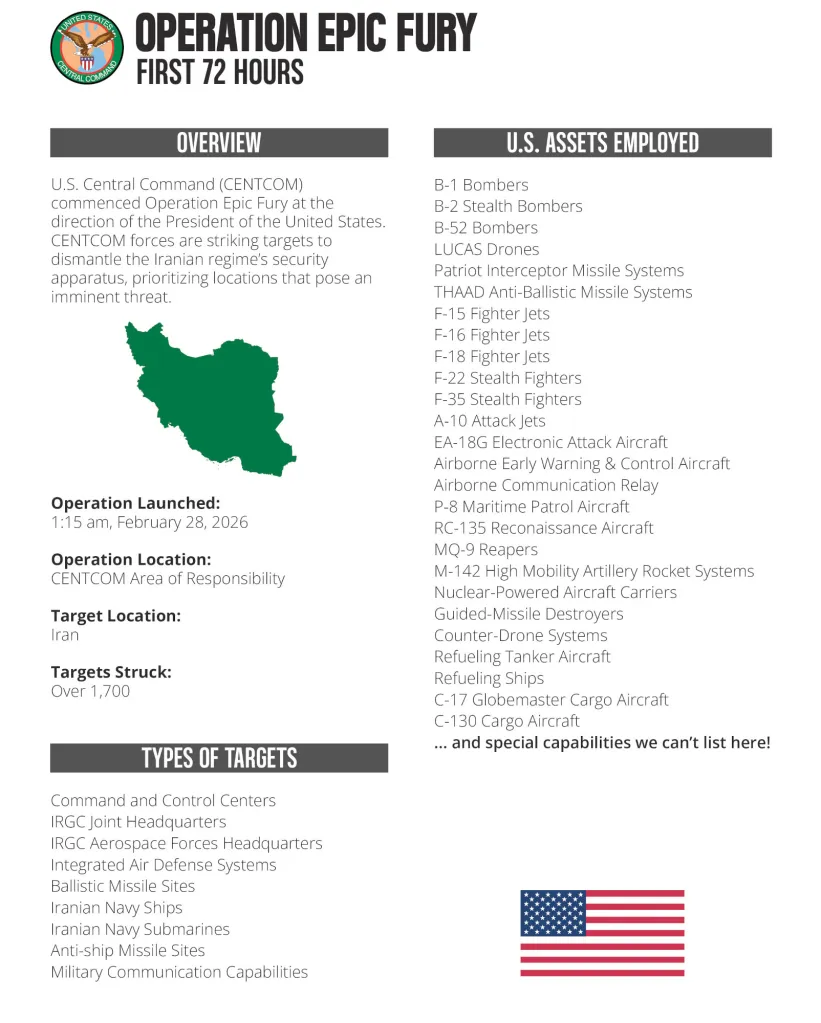

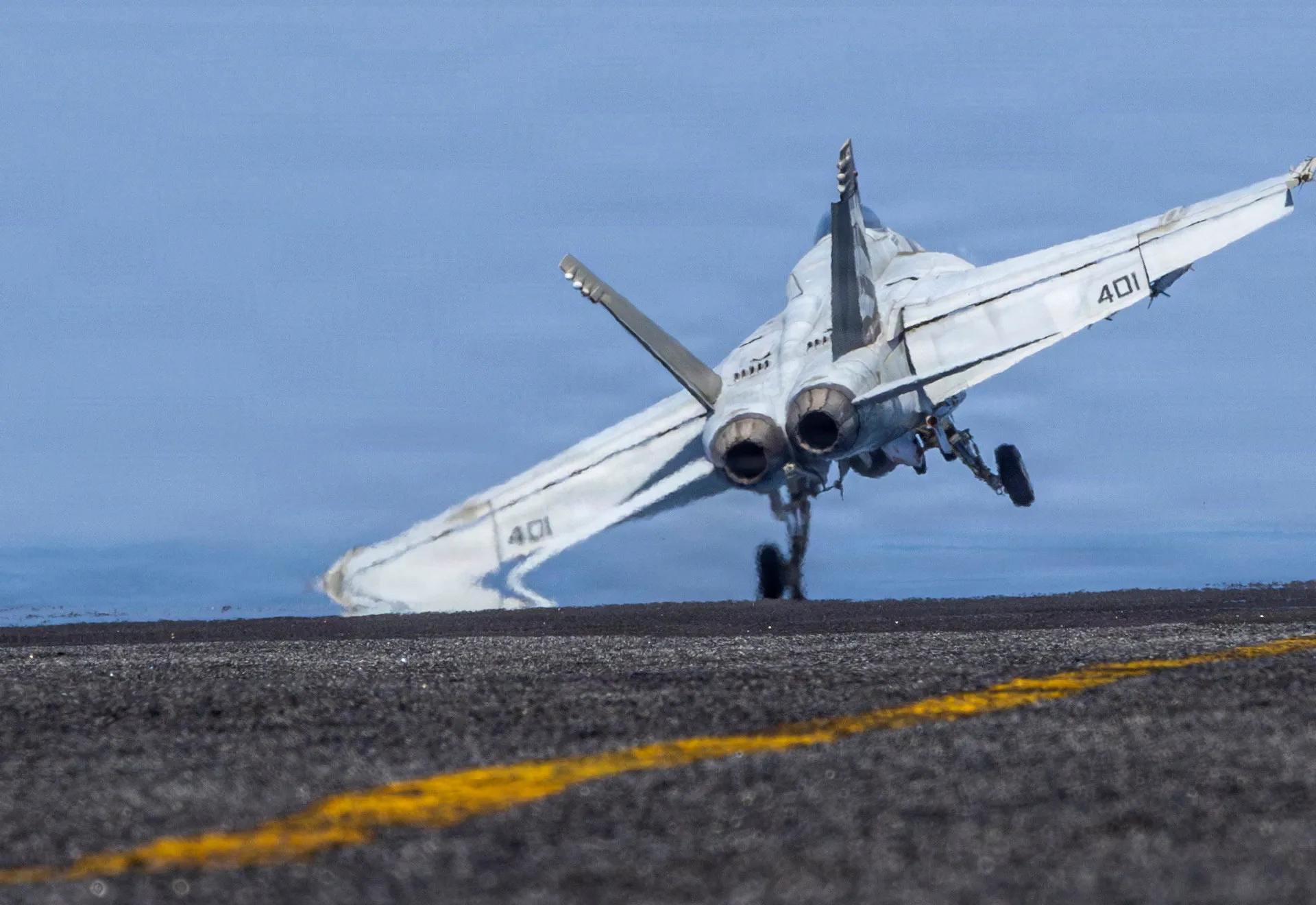


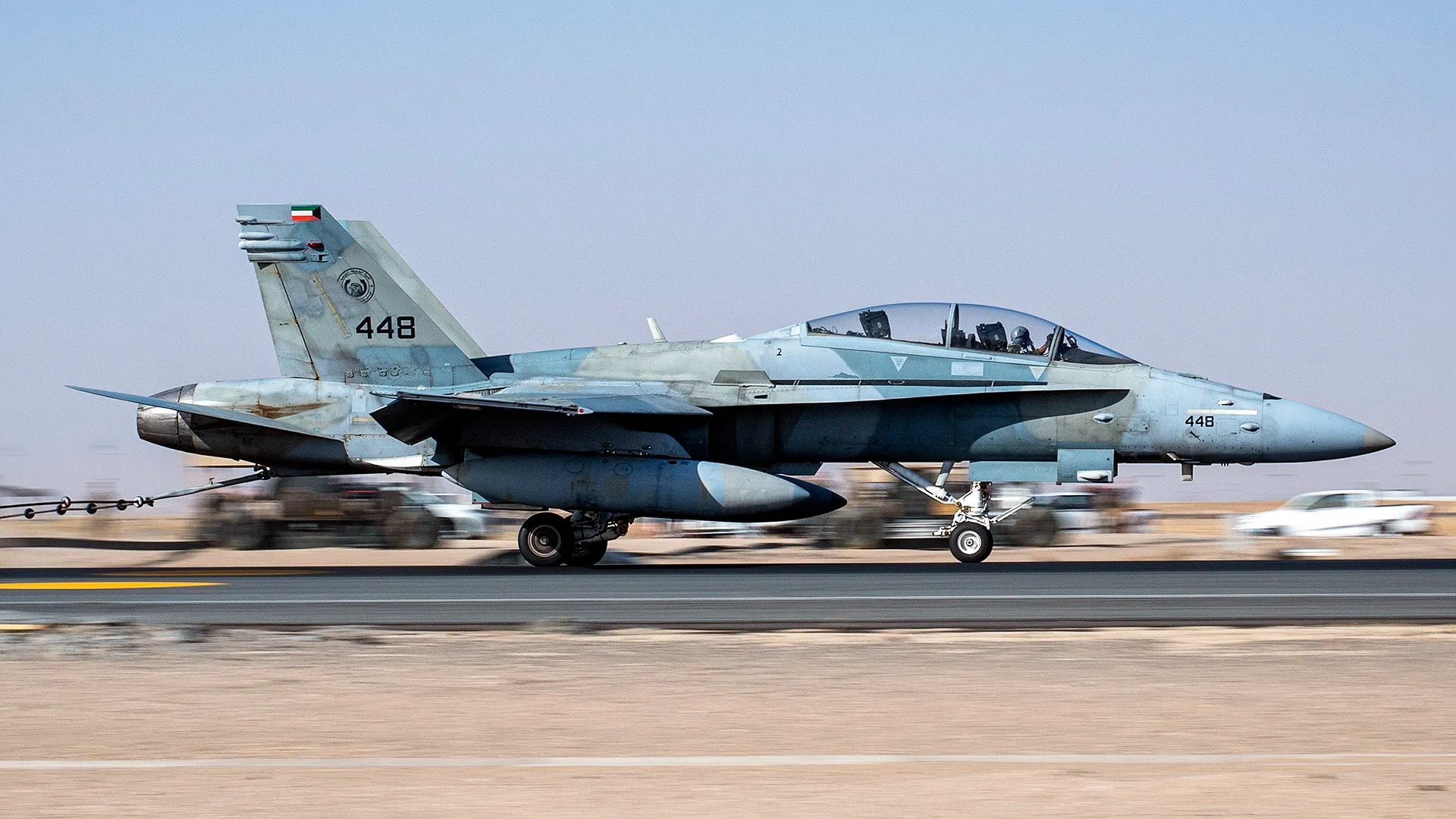

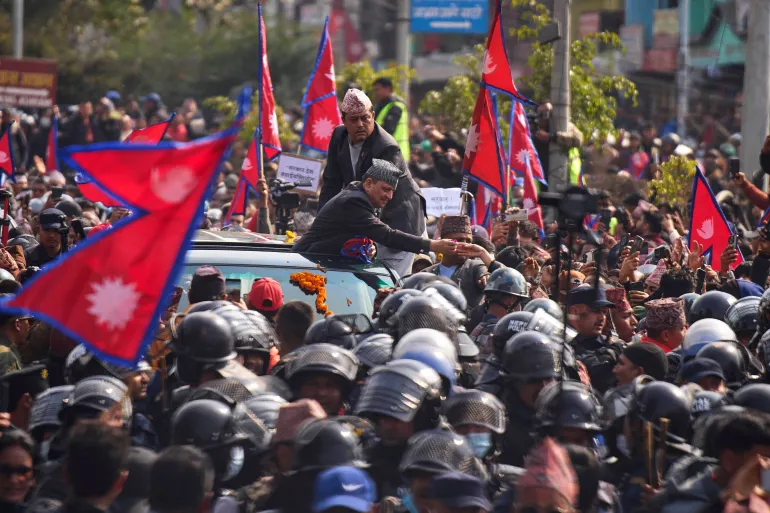


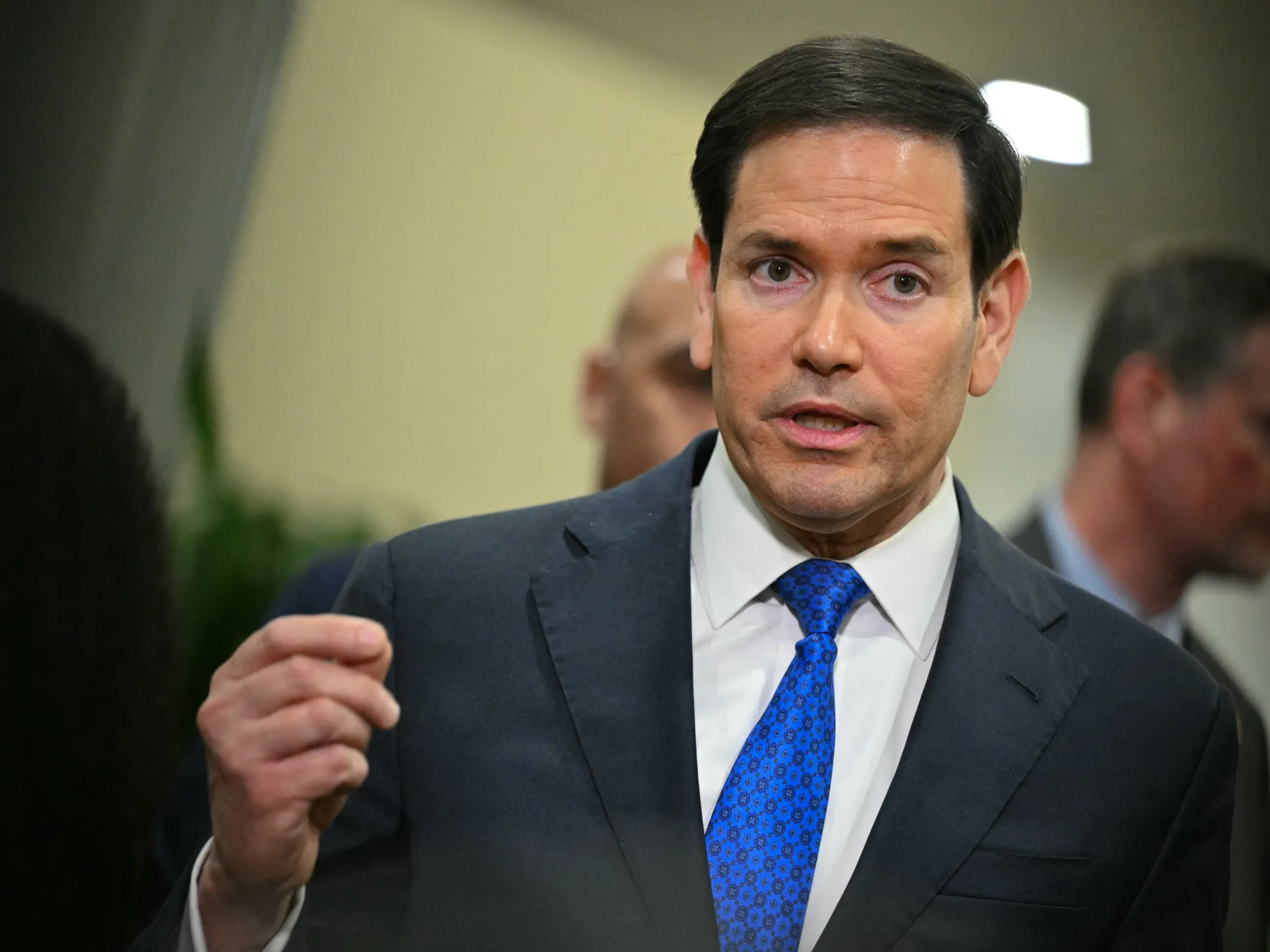
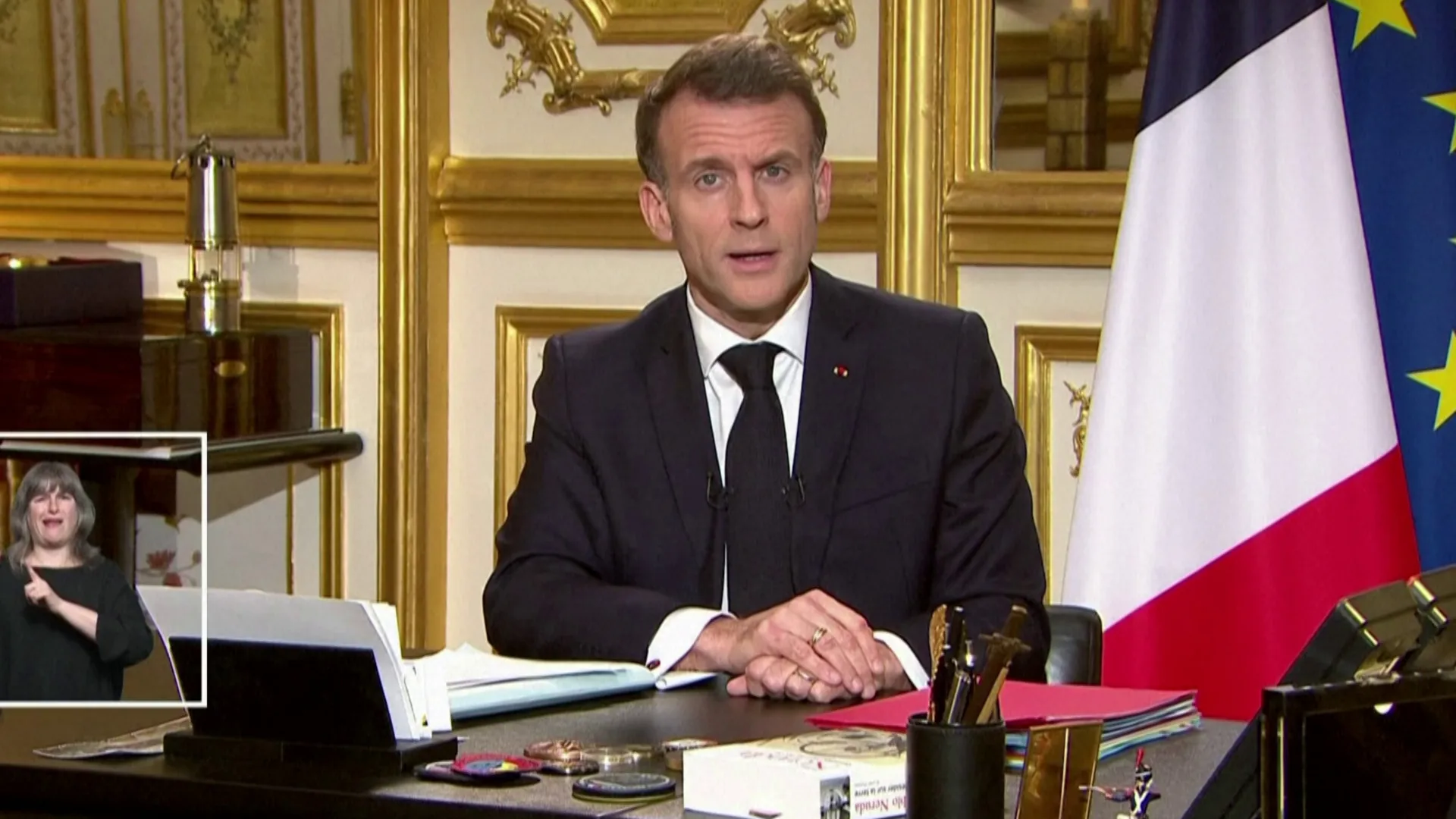
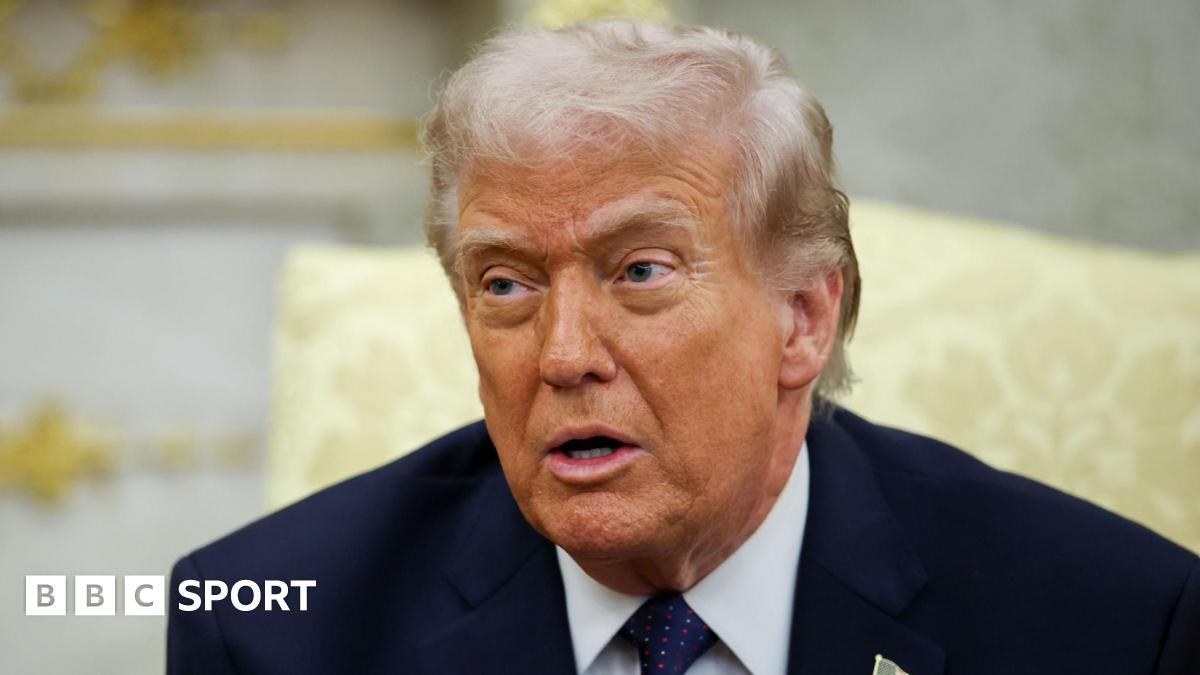


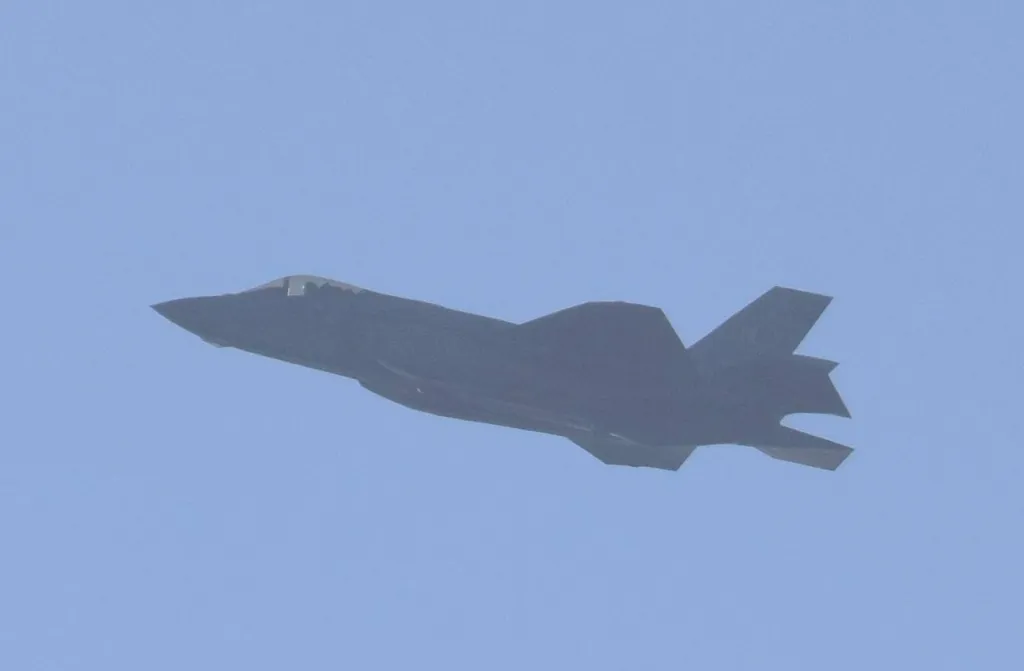



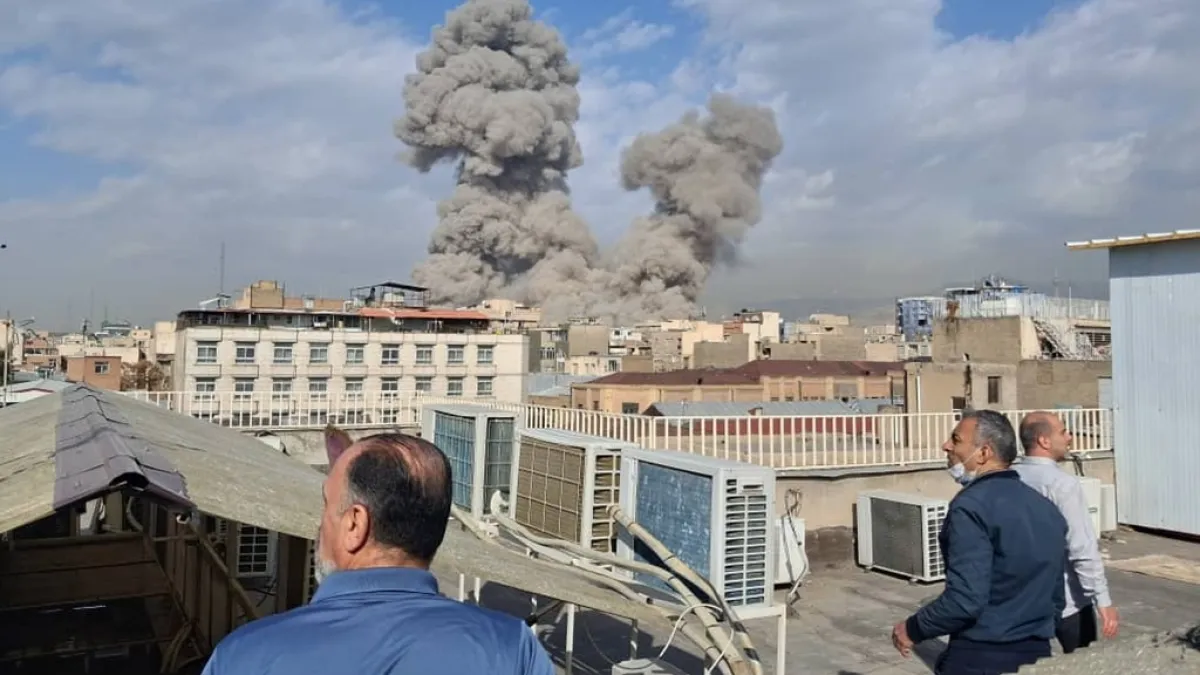
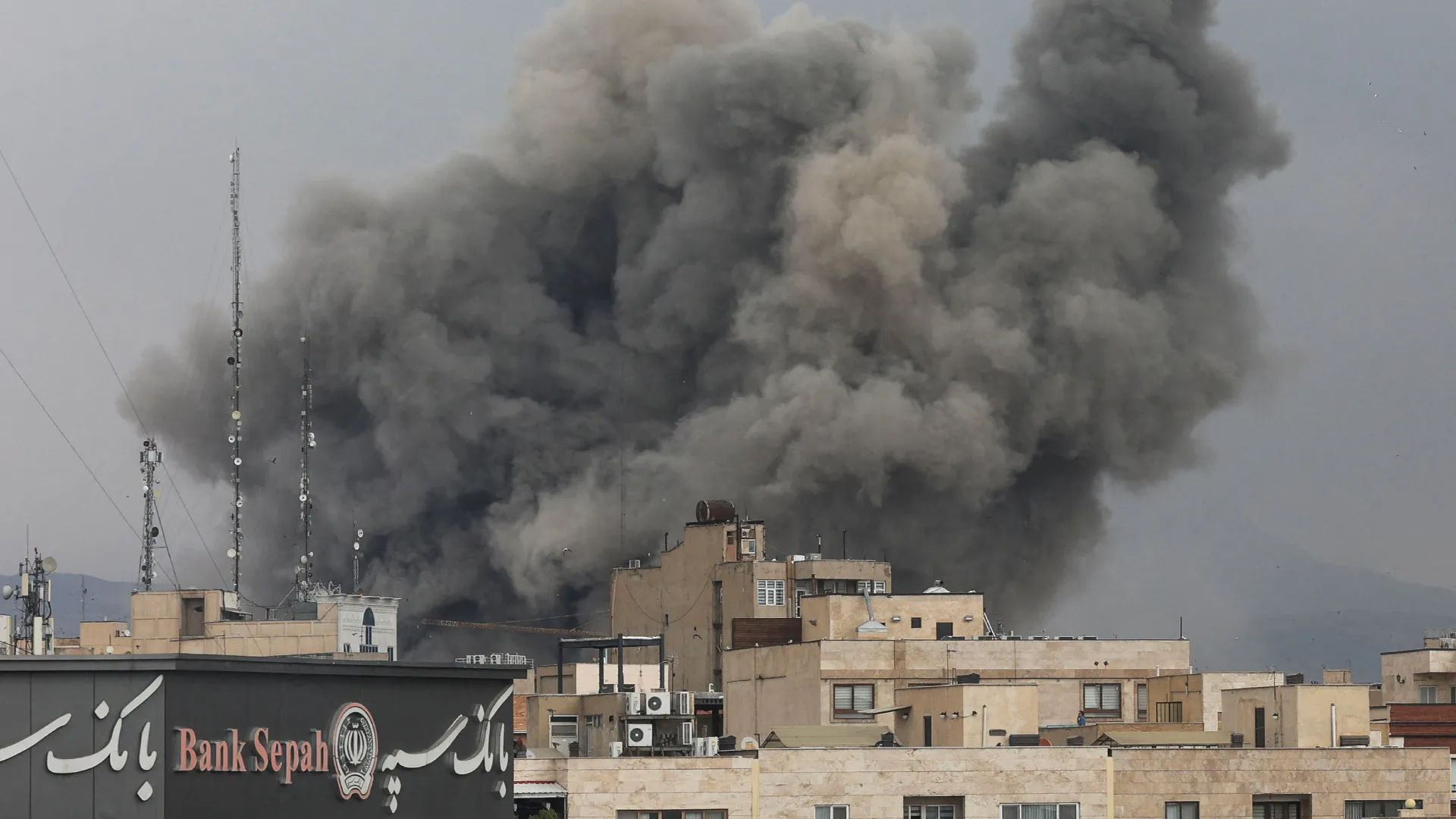
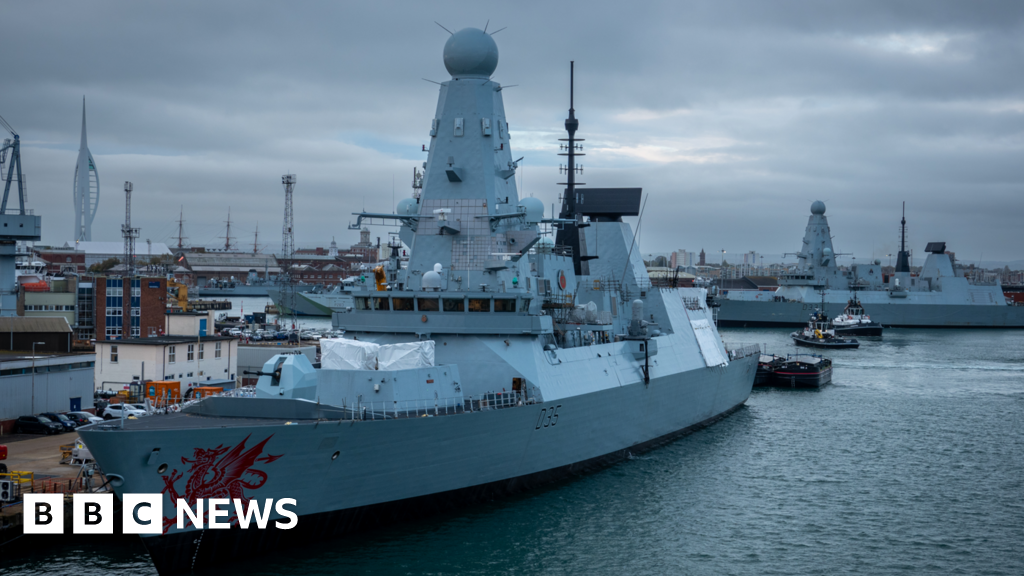

![Mohammad Bin Salman and Netanyahu - Cartoon [Tasnimnews.com/Wikipedia]](https://i0.wp.com/www.middleeastmonitor.com/wp-content/uploads/2018/01/2017_11-29-Mohammad-Bin-Salman-and-NetanyahuCaricature_of_Mohammad_Bin_Salman_03.jpg?w=1200&ssl=1)
![U.S. President Donald Trump looks over at Crown Prince of Saudi Arabia Mohammad bin Salman al-Saud as they line up for the family photo during the opening day of Argentina G20 Leaders' Summit 2018 at Costa Salguero on 30 November 2018 in Buenos Aires, Argentina. [Daniel Jayo/Getty Images]](https://i0.wp.com/www.middleeastmonitor.com/wp-content/uploads/2018/12/2018-12-3_trump-and-bin-salmanbin-salman-g20-trump.jpg?w=1200&ssl=1)