news

Gulf, Middle East nations react to Iran-US ceasefire announcement | US-Israel war on Iran News

Countries in the region welcome the temporary truce and urge negotiations for the war’s permanent end.

Iran and the United States have agreed to a two-week ceasefire and allow safe transit through the Strait of Hormuz.

The warring sides agreed to suspend attacks as the war entered its 40th day, with hopes now pinned on a peace deal through talks set to begin in Pakistan on Friday.

Recommended Stories

list of 4 itemsend of list

The truce in the early hours of Wednesday came after US President Donald Trump said he would suspend attacks, subject to Tehran agreeing to fully reopen the crucial Strait of Hormuz, through which 20 percent of global oil flows.

Iran’s foreign ministry said a safe passage through the vital waterway will be possible for a period of two weeks through coordination with the country’s armed forces.

Meanwhile, celebrations rang across Iran following the announcement and many world leaders welcomed the development.

The weeks-long fighting had embroiled nearly the entire Middle East. Iran launched retaliatory attacks by claiming to target US assets in Gulf Cooperation Council (GCC) countries. Gulf states alleged the Iranian attacks targeted civilian infrastructure as well.

Lebanon was also drawn into the war on March 2 after Tehran-aligned Hezbollah launched attacks on Israel. Israel has backed the two-week ceasefire with Iran, but has said it does not include Lebanon, despite Pakistan first announcing that the truce does.

Against this backdrop, here is how the Gulf and other Middle Eastern nations are reacting to the ceasefire announcement:

Saudi Arabia

The kingdom’s foreign ministry said it “welcomes” the ceasefire announcement. It urged an end to attacks on countries in the region and said that the Strait of Hormuz should be opened.

Saudi Arabia also hopes the ceasefire will “lead to a comprehensive sustainable pacification”, the foreign ministry said in a statement.

United Arab Emirates

Anwar Gargash, the diplomatic adviser to the UAE President, said the “UAE triumphed in a war we sincerely sought to avoid”.

“We prevailed through an epic national defense that safeguarded sovereignty and dignity and protected our achievements in the face of treacherous aggression,” Gragash said in a post on X.

“Today, we move forward to manage a complex regional landscape with greater leverage, sharper insight, and a more solid capacity to influence and shape the future”, he added, hailing “the UAE’s renaissance model”.

Oman

Oman’s foreign ministry said in a statement published on X that it welcomes the announcement of a ceasefire between Iran and the US and appreciates “the efforts of Pakistan and all parties calling for an end to the war”.

“We affirm the importance of intensifying efforts now to find solutions that can end the crisis from its roots and achieve a permanent cessation of the state of war and hostilities in the region,” the ministry said.

Iraq

Iraq’s foreign ministry said it “welcomes” the ceasefire but called for “serious and sustainable dialogue” between the US and Iran.

The ministry “calls for building upon this positive step by launching serious and sustainable dialogue tracks that address the root causes of the disputes and strengthen mutual trust,” it said on X.

Iraq has been drawn into the US-Israeli war on Iran, with Tehran-backed armed groups and US forces trading fire in an escalating cycle of violence.

Egypt

The Egyptian foreign ministry said the ceasefire “represents a very important opportunity that must be seized to make room for negotiations, diplomacy, and constructive dialogue”.

The ministry said in a statement on Facebook that a truce must be built upon with a full commitment to “stopping military operations and respecting freedom of international navigation”.

The post also said that Egypt will continue efforts with Pakistan and Turkiye “to promote security and stability in the region”, and that the talks between the US and Iran “must take into account the legitimate security concerns” of Gulf nations.

Turkiye

⁠Turkiye ⁠welcomed a ceasefire in the ⁠Iran war and ⁠said it would support negotiations set to take ‌place in Islamabad, the Turkish foreign ministry said on Wednesday.

It ⁠stressed the need ⁠for the ceasefire to be ⁠fully implemented on ⁠the ⁠ground and said all parties must ‌adhere to the agreement.

Source link

Yemen’s teachers pushed to the brink as salaries collapse | Education News

Mukalla, Yemen – Mohammed Salem heads out every morning for his job as a teacher at a government-run school. But once his shift is finished at that school, he then goes to a private school, where he also teaches. After a brief stop home for lunch, Mohammed is off to his third job, in a hotel, where he works the rest of the day.

“If I had any spare time for a fourth job, I would take it,” Mohammed, a teacher with 31 years of experience, said. He spoke to Al Jazeera outside his flat in a large housing complex in the eastern suburbs of Yemen’s southeastern port city of Mukalla.

Recommended Stories

list of 3 itemsend of list

He has been forced into taking on the extra jobs because of Yemen’s dire economic situation, and specifically the Yemeni riyal’s slide against the US dollar in recent years.

“I return home at night completely burned out,” he said. “Teachers are devastated and have no time to take care of their students. During classes, they are preoccupied with the next job they will take after school.”

Despite working from morning until night, the father of six says he earns less than half of what he made a decade ago, down from the equivalent of $320 a month to $130.

For more than a decade, Yemen has been mired in a bloody conflict between the Iran-backed Houthis and the Saudi-backed government, a war that has killed thousands, displaced millions and affected nearly every sector, including education.

The conflict has devastated the country’s main sources of revenue, including oil exports, customs and taxes, as rival factions wage an economic battle alongside fighting on the front lines.

The Houthis, who control Yemen’s densely populated central and northern highlands, including the capital Sanaa, have not paid public sector salaries since late 2016, when the internationally recognised government relocated the central bank from Sanaa to the southern city of Aden.

The Yemeni government, which controls Aden and the south, has also failed to raise public sector wages or pay them regularly, citing dwindling revenues after Houthi attacks on oil export terminals in southern Yemen.

Thousands of Yemeni teachers have voiced frustration over stagnant and delayed pay, saying their salaries have not improved since the war began. When they are paid, it is often late, and the wages have lost much of their value as the Yemeni riyal has plunged from approximately 215 to the dollar before the war started, to about 2,900 to the dollar in mid-2025. The Yemeni riyal is currently valued at about 1,560 to the dollar in government-controlled areas.

Faced with meagre and irregular incomes, teachers like Mohammed have adopted harsh survival strategies to keep their families afloat. His family has been forced to skip meals, cut out protein-rich foods such as meat, fish and dairy, and move to the outskirts of the city in search of cheaper rent.

He also asked one of his children to forgo university and instead join the military, where, he said, soldiers earn about 1,000 Saudi riyals ($265) a month.

“If we have money, we buy fish. When there is nothing, we eat rice, potatoes and onions. We do not look for meat, and we can only get it during Eid through donations from the mosque or charities,” Mohammed said.

During holidays and weekends, he lets his children sleep until the afternoon so they do not wake up asking for breakfast.

And when one of his children falls ill, he first treats them at home with natural remedies, such as herbs and garlic, only taking severe cases to hospital to avoid unaffordable medical bills. “I only take them to the hospital when they are extremely sick,” he said.

Mohammed Salem, a teacher with 31 years of experience in Mukalla, says he has taken on three jobs to make ends meet after his salary lost much of its value due to the rapid devaluation of the Yemeni riyal. (Saeed al-Batati/Al Jazeera]
Mohammed Salem, a teacher with 31 years of experience in Mukalla, says he has taken on three jobs to make ends meet after his salary lost much of its value due to the rapid devaluation of the Yemeni riyal [Saeed al-Batati/Al Jazeera]

Generation at risk

According to the United Nations Office for the Coordination of Humanitarian Affairs (OCHA), in its Yemen Humanitarian Needs and Response Plan 2026 released on March 29, the country’s education sector continues to be hit by a catastrophic, multilayered crisis.

An estimated 6.6 million school-aged children have been deprived of their right to education, while 2,375 schools have been damaged or destroyed. Teachers have also been severely affected, with about 193,668, nearly two-thirds of the national total, receiving no salaries.

In the al-Wadi district of Marib province, Ali al-Samae, who has been teaching since 2001, said his salary of about 90,000 Yemeni riyals barely covers his own expenses.

The financial strain has forced him to leave his family of seven in his home city of Taiz.

“Instead of focusing on preparing lessons and using modern teaching methods, our entire focus is on how to earn enough money to support our families,” he said. “Before the war, my salary was equivalent to 1,200 Saudi riyals [$320]. Now it is about 200 Saudi riyals [$52],” al-Samae told Al Jazeera.

To survive, he has taken on extra jobs, while his family has been forced to skip meals and cut out meat and chicken. He now visits them only once a year, often arriving empty-handed after spending most of his salary on transportation.

“We now live just to survive, rather than to teach. In the past, salaries covered our basic needs, but now they are not enough; even milk has become a luxury. Life has become very difficult.”

Part-time teachers say they are worse off than their full-time counterparts, as the government has neither raised their salaries nor added them to the official payroll.

Hana al-Rubaki, a part-time teacher in Mukalla, and the sole breadwinner for her mother and three sisters, told Al Jazeera that her salary barely covers expenses for 10 days.

Despite eight years of service, she earns the same as newly hired contract teachers. “There is no job security, despite my eight years of service. There is no difference between me and a contractor hired last year; everyone receives the same salary,” she said. “After taxes, my salary is just 70,000 Yemeni riyals [$44] a month. With the high cost of living, it feels more like a token allowance than a real salary.”

She added that delayed payments further worsen her situation. “Delayed salaries disrupt our daily lives and leave me struggling to meet even my most basic needs. While some teachers can find additional work to support their families, it is incredibly difficult for us female teachers to do the same.”

Protests and patchwork solutions

To highlight their plight and pressure the government to improve salaries, teachers across government-controlled areas have staged sit-ins, taken to the streets in protest and gone on strikes, disrupting education for months.

The cash-strapped government, which is mired in internal divisions and spends much of the year operating from abroad, has largely left the issue to provincial authorities.

Some governors have responded by approving modest incentives. In Hadramout, a raise of 25,000 Yemeni riyals ($16) a month was approved, while in other areas they have ranged between 30,000 Yemeni riyals ($19) in others and up to 50,000 Yemeni riyals ($32).

“The incentives provided by local authorities vary from one province to another, depending on each governor’s priorities and capacity to support teachers in their region,” Abdullah al-Khanbashi, head of the teachers’ union in Hadramout, told Al Jazeera, adding that protests would continue until teachers receive better and regular pay.

“Teachers are showing up in torn clothing, and sometimes their students have more money in their pockets than they do. Some families have broken apart, while others have been evicted from their homes because they could not pay the rent. Other teachers have children suffering from malnutrition because they cannot afford to feed them,” he said.

In Marib, Abdullah al-Bazeli, head of the teachers’ union in the province, said local farmers have stepped in to help teachers remain in classrooms by giving them some of their produce.

“Farmers support teachers, especially those coming from outside the province, by giving them tomatoes, potatoes and other vegetables for free,” al-Bazeli said.

He also called for teachers’ salaries to be raised to the level of ministers. “A teacher’s salary should be equal to that of a minister. Teachers educate generations, while ministers often fail to make a meaningful impact. Some teachers have begun to die from hunger,” he told Al Jazeera.

In Houthi-controlled areas, teachers have rarely taken to the streets to protest the suspension of their salaries, as authorities suppress dissent and blame the Yemeni government and the Saudi-led coalition for imposing a “blockade” that they say has hindered their ability to pay public sector wages.

Acknowledging the problem of low salaries, the Yemeni government says dwindling and disrupted revenues during the war have prevented it from increasing public sector pay. “The main reason is weak financial resources resulting from the war and recurring instability, which have undermined institutions and revenue streams,” Tareq Salem al-Akbari, who served as Yemen’s education minister from 2020 to 2026, told Al Jazeera.

Teachers interviewed by Al Jazeera say they are running out of patience with the repeated promises that their salaries will be improved, warning that they may abandon the profession altogether if they find better-paying jobs that could spare them from hunger or begging in public.

“The idea of leaving teaching is always on my mind, but I have not found an alternative job,” Mohammed Salem said. “I feel pity, and sometimes cry, when I see a teacher begging in mosques or calling from a hospital, asking for help to pay for a child’s medical treatment.”

Source link

New Views Of Massive RQ-180 Stealth Drone Flying Over Greece

For nearly four weeks now, a very stealthy high-altitude, long-endurance (HALE) surveillance and reconnaissance drone commonly and unofficially referred to as the RQ-180, or an evolution thereof, has been seen flying around Larissa Air Base in Greece. New, remarkably detailed videos of the uncrewed aircraft that have recently spread on social media offer insights into its sensor package and other aspects of the design. Just yesterday, TWZ also published an in-depth feature exploring the likely role of the ‘RQ-180’ in the ongoing conflict in Iran and how it ties to a secret Cold War drone program that was, in many ways, its progenitor.

The very large and very stealthy flying wing-type drone was first spotted in the skies around Larissa Air Base, also known as Larissa National Airport, in the city of the same name in Greece, back on March 18. Local spotter Efthymios Siakaras shared two new video clips offering especially good views of the uncrewed aircraft in flight, one on Sunday and another on Monday, which our friends over at The Aviationist were first to report on. Similar to the stealthy RQ-170 Sentinel being dubbed the “Beast of Kandahar” after it was first spotted in Afghanistan in the late 2000s, many are now also calling this drone the “Lady of Larissa.”

🇺🇸🇬🇷 O drone de reconhecimento furtivo americano RQ-180, de uso secreto, foi avistado pela segunda vez ontem, pousando em Larissa, na Grécia.

Esta é a melhor imagem até o momento da aeronave altamente secreta e ainda não confirmada.

Acredita-se que os RQ-180 estejam… pic.twitter.com/40JuHKUpr2

— Leo Kasura (@LeoKasura) April 6, 2026

Of the features visible in the latest footage of the Lady of Larissa, the most notable are a pair of large electro-optical sensor apertures underneath its central fuselage, right behind the main landing gear bay. The two windows are noticeably angled to the left and right. Behind those transparencies would be a large multi-spectral sensor system that can look down to the ground below and out at long slant angles towards the horizon from the aircraft’s very high perch. By having one window on each side, the RQ-180 could run racetrack patterns some distance from its target while providing continuous coverage. If a sensor is housed under each window, it could collect intelligence over much larger swathes of terrain at any given time.

As TWZ has noted for years, the RQ-180 would, with near certainty, carry a powerful radar with ground moving target indicator (GMTI) and synthetic aperture radar (SAR) modes as its primary sensor, along with electronic intelligence collection capabilities. Optical camera systems were always another possibility, one that seems to have proven true now.

As we wrote just yesterday:

At its most basic, GMTI allows battle managers to see the enemy’s ground movements in real-time and then quickly adapt their game plan to counter those enemy forces before they can ever attack, or even pose a threat to friendly forces. GMTI is also a critical capability for detecting changes in force posture, establishing patterns of enemy movements over time, and identifying new targets of interest. Modern GMTI products can also be looped into a ‘kill web’ for rapid targeting purposes.

Some of this is also achieved through the aforementioned SAR mode, which basically provides a satellite-like image of a target area using radar. It also has the ability to see some things optical systems cannot, and, like GMTI, it can work under nearly all atmospheric conditions, day or night. When paired with GMTI, SAR can be used to help positively identify targets, as well as gain better situational awareness about the targets being tracked.

A generic example of GMTI tracks overlaid on top of a SAR image. Public Domain

Passive electronic intelligence collection that allows for radiofrequency-emitters to be quickly detected and geolocated via onboard antennas and interferometry-based computing is another part of the equation. Long-range optical sensors can also provide higher-fidelity intelligence and spot movements of infrared signatures over large areas. You can imagine how fusing all these capabilities together, combined with advanced networking, on a single platform could be incredibly potent. Basically, detecting a target or target group of interest, and then training advanced sensors on it to rapidly build up a high-quality understanding of what is going on and even to provide real-time targeting data to ‘shooters’ would be this aircraft’s bread and butter.

The drone’s electro-optical system and radar, together with the rest of its sensor suite, could offer a secondary air-to-air surveillance capability, as well.

As an interesting aside, Scaled Composites’ Proteus high-altitude test aircraft has previously been seen flying with an extremely similar-looking sensor suite with an oddly angled aperture housing. The high-flying Proteus has a long history of being used to test and evaluate new sensors and other advanced capabilities. Scaled Composites is also a wholly-owned subsidiary of Northrop Grumman, widely understood to be the prime contractor behind the RQ-180.

When we saw pics of that EO aperture on Proteus years ago I said to Joe, “well that’s sure to be for the 180!” https://t.co/iGT83KX4JC

— Tyler Rogoway (@Aviation_Intel) April 6, 2026

In addition, the underside of the drone’s central fuselage, which is where the main array for the aforementioned radar would go, has a very pronounced bulge. This would house a rotating radar or a two-sided one so that the aircraft can scan the same area while traveling in either direction. Supplemental conformal arrays, or even load-bearing ones, could also be positioned all around the aircraft, along with communications antennas, electronic warfare gear, and electronic surveillance measures hardware.

The new views of the drone flying around Larissa underscore just how widely positioned its tricycle landing gear is, along with its very broad wingspan. As we’ve noted previously, a landing gear configuration like this allows for a large volume for payload and good stability on the ground.

It is worth pointing out that there looks to be a foreign object debris (FOD) deflector fitted around the wheel of the nose landing gear. In general, the radar absorbent coatings and the composite skins of stealthy aircraft are very sensitive. What might look to be relatively minor surface damage at a casual glance can have significant negative impacts when it comes to radar cross-section, which is critical for the aircraft’s mission effectiveness and survival. From what we can see, the drone will be sitting very low on its gear when on the ground. This only increases the potential for foreign objects to get kicked up and hit its belly during takeoff and landing. This is especially true for the low-hanging ventral bulge where sensor apertures are, right behind the nose gear. So, this debris guard makes total sense.

The nose gear strut also has what is called a trailing link or trailing arm, a feature designed to help smooth the impact of landing.

The trailing-link style nose landing gear otherwise has a two-wheel configuration very much in line with that of the B-21 Raider bomber, but in a scaled-down form. This is not all that much of a surprise, as the B-21 shares a general planform with the RQ-180. The Raider’s development was likely heavily influenced by the RQ-180, or a progenitor of the flying wing uncrewed aircraft we are seeing today.

A close-up look at the nose landing gear on a preproduction B-21 Raider bomber. USAF

The drone’s main landing gear looks extremely similar to what is found on F-15 fighters. Borrowing existing, proven components for experimental or low-production aircraft like this is a time-honored tradition. The use of an F-15’s main landing gear points to a high gross takeoff weight. The maximum takeoff weight of the latest F-15EX variant is 81,000 pounds, according to Boeing, and the F-15 has a much smaller, single nose wheel. For comparison, the high-flying Global Hawk drone’s maximum takeoff weight is 32,250 pounds, per the U.S. Air Force, and it has distinctly less robust landing gear to match.

A look at one of the US Air Force’s new F-15EX fighters, offering a good look at its main landing gear. USAF
The less robust design of the RQ-4 Global Hawk’s landing gear is plainly visible in this stock picture of one of the drones. USAF

At the same time, the Lady of Larissa would not necessarily need to make use of all of that capacity, or it could even have a bit higher gross weight, and various additional factors could have influenced the choice of landing gear. The overall design is likely to be light for its overall size to maximize range, endurance, and high-altitude performance. With its reconnaissance and surveillance mission sets, there would be no need for a payload bay structure to carry heavy weapons. This, along with the lack of any need to support a crew, would allow the aircraft to be absolutely packed with fuel.

While its similarities to the B-21 are glaring, the Lady of Larissa is even more optimized for high-altitude flight than the Raider, which itself is a step beyond in altitude performance over the B-2. You can read all about this in our past feature here. The drone’s overall massive flying wing shape and its very clean, laminar flow-like sculpting, along with wings that look designed to allow the RQ-180 to loiter at relatively extreme altitudes, support its penetrating, persistent reconnaissance mission set.

Furthermore, the most recent videos of the Lady of Larissa offer new looks at the control surfaces in action. Like what is found on the B-21 and Northrop’s preceding B-2 Spirit bomber, the drone has flaperons along the trailing edges of the wings and along its diamond-like empennage. There may also be a central variable geometry ‘beaver tail’ section, something also found on the B-2, but not on the B-21, although this could just be the inboard flaps being slightly extended.

The B-2’s ‘beaver tail’ control surface can be seen here in this picture of one of the bombers.USAF

Much remains to be learned about the drone’s design and capabilities, as well as why it is operating out of Greece and how long it has used Larissa as a forward base. Why such a sensitive asset continues to be seen flying in the middle of the day is also curious. After the highly exotic uncrewed aircraft was first spotted at Larissa, reports said that it had landed there after experiencing some kind of technical issue, though this remains unconfirmed. The drone could have diverted there after taking off for a mission from another operating location, even one potentially inside the United States. All that being said, as we’ve noted in the past, Larissa does look to have unique facilities that seem very well suited for hosting an aircraft like this, and that were only built in recent years.

It may be that it simply has no place to hide any longer, and more flexibility is being exercised as to when it can and can’t depart and land from wherever it’s operating from. This could also mean the Pentagon may be more willing to acknowledge its existence in the not-so-distant future.

As mentioned at the start of this story, TWZ just yesterday laid out a detailed case for why the RQ-180 would be very relevant for helping hunt Iranian mobile missile launchers. That is a mission set that likely evolved from work on a previous secret Cold War-era stealthy drone program called the Advanced Airborne Reconnaissance System (AARS), also known by the codename Quartz. There are many other roles it could execute in relation to Operation Epic Fury, as well.

Overall, we have gotten our best look at the so-called RQ-180. We now know it is capable of radio-frequency and electro-optical sensing, and we have a bit better idea of its overall size and mass. This is a very large unmanned system that is smaller in size than the B-21, but far larger than RQ-170. A very cursory guess supports a wingspan of something on the order of 130 feet or larger, but again, that is just a guess. This aircraft is clearly optimized to fly at least at Global Hawk altitudes (upwards of 60,000 feet) and possibly higher, approaching that of the U-2, giving it a huge line of sight to target areas. Being such an efficient-looking design and being so large with so much internal volume, it likely measures its endurance in days, not hours.

The videos of the RQ-180 operating in the daytime also come as China is moving forward with its own very large unmanned stealth flying wing designs.

If the war with Iran continues, we will probably be seeing more of the Lady of Larissa, with its shyness appearing to be waning just a bit.

Contact the author: joe@twz.com

Joseph has been a member of The War Zone team since early 2017. Prior to that, he was an Associate Editor at War Is Boring, and his byline has appeared in other publications, including Small Arms Review, Small Arms Defense Journal, Reuters, We Are the Mighty, and Task & Purpose.


Tyler’s passion is the study of military technology, strategy, and foreign policy and he has fostered a dominant voice on those topics in the defense media space. He was the creator of the hugely popular defense site Foxtrot Alpha before developing The War Zone.


Source link

World welcomes US-Iran ceasefire, urges lasting peace in the Middle East | US-Israel war on Iran News

The United States and Iran have agreed to a two-week ceasefire, with talks to finalise a peace deal set to begin in Pakistan’s Islamabad on Friday.

The truce, announced by US President Donald Trump on Tuesday, will see Iran reopen the Strait of Hormuz, a vital maritime corridor through which a fifth of the world’s oil supply passes.

Recommended Stories

list of 4 itemsend of list

Countries around the world have welcomed the development.

Here’s a roundup of the reaction:

Israel

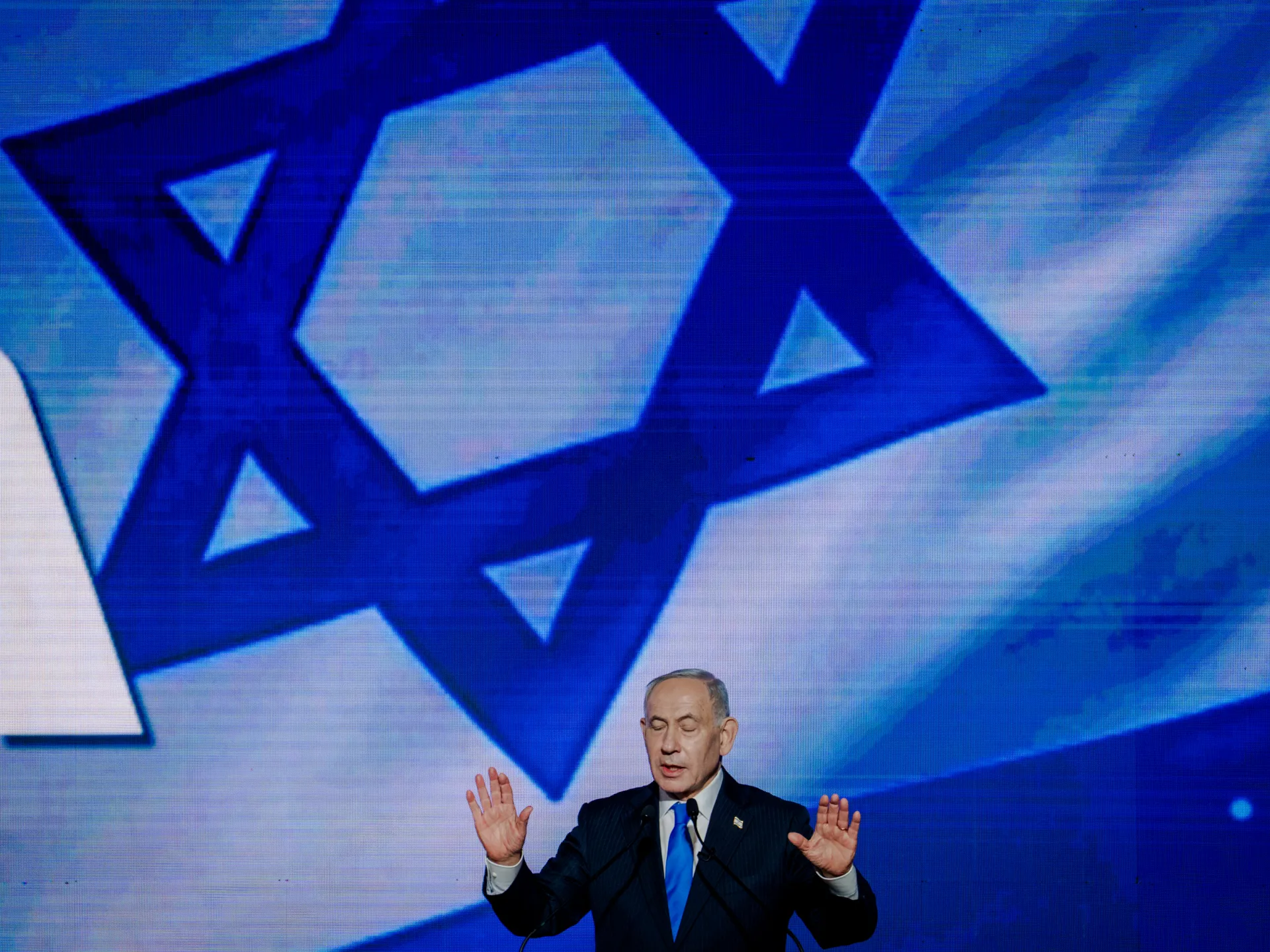
Israeli Prime Minister Benjamin Netanyahu said on X that he supports Trump’s decision to suspend strikes on Iran, and the “US effort to ensure that Iran no longer poses a nuclear, missile and terror threat to America, Israel, Iran’s Arab neighbours and the world”.

Netanyahu said, however, that the ceasefire does “not include Lebanon“, where Israeli forces have launched a ground invasion and are fighting with the Iran-aligned Hezbollah.

Iraq

Iraq’s Ministry of Foreign Affairs welcomed the news of the ceasefire but said that both the US and Iran must commit to the deal to achieve a lasting resolution.

“As the ministry asserts its support for regional and international efforts to contain crises and prioritise the language of dialogue and diplomacy, it stresses the need for full commitment to the ceasefire and refraining from any escalations,” the ministry said.

Iraq has been drawn into the US-Israeli war on Iran, with Tehran-backed armed groups and US forces trading fire in an escalating cycle of violence.

Egypt

The Egyptian Ministry of Foreign Affairs said the ceasefire “represents a very important opportunity that must be seized to make room for negotiations, diplomacy, and constructive dialogue”.

The ministry said in a statement on Facebook that a truce must be built upon with a full commitment to “stopping military operations and respecting freedom of international navigation”.

The post also said that Egypt will continue efforts with Pakistan and Turkiye “to promote security and stability in the region”, and that the talks between the US and Iran “must take into account the legitimate security concerns” of Gulf nations.

United Nations

UN Secretary-General Antonio Guterres welcomed the announcement and called on all parties to abide by the terms of the ceasefire “in order to pave the way toward a lasting and comprehensive peace in the region”, according to his spokesperson.

Guterres underscored “that an end to hostilities is urgently needed to protect civilian lives and alleviate human suffering”, and thanked Pakistan and other nations involved in facilitating the truce.

Japan

Japan’s Chief Cabinet Secretary Minoru Kihara told reporters that Tokyo welcomes the news of a two-week ceasefire between the US and Iran as a “positive move” as it awaits a “final agreement”.

Minoru said the de-escalation of hostilities in the Middle East remains a top priority, according to the Kyodo News Agency.

Indonesia

Indonesia’s Foreign Ministry Yvonne Mewengkang said Jakarta welcomes a ceasefire deal and called on Iran and the US to respect the “sovereignty, territorial integrity and diplomacy” of each side, according to the Reuters news agency.

Mewengkang also called for a thorough investigation into the deaths of three Indonesian UN peacekeepers killed by explosions in Lebanon in late March amid fighting between Israeli forces and Hezbollah fighters.

Malaysia

Malaysia’s Ministry of Foreign Affairs said the ceasefire marks a “significant development [and] serves as a crucial step towards de-escalating tensions and restoring much-needed peace and stability” to the Middle East.

It also urged “all parties to fully respect and implement all terms of the ceasefire in good faith to prevent any return to hostilities”, while also avoiding any “provocative actions or unilateral measures that could negatively impact the fragile stability of the region or jeopardise global economic and energy security”.

Australia

Australian Prime Minister Anthony Albanese and Minister for Foreign Affairs Penny Wong issued a joint statement welcoming the news and expressing their hopes that the deal will lead to a long-lasting resolution.

“Iran’s de facto closure of the Strait of Hormuz, coupled with its attacks on commercial vessels, civilian infrastructure, and oil and gas facilities, is causing unprecedented energy supply shocks and impacting oil and fuel prices,” they said.

“We have been clear that the longer the war goes on, the more significant the impact on the global economy will be, and the greater the human cost.”

Albanese and Wong thanked Pakistan, Egypt, Turkiye, and Saudi Arabia for their work as negotiators.

New Zealand

New Zealand Minister of Foreign Affairs Winston Peters said his government welcomes the news of a ceasefire, although many concerns remain.

“While this is encouraging news, there remains significant important work to be done in the coming days to secure a lasting ceasefire”, as the war has had “wide-ranging impacts and disruptions” on the Middle East and beyond, he wrote in a post on X.

Peters praised countries like Pakistan, Turkiye, and Egypt for their work negotiating a deal.

Source link

Netanyahu says US-Iran ceasefire ‘does not include Lebanon’ | US-Israel war on Iran News

DEVELOPING STORY,

Israeli prime minister’s office welcomes US decision to suspend attacks on Iran, but says the two-week truce does not apply to Lebanon.

Prime Minister Benjamin Netanyahu’s office has announced that Israel backs the United States’s decision to suspend strikes against Iran for two weeks, but said the truce “does not include Lebanon”.

In a statement on X on Wednesday, Netanyahu said Israel supported US President Donald Trump’s efforts to ensure “Iran no longer poses a nuclear, missile and terror threat to America, Israel, Iran’s Arab neighbors and the world”.

He said the US has told Israel that it is committed to achieving these goals in the upcoming negotiations in Pakistan’s Islamabad on Friday.

But the two-week ceasefire “does not include Lebanon”, he added.

Netanyahu’s statement comes after Pakistani Prime Minister Shehbaz Sharif announced that the US, Iran and their allies “have agreed to an immediate ceasefire everywhere including Lebanon and elsewhere”.

Sharif said the move was “effective immediately”.

Lebanon was drawn into the war on March 2 after Iran-aligned Hezbollah launched attacks on Israel.

Hezbollah said the attacks were in retaliation for Israel’s killing of Iran’s Supreme Leader Ayatollah Ali Khamenei on February 28 as well as its near-daily violations of a ceasefire it agreed in Lebanon in November of 2024.

Israeli attacks on Lebanon have since killed more than 1,500 people and displaced more than 1 million people. The Israeli military has also launched an invasion of southern Lebanon and said it aims to seize more territory for what it calls a buffer zone.

There’s been no immediate comment from Hezbollah or Lebanon.


Source link

Iraqis celebrates US-Iran ceasefire as two-week halt in war begins | US-Israel war on Iran

NewsFeed

Celebrations have erupted in Iraq’s capital, Baghdad, following the announcement of a two-week ceasefire between Iran and the United States. Iraq had been pulled into the war with pro-Iran armed groups and US forces carrying out attacks on each other.

Source link

Iran says talks with US will begin in Pakistan’s Islamabad on Friday | News

Tehran says the negotiations will be based on its 10-point proposal, which calls for control over Strait of Hormuz and lifting of all sanctions.

Iran has agreed to a two-week ceasefire with the United States, with its National Security Council saying talks with Washington will begin in the Pakistani capital, Islamabad, on Friday, based on Tehran’s 10-point proposal.

The statement on Wednesday came after US President Donald Trump said he was calling off a threat to end Iranian civilisation and “suspend” attacks on the country for two weeks.

Recommended Stories

list of 4 itemsend of list

Trump said the truce was contingent on Iran agreeing to the “complete, immediate and safe opening” of the Strait of Hormuz, the narrow waterway that connects the Gulf to the Arabian Sea and through which a fifth of the global oil supply passes.

Iran’s partial blockade of the strait – imposed in the aftermath of the US and Israel’s attacks on February 28 – has disrupted global trade, driving up oil prices and causing fuel shortages across the world.

Iran’s retaliatory attacks have also reverberated across the Gulf and drawn in Lebanon’s Hezbollah and Yemen’s Houthis, both of which have launched attacks on Israel, significantly widening the conflict.

Trump said in his Truth Social statement that the US has received a 10-point proposal from Iran, “and believe it is a workable basis on which to negotiate”.

He said the US and Iran have agreed on “almost all of the various points of contention” and that the two-week period will allow the agreement to be “finalised and consummated”.

Iran’s Minister of Foreign Affairs Abbas Araghchi, speaking on behalf of the Iranian National Security Council, confirmed Tehran’s decision to halt the fighting.

“If attacks against Iran are halted, our powerful armed forces will cease their defensive operations,” he said in a post on X.

Araghchi said that safe passage through the Strait of Hormuz will be possible in coordination with Iran’s Armed Forces, and that the decision was taken in light of Trump’s acceptance “of the general framework of Iran’s 10-point proposal as a basis for negotiations”.

For his part, Pakistan’s Prime Minister Shehbaz Sharif said the warring sides had agreed to an “immediate ceasefire everywhere including Lebanon and elsewhere”.

The move is “EFFECTIVE IMMEDIATELY”, he wrote on X.

Sharif thanked the US and Iran and extended an invitation to “their delegations to Islamabad on Friday, 10th April 2026, to further negotiate for a conclusive agreement to settle all disputes”.

According to Iran’s National Security Council, its 10-point proposal calls for Iranian dominance and oversight of the Strait of Hormuz, which it said would grant it a “unique economic and geopolitical position”.

The proposal also calls for the withdrawal of all “US combat forces” from bases in the Middle East and a halt to military operations against allied armed groups across the region. It goes on to demand “full compensation” for war damages, as well as the lifting of all sanctions by the US, the United Nations Security Council and the International Atomic Energy Agency.

The proposal also calls for the release of frozen Iranian assets abroad and the ratification of any final agreement in a binding UN Security Council resolution.

The council said that while Tehran has agreed to talks, it does so “with complete distrust of the American side”.

It said Iran will allocate two weeks for these negotiations and that the time period “can be extended by agreement of the parties”.

The council added that Iran stood ready to respond with “full force” as soon as “the slightest mistake by the enemy is made”.

There has been no comment from Israel.

Source link

White House confirms two-week suspension of strikes on Iran | US-Israel war on Iran

NewsFeed

Al Jazeera’s Mike Hanna reports that the White House has confirmed the US has agreed to suspend all bombing and military attacks on Iran for two weeks, provided the Strait of Hormuz re-opens for safe passage. Trump’s announcement came close to an hour before an original threatened deadline, signalling a breakthrough towards diplomacy.

Source link

Billionaire investor Ackman makes $64bn bid for Universal Music Group | Music News

Billionaire investor Bill Ackman’s Pershing Square has proposed a takeover of Universal Music Group in a $64bn deal, the latest twist in his nearly five-year quest for the music label giant.

Pershing Square proposed a cash-and-shares offer on Tuesday through its acquisition vehicle that values Universal Music at about 30.40 euros ($35) per share, a 78 percent premium to the last closing price of 17.10 euros ($20), making the deal worth 55.75 billion euros ($64.31bn).

Recommended Stories

list of 4 itemsend of list

Universal Music Group (UMG) – the company behind international superstars, including Taylor Swift, Billie Eilish and Kendrick Lamar – is expected to move its listing to New York from Amsterdam, paving the way for more investors, including index funds, to own the company and ultimately lead to more robust earnings and a higher valuation.

Universal Music declined a Reuters news agency request for comment.

For Ackman, one of the world’s most voluble investors, who cemented his fame and fortune as an activist investor, forcefully pushing corporate America to adopt changes, this is a far friendlier approach, investors and industry analysts said.

Even as the music industry is flourishing, UMG’s share price has lagged, something Ackman is pledging to fix with this proposed deal.

Ackman’s letter to Universal Music Group’s board carried a mixed tone, at times complimentary of current management, led by chairman and chief executive Lucian Grainge, and critical of the company’s “underutilized balance sheet” and handling of its 2.7 billion euro ($3.1bn) investment in Spotify Technology.

Fears of AI disrupting the music industry have played a role in UMG’s lacklustre performance. Its share of the music market has been sliding, and streaming growth is decelerating, Wells Fargo analysts noted. In March, UMG delayed its plans for a US listing.

Nonetheless, Ackman will need the support of UMG’s top shareholders – Bollore Group, which holds an 18.5 percent stake, and Vivendi, which owns 13.4 percent – to push through any transaction. China’s Tencent is a significant shareholder. French billionaire Vincent Bollore’s family controls 80 percent of UMG’s voting rights.

Old target

Ackman first flirted with Universal Music Group in 2021, when his Pershing Square Tontine Holdings, a shell corporation created to take a private company public, zeroed in on its target. But Ackman shelved the complex deal in the wake of heavy US regulatory scrutiny. Instead, Pershing Square became one of UMG’s biggest investors in 2021, and Ackman sat on its board until last year.

Post transaction, Ackman said Grainge should remain Universal Music’s chief executive.

Ackman said he and former Hollywood super-agent Michael Ovitz met with Grainge over dinner “a couple of weeks ago” to discuss the potential merger.

“Lucian encouraged us to send it in,” Ackman said.

Ackman proposed adding new directors, including Ovitz – who shepherded the careers of Madonna and Michael Jackson – who would become the board chair. Additionally, two representatives from Pershing Square would get seats, he said, not saying yet whether he would be one of the directors.

Shares of UMG, which is listed in Amsterdam, were up 13 percent on Tuesday, while Bollore Group climbed 5 percent. Shares in Vivendi were up more than 10 percent.

Pershing bought a 10 percent stake in UMG from Vivendi ahead of its 2021 Amsterdam IPO and has since repeatedly pressed for a New York listing, arguing it would boost UMG’s share price and liquidity.

Pershing currently has a 4.7 percent stake, making it UMG’s fourth-biggest shareholder.

UMG’s shares have lost almost a third of their value since its IPO.

Even as global music revenues grow year after year, UMG and other major labels, like Sony and Warner Music, are scrambling to stay competitive as streaming services from Spotify, Amazon, Apple and Deezer take an ever greater share.

They are now also contending with disruptions brought on by the expansion of AI – from copyright disputes to the advent of song-generating AI tools – that threaten to upend how music is created, consumed and monetised.

One survey last year found that a staggering 97 percent of listeners could distinguish between AI-generated and human-composed songs.

Under Tuesday’s proposal, Pershing’s SPARC Holdings would merge with UMG, and the new entity would become a Nevada corporation listed on the New York Stock Exchange.

Source link

Trump agrees to pause attacks on Iran if Strait of Hormuz opens | US-Israel war on Iran

NewsFeed

US President Donald Trump says he has agreed to extend his threatened deadline to attack Iran by two weeks, if Iran immediately re-opens the Strait of Hormuz. His Truth Social post came less than two hours before he had said Iran would face widespread attacks on civilian infrastructure.

Source link

Trump: ‘A Whole Civilization Will Die Tonight’ if Iran Defies Deadline

Iran showed no sign of accepting Donald Trump’s ultimatum to open the Strait of Hormuz by the end of Tuesday. Trump stated that “a whole civilization will die tonight” unless Tehran reached a last-minute agreement. As the deadline approached, strikes on Iran escalated, targeting railway bridges, a petrochemical plant, an airport, and power lines, according to Iranian media. Explosions were also reported on Kharg Island, which houses Iran’s oil export terminal. Iran stated it would no longer hold back from attacking the infrastructure of neighboring Gulf countries and claimed to have launched strikes on a ship in the Gulf and on Saudi industrial facilities tied to U. S. firms.

In a post on his Truth Social site, Trump expressed his concerns, saying, “A whole civilization will die tonight, never to be brought back again. ” He added that with “Complete and Total Regime Change,” there could be a positive outcome, stating that it could be one of history’s most important moments. Iran, however, rejected a proposal for a temporary ceasefire that had been communicated by intermediaries. A senior Iranian source explained that talks for lasting peace could only commence once the U. S. and Israel stopped their strikes, assured they wouldn’t resume, and compensated for damages. The Iranian source insisted that any settlement must give Iran control of the Strait, enabling them to impose fees on passing ships.

Trump’s deadline was set for 8 p.m. in Washington (midnight GMT and 3:30 a.m. in Tehran) for Iran to end its blockade of Gulf oil, with threats to destroy every bridge and power plant in Iran if they did not comply. Iran indicated it would retaliate against the infrastructure of U. S. allies in the Gulf. Despite intense military actions and heated rhetoric, global markets remained cautious about betting on whether Trump would follow through with his threats or retract them, as he had done in previous situations.

Reports indicated ongoing strikes inside Iran, including hits on railway and highway bridges and facilities. Power outages were reported in parts of Karaj, near Tehran, due to a strike on transmission lines. Israel warned Iranians via social media to keep away from trains, citing safety concerns. A synagogue in Tehran was reportedly destroyed in what Iran called Israeli air strikes, with Hebrew texts found among the debris. Iran’s Revolutionary Guards declared that their response to attacks on their infrastructure would result in a significant reduction of oil and gas supply to the U. S. and its allies.

Amid the rising tensions, Pakistan is trying to mediate an end to the conflict. An Iranian citizen expressed hope that Trump’s threats were a bluff, observing that Trump had previously backed off from similar ultimatums. The two nations had exchanged proposals through Pakistan, but a compromise seemed elusive, with each claiming victory in the conflict. Iran’s ambassador to Pakistan indicated that mediation efforts were at a critical stage but did not provide specific details. A proposal from Pakistan suggested a temporary ceasefire and lifting of Iran’s blockade while postponing a more comprehensive peace discussion. However, Iran’s 10-point response called for an end to the war, lifting of sanctions, and reconstruction pledges from damaged sites, alongside a new mechanism for governing passage through the Strait, which had been effectively blocked to most ships since U. S. and Israeli strikes began in February. Trump’s latest deadline statement used aggressive language, underscoring his seriousness about potential military action against Iran.

With information from Reuters

Source link

Masters 2026: Can Rory McIlroy create more Augusta history by winning back-to-back Green Jackets

Lapping up the pomp as Masters champion is what every golfers wants, but it also comes with more interviews, more presentations and – potentially – more distractions.

Spain’s Jon Rahm finished tied 45th on his return after winning in 2023, later admitting he struggled to “adjust” with the demands of “a lot going on”.

“If you’ve won the Masters, especially for Rory, it really is a dream come true. So you’re happy to go back there and I don’t think the additional commitments are ever a distraction,” said Brown.

“Rory has done everything he set out to do in his career, but there are always more goals. Now he wants to defend it.

“As a professional sportsman, you’re always striving for the next win. What can I improve to take me to the next level?

“Golf’s particularly difficult because one week you’re a champion, the next minute you’re a chicken. You can’t take your foot off the gas.”

McIlroy’s form going into the season-opening major provides little indication about his chances.

Three top-10 finishes in his opening four events of 2026 bode well, before a back injury forced his withdrawal from the Arnold Palmer Invitational and left him “still not 100%” at the PGA Tour’s flagship Players Championship three weeks ago.

He says not playing competitively since has provided a “good opportunity to address the issue” before Augusta – which is notoriously physically taxing.

Therefore, it seems the more pertinent factor in McIlroy’s hopes this week is the trust he has gained in his tactical ability.

“Augusta over the years has made me quite tentative at times, especially with approach play,” McIlroy said.

“By becoming a better putter, by working on my short game and becoming better around the greens, that probably allowed me to become more aggressive with my approach play.

“I think that’s been a big part of the reason why I’ve now eventually won there, but why my play has got better there over the years.”

McIlroy feels the Masters is the major where he could potentially end his career with the most success.

Becoming a multiple champion this week, and a rare back-to-back winner, would be another golfing mountain which he has managed to scale.

Source link

Russia and China block UN resolution on Strait of Hormuz | United Nations News

A total 11 out of 15 members supported the resolution, which was already watered down to evade vetoes.

Russia and China have vetoed a United Nations Security Council (UNSC) resolution aimed at protecting commercial shipping in the Strait of Hormuz.

The draft text, on which a vote was held on Tuesday, was proposed by Bahrain. Eleven of the 15 members of the UNSC voted in favour, and two abstained. However, Russia and China said that the measure was biased against Iran.

Recommended Stories

list of 3 itemsend of list

Under the resolution, affected states would have been asked to “coordinate efforts, defensive in nature, commensurate to the circumstances, to contribute ‌‌to ‌‌ensuring the safety and security of navigation across the Strait of Hormuz”.

Shipping through the narrow waterway, through which a fifth of global oil and gas shipments previously passed, has effectively come to a standstill after Tehran threatened to attack vessels in response to the war launched against Iran by the United States and Israel on February 28.

The blockade has sent fuel prices soaring across much of the world and led some countries, particularly in Asia, to introduce restrictions on consumption and ration supplies.

A deadline set by US President Donald Trump for Iran to reopen the water passage or else face even worse bombardment is set to expire later on Tuesday, after he repeatedly issued – and delayed – similar threats.

The US ambassador to the United Nations, Mike Waltz, condemned the Russian and Chinese vetoes, saying they marked “a new low”, as Iran’s shutting of the strait was preventing medical aid and supplies from reaching humanitarian crises in the Congo, Sudan and Gaza.

“No one should tolerate that. They are holding the global economy at gunpoint. But today, Russia and China did tolerate it.”

France deplored the vetoes. “The aim was to encourage strictly, purely defensive measures to provide the security and safety for the strait without spiralling towards escalation,” its UN ambassador, Jerome Bonnafont, said.

Russia and ⁠⁠China said the resolution was biased against Iran.

China’s UN envoy Fu Cong said adopting such a draft when the US was threatening the survival of a civilisation would have sent the wrong message.

Russia’s ⁠⁠UN ambassador, Vasily Nebenzya, said Russia and China were proposing an alternative resolution on the ⁠⁠situation in the Middle East, including maritime security.

Iran’s UN ambassador, Amir Saeid Iravani, praised the Chinese and Russian moves, saying “Their action today prevented the Security Council from being misused to legitimise aggression.”

The wording of the resolution had been the subject of behind-the-scenes negotiations for days.

An earlier version of the document had explicitly referred to Chapter 7 of the UN Charter, which grants the UNSC the authority to take measures ranging from sanctions to the use of military force.

But after China’s opposition, Bahrain had significantly weakened its draft, dropping any authorisation of the use of force.

An explicit reference to binding enforcement, included in an earlier draft, was also left out.

Source link

On The Eve Of Destruction? Clock Ticks Down On Trump’s Iran Deadline (Updated)

After Iran rejected the idea of a 45-day ceasefire and said it wanted a permanent end to the conflict, the countdown continues to see whether Tehran bows to U.S. pressure and reopens the Strait of Hormuz. “A whole civilization will die tonight, never to be brought back again,” U.S. President Donald Trump declared today. “I don’t want that to happen, but it probably will.”

Trump: “A whole civilization will die tonight, never to be brought back again. I don’t want that to happen, but it probably will.” pic.twitter.com/nQTSVN9Mga

— Alex Ward (@alexbward) April 7, 2026

We also continue to update our coverage on the recovery of a U.S. Air Force F-15E Weapon Systems Officer (WSO) in this separate story.

Last night, President Trump had threatened that if Tehran did not meet his deadline of 8:00 pm ET tonight, “every bridge in Iran will be decimated” by midnight ET on Wednesday and “every power plant in Iran will be out of business, burning, exploding and never to be used again.”

In the face of repeated questions about whether such a wave of attacks would constitute a war crime, Trump said he was “not at all” concerned about that possibility. “You know what’s a war crime? Having a nuclear weapon,” he said.

Today, Trump told Fox News that he was pessimistic about negotiations with Iran making any progress and expected to move forward with the war plans he has outlined.

Trump tells Fox News that he wouldn’t put odds on negotiations being successful and that he was moving forward with his plans

He also said: “8 p.m. is happening” pic.twitter.com/gayfpT3jze

— Faytuks News (@Faytuks) April 7, 2026

According to Iranian state television, “all diplomatic channels and indirect talks with the United States have been frozen” in response to these latest threats from Trump.

Iranian TV:

All diplomatic channels and indirect talks have been frozen following Trump’s recent threats.

— Clash Report (@clashreport) April 7, 2026

Speaking today, U.S. Vice President JD Vance claimed that the military objectives of the war have been completed and that the conclusion of the conflict will now depend on the Iranians.

At the same time, there have been conflicting reports about ongoing efforts to reach some sort of an agreement between the two parties.

With Trump’s deadline fast approaching, the two sides were engaged in urgent, last-minute discussions, according to Pakistani officials, who are serving as intermediaries for indirect negotiations between the United States and Iran.

Iran’s ambassador in Islamabad, Reza Amiri Moghadam, wrote on X: “Pakistan positive and productive endeavours in Good Will and Good Office to stop the war is approaching a critical, sensitive stage … Stay Tuned for more.”

Pakistan positive and productive endeavours in Good Will and Good Office to stop the war is approaching a critical, sensitive stage …

Stay Tuned for more

— Reza Amiri Moghadam (@IranAmbPak) April 7, 2026

As well as Pakistani diplomats, officials from Egypt and Turkey are also working to narrow the significant divide between the positions of Tehran and Washington.

It’s unclear if these last ditch efforts are still underway or if Iran cut off all talks as it claims to have done.

Trump said on Monday that Iran’s latest proposal, which consists of a 10-point plan, showed some progress but was “not good enough” for him.

According to the NYT, Iran has passed a ten point proposal to the US to end the war.

1. A commitment that Iran will not be attacked again – all American attacks or those of its allies on Iran will cease.

2. A declaration of a permanent end to the war – not just a temporary…

— Preston Stewart (@prestonstew_) April 7, 2026

Meanwhile, Mojtaba Ferdousi Pour, the head of the Iranian diplomatic mission in Cairo, told the Associated Press: “We only accept an end of the war with guarantees that we won’t be attacked again.”

Iran’s official Islamic Republic News Agency reiterated that Tehran’s demands included “an end to conflicts in the region, a protocol for safe passage through the Strait of Hormuz, reconstruction, and the lifting of sanctions.”

Senior Iranian source to Reuters: Iran rejects any temporary ceasefire with the U.S., sets conditions for “lasting peace” talks including halt to strikes, guarantees & compensation

Senior Iranian source to Reuters: Tehran also seeks fees on ships transiting Hormuz Strait,…

— Tala Ramadan (@TalaRamadan) April 7, 2026

The New York Times, citing two unnamed senior Iranian officials, reported that Tehran was also seeking assurances against future attacks and an end to Israeli strikes on its ally Hezbollah in southern Lebanon, something that Israel is extremely unlikely to yield to.

🇮🇷/🇺🇸🇮🇱 — Senior Iranian officials told NYT that their demands to end the war include the following:

1. A guarantee that Iran will not be attacked again

2. An end to Israeli strikes against Hezbollah in Lebanon

3. The lifting of all sanctions imposed on Ira@Alsaa_plus_EN

— Shamuzu Banda (@AllisonAjuluch) April 6, 2026

The Islamic Revolutionary Guard Corps (IRGC) warned today that it would “deprive the United States and its allies of the region’s oil and gas for years,” if Trump follows through with his threats to strike civilian infrastructure.

The IRGC also said that “Regional U.S. allies also need to know that, until today, Tehran has shown considerable restraint while taking certain restrictions on selecting retaliatory targets into account, but all these restrictions have now been lifted.”

BREAKING: Iran’s Revolutionary Guards announces all restraint in targeting will be ending and it will strike infrastructure in a way that could deprive US and regional countries of oil and gas resources for years.

— The Spectator Index (@spectatorindex) April 7, 2026

NEW: IRGC Aerospace Commander announces a new phase of the war, deploying fresh twin-launcher for Fateh and Kheibar-Shekan missiles. pic.twitter.com/DNSH0I8RYH

— Clash Report (@clashreport) April 7, 2026

The Iranian president, Masoud Pezeshkian, is also pushing a defiant line. On X, he wrote:

“Over 14 million proud Iranians have, up to this moment, declared their readiness to sacrifice their lives in defense of Iran. I too have been, am, and will be a sacrificer for Iran.”

More than 14 million proud Iranians have so far registered to sacrifice their lives to defend Iran. I too have been, am, and will remain devoted to giving my life for Iran. https://t.co/B9GBHAAEMu

— Masoud Pezeshkian (@drpezeshkian) April 7, 2026

A growing divide within Iran’s leadership, meanwhile, seems to have erupted into an unusually intense clash, with President Pezeshkian reportedly accusing senior IRGC commanders of acting independently in ways that have undermined ceasefire efforts and driven the country closer to catastrophe.

A deepening rift at the top of the Islamic Republic has spilled into an unusually sharp confrontation, with President Masoud Pezeshkian accusing senior Guards commanders of unilateral actions that have wrecked ceasefire prospects and pushed Iran toward disaster.… pic.twitter.com/5kDmV7jlE6

— Iran International English (@IranIntl_En) April 7, 2026

As the countdown to the deadline continues, Iranian citizens appear to have gathered on the White Bridge in Ahvaz, forming a human chain to protect key infrastructure in symbolic defiance of the U.S.-Israel threats.

UPDATES:

UPDATE: 3:45 PM EDT—

Citing two U.S. officials, NBC News reports that the Pentagon has drawn up options for Trump that include targets that are used for both military and civilian purposes. This would help get around the fact that deliberately attacking civilian infrastructure indiscriminately would violate international law and could be prosecuted as a war crime.

NBC News reports: “Targeting infrastructure that is considered ‘dual use’ could allow the administration to argue the United States is hitting military targets and avoid the technical definition of a war crime.”

Do you live near a data center? A power line? Because, I have bad news for you…

“The dual-use nature of the targets (in Iran) would make them legitimate, the officials said.”

In America, there’s a gold rush for #dualuse tech…

…by this logic, it’s all targetable.

— Kevin Baron (@DefenseBaron) April 7, 2026

Pakistani Prime Minister Shehbaz Sharif has asked Donald Trump to extend to a deadline he imposed on Iran to end its blockade of Gulf oil by two weeks.

In a post on X, Sharif said: “Diplomatic efforts for peaceful settlement of the ongoing war in the Middle East are progressing steadily, strongly and powerfully with the potential to lead to substantive results in near future.

“To allow diplomacy to run its course, I earnestly request President Trump to extend the deadline for two weeks. Pakistan, in all sincerity, requests the Iranian brothers to open strait of Hormuz for a corresponding period of two weeks as a goodwill gesture.”

Diplomatic efforts for peaceful settlement of the ongoing war in the Middle East are progressing steadily, strongly and powerfully with the potential to lead to substantive results in near future. To allow diplomacy to run its course, I earnestly request President Trump to extend…

— Shehbaz Sharif (@CMShehbaz) April 7, 2026

UPDATE: 3:35 PM EDT—

The Kuwaiti Ministry of Interior is urging all of its residents to stay home and avoid going out “except in cases of extreme necessity,” from midnight until tomorrow at 6 a.m. local time.

“This precautionary measure is taken to ensure everyone’s safety, enhance preventative measures, and enable security forces to perform their duties with high efficiency,” the ministry said.

Kuwait has told its citizens to shelter in place from midnight tonight until 6 a.m. (11 p.m. Washington time) -Reuters

— OSINTtechnical (@Osinttechnical) April 7, 2026

Meanwhile, the U.S. government has urged American citizens to reconsider traveling to Saudi Arabia for the Hajj pilgrimage, citing Iranian missile and drone strikes that continue to threaten the region. Hajj takes place on May 24 this year.

The U.S. Embassy in Saudi Arabia is urging American citizens to reconsider traveling to Saudi Arabia to participate in Hajj, citing the ongoing security situation.

Hajj isn’t until May 24th this year.

— Kassy Akiva (@KassyAkiva) April 7, 2026

If the U.S. military does attack power plants, as Trump has threatened, Iranian state media says that Tehran will target oil infrastructure across the Gulf, including the Saudi port of Yanbu, ARAMCO oil facilities, and the Fujairah oil pipeline.

Iranian state media says that if the US targets Iran’s power plants, Iran will target oil infrastructure across the Gulf, including the Saudi port of Yanbu, ARAMCO oil facilities, and the Fujairah oil pipeline.

“Iran will not hesitate to impose heavy costs on the United States.”

— OSINTtechnical (@Osinttechnical) April 7, 2026

UPDATE: 3:25 PM EDT—

The U.K. Royal Navy destroyer HMS Dragon, sent to the eastern Mediterranean to beef up British defensive capabilities there, has reportedly been forced to return to port due to problems with its freshwater supply. As TWZ noted at the time of the deployment, the Type 45 vessels have not been without problems:

More generally, there have long been questions about the availability of the Type 45s, despite their undoubted capabilities. These six vessels are still very modern, but they have spent a notably long time in maintenance. Typically, only two are actually available to deploy at any given time. With one of the warships normally earmarked for the North Atlantic and Russia, and another needed to escort one of the U.K. aircraft carriers when that is at sea, there is very little capacity left to play with.

The withdrawal was first reported by the Mail

HMS Dragon had been deployed to the Middle East to help defend RAF Akrotiri during the Iran conflict

The Ministry of Defence has been contacted for comment

— Politics UK (@PolitlcsUK) April 7, 2026

UPDATE: 1:13 PM EDT—

Axios is reporting that there has been meaningful progress in negotiations to reach a ceasefire deal, but getting it done by tonight is still a reach.

Trump could extend the deadline again, although there are likely many pieces in motion already for executing whatever massive strikes they have planned for tonight.

🚨🇺🇸🇮🇷Progress has been made in the past 24 hours in the negotiations between the U.S. & Iran, though reaching a ceasefire deal by President Trump’s 8pm deadline still looks like a long shot, four sources tell @MarcACaputo & me. Read out story on @axios https://t.co/CpDKoA0lpK

— Barak Ravid (@BarakRavid) April 7, 2026

ترمب لـ فوكس نيوز: إذا تقدمت المفاوضات وكان هناك شيء ملموس قد نمدد المهلة #الحدث_عاجل

— الحدث عاجل (@Alhadath_Brk) April 7, 2026

Meanwhile, AFP reports that the White House denies it is going to use nuclear weapons on Iran, so there’s that!

White House denies it is considering using nuclear weapons in Iran. Via @AFP

— Ramin Khanizadeh (@RKhanizadeh) April 7, 2026

UPDATE: 12:00 PM EDT—

In the meantime, U.S. and Israeli airstrikes on Iran are ongoing, while Iran has again responded with missile fire on Israel and its Gulf Arab neighbors.

Among the reported targets of U.S. strikes is Kharg Island in the Persian Gulf. A U.S. official told NBC News that the U.S. military struck dozens of military targets on the island overnight. Kharg Island, which handles around 90 percent of Iranian oil exports, has long been high on the list of targets for both Israel and the United States, but reports indicate that, on this occasion, no oil infrastructure was targeted. 

The targets that the US hit on Kharg Island included bunkers, radar station, ammunition storage.
Landing docks were not intentionally targeted. Only would have been struck if Iranians fired something from next to them, according to senior US official who spoke to Fox News. https://t.co/o3OH44uUWy

— Jennifer Griffin (@JenGriffinFNC) April 7, 2026

The strikes on Kharg Island were carried out solely by the US, not  Israel, I am told.

“This is a message to the Iranians,” a senior US official told me.

If Iranian railways are being hit it is not US military hitting them, according to US military source. https://t.co/Kv9hqBgwNc

— Jennifer Griffin (@JenGriffinFNC) April 7, 2026

“The American-Zionist enemy has carried out several attacks on Kharg Island, and several explosions have been heard there,” Iran’s Mehr news agency reported.

As you can read about here, there has long been speculation that the U.S. military could invade the strategically vital Kharg Island.

According to the Iranian Red Crescent, the United States and Israel are already striking various civilian targets in Iran, with the organization reporting 17 such targets hit on Tuesday morning.

In a statement posted on X, the Iranian Red Crescent said that there is no justification for attacking defenseless civilians, and to do so was a war crime.

The Iranian Red Crescent Society on Tuesday said that its aid workers are carrying out a “relief and rescue” mission in the Iranian capital after another US-Israeli air strike https://t.co/YFOKxkDP4P

— Middle East Eye (@MiddleEastEye) April 7, 2026

A spokesman for UN Secretary-General Antonio Guterres told the Associated Press that international law bars the attacking of infrastructure such as bridges and power plants, as Trump has threatened. “Even if specific civilian infrastructure were to qualify as a military objective,” Stephane Dujarric said, an attack would still be prohibited if it risks “excessive incidental civilian harm.”

UN secretary-general Antonio Guterres warns Trump that destroying Iran’s civilian infrastructure is a war crime because of the disproportionate cost to civilians. https://t.co/xe6kcBugU0

— Kenneth Roth (@KenRoth) April 6, 2026

For its part, Israel has leveled a threat against Iran’s entire rail network, with reports that attacks against this infrastructure have already begun.

The Israeli Air Force has bombed around 10 key rail sections and bridges in Iran, according to reports from Israel, in a campaign that has been presented as part of an effort to prevent Iran from moving weapon systems.

🎯STRUCK: 8 bridge segments utilized by the Iranian terror regime for transporting weapons & military equipment.

The IDF struck 8 bridge segments in several areas, including Tehran, Karaj, Tabriz, Kashan, & Qom. Prior to the strike, several steps were taken to mitigate harm to… pic.twitter.com/kDzkRhMFTD

— Israel Defense Forces (@IDF) April 7, 2026

The Israeli Air Force has bombed around 10 “key” rail sections and bridges in Iran, as part of efforts to prevent the Islamic Revolutionary Guard Corps from moving weapon systems.

Ahead of the strikes, the IDF warned Iranians to stay away from trains until this evening.… pic.twitter.com/xxCu553j5k

— Emanuel (Mannie) Fabian (@manniefabian) April 7, 2026

The Israeli Air Force has attacked several “key bridges” across Iran to prevent the Revolutionary Guards from being able to transfer weapons, according to Channel 12

Sharg Daily says the Kashan railway bridge was among the targets. pic.twitter.com/Nvvef1Fzhm

— Faytuks News (@Faytuks) April 7, 2026

American-Israeli strikes are already targeting Iranian infrastructure 12 hours before the ultimatum expires:

– Varagheh Road Maintenance House, a road services station located 90km from the Tehran-Tabriz freeway, causing closures in both directions.

– Yahyaabad railway bridge… pic.twitter.com/Gys4Yxp5lM

— Theti Mapping (@ThetiMapping) April 7, 2026

Beyond the primary logistics railways provide, one possibility is that Israel is seeking to interdict Iranian ballistic missiles configured for launch from railcars, a concept that we have seen in North Korea, for example.

Israel has warned Iranians not to use railroad transportation across Iran today.
Iran has previously shown container launched ballistic missiles from ships.
I wonder if they installed them on railroad cars too like the Russian Club-K. https://t.co/b8uy5AxNLl pic.twitter.com/0y54iqpGPG

— Mehdi H. (@mhmiranusa) April 7, 2026

The Israeli military had earlier warned the people of Iran not to use trains, saying that doing so “endangers your life.” The Israeli military’s Farsi-language channel on X issued what it called an “urgent warning to users and train passengers in the country of Iran”:

“Dear Citizens, for the sake of your security, we kindly request that from this moment until 21:00 Iran time, you refrain from using and travelling by train throughout Iran. Your presence on trains and near railway lines endangers your life.”

The @IDF‘s Persian-language spokesperson issued an unusual warning urging Iranian civilians to completely avoid using the national railway system until 9 PM tonight (Tuesday).

The alert emphasizes that presence at stations, on trains, or near tracks poses immediate danger to… pic.twitter.com/gQEO9LAbYM

— C14 News Israel | EN (@c14israel) April 7, 2026

Citing a new intelligence memo, The Times of London reports that Mojtaba Khamenei, the new Supreme Leader of Iran, is “unconscious” and currently incapable of running the country. Based on American and Israeli intelligence, the claim suggests that Mojtaba Khamenei is being treated for a “severe” unnamed medical condition in the religious city of Qom.

#Iran‘s regime’s new Supreme Leader is ‘unconscious’ and currently incapable of running the country, according to a new intelligence memo.

An assessment understood to be based on American and Israeli intelligence says Mojtaba Khamenei is being treated for a ‘severe’ medical…

— Jason Brodsky (@JasonMBrodsky) April 7, 2026

The Israel Defense Forces (IDF) today claimed it had struck a major petrochemical compound in Shiraz in southern Iran. According to the IDF, this facility was one of the last remaining facilities that produced critical chemical components for explosives and materials for ballistic missiles. The IDF said it also struck a large ballistic missile array site in northwestern Iran.

🎯🧪STRUCK: A key petrochemical compound in Shiraz.

The facility was one of the last remaining compounds producing critical chemical components for explosives and materials for developing ballistic missiles in Iran.

Simultaneously, the IDF struck a large ballistic missile array… pic.twitter.com/bU61LNOTqd

— Israel Defense Forces (@IDF) April 7, 2026

The IDF also released footage showing a strike on an apparent transporter-erector-launcher associated with a Russian-made S-300MPU-2 air defense system operated by Iran. While we cannot confirm the date of the strike, if recent, it would seem to point to the continued threat of Iranian air defense systems — including high-end ones.

Pakistan has indicated it would support Saudi Arabia under their mutual defense pact if the conflict with Iran intensifies further, a Pakistani security official told Reuters.

BREAKING: Pakistani official says the country will stand with Saudi Arabia under their military pact if the conflict escalates, according to Reuters report.

— The Spectator Index (@spectatorindex) April 7, 2026

Israeli emergency services were responding today to a reported missile attack in central Israel. Footage from Israeli emergency service Magen David Adom showed an overturned car, but there were no immediate reports of injuries. The Times of Israel reports that the damage was caused by cluster submunitions from an Iranian ballistic missile. TWZ has previously examined how Iran has been using cluster warheads to consistently defeat terminal-phase ballistic missile defenses, especially Israel’s David’s Sling.

Damage was caused at several sites in central Israel by bomblets from an Iranian ballistic missile carrying a cluster warhead, according to rescue services.

There are no reports of injuries. pic.twitter.com/SfUZq6dyN8

— Emanuel (Mannie) Fabian (@manniefabian) April 7, 2026

Iran’s latest barrage of drone and missile attacks against Gulf states saw Saudi Arabia’s air defenses pressed into action again. According to the Saudi Ministry of Defense, at least 18 drones were intercepted and destroyed over the past few hours. Before that, Saudi air defenses intercepted and destroyed seven ballistic missiles targeting the eastern region of the country, the defense ministry said. Debris reportedly fell in the area of some energy facilities, but damage is still being assessed.

The IDF struck more targets in southern Lebanon overnight. According to the state-run National News Agency, three people were killed in Maarakeh, one in Zebdine, one in Deir al-Zahrani, and three in Tayr Debba. Dozens more were wounded, including nine in Qatrani, the same source reported. The IDF had issued an alert on Monday, warning residents of a number of villages in the area that significant military action was planned.

The IDF bombed another Litani River bridge that it says was being used by Hezbollah to move operatives and weapons into southern Lebanon.

It marks the seventh river crossing that the military has struck amid the ongoing fighting. pic.twitter.com/RW16TQ1KuK

— Emanuel (Mannie) Fabian (@manniefabian) April 7, 2026

A container ship south of Iran’s Kish Island was hit by an unidentified projectile, the U.K. Office of Maritime Trade Operations (UKMTO) said on Tuesday.

All crew members are reported safe, with no environmental damage detected. The incident is still being investigated, and it remains unclear who fired the projectile or whether the vessel was the intended target.

An article in The Financial Times provides estimates of the cost of the campaign against Iran as Operation Epic Fury reaches the five-week mark. The newspaper quotes Elaine McCusker, a senior fellow at the American Enterprise Institute (AEI) and a former senior Pentagon budget official, who puts the cost of the campaign as between $22.3 billion and $31 billion.

Her calculations include the cost of deploying additional U.S. assets to the Middle East since late December but do not include a full battle-damage assessment, which is unlikely to be clear before hostilities end.

Trump’s war against Iran is costing the US hundreds of millions of dollars a day — and about a tenth of that is the price of military equipment destroyed in the fighting, according to recent analysis.

Read more: https://t.co/lLLlC21PXV

Image: U.S. Navy/Handout via Reuters pic.twitter.com/RdCOQTtYa7

— Financial Times (@FT) April 7, 2026

A Wall Street Journal opinion piece notes that, with the notable exception of Spain, other European countries are quietly providing support for the U.S. military operation against Iran:

London, after some delay, authorized the use of British bases for U.S. strikes on Iranian missile sites targeting shipping in the Strait of Hormuz. Portugal reaffirmed its decision to allow the U.S. to use Lajes Air Base in the Azores. Germany has kept Ramstein Air Base available under standing agreements — a vital U.S. hub for logistics, force projection, and drone-linked operations beyond Europe — even as Berlin insists this isn’t NATO’s war.

The situation as regards the American use of British airbases for infrastructure attacks against Iran is a little less clear.

A report for the i suggested that the U.K. government will refuse to allow the use of RAF bases for any strikes on Iranian bridges or power plants. However, a spokesperson for the U.K. Prime Minister would not confirm or deny that, telling The Guardian that the government would not provide a “running commentary” on what the United States was doing, including its use of British bases.

The United Kingdom will refuse to allow the United States to use its airbases, particularly RAF Fairford and Diego Garcia which long-range strategic bombers with the U.S. Air Force have previously utilized on a case-by-case basis to carry out strikes on Iran, for missions that… pic.twitter.com/1GuHz5UWZl

— OSINTdefender (@sentdefender) April 6, 2026

Russian satellites have made dozens of detailed imagery surveys of military facilities and critical sites across the Middle East to help Iran strike U.S. forces ​and other targets, according to a Ukrainian intelligence assessment, reviewed by Reuters. The same assessment describes Russian and Iranian hackers collaborating in the cyber domain.

Russian satellites made at least 24 surveys of areas in 11 MidEast countries from March 21 -31, covering 46 objects, incl. military bases, airports and oil fields, according to Ukraine

Within days of being surveyed, some of the sites were targeted by Iranhttps://t.co/aTTSszABPw

— Hanna Notte (@HannaNotte) April 7, 2026

The U.S. military gym at Camp Buehring, Kuwait, known as The Diamond Mine, appears to have been the target of an Iranian attack, based on this before-and-after satellite imagery. Camp Buehring, in the northwestern region of Kuwait, was established in 2003, and is the primary location for the Middle Eastern Theater Reserve.

Contact the author: thomas@thewarzone.com

Thomas is a defense writer and editor with over 20 years of experience covering military aerospace topics and conflicts. He’s written a number of books, edited many more, and has contributed to many of the world’s leading aviation publications. Before joining The War Zone in 2020, he was the editor of AirForces Monthly.


Source link

Afghanistan brands China peace talks with Pakistan ‘useful’ | News

Kabul’s foreign minister expresses hope that minor interpretations will not hinder progress.

Afghanistan has said that peace talks with Pakistan being held in China have been “useful”.

The comment was issued by the foreign ministry in Kabul amid talks aimed at halting cross-border fighting between the two neighbours, which were launched last week following an invitation by China.

Recommended Stories

list of 4 itemsend of list

The peace process in the western Chinese city of Urumqi is an effort to stop the conflict that began in February, which has seen hundreds killed and perturbed Beijing, which is sensitive to the violence close to its western regions.

Pakistan, which declared it was in “open war” with its neighbour, has carried out air strikes inside Afghanistan, including in the capital, Kabul.

The United Nations’ Office for the Coordination of Humanitarian Affairs in Afghanistan posted on X on Tuesday that the conflict had displaced 94,000 people overall, while 100,000 people in two Afghan districts near the border have been completely cut off by the fighting since February.

The conflict has alarmed the international community, particularly as the area is one where other armed groups, including al-Qaeda and the ISIL (ISIS) group, still have a presence.

Foreign Ministry Deputy Spokesman Zia Ahmad Takal said Afghanistan’s acting Foreign Minister Amir Khan Muttaqi met China’s ambassador to Afghanistan on Tuesday, and thanked Beijing for arranging and hosting the talks, while also crediting Saudi Arabia, Turkiye, Qatar, and the United Arab Emirates for their mediation efforts.

“Noting that constructive discussions have taken place so far, FM Muttaqi expressed hope that minor interpretations would not hinder the progress of the negotiations,” Takal wrote.

Separately, Muttaqi said that “useful discussions have taken place”.

There have been few official statements regarding the discussions since they began on April 1 between mid-level delegations from the two sides.

Accusations

Even as the talks have been taking place, Afghanistan has accused Pakistan of carrying out shelling across its border on several occasions, killing and wounding civilians.

Pakistan has not commented. Islamabad often accuses Afghanistan of providing a safe haven to armed groups that carry out attacks, especially the Pakistan Taliban, known as Tehrik-e-Taliban Pakistan or TTP.

The group is separate from but allied with the Afghan Taliban, which took over Afghanistan in 2021 following the chaotic withdrawal of US-led troops. Kabul denies the charge.

The recent fighting, the most severe between the two neighbours, began after Pakistan carried out air strikes aimed at such groups. Afghanistan then launched cross-border attacks in response.

The clashes disrupted a ceasefire brokered by Qatar in October, after earlier fighting had killed dozens of soldiers, civilians, and suspected fighters.

On March 17, a Pakistani air strike hit a drug-treatment centre in Kabul, which Afghan officials claimed killed more than 400 people.

Pakistan denied it had targeted civilians, saying its strikes were against military facilities.

Source link

Top university says US-Israel attack targeted Iran’s progress, AI learning | US-Israel war on Iran News

Tehran, Iran – The head of Iran’s top science and engineering university believes that the United States and Israel are targeting symbols of Iran’s progress as a nation, and not merely hitting the governing establishment.

The Sharif University of Technology in Tehran was bombed on Monday, destroying and damaging multiple buildings, including what was described by the authorities as an artificial intelligence centre housing critical databases. The university’s website and other online services went dark.

Recommended Stories

list of 3 itemsend of list

“We believe the reason the enemy targeted these buildings and destroyed the entire infrastructure is that it did not want us to achieve AI technology,” university President Masoud Tajrishi said, adding that the higher education facility had been working on training AI models in Persian for two years and provided services to hundreds of companies.

“The enemy does not want us to succeed or have development and progress, but all our universities are united now by these attacks,” he said at the site of the bombing on Tuesday. Minutes later, another attack targeted the capital, with low-flying cruise missiles visible over downtown Tehran and air defence guns activated.

Tajrishi also said that no country had been prepared to provide Iran with the knowledge and know-how to work on AI technology due to US sanctions and competitive advantages, so all of the research was done domestically.

The US and Israel have not provided an official reason for targeting Iran’s main higher education hubs or cultural heritage sites, which are considered civilian infrastructure. No casualties were reported inside Sharif since all school and university classes are being taken online, but more than 2,000 people have been killed during the war.

The strike on the top university, which was founded six decades ago, came after a string of similar air raids targeting research centres inside other prominent facilities, including the century-old Pasteur Institute, a photonics lab at Shahid Beheshti University and a satellite development lab at the Science and Technology University.

More than 30 universities have been affected by US and Israeli attacks since the start of the war on February 28, Iran’s minister of science, research and technology, Hossein Simaei Saraf, told Al Jazeera last week.

The attacks prompted the Islamic Revolutionary Guard Corps (IRGC) to declare US and Israeli-affiliated universities “legitimate targets”.

Mohammad Hossein Omid, president of Tehran University, wrote a letter on behalf of 15 top university heads last week, urging the IRGC to refrain from attacking other universities in order to show that Tehran is committed to safeguarding higher education facilities anywhere as “human and global heritage” entities.

However, he has since shifted his position and demanded retaliatory attacks in kind after a huge backlash from local hardline media.

The US and Israel have continued to attack across Iran, targeting the country’s infrastructure, hours ahead of US President Donald Trump’s deadline for Iran to capitulate to his demands. The Israeli military has already on Tuesday hit Iran’s railway network, but Trump has threatened to bomb critical civilian infrastructure, such as the country’s main power plants and bridges, which would constitute a violation of international law.

Trump said “a whole civilisation will die tonight” in Iran, with the comment coming days after the country’s steel factories and petrochemical manufacturers were extensively targeted in another move that will affect all of Iran’s population of more than 90 million. He boasted that it would take 20 years for Iran to rebuild if Washington were to withdraw today, but it could take 100 years to rebuild if the war continues.

Destroyed building
A sign in front of Tehran’s damaged Sharif University says ‘Trump’s help has arrived’ [Maziar Motamedi/Al Jazeera]

Hitting Iran or the Islamic Republic?

Inside the Sharif University on Tuesday, a mathematics professor held an online class inside the remains of a bombed building as a show of defiance and continuity.

Placards placed nearby by the authorities read, “Trump’s help has arrived.”

This was in reference to repeated claims by the US president and Israeli Prime Minister Benjamin Netanyahu that they wish to “help” the Iranian people overthrow the Islamic Republic, which came to power after a 1979 revolution but has faced nationwide protests in recent years.

But the increasing systematic targeting of civilian infrastructure has caused deep concerns among many Iranians, especially since the country was already dealing with a host of issues before the war, including economic woes and an energy crisis.

“It was a strange feeling waking up in the morning and seeing your university attacked, not to mention the terror of feeling you might not have electricity to check anything tomorrow,” said a Shahid Beheshti student, who asked to remain anonymous.

“If you can justify attacks on power plants, steel, petrochemicals, bridges, universities and science institutes, you can justify anything,” he told Al Jazeera.

The civilian infrastructure attacks have also prompted local media to lash out against foreign-based Iranians, some of whom have supported US and Israeli attacks in the hope that they would lead to the toppling of the governing establishment of military, political, and theocratic leaders.

The Fars news agency, affiliated with the IRGC, claimed on Tuesday that the attack on Sharif University could not have been possible without “betrayal” from dissidents abroad. It accused Ali Sharifi Zarchi, a top former professor-turned-dissident at Sharif, of leaking the coordinates of the bombed centre, without providing evidence.

Sharifi Zarchi pointed out in a tweet in response that the centre was marked on Google Maps, and said that while he unequivocally condemns the targeting of universities and other civilian sites, “the aim of any attacks should be the overthrow of the Islamic Republic regime, which has held the Iranian people hostage through repression, mass killings, and internet shutdowns.”

The professor circulated a letter published in a number of nongovernment student groups on Tuesday, which also condemned the US and Israeli attacks but said that the establishment was responsible for pursuing policies that put it on a collision course with the two countries and their allies.

“Our people want to work, to study, to breathe, to have access to the internet, and to build their own future,” the students wrote. “Minds that leave do not return. A girl who is detained no longer studies. A child whose school is bombed does not grow up. The cost of these losses will be paid by all of our futures – including those who benefit from this divide today.”

Source link

Reinaldo Iturriza: ‘The Priority Is to Organize the Counter-Offensive’

Iturriza defends the achievements and historical relevance of the Bolivarian Revolution. (Archive)

Reinaldo Iturriza is a Venezuelan intellectual and writer who served as Minister of Communes (2013-14) and Culture (2014-16). He currently heads the Socialist Democracy Studies Center (CEDES) in Caracas. In this interview with Diario Red, Iturriza offers his views on the present Venezuelan context, the US’ January 3 invasion and subsequent impositions, the phenomenon of political disaffiliation and the importance of organizing a counter-offensive.

Although US aggression against Venezuela has been going on for decades, what happened on January 3, 2026, was an unprecedented and, to some extent, disconcerting event. This is because of the kidnapping of President Nicolás Maduro and his wife, but also because it wasn’t a coup d’État, at least not according to the White House’s usual playbook, which involves a change in the government’s political alignment. What is your analysis of what happened that day?

What happened that day was an invasion, in every sense of the word. A flagrant and criminal violation of our sovereignty, preceded by constant threats and provocations, as well as the murder of dozens of fishermen in the Caribbean Sea – to which must be added the hundred Venezuelan military personnel and Cuban internationalists responsible for the president’s security who fell in combat during those early morning hours.

Regarding the shift in the government’s political alignment, the first thing this outcome reveals, in my view, is that it is absolutely false that the US aggression was motivated by anything even remotely related to its concern for democracy, just as the siege immediately preceding it had nothing to do with the Venezuelan government’s alleged ties to drug trafficking.

It is clear that the US government acted out of an interest in regaining control of our strategic resources, starting with our oil. Additionally, while weighing options and considering possible scenarios, the US concluded that the least traumatic way to achieve that objective was to leave the government structure virtually unchanged.

How did we reach this critical juncture?

Only someone completely unversed in politics would dare to claim that we should thank the United States for taking the first decisive steps to free us from a “tyranny” that had been in power for 25 years and that, otherwise, might have persisted indefinitely.

I mention this because Venezuelan society is not exactly known for its apolitical nature. What I’m getting at is that this is a narrative that is not only self-serving but also very dangerous, seeking to defend the indefensible. It is a version of events that is stumbling its way forward and aspires to become common sense. That is why it is essential to block its path once and for all.

And this requires emphasizing that throughout the first decade of this century, and even during the first half of the past decade, Venezuela was characterized as a high-intensity democracy, with very notable advances in all aspects of the material and spiritual lives of the popular majorities. What needs to be understood is what has happened here over the last 10 years.

When did the turning point occur? What circumstances led to the erosion of our high-intensity democracy? 

It seems to me that Antonio Gramsci provides invaluable analytical insights to begin understanding this historical development. What we witnessed and endured was nothing other than what the Italian intellectual calls the “reciprocal destruction” of the forces in conflict, with the consequent deterioration of democratic life and the progressive weakening of the political class and its respective social bases of support.

It is in this context that the intervention of the “foreign guard” took place on January 3, to continue using Gramscian terminology. A “foreign guard” that, incidentally, played a leading role in the conflict, decisively supporting one of the forces [the Venezuelan opposition] and doing everything possible to undermine the foundations of the national economy.

As the weeks went by, it became clear that the government of Acting President Delcy Rodríguez has largely accepted the conditions imposed by the United States. Is this a “betrayal,” or is it a tactical retreat aimed at sustaining the Bolivarian Process in the long term?

Speaking in terms of betrayal or loyalty to the cause contributes little or nothing to understanding the situation. Opinions one way or the other are part of what Gramsci himself described as “petty political criticism.” Nor, it must be said, does the abuse of historical analogies aid in this regard.

I clearly recall that regarding the government’s rapprochement with certain factions of the bourgeoisie throughout 2016, and later in connection with the implementation of the orthodox monetarist program in 2018 – aimed primarily at controlling hyperinflation, which meant, among other things, reducing public spending to unprecedented levels and freezing wages – some comrades asked me in good faith whether this was something akin to Lenin’s New Economic Policy or whether, on the contrary, we were witnessing the abandonment of the strategic programmatic banners of the Bolivarian Revolution.

I would almost invariably tell them that what was needed was an analysis of the balance of power and that, regardless of how one chose to characterize it, the indisputable fact is that a recomposition of the ruling bloc was taking place: the working class, slowly but surely, ceased to be the backbone of that power bloc, as it undoubtedly had been throughout the Hugo Chávez era and even during Maduro’s early years.

Since January 3, the Treaty of Brest-Litovsk has been invoked to try to explain the reasons behind the rapprochement with the US government, much in the same way that anything was previously justified by invoking Stalin’s defeat of fascism because we were facing the far right.

It is paradoxical that over the past 10 years we were able to find ourselves in the situation of the Soviet Union in March 1921, then in May 1945, and finally in March 1918, yet today, following one tactical retreat after another, the Bolivarian Process is hardly in a better position to face the future.

In retrospect, the facts seem to point to a structural retreat or, more precisely, a full-fledged strategic retreat.

A few days after January 3, you wrote an article in which you noted that the public reaction following the kidnapping [of Maduro and Flores] was one of “silence.” At that initial moment, there were no celebrations by the opposition, nor were there pro-government demonstrations; instead, a mood of “mourning for the humiliated nation” prevailed. And you made a very interesting point by arguing that “far from signifying consent with what had happened,” it was a manifestation of dissent that could find no “means of expression.” This is striking given the narrative of polarization that has surrounded Venezuela for years, which seems to encompass the entire society, dividing it between Chavistas and anti-Chavistas. Is there a vacuum of political representation?

Indeed, quite contrary to the prevailing narratives, Venezuelan society over the last 10 years has become increasingly depolarized, or perhaps we should work with the hypothesis that polarization has taken on new contours: the majority of the population versus its political class.

On several occasions, I have argued that during this period, no political phenomenon has been more significant and with more far-reaching implications than political disaffiliation. And this is by no means a recent “discovery”; I first raised this point in December 2015, in the context of the opposition’s parliamentary election victory.

When we analyzed the situation in depth, it became clear that the defeat of the United Socialist Party of Venezuela (PSUV) stemmed from the fact that, in Chavismo’s electoral strongholds, there had been a protest vote against the government.

It is no small matter that, despite the historical and contextual differences, that 2015 defeat, as was the case on January 3, was not celebrated by the people. That protest vote reflected a demand for correction.

In the eyes of a very significant portion of the social base supporting the Bolivarian Revolution, that correction did not occur. Quite the contrary: it was precisely from that point on that this process of recomposition of the power bloc I have already referred to began or intensified.

Why do you think this political disaffiliation occurred?

I am working on the hypothesis that the massive disaffiliation from Chavismo – understood here as a political identity – is directly proportional to the gradual distancing of the official political class from its working-class origins. In other words, to the extent that political identity ceased to embody the interests of the popular majorities, they ceased to feel represented by that political identity.

What occurred was what René Zavaleta Mercado termed a political and ideological hollowing out of the popular classes. This hollowing out, incidentally, should not be confused with depoliticization. The concept refers rather to the fact that the main guiding ideas that organize and give meaning to the way we conceive of the political are no longer associated with a specific identity.

This is particularly evident among younger people: my generation (and even more so the generations that preceded us) often laments the depoliticization of youth. And yes, there is depoliticization. But it is not uncommon to strike up a conversation with a young person from the working class in their twenties and realize that several of the key ideas that historically defined Chavismo are still there, yet those ideas have no political expression today.

In any case, I must emphasize that this phenomenon is far from being exclusively limited to young people. In reality, it describes the situation of the vast majority of Venezuelan society. A majority that does not condone something like a foreign invasion, but that cannot find ways to express its deep discontent with the state of affairs.

Reinaldo Iturriza during a recent event in Mérida. (Rome Arrieche / CEDES)

In your role as Minister of Communes between 2013 and 2014, but also as an activist and intellectual, you have been involved in the process of organizing and building the communes. This is a novel form of popular organization proposed by the Bolivarian Revolution and particularly by Hugo Chávez. For those unfamiliar with the topic, what are the communes? What is their objective?

The communes, and before them the communal councils, can be understood as the political formula devised by the Bolivarian leadership, and in particular by Hugo Chávez, to organize fundamentally that segment of the working class that came to constitute the backbone of the movement: the subproletariat, understood as the working poor whose labor does not guarantee them sufficient means to ensure their reproduction as a labor force.

Elsewhere I have elaborated in greater detail on what I am now only touching upon very briefly: the subproletariat was the driving force behind the popular uprising of February 27, 1989, [known as the Caracazo]. During the 1990s, under neoliberalism, the subproletariat came to represent the largest segment of the Venezuelan working class.

Excluded from the market, politics, and citizenship, it became politicized under Chávez’s leadership. It did everything possible to bring him to power. It defended democracy when it was threatened by the elites and led the massive street demonstrations that succeeded in reversing the 2002 coup d’état. Months later, it was on the front lines of resistance against the strike-sabotage of the oil industry and the corporate lockout: the Bolivarian Revolution would not be defeated by hunger and unemployment.

In a country on the brink of economic ruin [in 2002-03], we witnessed the recovery of the oil industry and experienced the effects of the first attempts at the democratic redistribution of oil rents – an experience that was entirely foreign to the more recent subproletariat.

Citizenship and the market were no longer off-limits: they gained gradual access to healthcare, education, and food. Their neighborhoods began to appear on official maps. Millions were able to obtain an identity card for the first time. They achieved their most resounding political victory in the 2004 referendum, which decided whether Chávez would remain in power.

In 2005, the Bolivarian leadership faced the challenge of how to organize a sub-proletariat that, by definition, is not in the factory, that due to its political culture distrusts the more traditional forms of political representation, and that also demonstrates a strong inclination toward political experimentation.

The answer, broadly speaking, was that it was necessary to promote the creation of popular self-government in the territories; this self-government had to, among other things, identify the productive potential of those territories and organize itself to develop that potential.

It was in this context that the first community councils were established. Later, in 2008, in areas where the self-governance initiatives were deemed to have the greatest political potential, efforts were intensified with the pilot launch of the first communes.

The communes were conceived as spaces with relative autonomy. This means that they were not to be subordinate to any formal power, nor were they to function as small, self-sufficient communities – like tiny islands in the sea of capitalism.

In Chávez’s words, they were to be capable of organizing themselves in a networked manner, “like a gigantic spiderweb covering the territory of the future, but in no case outside the strategic horizon of the Bolivarian Revolution.” In this sense, they represented a kind of popular vanguard in the process of implementing the program of transformation in the territory.

What is the current state of communal organization in Venezuela compared to previous years? How has the process been affected in recent years?

That’s a good question, especially since it has become customary in recent years to point to the existence of the communes as a kind of political – and even ethical – bulwark that could eventually serve as a counterweight to more authoritarian or conservative tendencies within Chavismo.

As a sort of consolation: we admit that things aren’t going very well, to say the least, and it’s equally true that the outlook isn’t encouraging at all, but at least the communes exist.

However, we must emphasize a few points I’ve already mentioned: the last 10 years have been a time of recomposition of the ruling bloc, of massive political disaffiliation, and of an economic policy that does not prioritize the interests of the working class. These are times of managing the status quo, which means that the scope for political experimentation has been reduced to historic lows.

To this, of course, we must add that after January 3, it is the US government that ultimately administers and decides how our revenues are spent. In other words, the problem is no longer even the scope of action of the communes, but rather the scope of the republic’s sovereignty.

This issue of the communes’ relative autonomy presents itself to us today in a radically different context: it remains to be seen whether, beyond the ability to manage very limited resources for the implementation of very limited local projects, communal leadership has the will and capacity to reaffirm its autonomy – no longer in the face of state or party institutions, but primarily in the face of a “foreign guard” that seeks to decide the nation’s fate.

Regarding the latter point you mentioned, Donald Trump’s offensive against Latin America, within a global context of military escalation and the rise of the far right, presents a very complex scenario for leftist governments, movements, and organizations. Added to the aggression against Venezuela is the intensification of the blockade against Cuba and the pressure on progressive governments in the region. How do you see the future of Chavismo and the Bolivarian Revolution in this context?

Let me refer once again to Gramsci: the analysis I have attempted here is not an end in itself. Its purpose is not to demonstrate clarity, eloquence, or anything of the sort. Such an analysis only makes sense if it aims to create the conditions for “optimism of the will.” 

The global onslaught of the far right cannot be met with voluntarism or naive pragmatism. There is no more effective incentive than developing the capacity to conduct analyses of the balance of power that are as rigorous and unflinching as possible. In times of retreat, the priority must be on organizing the counteroffensive. And such a thing is impossible based on complacent analyses or those aimed at reaffirming our status as victims.

In the battle of ideas, it is imperative to construct an effective narrative regarding the Bolivarian Revolution. One that does not shy away from pointing out our mistakes or limitations, but at the same time – and drawing on abundant historical evidence – properly highlights our numerous successes, starting with the fact that we managed to outline a programmatic vision that the popular majority embraced, feeling for the first time in a long while that they were masters of their own destiny.

The current state of affairs is not the inevitable consequence of an anachronistic program –one alien to our ideas and customs –that carried within it the seeds of authoritarianism from the very beginning. On the contrary, our program was well-suited to its time, consistent with our political culture, and realized itself as a high-intensity democracy. We must account for the multiple causes of various kinds that led to the interruption of the process of implementing that program.

This must take place within the context of a profound crisis of political representation, so we will most likely have to be prepared to witness – and even foster – the emergence of a new political identity that does not renounce its national, popular, and anti-capitalist character.

In the short term, what is essential is the convergence of all forces of different stripes that oppose the imposition of conditions of tutelage on our nation. We are on the threshold of new battles to recover our full sovereignty. This is only just beginning.

Source: Diario Red

Source link