Australian authorities are investigating the links between the country and a Flydubai co-pilot who attempted to take control of a plane travelling to Israel.
The co-pilot is alleged to have attacked the captain with a crash axe during a flight from Dubai to Tel Aviv before passengers managed to overpower him and successfully take control of the plane.
The Australian authorities have not identified the co-pilot, who has been named by multiple media outlets including Reuters, CNN and The New York Times as Hamam al-Hammami.
The prosecutor in the UAE has said it is investigating the incident and any possible motives.
In a statement to the BBC, the Australian Federal Police (AFP) confirmed its investigation into “the man’s links to Australia”.
The investigation involves state police and the country’s security agency, it said, adding that an update would be “provided at the appropriate time”.
Sources familiar with the case, who have spoken to Australian media, have said the co-pilot was issued a student visa in 2014, and studied in Australia between 2015 and 2017, until he left the country.
The Australian Broadcasting Corporation (ABC) said the co-pilot’s student visa was cancelled in 2019 as he was no longer enrolled in a course, making him ineligible for it.
Counter-terrorism officials will look at whether the man was radicalised in Australia, the ABC reported.
Israeli Prime Minister Benjamin Netanyahu has said he was an Omani national.
The flight from Dubai to Tel Aviv on 30 September was carrying more than 170 passengers to Israel.
Two and a half hours into its journey, the plane plunged 17,000ft (5,200m) when the Omani co-pilot attacked the pilot with a crash axe, the United Arab Emirates prosecutor general has said.
The pilot flying the plane, Capt Smit Machchhar, described how he was lying on the floor injured when he realised the plane was sinking and he had to act, explaining: “I told myself to go for one last push to open the door from inside”, which allowed the passengers in.
Two reserve pilots then landed the plane safely in Saudi Arabia.
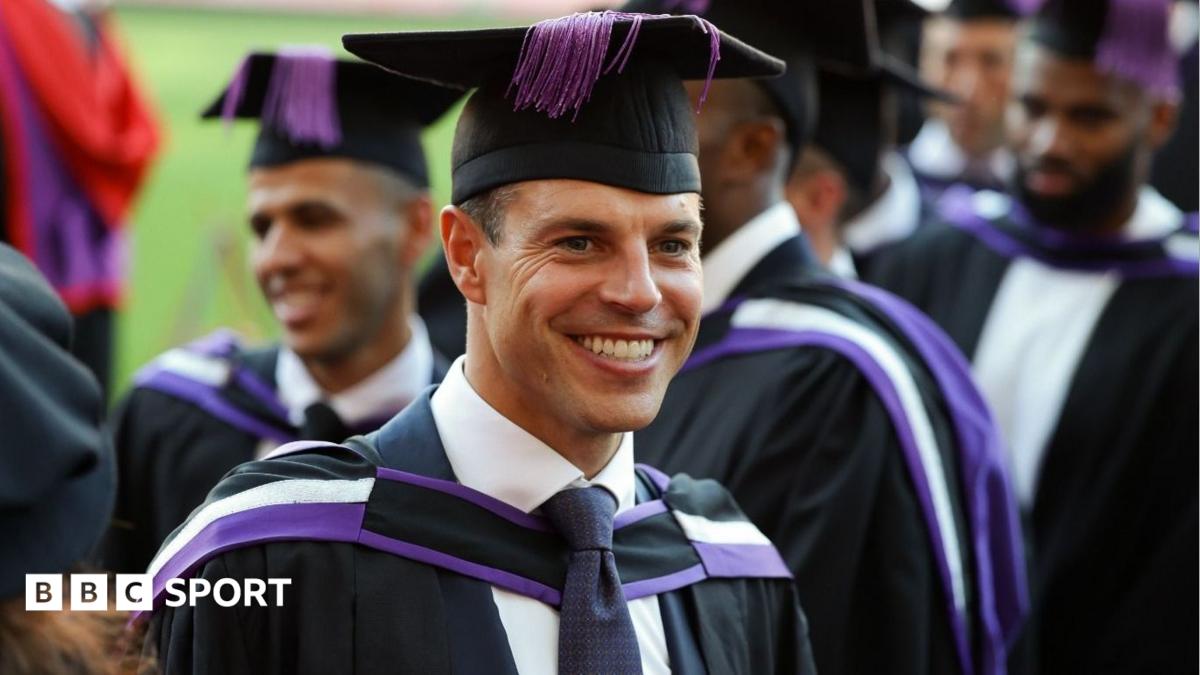
Completing his latest course highlights Azpilicueta’s thirst for knowledge and a desire for constant self-improvement.
It was something he learned at Chelsea, where he arrived as a relatively low-profile £7m signing in a dressing room full of established leaders such as John Terry, Frank Lampard and Petr Cech, alongside star names including Fernando Torres, Eden Hazard and Ashley Cole.
He explained: “I started as a right winger, moved to France, then moved to Chelsea. I wasn’t a star signing. I had to find my way. Left-back, wing-back, centre-back in a back three.
“It was about consistency. I had to work hard to stay fit, adapt to different managers and different positions.
“When you arrive at Chelsea, you feel the ambition straight away. Every three days you have to win. Every game and every trophy matters.
“That culture pushed me to the maximum and, especially when I left Chelsea, I felt that I had given everything I had for the club.”
Azpilicueta explained how his education away from the pitch helped him develop into a leader at Stamford Bridge.
It gave him the confidence to represent Premier League players during the Covid-19 pandemic, while also helping to organise initiatives and keep the club moving forward after owner Roman Abramovich was sanctioned following Russia’s invasion of Ukraine.
His defining moment came in that 2021 Champions League final victory.
There is little doubt that, having succeeded Terry and then Gary Cahill as captain, Azpilicueta ranks among Chelsea‘s greatest leaders. Yet he revealed that, since leaving the club in 2023, he has not returned to Stamford Bridge.
He was among dozens of players to leave after Chelsea changed ownership from Abramovich to the current American-led consortium in 2022.
“I left Chelsea, but Chelsea will always stay in my heart,” he said. “I follow every game and I hope the club comes back to where it belongs.
“There are some very strong teams around and football sometimes needs a bit of time. You need connections, people playing together and understanding each other.
“At a big club like Chelsea, the demands are high. But I think that’s normal. It should be demanding and ambitious because, speaking as a Chelsea fan, you always want to see the club winning trophies.
“I have confidence that [manager] Xabi [Alonso], the staff and the players will do good work. Hopefully they can bring a lot of happiness to the fans.”
He has been following Chelsea‘s latest captain Reece James, who he believes will grow into a better leader, since over-30 players Jordan Henderson, Danny Welbeck and Emiliano Martinez joined over the summer.
When it is suggested that he might return to Stamford Bridge in some capacity to be marked by a warm reception from supporters, Azpilicueta responds modestly: “I don’t know about that.
“I will come back one day. I won’t be putting on my boots, though.”
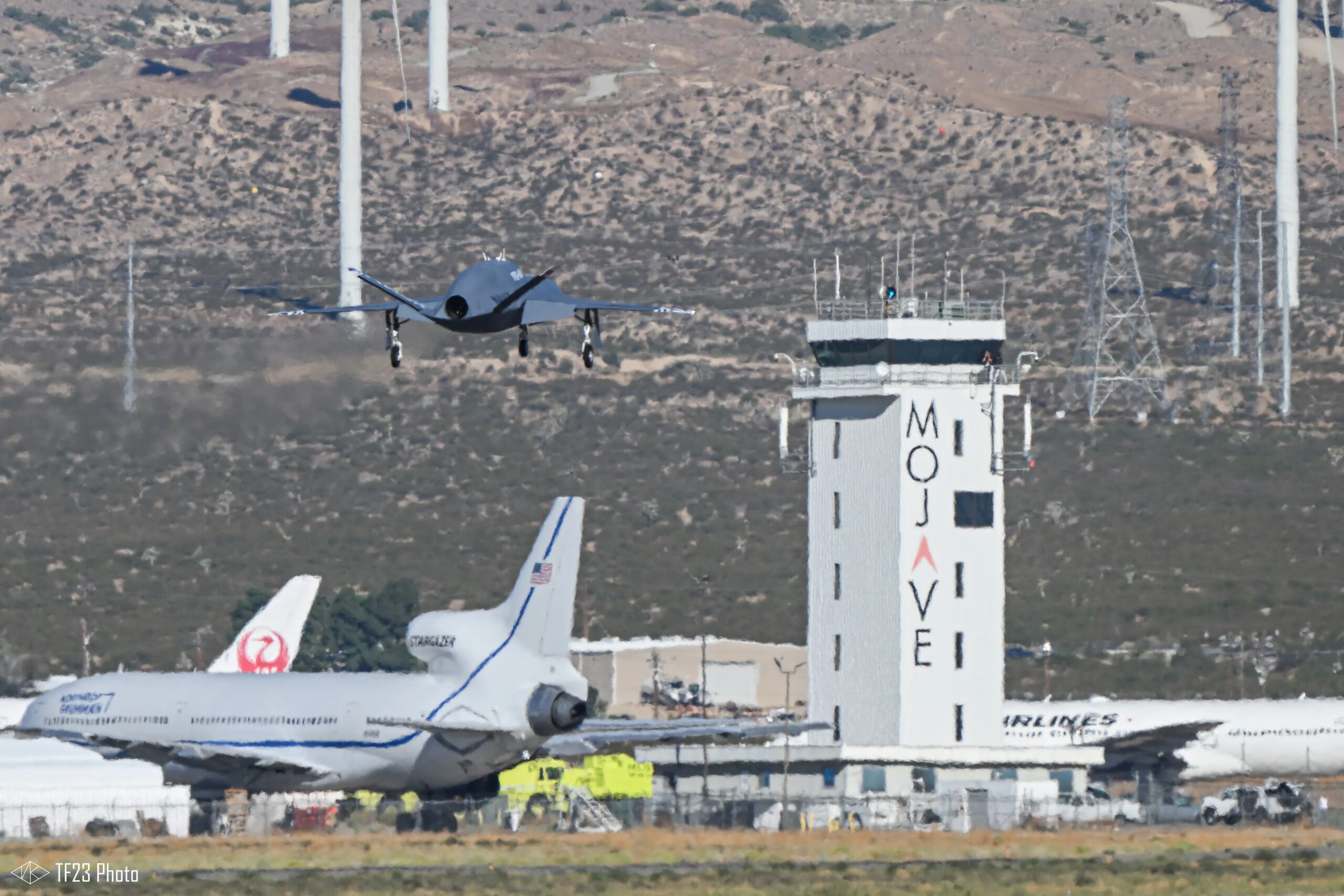
We have a significant update on the fast-moving world of Collaborative Combat Aircraft (CCA) out of Mojave, California today. Northrop Grumman’s Talon Blue, which now has the official designation YFQ-48A, has taken to the skies for the first time. The existence of Talon Blue was first officially disclosed in December of 2025 at a media event in Mojave that we attended.
Talon Blue flying out of Mojave Air and Space Port for the first time. (@Task_Force23) TASK_FORCE23
The uncrewed aircraft took to the skies over Mojave Air and Space Port, home of famed ‘bleeding0edge’ airframer and Northrop Grumman subsidiary Scaled Composites, which built the aircraft. A release from Northrop Grumman reads:
“MOJAVE, Calif. – Oct. 3, 2026 – Northrop Grumman’s (NYSE: NOC) YFQ-48A Talon Blue completed its first fully autonomous flight, including taxi, takeoff, in-flight maneuvers, and landing. Developed through company investment, Talon Blue combines modular design and advanced manufacturing to lower cost and support faster production without compromising mission capability. The flight builds on Northrop Grumman’s seven decades of autonomy experience and more than 500,000 autonomous flight hours, with lessons from Talon Blue informing future autonomous systems.
Details on YFQ-48A Talon Blue:
Talon Blue is part of Northrop Grumman’s internally-funded Project Talon portfolio focused on accelerating the development of mission-ready autonomous airpower capabilities.
Manufacturing and design innovations cut part count and overall weight, lowering cost and enabling faster production to meet growing demand for autonomous systems.
Designed with flexible operational concepts in mind, Talon Blue’s high air intake, wide wheelbase and integrated weapons bay support a wide variety of mission needs for U.S. and allied partners.
Craig Woolston, vice president and general manager, research and advanced design, Northrop Grumman: “Our customers made it clear they need autonomous systems that can be fielded faster and more affordably without sacrificing mission effectiveness. We listened. Talon Blue’s first flight is one step toward a new generation of autonomous capabilities. Every flight and lesson strengthens our broader autonomy work and sharpens what comes next.”
Talon Blue flying above the Mojave Desert in California. (Northrop Grumman)
While the Talon Blue aircraft draws most of the attention, Northrop Grumman has put great emphasis on its back-end autonomy development ecosystem, which includes its purpose-built Model 437 demonstrator aircraft, now under the Talon IQ badge (formerly Beacon).
With the loss of the F/A-XX next-generation naval fighter program to Boeing, Northrop Grumman winning a contract from the U.S. services for Talon Blue has become more important. Doing so would get the company back into the Pentagon’s tactical air combat portfolio. As we have discussed for years, advanced uncrewed tactical systems are set to be less risky and potentially more lucrative than traditional fighter programs as air combat rotates to predominantly uncrewed capabilities and mass production of them. Beyond U.S. needs, the demand for CCAs is likely to explode internationally in the coming years, so programs like Talon Blue could find success elsewhere if the Pentagon goes another direction, but getting the U.S. armed services’ stamp of approval and the scale of production that comes with it would surely help there too.
Author’s note: A big thanks to our friend @Task_Force23 for providing us with great photos for this story.
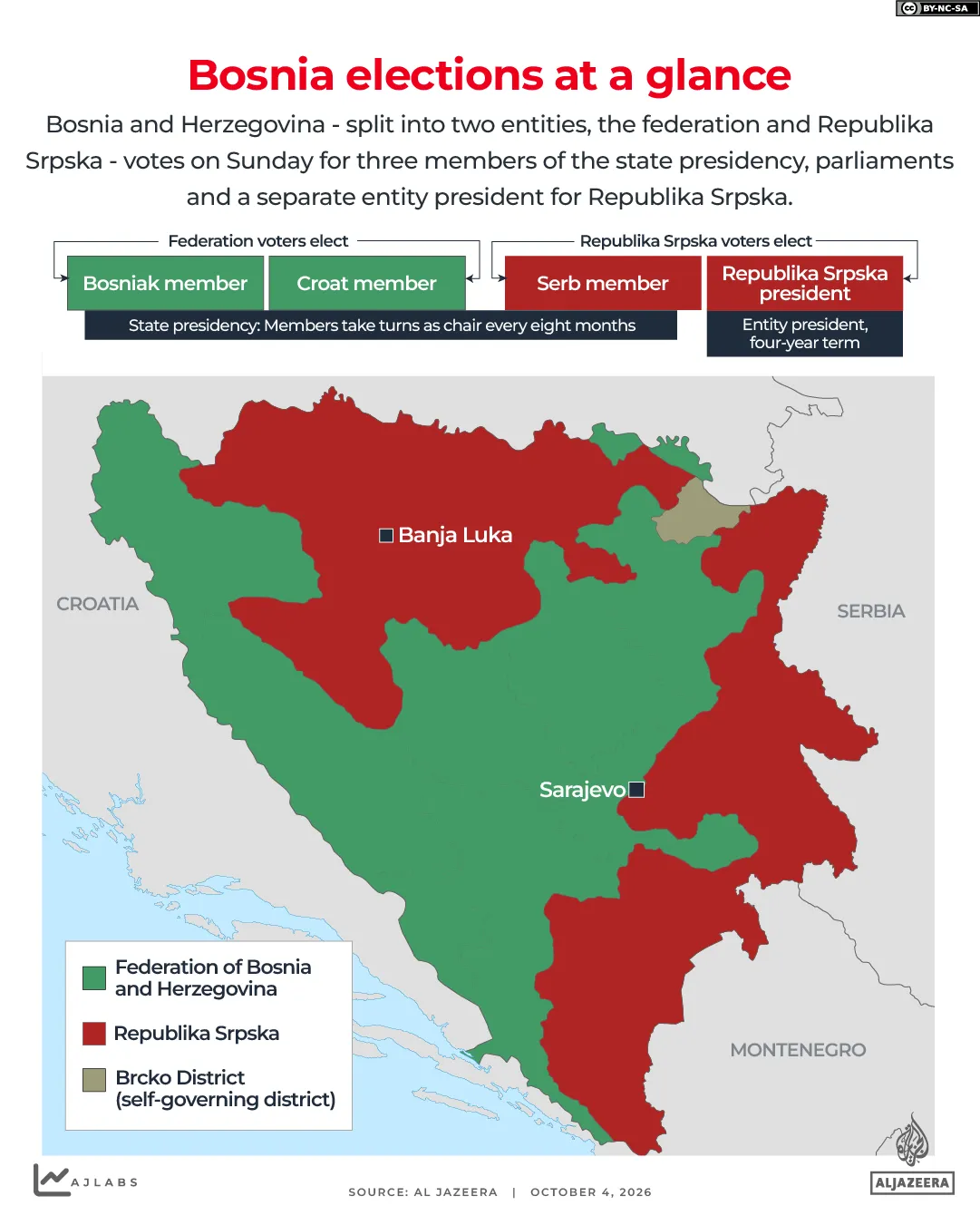
Bosnians are heading to the polls to choose the next government at all three of the state, entity and canton levels. It may seem complicated, but for a country divided into two entities – the Federation of Bosnia and Herzegovina and Republika Srpska, along with Brcko District – this is nothing new.
When do Bosnia’s elections take place?
The general elections are scheduled for Sunday, October 4. More than 3.4 million people are eligible to vote.
[Al Jazeera]
What’s different about this election?
This year, new election technology will be used. Voters will be identified using biometric devices, while ballot papers will be scanned rather than simply placed in ballot boxes.
The use of scanners, however, does not mean voting will be fully electronic. Votes will still be cast and recorded on paper, but verification and counting should be faster and more transparent, while voter identification should be more accurate.
Who is running for the Presidency?
Candidates for the Bosniak representative include current Presidency member Denis Becirovic of the Social Democratic Party (SDP), Bakir Izetbegovic of the Party of Democratic Action (SDA), Semir Efendic of the Party for Bosnia and Herzegovina (Stranka za BiH), and Fahrudin Radoncic of the Union for a Better Future of BiH (SBB).
Izetbegovic, the president of the centre-right SDA, the biggest Bosniak party in the country, is running for his third term after being defeated by Becirovic in 2022.
Three candidates will run for the Croat seat in the Presidency: Darijana Filipovic of the Croatian Democratic Union of Bosnia and Herzegovina (HDZ BiH), Slaven Kovacevic of the Democratic Front (DF), and Zdenko Lucic, a candidate supported by a coalition of five Croat parties.
The current Serb member of the Presidency, Zeljka Cvijanovic from the right-wing Alliance of Independent Social Democrats (SNSD), is running for a second term. During her term on the country’s top state body, which began in November 2022, just a few months after Russia’s war in Ukraine started, she maintained close and continuous cooperation with Russia and its president, Vladimir Putin.
SNSD is led by Milorad Dodik, the former president of Republika Srpska, best known for his separatist moves and for challenging the Constitution of Bosnia and Herzegovina and the decisions of former High Representative Christian Schmidt.
Cvijanovic will face Marinko Bozovic of the Serb Democratic Party (SDS) and Nebojsa Vukanovic of the List for Justice and Order.
[Al Jazeera]
Who else is on the ballot?
Voters will be choosing representatives for 14 governments, as well as members of the country’s three-member Presidency.
Each entity has its own president, assembly, prime minister and ministers. The Federation of Bosnia and Herzegovina is further divided into 10 cantons, each with its own government.
For all this to happen, the Central Election Commission (CIK), the main body responsible for overseeing the voting process, earlier said that 75 political parties and four independent candidates were registered and eligible to participate.
How are Presidency members chosen?
When registered voters go to the polls, they do not elect one president, but choose one of three members of the country’s collective head of state. They are the representatives of the three constituent peoples – Bosniaks, Croats and Serbs.
The Bosniak and Croat members are elected from the Federation of Bosnia and Herzegovina, while the Serb member is elected from Republika Srpska.
This is because the majority of Bosniaks and Croats live in the Federation, while most Serbs live in Republika Srpska.
The election of the Croat member has weighed on Bosniak-Croat relations for years and has often been used as a reason for political blockades.
Parties gathered around the centre-right Croatian Democratic Union of Bosnia and Herzegovina (HDZ BiH) are demanding changes to the Election Law, saying they want to prevent Bosniak voters from influencing the election of the Croat member of the Presidency.
But that would also require changes to the Constitution, which allows all citizens in the Federation to choose whether they want to vote for the Bosniak or the Croat member.
[Al Jazeera]
What about citizens who live outside their constituent group’s voting area?
A Serb living in the Federation, or a Bosniak or Croat living in Republika Srpska, who wants to run would not be able to do so, nor can they vote for those they consider to be their own representatives.
That is one of the many paradoxes of Bosnia and Herzegovina’s electoral system.
How is the state-level government chosen?
Citizens elect representatives to the Parliamentary Assembly, which consists of two houses.
Forty-two representatives will be elected to the House of Representatives.
Two-thirds are directly elected from the Federation of Bosnia and Herzegovina, and one-third from Republika Srpska.
A quorum consists of a majority of all members elected to the House of Representatives.
The second chamber – the House of Peoples – has 15 delegates and is elected indirectly through the institutions. It consists of Bosniaks, Croats and Serbs – five from each group.
What happens with the entities?
The election of entity-level authorities works somewhat differently.
In Republika Srpska, citizens directly elect the National Assembly, as well as the entity president and vice presidents.
They do not directly elect the government – it is confirmed by the National Assembly.
In the Federation of Bosnia and Herzegovina, citizens directly elect the House of Representatives of the Federation Parliament and the cantonal assemblies.
Those cantonal assemblies then elect delegates to the Federation’s House of Peoples.
The president of the Federation, the entity government and the cantonal governments are formed after the elections, through parliamentary majorities and political agreements.
Why is it a challenge to form the government?
It is difficult not only because the electoral system is complex, but also because of the lack of agreement among representatives of the three different ethnic communities.
Frequent blockades and obstruction make decision-making difficult at all levels, even though many politicians invoke the politics of compromise.
Elections in Bosnia and Herzegovina, therefore, are not only about who wins, but about whether a system designed to represent everyone can serve its citizens.
Why are the elections important?
New election technologies might reduce potential fraud, but much more will be needed for the country’s path towards the European Union.
The outcome of the election could unblock, or further slow down, the adoption of key laws needed for the country’s progress towards EU membership.
The EU granted Bosnia and Herzegovina candidate status in December 2022 and opened accession negotiations in 2024.
However, the country’s progress has since been assessed as very limited and slowed by political blockades.
These elections will also be a test for the ruling coalition, which promised to focus on social and economic issues amid the rising cost of living.
When are the results?
The first preliminary results are traditionally published by CIK late on election night, on October 4, and are updated every few hours.
In the days after the elections, CIK gradually enters votes from the remaining polling stations, mobile voting teams, as well as ballots received by mail and from diplomatic and consular missions.
The official results will be known no later than November 20.
Yemen’s Saudi-backed government forces claim to have killed hundreds of Houthi fighters as they attempt to retake swathes of lost territory. The Houthis said they targeted an Aramco facility in Riyadh, although Saudi authorities have not confirmed the strike.
Trump tells a rally in Ohio that he believes there will be a “big surprise” in the upcoming elections.
Published On 4 Oct 20264 Oct 2026
US President Donald Trump has continued rallying for Republican candidates while visiting Ohio, proposing a defiant outlook on his party’s chances in the November 3 midterm elections.
Trump told a rally in Vandalia, Ohio, that he believes there will be a “big surprise” in the upcoming elections, claiming his Democratic opponents do not know what is happening.
Recommended Stories
list of 3 itemsend of list
Polls have suggested that Democrats could gain ground in the midterms, but the US president said Republicans would do better than critics expect.
“Just get out and vote,” Trump said as he rallied for US Senator Jon Husted, gubernatorial candidate Vivek Ramaswamy and other Republicans.
“If you do that, we’re going to win, and we’re going to win big,” he said.
Ohio’s Senate race
Multiple incumbent Republican senators across the country face tough political headwinds, with Trump’s popularity falling in recent months as higher petrol prices and those for other staples persist amid the US-Israel war on Iran.
Husted, a Republican in a competitive Ohio race against Democrat Sherrod Brown, hopes the president can motivate supporters who might otherwise skip midterm elections.
Trump garnered more than 55 percent of the Ohio vote in the 2024 presidential election, but economic concerns since then have sunk his approval ratings.
Ohio petrol prices increased 35 percent over the past year to $4.16 per gallon (3.8 litres) on average, according to the American Automobile Association (AAA), which compiles data on automobile travel. Trump’s trade policy with Canada has also led to retaliatory Canadian tariffs that affect about $3bn worth of Ohio exports, based on 2025 figures, Canadian broadcaster CBC reported.
Talking to reporters shortly before addressing Saturday’s rally, Husted said the US has to win the Iran war “on our terms” and, in the interim, he is “showing people that I’m fighting for lower prices”.
Hot political issue
Trump extensively promoted his administration’s action on data centres, mainly those built for AI, during the rally, saying he was seeking to ensure they “benefit local communities” and praising Husted for an unsuccessful attempt to push forward legislation on the issue.
“Look, there’s so much money to be made for Ohio. You can’t just turn them off. They’ll go to China,” he said, repeating his defence of data centres.
Data centres have become a hot political issue, drawing bipartisan opposition in races across the country, with voters concerned about their impact on electricity prices, farmland and water supplies.
The issue became especially acute in Ohio, where Husted has been repeatedly attacked for his role in attracting data centres to the Midwestern state as lieutenant governor.
The Republican-controlled Senate tried to advance legislation this past week sponsored by Husted that would ask utility regulators to effectively charge large power users more, as consumers struggle with high energy costs. But it was blocked by nearly all Democrats.
“Senator Jon Husted gave billions in tax breaks to Big Tech to make sure they would build their data centres in Ohio,” Brown wrote on X on Friday, ahead of Trump’s visit. “Now, he’s making Ohioans foot the bill.”
Prime Minister Andy Burnham has scrapped controversial plans to curb some jury trials.
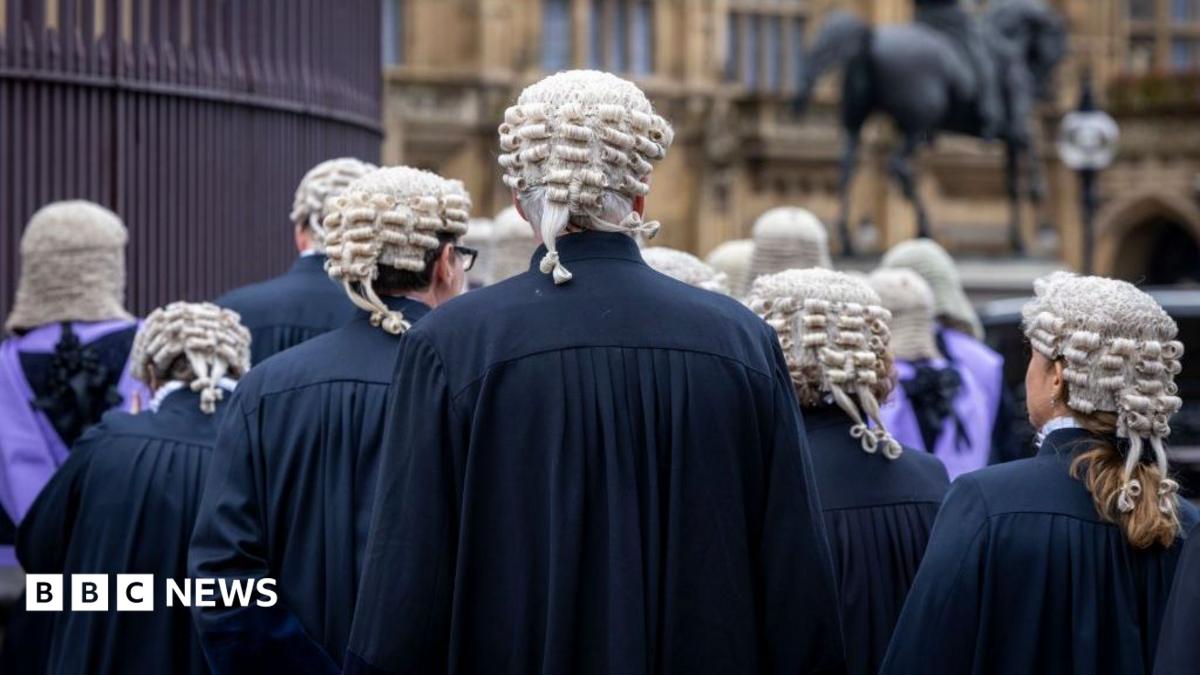
Sir Keir Starmer’s government had introduced proposals to allow judges to make the sole decision on cases that would lead to a sentence of less than three years.
The Ministry of Justice (MoJ) said only complex fraud and financial offences would be judge-alone – and it proposes that thousands of medium-level crimes should stay with volunteer magistrates, who sit without a jury.
Justice Secretary Alex Norris said he had changed course came after hearing the “strength of feeling”. Criminal lawyers have welcomed the decision and the Conservatives say it is a “major victory” for those who fought to defend trial by jury.
Former Justice Secretary David Lammy first announced the plans in December following a recommendation in a major review of the court system in England and Wales.
The series of radical reforms, including scaling back jury trials, were presented as the best way of turning around record backlogs which, in turn, were exacerbating the prison population crisis.
The backlog – which has led to record delays for defendants and victims – currently stands at nearly 81,000 cases – having rocketed largely thanks to cuts before the pandemic and court closures during the national lockdowns. Official projections have estimated it could reach 100,000 before the next general election and, in a worst case scenario, climb to double that number by 2035.
There are, however, indications the backlog is now stabilising after the government committed unlimited funding to pay for more judges to sit in courts that were otherwise being unused.
Under the original plans, Lammy had wanted to reserve jury trials for the most serious “indictable” offences – meaning cases that are always sent to Crown Court, including murder and rape.
Less serious offences, where the sentence would be no more than three years, would be decided without a jury in the Crown Court by a judge alone. Even less serious offences would stay in magistrates’ courts, abolishing defendants’ right to ask for a trial by jury when they feel that is their best chance of beig cleared.
The proposals triggered an outcry across many parts of the criminal justice world, with many opponents saying that eroding the 800-year-old right to trial by jury would not solve the backlogs.
Michael Kotlikoff expresses deep sorrow over the case, calling it one of the most challenging periods for Cornell.
Published On 4 Oct 20264 Oct 2026
Cornell University’s president, Michael Kotlikoff, has called the alleged 2024 gang rape of a student at a fraternity house “deeply disturbing”, pledging greater transparency amid mounting outrage over how the school handled the case.
“My heart aches when I think of what she experienced,” Kotlikoff said in an eight-minute video message to the Cornell community on Saturday.
Recommended Stories
list of 3 itemsend of list
He characterised the past week as one of the most difficult in the university’s history and said it would weigh on the university for years to come. “It raises heartbreaking and troubling issues about sexual assault, dehumanisation and aspects of party culture, alcohol and drug use,” he said.
The woman, identified in court documents as Jane Doe, alleges she was sexually assaulted by multiple members of the Chi Phi fraternity in 2024 and has sued the university and seven former students.
Scrutiny over Cornell’s handling of the case intensified after New York Governor Kathy Hochul said newly released information had undermined her confidence in the local prosecutor, who initially declined to bring charges.
Hochul subsequently appointed state Attorney General Letitia James as special prosecutor to take over the criminal investigation, saying she would “not allow anyone to sweep this case under the rug”.
New York Governor Kathy Hochul, left, and New York Attorney General Letitia James attend a news conference in New York City on October 2, 2026, regarding an investigation into alleged sexual assault at Cornell University [Jeenah Moon/Reuters]
The case has also renewed scrutiny of the “voluntary intoxication loophole” in New York law that makes it difficult to prosecute sexual assaults involving victims who voluntarily consumed alcohol or drugs, even if they later became too intoxicated to consent.
Tompkins County District Attorney Matthew Van Houten had cited the legal provision in defending his original decision not to pursue charges. Hochul has pledged to push for changes to it.
At a student assembly hearing on Thursday, several speakers called for Kotlikoff’s resignation.
In Saturday’s video, Kotlikoff reaffirmed his support for an independent review of the university’s handling of the case and said Cornell’s Board of Trustees would announce details next week. He also called for a “serious look at the role of fraternities and sororities in campus life”.
James’s appointment has placed the case under a prosecutor whose office has repeatedly clashed with President Donald Trump. She has separately described the case as “an active criminal investigation”.
Ethiopia’s government forces say they’ve seized Mekelle from Tigray fighters after a week of intense battles. The fighting has reignited fears of a full-scale war that could draw in neighbouring countries.
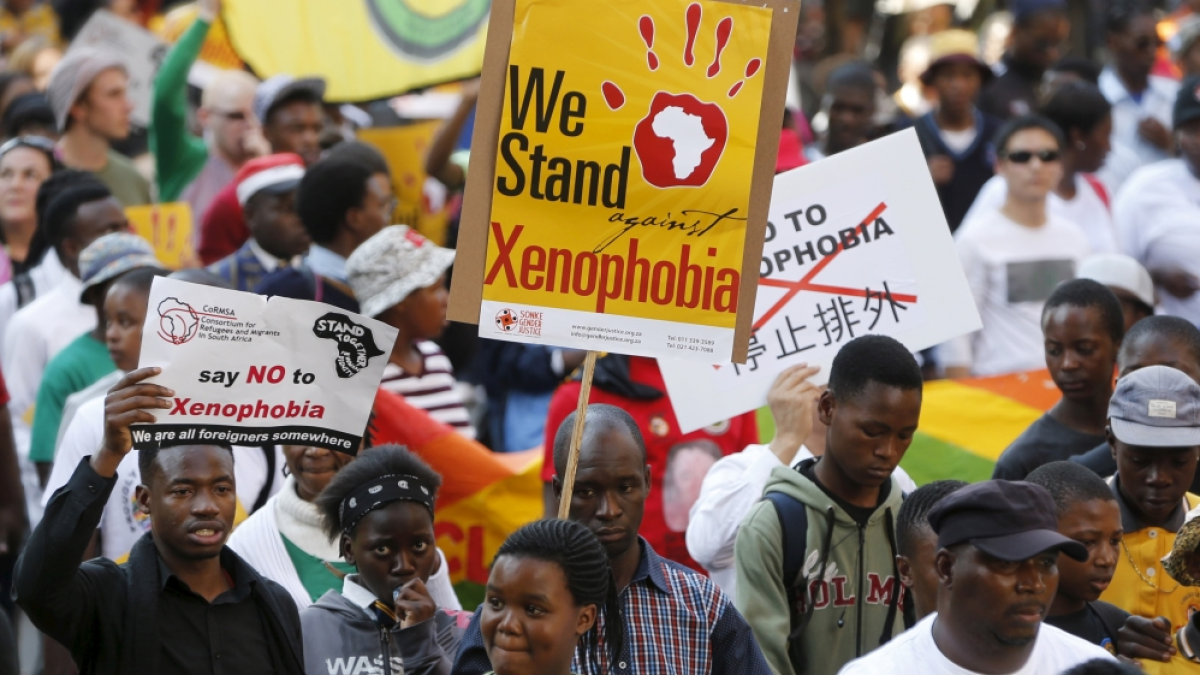
Mutare, Zimbabwe – Samantha Chimbuya had built a life in South Africa after leaving Zimbabwe in 2019 in search of better opportunities.
She found work, could afford food and believed her two children had access to better education. She also had access to healthcare.
Then, she no longer felt safe.
As June 30 approached, a deadline set by anti-immigrant activists for undocumented migrants to leave South Africa, the 30-year-old packed her belongings and returned to Zimbabwe.
“It was not safe any more. They were raiding our homes, warning us to leave. It was scary,” Chimbuya told Al Jazeera.
Chimbuya was living in KwaZulu-Natal when anti-immigrant protests intensified. March and March, one of the groups behind the June 30 deadline, accused undocumented migrants of taking jobs and putting pressure on public services.
The deadline was not imposed by the South African government, which said June 30 would be a normal day and warned against intimidation and violence. But thousands of migrants left amid fears of unrest.
Some governments organised transport for citizens returning home. Chimbuya paid for her own journey to Hurungwe, in northern Zimbabwe.
By July 28, 116,670 Zimbabweans had returned from South Africa, according to Information Minister Zhemu Soda. Of those, 36,940 were assisted by the government, while 79,730 returned independently. A further 38,057 had registered for employment, Soda said.
Hard times in Zimbabwe
For Chimbuya, coming home meant confronting many of the economic difficulties that had pushed her to leave in the first place.
She has struggled to find work and now relies on family and friends for help. Her husband remains in South Africa, where she says he is also struggling.
She had hoped to receive a grant to start a small business but said she had not received one.
Reverend Useni Sibanda, executive director of the Zimbabwe Christian Alliance, said many returnees had spent years abroad and were coming home without jobs or adequate support.
Some had not invested in homes or property in Zimbabwe while they were away, he said, leaving them with little to fall back on.
“They are coming back to a country where there are no jobs and where the social support systems may not be enough to accommodate them,” Sibanda said.
The government says it is trying to help.
Local government Minister Daniel Garwe said authorities were screening and profiling returnees to identify their skills and needs. Reintegration centres were being established, while the Ministry of Primary and Secondary Schools was considering recruiting qualified teachers among those who had returned.
Garwe also said companies were being encouraged to employ skilled returnees and that vocational training and support for people wanting to start businesses were being considered.
For some, however, the skills they acquired in South Africa have offered a more immediate route to earning a living.
Rebuilding from scratch
Sidney Bunya, from Zvimba, northeast of Harare, left Zimbabwe in March 2020 because of economic hardship.
He moved first to Johannesburg, where he took various jobs, before settling in Port Elizabeth. There, a cousin introduced him to professional carpenters.
Bunya honed his skills and eventually secured large projects, specialising in roof trusses.
But in 2026, groups demanding permits began raiding his workplace. Bunya had only his passport, and employers became reluctant to hire him because of the harassment.
He bought carpentry tools, shipped them to Zimbabwe and left South Africa before the June 30 deadline.
Using his savings, he started a business at home. It now supports his family and employs five people.
“It was difficult to set up the business. But I am getting more jobs now,” Bunya said.
Motsi said churches had also partnered with local businesses to provide training in welding, carpentry and computer science.
Calls for longer-term support
Churches have been helping returnees with shelter, food and transport, but Ray Motsi, president of the Theological College of Zimbabwe, said the needs were overwhelming.
He criticised the government for not doing enough to support people returning after years abroad.
“We need a deliberate programme to reintegrate these people,” Motsi said, arguing that returnees needed more than transport home.
Rashweat Mukundu, a human rights activist in Harare, said the government should provide longer-term assistance, including small grants, agricultural inputs and machinery, to help people establish livelihoods.
The challenge, he said, was not simply getting Zimbabweans across the border but helping them remain economically secure once they arrived.
“I plan to open a grocery store, but funding is a challenge.”
Latest polls suggest Lula’s lead over Bolsonaro is narrowing, with neither candidate likely to win outright on Sunday.
Published On 4 Oct 20264 Oct 2026
Brazilian President Luiz Inacio Lula da Silva and right-wing Senator Flavio Bolsonaro have wrapped up their election campaigns, each voicing confidence in victory ahead of Sunday’s tightly contested first-round presidential vote.
Lula, 80, closed his re-election bid on Saturday with a march through Sao Paulo, Brazil’s economic powerhouse, drawing what his campaign called a record crowd for a closing rally.
Recommended Stories
list of 3 itemsend of list
“Tomorrow, we’re going to win the elections in the first round,” he told supporters, describing Sunday’s vote as a choice between “democracy and barbarism” and promising to “defeat the far right”.
He has also framed the election as a test of Brazil’s sovereignty, warning against “meddling” by Washington.
Bolsonaro led a motorcycle caravan through towns in Sao Paulo state, echoing the campaign style of his father, before rallying later in Rio de Janeiro. “I am convinced that everything is in place for us to win this election in the first round,” he said.
The 45-year-old is the son of former President Jair Bolsonaro, a close ally of US President Donald Trump. The former leader, 71, is serving a 27-year prison sentence for attempting to overturn his 2022 election loss to Lula.
The younger Bolsonaro was photographed at his rally holding a portrait of his father.
Trump has not formally endorsed Bolsonaro but has said he is watching the election “very closely”, a level of US interest that has become a flashpoint in the campaign.
Lula’s supporters have seized on it as evidence Washington is trying to meddle in the elections, while some Bolsonaro supporters, frustrated by the cost of living, say they would welcome US pressure if it helped force change at home.
Polls released on Saturday suggested Lula was still ahead but his lead was narrowing, with neither candidate likely to win outright on Sunday. Such a result would send the race to a run-off on October 25 between the two frontrunners, a contest polls suggest would also be close.
It is a far tighter race than Lula’s last victory in 2022, when he beat the elder Bolsonaro by less than two percentage points.
Meanwhile, the Bolsonaro campaign has faced scrutiny over a film-funding scandal. Flavio Bolsonaro is under investigation over financing for Dark Horse, a biopic about his father, bankrolled by a jailed banker tied to one of Brazil’s biggest financial scandals.
Brazil’s Supreme Court authorised federal police in April to investigate whether Flavio Bolsonaro made defamatory statements about Lula.
Bolsonaro has pledged to seek his father’s release from prison if elected, and has echoed his father’s unsubstantiated claims questioning the reliability of Brazil’s electronic voting system, which analysts say could be laying the groundwork to contest the result if he loses.
Beyond the presidency, Brazil’s nearly 160 million registered voters will also choose lawmakers, governors and senators on Sunday.
Former Serbian President Aleksandar Vucic is seeking to extend his hold on power through a parliamentary vote.
Published On 4 Oct 20264 Oct 2026
Former Serbian President Aleksandar Vucic has launched his campaign for prime minister ahead of a pivotal election on October 25.
Thousands of supporters of the populist politician packed the largest indoor arena in Belgrade on Saturday, as Vucic pledged a “comprehensive” victory in the upcoming parliamentary vote.
Recommended Stories
list of 3 itemsend of list
The snap election, which polls suggest could be tight between Vucic’s party and a group of candidates fielded by a student-led protest movement, was called before Vucic resigned as president on September 27, cutting short his second term by more than seven months.
Dozens of buses from across Serbia clogged streets around Belgrade Arena on Saturday, as supporters arrived at the rally in the capital carrying Serbian flags and banners bearing Vucic’s picture.
The event, televised by dozens of channels across Serbia, capped a week of Vucic touring towns and villages in an apparent bid to shore up his popularity, which has been shaken after almost two years of sustained antigovernment protests.
Vucic, on the Serbian Progressive Party (SNS) ballot, has dominated Serbian politics as president or prime minister since 2014. Barred from seeking a third presidential term, he is now seeking to extend his hold on power through the parliamentary vote.
If the SNS wins a majority of seats, the parliament is expected to elect Vucic as prime minister.
Youth movement
The youth-backed movement that led the protests has demanded accountability for the November 1, 2024, train station canopy collapse that killed 16 people in the northern city of Novi Sad.
The movement’s quest for justice over the tragedy and against corruption has grown into a nationwide political force whose electoral arm, the Student List, will attempt to oust Vucic’s government.
The Student List includes university professors, teachers, experts and others from across the political spectrum. Vucic accused those behind the movement of seeking to “bring Serbia to a halt” and claimed, without providing evidence, that it is backed by unspecified foreign agents.
On Saturday, Vucic told his supporters: “Absent an intervention of some [foreign intelligence] service, we will defeat them. And they know that.”
Serbia’s former President Aleksandar Vucic speaks during a rally of the governing Serbian Progressive Party (SNS) ahead of the parliamentary election, in Belgrade, Serbia, on October 3, 2026 [Zorana Jevtic/Reuters]
The US coastguard says it has dispatched air and surface crews to search for the plane near Nantucket.
Published On 3 Oct 20263 Oct 2026
An air ambulance has gone missing while carrying six people on a flight from Bermuda to Boston.
The US Federal Aviation Administration told the coastguard early on Saturday that it had lost contact with the plane, a Gulfstream jet, a coastguard spokesperson told the Reuters news agency by email.
Recommended Stories
list of 3 itemsend of list
The coastguard said it dispatched air and surface crews to search for the plane near Nantucket, an island community south of mainland Massachusetts.
The National Transportation Safety Board said it was gathering information about the situation on Saturday morning but had no further update to share.
The Canadian-registered air ambulance jet had four crew members and two passengers on board when it departed Bermuda’s LF Wade International airport overnight for the flight to Massachusetts, according to a statement from the Bermuda airport’s operator, Skyport.
Canada’s Minister of Transport Steven MacKinnon said in a social media post that four Canadians were on the plane.
“We are closely monitoring the situation and are working with the relevant authorities as search and rescue efforts continue,” MacKinnon wrote.
The aircraft, registered to Latitude Air Ambulance, departed Bermuda at 12:41am local time (03:41 GMT), according to data from flight tracking website FlightAware.
The plane was flying at 24,000 feet (7,300 metres) for much of the flight before descending 13,000ft (3,960 metres) in about two minutes shortly before flight controllers lost contact, data showed.
Last communication
Air traffic control audio posted by LiveATC.net offered a glimpse of the flight’s final communications before it went missing.
“Roger, you said you’re coming in blind. Is that what you said?” a controller can be heard asking the pilot.
The pilot’s transmission could not be heard in the recording. The controller later confirmed the pilot was declaring an emergency just before losing contact with the plane.
The Bermuda government is in contact with US authorities and families of the passengers, Bermuda Premier David Burt wrote in a statement posted on Instagram.
“We are praying that all six people will be found safe,” he wrote.
Latitude Air Ambulance is based in Ontario, Canada, and provides medical evacuation services. The company did not immediately respond to a request for comment.
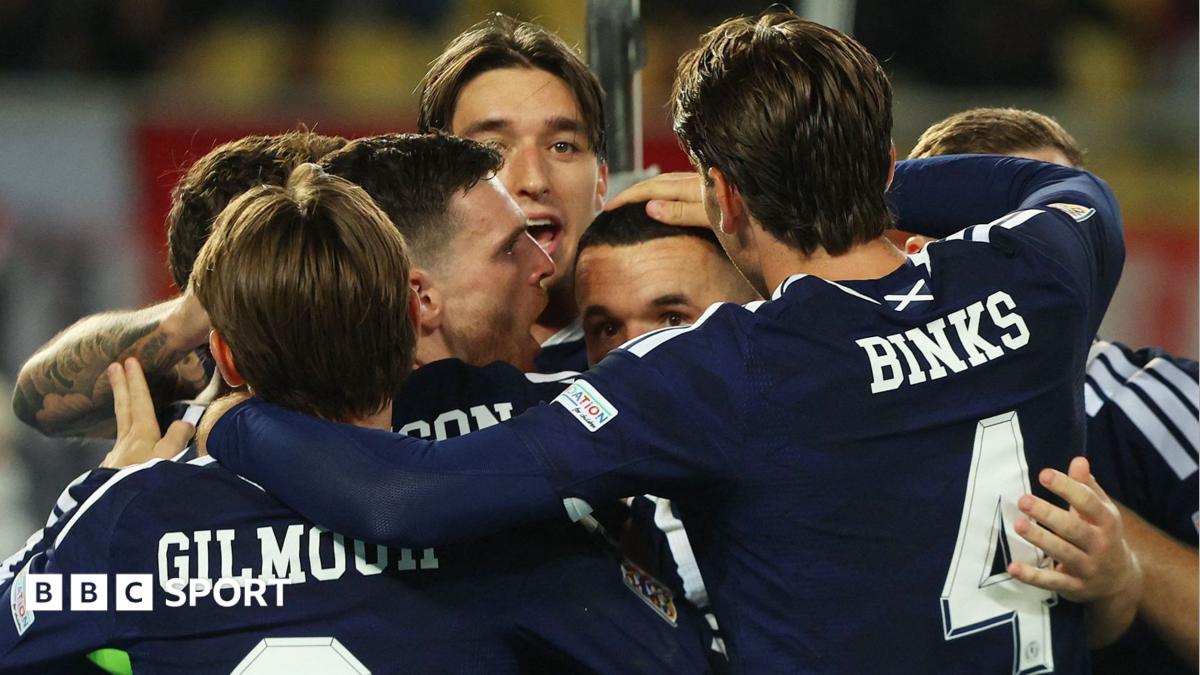
Ben Gannon-Doak turned North Macedonia inside out and upside down. He is woefully short of minutes for his club, Bournemouth, and lacks sharpness and ruthlessness as a consequence. His delivery has always lacked accuracy.
His raw materials, though, are exhilarating. His pace, his involvement, his number of touches, his chances.
He never left North Macedonia alone. They survived only because he blasted over with one of his chances, shot tamely with another, lost composure with a third one. Having tormented North Macedonia, he allowed them off the hook, but he was a one-man thrill-fest.
He’s 20, that can’t be forgotten. He’s going to be around for a lot of years and will play a heap of big games, but with his club he’s got some decisions to make.
Two minutes against Liverpool, 19 against Sociedad, eight against Brentford, one minute against Newcastle and Man City. The only game he has started this season was a League Cup tie against Lincoln.
Bournemouth is a tough team to get into, but he needs more time on the grass, more opportunity to develop. Maybe a loan move in January would make sense for him, if his club allows him to go. A big ‘if’.
That’s a situation Gannon-Doak needs to resolve for himself – and for Scotland.
William Serafino is a political scientist with a master’s degree in history. His research and analysis have focused on geopolitics. In this interview, he discusses Venezuela’s current relationship with the United States, including a major oil deal and what Donald Trump and Delcy Rodríguez seek to gain from it.
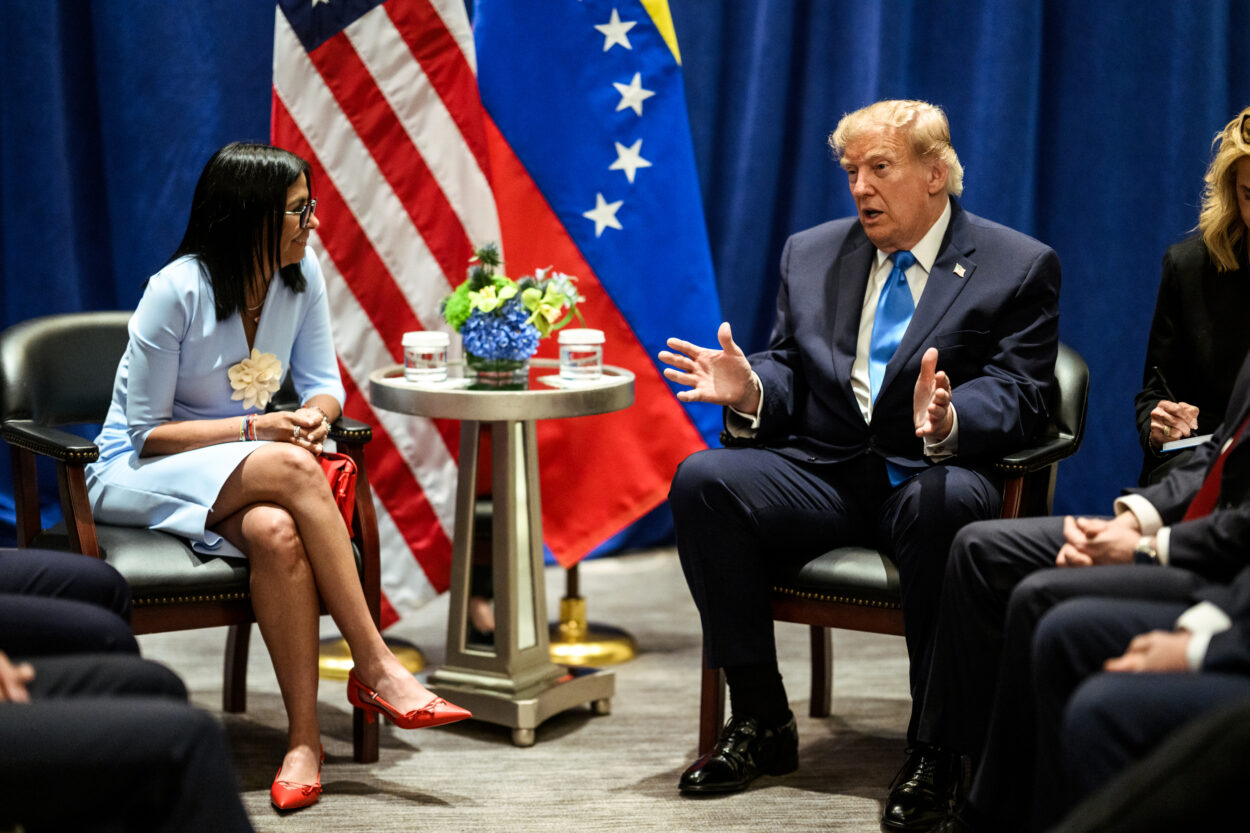
In New York, Venezuelan Acting President Delcy RodríguezthankedTrump for his support and described their bilateral meeting as “historic.” Nearly nine months after the January 3 US bombing and kidnapping of President Maduro, how would you describe the current relationship between Caracas and Washington? Which elements are short-term Trump gimmicks, and which ones will structurally define the relationship in the future?
It is difficult to find a precise definition. Many speak of a protectorate-like condition; some even go so far as to describe it as a relationship of colonial or neocolonial subjugation. Others, however, define it as a process of political, economic, and energy normalization in which the Venezuelan acting government makes tactical concessions, but without formally compromising national sovereignty. I believe the devil is in the details, not in one-size-fits-all approaches. At the level of inter-state relations, what I observe is a strategic attachment of Venezuela to the US sphere of influence and an energy realignment that operates with significant geopolitical restrictions in what concerns relations with Russia, China, and Iran.
At the governmental level, an asymmetrical alliance (favorable to Trump) has been forged in the wake of the military defeat on January 3, from which Caracas and Washington derive immediate and existential gains: Trump cherishes the sole geopolitical achievement of his second term, and Rodríguez gains relief and fresh revenue to govern after more than a decade of suffocating sanctions, within a framework defined by US interests. This reality can hardly be classified as a protectorate, in which a foreign power takes control of diplomacy, defense, and other strategic elements of the subordinate state. Could one speak of a sui generis, or “soft,” protectorate? Perhaps, but that would be an acknowledgment that the concept is not entirely effective in explaining the situation.
The same is true of the thesis of a “retreat with full sovereignty,” which is difficult to sustain when the US is clearly shaping the portrayal of the new national political dynamic and controlling the country’s oil revenues. That is why I have ventured –at the risk of being wrong –to speak of “joint governance” or “co-government,” in which Washington and Caracas divide areas of responsibility and share the political costs of each move so that the alliance endures and each party can, albeit unequally, reap its corresponding share of the benefits.
Trump, despite his constant demeaning tone, needs the Rodríguez administration to be strong enough to lead the country in order to get what he wants; only under such conditions can he extract the oil. And she, too, needs Trump to remain in power so that the oil agreement and other commitments can move forward in the medium term. This is the only way to stay in power and hope to gain legitimacy through performance. I believe that, described in this way, we are talking neither of classic colonialism nor of uncompromised sovereignty, but of something more unique that requires developing other analytical categories.
Rodríguez met Trump on the sidelines of the UN General Assembly in September. (Presidential Press)
In your articles, you have pointed out that the US-Venezuela oil deal must beanalyzedbeyond the announced figures. What do you consider to be the true political and geopolitical scope of this agreement, and what benefits do the various actors seek to extract from it?
I see it more as a political arrangement than a formal agreement. Its function is not legal or institutional, but political. The announcement gave Trump narrative ammunition to promise that gas prices will drop, a necessity driven by his debacle in Iran. By not having signed anything, he avoids going through Congress, sends a message to his core electorate that he is guaranteeing the country’s energy security, and reassures energy corporations to go ahead and invest in Venezuela because the relationship with Caracas is solid and unshakable. Rodríguez, on the other hand, benefits from the fact that the agreement shuts the door on María Corina Machado in Washington’s power circles and thereby helps reestablish her domestic legitimacy, promising a secure path to economic and social recovery underpinned by US investment.
I would go as far as saying that the agreement is Rodríguez’s trump card in a potential presidential campaign, where she will be able to present herself as the only political actor capable of boosting the economy, as opposed to potential rivals who lack influence in the White House and do not have a reliable plan to pull the country out of the spiral of inflation and economic frustration in which it finds itself after years of sanctions.
Both sides stand to gain politically, and the agreement appears to be designed to avoid institutional resistance: neither is forced to face the hassle of legislative approval nor the criticism from political opponents. Since there are no specific clauses, they can more easily divert attention and focus their message on the eventual economic benefits. This level of coordination is a sign of partnership, not of one-sided imposition. If that were the case, Trump could force Rodríguez to sign a bilateral treaty in the National Assembly, and that is not what we are seeing.
You have paid special attention to the role of the Pentagon and the involvement of its Office of Strategic Capital in the structure of the agreement. Why is it so significant that the US defense establishment is a formal actor in a Venezuelanoil deal?
It seems to me that the Pentagon’s involvement serves as a coercive cover—an insurance policy backed by force—to ensure, in the medium and long term, US commercial and financial advantages in the exploitation of the oil fields included in the agreement. Let us imagine that the current government, or another one in the future, wants to modify the arrangement and secure better terms. At that point, it would not be dealing with a conventional transnational corporation, but with one controlled by the Department of War. It doesn’t take much thought to realize that negotiating under such conditions would scare anyone off: the language of business would be replaced by the language of weapons, and after January 3, no one would want to venture into this murky territory.
Furthermore, I believe that the Pentagon’s involvement sends a message to companies to invest and feel secure in the knowledge that the Department of War guarantees their investments and capital commitments in the Venezuelan energy sector. For the US, Venezuela’s oil reserves are not being treated as an economic asset, but rather as a matter of “national security.” As we well know, when that term is used, any coercive tool is fair game against a country’s sovereignty.
Serafino argues that the oil deal with Trump could be a “trump card” for Delcy Rodríguez in a future electoral campaign. (El Salto)
You have argued that the relationship between Caracas and Washington is taking on the characteristics of a negotiation marked by a profound power asymmetry. And many official spokespeople or analysts ask, “But what alternative do we have?” whenever criticism is raised about the path the government has chosen. What real ability does Venezuela have today to negotiate different terms or reject certain demands from the United States?
Right now, those capabilities are very limited, because, as I said, it’s not just a matter of US impositions, but also of calculating how to obtain tangible benefits from an asymmetrical relationship. But politics also takes place outside institutional spaces, and I believe there is much to be done there. What I’m about to say won’t, I don’t think, resolve the dilemma you’ve raised, but it could be a path toward regaining political vitality and initiative: strengthening social consensus on national sovereignty, refusing to concede the battle for historical memory regarding a century-long history of US plunder, and fostering a broad discussion on the vision for the nation’s future. These steps could help break the inertia somewhat and prepare the country for more favorable political conditions in the near future. In contrast, suggesting specific policies or positions to the current government would be irresponsible, because I’m not the one who has to deal with a Trump and his violent ego.
My message is directed at all of us who do not hold such high-stakes positions and can contribute, from our own small spheres of influence or through our individual activism, to rebuilding a patriotic consciousness that must adapt to a new reality. How many open forums are being promoted to discuss the educational model, the economic model, and the model of income distribution? Which bodies are evaluating the trajectory of the bilateral relationship with the US in order to better address it? Are these discussions conceptually limited? Perhaps these debates will not change the current situation of Trump’s disproportionate influence, but they would give us autonomy in our vision and in shaping the future. If Venezuela does not have its own vision on major national issues, there is a risk that they will end up being imposed from Washington. That would be committing the perfect crime, and I believe we must avoid it: with national unity, transcending political divisions.
In your articles and social media posts, you have criticized political elites who, historically, have lacked “imagination” beyond offering lucrative deals to the US. How did Chávez manage to break that mold? How could Venezuela return to a more sovereign path?
To be fair, Chávez broke the mold but the political and geopolitical conditions were ripe for it. The weakness of the national elites, discredited by a society weary of inequality and injustice, coincided with the US being drunk on power at the end of the Cold War. In its plans to establish itself as a unipolar superpower, Latin America did not figure as the central battleground. The inattention of an empire more concerned with reshaping West Asia, forcing China into the “rules-based order,” and eliminating the last strongholds of the socialist bloc (Tito’s Yugoslavia) in turn allowed Chávez to implement his agenda without facing a full-scale war, although he did face numerous coup attempts.
The present conditions are different. There is a hemispheric imperial retreat underpinned by a militarized reinterpretation of the Monroe Doctrine, which drastically raises the cost of sovereignty-oriented proposals. Still, I believe that what is most commendable about Chávez, and which can be of use in this new context, is his ability to clearly identify favorable conditions and act upon them.
I believe that anyone who considers themselves a political figure must build upon these principles to take on the new challenges of the present, developing and defending a dignified vision of the nation’s future. I believe that, rather than waiting for another Chávez to emerge, we should instead study his thought in depth and draw on the best of it to renew political practices, always interpreting the situation for what it is: changing, volatile, and full of opportunities. Chávez is a great political school, but it has been reduced to a crude tool for private interests of all kinds.
Serafino referred to Chávez as “a great political school.” (Comando Creativo mural in Ciudad Caribia)
United States President Donald Trump has increased the pressure on US Senate Republicans to make Daylight Saving Time permanent, singling out one of the body’s members for stalling legislation to end the twice-a-year changing of clocks.
In a social media post on Saturday, Trump blasted US Senator Tom Cotton for “holding up” the Sunshine Protection Act, which Trump has personally opted to call the “No More Changing of Clocks Act”.
Recommended Stories
list of 3 itemsend of list
“For some reason, Tom is stopping the Bill and, in the Senate, it’s very easy to do, it only takes one!” Trump wrote on his Truth Social account about the Arkansas Republican. “It should pass overwhelmingly, in a Bipartisan fashion”.
“Nobody wants to spend their precious time running all over the place, turning Clocks back twice a year and, having sunshine in the afternoon is better than early in the morning!” he added.
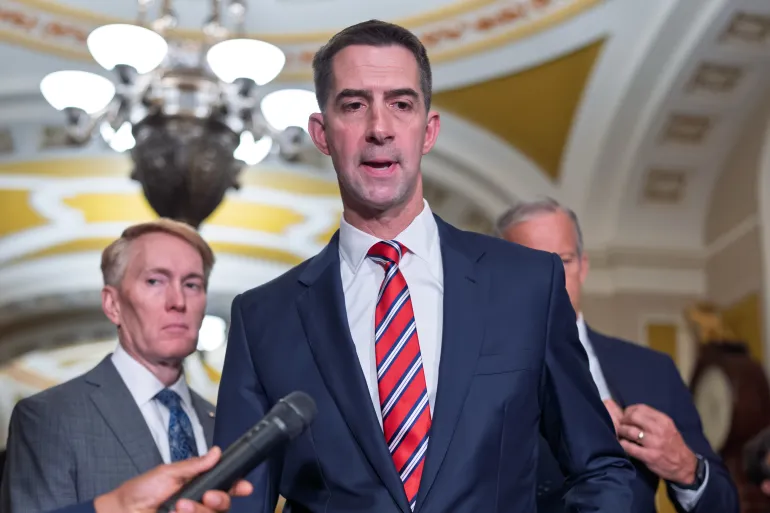
Trump went even further, publishing what he claimed was Cotton’s phone number as he implored Arkansas residents to pressure him. The move echoed a moment during the 2016 Republican presidential primaries, when then-candidate Trump gave out US Senator Lindsey Graham’s number after the former rival criticised him.
US Senator Tom Cotton speaks to reporters at the US Capitol in Washington [File: J. Scott Applewhite/AP Photo]
Al Jazeera called the number listed in Trump’s post, but an automated message stated the voicemail box was full. Cotton’s spokesperson and the White House did not respond to requests for comment.
The president has routinely pushed Senate Republicans to pass legislation mandating year-round daylight saving, which would end Americans’ decades-long practice of changing their clocks twice a year to increase daylight hours. On Friday, Trump urged the US Senate to approve the bill, which passed the US House in July by a 308-117 vote.
Cotton has previously opposed the bill, arguing in a US Senate floor speech last year that farmers, construction workers, commuters and children heading to school would begin their days in the dark during the winter.
Trump disputed that argument in a separate post on Saturday, saying the bill “would be a very nice and easy WIN for the Republican Party”.
“If Tom Cotton were putting Arkansas first, he would give them an extra hour of daylight and, more importantly, they wouldn’t have to run all over their houses, farms, workplaces, and everywhere else, twice a year, having to change their Clocks, and often forgetting to do so”, Trump wrote.
Trump, an avid golfer, also highlighted what he considered to be another selling point of the bill: the North American Professional Golfers’ Association (PGA) tour.
“The PGA TOUR, as an example, needs more Daylight in the afternoon in order to finish their Tournaments”, he wrote in a post, which included a letter from PGA Tour CEO Brian Rolapp supporting the bill. “Likewise, regular Golfers, Tennis Players, Hunters and, perhaps more importantly, Farmers who want more Daylight to play or work.”
The US president, who spent part of Saturday at his golf club in Sterling, Virginia, indicated in a subsequent post that he had received personal feedback on the proposal: “I don’t know about anyone else, but a table full of very distinguished people just told me that they HATE, immediately after a mandatory time change, going home at night – and it’s DARK. It’s depressing!”
In 1974, the US Congress briefly adopted year-round daylight saving time in response to the country’s energy crisis. But Congress repealed the law less than a year later over safety concerns as children commuted to school before sunrise.
US senators left Washington this week and have no set plans to return until after the November 3 midterm elections.
Some members, such as Senator John Kennedy, weren’t optimistic that Senate Republican Leader John Thune would bring the bill up for a vote before polling day.
“It’s dead as disco,” the Louisiana Republican told Reuters this week of Trump’s push to make daylight saving time permanent. “My sense is it would have trouble passing … I don’t think the leader is going to bring it up.”
The emperor is a symbol of Bulgarian national identity whose repatriation stoked tensions with Greece.
Published On 3 Oct 20263 Oct 2026
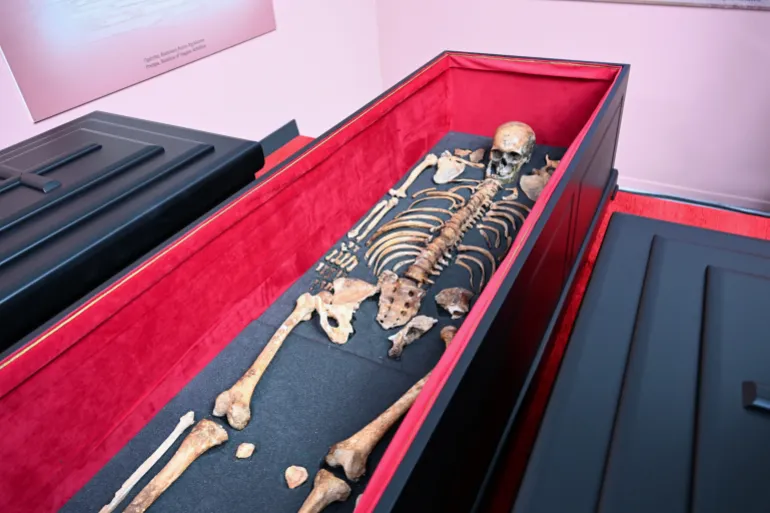
More than 1,000 years after his death, the remains of medieval ruler Czar Samuel have arrived in Bulgaria.
A symbol of Bulgarian national identity, Samuel was a warrior emperor who battled the Byzantine Empire to expand his kingdom before suffering defeat and dying soon after in 1014. His supposed remains were discovered in a Greek border area in the 1960s.
Recommended Stories
list of 4 itemsend of list
The coffin and remains were flown on Saturday to the Bulgarian capital, Sofia, on board a military aircraft that was surrounded by air force fighter jets.
Thousands of people poured into a public square to honour the czar’s arrival, which capped years of fraught negotiations between Bulgaria and Greece until an accord was reached this week.
Bulgarian politicians across the spectrum paid tribute to the medieval ruler, listening to the national anthem and a 21-gun salute.
“Today, we Europeans are learning to read history with a desire to belong not only to our homeland, but also to the culture that unites us across the entire European continent,” Bulgarian Prime Minister Rumen Radev said.
“That is why Europe must not reopen old wounds but must work for peace as the supreme good,” Radev continued, referring to the centuries-old rivalry between neighbouring Greece and Bulgaria.
Crowds cheered as fighter jets performed a flypast.
Martin Nestorov, a 42-year-old software engineer, told the AFP news agency he attended the ceremony “to welcome Czar Samuel back to Bulgaria, where he belongs”.
“I am here because I am Bulgarian, and a Bulgarian is returning to his homeland,” added Tsanka Zlatkova, 65, a retired art historian.
A procession brought the remains to be laid in the Church of Saint Sofia, a sixth-century basilica that is the capital’s namesake and where church officials say Samuel was baptised.
The remains of medieval ruler Czar Samuel inside a coffin Saturday, October 3, 2026 [Giannis Papanikos/AP]
Competing claims
The handover of Samuel’s remains is part of a broader accord between the Greek and Bulgarian culture ministers.
In exchange, Greece is slated to receive 48 objects that Bulgarian troops pillaged from churches and monasteries in Greece during World War I.
Speaking before the handover, Greek Prime Minister Kyriakos Mitsotakis said he hoped the ceremony would boost Greece’s campaign to repatriate the Parthenon Marbles, a collection of 2,500-year-old marble sculptures taken from the Acropolis in Athens and later displayed in the British Museum.
“The global community is essentially re-evaluating its longstanding stance on protecting cultural heritage,” Mitsotakis said, adding that historical heirlooms “cannot be treated as the spoils of war”.
Bulgaria is not the only country to have claims on Samuel. A huge statue of the czar stands in the North Macedonian capital of Skopje, with Macedonians claiming him as “their” ruler.
In 2022, a bilateral commission recommended presenting Samuel as the head of a state that “most contemporary historiographers consider to be the Bulgarian Empire”, based in what is currently North Macedonia.
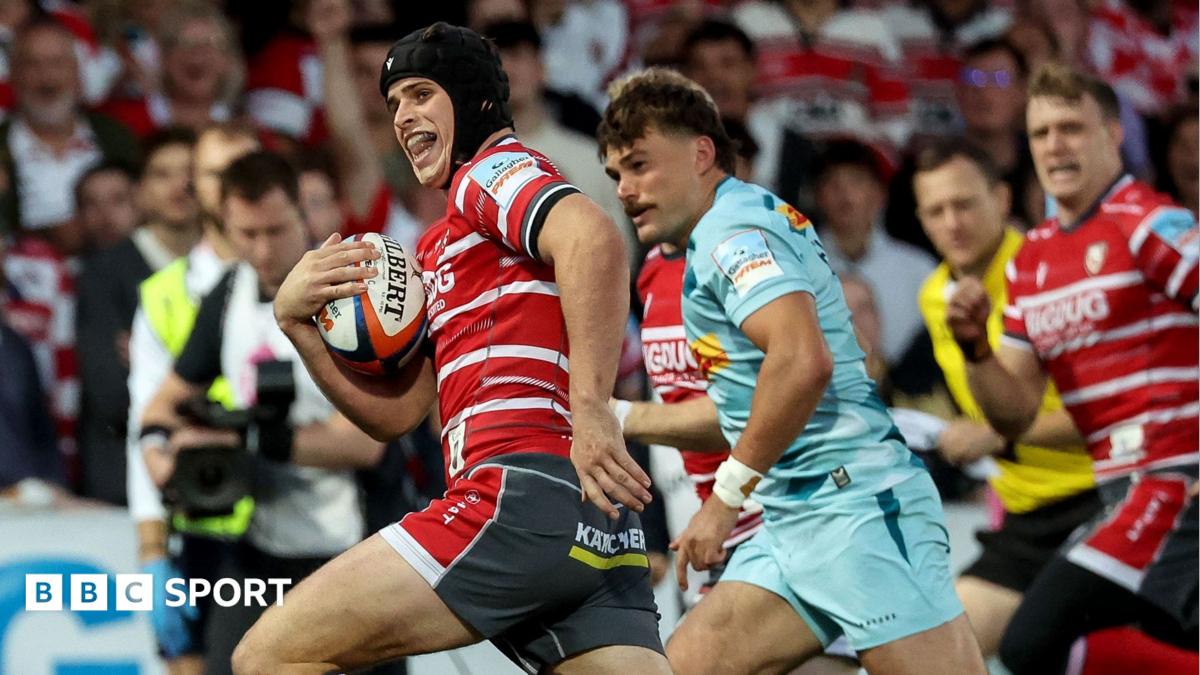
A progressive move down the right gave Gloucester fly-half Charlie Atkinson – three days after he signed a new deal committing his long-term future with the club – the opportunity to find Ben Loader free on the left with a pinpoint kick, and the winger dotted down to open the scoring.
Harlequins, in their desperation to keep Gloucester out on their own try line, lost Will Evans to the sin bin and mere seconds later Wales flanker Morgan barged over in the left corner to extend Gloucester’s lead.
On the stroke of half hour, Morgan’s strong carry allowed Will Trenholm to force over Gloucester’s third try from close range before George Barton slotted the conversio superbly from touch.
A spectacular 50:22 from scrum-half Caolan Englefield then put Gloucester in another great position and Charlie Atkinson broke a tackle to go over next to the sticks, as Barton kicked an easy extra two to give the hosts a 24-point advantage at half-time.
The interval did not change the momentum as two short passes saw Seb Atkinson race to the line and power over Gloucester’s fifth of the evening and Quins’ day was perhaps summed up best when Connor Slevin’s poor restart failed to go 10 metres.
Gloucester ruthlessly made their visitors pay once more as with their next attack Will Joseph’s outstanding run and offload allowed Englefield to dive over.
Joseph then grabbed the try his own performance deserved, diving in to the right of the posts to claim Gloucester’s seventh try and third inside 12 minutes after half-time.
Another kick to the corner from Charlie Atkinson found Barton who juggled successfully and managed to extend over for Gloucester’s eighth.
Joseph thought he had scored his second with the final act of the match to take Gloucester past 50 points, but his try was chalked off for a knock-on in the build up.
Gloucester: Barton; Thorley, Joseph, S. Atkinson, Loader; C. Atkinson, Englefield; Rapava-Ruskin, Lake (capt), Fasogbon, Kleyn, Clark, Thomas, Morgan, Trenholm.
Replacements: Innard, Bleuler, C. Knight, Clement, Ludlow, Robson, W. Knight, Denny.
Who: Portugal vs Norway What: UEFA Nations League 2026-27, Group A4 match Where: Estadio do Dragao, Porto, Portugal When: Sunday, October 4, at 8:45pm local time (18:45 GMT) How to follow: Al Jazeera Sport will bring you all the build-up and live updates from 15:45 GMT.
For the second time in a week, Portugal and Norway clash in the UEFA Nations League. But this time, things are not quite the same in the Selecao camp.
Recommended Stories
list of 4 itemsend of list
Sunday’s fixture in Porto will see the Nations League title holders play without their talisman, Cristiano Ronaldo, after the 41-year-old abruptly left their camp, raising questions about his international future.
Ronaldo’s dramatic exit and apparent rift with new coach Jorge Jesus have dominated headlines worldwide. Portuguese players have largely blocked the outside noise, however, maintaining a perfect record at the tournament where they are chasing a record-extending third crown.
However, their striker Erling Haaland – one of Europe’s most lethal players – poses enough danger to put Portugal under pressure ahead of this weekend’s thrilling encounter.
What is the UEFA Nations League?
The UEFA Nations League was founded in 2018 to reduce the number of meaningless friendlies and give nations competitive matches against top-ranked teams.
In this competition, countries from across Europe participate in a league structure which features promotion and relegation.
What is the latest news on Cristiano Ronaldo?
Ronaldo left the squad late on Wednesday, shortly after a news conference in which coach Jesus confirmed the five-time Ballon d’Or winner would be left out of his starting line-up for a second consecutive Nations League game.
The 41-year-old’s decision to walk out came as a shock as he had been due to train with his teammates at the Parken Stadium in Copenhagen.
Portugal’s leading scorer with 146 goals had already spent the entirety of last weekend’s 2-1 Nations League win in Norway on the bench, having captained the side in the 1-0 home victory over Wales last Thursday.
He appeared to indicate that the reasons behind Jesus’s decision ran deeper and hinted at a departure from the national team he has graced for more than two decades.
“In due course, I will tell the truth to all the Portuguese people about my reasons for leaving the national team, to which I have always been dedicated,” Ronaldo said in a cryptic Instagram post, announcing his sudden exit from the camp.
Spanish sports daily Marca said that Jesus and Portuguese federation president Pedro Proenca followed Ronaldo to Copenhagen airport in an attempt to persuade him to stay with the squad, before the player boarded his private jet.
Jesus insisted earlier on Wednesday that there was no rift between them, although the 72-year-old, who was appointed in July, acknowledged that his captain was disappointed to remain on the bench against Norway.
How have Portugal and Norway played in the Nations League?
Portugal are on top of Group A4 on nine points, with three wins out of three. They started their campaign with a 1-0 home win over Wales, before adding a 2-1 victory over Norway in Oslo. In the last match, they thrashed Denmark 4-2 in Copenhagen.
Norway are second-bottom in the group, with only three points. They started their campaign with a 3-2 home win over fellow Scandinavians Denmark but suffered identical 2-1 defeats at home to Portugal and to Wales in Cardiff.
Joao Felix and Goncalo Ramos scored for Portugal, while Haaland struck the consolation goal for Norway.
Portugal vs Norway: Head-to-head
Matches: 12
Portugal wins: 9
Norway wins: 1
Draws: 2
Portugal vs Norway: Form guide
(Last five games, latest results first)
Portugal: W-W-W-L-W
Norway: L-L-W-L-W
Who are the top players to watch?
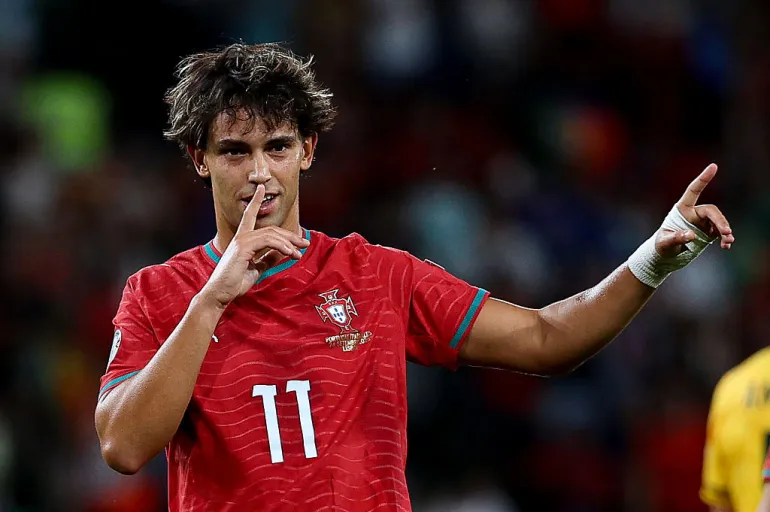
Joao Felix and Goncalo Ramos (Portugal): Al Nassr forward Felix has emerged as the reliable scorer in the Portugal setup, finding the net in each of the three games this term. Meanwhile, Ramos, playing in place of Ronaldo, has made up for CR7’s absence with goals in the last two matches.
João Felix of Portugal has scored in every Nations League game this season [File: Diogo Faria Reis/MB Media/Getty Images]
Erling Haaland and Oscar Bobb (Norway): All of Norway’s goals in the ongoing competition have come through Haaland (three) and Bobb (two). While their partnership proved successful in the opening match, their goals were not enough in the following matches, as the Norwegians suffered back-to-back defeats. Norwegians will demand better from Haaland, especially after the Manchester City talisman’s incredible start to the club season that features seven goals in as many games.
Team news and predicted lineups
Portugal
Winger Francisco Conceicao is doubtful for the game due to a thigh injury.
Probable Portugal XI: Diogo Costa; Joao Cancelo, Ruben Dias, Renato Veiga, Nuno Mendes; Ruben Neves, Vitinha; Pedro Neto, Bruno Fernandes, Rafael Leao; Goncalo Ramos
Norway
Wing-back Julian Ryerson is doubtful with a muscle injury, while centre-back Torbjorn Heggem is suspended.
Probable Norway XI: Orjan Nyland; Julian Ryerson, Kristoffer Ajer, Torbjorn Heggem, David Moller Wolfe; Martin Odegaard, Sander Berge, Patrick Berg; Oscar Bobb, Erling Haaland, Antonio Nusa
Norwegians need Erling Haaland to be on the scoresheet if they are to beat Portugal [File: Marius Nordnes / Nordnes Foto/Getty Images]
Portugal vs Norway: TV channel, livestreaming
Portugal
Norway
United Kingdom: ITV1
United States: FOX Sports, FuboTV, ViX
India: Sony Sports Network
Middle East and North Africa: beIN SPORTS
South Africa: DStv Stream
You can find your regional broadcaster on UEFA’s official broadcaster listing.
Israeli journalists asked coach Hallgrimsson about the Flydubai attack and alleged racist abuse by Ireland’s players.
Published On 3 Oct 20263 Oct 2026
Members of an Israeli media contingent heckled Republic of Ireland head coach Heimir Hallgrimsson’s news conference prior to the UEFA Nations League football match, causing it to end abruptly amid growing political tensions and protests against the fixture.
During the media event on Saturday, an Israeli journalist asked Hallgrimsson about his views on an incident onboard a Flydubai flight to Israel earlier this week.
Recommended Stories
list of 4 itemsend of list
According to the prosecutor general of the United Arab Emirates, the Flydubai co-pilot “attempted to carry out a terrorist act”, using an axe against the pilot to take over the aircraft’s controls.
The plane carrying 174 passengers was on its way from the Dubai in the UAE to Tel Aviv in Israel on Wednesday when the copilot wounded Indian pilot Smit Machchhar, who opened the cockpit door to seek help.
The aircraft briefly plunged about 17,000 feet (5,180 metres) before it was brought back under control.
The attacker was not officially identified, but media reports quoting unnamed sources said he was an Omani national, Hamam al-Hammami.
“What do you say about the people that you support? Their ideology is based on murder,” the journalist asked, purportedly hinting at Ireland’s stance on Palestine and attempting to link it to the aviation incident.
Before the Irish team’s coach could answer, the Football Association of Ireland’s communications manager Kieran Crowley stepped in and asked the journalist to refrain from asking questions not linked to the match.
The journalist persisted, carrying on with her question before Crowley stopped her again.
“We respected your questions at the last press conference, but we are doing football questions today,” he said, referring to Israeli journalists’ pointed questions about the calls to boycott the first leg of the European match.
Icelandic coach Hallgrimsson later termed the incident a “verbal attack”.
Following the match, Israeli supporters were accused of directing racist chants towards Ireland player Adam Idah and were filmed raising military slogans, but evaded disciplinary action from the competition’s organisers.
However, another Israeli journalist turned the incident on its head during Saturday’s news conference and accused the Irish team of calling Israel’s players “monkeys” during the match.
FAI’s Crowley was quick to shut out the accusation and ended the media event.
“That’s a lie. You’ve just broadcast a lie,” Crowley said before getting up to walk away.
According to Irish media reports, the FAI is continuing to investigate allegations that Irish players Adam Idah and James Abankwah were racially abused by Israeli fans.
An Israeli supporter also led chants about his country’s military from the stands as he attempted to brush aside the team’s drubbing on the football pitch.
The day before the first leg, goalkeeper Gavin Bazunu publicly withdrew, saying he felt “it would be wrong to participate in the upcoming fixtures against Israel”.
The second leg will be played at the TSC Arena in Backa Topola in Serbia on Sunday.
Ireland’s Hallgrimsson termed it “a game with a lot of emotions attached to it”.
He said the team was focused on winning the second leg as well.
“There’s been a lot of emotions from the people in Ireland about this and obviously that affects the players as well. We want to do good, but it’s always going to be a challenge when the environment is as noisy as it is.”