Standing on the deck of the aircraft carrier USS Abraham Lincoln, Secretary Pete Hegseth looked up at the flattop’s superstructure and got a good indication of many of the targets the Lincoln Carrier Strike Group (CSG) destroyed during its six-month fight with Iran. In a photograph shared by the Pentagon’s image distribution site, Hegseth is seen examining a wall of so-called kill marks stenciled onto the superstructure.
By our count from the image and a video taken during Hegseth’s visit, both of which you can see below, there are 103 one-way attack (OWA) drone kill marks and 34 ship kill marks. These represent the number of each the CSG took out. It is unclear whether there are other kill marks we can’t see.
Though they resemble Shahed-136s, which are the most notorious of Iranian OWA drones, these silhouettes would represent all types shot down, and Iran has many. The same holds true for the ships. The photograph shows stencils of frigates or corvettes but these would be a generic symbol for surface craft kills.
Secretary of War Pete Hegseth visits U.S. Navy Sailors aboard the USS Abraham Lincoln (CVN-72) near San Diego, Calif., Oct. 7, 2026. (DoW photo by U.S. Air Force Staff Sgt. Madelyn Keech) Staff Sgt. Madelyn Keech
On board to welcome the ship and its crew as it headed back to its home port of San Diego after a tumultuous and historic deployment, Hegseth extolled the strike group’s accomplishments. Reading from the Presidential Unit Citation awarded to the strike group for its work during Epic Fury, Hegseth noted that it shot down 77 one-way unmanned attack drones and sank 64 Iranian vessels between the start of Epic Fury on Feb. 28 until it departed the region on Aug. 22.
The Lincoln CSG also conducted 3,693 combat sorties, delivered 1.37 million pounds of ordnance, launched 450 Tomahawk Land Attack Cruise Missiles (TLAMs), destroyed 21 anti-ship cruise missiles and defended against four fast-attack craft and explosive-carrying wooden sailing vessels.
It is unclear at the moment why there are at least 26 more drone kill marks stenciled onto the Lincoln than the number of drones shot down listed in the unit citation and why there are 30 fewer ship kill marks than the tally noted in the citation. The Pentagon referred us to the Navy, and we are waiting for a response from the service.
Kill marks on aircraft embarked aboard Lincoln indicate that the carrier strike group also destroyed several Iranian submarines and other weapons. These were not listed in the unit citation or in any kill marks stenciled onto the Lincoln that we could see.
An image provided to TWZ by aviation photographer Jeff Rojas, who goes by the handle @jro_photography on Instagram, shows a submarine kill mark on one of the F/A-18F Super Hornets of the U.S. Navy’s Strike Fighter Squadron 41 (VFA-41), the “Black Aces.” That is one of the aviation squadrons embarked on the Lincoln during Epic Fury.
A close-up look at the broken submarine and other kill marks on one of VFA-41’s Super Hornets. (Jeff Rojas) Jeffrey Rojas
In total, VFA-41 alone launched 421 missiles and bombs during its time supporting Operation Epic Fury. You can find the details in our story about the squadron here.
In addition, an image published by The Aviationist showed “an extraordinary array of target markings on a VMFA-314 F-35C, apparently representing an oil tanker, three submarines, a surface combatant, a Shahed-type drone, an artillery piece, and several ground-based launchers.”
Marine F-35C Also Sports Three Submarine Kill Markings After Operation Epic Fury
An exclusive image obtained by The Aviationist reveals an extraordinary array of target markings on a VMFA-314 F-35C, apparently representing an oil tanker, three submarines, a surface combatant, a…
It should also be noted that some of the drone kill marks seen on the Lincoln could have been the result of shootdowns by the carrier’s escorts. The Arleigh Burke class guided missile destroyers USS Frank E. Petersen Jr, USS Spruance andUSS Michael Murphy all serve as critical air defense platforms for the carrier strike group. Those vessels were also the ones launching the TLAMs, as well as potential submarine involvement.
Arleigh Burke class guided-missile destroyer USS Frank E. Petersen, Jr. (DDG 121) transits the Arabian Sea, June 27, 2026. (U.S. Navy photo) U.S. Central Command Public Affa
Late Thursday morning local time, Lincoln finally returned home. The carrier departed San Diego on Nov. 21, 2025, and an arrival closed out a total deployment of 321 days, by our count. That’s just shy of the 326-day record USS Gerald R. Ford set in May, representing the second-longest deployment in the modern carrier era.
In addition to racking up successes against Iran, the marathon deployment drew scrutiny over the grueling conditions sailors and Marines experienced aboard. In August, crew families described supply shortages and difficult living arrangements, as TWZreported at the time. The accounts led to widespread media coverage, which Acting Secretary of the Navy Hung Cao called dishonest while also acknowledging that “a small number of mental health cases were treated with no loss of life, meal plans were adjusted when fresh resupply was unavailable, without a single meal being missed, calls home were limited when the operational threat was too high.” At least eight personnel across the strike group attempted suicide during the cruise, Cao wrote in a letter sent to Sen. Kirsten Gillibrand that was obtained by CNN.
The kill mark stencils weren’t the only symbols of Lincoln’s deployment. On Wednesday, Hegseth used symbology to push back against concerns raised about the long journey.
“There were a few folks in the media who tried to turn the USS Abraham Lincoln into some sort of a symbol,” Hegseth said. “A symbol of dysfunction, or a symbol of low morale, or a symbol of a failed mission. And what I look out right here or when I talk to your leadership, and I haven’t had a chance to talk to a number of you, I know it’s the exact opposite.”
UPDATE: 5:59 PM Eastern –
After the Lincoln pulled into its home port, new images emerged. The following picture shows additional kill marks, including 10 of submarines.
Sailors aboard the USS Abraham Lincoln look on as the ship docks at its homeport at Naval Air Station North Island on return from a historic 10-month deployment on Oct. 8, 2026 in Coronado, California. (Photo by Mario Tama/Getty Images) Mario Tama
A court in Indian capital Delhi has released the top leaders of the Gen Z-led Cockroach Janta Party (CJP) as the city sees more protests for a second day with thousands of security personnel deployed and roads barricaded.
Abhijeet Dipke – who began the movement in May after India’s Chief Justice likened some jobless young people to “cockroaches” – and other leaders were arrested on arrival in Delhi on Saturday to lead protests seeking electoral reforms.
In his first comments after his release, Dipke said “the CJP will neither back down nor be intimidated”.
On Saturday, media reports said, 7,000 demonstrators were detained and released late at night.
The CJP – which is not registered as a political party in India – is seeking electoral reforms just months before crucial state elections.
It has also demanded the resignation of Chief Election Commissioner (CEC) Gyanesh Kumar over allegations of manipulating voters’ lists – which the Election Commission has denied.
On Sunday morning, the CJP lawyer Ratna Singh said she had been informed by the police that Dipke and two other senior CJP leaders – Saurav Das and Ashutosh Ranka – would be produced before the magistrate by the police seeking their remand “to maintain public peace”.
She subsequently posted on X that the three had been set free by the court “on the condition that they will not engage in breach of peace for one year” – she later deleted the post about the condition and it’s not clear what that means and whether the CJP leaders can take part in protests.
After his release, Dipke posted on X, external, saying: “Modi, as PM, is an embarrassment to India.”
In another post, external, he said he was going to his village to attend his grandmother’s funeral who died around the time of his arrest yesterday.
“Heading back to my village to be with my family during this moment of grief,” he posted, adding that Das and Ranka would address a press conference in Delhi.
“The CJP will neither back down nor be intimidated,” he added.
Saturday saw dramatic scenes as police officials boarded the flight to detain Dipke, Das and Ranka as their plane landed.
Elon Musk’s latest comments come days before Mukesh Ambani’s low-cost Reliance Jio’s parent launches India’s largest-ever initial public offering.
Published On 11 Oct 202611 Oct 2026
Billionaire entrepreneur Elon Musk has said he would price his Starlink satellite internet service affordably in India to take on Mukesh Ambani’s low-cost Reliance Jio, escalating his attacks on the rival tycoon days before Jio’s parent launches the country’s largest-ever initial public offering (IPO).
Jio Platforms, which owns the telecom arm, is targeting a valuation of $106bn in the offering. Much like SpaceX-owned Starlink, Jio’s satellite venture is also awaiting final security clearance to launch.
Cheap data is the playbook that built Jio in India, and the one Musk has used in markets like Kenya to unsettle local telecom players. SpaceX now plans to enter the mobile carrier market itself, starting in the United States.
Musk did not specify prices for India, where mobile data costs about rupees 7.74 ($0.08) per gigabyte, among the lowest in the world.
“Obviously, if Starlink is too expensive in India, no one will buy it, so SpaceX will need to make pricing affordable,” he said in a post on his social media platform X on Saturday.
“The reality is that competition would greatly benefit the average citizen in India by giving them more choices, as it always does. Ambani’s profits will be lower, but he is not going out of business,” Musk added.
‘Prime Minister Ambani’
Musk’s remarks were the latest in a series of X posts in which he accused Prime Minister Narendra Modi’s government and Ambani of stalling Starlink’s entry into one of the world’s biggest internet markets to favour market leader Jio.
The posts have marked a sharp turn for Musk, who has long enjoyed a warm public rapport with Modi.
India’s government has denied any bias in its approval process, noting that the three satellite ventures seeking to launch, including Starlink’s and Jio’s, are all awaiting final security clearance.
Late on Friday, Musk taunted Ambani directly, addressing him as “Prime Minister Ambani” and asking whether he would “consider allowing Starlink to compete”.
Flash flooding in Nepal has swept away buildings along the Budhi Gandaki river on Sunday. Terrified onlookers in Gorkha district filmed from higher ground, after a landslide triggered downstream flooding that also swept away a bridge and homes.
As Israel entered the final month before its October 27 election, Prime Minister Benjamin Netanyahu had a chilling warning to share.
Israel’s enemies, he said on September 29, were plotting an attack on the country before the vote. Without providing any evidence, he then quickly referred to continuing attacks by Israeli troops in the Gaza Strip, where he said they had killed more than 100 “terrorists” in recent weeks.
That link drawn by Netanyahu – between the genocidal war on Gaza that began after the Hamas-led October 7, 2023 attacks, the upcoming elections, and Israel’s national security – was not coincidental, say analysts.
Netanyahu’s insistence that he alone can secure Israelis from a range of threats they face from across the country’s borders, they say, lies at the heart of his re-election campaign, even as his alleged failures during the attack three years ago and in securing the quick release of captives have offered his opponents ammunition.
When a Flydubai flight packed with Israeli passengers on their way from Dubai to Tel Aviv a day after his recent warning nearly crashed after a co-pilot attacked his pilot with an axe in the cockpit, Netanyahu was quick to seize on the incident to argue that he is still man for the country’s top job.
Polls suggest that he faces a stiff test in what is the first general vote since the 2023 attacks, which led to the killing of 1,139 people in Israel and triggered the genocidal war on the Gaza Strip, where Israeli have attacks have since killed more than 74,000 Palestinians.
Three years later, the war has become inseparable from the domestic debate over Israel’s direction while also accelerating a political shift to the right – with once-fringe positions on Palestinians now very much the mainstream view.
Few embody this transformation more than Israel’s far-right financial Minister Bezalel Smotrich, sanctioned by a number of Western countries and known for his incendiary and racist language and policies towards Palestinians.
In one of his characteristically inflammatory statements, Smotrich told Israeli outlet Ynet late last month that the Israeli army should “go to war” in the occupied West Bank and “do there what we did in Gaza”.
Less than two weeks later, Smotrich’s electoral ally Moshe Feiglin added fuel to the fire.
“The enemy is Gaza, not Hamas”, he told the Jerusalem Post, calling for the annexation of the besieged territory after the election. “The baby that will be born tomorrow in Gaza will do exactly the same,” he said, in reference to the 2023 attacks.
Palestinian political analyst Ahmed Najar said these are not “stray comments” from marginal figures but an electoral message from power-seeking politicians aimed at portraying Palestinians as “not a people with rights, but a demographic and security problem to be expelled, conquered or destroyed”.
He added: “The frightening reality is that the coming election risks becoming a competition not over whether Palestinian life should be protected, but over who can promise to erase it most aggressively.”
‘This is madness’
Following October 7, the younger generation in particular slid rightwards, said Ahron Bregman, an Israeli security analyst and senior teaching fellow at King’s College London.
He said the forces driving Israel to the right had been gathering for decades.
“The trend toward the right began after the Yom Kippur War in 1973, but it has intensified dramatically since October 7,” Bregman told Al Jazeera, referring to the bloody 19-day October War, or the 1973 Arab-Israeli War – a conflict between Israel and a coalition of Arab states led by Egypt and Syria.
More recently, the far right has been emboldened through electoral politics as part of Netanyahu’s government since 2022 – the most right-wing government in Israeli history.
Another outspoken cabinet member alongside Smotrich is Minister of National Security Itamar Ben-Gvir, a far-right provocateur who has previously been convicted of inciting racism and of supporting a terrorist organisation.
“Netanyahu’s greatest mistake – among many – was bringing figures like Ben-Gvir and Smotrich into his coalition,” said Bergman. “By doing so, he legitimised them as influential forces in Israeli politics.”
Ben-Gvir has been so cemented into Israel’s political system, he has hopes pinned on becoming the next Israeli defence minister, the analyst pointed out.
“This is madness. But that’s contemporary Israel,” said Bergman.
Attendees listen and applaud during an election campaign meeting on October 5, 2026 in Tel Aviv, Israel [Erik Marmor/Getty Images]
Analysts also pointed out that several parties running, including ones that are currently in power and a number that are challenging the current coalition, all advocate for the expulsion of Palestinians from Gaza, as one of the examples of the shift to the right.
Omar Baddar, director of Palthink for Strategic Studies, said the messaging from across the Israeli political and military spectrum in the lead-up to the election shows that there is “a consensus” to continue the attacks on Gaza, where nearly 1,500 have been killed since a “ceasefire” last year.
“They’re using the threats to get more votes,” he said, pointing out to what he described as the radicalisation of the society.
With the election approaching, added Baddar, Israeli leaders are seeking to undo one another: “Who[ever]’s more radical is more likely to get more votes.”
As Ehab Jabareen, a Palestinian political analyst and researcher from inside Israel, writes, “what it means to be ‘right-wing’ in Israel today is above all to take a harder line on Palestinian national claims, security and territorial control.”
He adds: “On security and the Palestinians, a large part of Jewish Israeli politics already works from assumptions that would have been treated as right-wing a generation ago: Deep suspicion of a sovereign Palestinian state, a high tolerance for prolonged military control, and a stronger insistence on Jewish sovereignty as the starting point rather than one value among others.”
Observers and rights groups say the disparity is even evident in the electoral process. A prominent politician and Palestinian citizen of Israel, Sami Abu Shehadeh, has been forced to withdraw from the election over his remarks about the Gaza war, while Israeli far-right leaders have remained untouched despite their violent rhetoric against Palestinians.
Netanyahu’s security credentials endure
Recent polling indicates that the events of October 7 are top of mind for Israelis, who also have questions about who was responsible for the security failures of that day.
Just last month, reports surfaced indicating that Netanyahu had received two separate warnings about an imminent Hamas attack in 2023, from Egypt’s intelligence chief, Abbas Kamel, and United Arab Emirates President Sheikh Mohamed bin Zayed Al Nahyan.
Netanyahu’s two main rivals in the race for prime minister have cited the alleged warnings to call the prime minister “unfit” to remain at the helm of the country.
But Netanyahu has denied suggestions that he had been forewarned about the attack, and the reports do not appear to have had a significant effect on opinion polls.
While October 7 represents a profound rupture in Israelis’ sense of security, public trust in the Netanyahu government had already been badly shaken by its controversial judicial overhaul, introduced when the prime minister’s current coalition first came to power, said Mairav Zonszein, an Israel-Palestine analyst at the International Crisis Group based in Tel Aviv.
Despite these breaches of trust, the Israeli leader retains support.
“Israelis in general still see Netanyahu as kind of the guy on security. And more to the point, they don’t really see an alternative,” Zonszein told Al Jazeera.
A June survey by Mitvim – the Israeli Institute for Regional Foreign Policies found that the Israeli public supports its government’s military and security solutions, and rejects resolving the Palestinian issue and ending the Israeli occupation of Palestinian territory. This is the case even while it has been concerned about international isolation and the decline of Israel’s international standing since the beginning of the genocidal war on Gaza, the survey reported.
Yet Israelis are also increasingly war-weary, even as they back the use of more force. Its troops – stretched between six fronts of war in the last few years – are bearing the brunt of this fatigue in Israeli society.
Israel’s Ministry of Defence said on Tuesday that nearly 30,000 soldiers and security personnel are facing psychological trauma since the war.
The ministry said its rehabilitation department’s budget has increased by 88 percent over the past three years to 10 billion shekels ($3.3m), with the majority supporting treatment for mental health conditions and post-traumatic stress disorder.
As Israel expands, the two-state solution fades
Still, Israel in recent months has been more and more vocal about its expansionist vision, with officials brazenly stating the goal of “Greater Israel”. The claim for the conquest is based on a biblical verse (Genesis 15:18-21).
For decades, Israel has ignored international law in its continuous occupation of Palestinian and Syrian land, and has shown little respect for its neighbours’ sovereignty, occupying more land in Syria, as well as in Lebanon in more recent years.
According to Najar, the political economist, the “complete dehumanisation” of Palestinians as evidenced during the campaign reveal that Gaza “is being presented to Israeli voters not as a catastrophe or a crime for which there must be accountability, but as a blueprint to be repeated elsewhere”.
In southern Lebanon, where Israel has been carrying out near daily attacks and and has occupied large swathes of land, residents have told Al Jazeera they expect little to change even if Netanyahu is defeated in the election.
Netanyahu’s main political challenger, Gadi Eisenkot – head of the Yashar party and former army chief of staff – is the father of the so-called Dahiyeh Doctrine, and is just as hawkish about expansion. That doctrine, since Israel’s war with the Lebanese group Hezbollah in 2006, calls for the use of huge force, even against civilian infrastructure, as a deterrent against enemies and was deployed in Israel’s recent wars, particularly in Beirut’s southern suburbs.
If it were up to Eisenkot, the Lebanon front of war would have never scaled down: He has accused Netanyahu of bowing to US pressure to halt operations in Beirut, and has insisted that the military should be able to attack Hezbollah anywhere in Lebanon.
For Israelis still reeling from the events of October 7, Eisenkot could fill the security void many are feeling, said Zonszein.
“They really … see the world as kind of very hostile towards them, the world not understanding what they went through on October 7, and [therefore why] the need to have these security buffer zones in Lebanon, in Syria, and Gaza,” she said.
A two-state solution to the Israel-Palestine conflict is therefore out of the question, said the analysts – and has not even made a blip of an appearance in campaigning before the election.
The idea first emerged during the Oslo Accords more than 30 years ago, which set out a negotiating process aimed at resolving the Israeli-Palestinian conflict, predicated on the belief that the creation of a Palestinian state alongside Israel was imperative to forge peace.
But since the Oslo process began in 1993, the number of Israeli settlers in the West Bank has ballooned from about 260,000 to more than 700,000, embedded deep inside West Bank areas that would be needed for a contiguous Palestinian state.
“The concept of a two-state solution is currently irrelevant and likely will remain so for another decade or two, if not longer,” said Bergman. “It is unlikely to become a reality in the foreseeable future, as no Israeli leader can propose it to the Israeli public after the events of October 7.”
The only way it could regain prominence is if there is substantial international pressure, including severe sanctions on Israel, and a non-violent intifada, or an uprising by Palestinians, he said.
The outright rejection of Palestinian statehood has simply become much more “acceptable”, said Zonszein.
“There’s several parties who advocate these views, whereas there isn’t a single Jewish Zionist Party that puts the need for a two-state solution or a Palestinian political process at the forefront,” she said.
Taken all together, Israel’s election appears less a demand for change than a further entrenchment of the jingoism that surged after October 7, 2023.
“[There’s] more and more movement towards more military force, more need for pushing the borders … out of a lot of fear that another October 7 could happen,” said Zonszein.
Department of Justice says it’s investigating whether the White House press pool’s decision violated antitrust laws.
Published On 11 Oct 202611 Oct 2026
The United States Department of Justice has opened an investigation into television networks’ decision to halt coverage of President Donald Trump last month.
A spokesperson said on Saturday that the department was investigating whether the networks violated federal antitrust laws by their boycott, which followed a White House decision to pull the credentials of reporters from three news organisations, including CNN.
Recommended Stories
list of 4 itemsend of list
The networks under investigation are ABC, CBS, CNN, NBC and Fox News, said Emily Convington, the Justice Department spokesperson.
“Group boycotts among commercial competitors can violate the Sherman Act,” she said of the antitrust legislation.
“The Antitrust Division is simply investigating to determine whether these news organizations have violated the antitrust laws.”
The investigation is the latest in a series of clashes between the Trump administration and major news organisations. Trump has repeatedly called the mainstream media “fake news” and frequently clashes with reporters during encounters with the press.
The action also puts legal and potentially financial pressure on the media to continue coverage of the president even when they disagree with how the White House handles them.
The networks did not immediately comment on the announcement.
The Justice Department’s move came after the television pool of five broadcasters last month ceased presidential coverage after the administration barred CNN, MS NOW and Politico from the White House.
The White House said on September 19 that covering the president was a “privilege – not a right”. The outlets sued the administration, alleging the exclusions violated the First Amendment and that the White House was retaliating over their coverage.
CNN is one of the five news organisations – along with ABC, CBS, Fox News and NBC – that make up the primary White House television pool.
They share the costs of covering the president, take turns organising coverage, and share the footage with outlets around the country.
All of the five television networks that cover the White House, including Fox News, suspended coverage in solidarity and refused to provide replacement coverage.
The White House reinstated the credentials on September 24 after US District Judge Timothy Kelly ruled that the ban was likely unconstitutional and ordered the administration to “immediately return, reinstate, and restore” their access.
However, disputes over access to specific presidential events and pool assignments continued.
Jose Zamora, the Committee to Protect Journalists’ Americas director, on Saturday criticised the administration’s decision to investigate.
“The government should not use antitrust investigations to intimidate news outlets defending press access,” Zamora said on X. “The public’s right to know depends on that access.”
US military jet strikes stern of commercial cargo ship in the Gulf of Oman ‘without harming the crew’, CENTCOM says.
Published On 11 Oct 202611 Oct 2026
United States forces have disabled a commercial cargo vessel in the Gulf of Oman after its crew “ignored repeated warnings and attempted to run the ongoing naval blockade against Iran”, according to US Central Command (CENTCOM).
A US military fighter jet struck the stern of the Panama-flagged M/V Ocean Molica, also known as the Arika Sun, with a precision munition on Saturday, “fully disabling the ship’s propulsion without harming the crew”, CENTCOM said in a statement. The vessel was attempting to transit regional waters after “having previously departed an Iranian port”.
Recommended Stories
list of 3 itemsend of list
CENTCOM said its forces resumed their blockade against all ships “entering or departing Iranian ports on July 14”, disabling four commercial vessels and turning around 135 ships during “three months of strict enforcement”.
US forces also destroyed 10 tankers linked to the Islamic Revolutionary Guard Corps’ (IRGC’s) “multibillion-dollar shadow network” over the same period, CENTCOM said.
Meanwhile, Iran’s IRGC said it struck a vessel in the Strait of Hormuz for attempting to take an “illegal route”, as Tehran seeks to enforce its own blockade on the vital waterway.
In a statement carried by official Iranian media, the IRGC claimed Iranian forces “have taken control of the administration of the strait”.
“In carrying out this mission, a few hours ago, a giant LPG carrier named NV Sunshine, owned by NatWit, which was attempting to transit via the illegal route south of the Strait of Hormuz, was struck,” the statement said.
Vessels in the Strait of Hormuz near the beach of Bandar Abbas, Iran, October 6, 2026 [Amirhosein Khorgooi/ISNA via WANA/Reuters]
The United Kingdom Maritime Trade Operations (UKMTO) agency said on Sunday that an outbound tanker in the strait was struck on the port side by an unknown projectile, causing a fire on board. The UK agency said crew members were reported safe, while the damage and environmental impact remained unknown at the time of the report.
Tehran has attempted to enforce control over the Strait of Hormuz during the US-Israel war on Iran, insisting that ships obtain permission to cross via its preferred routes. However, vessels have increasingly risked taking an alternative route hugging the strait’s southern coast.
The UKMTO said on Thursday that a vessel sailing 94km (58 miles) north of Madinat ash Shamal, off the north coast of Qatar, was struck by multiple projectiles, resulting in a number of casualties.
The agency did not specify the origin of the ship or the number of people killed or injured, adding that authorities were investigating the incident amid a recent rise in attacks on vessels near the Strait of Hormuz.
Ships in the Gulf attempting to cross the strait, which is the sole maritime route in or out of the oil-rich region, have faced repeated attacks since the US and Israel began the war in late February.
The Strait of Hormuz remains vital to the global economy, with about a fifth of the world’s oil and liquefied natural gas passing through the passage before the war began.
Just over two years after the U.S. Air Force retired the last of its KC-10A Extender aerial refueling tankers, four of those aircraft may be bound for a new career in North Africa for a mysterious end user.
The Air Force Life Cycle Management Center (AFLCMC) put out a contracting notice yesterday “solely for information and planning purposes” with the express intent “to identify potential industry sources that possess the capability, expertise, and facilities to execute the regeneration, one-time flight clearance, depot-level return to service, worldwide ferry delivery, in-country Contractor Logistics Support (CLS), and operational/maintenance training for up to four (4) KC-10 Extender aircraft.”
The KC-10s could be “transferred via Excess Defense Articles (EDA) to a partner nation in North Africa,” the notice adds, without naming the country in question.
Retired KC-10 tankers seen at the boneyard at Davis-Monthan Air Force Base in Arizona in 2025. US Military
The Air Force operated KC-10s between 1981 and 2024. TWZ has reached out to the U.S. Air Force, as well as the U.S. State Department, for more information. The State Department directed us to contact the Pentagon.
The EDA program allows for materiel deemed extraneous to U.S. military needs to be transferred to allies and partners either at a reduced cost or as a grant. The foreign nation in question has to pay for those assets to be delivered, as well as refurbishment, if applicable.
It is important to note here that the Extender, as designed, is capable of refueling receivers using either the boom or the probe-and-drogue method. Tankers equipped for the probe-and-drogue method are, by far, more common internationally. We will come back to this later on.
A KC-10 seen refueling F-16 fighters via the boom. USAFA KC-10 refuels a US Navy F/A-18 Hornet via the probe-and-drogue method. USN
While we don’t know what the North African country might be in line now to receive the quartet of KC-10s, Egypt and Morocco would seem to be the most likely candidates based on their current and planned aircraft inventories. They are also both major U.S. allies.
The Egyptian Air Force currently does not operate any dedicated aerial refueling tankers. The country is in the process of acquiring two new C-130J-30 Hercules aircraft for use as airlifters, as well as tankers, using the probe-and-drogue method. It does already fly C-130s, but none explicitly configured for aerial refueling duties. Egypt also has a very diverse array of fighters that includes U.S.-made F-16 Vipers that can only be refueled in mid-air via boom.
A US Air Force KC-10 refuels an Egyptian F-16 during an exercise in 2023. USAF/Staff Sgt. Emily Farnsworth
A Moroccan F-16 seen linking up with a US Air Force KC-135 tanker during an exercise. USAF
As mentioned, the KC-10 was designed to connect with receivers via probe-and-drogue, as well as boom, and could be used to refuel other tactical jets in Egyptian or Moroccan service. As an aside, fighters belonging to both regularly receive foreign tanker support during exercises, as already seen earlier in this story. Just last month, Chinese YY-20 tankers (also sometimes referred to as Y-20Us) notably did just this in an exercise in Egypt.
Footage released by Egypt’s official authorities from the “Eagles of Civilization 2026” joint air exercise shows Egyptian **MiG-29M/M2s and Rafale fighters receiving aerial refueling from a Chinese Y-20 tanker aircraft. pic.twitter.com/pvxkpsDHxG
Whichever country may be in line to receive the four KC-10s, there is a question about the current state of those aircraft. Earlier in this story, we talked about the Extender’s capabilities as designed.
McDonnell Douglas (since absorbed into Boeing) delivered a total of 60 KC-10s to the U.S. Air Force between 1979 and 1987. The Extender was derived from the three-engine DC-10 airliner, the last of which was produced in 1989. The Air Force lost one of its KC-10s in an accident in 1987.
Of the remaining 59 KC-10s, 10 were put up for auction in a non-flyable state last year. For reasons that remain unclear, a single engine had been removed from under one of the wings of each of those aircraft. These Extenders were also among the first to be retired, and their booms had been stripped to be used as spares for the examples that remained in service until 2024. Private aerial refueling contractor Omega Air looks to have subsequently won those auctions. Omega also operates two ex-Dutch KDC-10 tankers, which are broadly similar to the KC-10, as well as another DC-10 converted into a probe-and-drogue-only tanker. The company has several Boeing 707-based tankers, as well.
One of Omega Air’s KDC-10s refuels US Air Force F-16s. USAF
The condition of the remaining 49 Extenders is unclear. Congress included a provision in the annual defense policy bill, or National Defense Authorization Act (NDAA), for the 2026 Fiscal Year that required the Air Force to preserve remaining retired KC-10s, but only stipulated they be maintained “in the same storage condition” they were in as of September 30, 2025. The bill, which was signed into law in December 2025, also made clear that the Air Force could still “dispose” of the aircraft in accordance with existing property management statutes.
Regenerating military aircraft, especially larger ones, back to service can be costly, complex, and time-consuming, even when they are kept in storage in a highly maintained state. In this particular case, acquiring KC-10s via the EDA program, with a very low up-front purchase price, could still be attractive to the right buyer, especially compared to the cost of acquiring new-production tankers.
Personnel at the boneyard at Davis-Monthan Air Force Base apply a protective coating to a KC-10. USAF
For a country like Egypt or Morocco that has never operated a boom-equipped tanker, second-hand Extenders could be a valuable entry point to future aerial refueling capabilities, as well. In general, organic aerial refueling capability is an important force multiplier for any air arm.
There is a possibility that KC-10s could be regenerated not as tankers, but as cargo aircraft, though this seems less likely to be the case. Cargo carrying was also an important duty for the Extenders while in U.S. Air Force service, and they still could operate in this role even when returned to service as tankers.
Though the aging KC-10s were getting increasingly more difficult to operate and maintain, the Air Force’s decision to retire them was still controversial. The Extender was a highly flexible tanker that could carry more fuel than the KC-46s that supplanted them. Clearly, there are others still interested in operating them.
It should be stressed that the AFLCMC contracting notice does not present the transfer of the four KC-10s as a done deal. At the same time, it has revealed that one of America’s partners in North Africa could breathe new life into four of these retired tankers.
Beni, Democratic Republic of Congo – The Ebola outbreak in the Democratic Republic of the Congo (DRC) has spread to another health zone in the east, while a fatal imported case in Kenya has underscored the risk of cross-border transmission.
The World Health Organization (WHO) said in an October 8 update that Alimbongo health zone in North Kivu province had reported cases for the first time. As of October 6, four confirmed cases, including two deaths, had been recorded there.
The outbreak is caused by the Bundibugyo virus, a species of Ebola virus. According to the WHO, cases had been reported in 64 health zones across seven provinces in the DRC. Ituri remained the worst-affected province in cumulative cases, while North Kivu was accounting for a growing share of newly confirmed infections.
As of October 6, the WHO had recorded 8,728 confirmed cases and 4,205 confirmed deaths in the DRC. A further 2,269 people had recovered, and the crude case fatality ratio stood at 48.2 percent.
Kenya confirms imported case
Kenya confirmed its first imported case of Bundibugyo virus disease on October 6, according to the WHO. The patient, a Kenyan citizen who had been living in the DRC, fell ill there and received treatment at several health facilities before travelling to Kenya through Uganda.
The patient travelled by road to Kampala, Uganda, before flying to Nairobi, arriving on October 3. The patient was isolated in hospital and tested positive for the virus. Despite supportive treatment, the patient died on October 5, the WHO said.
Kenyan authorities identified 28 contacts, including family members and healthcare workers. The WHO also reported efforts to trace passengers and crew members from the flight to Nairobi.
Kenyan Ministry of Health officials screen arriving passengers at Jomo Kenyatta International Airport in Nairobi amid Ebola-related health precautions [AFP]
Public health measures have been initiated in Kenya and Uganda, including contact tracing and enhanced surveillance.
On October 8, preliminary laboratory results for a suspected Ebola case in Kenya’s Wajir County came back negative, according to the county governor. The result eased concerns about a possible second case, although monitoring continued.
The imported infection has underscored the importance of surveillance and coordination between neighbouring countries. Identifying exposed people and monitoring them for symptoms are central to detecting infections early and interrupting further transmission.
Treatment capacity under pressure
In the DRC, the response is facing mounting pressure from limited treatment capacity, insecurity and difficulties securing cooperation from some communities.
Daniel Makasi Levergénois, founder of Watoto Radio, said insecurity and misinformation were undermining efforts to contain the outbreak. In Beni and Butembo, both in North Kivu, rumours and misconceptions about Ebola had contributed to reluctance among some residents to cooperate with response teams, he said.
In an October 5 update, medical charity Doctors Without Borders, known by its French initials MSF, said North Kivu accounted for nearly 40 percent of newly confirmed cases nationwide, up from 24 percent at the end of August.
MSF also reported that, as of September 28, 34 percent of confirmed Ebola patients were being treated in non-specialised health facilities. Dedicated treatment centres lacked sufficient beds, while delays in diagnosis meant some patients were being treated outside facilities equipped to manage Ebola.
The organisation warned that many of these facilities lacked the resources and expertise needed to manage the disease, increasing the risk of transmission among patients and healthcare workers.
“For weeks, treatment capacity has stretched to its limit,” said Stephanie Hoffmann, coordinator of MSF’s Ebola treatment centre in Butembo.
“Because there are not enough beds available, we are sometimes forced to refer confirmed Ebola patients elsewhere, despite the significant risk this poses to the wider community. In addition, standards of care in some peripheral facilities do not always meet the requirements for Ebola treatment. This is extremely concerning.”
Mistrust threatens containment efforts
Alberto Lusenge, a community leader in Beni, said the failure to stop transmission early in Ituri province, followed by new cases and attacks on response workers in Beni and Butembo, had deepened public concern.
Lusenge warned that mistrust could discourage residents from reporting symptoms or cooperating with health workers. He said North Kivu could become a greater focus of the outbreak if authorities failed to secure stronger cooperation from local communities.
A worker in protective gear handles sanitary basins at an Ebola treatment centre run by MSF in Butembo, eastern DRC [Gradel Muyisa Mumbere/Reuters]
The WHO said response teams were following up 23,741 of the 29,535 identified contacts as of October 4, equivalent to 80.4 percent – below the response target of at least 85 percent.
Contact tracing allows health authorities to identify people who may have been exposed, monitor them for symptoms and detect infections early. Gaps in follow-up can make it harder to identify and interrupt chains of transmission.
The Africa Centres for Disease Control and Prevention (Africa CDC) has called for a community-centred response, including active case finding, systematic contact tracing, daily follow-up of exposed people and sustained engagement with local communities.
A history of deadly outbreaks
The DRC’s 2018–2020 Ebola outbreak, caused by a different virus species, killed nearly 2,300 people. The current outbreak presents distinct challenges: According to the WHO, there are no approved vaccines or specific treatments for Bundibugyo virus disease.
Early detection, supportive care and infection prevention therefore remain central to the response. But as infections spread into additional health zones and treatment facilities struggle to accommodate patients, health authorities face the dual challenge of containing transmission and maintaining public trust.
Jean Kaseya, director-general of Africa CDC, has stressed the importance of rapidly identifying and monitoring people exposed to the virus.
“To bring this outbreak under control, we need to know where every contact is, track them and quickly identify anyone showing symptoms before they pass the virus on to their family, their community or across borders. We will only bring this outbreak under control once the last chain of transmission has been broken,” Kaseya said in a news release seen by Al Jazeera.
A man has died after being attacked by a tiger at Yorkshire Wildlife Park, police have confirmed.
South Yorkshire Police said it had been called at 13:35 BST to reports of a man entering the tiger enclosure at the attraction near Doncaster. The tiger then attacked the man and he died at the scene, the force said.
His family had been informed and were being supported by officers, it added.
A park spokesperson said: “We are deeply saddened by today’s tragic incident. Our thoughts and heartfelt sympathies are with the family and loved ones of the person who has lost their life.”
They added: “We are working closely with the police and relevant authorities and would ask that the privacy of those affected is respected at this extremely difficult time. The park will remain closed tomorrow.”
Police said the tiger was uninjured, remained in the enclosure following the incident and there had been no wider risk to the public.
The park was evacuated and officers remain at the scene.
The force added: “We are aware of videos circulating online and we would encourage people not to share this footage.”
Earlier, in a statement posted on its website, the park said its emergency response procedures had been “immediately activated” and it was “working closely with the authorities to ascertain exactly what happened”.
Caracas, September 6th, 2016 (venezuelanalysis.com) – The Bolivarian National Intelligence Service (Sebin) confirmed on Monday during an interview on state news channel Venezuela de Televisión (VTV) that authorities arrested several individuals identified as snipers set to carry out plans unexecuted during the opposition’s September 1st mobilizations.
For many, last week’s mobilizations were marked with great potential for bloodshed and guarimba violence as the political opposition has been insistent on a recall referendum happening this year despite protocols that would make anything earlier than January 2017 an unconstitutional process.
According to Sebin authorities, these individuals prepared to carry out selective assassinations on September 1st during the mobilizations. Since the targeted assassinations did not occur last week, Sebin authorities believe the individuals were ready to execute their plans Wednesday September 7th.
Sebin Director, Gustavo González López, said, “They [those arrested] had already made plans for September 7th, which indicate there are still intentions to carry out a coup.”
In total, five people were arrested in association with these plans. They include: Giovanni Vásquez, Joel José Méndez Semprún, Enrique Gerónimo González Ramírez and Manuel Alejandro González.
Additionally, Venezuelan officials reiterated that they issued arrest warrants for opposition leaders Lestor Toledo and Yorman Barillas, who are allegedly among the plan’s masterminds.
Both Toledo and Barillas are said to be in Maicao, La Guajira, Colombia. As such, the Ministry of Domestic Affairs has requested that the Colombian government repatriate them to Venezuela. González López said that the plans were designed during three meetings with former Colombian President Álavaro Uribe as well as other members of Venezuela’s National Assembly.
Uribe is notorious for founding paramilitary groups in Colombia and supporting their operations throughout the region. Venezuelan authorities have regularly linked Uribe to key opposition figures as well as ongoing attempts to destabilize Venezuelan society and overthrow the Bolivarian government.
Venezuelan authorities say that the preparative meetings took place in Maicao, as well as Mara and Maracaibo in Zulia state.
The Venezuelan military likewise detained four individuals in Páez municipality, Apure state where they found ammunition and 35 mm grenades, among other objects. Three men and one woman were detained, referred to in Venezuelan media as “guerillas”, part of a military operation of 20 soldiers under the orders of General Hermes Hernández Marcano by the Arauca River.
More details surrounding their case, including the individual’s’ identities have not yet been released.
Physicians accuse Israeli Medical Association of remaining silent as Palestinian healthcare is systematically destroyed.
Hundreds of doctors have gathered outside the World Medical Association (WMA) summit in the Netherlands, calling for the suspension of the Israeli Medical Association (IMA) from the grouping of physicians.
On Saturday, 81 healthcare workers removed their scrubs and hung them in a line facing the WMA assembly in Rotterdam, each bearing the name of a Palestinian healthcare worker currently held in illegal Israeli detention.
Recommended Stories
list of 3 itemsend of list
It was part of a protest against the continued membership of the Israeli association in the WMA, “despite them breaching almost every ethical principle in the WMA’s Code of Medical Ethics”, the IMA Out! coalition that organised the demonstration said in a statement.
“These scrubs should not be empty. Our colleagues belong with their patients, not in Israeli prisons. Today, we literally placed their names at the WMA’s doorstep,” said Mejrem Ahmetaj, a general practitioner and member of IMA Out!.
Since October 2023, Israel’s genocidal war on Gaza has killed more than 1,700 Palestinian healthcare workers and destroyed nearly all the hospitals and healthcare facilities in the enclave.
The campaign accused the Israeli medical association of remaining silent as Palestinian healthcare has been systematically destroyed.
“The IMA is not a bystander. It defends these attacks and blocks international condemnation while Palestinian healthcare is being destroyed. That is not medical neutrality. That is complicity,” added Ahmetaj.
Empty scrubs containing names of detained Palestinian healthcare workers hang outside the WMA summit [Courtesy of IMA OUT! campaign]
At a meeting of international doctors, medical leaders and human rights activists during the WMA summit on Thursday, the destruction of Palestinian healthcare and the responsibility of the international medical community were discussed, the campaign said.
“Our Palestinian colleagues are being killed and imprisoned, where they are starved and tortured. Their hospitals have been destroyed and patients driven out or murdered. The IMA has said and done nothing about these war crimes against health workers, patients and hospitals,” said a statement by Jonathan Fluxman on behalf of IMA OUT!.
“Thirty years of WMA dialogue with the IMA has done nothing but give the IMA a sense of impunity … It is time for national medical associations and the WMA to speak out and take action. Break your ties with the IMA and suspend the IMA from the WMA now,” he added.
The IMA OUT! campaign said it delivered a petition calling for the IMA’s suspension, signed by more than 6,500 health workers from around the world.
They also demanded accountability for the complicity of Israeli doctors in the starvation, torture and medical neglect of Palestinian prisoners.
Among those held by Israel is Dr Hussam Abu Safia, head of Gaza’s Kamal Adwan Hospital, whose unlawful detention has prompted an international outcry.
He was briefly held at the notorious Sde Teiman detention camp and has been subject to torture and medical neglect. Doctors protesting in Rotterdam held up placards demanding his release.
Abu Safia’s son Elyas, addressing a meeting organised by the campaign, said, “My father and all Palestinian detainees must be treated in accordance with medical ethics, and doctors must abide by the Hippocratic oath they have taken. Care cannot be given based on whose life is deemed worthy.”
Real Madrid forward Vinicius Junior sent off for pulling Villarreal player’s hair in 1-0 La Liga victory.
Published On 10 Oct 202610 Oct 2026
Yan Diomande earned Real Madrid a tight 1-0 victory over Villarreal on Saturday to keep them six points behind La Liga leaders Barcelona, even though winger Vinicius Junior was sent off for hair-pulling.
Brazil international Vinicius, on as a substitute, scored, but his goal was disallowed. He was then dismissed after a VAR review showed he had pulled the hair of Villarreal’s Nathan Saliba.
Recommended Stories
list of 4 itemsend of list
Jose Mourinho’s Madrid battled through the final stages with 10 men but held on to win and go provisionally third.
Champions Barca lead La Liga after a 3-0 win over Getafe, while Atletico Madrid are five points behind in second after they edged Alaves 2-1.
Striker Kylian Mbappe was fit to start the match for Madrid at their Santiago Bernabeu stadium after suffering a knee problem playing for France during the international break.
There was a smattering of whistles for the superstar forward, with some fans believing he has been unprofessional in recent weeks, but also applause from other supporters.
Mbappe, a candidate for the Ballon d’Or trophy later this month, was Madrid’s most threatening player in the first half, although he had little competition.
Mourinho started with out-of-form winger Vinicius on the bench, following his trips to Australia and India with Brazil during the international break.
Madrid improved defensively, giving Villarreal few chances of note, but struggled to build much in attack themselves in a drab opening half.
Mbappe struck the post from Alvaro Carreras’s layoff as Madrid pushed Villarreal back early on.
Villarreal soon gained a foothold and restricted Madrid’s opportunities, until Mbappe forced a good save from Peter Gulacsi.
There was some more mild whistling for Madrid’s display from their fans at half-time, but they were soon able to celebrate summer arrival Diomande’s first goal for the club.
The Ivorian winger, Madrid’s record 140 million euro ($157m) signing, produced a sharp low finish into the far corner after good work from Federico Valverde to play him in.
Vinicius thought he had doubled Madrid’s lead after Jude Bellingham charged in down the left and cut the ball back for him.
However, the winger’s joy turned to anger after referee Isidro Diaz de Mera was called to watch Vinicius’s hair pull on Saliba in the buildup by VAR and sent off the Brazilian, voiding the goal.
Madrid’s Belgian goalkeeper Thibaut Courtois, who had made a couple of smart saves earlier in the half, produced an acrobatic stop to thwart Carlos Romero.
Mbappe was denied again by Hungarian goalkeeper Gulasci as the forward left the Bernabeu frustrated in his hunt for goals, although his team were able to clinch three important points to stay on Barca’s trail.
Videos show schoolchildren protesting outside schools and boycotting classes after reports that a new ‘secular’ dress code recently introduced by the Azerbaijani government has led to hijab-wearing pupils and teachers being barred from school.
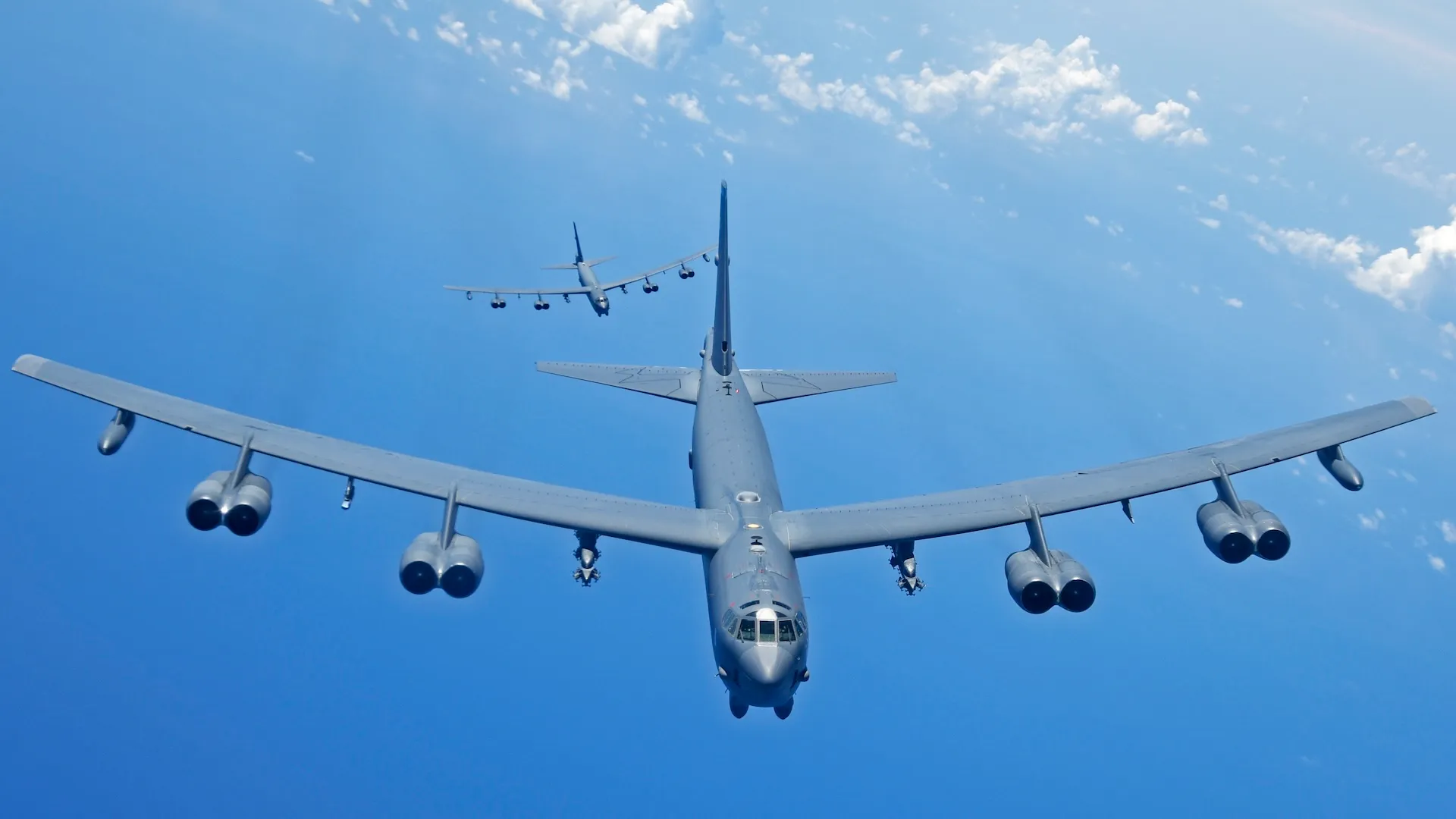
The U.S. Navy is preparing to sign a contract with Lockheed Martin to integrate the stealthy AGM-158C Long Range Anti-Ship Missile (LRASM) onto the Air Force’s B-52 Stratofortress bombers, according to an October 7 government notice. The effort would add another long-range maritime strike option to the U.S. bomber force as the military looks to counter increasingly capable adversary naval forces, especially in the Indo-Pacific theater.
The planned contract comes months after the Air Force revealed that the stealthy B-2 bomber can also launch LRASM, a capability that had not previously been publicly disclosed. You can read more about that here.
Two U.S. Air Force B-52s fly over the Pacific Ocean during a routine training mission. U.S. Air Force photo by Airman 1st Class Gerald R. Willis
The latest Naval Air Systems Command (NAVAIR) notice says the command intends to enter into sole-source negotiations with Lockheed Martin and subsequently award a cost-plus-fixed-fee delivery order covering LRASM integration on the B-52. The work would include missile software updates, associated testing, repairs to test assets, and failure review boards.
The notice does not provide a schedule for completing the integration or fielding the capability.
Long Range Anti-Ship Missile (LRASM)
The B-52 is already capable of carrying large numbers of air-launched cruise missiles, including the AGM-158 Joint Air-to-Surface Standoff Missile (JASSM) family. LRASM is derived from that family, sharing a similar general form factor while incorporating features specifically designed to find and attack ships in contested maritime environments.
The B-52 can carry up to 20 JASSMs, and the weapons have the same dimensions, but the government notice does not specify how many LRASMs the bomber would ultimately carry.
A B-52 flies across the Atlantic Ocean on June 17, 2019, for a flight in support of Exercise BALTOPS 2019, the largest multinational maritime exercise of the year in the Baltic Sea. U.S. Air Force photo by Senior Airman Stuart Bright
This is not the first time the B-52’s LRASM integration has been in the works.
As long ago as November 2019, Naval Newsreported that $10 million in Fiscal Year 2019 funding had been allocated to study integrating the missile onto the bomber, with Lockheed Martin and the Navy and Air Force expected to work on the effort. At the time, officials said the fielding timeline and the bomber’s eventual missile capacity had yet to be determined.
The U.S. Air Force’s Fiscal Year 2027 budget proposal further outlines plans to integrate the latest variants of LRASM and JASSM onto the B-52, including versions not yet cleared for use on the bomber. According to the document, the effort, which is intended to enable the deployment of next-generation stealthy cruise missiles against targets protected by sophisticated integrated air defense systems, will focus on engineering and manufacturing development, software updates, and weapons integration. Planned work in FY2027 includes incorporating the missiles’ operational flight programs into the B-52’s baseline bomber software, validating safe weapon separation from both wing-mounted stations and the internal carriage launcher, updating armament interfaces, and completing system-safety testing.
Joint Air-to-Surface Standoff Missiles are prepared to be loaded onto a U.S. Air Force B-52 on Andersen Air Force Base, Guam, on April 24, 2023. U.S. Air Force photo by Airman 1st Class Spencer Perkins
LRASM is designed to attack high-value surface vessels at long distances while reducing the exposure of the aircraft launching it. Its guidance combines GPS-assisted inertial navigation with onboard sensors and autonomous target-recognition capabilities intended to help it operate in heavily defended environments. Its imaging infrared seeker supports terminal target acquisition without relying on active radar emissions in that phase of flight. The missile operates with a high degree of autonomy, enabled by an integrated route-planning capability linked to its onboard electronic support measures (ESM) system. LRASM also has a datalink that allows it to get threat updates while in flight. It can also work cooperatively with other LRASMs during coordinated strikes.
The missile’s precise operational range is not publicly disclosed. However, the baseline LRASM is reported to be able to strike targets at between 200 and 300 miles, in line with the AGM-158A JASSM. The forthcoming C-3 version is expected to have the same reach as the JASSM-ER, which is reported to be around 600 miles.
An AGM-158C Long Range Anti-Ship Missile is seen under the wing of an F/A-18, with another missile in the foreground. U.S. Navy
For the B-52, the addition of LRASM would provide a dedicated anti-ship weapon alongside its established land-attack arsenal. A bomber operating at a considerable distance from a hostile fleet could launch multiple missiles toward maritime targets, complicating an adversary’s air-defense and interception problem. The aircraft’s payload capacity could also allow it to contribute substantial missile volume to a coordinated strike.
The B-52 was previously adapted to carry AGM-84 Harpoon anti-ship missiles, although the weapon is not listed among the bomber’s current publicly documented armament. Compared to the Harpoon, however, LRASM represents a quantum leap in capability, offering drastically greater range, a stealthy design, and the ability to react to threats and adapt in real time. Combined, these traits make for a far more survivable and lethal anti-ship capability.
The B-52 also has a demonstrated naval mine-laying capability through the Quickstrike family of aerial mines. This includes carrying 2,000-pound Quickstrike-ER mines fitted with GPS-aided, winged guidance kits, allowing them to glide to designated points in the water from more than 40 miles away. The system enables the bomber to seed minefields with greater precision while remaining farther from potentially defended waters, threatening enemy shipping routes, port access, and naval movements.
A B-52 conducts an operational demonstration of the Quickstrike-ER naval mine project in the Pacific Ocean, on May 30, 2019. U.S. Navy photo by Mass Communications Specialist 1st Class Holly L. Herline
The B-52 effort comes against the backdrop of the Air Force’s newly acknowledged use of LRASM on the B-2, which adds a different dimension to the service’s anti-ship capabilities.
A U.S. Air Force B-2 deploys an AGM-158C Long Range Anti-Ship Missile to support a live-fire sinking exercise as part of Valiant Shield 2026 over the Philippine Sea, June 27, 2026. U.S. Air Force photo by Tech Sgt. Thomas Barley
LRASM was also previously integrated on the B-1B, meaning that all three of the Air Force’s strategic bombers will eventually be able to employ it.
The renewed focus on bomber-launched anti-ship weapons reflects the challenges posed by modern naval forces, particularly in the Indo-Pacific. China’s expanding surface fleet, increasingly sophisticated air defenses, and layered anti-access/area-denial capabilities have made the ability to attack ships from a distance an important consideration for U.S. military planning.
U.S. airmen transport a live AGM-158C Long Range Anti-Ship Missile toward a B-1B Lancer at Dyess Air Force Base, Texas, June 2, 2026. U.S. Air Force photo by Airman 1st Class Caleb Schellenberg
LRASM is designed to help address those challenges by combining long-range flight with reduced observability and autonomous terminal targeting. Its onboard sensors and navigation capabilities are intended to help it identify and engage appropriate targets in environments where communications and external targeting support may be limited or contested.
Bomber integration also offers a way to increase the number of potential launch platforms without relying exclusively on tactical aircraft or surface combatants. A B-52 carrying a substantial missile load could contribute to a coordinated attack alongside B-1s, stealth bombers, naval aircraft, and other forces.
The B-52’s payload capacity would make it particularly useful for delivering larger quantities of weapons from outside the most heavily defended areas.
The planned B-52 integration also fits into a broader effort to expand LRASM’s availability across the U.S. military. Publicly discussed integration efforts have included the F-15E, F-15EX, F-16C/D, certain variants of the F-35, and the Navy’s P-8A Poseidon, in addition to established launch platforms, namely the Navy’s F/A-18E/F Super Hornet fighters and the B-1.
Sailors assigned to Patrol Squadron (VP) 30 transport an AGM-158C Long Range Anti-Ship Missile prior to installation on board a P-8A Poseidon maritime patrol aircraft. U.S. Navy photo by Mass Communication Specialist 1st Class Curtis D. Spencer
Meanwhile, the B-52 fleet is currently preparing for a slew of major upgrades. These include a critical radar overhaul alongside new engines, enhanced communications systems, and other improvements. The scope of these changes is significant enough that the aircraft will be redesignated from B-52H to B-52J. The bombers are also slated to further expand their weapons capabilities, including through the addition of the Long-Range Stand Off (LRSO) nuclear cruise missile. The upgraded B-52Js are expected to remain in service through at least 2050.
B-52 Future Stratofortress: The Upgrades That Will Transform The B-52H Into The B-52J
Even in its current configuration, the B-52 is particularly well suited to carrying the LRASM, given its substantial payload capacity and ability to launch weapons from standoff distances beyond the reach of enemy air defenses. Its upgraded networking capabilities will greatly enhance its effectiveness by allowing it to operate as part of a broader kill web, drawing on data from multiple platforms and sensors to support targeting over vast distances. In more dynamic operational environments, the bomber’s new radar can generate its own targeting information in real time. The B-2, B-1, and the B-52 all offer distinct levels of penetration and weapons-delivery capability, with the forthcoming B-21 able to push deeper into contested airspace; it will certainly employ LRASM too.
The integration of LRASM onto the B-52 could prove critical to generating the volume of sorties needed to counter China’s expanding naval fleet. With its substantial payload capacity and ability to launch missiles from standoff distances, the B-52 could deliver significant anti-ship firepower across the vast distances of the Indo-Pacific. These missions would likely involve very long-range sorties, making the bomber’s payload capacity, endurance and networking capabilities particularly valuable in sustaining operations against Chinese naval forces.
If the LRASM integration proceeds as planned, the result would be another addition to the U.S. military’s long-range anti-ship arsenal, giving the Air Force’s venerable B-52 a more explicit role in the growing emphasis on striking hostile fleets at a distance.
Pope Leo XIV describes capital punishment as an ‘attack on the inviolability and dignity of the person’ in post on X.
Published On 10 Oct 202610 Oct 2026
Pope Leo XIV has declared that the death penalty is “inadmissible” while his home country, the United States, announces plans to livestream an execution by firing squad.
Marking World Day Against the Death Penalty on Saturday, the pope reiterated the Catholic Church’s teaching on capital punishment, writing on X that it was “inadmissible because it is an attack on the inviolability and dignity of the person”.
Recommended Stories
list of 2 itemsend of list
“The common good can be safeguarded and the requirements of justice can be met without recourse to capital punishment,” his post said.
“Effective systems of detention have been developed that protect citizens while at the same time do not completely deprive those who are guilty of the possibility of redemption,” added the leader of the Catholic Church.
The American Pope’s comments come days after US Secretary of Defense Pete Hegseth said on Thursday that the firing squad execution of Nidal Malik Hasan on December 3 will be livestreamed.
Hasan was convicted of killing 13 people and wounding 32 others in a shooting at the Fort Hood military base in 2009.
Pope Leo did not specifically refer to the planned execution, or last month’s botched execution attempt on Christa Pike, who survived two doses of the lethal injection in Tennessee.
But his post came hours after his top deputy, Cardinal Pietro Parolin, the Vatican secretary of state, told Vatican News that the plan to livestream Hasan’s execution was “unacceptable”.
It was Leo’s predecessor, Pope Francis, in 2018 who first amended official Catholic teaching to declare capital punishment “inadmissible” in all circumstances.
Previously, the Catechism of the Catholic Church, the official compendium of church teaching, said the church did not exclude recourse to capital punishment “if this is the only possible way of effectively defending human lives against the unjust aggressor.”
The planned livestream of Hasan’s execution has sparked outrage across the US political divide. Republican representative Austin Scott said he supported executing Hassan but that “livestreaming executions is what Jihadists do. America is better than that.”
Senator Mark Kelly, a Democrat on the Senate Armed Services Committee, said Hasan should “face justice”, but that public executions are “the kind of thing that Iran and the Taliban do. Is this who we want to be associated with?”
On Thursday, a Pentagon official confirmed the plans, but on Friday, Vice President JD Vance, who is a practising Catholic, expressed doubt on whether the livestream would be going ahead, telling reporters that if it is, “I’m not going to be watching it.”
Storm damage stretches across Florida and Alabama as officials warn of continued flooding and possible tornadoes.
Published On 10 Oct 202610 Oct 2026
Hurricane Isaias, the first hurricane of the 2026 Atlantic season, has killed two people and left hundreds of thousands of customers without power across the southeastern United States.
The storm made landfall near Destin, Florida, on Friday evening as a Category 2 hurricane before weakening as it moved inland through Alabama overnight.
Recommended Stories
list of 3 itemsend of list
One person died in Birmingham, Alabama, when a tree fell on a house overnight, according to local emergency officials. A second person was killed in Escambia County, Florida, after a tree fell during the storm, according to local authorities.
Florida Governor Ron DeSantis said on Saturday that state officials had not confirmed any storm-related fatalities, including the report from Escambia County.
Isaias hit land with sustained winds of 169km/h (105mph), bringing powerful gusts and heavy rain to the Florida Panhandle. By Saturday morning, the storm had weakened to a post-tropical cyclone with wind speeds of about 55km/h (35mph).
Relaxing in a hotel lobby in Pensacola, Florida during a power outage ahead of the arrival of Hurricane Isaias, October 9, 2026 [Marco Bello/Reuters]
More than 900,000 electricity customers in Florida, Alabama and Georgia were without power early Saturday morning. That number has since gone down to under 800,000, according to PowerOutage.us.
Fallen trees and downed power lines caused widespread disruption, while flooding forced road closures in parts of southern Alabama, including Houston County. Alabama Governor Kay Ivey said on Saturday morning that her team was concerned about “strong winds, heavy rain and possible spinoff tornadoes”.
Local officials in Pensacola, Florida reported strong winds that damaged an airport and tore the roof off a hotel. Trees and power lines also came down across the city, leaving some residents without electricity and roads blocked.
Wind, rain, and flying debris as seen from a hotel lobby in Pensacola, Florida on Friday before the hurricane hit [Marco Bello/Reuters]
Despite the storm’s weakening, officials warned that dangerous conditions could persist. Heavy rainfall threatened flash flooding across parts of the Southeast.
“The flooding story is not over,” DeSantis said on Saturday, warning that saturated ground and continued rainfall could cause dangerous flooding a day or two after the storm passed. He said state search and rescue resources would remain available in case rapidly rising waters required emergency rescues.
Florida Attorney General James Uthmeier also warned residents to be alert for contractors seeking to exploit storm victims as homeowners begin repairing damaged properties.
Florida Power & Light worker Yosvany Quintero clears downed tree branches on Saturday [Octavio Jones/AP]
Several people have been injured in another attack on an international airport in the Saudi capital Riyadh, reports say, days after Yemen’s Houthis claimed to have carried out strikes on the hub.
King Khalid International Airport in Riyadh was evacuated after a loud blast was heard on Saturday, two international news agencies have reported.
More than a dozen ambulances were seen rushing to the airport, according to Reuters, citing an eyewitness. Saudi authorities have not commented, while the airport told passengers to check with their airline before travelling there.
The US embassy said it was “aware of attacks on King Khalid International Airport” and urged American citizens to avoid the airport and surrounding areas.
The attack comes a day after authorities said three Saudis including a pilot were killed in two attacks on the airport by the Iran-backed Houthis the day prior. Another three people were killed in Houthi attacks on two Saudi airports on 6 and 7 October.
A source at a local hospital told news agency AFP that dozens of people had been wounded in Saturday’s attack.
“I saw 401 hit, I saw injured in front of my eyes. Everyone was running,” an eyewitness who said they had been at gate 401 in the domestic terminal told AFP.
While there has been no official confirmation of an attack, western embassies in Saudi Arabia have warned their citizens away from the airport.
Several Gulf airlines said they had cancelled their flights to and from the airport. with Kuwait Airways citing the “security situation” there.
All flights to Riyadh have either been diverted or cancelled, aviation tracker Flightradar shows.
Doctors had been asked to report to hospitals to address the situation, a medical source told AFP.
“We were told we are dealing with a ‘serious emergency situation’,” the medical source told the agency.
The suspected attack comes during a marked escalation in renewed fighting between Yemen’s Saudi-backed government forces and the Houthis, who control most of the country’s north-west.
The Houthis say they are targeting Saudi Arabia over its support for government forces in Yemen’s civil war.
The conflict worsened after the Houthis seized strategically important stretches of the Red Sea coast in a rapid offensive.
That included the port of Mokha on the Bab al-Mandab Strait, which is the narrowest point of the Red Sea and a chokepoint for global shipping. Yemeni pro-government forces have since said they had “secured” the strait at the southern end of the Red Sea.
A Saudi-led coalition was formed in 2015 after Arab countries joined forces to stop the Houthis taking over Yemen from the country’s internationally recognised government.
A temporary ceasefire was brokered in 2022 after years of air strikes and ground fighting led to the deaths of hundreds of thousands of people, triggering one of the world’s worst humanitarian crises.
But the informal truce began to unravel in July.
The Houthis announced a “maritime embargo” against Saudi Arabia and began missile and drone attacks on Saudi airports, oil facilities and tankers in the Red Sea. They said they were retaliating against what they described as a years-long Saudi blockade and for an air strike on Sanaa airport.
All five children, who are now aged between 16 and four, have been living in Pakistan since 2023. They were asked to speak to the judge in court, where the eldest said they were comfortable and the siblings were settled.
Sara’s grandfather, Muhammed Sharif, told the BBC he was relieved to be granted guardianship after three years of legal battles, saying his hope is that the children “stay healthy” and receive “a good education”.
“It is my responsibility to ensure they get the best possible education and care,” he said.
When told by the judge that the grandfather would become their guardian, the eldest child responded saying “that’s all good”.
The five children have been in Pakistan since August 2023, when they were brought to the country by Sara’s father, stepmother and uncle after Sara was killed.
The family was in hiding for weeks before the children were discovered by police at the grandfather’s house. They were initially put into state childcare.
The adults flew back to the UK and were arrested at the airport. Sara’s father Urfan Sharif and stepmother Beinash Batool were found guilty of Sara’s murder. Sharif was sentenced to a minimum of 40 years in prison and Batool received a minimum of 33 years.
Her uncle, Faisal Malik, was found guilty of causing or allowing her death and given a 16-year sentence.
Sara had been hooded, burned and beaten during a “campaign of torture” that lasted two years before her body was found at the family home in Woking, Surrey.
EU Trade Commissioner Maroš Šefčovič announced a deal with China on Friday to curb imports of Chinese hybrid vehicles into the EU and facilitate access to rare earths.
ADVERTISEMENT
ADVERTISEMENT
While the understanding signals a preference for a diplomatic resolution to the growing trade imbalance, European leaders are pushing for stronger measures to level the playing field. They are expected to review the details at a summit in Brussels next week.
The EU has also floated retaliatory measures if the outcome falls short of expectations.
Šefčovič travelled to Beijing on Wednesday for two days of intensive talks with his Chinese counterpart, Wang Wentao, in a bid to rebalance EU-China trade relations.
The EU is facing a record trade deficit with China of €1 billion a day, as a surge in low-cost Chinese imports threatens entire sectors of European industry.
“We have reached a shared understanding to moderate China’s export of hybrids and plug-in hybrids to the European Union,” Šefčovič said. “This opens up the prospect of cutting China’s exports by more than half.”
The commissioner said the deal would also improve access to the Chinese market for a range of EU products, from “car parts to olive oil and footwear”, representing almost €4 billion in current export value. It should generate at least €225 million in duty savings, he added.
Market access has been at the heart of EU-China discussions since negotiations began last June. Beijing has been reluctant to relinquish access to the EU’s 450-million-consumer market, which provides an outlet for its excess production.
Meanwhile, Brussels has proposed several legislative measures aimed at restricting Chinese companies’ access to the European market, while pressing Beijing to open up its own market to EU businesses.
Šefčovič also said China had agreed to facilitate exports of rare earths, which are essential to Europe’s green technology, defence and automotive industries.
“We have reached a shared understanding to further facilitate China’s export licensing for rare earths and permanent magnets,” he said.
The EU has accused China of “weaponising” its dependence on Chinese rare earths after Beijing restricted exports in 2025 amid a trade war with the US.
Šefčovič described the agreement as the conclusion of a “first phase of negotiations”.
The deal comes ahead of a meeting of EU leaders in Brussels next week, with expectations running high for concrete results from negotiations led by the European Commission on their behalf since last June.
A consensus on China has been emerging across the EU this week.
All EU countries now run trade deficits with China. On Monday, Germany and France urged the European Commission to take strong action against unfair Chinese trade practices that cause severe market distortions.
In a joint document, Paris and Berlin called for measures that could include “an immediate cut-off from the internal market if needed”.
On Wednesday, MEPs overwhelmingly adopted a resolution calling for resolute measures against Beijing.
Meanwhile, 44 EU industries, including chemicals, machinery, metals, solar, glass and cement, issued a joint statement on Friday warning that “Europe cannot maintain and grow its industrial base, quality jobs, and attract investment without the ability to respond effectively to unfair trade practices and distortions”.
November 2026 vote delayed and joint presidential and legislative elections set for next year, president says in decree.
Published On 10 Oct 202610 Oct 2026
President Mahmoud Abbas has postponed what would have been the first Palestinian elections in nearly 20 years, issuing a decree to further delay voting for the Palestinian Legislative Council for almost another year.
According to the decree, legislative elections planned for next month will be combined with a presidential vote and set for September 11, 2027, Wafa, the official Palestinian news agency, said on Saturday.
Recommended Stories
list of 4 itemsend of list
The long-awaited parliamentary vote was originally set for November 28, with a presidential election expected in early 2027.
The decree came after a committee of top Palestinian officials met on Saturday morning to discuss postponing the vote.
The Palestine Liberation Organization’s (PLO) Executive Committee, which Abbas heads, said in a statement that conditions in occupied East Jerusalem, the West Bank and the Gaza Strip were not conducive to holding elections, noting that Israel had not allowed election materials or international observers to enter Gaza.
Israeli interference, including military raids, settlement expansion and settler violence in the occupied West Bank, has made a fair vote in November impossible, Wafa reported.
The agency also cited Israel’s systemic withholding of Palestinian tax revenues and its restrictions on electoral candidates and international observers entering Gaza and occupied East Jerusalem, as reasons.
As for Gaza, it said that the lack of progress on reconstruction and on deploying an international stabilisation force factored into the decision as well.
The postponement leaves entrenched Palestinian leaders unchallenged and threatens to further erode the Palestinian Authority’s (PA) credibility among Palestinians and donor countries who fund it.
On Friday, the Israeli Minister of Foreign Affairs, Gideon Saar, accused Abbas of “fooling the international community” by planning to cancel promised elections.
A source told the AFP news agency on Thursday that Palestinian factions, including Abbas’s Palestinian National Liberation Movement – also known as the Fatah party – had agreed to hold a “national dialogue” before legislative elections and that they wanted to postpone the vote.
The last parliamentary elections held in the Palestinian territories were in 2006, when Hamas defeated Fatah, which dominates the PA. The split led to factional fighting and Hamas later seized control of Gaza.
Ninety-year-old Abbas won the last presidential election in 2005. His term should have ended in 2009, but he has ruled by decree since then. In June, he signed a decree calling for the presidential election to be held in early 2027.
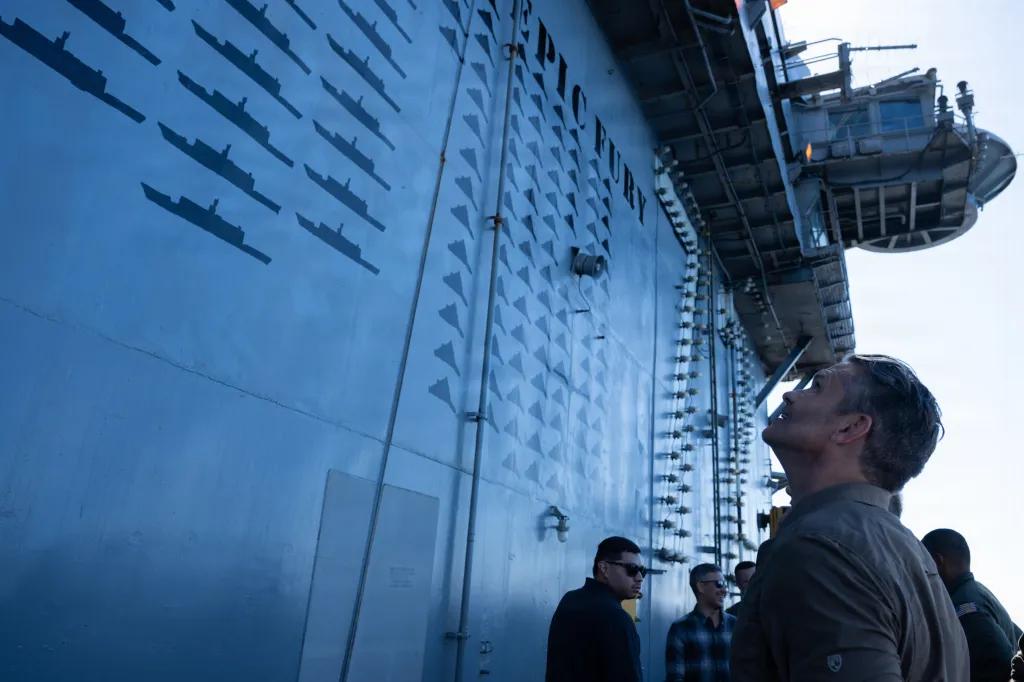










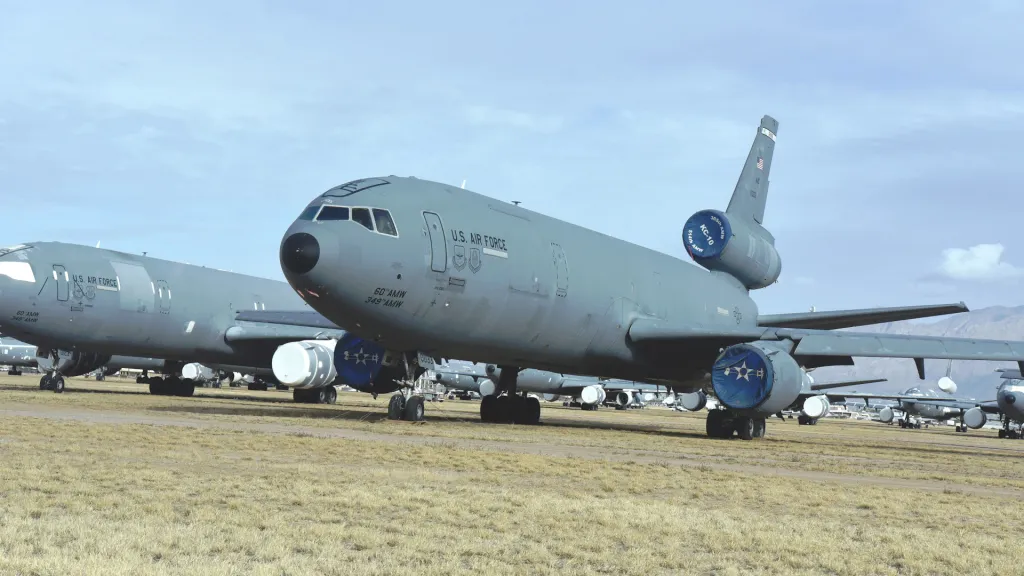




![Kenyan Ministry of Health officials screen arriving passengers at Jomo Kenyatta International Airport in Nairobi amid Ebola-related health precautions [AFP]](https://i0.wp.com/occasionaldigest.com/wp-content/uploads/2026/10/afp_6ac66094d7af-1791385748.jpg?w=640&ssl=1)
![A worker in protective gear handles sanitary basins at an Ebola treatment centre run by Médecins Sans Frontières in Butembo, eastern DRC [Gradel Muyisa Mumbere/Reuters]](https://i0.wp.com/occasionaldigest.com/wp-content/uploads/2026/10/reuters_6ab6e4f3-1790371059.jpg?w=640&ssl=1)


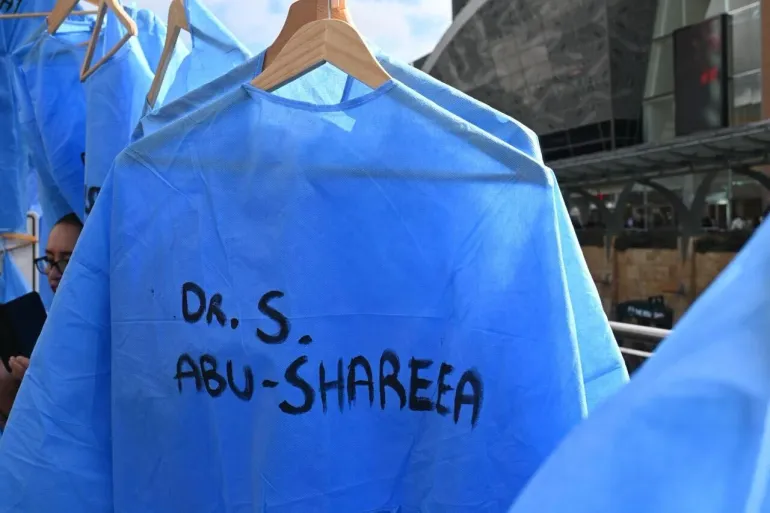
![Empty scrubs containing names of detained Palestinian healthcare workers hang outside the WMA summit [Courtesy of IMA OUT! campaign]](https://i0.wp.com/occasionaldigest.com/wp-content/uploads/2026/10/3c28041b-ba64-4a61-a62b-bb02868f9e39-1-1791663288.jpg?w=640&ssl=1)