Netanyahu

Trump warns Netanyahu: ‘You’ll be on your own’ if attacks on Iran continue | US-Israel war on Iran News

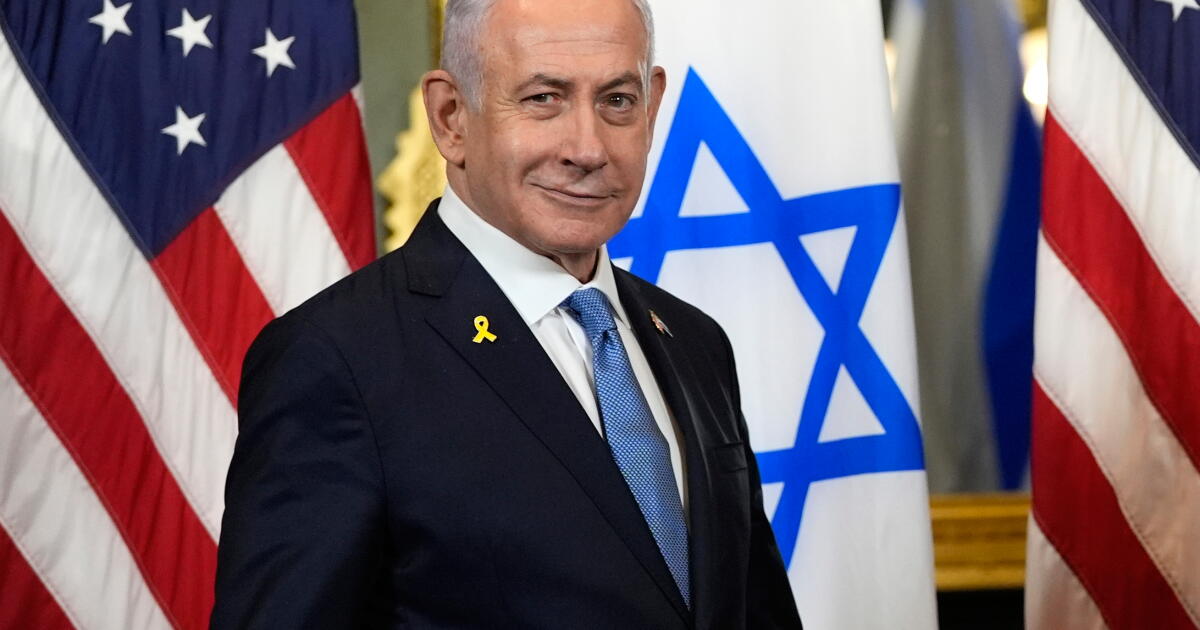
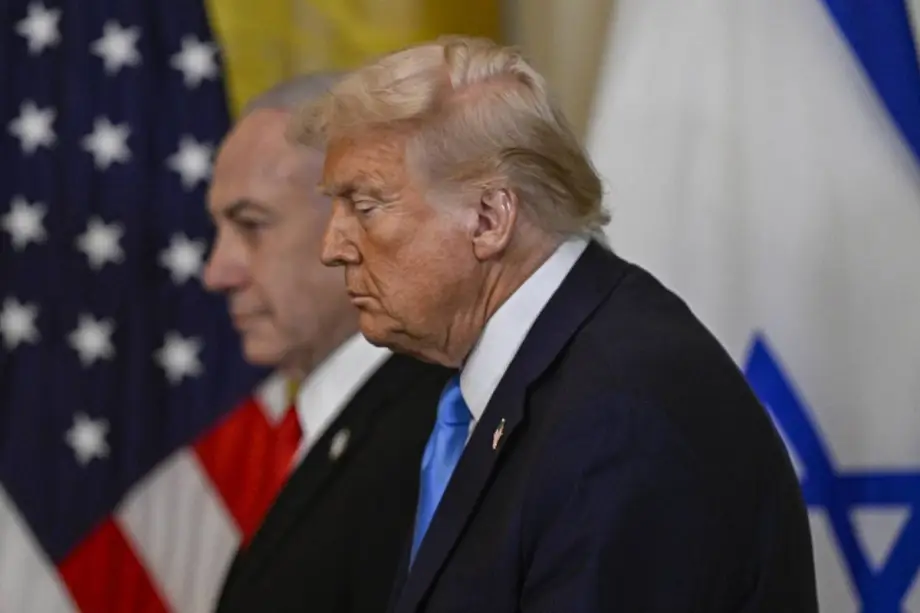
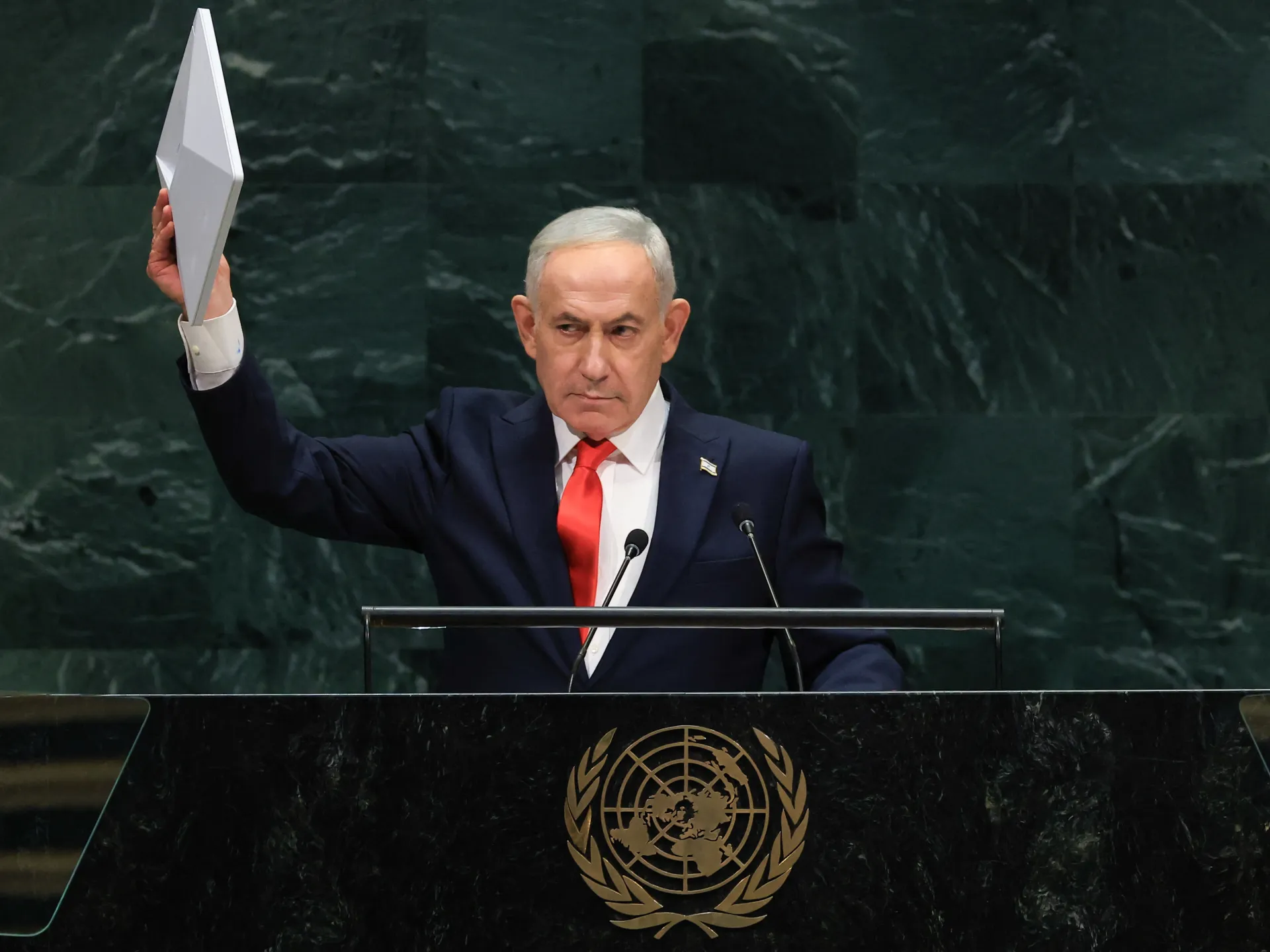
United States President Donald Trump has warned Israeli Prime Minister Benjamin Netanyahu that he might find himself fighting on his own if Israel returns to war with Iran.

The warning on Monday came as Israel and Iran said they would pause attacks following their most serious escalation since a ceasefire took effect in April.

Recommended Stories

list of 3 itemsend of list

Trump, who has reportedly grown increasingly exasperated with Netanyahu, demanded that both sides stop “shooting” in a post on his Truth Social platform and said that “final negotiations” towards peace would proceed “subject to ignorance or stupidity getting in its way”.

He also called Netanyahu and told him to stop the strikes, according to media reports.

In an interview with Axios, Trump said he had warned Netanyahu about the consequences of continuing the war.

“I said, ‘Bibi, you better be careful, or you will be on your own very soon’,” Trump said.

The flare-up began on Sunday, triggered by Israel’s deadly bombardment of Lebanon’s capital, Beirut. Iran – which has long said any peace deal with the US depends in part on an end to the fighting in Lebanon – responded with a wave of missiles at northern Israel.

Trump reportedly called Netanyahu on Sunday evening and asked him not to retaliate, but Israel launched attacks on Iran early on Monday.

Israeli forces struck Iranian air defence systems and a petrochemical plant, while Iran retaliated by hitting a similar facility in Haifa and targeting two Israeli airbases. Many of the missiles were intercepted over the occupied West Bank.

No deaths were reported on either side.

Israel plays down tensions

The exchanges complicated Trump’s push to end a war that the US and Israel launched on February 28. A ceasefire announced on April 8 paused all-out warfare. But flare-ups in the Gulf have continued.

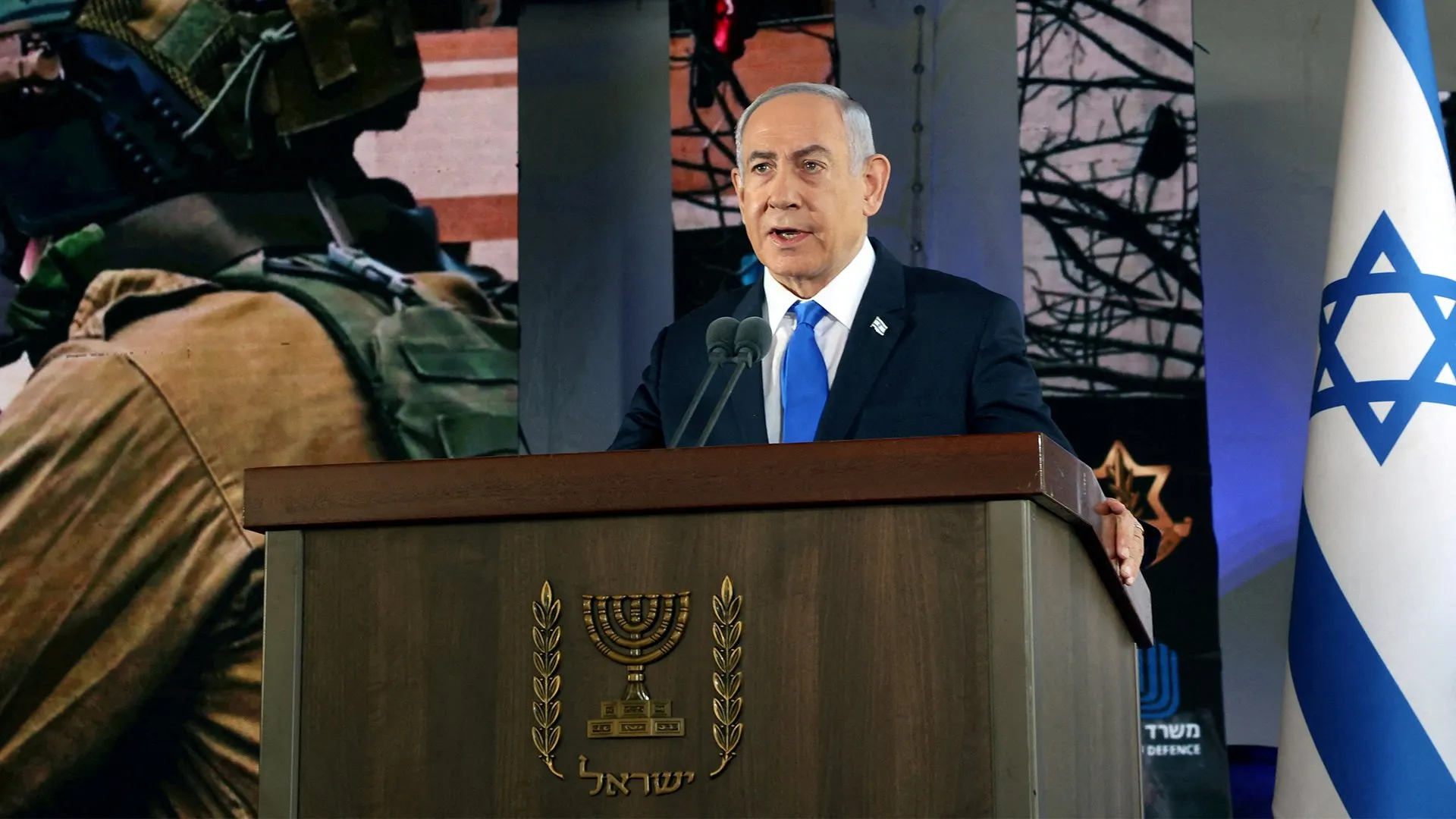
For his part, Netanyahu said in a televised statement that he had told Trump that “Israel has a full right to self-defence, and we are exercising it as required”.

“Right now, the fire at the front is contained, because after we hit the terrorist regime in Tehran, it stopped attacking us,” he said.

Netanyahu also warned that should Iran “make the mistake of resuming attacks against us, we will respond with full force”.

Israel’s ambassador to Washington, Yechiel Leiter, downplayed reports of tension between the US and Israeli leaders, telling Fox News that “sometimes, lovers have a spat”.

He said that while Netanyahu had “decided” to “lower the temperature” at Trump’s request, the US president understands “full well” that Israel cannot “absorb ballistic missiles into our country without responding.”

Iran’s Ministry of Foreign Affairs spokesperson, Esmaeil Baghaei, blamed Washington for the escalation.

“The US is directly responsible,” he said. “They are party to the ceasefire negotiations. Therefore, any act in violation of the ceasefire, be it through the interception of vessels [in the Strait of Hormuz], the targeting of southern Lebanon by Israel, or any other event, will cause the United States to be directly responsible for the escalation in the region.”

Iran’s First Vice President Mohammad Reza Aref said the operation against Israel, dubbed “Nasr” or victory, showcased “a new level of deterrence from mighty Iran” and that Israel had been “forced to beg once again” for a ceasefire.

Behind the scenes, diplomatic efforts continue.

Iranian President Masoud Pezeshkian posted on X that Tehran was still “at the negotiating table”, while Iran’s ambassador to the United Nations, Amir Saeid Iravani, said that Washington and Tehran, through Pakistan as an intermediary, are “presenting and exchanging views” towards an agreement.

Iravani told The Associated Press news agency he was hopeful that “very soon” the two sides would reach “a conclusion”.

Pakistan’s Prime Minister Shehbaz Sharif said efforts for a peaceful diplomatic solution was ongoing “earnestly and painstakingly” and called for restraint, “especially when the final objective is just about to be achieved”.

He also said Israel and Iran’s exchange of fire was a “reminder of the dangers associated with a tenuous ceasefire and the unbearable consequences it may lead to”.

Attacks on Lebanon continue

The escalation on Monday also drew in Yemen’s Houthi rebels.

The group fired missiles at Israel early in the morning and declared a complete ban on Israeli maritime navigation in the Red Sea, warning that all Israeli movements would be considered “legitimate military targets”.

Later on Monday, air raid sirens sounded in the Israeli port city of Eilat, with the military saying a suspected aerial target was launched from Yemen.

Violence has also continued in southern Lebanon.

An Israeli strike killed five people in the city of Tyre, while another, in the Nabatieh district, left seven dead. A third strike in Marwanieh killed two people, the Lebanese Ministry of Health said.

Phyllis Bennis, a fellow at the Institute for Policy Studies, said Trump was trying to give an impression that he was tougher on Israel than he actually is.

“The words could be significant if they were matched by actions,” she told Al Jazeera.

“As long as they’re sending billions of dollars directly to the Israeli military, and as long as they’re protecting Israel from being held accountable in the International Court of Justice or the International Criminal Court, as long as those actions don’t change, the words just don’t mean very much,” she added.

Source link

Trump acknowledges calling Netanyahu ‘crazy’ and says Israel is complicating peace talks with Iran

President Trump acknowledged criticizing Israeli Prime Minister Benjamin Netanyahu as “crazy” in a phone call that involved expletives, saying he was “a little bit perturbed” that Israel’s fighting with Hezbollah militants in Lebanon was holding back peace talks with Iran.

But even as the president conceded the tensions in an interview released Wednesday, he insisted that his relationship with Netanyahu was solid and that they connected, in part, because they are both “wartime” leaders.

“We’ve worked very well together. I like Bibi a lot. And I work very well with him,” Trump told the New York Post’s “Pod Force One.”

In an interview on the American business-news channel CNBC, Netanyahu responded that he and Trump sometimes have “tactical disagreements” but have “common goals” and “agree on the main things.”

“He respects me. I respect him. We always find a way to work out our differences,” the prime minister said.

The president’s comments about the Monday call offered a sign of the growing pressure he faces to resolve the Iran war as higher energy prices and economic uncertainty threaten Republican prospects in the midterm elections and hamper global commerce.

Talks have dragged on for weeks as mediators seek to extend a fragile ceasefire into a more enduring truce. The negotiations are further strained by Israel’s broadening war with the Iranian-backed militia group in Lebanon. The conflicts have become increasingly intertwined as Iran insists that any potential truce in the war there must also quell the fighting in Lebanon.

Trump does not commit to timeline for ending Iran war

Trump remained noncommittal about a timeline for settling the Iran conflict, saying the Strait of Hormuz might stay blocked through the Labor Day holiday on Sept. 7. He has insisted that Iran stop any efforts that could lead to a nuclear weapon and that the strait be reopened for shipments of oil and natural gas.

“I don’t know. I mean, I think it could be [closed through Labor Day], but I think it’s unlikely. I think that we’ll have it. I think this will resolve itself fairly quickly,” Trump said.

Iran’s Supreme Leader Mojtaba Khamenei, who succeeded his late father, is “involved” in peace talks, Trump added.

“They have a lot of respect for him,” the president said in the interview.

Trump said that Khamenei is not doing well due to wounds sustained in an airstrike, but “they say he’s giving approval because that’s the way it has been for a long, long time.” Khamenei’s father was killed in an airstrike when the U.S. and Israel attacked Iran at the end of February.

Meanwhile in the Persian Gulf region, Kuwait briefly shut its main airport Wednesday after Iranian drones hit a passenger terminal building, killing one person and wounding dozens. It was the latest in the back-and-forth attacks by Tehran and Washington that have tested the ceasefire.

The strike again brought home the risks to residents and travelers in Gulf countries that had considered themselves relative safe havens before the war, now in its fourth month.

Path to a lasting ceasefire in Lebanon is obscured by new strikes

The path toward a lasting ceasefire between Israel and Hezbollah remained unclear as hostilities continued in Lebanon.

An Israeli strike Wednesday hit a car on a busy highway just south of Beirut, hours before the second day of talks between Lebanon and Israel in Washington were set to take place.

The strike in Khaldeh came without warning, and it was not immediately clear if the person targeted was killed.

Israel and Lebanon on Monday reached a U.S.-brokered agreement in which Israel would not strike Beirut’s southern suburbs and Hezbollah would end its attacks on northern Israel.

The agreement was made hours after Israel announced that it was going to launch strikes across the sprawling urban neighborhoods near the Lebanese capital in what would have been the most intense strikes since a nominal ceasefire went into effect on April 17.

The State Department said progress was made during the first day of talks on Tuesday. Lebanon hopes to widen the scope of the ceasefire so it becomes comprehensive across the country. Israel wants to disarm Hezbollah immediately before the Israeli military ends its operations in Lebanon and withdraws its troops from dozens of villages and towns.

Not long after the strike on Khaldeh, the Israeli military said it intercepted what it called a hostile aircraft coming from southern Lebanon, but it did not immediately blame Hezbollah. Hezbollah has not claimed a cross-border attack since the agreement.

Israeli military warning rattles coastal city

Israeli strikes over southern Lebanon continued, especially in and around the battered cities of Tyre and Nabatiyeh. Two overnight strikes near Tyre, a coastal city, killed four Syrians and two Palestinians.

Israel warned the Christian neighborhoods in Tyre that Hezbollah members were among them. Many Lebanese Shiite Muslims fled to those areas in recent days because they were spared from the aerial bombardment along the Mediterranean coast.

After the warning, the Lebanese army deployed to the Christian district of Tyre in an effort to prevent Israeli attacks there and to show that Hezbollah has no armed presence in the area.

Israel launched an invasion of southern Lebanon days after the latest war was sparked on March 2, when Iran-backed Hezbollah fired rockets toward northern Israel in solidarity with Iran. Israeli troops have pushed deeper into Lebanon over the past week, as Hezbollah continues to claim rocket and drone attacks.

The latest round of fighting between Israel and Hezbollah has killed 3,468 people in Lebanon and displaced 1.2 million people. According to Netanyahu’s office, at least 27 Israeli soldiers and a defense contractor have been killed in or near southern Lebanon. Two civilians have also been killed in northern Israel.

Strike on village kills most of a family

Many residents of southern Lebanon remained in villages near the hostilities or returned to areas where strikes occurred after evacuation warnings.

The Al-Abdallah family returned to their home in Marwanieyh, which they left because they thought the village was unsafe following earlier strikes. A day later, two rockets hit the home, bringing down the three-story building and killing six family members, said the brother of Hassan Al-Abdallah, who was killed.

Ahmed Al-Abdallah, 13, was thrown away from the building by the force of the blasts and was the only member of his family to survive. His uncle, Eissa Al-Abdallah, said the boy has two broken legs and shrapnel wounds all over his body.

“What good is talking now? They are gone, and nothing will bring them back,” the uncle told the Associated Press in a phone call Tuesday. “This land costs blood.”

Chehayeb, Boak and El Deeb write for the Associated Press. Boak reported from Washington.

Source link

Trump berated Netanyahu? Analysts question US-Israel feud rumours | US-Israel war on Iran News

In January 2024, the publication Axios reported that the United States president at the time, Joe Biden, was “running out of patience” with Israeli Prime Minister Benjamin Netanyahu.

Israel’s genocidal war on Gaza had been raging for months by that point, and Biden was facing public backlash over US support for the conflict.

Recommended Stories

list of 3 itemsend of list

The assault would continue for the rest of Biden’s term and bleed into the first 10 months of Donald Trump‘s second presidency.

Since then, media outlets have continued to publish anonymous accounts of rifts and “frustrating” calls between Trump and the Israeli prime minister. But US support for its Middle East ally has never wavered.

Another anonymously sourced report about a furious, expletive-laden call between US and Israeli leaders came out this week, and it spread rapidly across international media.

Axios reported on Monday that Trump called Netanyahu “f***ing crazy” and berated him over Israel’s escalation in Lebanon.

Around the same time, an Israeli attack killed six people, including two children, in the southern Lebanese town of al-Marwaniyah.

Experts say that despite leaks of feuds and harsh words between US leaders and Netanyahu, policies are ultimately what matters, and they have changed very little.

Ryan Costello, the policy director at the National Iranian American Council Action (NIAC), said political observers have grown to “mock” reports of closed-door anger from US presidents against Netanyahu.

“What’s really important is what actually happens in practice,” Costello told Al Jazeera.

Two administrations, same reports

Though there are reports of Trump giving Netanyahu a dressing-down, Isabelle Hayslip, an advocacy manager at the US-based rights group DAWN, said that US policy remains aligned with Israeli interests.

“Single-source reporting of Trump as a strongman who picks up the phone and yells at Netanyahu for undermining US policy is contradicted by the actual policy outcomes where Netanyahu gets exactly what he wants,” Hayslip told Al Jazeera.

“Trump has no final say over Israeli actions. Like his predecessors, the president has proved completely unable to prioritise American interests, instead catering to Israel’s expansionist whims.”

The latest report comes as Trump faces increasing pressure from his Democratic rivals and segments of his base over his handling of the war on Iran, which he launched jointly with Netanyahu on February 28.

The conflict, which saw Iran close the Strait of Hormuz, has sent gasoline prices soaring in the US and fuelled inflation.

Critics have accused Trump of allowing Israel to drag the US into a war that does not advance Washington’s priorities.

With negotiations to end the war stagnating, Israel’s escalation in Lebanon and its threat to bomb Beirut risks derailing the fragile truce that came into effect in April.

Iranian officials have suggested that they cut off contact with the US over the Israeli attacks in Lebanon.

Before the Axios report, Trump announced he had spoken to Netanyahu and an unidentified Hezbollah representative, and both sides agreed that “all shooting will stop”.

But Netanyahu was quick to assert that the Israeli military “will continue to operate as planned in southern Lebanon”, where it is deepening its invasion and turning entire towns into rubble.

Advocates say Israeli atrocities in Lebanon and across the region could not have happened without US backing.

Since the start of Israel’s genocidal war on Gaza in October 2023, the US has provided Israel with nearly $25bn in military aid, helped fend off retaliatory Iranian attacks against the country and vetoed several ceasefire resolutions at the United Nations Security Council.

Nonetheless, anonymous accounts that the US president is angry at Netanyahu have become a regular feature in the media.

Such reports are attributed to US officials, but it is unclear how leaks with a similar message on the same topic have continued across two administrations from different political parties.

‘Moderating the anger’

Publicly, aides of both Biden and Trump have largely refrained from criticising Israel.

Trump has regularly praised the Israeli prime minister, arguing on more than one occasion that Israel would have ceased to exist without Netanyahu’s leadership.

In December, the US president also called the Israeli prime minister a “hero” during a meeting in Florida.

“We’re with you, and we’ll continue to be with you,” Trump told Netanyahu.

Two weeks earlier, Axios reported that the White House had “scolded” Netanyahu over Israel’s ceasefire violations in Gaza.

“The White House message to Netanyahu was: ‘If you want to ruin your reputation and show that you don’t abide by agreements, be our guest, but we won’t allow you to ruin President Trump’s reputation after he brokered the deal in Gaza,” the publication quoted a US official as saying.

Few people know the exact content of high-level calls at the White House. Sometimes, top officials, including members of the National Security Council, sit in on conversations between the president and world leaders after briefings.

Negar Mortazavi, a senior fellow at the Center for International Policy, a research nonprofit, said the leak about the tense call between Trump and Netanyahu may be aimed at making Trump look tough on Israel to quell outrage over the war.

“It could be sort of a way of moderating the anger or the blame at the US for continuing this unpopular, illegal, unnecessary war,” Mortazavi told Al Jazeera.

She added that the message it sends is, “Look, we’re very angry at Israel. We yell at them. We call them names.”

But Mortazavi stressed that policy is more important than rhetoric: “Does that change the facts on the ground?”

Information war

For his part, Costello argued that the leak was likely directed at Iran.

“I see this one primarily as a signal to the Iranians that Trump is serious, and he wants to insulate what’s happening in Lebanon and Israel’s attacks from the Iran negotiations,” Costello said.

“It remains to be seen the extent to which that excoriation has actually led to a change in Israel’s policies, and I think there is a strong incentive for continued defiance from Netanyahu.”

Axios, meanwhile, has defended its coverage.

“We stand by our reporting, which by the way noted ‘Trump and Netanyahu have had several tense calls in the past but have still coordinated closely on Iran and other issues,’” Jake Wilkins, a spokesperson for the publication, told Al Jazeera in an email.

Mortazavi warned that all sides of the war on Iran are trying to influence public perceptions of the conflict.

She pointed to recent reports that Iranian President Masoud Pezeshkian had resigned, a rumour that was promptly denied by his office.

“This is a very hybrid war. It’s a war on the battlefield. It’s an intelligence war. It’s a war of narratives,” Mortazavi told Al Jazeera. “And then there’s also an information war, which includes disinformation, half-truths and strategic leaks.”

Source link

Netanyahu says Israeli forces have crossed Lebanon’s Litani River | Israel attacks Lebanon

NewsFeed

Israeli Prime Minister Benjamin Netanyahu said Israeli forces had crossed the Litani River in southern Lebanon and were operating in Beirut and the Bekaa Valley, in what he described as a “tactical victory”. This comes after Netanyahu said he ordered the Israeli military to take control of 70% of the Gaza Strip.

Source link

Israel’s Netanyahu directs army to seize 70 percent of Gaza Strip | Israel-Palestine conflict News

The Israeli army has already expanded its control of Gaza by 11 percent over the ‘Yellow Line’, beyond the terms of the ‘ceasefire’.

Prime Minister Benjamin Netanyahu has instructed the Israeli army to expand its control of the Gaza Strip to 70 percent, according to remarks aired by Israeli media.

“At this point, we are fully in control of 60 percent of the territory of the Gaza Strip … and my directive is to get to … 70 percent,” Netanyahu said in footage recorded by Channel 12 and aired on Thursday.

Recommended Stories

list of 3 itemsend of list

When someone in the audience shouted that Israel should take the entire besieged enclave, the prime minister said “we are going in order”, according to The Times of Israel. “First 70 percent,” he said without disputing that a complete takeover could take place. “We’ll start with that.”

The Israeli army had in mid-March quietly sent maps to aid organisations showing it had already expanded its control to about 11 percent beyond the so-called “Yellow Line” demarcating areas of the enclave occupied by Israeli troops. That line was agreed in a United States-brokered “ceasefire” in October 2025. That meant it controlled 64 percent of the Palestinian territory, instead of 53 percent.

Due to the Israeli army occupation, Palestinians cannot access about two-thirds of Gaza. A further seizure of the territory would force two million of them, already living in disastrous conditions, into an even smaller territory after enduring two years of genocidal war.

Despite the nominal truce reached last year, Israeli bombing in Gaza continues with near-daily attacks. An Al Jazeera tally from October to April counted at least 2,400 Israeli violations. Earlier on Thursday, health authorities said an Israeli air raid killed at least 10 people, including four children, and wounded 20 others.

According to the United Nations Office for Humanitarian Affairs’ (OCHA) latest report, the humanitarian situation for civilians in Gaza remains critical, with displaced families living in overcrowded tents, schools or damaged structures. Clean water is scarce, and poor waste collection is increasing health risks, including the spread of rats and insects. Many neighbourhoods across Gaza are also still dangerous, with frequent air strikes, shelling and shootings happening in or near residential areas, the report said.

Last week, the high representative overseeing the US-founded Board of Peace for Gaza, Nickolay Mladenov, warned that the deteriorating status quo in the enclave risks becoming “permanent”.  Speaking to the UN Security Council, he urged the international body to use “every means at its disposal” to press Hamas to disarm and to push Israel to uphold its commitment under the October ceasefire, pointing to its continued killings and restrictions on humanitarian flow.

The war that Israel launched following the October 7, 2023, attacks on southern Israel by Hamas and other armed Palestinian groups has killed more than 72,775 Palestinians. The Israeli military continues to maintain a strict security regime, and many hundreds more have been killed in the past seven months. Conflict monitors warn that since the US-Israel war on Iran started in February, Israeli bombardment of Gaza has accelerated.

Source link

Israeli forces strike Lebanon as Netanyahu vows to intensify attacks

May 25 (UPI) — Israeli forces launched a renewed wave of strikes targeting Hezbollah on Monday as Prime Minister Benjamin Netanyahu vowed to intensify attacks against the Iran-backed militia.

The strikes came as Israel and Lebanon have been engaged in U.S.-mediated talks, the first in decades between the two nations, aimed at ending hostilities between Israel and Hezbollah. The attacks were expected to further strain the already frayed negotiations.

Israeli warplanes launched more than 85 munitions, striking more than 70 sites across Lebanon, including about 10 Hezbollah headquarters and weapons storage facilities in Tyre, located in southwestern Lebanon on the Mediterranean.

Infrastructure used by Hezbollah to attack Israel was among the targets struck, the IAF said in a statement, adding the Israeli military “eliminated” alleged motorcycle-riding Hezbollah operatives in southern Lebanon where IDF forces were operating.

The IDF said earlier that it had hit sites in the northeastern Beqaa Valley and several other areas in Lebanon, though it was not clear if that was part of a separate operation.

Netanyahu vowed in a video statement on Instagram to intensify strikes targeting the Iran-backed militia, stating that they were in response to Hezbollah firing fiber-optic drones over the last few weeks at northern Israel.

“We are at war. We are not taking our foot off the gas — on the contrary. I said to press the gas in Lebanon. We will strike them,” he said.

In a sign of concern over potential Hezbollah retaliatory strikes, the IDF issued new, tightened restrictions for northern Israel residents on Tuesday, capping outdoor gathering limits from 200 to 50 people and indoors from 600 to 200.

Hezbollah initially attacked Israel a day after the Israel-Hamas war began on Oct. 7, 2023. The conflict halted 13 months later with a fragile cease-fire that was never fully observed.

In early March, Israel launched renewed attacks on Lebanon, involving ground troops. In April, a cease-fire was announced in the larger Iran war, with Israel claiming it did not apply to Lebanon, while Lebanon and Iran said it did.

In mid-April, amid the confusion, Israel and Lebanon held their first diplomatic talks since 1993.


Source link

Israel’s ‘two-tier’ policing and the crime epidemic in Palestinian towns | Benjamin Netanyahu News

Addressing the cameras following reports of spiralling youth violence, including the killing of the 21-year-old former Israeli soldier Yemanu Binyamin Zalka last week, Israel’s National Security Minister Itamar Ben-Gvir was clear.

“This will be a total war,” he said, announcing a national operation to target a surge in youth violence. “We will restore security to the streets and calm to parents. Anyone who harms Israeli civilians will face the strong hand of the Israel Police and pay a heavy price.”

Recommended Stories

list of 4 itemsend of list

The response was sharp, aligned itself with the victim, and promised a solution.

That, critics say, is a sharp contrast to Ben-Gvir’s response – or lack of one – to the ongoing epidemic of violence in Israeli towns and villages populated by Palestinians, which has so far led to the deaths of almost 100 people and, according to Israel’s own finance ministry, costs the country up to $6.7bn a year.

Allegations of two-tier policing, to the detriment of what Israelis refer to as the “Arab sector”, have dogged Israel’s police for decades. But the situation has gotten worse under the current administration of Prime Minister Benjamin Netanyahu, which has been in power since the end of 2022, and Ben-Gvir, a far-right politician who is in charge of the police.

The statistics since Ben-Gvir came into office back up the narrative that the crime wave in Palestinian communities has gotten significantly worse. The Israeli newspaper Haaretz reported that the murder rate in Israel’s Palestinian communities increased from 4.9 per 100,000 in 2020, to 11 per 100,000, on par with the murder rate in Sudan and Iraq.

In contrast, the murder rate in Israel’s Jewish society stood at approximately 0.6 per 100,000.

That increase can not totally be attributed to the current government – Netanyahu himself was prime minister in 2020, when the murder rate was lower. But critics argue that the introduction into government of figures like Ben-Gvir and Finance Minister Bezalel Smotrich, who they say are openly disdainful of Palestinians, has contributed to the sharp uptick in violence.

Analysts and experts who spoke to Al Jazeera had little doubt over the Netanyahu government’s culpability in the increased murder rate.

“They really don’t mind that Palestinians are killing each other, as they’ve been left to do for years,” lawmaker Aida Touma-Suleiman, a Palestinian member of the Hadash party and a longstanding critic of the lack of policing in Palestinian communities in Israel, said.

Israel's far-right National Security Minister Itamar Ben-Gvir celebrates after Israel's parliament passed a law on Monday making the death penalty a default sentence for Palestinians convicted in military courts of deadly attacks, at the Knesset, Israel’s parliament in Jerusalem, March 30, 2026 REUTERS/Oren Ben Hakoon ISRAEL OUT. NO COMMERCIAL OR EDITORIAL SALES IN ISRAEL
Israel’s far-right National Security Minister Itamar Ben-Gvir celebrates after Israel’s parliament passed a law making the death penalty a default sentence for Palestinians convicted in military courts of deadly attacks [Oren Ben Hakoon/Reuters]

“It would never occur to the police that they should provide a service to Arab neighbourhoods,” she said of the lack of physical police presence within Palestinian communities. “It’s about enforcement. It’s hostile.”

While police stations are standard in Israel’s Jewish-majority areas, there are only about 10 in Palestinian-majority areas.

Among the decisions that have most angered Palestinian advocacy groups in Israel was the government’s December approval of a $68.5m cut to an economic development programme for Palestinian communities in Israel, in order to fund more policing in the communities.

Critics agreed that more funding was needed for the police, but bemoaned that the money was coming from a fund designed to address the root causes of criminality by addressing housing and economic development, areas where Palestinian communities are notoriously underfunded in comparison to Jewish ones.

Hardwired poverty

Palestinian citizens of Israel make up around 21 percent of the country’s population. Disadvantaged economically, they are the descendants of Palestinians who did not flee after the 1948 establishment of Israel – an event they know as the Nakba, when an estimated 750,000 Palestinians were ethnically cleansed and forced out.

Often concentrated in separate towns and villages from Israeli Jews, Palestinians frequently describe a reality of chronic underinvestment, with the presence of the state either limited or non-existent.

Joblessness has long been woven into their daily lives, analysts say, but the unemployment rate has worsened since Israel choked off access to the occupied West Bank, where many worked, after the Hamas-led October 7 attack on Israel and the start of Israel’s genocidal war on Gaza in 2023.

The most recent official date, based on 2024 figures, shows that 37.6 percent of Palestinian households in Israel live below the poverty line.

Members of Israel's Arab minority protest, calling on the Israeli government to tackle a wave of crime and killings from within Arab communities through effective law and order, in Sakhnin, northern Israel, January 22, 2026. REUTERS/Ammar Awad REFILE - CORRECTING YEAR FROM "2025" TO "2026".
Palestinian Israelis protest in January against the wave of crime and killings within Arab communities [Fie: Ammar Awad/Reuters]

Local criminal networks in Israel’s Palestinian towns and villages have grown in scale and influence in recent years, in some cases taking on the form of mafia-style organisations, untroubled, critics say, by the current government.

“There is a wide network of criminal gangs who exert control across Arab neighbourhoods,” said Daniel Bar-Tal, professor of social-political psychology at Tel Aviv University, adding that criminality and even murder were allowed to continue with the state’s own complicity.

“In part, the government just likes it. They get to say, ‘Look, this is Arab culture, this is Arab society. This is what they do.’ They also rely on the collaboration of the gangs to gather information on what’s going on in these communities,” he said, referring to numerous accounts of how friends who had reported criminal activity in their neighbourhoods were dismissed. “And lastly, it is because the police force is controlled by Ben-Gvir, a racist who actively enjoys dehumanising Arab society.”

Ben-Gvir has previously rejected accusations of racism and says he is only against those who harm Jews.

Policed by the enemy

From leveraging his position in government to urge on the genocide in Gaza, to defending officers under his charge filmed raping a Palestinian prisoner, Ben-Gvir’s actions have dismayed many of Israel’s self-styled liberals, just as they have shocked observers around the world.

However, following an uptick in crime in Israel, criticism of Ben-Gvir’s performance in his role as national security minister has begun to enter the domestic mainstream.

As well as more predictable opinion pieces in Israel’s liberal press, accusing the National Security Minister of being “busy on TikTok” while Zelka was killed, or concentrating his efforts on arresting professors wearing Palestinian flags on their kippahs while murder rates break records, there have also been criticisms from those closer to the establishment.

Earlier this month, Israel’s High Court intervened in a row between Ben-Gvir and Attorney General Gali Baharav-Miara, ordering the two to reach an accommodation after Baharav-Miara called for his ousting following what she claimed was his attempts to make political interventions in the police’s work.

“Nobody cares if Ben-Gvir’s good at his job,” political scientist Ori Goldberg said. “He’s there to punish Palestinians, even those in Israel. They’re punished through a lack of security, just as they’re punished through hostile planning, and a lack of healthcare punishes them. This is how the apartheid Israel always works.”

Source link

Netanyahu pardon on ice as Israeli president seeks plea deal

April 26 (UPI) — Israeli President Isaac Herzog decided to hold off on a pardon for the country’s prime minister, Benjamin Netanyahu, on charges of corruption, opting instead to attempt to negotiate a plea deal.

Netanyahu has been on trial for six years on charges of bribery, fraud and breach of trust across three separate cases but denies he has violated any laws, calling the charges a “witch hunt.”

Herzog has been under pressure from Netanyahu, his allies and U.S. President Donald Trump to issue the prime minister a pardon, though he has held off as opinions in Israel are relatively split on the trials, The New York Times and The Times of Israel reported.

“President Isaac Herzog sees reaching an agreement between the parties in Prime Minister Netanyahu’s cases as a proper and correct solution,” Herzog’s office said in a statement.

“The president believes that it is right to first, before discussing the pardon request itself, exhaust a process that could lead to the formation of an agreement between the parties, outside the walls of the court,” his office said.

Netanyahu became the first active Israeli prime minister to be put on trial in 2020, when he was charged with allegedly accepting cigars and champagne in exchange for political favors.

In the second case, he allegedly boosted circulation of an Israeli newspaper that offered him positive coverage and, in the third case, he allegedly promoted regulatory changes to benefit an telecommunications company in exchange for positive coverage by an online news organization.

Netanyahu in November requested the pardon from Herzog, whose office said at the time that it would consider the request and review it with justice officials because of the “significant implications” a pardon for such charges could have.

A plea agreement would require an admission of guilt, in addition to likely requiring Netanyahu to resign from office, which he has said is unacceptable and part of why he calls the trials an effort to drive him from office.

The trial “stirs divisions and deepens rifts,” he said in the request for a pardon, and said that “to repeal the threats [to Israel] and realize the opportunities, national unity is required.

Iranians rally after a ceasefire announcement at Enqhelab Square, in Tehran on April 8, 2026. Photo by Behnam Tofighi/UPI | License Photo

Source link