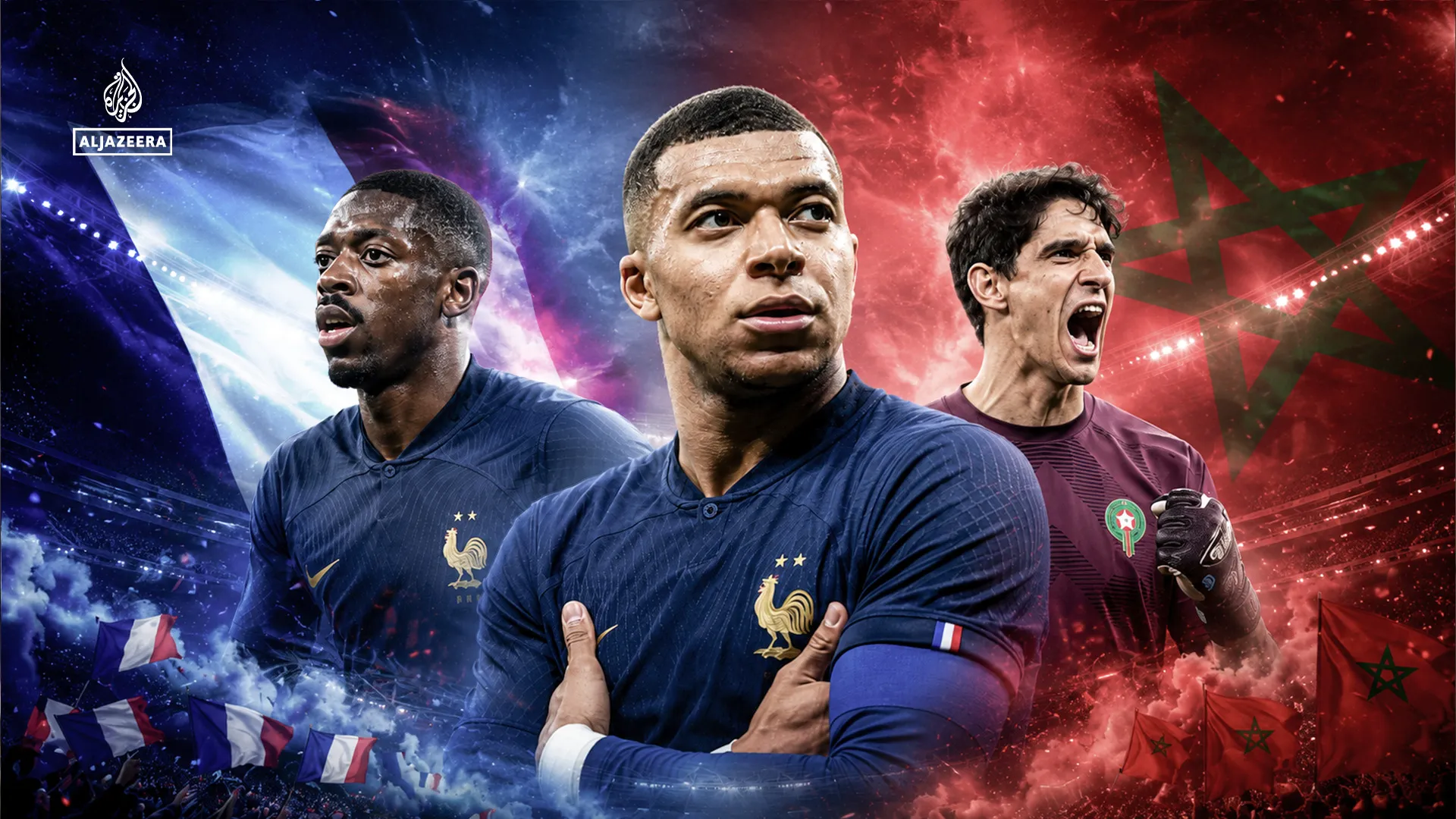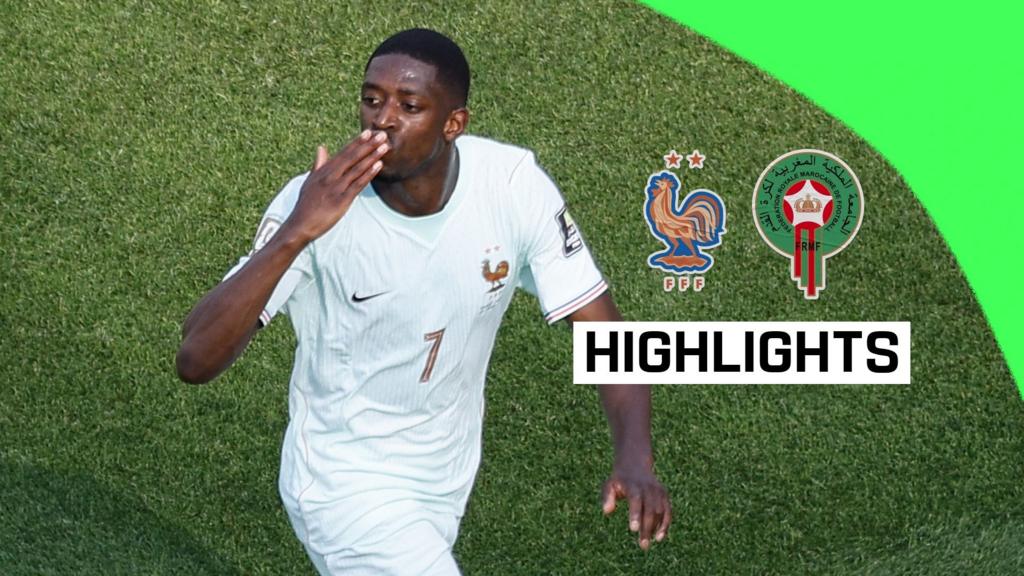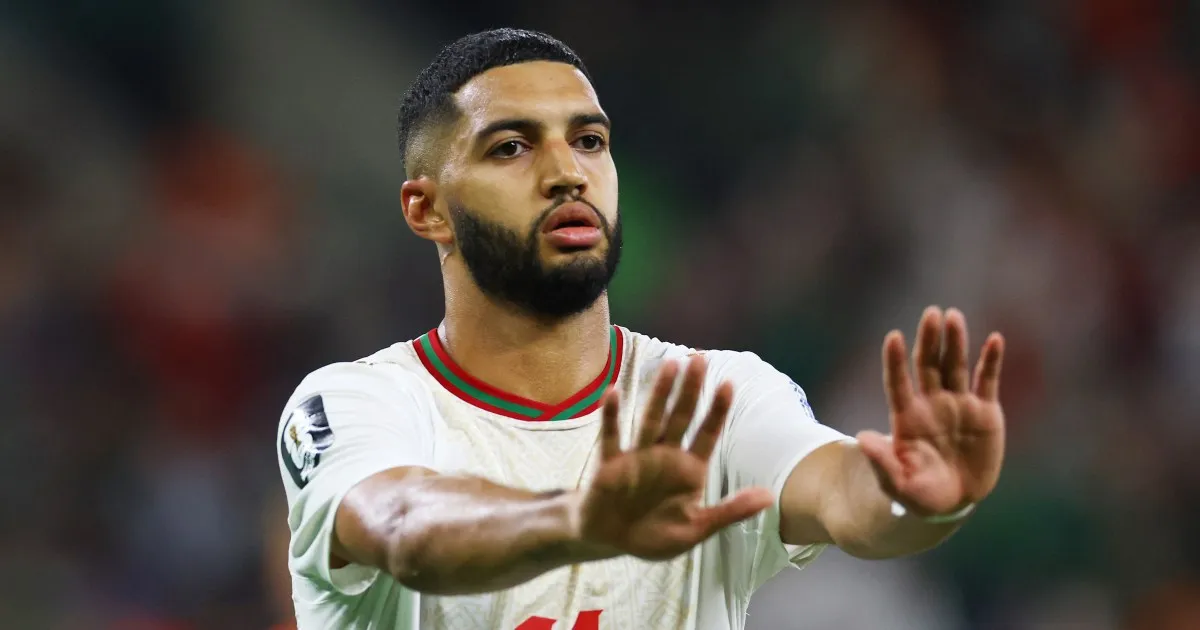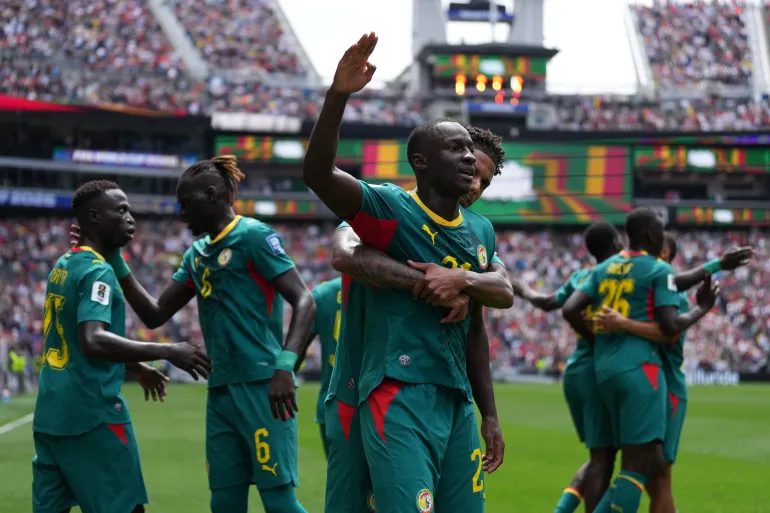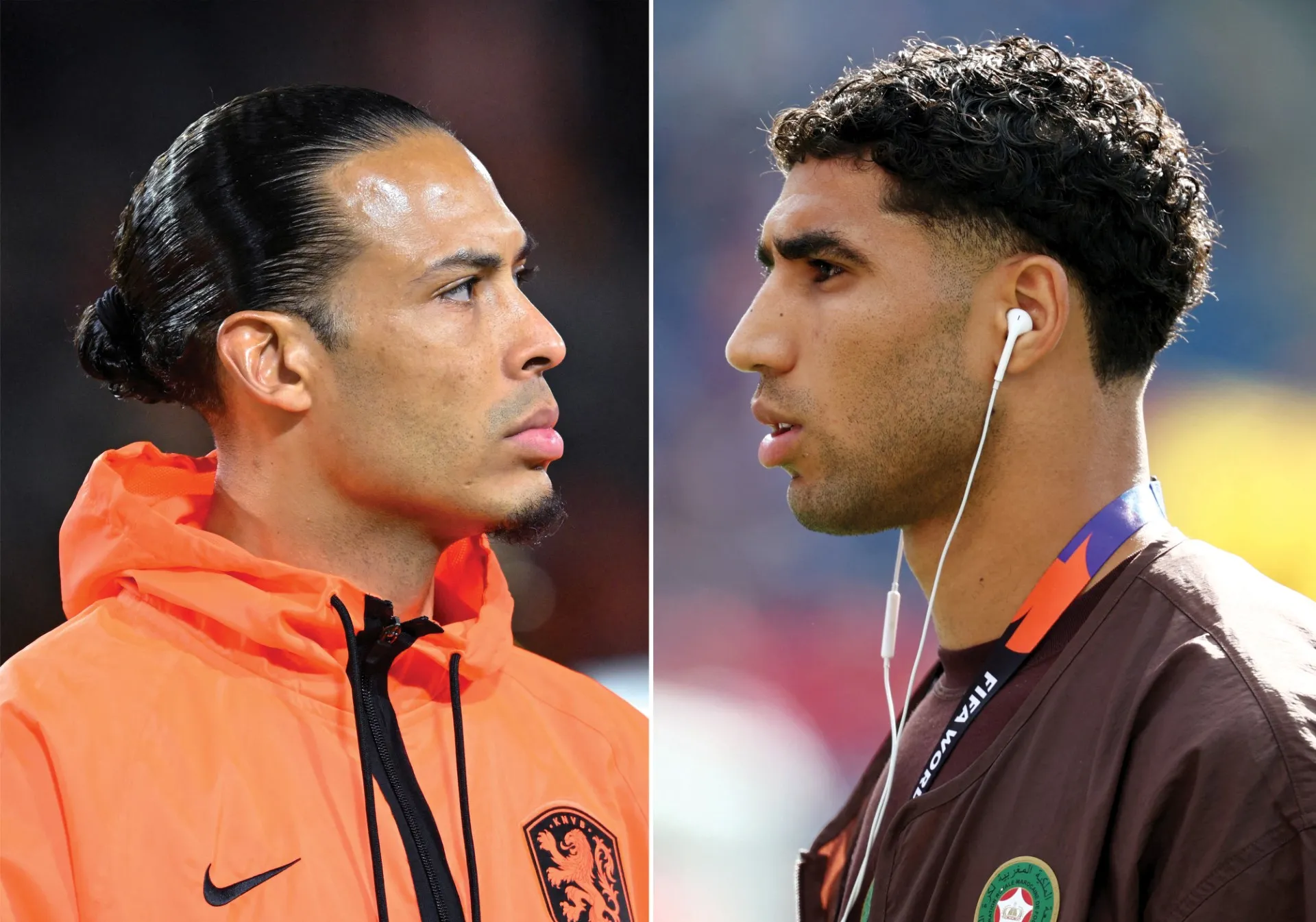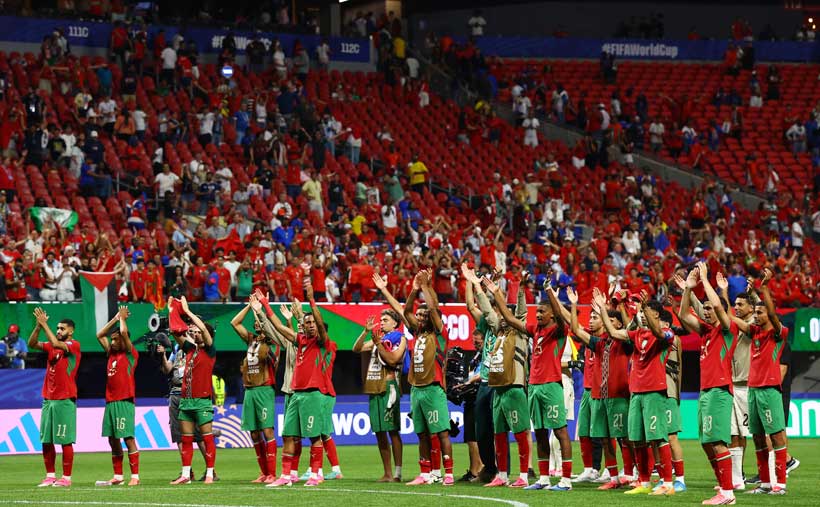
Ismael Saibari scored the fastest goal of the World Cup 2026 so far after just 71 seconds as Morocco beat Scotland 1-0 to close in on a place in the knockout rounds.
Saibari scored in Morocco’s opening 1-1 draw with Brazil last weekend, and his clinical finish with just over a minute gone settled a hard-fought, physical contest at Boston Stadium on Friday.
A crowd of 64,146 fans turned up at the venue in Massachusetts, United States.
The 25-year-old, who was born in Spain and raised in Belgium, is reportedly on the brink of a $63m transfer from Dutch champions PSV Eindhoven to Bayern Munich.
The quality of his strike past goalkeeper Angus Gunn showed why he is attracting such interest, and it was telling that Scotland lacked the same quality in the opposition box — that helps explain why Morocco are ranked fifth in the world, and Scotland 40th.
With four points from two games, Morocco are now primed to advance to the last 32 as they aim to at least match their historic run to the semifinals in Qatar in 2022.
However, it was a sobering evening for Scotland and their army of fans who have taken over Boston during this World Cup, as their team never really tested Morocco goalkeeper Yassine Bounou.
The laboured 1-0 win over Haiti in their opening game at the same stadium last weekend — which was their first victory at a World Cup since 1990 — gave them a platform to build on and reason to believe they can progress beyond the group stage at a World Cup for the very first time.
Another win here would have secured progress from Group C, but their chances of going further remain up in the air going into their next match against Brazil in Miami next Wednesday.
Moroccan coach Mohamed Ouahbi went with an unchanged starting lineup here following the Brazil clash, but opposite number Steve Clarke made three changes.
Clarke sought to reinforce his defence, meaning striker Lawrence Shankland dropped out as defender Kieran Tierney came into the side to make a back five.
But that was of little use as Morocco went ahead practically from kickoff.
The assist came from Real Madrid’s Brahim Diaz, and Grant Hanley played Saibari onside as the latter latched onto the ball over the top, controlled it and rifled high into the net.
Scotland’s Scott McTominay looks dejected after the match [David Butler II/Reuters]
Morocco, who defeated Scotland 3-0 when the teams met at the 1998 World Cup, threatened to overrun their opponents every time they got forward but were wasteful, with Bilal El Khannouss squandering a good chance on 36 minutes.
Scotland were as stodgy in attack as they have been for a long time, and it took until first-half stoppage time for them to create anything dangerous.
That was a cross whipped in from the left by skipper Andy Robertson that John McGinn was unable to make anything of, and the opening period ended without Bounou needing to make a save.
Morocco hit the woodwork five minutes into the second half as Saibari met a cutback by El Khannouss, and his attempt was deflected onto the bar by Jack Hendry.
Moments later, Gunn made a fine stop to keep out an El Khannouss header from a corner taken by Hakimi, who was regularly booed by the crowd.
Morocco nevertheless seemed content to see the game out and soak up what Scotland could throw at them.
Ryan Christie fired over on 64 minutes after being teed up by Scott McTominay, who hit the side-netting late on, but a Scotland goal proved elusive.
Morocco face Haiti in Atlanta on Wednesday, while Scotland face Brazil in Miami.
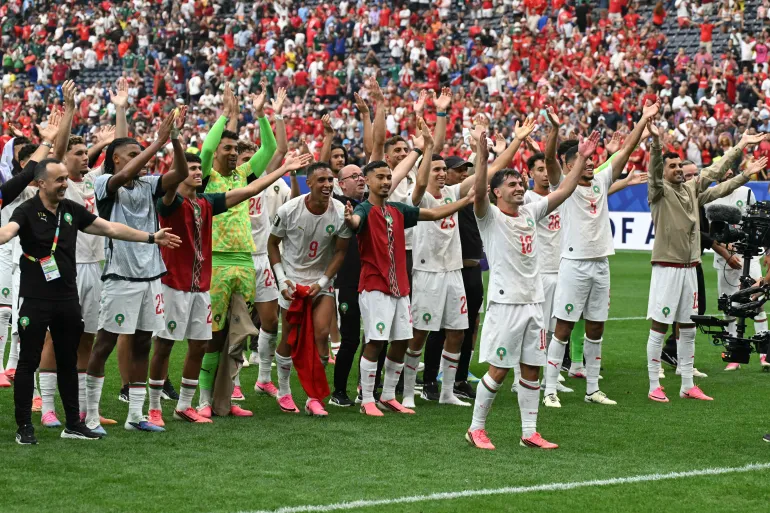
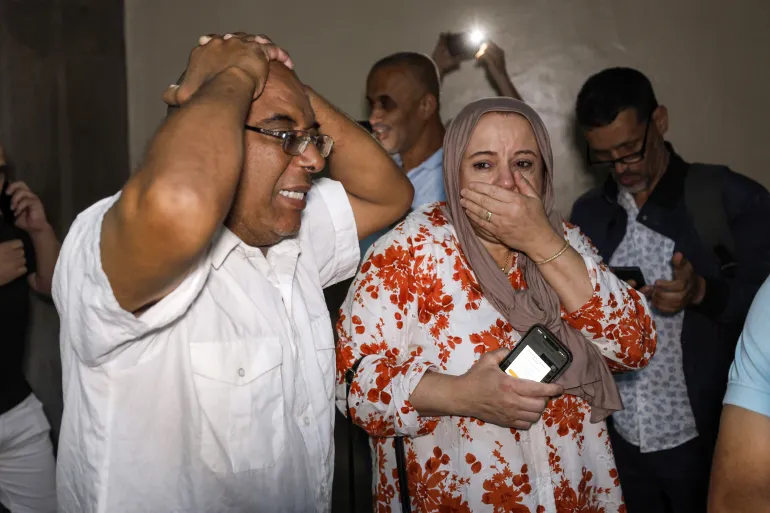
Morocco fans celebrate their team’s win at a watch party in New York [Caean Couto/Reuters]
Why was Achraf Hakimi booed?
Morocco’s captain Achraf Hakimi was named in the starting lineup hours after it was confirmed he must stand trial in France on rape charges.
Loud boos rang out from the Scottish fans when Hakimi’s name was read out and every time he touched the ball during the game.
The Paris Saint-Germain (PSG) defender said in a statement earlier in the day that he faced trial on a rape charge and welcomed the opportunity to put across his point of view.
Hakimi had appealed his referral to a criminal court.
French media reported earlier that the Versailles appeals court had rejected the appeal, paving the way for his trial in a criminal court at some point in the future.
“Today, a story that isn’t mine is being told at the expense of my family, my life, and above all, the truth. Sometimes I feel like I’ve become an easy target,” Hakimi wrote in a post on the social media platform X.
“I’ve been waiting for this trial since day one. And now I’m looking forward to it. Finally, I’ll be able to speak out.”
Achraf Hakimi celebrates Morocco’s win [Martin Meissner/AP Photo]
Scotland concede after 71 seconds and fall to a World Cup defeat against a classy Morocco, but their hopes of a historic knock-out place remain in their own hands with one group game to go.
She was stopped as she was about to board a plane to leave the country
A still image of the video in which she reportedly criticised local law enforcement as well as general driving standards
A woman has been arrested after reportedly posting a negative video about her holiday. Yass Naubelle was intercepted by border authorities on Saturday, June 13.
The influencer was placed in police custody just moments before boarding her flight back to her home country France. The 30-year-old content creator published a viral video that reportedly criticised local authorities – sparking hundreds of comments online.
The French-Algerian influencer reportedly slammed her holiday experience in Marrakech, Morocco. She allegedly criticised local law enforcement as well as general driving standards in the North African country.
Airport police at Marrakech Menara Airport executed the border stop as Yass prepared to clear security checkpoints for her return flight to France. Yass, founder of the Naubelle skincare line, was arrested under a national warrant after Moroccan authorities deemed her clip “defamatory towards Moroccan citizens” and “outraging to the forces of order”.
She was placed in police custody “to determine the real motivations behind these criminal acts”. State investigators confirmed she is being held on suspicion of publishing defamatory and insulting digital content directed toward citizens and undermining a public institution.
In the now-deleted video, filmed during her short break in Marrakech, she reportedly described the roads as chaotic. “I’ve never seen people drive like this. It’s super dangerous – cars, mopeds without helmets, with children on board, swerving suddenly,” she reportedly said.
Content cannot be displayed without consent
When comparing the driving standards to Algeria, she reportedly said: “It’s less bad than here”. She also accused some traffic police officers of stopping women “for nothing” in order to extract money, it is claimed.
The content quickly triggered a national alert, leading to her interception at the airport. Yass, who has more than 20,000 TikTok fans, currently remains in custody in Morocco. No formal charges or court appearance details have been publicly confirmed beyond her initial arrest.
Marrakech, a popular destination for European tourists including many from France, relies heavily on holidaymakers but has seen occasional controversies involving social media content. British travellers to Morocco are advised to remain cautious with social media posts about local conditions as the authorities have reportedly acted swiftly in similar cases.
SEATTLE — If a pregnant Nigerian woman had been allowed to board a plane 25 years ago, the U.S. team’s path through this summer’s World Cup may have unfolded much differently. Instead, a gate agent turned her away, insisting it wasn’t safe for her to fly from New York to London.
So Florence Balogun returned to Brooklyn, where she had been visiting relatives, and waited for her second son to be born. And when Folarin arrived a few weeks later, entering the world just hours before Independence Day dawned, he did so as an American citizen.
It was that quirk of fate that allowed Balogun, who lived just two months in the U.S., to represent the country on soccer’s biggest stage.
“I’m extremely proud my individual journey will come full circle now,” he said before the tournament started. “Especially the World Cup being here, the opportunity to represent my nation. It’s going to be something special for me.”
The first game certainly was, with Balogun scoring twice in the first half of a dominant 4-1 win over Paraguay, becoming the first American with multiple goals in a World Cup game in 96 years while introducing himself to a country that may have known his name, but not his unique talent.
“If you don’t know the type of player he is, you could see it today,” midfielder Weston McKennie said. “It’s the World Cup, everyone steps up to their maximum. In the past a lot of people maybe have not made him out to be a player like that.
“He showed everyone he’s willing to do the dirty work as well.”
Balogun once had his pick of countries to represent. His birth in Brooklyn made him eligible to play for the U.S., his longterm residency in London made him eligible to play for England and his parents’ nationality qualified him to play for Nigeria.
He picked the U.S.
And he’s not the only one on the American team who had a choice. Half the men on the World Cup roster — including Christian Pulisic, Gio Reyna and Malik Tillman, who each had a goal or an assist against Paraguay — are dual nationals, meaning they’re playing for the U.S. because they want to, not because they have to.
“You’re more American if you were not born over there because you had the choice to choose and you chose America,” Kenneth Dest, the Surinamese-American father of Dutch-born defender Sergiño Dest, said in an HBO Max documentary.
If America is a nation of immigrants, it only seems right that it should be represented in the World Cup by a team of immigrants. Like Tillman and Dest, who were born and raised in Europe, the sons of U.S. soldiers. Or forwards Tim Weah, the Brooklyn-born son of the former president of Liberia, and Alejandro Zendejas, who was born in Mexico but became a U.S. citizen at 13 after his father was naturalized.
U.S. forward Folarin Balogun, right, celebrates his goal with Sergiño Dest (2) and Chris Richards (3) against Paraguay.
(Robert Gauthier / Los Angeles Times)
The paternal great-grandmother of goalie Matt Turner fled religious persecution in Lithuania, with his Jewish ancestors changing their family name from Turnovski to Turner when they arrived at Ellis Island. The parents of midfielder Cristian Roldan came to the U.S. to escape civil wars in Central America, his father from Guatemala and his mother from El Salvador.
They didn’t wind up wearing the same uniform by accident, however. The recruitment of dual nationals dates to the 1980s under Hungarian-born manager Bob Gansler, who qualified the U.S. for the World Cup for the first time in 40 years with a team that included players born in Uruguay, Greece, Germany and El Salvador.
It really began to scale up about 15 years ago under Bob Bradley and his successor Jurgen Klinsmann. Gregg Berhalter then took it to another level, recruiting more than a dozen dual nationals — including Dest, Tillman, Balogun and Turner — in his five years as coach.
The practice isn’t limited to the USMNT. When France won the World Cup in 2018, 16 of the 23 players on the team came from families that recently immigrated from places like Zaire, Cameroon, Morocco, Angola, Congo or Algeria. More than half the players on Algeria’s team in this summer’s tournament were born in Europe while only seven men on Morocco’s roster are from Morocco.
Even Japan, famously homogeneous, has a Black goalkeeper who was born in Arkansas to a father from Ghana.
“Inclusion always pulls sport forward,” said Ronen Dorfan, a journalist and sports historian based in Budapest.
Still, Balogun’s journey is unusual — and not just because of the way it started.
He was two months old when he and his mother finally made it to London and eight years later he was good enough to enter Arsenal’s academy system. He made his junior international debut with England at 17, then three months later was invited to play four games for the U.S. U18 team.
But Balogun’s future appeared to be with England, especially after he scored seven times in 13 appearances with the U21 team, then followed that up with a career-high 21 goals for Reims in France’s Ligue 1 in 2022-23.
Yet neither performance earned him a call-up to a senior national team that was deep at forward.
So the U.S., which desperately needed a fast, technical, two-footed No. 9, pounced, getting Balogun to withdraw from England’s U21 training camp to make a secret visit to Florida. Once there, U.S. Soccer arranged for him to sit courtside at an NBA game, receive VIP passes to Universal Orlando, attend spring training with the Yankees and meet with a number of U.S. national team players.
With a schedule like this, his visit didn’t stay secret for long. After studying pictures Balogun had posted on social media, some U.S. fans determined he was in Orlando and began peppering his feeds with American flag emojis. Others found him at his hotel and urged him to commit to the U.S., a plea his parents, citing a quirk in fate, had been making for years.
You’re American, they argued. You were born there.
Six weeks later he did commit, with FIFA approving his request to switch allegiances from England to the U.S. A month after that, he scored his first senior international goal in the 2023 Nations League Finals and he’s never looked back. Because if Balogun, 24, felt overlooked in England, he’s felt looked after in the colonies.
“When I committed and throughout this whole cycle and the whole journey to me being at this point, I’ve always said the fans gave me so much motivation, showed me so much support,” said Balogun, who speaks in a pronounced London accent. “The most important thing has been to repay that.
“I just want to continue to show the fans I made the right decision. I want to continue to make the fans proud as well.”
He made a great start on that in his World Cup debut.
The 22-year-old scored two goals against Tunisia but had muted celebrations against the country of his father’s birth.
Published On 15 Jun 202615 Jun 2026
For a 22-year-old making his World Cup debut for Sweden, Yasin Ayari could only have dreamed of a better start to his introduction to the biggest showcase of football.
The fresh-faced midfielder, though, did not revel in the moment as a young World Cup debutant might and instead chose to hold both his hands up before falling onto the ground in sujoud (Muslim act of prostration).
The reason? The deep Tunisian connection that runs in his blood, and one that could have seen him play for the opposition as late as four years ago.
Yasin Ayari did not partake in wild celebrations after scoring his first goal of the match [Julio Cesar Aguilar/AFP]
Ayari is of North African heritage, with a Tunisian father and a Moroccan mother, but was born in Sweden. At 18 years of age, the promising footballer decided to represent the country of his own birth, rather than his parents’, and his father backed the decision.
“I wanted him to play for Sweden,” Azzouz Ayari told Swedish newspaper Aftonbladet, adding: “He should feel like he is giving back to the country that took care of him.”
Azzouz, who migrated to the Scandinavian country, revealed that his son was offered a place on the Tunisian side, but neither father nor son considered it an option.
Ayari went down on the ground to prostrate after scoring his first World Cup goal [Julio Cesar Aguilar/AFP]
Ayari began playing football at age seven on the youth side of his hometown club Rasunda, in Solna, before moving to Scandinavian football giants AIK, where he made his senior team debut in 2020.
The attacking midfielder was signed by English Premier League club Brighton & Hove Albion in 2023, making his Sweden national team debut in the same year.
Explaining his decision to wear the yellow and blue of Sweden instead of the red and white of Tunisia, Ayari said it was “only natural” to continue representing the country he had played for as a child.
When the World Cup 2026 draws were announced in December, the irony of playing against the country of his father’s heritage was not lost on Ayari.
“It was crazy that we ended up with them in our group,” he said.
The young talent was the standout player in Sweden’s thumping win over Tunisia, and he bookended their dominant performance with another scorching individual goal in the 95th minute.
Ayari found the ball at the edge of the Tunisian goal and sent it flying into the far corner to bag his second World Cup goal in his debut game.
This time, though, he did celebrate and soak in the applause of the jubilant Swedish crowd.
Ayari celebrates with Anthony Elanga and Mattias Svanberg after scoring his team’s fifth goal [Dolores Ochoa/AP]
Vinicius Junior scored a brilliant goal to dig Brazil out of trouble after Ismael Saibari had put Morocco ahead.
A moment of magic from Vinicius Junior salvaged Brazil a point against Morocco in New Jersey, as the five-time World Champions made a shaky start to the tournament.
Ismael Saibari ran through to give Morocco a 21st-minute lead with a clever scoop in the Group C opener on Saturday, but a solo effort from Vinicius ensured the points were shared in this much-anticipated group match.
Recommended Stories
list of 4 itemsend of list
Here are the biggest takeaways from the 1-1 draw at New York New Jersey Stadium.
Brazil coach Carlo Ancelotti at half time [Jeenah Moon/Reuters]
Brazil make a slow start
Brazil are chasing a record sixth World Cup title, 24 years after last lifting the trophy, but this performance suggests there is a lot of work to be done by Carlo Ancelotti’s side.
They showed signs of nerves during the early stages of the game and struggled to cope with a lively Morocco attack.
A fifth-placed finish in South American qualifying underlined the scale of the challenge facing Ancelotti, and this performance has done little to ease concerns about the quality of the Brazil squad.
A number of their players struggled to cope with the intensity of the Moroccan team, with midfielder Casemiro subbed off at half-time after a difficult opening 45 minutes in the heat.
The World Cup final is a long way off in New Jersey, but Brazil will have to vastly improve if they are to have any hope of making it.
Morocco look like the real deal
The Atlas Lions stunned the world of football in 2022 as they made it all the way to the semifinals in Qatar.
Four years later, Morocco have the chance to show that it was not a one-off run to the last four and they are the real deal.
Judging by their performance in New Jersey on Saturday, the North African nation are truly a force to be reckoned with.
They arrived in North America as African Cup of Nations champions, after being retrospectively awarded the title following a controversial final defeat to Senegal, and they continued their strong form with a commanding performance against Brazil, playing with a high level of confidence and plenty of attacking threat.
Morocco appear set for another strong tournament showing.
Vinicius Junior showed his importance to Brazil with a brilliant solo goal in the first half [Jewel Samad/AFP]
Vinicius shows his top quality
If Brazil are to make it to the latter stages of this tournament, they will rely heavily on Vinicius to provide goals and assists in North America.
The Real Madrid man has consistently scored for his club this season, including 16 goals in La Liga and five in the Champions League, and it now appears that he is bringing this form to the world stage.
With Brazil struggling in the first half, Vinicius received the ball from Bruno Guimaraes on the left side of the area before cutting back onto his right foot and hammering into the far corner past Yassine Bounou.
It was the kind of magic moment that he regularly produces for Real Madrid, and the Selecao will be looking for more individual brilliance in their coming games.
Neymar injury hangs over Brazil
The Neymar soap opera is set to dominate another tournament for Brazil, with the 34-year-old on the sidelines for yet another major tournament match.
Brazil’s all-time record goalscorer is still recovering from a calf injury, having not played for his country since 2023.
He was dramatically recalled to the national squad, despite not featuring in Ancelotti’s plans during the Italian’s year in charge, but he remains under scrutiny over his fitness and form following years of injury trouble and an underwhelming spell back at Santos.
It is unclear exactly when Neymar will be fit enough to return to first-team action, but judging by the media’s focus on him during Saturday’s match, this saga is set to dominate discussion around Brazil.
Brazil’s Neymar Jr reacts after the match in New Jersey [Caean Couto/Reuters]
Draw leaves Group C wide open
Brazil and Morocco are the clear heavyweights in their group, but Saturday’s draw in New Jersey has left Group C somewhat in the balance.
Scotland currently sit top of the table after a 1-0 victory over Haiti in Boston, and they will now be eyeing the chance to reach the knockout stages for the first time in their history.
Morocco and Brazil remain heavy favourites to finish in the top two automatic qualification spots, but Scotland know that any points in their final two group games will almost certainly book their spot in the round of 32.
The World Cup continues on Saturday, with Brazil beginning their campaign and three more group-stage matches taking place across North America.
Brazil take on Morocco in the day’s biggest match, while Qatar face Switzerland, Haiti meet Scotland and Australia play Turkiye as more teams get their tournaments under way.
Recommended Stories
list of 4 itemsend of list
Away from the football, there has been plenty to talk about. Donald Trump skipped the United States’ opener, former Canadian Prime Minister Justin Trudeau was at the US game instead of Canada’s, and Ghana midfielder Thomas Partey will miss his team’s first match after Canada denied his visa application.
In Peru, police made headlines after carrying out a drug raid dressed as World Cup mascots.
Here is what to know:
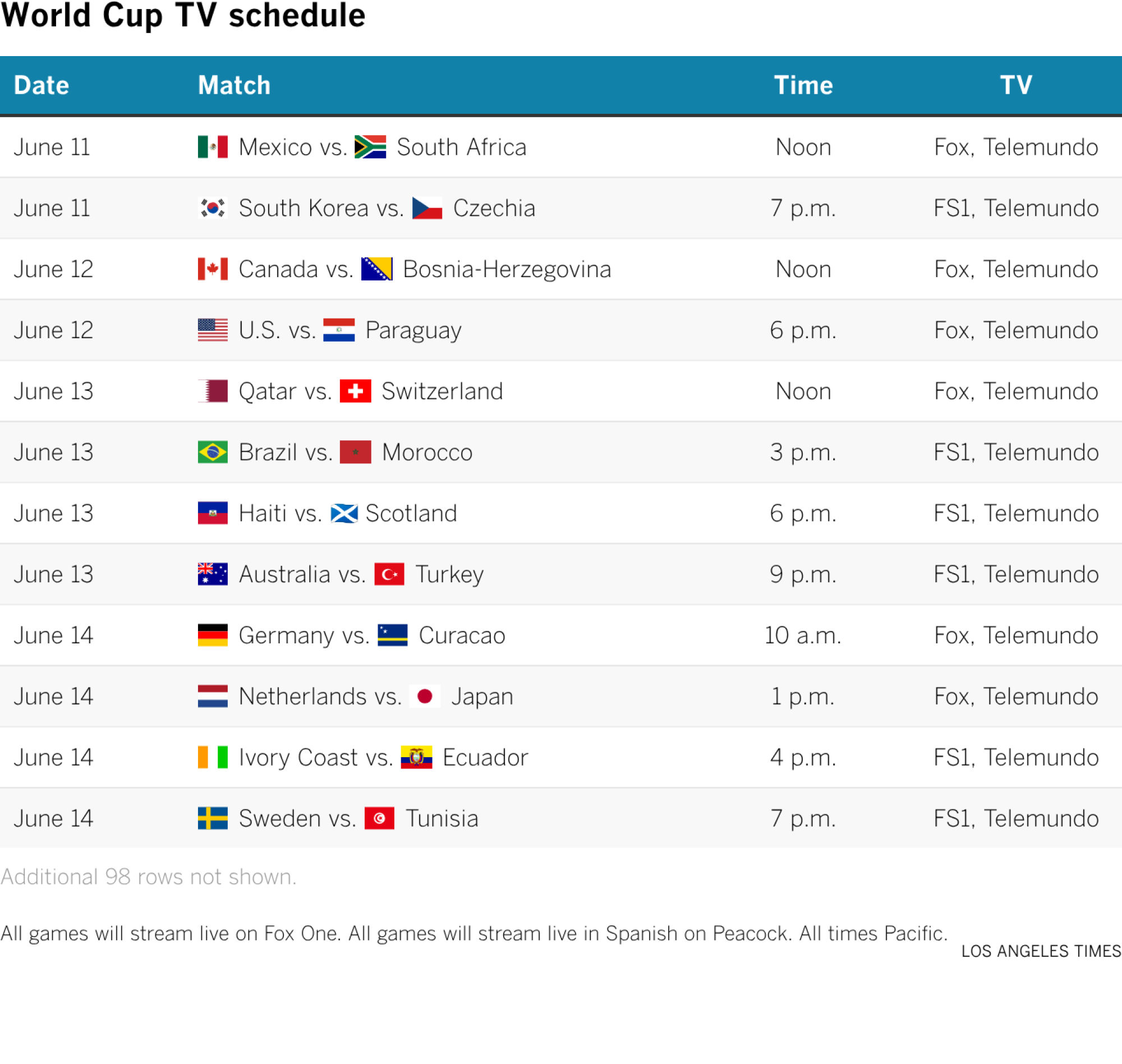
What’s the World Cup schedule on June 13?
Qatar take on Switzerland at BC Place in Vancouver, with kickoff scheduled for 12pm local time (19:00 GMT).
The day’s action concludes with Haiti meeting Scotland at AT&T Stadium in Arlington, Texas. Kickoff is set for 8pm local time (01:00 GMT on June 14).
Australia and Turkiye then get Group D under way at Lumen Field in Seattle, with kickoff at 9pm local time (04:00 GMT on June 14).
What do the predictions say for Brazil vs Morocco?
Brazil and Morocco have only faced each other once before at a World Cup, with Brazil winning their 1998 group-stage meeting. Morocco got their revenge in a 2-1 friendly win in 2023.
Brazil have won seven of their eight World Cup matches against African opponents, with their only defeat coming against Cameroon in 2022.
The five-time champions have not lifted the trophy since 2002. Since then, they have usually exited in the quarterfinals, apart from their run to the 2014 semifinals.
Opta’s 25,000 simulations give Brazil a 57.7 percent chance of winning. A draw happened in 23.5 percent of the projections, while Morocco won in 18.8 percent.
The winner could put themselves in a strong position to top Group C.
What do the predictions say for Qatar vs Switzerland?
Qatar and Switzerland have met only once before, with Qatar claiming a 1-0 friendly win in 2018 thanks to a late goal from Akram Afif. Afif is among nine players from that squad still in Qatar’s 2026 World Cup team, while Switzerland have seven survivors from that defeat, including Granit Xhaka and Remo Freuler.
Opta’s 25,000 simulations make Switzerland the clear favourites in this Group B clash, giving them a 76.0 percent chance of victory. Qatar won just 9.1 percent of the projections, while 14.9 percent ended in a draw.
A point would likely be considered a positive result for the Gulf side.
What do the predictions say for Australia vs Turkiye?
Australia and Turkiye have met only twice before, with Turkiye winning both friendlies in 2004. Turkiye have also won all four of their previous World Cup matches against Asian opponents.
Opta’s 10,000 simulations give Turkiye a 55.3 percent chance of victory, compared with 20.5 percent for Australia and 24.1 percent for a draw.
Neither side has a strong record in World Cup openers, however. Turkiye have lost both of their previous first matches, while Australia have lost five of their six opening games.
What do the predictions say for Haiti vs Scotland?
Haiti and Scotland have never faced each other before, making this one of several first-time matchups at the expanded 48-team World Cup. It will also be Haiti’s first-ever game against a team from the British Isles.
Opta’s 25,000 simulations make Scotland clear favourites, giving them a 59.0 percent chance of victory. Haiti won 19.2 percent of the projections, while 21.8 percent ended in a draw.
Haiti vs Scotland
What else is shaping the World Cup?
The football has only just started, but the World Cup is already making headlines away from the pitch, too.
Trump did not attend the US World Cup opener
The US president did not attend the US men’s national team’s World Cup opener against Paraguay in Los Angeles.
His absence drew attention because Trump has recently attended several high-profile sporting events, including Game 3 of the NBA Finals earlier this week. He is also expected to host a UFC event at the White House on Sunday.
A White House official said Trump instead plans to attend the World Cup final on July 19 at MetLife Stadium in East Rutherford, New Jersey.
The US president called into a USMNT team meeting with some words of support via Andrew Giuliani, the White House’s World Cup task force CEO.
Partey denied entry into Canada
Ghana midfielder Thomas Partey will miss his country’s World Cup opener against Panama after Canada denied his visa application while he awaits trial in the United Kingdom on multiple rape charges, which he denies.
FIFA confirmed on Friday that the 32-year-old would not be permitted to travel from Ghana’s base camp in Smithfield, Rhode Island, to Toronto for Wednesday’s match.
“His visa application has been refused by the Canadian government,” FIFA said in a statement.
“FIFA is not involved in the immigration processes of host countries, including the adjudication of visas. As with previous FIFA events, the host government ultimately determines who receives a visa and is admitted into the country.”
Trudeau attends the US’s World Cup
As Canada and the US kicked off their World Cup campaigns on the same day, former Canadian Prime Minister Justin Trudeau was in California rather than Toronto.
The 54-year-old did not attend Canada’s 1-1 draw with Bosnia and Herzegovina at BMO Field. Instead, he was at SoFi Stadium in Inglewood alongside pop singer Katy Perry, who performed during the pre-match opening ceremony before the US faced Paraguay.
Peruvian officers use World Cup mascot costumes in Lima drug bust
Peruvian police have gone viral after carrying out a drug raid in Lima dressed as World Cup mascots.
Video shared by police showed officers dressed as World Cup mascots breaking through a metal gate with a battering ram before entering the property.
Once inside, they arrested a suspected drug dealer and recovered weapons and bags of what authorities believe were narcotics.
The World Cup may be decided on the pitch, but another competition is already under way off it: Which host city has the best food?
In a report for Al Jazeera, Lou Browne travelled across North America to find out what fans can expect beyond the stadiums.
In Mexico City, taco vendors are hoping the tournament brings more customers. “Well, now the World Cup is coming, and we hope we’ll get customers,” a tortilla cook at El Califa de Leon told Al Jazeera. “I imagine there will be a lot of people, foreigners or locals.”
Philadelphia is proudly backing its famous Philly cheesesteak. Locals say visitors should learn how to order properly. “You want to tell them what kind of cheese you want,” Anthony Rossi, a cook at Geno’s Steaks, explained. “And you say if you want onions, which is ‘wit’ or ‘wit-out’ … Keep it simple.”
Across the border, Toronto is making the case for poutine, the Canadian dish of fries topped with gravy and cheese curds. “Poutine is the … not the best … dish, but poutine is from Canada,” said Lisa Deni, a French tourist.
In Kansas City, barbecue is a point of pride. “This is really good,” diner Camilla Thomas said. “We’ve been enjoying coming here. and bringing people from out of town here and giving them a little taste of Kansas City.”
And in Miami, locals insist the Cuban sandwich is a must-try. “The Cuban sandwich, croquetas, and cafecito are really the way to go,” said Daniel Figueredo, cofounder of Sanguich. “The Cuban sandwich really is the thing you have to have when you come to Miami.”
For fans travelling across North America this summer, the hardest choice may not be picking the World Cup winner, but deciding which host city serves the best food.
Previous World Cup appearances: 0 Player to watch: Mousa Tamari FIFA world ranking: 63
Jordan are appearing at the World Cup finals for the first time, with their Moroccan coach Jamal Sellami hoping that his players can emulate the heroics of The Atlas Lions four years ago.
Recommended Stories
list of 4 itemsend of list
“In big competitions, many teams can surprise. My country, Morocco, reached the semifinals in the last World Cup,” the Reuters news agency quoted him as saying during a training camp in Antalya, Turkiye, in late March.
“That gives us belief.”
While a run to the semifinals might be a little bit optimistic, Jordan are coming into the tournament on a good run of form.
The Middle East nation reached the final of the 2023 Asian Cup, losing to hosts Qatar, and also played Morocco in the final of the 2025 Arab Cup, agonisingly falling short in a 3-2 defeat after extra time.
Jordan also scored 32 goals in World Cup qualifying, marking their highest tally in a single qualification campaign. But eight of those goals were scored by Yazan Alnemat, who will miss this summer’s tournament due to injury.
Sellami takes Jordan into the big time
The Al-Nashama, or the “noble ones”, have developed into a significant force in Arab football since Sellami took over as coach in June 2024 and built on the work of his predecessor, compatriot Hussein Ammouta.
Sellami believes the team he has built can deliver a shock similar to Algeria beating Germany in 1982, Cameroon stunning reigning champions Argentina in 1990, and Senegal repeating the feat against holders France in 2002.
“These results open horizons of hope and ambition for the fans, so they can dream,” Sellami, who played for Morocco at the 1998 World Cup, told Arabic sports channel TFK.
“And we too have the right to dream and to strive to be a strong team and present ourselves well,” he added.
The 55-year-old former midfielder has built a well-structured, disciplined team that utilises their wealth of creative forward talent to hit opponents on the break with lightning-quick transitions.
Star striker misses out
While Jordan’s qualifying campaign gives them plenty of hope for this summer’s tournament, their team in North America will be missing a big part of what made them such a force in Asian qualifying.
Forward Yazan Alnemat contributed eight goals, but will miss the World Cup finals after suffering an ACL injury in the Arab Cup quarterfinals last December.
“Yazan is a player who cannot be replaced,” conceded Sellami. “But we will find a combination for the team that can still be dangerous to the opponent, and that also gives us balance in our defensive performance.”
Alnemat’s likely replacement, Ali Olwan, has recovered from an Achilles injury sufficiently to take his place in Sellami’s extended squad. He contributed nine goals in qualifying, highlighting Jordan’s depth in attacking options.
Mousa Tamari and Nizar al-Rashdan take part in a training session in preparation for the World Cup [Alaa Al Sukhni/Reuters]
‘Jordan’s Messi’ hopes to shine
Captain Mousa Tamari is one of Jordan’s biggest attacking threats and will be looking to torment defenders on the right wing.
The 28-year-old Rennes midfielder is the only Jordan player who competes in one of Europe’s top five leagues and has enjoyed a strong season in France, scoring seven goals and grabbing 11 assists in 36 appearances for the Ligue 1 outfit.
He’s also been a key player at international level, scoring 23 goals in 76 appearances for the Jordan national team.
If Jordan are to upset the odd’s at this summer’s World Cup, they will need to rely heavily on the man known as “Jordan’s Messi”.
How does Jordan’s group look?
Defending champions Argentina provide formidable opposition in Jordan’s final game in Group J, with the real Messi squaring up against his Jordanian counterpart.
Sellami’s side will face Austria in their opening match in San Francisco, with the European nation making their first appearance at the World Cup since 1998.
Jordan are the lowest-ranked team in their group, but perhaps their best opportunity of success will come against the second-lowest-ranked side, Algeria.
The African side recorded eight wins in World Cup qualifying and will look to Riyad Mahrez to provide goals and assists.
Jordan’s group stage match dates and kickoff times:
⚽ June 16: Austria v Jordan (San Francisco Bay Area, US), 9pm (04:00 GMT on June 17).
⚽ June 22: Jordan v Algeria (San Francisco Bay Area, US), 8pm (03:00 GMT on June 23).
⚽ June 27: Jordan v Argentina (Dallas, Texas, US), 9pm (02:00 GMT on June 28).
Al Jazeera’s prediction:
A fight for third in their group, but ultimately, qualification for the knockouts may be a stretch for Jordan.
Full squad
Goalkeepers: Yazeed Abulaila (Al-Hussein), Abdullah al-Fakhouri (Al-Wehdat), Noor Bani Attiah (Al-Faisaly).
Defenders: Abdallah Nasib (Al-Zawraa), Ehsan Haddad, Saed al-Rosan, Saleem Obaid (Al-Hussein), Yazan al-Arab (FC Seoul), Mohammad Abualnadi (Selangor), Husam Abu Dahab, Anas Banawi (Al-Faisaly), Mohannad Abu Taha (Al-Quwa Al-Jawiya), Mohammad Abu Hasheesh (Al-Karma).
Midfielders: Noor Al-Rawabdeh (Selangor), Nizar al-Rashdan (Qatar), Ibrahim Saadeh (Al-Karma), Rajaei Ayed, Mahmoud Al-Mardi (Al-Hussein), Amer Jamous (Al-Zawraa), Mohammad al-Dawoud (Al-Wehdat).
Forwards: Mousa Tamari (Rennes), Odeh al-Fakhouri (Pyramids), Mohammad Abu Zrayq (Raja Casablanca), Ali Azaizeh (Al-Shabab), Ibrahim Sabra (Lokomotiva Zagreb), Ali Olwan (Al-Sailiya).
WHEN it comes to date nights, one mum doesn’t just stick to dinner instead, she travels around the world.
Oliviyah Stevens and her partner Kyle have been to Italy, Morocco and Majorca after swapping dinner dates for holidays.
Sign up for the Travel newsletter
Thank you!
Oliviyah Stevens and her partner Kyle opt to travel for their datesCredit: Oliviyah StevensThe pair go on day trips to the likes of Majorca – flights are cheaper than a family dinnerCredit: Oliviyah Stevens
Oliviyah is a mum-of-five, with her oldest child being 14 and her youngest being one.
But she doesn’t let childcare come in the way of travelling, or love life, after discovering extreme day trips.
Oliviyah and her partner Kyle also go abroad every few months for what they call ‘date day’.
Oliviyah, who hails from Walthamstow, explained why she’s been swapping dates and family days out for travel.
Previous World Cup appearances: 6 Best performance: Fourth place (2022) First appearance: 1970 (Mexico) Top goal scorer: Youssef En-Nesyri (3) Most appearances: Achraf Hakimi, Hakim Ziyech (10) Player to watch: Brahim Diaz FIFA world ranking: 8
The FIFA World Cup begins on June 11. You can follow the action on Al Jazeera’s dedicated World Cup 2026 page with all the latest news, match build-up and live text commentary, and keep up to date with group standings, real-time match results and schedules.
Recommended Stories
list of 4 itemsend of list
Four years ago, the Morocco made history by becoming the first African and Arab team to reach the World Cup semifinals in Qatar, eliminating Spain and Portugal along the way, before narrowly losing to France.
They come into the 2026 edition again boasting a strong squad and hoping to replicate – or go even further – than their sensational 2022 run.
However, the Atlas Lions also find themselves in rather more chaotic circumstances this time around with a managerial departure less than three months out from the tournament, and bruised by a wild Africa Cup of Nations (AFCON) final that provoked a diplomatic row with Senegal.
AFCON hangover
The squad is still dealing with the fallout from one of the most incendiary episodes in African football history.
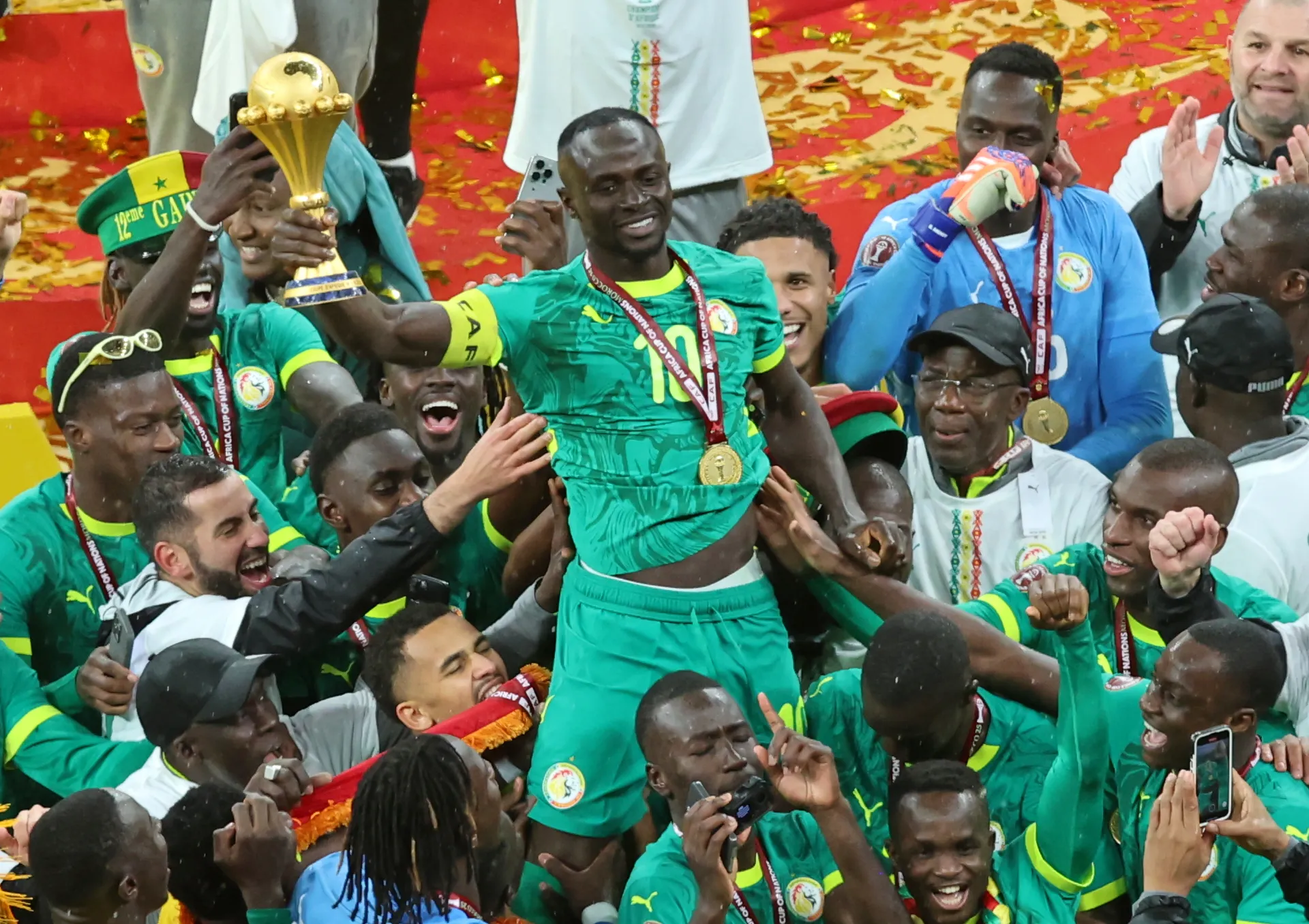
January’s final in Rabat descended into chaos when Senegal’s players walked off the pitch in protest after Morocco were awarded a contentious stoppage-time penalty following a VAR review with the game at 0-0.
The decision to award the spot kick sparked trouble among the Senegal fans in the crowd. Eighteen spectators were were later jailed following the disruption.
After Senegal finally returned to the pitch after a lengthy delay, Real Madrid and Morocco star Brahim Diaz missed the penalty with a poor attempt at a panenka. Senegal went on to win the game 1-0 with a goal in extra-time.
However, the saga did not end there. In March, CAF stripped Senegal of the title and awarded it to Morocco, ruling that Senegal had forfeited the game by leaving the pitch.
Senegal have appealed at the Court of Arbitration for Sport (CAS), and have made allegations against CAF and Morocco.
For the Atlas Lions, being belatedly crowned champions by officials has done little to ease the pain as well as a sense of injustice, and the ongoing saga continues to leave a toxic fallout for the team.
The Regragui saga
Walid Regragui, the coach who masterminded the 2022 run, parted ways with the team in March.
It is likely that he ultimately paid the price after the manner of Morocco’s narrow defeat to Senegal in the AFCON final on home soil, as well as reported arguments between him and the country’s football federation over the direction of the team.
His replacement, Mohamed Ouahbi, led Morocco’s Under-20 side to the 2025 Youth World Cup title as the federation said a “strategic decision” was behind the appointment.
“It’s a desire not to waste time and to take a different direction,” a source close to the federation told the AFP news agency.
But for Ouahbi, 49, stepping up to a first senior World Cup under such acrimonious circumstances is an extremely challenging task – especially as he has only ever managed youth teams in his career.
“I’m not here to build, because the foundations are already in place. I’m here to keep performing,” Ouahbi said after his appointment.
Whether the new coach has the authority and tactical acuity to thrive at the highest level remains to be seen, and it will be a bit of a baptism of fire.
Brahim Diaz hopes to shake off panenka nightmare
Up until that penalty miss, talented forward Brahim Diaz had been the best player at the tournament, driving Morocco to the final as he won the Golden Boot with five goals.
The Real Madrid playmaker is quick, clever and capable of producing something out of nothing – giving Morocco a touch of genuine magic between the lines.
He may be carrying a psychological weight into this tournament after the AFCON final fracas, but Morocco will hope he will channel that frustration into having an outstanding World Cup.
Teenage star Bouaddi makes the cut
While much of the squad is fairly well established, the exciting 18-year-old Lille midfielder Ayyoub Bouaddi, who has switched allegiances after representing France at junior level, made the squad.
“A dream come true, but above all the start of a new chapter, with even more work, rigour and responsibilities,” Bouaddi said on X.
“I am aware of the privilege I have to defend these colours, and I will give everything to represent my country in the best possible way.
“A thought also for France. My choice in no way diminishes the pride and gratitude for having been able to wear that jersey in my youth.”
Perhaps surprisingly, Youssef En-Nesyri, who scored the winning goal against Portugal in the 2022 quarterfinal, did not make the cut.
Elsewhere, Bilal El Khannouss is a highly technical and creative attacking midfielder, while Sofyan Amrabat gives the side combative energy in defence.
Marseille defender Nayef Aguerd has been selected, despite not playing since March due to injury.
Bouaddi, left, in action with Red Star Belgrade’s Tomas Haendel in a Europa League playoff in February [Darko Vojinovic/AP Photo]
Hakimi: The world’s best right back?
Last season, the PSG right back scored 11 goals and provided 14 assists en route to helping his club win a historic treble of the Champions League, Ligue 1 and the French Cup – he was subsequently named CAF African Player of the Year.
This season has been less productive so far in terms of goals and assists. Hakimi increasingly attracts intense attention from opponents keen to neutralise his threat. His season has also been overshadowed by issues off the pitch as it was announced earlier this year that he will stand trial for rape in France – allegations which Hakimi denies.
Despite the off-field issues and reduced returns this season, his overlapping runs, delivery and goalscoring threat – on top of his defensive prowess – arguably means he remains the best right back in the world.
How does Morocco’s group look?
Group C certainly has its challenges for Morocco, not least in their opening game against Brazil. While the Brazilians no longer quite hold the fear factor of previous tournaments, they are still packed with quality.
Nevertheless, Morocco will fancy their chances of getting something from that game and sending a statement to their rivals.
Easier ties await after that, and although an improving Scotland are no pushovers and Haiti could provide an unknown quantity, Morocco should be winning both of those games if they are to mount a serious push for the title.
Morocco also faced Brazil and Scotland in the France 1998 World Cup. The Atlas Lions put in a respectable performance then – recording a 3-0 win over Scotland while losing by the same score to Brazil and drawing with Norway – but finished third in the group and failed to progress to the round of 16.
Morocco’s group matches at the World Cup
⚽ June 13: Brazil vs Morocco (New Jersey, US), 6pm ET (22:00 GMT). ⚽ June 19: Scotland vs Morocco (Boston, US), 6pm ET (22:00 GMT). ⚽ June 24: Morocco vs Haiti (Atlanta, Georgia), 6pm ET (22:00 GMT).
Al Jazeera’s prediction
Last 16.
An inexperienced coach and turmoil around the squad will probably lead them to fall short of matching their 2022 exploits.
Coach Ouahbi drew heavily on the country’s diaspora in Europe where majority of the 26 players he selected were born.
Published On 27 May 202627 May 2026
Paris Saint-Germain defender Achraf Hakimi was among nine players from Morocco’s history-making 2022 World Cup squad named for the 2026 tournament in North America.
Morocco coach Mohamed Ouahbi, who was only hired in March, drew heavily on the country’s diaspora in Europe, where the majority of the 26 players he selected were born.
Recommended Stories
list of 4 itemsend of list
Ouahbi was himself born in Belgium, while Hakimi and Real Madrid forward Brahim Diaz are among five players in the squad born in Spain and whose family ties make them eligible for Morocco.
Three of Morocco’s squad – Fulham defender Issa Diop, PSV Eindhoven defender Anass Salah-Eddine and 18-year-old Lille midfielder Ayyoub Bouaddi – had their change of national eligibility approved by FIFA in the past nine months. Diaz has played for Morocco since 2024 after previously representing Spain.
Morocco will be based in New Jersey where it opens against Brazil on June 13 in East Rutherford. The Atlas Lions then play Scotland in Massachusetts and finish Group C against Haiti on June 24, in Atlanta. The top two in the standings go directly to the round of 16, and the third-place team also could advance.
At the 2022 World Cup, when it was coached by Walid Regragui, Morocco made history as the first semifinalist at the tournament from Africa.
Morocco topped its group ahead of Croatia and Belgium, then shocked Spain and Portugal in the knockout rounds before an injury-hit team lost to France.
Goalkeeper Yassine Bounou, who impressed in Qatar, returns for his third World Cup at age 35.
Morocco will go to the United States as the African champion – for now. That title, awarded in a legal case, could be lost within months at the Court of Arbitration for Sport, where Senegal has appealed to regain its victory won on the field in January in Morocco.
After losing the final to Senegal four months ago, Regragui stepped down and was replaced by Ouahbi, who guided Morocco to the Under-20 World Cup title last year. That team that beat Argentina in the final included Strasbourg forward Gessime Yassine, whom Ouhabi picked again on Tuesday.
Morocco will play at the 2030 World Cup as a cohost with Spain and Portugal. South American neighbours Argentina, Paraguay and Uruguay – the original tournament host in 1930 – get one game each to host at that edition as part of a commemorative recognition for their contributions to World Cup history.
Morocco World Cup roster
Goalkeepers: Yassine Bounou (Al-Hilal), Munir El Kajoui (RS Berkane), Ahmed Reda Tagnaouti (AS FAR)
Fans arrested in Morocco in the aftermath of the AFCON 2025 final returned on a humanitarian pardon by Moroccan king.
Published On 24 May 202624 May 2026
A group of Senegalese football supporters jailed following their country’s chaotic, violence-plagued Africa Cup of Nations (AFCON) final in Morocco in January have returned home after being pardoned by the Moroccan king.
King Mohammed VI granted the fans a pardon “on humanitarian grounds” on the occasion of the Muslim holiday of Eid al-Adha, Morocco’s royal court said on Saturday.
Senegalese President Bassirou Diomaye Faye welcomed the jubilant supporters on their arrival at the airport outside Dakar on Sunday.
“We’re very happy to have them back on Senegalese soil,” Faye, who donned a tracksuit for the occasion, told journalists.
He thanked Moroccan authorities for the pardon but, in what Morocco will likely perceive as a new dig, hailed the national team as “two-time African champions”, even though the January final is the subject of an ongoing dispute before the Court of Arbitration for Sport in Switzerland.
Senegal won the tumultuous continental final against Morocco in Rabat on January 18, but the match was later awarded on appeal to the hosts.
With the match tied at 0-0, after a penalty awarded to Morocco in stoppage time of the second half – just after a Senegal goal was disallowed – Senegalese fans tried to storm the pitch and hurled projectiles.
The Senegalese team left the pitch in protest against the penalty decision, halting play for nearly 20 minutes.
When they returned, they gleefully watched Morocco miss their penalty and went on to score a 94th-minute winner.
In February, Moroccan courts sentenced 18 Senegalese supporters held in Morocco since the final to prison terms ranging from three months to a year for hooliganism.
Three were released from jail in mid-April after completing their three-month sentences.
Following that release, another 15 Senegalese fans remained imprisoned after receiving sentences ranging from six months to one year.
The royal pardon applied to those 15.
Mending ties
The episode has strained relations between Morocco and Senegal, countries with a history of friendly ties.
But Morocco’s royal court said that in view “of the age-old fraternal ties” between the two countries “and on the occasion of the advent of Eid al-Adha”, which will be celebrated in the country on Wednesday, the king had “granted, on humanitarian grounds, his royal pardon to the Senegalese supporters”.
The Senegalese president had earlier welcomed the decision in a post on X.
“Our compatriots … are free. They will soon be reunited with their loved ones,” Faye wrote.
He thanked King Mohammed VI for the decision “imbued with clemency and humanity”.
According to the Moroccan public prosecutor’s office, the charges against the 18 football supporters were based mainly on footage from cameras at Rabat’s Moulay Abdellah Stadium, and on medical certificates for injured law enforcement officers and stewards.
Material damage from the violence was estimated at more than 370,000 euros (about $430,000).
At the end of January, the Confederation of African Football (CAF) imposed disciplinary sanctions on both national federations for unsporting conduct and violations of the principles of fair play.
After the CAF decided on March 17 to award the title to Morocco by administrative ruling, Senegal appealed to the Court of Arbitration for Sport.
The two countries have a history of cooperation in sectors including tourism and energy, and share strong religious ties.
Senegalese make up the largest foreign community living in Morocco.
Morocco jailed 17 Senegal fans following fan disturbances at the Africa Cup of Nations final in January.
Published On 23 May 202623 May 2026
Morocco’s King Mohammed VI has pardoned the Senegalese football supporters jailed after violence at the 2025 Africa Cup of Nations (AFCON) final in Rabat for “humanitarian reasons”, a royal court statement has confirmed.
It said that in view “of the age-old fraternal ties” between the two countries “and on the occasion of the advent of Eid al-Adha”, the king has “granted, on humanitarian grounds, his royal pardon to the Senegalese supporters”.
Recommended Stories
list of 4 itemsend of list
The Muslim holiday will be celebrated on Wednesday in Morocco.
The 18 fans were jailed following a pitch invasion that followed the awarding of a penalty to Morocco in injury time of the final on January 18.
The game was stopped for 14 minutes while the Senegal players and staff left the field in protest at the decision. When play resumed, Morocco missed the penalty before Senegal sealed a 1-0 win in injury time.
The Confederation of African Football (CAF), the continent’s governing body for football, overturned the decision on March 17, awarding the game as a 3-0 win to Morocco, which saw the North Africans crowned champions.
CAF upheld the appeal by the Royal Moroccan Football Federation, saying Senegal had infringed tournament regulations by walking off.
Senegal have lodged their own appeal to the Court of Arbitration for Sport, a ruling from the Switzerland-based body could take up to a year.
May 13 (UPI) — The remains of a second U.S. soldier who went missing during exercises in Morocco earlier this month have been recovered, the U.S. military said Wednesday evening, ending a joint U.S.-Morocco search.
The remains of Spc. Mariyah Symone Collington, 19, of Tavares, Fla., were located and retrieved Tuesday from a coastal cave roughly 1,640 feet from where she and 27-year-old 1st Lt. Kendrick Lamont Key Jr. are believed to have fallen into the ocean, U.S. Army Europe and Africa said.
“The loss of Spc. Collington is a profound loss for the 10th Army Air and Missile Defense Command,” Brig. Gen. Curtis King, commanding general of the 10th Army Air and Missile Defense Command, said in a statement.
“Her recovery closes the search for our two missing soldiers, but our commitment to caring for their families, friends and teammates continues. We are grateful to the U.S. and Moroccan forces for their professionalism and support throughout the search.”
Key and Collington went missing May 2 near the Cap Draa Training Area, a coastal military training site near Tan-Tan, located in southwestern Morocco about 342 miles southwest of Marrakech, where they were participating in African Lion 26, this year’s iteration of the U.S. military’s largest Africa-based exercise.
Their disappearance was not related to active training. Military officials believe they fell into the Atlantic Ocean near cliffs during a recreational hike. They were reported missing the night of May 2 after a base-wide head count, prompting a joint U.S.-Moroccan search.
U.S. military officials said Collington’s remains were transported via helicopter by the Royal Moroccan Armed Forces to the morgue of Moulay El Hassan Military Hospital in Guelmim, about 80 miles northeast of Tan-Tan.
Moroccan and U.S. forces conducted a “dignified carry” at the military airport in Guelmim on Tuesday, and the remains of Key and Collington have departed Morocco for the United States, USAREUR-AF said.
“Spc. Collington was a bright light in this battalion,” said Lt. Col. Chris Couch, the 5-4 ADAR battalion commander.
“To the soldiers who knew her best and served alongside her each day, she was a treasured friend whose loss leaves a deep and profound void on our team.”
May 11 (UPI) — The remains of one of two U.S. soldiers who disappeared during exercises in Morocco earlier this month have been recovered, the U.S. military said, as the search continues for the other soldier.
A Moroccan military search team found the remains of 1st Lt. Kendrick Lamont Key Jr. at 8:55 a.m. Saturday, the U.S. Army Europe and Africa announced Sunday.
USAREUR-AF said Key’s remains were found along the shoreline of the Atlantic Ocean within 1 mile of where the two soldiers are believed to have disappeared.
His remains have been transported by the Royal Moroccan Armed Forces via helicopter to the morgue of Moulay El Hassan Military Hospital in Guelmim, located about 265 miles southwest of Marrakesh.
Next of kin have been notified and plans are underway to repatriate his remains, officials said.
“Our hearts are with his family, friends, teammates and all who knew and served alongside him,” Brig. Gen. Curtis King, commanding general of the 10th Army Air and Missile Defense Command, said in a statement.
“The 10th Army Air and Missile Defense Command family is grieving, and we will continue to support one another and 1st Lt. Key’s family as we honor his life and service.”
Key, 27, and a second U.S. soldier went missing May 2 near Cap Draa Training Area, a coastal military training site near Tan-Tan, during African Lion 26, this year’s version of the U.S. military’s largest Africa-based exercise.
Their disappearance is unrelated to the exercises, with military officials believing the pair may have slipped off a cliff during a hike near the training range.
The pair were reported missing at 9 p.m. May 2 during a base-wide head count, and a search was launched.
U.S. military officials said they worked with Moroccan forces, concentrating intelligence, surveillance and reconnaissance assets in the search, which involved more than 1,000 U.S. and Moroccan military and civilian personnel.
The search effort continues for the remaining missing soldier, they said.
Key was from Richmond, Va., and was a platoon leader assigned to Charlie Battery, 5th Battalion, 4th Air Defense Artillery Regiment, 10th Army Air and Missile Defense Command.
USAREUR-AF said he was known at Charlie Battery, which he joined last year, for “the care he showed for his soldiers, his commitment to others and the relationships he built across the formation.”
“Kendrick embodied the highest standards of service as a selfless, inspirational leader whose unwavering dedication to his soldiers and their development leaves an enduring legacy within our ranks,” Lt. Col. Chris Couch, commander of 5-4 ADAR, said in a statement.
Kath Cross, 49, and her partner Stu Hall, 47, sold most of their possessions and set off on a van life adventure across Europe and beyond after Kath’s daughters moved out of the family home
A couple of drove around the world have named their favourite place(Image: Kath Cross)
A couple who flogged all their belongings to explore the globe in a van have disclosed their top destination from their remarkable journey.
Kath Cross, 49, and her partner Stu Hall, 47, chose to embark on worldwide travels after Kath’s daughters from an earlier relationship, Stephanie, 30, and Jessica, 22, had flown the nest. Following their departure, Kath came to the realisation that she could work from wherever she fancied and opted to sell much of what she owned.
Using the proceeds from flogging items on Facebook Marketplace, she and Stu purchased a van, a 7.5m Mercedes Sprinter, and set off to see the world after vacating their rented property in Cardiff, Wales.
Since departing, they’ve weathered the highs and lows of perpetual life on the move, while also lending a hand to others during their travels.
Chatting to WalesOnline, Kath and Stu, who crossed paths through a walking club, revealed which country had impressed them most during their adventure, reports the Express.
The duo have journeyed through destinations including Spain, Germany, the Netherlands, Denmark, Italy, North Macedonia, Kosovo, and Montenegro, amongst other European nations.
They selected Morocco as their standout location, saying: “In Morocco we went to the edge of the Sahara. We were sitting looking over the edge on the sand dunes drinking coffee from a mug from home – it was huge.
“Then we had snow in the Atlas mountains in January 2024 when we rescued Mohammed, ‘MouMou’, who was stuck 3,000m up in the snow in his car. We took him out with our snow chains and lent our snow chains to him. MouMou is in his late 20s and a really nice guy.
“We were just heading over the Atlas mountains when we saw him. People were just driving past him worrying he was a bandit when he just couldn’t drive on.”
However, Kath and Stu aren’t the only ones to have embraced van life, with the likes of Suzy Greenwood ditching her London job to live on the road after falling head over heels for the lifestyle.
Suzy, 39, had spent 15 years forging a career in PR before deciding to make the leap once the Covid-19 lockdowns had lifted. Confronted with her flat in Shepherd’s Bush, London, she told the Independent she realised she was “no longer doing the things I loved” in London.
After offloading her two-bedroom flat, she purchased a converted Volkswagen Caddy van and embarked on a fresh chapter. She revealed that despite the van’s compact size, it carries several distinct advantages, not least the financial savings.
She explained: “The van itself is tiny, which is great because I can park up anywhere. It looks like a workman’s van, so I can sleep in a lay-by, or at beautiful spots overlooking the sea.
“Where I once spent maybe £200 on a fancy dinner, I can now spend £10 on a whole weekend and be having the time of my life. The life I live now really doesn’t cost very much at all.”
Members of the U.S. Army and Tunisian Armed Forces discuss training objectives during explosive ordnance disposal squad tactics exercises in Bizerte, Tunisia, during African Lion 2026. Two soldiers were reported missing on Saturday night in an incident unrelated to the military exercise. Photo by Staff Sgt. Cameron Christensen/U.S. Army
May 3 (UPI) — Two members of the U.S. Army were reported missing during a training event in Morocco on Sunday morning by the United States Africa Command.
The soldiers were participating in the U.S. military’s largest Africa-based exercise, African Lion, when the soldiers went missing on Saturday night during near the Cap Draa Training Area, which is near the city of Tan Tan, Morocco, AFRICOM said in a press release.
Military officials said their disappearance is unrelated to the exercise, but rather than they had gone on a hike near the training range and may have slipped off a cliff into the ocean, The New York Times reported.
“U.S., Moroccan and other assets from African Lion immediately initiated coordinated search and rescue operations, including ground, air and maritime assets,” AFRICOM said in the release.
“The incident remains under investigation and the search is on-going,” the command said.
The soldiers were discovered missing during a base-wide head-count around 9 p.m. local time, with helicopters searching throughout the night and various aircraft — including larger planes and drones — picking up the search on Sunday morning near the coast, CBS News reported.
African Lion is an annual joint military exercise that includes the U.S. military, NATO allies and African partner nations, and is hosted by Morocco, Ghana, Senegal and Tunisia, according to U.S. Army Europe and Africa.
This year’s event, scheduled to run from April 27 to May 8, includes 5,000 people from 40 countries.
President Donald Trump signs a series of executive orders in the Oval Office of the White House on Thursday. Trump signed an order to expand workers’ access to retirement accounts. Trump also signed legislation ending a 75-day partial shutdown of the Department of Homeland Security after the House voted in favor of funding. Photo by Aaron Schwartz/UPI | License Photo