For many celebrities, getting a Funko Pop! doll modeled after themselves is a sign they’ve made it in Hollywood. The 4-inch vinyl “Pop!” figurines, with their oversize heads and black dot eyes, symbolize being ingrained in pop culture — objects fans buy, celebrate and display.
At Funko’s flagship Hollywood store, there are thousands to choose from, ranging from NFL players to Disney princesses and characters from the Netflix period drama “Bridgerton.”
But the publicly traded company behind the popular dolls has been facing significant headwinds.
Funko Inc. last year posted a loss of $67.4 million on sales of $908.2 million, down 13% from the previous year. The company disclosed it had debts of $225 million.
The Everett, Wash.-based company warned investors in filings that there was “substantial doubt” about its ability to generate enough cash to meet its debt payments, citing the effects of tariffs in China, where most of its toys were made, canceled retail orders and loan covenants it expected to breach.
Funko Chief Executive Josh Simon, pictured at the Pokémon convention, says he took over the company at an “inflection point.”
(Carolyn Fong / For The Times)
Now the company is looking to stage a comeback.
Leading the turnaround challenge is Josh Simon, who left his job running global consumer products at Netflix to become Funko’s chief executive in September 2025 — the third person to hold the title in two years.
“Funko was at an interesting inflection point,” said 48-year-old Simon, who lives in Los Feliz. “I felt there was still a lot of really deep fandom and enthusiasm from retailers and at the same time, there were a lot of problems that had to be sorted out at the company. I thought it would be an interesting adventure and hopefully a way to help turn things around a bit and restore it back to that level of fan passion and glory that existed years ago.”
The rise and fall of Funko
Funko began in 1998 when entrepreneur Mike Becker decided bobbleheads would be the next big thing and shipped them out of his garage. After entrepreneur Brian Mariotti bought Funko in 2005, the business began licensing more characters. Sales took off with the launch of its big-headed “Pop!” figurines in 2010.
The company changed ownership over the years, added backpacks and other products, and went public in 2017. Most of its revenue still comes from making licensed characters and selling them through retailers, online and at events.
Funko survived a decline in sales with the rise of kidults — adults who collect toys.
(Carolyn Fong / For The Times)
But Funko’s sales plunged in 2025 following a global trade war.
The company overestimated demand, picked the wrong characters and made too many of dolls, said Gerrick Johnson, senior research analyst at Seaport Research Partners, which has a buy rating on Funko.
President Trump’s heavy tariffs imposed on China substantially raised the costs of making Funko dolls.
Amid lagging sales, retailers marked down the figurines, alienating collectors who want to see items appreciate in value.
“Collectors hate buying things 50% off,” Johnson said. “One of the biggest turnoffs in collectibles is a bargain bin.”
What kept the brand alive through the slump was the rise of kidults — adults who collect toys. Simon was one, picking up Pop! figurines from “Toy Story” and “Back to the Future” long before he worked there. Funko’s job, he said, is to distill what people love about a character into a stylized version of it.
“The number of inbound requests we get from musicians and athletes and celebrities — everyone is excited and pitching us they want a Funko Pop! made of themselves, because in some ways it suggests a mark of establishment in pop culture,” Simon said. “It’s like akin to getting your star on the Hollywood Walk of Fame in some way.”
Convention-goers create custom dolls at a Funko Pop! kiosk.
(Carolyn Fong / For The Times)
One expert said Funko’s job is to distill what people love about a character into a stylized version of it.
(Carolyn Fong / For The Times)
A turnaround plan
Though based in Washington, Funko has a large presence in L.A., where most of its senior leadership is based. They work out of the same offices as the flagship Hollywood store. The company also has employees in Arizona, London, Hong Kong and other markets.
Under Simon, Funko has diversified its supply chain, shifting production out of China to Vietnam and other countries. To improve cash flow, Funko renegotiated the timing of its debt payments and pushed products to market faster.
For example, Funko turned around figurines of the characters from “KPop Demon Hunters” — the Netflix film that became the streamer’s most-watched movie ever after its June 2025 release — in about four months, well ahead of Mattel, whose first items reached stores this spring.
When John Cena stepped into the ring for his final WWE match in December, there were pre-orders for a Funko figure wearing the same outfit down to the shirt reading, “The Last Time is Now,” built from an image Funko received a week earlier. The doll became a bestseller, said Scott Zanghellini, executive vice president of WWE Consumer Products.
“It’s happening in real time and his team being able to move quickly, and us always moving quickly in this world of we have seven hours of programming a week — how do you take advantage of that and give the fans what they want?” Zanghellini said.
Funko is also widening what counts as a license, making figures from “The Folk of the Air,” Holly Black’s fantasy series revived by book lovers on TikTok, as well as creating more original characters that aren’t licensed.
“We really want to make sure that we can be a part of these cultural moments while they’re happening,” Simon said.
Reaching out to fans is another priority. At PokémonXP, the first official Pokémon fan convention held last month at San Francisco’s Moscone Center, Funko ran a Pop! Yourself booth where attendees built custom figures in exclusive Trainer uniforms with a Pokémon of their choice.
“We really want to make sure that we can be a part of these cultural moments while they’re happening,” Funko’s chief executive said.
(Carolyn Fong / For The Times)
Jeff Leu, 40, of San Francisco spent about $100 there on two figures modeled after his kids. He already owns 40 to 50 “The Simpsons” Pop! figures and tracks his collection in a spreadsheet.
“I feel like there is a Funko for everything,” Leu said.
Now he feels the pull of the Pokémon ones.
“As they add more, there’s more pressure to buy it because I like to collect things,” Leu said. “Luckily I have a lot of room to display my toys.”
So far, the turnaround plan has yielded some positive signs.
Second-quarter sales rose 7% to $207.7 million and the company reported net income of $15.4 million, against a $40.5-million loss a year earlier. The quarter, however, included a $25.4-million benefit from expected tariff refunds, without which Funko would have lost money.
Funko’s share price closed Friday around $5.50, up about 1%. The stock has climbed 38% in the last year but is 60% below what it trade at in January 2025.
“It’s way too early to make any sort of calls on Josh at this point, but I like what he’s doing,” Johnson said. “It’s an interesting point in Funko’s history, and it’s a great opportunity for him to grow this business.”
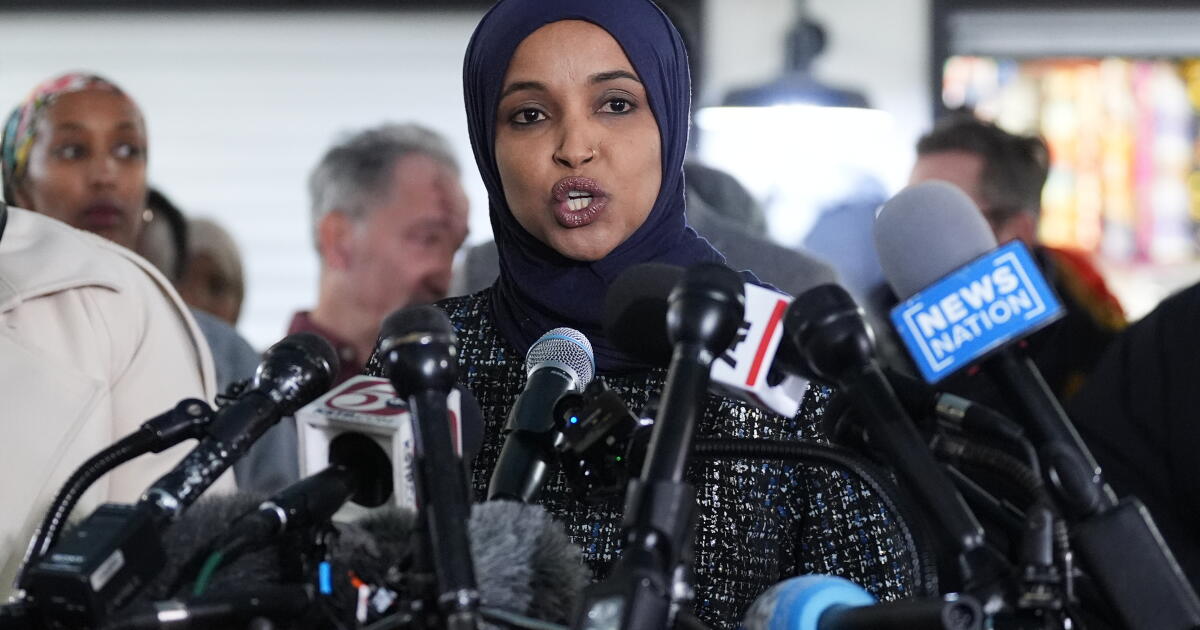
MINNEAPOLIS — The man who sprayed vinegar at Democratic U.S. Rep. Ilhan Omar during a Minneapolis town hall was sentenced Thursday to 14 months in prison after reaching a deal with prosecutors.
Anthony Kazmierczak, 56, was sentenced nearly eight months after the Jan. 27 assault. At the time, Minneapolis-St. Paul was subject to an immigration crackdown that led to angry protests, arrests and the deaths of two U.S. citizens. Prosecutors had recommended a 14-month prison term.
He also was sentenced to three years of supervised release, which includes no contact with Omar. U.S. marshals escorted him from the courtroom after the hearing.
During an earlier hearing, Kazmierczak was unable to explain his actions.
“It’s fuzzy,” he told U.S. District Judge Joan N. Ericksen when asked what he remembered.
Witnesses saw Kazmierczak jump up from the audience during the meeting, spraying liquid from a syringe at Omar and saying she was “splitting Minnesota apart.” Omar’s security officers quickly tackled Kazmierczak to the ground, then took him to police officers who placed him under arrest.
Omar was not injured and continued with the town hall after the arrest.
“I’m sorry if I scared you,” he wrote to Omar later, accepting responsibility for what he’d done.
Authorities later determined he’d sprayed her with a mixture of water and apple cider vinegar. He was charged with assaulting a U.S. officer.
The government sentencing memorandum, submitted to the court by prosecutors, said he had texted at least three people indicating he planned to do something at the meeting involving Omar “but would not answer their questions about his intent.”
He also sent messages to a neighbor to arrange for dog care and contacts for a bail bond company.
The sentencing memo said Kazmierczak had long struggled with alcohol abuse, had “a history of mental and emotional health concerns” and also had a string of health issues tied to a 2022 diagnosis of Parkinson’s disease.
Omar, a refugee from Somalia, has long been a target of President Trump’s anti-immigrant rhetoric. After she was elected seven years ago, Trump said she should “go back” to her home country. He has described her as “garbage” and said she should be investigated.
In social media posts, Kazmierczak had criticized former President Biden and referred to Democrats as “angry and liars.” Trump wants the U.S. to be “stronger and more prosperous,” he wrote.
The attack on Omar came amid Operation Metro Surge, when more than 2,000 immigration officers swept through the Twin Cities in a dramatic crackdown that led to angry protests, arrests and the deaths of two U.S. citizens.
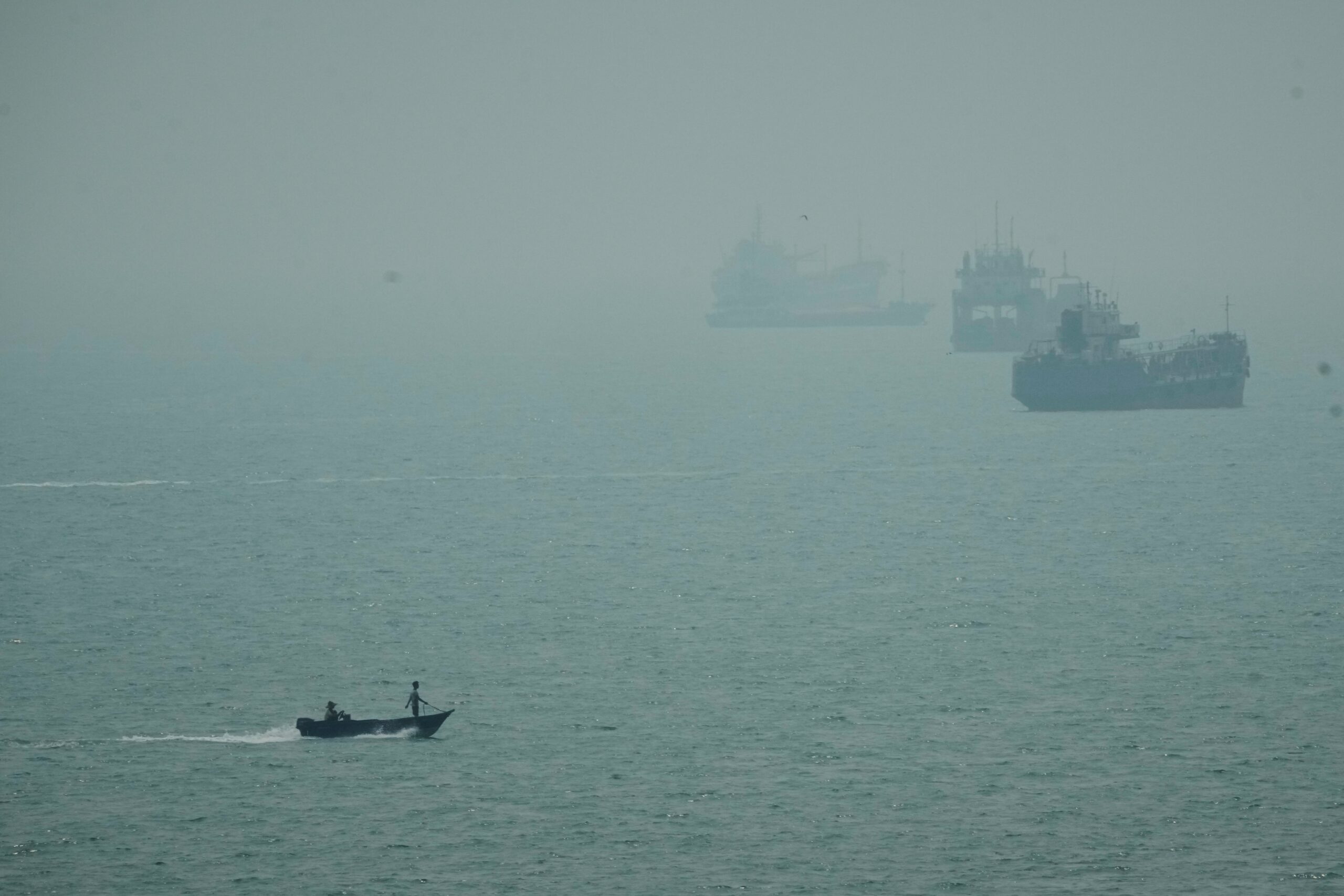
WASHINGTON: The US military said Saturday that it has pushed back 100 commercial vessels in the past 60 days under its blockade of Iranian ports.
CENTCOM forces have redirected 100 commercial vessels over the past 60 days since America 🇺🇸 resumed the steel wall blockade against Iran. ZERO ships have passed through the blockade without U.S. forces allowing. American service members remain laser focused on this mission. pic.twitter.com/tIV2fvtuG6
“ZERO ships have passed through the blockade without US forces allowing. American service members remain laser focused on this mission,” US Central Command said on X.
Iran blocked the strategic Strait of Hormuz after the US and Israel launched attacks on Tehran in late February.
In response, the United States has sought to prevent ships from traveling to and from Iranian ports to deprive Tehran of revenue.
These will be the final tickets available for the 2026 events and there will also be tickets to the Golden Experience available.
Tickets will be available for both Lapland Ascot and Lapland Manchester – which has more availability of the two.
Sign up for the Travel newsletter
Thank you!
Fans can also nab tickets to The Golden Experience – a VIP experience with a personal guide, private check in, a meal in Pumpernickel’s secret pantry in the Eleven Village, priority seating and access, honorary elf hats, Golden Explorers pin badge, onsite currency, a signed Lapland storybook and a 2026 bauble.
BEIRUT: Since a ceasefire went into effect between Israel and Hezbollah more than two months ago, fighting has stopped in much of Lebanon, but not on a strategic hill overlooking parts of a main southern city.
In recent weeks, Ali Taher hill has been the scene of daily shelling and airstrikes by Israel’s military. Hezbollah, a militant group backed by Iran, has repeatedly attacked Israeli forces in the area with drones.
The United States, which is mediating talks between Lebanon and Israel, had wanted Hezbollah to hand over the hill to the Lebanese army as part of larger plan to disarm the militant group and dismantle its infrastructure. But Hezbollah has refused.
Lebanon and Israel reached a framework agreement in June stating Israel will withdraw from Lebanon as Hezbollah is disarmed. The militant group was not a party to the negotiations and has rejected calls to disarm in areas north of the Litani river, which is where Ali Taher is located.
A full-on battle over this hill near the city of Nabatiyeh could escalate fighting across the country, and unrest in Lebanon complicates efforts to resolve the war in Iran.
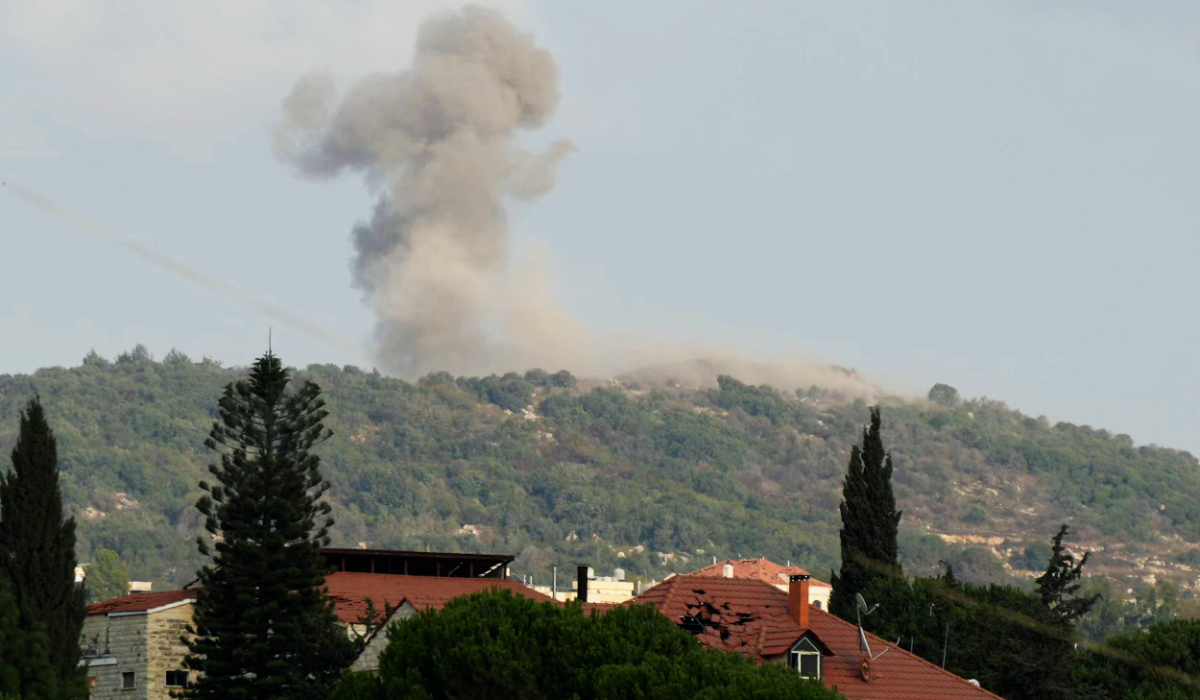
On Thursday night, Israel’s military announced it had taken “operational control” of Ali Taher and a network of tunnels beneath it that Hezbollah uses to shelter its fighters and weapons. It is unclear how far Israel’s control extends. Just before Israel’s announcement, its air force was still targeting the hill, according to Lebanese state media.
There has been no official statement from Hezbollah since Israel’s announcement.
US pushes Lebanon to pressure Hezbollah
Hezbollah firmly rejected a proposal from the Lebanese government to hand over Ali Taher to the country’s army. It fears Israel would then seize control of the hill from the Lebanese army and then demand the handover of more territory.
Israel had occupied Ali Taher for 18 years before it withdrew from Lebanon in 2000.
The hill has a strategic location overlooking several villages as well as main roads leading to Nabatiyeh. Losing full control of it would disrupt Hezbollah’s presence and supply lines in the area.
The Israeli military says the site is also important to Hezbollah because of tunnels it built there, with funding from Iran.
Israel said in its statement Thursday that the hill housed underground command centers, weapons storage rooms, generators, living quarters, showers and a kitchen. Israel said it cleared Ali Taher of Hezbollah fighters and was working to “neutralize underground infrastructure sites.”
Hezbollah legislator Ihab Hamadeh questioned why the Israeli military was still attacking the hill if it was really in control of the area, according to the Arabic-language version of Russia’s state-funded news outlet Sputnik. An Associated Press photographer who visited the nearby village of Kfar Rumman on Friday saw no sign of Israeli military presence on the hill.
The hill, topped with a shrine to a Muslim scholar, sits north of the Litani river, which has become the de facto boundary of the area captured by Israel since its latest war with Hezbollah began in early March.
Fighting in the area has heated up in recent weeks
Israel has been conducting military operations around Ali Taher since July, said Nasser Khdour, a Middle East researcher at the Armed Conflict Location & Event Data Project, or ACLED, a US-based group that tracks conflicts around the world.
Hezbollah official Mahmoud Qamati told a Lebanese podcaster in late August that the group’s fighters were repelling attempts by Israeli troops to take Ali Taher. But he, and others, downplayed the significance of the site should Israel take it.
“Ali Taher is important, but if it is lost it does not mean the end of Hezbollah,” Qamati said.
In mid-August, Israel carried out a series of airstrikes on southern Lebanon that it described as retaliation for a Hezbollah drone attack on Ali Taher that seriously wounded three soldiers. The Israeli strikes, which killed 11 people, including women and children, were the deadliest since the US-brokered ceasefire went into effect in late June.
On Aug. 27, Israel carried out a series of airstrikes, killing one person and wounding six, after the military said Hezbollah fired two explosive drones at Israeli troops in the area. Hezbollah did not claim responsibility for any of the attacks.
Lebanon says Israel is hindering its army
Lebanon’s Deputy Prime Minister Tarek Mitri told an Arab TV station in late August that the Lebanese army was ready to take over Ali Taher.
He accused Israel of blocking the army due to its own political considerations ahead of Israeli national elections on Oct. 27.
“The problem is not in the Lebanese army’s readiness but in Israel’s stance,” he said.
Lebanese and Israeli officials are set to meet for negotiations in Rome later this month. Meanwhile, Hezbollah, which has always refused to speak directly to the US, appears to be changing its policy after the major setbacks it has suffered during its wars with Israel since 2024.
A Lebanese official told The Associated Press that indirect contacts are going on between the US and Hezbollah, but refused to give any details. He spoke on condition of anonymity in line with regulations.
The US ambassador to Lebanon, Michel Issa, said recently that Washington is ready to speak with Hezbollah if the group agrees to disarm.
Still, Hezbollah is not likely to take any move forward regarding talks with the US without a green light from its main backer, Iran. While talks with the US over their war have stalled, Iran has sought guarantees that Israel will halt its attacks on Hezbollah as part of any permanent deal.
Capture of Ali Taher could lead Israel to other Hezbollah strongholds
The capture of Ali Taher would open the way to Nabatiyeh and also lead to the nearby Apple Province and Rihan Mountain, where Hezbollah has been building up its presence since the late 1990s.
Israeli leaders have repeatedly pledged to leave troops in Lebanon and threatened to escalate military pressure until Hezbollah disarms.
“Israeli control of the area is an operational and military setback for Hezbollah,” said Khdour of ACLED. He said clearing these sites helps Israel protect towns in the northern part of its country, and increases pressure on Hezbollah.
“This will strengthen Israel’s position in any future negotiations over its withdrawal,” said Khdour.
Michelle Keegan has shared a rare snap of her daughter, PalmaCredit: Instagram/michkeeganMichelle recently dropped out of a new ITV drama that’s set to begin filming in NovemberCredit: Getty
The 39-year-old leftITVbosses baffled by her decision to turn her back on the lead role in a big budget production, focusing on a working-class barrister.
DJ Mark Wright and actress Michelle Keegan married in 2015Credit: GettyThe 39-year-old withdrew from the new drama as she wanted to ‘focus on her family’Credit: Getty
Sources said it was “a huge blow” as she had committed to the drama a few months ago and a filming start date had been decided.
Michelle, who decided not to go ahead with the series written bySherlockwriter Steve Thompson, has said she wanted to focus on family life.
A source said: “Michelle was really keen to take on the meaty role, but the heavy filming schedule would take her away from daughter Palma for too long.
“The hours were quite intense and the project was starting straight after her Netflix drama The Woods and she just couldn’t commit.
“She is dedicated to her acting career, but like all working mums has to prioritise being there for her family, juggling work, parenting and being present for Palma.”
Mark and Michelle, who married in 2015, live in a £3.5million mansion near his family in Essex.
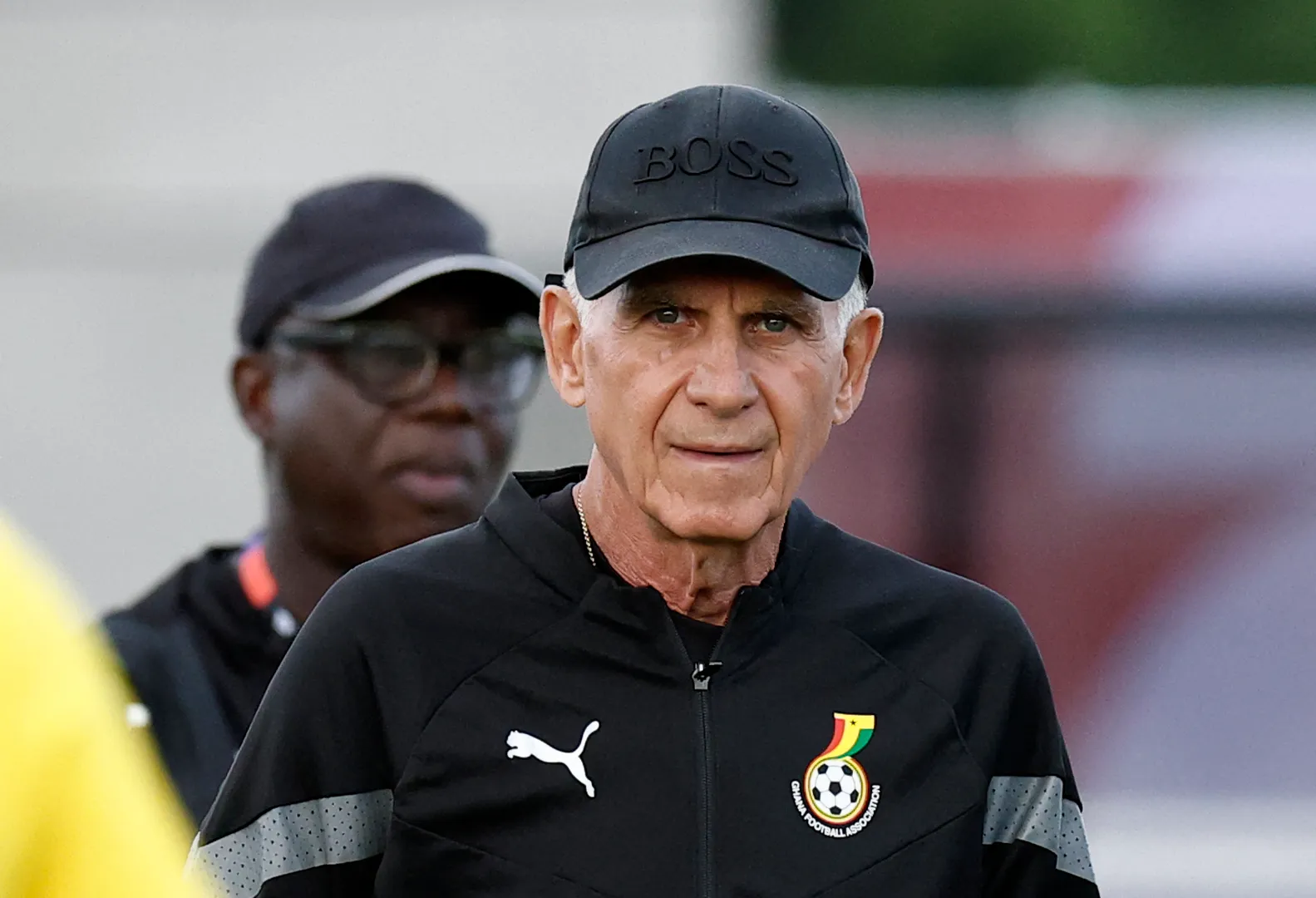
Carlos Queiroz quit the job after leading Ghana to the World Cup Round of 32 but has returned for an interim period.
Published On 3 Sep 20263 Sep 2026
Carlos Queiroz has been reappointed Ghana coach for an indeterminate period, two months after stepping down in the wake of the country’s FIFA World Cup campaign.
The Ghana Football Association (GFA) said on Wednesday the 73-year-old Portuguese coach would “embark on a new coaching mandate, commencing with the upcoming international window”.
Recommended Stories
list of 4 itemsend of list
“The GFA believes Queiroz’s extensive international experience, technical expertise, and knowledge of the Black Stars position him strongly to lead the team into this next chapter,” the association said in a statement.
The experienced former Iran, Portugal, Colombia and Egypt coach guided the Black Stars to the round of 32 at the World Cup despite having only a couple of months to prepare them for the tournament.
Ghana were left without a coach 72 days before the World Cup kickoff after parting company with Otto Addo following friendly defeats by Austria and Germany in March.
Ghana are scheduled to play home and away group matches against Ivory Coast in qualifying for the 2027 Africa Cup of Nations during the next international window, which runs from September 21 to October 6.
Queiroz led Portugal to the round of 16 at the 2010 World Cup and later coached Iran in the last three editions of the tournament, recording three wins in 13 matches.
Born in Mozambique, the former goalkeeper has also held coaching positions with Egypt, Japan, Colombia and South Africa, and previously led Portugal in the early 1990s.
Katie Price is divorcing Lee AndrewsCredit: Louis WoodThe pair married in a surprise ceremony in Dubai eight months agoCredit: wesleeeandrews/instagram
Katie has vowed never to visit Lee in Dubai againCredit: wesleeeandrews/InstagramShe hasn’t seen Lee in two monthsCredit: wesleeeandrews/instagram
The Sun revealed exclusively tonight that Katie had quietly consulted a top London divorce lawyer about ending her marriage.
She discovered he only had £2.22 in his crypto bank account — not the £37million he had promised her.
Katie told a pal on Tuesday: “I have come to my senses — Lee has lied and lied and lied. I am sick of it. It is over.”
A source added: “The marriage is done. She will never go to Dubai to see Lee again.
“It was, of course, an accumulation of many things but the final straw came after Lee had told Katie he had $50million (£37million) in a crypto wallet, and promised her some of the funds.
JANUARY 23, 2026: Katie announces she is engaged to Andrews just days after meeting him.
JANUARY 25: The former glamour model marries Andrews in a Dubai hotel and shares photographs of their big day with The Sun.
JANUARY 27: Andrews is exposed as a Walter Mitty who faked AI pics with celebrities, lied about top jobs and is on a travel ban.
JANUARY 28: Andrews’ ex Alana Percival and a business associate Crystal Janke warn Katie that Andrews is a conman and urge her to leave him.
FEBRUARY 17: Katie and Andrews legalise their marriage inside Abu Dhabi’s civil family court.
MARCH 3: In an interview with The Sun, Katie insists Andrews isn’t a con artist and claims he showed her proof of his wealth.
MARCH 27: In a shock U-turn, Andrews admits he did lie on his CV and blames his PA.
MAY 17: Andrews is listed as a missing person after telling Katie he was kidnapped in Dubai.
MAY 18: The Sun’s Clemmie Moodie’s bombshell investigation proves Andrews is a con artist after she invests £1,000 with him. And he has still not repaid her.
MAY 27: Katie confirms Andrews has been arrested in Dubai as he calls her from prison.
JUNE 12: Andrews is freed from Al Awir prison and Katie vows to interrogate him over the scam allegations.
JULY 11: Andrews is arrested again in Dubai put back in jail and is told he will need to pay a £120,000 fine to be released.
JULY 17: In a fresh twist, Andrews’ dad Peter is arrested and sent to the same prison over alleged fraud.
JULY 23: Clemmie Moodie releases the Lee Andrews files which expose him once and for all.
AUGUST 31: Katie removes her wedding ring as Andrews remains behind bars.
SEPTEMBER 1: She confirms to pals she is dumping Andrews after gaining access to his crypto account containing just £2.22. Katie calls in top divorce lawyer.
“He gave her the ‘recovery phrase’ — the passkey — to get into his account, and on Monday she had a financial expert access the wallet — and, to her shock, discovered it contained just $3, or £2.22.
“Lee never had $50million; he doesn’t have a bean. The most he ever had on any one day was in March for $14,490 (£10,720) which was sent out the very same day.
“Obviously over the past few months Kate has seen all the damning evidence building up against him — and was always planning her exit once the white noise became unavoidable.
“But after seeing his accounts — as opposed to his AI mock-ups — she lost her s***.
“He has deeply embarrassed her and, more importantly, has scammed, hurt and cheated so many other women. Enough is enough.”
Rob and Michele Reiner’s son Jake Reiner has reportedly tied the knot with fiancée Maria Gilfillan.
The couple got married in a small ceremony in early August, TMZ reported Monday.
The duo has kept the relationship largely out of the spotlight. Jake shared images on Oct. 7, 2025, on Instagram of him and Gilfillan attending a wedding in Las Vegas. They went to the L.A. premiere of Rob’s film “Spinal Tap II: The End Continues” with his entire family in September.
In an interview with ABC7’s Marc Cota-Robles, released Aug. 27, Jake appeared to be wearing a wedding band.
Jake’s representatives did not immediately respond to a request for comment.
Jake’s sit-down interview with ABC7 marked the first time the former reporter spoke to the press after his parents were fatally stabbed in their Brentwood home on Dec. 14, 2025. His 27-year-old sister, Romy Reiner, discovered the bodies and his younger brother, 32-year-old Nick Reiner, was arrested in connection to the crime.
“Every moment that I wake up, I’m reminded of my reality, and you’re living through that every single day,” Jake, 35, told ABC7.
In July, a grand jury indicted Nick on murder charges with special allegations of committing multiple murders and lying in wait, making him eligible for life without parole or the death penalty if convicted. Nick has pleaded not guilty. A pretrial hearing is slated for Sept. 15.
“I don’t care how it’s explained to me. I don’t care what facts come out. I will never understand why this happened,” Jake shared with ABC7, adding that he has not spoken to his brother since his parents’ deaths.
In an essay written by Jake on his Substack in April, he expressed being robbed of many milestone moments following his parents’ deaths. “My parents won’t be at my wedding, they won’t get to hold their future grandchild, and they won’t get to see me have the successful career I’m still seeking,” Jake wrote. “It simultaneously breaks my heart and enrages me.”
Jake wrote that his dad helped him overcome personal obstacles: “No subject was ever off-limits.”
“Whenever I was in a difficult relationship, he would challenge me and say, ‘You need to really think about what draws you to a person like this, and once you figure that out and break that pattern, you’ll find the person who is truly right for you,’” Jake wrote in the April essay. “I’m proud to say I have found that person in Maria, and I couldn’t be more grateful she had the chance to know and love my parents.”
Times staff writer Richard Winton contributed to this report.
WASHINGTON — Army Secretary Dan Driscoll is stepping down after 18 months on the job, the White House said Monday, in the latest departure of a top military leader during the Trump administration.
No reason was given for the departure of Driscoll, who is a friend of Vice President JD Vance, but tensions with Defense Secretary Pete Hegseth have been widely reported. It marks the latest in a series of shakeups of the military leadership, with the Army especially seeing major upheaval.
“Secretary Driscoll has been highly effective in advancing President Trump’s agenda to Make America Strong Again at the Department of the Army by providing outstanding leadership during historic military operations, restoring an emphasis on readiness and lethality, assisting with negotiations between Russia and Ukraine, and more,” White House spokeswoman Anna Kelly said in a statement.
“The United States Army is more powerful than ever thanks to his work alongside the Commander-in-Chief and Secretary of War,” she added.
A U.S. Army official, who was not authorized to comment publicly and spoke on condition of anonymity, said Driscoll spoke with President Trump on the current state of the Army and submitted his resignation. The official did not provide additional details. The Pentagon referred questions to the Army. Driscoll’s resignation was reported earlier Monday by The Wall Street Journal.
Exit follows other Army departures, rollback of drone program
Driscoll’s departure follows the ouster of one of his allies from the Army as well as the rollback of a drone program he had championed. Hegseth had suddenly ousted the service’s top uniformed leader, Gen. Randy George, in April, while the Army’s commander in Europe and Africa, Gen. Christopher Donahue, unexpectedly stepped down in June.
Gen. Christopher LaNeve, who has made a meteoric rise under Hegseth, took George’s place as the Army’s acting chief of staff. Under LaNeve, the service is pulling the plug on a drone modernization program. An Army unit based in Europe was building its own drones before LaNeve directed it to end its efforts and return to being a traditional infantry battalion, officials said in August.
Driscoll was a George ally and lamented his departure, along with both Republican and Democratic lawmakers. He told Congress in April that he and his family drove to George’s house following his resignation “and we all gave him a hug.”
“That being said, the civilian leadership, the design of our system, is that they get to pick the leaders that they want,” Driscoll added.
Republicans and Democrats respond to departure news with praise for Driscoll
Rep. Steve Womack, an Arkansas Republican who had served in the Army National Guard, said on X that Driscoll is “a transformative leader who brought common sense and discipline to the Department of the Army.”
“I had the pleasure of working with him closely, and appreciated how engaged he was from mentoring cadets at West Point to leading the Army at the Pentagon,” Womack wrote. “The Army is better equipped and prepared to tackle emerging threats because of his leadership that strengthened the force while putting our Soldiers first.”
Rep. Jason Crow, a Colorado Democrat and former Army Ranger, told reporters that he worked well with Driscoll despite their policy differences.
“It was actually nice, I will say, having somebody who was smart, that knew the policy, that wanted to do the work, that had a background in these issues,” Crow said, adding that “it’s unfortunate that somebody like that can’t last in this administration.”
Crow, who serves on the House Armed Services Committee and co-chairs the House Army Caucus, said the “Pentagon right now is, in some cases, rudderless,” with so many senior leaders gone. “So, I’m gravely concerned about it,” he said.
Rhode Island Sen. Jack Reed, the ranking Democrat on the Senate Armed Services Committee, said in a statement that Driscoll “worked to transform the Army for the battlefield of the future, and he engaged with Congress candidly and consistently.”
“Secretary Hegseth is cultivating a culture where dissent is punished and competence is secondary to personal allegiance,” said Reed, a former Army officer, while noting that “hundreds of thousands of soldiers are deployed around the world, many in combat zones.”
Driscoll was an unlikely negotiator in Ukraine-Russia war
Driscoll is an Iraq war veteran, tech investor and former adviser to Vance, whom Driscoll met at Yale Law School. When nominating Driscoll in 2024, Trump called him “a disruptor and change agent.”
As Army secretary, Driscoll was tapped for the unusual role of key negotiator to try to end the war between Russia and Ukraine. He was also a major force behind trying to cut the red tape for military contractors to quickly develop more drones and counter-drone capabilities as warfare rapidly changes around the world.
The Senate confirmed him in February 2025, voting 66-28, following an Armed Services Committee hearing that was largely unconfrontational and focused on how the Army could modernize its systems, improve recruiting and beef up the military industrial base.
Driscoll noted that his father and grandfather served in the Army, and he vowed to be a secretary focused on the needs of soldiers. According to the Army, Driscoll served as an armor officer from August 2007 to March 2011, deploying to Iraq from October 2009 to July 2010.
He also ran unsuccessfully in the Republican primary for a North Carolina congressional seat in 2020, getting about 8% of the vote in a crowded field of candidates.
His departure comes after Hegseth ousted several other generals and admirals, including the head of the Navy.
The Pentagon abruptly announced in April that Navy Secretary John Phelan was leaving the job, becoming the first head of a military service to depart during Trump’s second term.
Finley and Madhani write for the Associated Press.
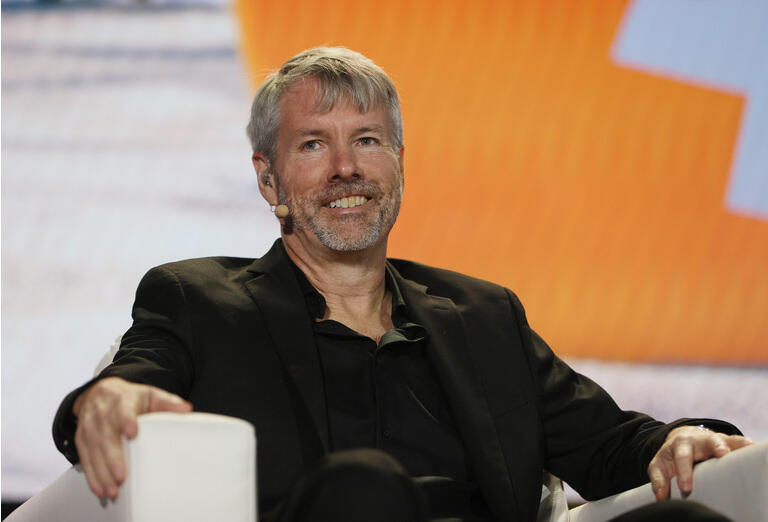
Strategy (MSTR) executive chairman Michael Saylor appeared to signal that the company has made its first Bitcoin purchase since June 22, as Bitcoin (BTC-USD) approached $79K.
Saylor posted “We’re Back” on X, suggesting Strategy may have resumed Bitcoin accumulation after pausing purchases
It has been six months since February 28, when the US and Israel shocked the world by launching missile strikes on Iran, killing Supreme Leader Ayatollah Ali Khamenei and several senior Iranian officials in Tehran, as well as scores of children in a school in Minab, southern Iran.
US President Donald Trump then claimed the conflict would only last “four to five weeks”.
Recommended Stories
list of 3 itemsend of list
In the months since, the war has erupted on several other fronts, reaching as far as the Caspian Sea. It has triggered a global oil supply crisis as the US and Iran battle for control of the strategic Strait of Hormuz, through which more than one-fifth of oil and natural gas cargo transited.
And it has resulted in an estimated 8,000-10,000 deaths, as well as tens of thousands of injuries.
The conflict is also realigning the global order, experts say, as new alliances form and dominant ones show signs of crumbling.
Here’s what we know:
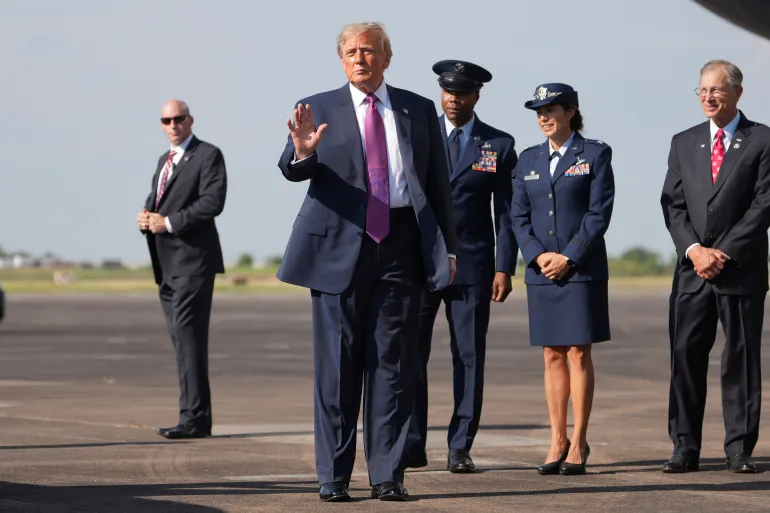
President Donald Trump arrives on Air Force One as Republican Representative Brian Babin, right, looks on, on Thursday, August 27, 2026, at Ellington airport in Houston, Texas [Mark Schiefelbein/AP]
Has the US achieved any of its war objectives?
The US’s goals were not initially clear: officials first claimed the strikes were carried out in preemptive self-defence.
Despite Trump’s claim that the US had “obliterated” Iran’s nuclear capabilities when it joined in at the end of Israel’s 12-day war on Iran in June 2025, the US and Israel again claimed in February that Tehran was just weeks away from developing nuclear weapons.
Repeated strikes on Iran’s nuclear sites during the war have likely caused vast damage to the facilities, but it is believed Tehran still possesses 440kg of highly enriched uranium, which could be used to make a weapon.
The Trump administration wanted Iran to hand over this stock to the US and to commit to zero enrichment of uranium going forward. Iran refused to do this, although at one point appeared open to the possibility of handing the stock over to a third country. Iran also insisted on retaining the capacity to develop a nuclear power programme, which requires much lower levels of uranium enrichment.
Later, Trump briefly floated the idea of US troops retrieving the stock by force – a potentially dangerous mission.
In the June 17 memorandum of understanding (MoU) signed by both sides, Iran agreed not to pursue a nuclear weapon – something it had always pledged anyway. The MoU unravelled as its vague wording led to disagreements about what it actually stipulated.
Clark Summers, a US military veteran and professor at Belmont Abbey College in North Carolina, said the US “can rightly assert that these ends have been achieved. Although for how long before Iran can rebuild is difficult to assess.”
But Iranian expert and professor at the Australian National University (ANU), Alam Saleh, disagreed, and noted that Iran’s nuclear power programme is still intact. “The US lost even before the war,” he said, adding that the effort also shows that Washington failed in last year’s 12-day war.
Regime change in Iran
On day one of the war – February 28 – the US killed Khamenei alongside several other senior officials. Trump, two days earlier, said regime change is “the best thing that could happen”.
As the US launched missiles, he also called on “Iranian patriots who yearn for freedom to seize this moment to be brave, be bold, be heroic, and take back your country”.
Iran’s political leadership has, however, remained largely the same under the new Supreme Leader Mojtaba Khamenei – the late ayatollah’s son.
Summers told Al Jazeera that the goal may have been “ad hoc” or improvised rather than well-planned. But “killing leaders does not mean strategic achievements, even if it’s a tactical success,” Saleh said.
Ending support for regional proxy groups
Iran’s “axis of resistance” is an umbrella comprising a number of armed groups around the region that it funds. This includes Hezbollah in Lebanon, the Houthis in Yemen, Hamas in the Gaza Strip, and several smaller groups in Iraq and Syria.
There are no signs that Tehran’s support for them has ended, and this demand did not appear in the MoU signed by the US.
Hezbollah went to war with Israel in Iran’s defence, and Iran has refused to negotiate an end to the war unless the Lebanon front is included. The Houthis, meanwhile, have launched a blockade on Saudi Arabia in the Bab al-Mandeb Strait, partly in support of Iran.
Iran’s ballistic missiles programme
Washington swore it would “raze” Iran’s missile facilities to the ground when it launched the war on February 28. The US also pledged to destroy Iran’s navy.
Trump has since claimed that about 82 percent of Iran’s missiles are gone and the navy is degraded.
In April, he also said that 158 Iranian naval vessels had been hit, while US Central Command (CENTCOM) has continued to announce dozens of strikes on command centres of the Islamic Revolutionary Guard Corps (IRGC).
Iran, however, has continued to fire missiles, most recently launching a long-range missile in July that killed three US soldiers in Jordan.
Furthermore, the demand for an end to Iran’s ballistic missiles programme was also absent from the July MoU.
Control of Iranian oil
In June, Trump said the US would seize and control Iran’s Kharg island, the heart of Iranian oil production.
To date, the US does not control any Iranian territory.
What have the US and Iran gained and lost during the war?
Besides the US demands at the start of the war, several other pressure points have emerged during the conflict.
Control of the Strait of Hormuz
Soon after the war began, Iran in effect closed the narrow but critical Strait of Hormuz, which passes through its territorial waters as well as those of Oman. Since then, shipping traffic has slumped from more than 100 ships per day to an average of about five.
To enforce this closure, Iran began striking vessels in the strait, the only route to the open ocean for Gulf oil and gas producers, which had not gained its explicit permission to pass through.
The US responded with its own naval blockade on Iranian ports in and around the strait. This is continuing.
Despite a large number of expletive-laden demands from Trump since then – many of them on social media – that Tehran reopen the strait, Iran has not budged. It is currently negotiating plans for the future of the waterway, through which more than one-fifth of the world’s oil and natural gas supplies were shipped before the war, with Oman.
As part of these negotiations, Iran announced this week that it has agreed to a shipping route, which it will partially control, with Oman.
While Trump has recently claimed that the US has “full control” of the strait and that it is open to vessels, shipping remains at an all-time low and Iran has continued to fire at any vessels trying to pass without its permission.
Iran sees the strait as its main piece of leverage in the war with the US, which Salah said, Iran views as an “existential threat”.
(Al Jazeera)
Economic impact
Iran: The war’s impact on Iran’s economy has been severe. The Iranian rial has in effect collapsed. Food prices have surged amid the war, and the US blockade and renewed sanctions have hampered Iranian oil exports, with the blockade cutting oil revenue by at least $6bn. Tehran’s economy has long been battered by US sanctions, although the fragile ceasefire provided temporary relief. Iran’s Foreign Minister Abbas Araghchi said last week that economic pressure is a “rerun we know by heart” and that the country knows how to survive it.
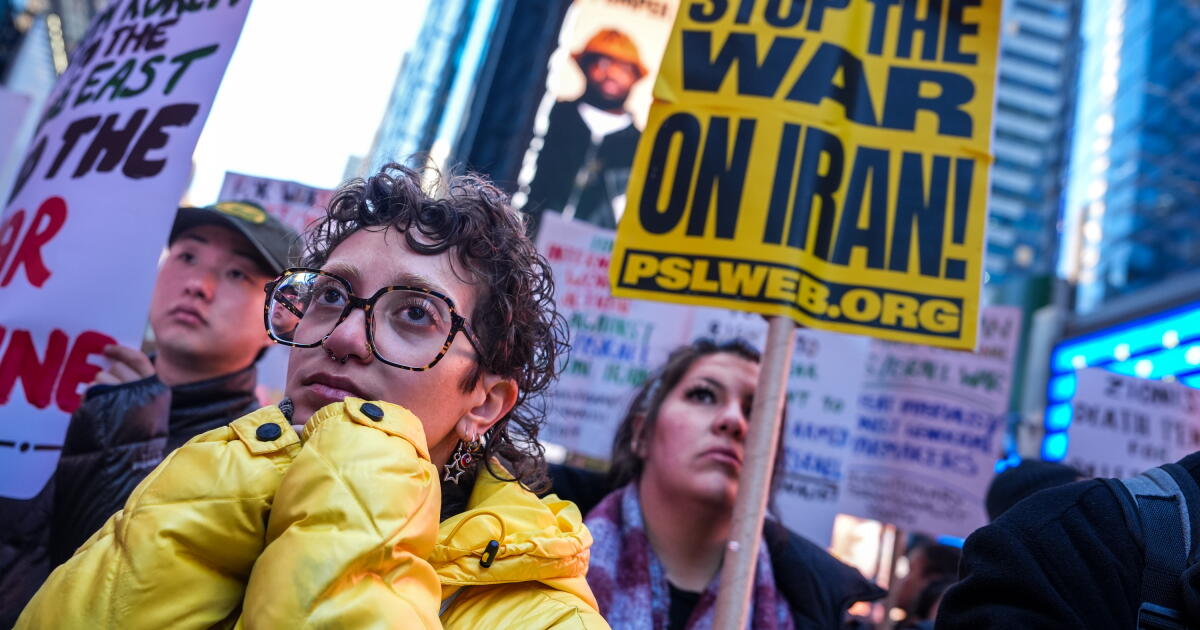
US: US consumers have also felt the pressure of the war at the petrol pump, making the conflict highly unpopular. A July poll by The Associated Press revealed that two-thirds of Americans are against the conflict. While many tend to forget there’s a war, Summers said, they do remember it acutely when petrol prices rise. In states like California, gasoline prices doubled. That anger will likely translate into a political backlash against Republicans in November’s midterms, experts say.
Relations with allies
Iran: Iran’s targeting of US military assets as well as both military and nonmilitary infrastructure in neighbouring Gulf states and Jordan has not made it popular regionally, experts note. Iran has hit infrastructure in Qatar, the United Arab Emirates, Saudi Arabia, Jordan, Iraq, Kuwait, Oman and Bahrain. Those states have called this a violation of their sovereignty. However, Iran’s economic and political ties with China have held, as Beijing has managed a delicate dance by advocating against sanctions on Iran while refraining from becoming fully entangled in the conflict. Trade relations with Russia also remain strong.
US: The US has faced reluctance from its NATO allies to back it up in this war. Despite being asked directly by Trump, they have refused to join the war. Spain and Italy, in particular, have highly criticised the conflict, while Germany, Israel’s strongest ally in Europe, has done the same. France rejected calls to send warships to enforce the blockade. Gulf allies, Pakistan and Turkiye have all similarly refused, while in Asia, Japan, Australia and South Korea all declined to get involved. Gulf allies are also likely weighing the fact that it is the US’s war on Iran which has caused them to become targets.
Military capabilities
Iran: US experts say that claims Washington has degraded Iran’s military capabilities are correct. Several army bases have been struck while Iran’s ballistic missile stockpiles are down by about 82 percent, according to Trump. However, Iran is still launching missiles and, while nuclear facilities have been damaged, it still has possession of its enriched uranium stockpile. Experts point out that Iran likely has a bigger appetite for an atomic weapon now than before the war began. Tehran has also continued to produce and deploy its mass-produced, cheap Shahed drones. An estimated 1,221 military personnel were killed by April, although the real toll is likely higher.
US: The US has lost 18 soldiers and more than 750 have been wounded. That’s “quite low”, Summers said. However, US media reports suggest the Pentagon has severely depleted stockpiles of some of its most powerful and most expensive weapons – particularly its Patriot defence missiles – something Washington denies. Those missiles are only produced in the dozens annually and cost millions of dollars each. In August, the US signed a $22.9bn deal with manufacturer Raytheon to boost Tomahawk cruise missile production from 60 to more than 1,000 annually.
Is there an outright ‘victor’?
Observers say there is not.
“Both of them have not achieved anything,” Saleh of ANU said, noting that the US has failed to translate military superiority to actual gains despite being a “superpower” fighting a “middle power”.
China and Russia are likely observing Washington’s weaknesses, making new military calculations in the event of a future conflict with the US, he said. That has implications for Taiwan, especially as the US has now deployed its last aircraft carrier in the Pacific to the Middle East. The shift leaves the US without an aircraft carrier in the Western Pacific, despite Washington’s previous strategic emphasis on the region.
“Iran surviving also does not mean it’s a winner,” however, Saleh said. “This might be a defeat for the US, but it’s not a victory for Iran either.”
WASHINGTON — For the last six months, President Trump has attempted to control the narrative of the Iran war.
As days, weeks and months passed, he repeatedly said that an agreement to end the conflict was close at hand and that Iran was already defeated. Between fraught negotiations, Trump has gone from conciliatory to antagonistic, characterizing Iran’s new leadership as more “rational” than their predecessors, only to later call them “sick individuals.”
There have even been times the commander in chief contradicted himself and his own Cabinet in the same week — and sometimes, the same day.
Friday marks the sixth month of the war launched by the U.S. and Israel. Among U.S. forces, there have been at least 18 killed and 758 wounded, according to Pentagondata. The Human Rights Activists News Agency puts the death toll in Iran at 3,636. In Lebanon, officials, say more than 4,300 have died. The Israeli military reported 72 deaths, and at least 50 civilians have died, according to news reports.
Here is a recap of notable comments Trump made in public remarks and on social media during half a year of war:
What he said: “The United States military has undertaken a massive and ongoing operation to prevent this very wicked, radical dictatorship from threatening America and our core national security interests.”
In announcing the start of Operation Epic Fury from the White House, Trump called Iran the world’s No. 1 state sponsor of terror and recalled actions by Iran or its proxies, such as the hostage crisis of 1979 and the bombing of a Marine barracks in Lebanon in 1983 that left 241 dead.
The goals of the operation, Trump said, were to destroy Iran’s nuclear ambitions, its naval capabilities and missile industry and to ensure that Iranian proxies — including Hezbollah and Hamas — were thwarted. He implored Iranian citizens to rise up against the government.
Women carry the casket of a teacher from Shajareh Tayyebeh Elementary School toward the cemetery in Minab, Iran, on March 30. The teacher was among those killed in a missile strike on Feb. 28, the first day of the war on Iran.
(Zohreh Saberi / For The Times)
What happened: That morning the U.S. and Israel conducted airstrikes on Iran, killing Supreme Leader Ayatollah Ali Khamenei as well as other key military and government figures. According to Iran’s Red Crescent, 24 of Iran’s 32 provinces were hit in the first day of bombings, with more than 200 deaths and 700 injuries reported. Iranian officials said that at least 120 students and 26 teachers died in a missile strike on Shajareh Tayyebeh Elementary School in Minab.
Iran retaliated by launching missiles at Israel and U.S. bases in Saudi Arabia, Iraq, Jordan, Kuwait, Bahrain, Qatar, United Arab Emirates. The Islamic Revolutionary Guard Corps also warned ships to not travel through the Strait of Hormuz, the passageway for 20% of the world’s oil and energy supplies.
What he said: “We grieve for the true American patriots who have made the ultimate sacrifice for our nation, even as we continue the righteous mission for which they gave their lives. Sadly, there will likely be more.”
In an interview with the New York Times, Trump was asked how long the U.S. and Israel could sustain its offensive in Iran. “It won’t be difficult,” he replied. “We have tremendous amounts of ammunition. You know, we have ammunition stored all over the world in different countries.”
What happened: An Iranian one-way drone attack was launched against the industrial Port Shuaiba in Kuwait, where American soldiers set up an operations center after abandoning the larger Camp Arifjan military installation.
What he said: “We projected four to five weeks, but we have capability to go far longer than that.”
At a Medal of Honor ceremony at the White House, Trump assessed the progress of the attacks on Iran, saying the U.S. was “already substantially ahead of our time projections.”
Retired Command Sgt. Maj. Terry P. Richardson is presented the Medal of Honor by President Trump on March 2, the same day Trump said progress in the war on Iran was exceeding projections. ..
(Win McNamee / Getty Images)
What happened: The conflict expanded, with Iran-backed militant group Hezbollah in Lebanon launching drones against Israel.
Israel’s counter-strike would ultimately decapitate Hezbollah leadership, but strikes between the two forces would continue through the first week of war.
U.S. Central Command increased the number of U.S. troop deaths in the Kuwait strike to six from three.
What he said: “The war itself is going unbelievably. It’s as good as it can be.”
He said that the U.S. “wiped out” the Iranian navy, air force, drone manufacturing capabilities and “every form of leadership you can have,” adding that he was interested in being a part of the selection of Iran’s new leader.
He also said that he believed the strike on the Minab school was a misdirected missile launched by Iran. He offered no evidence.
The family of 8-year-old Reza Habashian, a second-grader killed in the strike on Shajareh Tayyebeh Elementary School, observes the Persian New Year at his graveside in Minab, Iran, on March 20.
(Zohreh Saberi / For The Times)
What happened: Iranian drone and missile strikes on gulf neighbors continued.
The day after Trump said Iranians had no existing leadership prospects, Mojtaba Khamenei, one of Ayatollah Ali Khamenei’s sons, would become the new supreme leader.
U.S. officials familiar with the preliminary findings of an investigation into the Minab school strikes leaked information to the New York Times that indicated the U.S. had bombed the school as a result of a “targeting mistake.”
What he said: “Watch what happens to these deranged scumbags today. They’ve been killing innocent people all over the world for 47 years, and now I, as the 47th President of the United States of America, am killing them. What a great honor it is to do so!”
In a Fox News radio interview with Brian Kilmeade, Trump said that an uprising by Iranian civilians appeared likely. “It’ll happen, but it probably will be, maybe not immediately,” he said.
What happened: Iran and Hezbollah continued joint attacks against Israel, while Israel continued its own large-scale strikes on Beirut and Tehran.
On March 13, a U.S. Air Force KC-135 Stratotanker — a refueling and airlift plane — crashed over Western Iraq without being attacked, resulting in the death of six more U.S. service members, Central Command announced. The U.S. death toll increased to 13.
What he said: “I think we won. All they’re doing is clogging up the Strait [of Hormuz], but from a military standpoint, they’re finished.”
Lightning streaks across the sky over an oil tanker on March 21 at Sultan Qaboos Port in Muscat, Oman.
(Elke Scholiers / Getty Images)
That same afternoon, in a post on his social media website, Trump said the U.S. was considering “winding down” military efforts in Iran.
What happened: The Pentagon said in a statement that it would send three warships and roughly 2,500 Marines to the Middle East for “routine training.”
What he said: “I am pleased to report that the United States of America and the country Iran have had, over the last two days, very good and productive conversations regarding a complete and total resolution of our hostilities in the Middle East.”
Trump also postponed military strikes against Iranian power plants and energy infrastructure after threatening to do so if Iran did not open access to the Strait of Hormuz.
What happened: Mohammad Bagher Qalibaf, Iran’s parliament speaker, responded to Trump’s claims in a post on X. “No negotiations have been held with the U.S.,” Qalibaf wrote, adding that he believed the U.S. was using the prospect of an accord to ease strain on financial and oil markets.
What he said: “The United States of America is in serious discussions with A NEW, AND MORE REASONABLE, REGIME to end our Military Operations in Iran.”
Iranian Foreign Ministry spokesman Esmail Baghaei, addressing journalists in Tehran on March 30, said a truce plan proposed by the United States contained “very excessive, unrealistic and unreasonable” demands.
(Shadati / Xinhua / Getty Images)
While saying in a social media post that progress had been made, Trump leveled additional threats if a pact wasn’t reached shortly. “We will conclude our lovely ‘stay’ in Iran by blowing up and completely obliterating all of their Electric Generating Plants, Oil Wells and Kharg Island,” he wrote.
What happened: Iranian Foreign Ministry spokesperson Esmail Baghaei once again rejected that direct talks with the U.S. had taken place, describing the proposed terms as “unrealistic, unreasonable and excessive.”
What he said: “We’re gonna hit them hard over the next two to three weeks. We’re gonna bring them back to the stone ages, where they belong.”
In an address to the nation, Trump also denied that a change of governments was ever a goal in attacking Iran.
What happened: Thousands more U.S. troops arrived in the Middle East amid continuous back-and-forth strikes. Iran hit an oil tanker off Qatar’s coast and fired missiles and drones at Jordan, which were intercepted. Israel carried out strikes on a Beirut neighborhood.
What he said: “A whole civilization will die tonight, never to be brought back again. I don’t want that to happen, but it probably will.”
Vice President JD Vance holds a cellphone up to a microphone while on a call with President Trump at an event on April 7..
(Jonathan Ernst / Pool Photo)
What happened: Trump’s post about a whole civilization dying went live around 5 a.m., but later in the day the U.S. and Iran announced a two-week truce. Iran’s Supreme National Security Council said in a statement that the truce did not “signify the termination of the war.”
What he said: “Effective immediately, the United States Navy, the Finest in the World, will begin the process of BLOCKADING any and all Ships trying to enter, or leave, the Strait of Hormuz.”
What happened: U.S. Central Command announced that the blockade of Iranian ports began at 10 a.m. Eastern. Central Command said the blockade would be “enforced impartially against vessels of all nations” entering or departing Iranian ports and coastal areas.
People pass in front of a pro-government political mural in Tehran on April 12.
(Majid Saeedi / Getty Images)
What he said: “I think it’s close to over, yeah. I view it as very close to being over.”
Trump’s comment to Fox Business anchor Maria Bartiromo on “Mornings with Maria” came two days after he announced the blockade of Iranian ports.
What happened: Though the ceasefire continued to hold, Iran officials had not relented on their right to enrich uranium, to maintain conventional defensive capabilities and to police traffic through the Strait of Hormuz.
What he said: “I didn’t guarantee no war. Why would I have built the strongest military in the world?”
In an interview with Kristen Welker of NBC on the 100th day of the conflict, Trump claimed that he had never promised during his campaign that he would not engage in new wars in the Middle East.
President Trump sits for an interview with NBC’s Kristen Welker.
(Adam Bettcher / NBC / Getty Images)
What happened: On multiple occasions during his 2024 presidential campaign, Trump suggested that he wouldn’t start new “endless wars.”
In a social media post in late June 2024, he framed the election as a choice between “peace and prosperity or war and no war.”
What he said: “It’s a memorandum of understanding, and if I don’t like it, we’ll go back to shooting at them, dropping bombs on their head.”
Trump spoke the same day he signed a 14-point Memorandum of Understanding with Iran to cease hostilities for 60 days. Trump put his signature to the memorandum while attending a dinner with French President Emmanuel Macron in Versailles.
French First Lady Brigitte Macron, President Emmanuel Macron and President Trump meet at the Palace of Versailles in France on June 17.
(Mustafa Yalcin / Anadolu / Getty Images)
What happened: The document set out a series of conditions, including the release billions of dollars in Iranian assets that were frozen and restricted by the United States “upon the implementation” of the memorandum.
Some issues, such as the future of Iran’s nuclear program, were set aside for negotiations down the road.
The White Housed pushed back on bipartisan criticism of the deal, arguing its concessions were contingent on Iran’s conduct.
What he said: “There may come a point when we are no longer able to be reasonable, and will be forced to militarily complete the job that we very successfully started. If that happens, the Islamic Republic of Iran will no longer exist!”
President Trump boards Air Force One on Aug. 9 at Morristown Airport in Morristown, N.J.
(Eric Lee / Getty Images)
What happened: Trump’s social media post came as Iran and the U.S. continued to carry out strikes in the Middle East despite the memorandum. CENTCOM announced that military surveillance, air defense sites and drone storage facilities were struck after an Iranian attack on a container ship, the Ever Lovely.
What he said: “Iran has been very, very badly damaged. They’ve lost everything, almost, militarily. … They’ve got very little left; They’ve got some missiles; They’ve got some drones; They’ve got some manufacturing ability, not much; We control the Strait.”
People gather July 19 on a bridge rendered unusable in a U.S. airstrike in Iran’s Hormozgan province. Iranian authorities said the United States carried out attacks on 95 locations in Iran over the previous 10 days.
(Amir Hossein Khorgooei / Anadolu / Getty Images)
What happened: According to a CENTCOM press release, the U.S. completed 13 nights of consecutive strikes against Iran by July 23, adding to an earlier announcement that Iran had attacked more than 30 commercial vehicles in the previous three months of conflict.
Trump made the comment in the Oval Office while back-and-forth strikes — primarily over control of the Strait of Hormuz — continued.
What happened: According to a report by NPR, Iran’s parliament aimed to block U.S. and Israeli access to the Strait of Hormuz, despite Trump’s assertion that the waterway was under his control.
What he said: “We are only semi-negotiating with them. We are just watching Iran with its huge inflation and the fact they have no money.”
Trump’s comments reflected how U.S. officials sought to readjust wartime strategy after multiple rounds of failed negotiations. Trump told Axios that he would not proceed with expanded strikes against Iran, as the U.S. was “low-keying” its approach to the conflict.
What happened: As the war approached its six-month mark, both sides mostly ceased military attacks, but shifted to economic pressure.
“ANY country that allows its financial institutions, businesses, airports, or government entities to provide any type of lifeline to Iran will itself face TREMENDOUS Economic Consequences,” Trump wrote in an Aug. 19 post, threatening “ECONOMIC D-DAY” if Iran did not comply with his demands.
According to Reuters, Qalibaf, the Iranian parliament speaker, said that the Strait of Hormuz would remain closed until military threats ceased and sanctions on Iran were lifted.
What happened: In a post on X three days before Trump’s “completely collapsing” post, the hard-line leader of Iran’s Supreme National Security Council had noted economic sanctions placed on Iran by previous presidents, including Obama and Biden, and said they had all failed.
“We have seen this movie before,” he wrote. “Same bull. Different bullies.”
Iranian President Masoud Pezeshkian and other officials attend an event at the mausoleum of Ayatollah Ruhollah Khomeini, the founder of the Islamic Republic of Iran, in Tehran on Aug. 23.
BETHLEHEM, Pa. — Mike Gibbons sat out the presidential election two years ago, frustrated that Democrat Kamala Harris did not take a stronger stand against Israel’s war in Gaza and unable to bring himself to cast a vote for Republican Donald Trump.
That is not his plan this year.
The 33-year-old restaurant server in this eastern Pennsylvania town that once housed one of the world’s largest steelmakers is eager to vote for any Democrat he can in November. As the war with Iran that Trump initially said would last weeks surpasses six months on Friday, Gibbons is feeling the fallout every time he fills his tank at nearly $1 per gallon more than last year.
“The price of gas affects the price of everything and the price of everything’s up and my pay hasn’t gone up,” he said. “I’m doing blue no matter who this time.”
The Iran war has reshaped the rapidly approaching midterm elections, undermining Trump’s campaign pledge to steer clear of foreign conflicts and challenging Republicans who would rather focus on their tax cuts as they cling to narrow majorities in Congress.
While the president’s supporters are undeterred, the war’s unpopularity and economic ripple effects could tilt the scales in tightly contested U.S. House districts like the one in Bethlehem, where Republican Rep. Ryan Mackenzie is one of this year’s most vulnerable incumbents.
Midterm elections are always difficult for the party in power in Washington. But interviews with voters around the country show how a war that Trump expected to end with a swift victory could undermine the final years of his presidency.
Many U.S. adults say the war has not been worth fighting
About two-thirds of U.S. adults say the war with Iran has not been worth fighting, according to a July poll from The Associated Press-NORC Center for Public Affairs Research. That includes the vast majority of Democrats and independents, as well as more than one-third of Republicans.
Although Trump has long criticized Iran’s leadership, he did little to prepare Americans or allies for such a lengthy conflict. Republican President George W. Bush, for instance, spent more than a year making a case for launching a war in Iraq through speeches and attempts to build an international coalition. Trump did none of that.
Trump has refused to acknowledge the war’s cost, saying this month he would “never apologize” for higher prices stemming from it and insisting he did “the right thing” to prevent Iran from obtaining a nuclear weapon. His administration announced new sanctions this week in an attempt to further isolate Tehran.
In Congress, Republicans have shifted from initially cheerleading Trump’s moves in Iran to expressing concern about the toll of the war. But the party has largely unified to block measures that would curb Trump’s war powers and leaders have shown no interest in cutting off money for the war, preferring to portray Democrats as extremists who cannot be trusted to govern.
Democrats who were blamed just two years ago for presiding over high prices see an opportunity to turn the issue back on their opponents. As part of his comeback U.S. Senate bid in Ohio, Sherrod Brown released an ad this week filmed at a gas station as he said “the cost of gas is out of control and we’re the ones paying for it.”
Speaking to a group of older adults recently in a Republican-dominated swath of western Maryland, Democratic U.S. Sen. Angela Alsobrooks blamed higher prices on the war. Heading into November, she encouraged fellow Democrats to stay focused on the war’s impact and what it says about Trump’s leadership.
“We ought to be saying what is obvious, which is our country is heading in the wrong direction,” she said in an interview.
That resonates with voters such as Brandon Bane, a fast-food worker in Bakersfield, California, where Republican Rep. David Valadao is also in a competitive congressional race. Bane, who described himself as a political independent, said he often has to balance paying rent and groceries, noting high gas prices have only added to the challenge.
“It hasn’t been worth it at all,” he said of the war, adding that he plans to vote for Valadao’s challenger, Democrat Randy Villegas.
Melissa Wegman, a Democratic retiree who is also from Bakersfield, said she was shocked when the pump recently whirled to $128 to fill the tank on her SUV.
“I have to manage a budget,” she said.
Some voters are sticking with Republicans
But there is a risk, too, that the war does not provide Democrats with the political boost they are expecting.
While there is plenty of frustration about prices, there are also voters willing to make adjustments without blaming Republicans. Many remain aligned with Trump and are not interested in seeing Democrats return to power.
North Carolina is a top pickup opportunity for Democrats hoping to flip a U.S. Senate seat. But at the State Farmers Market in Raleigh, North Carolina, Lucienda Lowe of Sugarloaf Orchards said her faith in Trump is solid.
“There has to be a reason why they’re over there,” she said. “They wouldn’t be over there doing that if there wasn’t something more going on than what we’re seeing.”
She has not raised her prices on apples even as fuel and fertilizer costs soar. Her family has been farming since 1846 so she feels resilient to weather the next rough patch and tells others to do the same.
“Suck it up, buttercup,” she said.
Similarly in Iowa, where Democrats are bullish on their prospects of flipping everything from a U.S. Senate seat and the governor’s mansion to several U.S. House races, Larry Cole said higher gas prices as a result of the war are just the “nature of the beast.”
The 66-year-old Republican service manager from Perry, Iowa, said he will back Republicans in this midterm elections and does not want to see Democrats gain control in either chamber. He said Trump has taken action that other presidents were not willing to do to keep Iran in check.
Trump “hit them where they need to be hit,” Cole said.
Mark Duffy, 65, of Scottsdale, Arizona, said he did not expect the Iran war to go on as long as it has, but it has not had material effects on his life.
“I didn’t think it would go this long,” said Duffy, who retired a year ago from his career selling electronic components. “I don’t think anybody did, but now the next wave is the economic sanctions, so we’ll see if that works and maybe that is a way for other people to join.”
For others, the war has only reinforced a sense that neither political party is responsive to the needs of voters.
As he left a tattoo parlor in Ashland, Virginia, 26-year-old Evan Mise said he feels the increase in gas prices and worries about whether his mom will be able to retire or whether he will someday be able to.
But he had not decided whether to support Democrats or Republicans in November.
“I feel like our government is pretty corrupt through and through,” he said. “It’s kind of just a sit-back-and-watch thing. And I think my generation especially feels helpless.”
Catalini and Sloan write for the Associated Press. Sloan reported from Washington. AP writers Allen G. Breed in Raleigh, N.C., Michael R. Blood in Bakersfield, Sarah Rankin in Ashland, Va., Jonathan J. Cooper in Scottsdale, Ariz., and Hannah Fingerhut in Des Moines, Iowa, contributed to this report.
The Iran war is settling into attrition, with no regime collapse and Gulf economies facing growing uncertainty
Analysts broadly agree the United States and Israel’s war on Iran will not see regime collapse in Tehran or a definite victory for Washington, but rather a dragged-out affair of stagnation and attrition.
The hope among the US leadership at the start of the war, which began after surprise Israeli and US attacks on February 28, was that mounting economic and military pressure on Iran would force a structural shift in Tehran. Six months on, it is clear this vision will not come about, and instead many are preparing for a protracted war and managed fallout.
Recommended Stories
list of 4 itemsend of list
Oil-dependent economies are still absorbing supply shocks after traffic in the Strait of Hormuz slowed to a trickle of pre-war levels following Iran’s attacks on shipping and a US blockade on Iranian ports.
The US military is still entrenched in a region that remains its most militarised in years. Although the war’s intensity has lessened since a memorandum of understanding (MoU) was signed by Washington and Tehran in June, there is no sign it will conclude, leading to continued uncertainty about the future.
Existing tensions, such as those between the Houthi rebels and Saudi Arabia in Yemen, look only set to increase as the war drags on. The influence of rival powers, such as those of India and China, remains stalled rather than stopped, with Beijing’s Belt and Road Initiative having already established itself within the Middle East and North Africa. All in all, the region remains in flux where formal alliances with outside powers no longer guarantee safety.
The defence agreement between Turkiye, Pakistan and Saudi Arabia recently signed in Mecca will likely be the first of many such military pacts agreed in the region.
“The war has just accelerated trends, but hasn’t really started anything that wasn’t already under way. The Gulf countries were already diversifying their economies,” Sanam Vakil, director of the Middle East and North Africa Programme at Chatham House, told Al Jazeera. “Many were already looking at broadening their defence partnerships beyond existing US security guarantees, as well as increasing their own defence capability.”
Israel, for its part, is still pursuing its regional project of “paramountcy”, HA Hellyer of the Royal United Services Institute said, despite its failure to bring Iran to its knees this year.
“There is no chance of the government in Tehran falling in the next six months,” Hellyer told Al Jazeera. “If everything were to theoretically stay the same … with just increased economic pressure, that could eventually cause a ripple effect that could lead to state collapse in Iran. But we’re talking years, not months, and everything is not likely to stay the same.”
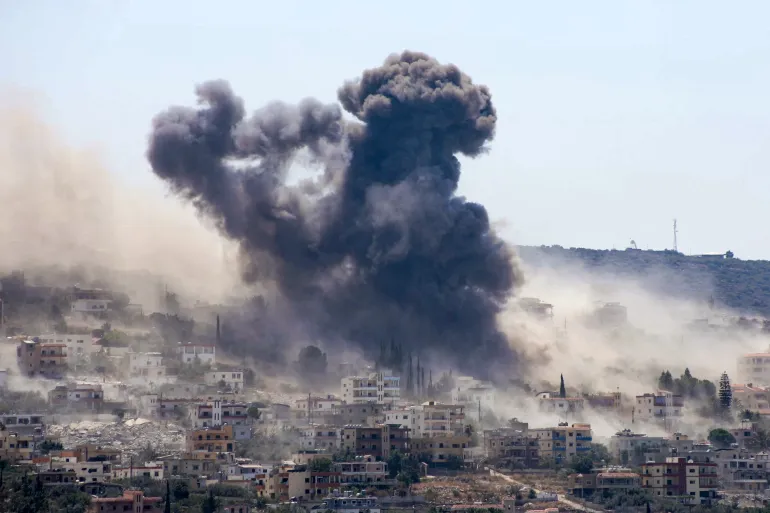
Smoke rises from the site of a string of Israeli air strikes that targeted the area of al-Mansouri, as seen from the southern Lebanese city of Tyre on August 25, 2026 [Kawnat Haju/AFP]
The effective closure of the Strait of Hormuz and strikes on regional cities have hindered Gulf states’ plans to use oil revenues as an engine to diversify their economies and build on their reputations as a safe haven to encourage investors.
Shipments of oil, derivative products and liquefied natural gas (LNG) have been repeatedly and severely disrupted since the US and Israel launched their attacks on Iran in February.
Transit through the Bab al-Mandeb Strait, which saw attacks on shipping by the Houthis during Israel’s genocidal war on Gaza, became even more hazardous in July, when the Iran-allied Houthis declared a naval blockade of Saudi Arabia.
“The price of oil has increased broadly in line with the Gulf states’ difficulties in exporting it,” John Sfakianakis, chief economist at the Gulf Research Center, told Al Jazeera. “Is this going to go for six months? Is it going to go on for longer?”
Exacerbating the Gulf states’ difficulties is that, although the price of oil has risen, so has inflation. In addition to the economic difficulties the war has created, there is also growing pressure for Gulf states to invest more in defence.
For now, the majority of the states caught in the middle will look at ways of living with the turmoil and managing the consequences.


















![A photograph taken from the southern Lebanese city of Tyre shows smoke rising from the site of a string of Israeli airstrikes that targeted the area of al-Mansouri on August 25, 2026. [Kawnat Haju/AFP]](https://i0.wp.com/www.aljazeera.com/wp-content/uploads/2026/08/AFP__20260825__C6G72NK__v3__HighRes__LebanonIsraelUsIranWar-1787675105.jpg?w=640&ssl=1)