Chinese media and think tanks view the United States’ hosting of the FIFA World Cup from a purely geopolitical, economic, and commercial perspective, critically assessing the infrastructure and political climate. Chinese circles see the tournament not merely as a sporting event but as a central tool for the United States to polish its image, bolster its global leadership amidst current international polarization, and advance its political agenda. This perspective is highlighted through several key points, the most important being the geopolitical dimension. Here, Chinese think tanks argue that the tournament reflects the level of competition between major powers, with Washington attempting to use hosting as a soft power tool to project its influence. However, Chinese media, in turn, emphasized the state of sharp international polarization and division, criticizing the political challenges and the wrangling that accompanied the broadcasting negotiations. Furthermore, a number of (commercial considerations) have been raised, with the tournament facing criticism from Chinese media due to its exorbitant cost and the significant time difference between North America and China, leading to a decline in Chinese public interest. This hesitation was reflected in the negotiations, as FIFA incurred financial losses after China Media Group (CMG) signed the broadcasting agreement late and at a price significantly lower than FIFA’s requested.
Regarding the (organizational and policy challenges), Chinese research and media institutions expressed reservations about the tournament’s logistical challenges, particularly the longer travel distances between host cities compared to previous editions, as well as concerns related to US immigration laws and security restrictions. Despite the absence of the Chinese national team from the tournament, China’s commercial involvement was substantial. Beijing demonstrated its active presence through Chinese commercial sponsors, such as Hisense, and sporting goods factories in eastern China, which reaped significant economic benefits from manufacturing tournament flags and souvenirs. Chinese media coverage, particularly through its official channels, was extensive. CGTN, the Chinese state broadcaster, developed comprehensive plans to broadcast and cover the matches, ensuring the event reached millions of Chinese fans across its various platforms.
Furthermore, Chinese state media and intelligence and military think tanks utilized Washington’s hosting of the FIFA World Cup to offer a number of strategic, media, and intellectual analyses regarding China’s calculations in response to American actions. Major events are often used as a primary arena for geopolitical competition between the two superpowers. Beijing’s vision can be summarized by its use of major sporting, cultural, and other events as a political tool. Beijing views Washington’s hosting of major international tournaments or events as more than just sporting or cultural occasions; it sees them as an extension of American information and decision-making strategies aimed at projecting American influence and hegemony globally. While China seeks to highlight international contradictions, Beijing has directed its media apparatus to demonstrate that Washington’s attempts to unilaterally assume leadership or project messages of unity are, in reality, met with sharp division and polarization within the international system. Here, China has attempted to counter American soft power. This media coverage of the FIFA World Cup in the United States reflects a continuous Chinese effort to neutralize Western and American soft power by focusing on structural issues in international relations, such as the absence of multipolarity, and by promoting the Chinese model as an alternative striving for a more balanced world.
In this context, Chinese media and think tanks view the United States’ hosting of the World Cup through the lens of soft power, geopolitical strategies, and trade, while sharply criticizing the infrastructure and political circumstances surrounding the tournament, particularly in the aftermath of the Iran War and a number of global geopolitical upheavals stemming from US policies. Chinese analyses focus on purely commercial interests, criticizing the exorbitant costs of broadcasting rights. Conversely, they highlight the role of leading Chinese companies in profiting from the event by providing innovative and advanced broadcasting technologies and exporting merchandise and fan supplies. However, they also offer several critical observations regarding the infrastructure and political climate. Chinese research centers express critical skepticism about the readiness of US cities, suggesting that complexities related to visa requirements and a strict security and political environment could hinder fans and undermine the freedom of movement necessary for such events.
Based on the preceding understanding and analysis, we can discern the perspective of Chinese media and research centers that the United States exploits hosting international sporting and political events as a prominent tool for employing sports to enhance American soft power, attempting to project influence to manage conflict, and solidifying its leadership of the global order. Therefore, Chinese think tanks and intelligence agencies have developed a comprehensive media and research plan to expose American polarization worldwide. Conversely, Chinese media and think tanks emphasize Washington’s failure to garner international consensus, highlighting the sharp division and widening gap between Western powers and the rising powers of the Global South. This underscores the mechanism of conflict transformation, where competition is no longer limited to the economic and military spheres but has expanded significantly to encompass soft power tools and media discourse. This reflects a picture of expanded strategic competition and its impact on international stability.
Karachi, Pakistan – Over a few breezy winter weeks in Karachi, boxing coach Younus Qambrani sent a steady stream of WhatsApp messages from his neighbourhood of Lyari – videos, photos, old newspaper clippings that together formed an extensive archive of how he teaches girls to throw a punch.
In one of the videos, the bearded and skullcap-clad Qambrani, 60, uses the palms of his hands and ducks as his young students practice throwing their punches. The thuds of the colliding boxing gloves and the scuff of the sneakers against the concrete floor of Qambrani’s Pak-Shaheen boxing club mask the din on the street.
Outside, motorcycles speed and sputter on narrow, labyrinthine roads, past omelettes sizzling on outdoor skillets in the many kebab bun stalls that pepper the neighbourhood of nearly 950,000 people: that is the population of Amsterdam packed into about three percent of the Dutch city’s land area.
To millions of followers of Bollywood, the Indian film industry across the border, Lyari is synonymous with brutal gang warfare waged against a perpetually grey background. It is where Bollywood’s highest grossing film of all time, Dhurandhar and its recently released sequel, Dhurandhar The Revenge are set.
The films — about a fictionalised covert mission conducted by India’s Research and Analysis Wing (R&AW) on Pakistani soil — have each earned more than $100m. In the first film, an Indian spy infiltrates Lyari’s criminal underworld and neutralises threats to India’s national security. In the sequel, the same agent continues his deep-cover operation inside Pakistan’s crime networks, again moving through Lyari’s streets.
But to Lyari locals, the neighbourhood is much more than the backdrop to blood and gore: It is a melting pot of cultures and tradition, rooted in history far deeper than Bollywood has dared to explore. It has an emerging rap and hip-hop scene, launching acts such as hip hop group, Lyari Underground, and masked rapper, Eva B, onto the national stage. The neighbourhood has also earned the nickname of Mini Brazil for being Pakistan’s mecca of football.
To be sure, Lyari has had a past rife with gang violence and unrest. Armed groups held significant influence from the mid‑2000s into the early 2010s, when battles between rival syndicates were at their peak. Gangs led by figures such as Rehman Dakait and, later, Uzair Baloch – both depicted in the Dhurandhar film and its sequel – turned parts of the neighbourhood into a militarised conflict zone. At the height of the violence, human rights groups reported about 800 people killed in Karachi in a single year, many of them in and around Lyari.
In 2012, the government launched what became known as Operation Lyari, a major crackdown in which police, backed by the Sindh Rangers paramilitary force, moved against armed groups in the area. The operation, and subsequent security campaigns, dismantled the main gang hierarchies and largely ended the era of open, large‑scale gang warfare in Lyari, even if other forms of crime persisted.
But Lyari, said social anthropologist Adeem Suhail, has always been about much more than that period of violence.
“Think of Naples or Sicily in Italy, which are among the major cultural hubs of the country (food, literature, music, etc) despite having long been associated with Mafia violence,” Suhail, an assistant professor at Pennsylvania-based Franklin and Marshall College, told Al Jazeera.
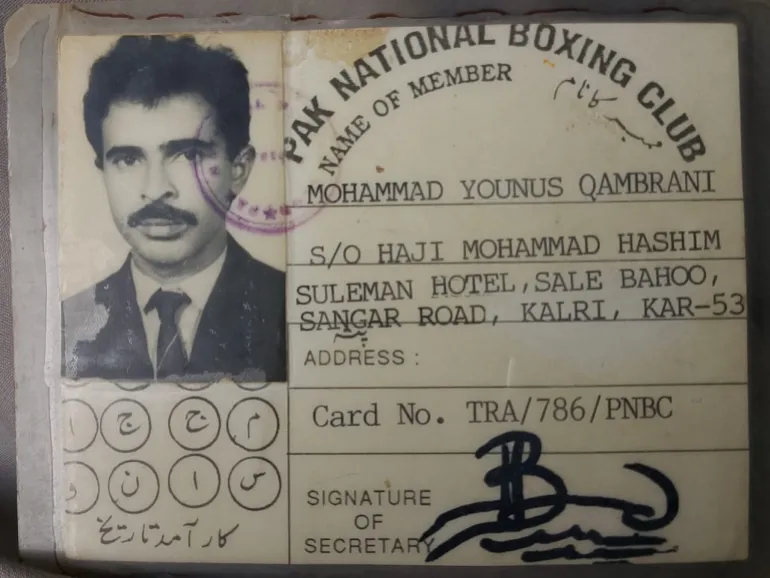
An undated picture of Qambrani’s membership card for Pak National Boxing Club. [Courtesy of Younus Qambrani]
‘Preparing for war’ — of a different kind
Qambrani has been boxing alongside his brothers for as long as he can remember. He began when he was five years old, and was introduced to the sport by his father, uncles and brothers — all boxers. Throughout his childhood, Qambrani says he was a sick and frail child. But he was determined to build muscle and throw punches like the men who had inspired him as he was growing up.
Boxing is so popular in Lyari that in 1989 boxing legend Muhammad Ali visited the neighbourhood, when he was a special guest at the Asian Games in the capital, Islamabad.
Qambrani’s high school, Haji Abdullah Haroon Government College, opened its own boxing club while he was there. He joined, but the club shut down in a few years. So he found another club a little further away and began cycling there to train.
After honing his skills there, Qambrani founded Pak Shaheen Boxing Club in 1992. “I wanted to open a club in my own area,” Qambrani said. At Pak Shaheen, he started out by teaching young boys, aged seven to 16, how to box.
A recent photo at his boxing club. [Courtesy of Younus Qambrani]
A sports enthusiast, Qambrani built friendships with coaches across the city, often visiting their training centres. At a friend’s karate classes at the YMCA (Young Men’s Christian Association) in central Karachi, he noticed young girls practicing kicks and elbow strikes shoulder-to-shoulder with boys. “If girls can do karate, why not boxing?” he wondered.
Qambrani’s students train to spar [Wania Farhan/Al Jazeera]
Soon he began voicing this question to his peers in the local boxing community, saying he wanted to start training young girls. One of them told him that “little girls have weak brains” — a remark that left Qambrani silent.
Then he went home and began looking through news reports featuring stories of girls and women boxing internationally. He would cut out the news clippings and paste them into a notebook. “My eyes were on the whole world,” he recalled. “Girls are boxing in the outside world, why not here?” he would wonder.
So he started at home: when his daughter Anum turned three, he began playfully sparring with her. She would gaze at the many photos of her father and uncles at boxing championships, slip on his medals, and traipse into the living room, mimicking the victorious poses he struck in those pictures. “She couldn’t even run properly, but she would box,” Qambrani said.
Then, in 2013, he opened the doors of his club to young girls. Anum was 16 at the time, and became its first female member.
In 2015, several of Qambrani’s students participated in the South Asian Games, the biennial multi-sport event where athletes from Bangladesh, Bhutan, India, Maldives, Nepal, Pakistan and Sri Lanka compete against each other.
A year later, Anum won a district level championship called the Jinnah First Ever Karachi Women Boxing Championship held at a Lyari stadium. In the same year, she attended a training camp for women organised by the Sindh Boxing Association. Local media reports described this camp as the country’s first government-supported boxing event held for women.
It was Qambrani’s club where Aliya Soomro, Pakistan’s first woman to win a world boxing title, began her training. Last year, Soomro took a mere 45 seconds to knock out her opponent from Thailand to win the WBA (World Boxing Association) Asia 105-pound category.
For Qambrani, though, boxing is about more than medals and trophies. To him, it’s a vital defensive skill.
“Whoever is prepared for war is prepared for peace,” he told Al Jazeera, adding that the defenceless are the ones most likely to be attacked.
With its legion of young boxers, Lyari’s not defenceless. As its reputation and image are mangled by Bollywood, those who know the neighbourhood also turn to its history for support.
An undated childhood photo of son, Munir (L) and daughter Anam [Courtesy of Younus Qambrani]
Lyari’s colonial history
It is not just the Dhurandhar films and Bollywood that Suhail, the social anthropologist, blames for what he describes as “terrible and exploitative” representations of Lyari. Journalistic and scholarly literature have been guilty too, he said.
Lyari is Karachi’s oldest recorded settlement — the earliest inhabitants of the neighbourhood came in 1728. The neighbourhood has survived British colonialism, the partition of the subcontinent, and nearly eight decades in independent Pakistan.
Suhail said Lyari had been a diverse working-class cultural hub since before the 1947 partition of British India.
Some of those working class communities were Baloch and Sindhi, because Karachi is at the tip of the southern Sindh province, which neighbours Balochistan province. Others were Marathi, Gujarati, Afghan and Siraiki migrants from labouring and artisan classes.
“This was because the British required labourers and artisans to develop Karachi into a burgeoning Indian Ocean port city.”
Suhail said that most of these labourers settled on the unplanned sides of the Lyari river, a small 50km-long seasonal river originating in the hills of Sindh, which flows through Lyari before emptying into the Arabian Sea.
“These cosmopolitan working class populations brought with them culinary traditions, dances, religious practices (multi-religious, multi-caste), songs, sports and more,” Suhail said.
He added that Lyari has a “strong cultural memory of East Africa and the Arabian Gulf, which adds to its uniqueness.” The neighbourhood is home to both Baloch and Afro-Baloch communities—people of African ancestry living in Balochistan.
Suhail explained that Lyari’s long history as a cultural hub of Karachi is often forgotten “because, after partition, the city’s demographics shifted drastically and Karachi became an Urdu-speaking Muhajir-majority city.” Muhajirs are Urdu‑speaking Muslims who migrated to Pakistan from India during and after the 1947 partition.
Sarwat Viqar, a professor of humanities at John Abbott College in Montreal, Canada, echoed Suhail’s views.
“Because Lyari has been represented one-dimensionally in the media as only a hotbed of criminality, drugs and the gang wars, what has been overlooked are the rich cultural practices that have always been part of life here,” Viqar told Al Jazeera.
Suhail added that Lyari had also consistently been at the heart of labour movements, and a base of support for reformers, anti-colonial activists and later campaigns for the rights of Pakistan’s various ethnic groups, including the Baloch, Sindhi and Pashtun communities.
“Lyari — because it was the first, most diverse, and most vibrant working-class zone as Karachi was becoming a city — also became the hub of working-class politics,” he told Al Jazeera.
But the neighbourhood’s own fortunes have also oscillated over the years.
“The degree of ‘development’ in Lyari has always been a function of how strong the working-class movement in Karachi was,” Suhail said. “When it was strong—such as in the 1930s and again in the 1970s—Lyari saw development. When ruling elites were strong, it did not.”
What Dhurandhar gets wrong
In the film, Lyari first comes into focus when a long-haired Ranveer Singh, playing undercover Indian RAW [Research and Analysis Wing] agent Jaskirat Singh Rangi, eyes the “Welcome to Lyari town” gate.
The gate looks very similar to the real one in Karachi. Other elements on screen ring familiar too: juice shop owners chanting idiosyncrasies to cajole customers; quick and garbled salams; and the somewhat unkempt colonial era architecture of old Karachi.
But then, the three-hour film’s dusty colour grading seems to wash out Lyari’s cultural depth and its vibrant subcultures.
“We can see how the obscene fetishisation of Lyari and the Baloch with violence and criminality is evident” in the film, Suhail said.
Describing Dhurandhar as “mediocre”, he said it lacks the depth of other Indian gangster films.
For example, in Ram Gopal Varma’s Satya 1998 and Anurag Kashyap’s Gangs of Wasseypur 2012, we see “culturally dense but non-apologetic depictions of Mumbaikar or Bihari gangs that understand the political economy of colonial and post-colonial state formation and how it crystallises in the gangsters portrayed,” Suhail opined.
Satya unpacks the criminal underworld of India’s metropolis Mumbai, following the titular character who arrives in Mumbai seeking a job but is falsely imprisoned and subsequently introduced to the underworld. Gangs of Wasseypur is set in a time before India’s independence in 1947 and follows power struggles, mafias and generational cycles of revenge in India’s eastern state of Jharkand.
In contrast to these films, Dhurandhar, has “heavy-handed homophobic, Islamophobic, hyper-masculine jingoism” and “the characters themselves appear to have no history at all,” Suhail added.
Unlike Lyari
Back at Qambrani’s club, 10 girls aged eight to 16 gather for an hour of sparring every day except Sunday, training for city tournaments that they compete in every two months.
Qambrani is looking to buy a folding, portable boxing ring to take school to school. His dream: to make boxing accessible to as many girls in the neighbourhood as possible. His challenge: he is struggling to find a portable ring in Pakistan and needs funding.
Dhurandhar and Bollywood do not matter at his Lyari club. Qambrani has a new generation of girl boxers to train.
Media freedom advocates condemn move as latest effort to curtail independent reporting on the US military.
Published On 2 Jun 20262 Jun 2026
The United States Department of Defense has barred journalists from its press office, the latest move by the Pentagon to restrict media access since President Donald Trump’s return to the White House.
Acting Pentagon Press Secretary Joel Valdez said on Monday that the administration had re-designated the office as a “Sensitive Compartmented Information Facility” due to its use by speechwriters with access to classified government information.
Recommended Stories
list of 4 itemsend of list
“These speechwriters routinely handle classified material and require SIPRNet access,” Valdez said in a statement provided to Al Jazeera, referring to the secure computer network used by the Pentagon to share classified information.
“As a result, journalists will no longer be permitted to enter the office space. Access to the office of the Assistant to the Secretary of War for Public Affairs and to the Press Secretary remains available by appointment only,” Valdez added, using the Trump administration’s preferred title for Defense Secretary Pete Hegseth.
The Washington Post first reported the change.
The move follows a slew of steps by the Trump administration to curtail the ability of US media outlets to report on the military and other areas of the government.
In March, the Defense Department said it would no longer allow media outlets to maintain offices at the Pentagon after a judge sided with The New York Times in a lawsuit challenging the imposition of new rules for obtaining press credentials.
The Pentagon also announced that journalists would require an official escort while inside the complex, a policy that The New York Times is seeking to overturn in a separate lawsuit filed in May.
The National Press Club, the main professional organisation for journalists in the US, condemned the latest restrictions as a “troubling escalation” in the Trump administration’s efforts to curtail media scrutiny of the Pentagon.
“Independent reporting on the US military is not optional,” National Press Club President Mark Schoeff Jr said in a statement.
“When journalists are pushed farther from the institutions they cover, the American people are left with less information, less transparency, and less oversight. Any effort to restrict that access should alarm everyone who values a free and informed society.”
The Freedom of the Press Foundation, a nonprofit advocacy organisation, also criticised the move.
“It’s rare for anything other than disingenuous spin and outright lies to come out of the Pentagon’s press office these days, so it’s hard to imagine what basis they have to call the space classified,” Seth Stern, chief of advocacy at the organisation, told Al Jazeera.
“The only thing sensitive or confidential about the information released by Pete Hegseth’s Pentagon is that it’s not true.”
AFTER returning to Instagram Katie Price has found herself with one less loyal follower – her husband Lee Andrews.
Katie was previously left fuming after her account with a whopping 2.6 million followers was removed from the platform.
Sign up for the Showbiz newsletter
Thank you!
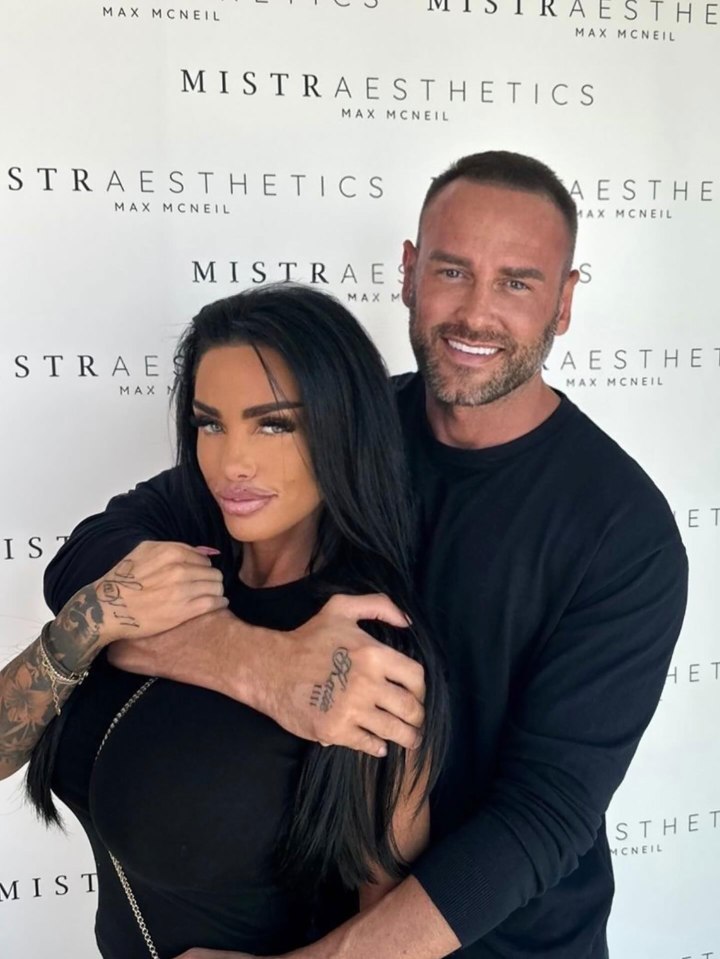
Lee has unfollowed his wife Katie Price on Instagram after she was banned over the weekendCredit: mistraesthetics/InstagramLee Andrews now follows nobody on the social media platformCredit: Instagram
The ban came at a tumultuous time for the former glamour model, following a man hunt for Lee, who is currently thought to be jailed in Dubai’s Al Awir prison.
But after regaining access to her page earlier today, she was met with a mystery.
Katie’s conman hubby Lee has hit the unfollow button on the star, something that usually points towards trouble in paradise.
Things between the pair have certainly been a rollercoaster these past few weeks as she claimed to have told him he was the “most hated man in Britain” over the phone.
The reality TV legend told fans last week that she and Lee had a two-minute phone call from which he dialled in from a prison call box.
Authorities confirmed to us he was NOT being held over spying charges and we understand he’s behind bars over claims relating to a private, civil matter.
Lee, who has “three phones” and bragged about being an “arms dealer,” is due for release today but must pay a four-figure fine.
She was furious with Lee when he “made her look a d**k” after failing to show up for their joint GMB interview but this could be the ultimate betrayl.
Podcast host Katie had her Instagram account taken away over the weekend due to her flashing her boob in one post, alongside a flurry of promotions for CBD products.
Meta, the company behind the social media giant, removed her entire profile as it investigated.
Malaysia has introduced new regulations preventing children under the age of 16 from registering accounts on social media platforms as part of a broader effort to improve online safety and protect minors from harmful digital content.
Under the new rules, major social media companies including Meta Platforms, TikTok, and Alphabet will be required to verify users’ ages using government issued records before allowing new account registrations.
The policy took effect on Monday and is being enforced by the Malaysian Communications and Multimedia Commission. Companies that fail to comply could face fines of up to 10 million ringgit, equivalent to approximately 2.5 million dollars.
Authorities emphasized that the measure is not intended to block children from using the internet entirely, but rather to ensure greater responsibility among technology companies, parents, and guardians in protecting young users online.
How the New Rules Will Work
The new framework requires social media platforms to implement age verification systems that cross check user information against official government records.
While the restrictions immediately apply to new account registrations, existing users will also be subject to age verification measures during a six month implementation period.
The move places greater responsibility on technology companies to ensure that underage users are not able to bypass age requirements through inaccurate information during the registration process.
Growing Concerns Over Children’s Online Safety
Malaysia’s decision reflects increasing global concern about the impact of social media on children and teenagers.
Governments around the world have raised alarms over issues including exposure to harmful content, cyberbullying, online exploitation, misinformation, and the effects of excessive social media use on mental health.
Policymakers argue that stronger safeguards are needed as digital platforms become a central part of daily life for younger generations.
Malaysia’s Wider Crackdown on Online Content
The age restrictions are part of a broader effort by Malaysian authorities to regulate online platforms more aggressively.
Officials have reported a significant increase in harmful online content in recent years and have intensified monitoring of material that could inflame racial or religious tensions. Authorities have also targeted content viewed as insulting or critical of the country’s monarchy.
The government says social media companies must play a more active role in preventing harmful content from reaching vulnerable audiences.
Why It Matters
Malaysia’s decision places it among a growing group of countries seeking stricter regulation of social media platforms and greater protections for children online.
The policy could become a model for other governments considering similar measures, particularly as concerns over digital safety continue to grow worldwide. It also increases pressure on technology companies to develop more reliable age verification systems while balancing privacy concerns and user accessibility.
The move highlights the growing debate over who should bear responsibility for protecting children online, governments, technology firms, or parents.
Key Stakeholders
Children and Teenagers
Young users will face stricter age verification requirements before being allowed to create social media accounts.
Parents and Guardians
Families are expected to play a larger role in monitoring children’s online activities and ensuring compliance with age restrictions.
Social Media Companies
Major technology platforms must implement and maintain age verification systems while ensuring compliance with Malaysian regulations.
Malaysian Government
Authorities aim to reduce children’s exposure to harmful content and strengthen oversight of online platforms.
Digital Rights and Privacy Advocates
Advocacy groups will closely monitor how age verification systems are implemented and whether they affect privacy and data protection standards.
What Happens Next
Social media companies now have six months to complete age verification checks for existing users and fully integrate compliance systems for new registrations.
Regulators are expected to monitor implementation closely and may impose penalties on platforms that fail to meet requirements. The effectiveness of the policy will likely be assessed based on whether it reduces underage access and limits exposure to harmful content.
Other countries in the region may also watch Malaysia’s experience as they consider similar online safety measures.
Analysis
Malaysia’s new restrictions reflect a broader global shift toward stronger regulation of digital platforms, particularly where children are concerned. Governments are increasingly moving away from voluntary industry guidelines and toward legally enforceable requirements that place direct responsibility on technology companies.
The success of the policy will depend largely on the effectiveness of age verification systems. If implementation is weak, underage users may still find ways to access platforms. If verification measures are too strict, however, concerns about privacy, data security, and accessibility could emerge.
The regulation also signals a growing willingness among governments to intervene in how social media platforms operate. As concerns about online safety continue to rise, Malaysia’s approach may become an important test case for balancing child protection, digital rights, and platform accountability in the years ahead.
US officials indicate Tehran may take days to respond to Trump’s tougher terms on a potential agreement to end the nearly three-month war.
Published On 31 May 202631 May 2026
President Donald Trump sought to change several terms of a proposal to end the US-Israel war on Iran, according to media reports in the United States, as a finalised deal remains elusive.
The New York Times reported on Saturday that Trump’s changes involved toughening the deal terms, and the US has sent the new framework back to be considered by Iran, according to officials familiar with the proceedings.
Recommended Stories
list of 3 itemsend of list
The report said it was not immediately clear what the changes entailed. However, Axios reported Trump wanted to reinforce multiple points of the deal that he felt were important, such as what to do with Iran’s nuclear material.
A senior US official told Axios that Trump was informed it could take three days for Iran to respond.
“They’re literally in caves, and they’re not using email,” the official told Axios.
“There will be a deal. The imminence of it, we’ll see. We’re willing to wait so the president gets what he asks for. It could be a week. It could be less. It could be more. At the turn of the week, we hope to have something,” the official added.
The new tweaks could prolong negotiations between the parties for days before a decision is reached on whether the deal would end the war, which began after the US and Israel attacked Iran on February 28.
US sources told the AFP news agency that the proposal had been waiting on Trump’s sign-off, but he made no decision after a White House Situation Room meeting on Friday.
Trump has said his priorities for any deal included Iran agreeing to never develop nuclear weapons and the reopening of the blockaded Strait of Hormuz, through which roughly 20 percent of the world’s oil supply transits.
On Saturday, the Iranian military’s Khatam al-Anbiya Central Headquarters reasserted the country’s control over the strait, warning that foreign commercial and military vessels would be targeted if they did not comply with regulations governing passage through the strategic waterway.
Tehran has also said repeatedly that it does not intend to build nuclear weapons. In March 2025, Tulsi Gabbard, the former US director of national intelligence, testified to Congress that Washington “continues to assess that Iran is not building a nuclear weapon”.
Perplexity unlawfully copied thousands of CNN stories, videos and images to power its products, CNN said in its lawsuit.
Published On 28 May 202628 May 2026
United States news channel CNN has filed a lawsuit against Perplexity in New York federal court, alleging the AI search engine provider is unlawfully distributing its copyrighted content, marking the latest legal tussle between the AI firm and a news publisher.
The complaint, filed on Thursday, said that Perplexity unlawfully copied thousands of CNN stories, videos and images to power its products and distribute “identical or substantially similar” competing content.
Recommended Stories
list of 4 itemsend of list
“You can’t copyright facts,” Perplexity spokesperson Jesse Dwyer said in response to the lawsuit.
CNN is asking for an unspecified amount of monetary damages and a court order blocking Perplexity from violating its intellectual property rights.
“CNN’s lawsuit stands for the proposition that Perplexity, a company valued at tens of billions of dollars, should not be able to steal from entities that create the original content Perplexity exploits,” the Warner Bros-owned news company said in a statement.
“By exploiting CNN’s reporting in this manner, Perplexity violates the protections afforded by copyright law and undermines the economic incentives that make original newsgathering possible,” CNN said in the complaint.
Since the launch of OpenAI’s ChatGPT in 2022, news publishers and writers have worried about their content being repurposed to appear in the results of a chatbot query, triggering battles over copyright, compensation and ownership.
CNN’s lawsuit is one of dozens of high-stakes US cases brought by copyright owners, including news outlets, authors and publishers, against tech companies over alleged misuse of their work to train large language models. Anthropic was the first AI company to settle one of these cases last year, agreeing to pay $1.5bn to resolve a class action lawsuit from a group of authors.
The CNN suit is the latest in a series of legal challenges brought against Perplexity, which uses AI to scour websites and answer users’ queries, alleging the company has infringed copyrights and unlawfully scraped data to train its technology.
Perplexity is also facing lawsuits from The New York Times, Reddit and Dow Jones, among others.
Several news firms have now signed licensing deals and partnerships with Big Tech and generative AI companies to ensure that their models have access to verified sources of news, while also compensating publishers and linking back to original articles.
Across South Asia, concerns over press freedom, political influence, and media credibility are drawing increasing international scrutiny. From Bangladesh and Pakistan to India, journalists and independent media organisations face mounting political, economic, and legal pressures that are reshaping how information is produced and consumed.
Recent international assessments point to what rights groups describe as a broader regional decline in media independence. The 2026 World Press Freedom Index placed multiple South Asian countries near the lower end of global rankings, reflecting concerns over censorship, political pressure, and growing ideological polarisation within news ecosystems.
Among these cases, India continues to attract the most sustained global attention due to its scale, democratic profile, and influence as the world’s largest electoral democracy.
When a country that defines itself as a global democratic model falls to 157th out of 180 nations on the World Press Freedom Index, the question is no longer whether there are challenges within its media environment. The question is how deeply those challenges have reshaped journalism itself.
Together with other regional indicators, the findings suggest not isolated failures but a structural transformation in how media systems operate across South Asia.
The concerns highlighted in global reports do not exist in isolation. Across South Asia, governments and political actors are increasingly accused of exerting pressure on journalists through legal action, advertising influence, regulatory scrutiny, and informal intimidation.
According to World Press Freedom Index in 2026, Bangladesh stood at 152nd. Afghanistan remained among the lowest-ranked countries globally, reflecting ongoing restrictions on press activity. Nepal, while comparatively better positioned at 87th, has also faced periodic concerns over political influence and media ownership concentration.
Analysts argue that while each country’s political context differs, a shared pattern is emerging: fragile media economies, heightened political polarisation, and increasing hostility toward independent journalism.
However, India’s trajectory is often singled out due to its democratic stature and its role as a regional political and cultural benchmark. This contrast between democratic identity and media freedom rankings has intensified global debate about the state of its information ecosystem.
Political Influence and the Changing Nature of News
Within India, one of the central concerns raised by international observers is the perceived growth of political influence over large sections of mainstream media.
A detailed report by Genocide Watch described what it termed a “severe crisis of credibility” in parts of the Indian media landscape, arguing that dominant narratives in some outlets increasingly align with those of the ruling Bharatiya Janata Party rather than independently scrutinising power.
This does not imply uniformity across the entire media sector. India still has a diverse ecosystem of investigative journalists, regional newspapers, and independent digital platforms producing critical reporting. However, critics argue that the dominant tone of mainstream television and high-visibility digital media increasingly reflects political messaging rather than adversarial journalism.
The Reporters Without Borders (RSF) assessment echoed concerns about structural vulnerabilities. It highlighted the heavy dependence of Indian media on advertising revenue, including significant spending by both central and state governments. Critics argue that this financial structure creates subtle incentives for compliance, where editorial decisions may be influenced not through direct censorship, but through economic dependency.
In such an environment, formal restrictions are often unnecessary. Editorial caution can emerge internally, as news organisations weigh political and financial risks before pursuing certain stories.
The Rise of Divisive Television Narratives
Another recurring concern involves the increasing polarisation of televised political discourse.
Genocide Watch and other rights-focused assessments have warned that sections of mainstream media increasingly frame political and social issues through identity-based narratives, often centred on religion and nationalism. Complex policy debates are frequently simplified into binary positions, contributing to heightened social tension.
Human Rights Watch, in its World Report 2026, also documented concerns that hostile rhetoric in parts of media and online spaces has coincided with rising incidents of discrimination and attacks against minority communities, including Muslims in different parts of the country.
While causation is difficult to establish definitively, observers argue that repeated framing of communities through suspicion or collective identity can contribute to an environment where social hostility becomes easier to normalise.
The RSF report additionally pointed to structural imbalances within media representation, noting concerns about concentration of leadership within certain social groups and the underrepresentation of women in prominent political debate programming. These imbalances, critics argue, shape not only who speaks in media spaces, but also which perspectives are amplified or marginalised.
Self-Censorship and Invisible Constraints
Not all constraints on journalism are explicit. In many cases, they manifest as self-censorship.
According to Genocide Watch, journalists and editors increasingly avoid topics that could lead to political backlash, regulatory scrutiny, legal threats, or coordinated online harassment campaigns. Over time, this produces a newsroom culture in which certain subjects are quietly excluded before formal editorial decisions are even made.
This form of pressure is difficult to measure, but its effects can be significant. When reporters internalise risk calculations, the range of publicly available information can narrow without any formal ban or directive.
RSF similarly highlighted concerns over actions taken against independent journalists, commentators, and publications. It cited instances of restrictions, legal pressure, and bans on certain media outlets in sensitive regions, including Jammu and Kashmir, where authorities have taken action against publications accused of promoting separatism.
Critics argue that such measures contribute to a wider climate of caution, particularly around politically sensitive reporting.
A Broader Democratic Stress Test
The implications of these developments extend beyond journalism alone.
Genocide Watch framed the weakening of press freedom as part of a broader institutional credibility challenge linked to political polarisation and majoritarian dynamics. In this view, media independence is not an isolated issue but part of a wider ecosystem that includes accountability, governance, and civic trust.
A free press plays a central role in democratic systems by enabling scrutiny of power and facilitating informed public debate. When that role weakens, the consequences extend into how citizens engage with institutions and interpret political realities.
India’s trajectory in the RSF index over recent years reflects this concern. The country ranked 150th in 2022, fell further to 161st in 2023, improved slightly to 151st in 2025, and then declined again to 157th in 2026. Analysts interpret this pattern not as random fluctuation but as part of a longer-term structural challenge.
At the same time, government supporters argue that India remains a robust electoral democracy with active institutions, a vibrant political opposition, and a highly diverse media landscape. They contend that international rankings often fail to capture the complexity of India’s scale, security challenges, and internal diversity.
The debate, therefore, is not solely about classification, but about how democratic quality itself should be assessed.
South Asia in a Global Decline
These concerns are unfolding within a broader global downturn in press freedom. RSF’s 2026 index noted that worldwide media freedom has reached its weakest level in 25 years, with more than half of all countries classified as having “difficult” or “very serious” conditions.
South Asia reflects this global trend particularly sharply. Alongside India, countries such as Bangladesh remain in the lower tiers of the global rankings, highlighting shared regional challenges around political influence, media ownership concentration, and journalist safety.
Yet despite this broader pattern, analysts continue to emphasise that each country’s trajectory is shaped by its own political history and institutional structures. In India’s case, its global influence and democratic identity make developments in its media landscape particularly consequential for international observers.
What Is Ultimately at Stake
The credibility of media systems plays a central role in shaping the health of democratic life. Journalism informs not only public debate but also citizens’ ability to evaluate leadership, understand policy decisions, and hold institutions accountable.
When trust in media declines, democratic accountability becomes harder to sustain.
The findings from Genocide Watch and RSF should therefore be viewed not simply as criticism of individual outlets or governments, but as indicators of broader institutional stress across South Asia.
Addressing these challenges would require a combination of stronger protections for editorial independence, more diversified ownership structures, reduced reliance on state advertising, and greater safeguards for journalists facing intimidation or harassment.
Despite these pressures, the region continues to produce significant investigative journalism and independent reporting under difficult conditions. Many journalists continue to work at considerable personal and professional risk to maintain public access to information.
Acknowledging structural challenges across South Asia is not an indictment of any single democracy. Rather, it is increasingly seen by analysts as a necessary step toward strengthening the democratic principles that the region’s constitutions and institutions claim to uphold.
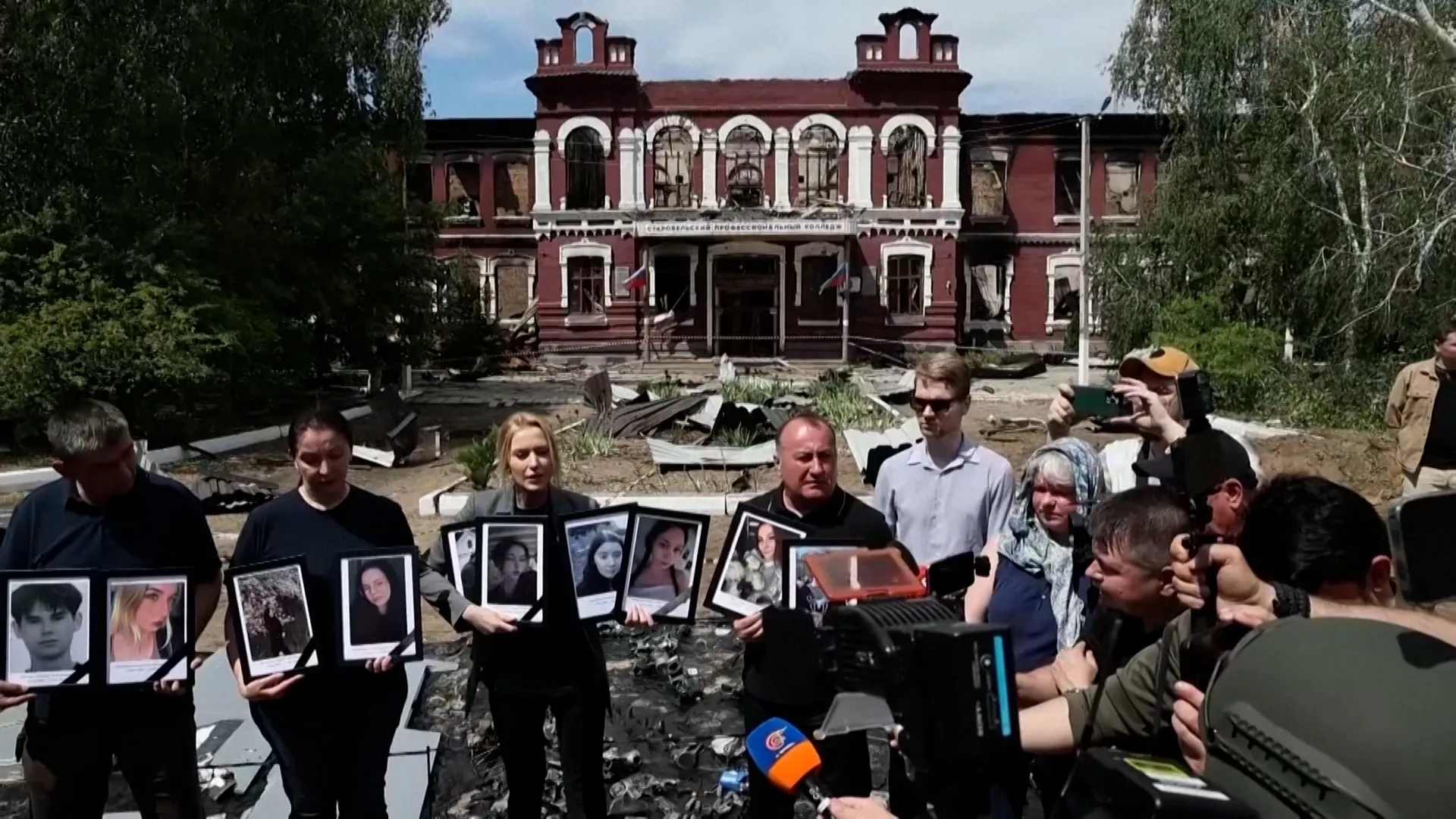
Russia provided a rare look at damage caused by a Ukrainian strike on a college in occupied Luhansk. Moscow claimed that 21 people were killed in the targeted attack, Ukraine denied the claims saying it struck an elite Russian drone command unit operating in the area.
FORMER Little Mix star Jade Thirlwall has returned to social media after a break from the online world – and fans are certain she’s been cooking up new music in the studio.
The 33-year-old released her debut solo studio album, That’s Showbiz Baby, back in September 2025.
Sign up for the Showbiz newsletter
Thank you!
Jade Thirlwall has returned to social media after taking a breakCredit: TikTok/@jadethirlwallFans are convinced the British singer is releasing new music just seven months after her debut solo studio albumCredit: Capitalbuzz/Instagram
It hit number three on the UK Album Chart and produced her popular singles Fantasy, FUFN, Plastic Box, and Unconditional.
Jade has now surprised fans by making a comeback on TikTok after five months of being away.
In the video, the British singer could be seen opening a door and twirling around a room to the song Keeping Your Head Up by Birdy.
The lyrics said: “Hold tight you’re slowly coming back to life, I’ll be keeping your head up, I’ll be keeping your head up.”
She then flicked her curly brunette locks over her shoulders as she walked towards the camera.
Jade wrote in text over the video: “Me returning to TikTok after a menty b social media break x”
Jade appeared to make light of the few days she spent feeling down in the dumpsCredit: TikTok/@jadethirlwallThe former Little Mix star’s album That’s Showbiz Baby hit number three on the UK Album ChartCredit: Getty
The star appeared to be making light of having a few days feeling down in the dumps.
Despite the singer telling fans she took a break due to mental health, they were convinced it was because new music is on the way – just seven months on from her last album.
She captioned the post: “We’re back! Did you miss us? Because we missed you!”
One fan wrote under the clip: “Soooo word on the street is your back in the studio.”
Another said: “I think it might be album 2 time.”
A third fan penned: “I’m dying can’t wait for the new single.”
While Jade took an extensive break from TikTok, she was only missing from Instagram for six days.
US Navy veteran Marisol, who Katie Price’s missing husband Lee Andrews followed on InstagramLee Andrews and Katie Price haven’t spoken since last WednesdayCredit: Instagram
However, The Sun can reveal Marisol blocked Lee’s account.
When users block someone on Instagram, they are automatically unfollowed and removed from following them.
Katie’s fans noticed Lee Andrews had started following another account on InstagramHe had only been following Katie until her fans noticed the change and alerted her
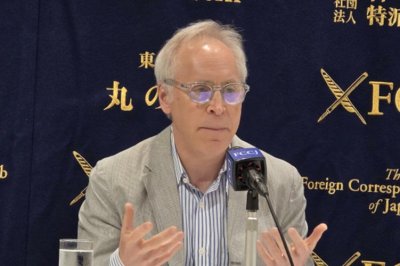
1 of 2 | Jacob Weisberg, chairman of the Committee to Protect Journalists, speaks during a news conference Thursday at the Foreign Correspondents’ Club of Japan in Tokyo. Photo by Asia Today
May 22 (Asia Today) — The head of the U.S.-based Committee to Protect Journalists warned Friday that pressure on press freedom is not limited to imprisonment, killings or direct censorship, saying lawsuits, access restrictions and online attacks can also intimidate reporters and encourage self-censorship.
Jacob Weisberg, chairman of the Committee to Protect Journalists, made the remarks during a news conference at the Foreign Correspondents’ Club of Japan in Tokyo when asked about indirect pressure on journalists in democracies such as South Korea and Japan.
“The issue of reporters being prevented from doing their jobs or being punished in unofficial ways, and the issue of threats and self-censorship, are much more difficult matters,” Weisberg said.
Asia Today asked how the organization evaluates cases in which press freedom is restricted not through direct censorship but through exclusion, intimidation or loss of access, citing press corps-centered reporting restrictions, limits on access to government briefings, defamation lawsuits and online harassment.
Weisberg said the CPJ is still considering how to respond to such issues.
“That does not mean CPJ is not concerned about such issues, but to be fair, we are still thinking about how to deal with questions like that,” he said.
He said the group’s top priority remains helping journalists who face physical danger.
“CPJ’s first obligation is to help journalists who are in physical danger,” he said. “We first deal with cases involving journalists who are imprisoned, abused, tortured or killed.”
But he stressed that this does not mean the organization is unconcerned about more subtle and complicated issues surrounding press freedom.
Weisberg also addressed Japan’s press club system. While saying he did not know enough about Japan, he said he had often heard about the country’s press clubs and the inherent limits of that system.
He said reporters outside press clubs may not have the same access to information and that the system can function as an exclusive channel through which information is delivered.
Weisberg did not equate the issue with censorship seen in authoritarian countries.
“It is not censorship, but it is a lower-level problem than that,” he said.
He also cited the United States, saying there have been no confirmed recent cases of journalists being jailed or killed there, but that the environment for reporters has worsened and become more dangerous in several ways.
He mentioned “media capture,” in which government approval or corporate merger issues can be used as leverage over broadcasters and media companies, as well as concerns over lawsuits and self-censorship.
Referring to the Trump administration, Weisberg also raised concerns about restrictions on White House access for certain media outlets and limits on access to Pentagon briefings.
Restricting government access to the press because of political views is “illegal and unconstitutional,” he said.
On Asia, Weisberg expressed more direct concern. He said that as of May 13, CPJ counted 103 journalists imprisoned across Asia. China had the largest number, with 51, followed by Myanmar with 18 and Vietnam with 16.
Weisberg also said that while Japan has no recorded cases of journalists being imprisoned or killed, worsening press freedom across Asia affects the safety, movement and reporting ability of Japanese journalists working abroad.
He cited the case of NHK Tehran bureau chief Shinnosuke Kawashima, who was arrested in Iran and later released but has not yet been able to return to Japan.
Weisberg said Japan could play a more active diplomatic role in defending press freedom in Asia.
His remarks suggested that press freedom debates in South Korea and Japan should move beyond the question of whether censorship exists and ask who monopolizes information, who loses the right to ask questions and who is pressured into silence.
Watchdog instructs social media giant to strengthen moderation following circulation of ‘grossly offensive’ content.
Published On 22 May 202622 May 2026
Malaysia’s internet watchdog has ordered TikTok to take action against “offensive and defamatory” content about the country’s monarchy.
The Malaysian Communications and Multimedia Commission (MCMC) said on Thursday that it had instructed the video-sharing platform to take “immediate remedial measures” in response to an account purporting to be linked to King Sultan Ibrahim.
Recommended Stories
list of 4 itemsend of list
The MCMC said its order requires the social media company to strengthen its moderation policies and provide a “formal explanation” for its failure to block the “grossly offensive, false, menacing and insulting” content, including AI-generated videos and manipulated images.
The regulator said it takes a “serious view” of online platforms being used to disseminate content that is false or “detrimental to public order”, particularly as it relates to the monarchy.
It added that it issued the order after finding TikTok’s response to previous notifications to be “unsatisfactory”.
TikTok, founded by Chinese tech company ByteDance, did not immediately respond to a request for comment.
“MCMC will continue to take firm and proportionate action where necessary to ensure digital platforms operating in Malaysia uphold their responsibilities in maintaining a safe, secure and respectful online environment,” the watchdog said in a statement.
Malaysia, a constitutional monarchy, penalises speech deemed to inspire “hatred or contempt” against the royal family under a sedition law passed in 1948.
The watchdog’s order against TikTok is the latest move by authorities in the Southeast Asian country to regulate social media platforms.
In January, the MCMC briefly blocked access to the AI assistant Grok amid a global backlash over its use to create sexually explicit images of people without their consent.
Malaysia’s government is also currently preparing to enforce legislation passed last year to prohibit social media use by under-16s, following similar moves by countries including Australia, Indonesia and France.
The deal, valued at more than $300m, gives Murdoch control of a storied magazine and a podcast division with a reach valued by advertisers.
Published On 20 May 202620 May 2026
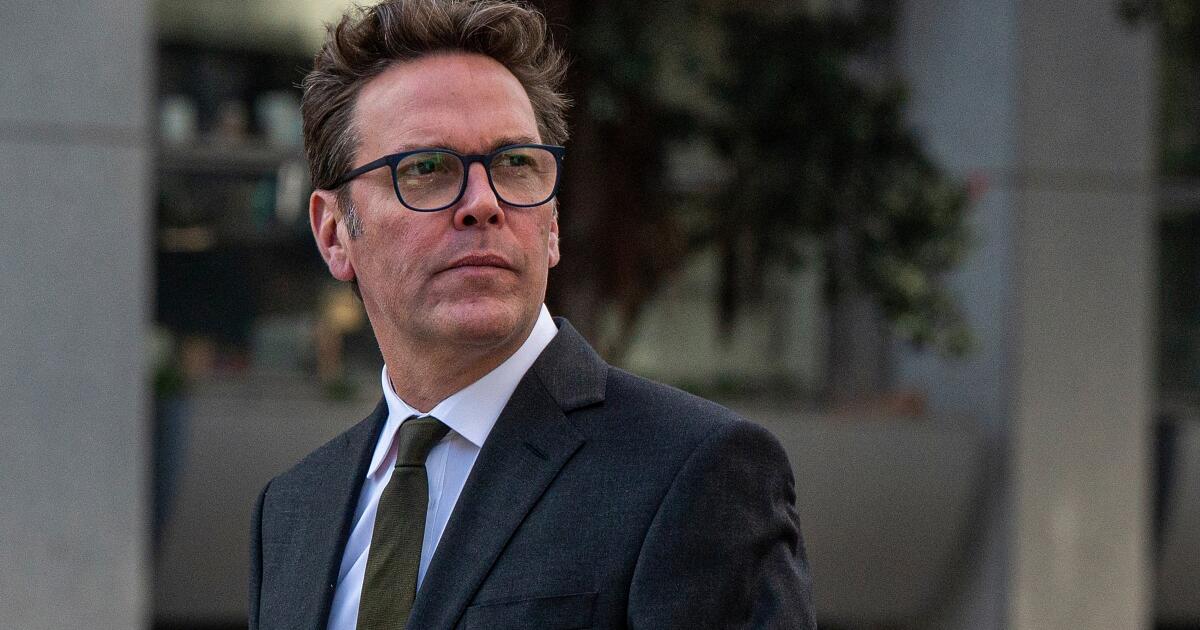
Media scion James Murdoch has agreed to acquire New York Magazine and the Vox Media Podcast Network in a deal that will significantly expand his portfolio and stands to boost his influence over news and entertainment.
“This acquisition reflects both our interest in the forward edge of culture and our deep commitment to ambitious journalism,” Murdoch, the younger son of media mogul Rupert Murdoch, said in a statement on Wednesday announcing the transaction. His company Lupa Systems will buy both properties from Vox Media.
Recommended Stories
list of 4 itemsend of list
The deal, valued at more than $300m, gives Murdoch control of a storied magazine known for its coverage of culture, politics and fashion, and a podcast division whose reach, among a demographic coveted by advertisers, rivals that of cable television news networks, according to several people with direct knowledge of the acquisition. The politics news site Vox.com is also included.
Murdoch and his wife Kathryn Murdoch were intimately involved in courting key talent from Vox, specifically Kara Swisher and Scott Galloway, stars of the popular Pivot podcast, as well as several other programmes on the company’s podcast network.
“I like James and Kathryn,” Swisher said in a phone interview. “Unlike many other media owners these days, they’re savvy about the business and willing to take smart risks.”
Vox’s podcast division was valued much higher than New York Magazine in the transaction, two of the people said, spotlighting the importance of making sure top programmes were locked in. Pivot, for example, has three years remaining on its contract, which will continue under Murdoch. Swisher met with the investor and his wife Kathryn several times before the deal came together.
“In a company like Vox, if its talent doesn’t like something, it’s not gonna happen,” Galloway said in an interview. He added, “James is the only Murdoch that this deal could have happened with.”
Several years ago, James was locked in a fierce dispute with his father over the editorial direction and future control of the family’s media empire. In 2019, he founded Lupa after stepping down as chief executive of 21st Century Fox. In 2020, he resigned from the board of News Corp, the publishing arm of the family’s media empire, citing “disagreements over certain editorial content”.
Vox’s podcast and publishing assets will operate as a subsidiary of Lupa Systems, which also owns Art Basel, which hosts annual events in Paris, Miami, Hong Kong, and Doha, and Tribeca Enterprises, the media and entertainment company cofounded by Robert De Niro and Jane Rosenthal.
Vox Media CEO Jim Bankoff will join Lupa Systems and will continue to lead the brands under the Vox Media label, he said in a note to the company’s staff, adding the deal is expected to close in four to six weeks.
New York Magazine’s publications include The Cut, Vulture and Intelligencer, with a digital audience of tens of millions and more than 400,000 paying subscribers currently.
The acquisition does not include other Vox Media brands such as Eater, Popsugar and The Verge. These brands, along with SB Nation and The Dodo, will become an independent company under a new corporate name.
James’s father, Rupert Murdoch, once owned New York Magazine from the late 1970s till he sold it in 1991.
Lupa Systems, the media and tech holding company owned by James Murdoch, is set to acquire nearly half of Vox Media.
As part of the deal, Murdoch’s company will own Vox Media’s podcast network, Vox.com and New York Magazine, once an asset of his father, industry giant Rupert Murdoch. Terms of the deal were not disclosed, but the price tag was reportedly over $300 million, the New York Times reported citing people familiar with the deal. The goal of the investment is to bring “influential journalists, top-rated podcasts, and digital brands with large social footprints” to Lupa and help grow its media portfolio, the company announced Wednesday.
“This acquisition aligns well with our existing holdings and investments and reflects both our interest in the forward edge of culture and our deep commitment to ambitious journalism and agenda-setting conversations,” Murdoch said in a statement.
The three new assets will function as a subsidiary of Lupa Systems and will keep the name Vox Media. The deal includes New York Magazine’s popular verticals like The Cut, Vulture and Intelligencer, as well as Vox’s most successful podcasts like “Today, Explained” and “Pivot with Kara Swisher and Scott Galloway.” Jim Bankoff, Vox Media’s current CEO, will continue to lead the company.
The other Vox Media properties, which Murdoch did not purchase, include websites like Eater, The Dodo and The Verge. These platforms will be run under an unnamed new company by the current president of Vox Media, Ryan Pauley.
This investment strengthens Lupa Systems’ position in the evolving media landscape. The business has other holdings including the parent company of Tribeca Film Festival, the owner of Art Basel, Robert DeNiro and Jane Rosenthal’s entertainment company Tribeca Enterprises, and Bodhi Tree Systems, an investment platform behind a popular Indian streaming service.
Before the legal blowout, Murdoch previously served as the chief executive of major global media companies like 21st Century Fox and Europe’s Sky Group.
The billionaire told the New York Times that, with this new acquisition, he didn’t want a “daily news business.” He wanted “longer-form, thoughtful journalism that can really speak to the culture.”
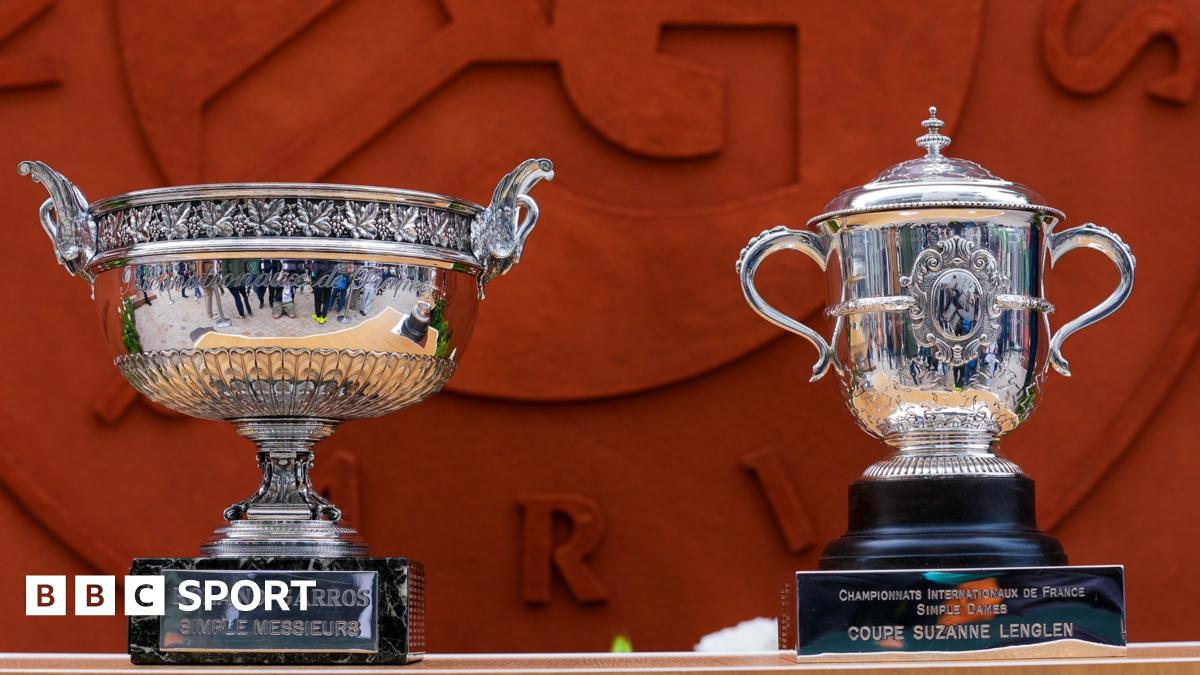
The players’ campaign, which began in late 2025, is being spearheaded by former WTA chairman and chief executive Larry Scott.
The American will be in Paris on Friday for a meeting with French Open tournament director Amelie Mauresmo and FFT president Gilles Moretton.
Meetings are also planned with representatives of the All England Club (AELTC) and the US Tennis Association later in the fortnight.
The players’ action is designed to put pressure on the AELTC, with prize money for Wimbledon not due to be announced for another three weeks.
Last year, the Wimbledon prize fund rose by 7% to £53.5m – double the amount on offer a decade earlier.
Players look enviously, however, at the revenues generated by the Grand Slams and feel entitled to a larger slice of the cake.
The AELTC’s financial statement for the year to July 2025 showed revenue of £427m and profit after tax of £39.7m.
Players have asked the Slams to pay 22% of their revenue in prize money by 2030.
They are also asking that tens of millions of dollars are paid towards pension, healthcare and maternity benefits, and that they are consulted more widely on scheduling and other key decisions.
At this month’s Italian Open, world number one Aryna Sabalenka said she believes players will “at some point” boycott one of the majors.
World number three Iga Swiatek felt that would be a “bit extreme”, but defending French Open champion Coco Gauff said she would support strike action “if everyone were to move as one and collaborate”.
Men’s world number one Jannik Sinner also claimed players are not getting the respect they deserve when it comes to prize money at the majors.
An FFT statement on Wednesday read: “We regret the players’ decision, which impacts all of the tournament’s stakeholders: the media, broadcasters, the FFT and the entire tennis community, all of whom follow each edition of Roland Garros with great enthusiasm.
“The French Tennis Federation recognises the importance of the players’ contribution to the tournament’s success, and wishes to maintain close ties with them.”
The French Open takes place from 24 May to 7 June.
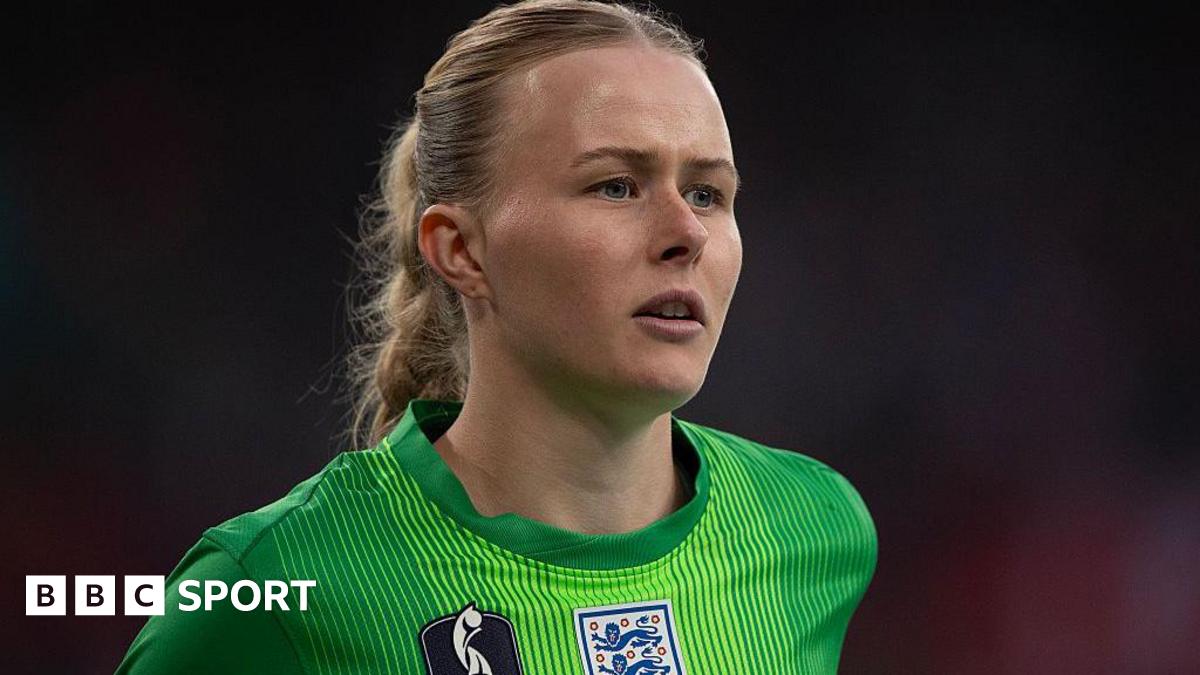
Hampton’s career has been far from smooth sailing, with the ex-Birmingham City goalkeeper hitting headlines when she was dropped from the England squad in 2022 shortly after their first Euros triumph.
Reports said it was a result of her behaviour and she had to wait until March 2023 for a recall, when manager Sarina Wiegman said Hampton had “sorted out personal issues”.
Speaking about that time, Hampton said the stories were “hurtful” and she later revealed on the Fozcast podcast she had considered quitting football.
In November, Mary Earps – her former England team-mate and predecessor as number one – released an autobiography which heavily criticised Hampton.
Earps claimed she told Wiegman she was rewarding “bad behaviour” by recalling Hampton, who had previously been dropped for being “disruptive and unreliable”.
Hampton, who kept eight clean sheets in 19 WSL appearances this season, says goalkeepers need to support each other.
“I think goalkeepers hold a unique pressure that really only goalkeepers truly understand,” added Hampton.
“When I see other goalkeepers making worldie saves, it pushes me and drives me. The women’s game, and goalkeepers especially, are getting to those standards that we hold ourselves to so highly.
“We’re a group, a union. If we can’t rely on each other, then we can’t rely on anyone.”
Charlton Athletic goalkeeper Sophie Whitehouse, a former team-mate of Hampton’s at Birmingham, won the WSL 2 Golden Glove award on Monday.
Hampton says Whitehouse “deserves more credit” and believes she will play a star role in Saturday’s play-off match against Leicester City (12:30 BST).
“Seeing the growth of where she’s got to right now isn’t spoken about enough,” said Hampton.
“She was always pushing herself to reach high standards at the Blues. I’m sure she will make a lot more worldie saves to make sure Charlton get to the WSL and we’ll be competing with each other next season.”