Malaysia has barred civil servants from using Waze for official duties over its links to Israel and national security concerns, as Prime Minister Anwar Ibrahim says a complete ban is under consideration.
The head of the Asian Football Confederation (AFC) says the body is endorsing Gianni Infantino for another term as FIFA president.
The AFC has 47 member confederations. Even if all the members do not follow Friday’s direction from Sheikh Salman bin Ibrahim Al Khalifa, those that do could be key to guaranteeing another mandate for Infantino, who leads the governing body of world football and is seeking a fourth term.
Recommended Stories
list of 4 itemsend of list
The FIFA election is in March. The deadline for candidates to file against Infantino is November 18, and so far, none has filed.
Sheikh Salman, speaking at the AFC’s extraordinary congress in Tokyo on Friday, embraced Infantino with a large hug in front of the membership as he delivered his endorsement.
“We affirm our full commitment to supporting you and your leadership as you seek a new mandate as the FIFA president.” Sheikh Salman said.
“You’ve visited a lot of countries in Asia. I’ve spoken to a lot of members within this continent. I know your feeling, and I think your commitment is clear as well.”
Addressing his remarks to Infantino, Sheikh Salman indicated not every AFC member would go along with the endorsement but most will.
“My feeling is, I’m sure, the feeling of most of my members,” the AFC president said. “And I’ve said that to you.”
A sudden about-face by AFC
This is an abrupt turnaround for Sheikh Salman. Just over two months ago, the AFC joined the football governing bodies of Europe and that of North and Central America in saying Infantino had committed a “fundamental breach of trust”.
Infantino apologised last week in Zurich to FIFA’s 37-member ruling council, which he chairs, for “mistakes” he made in assembling a now-scrapped $4.2bn plan to sell a stake in FIFA events, including the World Cup, to private investors.
Sheikh Salman referenced the differences with Infantino in his speech but glossed over any details.
“Gianni, I want to make it clear: Yes, we had some issues we spoke about in the past,” Sheikh Salman said. “But let’s not relate the two things together. I think the last few days we met in Zurich, you made it clear that there’s a true understanding between us.”
“The past I’m sure is part of our history,” he added, “We’ve all, I’m sure, learned important lessons from it. What matters now is how we move forward together. I think everyone has questions, and I’m sure the answers will be available, whether to us in Asia or the rest of the world. ”
Infantino’s electioneering around the globe
FIFA’s media office has been promoting Infantino’s travels around the world, seeking votes in exchange for millions of more dollars in financial support for small and large football countries.
“Thank you for being here,” Sheikh Salman said to Infantino. “I know you have been everywhere. I don’t know how you can do it. But I’m sure that you set a record for being in almost every country.”
Sheikh Salman then joked that, perhaps, Infantino had a “clone”.
That drew a laugh. But the largest applause came at the end of his brief address when he again repeated his support for Infantino.
“As one Asian family, we are ready to move forward, united in your support, Gianni,” Sheikh Salman added. “I want to make that clear today.”
Infantino accepts AFC’s support
Infantino took the podium after Sheikh Salman and kept his remarks light. But he did acknowledge some errors.
“When you do many things, you do – hopefully, as we did, many good things – you do some mistakes as well,” Infantino said. “The important, however, is, as you said, to learn, to learn always from the experience, from the mistakes, to apologise, to move ahead, to come together, to unite, to build for our future, for your future.”
The largest applause came as he mentioned how, under his leadership, millions more are flowing to FIFA’s patronage network.
“Before I started as FIFA president, each of you – some of you are still [here] and still remember that time – each of you was receiving $1m every four years” Infantino said. “As of the first of January of next year, it will be $25m.”
101 East investigates if power and politics are protecting those behind the 2006 murder of Mongolian woman in Malaysia.
Twenty years ago, two Malaysian special forces policemen brutally murdered Mongolian woman Altantuya Shaariibuu, obliterating her body with C4 military explosives.
But the truth behind why they killed her has yet to be determined, leading to suspicions of a political conspiracy to silence her.
101 East travels to Mongolia, Malaysia, France and Australia to investigate allegations of interference in the criminal trial, Altantuya’s suspected links to an allegedly corrupt submarine deal and claims by the policemen that they acted on the orders of convicted former Prime Minister Najib Razak, who vehemently denies any involvement in the murder.
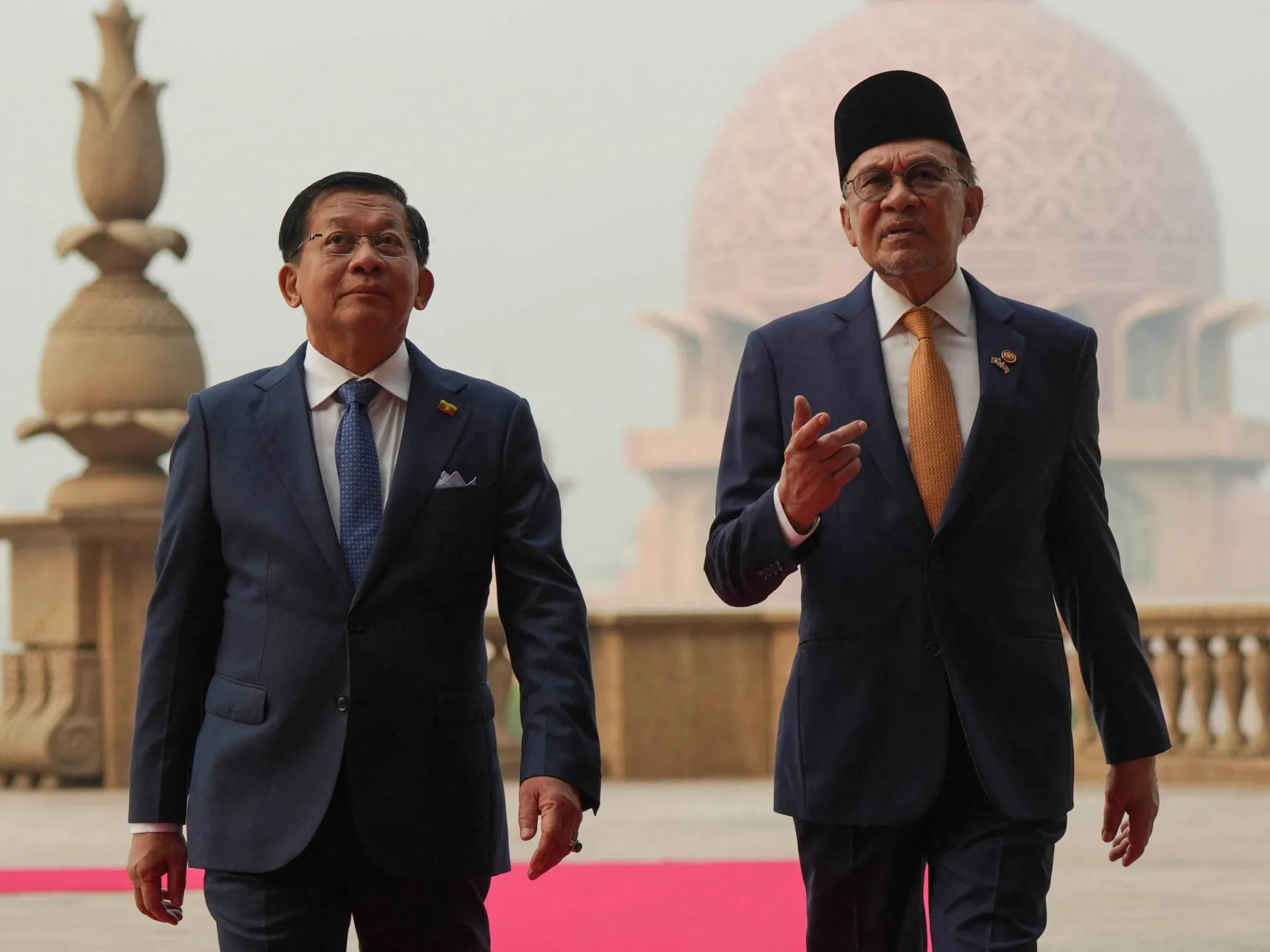
On October 8, Malaysian Prime Minister Anwar Ibrahim received Myanmar’s President Min Aung Hlaing in Putrajaya with a guard of honour and an official luncheon, in the military chief’s first visit since the 2021 coup. Nine days earlier, Malaysia sent 1,476 Myanmar nationals back by sea in the first phase of a plan to return 5,000 people.
Kuala Lumpur calls this pragmatic diplomacy. In reality, it lends a middle power’s credibility to the Trump administration’s retreat from international accountability, weakening the laws and institutions smaller states rely on most.
Domestic pressures
Since May, a surge of online hate speech and misinformation has targeted the Rohingya, Malaysia’s largest refugee community. By late July, at least nine Rohingya community schools had closed or faced closure orders, and more than 100 Rohingya told UNHCR that residents of their Penang village had driven them out.
The hostility ignores the facts: Malaysia’s police chief says Rohingya account for 0.02 percent of crime. Yet research by INITIATE.MY and the Center for the Study of Organized Hate found AI-generated content amplifying anti-Rohingya disinformation across Malaysia, Indonesia, India and Bangladesh, casting refugees as a threat and legitimising vigilante violence.
Electoral politics plays a part. After heavy losses in three state elections, and with a general election due by February 2028, Anwar’s coalition may see a hard line on Rohingya returns as a show of control, though voter disillusionment and right-wing rivals make any electoral gains uncertain.
Impunity goes mainstream
Malaysia is not acting alone. Mongolia hosted Vladimir Putin in 2024 despite an ICC arrest warrant, and Hungary welcomed Benjamin Netanyahu in 2025 despite another. Kuala Lumpur denies this is recognition, yet Anwar says Malaysia will work towards Myanmar’s full reintegration into ASEAN, and Min Aung Hlaing wants a seat at the bloc’s November summit in Manila. Each welcome makes the next easier and tells leaders accused of atrocities, from Netanyahu to Min Aung Hlaing, that diplomatic rehabilitation is possible without accountability.
ASEAN has tried this before. In April 2021, Min Aung Hlaing agreed to the Five-Point Consensus, then ignored it: The violence continued, the ASEAN special envoy never met Aung San Suu Kyi, and inclusive dialogue never began. The bloc’s one real lever was excluding military leaders from its summits. Myanmar Specialist, Arkar Hein, said “Welcoming him back with nothing asked in return rewards that defiance and tells Naypyidaw that time and a staged election can achieve what compromise would otherwise require. Each handshake abroad also makes the regime less willing to offer its opponents real concessions, and convinces them that only the battlefield will decide Myanmar’s future.”
A question of consistency
Malaysia has spent decades building its credibility as a regional peacemaker, a hard-won reputation it now puts at risk. It has facilitated the Bangsamoro peace process since 2001, helping negotiate a landmark peace agreement in the southern Philippines, and has facilitated talks in southern Thailand since 2013. In November 2024, Anwar welcomed the ICC’s arrest warrants for Netanyahu and his former defence minister, saying they “should be arrested even if they are visiting other countries”. That same month, the ICC prosecutor sought an arrest warrant for Min Aung Hlaing for alleged crimes against humanity targeting the Rohingya, and an Argentinian court has since issued its own.
The Gambia’s genocide case against Myanmar at the International Court of Justice centres on the 2016-17 operations Min Aung Hlaing commanded, which killed thousands of Rohingya, included mass rapes and burned hundreds of villages, driving more than 700,000 people into Bangladesh. UN investigators called for him to face genocide charges. Malaysia is not a party to the Rome Statute and has no legal duty to arrest him. But its credibility as a peacemaker and on Palestine rests on applying one standard to everyone.
Returns without safeguards
The returns rest on assurances no independent body can verify. UNHCR says it was not involved in the returns and had no access to verify that they were voluntary, and that safe conditions do not exist. Those returned reportedly included 27 children. Though not a party to the Refugee Convention, Malaysia is bound by the customary principle of non-refoulement, and the UN Special Rapporteur on Myanmar has warned of substantial risks.
Naypyidaw says no Rohingya are involved because it does not recognise them as citizens, but other returnees also risk arbitrary detention, prosecution and forced recruitment. The military does not even control Rakhine State, where the Arakan Army holds more than 90 percent of the territory. On September 28, a day before returns began, a military air attack reportedly killed at least 50 civilians there, following more than a dozen other mass killings by the military earlier this year.
Nor can the military-backed government deliver the peace that safe return requires. Its election saw no voting in 67 of 330 townships, and when Min Aung Hlaing offered peace talks in April, the National Unity Government (NUG) and major ethnic armed groups refused. Without a ceasefire and an inclusive political process, assurances of safe return ring hollow.
Malaysia’s frustration is nonetheless legitimate. It has hosted refugees for decades with little international support, and resettlement has shrunk since the Trump administration suspended United States refugee admissions in January 2025. But failed burden-sharing cannot justify returns without safeguards.
Pressure on the court
The ICC exists so that victims of genocide, war crimes and crimes against humanity can find justice when their own states fail them. That mission now faces unprecedented pressure. On October 9, hours after former ICC judge Navi Pillay won the Nobel Peace Prize, the Trump administration sanctioned the court itself. Burkina Faso, Mali, Niger, Chad and Venezuela have announced their withdrawal.
Yet middle powers can push back. Seventy-nine ICC members, including Canada, Brazil, Mexico and South Africa, backed the court after the first US sanctions in February 2025, and in May Hungary’s new government reversed its predecessor’s withdrawal. In Southeast Asia, the Philippines surrendered former President Rodrigo Duterte to The Hague, and on October 8 judges found him fit to stand trial for crimes against humanity, with proceedings due to begin on November 30.
Middle powers should say no
Middle powers like Malaysia, and blocs such as ASEAN and the European Union, cannot stop US sanctions, but they need not follow the Trump administration’s lead. As Canadian Prime Minister Mark Carney told the World Economic Forum in January, middle powers “must act together, because if we’re not at the table, we’re on the menu”.
Malaysia and its neighbours should lead by saying no: No to efforts to weaken the court, no to treating Min Aung Hlaing’s presidency as a clean slate, and no to Rohingya returns into an active conflict. Malaysia should back efforts to hold him accountable if ICC judges issue a warrant, and reconsider acceding to the Rome Statute, a move it abandoned in 2019.
Saying no does not mean disengaging. Kuala Lumpur should tie Myanmar’s reintegration into ASEAN to real progress on the Five-Point Consensus, starting with an end to violence and inclusive dialogue involving the NUG and ethnic armed organisations. At home, it should pause returns until an independent body confirms they are safe and voluntary, and hold accountable those who evict, threaten or attack refugees.
Malaysia should not carry this burden alone. ASEAN partners, members of the Organisation of Islamic Cooperation and donors should fund refugee registration, education and integration, and resettlement countries should restore their commitments. Governments should also hold tech platforms accountable for amplifying anti-refugee disinformation and require swift action against incitement.
For years, Malaysia has offered refuge to the Rohingya and others fleeing Myanmar when few countries would. That record gives it the standing, and the responsibility, to defend the system of international justice it has long championed.
The views expressed in this article are the author’s own and do not necessarily reflect Al Jazeera’s editorial stance.
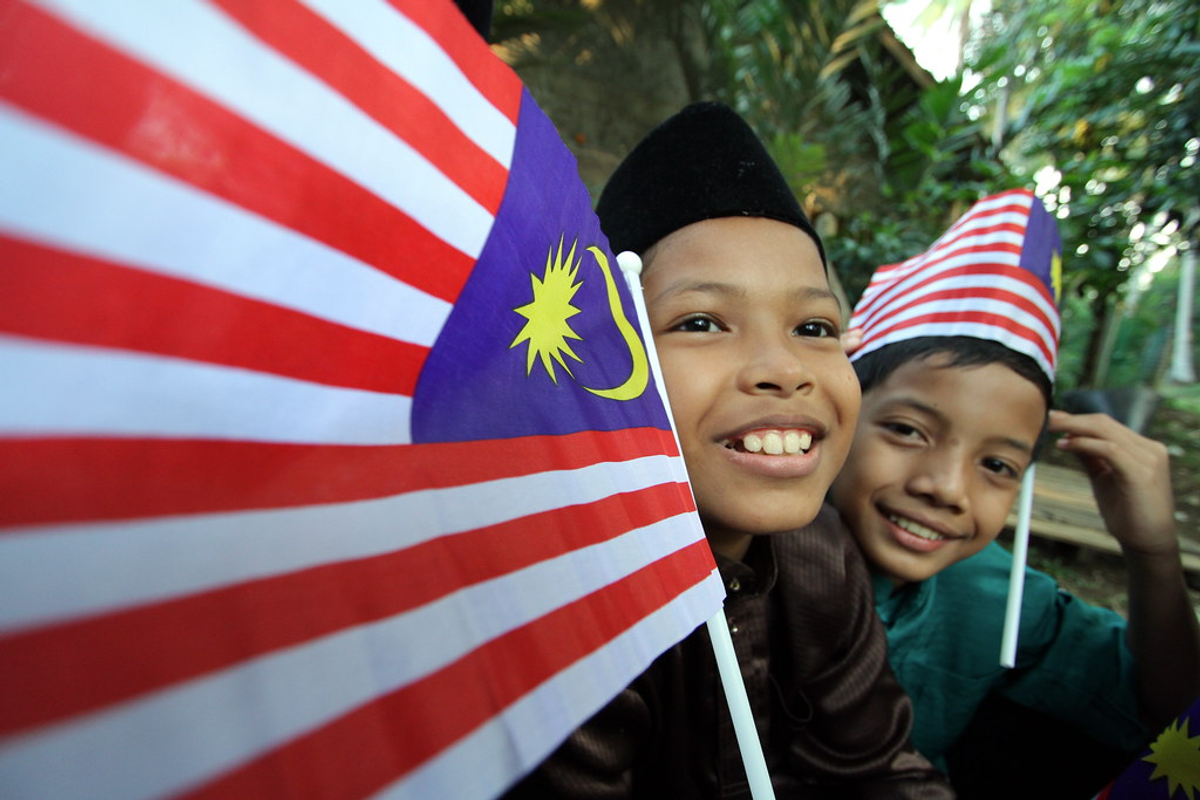
It commemorates 16 September 1963, when the former British colony of Singapore and the East Malaysian states of Sabah and Sarawak, joined the Federation of Malaya to create the Malaysian Federation.
Singapore only remained in the federation for two years, leaving on 9 August 1965.
Originally this date was planned for 1 June 1963, but it was delayed twice; once to 31 August to make it coincide with an older national day, and then delayed again to allow referendums to take place in certain regions.
Malaysia Day has only been a national holiday since 2010. On announcing this holiday, Prime Minister Datuk Seri Najib Tun Razak said the day would involve activities that would foster the Malaysia spirit and would be celebrated with formal events such as a parade to commemorate the historical moment. He added that it should remind the Malaysian people about their struggle in achieving independence.
On 31 August, Malaysians celebrate Independence Day (Merdeka Day), so it is unusual for a country to effectively have two independence day holidays.
Move comes as haze from Indonesian fires makes Singapore and Kuala Lumpur the world’s most polluted cities.
Published On 13 Oct 202613 Oct 2026
Firefly, a Malaysian low-cost airline, has extended the suspension of its flights between Kuala Lumpur and Singapore through Wednesday as smoke from fires in Indonesia continued to blanket the region.
The announcement came as IQAir, an air quality monitor, ranked Singapore and the Malaysian capital Kuala Lumpur as the world’s two most polluted cities on Tuesday.
Recommended Stories
list of 2 itemsend of list
Firefly said in a statement that flights between the Sultan Abdul Aziz Shah Airport (SZB) near Kuala Lumpur and the Seletar Airport in Singapore (XSP) have been cancelled up to Wednesday due to “weather and haze conditions”.
It called the action a “proactive safety measure”.
The fires, mostly on the Indonesian islands of Sumatra and Borneo, are the country’s most intense in 11 years. They have been spurred by El Nino, a weather pattern expected to be among the strongest in four decades.
IQAir, a Swiss air quality monitoring company, said Air Quality Index in Singapore stood at 199 on Tuesday and 183 in Kuala Lumpur. Readings above 150 are generally considered unhealthy, and those above 300 are classified as hazardous.
Firefly, a subsidiary of Malaysia Aviation Group, which includes Malaysia Airlines, first announced the flight cancellations on October 10, citing “low visibility” due to the haze conditions.
Firefly said that affected passengers were being rebooked on Malaysia Airlines flights between Kuala Lumpur International Airport and Singapore’s Changi Airport, subject to seat availability.
The Singapore government has reintroduced subsidised care for haze-related illnesses, as it last did in 2015, when smoke from Indonesian fires hung over the region for weeks.
In Malaysia, schools reopened in most states on Tuesday as air quality improved slightly, but they remain closed in three states, one federal territory and several districts.
Malaysia’s foreign minister, Mohamad Hasan, said on Monday that he would press for stronger regional mechanisms when foreign ministers of the Association of Southeast Asian Nations (ASEAN) meet next month.
“We already have an ASEAN mechanism for natural disasters, but haze is not included or classified as a natural disaster,” he told reporters in Sepang, according to Bernama, Malaysia’s state news agency.
The Philippines, which chairs the bloc this year, confirmed that the issue would be on the agenda.
“It’s in the agenda,” Dominic Xavier Imperial, a spokesman for the Philippine Department of Foreign Affairs, said of the November meeting, which will precede the 49th ASEAN summit in Manila.
Mohamad, the Malaysian minister, said Indonesia had deployed about 60,000 personnel to fight the fires, but thick smoke had grounded 34 aircraft, including planes and helicopters.
Remote terrain and limited water supplies have also hindered the effort, he said, and cloud seeding is not possible without suitable rain clouds. He acknowledged Indonesia’s efforts but urged more effective action, citing the toll on Malaysian communities.
Drivers faced glitches at the race in Malaysia, where Lewis Hamilton had to stop and restart his car on the track.
Published On 5 Oct 20265 Oct 2026
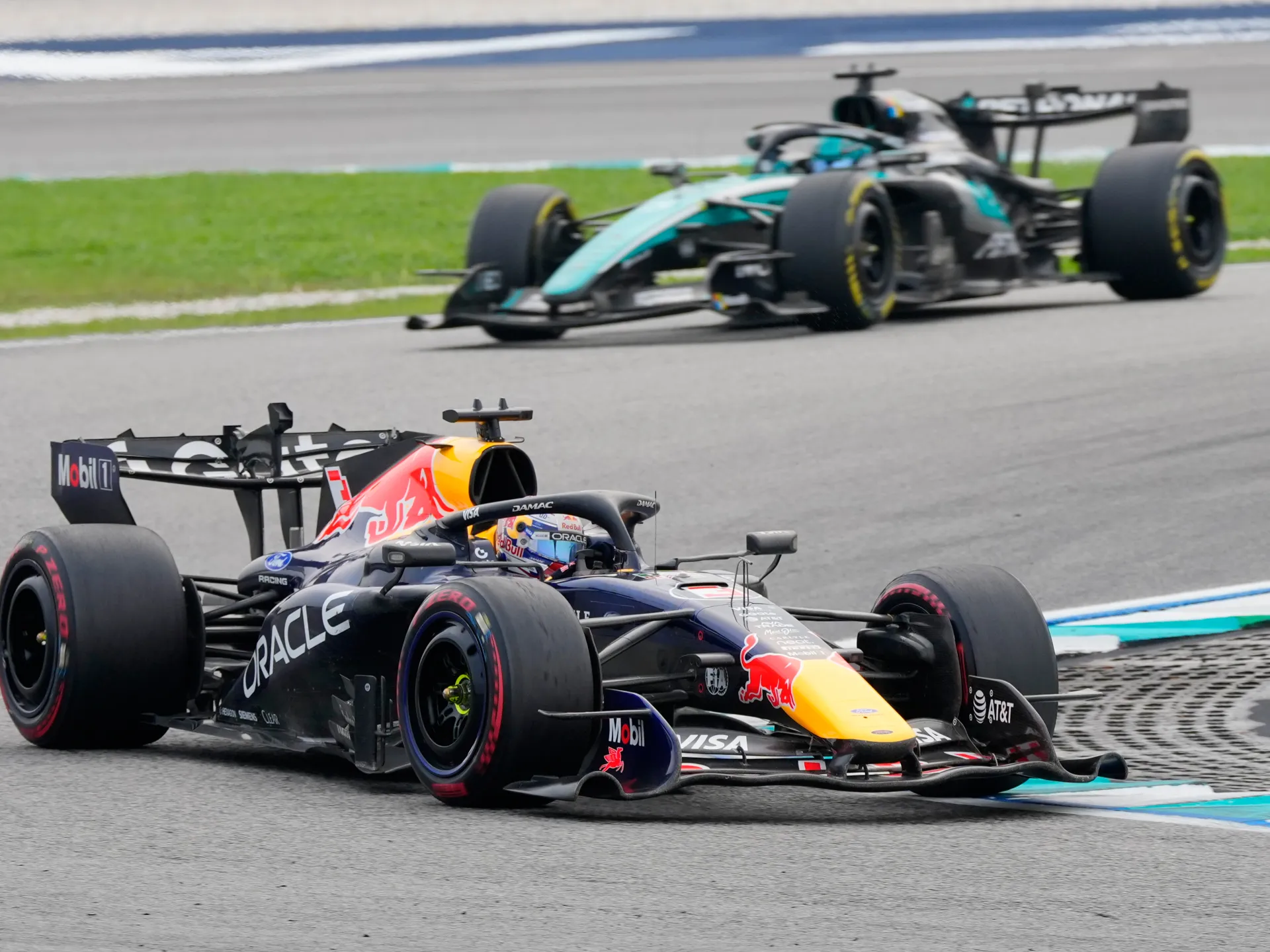
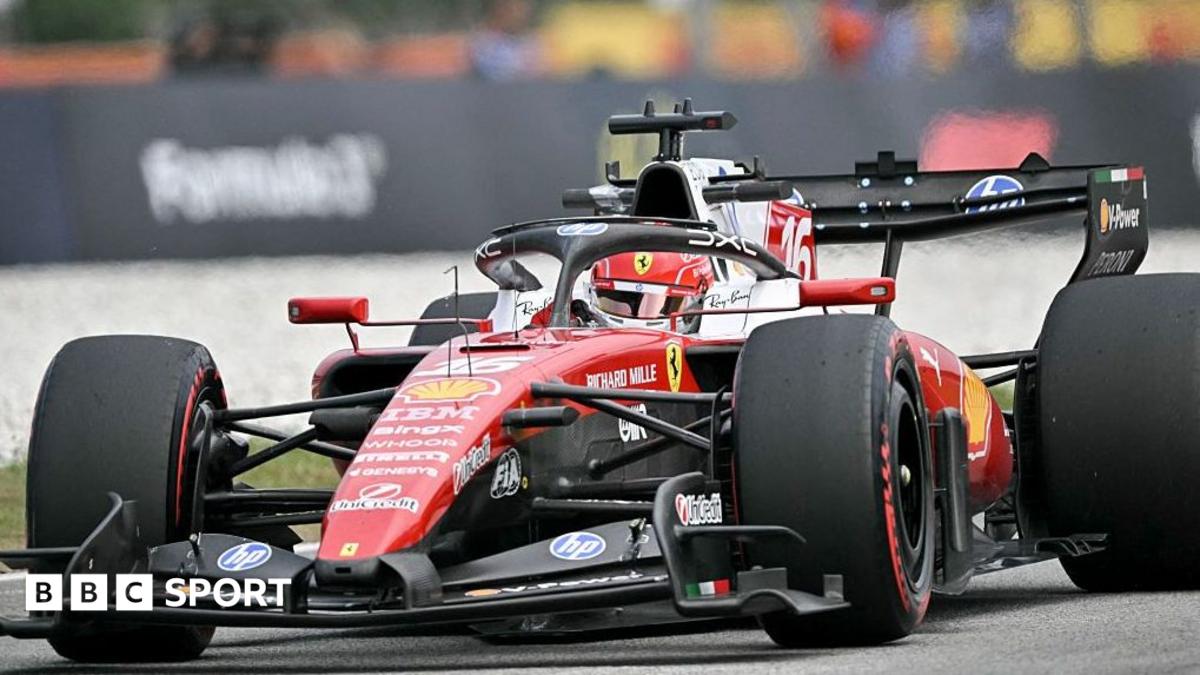
Formula One’s governing body has promised a full investigation into a software bug that caused chaos and forced the start of the Bahrain Grand Prix in Malaysia to be aborted, with drivers feeling like they were in battery-powered cars made of Lego.
Ferrari’s seven-time world champion Lewis Hamilton and Red Bull’s four-time champion and eventual race winner Max Verstappen were among several affected by the glitch on a formation lap after torrential rain and a long delay at Malaysia’s steamy Sepang circuit on Sunday.
Recommended Stories
list of 4 itemsend of list
Verstappen compared the experience to a “Lego race” held at Silverstone before the British Grand Prix while Hamilton, the sport’s most successful driver of all time, had to stop his car on track and restart it in what he said was a career first.
The episode was the latest in a difficult first season for the new era of cars and engines, with drivers at the pinnacle of motorsport unhappy since the opening race with the power units’ increased electrical component and the need for energy management.
FIA said afterwards that “an unprecedented combination of low engine speed, low-grip conditions, wet-weather energy management settings and the Sepang circuit’s sector configuration led to an unintended loss of power for a number of cars”.
“As a result, the FIA technical department removed the energy limit constraint in the affected sectors through an updated software release distributed to all competitors during the race delay caused by heavy rain, enabling teams to make the necessary changes to the power unit before the start of the race.
“This issue had not been detected by the FIA or the teams during testing or during the laps to the grid. The FIA, together with the teams and power unit manufacturers, will undertake a full review of the issue.”
The FIA’s single-seater director Nikolas Tombazis told reporters the lack of preseason testing in wet conditions had played a part in the chaos.
“Some cars went very slowly, almost came to a standstill. There was a bit of a concertina effect between cars, and some cars almost stopped completely,” he said. “That bug prevented the power from being redeployed, and for the cars to start again.
“I think if we had had a bit more testing, we probably would have managed to catch it in time, and not have such a situation.”
Sepang was the first race weekend of the season with wet conditions, although the track dried during the race.
“Sometimes things fall through the net and people learn, and you do a better job next time,” Tombazis said.
Malaysia continues mass refugee deportations despite warnings from the UN about unsafe conditions in an active war zone.
Published On 5 Oct 20265 Oct 2026
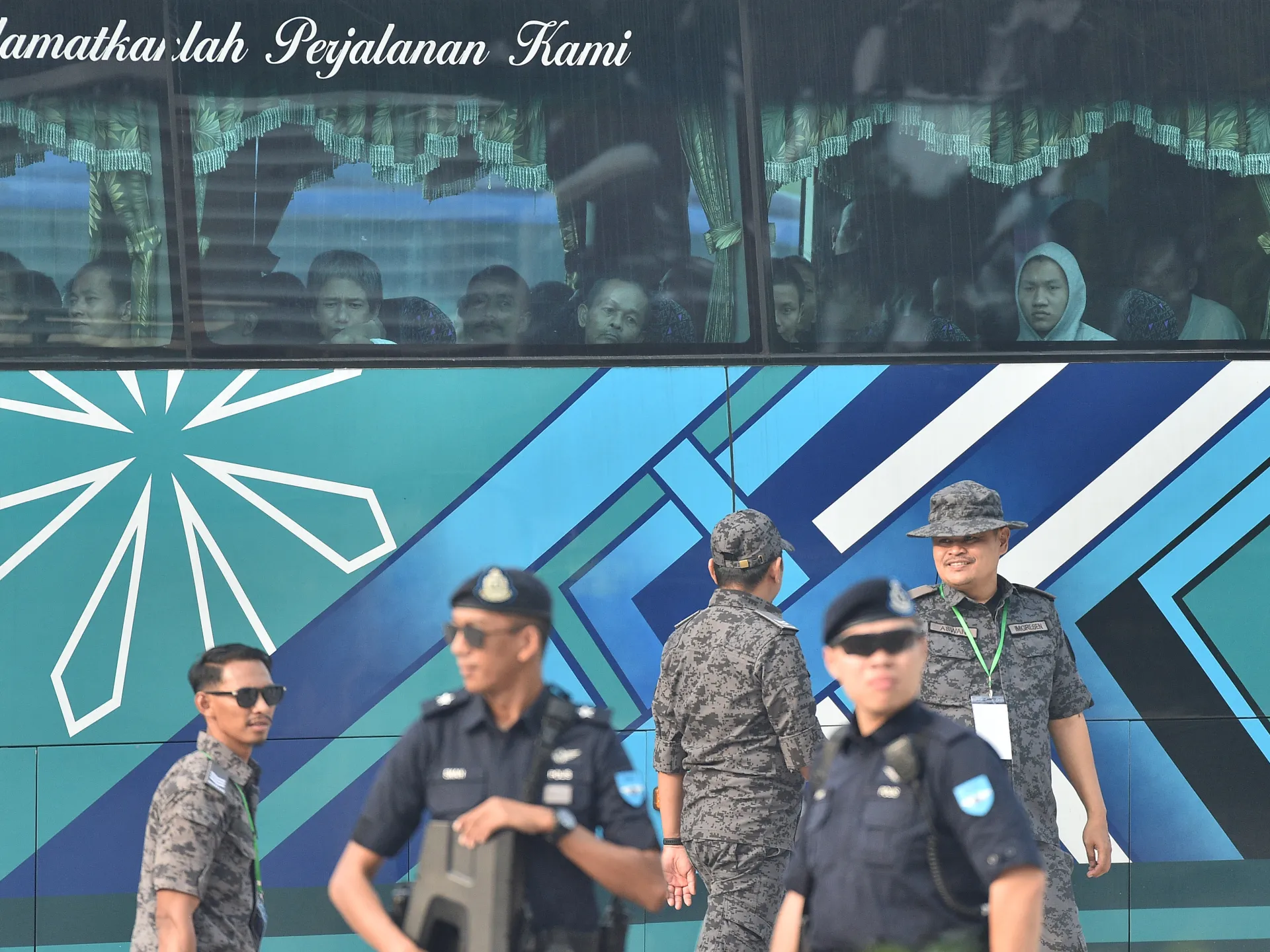
Nearly 1,500 Myanmar refugees and migrants deported from Malaysia have arrived in their war-ravaged country under an opaque repatriation scheme heavily criticised by human rights groups and the United Nations refugee agency.
The 1,479 returnees, transported from Malaysia on board two navy warships and a hospital ship on Tuesday, arrived in southern Yangon early Sunday, Nay Lin Tun, a regional government minister, said.
Recommended Stories
list of 3 itemsend of list
They are among 5,000 Myanmar nationals who will be repatriated in stages from Malaysia, where more than 10,300 others are being held in immigration detention centres, according to the country’s Home Ministry.
Malaysia insists all returnees agreed to voluntary repatriation, but rights monitors have raised concerns that Myanmar refugees had little choice and warned that conditions for return remain unsafe.
The UN refugee agency said this past week that its staff were not allowed to meet the Myanmar nationals to confirm whether their decisions to return “were genuinely free and informed”.
Rohingya make up the majority of Myanmar refugees and asylum seekers in Malaysia, but it remains unclear how many members of the persecuted Rohingya are among the returned group.
The deportation was carried out during escalating raids on refugee communities in Malaysia by immigration officials, which led to the detention of more than 50,000 refugees in 2026.
Malaysian Prime Minister Anwar Ibrahim announced the repatriations in July against a backdrop of rising xenophobia towards refugees, particularly the Rohingya.
Kuala Lumpur is moving ahead with plans to return a second group of more than 3,500 refugees and migrants, saying they have caused financial, social and security burdens.
While Malaysia is not a party to the UN Refugee Convention and treats refugees as undocumented migrants, it is home to about 215,600 refugees and asylum seekers registered with the United Nations High Commissioner for Refugees (UNHCR).
This includes more than 126,000 mainly Muslim Rohingya refugees.
Myanmar pledged last month that returns will be “safe and dignified”.
But Yap Lay Sheng, a senior human rights specialist with Fortify Rights, told the AFP news agency: “There’s no telling how the regime would treat returnees.”
Myanmar has been accused of committing genocide against the Rohingya Muslim minority. Earlier this year, the International Court of Justice (ICJ) opened its first genocide case it has heard in full in more than a decade.
The UNHCR and rights groups said returnees could face persecution and forced military conscription in an active war zone. Myanmar has been embroiled in a civil war since the military seized power from the elected government in 2021.
The war has killed more than 100,000 people since the coup, according to the Armed Conflict Location and Event Data (ACLED) project.
Myanmar’s Min Aung Hlaing, the military coup leader who was installed as civilian president in April, is expected to visit Malaysia soon to discuss the repatriation scheme.
Missing Q2 was disappointing but he responded with a strong recovery on Sunday. Climbed from 15th on the grid to finish just outside the points and comfortably ahead of Audi team-mate Bortoleto after the Brazilian’s penalty.
Lance Stroll – 6.5/10
A much more competitive weekend for Aston Martin generally. Stroll joined Alonso in Q2 and kept himself out of trouble through a chaotic race to finish 12th, even if his team-mate ultimately extracted more from the opportunity.
Franco Colapinto – 7/10
Started 21st due to grid penalties, so 13th represented a very respectable recovery. Kept things clean after his costly mistake last time out and made up plenty of ground in difficult conditions.
Oliver Bearman – 5/10
Another fairly anonymous weekend for Haas. Knocked out in Q1 and although he gained a couple of places during the race, 14th was about all there was to show for it.
Esteban Ocon – 5/10
Frustrated with Haas’ qualifying run plan after going out in Q1 and never really recovered from there. Great start and was fighting well inside the top 10. Ultimately finished behind Bearman and was unable to make the changing conditions work sufficiently to threaten the points.
Pierre Gasly – 5.5/10
Qualifying ninth was an excellent start but Sunday unravelled almost immediately. Nearly lost the car on slicks during the formation procedure and ultimately fell all the way to 16th as Alpine’s gamble failed to pay off.
Carlos Sainz – 6/10
Williams struggled for pace throughout the weekend but 13th represented a good qualifying. His race was then further compromised by contact with Bortoleto, for which the Audi driver was penalised, so 17th doesn’t tell the whole story.
Gabriel Bortoleto – 4.5/10
There was plenty to like about reaching Q3 in the Audi, but the race undid that good work. Contact with Sainz earned him a penalty and left him 18th after starting inside the top 10.
Sergio Perez – 4/10
Qualified last and never looked likely to make meaningful progress even amid all the chaos. Reaching the chequered flag was at least something for Cadillac, but 19th completed another difficult weekend.
George Russell – 8/10
A far better race than his eighth place in qualifying suggested. Made an excellent start, ran inside the top three for virtually the entire afternoon and, even if he couldn’t match Mercedes team-mate Antonelli, was heading for another podium before a power-unit failure stopped him with five laps remaining.
Alex Albon – 4.5/10
Williams lacked pace from the outset and qualifying 20th left him with an enormous amount of work to do. His eventual retirement was caused by a gearbox problem rather than a driving error, but there had been little sign of any kind of meaningful challenge before then.
Valtteri Bottas – 3.5/10
A weekend to forget. Qualified ahead of Cadillac team-mate Perez but admitted his decision to run slicks was a risk before spinning into the gravel on lap nine and triggering the first safety car.
Verstappen, who chose not to do a soft-tyre run because rain was forecast and he wanted to prioritise race preparation, said his day had been a “decent start” and “positive”.
Technical director Pierre Wache added: “We were not very optimistic starting the weekend. The main aspect was to evaluate the package we put in Baku in different type of corners than low speed.
“It looks to be working better than the previous package. Relative performance is difficult to judge but we were surprisingly happy with where we were today.”
Mercedes drivers George Russell and Kimi Antonelli were only seventh and eighth fastest in terms of headline times as they evaluated a major upgrade on their car, the team’s first since the Canadian Grand Prix in June.
Russell said: “I’m feeling the downforce in some of the corners but with this amount of tyre overheating and degradation that trumps everything. So we just need to get on top of that overnight,. That’s more of a set-up rather than the upgrade itself and go from there.’
Asked whether he could compete for pole position on Saturday, Russell said: “Currently, Verstappen looks very fast and the race pace of the McLaren looked very quick but never say never.”
The Briton trails Antonelli by 66 points in the championship after his victory in Azerbaijan last weekend.
On the race simulation runs, Verstappen also looked like the car to beat, taking stint length and tyre wear into account.
But the top four teams all looked to be in close company after a day evaluating tyre wear in the tropical temperatures and on an abnormally abrasive track, where F1 cars last raced in 2017.
Racing Bulls’ Liam Lawson and Alpine’s Pierre Gasly were ninth and 10th.
Three drivers have grid penalties. Hadjar will drop five places from his qualifying position for exceeding the permitted number of engine parts.
And Arvid Lindblad of Racing Bulls and Alpine’s Franco Colapinto will be at the back, the Briton for engine penalties, and the Argentine because of a 10-place engine penalty on top of the five-place penalty he was given for causing a crash at a restart in last weekend’s Azerbaijan Grand Prix.
F1 has returned to this track, regarded as one of the best layouts among the new generation of circuits that came on stream at the end of the last century and into this one, because of the circumstances around this year’s calendar.
The Bahrain and Saudi Arabia races were cancelled at the beginning of the year as a result of the war in the Middle East.
But Bahrain were keen to hold their race and Crown Prince Salman bin Hamad bin Isa Al Khalifa negotiated to hold the race in Malaysia.
A bunch of Bahraini-related activities are being held at the track, while the trophy presented will be the Bahrain Grand Prix trophy and rosewater rather than champagne will be sprayed on the podium.
Kuala Lumpur, Malaysia – The phone hasn’t stopped ringing in recent days. Raf*, a leader of refugees from Myanmar who are living in Malaysia, receives more than 100 calls a day, and they follow a common pattern.
“They are crying, asking me to do something,” Raf told Al Jazeera.
The Malaysian government on Tuesday deported nearly 1,500 refugees, part of its stated plan to send back at least 5,000 refugees as part of a deal with the military government of Myanmar. That move, from a country that had long taken in the refugees, has sparked fear among the tens of thousands of other refugees from Myanmar in the country, who have one question at the top of their minds: Who might be next?
The deportation was carried out during escalating raids on refugee communities by immigration officials, which have led to the detention of more than 50,000 refugees this year alone. Those working with refugees in Malaysia said the frequency of the raids has increased since June when Prime Minister Anwar Ibrahim announced the repatriation agreement with Myanmar.
“[We’ve seen] a sharp increase. Raids are happening every single day. There’s up to 50 raids or more happening every day,” said Heidy Quah, founder and executive director of the Malaysian nonprofit Refuge for the Refugees.
Minister of Home Affairs Saifuddin Nasution told local media that the government has conducted more than 9,700 such operations from the beginning of this year until September 17. That’s an average of 37 operations a day.
There are now more than 10,000 Myanmar nationals in Malaysia’s immigration depots, according to the Ministry of Home Affairs.
In all, Malaysia is home to more than 215,000 refugees, according to the Office of the United Nations High Commissioner for Refugees (UNHCR). Nearly 194,000 are from Myanmar. There are more than 126,000 Rohingya refugees in Malaysia, where they have been the target of widespread hate speech on social media in recent months. Apart from the Rohingya, the Myanmar refugees in Malaysia include nearly 16,000 from the Chin community and 33,000 from other Myanmar communities. The non-Myanmar refugees in Malaysia include small numbers of Pakistanis, Yemenis, Somalis, Afghans, Syrians, Sri Lankans, Palestinians and Iraqis.
The Myanmar refugee community in Malaysia has yet to identify any Rohingya among the first nearly 1,500 people deported on Tuesday, community leaders told Al Jazeera. Instead, many are from Myanmar’s other ethnic minorities, who are more likely to have valid national identification documents, community leaders said.
“The Rohingyas are a problem for deportation because Myanmar denies their citizenship,” Raf said. “So I don’t think that Myanmar will agree and accept all those Rohingyas.”
Myanmar officially treats the Rohingya as Bangladeshi immigrants despite the community’s long roots in Myanmar and their distinct ethnic identity. The Myanmar army has repeatedly cracked down on the Rohingya minority, including a wave of violence in 2017 that many rights groups have described as genocide. It set off a major refugee crisis when hundreds of thousands of Rohingya fled to Bangladesh, Malaysia, India and other neighbouring nations.
Myanmar community leaders also said the raids this year appear to have targeted locations highlighted in anti-refugee videos on social media in which content creators filmed refugee-populated areas, portraying them as hubs of chaos. These videos have been shared thousands of times on platforms such as Threads, TikTok and Facebook.
Al Jazeera contacted the Immigration Department to verify the link between the videos and raids but had not received a response at the time of publication. Accounts that had posted and shared antirefugee sentiment also did not respond to requests for comment.
Decline in resources
The increase in hostilities towards refugees in Malaysia coincides with a sharp decline in the capacity of local and international aid groups to support them, especially since the closure of the United States Agency for International Development in July 2025.
In Malaysia, this severely shrank resources for organisations helping refugees with basic needs, such as healthcare, Quah told Al Jazeera.
“Then slowly, United Nations organisations were being defunded, and even within the UN High Commissioner for Refugees in Malaysia, they lost a lot of staff,” Quah said. The job cuts reflected global retrenchments by UNHCR last year.
The agency continues to struggle with a funding crisis, saying on Tuesday that it faces a $5.79bn funding gap and, as of July, has received 32 percent of the funds it needs this year.
In Malaysia, this has led to even less protection for refugees and higher rates of exploitation, Quah said.
“Even UNHCR cardholders are arrested and remanded for about 14 days [while the] cards are verified,” she said.
For instance, an asylum-seeking woman who had scheduled an appointment to meet UNHCR representatives this month was recently detained, and immigration authorities demanded a letter from the organisation to prove that she was an asylum seeker, Quah said.
Although UNHCR confirmed the woman was seeking asylum, she remains in detention, Quah said.
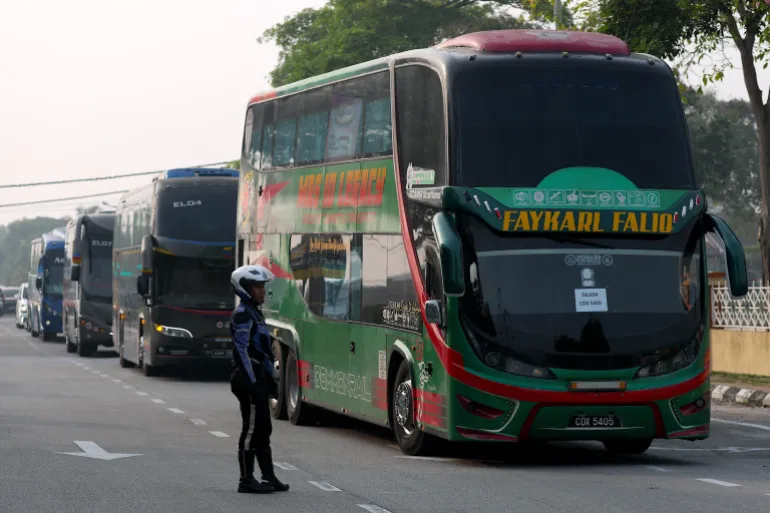
An initial group of 1,476 people from Myanmar are deported from Malaysia on September 29, 2026, first my bus and then by Myanmar navy ships [Fazry Ismail/EPA]
Ongoing violence in Myanmar
UNHCR and rights groups in Malaysia have urged the Malaysian government to stop the deportations as violence continues in Myanmar.
A day before Malaysia’s deportation of the refugees on Tuesday, an air strike by Myanmar’s military was reported to have killed at least 33 people in Rakhine state, the historical home of the Rohingya. The Arakan Army group said the victims included vendors, shoppers and pedestrians. In June, the UN said Myanmar’s military was responsible for more than 700 civilian deaths over a six-month election period that started in August last year.
The Human Rights Commission of Malaysia (SUHAKAM) said that while Malaysia is not a party to the Refugee Convention of 1951, the principle of nonrefoulement has become part of customary international law and Malaysia, therefore, is bound to abide by it. The principle protects people from being returned to a place where they face a real risk of persecution, torture or other serious harm.
Particular attention should also be given to children, SUHAKAM said, highlighting that Tuesday’s deportation included 27 children, some reportedly as young as eight years old.
“No child should be returned to danger. Their safety, dignity and best interests must come first,” it said.
Myanmar community leaders in Malaysia told Al Jazeera the ships that departed on Tuesday will arrive in Yangon on Sunday.
“After that, we will [learn] whether they are allowed to leave the port safely [or are detained],” said one community leader who requested anonymity due to the increase in violence towards refugees in Malaysia.
Still, even those who are allowed to leave the port may need to spend months or years in Yangon because it is unsafe to travel across the country, the community leader said.
Rohingya refugees face evictions from their homes in Malaysia amid rising local tensions and online misinformation [File: Hasnoor Hussain/Reuters]
Call for independent access
Rights groups further criticised the Malaysian government’s framing of the deportations as “voluntary”, saying individuals should have sufficient information about conditions in their home countries before making such a decision.
“While authorities say the returns are voluntary, those returned had been held in immigration detention. This raises serious questions about whether decisions to return were genuinely free and informed,” UNHCR Assistant High Commissioner for Protection Edem Wosornu said.
The Malaysian government said people were selected for deportation based on a list of names shared by the Myanmar government in an official diplomatic note.
“Such [a] ‘voluntary’ decision must be determined by an independent authority, such as the UNHCR, and not by the Immigration Department,” SUHAKAM said .
UNHCR told Al Jazeera that it was not involved in the latest return process and did not have access to the individuals concerned. “[We were,] therefore, not in a position to independently ascertain the voluntariness of their decisions to return,” it said.
“We continue to encourage the government to ensure that return processes include individual assessments, access to protection procedures and safeguards to ensure that any decision to return is free, informed and genuinely voluntary,” it said.
Malaysian Prime Minister Anwar Ibrahim has long positioned himself as a champion of human rights but now faces criticism for the expulsion of Myanmar refugees [File: Rafiq Maqbool/AP]
Malaysia registering refugees
The deportations come at a time when Malaysia is simultaneously positioning itself as welcoming to refugees and their needs.
In 2015, the Malaysian government launched a Refugee Registration Document (DPP) programme. On paper, it is supposed to help register refugees, giving them official documentation.
Raf welcomed the DPP as long as the registration and documentation of refugees in Malaysia leads to access to work, education and healthcare.
“If these three things are provided, I think that’s a good solution for temporary refugees staying here.”
But the Malaysian branches of Amnesty International and Asylum Access said the latest deportations raise profound concerns about the purpose of the DPP. The programme should not be used to fast-track unlawful deportations, the groups said in a joint statement.
*Name changed to protect the individual’s identity
The top seeds defend their Asian Games squash titles, becoming the first players to qualify for the Los Angeles Games.
Published On 27 Sep 202627 Sep 2026
Malaysia’s Eain Yow Ng and Sivasangari Subramaniam have made history by becoming the first squash players to qualify for the Summer Olympics after winning gold medals at the Asian Games in Aichi-Nagoya, Japan.
The defending champions won the men’s and women’s finals on Sunday and earned a ticket to the 2028 Los Angeles Games, where squash will make its Olympic debut.
Recommended Stories
list of 4 itemsend of list
Squash is among a handful of sports at Aichi-Nagoya where a gold medal serves as automatic qualification for the next Olympics.
Both Eain and Sivasangari successfully defended their titles without dropping a single game in their campaigns. Their victories gave Malaysia its fifth and sixth gold medals.
World number 18 Eain thrashed India’s Abhay Singh 11-9, 11-5, 11-5 in 33 minutes at the Nagoya Kinjo Futo Arena and became the first Malaysian to qualify for the Olympics.
Subramaniam in action during the women’s singles gold medal match [Chalinee Thirasupa/Reuters]
World number five Sivasangari joined her compatriot soon after when she made quick work of the women’s final against India’s Anahat Singh.
She demolished Singh, ranked 17th in the world, 11-4, 11-4, 11-7 in just 23 minutes to clinch gold.
Earlier, Singh, the world junior champion, produced a stellar comeback in the semifinals from two sets down to overpower Japan’s Satomi Watanabe (9-11, 11-13, 12-10, 11-6, 11-3) on Saturday.
“I think it is the best win of my career,” Singh, 18, said after the match. “She’s number six in the world, and that’s the highest win I’ve ever had in my squash career.”
She made history even before Sunday’s match began when her semifinal victory made her the first Indian woman to reach the singles final at the Asian Games.
Earlier in the day, Pakistan picked up two more bronze medals at the games as third seed Noor Zaman toppled compatriot Ashab Irfan 3-0 in the bronze medal match. Watanabe took a 3-1 win over Hong Kong’s Sin Yuk Chan.
Pakistan’s Noor Zaman celebrates after winning his bronze medal match against compatriot Ashab Irfan [Chalinee Thirasupa/Reuters]






![Rohingya refugees facing evicted from their homes amid rising local tensions and online misinformation, Kuala Lumpur, Malaysia, July 27, 2026 [Hasnoor Hussain/Reuters]](https://i0.wp.com/occasionaldigest.com/wp-content/uploads/2026/10/2026-07-27T123715Z_206813602_RC2BMMA6AR5R_RTRMADP_3_MALAYSIA-REFUGEE-1787872480.jpg?w=640&ssl=1)


