launches

China launches strategic missile into Pacific

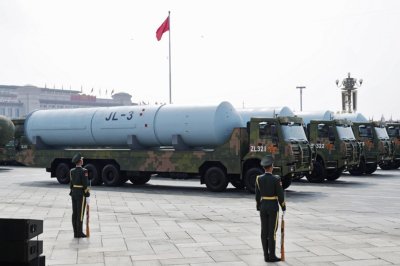
JL-3 intercontinental-range submarine-launched ballistic missiles are seen during a military parade in Beijing, China. Photo by ANDRES MARTINEZ CASARES / EPA

July 6 (Asia Today) — China launched a strategic missile into international waters in the Pacific on Monday, prompting concern from Japan and other regional powers as a U.S. nuclear and missile expert said the weapon was likely a JL-3 submarine-launched ballistic missile.

The People’s Liberation Army Navy said on social media that one strategic nuclear submarine successfully fired a submarine-launched strategic missile carrying a dummy warhead toward the Pacific at 12:01 p.m. local time.

The Chinese military said the missile landed accurately in the target sea area but did not disclose the missile type or the exact impact location.

Wang Xuemeng, a spokesperson for the Chinese navy, said the launch was part of annual military training and that relevant countries were notified in advance.

“The launch complied with international law and international practice,” Wang said. “It was not aimed at any specific country or target.”

China also launched an intercontinental ballistic missile into international waters in the Pacific in September 2024. That test was China’s first ICBM launch toward the Pacific since a Dongfeng-5 launch in 1980. Based on photos later released, analysts assessed the 2024 missile as likely a Dongfeng-31AG, a road-mobile missile capable of reaching the U.S. mainland.

Monday’s launch was China’s first Pacific-oriented strategic missile test in about one year and 10 months.

The Japanese government expressed serious concern over the launch. China notified Japan of the plan in advance and designated areas near Shionomisaki, south of Wakayama Prefecture, as possible falling zones for space debris, Japanese media reported. Japan asked China to reconsider so the launch would not threaten Japanese safety.

The Japanese government said some of the projected debris zones included Japan’s exclusive economic zone, but the missile appeared to have landed outside the zone. It also said there were no confirmed reports that the missile passed over Japanese territory or the exclusive economic zone or that aircraft or ships were damaged.

Chief Cabinet Secretary Minoru Kihara, the Japanese government’s top spokesperson, said China’s military activities are a serious concern because of Beijing’s lack of transparency.

“China’s military trends lack transparency and have become a grave concern for Japan and the international community,” Kihara said.

China’s Foreign Ministry rejected international criticism, saying the launch was a routine military training activity conducted under safety standards and professional procedures.

“We hope relevant countries will not overinterpret the matter,” the ministry said.

In the United States, analysts said the missile used in the test may have been China’s newest submarine-launched ballistic missile, the JL-3.

Jeffrey Lewis, director of the East Asia Nonproliferation Program at the Middlebury Institute of International Studies at Monterey, told The New York Times that the Chinese military most likely tested the JL-3.

The JL-3 is China’s third-generation submarine-launched ballistic missile. It is believed to have a range of more than 10,000 kilometers, or about 6,200 miles, putting most of the world, including the U.S. mainland, within reach.

Submarine-launched ballistic missiles are considered a key part of nuclear deterrence because they are harder to detect than land-based missiles once deployed at sea. China publicly displayed the JL-3 during a military parade in Beijing in September 2025.

Lewis said the test signals that China’s nuclear force modernization has entered a new stage.

“Historically, China has conducted fewer ICBM tests than other countries,” Lewis said. “The reason was political, but the political dynamics have changed, and they seem to be adopting an approach of testing more frequently.”

Lewis said China may conduct more frequent tests of long-range missiles capable of carrying nuclear warheads in the future.

— Reported by Asia Today; translated by UPI

© Asia Today. Unauthorized reproduction or redistribution prohibited.

Original Korean report: https://www.asiatoday.co.kr/kn/view.php?key=20260706010002183

Source link

Treasury Department launches ‘Trump Accounts’ for children under 18

Starting July 4, parents can open “Trump accounts” that, for children born during President Donald Trump’s second term as president, include a $1,000 investment deposit. File Photo by John Angelillo/UPI | License Photo

July 4 (UPI) — The Trump administration officially launched “Trump Accounts” on July 4, which have been set up for parents to save money for their children.

The accounts, which include $1,000 for each child who is born between Jan. 1, 2025, and Dec. 31, 2028 — President Donald Trump‘s current term in office — can now be set up by parents after their authorization in last year’s “Big Beautiful Bill.”

The federal savings program is available for any child under 18, and can accept up to $5,000 in contributions per year, although the $1,000 seed funds for the accounts are only available to children born during Trump’s current term.

The Treasury Department said in a press release that more than 50 companies have committed to also contributing to accounts established for their employees’ children, regardless of their eligibility for the government contributed $1,000.

“Trump accounts are now live, giving every child a stake in the American Dream from day one,” Treasury Secretary Scott Bessent said in a statement on X.

“The Trump Accounts app is now updated with the full suite of account capabilities: you can start funding your child’s account, exploring financial education modules and more,” Bessent said.

The administration said that the accounts are aimed at “helping children start with a foothold in the American from birth or early childhood” with an investment account, which is part of a program that includes educational programs for both parents and children on how investment markets work.

News anchors are seen outside the Supreme Court of the United States as the court releases their final opinions before summer recess on Tuesday. The court upheld birthright citizenship and also state laws banning transgender women and girls from playing on school athletic teams. Photo by Bonnie Cash/UPI | License Photo

Source link

NASA launches robotic mission to save telescope falling back to Earth | Space News

A three-armed spacecraft rockets into orbit to rescue a NASA telescope that’s in danger of crashing back to Earth.

NASA has launched a robotic mission to try to prevent one of its ageing telescopes from burning up in the atmosphere in a complicated operation expected to last several months.

Northrop Grumman launched the Link spacecraft – built by United States-based Katalyst Space Technologies – from the Marshall Islands in the Pacific Ocean on Friday.

Recommended Stories

list of 4 itemsend of list

A Pegasus rocket blasted off from the belly of a modified aircraft putting Link on course to reach and capture NASA’s Swift Observatory in about a month.

Initially scheduled for Tuesday, the robot’s launch was postponed due to weather, then technical issues. Blast-off happened on Friday at 0836 GMT from an atoll in the Pacific Ocean.

The unprecedented $30m effort involves sending a robot to rescue the Swift space telescope that is falling towards Earth. If successful, the mission could pave the way for giving other satellites a second life.

Launched in 2004, Swift is sinking faster than ever because of recent solar storms. The $250m telescope studies gamma-ray bursts, the most powerful explosions in the universe.

Once it reaches an orbit close to Swift’s, the robot will deploy its solar panels and perform a series of checks.

It will then have to locate the Swift telescope in the vastness of space, circle around it and dock using three robotic arms – manoeuvres expected to take several weeks.

Finally, it will attempt to propel the satellite approximately 300km (186 miles) higher above the Earth, roughly to its initial orbital position. That operation is expected to last at least a month.

“This is a lot of firsts stacked on top of each other,” Shawn Domagal-Goldman, director of NASA’s astrophysics division, told reporters on Tuesday. “I’m just deeply thankful that we’re even giving this a go.”

Source link

South Korea prepares Naro spaceport for private launches

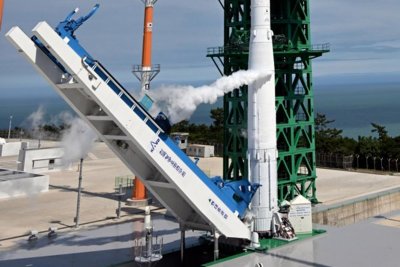
The erector is lowered from the Korea Space Launch Vehicle-II (KSLV-II), also called Nuri, on the launch pad at Naro Space Center in Goheung, South Jeolla Province, southwestern South Korea. Photo by YONHAP / EPA

June 29 (Asia Today) — South Korea’s space agency released guidelines Monday for private companies seeking to use the Naro Space Center, beginning preparations for the country’s first dedicated commercial launch facilities.

The Korea AeroSpace Administration said the guidelines outline a four-stage consultation and approval process, methods for calculating fees and safety and security requirements.

They also establish procedures and fee standards for private companies seeking to use testing facilities at the space center in Goheung, South Jeolla Province.

The government plans to open the commercial launch site in two stages, beginning in the third quarter of 2027 and expanding it in the first quarter of 2031.

The first stage will include a mobile launch platform, propellant supply systems and launch control equipment.

The second stage will add an assembly and testing facility where companies can prepare launch vehicles and test payloads.

The expanded infrastructure is expected to accommodate commercial launch vehicles and eventually support reusable launch systems.

Companies seeking to conduct a launch at Naro must apply at least four months before their proposed launch date.

They will then undergo four stages: preliminary consultation, review and authorization, launch operations and post-launch procedures.

The guidelines also establish a system for calculating usage fees based on each company’s launch requirements and the facilities and services it uses.

An agency official said the guidelines were prepared to help private companies use the center systematically before the commercial launch site opens and South Korea continues launches of its domestically developed Nuri rocket.

The official said the government will seek to simplify procedures based on companies’ needs and establish reasonable usage fees.

South Korean launch companies have relied on overseas spaceports and sea-based platforms because the country has lacked a land-based commercial launch site available to private operators.

Opening the Naro facilities could allow companies to conduct more of the development process in South Korea, from ground testing to commercial launches.

“Opening the Naro Space Center to private use goes beyond simply granting access to a government facility,” said Taeseog Oh, administrator of the Korea AeroSpace Administration.

“It is meaningful because it strengthens the support system for private companies in the space industry,” Oh said. “We will continue providing support so a private-sector-led commercial space ecosystem can take root in a stable manner.”

The Naro Space Center has primarily supported government launch programs, including the Naro rocket and Nuri, South Korea’s first domestically developed space launch vehicle.

Nuri’s fourth launch took place in November 2025, with private company Hanwha Aerospace assuming a larger role in rocket production and assembly under a government technology-transfer program.

The opening of the commercial facilities is expected to further shift South Korea’s space industry from a government-led model toward one in which private companies develop and operate launch services.

The guidelines released Monday are scheduled to be submitted to the Korea Aerospace Research Institute’s board for approval on July 8 before being registered as internal operating rules.

— Reported by Asia Today; translated by UPI

© Asia Today. Unauthorized reproduction or redistribution prohibited.

Original Korean report: https://www.asiatoday.co.kr/kn/view.php?key=20260629010010286

Source link

US launches second night of strikes on Iran after ship hit by drone | US-Israel war on Iran News

For a second day in a row, the United States has launched strikes on Iran, once again citing an attack against a commercial vessel as a motivation.

Saturday’s renewed attacks are the latest indication that a Middle East ceasefire, established as part of a June 17 memorandum of understanding between the US and Iran, might be at breaking point.

Recommended Stories

list of 3 itemsend of list

In a statement, US Central Command (CENTCOM), which directs military action in the Middle East, explained that the latest attacks came “at the Commander in Chief’s direction”.

“CENTCOM forces launched strikes today in direct response to continued Iranian aggression against commercial shipping,” the command centre wrote.

“U.S. military aircraft targeted Iranian military surveillance infrastructure, communication systems, air defense sites, drone storage facilities, and minelayer capabilities.”

Explosions were reported in southern Iran, around the village of Tahrui, near the port of Sirik, which was also the focal point of Friday’s US attacks. State media also indicated that Qeshm Island had been hit.

Responses to cargo ship strikes

Saturday’s strikes against Iran followed a similar playbook to Friday’s.

Early on Saturday morning, at about 4:30am Eastern US time (08:00 GMT), the Panama-flagged tanker Kiku was travelling through the Strait of Hormuz when it was reportedly hit by an unidentified projectile.

No crew members were injured, and no leakage was reported from its cargo.

CENTCOM said the ship had been carrying more than 2 million barrels of crude oil when it was hit by a “one-way attack drone”.

The website MarineTraffic.com indicates that the tanker left the Al Shaheen oilfield on Thursday and is due to dock in Fujairah, in the United Arab Emirates, on Sunday.

A similar sequence of events prompted Friday’s volley of US attacks.

In that case, a Singapore-registered container ship, the Ever Lovely, was struck by a drone as it sailed through the Strait of Hormuz on Thursday. No one on board was injured, and the boat continued on its travels.

But US President Donald Trump denounced the drone strike on Friday as a “foolish violation” of the June 17 memorandum.

By that evening, the US and Iran had exchanged fire, with the US targeting the area around Sirik, and Iran hitting US military installations in the Middle East.

CENTCOM referenced Friday’s actions in announcing the latest round of strikes.

“After yesterday’s U.S. strikes in response to the Iranian attack on M/V Ever Lovely, Iran was given a chance to honor the ceasefire agreement,” CENTCOM wrote.

Iran “elected not to”, it added, citing the Kiku drone strike. CENTCOM also maintained that commercial traffic through the Strait of Hormuz, a sticking point in ceasefire negotiations, would continue, with US military backing.

“U.S. forces remain vigilant, lethal, and ready,” CENTCOM said in its statement.

Controlling the strait

Central to the latest round of fighting is control over the Strait of Hormuz, a key artery for maritime traffic. Nearly 20 percent of the world oil supply passed through the narrow waterway in peacetime, as well as significant quantities of fertiliser and natural gas.

But after the US and Israel launched attacks on Iran on February 28, launching the present-day war, Tehran moved to shut down traffic through the strait, which sits between its shores and Oman’s.

Iran’s decision sent global fuel prices skyrocketing, and that generated pressure, both domestic and international, for the Trump administration.

The June 17 memorandum was designed to provide relief. Though it was a prelude to further negotiation, the deal called for the US, Iran and their allies to “declare the immediate and permanent termination of military operations on all fronts, including in Lebanon”.

It also outlined a 60-day period during which time Iran was to make its “best efforts” at allowing commercial traffic to transit through the Strait of Hormuz at no charge.

That part of the memorandum specified that Iran and Oman, the two countries that border the strait, would determine “future administration and maritime services” in the waterway.

But continued fighting in Lebanon has prompted Iran to threaten the strait’s closure once more.

Then, there is the question of the memorandum’s terms. Experts say the US and Iran have come to different understandings of how the June deal should be enforced.

Al Jazeera correspondent Resul Serdar Atas explained that Iran believes it should be allowed to restrict commercial traffic that does not have prior clearance to pass through the strait.

“Article Five of the memorandum of understanding, according to the Iranian officials, is clearly saying that any ship, whether it’s going through the Iranian territorial water or the Omani territorial water, has to be in full coordination with the Iranian authorities,” he said.

“But that is not understanding of Americans. The Americans are saying, ‘Well, if it is going through the Omani territorial waters, they do not need to coordinate with the Iranian authorities.’”

That, in turn, is leading to a disagreement over who is violating the terms of the ceasefire. The US sees Iran as violating the agreement by interfering with commercial vessels, while the Iranians perceive the US as breaking its commitment to stop fighting.

“That is the pattern,” Serdar Atas said. “For Americans, keeping the Strait of Hormuz open is quite important for the stability of the global economy. But for Iran, the Strait of Hormuz being under Iranian control is the ultimate deterrence and the biggest leverage.”

Tit-for-tat ‘could get out of hand’

Some of the hostilities are a result of the high level of distrust between Iran and the US, according Hassan Ahmadian, a professor at the University of Tehran.

He noted that Iran’s insistence that ships passing through the Strait of Hormuz receive its clearance could be read as a defensive action.

“I think the Iranians will not let go of this because obviously they want only commercial ships, according to the MoU, to pass through the strait. So any ship that doesn’t coordinate might be a military one, might carry military stuff,” Ahmadian said.

He believes that the latest flurry of US attacks may prompt Iran to halt any deliberations with the Trump administration as they seek to cement a peace deal.

The US side, meanwhile, is likely to face pressure from rising oil prices as the result of the renewed fighting, according to Harlan Ullman, a retired US naval officer and chairman of The Killowen Group, a global advisory firm.

Still, Ullman warned that the latest exchange of fire could spiral into an escalation in violence, rendering the memorandum of understanding moot.

“The agreements are very, very fragile, and this tit-for-tat could get out of hand,” Ullman said.

“If prices go up, as I suspect they will, that will be a moderating influence, and I think the United States will consider that rising oil prices are not good, and it will probably continue the negotiations.  But right now, who knows?”
Source link

South Korea launches $150 billion U.S. shipbuilding investment push

South Korean Deputy Prime Minister and Minister of Finance and Economy Koo Yun Cheol and representatives of government agencies, policy-finance institutions and major shipbuilders attend a signing ceremony for a Korea-U.S. shipbuilding cooperation investment agreement at the Export-Import Bank of Korea in Seoul on Thursday. Photo from the Ministry of Trade, Industry and Resources, used under KOGL Type 1.

June 25 (Asia Today) — South Korea launched a policy-finance framework Thursday to support $150 billion in shipbuilding cooperation with the United States, seeking to share early-stage investment risks with domestic companies expanding into the U.S. market.

The Korea-U.S. Strategic Investment Corporation, four state-backed financial institutions and three major South Korean shipbuilders signed a memorandum of understanding at the Export-Import Bank of Korea headquarters in Seoul.

The agreement is the first institutional step toward implementing the $150 billion shipbuilding cooperation package included in a bilateral strategic investment memorandum signed in November 2025.

The participating financial institutions are the Export-Import Bank of Korea, Korea Development Bank, Korea Trade Insurance Corp. and Korea Ocean Business Corp.

The three shipbuilders are HD Hyundai Heavy Industries, Samsung Heavy Industries and Hanwha Ocean.

Under the agreement, the participants will establish a Korea-U.S. Shipbuilding Cooperation Investment Council to identify U.S. investment projects, coordinate policy financing and jointly monitor their implementation.

The Export-Import Bank of Korea will serve as the council’s secretariat, coordinating communication among the institutions and overseeing the progress of individual projects.

South Korean Deputy Prime Minister and Minister of Finance and Economy Koo Yun Cheol said shipbuilding cooperation is one of the two main pillars of strategic investment between South Korea and the United States.

Koo urged the investment corporation and policy lenders to develop financing measures that can provide companies with sufficient funding when it is needed.

“The government and policy-finance institutions must actively seek ways to share the risks and uncertainty of initial investments that individual companies cannot bear alone,” Koo said.

He said the initiative should help South Korean shipbuilders support the rebuilding of the U.S. shipbuilding industry while creating new contracts and markets across South Korea’s domestic shipbuilding supply chain.

The benefits should extend beyond large shipbuilders to small and midsize shipyards and marine equipment suppliers, he said.

“We must create a path for small and midsize shipbuilders and equipment suppliers to participate together as Team Korea,” Koo said.

The government plans to use the council to develop financing for investments in U.S. shipyards, naval vessel construction, maintenance, repair and overhaul services and commercial shipbuilding.

The policy-finance structure is intended to help companies manage the large capital requirements and financial risks associated with entering the U.S. market.

Financial Services Commission Vice Chairman Kwon Dae-young described the initiative as an opportunity for South Korea’s shipbuilding industry to demonstrate its capabilities in the global market.

“We will actively support the necessary financing through close cooperation among the newly established Korea-U.S. Strategic Investment Corporation, policy-finance institutions and private financial companies,” Kwon said.

Park Dong-il, deputy minister for industrial policy at the Ministry of Trade, Industry and Resources, said the Make American Shipbuilding Great Again initiative, or MASGA, represents the first strategic overseas expansion project in the history of South Korea’s shipbuilding industry.

Park said encouraging signs were emerging in the United States, including potential orders for South Korean companies.

He called on policy lenders to coordinate closely so shipbuilders can enter the U.S. market without delays.

“The signing ceremony is expected to provide initial momentum for the MASGA project and create a new opportunity for South Korea’s shipbuilding industry to advance,” Park said.

Shipbuilding companies also pledged to identify commercially viable projects with government financial support.

HD Hyundai Heavy Industries CEO Lee Sang-kyun said producing tangible results from the bilateral cooperation was the most important objective.

“This cooperation should develop into a system that simultaneously supports the growth of South Korea’s shipbuilding industry and the rebuilding of the U.S. shipbuilding base,” Lee said.

South Korean shipbuilders will identify investment opportunities that offer profitability and can be carried out effectively using their advanced technology, he said.

Lee also urged the government to prepare a broad range of support measures to help create a turning point in bilateral shipbuilding cooperation.

The government said it will use the agreement to begin full cooperation among the investment corporation, policy-finance institutions and shipbuilders.

It also plans to expand the Team Korea framework so small and midsize shipyards and marine equipment suppliers can participate in projects entering the U.S. market.

— Reported by Asia Today; translated by UPI

© Asia Today. Unauthorized reproduction or redistribution prohibited.

Original Korean report: https://www.asiatoday.co.kr/kn/view.php?key=20260625010008910

Source link

Hungary’s PM launches drive to free country from Orban’s ‘mafia’ | Politics News

The raft of proposed changes includes a new constitution and anti-corruption office, and the ousting of the president.

Hungary’s Prime Minister Peter Magyar has launched a wide-ranging reform drive aimed at pulling the state out of the captivity into which it was forced by former Prime Minister Viktor Orban.

In a fiery speech to parliament on Monday, Magyar announced a raft of economic, political and legal measures dubbed “Operation Cleansing Fire”. The plan will see the Tisza Party government install a new constitution, purge the country’s institutions, establish a new anti-corruption office, and unseat the president.

Recommended Stories

list of 4 itemsend of list

“We will free our country from the captivity of the political and economic mafia that has ruled for the past 16 years,” Magyar said.

Magyar took office in April, unseating the former prime minister after 16 years of rule. Orban’s Fidesz party had spent that time using its majority to seize control of virtually every lever of power in Hungary. It was also accused of organising systemic corruption, pushing Hungary closer to Russia, and sowing discord within the European Union.

Tisza now faces a daunting task to untangle that web, to rid Hungary of corruption and to remove key Orban allies throughout the power pyramid.

The proposed changes are part of a reform race for Magyar’s government. Using Tisza’s constitutional majority, he is pushing to fulfil a deal with the EU to implement reforms that would unlock a total of 16.4 billion euros ($19bn) in funds – frozen due to rule of law concerns during Orban’s reign – by the end of August.

Key to that drive is the removal of President Tamas Sulyok. Magyar has called on the head of state – appointed by Orban – to resign, and on Monday proposed a constitutional amendment for his removal.

The president of Hungary has few formal powers, but can slow the adoption of legislation by returning it to parliament or forwarding it to the Constitutional Court.

Sulyok has maintained he had no political agenda. Fidesz lawmaker Gergely Gulyas called Magyar’s speech on Monday “slanderous and appalling”.

Magyar’s plans would see the election of a new president, for a maximum of five years, if Sulyok is removed.

A constitutional review, complete with public discussions, would, meanwhile, kick off in September and be subject to a referendum.

Other changes would set an age limit of 70 for judges at the Constitutional Court, forcing Orban ally Peter Polt to retire as head judge, and limit lawmakers’ terms to 12 years.

Citing figures that corruption has cost Hungarians 8 to 10 percent of gross domestic product in recent years, Magyar vowed that Hungary’s top talent would field the new anti-corruption authority.

“The best police officers, the best investigators and the best experts will work for this agency,” Magyar said.

Earlier this month, the Hungarian parliament passed a constitutional amendment limiting prime ministerial terms to eight years, effectively preventing Orban from returning in the future.

MPs also voted to scrap a provision underlying the establishment of the so-called Sovereignty Protection Office, which was created in 2023 to protect Hungary from “foreign influence” and was used to investigate critics of Orban.

Closing the office was among the priorities that rights group Human Rights Watch recommended in April, alongside “moving quickly to meet the rule of law milestones” required for the EU funds, including judicial independence and anti-corruption safeguards.

Source link

Disney launches campaign in support of ABC’s battles with the FCC

The Walt Disney Co. is rallying public support for ABC as it faces an early Federal Communications Commission review of its TV station licenses and the guest booking policy of its daytime talk show “The View.”

ABC began running spots Monday asking viewers to comment on the FCC’s recent actions that Disney sees as an effort to stifle speech seen as critical of President Trump. The president has repeatedly threatened to pull broadcast licenses of TV outlets that feature journalists and hosts he dislikes.

In April, the FCC called for an early review of the licenses for Disney’s eight broadcast TV stations, a day after Trump demanded that ABC fire late-night host Jimmy Kimmel over a joke about First Lady Melania Trump. Carr has repeatedly threatened to use the levers of power he has to punish TV and radio stations that irritate Trump.

The licenses for the TV stations, including KABC in Los Angeles, were originally scheduled for renewal between 2028 and 2031. Calling for an early review is highly unusual, but the agency said its related to an inquiry into Disney’s diversity, equity and inclusion policies and whether they violated federal anti-discrimination rules.

The FCC has not declined to renew a TV license since the early 1980s. With court challenges, such a process can take years to enact.

FCC Chairman Brendan Carr has also taken aim at ABC’s daytime talk show, “The View.” He publicly questioned whether the program should have the status of news programs, which are exempt from having to give equal time to the opponents of political candidates who appear as guests.

“The View” was granted an exemption from the rarely enforced rule in 2002. ABC’s Houston station KTRK filed a petition with the FCC in May asking for a declaration that the program can maintain that status.

“The Commission’s actions threaten to upend decades of settled law and practice and chill critical protected speech, both with respect to The View and more broadly,” KTRK-TV said in the filing.

ABC has maintained that “The View” books politicians based on newsworthiness and not partisanship. The program featured Vice President JD Vance last week, where he received a cordial welcome.

ABC's message asking consumers to support "The View" amid an FCC investigation.

ABC’s message asking consumers to support “The View” amid an FCC investigation.

(ABC)

ABC is airing spots which warn viewers that the FCC wants to control what viewers see on “The View.” The message opens with the voice of legendary broadcaster Barbara Walters giving her introduction to the program she founded — “I had this idea for a show — different women, with different points of view.”

Walters is followed by an announcer who says, “‘The View’ has welcomed your favorite guests and cover the issues you care about for nearly 30 years. Now the FCC wants to control who is allowed to appear on the show.”

The spot says “the FCC is questioning our support to the community.” A QR code shows up on the screen that takes viewers directly to the FCC’s electronic comment filing system where they can submit their comments, which is regularly part of the agency’s review process.

Disney is also airing spots calling for support of its local TV stations, including L.A.’s KABC. The spots are customized for each ABC station market, emphasizing their commitment to local news coverage.

Disney did not comment on the campaign. But an executive not authorized to speak publicly about it said “ABC believes it is important for the public to know what is happening, what’s at stake, and how to engage directly in the process if they want to make their voices heard.”

Disney’s aggressive defense of its stations and “The View” are a stark contrast to its decision to settle a lawsuit filed by Trump over inaccurate statements ABC News anchor George Stephanopoulos made about a sexual assault civil suit the president lost in court.

ABC agreed to pay Trump $15 million in Dec. 2024 to end the legal fight — sparking an outcry among free speech advocates, who believed the network would have won the case.

ABC also caved In September, when Kimmel’s program was briefly pulled from the air after two major TV station groups refused to air it following the host’s comments about the murder of right-wing activist Charlie Kirk.

Disney received major blowback from the Hollywood community, where Kimmel is extremely popular. Data also showed the company experienced cancellations of its Hulu and Disney+ streaming services in protest of the move.

Source link

Jet2 launches holidays to sunny hotspot 3 hours from UK with palm-fringed beaches

The tour operator will offer both standalone flights and package holidays to the sunny destination, which offers both beautiful beaches plus lots of cultural and historic attractions

Jet2 has announced it’s launching flights and holidays to Tunisia for summer 2027, with the airline opening bookings for holidaymakers looking to get away from May 1 to October 31 next year.

The tour operator will offer new flights from Birmingham, East Midlands, Leeds Bradford, London Stansted, and Manchester. Customers who book a package holiday will be able to choose from a range of 3 to 5-star hotels situated in the resorts of Port el Kantaoui, Skanes, Mahdia, Sousse, Yasmine Hammamet, and Hammamet.

All flights will arrive in Enfidha–Hammamet International Airport in the north of the country, close to the capital of Tunis and some of Tunisia’s most popular resorts.

Jet2’s new flight schedule will offer twice-weekly flights on Wednesday and Saturday from Birmingham and London-Stansted, plus two flights a week covering Manchester on Tuesday and Friday. East Midlands and Leeds Bradford airports will get weekly flights.

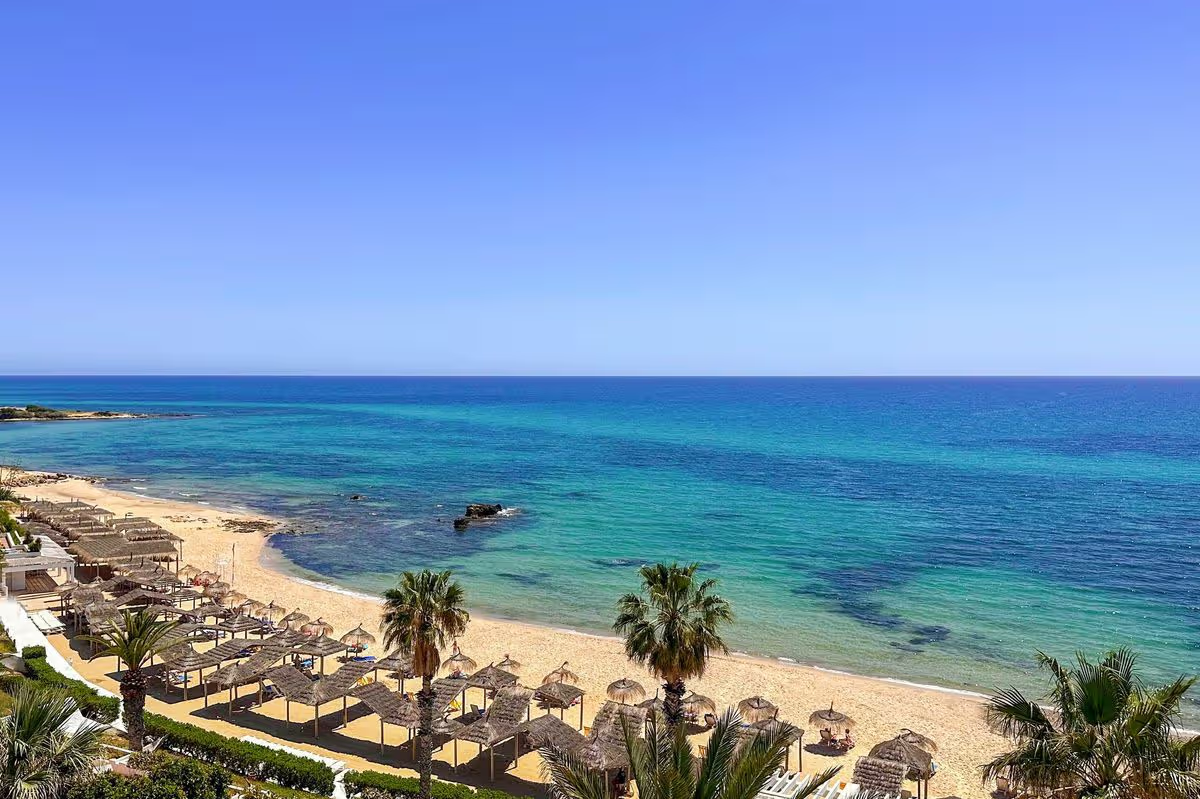
Once you arrive, there are lots of places to explore, from the vast Medina of Hammamet to the palm-tree lined seaside of Sousse. Take a day trip to the Roman Amphitheatre of El Jem, full of incredible stories about the wild animals caged in its dungeons and its gladiator battles, where 30,000 spectators once cheered on its bloody spectacles.

Further south, you can discover desert landscapes and shimmering salt flats. Explore the filming locations for the original Star Wars trilogy, and visit traditional Berber cave homes carved deep into the mountains.

Visit Tunis for the day and explore the labyrinth of market stalls, mosques, and houses all found in one concentrated, slightly chaotic space. Dating back to 698, this colourful medina is now home to one-tenth of the city’s population. But if you enter, be sure to watch out for landmarks, as it’s easy to get lost within its walls.

You can also visit the Bardo National Museum, home to the largest collection of Roman mosaics in the world, and artefacts found in the city of Carthage from the days when Tunisia was a major trading hub for the Ancient Mediterranean.

This announcement brings the total number of Jet2 destinations for summer 2027 to 70, and the tour operator has recently announced new services to Hurghada and Sharm el Sheikh in Egypt, as well as Kavala in the north of Greece.

Steve Heapy, CEO of Jet2, said: “With year-round sunshine, rich culture and fantastic sunshine, Tunisia has something for everyone and we know how immensely popular it will be.”

Fakhri Khalsi, acting UK Director at the Tunisian National Tourist Office, said: “We are delighted to welcome the launch of Jet2’s holiday and flight programmes to Tunisia starting in summer 2027. This announcement represents a significant milestone in our efforts to strengthen Tunisia’s position as a leading Mediterranean destination and reflects the growing confidence of major travel operators in our tourism offering.”

Have a story you want to share? Email us at webtravel@reachplc.com

Source link

Venezuelan Gov’t Launches US-Backed Dialogue with Hardline Opposition

Rodríguez and Figuera met at the legislative Palace in Caracas on Thursday. (Asamblea Nacional)

Caracas, June 19, 2026 (venezuelanalysis.com) – Venezuelan National Assembly President Jorge Rodríguez held a meeting on Thursday with a US-picked opposition figure to launch a new political dialogue process.

In a statement, Rodríguez, who is also the Venezuelan government’s lead negotiator, disclosed talks with “the representative of the opposition lawmakers from the 2015-2020 period,” Dinorah Figuera, to launch “a joint technical and political working group” with “an agenda containing concrete milestones and timelines” aimed at “strengthening democracy.”

In a separate statement, the expired opposition-controlled 2015 National Assembly explained that the central objective of the process is “the construction of a shared vision for the future.” The communiqué claimed that the dialogue aims to establish a “roadmap for the construction of a democratic scenario” in the country. 

Figuera also met with US Chargé d’Affaires John Barrett in Caracas on Thursday.

For its part, the US State Department welcomed the meeting, describing it as the “first step” toward “a free Venezuela.” The Trump administration has insisted on a “three-phase process” for the Caribbean nation which culminates with a political “transition.”

According to Washington, the proposed agenda includes priorities such as rebuilding democratic institutions, strengthening the National Electoral Council (CNE), restoring guarantees for political participation, and protecting the civil liberties necessary for an open political debate.

“The cornerstone of any transition is inclusive dialogue. We hope that conversations between Venezuelan political parties and the interim government in Caracas continue in the coming weeks so that this work can begin,” stated Thomas Pigott, spokesperson for US Secretary of State Marco Rubio.

Upon arriving at the airport on Thursday, Figuera told reporters that she had traveled to Venezuela at the invitation of the US State Department, with her tasks including the establishment of a “credible” electoral council. She added that her work intends to benefit all political forces while avoiding questions about whether the initiative had been coordinated with far-right leader María Corina Machado.

Figuera was among the lawmakers elected when the opposition won a parliamentary majority in December 2015. Anti-government parties attempted to use the National Assembly to overthrow the Nicolás Maduro government and pushed several laws that were struck down as unconstitutional. It was eventually sidelined after being declared in contempt by the Supreme Court, with the South American country’s legislation taken over by a government-supporting National Constituent Assembly. The ruling United Socialist Party (PSUV) retook control of the legislature in the 2020 and 2025 elections that were boycotted by many opposition sectors.

Though the 2015 National Assembly’s term expired in January 2021, it unilaterally renewed its own mandate for successive one-year periods. The defunct parliament retained US recognition as Venezuela’s legitimate authority, which allowed it to manage Venezuelan assets abroad. Washington’s backing ended in March when Trump recognized Acting President Delcy Rodríguez as Venezuela’s “sole leader.”

Figuera, who has lived in Spain since 2018, took over as president of the opposition-controlled body in January 2023 following the dissolution of the self-proclaimed “interim government” led by Juan Guaidó.

At the time, Venezuelan judicial authorities denounced Figuera’s role in an “illegitimate” parliament that aimed to “plunder Venezuelan assets abroad” and issued an arrest warrant and an Interpol red alert. While several opposition figures have benefited from an amnesty law approved by the present National Assembly in February, it is not known whether Figuera was among those whose legal cases were dropped.

Figuera’s return to Caracas also comes just weeks after the Unitary Platform—the coalition that groups the country’s main opposition parties—agreed during a meeting in Panama that far-right María Corina Machado would “lead negotiations with Chavismo to call elections” and eventually run as a presidential candidate.

Machado and the Unitary Platform have yet to comment on Figuera’s talks with the acting Delcy Rodríguez government, having previously demanded elections within a 40-week timeframe.

Since the January 3 strikes and kidnapping of Maduro, the Trump administration has wielded a strong influence over Venezuelan affairs. US officials have openly participated in legislative initiatives to open the Caribbean nation’s energy and mining sectors to Western companies while also accompanying corporate executives on trips to discuss business opportunities.

US forces likewise conducted an extrajudicial execution in Venezuelan territory earlier this month, with Caracas calling it a “joint operation” against organized crime.

Despite the diplomatic rapprochement and catering to US investment, Venezuelan authorities had previously brushed aside talk of early presidential elections. Maduro’s term, currently held by Delcy Rodríguez in an acting capacity, ends in January 2031. In a February interview with US conservative outlet Newsmax, parliamentary leader Jorge Rodríguez stated that no elections were expected in the short term because the priority was achieving economic stability.

Edited by Ricardo Vaz in Caracas.

Source link

TUI launches new flights to country ‘like a budget Maldives’

Package holiday provider TUI is launching a new direct flight from London Gatwick to a sunshine island in the Indian Ocean that has been likened to a cheaper Maldives or Mauritius

TUI is launching a new non-stop flight to a sun-drenched archipelago likened to the Maldives.

From July 2, sunseekers will be able to get their hands on the package holiday provider’s latest offering – direct flights to Zanzibar in Tanzania.

The new route will depart from London Gatwick twice weekly, operating on Wednesdays and Sundays from 3 November 2027, with the last outbound flight of the season on 22 March 2028, giving customers four months to check out the Indian Ocean winter-sun destination.

Known as the ‘Spice Island’ thanks to its farming industry history, Zanzibar offers a mix of white-sand beaches, thick green forests, mangroves and flat grasslands – all within an hour’s drive of each other. The UNESCO World Heritage Site of Stone Town in Zanzibar City adds a rich culture, helping the island blend relaxation with discovery.

Year-round temperatures of 23°C to 32°C make the destination a brilliant winter sun option for both families and couples alike. It also offers a more affordable alternative to Indian Ocean favourites like the Maldives and Mauritius.

The cost is one of the major draw factors of Zanzibar.

Visitors typically spend between £21 and £109 per day per person, with an average of around £50, covering accommodation, sightseeing, food, and local transport, according to Budget Your Trip.

This compares well to the Maldives, where a typical traveller spends around £265 per day and a one-week trip for two averages about £3,800, Budget Your Trip notes. Typically, meals cost about twice as much in the Maldives as in Zanzibar.

The Maldives earns its premium through private-island resorts, overwater bungalows, and a more exclusive feel, but if you want stunning beaches and turquoise water on a more modest budget, Zanzibar is a great bet.

TUI has paired up its new breaks on Zanzibar with a safari. The experience begins with a short flight from the island to neighbouring national parks Nyerere and Serengeti. From there, holidaymakers can head out in search of elephants, lions, and giraffes.

TUI Musement also offers its own National Park and Spice Farm Tour, where customers can spot rare red colobus monkeys, visit a local upcycling centre and discover more about Zanzibar’s history as ‘The Spice Island’ through guided visits and a traditional lunch at a community-run spice farm.

The holiday company owns a number of properties across the island, including TUI BLUE Bahari Zanzibar, , known for its beachside setting on the north-east coast, and The Mora Zanzibar, which is a five-star resort. It boasts private pools and family rooms that sleep up to five guests.

How much does it cost?

All-inclusive package holidays to Zanzibar departing on 17 November 2027, including direct TUI flights, transfers and a seven-night stay at TUI BLUE Bahari Zanzibar start from £2,085 per person, based on two adults sharing.

All-inclusive package holidays staying at the Zanzibar Bay Resort departing on 1 December 2027, including direct TUI flights, transfers and a seven-night stay start from £1,615 per person, based on two adults sharing.

TUI is not the only operator on the island.

The Lost and Found Hostel sits on the east coast and offers very cheap accommodation for those who don’t mind forgoing a little luxury. It has beds for just £16 a night.

Makofi Zanzibar costs roughly double that, but is a little fancier. It is a standout budget pick for the beach. One minute walk to the sea, dorms and private rooms, reliable electricity, and a good restaurant on site.

Several major carriers fly from the UK to Zanzibar, including Ethiopian Airlines, Turkish Airlines, Emirates, and Qatar Airways. All current routes require one or two layovers, with the average journey taking about 12 to 17 hours.

Source link

Europe’s 807-mile new train journey launches this month – tickets from £9

A brand new long-distance European train service is set to launch on 25 June, running 807 miles from Frankfurt in Germany to Przemyśl in Poland

A brand new 807-mile train route across Europe is launching this month, linking Germany, Poland and the Czech Republic. Private railway company Leo Express will commence the service on June 25, with fares beginning at just €10 (£8.65).

The journey is expected to become one of Europe’s most extensive, with a projected travel duration of 18-and-a-half hours. It will operate once per day in each direction between the Polish city of Przemyl and Frankfurt in Germany.

Stops along the way include Kraków, Ostrava, Prague, Dresden, Leipzig and Erfurt.

Leo Express CEO Peter Köhler said: “At over 1,300 kilometres (807 miles), this is one of the longest direct train services in Europe.”

He went on to say that Przemyl’s closeness to the Ukrainian border meant the railway would “remove the iron curtains between western and eastern Europe”.

He said: “We are connecting important European centres and providing access to Ukraine..

“[And] in Germany, we are creating an alternative to existing operators..”

The carriages will include power sockets, wifi, onboard catering and air conditioning, reports the Express.

Meanwhile, there are various seating classes on offer, including premium, business and economy, according to The Independent.

The service departing Poland is scheduled to leave Przemyl at 1:31pm and reach Frankfurt the next morning at 7:53am.

The westbound service, meanwhile, will set off at 8:27am for a 2:23am touchdown.

Przemyl is situated approximately six miles from the Polish-Ukrainian border.

The city has acted as a key transit hub for refugees escaping the war-ravaged nation since Russia launched its invasion in 2022.

Source link

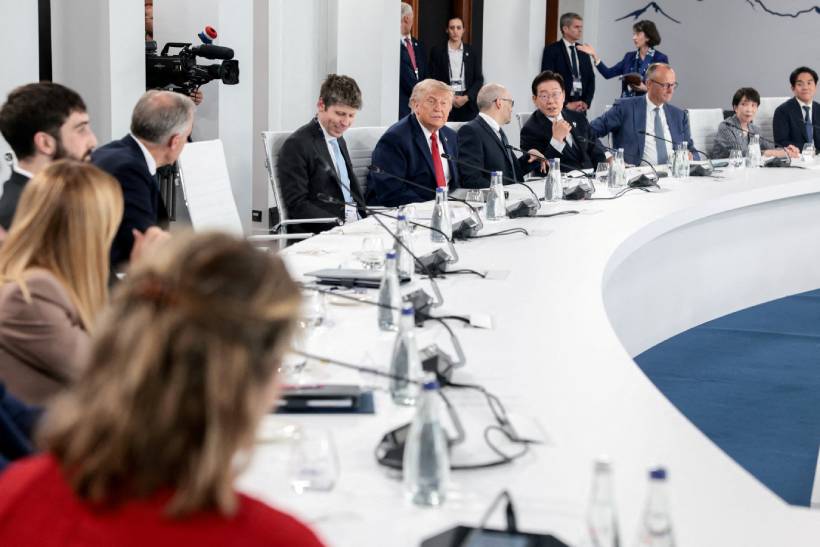
G7 Launches Critical Minerals Alliance to Reduce Dependence on China

Leaders of the Group of Seven agreed to deepen cooperation on critical minerals and establish a new coordination platform aimed at reducing reliance on China for materials essential to defense, technology, electric vehicles, and renewable energy industries.

The move comes as Western economies seek to strengthen supply chain security following disruptions caused by Chinese export restrictions on rare earth related products and permanent magnets, which exposed the vulnerability of global industries dependent on a single dominant supplier.

New Targets for Supply Chain Diversification

The G7 outlined ambitious goals to reduce dependence on any single supplier outside the group and its partners. Leaders said they aim to lower reliance on one source for rare earths and permanent magnets to below 60 percent by 2030, with a longer term objective of reducing that figure to 50 percent as soon as possible.

Initial cooperation will focus on lithium and nickel, two minerals that play a crucial role in battery manufacturing and clean energy technologies. The framework is expected to expand gradually, adding several new minerals each year with particular attention on rare earth elements.

New Monitoring Platform and Investment Push

A central part of the initiative is the creation of a new platform that will coordinate policy responses, improve information sharing, and monitor potential supply disruptions.

The platform will work closely with the International Energy Agency, which will provide market analysis and early warnings about supply risks, shortages, and distortions.

G7 leaders also stressed the need for greater investment across the entire supply chain, from mining and processing to manufacturing and recycling. Development finance institutions, export credit agencies, and private investors are expected to play a larger role in funding strategic projects.

According to the summit statement, nearly 200 critical mineral projects have already been announced since the start of 2026, representing tens of billions of dollars in planned investment.

Economic Security Becomes a Strategic Priority

The initiative reflects a broader shift in Western economic policy, where critical minerals are increasingly viewed as a national security issue rather than simply a trade matter.

Rare earths, lithium, nickel, cobalt, and other strategic minerals are essential for advanced military systems, semiconductors, electric vehicles, batteries, renewable energy infrastructure, and artificial intelligence technologies.

Spend

Western governments have become increasingly concerned that geopolitical tensions could disrupt access to these resources, creating economic and security vulnerabilities.

Analysis

The G7 initiative represents one of the most coordinated attempts yet by advanced economies to reduce strategic dependence on China. While the statement avoids directly confronting Beijing, the objectives clearly target vulnerabilities that became apparent after China’s export restrictions disrupted global industries.

The challenge, however, extends beyond mining. China has spent decades building dominance across processing, refining, manufacturing, and logistics networks. Replicating those capabilities will require sustained investment, government support, and international coordination over many years.

The inclusion of measures such as joint procurement, subsidies, quotas, and price support mechanisms suggests governments are increasingly willing to intervene in markets to secure strategic resources. This marks a significant departure from the free market approach that previously dominated global trade policy.

Success will depend on whether G7 members can maintain political unity and attract sufficient private investment. If implemented effectively, the alliance could gradually reshape global critical mineral supply chains and reduce China’s leverage over key industries. If not, Western economies may continue to face supply risks despite ambitious targets and large investment commitments.

What Comes Next

The G7 is expected to begin implementing pilot programs focused on lithium and nickel while expanding cooperation with allies such as Japan and the European Union. The United States is also expected to pursue new trade and supply agreements related to critical minerals in the coming months.

Attention will now shift to whether governments can translate commitments into operational projects, increase domestic processing capacity, and build alternative supply chains quickly enough to reduce dependence on China before future disruptions occur.

With information from Reuters.

Source link

European city launches strict new ban on its streets after 666 accidents

This method of transport is a cheap and easy way to get around the city, but it has caused hundreds of accidents in the past year. Now there are calls for a ban across the European Union

A European city has banned a mode of transport that’s popular with tourists on day trips, after a huge number of accidents were reported in the past year alone.

Brussels will rid its streets of shared e-scooters as of January 2027, with authorities in the Brussels-Capital Region announcing the move last week. Currently, the Belgian capital has two remaining scooter operators offering shared e-scooters, Bolt and Dott, and once their licences expire at the end of 2026, they will not be renewed, according to the Brussels Times.

Authorities voiced their safety concerns around the use of e-scooters and the nuisance they can cause to local residents. The move means Brussels follows other European cities who’ve removed shared e-scooters, including Paris, Madrid, and Prague.

Brussels mobility minister Elke Van den Brandt and minister-president Boris Dilliès made a shared statement about the ban, calling shared e-scooters a “growing nuisance to other road users”, and pointing out that 666 accidents involved e-scooters in 2025, a year on year increase of 26%.

They also highlighted that rental scooters were often used for criminal purposes, and were involved in the cases of 25 shootings in Brussels last year.

Boris Dilliès said: “The decision to exclude self-service scooters from the Brussels urban landscape is part of a clear and consistent policy. Often synonymous with disorder, self-service scooters are a source of nuisance, cause serious injuries, clutter the streets and are, unfortunately, increasingly being used by organised criminals. Self-service bicycles, on the other hand, remain for us an essential part of a mobility policy.”

However, in a statement, e-scooter rental firm Bolt argued: “When scooters are the subject of public debate, whether regarding road safety or parking, private and shared scooters are almost always lumped together, even though they are fundamentally different.

“Banning [shared scooters] will not stop people from getting around. It will drive users towards private, unregulated, untraceable and genuinely dangerous scooters, or towards more polluting modes of transport. Neither of these scenarios serves Brussels’ objectives regarding safety, congestion or the climate.”

Since the ban was announced in Brussels, the Benelux Union, a partnership between Belgium, the Netherlands, and Luxembourg, has called for the European Commission to create a single framework for all EU countries, which could make it easier for other countries to make their own regulations.

Benelux pointed out there are inconsistent safety standards among member states, and not all vehicles on the market were safe and suitable to be used on public roads. The lack of guidelines also make it difficult to prevent unsafe vehicles from being put out for hire.

The UK has banned privately owned e-scooters from public roads and pavements, meaning the only legal place to ride your own e-scooter is on private land. There are a handful of legal rental schemes in some areas of London, Birmingham, and other cities, with strict criteria such as limiting the e-scooters to 12.5mph, banning riders under 18, and requiring a provisional licence to hire one.

Have a story you want to share? Email us at webtravel@reachplc.com

Source link

SpaceX IPO tops $176, launches company past $2 trillion

June 12 (UPI) — SpaceX began trading Friday at $150 and has gone as high as $176 as SPCX in its initial public offering, the largest one in history.

Elon Musk and SpaceX President and COO Gwynne Shotwell rang the opening bell Friday. Musk was in Texas and Shotwell was at the Nasdaq in New York City.

After trading opened, the stock topped $160, sending the company to more than a $2 trillion market cap. By early afternoon, the stock was at $176.52.

“I love the incredible people of SpaceX beyond words,” Musk wrote Friday afternoon on X.

The company had traded more than 360 million shares as of 2 p.m. EDT Friday. It has more than 172 million shares on the Nasdaq alone, CNBC reported. Polymarket bettors believe, at 70%, that SpaceX will close at more than $2 trillion Friday. Five other U.S. companies have reached the $2 trillion market cap: Nvidia, Apple, Alphabet, Microsoft and Amazon.

Already a trillionaire, Musk is about to be CEO of two of the Top 10 most valuable publicly traded companies at the same time.

Musk said before the IPO that SpaceX had been cash-flow positive since around 2015, CNBC reported. He said he chose to take the company public now to raise capital for “a significant growth phase.” Some plans for that growth include putting more than 100,000 satellites in orbit for communications and building artificial intelligence data centers in space.

“Having a private company was important to us early on because we weren’t really focused on quarterly financials, we were so focused on the long-term outlook for the company,” Shotwell told CNBC in an interview.

Shotwell said interest from investors also helped drive the decision.

“We’ve been feeling, over the last few years, a lot of pressure from everyday Americans and our friends that wanted to buy stock, and there was just no way for these folks to get in,” Shotwell said.

According to its prospectus, SpaceX has had a total loss of $41.3 billion since it was founded in 2002. Originally founded as a maker of reusable rockets, the only profitable part of the business has been the Starlink satellite Internet service.

In February, SpaceX acquired Musk’s startup xAI, which has been embattled this year for its ability to undress people in AI-generated images. Several countries and people have sued the company to force it to not allow the bot to do so against the victims’ will.

Citadel Securities, which helps execute trade orders, processed more retail activity for SpaceX than any other IPO auction on record, CNN reported the company said. Retail investors are regular people trading stocks instead of professionals.

Source link

Wizz Air launches new direct £45 flights to ‘pink city’ that’s ditched visas for Brits

The UK’s only direct flight to a destination known as the ‘pink city’ has been launched by Wizz Air, and flights start from £45.99 with no visa required for Brits

Wizz Air has launched the UK’s only direct flight to a walkable destination dubbed the ‘pink city’, which has ditched visa requirements for Brits.

In an exciting addition for the budget airline, holidaymakers can now jet off from London Luton Airport to Yerevan, with flights starting from just £45.99. The Wizz Air route launched on Tuesday, 9 June and is the only direct flight available from the UK to Armenia.

Flights will operate from London Luton to Yerevan, Armenia, twice a week on Mondays and Fridays throughout the year. The direct route takes just over five hours, and after that time, travellers will be rewarded with the dramatic landscapes of mountains and historic architecture in a destination known as the ‘Pink City’.

The city earned its moniker due to the rose-hued stone that characterises its buildings, in addition to its tree-lined boulevards and lively public squares. There are historic monasteries, museums, galleries and markets, along with a thriving café culture.

On the UK’s first direct route to Armenia, Wizz Air pilot, Tom Copestake, exclusively told the Mirror: “I’m really excited about landing in Yerevan, Armenia. It’s a new destination for us, but it’s surrounded by big mountains, and it’ll be an interesting experience to fly around there.”

Adding to the appeal of a trip to Armenia in Asia, British holidaymakers can visit without a visa for up to 180 days a year. Whereas a list of Asian countries still requires Brits to obtain a visa at an additional cost.

Following the new flights, Yvonne Moynihan, Managing Director of Wizz Air UK, said: “Today [9 June] marks an exciting moment for Wizz Air as we launch the UK’s only direct route to Armenia, opening up a destination that remains largely undiscovered by British travellers. At Wizz Air, we’re committed to making travel more accessible and helping our customers explore beyond the obvious. Yerevan is a city rich in history, culture and character, offering an incredible experience for travellers looking for something different, all at an affordable price.

“The response to our Let’s Get Lost campaign showed there is real appetite among travellers to step outside their comfort zones and discover destinations they may never have previously considered. We’re proud to be making Armenia more accessible than ever before and can’t wait to welcome more passengers on board as they experience everything this remarkable country has to offer.”

Alberto Martin, Chief Executive Officer at London Luton Airport, said: “We are delighted to welcome Wizz Air’s new service to Yerevan, marking the UK’s first direct link to Armenia and further strengthening London Luton Airport’s increasingly diverse route network. This exciting new destination in the South Caucasus is a unique city that offers a fascinating cultural scene of contrasts to suit all tastes.

“As well as reinforcing our long-standing partnership with Wizz Air, the addition of Yerevan to our departure boards signals our commitment to offer even greater choice as part of our simple and friendly passenger experience.”

Do you have a travel story to share? Email webtravel@reachplc.com

Source link

Iran launches ‘retaliatory’ attacks toward U.S. bases in Middle East

June 10 (UPI) — Iran said it launched strikes against U.S. military bases in neighboring countries in and around the Persian Gulf early Wednesday in retaliation for American “aggression” after U.S. forces conducted strikes on targets in southern Iran.

Khatam al-Anbiya Central Headquarters, Iran’s central command, said in a statement published by the state-run Islamic Republic News Agency that the “brave Army of the Islamic Republic and the Islamic Revolutionary Guard Corps” carried out a “powerful assault” on U.S. military assets in the region.

“The criminal U.S. military should know that if aggression against the Islamic Republic of Iran is repeated, even more severe and widespread attacks will be carried out against the designated target bank in the region, it added.

The statement was accompanied by a photo showing six ground-launched ballistic missiles blasting off from an undisclosed desert location but it was unclear if it was of Wednesday’s strikes as the image was undated and uncredited.

The IRGC claimed missiles were fired at Jordan’s Muwaffaq Salti airbase, where U.S. F-35 fighter jets and other aircraft operate out of, and that facilities in Kuwait and Bahrain were also attacked.

It said that the U.S. Fifth Fleet in Bahrain was targeted with drones.

The attacks had yet to be verified but Jordan’s armed forces said they downed five Iranian missiles targeting the country’s al-Azraq district, 60 miles east of the capital, Amman.

The Kuwaiti military, in a post on X just after 3 a.m. local time, said its air defenses were “currently intercepting hostile aerial targets.”

Bahrain’s interior ministry issued multiple alerts around the same time, advising residents that the air-raid siren had been sounded, urging them not to panic and to move to the nearest safe place to shelter immediately.

No deaths or injuries were reported.

The escalation came almost immediately after U.S. Central Command announced that it had completed “self-defense strikes” ordered by President Donald Trump in response to the downing of a U.S. Army Apache helicopter earlier Tuesday.

CENTCOM said in a statement early Wednesday that U.S. Air Force and Navy fighter jets struck Iranian air defense, ground control stations, and surveillance radar sites near the Strait of Hormuz “with precision munitions’ in an approximately four-hour-long operation.

“The operation was a proportional response to recent attacks on U.S. forces and international commercial ships transiting regional water,” said CENTCOM.

The ratcheting up of tensions prompted Beijing and Moscow to call on both sides to apply the brakes.

“China is deeply concerned over the latest developments regarding Iran. Relevant parties need to remain calm, exercise restraint, stop exacerbating confrontation and escalating tensions, take concrete actions to ease the situation, stick to political and diplomatic means for resolving disputes, and work for an early realization of a comprehensive and lasting cease-fire,” Chinese foreign ministry spokesman Lin Jian told reporters on Wednesday.

In a post on X, Russian Foreign Ministry spokesperson Maria Zakharova said Moscow was very worried about what she called “the new spiral of U.S.-Iran armed confrontation.”

She called on both parties to show restraint and halt military attacks immediately, adding that Russia stood ready to assist in finding and implementing “mutually acceptable negotiated solutions” to the crisis.

President Donald Trump discusses renovations to the Lincoln Reflecting Pool and makes an announcement on coal in the Oval Office at the White House on Thursday. Photo by Samuel Corum/UPI | License Photo

Source link

Wizz Air launches UK’s only direct flights to destination dubbed ‘The Pink City’ 

NEW direct flights have been launched from the UK to a destination nicknamed the “pink city”.

Wizz Air has confirmed the new flights will connect London to Yerevan in Armenia – the only currenct direct flights.

The buildings glow ‘pink’ because of the rose-coloured stone they’re built from Credit: Alamy

It might not be on most Brits’ bucket list, but Armenia is a more unique destination for those wanting to go off the beaten track.

The pink nickname comes from the buildings made from rose-coloured stone which, during sunrise and sunset, can even turn into a vibrant pink or violet.

The country bordered by Georgia, Azerbaijan, Turkey and Iran is also backed by the enormous Mount Ararat which make for incredible views.

One Sun Writer went on the very first flight from Wizz Air to Armenia and revealed their favourite finds.

CHEAP DATE

Our fave cheap European destinations with flights under £20 & hotels from £24pp


IT’S A WASHOUT

UK indoor waterparks with VIP spas, mega slides and 30C tropical climates

They said: “Arriving in Republic Square, the heart of the capital city Yerevan, the Saturday evening atmosphere was electric with hordes of people enjoying live music alfresco.

“We wandered the main streets past buildings made from pink volcanic stone, before reaching the Cascade Yerevan.

“Made up of 572 steps (we took the interior escalator), this mighty landmark is a must-visit. From its peak, we had stunning views of the snow-capped Mount Ararat, now in modern-day Turkey.”

Away from landmarks, Armenia is known for its brandy and there are lots of vineyards dotted around Mount Ararat.

For those who want to learn more about it, there’s a museum dedicated to it and at the ARARAT Museum, a guided tour which includes a tasting starts from £9.

Armenia is backed by the enormous Ararat Mountain Credit: Alamy
They are the only direct flights from the UK to the city Credit: Alamy

An hour outside of is the popular spot of Lake Sevan which is one of the world’s highest freshwater alpine lakes.

For anyone visiting in the summertime, it’s a popular swim spot and has a sandy shoreline for sunbathing.

The country of Armenia is affordable too with restaurant meals starting at around £8.

You can also pick up local beer for as little as £1 and coffee from £1.20.

According to Kayak, 3-star hotels in Yerevan can start from £30 per night – or if you consider hotels overnight stays can be as little as £15 per night.

One-way flights with Wizz Air start from £45.99.

It is cheaper to visit too, after visa fees were dropped Credit: Alamy

It’s also cheaper for Brits to visit because Armenia has dropped its visa fees.

Holidaymakers can now visit for up to 180 days within a one year period.

The best time to visit Armenia is between May and June as well as autumn between September and October due to the mild temperatures up to 25C.

Yvonne Moynihan, Managing Director of Wizz Air UK, said that the route opens up “a destination that remains largely undiscovered by British travellers”.

She added: “At Wizz Air, we’re committed to making travel more accessible and helping our customers explore beyond the obvious.

“Yerevan is a city rich in history, culture and character, offering an incredible experience for travellers looking for something different, all at an affordable price.”


Source link

Butlin’s launches £1 kids’ lunches in time for the school summer holidays

Families with young children eating in a restaurant booth.

ALL THREE Butlin’s resorts are launching an offer for the summer that will save you loads of money.

The new offer, called the ‘Lunch Add-On’, costs from just £1 per day per child and from £7 per day per adult.

Families with young children eating in a restaurant booth.
Butlin’s is launching £1 kids’ lunches in time for the summer holidays Credit: Butlin’s

The offer is available at all three Butlin’s resorts – Bognor Regis, Minehead and Skegness.

The new add-on allows guests to have one main meal for adults and a main meal and two sides for kids, from specific lunch menus.

The offering will be available at specific restaurants across each resort between 12pm and 3pm.

Options include grabbing some noodles from Chopstix or tucking into unlimited pasta, pizza and salad at Papa John’s all-you-can-eat buffet.

Read more on travel inspo

TRAVEL TIP

The £2.99 SIM hack that can save Brits HUNDREDS abroad


GO ON

All the little-known websites for cheap or FREE tickets to gigs, theatre & festivals

Other options include pub classics in the Beachcomber and American-style burgers in The Diner, as well as wraps from the Firehouse Grill.

To make the most of the summer offer, you must already be booked onto one of the dining plans for your break such as the Food Court, Premium and Hotel Dining Packages.

Alex Meyer, Head of Product and Proposition at Butlin’s, said: “The new Lunch Add-On is an exciting extension of our hugely popular All Inclusive offerings across our family breaks.

“This add-on allows guests to know their food costs upfront before arriving on holiday, giving peace of mind that breakfast, dinner and now lunch are sorted.

“We’re all about offering incredible value for money, a family of four on a four-night break can pre-book their lunchtime meals from just £48.

“This new addition to our All Inclusive range moves us closer to offering our family guests a fully All Inclusive break.”

Other dining options include the all-inclusive food and drink package from £28 per person, which includes breakfast and dinner, as well as alcoholic drinks, soft drinks, tea and coffee.

Alternatively, there is the Food Court Dining Package which costs from £25.95 per adult, £15.50 per child aged six to 14 and £7.25 per child aged two to five – including unlimited breakfast and dinner at the food court.


Source link