Latin America

U.S. deportations to El Salvador double as Bukele aligns with Trump

The number of people deported to El Salvador from the U.S. nearly doubled in the first months of 2026, according to official figures, coming as Salvadoran President Nayib Bukele has positioned himself as an ally willing to help the Trump administration accelerate deportations, a central priority.

The U.S. deported 5,033 Salvadorans back to their country in the first three months of 2026 compared with 2,547 deportees in the same period in 2025, according to El Salvador migration authority figures obtained by the Associated Press on Tuesday.

That marks nearly a 98% increase at the same time that the Trump administration has boosted deportation flights across the world. Globally, deportation flights from the U.S. rose an estimated 61% between 2024 and 2025, according to data compiled by the Asociación Agenda Migrante El Salvador, or AAMES, and other organizations.

The U.S. has stopped regularly releasing deportation data, so experts instead are relying on other information from countries such as El Salvador, deportation flights and other numbers.

The sharp increase in deportations “confirms a real hardening of the U.S. immigration system toward the region,” said César Ríos of AAMES.

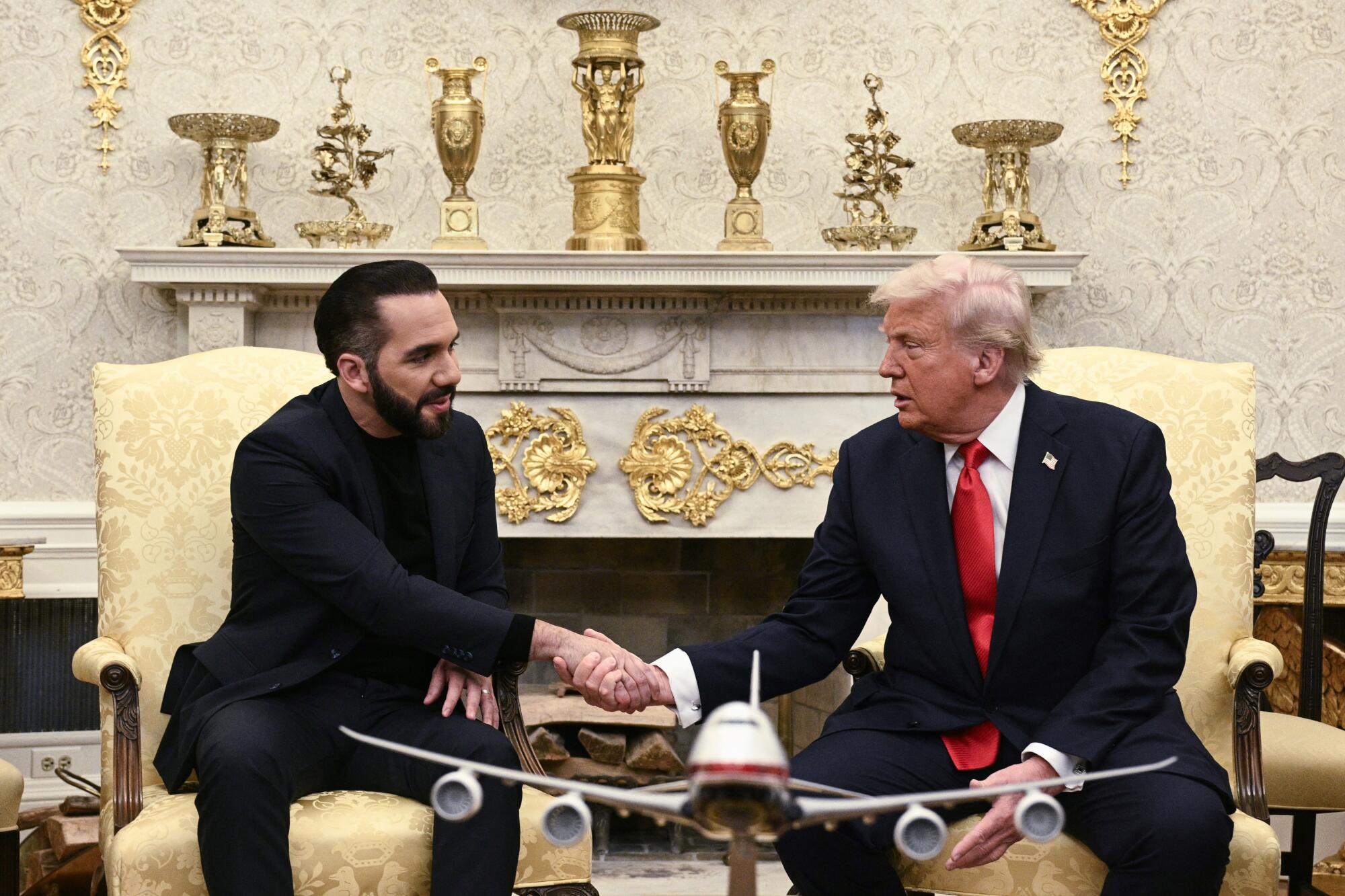
The jump comes as Bukele, a tough-on-crime politician, has sought to align himself with President Trump, and the U.S. government has lined up allies across Latin America to help the Republican carry out his agenda. While Mexico and other Central American nations have quietly accepted deportees from third countries, Bukele has boldly embraced Trump’s efforts in Latin America.

In March 2025, Bukele most notably accepted 238 Venezuelan deportees accused of being members of the Venezuelan gang Tren de Aragua and locked them up in a mega-prison built for accused gang members in the Salvadoran leader’s ongoing offensive on domestic gangs. The incident fueled widespread accusations of human rights abuses.

The geopolitical firestorm came after Trump’s government struck a deal with Bukele to accept what they described as transfer and imprisonment of foreign criminals to El Salvador. Under the agreement, El Salvador would receive $6 million from the U.S.

In March 2025, the Trump administration mistakenly deported Kilmar Abrego García, a Maryland resident and Salvadoran citizen with protected status in the U.S., setting off yet another legal and political controversy. Bukele originally refused to return Abrego García and denied accusations of beating and torture — which have been widely documented by human rights groups in Salvadoran prisons.

He was returned to the U.S. in June to face charges that he helped bring immigrants to the U.S. illegally, something his lawyers call “baseless.” Abrego García has pleaded not guilty and asked a judge to dismiss his case as the U.S. Department of Homeland Security announced that it hoped to deport Abrego García to Liberia.

Even more recently, Bukele joined a coalition of other right-leaning Trump allies in a group of countries that the Republican president dubbed the Shield of the Americas, purportedly aimed at cracking down on criminal groups in Latin America, even though the two most essential countries in that effort — Mexico and Colombia — refused to attend.

Meanwhile, many migrants in the U.S. are turning their eyes on U.S. Supreme Court arguments as Trump seeks to stop shielding hundreds of thousands of migrants from Haiti and Syria, a decision many of the more than 200,000 Salvadoran migrants with temporary protections worry might eventually affect them.

Bukele has helped the U.S. with its immigration agenda even before Trump entered office.

In 2023, El Salvador’s government began to slap a $1,130 fee on travelers from dozens of countries connecting through the nation’s main airport, amid pressure from the Biden administration to help control the number of migrants moving toward the United States’ southern border. At the same time, migration from El Salvador, fueled by gang violence and poverty, dipped after Bukele’s contentious war on the gangs.

Analysts said that Bukele’s government used dips in migration as a bargaining chip to offset human rights criticisms by the U.S.

Alemán and Janetsky write for the Associated Press. Janetsky reported from Mexico City.

Source link

Trump administration offers $100m in aid to Cuba in exchange for reform | Donald Trump News

Amid an oil blockade against the island, the US blames Cuba’s communist leadership for ‘standing in the way’ of aid.

The United States has offered $100m in humanitarian assistance to Cuba on the condition that the island’s communist government agrees to “meaningful reforms”.

The sum was made public in a statement from the US State Department on Wednesday, though the administration of President Donald Trump underscored it had made the offer privately in the past.
Recommended Stories

list of 3 itemsend of list

But the $100m comes with strings: namely, that Cuba’s government commits to Trump-approved changes.

“Today, the Department of State is publicly restating the United States’ generous offer to provide an additional $100 million in direct humanitarian assistance to the Cuban people,” the statement said.

“The decision rests with the Cuban regime to accept our offer of assistance or deny critical living-saving aid and ultimately be accountable to the Cuban people for standing in the way of critical assistance.”

The statement marks the latest chapter in an ongoing pressure campaign designed to destabilise Cuba’s communist leadership.

Since Cold War tensions in the 1960s, the US has placed a comprehensive trade embargo on the Caribbean island, in part as a reaction to the Cuban Revolution.

It has become the longest-running trade embargo in modern history, and the US has justified its continuation by pointing to systematic repression under Cuba’s communist government.

But critics have denounced the trade embargo as worsening humanitarian conditions on the island.

The crisis reached a tipping point in January, after Trump abducted Venezuelan President Nicolas Maduro, a close ally of Cuba.

In the following weeks, Trump cut off Venezuelan funds and oil supplies to Cuba. He then threatened economic penalties against any country that supplied Cuba with fuel, implementing a de facto oil blockade on the island.

Since then, only one Russian oil tanker has reached Cuba in late March. That month alone, the island suffered two island-wide blackouts.

Cuba relies heavily on foreign imports of oil to power its ageing energy grid. Only 40 percent of its oil supply is produced domestically, according to the International Energy Agency.

The United Nations warned earlier this year that Cuba faces the possibility of humanitarian “collapse”, with public transportation grinding to a halt, food prices soaring and public services like hospitals struggling to keep the lights on.

Trump, meanwhile, has repeatedly threatened to shift his focus to Cuba after the US-Israeli war on Iran ends, saying the island is “next” on his list of countries where he would like to see regime change.

“As we achieve a historic transformation in Venezuela, we’re also looking forward to the great change that will soon be coming to Cuba,” Trump told Latin American leaders at a summit in March.

“Cuba’s in its last moments of life as it was. It’ll have a great new life, but it’s in its last moments of life the way it is.”

Earlier this month, the US president issued a fresh wave of sanctions against the Cuban government, accusing the island of posing “an unusual and extraordinary threat to US national security and foreign policy”.

Media reports have also indicated that the Trump administration has stepped up its surveillance flights around Cuba, possibly in preparation for a surge of military assets to the Caribbean.

In Wednesday’s statement, the State Department blamed the communist system for having “only served to enrich the elites and condemn the Cuban people to poverty”.

It did not mention the US role in the humanitarian crisis on the island but instead described Cuba’s government as a hurdle to delivering much-needed aid.

“The regime refuses to allow the United States to provide this assistance to the Cuban people, who are in desperate need of assistance due to the failures of Cuba’s corrupt regime,” the State Department wrote.

It added that, should Cuba accept its terms, the $100m would be distributed through the Catholic Church and “other reliable independent humanitarian organizations”, rather than through the island’s government.

Source link

‘It’s a failed nation’: Trump pressures Cuba as fuel crisis deepens | Oil and Gas

NewsFeed

US President Donald Trump has called Cuba ‘a failed nation’, as his administration expands its pressure campaign. Cuba has announced it’s getting rid of its fixed prices at the petrol pump as fuel shortages and power cuts worsen.

Source link

Peru presidential candidate Roberto Sanchez charged with financial crimes | Elections News

Prosecutor calls for leftist candidate to be jailed for five years and four months over false financial disclosures.

Peru’s public prosecutor’s office has accused leftist presidential candidate Roberto Sanchez of financial crimes, calling for him to be imprisoned for five years and four months.

The charges, unsealed on Tuesday, came hours after electoral authorities confirmed Sanchez was on track to advance to the country’s presidential run-off, scheduled for June 7.

Recommended Stories

list of 4 itemsend of list

According to the El Comercio newspaper, prosecutors allege that Sanchez, who is the candidate of the Juntos por el Peru (Together for Peru) party, filed false financial disclosures with the National Office of Electoral Processes related to campaign contributions between 2018 and 2020.

Prosecutors say Sanchez and his brother, William Sanchez, received more than 280,000 Peruvian soles ($81,720) in contributions and membership fees that were never disclosed in the party’s financial filings.

Sanchez is also accused of making false statements in administrative proceedings.

In addition to the jail term, prosecutors were also seeking a “permanent disqualification” of Sanchez from holding the office of president for the Juntos por el Peru party, according to El Comercio.

Sanchez’s lawyer rejected the accusations, telling local outlet RPP that the party’s treasurer, not Sanchez, was responsible for its financial filings.

A judge is expected to decide on May 27 whether the case will go to trial.

The charges emerged as vote counting from last month’s first-round election showed Sanchez advancing to a run-off against conservative rival Keiko Fujimori.

With 99.76 percent of ballots counted, Fujimori, the daughter of late former President Alberto Fujimori and a four-time presidential candidate, held a commanding lead with 17.17 percent of the vote.

Sanchez, running with the backing of jailed former President Pedro Castillo, stood at 12 percent, narrowly ahead of ultra-conservative former Lima Mayor Rafael Lopez Aliaga at 11.91 percent, a margin of roughly 15,000 votes.

The final result is expected by May 15.

Source link

Hundreds more displaced as gang violence escalates in Haiti’s capital | Refugees

NewsFeed

Renewed clashes between rival gangs in Port-au-Prince have forced hundreds to flee their homes, forcing some families to the streets. Gang violence has now displaced more than 1.4 million people across Haiti. Gangs control an estimated 90% of the capital after the former president was assassinated in his home in 2021.

Source link

Roads blocked in Bolivia as protesters demand president’s resignation | Workers’ Rights

NewsFeed

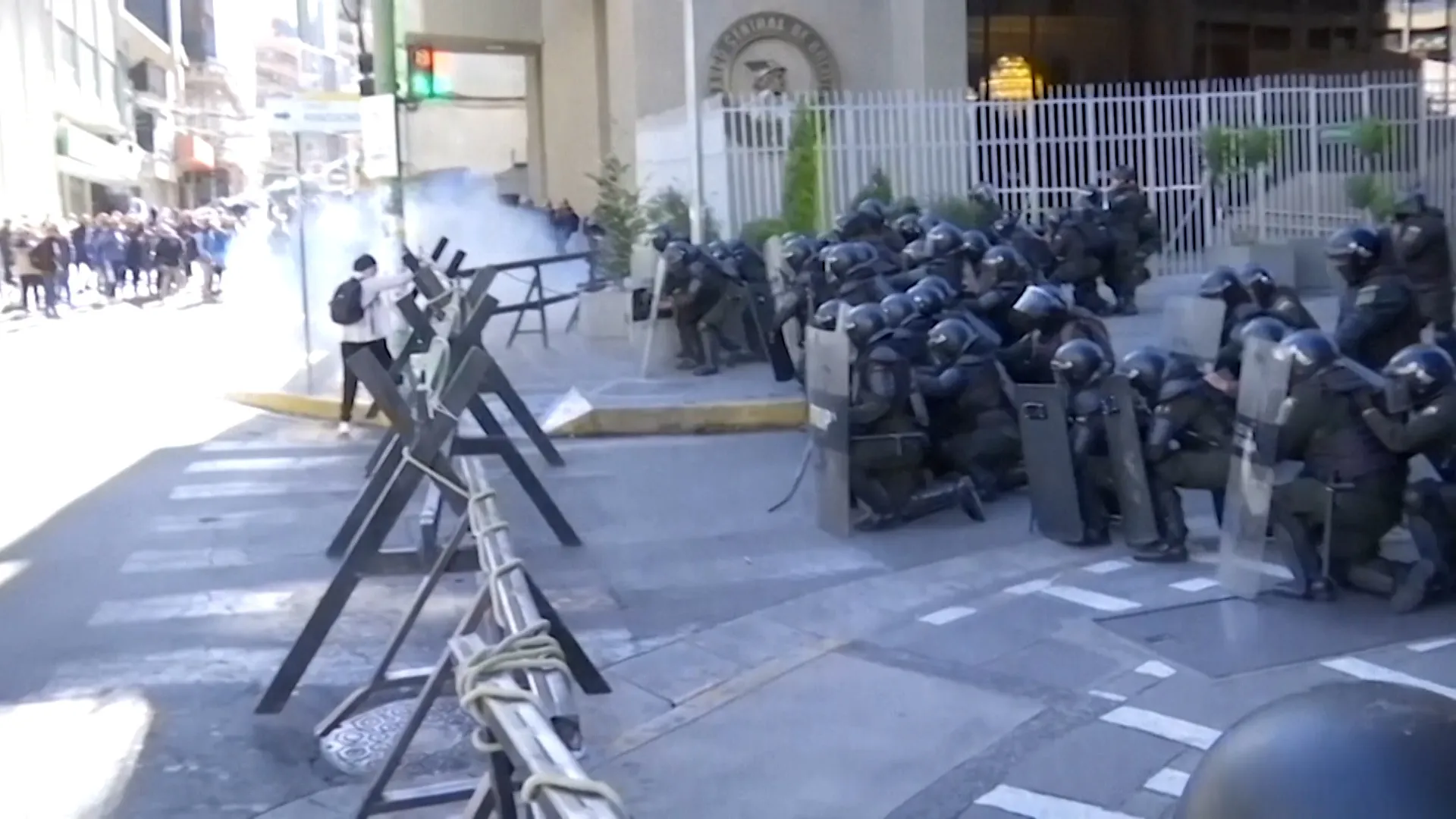
Bolivia faces growing unrest as widespread road blockades disrupt travel across major cities including La Paz and El Alto. Protesters are demanding the resignation of President Rodrigo Paz amid fuel shortages, rising costs, and wage disputes.

Source link

Brazil judge bars law that could reduce Bolsonaro’s 27-year prison sentence | Jair Bolsonaro News

Brazilian Supreme Court Justice Alexandre de Moraes suspends use of law to reduce prison sentences, pending further review.

Brazilian Supreme Court Justice Alexandre de Moraes has barred the implementation of a law that could dramatically reduce the prison sentence of former President Jair Bolsonaro for involvement in a coup plot after his loss in the 2022 election.

De Moraes ordered the law’s suspension on Saturday until the Supreme Court can convene a full hearing to consider appeals challenging its constitutionality.

Recommended Stories

list of 3 itemsend of list

Bolsonaro’s conviction for involvement in a plot to remain in office after losing to left-wing rival Luiz Inacio Lula da Silva in 2022 has become a cause celebre for the country’s political right, which has pushed for Bolsonaro’s release from prison.

The Supreme Court sentenced the former far-right president to 27 years in prison in September, but a law passed by Brazil’s conservative-majority Congress in December would apply to Bolsonaro and others convicted in the plot, paving the way for reductions in their sentences.

President Lula vetoed the bill in January, but a vote led by Bolsonaro’s allies in Congress overrode the veto in late April.

Plaintiffs have subsequently asked the Supreme Court to overturn the bill, stating it is unconstitutional.

Lawyers for those convicted must file individual requests for sentence reduction. The ruling by de Moraes essentially suspends such requests until the court has had the opportunity to decide on the law’s constitutionality.

Lawyers for the 71-year-old Bolsonaro filed a new appeal to the Supreme Court on Friday, asking it to overturn what they called a “miscarriage of justice”.

Bolsonaro’s conviction and sentencing remain a matter of controversy in Brazil, where his allies have decried it as a political witch-hunt.

Opponents have welcomed it as a necessary form of accountability, from which not even former presidents are exempt.

Source link

Should we be worried about the hantavirus outbreak? | Health News

The incident has drawn comparisons to the COVID-19 pandemic.

The World Health Organization says the hantavirus poses a low risk to public health.

Arrangements are underway to repatriate passengers from a cruise ship after three people on board died.

So, how are officials applying the lessons learned during the COVID-19 pandemic to respond to the hantavirus?

Presenter: James Bays

Guests:

Dr Mukesh Kapila – Professor Emeritus of Global Health and Humanitarian Affairs at the University of Manchester

Dr Margaret Harris – Lecturer at the United Nations Institute for Training and Research, former W.H.O. spokeswoman

Nicholas Locker – Professor of Virology at the Pirbright Institute, near Guildford, UK

Source link

Laura Fernandez sworn in as Costa Rica’s new president | Elections News

Fernandez enters office with her right-wing party holding absolute majority in the country’s legislature.

Laura Fernandez has been sworn in as Costa Rica’s new president and has vowed to fight rising crime in the Central American country, as well as maintain close ties with the United States.

Fernandez defeated a crowded field in the February 1 vote to replace outgoing president Rodrigo Chaves, who has remained a close ally of US President Donald Trump.

Recommended Stories

list of 3 itemsend of list

In an unorthodox move, Chaves is set to remain in the government as dual minister of the presidency and finance, assuring outsized influence in the incoming administration.

Further underscoring plans to maintain close ties with the US, Fernandez has appointed her second vice president, Douglas Soto, as ambassador to Washington.

Kristi Noem, the US special envoy spearheading the Trump administration’s militaristic approach to Latin America, dubbed “Shield of the Americas”, was at Friday’s inauguration.

So too was Israeli President Isaac Herzog, as part of efforts to boost ties with the region during the political fallout from the genocide in Gaza.

The 39-year-old Fernandez has vowed sweeping reforms to Costa Rica’s judiciary and security laws, as well as a broad crackdown on crime.

Last week, as she introduced her new security minister, Gerald Campos, Fernandez vowed “a war without quarter, a heavy-handed war against organised crime”.

Costa Rica has long been considered one of the most stable countries in Central America, but crime has surged in recent years as it has increasingly become a transit route for smuggling drugs to the US.

Costa Rica is building a maximum security prison modelled on El Salvador’s anti-terrorism CECOT centre, where hundreds of Venezuelans were held without trial after deportation ⁠from the US early last year.

Like El Salvador, Costa Rica has also agreed to accept non-citizens deported from the US per an agreement signed in March.

Rights groups have condemned the so-called “third-country agreements” for stranding deportees in countries in which they have no ties and could be subject to inhumane conditions.

Fernandez’s right-wing Sovereign People’s Party (PPSO) won 31 of 57 seats in the single-chamber legislature.

That gives her party an absolute majority as she takes office.

Source link

Four convicted in US related to killing of Haitian President Jovenel Moise | Crime News

Prosecutors charge Florida served as central hub in 2021 assassination of Moise, which sparked ongoing political crisis.

Four people have been convicted in the United States in connection with the 2021 assassination of Haitian President Jovenel Moise.

Arcangel Pretel Ortiz, Antonio Intriago, Walter Veintemilla and James Solages were found guilty on Friday of conspiring to kill or kidnap Moise, whose assassination left a political vacuum in the Caribbean nation that has compounded overlapping security and humanitarian crises.

Recommended Stories

list of 3 itemsend of list

They were also convicted of providing material support for the plot in violation of US law. All four face possible life sentences.

US prosecutors have said that the south of Florida, the closest US state to Haiti, served as a central hub for planning and funding Moise’s assassination.

During the trial, which began nearly two months ago, the defence argued that the defendants were scapegoats.

They claimed they had instead been involved in a plan to serve Moise an arrest warrant, amid a dispute about whether the president had overstayed his term.

They further maintained that Colombian mercenaries involved in the assassination were meant to accompany Haitian police to execute the warrant, but that Moise was killed by his own security forces before they arrived.

“This is a Haitian plot, and it is ⁠a Haitian conspiracy,” defence lawyer Emmanuel Perez said, as reported by the Miami Herald.

US prosecutors, in turn, charged that the men initially sought to remove and replace Moise, but the plan eventually escalated to assassination.

A fifth defendant, Christian Emmanuel Sanon, a Haitian-born doctor who allegedly wanted to be named president after Moise was killed, was set to be tried at a later date due to health issues.

Eight other individuals accepted plea deals as part of the US investigation.

No national elections have been held in Haiti since Moise’s assassination, although a provisional council was appointed in September 2024 to organise new polls.

The council has since been replaced by US-backed Prime Minister Alix Didier Fils-Aime, who has said elections will be held by the end of the year.

The UN has said a stable government is essential to restoring order in Haiti, which has been beset by a series of natural disasters and rising violence, with criminal gangs controlling large swaths of territory.

At least 8,100 gang killings were documented in 2025, with insecurity displacing about 1.5 million people, according to the UN.

Source link

Passenger from Hantavirus-hit ship speaks to Al Jazeera from isolation | Newsfeed

NewsFeed

A passenger from the cruise ship hit with a Hantavirus outbreak has spoken to Al Jazeera from isolation about what took place on board. Three passengers died from respiratory illness on the MV Hondius as it travelled from Argentina to West Africa.

Source link

What’s the full match schedule, groups and format for World Cup 2026? | World Cup 2026 News

The 23rd edition of the FIFA World Cup — the biggest ever — will see 48 nations compete for the prize in a 39-day tournament in Canada, Mexico, and the United States.

Sixteen venues across the three nations will host 104 matches as the tournament returns to North America after 32 years.

Recommended Stories

list of 4 itemsend of list

Argentina will look to defend the trophy they lifted under their iconic captain, Lionel Messi, at Qatar 2022, while Cape Verde, Curacao, Jordan, and Uzbekistan will make their debut at the finals.

The tournament will begin in Mexico and conclude in the US.

Here’s everything you need to know about its teams, groups, format and schedule.

What are the groups and teams for the FIFA World Cup 2026?

Group A: Mexico, South Africa, Korea Republic, Czechia
Group B: Canada, Bosnia and Herzegovina, Qatar, Switzerland
Group C: Brazil, Morocco, Haiti, Scotland
Group D: United States, Paraguay, Australia, Turkiye
Group E: Germany, Curacao, Ivory Coast, Ecuador
Group F: Netherlands, Japan, Sweden, Tunisia
Group G: Belgium, Egypt, Iran, New Zealand
Group H: Spain, Cape Verde, Saudi Arabia, Uruguay
Group I: France, Senegal, Iraq, Norway
Group J: Argentina, Algeria, Austria, Jordan
Group K: Portugal, DR Congo, Uzbekistan, Colombia
Group L: England, Croatia, Ghana, Panama

When and where is the opening match of the FIFA World Cup 2026?

The tournament will open on June 11 at 3pm (21:00 GMT) at the Mexico City Stadium in Mexico.

When and where is the final of the FIFA World Cup 2026?

The MetLife Stadium, which will be called the New York New Jersey Stadium during the tournament, will host the final on July 19 at 3pm (20:00 GMT).

Why has FIFA changed the names of the stadiums hosting World Cup matches?

In a move to restrict ambush marketing for brands not associated with FIFA, the governing body has changed stadium names for all venues to match the host city.

Therefore, the MetLife Stadium in New Jersey has been rebranded as the New York New Jersey Stadium, and the SoFi Stadium in Los Angeles has been renamed the Los Angeles Stadium for the tournament.

What’s the format of the FIFA World Cup 2026?

The tournament will consist of one group-stage round and four knockout rounds before the final.

Unlike previous editions, the knockouts will begin with the round of 32, followed by the round of 16, the four quarterfinals and two semifinals.

The stage-wise breakdown of the tournament’s schedule is:

  • Group stage: June 11 June 27
  • Round of 32: June 28 to July 3
  • Round of 16: July 4-7
  • Quarterfinals: July 9-11
  • Semifinals: July 14-15
  • Bronze medal match: July 18
  • Final: July 19

What’s the full match schedule of the World Cup?

Group stage

Thursday, June 11

Mexico vs South Africa at 3pm (21:00 GMT) – Mexico City Stadium, Mexico City, Mexico

South Korea vs Czechia at 10pm (04:00 GMT on Friday) – Estadio Guadalajara, Zapopan, Mexico

Friday, June 12

Canada vs Bosnia at 3pm (20:00 GMT) – Toronto Stadium, Toronto, Canada

USA vs Paraguay at 9pm (05:00 GMT on Saturday) – Los Angeles Stadium, Los Angeles, US

Saturday, June 13

Qatar vs Switzerland at 3pm (23:00 GMT) – San Francisco Bay Area Stadium, San Francisco, US

Brazil vs Morocco at 6pm (23:00 GMT) – New York New Jersey Stadium, New Jersey, US

Haiti vs Scotland at 9pm (02:00 GMT on Sunday) – Boston Stadium, Boston, US

Australia vs Turkiye at midnight (08:00 GMT on Sunday) – BC Place, Vancouver, Canada

Sunday, June 14

Germany vs Curacao at 1pm (19:00 GMT) – Houston Stadium, Houston, US

Netherlands vs Japan at 4pm (22:00 GMT) – Dallas Stadium, Dallas, US

Ivory Coast vs Ecuador at 7pm (00:00 GMT on Monday) – Philadelphia Stadium, Philadelphia, US

Sweden vs Tunisia at 10pm (04:00 GMT on Monday) – Estadio Monterrey, Guadalupe, Mexico

Monday, June 15

Spain vs Cape Verde at 12pm (17:00 GMT) – Atlanta Stadium, Atlanta, US

Belgium vs Egypt at 3pm (23:00 GMT) – BC Place, Vancouver, Canada

Saudi Arabia vs Uruguay at 6pm (23:00 GMT) – Miami Stadium, Miami, US

Iran vs New Zealand at 9pm (05:00 GMT on Tuesday) – Los Angeles Stadium, Los Angeles, US

Tuesday, June 16

France vs Senegal at 3pm (20:00 GMT) – New York New Jersey Stadium, New Jersey, US

Iraq vs Norway at 6pm (23:00 GMT) – Boston Stadium, Boston, US

Argentina vs Algeria at 9pm (03:00 GMT on Wednesday) – Kansas City Stadium, Kansas City, US

Austria vs Jordan at midnight (08:00 GMT on Wednesday) – San Francisco Bay Area Stadium, San Francisco, US

Wednesday, June 17

Portugal vs DRC at 1pm (19:00 GMT) – Houston Stadium, Houston, US

England vs Croatia at 4pm (22:00 GMT) – Dallas Stadium, Dallas, US

Ghana vs Panama at 7pm (00:00 GMT on Thursday) – Toronto Stadium, Toronto, Canada

Uzbekistan vs Colombia at 10pm (04:00 GMT on Thursday) – Mexico City Stadium, Mexico City, Mexico

Thursday, June 18

Czechia vs South Africa at 12pm (17:00 GMT) – Atlanta Stadium, Atlanta, US

Switzerland vs Bosnia at 3pm (23:00 GMT) – Los Angeles Stadium, Los Angeles, US

Canada vs Qatar at 6pm (02:00 GMT on Friday) – BC Place, Vancouver, Canada

Mexico vs South Korea at 9pm (03:00 GMT on Friday) – Estadio Guadalajara, Zapopan, Mexico

Friday, June 19

Scotland vs Morocco at 6pm (23:00 GMT) – Boston Stadium, Boston, US

USA vs Australia at 3pm (23:00 GMT) – Seattle Stadium, Seattle, US

Brazil vs Haiti at 9pm (02:00 GMT on Saturday) – Philadelphia Stadium, Philadelphia, US

Turkiye vs Paraguay at midnight (08:00 GMT on Saturday) – San Francisco Bay Area Stadium, San Francisco, US

Saturday, June 20

Netherlands vs Sweden at 1pm (19:00 GMT) – Houston Stadium, Houston, US

Germany vs Ivory Coast at 4pm (21:00 GMT) – Toronto Stadium, Toronto, Canada

Ecuador vs Curacao at 8pm (04:00 GMT on Sunday) – Kansas City Stadium, Kansas City, US

Tunisia vs Japan at midnight (06:00 GMT on Sunday) – Estadio Monterrey, Guadalupe, Mexico

Sunday, June 21

Spain vs Saudi Arabia at 12pm (17:00 GMT) – Atlanta Stadium, Atlanta, US

Belgium vs Iran at 3pm (23:00 GMT) – Los Angeles Stadium, Los Angeles, US

Uruguay vs Cape Verde at 6pm (23:00 GMT) – Miami Stadium, Miami, US

New Zealand vs Egypt at 9pm (05:00 GMT on Monday) – BC Place, Vancouver, Canada

Monday, June 22

Argentina vs Austria at 1pm (19:00 GMT) – Dallas Stadium, Dallas, US

France vs Iraq at 5pm (22:00 GMT) – Philadelphia Stadium, Philadelphia, US

Norway vs Senegal at 8pm (01:00 GMT on Tuesday) – New York New Jersey Stadium, New Jersey, US

Jordan vs Algeria at 11pm (07:00 GMT on Tuesday) – San Francisco Bay Area Stadium, San Francisco, US

Tuesday, June 23

Portugal vs Uzbekistan at 1pm (19:00 GMT) – Houston Stadium, Houston, US

England vs Ghana at 4pm (21:00 GMT) – Boston Stadium, Boston, US

Panama vs Croatia at 7pm (00:00 GMT on Wednesday) – Toronto Stadium, Toronto, Canada

Colombia vs DRC at 10pm (04:00 GMT on Wednesday) – Estadio Guadalajara, Zapopan, Mexico

Wednesday, June 24

Switzerland vs Canada at 3pm (23:00 GMT) – BC Place, Vancouver, Canada

Bosnia vs Qatar at 3pm (23:00 GMT) – Seattle Stadium, Seattle, US

Scotland vs Brazil at 6pm (23:00 GMT) – Miami Stadium, Miami, US

Morocco vs Haiti at 6pm (23:00 GMT) – Atlanta Stadium, Atlanta, US

Czechia vs Mexico at 9pm (03:00 GMT on Thursday) – Mexico City Stadium, Mexico City, Mexico

South Africa vs South Korea at 9pm (03:00 GMT on Thursday) – Estadio Monterrey, Guadalupe, Mexico

Thursday, June 25

Ecuador vs Germany at 4pm (21:00 GMT) – New York New Jersey Stadium, New Jersey, US

Curacao vs Ivory Coast at 4pm (21:00 GMT) – Philadelphia Stadium, Philadelphia, US

Japan vs Sweden at 7pm (01:00 GMT on Friday) – Dallas Stadium, Dallas, US

Tunisia vs Netherlands at 7pm (01:00 GMT on Friday) – Kansas City Stadium, Kansas City, US,

Turkiye vs USA at 10pm (06:00 GMT on Friday) – Los Angeles Stadium, Los Angeles, US

Paraguay vs Australia at 10pm (06:00 GMT on Friday) – San Francisco Bay Area Stadium, San Francisco, US

Friday, June 26

Norway vs France at 3pm (20:00 GMT) – Boston Stadium, Boston, US

Senegal vs Iraq at 3pm (20:00 GMT) – Toronto Stadium, Toronto, Canada

Cape Verde vs Saudi Arabia at 8pm (02:00 GMT on Saturday) – Houston Stadium, Houston, US

Uruguay vs Spain at 8pm (02:00 GMT on Saturday) – Estadio Guadalajara, Zapopan, Mexico

Egypt vs Iran at 11pm (07:00 GMT on Saturday) – Seattle Stadium, Seattle, US

New Zealand vs Belgium at 11pm (07:00 GMT on Saturday) – BC Place, Vancouver, Canada

Saturday, June 27

Panama vs England at 5pm (22:00 GMT) – New York New Jersey Stadium, New Jersey, US

Croatia vs Ghana at 5pm (22:00 GMT) – Philadelphia Stadium, Philadelphia, US

Colombia vs Portugal at 7:30pm (02:30 GMT on Sunday) – Miami Stadium, Miami, US

DRC vs Uzbekistan at 7:30pm (02:30 GMT on Sunday) – Atlanta Stadium, Atlanta, US

Algeria vs Austria at 10pm (04:00 GMT on Sunday) – Kansas City Stadium, Kansas City, US

Jordan vs Argentina at 10pm (04:00 GMT on Sunday) – Dallas Stadium, Dallas, US

Knockout stage

Sunday, June 28

Round of 32 match at 3pm (23:00 GMT) – Los Angeles Stadium, Los Angeles, US

Monday, June 29

Round of 32 match at 1pm (19:00 GMT) – Houston Stadium, Houston, US

Round of 32 match at 4:30pm (22:30 GMT) – Boston Stadium, Boston, US

Round of 32 match at 9pm (03:00 GMT on Tuesday) – Estadio Monterrey, Guadalupe, Mexico

Tuesday, June 30

Round of 32 match at 1pm (19:00 GMT) – Dallas Stadium, Dallas, US

Round of 32 match at 5pm (22:00 GMT) – New York New Jersey Stadium, New Jersey, US

Round of 32 match at 9pm (03:00 GMT on Wednesday) – Mexico City Stadium, Mexico City, Mexico

Wednesday, July 1

Round of 32 match at 12pm (17:00 GMT) – Atlanta Stadium, Atlanta, US

Round of 32 match at 4pm (00:00 GMT on Thursday) – Seattle Stadium, Seattle, US

Round of 32 match at 8pm (04:00 GMT on Thursday) – San Francisco Bay Area Stadium, San Francisco, US

Thursday, July 2

Round of 32 match at 3pm (23:00 GMT) – Los Angeles Stadium, Los Angeles, US

Round of 32 match at 7pm (00:00 GMT on Friday) – Toronto Stadium, Toronto, Canada

Round of 32 match at 11pm (07:00 GMT on Friday) – BC Place, Vancouver, Canada

Friday, July 3

Round of 32 match at 2pm (21:00 GMT) – Dallas Stadium, Dallas, US

Round of 32 match at 6pm (23:00 GMT) – Miami Stadium, Miami, US

Round of 32 match at 9:30pm (03:30 GMT on Saturday) – Kansas City Stadium, Kansas City, US

Saturday, July 4

Round of 16 match at 1pm (19:00 GMT) – Houston Stadium, Houston, US

Round of 16 match at 5pm (22:00 GMT) – Philadelphia Stadium, Philadelphia, US

Sunday, July 5

Round of 16 match at 4pm (21:00 GMT) – New York New Jersey Stadium, New Jersey, US

Round of 16 match at 8pm (02:00 GMT on Monday) – Mexico City Stadium, Mexico City, Mexico

Monday, July 6

Round of 16 match at 3pm (21:00 GMT) – Dallas Stadium, Dallas, US

Round of 16 match at 8pm (04:00 GMT on Tuesday) – Seattle Stadium, Seattle, US

Tuesday, July 7

Round of 16 match at 12pm (17:00 GMT) – Atlanta Stadium, Atlanta, US

Round of 16 match at 4pm (00:00 GMT on Wednesday) – BC Place, Vancouver, Canada

Thursday, 9 July

First quarterfinal at 4pm (21:00 GMT) – Boston Stadium, Boston, US

Friday, 10 July

Second quarterfinal at 3pm (23:00 GMT) – Los Angeles Stadium, Los Angeles, US

Saturday, July 11

Third quarterfinal at 5pm (22:00 GMT) –  Miami Stadium, Miami, US

Fourth quarterfinal at 9pm (03:00 GMT on Sunday) – Kansas City Stadium, Kansas City, US

Tuesday, July 14

First semifinal at 3pm (21:00 GMT) – Dallas Stadium, Dallas, US

Wednesday, July 15

Second semifinal at 3pm (20:00 GMT) – Atlanta Stadium, Atlanta, US

Saturday, July 18

Bronze medal match at 5pm (22:00 GMT) – Miami Stadium, Miami, US

Sunday, July 19

Final at 3pm (20:00 GMT) – New York New Jersey Stadium, New Jersey, US.

Source link

Colombia tourist jewel plagued by violence | In Pictures News

With snow-capped peaks tumbling towards the turquoise waters of the Caribbean, the Sierra Nevada de Santa Marta National Park is one of the jewels in Colombia’s tourism crown.

But behind the picture-postcard views lies a more sinister reality.

Armed groups are holding local businesses to ransom and terrorising Indigenous communities.

The signing of a 2016 peace deal between the Colombian state and the Revolutionary Armed Forces of Colombia (FARC) ended more than half a century of war and helped propel a country long associated with druglords and rebels onto the global tourism stage.

Since then, thousands of visitors have poured into the Sierra Nevada each day, trekking through pristine jungle to white-sand beaches or climbing towards Colombia’s mountaintop Lost City, which predates Peru’s Machu Picchu.

Few notice the men in camouflage watching from a distance.

They are members of the Self-Defence Forces of the Sierra Nevada (ACSN), a group of former paramilitaries that controls cocaine trafficking routes in the region and is also involved in illegal gold mining.

Extortion has become another lucrative business for the group. The “Conquistadores”, as ACSN members are often called, demand a cut of the earnings of hotels, tour bus companies and Indigenous communities, whose hand-woven hammocks and bags are snapped up by visitors.

“We are afraid and anxious about the future,” said Atanasio Moscote, the governor of the Kogui Indigenous people, who live high up in the Sierra Nevada de Santa Marta National Park, which the Kogui consider “the heart of the world”.

In February, the government closed Tayrona National Park, a UNESCO World Heritage Site overlooking the Caribbean, for more than two weeks following threats against park rangers, allegedly issued by the ACSN.

Authorities have accused the group of pressuring Indigenous Wayuu residents in the park to resist a crackdown on illegal activities such as logging.

Together, Tayrona and the Sierra Nevada national parks received more than 873,000 visitors last year.

The influx of tourists marks a dramatic shift from the 1980s and 90s, when the region was a battleground for brutal clashes between paramilitaries and FARC rebels.

Ten years after FARC laid down its arms, the ACSN – founded by a paramilitary leader who was later extradited to the United States – holds sway in much of the area.

In recent months, Colombia’s biggest drug cartel, the Gulf Clan, has tried to muscle in, vying for control and prompting clashes with the ACSN.

Caught in the middle are Indigenous communities “who don’t speak Spanish, and who live off their crops and their traditional knowledge”, said Luis Salcedo, governor of the Arhuaco people, who also live in the Sierra Nevada.

Gustavo Petro, Colombia’s first left-wing president in modern history, included the ACSN in his bid to negotiate the disarmament of all armed groups in the country.

But four years after he launched his “Paz Total” (total peace) campaign, the ACSN still dominates the Santa Marta area, said researcher Norma Vera.

Extortion has now emerged as a key issue in the campaign to elect Petro’s successor in polls starting on May 31.

The Ministry of Defence says it has received more than 46,000 extortion complaints since 2022.

Omar Garcia, president of the hotel association in the coastal city of Santa Marta, a gateway to the Sierra Nevada, said he fears for Colombia’s fragile tourism boom.

“Any news affecting the image [of a destination] and visitor safety makes tourists think twice,” he said.

Source link

What to know about Israeli President Herzog’s trip to Central America? | Israel-Palestine conflict News

As Israel faces growing international isolation over its regional wars, President Isaac Herzog is set to visit two countries in Central America – Panama and Costa Rica – to boost ties.

“President Herzog’s visit to Panama and Costa Rica reflects the importance of Israel’s ties with countries across Latin America and the renewed momentum in Israel’s relations with Central and South American nations,” a statement from the Israeli Foreign Ministry reads.

Recommended Stories

list of 3 itemsend of list

Israel’s genocidal war on Gaza, which has prompted an International Criminal Court arrest warrant for Prime Minister Benjamin Netanyahu over alleged war crimes, has made it a source of growing opprobrium around the world.

But a handful of countries, most of them led by allies of United States President Donald Trump, have continued to tout their strong ties with Israel, which has sought to maintain those relationships via diplomatic outreach.

What will Herzog’s visit consist of, what will it seek to accomplish, and what can it tell us about Israel’s diplomatic goals in Latin America?

When will the trip take place?

The Israeli Foreign Ministry has said that President Herzog will depart Israel on May 6 for a four-day official visit to Panama and Costa Rica.

Where will Herzog visit, and who will he meet?

The Israeli president will visit Panama first, meeting with President Jose Raul Mulino and government officials before continuing to Costa Rica to attend the inauguration of President-elect Laura Fernandez Delgado.

Herzog was invited to attend the ceremony by the outgoing pro-Israel President Rodrigo Chaves Robles and will also attend a dinner for heads of state. He will also meet with members of the Jewish community in both countries.

What is the significance of a visit by an Israeli president to Panama?

The Israeli Foreign Ministry has said that the Israeli president’s visit to Panama is the “first in history” and will help bolster ties with a country that it calls a “true friend of Israel and a current member of the UN Security Council”.

The meeting between Herzog and Mulino will follow up on discussions on bilateral ties held by the two leaders at the World Economic Forum in Davos in January.

PANAMA CITY, PANAMA - JUNE 24: President of Panama Jose Raul Mulino participates in a bilateral meeting with U.S. Homeland Security Secretary Kristi Noem at the Palacio de las Garzas on June 24, 2025 in Panama City, Panama. Noem is traveling to several Central American countries where she will meet with political leaders and learn about immigration programs and facilities backed by the U.S. Department of Homeland Security in the region. (Photo by Anna Moneymaker/Getty Images)
President of Panama Jose Raul Mulino participates in a bilateral meeting with US Homeland Security Secretary Kristi Noem at the Palacio de las Garzas on June 24, 2025, in Panama City, Panama [Anna Moneymaker/Getty Images]

Is the trip connected to Panama’s status at the UN?

As Israel faces growing isolation on the world stage, it has sought dependable allies at international fora such as the United Nations, and the Israeli Foreign Ministry’s statement notes Panama’s current two-year term as a non-permanent member of the UN Security Council.

While votes in the UN General Assembly have often gone overwhelmingly against Israel in recent years, Panama and Costa Rica have been among those who have joined with Israel and the US or abstained from voting.

Panama and Costa Rica both abstained from a 2024 United Nations resolution calling on Israel to end its illegal occupation of Palestinian territory, and Panama was one of just 12 countries to abstain from a September vote in support of a two-state solution.

Herzog’s visit may be an effort to ensure that Panama remains an ally of Israel during its time on the UNSC.

What is Israel’s endgame for this regional tour?

While the United States is, by far, Israel’s most important ally, it has also celebrated partnerships with countries such as the United Arab Emirates in the Middle East and Argentinian President Javier Milei in South America.

Many of Israel’s allies are also close partners of the US, and some countries in Central America — many of them small states that depend on US support and trade — may see a closer partnership with Israel as a means of signalling their alignment with US interests.

Herzog’s visit will seek to strengthen those relationships, with the Foreign Ministry stating that the trip will bolster “strategic partnership between Israel and the countries and peoples of the region” and underscore the status of those countries as important allies.

Israel has celebrated previous steps deepening relations with countries in the region, including a free trade agreement it signed with Costa Rica in December, along with the opening of a trade office in Jerusalem, which Israel claims as its capital but is considered illegally occupied under international law.

The US Department of State expressed support for those agreements, stating that they would “deepen cooperation between Israel and Latin America, grounded in shared interests and real potential for prosperity”.

Is Israel trying to curtail the growing support for the Palestinian cause in Latin America?

Herzog’s trip may also seek to counter outspoken support for Palestine in Latin America, where leaders on the political left, such as Colombian President Gustavo Petro and Brazilian President Luiz Inacio Lula da Silva, have emerged as vocal critics of Israel.

President Lula recently condemned Israel’s seizure and detention of participants in a humanitarian aid flotilla bound for Gaza that included Brazilian national Thiago Avila, calling it an “unjustifiable action” that should be roundly condemned.

“The detention of the flotilla activists in international waters had already represented a serious affront to international law,” Lula said.

Source link

Buses block off roads in Bolivia as transport workers strike over fuel | Labour Rights

NewsFeed

Public workers blocked the streets of El Alto, Bolivia with buses, cars, and trucks during a national transportation strike. Union leaders are demanding the government guarantee clean fuel, end long lines at petrol stations, repair roads, and compensate drivers for repeated engine repairs.

Source link

A small plane crashes into building in Brazil, killing three | Newsfeed

NewsFeed

A small plane carrying five people crashed into a residential building in Belo Horizonte, Brazil, shortly after takeoff, killing three and leaving two others hospitalised. The aircraft went down minutes after departing Pampulha Airport, with no injuries reported among residents on the ground.

Source link

Strong security presence in Mexico’s Sinaloa state amid cartel violence | Newsfeed

NewsFeed

Security forces have intensified their presence across parts of Mexico’s Sinaloa, setting up checkpoints as rival factions of the Sinaloa Cartel battle for control. Despite the visible military deployment, more than 3,000 people have been killed in nearly two years. The conflict has deepened amid political instability following investigations and indictments linked to former officials.

Source link

Three dead in suspected hantavirus outbreak on Atlantic cruise ship | Health News

Three of six passengers who fell ill from suspected rodent-transmitted virus have died, and one is in intensive care, the WHO says.

Three people have died on a cruise ship in the Atlantic, with at least one confirmed to have suffered from hantavirus, a rare disease transmitted to humans from rodents.

Health authorities are now investigating a suspected outbreak of the virus on the MV Hondius, which is sailing from Ushuaia in Argentina to Cape Verde.

Recommended Stories

list of 3 itemsend of list

In a statement on Sunday, the World Health Organization said that one case had been confirmed and at least five other passengers were suspected of being infected.

“Of the six affected individuals, three have died, and one is currently in intensive care in South Africa,” WHO said in a statement.

“Detailed investigations are ongoing, including further laboratory testing and epidemiological investigations. Medical care and support are being provided to passengers and crew. Sequencing of the virus is also ongoing.”

WHO added that it was “facilitating coordination” between countries to evacuate the two other passengers showing symptoms of the infection.

Hantavirus, a rare disease transmitted to humans through the droppings or urine of infected rodents, can be fatal in severe cases and cause hemorrhagic fever.

Infected couple among casualties

South Africa’s National Department of Health said earlier on Sunday that there had been an outbreak of a “severe acute respiratory illness”, which had killed at least two people, and that a third person was in intensive care in Johannesburg, according to the AFP news agency.

The ministry’s spokesperson, Foster Mohale, confirmed that the patient being treated in Johannesburg tested positive for hantavirus.

A 70-year-old was the first to develop symptoms. He died on the ship, with his body now being held on the island of Saint Helena, a British territory in the South Atlantic, the spokesman said.

The patient’s 69-year-old wife also fell sick and was evacuated to South Africa, where she died in a Johannesburg hospital, he added.

Mohale told AFP that authorities have not confirmed the nationalities of the deceased. But the person in intensive care was reported by AFP to be a 69-year-old Briton.

Source link