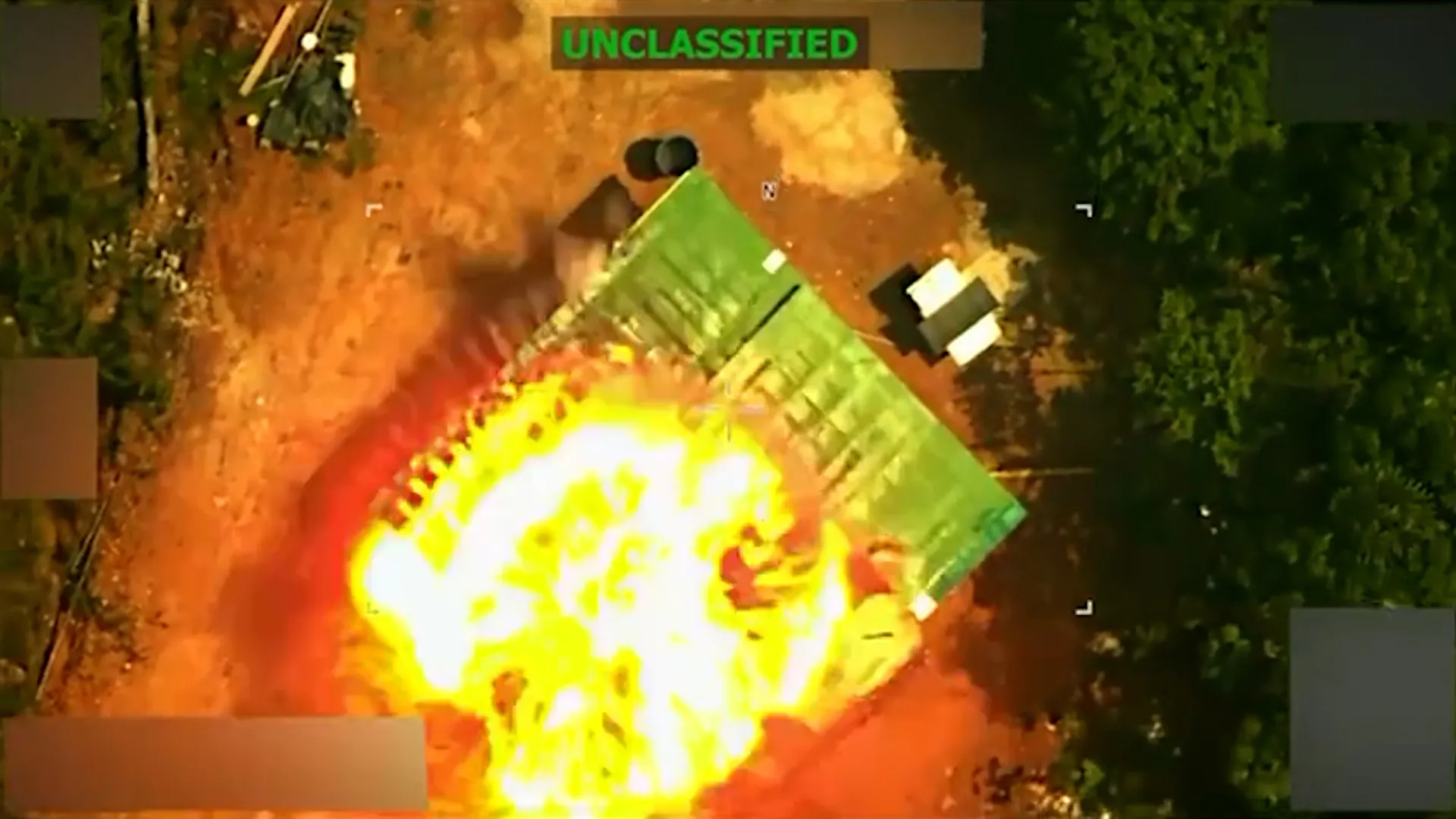
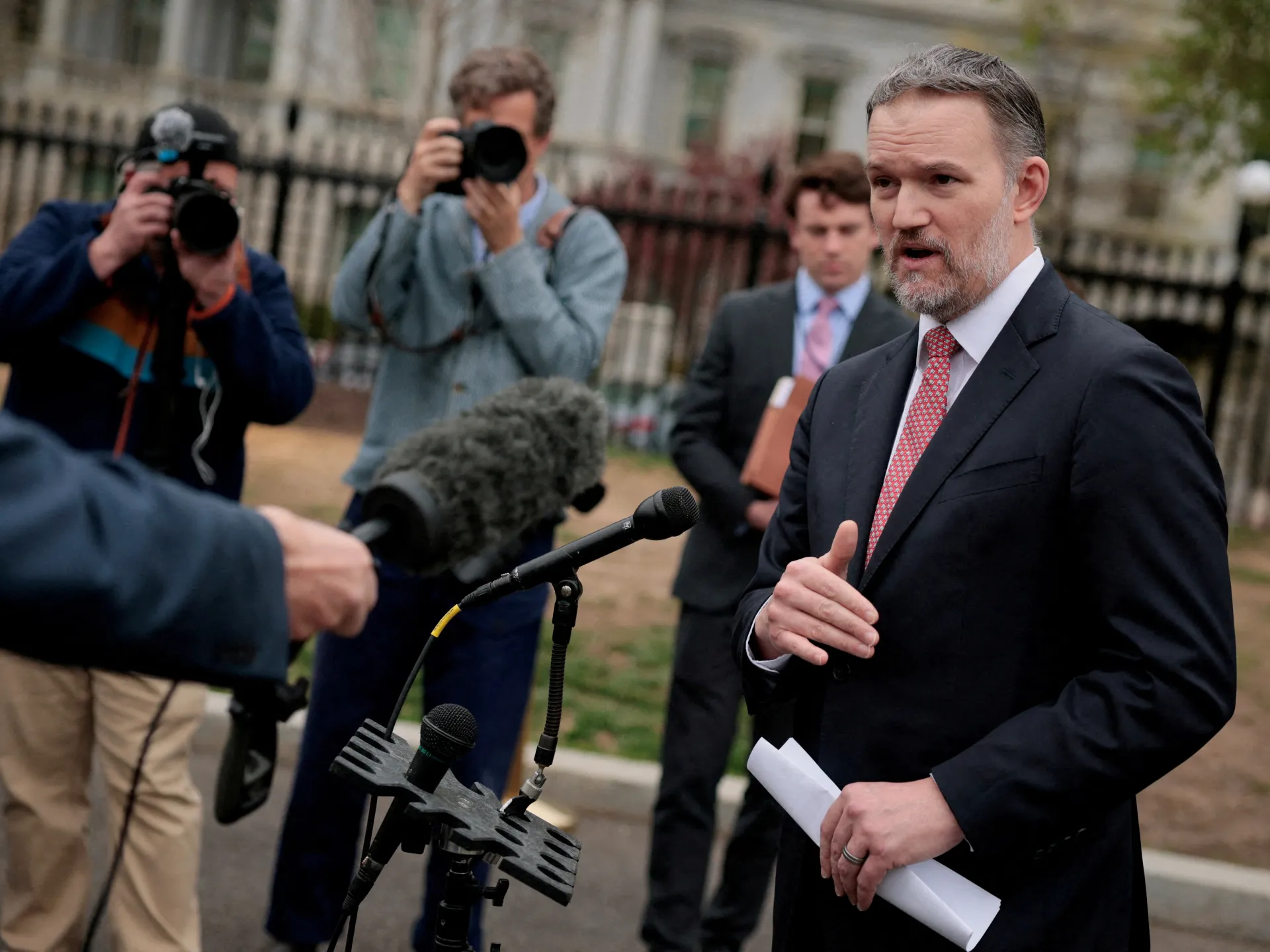
President Donald Trump has posted a video of a ‘swift and lethal’ US strike he claims has killed the leader of Venezuela’s Tren de Aragua gang. Trump said Venezuela helped the US with the strike on Hector Rusthenford Guerrero Flores.
USA beat Paraguay 4-1 in Los Angeles as each of the three World Cup cohosts have now staged a game in the 2026 edition.
Published On 13 Jun 202613 Jun 2026
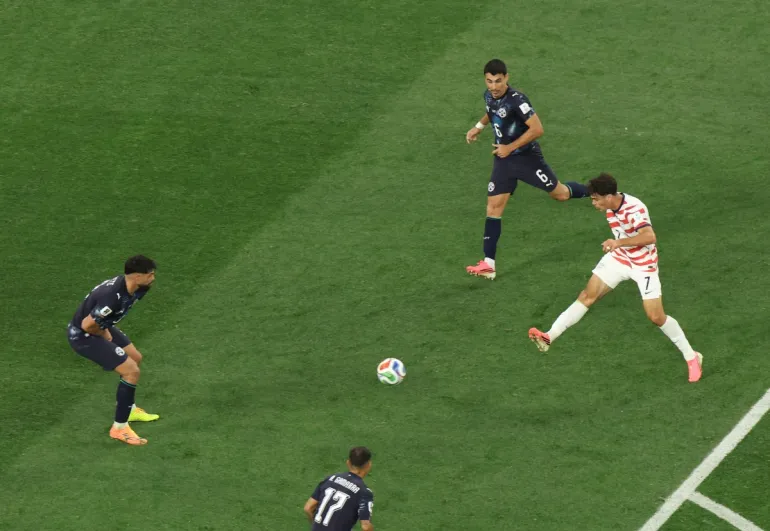
The United States could scarcely have scripted a better start to their World Cup as a Folarin Balogun brace and a Gio Reyna curler fired the cohosts to a 4-1 drubbing of Paraguay in front of Hollywood royalty in Los Angeles.
The hosts took the lead in the tournament’s first game on US soil within seven minutes thanks to an own goal, and by the end of an utterly dominant half, the home fans were in dreamland, their side up by three.
Recommended Stories
list of 4 itemsend of list
Tom Cruise, Leonardo DiCaprio and Paris Hilton were among a sold-out 70,492 crowd as the US – cohosting the tournament with Mexico and Canada – piled wave after wave of attacks on the South Americans, with Reyna polishing off the win late in stoppage time after Mauricio had pulled one back.
The win and emphatic scoreline put the US in a favourable position already to progress from Group D, which also contains Australia and Turkiye.
The night’s only potential sour note was the half-time withdrawal of Christian Pulisic, the US attacking talisman who is carrying the hopes of the nation as they attempt a deep run into the World Cup knockouts for the first time since their quarterfinal appearance in 2002.
Paraguay could not have been more obliging guests from kickoff. In the seventh minute, Weston McKennie picked up the ball in the centre circle and drove upfield, finding Pulisic.
Pulisic darted between two defenders and returned the ball to McKennie, whose pass to striker Balogun was bundled into his own net by a hapless Damian Bobadilla.
The stadium erupted, and a US onslaught began.
The hosts oozed confidence. Both McKennie and Tillman played backheel through balls into the area, while captain Tim Ream sprayed out passes from the heart of defence.
USA midfielder Giovanni Reyna scores his team’s fourth goal [Valerie Macon/AFP]
Balogun had a goal ruled out in the 28th minute. He had strayed offside, as had Pulisic in the buildup.
But the Monaco striker had the ball in the net again three minutes later, thanks to a superb ball down the left flank by Antonee Robinson to Pulisic, whose cross to Balogun took a slight fortuitous deflection.
The US added a third on the cusp of half-time. Tillman found Balogun down the right, who evaded Omar Alderete’s challenge, skipped inside Gustavo Gomez and curled his shot perfectly into the top left corner.
It could have been four or five, with Chris Richards – returning from injury – flashing a header barely an inch wide. The US had 75 percent possession in the first half.
Now, without the dangerous Pulisic, the hosts sat back slightly in the second half.
Paraguay finally offered a threat. Their dangerous forward Julio Enciso, who started despite a hamstring injury, picked up the ball on the edge of the area and fed in Brazil-born substitute Mauricio, who pulled one back.
Reyna scored a superb fourth with the outside of his right foot that curled just inside the far post.
The game had been preceded by a Tinseltown-style opening ceremony. Katy Perry delivered the headline performance, accompanied by singers Future, Tyla, Anitta and K-pop singer Lisa.
Performers danced around a giant World Cup trophy beneath enormous “FIFA” letters in the gold favoured by US President Donald Trump – who did not attend, instead wishing the team luck via phone before kickoff.
Five goals, four water breaks, three red cards and a glittering opening ceremony.
The World Cup 2026 opening day delivered everything you could ask for.
Recommended Stories
list of 3 itemsend of list
From an early thunder strike to a late winning goal, Thursday was filled with drama, stretching from Mexico City to Zapopan.
Al Jazeera breaks down the key takeaways from the 2026 FIFA World Cup’s day 1:
Is this going to be the World Cup with the most red cards?
The three red cards brandished to Yaya Sithole, Themba Zwame and Cesar Montes during Mexico’s 2-0 win over South Africa were an unusual sight at a World Cup.
In the last two editions, Qatar 2022 and Russia 2018, only four red cards were handed out during the entire tournament. This year’s World Cup opening game nearly matched that singlehandedly.
With officiating at the start of the tournament usually setting the tone for the rest of the campaign, the sequence of sending offs at Estadio Azteca could be repeated several times during the 39-day, 104-match spectacle in North America.
Thursday’s three reds fell just one short of the record of four at a World Cup 2006 game, nicknamed the “Battle of Nuremberg”, between Portugal and the Netherlands.
The record for the most red cards – 28 – was also set at the same tournament in Germany.
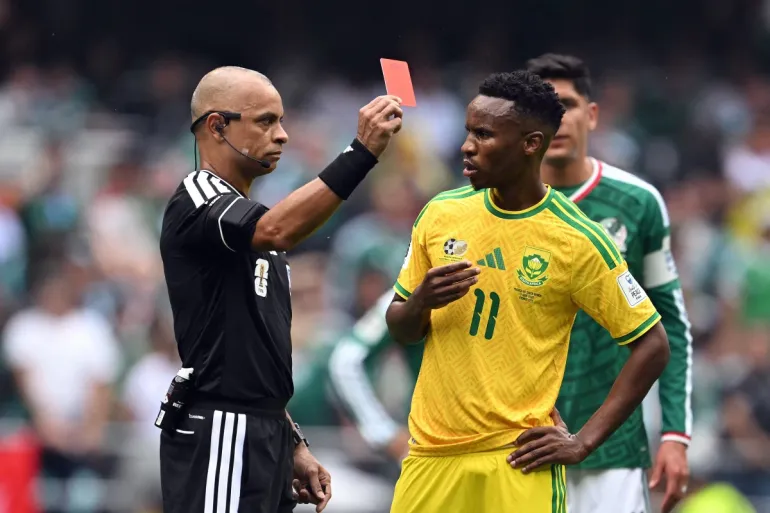
Brazilian referee Wilton Sampaio shows a red card to South Africa’s midfielder Themba Zwane [Yuri Cortez/AFP]
Controversial VAR at the centre of debate again
The look of confusion and disbelief among South African players after Zwane was sent off for flinging an arm into Mexico’s Roberto Alvarado’s face prompted the debate: Is Video Assistant Referee (VAR) playing spoilsport again?
Referee Wilton Sampaio did not initially pull out the red card, but after being sent to the pitchside monitor by VAR, Sampaio decided to send Zwane off.
While the replays were unclear, it seemed Zwane was trying to move past Alvarado, but his hand caught the Mexican’s face in the process.
Zwane was ultimately booked for “violent conduct”, a controversial decision, which seemed harsh given it was not an obvious call. South Africa coach Hugo Broos was not convinced by it, either.
“The second red card, I think the Mexican player blocked my player,” Broos said in the post-match media conference.
“It’s the position of the referee, and we have to accept it also, but I don’t think [it was a red], it was too soft to give that as a red card.”
Hydration breaks or momentum killers?
The introduction of fixed hydration breaks – one in each half – came into effect for the first time at the World Cup on Thursday, and attracted early criticism from viewers and coaches alike.
While some broadcasters stuck with the live feed featuring players, others cut to commercials, disrupting the match-viewing experience for fans watching on TV.
Viewers in the United States were frustrated after broadcaster Fox cut away to full-screen commercials and they missed some live action during the second half of the Mexico vs South Africa opening match.
US head coach Mauricio Pochettino had a mixed opinion over the three-minute breaks, which are held regardless of weather conditions and introduced by FIFA to prioritise player welfare.
“I don’t like it. I only like it when the conditions are very extreme, but when the conditions are good, it is not necessary to have water breaks,” he said during a news conference on Thursday.
“For me, it’s 50-50. For coaches and staff, it’s a chance to make some changes or fix problems. But it’s part of the game, and we accept that.
“I don’t agree with it, but it’s not a big issue and won’t have a big effect on the games,” he said, adding that he did not watch the opening game.
Son Heung-min misfires, but South Korea prevail
Son Heung-min has often been the hero of the South Korea national team on the biggest stage, but on Thursday, even though the talisman got the lion’s share of the chances, he failed to score in their 2-1 win over Czechia.
Son worked seamlessly with the impressive Lee Kang-in and Lee Jae-sung to create a host of first-half chances, with the trio combining darting runs through the middle with a succession of dangerous pass-and-go moves that they just could not finish.
But Oh Hyeon-gyu and Hwang In-beom stepped up to the occasion, bagging a goal each to steer the Koreans to a dramatic late comeback win over Czechia.
South Korea’s Son Heung-min reacts after missing a chance to score in their World Cup opener against Czechia [Daniel Becerril/Reuters]
South Korea vs Czechia: A clash of styles
Even though both teams opted for a 3-4-3 formation, there was a stark difference in their systems and approach.
South Korea played a fluid, possession-based style of football, while Czechia were heavily reliant on dead balls, opting for a rugged, route-one tactic.
Although the Czechs broke forward first with direct, physical play, the Koreans – buoyed by a largely Mexican crowd rooting for them – bounced back with their dominance of possession and stylish play, getting the better of their set-piece specialist opponents.
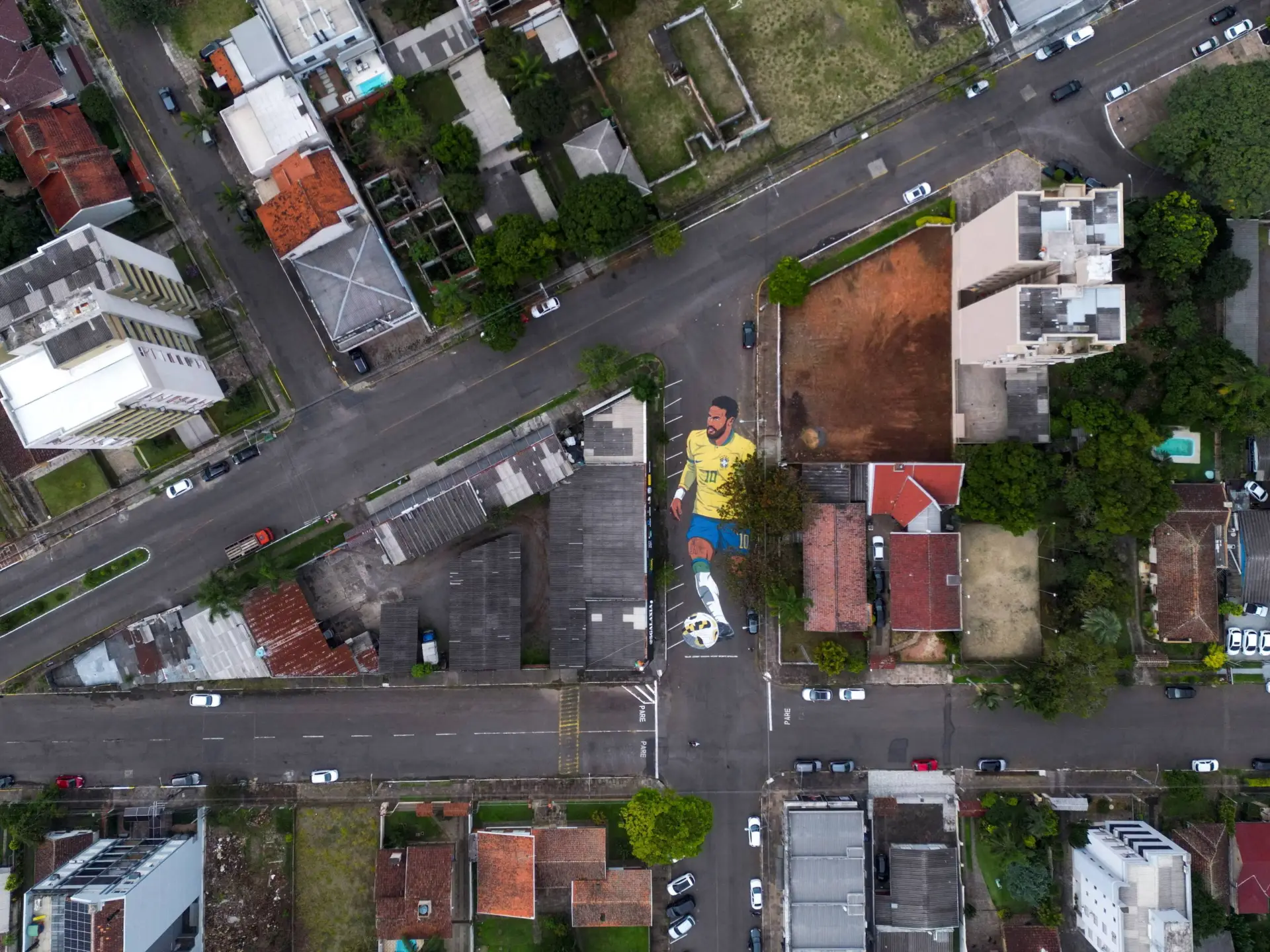
A massive 850-square-meter street mural of football star Neymar da Silva, created by six artists over two days in Brazil’s Novo Hamburgo, is turning heads ahead of the highly anticipated FIFA World Cup.
Four Brazilian players and four members of their coaching staff were sent off during a dramatic encounter in Fortaleza.
Published On 10 Jun 202610 Jun 2026
Brazil were shown eight red cards during a chaotic 1-0 defeat to the United States women’s national team in a friendly in Fortaleza.
Brazilian coach Arthur Elias and three of his assistant coaches were sent off, while Bia Zaneratto and Tarciane were also dismissed. Two other players were shown red cards after the full-time whistle on Tuesday evening.
Recommended Stories
list of 3 itemsend of list
Sophia Wilson’s shot deflected off Isabela and snuck past Brazilian goalkeeper Lorena in the 63rd minute for the lone goal of the game before a crowd of more than 55,000 fans in northern Brazil. The hosts had no shots on goal, while the US had six.
Brazil manager Elias and several assistants were dismissed from the technical area during the second half.
Brazil then went down to nine in stoppage time after attacker Zaneratto was dismissed after picking up a second yellow card for pushing Emily Sonnett.
Moments later, her teammate, Tarciane, was shown a straight red for elbowing Wilson.
The chaos continued after the full-time whistle, with Brazil’s Kerolin and Ludmila both shown red cards for dissent.
Sophia Smith celebrates with teammates after the opening goal during the international friendly match between Brazil and the US [Brad Smith/Getty Images]
It was the second of two matches in Brazil for the Americans, with the US losing 2-1 in the opener on Saturday in Sao Paulo.
Dudinha appeared to hurt her right knee in a collision with Sonnett in the 30th minute and was stretchered off the field in obvious pain. The 20-year-old forward, who plays for the San Diego Wave in the National Women’s Soccer League, returned to the bench in the second half on crutches.
The matches in Sao Paulo and Fortaleza were played at stadiums that will be used next June and July for the Women’s World Cup. The US will start their qualification campaign in November.
Brazilian police have intercepted 108 Cuban nationals in a single day as they were being smuggled into the country.
In a statement on Tuesday, officials noted that the incident was part of a growing trend of undocumented immigration leaving the beleaguered Caribbean island for Brazil.
Recommended Stories
list of 3 itemsend of list
Brazil’s Ministry of Justice and Public Security described the operation as a “rescue”, designed to disrupt human trafficking and irregular migration.
“According to the Federal Highway Police (PRF), this was the largest humanitarian rescue operation ever recorded in a single incident in Roraima,” the ministry said, referring to one of Brazil’s 26 states.
Roraima is situated in the Amazon rainforest, along the border with Guyana and Venezuela. The ministry said that a “large portion” of Cubans are using Guyana as a gateway to enter Brazil.
Some 57.6 percent of the Cuban immigrants living in Brazil are either in Roraima or Amapa, another northern border state.
Cuba has been facing a heightened humanitarian crisis in recent months, as it weathers a de facto fuel blockade imposed by the United States.
Since January, no foreign oil has been allowed to reach the Caribbean island, save for one Russian tanker. The US has threatened steep tariffs against any country that might seek to supply Cuba with oil, a necessary fuel for its fragile energy grid.
The blockade has had wide-ranging repercussions, with public services in many areas grinding to a halt. The country has been gripped by multiple island-wide blackouts, and residents are reporting difficulties accessing basic supplies like food and medication.
Critics fear the pressure will lead to new waves of migration off the island. During the COVID-19 pandemic, for example, economic decline contributed to a mass exodus, with Cuba’s population dropping by roughly 10 percent or more.
Since 2024, Brazil’s Federal Highway Police say they have “rescued” roughly 297 migrants and asylum seekers in Roraima, most of them Cuban.
Five “coyotes”, or human smugglers, were arrested during Monday’s law enforcement efforts, which come as part of Operation Safe Route, an initiative launched in December 2024 to ensure roadway safety.
Three separate sets of arrests were made. One involved a convoy of three vehicles that attempted to flee federal police after being signalled to stop. Inside the vehicles were 39 Cubans, including children, being “transported in precarious conditions”.
“Many reported having gone without food for at least two days,” the Justice Ministry said.
In another incident, police found eight Cuban immigrants after seizing a vehicle that crossed the border illegally. In a third, law enforcement followed a vehicle suspected of human smuggling to a residence where 61 Cubans were found.
All 108 of the Cubans recovered on Monday were transferred to police officials for “immigration regularisation and subsequent referral to the social assistance network”, according to the Brazilian security ministry.
In its annual migration report for 2025, the ministry described Cuban immigration to Brazil as stable or even descending during the last decade, up until the early years of the COVID-19 pandemic.
“Migration flows of Cubans to Brazil were never particularly intense,” the report said. But then, starting in 2022, Cuban immigration into Brazil started to “rebound vigorously”.
“It is important to note that, in 2025, refugee applications submitted by Cubans surpassed those submitted by Venezuelans — not only due to a drop in applications from the latter group but, above all, due to the sharp rise in cases filed by Cubans, exceeding 40,000 requests,” the report explained.
The report also warned that the upward trend could continue, given the conflict between the US and Cuba.
Since returning for a second term, US President Donald Trump has taken an active role in Latin American politics and has suggested he may use military force to initiate regime change in Cuba.
“Should geopolitical tensions between Cuba and the United States of America escalate, migration flows toward Brazil could very well increase,” the report concluded.
The 2026 World Cup will launch with a series of historic opening ceremonies across North America, marking the first time the tournament has been launched simultaneously in three host countries.
The United States, Mexico and Canada will officially launch the biggest World Cup in history.
Recommended Stories
list of 4 itemsend of list
While the US hosted the tournament in 1994 and Mexico in 1970 and 1986, Canada will host the competition for the first time. Together, the three countries will open the tournament.
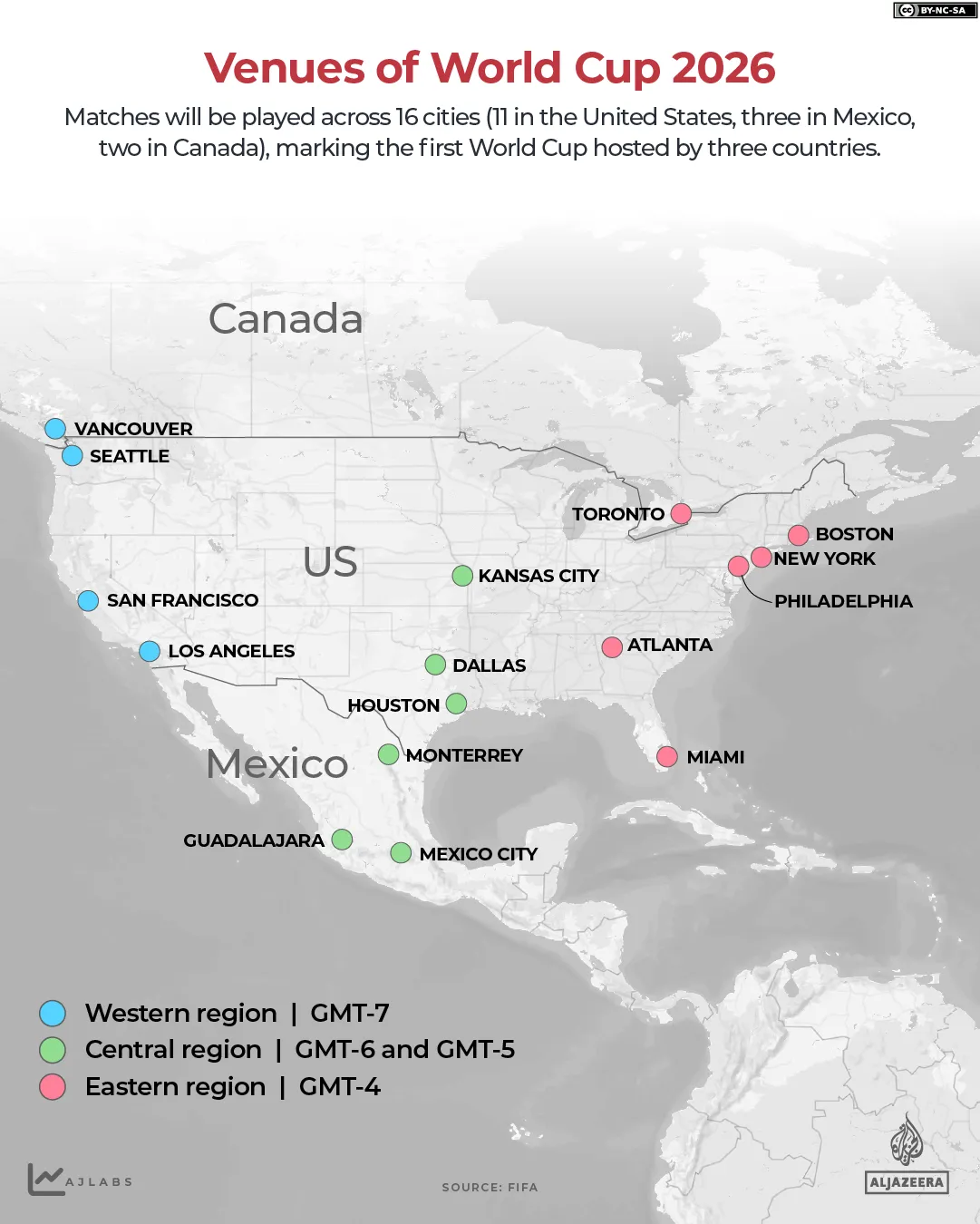
This World Cup will feature a record 104 matches spread across 16 host cities. The global event will run from the opening match in Mexico on Thursday, June 11, to the final on Sunday, July 19, in New York.
Here is what we know:
What are the 2026 FIFA World Cup opening ceremonies?
The three interconnected ceremonies staged across Mexico, Canada and the US are built around a shared theme designed to unite the three host nations while showcasing each country’s culture, identity and creative talent.
Each event will begin 90 minutes before the host nation’s opening match.
The ceremonies are being produced by Marco Balich, the creative director behind several Olympic opening ceremonies, including the 2026 Winter Games edition and major international sporting events. While each show will have its own distinct character, all three will be linked by a shared theme centred on football’s ability to unite people across borders.
Each host country will bring its own visual style to the ceremonies. Canada will be represented through a cultural mosaic, Mexico through papel picado, and the US through what Balich called “a super shiny, glowing cup”.
“The FIFA World Cup is a moment the world shares, and that begins with how we open it,” said FIFA President Gianni Infantino.
“Starting with Mexico City and continuing the next days with Toronto and Los Angeles, these ceremonies will bring together music, culture and football in a way that reflects both the individuality of each nation and the unity that defines this tournament. It is a powerful way to begin a truly global celebration.”
According to The Athletic, the ceremony in Mexico City is expected to run for about 16 minutes and 30 seconds, while the shows in Toronto and Los Angeles are scheduled to last approximately 13 minutes each.
Once the performances conclude, the pitch will be handed over to the teams for their pre-match warm-ups. Matchday protocol ceremonies, including the player walkouts and official introductions, will then begin 25 minutes before kickoff and are expected to last about 13 minutes.
Who is playing in the opening games?
Mexico will face South Africa in the first match of the tournament, which will take place following the opening ceremony in Mexico City.
Canada will play against Bosnia and Herzegovina in Toronto, marking a historic milestone as it will be the Canadian Men’s National Team’s first World Cup match played on home soil.
The US will take on Paraguay in their opening match following the celebration in Los Angeles.
When and where are the World Cup opening ceremonies?
Mexico City (June 11)
Mexico will launch the tournament at Mexico City Stadium (formerly known as the Estadio Azteca) 90 minutes before its opening match against South Africa, in a repeat of the 2010 opener.
The ceremony is expected to celebrate Mexican culture through Indigenous performers, contemporary folkloric acts and the traditional art of papel picado.
Artists featured on the Official FIFA World Cup Album are expected to perform, including Alejandro Fernandez, Belinda, Danny Ocean, J Balvin, Lila Downs, Los Angeles Azules, and Mana. The show will also include South African singer-songwriter Tyla.
Shakira is also expected to perform her Dai Dai – an Italian phrase meaning “let’s go” or “come on” – along with Burna Boy. Shakira is also set to co-headline the inaugural FIFA World Cup Final Halftime Show on July 19, alongside Madonna and K-pop band BTS.
Authorities have declared June 11 a public holiday in Mexico City, with schools closed and employers encouraged to allow remote work. Access to the stadium area will be restricted to ticket holders, accredited media and authorised personnel.
Opening day schedule in Mexico 9:00 (15:00 GMT): Stadium gates open 11:00 (17:00 GMT): Opening ceremony begins 12:10 (18:10 GMT): Team warm-ups 13:00 (19:00 GMT): Mexico vs South Africa kickoff
Toronto (June 12)
Canada’s ceremony will take place at Toronto Stadium before the country’s World Cup match against Bosnia and Herzegovina. The opening ceremony in Toronto will kick off at 1:30pm local time (17:30 GMT).
The ceremony will begin with a unique countdown designed to take viewers on a “journey across Canada”, highlighting moments that reflect the nation “from coast to coast to coast”.
Centred on the theme of a cultural mosaic, the event will highlight Canada’s diversity through music and performance, with artists including Alanis Morissette, Alessia Cara, Elyanna, Jessie Reyez, Michael Buble, Nora Fatehi, Sanjoy, Vegedream and William Prince.
The match immediately following the ceremony against Bosnia and Herzegovina is deeply significant, as it will be the first FIFA World Cup match to be played by the Canadian Men’s National Team on home soil.
FIFA President Gianni Infantino noted that the Toronto ceremony will be a “powerful reflection of Canada’s identity” and a “moment of pride, unity and anticipation” as the country steps onto football’s biggest stage.
Opening day schedule in Canada
13:30 (17:30 GMT): Opening ceremony begins. 15:00 (19:00 GMT): Canada vs Bosnia and Herzegovina kicks off.
After the ceremony concludes, the teams will complete their warm-ups before the official pre-match proceedings and kickoff at 3pm local time (19:00 GMT).
Los Angeles (June 12)
The US will host its opening celebration at the Los Angeles Stadium before facing Paraguay.
The ceremony will feature large-scale visuals, immersive storytelling and performances from global artists including Katy Perry, Future, Anitta, LISA, Rema and Tyla.
FIFA President Gianni Infantino highlighted that this specific artist lineup was chosen to reflect the cultural diversity and vibrant diasporas of the US, showcasing the nation’s considerable influence on global pop culture, music, and entertainment.
Opening day schedule in US
16:30 (23:30 GMT): Opening ceremony begins 18:00 (01:00 GMT June 13): The US vs Paraguay kicks off.
How can you watch the World Cup opening ceremony?
Fans in the US can watch the opening ceremonies through FIFA’s official broadcast partners. English-language coverage will be available on FOX and FS1, while Spanish-language coverage will air on Telemundo and Universo.
For free streaming, Tubi will simulcast the opening ceremonies and the opening matches, including Mexico vs South Africa on June 11 and the United States vs Paraguay on June 12.
All 104 World Cup matches will also be available through the FOX One app (subscription required), while Spanish-language viewers can stream every match on Peacock and the Telemundo app.
International broadcasters include:
Canada: CTV, TSN and RDS
Mexico: Televisa and TV Azteca
United Kingdom: BBC and ITV
How many fans are expected to attend and watch?
FIFA has not released an official number for the opening ceremonies. However, the three events are expected to fill their host venues in Mexico City, Toronto and Los Angeles, with a combined live attendance of roughly 200,000 spectators.
The ceremonies will also be broadcast worldwide as part of the opening match coverage, likely attracting a global television audience in the tens or hundreds of millions.
Are the hosting nations facing any challenges before the ceremony?
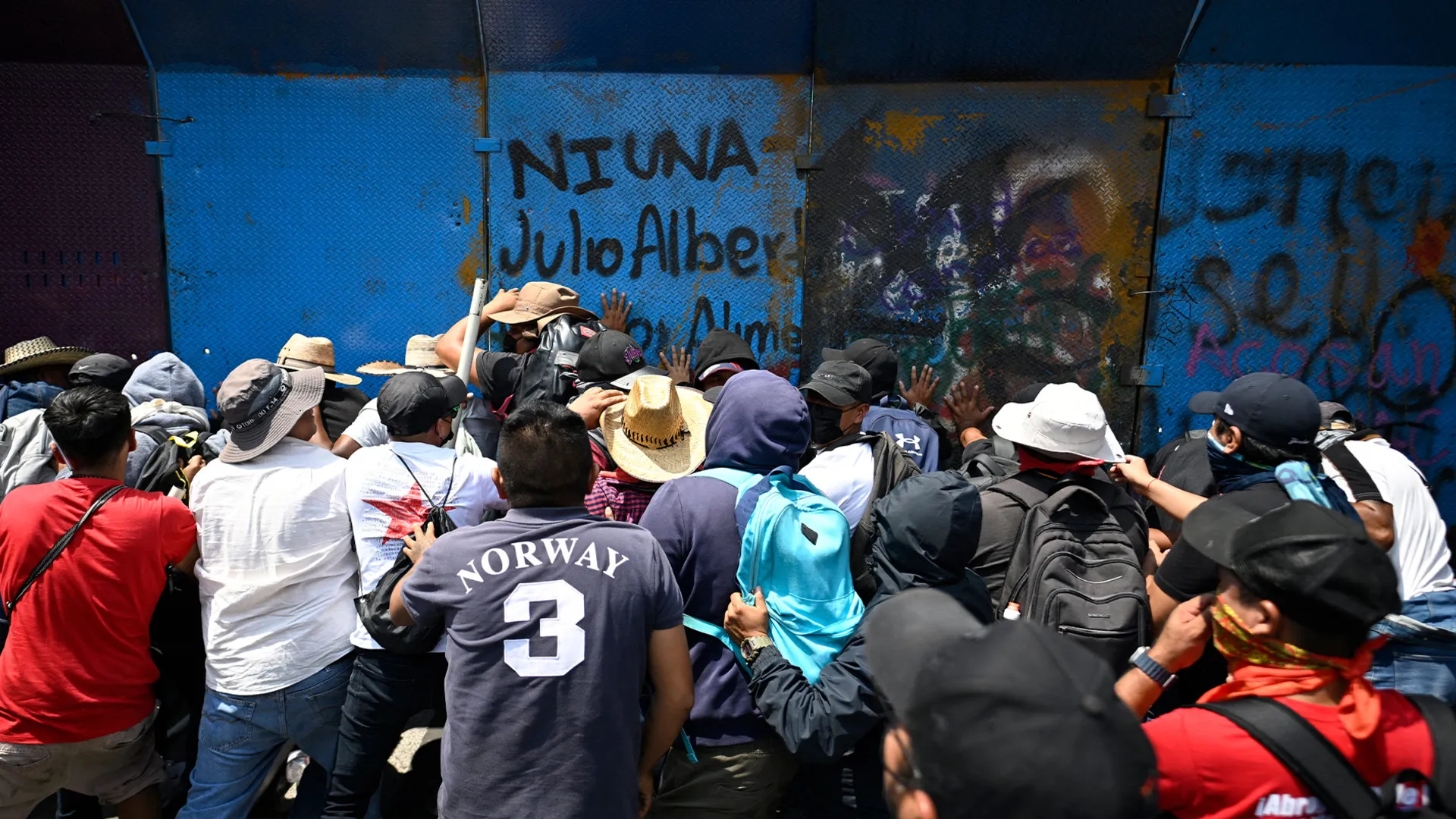
Yes. In Mexico City, ongoing protests by teachers’ unions and other groups have raised concerns about possible disruptions before the opening match between Mexico and South Africa.
Protesters have threatened to block major roads leading to Mexico City Stadium and other key locations. Authorities have responded with a large security operation and say the opening ceremony is not at risk, although organisers remain on alert as the tournament approaches.
In Los Angeles, officials have focused on security planning, crowd management and preparations for large-scale events across the city. Local authorities have also said they do not expect immigration enforcement operations at World Cup venues.
In Toronto, organisers are preparing for an influx of visitors, with transport agencies adding services and coordinating plans to reduce congestion. Across all three host nations, security and logistics remain key priorities as the tournament gets under way.
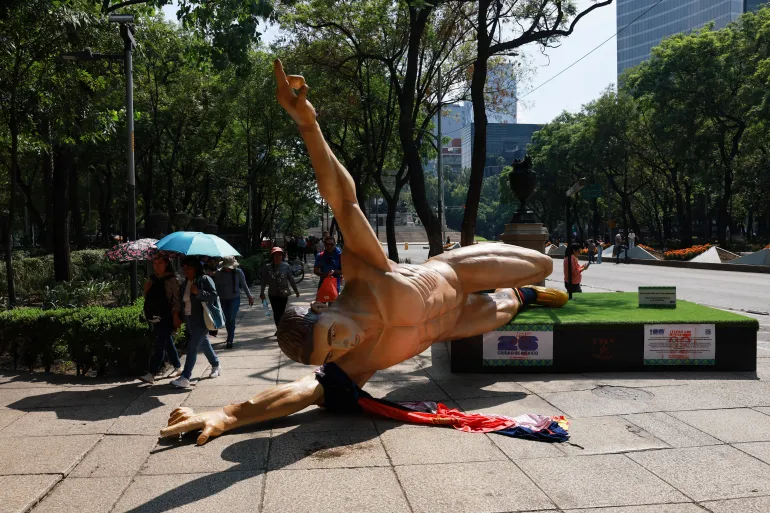
People walk near the fallen statue of a football player, placed along Avenida Reforma for the 2026 FIFA World Cup, that was vandalised by teachers from Mexico’s National Coordination of Education Workers (CNTE), following a protest demanding better wages and pensions, under the slogan “If there’s no solution, the ball won’t roll,” in Mexico City [Henry Romero/Reuters]
The FIFA World Cup begins on June 11. You can follow the action on Al Jazeera’s dedicated World Cup 2026 page with all the latest news, match build-up and live text commentary, and keep up to date with group standings, real-time match results and schedules.
Volker Turk, the high commissioner for human rights at the United Nations, has issued some of his harshest criticism yet of the recent sanctions the United States has imposed on Cuba.
On Monday, Turk drew a line between the increasing restrictions on the Cuban economy and reports of heightened death rates, particularly among children.
Recommended Stories
list of 3 itemsend of list
“The fuel restrictions imposed since early 2026 and recent tightening of extraterritorial sanctions, taken together, are directly harming Cubans, especially the most vulnerable,” Turk said in a statement.
“Children are dying because doctors lack access to essential medical supplies and medicines. This is unacceptable.”
Such “severe sanctions”, he added, run contrary to the “basic principles of international human rights law”. He called for them to be “lifted immediately”.
Turk’s comments are a direct response to the suite of actions taken under US President Donald Trump to tighten pressure on Cuba, a Caribbean island that has already weathered a decades-long US trade embargo.
Starting in January, the Trump administration moved to cut off Cuba’s foreign oil supply, a linchpin for its ageing energy grid.
First, it severed supplies of oil and funds from Venezuela. Then, on January 29, Trump issued an executive order declaring Cuba to be an “unusual and extraordinary threat” to US national security. As such, he said, any country that supplied it with oil would be subject to steep tariffs.
In the months since, the Trump administration has continued to layer sanctions on Cuba. In May, for instance, penalties were announced against Cuba’s Interior Ministry, its National Police and its Directorate of Intelligence.
Those were followed this month by sanctions targeting Cuba’s president, Miguel Diaz-Canel, as well as members of his family.
The sanctions are designed to penalise those “responsible for repression” in Cuba, an island whose communist government has been accused of stifling dissent, as well as imprisoning and torturing activists.
Turk on Monday acknowledged Cuba’s human rights record and called on the country to “release all those arbitrarily detained”.
But he also pointed to the mounting death toll associated with the US sanctions, which have isolated the island country from much of the world.
The sanctions freeze any US-based assets the target may have, but they also prohibit entities from conducting business with the sanctioned parties. That can result in difficulties accessing global financial systems and other international platforms.
The de facto oil blockade has also resulted in the increasing frequency of power outages, and essential services like public transportation and medical care have faced reductions. Turk pointed to those downstream effects in his remarks.
“Cuba faces increasing isolation,” he said. “Companies are leaving. Fewer airlines fly to the country. It is almost disconnected from international payment systems.”
Turk’s office has also highlighted the human costs of the sanctions. According to the statistics it cited, infant death rates have doubled, reaching 9.9 for every 1,000 births. The survival rate for childhood cancer, meanwhile, has declined from 85 to 65 percent.
In March, the Cuban government also warned of medical needs going unanswered as a result of the energy shortage. It estimated that there was a backlog of 96,387 people awaiting surgery, 11,193 of whom were minors.
It also underscored that 16,000 patients needed radiotherapy, and another 2,888 required dialysis, two treatments that depend on steady electrical supplies.
Turk’s remarks also pointed to the risks posed by the Atlantic hurricane season and other natural disasters. Within hours of his remarks, western Cuba was rattled by a powerful 6.1-magnitude earthquake. Summer heat alone could cost lives, he explained.
“Rising summer temperatures risk increasing the spread of vector borne and waterborne diseases,” Turk said.
“The hurricane season further increases exposure. This creates a perfect storm for social and economic deterioration and suffering for the Cuban people.”
Trump has repeatedly suggested that he is considering military action in Cuba to remove its leadership after the US-Israel war on Iran reaches an end.
Since January, only one Russian oil tanker has been allowed to reach the island, leaving its foreign fuel supplies largely depleted.
New law grants president power to use military to clear roadblocks set up amid weeks of anti-government demonstrations.
Published On 7 Jun 20267 Jun 2026
Bolivia’s legislature has passed a law granting President Rodrigo Paz the authority to use the military to clear roadblocks set up by antigovernment protesters.
The legislation passed in Bolivia’s Chamber of Deputies on Sunday following an overnight debate. It had previously been approved by the Senate and was expected to be signed into law by Paz.
Recommended Stories
list of 3 itemsend of list
“This law is hereby passed,” announced Roberto Castro, President of the Chamber of Deputies.
The military has so far only been used in support roles for anti-riot police during weeks of demonstrations calling for Paz, the centre-right leader backed by the US, to step down.
About 100 roadblocks have been set up across the country in recent weeks. Authorities have said the road blockades have led to food and medicine shortages.
On Saturday, dozens of riot police backed by military vehicles fired tear gas as they attempted to clear a road in the town of San Julian.
Protesters threw stones and burned tyres to try to halt the police advance, said an AFP reporter at the scene.
The new law would allow soldiers to use force against protesters, and also grants them a “presumption of legality” in conflict situations. That means their actions will be deemed lawful unless proven otherwise.
It comes after Bolivia’s legislature voted last month to repeal a 2020 law that restricts the use of the military to crack down on protests.
Farmers, miners and transportation unions have been among those leading the protests. The demonstrations come amid widespread unrest over rising inflation, low wages and Paz’s move to abolish fuel subsidies.
Paz, who was elected last year, has charted a course as a pro-business leader, vowing to guide the country through an ongoing economic crisis.
He has received the backing of the US, with the administration of the US President Donald Trump’s so-called “Shield of the Americas” regional coalition vowing support during protests..
“We stand with Paz’s democratic government as it fights back against attempts to drag Bolivia backwards through cynical efforts to prevent the delivery of food, medicine and other vital supplies to the Bolivian people through fake road blockades,” said the alliance members, who have vowed to take a militaristic response to crime in Latin America
Iran’s World Cup squad has landed in Tijuana, Mexico ahead of the World Cup – amid a diplomatic row with cohosts United States, which is at war with Tehran and has refused visas for several members of the Iranian delegation.
The squad touched down shortly after 5am (1200 GMT) in the Mexican city, across the border from San Diego in California, after an overnight flight from Turkiye, where they have been training for the past three weeks.
The Iranian football federation negotiated at the last minute to move the team’s base camp from Arizona to Mexico, due in part to uncertainty over whether they would be granted visas to enter the US.
The US awarded visas to all the players on Friday, just 10 days before their first match, but several members of the support squad were not given visas, including “key managerial and administrative members,” according to the federation.
The dispute comes days before the tournament kicks off on Thursday, when Mexico play South Africa in Mexico City.
Iran will be based in the city throughout the tournament, despite playing their entire group stage on the US West Coast.
When they do play in the US, it will be the first World Cup to see a host nation receive the team of a country it is at war with.
‘Hold the US accountable’
Iran’s team spent nearly three weeks at a training camp in Antalya, using their time in Turkiye to apply for visas for the three host nations.
On the eve of their departure for Mexico, the players received their US visas, Washington’s envoy to Turkiye, Tom Barrack, said on X late on Friday.
But Iran’s embassy to Turkiye said 15 administrative and management staff had been denied visas.
“You have now escalated the deliberate and discriminatory treatment against Iran’s national football team to its highest level,” the embassy posted on X on Saturday, calling for world football’s governing body FIFA “to hold the US accountable for violations of its rules”.
Adding to the tensions, Iran’s ambassador to Mexico said on Saturday that the squad had been notified that under their visa conditions the team must enter and leave US soil on the same day as their matches.
“We can enter in the morning and we must leave the same day,” Iran’s envoy Abolfazl Pasandideh told reporters.
That appeared to contradict what the team’s spokesman Amir Mahdi Alavi told state TV earlier.
“The visas issued for the national team are multiple-entry visas, and the national team will arrive at the match venue one day before the first game and, for the following games, two days prior to each match,” Alavi said.
FIFA rules for World Cups stipulate that a team’s coach must give a news conference on the eve of the match at the venue where the game will be played.
(Al Jazeera)
‘Political interference’
Iran’s Football Federation – whose chief Mehdi Taj was reportedly among those denied a visa – has described the decision as “political interference in sport in its worst form”.
In response, a US administration official confirmed that “the visas necessary for Iran to compete in the World Cup, including for athletes and necessary support staff, have been issued.”
Without directly addressing the matter of those whose visas were refused, the official added: “We will not allow the Iranian team to abuse this system to sneak terrorists into the United States under false pretences.”
In April, US Secretary of State Marco Rubio said any problem would not be with the Iranian players but “some of the other people (they) would want to bring with them,” suggesting some had ties to the Islamic Revolutionary Guard Corps, which is on the US blacklist of “terrorist” groups.
Iran are in Group G and will play New Zealand and Belgium in Los Angeles on June 15 and 21, followed by Egypt in Seattle on June 26.
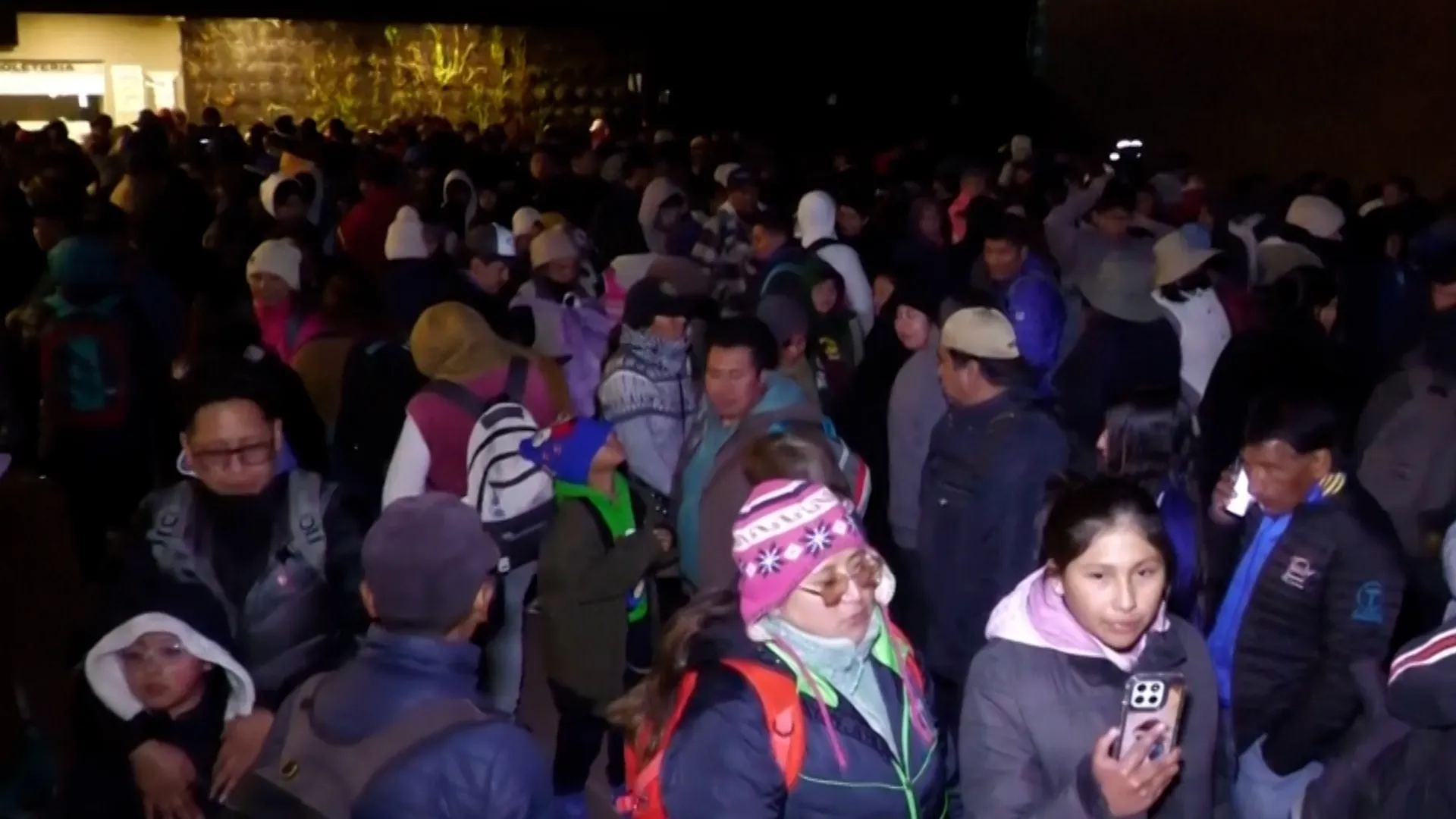
Hundreds of Bolivian residents are braving near-freezing temperatures to queue for affordable chicken in La Paz, due to more than a month of food shortages.
Spiked prices and protester blockades have affected access to food and medical supplies in the capital.
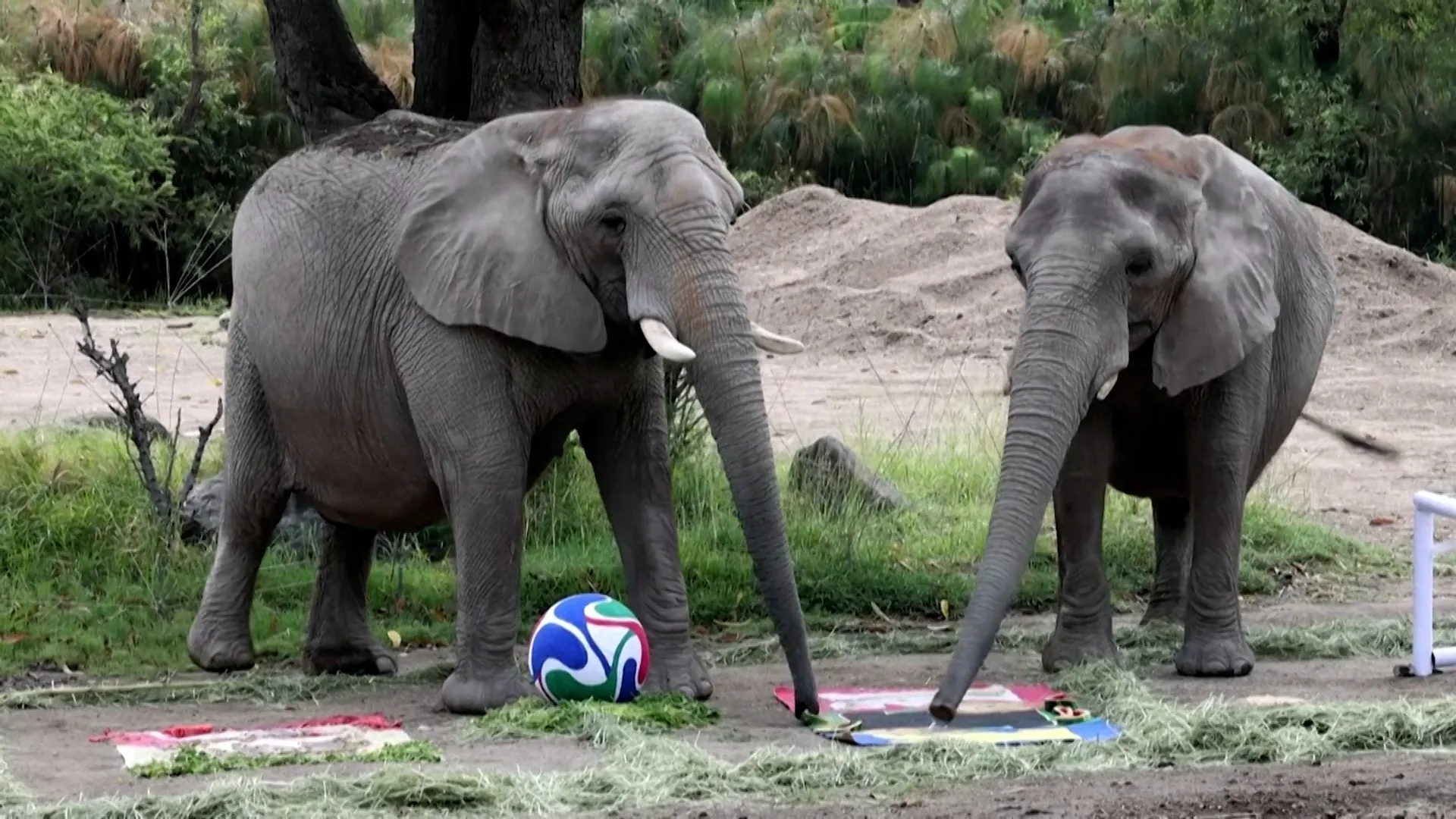
Animals at Guadalajara Zoo in Mexico are making their own predictions for the 2026 FIFA World Cup. Elephants, gorillas, a puma and giraffes picked winners from a selection of upcoming matches, continuing a World Cup tradition made famous by Paul the Octopus, who correctly predicted 12 of 14 results at the 2010 tournament.
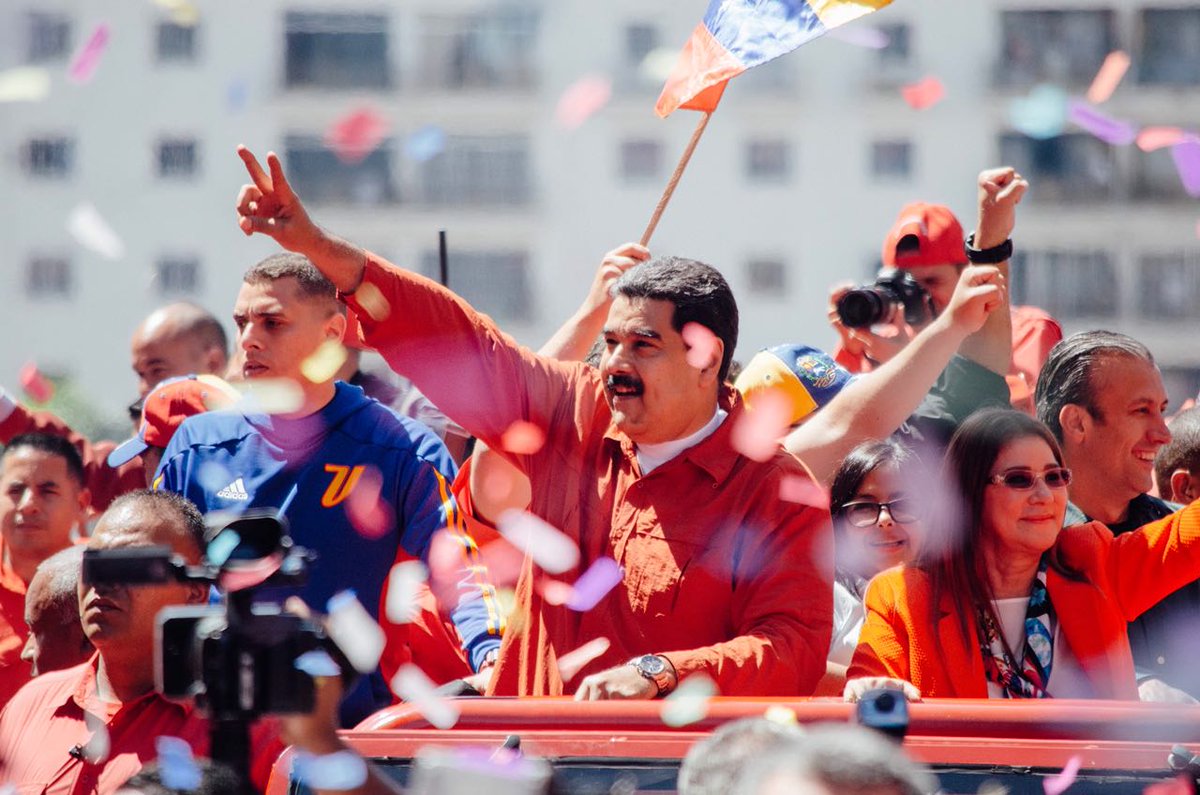
Washington has extracted major concessions from Caracas since the Jan.3 strikes and kidnapping of President Maduro. (Archive)
Between the mid-1980s and the early 1990s, amid the terminal crisis and collapse of the so-called European socialist bloc, the era of struggle that had begun following the triumph of the Cuban Revolution came to a close in Latin America. A new phase began, during which the leftist and progressive social and political organizations and movements of the subcontinent went through phases of accumulation and de-accumulation of forces.
Phases of accumulation
From 1985 to 1998, these movements accumulated enough social power to topple neoliberal governments and enough political power to secure seats in local governments and national legislatures, but not enough to take control of the national government.
From 1998 to 2009, they accumulated enough social and political power to elect—and in some countries, to re-elect several times—leftist or progressive governments.
Phases of de-accumulation
From 2009 to 2012, there were no electoral defeats for leftist or progressive governments, but there were coups d’état of a “new type” in the “weakest links in the chain”: Honduras and Paraguay.
In 2013 and 2014, there were no electoral defeats, but the margin by which the left retained power in Venezuela and El Salvador was reduced to a bare minimum.
From 2015 to 2019, electoral defeats in Argentina, El Salvador, and Uruguay, coups of a “new type” in Brazil and Bolivia, along with Lenín Moreno’s betrayal in Ecuador, broke six of the “strongest links in the chain,” and the siege against Venezuela, Nicaragua, and Cuba intensified.
Phase of partial recovery and subsequent acute loss of strength
Following the election of Andrés Manuel López Obrador as President of Mexico in 2018 and Alberto Fernández in Argentina in 2019 at the end of the phase of decline, between 2020 and 2024, the left and/or progressive movements regained power in Bolivia, Honduras, Brazil, and Uruguay, held power in Chile, Colombia, and Guatemala, and lost it again in Chile and Honduras in November and December 2025, respectively. In January 2026, President Nicolás Maduro and his wife Cilia Flores were kidnapped by the US military and are currently being held illegally in that country.
Predominant factors in the phases of accumulation (1985–1998 and 1998–2009)
The legacy of the historical accumulation of popular struggles, particularly during the period ushered in by the Cuban Revolution in which other revolutionary or reformist processes did not succeed or survive, contributed to opening up spaces for legal struggle.
The rejection of the genocidal repression traditionally employed against the peoples of the region forced the United States and its Latin American allies to seek less brutal forms of domination.
The momentum of popular movements in full swing brings into the political and electoral struggle social sectors that previously lacked the consciousness, motivation, or conditions to participate in it.
The protest vote against neoliberal governments by broad sectors of the population that were not politically conscious could nonetheless be turned against leftist and progressive forces if they failed to meet their expectations, whether fair or unfair, rational or irrational.
Predominant factors in the de-accumulation phases from 2009 onward
Historical accumulation depreciates. As time passes, with the superseding of recent realities, the emergence of new social expectations and demands – in some cases due to the fulfillment and in others due to the unfulfillment of previous ones – and the shortcomings and errors of the left and progressivism, there is a relativization or devaluation of the historical legacy.
The brutal repression of the past was replaced by “full-spectrum destabilization” against progressive and left-wing governments.
Due to their dissatisfaction with left-wing or progressive governments over the failure to fulfill their economic and social promises – due to the “constraints” of the system, pressure from the powers that be, and shifts toward the “center” to broaden their electoral base – a large part of the popular social movements that had provided decisive support in earlier phases began to exercise punitive abstention against them.
Social sectors without political ties or preferences, which in an earlier phase cast their protest votes against neoliberal parties, began to cast them against the left and progressivism.
With the exception of Uruguay, the overthrow, defeat, or betrayal of left governments was followed by the criminalization, prosecution, and, in many cases, imprisonment of their leaders, most notably Lula in Brazil.
The transformative processes with the greatest capacity to remain in power have been those in Venezuela and Nicaragua, which set out to and succeeded in establishing control over all the institutions of state. It is this concentration of power that has guaranteed the survival of the Cuban Revolution over six and a half decades. However, in Venezuela and Nicaragua there is a contradiction between the formally prevailing liberal/bourgeois system and the actually prevailing institutional system, with characteristics of state socialism, in which a political party – not the only one, but certainly the dominant one – monopolizes control of the four branches of government, the armed forces, and the security services.
The incompatibility between the formally existing institutional system and the institutional system actually in place in Venezuela and Nicaragua remained latent as long as the leaders of their respective transformative processes enjoyed widespread popularity and maintained high levels of approval, or raised expectations regarding the fulfillment of social needs and interests. However, this concentration of power has both a positive and a negative aspect:
The positive aspect is that it has been decisive in resisting the policy of encroachment, economic blockade, and political isolation that has affected Cuba since the triumph of its Revolution (1959), Nicaragua during the two periods of FSLN rule (1979–1990) and (2006 to the present), and Venezuela since the first term of Hugo Chávez’s government (beginning in 1999).
The negative aspect is that it distorts the relationship between the end and the means. The end was to develop a national project that would satisfy society’s material and spiritual needs and aspirations, and the means was to establish a power capable of guaranteeing that national project. The distortion consists in continuing to exercise power when one no longer has the capacity to satisfy society’s needs and aspirations, either because one failed to develop that capacity or because it was lost.
Given that external and/or internal forces are attempting to undermine or overthrow the established institutional systems in these countries, and given that neither of them has managed to make progress in building a new society – with this project becoming unattainable in the form and substance originally envisioned – the defense of power becomes an end in itself.
When evaluating any process of progressive social reform or revolutionary social transformation, it is necessary to consider the extent to which it has met or failed to meet its historical goals. In cases of failure to meet these goals, one must take into account the adverse and external factors that have influenced this outcome. However, it cannot be ignored that, even if resulting from such factors, the failure to meet historical goals erodes these processes. In essence, every transformative process is compelled to achieve its historical goals within a timeframe no longer than the moment society perceives it as an “eternal uphill battle.”
The Venezuela Case: Between Reality and Utopia
The kidnapping of President Nicolás Maduro and his wife Cilia Flores by the US military – along with the questions of how such an operation could have been carried out (no less than inside the headquarters of the Bolivarian National Armed Forces!), how the kidnappers knew where they would be sleeping that night, and that they were indeed there, why there was no response, which had been assured would occur in the event of any aggression against Venezuela, and, on top of all that, that the outcome is a “normalization of relations” with the aggressor power agreed upon by the very government that Maduro headed – reveals the fragility of revolutionary processes that claim to have a solid base of popular power, but events like this reveal that, in reality, they lack it.
Twenty-seven years and five months after the start of the Bolivarian Revolution – the first link in a chain of elections and re-elections of leftist and progressive governments that has become increasingly fragmented since 2009–2019 and is now practically extinct – it is time to face reality and assess to what extent the parties, movements, fronts, or coalitions that have held and/or currently hold power in their respective countries are aware of the true relationship between their rhetorical utopias and their political realities.
Between every emancipatory utopia and its corresponding reality lies a “missing link.” The “missing link” between utopia and reality creates a “gap” between the project of revolutionary social transformation or progressive social reform and the transformative or reformist process intended to bring it about. The danger lies in failing to recognize the cumulative widening of the “gap” between utopia and reality and clinging to a utopia as the foundation of a process of revolutionary social transformation or progressive social reform that is increasingly deviating from and becoming disconnected from it.
The disconnect between utopia and reality has consequences, including most notably: the conversion of utopia into dogma; the social alienation that every reformist or revolutionary process is meant to eradicate; the divergence of interests and direction between “leaders” and “followers”; the drift of the process toward disillusionment and failure; and, in well-known historical experiences, such as that of the USSR (to mention only the most prominent), the absolute empowerment of a caste that creates and defends its own political and economic interests, leading to the negation of utopia: from the very pinnacle of “power” itself!
Utopia must be systematically grounded in reality through the active, genuine, and effective participation of society, and never reaffirmed or reformed from “above.” This reevaluation and renewal led by society is the only way to ensure that utopia not only serves as a guide, as Galeano says, but also serves to walk the path that turns it into a political, economic, and social reality that is as close as possible to the vision itself.
Based on experiences and studies conducted in previous decades, since the beginning of the chain of elections and re-elections of leftist and progressive governments in Latin America, attention has focused on denouncing media warfare, cognitive warfare, cultural warfare, and fourth- and fifth-generation warfare. In recent years, Caracas has been the main venue for events and the most active platform for denouncing this form of counterrevolutionary action. These analyses and denunciations must continue “at full speed,” but we must also recognize and accept that this is not the only threat facing leftist and progressive governments and political forces.
All forms of external and internal counterrevolutionary activity must be analyzed and combated, but with the knowledge and understanding that this is not the only battlefront. Another front, just as important or even more so, is the recognition and eradication of our own weaknesses and errors, which make transformative and/or revolutionary processes vulnerable to enemy strategies and tactics. What has happened in Venezuela is proof of this omission: plenty of denunciation of the enemy and little to no self-reflection.
The moral of the story is that yes, we must denounce and unmask the enemy. But no, we cannot focus attention on denouncing the enemy at the expense of recognizing and eradicating our own weaknesses and mistakes.
Roberto Regalado is a Cuban political scientist and PhD in Philosophy. He is a professor at the Center for Hemispheric and U.S. Studies at the University of Havana (CEHSEU) and a member of the Historical and Social Literature Section of the National Union of Cuban Writers and Artists.
He is the author of, among other essays, Latin America Between Centuries: Domination, Crisis, Social Struggle, and Political Alternatives of the Left (2006), Encounters and Disagreements of the Latin American Left: A View from the São Paulo Forum (2008), The Latin American Left in Government: Alternative or Recycling? (2012), and numerous articles in specialized journals.
The views expressed in this article are the author’s own and do not necessarily reflect those of the Venezuelanalysis editorial staff.
When Iran qualified for the FIFA World Cup last March, the men’s national team didn’t expect their participation to hinge on visas being granted by hosts, the United States, only at the last moment – if at all.
Nor did Iranian fans eager to support Team Melli expect to be banned from entry by the US. President Donald Trump signed an executive order last June halting visa issuance to a handful of countries, including Iran, which the US designated a “state sponsor of terrorism”.
Recommended Stories
list of 4 itemsend of list
Perhaps most unanticipated for Iranians was that the host nation of the largest sporting event in the world would launch a war on their country just months before the tournament began.
For Amir Ghalenoei’s side, the joint US-Israel war was more than a wrench thrown into World Cup preparation plans; it was tangible and personal, as thousands across the country were killed by missile attacks.
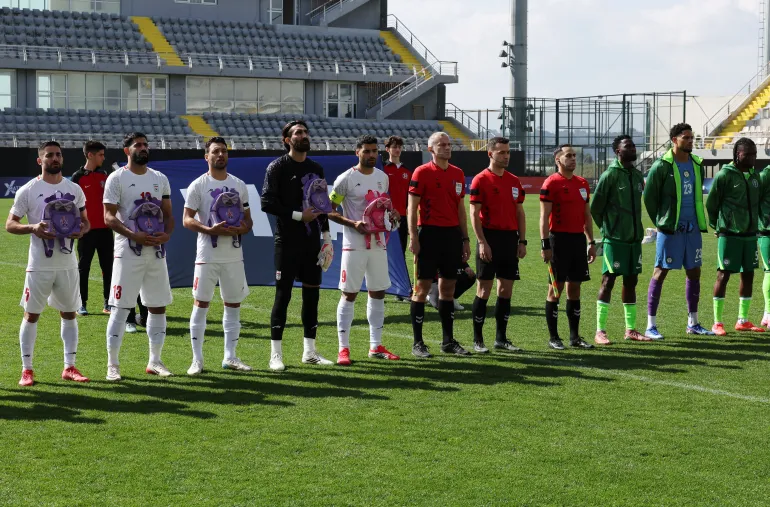
It was the US bombing Azadi Stadium, home to several local matches and where the national team trained. It was the men’s team holding tiny backpacks in remembrance of the students massacred in a US strike on a school in Minab the day the war began.
Iran’s Milad Mohammadi, Hossein Kanaani, Shoja Khalilzadeh, Alireza Beiranvand and Mehdi Taremi hold schoolbags in memory of the victims of the girls’ school bombing in Minab, Iran, as they line up with the match officials and the Nigerian players before the friendly match in Mardan Sports Complex, Antalya, Turkiye, March 27, 2026 [Umit Bektas/Reuters]
After months of politically charged rigmarole between the US and Iran – which led to them switching basecamps to Mexico instead – the men’s national football team will find themselves playing in the shadow of war. That too, if the US grants them visas in time.
For Iranian football fans, travelling to the US was “almost impossible” even without the visa challenges or the war. There are no direct means of transport between the countries, which do not have formal diplomatic relations.
“Aside from the visa issue, you have to take two- or three-way routes from Tehran to get to the US,” said Ali, a fan who did not want to share his full name for safety reasons.
“Returning from the US to Iran is a big challenge in itself, with the possibility of being arrested by the [Iranian] government,” he added. The war has increased scrutiny of antinational sentiment within Iran, resulting in executions of people arrested on accusations of spying for Israel or the US.
Political repercussions extend to the sport sphere, too. Iran’s top footballer Sardar Azmoun was expelled from the national team in March for a perceived act of disloyalty to the government, when he posted a picture on social media of a meeting with Dubai ruler Mohammed bin Rashid Al Maktoum. Relations between the UAE and Iran have been tense during the war, with Iran hitting the Emirates repeatedly and accusing it of allowing the US to use its territory for attacks on Iran.
The US war on Iran, now nearing its 100th day, has also deterred fans globally from attending the World Cup.
“Football is called the Beautiful Game for a reason, for its ability to unite people,” South African football fan Byron Pillay told Al Jazeera.
“But it’s hard to believe in that magic with the politics and war rhetoric off the field of play, specially when one of the tournament hosts is central to that.”
Compatriot Riaz Hamed echoed those reservations. “With the stance of America in particular, regarding the treatment of fans and immigrants in the country, I don’t believe it to be entirely safe to attend.”
Fears have been stoked by reports from organisations such as Human Rights Watch, which said an asylum seeker who attended the Club World Cup final last year in New Jersey with his children was arrested by the Immigration and Customs Enforcement (ICE) department and deported to his country of origin.
Khayran Noor, an international sports lawyer based in Kenya, emphasised that sport cannot be separated from wider geopolitical dimensions.
“If participation can be shaped by geopolitical realities outside the game itself, does that ultimately undermine the inclusive ideals these tournaments claim to represent?” Noor said in an interview with Al Jazeera.
“Football is global, but global mobility is not; the World Cup sits directly at the intersection of that contradiction.”
Mounting visa rejections have also spooked fans from attempting to attend the World Cup.
The US has launched a FIFA Priority Appointment Scheduling System (PASS), which expedites visa interviews for fans who have bought tickets through FIFA. But it does not guarantee a visa.
Last month, a group of nearly 150 Ghana football fans saw their visa applications rejected.
Godwin Nii Armah, 32, scrapped his travel plans for the World Cup for personal reasons, but knew he might have shared the same fate as those compatriots. He also admitted that travelling to Toronto, Boston and Philadelphia to support the Black Stars would have been a costly logistical headache in addition to international flights and visa fees.
Ghana nationals have to pay a $185 fee with their US visa application and 100 Canadian dollars ($71) for the Canadian visa. Add the two, and the amount is comparable to the monthly per capita income in Ghana.
Noor questioned whether future FIFA host agreements should include obligations relating to accessibility and mobility before hosting rights are awarded.
“If teams and fans from particular parts of the world face structural barriers before they can even attend, then the broader spirit of inclusion that these tournaments seek to embody risks being undermined.”
She acknowledged that while states understandably retain sovereign responsibilities regarding border control and national security, global sporting events often require exceptional frameworks.
Fans from 27 of the 48 nations headed to the World Cup need a US visa to apply, costing anywhere between $185 to $435 – amounts that represent wages that an average person in many countries in the Global South would earn over several months.
Canada is marginally more visa-friendly, while Mexico remains the most accessible World Cup host nation.
That was why South Africa chose to send a small supporters group to Pachuca, Mexico, where South Africa have set up basecamp and play two group stage matches.
Sahil Ebrahim is among the “lucky few” in that delegation. After decades of supporting Bafana Bafana from a TV screen in Cape Town, Ebrahim attended the Qatar 2022 World Cup.
Now the 40-year-old is on his way to his second World Cup, where he will witness the tournament opener live in Mexico City, when South Africa play the hosts on June 11.
Contrary to the South African football team, who faced a 24-hour delay in their departure over a visa bungle by the federation, Ebrahim said the Department of Sport did an “excellent job” expediting their visas with the Mexican embassy.
The process, however, paled in comparison with the 2022 World Cup in Qatar, where Hayya cards centrally aligned all visa, ticket and transport details for each fan, Ebrahim acknowledged.
While South Africa’s friendly against Jamaica on Friday, June 5, is closed to the public, Ebrahim and the supporters’ group will watch an exhibition game on Sunday where the Bafana legends of 2010 will take on their Mexican counterparts. South Africa had hosted the World Cup in 2010, a first for an African nation.
“Ultimately, major sporting events succeed not only because people watch them, but because people participate in them,” Noor said.
“The question is not who can watch the World Cup – the question is who can truly participate in it.”
Colombia’s far-right, pro-Trump candidate, Abelardo de la Espriella, is in the lead after Colombia’s first round of elections. If he wins the June 21 runoff against left-wing Senator Ivan Cepeda, progressive policies could be reversed. Al Jazeera’s Hala Al Shami explains why US officials are invested in de la Espriella’s success and walks us through the stakes.
While it might be true that the cases are progressing, families of the missing argue they are moving at a snail’s pace.
Since early December, Fault Lines has spent time with families who are pushing for accountability and pleading with the government to learn what happened to their loved ones.
In some cases, they have spent years without receiving any direct response.
“It gets harder every time my nephew asks when his father will come home and I don’t have any answers,” said Rosario Villon, whose brother, Jonathan Villon, has been missing for almost a year and a half.
The 31-year-old father of three was last seen on December 9, 2024, when he left to pick up groceries in his hometown of Guayaquil.
Addressing a vigil for Jonathan last December, Rosario explained the toll his disappearance has taken on her family.
“Seeing my mother cry for her son, not knowing what to do next to bring him home — it isn’t easy,” she said.
Jonathan Villon, who disappeared in the custody of Ecuadorian soldiers, leaves behind a partner and three children, pictured here [Fault Lines/Al Jazeera]
Fault Lines has reviewed footage of the day Jonathan was detained. Security cameras show soldiers patrolling Jonathan’s neighbourhood, Nueva Prosperina.
A neighbour’s mobile phone video also captures the moments after Jonathan was forced into the truck’s bed, under a wooden bench. The truck then drives off, and he has not been seen since.
The family recorded the licence plate numbers of the municipal vehicle the soldiers were using, but the military has refused to respond to requests about Jonathan’s case.
“We have the evidence, we have videos, we have the licence plates of the truck, and they won’t give us a concrete and exact answer. What happened to my husband?” asked Jonathan’s partner, Yadira Bohorquez.
Lawyers representing the family say the military simply declared that it had no operations in that area on that date, despite the video evidence.
“The case of Jonathan Villon is completely paralysed by the refusal of the Ministry of Defence to cooperate in handing over information that the Prosecutor’s Office has already requested,” said Fernando Bastias, a lawyer with CDH Guayaquil, a human rights nonprofit representing the family.
The FIFA World Cup 2026 could be the final act for some of football’s finest talents.
Although some of this tournament’s players will set a men’s football record by appearing in their sixth World Cup, age is catching up, and other players have struggled with injuries.
Recommended Stories
list of 4 itemsend of list
Al Jazeera takes a look at who might be making their final bow on the global stage at the tournament in North America:
Cristiano Ronaldo – Portugal
Although fitness has been one of Ronaldo’s biggest strengths during his illustrious career, at 41, the Portugal forward knows his playing days are numbered.
Numbers have always been on the former Manchester United and Real Madrid forward’s side, though, and he fired in 30 in 37 matches for Al-Nassr this season, while his tally for Portugal currently sits at 143 goals.
The second-oldest player at this year’s tournament, only behind Scotland’s 43-year-old Craig Gordon, Ronaldo heads to his record sixth World Cup, well aware it could be his final chance to lift the coveted golden trophy: the only one missing from his glittering cabinet.
Cristiano Ronaldo will play in his sixth, and possibly his last, World Cup this year [Pedro Nunes/Reuters]
Lionel Messi – Argentina
Like Ronaldo, Messi is also off to his record sixth finals appearance, one where he will lead Argentina’s defence of the title they won in Qatar four years ago.
Argentina’s all-time leading scorer and appearance holder, Messi, has struggled with injury in the build-up to the tournament, raising doubts about whether he will feature in each game and if his body can keep up with the gruelling demands of an expanded World Cup.
The eight-time Ballon d’Or winner’s impact and talent, however, are such that, even at 38, he remains the heartbeat of the football-crazy South American nation.
Injuries have cast doubt over Lionel Messi’s involvement in the upcoming World Cup [File: Matias Baglietto/Reuters]
Luka Modric – Croatia
After playing a key role in Croatia’s run to the 2018 final and a third-place finish in 2022, Modric is ready for his fifth and final appearance at the World Cup. As the 40-year-old heads to the tournament after undergoing cheekbone surgery, the veteran knows the team still relies heavily on him for his playmaking prowess.
The ageing midfielder, also the Balkan nation’s captain, still enjoys a hero’s status within a side that has often defied expectations on the global stage. Enjoy his magic in midfield before he bows out.
Luka Modric, Croatia’s midfield magician, is set for his swansong [File: Antonio Bronic/Reuters]
Neymar Jr – Brazil
At 34, Brazil‘s all-time leading scorer Neymar is much younger than Messi or Ronaldo, but unlike the two greats of the game, his place in the national team is not guaranteed. Neymar’s comeback in the Brazil squad after a two-and-a-half-year hiatus electrified football fandom, and only time will tell whether it was a gamble or a tactical masterclass by coach Carlo Ancelotti.
With a history of fitness issues, a series of injuries and mounting age (he would be 38 by the 2030 World Cup), what looks more certain is that this could be Neymar’s fourth and final act at the tournament.
Brazil’s beloved Neymar Jr is off to the World Cup after a two-and-a-half-year hiatus from the national set-up [File: Dylan Martinez/Reuters]
Manuel Neuer – Germany
Such is the “aura” of Neuer, as coach Julian Nagelsmann said last month, that the 40-year-old came out of retirement to be named Germany‘s first-choice goalkeeper for the 2026 World Cup. Back in the squad after nearly two years, fans will have a final chance to see him at the World Cup.
Widely regarded as one of the greatest goalkeepers, Neuer has played at four World Cups, most notably having a key role in Germany’s 2014 World Cup triumph on Brazilian soil.
Manuel Neuer reversed his retirement decision to play for Germany at the World Cup for the final time [File: Kai Pfaffenbach/Reuters]
Mohamed Salah – Egypt
Arguably Africa’s greatest player of all time, Salah became a global superstar on the back of his success at Liverpool, where he won nine trophies. At 33, and no longer at the peak of his powers, this could be the forward’s second, and possibly final, World Cup.
An underwhelming season and his subsequent departure from Liverpool may have tempered expectations. Yet Egyptians continue to place their faith in their beloved number 10, hoping he can inspire the nation and help deliver something it has never experienced before: the joy of celebrating a World Cup victory.
Egypt are back at the World Cup for only the third time, and Mohamed Salah’s second [File: Siphiwe Sibeko/Reuters]
Kevin de Bruyne – Belgium
A big part of Belgium’s “golden generation” between 2014 and 2022, playmaker De Bruyne continues to flourish in his duties for club and country. Age, however, is starting to catch up with the playmaker, who turns 35 later this month.
The Napoli midfielder’s performance is central to Belgium’s odds of a deep run at the 2026 World Cup, and he will be eager to drive them to a memorable finish in what will be his fourth and presumably final appearance at the tournament.
Kevin De Bruyne will appear at this fourth World Cup [File: Wolfgang Rattay/Reuters]
Virgil van Dijk – Netherlands
Experienced centre-back van Dijk is not quite the force he was a few years ago, when he won the Champions League and Premier League in back-to-back seasons with Liverpool.
The Netherlands captain turns 35 next month, and the Dutch could move on with a younger defensive core by the time the 2030 edition comes around.
After reaching the 2022 World Cup quarterfinals and Euro 2024 semifinals, van Dijk will hope to take the team one step further in what will be his third finals.
Netherlands captain Virgil van Dijk turns 35 on July 8 [Piroschka Van De Wouw/Reuters]
Sadio Mane – Senegal
Widely regarded as one of the world’s best wingers, Mane heads to the World Cup seeking to make up for the disappointing leg injury that denied him a shot at Qatar 2022.
At 34, the Senegal international is far from the peak of his career, which saw him enjoy trophy-laden spells at Liverpool and Bayern Munich.
Despite his mounting age, Mane remains the team’s source of inspiration and creativity, and he was an integral part of the side that beat Morocco in the Africa Cup of Nations final – only for the result to be overturned due to Senegal’s mid-game protest.
Mane will feature in his third, and likely final, World Cup, given that the Teranga Lion has said the last AFCON was his last, although the coaching team have said they have not given up on changing his mind.
Sadio Mane is Senegal’s top scorer with 53 goals [Siphiwe Sibeko/Reuters]
Guillermo Ochoa – Mexico
Part of an esteemed group which includes Messi and Ronaldo, Ochoa is also set to play at a record sixth World Cup. The goalkeeper, who will turn 41 next month, had not been part of the national squad in recent years, but was picked for the tournament, which is being co-hosted by his country, Mexico.
Known for being a formidable figure in Mexico’s previous World Cup campaigns, Ochoa will retire at the end of the team’s run at the tournament.
Guillermo Ochoa is the first Mexican to play at six World Cups [Kai Pfaffenbach/Reuters]
The FIFA World Cup begins on June 11. You can follow the action on Al Jazeera’s dedicated World Cup 2026 page with all the latest news, match build-up and live text commentary, and keep up to date with group standings, real-time match results and schedules.
Messi works on ‘specific exercises’ as he recovers from muscle fatigue in his left hamstring before the World Cup.
Published On 3 Jun 20263 Jun 2026
Lionel Messi has trained on his own during Argentina’s first practice session at their base camp in the United States, where the squad has assembled this week for their World Cup preparations.
The defending World Cup champions held their first pretournament training in Kansas City, Missouri, on Monday.
The Inter Miami captain has been dealing with muscle fatigue in his left hamstring since May 24 but is expected to be ready for Argentina’s opener against Algeria on June 16 in Kansas City.
Messi, 38, joined Argentina at their training base and worked on “specific exercises” along with several teammates who are also dealing with fitness concerns.
“The players who are suffering from niggles and injuries continue to work with the physiotherapy team on specific exercises on the pitch and are making good progress,” Argentina’s Football Association said.
Argentina, ranked number three in the world, will play their final tune-up match against Iceland on June 9 in Auburn, Alabama.
Messi, the two-time MLS MVP and eight-time Ballon d’Or winner, is competing in his record sixth World Cup. The midfielder is Argentina’s all-time leader in caps (198) and goals (116) since making his debut with the national team in 2005.
Mexico and Canada have backed extending the USMCA trade agreement for another 16 years as negotiations over its future continue. The proposal comes amid an ongoing trade dispute with the United States.
The administration of United States President Donald Trump has proposed a new 25 percent tariff on imports from Brazil amid allegations of unfair trading practices.
US Trade Representative Jamieson Greer announced the new punitive tariffs late on Monday, stemming from issues including digital trade and illegal deforestation.
Recommended Stories
list of 4 itemsend of list
The new tariffs would be imposed under Section 301 of US trade policy — a statute that gives the US government broad authority to impose trade sanctions based on violations of trade agreements, as well as what it deems “unfair” trade practices under the Trade Act of 1974.
Greer said there has been an investigation that began in July. The practices under investigation were related to issues such as illegal deforestation, ethanol market access, and anticorruption enforcement, among other key issues, according to the summary released by the US Department of Commerce on Tuesday.
In the 107-page document, the US government said that trade practices between the two nations “are unreasonable and burden or restrict US commerce”, and pointed to agreements that Brazil has with Mexico and India.
“Brazil’s trade arrangements with Mexico and India also create incentives to offshore US production by creating a financial advantage to exporting to Brazil from these countries, as opposed to exporting from the United States,” the document says.
There is a comment period for the general public to weigh in on the proposed tariffs, which begins on Thursday. The written comment period ends on July 1, and there will be a public hearing in Washington on July 6.
Beef, coffee, rare earths, other metals, energy, and aircraft parts are among the products that would be exempt from the tariffs.
On CNBC, Greer said that it would release more findings on unfair trade practices in the next several weeks in order to address what Greer called a “giant” trade deficit.
However, the data shows that the US maintains a trade surplus with Brazil. In March, Brazil bought more goods, worth $3.3bn, from the US than it exported at $2.9bn, representing a $420m trade surplus.
Other countries under investigation include China and Vietnam.
The new tariff would partially replace a tariff of 50 percent on many Brazilian goods imposed last year by Trump, with 40 percent serving as a punishment for Brazil’s prosecution of former President Jair Bolsonaro, a Trump ally.
The White House also recently dropped tariffs on select aluminium, copper, and steel imports, which include agricultural equipment such as harvesters. Those tariffs will drop from 25 percent to 15 percent. The tariffs expire in December 2027.
The new tariffs come after the Supreme Court, in February, struck down the use of the International Emergency Economic Powers Act (IEEPA), which the White House used to impose its sweeping global tariffs.
“They are the first of many new tariffs to replace the IEPPA national security tariffs. The period of public comment will allow for potential modest tweaks and exemptions. Ultimately, it will add to some inflation pressure compared to the last few months but not compared to a year earlier,” Rachel Ziemba, a senior adjunct fellow at the Center for a New American Security, told Al Jazeera.
Political tensions
The changes come despite President Luiz Inacio Lula da Silva’s visit to Washington last month, as relations have deteriorated in recent months.
The US State Department has also designated two of Brazil’s criminal gangs as “terrorist organisations”, a move that supported Senator Flavio Bolsonaro’s position, Lula’s main rival in October’s election, and over the objections of Brazilian officials.
“I expressly asked President Trump not to tariff our companies,” Bolsonaro wrote on X on Tuesday. “Tariffs are not the solution.”
The White House did not respond to Al Jazeera’s request for comment.
The countdown to the FIFA World Cup 2026 has entered the single-figure mark, with the tournament getting under way in nine days in Mexico City.
The biggest edition of the World Cup, with 48 nations and 104 games, will be hosted by three countries for the first time, as the United States and Canada share the honours with Mexico.
Recommended Stories
list of 3 itemsend of list
All 48 teams heading to the tournament have released their final 26-man squads, marking possible final appearances for greats like Lionel Messi and Cristiano Ronaldo.
Young stars looking to dethrone the icons, including Spain’s Lamine Yamal and Brazil’s Endrick, will look to make their mark in their first appearance at the global event.
Here are all 48 World Cup squads for the FIFA World Cup 2026:
Midfielders: Houssem Aouar, Nabil Bentaleb, Hicham Boudaoui, Fares Chaibi, Ibrahim Maza, Yassine Titraoui, Ramiz Zerrouki
Forwards: Mohamed Amine Amoura, Nadir Benbouali, Adil Boulbina, Fares Ghedjemis, Amine Gouiri, Riyad Mahrez, Anis Hadj Moussa
Argentina World Cup squad
Goalkeepers: Emiliano Martinez, Geronimo Rulli, Juan Musso
Defenders: Leonardo Balerdi, Gonzalo Montiel, Nicolas Tagliafico, Lisandro Martinez, Cristian Romero, Nicolas Otamendi, Facundo Medina, Nahuel Molina
Midfielders: Leandro Paredes, Rodrigo De Paul, Valentin Barco, Giovani Lo Celso, Exequiel Palacios, Alexis Mac Allister, Enzo Fernandez
Forwards: Julian Alvarez, Lionel Messi, Nicolas Gonzalez, Thiago Almada, Giuliano Simeone, Nicolas Paz, Jose Manuel Lopez, Lautaro Martinez
The World Cup 2026 will be Lionel Messi’s swansong [File: Gustavo Garello/AP]
Australia World Cup squad
Goalkeepers: Patrick Beach, Paul Izzo, Mathew Ryan
Defenders: Aziz Behich, Jordan Bos, Cameron Burgess, Alessandro Circati, Milos Degenek, Jason Geria, Lucas Herrington, Jacob Italiano, Harry Souttar, Kai Trewin
Midfielders: Cameron Devlin, Ajdin Hrustic, Jackson Irvine, Connor Metcalfe, Aiden O’Neill, Paul Okon-Engstler
Goalkeepers: Patrick Pentz, Alexander Schlager, Florian Wiegele
Defenders: David Affengruber, David Alaba, Kevin Danso, Marco Friedl, Philipp Lienhart, Phillipp Mwene, Stefan Posch, Alexander Prass, Michael Svoboda
Midfielders: Christoph Baumgartner, Carney Chukwuemeka, Florian Grillitsch, Konrad Laimer, Marcel Sabitzer, Xaver Schlager, Romano Schmid, Alessandro Schopf, Nicolas Seiwald, Paul Wanner, Patrick Wimmer
Forwards: Marko Arnautovic, Michael Gregoritsch, Sasa Kalajdzic
Belgium World Cup squad
Goalkeepers: Thibaut Courtois, Senne Lammens, Mike Penders
Defenders: Timothy Castagne, Zeno Debast, Maxim De Cuyper, Koni De Winter, Brandon Mechele, Thomas Meunier, Nathan Ngoy, Joaquin Seys, Arthur Theate
Midfielders: Kevin De Bruyne, Amadou Onana, Nicolas Raskin, Youri Tielemans, Hans Vanaken, Axel Witsel
Forwards: Charles De Ketelaere, Jeremy Doku, Matias Fernandez-Pardo, Romelu Lukaku, Dodi Lukebakio, Diego Moreira, Alexis Saelemaekers, Leandro Trossard
Bosnia and Herzegovina World Cup squad
Goalkeepers: Nikola Vasilj, Martin Zlomislic, Osman Hadzikic
Defenders: Sead Kolasinac, Amar Dedic, Nihad Mujakic, Nikola Katic, Tarik Muharemovic, Stjepan Radeljic, Dennis Hadzikadunic, Nidal Celik
Midfielders: Amir Hadziahmetovic, Ivan Sunjic, Ivan Basic, Dzenis Burnic, Ermin Mahmic, Benjamin Tahirovic, Amar Memic, Armin Gigovic, Kerim Alajbegovic, Esmir Bajraktarevic
Defenders: Alex Sandro, Bremer, Danilo, Douglas Santos, Gabriel Magalhaes, Ibanez, Leo Pereira, Marquinhos, Wesley
Midfielders: Bruno Guimaraes, Casemiro, Danilo Santos, Fabinho, Lucas Paqueta
Forwards: Endrick, Gabriel Martinelli, Igor Thiago, Luiz Henrique, Matheus Cunha, Neymar Jr, Raphinha, Rayan, Vinicius Jr
Brazil’s forward Neymar has found himself in the five-time champions’ World Cup squad despite recent injuries [File: Mauro Pimentel/AFP]
Canada World Cup squad
Goalkeepers: Dayne St Clair, Maxime Crepeau, Owen Goodman
Defenders: Alistair Johnston, Derek Cornelius, Richie Laryea, Niko Sigur, Joel Waterman, Luc de Fougerolles, Moise Bombito, Alphonso Davies, Alfie Jones
Midfielders: Stephen Eustaquio, Ismael Kone, Tajon Buchanan, Mathieu Choiniere, Ali Ahmed, Nathan Saliba, Liam Millar, Jacob Shaffelburg, Jonathan Osorio
Attackers: Jonathan David, Cyle Larin, Tani Oluwaseyi, Promise David
Forwards: Gilson Benchimol, Jovane Cabral, Dailon Livramento, Ryan Mendes, Nuno da Costa, Garry Rodrigues, Willy Semedo, Helio Varela
Colombia World Cup squad
Goalkeepers: Camilo Vargas, Alvaro Montero, David Ospina
Defenders: Davinson Sanchez, Jhon Lucumi, Yerry Mina, Willer Ditta, Daniel Munoz, Santiago Arias, Johan Mojica, Deiver Machado
Midfielders: Richard Rios, Jefferson Lerma, Kevin Castano, Juan Camilo Portilla, Gustavo Puerta, Jhon Arias, Jorge Carrascal, Juan Fernando Quintero, James Rodriguez, Jaminton Campaz
Forwards: Juan Camilo Hernandez, Luis Diaz, Luis Suarez, Carlos Gomez, Jhon Cordoba
Defenders: Josko Gvardiol, Duje Caleta-Car, Josip Sutalo, Josip Stanisic, Marin Pongracic, Martin Erlic, Luka Vuskovic
Midfielders: Luka Modric, Mateo Kovacic, Mario Pasalic, Nikola Vlasic, Luka Sucic, Martin Baturina, Kristijan Jakic, Petar Sucic, Nikola Moro, Toni Fruk
Forwards: Ivan Perisic, Andrej Kramaric, Ante Budimir, Marco Pasalic, Petar Musa, Igor Matanovic
(Standby: Lovro Majer, Franjo Ivanovic, Dion Drena Beljo, Ivan Smolcic, Karlo Letica, Adrian Segecic, Luka Stojkovic)
Defenders: Dylan Batubinsika, Gedeon Kalulu, Steve Kapuadi, Joris Kayembe, Arthur Masuaku, Chancel Mbemba, Axel Tuanzebe, Aaron Wan-Bissaka
Midfielders: Brian Cipenga, Meshack Elia, Gael Kakuta, Edo Kayembe, Nathanael Mbuku, Samuel Moutoussamy, Ngal’ayel Mukau, Charles Pickel, Noah Sadiki, Aaron Tshibola
Forwards: Cedric Bakambu, Simon Banza, Fiston Mayele, Yoane Wissa, Theo Bongonda
Ecuador World Cup squad
Goalkeepers: Hernan Galindez, Moises Ramirez, Gonzalo Valle
Defenders: Piero Hincapie, Willian Pacho, Pervis Estupinan, Felix Torres, Joel Ordonez, Jackson Porozo, Angelo Preciado, Yaimar Medina
Midfielders: Moises Caicedo, Alan Franco, Kendry Paez, Gonzalo Plata, Pedro Vite, Jordy Alcivar, Denil Castillo, John Yeboah, Nilson Angulo, Alan Minda
Forwards: Enner Valencia, Kevin Rodriguez, Jordy Caicedo, Anthony Valencia, Jeremy Arevalo
Egypt World Cup squad
Goalkeepers: Mohamed El Shenawy, Mostafa Shobeir, El Mahdy Soliman, Mohamed Alaa
Midfielders: Rouzbeh Cheshmi, Saeid Ezatolahi, Mehdi Ghaedi, Saman Ghoddos, Mohammad Ghorbani, Alireza Jahanbakhsh, Mohammad Mohebi, Amir Mohammad Razzaghinia, Mehdi Torabi, Aria Yousefi
Forwards: Ali Alipour, Dennis Dargahi, Amirhossein Hosseinzadeh, Mehdi Taremi, Shahriar Moghanlou
Iraq World Cup squad
Goalkeepers: Fahad Talib, Jalal Hassan, Ahmed Basil
Defenders: Hussein Ali, Manaf Younis, Zaid Tahseen, Rebin Sulaka, Akam Hashem, Merchas Doski, Ahmed Yahya, Zaid Ismail, Frans Putros, Mustafa Saadoon
Midfielders: Amir Al Ammari, Kevin Yakob, Zidane Iqbal, Aimar Sher, Ibrahim Bayesh, Ahmed Qasim, Youssef Amyn, Marko Farji
Forwards: Ali Jassim, Ali Al Hamadi, Ali Yousef, Aymen Hussein, Mohanad Ali
Ivory Coast World Cup squad
Goalkeepers: Yahia Fofana, Mohamed Kone, Alban Lafont
Goalkeepers: Yazid Abulaila, Noor Bani Attiah, Abdallah Al Fakhouri
Defenders: Mohammad Abu Hashish, Abdullah Nasib, Hussam Abu Dhahab, Yazan Al Arab, Mohammad Abu Alnadi, Salem Obaid, Saed Al Rosan, Ehsan Haddad, Anas Badawi
Midfielders: Amer Jamous, Noor Al Rawabdeh, Rajaei Ayed, Ibrahim Sadeh, Mohannad Abu Taha, Nizar Al Rashdan, Mohammad Al Dawoud, Mahmoud Mardahi
Forwards: Mohammad Abu Zraiq, Ali Olwan, Mousa Al Tamari, Odeh Fakhoury, Ibrahim Sabra, Ali Azaizeh
Mexico World Cup squad
Goalkeepers: Raul Rangel, Guillermo Ochoa, Carlos Acevedo
Defenders: Jorge Sanchez, Israel Reyes, Cesar Montes, Johan Vasquez, Jesus Gallardo, Mateo Chavez, Edson Alvarez
Midfielders: Erik Lira, Orbelin Pineda, Alvaro Fidalgo, Brian Gutierrez, Luis Romo, Obed Vargas, Gilberto Mora, Luis Chavez
Forwards: Roberto Alvarado, Cesar Huerta, Alexis Vega, Julian Quinones, Guillermo Martinez, Armando Gonzalez, Santiago Gimenez, Raul Jimenez
Morocco World Cup squad
Goalkeepers: Yassine Bounou, Munir El Kajoui, Ahmed Reda Tagnaouti
Defenders: Noussair Mazraoui, Anas Salah-Eddine, Youssef Bellammari, Achraf Hakimi, Zakaria El Ouahdi, Nayef Aguerd, Chadi Riad, Redouane Halhal, Issa Diop
Midfielders: Samir El Mourabet, Ayoub Bouaddi, Neil El Aynaoui, Sofyan Amrabat, Azzedine Ounahi, Bilal El Khannouss, Ismael Saibari
Defenders: Kristoffer Vassbakk Ajer, Fredrik Bjorkan, Henrik Falchener, Sondre Langas, Torbjorn Heggem, Marcus Holmgren Pedersen, Julian Ryerson, David Moller Wolfe, Leo Ostigard
Midfielders: Thelonious Aasgaard, Fredrik Aursnes, Patrick Berg, Sander Berge, Oscar Bobb, Jens Petter Hauge, Antonio Nusa, Andreas Schjelderup, Morten Thorsby, Kristian Thorstvedt, Martin Odegaard
Forwards: Erling Haaland, Alexander Sorloth, Jorgen Strand Larsen
Panama World Cup squad
Goalkeepers: Orlando Mosquera, Luis Mejia, Cesar Samudio
Defenders: Cesar Blackman, Jorge Gutierrez, Amir Murillo, Fidel Escobar, Andres Andrade, Edgardo Farina, Jose Cordoba, Eric Davis, Jiovany Ramos, Roderick Miller
Midfielders: Anibal Godoy, Adalberto Carrasquilla, Carlos Harvey, Cristian Martinez, Jose Luis Rodriguez, Cesar Yanis, Yoel Barcenas, Alberto Quintero, Azarias Londono
Forwards: Ismael Diaz, Cecilio Waterman, Jose Fajardo, Tomas Rodriguez
Defenders: Juan Caceres, Gustavo Velazquez, Gustavo Gomez, Junior Alonso, Jose Canale, Omar Alderete, Alexandro Maidana, Fabian Balbuena
Midfielders: Diego Gomez, Mauricio Magalhaes, Damian Bobadilla, Braian Ojeda, Andres Cubas, Matias Galarza, Alejandro Gamarra
Forwards: Gustavo Caballero, Ramon Sosa, Alex Arce, Isidro Pitta, Gabriel Avalos, Miguel Almiron, Julio Enciso, Antonio Sanabria
Portugal World Cup squad
Goalkeepers: Diogo Costa, Jose Sa, Rui Silva
Defenders: Tomas Araujo, Joao Cancelo, Diogo Dalot, Ruben Dias, Goncalo Inacio, Nuno Mendes, Matheus Nunes, Nelson Semedo, Renato Veiga
Midfielders: Samuel Costa, Bruno Fernandes, Joao Neves, Ruben Neves, Bernardo Silva, Vitinha
Forwards: Francisco Conceicao, Joao Felix, Goncalo Guedes, Rafael Leao, Pedro Neto, Goncalo Ramos, Cristiano Ronaldo, Francisco Trincao
Qatar World Cup squad
Goalkeepers: Salah Zakaria, Meshaal Barsham, Mahmoud Abunada
Defenders: Boualem Khoukhi, Pedro Miguel, Sultan Al Brake, Al Hashmi Al Hussain, Ayoub Al Alawi, Issa Laye, Lucas Mendes, Homam Al Amin
Midfielders: Ahmed Fathi, Jassim Gaber, Assim Madibo, Abdulaziz Hatem, Karim Boudiaf, Mohammed Mannai
Forwards: Almoez Ali, Akram Afif, Tahsin Mohammed, Edmilson Junior, Ahmed Al-Janehi, Ahmed Alaa, Hassan Al Haydos, Mohammed Muntari, Yusuf Abdurisag
Saudi Arabia World Cup squad
Goalkeepers: Nawaf Al Aqidi, Mohamed Al Owais, Ahmed Alkassar
Defenders: Saud Abdulhamid, Jehad Thakri, Abdulelah Al Amri, Hassan Tambakti, Ali Lajami, Hassan Kadesh, Moteb Al Harbi, Nawaf Boushal, Ali Majrashi, Mohammed Abu Alshamat
Midfielders: Ziyad Al Johani, Nasser Al Dawsari, Mohamed Kanno, Abdullah Al Khaibari, Alaa Al Hejji, Musab Al Juwayr, Sultan Mandash, Ayman Yahya, Khalid Al Ghannam
Forwards: Salem Al Dawsari, Abdullah Al Hamdan, Feras Al Brikan, Saleh Al Shehri
Scotland World Cup squad
Goalkeepers: Craig Gordon, Angus Gunn, Liam Kelly
Defenders: Grant Hanley, Jack Hendry, Aaron Hickey, Dom Hyam, Scott McKenna, Nathan Patterson, Anthony Ralston, Andy Robertson, John Souttar, Kieran Tierney
Midfielders: Ryan Christie, Findlay Curtis, Lewis Ferguson, Tyler Fletcher, Ben Gannon-Doak, John McGinn, Kenny McLean, Scott McTominay
Forwards: Che Adams, Lyndon Dykes, George Hirst, Lawrence Shankland, Ross Stewart
Forwards: Arda Guler, Baris Alper Yilmaz, Can Uzun, Deniz Gul, Irfan Can Kahveci, Kenan Yildiz, Kerem Akturkoglu, Oguz Aydin, Yunus Akgun
Uruguay World Cup squad
Goalkeepers: Sergio Rochet, Fernando Muslera, Santiago Mele
Defenders: Guillermo Varela, Ronald Araujo, Jose Maria Gimenez, Santiago Bueno, Sebastian Caceres, Mathias Olivera, Joaquin Piquerez, Matias Vina
Midfielders: Maximiliano Araujo, Giorgian de Arrascaeta, Rodrigo Bentancur, Agustin Canobbio, Nicolas de la Cruz, Emiliano Martinez, Facundo Pellistri, Brian Rodriguez, Juan Manuel Sanabria, Manuel Ugarte, Federico Valverde, Rodrigo Zalazar
Forwards: Rodrigo Aguirre, Federico Vinas, Darwin Nunez
USA World Cup squad
Goalkeepers: Chris Brady, Matt Freese, Matt Turner
Defenders: Max Arfsten, Sergino Dest, Alex Freeman, Mark McKenzie, Tim Ream, Chris Richards, Antonee Robinson, Miles Robinson, Joe Scally, Auston Trusty
Midfielders: Tyler Adams, Sebastian Berhalter, Weston McKennie, Cristian Roldan, Brenden Aaronson, Christian Pulisic, Gio Reyna, Malik Tillman, Tim Weah, Alejandro Zendejas
Forwards: Folarin Balogun, Ricardo Pepi, Haji Wright
The FIFA World Cup begins on June 11. You can follow the action on Al Jazeera’s dedicated World Cup 2026 page with all the latest news, match build-up and live text commentary, and keep up to date with group standings, real-time match results and schedules.
Teachers marched in Mexico City demanding better pay and pensions, warning of further protests ahead of the 2026 FIFA World Cup. Al Jazeera’s Julia Galiano reports police fired tear gas after some demonstrators pushed through barricades near a FIFA fan zone.