Latin America

Celebration, shock and scepticism follow Colombia’s presidential election | Elections News

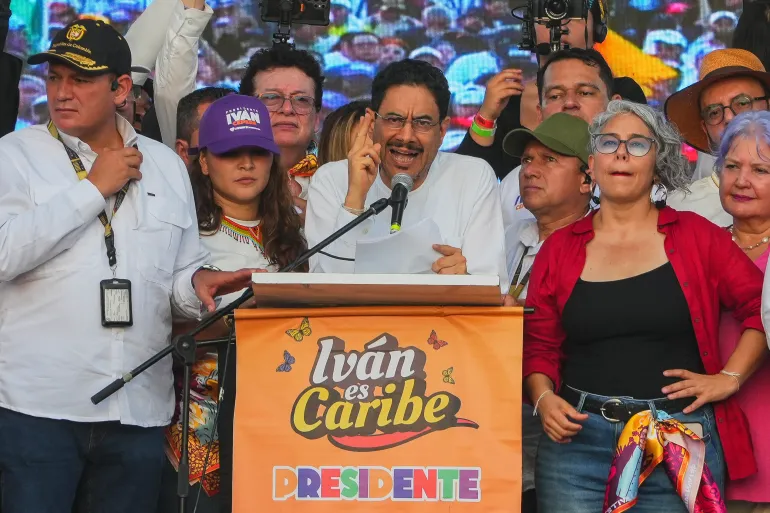
Less than two hours after polling stations closed on Sunday, it was clear that Colombia’s presidential race would be settled in a run-off between two finalists: hard-right political outsider Abelardo de la Espriella and leftist Senator Ivan Cepeda.

Though the overall result surprised few, de la Espriella’s strong showing upended pollsters’ predictions.

Recommended Stories

list of 3 itemsend of list

Cepeda, President Gustavo Petro’s chosen successor, had been expected to win the most votes, based on public opinion surveys.

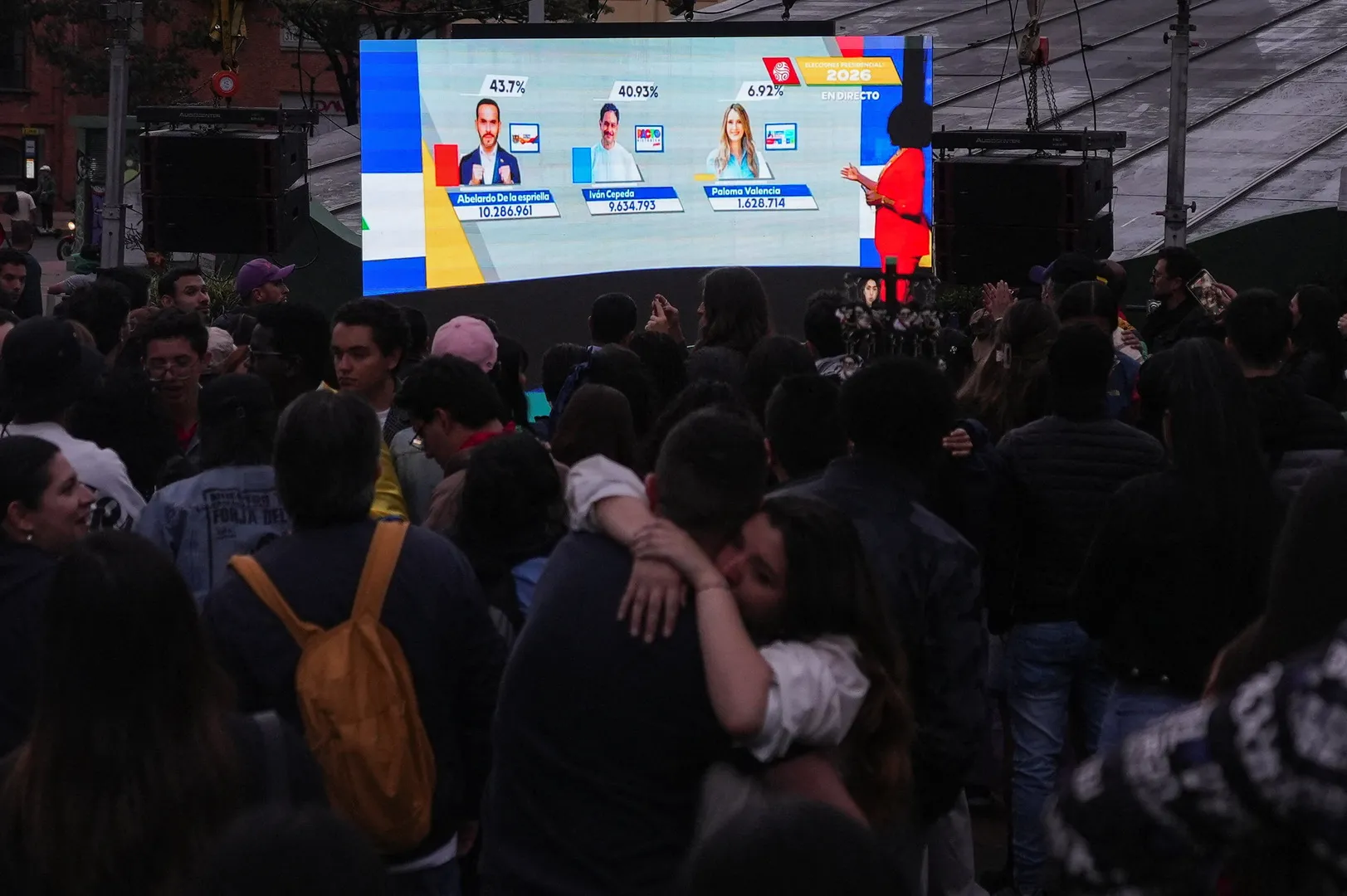
But instead, de la Espriella came in first place, winning 43.74 percent of the vote. Cepeda trailed with 40.90 percent.

Supporters of de la Espriella, a criminal defence lawyer, held rapturous celebrations in the coastal city of Barranquilla, where the candidate has an office.

“Colombia won, and with more than 10 million votes, democracy won,” said Elsa Suarez, a de la Espriella voter living in Bogota.

The far-right candidate has modelled himself after politicians like Donald Trump in the United States and Javier Milei in Argentina, flamboyant media personalities who won the presidency despite having little to no political experience.

Like them, de la Espriella has pledged a return to “law and order”, as well as a pared-back national government and policies to support traditional family values.

Notably, he promises to use an “iron fist” to stamp out crime and build megaprisons to jail criminals, mimicking the policies of Salvadoran strongman Nayib Bukele.

Analysts say de la Espriella’s populist messaging resonated with voters in Colombia’s interior, where urban crime is a growing concern.

Electoral maps show de la Espriella besting Cepeda in 16 of the country’s 32 departments, primarily in the heart of Colombia and along the border with Venezuela.

“In more central areas and closer to the capitals, people prioritise security,” explained Laura Bonilla, the deputy director at the Peace and Reconciliation Foundation (PARES), a Bogota-based research nonprofit.

By contrast, de la Espriella’s security messaging failed to sway voters along the coast and in border areas afflicted by rebel violence.

Bonilla argues that people in these regions instead place greater value on the socioeconomic issues that Cepeda represents, as the continuity candidate for Petro’s Historic Pact party.

“Over the past four years, they have received constant attention from the government,” said Bonilla, citing state development projects under the Petro administration.

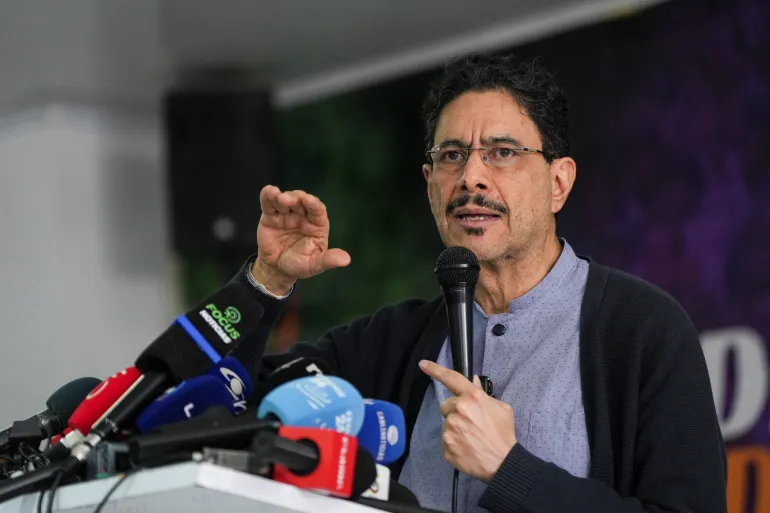
Colombian presidential candidate Ivan Cepeda of the Historic Pact party attends a press conference about the second phase of the presidential race, in Bogota, Colombia, June 1, 2026. REUTERS/Enea Lebrun
Colombian presidential candidate Ivan Cepeda of the Historic Pact party holds a news conference in Bogota, Colombia, on June 1 [Enea Lebrun/Reuters]

A blow to the conservative establishment

De la Espriella’s success also highlights growing anti-establishment sentiment in Colombia, according to experts.

The lawyer, who has never run for public office before, comfortably beat his main rival on the right, Senator Paloma Valencia, who was backed by former President Alvaro Uribe, the figurehead of Colombian conservatism.

Initially, Sunday’s election was predicted to be a close race between Valencia and de la Espriella, both of whom lagged behind Cepeda in the polls.

But as Sunday’s ballots were tallied, Valencia flopped with less than 7 percent of the vote.

Miguel Silva, a Colombian political consultant, credited some of de la Espriella’s success to his campaign messaging.

De la Espriella, he explained, used his campaign to draw a distinction between the haves and the have-nots, those who have benefitted from the government and those who feel ignored.

“He [succeeded] by portraying himself and the people he represents as ‘Los Nunca’ and by portraying Paloma and her followers as ‘Los Siempre’,” Silva said, using the Spanish words for “The Nevers” and “The Always”.

Pollsters predicted the right would be divided in the first round, paving the way for Cepeda to win the most votes, but de la Espriella captured millions of votes from traditional conservatives, marking a shift in Colombia’s political landscape.

In Bogota, the only province in the country’s interior to vote for Cepeda, the left-wing candidate’s supporters were shocked by Sunday’s results.

“Everyone is a little surprised,” said Juan Camilo Rodriguez, who voted for Cepeda. “These results don’t match the polls.”

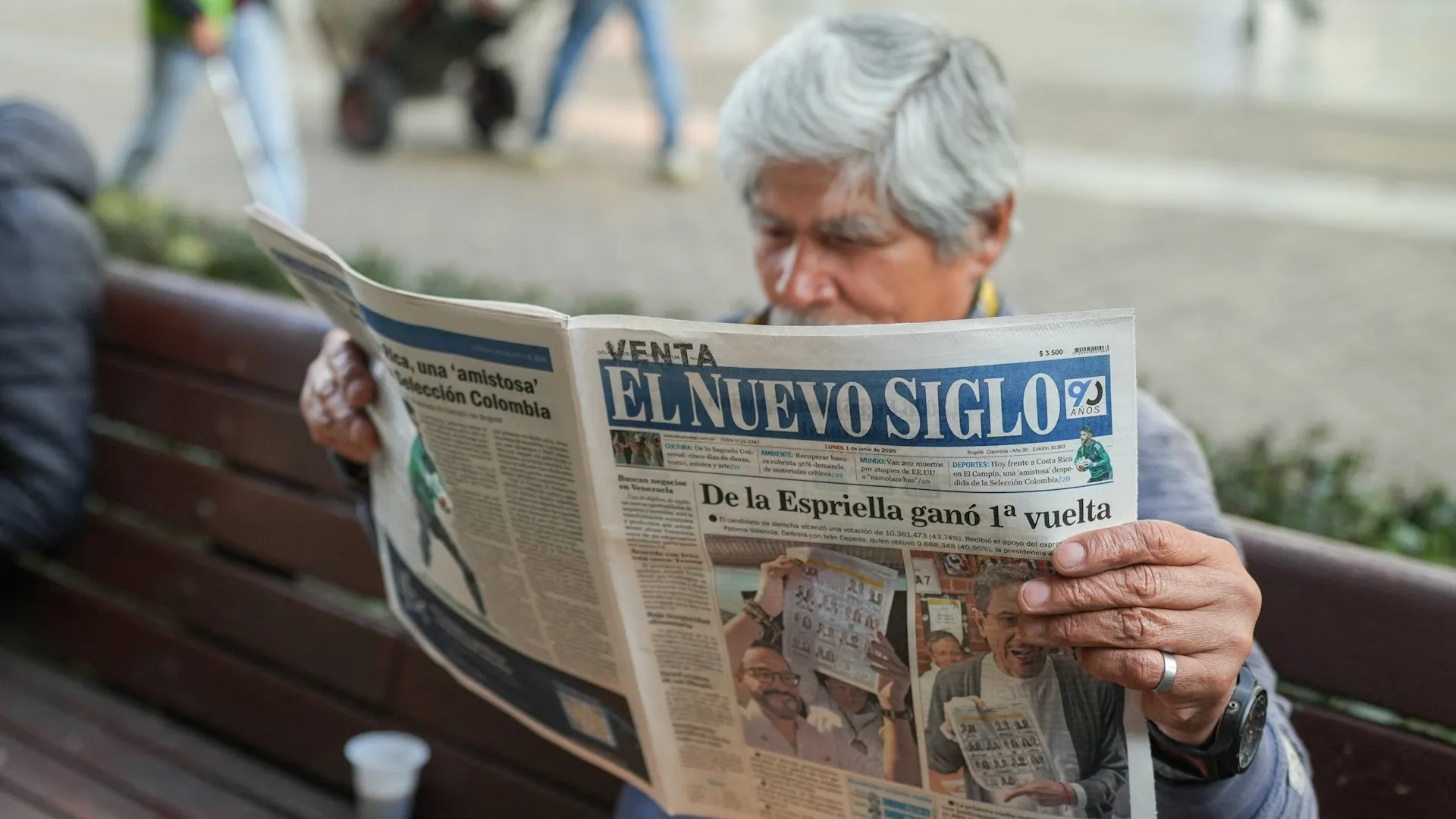
Newspapers at a newsstand show the results of the first round of Colombia's presidential election, in Bogota, Colombia, June 1, 2026. REUTERS/Enea Lebrun
Newspapers at a Bogota newsstand show the results of the first round of Colombia’s presidential election on June 1 [Enea Lebrun/Reuters]

Petro himself had hammered his base to flood the polls, warning that the left’s chances of success could be hampered by electoral fraud.

The outgoing president rejected last night’s results, which were based on the “pre-conteo”, or preliminary count, a non-legally binding process.

Instead, Petro called on the public to wait for the official, scrutinised count, which will be released in the coming days.

Cepeda echoed the president’s scepticism in a speech on Sunday night. “Only once the vote-counting committees have fully, clearly, and thoroughly clarified this matter, will we comment on tonight’s results,” he told supporters.

But the candidate appeared to mellow his stance this morning, acknowledging that there was no evidence of irregularities in the vote. He trailed de la Espriella by more than 670,000 votes.

Experts warn that Cepeda is losing precious time by focusing on fraud allegations and should instead concentrate on swaying moderate voters.

“By crying fraud so early, it’s hard to bring more voters to the table,” said Silva.

A second round of voting, between Cepeda and de la Espriella, is scheduled for June 21.

Up for grabs are more than a million votes for centrist candidate Sergio Fajardo and 1.6 million for Paloma Valencia. While Valencia endorsed de la Espriella, her running mate, moderate politician Juan Daniel Oviedo, did not.

Miguel Jaramillo Lujan, a Colombian political strategist, said the final two candidates must tread carefully in the next three weeks to prevail.

“As the saying goes, whoever makes fewer mistakes will be the winner.”
Source link

Tense election night in Colombia as country heads to presidential runoff | Elections

NewsFeed

Colombia’s election heads to a June 21 runoff after a tight first round between Abelardo de la Espriella and Ivan Cepeda. The night was marked by mutual accusations, with Cepeda calling for verification of results and De la Espriella celebrating his lead.

Source link

What to watch on Netflix as 2026 World Cup kicks off

Netflix’s latest worldwide wager is a menu of programming designed to feed the building fútbol frenzy that will explode in mid-June, when the FIFA World Cup begins. They might even win some Stateside converts ahead of the platform’s presentation of the CONCACAF Gold Cup and Nations League finals in 2027 and 2029.

“We say our goal is to entertain the world; in order to [do that], we need to entertain every single country” where Netflix has a presence, says Francisco Ramos, the streamer’s vice president of original content, Latin America. “Our superpower is that we’re so deeply rooted into local storytelling, then that becomes global.

“Netflix is uniquely qualified at building global audiences” for international sports content, he says. “We are very conscious and deliberate about it.”

Not that original sports content is anything new for the streamer; its first-ever original international series, “Club de Cuervos,” was a Mexican dramedy about a soccer club. But this salvo is precision-guided to hit as about 5 billion viewers get hyped for the global tournament.

“Four years ago, during the World Cup, we launched [an Argentine] documentary called ‘Sean eternos: Campeones de América’ [‘Captains of the World’], and it was massive, and then Argentina ended up winning a few months later,” says Ramos. “Right now, as the World Cup arrives, it’s very passionate.”

It’s not just Latin America that’s being targeted with new programming: There’s a trio of documentaries about Jamie Vardy, Liverpool’s 2005 Champions League-winning team and footballer-turned-actor Vinnie Jones under the “Untold UK” banner; “Poldi,” on German superstar Lukas Podolski; and “The Bus: A French Football Mutiny,” about the national team’s rocky 2010 World Cup journey.

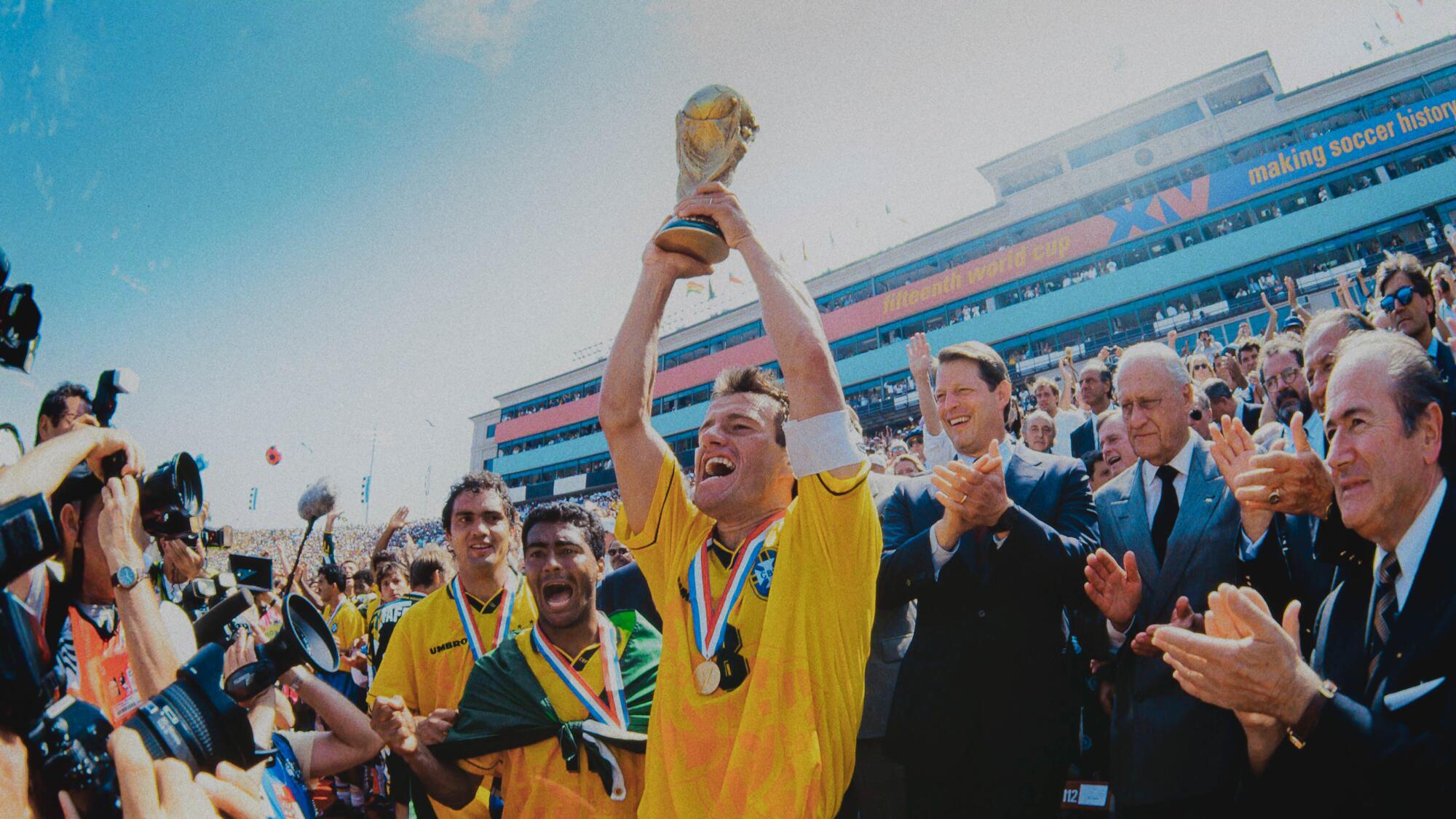
A scene from "USA ’94: Brazil's Return to Glory."

A scene from “USA ’94: Brazil’s Return to Glory.”

(Netflix)

The World Cup-contending squad

For fans, the slate offers documentaries on landmark moments in Cup history (“USA ’94: Brazil’s Return to Glory”), superstar players (“Emi Martínez: The Kid Who Stops Time” and “James”) and even up-and-comers in a prestigious amateur tournament in Brazil (“The Root of the Game”).

But for the uninitiated, apart from the streamer’s FIFA soccer simulation game coming this summer, the gateway drug may be “Ronaldinho: The One and Only.” The doc spotlights one of the most improvisational and dynamic players ever, soccer’s Magic Johnson. The legendary attacking midfielder was a wizard on the pitch and a charisma machine off it.

“Ronaldinho retired from soccer [in 2018], and he’s still in the mainstream. He has 80 million followers on Instagram,” says Luis Ara, director of “Ronaldinho” and “USA ‘94.” “You have [superstars Lionel] Messi and Neymar [da Silva Santos Júnior] talking about him like he’s God.

“He was always so cool … for him, it was not only about winning a game; it was also about entertaining the people.”

Scripted offerings include the feature “Mexico ’86,” starring a wildly hustling Diego Luna. It’s a nasty comedy about the wheeling and dealing (and outright bribery) that landed Mexico the right to host its second World Cup. Non-soccer fans might enjoy the snarky dialogue and bare-knuckled machinations — it plays like a Spanish-language, soccer-themed “Succession” or “Marty Supreme.”

“Brazil ’70: The Third Star” is a miniseries about that country’s campaign to win a third World Cup, led by a name even non-fans know: Pelé. Rodrigo Santoro stars as Coach João Saldanha.

“Brazil was in the midst of the dictatorship; they had to somehow generate some sort of national pride,” says Ramos. “The only thing that unites Brazilians 100% is their team. It becomes this compelling thing about how society is so intertwined with sports, and how sports are so intertwined with politics in Latin America.”

Soccer superstar Ronaldinho Gaúcho is interviewed in the new Netflix documentary "Ronaldinho."

Soccer superstar Ronaldinho Gaúcho is interviewed in the new Netflix documentary “Ronaldinho.”

(Netflix)

Is converting new American fans a realistic goal?

When soccer is the No. 1 sport in so many nations, why isn’t it bigger here?

It might have to do with the U.S. not having been a major player on the world stage, at least on the men’s side. The men’s team’s highest World Cup finish in the modern era is the quarterfinals in 2002, while U.S. women’s teams have won a record four World Cups. But the men have qualified for the tournament this year — which will be played partially in the States — and analysts say the team has improved, though they’re no one’s favorites to win it all.

Ramos says if American audiences stop seeing it as a competition between football and fútbol, they might come to appreciate soccer’s nuances.

“Take a look at the last 20 minutes of the World Cup four years ago, between France and Argentina. It’s the most extraordinary, beautiful art of people moving, and moving in extraordinary coordination. It’s like, the most-watched online thing ever.”

Beyond Netflix’s big bet on the World Cup slate, it’s not hard to get Ramos and Ara to make further wagers on this year’s tournament.

“Four teams have huge chances to win: Spain, France, Argentina and Brazil,” says Ara. “My heart is with Uruguay, but I don’t know if we’re gonna have a chance. Because of my bond with Brazil nowadays, I wish they could win again. A player once said to me, ‘Brazil is the second national team for any fútbol supporter.’ ”

“Oh my God, I will get in trouble,” says Ramos. “I’m Mexican, and it takes place in Mexico [and the U.S. and Canada], but … I’m gonna go with Argentina. My No. 2 would be Brazil.”

Source link

Colombia’s outsider candidate defied the polls | Elections

NewsFeed

Colombia’s presidential election is headed to a runoff on June 21. Far-right outsider, Abelardo de la Espriella, will face leftist senator, Ivan Cepeda. Professor Jorge Restrepo describes de la Espriella’s rise in the polls as a punishment vote against Colombia’s long-established political class.

Source link

Cepeda, de la Espriella advance in Colombia’s presidential election | Elections News

Far-right outsider Abelardo de la Espriella will face left-wing Senator Ivan Cepeda in the run-off for Colombia’s presidential election next month.

After polls closed on Sunday, the two candidates quickly surged ahead in the vote tally, extinguishing the hopes of right-wing Senator Paloma Valencia, a former frontrunner.

Recommended Stories

list of 3 itemsend of list

As of Sunday afternoon, with 99 percent of the votes tallied, de la Espriella took the lead, with 43 percent of the ballots cast in his favour.

Cepeda trailed him by more than 600,000 votes, earning 40 percent support.

Neither candidate breached the 50-percent threshold needed to avoid a head-to-head match-up on June 21. But the results are likely to buoy de la Espriella’s campaign going into the final round.

Cepeda had consistently topped public opinion polls in the final weeks before the vote. A May 24 poll from the National Consulting Centre (CNC) showed him with more than 33 percent support, ahead of de la Espriella’s 30.9 percent.

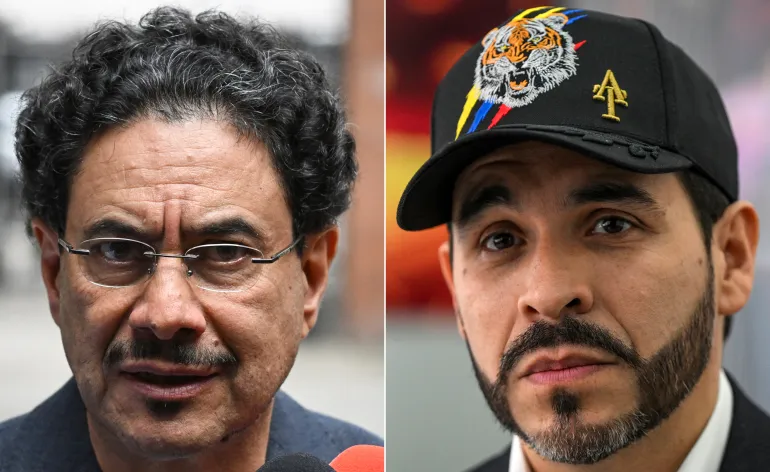
TOPSHOT - (COMBO) This combination of pictures, created on May 31, 2026, shows Demanding Senator Ivan Cepeda speaking with the press at the end of the trial of Colombian former President Alvaro Uribe in Bogota on February 10, 2025, and Colombian presidential candidate Abelardo de la Espriella, of the political movement Defensores de la Patria, looking on during an interview with AFP in Bogota on February 11, 2026.
Ivan Cepeda, left, will face Abelardo de la Espriella in the June 21 run-off election [AFP]

De la Espriella’s ‘outsider’ campaign

Questions about security were at the forefront of voters’ concerns going into Sunday’s election.

De la Espriella, a businessman and lawyer who has never held elected office, leaned heavily into fears of crime as he launched an outsider campaign, similar to the dark-horse bid of Argentinian President Javier Milei.

By contrast, Cepeda is a well-known quantity in Colombian politics. His father was a senator, too, before he was assassinated in 1994, in what was widely considered to be an act of political violence.

Cepeda himself has served as a senator since 2014. Before that, he served in the Chamber of Deputies, representing the capital, Bogota.

During his political career, he became embroiled in a long-running legal dispute with former right-wing President Alvaro Uribe, whom he accused of complicity with right-wing paramilitaries.

Uribe initially sued Cepeda for defamation, but in a dramatic twist, Colombia’s Supreme Court dismissed the charge and instead investigated Uribe for witness tampering.

While Uribe was initially found guilty and sentenced to 12 years of house arrest, an appeals court ultimately struck down the verdict, citing procedural errors, including insufficient evidence.

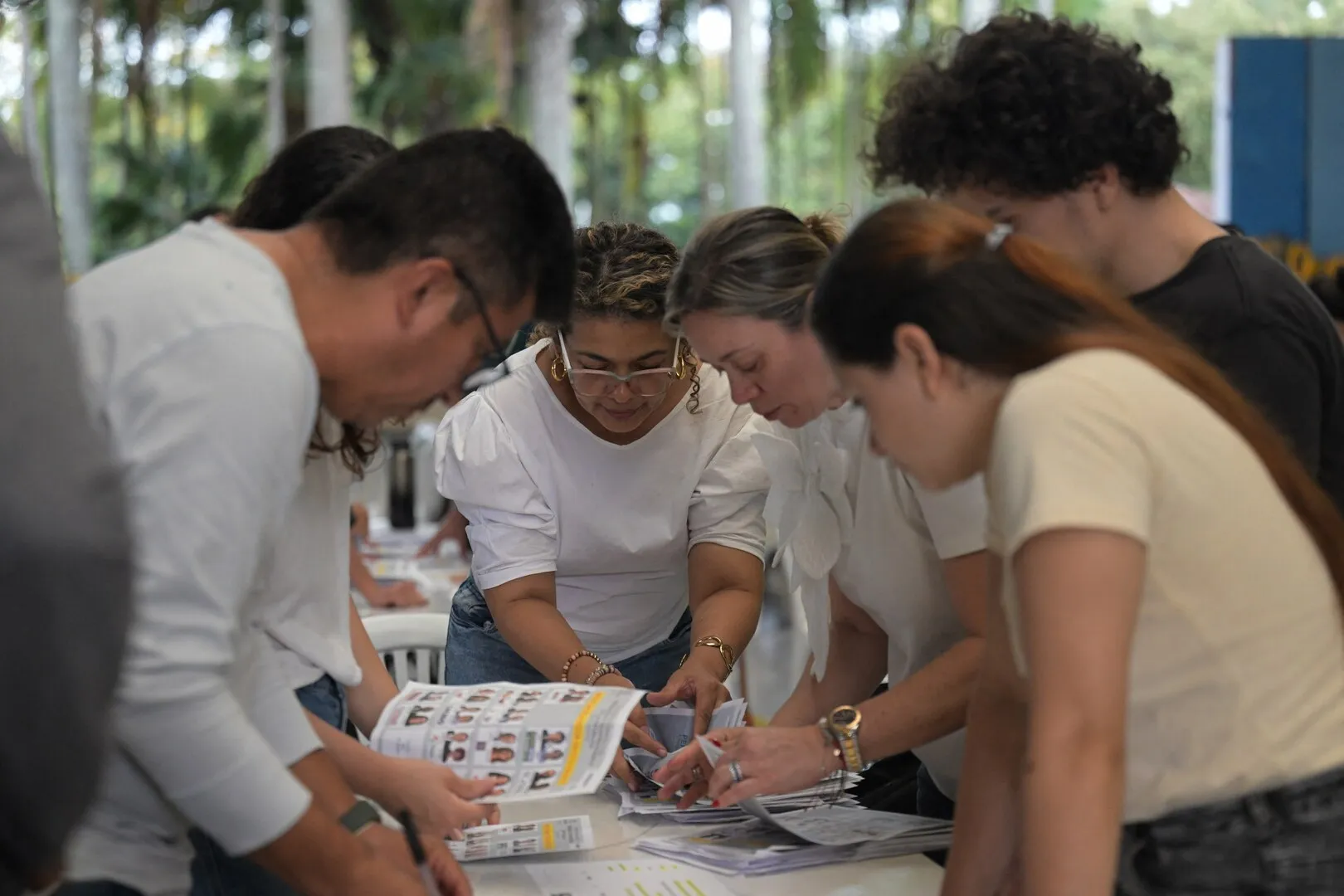
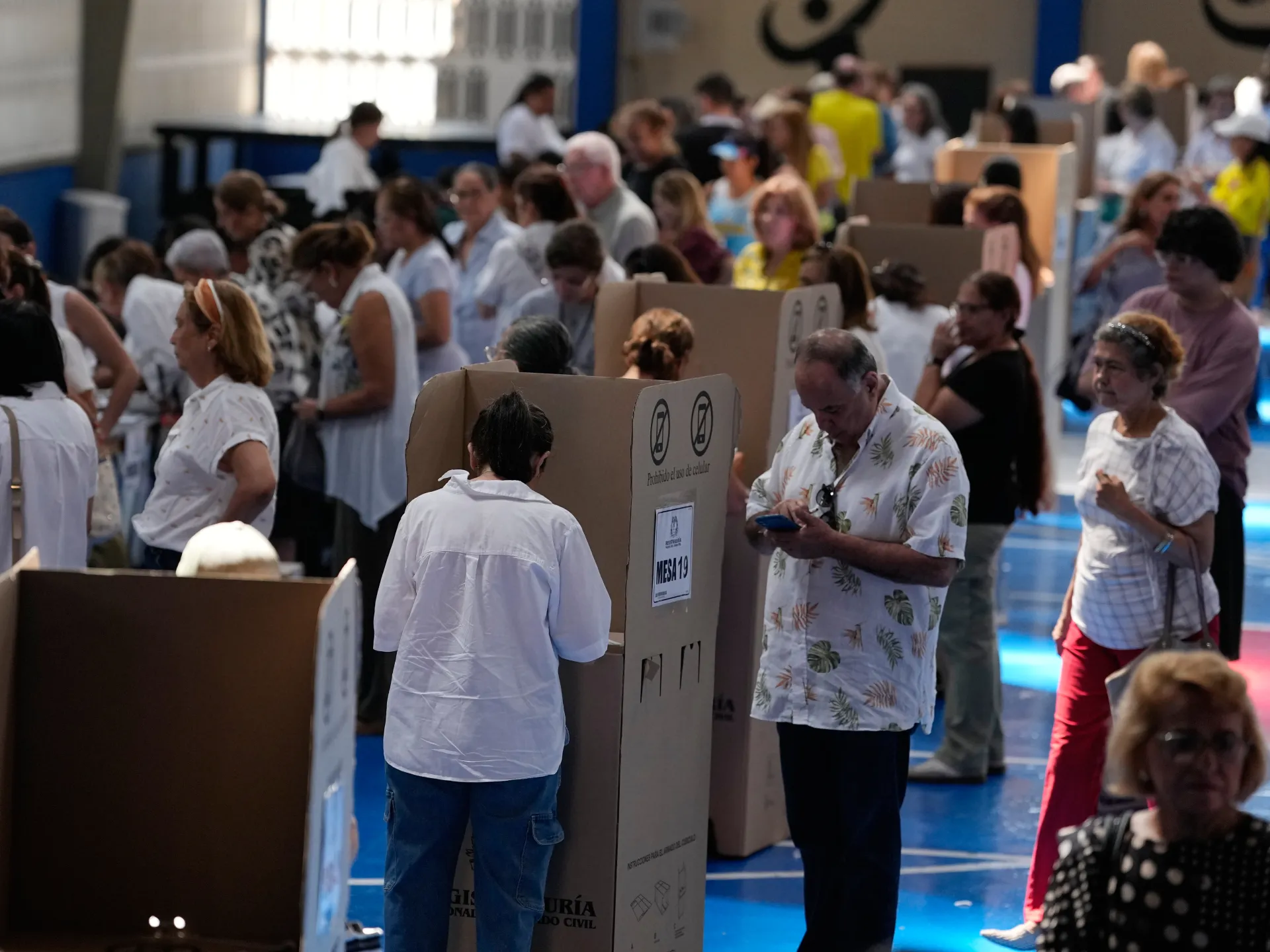
epa13007654 Electoral workers greet voters at a polling station during the presidential election in Bogota, Colombia, 31 May 2026. More than 41 million Colombians are registered to vote. EPA/MAURICIO DUENAS CASTANEDA
Electoral workers greet voters at a polling station in Bogota, Colombia, on May 31  [Mauricio Duenas Castaneda/EPA]

Security a top concern

Central to the rift in Colombia’s politics is the country’s six-decade-long internal conflict.

Since 1964, criminal networks, government forces, left-wing rebels and right-wing paramilitaries have all jockeyed against one another for power and territory.

Cepeda has been critical of right-wing efforts to solve the conflict through military might alone.

Instead, he has allied himself with Colombia’s outgoing president, Gustavo Petro, the first left-wing figure ever elected to the country’s highest office.

A former rebel fighter, Petro has championed a policy he calls “Total Peace”, which actively seeks negotiated solutions to the fighting.

While critics have questioned the efficacy of “Total Peace”, pointing to a recent uptick in violence, Cepeda has nevertheless pledged to carry it forward. He represents Petro’s left-wing Historic Pact party in this year’s election.

In an interview this month with CNN, Cepeda acknowledged the policy’s “immense challenges”, saying: “We cannot continue to develop conversations that do not yield clear results.”

But he rejected overly militaristic solutions, as well as the prospect of intervention by the United States. The US-led “war on drugs”, Cepeda said, has “failed spectacularly”.

De la Espriella, meanwhile, has embraced the kind of hardline security platform commonly associated with El Salvador’s leader, Nayib Bukele.

His platform includes a pledge to crack down on crime and build 10 megaprisons in Colombia.

Nicknamed “The Tiger”, he founded the Defenders of the Homeland political party and is known to rally with the slogan, “Stand firm for the nation”.

“The only peace process I believe in is one imposed by the force of arms and the laws of the republic,” de la Espriella told The Associated Press news agency this month.

Like US President Donald Trump, de la Espriella has also threatened to launch a bombing campaign to disrupt drug-trafficking, killing suspects by downing planes and shooting boats.

But such campaigns have been widely denounced as a form of extrajudicial killing, effectively denying suspects the chance of defending themselves in a court of law.

Supporters of presidential candidate Ivan Cepeda of the ruling Historic Pact react as they follow election results outside his campaign's election night headquarters in Bogota, Colombia, Sunday, May 31, 2026. (AP Photo/Matias Delacroix)
Supporters of presidential candidate Ivan Cepeda watch the election results arrive in Bogota, Colombia, on May 31 [Matias Delacroix/AP Photo]

Narrowing odds for Colombia’s left

More than 23.6 million Colombians voted in Sunday’s election, though there was a high number of blank or nullified ballots.

Early estimates, with 99 percent of ballots tallied, indicate that 245,342 voting sheets were null, and another 406,830 were left blank.

The second round is likely to be an uphill battle for Cepeda. Colombia’s right-wing is expected to consolidate behind de la Espriella in the second round.

In Sunday’s vote count, more than 10.3 million ballots were cast for de la Espriella, compared with roughly 9.7 million for Cepeda.

A victory for the right would continue a regional trend in Latin America. Last year alone, left-wing governments in Chile, Honduras and Bolivia were all replaced by right-wing presidential contenders.

De la Espriella signalled his optimism about the second round in a social media post as the results rolled in.

“We are going to defeat tyranny and absolutism,” de la Espriella wrote. “We have advanced to the run-off thanks to the more than 10 million Colombians who answered the roar. In 21 days, we will make history!”

Source link

Juan Manuel Santos on Colombia’s peace process, 10 years on | Politics

Ten years after Colombia’s landmark peace agreement, former president Juan Manuel Santos assesses its legacy. The Nobel Peace Prize laureate discusses renewed violence, political divisions and what Colombia’s experience can teach a world facing growing conflict.

Source link

Rio’s Forever War | Crime

In 2025, Brazil’s deadliest police raid killed 120 people and exposed a pattern of mishandled evidence and impunity.

On October 28, 2025, more than 2,500 police officers launched a massive raid on two favelas in Rio de Janeiro. They were targeting leaders of Red Command, one of Brazil’s largest drug trafficking groups. By the end of the day, more than 120 people were dead, making it Brazil’s bloodiest police operation.

In the aftermath, police withdrew without securing the scene. Bodies were left behind, and forensic teams never arrived. Residents recovered the dead themselves, which erased critical evidence of what happened.

Through exclusive reporting, Fault Lines reconstructs the case of Douglas de Almeida da Silva, a father and small business owner shot by police that night. Officers say he fired first, but forensic analysis and witness footage raise serious questions about their account.

The raid reflects a broader pattern in Rio, where police routinely fail to preserve crime scenes, undermining investigations and shielding officers from accountability.

Despite repeated deadly raids, gangs continue to control the favelas, raising questions about whether these operations curb the violence or simply add to it.

Source link

‘Opposite visions’: What to know about Colombia’s presidential election | Elections News

On Sunday, voters in the South American country of Colombia are facing a choice.

Four years ago, they elected the first left-wing president in the country’s modern history, Gustavo Petro. Now, they must decide whether to continue with Petro’s leftist push — or restore the political right to power.

Recommended Stories

list of 3 itemsend of list

Fourteen candidates will be on the ballot for the first round of voting in Colombia’s presidential election.  The packed field includes contenders from the left, right and centre, who are slated to face off over issues like security and the cost of living.

But Petro will not be among them: Presidents in Colombia are limited to a single four-year term.

The right wing is expected to have the advantage, particularly if the race proceeds to a second round. Petro is struggling with low poll numbers, and voters have expressed frustration with crime and violence, driven in part by the country’s six-decade-long internal conflict.

But leftist candidate Ivan Cepeda has surprised observers, consistently placing at the top of the polls ahead of the first round.

When is the election, who are the candidates, and which issues are top of mind for voters? We look at those questions and more in this brief explainer.

When is the election?

The first round of voting is set to take place on May 31, 2026.

Will there be a second round of voting?

A candidate would need to win more than 50 percent of the vote in the first round to avoid a run-off.

If no single candidate meets that threshold, a run-off will be held between the top two finishers on June 21.

Why is this election important?

In recent years, across Latin America, long-entrenched left-wing governments have met defeat at the ballot box.

Last year alone, right-wing candidates have been elected to replace left-wing presidents in Bolivia, Chile and Honduras.

But Colombia does not have a long history of left-wing presidents. Petro was the first. That makes this race one to watch, according to Gimena Sanchez, a Colombia expert at the Washington Office on Latin America (WOLA), a human rights nonprofit.

“This is the first election to be held after the first-ever leftist administration in Colombia’s 200-year history,” Sanchez explained.

Colombia now stands at a fork in the road. One of the dominant issues in the election is how to resolve the country’s internal conflict, which forced more than 235,619 individuals from their homes in 2025.

Another 87,069 people were caught up in mass displacement events due to the fighting, according to the International Committee of the Red Cross.

Petro has embraced negotiation as a tool to end the conflict, which has seen government forces, criminal networks, left-wing rebels and right-wing paramilitaries all battling one another.

But the political right has advocated a return to the more militarised approach backed by the United States, according to Sanchez.

“The leading candidates fall into two camps: continuity with the leftist government of Petro and an approach to security that focuses on negotiations with armed groups, and right-wing candidates who very much want to go back to a hardline security model that Colombia had in the past,” Sanchez said.

“You have polar opposite visions for the country.”

Who is the main candidate on the left?

Senator Ivan Cepeda has emerged as the primary candidate of the political left, running as the head of the governing coalition, known as Historic Pact.

Cepeda has largely pledged continuity with Petro’s platform, including social and economic policies meant to reduce inequality.

He has also embraced Petro’s “Total Peace” approach, which aims to resolve the country’s internal fighting by negotiating with armed groups and criminal networks, as opposed to solely relying on military force.

Confronting state-backed violence has become a hallmark of Cepeda’s life and career.

His father, who was also a senator, is believed to have been assassinated by a government-backed paramilitary. For years, Cepeda was also embroiled in a legal battle for accusing former President Alvaro Uribe of connections to right-wing paramilitaries.

Colombia's presidential candidate Ivan Cepeda, of the Pacto Historico party, speaks to supporters during his final campaign rally in Barranquilla, Atlantico department, Colombia on May 24, 2026.
Presidential candidate Ivan Cepeda speaks to supporters during his final campaign rally in Barranquilla, Colombia, on May 24 [Vanessa Romero/AFP]

Who are the main candidates on the right?

While Cepeda has become the standard-bearer for the left, the political right has had to contend with a more fractured field of candidates.

Running on the far right is Abelardo de la Espriella, a lawyer for the Defenders of the Homeland Party who has generated comparisons with Salvadoran President Salvador Bukele and Argentina’s Javier Milei.

Like those leaders, de la Espriella has offered a hardline vision for his country’s security. If elected, he says he would end negotiations with armed groups, bomb rebel camps, and resume the aerial fumigation of coca ⁠crops, which produce the raw material for cocaine.

Senator Paloma Valencia, a candidate with the Democratic Centre Party, is running as a more moderate alternative to de la Espriella. She too has promised a stricter approach to crime. Her platform involves expanding the police and armed forces, while cutting taxes and promoting pro-business policies in the economic realm.

Their election-season competition has become a source of acrimony for Valencia and de la Espriella, who have accused each other of paving the way for a leftist election victory.

“There is a more familiar, establishment right, represented by Valencia, and a far right in the form of de la Espriella, who pitches himself as an outsider,” said Sanchez.

Valencia, for her part, has criticised de la Espriella as two-faced, defending criminals in his legal practice but advocating for tighter security on the campaign trail.

De la Espriella, meanwhile, has dismissed Valencia as a member of the country’s political establishment and chided her in a social media post, stating that the presidential election is “not for little games”.

Colombia's presidential candidate Paloma Valencia, from the Centro Democratico party, speaks to supporters during her final campaign rally in Bogota on May 24, 2026.
Paloma Valencia of the Democratic Centre Party speaks to supporters during her final campaign rally in Bogota on May 24 [Raul Arboleda/AFP]

What are the polls saying?

Polls generally show Cepeda ahead of his rivals, with de la Espriella in second place and Valencia in third.

A May 24 poll from the National Consulting Centre (CNC) and the publication Cambio suggested that Cepeda had drawn 33.4 percent of voter support, the most of any candidate.

But de la Espriella was on the upswing with 30.9 percent. Valencia, meanwhile, trailed with 12.6 percent.

The same surveys, however, suggest that Cepeda would struggle to win a run-off against either of the two right-wing candidates, with de la Espriella eking out about three points in a head-to-head contest, and Valencia coming within a percentage point of victory.

Undecided voters could play a key role in deciding the outcome, though. An analysis cited by the Spanish paper El Pais estimates that undecided voters could account for as much as 28 percent of the electorate.

Colombia's presidential candidate Abelardo de la Espriella, of the Defensores de la Patria party, speaks behind bulletproof glass during his closing campaign rally in Medellin, Colombia on May 24, 2026.
Presidential candidate Abelardo de la Espriella, of the Defensores de la Patria party, speaks behind bulletproof glass during his closing campaign rally in Medellin, Colombia, on May 24, 2026 [Jaime Saldarriaga/AFP]

Which issues are front and centre?

Concerns over crime, security and economic issues like unemployment and affordability have dominated the election.

In a poll from the firm Invamer, the highest proportion of voters — 37 percent — identified security as the top issue facing the country.

Basic needs and unemployment ranked second and third, with 17 percent and 16 percent, respectively. Eleven percent of voters, meanwhile, named corruption as a leading concern.

The threat of violence has lingered over the presidential campaign over the past year.

Two political staffers with de la Espriella’s campaign were killed by gunmen on motorbikes earlier this month. And in June 2025, presidential candidate Miguel Uribe Turbay was shot while leaving a campaign rally. The 39-year-old died two months later from his injuries.

Political violence is a serious concern in Colombia, and all of the frontrunners in the race travel with heavy security.

Source link

‘Arbitrary measures’: Lula slams US ‘terror’ designation for Brazil gangs | Government News

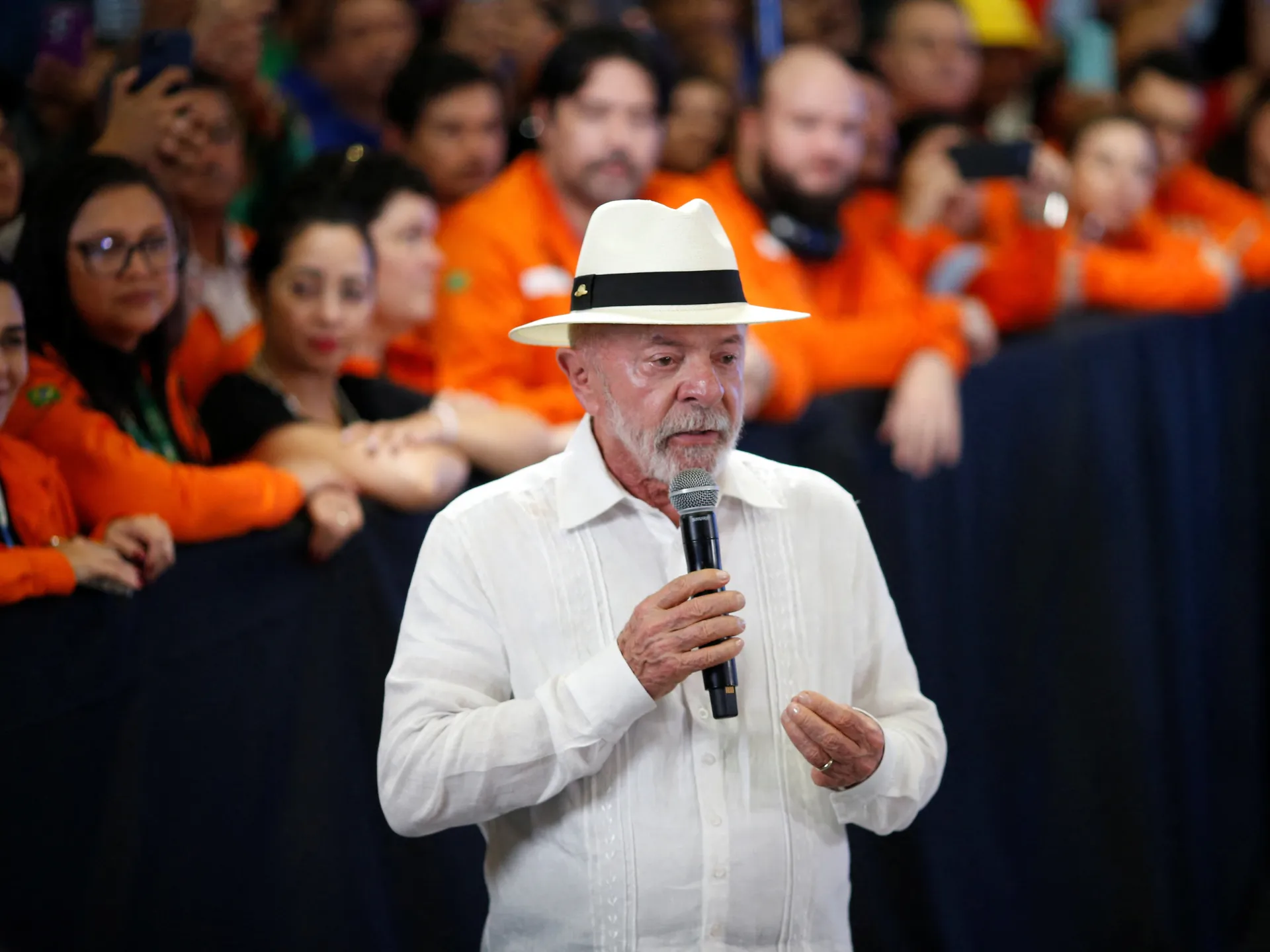
The president of Brazil, left-wing leader Luiz Inacio Lula da Silva, has denounced a decision by the United States to designate two of the South American country’s criminal networks as “terrorists”, warning that the label could be a “setback” for local law enforcement efforts.

The condemnation came in a 435-word message posted to Lula’s social media platforms on Friday.

Recommended Stories

list of 3 itemsend of list

In it, Lula drew a line between criminal activities and international terrorism, which is often understood to use violence for political or social aims.

“The terror inflicted by these organisations upon communities seeks to generate profit through crime — specifically through drug and arms trafficking,” Lula wrote.

Those activities, however violent, “must not be conflated with the ideologically, politically, or religiously motivated actions characteristic of international terrorism”, he added.

Lula’s statements came in response to an announcement a day earlier from the administration of US President Donald Trump.

Pushback against ‘terrorist’ label

On Thursday, US Secretary of State Marco Rubio revealed that he had designated Brazil’s two largest criminal groups — the Primeiro Comando da Capital (PCC) and the Comando Vermelho (CV) — “specially designated global terrorists”.

He also outlined plans to add the two groups to the list of “foreign terrorist organisations”, effective June 5.

Rumours had swirled for months that the Trump administration would apply the “terrorist” label to the two groups. But Lula and his ministers had pushed back, calling on Trump to hold off.

“Terrorist” designations freeze all US-based assets connected to the targeted groups, but they can also be used to penalise anyone who offers “material support or resources” to them.

Experts warn that such restrictions could potentially affect financial institutions and even the victims of such groups, including businesses and individuals who might be forced to pay extortion.

Lula has also expressed concern that the “terrorist” label could pave the way for US military intervention, a fear he reiterated in Friday’s statement, though he never named Trump outright.

“We remain fully prepared to develop joint solutions that yield mutual benefits for all nations involved,” Lula wrote.

“However, we will not tolerate the imposition of arbitrary measures from abroad, nor will we accept their use as a pretext to undermine our sovereignty or our economy. Unilateral, non-negotiated measures can undermine the fight against criminals and trigger actions that endanger the lives of people who have absolutely no connection to crime.”

A tight election in Brazil

A prominent left-wing leader in Latin America, Lula is in the midst of a heated election season, as he seeks a fourth nonconsecutive term as Brazil’s president.

Previously, he served as president from 2003 to 2011, before being re-elected to a third term in 2022.

In that race, he defeated the right-wing incumbent, Jair Bolsonaro, who would later be convicted of attempting to overturn the results of the race. Bolsonaro is currently serving a 27-year prison sentence.

His eldest son, Senator Flavio Bolsonaro, is thought to have been instrumental in Trump’s decision to issue the “terrorist” designations. The senator is currently running against Lula in the 2026 presidential election, and the two have been locked in a tight race.

This week, as he visited the White House, Senator Bolsonaro confirmed to reporters that he intended to seek “terrorist” designations for both the Primeiro Comando da Capital and the Comando Vermelho.

Trump has close ties to the Bolsonaro family, and he has previously intervened in elections around the world on behalf of right-wing candidates.

In Friday’s post, Lula accused Senator Bolsonaro of leveraging his family connections to “petition foreign authorities” for favour.

“It is deplorable that, once again, members of the Bolsonaro family have travelled to the United States to advocate for foreign intervention in Brazil,” Lula wrote.

He pointed to alleged efforts to stop the criminal prosecution of Jair Bolsonaro. Currently, one of the ex-president’s sons, Eduardo Bolsonaro, is facing obstruction charges related to efforts to lobby Trump to intervene in the case.

Trump ultimately did impose steep sanctions against Brazilian products in August 2025, citing the Bolsonaro trial as a reason.

Concerns about sovereignty

Under Trump, the US has taken an increasingly expansionist view towards the Western Hemisphere, reviving the 19th-century Monroe Doctrine, which described the Americas as Washington’s sphere of influence.

Trump himself has used crime as justification for taking unilateral military action in the region. Since September, his administration has conducted 59 strikes against alleged drug-trafficking boats in the Caribbean Sea and eastern Pacific Ocean, killing at least 196 people.

And on January 3, he launched an early-morning military operation against Venezuela, culminating in the abduction and imprisonment of then-President Nicolas Maduro on drug-trafficking charges.

While the Bolsonaro family has courted Trump in recent months, Lula has criticised those military-led actions as unjustified.

But security is expected to be a dominant issue in October’s presidential race. This week’s “terrorist” designations are likely to put Lula in an awkward position, forcing him to condemn the label without downplaying the extent of the violence.

Lula has attempted to brush off right-wing criticism that he has been lax on crime, pointing to his government’s recent $11bn investment in the “Brazil Against Organized Crime” programme.

That follows a separate $2bn programme in March to bolster the country’s prisons, improve homicide investigations and disrupt arms trafficking and other financial transactions carried out by criminal groups.

Still, Lula and Bolsonaro remain neck and neck in the lead-up to October’s election.

On May 16, the polling firm Datafolha found that both candidates would receive 45 percent of voter support in a one-on-one race, with 9 percent of voters indicating they would cast a null vote.

Another 1 percent identified as undecided.

Source link

Argentina’s ‘El Loco’ faces Uruguay mutiny ahead of World Cup | World Cup 2026 News

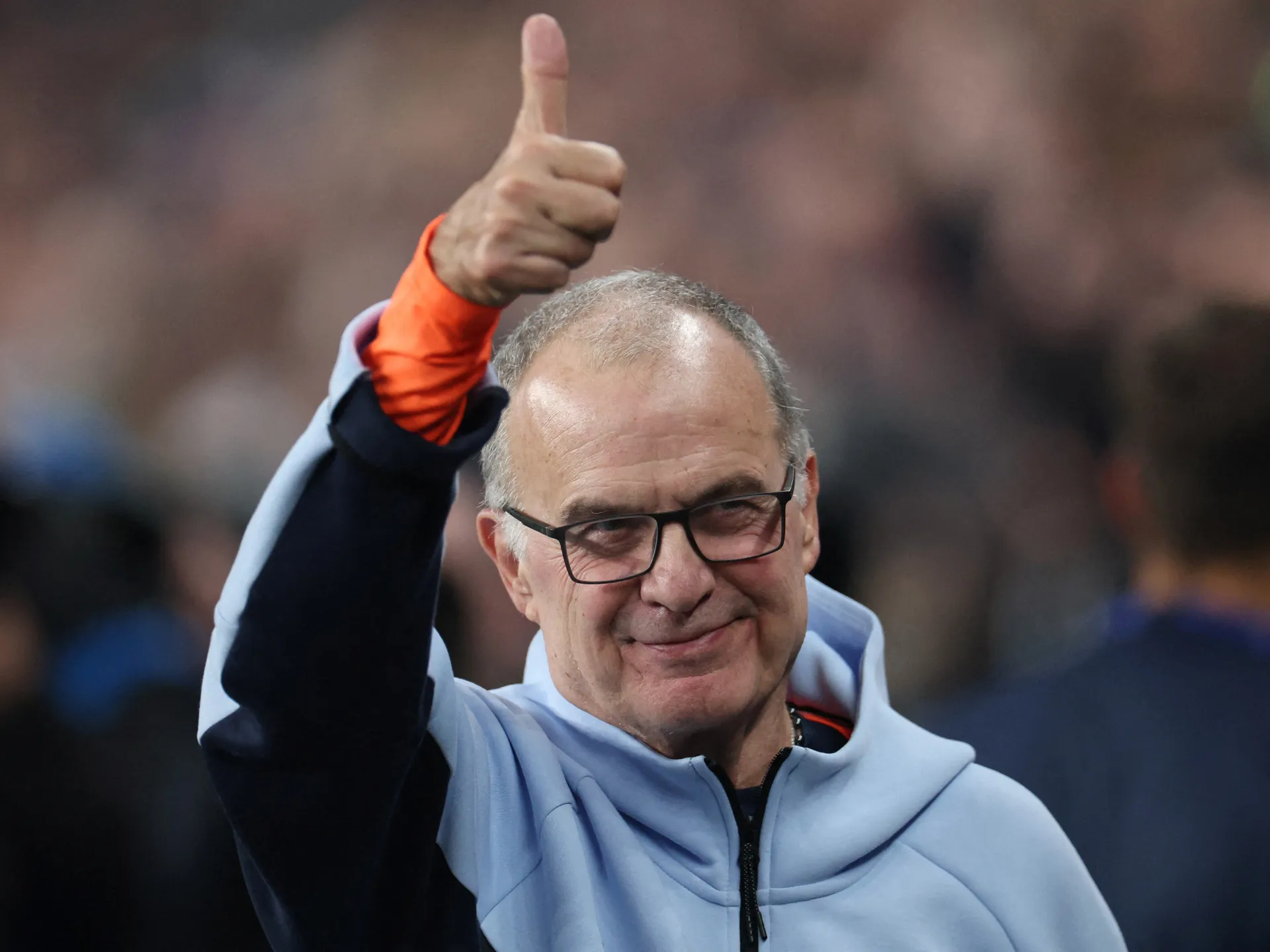
Marcelo Bielsa is widely revered as a pioneer of coaching, but his unconventional methods risk ruining Uruguay’s World Cup chances before the tournament has even begun, with rumours of dressing room unrest.

Nicknamed “El Loco”, which means madman, the 70-year-old’s bold, attacking approach has proved an inspiration to a younger generation of coaches, including Pep Guardiola and USA boss Mauricio Pochettino.

Recommended Stories

list of 4 itemsend of list

Yet, his famously demanding standards have often caused friction during a nomadic coaching career, and his stint in Uruguay has been no exception.

The Argentinian’s arrival initially generated huge excitement, which was fuelled by landmark victories over Brazil and Argentina in qualifying.

But they needed that flying start just to make it through after winning just three of their final 12 qualifiers.

The tipping point for many in the squad came at the Copa America in 2024.

Uruguay finished a creditable third, eliminating Brazil along the way, but Bielsa’s intensity during the monthlong tournament did not endear him to his players.

Luis Suarez hit out at Bielsa’s methods after retiring from international football months later, claiming he had reduced former Liverpool striker Darwin Nunez to tears at half-time of a 2-0 win over Argentina, such was the force of his criticism.

Bielsa accepted that after the former Barcelona striker’s backlash, his “authority was affected” with the rest of the dressing room.

Results have also regressed, with Bielsa stating he was “ashamed” by a 5-1 friendly defeat by the USA in November.

Now, as his third World Cup with a third different nation approaches, the question is whether Bielsa can win back the faith of his players for a country so used to punching above its weight on the world stage.

And there are doubts as to how his high-energy style will fare in the gruelling conditions of Miami and Guadalajara, where Uruguay will face Saudi Arabia, Cape Verde and Spain in Group F.

Pochettino hails Bielsa as a ‘genius’

Bielsa made his name winning three league titles in Argentina with Newell’s Old Boys, where the stadium now bears his name, and Velez Sarsfield.

“For me, he’s a person I will always admire,” said Pochettino, whom Bielsa recruited for Newell’s as a 13-year-old.

“He’s a genius. A person with charisma and a personality very different from us, normal coaches, and that’s what makes him special.”

Bielsa’s sides in Bilbao with Athletic Club, where he reached the Europa League and Copa del Rey finals in 2011-12, and Marseille, where he led Ligue 1 at the halfway stage in 2014-15, were also admired but ended up empty-handed as their energy ran out.

In Leeds, murals still bear Bielsa’s face, four years on from his departure, after he led a sleeping giant of English football back to the Premier League for the first time in 16 years in 2020.

His time there ended in familiar fashion with an exhausted squad that was relegated to the second tier the season after he departed.

Yet, the esteem with which he is held for his daring tactical approach endures.

“To be loved is this biggest title, bigger than the Champions League or Premier League or whatever,” said Guardiola, who went to visit Bielsa in Argentina before setting out as a coach at Barcelona.

“To be loved is the most important thing, and I think Marcelo has that more than any other manager in the world.”

Bielsa, who oversaw Argentina’s group-stage elimination in 2002 and Chile’s round-of-16 loss to hosts Brazil in 2014, has already hinted ‌that he may not remain as manager ⁠of Uruguay beyond ⁠July, saying his job with the team ends with the World Cup.

“Our job ends with the World Cup,” ⁠Bielsa said at an event organised by the Uruguayan Football Association last Friday.

Although he did not elaborate on his remarks, local media reported ⁠that the Argentinian will not continue once his current contract expires at the end of the June 11-July 19 tournament.

“It is a miracle in any ‌professional’s sporting career to take part in the World Cup,” he said. “I will be forever grateful to Uruguay for allowing me to enjoy a competition like the World Cup.”

Source link

Bolivia’s president warns ‘time is running out’ amid protest crisis | Protests

NewsFeed

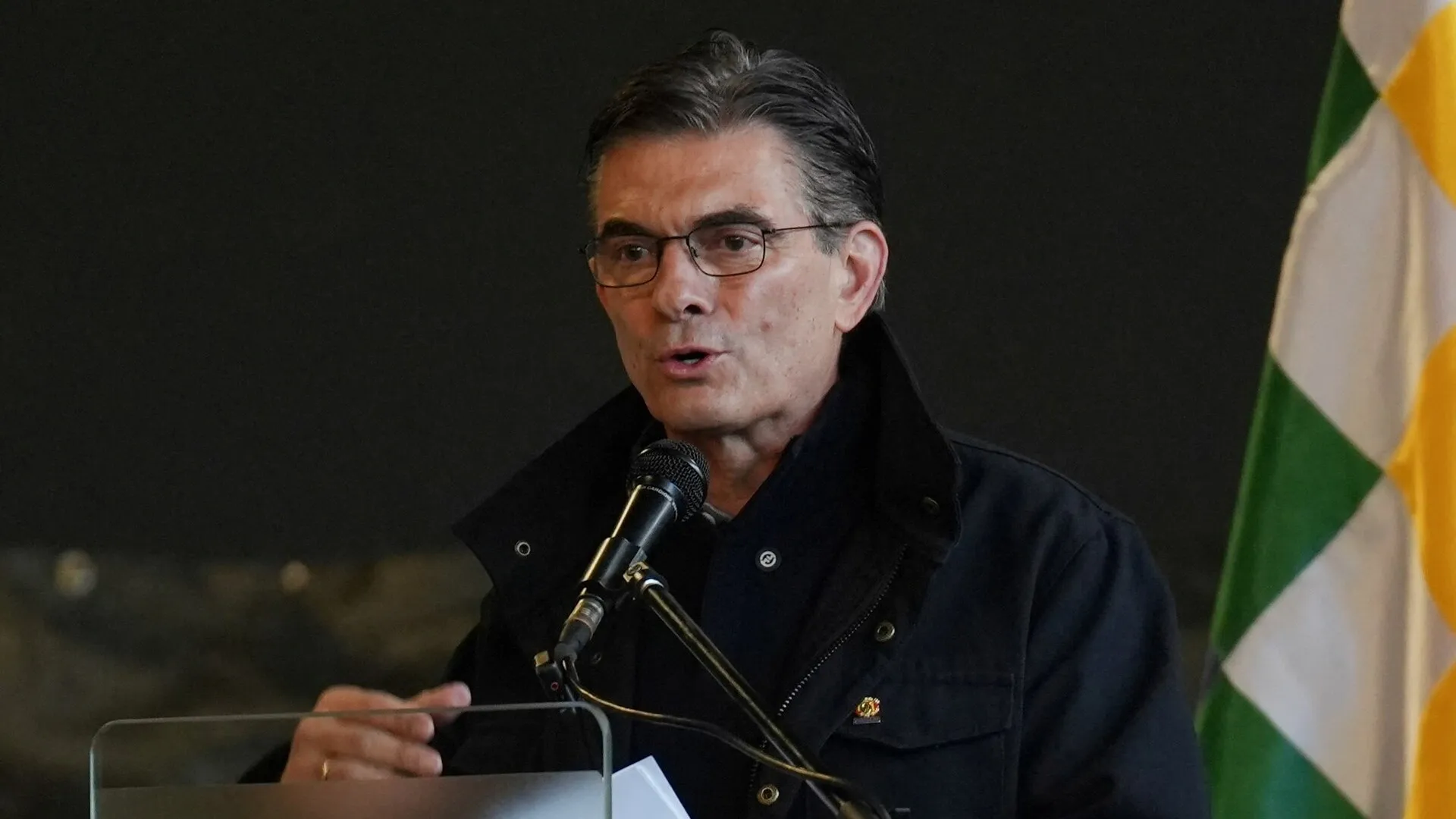
Bolivia’s president has warned protesters “time is running out” amid a weeks-long standoff over the country’s economic and political crisis. President Rodrigo Paz has secured powers to declare a State of Emergency, but protesters remain unmoved.

Source link

Google employee charged with insider trading over Polymarket bets | Crime News

Michele Spagnuolo allegedly used insider information to profit from bets on people on Google’s most-searched list.

A Google software engineer has been charged with fraud by US authorities after allegedly using insider information to win more than $1.2m in bets on the prediction market platform Polymarket.

Michele Spagnuolo, an Italian citizen residing in Switzerland, is accused of using confidential information to wager on the results of Google’s annual most-searched list, according to a criminal complaint unsealed on Wednesday.

Recommended Stories

list of 3 itemsend of list

US prosecutors accuse Spagnuolo of using an account named “AlphaRaccoon” to make trades on various markets linked to the results of Google’s 2025 Year in Search.

The total sum of the bets was approximately $2.75m, according to the complaint, filed in federal court in New York.

Among the bets, Spagnuolo successfully predicted that indie pop musician d4vd would top the list for the most-searched for person last year, hours after accessing confidential data at Google, according to prosecutors.

Spagnuolo, 36, faces charges of commodities fraud, wire fraud and money laundering.

“Today’s charges reinforce a decades-old message: corporate insiders cannot use confidential business information to turn a profit in our markets,” US Attorney for the Southern District of New York Jay Clayton said in a statement.

“Insider trading compromises the integrity of our markets, and the American people want this greed-driven conduct investigated and prosecuted,” Clayton added.

Bets on Maduro’s capture

Google said in a statement that it is working with law enforcement and that using confidential information to place bets is a serious breach of company policy.

Spagnuolo has been placed on leave, according to a Google spokesperson.

A Polymarket spokesperson said the company had worked closely with the US Attorney’s Office on the investigation and that the firm “is the only prediction platform to date whose cooperation has led to insider trading charges in the United States”.

“We are committed to maintaining accurate, fair, and transparent markets as well as enforcing our rules and working with our regulators and law enforcement,” the spokesperson added.

Last month, a US soldier was charged with using classified military information to place bets on Polymarket regarding the abduction of Venezuelan President Nicolas Maduro.

Prosecutors accuse Gannon Ken Van Dyke, 38, of cashing in on the US operation against Maduro, to the tune of more than $400,000.

Source link

Canada chooses Swedish early warning planes rather than US model | Business and Economy News

Canada has announced plans to buy a fleet of early warning planes from Sweden’s Saab rather than a competing option from Boeing as it seeks to reduce its reliance on the United States.

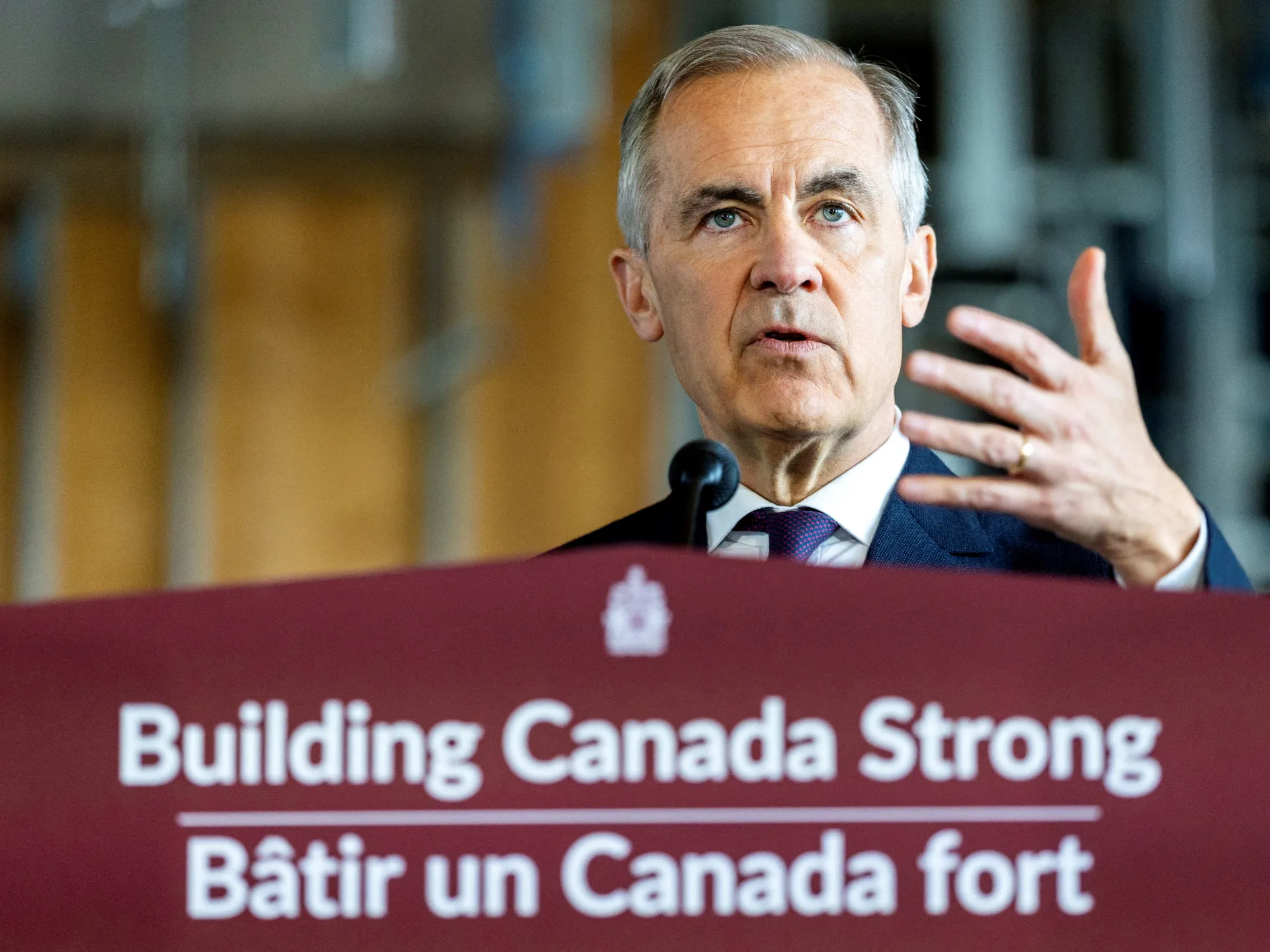
Prime Minister Mark Carney said on Wednesday that Canada would opt for Saab’s GlobalEye, which is based on Bombardier’s Global 6500 jet. Boeing’s E-7 Wedgetail plane – which has suffered from delays and cost overruns – had also been in contention.

Recommended Stories

list of 4 itemsend of list

“With a suite of advanced sensors and mission systems, Saab’s GlobalEye will be a key resource for the Canadian Armed Forces to detect and deter threats across the Arctic,” Carney told a defence conference in Ottawa.

The Prime Minister pledged in March that Canada would take full responsibility for protecting its vast Arctic territory, after relying for decades on a partnership with the US to monitor its more than 4.4 million square km (1.7 million square miles) of land and sea, a territory larger than India.

Carney’s Liberal government last year announced plans to ramp up defence spending. The US and other allies had complained for years that Canada was not meeting longstanding NATO targets on military expenditure; Carney announced in March that Canada hit that target of spending 2 percent of its GDP on defence last year.

In a statement, Saab said it planned to invest in research and development work in Canada as part of any deal.

Although Carney did not give details of the fleet size or the cost of a potential contract, military officials had earlier said they were looking to buy six early warning aircraft.

Philippe Lagasse, associate director of international affairs at Ottawa’s Carleton University, said Canada’s decision to buy the GlobalEye planes was “an important test case for the Carney government’s policy of pivoting away from American military capability”.

He said in a statement that the decision confirms Canada’s relationship with Sweden, a new NATO ally that has also been eager to strengthen its ties to the Canadian military.

Canada has previously said it wants to work more closely with the Nordic countries in the Arctic on defence and other issues, in a global environment in which the US has become a less reliable partner.

“GlobalEye is already creating jobs in Canada, and working with the Canadian supply chain. This decision ties our two nations even closer together,” Swedish Prime Minister Ulf Kristersson said in a social media post.

Saab is also in the running to sell Canada some of its Gripen fighters.

Canada has a deal to buy 88 F-35 jets from Lockheed-Martin, but last year, after the US slapped tariffs on key Canadian imports, Carney asked the military to probe whether it could cut back the order and buy some planes from another manufacturer.

Carney later told reporters Ottawa would make a decision on the fighter fleet in due course and declined to comment when asked whether the military would be operating two jets.

Last week, a Pentagon official, speaking after Washington suspended planned biannual defence talks with Canada, said the delay in making a decision on the F-35s showed how Ottawa was prioritising politics over defence issues.

Still, Lagasse of Carleton University said he expected Canada would ultimately decide to stick with a fleet of F-35 jets rather than splitting the fleet by buying some Saab Gripens.

“If the government was determined to buy Gripens, I would have expected them to make the announcement alongside this [GlobalEye] decision,” he said.

Trade tensions

The announcement came amid ongoing trade tensions between US and Canada after US President Donald Trump slapped tariffs on Canada after taking office last year, alongside multiple comments threatening to annex the country and make it the 51st state of the US.

Historically, nearly 80 percent of Canada’s exports have been to the US. While the vast majority of those were protected under the USMCA, the trade agreement between the two countries that also includes Mexico, that is now due for a review, which starts on July 1, and Trump has said the US does not really need that deal.

While the US has announced bilateral talks with Mexico, there has been no mention of Canada.

Deputy US Trade Representative Jeffrey Goettman will lead bilateral talks in Mexico City on Thursday and Friday focused on “economic security and rules of origin for key industrial goods,” the department said in a statement on Wednesday.

USTR said the US and Mexico will hold a second round of negotiations in Washington on June 16-17, focused on agriculture and “a level playing field,” with a third set of talks in Mexico City scheduled for the week of July 20.

The first Trump administration held trilateral negotiating rounds with both Mexico and Canada to create the existing USMCA, which replaced the 1994 North American Free Trade Agreement in 2020.

But so far, there have been few discussions between US Trade Representative Jamieson Greer and his Canadian counterpart, Canada-US Trade Minister Dominic LeBlanc, since early March, and no formal launch of a US-Canada negotiating process.

Source link

Messi set for more tests ahead of World Cup but Argentina are optimistic | World Cup 2026 News

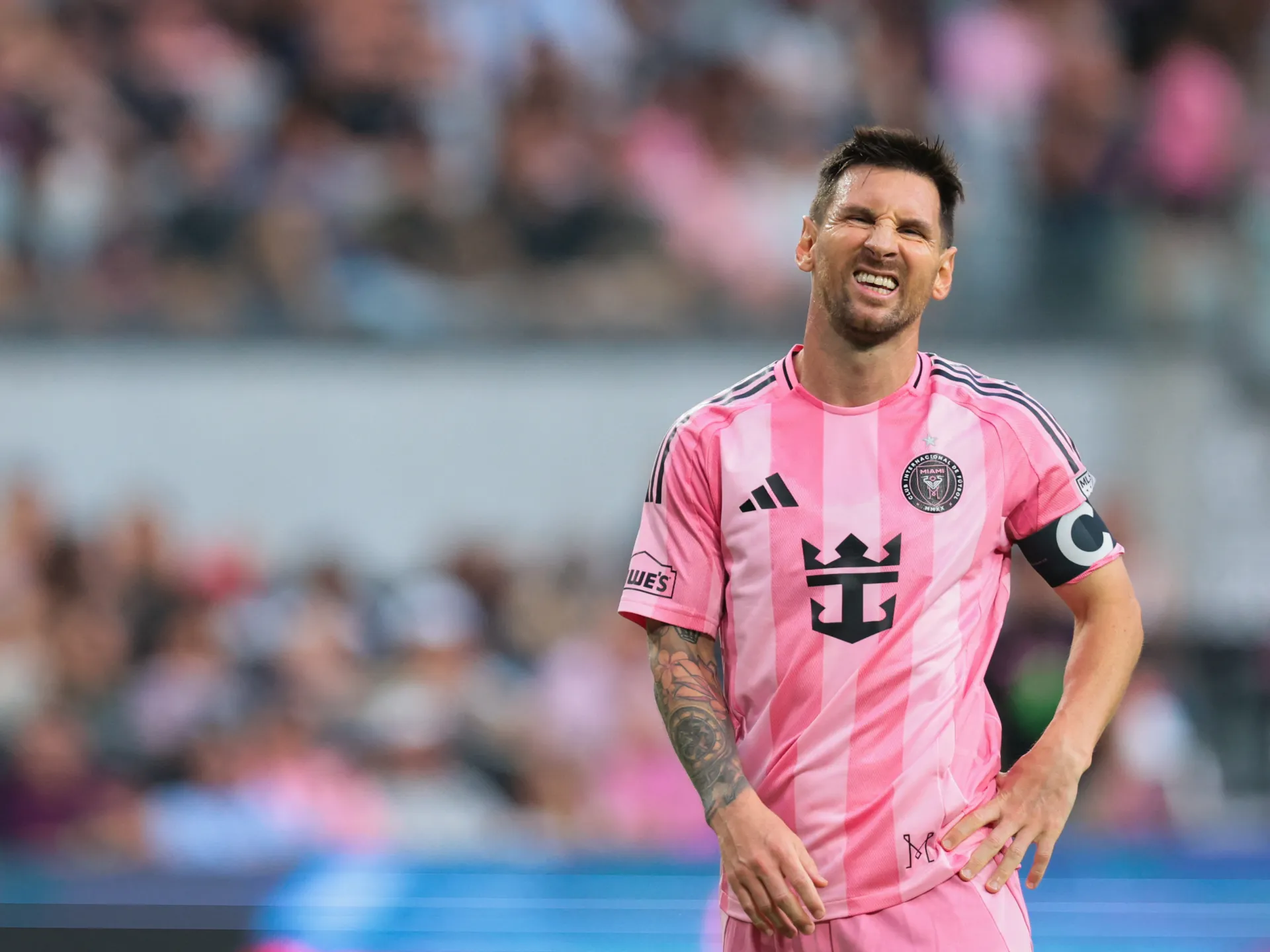
Lionel Messi was injured in Inter Miami’s MLS game on Sunday, but Argentina are confident he will be fit for World Cup.

Argentina coach Lionel Scaloni said the initial news regarding superstar Lionel Messi’s fitness “is not that bad” and hopes further examinations will confirm that diagnosis, with the World Cup just two weeks away.

Messi has been diagnosed with muscle fatigue in his left hamstring by his Major League Soccer (MLS) club Inter Miami after he made an abrupt exit from Miami’s 6-4 victory over Philadelphia in the 73rd minute on Sunday.

Recommended Stories

list of 4 itemsend of list

Even at 38 and eyeing a sixth World Cup finals appearance, Messi remains the side’s talisman for the defence of the title they won in Qatar four years ago.

The former Barcelona and Paris Saint-Germain forward has scored 116 goals in 198 appearances for Argentina.

“Obviously, we would have preferred that nothing had happened,” Scaloni told Argentinian TV station DSports on Tuesday.

“Now one has to wait and see how it evolves and above all, the new tests they are going to conduct in order to see if it confirms their original diagnosis.”

Scaloni, who is due to name his squad next week, added he had watched the match on TV at the federation’s headquarters and been relieved that Messi had asked to come off.

Inter manager Guillermo Hoyos explained after the match that Messi was tired, the pitch was heavy and no one wanted to take a risk with his fitness.

Inter Miami issued a statement on Monday saying: “The timeline for his return to physical activity will depend on his clinical and functional progress.”

That gave little indication about the status of the eight-time Ballon d’Or winner.

Argentina are set to begin their World Cup campaign on June 16, against Algeria in Kansas City.

They then play Austria on June 22 and round off their Group J campaign against Jordan on June 28.

Messi has managed his workload since joining Inter Miami in 2023, with team staff regularly excusing him from matches in congested fixture periods.

MLS has started a break in its season for the World Cup, which is cohosted by the United States, Mexico and Canada.

Messi has not formally confirmed he plans to play in the World Cup, but is widely expected to return for what would be a record-matching sixth appearance at the finals. His highlight was the victory in the final against France at the 2022 edition.

His great Portuguese rival Cristiano Ronaldo and potentially Mexican goalkeeper Guillermo Ochoa would also be making a sixth appearance.

Argentina are set to play two pre-World Cup friendlies against Honduras on June 6, and Iceland on June 9, both in the US.

Source link

Brazil’s Flavio Bolsonaro meets with Trump amid troubled presidential bid | Elections News

Son of former President Jair Bolsonaro is fighting to recover from a scandal that has rocked his presidential campaign.

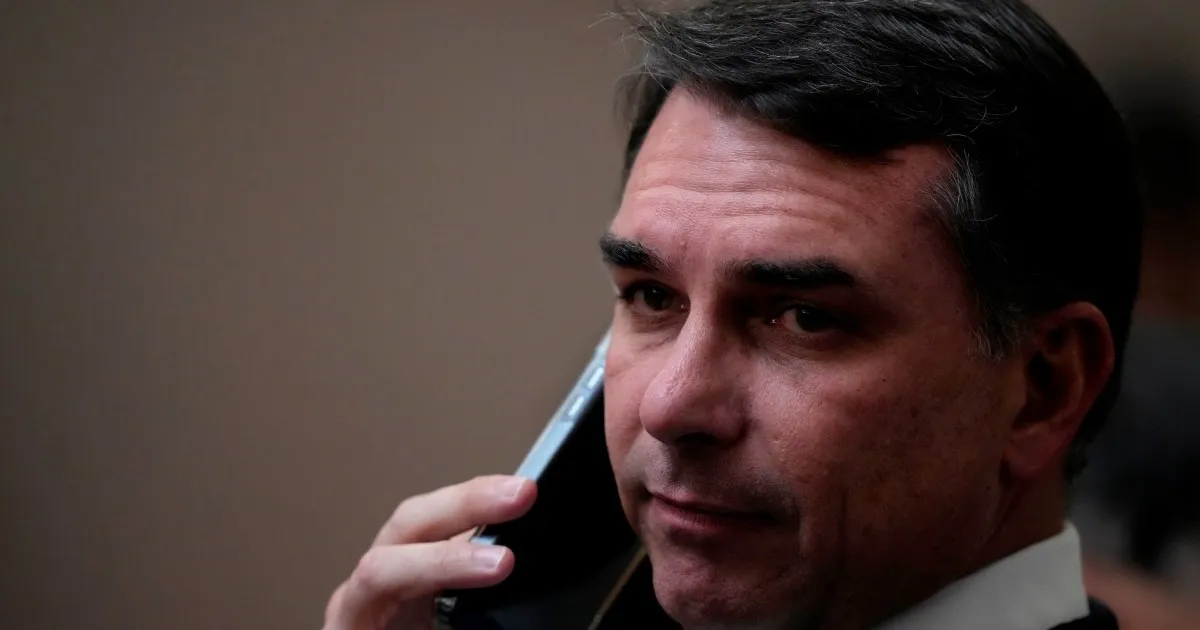
Brazilian Senator Flavio Bolsonaro has shared a photo that appears to show him meeting with US President Donald Trump at the White House, as he seeks to bolster his image amid a scandal that threatens to derail his presidential campaign in Brazil.

Bolsonaro shared a photo on Tuesday of him standing by Trump’s side in the Oval Office, with a caption showing the thumbs-up emoji.

Recommended Stories

list of 3 itemsend of list

Flavio is the son of former Brazilian President Jair Bolsonaro, a right-wing Trump ally who is serving a 27-year prison sentence in connection with a coup attempt after his re-election loss in 2022 to current leftist President Luiz Inacio Lula da Silva.

The younger Bolsonaro has replaced his father as the standard-bearer of Brazil’s political right and is seen as the top contender challenging Lula in the South American country’s election in October.

But his campaign has struggled to regain its balance following a report that he sought funds from a disgraced banker convicted of fraud to finance a film about his father. Bolsonaro has acknowledged requesting the money, but denied any impropriety or wrongdoing.

Recent polls suggest that the scandal has set back his campaign, with Lula retaking the lead from the younger Bolsonaro after previous polls had shown them in a close race.

Media reports in recent days stated that Bolsonaro had sought a meeting with Trump, who previously placed tariffs on Brazil in a bid to have the case against the elder Bolsonaro thrown out.

Flavio then travelled to Washington without a guaranteed appointment in the hope of meeting with the US president. Trump has yet to share information about the meeting on his social media website.

While tensions have remained between Trump and Lula, the two leaders have built a more cordial relationship in recent months, with the Brazilian leader visiting his US counterpart at the White House earlier this month.

Source link

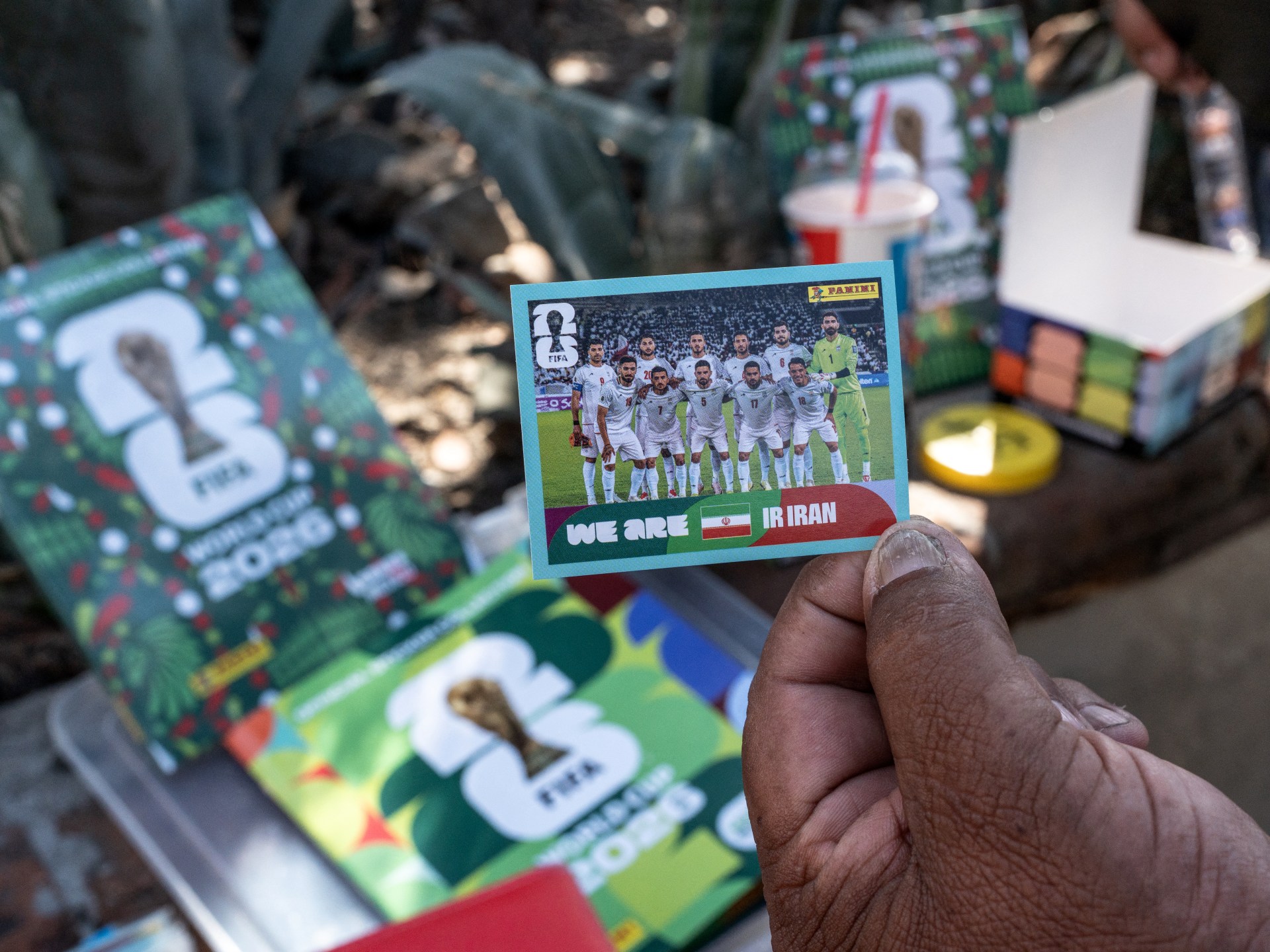
Mexico says it will host Iranian team during 2026 FIFA World Cup | World Cup 2026 News

Mexican President Claudia Sheinbaum has announced that her country will host the Iranian national football team during the upcoming FIFA World Cup, due to tensions with the United States.

On Monday, Sheinbaum said that FIFA, the global football governing body, had approached Mexico about hosting Iran, after the US said it did not wish to do so.

Recommended Stories

list of 3 itemsend of list

“We have no reason to deny them the possibility of staying in Mexico,” Sheinbaum said during her daily media conference.

Previously, Iran had been scheduled to play all three of its group matches in the US.

But the administration of US President Donald Trump has previously said it is not “appropriate” for Iranian team members to be in the country, “for their own life and safety”.

It has yet to grant the Iranian team the necessary visas to travel to the US, despite Trump’s assertion that players and staff would be “welcome”.

Since February 28, the US and Israel have been at war with Iran, and peace negotiations are tense but ongoing.

The head of Iran’s football federation, Mehdi Taj, confirmed on Sunday that the team planned to move its training base from Tucson, Arizona, to the Mexican border city of Tijuana.

Taj explained that team leaders got approval for the move after meeting with FIFA officials in Istanbul, as well as holding an online conference with FIFA’s Secretary General, Mattias Grafstrom.

Switching the team’s base to Mexico, Taj said, would help avoid visa complications, with the team able to travel directly to Mexico aboard Iran Air flights.

But the US-Israeli war against Iran has cast a pall over the World Cup, making the Iranian team’s participation uncertain.

Roughly 3,468 people have been killed in Iran since February’s war began, and more than 26,500 have been injured. Further fatalities have been reported across the region.

The war has also thrown the global economy into turmoil, driving up the costs of fuel and agricultural fertiliser, among other goods.

Iran’s football team has long been a top squad in its region: It currently ranks near the top of the Asian Football Confederation. Its participation in the 2026 tournament marks its fourth straight World Cup qualification.

Trump, however, has sent mixed messages about Iran’s presence at the World Cup, suggesting at times that Iran should sit out the tournament. At other moments, he has expressed ambivalence.

In March, for instance, Politico asked Trump about Iran’s presence at the World Cup. Trump reportedly responded, “I really don’t care”, before calling Iran a “badly defeated country”.

The US, Mexico and Canada are co-hosting the games, with 78 matches in the US alone, including the final. Kick off is on June 11.

Iran is set to play its first two Group G matches in Los Angeles against New Zealand on June 15 and Belgium on June 21, before facing off against Egypt in Seattle on June 26.

The Trump administration’s hardline approach to immigration has raised additional concerns about whether the US will be a welcoming host for fans from around the world.

Already, Trump has moved to suspend visa processing for applicants from nearly 75 countries, including Iran, Brazil, Colombia, Ivory Coast and Senegal, which have teams at the World Cup.

Residents from some of those countries, however, are not required to receive visas to enter the US for short-term visits.

On Monday, Sheinbaum explained that she had been approached by the Iranian team and FIFA officials for help hosting players and staff.

“The United States doesn’t want the Iranian team to spend the night,” Sheinbaum said. “So they asked us, ‘Can we stay the night in Mexico?’ We said sure, no problem.’”

Source link

Cuba thanks China for rice shipment amid worsening humanitarian conditions | Government News

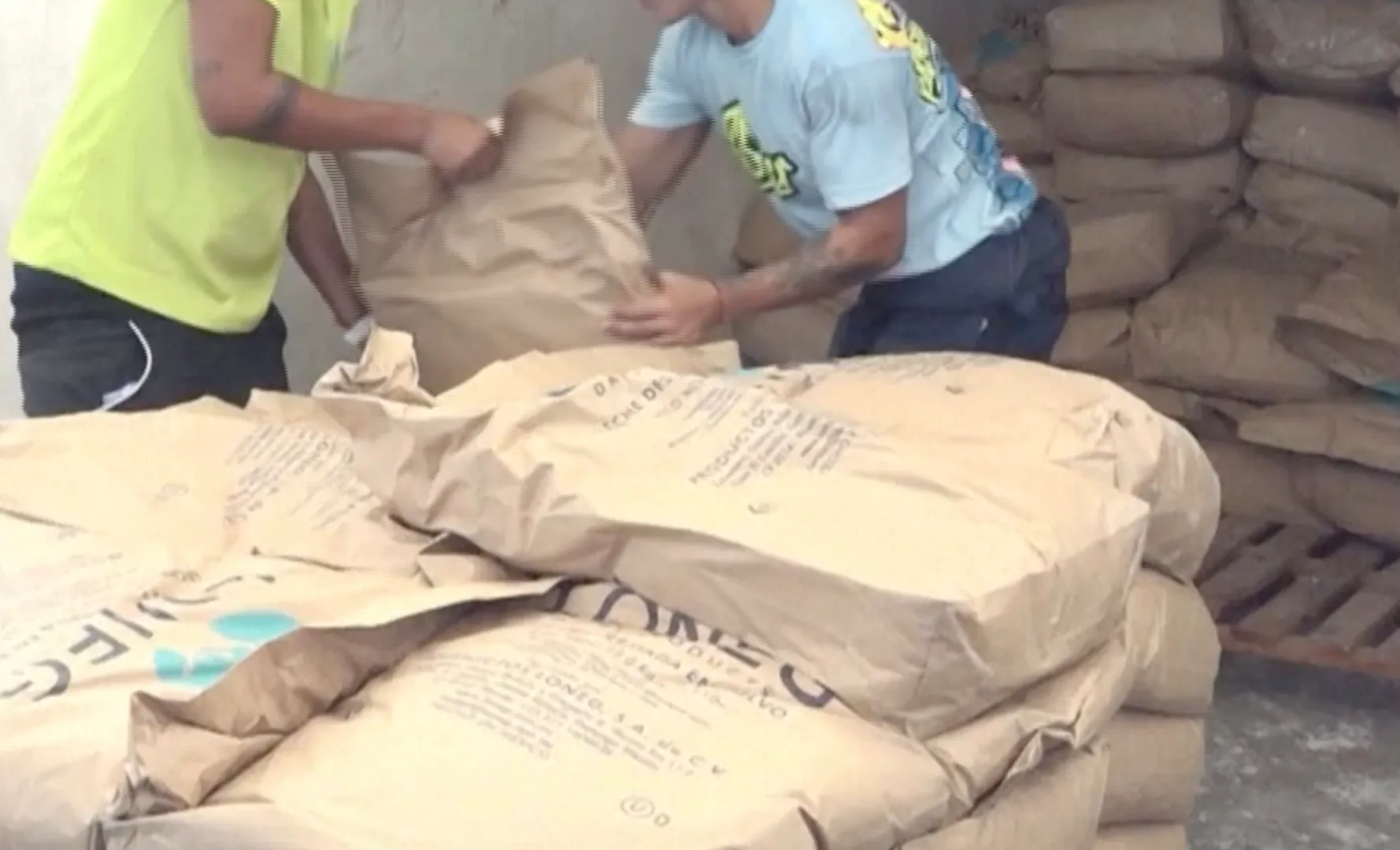
Cuba has announced the first shipment in an expected donation from China of about 60,000 tonnes of rice, as the Caribbean island contends with an ongoing humanitarian crisis.

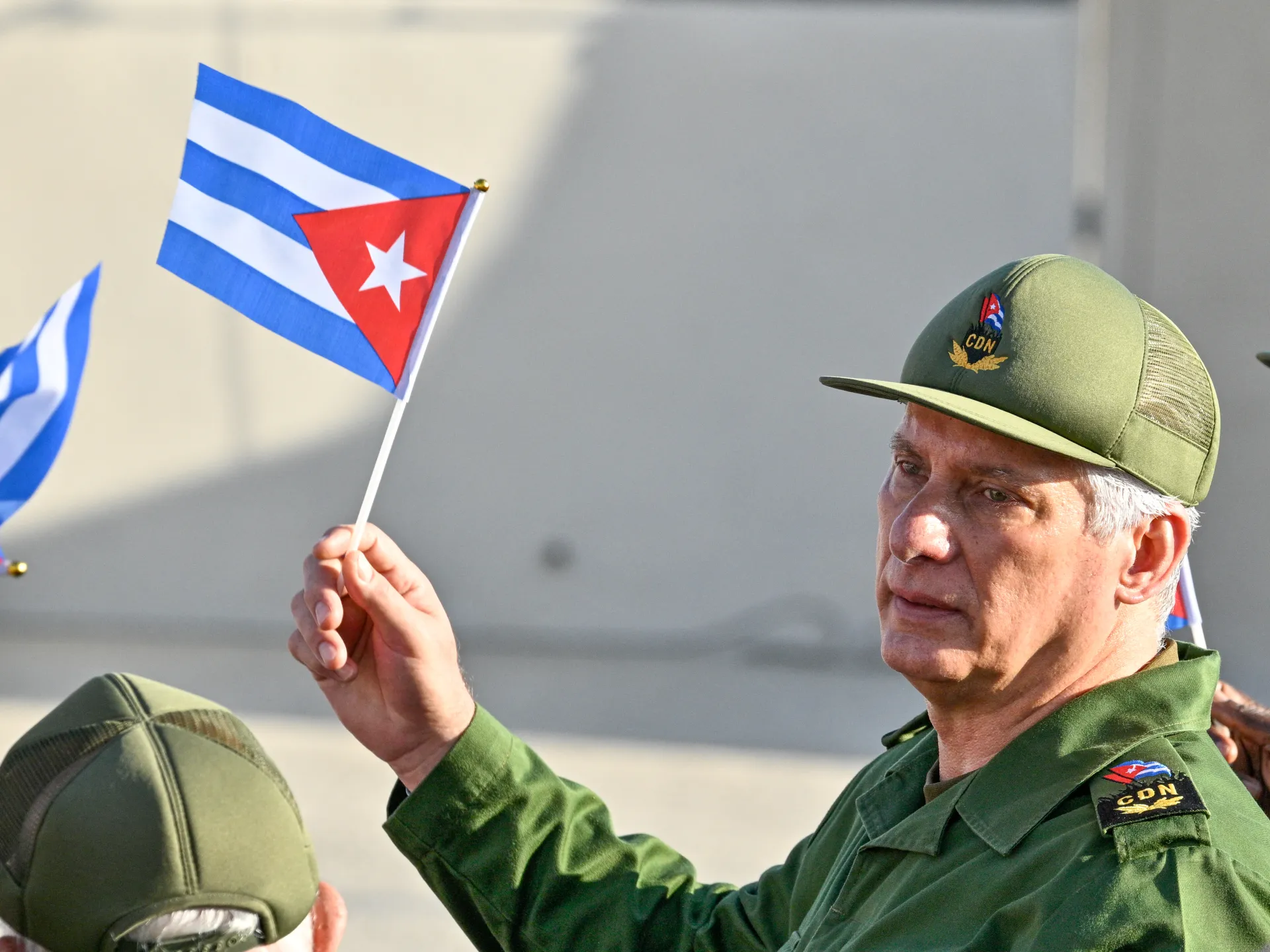
In a series of social media posts on Sunday, Cuban President Miguel Diaz-Canel confirmed that the first load of 15,000 tonnes had arrived a day earlier in the port of Havana.

Recommended Stories

list of 3 itemsend of list

He also expressed “deep gratitude” to China, as well as to members of the European Parliament who denounced the pressure campaign his government faces.

Since January, the United States has increased its sanctions against Cuba, as part of a hardline turn under the second term of President Donald Trump.

“Thank you very much for the solidarity, and for the firm and unequivocal condemnation of the collective punishment to which our people are being subjected,” Diaz-Canel wrote, likening Cuba’s situation to “genocide”.

While Trump has sought to check China’s growing influence on Latin America, Cuba has increasingly relied on the Asian superpower for assistance.

Already, China has donated solar panels to Cuba to help update its ageing energy grid and transition the island away from fossil fuels. Currently, Cuba relies on imports for nearly 60 percent of its oil supply, according to the International Energy Agency.

But since the start of the year, the Trump administration has largely blocked the export of oil to Cuba.

The de facto oil blockade began shortly after January 3, when the US launched a military operation to abduct and imprison Venezuelan President Nicolas Maduro.

Trump followed that operation with the announcement that no more oil or funds would be transferred from Venezuela to Cuba.

By the end of the month, he had also issued an executive order identifying Cuba as an “unusual and extraordinary threat” to the US and threatening economic penalties to any country that supplies it with oil.

Since then, only a single Russian tanker has been permitted to reach the island. Earlier this month, Energy Minister Vicente de la O Levy announced that the island had exhausted its oil supplies.

While Cuba is no stranger to power outages, the recent crisis has caused island-wide blackouts and has brought public services — including transportation and medical care — to a standstill in many areas.

But Trump has continued to impose sanctions on the island’s communist government, in an apparent effort to force regime change.

Media reports have indicated he has sought Diaz-Canel’s resignation and would be open to a situation akin to Venezuela’s, where Maduro’s government has been left largely intact, though Maduro himself has been replaced.

Trump has also repeatedly suggested he may consider a military response should Cuba fail to give in to his demands, though his administration has sent mixed messages about possible intervention on the island.

“Other presidents have looked at this for 50, 60 years, doing something, and it looks like I’ll be the one that does it,” Trump said last week from the Oval Office.

Negotiations between the two countries, however, are likely to be strained after the Trump administration unveiled a murder indictment against Cuba’s former president, Raul Castro, for the 1996 downing of two planes run by Cuban exiles.

Since the 1960s, Cuba has been under a sweeping US trade embargo that has weakened its economy.

US officials, however, have blamed the Cuban government for economic mismanagement and the oppression of its people, particularly political dissidents.

Earlier this month, US Secretary of State Marco Rubio disclosed that the Trump administration offered $100m in humanitarian aid to Cuba, on the condition it implement “meaningful reforms”.

In Sunday’s posts, however, Diaz-Canel sought to project defiance in the face of Trump’s “maximum pressure” campaign.

“The ‘maximum pressure’ strategy — which some in the US morbidly trumpet — is part of a strategy intended to justify the false narrative of an impending collapse, and thereby pave the way for military intervention,” he wrote.

Diaz-Canel added that Cuba would continue to strengthen its ties with the US’s economic and political rival, China.

“The cherished bonds of friendship and cooperation that unite us grow stronger in these crucial times,” he said.

Source link