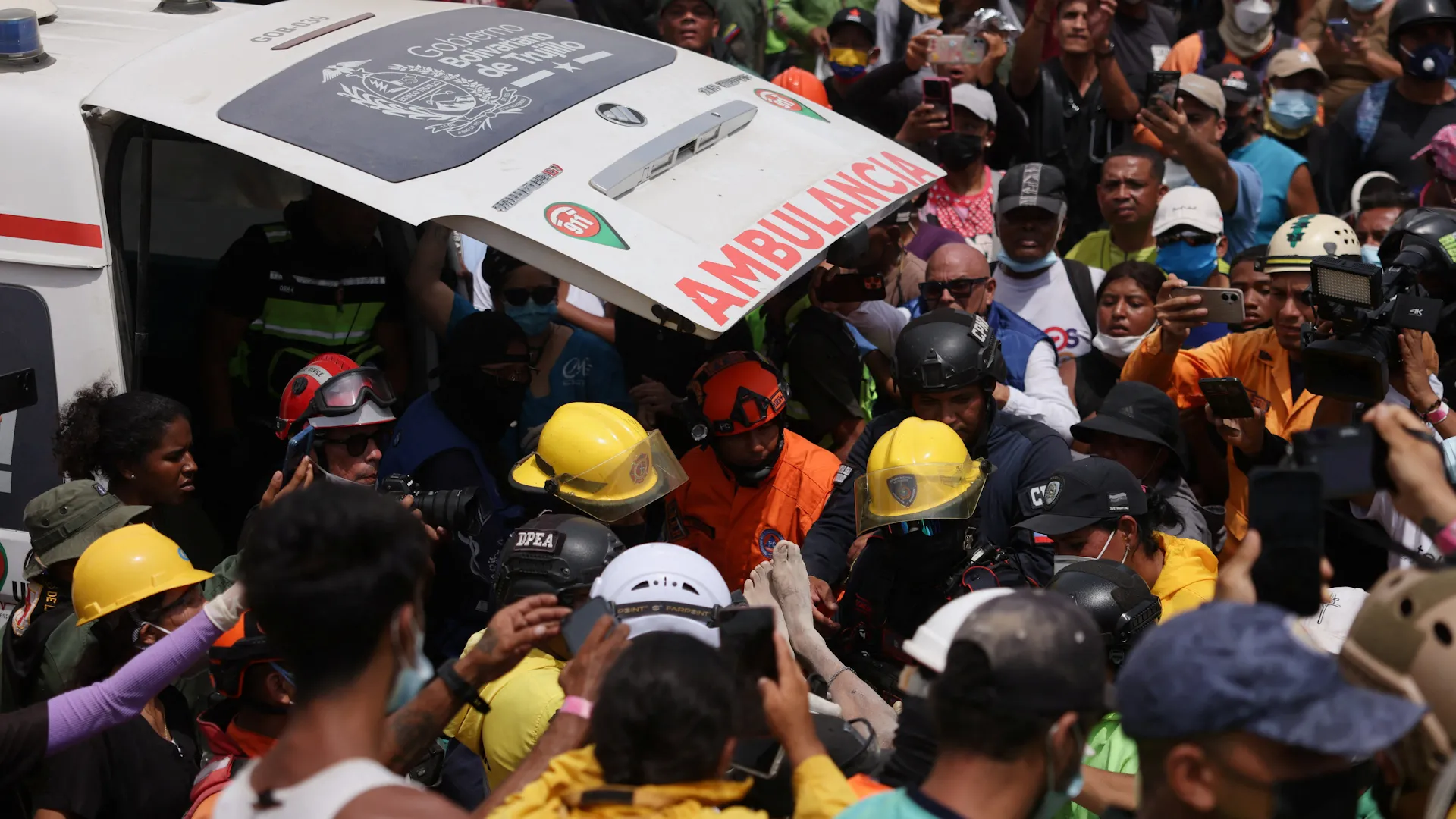
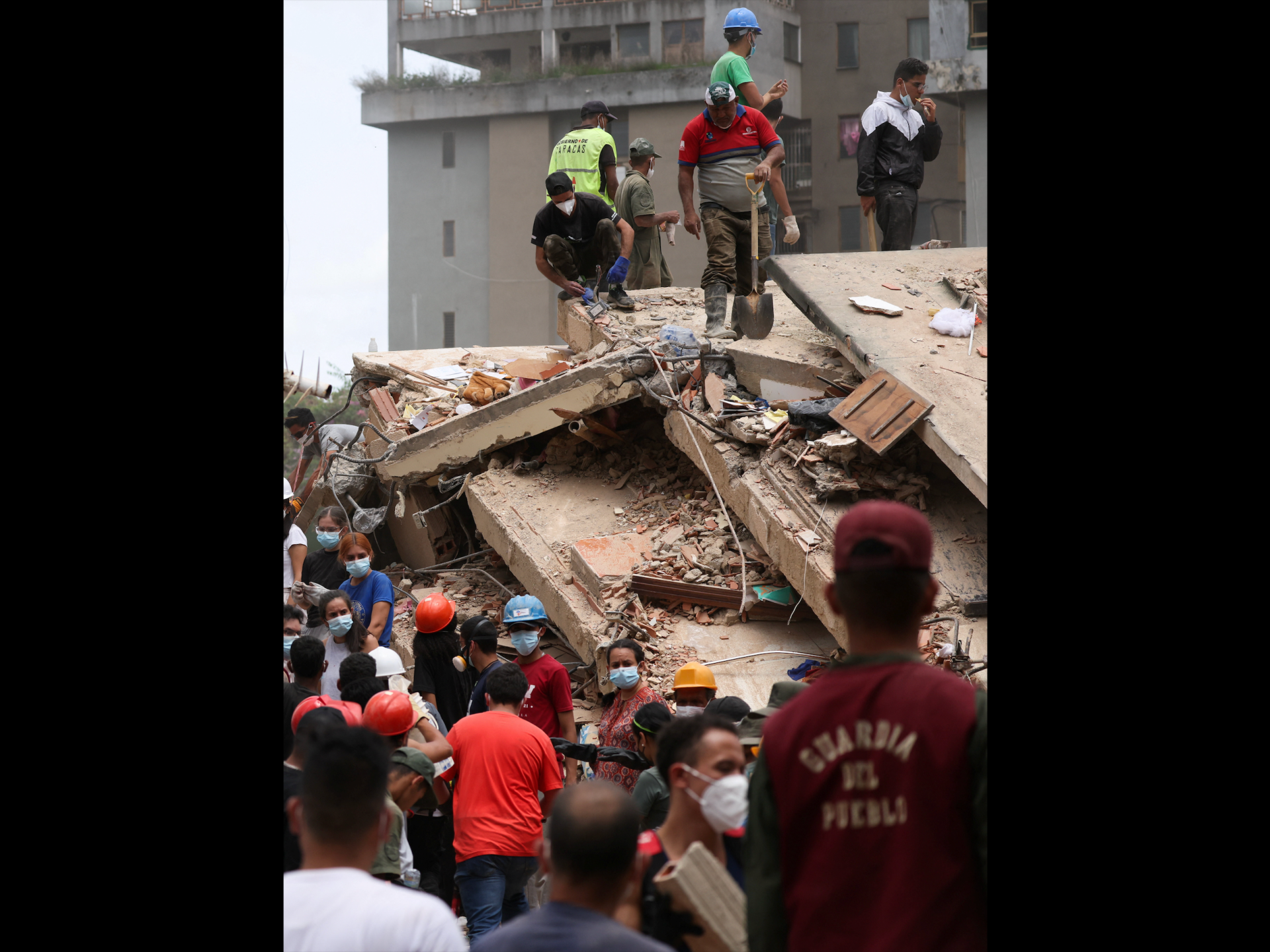
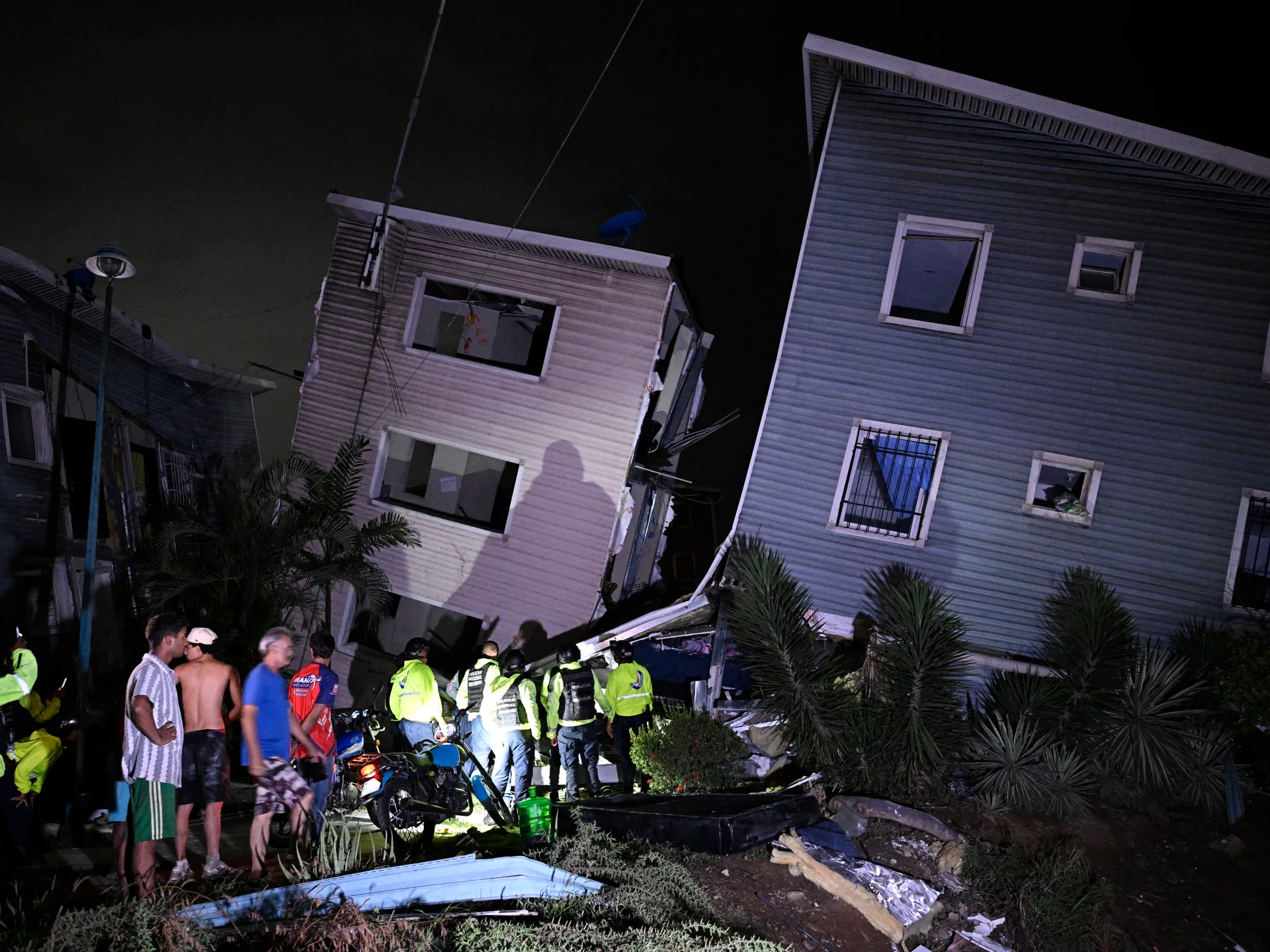
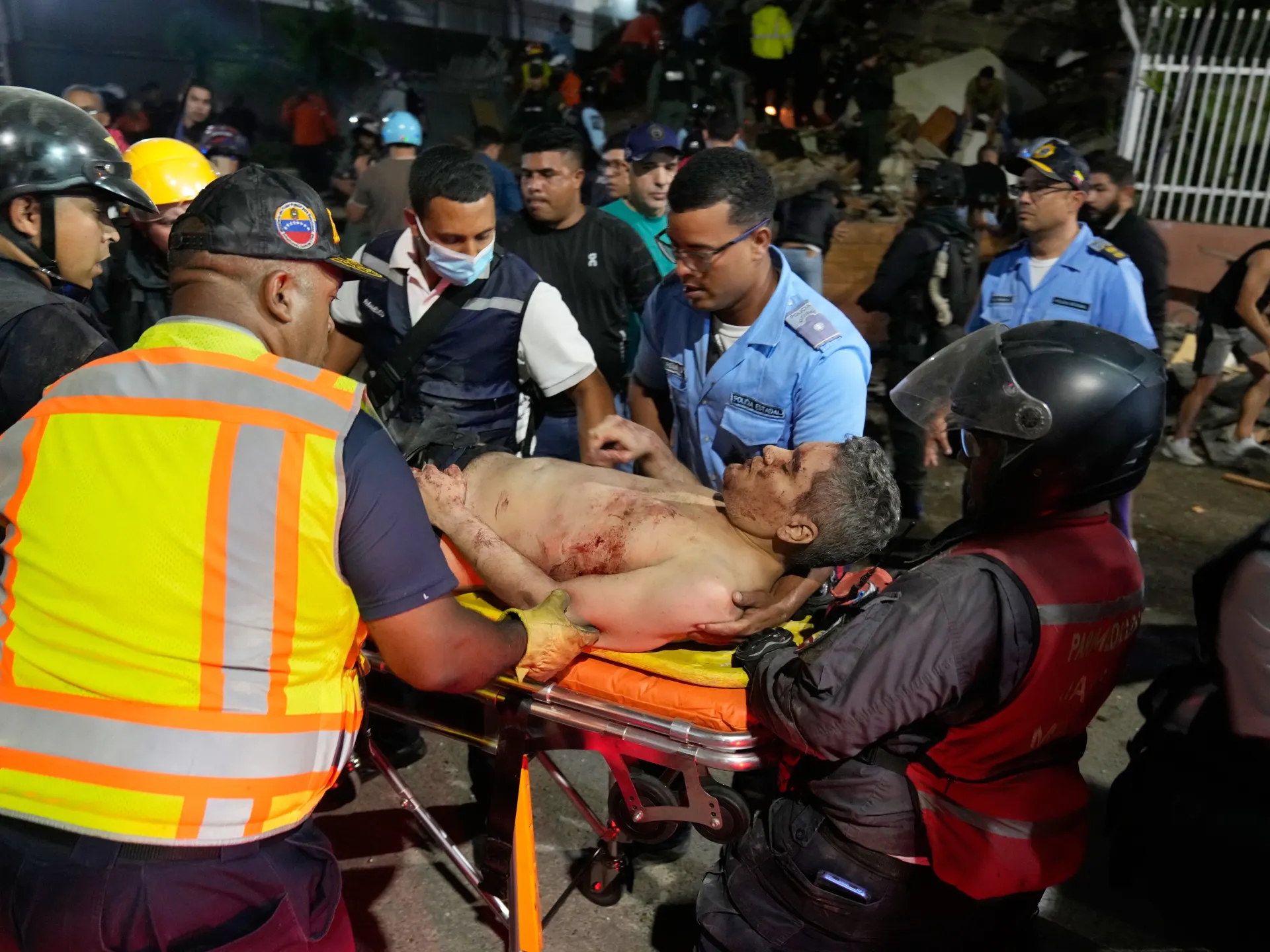
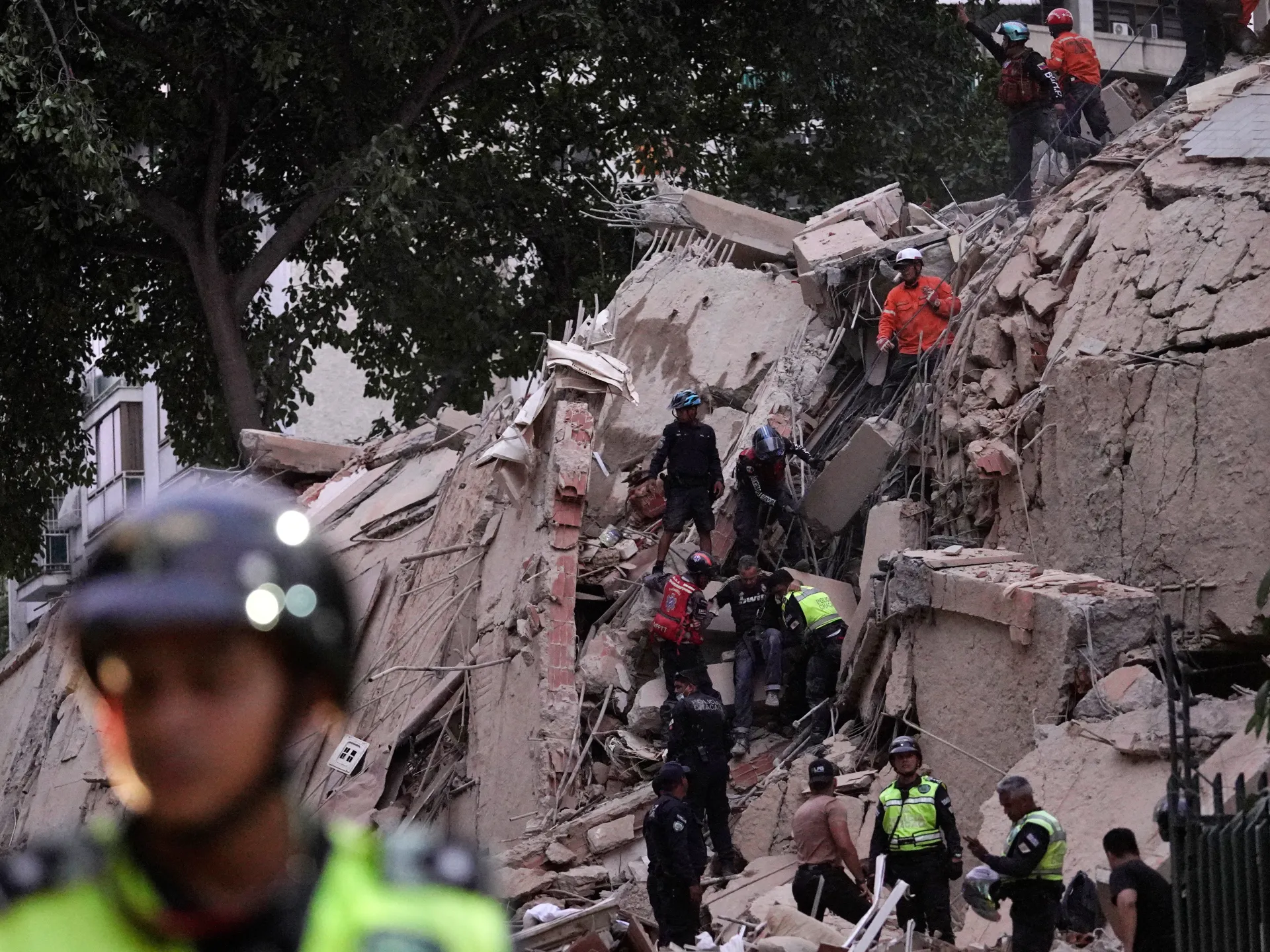
The search for survivors continues in Venezuela after a powerful earthquake left hundreds dead and thousands missing. Al Jazeera’s Teresa Bo reports from one of the country’s worst-hit areas where many residents have lost their homes and are now sleeping outdoors.
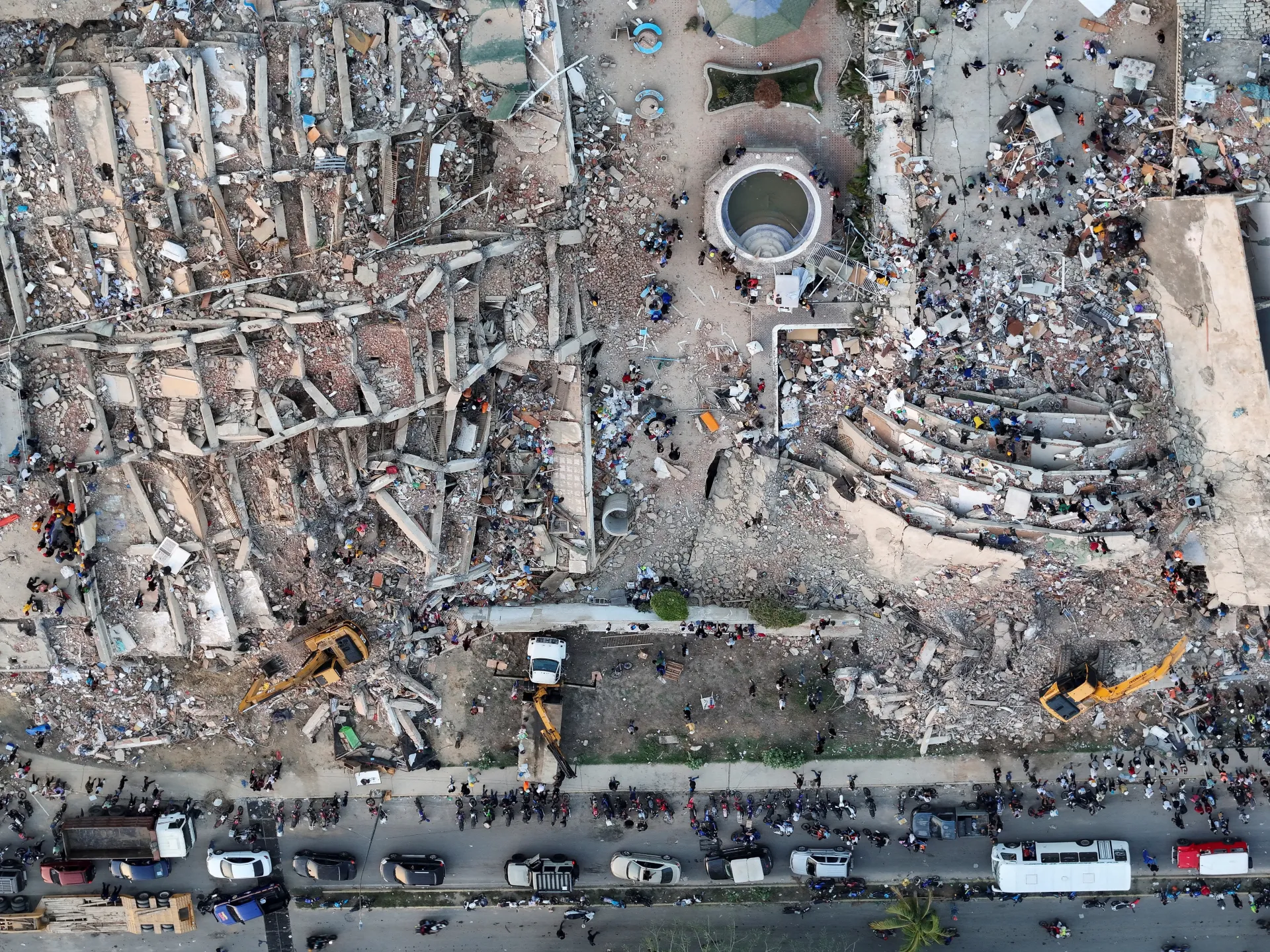
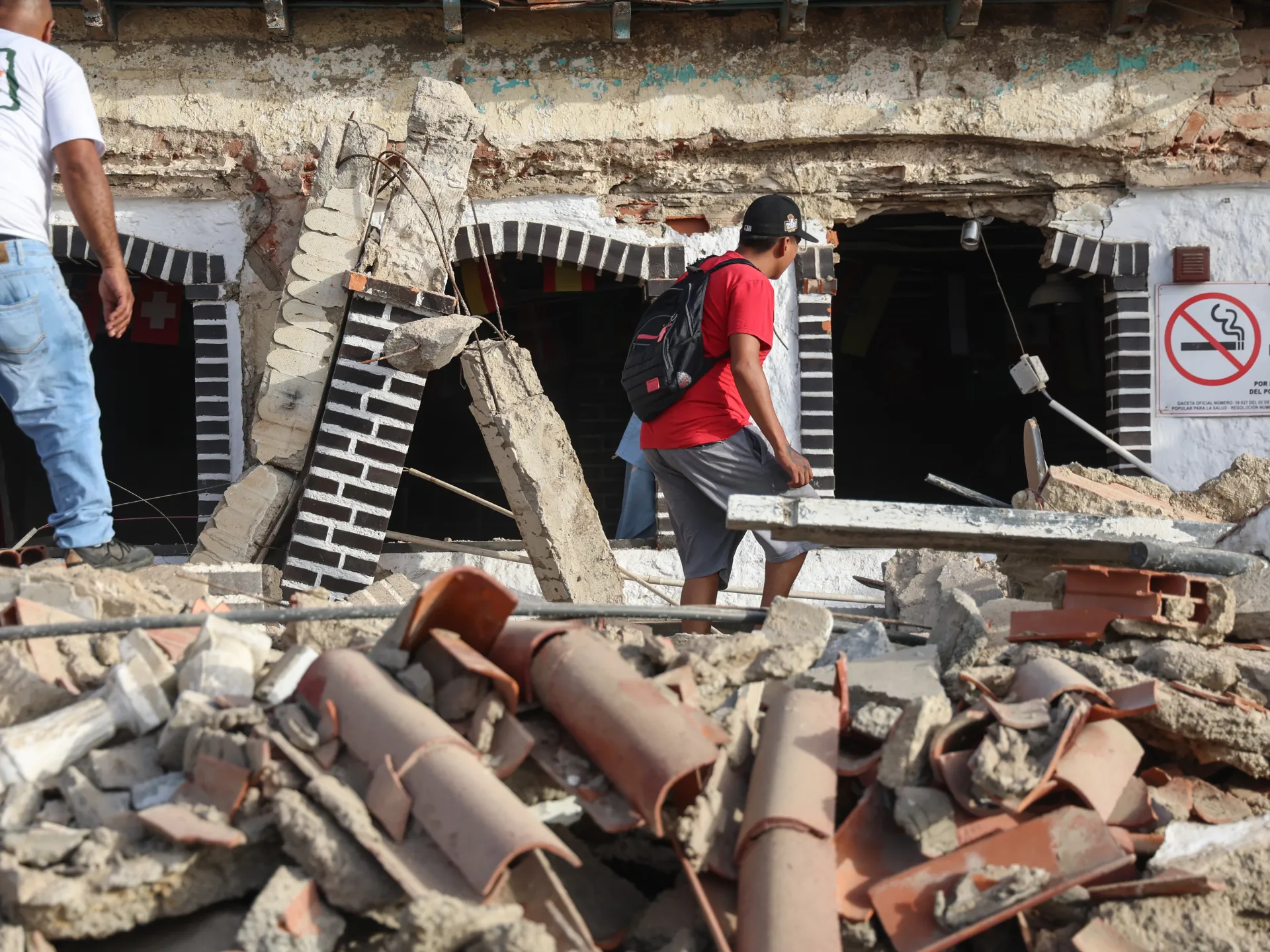
Drone footage from Catia La Mar in Venezuela’s La Guaira shows widespread destruction after twin 7.2 and 7.5 magnitude earthquakes devastated the region. Authorities say at least 1,430 people have been killed, more than 3,200 injured and over 50,000 remain unaccounted for as rescue teams continue searching collapsed buildings for survivors.
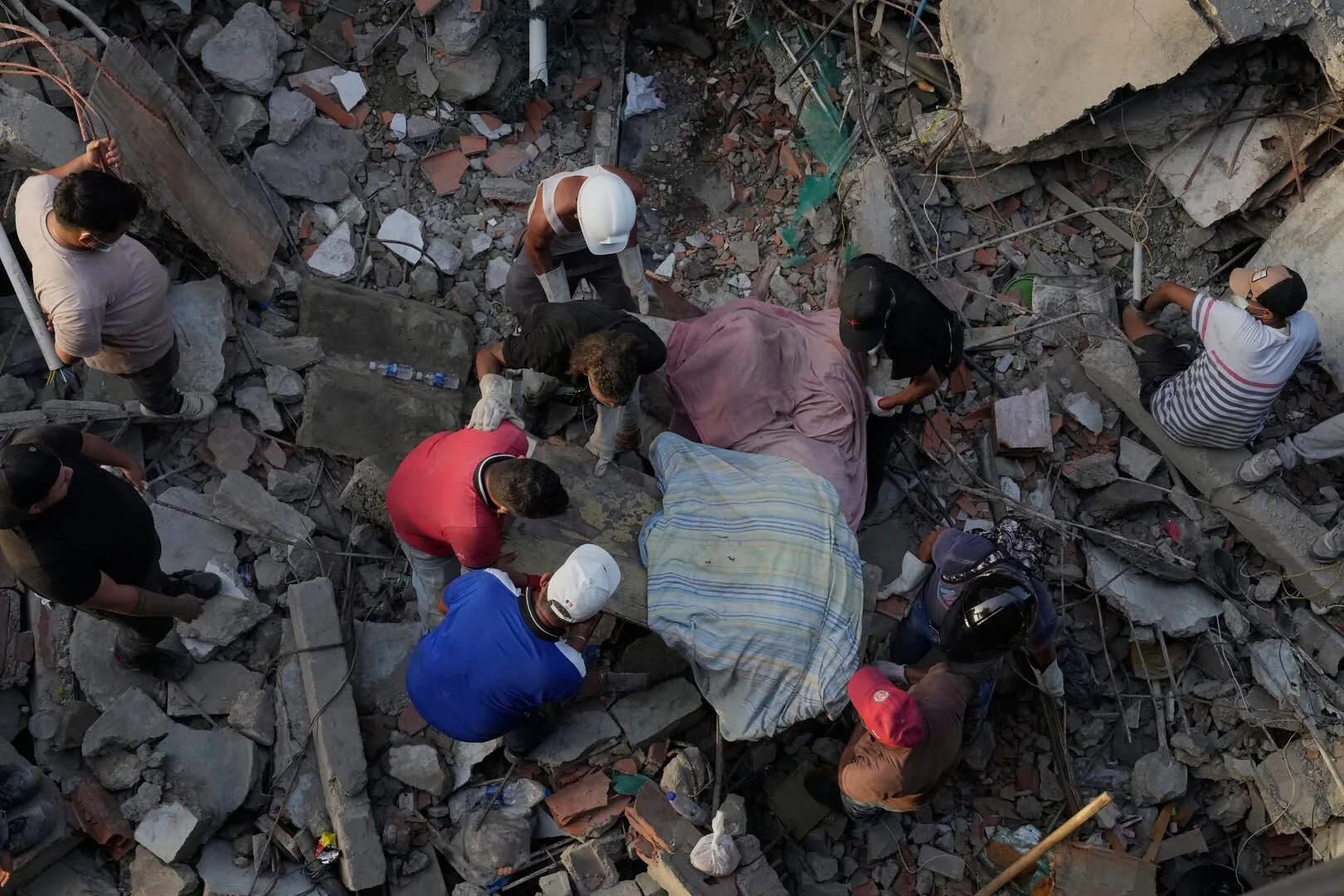
Rescuers in Venezuela are racing against time to find survivors after twin earthquakes left thousands missing. International teams have pulled several people from the rubble alive, including 11-year-old boy Moises rescued after a six-hour operation and a newborn reunited with their family.
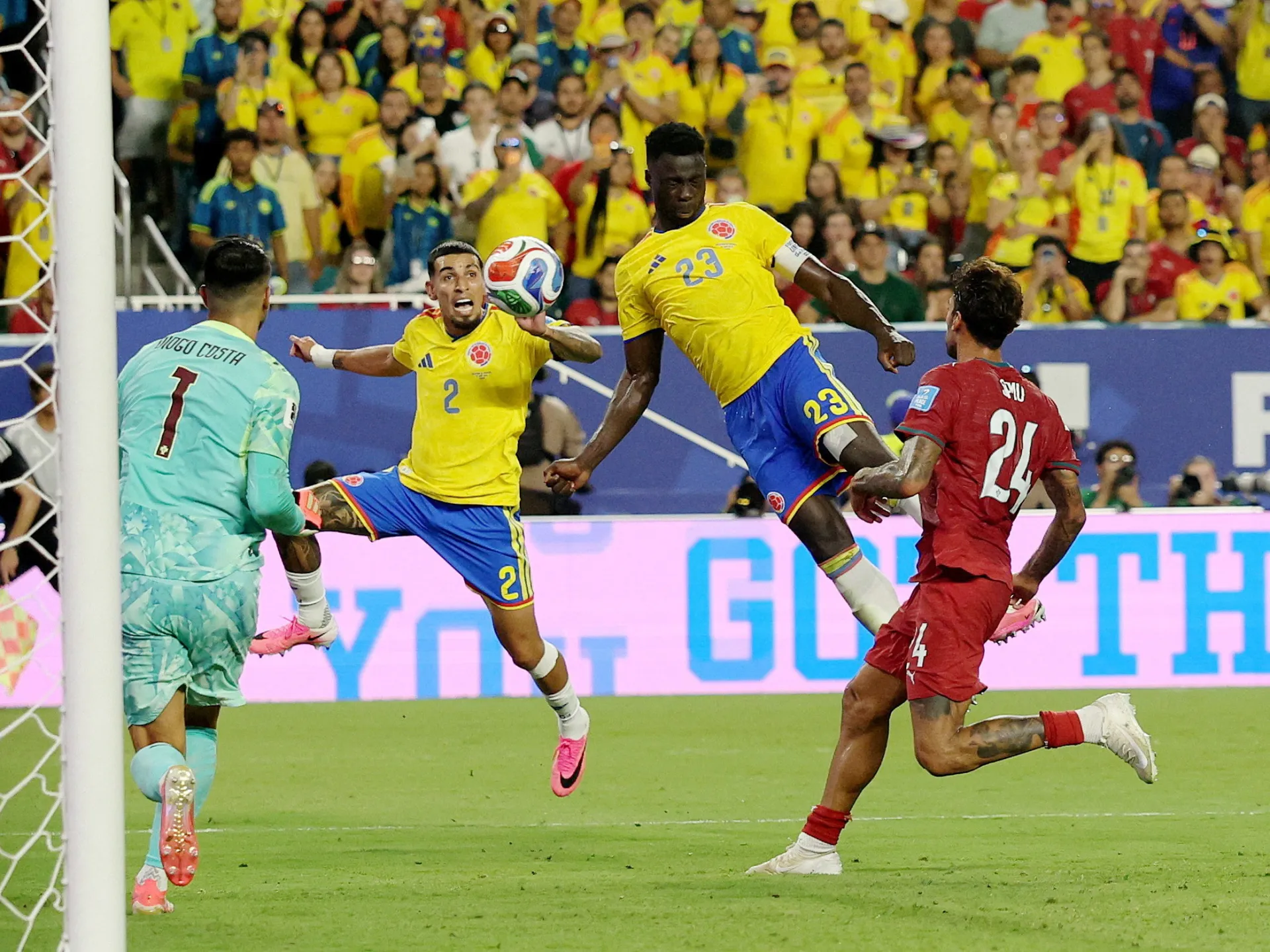
Colombia and Portugal played out a breathless 0-0 draw to a wall of sound at Miami Stadium, with both teams advancing to the last 32 of the 2026 FIFA World Cup as the top two in Group K.
The Colombians will rue their profligacy in front of goal on Saturday, but take encouragement from dominating quality European opposition for large periods as they head off to Kansas City as group winners to take on Ghana on Friday.
Recommended Stories
list of 4 itemsend of list
Portugal, who needed to win to top the group, go north to Toronto to play Croatia on Thursday, knowing they have not quite yet found a way to blend all the talent in their squad into an effective team.
The match started to a cacophony of noise from the massed ranks of yellow-shirted South Americans, and the decibel levels went up a notch when striker Jhon Cordoba headed the ball over the bar in the first minute.
Jhon Arias caused Portugal problems every time he ran at them, and he set Cordoba free in the 17th minute, the big target man unleashing a rocket of a shot that keeper Diogo Costa did well to stop.
After a lovely flowing move five minutes later, winger Arias took the shot himself and screwed the ball towards the far corner of the net, only for Ruben Neves to arrive just in time to flick it off the line.
Colombia struggled to clear their lines cleanly sometimes, however, and it was this frailty that allowed Portugal their best chances towards the end of the first half.
Bruno Fernandes found himself free in front of goal in the 39th minute, with his shot bringing a fine point-blank save out of Camilo Vargas in the Colombia goal.
Three minutes before half-time, Joao Felix cleverly chested the ball over a defender and flashed an acrobatic volley over the bar.
Colombia pressed forward, looking for the goal their dominance deserved, and both Gustavo Puerta and playmaker James Rodriguez troubled the goalkeeper with shots before the break.
Portugal attacked more after the break, but it was Colombia who continued to carve out the best chances, with Arias setting up substitute Richard Rios for a shot that went wide.
Arias curled a shot at goal, which was well saved by Costa, and Puerta drilled another chance wide just before the hydration break.
A Rodriguez volley was deflected away from its target in the 73rd minute, just before he and Arias were substituted, but Colombia continued to tear forward at every opportunity.
Davinson Sanchez thought he had scored the winner with a far-post header a minute from time, but it was called back for a very tight offside after a VAR check.
Rafael Leao went close to winning it for Portugal in stoppage time with a shot that flashed across goal, before the referee finally called time on the entertaining match, played out in front of a crowd of 64,478 sweltering in the Miami evening heat.
Portugal’s totem Cristiano Ronaldo, booed every time he touched the ball and starved of service, had barely a sniff of a chance, his one shot on target a long-range free kick that went straight to the goalkeeper.
Wissa sends DR Congo into last-32 clash with England
In the group’s other game, Yoane Wissa scored twice as the Democratic Republic of the Congo beat Uzbekistan 3-1 and qualified for the last 32 of the World Cup for the first time in their history on Saturday.
They will meet England after registering their first-ever World Cup win.
Eldor Shomurodov’s lob over Lionel Mpasi gave Uzbekistan a perfect start in Atlanta.
But Newcastle striker Wissa levelled from the penalty spot, before Fiston Mayele’s goal sent the mainly Congolese crowd into a frenzy.
Wissa rounded off a historic night for the Africans with a fine strike in stoppage time for his third goal of the tournament.
Earlier on Saturday, Jude Bellingham dragged England through a stubborn Panama test, scoring and setting up Harry Kane in a 2-0 win that sent them into the World Cup round of 32 as Group L winners.
England were made to work for more than an hour in rainy New Jersey, before Bellingham broke the deadlock, crossing for Kane to head in his 11th World Cup goal, lifting him above Gary Lineker as England’s all-time leading scorer at the tournament.
Meanwhile, Nikola Vlasic headed in Luka Modric’s 83rd-minute corner to lift Croatia to a 2-1 victory over Ghana on Saturday and a second-place finish in World Cup Group L.
Vlasic’s perfect finish off the inside of the left post came 10 minutes after Derrick Luckassen had pulled Ghana level on his international debut, with half the time in between spent on a VAR review determining whether he was onside.
Petar Sucic scored early for Croatia, who needed only a draw to reach the last 32. Claiming the second-place spot guaranteed the 2022 third-place finishers a meeting with Portugal, the second-placed team in Group K, on Thursday in Toronto.
The 2026 World Cup will have 13 different kickoff times. You can use the Al Jazeera Sport widget to find out exactly when your team is playing in your local time.
Who: Colombia vs Portugal What: FIFA World Cup 2026 Group K match Where: Hard Rock Stadium, Miami When: Saturday, 7:30pm local time (23:30 GMT) How to follow: We’ll have all the build-up on Al Jazeera Sport from 20:30 GMT ahead of our live text commentary stream.
Recommended Stories
list of 4 itemsend of list
One of the biggest group games of the 2026 World Cup takes place in Miami on Saturday when Colombia face Portugal in a battle of Group K’s top two.
Colombia, powered by Luis Diaz and Daniel Munoz, have already booked their ticket to the round of 32 as the current table-toppers, while Cristiano Ronaldo-led Portugal, who are second, are also assured of a knockout berth.
Those standings could change after Saturday’s fixture at Hard Rock Stadium, where a capacity crowd is expected after tickets reportedly sold for thousands of dollars.
Al Jazeera tells you everything you need to know about Colombia vs Portugal:
Portugal expect ‘away’ atmosphere in Miami
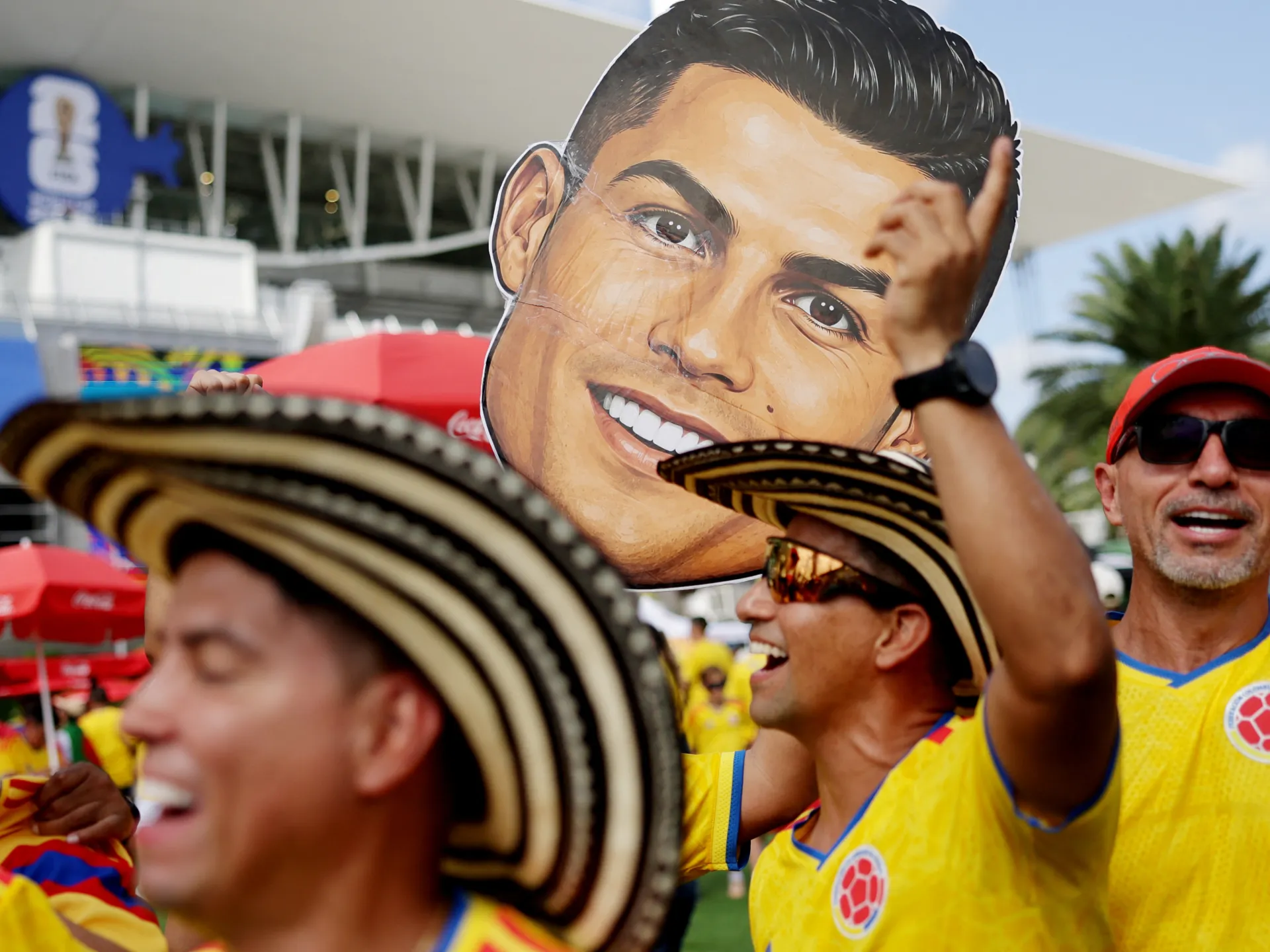
Spearheaded by the larger-than-life presence of superstar Ronaldo, Portugal are a huge and popular draw globally – but for this match, Colombia will hold the spectator edge at Hard Rock Stadium.
With hundreds of thousands of Colombian Americans living in the Miami metropolitan area, the Colombian team has a partisan crowd behind them. In the lead-up, Portugal coach Roberto Martinez remarked that his side would be playing “away from home” while acknowledging the enormous hype around the final matchday for both teams.
Colombia vs Portugal is the most in-demand fixture of all 72 group-stage games, according to The Athletic, with five million ticket requests made in the first 24 hours of the Random Selection Draw in December.
“It means I had to buy tickets for my family in November,” Martinez quipped when asked about the fan dedication. “That’s what it means, because I knew it was going to be difficult to get tickets.”
“I think it’s fascinating. The passion of the game in a difficult moment in the world. Football still brings unity, it brings passion, it brings inspiration for the kids … So I hope football wins and inspiration of anyone that watches the game.”
While Colombia have reached the knockout stages with six points from two games, Portugal sit second on four points and are all but through. Finishing second could give them a tougher path in the knockout stage, with England or Croatia potential opponents.
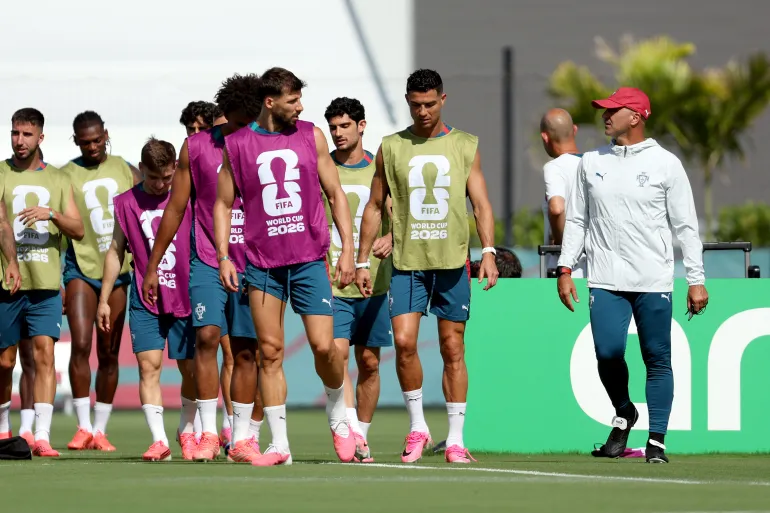
Portugal train ahead of their game against Colombia, where they’ll be aiming to earn the top spot [Leonardo Fernandez/Getty Images via AFP]
Colombia coach warns team against Ronaldo, Vitinha
Colombia coach Nestor Lorenzo said his team will need “special tactical discipline” against Portugal, whom he considers one of the favourites to win the tournament. The Colombians need to avoid defeat to advance as group winners, but Lorenzo was taking nothing for granted against the No 5 side in the FIFA world rankings.
“We’ll try to maintain our style and our footballing identity,” he said.
“But without a doubt, we have to pay attention to the other characteristics and strengths [that Portugal] has. It’s a very well-coached team. They have a coach and players who are at the elite level of world football … and that shows in their game.”
Lorenzo also said Colombia will be wary of the threat posed by Ronaldo, who scored twice in the last match, and Vitinha, the defensive midfielder known for his ball control, work rate and playmaking abilities.
“Both Vitinha and Ronaldo are decisive players. One in the organisation of the game and the quality of his playmaking, and the other in finishing,” he added. “So we absolutely cannot leave them alone or neglect them. Hopefully, the team collective will be well-oiled.”
Colombia are set to feature in the World Cup knockouts for the first time since 2018, having failed to qualify for the 2022 World Cup in Qatar.
Wing-back Daniel Munoz has been a standout player in the Colombia squad, with two goals in two games [Ulises Ruiz/AFP]
Colombia vs Portugal prediction
Opta’s supercomputer has calculated a 48.9 percent probability of Portugal winning this fixture, while Colombia is assessed a 26 percent chance of victory. There is a 25.1 percent probability of the game ending in a draw.
Overall, Colombia are favourites to finish on top of Group G, with a 53.32 percent probability, according to Opta.
Colombia vs Portugal: Kickoff time, TV channel
Colombia: DSPORTS, RCN TELEVISION SA, CARACOL, DGO (6:30pm Colombia Standard Time)
Portugal: RTP 1, RTP Play, LiveModeTV, SPORT.TV5 (00:30am on Sunday, Western European Summer Time)
United Kingdom: BBC iPlayer, BBC One, Red Button 1 (00:30 am on Sunday, British Summer Time)
To check the TV listings for your country, head to FIFA’s TV listing schedule here.
What’s the scenario in Group K?
Colombia (six points) and Portugal (four points) are assured of a round of 32 berth each as the top two teams. The Democratic Republic of the Congo are third with one point, and Uzbekistan bottom with zero.
The top two teams from each of the 12 groups, along with the eight best third-placed teams, will proceed to the round of 32.
DR Congo have to beat Uzbekistan to stand a chance of advancing via the third-place team route.
Can Portugal finish on top of Group K?
Yes, Portugal can topple Colombia from first place in Group K if they beat the South Americans. Currently, they have a two-point difference.
If Portugal draw with Colombia or lose to them, Ronaldo’s side will remain second.
What’s the benefit of winning a group?
Group winners start their knockout campaign against a third-placed team from another group.
In this case, the Group G winner will face a third-placed team from Group D, E, I, J or L in the round of 32 in Kansas City on July 3.
Form guide
(Last five games, latest first)
Colombia: W-W-W-W-L
Portugal: W-D-W-W-W
Both teams have a solid record over the last five matches, with Portugal edging Colombia with an unbeaten streak over that period.
Portugal thrashed Uzbekistan 5-0 and were held to a 1-1 draw by DR Congo in the first game of the World Cup. They defeated Nigeria and Chile in pre-World Cup friendlies and beat the USA in a March friendly.
Colombia defeated DR Congo 1-0 and Uzbekistan 3-1 at the tournament. Before that, they beat Jordan and Costa Rica in June friendlies but lost to France in a March exhibition fixture.
Portugal have scored six goals across two matches at the tournament, including a double from Cristiano Ronaldo [Ronaldo Schemidt/AFP]
Colombia vs Portugal: Team news
No injuries have been reported by either Colombia or Portugal.
At least 920 people are confirmed dead and more than 51,000 missing after two earthquakes struck Venezuela on Wednesday.
By Al Jazeera Staff and AP
Published On 27 Jun 202627 Jun 2026
Rescuers are racing against time in Venezuela, three days after two powerful earthquakes struck, with at least 920 people confirmed dead and more than 51,000 still missing.
The twin, magnitude 7.2 and 7.5 quakes hit on Wednesday, devastating the coastal area around La Guaira, where authorities moved on Friday night to restrict access as traffic chaos began to hamper search efforts.
Recommended Stories
list of 4 itemsend of list
With a scarcity of government rescue teams, Venezuelans have become desperate in the hardest-hit areas, digging through rubble with their hands, with aid agencies warning the critical 72-hour survival window is closing fast.
Officials said anyone who wants to enter the area around La Guaira would now have to seek official permits, but provided few details of who would be allowed in.
People reported seeing few state rescue teams in the hardest-hit areas, despite authorities projecting an image of a robust government response.
“Each person saved is a miracle,” said Jorge Rodriguez, president of the National Assembly.
“We are not going to hide absolutely anything about the magnitude of this tragedy.”
Government forces distributed food and water to survivors in La Guaira, and Acting President Delcy Rodriguez said her government was mounting a full response during these “critical hours for rescuing people alive”.
She welcomed the arrival of international rescuers and humanitarian aid.
Rodriguez said La Guaira had been “militarised” and more help was on the way, even as residents said it was just a fraction of what they needed.
Rodriguez, the former vice president, took office in January after the United States captured and removed then-President Nicolas Maduro.
Venezuela has been facing economic disarray for more than a decade, and many people reject the legitimacy of the political movement Rodriguez represents.
‘People are still terrified to re-enter what were their homes’
The number of dead was expected to climb, as people reported tens of thousands of missing on independent digital databases.
Those figures likely included people who have been incommunicado due to the lack of phone signals, and some reports may be duplicates.
The number of injured was more than 3,300 as of midday Friday, and authorities said they had rescued 243 people.
The International Organization for Migration said up to 6.76 million people could be affected, some two million of them in Caracas alone.
The destruction was amplified by the quick succession of shallow quakes, experts said.
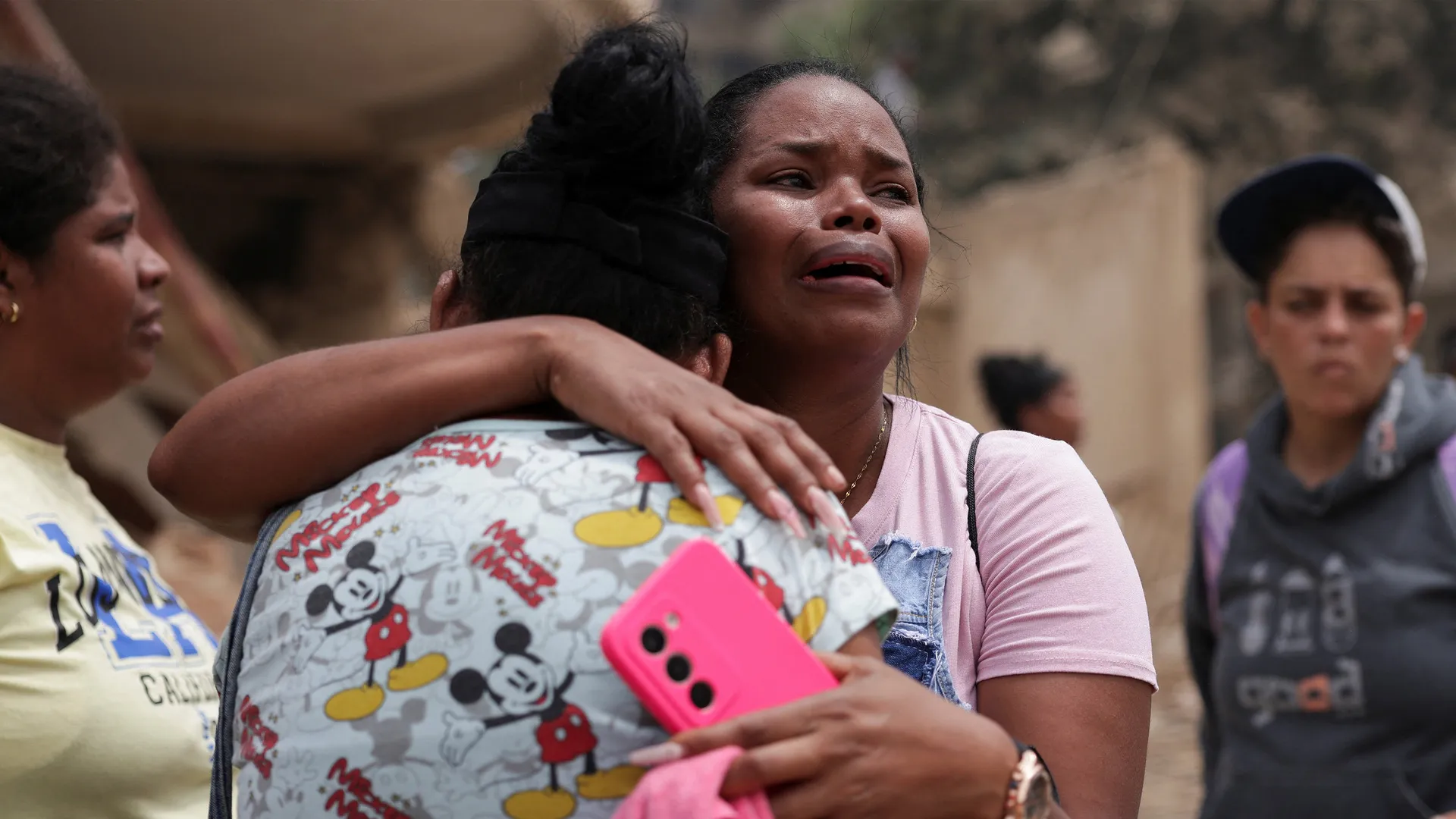
Loyce Pace, the International Red Cross regional director for the Americas, said “people are still terrified to re-enter what were their homes.”
Venezuelan authorities said 861 volunteers from Mexico, the US, El Salvador, Switzerland, Colombia and beyond were in the country, and more were coming from elsewhere.
Rescue workers in one Caracas neighbourhood say no help has arrived, two days after twin quakes tore through the city. Al Jazeera’s Noris Soto says aftershocks are making the search for survivors harder and rescue efforts are turning to the recovery of bodies.
Families are sharing details about their loved ones online as more than 50,000 people remain missing after two devastating earthquakes hit Venezuela on Wednesday night. Rescue teams and local residents are still digging through the rubble on Friday, hoping to find survivors.
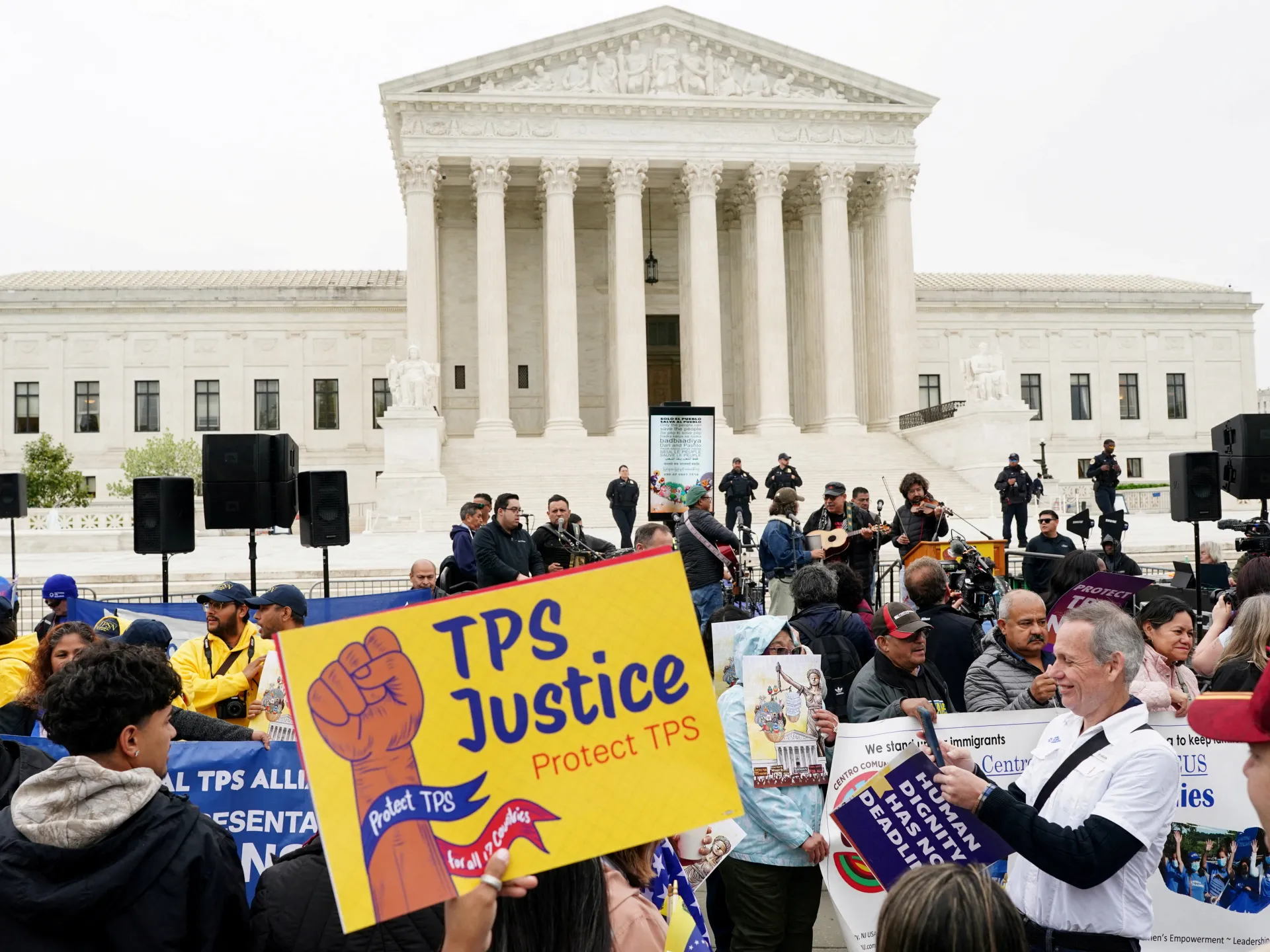
The Supreme Court’s ruling allowing the administration of US President Donald Trump to do away with a special legal status for Haitians and Syrians has sent shockwaves through communities across the country.
Immigration advocates say the 6-3 majority decision allowing the Trump administration to terminate Temporary Protected Status (TPS) will have a resounding impact on nationals of Haiti and Syria, raising the spectre of deportation and family separation, while likely leaving US employers in the lurch.
Recommended Stories
list of 3 itemsend of list
But the ruling is set to have more far-reaching implications, advocates have warned, creating a new tool to “empower Trump’s ICE deportation machine to take away legal protections and work permits from hundreds of thousands of people”, according to Hector Sanchez Barba, the president of the Mi Familia Vota advocacy group.
“This has been a defining element of the Trump- [White House adviser Stephen] Miller campaign of cruelty, revoking legal or temporary status, taking away work permits and forcing immigration judges to dismiss cases to accelerate detentions and deportations,” Barba said in a statement following Thursday’s ruling.
Here’s what to know.
What does the ruling mean for Haitians and Syrians on TPS?
Temporary Protected Status (TPS) was created by Congress as part of the Immigration Act of 1990. It allowed the executive branch, particularly the Secretary of Homeland Security, to declare that it is unsafe for foreigners to return to their home countries in light of extraordinary temporary conditions, such as armed conflict, natural disasters or other internal crises.
When a country is designated under TPS, its nationals are granted temporary legal status to reside and work in the US.
Haiti was first designated for TPS following the devastating earthquake in 2010, which killed over 250,000 people. The status has been repeatedly renewed as the Caribbean nation has suffered overlapping political, security and humanitarian crises.
Syria has been designated for the status since 2012, after the start of the civil war which lasted almost 14 years.
All told, about 350,000 Haitians and about 6,000 Syrians are believed to be in this status.
Immigration advocates say the ruling will send TPS recipients scrambling to find other legal pathways to stay in the US or become deportable under Trump’s mass deportation drive.
Given that both countries have been designated for TPS for over a decade, the decision also raises the spectre of family separation, particularly for parents with children born in the US.
“Ending these protections for hundreds of thousands of Haitians and thousands of Syrians will tear families apart, disrupt workplaces and communities and place vulnerable individuals at risk,” Council on American Islamic Relations (CAIR) national executive director Nihad Awad said.
“Many TPS holders have lived in our nation for years, raised American children, built businesses, contributed to our economy and become integral members of their communities.”
What does it mean for US employers?
Several labour organisations and unions have underscored the impact the sudden change in status could have on US industries.
Neidi Dominguez, the executive director of Organized Power in Numbers, called the ruling a “gut punch that requires workers, immigrant communities and the employers who rely on them to hit back together through our organising”.
“They work in hospitality, food service, education, construction, health care and every industry,” Dominguez said. “These are our coworkers, our neighbours and the backbone of the economy across this country, from service to construction and healthcare.”
The healthcare industry is expected to be particularly hard-hit by the decision, with the Migration Policy Institute finding that Haitian immigrants held over 103,000 healthcare jobs in 2021.
“This unconscionable ruling will leave thousands more immigrants – not just registered nurses and healthcare workers, but also teachers, airport workers, hard-working people – vulnerable to the Trump administration’s deadly, money-making deportation machine,” the National Nurses United union said in a statement.
“This decision will further strain our healthcare workforce and worsen the nurse staffing crisis,” it said.
Why does this extend beyond Haitian and Syrian TPS?
Lower courts had previously ruled that the Trump administration did not follow proper procedures, including conducting an inter-agency review to determine that conditions in both countries had improved, in terminating TPS for Haiti and Syria.
But, as Aaron Reichlin-Melnick, a Senior Fellow at the American Immigration Council, explained, the Supreme Court’s majority ruling did not even address whether the Department of Homeland Security Secretary had followed the legally mandated procedures in terminating TPS.
“Rather, the Court said that questions of whether the DHS secretary followed the law cannot be heard by courts in the first place,” he wrote, “meaning that in the future even an openly unlawful decision to grant or terminate TPS could be entirely insulated from judicial review”.
The ruling will further allow the Trump administration to “return to federal court in other cases and overturn decisions ruling against the termination of TPS for countries such as Venezuela, Somalia, Ethiopia and others”, he added.
Angelica Sedgwick Oun, a US immigration researcher at Human Rights Watch, said the ruling “leaves the DHS secretary with unfettered power to make a life-and-death decision about whether it is safe enough to send someone back to a country facing rampant violence, like Haiti, or conflict, like Syria, without meaningfully consulting on human rights conditions there”.
What comes next?
Because the Supreme Court is the top appellate court in the US, there is little recourse available through the judiciary.
But an array of advocacy groups have called on Congress to intervene.
In a rare bipartisan move on immigration, the US House of Representatives in April passed an extension to Temporary Protected Status for Haitians until 2029. The Senate has not yet taken up the measure.
Others have called on Congress to pass legislation to assert a process for courts to review any TPS terminations.
As two powerful earthquakes hit Venezuela, west of Caracas, in quick succession on Wednesday, the country’s capital sustained extensive damage.
Authorities were continuing to search for people under the rubble of collapsed buildings on Friday as 235 people were confirmed to have been killed, with 4,300 more injured.
Here is more about why Caracas has sustained so much damage.
How badly damaged is Caracas?
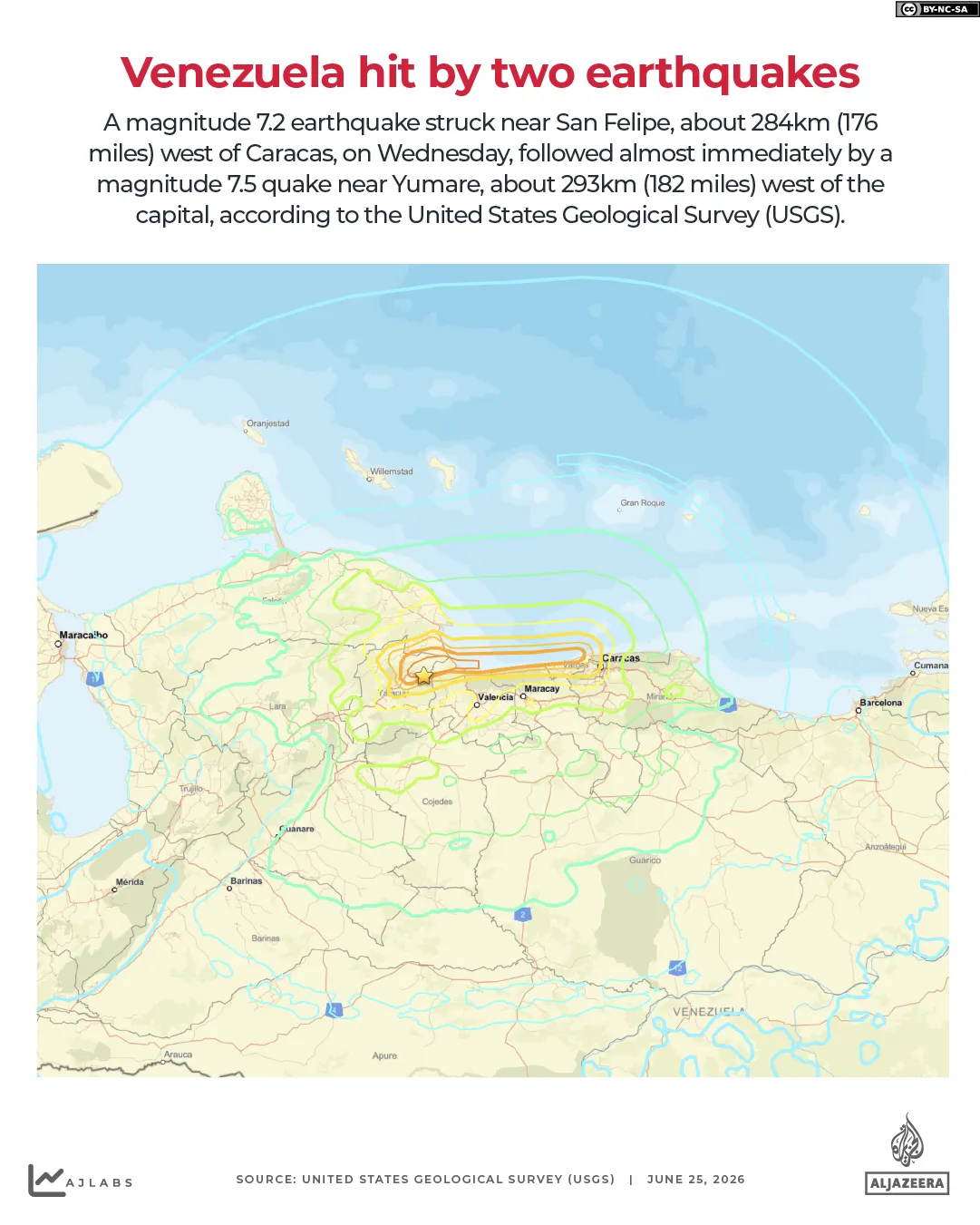
A magnitude 7.2 earthquake struck about 160km (100 miles) west of Caracas, followed less than a minute later by a magnitude 7.5 tremor, the strongest since 1900, according to the US Geological Survey (USGS).
Jorge Rodriguez, head of Venezuela’s national assembly and brother of interim President Delcy Rodriguez, said earlier in the day that 200 people had been trapped, with 250 buildings damaged or destroyed nationwide.
In Caracas and nearby coastal areas, at least eight hospitals, the headquarters of the Venezuelan Red Cross and the French embassy were among buildings reported to have been badly damaged.
Initial assessments released on Thursday put the estimated economic damage at between 1 and 7 percent of Venezuela’s $111bn gross domestic product (GDP). Authorities have not yet provided a separate estimate for losses in the capital.
However, the heaviest damage has been reported in Caracas itself, Al Jazeera’s Teresa Bo, reporting from Bogota in neighbouring Colombia, said on Thursday.
Public infrastructure was also heavily damaged, with acting President Rodriguez reporting power outages in Caracas.
Health Minister Carlos Alvarado said late on Thursday that 235 people had been confirmed dead at medical centres across Venezuela. He also told state media that about 4,300 people had been reported injured so far. Hundreds more are feared trapped or missing under the rubble.
How badly has the city been damaged in previous earthquakes?
This is not the first time Caracas has suffered heavy damage in an earthquake.
In 1812, a powerful earthquake roiled the cities of Merida and Caracas, killing about 30,000 people, according to the USGS. The tremors caused near-total destruction of Caracas’s colonial architecture, flattening homes, churches and public institutions.
In 1967, another earthquake hit the city, causing several high-rise buildings to collapse and killing 240 people.
(Al Jazeera)
Why has Caracas been so hard-hit?
Venezuela has a long history of devastating earthquakes because it is located along the boundary between the Caribbean and South American tectonic plates.
Caracas is also in a deep sedimentary basin, which amplifies the seismic waves from earthquakes, Vashan Wright, a geophysicist at the University of California in San Diego, told Al Jazeera.
Another reason Caracas is so vulnerable to damage from earthquakes is that its buildings and infrastructure are not specifically designed to withstand tremors and are often standing on insecure ground.
Al Jazeera’s Teresa Bo said the heaviest damage in Caracas occurred in the Altamira district, where emergency crews pulled survivors from the rubble of a 22-storey building while relatives searched for missing family members. Officials said they are still assessing the full extent of the destruction.
“For example, in the [hard-hit] area of Altamira in Caracas, many of the buildings that collapsed are built on sediments, and this makes them much more vulnerable to seismic waves,” Bo said.
“Also, there’s lots of informal housing in several areas across the country, and those types of buildings are not prepared to sustain very strong earthquakes,” she added.
Adequate urban planning and building codes, which incorporate seismic activity, require substantial funding, which Venezuela can ill afford as it has long been subject to heavy sanctions from the United States and other Western countries.
While some sanctions have been lifted since the US abducted former President Nicolas Maduro in a military strike on Caracas in January and he was replaced by Rodriguez, Caracas is still grappling with the effects of decades of underinvestment.
Another issue for Caracas is that at about 7.8km, the earthquakes were shallow, which means they were more destructive than deeper quakes of the same magnitude would have been.
In deeper earthquakes, much of the energy dissipates as it moves through layers of rock. By contrast, shallow ones release their energy closer to the ground, producing stronger shaking and greater damage in populated areas.
How many people live in informal housing in Caracas?
People living in informal housing are more at risk than others during earthquakes because low-cost, self-built housing structures, often built on hillsides and other slopes, are not resilient against tremors.
The slums in Caracas are known as barrios and are densely populated, lacking proper infrastructure. They comprise self-constructed housing or structures built with unreinforced cinderblocks or bricks, often without formal foundations or steel reinforcement, mostly on the mountainous hillsides surrounding the capital.
The lack of proper urban planning, coupled with construction on steep slopes, makes the barrios vulnerable to natural disasters.
While there is no official figure for the number of Venezuelans living in informal settlements in Caracas, academic estimates suggest they account for 40 to 50 percent of the city’s nearly five million residents.
According to the latest National Survey of Living Conditions (ENCOVI), about 55 percent of Venezuelans are living in poverty.
Which countries are better prepared for earthquakes?
Many parts of the world have adapted infrastructure with seismic engineering. Many earthquake-prone countries now plan and construct buildings with damage mitigation from tremors in mind.
Japan, one of the most quake-prone nations in the world, has strict building codes, which means many structures survive shaking that would devastate poorly built homes in parts of Indonesia or Central America. In most inland earthquakes, the majority of deaths and injuries are caused when poorly built structures collapse rather than by the shaking itself.
Japan has made enormous public investments in seismic research and has superior access to advanced engineering technologies like base isolation, which involves the installation of massive steel or rubber shock absorbers beneath the foundations of buildings.
This is why global deaths and destruction from earthquakes have reduced in the past decades. For instance, in 1556, the deadliest earthquake in recorded history in China’s Shaanxi killed about 830,000 people. In 2023, an earthquake hit northwestern China near the Shaanxi province, killing 127 people.
The UN says it is scaling up its response after twin earthquakes devastated Venezuela, warning the disaster will deepen an already severe humanitarian crisis. Speaking to Al Jazeera, UN spokesperson Stéphane Dujarric said hundreds of UN staff are supporting the response, adding that recovery efforts are expected to continue for months.
I rose from my living room couch before Mexico’s World Cup match against Czechia when the Telemundo announcer stated it was time for the Mexican national anthem.
The public address system at Azteca Stadium in Mexico City played a short string intro. My back straightened. I pressed my right hand against my chest horizontally in the traditional gesture that accompanies the tune. And then I recited the opening lyrics to a song I’ve heard all my life but that I only began committing to memory this month:
Mexicanos al grito de guerra/El acero aprestad y bridón/Y retiemble en sus centros la tierra/Al sonoro rugir del cañon
Those florid 19th century words — “Mexicans, at the cry of war/Ready the steel and the bridle/and may the Earth tremble to its core/at the cannon’s resounding roar” — make “The Star-Spangled Banner” seem as anti-war as “Give Peace a Chance.” My kumbaya heart nevertheless jumped as the anthem continued.
Goosebumps blossomed on my skin as Mexico’s head coach Javier Aguirre, he of a stern face and gray haircut worthy of a drill sergeant, beamed while singing. My eyes watered as the camera panned over his arm-in-arm players as they shouted the line, “Think, o beloved homeland! That heaven/gave you a soldier in each son.”
Millions of Mexican Americans like myself have stumbled through the himno nacional during this World Cup, whereas in previous years, we might have just hummed some bars or stayed silent. It’s a boisterous way to connect with one half of our hyphenated lives and get in the right mindset to root for El Tri, but otherwise something we don’t really have to know all the way through given we’re in the U.S.
Yet seeing stadiums and bars packed with Latinos wearing the jerseys of their ancestral homes and warbling their national anthems during this World Cup has been a jolt of inspiration I wasn’t expecting. Those few minutes before each match have become a reminder of what we’re up against at this moment in the Western Hemisphere, as President Trump thirsts to smash Latin America into submission while persecuting too many of us stateside.
In downtown Santa Ana earlier this week, Alicia Rojas quietly recited Colombia’s national anthem word for word before a game against the Democratic Republic of the Congo, even though she was just one of a handful of Colombian fans at Chapter One: The Modern Bistro.
“It reconnects me to my roots, my family and the memories of home,” said Rojas, who was born in Bogotá and moved to the U.S. at age 12. The artist has helped to organize against federal immigration raids in Orange County and volunteers for local political races. “Those few minutes remind me that beyond our differences, we share a history, a culture and a love for the land that made us who we are.”
Latinos are a famously divided bunch, to the point that we don’t even like a catch-all label for “us.” A 2024 Pew Research Center survey found that 52% of Latinos prefer to refer to themselves by their family’s country of origin, while only 30% identify as Hispanic or Latino and just 17% use plain ol’ American.
One thing that can unite us all — and all lovers of liberty, for that matter — is those Latin American national anthems. Many were written in the aftermath of wars for independence. Most are bright, rousing listens, even if you don’t understand Spanish, because their chords reflect the Romantic classical music popular at the time of their composition in the 19th century. All call for their countrymen to fight against tyranny.
Fans cheer after Lionel Messi scores a goal against Algeria during a World Cup watch party at Mercado Buenos Aires on Tuesday, June 16 in Van Nuys.
(Ronaldo Bolaños/Los Angeles Times)
Cue up this soundtrack for your summer:
Paraguay’s national anthem starts by stating that the people of the Americas were “oppressed for three centuries” until they rebelled. Ecuador’s recalls how its founding fathers “cried out a holy voice to the heavens/that noble voice of a unbreakable pledge/to defeat that [Spanish] monster of blood.” Colombia’s similarly doesn’t shy away from how violent its fight for independence was, but takes solace that “in furrows of pain/good now germinates.”
On and on, these songs stir the soul. Argentina: “Hear the sound of broken chains/See noble equality enthroned.” Uruguay: “Tyrants: Tremble!/We shall cry out ‘Liberty’ in battle!” — a boast backed by flutes and violins that make it sound like a Rossini overture. I especially like how Panama’s national anthem concludes by urging “shovel and pick/to work without delay” — a reminder that the job of creating a better society is never done.
There’s nothing wrong with taking inspiration from the clarion calls of other countries. “O Canada” is as soaring as “God Save the King,” while revolutionaries across the world have chanted “La Marseillaise” for centuries. And yes: I sing “The Star-Spangled Banner” with all my heart as well — and I definitely know the words to it.
But the message of the U.S. national anthem isn’t enough for Latinos right now. Hailing survival against an invading force is important, but it’s a mindset too many of us have resigned ourselves to under Trump.
The theme of Latin America’s national anthems is the demand that we stand against despotism and push for a better world through sacrifice and valor. They should be a wake-up call, especially for Latinos, to lead the electoral charge against Trump this November. We helped put him in the Oval Office in 2024, and we have the power to take Congress away from his GOP vassals.
Alas, all those paeans to freedom have played out better in song than in real life. Latin America is swinging rightward again, electing presidents who promise to channel the strongmen of yore and rule the region through might, not right.
On the same night that Rojas was cheering on Colombia, she was bemoaning that her homeland had elected Abelardo de la Espriella, a millionaire criminal defense lawyer and political novice who earned Trump’s endorsement for his “tremendous accomplishments in life” — which include claiming that female voters would pick him because of the supposed size of his genitals.
We must channel the hopes and dreams of Simón Bolívar, Emiliano, Zapata, José Martí and other heroes of the Americas who fought for freedom for their countrymen, sought to cast off the long reach of colonialism and imperialism and urged pan-American alliances over forever wars.
Nothing like the World Cup’s unofficial pre-game soundtrack to reinforce this eternal, universal message.
Mexico dominated Czechia 3-0 and finished first in its group. When El Tri plays again on Tuesday in the first round of the knockout stage, I will stand at a packed Chapter One with other fans and so many more across the U.S. and sing again Mexico’s national anthem.
I will hope to have it all memorized by then instead of reading off my smartphone — the thing is hard! The Spanish is archaic, the intonations are complicated, and the words tumble over themselves like a hard charge toward the goal posts.
But I will do it — a little victory in the long battle for freedom that never ends.
Reporting from Caracas for Al Jazeera, Noris Soto says authorities appear to lack a clear response plan in the aftermath of two powerful earthquakes. The recovery is being hampered by severe damage to communication systems, as displaced residents are housed in hotels.
Condolences and offers of help have been pouring in from countries around the world following back-to-back powerful earthquakes in Venezuela that have killed at least 32 people.
The United States Geological Survey (USGS) said on Thursday that the first earthquake, measuring magnitude 7.2, struck west of Moron, about 168km (104 miles) west of Caracas. A second tremor of magnitude 7.5 hit near the same area just a minute later. The USGS warned that “high casualties and extensive damage are probable” and that the “disaster is likely widespread”.
Recommended Stories
list of 3 itemsend of list
Acting President Delcy Rodriguez declared a state of emergency and said the Simon Bolivar International Airport in Caracas is closed due to damage.
Here’s how countries have reacted:
Argentina
The presidency issued a statement expressing “its deepest solidarity” with the Venezuelan people. It said President Javier Milei “extends his hand in solidarity” amid the natural disaster, “despite any differences that may exist between our governments”.
Bolivia
President Rodrigo Paz said that the people’s “hearts go out to the affected families” in Venezuela, and that the country “remains vigilant and ready to provide any necessary support”.
Brazil
President Luiz Inacio Lula da Silva said he has instructed the Foreign Ministry and the embassy in Caracas to evaluate what assistance Brazil can provide.
Colombia
The country’s District Institute of Risk Management and Climate Change says it has activated its emergency response team and reached out to Venezuelan authorities to “coordinate the necessary technical and operational support”.
“The goal is to provide all necessary assistance and make our teams available to support this situation,” the disaster response agency said in a post on X.
“We also want to reassure the residents of Bogota: following the earthquake felt in the capital, no damage or structural damage has been reported. The city is operating normally.”
Cuba
Foreign Minister Bruno Rodriguez says Cuban health workers in Venezuela “are fully mobilised and providing medical services to the affected population”.
In a post on X, Rodriguez expressed his “deepest condolences and solidarity to the government and brotherly people of the Bolivarian Republic of Venezuela for the loss of life and damage caused by the earthquake”.
Ecuador
President Daniel Noboa has announced Ecuador is rapidly deploying humanitarian assistance to Caracas.
“I have arranged for the immediate sending of humanitarian aid to address this emergency,” he posted on X. “Ecuador will respond with the speed and commitment that this moment demands because, despite the enormous differences, humanity must always guide the actions of a leader.”
El Salvador
President Nayib Bukele has said his country has offered Venezuela assistance through its Foreign Ministry.
“300 rescuers and paramedics, along with 50 tonnes of equipment, medicines, and essential supplies, are ready to depart for Caracas,” Bukele said in a post on X.
Italy
Prime Minister Giorgia Meloni wrote on X that she is following the situation with “deep concern” and working to “promptly activate every channel of humanitarian aid and assistance to our compatriots”.
Mexico
The Foreign Ministry has extended its sympathies to the Venezuelan people and expressed its regret at the “damages and impacts caused”.
Panama
President Jose Raul Mulino is the latest foreign leader to respond to the crisis in Venezuela.
In a post on X, Mulino conveyed Panama’s “deepest solidarity and support” to Venezuela, while offering to send humanitarian aid.
Pakistan
Prime Minister Shehbaz Sharif said he was “deeply saddened by the devastation and loss of life caused by the earthquakes in Venezuela”.
“On behalf of the people of Pakistan, I convey our heartfelt condolences to the Government and people of Venezuela, especially the families of the victims. We pray for the injured and stand in solidarity with all those affected during this difficult and challenging time,” he said on X.
Spain
The prime minister and foreign minister expressed solidarity with Venezuela and offered help.
“All my support, and that of Spain, to the Venezuelan people following the devastating earthquakes of this evening,” Prime Minister Pedro Sanchez wrote on X.
“Our thoughts are with the victims and their families.”
Jose Manuel Albares, the foreign minister, said the Spanish Agency for International Development Cooperation “is prepared to provide all necessary emergency assistance”.
“My full solidarity with the brotherly people of Venezuela,” he wrote.
Uruguay
Uruguay’s president, Yamandu Orsi, expressed solidarity with Venezuelan authorities and citizens. He said Uruguay is ready “to collaborate in any way the Venezuelan government deems necessary”.
United States
President Donald Trump posted a message on his Truth Social account, expressing concern over the disaster in Venezuela.
Trump said the earthquakes were “massive in scale and have left a devastating number of deaths”. The US “stands ready, willing, and able to help,” and US government agencies have been instructed “to get ready to move quickly,” he said.
Secretary of State Marco Rubio wrote on X that the US was “immediately deploying” search and rescue teams, medical resources and humanitarian assistance.
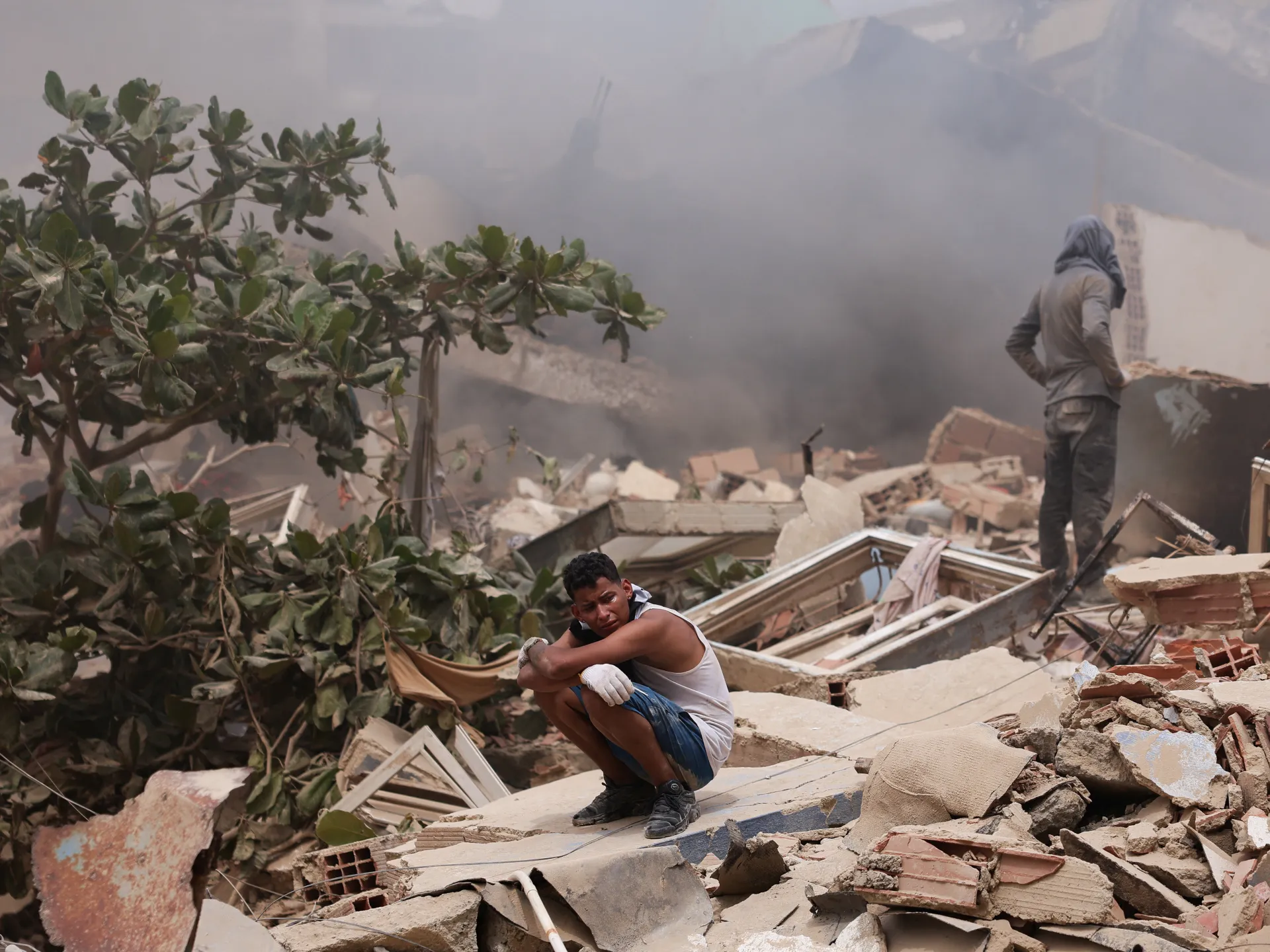
Two powerful earthquakes have struck northern Venezuela, killing dozens of people, injuring hundreds and destroying homes and infrastructure. These images show the damage, rescue efforts and grief in the affected communities.
South Africa’s team has celebrated reaching the World Cup knockout stage for the first time after defeating South Korea 1-0 at Monterrey Stadium in Mexico. A video showed players dancing and chanting in the dressing room.
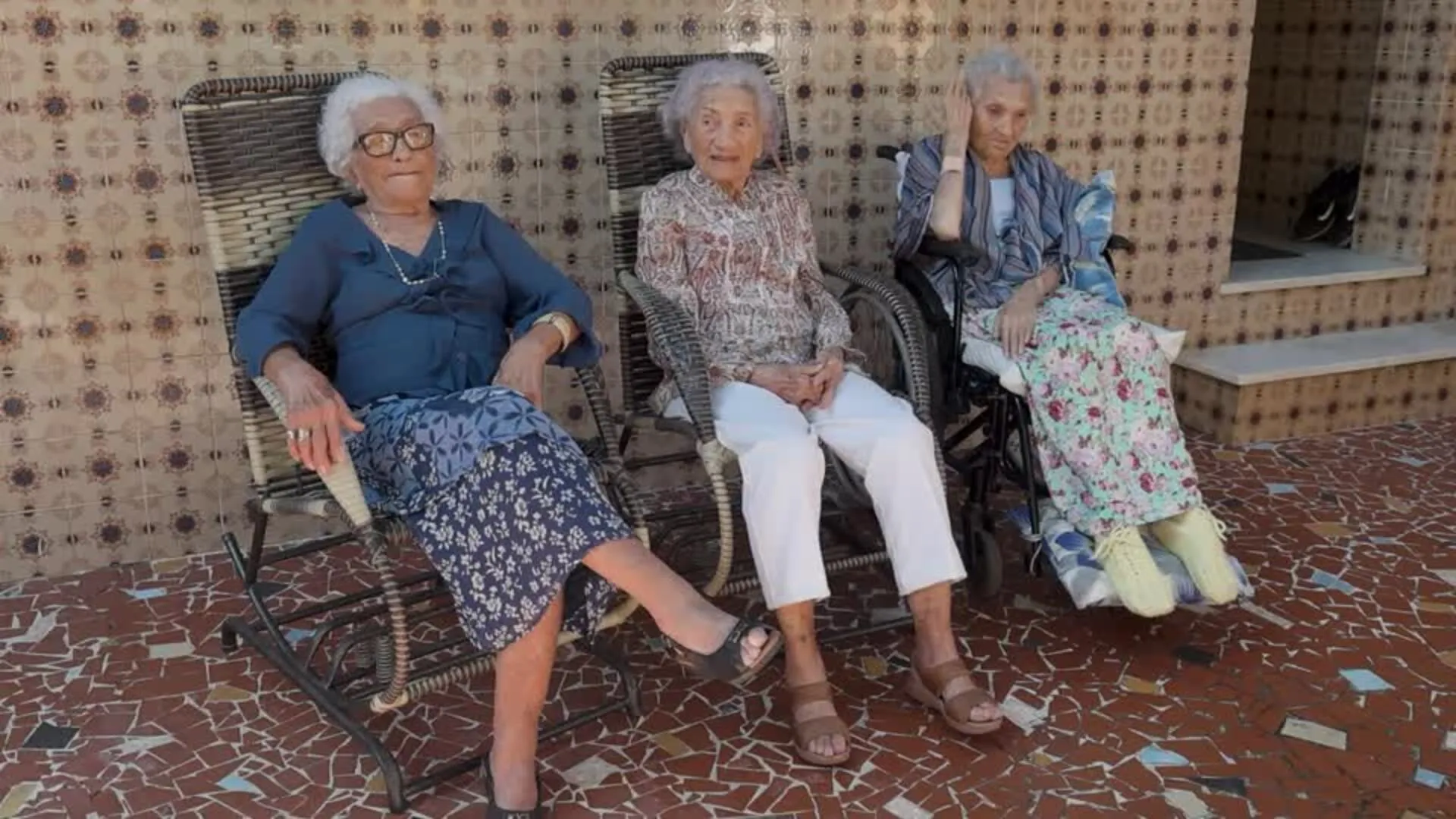
Three Brazilians with a combined age of 316 have been recognised as the world’s longest-living trio of sisters. Researchers are studying their DNA to better understand the genetic factors behind healthy aging and exceptional genetic longevity.
Mateo Chavez opened the scoring in the 55th minute, and Julian Quinones scored his second goal of the tournament in the 61st.
Published On 25 Jun 202625 Jun 2026
Mateo Chavez and Julian Quinones scored goals in the span of six minutes early in the second half, and Mexico beat Czechia 3-0 to win all three of its World Cup group-stage matches for the first time.
The 22-year-old Chavez, in his first World Cup, opened the scoring in the 55th minute, and Quinones scored his second goal of the tournament in the 61st. Alvaro Fidalgo added a goal in second-half stoppage time on Wednesday night.
Recommended Stories
list of 4 itemsend of list
Mexico’s previous best group-stage performance was two wins and one draw, achieved in 1986 and 2002, both featuring Javier Aguirre, the first as a midfielder and the second as El Tri’s coach.
Already the winner of Group A, Mexico will play again at Azteca Stadium on Tuesday in a round-of-32 match against an opponent to be determined.
Czechia were eliminated, finishing with one point in three games.
The match included nods to Mexico’s past and future. Gilberto Mora became the youngest Mexico player to start in a World Cup at age 17.
Mexico goalkeeper Guillermo Ochoa is celebrated by his team after the World Cup Group A match between Czechia and Mexico in Mexico City, June 24, 2026 [Natacha Pisarenko/AP]
Homophobic chant returns in Azteca Stadium
Fans at the game chanted a slur that has previously led to fines and other sanctions against Mexico’s Football Federation.
The slur, which literally means “male prostitute” in Spanish, could be heard at the Azteca Stadium towards the end of the first half when Czech goalkeeper Matej Kovar took a goal kick, according to The Associated Press news agency.
The chant has cost Mexico hundreds of thousands of dollars in fines levied by FIFA. It rose to popularity roughly 25 years ago and is used to intimidate goalkeepers when they take goal kicks.
It went viral in the 2014 World Cup in Brazil, and was heard again in Russia during the 2018 World Cup, and then again four years later in Qatar. It has persisted despite attempts by the Mexican Football Federation to stop it.
Presidential candidate Ivan Cepeda accepted the victory of his opponent Abelardo de la Espriella.
Published On 24 Jun 202624 Jun 2026
Bogota, Colombia – Colombian presidential candidate Ivan Cepeda officially conceded defeat to hard-right populist Abelardo de la Espriella this morning following a tight run-off race.
While Cepeda had recognised the legitimacy of the preliminary results on Sunday, which gave de la Espriella a less than 1 percent lead, he said he would wait for the final, legally binding vote count, known as the scrutiny, before accepting defeat.
Recommended Stories
list of 3 itemsend of list
“I have decided to accept the result of this process, which indicates that Abelardo de la Espriella is the new president of the Republic,” said Cepeda in a livestreamed address on Wednesday.
While the voting verification process has not been fully completed, the National Registry, which oversees the elections, said yesterday that Sunday’s preliminary vote count was “99.997 percent” accurate after revision by judges at the municipal level. The vote must now be verified at the departmental and national levels.
There had been doubts among the Cepeda camp about the legitimacy of the vote process, with President Gustavo Petro – who was closely involved in the leftist candidate’s campaign – openly alleging fraud and foreign interference before and after the election.
“Electoral manipulation has been proven; I cannot say for certain that what has been uncovered guarantees an electoral victory [for Cepeda], but it is a fact,” wrote Petro on Monday.
For months, the president has warned about vulnerabilities in vote-counting software and clashed with the National Registry.
The president’s mistrust is largely based on the 2022 legislative election, in which his Historic Pact coalition recouped roughly half a million votes following the scrutinised vote count.
The recent memory of that vote led Petro and many Cepedistas (supporters of Cepeda) to believe that the roughly 250,000-vote margin between Cepeda and de la Espriella on Sunday could be overturned.
But the National Registry recorded high accuracy in both the preliminary count for March’s legislative election and the first round of the presidential race on May 31.
Petro also said that Washington’s interference in the election undermined the final result because President Donald Trump had endorsed Abelardo, breaking with tradition.
“President Donald Trump’s direct intervention nullifies the elections in Colombia,” wrote Petro in an X post yesterday.
But Cepeda’s concession appears to put distance between him and the president, who founded the Historic Pact movement.
“This suggests some sort of schism between Petro and Cepeda. While Petro’s term is sunsetting, Cepeda will likely become the leader of the opposition,” said Sergio Guzman, director of political risk consultancy Colombia Risk Analysis.
Cepeda, who is now expected to lead the Historic Pact party in the Senate, struck a conciliatory tone in his speech this morning: “I am doing this as an act of democratic responsibility, to contribute to harmony, peace and dialogue among Colombians.”
Remaining group schedule, teams, as well as the best third-round group fixtures at the tournament in North America.
After 48 matches in North America, it’s time for the final round of games in the group stage at World Cup 2026.
Sixteen teams will be eliminated after these fixtures, with 32 nations heading through to the knockout stages.
Recommended Stories
list of 4 itemsend of list
The top two teams from each of the 12 groups – along with the eight best third-placed teams – will proceed to the next phase.
Here are the top five “must-watch” matches in the second round of fixtures from June 24 until June 27.
Neymar could return for Brazil against Scotland [Reuters]
⚽️ Scotland vs Brazil
Miami Stadium – Wednesday, 6pm (22:00 GMT)
These two sides will meet at the World Cup for the fifth time and there’s plenty to play for in an intriguing encounter in Miami.
Brazil are looking to secure their place in the knockout stages as group winners and are currently tied with Morocco on four points at the top of Group C.
Scotland are aiming to escape the group for the first time at a major international tournament and know that a point will almost certainly guarantee a spot in the round of 32.
Expect Group C to change a lot during these final fixtures, with Morocco taking on Haiti at the same time.
If that isn’t enough, Brazil’s Neymar is also set to make his first appearance at this World Cup.
Sweden have been unpredictable at this tournament [Raquel Cunha/Reuters]
⚽️ Japan vs Sweden
Dallas Stadium – Thursday, 6pm (23:00 GMT)
It’s difficult to predict which Sweden will turn up in Dallas on Thursday.
Graham Potter’s side beat Tunisia 5-1 in their opening match of the World Cup, before losing by the same score to the Netherlands.
Japan have been entertaining to watch at this tournament and were in fine form during their 4-0 win over Tunisia at the weekend.
Expect plenty of goals in this match and plenty of drama. The winner will secure a top-two finish in Group F, so there is a lot to play for.
France’s Kylian Mbappe has scored four goals so far [Kyle Ross/Reuters]
⚽️ Norway vs France
Boston Stadium – Friday, 3pm (19:00 GMT)
Norway and France are already through to the knockout stages, but this game looks set to be a blockbuster affair with both sides looking to top Group I.
Erling Haaland and Kylian Mbappe have both scored four goals so far and they’ll be desperate to add to their tally as they chase down Lionel Messi.
France are one of the favourites to lift the World Cup next month and are looking to end the group stage with three wins from three.
But Norway have the opportunity to prove that they truly are dark horses in this tournament and can compete with elite international sides.
Buckle in for a big one in Boston.
Spain’s Lamine Yamal, Nico Williams and Victor Munoz celebrate after the match against Saudi Arabia [Claudia Greco/Reuters]
⚽️ Uruguay vs Spain
Seattle Stadium – Friday, 6pm (00:00 GMT on Saturday)
Group H has been a tight affair following some surprise results in the opening round of fixtures.
Uruguay drew with Saudi Arabia, while Cape Verde shocked the world with a goalless draw against Spain.
La Roja bounced back by thrashing Saudi Arabia and they go into their final game as group leaders, with Uruguay two points behind in second.
Spain will secure top spot with a win in Seattle, ensuring that they avoid Argentina in the round of 32.
Egypt are looking to reach the knockout stages at the World Cup for the first time [Anne-Marie Sorvin/Reuters]
⚽️ Egypt vs Iran
Seattle Stadium – Friday, 8pm (04:00 GMT on Saturday)
Neither of these sides have ever made it out of the group at a World Cup, but on Friday, at least one of them will achieve that feat.
Group G is closely bunched after a number of drawn matches and it sets things up nicely for an intriguing final round of fixtures.
Victory for either Egypt or Iran will guarantee them a spot in the knockout phase, so expect both sides to be up for this one.
Iran have faced numerous challenges at this World Cup, with restrictions on travel and visa issues before the tournament even began.
If Iran progress, there’s also still a chance that they will face the US in the knockout stages.
World Cup 2026: Remaining group-stage full schedule
Wednesday, June 24
Switzerland vs Canada at 12pm PT (19:00 GMT) – BC Place, Vancouver, Canada
Bosnia vs Qatar at 12pm PT (19:00 GMT) – Seattle Stadium, Seattle, US
Scotland vs Brazil at 6pm ET (22:00 GMT) – Miami Stadium, Miami, US
Morocco vs Haiti at 6pm ET (22:00 GMT) – Atlanta Stadium, Atlanta, US
Czechia vs Mexico at 7pm CST (01:00 GMT on Thursday) – Mexico City Stadium, Mexico City, Mexico
South Africa vs South Korea at 7pm CST (01:00 GMT on Thursday) – Estadio Monterrey, Guadalupe, Mexico
Thursday, June 25
Ecuador vs Germany at 4pm ET (20:00 GMT) – New York New Jersey Stadium, New Jersey, US
Curacao vs Ivory Coast at 4pm ET (20:00 GMT) – Philadelphia Stadium, Philadelphia, US
Japan vs Sweden at 6pm CDT (23:00 GMT) – Dallas Stadium, Dallas, US
Tunisia vs Netherlands at 6pm CDT (23:00 GMT) – Kansas City Stadium, Kansas City, US,
Turkiye vs USA at 7pm PT (02:00 GMT on Friday) – Los Angeles Stadium, Los Angeles, US
Paraguay vs Australia at 7pm PT (02:00 GMT on Friday) – San Francisco Bay Area Stadium, San Francisco, US
Friday, June 26
Norway vs France at 3pm ET (19:00 GMT) – Boston Stadium, Boston, US
Senegal vs Iraq at 3pm ET (19:00 GMT) – Toronto Stadium, Toronto, Canada
Cape Verde vs Saudi Arabia at 7pm CDT (00:00 GMT on Saturday) – Houston Stadium, Houston, US
Uruguay vs Spain at 6pm CST (00:00 GMT on Saturday) – Estadio Guadalajara, Zapopan, Mexico
Egypt vs Iran at 8pm PT (03:00 GMT on Saturday) – Seattle Stadium, Seattle, US
New Zealand vs Belgium at 8pm PT (03:00 GMT on Saturday) – BC Place, Vancouver, Canada
Saturday, June 27
Panama vs England at 5pm ET (21:00 GMT) – New York New Jersey Stadium, New Jersey, US
Croatia vs Ghana at 5pm ET (21:00 GMT) – Philadelphia Stadium, Philadelphia, US
Colombia vs Portugal at 7:30pm ET (23:30 GMT) – Miami Stadium, Miami, US
DRC vs Uzbekistan at 7:30pm ET (23:30 GMT) – Atlanta Stadium, Atlanta, US
Algeria vs Austria at 9pm CDT (02:00 GMT on Sunday) – Kansas City Stadium, Kansas City, US
Jordan vs Argentina at 9pm CDT (02:00 GMT on Sunday) – Dallas Stadium, Dallas, US