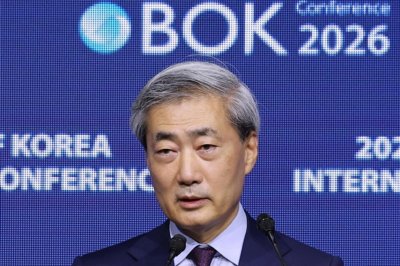
Bank of Korea Gov. Shin Hyun-song delivers a speech during an international conference at the central bank in Seoul, South Korea, 01 June 2026. Photo by YONHAP / EPA
June 11 (Asia Today) — South Korea is facing widening gaps in both wealth and income, with young people and those without homes losing ground economically, Bank of Korea researchers said Wednesday.
The central bank’s research department made the assessment in a report titled “Household Polarization in the Korean Economy and Its Spillover Effects.” The report said South Korea is confronting a form of dual polarization as asset and income inequality expand at the same time.
According to the report, South Korea’s net wealth Gini coefficient fell to 0.584 in 2017 but has since risen, reaching 0.625 last year. A Gini coefficient closer to zero indicates greater equality, while a figure closer to one indicates greater inequality.
The report identified rising real estate prices as a key factor behind the widening asset gap. It said higher property prices have played a central role in explaining movements in wealth inequality.
The Bank of Korea researchers also said real estate assets are concentrated among older generations, making wealth inequality between generations more structural.
The conditions for young people to build assets have deteriorated, the report said. An increasing number of young people earn relatively high incomes but cannot enter the upper wealth bracket because they do not own real estate.
The report said the mobility that once allowed people with middle- to upper-level incomes to move into the top wealth group has weakened, undercutting the asset-building ladder for younger households.
Income inequality also shows signs of widening again. The disposable income Gini coefficient fell from 0.353 in 2016 to 0.323 in 2023 but rose slightly to 0.325 in 2024.
The report said income inequality, which had improved through redistribution policies, could widen again because of K-shaped growth across industries.
Researchers identified the gap between the information technology sector and non-IT industries as a driver of income polarization. In the IT sector, wages have risen sharply, led in part by bonuses, while wage growth has been limited in other industries.
The spread of artificial intelligence could further deepen income gaps, the report said. Researchers said AI technology, combined with advances in robotics, could replace jobs held by low-income workers and young people in the early stages of their careers.
A Bank of Korea survey on AI also found that people in lower income brackets were more likely to believe their jobs could be replaced by AI.
The impact of dual polarization is especially visible among young people. The share of people in their 20s and 30s among households in the bottom quintile for both net wealth and income rose from 7.9% in 2020 to 15.2% in 2025.
The report said this suggests young people without homes are increasingly being pushed into lower economic groups.
The Bank of Korea researchers warned that dual polarization could weaken productivity and consumer vitality across the economy.
An analysis using data from 120 countries found that when the share of wealth held by the top 10% rises by 1 percentage point, total factor productivity falls by 0.16% two years later.
In South Korea, the share of net wealth held by the top 10% increased from 43.0% in 2022 to 46.1% in 2025, up 3.1 percentage points. Researchers said widening wealth inequality could become a constraint on economic growth and productivity improvement.
The social costs could also increase. The report said widening wealth and income gaps may lower expectations for upward mobility, weaken work incentives and reduce social trust.
It also warned that high housing costs for young people could become a barrier to marriage and childbirth.
The researchers said redistribution policies focused mainly on income support are not enough to respond to dual polarization. They said South Korea needs to guide household assets, which are heavily concentrated in real estate, toward more productive sectors and expand opportunities to build productive assets.
The report also called for a more stable tax base in response to economic changes driven by technological development. It said institutions should be reviewed to ensure that the path from labor income to asset formation does not deteriorate further.
Researchers also said South Korea must strengthen new growth industries so the benefits of economic growth can spread more widely across the economy.
Who: South Korea vs Czechia What: FIFA World Cup 2026 Group A match Where: Estadio Guadalajara, Zapopan, Mexico When: Thursday, 8pm local time (02:00 GMT Friday) How to follow: Keep up with all updates on Al Jazeera Sport
South Korea, Asia’s most successful team at the World Cup, begin their 2026 campaign with a game against Czechia, who are back at the tournament after a 20-year absence.
Recommended Stories
list of 4 itemsend of list
With a talented squad featuring Son Heung-min, Lee Kang-in and Kim Min-jae, former semifinalists South Korea – who are ranked 25th in the world – are favourites in the Group A clash and will be keen for an early win in a tough group that also includes cohosts Mexico and South Africa.
But 40th-ranked Czechia are no pushovers. With players like Adam Hlozek, Patrik Schick and Pavel Sulc, they are more than capable of pulling off an upset.
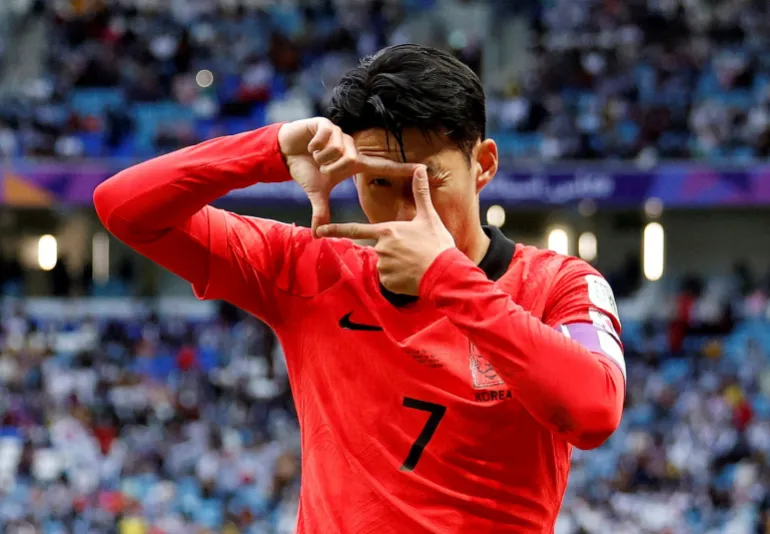
Son Heung-min will be leading South Korea in his fourth World Cup appearance [File: Thaier Al-Sudani/Reuters]
Son leads South Korea’s charge
As always, all eyes will be on South Korea’s superstar Son Heung-min, who now plays his club football for Los Angeles FC.
Set for his fourth appearance at the finals, the 33-year-old former Tottenham winger could be appearing in his final tournament, though it’s not confirmed.
Fans will be hopeful of the captain featuring on the scoresheet after he scored twice in a recent friendly.
The Koreans reached the last 16 in 2022, with Hwang Hee-chan scoring a stoppage-time winner against Portugal to take his team into the knockout rounds. The Wolverhampton Wanderers forward is now keen for a repeat performance at the upcoming tournament.
“If I can have another play like that, it will be great for myself and for our team,” said Hwang, who will be appearing at his third World Cup. “I am working hard for a moment like that.
“Every match is important, but the first match is especially so.”
Czechia: Two-time runners-up
As Czechoslovakia, the Czech team finished runners-up in 1934 and 1962. But since then, their record has been poor, with only four appearances, including just one past the group stage – a quarterfinal run in 1990.
The Czechs are now back at the World Cup after 20 long years, having navigated their way to the finals through dramatic penalty shootout wins in the UEFA qualifiers.
The appointment of coach Miroslav Koubek in December 2025 turned around their fortunes as they went from having a crisis-hit campaign to finishing the job with flying colours.
Czechia’s Tomas Chory heads in a goal during the 3-1 tournament tune-up match against Guatemala on June 6 [File: David W Cerny]
Now, after two decades, as they return to football’s grandest stage, the Czechs will hope to sneak into the knockouts.
With two-metre (6ft 7-inch) Slavia Prague striker Tomas Chory at their disposal, Koubek’s side will seek to impose their physicality on the South Koreans.
They are blessed with more attacking firepower in Bayer Leverkusen striker and Euro 2020 joint top scorer Schick, while Hoffenheim striker Hlozek offers another experienced option up front.
Koubek will also lean on West Ham midfielder Tomas Soucek and 35-year-old Vladimir Darida to provide experience and stability.
How does the World Cup group stage work?
South Korea, Czechia, Mexico and South Africa are in Group A.
The top two teams from each of the 12 groups – along with the eight best third-placed teams – proceed to the next phase, the round of 32, which has been introduced at the World Cup for the first time.
All square in head-to-head record
South Korea and Czechia have met three times, winning one match each, while the other game ended in a draw.
Their last meeting dates back to June 2016 – exactly a decade ago – when South Korea emerged 2-1 winners in a friendly in Prague.
Form guide:
(Last five games, latest first)
South Korea: W-W-L-L-W
Czechia: W-W-W-W-W
Czechia are in fine form heading into the opener, having beaten Kosovo and Guatemala in their pre-World Cup friendlies. Before that, they beat Denmark and Ireland on penalties in the UEFA qualifying playoffs, and also thrashed Gibraltar.
South Korea, on the other hand, are in mixed form. They beat El Salvador and thrashed Trinidad and Tobago in the pre-World Cup friendlies, but lost to Austria and the Ivory Coast.
Where to watch South Korea vs Czechia?
Fans in South Korea can watch the game on platforms Chzzk and JTBC, with kickoff scheduled at 11am local time on Friday.
In Czechia, CT Sport Plus, CT Sport and Nova Action will show the game, which is set to begin at 4am local time on Friday.
Viewers in the United Kingdom can watch it on ITV, while those in the United States can tune in to Fox.
South Korea and Czechia team news
Coach Koubek has a selection headache awaiting.
With Hlozek recently recovering from injury, and Sulc and Lukas Provod also in the mix, Koubek needs to make the tough call on which two attackers will support Schick.
Meanwhile, South Korea’s coach Hong Myung-bo has to contend with some concerns.
Winger Bae Jun-ho – one of the youngest players in the squad – is a major doubt due to an ankle injury, but left-back Lee Tae-seok has returned to team training after a sore calf.
South Korea’s predicted starting XI
Kim Seung-gyu (goalkeeper); Kim Min-jae, Lee Han-beom, Lee Gi-hyuk; Seol Young-woo, Lee Tae-seok, Hwang In-beom, Paik Seung-ho; Lee Kang-in, Lee Jae-sung; Son Heung-min
Czechia’s predicted starting XI
Matej Kovar (goalkeeper); Vladimir Coufal, David Doudera, Tomas Holes, Ladislav Krejci, Jaroslav Zeleny; Tomas Soucek, Michal Sadilek; Adam Hlozek, Pavel Sulc, Patrik Schick
Watch out for Patrik Schick, Czechia’s main attacking threat [File: David W Cerny/Reuters]
You can follow the action on Al Jazeera’s dedicated FIFA World Cup 2026 page with all the latest news, match build-up and live text commentary, and keep up to date with group standings, real-time match results and schedules.
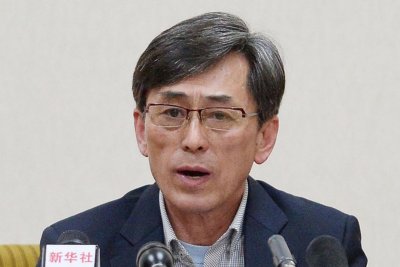
1 of 2 | South Korean Kim Kuk-gi speaking during a news conference in Pyongyang, North Korea. North Korea’s official Korean Central News Agency (KCNA) said that North Korea has detained South Koreans Kim Kuk-gi and Choe Chun-gil on espionage charges. An unnamed official at the North’s Ministry of State Security branded them as ‘spies’ of the South’s National Intelligence Service and ‘heinous terrorists’. Photo by YONHAP / EPA
June 10 (Asia Today) — Senior U.S. human rights officials visiting South Korea met over two days with families of South Koreans detained or abducted by North Korea, civic groups said Wednesday.
The meetings included families of South Korean missionaries detained in North Korea, wartime and postwar abductees and prisoners of war who were not repatriated after the Korean War.
Riley M. Barnes, assistant secretary of state for democracy, human rights and labor, met Tuesday with Choi Jin-young, the son of South Korean missionary Choi Chun-gil, who is being held in North Korea, according to civic groups.
Julie Turner, acting deputy assistant secretary in the State Department’s Bureau of Democracy, Human Rights and Labor, and Belsis Romero, a White House faith liaison, also took part in the visit.
On Wednesday, U.S. officials met representatives of groups representing families of Korean War abductees, postwar abductees and prisoners of war.
The U.S. officials told the families that Washington continues to pay attention to the issue and that its position has not changed on supporting efforts to confirm the detainees’ status and seek their return, according to the groups.
Choi thanked Barnes for calling for the release of South Koreans detained in North Korea, including missionaries Kim Jung-wook, Kim Kuk-gi and Choi Chun-gil, during a video message last month for an international conference announcing the formation of the Republic of Korea Hostage Family Association.
Choi also delivered a letter addressed to President Donald Trump asking the United States to make the safe return of South Korean detainees, including the three missionaries, part of its North Korea diplomacy.
He also delivered 10,000 signatures gathered online and offline, largely through Korean churches in Los Angeles, calling for the detainees’ repatriation and confirmation of whether they are alive.
Kim Jung-sam, the older brother of missionary Kim Jung-wook, also sent a letter asking Trump to speak out during his presidency on detainees and religious freedom.
Choi said he asked U.S. officials to send a message that Washington has not forgotten the detained missionaries.
“I asked that the U.S. ambassador, the secretary of state or the president meet from time to time with families of South Korean abductees, detainees and prisoners of war,” Choi said. “In that context, I also requested that the U.S. ambassador to South Korea attend an event for Abductees Remembrance Day.”
Lee Sung-eui, head of the Korean War Abductees’ Family Union, Choi Sung-ryong, head of the Association of the Families of Postwar Abductees, and Sohn Myung-hwa, head of a group representing families of prisoners of war, met Turner on Wednesday and urged continued U.S. attention to the abduction issue.
Lee delivered a letter asking Washington to place humanitarian issues first in any future U.S.-North Korea talks, including the return of detained South Koreans, confirmation of the fate of abductees and visits by bereaved families to graves in North Korea.
Lee said he emphasized that wartime abductions during the 1950-53 Korean War were “the root of all forced disappearance crimes committed by North Korea.”
Barnes and Turner also met Saturday with Son Hyun-bo, pastor of Segero Church, who led rallies opposing the impeachment of former President Yoon Suk Yeol. The U.S. officials discussed religious freedom issues in South Korea and attended a Sunday worship service.
On Monday, the U.S. delegation also met Chang Wook-jin, director-general for global multilateral diplomacy at South Korea’s Foreign Ministry, to discuss bilateral efforts to promote democracy and human rights.
A South Korean Foreign Ministry official said the U.S. State Department regularly communicates with a wide range of stakeholders inside and outside South Korea while preparing annual reports on human rights, trafficking in persons and international religious freedom.
The official said the delegation’s visit to South Korea was part of that regular outreach.
A civic group official who recently visited the United States and met State Department officials said the bureau’s meeting with families of North Korean detainees appeared connected to Washington’s recent attention to religious persecution.
The official said U.S. officials also asked questions during a recent meeting about religious freedom and human rights issues involving the South Korean government.
ILLUSTRATION – A person sits in front of a computer screen. South Korea’s spy agency says North Korea’s AI-assisted cyberattacks could generate tens of thousands of malicious actions per second. SASCHA STEINBACH / EPA
June 10 (Asia Today) — Artificial intelligence is reshaping the cybersecurity battlefield, South Korea’s spy agency warned, saying North Korean hacking groups are moving toward autonomous attacks that can identify vulnerabilities, break into systems and monetize stolen data with limited human involvement.
The National Cyber Security Center, operated under the National Intelligence Service, issued the warning in its 2026 National Information Security White Paper, released Sunday.
The agency said the rapid development of AI has sharply increased the capabilities of attackers, while the spread of cloud infrastructure and the neglect of aging systems have exposed structural weaknesses in South Korea’s cyber defenses.
The agency focused in particular on the rise of agentic AI, a form of autonomous artificial intelligence that can set goals, analyze data and manipulate external systems without constant human direction.
When used by hackers, the technology can generate large volumes of phishing messages and other social engineering content, develop hacking tools such as ransomware and carry out large-scale operations with fewer people, less time and lower costs.
Concerns over the misuse of agentic AI grew recently after Anthropic’s AI model Mythos was reported to have produced Windows attack code in 31 minutes.
The shift is especially visible among North Korean hacking organizations. Global cybersecurity companies including Kaspersky and Google Threat Intelligence Group have identified signs that the North Korea-linked group Kimsuky used large language models to help write code.
Another North Korea-linked hacking group, APT45, repeatedly entered prompts at scale to search for software vulnerabilities and test whether attack code could be executed.
Analysts increasingly believe North Korea began designing and testing AI-automated attacks last year and has now largely adopted the technology. The change is seen as allowing North Korean hackers to overcome personnel limitations and launch larger attacks on a regular basis.
North Korea stole a record 2.2 trillion won, or about $1.46 billion, in virtual assets last year.
While North Korea’s cyber capabilities are advancing rapidly, many South Korean public and private systems remain vulnerable because of aging infrastructure. The risk is growing as organizations adopt AI across more areas of work without fully updating their defenses.
The agency said agentic AI is particularly suited to manipulating AI systems used by target organizations, meaning South Korea could be expanding potential attack routes unless it strengthens its security systems.
“Starting this year, agentic AI will autonomously carry out the full attack life cycle and generate tens of thousands of malicious actions per second,” the agency said. “Defense systems also must immediately shift to autonomous security operations that minimize human intervention and identify and isolate threats at machine speed.”
Experts said isolated responses are no longer enough and called for a national-level control tower capable of continuous cyber response.
“The only current method is to use AI to find security problems, patch them as quickly as possible and prevent attacks,” said Choi Byung-ho, a research professor at Korea University’s Human-Inspired AI Research Institute. “A governance system capable of responding to hacking within 24 hours is needed, but it is difficult because of issues such as delegated authority.”
European Commission President Ursula von der Leyen, European Council President Antonio Costa and with South Korean President Lee Jae-myung celebrated the signing of new a digital trade agreement at a ceremony in Brussels on Wednesday.
ADVERTISEMENT
ADVERTISEMENT
The event marked the EU and South Korea’s 11th summit, with everything from security and defence to trade on the agenda.
“Korea is one of Europe’s closest partners in the Indo-Pacific region and on the global stage,” von der Leyen said. “In today’s uncertain world, stable and trusted partnerships like ours are more precious than ever.”
The trio released a joint statement extolling the value of the talks and committing the two sides to a firm and friendly relationship.
“We reaffirm our shared commitment to effective multilateralism, and to a stable and predictable rules-based free and fair economic order,” the statement reads.
The semiconductor factor
Both sides have an interest in diversifying their trade relationships at a time of growing tensions with both China and the US, and the EU-South Korea digital trade agreement comes more than a decade after a landmark free trade deal.
Since 2015, trade between the EU and South Korea has doubled, with goods trade reaching approximately €124.25 billion in 2025, according to figures from the European Commission.
“The European Union-Korea Free Trade Agreement remains one of the European Union’s most successful trade agreements since its entry into enforcement in 2011,” European Council António Costa said on Wednesday.
South Korea is becoming an increasingly important investor in Europe, particularly in strategic sectors such as batteries, electric vehicles and semiconductors.
For the EU, a key objective is to secure semiconductor supply chains while attracting further investment from Korean companies into Europe.
“Korea has a global leadership position in semiconductors,” an EU official said. “This is clearly an area with significant potential for cooperation that would benefit both sides.”
The digital trade agreement concluded on Wednesday is expected to complement the broader trade partnership by reducing “unnecessary barriers to digital trade” and providing greater “legal certainty” for businesses operating across the two markets, according to another EU official. It will facilitate cross-border data flows while prohibiting the mandatory transfer of source code.
The deal is also designed to establish robust online consumer protection rules, though both partners intend to maintain their respective levels of protection for personal data and privacy.
Economic security was also high on the summit agenda, with the two sides agreeing to establish a high-level dialogue on supply chain resilience.
Supply chains came under pressure last year following China’s restrictions on exports of strategic materials, including rare earths – essential for green technologies and the defence sector – as well as products linked to the chip industry, which are critical to automotive manufacturing.
Security and defence
One thing that did not get over the line was a security of information agreement, which had been touted by EU officials prior to the summit as a means of strengthening the flow of classified information between Brussels and Seoul.
“I hope that the security of information agreement will be adopted soon, so that Korea and the EU can share confidential information safely, which will allow the two sides to engage in industrial and research cooperation actively through information exchange exchange,” President Lee said on Wednesday.
The agreement would build on the Security and Defence Partnership agreement that South Korea and the EU signed in 2024. That deal was designed to facilitate cooperation in areas spanning maritime security, countering hybrid threats, fighting foreign information manipulation and interference, and more besides.
In the run-up to this week’s talks, a senior EU official said a key topic of the discussions will be nuclear non-proliferation, as North Korea continues to hold a small but concerning stockpile of nuclear-armed warheads.
North Korea (the DPRK) and Russia were considered “big questions” at the summit, the source said, with Brussels ready to share information on its support for Ukraine with Seoul.
The joint statement from the summit reiterates this, with words of condemnation directed at North Korea and other nations who enable Russia to sustain its war of aggression against Ukraine.
“We urge Russia and the DPRK to immediately cease all such activities and abide by the UN Charter and all relevant United Nations Security Council resolutions,” the statement reads.
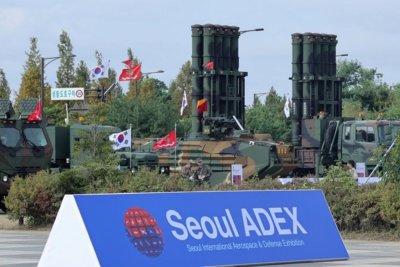
Cutting-edge weapons, such as the KAAV amphibious assault vehicle and the Bigung guided rocket, are on display at the Seoul International Aerospace and Defense Exhibition, or ADEX, that kicked off at KINTEX in Goyang, just northwest of Seoul. Photo by YONHAP / EPA
June 9 (Asia Today) — Military, industry and academic experts warned Tuesday that South Korea must urgently build an integrated air and missile defense system as drone swarms, artificial intelligence-enabled attacks and missile threats become more complex.
Experts said fragmented air defense weapons cannot respond effectively to modern battlefields where drone swarms are combined with ballistic and cruise missiles. They called for linking sensors, command decisions and interceptors into a unified system.
The Korea Association of Defense Industry Studies hosted the Future of Integrated Air and Missile Defense conference at the Daejeon Convention Center. The Missile Defense Forum organized the event and Northrop Grumman sponsored it.
The conference was held alongside the InLEX KOREA 2026 defense exhibition and drew officials from U.S. Forces Korea, foreign defense attachés, South Korean defense firms and overseas defense companies.
Kim Jin-ki, chairman of the Korea Association of Defense Industry Studies, said building an integrated air defense network is directly tied to national survival in modern and future warfare. He called for closer governance among the military, industry, academia and research institutions.
Rep. Yoo Yong-won, a member of the National Assembly’s defense committee, said South Korea must move faster to advance its missile defense system and secure next-generation air defense capabilities as global interest grows in the Cheongung-II missile interceptor system.
Kim Ki-won, a senior research fellow at the Korea Institute for Defense Analyses, said lessons from the Israel-Iran conflict and the Russia-Ukraine war point to a major shift in air defense strategy.
“Simply increasing the number of interceptors has limits when facing saturation attacks such as drone swarms,” Kim said.
He said South Korea needs AI-based intelligent engagement control and a smart defense network that links multiple sensors into one system.
Sean McLay, Asia-Pacific business development director at Northrop Grumman, said modern attacks are increasingly combining ballistic missiles, cruise missiles and drones.
McLay said South Korea should move away from platform-centered air defense systems and toward a network-centered integrated architecture that connects sensors, command and control and engagement assets.
Northrop Grumman developed the Integrated Battle Command System, which is used by the United States and Poland. The system is built around the concept of linking any sensor to the best available shooter, allowing commanders to match threat data with the most effective response.
Former Air Force 3rd Missile Defense Brigade commander Moon Oh-sun said South Korea’s individual air defense weapons have already reached a world-class level but remain limited by organizational barriers.
“To maximize combat effectiveness, we must break down the closed and isolated silo structure among the military branches,” Moon said. “Complete integration of information sharing and command decision systems is essential.”
Kim Dae-young, a military research fellow at the Korea Research Institute for National Strategy, said South Korea must also prepare for the reality that no missile defense system can intercept every threat.
Operating on the premise that “perfect interception does not exist,” Kim said South Korea should build a multilayered survival structure that allows national functions to continue even if missile defenses fail. He cited the need for public air raid shelters and other measures to help the country withstand attacks.
South Korean defense companies also presented domestic technology related to integrated air defense.
Jung Won-woo, head of LIG D&A’s air defense control development team, introduced integrated fire control network technology based on data distribution service middleware. His presentation focused on the transition from engagement control to integrated fire control.
The conference ended with a panel discussion chaired by Joo Kwang-sup, a visiting research fellow at the Sejong Institute and a retired Army brigadier general. Panelists discussed how South Korea can build an integrated air and missile defense system suited to future security conditions.
Han Kwon-hee, planning director at the Korea Association of Defense Industry Studies, said the association will work to ensure the ideas raised at the conference help strengthen South Korea’s integrated air defense capabilities and improve the global competitiveness of the country’s defense industry.
South Korean First Vice Foreign Minister Park Yoon-joo speaks during a press conference for South Korean correspondents at the South Korean Embassy in Washington, DC, USA, 20 May 2026. Photo by YONHAP / EPA
June 9 (Asia Today) — South Korea and the United States share the view that Seoul’s push to acquire nuclear-powered submarines would provide an important alliance capability, South Korea’s Foreign Ministry said Tuesday.
The ministry said the issue was discussed last week during the inaugural meeting to implement the South Korea-U.S. joint fact sheet, known as JFS, and that the talks proceeded on the premise that the submarines would be built in South Korea.
A Foreign Ministry official told reporters that the U.S. delegation did not raise any particular objection to domestic construction of the submarines.
U.S. President Donald Trump previously said on social media that South Korea’s nuclear-powered submarines would be built at Philly Shipyard in the United States, but officials from the two countries discussed the project on the premise of construction in South Korea, the official said.
“Both sides share the view that South Korea’s nuclear-powered submarines would be an important alliance capability for South Korea’s leading role in the defense of the Korean Peninsula,” the official said.
The official said the submarine plan is intended to strengthen security in response to conditions on the Korean Peninsula and is not aimed at any specific country.
On South Korea’s push to expand its uranium enrichment and spent fuel reprocessing rights, the official said the two sides agreed that strengthening their nuclear energy partnership serves their common interests and decided to begin full-scale talks on ways to make that happen.
South Korea faces the challenge of overcoming restrictions under its civil nuclear cooperation agreement with the United States, commonly known as the 123 Agreement, to expand enrichment and reprocessing rights.
Diplomatic circles have discussed options including a full or partial revision of the agreement or passage of separate special legislation.
“The joint fact sheet talks are aimed at strengthening South Korea-U.S. nuclear cooperation,” the Foreign Ministry official said. “In broad terms, this can be understood as looking at ways to adjust the current 123 Agreement.”
The launch meeting was held June 2-3 after a delay of about seven months. Foreign Ministry officials described the atmosphere as positive.
One official said the U.S. side gave the impression that it was serious about the talks. Another said the meeting proceeded in a constructive atmosphere.
Foreign Minister Cho Hyun also made an unannounced visit to a working lunch on the second day of the talks to encourage the delegations.
The government remains cautious, however, because of the details of the negotiations, concerns in the United States over nonproliferation norms and uncertainty surrounding Trump’s decision-making style.
“The overall perception of South Korea’s commitment to nonproliferation is the most important thing,” the Foreign Ministry official said. “We must make efforts to avoid sending unnecessary messages.”
President Lee Jae Myung’s remarks at his first-anniversary news conference Monday, where he criticized calls for South Korea to develop nuclear weapons as “truly irresponsible,” were seen as reflecting that concern.
The government is coordinating the schedule for follow-up talks with Washington.
The Foreign Ministry official said the two sides agreed to accelerate consultations. Several more full meetings led by the two countries’ national security councils are expected, along with frequent working-level talks by sectoral delegations.
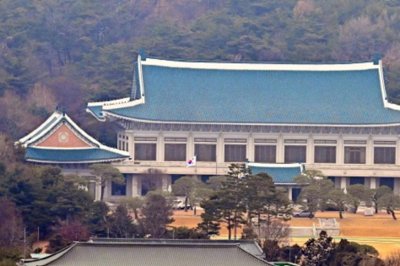
The South Korean flag flies over Cheong Wa Dae in Seoul. Photo by Asia Today
June 5 (Asia Today) — South Korea’s presidential office said Friday there has been no major change in the plan to build nuclear-powered submarines in South Korea as Seoul and Washington resume talks on nuclear cooperation and wartime operational control.
A senior Cheong Wa Dae official told reporters that recent security talks between South Korea and the United States were “very productive and useful.”
“There has been no major change in the position that nuclear-powered submarines will be built in South Korea,” the official said.
The official said the two sides discussed uranium enrichment, spent fuel reprocessing and nuclear-powered submarines. The talks also included what the official described as an “umbrella” consultation framework.
“We have not set a target deadline, but we will move quickly and try to produce concrete results by the end of the year,” the official said.
South Korea and the United States held formal talks in Seoul this week on follow-up discussions related to Seoul’s push for nuclear-powered submarines and expanded rights for uranium enrichment and spent fuel reprocessing. The talks followed earlier bilateral agreements on nuclear cooperation and submarine development.
On enrichment and reprocessing, the senior official said Seoul and Washington need “several new frameworks of agreement.”
“We intend to make progress, including by revising what needs to be revised,” the official said.
The official said talks on enrichment and reprocessing are now moving into a full-fledged phase.
“These discussions are based on trust in South Korea’s denuclearization, so there are no additional denuclearization conditions,” the official said.
Asked about coordination between Seoul and Washington on the timing of South Korea’s recovery of wartime operational control, the official said the two allies do not have a significant difference of opinion.
“Efforts to meet the conditions have continued for more than 10 years, and several years ago there was even an assessment that the conditions had been more than 90% met,” the official said. “Because there is little difference in views on the conditions, we can coordinate and align them.”
The official said the two sides also do not differ sharply on the timing of the transfer.
“There is a gap of a little over a year, about one year-plus,” the official said. “We do not see that gap as something that cannot be adjusted.”
Chinese President Xi Jinping’s meeting with North Korea’s Kim Jong Un in Pyongyang on Sunday is significant for one reason.
It’s not that they are meeting: The two men met in Beijing just a year ago when China held a massive military parade to mark 80 years since Japan surrendered unconditionally to Allied forces, bringing an end to the second world war.
Recommended Stories
list of 4 itemsend of list
What’s surprising is that Xi is travelling at all.
The Chinese leader has not travelled to Pyongyang since 2019, having steadily cut down his travel in recent years, and world leaders like US President Donald Trump and Russian leader Vladimir Putin generally come to him these days.
“We need to remember that Xi Jinping has not really travelled abroad that much,” William Yang, Crisis Group’s senior analyst for Northeast Asia, told Al Jazeera. “The growing trend is foreign leaders heading to Beijing to meet with him.
“For Xi Jinping to be the one who decides to travel to Pyongyang, it shows the level of significance that China attaches to this trip.”
Xi averaged about 14 trips a year between 2013 and 2019, but dropped to approximately six a year between 2022 and 2025, according to the Asia Society. In 2020, he made just one overseas trip, and in 2021, he made none, as China grappled with the COVID-19 pandemic.
He may be travelling now, though, amid concerns about North Korea’s relationship with Russia, Yang said.
Senior partner no more?
Traditionally, Beijing played the role of senior partner in the China-North Korea relationship, with North Korea heavily dependent on China for as much as 95 percent of its trade, according to one 2022 estimate from the National Committee on North Korea, a US-based nonprofit.
That dynamic has been changing since Russia’s 2022 invasion of Ukraine, however. North Korea has provided Russia with critical weapons, artillery and manpower and is credited by observers with helping to keep Moscow’s war machine going.
South Korea’s Institute for National Security Strategy, a government-funded research institute, estimates that since 2023, Moscow has paid North Korea as much as $14.4bn for troop deployments and the export of “artillery, shells, and guided and ballistic missiles”.
The report said that North Korea may only have received between $580m and $1.5bn of that in the form of “goods”, which means there is a “significant possibility that the majority of the payment from Moscow was in the form of ‘sensitive military technology or related precision parts and materials that are difficult to observe via satellite’,” according to a translation.
Although China shares a mutual defence treaty with North Korea, it is still wary of North Korea acquiring new military technology, Yang said.
“Beijing has always been very careful about providing military assistance to North Korea because they do not see a militarily stronger North Korea as necessarily in its favour,” he said. “A North Korea that is militarily emboldened through its relationship with Russia could be a potential source of disruption to the balance of power and status quo on the Korean Peninsula.”
North Korea has already carried out eight missile launches since the start of the year, and in May unveiled a new AI-guided tactical cruise missile, according to North Korean media and the US Naval Institute.
Earlier this week, North Korean state media also released photos of Kim touring a new “weapons-grade nuclear materials” factory, which would be used to expand Pyongyang’s nuclear capability at an “exponential rate”.
Fluctuating tensions
North Korea has technically been at war with South Korea since 1950, with the conflict suspended by a 1953 armistice agreement. The two countries are divided by a 250-kilometre-long (155-mile-long) Demilitarized Zone, splitting the Korean Peninsula.
Tensions have fluctuated dramatically over the years, reaching a recent low point in 2024 when Kim abandoned the long-term goal of Korean unification.
He has largely cut off communications ever since, according to observers. On Friday, South Korea’s Ministry of Foreign Affairs said that it hopes that Xi’s trip will “play a constructive role in addressing issues related to the Korean Peninsula” – suggesting that Seoul may have lobbied the Chinese leader to try to smooth over relations.
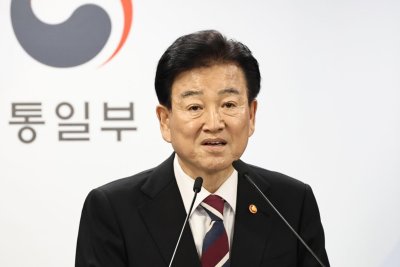
South Korean Minister of Unification Chung Dong-young separately told reporters last month that he expects the two leaders to discuss a possible meeting between Kim and Trump later in the year.
Xi may also be alarmed by other security developments in East Asia, including news of a possible military-logistics support pact between South Korea and Japan, which was raised at the Shangri-La Dialogue of regional defence officials in Singapore last weekend.
While China and South Korea’s relationship fluctuates, its ties with Japan are acrimonious due to longstanding grievances dating back to Imperial Japan’s occupation of China in the 1930s and 1940s. Beijing has also objected to recent moves by Tokyo to expand its de facto military.
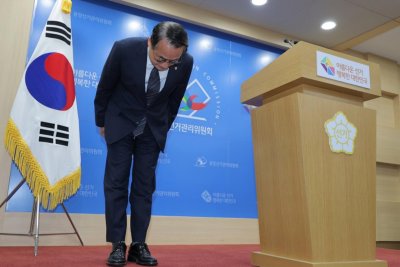
Heo Cheol-hoon, secretary general of the National Election Commission, issues a public apology after a shortage of ballot papers prompted the temporary suspension of voting in the local elections at some polling stations in southern Seoul, South Korea, 03 June 2026. South Koreans voted on 03 June to elect mayors, governors, local council members and regional education chiefs in nationwide local elections. Photo by YONHAP / EPA
June 5 (Asia Today) — South Korea’s election chief said Friday he will resign to take responsibility for ballot shortages that disrupted voting during the June 3 local elections.
Roh Tae-ak, chairman of the National Election Commission, made the announcement during a public apology at the commission’s headquarters in Gwacheon, Gyeonggi Province. NEC Secretary-General Huh Chul-hoon also offered to resign.
“The high public interest in local autonomy and the active expression of the people’s will through voting were damaged by the ballot shortage,” Roh said. “As chairman of the National Election Commission, I feel devastated and bear unlimited responsibility for the situation, which has damaged public trust in election management and led to distrust in the election process.”
The commission said ballot shortages occurred at 50 polling stations nationwide, including 14 in Seoul’s Songpa district. Voting was temporarily halted at 22 polling stations, the commission said. Outside reports also said the shortages caused delays and protests in parts of Seoul.
The commission said the shortages were linked to a decision to print ballots for at least 50% of eligible voters in some areas, reflecting internal discussions about reducing unused ballots as early voting rates have risen in recent elections.
Yoon Jae-soo, head of the commission’s election policy office, said the minimum number of ballots was set at 50% of eligible voters but could be adjusted depending on local conditions.
“In Songpa district, when the early voting rate of 23.3% was included, ballots equal to 73.3% of eligible voters were secured,” Yoon said. “But shortages occurred because there were differences among individual polling stations.”
The commission said it will create a fact-finding committee made up of outside experts to examine the cause of the shortages, identify problems in the response and prepare measures to prevent a recurrence.
Roh said the commission will cooperate fully with any process to determine responsibility, including a possible National Assembly investigation.
“We will sincerely take part in all procedures to confirm the commission’s responsibility for this incident and will not avoid responsibility depending on the results,” Roh said.
On Wednesday, voters at some polling stations in Seoul’s Gangnam, Gwangjin and Songpa districts had to wait because of ballot shortages. The disruption has drawn criticism from political parties, civic groups and universities over the commission’s election management.
Oh Min-seok, chairman of the Seoul Election Commission, also issued a public apology Friday.
“This was the commission’s fault, with no excuse,” Oh said. “We deeply feel responsibility for damaging public trust through poor election management that ran counter to common sense.”
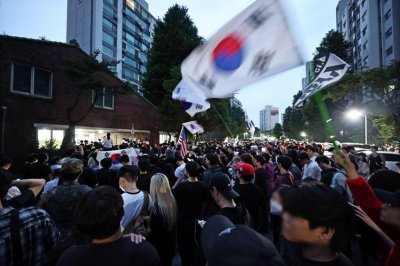
Protesters demonstrate in front of a polling station in Songpa District, Seoul, South Korea, 04 June 2026, to call for the suspension of ballot counting. A shortage of ballot papers forced an extension of voting at several polling stations in the area during the local elections held the previous day. Photo by YONHAP / EPA
June 5 (Asia Today) — Protesters who had blocked a polling station in Seoul’s Songpa district for two nights and three days moved Friday to a vote-counting center, demanding a new election after ballot shortages disrupted voting in the June 3 local elections.
The ballot boxes from the No. 2 polling station in Jamsil 7-dong were transferred and counted after about 1,000 police officers were deployed. But protesters said they could not accept the result and effectively occupied the entrance area of the counting center, calling for a revote.
About 300 people, including citizens and conservative YouTubers, gathered near the entrance of the Olympic Park handball arena, according to an unofficial police estimate.
Even after the counting was completed, protesters chanted slogans including “revote” and “invalidate the vote.” Some protesters have alleged election fraud, but election authorities have attributed the disruption to a shortage of ballot papers during voting.
The atmosphere grew tense as access for election workers and arena employees was effectively blocked. Some arena employees who tried to leave were reportedly stopped by protesters and remained inside.
Police continued to guard the area around the arena after the vote count ended. Officials at the scene were considering sending election commission workers home first and removing vote-counting materials separately.
The protest followed a broader ballot shortage controversy in South Korea’s local elections. The National Election Commission said ballot shortages occurred at 50 polling stations nationwide and temporarily halted voting at 22 sites. The disruption drew public criticism and led the commission’s chairman, Roh Tae-ak, to announce his resignation Friday.
Earlier, protesters blocked the removal of ballot boxes from Jamsil 7-dong’s No. 2 polling station after a ballot shortage left voters waiting for hours. Police later escorted officials to retrieve the remaining ballot boxes, and the final count ended Friday afternoon.
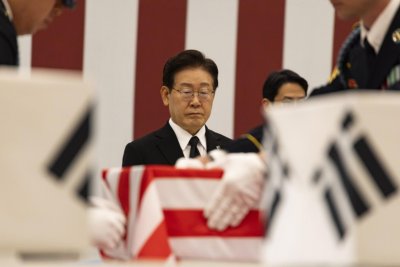
South Korea President Lee Jae Myung attends the ROK and the U.S. repatriation ceremony for Korean remains at Seoul Military Air Base in Seongnam, South Korea, 05 June 2026. The remains of ten South Koreans and the three U.S. soldiers killed in the Korean War were sent back to their homeland. Photo by JEON HEON-KYUN / EPA
June 5 (Asia Today) — South Korean President Lee Jae-myung said Friday that the mutual repatriation of Korean War remains by South Korea and the United States is “the most compelling evidence” of an alliance forged in blood.
Lee made the remarks at Seoul Air Base in Seongnam, where South Korea and the United States held a mutual repatriation ceremony for Korean War remains. It was the first time the ceremony was held in South Korea. Previous mutual repatriation ceremonies had been held in Hawaii.
“Today’s repatriation is a meaningful milestone that deepens and strengthens the South Korea-U.S. alliance, which was built on the blood and dedication of veterans,” Lee said.
“The effort to find not only one’s own warriors but also those of an ally and return them to their families is the most compelling evidence of an alliance forged in blood,” he said.
The ceremony returned the remains of 10 South Korean service members from Hawaii to South Korea. The remains of three U.S. service members were returned to the United States.
Lee said the repatriation was a promise by both countries to remember the heroes who devoted themselves to freedom and peace, calling it “the most noble tribute to their sacrifice.”
“More than 70 years ago, we were able to defend freedom and peace because of the noble sacrifice of heroes who gave their most precious lives to protect the freedom and peace of the Republic of Korea,” Lee said.
“But there are heroes who, long after the war ended, have still not returned to their hometowns,” he said. “Returning them fully is the historical duty of those of us who survived.”
Lee said trust built through battlefield promises has sustained the U.S.-South Korea alliance for decades.
“The trust that keeps promises made on the battlefield, even after decades have passed, is the strong root that has supported the South Korea-U.S. alliance,” Lee said. “With the firm South Korea-U.S. alliance as nourishment, the Republic of Korea is writing a new history of prosperity that amazes the world.”
Lee said the two allies should continue working together for peace and mutual prosperity.
“If South Korea and the United States join hands and move unwaveringly toward the future, complete peace will take root on this land and the flower of mutual prosperity will bloom,” Lee said. “We will continue to carry forward, with future generations, the noble history of solidarity for freedom and peace.”
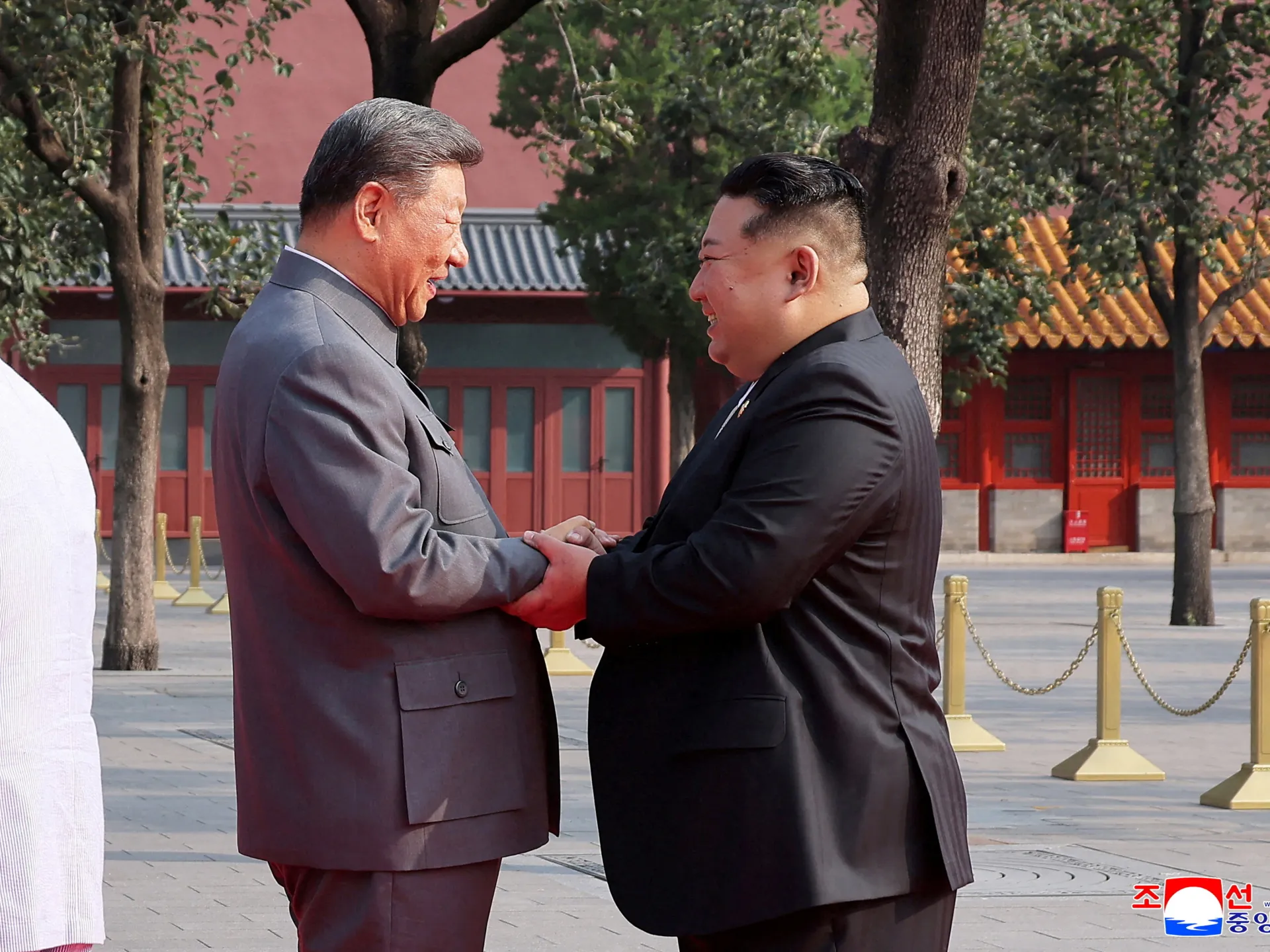
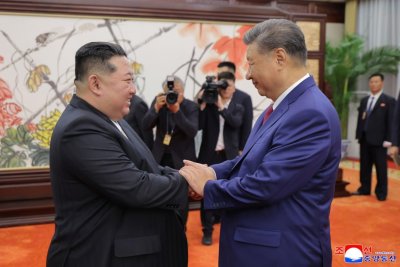
Chinese President Xi Jinping (R) will visit North Korea next week, state media from both countries reported Friday. This photo shows North Korean leader Kim Jong Un and Xi shaking hands during a meeting at the Great Hall of the People in Beijing in September 2025. File Photo by KNCA/EPA
SEOUL, June 5 (UPI) — Chinese President Xi Jinping will visit North Korea next week, state media in both countries reported Friday, marking his first trip to the isolated state since 2019.
Xi will make the visit on June 8-9 at the invitation of North Korean leader Kim Jong Un, China’s official Xinhua News Agency reported. North Korea’s Korean Central News Agency also reported the upcoming trip, but neither outlet provided further details.
The trip will be Xi’s second to North Korea. He last made a two-day state visit in June 2019.
It comes amid a stretch of renewed high-level engagement between the longtime allies. Kim traveled to Beijing in September for a military parade marking the 80th anniversary of the end of World War II, where he held summit talks with Xi.
China has long been North Korea’s largest trading partner, and international observers say it continues to help Pyongyang skirt punishing economic sanctions. Ties had appeared to cool in recent years, however, as North Korea deepened military cooperation with Russia following Moscow’s invasion of Ukraine.
In exchange for providing troops and munitions to Russia, North Korea is believed to be receiving economic support and advanced military technology for its weapons programs, reducing its dependence on China and giving Kim greater leverage in dealings with Beijing.
The announcement of Xi’s visit comes one day after North Korea unveiled a new uranium enrichment facility used to produce fissile material for nuclear weapons, with Kim calling for an “exponential” increase in the country’s nuclear arsenal.
The visit also comes amid growing uncertainty over Beijing’s approach to North Korea’s nuclear ambitions.
After Xi met with U.S. President Donald Trump last month, the White House said the two leaders had reaffirmed their shared commitment to the denuclearization of North Korea. China’s Foreign Ministry, however, said only that the leaders had “exchanged views” on the Korean Peninsula.
Some analysts have suggested that China increasingly views North Korea’s nuclear capabilities as a “geopolitical asset” that helps constrain Washington as competition between the two powers intensifies.
The visit will be closely watched in Seoul, where President Lee Jae Myung has sought to ease tensions with Pyongyang since taking office last year.
Unification Minister Chung Dong-young on Thursday proposed a four-way dialogue involving the two Koreas, the United States and China aimed at establishing a peace regime on the peninsula.
South Korea’s Foreign Ministry said Friday that it hopes Xi’s visit will “play a constructive role in addressing issues related to the Korean Peninsula,” according to Yonhap News Agency.
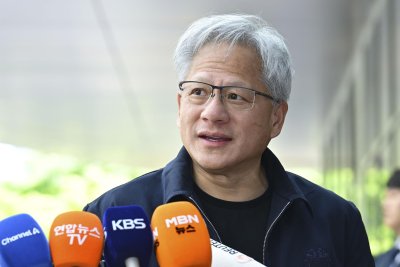
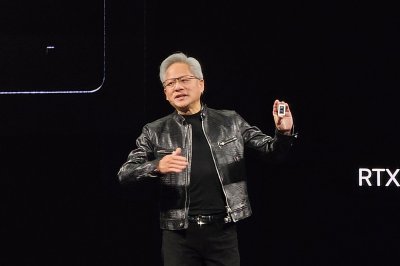
Nvidia Corp. CEO Jensen Huang speaks to reporters after arriving at Gimpo International Airport in western Seoul on Friday. Photo by Yonhap
Nvidia Corp. Chief Executive Officer (CEO) Jensen Huang said Friday that he views robotics as the next major growth sector in South Korea, adding that the domestic market is well-positioned for growth.
Huang, a central figure in the global artificial intelligence (AI) boom, made the remarks after arriving at Gimpo International Airport in western Seoul aboard his private jet for a four-day visit.
“(South) Korea has many sectors to invest in. Robotics is going to be the next major sector,” Huang told reporters, adding that the Korean “market is doing very well.”
Asked whether he had brought any gifts for South Korea, Huang responded with a smile.
“Did I bring any gifts for Korea? I brought a lot of business for Korea,” he said. “I have some surprises.”
The trip comes less than a year after Huang’s previous trip to South Korea in October, which coincided with the Asia-Pacific Economic Cooperation (APEC) CEO Summit in the southeastern city of Gyeongju.
During that visit, Huang drew widespread attention when he joined Samsung Electronics Chairman Lee Jae-yong and Hyundai Motor Group Executive Chair Euisun Chung for a late-night meal of Korean fried chicken and beer, commonly known as “chimaek.”
One of the most anticipated events during Huang’s visit is an informal dinner with SK Group Chairman Chey Tae-won, LG Group Chairman Koo Kwang-mo and Naver Chairman Lee Hae-jin. Hyundai Motor Group’s chief who had earlier been expected to join the group has since confirmed he will be unable to attend.
Together, the companies represented at the gathering span nearly every layer of the AI value chain, including semiconductors, data centers, AI models, software and robotics.
Huang is also set to hold talks with executives from the gaming industry, AI and robotics startups, university researchers and students, according to industry sources.
“Because Korea is a manufacturing center of the world, we can apply the robotics technology, the physical AI technology that we invent here for the industry,” he said.
He further said Nvidia will partner with domestic manufacturing firms in robotics and AI.
“The manufacturing of semiconductors will become increasingly robotics and increasingly AI driven in the future, and so we have a great opportunity to partner with the semiconductor companies here as well,” he added.
Later in the day, Huang visited an internet cafe in Seoul and met with esports players, including gaming superstar Faker.
“This is the birthplace of esports,” Huang said, emphasizing that Korean gamers have long been among the world’s most competitive players who are using Nvidia’s graphics processing units (GPUs).
Nvidia’s GeForce graphics cards are designed to deliver the high frame rates demanded by professional gamers.
Huang is also expected to meet Krafton Executive Director Chang Byung-gyu and other senior executives from the gaming company, though the exact schedule has yet to be confirmed.
The two companies are expected to discuss potential cooperation involving Nvidia’s RTX Spark platform for premium Windows laptops, as well as physical AI technologies.
Earlier this year, Krafton established a robotics subsidiary called Ludo Robotics.
During his stay, Huang is also expected to meet Science Minister Bae Kyung-hoon to discuss cooperation in AI, including the supply of GPUs.
Details regarding the timing, venue and agenda of the meeting are still being finalized.
Copyright (c) Yonhap News Agency prohibits its content from being redistributed or reprinted without consent, and forbids the content from being learned and used by artificial intelligence systems.
As the rally in AI stocks fades, investors were cautious at the open on Friday, with European markets opening to mixed sentiment following steep falls in Asian markets.
ADVERTISEMENT
ADVERTISEMENT
Indices in London and Frankfurt quickly moved into negative territory, with the FTSE 100 dropping nearly 0.4% and the DAX losing 0.3% right after the opening. The Paris CAC 40 and the IBEX 35 in Madrid were both up 0.3%, while Milan’s main index was flat. So was the EURO STOXX 50, a benchmark index of 50 blue-chip companies from the eurozone.
Investors are awaiting the latest US non-farm payrolls report and keeping an eye on developments in the Middle East.
The US job data is important for forecasting what the Fed’s next move could be. Kathleen Brooks, research director at XTB, said in a market note, “There is now a near 40% chance of a rate hike by year-end. We expect financial markets to be extremely sensitive to today’s data,” adding that this will be the first such report with Kevin Warsh as chairman of the Federal Reserve.
In the UK, the latest data from Halifax showed that house prices unexpectedly declined in May. House prices fell 0.1% month on month, but were still up 0.5% year on year, missing expectations for a 1% jump.
Oil markets are awaiting further direction
Oil prices stabilised after falling on Thursday. Brent crude, the international benchmark, was slightly down and traded at $94.73 per barrel at 10:00 CET. It had been trading at about $70 per barrel before the start of the war in late February.
Benchmark US crude was little changed at $92.51 a barrel.
Oil prices remain under pressure as the Strait of Hormuz, a narrow waterway crucial for global oil and natural gas transport, remains effectively closed, and the war-induced energy shock is threatening to slow economic growth and fuel inflation in many countries.
American and Iranian negotiators reached a tentative deal last week to extend their ceasefire, but the agreement has not been finalised. Meanwhile, developments in Lebanon have cast doubt on the prospects for a permanent end to the conflict.
On Thursday, the Iran-backed Lebanese militant group Hezbollah rejected the latest ceasefire agreement between the Lebanese and Israeli governments.
“While there are few signs of progress in US-Iran talks, the oil market continues to trade on expectations of an imminent deal that would resume flows through the Strait of Hormuz,” ING commodities strategists Warren Patterson and Ewa Manthey wrote in a report.
Asian markets lose steam as AI craze cools
Wall Street rallied on Thursday after falling oil prices and bond yields eased pressure on US stocks. Banks, small-cap companies and other stocks that had previously been left behind by the euphoria around artificial intelligence led the gains.
Banks also helped lead the market, including gains of 5% for Goldman Sachs, 4.7% for Fifth Third Bancorp and 4.4% for U.S. Bancorp.
They helped to more than make up for losses among some AI stocks, which took a sudden back seat after dominating the market. Analysts have been saying AI stocks may have run too high, becoming too expensive, and that the broader US stock market may be set for a slowdown following an unrelenting streak of nine straight winning weeks for the S&P 500, its longest since 2023.
On Wall Street on Thursday, computer chipmaker Broadcom’s shares sank 12.6% after it issued guidance that fell short of investors’ expectations, raising concerns about the wider AI and technology sector.
US memory chip maker Micron Technology dropped 7.7%, and cybersecurity company CrowdStrike Holdings fell 3.8%.
Still, the benchmark S&P 500 climbed 0.4%, and the Dow Jones Industrial Average gained 1.7% to a record high. The tech-heavy Nasdaq Composite edged 0.1% lower.
But in Asia, investors dumped key AI-related shares, with South Korea’s SK Hynix plunging 8.6% and Samsung Electronics shedding 5.4%.
The Kospi dropped 5.1% to 8,199.44. The index has roughly doubled over the past year, lifted by gains in major technology companies.
Japan’s Nikkei 225 slipped 1.3% to 66,573.85, with technology shares leading the decline, even as official data showed that Japan’s real wages rose for the fourth consecutive month. Chip equipment maker Tokyo Electron’s shares fell 7%.
Hong Kong’s Hang Seng declined 1.2% to 24,948.96, while the Shanghai Composite Index fell 0.3% to 4,045.45.
Australia’s S&P/ASX 200 fell 0.7% to 8,623.50.
Taiwan’s Taiex gave up 1.3%, while India’s Sensex was up 0.1%.
In other trading early on Friday, the US dollar fell to 159.96 Japanese yen from 160.03 yen. The euro was trading at $1.1635, up 0.2%. Gold prices were down 0.3%, trading at around $4,490.70.
South Korean Unification Minister Chung Dong-young speaks to reporters at a press briefing in Seoul, South Korea. File. Photo by YONHAP / EPA
June 4 (Asia Today) — South Korean Unification Minister Chung Dong-young on Thursday proposed resuming four-way talks among South Korea, North Korea, the United States and China to help establish peace in Northeast Asia.
Chung, who is visiting Mongolia, also called for expanding the framework to include Mongolia, Japan, Russia and other regional countries. He made the proposal during a special address at the 11th Ulaanbaatar Dialogue in Mongolia.
Chung said Northeast Asia needs to build a new “peace identity” by restoring trust between South and North Korea and rebuilding peace on the Korean Peninsula.
It was the first visit to Mongolia by a South Korean unification minister. The trip was made at the invitation of the Mongolian government.
The Ulaanbaatar Dialogue is a regular international forum that covers security issues in Northeast Asia. It began in 2014 as a private academic conference and was upgraded in 2017 to a Track 1.5 forum involving government and nongovernment participants. North Korea has not attended the forum since 2019.
On the Korean Peninsula peace process, Chung said, “A four-party dialogue among the Republic of Korea, the Democratic People’s Republic of Korea, the United States and China is possible.”
“We should expand this framework so that other Northeast Asian countries, including Mongolia, Japan and Russia, can also join,” he said.
Chung also referred to the Sept. 19 Joint Statement adopted during the six-party talks in 2005. He said the six parties had agreed to promote lasting peace and security in Northeast Asia.
“It is time to apply that experience to today’s reality and rekindle the flame of dialogue,” Chung said.
Chung also proposed strengthening cooperation under the Greater Tumen Initiative, a multilateral platform for development and economic cooperation in Northeast Asia.
He called for connecting regional railway networks, including the Trans-Siberian Railway, Trans-China Railway, Trans-Mongolian Railway and a proposed Seoul-Beijing high-speed rail link, with the Arctic shipping route.
“By connecting transportation networks with regional markets and trade flows, we can build an innovative logistics network across Eurasia,” Chung said.
“To turn these ideas into reality, I urge the Democratic People’s Republic of Korea to rejoin the Greater Tumen Initiative as a full member,” he said. “They would be the biggest beneficiary of this vision.”
North Korea was an early member of the Greater Tumen Initiative but withdrew in 2009.
Chung said three goals must move forward together: rebuilding trust between the two Koreas, institutionalizing a peace regime on the Korean Peninsula and advancing multilateral dialogue in Northeast Asia.
“If these three pillars move forward together, we can build a new peace order across Northeast Asia,” he said.
After his special address, Chung met separately with Mongolian Foreign Minister Battsetseg Batmunkh and President Ukhnaa Khurelsukh. Chung left South Korea on Wednesday to attend the forum and is scheduled to return Friday.
Jensen Huang, CEO of U.S. chip giant Nvidia Corp., will visit South Korea later this week, industry sources said Thursday. Huang is seen here speaking at conference in Taipei on June 1. Photo by Yonhap
Jensen Huang, chief executive officer (CEO) of U.S. chip giant Nvidia Corp., will visit South Korea later this week for a series of meetings with the heads of major conglomerates and researchers that could pave the way for broader cooperation in artificial intelligence (AI) and robotics, industry sources said Thursday.
Huang is scheduled to arrive at Gimpo International Airport in western Seoul aboard his private jet on Friday afternoon for a four-day visit, following his appearance at the Computex trade show in Taipei, the sources said.
During his stay, Huang is expected to meet with leading business figures, as well as executives from the gaming industry, AI and robotics startups, university researchers and students.
On Friday evening, he is expected to visit a Korean barbecue restaurant in Seoul’s Seongsu neighborhood for a gathering with SK Group Chairman Chey Tae-won, Hyundai Motor Group Executive Chair Euisun Chung, LG Group Chairman Koo Kwang-mo and Naver Chairman Lee Hae-jin.
Industry observers expect the participants to discuss a wide range of potential cooperation areas between Nvidia and South Korean companies, including high-bandwidth memory (HBM), AI data centers, autonomous driving, robotics and physical AI.
During his previous visit to South Korea in October, which coincided with the Asia-Pacific Economic Cooperation (APEC) CEO Summit in the southeastern city of Gyeongju, Huang drew widespread attention when he joined Samsung Electronics Chairman Lee Jae-yong and Chung for a late-night meal of Korean fried chicken and beer, commonly known as “chimaek.”
On Sunday, Huang is expected to meet with Kim Taek-jin, CEO of NC Corp., a South Korean gaming company, they said.
While the agenda has not been disclosed, discussions are expected to focus on cooperation in gaming and AI.
On Monday, Huang is also expected to hold a closed-door meeting with executives from South Korean AI and robotics startups in Seoul.
The meeting would mark the first known occasion on which Huang has met with robotics startup founders in South Korea.
The Nvidia chief is also coordinating plans to visit the country’s top-notch Seoul National University’s AI institute and robotics research center.
Separate from the visits, Huang has reportedly expressed interest in meeting directly with university students.
Huang is reportedly meeting Krafton’s Executive Director Chang Byung-gyu, and other senior managers from the company, though the exact dates have yet to be confirmed, the sources said.
The two companies are likely to discuss gaming partnerships related to Nvidia’s RTX Spark, a type of semiconductor designed for premium Windows laptops, as well as physical AI.
Krafton has founded a robotics company called Ludo Robotics early this year.
Copyright (c) Yonhap News Agency prohibits its content from being redistributed or reprinted without consent, and forbids the content from being learned and used by artificial intelligence systems.
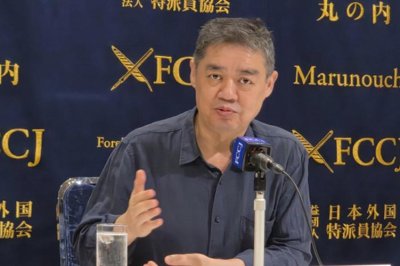
Wu’er Kaixi, a former student leader of the 1989 Tiananmen pro-democracy movement, speaks at a news conference at the Foreign Correspondents’ Club of Japan in Tokyo on Wednesday. Photo by Asia Today
June 3 (Asia Today) — Wu’er Kaixi, a former student leader of China’s 1989 Tiananmen pro-democracy movement, warned South Koreans on Wednesday not to view North Korea only as a country of the same ethnic people.
“North Koreans are certainly Koreans. They speak the same language and eat the same food,” Wu’er said at a news conference at the Foreign Correspondents’ Club of Japan in Tokyo, one day before the anniversary of the June 4 Tiananmen crackdown. “But they have been affected by the disease of communism, and that influence has seeped into their bones and DNA.”
Wu’er, also known as Uerkesh Davlet, was listed by the club as a former student leader of the 1989 Tiananmen movement for its Wednesday news conference, titled “Tiananmen 37 Years Later.”
Asia Today asked Wu’er about the future of China and what it could mean for the Korean Peninsula, noting China’s influence on the Korean War, the division of the peninsula and North Korea’s nuclear issue.
Wu’er responded by directly addressing North Korea.
“I understand that Koreans dream of unification,” he said. “But that is not simply a matter of meeting lost brothers and sisters again. It is the process of rebuilding half of a country that has been affected by communism.”
Wu’er expressed concern about what he described as a nationalist approach within parts of South Korean society.
“When I talk with friends in Seoul, I often sense conservative and nationalist sentiment,” he said. “I fully understand such feelings because South Korea has faced North Korea’s military threat directly.”
“But South Koreans who enjoy liberal democracy should have a mindset of using that freedom for the freedom of North Koreans,” he said.
Wu’er also warned against accepting North Korean propaganda at face value.
“North Korea’s military threats are calculated actions,” he said. “You should not be misled by the nationalist slogans they put forward.”
He said propaganda is used to control hungry citizens.
“North Koreans are still hungry, but they are ruled by regime propaganda,” Wu’er said.
“North Korea is no longer the North Korea we think of,” he said. “If one day South Koreans have the chance to embrace North Koreans, they will realize they are no longer the brothers and sisters they remember from the past.”
“They may be closer to Russians or Chinese,” he said. “You have to understand how a communist system changes human beings and society.”
Wu’er said South Korea’s government and people should understand the nature of the Chinese Communist Party system when considering North Korea.
During the news conference, Wu’er sharply criticized the Chinese Communist Party, saying many people mistakenly view China as a state driven by nationalism or communist ideology.
“The Chinese Communist Party is simply a criminal group,” he said. “They are not pursuing the interests of the state or the rejuvenation of the Chinese nation. They are only interested in maintaining their own power and wealth.”
He dismissed Chinese President Xi Jinping’s slogan of “the great rejuvenation of the Chinese nation” as propaganda meant to deceive the Chinese people.
“The Chinese Communist Party is driven more by interests than ideology,” Wu’er said. “Like a criminal organization seeking more profits, it endlessly tries to expand power and control.”
“To understand China, ask a criminologist rather than an international politics scholar,” he said. “If you approach it through the behavior of a criminal group, you can understand China’s foreign policy much more accurately.”
Wu’er said the Chinese Communist Party “is never satisfied” and urged liberal democracies to respond firmly as Beijing seeks to expand its control and influence.
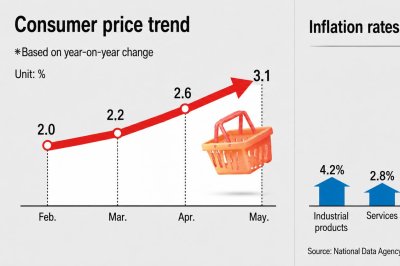
Consumer prices in South Korea rose 3.1% in May from a year earlier, driven by sharp increases in petroleum products, international airfares and overseas group tour fees. Data from National Data Agency. Graphic by Asia Today and translated by UPI
June 2 (Asia Today) — South Korea’s consumer price growth topped 3% in May for the first time in 26 months as a prolonged Middle East war drove up global oil prices, raising concerns that high inflation could continue through the second half of the year.
The consumer price index stood at 119.92 in May, with 2020 set as the base year of 100, up 3.1% from a year earlier, according to consumer price data released Tuesday by the National Data Agency. It was the first increase of 3% or more since March 2024.
Industrial products rose 4.2% from a year earlier, while service prices increased 2.8%. Petroleum prices showed the sharpest increase, jumping 24.2%, the largest gain in three years and 10 months since July 2022, when the Russia-Ukraine war was at its height.
Gasoline prices rose 23.1%, diesel prices climbed 33.3% and kerosene prices increased 21.7%.
Among services, international airfares, which are directly affected by fuel costs, rose 33.5%, while overseas group tour fees increased 26.3%.
The living price index, which tracks frequently purchased items with a high share of household spending, rose 3.3% from a year earlier, showing a worsening burden felt by consumers.
Lee Doo-won, an official in charge of economic trend statistics at the data agency, said petroleum prices rose more sharply because of higher international oil prices caused by the Middle East war.
“International airfares and prices for travel and lodging-related items rose sharply as fuel surcharges linked to global oil prices increased and the number of peak-season days, including holidays, grew,” Lee said.
The government said it will work to reduce price uncertainty by stabilizing petroleum prices.
A Finance Ministry official said the government’s petroleum price cap and fuel tax cut reduced the May consumer price increase by 0.6 percentage point.
“We will make every effort to stabilize prices felt by households through petroleum price stabilization measures and a task force on livelihood prices,” the official said.
Experts said inflation led by higher global oil prices is likely to continue in the second half.
“Although the United States and Iran have announced plans to discuss reopening the Strait of Hormuz, the high oil price trend is likely to continue in the second half even if the war ends, given the destruction of local oil facilities,” said Jeong Se-eun, an economics professor at Chungnam National University.
“For South Korea, which imports all of its oil, oil prices affect overall inflation. There is also concern that abnormal weather forecast for this summer could raise agricultural prices,” Jeong said.
“With no notable downward factor in the second half, inflation is expected to stay around 3%,” she added.
Park Jin, a professor at the Korea Development Institute School of Public Policy and Management, said prices are determined by market supply and demand.
“On the supply side, there are inflation concerns caused by unstable oil prices. On the demand side, there are price-increase factors such as a strong domestic stock market,” Park said. “Preemptive steps, including consideration of an interest rate hike, are needed.”
President Lee Jae Myung (L) attends a meeting with his senior secretaries at the presidential office Cheong Wa Dae in Seoul, South Korea, 28 May 2026. Photo by YONHAP / EPA
June 1 (Asia Today) — South Korea is expected to begin procedures to appoint a special inspector general after Wednesday’s local elections, potentially reviving a presidential watchdog post that has been vacant for nearly a decade.
The special inspector general is tasked with inspecting possible misconduct involving the president, the president’s relatives and senior presidential office officials.
The system was introduced in 2014 under then President Park Geun-hye, but the post has remained vacant since 2016. Neither the Moon Jae-in administration nor the Yoon Suk Yeol administration appointed a special inspector general.
Political sources said Sunday that the ruling Democratic Party is preparing to begin the recommendation process shortly after the June 3 local elections.
The main opposition People Power Party has already selected Kang Ji-sik, a former prosecutor and lawyer at Baeksong Law Firm, as its candidate for the opposition’s share of the nomination process. Kang graduated from the Judicial Research and Training Institute in its 27th class.
The Democratic Party formally said it would begin the recommendation process after Presidential Chief of Staff Kang Hoon-sik publicly asked the National Assembly in April to move forward. But the process appears to have been delayed by the party’s floor leader election and the local elections.
Han Byeong-do, floor leader of the Democratic Party, said the party would proceed under the rules and procedures, though he did not specify a date.
A presidential official said the Blue House had asked that the appointment process move as quickly as possible.
“With the new party leadership in place and the election nearing completion, the process appears likely to begin immediately after the election,” the official said.
Under the law, the National Assembly recommends three candidates and the president selects one. The ruling and opposition parties each recommend one candidate, while the Korean Bar Association selects the third, who is jointly recommended by both parties.
The president’s nominee must then go through a parliamentary confirmation hearing before final appointment. The special inspector general serves a three-year term.
Lee said at a news conference marking his first 30 days in office last July that power should be subject to checks.
“Power should be checked,” Lee said at the time. “Even for the safety of those who hold power, it is better to be checked. I have already ordered the appointment of a special inspector general.”
After the National Assembly showed little movement, Kang Hoon-sik again urged lawmakers in December to quickly recommend candidates.
Lee renewed the request on April 19 before leaving for visits to India and Vietnam.
“President Lee believes the appointment of a special inspector general is essential under the principles of democracy and popular sovereignty, which require all power to be subject to institutional oversight,” Kang Hoon-sik said at the time.
“As the president has expressed his firm will, we ask the National Assembly to begin the relevant procedures as soon as possible,” he said.
Weekly insights and analysis on the latest developments in military technology, strategy, and foreign policy.
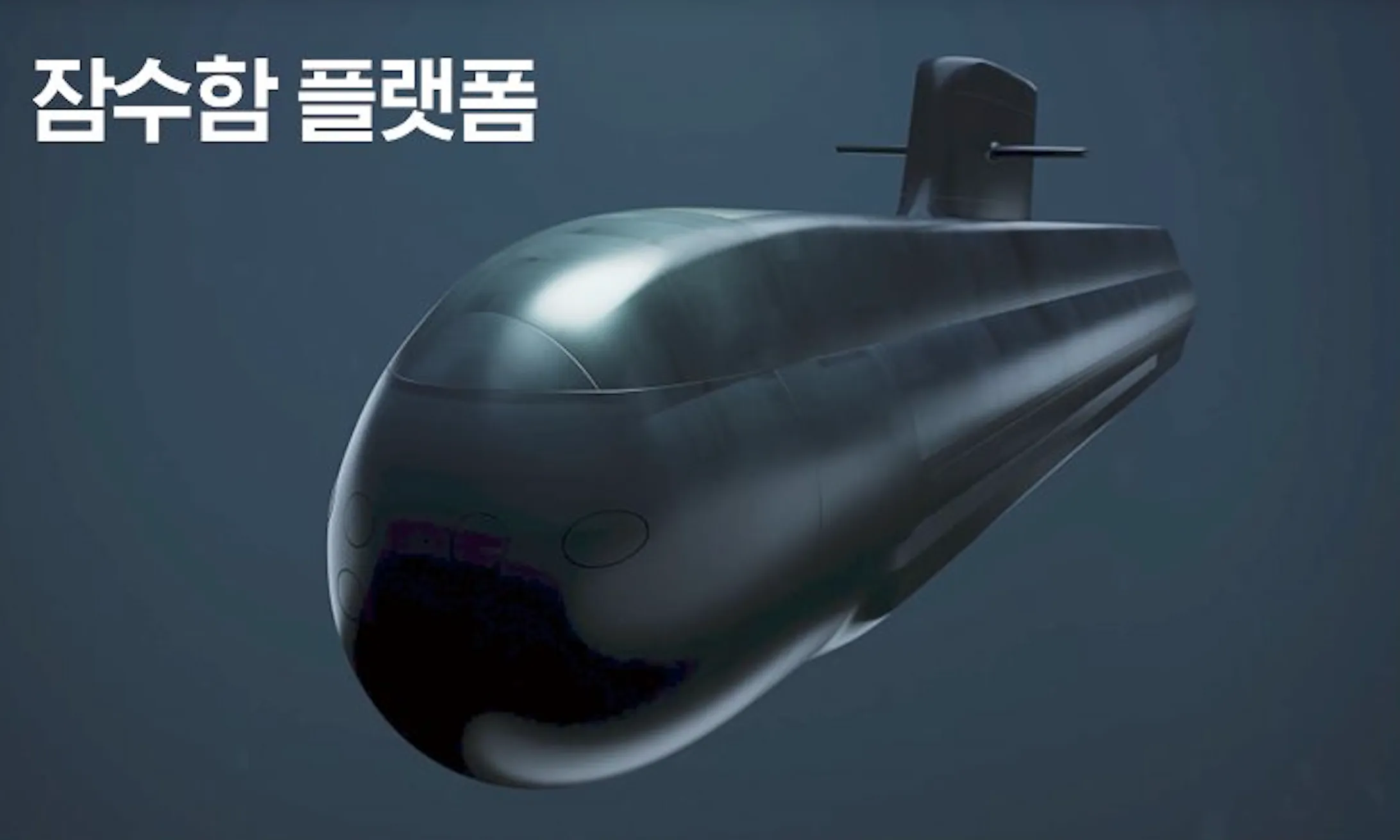
South Korea has confirmed plans to develop a new class of nuclear-powered submarines under the Jang Bogo N Project. These will put South Korea in an exclusive class of nations operating nuclear-powered subs, with currently only China, France, India, Russia, the United Kingdom, and the United States having them in active service. The move has larger implications than providing the Republic of Korea Navy (ROKN) with just more capable submarines.
A Ministry of National Defense rendering shows how the Jang Bogo N Project boats may look. MND
South Korea’s Ministry of National Defense (MND) today published a document, the Basic Plan for the Development of Nuclear-Powered Submarines in the Republic of Korea, that sets out its ambition for a major advance in the country’s naval capabilities. The name of the program alludes to South Korea’s first submarine, the Jang Bogo class.
📌「대한민국 핵추진잠수함 개발 기본계획」 발표
국방부는 5월 26일(화)에 「대한민국 핵추진잠수함 개발 기본계획」을 발표했습니다.
「대한민국 핵추진잠수함 개발 기본계획」은 대한민국이 핵추진잠수함을 체계적으로 개발하기 위한 추진 방향을 국내·외에 최초로 제시하는 문서로서 주요 내용은… pic.twitter.com/jkVjS3soQt
The MND has presented the thinking behind its nuclear-powered sub plans, noting that the vessels will offer “dramatically enhanced operational capabilities” compared to the ROKN’s existing diesel submarines. As well as their functionally unlimited range, the MND says the new nuclear-powered submarines will offer “higher mobility” than their predecessors, which pairs with nuclear submarines’ abilities to travel farther, and do so faster, as well as their underwater agility, at least in certain performance envelope areas.
The ministry also outlines that the new submarines “will play a core role in responding to threats such as North Korea’s submarine-launched nuclear and missile threats.”
“The Republic of Korea will transparently and firmly fulfill its nuclear non-proliferation obligations based on the trust of the international community,” the MND adds.
Clearly, this is a long-term program, with it being Seoul’s first venture into nuclear propulsion for a military application, although it does develop reactors for civilian purposes, which could be leveraged for such work.
An official rendering showing one of the Jang Bogo N Project boats under construction. MND
The defense ministry expects that the construction process will take up to 10 years, after which the boats will be operated for more than 30 years.
A precise timeline has not been released, and it is also unclear how many hulls are expected to be built.
Back in October last year, TWZreported on a key milestone toward the program launch, when U.S. President Donald Trump announced that he’d signed off on the plan.
“Our Military Alliance is stronger than ever before and, based on that, I have given them approval to build a Nuclear Powered Submarine, rather than the old fashioned, and far less nimble diesel powered submarines that they have now,” Trump wrote in a post on Truth Social.
The U.S. leader also claimed that at least some of the boats would be built in the United States. The MND hasn’t mentioned this possibility, and the wording of its announcement stresses the sovereign nature of the program and local industrial participation. However, with South Korean firms already building ships in Philadelphia and the United States needing more nuclear shipbuilding capacity, this dynamic could also come into play as a result of the Jang Bogo N Project.
Collapse of U.S. shipbuilding poses national and economic security risks | 60 Minutes
However, the plans long faced pushback, including from the United States, especially over nuclear proliferation concerns.
The ROKN already operates a sizable diesel-electric submarine force made up of 12 Jang Bogo class boats, nine Sohn Won-yil class submarines, and three Dosan Ahn Changho class vessels — these are also referred to under the Korean Submarine (KSS) nomenclature, being the KSS-I, KSS-II, and KSS-III, respectively.
The Republic of Korea Navy’s submarine Jang Bogo, one of the KSS-I boats. U.S. Navy
The Jang Bogo and Sohn Won-yil classes are based on the German Type 209 and Type 214 designs, respectively, while the Dosan Ahn Changho class is a fully South Korean design.
The KSS-III submarine ROKS Dosan Ahn Changho during trials. Defense Acquisition Program Administration
Last year, South Korea also launched the first of three planned Jang Yeongsil class (KSS-III Batch II) submarines, the nation’s largest and most technologically advanced submarine class so far. You can read more about them here.
The launch ceremony for the ROKS Jang Yeongsil, the first of the KSS-III Batch II boats. ROKN
Whatever Seoul’s plan is for the production of the new boats, it is still possible, indeed likely, that the United States will provide assistance at least in relation to their propulsion systems.
Last year, South Korea’s defense minister said that South Korea would build its own submarines and modular reactors, but would receive a supply of enriched uranium fuel from the United States. Seoul’s Defense Acquisition Program Administration (DAPA), meanwhile, said that the country was already working on developing small nuclear reactors.
This fuel issue is interesting, bearing in mind that one of the hurdles for the program is a bilateral agreement that prevents it from enriching uranium and reprocessing spent fuel without Washington’s approval. Today’s announcement would suggest that the U.S. government has given the program the green light.
The Ohio class guided-missile submarine USS Michigan in Busan, South Korea, in 2017. U.S. Navy
When it comes to the nuclear issue, it’s worth noting that, as it now stands, all nations operating nuclear-powered submarines also field nuclear weapons. Already, however, Australia is moving to acquire nuclear-powered submarines through the trilateral Australia-United Kingdom-United States (AUKUS) defense cooperation agreement. Canberra has no plans for fielding nuclear weapons.
A rendering of what the AUKUS nuclear-powered submarine design for Australia may look like. U.K. Ministry of Defense
North Korean Premier Kim Jong-un on board one of the country’s Soviet-era Romeo class submarines. KCNA
As a signatory of the Non-Proliferation Treaty (NPT), this would also stand in the way of South Korea acquiring nuclear weapons. Indeed, separate from weapons, the process of building enrichment or other nuclear facilities, or otherwise acquiring the highly enriched fissile material to power the submarines, would be an issue for the NPT.
The Jang Bogo N Project is certainly ambitious, and not just in terms of constructing the boats and securing the fuel required for them.
Beyond that, there is the question about the degree to which Seoul even needs nuclear-powered submarines. South Korea is already developing conventionally-armed submarine-launched ballistic missiles (SLBM) that can be fired from some of its more modern diesel submarines. These would already offer a conventional second-strike capability to help deter North Korea. The ranges involved in striking North Korean targets hardly need a launch platform with nuclear propulsion.
At the same time, South Korean diesel-electric submarine technology already outstrips North Korea’s limited anti-submarine warfare capabilities.
South Korea Test Launches Ballistic Missile From Submarine
On the other hand, while South Korea’s new diesel-electric subs offer a conventional quasi-second strike capability, it is not anywhere comparable to a true strategic nuclear second-strike deterrent of the kind that highly survivable nuclear-powered boats could provide, if South Korea one day chooses to go nuclear. Even with just conventional ballistic missiles aboard, the ability of a nuclear submarine to disappear out to sea for long periods is unmatched, which would enhance the survivability of the boats and their missiles, and help the credibility of a far more limited conventional second strike deterrent.
Beyond the North Korean threat, the nuclear-powered submarine program promises boats with extreme endurance and a higher level of underwater performance that can range much farther afield, reflecting Seoul’s growing focus on a broader regional security picture. With this in mind, it’s clear that the Jang Bogo N Project is also directed against the threat posed by China. Beijing’s military capabilities are a growing concern for South Korea, a fact reflected in Seoul looking increasingly toward security challenges beyond the peninsula.
A stock picture of a Chinese Type 039A or Yuan class nuclear attack submarine. via U.S. Navy
The Chinese government has also previously spoken out against South Korea’s nuclear-powered submarine plans, calling for Seoul and the U.S. “to fulfill their nuclear non-proliferation obligations and do things to promote regional peace and stability, and not the other way around,” according to Reuters.
South Korea’s burgeoning submarine plans underscore how quickly its naval ambitions in general are evolving from coastal defense to a far more capable regional deterrent force, and one that will increasingly be able to undertake long-duration bluewater operations.
With the Jang Bogo N Project now underway, the ROKN can look forward to fielding its most advanced vessels yet. Depending on final plans for the production of these boats, it may well also cement its position as one of the few countries capable of designing and building nuclear-powered vessels. At the very least, it should put yet another piece in place should South Korea decide it needs a true second-strike strategic nuclear deterrent.
A fire truck exits the Hanwha Aerospace facility in Daejeon on Monday, following an explosion at the company’s factory that killed five and injured two. Photo by Yonhap
SEOUL, June 1 (UPI) — Five workers were killed and two others injured Monday after an explosion and fire at a Hanwha Aerospace defense facility in the central South Korean city of Daejeon, officials said.
The blast occurred around 10:59 a.m. at Hanwha’s plant in Yuseong District, fire authorities told reporters. Some 100 personnel were dispatched and extinguished the blaze shortly after 1 p.m.
All five fatalities were found inside the work area, while two injured workers were rescued and taken to nearby hospitals, officials said. One suffered burns over his entire body and remained in critical condition, while the other sustained relatively minor burns to the neck.
Authorities said the bodies of the victims were severely damaged, making identification difficult.
Hanwha officials said the explosion occurred during a cleaning operation involving tools and equipment used in the rocket-propellant manufacturing process. The company said the exact cause of the blast remains under investigation.
A company official said the cleaning process had not previously been regarded as particularly hazardous because it involved washing equipment with water. The seven people involved in the accident were site workers rather than researchers, he added.
South Korean President Lee Jae Myung ordered authorities to mobilize all available resources for emergency response efforts and conduct a thorough investigation into the cause of the accident, according to his office.
Prime Minister Kim Min-seok issued similar instructions, calling for all available personnel and equipment to be deployed for firefighting and rescue operations and to prevent additional casualties.
Hanwha Aerospace Chief Executive Officer Son Jae-il apologized to the victims and their families following the deadly incident.
“We failed to protect the lives of those who were working at what should have been a safe workplace,” Son said. “As the company’s chief executive, I feel a heavy responsibility for this accident.”
Son pledged full cooperation with authorities investigating the cause of the explosion and said the company would conduct a comprehensive review of its safety systems to prevent a recurrence.
The company said it had established an emergency response headquarters at the site and was working with fire, police and other authorities on response and recovery efforts.
The Daejeon facility is one of Hanwha Aerospace’s key defense production sites and develops propulsion systems and tactical weapon technologies.
The accident was the latest in a series of deadly incidents at the complex. Explosions at the facility killed five workers in 2018 and three more in 2019.