Mexico wins World Cup opener
From Eduard Cauich: FIFA president Gianni Infantino described Mexico City Stadium as a venue “blessed by the gods” and a “true cathedral of soccer.”
Azteca Stadium, as most people know it, is steeped in soccer history and is now the only venue to host three World Cup opening ceremonies. But the Mexican national team had never much World Cup success at the venue.
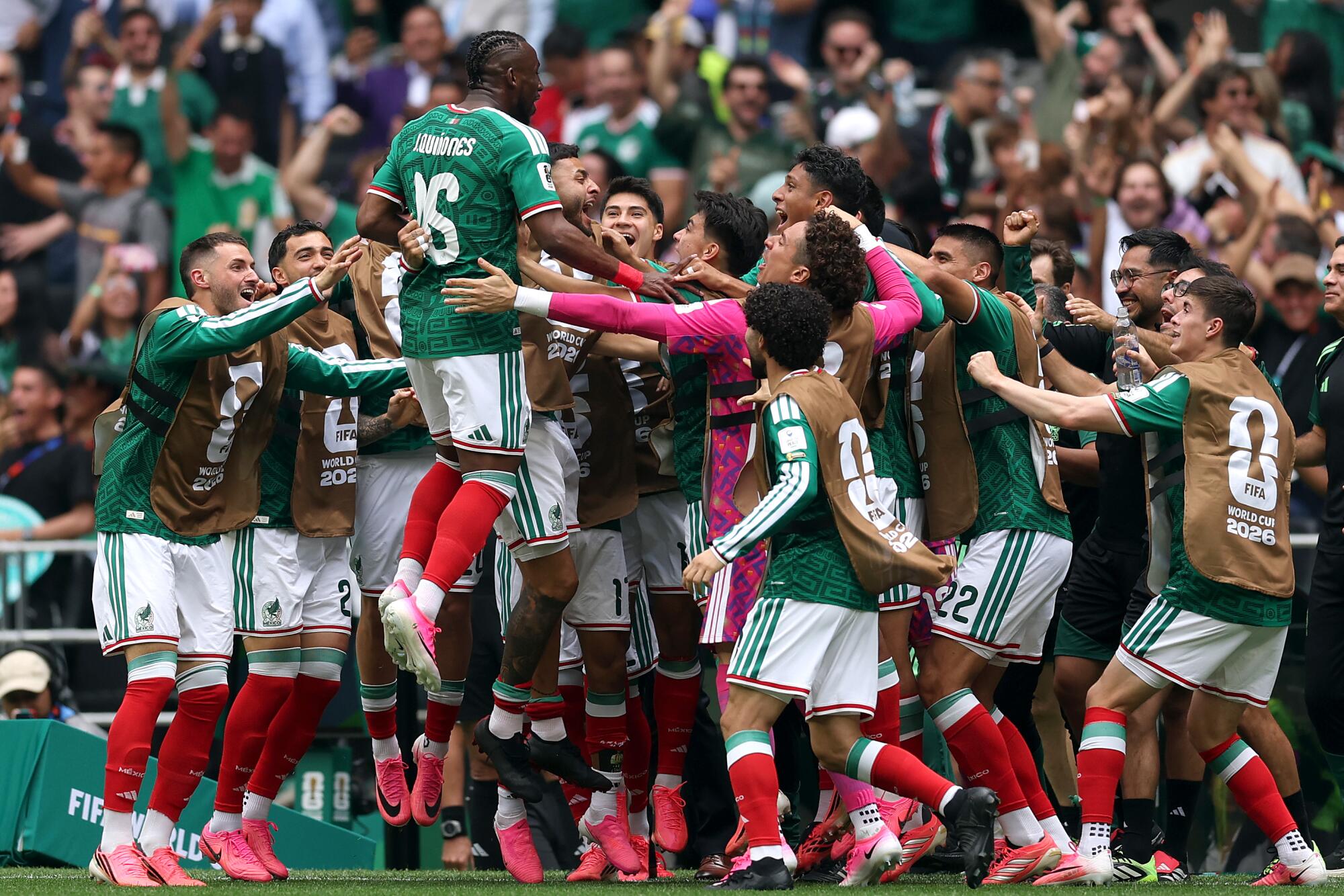
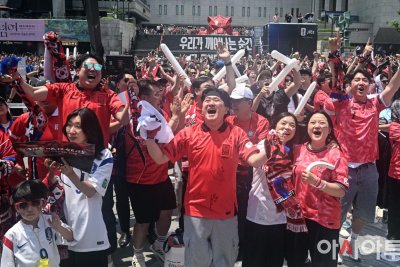
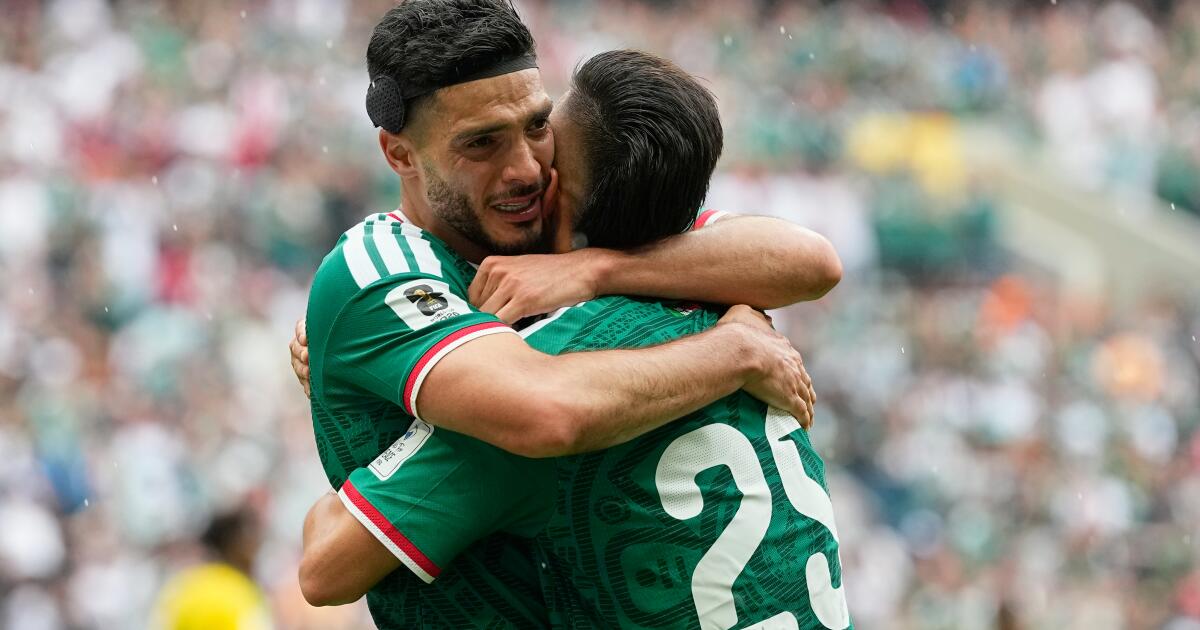
On Thursday, spurred on by most of the 80,824 fans in attendance and forwards Julián Quiñones and Raúl Jiménez, Mexico managed to defeat South Africa 2-0 and securing its first opening match victory.
Mexico opened the scoring in the ninth minute when Quiñones capitalized on a defensive error by South Africa and fired a shot down the middle, between the legs of goalkeeper Ronwen Williams. The striker, a top scorer in the Saudi Pro League, immediately ran off to celebrate with the bench, marking the first goal of the tournament. The crowd responded by throwing beer into the air.
Mexico continued to press with numerous chances in the first half, including another shot by Quiñones that hit the post and another great save by Williams, who was South Africa’s best player.
“We were far superior in the first half; we could have been up 3-0,” Mexico coach Javier Aguirre said.
Continue reading here
U.S. vs. Paraguay: Breaking down the challenges in World Cup opener
FIFA World Cup Day 1: Live updates, TV schedule, players to watch and group previews
Click here for complete TV schedule, groups and players to watch
Get the latest on L.A.’s teams in the daily Sports Report newsletter.
By continuing, you agree to our Terms of Service, which include arbitration and a class action waiver. You agree that we and our third-party vendors may collect and use your information, including through cookies, pixels and similar technologies, for the purposes set forth in our Privacy Policy such as personalizing your experience and ads.
Today’s World Cup TV schedule
Noon, Canada vs. Bosnia-Herzegovina, Fox, Telemundo
6 p.m. U.S. vs. Paraguay, Fox, Telemundo
Saturday’s World Cup TV schedule
Noon, Qatar vs. Switzerland, Fox, Telemundo
3 p.m., Brazil vs. Morocco, FS1, Telemundo
6 p.m., Haiti vs. Scotland, FS1, Telemundo
9 p.m., Australia vs. Turkey, FS1, Telemundo
Sunday’s World Cup TV schedule
10 a.m. Germany vs. Curacao, Fox, Telemundo
1 p.m. Netherlands vs. Japan, Fox, Telemundo
4 p.m. Ivory Coast vs. Ecuador, FS1, Telemundo
7 p.m. Sweden vs. Tunisia, FS1, Telemundo
Ohtani hurts knee in Dodgers’ victory
From Maddie Lee: The Dodgers couldn’t have asked for better timing, as Shohei Ohtani’s leadoff spot came back around.
In a game the Dodgers would go on to win 8-6 over the Pirates, they were clinging to a two-run lead in the top of the seventh inning against the Pirates on Thursday. With one out and runners on first and second, the Dodgers superstar, who had already reached base four times, was due up.
Instead, Santiago Espinal stepped up to the plate as a pinch-hitter.
Ohtani left the game with inflammation in his left knee, the Dodgers announced.
“Just wanted to be smart and not push it,” manager Dave Roberts said. “So I feel good about him being in there [Friday]. But obviously with the travel [to Chicago Wednesday night], we’ll just kind of see how he comes in.”
Roberts described the injury as “discomfort” at the back of Ohtani’s knee, around where the hamstring attaches. Though Ohtani underwent surgery on the same knee in 2019, that was to address bipartite patella, on the other side of the knee.
Continue reading here
How the Dodgers plan to shuffle catchers with Will Smith on the injured list
Dodgers box score
MLB standings
Rams cancel minicamp
From Gary Klein: Unless they are in Maui, as they were last year, Rams coach Sean McVay annually opts to cancel mandatory minicamps after the initial report day.
This year, McVay avoided any pretense of suspense.
On Thursday, he announced to his players that after fulfilling some broadcast media responsibilities on Monday, they would not have a minicamp and break until they report to training camp at Loyola Marymount in late July, a Rams official said.
McVay’s announcement came about a week after San Francisco 49ers coach Kyle Shanahan canceled minicamp, and Seattle Seahawks coach Mike Macdonald did the same.
The Rams play the 49ers in their Sept. 10 season opener in Melbourne, Australia.
Continue reading here
Stanley Cup Final Game 5
Andrei Svechnikov scored twice and Sebastian Aho added a second-period goal in a breakout game for Carolina’s top-line performers, helping the Hurricanes beat the Vegas Golden Knights 4-2 on Thursday night to move one victory away from the Stanley Cup.
Captain Jordan Staal added his fifth goal in the series on a night when Carolina overcame multiple hiccups from these playoffs, from a shaky power play to being outplayed in the second period of this series.
And there had been the waiting game for Aho and Svechnikov — two roster mainstays in an eight-year postseason run — to find a better offensive groove.
Continue reading here
Game 5 summary
This day in sports history
1920 — Man o’ War wins the Belmont Stakes, which was run at 1 3/8-miles, in 2:14 1/5. He shatters the world record by 3 1/5 seconds and sets the American dirt-course record for that distance.
1930 — Max Schmeling beats Jack Sharkey on a fourth-round foul for the vacant heavyweight title in New York. Schmeling becomes the first German — and European — heavyweight world champion.
1939 — Byron Nelson wins the U.S. Open in a three-way playoff with Craig Wood and Denny Shute.
1948 — Citation, ridden by Eddie Arcaro, wins the Belmont Stakes and the Triple Crown with an eight-length victory over Better Self. It’s Arcaro’s second Triple Crown. He rode Whirlaway in 1941.
1948 — Ben Hogan wins the U.S. Open with a record 276, five fewer than Ralph Guldahl’s 1937 record.
1954 — Milwaukee Braves spot starting pitcher Jim Wilson throws first no-hitter in history of County Stadium when he blanks Philadelphia Phillies, 2-0.
1979 — Bobby Orr becomes the youngest player in NHL history to be selected for the Hockey Hall of Fame. The 31-year-old is inducted months after officially ending his NHL career as the Hall waives its usual three-year waiting period.
1981 — Larry Holmes stops Leon Spinks in the third round for the WBC heavyweight title in Detroit.
1983 — Patty Sheehan wins the LPGA championship by two strokes over Sandra Haynie.
1984 — 38th NBA Championship: Boston Celtics beat Lakers, 4 games to 3, to win the championship title.
1990 — Egypt, a 500-1 shot, stuns the Netherlands when Magdi Abdel-Ghani makes a penalty kick with eight minutes remaining to tie the World Cup favorites 1-1.
1991 — The Chicago Bulls win the first NBA championship in the team’s 25-year history with a 108-101 victory in Game 5 over the Lakers. MVP Michael Jordan scores 30 points, Scottie Pippen has 32 and John Paxson 20.
2002 — NBA Finals: Lakers beat New Jersey Nets, 113-107 for a 4-0 sweep and 3rd straight title; MVP: Shaquille O’Neal for 3rd consecutive Finals series.
2005 — Annika Sorenstam closes with a 1-over 73 for a three-shot victory over Michelle Wie in the LPGA Championship. The 15-year-old Wie shoots a 69 to finish second. It’s the highest finish by an amateur in a major since 20-year-old Jenny Chuasiriporn lost a playoff to Se Ri Pak in the 1998 U.S. Women’s Open.
2008 — The Boston Celtics overcome a 24-point deficit and beat the Lakers 97-91 to take a commanding 3-1 lead in the NBA finals. No team has ever overcome more than a 15-point deficit after the first quarter, and the Celtics post the biggest comeback in the finals since 1971.
2009 — Pittsburgh’s Max Talbot scores two second-period goals as the Penguins beat the defending champion Detroit Red Wings 2-1 in Game 7 and win the Stanley Cup at Detroit’s Joe Louis Arena.
2011 — The Dallas Mavericks win their first NBA title by winning Game 6 of the finals in Miami, 105-95. Jason Terry scores 27 points and Dirk Nowitzki adds 21 as the Mavericks win four of the series’ last five games.
2013 — Andrew Shaw scores on a deflection in triple overtime to lift the Chicago Blackhawks to a 4-3 victory over the Boston Bruins in a riveting Game 1 of the Stanley Cup finals. The Blackhawks gets third-period goals from Dave Bolland and Oduya to erase a 3-1 deficit.
2016 — Sidney Crosby sets up Kris Letang’s go-ahead goal midway through the second period and the Pittsburgh Penguins win the fourth Stanley Cup in franchise history by beating the San Jose Sharks 3-1 in Game 6 of the Stanley Cup final.
2017 — Kevin Durant caps his spectacular first season with the Warriors by bringing home an NBA championship. Durant, who joined Golden State last July, scores 39 points in a finals-clinching 129-120 victory over LeBron James and the Cleveland Cavaliers.
2019 — Stanley Cup Final, TD Garden, Boston, MA: St. Louis Blues beat Boston Bruins, 4-1 for a 4-3 series victory; first title in franchise history.
2021 — Danish soccer midfielder Christian Eriksen suffers an on-field cardiac arrest during a Euro 2020 match with Finland in Copenhagen. Eriksen is revived with a defibrillator and the game controversially continues with a 1-0 Finland win.
2023 — NBA Finals: Denver Nuggets beat Miami Heat 94-89 to win the franchise’s first Championship; clinch series 4-1; MVP: Denver C Nikola Jokić.
Compiled by the Associated Press
This day in baseball history
1922 — Hub Pruett struck out Babe Ruth three consecutive times, and the St. Louis Browns beat the New York Yankees 7-1.
1928 — Lou Gehrig of the New York Yankees had two triples and two homers in a 15-7 victory over the Chicago White Sox.
1939 — The Baseball Hall of Fame was dedicated at Cooperstown, N.Y.
1954 — Milwaukee’s Jim Wilson pitched the year’s only no-hitter, blanking the Philadelphia Phillies 2-0.
1957 — Stan Musial of the St. Louis Cardinals broke the National League record for endurance when he played in his 823rd consecutive game. The previous mark was established in 1937 by Pirates first baseman Gus Suhr.
1959 — The San Francisco Giant’s Mike McCormick tossed a 3-0, five-inning no-hitter against the Philadelphia Phillies. Richie Ashburn singled in the top of the sixth for the Phillies, but the hit didn’t count because the game was stopped by rain.
1962 — In Milwaukee’s 15-2 rout of the Dodgers at County Stadium, the Aaron brothers both homer in the same game with Tommie connecting in the bottom of the eighth after his older brother Hank had hit one out in the second.
1970 — Dock Ellis of the Pittsburgh Pirates hurled a 2-0 no-hitter in the first game of a doubleheader against the San Diego Padres. Ellis walked eight and hit a batter, and Willie Stargell hit two homers.
1981 — Thirteen games were canceled due to the players’ strike.
1997 — After 126 years, baseball broke its tradition and played interleague games. The San Francisco Giants beat the Texas Rangers 4-3.
1999 — Cal Ripken went 6-for-6, homering twice and driving in six runs as the Baltimore Orioles scored the most runs in franchise history with a 22-1 rout of the Atlanta Braves.
2006 — Jason Grimsley was suspended 50 games by Major League Baseball, less than a week after federal agents raided his home during an investigation into performance-enhancing drugs.
2007 — Justin Verlander pitched a no-hitter to lead the Detroit Tigers over the Milwaukee Brewers 4-0. Verlander struck out a career-high 12, walked four and benefited from several stellar defensive plays.
2009 — Chicago right fielder Milton Bradley had a bad day at Wrigley Field. Bradley lost Jason Kubel’s pop-up in the sun for a single, couldn’t catch Michael Cuddyer’s RBI bloop double, made a baserunning blunder and, most egregiously, flipped the ball into the stands after catching Mauer’s one-out sac fly.
2009 — New York Mets second baseman Luis Castillo dropped Alex Rodriguez’s lazy popup with two out in the ninth inning as two runs scored, helping the Yankees escape with a wild 9-8 victory over the Mets.
2010 — Daniel Nava hit the first pitch he saw as a big leaguer for a grand slam — only the second player to do it — leading the Boston Red Sox to a 10-2 rout of the Philadelphia Phillies. Nava connected on a fastball from Joe Blanton in the second inning. Kevin Kouzmanoff hit a slam on the first pitch he saw Sept. 2, 2006, for Cleveland against Texas.
2011 — Realignment is on the table again as Major League Baseball and the Major League Baseball Players Association are in discussions to renew the collective bargaining agreement, which expires on December 11th. One of the options being discussed would see one team moving from the National League to the American League to create two 15-team leagues, with the Houston Astros the likeliest candidate for a move.
2012 — Alex Rodriguez ties Lou Gehrig’s record by hitting his 23rd career grand slam.
2016 — Sam Cohen put UC Santa Barbara into its first College World Series with a pinch-hit grand slam in the bottom of the ninth inning for a 4-3 victory over second-seeded Louisville 4-3 in the Super Regionals.
2017 — Royce Lewis, a high school shortstop from California, is selected first overall by the Minnesota Twins in the 2017 amateur draft.
2018 — Tigers 1B Miguel Cabrera suffers a season-ending injury when he tears a biceps tendon while swinging at pitch in the third inning of a game against the Twins. He had already missed all but one game of May with a hamstring injury.
Compiled by the Associated Press
Until next time…
That concludes today’s newsletter. If you have any feedback, ideas for improvement or things you’d like to see, email me at houston.mitchell@latimes.com. To get this newsletter in your inbox, click here.