
Italy

Italy’s ‘alternative to Rome’ that’s cheaper and has no tourists

If you want to experience the Italian charm, cuisine and history without facing major crowds, swap Rome for a hidden gem on the southeastern heel of the country.

Rome is one of the most popular travel destinations on Earth, thanks to its history, architecture, weather and style.

But for those of us who are tired of navigating hordes of tourists to catch a glimpse of the Fontana di Trevi or queuing up for the best restaurants, there is an alternative.

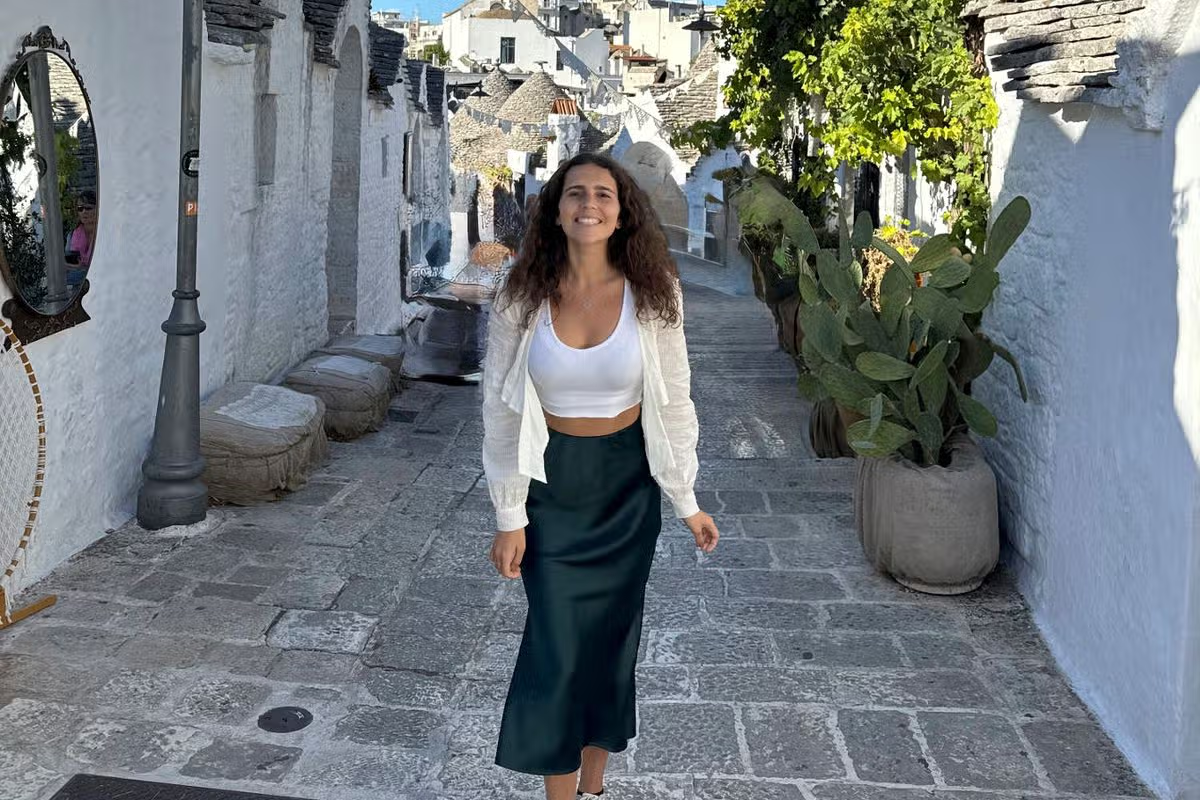
The southeastern tip of Italy is home to the comune of Lecce, rich in baroque architecture and with the same historical charm that draws millions to the Capital.

Nicknamed the ‘Florence of the South’ for its characteristic style, Lecce has a rich history that is still tangible today in the form of places such as the Church of the Holy Cross (Chiesa di Santa Croce), built in 1353 and completed in 1695, and the Church of Saints Niccolo’ and Cataldo, initially built in 1180.

You’ll also find convents, the Column of St. Oronzo – built to mark the end of the plague – a major Roman-era amphitheatre, three archaeological museums, and Lecce’s own Arc de Triomphe (Arco di Trionfo), said to stand over St. Giusto’s tomb.

READ MORE: UK travel firm goes bust as holidays cancelled and no refunds givenREAD MORE: Beautiful seaside city is ‘best kept secret’ in Spain with £20 flights from the UK

You’ll also find an imposing castle – Il Castello di Carlo V – in which tourists can enjoy cultural tours and seasonal events, originally built by Charles V in the 1500s.

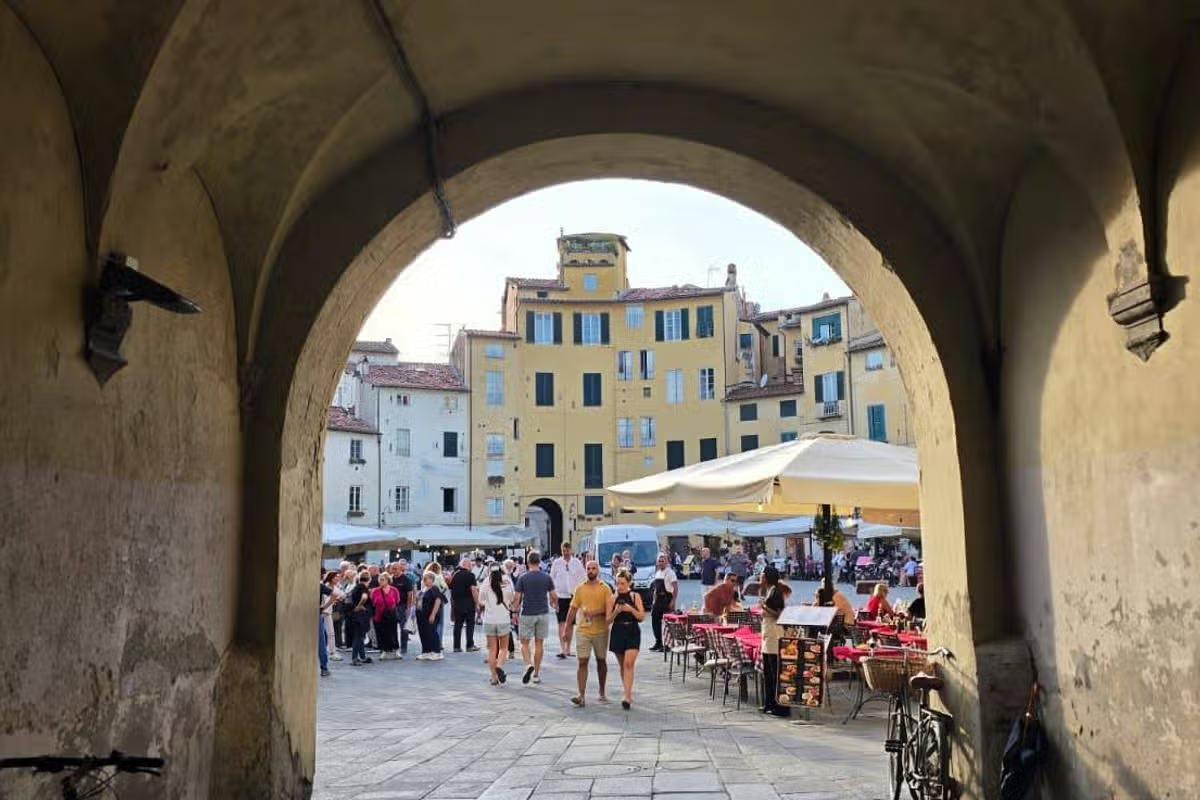
If you like to experience a city by strolling around it, you’re spoiled for choice of where to go in Lecce. The city centre is full of sandstone-coloured grand piazzas, – the biggest one is Piazza del Duomo – ruins and ornate baroque buildings that sit in preserved Roman roads.

Visitors also enjoy the southern Italian tradition of the evening passeggiata, when families stroll at dusk to mark the end of the workday.

It is a city rooted in its artisanal culture, with olive oil and wine being Lecce’s main exports. That reflects in the local food and produce, making local eats accessible and fresh. For a truly authentic taste of Lecce, visit Mercato di Piazza Libertini, the lively central market.

You can also enjoy wine tours, cooking classes, and sample peppery olive oil, known for converting doubters into enthusiasts.

Other delicacies include pasticciotto – pastries filled with custard, ricotta, or, in Lecce, vanilla. You’ll easily find them at the multiple bakeries spread across the centre, with reviewers highlighting Pasticceria Natale and Caffè Alvino.

And if you manage to explore the entire place and still have time to spare, guides recommend taking a bus to the nearby beaches of San Cataldo, Porto Cesareo or Punta Prosciutto, reachable in as little as 40 minutes.

To enjoy optimal weather in Lecce, avoid June, July and August – as temperatures can easily go above 40C – but don’t worry about any other month, as temperatures range from 14C to 28C year-round. Avoiding grey skies is easy, as it doesn’t usually rain more than a week per month, but you’ll have the best luck in May, September, and October.

When looking for a place to stay, many like to enjoy Lecce while dwelling in scenic villas that offer a luxurious experience for a slightly higher price – from around £415 a night. If you’re budgeting, you can still have a great experience at local hotels for around £60 per night.

Overall, Lecce is more affordable than Italy’s major destinations but offers the same rich atmosphere, culture, and cuisine.

To reach Lecce, fly from London to Brindisi Airport, a journey of about three hours. From Brindisi, Lecce is approximately 30 minutes away by straightforward bus or car rides that can be booked in advance.

Once you get to the city, you’ll be able to comfortably reach most sites on foot, but public buses are available to help tourists navigate as well as reach neighbouring towns.

Return flights between London Stansted and Brindisi can cost as little as £30 per person during the milder seasons. If flying from London City Airport or Gatwick, fares typically start at £200.

If you’re already planning a trip to Italy, Lecce is a good day-trip option, as frequent trains connect Lecce with major Italian cities, making access easy.

Source link

As Europe seeks to increase deportations, some see signs of Trump-like tactics

The European Union is expanding its powers to track, raid and deport migrants to “return hubs” in third countries in Africa and elsewhere, quietly adopting tactics of the Trump administration that have drawn public criticism across the 27-nation bloc.

The EU continues to tighten migration policies after right-wing parties took power in some countries in 2024. European Commission President Ursula von der Leyen, from the center-right European People’s Party coalition, has said that the new measures will prevent a repeat of the 2015 crisis caused by Syria’s civil war, when about 1 million people arrived to seek asylum.

“We have learned the lessons of the past. And today, we are better equipped,” Von der Leyen has said. The new policies, known as the Pact on Migration and Asylum, go into effect June 12.

Far-right parties in Europe have praised the deportation policies of President Trump and called for the EU to adopt a similar approach. Human rights groups warn that authorities are already illegally blocking migrants at EU borders and hollowing out their legal protections.

Italy provides a model

The EU already spends millions of dollars to deter migrants before they reach its shores, and has supported tens of thousands of Africans returning home, voluntarily or by force.

What’s envisioned now is an expansion of what Italy has created under Prime Minister Giorgia Meloni and her “tough on migration” stance. It operates two migrant detention centers for rejected asylum seekers in Albania. One currently holds at least 90 migrants, said lawmaker Rachele Scarpa, who said that she found people confused and scared during a recent visit.

In addition, Meloni’s Cabinet has approved an anti-immigration package that would allow the navy to halt vessels in international waters for up to six months if they are deemed a threat to public order, return intercepted migrants to countries of origin or third countries and speed up the deportation of foreign nationals convicted of crimes.

An “informal group” of EU nations including Germany, Austria, the Netherlands, Denmark and Greece are pursuing deportation center agreements, said Bernd Parusel, a researcher at the Swedish Institute for European Policy Studies.

Kenya is one country they are speaking with, said Tineke Strik, a Dutch member of the European Parliament. Whether consciously or not, the plan is similar to Trump’s deals with nations like El Salvador to take in deported migrants, she said.

Other countries are exploring similar ideas. Sweden’s migration minister has said the conservative ruling coalition approves setting up hubs outside Europe, especially for Afghan and Syrian asylum seekers.

Competing views

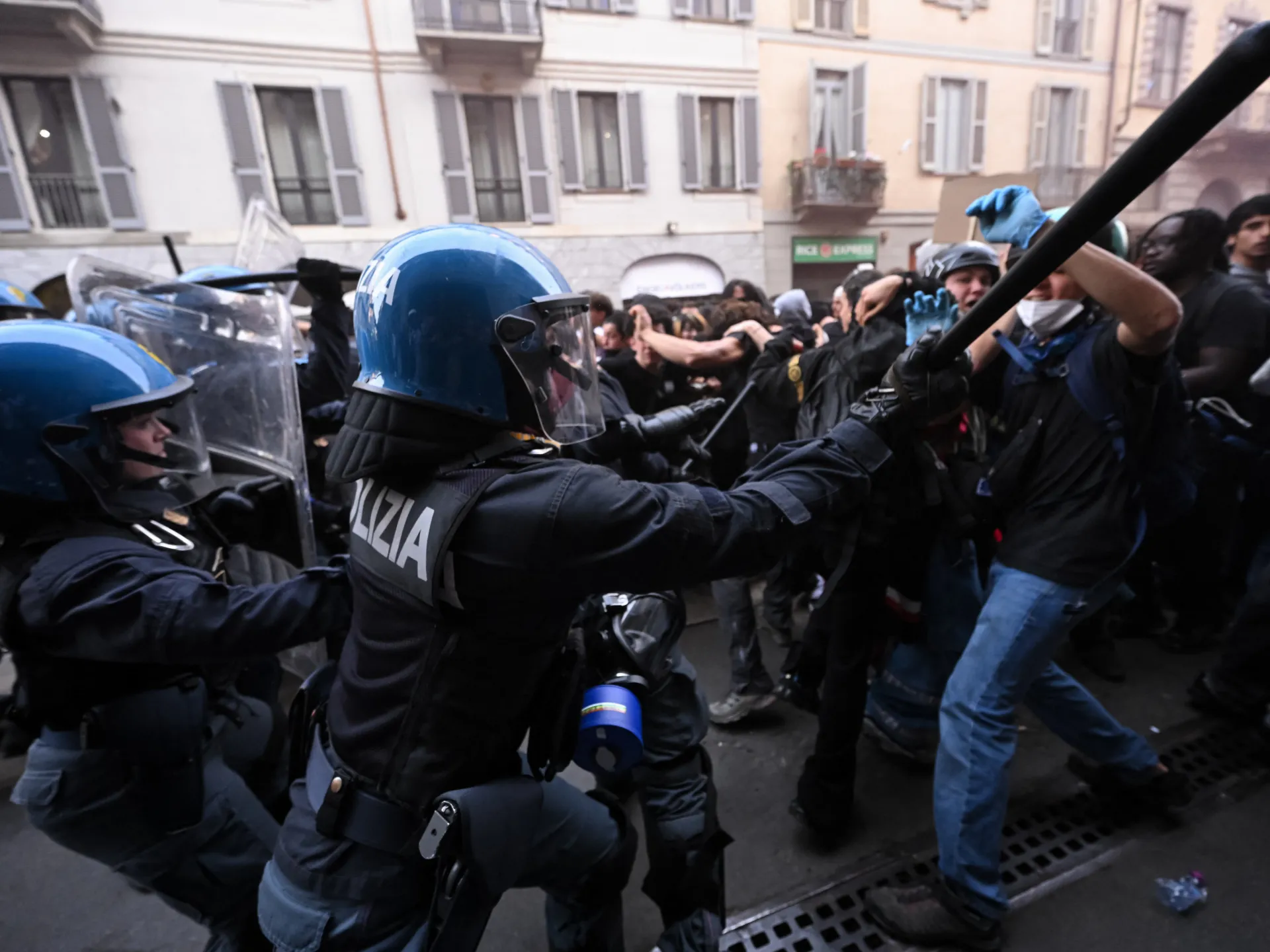
During the recent Winter Olympics in Italy, protests erupted over the deployment of U.S. Immigration and Customs Enforcement agents to provide security to the U.S. delegation. But others in Europe have praised ICE’s actions in Trump’s deportation campaign and called for setting up similar deportation-focused police units.

In 2024, Belgium passed a law allowing the EU border service Frontex to operate in the country, stoking fears among activists that it could join in on raids.

But Frontex’s mandate covers only borders, said spokesperson Chris Borowski, and the current role in voluntary or involuntary returns for the service includes “coordinating flights, helping with travel documents and making sure fundamental rights are respected throughout the process.”

The European Commission has declined requests to take a position on U.S. immigration policies.

In Britain, which left the EU several years ago, the center-left Labor Party government has made curbing unauthorized immigration a key focus.

In February, the Home Office said that almost 60,000 people had been deported since the government was elected in July 2024. It said 9,000 arrests were made of people working without permission in 2025, up by more than half from the year before.

Raids, surveillance and ‘pushbacks’

Under the principle of non-refoulement in EU and international law, a person can’t be returned to a country where they would face persecution.

But European immigration enforcement tactics include so-called pushbacks, where people trying to cross into the EU are forced back across a border without access to asylum procedures.

Authorities in Europe carry out an average of 221 pushbacks a day, according to a February report by a group of humanitarian organizations. More than 80,000 pushbacks were recorded in 2025, the report said, mostly in Italy, Poland, Bulgaria and Latvia.

“Men, women and children — including individuals in critical medical condition — are routinely subjected to beatings, attacks by police dogs, forced stripping, forced river crossings and theft of personal belongings,” according to the report.

European agents are brutalizing migrants just like in the U.S., said Flor Didden, migration policy expert at the Belgian human rights group 11.11.11. Some, like in Greece, even wear masks, as ICE agents typically do.

“The images are shocking and the outrage is justified,” he said of the U.S. “But where is that same moral clarity when European border authorities abuse, rob and let people die?”

Weakening of migrant protections seen

The groups also have recorded an expansion of surveillance technology like drones, thermal cameras and satellites to monitor people on the move.

Other human rights groups warn of a weakening of legal protections.

The EU’s new migration regulations allow for more police raids in private homes and public spaces and more use of surveillance and racial profiling, said a letter to EU institutions in February from 88 nonprofit groups including the Brussels-based Platform for International Cooperation on Undocumented Migrants.

“We cannot be outraged by ICE in the United States while also supporting these practices in Europe,” said the platform’s director, Michele LeVoy.

Olivia Sundberg Diez, EU migration advocate for Amnesty International, said Europe retains more protections for vulnerable migrants than the United States does but shares much of the political momentum toward harsher policies.

“There’s a level of institutions’ and courts’ independence and human rights compliance in Europe that you can’t disregard,” she said. “But the fundamental political impulse is the same, and I worry that the human consequences will be the same.”

McNeil and Zampano write for the Associated Press and reported from Brussels and Rome, respectively. AP writers Elena Becatoros in Athens, Jill Lawless in London, Paolo Santalucia in Rome, Claudia Ciobanu in Warsaw and Kirsten Grieshaber in Berlin contributed to this report.

Source link

Italy to play Bosnia in 2026 World Cup playoff final, Kosovo face Turkiye | Football News

Italy beat Northern Ireland 2-0 to boost their bid to reach a men’s World Cup for the first time since 2014, as Bosnia and Herzegovina, Sweden, Poland, Turkiye, Kosovo, the Czech Republic and Denmark also won their European playoff semifinals.

Four-time champions Italy, who lost out in the playoffs for the 2018 and 2022 editions, travel to Bosnia on Tuesday for the final, knowing a win will send them to June and July’s tournament in Canada, Mexico, and the United States.

Recommended Stories

list of 4 itemsend of list

Sandro Tonali blasted in superbly from the edge of the box in the second half of a nervous one-off semifinal in Bergamo on Thursday before Moise Kean made the game safe.

“We made life a bit difficult for ourselves, but in the second half we found our rhythm,” Italy coach and 2006 champion Gennaro Gattuso said. “Now we’re going to play this final. We know it’s difficult. The tension we feel will be felt by our opponents, too.”

Bosnia overcame Wales on penalties in Cardiff following a 1-1 draw after extra time.

Daniel James used his pace to score early in the second period for the hosts, and Karl Darlow then made a wonder save from an Ermedin Demirovic header. Edin Dzeko, 40, levelled late on in normal time.

Darlow saved again from Demirovic in the shootout, but Brennan Johnson and Neco Williams both missed.

Kosovo have never reached a World Cup, but are through to Tuesday’s playoff final at home to Turkiye after winning a wild game in Slovakia 4-3.

The Kosovans twice wiped out a deficit, and Kreshnik Hajrizi’s goal on 72 minutes proved the difference.

Ferdi Kadioglu’s second-half goal put Turkiye through after a tight 1-0 home win over Romania.

Kadioglu calmly netted on 53 minutes after Arda Guler’s magical assist at Besiktas’s stadium in Istanbul.

Romania’s 80-year-old coach Mircea Lucescu, who counts Turkiye among his former jobs, was left to rue Nicolae Stanciu hitting the post as the Tricolours missed the World Cup for the seventh straight edition.

Turkiye, third in 2002, have not reached a men’s World Cup since.

Viktor Gykeres bagged a hat-trick in Sweden’s 3-1 win over Ukraine in Valencia. Ukraine have not played at home since the Russian full-scale invasion more than four years ago, and miss out on another World Cup.

Graham Potter’s Swedes next take on Poland, who came from behind to defeat Albania 2-1 in Warsaw.

Arbr Hoxha pounced 42 minutes after Jan Bednarek’s mistake as Albania dreamed of moving closer to a first World Cup appearance. But record Poland scorer Robert Lewandowski equalised, and Piotr Zielinski won it in style with a goal from distance.

Gustav Isaksen scored twice in two minutes to help Denmark thump North Macedonia 4-0 and set up a meeting away to the Czech Republic, who needed penalties to get past Ireland in Prague.

Troy Parrott, the hero as the Irish made the playoffs at the end of November’s group stage, netted the opener from the spot, and an own goal summed up the poor Czech defence.

But the hosts pulled one back through Patrik Schick’s penalty and Ladislav Krejci’s late header to make it 2-2, prompted by a cagey extra time, with the Czechs prevailing in a shootout.

This year’s tournament, in North America in June and July, will feature an expanded 48 teams, meaning more nations have a chance to qualify.

Twelve European countries have already gotten through by winning their groups. The playoffs are made up of second-placed teams and sides who did well in the previous Nations League.

Bolivia beat Suriname, Jamaica edge New Caledonia to reach playoff finals

In FIFA’s intercontinental playoff games on Thursday, Bolivia rallied to beat Suriname 2-1 to qualify for the final qualifying playoff against Iraq.

Liam Van Gelderen put Suriname ahead in the 48th minute, but Moises Paniagua tied the score at the 72nd, and Miguel Terceros had the winning goal on a penalty kick in the 79th minute for the Bolivians, who are aiming for their second World Cup appearance.

The Bolivians have only previously played in the 1994 World Cup in the US. Suriname were looking to qualify for the first time.

Bolivia will play Iraq next Tuesday in Monterrey, with the winner qualifying for Group I with France, Norway and Senegal.

Elsewhere on Thursday, a first-half goal by Wrexham striker Bailey Cadamarteri gave Jamaica a 1-0 victory over New Caledonia and a place in the international playoff final against the Democratic Republic of the Congo (DRC).

The Reggae Boyz have only one World Cup appearance, at France in 1998. New Caledonia, from Oceania, saw their chance to advance to a first World Cup end.

Jamaica will face DRC next Tuesday at Akron Stadium in Guadalajara. DRC qualified for the playoff by defeating Nigeria in an African playoff.

The winner in Guadalajara will play in Group K in the tournament along with Colombia, Portugal and Uzbekistan.

Source link

Europe’s most touristy city has 16,250 visitors for every 100 locals — full list

A new ranking compares international tourist numbers to locals in European cities – and one tops the list with a staggering 16,250 visitors for every 100 residents

Summer is on the horizon, and folks are starting to map out their holiday plans. Being based in the UK, we’re fortunate to have some of the world’s most stunning destinations within easy reach, with iconic cities just a short flight away.

However, many of these sought-after spots are now swamped with tourists – in fact, some now host more visitors than locals. DiscoverCars.com has compiled a new ranking that contrasts the number of international tourists with the local population in European cities. Five of the top holiday hotspots now boast more tourists than residents.

Topping the list is Dubrovnik in Croatia. This breathtaking historical city gained even more fame after serving as the backdrop for King’s Landing in the HBO series Game of Thrones.

Last year, this fortified city welcomed 6.5 million tourists – an astounding figure compared to its 40,000 inhabitants. That equates to 16,250 tourists for every 100 locals.

Taking second place is Reykjavik in Iceland, reports the Express. This Arctic city attracted even more tourists than Dubrovnik, with 7.4 million visitors compared to its 140,000 residents, resulting in 5,286 tourists per every 100 locals.

The city is renowned for its Blue Lagoon thermal baths and, of course, the opportunity to witness the Northern Lights illuminating the sky.

Securing third place is the floating city of Venice in Italy. Arguably one of the most famous cities globally, Venice played host to 10.6 million tourists last year.

Compared to its population of 250,000, that’s a whopping 4,240 international visitors per 100 residents. The city is a hit with tourists for its stunning architecture and the opportunity to glide along its canal streets by gondola.

Switzerland’s Geneva secured fourth place on the list, welcoming 7.8 million tourists in 2025. With a local population of 200,000, this equates to 3,900 visitors per 100 residents.

Renowned for its breathtaking views of the Alps, Geneva serves as an excellent base for day trips into the mountains and exploring the picturesque villages scattered throughout them.

Porto in Portugal claimed fifth place. The city attracted seven million international tourists in 2025, against its population of 250,000.

With 2,800 tourists for every 100 residents, it’s a highly sought-after destination. The narrow streets are adorned with beautiful architecture and striking Portuguese tiles, providing a perfect backdrop for photos.

With the river slicing through the city, you can discover both sides of the city in a day – just remember to bring your walking shoes.

The most tourist-dense cities worldwide

  1. Dubrovnik, Croatia
  2. Reykjavík, Iceland
  3. Venice, Italy
  4. Geneva, Switzerland
  5. Porto, Portugal
  6. Phuket, Thailand
  7. Florence, Italy
  8. Lisbon, Portugal
  9. Edinburgh, United Kingdom
  10. Athens, Greece

Source link

When are UEFA’s World Cup 2026 playoffs, and which nations are involved? | Sport News

The final qualification spots for the FIFA World Cup 2026 are about to be sealed via UEFA and intercontinental playoffs.

With the FIFA World Cup 2026 kicking off on June 11, the final spots that are still up for grabs are being fiercely fought by nations in qualifiers around the globe.

The last governing body to complete their continental playoff route is UEFA, with four European spots still up for grabs at the showpiece event.

Recommended Stories

list of 4 itemsend of list

Thereafter, FIFA’s Play-Off Tournament – an intercontinental competition – will provide the last-chance saloon for two more of the best non-qualified finishers from the other continental processes around the globe.

Al Jazeera Sport takes a look at UEFA’s final continental playoff path as that draws to a close.

Which UEFA teams are still in with a chance of World Cup qualification?

There will be more European teams than from any other continent at the World Cup: 16.

There are still 16 European teams, meanwhile, vying for the final four of the UEFA qualifying positions for the World Cup:

  • Italy, Northern Ireland, Wales, Bosnia and Herzegovina, Ukraine, Sweden, Poland, Albania, Slovakia, Kosovo, Turkiye, Romania, Denmark, North Macedonia, Czechia and the Republic of Ireland

Which UEFA teams have already qualified for the World Cup?

The 12 European teams that have already qualified for the World Cup are:

  • Germany, Switzerland, Scotland, France, Spain, Portugal, the Netherlands, Austria, Norway, Belgium, England, and Croatia

What is the pathway to the World Cup for the remaining UEFA teams?

The remaining teams are divided into four paths. Only the winner of each path will qualify:

Path A:

  • Italy vs Northern Ireland and Wales vs Bosnia and Herzegovina
    The winner of this path joins World Cup Group B (with Canada, Qatar, and Switzerland).

Path B:

  • Ukraine vs Sweden and Poland vs Albania
    The winner of this path joins World Cup Group F (with the Netherlands, Japan, and Tunisia).

Path C:

  • Slovakia vs Kosovo and Turkiye vs Romania
    The winner of this path joins World Cup Group D (with USA, Paraguay, and Australia).

Path D:

  • Denmark vs North Macedonia and Czechia vs Republic of Ireland
    The winner of this path joins World Cup Group A (with Mexico, South Africa, and South Korea).

When are the first set of UEFA playoffs for World Cup qualification?

The first round of pathway matches will be played by the 16 remaining teams on March 27, and are single-leg semifinals.

When are the second set of UEFA playoffs for World Cup qualification?

The second round of pathway matches will be played on March 31, with the four winners of each pathway final progressing to the FIFA World Cup 2026. These matches will also be played over a single leg.

How have the UEFA qualifiers reached this stage?

The four final UEFA qualifying places are being decided by the teams that were the 12 runners-up from the group qualifying stage and four based on performances in the UEFA Nations League.

How were the home teams decided for the UEFA playoffs?

The highest-ranked teams are hosting the semifinals. The hosts of the finals were determined by a draw.

Pressure on Italy as playoff hopefuls eye 2026 World Cup

There is no doubt that Italy are the biggest name not amongst those nations that have already qualified.

The four-time champions are seeking to avoid the ignominy of missing out on a World Cup for a third consecutive time.

The spotlight has been on the Italian domestic league, Serie A, for falling behind the other leagues on the continent with their clubs struggling to compete in European competitions.

There will be no greater evidence of Italian football’s fall from grace, however, than the failure to reach the finals.

“It’s undeniable that there’s nervousness,” coach Gennaro Gattuso said. “Only someone without blood running through their veins wouldn’t feel it.”

Will there be any more qualifiers for the World Cup after UEFA’s?

Yes. There is a different format for the intercontinental playoffs, which FIFA simply calls the Play-Off Tournament.

Two teams will advance from a field of six.

The lineup of teams was comprised of two nations from CONCACAF (Jamaica, Suriname) and one each from Asia (Iraq), Africa (DR Congo), South America (Bolivia) and Oceania (New Caledonia).

Source link

Italy v Northern Ireland: Dan Ballard out of World Cup play-off semi-final

BBC Sport NI’s Andy Gray

There’s no way of sugar coating it – losing Dan Ballard is a massive blow to Northern Ireland’s hopes of reaching a first World Cup in 40 years.

The Sunderland defender has been integral to the progress of Michael O’Neill’s young side and he has an impact in both boxes.

While he has always been a physical presence, his composure on the ball has also improved from playing Premier League football this season.

Excluding Kieran Morrison, who has only played in the cup competitions for Liverpool, losing two of his four Premier League players is awful luck for O’Neill, after Conor Bradley was sidelined with a knee injury in January.

Thankfully for NI, Ruairi McConville, who was also an injury doubt when the squad was announced, has played two sets of 90 minutes for Norwich City in the past week.

He will be an option for stepping in for Ballard and has impressed in his short international career to date, as will Oxford United’s Ciaron Brown and Bolton’s Eoin Toal.

Source link

Jet2 update as airline boss says ‘we’ll do what we can’ on Cyprus and Turkey

Jet2 boss Steve Heapy has issued an update to industry experts

Jet2’s boss has warned of a sharp drop in bookings to Cyprus and Turkey but said tourists could get special offers. CEO Steve Heapy said flights on these routes are becoming “empty” due to the uncertainty caused by the Middle East conflict.

The boss said demand is instead moving to destinations such as Spain and Italy. TTG reported that he spoke about the issue via video link at the airline’s annual conference in Cádiz in Spain.

He also warned hotel partners to not ‘get greedy’ in Spain and Italy and keep prices competitive. And he vowed to protect customers where that happened.

He said he expects holidays to Cyprus and Turkey to recover quickly once the war in Iran ends. “I think we should all be prepared for a fairly rapid end to the conflict and a fairly sharp recovery when that happens,” he said.

Heapy said: “Bookings to Cyprus and Turkey are drying up, cancellations are up and our aircraft are emptying.” He said Jet2 was working to cross-sell customers to western Mediterranean destinations where demand “seems to be OK”.

Heapy added that Cyprus remained a safe destination despite a drop in demand to the island, which has been targeted by Iran since America and Israel launched airstrikes on the Middle Eastern nation.

He said: “Cyprus is still far enough away that you can still travel. We’re doing what we can to understand what’s going on and how we can work our way through it.”

‘Special offers’ to lure more travellers to Cyprus and Turkey

He expects hotels in Cyprus and Turkey to introduce special offers in the weeks ahead to lure more tourists in. Speaking to travel agents at the conference, he said: “We’ll do what we can to work with you and fight to get through this the best we can,” he said. “Our job is to put our customers’ fears to one side and reassure them that these destinations are safe.

“We’re a very resilient industry. These events happen every couple of years, and I’ll do whatever I can to help all our of businesses navigate through this.”

TTG also reported that Phil Nuttall, CEO of Travel Village Group, said it is too early to offer a full assessment of the crisis’s impact. Yet he said possible price rises could create problems for many families.

Jet2’s head of overseas operations, Lee Davies, also said the operator was putting more resource into challenges arising from the conflict, TTG said. “We’ve had to adapt our service, especially across Turkey and Cyprus at the moment. We have our red team, we’ve increased our presence, we’re visiting hotels, reassuring customers.

“We’ve expanded our visiting times and ring-fenced our 24/7 team in the UK. We’re contingency planning in terms of disruption management, you always have to have a very solid plan behind the scenes ready to activate.”

He reportedly added: “You’ve got to understand why in their minds, wherever that destination is, that they possibly don’t want to travel.” He added that by helping customers now, even if they do not then travel, “they will come back”.

Source link

‘Tastes of salt, smells of coffee’: why Trieste is one of Italy’s best food cities | Italy holidays

Many years ago, I swapped languages with a young woman from Trieste. It was during one of our half-English, half-Italian practice hours that she introduced the idea of Trieste, on a map, as possessing the shape of a stomach. She described her city (which is also a province) as being suspended: pressed by the sea on one side, enveloped by Slovenia and the Karst hills on the other, with a short oesophagus attaching it to the body of Italy. She also suggested I read la Conscienza di Zeno – Zeno’s Conscience – Italo Svevo’s devilishly funny hymn to procrastination, self-delusion and walking around in search of a suitable cafe, and warned me about the ruffian wind.

It would be almost two decades before I finally visited Trieste, bringing with me enough anticipation to tempt disappointment (unfounded) and the itinerary of a food writer. I carried the image of a stomach too, fitting in so many ways for this remarkable food city, not least for making its geography vivid, which in turn explains so much about its history. Once a coastal fishing village, colonised by the Romans, raided by the Venetians, entrusted to the Habsburg monarchy in Vienna (for four centuries, which included a prolonged heyday), appended to the newly united Kingdom of Italy, fought over, briefly independent, handed back to Italy in 1954, from which point it developed into what is today one of the most outward looking and dynamic cities in Italy. Trieste, it seems, has digested and assimilated, meaning its complex history is reflected in the architecture, dialect, music, literature, sports, civic nature and multifaceted food culture: surely one of the most intriguing and rewarding in Italy.

True to Austro-Hungarian traditions: La pasticceria Pirona.
Lunch is served at Clai.

Take the coffee culture, for example, the foundations of which were laid in 1719 when Charles VI declared Trieste a free port (and in effect the port of Vienna) and a customs-free zone. One of the goods that arrived was coffee beans, in particular from Ethiopia and Yemen, which in turn saw the creation of aromatic roasting and processing facilities – and the emergence of cafes themselves, many of them designed in the spirit of a Viennese Kaffeehaus. Later, when the railway connected Vienna with Trieste in 1850, these same cafes and pastry shops would serve the cosmopolitan population of a culturally magnetic city that many wanted to be part of. Several of the historic cafes still thrive, their literary connections intact – Svevo, Saba (Trieste poet in excelsis) Joyce, Mann, Rilke – comforting customers with coffee, strudel and no sense of rush, alongside them the economic and social powerhouse that is the Illy brand and a welcome wave of speciality coffee. The port of Trieste still handles 50% of beans entering Italy: it was and remains a city that tastes of salt and smells of coffee.

Buffet Clai, Trieste.

Another wonderful habit that robustly survives is femo un rebechin, which comes from the verb ribeccare, a typical espressione Triestina meaning to take another peck or bite: that is, to have a snack. The seaport had a burgeoning workforce whose need for a substantial mid-morning snack was met by boisterous and functional “buffets”serving il bollito misto: boiled pork served with potatoes, kraut, mustard and – a totem of Trieste – freshly grated horseradish; or stuffed in a bread roll, alongside soups, stews, goulash, cheeses and cured meats. Heaven! Buffets still punctuate the city and the habit of rebechin is like water, filling every gap and need, be that a prosciutto roll and a beer at 10am, or a glass of Friulian, Slovenian, Croatian or Austrian wine and tasty things on toast at 6.30pm. Trieste has a polyglot profusion of bars, bakeries, takeaways and restaurant-trattoria, some of which focus on the fish caught daily in the gulf, many on dishes whose roots trace back to middle European traditions, others on the superb produce that arrives from the mountainous region of Carnia, the larger Friuli Venezia-Giulia region, Slovenia … the world – Trieste is, after all, a gateway. After dinner, a chance to wander, to find another cafe, or the water’s edge, to look beyond the stomach, and out to sea.

Cold cuts at Da Pepi.

The food highlights

Caffè Stella Polare

Caffe Stella Polare, Trieste: ‘Literary ghosts contribute to the place’s popularity’.

A cherry wood bar, with white panels and a black granite top, runs the entire length of this old coffee shop. First opened in 1865, the cafe was designed, then redesigned, in the spirit of a Viennese kaffeehaus and decorated with gilded mirrors and Viennese stucco – some of which remains, with a line of tables and curveback chairs arranged opposite the bar. There is also an internal tea room for reading, meeting and gazing in the spirit of past patrons such as the writers Italo Svevo, Umberto Saba, James Joyce and Franz Kafka, whose literary ghosts contribute to the place’s popularity – as does its location on the corner between Via Dante and Piazza Sant’Antonio. I found the service best when standing at the busy, efficient bar, and their gocciato, an espresso with a generous drop of creamy foamed milk, an ideal way to start the day. Via Dante Alighieri, 14

Pagna

Pagna, Trieste: ‘the smell of coffee and bread.’

For the smell of coffee and bread the address is Via Giusto Muratti 4d. Originally from Belgrade, Pedja Kostic spent three decades in Boston before opening the contemporary bakery Pagna, in 2022. Previously an Austro-Hungarian warehouse, the lofty space is now divided by a deep counter, the larger back section accommodating the mill, lab and ovens where the long-fermented breads are baked, the front section filled with tables for breakfast pastries, bread with honey or quince jam, filled focaccia, or cheese and wine in the early evening (the wine list is impressive, and largely natural). Pagna is also the place for speciality coffee, with blends from local roasters, such as Bianca Maria Maschio’s Bianca Tosta, and international roasters, including Drop in Stockholm. Via Giusto Muratti, 4/D

Antica trattoria Menarosti
Established in 1903, Menarosti has been run by the Benussi family since 1974. The room, with its lace-edged white cloths, white chairs and white-cream tiles, has something of an elegant conservatory about it, while the paintings, ornaments and drinks cabinets give the space an idiosyncratic parlour-feel, but one in which everything has a purpose: of comfort and practised hospitality. The menu is a paean to the daily catch from the gulf of Trieste and the well-established habits of a great, unfussy kitchen. The menu changes daily but often includes granzievola (spider crab) cooked, shredded and returned to its fluted shell, a warm salad of molluschi, steamed mantis shrimps, a delicate three-fish risotto alla marinara, spaghetti with vongole lupino, gnocchi with cuttlefish ragù, a lightly battered fritto misto of calamari and anchovies, baked fish of the day, apple strudel, honey and amaretti semifreddo. There is an excellent wine list and a large selection of grappa. Via del Toro, 12

Da Pepi

Da Pepi: ‘The oldest, and best known of the buffets in Trieste.’

The caldaia – the huge pan in which the various cuts of pork are boiled – takes pride of place on the counter at Pepi, the oldest and best known of the buffets in Trieste. When I asked a friend from Trieste if it was more popular with locals or tourists he looked annoyed, telling me Pepi, like all buffets, are a public service for anyone who is hungry. Established by Pepi Klajnsic in 1887, the buffet was originally known as Pepi S’Ciavo, for his nickname, Pepi the Slovenian, and has passed through various hands (of family and staff) since, each age leaving its mark on the wood-panelled decor. Pepi does a swift trade in takeaways, most commonly a roll stuffed with whatever cut of pork is desired – ribs, loin, ham, sausage, snout, tongue – plus a smear of mustard or a good amount of fresh horseradish. Cheese or hard boiled eggs are an alternative. The same cuts can be enjoyed sitting at one of the tile-topped tables: the ultimate pork platter, along with sauerkraut, potatoes, mustard (mixed with a dash of beer), and freshly grated cren (horseradish), or jota, bean and sauerkraut soup. Savings Bank Street, 3

L’Approdo
The excellent and always bustling L’ Approdo, not far from the covered market, highlights another function of the buffet counter. That is the things on bread or toast – baccala mantecato (whipped saltcod), liptauer (an Austrian-style cheese and herb spread), sweet and sour sardines, the fried meatball and dough balls – in short a great number of tasty things with which to “Femo un rebechin” – have a snack – with a glass of wine at any hour you please, either at one of the tables, or standing outside. Via Carducci, 34

SET

Get rare regional products at SET – an acronym for Sapori Eccellenti del Territorio.

If the weather allows, it is a good idea to get a table outside SET deli, and to order the orologio di formaggio. This tasting plate of cheeses could well include pastorut, a full-fat, soft, blue-veined cheese; pecorino with pear; goat’s cheese; or a compact and creamy mountain cheese called frant, with either a glass of Brežanka (an aromatic white originating from the Breg area) or a beer from a Dimont brewery, in the Carnia Valley. SET is an acronym for Sapori Eccellenti del Territorio, and the counter and shelves are filled with exactly that, with particular attention to traditional products at risk of disappearing in the Friuli Venezia Giulia region; look out for ricotta (which arrives daily from the Carnia valley), speck, horseradish, kraut, pesto with lard and herbs called varhackara, and cheese and potato cake, helpfully vacuum-packed, called frico. Via di Cavana, 13A

La pasticceria Pirona

La pasticceria Pirona: ‘A cake and pastry shop from another time.’ Pirona, Trieste, Italy.

Not far from the magnificent ship-like covered market on largo Barriera Vecchia, La pasticceria Pirona is a cake and pastry shop from another time. Founded by Alberto Pirona in 1900, the shop has changed hands several times, but the art deco front with gold lettering on black lacquer and the cherry-wood fittings remain as they were when James Joyce (who lived a few doors down) called by for a bun. The cakes, pastries, sweets and preserves also remain true to Austro-Hungarian traditions: expect exceptional presnitz (a stuffed pastry ring filled with dried fruit, nuts and spices), an enriched Easter bread called pinza triestina, putizza (a ring of rolled, paper-thin dough layered with nuts and spices), apple or cherry strudel, Sachertorte, marzipan and – to bring home – finger biscuits embossed with the name Pirona. Via Largo Barriera Vecchia, 12

Antico Caffè San Marco – a historic literary cafe-cum-bookshop. via Battisti 18

The historic Antico Caffè san Marco.

Caffe degli Specchi – designed by architect Antonio Buttazzoni, and a coffee house since 1839, this popular cafe has caught the attention of the Accidentally Wes Anderson brigade. Piazza Unità d’Italia, 7

Illy have several branches in Trieste (Illy CEO Riccardo is also the mayor) but the flagship cafe is on the seafront on via Gioacchino Rossini, 2 while the shop Incantalia (which also sells coffee accessories and food) is on via Luigi Einaudi, 2/A

La Bomboniera is a typical Austro-Hungarian patisserie dating back to 1836, in art nouveau style. Bring back a presnitz, a sturdy pastry ring filled with dried fruit. via Trenta Ottobre 3

La Bomboniera patisserie: go for the preznitz.

Antica Trattoria Saban – a trattoria whose menu celebrates the multicultural nature of Triestini cuisine – goulash sauverkataut, goose, pancakes … Via E. Comici 2

Ditta Emilio Cesca Casalinghi is a fabulous, ordinary, great-value houseware shop full of practical kitchen utensils. Grab yourself a cake tin, a horseradish grater and coffee cups. via Roma 10

VUD – for the most beautiful wooden bread and cheese boards. Via Diaz 15/a

Mercato Coperto, the historic Covered fruit and vegetable market – it looks like a steam ship from outside. Shop for a root of horseradish at via Giosuè Carducci, 36

La Bottiglia Volante – a relaxed wine bar (including, but not exclusively, natural wine). via Paganini 2c

Villanovich – another great speciality store with products from the mountains, paprika, and jars of horseradish and mustard. Via delle Torri, 1b

Salumeria Villanovich: regional products galore.

Melograno – for a good selection of gluten-free and vegan dishes, especially the pizza and cakes. Via di Cavana, 14

How to order coffee

For an espresso, ask for un nero, or un nero in b, if you want it served in a glass (bicchiere) rather than a cup. A decaffeinated espresso is un deca, or un deca in b. If you want a macchiato (an espresso with a little foamy milk), order un capo, or un capo in b, or a un capo deca, or un capo deca in b if you want decaf. If you do happen to order a macchiato, you will most likely receive an espresso with cold milk on the side. Meanwhile, what is considered cappuccino throughout Italy is practically nonexistent in Trieste, except in the ersatz form of caffe latte (which comes without foam) which is also known as latte macchiato. More typical, reliable and well-proportioned is a gocciato, an espresso with a generous drop of creamy, foamed milk.

Travelling to Trieste – and what to do when you’re not eating

Compiled by Liz Boulter

How to get there

Ryanair flies direct to Trieste daily from Stansted from £32 return in April (two hours and five minutes). Lufthansa flies from Heathrow via Frankfurt, from £184 return (shortest flight time four hours and 15 minutes). Train travel from London via Paris and Turin takes at least 14 hours 44 minutes, from £430 return. Or there are overnight ferries from Harwich to Hook of Holland (Stena Line, from £246 each way for car and two passengers), Hull to Rotterdam (poferries.com, from £454) or Newcastle to Amsterdam (DFDS, from £581), then a drive of about 14 hours.

Where to stay

In an 18th-century building five minutes from Piazza Unita d’Italia, hotel L’Albero Nascosto has spacious, art-filled rooms and one-bed apartments from £166 in April, including an excellent breakfast. Near Trieste’s ‘Grand Canal’, Residenza le 6A, is an elegant B&B with six doubles from €80 and a Vespa guests can borrow. (James Joyce lived nearby for more than a decade from 1904: check out his statue on the Ponte Rosso.)

L’Albero Nascosto: ‘spacious, art-filled rooms.’ Photograph: Massimo Gardone

Places to see

The stunning centre of city life is Piazza Unità d’Italia, Europe’s largest sea-facing square, with neoclassical palazzi on three sides and the fourth open to the Adriatic. The stone jetty to its right is Molo Audace: looking like a low pier – but with no railings or amusements – it’s where Triestini go for sea breezes, sunsets or to hang with friends on summer nights.

The square links two Triestes: to your right the Borgo Teresiano, the commercial quarter built under the Habsburgs, looking like a slice of MittelEuropa; to your left the older town of seafarers and fishers. Once-dodgy Via di Cavana is today pedestrianised and busy with pavement cafes and little restaurants.

The Revoltella Museum art gallery (€4.50, closed Tuesdays) is a short walk from Piazza Unità. I love its 20th-century works by Giorgio Morandi, postwar abstract pioneer Alberto Burri and Georgio de Chirico.

Barcoleta: boats sail past the Vittoria Lighthouse. Photograph: Stefano Rellandini/AFP/Getty Images

The world’s biggest sailing regatta comes to Trieste every October. The Barcolana sees the Gulf of Trieste filled with 2,500 sailing boats – a spectacle to watch from Piazza Unità or San Giusto Hill.

At VUD, on Via Daz by the sea, architect turned carpenter Filippo Mastinu makes sensuous chopping boards, toys and furniture in ash, acacia and oak. Up the street at Carta Straccia Lab, Alessandra Cuttone and Francesca Tonsi have been making quirky toys and decorations from papier mache since 2016. And round the corner at L’Angolo del Cuoio, shoppers can watch leather experts Anna Alberi and partner Valerio Saini making gorgeous belts, wallets and bags. On a parallel street is Knulp, a bookshop/cafe that has become a cultural hub, hosting painting and photography exhibitions and live music.

Things to do

You may have spotted the icing-sugar turrets of Miramare Castle (€12, grounds free) from the train. This was built for Austrian archduke Ferdinand Maximilian and his wife, Charlotte of Belgium, in 1854 and boasts a shocking pink throne room, impressive imperial kitchens and, in the grounds, a mini castle and the duke’s own bathing hut on the rocky shore.

A unique tram, built in 1902, links Trieste’s Piazza Oberdan to the town of Opicina, 330 metres above in the karst hinterland. Closed for years, it reopened to great fanfare in February 2025. (It is closed now but should reopen later in 2026.) Get off at Francesco I d’Austria Obelisk for great views and access to the 5km Strada Napoleonica walking trail to Prosecco (yes, where the wine came from, though most is now made in the hills near Treviso), with panoramic views over the Gulf of Trieste.

Grotta Gigante (guided tour €15), once the world’s largest visitable cave, is close by, with stalagmites that look like piles of plates. On a hot day it’s a welcome 11C inside.

Excursions run by Trieste Green include a farm-to-table tour with half-Australian, half-Triestina Alice – food you gather and cook varies by season, but May is good for wild asparagus. Another tour features a day with shepherd Antonič, walking in the hills, watching the milking and tasting his pecorino cheese.

Source link

EasyJet reveals top family destination is ‘Caribbean of Europe’ and 23C in May with £35 flights

If you’re looking for destinations for a May half-term break that are perfect for families and not too far away, then this island often compared to the Caribbean could be one for your shortlist

Finding the perfect family holiday destination can be tricky. You want somewhere with amazing beaches and natural beauty, but at the same time, you need to be practical and ensure you pick somewhere easy to travel to and in your budget.

Recently, easyJet released a new Family Holiday Index, its way of ranking the top holiday destinations for people travelling with children based on a number of factors. These include the logistics of travelling to the destination, beach and water access, cost, and the number of family activities on offer.

Using this information, it was able to compile a top ten ranking of family holiday destinations, and unsurprisingly, Spanish destinations took six out of the ten spots. However, ranking at number six was an Italian island that has been dubbed the ‘Caribbean of Europe’ thanks to its spectacular beaches and unspoilt scenery.

Sardinia scored highly as a family destination thanks to its huge selection of beaches, family activities, and easy accessibility from the UK. The island has two main air hubs: Cagliari Elmas Airport in the south which is the largest and Olbia Costa Smeralda Airport in the north which is popular in the summer. EasyJet offers seasonal services to Olbia from Bristol, Edinburgh, London-Gatwick, and London-Luton. If you’re planning to fly to Cagliari from the UK, there are routes available on Ryanair and British Airways.

Sardinia flights on easyJet start from just £35.60 one way in May, and flights to the island take from two-and-a-half to three hours, making them bearable for most kids. You can also book Sardinia holidays with easyJet Holidays, with a package for four staying in a quadruple room in Borgo di Campagna, departing May 8, coming in at £340 per person. You can also save another £100 off the total package cost by using code SPRINGSALE at checkout.

Spiaggia La Pelosa is considered one of the island’s best beaches and it’s perfect for families. Its shores are covered in soft white sand, although some of the scenery is a little rocky, and the sea is a vibrant shade of turquoise and usually has only gentle waves. You can walk far from shore and still only be up to your knees in the clear blue waters, so it’s perfect for kids who like to paddle and splash around.

Unlike many overcrowded beaches, access to La Pelosa is tightly controlled during the summer from June 1 and October 1. Visitors need to book a spot in advance, and there’s an entry fee of €3.50 per person for over 12s (just over £3). However, this ensures you aren’t fighting the crowds to find a spot.

The Costa Smeralda offers a choice of beaches along a 35-mile stretch of coast in the north-east of the island. It’s a glamorous spot where you’ll often see superyachts coming into dock, and here you’ll find lots of upscale resorts with fine dining and designer shops.

Kids who love to swim will enjoy a boat trip to La Maddalena Archipelago, a National Park made up of seven tiny islands that can only be reached via boat. Many tour operators offer full-day boat tours where you can visit multiple islands, as well as stopping in the middle of the turquoise Med so you can dive straight into the ocean for a swim or snorkel.

If you have a kid who’s a budding history buff then Sardinia is full of interesting ancient sites to explore. Su Nuraxi di Barumini is the remains of a Bronze Age defensive complex, and has structures dating back thousands of years. Cagliari’s Castello sits on top of a hill and is full of ancient buildings, museums, and historic sites.

Kids who are studying the Roman Empire in school will particularly love a tour of the Roman Amphitheatre of Cagliari, where they can hear gory tales of fights to the death between gladiators or men vs wild beasts. It was also where many public executions were carried out and became the most important buildings in ancient Cagliari.

Sardinian food is also generally kid-friendly and even picky eaters are likely to find something they like. During the day, look out for street food vendors selling Spianadina, traditional flatbreads often filled with cheese and ham for a simple lunch. In the evening, there are plenty of cosy, authentic restaurants to choose from where kids can enjoy wood-fired pizza and fresh pasta.

EasyJet and easyJet Holidays Family Holiday Index – Full rankings

  1. Palma de Mallorca, Spain
  2. Algarve (Faro), Portugal
  3. Costa del Sol (Málaga), Spain
  4. Costa Blanca (Alicante), Spain
  5. Lanzarote, Spain
  6. Sardinia, Italy
  7. Crete, Greece
  8. Ibiza, Spain
  9. Barcelona Coast, Spain
  10. Dubrovnik Coast, Croatia

Have a story you want to share? Email us at webtravel@reachplc.com

Source link

U.S. defeats Dominican Republic to advance to WBC final

Gunnar Henderson and Roman Anthony homered and the United States limited the Dominican Republic’s electric offense to win a thrilling semifinal 2-1 on Sunday and move one win from capturing its second World Baseball Classic championship.

The loaded American roster, led by National League Cy Young Award winner Paul Skenes and featuring stars Bryce Harper and Aaron Judge, reached its third straight WBC title game after winning in 2017 and falling to Shohei Ohtani and Japan in 2023. The Americans will face the winner of Monday’s semifinal between Italy and Venezuela in Tuesday’s title game.

The Dominicans reached the semifinals for the first time since winning the WBC title in 2013, but missing the championship was not the goal for a roster that featured six players who finished among the top 10 in MVP voting last year and cruised through the early rounds of this WBC.

They faced their biggest test of the tournament against Skenes (2-0), who gave up one run on six hits through 4 ⅓ innings, and the U.S. bullpen, which held the Dominicans scoreless the rest of the way.

The Dominican Republic threatened in the ninth when Julio Rodríguez drew a walk and advanced to third against Mason Miller. With two outs, Miller struck out Geraldo Perdomo for his second save.

Junior Caminero hit a solo drive off Skenes in the second to give the Dominicans a record 15 homers in the tournament, surpassing the mark set by Mexico in 2009. He finished the tournament hitting .350.

The matchup between the two star-studded lineups didn’t fail to deliver big moments, especially on defense.

Judge got it started in the third with a 95.7-mph laser from right field to get Fernando Tatis Jr. at third. The Yankees’ All-Star then found himself on the other side of a huge defensive play in the fifth when Rodríguez — an inning after being hit on the wrist by a 98-mph fastball from Skenes — scaled the center-field wall to rob Judge of a home run.

Henderson, starting at third base over Alex Bregman, homered off Luis Severino to tie it in the fourth before Anthony hit the go-ahead homer, connecting on a 3-2 sinker from loser Gregory Soto.

Source link

Get all beaned up and enjoy the profound World Baseball Classic

It started with a Shohei shot.

Ohtani began the World Baseball Classic in Tokyo for Team Japan with a double on the first pitch he saw and then, one inning later, a grand slam … of course he did.

It continued with an espresso shot …

The hitters of lovable Team Italy celebrated home runs with shots of Italian espresso in a dugout dripping with cheek kisses and caffeine.

After hitting three homers against Mexico, Italy’s Vinnie Pasquantino told Fox that he was, “beaned up.”

Truly, this blip of a tournament has been beaned up, a glorious 10 days of deafening cheers and eye-blacked tears, fans dressed like discount popes and bald eagles, TV ratings through the roof, baseball at its October best … in the middle of spring training?

Italy's Jac Caglianone takes a shot of espresso as he celebrates with teammate Vinnie Pasquantino after hitting a homer.

Italy’s Jac Caglianone takes a shot of espresso as he celebrates with teammate Vinnie Pasquantino after hitting a solo home run against the U.S. during the World Baseball Classic on Tuesday in Houston.

(Kenneth Richmond / Getty Images)

What a thing! What a treat!

All hail the WBC, 20 years old and all grown up, its sixth incarnation stealing the stage in a sweet spot during NBA doldrums and before March Madness.

Have you watched any of it? Have you been energized by all of it? It’s been like two weeks of All-Star games, only the players are serious. It’s been like when baseball was part of the Olympics, only the players are all truly the best in the world.

In the middle of the most boring part of the Cactus and Grapefruit Leagues, it’s like a Superhero League. Two weeks before opening day, it’s like the final week of a pennant race.

It’s competitive, and it’s crazy, and Friday’s quarterfinals were filled with both.

There was giant Vladimir Guerrero Jr. going airborne to score a run for the Dominican Republic against Korea, and then leaping up and pumping his fist as if he had just won the World Series.

There was Juan Soto flying home to score an inning later, his head-first dive celebrated by Soto doing a swim move in the dugout.

Then there was Team USA’s David Bednar, screaming along with the chanting crowd as he worked out of a seventh-inning jam in a win over Canada.

In a tournament filled with equal parts emotion and edginess, Team USA now plays the Dominican Republic Sunday in Miami in a semifinal that could be the most-watched game of this season before the season starts.

Paul Skenes versus a lineup so deep Julio Rodriguez bats seventh? A team led by Aaron Judge and Bryce Harper versus a team featuring Manny Machado and Fernando Tatis Jr?

Dominican Republic's Vladimir Guerrero Jr. dives past South Korea catcher Park Dong-won to score.

Dominican Republic’s Vladimir Guerrero Jr. dives past South Korea catcher Park Dong-won to score on a double by Junior Caminero during the World Baseball Classic on Friday in Miami.

(Lynne Sladky / Associated Press)

“I expect it to be one of the best games of all time,” said Team USA Manager Mark DeRosa.

No, the WBC isn’t as big as the World Series. One notable player said it’s even bigger.

“The Classic kind of feels above the World Series,” Kiké Hernández told reporters earlier this spring. “Maybe it’s because of what we have on the chest,”

Hernández, who didn’t play for his home country Puerto Rico because he is recovering from elbow surgery, nonetheless showed up in San Juan for the pool-play games.

He was so excited when Puerto Rico beat Panama on a walk-off home run, he texted Dodgers baseball president Andrew Friedman and asked if he could accompany the team to Houston for the knockout round. Friedman of course said yes.

Yes, yes, yes, more, more, more.

Before this spring, I had watched exactly one WBC at-bat. The entire deal felt cheesy and contrived. American players didn’t appear to care. American players would rather lounge through the final days of spring training in occasional games and on countless golf courses

Other countries loved it. Other countries caused a ruckus. The fan experience was highlighted by a memorable and deafening 2009 final at Dodger Stadium featured a Japan victory over South Korea in a game that many observers said was the loudest they ever attended.

Not me. Didn’t care. I pretty much ignored the whole thing until stumbling upon that one at-bat, the final out in the 2023 title game, that stunning dramatic strikeout of Mike Trout by then-Angel teammate Ohtani to give Japan the title.

Ohtani threw his cap and glove in a rare show of emotion, setting off a wild and sincere celebration as my ignorant self finally realized, “Hey, this is a thing.”

Three years later, the American players have agreed, stacking the roster with stars like Judge and Harper, kids like Pete Crow-Armstrong, vets like Kyle Schwarber and Big Dumpers named Cal Raleigh, all transforming this occasional baseball oddity into must-see TV.

You know how one can tell it’s real American baseball? The team spent its first week mired in social media drama and a second-guessing controversy.

American right fielder Aaron Judge celebrates his team's win over Canada during a World Baseball Classic quarterfinal.

American right fielder Aaron Judge celebrates his team’s win over Canada during a World Baseball Classic quarterfinal game on Friday in Houston.

(David J. Phillip / Associated Press)

Tarik Skubal, the game’s best pitcher, found himself defending his patriotism after leaving the tournament early to better prepare for his opening day start with the Detroit Tigers.

First, he admitted he was surprised at how bad he felt about abandoning Team USA. That seemed to be a theme in a clubhouse that has been stunned at how much this matters.

“I totally misread how I would feel,” he said.

Then, he seemed genuinely hurt that people think he is turning his back on the flag.

“It’s just not fair,” he told the Athletic, later adding, “If they know me, though, and they know me on a personal level and they know what my peers think of me, I don’t think it’s fair to say those things.”

Also finding himself in hot water was USA manager Mark DeRosa, who nearly allowed his team to be eliminated in pool play because he didn’t know the rules.

When Team USA played Italy on Tuesday night, DeRosa rested most of his starters, nearly used retired Clayton Kershaw and basically managed the game as if he thought they didn’t need to win to guarantee advancement to the next round.

Guess what? They needed to win. But they didn’t win, losing 8-6 in a shocking upset. So they were forced to sweat out the Italy-Mexico game on Wednesday, where another Italian upset allowed them to back into the quarterfinals.

DeRosa claimed he knew the rules all along, which he clearly did not.

Before the game against Italy, in an interview on the MLB Network, he said, “Our ticket’s punched to the quarterfinals.”

After the game, DeRosa claimed he just, “misspoke”

And then Thursday he told the media, “I was well aware that we had to win the game.”

The 16-year journeyman clearly messed up, and then tried to cover up, and here’s guessing even if Team USA wins this tournament, he won’t be managing them in the 2028 Olympics or in any future WBC events.

Seems like the perfect job for Dave Roberts, no?

Meanwhile, one American player had a dissenting view about the status of this tournament, Harper offering a tired argument.

“Obviously, the WBC has been great, but it’s not the Olympics, right?” he told reporters. “That’s no disrespect to the WBC or anything, but everybody knows that when the Olympics are on, everybody’s watching. It doesn’t matter what sport it is; it could be the most random sport, and it’s got all the fans watching it.”

Wrong. Here’s guessing more fans will be watching Sunday night in a matchup for the ages. Then, imagine if Team USA wins and plays Japan on Tuesday night for the championship?

With the sport headed toward a seemingly inevitable work stoppage this winter, this could be the sweet beginnings of a long farewell. Soak it in. Enjoy the buzz. Get all beaned up. March madness indeed.

Source link

Kimi Antonelli becomes youngest F1 driver to take ‌Grand Prix pole position | Motorsports News

Italian teenager breaks an 18-year-old record in China to become the youngest pole sitter in Formula One history.

Italian ⁠teenager Kimi Antonelli said it was “just the beginning” after he set a pole record in China with Mercedes predecessor and seven-times world champion ⁠Lewis Hamilton lavishing praise on him.

At 19 years, six months and 17 days Antonelli became the youngest Formula One driver ever to take pole position for a full Grand Prix on Saturday.

Recommended Stories

list of 4 itemsend of list

“A great record. ⁠It’s going to take a while for someone to ever get close to that one,” Ferrari driver Hamilton, whose seat Antonelli took in 2025, told a news conference after qualifying third.

The previous record was set by now-retired German driver Sebastian Vettel when he put Red Bull-owned Toro Rosso (now Racing Bulls) on ‌pole at the age of 21 and 72 days at the 2008 Italian Grand Prix.

Big question marks hung over Antonelli when he arrived at Mercedes as a rookie alongside George Russell, the current championship leader, after Hamilton shocked the sport by moving to rivals Ferrari.

Pundits questioned whether the then-18-year-old could live up to Hamilton’s legacy, even as Mercedes team boss Toto Wolff consistently touted the Italian as a top-tier talent.

“He took my seat! And he hit ⁠it hard from the get-go, so it’s really great to see him ⁠progressing and he really deserves it,” a beaming Hamilton said while sat next to Antonelli.

The Italian was his country’s first pole sitter since Giancarlo Fisichella for Mercedes-powered Force India, the team that is now Aston Martin, in Belgium in 2009.

“I’m ⁠very happy because at the end, you know, it’s just the beginning,” said Antonelli, who had a sprint pole in Miami last year but ⁠has yet to win a race.

“Obviously there’s a lot more ⁠to come. And, yeah, really looking forward to tomorrow … the car is feeling really good, the car is strong so, yeah, a lot to play for tomorrow.”

Antonelli was helped by Russell having no battery and getting stuck in gear at ‌the start of the final phase and then getting only one flying lap for pole, which he converted into second place on the grid.

“Many said the kid was too young to be ‌in ‌a Mercedes, we should have prepared him otherwise. He did good today,” said Mercedes team boss Toto Wolff.

“It’s a shame that George couldn’t do the lap.”

Former champion Max Verstappen was only eighth fastest, continuing an unhappy weekend in a clearly struggling Red Bull.

Sunday’s Grand Prix will be raced over 56 laps of the 5.451km (3.387-mile) Shanghai International Circuit.

Source link

Italy upsets the U.S. at World Baseball Classic to put Americans on brink of elimination

Kyle Teel, Sam Antonacci and Jac Caglianone homered as Italy built a big lead and held on to stun the United States 8-6 Tuesday night in the World Baseball Classic.

The U.S. is done with pool play at Houston’s Daikin Park and needs the Italians to beat Mexico Wednesday night to be guaranteed a spot in the quarterfinals. If Mexico beats Italy, the three teams will be knotted at 3-1 and the winners will be determined by a tiebreaker, with the team that allowed the most runs eliminated.

Italy starter Michael Lorenzen allowed two hits in 4 2/3 scoreless innings to keep the Americans off balance.

Pete Crow-Armstrong homered twice and drove in four runs, and Gunnar Henderson added a solo shot for the U.S., but the rally came up short when Greg Weissert struck out Aaron Judge with a runner on to end it.

Crow-Armstrong’s second homer, a shot to the second deck in right field, cut the lead to 8-6 with one out in the ninth. Bobby Witt Jr. singled and Henderson struck out before Judge whiffed to start the Italian celebration.

The U.S. was down by 8-1 with two out in the seventh when Crow-Armstrong hit a majestic three-run homer to right field.

Kyle Schwarber and Will Smith hit back-to-back singles with two out in the eighth before Roman Anthony’s RBI single on a line drive to left field. But Ron Marinaccio retired pinch-hitter Bryce Harper on a fly ball to end the inning.

Teel’s home run to the Crawford boxes in left field gave Italy an early lead with two out in the third. McLean then plunked Caglianone before Antonacci’s homer to the bullpen in right-center made it 3-0.

Caglianone’s two-run shot off Ryan Yarbrough pushed the lead to 5-0 with no outs in the fourth.

The Italians added a run on an error, another on a sacrifice fly and a third on a wild pitch by Brad Keller to push the lead to 8-0 in a sloppy sixth by the U.S.

The U.S. finally got on the board with Henderson’s homer in the sixth.

Source link

UK village with Mediterranean architecture and sub-tropical gardens ‘feels like Italy’

A travel content creator believes this enchanting village is worthy of your holiday bucket list, with pastel buildings, sub-tropical gardens and stunning architecture that will transport you to the Mediterranean

Next time you’re planning a UK break, you might want to take note of a travel content creator who insists she’s discovered a picture-perfect spot that will make you “feel like you’re in Italy”.

After visiting the location, Amy Hulley described the captivating British village as thoroughly deserving of a place on your holiday “bucket list” as she posted an update to Instagram for her followers. “For a moment I genuinely forgot I was in the UK,” she confessed in a video. Visitors can purchase an entrance ticket to explore the village for the day, or book accommodation in one of its charming hotels and cottages.

The destination? Portmeirion in Gwynedd, North Wales on the border of Snowdonia National Park.

Content cannot be displayed without consent

Amy added: “Pastel buildings. Arches and domes. Palm trees overlooking the water. It felt Mediterranean, almost cinematic.”

She also disclosed her visit happened to coincide with a steampunk festival, with period dress and live entertainment only contributing further to the “fun atmosphere”.

Discussing the village’s exotic gardens and remarkable architecture, Amy continued: “Sir Clough Williams-Ellis began creating it in 1925 to prove that colourful, theatrical design could sit beautifully within nature rather than damage it. Every building was carefully positioned to frame the estuary and protect the woodland around it.”

Writing in response, one past tourist praised: “A wonderful place to visit, a little expensive but worth it!”

A second person admitted: “Wow I can’t believe this is in the UK, Amy. Stunning Italian vibes.” A third enthused: “Can’t wait to visit here! So picturesque.”

While a fourth Instagram user gushed: “This is beautiful, it’s definitely on my bucket list now.”

Meanwhile, Portmeirion’s official tourism website proudly states: “Experience the magic of staying in Portmeirion. See the dawn break over the mountains of Meirionnydd; watch the tide fill the Dwyryd estuary from shore to shore.

“Stay in one of two luxury 4-star hotels or in a suite in the middle of the village. Portmeirion also offers self-catering accommodation on the picturesque North Wales coast. Situated on the southern flank of its own private peninsula, Portmeirion is a place apart.”

The village also features multiple cafes alongside an Italian-style gelateria serving genuine home-made gelato. “There are three shops in the village The Prisoner Shop with souvenirs of the famous series filmed here in 1966-67, the Rob Piercy Gallery and The Ship Shop with gifts, toys, housewares and Portmeirion Pottery best-ware, Portmeirion Pottery seconds as well as preserves, wines, and confectioneries,” the website continues.

It also served as the filming location for the 1960s cult classic series, The Prisoner, starring Patrick McGoohan. “It was probably one of the most influential pieces of television of the 1960’s not only in the UK and USA, but also in France, Australia, and many other countries,” according to the site.

The website elaborates: “The series is rich in imagery and visual impact. The surreal architecture of the village with its Mediterranean atmosphere coupled with the high-tech interiors, tannoys, surveillance cameras and piped music create a bizarre combination.”

Ensure our latest headlines always appear at the top of your Google Search by making us a Preferred Source. Click here to activate or add us as your Preferred Source in your Google search settings.

Source link

Italy 23-18 England: Historic defeat plunges Steve Borthwick into crisis

In the build-up to the match, Borthwick had urged his side to chance their arm and throw one more pass. But Italy looked quicker witted and more ambitious throughout.

A pair of clever kicks from fly-half Paolo Garbisi – the second, a well-weighted sideways nudge to release Ioane – set up the field position from which the fly-half kicked the first points of the match on 21 minutes.

An accurate long line-out throw and an Earl rumble gave England the momentum to put Tommy Freeman in for his ninth Test try, although Smith pushed the kickable conversion wide and Italy lurked dangerously as England continued to splutter.

Five minutes before the break, Menoncello – Italy’s leading metre-maker, clean-breaker and defender-beater so far in the championship – made good on the threat.

The 23-year-old carved past a startled Heyes on the fringe of a breakdown and galloped over to put Italy 10-5 in front.

England recovered. Albeit briefly.

A smart kick from Smith switched play to Tom Roebuck, and the Sale wing showed deft footwork to scamper in on the stroke of half-time.

A pair of Smith penalties after the break stretched England’s lead out to 18-10 and England seemed to be turning the tide of the contest, with Underhill and Itoje both burrowing deep for turnovers.

However, with 25 minutes to go and the match seemingly there for the taking, England’s contrived to hand the initiative back to Italy.

Underhill and Itoje watched on grimly from the sidelines as first Garbisi’s boot and then their backline’s all-court brilliance – Ioane stepping Roebuck in a sliver of space, Menoncello bullocking on and Marin gleefully scampering in – wrenched the contest out of their grasp.

England found some late urgency as they vainly chased the game. Ollie Chessum bust a hole to spin the Italian defence, but the scramble snuffed out the danger.

England looked dazed and at the end of days, as the clock went red, the ball went dead and the Stadio Olimpico lit up and leapt to its feet around them.

Defeat by France in Paris next weekend would mark only the third time in the 115-year history of the Five and Six Nations that England have lost four games in a single campaign.

Source link