Israel

US-Israel attacks on Iran: Death toll and injuries live tracker | Conflict News

Explosions are being heard in Iran, Israel and across several Middle Eastern states after the United States and Israel began attacking Iran on Saturday.

Tehran has responded by launching waves of missiles and drones at Israel and towards several military bases in the Middle East where US forces operate.

Iran had previously warned that if it were attacked, it would respond by targeting US military facilities across the region, which it considers legitimate targets.

Which countries have been attacked?

Israel’s air force says it dropped more than 1,200 munitions across 24 of Iran’s 31 provinces over the past day in its joint attack with the US.

Iran’s Islamic Revolutionary Guard Corps (IRGC) says it has launched attacks on 27 bases in the Middle East where US troops are deployed as well as Israeli military facilities in Tel Aviv and other parts of Israel.

So far, Iran has launched strikes across eight countries in the region: Bahrain, Iraq, Jordan, Kuwait, Oman, Qatar, Saudi Arabia and the United Arab Emirates.

Most of these attacks have been intercepted.

Interactive_Iran_US_Israel_March1_2026-01-1772368294
(Al Jazeera)

US military presence in the Middle East

The US has operated military bases in the Middle East for decades.

According to the Council on Foreign Relations, the US operates a broad network of military sites, both permanent and temporary, across at least 19 locations in the region.

Of these, eight are permanent bases in Bahrain, Egypt, Iraq, Jordan, Kuwait, Qatar, Saudi Arabia and the UAE.

As of mid-2025, there are about 40,000 to 50,000 US soldiers in the Middle East stationed in both large, permanent bases and smaller forward sites.

The countries with the most US soldiers are Qatar, Bahrain, Kuwait, the UAE and Saudi Arabia. These installations serve as critical hubs for US air and naval operations, regional logistics, intelligence gathering and force projection.

INTERACTIVE - US Military presence in the Middle East June 2026 - FEB24, 2026-1772272732
(Al Jazeera)

How many people have been killed or injured?

Below are the confirmed casualties across the 10 countries that have been subject to attacks as of Sunday at 13:40 GMT.

Due to the rapidly evolving situation, all figures may change as more information becomes available.

Iran – killed: 201, injured: 747

As of Sunday morning, the Iranian Red Crescent Society and official state-linked media have reported preliminary casualty figures of 201 people killed and at least 747 injured as rescue operations continue.

Since then, explosions continue to be heard across Iran with Israel saying it has carried out a large aerial attack on the “heart of the capital”.

The deadliest single incident occurred in the city of Minab in southeastern Iran, where a strike on an elementary girls school reportedly killed at least 148 people and injured 95. The attack occurred on Saturday, and the death toll has been climbing since.

Israel – killed: 9, injured: 121

On Sunday afternoon, an Iranian ballistic missile strike on central Israel’s Beit Shemesh killed eight people and injured about 20. Rescue workers are still combing through the rubble.

Late on Saturday, one woman in the Tel Aviv area was confirmed killed after being struck by falling shrapnel.

At least 121 others have been reported injured, at least one seriously.

At least 40 buildings in Tel Aviv were damaged in Iranian strikes on Saturday, the Israeli newspaper Haaretz reported, citing the city government.

An explosion caused by a projectile impact after Iran launched missiles into Israel following Israel and the U.S. launched strikes on Iran, in Tel Aviv, Israel, February 28, 2026. REUTERS/Gideon Markowicz ISRAEL OUT. NO COMMERCIAL OR EDITORIAL SALES IN ISRAEL
An explosion occurs in Tel Aviv on February 28, 2026, after Iran launched missiles into Israel [Gideon Markowicz/Reuters]

Bahrain – killed: 0, injured: 4

Iranian missiles targeted the headquarters of the US Navy’s 5th Fleet in Bahrain’s Juffair area.

Bahrain’s Ministry of Interior also confirmed that the country’s international airport was targeted with a drone, “resulting in material damage without loss of life”.

On Saturday night, several residential buildings in the capital, Manama, were struck by Iranian drones.

Government hospitals said four people were receiving treatment for shrapnel-related injuries.

A building that was damaged by an Iranian drone attack, after Israel and the U.S. launched strikes on Iran, in Seef, Manama, Bahrain, March 1, 2026. REUTERS/Hamad I Mohammed
A building was damaged in the Seef commercial district of Manama, Bahrain, on March 1, 2026, in an Iranian drone attack [Hamad Mohammed/Reuters]

Iraq – killed: 2, injured: 5

The US and Israel also targeted the Jurf al-Sakher base, also known as Jurf al-Nasr, in southern Iraq, which houses the Popular Mobilisation Forces, made up of mostly Shia fighters, and the Iran-supported Iraqi paramilitary group Kataib Hezbollah.

Iraqi state media and sources within Kataib Hezbollah confirmed that two fighters were killed in the strikes and five were wounded.

In northern Iraq‘s semiautonomous Kurdish region, where the US is reported to still have troops, several powerful explosions were reported near the US consulate and international airport in Erbil.

Air defences intercepted the drone attacks on Saturday, according to reports.

A plume of smoke rises near Erbil International Airport in Erbil on March 1, 2026. Loud explosions were heard early on March 1 near Erbil airport, which hosts US-led coalition troops in Iraq's autonomous Kurdistan region, an AFP journalist said. (Photo by Shvan HARKI / AFP)
A plume of smoke rises near Erbil International Airport in Erbil, Iraq, on March 1, 2026 [Shvan Harki/AFP]

Jordan – killed: 0, injured: 0

The Jordanian armed forces reported intercepting 49 drones and ballistic missiles that entered Jordanian airspace. While their fragments caused localised property damage, there have been no deaths or injuries within the kingdom.

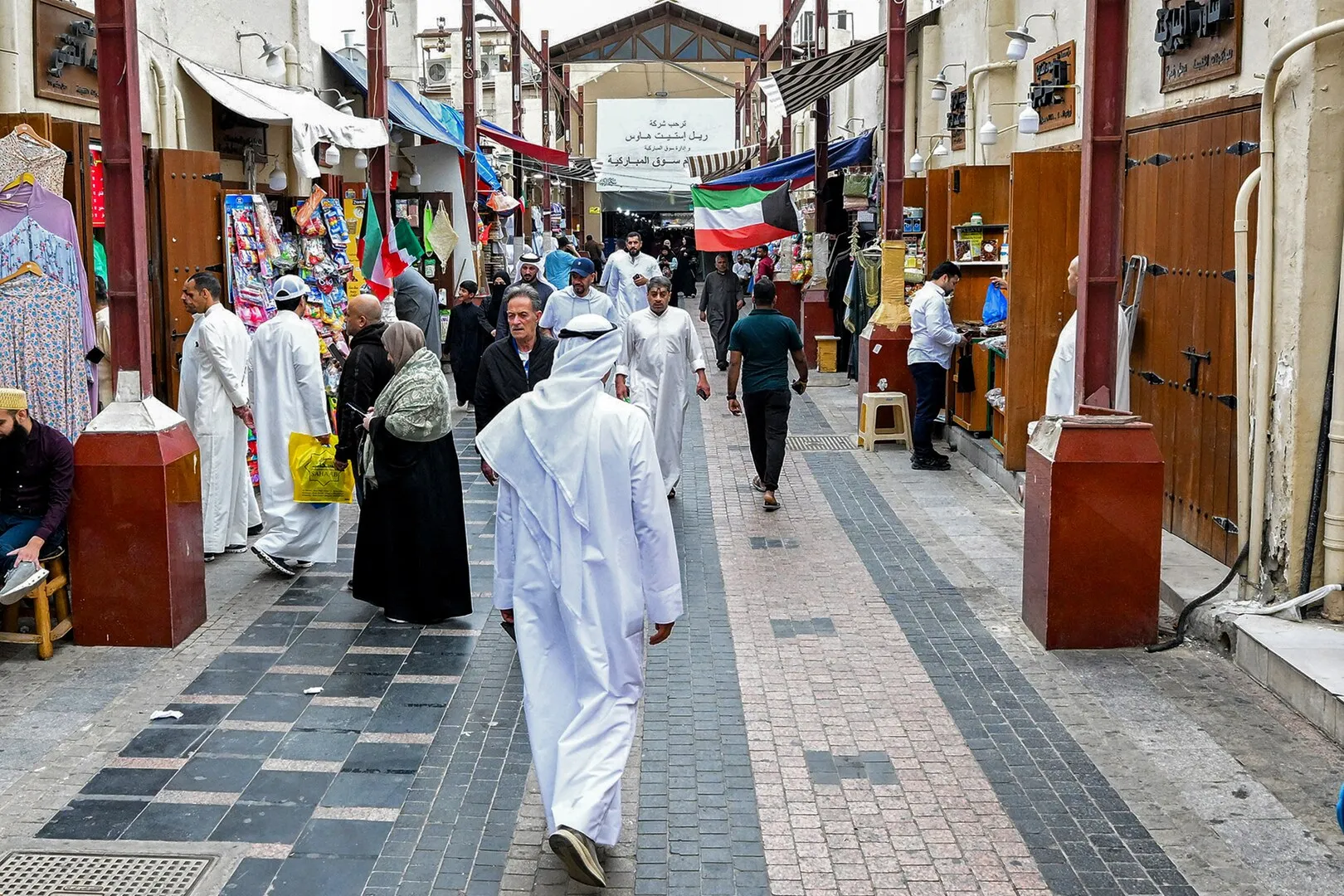
Kuwait – killed: 1, injured: 32

Kuwait’s Ministry of Defence says Ali al-Salem Air Base came under attack by a number of ballistic missiles, all of which were intercepted by Kuwaiti air defence systems.

A drone targeted Kuwait International Airport on Saturday, resulting in minor injuries to a number of employees and limited damage to the passenger building.

On Sunday, Kuwait’s Ministry of Health said one person had been killed and 32 wounded.

Kuwait City, in the aftermath of strikes
Kuwait City in the aftermath of strikes by Israel and the US on Iran [Stephanie McGehee /Reuters]

Oman – killed: 0, injured: 5

On Sunday morning, the Oman News Agency, quoting a security source, said two drones had targeted the Duqm port, injuring one foreign worker.

Later, Oman’s Maritime Security Centre said a Palau-flagged oil tanker was ‌attacked about 5 nautical miles (9km) off Oman’s Musandam governorate, injuring four people.

Qatar – killed: 0, injured: 16

As of Sunday morning, the Qatari Ministry of Interior confirmed that the number of injured was at 16 people. Most injuries were reported to be from falling shrapnel and debris with one person seriously hurt.

The Qatari Ministry of Defence confirmed that two ballistic missiles struck the Al Udeid military base, where US forces are stationed, while a drone targeted an early warning radar installation.

Qatari air defence systems, in coordination with regional partners, successfully intercepted about 65 missiles and 12 drones over Qatari airspace, it said.

The Qatar Civil Aviation Authority suspended all air navigation indefinitely. Qatar Airways grounded all flights and advised passengers that updates will be provided on Monday by 9am (06:00 GMT).

All schools have moved to remote learning, and public gatherings for Ramadan have been suspended until further notice to ensure public safety.

Saudi Arabia – killed: 0, injured: 0

The Saudi Ministry of Foreign Affairs confirmed that Iranian attacks targeted both the capital, Riyadh, and Eastern Province, home to major oil infrastructure and the King Abdulaziz Air Base.

The kingdom has officially reported no casualties as of Sunday afternoon.

United Arab Emirates – killed: 3, injured: 58

As of Sunday afternoon, at least three people in the UAE were confirmed killed and 58 others wounded.

A Pakistani national was killed and seven people were injured when debris from intercepted missiles and drones fell on a residential area near Zayed International Airport in Abu Dhabi.

The Ministry of Defence confirmed that another individual, identified as an Asian national, was killed by falling shrapnel in a residential district of the capital.

Additionally, four airport staff at Dubai International Airport sustained injuries, and four people were injured at Palm Jumeirah after a fire in a building caused by falling debris.

As of Sunday afternoon, The UAE’s Defence Ministry says it detected 165 ballistic missiles, destroying 152, and intercepted two cruise missiles.


Source link

Analysis: Will Iran’s establishment collapse after the killing of Khamenei? | Islamic Revolutionary Guard Corps

The assassination of Iran’s Supreme Leader Ayatollah Ali Khamenei in joint US-Israeli air attacks has caused one of the most significant blows to the country’s leadership since the 1979 Islamic revolution, triggering protests by his supporters.

Khamenei assumed Iran’s supreme leadership in 1989 after the death of Ayatollah Ruhollah Khomeini, who had led the Islamic revolution against the pro-United States Shah Mohammad Reza Pahlavi.

Recommended Stories

list of 4 itemsend of list

On Sunday, Iranian President Masoud Pezeshkian said seeking revenge for the killing of Khamenei and other senior Iranian officials is the country’s “duty and legitimate right”.

President Donald Trump has framed the operation as a “liberation” moment, predicting that the removal of the “head” will lead to the swift collapse of the body. However, in Iran, the reality suggests a far more complex situation.

Interviews with insiders, military experts and political sociologists suggest that the decapitation of Iran’s top leadership may not go the way the West envisions. Instead, it risks birthing a “garrison state” – a paranoid, militarised system fighting for its existence with no political red lines left to cross.

The limits of ‘decapitation’

The central premise of the US operation is that Iran is too brittle to survive the death of its supreme leader. In a phone interview with CBS News, Trump claimed he “knows exactly” who is calling the shots in Tehran, adding that “there are some good candidates” to replace the supreme leader. He did not elaborate on his claims.

However, military analysts warn against the assumption that air strikes alone can trigger “regime change”. Michael Mulroy, a former US deputy assistant secretary of defence, told Al Jazeera Arabic that without “boots on the ground” or a fully armed organic uprising, the state’s deep security apparatus can survive simply by maintaining cohesion.

“You cannot facilitate regime change through air strikes alone,” Mulroy said. “If anyone is left alive to speak, the regime is still there.”

This resilience is rooted in Iran’s dual military structure. The government is protected not just by a regular army (Artesh), but also by the Islamic Revolutionary Guard Corps (IRGC) – a powerful parallel military force constitutionally tasked with protecting the velayat-e faqih system – the principle of the guardianship of the Islamic jurist.

Supporting them is the Basij, a vast paramilitary volunteer militia embedded in every neighbourhood, specifically trained to crush internal dissent and mobilise ideological loyalists.

INTERACTIVE-Iran’s military structure-Jan 12, 2026-EDIT-1768237546

That cohesion is already being tested.

Hossein Royvaran, a political analyst based in Tehran, confirmed that the strikes wiped out the country’s top security tier, including Khamenei’s adviser and secretary of the newly-formed Supreme Defence Council, Ali Shamkhani.

The secretary of Iran’s Supreme National Security Council, Ali Larijani, said the leadership transition will begin on Sunday.

“An interim leadership council will soon be formed. The president, the head of the judiciary and a jurist from the Guardian Council will assume responsibility until the election of the next leader,” said Larijani.

“This council will be established as soon as possible. We are working to form it as early as today,” he said in an interview broadcast by state TV.

The rapid formation of an interim leadership council – comprising the president, judiciary chief, and a Guardian Council religious leader – indicates that the system’s “survival protocols” have been activated.

According to Royvaran, the system is designed to be “institutional, not personal”, capable of functioning on “autopilot” even when the political leadership is severed.

But a Tehran-based analyst said direction of Iran is still unclear as officials try to ‘project stability’.

“Officials here are trying to project stability, emphasising that the situation is under control and that state institutions are functioning effectively,” Abas Aslani, senior research fellow at the Center for Middle East Strategic Studies, said.

“Today, [the US-Israeli] air strikes targeted security and military infrastructure in the capital [Tehran] and other cities. There are expectations that such strikes could continue – and possibly intensify – in the coming hours or days,” he told Al Jazeera.

“That prospect of escalation is not something many ordinary Iranians welcome. At the same time, Iranian officials are issuing strong warnings, suggesting they could respond with capabilities that have not previously been used against Israel or the United States.”

From theocracy to nationalist survival

Perhaps the most significant shift in the immediate aftermath is Iran’s pivot from religious legitimacy to survivalist nationalism.

Aware that the death of the supreme leader might sever the spiritual bond with parts of the population, surviving officials are reframing the war not as a defence of the clergy, but as a defence of Iran’s territorial integrity.

Larijani, a conservative heavyweight and key figure in the transition, issued a stark warning that Israel’s ultimate goal is the “partition” of Iran. By raising the spectre of Iran being broken into ethnic statelets, the leadership aims to rally secular Iranians and the opposition against a common external enemy.

This strategy complicates the US hope for a popular uprising.

Saleh al-Mutairi, a political sociologist, notes that the government’s declaration of 40 days of mourning creates a “funeral trap” for the opposition. The streets will likely be filled with millions of mourners, creating a human shield for the government and making it logistically and morally difficult for antigovernment protests to gain momentum in the short term.

The end of ‘strategic patience’

If Iran survives the initial shock, the nation that emerges will likely be fundamentally different: less calculated and probably more violent.

For years, Khamenei championed a doctrine of “strategic patience”, often absorbing blows to avoid all-out war.

Hassan Ahmadian, a professor at the University of Tehran, says the era died with the supreme leader.

“Iran learned a hard lesson from the June 2025 war: Restraint is interpreted as weakness,” Ahmadian told Al Jazeera Arabic. The new calculus in Tehran is likely to be a “scorched earth” policy.

“The decision has been made. If attacked, Iran will burn everything,” Ahmadian added, suggesting that the response will be broader and more painful than anything seen in previous escalations.”

This risks a scenario where field commanders, freed from the political caution of the clerical leadership, lash out with greater ferocity. The assassination has humiliated the security establishment, exposing what Liqaa Maki, a senior researcher at Al Jazeera Centre for Studies, calls a catastrophic intelligence failure.

“The believer is not bitten from the same hole twice, yet Iran has been bitten twice,” Maki said, referring to the pattern of US strikes. This “total exposure” is likely to drive the surviving leadership underground, turning Iran into a hyper-security state that views any internal dissent as foreign collaboration, he said.

While the “head” of Iran has been removed, the “body” – armed with one of the largest missile arsenals in the Middle East – remains, Maki said.

Source link

Under the shadow of the Iran war, Israel finds another way to punish Gaza | Israel-Palestine conflict

As Israel and the United States attacked Iran, Palestinians in the Gaza Strip began to panic. They remembered how crossings were closed in the past, causing famine, and rushed to markets to buy whatever they could. As a result, prices of food and basic necessities skyrocketed. Soon enough, the news came that the border crossings had been closed.

All of this happened just as the grace period set by Israel for 37 NGOs to withdraw from Gaza for not fulfilling registration requirements expired. Organisations like Doctors Without Borders (also known by its French acronym MSF), Medical Aid for Palestinians UK, Handicap International: Humanity & Inclusion, ActionAid, CARE, etc were supposed to stop operating in Gaza.

At the last moment, a ruling by the Israeli Supreme Court allowed them to continue working while it considers their appeal against the ban. But even with this court decision, these organisations cannot continue to function fully. That is because the Israeli occupation continues to prevent their supplies and foreign staff from entering Gaza.

According to these NGOs, together they are responsible for half of the food handouts in the Strip and 60 percent of services provided in field hospitals.

For many families in Gaza, this means hunger – because food parcels will not be distributed and livelihoods will be lost.

We know this is not about NGOs failing to meet new registration rules, just like the closure of the border crossings is not a matter of security. They are about exacting yet another form of collective punishment on the Palestinians.

Even if the Supreme Court miraculously rules against the NGO ban, the Israeli occupation would still find another way to push these foreign organisations out of Gaza. This was made clear this month when it was revealed that World Central Kitchen, which has been running dozens of soup kitchens across the Strip and which is not on the ban list, may be suspending its activities.

According to Gaza’s Government Media Office, this was because Israel blocked most of the organisation’s supply trucks from coming in. As a result, there are not enough supplies to continue cooking. World Central Kitchen previously said it serves 1 million meals daily.

So now, amid the war with Iran, which may last weeks or months, hundreds of thousands of families will not have adequate food once again.

All of this comes on top of Israel’s continuing war on UNRWA. Since its creation in late 1949, the United Nations agency has been the backbone of international support for Palestinian refugees. It has the largest capacity for emergency response and the widest spectrum of services on offer. And yet, Israel has banned its operations and has blocked its supplies from entering the Strip.

Through relentless lobbying, Israel has managed to achieve substantial cuts to UNRWA’s budget. As a result, last month 600 employees were fired. The salaries of the rest were reduced by 20 percent.

The NGO ban will likely result in thousands of people losing their jobs as well. And this is at a time when unemployment in Gaza has gone beyond 80 percent.

My family will also suffer. In the past, we have benefitted from food and basic supplies handouts from NGOs, and my brother has been able to find temporary work as a driver for one of them.

The possible closure of international organisations is a direct threat to the lives of hundreds of thousands of civilians who depend on their services and employment. The closure of the border crossings could mean another hunger crisis.

These are a form of collective punishment that yet again will not make the news. Israel is constantly thinking of new ways to make our lives that much more unbearable, that much more impossible in our devastated homeland.

Two and half years of the Israeli genocide has destroyed hospitals, schools, universities, roads, sewage and potable water systems, water treatment plants, the electricity grid, and countless generators and solar panels.

The vast majority of the population lives primitive lives in tents or makeshift shelters that cannot protect people from extreme heat or cold.

Water is contaminated, food is insufficient, land has been destroyed and poisoned.

Now we will be deprived of the little international support we have been receiving.

And what is the goal of all this? To push us ever closer to despair and the ultimate surrender, to make us desire to leave our homeland on our own. Ethnic cleansing by mutual agreement.

All of the organisations that Israel is seeking to ban are foreign. Most of them are based in Western countries. Yet there has been little to no condemnation from Western governments of Israel’s actions against their own organisations. There has been no outrage that the occupation is trying to destroy international humanitarian provision so it can fully control aid distribution.

Collective punishment is a violation of international law. States are obliged to go beyond verbal condemnations and take action by imposing sanctions. Until that happens, we in Gaza will continue to be subjected to ever more brutal acts of collective punishment by our occupiers.

The views expressed in this article are the author’s own and do not necessarily reflect Al Jazeera’s editorial stance.

Source link

Iran forms interim council to oversee transition after Khamenei’s killing | Israel-Iran conflict News

Ayatollah Alireza Arafi, member of a constitutional watchdog, appointed to temporary council, along with Iranian president and chief justice.

Iran has announced the formation of a three-member transitional council to handle the state duties following the killing of Supreme Leader Ayatollah Ali Khamenei.

Ayatollah Alireza Arafi, member of a powerful constitutional watchdog, was appointed on Sunday to the temporary council, whose other two members are President Masoud Pezeshkian and Supreme Court Chief Justice Gholam-Hossein Mohseni-Ejei.

Recommended Stories

list of 4 itemsend of list

The 67-year-old cleric, who is a member of the Guardian Council that must later choose a supreme leader, was confirmed to the council by the Expediency Council, a powerful arbitration body.

According to Article 111 of the Iranian Constitution, the transitional council will govern the country until an 88-member panel called the Assembly of Experts chooses a new supreme leader after almost 37 years of rule by Khamenei.

His killing on Saturday by the joint United States and Israeli forces has raised crucial questions about Iran’s future.

Although the leadership council will govern in the interim, the Assembly of Experts “must, as soon as possible,” pick a new supreme leader, according to the Iranian constitution.

The Islamic Revolutionary Guard Corps (IRGC) and Iran’s security chief Ali Larijani are also expected to play pivotal roles in the transitional council, but it remains to be seen where the balance of power lies.

The commander-in-chief of the IRGC was also killed in the US-Israeli attack on Saturday – the second such killing in less than a year – and the next leader of the elite military and economic force is yet to be announced.

IRGC-linked Telegram channels are citing deputy chief Ahmad Vahidi, who was appointed to the position by Khamenei two months ago, as a likely candidate.

Earlier on Sunday, Larijani accused the US and Israel of trying to plunder and break apart Iran and warned “secessionist groups” within Iran of a harsh response if they attempt action, state media said.

“The brave soldiers and the great nation of Iran will teach an unforgettable lesson to the international oppressors,” he said.

A former parliamentary speaker and senior policy adviser, Larijani was appointed to advise Khamenei on strategy in nuclear talks with US President Donald Trump’s administration.

Source link

Israel closes Gaza’s Rafah crossing amid attacks on Iran | Israel-Palestine conflict News

The crossing with Egypt is considered vital for the delivery of humanitarian aid and the evacuation of critically ill patients.

Israel has closed Gaza’s Rafah border crossing with Egypt amid the joint Israeli-United States attacks on Iran.

“Several necessary security adjustments have been implemented, including the closure of the crossings into the Gaza Strip, among them the Rafah Crossing, until further notice,” Israel’s Coordinator of Government Activities in the Territories (COGAT) said in a statement.

Recommended Stories

list of 4 itemsend of list

The Rafah crossing, located on Gaza’s southern border, had reopened only last month, allowing a limited number of Palestinians to leave for the first time in months, including patients in urgent need of medical care.

The crossing is considered vital for the delivery of humanitarian aid and the evacuation of critically ill patients.

Virtually all of Gaza’s population of more than two million people was displaced during Israel’s genocidal war on the territory, and the enclave remains heavily dependent on humanitarian assistance.

In mid-February, the United Nations said it continued to face impediments in delivering lifesaving aid to Gaza.

In a February report, Human Rights Watch said Israeli restrictions had contributed to shortages of medicines, reconstruction materials, food and water inside the Strip.

COGAT claimed that sufficient food had entered Gaza since the start of the ceasefire to meet four times the nutritional needs of the population. However, it did not provide any evidence to back its claim.

“The substantial quantities of food that have entered since the beginning of the ceasefire amount to four times the nutritional needs of the population,” the Israeli defence body said. “Therefore, the existing stock is expected to suffice for an extended period.”

It added that “the closure of the crossings will have no impact on the humanitarian situation in the Gaza Strip”, saying it would remain in contact with the international community and provide updates on any developments.

COGAT is the Israeli military body responsible for overseeing civil affairs in the occupied Palestinian territory. Critics say it functions as an instrument of surveillance and control, particularly in enforcing movement restrictions and closures.

Source link

Trump: Khamenei dead after US strikes Iran | Conflict

NewsFeed

US President Donald Trump says Iran’s Supreme Leader Ayatollah Ali Khamenei was killed in joint US-Israeli strikes. Israeli officials cite “growing signs” he’s dead. Iranian state media deny the claim, saying Khamenei remains in command. At least 201 reported killed as Iran retaliates.

Source link

Netanyahu’s war? Analysts say Trump’s Iran strikes benefit Israel, not US | Donald Trump News

President Donald Trump stood in front of regional leaders during a visit to the Middle East in May and declared a new era of US foreign policy in the region, one that is not guided by trying to reshape it or change its governing systems.

“In the end, the so-called nation-builders wrecked far more nations than they built, and the interventionists were intervening in complex societies that they did not even understand themselves,” the US president said in rebuke of his hawkish predecessors.

Recommended Stories

list of 3 itemsend of list

Less than a year later, Trump ordered an all-out assault on Iran with the stated goal of bringing “freedom” to the country, borrowing language from the playbook of interventionist neoconservatives, like former President George W Bush, whom he spent his political career criticising.

Analysts say the war with Iran does not fit with Trump’s stated political ideology, policy goals or campaign promises.

Instead, several Iran experts told Al Jazeera that Trump is waging a war, together with Israel, that only benefits Israel and its prime minister, Benjamin Netanyahu.

“This is, once again, a war of choice launched by the US with [a] push from Israel,” said Negar Mortazavi, a senior fellow at the Center for International Policy in Washington, DC.

“This is another Israeli war that the US is launching. Israel has pushed the US to attack Iran for two decades, and they finally got it.”

Mortazavi highlighted Trump’s criticism of his predecessors, who had waged regime-change wars in the region.

“It is ironic, because this is a president who called himself the ‘president of peace‘,” she told Al Jazeera.

History of warnings of the Iranian ‘threat’

Netanyahu, who promoted the 2003 US invasion of Iraq, has been warning for more than two decades that Iran is on the cusp of acquiring nuclear weapons.

Iran denies seeking a nuclear bomb, and even Trump administration officials have acknowledged that Washington has no evidence that Tehran is weaponising its uranium enrichment programme.

After the US bombed Iran’s main enrichment facilities in the 12-day war in June last year – an attack that Trump says “obliterated” the country’s nuclear programme – Netanyahu pivoted to a new supposed Iranian threat: Tehran’s ballistic missiles.

“Iran can blackmail any American city,” Netanyahu told pro-Israel podcaster Ben Shapiro in October.

“People don’t believe it. Iran is developing intercontinental missiles with a range of 8,000km [5,000 miles], add another 3,000 [1,800 miles], and they can get to the East Coast of the US.”

Trump repeated that claim, which Tehran has vehemently denied and has not been backed by any public evidence or testing, in his State of the Union address earlier this week.

“They’ve already developed missiles that can threaten Europe and our bases overseas, and they’re working to build missiles that will soon reach the United States of America,” he said of the Iranians.

Trump has been building the case for a wider war with Iran since the June conflict, repeatedly threatening to bomb the country again.

But the US president’s own National Security Strategy last year called for de-prioritising the Middle East in Washington’s foreign policy and focusing on the Western Hemisphere.

Meanwhile, the US public, wary of global conflict after the wars in Iraq and Afghanistan, has also been largely opposed to new strikes against Iran, public opinion polls show.

Only 21 percent of respondents in a recent University of Maryland survey said they favoured a war with Iran.

The first day of the war saw Iran fire missiles against bases and cities that host US troops and assets across the Middle East in retaliation for the joint US-Israeli strikes, plunging the region into chaos.

Trump acknowledged that US troops may suffer casualties in the conflict. “That often happens in war,” he said on Saturday. “But we’re doing this not for now. We’re doing this for the future. And it is a noble mission.”

‘Ignoring the vast majority of Americans’

The Trump administration had appeared to step back from the brink of conflict earlier this month by engaging in diplomacy with Tehran.

US and Iranian negotiators held three rounds of talks over the past week, with Tehran stressing that it is willing to agree to rigorous inspections of its nuclear programme.

Omani mediators and Iranian officials had described the last round of negotiations, which took place on Thursday, as positive, saying that it yielded significant progress.

The June 2025 war, initiated by Israel without provocation, also came in the middle of US-Iran talks.

“Netanyahu’s agenda has always been to prevent a diplomatic solution, and he feared Trump was actually serious about getting a deal, so the start of this war in the middle of negotiations is a success for him, just like it was last June,” Jamal Abdi, the president of the National Iranian American Council (NIAC), told Al Jazeera.

“Trump’s embrace of regime change rhetoric is a further victory for Netanyahu, and loss for the American people, as it suggests the US may be committed to a long and unpredictable military boondoggle.”

While announcing the strikes on Saturday, Trump said his aim is to prevent Iran from “threatening America and our core national security interests”.

But US critics, including some proponents of Trump’s “America first” movement, have argued that Iran – more than 10,000km (6,000 miles) away – does not pose a threat to the US.

Earlier this month, US Ambassador to Israel Mike Huckabee told conservative commentator Tucker Carlson that “if it were not for Iran, there wouldn’t be Hezbollah; we wouldn’t have the problem on the border with Lebanon”.

Carlson said, “What problem on the border with Lebanon? I’m an American. I’m not having any problems on the border with Lebanon right now. I live in Maine.”

On Saturday, Congresswoman Rashida Tlaib stressed that the US public does not want war with Iran.

“Trump is acting on the violent fantasies of the American political elite and the Israeli apartheid government, ignoring the vast majority of Americans who say loud and clear: No More Wars,” Tlaib said in a statement.

Source link

Missile debris injures eight in Qatar after Iran launches barrage | Israel-Iran conflict News

Interior Ministry official says 66 missiles were fired at Qatar, and there were 114 reports of falling shrapnel. 

Doha, Qatar – Eight people have been injured in Qatar after missile shrapnel landed in multiple locations across the country, authorities said, following a barrage of Iranian missiles that Qatar said were intercepted by its air defences.

Brigadier Abdullah Khalifa Al-Muftah, the head of public relations at Qatar’s Ministry of Interior, said in a televised address on Saturday that 66 missiles were fired at Qatar and that authorities received 114 reports of shrapnel falling nationwide. He said one of the injured people was in serious condition.

Recommended Stories

list of 3 itemsend of list

The Interior Ministry issued an emergency alert urging the public to stay away from military sites and remain indoors, warning people not to approach or handle any unidentified debris and to report any to authorities.

Qatar’s Ministry of Defence said it had “successfully intercepted” a second wave of attacks targeting several areas. It said all missiles were intercepted before reaching the country’s territory, and urged residents to remain calm and follow official instructions.

Qatar’s Ministry of Foreign Affairs condemned what it said was the targeting of Qatari territory with Iranian ballistic missiles, calling it “reckless and irresponsible”, as well as a “flagrant violation” of sovereignty and an escalation threatening regional stability.

Ibrahim Sultan Al-Hashemi, the head of public relations at the Foreign Ministry, said the attack was inconsistent with the principles of “good neighbourliness”, and that Qatar reserved the right to respond “in accordance with international law”.

The ministry also called for an immediate halt to escalation and a return to negotiations.

The missile barrage came as Iran launched strikes across the Gulf after the US-Israeli attacks on Iran, an escalation that prompted air-defence interceptions over several countries. The news agency Reuters reported that Kuwait, Qatar, the United Arab Emirates and Bahrain said they intercepted Iranian missiles, while Jordan also intercepted missiles.

This is not the first Iranian attack on Qatar. In June 2025, during the 12-day war between Iran and Israel, Iran launched missiles at the Al Udeid airbase, a key facility hosting US forces near Doha.

Saturday’s barrage came after the United States and Israel carried out strikes on Iran, raising fears of a wider conflict and increasing pressure on Gulf states that host US forces and critical energy infrastructure.

The developments heightened anxiety across the Gulf, where Ramadan routines were disrupted by air raid alerts, interceptions and warnings about unexploded fragments, as leaders urged restraint amid fears of a widening confrontation.

Source link

Iran, US, Israel officials give civilians clashing directives as bombs drop | News

Tehran, Iran – Iranians are being directly addressed by leaders inside and outside the country after the United States and Israel launched attacks across Iran, prompting Tehran to respond with a wave of ongoing missile and drone attacks across the region.

“In light of the continued joint operations by the US and the Zionist regime against Tehran and several other major cities, if possible while remaining calm, please travel to other centres and cities where it is feasible for you to do so,” read a text message sent to the 10 million residents of Tehran by the government on Saturday afternoon.

Recommended Stories

list of 3 itemsend of list

All outbound roads from the capital were heavily congested with traffic from the morning, shortly after the US and Israel began joint strikes that targeting more than 20 of Iran’s 32 provinces.

Inside Tehran, people also formed long queues in front of petrol stations, even as government authorities emphasised that they remain in control, saying that food and fuel supplies would not be a problem and that contingency plans were in motion.

Authorities also accommodated civilians trying to exit the city, including by setting up roadside refuelling stations. Many families were headed to three provinces to the north near the Caspian Sea, as they did during the 12-day war with Israel.

Last June, during the war, US President Donald Trump issued a direct warning telling all Tehran citizens to immediately evacuate.

But in a video message released shortly after the strikes began on Saturday, he urged the Iranian people to stay in their homes and wait for a suitable time to rise up and overthrow the theocratic establishment governing Iran since a 1979 Islamic revolution. He framed it as “probably your only chance for generations”.

Similar sentiments were echoed in separate video messages released by Israeli Prime Minister Benjamin Netanyahu and Reza Pahlavi, the son of Iran’s Mohammad Reza Pahlavi, the US-backed shah who was overthrown by clerics led by Ayatollah Ruhollah Khomeini during the revolution.

“Be vigilant and prepared so that at an appropriate time, which I will inform you precisely, you return to the streets for the final effort,” Pahlavi said.

This was in reference to nationwide protests that gripped Iran in January, during which thousands of civilians were killed, many on the nights of January 8 and 9.

TEHRAN, IRAN - FEBRUARY 28: Cars sit in traffic amid reports of widespread attacks in the country by the United States and Israel on February 28, 2026 in Tehran, Iran. After explosions were seen in the Iranian capital, the office of the Israeli Defense Minister issued a statement saying it had launched a preemptive strike against the country, followed by a statement from the U.S. president that they had launched combat operations. (Photo by Majid Saeedi/Getty Images)
Cars sit in traffic in Tehran on February 28, 2026 [Majid Saeedi/Getty Images]

Iranian authorities claim that civilians were killed by “terrorists” and “rioters” armed, funded and trained by the US and Israel. But the United Nations and international human rights organisations have blamed state forces for an unprecedented crackdown against peaceful protesters, and say tens of thousands have been incarcerated and some face execution.

Student protests also took place last week in Tehran and major cities, including the holy Shia city of Mashhad to the northeast and Shiraz to the south of Iran. A number of students were suspended, while others were arrested or summoned by intelligence authorities.

Universities and schools were declared closed after the strikes on Saturday until further notice, according to a directive by the Supreme National Security Council. Most had already been moved online until the end of the Iranian calendar year on March 20 in response to the unrest at other universities.

But dozens of people, many of them children, were killed after two schools were hit in southern Iran’s Minab and in Tehran.

State media showed paramilitary Basij members of the Islamic Revolutionary Guard Corps (IRGC) patrolling the streets of downtown Tehran on Saturday afternoon on motorcycles and vehicles and waving flags.

A similar gathering was recorded in Palestine Square, where pro-state groups shouted “Death to America” and “Death to Israel”.

Iranians forced into another internet blackout

The opening salvo in Tehran targeted the Pasteur neighbourhood in the downtown area, where government offices are located.

A satellite image and videos of the area showed that the compound housing the offices of the supreme leader was largely destroyed in the strikes. It was not immediately clear if Ayatollah Ali Khamenei was present at the time of the attack, but the foreign minister later told NBC News that Khamenei and President Masoud Pezeshkian were alive “as far as I know”.

Minutes after the start of the war, Iranian authorities began shutting down internet connections and mobile phone connections across multiple areas of Tehran. Some mobile connectivity was restored, but the internet shutdown was expanded across the country, with almost all traffic blocked and leaving only few proxy connections working to access the global internet.

The Islamic Republic had imposed an unprecedented 20-day total internet shutdown in January, and heavy state filtering was in place prior to the shutdown on Saturday.

Iranian authorities urged citizens on Saturday to only follow official state media, to report any suspicious activity, and to refrain from collaborating with “enemies” on pain of heavy punishment.

As daylight waned, Tehran’s streets emptied, but the sounds of explosions continued to ring loud.

Source link

Tankers Vacate Al Udeid Air Base As U.S. Citizens Are Urged To Leave Israel Immediately (Updated)

Amid the apparent movement of U.S. Air Force refueling aircraft from an airbase in Qatar, the United States has urged its citizens to leave Israel immediately as the threat of a strike on Iran looms ever larger. U.S. President Donald Trump has assembled two carrier strike groups in the region as part of a significant military build-up and has continued to express doubt that Iran is serious about ending its nuclear program.

You can get a good sense of the state of play and the possible questions surrounding possible military action in our previous story here.

Available satellite imagery from yesterday indicates that the aerial refueling aircraft formerly present at Al Udeid, the major U.S. Air Force hub in Qatar, have been moved. In previous days, imagery had revealed between seven and 15 KC-135 Stratotanker aircraft at the base. However, C-17A Globemaster III transports can still be seen at the base, which would be consistent with supplies flowing in ahead of a contingency. C-130 Hercules-series transports also seen on the tarmac are likely part of the special operations presence at the airbase. Moving assets out of Al Udeid, which would be among the highest-priority targets for Iran if hostilities break out, would be expected ahead of a major U.S. operation against Tehran, as was the case last year.

U.S. Central Command (CENTCOM) declined to provide TWZ with any more information on movements at Al Udeid.

Meanwhile, dozens of KC-46 Pegasus and KC-135 aerial refueling aircraft are now stationed across Europe and the Middle East, including at Ben Gurion International Airport in Israel.

At least nine American refueling tankers arrived at Israel’s Ben Gurion Airport overnight as part of the United States’s massive buildup of military forces in the Middle East.

In all, 14 US refuelers arrived at Ben Gurion Airport in the past week. pic.twitter.com/POICMrC8DT

— Emanuel (Mannie) Fabian (@manniefabian) February 27, 2026

U.S. Air Force activity at Prince Sultan Air Base, Saudi Arabia 🇸🇦

• 16 KC-135 Stratotanker aircraft remain deployed

• 6 KC-46A Pegasus tankers are still in place

• 3 E-11A BACN aircraft were visible in yesterday’s imagery, with one observed on the runway

• 6 E-3 Sentry… https://t.co/WI2P0qwgUJ pic.twitter.com/kuXuFGCeW3

— Egypt’s Intel Observer (@EGYOSINT) February 27, 2026

U.S. citizens should “consider leaving Israel while commercial flights are available,” the U.S. Department of State said in an advisory message.

On February 27, 2026, the Department of State authorized the departure of non-emergency U.S. government personnel and family members of U.S. government personnel from Mission Israel due to safety risks.

In response to security incidents and without advance notice, the U.S.… pic.twitter.com/aWzX6Gk36x

— U.S. Embassy Jerusalem (@usembassyjlm) February 27, 2026

Meanwhile, Mike Huckabee, the U.S. ambassador to Israel, sent a message to non-essential embassy staff in the country, saying that those who wanted to leave should “do so TODAY.”

Huckabee sent the email to embassy staff at 12:04 a.m. local time, urging them to book flights for themselves and their families anywhere they could.

This “will likely result in high demand for airline seats today,” Huckabee wrote. “Focus on getting a seat to any place from which you can then continue travel to DC, but the first priority will be getting expeditiously out of the country.” It is also worth noting that a similar evacuation was ordered eight days before Operation Midnight Hammer, the U.S. strikes on three nuclear facilities in Iran on June 22, 2025.

Other countries have also issued similar warnings to their officials in the region, including the withdrawal of staff from the U.K. Embassy in Iran.

The official warnings came after the end of discussions between the United States and Iran over the future of Tehran’s nuclear program. These took place in Geneva yesterday but proved inconclusive. The key U.S. negotiators, Trump’s Middle East envoy Steve Witkoff and advisor Jared Kushner, did not issue a statement after the talks.

There is now a possibility that further discussions could be held next week.

Speaking today, Trump said that, while he doesn’t want to use force, such measures are sometimes necessary. He added that he was yet to make a decision on the Iran issue, but said he wasn’t happy with their negotiating.

He adds that he doesn’t want to use force, but sometimes you have to.

— Idrees Ali (@idreesali114) February 27, 2026

In the meantime, the foreign minister of Oman, Badr Albusaidi, who has been the main mediator in the U.S.-Iran talks, has flown to Washington. This appears to be a last-ditch attempt to persuade the Trump administration to hold back from military action against Iran.

The speed with which Albusaidi departed Geneva for Washington would also seem to indicate just how close a potential U.S. military operation might be.

Oman’s Foreign Minister Badr Albusaidi
who mediated US-Iran talks in Geneva yesterday, is now en route to Washington to meet Vice President JD Vance.

— Alistair Bunkall (@AliBunkallSKY) February 27, 2026

Albusaidi was expected to brief U.S. Vice-President JD Vance on the progress that has been made in the talks so far. Vance has apparently been identified as the most senior member of the U.S. administration to harbor significant doubts about launching a military campaign against Iran. Speaking to The Washington Post, Vance said: “The idea that we’re going to be in a Middle Eastern war for years with no end in sight — there is no chance that will happen.”

Oman’s Foreign Minister is meeting today with Vice President JD Vance after saying that “significant progress” was made during nuclear talks on Thursday.

While diplomatic efforts unfold, additional U.S. military assets are deploying to the Middle East, and the State Department… pic.twitter.com/nt4QMBfm7L

— Trey Yingst (@TreyYingst) February 27, 2026

A key sticking point between the two sides in the talks has been Iran’s refusal to yield to specific U.S. demands.

Iran has refused to hand over its highly enriched uranium stockpile and has said it’s unwilling to completely terminate its right to enrich uranium domestically. Last year, Tehran said it would no longer cooperate with the International Atomic Energy Agency (IAEA) and that inspectors would only be allowed to return to the country if its “right to enrich” was recognized.

Also under discussion is the fate of Iran’s stockpile of highly enriched uranium, amounting to around 900 pounds. One option would be to ‘downblend’ it so that it’s no longer suitable for weapons production. Reports indicate that the Iranian nuclear program has made little progress since the U.S. airstrikes on its key nuclear facilities last year.

Despite White House warnings that Iran could produce weapons-grade nuclear material within days, nuclear experts and UN officials say Iran’s nuclear program has largely stalled since U.S. and Israeli strikes on key facilities last June.

Satellite imagery and international… pic.twitter.com/zaQVH7lpx2

— Clash Report (@clashreport) February 26, 2026

Meanwhile, U.S. military assets continue to flow into the wider region.

The aircraft carrier USS Gerald R. Ford, together with its carrier strike group, is due to arrive near the coast of Israel in the coming hours. The USS Abraham Lincoln is already sailing in waters south of Iran. The naval force in the Middle East and eastern Mediterranean is the largest in the region since five carrier battle groups assembled at the outset of Operation Iraqi Freedom in 2003, according to Washington-based think-tank the Center for Strategic and International Studies (CSIS).

In terms of U.S. Air Force fighters, F-35A stealth jets and F-15E Strike Eagles arrived at RAF Lakenheath in England yesterday, after making transatlantic flights. From here, the fighters are well positioned to stage forward to the Middle East. The arrival at Lakenheath of 12 F-35s from Hill Air Force Base, Utah, was confirmed by open-source flight tracking data and aircraft spotters. They were joined there by 12 F-15Es from Seymour Johnson Air Force Base, North Carolina.

If these assets move to the Middle East, they would follow the 11 F-22A Raptor jets that are now at the Israeli Air Force base of Ovda, in the south of that country, according to satellite imagery. At least six more F-22s also arrived at Lakenheath earlier this week, while one of the jets from the first package was forced to turn back from its trip to Israel, apparently due to a maintenance issue. The Raptors have been deployed from Joint Base Langley Eustis, Virginia.

Also already in the Middle East are approximately 30 F-35As from Lakenheath’s 48th Fighter Wing and the Vermont Air National Guard’s 158th Fighter Wing, deployed to Muwaffaq Salti Air Base in Jordan. Other Air Force assets in the region include two more squadrons of F-15Es, as well as F-16 fighters and A-10 attack jets. Additional aircraft are deployed to Prince Sultan Air Base in Saudi Arabia.

Meanwhile, in the Indian Ocean, multiple F-16s are currently deployed to Diego Garcia, satellite images show. These would be key assets in defending the island from a possible Iranian attack. As we reported last week, the United Kingdom has apparently said it would not allow the use of the island for strikes on Iran, although this position may well change. There is also significant transport activity on the island, which could indicate a larger deployment, likely of bombers, is imminent.

In the past days, U.S. military forces in the region have grown to the highest levels seen since the lead-up to the invasion of Iraq in 2003, but it remains the case that there are not enough assets in place for an extended, multi-week air campaign. The full inclusion of the Israeli Air Force could and likely would change this calculus. Nevertheless, with Ford now in the Eastern Mediterranean and additional assets trickling into the region, the window for a major air operation is now cracked open.

Update: 4:41 PM Eastern –

Rubio designated Iran “as a State Sponsor of Wrongful Detention.”

“For decades the Iranian regime has cruelly detained innocent Americans and citizens of other nations to use as political leverage,” he announced on X. “Iran must end this abhorrent practice and immediately free all unjustly detained Americans.”

Today I designated Iran as a State Sponsor of Wrongful Detention. For decades the Iranian regime has cruelly detained innocent Americans and citizens of other nations to use as political leverage. Iran must end this abhorrent practice and immediately free all unjustly detained…

— Secretary Marco Rubio (@SecRubio) February 27, 2026

Negotiators from the U.S. and Iran have made “substantial progress” toward a deal to curb Iran’s nuclear program, Omani Foreign Minister Badr Albusaidi told CBS News on Friday.

Albusaidi — who has mediated several rounds of U.S.-Iran talks over the last month — told Face the Nation moderator Margaret Brennan that a ‘peace deal is within our reach.

He said Iran has agreed that it will ‘never, ever have … nuclear material that will create a bomb,’ which he called a ‘big achievement.’ The country’s existing stockpiles of enriched uranium would be ‘blended to the lowest level possible’ and ‘converted into fuel, and that fuel will be irreversible,’ according to Albusaidi.

And Iran is willing to grant inspectors from the UN’s International Atomic Energy Agency ‘full access’ to its nuclear sites in order to verify the terms of the deal, said Albusaidi. 

‘There would be zero accumulation, zero stockpiling, and full verification,’ he said. Albusaidi said that if there is a fair and endurable deal in place, he is ‘quite confident’ that even American inspectors will have access at some point in the process.

Asked if he believes enough progress has been made to avert U.S. strikes on Iran, Albusaidi responded: ‘I hope so.’ But he said ‘we need a little bit more time’ to iron out some details. Technical talks are scheduled for Monday in Vienna, and Albusaidi said he hopes that he can meet with Witkoff and Kushner a few days afterward.

WATCH: After meeting with Vice President JD Vance, Oman’s Foreign Minister Badr Albusaidi – a key mediator in the U.S.-Iran nuclear talks – tells @margbrennan “the peace deal is within our reach.” He also said, “I don’t think any alternative to diplomacy is going to solve this… pic.twitter.com/zOuSPxLy5j

— Face The Nation (@FaceTheNation) February 27, 2026

Speaking to reporters, Trump expressed displeasure with Iran.

“They don’t want to say the key words, ‘We’re not going to have a nuclear weapon,’ and they just can’t get there… So I’m not happy with the negotiation,” Trump proclaimed.

“They don’t want to say the key words, ‘We’re not going to have a nuclear weapon,’ and they just can’t get there… So I’m not happy with the negotiation,” says @POTUS on Iran. pic.twitter.com/XN0S4ObS2x

— Rapid Response 47 (@RapidResponse47) February 27, 2026

Trump insisted that Iran not enrich any uranium.

Trump on Iran:

I say no enrichment — not 20%, 30%. They always want 20%, 30%. They want it for civil; I think it is uncivil.

I am not happy. pic.twitter.com/24ga9tOi9V

— Clash Report (@clashreport) February 27, 2026

Asked if there is a risk that an attack on Iran could turn into a long conflict in the Middle East, the president said “When there’s war, there is a risk in anything, both good and bad. “I’ve had tremendous luck myself.”

Doocy: Is there a risk that a strike could turn into a long, drawn out conflict in the Middle East?

Trump: When there’s war, there is a risk in anything, both good and bad. I’ve had tremendous luck myself. pic.twitter.com/XGBNvG55D1

— Acyn (@Acyn) February 27, 2026

More countries cancelled flights to Israel and Iran.

Air India will cancel all flights to Israel starting on Sunday, according to N12 News. The flights will be cancelled for 1 week before reassessing the situation

— Faytuks Network (@FaytuksNetwork) February 27, 2026

Meanwhile, FCDO is advising against all but essential travel to Israel.

Travel Advice Update 🚨

FCDO travel advice has changed and now advises against all but essential travel to Israel.

Full details 👇https://t.co/n9MSwGiTzn

— UK in Israel 🇬🇧 (@ukinisrael) February 27, 2026

Contact the author: thomas@thewarzone.com

Thomas is a defense writer and editor with over 20 years of experience covering military aerospace topics and conflicts. He’s written a number of books, edited many more, and has contributed to many of the world’s leading aviation publications. Before joining The War Zone in 2020, he was the editor of AirForces Monthly.


Source link

Inside Israel’s ‘normal’: Triumphalism and calm mix after attack on Iran | Israel-Iran conflict News

Commentators within Israel have described a sense of business as usual in the wake of the country’s joint attack with the United States against Iran.

“It’s Saturday, so the streets are naturally quiet,” political analyst Ori Goldberg said from outside Tel Aviv, as he returned from his shelter for the second time.

“I think, politically, there’s a sense of triumphalism, of having attacked an enemy regime. Not really because we’re greatly invested in the future of the Iranian people, but because, through the genocide on Gaza, we’ve devalued human life,” he said, referring to the Israeli attacks on the besieged territory since October 2023.

Returning to shelters around the country is now the stuff of everyday life for most Israelis, he said.

Israel has been on high alert since it launched a wave of attacks on Iran, the country that its leaders have consistently portrayed as its nemesis for decades.

Announcing the attack through a video post on X, Israeli Prime Minister Benjamin Netanyahu framed the attack in characteristically apocalyptic terms, saying Israel and the US had launched attacks to “remove the existential threat posed [to Israel] by the terror regime in Iran”, and going on to call upon the Iranian people to rise against their own leaders in response to the US and Israeli unprovoked strikes upon their cities.

Iran has retaliated with its own waves of missiles and drones against Israel and US assets in the region. At least one person was reported wounded in northern Israel.

But the latest strikes against Iran were met warmly by Israel’s political elite.

“I want to remind us all: The people of Israel are strong. The IDF [Israeli army] and the Air Force are strong. The strongest power in the world stands with us,” opposition leader Yair Lapid wrote on social media, referring to the US.

“In moments like these we stand together – and we win together. There is no coalition and no opposition, only one people and one IDF, with all of us behind them.”

In a subsequent post written in Farsi, he echoed the prime minister’s calls for Iran to enact regime change from within, a longstanding Israeli policy.

‘It’s crazy’

Accounts of the relative calm in Israel stand in sharp contrast to previous escalations, when sources described panic and bulk buying before an anticipated Iranian response to the wave of strikes Israel launched against targets in Iran.

“People here are well trained,” Aida Touma-Suleiman, a Palestinian member of the Israeli parliament representing the left-wing Hadash-Ta’al faction, which is almost alone in opposing the strikes, said from her apartment near Haifa, where she had just returned from her shelter.

“This is what they’re saying all the time in the media: How well-trained and ready we are. It’s crazy. I don’t think any country in the world has experienced more war than we have, so this is what they mean by ‘trained’,” she said, referencing the wars on Iran, Lebanon, Yemen and Gaza that Israel has waged since the Hamas-led attack of October 2023.

As Touma-Suleiman spoke, she was interrupted by an alarm on her phone. “That’s not the alert. That’s a warning on my phone telling me there’s going to be an alert and then I’ll have to return to the shelter,” she explained, laughing drily. “You see what I mean about being well trained?”

Texting from Israel, Ahron Bregman, a senior teaching fellow at the Department for War Studies at King’s College London, described the relative calm and almost relief felt by many within the country that the uncertainty over war with Iran was at an end.

“Both Israel and the US are after the Iranian leadership. They hope to weaken it substantially, though I doubt they could topple it from the air,” he said, raising the possibility of a prolonged conflict.

However, how ready Israel might be for a lengthy war, and to what degree that might be Israel’s choice, was far from certain, Touma-Suleiman said.

“It will be the United States that determines how long the war will be. They’ll continue until they’ve achieved whatever it is they want,” she said.

“I don’t think Israel is ready for that. People are exhausted. The army is exhausted. I don’t know if they even have the reserves to manage a long war, and this is what Netanyahu is willing to gamble with, just so he can say to the public before elections: ‘Here is at least one victory.’”

Source link

Why Iran resists giving up its nuclear program, even as Trump threatens strikes

Embassy staffers and dependents evacuating, airlines suspending service, eyes in Iran warily turning skyward for signs of an attack.

The prospects of a showdown between the U.S. and Iran loom ever higher, as massive American naval and air power lies in wait off Iran’s shores and land borders.

Yet little of that urgency is felt in Iran’s government. Rather than quickly acquiescing to President Trump’s demands, Iranian diplomats persist in the kind of torturously slow diplomatic dance that marked previous discussions with the U.S., a pace that prompted Trump to declare on Friday that the Iranians were not negotiating in “good faith.”

But For Iran’s leadership, Iranian experts say, concessions of the sort Trump are asking for about nuclear power and the country’s role in the Middle East undermine the very ethos of the Islamic Republic and the decades-old project it has created.

“As an Islamic theocracy, Iran serves as a role model for the Islamic world. And as a role model, we cannot capitulate,” said Hamid Reza Taraghi, who heads international affairs for Iran’s Islamic Coalition Party, or Hezb-e Motalefeh Eslami.

Besides, he added, “militarily we are strong enough to fight back and make any enemy regret attacking us.”

Even as another round of negotiations ended with no resolution this week, the U.S. has completed a buildup involving more than 150 aircraft into the region, along with roughly a third of all active U.S. ships.

Observers say those forces remain insufficient for anything beyond a short campaign of a few weeks or a high-intensity kinetic strike.

Iran would be sure to retaliate, perhaps against an aircraft carrier or the many U.S. military bases arrayed in the region. Though such an attack is unlikely to destroy its target, it could damage or at least disrupt operations, demonstrating that “American power is not untouchable,” said Hooshang Talé, a former Iranian parliamentarian.

Tehran could also mobilize paramilitary groups it cultivated in the region, including Iraqi militias and Yemen’s Houthis, Talé added. Other U.S. rivals, such as Russia and China, may seize the opportunity to launch their own campaigns elsewhere in the world while the U.S. remains preoccupied in the Middle East, he said.

“From this perspective, Iran would not be acting entirely alone,” Tale said. “Indirect alignment among U.S. adversaries — even without a formal alliance — would create a cascading effect.”

We’re not exactly happy with the way they’re negotiating and, again, they cannot have nuclear weapons

— President Trump

The U.S. demands Iran give up all nuclear enrichment and relinquish existing stockpiles of enriched uranium so as to stop any path to developing a bomb. Iran has repeatedly stated it does not want to build a nuclear weapon and that nuclear enrichment would be for exclusively peaceful purposes.

The Trump administration has also talked about curtailing Iran’s ballistic missile program and its support to proxy groups, such as Hezbollah, in the region, though those have not been consistent demands. Tehran insists the talks should be limited to the nuclear issue.

After indirect negotiations on Thursday, Oman’s Foreign Minister Badr al-Busaidi — the mediator for the talks in Geneva — lauded what he said was “significant progress.” Iranian Foreign Ministry spokesman Esmail Baghaei said there had been “constructive proposals.”

Trump, however, struck a frustrated tone when speaking to reporters on Friday.

“We’re not exactly happy with the way they’re negotiating and, again, they cannot have nuclear weapons,” he said.

Trump also downplayed concerns that an attack could escalate into a longer conflict.

Anti-government protest in Tehran, Iran, on Jan. 9.

This frame grab from footage circulating on social media shows protesters dancing and cheering around a bonfire during an anti-government protest in Tehran, Iran, on Jan. 9.

(Uncredited / Associated Press)

“I guess you could say there’s always a risk. You know, when there’s war, there’s a risk in anything, both good and bad,” Trump said.

Three days earlier, in his State of the Union address Tuesday, said, “My preference is to solve this problem through diplomacy. But one thing is certain, I will never allow the world’s number one sponsor of terror, which they are by far, to have a nuclear weapon — can’t let that happen.”

There are other signs an attack could be imminent.

On Friday, the U.S. Embassy in Israel allowed staff to leave the country if they wished. That followed an earlier move this week to evacuate dependents in the embassy in Lebanon. Other countries have followed suit, including the U.K, which pulled its embassy staff in Tehran. Meanwhile, several airlines have suspended service to Israel and Iran.

A U.S. military campaign would come at a sensitive time for Iran’s leadership.

The country’s armed forces are still recovering from the June war with Israel and the U.S, which left more than 1,200 people dead and more than 6,000 injured in Iran. In Israel, 28 people were killed and dozens injured.

Unrest in January — when security forces killed anywhere from 3,000 to 30,000 protesters (estimates range wildly) — means the government has no shortage of domestic enemies. Meanwhile, long-term sanctions have hobbled Iran’s economy and left most Iranians desperately poor.

Despite those vulnerabilities, observers say the U.S. buildup is likely to make Iran dig in its heels, especially because it would not want to set the precedent of giving up positions at the barrel of a U.S. gun.

Other U.S. demands would constitute red lines. Its missile arsenal, for example, counts as its main counter to the U.S. and Israel, said Rose Kelanic, Director of the Middle East Program at the Defense Priorities think tank.

“Iran’s deterrence policy is defense by attrition. They act like a porcupine so the bear will drop them… The missiles are the quills,” she said, adding that the strategy means Iran cannot fully defend against the U.S., but could inflict pain.

At the same time, although mechanisms to monitor nuclear enrichment exist, reining in Tehran’s support for proxy groups would be a much harder matter to verify.

But the larger issue is that Iran doesn’t trust Trump to follow through on whatever the negotiations reach.

After all, it was Trump who withdrew from an Obama-era deal designed to curb Iran’s nuclear ambitions, despite widespread consensus Iran was in compliance.

Trump and numerous other critics complained Iran was not constrained in its other “malign activities,” such as support for militant groups in the Middle East and development of ballistic missiles. The Trump administration embarked on a policy of “maximum pressure” hoping to bring Iran to its knees, but it was met with what Iran watchers called maximum resistance.

In June, he joined Israel in attacking Iran’s nuclear facilities, a move that didn’t result in the Islamic Republic returning to negotiations and accepting Trump’s terms. And he has waxed wistfully about regime change.

“Trump has worked very hard to make U.S. threats credible by amassing this huge military force offshore, and they’re extremely credible at this point,” Kelanic said.

“But he also has to make his assurances credible that if Iran agrees to U.S. demands, that the U.S. won’t attack Iran anyway.”

Talé, the former parliamentarian, put it differently.

“If Iranian diplomats demonstrate flexibility, Trump will be more emboldened,” he said. “That’s why Iran, as a sovereign nation, must not capitulate to any foreign power, including America.”

Source link

US, Israel bomb Iran: A timeline of talks and threats leading up to attacks | Israel-Iran conflict News

The United States and Israel have launched strikes on Iran despite ongoing talks between Washington and Tehran over Iran’s nuclear programme.

Iran responded to Saturday’s attacks with missile and air strikes across the region, including in Israel, Bahrain, Saudi Arabia, Qatar, the United Arab Emirates and Iraq.

Recommended Stories

list of 3 itemsend of list

Israeli officials said their strikes targeted Iran’s military and nuclear-related infrastructure, while airspace across Israel was closed and emergency measures imposed. Several other countries in the region also announced the closure of their airspace.

Meanwhile, President Donald Trump said Washington has begun a “major combat operation” in Iran, aimed at “eliminating threats from the Iranian regime”.

“This regime will soon learn that no one should challenge the strength and might of the United States Armed Forces,” he said.

The strikes came just two days after high-stakes US–Iran nuclear negotiations in Geneva, mediated by Oman, ended without a breakthrough. The US-Israel attack marks the most serious escalation since the brief but intense June 2025 war.

Here is a timeline of the events, including attacks and diplomatic overtures leading up to Saturday’s strikes by the US and Israel, and Iran’s fierce response.

June 13, 2025 — Israel launches major air strikes against Iranian nuclear and military facilities, amid ongoing talks between the US and Tehran. Iran responds within hours with large-scale missile and drone attacks on Israeli cities.

June 22 – The US strikes Iranian nuclear facilities at Natanz, Fordow and Isfahan, with Trump claiming the attacks degraded Tehran’s nuclear programme. Iranian officials said their programme was set back but not destroyed.

June 23 – In retaliation, Iran fires missiles towards Al Udeid airbase in Qatar, housing US soldiers. The missiles are intercepted, and no casualties are reported.

June 24 – After 12 days of fighting, a US-brokered ceasefire takes effect between Iran and Israel, ending all hostilities. Iran says at least 610 of its citizens were killed in the war, while Israel claimed 28 were killed on its side.

July 2 – Iranian President Masoud Pezeshkian signs legislation halting cooperation with the International Atomic Energy Agency (IAEA), barring its inspectors from accessing Iran’s nuclear facilities unless specifically authorised by the country’s Supreme National Security Council.

INTERACTIVE - IRAN timeline - FEB28, 2026-1772271216

July 22 – Abbas Araghchi, Iran’s foreign minister, says Tehran will not give up its uranium enrichment programme, despite a temporary halt due to “serious and severe” damages.

August 12 – Iranian police arrest as many as 21,000 people related to the 12-day war with Israel, according to state media.

August 22 – Iran agrees to resume nuclear talks later in the month with the United Kingdom, France and Germany, despite the threat of revived sanctions.

August 28 – The three European countries trigger a mechanism reinstating the United Nations’ sanctions on the Islamic republic for the first time in a decade.

November 1 – Oman urges both the US and Iran to go back to the negotiating table as Iran reiterates it will not stop enriching uranium.

November 7 – Trump says Iran has requested that Washington remove its crippling sanctions on Tehran, and that he is willing to talk about the issue.

December 28 – Protests break out in major cities, including Tehran, over soaring prices after the rial plunges against the US dollar.

January 8, 2026 – The internet is shut down across Iran following the outbreak of antigovernment protests, which have now spread beyond cities. The blackout lasts for more than two weeks.

January 13 – Trump tells Iranians to “keep protesting” , claiming that “help is on the way”, and that the US may be preparing for military intervention against Tehran. The US begins to bolster its military presence off Iran.

February 6 – Iran and the US begin indirect nuclear negotiations in Geneva, mediated by Oman, with the aim of reaching a deal to curb Tehran’s nuclear programme.

February 17 – High-level US–Iran nuclear talks resume in Geneva, again with Omani mediation.

INTERACTIVE-US Military presence in the Middle East June 2026-1772272730
(Al Jazeera)

February 22 – Oman confirms another round of discussions in Geneva, describing a “positive push” but admits that significant differences remain.

February 26 – A third round of nuclear talks concludes in Geneva, with mediator Oman saying “significant progress” was made and more discussions would be held the following week in Vienna.

February 27 – Oman’s foreign minister says Iran has agreed to degrade its current stockpiles of nuclear material to “the lowest level possible” — effectively to unrefined levels. US President Donald Trump says he prefers diplomacy but warns that “all options” remain available if diplomacy fails.

February 28 – Israel launches coordinated strikes on Iranian targets, including sites in and around Tehran. Iran retaliates by launching air and missile strikes across the region, including Qatar, United Arab Emirates, Saudi Arabia, Bahrain and Kuwait.

Source link

U.S. And Israel At War With Iran (Updated)

Israel has launched an attack on Iran, striking targets in Tehran.

A U.S. official has confirmed to TWZ that the U.S. is attacking Iran. Including strikes from air and sea, the official said. See updates down below.

Details remain extremely limited at this time, but what we know is that Israel struck targets as part of what it is calling a preemptive strike. Images from the capital show smoke plumes rising in urban areas. In addition, we have seen video from Iraq showing what appear to be low flying cruise missiles or possibly fighter aircraft. Iraq has been the primary access point for the Israeli Air Force in past strikes on Iran.

BREAKING: Israel says it launched a preemptive strike against Iran and declares a nationwide state of emergency. Reports of explosions across the Iranian capital, Tehran. pic.twitter.com/mRXNHj3Yy8

— Ariel Oseran أريئل أوسيران (@ariel_oseran) February 28, 2026

Some on the ground are saying the strikes targeted Iranian leadership installations in the city, particularly those used by Supreme Leader Ali Khamenei, although we cannot confirm that at this time. Geolocation info will soon be coming that should shed light on the target set.

The IDF posted the following on X, stating:

The State of Israel has launched a preemptive attack against Iran. Israel’s Minister of Defense, Israel Katz, declares a special and immediate state of emergency throughout the state The State of Israel has initiated a preemptive attack against Iran to remove threats directed against the State of Israel. As a result, missile and drone launches against the State of Israel and its civilian population are expected in the very near term. Therefore, pursuant to his authority under the Civil Defense Law, Minister of Defense Israel Katz has now signed a special order mandating the imposition of a special state of emergency in the Home Front throughout the State of Israel, effective immediately. The instructions of the Home Front Command and the authorities must be followed, and individuals must remain in protected areas.

U.S. Central Command has declined to comment on the strikes in response to our direct inquiry to them.

This is a rapidly developing situation and we are going into rolling coverage on it below. Newest updates will be posted on top.

UPDATE: 5:45 AM EST—

It appears that Iran attacked U.S.-related sites in Bahrain, UAE, Qatar, Iraq and Kuwait. We are also hearing Saudi Arabia, but that is not confirmed. We are now getting responses from these countries condemning the attacks and some saying they reserve to right to respond. This is exactly how this conflict would quickly widen, as we have discussed for years, and most recently in this in-depth feature.

🚨Statement:Bahrain confirms attacks on sites within the Kingdom launched from outside its territory,a blatant violation of sovereignty. Authorities activated emergency plans. We condemn the attacks & reserves the right to respond in coordination w/ allies https://t.co/Ht7DjE8ZvD

— Abdulla R. Al-Khalifa (@AbdullaRAK) February 28, 2026

الإمارات تعلن التصدي “بنجاح” لعدد من الصواريخ الإيرانية على الدولة

أعلنت وزارة الدفاع تعرض دولة الإمارات العربية المتحدة اليوم لهجوم سافر بصواريخ باليستية إيرانية، حيث تعاملت معها الدفاعات الجوية الإماراتية بكفاءة عالية وتم التصدي بنجاح لعدد من الصواريخ.

كما تعاملت الأجهزة… pic.twitter.com/R0WkOLHQ8k

— وزارة الدفاع |MOD UAE (@modgovae) February 28, 2026

MIM-104 “Patriot” Surface-to-Air Missile Batteries with the U.S. Army attempting to down Iranian ballistic missiles over Erbil in Kurdistan, Northern Iraq. pic.twitter.com/NmY9xe0IxA

— OSINTdefender (@sentdefender) February 28, 2026

We are seeing video of flaming missile bodies on the ground in Syria and other locales. Whether they are a part of the ballistic missile or the interceptor isn’t clear in most cases.

One of the interceptor missiles fell a short while ago in the city of Inkhil in the countryside of #Daraa. The skies over Daraa Governorate are still witnessing continuous aircraft activity as a result of the war between #Iran and the United States. pic.twitter.com/OHWvL3YZvr

— Mohammad Alasakra (@mohammed_asakra) February 28, 2026

A major set of strikes appear to have done significant damage to a mountainside facility in eastern Iran that that is related to IRGC ballistic missile capabilities. Destroying the entrances to the missile caves is critical to lock as many of the weapons inside.

UPDATE: 5:15AM EST—

Fox News reports a U.S. official says American forces are not targeting regime targets. Instead they are going after military, industrial, especially missile-related ones. Israel is going after the regime.

US official: Israel is targeting Iranian leadership. The US is targeting military targets and ballistic missile sites that pose an “imminent threat.” The US military is not targeting Iran’s leadership.

— Jennifer Griffin (@JenGriffinFNC) February 28, 2026

IDF reportedly is now stating it is going after the top of the regime:

🚨🚨Israeli officials say the IDF has conducted strikes against Iranian senior commanders and political leaders including Supreme Leader Khamenei and President Pezeshkian

— Barak Ravid (@BarakRavid) February 28, 2026

IDF has warned Iranians near military-related industry in Iran:

“Urgent Warning to All Individuals Located Inside or Near Military Industrial Factories and Military Infrastructure Across Iran. You are in proximity to weapons and facilities that are dangerous. Dear Citizens, for the sake of your safety and health, we kindly request that you immediately evacuate these areas and remain outside them until a new announcement is issued. Your presence in these locations puts your life at risk.”

‼️هشدار فوری به کلیه افرادی که در داخل یا حوالی کارخانجات صنایع نظامی و زیر ساخت های نظامی در سراسر کشور ایران قرار دارند.
شما در مجاورت با تسلیحات و تاسیساتی هستید که خطرناک می باشند.
شهروندان گرامی، بمنظور امنیت و سلامت شما خواهشمندیم فورا از این اماکن خارج شده و تا انتشار… pic.twitter.com/rPrS97Dm4J

— ارتش دفاعی اسرائیل | IDF Farsi (@IDFFarsi) February 28, 2026

Video shows F-15C Bazs taking off on a sortie for today’s operation. It is armed with AIM-7 Sparrows, still not uncommon for IAFs F-15A-Ds. Still, a bit odd for the general mission. It also does not have external tanks. Possibly on domestic counter-drone duty, if indeed the video depicts what it claims.

UPDATE: 5AM EST —

From an IDF official to TWZ: “Confirm on attacks in Bahrain and Qatar. We are being striked and missile attack all over Israel. We are being informed that Bahrain Qatar and Jordan are being attacked as well.”

Videos show intercept occurring over Dubai:

UPDATE: 4:50 AM EST—

We are seeing a sizable impact from an Iranian missile on the 5th Fleet HQ in Bahrain.

New footage appears to show smoke rising from a secured compound in Bahrain with visible perimeter walls and communications infrastructure. The location appears consistent with a military facility in the Juffair area. pic.twitter.com/sgOHekkzF4

— WarMonitor (@TheWarMonitor) February 28, 2026

We are also seeing videos claiming to show smoke rising in the UAE.

A number of the USAF tankers that were in Tel Aviv have taken off:

U.S. Air Force aerial refueling tankers, staged at Tel Aviv’s Ben Gurion International Airport, have sortied.

They will likely support ongoing US/Israeli strike operations on Iran. pic.twitter.com/a4Z9Emoni7

— OSINTtechnical (@Osinttechnical) February 28, 2026

A video that shows an armada of fighters over Syria from this morning has surfaced:

UPDATE: 4:26 AM EST—

Iran is striking back across the Middle East, including Israel and U.S. interests along the Persian Gulf:

UPDATE: 4:10AM EST—

Iran appears (still unconfirmed) to have struck the Navy’s facility in Bahrain, the epicenter of the 5th Fleet.

Iran just attacked the U.S. Navy’s Naval Support Activity (NSA) Bahrain, with explosions and a large smoke plume reported within Mina Salman port. pic.twitter.com/eqqu3WZUvt

— OSINTtechnical (@Osinttechnical) February 28, 2026

A statement from the IDF gives a better overview of what the campaign seeks to accomplish:

The IDF Spokesperson’s Unit announces that the IDF and the US Armed Forces have launched a broad and joint operation to thoroughly degrade the Iranian terrorist regime and to remove existential threats to the State of Israel over time.

The strike targeted dozens of military targets and was carried out as part of a broad, coordinated, and joint operation against the regime.

The Iranian regime has not abandoned its plan to destroy Israel. In recent months, and despite the severe blow it sustained during Operation “Rising Lion”,  the IDF identified that the regime continued efforts to advance production, fortify, and conceal its nuclear program, alongside rehabilitating its missile production processes.

In addition, the regime has continued financing, training, and arming its proxies positioned on Israel’s borders. These actions constitute an existential threat to the State of Israel and pose a danger to the Middle East and the world as a whole.

In the months preceding the strike, close and joint planning was conducted between the IDF and the U.S. military, enabling the execution of the broad strike in full synchronization and coordination between the two militaries. The IDF, across all its branches, carried out a meticulous and long-term preparation process for this operation — both in defensive systems and in various offensive plans.

Video claiming to show an TLAM over Tehran:

UPDATE: 4AM EST—

Netanyahu has now made an address, it states in part:

My brothers and sisters, citizens of Israel, just an hour ago, Israel and the United States embarked on an operation to remove the existential threat posed by the terrorist regime in Iran. I thank our great friend, President Donald Trump, for his historic leadership. For 47 years, the Ayatollahs’ regime has chanted “Death to Israel,” “Death to America.” It has spilled our blood, murdered many Americans, and massacred its own people. This murderous terrorist regime must not be allowed to arm itself with nuclear weapons that would enable it to threaten all of humanity.

Our joint operation will create the conditions for the brave Iranian people to take their fate into their own hands. The time has come for all parts of the Iranian people—the Persians, Kurds, Azeris, Baloch, and Ahwazis—to cast off the yoke of tyranny and bring freedom and peace-loving values to Iran.

I call on you, citizens of Israel, to heed the instructions of the Home Front Command. In the coming days, during Operation “Lion’s Roar,” we will all be called upon to show patience and strength of spirit. Together we will stand, together we will fight, and together we will ensure the eternity of Israel.

אחיי ואחיותיי אזרחי ישראל, לפני שעה קלה יצאנו ישראל וארה״ב למבצע להסרת האיום הקיומי מצד משטר הטרור באיראן.

אני מודה לידידינו הגדול הנשיא דונלד טראמפ על מנהיגותו ההיסטורית.

במשך 47 שנים קורא משטר האייתוללות ״מוות לישראל״, ״מוות לאמריקה״. הוא הקיז את דמינו, רצח אמריקנים רבים וטבח… pic.twitter.com/itTF5b4jB4

— Benjamin Netanyahu – בנימין נתניהו (@netanyahu) February 28, 2026

Right on time, the Houthis are now saying they are closing the Bab El Mandeb Strait that connects the Red Sea with the Gulf of Aden.

🚨 BREAKING: Houthi movement announces the closure of the Bab el-Mandeb Strait in the Red Sea and warns that they will target U.S. and Israeli ships.

— The Middle East (@A_M_R_M1) February 28, 2026

U.S. Mission in UAE and the Embassy in Jordan have also sent shelter-in-place alerts:

Subject: Security Alert – Shelter-In-Place – U.S. Mission UAE, Feb. 28, 2026

Location: UAE

Event: Due to regional hostilities, the U.S. Embassy in Abu Dhabi and the U.S. Consulate in Dubai have instructed staff to shelter-in-place (i.e., take cover). We recommend all Americans… pic.twitter.com/UurG3PY6Ol

— US Mission to UAE (@USAinUAE) February 28, 2026

The U.S. Embassy in Jordan is implementing a shelter-in-place for all personnel. We recommend all Americans do the same until further notice.
 
Actions to Take:
•Find a secure location within your residence or another safe building. Have a supply of food, water, medications, and… pic.twitter.com/lC7Tneb4b8

— U.S. Embassy Amman (@USEmbassyJordan) February 28, 2026

One of Israel’s prized submarines, which alas carry the country’s undeclared second strike nuclear deterrent, was seen booking it out of Haifa:

Hezbollah in Lebanon also got struck this morning.

Hezbollah infrastructure, including tunnel shafts and rocket launchers, were targeted in a wave of Israeli airstrikes across southern Lebanon this morning, the IDF says.

According to the military, Hezbollah was recently working to restore its military capabilities at the… pic.twitter.com/6XkF1hfP63

— Emanuel (Mannie) Fabian (@manniefabian) February 28, 2026

A prayer app that is popular in Iran has been hacked:

An Iranian app for tracking Muslim prayer times has been hacked.

Messages are encouraging armed forces to defect and “protect your compatriots. They will protect you in return.”

Another message says, “Help has arrived.”

Another, “It’s the time for reckoning.”

Via @Vahid pic.twitter.com/qoddvmE8W0

— Khosro K Isfahani (@KhosroIsfahani) February 28, 2026

An unexploded Tomahawk warhead is seen on the ground in Iraq:

UPDATE: 3:39 AM EST—

Pentagon has named this campaign Operation Epic Fury.

OPERATION EPIC FURY 🇺🇸

— Department of War 🇺🇸 (@DeptofWar) February 28, 2026

Reports are coming in that ballistic missiles hit Haifa in Israel:

BREAKING; Reports that Iranian ballistic missile hit Haifa.

At least 2 missiles were launched and 1 impacted and another was intercepted. pic.twitter.com/ABvIhKWzuq

— Global Surveillance (@Globalsurv) February 28, 2026

Air travel in the region is highly disrupted, with flights trying to figure out how to reroute around the conflict zone:

The IRGC has put out a statement:

“In the name of God, the Crusher of the Tyrants: In response to the hostile and criminal enemy’s aggression against the Islamic Republic of Iran, the first wave of extensive missile and drone attacks by the Islamic Republic of Iran towards the occupied territories has begun.”

Iran’s Ministry of Interior condemns the strikes and states:

“It brings to the attention of the great people of Islamic Iran that the criminal enemy, once again violating all international laws and during the negotiations, has again attacked our beloved homeland.”

UPDATE: 3:26 AM EST—

The IDF says a barrage of missiles is inboard from Iran.

❗️An additional barrage of missiles was launched toward Israel.

The Aerial Defense Array is currently identifying and intercepting threats.

— Israel Defense Forces (@IDF) February 28, 2026

Internet traffic in Iran has plummeted. Meanwhile Iranian state news says checkpoints are being set up and not to post any images or videos of targeted areas. It also warns of extreme instability in the coming hours.

⚠️ Confirmed: Network data show #Iran is now in the midst of a near-total internet blackout with national connectivity at 4% or ordinary levels. The incident comes amid US and Israeli combat operations and matches measures used during last year’s war with Israel. pic.twitter.com/1XunOr4Q19

— NetBlocks (@netblocks) February 28, 2026

UPDATE: 3:01 AM EST—

There are reports that major Iranian Navy/IRGC Navy bases on the Persian Gulf and Arabian Sea have been hit. This would make perfect sense to preempt a mining operation or attempted closure of the strait.

Reports that US forces have struck the Iranian IRGC Naval base at Asaluyeh this morning.

Explosions were also reported in the vicinity of the port at Chabahar. pic.twitter.com/OUcKGNFLEq

— OSINTtechnical (@Osinttechnical) February 28, 2026

We are also getting more indications of what was hit in Tehran. Regime, nuclear, and security apparatus targets.

From unconfirmed reports, it appears that the initial strikes have targeted leadership (Office of the Supreme Leader, Presidency), repression (Judiciary), military (MODAFL, missiles), nuclear (AEOI, potentially residual facilities)

— Nicole Grajewski (@NicoleGrajewski) February 28, 2026

Now the U.S. Embassy in Bahrain is sending a shelter-in-place alert. Bahrain is a major center of gravitas for the U.S. military and home of the 5th Fleet.

Message for U.S. Citizens

Subject: Bahrain Security Alert – Shelter-In-Place
Month DAY, 2026

Location: Bahrain

Event: The U.S. Embassy in Bahrain is implementing a shelter-in-place for all personnel. We recommend all Americans do the same until further notice.

Actions to… pic.twitter.com/MGjgxsS711

— U.S. Embassy Manama (@USEmbassyManama) February 28, 2026

Images are emerging showing spent boosters of Israel’s air-launched ballistic missiles laying in fields in Eastern Iraq. This is customary for IAF attacks on Iran at this point, with these weapons largely used to destroy air defenses and hit critical command and control related targets deep in Iran without putting manned aircraft at risk. We were first to report on these launches during Israel’s first direct strikes on Iran, which you can read about here. You can also read more about the latest of this unique class of weapon in the IAF’s inventory here.

Israeli KC-707 supposedly spotted refueling fighters over Syria:

Crown Prince Reza Pahlavi, whose fatally ill father, Mohammad Reza Pahlavi, fled Iran ahead of the 1979 Islamic revolution, is now living in exile in the U.S. He has been instrumental in urging Iranians to protest the regime.

In a statement on X, Pahlavi urged Iranian military, police and security forces to take action against the regime to protect the people.

“You have sworn an oath to protect Iran and the Iranian people—not the Islamic Republic and its leaders. Your duty is to defend the people, not a regime that has taken our homeland hostage through repression and crime. Join the people and help bring about a stable and secure transition. Otherwise, you will go down with Khamenei’s sinking ship and his regime.”

هم‌میهنان عزیزم،

لحظاتی سرنوشت‌ساز پیشِ روی ماست.

کمکی که رئیس‌جمهور ایالات متحده به مردم شجاع ایران وعده داده بود، اکنون رسیده است. این یک مداخله بشردوستانه است؛ و هدف آن، جمهوری اسلامی، دستگاه سرکوب و ماشین کشتار آن است؛ نه کشور و ملت بزرگ ایران.

اما، با وجود رسیدن این کمک،… pic.twitter.com/kRiamgeCpS

— Reza Pahlavi (@PahlaviReza) February 28, 2026

UPDATE: 2:45 AM EST—

Trump has addressed what he calls a “major combat operation inside Iran.” He lists Iran’s history of nefarious operations against the U.S. and others for decades and says he “isn’t going to put up with it anymore.” Trump says Iran will never have nuclear weapons and he will destroy their missiles and their missile industries, annihilate their Navy, and they will no longer be able to support proxies across the Middle East. He says there may be casualties as part of the operation. Trump tells Iranian troops and security forces that they will get immunity if they lay down their arms, or the alternative is they “will face certain death.” He tells the Iranian people to stay home as “bombs will be dropping everywhere” and the government will be theirs for the taking.

UPDATE: 2:27AM EST—

Israel’s N12 is reporting that the operation name is “Roar Of The Lion.”

שם המבצע באיראן: “שאגת הארי”

— החדשות – N12 (@N12News) February 28, 2026

N12 also claims a source said the Supreme Leader is in a secure hideout. Reuters also reported this.

המנהיג העליון של איראן נלקח למקום מסתור. גורם ישראלי: אנחנו הולכים על הכול, תכננו את זה במשך חודשים

— החדשות – N12 (@N12News) February 28, 2026

Strikes are occurring at sites throughout Iran. While these could be targeting time sensitive targets, many of these strikes would be used to prepare the battlefield for aircraft operations over Iran. In other words, degrading and destroying what’s left of Iran’s air defenses so strike aircraft can more safely operate over the country. These operations would likely occur tonight under the cover of darkness, where direct attacks on targets can be made. So tonight will look nothing like what we are seeing today.

UPDATE: 2:15AM EST—

A U.S. official has confirmed to TWZ that the U.S. is attacking Iran.

Meanwhile the Mossad is asking Iranians to “return Iran to its glorious days.”

As Israel launches strikes on Iran, the Mossad spy agency on its official Persian-language Telegram channel calls on Iranians to help “return Iran to its glorious days.”

“Our Iranian brothers and sisters, you are not alone! We have launched a highly secure and dedicated Telegram… pic.twitter.com/jnL937YR8e

— Emanuel (Mannie) Fabian (@manniefabian) February 28, 2026

We are getting unconfirmed reports that Israel has assassinated Iran’s defense minister.

UPDATE: 1:55AM EST—

Israel is preparing for a reprisal strike:

In the last few minutes, sirens were sounded all throughout Israel, with an advance instruction alert directly to cellular devices to stay within proximity to protected spaces. This is a proactive alert to prepare the public for the possibility of missiles being launched toward the State of Israel. The IDF emphasizes that the public is requested to stay in proximity to protected spaces.

In the last few minutes, sirens were sounded all throughout Israel, with an advance instruction alert directly to cellular devices to stay within proximity to protected spaces.

This is a proactive alert to prepare the public for the possibility of missiles being launched toward…

— Israel Defense Forces (@IDF) February 28, 2026

Flights are currently diverting away from the region and Iran has closed its airspace.

It appears USAF transport aircraft are trying to leave the ground prior to any kind of reprisal strikes. One ACARS message told a C-17 crew to remain on the ground in Jordan for as little time as possible not long before the strikes.

It’s looking like a U.S. strike on Iran could go down at any moment

A U.S. Air Force C-17 Globemaster III strategic airlifter with identification number 06-6166 en route to King Abdullah II Air Base in Jordan has been instructed to keep its ground time to an absolute minimum.… pic.twitter.com/1GIXRN14jt

— Egypt’s Intel Observer (@EGYOSINT) February 28, 2026

The daytime nature of the attacks would point to time sensitive targets being hit.

CNN is reporting that the U.S. was at least in coordination with Israel on the strikes, but that is not surprising at all even if Israel acted unilaterally in the kinetic action itself. There had been reports that the Trump administration favored Israel striking first so that it could then jump in once Iran responded with its own strikes.

A shelter-in-place order has been broadcasted in Qatar, home to the U.S. military’s largest installation in the region and what is presumed (and previously demonstrated) as the top U.S. target of Iran.

Message for U.S. Citizens:

The U.S. Embassy in Qatar is implementing a shelter-in-place for all personnel. We recommend all Americans do the same until further notice. 

Actions to Take:

– Find a secure location within your residence or another safe building. Have a supply of… pic.twitter.com/ENogjpfK5r

— U.S. Embassy in Qatar (@USEmbassyDoha) February 28, 2026

An Israel KC-707 was seen departing today, likely to support the strike operation. Minister of Defense Yoav Gallant posted simply “Good luck” with U.S. and Israeli flags on his X account along with an image of an IAF F-15D and him talking to crews.

Tyler’s passion is the study of military technology, strategy, and foreign policy and he has fostered a dominant voice on those topics in the defense media space. He was the creator of the hugely popular defense site Foxtrot Alpha before developing The War Zone.


Howard is a Senior Staff Writer for The War Zone, and a former Senior Managing Editor for Military Times. Prior to this, he covered military affairs for the Tampa Bay Times as a Senior Writer. Howard’s work has appeared in various publications including Yahoo News, RealClearDefense, and Air Force Times.


Source link

Iran strikes US military base in Bahrain as explosions heard across Gulf | Israel-Iran conflict

NewsFeed

Video shows plumes of smoke rising after Iran targeted a United States military base in Bahrain, following Israel–US attacks across Iran. Two missiles were intercepted over Qatar and explosions were reportedly heard in Abu Dhabi, Kuwait and Saudi Arabia.

Source link

U.S. and Israel carry out strikes across Iran

Israel and the United States launched an air campaign against Iran on Saturday, striking Tehran and several other cities in what President Trump said was the start of “major combat operations.”

The attacks began with Israeli strikes Saturday morning — a workday in Iran — on Tehran, the capital, with residents speaking of attacks near the presidential palace and Iran’s National Security Council.

There were also reports of Israeli strikes on the Ministry of Intelligence, Ministry of Defense, the Atomic Energy Organization of Iran and a military complex.

Israel’s defense minister said the “pre-emptive strike” was to “remove threats against the State of Israel”.

It remains unclear the extent of the campaign and what its ultimate aim will be. But in an eight-minute recorded video message on Truth Social, Trump outlined a maximalist strategy that would see much of what he called “this very wicked, radical dictatorship from threatening America and our core national security interests.”

“We are going to destroy their missiles and raze their missile industry to the ground. … We are going to annihilate their navy. We are going to ensure that the region’s terrorist proxies can no longer destabilize the region or the world, and attack our forces,” he said. “And we will ensure that Iran does not obtain a nuclear weapon.”

He urged Iranians to take over their government.

“This will be probably your only chance for generations,” he said. “For many years, you have asked for America’s help, but you never got it. No president was willing to do what I am willing to do tonight.”

Trump also said U.S. military forces “may have casualties.”

Iran’s IRNA news agency quoted a source in the presidential office who said Iranian President Masoud Pezeshkian was unharmed in the strike.

Besides the capital, explosions could be heard in other the cities, including Isfahan, Karaj, Kermanshah and Qom, according to Iranian state media.

Both Israel and Iran shut down their airspace.

Cellphone and internet communications were disrupted shortly after the attacks began. Multiple Iranian state news websites also appear to have been hacked.

There was no immediate official response from Iran, but Ebrahim Azizi, the head of the Iranian parliament’s national security commission, vowed retaliation.

“We warned you!” he wrote on social media. “Now you have started down a path which end is no longer in your control.”

Residents reported hearing sounds of missiles flying over cities in Jordan, Syria and Lebanon in what was thought to be a missile barrage from Iran against Israel.

The attacks come two days after the U.S. and Iran concluded a third round of Oman-brokered negotiations in Geneva aimed at reducing tensions and stopping the prospect of war.

On Friday, Trump expressed displeasure with the pace of the talks, saying the Iranian side were not negotiating in “good faith” or giving in to U.S. demands. But Oman’s Foreign Minister Badr Albusaidi said a deal was “within reach.”

Source link

Netanyahu says US and Israel attacked Iran to remove ‘existential threat’ | Benjamin Netanyahu

NewsFeed

Israel’s Prime Minister Benjamin Netanyahu says the joint US‑Israel strikes on Iran aim to remove an ‘existential threat.’ He hailed the joint action as empowering the Iranian people to shape their own future and praised US President Donald Trump for his leadership.

Source link

Inside Israel’s Missile Shield: The Multi-Layered Defence Built to Counter Iran

As tensions between Israel and Iran periodically escalate, Israel has developed one of the world’s most sophisticated multi-layered air defence networks to counter ballistic missiles, drones, rockets, and cruise missiles. The system is designed to intercept threats at different ranges and altitudes, creating overlapping layers of protection against attacks from state actors and non-state groups.

The architecture reflects decades of missile threats from regional adversaries and has been refined through repeated real-world use. It combines domestically developed systems with U.S.-supported technology and integrated radar, command, and interception capabilities.

Long-Range Interception: Arrow System

The Arrow-2 and Arrow-3 systems form Israel’s top defensive layer against long-range ballistic missiles. Arrow-2 intercepts incoming missiles in the upper atmosphere, while Arrow-3 is designed to destroy threats in space before re-entry.

Developed primarily by Israel Aerospace Industries with support from Boeing, the Arrow program is tailored to counter high-altitude missile threats and allows for the safe dispersal of potential non-conventional warheads away from populated areas.

Mid-Range Shield: David’s Sling

David’s Sling targets medium-range ballistic missiles and cruise missiles fired from roughly 100 to 200 km away. It also intercepts aircraft and drones.

The system was jointly developed by Rafael Advanced Defense Systems and RTX Corporation and fills the operational gap between long-range Arrow interceptors and the short-range Iron Dome.

Short-Range Defence: Iron Dome

The Iron Dome system is designed to intercept short-range rockets, mortars, and drones. Operational since 2011, it uses radar tracking to determine whether an incoming rocket threatens a populated area. If the projectile is projected to land harmlessly, the system conserves interceptors by not engaging.

Originally designed to counter rockets with ranges of 4–70 km, analysts say its effective coverage has expanded. A naval variant deployed in 2017 protects maritime assets.

Directed Energy Layer: Iron Beam

Declared fully operational in late 2025, Iron Beam is a ground-based high-energy laser system designed to neutralize small aerial threats such as UAVs and mortar rounds. Instead of firing interceptors, the laser superheats targets until they fail mid-air.

Because it uses directed energy rather than missiles, Iron Beam is expected to dramatically reduce interception costs and provide rapid response against swarms of low-cost threats.

U.S. Support: THAAD Deployment

The United States deployed the THAAD (Terminal High Altitude Area Defense) system to Israel in 2024 to strengthen protection against ballistic missiles during heightened regional tensions. THAAD intercepts missiles in their terminal phase of flight and is a key component of U.S. strategic missile defence.

U.S. naval assets and ground-based systems have also assisted in intercepting missiles during previous attacks, highlighting close defence coordination between the two allies.

Air-to-Air Interception Capability

Beyond ground systems, Israeli fighter jets and attack helicopters have used air-to-air missiles to destroy incoming drones before they enter Israeli airspace. This adds flexibility and an additional interception layer, particularly against slow-moving aerial threats.

Analysis: A Layered Shield for a Complex Threat Environment

Israel’s defence network is built on the principle of layered interception, ensuring that if one system fails or is overwhelmed, another layer can engage the threat. This redundancy is crucial given Iran’s missile arsenal and the increasing use of drones and precision-guided munitions by regional actors.

The integration of Arrow, David’s Sling, Iron Dome, Iron Beam, and U.S. systems creates a comprehensive defence umbrella capable of engaging threats from space to low altitude. The addition of directed-energy weapons reflects a shift toward countering mass drone attacks and reducing the financial burden of interceptor missiles.

However, even sophisticated systems face challenges. Large-scale salvos could strain interceptor inventories, while evolving missile technologies and swarm tactics may test response capacity. As regional tensions fluctuate, Israel’s layered defence remains both a technological achievement and a critical strategic necessity.

With information from Reuters.

Source link